EP4265498B1 - Dynamically calculating lane change trajectories - Google Patents
Dynamically calculating lane change trajectories Download PDFInfo
- Publication number
- EP4265498B1 EP4265498B1 EP23159570.3A EP23159570A EP4265498B1 EP 4265498 B1 EP4265498 B1 EP 4265498B1 EP 23159570 A EP23159570 A EP 23159570A EP 4265498 B1 EP4265498 B1 EP 4265498B1
- Authority
- EP
- European Patent Office
- Prior art keywords
- lane change
- trajectory
- offset
- change trajectory
- preferred offset
- Prior art date
- Legal status (The legal status is an assumption and is not a legal conclusion. Google has not performed a legal analysis and makes no representation as to the accuracy of the status listed.)
- Active
Links
Images



Classifications
-
- B—PERFORMING OPERATIONS; TRANSPORTING
- B60—VEHICLES IN GENERAL
- B60W—CONJOINT CONTROL OF VEHICLE SUB-UNITS OF DIFFERENT TYPE OR DIFFERENT FUNCTION; CONTROL SYSTEMS SPECIALLY ADAPTED FOR HYBRID VEHICLES; ROAD VEHICLE DRIVE CONTROL SYSTEMS FOR PURPOSES NOT RELATED TO THE CONTROL OF A PARTICULAR SUB-UNIT
- B60W10/00—Conjoint control of vehicle sub-units of different type or different function
- B60W10/20—Conjoint control of vehicle sub-units of different type or different function including control of steering systems
-
- B—PERFORMING OPERATIONS; TRANSPORTING
- B60—VEHICLES IN GENERAL
- B60W—CONJOINT CONTROL OF VEHICLE SUB-UNITS OF DIFFERENT TYPE OR DIFFERENT FUNCTION; CONTROL SYSTEMS SPECIALLY ADAPTED FOR HYBRID VEHICLES; ROAD VEHICLE DRIVE CONTROL SYSTEMS FOR PURPOSES NOT RELATED TO THE CONTROL OF A PARTICULAR SUB-UNIT
- B60W30/00—Purposes of road vehicle drive control systems not related to the control of a particular sub-unit, e.g. of systems using conjoint control of vehicle sub-units
- B60W30/18—Propelling the vehicle
- B60W30/18009—Propelling the vehicle related to particular drive situations
- B60W30/18163—Lane change; Overtaking manoeuvres
-
- B—PERFORMING OPERATIONS; TRANSPORTING
- B60—VEHICLES IN GENERAL
- B60W—CONJOINT CONTROL OF VEHICLE SUB-UNITS OF DIFFERENT TYPE OR DIFFERENT FUNCTION; CONTROL SYSTEMS SPECIALLY ADAPTED FOR HYBRID VEHICLES; ROAD VEHICLE DRIVE CONTROL SYSTEMS FOR PURPOSES NOT RELATED TO THE CONTROL OF A PARTICULAR SUB-UNIT
- B60W40/00—Estimation or calculation of non-directly measurable driving parameters for road vehicle drive control systems not related to the control of a particular sub unit, e.g. by using mathematical models
- B60W40/10—Estimation or calculation of non-directly measurable driving parameters for road vehicle drive control systems not related to the control of a particular sub unit, e.g. by using mathematical models related to vehicle motion
-
- B—PERFORMING OPERATIONS; TRANSPORTING
- B60—VEHICLES IN GENERAL
- B60W—CONJOINT CONTROL OF VEHICLE SUB-UNITS OF DIFFERENT TYPE OR DIFFERENT FUNCTION; CONTROL SYSTEMS SPECIALLY ADAPTED FOR HYBRID VEHICLES; ROAD VEHICLE DRIVE CONTROL SYSTEMS FOR PURPOSES NOT RELATED TO THE CONTROL OF A PARTICULAR SUB-UNIT
- B60W50/00—Details of control systems for road vehicle drive control not related to the control of a particular sub-unit, e.g. process diagnostic or vehicle driver interfaces
- B60W50/08—Interaction between the driver and the control system
- B60W50/085—Changing the parameters of the control units, e.g. changing limit values, working points by control input
-
- B—PERFORMING OPERATIONS; TRANSPORTING
- B60—VEHICLES IN GENERAL
- B60W—CONJOINT CONTROL OF VEHICLE SUB-UNITS OF DIFFERENT TYPE OR DIFFERENT FUNCTION; CONTROL SYSTEMS SPECIALLY ADAPTED FOR HYBRID VEHICLES; ROAD VEHICLE DRIVE CONTROL SYSTEMS FOR PURPOSES NOT RELATED TO THE CONTROL OF A PARTICULAR SUB-UNIT
- B60W60/00—Drive control systems specially adapted for autonomous road vehicles
- B60W60/001—Planning or execution of driving tasks
-
- B—PERFORMING OPERATIONS; TRANSPORTING
- B60—VEHICLES IN GENERAL
- B60W—CONJOINT CONTROL OF VEHICLE SUB-UNITS OF DIFFERENT TYPE OR DIFFERENT FUNCTION; CONTROL SYSTEMS SPECIALLY ADAPTED FOR HYBRID VEHICLES; ROAD VEHICLE DRIVE CONTROL SYSTEMS FOR PURPOSES NOT RELATED TO THE CONTROL OF A PARTICULAR SUB-UNIT
- B60W50/00—Details of control systems for road vehicle drive control not related to the control of a particular sub-unit, e.g. process diagnostic or vehicle driver interfaces
- B60W2050/0062—Adapting control system settings
-
- B—PERFORMING OPERATIONS; TRANSPORTING
- B60—VEHICLES IN GENERAL
- B60W—CONJOINT CONTROL OF VEHICLE SUB-UNITS OF DIFFERENT TYPE OR DIFFERENT FUNCTION; CONTROL SYSTEMS SPECIALLY ADAPTED FOR HYBRID VEHICLES; ROAD VEHICLE DRIVE CONTROL SYSTEMS FOR PURPOSES NOT RELATED TO THE CONTROL OF A PARTICULAR SUB-UNIT
- B60W50/00—Details of control systems for road vehicle drive control not related to the control of a particular sub-unit, e.g. process diagnostic or vehicle driver interfaces
- B60W2050/0062—Adapting control system settings
- B60W2050/0075—Automatic parameter input, automatic initialising or calibrating means
-
- B—PERFORMING OPERATIONS; TRANSPORTING
- B60—VEHICLES IN GENERAL
- B60W—CONJOINT CONTROL OF VEHICLE SUB-UNITS OF DIFFERENT TYPE OR DIFFERENT FUNCTION; CONTROL SYSTEMS SPECIALLY ADAPTED FOR HYBRID VEHICLES; ROAD VEHICLE DRIVE CONTROL SYSTEMS FOR PURPOSES NOT RELATED TO THE CONTROL OF A PARTICULAR SUB-UNIT
- B60W2510/00—Input parameters relating to a particular sub-units
- B60W2510/20—Steering systems
- B60W2510/205—Steering speed
-
- B—PERFORMING OPERATIONS; TRANSPORTING
- B60—VEHICLES IN GENERAL
- B60W—CONJOINT CONTROL OF VEHICLE SUB-UNITS OF DIFFERENT TYPE OR DIFFERENT FUNCTION; CONTROL SYSTEMS SPECIALLY ADAPTED FOR HYBRID VEHICLES; ROAD VEHICLE DRIVE CONTROL SYSTEMS FOR PURPOSES NOT RELATED TO THE CONTROL OF A PARTICULAR SUB-UNIT
- B60W2520/00—Input parameters relating to overall vehicle dynamics
- B60W2520/06—Direction of travel
-
- B—PERFORMING OPERATIONS; TRANSPORTING
- B60—VEHICLES IN GENERAL
- B60W—CONJOINT CONTROL OF VEHICLE SUB-UNITS OF DIFFERENT TYPE OR DIFFERENT FUNCTION; CONTROL SYSTEMS SPECIALLY ADAPTED FOR HYBRID VEHICLES; ROAD VEHICLE DRIVE CONTROL SYSTEMS FOR PURPOSES NOT RELATED TO THE CONTROL OF A PARTICULAR SUB-UNIT
- B60W2540/00—Input parameters relating to occupants
-
- B—PERFORMING OPERATIONS; TRANSPORTING
- B60—VEHICLES IN GENERAL
- B60W—CONJOINT CONTROL OF VEHICLE SUB-UNITS OF DIFFERENT TYPE OR DIFFERENT FUNCTION; CONTROL SYSTEMS SPECIALLY ADAPTED FOR HYBRID VEHICLES; ROAD VEHICLE DRIVE CONTROL SYSTEMS FOR PURPOSES NOT RELATED TO THE CONTROL OF A PARTICULAR SUB-UNIT
- B60W2540/00—Input parameters relating to occupants
- B60W2540/215—Selection or confirmation of options
-
- B—PERFORMING OPERATIONS; TRANSPORTING
- B60—VEHICLES IN GENERAL
- B60W—CONJOINT CONTROL OF VEHICLE SUB-UNITS OF DIFFERENT TYPE OR DIFFERENT FUNCTION; CONTROL SYSTEMS SPECIALLY ADAPTED FOR HYBRID VEHICLES; ROAD VEHICLE DRIVE CONTROL SYSTEMS FOR PURPOSES NOT RELATED TO THE CONTROL OF A PARTICULAR SUB-UNIT
- B60W2552/00—Input parameters relating to infrastructure
-
- B—PERFORMING OPERATIONS; TRANSPORTING
- B60—VEHICLES IN GENERAL
- B60W—CONJOINT CONTROL OF VEHICLE SUB-UNITS OF DIFFERENT TYPE OR DIFFERENT FUNCTION; CONTROL SYSTEMS SPECIALLY ADAPTED FOR HYBRID VEHICLES; ROAD VEHICLE DRIVE CONTROL SYSTEMS FOR PURPOSES NOT RELATED TO THE CONTROL OF A PARTICULAR SUB-UNIT
- B60W2552/00—Input parameters relating to infrastructure
- B60W2552/10—Number of lanes
-
- B—PERFORMING OPERATIONS; TRANSPORTING
- B60—VEHICLES IN GENERAL
- B60W—CONJOINT CONTROL OF VEHICLE SUB-UNITS OF DIFFERENT TYPE OR DIFFERENT FUNCTION; CONTROL SYSTEMS SPECIALLY ADAPTED FOR HYBRID VEHICLES; ROAD VEHICLE DRIVE CONTROL SYSTEMS FOR PURPOSES NOT RELATED TO THE CONTROL OF A PARTICULAR SUB-UNIT
- B60W2552/00—Input parameters relating to infrastructure
- B60W2552/30—Road curve radius
-
- B—PERFORMING OPERATIONS; TRANSPORTING
- B60—VEHICLES IN GENERAL
- B60W—CONJOINT CONTROL OF VEHICLE SUB-UNITS OF DIFFERENT TYPE OR DIFFERENT FUNCTION; CONTROL SYSTEMS SPECIALLY ADAPTED FOR HYBRID VEHICLES; ROAD VEHICLE DRIVE CONTROL SYSTEMS FOR PURPOSES NOT RELATED TO THE CONTROL OF A PARTICULAR SUB-UNIT
- B60W2555/00—Input parameters relating to exterior conditions, not covered by groups B60W2552/00, B60W2554/00
- B60W2555/20—Ambient conditions, e.g. wind or rain
-
- B—PERFORMING OPERATIONS; TRANSPORTING
- B60—VEHICLES IN GENERAL
- B60W—CONJOINT CONTROL OF VEHICLE SUB-UNITS OF DIFFERENT TYPE OR DIFFERENT FUNCTION; CONTROL SYSTEMS SPECIALLY ADAPTED FOR HYBRID VEHICLES; ROAD VEHICLE DRIVE CONTROL SYSTEMS FOR PURPOSES NOT RELATED TO THE CONTROL OF A PARTICULAR SUB-UNIT
- B60W2720/00—Output or target parameters relating to overall vehicle dynamics
- B60W2720/24—Direction of travel
Definitions
- Autonomous driving technologies are increasingly being implemented in vehicles. Such technologies enable vehicles to adjust speeds, apply brakes, and even steer the vehicles in which they are implemented. While operating in autonomous modes, many vehicles are able to execute lane changes, triggered either automatically or via a user input (e.g., a turn signal switch). Trajectories for the lane changes are calculated and the vehicles follow the calculated trajectories, see for instance US 2020/290 621 A . The calculated trajectories, however, are often statically determined (e.g., they are the same for every driver and road condition). Static trajectories may lead to lane changes that are either not what drivers expect or unsafe for certain conditions.
- the systems and apparatuses may include components or means (e.g., processing systems) for performing the techniques and methods described herein.
- the invention relates to a method, system and storage medium as defined by the claims. It includes a system including at least one processor configured to receive a request for a lane change trajectory for a lane change of a host vehicle that is traveling along a roadway. The processor is also configured to determine whether a preferred offset corresponding to an asymmetry of the lane change trajectory exists for the host vehicle. Responsive to determining that the preferred offset exists, the processor is further configured to calculate the lane change trajectory based on the preferred offset. Responsive to determining that the preferred offset does not exist, the processor is further configured to calculate the lane change trajectory as a symmetrical lane change trajectory. The processor is further configured to provide the lane change trajectory to a vehicle component effective to cause the vehicle component to execute the lane change according to the lane change trajectory.
- the techniques and methods may be performed by the above system, another system or component, or a combination thereof.
- the invention described below includes a method that includes receiving a request for a lane change trajectory for a lane change of a host vehicle that is traveling along a roadway. The method also includes determining whether a preferred offset corresponding to an asymmetry of the lane change trajectory exists for the host vehicle. Responsive to determining that the preferred offset exists, the method further includes calculating the lane change trajectory based on the preferred offset. The method also includes providing the lane change trajectory to a vehicle component effective to cause the vehicle component to execute the lane change according to the lane change trajectory.
- the components may include computer-readable media (e.g., non-transitory storage media) including instructions that, when executed by the above system, another system or component, or a combination thereof, implement the method above and other methods.
- the invention described below includes computer-readable storage media including instructions that, when executed, cause at least one processor to receive a request for a lane change trajectory for a lane change of a host vehicle that is traveling along a roadway. The instructions further cause the processor to determine whether a preferred offset corresponding to an asymmetry of the lane change trajectory exists for the host vehicle. Responsive to determining that the preferred offset exists, the instructions further cause the processor to calculate the lane change trajectory based on the preferred offset.
- the instructions further cause the processor to calculate the lane change trajectory as a symmetrical lane change trajectory.
- the instructions also cause the processor to provide the lane change trajectory to a vehicle component effective to cause the vehicle component to execute the lane change according to the lane change trajectory.
- Autonomous driving technologies enable vehicles to execute lane changes, triggered either automatically or via a user input (e.g., a turn signal switch). Trajectories for the lane changes are calculated and the vehicles follow the calculated trajectories.
- a user input e.g., a turn signal switch
- the trajectories are often symmetric (e.g., the entries and exists have equal aggressiveness). Although some techniques have been developed to generate asymmetric trajectories, they are often fixed in their asymmetry (e.g., they are static trajectories). In many cases, a driver may wish to adjust the asymmetry due to preference or for various scenarios. Furthermore, the asymmetric trajectories may not be suitable for certain road and weather conditions.
- the techniques and systems herein are configured for dynamically calculating lane change trajectories.
- An offset that corresponds to an amount of asymmetry of a lane change trajectory (a zero-offset may be a symmetrical lane change trajectory) is determined for a lane change based on vehicle/driver preferences, road curvature, and/or road conditions.
- the offset is then used to calculate the lane change trajectory for the lane change, which is then provided to a vehicle system to execute the lane change according to the lane change trajectory.
- lane change trajectories may be tailored to driver preferences, including asymmetry preferences and actions for different types of curves, as well as for road and weather conditions. Doing so, may not only improve driver experience due to better emulation of their behavior but also increase safety by decreasing unsafe lane change trajectories.
- Fig. 1 illustrates an example environment 100 where dynamically calculating lane change trajectories may be used.
- the example environment 100 contains a host vehicle 102 that is traveling in a lane 104 of a roadway 106.
- the host vehicle 102 may be any type of system (automobile, car, truck, motorcycle, e-bike, boat, air vehicle, and so on).
- a trajectory module 108 of the host vehicle 102 receives a request to generate a lane change trajectory 110 for a lane change from the lane 104 to an adjacent lane 112.
- the roadway 106 has a curvature 114 (magnitude and left/right relative to a heading of the host vehicle 102) and, in the example environment 100, the lane change is from an outer lane to an inner lane (relative to the curve).
- a driver of the host vehicle 102 or a vehicle component 116 may initiate the lane change, which causes the request to be received by the trajectory module 108. Based on a calculated offset, the trajectory module 108 calculates the lane change trajectory 110 and outputs it for receipt by the vehicle component 116 that uses the lane change trajectory 110 to execute the lane change.
- ADAS advanced driver assist system
- autonomous driving system autonomous driving system
- autopilot system autonomous driving system
- the lane change trajectory 110 has an asymmetry. That is, the entry and exits of the lane change do not have equal steering intensities (e.g., aggressiveness of steering inputs).
- the lane change trajectory 110 has a relaxed entry and an aggressive exit. This may be due to vehicle/driver preferences, a speed of the host vehicle 102, and/or the curvature 114 (e.g., whether the roadway is curving left or right relative to the heading of the host vehicle 102).
- a driver of the host vehicle 102 may wish to have the lane change trajectory 110 as shown (e.g., a relaxed entry and aggressive exit) because the lane change is from an outer to an inner lane (relative to the curve).
- generated lane change trajectories may be symmetrical or have an asymmetry different than that of lane change trajectory 110.
- a symmetrical lane change trajectory 118 is shown as an alternative to the lane change trajectory 110.
- the symmetrical lane change trajectory 118 has equal entry and exit steering intensities.
- another lane change trajectory 120 with a different asymmetry than the lane change trajectory 110 is shown.
- the other lane change trajectory 120 has an aggressive entry and a relaxed exit.
- An offset 122 is used to define symmetry/asymmetry of the lane change trajectory 110.
- the offset 122 corresponds to a distance and direction from an inflection point of the symmetrical lane change trajectory 118 for the environment to an inflection point of the lane change trajectory 110.
- the inflection point of the symmetrical lane change trajectory 118 is at a distance 124 that is half of a total distance 126 between the start and end points.
- the offset 122 is positive, indicating the relaxed entry and aggressive exit.
- the offset 122 is negative for the other lane change trajectory 120, indicating the aggressive entry and relaxed exit.
- the symmetrical lane change trajectory 118 may not have an offset or have a zero offset. It should be noted that the start and end points of the lane change are environment-dependent, thus, each environment/situation may have a lane change trajectory 110 that is different.
- the offset 122 may be a percentage of the distance 126 (e.g., the symmetrical lane change trajectory 116 has an offset of 50% and the offset 122 is 75%).
- the offset 122 is shown in the longitudinal direction, the offset 122 may be relative to any direction (e.g., lateral, along a direction between the start and end points of the lane change, or some other reference). Further, the offset 122 may be relative to another point (e.g., the start point of the lane change, the end point of the lane change). Regardless of how it is referenced, the offset 122 corresponds to an asymmetry (or lack thereof) of the lane change trajectory 110 and is dynamic (e.g., it changes based on the environment).
- the trajectory module 108 can adapt the lane change trajectory 110 for driver preferences as well as for road conditions. Doing so, not only increases user experience but may also increase safety through mitigation of unsafe lane change trajectories.
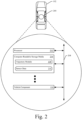
- Fig. 2 illustrates an example system 200 configured to be disposed in the host vehicle 102 and configured to dynamically calculate lane change trajectories.
- Components of the example system 200 may be arranged anywhere within or on the host vehicle 102.
- the example system 200 may include at least one processor 202, computer-readable storage media 204 (e.g., media, medium, mediums), and the vehicle component 116.
- the components are operatively and/or communicatively coupled via a link 208.
- the processor 202 e.g., application processor, microprocessor, digital-signal processor (DSP), controller
- the processor 202 is coupled to the computer-readable storage media 204 via the link 208 and executes computer-executable instructions (e.g., code) stored within the computer-readable storage media 204 (e.g., non-transitory storage device such as a hard drive, solid-state drive (SSD), flash memory, read-only memory (ROM)) to implement or otherwise cause the trajectory module 108 (or a portion thereof) to perform the techniques described herein.
- computer-executable instructions e.g., code
- non-transitory storage device such as a hard drive, solid-state drive (SSD), flash memory, read-only memory (ROM)
- the trajectory module 108 may be a stand-alone component (e.g., having dedicated computer-readable storage media comprising instructions and/or executed on dedicated hardware, such as a dedicated processor, preprogrammed field-programmable-gate-array (FPGA), system on chip (SOC), and the like).
- the processor 202 and the computer-readable storage media 204 may be any number of components, comprise multiple components distributed throughout the host vehicle 102, located remote to the host vehicle 102, dedicated or shared with other components, modules, or systems of the host vehicle 102, and/or configured differently than illustrated without departing from the scope of this invention.
- the computer-readable storage media 204 also contains sensor data 210 generated by one or more sensors or types of sensors (not shown) that may be local or remote to the example system 200.
- the sensor data 210 indicates or otherwise enables the determination of information usable to perform the techniques described herein.
- the sensors may generate sensor data 210 indicative of aspects of an environment around the host vehicle 102 (e.g., the example environment 100).
- the sensor data 210 may come from a remote source (e.g., via link 208).
- the example system 200 may contain a communication system (not shown) that receives sensor data 210 from the remote source.
- the vehicle component 116 contains one or more systems or components that are communicatively coupled to the trajectory module 108 and configured to use the lane change trajectory 110 to execute a lane change.
- the vehicle component 116 may comprise an ADAS or autonomous driving system with means for accelerating, steering, or braking the host vehicle 102.
- the vehicle component 116 is communicatively coupled to the trajectory module 108 via the link 208.
- the trajectory module 108 may be part of the vehicle component 116 and visa-versa.
- Fig. 3 is an example flow 300 of dynamically calculating lane change trajectories.
- the example flow 300 may be implemented in any of the previously described environments and by any of the previously described systems or components.
- the example flow 300 can be implemented in the example environment 100 and/or by the example system 200.
- the example flow 300 may also be implemented in other environments, by other systems or components, and utilizing other flows or techniques.
- the example flow 300 may be implemented by one or more entities (e.g., the trajectory module 108).
- the order in which the operations are shown and/or described is not intended to be construed as a limitation, and the order may be rearranged without departing from the scope of this invention.
- any number of the operations can be combined with any other number of the operations to implement the example flow or an alternate flow.
- the example flow 300 starts with the trajectory module 108 receiving a lane change trajectory request 302 for a lane change.
- the lane change trajectory request 302 may be received from the vehicle component 116, based on a driver input, or generated internally by the trajectory module 108.
- the lane change trajectory request 302 may identify the adjacent lane 112 (e.g., change to a left or right lane, change to a slower or faster lane, change to a numbered lane).
- the trajectory module 108 also obtains attributes 304 that may affect the lane change trajectory 110.
- the attributes 304 may be of an environment (e.g., the example environment 100) and/or vehicle/driver settings. As shown, the attributes 304 include aspects about the roadway 106 and preferences 306.
- the aspects of the roadway 106 include conditions 308 and the curvature 114.
- the conditions 308 include dynamic aspects that may affect a safety or viability of certain lane change trajectories (e.g., weather, road surface conditions, road surface, gradient(s), quality of lane markings).
- the curvature 114 may indicate a radius of the roadway 106 at a location of the lane change and/or whether the roadway 106 curves to the left or right of a heading of the host vehicle 102.
- the preferences 306 include aspects of vehicle and/or driver preferences for lane changes, including a preferred offset 310 and a curve inversion 312.
- the preferred offset 310 is indicative of a preference for a certain shape of the lane change trajectory 110.
- the preferred offset 310 may correspond to an aggressive entry and relaxed exit (e.g., the other lane change trajectory 120 in the example environment 100), a symmetrical lane change (e.g., the symmetrical lane change trajectory 118 in the example environment 100), a relaxed entry and aggressive exit (e.g., the lane change trajectory 110 in the example environment 100), or anything in-between.
- the preferred offset 310 may be a relative value (e.g., 0-100 with 0 being the most aggressive entry and most relaxed exit, 50 being the symmetrical lane change, and 100 being the most relaxed entry and most aggressive exit), an actual offset amount (distance), or some other value that influences a shape of the lane change trajectory 110.
- the curve inversion 312 is indicative of a preference to invert the preferred offset 310 for an inside curve lane change (e.g., from an outer lane to an inner lane relative to the curvature 114). In other words, the entry and exit are reversed from the preferred offset 310 in such environments.
- the curve inversion 312 may only be applied if a radius of the roadway 106 is below a certain value (e.g., the curve needs to be sharp enough to implement the curve inversion 312).
- the threshold may also be dynamic (e.g., based on a speed of the host vehicle 102).
- the lane change is from an outer lane to an inner lane.
- the curve inversion 312 is set to "yes" and that the preferred offset 310 indicates a preference for an aggressive entry and relaxed exit (e.g., the other lane change trajectory 120)
- the trajectory module 108 generates the lane change trajectory 110 that has a relaxed entry and an aggressive exit (opposite the preferred offset 310).
- the preferences 306 may be vehicle specific, driver specific, or some combination thereof. For example, there may be a single set of preferences 306 for the host vehicle 102 or there may be different preferences 306 for different drivers.
- the trajectory module 108 may determine a driver of the host vehicle 102 and obtain the preferences 306 for that driver.
- the preferences 306 may be input via at least one user input (e.g., button, knob, graphical user interface (GUI), touchscreen, navigation device, voice-control).
- GUI graphical user interface
- a driver of the host vehicle 102 may move a slider, select a value, or input a value.
- Limits of the preferred offset 310 may be pre-determined to ensure safe operation and may be vehicle-specific (e.g., very aggressive steering inputs may be unsafe, and thus, not selectable by the driver).
- the attributes 304 may be acquired, received, or determined by the trajectory module 108.
- the trajectory module 108 may determine the attributes 304 directly from the sensor data 210, from a bus or interface connected to sensors that interface with the example system 200, or from another module or system of the example system 200. Regardless of how or where the attributes 304 are gathered, received, derived, or calculated, the trajectory module 108 is configured to use the attributes 304 to determine the offset 122 and calculate the lane change trajectory 110.
- the attributes 304 are input into an offset module 314 that determines the offset 122 based on the example flow 400 discussed below.
- a path module 316 generates the lane change trajectory 110 using the offset 122.
- the path module 316 may use any number of methods to generate the lane change trajectory 110 such that the offset 122 is achieved (e.g., a jerk optimal polynomial).
- the offset 122 may provide a point through-which the lane change trajectory 110 should go.
- the offset 122 along with known start and end points allows the path module 316 to calculate/generate the lane change trajectory 110.
- the lane change trajectory 110 is then output, by the trajectory module 108, for receipt by the vehicle component 116.
- the vehicle component 116 then executes the lane change according to the lane change trajectory 110.
- the vehicle component 116 may be an autonomous driving system that automatically steers the host vehicle 102 along the lane change trajectory 110.
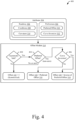
- Fig. 4 is an example flow 400 of determining the offset 122.
- the example flow 400 may be implemented in any of the previously described environments and by any of the previously described systems or components.
- the example flow 400 can be implemented in the example environment 100 and/or by the example system 200.
- the example flow 400 may also be implemented in other environments, by other systems or components, and utilizing other flows or techniques.
- the example flow 400 may be implemented by one or more entities (e.g., the offset module 314).
- the order in which the operations are shown and/or described is not intended to be construed as a limitation, and the order may be rearranged without departing from the scope of this invention.
- any number of the operations can be combined with any other number of the operations to implement the example flow or an alternate flow.
- the offset module 314 determines whether an asymmetric lane change trajectory is safe. For example, the offset module 314 may determine, based on the conditions 308, that an asymmetric lane change trajectory is unsafe.
- the conditions 308 may indicate that there is snow or ice on the road, that the road is wet, that the surface is uneven, or any other condition that may cause an unsafe lane change if aggressive steering inputs are used (e.g., an asymmetric lane change).
- Responsive to determining that an asymmetric lane change trajectory is unsafe e.g., a "no" out of decision 402
- the offset module 314 sets the offset 122 to zero (or whatever value indicates a symmetrical lane change trajectory).
- the offset module 314 may indicate that the lane change trajectory 110 should be symmetrical.
- the example flow 400 proceeds to decision 404.
- the offset module 314 determines whether the preferred offset 310 exists (e.g., for the host vehicle 102 and/or a driver of the host vehicle 102). If the preferred offset 310 does not exist, is zero, or otherwise indicates a preference for symmetrical lane change trajectories (e.g., a "no" out of decision 404), the offset module 314 sets the offset 122 to zero (or whatever value indicates a symmetrical lane change trajectory). Alternatively, the offset module 314 may indicate that the lane change trajectory 110 should be symmetrical.
- the example flow 400 proceeds to decision 406.
- the offset module 314 determines whether the curve inversion 312 exists (e.g., for the host vehicle 102 and/or a driver of the host vehicle 102). If the curve inversion 312 does not exist or otherwise indicates a preference for not inverting preferred offsets for inside curves (e.g., a "no" out of decision 406), the offset module 314 sets the offset 122 to the preferred offset 310.
- the offset module 314 sets the offset 122 to the inverse of the preferred offset 310.
- the inverse of the preferred offset 310 may correspond to an offset 122 that is at a similar distance from midpoint of a symmetrical lane change trajectory but opposite the midpoint of the symmetrical lane change trajectory. Regardless of how the preferred offset 310 is implemented, the inverse of the preferred offset 310 causes the lane change trajectory 110 to have reversed aggressiveness compared to the that generated by the preferred offset 310. In other words, the aggressiveness' of the entry and exit of the lane change will be reversed.
- the decision 402 may be performed after determining a result of the decision 404 and/or the decision 406, such that the decision 402 acts as a gate for any asymmetric lane change trajectories (e.g., a "yes" from the decision 402 may cause any offset 122 that is non-zero to be zero).
- the preferred offset 310 is zero, than decisions 402 and 406 may not be performed, as the lane change trajectory 110 would be symmetrical independent of the attributes 304.
- the offset module 314 By dynamically setting the offset 122 as zero, the preferred offset 310, or an inverse of the preferred offset 310 based on the attributes 304, the offset module 314 is able to better select the offset 122 in a wider variety of environments and situations. Consequently, the path module 316 (and thus, the trajectory module 108 as a whole) is able to dynamically generate the lane change trajectory 110 based on the offset 122 (that is based on the attributes 304). Doing so allows the vehicle component 116 to emulate a specific/preferred driving pattern more accurately while also increasing safety.
- Fig. 5 is an example method 500 for dynamically calculating lane change trajectories.
- the example method 500 may be implemented in any of the previously described environments, by any of the previously described systems or components, and by utilizing any of the previously described flows, process flows, or techniques.
- the example method 500 can be implemented in the example environment 100, by the example system 200, and/or by following the example flows 300 and/or 400.
- the example method 500 may also be implemented in other environments, by other systems or components, and utilizing other flows, process flows, or techniques.
- Example method 500 may be implemented by one or more entities (e.g., the trajectory module 108).
- a request for a lane change trajectory for a lane change of a host vehicle that is traveling along a roadway is received.
- the trajectory module 108 may receive the lane change trajectory request 302.
- the offset module 314 may determine whether the preferred offset 310 exists or is non-zero (e.g., at decision 404).
- the lane change trajectory is calculated based on the preferred offset.
- the offset module 314 may determine the offset 122 as the preferred offset 310 or an inverse of the preferred offset 310 (depending on decision 406). In some situations, the offset module 314 may set the offset 122 as zero (e.g., according to decision 402). The offset 122 may then be used by the path module 316 to calculate the lane change trajectory 110.
- the lane change trajectory is provided to a vehicle component effective to cause the vehicle component to execute the lane change according to the lane change trajectory.
- the path module 316 may output the lane change trajectory 110 such that the vehicle component 116 can execute a lane change according to the lane change trajectory 110.
- "at least one of: a, b, or c” is intended to cover a, b, c, a-b, a-c, b-c, and a-b-c, as well as any combination with multiples of the same element (e.g., a-a, a-a-a, a-a-b, a-a-c, a-b-b, a-c-c, b-b, b-b-b, b-b-c, c-c, and c-c-c or any other ordering of a, b, and c).
Landscapes
- Engineering & Computer Science (AREA)
- Transportation (AREA)
- Mechanical Engineering (AREA)
- Automation & Control Theory (AREA)
- Human Computer Interaction (AREA)
- Chemical & Material Sciences (AREA)
- Combustion & Propulsion (AREA)
- Physics & Mathematics (AREA)
- Mathematical Physics (AREA)
- Traffic Control Systems (AREA)
Description
- Autonomous driving technologies are increasingly being implemented in vehicles. Such technologies enable vehicles to adjust speeds, apply brakes, and even steer the vehicles in which they are implemented. While operating in autonomous modes, many vehicles are able to execute lane changes, triggered either automatically or via a user input (e.g., a turn signal switch). Trajectories for the lane changes are calculated and the vehicles follow the calculated trajectories, see for instance
US 2020/290 621 A . The calculated trajectories, however, are often statically determined (e.g., they are the same for every driver and road condition). Static trajectories may lead to lane changes that are either not what drivers expect or unsafe for certain conditions. It is further known that lane change trajectories of vehicles driven by a human driver tend to be asymmetric with respect to an aggressiveness of entry and exit, respectively, see A. Sporrer et. al., "Realsimulation von Spurwechselvorgangen im Strassenverkehr". - This document is directed to systems, apparatuses, techniques, and methods of dynamically calculating lane change trajectories. The systems and apparatuses may include components or means (e.g., processing systems) for performing the techniques and methods described herein.
- The invention relates to a method, system and storage medium as defined by the claims. It includes a system including at least one processor configured to receive a request for a lane change trajectory for a lane change of a host vehicle that is traveling along a roadway. The processor is also configured to determine whether a preferred offset corresponding to an asymmetry of the lane change trajectory exists for the host vehicle. Responsive to determining that the preferred offset exists, the processor is further configured to calculate the lane change trajectory based on the preferred offset. Responsive to determining that the preferred offset does not exist, the processor is further configured to calculate the lane change trajectory as a symmetrical lane change trajectory. The processor is further configured to provide the lane change trajectory to a vehicle component effective to cause the vehicle component to execute the lane change according to the lane change trajectory.
- The techniques and methods may be performed by the above system, another system or component, or a combination thereof. The invention described below includes a method that includes receiving a request for a lane change trajectory for a lane change of a host vehicle that is traveling along a roadway. The method also includes determining whether a preferred offset corresponding to an asymmetry of the lane change trajectory exists for the host vehicle. Responsive to determining that the preferred offset exists, the method further includes calculating the lane change trajectory based on the preferred offset. The method also includes providing the lane change trajectory to a vehicle component effective to cause the vehicle component to execute the lane change according to the lane change trajectory.
- The components may include computer-readable media (e.g., non-transitory storage media) including instructions that, when executed by the above system, another system or component, or a combination thereof, implement the method above and other methods. The invention described below includes computer-readable storage media including instructions that, when executed, cause at least one processor to receive a request for a lane change trajectory for a lane change of a host vehicle that is traveling along a roadway. The instructions further cause the processor to determine whether a preferred offset corresponding to an asymmetry of the lane change trajectory exists for the host vehicle. Responsive to determining that the preferred offset exists, the instructions further cause the processor to calculate the lane change trajectory based on the preferred offset. Responsive to determining that the preferred offset does not exist, the instructions further cause the processor to calculate the lane change trajectory as a symmetrical lane change trajectory. The instructions also cause the processor to provide the lane change trajectory to a vehicle component effective to cause the vehicle component to execute the lane change according to the lane change trajectory.
- This Summary introduces simplified concepts of dynamically calculating lane change trajectories that are further described in the Detailed Description and Drawings. This Summary is not intended to identify essential features of the claimed subject matter, nor is it intended for use in determining the scope of the claimed subject matter.
- Systems and techniques of dynamically calculating lane change trajectories are described with reference to the following drawings that use some of the same numbers throughout to reference like or examples of like features and components.
-
Fig. 1 illustrates, in accordance with techniques of this invention, an example environment where dynamically calculating lane change trajectories may be used. -
Fig. 2 illustrates, in accordance with techniques of this invention, an example system of a host vehicle configured for dynamically calculating lane change trajectories. -
Fig. 3 illustrates, in accordance with techniques of this invention, an example flow of dynamically calculating lane change trajectories. -
Fig. 4 illustrates, in accordance with techniques of this dis invention closure, an example flow of generating offsets for dynamically calculating lane change trajectories. -
Fig. 5 illustrates, in accordance with techniques of this invention, an example method of dynamically calculating lane change trajectories. - Autonomous driving technologies enable vehicles to execute lane changes, triggered either automatically or via a user input (e.g., a turn signal switch). Trajectories for the lane changes are calculated and the vehicles follow the calculated trajectories.
- Traditional means of generating the trajectories rely on static calculations. For example, the trajectories are often symmetric (e.g., the entries and exists have equal aggressiveness). Although some techniques have been developed to generate asymmetric trajectories, they are often fixed in their asymmetry (e.g., they are static trajectories). In many cases, a driver may wish to adjust the asymmetry due to preference or for various scenarios. Furthermore, the asymmetric trajectories may not be suitable for certain road and weather conditions.
- The techniques and systems herein are configured for dynamically calculating lane change trajectories. An offset that corresponds to an amount of asymmetry of a lane change trajectory (a zero-offset may be a symmetrical lane change trajectory) is determined for a lane change based on vehicle/driver preferences, road curvature, and/or road conditions. The offset is then used to calculate the lane change trajectory for the lane change, which is then provided to a vehicle system to execute the lane change according to the lane change trajectory.
- By dynamically calculating the lane change trajectory (e.g., actively determining the offset), lane change trajectories may be tailored to driver preferences, including asymmetry preferences and actions for different types of curves, as well as for road and weather conditions. Doing so, may not only improve driver experience due to better emulation of their behavior but also increase safety by decreasing unsafe lane change trajectories.
-
Fig. 1 illustrates anexample environment 100 where dynamically calculating lane change trajectories may be used. Theexample environment 100 contains ahost vehicle 102 that is traveling in alane 104 of aroadway 106. Thehost vehicle 102 may be any type of system (automobile, car, truck, motorcycle, e-bike, boat, air vehicle, and so on). - A
trajectory module 108 of thehost vehicle 102 receives a request to generate alane change trajectory 110 for a lane change from thelane 104 to anadjacent lane 112. Theroadway 106 has a curvature 114 (magnitude and left/right relative to a heading of the host vehicle 102) and, in theexample environment 100, the lane change is from an outer lane to an inner lane (relative to the curve). - A driver of the
host vehicle 102 or a vehicle component 116 (e.g., advanced driver assist system (ADAS), autonomous driving system, autopilot system) may initiate the lane change, which causes the request to be received by thetrajectory module 108. Based on a calculated offset, thetrajectory module 108 calculates thelane change trajectory 110 and outputs it for receipt by thevehicle component 116 that uses thelane change trajectory 110 to execute the lane change. - In the
example environment 100, thelane change trajectory 110 has an asymmetry. That is, the entry and exits of the lane change do not have equal steering intensities (e.g., aggressiveness of steering inputs). Thelane change trajectory 110 has a relaxed entry and an aggressive exit. This may be due to vehicle/driver preferences, a speed of thehost vehicle 102, and/or the curvature 114 (e.g., whether the roadway is curving left or right relative to the heading of the host vehicle 102). For example, a driver of thehost vehicle 102 may wish to have thelane change trajectory 110 as shown (e.g., a relaxed entry and aggressive exit) because the lane change is from an outer to an inner lane (relative to the curve). - In other environments (e.g., other preferences, other speeds, other curvatures), generated lane change trajectories may be symmetrical or have an asymmetry different than that of
lane change trajectory 110. For example, a symmetricallane change trajectory 118 is shown as an alternative to thelane change trajectory 110. The symmetricallane change trajectory 118 has equal entry and exit steering intensities. As another example, anotherlane change trajectory 120 with a different asymmetry than thelane change trajectory 110 is shown. The otherlane change trajectory 120 has an aggressive entry and a relaxed exit. - An offset 122 is used to define symmetry/asymmetry of the
lane change trajectory 110. The offset 122 corresponds to a distance and direction from an inflection point of the symmetricallane change trajectory 118 for the environment to an inflection point of thelane change trajectory 110. The inflection point of the symmetricallane change trajectory 118 is at adistance 124 that is half of atotal distance 126 between the start and end points. - In the
example environment 100, the offset 122 is positive, indicating the relaxed entry and aggressive exit. The offset 122 is negative for the otherlane change trajectory 120, indicating the aggressive entry and relaxed exit. The symmetricallane change trajectory 118 may not have an offset or have a zero offset. It should be noted that the start and end points of the lane change are environment-dependent, thus, each environment/situation may have alane change trajectory 110 that is different. - The conventions of the offset 122 may vary without departing from the scope of this invention. For example, the offset 122 may be a percentage of the distance 126 (e.g., the symmetrical
lane change trajectory 116 has an offset of 50% and the offset 122 is 75%). Furthermore, although the offset 122 is shown in the longitudinal direction, the offset 122 may be relative to any direction (e.g., lateral, along a direction between the start and end points of the lane change, or some other reference). Further, the offset 122 may be relative to another point (e.g., the start point of the lane change, the end point of the lane change). Regardless of how it is referenced, the offset 122 corresponds to an asymmetry (or lack thereof) of thelane change trajectory 110 and is dynamic (e.g., it changes based on the environment). - By dynamically selecting the offset 122 and computing the
lane change trajectory 110 based on it, thetrajectory module 108 can adapt thelane change trajectory 110 for driver preferences as well as for road conditions. Doing so, not only increases user experience but may also increase safety through mitigation of unsafe lane change trajectories. -
Fig. 2 illustrates anexample system 200 configured to be disposed in thehost vehicle 102 and configured to dynamically calculate lane change trajectories. Components of theexample system 200 may be arranged anywhere within or on thehost vehicle 102. Theexample system 200 may include at least oneprocessor 202, computer-readable storage media 204 (e.g., media, medium, mediums), and thevehicle component 116. The components are operatively and/or communicatively coupled via alink 208. - The processor 202 (e.g., application processor, microprocessor, digital-signal processor (DSP), controller) is coupled to the computer-
readable storage media 204 via thelink 208 and executes computer-executable instructions (e.g., code) stored within the computer-readable storage media 204 (e.g., non-transitory storage device such as a hard drive, solid-state drive (SSD), flash memory, read-only memory (ROM)) to implement or otherwise cause the trajectory module 108 (or a portion thereof) to perform the techniques described herein. Although shown as being within the computer-readable storage media 204, thetrajectory module 108 may be a stand-alone component (e.g., having dedicated computer-readable storage media comprising instructions and/or executed on dedicated hardware, such as a dedicated processor, preprogrammed field-programmable-gate-array (FPGA), system on chip (SOC), and the like). Theprocessor 202 and the computer-readable storage media 204 may be any number of components, comprise multiple components distributed throughout thehost vehicle 102, located remote to thehost vehicle 102, dedicated or shared with other components, modules, or systems of thehost vehicle 102, and/or configured differently than illustrated without departing from the scope of this invention. - The computer-
readable storage media 204 also containssensor data 210 generated by one or more sensors or types of sensors (not shown) that may be local or remote to theexample system 200. Thesensor data 210 indicates or otherwise enables the determination of information usable to perform the techniques described herein. For example, the sensors may generatesensor data 210 indicative of aspects of an environment around the host vehicle 102 (e.g., the example environment 100). In some implementations, thesensor data 210 may come from a remote source (e.g., via link 208). Theexample system 200 may contain a communication system (not shown) that receivessensor data 210 from the remote source. - The
vehicle component 116 contains one or more systems or components that are communicatively coupled to thetrajectory module 108 and configured to use thelane change trajectory 110 to execute a lane change. For example, thevehicle component 116 may comprise an ADAS or autonomous driving system with means for accelerating, steering, or braking thehost vehicle 102. Thevehicle component 116 is communicatively coupled to thetrajectory module 108 via thelink 208. Although shown as separate components, thetrajectory module 108 may be part of thevehicle component 116 and visa-versa. -
Fig. 3 is anexample flow 300 of dynamically calculating lane change trajectories. Theexample flow 300 may be implemented in any of the previously described environments and by any of the previously described systems or components. For example, theexample flow 300 can be implemented in theexample environment 100 and/or by theexample system 200. Theexample flow 300 may also be implemented in other environments, by other systems or components, and utilizing other flows or techniques. Theexample flow 300 may be implemented by one or more entities (e.g., the trajectory module 108). The order in which the operations are shown and/or described is not intended to be construed as a limitation, and the order may be rearranged without departing from the scope of this invention. Furthermore, any number of the operations can be combined with any other number of the operations to implement the example flow or an alternate flow. - The example flow 300 starts with the
trajectory module 108 receiving a lanechange trajectory request 302 for a lane change. The lanechange trajectory request 302 may be received from thevehicle component 116, based on a driver input, or generated internally by thetrajectory module 108. The lanechange trajectory request 302 may identify the adjacent lane 112 (e.g., change to a left or right lane, change to a slower or faster lane, change to a numbered lane). - The
trajectory module 108 also obtainsattributes 304 that may affect thelane change trajectory 110. Theattributes 304 may be of an environment (e.g., the example environment 100) and/or vehicle/driver settings. As shown, theattributes 304 include aspects about theroadway 106 andpreferences 306. - The aspects of the
roadway 106 includeconditions 308 and thecurvature 114. Theconditions 308 include dynamic aspects that may affect a safety or viability of certain lane change trajectories (e.g., weather, road surface conditions, road surface, gradient(s), quality of lane markings). Thecurvature 114 may indicate a radius of theroadway 106 at a location of the lane change and/or whether theroadway 106 curves to the left or right of a heading of thehost vehicle 102. - The
preferences 306 include aspects of vehicle and/or driver preferences for lane changes, including a preferred offset 310 and acurve inversion 312. The preferred offset 310 is indicative of a preference for a certain shape of thelane change trajectory 110. In line with the invention, the preferred offset 310 may correspond to an aggressive entry and relaxed exit (e.g., the otherlane change trajectory 120 in the example environment 100), a symmetrical lane change (e.g., the symmetricallane change trajectory 118 in the example environment 100), a relaxed entry and aggressive exit (e.g., thelane change trajectory 110 in the example environment 100), or anything in-between. The preferred offset 310 may be a relative value (e.g., 0-100 with 0 being the most aggressive entry and most relaxed exit, 50 being the symmetrical lane change, and 100 being the most relaxed entry and most aggressive exit), an actual offset amount (distance), or some other value that influences a shape of thelane change trajectory 110. - The
curve inversion 312 is indicative of a preference to invert the preferred offset 310 for an inside curve lane change (e.g., from an outer lane to an inner lane relative to the curvature 114). In other words, the entry and exit are reversed from the preferred offset 310 in such environments. In some implementations, there may be a threshold for applying thecurve inversion 312. For example, thecurve inversion 312 may only be applied if a radius of theroadway 106 is below a certain value (e.g., the curve needs to be sharp enough to implement the curve inversion 312). The threshold may also be dynamic (e.g., based on a speed of the host vehicle 102). - Using the
example environment 100 as an example, the lane change is from an outer lane to an inner lane. Assuming that thecurve inversion 312 is set to "yes" and that the preferred offset 310 indicates a preference for an aggressive entry and relaxed exit (e.g., the other lane change trajectory 120), thetrajectory module 108 generates thelane change trajectory 110 that has a relaxed entry and an aggressive exit (opposite the preferred offset 310). - The
preferences 306 may be vehicle specific, driver specific, or some combination thereof. For example, there may be a single set ofpreferences 306 for thehost vehicle 102 or there may bedifferent preferences 306 for different drivers. Thetrajectory module 108 may determine a driver of thehost vehicle 102 and obtain thepreferences 306 for that driver. Thepreferences 306 may be input via at least one user input (e.g., button, knob, graphical user interface (GUI), touchscreen, navigation device, voice-control). For example, to select the preferred offset 310, a driver of thehost vehicle 102 may move a slider, select a value, or input a value. Limits of the preferred offset 310 may be pre-determined to ensure safe operation and may be vehicle-specific (e.g., very aggressive steering inputs may be unsafe, and thus, not selectable by the driver). - The
attributes 304 may be acquired, received, or determined by thetrajectory module 108. For example, thetrajectory module 108 may determine theattributes 304 directly from thesensor data 210, from a bus or interface connected to sensors that interface with theexample system 200, or from another module or system of theexample system 200. Regardless of how or where theattributes 304 are gathered, received, derived, or calculated, thetrajectory module 108 is configured to use theattributes 304 to determine the offset 122 and calculate thelane change trajectory 110. - To do so, the
attributes 304 are input into an offsetmodule 314 that determines the offset 122 based on theexample flow 400 discussed below. Once the offset 122 is determined, apath module 316 generates thelane change trajectory 110 using the offset 122. Thepath module 316 may use any number of methods to generate thelane change trajectory 110 such that the offset 122 is achieved (e.g., a jerk optimal polynomial). For example, the offset 122 may provide a point through-which thelane change trajectory 110 should go. The offset 122 along with known start and end points allows thepath module 316 to calculate/generate thelane change trajectory 110. - The
lane change trajectory 110 is then output, by thetrajectory module 108, for receipt by thevehicle component 116. Thevehicle component 116 then executes the lane change according to thelane change trajectory 110. For example, thevehicle component 116 may be an autonomous driving system that automatically steers thehost vehicle 102 along thelane change trajectory 110. -
Fig. 4 is anexample flow 400 of determining the offset 122. Theexample flow 400 may be implemented in any of the previously described environments and by any of the previously described systems or components. For example, theexample flow 400 can be implemented in theexample environment 100 and/or by theexample system 200. Theexample flow 400 may also be implemented in other environments, by other systems or components, and utilizing other flows or techniques. Theexample flow 400 may be implemented by one or more entities (e.g., the offset module 314). The order in which the operations are shown and/or described is not intended to be construed as a limitation, and the order may be rearranged without departing from the scope of this invention. Furthermore, any number of the operations can be combined with any other number of the operations to implement the example flow or an alternate flow. - At
decision 402, the offsetmodule 314 determines whether an asymmetric lane change trajectory is safe. For example, the offsetmodule 314 may determine, based on theconditions 308, that an asymmetric lane change trajectory is unsafe. Theconditions 308 may indicate that there is snow or ice on the road, that the road is wet, that the surface is uneven, or any other condition that may cause an unsafe lane change if aggressive steering inputs are used (e.g., an asymmetric lane change). Responsive to determining that an asymmetric lane change trajectory is unsafe (e.g., a "no" out of decision 402), the offsetmodule 314 sets the offset 122 to zero (or whatever value indicates a symmetrical lane change trajectory). Alternatively, the offsetmodule 314 may indicate that thelane change trajectory 110 should be symmetrical. - Responsive to determining that an asymmetric lane change trajectory is safe (e.g., a "yes" out of decision 402), the
example flow 400 proceeds todecision 404. Atdecision 404, the offsetmodule 314 determines whether the preferred offset 310 exists (e.g., for thehost vehicle 102 and/or a driver of the host vehicle 102). If the preferred offset 310 does not exist, is zero, or otherwise indicates a preference for symmetrical lane change trajectories (e.g., a "no" out of decision 404), the offsetmodule 314 sets the offset 122 to zero (or whatever value indicates a symmetrical lane change trajectory). Alternatively, the offsetmodule 314 may indicate that thelane change trajectory 110 should be symmetrical. - Responsive to determining that the preferred offset 310 does exist, that the preferred offset 310 is non-zero, or that the preferred offset 310 otherwise indicates a preference for an asymmetrical lane change trajectory (e.g., a "yes" out of decision 404), the
example flow 400 proceeds todecision 406. Atdecision 406, the offsetmodule 314 determines whether thecurve inversion 312 exists (e.g., for thehost vehicle 102 and/or a driver of the host vehicle 102). If thecurve inversion 312 does not exist or otherwise indicates a preference for not inverting preferred offsets for inside curves (e.g., a "no" out of decision 406), the offsetmodule 314 sets the offset 122 to the preferred offset 310. - If the
curve inversion 312 does exist or otherwise indicates a preference for inverting preferred offsets for inside curves (e.g., a "yes" out of decision 406), the offsetmodule 314 sets the offset 122 to the inverse of the preferred offset 310. The inverse of the preferred offset 310 may correspond to an offset 122 that is at a similar distance from midpoint of a symmetrical lane change trajectory but opposite the midpoint of the symmetrical lane change trajectory. Regardless of how the preferred offset 310 is implemented, the inverse of the preferred offset 310 causes thelane change trajectory 110 to have reversed aggressiveness compared to the that generated by the preferred offset 310. In other words, the aggressiveness' of the entry and exit of the lane change will be reversed. - It should be noted that the order of the
decisions example flow 400 may be modified (either by those skilled in the art or by a compiler or other program) and achieve similar results. For example, thedecision 402 may be performed after determining a result of thedecision 404 and/or thedecision 406, such that thedecision 402 acts as a gate for any asymmetric lane change trajectories (e.g., a "yes" from thedecision 402 may cause any offset 122 that is non-zero to be zero). Similarly, if the preferred offset 310 is zero, thandecisions lane change trajectory 110 would be symmetrical independent of theattributes 304. - By dynamically setting the offset 122 as zero, the preferred offset 310, or an inverse of the preferred offset 310 based on the
attributes 304, the offsetmodule 314 is able to better select the offset 122 in a wider variety of environments and situations. Consequently, the path module 316 (and thus, thetrajectory module 108 as a whole) is able to dynamically generate thelane change trajectory 110 based on the offset 122 (that is based on the attributes 304). Doing so allows thevehicle component 116 to emulate a specific/preferred driving pattern more accurately while also increasing safety. -
Fig. 5 is anexample method 500 for dynamically calculating lane change trajectories. Theexample method 500 may be implemented in any of the previously described environments, by any of the previously described systems or components, and by utilizing any of the previously described flows, process flows, or techniques. For example, theexample method 500 can be implemented in theexample environment 100, by theexample system 200, and/or by following the example flows 300 and/or 400. Theexample method 500 may also be implemented in other environments, by other systems or components, and utilizing other flows, process flows, or techniques.Example method 500 may be implemented by one or more entities (e.g., the trajectory module 108). The order in which the operations are shown and/or described is not intended to be construed as a limitation, and the order may be rearranged without departing from the scope of this invention. Furthermore, any number of the operations can be combined with any other number of the operations to implement the example process flow or an alternate process flow. - At 502, a request for a lane change trajectory for a lane change of a host vehicle that is traveling along a roadway is received. For example, the
trajectory module 108 may receive the lanechange trajectory request 302. - At 504, it is determined whether a preferred offset corresponding to an asymmetry of the lane change trajectory exists for the host vehicle. For example, the offset
module 314 may determine whether the preferred offset 310 exists or is non-zero (e.g., at decision 404). - At 506, responsive to determining that the preferred offset exists, the lane change trajectory is calculated based on the preferred offset. For example, the offset
module 314 may determine the offset 122 as the preferred offset 310 or an inverse of the preferred offset 310 (depending on decision 406). In some situations, the offsetmodule 314 may set the offset 122 as zero (e.g., according to decision 402). The offset 122 may then be used by thepath module 316 to calculate thelane change trajectory 110. - At 508, the lane change trajectory is provided to a vehicle component effective to cause the vehicle component to execute the lane change according to the lane change trajectory. For example, the
path module 316 may output thelane change trajectory 110 such that thevehicle component 116 can execute a lane change according to thelane change trajectory 110. - While various embodiments of the invention are described in the foregoing description and shown in the drawings, it is to be understood that this invention is not limited thereto but may be variously embodied to practice within the scope of the following claims. From the foregoing description, it will be apparent that various changes may be made without departing from the scope of the invention as defined by the following claims.
- The use of "or" and grammatically related terms indicates non-exclusive alternatives without limitation unless the context clearly dictates otherwise. As used herein, a phrase referring to "at least one of" a list of items refers to any combination of those items, including single members. As an example, "at least one of: a, b, or c" is intended to cover a, b, c, a-b, a-c, b-c, and a-b-c, as well as any combination with multiples of the same element (e.g., a-a, a-a-a, a-a-b, a-a-c, a-b-b, a-c-c, b-b, b-b-b, b-b-c, c-c, and c-c-c or any other ordering of a, b, and c).
Claims (15)
- A method comprising:receiving a request (302) for a lane change trajectory (110, 118, 120) for a lane change of a host vehicle (102) that is traveling along a roadway (106);determining whether a preferred offset (310) exists for the host vehicle (102), the preferred offset (310) being an amount of asymmetry of the lane change trajectory (110, 118, 120), and whereby the preferred offset (310) is indicative of a preference for a certain shape of the lane change trajectory (110, 118, 120), namely an aggressive entry and relaxed exit, a symmetrical lane change, a relaxed entry and aggressive exit, or anything in between;responsive to determining that the preferred offset (310) exists, calculating the lane change trajectory (110, 118, 120) based on the preferred offset (310); andproviding the lane change trajectory (110, 118, 120) to a vehicle component (116) effective to cause the vehicle component (116) to execute the lane change according to the lane change trajectory (110, 118, 120).
- The method of claim 1, further comprising, responsive to determining that the preferred offset (310) does not exist, calculating the lane change trajectory (110, 118, 120) as a symmetrical lane change trajectory (118).
- The method of claim 1 or 2, further comprising, receiving a user input indicating the preferred offset (310).
- The method of claim 3, wherein the preferred offset (310) corresponds to a symmetrical lane change trajectory (118).
- The method of any preceding claim, further comprising:determining whether road conditions of the roadway (106) are appropriate for an asymmetric lane change trajectory (110, 120); andresponsive to determining that the road conditions are not appropriate for an asymmetric lane change trajectory (110, 120), calculating the lane change trajectory (110, 118, 120) as a symmetrical lane change trajectory (118).
- The method of claim 5, wherein the calculating the lane change trajectory (110, 118, 120) based on the preferred offset (310) is further responsive to determining that the road conditions are appropriate for an asymmetric lane change trajectory (110, 120).
- The method of any preceding claim, further comprising determining whether a preference to invert the preferred offset (310) for an inside curve lane change exists for the host vehicle (102), wherein the calculating the lane change trajectory (110, 118, 120) is further responsive to determining that the preference to invert the preferred offset (310) for an inside curve lane change does not exist.
- The method of claim 7, further comprising, responsive to determining that the preference to invert the preferred offset (310) for an inside curve lane change does exist, determining a road curvature (114) of the roadway (106), wherein the calculating the lane change trajectory (110, 118, 120) is based further on the road curvature (114).
- The method of claim 8, wherein:the road curvature (114) comprises a direction of the road curvature (114) relative to a heading of the host vehicle (102); andcalculating the lane change trajectory (110, 118, 120) is based further on the direction of the road curvature (114).
- The method of claim 9, further comprising:determining whether the lane change is into the direction of the road curvature (114); andresponsive to determining that the lane change is into the direction of the road curvature (114), calculating the lane change trajectory (110, 118, 120) based on an inversion of the preferred offset (310).
- The method of claim 10, wherein the determining that the lane change is into the direction of the road curvature (114) comprises determining that the lane change is from an outer lane (104) to an inner lane (112) relative to the road curvature (114).
- The method of any preceding claim, wherein the preferred offset (310) corresponds to a distance (122) from a midpoint between a start point and an end point of the lane change trajectory (110, 118, 120).
- The method of any preceding claim, wherein:the preferred offset (310) is negative and corresponds to an aggressive entry and a relaxed exit of the lane change; orthe preferred offset (310) is positive and corresponds to a relaxed entry and an aggressive exit of the lane change.
- A system (200) comprising at least one processor (202) configured to perform the method of any of claims 1 to 13
- Computer-readable storage media (204) comprising instructions that, when executed, cause at least one processor (202) to perform the method of any of claims 1 to 13.
Applications Claiming Priority (1)
| Application Number | Priority Date | Filing Date | Title |
|---|---|---|---|
| US17/659,833 US12252127B2 (en) | 2022-04-19 | 2022-04-19 | Dynamically calculating lane change trajectories |
Publications (2)
| Publication Number | Publication Date |
|---|---|
| EP4265498A1 EP4265498A1 (en) | 2023-10-25 |
| EP4265498B1 true EP4265498B1 (en) | 2024-10-30 |
Family
ID=85415425
Family Applications (1)
| Application Number | Title | Priority Date | Filing Date |
|---|---|---|---|
| EP23159570.3A Active EP4265498B1 (en) | 2022-04-19 | 2023-03-02 | Dynamically calculating lane change trajectories |
Country Status (3)
| Country | Link |
|---|---|
| US (1) | US12252127B2 (en) |
| EP (1) | EP4265498B1 (en) |
| CN (1) | CN116901994A (en) |
Families Citing this family (8)
| Publication number | Priority date | Publication date | Assignee | Title |
|---|---|---|---|---|
| JP7508953B2 (en) * | 2020-08-31 | 2024-07-02 | トヨタ自動車株式会社 | Vehicle display device, display method, and program |
| JP7355057B2 (en) * | 2021-03-24 | 2023-10-03 | 株式会社デンソー | Vehicle control device and vehicle control method |
| JP7474279B2 (en) * | 2022-03-29 | 2024-04-24 | 本田技研工業株式会社 | Vehicle control device, vehicle control method, and program |
| US12252127B2 (en) * | 2022-04-19 | 2025-03-18 | Aptiv Technologies AG | Dynamically calculating lane change trajectories |
| KR20230172776A (en) * | 2022-06-16 | 2023-12-26 | 현대모비스 주식회사 | Lane following system and method considering driving assistance lane |
| US12233902B2 (en) * | 2022-11-21 | 2025-02-25 | Ford Global Technologies, Llc | Systems and methods for determining steer while stopped behavior for a vehicle using dynamic limits |
| US12107945B2 (en) * | 2023-01-13 | 2024-10-01 | Raytheon Company | Electrical signal delay calibration system |
| US20250083700A1 (en) * | 2024-11-24 | 2025-03-13 | Vincent Loccisano | System and Method for Determining Optimal Lane for Vehicle Operation in Adverse Road Conditions |
Family Cites Families (133)
| Publication number | Priority date | Publication date | Assignee | Title |
|---|---|---|---|---|
| JP3267323B2 (en) * | 1992-04-17 | 2002-03-18 | 株式会社豊田中央研究所 | Unmanned vehicle control device |
| DE4313568C1 (en) * | 1993-04-26 | 1994-06-16 | Daimler Benz Ag | Method for guiding a lane change by a motor vehicle |
| JP3095961B2 (en) * | 1994-10-04 | 2000-10-10 | 本田技研工業株式会社 | Steering reaction force control device for vehicle steering system |
| JP3599144B2 (en) * | 1996-05-09 | 2004-12-08 | 本田技研工業株式会社 | Vehicle steering assist system |
| JP3626283B2 (en) * | 1996-05-15 | 2005-03-02 | 光洋精工株式会社 | Vehicle steering device |
| JP3528435B2 (en) * | 1996-06-27 | 2004-05-17 | トヨタ自動車株式会社 | Road object detection device |
| US6634109B1 (en) * | 2001-11-26 | 2003-10-21 | Snap-On Technologies, Inc. | Method and system for determining symmetry and Ackermann geometry status of the steering system of a vehicle |
| US6813562B2 (en) * | 2002-10-15 | 2004-11-02 | General Motors Corporation | Threat assessment algorithm for forward collision warning |
| JP2004148952A (en) * | 2002-10-30 | 2004-05-27 | Koyo Seiko Co Ltd | Steering gear |
| JP4005483B2 (en) * | 2002-11-20 | 2007-11-07 | 日産自動車株式会社 | Lane departure prevention device |
| DE60213436T2 (en) * | 2002-12-20 | 2007-03-01 | Ford Global Technologies, LLC, Dearborn | Control strategy for computer-controlled steering |
| US7292152B2 (en) * | 2003-06-12 | 2007-11-06 | Temic Automotive Of North America, Inc. | Method and apparatus for classifying vehicle operator activity state |
| US7797107B2 (en) * | 2003-09-16 | 2010-09-14 | Zvi Shiller | Method and system for providing warnings concerning an imminent vehicular collision |
| WO2005037592A1 (en) * | 2003-09-23 | 2005-04-28 | Daimlerchrysler Ag | Method and device for recognising lane changing operations for a motor vehicle |
| DE102004008894A1 (en) * | 2004-02-24 | 2005-09-08 | Robert Bosch Gmbh | Safety system for a means of transportation and related method |
| JP4349309B2 (en) * | 2004-09-27 | 2009-10-21 | 日産自動車株式会社 | Vehicle steering control device |
| JP2006112962A (en) * | 2004-10-15 | 2006-04-27 | Aisin Aw Co Ltd | Method and apparatus for supporting driving operation |
| JP4441909B2 (en) * | 2004-10-25 | 2010-03-31 | 株式会社デンソー | Vehicle control device |
| EP1837267B1 (en) * | 2006-03-15 | 2013-02-27 | Mazda Motor Corporation | Steering apparatus for vehicle |
| US7579942B2 (en) * | 2006-10-09 | 2009-08-25 | Toyota Motor Engineering & Manufacturing North America, Inc. | Extra-vehicular threat predictor |
| US20080119978A1 (en) * | 2006-11-20 | 2008-05-22 | Hunter Engineering Company | Method and Apparatus For Wheel Assembly Force Moment Arm Measurement |
| CN101821150B (en) * | 2007-12-14 | 2013-03-06 | 三菱电机株式会社 | Electric power-steering controller |
| DE102008011228B4 (en) * | 2008-02-26 | 2026-01-22 | Robert Bosch Gmbh | Method for assisting a user of a vehicle, control unit for a driver assistance system of a vehicle and vehicle with such a control unit |
| US8374743B2 (en) * | 2008-05-16 | 2013-02-12 | GM Global Technology Operations LLC | Method and apparatus for driver control of a limited-ability autonomous vehicle |
| US8428843B2 (en) * | 2008-06-20 | 2013-04-23 | GM Global Technology Operations LLC | Method to adaptively control vehicle operation using an autonomic vehicle control system |
| US8170739B2 (en) * | 2008-06-20 | 2012-05-01 | GM Global Technology Operations LLC | Path generation algorithm for automated lane centering and lane changing control system |
| JP4735676B2 (en) * | 2008-08-06 | 2011-07-27 | 株式会社デンソー | Driving support device |
| WO2010028629A1 (en) * | 2008-09-10 | 2010-03-18 | Continental Teves Ag & Co. Ohg | Method for steering assistance during emergency manoeuvres |
| US8725474B2 (en) * | 2008-10-01 | 2014-05-13 | Navteq B.V. | Bezier curves for advanced driver assistance system applications |
| JP5250379B2 (en) * | 2008-10-14 | 2013-07-31 | 日立オートモティブシステムズ株式会社 | Brake control device |
| US8792659B2 (en) * | 2008-11-04 | 2014-07-29 | Gn Resound A/S | Asymmetric adjustment |
| JP4728406B2 (en) * | 2009-01-07 | 2011-07-20 | 本田技研工業株式会社 | Electric power steering device |
| US8676466B2 (en) | 2009-04-06 | 2014-03-18 | GM Global Technology Operations LLC | Fail-safe speed profiles for cooperative autonomous vehicles |
| JP4527180B1 (en) * | 2009-05-29 | 2010-08-18 | 東洋ゴム工業株式会社 | Pneumatic tire |
| EP2280241A3 (en) * | 2009-07-30 | 2017-08-23 | QinetiQ Limited | Vehicle control |
| US8260498B2 (en) * | 2009-10-27 | 2012-09-04 | GM Global Technology Operations LLC | Function decomposition and control architecture for complex vehicle control system |
| JP5413295B2 (en) * | 2010-04-28 | 2014-02-12 | 日産自動車株式会社 | Vehicle steering behavior improvement device |
| US20120041632A1 (en) * | 2010-08-12 | 2012-02-16 | Robert Bosch Gmbh | Combined lane change assist and rear, cross-traffic alert functionality |
| US8676464B2 (en) * | 2010-09-29 | 2014-03-18 | Toyota Jidosha Kabushiki Kaisha | Vehicle control system |
| US8626389B2 (en) * | 2010-10-28 | 2014-01-07 | GM Global Technology Operations LLC | Method and system for determining a reference yaw rate for a vehicle |
| US9020732B2 (en) * | 2011-01-05 | 2015-04-28 | Ford Global Technologies, Llc | Vehicle and powertrain control based on rearward approaching object |
| US8543309B2 (en) * | 2011-01-10 | 2013-09-24 | Bendix Commercial Vehicle Systems Llc | ACC and AM braking range variable based on lateral and longitudinal position of forward vehicle and curvature of road |
| US8972147B2 (en) * | 2011-01-10 | 2015-03-03 | Bendix Commercial Vehicle Systems Llc | ACC and AM braking range variable based on internal and external factors |
| JP5806733B2 (en) * | 2011-05-20 | 2015-11-10 | 本田技研工業株式会社 | Lane change support information visualization system |
| US20130057397A1 (en) * | 2011-09-01 | 2013-03-07 | GM Global Technology Operations LLC | Method of operating a vehicle safety system |
| DE102011122772A1 (en) * | 2011-11-02 | 2013-05-02 | GM Global Technology Operations LLC (n. d. Gesetzen des Staates Delaware) | Electrical limitation of a steering device travel |
| US8781170B2 (en) * | 2011-12-06 | 2014-07-15 | GM Global Technology Operations LLC | Vehicle ghosting on full windshield display |
| JP5578331B2 (en) * | 2011-12-26 | 2014-08-27 | トヨタ自動車株式会社 | Vehicle trajectory control device |
| DE102012215562B4 (en) * | 2012-09-03 | 2024-03-07 | Robert Bosch Gmbh | Method for determining an avoidance trajectory for a motor vehicle and safety device or safety system |
| CN104736416B (en) * | 2012-10-04 | 2016-08-24 | 日产自动车株式会社 | Runner controls device |
| US9327765B2 (en) * | 2012-10-04 | 2016-05-03 | Nissan Motor Co., Ltd. | Steering control device |
| KR101398223B1 (en) * | 2012-11-06 | 2014-05-23 | 현대모비스 주식회사 | Control apparatus of vehicle for changing lane and Control method of the same |
| US9365237B2 (en) * | 2013-01-10 | 2016-06-14 | Nissan Motor Co., Ltd. | Steering control device |
| JP2014148182A (en) * | 2013-01-31 | 2014-08-21 | Hitachi Automotive Systems Ltd | Travel control unit of vehicle |
| US9266429B2 (en) * | 2013-03-08 | 2016-02-23 | Volkswagen Ag | Human machine interface |
| JP2014193691A (en) * | 2013-03-29 | 2014-10-09 | Hitachi Automotive Systems Ltd | Vehicle motion controller |
| US9708001B2 (en) * | 2013-03-29 | 2017-07-18 | Tokyo Keiki Inc. | Automatic steering system for working vehicle |
| KR101439017B1 (en) * | 2013-04-11 | 2014-10-30 | 현대자동차주식회사 | System for controlling change of lane |
| DE102013009252A1 (en) * | 2013-06-03 | 2014-12-04 | Trw Automotive Gmbh | Control unit and method for an emergency steering assist function |
| EP2853458B1 (en) * | 2013-09-30 | 2019-12-18 | Hitachi, Ltd. | Method and apparatus for performing driving assistance |
| EP2853457B1 (en) * | 2013-09-30 | 2019-11-27 | Hitachi, Ltd. | Method and apparatus for performing driving assistance |
| JP6138655B2 (en) * | 2013-10-10 | 2017-05-31 | 日立オートモティブシステムズ株式会社 | Vehicle motion control device |
| US9174672B2 (en) * | 2013-10-28 | 2015-11-03 | GM Global Technology Operations LLC | Path planning for evasive steering maneuver in presence of target vehicle and surrounding objects |
| US9120359B2 (en) * | 2013-12-13 | 2015-09-01 | Honda Motor Co., Ltd. | Method and system for stability control |
| JP6241341B2 (en) * | 2014-03-20 | 2017-12-06 | アイシン・エィ・ダブリュ株式会社 | Automatic driving support device, automatic driving support method and program |
| US9457807B2 (en) * | 2014-06-05 | 2016-10-04 | GM Global Technology Operations LLC | Unified motion planning algorithm for autonomous driving vehicle in obstacle avoidance maneuver |
| US9283967B2 (en) * | 2014-07-16 | 2016-03-15 | GM Global Technology Operations LLC | Accurate curvature estimation algorithm for path planning of autonomous driving vehicle |
| US9227632B1 (en) * | 2014-08-29 | 2016-01-05 | GM Global Technology Operations LLC | Method of path planning for evasive steering maneuver |
| US9229453B1 (en) * | 2014-08-29 | 2016-01-05 | GM Global Technology Operations LLC | Unified motion planner for autonomous driving vehicle in avoiding the moving obstacle |
| DE102014219110A1 (en) * | 2014-09-23 | 2016-03-24 | Robert Bosch Gmbh | Driver assistance system for motor vehicles |
| JP6416574B2 (en) * | 2014-09-29 | 2018-10-31 | 日立オートモティブシステムズ株式会社 | VEHICLE CONTROL METHOD, VEHICLE CONTROL SYSTEM, VEHICLE CONTROL DEVICE, AND CONTROL PROGRAM |
| JP5970513B2 (en) * | 2014-09-29 | 2016-08-17 | 富士重工業株式会社 | Driving support control device |
| WO2016063383A1 (en) * | 2014-10-22 | 2016-04-28 | 日産自動車株式会社 | Driving assistance device |
| KR102036050B1 (en) * | 2014-12-30 | 2019-10-24 | 주식회사 만도 | Apparatuses and Methods for line changing |
| WO2016110732A1 (en) * | 2015-01-05 | 2016-07-14 | 日産自動車株式会社 | Target route generation device and travel control device |
| JP2016199204A (en) * | 2015-04-14 | 2016-12-01 | トヨタ自動車株式会社 | Vehicle control device |
| US10077056B1 (en) | 2015-04-24 | 2018-09-18 | State Farm Mutual Automobile Insurance Company | Managing self-driving behavior of autonomous or semi-autonomous vehicle based upon actual driving behavior of driver |
| KR101942793B1 (en) * | 2015-07-03 | 2019-01-28 | 엘지전자 주식회사 | Driver Assistance Apparatus and Vehicle Having The Same |
| KR102200094B1 (en) * | 2015-12-11 | 2021-01-07 | 현대자동차주식회사 | MDPS reverse input torque compensation system |
| JP6380766B2 (en) * | 2016-03-14 | 2018-08-29 | 本田技研工業株式会社 | Vehicle control device, vehicle control method, and vehicle control program |
| US9944314B2 (en) * | 2016-04-13 | 2018-04-17 | Ford Global Technologies, Llc | Steering assist system and related methods |
| JP6723836B2 (en) * | 2016-06-03 | 2020-07-15 | 株式会社デンソーテン | Radar device and signal processing method |
| JP6310503B2 (en) * | 2016-06-06 | 2018-04-11 | 本田技研工業株式会社 | Vehicle and lane change timing determination method |
| JP6213904B1 (en) * | 2016-06-30 | 2017-10-18 | マツダ株式会社 | Vehicle behavior control device |
| DE102016215528B4 (en) | 2016-08-18 | 2019-07-04 | Volkswagen Aktiengesellschaft | Automated operation of a motor vehicle |
| JP6654121B2 (en) * | 2016-09-23 | 2020-02-26 | 日立オートモティブシステムズ株式会社 | Vehicle motion control device |
| JP6673171B2 (en) * | 2016-12-05 | 2020-03-25 | トヨタ自動車株式会社 | Vehicle control device |
| JP2018103766A (en) * | 2016-12-26 | 2018-07-05 | トヨタ自動車株式会社 | Lane change support device for vehicle |
| JP6652045B2 (en) * | 2016-12-26 | 2020-02-19 | トヨタ自動車株式会社 | Self-driving vehicle |
| DE102018107340A1 (en) * | 2017-03-31 | 2018-10-04 | Ford Global Technologies, Llc | STEERING CONTROL |
| DE102018107341A1 (en) * | 2017-03-31 | 2018-10-04 | Ford Global Technologies, Llc | LANE CHANGE GUIDE |
| DE102018107502A1 (en) * | 2017-03-31 | 2018-10-04 | Ford Global Technologies, Llc | Lane change assistant |
| US20180281856A1 (en) * | 2017-03-31 | 2018-10-04 | Ford Global Technologies, Llc | Real time lane change display |
| US10814913B2 (en) * | 2017-04-12 | 2020-10-27 | Toyota Jidosha Kabushiki Kaisha | Lane change assist apparatus for vehicle |
| GB2565346B (en) * | 2017-08-11 | 2020-02-26 | Jaguar Land Rover Ltd | Control system for a steer-by-wire steering system |
| KR102348120B1 (en) * | 2017-08-24 | 2022-01-07 | 현대자동차주식회사 | System and Method for creating lane when driving lane is changed |
| US10759416B1 (en) * | 2017-10-18 | 2020-09-01 | Zoox, Inc. | Independent control of vehicle wheels |
| US11136021B1 (en) * | 2017-10-18 | 2021-10-05 | Zoox, Inc. | Independent control of vehicle wheels |
| JP2018090248A (en) * | 2017-12-26 | 2018-06-14 | 株式会社ショーワ | Vehicle control device and vehicle |
| US11042163B2 (en) | 2018-01-07 | 2021-06-22 | Nvidia Corporation | Guiding vehicles through vehicle maneuvers using machine learning models |
| IL258413A (en) * | 2018-03-26 | 2018-05-31 | Michael Elgrably | Combined tools |
| JP6984547B2 (en) * | 2018-06-08 | 2021-12-22 | トヨタ自動車株式会社 | Lane change support system, lane change support device and lane change support method |
| EP3825979B1 (en) * | 2018-07-16 | 2022-08-17 | Nissan Motor Co., Ltd. | Travel assistance method and travel assistance device |
| DE102018126834A1 (en) | 2018-10-26 | 2020-04-30 | Bayerische Motoren Werke Aktiengesellschaft | Method and control unit for adapting an at least partially automated vehicle to a user |
| US10850739B2 (en) | 2018-12-31 | 2020-12-01 | Sf Motors, Inc. | Automatic lane change with lane-biased strategy |
| JP6917401B2 (en) * | 2019-02-05 | 2021-08-11 | 本田技研工業株式会社 | Vehicles and their control devices and control methods |
| JP6818788B2 (en) * | 2019-02-05 | 2021-01-20 | 本田技研工業株式会社 | Vehicle and its control device and control method |
| JP7488632B2 (en) | 2019-02-14 | 2024-05-22 | 日立Astemo株式会社 | Steering control device |
| KR102554023B1 (en) * | 2019-03-11 | 2023-07-12 | 현대모비스 주식회사 | Apparatus for controlling lane change of vehicle and method thereof |
| US20200339134A1 (en) * | 2019-04-23 | 2020-10-29 | GM Global Technology Operations LLC | Method and apparatus for dynamic yaw rate bias estimation |
| US11400929B2 (en) * | 2019-05-28 | 2022-08-02 | GM Global Technology Operations LLC | Method and apparatus for vision based lateral acceleration prediction |
| EP3744602B1 (en) | 2019-05-29 | 2024-05-29 | Zenuity AB | Method for controlling an autonomous driving configuration or driving assistance configuration |
| WO2021014741A1 (en) * | 2019-07-25 | 2021-01-28 | 日立オートモティブシステムズ株式会社 | Vehicle motion control device, vehicle motion control method, and vehicle motion control system |
| US11131776B2 (en) * | 2019-08-19 | 2021-09-28 | Gm Global Technology Operations, Llc | Method and apparatus for Kalman filter parameter selection using map data |
| WO2021041402A1 (en) * | 2019-08-26 | 2021-03-04 | Mobileye Vision Technologies Ltd. | Systems and methods for vehicle navigation |
| CN110780602B (en) | 2019-09-09 | 2022-02-18 | 腾讯科技(深圳)有限公司 | Method, device and equipment for constructing simulated vehicle lane change track |
| US11420638B2 (en) | 2020-01-09 | 2022-08-23 | GM Global Technology Operations LLC | System and method for learning driver preference and adapting lane centering controls to driver behavior |
| DE102020202757A1 (en) * | 2020-03-04 | 2021-09-09 | Continental Automotive Gmbh | Method for controlling a vehicle |
| CN117053813A (en) * | 2020-03-30 | 2023-11-14 | 御眼视觉技术有限公司 | Navigate transportation using the electronic horizon |
| FR3110130B1 (en) * | 2020-05-12 | 2022-07-01 | Renault Sas | Trajectory control module, trajectory control device and associated method |
| CN113954834A (en) | 2020-07-15 | 2022-01-21 | 荷兰移动驱动器公司 | Lane changing planning method and vehicle-mounted device |
| US20220073098A1 (en) | 2020-09-09 | 2022-03-10 | GM Global Technology Operations LLC | Method and apparatus for predicting lateral acceleration prior to an automated lane change |
| DE102020211769A1 (en) * | 2020-09-21 | 2022-03-24 | Volkswagen Aktiengesellschaft | Determining a steering reference state using wheel speed variables |
| US12157503B2 (en) | 2020-10-15 | 2024-12-03 | Atieva, Inc. | Defining driving envelope for assisted-driving system |
| FR3119141A1 (en) * | 2021-01-25 | 2022-07-29 | Renault S.A.S | Trajectory calculation module, trajectory control device and associated method |
| US20230104188A1 (en) * | 2021-09-28 | 2023-04-06 | Here Global B.V. | Method, apparatus, and system for calibrating vehicle motion data based on mobile device sensor data |
| JP7430214B2 (en) * | 2022-04-15 | 2024-02-09 | 三菱電機株式会社 | control calculation device |
| US12252127B2 (en) * | 2022-04-19 | 2025-03-18 | Aptiv Technologies AG | Dynamically calculating lane change trajectories |
| KR20230172776A (en) * | 2022-06-16 | 2023-12-26 | 현대모비스 주식회사 | Lane following system and method considering driving assistance lane |
| DE102022206105A1 (en) * | 2022-06-17 | 2023-12-28 | Volkswagen Aktiengesellschaft | Method for detecting an asymmetry of a chassis geometry of a motor vehicle and method for operating a motor vehicle |
| TWI839993B (en) * | 2022-12-02 | 2024-04-21 | 富智捷股份有限公司 | Method for controlling vehicle lane change and related devices |
| CN117690288B (en) * | 2023-11-23 | 2024-08-16 | 中山大学·深圳 | Mixed traffic flow simulation method and system considering bus stops |
| CN117818642A (en) * | 2023-12-26 | 2024-04-05 | 苏州科技大学 | A method for constructing a vehicle lane-changing model under different weather conditions |
-
2022
- 2022-04-19 US US17/659,833 patent/US12252127B2/en active Active
-
2023
- 2023-03-02 EP EP23159570.3A patent/EP4265498B1/en active Active
- 2023-04-10 CN CN202310373936.8A patent/CN116901994A/en active Pending
Also Published As
| Publication number | Publication date |
|---|---|
| CN116901994A (en) | 2023-10-20 |
| EP4265498A1 (en) | 2023-10-25 |
| US20230331231A1 (en) | 2023-10-19 |
| US12252127B2 (en) | 2025-03-18 |
Similar Documents
| Publication | Publication Date | Title |
|---|---|---|
| EP4265498B1 (en) | Dynamically calculating lane change trajectories | |
| US9969394B2 (en) | Distance regulating system, motor vehicle and computer program product | |
| US8825355B2 (en) | Lane departure control system | |
| JP6076394B2 (en) | Vehicle steering apparatus and vehicle steering control method | |
| US8825300B2 (en) | Lane departure control system | |
| US9561803B2 (en) | Method for calculating a desired yaw rate for a vehicle | |
| US20190143963A1 (en) | Method for determining a safe speed at a future way point | |
| CN108349489A (en) | Vehicle travel control device | |
| US11738749B2 (en) | Methods, systems, and apparatuses for scenario-based path and intervention adaptation for lane-keeping assist systems | |
| JP6477253B2 (en) | Vehicle travel control device | |
| JP5821288B2 (en) | Road shape prediction device | |
| JP6809023B2 (en) | Steering assistance device and steering assist method | |
| CN107428341B (en) | Method and apparatus for adapting the vehicle speed of a vehicle | |
| JP2004276657A (en) | Vehicle motion control device | |
| KR101926935B1 (en) | Method for side slip angle variable control of vehicle having rear wheel steering | |
| US20170015311A1 (en) | A Vehicle Control System | |
| US11851056B2 (en) | Method for ending a drive of a transportation vehicle | |
| JP5800971B1 (en) | Lane driving support device | |
| US11390320B2 (en) | Vehicle control system, vehicle control method, and electric power steering system | |
| KR102562411B1 (en) | Method for assisting a driver of an ego-vehicle when driving through a curve lying ahead | |
| JP2017202725A (en) | Drive skill determination apparatus | |
| JP6258729B2 (en) | Vehicle control device | |
| JP2008059366A (en) | Steering angle determination device, automobile and steering angle determination method | |
| JP6390665B2 (en) | Vehicle control device | |
| US12576840B2 (en) | Vehicle control device |
Legal Events
| Date | Code | Title | Description |
|---|---|---|---|
| STAA | Information on the status of an ep patent application or granted ep patent |
Free format text: STATUS: THE APPLICATION HAS BEEN PUBLISHED |
|
| PUAI | Public reference made under article 153(3) epc to a published international application that has entered the european phase |
Free format text: ORIGINAL CODE: 0009012 |
|
| AK | Designated contracting states |
Kind code of ref document: A1 Designated state(s): AL AT BE BG CH CY CZ DE DK EE ES FI FR GB GR HR HU IE IS IT LI LT LU LV MC ME MK MT NL NO PL PT RO RS SE SI SK SM TR |
|
| STAA | Information on the status of an ep patent application or granted ep patent |
Free format text: STATUS: REQUEST FOR EXAMINATION WAS MADE |
|
| 17P | Request for examination filed |
Effective date: 20240314 |
|
| RBV | Designated contracting states (corrected) |
Designated state(s): AL AT BE BG CH CY CZ DE DK EE ES FI FR GB GR HR HU IE IS IT LI LT LU LV MC ME MK MT NL NO PL PT RO RS SE SI SK SM TR |
|
| RAP1 | Party data changed (applicant data changed or rights of an application transferred) |
Owner name: APTIV TECHNOLOGIES AG |
|
| GRAP | Despatch of communication of intention to grant a patent |
Free format text: ORIGINAL CODE: EPIDOSNIGR1 |
|
| STAA | Information on the status of an ep patent application or granted ep patent |
Free format text: STATUS: GRANT OF PATENT IS INTENDED |
|
| RIC1 | Information provided on ipc code assigned before grant |
Ipc: B60W 10/20 20060101ALI20240508BHEP Ipc: B60W 60/00 20200101ALI20240508BHEP Ipc: B60W 50/08 20200101ALI20240508BHEP Ipc: B60W 30/18 20120101AFI20240508BHEP |
|
| INTG | Intention to grant announced |
Effective date: 20240528 |
|
| GRAS | Grant fee paid |
Free format text: ORIGINAL CODE: EPIDOSNIGR3 |
|
| RAP3 | Party data changed (applicant data changed or rights of an application transferred) |
Owner name: APTIV TECHNOLOGIES AG |
|
| GRAA | (expected) grant |
Free format text: ORIGINAL CODE: 0009210 |
|
| STAA | Information on the status of an ep patent application or granted ep patent |
Free format text: STATUS: THE PATENT HAS BEEN GRANTED |
|
| P01 | Opt-out of the competence of the unified patent court (upc) registered |
Free format text: CASE NUMBER: APP_51830/2024 Effective date: 20240916 |
|
| AK | Designated contracting states |
Kind code of ref document: B1 Designated state(s): AL AT BE BG CH CY CZ DE DK EE ES FI FR GB GR HR HU IE IS IT LI LT LU LV MC ME MK MT NL NO PL PT RO RS SE SI SK SM TR |
|
| REG | Reference to a national code |
Ref country code: GB Ref legal event code: FG4D |
|
| REG | Reference to a national code |
Ref country code: CH Ref legal event code: EP |
|
| REG | Reference to a national code |
Ref country code: IE Ref legal event code: FG4D |
|
| REG | Reference to a national code |
Ref country code: DE Ref legal event code: R096 Ref document number: 602023000844 Country of ref document: DE |
|
| REG | Reference to a national code |
Ref country code: LT Ref legal event code: MG9D |
|
| REG | Reference to a national code |
Ref country code: NL Ref legal event code: MP Effective date: 20241030 |
|
| PG25 | Lapsed in a contracting state [announced via postgrant information from national office to epo] |
Ref country code: IS Free format text: LAPSE BECAUSE OF FAILURE TO SUBMIT A TRANSLATION OF THE DESCRIPTION OR TO PAY THE FEE WITHIN THE PRESCRIBED TIME-LIMIT Effective date: 20250228 Ref country code: PT Free format text: LAPSE BECAUSE OF FAILURE TO SUBMIT A TRANSLATION OF THE DESCRIPTION OR TO PAY THE FEE WITHIN THE PRESCRIBED TIME-LIMIT Effective date: 20250228 Ref country code: HR Free format text: LAPSE BECAUSE OF FAILURE TO SUBMIT A TRANSLATION OF THE DESCRIPTION OR TO PAY THE FEE WITHIN THE PRESCRIBED TIME-LIMIT Effective date: 20241030 |
|
| PG25 | Lapsed in a contracting state [announced via postgrant information from national office to epo] |
Ref country code: NL Free format text: LAPSE BECAUSE OF FAILURE TO SUBMIT A TRANSLATION OF THE DESCRIPTION OR TO PAY THE FEE WITHIN THE PRESCRIBED TIME-LIMIT Effective date: 20241030 Ref country code: FI Free format text: LAPSE BECAUSE OF FAILURE TO SUBMIT A TRANSLATION OF THE DESCRIPTION OR TO PAY THE FEE WITHIN THE PRESCRIBED TIME-LIMIT Effective date: 20241030 |
|
| REG | Reference to a national code |
Ref country code: AT Ref legal event code: MK05 Ref document number: 1736628 Country of ref document: AT Kind code of ref document: T Effective date: 20241030 |
|
| PG25 | Lapsed in a contracting state [announced via postgrant information from national office to epo] |
Ref country code: BG Free format text: LAPSE BECAUSE OF FAILURE TO SUBMIT A TRANSLATION OF THE DESCRIPTION OR TO PAY THE FEE WITHIN THE PRESCRIBED TIME-LIMIT Effective date: 20241030 |
|
| PG25 | Lapsed in a contracting state [announced via postgrant information from national office to epo] |
Ref country code: ES Free format text: LAPSE BECAUSE OF FAILURE TO SUBMIT A TRANSLATION OF THE DESCRIPTION OR TO PAY THE FEE WITHIN THE PRESCRIBED TIME-LIMIT Effective date: 20241030 |
|
| PG25 | Lapsed in a contracting state [announced via postgrant information from national office to epo] |
Ref country code: NO Free format text: LAPSE BECAUSE OF FAILURE TO SUBMIT A TRANSLATION OF THE DESCRIPTION OR TO PAY THE FEE WITHIN THE PRESCRIBED TIME-LIMIT Effective date: 20250130 |
|
| PG25 | Lapsed in a contracting state [announced via postgrant information from national office to epo] |
Ref country code: AT Free format text: LAPSE BECAUSE OF FAILURE TO SUBMIT A TRANSLATION OF THE DESCRIPTION OR TO PAY THE FEE WITHIN THE PRESCRIBED TIME-LIMIT Effective date: 20241030 Ref country code: LV Free format text: LAPSE BECAUSE OF FAILURE TO SUBMIT A TRANSLATION OF THE DESCRIPTION OR TO PAY THE FEE WITHIN THE PRESCRIBED TIME-LIMIT Effective date: 20241030 Ref country code: GR Free format text: LAPSE BECAUSE OF FAILURE TO SUBMIT A TRANSLATION OF THE DESCRIPTION OR TO PAY THE FEE WITHIN THE PRESCRIBED TIME-LIMIT Effective date: 20250131 |
|
| PG25 | Lapsed in a contracting state [announced via postgrant information from national office to epo] |
Ref country code: PL Free format text: LAPSE BECAUSE OF FAILURE TO SUBMIT A TRANSLATION OF THE DESCRIPTION OR TO PAY THE FEE WITHIN THE PRESCRIBED TIME-LIMIT Effective date: 20241030 |
|
| PG25 | Lapsed in a contracting state [announced via postgrant information from national office to epo] |
Ref country code: RS Free format text: LAPSE BECAUSE OF FAILURE TO SUBMIT A TRANSLATION OF THE DESCRIPTION OR TO PAY THE FEE WITHIN THE PRESCRIBED TIME-LIMIT Effective date: 20250130 |
|
| PG25 | Lapsed in a contracting state [announced via postgrant information from national office to epo] |
Ref country code: SM Free format text: LAPSE BECAUSE OF FAILURE TO SUBMIT A TRANSLATION OF THE DESCRIPTION OR TO PAY THE FEE WITHIN THE PRESCRIBED TIME-LIMIT Effective date: 20241030 |
|
| PG25 | Lapsed in a contracting state [announced via postgrant information from national office to epo] |
Ref country code: DK Free format text: LAPSE BECAUSE OF FAILURE TO SUBMIT A TRANSLATION OF THE DESCRIPTION OR TO PAY THE FEE WITHIN THE PRESCRIBED TIME-LIMIT Effective date: 20241030 |
|
| PG25 | Lapsed in a contracting state [announced via postgrant information from national office to epo] |
Ref country code: EE Free format text: LAPSE BECAUSE OF FAILURE TO SUBMIT A TRANSLATION OF THE DESCRIPTION OR TO PAY THE FEE WITHIN THE PRESCRIBED TIME-LIMIT Effective date: 20241030 |
|
| PG25 | Lapsed in a contracting state [announced via postgrant information from national office to epo] |
Ref country code: RO Free format text: LAPSE BECAUSE OF FAILURE TO SUBMIT A TRANSLATION OF THE DESCRIPTION OR TO PAY THE FEE WITHIN THE PRESCRIBED TIME-LIMIT Effective date: 20241030 |
|
| PG25 | Lapsed in a contracting state [announced via postgrant information from national office to epo] |
Ref country code: SK Free format text: LAPSE BECAUSE OF FAILURE TO SUBMIT A TRANSLATION OF THE DESCRIPTION OR TO PAY THE FEE WITHIN THE PRESCRIBED TIME-LIMIT Effective date: 20241030 |
|
| PG25 | Lapsed in a contracting state [announced via postgrant information from national office to epo] |
Ref country code: CZ Free format text: LAPSE BECAUSE OF FAILURE TO SUBMIT A TRANSLATION OF THE DESCRIPTION OR TO PAY THE FEE WITHIN THE PRESCRIBED TIME-LIMIT Effective date: 20241030 |
|
| PG25 | Lapsed in a contracting state [announced via postgrant information from national office to epo] |
Ref country code: IT Free format text: LAPSE BECAUSE OF FAILURE TO SUBMIT A TRANSLATION OF THE DESCRIPTION OR TO PAY THE FEE WITHIN THE PRESCRIBED TIME-LIMIT Effective date: 20241030 |
|
| REG | Reference to a national code |
Ref country code: DE Ref legal event code: R097 Ref document number: 602023000844 Country of ref document: DE |
|
| PLBE | No opposition filed within time limit |
Free format text: ORIGINAL CODE: 0009261 |
|
| STAA | Information on the status of an ep patent application or granted ep patent |
Free format text: STATUS: NO OPPOSITION FILED WITHIN TIME LIMIT |
|
| PG25 | Lapsed in a contracting state [announced via postgrant information from national office to epo] |
Ref country code: SE Free format text: LAPSE BECAUSE OF FAILURE TO SUBMIT A TRANSLATION OF THE DESCRIPTION OR TO PAY THE FEE WITHIN THE PRESCRIBED TIME-LIMIT Effective date: 20241030 |
|
| 26N | No opposition filed |
Effective date: 20250731 |
|
| PG25 | Lapsed in a contracting state [announced via postgrant information from national office to epo] |
Ref country code: MC Free format text: LAPSE BECAUSE OF FAILURE TO SUBMIT A TRANSLATION OF THE DESCRIPTION OR TO PAY THE FEE WITHIN THE PRESCRIBED TIME-LIMIT Effective date: 20241030 |
|
| PG25 | Lapsed in a contracting state [announced via postgrant information from national office to epo] |
Ref country code: LU Free format text: LAPSE BECAUSE OF NON-PAYMENT OF DUE FEES Effective date: 20250302 |
|
| REG | Reference to a national code |
Ref country code: BE Ref legal event code: MM Effective date: 20250331 |
|
| PG25 | Lapsed in a contracting state [announced via postgrant information from national office to epo] |
Ref country code: BE Free format text: LAPSE BECAUSE OF NON-PAYMENT OF DUE FEES Effective date: 20250331 |
|
| PG25 | Lapsed in a contracting state [announced via postgrant information from national office to epo] |
Ref country code: IE Free format text: LAPSE BECAUSE OF NON-PAYMENT OF DUE FEES Effective date: 20250302 |
|
| PGFP | Annual fee paid to national office [announced via postgrant information from national office to epo] |
Ref country code: DE Payment date: 20260223 Year of fee payment: 4 |
|
| PGFP | Annual fee paid to national office [announced via postgrant information from national office to epo] |
Ref country code: FR Payment date: 20260205 Year of fee payment: 4 |