EP4262003A2 - Explosion panel having insulation layer whose thickness is adjustable for energy storage system - Google Patents
Explosion panel having insulation layer whose thickness is adjustable for energy storage system Download PDFInfo
- Publication number
- EP4262003A2 EP4262003A2 EP22206355.4A EP22206355A EP4262003A2 EP 4262003 A2 EP4262003 A2 EP 4262003A2 EP 22206355 A EP22206355 A EP 22206355A EP 4262003 A2 EP4262003 A2 EP 4262003A2
- Authority
- EP
- European Patent Office
- Prior art keywords
- explosion
- inner walls
- flanges
- energy storage
- storage system
- Prior art date
- Legal status (The legal status is an assumption and is not a legal conclusion. Google has not performed a legal analysis and makes no representation as to the accuracy of the status listed.)
- Pending
Links
Images
Classifications
-
- H—ELECTRICITY
- H01—ELECTRIC ELEMENTS
- H01M—PROCESSES OR MEANS, e.g. BATTERIES, FOR THE DIRECT CONVERSION OF CHEMICAL ENERGY INTO ELECTRICAL ENERGY
- H01M50/00—Constructional details or processes of manufacture of the non-active parts of electrochemical cells other than fuel cells, e.g. hybrid cells
- H01M50/30—Arrangements for facilitating escape of gases
- H01M50/342—Non-re-sealable arrangements
- H01M50/3425—Non-re-sealable arrangements in the form of rupturable membranes or weakened parts, e.g. pierced with the aid of a sharp member
-
- H—ELECTRICITY
- H01—ELECTRIC ELEMENTS
- H01M—PROCESSES OR MEANS, e.g. BATTERIES, FOR THE DIRECT CONVERSION OF CHEMICAL ENERGY INTO ELECTRICAL ENERGY
- H01M50/00—Constructional details or processes of manufacture of the non-active parts of electrochemical cells other than fuel cells, e.g. hybrid cells
- H01M50/30—Arrangements for facilitating escape of gases
- H01M50/342—Non-re-sealable arrangements
-
- H—ELECTRICITY
- H01—ELECTRIC ELEMENTS
- H01M—PROCESSES OR MEANS, e.g. BATTERIES, FOR THE DIRECT CONVERSION OF CHEMICAL ENERGY INTO ELECTRICAL ENERGY
- H01M10/00—Secondary cells; Manufacture thereof
- H01M10/60—Heating or cooling; Temperature control
- H01M10/65—Means for temperature control structurally associated with the cells
- H01M10/658—Means for temperature control structurally associated with the cells by thermal insulation or shielding
-
- H—ELECTRICITY
- H01—ELECTRIC ELEMENTS
- H01M—PROCESSES OR MEANS, e.g. BATTERIES, FOR THE DIRECT CONVERSION OF CHEMICAL ENERGY INTO ELECTRICAL ENERGY
- H01M2200/00—Safety devices for primary or secondary batteries
- H01M2200/20—Pressure-sensitive devices
-
- Y—GENERAL TAGGING OF NEW TECHNOLOGICAL DEVELOPMENTS; GENERAL TAGGING OF CROSS-SECTIONAL TECHNOLOGIES SPANNING OVER SEVERAL SECTIONS OF THE IPC; TECHNICAL SUBJECTS COVERED BY FORMER USPC CROSS-REFERENCE ART COLLECTIONS [XRACs] AND DIGESTS
- Y02—TECHNOLOGIES OR APPLICATIONS FOR MITIGATION OR ADAPTATION AGAINST CLIMATE CHANGE
- Y02E—REDUCTION OF GREENHOUSE GAS [GHG] EMISSIONS, RELATED TO ENERGY GENERATION, TRANSMISSION OR DISTRIBUTION
- Y02E60/00—Enabling technologies; Technologies with a potential or indirect contribution to GHG emissions mitigation
- Y02E60/10—Energy storage using batteries
Definitions
- the present invention relates to an explosion panel of an energy storage system (ESS), and more specifically, to an explosion panel of an energy storage system that is capable of adjusting the thickness of insulation layer, to provide optimal insulation performance.
- ESS energy storage system
- an energy storage system for storing the generated energy is necessarily installed.
- the energy storage system includes a container having a given dimension needed and a plurality of storage devices disposed inside the container to store the energy in the container.
- various devices are installed inside the container to build a stable environment needed for energy storage, and one of the devices is disclosed in Korean Patent No. 10-1381592 wherein various devices including an air conditioner are disposed to control internal temperature, moisture, and air conditions of the container.
- the storage devices disposed inside the container may be very weak to fire and explosion, and accordingly, an explosion venting device has to be mounted to exhaust high pressure gas and flame to the outside if an abnormal event occurs inside the container.
- an abnormal event occurs inside the container for the energy storage system to cause high pressure
- a top disc of an explosion panel bursts to allow the inside of the container to communicate with the outside thereof, so that a high pressure gas and flame generated from the inside of the container have to be exhausted to the outside.
- the container has to be insulated from external air so as to fully satisfy the internal temperature conditions of the container.
- the container itself has an insulation layer, but since the explosion panel does not have any insulation layer, desirably, the explosion panel is provided with an insulation layer for preventing heat conduction from occurring. Because external temperatures are different according to districts, more desirably, the insulation performance of the insulation layer has to be adjustable.
- the present invention has been made to solve the above-mentioned problems occurring in the related art, and it is an object of the present invention to provide an explosion panel of an energy storage system that is capable of having an insulation function so that an internal temperature of a container for the energy storage system is not influenced by an external temperature of the container.
- an explosion panel of an energy storage system may include a top disc having explosion lines ruptured at a predetermined high pressure. And rib flanges come into close contact with top of the top disc.
- the explosion panel may include a body having body flanges extending vertically outward therefrom to be supported against top of a container for the energy storage system and inner walls extending vertically downward from the body flanges to have given heights.
- a lattice structure is disposed on the lower portions of the inner walls of the body, which determines the given heights of the inner walls.
- an insulation member is disposed inside the inner walls and supported against the lattice structure. In this case, the insulation member is adjustable in thickness according to the changes in the given heights of the inner walls of the body.
- the rib flanges may come into contact with the top disc at the outsides of the explosion lines, and the body flanges may extend to the insides of the explosion lines.
- the inner walls of the body and the lattice structure may be made of vertically arranged plates having given heights.
- the explosion panel is configured to allow the insulation member having the corresponding thickness to the heights of the inner walls of the body to be disposed at the inside thereof.
- the insulation member has the corresponding thickness to the heights of the inner walls of the body, and if the heights of the inner walls of the body are adjusted, accordingly, the insulation member is adjustable in thickness. This means the insulation performance of the insulation member can be controlled, and accordingly, optimal insulation performance can be provided by appropriate designs in consideration of an external temperature on a district where the energy storage system is installed.
- the insulation member is disposed on the inner walls extending downward from the body.
- the insulation member is designed to be located on the underside of the explosion panel. Even in the case where the explosion panel is located on the container for the energy storage system, it does not have any problem in exerting its insulation function.
- the top disc is configured to allow the rib flanges and the body flanges to supportingly come into close contact with top and underside thereof.
- the rib flanges come into close contact with the top disc at the outsides of the explosion lines, and the body flanges extend to the insides of the explosion lines and come into close contact with the explosion lines.
- the taped portions of the explosion lines of the top disc are maintained safely over a long period of time, thereby ensuring high durability of the explosion panel itself.
- An explosion panel of an energy storage system according to the present invention is disposed on an outer surface of a container for the energy storage system and has an insulation layer adapted to prevent external heat from being transferred to an interior of the container.
- the container has a top surface with, for example, a square-shaped open portion, and the explosion panel according to the present invention is mounted on the open portion of top of the container.
- the explosion panel according to the present invention includes a top disc 10 ruptured at a predetermined high pressure and an insulation member 40 disposed on the underside of the top disc 10.
- the top disc 10 can be ruptured if the interior of the container reaches the predetermined high pressure, and as shown, the top disc 10 may have explosion lines 12.
- the explosion lines 12 of the top disc 10 are machined to relatively thin thicknesses by means of mechanical machining or laser machining, and if the interior of the container reaches the predetermined high pressure, the explosion lines 12 serve to burst the top disc 10. For example, scored lines formed by means of the laser machining or mechanical machining are provided as the explosion lines 12.
- the top disc 10 is fastened to rib flanges 20 and body flanges 32 located on top and underside thereof.
- the rib flanges 20 are disposed along the edges of top of the top disc 10, and the body flanges 32 along the edges of underside of the top disc 10.
- the rib flanges 20 and the body flanges 32 have the same shape as each other. As shown, however, the body flanges 32 may extend longer to the inside of the top disc 10 than the rib flanges 20.
- upper gaskets 24 are located between the top disc 10 and the body flanges 32 to seal the space therebetween.
- the upper gaskets 24 have the same shape as the body flanges 32 when viewed on plane.
- the body flanges 32 are provided as the edges of top of a body 30 of the explosion panel according to the present invention.
- the body 30 having a shape of a square includes inner walls 34 extending vertically downward from the insides of the body flanges 32.
- the inner walls 34 are molded by bending portions of the body flanges 32 downward.
- the inner walls 34 provided to the square shapes are configured to allow their lower portions to be connected to a lattice structure 36.
- the inner walls 34 and the lattice structure 36 may be a grating made of vertical plates. Accordingly, the inner walls 34 and the lattice structure 36 are located at lower positions of the body 30 than the body flanges 32.
- the body flanges 32 extending horizontally outward from the body 30 are supported against the top surface P of the container, and the inner walls 34 are supportedly inserted into the open portion of the top surface P of the container.
- the inner walls 34 and the lattice structure 36 serve to support the insulation member 40.
- the inner walls 34 have given heights H, and the insulation member 40 is insertedly located inside the inner walls 34 and supported by the lattice structure 36.
- the insulation member 40 which is insertedly located inside the inner walls 34 and supported by the lattice structure 36, may have the corresponding height to the heights of the inner walls 34.
- the insulation member 40 located inside the inner walls 34 may be adjusted in thickness.
- the inner walls 34 are molded to extend downward from the body flanges 32, and the insulation member 40 does not protrude upward from the body flanges 32.
- the body flanges 32 are located over the top surface P of the container, and accordingly, the insulation member 40 does not protrude from the top surface P of the container, which is very advantageous in locating the container for the energy storage system thereon.
- the heights H of the inner walls 34 according to a district where the energy storage system is installed are adjustable, which has the same meaning as that the thickness of the insulation member 40 is adjustable according to a temperature of the district. Accordingly, the inner walls 34 constituting the explosion panel according to the present invention are adjusted in height to allow the thickness of the insulation member 40 to be adjusted, thereby controlling the insulation performance of the explosion panel.
- the control of the insulation performance by the adjustment of the insulation member 40 enables optimal insulation performance to be provided according to the installation place of the explosion panel. That is, the explosion panel according to the present invention can control the insulation performance from external temperatures by means of size setting or adjustment of one single part.
- the explosion panel according to the present invention is mounted on the open portion of the top surface P of the container. Further, lower gaskets 26 are located between the body flanges 32 and the top surface P of the container to seal the space therebetween. In this case, the rib flanges 20 and the body flanges 32 are disposed on top and underside of the top disc 10.
- the rib flanges 20 are contactedly coupled to the top disc 10 at the outsides of the explosion lines 12. That is, the inner end portions of the rib flanges 20 are located at the outsides of the explosion lines 12, which enables the explosion lines 12 to be accurately ruptured at the predetermined pressure.
- the body flanges 32 coupled to the underside of the top disc 10 extend to the insides of the explosion lines 12.
- the extension of the body flanges 32 to the insides of the explosion lines 12 means that the taped portions along the explosion lines 12 are perfectly supported against the body flanges 32.
- taping for sealing is performed for the undersides of the explosion lines 12, and accordingly, the body flanges 32 extend more inwardly to support the undersides of the taped portions of the explosion lines 12. Accordingly, the extension of the body flanges 32 to the insides of the explosion lines 12 enables the taped portions that may be damaged over a long period of time to be more firmly supported against the body flanges 32.
Landscapes
- Chemical & Material Sciences (AREA)
- Chemical Kinetics & Catalysis (AREA)
- Electrochemistry (AREA)
- General Chemical & Material Sciences (AREA)
- Engineering & Computer Science (AREA)
- Manufacturing & Machinery (AREA)
- Mechanical Engineering (AREA)
- Filling Or Discharging Of Gas Storage Vessels (AREA)
- Aiming, Guidance, Guns With A Light Source, Armor, Camouflage, And Targets (AREA)
- Vessels, Lead-In Wires, Accessory Apparatuses For Cathode-Ray Tubes (AREA)
Abstract
Description
- The present invention relates to an explosion panel of an energy storage system (ESS), and more specifically, to an explosion panel of an energy storage system that is capable of adjusting the thickness of insulation layer, to provide optimal insulation performance.
- In a system for generating energy such as solar power, for example, an energy storage system for storing the generated energy is necessarily installed. Generally, the energy storage system includes a container having a given dimension needed and a plurality of storage devices disposed inside the container to store the energy in the container.
- Further, various devices are installed inside the container to build a stable environment needed for energy storage, and one of the devices is disclosed in
Korean Patent No. 10-1381592 - Besides, the storage devices disposed inside the container may be very weak to fire and explosion, and accordingly, an explosion venting device has to be mounted to exhaust high pressure gas and flame to the outside if an abnormal event occurs inside the container. For example, if an abnormal event occurs inside the container for the energy storage system to cause high pressure, a top disc of an explosion panel bursts to allow the inside of the container to communicate with the outside thereof, so that a high pressure gas and flame generated from the inside of the container have to be exhausted to the outside.
- As mentioned above, the container has to be insulated from external air so as to fully satisfy the internal temperature conditions of the container. In this case, the container itself has an insulation layer, but since the explosion panel does not have any insulation layer, desirably, the explosion panel is provided with an insulation layer for preventing heat conduction from occurring. Because external temperatures are different according to districts, more desirably, the insulation performance of the insulation layer has to be adjustable.
- Accordingly, the present invention has been made to solve the above-mentioned problems occurring in the related art, and it is an object of the present invention to provide an explosion panel of an energy storage system that is capable of having an insulation function so that an internal temperature of a container for the energy storage system is not influenced by an external temperature of the container.
- It is another object of the present invention to provide an explosion panel of an energy storage system that is capable of easily adjusting the thickness of an insulation layer so that the insulation performance of the insulation layer is easily controlled.
- It is yet another object of the present invention to provide an explosion panel of an energy storage system that is capable of minimizing amounts protruding outward (upward) from a container for the energy storage system, thereby being very advantageous in locating the container thereon.
- It is still another object of the present invention to provide an explosion panel of an energy storage system that is capable of minimizing an influence of an internal temperature of a container for the energy storage system by an external temperature of the container, thereby keeping the energy storage system safely.
- It is yet still another object of the present invention to provide an explosion panel of an energy storage system that is capable of firmly supporting a top disc to be ruptured at a predetermined high pressure, for long hours.
- To accomplish the above-mentioned objects, according to the present invention, an explosion panel of an energy storage system may include a top disc having explosion lines ruptured at a predetermined high pressure. And rib flanges come into close contact with top of the top disc. The explosion panel may include a body having body flanges extending vertically outward therefrom to be supported against top of a container for the energy storage system and inner walls extending vertically downward from the body flanges to have given heights. And a lattice structure is disposed on the lower portions of the inner walls of the body, which determines the given heights of the inner walls. Moreover, an insulation member is disposed inside the inner walls and supported against the lattice structure. In this case, the insulation member is adjustable in thickness according to the changes in the given heights of the inner walls of the body.
- According to the present invention, the rib flanges may come into contact with the top disc at the outsides of the explosion lines, and the body flanges may extend to the insides of the explosion lines.
- According to the present invention, the inner walls of the body and the lattice structure may be made of vertically arranged plates having given heights.
- According to the present invention, the explosion panel is configured to allow the insulation member having the corresponding thickness to the heights of the inner walls of the body to be disposed at the inside thereof. In this case, the insulation member has the corresponding thickness to the heights of the inner walls of the body, and if the heights of the inner walls of the body are adjusted, accordingly, the insulation member is adjustable in thickness. This means the insulation performance of the insulation member can be controlled, and accordingly, optimal insulation performance can be provided by appropriate designs in consideration of an external temperature on a district where the energy storage system is installed.
- According to the present invention, further, the insulation member is disposed on the inner walls extending downward from the body. Under the above-mentioned configuration, the insulation member is designed to be located on the underside of the explosion panel. Even in the case where the explosion panel is located on the container for the energy storage system, it does not have any problem in exerting its insulation function.
- In addition, the top disc is configured to allow the rib flanges and the body flanges to supportingly come into close contact with top and underside thereof. In this case, the rib flanges come into close contact with the top disc at the outsides of the explosion lines, and the body flanges extend to the insides of the explosion lines and come into close contact with the explosion lines. Under the above-mentioned configuration, the taped portions of the explosion lines of the top disc are maintained safely over a long period of time, thereby ensuring high durability of the explosion panel itself.
-
-
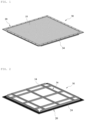
FIG. 1 is a perspective view showing top of an explosion panel according to the present invention. -
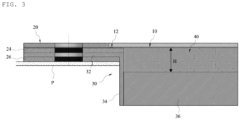
FIG. 2 is a perspective view showing underside of the explosion panel according to the present invention. -
FIG. 3 is a partial sectional view showing the explosion panel according to the present invention. - Hereinafter, an explanation of an embodiment of the present invention will be given in detail with reference to the attached drawings. An explosion panel of an energy storage system according to the present invention is disposed on an outer surface of a container for the energy storage system and has an insulation layer adapted to prevent external heat from being transferred to an interior of the container.
- The container has a top surface with, for example, a square-shaped open portion, and the explosion panel according to the present invention is mounted on the open portion of top of the container. As shown in
FIGs. 1 to 3 , the explosion panel according to the present invention includes atop disc 10 ruptured at a predetermined high pressure and aninsulation member 40 disposed on the underside of thetop disc 10. Thetop disc 10 can be ruptured if the interior of the container reaches the predetermined high pressure, and as shown, thetop disc 10 may haveexplosion lines 12. - The explosion lines 12 of the
top disc 10 are machined to relatively thin thicknesses by means of mechanical machining or laser machining, and if the interior of the container reaches the predetermined high pressure, theexplosion lines 12 serve to burst thetop disc 10. For example, scored lines formed by means of the laser machining or mechanical machining are provided as theexplosion lines 12. - The
top disc 10 is fastened torib flanges 20 andbody flanges 32 located on top and underside thereof. Therib flanges 20 are disposed along the edges of top of thetop disc 10, and thebody flanges 32 along the edges of underside of thetop disc 10. Therib flanges 20 and thebody flanges 32 have the same shape as each other. As shown, however, thebody flanges 32 may extend longer to the inside of thetop disc 10 than therib flanges 20. - Further,
upper gaskets 24 are located between thetop disc 10 and thebody flanges 32 to seal the space therebetween. Desirably, theupper gaskets 24 have the same shape as thebody flanges 32 when viewed on plane. In this case, thebody flanges 32 are provided as the edges of top of abody 30 of the explosion panel according to the present invention. - The
body 30 having a shape of a square includesinner walls 34 extending vertically downward from the insides of thebody flanges 32. Theinner walls 34 are molded by bending portions of thebody flanges 32 downward. When viewed on the plane, theinner walls 34 provided to the square shapes are configured to allow their lower portions to be connected to alattice structure 36. - In this case, the
inner walls 34 and thelattice structure 36 may be a grating made of vertical plates. Accordingly, theinner walls 34 and thelattice structure 36 are located at lower positions of thebody 30 than thebody flanges 32. Thebody flanges 32 extending horizontally outward from thebody 30 are supported against the top surface P of the container, and theinner walls 34 are supportedly inserted into the open portion of the top surface P of the container. - According to the present invention, the
inner walls 34 and thelattice structure 36 serve to support theinsulation member 40. To do this, theinner walls 34 have given heights H, and theinsulation member 40 is insertedly located inside theinner walls 34 and supported by thelattice structure 36. Theinsulation member 40, which is insertedly located inside theinner walls 34 and supported by thelattice structure 36, may have the corresponding height to the heights of theinner walls 34. - As the heights H of the
inner walls 34 are adjusted, accordingly, theinsulation member 40 located inside theinner walls 34 may be adjusted in thickness. Further, theinner walls 34 are molded to extend downward from the body flanges 32, and theinsulation member 40 does not protrude upward from the body flanges 32. In this case, thebody flanges 32 are located over the top surface P of the container, and accordingly, theinsulation member 40 does not protrude from the top surface P of the container, which is very advantageous in locating the container for the energy storage system thereon. - Further, the heights H of the
inner walls 34 according to a district where the energy storage system is installed are adjustable, which has the same meaning as that the thickness of theinsulation member 40 is adjustable according to a temperature of the district. Accordingly, theinner walls 34 constituting the explosion panel according to the present invention are adjusted in height to allow the thickness of theinsulation member 40 to be adjusted, thereby controlling the insulation performance of the explosion panel. - According to the present invention, the control of the insulation performance by the adjustment of the
insulation member 40 enables optimal insulation performance to be provided according to the installation place of the explosion panel. That is, the explosion panel according to the present invention can control the insulation performance from external temperatures by means of size setting or adjustment of one single part. - Next, a configuration for supporting the
top disc 10 will be explained. The explosion panel according to the present invention is mounted on the open portion of the top surface P of the container. Further,lower gaskets 26 are located between thebody flanges 32 and the top surface P of the container to seal the space therebetween. In this case, therib flanges 20 and thebody flanges 32 are disposed on top and underside of thetop disc 10. - In this case, the
rib flanges 20 are contactedly coupled to thetop disc 10 at the outsides of the explosion lines 12. That is, the inner end portions of therib flanges 20 are located at the outsides of the explosion lines 12, which enables the explosion lines 12 to be accurately ruptured at the predetermined pressure. The body flanges 32 coupled to the underside of thetop disc 10 extend to the insides of the explosion lines 12. - The extension of the
body flanges 32 to the insides of the explosion lines 12 means that the taped portions along the explosion lines 12 are perfectly supported against the body flanges 32. In this case, taping for sealing is performed for the undersides of the explosion lines 12, and accordingly, thebody flanges 32 extend more inwardly to support the undersides of the taped portions of the explosion lines 12. Accordingly, the extension of thebody flanges 32 to the insides of the explosion lines 12 enables the taped portions that may be damaged over a long period of time to be more firmly supported against the body flanges 32.
Claims (3)
- An explosion panel of an energy storage system, comprising:a top disc (10) having explosion lines (12) ruptured at a predetermined high pressure;a body (30) having body flanges (32) extending vertically outward therefrom to be supported against a top surface of a container for the energy storage system and inner walls (34) extending vertically downward from the body flanges (32) to have given heights (H);rib flanges (20) coming into close contact with top of the top disc (10);a lattice structure (36) disposed on the lower portions of the inner walls (34) of the body (30); andan insulation member (40) disposed inside the inner walls (34) and supported against the lattice structure (36),wherein the insulation member (40) is adjustable in thickness according to the changes in the given heights (H) of the inner walls (34) of the body (30).
- The explosion panel according to claim 1, wherein the rib flanges (20) come into contact with the top disc (10) at the outsides of the explosion lines (12), and the body flanges (32) extend to the insides of the explosion lines (12).
- The explosion panel according to claim 1, wherein the inner walls (34) of the body (30) and the lattice structure (36) are made of vertically arranged plates having given heights.
Applications Claiming Priority (1)
| Application Number | Priority Date | Filing Date | Title |
|---|---|---|---|
| KR1020220044682A KR102424115B1 (en) | 2022-04-11 | 2022-04-11 | A explosion panel for a energy storage system having an insulation panel |
Publications (2)
| Publication Number | Publication Date |
|---|---|
| EP4262003A2 true EP4262003A2 (en) | 2023-10-18 |
| EP4262003A3 EP4262003A3 (en) | 2024-02-28 |
Family
ID=82606167
Family Applications (1)
| Application Number | Title | Priority Date | Filing Date |
|---|---|---|---|
| EP22206355.4A Pending EP4262003A3 (en) | 2022-04-11 | 2022-11-09 | Explosion panel having insulation layer whose thickness is adjustable for energy storage system |
Country Status (4)
| Country | Link |
|---|---|
| US (1) | US20230327274A1 (en) |
| EP (1) | EP4262003A3 (en) |
| JP (1) | JP7322267B1 (en) |
| KR (1) | KR102424115B1 (en) |
Families Citing this family (1)
| Publication number | Priority date | Publication date | Assignee | Title |
|---|---|---|---|---|
| KR20240175460A (en) * | 2023-06-13 | 2024-12-20 | 에프디씨 주식회사 | Explosive panel assembly for container of energy storage system |
Citations (1)
| Publication number | Priority date | Publication date | Assignee | Title |
|---|---|---|---|---|
| KR101381592B1 (en) | 2013-09-04 | 2014-04-04 | 채재훈 | Container for energy storage device |
Family Cites Families (8)
| Publication number | Priority date | Publication date | Assignee | Title |
|---|---|---|---|---|
| JPS53111416U (en) * | 1977-02-14 | 1978-09-06 | ||
| JP3084906U (en) * | 2001-09-27 | 2002-04-05 | パシフィックグレーンセンター株式会社 | Pressure relief device |
| US20040172889A1 (en) * | 2003-03-04 | 2004-09-09 | Tom Eijkelenberg | Unitary overpressure vent panel structure |
| US8910425B2 (en) * | 2004-04-23 | 2014-12-16 | BS&B Safety Systems, Limited | Fatigue resistant pressure relief assembly |
| US7628167B2 (en) * | 2006-08-17 | 2009-12-08 | Fike Corporation | Spring steel high overpressure vent structure |
| KR101066236B1 (en) * | 2010-11-17 | 2011-09-20 | 에프디씨 주식회사 | Burst Disc Assemblies for Thermal Shields |
| US9199789B2 (en) * | 2012-02-29 | 2015-12-01 | Fike Corporation | Explosion vent including buckle tab plate |
| DE102015115621A1 (en) * | 2015-09-16 | 2017-03-16 | Brilex Gesellschaft für Explosionsschutz mbH | Rupture disc with thermal insulation |
-
2022
- 2022-04-11 KR KR1020220044682A patent/KR102424115B1/en active Active
- 2022-11-09 EP EP22206355.4A patent/EP4262003A3/en active Pending
- 2022-11-24 JP JP2022187286A patent/JP7322267B1/en active Active
- 2022-11-30 US US18/071,752 patent/US20230327274A1/en active Pending
Patent Citations (1)
| Publication number | Priority date | Publication date | Assignee | Title |
|---|---|---|---|---|
| KR101381592B1 (en) | 2013-09-04 | 2014-04-04 | 채재훈 | Container for energy storage device |
Also Published As
| Publication number | Publication date |
|---|---|
| US20230327274A1 (en) | 2023-10-12 |
| JP2023155877A (en) | 2023-10-23 |
| EP4262003A3 (en) | 2024-02-28 |
| JP7322267B1 (en) | 2023-08-07 |
| KR102424115B1 (en) | 2022-07-22 |
Similar Documents
| Publication | Publication Date | Title |
|---|---|---|
| EP4262003A2 (en) | Explosion panel having insulation layer whose thickness is adjustable for energy storage system | |
| US20100062297A1 (en) | Insulating device and tensioning device for a high temperature fuel cell system component | |
| JP7235485B2 (en) | BATTERY CASE, VEHICLE INCLUDING THE SAME, AND STATIONAL POWER STORAGE DEVICE | |
| EP3361526B1 (en) | Pressure release mechanism for battery pack | |
| EP3959766B1 (en) | Battery pack design and method | |
| JP7493297B2 (en) | Battery insulation structure | |
| KR20250048355A (en) | Vehicle batteries for electric vehicles | |
| KR101154408B1 (en) | Relief valve assembly of hydrogen supply system for fuel cell | |
| KR102782519B1 (en) | A explosion panel assembly for a energy storage system having insulation function | |
| FI72794B (en) | BELYSNINGSARMATUR. | |
| US4384671A (en) | Temperature responsive vent damper | |
| EP4429002A1 (en) | Directional pressure relief structure, battery box body, battery, and electric apparatus | |
| US20110290554A1 (en) | Apparatus for adjusting environmental conditions for an electrical component | |
| KR101826072B1 (en) | Portable explosion-proof gas burner | |
| US20260031453A1 (en) | Battery pack casing and battery pack | |
| KR102498967B1 (en) | A explosion panel assembly for a energy storage system having insulation function | |
| KR20190071181A (en) | Insulation system of liquefied natural gas cargo and membrane install structure thereof | |
| KR102534686B1 (en) | A explosion panel assembly for a energy storage system functions of exhaust and insulation | |
| JPS6037675A (en) | Molten carbonate fuel cell | |
| CN213745197U (en) | Flame-proof fire damper actuating mechanism | |
| GB2297824A (en) | A chill store insulated cladding system | |
| CN223086679U (en) | Cooker packaging structure | |
| EP4730505A1 (en) | Explosion-proof panel and energy storage system including the same | |
| CA2059061C (en) | Insulating support base for a cylindrical electric hot water tank | |
| EP4546537A1 (en) | Energy storage cell comprising supporting member for the venting membrane |
Legal Events
| Date | Code | Title | Description |
|---|---|---|---|
| PUAI | Public reference made under article 153(3) epc to a published international application that has entered the european phase |
Free format text: ORIGINAL CODE: 0009012 |
|
| STAA | Information on the status of an ep patent application or granted ep patent |
Free format text: STATUS: THE APPLICATION HAS BEEN PUBLISHED |
|
| AK | Designated contracting states |
Kind code of ref document: A2 Designated state(s): AL AT BE BG CH CY CZ DE DK EE ES FI FR GB GR HR HU IE IS IT LI LT LU LV MC ME MK MT NL NO PL PT RO RS SE SI SK SM TR |
|
| PUAL | Search report despatched |
Free format text: ORIGINAL CODE: 0009013 |
|
| AK | Designated contracting states |
Kind code of ref document: A3 Designated state(s): AL AT BE BG CH CY CZ DE DK EE ES FI FR GB GR HR HU IE IS IT LI LT LU LV MC ME MK MT NL NO PL PT RO RS SE SI SK SM TR |
|
| RIC1 | Information provided on ipc code assigned before grant |
Ipc: B65D 90/36 20060101ALI20240124BHEP Ipc: H01M 50/342 20210101AFI20240124BHEP |
|
| STAA | Information on the status of an ep patent application or granted ep patent |
Free format text: STATUS: REQUEST FOR EXAMINATION WAS MADE |
|
| 17P | Request for examination filed |
Effective date: 20240320 |
|
| RBV | Designated contracting states (corrected) |
Designated state(s): AL AT BE BG CH CY CZ DE DK EE ES FI FR GB GR HR HU IE IS IT LI LT LU LV MC ME MK MT NL NO PL PT RO RS SE SI SK SM TR |