EP4261986A1 - Battery housing, lithium-ion secondary battery, and electric vehicle - Google Patents
Battery housing, lithium-ion secondary battery, and electric vehicle Download PDFInfo
- Publication number
- EP4261986A1 EP4261986A1 EP20964606.6A EP20964606A EP4261986A1 EP 4261986 A1 EP4261986 A1 EP 4261986A1 EP 20964606 A EP20964606 A EP 20964606A EP 4261986 A1 EP4261986 A1 EP 4261986A1
- Authority
- EP
- European Patent Office
- Prior art keywords
- battery
- battery housing
- cooling unit
- side plates
- plates
- Prior art date
- Legal status (The legal status is an assumption and is not a legal conclusion. Google has not performed a legal analysis and makes no representation as to the accuracy of the status listed.)
- Withdrawn
Links
Images




Classifications
-
- H—ELECTRICITY
- H01—ELECTRIC ELEMENTS
- H01M—PROCESSES OR MEANS, e.g. BATTERIES, FOR THE DIRECT CONVERSION OF CHEMICAL ENERGY INTO ELECTRICAL ENERGY
- H01M10/00—Secondary cells; Manufacture thereof
- H01M10/05—Accumulators with non-aqueous electrolyte
- H01M10/052—Li-accumulators
- H01M10/0525—Rocking-chair batteries, i.e. batteries with lithium insertion or intercalation in both electrodes; Lithium-ion batteries
-
- H—ELECTRICITY
- H01—ELECTRIC ELEMENTS
- H01M—PROCESSES OR MEANS, e.g. BATTERIES, FOR THE DIRECT CONVERSION OF CHEMICAL ENERGY INTO ELECTRICAL ENERGY
- H01M10/00—Secondary cells; Manufacture thereof
- H01M10/60—Heating or cooling; Temperature control
- H01M10/61—Types of temperature control
- H01M10/613—Cooling or keeping cold
-
- H—ELECTRICITY
- H01—ELECTRIC ELEMENTS
- H01M—PROCESSES OR MEANS, e.g. BATTERIES, FOR THE DIRECT CONVERSION OF CHEMICAL ENERGY INTO ELECTRICAL ENERGY
- H01M10/00—Secondary cells; Manufacture thereof
- H01M10/60—Heating or cooling; Temperature control
- H01M10/65—Means for temperature control structurally associated with the cells
- H01M10/654—Means for temperature control structurally associated with the cells located inside the innermost case of the cells, e.g. mandrels, electrodes or electrolytes
-
- H—ELECTRICITY
- H01—ELECTRIC ELEMENTS
- H01M—PROCESSES OR MEANS, e.g. BATTERIES, FOR THE DIRECT CONVERSION OF CHEMICAL ENERGY INTO ELECTRICAL ENERGY
- H01M10/00—Secondary cells; Manufacture thereof
- H01M10/60—Heating or cooling; Temperature control
- H01M10/65—Means for temperature control structurally associated with the cells
- H01M10/655—Solid structures for heat exchange or heat conduction
- H01M10/6554—Rods or plates
-
- H—ELECTRICITY
- H01—ELECTRIC ELEMENTS
- H01M—PROCESSES OR MEANS, e.g. BATTERIES, FOR THE DIRECT CONVERSION OF CHEMICAL ENERGY INTO ELECTRICAL ENERGY
- H01M10/00—Secondary cells; Manufacture thereof
- H01M10/60—Heating or cooling; Temperature control
- H01M10/65—Means for temperature control structurally associated with the cells
- H01M10/655—Solid structures for heat exchange or heat conduction
- H01M10/6556—Solid parts with flow channel passages or pipes for heat exchange
-
- H—ELECTRICITY
- H01—ELECTRIC ELEMENTS
- H01M—PROCESSES OR MEANS, e.g. BATTERIES, FOR THE DIRECT CONVERSION OF CHEMICAL ENERGY INTO ELECTRICAL ENERGY
- H01M50/00—Constructional details or processes of manufacture of the non-active parts of electrochemical cells other than fuel cells, e.g. hybrid cells
- H01M50/10—Primary casings; Jackets or wrappings
- H01M50/102—Primary casings; Jackets or wrappings characterised by their shape or physical structure
- H01M50/103—Primary casings; Jackets or wrappings characterised by their shape or physical structure prismatic or rectangular
-
- H—ELECTRICITY
- H01—ELECTRIC ELEMENTS
- H01M—PROCESSES OR MEANS, e.g. BATTERIES, FOR THE DIRECT CONVERSION OF CHEMICAL ENERGY INTO ELECTRICAL ENERGY
- H01M50/00—Constructional details or processes of manufacture of the non-active parts of electrochemical cells other than fuel cells, e.g. hybrid cells
- H01M50/10—Primary casings; Jackets or wrappings
- H01M50/14—Primary casings; Jackets or wrappings for protecting against damage caused by external factors
- H01M50/143—Fireproof; Explosion-proof
-
- H—ELECTRICITY
- H01—ELECTRIC ELEMENTS
- H01M—PROCESSES OR MEANS, e.g. BATTERIES, FOR THE DIRECT CONVERSION OF CHEMICAL ENERGY INTO ELECTRICAL ENERGY
- H01M50/00—Constructional details or processes of manufacture of the non-active parts of electrochemical cells other than fuel cells, e.g. hybrid cells
- H01M50/20—Mountings; Secondary casings or frames; Racks, modules or packs; Suspension devices; Shock absorbers; Transport or carrying devices; Holders
- H01M50/204—Racks, modules or packs for multiple batteries or multiple cells
- H01M50/207—Racks, modules or packs for multiple batteries or multiple cells characterised by their shape
- H01M50/209—Racks, modules or packs for multiple batteries or multiple cells characterised by their shape adapted for prismatic or rectangular cells
-
- H—ELECTRICITY
- H01—ELECTRIC ELEMENTS
- H01M—PROCESSES OR MEANS, e.g. BATTERIES, FOR THE DIRECT CONVERSION OF CHEMICAL ENERGY INTO ELECTRICAL ENERGY
- H01M2220/00—Batteries for particular applications
- H01M2220/20—Batteries in motive systems, e.g. vehicle, ship, plane
-
- Y—GENERAL TAGGING OF NEW TECHNOLOGICAL DEVELOPMENTS; GENERAL TAGGING OF CROSS-SECTIONAL TECHNOLOGIES SPANNING OVER SEVERAL SECTIONS OF THE IPC; TECHNICAL SUBJECTS COVERED BY FORMER USPC CROSS-REFERENCE ART COLLECTIONS [XRACs] AND DIGESTS
- Y02—TECHNOLOGIES OR APPLICATIONS FOR MITIGATION OR ADAPTATION AGAINST CLIMATE CHANGE
- Y02E—REDUCTION OF GREENHOUSE GAS [GHG] EMISSIONS, RELATED TO ENERGY GENERATION, TRANSMISSION OR DISTRIBUTION
- Y02E60/00—Enabling technologies; Technologies with a potential or indirect contribution to GHG emissions mitigation
- Y02E60/10—Energy storage using batteries
Definitions
- the present application relates to the technical field of battery technology, and in particular, to a battery housing, a lithium-ion secondary battery, and an electric vehicle.
- Lithium-ion batteries are widely used due to their high energy density and long service life.
- the capacity of lithium-ion batteries is directly proportional to the distance traveled by the vehicle, and with the increasing requirements of electric vehicles for range, the capacity of the batteries equipped is also increasing.
- the heat generated during charging and discharging also increases. If the heat inside the battery is not effectively removed in a timely manner, the performance of the battery will sharply decrease, and there may even be a risk of burning and explosion.
- the existing technology mainly uses an air cooling system or a liquid cooling system to control the temperature of the battery, and sets up a coolant channel between battery modules or individual batteries. Through the heat exchange between the coolant channel and the battery modules or the individual batteries, the heat of the battery is transmitted to the fluid, and the heat is exported through the fluid, so as to cool the battery.
- the heat of the battery cells needs to be indirectly exported through the battery housing, so the heat inside the battery cannot be timely exported, resulting in low cooling efficiency of the battery.
- the object of the present application is to provide a battery housing and a lithium-ion secondary battery, aiming to solve the shortcomings of the background technology mentioned above.
- a cooling unit inside the battery housing By setting a cooling unit inside the battery housing, the heat generated by the battery cells can be timely exported, thereby quickly and effectively solving the heat dissipation problem of the battery cells during the charging and discharging process.
- An embodiment of the present application provides a battery housing, wherein the battery housing has openings at both ends in the length direction, at least one cooling unit extending along the length direction is provided in the battery housing, a coolant channel for circulation of a coolant is provided in the cooling unit, the at least one cooling unit divides the internal space of the battery housing into at least two accommodating cavities spaced apart from top to bottom in the height direction, each accommodating cavity is configured for accommodating a battery cell.
- the cooling unit is a cooling plate or a cooling tube.
- the battery housing has a prismatic structure and includes two opposite first side plates and two opposite second side plates, the two first side plates and the two second side plates are connected to each other, and the internal space of the battery housing is formed by the enclosure of the two first side plates and the two second side plates.
- each cooling unit includes two opposite first partition plates, the two first partition plates are spaced apart from top to bottom and extend along the length direction, two opposite sides of each first partition plate are respectively connected to the inner walls of the two first side plates, the coolant channel is formed by the enclosure of the two first partition plates and the two first side plates.
- each first partition plate is connected to the inner walls of the two first side plates as an integrated structure.
- each cooling unit includes two opposite first partition plates, the two first partition plates are spaced apart from top to bottom and extend along the length direction, and each cooling unit further includes two opposite second partition plates, the two second partition plates are spaced apart from left to right and extend along the length direction, the outer wall of one of the second partition plates is attached to the inner wall of one of the first side plates, and the outer wall of the other second partition plate is attached to the inner wall of the other first side plate, the two first partition plates and the two second partition plates are connected to each other, the coolant channel is formed by the enclosure of the two first partition plates and the two second partition plates.
- the two first side plates are arranged in the height direction
- the two second side plates are arranged in the thickness direction of the battery housing
- the two first partition plates are arranged parallel to the two second side plates.
- the number of the cooling unit is one, and the cooling unit is located in the middle of the battery housing, the cooling unit divides the internal space of the battery housing into two accommodating cavities spaced apart from top to bottom in the height direction.
- the number of the cooling unit is two, and the two cooling units are stacked to each other and are located in the middle of the battery housing, the two cooling units divide the internal space of the battery housing into two accommodating cavities spaced apart from top to bottom in the height direction.
- the number of the cooling unit is at least two, and the at least two cooling units are spaced apart from top to bottom in the height direction within the battery housing, the at least two cooling units divide the internal space of the battery housing into at least three accommodating cavities spaced apart from top to bottom in the height direction.
- the number of the cooling unit is at least three, and the at least three cooling units are spaced apart from top to bottom in the height direction within the battery housing, wherein the two cooling units located at the top and bottom are respectively attached to the two second side plates.
- the number of the cooling unit is four, wherein the two cooling units located at the top and bottom are respectively attached to the two second side plates, and the other two cooling units are stacked to each other and are located in the middle of the battery housing.
- connectors provided at two opposite ends of each cooling unit, the connectors extend outward from the two ends of the cooling unit, the coolant flows into or out of the coolant channel through the connectors.
- Another embodiment of the present application also provides a lithium-ion secondary battery, including the battery housing mentioned above, wherein each accommodating cavity of the battery housing contains a battery cell, and the cooling unit is in thermal conduction contact with the battery cells in adjacent accommodating cavities.
- each accommodating cavity in the length direction is sealed with a battery cover plate, and the battery cover plate is arranged at the opening of the battery housing.
- the two battery cover plates provided at two opposite ends of each accommodating cavity in the length direction are each provided with an explosion-proof valve, or only one of the battery cover plates is provided with an explosion-proof valve.
- the two battery cover plates provided at two opposite ends of each accommodating cavity in the length direction are each provided with an electrode terminal, at least one of the battery cover plates is provided with an explosion-proof groove, and the explosion-proof groove surrounds or is set partially around the electrode terminal.
- Another embodiment of the present application also provides an electric vehicle, including the lithium-ion secondary battery mentioned above.
- a cooling unit is provided in the battery housing, and a coolant channel is provided in the cooling unit, allowing the coolant to circulate along the coolant channel. Meanwhile, the cooling unit is in thermal conduction contact with the battery cells in adjacent accommodating cavities. Through the heat exchange between the battery cells and the cooling unit, as well as the heat exchange between the cooling unit and the coolant, the heat of the battery cells can be transferred to the coolant, and the heat is exported to the outside of the battery through the coolant, thereby achieving the purpose of cooling the battery.
- This structure has high heat conduction efficiency and good cooling effect.
- At least one cooling unit is located between two adjacent battery cells, thus enabling the timely export of heat between the two adjacent battery cells without the problem of heat accumulation between the two adjacent battery cells, thereby effectively solving the internal heat dissipation problem of the battery and improving the safety performance of the battery.
- an embodiment of the present application provides a battery housing 1.
- the battery housing 1 has a prismatic structure, and is particularly suitable for prismatic lithium-ion batteries.
- the battery housing 1 has a length direction L, a height direction H, and a thickness direction T.
- the definition of the directions is based on the orientation or positional relationship shown in the drawings, and is only for the convenience of expression and description. Therefore, it cannot be understood as a limitation of the present application.
- the length value of the battery housing 1 in the length direction L is greater than its height value in the height direction H
- the height value of the battery housing 1 in the height direction H is greater than its thickness value in the thickness direction T, that is, the battery housing 1 has a flat structure.
- the battery housing 1 is a hollow structure and has openings 11 at both ends in the length direction L.
- a cooling unit 2 extending along the length direction L is provided in the battery housing 1, and a coolant channel 21 for circulation of a coolant is provided in the cooling unit 2.
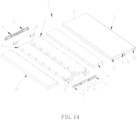
- the cooling unit 2 divides the internal space of the battery housing 1 into two accommodating cavities 12 spaced apart from top to bottom in the height direction H. Each accommodating cavity 12 is used for accommodating a battery cell 4 (the specific structure of the battery cell 4 can be seen in FIG. 14 ).
- the cooling unit 2 is located in the middle of the battery housing 1.
- the cooling unit 2 divides the internal space of the battery housing 1 into two accommodating cavities 12 spaced apart from top to bottom in the height direction H, and each accommodating cavity 12 has the same size as the battery cell 4.
- the sizes of the two accommodating cavities 12 can also be different.
- one of the accommodating cavities 12 is twice the size of the battery cell 4, and two battery cells 4 can be placed into the accommodating cavity 12, while the other accommodating cavity 12 is the same size as the battery cell 4.
- the size of the accommodating cavity 12 can be designed according to actual needs.
- the cross-sectional shape of the coolant channel 21 can be rectangular, circular, or other shapes, and it is not limited herein.
- the battery housing 1 includes two opposite first side plates 13 and two opposite second side plates 14.
- the two first side plates 13 and two second side plates 14 are connected to each other, and the internal space of the battery housing 1 is formed by the enclosure of the two first side plates 13 and the two second side plates 14.
- each cooling unit 2 is a cooling plate structure, and each cooling unit 2 includes two opposite first partition plates 22.
- the two first partition plates 22 are spaced apart from top to bottom and extend along the length direction L.
- Two opposite sides of each first partition plate 22 are respectively connected to the inner walls of the two first side plates 13, and the coolant channel 21 is formed by the enclosure of the two first partition plates 22 and the two first side plates 13.
- the cooling unit 2 is generally not extended along the height direction H of the battery housing 1, that is, the two opposite sides of the first partition plate 22 are not connected to the inner walls of the second side plates 14, but to the inner walls of the first side plates 13, so that the two accommodating cavities 12 are arranged and distributed in the height direction H of the battery housing 1.
- the coolant circulates in the coolant channel 21. Since the accommodating cavity 12 is filled with electrolyte and the coolant cannot be mixed with the electrolyte, the first partition plate 22 needs to be hermetically connected to the first side plate 13 to prevent the coolant from mixing with the electrolyte and affecting battery performance.
- the entire battery housing 1 is integrally formed, that is, the two opposite sides of each first partition plate 22 are connected to the inner walls of the two first side plates 13 as an integrated structure.
- the coolant is cooling liquid.
- the cooling liquid may be water, ethylene glycol aqueous solution, etc.
- the two first side plates 13 are arranged in the height direction H of the battery housing 1
- the two second side plates 14 are arranged in the thickness direction T of the battery housing 1
- the two first partition plates 22 are arranged parallel to the two second side plates 14.
- the cooling unit 2 is a cooling tube structure, and each cooling unit 2 includes two opposite first partition plates 22, and the two first partition plates 22 are spaced apart from top to bottom and extend along the length direction L.
- Each cooling unit 2 further includes two opposite second partition plates 23, and the two second partition plates 23 are spaced apart from left to right and extend along the length direction L.
- the outer wall of one of the second partition plates 23 is attached to the inner wall of one of the first side plates 13, and the outer wall of the other second partition plate 23 is attached to the inner wall of the other first side plate 13.
- the two first partition plates 22 and the two second partition plates 23 are connected to each other, and the coolant channel 21 is formed by the enclosure of the two first partition plates 22 and the two second partition plates 23.
- the cooling unit 2 is inserted into the battery housing 1 and then fixed in the battery housing 1 by welding or other means.
- the number of the cooling unit 2 installed inside the battery housing 1 can also be multiple, such as two, three, etc.
- Multiple cooling units 2 are spaced apart from top to bottom in the height direction H within the battery housing 1, and the multiple cooling units 2 divide the internal space of the battery housing 1 into multiple accommodating cavities 12 spaced apart from top to bottom in the height direction H.
- the multiple accommodating cavities 12 have the same size, and each accommodating cavity 12 is the same size as the battery cell 4.
- the multiple accommodating cavities 12 can have different sizes.
- one of the accommodating cavities 12 is twice the size of the battery cell 4, and two battery cells 4 can be placed into the accommodating cavity 12.
- the size of other accommodating cavities 12 is the same as that of the battery cell 4.
- the size of the accommodating cavity 12 can be designed according to actual needs.
- At least one of the cooling units 2 is not attached to the second side plates 14.
- the number of the cooling unit 2 is two, if the two cooling units 2 are respectively attached to the two second side plates 14, only one accommodating cavity 12 can be formed in the battery housing 1.
- the effect of exporting the heat between the battery cells 4 cannot be achieved, that is, the heat inside the battery housing 1 cannot be timely exported.
- the following examples illustrate the preferred arrangement and distribution of the cooling units 2 in the battery housing 1 when there are multiple cooling units 2.
- FIG. 6 another embodiment of the present application provides a battery housing 1.
- the number of the cooling unit 2 provided in the battery housing 1 is different.
- the number of the cooling unit 2 is two, and the two cooling units 2 are spaced apart from top to bottom in the height direction H within the battery housing 1.
- the two cooling units 2 divide the internal space of the battery housing 1 into three accommodating cavities 12 spaced apart from top to bottom in the height direction H.
- FIG. 7 another embodiment of the present application provides a battery housing 1.
- the arrangement of the cooling units 2 is different.
- the number of the cooling unit 2 is two, and the two cooling units 2 are stacked to each other and are located in the middle of the battery housing 1.
- the two cooling units 2 divide the internal space of the battery housing 1 into two accommodating cavities 12 spaced apart from top to bottom in the height direction H.
- FIG. 8 another embodiment of the present application provides a battery housing 1.
- the number of the cooling unit 2 provided in the battery housing 1 is different.
- the number of the cooling unit 2 is three, and the three cooling units 2 are spaced apart from top to bottom in the height direction H within the battery housing 1.
- the three cooling units 2 divide the internal space of the battery housing 1 into four accommodating cavities 12 spaced apart from top to bottom in the height direction H.
- FIG. 9 another embodiment of the present application provides a battery housing 1.
- the arrangement of the cooling units 2 is different.
- the number of the cooling unit 2 is three, and the three cooling units 2 are spaced apart from top to bottom in the height direction H within the battery housing 1, wherein the two cooling units 2 located at the top and bottom are respectively attached to the two second side plates 14, and the other cooling unit 2 is located in the middle of the battery housing 1.
- the three cooling units 2 divide the internal space of the battery housing 1 into two accommodating cavities 12 spaced apart from top to bottom in the height direction H.
- FIG. 10 another embodiment of the present application provides a battery housing 1.
- the number of the cooling unit 2 provided in the battery housing 1 is different.
- the number of the cooling unit 2 is four, wherein the two cooling units 2 located at the top and bottom are respectively attached to the two second side plates 14, and the other two cooling units 2 are stacked to each other and are located in the middle of the battery housing 1.
- the four cooling units 2 divide the internal space of the battery housing 1 into two accommodating cavities 12 spaced apart from top to bottom in the height direction H.
- the number of the cooling unit 2 can also be more, such as five, six, etc., and the present application will not provide examples one by one.
- Multiple cooling units 2 divide the internal space of the battery housing 1 into multiple accommodating cavities 12, and at least one cooling unit 2 is provided between every two adjacent accommodating cavities 12.
- the number of the cooling unit 2 provided between every two adjacent accommodating cavities 12 generally does not exceed two.
- the lithium-ion secondary battery 3 includes battery cells 4, and the lithium-ion secondary battery 3 further includes the battery housing 1 as described above.
- the number of the battery cells 4 is the same as the number of the accommodating cavities 12 in the battery housing 1, both of which are two.
- Each accommodating cavity 12 contains a battery cell 4, and the cooling unit 2 is in thermal conduction contact with the battery cells 4 in adjacent accommodating cavities 12.
- the number of the battery cells 4 can also be more, such as three, four, etc.
- the number of the battery cells 4 is the same as the number of the accommodating cavities 12, each accommodating cavity 12 is the same size as the battery cell 4, and each accommodating cavity 12 contains a battery cell 4.
- the size of the accommodating cavity 12 can also be different from that of the battery cell 4. For example, if one of the accommodating cavities 12 is twice the size of the battery cell 4, two battery cells 4 can be placed in the accommodating cavity 12, while the size of the other accommodating cavities 12 is the same as that of the battery cell 4.
- the number of the cooling unit 2 installed in the battery housing 1 can be designed according to actual needs.
- each accommodating cavity 12 in the length direction L two opposite ends of each accommodating cavity 12 in the length direction L are each sealed with a battery cover plate 5, and the battery cover plate 5 is arranged at the opening 11 of the battery housing 1.
- the two battery cover plates 5 provided at two opposite ends of each accommodating cavity 12 in the length direction L are each provided with an explosion-proof valve 6.
- the two battery cover plates 5 are each provided with an explosion-proof valve 6.
- each accommodating cavity 12 in the length direction L are each provided with an electrode terminal 7.
- Each accommodating cavity 12 is provided with a tab 8 at opposite ends.
- the electrode terminal 7 is electrically connected to the battery cell 4 through the tab 8, one end of the tab 8 is connected to the battery cell 4, and the other end of the tab 8 is connected to the electrode terminal 7.
- the battery cell 4 has a positive electrode and a negative electrode.
- the positive and negative electrodes of the battery cell 4 are located at opposite ends of the battery cell 4, respectively.
- the electrode terminal 7 on the battery cover plate 5 at one end of each accommodating cavity 12 is electrically connected to the positive electrode of the battery cell 4, and the electrode terminal 7 on the battery cover plate 5 at the other end of each accommodating cavity 12 is electrically connected to the negative electrode of the battery cell 4.
- the two battery cells 4 can be designed to be connected in parallel or in series according to actual needs, and it is not limited herein.
- an electrolyte injection hole 10 is provided in the battery cover plate 5 provided at one end of each accommodating cavity 12 in the length direction L.
- the two battery cover plates 5 provided at two opposite ends of each accommodating cavity 12 in the length direction L are each provided with the electrolyte injection hole 10.
- each cooling unit 2 there are connectors 9 provided at two opposite ends of each cooling unit 2.
- the connectors 9 extend outward from the two ends of the cooling unit 2, and are located between two adjacent battery cover plates 5.
- the coolant flows into or out of the coolant channel 21 through the connectors 9.
- the connector 9 at one end of each cooling unit 2 serves as the coolant inlet, and the connector 9 at the other end serves as the coolant outlet.
- the coolant storage tank or coolant circulation system located outside the battery module is connected to both the coolant inlet and the coolant outlet, thereby achieving the purpose of circulating the coolant in the coolant channel 21.
- each battery cell 4 is wrapped with a Mylar film 41.
- the battery housing 1 is made of metal materials such as steel or aluminum, and the Mylar film 41 serves as insulation to prevent direct contact between the battery cell 4 and the battery housing 1, resulting in short circuiting issues.
- the assembly method of the lithium-ion secondary battery 3 is as follows: firstly, the connectors 9 are welded at the two opposite ends of the cooling unit 2, then the two battery cells 4 are installed into the two accommodating cavities 12 of the battery housing 1, respectively, and thereafter the battery cover plates 5 are welded at the openings 11 of the battery housing 1, so that the battery cells 4 are packaged in the battery housing 1.
- the cooling unit 2 is provided in the battery housing 1, and the coolant channel 21 is provided in the cooling unit 2, thus allowing the coolant to circulate along the coolant channel 21. Meanwhile, the cooling unit 2 is in direct thermal conduction contact with the battery cells 4 in adjacent accommodating cavities 12. Through the heat exchange between the battery cells 4 and the cooling unit 2, as well as the heat exchange between the cooling unit 2 and the coolant, the heat of the battery cells 4 can be transferred to the coolant, and the heat is exported to the outside of the battery through the coolant, thereby achieving the purpose of cooling the battery.
- This structure has high heat conduction efficiency and good cooling effect.
- the cooling unit 2 is located between two adjacent battery cells 4, thus enabling the timely export of heat between the two adjacent battery cells 4 without the problem of heat accumulation between the two adjacent battery cells 4, thereby effectively solving the internal heat dissipation problem of the battery and improving the safety performance of the battery.
- FIGs. 15 and 16 another embodiment of the present application provides a lithium-ion secondary battery 3.
- the structure of the battery cover plate 5 is different, and there is no explosion-proof valve 6 provided on the battery cover plate 5.
- the two battery cover plates 5 provided at two opposite ends of each accommodating cavity 12 in the length direction L are each provided with an electrode terminal 7
- at least one of the battery cover plates 5 is provided with an explosion-proof groove 51
- the explosion-proof groove 51 surrounds the electrode terminal 7.
- the explosion-proof groove 51 may also be set partially around the electrode terminal 7.
- the explosion-proof groove 51 is a rectangular structure, that is, a closed annular structure.
- the closed annular structure can also be circular, triangular, and other shapes.
- the explosion-proof groove 51 can also be a U-shaped, C-shaped, or L-shaped structure with an opening, and it is not limited herein.
- the explosion-proof groove 51 is set on the outer surface of the battery cover plate 5.
- the explosion-proof groove 51 can also be set on the inner surface of the battery cover plate 5, and it is not limited herein.
- an explosion-proof groove 51 is set on the battery cover plate 5, so that the battery cover plate 5 can burst or explode along the explosion-proof groove 51 in the event of abnormal battery conditions, and the battery can quickly release pressure, thus achieving the explosion-proof function of the battery.
- the explosion-proof groove 51 surrounds or is set partially around the electrode terminal 7, so that the battery cover plate 5 can drive the electrode terminal 7 to move together when the battery cover plate 5 bursts or explodes.
- the electrode terminal 7 will leave from its original position and move away from the battery cells 4.
- the movement of the electrode terminal 7 will pull the tab 8, so that the tab 8 or the junction of the tab 8 (including the junction between the tab 8 and the electrode terminal 7, or the junction between the tab 8 and an electrode plate of the battery cell 4) is partially broken or completely broken, thereby weakening (the resistance will increase after the tab 8 is partially broken) or cutting off the electrical connection between the electrode terminal 7 and the battery cells 4, that is, weakening or cutting off the electrical connection between external electrical components and the battery cells 4, thereby effectively inhibiting the continuous heat generation inside the battery and improving the safety performance of the battery.
- a cooling unit is provided in the battery housing, and a coolant channel is provided in the cooling unit, allowing the coolant to circulate along the coolant channel. Meanwhile, the cooling unit is in thermal conduction contact with the battery cells in adjacent accommodating cavities. Through the heat exchange between the battery cells and the cooling unit, as well as the heat exchange between the cooling unit and the coolant, the heat of the battery cells can be transferred to the coolant, and the heat is exported to the outside of the battery through the coolant, thereby achieving the purpose of cooling the battery.
- This structure has high heat conduction efficiency and good cooling effect.
- At least one cooling unit is located between two adjacent battery cells, thus enabling the timely export of heat between the two adjacent battery cells without the problem of heat accumulation between the two adjacent battery cells, thereby effectively solving the internal heat dissipation problem of the battery and improving the safety performance of the battery.
Landscapes
- Chemical & Material Sciences (AREA)
- Chemical Kinetics & Catalysis (AREA)
- Electrochemistry (AREA)
- General Chemical & Material Sciences (AREA)
- Engineering & Computer Science (AREA)
- Manufacturing & Machinery (AREA)
- Materials Engineering (AREA)
- Secondary Cells (AREA)
- Battery Mounting, Suspending (AREA)
Abstract
Description
- The present application relates to the technical field of battery technology, and in particular, to a battery housing, a lithium-ion secondary battery, and an electric vehicle.
- With the application and widespread promotion of electric vehicles, batteries, as the core components of electric vehicles, have put forward higher requirements for the safety performance of batteries.
- Lithium-ion batteries are widely used due to their high energy density and long service life. The capacity of lithium-ion batteries is directly proportional to the distance traveled by the vehicle, and with the increasing requirements of electric vehicles for range, the capacity of the batteries equipped is also increasing. However, as the battery capacity increases, the heat generated during charging and discharging also increases. If the heat inside the battery is not effectively removed in a timely manner, the performance of the battery will sharply decrease, and there may even be a risk of burning and explosion.
- The existing technology mainly uses an air cooling system or a liquid cooling system to control the temperature of the battery, and sets up a coolant channel between battery modules or individual batteries. Through the heat exchange between the coolant channel and the battery modules or the individual batteries, the heat of the battery is transmitted to the fluid, and the heat is exported through the fluid, so as to cool the battery. However, in this structure, due to the direct contact and heat exchange between the cooling system and the battery housing, and the heat-generating source of the battery being the battery cells located inside the battery housing, the heat of the battery cells needs to be indirectly exported through the battery housing, so the heat inside the battery cannot be timely exported, resulting in low cooling efficiency of the battery.
- The object of the present application is to provide a battery housing and a lithium-ion secondary battery, aiming to solve the shortcomings of the background technology mentioned above. By setting a cooling unit inside the battery housing, the heat generated by the battery cells can be timely exported, thereby quickly and effectively solving the heat dissipation problem of the battery cells during the charging and discharging process.
- An embodiment of the present application provides a battery housing, wherein the battery housing has openings at both ends in the length direction, at least one cooling unit extending along the length direction is provided in the battery housing, a coolant channel for circulation of a coolant is provided in the cooling unit, the at least one cooling unit divides the internal space of the battery housing into at least two accommodating cavities spaced apart from top to bottom in the height direction, each accommodating cavity is configured for accommodating a battery cell.
- In an achievable way, the cooling unit is a cooling plate or a cooling tube.
- In an achievable way, the battery housing has a prismatic structure and includes two opposite first side plates and two opposite second side plates, the two first side plates and the two second side plates are connected to each other, and the internal space of the battery housing is formed by the enclosure of the two first side plates and the two second side plates.
- In an achievable way, each cooling unit includes two opposite first partition plates, the two first partition plates are spaced apart from top to bottom and extend along the length direction, two opposite sides of each first partition plate are respectively connected to the inner walls of the two first side plates, the coolant channel is formed by the enclosure of the two first partition plates and the two first side plates.
- In an achievable way, the two opposite sides of each first partition plate are connected to the inner walls of the two first side plates as an integrated structure.
- In an achievable way, each cooling unit includes two opposite first partition plates, the two first partition plates are spaced apart from top to bottom and extend along the length direction, and each cooling unit further includes two opposite second partition plates, the two second partition plates are spaced apart from left to right and extend along the length direction, the outer wall of one of the second partition plates is attached to the inner wall of one of the first side plates, and the outer wall of the other second partition plate is attached to the inner wall of the other first side plate, the two first partition plates and the two second partition plates are connected to each other, the coolant channel is formed by the enclosure of the two first partition plates and the two second partition plates.
- In an achievable way, the two first side plates are arranged in the height direction, the two second side plates are arranged in the thickness direction of the battery housing, and the two first partition plates are arranged parallel to the two second side plates.
- In an achievable way, the number of the cooling unit is one, and the cooling unit is located in the middle of the battery housing, the cooling unit divides the internal space of the battery housing into two accommodating cavities spaced apart from top to bottom in the height direction.
- In an achievable way, the number of the cooling unit is two, and the two cooling units are stacked to each other and are located in the middle of the battery housing, the two cooling units divide the internal space of the battery housing into two accommodating cavities spaced apart from top to bottom in the height direction.
- In an achievable way, the number of the cooling unit is at least two, and the at least two cooling units are spaced apart from top to bottom in the height direction within the battery housing, the at least two cooling units divide the internal space of the battery housing into at least three accommodating cavities spaced apart from top to bottom in the height direction.
- In an achievable way, the number of the cooling unit is at least three, and the at least three cooling units are spaced apart from top to bottom in the height direction within the battery housing, wherein the two cooling units located at the top and bottom are respectively attached to the two second side plates.
- In an achievable way, the number of the cooling unit is four, wherein the two cooling units located at the top and bottom are respectively attached to the two second side plates, and the other two cooling units are stacked to each other and are located in the middle of the battery housing.
- In an achievable way, there are connectors provided at two opposite ends of each cooling unit, the connectors extend outward from the two ends of the cooling unit, the coolant flows into or out of the coolant channel through the connectors.
- Another embodiment of the present application also provides a lithium-ion secondary battery, including the battery housing mentioned above, wherein each accommodating cavity of the battery housing contains a battery cell, and the cooling unit is in thermal conduction contact with the battery cells in adjacent accommodating cavities.
- In an achievable way, two opposite ends of each accommodating cavity in the length direction are each sealed with a battery cover plate, and the battery cover plate is arranged at the opening of the battery housing.
- In an achievable way, the two battery cover plates provided at two opposite ends of each accommodating cavity in the length direction are each provided with an explosion-proof valve, or only one of the battery cover plates is provided with an explosion-proof valve.
- In an achievable way, the two battery cover plates provided at two opposite ends of each accommodating cavity in the length direction are each provided with an electrode terminal, at least one of the battery cover plates is provided with an explosion-proof groove, and the explosion-proof groove surrounds or is set partially around the electrode terminal.
- Another embodiment of the present application also provides an electric vehicle, including the lithium-ion secondary battery mentioned above.
- For the battery housing provided in the present application, a cooling unit is provided in the battery housing, and a coolant channel is provided in the cooling unit, allowing the coolant to circulate along the coolant channel. Meanwhile, the cooling unit is in thermal conduction contact with the battery cells in adjacent accommodating cavities. Through the heat exchange between the battery cells and the cooling unit, as well as the heat exchange between the cooling unit and the coolant, the heat of the battery cells can be transferred to the coolant, and the heat is exported to the outside of the battery through the coolant, thereby achieving the purpose of cooling the battery. This structure has high heat conduction efficiency and good cooling effect. Also, at least one cooling unit is located between two adjacent battery cells, thus enabling the timely export of heat between the two adjacent battery cells without the problem of heat accumulation between the two adjacent battery cells, thereby effectively solving the internal heat dissipation problem of the battery and improving the safety performance of the battery.
-
-
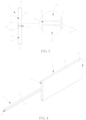
FIG. 1 is a schematic diagram of the three-dimensional structure of the battery housing in an embodiment of the present application. -
FIG. 2 is the front view ofFIG. 1 . -
FIG. 3 is the side view ofFIG. 1 . -
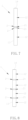
FIG. 4 is an exploded, schematic diagram of the battery housing in another embodiment of the present application. -
FIG. 5 is the side view ofFIG. 4 . -
FIG. 6 is a schematic diagram of the structure of the battery housing in another embodiment of the present application. -
FIG. 7 is a schematic diagram of the structure of the battery housing in another embodiment of the present application. -
FIG. 8 is a schematic diagram of the structure of the battery housing in another embodiment of the present application. -
FIG. 9 is a schematic diagram of the structure of the battery housing in another embodiment of the present application. -
FIG. 10 is a schematic diagram of the structure of the battery housing in another embodiment of the present application. -
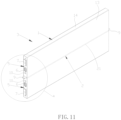
FIG. 11 is a schematic diagram of the three-dimensional structure of the lithium-ion secondary battery in an embodiment of the present application. -
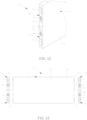
FIG. 12 is an enlarged schematic diagram of the position A inFIG. 11 . -
FIG. 13 is a partially exploded schematic diagram ofFIG. 11 . -
FIG. 14 is an exploded schematic diagram ofFIG. 11 . -
FIG. 15 is a schematic diagram of the structure of the battery cover plate in another embodiment of the present application. -
FIG. 16 is a cross-sectional schematic diagram ofFIG. 15 along the A-A position. -
FIG. 17 is a schematic diagram of the structure of the battery cover plate in another embodiment of the present application. - The following will provide a further detailed description of the specific implementations of the present application in conjunction with the accompanying drawings and embodiments. The following embodiments are used to illustrate the present application, but are not intended to limit the scope of the present application.
- The terms "first", "second", "third", "fourth", etc. (if any) in the specification and claims of the present application are only used to distinguish similar objects, and are not intended to be used to describe a specific sequence or order.
- The terms "up", "down", "left", "right", "front", "back", "top", "bottom" (if any) mentioned in the specification and claims of the present application are defined based on the position of the structure in the figures and the position between the structures in the figures, only for the clarity and convenience of expressing the technical solution. It should be understood that the use of these directional words should not limit the scope of protection in the present application.
- As shown in
FIGs. 1 to 3 , an embodiment of the present application provides abattery housing 1. Thebattery housing 1 has a prismatic structure, and is particularly suitable for prismatic lithium-ion batteries. Thebattery housing 1 has a length direction L, a height direction H, and a thickness direction T. The definition of the directions is based on the orientation or positional relationship shown in the drawings, and is only for the convenience of expression and description. Therefore, it cannot be understood as a limitation of the present application. Specifically, the length value of thebattery housing 1 in the length direction L is greater than its height value in the height direction H, and the height value of thebattery housing 1 in the height direction H is greater than its thickness value in the thickness direction T, that is, thebattery housing 1 has a flat structure. Meanwhile, thebattery housing 1 is a hollow structure and hasopenings 11 at both ends in the length direction L. - In the above embodiment, a
cooling unit 2 extending along the length direction L is provided in thebattery housing 1, and acoolant channel 21 for circulation of a coolant is provided in thecooling unit 2. Thecooling unit 2 divides the internal space of thebattery housing 1 into twoaccommodating cavities 12 spaced apart from top to bottom in the height direction H. Eachaccommodating cavity 12 is used for accommodating a battery cell 4 (the specific structure of thebattery cell 4 can be seen inFIG. 14 ). - In the above embodiment, the
cooling unit 2 is located in the middle of thebattery housing 1. Thecooling unit 2 divides the internal space of thebattery housing 1 into twoaccommodating cavities 12 spaced apart from top to bottom in the height direction H, and eachaccommodating cavity 12 has the same size as thebattery cell 4. Of course, in other embodiments, the sizes of the twoaccommodating cavities 12 can also be different. For example, one of theaccommodating cavities 12 is twice the size of thebattery cell 4, and twobattery cells 4 can be placed into theaccommodating cavity 12, while the other accommodatingcavity 12 is the same size as thebattery cell 4. The size of theaccommodating cavity 12 can be designed according to actual needs. - Specifically, the cross-sectional shape of the
coolant channel 21 can be rectangular, circular, or other shapes, and it is not limited herein. - In the above embodiment, the
battery housing 1 includes two oppositefirst side plates 13 and two oppositesecond side plates 14. The twofirst side plates 13 and twosecond side plates 14 are connected to each other, and the internal space of thebattery housing 1 is formed by the enclosure of the twofirst side plates 13 and the twosecond side plates 14. - In the above embodiment, the
cooling unit 2 is a cooling plate structure, and each coolingunit 2 includes two oppositefirst partition plates 22. The twofirst partition plates 22 are spaced apart from top to bottom and extend along the length direction L. Two opposite sides of eachfirst partition plate 22 are respectively connected to the inner walls of the twofirst side plates 13, and thecoolant channel 21 is formed by the enclosure of the twofirst partition plates 22 and the twofirst side plates 13. - Generally, due to the small thickness of the
battery housing 1 and the certain thickness of thecooling unit 2, in order to not occupy more internal space of thebattery housing 1 and reduce the size of battery module, thecooling unit 2 is generally not extended along the height direction H of thebattery housing 1, that is, the two opposite sides of thefirst partition plate 22 are not connected to the inner walls of thesecond side plates 14, but to the inner walls of thefirst side plates 13, so that the twoaccommodating cavities 12 are arranged and distributed in the height direction H of thebattery housing 1. - Specifically, when cooling the battery, the coolant circulates in the
coolant channel 21. Since theaccommodating cavity 12 is filled with electrolyte and the coolant cannot be mixed with the electrolyte, thefirst partition plate 22 needs to be hermetically connected to thefirst side plate 13 to prevent the coolant from mixing with the electrolyte and affecting battery performance. As an embodiment, theentire battery housing 1 is integrally formed, that is, the two opposite sides of eachfirst partition plate 22 are connected to the inner walls of the twofirst side plates 13 as an integrated structure. - Generally, the coolant is cooling liquid. The cooling liquid may be water, ethylene glycol aqueous solution, etc.
- In the above embodiment, the two
first side plates 13 are arranged in the height direction H of thebattery housing 1, the twosecond side plates 14 are arranged in the thickness direction T of thebattery housing 1, and the twofirst partition plates 22 are arranged parallel to the twosecond side plates 14. - As shown in
FIGs. 4 and5 , another embodiment of the present application provides abattery housing 1. Unlike the above embodiment, the structure of thecooling unit 2 inside thebattery housing 1 is different. Specifically, thecooling unit 2 is a cooling tube structure, and each coolingunit 2 includes two oppositefirst partition plates 22, and the twofirst partition plates 22 are spaced apart from top to bottom and extend along the length direction L. Eachcooling unit 2 further includes two oppositesecond partition plates 23, and the twosecond partition plates 23 are spaced apart from left to right and extend along the length direction L. The outer wall of one of thesecond partition plates 23 is attached to the inner wall of one of thefirst side plates 13, and the outer wall of the othersecond partition plate 23 is attached to the inner wall of the otherfirst side plate 13. The twofirst partition plates 22 and the twosecond partition plates 23 are connected to each other, and thecoolant channel 21 is formed by the enclosure of the twofirst partition plates 22 and the twosecond partition plates 23. - In the above embodiment, the
cooling unit 2 is inserted into thebattery housing 1 and then fixed in thebattery housing 1 by welding or other means. - In other embodiments, the number of the
cooling unit 2 installed inside thebattery housing 1 can also be multiple, such as two, three, etc.Multiple cooling units 2 are spaced apart from top to bottom in the height direction H within thebattery housing 1, and themultiple cooling units 2 divide the internal space of thebattery housing 1 into multiple accommodatingcavities 12 spaced apart from top to bottom in the height direction H. The multipleaccommodating cavities 12 have the same size, and eachaccommodating cavity 12 is the same size as thebattery cell 4. Of course, in other embodiments, the multiple accommodatingcavities 12 can have different sizes. For example, one of theaccommodating cavities 12 is twice the size of thebattery cell 4, and twobattery cells 4 can be placed into theaccommodating cavity 12. However, the size of other accommodatingcavities 12 is the same as that of thebattery cell 4. The size of theaccommodating cavity 12 can be designed according to actual needs. - Specifically, in order to form at least two
accommodating cavities 12 in thebattery housing 1, at least one of thecooling units 2 is not attached to thesecond side plates 14. For example, when the number of thecooling unit 2 is two, if the two coolingunits 2 are respectively attached to the twosecond side plates 14, only one accommodatingcavity 12 can be formed in thebattery housing 1. When at least twobattery cells 4 are placed in theaccommodating cavity 12, and if there are no coolingunits 2 located betweenadjacent battery cells 4, the effect of exporting the heat between thebattery cells 4 cannot be achieved, that is, the heat inside thebattery housing 1 cannot be timely exported. - The following examples illustrate the preferred arrangement and distribution of the
cooling units 2 in thebattery housing 1 when there are multiple coolingunits 2. - As shown in
FIG. 6 , another embodiment of the present application provides abattery housing 1. Unlike the above embodiment, the number of thecooling unit 2 provided in thebattery housing 1 is different. Specifically, the number of thecooling unit 2 is two, and the two coolingunits 2 are spaced apart from top to bottom in the height direction H within thebattery housing 1. The twocooling units 2 divide the internal space of thebattery housing 1 into threeaccommodating cavities 12 spaced apart from top to bottom in the height direction H. - As shown in
FIG. 7 , another embodiment of the present application provides abattery housing 1. Unlike the above embodiment, the arrangement of thecooling units 2 is different. Specifically, the number of thecooling unit 2 is two, and the two coolingunits 2 are stacked to each other and are located in the middle of thebattery housing 1. The twocooling units 2 divide the internal space of thebattery housing 1 into twoaccommodating cavities 12 spaced apart from top to bottom in the height direction H. - As shown in
FIG. 8 , another embodiment of the present application provides abattery housing 1. Unlike the above embodiment, the number of thecooling unit 2 provided in thebattery housing 1 is different. Specifically, the number of thecooling unit 2 is three, and the threecooling units 2 are spaced apart from top to bottom in the height direction H within thebattery housing 1. The threecooling units 2 divide the internal space of thebattery housing 1 into fouraccommodating cavities 12 spaced apart from top to bottom in the height direction H. - As shown in
FIG. 9 , another embodiment of the present application provides abattery housing 1. Unlike the above embodiment, the arrangement of thecooling units 2 is different. Specifically, the number of thecooling unit 2 is three, and the threecooling units 2 are spaced apart from top to bottom in the height direction H within thebattery housing 1, wherein the two coolingunits 2 located at the top and bottom are respectively attached to the twosecond side plates 14, and theother cooling unit 2 is located in the middle of thebattery housing 1. The threecooling units 2 divide the internal space of thebattery housing 1 into twoaccommodating cavities 12 spaced apart from top to bottom in the height direction H. - As shown in
FIG. 10 , another embodiment of the present application provides abattery housing 1. Unlike the above embodiment, the number of thecooling unit 2 provided in thebattery housing 1 is different. Specifically, the number of thecooling unit 2 is four, wherein the two coolingunits 2 located at the top and bottom are respectively attached to the twosecond side plates 14, and the other two coolingunits 2 are stacked to each other and are located in the middle of thebattery housing 1. The fourcooling units 2 divide the internal space of thebattery housing 1 into twoaccommodating cavities 12 spaced apart from top to bottom in the height direction H. - Of course, in other embodiments, the number of the
cooling unit 2 can also be more, such as five, six, etc., and the present application will not provide examples one by one.Multiple cooling units 2 divide the internal space of thebattery housing 1 into multiple accommodatingcavities 12, and at least onecooling unit 2 is provided between every two adjacent accommodatingcavities 12. Of course, in order to save internal space and cost of thebattery housing 1, the number of thecooling unit 2 provided between every two adjacent accommodatingcavities 12 generally does not exceed two. - As shown in
FIGs. 11 to 14 , another embodiment of the present application provides a lithium-ionsecondary battery 3. The lithium-ionsecondary battery 3 includesbattery cells 4, and the lithium-ionsecondary battery 3 further includes thebattery housing 1 as described above. The number of thebattery cells 4 is the same as the number of theaccommodating cavities 12 in thebattery housing 1, both of which are two. Eachaccommodating cavity 12 contains abattery cell 4, and thecooling unit 2 is in thermal conduction contact with thebattery cells 4 in adjacent accommodatingcavities 12. - In other embodiments, the number of the
battery cells 4 can also be more, such as three, four, etc. The number of thebattery cells 4 is the same as the number of theaccommodating cavities 12, eachaccommodating cavity 12 is the same size as thebattery cell 4, and eachaccommodating cavity 12 contains abattery cell 4. Of course, in other embodiments, the size of theaccommodating cavity 12 can also be different from that of thebattery cell 4. For example, if one of theaccommodating cavities 12 is twice the size of thebattery cell 4, twobattery cells 4 can be placed in theaccommodating cavity 12, while the size of the other accommodatingcavities 12 is the same as that of thebattery cell 4. - Generally, the
more battery cells 4 are placed in thebattery housing 1 of same volume size, the higher the energy density of the battery. Thefewer cooling units 2 are installed in thebattery housing 1, the smaller the internal space occupied by the coolingunits 2 in thebattery housing 1, themore battery cells 4 can be placed in thebattery housing 1, and the higher the energy density of the battery, but the worse the cooling effect inside the battery, and vice versa. The number of thecooling unit 2 installed in thebattery housing 1 can be designed according to actual needs. - In the above embodiment, two opposite ends of each
accommodating cavity 12 in the length direction L are each sealed with abattery cover plate 5, and thebattery cover plate 5 is arranged at theopening 11 of thebattery housing 1. - In the above embodiment, the two
battery cover plates 5 provided at two opposite ends of eachaccommodating cavity 12 in the length direction L are each provided with an explosion-proof valve 6. Of course, in other embodiments, it can also be that only one of thebattery cover plates 5 is provided with an explosion-proof valve 6. - In the above embodiment, the two
battery cover plates 5 provided at two opposite ends of eachaccommodating cavity 12 in the length direction L are each provided with an electrode terminal 7. Eachaccommodating cavity 12 is provided with a tab 8 at opposite ends. The electrode terminal 7 is electrically connected to thebattery cell 4 through the tab 8, one end of the tab 8 is connected to thebattery cell 4, and the other end of the tab 8 is connected to the electrode terminal 7. - Specifically, the
battery cell 4 has a positive electrode and a negative electrode. In the above embodiment, the positive and negative electrodes of thebattery cell 4 are located at opposite ends of thebattery cell 4, respectively. The electrode terminal 7 on thebattery cover plate 5 at one end of eachaccommodating cavity 12 is electrically connected to the positive electrode of thebattery cell 4, and the electrode terminal 7 on thebattery cover plate 5 at the other end of eachaccommodating cavity 12 is electrically connected to the negative electrode of thebattery cell 4. - Of course, in other embodiments, depending on the different battery cell systems, the two
battery cells 4 can be designed to be connected in parallel or in series according to actual needs, and it is not limited herein. - In the above embodiment, an
electrolyte injection hole 10 is provided in thebattery cover plate 5 provided at one end of eachaccommodating cavity 12 in the length direction L. Of course, in other embodiments, it is also possible that the twobattery cover plates 5 provided at two opposite ends of eachaccommodating cavity 12 in the length direction L are each provided with theelectrolyte injection hole 10. - In the above embodiment, there are
connectors 9 provided at two opposite ends of each coolingunit 2. Theconnectors 9 extend outward from the two ends of thecooling unit 2, and are located between two adjacentbattery cover plates 5. The coolant flows into or out of thecoolant channel 21 through theconnectors 9. Theconnector 9 at one end of each coolingunit 2 serves as the coolant inlet, and theconnector 9 at the other end serves as the coolant outlet. The coolant storage tank or coolant circulation system (not shown) located outside the battery module is connected to both the coolant inlet and the coolant outlet, thereby achieving the purpose of circulating the coolant in thecoolant channel 21. - In the above embodiment, the outer surface of each
battery cell 4 is wrapped with aMylar film 41. Generally, thebattery housing 1 is made of metal materials such as steel or aluminum, and theMylar film 41 serves as insulation to prevent direct contact between thebattery cell 4 and thebattery housing 1, resulting in short circuiting issues. - In the above embodiment, the assembly method of the lithium-ion
secondary battery 3 is as follows: firstly, theconnectors 9 are welded at the two opposite ends of thecooling unit 2, then the twobattery cells 4 are installed into the twoaccommodating cavities 12 of thebattery housing 1, respectively, and thereafter thebattery cover plates 5 are welded at theopenings 11 of thebattery housing 1, so that thebattery cells 4 are packaged in thebattery housing 1. - In the embodiments of the present application, the
cooling unit 2 is provided in thebattery housing 1, and thecoolant channel 21 is provided in thecooling unit 2, thus allowing the coolant to circulate along thecoolant channel 21. Meanwhile, thecooling unit 2 is in direct thermal conduction contact with thebattery cells 4 in adjacent accommodatingcavities 12. Through the heat exchange between thebattery cells 4 and thecooling unit 2, as well as the heat exchange between the coolingunit 2 and the coolant, the heat of thebattery cells 4 can be transferred to the coolant, and the heat is exported to the outside of the battery through the coolant, thereby achieving the purpose of cooling the battery. This structure has high heat conduction efficiency and good cooling effect. Also, thecooling unit 2 is located between twoadjacent battery cells 4, thus enabling the timely export of heat between the twoadjacent battery cells 4 without the problem of heat accumulation between the twoadjacent battery cells 4, thereby effectively solving the internal heat dissipation problem of the battery and improving the safety performance of the battery. - As shown in
FIGs. 15 and 16 , another embodiment of the present application provides a lithium-ionsecondary battery 3. Unlike the above embodiment, the structure of thebattery cover plate 5 is different, and there is no explosion-proof valve 6 provided on thebattery cover plate 5. Specifically, in this embodiment, the twobattery cover plates 5 provided at two opposite ends of eachaccommodating cavity 12 in the length direction L are each provided with an electrode terminal 7, at least one of thebattery cover plates 5 is provided with an explosion-proof groove 51, and the explosion-proof groove 51 surrounds the electrode terminal 7. Of course, as shown inFIG. 17 , in other embodiments, the explosion-proof groove 51 may also be set partially around the electrode terminal 7. - In the above embodiment, the explosion-
proof groove 51 is a rectangular structure, that is, a closed annular structure. Specifically, the closed annular structure can also be circular, triangular, and other shapes. Of course, in other embodiments, the explosion-proof groove 51 can also be a U-shaped, C-shaped, or L-shaped structure with an opening, and it is not limited herein. - In the above embodiment, the explosion-
proof groove 51 is set on the outer surface of thebattery cover plate 5. Of course, in other embodiments, the explosion-proof groove 51 can also be set on the inner surface of thebattery cover plate 5, and it is not limited herein. - When the
battery cells 4 inside the battery abnormally generate a large amount of heat, the chemical reaction inside the battery intensifies, thus producing a large amount of gas. The internal pressure of the battery increases sharply, posing a risk of thermal runaway of the battery and even leading to battery explosion. In the embodiments of the present application, an explosion-proof groove 51 is set on thebattery cover plate 5, so that thebattery cover plate 5 can burst or explode along the explosion-proof groove 51 in the event of abnormal battery conditions, and the battery can quickly release pressure, thus achieving the explosion-proof function of the battery. Also, the explosion-proof groove 51 surrounds or is set partially around the electrode terminal 7, so that thebattery cover plate 5 can drive the electrode terminal 7 to move together when thebattery cover plate 5 bursts or explodes. The electrode terminal 7 will leave from its original position and move away from thebattery cells 4. The movement of the electrode terminal 7 will pull the tab 8, so that the tab 8 or the junction of the tab 8 (including the junction between the tab 8 and the electrode terminal 7, or the junction between the tab 8 and an electrode plate of the battery cell 4) is partially broken or completely broken, thereby weakening (the resistance will increase after the tab 8 is partially broken) or cutting off the electrical connection between the electrode terminal 7 and thebattery cells 4, that is, weakening or cutting off the electrical connection between external electrical components and thebattery cells 4, thereby effectively inhibiting the continuous heat generation inside the battery and improving the safety performance of the battery. - The above are only the specific embodiments of the present application, but the scope of protection of the present application is not limited to this. Any technical personnel familiar with this technical field who can easily think of changes or replacements within the scope of technology disclosed in the present application should be covered within the scope of protection of the present application. Therefore, the protection scope of the present application should be based on the protection scope of the claims.
- For the battery housing provided in the present application, a cooling unit is provided in the battery housing, and a coolant channel is provided in the cooling unit, allowing the coolant to circulate along the coolant channel. Meanwhile, the cooling unit is in thermal conduction contact with the battery cells in adjacent accommodating cavities. Through the heat exchange between the battery cells and the cooling unit, as well as the heat exchange between the cooling unit and the coolant, the heat of the battery cells can be transferred to the coolant, and the heat is exported to the outside of the battery through the coolant, thereby achieving the purpose of cooling the battery. This structure has high heat conduction efficiency and good cooling effect. Also, at least one cooling unit is located between two adjacent battery cells, thus enabling the timely export of heat between the two adjacent battery cells without the problem of heat accumulation between the two adjacent battery cells, thereby effectively solving the internal heat dissipation problem of the battery and improving the safety performance of the battery.
Claims (18)
- A battery housing, wherein the battery housing (1) has openings (11) at both ends in the length direction (L), at least one cooling unit (2) extending along the length direction (L) is provided in the battery housing (1), a coolant channel (21) for circulation of a coolant is provided in the cooling unit (2), the at least one cooling unit (2) divides the internal space of the battery housing (1) into at least two accommodating cavities (12) spaced apart from top to bottom in the height direction (H), each accommodating cavity (12) is configured for accommodating a battery cell (4).
- The battery housing as claimed in claim 1, wherein the cooling unit (2) is a cooling plate or a cooling tube.
- The battery housing as claimed in claim 1, wherein the battery housing (1) has a prismatic structure and comprises two opposite first side plates (13) and two opposite second side plates (14), the two first side plates (13) and the two second side plates (14) are connected to each other, and the internal space of the battery housing (1) is formed by the enclosure of the two first side plates (13) and the two second side plates (14).
- The battery housing as claimed in claim 3, wherein each cooling unit (2) comprises two opposite first partition plates (22), the two first partition plates (22) are spaced apart from top to bottom and extend along the length direction (L), two opposite sides of each first partition plate (22) are respectively connected to the inner walls of the two first side plates (13), the coolant channel (21) is formed by the enclosure of the two first partition plates (22) and the two first side plates (13).
- The battery housing as claimed in claim 4, wherein the two opposite sides of each first partition plate (22) are connected to the inner walls of the two first side plates (13) as an integrated structure.
- The battery housing as claimed in claim 3, wherein each cooling unit (2) comprises two opposite first partition plates (22), the two first partition plates (22) are spaced apart from top to bottom and extend along the length direction (L), and each cooling unit (2) further comprises two opposite second partition plates (23), the two second partition plates (23) are spaced apart from left to right and extend along the length direction (L), the outer wall of one of the second partition plates (23) is attached to the inner wall of one of the first side plates (13), and the outer wall of the other second partition plate (23) is attached to the inner wall of the other first side plate (13), the two first partition plates (22) and the two second partition plates (23) are connected to each other, the coolant channel (21) is formed by the enclosure of the two first partition plates (22) and the two second partition plates (23).
- The battery housing as claimed in any one of claims 4 to 6, wherein the two first side plates (13) are arranged in the height direction (H), the two second side plates (14) are arranged in the thickness direction (T) of the battery housing (1), and the two first partition plates (22) are arranged parallel to the two second side plates (14).
- The battery housing as claimed in claim 1, wherein the number of the cooling unit (2) is one, and the cooling unit (2) is located in the middle of the battery housing (1), the cooling unit (2) divides the internal space of the battery housing (1) into two accommodating cavities (12) spaced apart from top to bottom in the height direction (H).
- The battery housing as claimed in claim 1, wherein the number of the cooling unit (2) is two, and the two cooling units (2) are stacked to each other and are located in the middle of the battery housing (1), the two cooling units (2) divide the internal space of the battery housing (1) into two accommodating cavities (12) spaced apart from top to bottom in the height direction (H).
- The battery housing as claimed in claim 1, wherein the number of the cooling unit (2) is at least two, and the at least two cooling units (2) are spaced apart from top to bottom in the height direction (H) within the battery housing (1), the at least two cooling units (2) divide the internal space of the battery housing (1) into at least three accommodating cavities (12) spaced apart from top to bottom in the height direction (H).
- The battery housing as claimed in claim 3, wherein the number of the cooling unit (2) is at least three, and the at least three cooling units (2) are spaced apart from top to bottom in the height direction (H) within the battery housing (1), wherein the two cooling units (2) located at the top and bottom are respectively attached to the two second side plates (14).
- The battery housing as claimed in claim 3, wherein the number of the cooling unit (2) is four, wherein the two cooling units (2) located at the top and bottom are respectively attached to the two second side plates (14), and the other two cooling units (2) are stacked to each other and are located in the middle of the battery housing (1).
- The battery housing as claimed in claim 1, wherein there are connectors (9) provided at two opposite ends of each cooling unit (2), the connectors (9) extend outward from the two ends of the cooling unit (2), the coolant flows into or out of the coolant channel (21) through the connectors (9).
- A lithium-ion secondary battery, comprising the battery housing (1) as claimed in any one of claims 1 to 13, wherein each accommodating cavity (12) of the battery housing (1) contains a battery cell (4), and the cooling unit (2) is in thermal conduction contact with the battery cells (4) in adjacent accommodating cavities (12).
- The lithium-ion secondary battery as claimed in claim 14, wherein two opposite ends of each accommodating cavity (12) in the length direction (L) are each sealed with a battery cover plate (5), and the battery cover plate (5) is arranged at the opening (11) of the battery housing (1).
- The lithium-ion secondary battery as claimed in claim 15, wherein the two battery cover plates (5) provided at two opposite ends of each accommodating cavity (12) in the length direction (L) are each provided with an explosion-proof valve (6), or only one of the battery cover plates (5) is provided with an explosion-proof valve (6).
- The lithium-ion secondary battery as claimed in claim 15, wherein the two battery cover plates (5) provided at two opposite ends of each accommodating cavity (12) in the length direction (L) are each provided with an electrode terminal (7), at least one of the battery cover plates (5) is provided with an explosion-proof groove (51), and the explosion-proof groove (51) surrounds or is set partially around the electrode terminal (7).
- An electric vehicle, comprising the lithium-ion secondary battery as claimed in any one of claims 14 to 17.
Applications Claiming Priority (1)
| Application Number | Priority Date | Filing Date | Title |
|---|---|---|---|
| PCT/CN2020/135056 WO2022120667A1 (en) | 2020-12-10 | 2020-12-10 | Battery housing, lithium-ion secondary battery, and electric vehicle |
Publications (2)
| Publication Number | Publication Date |
|---|---|
| EP4261986A1 true EP4261986A1 (en) | 2023-10-18 |
| EP4261986A4 EP4261986A4 (en) | 2024-09-11 |
Family
ID=81972912
Family Applications (1)
| Application Number | Title | Priority Date | Filing Date |
|---|---|---|---|
| EP20964606.6A Withdrawn EP4261986A4 (en) | 2020-12-10 | 2020-12-10 | BATTERY CASING, LITHIUM-ION SECONDARY BATTERY AND ELECTRIC VEHICLE |
Country Status (4)
| Country | Link |
|---|---|
| US (1) | US20240039071A1 (en) |
| EP (1) | EP4261986A4 (en) |
| CN (1) | CN220491995U (en) |
| WO (1) | WO2022120667A1 (en) |
Families Citing this family (3)
| Publication number | Priority date | Publication date | Assignee | Title |
|---|---|---|---|---|
| CN115036616A (en) * | 2022-07-26 | 2022-09-09 | 广汽埃安新能源汽车有限公司 | Battery monomer, power battery package and consumer |
| CN115764085A (en) * | 2022-10-31 | 2023-03-07 | 广汽埃安新能源汽车股份有限公司 | Battery monomer, battery package, electric motor car |
| CN116261307A (en) * | 2023-03-29 | 2023-06-13 | 苏州时代新安能源科技有限公司 | Cooling device, controller and vehicle |
Family Cites Families (7)
| Publication number | Priority date | Publication date | Assignee | Title |
|---|---|---|---|---|
| US10411252B2 (en) * | 2016-02-09 | 2019-09-10 | GM Global Technology Operations LLC | Positive electrode composition, a positive electrode of a lithiumion electrochemical cell, and a method of forming the positive electrode |
| CN207743364U (en) * | 2017-12-18 | 2018-08-17 | 中国第一汽车股份有限公司 | A kind of rectangular lithium ion battery shell with built-in wind cooling channel |
| CN207743363U (en) * | 2017-12-18 | 2018-08-17 | 中国第一汽车股份有限公司 | A kind of lithium ion battery case with built-in water-cooling channel |
| CN208862046U (en) * | 2018-07-18 | 2019-05-14 | 东莞塔菲尔新能源科技有限公司 | A kind of housing of power cell |
| CN210272434U (en) * | 2019-07-23 | 2020-04-07 | 江苏塔菲尔新能源科技股份有限公司 | Power battery shell structure and power battery |
| CN210984839U (en) * | 2020-04-24 | 2020-07-10 | 比亚迪股份有限公司 | A battery pack case, battery pack and electric vehicle |
| CN212113796U (en) * | 2020-04-29 | 2020-12-08 | 蜂巢能源科技有限公司 | Module Housings and Modules |
-
2020
- 2020-12-10 CN CN202090001227.7U patent/CN220491995U/en active Active
- 2020-12-10 WO PCT/CN2020/135056 patent/WO2022120667A1/en not_active Ceased
- 2020-12-10 US US18/266,278 patent/US20240039071A1/en active Pending
- 2020-12-10 EP EP20964606.6A patent/EP4261986A4/en not_active Withdrawn
Also Published As
| Publication number | Publication date |
|---|---|
| CN220491995U (en) | 2024-02-13 |
| US20240039071A1 (en) | 2024-02-01 |
| EP4261986A4 (en) | 2024-09-11 |
| WO2022120667A1 (en) | 2022-06-16 |
Similar Documents
| Publication | Publication Date | Title |
|---|---|---|
| EP3965213B1 (en) | Battery and related apparatus thereof, preparation method and preparation device | |
| KR102686170B1 (en) | Batteries and related devices, manufacturing methods and manufacturing equipment | |
| US11990592B2 (en) | Battery, apparatus using battery, and manufacturing method and manufacturing device of battery | |
| EP3319146B1 (en) | Battery system | |
| EP3316340B1 (en) | Battery module | |
| JP7696902B2 (en) | Battery housing, battery, power consumption device, battery manufacturing method and device | |
| JP2022551237A (en) | Battery packs and devices containing them | |
| JP7806281B2 (en) | Batteries and power-consuming devices | |
| EP4261986A1 (en) | Battery housing, lithium-ion secondary battery, and electric vehicle | |
| JP7650986B2 (en) | Battery module and battery pack including same | |
| KR102748475B1 (en) | Battery cell, battery, electrical device, and device and method for manufacturing battery cell | |
| CN216389517U (en) | Battery packs, thermal management systems for batteries, and electrical devices | |
| EP4513650A1 (en) | Box body assembly, battery, and electric apparatus | |
| EP4329069A1 (en) | Battery, electrical apparatus, method and apparatus for preparing battery | |
| WO2022082391A1 (en) | Battery, electric apparatus, and battery manufacturing method and device | |
| US20240030518A1 (en) | Lithium-ion secondary battery and electric vehicle | |
| US12087957B2 (en) | Battery, apparatus using battery, and preparation method and preparation device of battery | |
| CN116615830B (en) | Battery, electric device, method and equipment for preparing battery | |
| KR20250007605A (en) | Batteries and electrical devices | |
| WO2023133688A1 (en) | Cell, battery, electric device, and manufacturing method for cell | |
| CN222581245U (en) | Cold plate, battery and power device | |
| RU2829325C2 (en) | Battery, electric device, method of producing battery and device for producing battery | |
| CN217334228U (en) | Water-cooling structure, battery and consumer | |
| CN119725882A (en) | Secondary batteries and battery packs | |
| WO2025241521A1 (en) | Battery and electric device |
Legal Events
| Date | Code | Title | Description |
|---|---|---|---|
| STAA | Information on the status of an ep patent application or granted ep patent |
Free format text: STATUS: THE INTERNATIONAL PUBLICATION HAS BEEN MADE |
|
| PUAI | Public reference made under article 153(3) epc to a published international application that has entered the european phase |
Free format text: ORIGINAL CODE: 0009012 |
|
| STAA | Information on the status of an ep patent application or granted ep patent |
Free format text: STATUS: REQUEST FOR EXAMINATION WAS MADE |
|
| 17P | Request for examination filed |
Effective date: 20230609 |
|
| AK | Designated contracting states |
Kind code of ref document: A1 Designated state(s): AL AT BE BG CH CY CZ DE DK EE ES FI FR GB GR HR HU IE IS IT LI LT LU LV MC MK MT NL NO PL PT RO RS SE SI SK SM TR |
|
| DAV | Request for validation of the european patent (deleted) | ||
| DAX | Request for extension of the european patent (deleted) | ||
| REG | Reference to a national code |
Ref country code: DE Ref legal event code: R079 Free format text: PREVIOUS MAIN CLASS: H01M0050100000 Ipc: H01M0050209000 |
|
| A4 | Supplementary search report drawn up and despatched |
Effective date: 20240808 |
|
| RIC1 | Information provided on ipc code assigned before grant |
Ipc: H01M 50/209 20210101AFI20240802BHEP |
|
| STAA | Information on the status of an ep patent application or granted ep patent |
Free format text: STATUS: THE APPLICATION HAS BEEN WITHDRAWN |
|
| 18W | Application withdrawn |
Effective date: 20250310 |