EP4258101A1 - Edge utility management - Google Patents
Edge utility management Download PDFInfo
- Publication number
- EP4258101A1 EP4258101A1 EP22166488.1A EP22166488A EP4258101A1 EP 4258101 A1 EP4258101 A1 EP 4258101A1 EP 22166488 A EP22166488 A EP 22166488A EP 4258101 A1 EP4258101 A1 EP 4258101A1
- Authority
- EP
- European Patent Office
- Prior art keywords
- application
- parts
- application parts
- edge
- hardware resources
- Prior art date
- Legal status (The legal status is an assumption and is not a legal conclusion. Google has not performed a legal analysis and makes no representation as to the accuracy of the status listed.)
- Granted
Links
Images



Classifications
-
- H—ELECTRICITY
- H04—ELECTRIC COMMUNICATION TECHNIQUE
- H04L—TRANSMISSION OF DIGITAL INFORMATION, e.g. TELEGRAPHIC COMMUNICATION
- H04L43/00—Arrangements for monitoring or testing data switching networks
- H04L43/16—Threshold monitoring
-
- G—PHYSICS
- G06—COMPUTING OR CALCULATING; COUNTING
- G06F—ELECTRIC DIGITAL DATA PROCESSING
- G06F8/00—Arrangements for software engineering
- G06F8/60—Software deployment
- G06F8/61—Installation
-
- B—PERFORMING OPERATIONS; TRANSPORTING
- B60—VEHICLES IN GENERAL
- B60C—VEHICLE TYRES; TYRE INFLATION; TYRE CHANGING; CONNECTING VALVES TO INFLATABLE ELASTIC BODIES IN GENERAL; DEVICES OR ARRANGEMENTS RELATED TO TYRES
- B60C23/00—Devices for measuring, signalling, controlling, or distributing tyre pressure or temperature, specially adapted for mounting on vehicles; Arrangement of tyre inflating devices on vehicles, e.g. of pumps or of tanks; Tyre cooling arrangements
- B60C23/02—Signalling devices actuated by tyre pressure
- B60C23/04—Signalling devices actuated by tyre pressure mounted on the wheel or tyre
- B60C23/0408—Signalling devices actuated by tyre pressure mounted on the wheel or tyre transmitting the signals by non-mechanical means from the wheel or tyre to a vehicle body mounted receiver
- B60C23/0484—Detecting an ongoing tyre inflation
-
- G—PHYSICS
- G06—COMPUTING OR CALCULATING; COUNTING
- G06F—ELECTRIC DIGITAL DATA PROCESSING
- G06F9/00—Arrangements for program control, e.g. control units
- G06F9/06—Arrangements for program control, e.g. control units using stored programs, i.e. using an internal store of processing equipment to receive or retain programs
- G06F9/44—Arrangements for executing specific programs
- G06F9/445—Program loading or initiating
- G06F9/44536—Selecting among different versions
-
- G—PHYSICS
- G06—COMPUTING OR CALCULATING; COUNTING
- G06F—ELECTRIC DIGITAL DATA PROCESSING
- G06F9/00—Arrangements for program control, e.g. control units
- G06F9/06—Arrangements for program control, e.g. control units using stored programs, i.e. using an internal store of processing equipment to receive or retain programs
- G06F9/46—Multiprogramming arrangements
- G06F9/50—Allocation of resources, e.g. of the central processing unit [CPU]
- G06F9/5005—Allocation of resources, e.g. of the central processing unit [CPU] to service a request
- G06F9/5027—Allocation of resources, e.g. of the central processing unit [CPU] to service a request the resource being a machine, e.g. CPUs, Servers, Terminals
- G06F9/5038—Allocation of resources, e.g. of the central processing unit [CPU] to service a request the resource being a machine, e.g. CPUs, Servers, Terminals considering the execution order of a plurality of tasks, e.g. taking priority or time dependency constraints into consideration
-
- G—PHYSICS
- G06—COMPUTING OR CALCULATING; COUNTING
- G06F—ELECTRIC DIGITAL DATA PROCESSING
- G06F9/00—Arrangements for program control, e.g. control units
- G06F9/06—Arrangements for program control, e.g. control units using stored programs, i.e. using an internal store of processing equipment to receive or retain programs
- G06F9/46—Multiprogramming arrangements
- G06F9/50—Allocation of resources, e.g. of the central processing unit [CPU]
- G06F9/5005—Allocation of resources, e.g. of the central processing unit [CPU] to service a request
- G06F9/5027—Allocation of resources, e.g. of the central processing unit [CPU] to service a request the resource being a machine, e.g. CPUs, Servers, Terminals
- G06F9/5044—Allocation of resources, e.g. of the central processing unit [CPU] to service a request the resource being a machine, e.g. CPUs, Servers, Terminals considering hardware capabilities
-
- G—PHYSICS
- G06—COMPUTING OR CALCULATING; COUNTING
- G06F—ELECTRIC DIGITAL DATA PROCESSING
- G06F9/00—Arrangements for program control, e.g. control units
- G06F9/06—Arrangements for program control, e.g. control units using stored programs, i.e. using an internal store of processing equipment to receive or retain programs
- G06F9/46—Multiprogramming arrangements
- G06F9/50—Allocation of resources, e.g. of the central processing unit [CPU]
- G06F9/5005—Allocation of resources, e.g. of the central processing unit [CPU] to service a request
- G06F9/5027—Allocation of resources, e.g. of the central processing unit [CPU] to service a request the resource being a machine, e.g. CPUs, Servers, Terminals
- G06F9/5055—Allocation of resources, e.g. of the central processing unit [CPU] to service a request the resource being a machine, e.g. CPUs, Servers, Terminals considering software capabilities, i.e. software resources associated or available to the machine
-
- G—PHYSICS
- G06—COMPUTING OR CALCULATING; COUNTING
- G06F—ELECTRIC DIGITAL DATA PROCESSING
- G06F9/00—Arrangements for program control, e.g. control units
- G06F9/06—Arrangements for program control, e.g. control units using stored programs, i.e. using an internal store of processing equipment to receive or retain programs
- G06F9/46—Multiprogramming arrangements
- G06F9/50—Allocation of resources, e.g. of the central processing unit [CPU]
- G06F9/5061—Partitioning or combining of resources
- G06F9/5066—Algorithms for mapping a plurality of inter-dependent sub-tasks onto a plurality of physical CPUs
-
- G—PHYSICS
- G06—COMPUTING OR CALCULATING; COUNTING
- G06F—ELECTRIC DIGITAL DATA PROCESSING
- G06F9/00—Arrangements for program control, e.g. control units
- G06F9/06—Arrangements for program control, e.g. control units using stored programs, i.e. using an internal store of processing equipment to receive or retain programs
- G06F9/46—Multiprogramming arrangements
- G06F9/54—Interprogram communication
- G06F9/544—Buffers; Shared memory; Pipes
-
- H—ELECTRICITY
- H04—ELECTRIC COMMUNICATION TECHNIQUE
- H04L—TRANSMISSION OF DIGITAL INFORMATION, e.g. TELEGRAPHIC COMMUNICATION
- H04L41/00—Arrangements for maintenance, administration or management of data switching networks, e.g. of packet switching networks
- H04L41/08—Configuration management of networks or network elements
- H04L41/0803—Configuration setting
- H04L41/0806—Configuration setting for initial configuration or provisioning, e.g. plug-and-play
-
- G—PHYSICS
- G06—COMPUTING OR CALCULATING; COUNTING
- G06F—ELECTRIC DIGITAL DATA PROCESSING
- G06F2209/00—Indexing scheme relating to G06F9/00
- G06F2209/50—Indexing scheme relating to G06F9/50
- G06F2209/501—Performance criteria
-
- G—PHYSICS
- G06—COMPUTING OR CALCULATING; COUNTING
- G06F—ELECTRIC DIGITAL DATA PROCESSING
- G06F2209/00—Indexing scheme relating to G06F9/00
- G06F2209/50—Indexing scheme relating to G06F9/50
- G06F2209/5021—Priority
-
- G—PHYSICS
- G06—COMPUTING OR CALCULATING; COUNTING
- G06F—ELECTRIC DIGITAL DATA PROCESSING
- G06F2209/00—Indexing scheme relating to G06F9/00
- G06F2209/50—Indexing scheme relating to G06F9/50
- G06F2209/508—Monitor
-
- H—ELECTRICITY
- H04—ELECTRIC COMMUNICATION TECHNIQUE
- H04L—TRANSMISSION OF DIGITAL INFORMATION, e.g. TELEGRAPHIC COMMUNICATION
- H04L41/00—Arrangements for maintenance, administration or management of data switching networks, e.g. of packet switching networks
- H04L41/16—Arrangements for maintenance, administration or management of data switching networks, e.g. of packet switching networks using machine learning or artificial intelligence
-
- H—ELECTRICITY
- H04—ELECTRIC COMMUNICATION TECHNIQUE
- H04L—TRANSMISSION OF DIGITAL INFORMATION, e.g. TELEGRAPHIC COMMUNICATION
- H04L67/00—Network arrangements or protocols for supporting network services or applications
- H04L67/50—Network services
- H04L67/55—Push-based network services
-
- H—ELECTRICITY
- H04—ELECTRIC COMMUNICATION TECHNIQUE
- H04L—TRANSMISSION OF DIGITAL INFORMATION, e.g. TELEGRAPHIC COMMUNICATION
- H04L67/00—Network arrangements or protocols for supporting network services or applications
- H04L67/50—Network services
- H04L67/56—Provisioning of proxy services
- H04L67/565—Conversion or adaptation of application format or content
Definitions
- the invention relates to systems and methods for performing utility management in edge computing devices.
- Edge devices are important for providing such solutions near to the devices in cases where the amount of data involved cannot be transferred to the cloud. There is a need for methods and systems for optimizing the use of these edge devices.
- a computer-implemented edge utility management method comprises: receiving an application to be deployed on an edge device.
- the application may comprise a plurality of separately-deployable application parts.
- the method may further comprise obtaining application profiles for one or more of the applications parts.
- the method may further comprise obtaining hardware profiles for one or more hardware resources of the edge device.
- the method may further comprise deploying the application parts to selected hardware resources based on the application profiles and the hardware profiles.
- the method may further comprise facilitating communication between the deployed application parts during execution of the application.
- Edge utility management as described herein may be described as holistic.
- the method may comprise using holistic access to the hardware resources of the edge device.
- Holistic access may comprise accessing hardware resources from an entire hardware stack of the edge device.
- Holistic access may comprise accessing hardware resources across operating system boundaries.
- Holistic access may comprise accessing hardware resources operating using a plurality of different operating systems.
- Holistic access may comprise accessing hardware resources using APIs provided by a plurality of different operating systems.
- Holistic access may comprise accessing hardware resources without OS-based restrictions.
- Holistic access may comprise accessing both general-purpose hardware resources and specific-purpose hardware resources.
- the application may be a distributed application.
- the application parts may be loosely coupled.
- the application may comprise a service-oriented architecture.
- the application may comprise a microservice architecture.
- the application may comprise a plurality of loosely-coupled services, each application part corresponding to a said service.
- the application profile may comprise one or more execution requirements and/or execution preferences relating to the respective application part.
- the application profile may comprise metadata describing the application part.
- the metadata may be user-provided.
- the metadata may comprise one or more tags.
- the metadata may indicate one or more suitable instances and/or classes of hardware resources for executing the application part.
- the method may comprise analysing the application parts to determine their execution requirements.
- the execution requirements may be specified by, or derivable from, the metadata associated with the application part.
- the hardware profile may comprise one or more properties of the respective hardware resource.
- the one or more properties may relate to capabilities and/or specialities of the respective hardware resource.
- the method may comprise analysing the hardware resources of the edge device to determine their properties.
- the hardware profile may indicate availability of the respective hardware resource.
- the method may comprise determining availability of one or more hardware resources.
- Deploying the application parts may comprise allocation of hardware resources based on the specific application parts. Deploying the application parts may comprise distributing the application parts across the hardware resources. Deploying may comprise allocating special-purpose hardware resources to application parts that require, or benefit from, such hardware. Deploying may comprise allocating general-purpose hardware resources to application parts having no special execution requirements. Deploying the applications parts may be performed according to the suitability of the selected hardware resources to execute the respective application parts. The method may comprise determining one or more suitability indicators indicating the suitability of the hardware resource to execute the application part, based for example on the application profile and/or hardware profile, and deploying the application parts based on the suitability indicators. Selecting the hardware resources may comprise selecting the hardware resources according to their suitability indicators.
- the method may comprise ranking the hardware resources according to suitability.
- the method may comprise determining which hardware resources of the edge device are capable of executing a particular application part.
- the method may comprise determining which hardware resources of the edge device are specially adapted for executing a particular application part.
- Selecting hardware resources may comprise selecting the hardware resource having the maximum calculated suitability indicator with respect to a particular application part.
- the suitability indicator may comprise a suitability score or value.
- the suitability indicator may comprise a function of the properties of the hardware resource, for example a sum of weighted properties.
- the method may comprise obtaining suitability indicators and/or properties of hardware resources from a hardware resource profile database.
- the method may comprise configuring or reconfiguring one or more hardware resources of the edge device to increase their suitability for executing one or more application parts based on the application profiles.
- Selecting the hardware resources may comprise mapping the application parts to hardware resources based on the application profiles and hardware profiles.
- Mapping may comprise determining a resource allocation mapping.
- the application parts may comprise one or more application parts designated as being safety-relevant, time-critical, time-sensitive, or real-time, wherein the method comprises deploying those application parts to the fastest available processors, for example real-time processor cores.
- the execution requirements for a particular application part may specify a required execution time or cycle time.
- the method may comprise deploying the application part to a real-time processor core based on the execution time or cycle time falling within a predetermined range or below a predetermined threshold.
- the application parts may comprise one or more application parts designated as being AI-related or neural network-related, wherein the method comprises deploying those application parts to one or more FPGAs. Additionally or alternatively, one or more application parts may implement a performance-intensive algorithm which is suitable to be installed on hardware-near technology such as a FPGA. Additionally or alternatively, one or more application parts may comprise a fieldbus software stack which to operates at a fast cycle time. The method may comprise deploying any such application parts that benefit from fast execution to one or more FPGAs.
- the application parts may comprise one or more application parts designated as being non-time-critical, non-time-sensitive, deferrable, delay-tolerant, non-urgent, asynchronous, or undemanding, wherein the method comprising deploying those parts to one or more sandboxes.
- the method may comprise using one or more APIs to access the hardware resources.
- the method may comprise using APIs provided by an operating system to access general-purpose hardware resources.
- the method comprises using APIs provided by a real-time operating system to access real-time processor cores.
- the method may comprise using a dedicated API to access an FPGA.
- Facilitating communication between the deployed application parts may comprise facilitating broker-based communication between the application parts.
- Facilitating communication may comprise implementing publish-and-subscribe messaging.
- Facilitating communication may comprise exchanging communications using the MQTT protocol.
- Facilitating communication may comprise translating messages provided by a sender and providing them to a recipient in translated form.
- Facilitating communication may comprise using shared memory to exchange messages.
- the method may comprise monitoring the execution of the deployed application parts. Monitoring may be performed with reference to one or more selected performance indicators. The method may comprise regulating the execution of application parts which violate predetermined criteria. Regulating execution may comprise throttling, suspending, or stopping the execution of the application part. The predetermined criteria may define excessive resource consumption. The predetermined criteria may define malicious behaviour. The predetermined criteria may comprise one or more limits relating to resource utilization. Monitoring may comprise performing limit-based monitoring. A limit may comprise a resource consumption limit or a maximum utilization rate. Limits may be user-specified. Limits may be specified per hardware resource or per application part.
- the method may comprise supporting prioritization of application parts.
- the method may comprise obtaining priority indicators for one or more application parts.
- the method may comprise regulating execution of the application parts based on priority indicators associated with one or more of those application parts. Regulating the execution may comprise throttling, suspending, or stopping the execution of one or more lower priority application parts to allow the continued execution of one or more higher priority application parts.
- the method may comprise providing user output indicating resource consumption by the application parts.
- User output may be provided by means of a dashboard.
- the method may comprise receiving user input, which may be received by means of the dashboard.
- User input may relate to the predetermined criteria and/or metadata as described herein.
- the method of the first aspect may alternatively be described as a method for deploying a distributed application in an edge computing environment.
- a computing system for example an edge utility management component, configured to perform the method of the first aspect.
- an edge device comprising the edge utility management component of the second aspect.
- a computer program product comprising instructions which, when executed by a computing system, enable or cause the computing system to perform the method of the first aspect.
- a computer-readable medium comprising instructions which, when executed by a computing system, enable or cause the computing system to perform the method of the first aspect.
- the invention may include one or more aspects, examples or features in isolation or combination whether or not specifically disclosed in that combination or in isolation. Any optional feature or sub-aspect of one of the above aspects applies as appropriate to any of the other aspects.
- Systems and methods as described herein facilitate improved or optimal distribution of applications among available edge hardware resources, including both general-purpose hardware resources (e.g., CPU cores) and special-purpose hardware resources (e.g., FPGAs, RT cores, etc.), as well as monitoring resource usage to mitigate overload situations and to enhance the ability of the edge device to meet targets or requirements relating to bandwidth, connectivity, cybersecurity, and so on.
- Such monitoring may take place on a higher abstraction level than when using a traditional container orchestrator, such as Kubernetes or docker swarm, which neither manages nor accesses such special-purpose hardware resources.
- a traditional container orchestrator such as Kubernetes or docker swarm, which neither manages nor accesses such special-purpose hardware resources.
- RT kernels and FPGAs which can be used by original equipment manufacturers (OEMs) and/or their customers to manage the entire hardware stack of edge devices.
- An "application” as referred to herein may be a process automation application or control (logic) application for controlling one or more automation devices in an industrial automation system.
- An application may perform one or more services and may execute one or more algorithms.
- application part or “part of an application” is meant herein any portion, service, component, or subcomponent of the application which can be executed and/or deployed independently or semi-independently of other parts.
- a part may provide a discrete unit of functionality.
- a part may correspond to a service of an application designed using a microservice architecture or other service-orientated architecture, or a part that results from application splitting. Parts of an application may be entirely decoupled from, or only loosely coupled with, other parts.
- deployment may be meant that the application or part of it is installed to a particular hardware resource to be executed by that hardware resource, for example by instructing the resource to implement control logic or functionality defined by that application or part.
- deployment may be comprise starting a containerized application using sandbox technology such as Kubernetes and the like.
- “Holistic” as used herein in relation to edge devices pertains to the entire hardware stack of the edge device, or at least that part of it which is relevant for executing applications, without being restricted to particular instances or classes of hardware resources or particular operating systems operating in conjunction with those hardware resources. "Holistic” in this sense may be understood as all-encompassing, complete, across-the-board, whole, overall, or one-stop.
- FIG. 1 illustrates an environment in which systems and methods according to the present disclosure may be implemented.
- Edge computing device 100 forms part of an industrial automation system, providing gateway capabilities to automation devices 160, i.e., automation devices 160-1, 160-2, and 160-3.
- the edge device 100 in this non-limiting example comprises an edge utility management component 102, described in more detail hereinbelow, along with a sandbox 104, a cloud connection 106, a local connection 108, a Linux instance 110, one or more real-time (RT) processor cores 112, a field-programmable gate array (FPGA) 114, and at least one CPU core 116.
- RT real-time
- FPGA field-programmable gate array
- the cloud connection 106 provides 'northbound' communication with the internet 150, while the local connection provides 'southbound' communication with the automation devices 160 via a local ethernet 152.
- the ethernet 152 may be replaced or supplemented by at least one field bus and/or at least one wireless network, e.g., 4G or 5G.
- the edge device 100 is implemented using an asymmetric processing architecture (AMP), but it will be understood that the present disclosure is not limited to such, and that symmetric processing architectures may equally be used.
- AMP asymmetric processing architecture
- the edge device 100 may run parallel operating systems, for example, the Linux instance 110 as a general-purpose OS running on the CPU core 116 (e.g., an ARM x86/x64 core) as well as a real-time OS running on the RT cores 112 (e.g., ARM RT cores).
- the Linux instance 110 as a general-purpose OS running on the CPU core 116 (e.g., an ARM x86/x64 core) as well as a real-time OS running on the RT cores 112 (e.g., ARM RT cores).
- the edge utility management component 102 monitors resource usage of the hardware of the edge device 100.
- the edge utility management component 102 has access to all available hardware resources on the edge device 100.
- the edge utility management component 102 may be implemented as a software service hosted by, or running on, the edge device 100.
- a suitable computing system for implementing the systems and methods of the present disclosure is described hereinbelow with reference to fig. 4 .
- the edge utility management component 102 may be described as being holistic, in that it monitors and uses the entire hardware stack of the edge device 100 without being locked into a specific operating system which is able to access only some of the hardware resources. Rather, the edge utility management component 102 provides an interface for monitoring and managing each available hardware resource.
- the edge resource management component 102 deploys applications on the edge device 100.
- the edge resource management component 102 deploys distributed applications by distributing their parts across the different hardware components of the edge device 100. More particularly, the edge resource management component 102 deploys the applications in a resource-effective or optimal way, by allocating special-purpose hardware to specific parts of the application that require, or benefit from, such hardware.
- Fig. 2 illustrates a distributed application 200 comprising separately deployable parts 202, 204, and 206.
- the application 200 may implement control logic usable for controlling the industrial automation system.
- the application 200 is designed to provide loosely coupled communication between the different parts 202-206 of the application 200.
- the application 200 is designed using a microservice architecture, whereby the application 200 is formed as a collection of loosely-coupled services, with each part 202-206 corresponding to one service. Function of the application 200 as a whole may require communication between its parts 202-206, as indicated by fig. 2 .
- the edge utility management component 200 is configured to allocate the parts of the distributed application 200 to different available hardware resources of the edge device 100. Each hardware resource has different processing capacities and specialties.
- the edge utility management component 102 distributes the application 200 across the different hardware resources of the edge device according to the suitability of those resources to execute the respective parts.
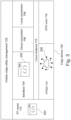
- Fig. 3 illustrates one non-limiting example of the deployment of the parts 202-206 of the distributed application 200 by the edge utility management component 102.
- the edge utility management component 102 deploys that part 204 of the application which is safety-relevant or otherwise time-critical (for example, at the millisecond down to microsecond level) to the RT cores 112, i.e., to the real-time operating system (RTOS) running on the RT cores 112.
- RTOS real-time operating system
- the sandbox 104 may comprise, for example, a container virtualization sandbox.
- part 206 of the application which is related to artificial intelligence (Al), such as a neural network, is deployed to the FPGA 114.
- Al artificial intelligence
- the edge device 100 provides appropriate mechanisms for enabling access by the edge utility management component 102 to the hardware resources, both special-purpose hardware, such as the FPGA 114 and RT cores 112, and general-purpose hardware.
- the FPGA 114 is accessible via an API provided by the system on a chip (SoC) vendor, for example Vitis Suite from Xilinx.
- SoC system on a chip
- RT cores 112 in whose case the overlying RTOS provides access to the workload parameters of the RT cores 112.
- Further APIs for example those provided by the general operating system, may be used by the edge utility management component 102 to access general-purpose hardware such as the CPU core 116, as well as storage, RAM, and so on. In this way, the edge utility management component 102 is provided with a holistic overview of the resource utilization of the entire hardware stack.
- the edge utility management component 102 facilitates communication between the hardware resources of the edge device 100.
- the edge utility management component 102 implements broker-based communication between hardware resources.
- Broker-based communication technology such as MQTT or similar may be used for this purpose, to facilitate the use of hardware resources over OS boundaries in a holistic way.
- the edge utility management component 102 may translate communications and provide them to the hardware resources via shared memory. Translation may take place using a messaging protocol selected by the edge utility management component 102.
- Such broker-based communication architecture ensures communication flow between the parts of the distributed application 200.
- the edge utility management component 102 may use metadata describing those parts and/or the hardware resources.
- the edge utility management component 102 may support user tagging of the parts 202-206 of the application 200.
- the user can provide metadata for the specific parts 202-206 of the application 200 to facilitate proper deployment of the parts to suitable hardware resources, e.g., tagging the time-critical part 204 of the application 200 with "real-time" to ensure that this part 204 is deployed to the RT cores 112. This tagging may be realized during the process of uploading the application using a user interface of the edge utility management component 102.
- the edge utility management component 102 may monitor the different parts 202-206 of the application 200, for example using appropriate performance indicators, and may throttle, suspend, or stop applications or parts which violate predetermined criteria, e.g., by consuming too many resources or by exhibiting malicious behaviour. Suitable mechanisms for this purpose including for example kill process/task, stop container, pods, etc.
- the edge utility management component 102 may perform limit-based monitoring.
- the user may set specific resource limits for one or more hardware resources (e.g., utilization of the CPU core 116 or RT cores 112, FPGA load, etc.) to provide upper limits which may not be exceeded.
- Limits can be specified per hardware resource or per application/part. For example, the user can specify that the maximum load on the CPU core 116 should not exceed 60%.
- the edge utility management component 102 may throttle or shut down the application or part to ensure that the edge device 100 remains operable.
- the edge utility management component 102 may support prioritization of applications or parts.
- the edge utility management component 102 may allow priorities to be set to prioritize one application or part over another. For example, core applications such as proprietary services, maintenance services, and firmware update services may be given a high priority, to avoid these services being shut down or throttled even when a specific resource is overloaded, whereas applications or parts having lower priority may be throttled or suspended when they overload resources or endanger other applications or parts, for example by putting too much communication load on the broker-based communication so that other applications have limited communication possibility.
- the edge utility management component 102 may perform monitoring to detect, and optionally also prevent, malicious behaviour.
- the edge utility management component 102 may be configured to stop or suspend applications or parts if they exhibit malicious behaviour. Such behaviour may include attempts to violate sandbox boundaries or invoke privileged functionality (e.g., a non-privileged application attempting to invoke a root-only 'syscall', or an application attempting to access resources to which it does not have access), as well as potentially malicious communication behaviour such as attempting to initiate communication with unrelated applications. Attempts to deliberately exceed resource limits, overload the communication infrastructure, or abuse granted resources, for instance by deploying a malicious bitstream to an FPGA, may also constitute malicious behaviour. Malicious behaviour may be defined using a rule-based approach, using rules defined by domain experts, for example.
- the edge utility management component 102 may provide a user interface, such as a dashboard or similar view of the edge device 100.
- the dashboard may provide an overview of resource consumption by applications and parts running on the edge device 100.
- the dashboard may accept user input, such as the user-specified limits described hereinabove.
- the edge utility management component 102 may be accessible directly by using a port on the edge device 100 or via the cloud connection 106.
- Fig. 4 illustrates an exemplary computing system 800 that can be used in accordance with the systems and methods disclosed herein.
- the computing system 800 may form part of or comprise any desktop, laptop, server, or cloud-based computing system.
- the computing system 800 includes at least one processor 802 that executes instructions that are stored in a memory 804.
- the instructions may be, for instance, instructions for implementing functionality described as being carried out by one or more components described herein or instructions for implementing one or more of the methods described herein.
- the processor 802 may access the memory 804 by way of a system bus 806.
- the memory 804 may also store conversational inputs, scores assigned to the conversational inputs, etc.
- the computing system 800 additionally includes a data store 808 that is accessible by the processor 802 by way of the system bus 806.
- the data store 808 may include executable instructions, log data, etc.
- the computing system 800 also includes an input interface 810 that allows external devices to communicate with the computing system 800. For instance, the input interface 810 may be used to receive instructions from an external computer device, from a user, etc.
- the computing system 800 also includes an output interface 812 that interfaces the computing system 800 with one or more external devices. For example, the computing system 800 may display text, images, etc. by way of the output interface 812.
- the external devices that communicate with the computing system 800 via the input interface 810 and the output interface 812 can be included in an environment that provides substantially any type of user interface with which a user can interact.
- user interface types include graphical user interfaces, natural user interfaces, and so forth.
- a graphical user interface may accept input from a user employing input device(s) such as a keyboard, mouse, remote control, or the like and provide output on an output device such as a display.
- a natural user interface may enable a user to interact with the computing system 800 in a manner free from constraints imposed by input device such as keyboards, mice, remote controls, and the like. Rather, a natural user interface can rely on speech recognition, touch and stylus recognition, gesture recognition both on screen and adjacent to the screen, air gestures, head and eye tracking, voice and speech, vision, touch, gestures, machine intelligence, and so forth.
- computing system 800 may be a distributed system. Thus, for instance, several devices may be in communication by way of a network connection and may collectively perform tasks described as being performed by the computing system 800.
- Computer-readable media include computer-readable storage media.
- Computer-readable storage media can be any available storage media that can be accessed by a computer.
- such computer-readable storage media can comprise FLASH storage media, RAM, ROM, EEPROM, CD-ROM or other optical disk storage, magnetic disk storage or other magnetic storage devices, or any other medium that can be used to carry or store desired program code in the form of instructions or data structures and that can be accessed by a computer.
- Disk and disc include compact disc (CD), laser disc, optical disc, digital versatile disc (DVD), floppy disk, and Blu-ray disc (BD), where disks usually reproduce data magnetically and discs usually reproduce data optically with lasers. Further, a propagated signal is not included within the scope of computer-readable storage media.
- Computer-readable media also includes communication media including any medium that facilitates transfer of a computer program from one place to another. A connection, for instance, can be a communication medium.
- the software is transmitted from a website, server, or other remote source using a coaxial cable, fibre optic cable, twisted pair, digital subscriber line (DSL), or wireless technologies such as infrared, radio, and microwave
- coaxial cable, fibre optic cable, twisted pair, DSL, or wireless technologies such as infrared, radio and microwave
- the coaxial cable, fibre optic cable, twisted pair, DSL, or wireless technologies such as infrared, radio and microwave
- the functionally described herein can be performed, at least in part, by one or more hardware logic components.
- illustrative types of hardware logic components include Field-programmable Gate Arrays (FPGAs), Program-specific Integrated Circuits (ASICs), Program-specific Standard Products (ASSPs), System-on-a-chip systems (SOCs), Complex Programmable Logic Devices (CPLDs), etc.
- circuitry may have other functions in addition to the mentioned functions, and that these functions may be performed by the same circuit.
- a single processor or other unit may fulfil the functions of several items recited in the claims.
- a computer program may be stored/distributed on a suitable medium, such as an optical storage medium or a solid-state medium supplied together with or as part of other hardware, but may also be distributed in other forms, such as via the internet or other wired or wireless communications systems.
- a suitable medium such as an optical storage medium or a solid-state medium supplied together with or as part of other hardware, but may also be distributed in other forms, such as via the internet or other wired or wireless communications systems.
Landscapes
- Engineering & Computer Science (AREA)
- Software Systems (AREA)
- Theoretical Computer Science (AREA)
- General Engineering & Computer Science (AREA)
- Physics & Mathematics (AREA)
- General Physics & Mathematics (AREA)
- Computer Networks & Wireless Communication (AREA)
- Signal Processing (AREA)
- Mechanical Engineering (AREA)
- Stored Programmes (AREA)
Abstract
Description
- The invention relates to systems and methods for performing utility management in edge computing devices.
- Industrial automation systems increasingly use cloud services for specific analytics and AI solutions. Edge devices are important for providing such solutions near to the devices in cases where the amount of data involved cannot be transferred to the cloud. There is a need for methods and systems for optimizing the use of these edge devices.
- To better address one or more of these concerns, in a first aspect of invention there is provided a computer-implemented edge utility management method. The method comprises: receiving an application to be deployed on an edge device. The application may comprise a plurality of separately-deployable application parts. The method may further comprise obtaining application profiles for one or more of the applications parts. The method may further comprise obtaining hardware profiles for one or more hardware resources of the edge device. The method may further comprise deploying the application parts to selected hardware resources based on the application profiles and the hardware profiles. The method may further comprise facilitating communication between the deployed application parts during execution of the application.
- Edge utility management as described herein may be described as holistic. The method may comprise using holistic access to the hardware resources of the edge device. Holistic access may comprise accessing hardware resources from an entire hardware stack of the edge device. Holistic access may comprise accessing hardware resources across operating system boundaries. Holistic access may comprise accessing hardware resources operating using a plurality of different operating systems. Holistic access may comprise accessing hardware resources using APIs provided by a plurality of different operating systems. Holistic access may comprise accessing hardware resources without OS-based restrictions. Holistic access may comprise accessing both general-purpose hardware resources and specific-purpose hardware resources.
- The application may be a distributed application. The application parts may be loosely coupled. The application may comprise a service-oriented architecture. The application may comprise a microservice architecture. The application may comprise a plurality of loosely-coupled services, each application part corresponding to a said service.
- The application profile may comprise one or more execution requirements and/or execution preferences relating to the respective application part. The application profile may comprise metadata describing the application part. The metadata may be user-provided. The metadata may comprise one or more tags. The metadata may indicate one or more suitable instances and/or classes of hardware resources for executing the application part. The method may comprise analysing the application parts to determine their execution requirements. The execution requirements may be specified by, or derivable from, the metadata associated with the application part.
- The hardware profile may comprise one or more properties of the respective hardware resource. The one or more properties may relate to capabilities and/or specialities of the respective hardware resource. The method may comprise analysing the hardware resources of the edge device to determine their properties. The hardware profile may indicate availability of the respective hardware resource. The method may comprise determining availability of one or more hardware resources.
- Deploying the application parts may comprise allocation of hardware resources based on the specific application parts. Deploying the application parts may comprise distributing the application parts across the hardware resources. Deploying may comprise allocating special-purpose hardware resources to application parts that require, or benefit from, such hardware. Deploying may comprise allocating general-purpose hardware resources to application parts having no special execution requirements. Deploying the applications parts may be performed according to the suitability of the selected hardware resources to execute the respective application parts. The method may comprise determining one or more suitability indicators indicating the suitability of the hardware resource to execute the application part, based for example on the application profile and/or hardware profile, and deploying the application parts based on the suitability indicators. Selecting the hardware resources may comprise selecting the hardware resources according to their suitability indicators. The method may comprise ranking the hardware resources according to suitability. The method may comprise determining which hardware resources of the edge device are capable of executing a particular application part. The method may comprise determining which hardware resources of the edge device are specially adapted for executing a particular application part. Selecting hardware resources may comprise selecting the hardware resource having the maximum calculated suitability indicator with respect to a particular application part. The suitability indicator may comprise a suitability score or value. The suitability indicator may comprise a function of the properties of the hardware resource, for example a sum of weighted properties. The method may comprise obtaining suitability indicators and/or properties of hardware resources from a hardware resource profile database. The method may comprise configuring or reconfiguring one or more hardware resources of the edge device to increase their suitability for executing one or more application parts based on the application profiles. Selecting the hardware resources may comprise mapping the application parts to hardware resources based on the application profiles and hardware profiles. Mapping may comprise determining a resource allocation mapping.
- The application parts may comprise one or more application parts designated as being safety-relevant, time-critical, time-sensitive, or real-time, wherein the method comprises deploying those application parts to the fastest available processors, for example real-time processor cores. The execution requirements for a particular application part may specify a required execution time or cycle time. The method may comprise deploying the application part to a real-time processor core based on the execution time or cycle time falling within a predetermined range or below a predetermined threshold.
- The application parts may comprise one or more application parts designated as being AI-related or neural network-related, wherein the method comprises deploying those application parts to one or more FPGAs. Additionally or alternatively, one or more application parts may implement a performance-intensive algorithm which is suitable to be installed on hardware-near technology such as a FPGA. Additionally or alternatively, one or more application parts may comprise a fieldbus software stack which to operates at a fast cycle time. The method may comprise deploying any such application parts that benefit from fast execution to one or more FPGAs.
- The application parts may comprise one or more application parts designated as being non-time-critical, non-time-sensitive, deferrable, delay-tolerant, non-urgent, asynchronous, or undemanding, wherein the method comprising deploying those parts to one or more sandboxes.
- The method may comprise using one or more APIs to access the hardware resources. The method may comprise using APIs provided by an operating system to access general-purpose hardware resources. The method comprises using APIs provided by a real-time operating system to access real-time processor cores. The method may comprise using a dedicated API to access an FPGA.
- Facilitating communication between the deployed application parts may comprise facilitating broker-based communication between the application parts. Facilitating communication may comprise implementing publish-and-subscribe messaging. Facilitating communication may comprise exchanging communications using the MQTT protocol. Facilitating communication may comprise translating messages provided by a sender and providing them to a recipient in translated form. Facilitating communication may comprise using shared memory to exchange messages.
- The method may comprise monitoring the execution of the deployed application parts. Monitoring may be performed with reference to one or more selected performance indicators. The method may comprise regulating the execution of application parts which violate predetermined criteria. Regulating execution may comprise throttling, suspending, or stopping the execution of the application part. The predetermined criteria may define excessive resource consumption. The predetermined criteria may define malicious behaviour. The predetermined criteria may comprise one or more limits relating to resource utilization. Monitoring may comprise performing limit-based monitoring. A limit may comprise a resource consumption limit or a maximum utilization rate. Limits may be user-specified. Limits may be specified per hardware resource or per application part.
- The method may comprise supporting prioritization of application parts. The method may comprise obtaining priority indicators for one or more application parts. The method may comprise regulating execution of the application parts based on priority indicators associated with one or more of those application parts. Regulating the execution may comprise throttling, suspending, or stopping the execution of one or more lower priority application parts to allow the continued execution of one or more higher priority application parts.
- The method may comprise providing user output indicating resource consumption by the application parts. User output may be provided by means of a dashboard. The method may comprise receiving user input, which may be received by means of the dashboard. User input may relate to the predetermined criteria and/or metadata as described herein.
- The method of the first aspect may alternatively be described as a method for deploying a distributed application in an edge computing environment.
- According to a second aspect, there is provided a computing system, for example an edge utility management component, configured to perform the method of the first aspect.
- According to a third aspect, there is provided an edge device comprising the edge utility management component of the second aspect.
- According to a fourth aspect, there is provided a computer program product comprising instructions which, when executed by a computing system, enable or cause the computing system to perform the method of the first aspect.
- According to a fifth aspect, there is provided a computer-readable medium comprising instructions which, when executed by a computing system, enable or cause the computing system to perform the method of the first aspect.
- The invention may include one or more aspects, examples or features in isolation or combination whether or not specifically disclosed in that combination or in isolation. Any optional feature or sub-aspect of one of the above aspects applies as appropriate to any of the other aspects.
- These and other aspects of the invention will be apparent from and elucidated with reference to the embodiments described hereinafter.
- Systems and methods as described herein facilitate improved or optimal distribution of applications among available edge hardware resources, including both general-purpose hardware resources (e.g., CPU cores) and special-purpose hardware resources (e.g., FPGAs, RT cores, etc.), as well as monitoring resource usage to mitigate overload situations and to enhance the ability of the edge device to meet targets or requirements relating to bandwidth, connectivity, cybersecurity, and so on. Such monitoring may take place on a higher abstraction level than when using a traditional container orchestrator, such as Kubernetes or docker swarm, which neither manages nor accesses such special-purpose hardware resources. Thus provided is a form of holistic utility management, not limited only to containers via K8s, but encompassing also RT kernels and FPGAs, which can be used by original equipment manufacturers (OEMs) and/or their customers to manage the entire hardware stack of edge devices.
- An "application" as referred to herein may be a process automation application or control (logic) application for controlling one or more automation devices in an industrial automation system. An application may perform one or more services and may execute one or more algorithms.
- By "application part" or "part of an application" is meant herein any portion, service, component, or subcomponent of the application which can be executed and/or deployed independently or semi-independently of other parts. A part may provide a discrete unit of functionality. A part may correspond to a service of an application designed using a microservice architecture or other service-orientated architecture, or a part that results from application splitting. Parts of an application may be entirely decoupled from, or only loosely coupled with, other parts.
- By "deploy" may be meant that the application or part of it is installed to a particular hardware resource to be executed by that hardware resource, for example by instructing the resource to implement control logic or functionality defined by that application or part. Equally, "deploy" may be comprise starting a containerized application using sandbox technology such as Kubernetes and the like.
- "Utility management" as described herein may equivalently be referred to as "resource management".
- "Holistic" as used herein in relation to edge devices pertains to the entire hardware stack of the edge device, or at least that part of it which is relevant for executing applications, without being restricted to particular instances or classes of hardware resources or particular operating systems operating in conjunction with those hardware resources. "Holistic" in this sense may be understood as all-encompassing, complete, across-the-board, whole, overall, or one-stop.
- The terms "component", "system", "circuitry", "tool", and so on are used herein interchangeably.
- A detailed description will now be given, by way of example only, with reference to the accompanying drawings, in which:-
-
Fig. 1 illustrates an environment in which edge utility management according to the present disclosure may be performed; -
Fig. 2 illustrates a distributed application comprising separately deployable parts; -
Fig. 3 illustrates deployment of the parts of the distributed application offig. 2 by an edge utility management component; and -
Fig. 4 illustrates a computing system that can be used in accordance with the systems and methods disclosed herein. -
Fig. 1 illustrates an environment in which systems and methods according to the present disclosure may be implemented.Edge computing device 100 forms part of an industrial automation system, providing gateway capabilities to automation devices 160, i.e., automation devices 160-1, 160-2, and 160-3. Theedge device 100 in this non-limiting example comprises an edgeutility management component 102, described in more detail hereinbelow, along with asandbox 104, acloud connection 106, alocal connection 108, aLinux instance 110, one or more real-time (RT)processor cores 112, a field-programmable gate array (FPGA) 114, and at least oneCPU core 116. Thecloud connection 106 provides 'northbound' communication with theinternet 150, while the local connection provides 'southbound' communication with the automation devices 160 via alocal ethernet 152. In other examples, theethernet 152 may be replaced or supplemented by at least one field bus and/or at least one wireless network, e.g., 4G or 5G. In one non-limiting example, theedge device 100 is implemented using an asymmetric processing architecture (AMP), but it will be understood that the present disclosure is not limited to such, and that symmetric processing architectures may equally be used. Theedge device 100 may run parallel operating systems, for example, theLinux instance 110 as a general-purpose OS running on the CPU core 116 (e.g., an ARM x86/x64 core) as well as a real-time OS running on the RT cores 112 (e.g., ARM RT cores). - The edge
utility management component 102 monitors resource usage of the hardware of theedge device 100. The edgeutility management component 102 has access to all available hardware resources on theedge device 100. Although illustrated as a separate component of theedge device 100, the edgeutility management component 102 may be implemented as a software service hosted by, or running on, theedge device 100. A suitable computing system for implementing the systems and methods of the present disclosure is described hereinbelow with reference tofig. 4 . The edgeutility management component 102 may be described as being holistic, in that it monitors and uses the entire hardware stack of theedge device 100 without being locked into a specific operating system which is able to access only some of the hardware resources. Rather, the edgeutility management component 102 provides an interface for monitoring and managing each available hardware resource. - The edge
resource management component 102 deploys applications on theedge device 100. In particular, the edgeresource management component 102 deploys distributed applications by distributing their parts across the different hardware components of theedge device 100. More particularly, the edgeresource management component 102 deploys the applications in a resource-effective or optimal way, by allocating special-purpose hardware to specific parts of the application that require, or benefit from, such hardware. -
Fig. 2 illustrates a distributedapplication 200 comprising separatelydeployable parts application 200 may implement control logic usable for controlling the industrial automation system. To facilitate dynamic and flexible deployment by the edgeresource management component 102, theapplication 200 is designed to provide loosely coupled communication between the different parts 202-206 of theapplication 200. In this non-limiting example, theapplication 200 is designed using a microservice architecture, whereby theapplication 200 is formed as a collection of loosely-coupled services, with each part 202-206 corresponding to one service. Function of theapplication 200 as a whole may require communication between its parts 202-206, as indicated byfig. 2 . - The edge
utility management component 200 is configured to allocate the parts of the distributedapplication 200 to different available hardware resources of theedge device 100. Each hardware resource has different processing capacities and specialties. The edgeutility management component 102 distributes theapplication 200 across the different hardware resources of the edge device according to the suitability of those resources to execute the respective parts. -
Fig. 3 illustrates one non-limiting example of the deployment of the parts 202-206 of the distributedapplication 200 by the edgeutility management component 102. In this particular example, the edgeutility management component 102 deploys thatpart 204 of the application which is safety-relevant or otherwise time-critical (for example, at the millisecond down to microsecond level) to theRT cores 112, i.e., to the real-time operating system (RTOS) running on theRT cores 112. - In contrast, that
part 202 of theapplication 200 which performs less-demanding tasks is deployed to thesandbox 104 for execution by that component. Thesandbox 104 may comprise, for example, a container virtualization sandbox. - Meanwhile, that
part 206 of the application which is related to artificial intelligence (Al), such as a neural network, is deployed to theFPGA 114. - The
edge device 100 provides appropriate mechanisms for enabling access by the edgeutility management component 102 to the hardware resources, both special-purpose hardware, such as theFPGA 114 andRT cores 112, and general-purpose hardware. For example, theFPGA 114 is accessible via an API provided by the system on a chip (SoC) vendor, for example Vitis Suite from Xilinx. The same applies to theRT cores 112, in whose case the overlying RTOS provides access to the workload parameters of theRT cores 112. Further APIs, for example those provided by the general operating system, may be used by the edgeutility management component 102 to access general-purpose hardware such as theCPU core 116, as well as storage, RAM, and so on. In this way, the edgeutility management component 102 is provided with a holistic overview of the resource utilization of the entire hardware stack. - To support execution of the distributed
application 200, the edgeutility management component 102 facilitates communication between the hardware resources of theedge device 100. In particular, the edgeutility management component 102 implements broker-based communication between hardware resources. Broker-based communication technology such as MQTT or similar may be used for this purpose, to facilitate the use of hardware resources over OS boundaries in a holistic way. To this end, the edgeutility management component 102 may translate communications and provide them to the hardware resources via shared memory. Translation may take place using a messaging protocol selected by the edgeutility management component 102. Such broker-based communication architecture ensures communication flow between the parts of the distributedapplication 200. - To facilitate dynamic and flexible deployment of the parts 202-206 of the distributed
application 200, the edgeutility management component 102 may use metadata describing those parts and/or the hardware resources. For example, the edgeutility management component 102 may support user tagging of the parts 202-206 of theapplication 200. Using the tagging mechanism, the user can provide metadata for the specific parts 202-206 of theapplication 200 to facilitate proper deployment of the parts to suitable hardware resources, e.g., tagging the time-critical part 204 of theapplication 200 with "real-time" to ensure that thispart 204 is deployed to theRT cores 112. This tagging may be realized during the process of uploading the application using a user interface of the edgeutility management component 102. - After deployment, the edge
utility management component 102 may monitor the different parts 202-206 of theapplication 200, for example using appropriate performance indicators, and may throttle, suspend, or stop applications or parts which violate predetermined criteria, e.g., by consuming too many resources or by exhibiting malicious behaviour. Suitable mechanisms for this purpose including for example kill process/task, stop container, pods, etc. - The edge
utility management component 102 may perform limit-based monitoring. In one non-limiting example, the user may set specific resource limits for one or more hardware resources (e.g., utilization of theCPU core 116 orRT cores 112, FPGA load, etc.) to provide upper limits which may not be exceeded. Limits can be specified per hardware resource or per application/part. For example, the user can specify that the maximum load on theCPU core 116 should not exceed 60%. In case a specific application or part consumes more resources than allowed by one or more upper limits, the edgeutility management component 102 may throttle or shut down the application or part to ensure that theedge device 100 remains operable. - The edge
utility management component 102 may support prioritization of applications or parts. The edgeutility management component 102 may allow priorities to be set to prioritize one application or part over another. For example, core applications such as proprietary services, maintenance services, and firmware update services may be given a high priority, to avoid these services being shut down or throttled even when a specific resource is overloaded, whereas applications or parts having lower priority may be throttled or suspended when they overload resources or endanger other applications or parts, for example by putting too much communication load on the broker-based communication so that other applications have limited communication possibility. - The edge
utility management component 102 may perform monitoring to detect, and optionally also prevent, malicious behaviour. The edgeutility management component 102 may be configured to stop or suspend applications or parts if they exhibit malicious behaviour. Such behaviour may include attempts to violate sandbox boundaries or invoke privileged functionality (e.g., a non-privileged application attempting to invoke a root-only 'syscall', or an application attempting to access resources to which it does not have access), as well as potentially malicious communication behaviour such as attempting to initiate communication with unrelated applications. Attempts to deliberately exceed resource limits, overload the communication infrastructure, or abuse granted resources, for instance by deploying a malicious bitstream to an FPGA, may also constitute malicious behaviour. Malicious behaviour may be defined using a rule-based approach, using rules defined by domain experts, for example. - The edge
utility management component 102 may provide a user interface, such as a dashboard or similar view of theedge device 100. The dashboard may provide an overview of resource consumption by applications and parts running on theedge device 100. The dashboard may accept user input, such as the user-specified limits described hereinabove. The edgeutility management component 102 may be accessible directly by using a port on theedge device 100 or via thecloud connection 106. -
Fig. 4 illustrates anexemplary computing system 800 that can be used in accordance with the systems and methods disclosed herein. Thecomputing system 800 may form part of or comprise any desktop, laptop, server, or cloud-based computing system. Thecomputing system 800 includes at least oneprocessor 802 that executes instructions that are stored in amemory 804. The instructions may be, for instance, instructions for implementing functionality described as being carried out by one or more components described herein or instructions for implementing one or more of the methods described herein. Theprocessor 802 may access thememory 804 by way of asystem bus 806. In addition to storing executable instructions, thememory 804 may also store conversational inputs, scores assigned to the conversational inputs, etc. - The
computing system 800 additionally includes adata store 808 that is accessible by theprocessor 802 by way of thesystem bus 806. Thedata store 808 may include executable instructions, log data, etc. Thecomputing system 800 also includes aninput interface 810 that allows external devices to communicate with thecomputing system 800. For instance, theinput interface 810 may be used to receive instructions from an external computer device, from a user, etc. Thecomputing system 800 also includes anoutput interface 812 that interfaces thecomputing system 800 with one or more external devices. For example, thecomputing system 800 may display text, images, etc. by way of theoutput interface 812. - It is contemplated that the external devices that communicate with the
computing system 800 via theinput interface 810 and theoutput interface 812 can be included in an environment that provides substantially any type of user interface with which a user can interact. Examples of user interface types include graphical user interfaces, natural user interfaces, and so forth. For instance, a graphical user interface may accept input from a user employing input device(s) such as a keyboard, mouse, remote control, or the like and provide output on an output device such as a display. Further, a natural user interface may enable a user to interact with thecomputing system 800 in a manner free from constraints imposed by input device such as keyboards, mice, remote controls, and the like. Rather, a natural user interface can rely on speech recognition, touch and stylus recognition, gesture recognition both on screen and adjacent to the screen, air gestures, head and eye tracking, voice and speech, vision, touch, gestures, machine intelligence, and so forth. - Additionally, while illustrated as a single system, it is to be understood that the
computing system 800 may be a distributed system. Thus, for instance, several devices may be in communication by way of a network connection and may collectively perform tasks described as being performed by thecomputing system 800. - Various functions described herein can be implemented in hardware, software, or any combination thereof. If implemented in software, the functions can be stored on or transmitted over as one or more instructions or code on a computer-readable medium. Computer-readable media include computer-readable storage media. Computer-readable storage media can be any available storage media that can be accessed by a computer. By way of example, and not limitation, such computer-readable storage media can comprise FLASH storage media, RAM, ROM, EEPROM, CD-ROM or other optical disk storage, magnetic disk storage or other magnetic storage devices, or any other medium that can be used to carry or store desired program code in the form of instructions or data structures and that can be accessed by a computer. Disk and disc, as used herein, include compact disc (CD), laser disc, optical disc, digital versatile disc (DVD), floppy disk, and Blu-ray disc (BD), where disks usually reproduce data magnetically and discs usually reproduce data optically with lasers. Further, a propagated signal is not included within the scope of computer-readable storage media. Computer-readable media also includes communication media including any medium that facilitates transfer of a computer program from one place to another. A connection, for instance, can be a communication medium. For example, if the software is transmitted from a website, server, or other remote source using a coaxial cable, fibre optic cable, twisted pair, digital subscriber line (DSL), or wireless technologies such as infrared, radio, and microwave, then the coaxial cable, fibre optic cable, twisted pair, DSL, or wireless technologies such as infrared, radio and microwave are included in the definition of communication medium. Combinations of the above should also be included within the scope of computer-readable media.
- Alternatively, or in addition, the functionally described herein can be performed, at least in part, by one or more hardware logic components. For example, and without limitation, illustrative types of hardware logic components that can be used include Field-programmable Gate Arrays (FPGAs), Program-specific Integrated Circuits (ASICs), Program-specific Standard Products (ASSPs), System-on-a-chip systems (SOCs), Complex Programmable Logic Devices (CPLDs), etc.
- It will be appreciated that the aforementioned circuitry may have other functions in addition to the mentioned functions, and that these functions may be performed by the same circuit.
- The applicant hereby discloses in isolation each individual feature described herein and any combination of two or more such features, to the extent that such features or combinations are capable of being carried out based on the present specification as a whole in the light of the common general knowledge of a person skilled in the art, irrespective of whether such features or combinations of features solve any problems disclosed herein, and without limitation to the scope of the claims. The applicant indicates that aspects of the present invention may consist of any such individual feature or combination of features.
- It has to be noted that embodiments of the invention are described with reference to different categories. In particular, some examples are described with reference to methods whereas others are described with reference to apparatus. However, a person skilled in the art will gather from the description that, unless otherwise notified, in addition to any combination of features belonging to one category, also any combination between features relating to different category is considered to be disclosed by this application. However, all features can be combined to provide synergetic effects that are more than the simple summation of the features.
- While the invention has been illustrated and described in detail in the drawings and foregoing description, such illustration and description are to be considered exemplary and not restrictive. The invention is not limited to the disclosed embodiments. Other variations to the disclosed embodiments can be understood and effected by those skilled in the art, from a study of the drawings, the disclosure, and the appended claims.
- The word "comprising" does not exclude other elements or steps.
- The indefinite article "a" or "an" does not exclude a plurality. In addition, the articles "a" and "an" as used herein should generally be construed to mean "one or more" unless specified otherwise or clear from the context to be directed to a singular form.
- A single processor or other unit may fulfil the functions of several items recited in the claims.
- The mere fact that certain measures are recited in mutually different dependent claims does not indicate that a combination of these measures cannot be used advantageously.
- A computer program may be stored/distributed on a suitable medium, such as an optical storage medium or a solid-state medium supplied together with or as part of other hardware, but may also be distributed in other forms, such as via the internet or other wired or wireless communications systems.
- Any reference signs in the claims should not be construed as limiting the scope.
- Unless specified otherwise, or clear from the context, the phrases "one or more of A, B and C", "at least one of A, B, and C", and "A, B and/or C" as used herein are intended to mean all possible permutations of one or more of the listed items. That is, the phrase "X comprises A and/or B" is satisfied by any of the following instances: X comprises A; X comprises B; or X comprises both A and B.
Claims (15)
- A computer-implemented edge utility management method, the method comprising:receiving an application (200) to be deployed on an edge device (100), wherein the application comprises a plurality of separately-deployable application parts (202-206);obtaining application profiles for one or more of the applications parts;obtaining hardware profiles for one or more hardware resources of the edge device;deploying the application parts (202-206) to selected hardware resources based on the application profiles and the hardware profiles; andfacilitating communication between the deployed application parts during execution of the application.
- The method of claim 1, comprising using holistic access to the hardware resources of the edge device.
- The method of any preceding claim, wherein the application parts comprise one or more application parts designated as being time-critical, the method further comprising deploying those application parts to the fastest available processors.
- The method of any preceding claim, wherein the application parts comprise one or more application parts designated as being Al-related, wherein the method comprises deploying those application parts to one or more FPGAs.
- The method of any preceding claim, wherein the application parts may comprise one or more application parts designated as being non-time critical, the method further comprising deploying those parts to one or more sandboxes.
- The method of any preceding claim, comprising using one or more APIs to access the hardware resources.
- The method of any preceding claim, wherein facilitating communication between the deployed application parts comprises facilitating broker-based communication between the deployed application parts.
- The method of any preceding claim, further comprising monitoring the execution of the deployed application parts, and regulating the execution of application parts which violate predetermined criteria.
- The method of claim 8, wherein the predetermined criteria define excessive resource consumption.
- The method of claim 8 or 9, wherein the predetermined criteria define malicious behaviour.
- The method of any preceding claim, comprising obtaining priority indicators for one or more of the application parts, and regulating execution of the application parts based on the priority indicators.
- The method of any preceding claim, comprising providing user output by means of a dashboard, the user output indicating resource consumption by the application parts.
- An edge utility management component (102) configured to perform the method of any of claims 1-12.
- An edge device (100) comprising the edge utility management component (102) of claim 13.
- A computer-readable medium (804, 808) comprising instructions which, when executed by a computing device (800), enable the computing device to carry out the method of any of claims 1-12.
Priority Applications (3)
| Application Number | Priority Date | Filing Date | Title |
|---|---|---|---|
| EP22166488.1A EP4258101B1 (en) | 2022-04-04 | 2022-04-04 | Edge utility management |
| US18/193,821 US12267224B2 (en) | 2022-03-30 | 2023-03-31 | Edge utility management |
| CN202310349372.4A CN116893876A (en) | 2022-04-04 | 2023-04-04 | Edge utility management |
Applications Claiming Priority (1)
| Application Number | Priority Date | Filing Date | Title |
|---|---|---|---|
| EP22166488.1A EP4258101B1 (en) | 2022-04-04 | 2022-04-04 | Edge utility management |
Publications (3)
| Publication Number | Publication Date |
|---|---|
| EP4258101A1 true EP4258101A1 (en) | 2023-10-11 |
| EP4258101B1 EP4258101B1 (en) | 2025-06-04 |
| EP4258101C0 EP4258101C0 (en) | 2025-06-04 |
Family
ID=81392988
Family Applications (1)
| Application Number | Title | Priority Date | Filing Date |
|---|---|---|---|
| EP22166488.1A Active EP4258101B1 (en) | 2022-03-30 | 2022-04-04 | Edge utility management |
Country Status (2)
| Country | Link |
|---|---|
| EP (1) | EP4258101B1 (en) |
| CN (1) | CN116893876A (en) |
Citations (1)
| Publication number | Priority date | Publication date | Assignee | Title |
|---|---|---|---|---|
| US20220060431A1 (en) * | 2020-08-21 | 2022-02-24 | Kyndryl, Inc. | Microservice placement in hybrid multi-cloud using graph matching |
-
2022
- 2022-04-04 EP EP22166488.1A patent/EP4258101B1/en active Active
-
2023
- 2023-04-04 CN CN202310349372.4A patent/CN116893876A/en active Pending
Patent Citations (1)
| Publication number | Priority date | Publication date | Assignee | Title |
|---|---|---|---|---|
| US20220060431A1 (en) * | 2020-08-21 | 2022-02-24 | Kyndryl, Inc. | Microservice placement in hybrid multi-cloud using graph matching |
Non-Patent Citations (1)
| Title |
|---|
| FU KAIHUA ET AL: "QoS-Aware and Resource Efficient Microservice Deployment in Cloud-Edge Continuum", 2021 IEEE INTERNATIONAL PARALLEL AND DISTRIBUTED PROCESSING SYMPOSIUM (IPDPS), IEEE, 17 May 2021 (2021-05-17), pages 932 - 941, XP033933830, DOI: 10.1109/IPDPS49936.2021.00102 * |
Also Published As
| Publication number | Publication date |
|---|---|
| CN116893876A (en) | 2023-10-17 |
| EP4258101B1 (en) | 2025-06-04 |
| EP4258101C0 (en) | 2025-06-04 |
Similar Documents
| Publication | Publication Date | Title |
|---|---|---|
| US12353561B2 (en) | Intent-based cluster administration | |
| EP3270289B1 (en) | Container-based multi-tenant computing infrastructure | |
| US11863524B2 (en) | Autotuning a virtual firewall | |
| US20150128131A1 (en) | Managing virtual machine patterns | |
| US20220188167A1 (en) | System and method to adapt memory usage of containerized workspaces | |
| US12141613B2 (en) | Resource management for preferred applications | |
| WO2024041401A1 (en) | Method and apparatus for processing task, and device and storage medium | |
| US20240273434A1 (en) | Digital twin modelling using task keyword analysis | |
| US11983561B2 (en) | Configuring hardware multithreading in containers | |
| EP4258101B1 (en) | Edge utility management | |
| US12267224B2 (en) | Edge utility management | |
| US20240086225A1 (en) | Container group scheduling methods and apparatuses | |
| CN118467113A (en) | A container-aware scheduling method, product, device and medium | |
| US20240177050A1 (en) | Neural network-based load balancing in distributed storage systems | |
| WO2022218919A1 (en) | Transferring applications between execution nodes | |
| US12450090B2 (en) | Scheduler incorporating thermal awareness | |
| US20260050493A1 (en) | Altering processing characteristics based on thermal data | |
| CN114730274A (en) | Virtual machine migration detection by hosted operating systems | |
| Hong | GPU-enabled Functional-as-a-Service | |
| US12197975B2 (en) | Asynchronous communication in cluster infrastructures | |
| US20260118946A1 (en) | Energy monitoring and optimization system | |
| US12619753B2 (en) | Dynamic time-based data access policy definition and enforcement | |
| RU2818490C1 (en) | Method and system for distributing system resources for processing user requests | |
| US20240362080A1 (en) | Power management for virtual network functions or containerized network functions | |
| US20240378304A1 (en) | Dynamic time-based data access policy definition and enforcement |
Legal Events
| Date | Code | Title | Description |
|---|---|---|---|
| PUAI | Public reference made under article 153(3) epc to a published international application that has entered the european phase |
Free format text: ORIGINAL CODE: 0009012 |
|
| STAA | Information on the status of an ep patent application or granted ep patent |
Free format text: STATUS: THE APPLICATION HAS BEEN PUBLISHED |
|
| AK | Designated contracting states |
Kind code of ref document: A1 Designated state(s): AL AT BE BG CH CY CZ DE DK EE ES FI FR GB GR HR HU IE IS IT LI LT LU LV MC MK MT NL NO PL PT RO RS SE SI SK SM TR |
|
| STAA | Information on the status of an ep patent application or granted ep patent |
Free format text: STATUS: REQUEST FOR EXAMINATION WAS MADE |
|
| 17P | Request for examination filed |
Effective date: 20240321 |
|
| RBV | Designated contracting states (corrected) |
Designated state(s): AL AT BE BG CH CY CZ DE DK EE ES FI FR GB GR HR HU IE IS IT LI LT LU LV MC MK MT NL NO PL PT RO RS SE SI SK SM TR |
|
| STAA | Information on the status of an ep patent application or granted ep patent |
Free format text: STATUS: EXAMINATION IS IN PROGRESS |
|
| 17Q | First examination report despatched |
Effective date: 20240621 |
|
| GRAP | Despatch of communication of intention to grant a patent |
Free format text: ORIGINAL CODE: EPIDOSNIGR1 |
|
| STAA | Information on the status of an ep patent application or granted ep patent |
Free format text: STATUS: GRANT OF PATENT IS INTENDED |
|
| RIC1 | Information provided on ipc code assigned before grant |
Ipc: H04L 41/16 20220101ALI20241203BHEP Ipc: H04L 41/0806 20220101ALI20241203BHEP Ipc: G06F 9/54 20060101ALI20241203BHEP Ipc: G06F 9/50 20060101ALI20241203BHEP Ipc: G06F 9/445 20180101ALI20241203BHEP Ipc: G06F 8/61 20180101AFI20241203BHEP |
|
| INTG | Intention to grant announced |
Effective date: 20241218 |
|
| GRAS | Grant fee paid |
Free format text: ORIGINAL CODE: EPIDOSNIGR3 |
|
| GRAA | (expected) grant |
Free format text: ORIGINAL CODE: 0009210 |
|
| STAA | Information on the status of an ep patent application or granted ep patent |
Free format text: STATUS: THE PATENT HAS BEEN GRANTED |
|
| AK | Designated contracting states |
Kind code of ref document: B1 Designated state(s): AL AT BE BG CH CY CZ DE DK EE ES FI FR GB GR HR HU IE IS IT LI LT LU LV MC MK MT NL NO PL PT RO RS SE SI SK SM TR |
|
| REG | Reference to a national code |
Ref country code: GB Ref legal event code: FG4D |
|
| REG | Reference to a national code |
Ref country code: CH Ref legal event code: EP |
|
| REG | Reference to a national code |
Ref country code: DE Ref legal event code: R096 Ref document number: 602022015344 Country of ref document: DE |
|
| REG | Reference to a national code |
Ref country code: IE Ref legal event code: FG4D |
|
| U01 | Request for unitary effect filed |
Effective date: 20250623 |
|
| U07 | Unitary effect registered |
Designated state(s): AT BE BG DE DK EE FI FR IT LT LU LV MT NL PT RO SE SI Effective date: 20250701 |
|
| PG25 | Lapsed in a contracting state [announced via postgrant information from national office to epo] |
Ref country code: ES Free format text: LAPSE BECAUSE OF FAILURE TO SUBMIT A TRANSLATION OF THE DESCRIPTION OR TO PAY THE FEE WITHIN THE PRESCRIBED TIME-LIMIT Effective date: 20250604 |
|
| PG25 | Lapsed in a contracting state [announced via postgrant information from national office to epo] |
Ref country code: GR Free format text: LAPSE BECAUSE OF FAILURE TO SUBMIT A TRANSLATION OF THE DESCRIPTION OR TO PAY THE FEE WITHIN THE PRESCRIBED TIME-LIMIT Effective date: 20250905 Ref country code: NO Free format text: LAPSE BECAUSE OF FAILURE TO SUBMIT A TRANSLATION OF THE DESCRIPTION OR TO PAY THE FEE WITHIN THE PRESCRIBED TIME-LIMIT Effective date: 20250904 |
|
| PG25 | Lapsed in a contracting state [announced via postgrant information from national office to epo] |
Ref country code: PL Free format text: LAPSE BECAUSE OF FAILURE TO SUBMIT A TRANSLATION OF THE DESCRIPTION OR TO PAY THE FEE WITHIN THE PRESCRIBED TIME-LIMIT Effective date: 20250604 |
|
| PG25 | Lapsed in a contracting state [announced via postgrant information from national office to epo] |
Ref country code: HR Free format text: LAPSE BECAUSE OF FAILURE TO SUBMIT A TRANSLATION OF THE DESCRIPTION OR TO PAY THE FEE WITHIN THE PRESCRIBED TIME-LIMIT Effective date: 20250604 |
|
| PG25 | Lapsed in a contracting state [announced via postgrant information from national office to epo] |
Ref country code: RS Free format text: LAPSE BECAUSE OF FAILURE TO SUBMIT A TRANSLATION OF THE DESCRIPTION OR TO PAY THE FEE WITHIN THE PRESCRIBED TIME-LIMIT Effective date: 20250904 |
|
| PG25 | Lapsed in a contracting state [announced via postgrant information from national office to epo] |
Ref country code: IS Free format text: LAPSE BECAUSE OF FAILURE TO SUBMIT A TRANSLATION OF THE DESCRIPTION OR TO PAY THE FEE WITHIN THE PRESCRIBED TIME-LIMIT Effective date: 20251004 |
|
| PG25 | Lapsed in a contracting state [announced via postgrant information from national office to epo] |
Ref country code: SM Free format text: LAPSE BECAUSE OF FAILURE TO SUBMIT A TRANSLATION OF THE DESCRIPTION OR TO PAY THE FEE WITHIN THE PRESCRIBED TIME-LIMIT Effective date: 20250604 |
|
| PG25 | Lapsed in a contracting state [announced via postgrant information from national office to epo] |
Ref country code: CZ Free format text: LAPSE BECAUSE OF FAILURE TO SUBMIT A TRANSLATION OF THE DESCRIPTION OR TO PAY THE FEE WITHIN THE PRESCRIBED TIME-LIMIT Effective date: 20250604 |
|
| PG25 | Lapsed in a contracting state [announced via postgrant information from national office to epo] |
Ref country code: SK Free format text: LAPSE BECAUSE OF FAILURE TO SUBMIT A TRANSLATION OF THE DESCRIPTION OR TO PAY THE FEE WITHIN THE PRESCRIBED TIME-LIMIT Effective date: 20250604 |
|
| PLBE | No opposition filed within time limit |
Free format text: ORIGINAL CODE: 0009261 |
|
| STAA | Information on the status of an ep patent application or granted ep patent |
Free format text: STATUS: NO OPPOSITION FILED WITHIN TIME LIMIT |
|
| REG | Reference to a national code |
Ref country code: CH Ref legal event code: L10 Free format text: ST27 STATUS EVENT CODE: U-0-0-L10-L00 (AS PROVIDED BY THE NATIONAL OFFICE) Effective date: 20260416 |