EP4257837B1 - Control mechanism of clutch - Google Patents
Control mechanism of clutch Download PDFInfo
- Publication number
- EP4257837B1 EP4257837B1 EP22871059.6A EP22871059A EP4257837B1 EP 4257837 B1 EP4257837 B1 EP 4257837B1 EP 22871059 A EP22871059 A EP 22871059A EP 4257837 B1 EP4257837 B1 EP 4257837B1
- Authority
- EP
- European Patent Office
- Prior art keywords
- press
- housing
- clutch
- pin
- plate
- Prior art date
- Legal status (The legal status is an assumption and is not a legal conclusion. Google has not performed a legal analysis and makes no representation as to the accuracy of the status listed.)
- Active
Links
Images




Classifications
-
- F—MECHANICAL ENGINEERING; LIGHTING; HEATING; WEAPONS; BLASTING
- F16—ENGINEERING ELEMENTS AND UNITS; GENERAL MEASURES FOR PRODUCING AND MAINTAINING EFFECTIVE FUNCTIONING OF MACHINES OR INSTALLATIONS; THERMAL INSULATION IN GENERAL
- F16D—COUPLINGS FOR TRANSMITTING ROTATION; CLUTCHES; BRAKES
- F16D23/00—Details of mechanically-actuated clutches not specific for one distinct type
- F16D23/12—Mechanical clutch-actuating mechanisms arranged outside the clutch as such
-
- F—MECHANICAL ENGINEERING; LIGHTING; HEATING; WEAPONS; BLASTING
- F16—ENGINEERING ELEMENTS AND UNITS; GENERAL MEASURES FOR PRODUCING AND MAINTAINING EFFECTIVE FUNCTIONING OF MACHINES OR INSTALLATIONS; THERMAL INSULATION IN GENERAL
- F16D—COUPLINGS FOR TRANSMITTING ROTATION; CLUTCHES; BRAKES
- F16D23/00—Details of mechanically-actuated clutches not specific for one distinct type
- F16D23/12—Mechanical clutch-actuating mechanisms arranged outside the clutch as such
- F16D23/14—Clutch-actuating sleeves or bearings; Actuating members directly connected to clutch-actuating sleeves or bearings
-
- F—MECHANICAL ENGINEERING; LIGHTING; HEATING; WEAPONS; BLASTING
- F16—ENGINEERING ELEMENTS AND UNITS; GENERAL MEASURES FOR PRODUCING AND MAINTAINING EFFECTIVE FUNCTIONING OF MACHINES OR INSTALLATIONS; THERMAL INSULATION IN GENERAL
- F16D—COUPLINGS FOR TRANSMITTING ROTATION; CLUTCHES; BRAKES
- F16D28/00—Electrically-actuated clutches
-
- F—MECHANICAL ENGINEERING; LIGHTING; HEATING; WEAPONS; BLASTING
- F16—ENGINEERING ELEMENTS AND UNITS; GENERAL MEASURES FOR PRODUCING AND MAINTAINING EFFECTIVE FUNCTIONING OF MACHINES OR INSTALLATIONS; THERMAL INSULATION IN GENERAL
- F16H—GEARING
- F16H61/00—Control functions within control units of change-speed- or reversing-gearings for conveying rotary motion ; Control of exclusively fluid gearing, friction gearing, gearings with endless flexible members or other particular types of gearing
- F16H61/26—Generation or transmission of movements for final actuating mechanisms
- F16H61/28—Generation or transmission of movements for final actuating mechanisms with at least one movement of the final actuating mechanism being caused by a non-mechanical force, e.g. power-assisted
-
- F—MECHANICAL ENGINEERING; LIGHTING; HEATING; WEAPONS; BLASTING
- F16—ENGINEERING ELEMENTS AND UNITS; GENERAL MEASURES FOR PRODUCING AND MAINTAINING EFFECTIVE FUNCTIONING OF MACHINES OR INSTALLATIONS; THERMAL INSULATION IN GENERAL
- F16H—GEARING
- F16H63/00—Control outputs from the control unit to change-speed- or reversing-gearings for conveying rotary motion or to other devices than the final output mechanism
- F16H63/02—Final output mechanisms therefor; Actuating means for the final output mechanisms
- F16H63/08—Multiple final output mechanisms being moved by a single common final actuating mechanism
- F16H63/16—Multiple final output mechanisms being moved by a single common final actuating mechanism the final output mechanisms being successively actuated by progressive movement of the final actuating mechanism
- F16H63/18—Multiple final output mechanisms being moved by a single common final actuating mechanism the final output mechanisms being successively actuated by progressive movement of the final actuating mechanism the final actuating mechanism comprising cams
-
- F—MECHANICAL ENGINEERING; LIGHTING; HEATING; WEAPONS; BLASTING
- F16—ENGINEERING ELEMENTS AND UNITS; GENERAL MEASURES FOR PRODUCING AND MAINTAINING EFFECTIVE FUNCTIONING OF MACHINES OR INSTALLATIONS; THERMAL INSULATION IN GENERAL
- F16H—GEARING
- F16H63/00—Control outputs from the control unit to change-speed- or reversing-gearings for conveying rotary motion or to other devices than the final output mechanism
- F16H63/40—Control outputs from the control unit to change-speed- or reversing-gearings for conveying rotary motion or to other devices than the final output mechanism comprising signals other than signals for actuating the final output mechanisms
- F16H63/46—Signals to a clutch outside the gearbox
-
- B—PERFORMING OPERATIONS; TRANSPORTING
- B60—VEHICLES IN GENERAL
- B60Y—INDEXING SCHEME RELATING TO ASPECTS CROSS-CUTTING VEHICLE TECHNOLOGY
- B60Y2200/00—Type of vehicle
- B60Y2200/90—Vehicles comprising electric prime movers
- B60Y2200/91—Electric vehicles
-
- F—MECHANICAL ENGINEERING; LIGHTING; HEATING; WEAPONS; BLASTING
- F16—ENGINEERING ELEMENTS AND UNITS; GENERAL MEASURES FOR PRODUCING AND MAINTAINING EFFECTIVE FUNCTIONING OF MACHINES OR INSTALLATIONS; THERMAL INSULATION IN GENERAL
- F16D—COUPLINGS FOR TRANSMITTING ROTATION; CLUTCHES; BRAKES
- F16D13/00—Friction clutches
- F16D13/22—Friction clutches with axially-movable clutching members
- F16D13/38—Friction clutches with axially-movable clutching members with flat clutching surfaces, e.g. discs
- F16D13/52—Clutches with multiple lamellae ; Clutches in which three or more axially moveable members are fixed alternately to the shafts to be coupled and are pressed from one side towards an axially-located member
-
- F—MECHANICAL ENGINEERING; LIGHTING; HEATING; WEAPONS; BLASTING
- F16—ENGINEERING ELEMENTS AND UNITS; GENERAL MEASURES FOR PRODUCING AND MAINTAINING EFFECTIVE FUNCTIONING OF MACHINES OR INSTALLATIONS; THERMAL INSULATION IN GENERAL
- F16D—COUPLINGS FOR TRANSMITTING ROTATION; CLUTCHES; BRAKES
- F16D23/00—Details of mechanically-actuated clutches not specific for one distinct type
- F16D23/12—Mechanical clutch-actuating mechanisms arranged outside the clutch as such
- F16D2023/123—Clutch actuation by cams, ramps or ball-screw mechanisms
-
- F—MECHANICAL ENGINEERING; LIGHTING; HEATING; WEAPONS; BLASTING
- F16—ENGINEERING ELEMENTS AND UNITS; GENERAL MEASURES FOR PRODUCING AND MAINTAINING EFFECTIVE FUNCTIONING OF MACHINES OR INSTALLATIONS; THERMAL INSULATION IN GENERAL
- F16D—COUPLINGS FOR TRANSMITTING ROTATION; CLUTCHES; BRAKES
- F16D23/00—Details of mechanically-actuated clutches not specific for one distinct type
- F16D23/12—Mechanical clutch-actuating mechanisms arranged outside the clutch as such
- F16D2023/126—Actuation by rocker lever; Rocker levers therefor
-
- F—MECHANICAL ENGINEERING; LIGHTING; HEATING; WEAPONS; BLASTING
- F16—ENGINEERING ELEMENTS AND UNITS; GENERAL MEASURES FOR PRODUCING AND MAINTAINING EFFECTIVE FUNCTIONING OF MACHINES OR INSTALLATIONS; THERMAL INSULATION IN GENERAL
- F16D—COUPLINGS FOR TRANSMITTING ROTATION; CLUTCHES; BRAKES
- F16D23/00—Details of mechanically-actuated clutches not specific for one distinct type
- F16D23/12—Mechanical clutch-actuating mechanisms arranged outside the clutch as such
- F16D23/14—Clutch-actuating sleeves or bearings; Actuating members directly connected to clutch-actuating sleeves or bearings
- F16D2023/141—Clutch-actuating sleeves or bearings; Actuating members directly connected to clutch-actuating sleeves or bearings characterised by using a fork; Details of forks
-
- F—MECHANICAL ENGINEERING; LIGHTING; HEATING; WEAPONS; BLASTING
- F16—ENGINEERING ELEMENTS AND UNITS; GENERAL MEASURES FOR PRODUCING AND MAINTAINING EFFECTIVE FUNCTIONING OF MACHINES OR INSTALLATIONS; THERMAL INSULATION IN GENERAL
- F16H—GEARING
- F16H61/00—Control functions within control units of change-speed- or reversing-gearings for conveying rotary motion ; Control of exclusively fluid gearing, friction gearing, gearings with endless flexible members or other particular types of gearing
- F16H61/26—Generation or transmission of movements for final actuating mechanisms
- F16H61/28—Generation or transmission of movements for final actuating mechanisms with at least one movement of the final actuating mechanism being caused by a non-mechanical force, e.g. power-assisted
- F16H2061/2892—Generation or transmission of movements for final actuating mechanisms with at least one movement of the final actuating mechanism being caused by a non-mechanical force, e.g. power-assisted other gears, e.g. worm gears, for transmitting rotary motion to the output mechanism
-
- F—MECHANICAL ENGINEERING; LIGHTING; HEATING; WEAPONS; BLASTING
- F16—ENGINEERING ELEMENTS AND UNITS; GENERAL MEASURES FOR PRODUCING AND MAINTAINING EFFECTIVE FUNCTIONING OF MACHINES OR INSTALLATIONS; THERMAL INSULATION IN GENERAL
- F16H—GEARING
- F16H61/00—Control functions within control units of change-speed- or reversing-gearings for conveying rotary motion ; Control of exclusively fluid gearing, friction gearing, gearings with endless flexible members or other particular types of gearing
- F16H61/26—Generation or transmission of movements for final actuating mechanisms
- F16H61/28—Generation or transmission of movements for final actuating mechanisms with at least one movement of the final actuating mechanism being caused by a non-mechanical force, e.g. power-assisted
- F16H61/32—Electric motors , actuators or related electrical control means therefor
Definitions
- the present disclosure belongs to the technical field of clutches, and more particularly relates to a control mechanism for a clutch.
- a clutch is located in a flywheel housing between an engine and a gearbox, a clutch assembly is fixed to a rear plane of a flywheel through screws, and an output shaft of the clutch is an input shaft of the gearbox.
- a driver can put the foot on or off a clutch pedal as needed to make the engine and the gearbox temporally disconnected or gradually connected, so as to cut off or transmit power input by the engine to the gearbox.
- a wet multi-plate clutch is commonly engaged through an oil pressure, that is, the oil pressure is adopted as a power source to push the multi-plate clutch to be engaged.
- the oil pressure has the advantages that firstly, due to the high action pressure, the clutch press force is large, as well as the torque transmission capacity is high; secondly, it is easy to control the oil pressure, so that speed change control is also easy; and thirdly, the oil pressure is completed through operation of an independent system, which cannot influence the outside.
- JP 2003083360A discloses an actuator that can quickly and accurately adjust interrupted and transmitted torque by constituting the actuator in a compact size.
- the actuator is provided with a friction clutch, a swivel lever capable of swiveling, an electric motor, and a converting for converting rotation of the electric motor.
- EP 1703160 A1 discloses a disengaging device that has a bearing point with an adjustment device, with which the bearing point is adjusted during the wear of friction clutch automatically in an axial direction.
- a relocatable shifter is provided axially along the disengaging axis, which has effective connection with the disengaging of the clutch for the transmission of clutch actuating force.
- CN 102359510 A discloses a shifting fork device of a dry plate friction clutch
- the shifting fork device includes a shifting fork lever and a release bearing
- a frontage of an acting point of a driven arm of the shifting fork lever is provided with symmetrical cambered bosses, the cambered bosses are tightly adhered to a back of the release bearing so as to push the release bearing to move forward along an axial direction, and a hollow round tube is arranged on the back of the acting pointing of the driven arm
- the back of the release bearing is provided with a self-aligning ball pivot with a through hole, the self-aligning ball pivot is arranged in the hollow round tube, and the spherical surface of the self-aligning ball pivot contacts with an inner wall of the hollow round tube; when the shifting fork lever pushes the release bearing to move, the self-aligning ball pivot can adjust in the hollow round tube according to a reverse angle.
- US 2624437 discloses a shifting device, which includes a rotatable shifting collar, a bearing loosely associated with the collar, and a lever pivoted at one end and supporting the bearing whereby swinging of the lever about its pivoted end will shift the collar, resilient members associated with the lever to retain it in a position for holding the bearing out of contact with the collar after shifting thereof, slidable support for the resilient members, and clamping device including resilient means normally preventing sliding of the support but permitting it to slide to an adjusted position under influence of the lever to compensate for adjustment of the position of the collar.
- the present invention is defined in the independent claim. Specific to defects in the prior art, the present disclosure adopts a motor as power for driving a clutch to be engaged, a shift fork and a clutch press unit simultaneously act through one-time transmission to realize rapid gear shifting, and when the clutch abrades, sufficient press force can be guaranteed through an elastic alignment structure.
- a control mechanism for a clutch includes a power unit, a drive unit, a shift fork, a clutch press unit and a housing, where
- the elastic alignment structure includes a pin.
- the housing is provided with a sliding groove, one end of the pin stretches into the sliding groove, and the other end is located outside the sliding groove.
- a limit structure limiting the pin from sliding out by the distance is disposed between the pin and the housing, the end, located outside the sliding groove, of the pin is rotationally connected to the pivot portion, and compensation springs are disposed between the pin and the housing.
- the limit structure includes a brake plate and a spring press plate.
- the brake plate is fixedly connected to the housing, and an interval is reserved between the brake plate and the housing.
- the spring press plate is located below the brake plate, the compensation springs are located between the spring press plate and the housing, and the pin is connected to the spring press plate.
- the housing is provided with accommodating grooves, and the compensation springs are disposed in the accommodating grooves.
- the plurality of compensation springs are arranged, and are evenly distributed around the pin.
- a joint of the pin and the pivot portion is set as a ball head structure.
- the return structure includes a fixed press plate and a return spring, the fixed press plate is fixed to the housing, an interval is reserved between the fixed press plate and the housing, the return portion is located between the fixed press plate and the housing, and the return spring is located between the fixed press plate and the return portion.
- the press portion is in a closed ring shape
- a press ring is disposed on an inner side of the press portion, one side of the press ring protrudes out of the press portion, the press ring is rotationally connected to the press portion through a rotating shaft, and an axis of the rotating shaft is perpendicular to a connecting line of the power portion and the pivot portion.
- the housing is provided with a guide cylinder, and the press ring sleeves the guide cylinder and is in sliding connection to the guide cylinder.
- the present disclosure has the beneficial effects: the motor is adopted as the power to be used in cooperation with a supercharged press unit to apply high pressure to a multi-plate clutch on an electric vehicle; through the one-time action, the shift fork and the clutch press unit simultaneously act to realize rapid gear shifting; and when the multi-plate clutch abrades, sufficient press force can be guaranteed through the elastic alignment structure.
- Embodiments of a control mechanism for a clutch in the present disclosure are further described with reference to FIG. 1 to FIG. 8 .
- orientation and position relationships indicated by location words such as terms “center”, “transverse (X)”, “longitudinal (Y)”, “vertical (Z)", “length”, “width”, “thickness”, “upper”, “lower”, “front”, “rear”, “left”, “right”, “upright”, “horizontal”, “top”, “bottom”, “inner”, “outer”, “clockwise”, “anticlockwise”, etc., are orientation or position relationships shown based on the drawings, are adopted not to indicate or imply that indicated devices or members must be in specific orientation or structured and operated in specific orientation but only to conveniently describe the present disclosure and simplify the description, and thus should not be understood as limitations to the specific scope of protection of the present disclosure.
- first and second are merely used for describing the purpose but not understood as indicating or implying relative importance or implicitly indicating the number of technical features.
- features limited with “first” and “second” may indicate or implicitly include one or more of the features.
- “a plurality of” and “some” mean two or more, unless otherwise clearly and specifically limited.
- the control mechanism for a clutch includes a power unit 2, a drive unit 3, a shift fork 4, a clutch press unit and a housing 1, where
- the housing 1 in the present disclosure may serve as a housing 1 of a gearbox, which can fix various units inside; and a reduction gear set is disposed between the actuator motor 21 and the power shaft 22 to increase torque.
- the control mechanism for a clutch in the present disclosure is applied to an electric vehicle.
- the electric vehicle has two gears, where the shift fork 4 is connected to a first gear, and the clutch press unit is connected to a second gear.
- a first-gear structure 100 in the gearbox in the present disclosure may adopt a low gear structure (an engage-disengage structure) disclosed, in the previous application No. 201710902598.7 , by the applicant, and a second-gear structure 200 may adopt a clutch structure disclosed, in the previous application No. 201810915737.4 , by the applicant.
- the drive unit 3 in the present disclosure may make the shift fork 4 and the clutch press unit move back and forth in an axial direction of the power shaft 22 in a rotation process of the power shaft 22.
- a gear groove is formed in a circumferential surface of the shift cam 31 and axially changes in position, and the shift fork 4 can move in the axial direction through cooperation of a running pulley and the gear groove.
- the clutch cam 32 may be the same with the shift cam 31 in structure, or adopts a following manner that the clutch cam 32 adopts a valley structure with one surface provided with a toggle, and the power portion 51 of the press part 5 is provided with a transfer rotor 511 matched with the valley structure.
- the second gear when the shift fork 4 and the clutch press unit apply force leftwards, the second gear is engaged, the first gear is disengaged, and during rightward movement, the second gear is disengaged, and the first gear is engaged.
- the press part 5 in the present disclosure and a second-gear multi-plate clutch 10 are in connection transition through a combined bearing 6, that is, the press portion 52 of the press part 5 abuts against the combined bearing 6, and when the press part 5 moves leftwards, the press part 52 leftwards extrudes the combined bearing 6 so as to make the multi-plate clutch 10 engaged.
- the second-gear structure 200 in the embodiment has a supercharged press unit, namely a press unit in the patent No. 201810915737.4 .
- the press unit includes an inner hub 101 connected to a shaft sleeve.
- a butt-joint structure is disposed between the inner hub 101 and an outer hub 102, and includes a plurality of bosses disposed on an outer surface of the inner hub 101 and grooves formed in an inner surface of the outer hub 102 and matched with the bosses, where the bosses, in an axial direction of the shaft sleeve, expand from one side close to a second friction plate assembly to the other side.
- Slopes are formed in two ends, in a circumferential direction of the inner hub 101, of each boss, and correspondingly, slopes are formed in two ends, in a circumferential direction of the outer hub 102, of each groove.
- the tangential component force drives the outer hub 102 to rotate, and under the combined action of the axial component force and press force of the combined bearing 6, a first friction plate assembly is pressed, or the first friction plate assembly and the second friction plate assembly are pressed.
- drive component force and axial component force are generated through mutual cooperation of the slopes in the other ends of the bosses and the grooves.
- the combined bearing 6 is only required to apply low press force to make the first friction plate assembly or a combination of the first friction plate assembly and the second friction plate assembly reach a half-engagement state, and under the action of the butt-joint structure, the inner hub 101 generates the axial component force pointing at the friction plate unit in the axial direction of the shaft sleeve to the outer hub 102, so that the first friction plate assembly or the combination of the first friction plate assembly and the second friction plate assembly is completely engaged.
- a driving apparatus with low driving power such as a drive motor can be used to drive the combined bearing 6 to realize engagement of the clutch, thereby reducing stress of the combined bearing 6 and prolonging the service life.
- the preferred elastic alignment structure 8 in the embodiment includes a pin 81.
- the housing 1 is provided with a sliding groove, one end of the pin 81 stretches into the sliding groove, and the other end is located outside the sliding groove.
- a limit structure limiting the pin from sliding out by the distance is disposed between the pin 81 and the housing 1, the end, located outside the sliding groove, of the pin 81 is rotationally connected to the pivot portion 53, and compensation springs 84 are disposed between the pin 81 and the housing 1.
- the limit structure includes a brake plate 82 and a spring press plate 83.
- the brake plate 82 is fixedly connected to the housing 1, and an interval is reserved between the brake plate 82 and the housing 1.
- the spring press plate 83 is located below the brake plate 82, the compensation springs 84 are located between the spring press plate 83 and the housing 1, and the pin 81 is connected to the spring press plate 83.
- the brake plate 82 and the spring press plate 83 are provided with holes for the pin 81 to penetrate through, and the brake plate 82 can prevent the spring press plate 83 from penetrating through.
- the pin 81 and the spring press plate 83 can be fixedly connected, or a position, corresponding to an outer side of the spring press plate 83, of the pin 81 is provided with a baffle ring, and after the spring press plate 83 makes contact with the baffle ring, the pin 81 is pushed to integrally rise (moving out of the sliding groove).
- the sinking degree is gradually reduced, to ensure the torque transmission capacity even in the state, a load of the compensation springs 84 is set, the amount of movement of the pin 81 is the largest when the clutch is new, and along with abrasion of the clutch, the amount of movement of the pin 81 is gradually reduced.
- the housing 1 is provided with accommodating grooves 12, the compensation springs 84 are disposed in the accommodating grooves 12, and as shown in FIG. 5 , the plurality of compensation springs 84 are arranged, and are evenly distributed around the pin 81.
- a joint of the pin 81 and the pivot portion 53 is set as a ball head structure so that the pivot portion 53 can rotate around an end portion of the pin 81 at random, meanwhile, the pin and the pivot portion are constantly kept connected, and certainly, the pin 81 and the pivot portion 53 may also be rotationally connected through a shaft in one direction.
- the return structure 9 includes a fixed press plate 91 and a return spring 92, the fixed press plate 91 is fixed to the housing 1, and an interval is reserved between the fixed press plate 91 and the housing 1.
- the return portion 54 is located between the fixed press plate 91 and the housing 1, and the return spring 92 is located between the fixed press plate 91 and the return portion 54.
- the return spring 92 extrudes the return portion 54 to deflect in a direction away from the multi-plate clutch 10, that is, the multi-plate clutch 10 is disengaged.
- the press portion 52 is in a closed ring shape
- a press ring 7 is disposed on an inner side of the press portion 52, one side of the press ring 7 protrudes out of the press portion 52, the press ring 7 is rotationally connected to the press portion 52 through a rotating shaft, and an axis of the rotating shaft is perpendicular to the connecting line of the power portion 51 and the pivot portion 53.
- FIG. 4 illustrates a state that the press ring 7 tightly presses the combined bearing 6, the combined bearing 6 is not shown in FIG. 5 and FIG. 6 , that is, when the press part 5 applies force in the embodiment, force is transmitted by the press ring 7, the press part 5 does not horizontally move in the axial direction in the force application process but deflects with the pivot portion 53 as the pivot, in addition, the position of the pivot portion 53 can change, and thus, the action of the whole press part 5 is not translational.
- the rotating press ring 7 is arranged, and can transmit the force to the press ring 7, the press ring 7 is constantly kept to be in surface-to-surface contact with the combined bearing 6, that is, the press ring 7 can horizontally move to evenly apply force to the combined bearing 6.
- the housing 1 is provided with a guide cylinder 11, and the press ring 7 sleeves the guide cylinder 11 and is in sliding connection to the guide cylinder 11.
- the press ring 7 sleeves the guide cylinder 11
- a movable gap is reserved between the press ring 7 and the press portion 52 of the press part 5
- the guide cylinder 11 further guides the press ring 7 so that when the press portion 52 applies force, the press ring 7 can be kept to move in the axial direction along with the guide cylinder 11 completely without another-direction deflection, thereby ensuring balanced force application to the combined bearing 6.
Landscapes
- Engineering & Computer Science (AREA)
- General Engineering & Computer Science (AREA)
- Mechanical Engineering (AREA)
- Physics & Mathematics (AREA)
- Electromagnetism (AREA)
- Mechanical Operated Clutches (AREA)
Description
- The present disclosure belongs to the technical field of clutches, and more particularly relates to a control mechanism for a clutch.
- A clutch is located in a flywheel housing between an engine and a gearbox, a clutch assembly is fixed to a rear plane of a flywheel through screws, and an output shaft of the clutch is an input shaft of the gearbox. In an automobile running process, a driver can put the foot on or off a clutch pedal as needed to make the engine and the gearbox temporally disconnected or gradually connected, so as to cut off or transmit power input by the engine to the gearbox.
- A wet multi-plate clutch is commonly engaged through an oil pressure, that is, the oil pressure is adopted as a power source to push the multi-plate clutch to be engaged.
- The oil pressure has the advantages that firstly, due to the high action pressure, the clutch press force is large, as well as the torque transmission capacity is high; secondly, it is easy to control the oil pressure, so that speed change control is also easy; and thirdly, the oil pressure is completed through operation of an independent system, which cannot influence the outside.
- An oil hydraulic system is widely applied to previous gearboxes, but due to its complex structure, oil hydraulic action also requires an oil hydraulic pump, which reduces the overall efficiency of the gearboxes. In order to apply the multi-plate clutch in an electric vehicle (EV) and avoid efficiency reduction caused by the oil hydraulic pump, a control mechanism not using a pump is expected.
-
JP 2003083360A -
EP 1703160 A1 discloses a disengaging device that has a bearing point with an adjustment device, with which the bearing point is adjusted during the wear of friction clutch automatically in an axial direction. A relocatable shifter is provided axially along the disengaging axis, which has effective connection with the disengaging of the clutch for the transmission of clutch actuating force. -
CN 102359510 A discloses a shifting fork device of a dry plate friction clutch, the shifting fork device includes a shifting fork lever and a release bearing, a frontage of an acting point of a driven arm of the shifting fork lever is provided with symmetrical cambered bosses, the cambered bosses are tightly adhered to a back of the release bearing so as to push the release bearing to move forward along an axial direction, and a hollow round tube is arranged on the back of the acting pointing of the driven arm; the back of the release bearing is provided with a self-aligning ball pivot with a through hole, the self-aligning ball pivot is arranged in the hollow round tube, and the spherical surface of the self-aligning ball pivot contacts with an inner wall of the hollow round tube; when the shifting fork lever pushes the release bearing to move, the self-aligning ball pivot can adjust in the hollow round tube according to a reverse angle. -
US 2624437 discloses a shifting device, which includes a rotatable shifting collar, a bearing loosely associated with the collar, and a lever pivoted at one end and supporting the bearing whereby swinging of the lever about its pivoted end will shift the collar, resilient members associated with the lever to retain it in a position for holding the bearing out of contact with the collar after shifting thereof, slidable support for the resilient members, and clamping device including resilient means normally preventing sliding of the support but permitting it to slide to an adjusted position under influence of the lever to compensate for adjustment of the position of the collar. - The present invention is defined in the independent claim. Specific to defects in the prior art, the present disclosure adopts a motor as power for driving a clutch to be engaged, a shift fork and a clutch press unit simultaneously act through one-time transmission to realize rapid gear shifting, and when the clutch abrades, sufficient press force can be guaranteed through an elastic alignment structure.
- To realize the above purposes, the present disclosure provides a following technical solution: a control mechanism for a clutch includes a power unit, a drive unit, a shift fork, a clutch press unit and a housing, where
- the power unit includes an actuator motor and a power shaft which are connected;
- the drive unit includes a shift cam and a clutch cam which are both fixed to the power shaft;
- the shift fork is connected to the shift cam; and
- the clutch press unit includes a press part with two ends provided with a power portion and a pivot portion respectively, a press portion is disposed in a middle of the press part, the power portion is connected to the clutch cam, an elastic alignment structure is disposed between the pivot portion and the housing, and a return portion, corresponding to a position between the pivot portion and the press portion, is disposed at the press part and is provided with a return structure.
- Further, the elastic alignment structure includes a pin. The housing is provided with a sliding groove, one end of the pin stretches into the sliding groove, and the other end is located outside the sliding groove. A limit structure limiting the pin from sliding out by the distance is disposed between the pin and the housing, the end, located outside the sliding groove, of the pin is rotationally connected to the pivot portion, and compensation springs are disposed between the pin and the housing.
- Further, the limit structure includes a brake plate and a spring press plate. The brake plate is fixedly connected to the housing, and an interval is reserved between the brake plate and the housing. The spring press plate is located below the brake plate, the compensation springs are located between the spring press plate and the housing, and the pin is connected to the spring press plate.
- Optionally, the housing is provided with accommodating grooves, and the compensation springs are disposed in the accommodating grooves.
- Optionally, the plurality of compensation springs are arranged, and are evenly distributed around the pin.
- Optionally, a joint of the pin and the pivot portion is set as a ball head structure.
- Optionally, the return structure includes a fixed press plate and a return spring, the fixed press plate is fixed to the housing, an interval is reserved between the fixed press plate and the housing, the return portion is located between the fixed press plate and the housing, and the return spring is located between the fixed press plate and the return portion.
- Optionally, the press portion is in a closed ring shape, a press ring is disposed on an inner side of the press portion, one side of the press ring protrudes out of the press portion, the press ring is rotationally connected to the press portion through a rotating shaft, and an axis of the rotating shaft is perpendicular to a connecting line of the power portion and the pivot portion.
- Optionally, the housing is provided with a guide cylinder, and the press ring sleeves the guide cylinder and is in sliding connection to the guide cylinder.
- Compared with the prior art, the present disclosure has the beneficial effects: the motor is adopted as the power to be used in cooperation with a supercharged press unit to apply high pressure to a multi-plate clutch on an electric vehicle; through the one-time action, the shift fork and the clutch press unit simultaneously act to realize rapid gear shifting; and when the multi-plate clutch abrades, sufficient press force can be guaranteed through the elastic alignment structure.
-
-
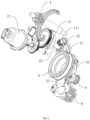
FIG. 1 is a schematic diagram that a housing is separated from other structures according to the present disclosure; -
FIG. 2 is a front view according to the present disclosure; -
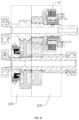
FIG. 3 is a section view of A-A inFIG. 2 ; -
FIG. 4 is a solid structural diagram (without a housing) according to the present disclosure; -
FIG. 5 is a first solid structural diagram of a clutch press unit according to the present disclosure; -
FIG. 6 is a second solid structural diagram of the clutch press unit according to the present disclosure; -
FIG. 7 is an exploded view of a multi-plate clutch and a supercharged press unit; and -
FIG. 8 is a structural schematic diagram of two gears in an electric vehicle. - Reference numerals: 1-housing; 11-guide cylinder; 12-accommodating groove; 2-power unit; 21-actuator motor; 22-power shaft; 3-drive unit; 31-shift cam; 32-clutch cam; 4-shift fork; 5-press part; 51-power portion; 511-transfer rotor; 52-press portion; 53-pivot portion; 54-return portion; 6-combined bearing; 7-press ring; 8-elastic alignment structure; 81-pin; 82-brake plate; 83-spring press plate; 84-compensation spring; 9-return structure; 91-fixed press plate; 92-return spring; 10-multi-plate clutch; 101-inner hub; 102-outer hub; 100-first-gear structure; and 200-second-gear structure.
- Embodiments of a control mechanism for a clutch in the present disclosure are further described with reference to
FIG. 1 to FIG. 8 . - In the description of the present disclosure, it needs to be noted that orientation and position relationships indicated by location words, such as terms "center", "transverse (X)", "longitudinal (Y)", "vertical (Z)", "length", "width", "thickness", "upper", "lower", "front", "rear", "left", "right", "upright", "horizontal", "top", "bottom", "inner", "outer", "clockwise", "anticlockwise", etc., are orientation or position relationships shown based on the drawings, are adopted not to indicate or imply that indicated devices or members must be in specific orientation or structured and operated in specific orientation but only to conveniently describe the present disclosure and simplify the description, and thus should not be understood as limitations to the specific scope of protection of the present disclosure.
- In addition, terms such as "first" and "second" are merely used for describing the purpose but not understood as indicating or implying relative importance or implicitly indicating the number of technical features. Thus, features limited with "first" and "second" may indicate or implicitly include one or more of the features. In the description of the present disclosure, "a plurality of" and "some" mean two or more, unless otherwise clearly and specifically limited.
- The control mechanism for a clutch includes a
power unit 2, adrive unit 3, ashift fork 4, a clutch press unit and ahousing 1, where - the
power unit 2 includes anactuator motor 21 and apower shaft 22 which are connected; - the
drive unit 3 includes ashift cam 31 and aclutch cam 32 which are both fixed to thepower shaft 22; - the
shift fork 4 is connected to theshift cam 31; and - the clutch press unit includes a
press part 5 with two ends provided with apower portion 51 and apivot portion 53 respectively. Apress portion 52 is disposed in a middle of thepress part 5. Thepower portion 51 is connected to theclutch cam 32, an elastic alignment structure 8 is disposed between thepivot portion 53 and thehousing 1, and areturn portion 54, corresponding to a position between thepivot portion 53 and thepress portion 52, is disposed at thepress part 5 and is provided with areturn structure 9. - The
housing 1 in the present disclosure may serve as ahousing 1 of a gearbox, which can fix various units inside; and a reduction gear set is disposed between theactuator motor 21 and thepower shaft 22 to increase torque. - As shown in
FIG. 8 , the control mechanism for a clutch in the present disclosure is applied to an electric vehicle. The electric vehicle has two gears, where theshift fork 4 is connected to a first gear, and the clutch press unit is connected to a second gear. A first-gear structure 100 in the gearbox in the present disclosure may adopt a low gear structure (an engage-disengage structure) disclosed, in the previous application No.201710902598.7 gear structure 200 may adopt a clutch structure disclosed, in the previous application No.201810915737.4 - The
drive unit 3 in the present disclosure may make theshift fork 4 and the clutch press unit move back and forth in an axial direction of thepower shaft 22 in a rotation process of thepower shaft 22. As shown inFIG. 4 , a gear groove is formed in a circumferential surface of theshift cam 31 and axially changes in position, and theshift fork 4 can move in the axial direction through cooperation of a running pulley and the gear groove. Theclutch cam 32 may be the same with theshift cam 31 in structure, or adopts a following manner that theclutch cam 32 adopts a valley structure with one surface provided with a toggle, and thepower portion 51 of thepress part 5 is provided with atransfer rotor 511 matched with the valley structure. - According to the viewing angle shown in
FIG. 8 , when theshift fork 4 and the clutch press unit apply force leftwards, the second gear is engaged, the first gear is disengaged, and during rightward movement, the second gear is disengaged, and the first gear is engaged. Thepress part 5 in the present disclosure and a second-gear multi-plate clutch 10 are in connection transition through a combinedbearing 6, that is, thepress portion 52 of thepress part 5 abuts against the combinedbearing 6, and when thepress part 5 moves leftwards, thepress part 52 leftwards extrudes the combinedbearing 6 so as to make the multi-plate clutch 10 engaged. - The second-
gear structure 200 in the embodiment has a supercharged press unit, namely a press unit in the patent No.201810915737.4 inner hub 101 connected to a shaft sleeve. A butt-joint structure is disposed between theinner hub 101 and anouter hub 102, and includes a plurality of bosses disposed on an outer surface of theinner hub 101 and grooves formed in an inner surface of theouter hub 102 and matched with the bosses, where the bosses, in an axial direction of the shaft sleeve, expand from one side close to a second friction plate assembly to the other side. Slopes are formed in two ends, in a circumferential direction of theinner hub 101, of each boss, and correspondingly, slopes are formed in two ends, in a circumferential direction of theouter hub 102, of each groove. When the shaft sleeve rotates to drive theinner hub 101 to rotate, the slope in one end of each boss is attached to the corresponding slope of the corresponding groove, and through a slope matched structure, theinner hub 101 generates, through cooperation of the bosses and the grooves, tangential component force in a rotation speed direction of theinner hub 101 and axial component force pointing at a friction plate unit in the axial direction of the shaft sleeve to theouter hub 102 at the slope junction. The tangential component force drives theouter hub 102 to rotate, and under the combined action of the axial component force and press force of the combinedbearing 6, a first friction plate assembly is pressed, or the first friction plate assembly and the second friction plate assembly are pressed. When the shaft sleeve reversely rotates, drive component force and axial component force are generated through mutual cooperation of the slopes in the other ends of the bosses and the grooves. - Through the arrangement, the combined
bearing 6 is only required to apply low press force to make the first friction plate assembly or a combination of the first friction plate assembly and the second friction plate assembly reach a half-engagement state, and under the action of the butt-joint structure, theinner hub 101 generates the axial component force pointing at the friction plate unit in the axial direction of the shaft sleeve to theouter hub 102, so that the first friction plate assembly or the combination of the first friction plate assembly and the second friction plate assembly is completely engaged. Accordingly, a driving apparatus with low driving power, such as a drive motor can be used to drive the combinedbearing 6 to realize engagement of the clutch, thereby reducing stress of the combinedbearing 6 and prolonging the service life. - As shown in
FIG. 4 andFIG. 5 , the preferred elastic alignment structure 8 in the embodiment includes apin 81. Thehousing 1 is provided with a sliding groove, one end of thepin 81 stretches into the sliding groove, and the other end is located outside the sliding groove. A limit structure limiting the pin from sliding out by the distance is disposed between thepin 81 and thehousing 1, the end, located outside the sliding groove, of thepin 81 is rotationally connected to thepivot portion 53, and compensation springs 84 are disposed between thepin 81 and thehousing 1. - Specifically, the limit structure includes a
brake plate 82 and aspring press plate 83. Thebrake plate 82 is fixedly connected to thehousing 1, and an interval is reserved between thebrake plate 82 and thehousing 1. Thespring press plate 83 is located below thebrake plate 82, the compensation springs 84 are located between thespring press plate 83 and thehousing 1, and thepin 81 is connected to thespring press plate 83. - In the embodiment, preferably, the
brake plate 82 and thespring press plate 83 are provided with holes for thepin 81 to penetrate through, and thebrake plate 82 can prevent thespring press plate 83 from penetrating through. Thepin 81 and thespring press plate 83 can be fixedly connected, or a position, corresponding to an outer side of thespring press plate 83, of thepin 81 is provided with a baffle ring, and after thespring press plate 83 makes contact with the baffle ring, thepin 81 is pushed to integrally rise (moving out of the sliding groove). - Taking the viewing angle shown in
FIG. 3 as an example, when thepower portion 51 of thepress part 5 arrives at an E-shaped portion of theclutch cam 32, thepress part 5 deflects rightwards with thepivot portion 53 as a pivot, thepin 81 is stopped in a pull-out direction of thespring press plate 83 and thebrake plate 82, thespring press plate 83 is pressed by the compensation springs 84 in the pull-out direction, during action, thepin 81 sinks (moving inwards the sliding groove) under the limitation of thetransfer rotor 511 and thepivot portion 53, and at the time, the force of the compensation springs 84 is changed, according to a lever ratio, into the force pressing themulti-plate clutch 10. Along with abrasion of the multi-plate clutch 10, the sinking degree is gradually reduced, to ensure the torque transmission capacity even in the state, a load of the compensation springs 84 is set, the amount of movement of thepin 81 is the largest when the clutch is new, and along with abrasion of the clutch, the amount of movement of thepin 81 is gradually reduced. - In the embodiment, preferably, the
housing 1 is provided withaccommodating grooves 12, the compensation springs 84 are disposed in theaccommodating grooves 12, and as shown inFIG. 5 , the plurality of compensation springs 84 are arranged, and are evenly distributed around thepin 81. - In the embodiment, preferably, a joint of the
pin 81 and thepivot portion 53 is set as a ball head structure so that thepivot portion 53 can rotate around an end portion of thepin 81 at random, meanwhile, the pin and the pivot portion are constantly kept connected, and certainly, thepin 81 and thepivot portion 53 may also be rotationally connected through a shaft in one direction. - In the embodiment, preferably, the
return structure 9 includes a fixedpress plate 91 and areturn spring 92, the fixedpress plate 91 is fixed to thehousing 1, and an interval is reserved between thefixed press plate 91 and thehousing 1. Thereturn portion 54 is located between thefixed press plate 91 and thehousing 1, and thereturn spring 92 is located between thefixed press plate 91 and thereturn portion 54. - As shown in
FIG. 5 andFIG. 6 , when thetransfer rotor 511 at thepower portion 51 is located at the valley of theclutch cam 32, with thepivot portion 53 as the pivot, thereturn spring 92 extrudes thereturn portion 54 to deflect in a direction away from the multi-plate clutch 10, that is, the multi-plate clutch 10 is disengaged. To make stress of thepress part 5 balanced, there are preferably tworeturn structures 9 to be arranged, and the tworeturn structures 9 are symmetrically disposed on two sides of a connecting line of thepower portion 51 and thepivot portion 53. - In the embodiment, preferably, the
press portion 52 is in a closed ring shape, apress ring 7 is disposed on an inner side of thepress portion 52, one side of thepress ring 7 protrudes out of thepress portion 52, thepress ring 7 is rotationally connected to thepress portion 52 through a rotating shaft, and an axis of the rotating shaft is perpendicular to the connecting line of thepower portion 51 and thepivot portion 53. -
FIG. 4 illustrates a state that thepress ring 7 tightly presses the combinedbearing 6, the combinedbearing 6 is not shown inFIG. 5 andFIG. 6 , that is, when thepress part 5 applies force in the embodiment, force is transmitted by thepress ring 7, thepress part 5 does not horizontally move in the axial direction in the force application process but deflects with thepivot portion 53 as the pivot, in addition, the position of thepivot portion 53 can change, and thus, the action of thewhole press part 5 is not translational. Therotating press ring 7 is arranged, and can transmit the force to thepress ring 7, thepress ring 7 is constantly kept to be in surface-to-surface contact with the combinedbearing 6, that is, thepress ring 7 can horizontally move to evenly apply force to the combinedbearing 6. - In the embodiment, preferably, the
housing 1 is provided with aguide cylinder 11, and thepress ring 7 sleeves theguide cylinder 11 and is in sliding connection to theguide cylinder 11. As shown inFIG. 3 , thepress ring 7 sleeves theguide cylinder 11, a movable gap is reserved between thepress ring 7 and thepress portion 52 of thepress part 5, theguide cylinder 11 further guides thepress ring 7 so that when thepress portion 52 applies force, thepress ring 7 can be kept to move in the axial direction along with theguide cylinder 11 completely without another-direction deflection, thereby ensuring balanced force application to the combinedbearing 6. - The above contents are merely preferred implementations of the present disclosure, the scope of protection of the present disclosure is not only limited to the above embodiments, but all technical solutions under the idea of the present disclosure shall fall within the scope of protection of the present invention as defined by the appended claims.
Claims (6)
- A control mechanism for a clutch, comprising a power unit (2), a drive unit (3), a shift fork (4), a clutch press unit and a housing (1), whereinthe power unit (2) comprises an actuator motor (21) and a power shaft (22) which are connected;the drive unit (3) comprises a shift cam (31) and a clutch cam (32) which are both fixed to the power shaft (22);the shift fork (4) is connected to the shift cam (31); andthe clutch press unit comprises a press part (5) with two ends provided with a power portion (51) and a pivot portion (53) respectively, a press portion (52) is disposed in a middle of the press part (5), the power portion (51) is connected to the clutch cam (32), an elastic alignment structure (8) is disposed between the pivot portion (53) and the housing (1), and a return portion (54), corresponding to a position between the pivot portion (53) and the press portion (52), is disposed at the press part (5) and is provided with a return structure (9);characterized in that the elastic alignment structure (8) comprises a pin (81), the housing (1) is provided with a sliding groove, one end of the pin (81) stretches into the sliding groove, the other end is located outside the sliding groove, a limit structure limiting the pin (81) from sliding out by the distance is disposed between the pin (81) and the housing (1), the end, located outside the sliding groove, of the pin (81) is rotationally connected to the pivot portion (53), and compensation springs (84) are disposed between the pin (81) and the housing (1);the limit structure comprises a brake plate (82) and a spring press plate (83), the brake plate (82) is fixedly connected to the housing (1), an interval is reserved between the brake plate (82) and the housing (1), the spring press plate (83) is located below the brake plate (82), the compensation springs (84) are located between the spring press plate (83) and the housing (1), and the pin (81) is connected to the spring press plate (83);wherein the return structure (9) comprises a fixed press plate (91) and a return spring (92), the fixed press plate (91) is fixed to the housing (1), an interval is reserved between the fixed press plate (91) and the housing (1), the return portion (54) is located between the fixed press plate (91) and the housing (1), and the return spring (92) is located between the fixed press plate (91) and the return portion (54).
- The control mechanism for a clutch according to claim 1, wherein the housing (1) is provided with accommodating grooves (12), and the compensation springs (84) are disposed in the accommodating grooves (12).
- The control mechanism for a clutch according to claim 2, wherein the plurality of compensation springs (84) are arranged, and are evenly distributed around a pin (81).
- The control mechanism for a clutch according to claim 3, wherein a joint of the pin (81) and the pivot portion (53) is set as a ball head structure.
- The control mechanism for a clutch according to claim 1, wherein the press portion (52) is in a closed ring shape, a press ring (7) is disposed on an inner side of the press portion (52), one side of the press ring (7) protrudes out of the press portion (52), the press ring (7) is rotationally connected to the press portion (52) through a rotating shaft, and an axis of the rotating shaft is perpendicular to a connecting line of the power portion (51) and the pivot portion (53).
- The control mechanism for a clutch according to claim 5, wherein the housing (1) is provided with a guide cylinder (11), and the press ring (7) sleeves the guide cylinder (11) and is in sliding connection to the guide cylinder (11).
Applications Claiming Priority (2)
| Application Number | Priority Date | Filing Date | Title |
|---|---|---|---|
| CN202210166167.XA CN114635930B (en) | 2022-02-23 | 2022-02-23 | Clutch operating mechanism |
| PCT/CN2022/084766 WO2023159720A1 (en) | 2022-02-23 | 2022-04-01 | Control mechanism of clutch |
Publications (4)
| Publication Number | Publication Date |
|---|---|
| EP4257837A1 EP4257837A1 (en) | 2023-10-11 |
| EP4257837A4 EP4257837A4 (en) | 2024-04-17 |
| EP4257837C0 EP4257837C0 (en) | 2025-05-21 |
| EP4257837B1 true EP4257837B1 (en) | 2025-05-21 |
Family
ID=87573876
Family Applications (1)
| Application Number | Title | Priority Date | Filing Date |
|---|---|---|---|
| EP22871059.6A Active EP4257837B1 (en) | 2022-02-23 | 2022-04-01 | Control mechanism of clutch |
Country Status (4)
| Country | Link |
|---|---|
| US (1) | US12181003B2 (en) |
| EP (1) | EP4257837B1 (en) |
| JP (1) | JP7610703B2 (en) |
| ES (1) | ES3032053T3 (en) |
Citations (1)
| Publication number | Priority date | Publication date | Assignee | Title |
|---|---|---|---|---|
| DE102015204225A1 (en) * | 2015-03-10 | 2016-09-15 | Schaeffler Technologies AG & Co. KG | Actuator module, in particular for actuating a clutch of a vehicle |
Family Cites Families (18)
| Publication number | Priority date | Publication date | Assignee | Title |
|---|---|---|---|---|
| US2624437A (en) * | 1948-07-19 | 1953-01-06 | Caterpillar Tractor Co | Automatic centering means for bearings |
| FR2461845A1 (en) | 1979-07-24 | 1981-02-06 | Citroen Sa | MECHANICAL CLUTCH CONTROL DEVICE |
| JPH0725337U (en) * | 1993-10-22 | 1995-05-12 | ダイハツ工業株式会社 | Clutch device |
| JP2000136831A (en) | 1998-10-30 | 2000-05-16 | Suzuki Motor Corp | Release fork operation restriction structure of clutch device |
| JP2003083360A (en) | 2001-09-06 | 2003-03-19 | Tochigi Fuji Ind Co Ltd | Actuator for friction clutch |
| DE502005006689D1 (en) * | 2005-03-17 | 2009-04-09 | Zahnradfabrik Friedrichshafen | Release device for a friction clutch of a motor vehicle |
| US8292055B2 (en) | 2009-11-04 | 2012-10-23 | GM Global Technology Operations LLC | Self-adjusting mechanisms for clutches |
| DE102011010616A1 (en) * | 2010-07-23 | 2012-01-26 | Magna Powertrain Ag & Co. Kg | Method for operating a drive train of a motor vehicle and corresponding drive train |
| JP5538180B2 (en) * | 2010-10-26 | 2014-07-02 | 株式会社ユニバンス | Driving force distribution device |
| CN102359510A (en) * | 2011-09-23 | 2012-02-22 | 孔凡鲁 | Shifting fork device of dry plate friction clutch |
| DE102013225361A1 (en) * | 2012-12-12 | 2014-06-12 | Schaeffler Technologies Gmbh & Co. Kg | Actuator e.g. pivot actuator for operating e.g. pulley-block clutch used in motor car, has gear wheel mounted at output device, which is provided with tooth portion engaged with spring element and worm thread engaged with pulley |
| DE102015216354A1 (en) | 2015-08-27 | 2017-03-02 | Schaeffler Technologies AG & Co. KG | Actuating device and coupling system with the actuating device |
| CN206175575U (en) | 2016-08-18 | 2017-05-17 | 重庆隆旺机电有限责任公司 | Two separation and reunion derailleur assemblies |
| CN107842564B (en) | 2017-09-29 | 2024-06-04 | 浙江鑫可传动科技有限公司 | Speed changing and shifting device of speed changer |
| US10500952B2 (en) * | 2017-11-20 | 2019-12-10 | Borgwarner Inc. | Transfer case having an actuator assembly with cam follower that is molded into a plastic actuator structure |
| JP6691162B2 (en) * | 2018-03-29 | 2020-04-28 | 株式会社ユニバンス | Speed change mechanism |
| CN108825675B (en) | 2018-08-13 | 2024-09-20 | 浙江鑫可传动科技有限公司 | Clutch and automobile having the same |
| CN110173516A (en) | 2019-06-06 | 2019-08-27 | 山推工程机械股份有限公司 | A kind of clutch |
-
2022
- 2022-04-01 ES ES22871059T patent/ES3032053T3/en active Active
- 2022-04-01 EP EP22871059.6A patent/EP4257837B1/en active Active
- 2022-04-01 JP JP2023522509A patent/JP7610703B2/en active Active
-
2023
- 2023-04-04 US US18/130,480 patent/US12181003B2/en active Active
Patent Citations (1)
| Publication number | Priority date | Publication date | Assignee | Title |
|---|---|---|---|---|
| DE102015204225A1 (en) * | 2015-03-10 | 2016-09-15 | Schaeffler Technologies AG & Co. KG | Actuator module, in particular for actuating a clutch of a vehicle |
Also Published As
| Publication number | Publication date |
|---|---|
| EP4257837C0 (en) | 2025-05-21 |
| EP4257837A1 (en) | 2023-10-11 |
| US12181003B2 (en) | 2024-12-31 |
| JP2024510362A (en) | 2024-03-07 |
| ES3032053T3 (en) | 2025-07-15 |
| US20230265897A1 (en) | 2023-08-24 |
| EP4257837A4 (en) | 2024-04-17 |
| JP7610703B2 (en) | 2025-01-08 |
Similar Documents
| Publication | Publication Date | Title |
|---|---|---|
| CN113090753B (en) | Gearshift, two grades of gearshift systems and vehicle | |
| US6315096B1 (en) | Friction engaging device | |
| JP2002525504A (en) | Dual clutch design for electromechanical automatic transmission with dual input shaft | |
| JP2016105017A (en) | Method for operating changeover device for automobile transmission and automobile transmission | |
| JP2002525505A (en) | Electromechanical clutch actuator | |
| JP3600286B2 (en) | Vehicle transmission | |
| EP4257837B1 (en) | Control mechanism of clutch | |
| US20050155826A1 (en) | Friction engaging device | |
| EP2447560B1 (en) | Dual clutch transmission | |
| JPH11201188A (en) | Automatic interrupting device for friction clutch | |
| CN211259607U (en) | Automatic gearbox gearshift | |
| US4332312A (en) | Reverse speed shift device for a motor vehicle change-speed gearbox | |
| JPH1037977A (en) | Gearbox prevention device for transmission | |
| RU2286262C2 (en) | Cone clutch | |
| KR930005964B1 (en) | Friction clutch | |
| CN115823131A (en) | Automatic shifting fork clutch | |
| CN112815018B (en) | A double clutch that can be linked and switched | |
| CN114635930B (en) | Clutch operating mechanism | |
| KR840001663B1 (en) | Vehicle driving gear | |
| CN111623091A (en) | Two-gear automatic gearbox | |
| EP2956327B1 (en) | Combined power take-off and synchronizer assembly | |
| CN111059168A (en) | Lever-controlled clutch and speed-changing device | |
| JPH03149464A (en) | Preventing device for accompanied rotation in transmission of car | |
| KR100225960B1 (en) | Lever Synchro Mechanism of Manual Transmission | |
| JPS6222694Y2 (en) |
Legal Events
| Date | Code | Title | Description |
|---|---|---|---|
| STAA | Information on the status of an ep patent application or granted ep patent |
Free format text: STATUS: UNKNOWN |
|
| STAA | Information on the status of an ep patent application or granted ep patent |
Free format text: STATUS: THE INTERNATIONAL PUBLICATION HAS BEEN MADE |
|
| PUAI | Public reference made under article 153(3) epc to a published international application that has entered the european phase |
Free format text: ORIGINAL CODE: 0009012 |
|
| STAA | Information on the status of an ep patent application or granted ep patent |
Free format text: STATUS: REQUEST FOR EXAMINATION WAS MADE |
|
| 17P | Request for examination filed |
Effective date: 20230331 |
|
| AK | Designated contracting states |
Kind code of ref document: A1 Designated state(s): AL AT BE BG CH CY CZ DE DK EE ES FI FR GB GR HR HU IE IS IT LI LT LU LV MC MK MT NL NO PL PT RO RS SE SI SK SM TR |
|
| A4 | Supplementary search report drawn up and despatched |
Effective date: 20240315 |
|
| RIC1 | Information provided on ipc code assigned before grant |
Ipc: F16D 13/75 20060101ALI20240311BHEP Ipc: F16D 23/14 20060101ALI20240311BHEP Ipc: F16D 28/00 20060101AFI20240311BHEP |
|
| GRAP | Despatch of communication of intention to grant a patent |
Free format text: ORIGINAL CODE: EPIDOSNIGR1 |
|
| STAA | Information on the status of an ep patent application or granted ep patent |
Free format text: STATUS: GRANT OF PATENT IS INTENDED |
|
| DAV | Request for validation of the european patent (deleted) | ||
| DAX | Request for extension of the european patent (deleted) | ||
| INTG | Intention to grant announced |
Effective date: 20250221 |
|
| GRAS | Grant fee paid |
Free format text: ORIGINAL CODE: EPIDOSNIGR3 |
|
| GRAA | (expected) grant |
Free format text: ORIGINAL CODE: 0009210 |
|
| STAA | Information on the status of an ep patent application or granted ep patent |
Free format text: STATUS: THE PATENT HAS BEEN GRANTED |
|
| AK | Designated contracting states |
Kind code of ref document: B1 Designated state(s): AL AT BE BG CH CY CZ DE DK EE ES FI FR GB GR HR HU IE IS IT LI LT LU LV MC MK MT NL NO PL PT RO RS SE SI SK SM TR |
|
| REG | Reference to a national code |
Ref country code: GB Ref legal event code: FG4D |
|
| REG | Reference to a national code |
Ref country code: CH Ref legal event code: EP |
|
| REG | Reference to a national code |
Ref country code: DE Ref legal event code: R096 Ref document number: 602022015074 Country of ref document: DE |
|
| REG | Reference to a national code |
Ref country code: IE Ref legal event code: FG4D |
|
| REG | Reference to a national code |
Ref country code: ES Ref legal event code: FG2A Ref document number: 3032053 Country of ref document: ES Kind code of ref document: T3 Effective date: 20250715 |
|
| U01 | Request for unitary effect filed |
Effective date: 20250612 |
|
| U07 | Unitary effect registered |
Designated state(s): AT BE BG DE DK EE FI FR IT LT LU LV MT NL PT RO SE SI Effective date: 20250623 |
|
| PG25 | Lapsed in a contracting state [announced via postgrant information from national office to epo] |
Ref country code: NO Free format text: LAPSE BECAUSE OF FAILURE TO SUBMIT A TRANSLATION OF THE DESCRIPTION OR TO PAY THE FEE WITHIN THE PRESCRIBED TIME-LIMIT Effective date: 20250821 Ref country code: GR Free format text: LAPSE BECAUSE OF FAILURE TO SUBMIT A TRANSLATION OF THE DESCRIPTION OR TO PAY THE FEE WITHIN THE PRESCRIBED TIME-LIMIT Effective date: 20250822 |
|
| PG25 | Lapsed in a contracting state [announced via postgrant information from national office to epo] |
Ref country code: PL Free format text: LAPSE BECAUSE OF FAILURE TO SUBMIT A TRANSLATION OF THE DESCRIPTION OR TO PAY THE FEE WITHIN THE PRESCRIBED TIME-LIMIT Effective date: 20250521 |
|
| PG25 | Lapsed in a contracting state [announced via postgrant information from national office to epo] |
Ref country code: HR Free format text: LAPSE BECAUSE OF FAILURE TO SUBMIT A TRANSLATION OF THE DESCRIPTION OR TO PAY THE FEE WITHIN THE PRESCRIBED TIME-LIMIT Effective date: 20250521 |
|
| PG25 | Lapsed in a contracting state [announced via postgrant information from national office to epo] |
Ref country code: RS Free format text: LAPSE BECAUSE OF FAILURE TO SUBMIT A TRANSLATION OF THE DESCRIPTION OR TO PAY THE FEE WITHIN THE PRESCRIBED TIME-LIMIT Effective date: 20250821 |
|
| PG25 | Lapsed in a contracting state [announced via postgrant information from national office to epo] |
Ref country code: IS Free format text: LAPSE BECAUSE OF FAILURE TO SUBMIT A TRANSLATION OF THE DESCRIPTION OR TO PAY THE FEE WITHIN THE PRESCRIBED TIME-LIMIT Effective date: 20250921 |
|
| PG25 | Lapsed in a contracting state [announced via postgrant information from national office to epo] |
Ref country code: SM Free format text: LAPSE BECAUSE OF FAILURE TO SUBMIT A TRANSLATION OF THE DESCRIPTION OR TO PAY THE FEE WITHIN THE PRESCRIBED TIME-LIMIT Effective date: 20250521 |
|
| PG25 | Lapsed in a contracting state [announced via postgrant information from national office to epo] |
Ref country code: CZ Free format text: LAPSE BECAUSE OF FAILURE TO SUBMIT A TRANSLATION OF THE DESCRIPTION OR TO PAY THE FEE WITHIN THE PRESCRIBED TIME-LIMIT Effective date: 20250521 |
|
| PG25 | Lapsed in a contracting state [announced via postgrant information from national office to epo] |
Ref country code: SK Free format text: LAPSE BECAUSE OF FAILURE TO SUBMIT A TRANSLATION OF THE DESCRIPTION OR TO PAY THE FEE WITHIN THE PRESCRIBED TIME-LIMIT Effective date: 20250521 |
|
| PLBE | No opposition filed within time limit |
Free format text: ORIGINAL CODE: 0009261 |
|
| STAA | Information on the status of an ep patent application or granted ep patent |
Free format text: STATUS: NO OPPOSITION FILED WITHIN TIME LIMIT |
|
| REG | Reference to a national code |
Ref country code: CH Ref legal event code: L10 Free format text: ST27 STATUS EVENT CODE: U-0-0-L10-L00 (AS PROVIDED BY THE NATIONAL OFFICE) Effective date: 20260402 |
|
| PGFP | Annual fee paid to national office [announced via postgrant information from national office to epo] |
Ref country code: GB Payment date: 20260210 Year of fee payment: 5 |
|
| 26N | No opposition filed |
Effective date: 20260224 |
|
| U20 | Renewal fee for the european patent with unitary effect paid |
Year of fee payment: 5 Effective date: 20260326 |