EP4256664B1 - Energy management system - Google Patents
Energy management system Download PDFInfo
- Publication number
- EP4256664B1 EP4256664B1 EP21830646.2A EP21830646A EP4256664B1 EP 4256664 B1 EP4256664 B1 EP 4256664B1 EP 21830646 A EP21830646 A EP 21830646A EP 4256664 B1 EP4256664 B1 EP 4256664B1
- Authority
- EP
- European Patent Office
- Prior art keywords
- photovoltaic system
- power supply
- energy management
- energy
- management system
- Prior art date
- Legal status (The legal status is an assumption and is not a legal conclusion. Google has not performed a legal analysis and makes no representation as to the accuracy of the status listed.)
- Active
Links
Images
Classifications
-
- H—ELECTRICITY
- H02—GENERATION; CONVERSION OR DISTRIBUTION OF ELECTRIC POWER
- H02J—ELECTRIC POWER NETWORKS; CIRCUIT ARRANGEMENTS OR SYSTEMS FOR SUPPLYING OR DISTRIBUTING ELECTRIC POWER; SYSTEMS FOR STORING ELECTRIC ENERGY
- H02J3/00—Circuit arrangements for AC mains or AC distribution networks
-
- H—ELECTRICITY
- H02—GENERATION; CONVERSION OR DISTRIBUTION OF ELECTRIC POWER
- H02J—ELECTRIC POWER NETWORKS; CIRCUIT ARRANGEMENTS OR SYSTEMS FOR SUPPLYING OR DISTRIBUTING ELECTRIC POWER; SYSTEMS FOR STORING ELECTRIC ENERGY
- H02J13/00—Circuit arrangements for providing remote monitoring or remote control of equipment in a power distribution network
- H02J13/10—Circuit arrangements for providing remote monitoring or remote control of equipment in a power distribution network characterised by displaying of information or by user interaction, e.g. supervisory control and data acquisition [SCADA] systems
-
- H—ELECTRICITY
- H02—GENERATION; CONVERSION OR DISTRIBUTION OF ELECTRIC POWER
- H02J—ELECTRIC POWER NETWORKS; CIRCUIT ARRANGEMENTS OR SYSTEMS FOR SUPPLYING OR DISTRIBUTING ELECTRIC POWER; SYSTEMS FOR STORING ELECTRIC ENERGY
- H02J3/00—Circuit arrangements for AC mains or AC distribution networks
- H02J3/12—Arrangements for adjusting voltage in AC networks by changing a characteristic of the network load
- H02J3/14—Arrangements for adjusting voltage in AC networks by changing a characteristic of the network load by switching loads on to, or off from, the networks, e.g. progressively balanced loading
-
- H—ELECTRICITY
- H02—GENERATION; CONVERSION OR DISTRIBUTION OF ELECTRIC POWER
- H02J—ELECTRIC POWER NETWORKS; CIRCUIT ARRANGEMENTS OR SYSTEMS FOR SUPPLYING OR DISTRIBUTING ELECTRIC POWER; SYSTEMS FOR STORING ELECTRIC ENERGY
- H02J3/00—Circuit arrangements for AC mains or AC distribution networks
- H02J3/38—Arrangements for feeding a single network from two or more generators or sources in parallel; Arrangements for feeding already energised networks from additional generators or sources in parallel
- H02J3/381—Dispersed generators
-
- H—ELECTRICITY
- H02—GENERATION; CONVERSION OR DISTRIBUTION OF ELECTRIC POWER
- H02J—ELECTRIC POWER NETWORKS; CIRCUIT ARRANGEMENTS OR SYSTEMS FOR SUPPLYING OR DISTRIBUTING ELECTRIC POWER; SYSTEMS FOR STORING ELECTRIC ENERGY
- H02J3/00—Circuit arrangements for AC mains or AC distribution networks
- H02J3/38—Arrangements for feeding a single network from two or more generators or sources in parallel; Arrangements for feeding already energised networks from additional generators or sources in parallel
- H02J3/388—Arrangements for the handling of islanding, e.g. for disconnection or for avoiding the disconnection of power
-
- H—ELECTRICITY
- H02—GENERATION; CONVERSION OR DISTRIBUTION OF ELECTRIC POWER
- H02J—ELECTRIC POWER NETWORKS; CIRCUIT ARRANGEMENTS OR SYSTEMS FOR SUPPLYING OR DISTRIBUTING ELECTRIC POWER; SYSTEMS FOR STORING ELECTRIC ENERGY
- H02J2101/00—Supply or distribution of decentralised, dispersed or local electric power generation
- H02J2101/20—Dispersed power generation using renewable energy sources
- H02J2101/22—Solar energy
- H02J2101/24—Photovoltaics
-
- Y—GENERAL TAGGING OF NEW TECHNOLOGICAL DEVELOPMENTS; GENERAL TAGGING OF CROSS-SECTIONAL TECHNOLOGIES SPANNING OVER SEVERAL SECTIONS OF THE IPC; TECHNICAL SUBJECTS COVERED BY FORMER USPC CROSS-REFERENCE ART COLLECTIONS [XRACs] AND DIGESTS
- Y02—TECHNOLOGIES OR APPLICATIONS FOR MITIGATION OR ADAPTATION AGAINST CLIMATE CHANGE
- Y02E—REDUCTION OF GREENHOUSE GAS [GHG] EMISSIONS, RELATED TO ENERGY GENERATION, TRANSMISSION OR DISTRIBUTION
- Y02E10/00—Energy generation through renewable energy sources
- Y02E10/50—Photovoltaic [PV] energy
- Y02E10/56—Power conversion systems, e.g. maximum power point trackers
Definitions
- the invention relates to an energy management system adapted to manage and control energy flows between entities of a photovoltaic system and a corresponding method.
- a photovoltaic system comprises an inverter which is provided to convert a direct current (DC) power generated by photovoltaic modules of a photovoltaic array into alternating current (AC) power.
- the generated AC power can be supplied in a normal operation mode of the photovoltaic system to a power supply grid.
- a local load network can also be powered by the AC power generated by the inverter of the photovoltaic system. This load network can comprise a wide variety of consumer appliances consuming AC power generated by the inverter.
- the inverter can also be connected to a local storage unit to store energy locally. Accordingly, there are different energy flows between the inverter and other entities.
- the photovoltaic array When the photovoltaic array receives solar irradiation, it generates a DC current and energy flows from the photovoltaic array to the inverter.
- Devices of the load network receive energy fromthe AC side of the inverter. Further, energy can also be stored by the inverter in the local storage unit.
- EP 2 941 809 B1 describes an energy control system configured to control the transmission of energy to an electrical load.
- the energy control system comprises a renewable energy resource, a stored energy resource, a memory configured to store program instructions and an energy system controller.
- the energy controller of the energy control system has a predictor module, a dispatch planner module and a dispatch module which controls the transmission of energy between the stored energy resource to the electrical load and to the storage device.
- EP 3 386 058 A1 describes a method for configuring a load shedding controller adapted to control a micro-grid that includes a photovoltaic system.
- the load shedding controller is configured to control a switching device through which the micro-grid is connected to or disconnected from a main grid.
- the load shedding controller can be configured by a user via a user interface on a computer display.
- JP 2015 139331 A discloses a solar cell display part that displays whether or not a solar cell is connected with a power storage system.
- JP 2014 119288 A discloses an energy management system comprising a display unit for displaying an object corresponding to a load and a control unit for controlling a display mode of the object according to a power storage amount of a storage battery so as to display a time length where the load can be operated by electric power supplied from a storage battery device.
- US 2020/0091726 A discloses property power system that includes multiple photovoltaic (PV) panels to generate DC electrical energy from solar energy and a first power conversion module to convert between DC and AC electrical energy and to control aspects of each PV panel.
- the property power system can have a group of battery blades to store electrical energy and another power conversion module to convert between DC and AC electrical energy and to control aspects of each battery blade.
- the property power system can have a multiple synchronization interfaces configured to aggregate the AC electrical energy of each of the PV panels/battery blades, respectively, and to control delivery of the aggregated AC electrical energy.
- the property power system can include a grid circuit disconnector to prevent back-feed of power during grid outage condition while the PV panels or the group of battery blades is powering an electrical load center of the property.
- the system During a normal operation of the photovoltaic system, the system is connected to the power supply grid or power supply network. There can be an energy flow from the photovoltaic system to the power supply grid or vice versa. However, in an emergency situation, the photovoltaic system is disconnected from the power supply grid. This situation requires an efficient energy management.
- the invention provides an energy management system adapted to manage an energy flow within a photovoltaic system and to run an energy flow manager.
- the energy management system comprises a user interface configured to notify a user about an emergency operation mode of the photovoltaic system triggered by a power supply grid failure and to provide recommendations for the user with respect to a handling of power-consuming loads of a load network of the photovoltaic system during the power supply grid failure, to enable a sufficient power supply for as long as possible.
- the photovoltaic system comprises an inverter adapted to convert a DC power generated by photovoltaic modules of a photovoltaic array into AC power supplied in a normal operation mode of the photovoltaic system via a measurement device into the power supply grid.
- the inverter is connected to at least one storage unit of the photovoltaic system used to store electrical power.
- the energy flow manager is adapted to monitor and control the energy flows between the inverter and other entities of the photovoltaic system connected to the inverter, in particular power-consuming devices of the load network of the photovoltaic system, including the energy flow from the photovoltaic array to a DC side of the inverter and the energy flow from the inverter to the at least one storage unit of the photovoltaic system and the energy flow between the photovoltaic system and the power supply grid.
- the energy flow manager is executed on a processor adapted to calculate momentary energy flows, in particular momentary current flows, depending on data provided by different entities of the photovoltaic system including the measurement device and/or the power-consuming loads of the load network.
- an emergency switch of the photovoltaic system is automatically opened by a controller of the inverter or by the energy flow manager to disconnect the power supply grid automatically from the photovoltaic system causing the interruption of the energy flow between the inverter and the power supply grid as long as the photovoltaic system does operate in the emergency operation mode.
- the energy flow manager is executed on a processor of an energy management system of the photovoltaic system.
- the energy flow manager is executed on a server of a cloud-based web portal connected via an Internet connection to the communication interface of the energy management system of the photovoltaic system.
- the energy flow manager executed on the processor of the energy management system is adapted to notify the user by means of the user interface about the emergency operation mode of the photovoltaic system triggered by the power supply grid failure and/or about the interruption of the Internet connection caused by the power supply grid failure.
- the user interface is integrated in a user equipment communicating with the energy management system.
- the user interface is integrated in the energy management system of the photovoltaic system.
- the user equipment is integrated into a visual display unit, in particular a LED display board.
- the user equipment comprises an energy management application adapted to inform the user via the user interface of the user equipment about the current operation mode of the photovoltaic system and to output predictions and/or recommendations to the user as how to handle the power-consuming loads of the load network of the photovoltaic system during the current operation mode of the photovoltaic system.
- the energy flow manager may inform the user via the energy management application.
- the energy management application acts as a bridge between a user and the energy flow manager.
- the energy flow manager is adapted to receive user inputs as a response for recommendations via the energy management application.
- the predictions and recommendations are calculated by the energy flow manager for the emergency operation mode of the photovoltaic system on the basis of collected data provided by the entities of the photovoltaic system during the emergency operation mode and on the basis of the data calculated during the normal operation mode of the photovoltaic system before the power supply grid failure has been detected and the emergency switch has been opened by the controller of the inverter or by the energy flow manager to interrupt the energy flow between the photovoltaic system and the power supply grid.
- the collected data is stored in a local data memory of the energy management system.
- the collected data comprises solar generation capacity data, solar irradiation data, solar generation capacity forecast data, load usage and power consumption data, load usage and power consumption forecast data, load priority data, initial user input data, storage unit energy level data, user input data, in particular responses to predictions and recommendations, and measurement device data generated by the measurement device.
- the recommendations calculated by the energy flow manager based on the collected data comprise recommendations with respect to performing a fully automatic, semi-automatic and/or manual shutdown of the power-consuming loads of the load network and/or a reduced power consumption of the power-consuming loads of the load network of the photovoltaic system during its operation in the emergency operation mode.
- different loads of the load network of the photovoltaic system are configurable by the user as to perform a fully automatic, semi-automatic or a manual shutdown and/or a reduced power consumption in the emergency operation mode notified to the user via the user interface of the photovoltaic system.
- the user equipment communicating with the energy management system comprises a mobile user equipment such as a smartphone connected via a wireless link with the energy management system of the photovoltaic system.
- the invention provides according to a further aspect a method for managing an energy flow of a photovoltaic system comprising the features of claim 14.
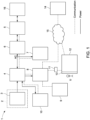
- Fig. 1 illustrates schematically a possible exemplary embodiment of a photovoltaic system 1 comprising an energy management system 8 for managing energy flows of the photovoltaic system 1.
- the photovoltaic system 1 comprises at least one photovoltaic array 2 comprising photovoltaic modules 3 adapted to generate a direct current DC power supplied to the DC side of an inverter 4.
- the inverter 4 is adapted to convert the received DC power generated by the photovoltaic modules 3 of the photovoltaic array 2 into an alternating current AC power.
- the AC power generated by the inverter 4 can be supplied via AC lines and a measurement device 5 to a power supply grid 16 connected to the photovoltaic system 1.
- the photovoltaic system 1 comprises in the illustrated embodiment further an emergency switch 6 which is adapted to interrupt the connection between the photovoltaic system 1 and the power supply grid 16 in case of an emergency situation, in particular if a power supply grid failure of the power supply grid 16 has been detected by the measurement device 5
- a load network 7 can be connected to the AC lines as shown in Fig. 1 .
- the load network 7 comprises a plurality of power-consuming devices.
- a power consuming device is a washing machine in a private household.
- Another example of the power-consuming device of the load network 7 is a machine of a fabrication facility.
- the load network 7 can comprise several loads of different types which consume AC power generated by the inverter 4.
- the photovoltaic system 1 as illustrated in Fig. 1 further comprises an energy management system 8 which can be also connected to the inverter 4 of the photovoltaic system 1.
- the energy management system 8 can comprise a local data memory 9 adapted to store data.
- the memory 9 can also be integrated in the energy management system 8.
- a storage unit 10 can be provided to store electrical energy locally in the photovoltaic system 1.
- This storage unit 10 can comprise a battery adapted to store DC power.
- the energy management system 8 comprises an access point 11 having a wireless link to a mobile user equipment 12 of a user U as illustrated in Fig. 1 .
- the energy management system 8 can also be connected via a data interface to a stationary user terminal.
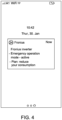
- the user equipment 12 comprises a user interface 13 to display information to the user U as shown in Fig. 4 , for example, recommendations for the user U to handle power-consuming devices of the load network 7 of the photovoltaic system 1 during the power supply grid failure.
- the energy management unit 8 of the photovoltaic system 1 as illustrated in Fig. 1 makes use of the user interface 13 to notify the user U about an emergency operation mode of the photovoltaic system 1 which is triggered by a power supply grid failure of the power supply grid 16 and to provide recommendations for the user U with respect to handling of power-consuming devices of the load network 7 of the photovoltaic system 1 during the power supply grid failure.
- An energy flow manager can be adapted to monitor and control energy flows between the inverter 4 and other entities of the photovoltaic system 1, in particular power-consuming devices of the load network 7.
- Other entities comprise photovoltaic modules 3 of the photovoltaic array 2 as well as the at least one storage unit 10 of the photovoltaic system 1.
- the energy flow manager can also monitor and control the momentary energy flow between the photovoltaic system 1 and the power supply grid 16.
- the photovoltaic system 1 can operate in a normal operation mode or in an emergency operation mode.
- the PV system 1 can supply power to the power supply grid 16 via the measurement device 5 or can receive power from the power supply grid 16 via the measurement device 5. It is also possible that in the normal operation mode of the PV system 1 no power transfer between the PV system 1 and the power supply grid 16 occurs. If a power supply grid failure of the power supply grid 16 is observed the PV system 1 does transit automatically from the normal operation mode to the emergency operation mode.
- the energy flow manager is executed on a processor of the energy management system 8 which is adapted to calculate momentary energy flows depending on data provided by different entities of the photovoltaic system 1 and including the measurement device 5 and/or loads of the load network 7. For instance, the energy flow manager can calculate momentary current flows depending on measured data.
- a power supply grid failure is detected automatically by the energy flow manager on the basis of data provided by the measurement device 5 of the photovoltaic system 1.
- the emergency switch 6 of the photovoltaic system 1 is automatically opened (switched-off) by a controller of the inverter 4 or by the energy flow manager to disconnect the power supply grid 16 from the photovoltaic system 1. This causes an interruption of the energy flow between the inverter 4 and the power supply grid 16 as long as the photovoltaic system 1 operates in the emergency operation mode.
- the energy flow manager can be executed on a processor of the energy management system 8 of the photovoltaic system 1 as shown in Fig. 1 .
- the energy flow manager can also be executed on a remote web portal server 14 which may be connected via the Internet or another data network to the photovoltaic system 1, in particular to an interface of the energy management system 8.
- the energy flow manager is executed on a processor of the energy management system 8 because a power supply grid failure of the power supply grid 16 may also cause an interruption of the Internet 15 which disconnects the web portal server 14 from the photovoltaic system 1.
- the energy flow manager executed on the processor of the energy management system 8 can notify the user U by means of the user interface 13 about the emergency operation mode of the photovoltaic system 1 triggered by the power supply grid failure and also about the unwanted interruption of the Internet connection caused by this power supply grid failure.
- the energy flow manager detects the power supply grid failure and/or the interruption of the Internet connection caused by this power supply grid failure, the energy flow manager changes a mode of the photovoltaic system 1 from a normal operation mode to an emergency operation mode.
- the user interface 13 is integrated in a user equipment 12 communicating with the energy management system 8 via a wireless connection such as wireless fidelity WiFi.
- the user interface 13 can also be integrated in the energy management system 8 itself.
- the user interface 13 can also be connected to other devices communicating with the energy management system 8 such as a LED display board which may be hung on a wall of the facility.
- a power supply grid failure triggering an emergency operation can also be simulated by the energy flow manager in a specific simulation operation mode selected by a user or by a remote control operator.
- an expected remaining operation time of the photovoltaic system 1 is calculated based on the current configuration of the photovoltaic system 1 and forecast data.
- the simulation can be performed in the background periodically, e.g. each hour, to provide the user U with an expected emergency operation time period output via the user interface 13.
- the user equipment 12 comprises, in a preferred embodiment, an energy management application APP which is adapted to inform the user U via the user interface 13 of the user equipment 12 about a current operation mode (the normal operation mode or the emergency operation mode) of the photovoltaic system 1. Further, the energy management application APP can be adapted to output predictions and/or recommendations to the user U on handling the different power-consuming devices of the load network 7 of the photovoltaic system 1 during the current operation mode of the photovoltaic system 1.
- the energy management application APP forms a bridge between the user U and the energy flow manager which may be executed on a processor of the energy management system 8.
- the energy flow manager executed on the processor of the energy management system 8 can receive user inputs which form responses to the output recommendations via the energy management application.
- the predictions and recommendations are calculated in a preferred embodiment by the energy flow manager for the emergency operation mode of the photovoltaic system 1 on the basis of collected data provided by the different entities of the photovoltaic system 1 during the emergency operation mode.
- These different entities can comprise different power-consuming loads connected in the load network 7 but also other entities, in particular the measurement device 5, the emergency switch 6, a controller of the inverter 4 and a battery management system BMS of the storage unit 10.
- the predictions and recommendations which are calculated by the energy flow manager can also be based on data collected during a normal operation mode of the photovoltaic system 1 before the power supply grid failure of the power supply grid 16 has been detected and the emergency switch 6 has been opened.
- the collected data can comprise data collected during the normal operation mode before switch-off of the emergency switch 6 and data collected after the emergency switch 6 has been switched off and the photovoltaic system 1 has already entered the emergency operation mode.
- the collected data can be stored in a possible implementation in a local data memory, for instance the local memory 9 illustrated in Fig. 1 .
- the collected data stored in the data memory 9 can comprise solar generation capacity data, solar irradiation data, solar generation capacity forecast data, load usage and power consumption data, load usage and power consumption forecast data, load priority data, initial user input data, storage unit energy level data, user input data, in particular user input data performing responses to predictions and recommendations output via the user interface 13 as well as measurement device data generated by the measurement device 5 of the photovoltaic system 1.
- the recommendations calculated by the energy flow manager based on the collected and stored data can comprise recommendations with respect to performing a shutdown or a power consumption reduction of the power-consuming loads of the load network 7 during the operation in the emergency operation mode of the photovoltaic system 1.
- the shutdown does comprise in a possible implementation a fully automatic shutdown of the power-consuming loads of the load network 7.
- the shutdown can comprise a semi-automatic shutdown of the power-consuming loads or a manual shutdown of different single power-consuming loads within the load network 7 in response to a user input command.
- a reduced power consumption of the different power-consuming loads in the load network 7 can be performed either fully automatically, semi-automatically or in response to a manual shutdown according to input data received from the user U via the user interface 13.
- the different loads of the load network 7 of the photovoltaic system 1 can in a possible embodiment be configurable by the user U as to perform a fully automatic, semi-automatic or a manual shutdown and/or a power consumption reduction during the emergency operation mode notified to the user U via the user interface 13 of the photovoltaic system 1.
- the user equipment 12 communicating with the energy management system 8 comprises a mobile user equipment 12 connected via a wireless link such as a WIFI connection with the energy management system 8 of the photovoltaic system 1.
- the user interface 13 can comprise in a possible implementation also a graphical user interface, in particular a touchscreen which can be operated by the user U.
- the user interface 13 can also comprise a microphone to receive user commands as well as loudspeakers to output recommendations and/or predictions to the user U acoustically.
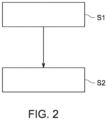
- Fig. 2 illustrates a possible exemplary embodiment of a method for managing an energy flow within a photovoltaic system 1 according to a further aspect of the present invention.
- the method comprises two main steps.
- a user U is notified by means of a user interface 13 about an emergency operation mode of the photovoltaic system 1 triggered by a detected power supply grid failure of the power supply grid 16. Accordingly, the user U becomes aware that the photovoltaic system 1 now operates in the emergency operation mode and no longer in the normal operation mode where the photovoltaic system 1 is connected to the power supply grid 16.
- step S2 recommendations for handling the power-consuming loads of the load network 7 and/or other entities of the photovoltaic system 1 are calculated by a processor of the energy management system 8 during the emergency operation mode. These calculated recommendations are output to the user U by means of the user interface 13 of a device.
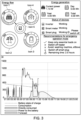
- Fig. 3 shows a possible exemplary implementation of a graphical user interface 13 which can be used by the method and system 1 according to the present invention to assist a user U in performing an efficient energy management of the photovoltaic system 1.
- a first icon, ICON1, on the graphical user interface represents a photovoltaic array 2 of the photovoltaic system 1.
- a second icon, ICON2 represents symbolically the physical power supply grid 16.
- a third icon, ICON3 represents the at least one storage unit 10 of the photovoltaic system 1.
- a fourth icon, ICON4 represents power-consuming devices of the load network 7.
- the inverter 4 is represented by a fifth icon, ICON5.
- the photovoltaic array 2 receives solar irradiation, it generates a DC power that is supplied to the DC side of the inverter 4.
- This energy flow is represented by an arrow A1 in Fig. 3 .
- the AC power is consumed by power-consuming loads of the load network 7 and a corresponding energy flow from the inverter 4 to the power-consuming loads is represented by an arrow A4 shown in Fig. 3 .
- energy can be stored by the inverter 4 into the energy storage unit 10 as represented by arrow A3.
- energy can also flow from the energy storage 10 to the inverter 4 such as the direction of arrow A3 is inverted.
- the photovoltaic system 1 has already entered the emergency operation mode in response to a detected power supply grid failure.
- the user U receives recommendations about how to handle different entities of the photovoltaic system 1 during the emergency operation mode via the graphical user interface. These recommendations are calculated automatically based on the configuration of the system 1.
- the user U may receive general recommendations such as to switch off devices of the load network 7 which are absolutely not necessary to operate and retain operation of only devices which are absolutely necessary.
- the user U may be notified to disconnect a redundant entity or load thus keeping the operation of essential loads such as an emergency lighting within a facility.
- These recommendations can also be calculated on the basis of a priority configuration given by a user U or operator in a setup of the photovoltaic system 1.
- the user U may also be informed to avoid operation of loads having a very high power consumption such as a washing machine or a heater.
- the energy flow manager may also calculate automatically how long an emergency operation mode of the remaining loads of the load network 7 can be maintained.
- a user U may be informed that the emergency operation mode caused by the power supply grid failure and disconnection from the power supply grid 16 allows further operation of the remaining loads only for a calculated time of several hours, for instance 2.5 hours.
- the user U may also receive a graphical power forecast as also illustrated in Fig. 3 .
- the energy flow manager notifies the user U about the entered emergency operation mode, for instance by no longer displaying an arrow between the power supply grid 16 and the inverter 4.
- the energy flow manager can also output a warning to the user U via the user interface 13, for instance an acoustic warning signal informing that the photovoltaic system 1 has been separated from the power supply grid 16.
- the user U receives additional recommendations about how to handle loads and other entities within the photovoltaic system 1 in the emergency operation mode.
- the energy flow manager can automatically disconnect some redundant loads of the load network 7 in case of the power supply grid failure in the emergency operation mode without intervention of the user U.
- the energy management system 8 comprises a configuration storage or memory comprising, in a possible implementation, a table of loads of the load network 7 and other entities of the photovoltaic system 1. For each load or entity, an associated configuration entry indicates whether the specific load or entity requires intervention of the user U to switch off or not.
- a user U may indicate that a power-consuming heater can be switched off automatically by the energy flow manager in case that a power supply grid failure is detected whereas another power-consuming load such as a washing machine can continue its operation in case that no specific user input command to switch off the washing machine is input into the user interface 13.
- the energy flow manager of the energy managing system can optimize the energy flow in an emergency situation. This can also be performed on the basis of forecast data.
- the collected data stored in the data memory 9 can for instance comprise solar generation capacity forecast data as well as load usage and power consumption forecast data. Some forecast data may be supplied during normal operation mode via the still operating Internet 15 from the web portal server 14 or other services generating forecast data. This forecast data may for instance comprise weather indication data or solar generation capacity forecast data.
- the energy flow manager can calculate for a defined time such as 24 hours at least an estimation of the photovoltaic energy or power generated by the photovoltaic modules 3 of the photovoltaic array 2. Further, the energy flow manager has access to information about the storage unit energy level, SoC, of the storage unit 10.
- the energy flow manager can initiate an interactive dialog with the user U via the user interface 13 to output recommendations to the user U and in return to receive user feedbacks and control commands.
- the user feedback can be received via the executed energy management application APP.
- the energy management application APP can be loaded by the user U from a database of the web portal server 14.
- a user U can perform configurations concerning the power-consuming devices of the load network 7 and the other entities of the respective photovoltaic system 1.
- the user U may also input additional parameters such as the time period or time window for the forecast data. For instance, the user U may indicate whether forecast data for the next 24 hours shall be stored or for a longer time period.
- the energy flow manager can start automatically to communicate with all relevant entities of the photovoltaic system 1 via a local communication bus to receive information about the entities and loads available in the local photovoltaic system 1. Accordingly, the energy flow manager can collect information about the different power-consuming devices and other entities connected to the inverter 4 of the photovoltaic system 1 to generate a list displayed to the user U via the user interface 13.
- the user U may perform individual configurations for the displayed available loads and entities.
- a list or a table can indicate that the local load network 7 comprises a first heater H1, a second heater H2 and a washing machine W1.
- the user U can select for instance that heater H2 shall be switched off automatically in case of a power supply grid failure whereas heater H1 and the washing machine W1 require a manual shutdown command input by the user U in case of such a situation. Accordingly, in this simple example, the energy flow manager will switch off heater H2 automatically if a power supply grid failure is detected.
- the energy flow manager will, in such a situation, only display heater H1 and the washing machine W1 as "remaining power-consuming entities" of the load network 7 to the user U and wait for a user command whether the heater H1 and/or the washing machine W1 shall be switched off as well.
- the user U may choose also to switch off heater H1 to keep the operation of the washing machine W1.
- the energy flow manager can give additional information about the respective affected loads to assist the user U in making his decision. For instance, the energy flow manager can indicate the power consumed by the respective loads in Watt. Further, the energy flow manager may recommend the user U to turn off the load of the load network 7 having a higher power consumption than another load.
- the energy flow manager can perform additional calculations depending on a current energy flow situation and the user input. For instance, a user input can be evaluated automatically by the energy flow manager to avoid unwanted consequences for the operation of the respective facility. For instance, if operation of one load within the load network 7 requires the operation of another load 7 within the same load network 7, the energy flow manager will check logically whether the user input is consistent to this relationship.
- the energy management application APP can also perform automatically logical consistency checks of the user commands input by the user U via the user interface 13.
- the energy flow manager can collect data during the normal operation mode of the system 1 from various data sources. For instance, solar generation capacity data can be collected for a predefined number of past days and for a predefined number of future days. Further, solar irradiation information data can be collected for a past number of days and for a future number of days. Moreover, load usage data can be collected from a measuring device for a predefined number of past days and a predefined number of future days. Further, the energy flow manager can collect user input data concerning a load usage of loads in the load network 7.
- forecast data can be calculated by the energy flow manager. For instance, the energy flow manager can calculate an expected daily photovoltaic energy generation of energy by the photovoltaic array for a future number of days based on the collected information. Further, an expected daily load usage and a total load usage for each of the loads in the load network 7 can be calculated based on the collected information and user inputs.
- the energy flow manager may also determine a current energy level of the storage unit 10.
- a future energy level of the inverter 4 and/or energy storage 10 can be predicted based on the calculated photovoltaic predictions, calculated load usage predictions and a determined storage unit energy level.
- the energy flow manager can provide recommendations for the users U about handling and accessing the loads and other entities of the photovoltaic system 1.
- the energy flow manager provides recommendations and/or automatically turns off one or more power-consuming loads of the load network based on a current energy level and the future energy level of the energy storage 10.
- the energy flow manager assists efficiently a user U in the task of maintaining the operation of most relevant entities and loads of a photovoltaic system 1 in case of a detected power supply grid failure.
- the power supply grid failure can be detected automatically based on measurement device data such as current, frequency, etc. generated by the measurement device 5 and notified to the energy flow manager.
- the power supply grid failure is notified by a remote controller of the power supply grid 16 via a communication interface of the energy management system 8 running the energy flow manager.
- the energy flow manager allows a user to adjust the responses to predictions and recommendations in response to changing situations, such as a status of power supply grid 16.
- the energy flow manager displays a dynamic list of available power-consuming loads to the user.
- the energy flow manager further updates the dynamic list in response to any response from the user.
- the energy flow manager dynamically schedules an amount of power to each of the available power-consuming loads based on at least one of user preferences, and/or the collected data stored in the data memory.
- the energy flow manager is capable of ingesting collected data stored in the data memory to train machine learning models, in particular, models to estimate an energy consumption during the emergency operation mode and provide recommendations to the user with respect to a handling of power-consuming loads of a load network 7 of the photovoltaic system 1 during the power supply grid failure.
- the energy flow manager is capable of recording, storing, and/or analyzing historical energy consumption data corresponding to a user during the normal operation mode and the emergency operation mode to train machine learning models.
- the energy flow manager continuously receives energy consumption data from each of the power-consuming devices and continuously adds new historical data to train machine learning models. The user can, thus extract more flexibility during the emergency operation mode.
- the energy flow manager may employ machine learning models to perform analysis of the user's consumption trends and patterns and create certain recommendations and suggestions for using each of the power-consuming devices of the load network 7 of the photovoltaic system 1 during the emergency operation mode based on such an analysis.
- the energy flow manager can also provide recommendations about how to extend the expected remaining emergency operation lifetime of the photovoltaic system 1 in case of the emergency operation mode.
- the energy flow manager may, for example, recommend to add a further battery 10 of a specific storage capacity to extend the operation lifetime by two hours.
Landscapes
- Engineering & Computer Science (AREA)
- Power Engineering (AREA)
- Supply And Distribution Of Alternating Current (AREA)
- Radar Systems Or Details Thereof (AREA)
- Human Computer Interaction (AREA)
- Inverter Devices (AREA)
Description
- The invention relates to an energy management system adapted to manage and control energy flows between entities of a photovoltaic system and a corresponding method.
- A photovoltaic system comprises an inverter which is provided to convert a direct current (DC) power generated by photovoltaic modules of a photovoltaic array into alternating current (AC) power. The generated AC power can be supplied in a normal operation mode of the photovoltaic system to a power supply grid. A local load network can also be powered by the AC power generated by the inverter of the photovoltaic system. This load network can comprise a wide variety of consumer appliances consuming AC power generated by the inverter. Further, the inverter can also be connected to a local storage unit to store energy locally. Accordingly, there are different energy flows between the inverter and other entities. When the photovoltaic array receives solar irradiation, it generates a DC current and energy flows from the photovoltaic array to the inverter. Devices of the load network receive energy fromthe AC side of the inverter. Further, energy can also be stored by the inverter in the local storage unit.
-
EP 2 941 809 B1 describes an energy control system configured to control the transmission of energy to an electrical load. The energy control system comprises a renewable energy resource, a stored energy resource, a memory configured to store program instructions and an energy system controller. The energy controller of the energy control system has a predictor module, a dispatch planner module and a dispatch module which controls the transmission of energy between the stored energy resource to the electrical load and to the storage device. -
EP 3 386 058 A1 -
JP 2015 139331 A -
JP 2014 119288 A -
US 2020/0091726 A discloses property power system that includes multiple photovoltaic (PV) panels to generate DC electrical energy from solar energy and a first power conversion module to convert between DC and AC electrical energy and to control aspects of each PV panel. The property power system can have a group of battery blades to store electrical energy and another power conversion module to convert between DC and AC electrical energy and to control aspects of each battery blade. The property power system can have a multiple synchronization interfaces configured to aggregate the AC electrical energy of each of the PV panels/battery blades, respectively, and to control delivery of the aggregated AC electrical energy. The property power system can include a grid circuit disconnector to prevent back-feed of power during grid outage condition while the PV panels or the group of battery blades is powering an electrical load center of the property. - During a normal operation of the photovoltaic system, the system is connected to the power supply grid or power supply network. There can be an energy flow from the photovoltaic system to the power supply grid or vice versa. However, in an emergency situation, the photovoltaic system is disconnected from the power supply grid. This situation requires an efficient energy management.
- Accordingly, it is an object of the present invention to provide an energy management system adapted to handle efficiently the energy flows during a situation where the photovoltaic system is disconnected from the power supply grid.
- This object is achieved according to a first aspect of the present invention by an energy management system comprising the features of
claim 1. - The invention, according to the first aspect, provides an energy management system adapted to manage an energy flow within a photovoltaic system and to run an energy flow manager. The energy management system comprises a user interface configured to notify a user about an emergency operation mode of the photovoltaic system triggered by a power supply grid failure and to provide recommendations for the user with respect to a handling of power-consuming loads of a load network of the photovoltaic system during the power supply grid failure, to enable a sufficient power supply for as long as possible.
- In a possible embodiment of the energy management system according to the first aspect of the present invention, the photovoltaic system comprises an inverter adapted to convert a DC power generated by photovoltaic modules of a photovoltaic array into AC power supplied in a normal operation mode of the photovoltaic system via a measurement device into the power supply grid.
- In a further possible embodiment of the energy management system according to the first aspect of the present invention, the inverter is connected to at least one storage unit of the photovoltaic system used to store electrical power.
- In a further possible embodiment of the energy management system according to the first aspect of the present invention, the energy flow manager is adapted to monitor and control the energy flows between the inverter and other entities of the photovoltaic system connected to the inverter, in particular power-consuming devices of the load network of the photovoltaic system, including the energy flow from the photovoltaic array to a DC side of the inverter and the energy flow from the inverter to the at least one storage unit of the photovoltaic system and the energy flow between the photovoltaic system and the power supply grid.
- In a further possible embodiment of the energy management system according to the first aspect of the present invention, the energy flow manager is executed on a processor adapted to calculate momentary energy flows, in particular momentary current flows, depending on data provided by different entities of the photovoltaic system including the measurement device and/or the power-consuming loads of the load network.
- In a further possible embodiment of the energy management system according to the first aspect of the present invention, if a power supply grid failure has been detected on the basis of data provided by the measurement device, then an emergency switch of the photovoltaic system is automatically opened by a controller of the inverter or by the energy flow manager to disconnect the power supply grid automatically from the photovoltaic system causing the interruption of the energy flow between the inverter and the power supply grid as long as the photovoltaic system does operate in the emergency operation mode.
- In a still further possible embodiment of the energy management system according to the first aspect of the present invention, the energy flow manager is executed on a processor of an energy management system of the photovoltaic system. In an alternative embodiment of the energy management system according to the first aspect of the present invention, the energy flow manager is executed on a server of a cloud-based web portal connected via an Internet connection to the communication interface of the energy management system of the photovoltaic system.
- In a further possible embodiment of the energy management system according to the first aspect of the present invention, if an interruption of the Internet connection caused by the power supply grid is detected, the energy flow manager executed on the processor of the energy management system is adapted to notify the user by means of the user interface about the emergency operation mode of the photovoltaic system triggered by the power supply grid failure and/or about the interruption of the Internet connection caused by the power supply grid failure.
- In a further possible embodiment of the energy management system according to the first aspect of the present invention, the user interface is integrated in a user equipment communicating with the energy management system.
- In a further possible embodiment of the energy management system according to the first aspect of the present invention, the user interface is integrated in the energy management system of the photovoltaic system.
- In a further possible embodiment of the energy management system according to the first aspect of the present invention, the user equipment is integrated into a visual display unit, in particular a LED display board.
- In a further possible embodiment of the energy management system according to the first aspect of the present invention, the user equipment comprises an energy management application adapted to inform the user via the user interface of the user equipment about the current operation mode of the photovoltaic system and to output predictions and/or recommendations to the user as how to handle the power-consuming loads of the load network of the photovoltaic system during the current operation mode of the photovoltaic system.
- The energy flow manager may inform the user via the energy management application. In this embodiment, the energy management application acts as a bridge between a user and the energy flow manager. The energy flow manager is adapted to receive user inputs as a response for recommendations via the energy management application.
- In a further possible embodiment of the energy management system according to the first aspect of the present invention, the predictions and recommendations are calculated by the energy flow manager for the emergency operation mode of the photovoltaic system on the basis of collected data provided by the entities of the photovoltaic system during the emergency operation mode and on the basis of the data calculated during the normal operation mode of the photovoltaic system before the power supply grid failure has been detected and the emergency switch has been opened by the controller of the inverter or by the energy flow manager to interrupt the energy flow between the photovoltaic system and the power supply grid.
- In a possible embodiment, the collected data is stored in a local data memory of the energy management system.
- In a possible embodiment of the energy management system according to the first aspect of the present invention, the collected data comprises solar generation capacity data, solar irradiation data, solar generation capacity forecast data, load usage and power consumption data, load usage and power consumption forecast data, load priority data, initial user input data, storage unit energy level data, user input data, in particular responses to predictions and recommendations, and measurement device data generated by the measurement device.
- In a further possible embodiment of the energy management system according to the first aspect of the present invention, the recommendations calculated by the energy flow manager based on the collected data comprise recommendations with respect to performing a fully automatic, semi-automatic and/or manual shutdown of the power-consuming loads of the load network and/or a reduced power consumption of the power-consuming loads of the load network of the photovoltaic system during its operation in the emergency operation mode.
- In a further possible embodiment of the energy management system according to the first aspect of the present invention, different loads of the load network of the photovoltaic system are configurable by the user as to perform a fully automatic, semi-automatic or a manual shutdown and/or a reduced power consumption in the emergency operation mode notified to the user via the user interface of the photovoltaic system.
- In a further possible embodiment of the energy management system according to the first aspect of the present invention, the user equipment communicating with the energy management system comprises a mobile user equipment such as a smartphone connected via a wireless link with the energy management system of the photovoltaic system.
- The invention provides according to a further aspect a method for managing an energy flow of a photovoltaic system comprising the features of
claim 14. - In the following, possible embodiments of the different aspects of the present invention are described in more detail with reference to the enclosed figures.
- Fig. 1
- shows a block diagram for illustrating a possible exemplary embodiment of an energy management system according to the first aspect of the present invention;
- Fig. 2
- shows a flowchart of a possible exemplary embodiment of a method for managing an energy flow within a photovoltaic system according to a further aspect of the present invention;
- Fig. 3
- shows a possible exemplary implementation of a graphical user interface used by the energy management system according to the present invention; and
- Fig. 4
- shows a possible exemplary implementation of a graphical user interface of a user equipment
-
Fig. 1 illustrates schematically a possible exemplary embodiment of aphotovoltaic system 1 comprising anenergy management system 8 for managing energy flows of thephotovoltaic system 1. Thephotovoltaic system 1 comprises at least onephotovoltaic array 2 comprisingphotovoltaic modules 3 adapted to generate a direct current DC power supplied to the DC side of aninverter 4. Theinverter 4 is adapted to convert the received DC power generated by thephotovoltaic modules 3 of thephotovoltaic array 2 into an alternating current AC power. The AC power generated by theinverter 4 can be supplied via AC lines and ameasurement device 5 to apower supply grid 16 connected to thephotovoltaic system 1. - The
photovoltaic system 1 comprises in the illustrated embodiment further anemergency switch 6 which is adapted to interrupt the connection between thephotovoltaic system 1 and thepower supply grid 16 in case of an emergency situation, in particular if a power supply grid failure of thepower supply grid 16 has been detected by themeasurement device 5 - On the AC side of the
inverter 4, aload network 7 can be connected to the AC lines as shown inFig. 1 . Theload network 7 comprises a plurality of power-consuming devices. For example, a power consuming device is a washing machine in a private household. Another example of the power-consuming device of theload network 7 is a machine of a fabrication facility. Theload network 7 can comprise several loads of different types which consume AC power generated by theinverter 4. - The
photovoltaic system 1 as illustrated inFig. 1 further comprises anenergy management system 8 which can be also connected to theinverter 4 of thephotovoltaic system 1. Theenergy management system 8 can comprise alocal data memory 9 adapted to store data. Thememory 9 can also be integrated in theenergy management system 8. - Further, a
storage unit 10 can be provided to store electrical energy locally in thephotovoltaic system 1. Thisstorage unit 10 can comprise a battery adapted to store DC power. In the illustrated exemplary embodiment ofFig. 1 , theenergy management system 8 comprises anaccess point 11 having a wireless link to amobile user equipment 12 of a user U as illustrated inFig. 1 . In an alternative embodiment, theenergy management system 8 can also be connected via a data interface to a stationary user terminal. Theuser equipment 12 comprises auser interface 13 to display information to the user U as shown inFig. 4 , for example, recommendations for the user U to handle power-consuming devices of theload network 7 of thephotovoltaic system 1 during the power supply grid failure. - The
energy management unit 8 of thephotovoltaic system 1 as illustrated inFig. 1 makes use of theuser interface 13 to notify the user U about an emergency operation mode of thephotovoltaic system 1 which is triggered by a power supply grid failure of thepower supply grid 16 and to provide recommendations for the user U with respect to handling of power-consuming devices of theload network 7 of thephotovoltaic system 1 during the power supply grid failure. An energy flow manager can be adapted to monitor and control energy flows between theinverter 4 and other entities of thephotovoltaic system 1, in particular power-consuming devices of theload network 7. Other entities comprisephotovoltaic modules 3 of thephotovoltaic array 2 as well as the at least onestorage unit 10 of thephotovoltaic system 1. The energy flow manager can also monitor and control the momentary energy flow between thephotovoltaic system 1 and thepower supply grid 16. - The
photovoltaic system 1 can operate in a normal operation mode or in an emergency operation mode. In the normal operation mode thePV system 1 can supply power to thepower supply grid 16 via themeasurement device 5 or can receive power from thepower supply grid 16 via themeasurement device 5. It is also possible that in the normal operation mode of thePV system 1 no power transfer between thePV system 1 and thepower supply grid 16 occurs. If a power supply grid failure of thepower supply grid 16 is observed thePV system 1 does transit automatically from the normal operation mode to the emergency operation mode. - In a possible embodiment, the energy flow manager is executed on a processor of the
energy management system 8 which is adapted to calculate momentary energy flows depending on data provided by different entities of thephotovoltaic system 1 and including themeasurement device 5 and/or loads of theload network 7. For instance, the energy flow manager can calculate momentary current flows depending on measured data. - A power supply grid failure is detected automatically by the energy flow manager on the basis of data provided by the
measurement device 5 of thephotovoltaic system 1. As soon as a power supply grid failure has been detected by the energy flow manager, theemergency switch 6 of thephotovoltaic system 1 is automatically opened (switched-off) by a controller of theinverter 4 or by the energy flow manager to disconnect thepower supply grid 16 from thephotovoltaic system 1. This causes an interruption of the energy flow between theinverter 4 and thepower supply grid 16 as long as thephotovoltaic system 1 operates in the emergency operation mode. - In a possible embodiment, the energy flow manager can be executed on a processor of the
energy management system 8 of thephotovoltaic system 1 as shown inFig. 1 . In an alternative embodiment, the energy flow manager can also be executed on a remoteweb portal server 14 which may be connected via the Internet or another data network to thephotovoltaic system 1, in particular to an interface of theenergy management system 8. - In a preferred embodiment, the energy flow manager is executed on a processor of the
energy management system 8 because a power supply grid failure of thepower supply grid 16 may also cause an interruption of theInternet 15 which disconnects theweb portal server 14 from thephotovoltaic system 1. - If an interruption of the Internet connection caused by a power supply grid failure is detected by the energy flow manager, the energy flow manager executed on the processor of the
energy management system 8 can notify the user U by means of theuser interface 13 about the emergency operation mode of thephotovoltaic system 1 triggered by the power supply grid failure and also about the unwanted interruption of the Internet connection caused by this power supply grid failure. When the energy flow manager detects the power supply grid failure and/or the interruption of the Internet connection caused by this power supply grid failure, the energy flow manager changes a mode of thephotovoltaic system 1 from a normal operation mode to an emergency operation mode. - In the illustrated embodiment of
Fig. 1 , theuser interface 13 is integrated in auser equipment 12 communicating with theenergy management system 8 via a wireless connection such as wireless fidelity WiFi. In an alternative implementation, theuser interface 13 can also be integrated in theenergy management system 8 itself. Further, theuser interface 13 can also be connected to other devices communicating with theenergy management system 8 such as a LED display board which may be hung on a wall of the facility. - In a possible embodiment, also a power supply grid failure triggering an emergency operation can also be simulated by the energy flow manager in a specific simulation operation mode selected by a user or by a remote control operator. In this simulation, an expected remaining operation time of the
photovoltaic system 1 is calculated based on the current configuration of thephotovoltaic system 1 and forecast data. The simulation can be performed in the background periodically, e.g. each hour, to provide the user U with an expected emergency operation time period output via theuser interface 13. - The
user equipment 12 comprises, in a preferred embodiment, an energy management application APP which is adapted to inform the user U via theuser interface 13 of theuser equipment 12 about a current operation mode (the normal operation mode or the emergency operation mode) of thephotovoltaic system 1. Further, the energy management application APP can be adapted to output predictions and/or recommendations to the user U on handling the different power-consuming devices of theload network 7 of thephotovoltaic system 1 during the current operation mode of thephotovoltaic system 1. - In this embodiment, the energy management application APP forms a bridge between the user U and the energy flow manager which may be executed on a processor of the
energy management system 8. The energy flow manager executed on the processor of theenergy management system 8 can receive user inputs which form responses to the output recommendations via the energy management application. - The predictions and recommendations are calculated in a preferred embodiment by the energy flow manager for the emergency operation mode of the
photovoltaic system 1 on the basis of collected data provided by the different entities of thephotovoltaic system 1 during the emergency operation mode. These different entities can comprise different power-consuming loads connected in theload network 7 but also other entities, in particular themeasurement device 5, theemergency switch 6, a controller of theinverter 4 and a battery management system BMS of thestorage unit 10. Further, the predictions and recommendations which are calculated by the energy flow manager can also be based on data collected during a normal operation mode of thephotovoltaic system 1 before the power supply grid failure of thepower supply grid 16 has been detected and theemergency switch 6 has been opened. - The collected data can comprise data collected during the normal operation mode before switch-off of the
emergency switch 6 and data collected after theemergency switch 6 has been switched off and thephotovoltaic system 1 has already entered the emergency operation mode. The collected data can be stored in a possible implementation in a local data memory, for instance thelocal memory 9 illustrated inFig. 1 . - The collected data stored in the
data memory 9 can comprise solar generation capacity data, solar irradiation data, solar generation capacity forecast data, load usage and power consumption data, load usage and power consumption forecast data, load priority data, initial user input data, storage unit energy level data, user input data, in particular user input data performing responses to predictions and recommendations output via theuser interface 13 as well as measurement device data generated by themeasurement device 5 of thephotovoltaic system 1. - The recommendations calculated by the energy flow manager based on the collected and stored data can comprise recommendations with respect to performing a shutdown or a power consumption reduction of the power-consuming loads of the
load network 7 during the operation in the emergency operation mode of thephotovoltaic system 1. - The shutdown does comprise in a possible implementation a fully automatic shutdown of the power-consuming loads of the
load network 7. In an alternative embodiment, the shutdown can comprise a semi-automatic shutdown of the power-consuming loads or a manual shutdown of different single power-consuming loads within theload network 7 in response to a user input command. Also, a reduced power consumption of the different power-consuming loads in theload network 7 can be performed either fully automatically, semi-automatically or in response to a manual shutdown according to input data received from the user U via theuser interface 13. - The different loads of the
load network 7 of thephotovoltaic system 1 can in a possible embodiment be configurable by the user U as to perform a fully automatic, semi-automatic or a manual shutdown and/or a power consumption reduction during the emergency operation mode notified to the user U via theuser interface 13 of thephotovoltaic system 1. In the illustrated embodiment ofFig. 1 , theuser equipment 12 communicating with theenergy management system 8 comprises amobile user equipment 12 connected via a wireless link such as a WIFI connection with theenergy management system 8 of thephotovoltaic system 1. - The
user interface 13 can comprise in a possible implementation also a graphical user interface, in particular a touchscreen which can be operated by the user U. Theuser interface 13 can also comprise a microphone to receive user commands as well as loudspeakers to output recommendations and/or predictions to the user U acoustically. -
Fig. 2 illustrates a possible exemplary embodiment of a method for managing an energy flow within aphotovoltaic system 1 according to a further aspect of the present invention. In the illustrated embodiment ofFig. 2 , the method comprises two main steps. - In a first step S1, a user U is notified by means of a
user interface 13 about an emergency operation mode of thephotovoltaic system 1 triggered by a detected power supply grid failure of thepower supply grid 16. Accordingly, the user U becomes aware that thephotovoltaic system 1 now operates in the emergency operation mode and no longer in the normal operation mode where thephotovoltaic system 1 is connected to thepower supply grid 16. - In a further step S2, recommendations for handling the power-consuming loads of the
load network 7 and/or other entities of thephotovoltaic system 1 are calculated by a processor of theenergy management system 8 during the emergency operation mode. These calculated recommendations are output to the user U by means of theuser interface 13 of a device. -
Fig. 3 shows a possible exemplary implementation of agraphical user interface 13 which can be used by the method andsystem 1 according to the present invention to assist a user U in performing an efficient energy management of thephotovoltaic system 1. A first icon, ICON1, on the graphical user interface represents aphotovoltaic array 2 of thephotovoltaic system 1. Further, a second icon, ICON2, represents symbolically the physicalpower supply grid 16. A third icon, ICON3 represents the at least onestorage unit 10 of thephotovoltaic system 1. A fourth icon, ICON4, represents power-consuming devices of theload network 7. In the center of the graphical user interface shown inFig. 3 , theinverter 4 is represented by a fifth icon, ICON5. There are different energy flows between the different entities illustrated inFig. 3 . As long as thephotovoltaic array 2 receives solar irradiation, it generates a DC power that is supplied to the DC side of theinverter 4. This energy flow is represented by an arrow A1 inFig. 3 . The AC power is consumed by power-consuming loads of theload network 7 and a corresponding energy flow from theinverter 4 to the power-consuming loads is represented by an arrow A4 shown inFig. 3 . Moreover, energy can be stored by theinverter 4 into theenergy storage unit 10 as represented by arrow A3. In another scenario, energy can also flow from theenergy storage 10 to theinverter 4 such as the direction of arrow A3 is inverted. In the illustrated embodiment, there is no displayed energy flow between the power supply grid represented by icon ICON2 and theinverter 4 represented by icon ICON5. Accordingly, no arrow is displayed on the graphical user interface between ICON2 and ICON5 as shown inFig. 3 . A missing arrow between the power supply grid ICON2 and the inverter ICON5 indicates to a user U that there is no exchange of energy between thephotovoltaic system 1 and thepower supply grid 16 indicating that the localphotovoltaic system 1 now operates in an emergency operation mode. - In the example shown in
Fig. 3 , thephotovoltaic system 1 has already entered the emergency operation mode in response to a detected power supply grid failure. As can be seen inFig. 3 , the user U receives recommendations about how to handle different entities of thephotovoltaic system 1 during the emergency operation mode via the graphical user interface. These recommendations are calculated automatically based on the configuration of thesystem 1. The user U may receive general recommendations such as to switch off devices of theload network 7 which are absolutely not necessary to operate and retain operation of only devices which are absolutely necessary. - For instance, the user U may be notified to disconnect a redundant entity or load thus keeping the operation of essential loads such as an emergency lighting within a facility. These recommendations can also be calculated on the basis of a priority configuration given by a user U or operator in a setup of the
photovoltaic system 1. The user U may also be informed to avoid operation of loads having a very high power consumption such as a washing machine or a heater. The energy flow manager may also calculate automatically how long an emergency operation mode of the remaining loads of theload network 7 can be maintained. - For instance, a user U may be informed that the emergency operation mode caused by the power supply grid failure and disconnection from the
power supply grid 16 allows further operation of the remaining loads only for a calculated time of several hours, for instance 2.5 hours. The user U may also receive a graphical power forecast as also illustrated inFig. 3 . - If a power supply grid failure is detected, the energy flow manager notifies the user U about the entered emergency operation mode, for instance by no longer displaying an arrow between the
power supply grid 16 and theinverter 4. The energy flow manager can also output a warning to the user U via theuser interface 13, for instance an acoustic warning signal informing that thephotovoltaic system 1 has been separated from thepower supply grid 16. Further, the user U receives additional recommendations about how to handle loads and other entities within thephotovoltaic system 1 in the emergency operation mode. The energy flow manager can automatically disconnect some redundant loads of theload network 7 in case of the power supply grid failure in the emergency operation mode without intervention of the user U. In contrast, other entities or loads may require a specific manual command from the user U to switch off the load or entity in case of an emergency operation mode. During a setup phase, in a configuration mode, the user U can configure thephotovoltaic system 1 to indicate which loads or entities are to be switched off automatically in case of detected power supply grid failures and which loads or entities require a manual switch-off command via theinterface 13 in case of a detected power supply grid failure. Accordingly, in a possible embodiment, theenergy management system 8 comprises a configuration storage or memory comprising, in a possible implementation, a table of loads of theload network 7 and other entities of thephotovoltaic system 1. For each load or entity, an associated configuration entry indicates whether the specific load or entity requires intervention of the user U to switch off or not. For instance, a user U may indicate that a power-consuming heater can be switched off automatically by the energy flow manager in case that a power supply grid failure is detected whereas another power-consuming load such as a washing machine can continue its operation in case that no specific user input command to switch off the washing machine is input into theuser interface 13. - Accordingly, the energy flow manager of the energy managing system according to the present invention can optimize the energy flow in an emergency situation. This can also be performed on the basis of forecast data. The collected data stored in the
data memory 9 can for instance comprise solar generation capacity forecast data as well as load usage and power consumption forecast data. Some forecast data may be supplied during normal operation mode via the still operatingInternet 15 from theweb portal server 14 or other services generating forecast data. This forecast data may for instance comprise weather indication data or solar generation capacity forecast data. In this way, the energy flow manager can calculate for a defined time such as 24 hours at least an estimation of the photovoltaic energy or power generated by thephotovoltaic modules 3 of thephotovoltaic array 2. Further, the energy flow manager has access to information about the storage unit energy level, SoC, of thestorage unit 10. - After the
photovoltaic system 1 has entered the emergency operation mode, the energy flow manager can initiate an interactive dialog with the user U via theuser interface 13 to output recommendations to the user U and in return to receive user feedbacks and control commands. The user feedback can be received via the executed energy management application APP. In a possible embodiment, the energy management application APP can be loaded by the user U from a database of theweb portal server 14. - In a setup mode of the application APP, a user U can perform configurations concerning the power-consuming devices of the
load network 7 and the other entities of the respectivephotovoltaic system 1. The user U may also input additional parameters such as the time period or time window for the forecast data. For instance, the user U may indicate whether forecast data for the next 24 hours shall be stored or for a longer time period. During the setup, the energy flow manager can start automatically to communicate with all relevant entities of thephotovoltaic system 1 via a local communication bus to receive information about the entities and loads available in the localphotovoltaic system 1. Accordingly, the energy flow manager can collect information about the different power-consuming devices and other entities connected to theinverter 4 of thephotovoltaic system 1 to generate a list displayed to the user U via theuser interface 13. The user U may perform individual configurations for the displayed available loads and entities. - For instance, a list or a table can indicate that the
local load network 7 comprises a first heater H1, a second heater H2 and a washing machine W1. In a possible embodiment, the user U can select for instance that heater H2 shall be switched off automatically in case of a power supply grid failure whereas heater H1 and the washing machine W1 require a manual shutdown command input by the user U in case of such a situation. Accordingly, in this simple example, the energy flow manager will switch off heater H2 automatically if a power supply grid failure is detected. The energy flow manager will, in such a situation, only display heater H1 and the washing machine W1 as "remaining power-consuming entities" of theload network 7 to the user U and wait for a user command whether the heater H1 and/or the washing machine W1 shall be switched off as well. In this simple example, the user U may choose also to switch off heater H1 to keep the operation of the washing machine W1. - When displaying the heater H1 and the washing machine W1 as potential loads to be switched off in the emergency operation mode, the energy flow manager can give additional information about the respective affected loads to assist the user U in making his decision. For instance, the energy flow manager can indicate the power consumed by the respective loads in Watt. Further, the energy flow manager may recommend the user U to turn off the load of the
load network 7 having a higher power consumption than another load. - In particular, in an industrial environment, the energy flow manager can perform additional calculations depending on a current energy flow situation and the user input. For instance, a user input can be evaluated automatically by the energy flow manager to avoid unwanted consequences for the operation of the respective facility. For instance, if operation of one load within the
load network 7 requires the operation of anotherload 7 within thesame load network 7, the energy flow manager will check logically whether the user input is consistent to this relationship. - For instance, if the user U inputs that a first load shall continue to operate and that a second load shall be switched off but the operation of a second load is essentially necessary for the operation of the first load, this user input is inconsistent and the energy flow management application APP will give a corresponding hint to the user U via the
user interface 13. Accordingly, in a possible embodiment, the energy management application APP can also perform automatically logical consistency checks of the user commands input by the user U via theuser interface 13. - The energy flow manager can collect data during the normal operation mode of the
system 1 from various data sources. For instance, solar generation capacity data can be collected for a predefined number of past days and for a predefined number of future days. Further, solar irradiation information data can be collected for a past number of days and for a future number of days. Moreover, load usage data can be collected from a measuring device for a predefined number of past days and a predefined number of future days. Further, the energy flow manager can collect user input data concerning a load usage of loads in theload network 7. - Based on the collected information, forecast data can be calculated by the energy flow manager. For instance, the energy flow manager can calculate an expected daily photovoltaic energy generation of energy by the photovoltaic array for a future number of days based on the collected information. Further, an expected daily load usage and a total load usage for each of the loads in the
load network 7 can be calculated based on the collected information and user inputs. - The energy flow manager may also determine a current energy level of the
storage unit 10. A future energy level of theinverter 4 and/orenergy storage 10 can be predicted based on the calculated photovoltaic predictions, calculated load usage predictions and a determined storage unit energy level. - Based on these predictions, the energy flow manager can provide recommendations for the users U about handling and accessing the loads and other entities of the
photovoltaic system 1. In an embodiment, the energy flow manager provides recommendations and/or automatically turns off one or more power-consuming loads of the load network based on a current energy level and the future energy level of theenergy storage 10. - The energy flow manager according to the present invention assists efficiently a user U in the task of maintaining the operation of most relevant entities and loads of a
photovoltaic system 1 in case of a detected power supply grid failure. In a possible embodiment, the power supply grid failure can be detected automatically based on measurement device data such as current, frequency, etc. generated by themeasurement device 5 and notified to the energy flow manager. According to the invention, in an alternative implementation, the power supply grid failure is notified by a remote controller of thepower supply grid 16 via a communication interface of theenergy management system 8 running the energy flow manager. The energy flow manager allows a user to adjust the responses to predictions and recommendations in response to changing situations, such as a status ofpower supply grid 16. The energy flow manager displays a dynamic list of available power-consuming loads to the user. The energy flow manager further updates the dynamic list in response to any response from the user. - The energy flow manager dynamically schedules an amount of power to each of the available power-consuming loads based on at least one of user preferences, and/or the collected data stored in the data memory.
- The energy flow manager is capable of ingesting collected data stored in the data memory to train machine learning models, in particular, models to estimate an energy consumption during the emergency operation mode and provide recommendations to the user with respect to a handling of power-consuming loads of a
load network 7 of thephotovoltaic system 1 during the power supply grid failure. The energy flow manager is capable of recording, storing, and/or analyzing historical energy consumption data corresponding to a user during the normal operation mode and the emergency operation mode to train machine learning models. The energy flow manager continuously receives energy consumption data from each of the power-consuming devices and continuously adds new historical data to train machine learning models. The user can, thus extract more flexibility during the emergency operation mode. - The energy flow manager may employ machine learning models to perform analysis of the user's consumption trends and patterns and create certain recommendations and suggestions for using each of the power-consuming devices of the
load network 7 of thephotovoltaic system 1 during the emergency operation mode based on such an analysis. - The energy flow manager can also provide recommendations about how to extend the expected remaining emergency operation lifetime of the
photovoltaic system 1 in case of the emergency operation mode. The energy flow manager may, for example, recommend to add afurther battery 10 of a specific storage capacity to extend the operation lifetime by two hours.
Claims (14)
- An energy management system (8) of a photovoltaic system (1), the energy management system (8) being adapted to manage an energy flow of the photovoltaic system (1) and to run an energy flow manager,wherein the energy flow manager is configured to calculate recommendations based on collected data stored in a local memory (9) of the energy management system (8), wherein the recommendations comprise recommendations with respect to performing a fully automatic, semi-automatic and/or manual shutdown of the power-consuming loads of the load network (7) during its operation in an emergency operation mode of the photovoltaic system (1) according to an individual configuration of the respective power consuming load performed by a user in a setup mode, wherein the emergency operation mode of the photovoltaic system (1) is triggered by a power supply grid failure of a power supply grid (16) connected to the photovoltaic system (1),wherein the photovoltaic system (1) further comprises a measurement device (5), wherein the measurement device (5) is configured to generate data,wherein the energy flow manager is configured to detect a power supply grid failure of the power supply grid (16) automatically on the basis of the data provided by the measurement device (5), orwherein the energy management system (8) includes a communication interface and a remote controller is configured to notify a power supply grid failure of the power supply grid (16) to the energy flow manager via the communication interface,wherein said energy management system (8) further comprises a user interface (13) that is configured tonotify a user about the emergency operation mode of the photovoltaic system (1) andprovide recommendations for the user with respect to a handling of power-consuming loads of the load network (7) of the photovoltaic system (1) during the power supply grid failure.
- The energy management system according to claim 1 wherein the photovoltaic system (1) comprises at least one inverter (4) adapted to convert a DC power generated by photovoltaic modules (3) of a photovoltaic array (2) into AC power, wherein in a normal operation mode of the photovoltaic system (1) AC Power can be fed via the measurement device (5) of the photovoltaic system (1) into the power supply grid (16) or AC power can be received by the photovoltaic system (1) via the measurement device (5) of the photovoltaic system(1) from the power supply grid (16) .
- The energy management system according to claim 2 wherein the inverter (4) of the photovoltaic system (1) is connected to at least one storage unit (10) of the photovoltaic system (1) used to store electrical power.
- The energy management system according to claim 3 wherein the energy flow manager of the energy management system (8) is adapted to monitor and control energy flows between the inverter (4) of the photovoltaic system (1) and other entities of the photovoltaic system (1) comprising the power-consuming loads of the load network (7) and comprising the photovoltaic array (2) and the at least one storage unit (10) of the photovoltaic system (1) and wherein the energy flow manager of the energy management system (8) is adapted to monitor and control the energy flow between the photovoltaic system (1) and the power supply grid (16).
- The energy management system according to claim 4 wherein the energy flow manager is executed on a processor adapted to calculate momentary energy flows depending on data provided by different entities of the photovoltaic system (1) including the measurement device (5) and/or the power-consuming loads of the load network (7).
- The energy management system according to any of the preceding claims 2 to 5, wherein if the power supply grid failure is detected on the basis of the data provided by the measurement device (5) of the photovoltaic system (1), then an emergency switch (6) of the photovoltaic system (1) is automatically opened by a controller of the inverter (4) or by the energy flow manager to disconnect the power supply grid (16) from the photovoltaic system (1) causing the interruption of the energy flow between the inverter (4) and the power supply grid (16) as long as the photovoltaic system (1) operates in the emergency operation mode.
- The energy management system according to any of the preceding claims 1 to 6 wherein the energy flow manager is executed on a processor of the energy management system (8) of the photovoltaic system (1) and/or on a cloud server (14) of a cloud-based web portal connected via an Internet connection (15) to the communication interface of the energy management system (8) of the photovoltaic system (1).
- The energy management system according to claim 7, wherein if an interruption of the Internet connection (15) caused by the power supply grid failure of the power supply grid (16) is detected, the energy flow manager executed on the processor of the energy management system (8) is adapted to notify the user by means of the user interface (13) about the emergency operation mode of the photovoltaic system (1) triggered by the power supply grid failure and/or about the interruption of the Internet connection (15) caused by the power supply grid failure.
- The energy management system according to any of the preceding claims 1 to 8 wherein the user interface (13) is integrated in a mobile user equipment (12) connected via a wireless link with the energy management system (8) and communicating with the energy management system (8), or wherein the user interface (13) is a stationary user terminal and the energy management system (8) is connected via a data interface to a stationary user terminal, or wherein the user interface (13) is integrated in the energy management system (8) of the photovoltaic system (1), or wherein the user interface (13) is integrated in a visual display unit.
- The energy management system according to claim 9 wherein the mobile user equipment (12) comprises an energy management application adapted to inform the user via the user interface (13) of the mobile user equipment (12) about the current operation mode of the photovoltaic system (1) and to output predictions and recommendations to the user how to handle the power-consuming loads of the load network (7) of the photovoltaic system (1) during the current operation mode of the photovoltaic system (1) .
- The energy management system according to claim 10 wherein the predictions and recommendations are calculated by the energy flow manager for the emergency operation mode of the photovoltaic system (1) on the basis of collected data provided by the entities of the photovoltaic system (1) during the emergency operation mode and on the basis of the data collected during the normal operation mode of the photovoltaic system (1) before the power supply grid failure has been detected and an emergency switch (6) has been opened by the controller of the inverter (4) or by the energy flow manager to interrupt the energy flow between the photovoltaic system (1) and the power supply grid (16).
- The energy management system according to claim 11 wherein the collected data is stored in the local data memory (9) of the energy management system (8), wherein the collected data stored in the local data memory (9) comprises solar generation capacity data,solar irradiation data,solar generation capacity forecast data,load usage and power consumption data,load usage and power consumption forecast data,load priority data,initial user input data,storage unit energy level data,response to predictions and recommendations (user input), andmeasurement device data.
- The energy management system according to claim 11 or 12 wherein the recommendations calculated by the energy flow manager based on the collected data further comprise recommendations with respect to reduce power consumption of power-consuming loads of the load network (7) of the photovoltaic system (1) during its operation in the emergency operation mode, wherein different loads of the load network (7) of the photovoltaic system (1) are configurable by the user as to perform the fully automatic, the semi-automatic or the manual shutdown and to reduce power consumption in the emergency operation mode notified to the user via the user interface (13) of the photovoltaic system (1).
- A method for managing an energy flow of a photovoltaic system (1) using an energy management system (8) according to claim 1, the method comprising:detecting a power supply grid failure of a power supply grid (16) connected to the photovoltaic system (1) on the basis of data generated by a measurement device (5) of the photovoltaic system (1) ornotifying a power supply grid failure of a power supply grid (16) connected to the photovoltaic system (1) by a remote controller of the power supply grid (16) via a communication interface of the energy management system (8) ;notifying a user by means of a user interface (13) about an emergency operation mode of the photovoltaic system (1) triggered by the detected or notified power supply grid failure of the power supply grid (16); andcalculating recommendations for handling power-consuming loads of a load network (7) and other entities of the photovoltaic system (1) during the emergency operation mode, wherein the calculated recommendations are output to the user by means of the user interface (13), wherein the recommendations are calculated by an energy flow manager based on collected data stored in local memory (9) of the energy management system (8), wherein the calculated recommendations comprise recommendations with respect to performing a fully automatic, semi-automatic and/or manual shutdown of the power-consuming loads of the load network (7) during its operation in the emergency operation mode according to an individual configuration of the respective power consuming load in a setup mode.
Applications Claiming Priority (2)
| Application Number | Priority Date | Filing Date | Title |
|---|---|---|---|
| EP20211950.9A EP4009463A1 (en) | 2020-12-04 | 2020-12-04 | Energy management system |
| PCT/EP2021/084355 WO2022117887A1 (en) | 2020-12-04 | 2021-12-06 | Energy management system |
Publications (3)
| Publication Number | Publication Date |
|---|---|
| EP4256664A1 EP4256664A1 (en) | 2023-10-11 |
| EP4256664C0 EP4256664C0 (en) | 2024-11-06 |
| EP4256664B1 true EP4256664B1 (en) | 2024-11-06 |
Family
ID=73726697
Family Applications (2)
| Application Number | Title | Priority Date | Filing Date |
|---|---|---|---|
| EP20211950.9A Withdrawn EP4009463A1 (en) | 2020-12-04 | 2020-12-04 | Energy management system |
| EP21830646.2A Active EP4256664B1 (en) | 2020-12-04 | 2021-12-06 | Energy management system |
Family Applications Before (1)
| Application Number | Title | Priority Date | Filing Date |
|---|---|---|---|
| EP20211950.9A Withdrawn EP4009463A1 (en) | 2020-12-04 | 2020-12-04 | Energy management system |
Country Status (9)
| Country | Link |
|---|---|
| US (1) | US12549012B2 (en) |
| EP (2) | EP4009463A1 (en) |
| CN (1) | CN116584016A (en) |
| AU (1) | AU2021393791B2 (en) |
| ES (1) | ES2994709T3 (en) |
| HU (1) | HUE069588T2 (en) |
| IL (1) | IL303432B1 (en) |
| PL (1) | PL4256664T3 (en) |
| WO (1) | WO2022117887A1 (en) |
Families Citing this family (5)
| Publication number | Priority date | Publication date | Assignee | Title |
|---|---|---|---|---|
| US20260058468A1 (en) * | 2022-09-13 | 2026-02-26 | Tttech Computertechnik Ag | Reliable Time-Controlled System and Method for Energy Management |
| USD1119942S1 (en) * | 2024-03-29 | 2026-03-24 | Hanwha Solutions Corporation | Display screen or portion thereof with graphical user interface |
| USD1117251S1 (en) * | 2024-03-29 | 2026-03-10 | Hanwha Solutions Corporation | Display screen or portion thereof with transitional graphical user interface |
| US12500422B2 (en) * | 2024-04-10 | 2025-12-16 | Leigh M. Rothschild | Smart energy recycling system and method thereof |
| US20250350124A1 (en) * | 2024-04-10 | 2025-11-13 | Leigh M. Rothschild | Smart energy harvesting system and method thereof |
Family Cites Families (7)
| Publication number | Priority date | Publication date | Assignee | Title |
|---|---|---|---|---|
| CA2856887C (en) * | 2011-11-28 | 2021-06-15 | Expanergy, Llc | Energy search engine with autonomous control |
| JP6082586B2 (en) * | 2012-12-13 | 2017-02-15 | 京セラ株式会社 | Energy management apparatus, energy management system, and energy management method |
| US9312698B2 (en) | 2012-12-19 | 2016-04-12 | Robert Bosch Gmbh | System and method for energy distribution |
| JP6281118B2 (en) * | 2014-01-24 | 2018-02-21 | パナソニックIpマネジメント株式会社 | Power storage system or power storage system display device or display method |
| EP3386058A1 (en) * | 2017-04-04 | 2018-10-10 | ABB S.p.A. | A computer-implemented method for configuring a load shedding controller |
| US11165254B2 (en) * | 2018-09-18 | 2021-11-02 | Sinewatts, Inc. | Systems and methods for electricity generation, storage, distribution, and dispatch |
| AU2020404444A1 (en) * | 2019-12-17 | 2022-06-30 | Newsouth Innovations Pty Limited | Electrical generator synchronisation system and method |
-
2020
- 2020-12-04 EP EP20211950.9A patent/EP4009463A1/en not_active Withdrawn
-
2021
- 2021-12-06 WO PCT/EP2021/084355 patent/WO2022117887A1/en not_active Ceased
- 2021-12-06 AU AU2021393791A patent/AU2021393791B2/en active Active
- 2021-12-06 US US18/255,460 patent/US12549012B2/en active Active
- 2021-12-06 CN CN202180081916.2A patent/CN116584016A/en active Pending
- 2021-12-06 IL IL303432A patent/IL303432B1/en unknown
- 2021-12-06 EP EP21830646.2A patent/EP4256664B1/en active Active
- 2021-12-06 PL PL21830646.2T patent/PL4256664T3/en unknown
- 2021-12-06 HU HUE21830646A patent/HUE069588T2/en unknown
- 2021-12-06 ES ES21830646T patent/ES2994709T3/en active Active
Also Published As
| Publication number | Publication date |
|---|---|
| IL303432A (en) | 2023-08-01 |
| EP4256664C0 (en) | 2024-11-06 |
| EP4009463A1 (en) | 2022-06-08 |
| US20240030717A1 (en) | 2024-01-25 |
| HUE069588T2 (en) | 2025-03-28 |
| CN116584016A (en) | 2023-08-11 |
| IL303432B1 (en) | 2026-01-01 |
| ES2994709T3 (en) | 2025-01-29 |
| US12549012B2 (en) | 2026-02-10 |
| PL4256664T3 (en) | 2025-03-24 |
| AU2021393791A1 (en) | 2023-06-29 |
| EP4256664A1 (en) | 2023-10-11 |
| WO2022117887A1 (en) | 2022-06-09 |
| AU2021393791B2 (en) | 2024-04-18 |
Similar Documents
| Publication | Publication Date | Title |
|---|---|---|
| EP4256664B1 (en) | Energy management system | |
| JP7724940B2 (en) | Systems and methods for creating dynamic nanogrids and aggregating power consumers to participate in energy markets | |
| JP5584753B2 (en) | System and method for monitoring and optimizing power quality in a network | |
| JP5376092B2 (en) | Power connection control system and method | |
| JP2017506494A (en) | System and method for monitoring and handling errors in a control system | |
| US20210344217A1 (en) | Datacenter current injection for power management | |
| US10965148B1 (en) | Datacenter backup power management | |
| JP7549571B2 (en) | Power storage control system and power storage control method | |
| JPWO2019021627A1 (en) | Power supply monitoring data processing device, power supply monitoring data processing method, and power supply monitoring data processing program | |
| CN114362229B (en) | Energy storage inverter is from parallelly connected control system of net | |
| JP2011078182A (en) | Power monitoring system | |
| Katta et al. | IoT based UPS Battery Monitoring System with Battery and Supply Changeover | |
| AU2022277881B2 (en) | Method and apparatus for controlling loads connected to a distributed energy generation system | |
| JP6738074B1 (en) | Power feeding control system, power feeding control method, and power feeding control program | |
| EP4483464B1 (en) | Energy management system | |
| KR20220106430A (en) | System for monitoring uninterruptible power supply | |
| US20250350116A1 (en) | On Grid and Off Grid Power Controller | |
| US12283813B1 (en) | Systems and methods for adjusting electric power distributed to consumers | |
| US11817711B1 (en) | Systems and methods for adjusting electric power to devices | |
| Naveen et al. | Automated IoT-Controlled Microgrid Switching for Reliable Energy Distribution | |
| JP7354657B2 (en) | Power control device, power control method, and computer program | |
| CN120785029A (en) | UPS system and method using variable configuration module | |
| CN121965613A (en) | A method and system for switching underground loads in coal mine safety power supplies | |
| JP2016195483A (en) | Power distribution system, control device, method for controlling control device, and program | |
| CN119448390A (en) | Energy Management State Machine for Microgrids |
Legal Events
| Date | Code | Title | Description |
|---|---|---|---|
| STAA | Information on the status of an ep patent application or granted ep patent |
Free format text: STATUS: UNKNOWN |
|
| STAA | Information on the status of an ep patent application or granted ep patent |
Free format text: STATUS: THE INTERNATIONAL PUBLICATION HAS BEEN MADE |
|
| PUAI | Public reference made under article 153(3) epc to a published international application that has entered the european phase |
Free format text: ORIGINAL CODE: 0009012 |
|
| STAA | Information on the status of an ep patent application or granted ep patent |
Free format text: STATUS: REQUEST FOR EXAMINATION WAS MADE |
|
| 17P | Request for examination filed |
Effective date: 20230704 |
|
| AK | Designated contracting states |
Kind code of ref document: A1 Designated state(s): AL AT BE BG CH CY CZ DE DK EE ES FI FR GB GR HR HU IE IS IT LI LT LU LV MC MK MT NL NO PL PT RO RS SE SI SK SM TR |
|
| DAV | Request for validation of the european patent (deleted) | ||
| DAX | Request for extension of the european patent (deleted) | ||
| GRAP | Despatch of communication of intention to grant a patent |
Free format text: ORIGINAL CODE: EPIDOSNIGR1 |
|
| STAA | Information on the status of an ep patent application or granted ep patent |
Free format text: STATUS: GRANT OF PATENT IS INTENDED |
|
| INTG | Intention to grant announced |
Effective date: 20240725 |
|
| GRAS | Grant fee paid |
Free format text: ORIGINAL CODE: EPIDOSNIGR3 |
|
| GRAA | (expected) grant |
Free format text: ORIGINAL CODE: 0009210 |
|
| STAA | Information on the status of an ep patent application or granted ep patent |
Free format text: STATUS: THE PATENT HAS BEEN GRANTED |
|
| AK | Designated contracting states |
Kind code of ref document: B1 Designated state(s): AL AT BE BG CH CY CZ DE DK EE ES FI FR GB GR HR HU IE IS IT LI LT LU LV MC MK MT NL NO PL PT RO RS SE SI SK SM TR |
|
| REG | Reference to a national code |
Ref country code: GB Ref legal event code: FG4D |
|
| REG | Reference to a national code |
Ref country code: CH Ref legal event code: EP |
|
| REG | Reference to a national code |
Ref country code: DE Ref legal event code: R096 Ref document number: 602021021583 Country of ref document: DE |
|
| REG | Reference to a national code |
Ref country code: IE Ref legal event code: FG4D |
|
| U01 | Request for unitary effect filed |
Effective date: 20241128 |
|
| U07 | Unitary effect registered |
Designated state(s): AT BE BG DE DK EE FI FR IT LT LU LV MT NL PT RO SE SI Effective date: 20241210 |
|
| REG | Reference to a national code |
Ref country code: ES Ref legal event code: FG2A Ref document number: 2994709 Country of ref document: ES Kind code of ref document: T3 Effective date: 20250129 |
|
| U20 | Renewal fee for the european patent with unitary effect paid |
Year of fee payment: 4 Effective date: 20241225 |
|
| REG | Reference to a national code |
Ref country code: HU Ref legal event code: AG4A Ref document number: E069588 Country of ref document: HU |
|
| PG25 | Lapsed in a contracting state [announced via postgrant information from national office to epo] |
Ref country code: IS Free format text: LAPSE BECAUSE OF FAILURE TO SUBMIT A TRANSLATION OF THE DESCRIPTION OR TO PAY THE FEE WITHIN THE PRESCRIBED TIME-LIMIT Effective date: 20250306 Ref country code: HR Free format text: LAPSE BECAUSE OF FAILURE TO SUBMIT A TRANSLATION OF THE DESCRIPTION OR TO PAY THE FEE WITHIN THE PRESCRIBED TIME-LIMIT Effective date: 20241106 |
|
| PG25 | Lapsed in a contracting state [announced via postgrant information from national office to epo] |
Ref country code: NO Free format text: LAPSE BECAUSE OF FAILURE TO SUBMIT A TRANSLATION OF THE DESCRIPTION OR TO PAY THE FEE WITHIN THE PRESCRIBED TIME-LIMIT Effective date: 20250206 |
|
| PG25 | Lapsed in a contracting state [announced via postgrant information from national office to epo] |
Ref country code: GR Free format text: LAPSE BECAUSE OF FAILURE TO SUBMIT A TRANSLATION OF THE DESCRIPTION OR TO PAY THE FEE WITHIN THE PRESCRIBED TIME-LIMIT Effective date: 20250207 |
|
| PG25 | Lapsed in a contracting state [announced via postgrant information from national office to epo] |
Ref country code: RS Free format text: LAPSE BECAUSE OF FAILURE TO SUBMIT A TRANSLATION OF THE DESCRIPTION OR TO PAY THE FEE WITHIN THE PRESCRIBED TIME-LIMIT Effective date: 20250206 |
|
| PG25 | Lapsed in a contracting state [announced via postgrant information from national office to epo] |
Ref country code: SM Free format text: LAPSE BECAUSE OF FAILURE TO SUBMIT A TRANSLATION OF THE DESCRIPTION OR TO PAY THE FEE WITHIN THE PRESCRIBED TIME-LIMIT Effective date: 20241106 |
|
| PG25 | Lapsed in a contracting state [announced via postgrant information from national office to epo] |
Ref country code: SK Free format text: LAPSE BECAUSE OF FAILURE TO SUBMIT A TRANSLATION OF THE DESCRIPTION OR TO PAY THE FEE WITHIN THE PRESCRIBED TIME-LIMIT Effective date: 20241106 |
|
| PG25 | Lapsed in a contracting state [announced via postgrant information from national office to epo] |
Ref country code: CZ Free format text: LAPSE BECAUSE OF FAILURE TO SUBMIT A TRANSLATION OF THE DESCRIPTION OR TO PAY THE FEE WITHIN THE PRESCRIBED TIME-LIMIT Effective date: 20241106 |
|
| REG | Reference to a national code |
Ref country code: CH Ref legal event code: PL |
|
| PLBE | No opposition filed within time limit |
Free format text: ORIGINAL CODE: 0009261 |
|
| STAA | Information on the status of an ep patent application or granted ep patent |
Free format text: STATUS: NO OPPOSITION FILED WITHIN TIME LIMIT |
|
| PG25 | Lapsed in a contracting state [announced via postgrant information from national office to epo] |
Ref country code: MC Free format text: LAPSE BECAUSE OF FAILURE TO SUBMIT A TRANSLATION OF THE DESCRIPTION OR TO PAY THE FEE WITHIN THE PRESCRIBED TIME-LIMIT Effective date: 20241106 |
|
| 26N | No opposition filed |
Effective date: 20250807 |
|
| PG25 | Lapsed in a contracting state [announced via postgrant information from national office to epo] |
Ref country code: CH Free format text: LAPSE BECAUSE OF NON-PAYMENT OF DUE FEES Effective date: 20241231 |
|
| PG25 | Lapsed in a contracting state [announced via postgrant information from national office to epo] |
Ref country code: IE Free format text: LAPSE BECAUSE OF NON-PAYMENT OF DUE FEES Effective date: 20241206 |
|
| PGFP | Annual fee paid to national office [announced via postgrant information from national office to epo] |
Ref country code: HU Payment date: 20251203 Year of fee payment: 5 |
|
| PGFP | Annual fee paid to national office [announced via postgrant information from national office to epo] |
Ref country code: PL Payment date: 20251127 Year of fee payment: 5 |
|
| U20 | Renewal fee for the european patent with unitary effect paid |
Year of fee payment: 5 Effective date: 20251223 |
|
| PG25 | Lapsed in a contracting state [announced via postgrant information from national office to epo] |
Ref country code: CY Free format text: LAPSE BECAUSE OF FAILURE TO SUBMIT A TRANSLATION OF THE DESCRIPTION OR TO PAY THE FEE WITHIN THE PRESCRIBED TIME-LIMIT; INVALID AB INITIO Effective date: 20211206 |
|
| PGFP | Annual fee paid to national office [announced via postgrant information from national office to epo] |
Ref country code: ES Payment date: 20260122 Year of fee payment: 5 |