EP4254093A1 - Information processing apparatus, plant control method, computer program, and computer-readable storage medium - Google Patents
Information processing apparatus, plant control method, computer program, and computer-readable storage medium Download PDFInfo
- Publication number
- EP4254093A1 EP4254093A1 EP23158869.0A EP23158869A EP4254093A1 EP 4254093 A1 EP4254093 A1 EP 4254093A1 EP 23158869 A EP23158869 A EP 23158869A EP 4254093 A1 EP4254093 A1 EP 4254093A1
- Authority
- EP
- European Patent Office
- Prior art keywords
- data
- plant
- attribute information
- pieces
- processing apparatus
- Prior art date
- Legal status (The legal status is an assumption and is not a legal conclusion. Google has not performed a legal analysis and makes no representation as to the accuracy of the status listed.)
- Withdrawn
Links
Images






Classifications
-
- G—PHYSICS
- G05—CONTROLLING; REGULATING
- G05B—CONTROL OR REGULATING SYSTEMS IN GENERAL; FUNCTIONAL ELEMENTS OF SUCH SYSTEMS; MONITORING OR TESTING ARRANGEMENTS FOR SUCH SYSTEMS OR ELEMENTS
- G05B19/00—Program-control systems
- G05B19/02—Program-control systems electric
- G05B19/418—Total factory control, i.e. centrally controlling a plurality of machines, e.g. direct or distributed numerical control [DNC], flexible manufacturing systems [FMS], integrated manufacturing systems [IMS] or computer integrated manufacturing [CIM]
- G05B19/4183—Total factory control, i.e. centrally controlling a plurality of machines, e.g. direct or distributed numerical control [DNC], flexible manufacturing systems [FMS], integrated manufacturing systems [IMS] or computer integrated manufacturing [CIM] characterised by data acquisition, e.g. workpiece identification
-
- G—PHYSICS
- G05—CONTROLLING; REGULATING
- G05B—CONTROL OR REGULATING SYSTEMS IN GENERAL; FUNCTIONAL ELEMENTS OF SUCH SYSTEMS; MONITORING OR TESTING ARRANGEMENTS FOR SUCH SYSTEMS OR ELEMENTS
- G05B19/00—Program-control systems
- G05B19/02—Program-control systems electric
- G05B19/18—Numerical control [NC], i.e. automatically operating machines, in particular machine tools, e.g. in a manufacturing environment, so as to execute positioning, movement or co-ordinated operations by means of program data in numerical form
- G05B19/406—Numerical control [NC], i.e. automatically operating machines, in particular machine tools, e.g. in a manufacturing environment, so as to execute positioning, movement or co-ordinated operations by means of program data in numerical form characterised by monitoring or safety
- G05B19/4065—Monitoring tool breakage, life or condition
-
- G—PHYSICS
- G05—CONTROLLING; REGULATING
- G05B—CONTROL OR REGULATING SYSTEMS IN GENERAL; FUNCTIONAL ELEMENTS OF SUCH SYSTEMS; MONITORING OR TESTING ARRANGEMENTS FOR SUCH SYSTEMS OR ELEMENTS
- G05B23/00—Testing or monitoring of control systems or parts thereof
- G05B23/02—Electric testing or monitoring
- G05B23/0205—Electric testing or monitoring by means of a monitoring system capable of detecting and responding to faults
- G05B23/0259—Electric testing or monitoring by means of a monitoring system capable of detecting and responding to faults characterized by the response to fault detection
- G05B23/0286—Modifications to the monitored process, e.g. stopping operation or adapting control
-
- G—PHYSICS
- G05—CONTROLLING; REGULATING
- G05B—CONTROL OR REGULATING SYSTEMS IN GENERAL; FUNCTIONAL ELEMENTS OF SUCH SYSTEMS; MONITORING OR TESTING ARRANGEMENTS FOR SUCH SYSTEMS OR ELEMENTS
- G05B19/00—Program-control systems
- G05B19/02—Program-control systems electric
- G05B19/04—Program control other than numerical control, i.e. in sequence controllers or logic controllers
- G05B19/042—Program control other than numerical control, i.e. in sequence controllers or logic controllers using digital processors
- G05B19/0426—Programming the control sequence
-
- G—PHYSICS
- G05—CONTROLLING; REGULATING
- G05B—CONTROL OR REGULATING SYSTEMS IN GENERAL; FUNCTIONAL ELEMENTS OF SUCH SYSTEMS; MONITORING OR TESTING ARRANGEMENTS FOR SUCH SYSTEMS OR ELEMENTS
- G05B19/00—Program-control systems
- G05B19/02—Program-control systems electric
- G05B19/18—Numerical control [NC], i.e. automatically operating machines, in particular machine tools, e.g. in a manufacturing environment, so as to execute positioning, movement or co-ordinated operations by means of program data in numerical form
- G05B19/406—Numerical control [NC], i.e. automatically operating machines, in particular machine tools, e.g. in a manufacturing environment, so as to execute positioning, movement or co-ordinated operations by means of program data in numerical form characterised by monitoring or safety
- G05B19/4063—Monitoring general control system
-
- G—PHYSICS
- G06—COMPUTING OR CALCULATING; COUNTING
- G06F—ELECTRIC DIGITAL DATA PROCESSING
- G06F21/00—Security arrangements for protecting computers, components thereof, programs or data against unauthorised activity
- G06F21/60—Protecting data
- G06F21/604—Tools and structures for managing or administering access control systems
-
- G—PHYSICS
- G06—COMPUTING OR CALCULATING; COUNTING
- G06F—ELECTRIC DIGITAL DATA PROCESSING
- G06F21/00—Security arrangements for protecting computers, components thereof, programs or data against unauthorised activity
- G06F21/60—Protecting data
- G06F21/62—Protecting access to data via a platform, e.g. using keys or access control rules
- G06F21/6218—Protecting access to data via a platform, e.g. using keys or access control rules to a system of files or objects, e.g. local or distributed file system or database
-
- G—PHYSICS
- G16—INFORMATION AND COMMUNICATION TECHNOLOGY [ICT] SPECIALLY ADAPTED FOR SPECIFIC APPLICATION FIELDS
- G16Y—INFORMATION AND COMMUNICATION TECHNOLOGY SPECIALLY ADAPTED FOR THE INTERNET OF THINGS [IoT]
- G16Y10/00—Economic sectors
- G16Y10/25—Manufacturing
-
- G—PHYSICS
- G16—INFORMATION AND COMMUNICATION TECHNOLOGY [ICT] SPECIALLY ADAPTED FOR SPECIFIC APPLICATION FIELDS
- G16Y—INFORMATION AND COMMUNICATION TECHNOLOGY SPECIALLY ADAPTED FOR THE INTERNET OF THINGS [IoT]
- G16Y10/00—Economic sectors
- G16Y10/90—Chemistry
-
- G—PHYSICS
- G16—INFORMATION AND COMMUNICATION TECHNOLOGY [ICT] SPECIALLY ADAPTED FOR SPECIFIC APPLICATION FIELDS
- G16Y—INFORMATION AND COMMUNICATION TECHNOLOGY SPECIALLY ADAPTED FOR THE INTERNET OF THINGS [IoT]
- G16Y20/00—Information sensed or collected by the things
-
- G—PHYSICS
- G16—INFORMATION AND COMMUNICATION TECHNOLOGY [ICT] SPECIALLY ADAPTED FOR SPECIFIC APPLICATION FIELDS
- G16Y—INFORMATION AND COMMUNICATION TECHNOLOGY SPECIALLY ADAPTED FOR THE INTERNET OF THINGS [IoT]
- G16Y20/00—Information sensed or collected by the things
- G16Y20/10—Information sensed or collected by the things relating to the environment, e.g. temperature; relating to location
-
- G—PHYSICS
- G16—INFORMATION AND COMMUNICATION TECHNOLOGY [ICT] SPECIALLY ADAPTED FOR SPECIFIC APPLICATION FIELDS
- G16Y—INFORMATION AND COMMUNICATION TECHNOLOGY SPECIALLY ADAPTED FOR THE INTERNET OF THINGS [IoT]
- G16Y20/00—Information sensed or collected by the things
- G16Y20/20—Information sensed or collected by the things relating to the thing itself
-
- G—PHYSICS
- G16—INFORMATION AND COMMUNICATION TECHNOLOGY [ICT] SPECIALLY ADAPTED FOR SPECIFIC APPLICATION FIELDS
- G16Y—INFORMATION AND COMMUNICATION TECHNOLOGY SPECIALLY ADAPTED FOR THE INTERNET OF THINGS [IoT]
- G16Y30/00—IoT infrastructure
- G16Y30/10—Security thereof
-
- G—PHYSICS
- G16—INFORMATION AND COMMUNICATION TECHNOLOGY [ICT] SPECIALLY ADAPTED FOR SPECIFIC APPLICATION FIELDS
- G16Y—INFORMATION AND COMMUNICATION TECHNOLOGY SPECIALLY ADAPTED FOR THE INTERNET OF THINGS [IoT]
- G16Y40/00—IoT characterised by the purpose of the information processing
- G16Y40/10—Detection; Monitoring
-
- G—PHYSICS
- G16—INFORMATION AND COMMUNICATION TECHNOLOGY [ICT] SPECIALLY ADAPTED FOR SPECIFIC APPLICATION FIELDS
- G16Y—INFORMATION AND COMMUNICATION TECHNOLOGY SPECIALLY ADAPTED FOR THE INTERNET OF THINGS [IoT]
- G16Y40/00—IoT characterised by the purpose of the information processing
- G16Y40/20—Analytics; Diagnosis
-
- G—PHYSICS
- G16—INFORMATION AND COMMUNICATION TECHNOLOGY [ICT] SPECIALLY ADAPTED FOR SPECIFIC APPLICATION FIELDS
- G16Y—INFORMATION AND COMMUNICATION TECHNOLOGY SPECIALLY ADAPTED FOR THE INTERNET OF THINGS [IoT]
- G16Y40/00—IoT characterised by the purpose of the information processing
- G16Y40/30—Control
- G16Y40/35—Management of things, i.e. controlling in accordance with a policy or in order to achieve specified objectives
-
- G—PHYSICS
- G16—INFORMATION AND COMMUNICATION TECHNOLOGY [ICT] SPECIALLY ADAPTED FOR SPECIFIC APPLICATION FIELDS
- G16Y—INFORMATION AND COMMUNICATION TECHNOLOGY SPECIALLY ADAPTED FOR THE INTERNET OF THINGS [IoT]
- G16Y40/00—IoT characterised by the purpose of the information processing
- G16Y40/40—Maintenance of things
-
- G—PHYSICS
- G16—INFORMATION AND COMMUNICATION TECHNOLOGY [ICT] SPECIALLY ADAPTED FOR SPECIFIC APPLICATION FIELDS
- G16Y—INFORMATION AND COMMUNICATION TECHNOLOGY SPECIALLY ADAPTED FOR THE INTERNET OF THINGS [IoT]
- G16Y40/00—IoT characterised by the purpose of the information processing
- G16Y40/50—Safety; Security of things, users, data or systems
-
- G—PHYSICS
- G05—CONTROLLING; REGULATING
- G05B—CONTROL OR REGULATING SYSTEMS IN GENERAL; FUNCTIONAL ELEMENTS OF SUCH SYSTEMS; MONITORING OR TESTING ARRANGEMENTS FOR SUCH SYSTEMS OR ELEMENTS
- G05B19/00—Program-control systems
- G05B19/02—Program-control systems electric
- G05B19/418—Total factory control, i.e. centrally controlling a plurality of machines, e.g. direct or distributed numerical control [DNC], flexible manufacturing systems [FMS], integrated manufacturing systems [IMS] or computer integrated manufacturing [CIM]
- G05B19/41835—Total factory control, i.e. centrally controlling a plurality of machines, e.g. direct or distributed numerical control [DNC], flexible manufacturing systems [FMS], integrated manufacturing systems [IMS] or computer integrated manufacturing [CIM] characterised by program execution
-
- G—PHYSICS
- G06—COMPUTING OR CALCULATING; COUNTING
- G06F—ELECTRIC DIGITAL DATA PROCESSING
- G06F2221/00—Indexing scheme relating to security arrangements for protecting computers, components thereof, programs or data against unauthorised activity
- G06F2221/21—Indexing scheme relating to G06F21/00 and subgroups addressing additional information or applications relating to security arrangements for protecting computers, components thereof, programs or data against unauthorised activity
- G06F2221/2113—Multi-level security, e.g. mandatory access control
-
- G—PHYSICS
- G06—COMPUTING OR CALCULATING; COUNTING
- G06F—ELECTRIC DIGITAL DATA PROCESSING
- G06F2221/00—Indexing scheme relating to security arrangements for protecting computers, components thereof, programs or data against unauthorised activity
- G06F2221/21—Indexing scheme relating to G06F21/00 and subgroups addressing additional information or applications relating to security arrangements for protecting computers, components thereof, programs or data against unauthorised activity
- G06F2221/2141—Access rights, e.g. capability lists, access control lists, access tables, access matrices
Definitions
- the present invention relates to an information processing apparatus, a computer-implemented plant control method, computer program, and computer-readable storage medium.
- various measures are implemented in order to perform a safe operation.
- a monitoring technology for monitoring various devices such as equipment, devices, and sensors, that are used for operations of the plants
- a simulation technology for predicting a state of each of the plants or calculating a control value for performing operation control of each of the plants by using actual measurement values or the like of various devices, and the like are known.
- An object of the present invention is to efficiently and safely manage an operation of a plant in many aspects.
- the present disclosure provides an information processing apparatus comprising a processor configured to acquire, from a device for an operation of a plant, data that is related to the operation of the plant and to which one of pieces of attribute information indicating a state of the device has been assigned, classify the acquired data into one of the pieces of attribute information based on the attribute information assigned to the acquired data, and operate the plant by using the data classified into one of the pieces of attribute information.
- the above-mentioned actions the processor is configured to perform are performed by an acquisition unit, a classifying unit and an operation execution unit, respectively.
- each of these units may be defined as in any one of the embodiments defined in the Detailed description of preferred embodiments.
- the processor is included in a control unit, which may include the above-mentioned units.
- control unit includes one or more of a provision control unit, a simulation execution unit, a statistical processing unit, and a management control unit. According to one or more embodiments, each of these units may be defined as in any one of the embodiments defined in the Detailed description of preferred embodiments.
- an information processing apparatus includes an acquisition unit that acquires, from a device that is used for an operation of a plant, data that is related to the operation of the plant and to which attribute information indicating a state of the device has been assigned, a classifying unit that classifies the data by each of the pieces of attribute information assigned to the acquired data, and an operation execution unit that performs the operation of the plant by using the data associated with each of the pieces of classified attribute information.
- the present disclosure provides a computer-implemented plant control method as defined in claim 10.
- a plant control method that causes a computer to execute a process including acquiring, from a device that is used for an operation of a plant, data that is related to the operation of the plant and to which attribute information indicating a state of the device has been assigned, classifying the data by each of the pieces of attribute information assigned to the acquired data, and performing the operation of the plant by using the data associated with each of the pieces of classified attribute information.
- the present disclosure provides a computer program as defined in claim 11.
- a plant control program that causes a computer to execute a process including acquiring , from a device that is used for an operation of a plant, data that is related to the operation of the plant and to which attribute information indicating a state of the device has been assigned, classifying the data by each of the pieces of attribute information assigned to the acquired data, and performing the operation of the plant by using the data associated with each of the pieces of classified attribute information.
- the present disclosure provides a computer-readable storage medium as defined in claim 12.
- an information processing apparatus, a plant control method, a plant control computer program, and a plant control computer-readable storage medium may efficiently and safely manage an operation of a plant in many aspects.
- This provides a practical, technological improvement over conventional technologies that would be readily appreciated by those skilled in the art. Further details regarding the various improvements and advantages will become apparent from the descriptions that follow.
- Embodiments of an information processing apparatus, a plant control method, a computer program, and a computer-readable recording medium will be described in detail below with reference to the accompanying drawings.
- the present invention is not limited to the embodiments.
- the same components are denoted by the same reference numerals and an overlapping description will be omitted.
- Each of the embodiments can be used in any appropriate combination as long as they do not conflict with each other.
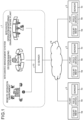
- FIG. 1 is a diagram illustrating an example of the overall configuration of an integrated management system 1 according to one or more embodiments.
- the integrated management system 1 includes a CI server 10, and is connected to each of a plurality of plants 5 via a network N.
- various communication networks such as a leased line, the Internet, or a long term evolution (LTE) network, may be used for the network N.
- LTE long term evolution
- the integrated management system 1 is a system that integrally manages the plurality of plants 5, and is able to be implemented by a physical server, or is able to be implemented by a virtual machine or the like that uses a cloud system.
- the CI server 10 is an example of an information processing apparatus that is connected to various devices included in each of the plants 5 and that integrally manages these devices. Specifically, the CI server 10 implements provision of a remote operation environment, provision of a service for a decision making support, provision of an integrated operation monitoring environment of the entire of the plants.
- the remote operation environment provides, for each of the plants 5, a monitoring system that manages a state of the plant or the like, and provides a service, such as a report of an alarm or a notification to an operator.
- the decision making support simulates, for each of the plants 5, a state of the plant 5 and a control value in the plant 5, and provides a service, such as operation control of the plant 5 or a notification to an operator, on the basis of the simulation result.
- the integrated operation monitoring environment integrally monitors the plurality of plants 5, and provides a service, such as management of product materials produced by the plants, supply control, and cost management, in all of the plurality of plants 5.
- the CI server 10 is able to implement an alarm report to a designated user, transmission of various kinds of information, optimization of information management of the overall production activity, and a safe and effective operation support.
- Each of the plants 5 is an example of various plants using petroleum, petrochemicals, chemical substances, gas, or the like, and includes a factory or the like that is provided with various facilities for obtaining product materials.
- the product materials include liquefied natural gas (LNG), a resin (plastic, nylon, etc.), and chemical substance products.
- the facilities include a factory facility, a machine facility, a production facility, an electric-generating facility, a storage facility, and a facility in a wellhead for mining petroleum, natural gas or the like.
- Each of the plant 5 is constituted by using a distributed control systems (DCS) or the like that is not illustrated, and in which operation control of equipment 5a, a field device 5b, a sensor 5c or the like is performed.
- DCS distributed control systems
- the control system included in each of the plants 5 uses process data that is used in the respective plants 5, and performs various kinds of control on a control device, such as the field device 5b, that is installed in the equipment targeted for the control, an operation device that is associated with the equipment targeted for the control, or the like.
- the equipment 5a includes, for example, an alarm device, such as a speaker, that outputs a warning, a conveying path that is used to convey the product material produced in the plant 5, and the like.
- the field device 5b includes a valve, a pump, a fan, and the like that are driven by a motor, an actuator, or the like.
- the sensor 5c includes a device, such as a pressure sensor, a temperature sensor, a flow rate sensor, a pH sensor, a velocity sensor, and an acceleration sensor, that acquires, detects, and measures, for example, a physical amount.
- the data generated in the plant 5 and collected by the CI server 10 includes control data, such as a process value PV, a set value SV, a manipulation value MV, and the like.
- the process value PV is data indicating a state of a process performed in the plant 5.
- the process value PV is acquired by, for example, the associated field device 5b.
- An example of the process value PV includes a pressure, a temperature, a flow rate, a pH value, a velocity, and an acceleration.
- the set value SV is data (target value) that indicates the target of the process value PV in the plant 5.
- the set value SV is given to the simulation that performs operation control of, for example, the plant 5, and is used for control of the plant 5.
- An example of the set value SV includes, similarly to the process value PV, a pressure, a temperature, a flow rate, a pH value, a velocity, and an acceleration.
- the manipulation value MV is data indicating a manipulation performed in the plant 5.
- the manipulation value MV is acquired from, for example, the associated field device 5b, or is provided to the field device 5b after the simulation has been performed.
- the field device 5b works in accordance with the provided manipulation value MV.
- An example of the manipulation value MV includes an amount of manipulation of the valve (for example, a degree of opening of the valve), an amount of manipulation of the pump, and an amount of manipulation of the fan.
- the CI server 10 acquires, from various devices, such as the equipment 5a, the field device 5b, and the sensor 5c, that are used for the operation of the plant 5, the data that is related to the operation of the plant 5 and to which attribute information indicating the state of the device is assigned. Then, the CI server 10 classifies the data by each of the pieces of attribute information assigned to the acquired data, and performs the operation of the plant 5 by using the data associated with each of the pieces of classified attribute information.
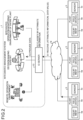
- FIG. 2 is a diagram illustrating the flow of a process performed in the integrated management system 1.
- the CI server 10 receives data including "the attribute information and the data value" from the field device 5b included in the plant 5 (S1).
- the CI server 10 classifies the data by using the "attribute information" that is included in the reception data. For example, the CI server 10 performs, in accordance with the attribute information, determination of the provision destination on the basis of the security level of the data, specifying of a system that is able to provide the data, determination of suitability of a simulation that performs control of the plant 5, or the like, and classifies the data (S2).
- the CI server 10 provides the data on the basis of the classification result (S3). For example, if a state of the reception data indicated by the attribute information is an alarm, such as a "warning", the CI server 10 outputs the reception data to a remote operation environment. Furthermore, if the security level indicated by the attribute information is equal to or lower than a threshold and the data is able to be provided to an outside of the plant 5, the CI server 10 outputs the reception data to the integrated operation monitoring environment. In addition, if the reception data indicates that the attribute information is acquired at normal time of the device, the CI server 10 determines that the attribute information is applicable to the simulation, and outputs the reception data to the decision making support service.
- S3 classification result
- the CI server 10 is able to automatically perform control of providing data in accordance with the attribute information assigned to the data received from the plant 5, so that the CI server 10 is able to distribute needed information to a needed service while maintaining confidentiality of each of the plants 5, and is able to safely and efficiently manage the operation of the plant from various aspects.
- FIG. 3 is a functional block diagram illustrating a functional configuration of the CI server 10. Furthermore, here, as an example, a case in which the CI server 10 implements provision of a remote operation environment, provision of a service for a decision making support, provision of an integrated operation monitoring environment of the entire of the plants will be described ; however, each of the services may be performed by individual devices.
- the CI server 10 includes a communication unit 11, an output unit 12, a storage unit 13, and a control unit 20.
- the communication unit 11 is a processing unit that controls communication with another device and is implemented by, for example, a communication interface or the like. For example, the communication unit 11 receives data to which the attribute information is assigned by the device included in each of the plants 5, and transmits the reception data to a predetermined provision destination.
- the output unit 12 is a processing unit that performs output control of various kinds of information and is implemented by, for example, a display, a touch panel, or the like.
- the output unit 12 is used to provide a remote operation environment, provides a monitoring screen for each of the plants 5, displays the reception data on the monitoring screen, and reports an alarm.
- the storage unit 13 is a processing unit that stores therein various kinds of data, a program (or instructions) executed by the control unit 20, or the like and is implemented by, for example, a memory, a hard disk, or the like.
- the storage unit 13 stores therein setting information that is set in advance in order to perform data classification.
- the storage unit 13 stores therein an attribute management DB 14, an access right DB 15, a security level DB 16, and a provision information DB 17.
- the attribute management DB 14 stores therein information that is specified by the attribute information.
- FIG. 4 is a diagram illustrating the attribute management DB 14. As illustrated in FIG. 4 , the attribute management DB 14 stores therein items of "attribute information, device information, and plant information".
- the "attribute information” indicates the attribute information that is assigned to the data
- the "device information” indicates the device that has output the data and that is the acquisition source of the data
- the "plant information” indicates the plant to which the device that has output the data belongs.
- the example illustrated in FIG. 4 indicates that the attribute information starting from "S-A1" is the sensor included in a plant A, and the attribute information starting from "D-A1" is the device included in a plant D. Furthermore, the information indicated here is only an example and setting thereof may arbitrarily be changed. For example, a data type indicating the process value PV, the set value SV, and the manipulation value MV, a specific product name, a specific model number, or the like may be associated with the information.
- the access right DB 15 stores therein access right for each plant.
- FIG. 5 is a diagram illustrating the access right DB 15. As illustrated in FIG. 5 , the access right DB 15 stores therein items of "plant information, a security level, and an access right".
- the "plant information” is information that indicates a plant.
- the "security level” indicates the security level of the plant, and is set by using three stages of, for example high, medium, and low.
- the "access right” indicates an access right to be assigned to a plant.
- setting has been made such that the security level of the "plant A” is "high”, and the plant A is permitted to access various kinds of data and to perform "reading of data (Read) and writing of data (Write)".
- the setting has been made such that the security level of the "plant B” is "low”, and the plant B is permitted to access various kinds of data and is permitted to only perform "reading of data (Read)".
- the setting may be performed for each unit or each area in the plant, instead of a unit of plant.
- the security level DB 16 stores therein the security level of the attribute information.
- FIG. 6 is a diagram illustrating the security level DB 16. As illustrated in FIG. 6 , the security level DB 16 stores therein, in an associated manner, the "attribute information" and the "security level”.
- the "attribute information” indicates the attribute information that is assigned to the data
- the "security level” indicates the security level of the attribute information and is indicated by using three stages of, for example, high, medium, and low.
- the example illustrated in FIG. 6 indicates that a "high” security level is set to the attribute information "S-SA10", and a “medium” security level is set to the attribute information "C2000". That is, as the data is further internally used data and is further undesirable to be provided outside, such as the data directly linked to the operation of the plant or the data indicating detailed setting of the plant, the data is managed under a more strict security condition.
- the provision information DB 17 stores therein information related to the provision destination of the data.
- FIG. 7 is a diagram illustrating the provision information DB 17. As illustrated in FIG. 7 , the provision information DB 17 stores therein, in an associated manner, items of "a security level, a provision destination, and permission content".
- the "security level” indicates the security level of the attribute information, and is set by using three stages of, for example, high, medium, and low.
- the "provision destination” indicates the provision destination of the data, and the “permission content” indicates permission content with respect to the data.
- the example illustrated in FIG. 7 indicates that the data with the "security level” of "high” is able to be provided to only the same plant, and is permitted to perform only reading (Read) of that data.
- the data with the "security level” of "medium” is able to be provided to the integrated monitoring, and is permitted to perform reading (Read) of that data and is permitted to be provided to the outside.
- the setting has been made such that the data with the security level of "high” is able to be used inside the plant and editing or the like using the data is not permitted.
- the setting has been made such that the data is able to be used outside the plant and editing or the like using the data is not permitted.
- the control unit 20 is a processing unit that manages the entire of the CI server 10, and is implemented by, for example, a processor or the like.
- the control unit 20 includes a provision control unit 21, a simulation execution unit 22, a statistical processing unit 23, and a management control unit 24.
- the provision control unit 21, the simulation execution unit 22, the statistical processing unit 23, and the management control unit 24 are implemented by, for example, an electronic circuit included in the processor or a process or the like that is executed by the processor.
- Each of the processing units included in the control unit 20 refers to the various DBs stored in the storage unit 13, and performs the process described later.
- the provision control unit 21 is a processing unit that classifies reception data by each of the pieces of attribute information in the case where the provision control unit 21 receives the data, and that controls a data provision to the outside of the plant 5 for each of the pieces of classified attribute information. Specifically, the provision control unit 21 provides, in accordance with the security level DB 16 illustrated in FIG. 6 , the permitted "permission content" and the reception data to the permitted provision destination.
- FIG. 8 is a diagram illustrating a data provision performed on the basis of the attribute information. Furthermore, the plant A, the plant B, and a plant C illustrated in FIG. 8 and the subsequent drawings have the same function as that of the plant 5. As illustrated in FIG. 8 , if the provision control unit 21 receives or acquires data on "attribute information (AAA), and a data value (PPP)" from the plant A, the provision control unit 21 refers to the security level DB 16 and specifies that the security level of the attribute information (AAA) is "high".
- attribute information attribute information
- PPP data value
- the provision control unit 21 refers to the provision information DB 17, and specifies that the provision destination of the data with the security level of "high” is within the “same plant” and has the permission content of "Read”. As a result, the provision control unit 21 transmits the "data value (PPP) and the permission content (Read)" to only the monitoring system that is associated with the plant A and that monitors the plant A that is the transmission source of the data.
- PPP data value
- Read permission content
- the provision control unit 21 is also able to control the entire of the plants, or perform control in a unit of attribute, such as an area or a unit.
- the provision control unit 21 is also able to perform control of data provision on the basis of security management performed on the basis of an accessing worker, the attribute of the group in which the worker belongs, or location information on the worker.
- the provision control unit 21 provides the data to the worker who is present in the area of the plant A, and prevents provision of data with respect to the worker who is present outside the area of the plant A even if the worker is in charge of the duty of the plant A.
- the provision control unit 21 is also able to perform access control of writing or the like by using the access right DB 15 or the like.
- the provision control unit 21 permits an operator or an administrator belonging to the plant A to both of "writing" and "reading” the reception data.
- the example is not limited to this.
- the provision control unit 21 is also able to perform control availability of a change in an output value, a set value, a mode, or the like for the purpose of troubleshooting or an operational improvement, or able to perform control of writing from the outside.
- the provision control unit 21 further greatly inhibits writing performed from the outside as the security level is higher, whereas the provision control unit 21 permits a use as a measure for the operational improvement because of high importance information.
- the provision control unit 21 further permits writing from the outside, whereas the provision control unit 21 prevents the reception data from being unused for the operational improvement because of low importance information.
- the simulation execution unit 22 is a processing unit that performs simulation for each plant or simulation covering the entire of the plant and that performs operation control of the plant. Specifically, if the simulation execution unit 22 receives data to which the attribute information indicating the status of the device, such as normal, abnormal, or uncertain, has been assigned, the simulation execution unit 22 excludes abnormal and uncertain data and performs a simulation when the simulation execution unit 22 performs the simulation for calculating the control data related to the operation of the plant.
- the simulation execution unit 22 uses the data (the process value PV, etc.) and an online simulation, and calculates a calculation value for controlling the plant.
- the calculation value is, for example, the set value SV, the manipulation value MV, or the like, and is written to various control devices by the control system or the like that controls the plant. Then, the written calculation value is reflected on control of the plant.
- the simulation execution unit 22 makes a prediction of, for example, an alarm that possibly occur in the future, and transmits an analysis result to a monitoring terminal or the like.
- the simulation includes an online simulation that performs a simulation in real time, a simulation that predicts a plant state on the basis of a batch process, or the like.
- a physical model, modeling, or the like may be used, and a simulated plant (mirror plant) associated with the plant may be used.
- the simulated plant is subjected to modeling to have the same configuration, the same state, and the like as those of the plant, and operates to follow the state of the plant on the basis of the data that is acquired in real time.
- Various online simulations using the simulated plant are known; therefore, a description thereof in detail will be omitted here.
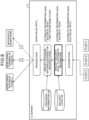
- FIG. 9 is a diagram illustrating simulation control performed on the basis of the attribute information.
- the provision control unit 21 receives or acquires, from the plant A, data A1 indicating "attribute information (normal), a data value (PP1)” and data A2 indicating “attribute information (uncertain), a data value (PP5)”. Subsequently, regarding the data Al, the attribute information is "normal", so that the provision control unit 21 determines that the data A1 is the data that is acquired in the course of a normal operation.
- the attribute information is "uncertain", so that the provision control unit 21 determines that the data A2 is data that is acquired in a state that is not in the course of normal operation even though in an abnormal state, such as in an idling state, in a predetermined period of time after a failure recovery, or in a non-operational state of the plant.
- the simulation execution unit 22 prevents the data value "PP5" that is included in the data A2 indicating "uncertain” from being input to the simulation, and performs a simulation using the data value "PP1" included in the data A1 indicating "normal".
- the simulation execution unit 22 is able to remove uncertain data, complement the removed data with different data, and use the obtained data in the simulation. For example, if data in a device that is in operation is "uncertain" from among redundant devices, the simulation execution unit 22 is able to acquire data from a standby device and perform a simulation after complementing the data. At this time, regarding the "abnormal" data is usually operated in a standby state instead of an operation state, and the standby data is acquired as "normal" data by the simulation execution unit 22. Furthermore, the simulation execution unit 22 may complement data obtained from the same device that is used for safety. In addition, the simulation execution unit 22 is also able to generate complement data from normal data that is present before and after, for example, a pipe.
- the simulation execution unit 22 is able to control an input of data to the online simulation that performs a simulation in real time on the basis of a control mode of a device.
- the simulation execution unit 22 specifies, on the basis of the attribute information, whether control of the device is performed by a MAN mode that indicates a manual control or by automatic control (Auto mode).
- the simulation execution unit 22 is also able to perform the online simulation by excluding the data associated with the MAN mode when the simulation execution unit 22 performs a simulation for calculating the control data related to the operation of the plant.
- the operation of the plant is usually performed in an automatic operation, a behavior of the plant in the future is predicted, on the basis of the online simulation, by using the data at the time of an automatic operation, and then, control of various devices is performed such that a safe operation is performed in accordance with the prediction result.
- an automatic operation is sometimes temporarily stopped and a device is manually operated. Therefore, to use data associated with the MAN mode for the online simulation for performing an automatic operation may possibly result in a decrease in the accuracy of the simulation.
- the simulation execution unit 22 determines, on the basis of the attribute information, the mode of the device in which the data has been measured, and determine applicability to the online simulation.
- FIG. 10 is a diagram illustrating mode determination performed on the basis of the attribute information.
- the simulation execution unit 22 receives data B3 and data B5 from the plant B.
- the simulation execution unit 22 acquires the attribute information "MAN" included in the data B3, and specifies that the data B3 is data that is measured at the time of manual operation.
- the simulation execution unit 22 acquires the attribute information "Auto” included in the data B5, and specifies that the data B5 is data that is measured at the time of automatic operation.
- the simulation execution unit 22 uses the obtained result and performs data classification on the data to be input to the online simulation. Specifically, the simulation execution unit 22 prevents a data value "MM3" included in the data B3 indicating the attribute information "MAN” from being used for the online simulation, and then, uses the data value "BB3" included in the data B5 indicating the attribute information "Auto” for the online simulation and performs an accurate simulation.
- the MAN mode is focused in order to exclude that data for one thing, and in order to increase automation because of difficulty in its control or because an unautomated factor is present.
- the simulation execution unit 22 is able to specify, as a portion operated in the MAN mode, a device, a time zone, a range of the plant, or the like, performs a simulation using only the MAN mode, and determine whether or not the device is to be shifted to the automatic operation (Auto mode) on the basis of the obtained result.
- the simulation execution unit 22 determines that the automatic operation is available, and makes the shift to control that is performed on the basis of the normal simulation result.
- the simulation execution unit 22 performs a simulation using the data associated with the Auto mode in a predetermined period of time before and after the time zone, and generates time series data of the simulation result of the Auto mode, the simulation result of the MAN mode (or an actual measurement value), and the simulation result of the Auto mode. If a variation in time series data, such as a slope of, for example, an approximate straight line, is less than a predetermined value, the simulation execution unit 22 is also able to determine that the automatic operation is available.
- the simulation execution unit 22 performs a simulation by purposely using the data associated with the MAN mode, grasps a plant performance indicating that "the status is not in normal operation (Auto mode)", but "the device status is normal”, and is able to make good use of performance management.
- the simulation execution unit 22 acquires data on a process that leads to the MAN mode at the time of activation or stop of a thermal power plant (operated using a steam power technology) and performs a simulation, so that the simulation execution unit 22 is able to acquire the data in a low load time zone, in which, for example, a power output is equal to or less than 15% of a rating, that is not operated in the normal operation. Consequently, an operator or a developer is able to grasp that a normal operation is available even if the power output is equal to or less than 15% of the rating, which is not able to be acquired under normal circumstances.
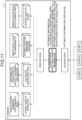
- the statistical processing unit 23 is a processing unit that performs a statistical process by using the data in which the attribute information is assigned. Specifically, the statistical processing unit 23 classifies the reception data, in accordance with the attribute information, and distributes each of the pieces of reception data to statistical processes of generation of a key performance indicator (KPI) or a performance index, life prediction of a device or the like, investigation of the cause of abnormality, assessment of the situation of replacement parts, and the like.
- KPI key performance indicator
- FIG. 11 is a diagram illustrating the statistical process performed on the basis of the attribute information. As illustrated in FIG. 11 , if the statistical processing unit 23 receives data, the statistical processing unit 23 refers to the attribute information, and specifies the status, such as during an operational work, a specific operation situation, a power-up or a power-down, during a trial run, in a stopped state, idling, or the like.
- the statistical processing unit 23 calculates a KPI indicating the operating efficiency or the energy efficiency including the thermal efficiency, an energy consumption rate, a emission coefficient of carbon dioxide, or the like, it is requested to calculate the KPI during the operational work. Therefore, in order to prevent a difficulty in evaluation or comparison of the KPI, the statistical processing unit 23 excludes the state in a power-up operation, a specific operation situation (during troubleshooting, a low load operation, etc.), or the like, extracts the data obtained during the operational work, and uses the data to calculate the KPI. Furthermore, the status indicating during operational work includes a commercial operation, a normal operation, and the like.
- the statistical processing unit 23 predicts, for example, the life of the equipment, the device, the sensor, or the like, the statistical processing unit 23 performs a simulation by using the data in which weighting is applied by using an operation situation or a load. Therefore, the statistical processing unit 23 uses the data that is obtained during operational work from among the pieces of reception data without any change, and, in contrast, applies weighting on the data that is during a specific operation, such as in a stopped state, in a troubleshooting state, or in a low load operation state, and then, performs life prediction by performing the simulation.
- the statistical processing unit 23 classifies, by using the attribute information, each of the pieces of reception data into data corresponding to an item or a condition that is regarded as important in the statistical process and data that is regarded as unimportant, and improve the accuracy of the statistical process.
- the statistical processing unit 23 uses a specific operation situation during an output of an alarm or an alert and performs a trouble analysis. Therefore, the statistical processing unit 23 extracts, from among the pieces of reception data, the data that is obtained in a state of a specific operation, such as a stopped state, a troubleshooting state, a low load operation state, or the like.
- the statistical processing unit 23 For example, if the statistical processing unit 23 performs replacement of parts of the device due to troubleshooting, maintenance, or the like, the statistical processing unit 23 needs to determine whether the device is able to shift to the normal operation by using a trial run. Therefore, the statistical processing unit 23 extracts, from among the pieces of reception data, data obtained in a trial run state or an idling state, and determines that the device is able to shift from the trial run to the normal operation in the case where the operation is continued within a range of the normal value on the basis of the simulation performed by using the extracted reception data of on the basis of a time series variation in the extracted reception data.
- the management control unit 24 is a processing unit that specifies, in accordance with the attribute information assigned to the reception data, the attribute of the plant in which the data has been measured and the situation of the device, and that makes good use of execution of risk management or implementation of an optimum operation.
- FIG. 12 is a diagram illustrating risk management performed on the basis of the attribute information.
- the management control unit 24 if the management control unit 24 receives data, the management control unit 24 refers to the attribute information, and classifies the data associated with the plant attribute indicating information related to infrastructure, a level of danger, effect to an environment, or the like into a group 1. Furthermore, if the management control unit 24 receives data, the management control unit 24 refers to the attribute information, and classifies data associated with the operation attribute that indicates a situation of the device, such as a vibration, a temperature, or a deviation, a period of time after an installation, or an operation load of the device, such as the current operation load, into a group 2.
- the management control unit 24 uses the data classified into the group 1, and performs management control including risk control, maintenance of security, and information management. For example, the management control unit 24 predicts, on the basis of the simulation or on the basis of a comparison with past data, a human risk caused by a high temperature, a low temperature, a breathing difficulty due to a lack of oxygen, aspiration of a harmful substance, a fire, or the like; a hazardous risk caused by a fire or an explosion due to a combustible material, such as gas or oil, or the like; or a contamination risk caused by a hazardous substance, a poisonous substance, or the like. Furthermore, if this type of risk occurs, the management control unit 24 makes use of a function for safely stopping the operation of the plant, or takes measures to decrease a risk while maintaining the operation.
- the management control unit 24 uses the data classified into the group 2, calculates an operation load of the plant on the basis of the situation of the device or the operation load, and performs a plant operation in accordance with the operation load. For example, if a calculation result obtained on the basis of the simulation or the like indicates that a load applied to a certain device continues a level equal to or greater than a threshold in a predetermined period of time, the management control unit 24 determines that the operation load of the plant is high and performs control such that the operation load of the plant is decreased.
- an output is sometimes decreased in the case where it is predicted that nitrogen oxides emitted from a thermal power plant exceeds the "total amount of regulation value per day" that is prescribed by the Air Pollution Prevention Law or an ordinance.
- control is performed such that the number of power plants in another region is increased, or a pumped storage power plant is put into operation.
- the management control unit 24 determines that a load related to the infrastructure is high and continues the operation or maintains the output as much as possible.
- the management control unit 24 postpones a repair, and performs the operation by using the pieces of equipment (a line, a pump, etc.) that are operable even if some pieces of equipment are inoperable. Furthermore, in order to continue the operation or in order to secure an output (an amount of a product material) according to a request, the management control unit 24 causes aging equipment or a low efficient equipment that is not usually used to put into operation. That is, the management control unit 24 makes efficient use of the equipment with a low priority, or a loss-making equipment. More specifically, the management control unit 24 performs operation control on the aging equipment by decreasing a level of, for example, a pressure as an upper limit.
- FIG. 13 is a flowchart illustrating the flow of a process according to one or more embodiments. As illustrated in FIG. 13 , if the CI server 10 acquires or receives data (Yes at Step S101), the CI server 10 extracts the attribute information that is assigned to the data (Step S102).
- the CI server 10 classifies the data on the basis of the attribute information (Step S 103).
- the CI server 10 does not start the subject process (No at Step S104)
- the CI server 10 repeats the process at Step S101 and the subsequent process.
- the CI server 10 specifies the attribute information that is used for the subject process (Step S105).
- the CI server 10 extracts the data associated with the specified attribute information from the storage unit 13 or the like (Step S106), and performs the subject process (Step S 107).
- the CI server 10 continues to acquire data (No at Step S 105)
- the CI server 10 repeats the process at Step S101 and the subsequent processes, and, in contrast, if the CI server 10 completes the data acquisition (Yes at Step S105), the CI server 10 completes the process.
- the CI server 10 is able to determine applicability without referring to the data acquired from the plant, and is able to implement an appropriate use of the data. Therefore, the CI server 10 is able to safely and efficiently manage the operation of the plant from various aspects while guaranteeing various kinds of security of the plant.
- the CI server 10 is able to determine whether the reception data is applicable to the simulation performed on the basis of the attribute information, so that the CI server 10 is able to implement the simulation performed by excluding unneeded data. Therefore, the CI server 10 is able to implement a high-speed simulation with high accuracy while guaranteeing various kinds of security of the plant.
- the CI server 10 is able to determine whether the reception data is applicable to the statistical process performed on the basis of the attribute information, so that the CI server 10 is able to classify only the data needed to the statistical process. Therefore, the CI server 10 is able to perform a high-speed statistical process with high accuracy while guaranteeing various kinds of security of the plant, and is able to generate the information that is useful for an operation plan of the plant.
- the CI server 10 is able to determine whether the reception data is applicable to risk management or an optimization process performed on the basis of the attribute information, so that the CI server 10 is able to more strongly implement the safe operation of the plant. Therefore, the CI server 10 is able to perform risk avoidance, a change of an operation plan, or the like at a high speed with high accuracy while guaranteeing various kinds of security of the plant.
- the number of plant, the number of pieces of equipment, field devices, and sensors, the content of the integrated process, the specific example of the attribute information, and the like described above in the embodiment are only examples and are able to be changed. Furthermore, the order of the processes of the flowchart described in the embodiment is also able to be changed as long as they do not conflict with each other.
- the CI server 10 acquires, from the plant 5, the attribute information and concealment data including a concealment value of the data. Then, the CI server 10 performs classification of the data by using the attribute information. In this way, the CI server 10 is able to implement an appropriate classification and provision of data on the basis of the attribute information without cancelling the concealment of data value even if the data is concealed.
- the provision control unit 21, the simulation execution unit 22, the statistical processing unit 23, and the management control unit 24 may be constituted by different devices.
- each unit illustrated in the drawings is only for conceptually illustrating the functions thereof and are not always physically configured as illustrated in the drawings.
- the specific shape of a separate or integrated device is not limited to the drawings.
- all or part of the device can be configured by functionally or physically separating or integrating any of the units depending on various loads or use conditions.
- each of the processing functions performed by the each of the devices can be implemented by a CPU and by programs analyzed and executed by the CPU or implemented as hardware by wired logic.
- FIG. 14 is a diagram illustrating an example of the hardware configuration.
- the CI server 10 includes a communication device 10a, a hard disk drive (HDD) 10b, a memory 10c, and a processor 10d. Furthermore, each of the units illustrated in FIG. 14 is connected by a bus or the like with each other.
- HDD hard disk drive
- the communication device 10a is a network interface card or the like, and communicates with another server.
- the HDD 10b stores therein the programs and the DBs that operate the functions illustrated in FIG. 3 .
- the processor 10d operates the process that executes each of the functions described above in FIG. 3 or the like by reading the programs that execute the same process as that performed by each of the processing units illustrated in FIG. 3 from the HDD 10b or the like and loading the read programs in the memory 10c.
- the process executes the same functions as those performed by each of the processing units included in the CI server 10.
- the processor 10d reads, from the HDD 10b or the like, the programs having the same functions as those performed by the provision control unit 21, the simulation execution unit 22, the statistical processing unit 23, the management control unit 24, and the like. Then, the processor 10d executes the process for executing the same process as those performed by the provision control unit 21, the simulation execution unit 22, the statistical processing unit 23, the management control unit 24, and the like.
- the CI server 10 is operated as an information processing apparatus that performs an information processing method by reading and executing the programs. Furthermore, the CI server 10 is also able to implement the same functions as those described above in the embodiment by reading the above described programs from a recording medium by a medium reading device and executing the read programs.
- the programs described in one or more embodiments are not limited to be executed by the CI server 10. For example, embodiments may also be similarly used in a case in which another computer or a server executes a program or in a case in which another computer and a server cooperatively execute the program with each other.
- the programs may be distributed via a network, such as the Internet. Furthermore, the programs may be executed by storing the programs in a recording medium that can be read by a computer readable medium, such as a hard disk, a flexible disk (FD), a CD-ROM, a magnetooptical disk (MO), a digital versatile disk (DVD), or the like, and read the programs from the recording medium by the computer.
- a computer readable medium such as a hard disk, a flexible disk (FD), a CD-ROM, a magnetooptical disk (MO), a digital versatile disk (DVD), or the like
Landscapes
- Engineering & Computer Science (AREA)
- Computing Systems (AREA)
- General Physics & Mathematics (AREA)
- Physics & Mathematics (AREA)
- Automation & Control Theory (AREA)
- Manufacturing & Machinery (AREA)
- Health & Medical Sciences (AREA)
- General Health & Medical Sciences (AREA)
- Theoretical Computer Science (AREA)
- Computer Security & Cryptography (AREA)
- General Engineering & Computer Science (AREA)
- General Business, Economics & Management (AREA)
- Business, Economics & Management (AREA)
- Human Computer Interaction (AREA)
- Software Systems (AREA)
- Computer Hardware Design (AREA)
- Bioethics (AREA)
- Accounting & Taxation (AREA)
- Development Economics (AREA)
- Economics (AREA)
- Databases & Information Systems (AREA)
- Quality & Reliability (AREA)
- Chemical & Material Sciences (AREA)
- Organic Chemistry (AREA)
- Environmental & Geological Engineering (AREA)
- Toxicology (AREA)
- Biomedical Technology (AREA)
- Testing And Monitoring For Control Systems (AREA)
Abstract
An information processing apparatus (10) comprises: a processor (20) configured to: acquire, from a device (5a, 5b, 5c) for an operation of a plant (5), data that is related to the operation of the plant (5) and to which one of pieces of attribute information indicating a state of the device has been assigned; classify the acquired data into one of the pieces of attribute information based on the attribute information assigned to the acquired data; and operate the plant (5) by using the data classified into one of the pieces of attribute information.
Description
- The present invention relates to an information processing apparatus, a computer-implemented plant control method, computer program, and computer-readable storage medium.
- In various plants using petroleum, petrochemicals, chemical substances, gas, or the like, various measures are implemented in order to perform a safe operation. For example, a monitoring technology for monitoring various devices, such as equipment, devices, and sensors, that are used for operations of the plants, a simulation technology for predicting a state of each of the plants or calculating a control value for performing operation control of each of the plants by using actual measurement values or the like of various devices, and the like are known.
- Patent Document 1:
Japanese Laid-open Patent Publication No. 2020-064674 - Patent Document 2:
Japanese Laid-open Patent Publication No. 2021-057894 - Patent Document 3:
Japanese Laid-open Patent Publication No. 2002-32274 - Incidentally, in many plants, in order to perform a safe operation, information or the like that is used for monitoring items and a simulation is set in advance, and, in addition, data leakage, access control, and the like are appropriately managed on the basis of an advanced security policy. In contrast, in a plant, a review of an operation plan or the like is carried out due to various factors, such as an installation environment, a situation of supply and demand, and a variation in a raw material cost. Of course, due to the review of the operation plan or the like, a setting change of the monitoring item, variables of the simulation, or the like is performed, and the safe operation of the plant is maintained.
- In this way, in the plant, there is a need to perform the safe operation while taking into consideration not only an internal factor, such as aged deterioration of a device or the like, but also an external factor; however, the technology described above is limited to monitoring previously set items or limited to a simulation performed by using data that is set in advance as an input, so that there may be a case of an insufficient state related to the safe operation following the situation of the plant, and there is thus still room for improvement.
- An object of the present invention is to efficiently and safely manage an operation of a plant in many aspects.
- According to one or more embodiments, the present disclosure provides an information processing apparatus comprising a processor configured to acquire, from a device for an operation of a plant, data that is related to the operation of the plant and to which one of pieces of attribute information indicating a state of the device has been assigned, classify the acquired data into one of the pieces of attribute information based on the attribute information assigned to the acquired data, and operate the plant by using the data classified into one of the pieces of attribute information.
- According to one or more embodiments, the above-mentioned actions the processor is configured to perform are performed by an acquisition unit, a classifying unit and an operation execution unit, respectively. According to one or more embodiments, each of these units may be defined as in any one of the embodiments defined in the Detailed description of preferred embodiments. According to one or more embodiments, the processor is included in a control unit, which may include the above-mentioned units.
- According to one or more embodiments, the control unit includes one or more of a provision control unit, a simulation execution unit, a statistical processing unit, and a management control unit. According to one or more embodiments, each of these units may be defined as in any one of the embodiments defined in the Detailed description of preferred embodiments.
- According to one or more embodiments, an information processing apparatus includes an acquisition unit that acquires, from a device that is used for an operation of a plant, data that is related to the operation of the plant and to which attribute information indicating a state of the device has been assigned, a classifying unit that classifies the data by each of the pieces of attribute information assigned to the acquired data, and an operation execution unit that performs the operation of the plant by using the data associated with each of the pieces of classified attribute information.
- According to one or more embodiments, the present disclosure provides a computer-implemented plant control method as defined in
claim 10. - According to one or more embodiments, a plant control method that causes a computer to execute a process including acquiring, from a device that is used for an operation of a plant, data that is related to the operation of the plant and to which attribute information indicating a state of the device has been assigned, classifying the data by each of the pieces of attribute information assigned to the acquired data, and performing the operation of the plant by using the data associated with each of the pieces of classified attribute information.
- According to one or more embodiments, the present disclosure provides a computer program as defined in
claim 11. - According to one or more embodiments, a plant control program that causes a computer to execute a process including acquiring , from a device that is used for an operation of a plant, data that is related to the operation of the plant and to which attribute information indicating a state of the device has been assigned, classifying the data by each of the pieces of attribute information assigned to the acquired data, and performing the operation of the plant by using the data associated with each of the pieces of classified attribute information.
- According to one or more embodiments, the present disclosure provides a computer-readable storage medium as defined in
claim 12. -
-
FIG. 1 is a diagram illustrating an example of the overall configuration of an integrated management system according to one or more embodiments; -
FIG. 2 is a diagram illustrating the flow of a process performed in the integrated management system; -
FIG. 3 is a functional block diagram illustrating a functional configuration of a CI server; -
FIG. 4 is a diagram illustrating an attribute information DB; -
FIG. 5 is a diagram illustrating an access right DB; -
FIG. 6 is a diagram illustrating a security level DB; -
FIG. 7 is a diagram illustrating a provision information DB; -
FIG. 8 is a diagram illustrating data provision performed based on attribute information; -
FIG. 9 is a diagram illustrating simulation control performed based on the attribute information; -
FIG. 10 is a diagram illustrating a mode determination performed based on the attribute information; -
FIG. 11 is a diagram illustrating a statistical process based on the attribute information; -
FIG. 12 is a diagram illustrating risk management performed based on the attribute information; -
FIG. 13 is a flowchart illustrating the flow of the process according to one or more embodiments; and -
FIG. 14 is a diagram illustrating an example of a hardware configuration. - One or more embodiments provide a technological improvement over conventional technologies. In particular, an information processing apparatus, a plant control method, a plant control computer program, and a plant control computer-readable storage medium according to one or more embodiments may efficiently and safely manage an operation of a plant in many aspects. This provides a practical, technological improvement over conventional technologies that would be readily appreciated by those skilled in the art. Further details regarding the various improvements and advantages will become apparent from the descriptions that follow. Embodiments of an information processing apparatus, a plant control method, a computer program, and a computer-readable recording medium will be described in detail below with reference to the accompanying drawings. Furthermore, the present invention is not limited to the embodiments. In addition, the same components are denoted by the same reference numerals and an overlapping description will be omitted. Each of the embodiments can be used in any appropriate combination as long as they do not conflict with each other.
-
FIG. 1 is a diagram illustrating an example of the overall configuration of anintegrated management system 1 according to one or more embodiments. As illustrated inFIG. 1 , theintegrated management system 1 includes aCI server 10, and is connected to each of a plurality ofplants 5 via a network N. Furthermore, various communication networks, such as a leased line, the Internet, or a long term evolution (LTE) network, may be used for the network N. - The integrated
management system 1 is a system that integrally manages the plurality ofplants 5, and is able to be implemented by a physical server, or is able to be implemented by a virtual machine or the like that uses a cloud system. - The
CI server 10 is an example of an information processing apparatus that is connected to various devices included in each of theplants 5 and that integrally manages these devices. Specifically, theCI server 10 implements provision of a remote operation environment, provision of a service for a decision making support, provision of an integrated operation monitoring environment of the entire of the plants. - Furthermore, the remote operation environment provides, for each of the
plants 5, a monitoring system that manages a state of the plant or the like, and provides a service, such as a report of an alarm or a notification to an operator. The decision making support simulates, for each of theplants 5, a state of theplant 5 and a control value in theplant 5, and provides a service, such as operation control of theplant 5 or a notification to an operator, on the basis of the simulation result. The integrated operation monitoring environment integrally monitors the plurality ofplants 5, and provides a service, such as management of product materials produced by the plants, supply control, and cost management, in all of the plurality ofplants 5. In this way, theCI server 10 is able to implement an alarm report to a designated user, transmission of various kinds of information, optimization of information management of the overall production activity, and a safe and effective operation support. - Each of the
plants 5 is an example of various plants using petroleum, petrochemicals, chemical substances, gas, or the like, and includes a factory or the like that is provided with various facilities for obtaining product materials. Examples of the product materials include liquefied natural gas (LNG), a resin (plastic, nylon, etc.), and chemical substance products. Examples of the facilities include a factory facility, a machine facility, a production facility, an electric-generating facility, a storage facility, and a facility in a wellhead for mining petroleum, natural gas or the like. - Each of the
plant 5 is constituted by using a distributed control systems (DCS) or the like that is not illustrated, and in which operation control ofequipment 5a, afield device 5b, asensor 5c or the like is performed. For example, the control system included in each of theplants 5 uses process data that is used in therespective plants 5, and performs various kinds of control on a control device, such as thefield device 5b, that is installed in the equipment targeted for the control, an operation device that is associated with the equipment targeted for the control, or the like. - In addition, the
equipment 5a includes, for example, an alarm device, such as a speaker, that outputs a warning, a conveying path that is used to convey the product material produced in theplant 5, and the like. Thefield device 5b includes a valve, a pump, a fan, and the like that are driven by a motor, an actuator, or the like. Thesensor 5c includes a device, such as a pressure sensor, a temperature sensor, a flow rate sensor, a pH sensor, a velocity sensor, and an acceleration sensor, that acquires, detects, and measures, for example, a physical amount. - In addition, the data generated in the
plant 5 and collected by theCI server 10 includes control data, such as a process value PV, a set value SV, a manipulation value MV, and the like. The process value PV is data indicating a state of a process performed in theplant 5. The process value PV is acquired by, for example, the associatedfield device 5b. An example of the process value PV includes a pressure, a temperature, a flow rate, a pH value, a velocity, and an acceleration. - The set value SV is data (target value) that indicates the target of the process value PV in the
plant 5. The set value SV is given to the simulation that performs operation control of, for example, theplant 5, and is used for control of theplant 5. An example of the set value SV includes, similarly to the process value PV, a pressure, a temperature, a flow rate, a pH value, a velocity, and an acceleration. The manipulation value MV is data indicating a manipulation performed in theplant 5. The manipulation value MV is acquired from, for example, the associatedfield device 5b, or is provided to thefield device 5b after the simulation has been performed. Thefield device 5b works in accordance with the provided manipulation value MV. An example of the manipulation value MV includes an amount of manipulation of the valve (for example, a degree of opening of the valve), an amount of manipulation of the pump, and an amount of manipulation of the fan. - With this system configuration, the
CI server 10 acquires, from various devices, such as theequipment 5a, thefield device 5b, and thesensor 5c, that are used for the operation of theplant 5, the data that is related to the operation of theplant 5 and to which attribute information indicating the state of the device is assigned. Then, theCI server 10 classifies the data by each of the pieces of attribute information assigned to the acquired data, and performs the operation of theplant 5 by using the data associated with each of the pieces of classified attribute information. -
FIG. 2 is a diagram illustrating the flow of a process performed in theintegrated management system 1. As illustrated inFIG. 2 , theCI server 10 receives data including "the attribute information and the data value" from thefield device 5b included in the plant 5 (S1). - Then, the
CI server 10 classifies the data by using the "attribute information" that is included in the reception data. For example, theCI server 10 performs, in accordance with the attribute information, determination of the provision destination on the basis of the security level of the data, specifying of a system that is able to provide the data, determination of suitability of a simulation that performs control of theplant 5, or the like, and classifies the data (S2). - After that, the
CI server 10 provides the data on the basis of the classification result (S3). For example, if a state of the reception data indicated by the attribute information is an alarm, such as a "warning", theCI server 10 outputs the reception data to a remote operation environment. Furthermore, if the security level indicated by the attribute information is equal to or lower than a threshold and the data is able to be provided to an outside of theplant 5, theCI server 10 outputs the reception data to the integrated operation monitoring environment. In addition, if the reception data indicates that the attribute information is acquired at normal time of the device, theCI server 10 determines that the attribute information is applicable to the simulation, and outputs the reception data to the decision making support service. - In this way, the
CI server 10 is able to automatically perform control of providing data in accordance with the attribute information assigned to the data received from theplant 5, so that theCI server 10 is able to distribute needed information to a needed service while maintaining confidentiality of each of theplants 5, and is able to safely and efficiently manage the operation of the plant from various aspects. -
FIG. 3 is a functional block diagram illustrating a functional configuration of theCI server 10. Furthermore, here, as an example, a case in which theCI server 10 implements provision of a remote operation environment, provision of a service for a decision making support, provision of an integrated operation monitoring environment of the entire of the plants will be described ; however, each of the services may be performed by individual devices. - As illustrated in
FIG. 3 , theCI server 10 includes acommunication unit 11, anoutput unit 12, a storage unit 13, and a control unit 20. - The
communication unit 11 is a processing unit that controls communication with another device and is implemented by, for example, a communication interface or the like. For example, thecommunication unit 11 receives data to which the attribute information is assigned by the device included in each of theplants 5, and transmits the reception data to a predetermined provision destination. - The
output unit 12 is a processing unit that performs output control of various kinds of information and is implemented by, for example, a display, a touch panel, or the like. For example, theoutput unit 12 is used to provide a remote operation environment, provides a monitoring screen for each of theplants 5, displays the reception data on the monitoring screen, and reports an alarm. - The storage unit 13 is a processing unit that stores therein various kinds of data, a program (or instructions) executed by the control unit 20, or the like and is implemented by, for example, a memory, a hard disk, or the like. The storage unit 13 stores therein setting information that is set in advance in order to perform data classification. For example, the storage unit 13 stores therein an attribute management DB 14, an access
right DB 15, a security level DB 16, and a provision information DB 17. - The attribute management DB 14 stores therein information that is specified by the attribute information.
FIG. 4 is a diagram illustrating the attribute management DB 14. As illustrated inFIG. 4 , the attribute management DB 14 stores therein items of "attribute information, device information, and plant information". The "attribute information" indicates the attribute information that is assigned to the data, the "device information" indicates the device that has output the data and that is the acquisition source of the data, and the "plant information" indicates the plant to which the device that has output the data belongs. - The example illustrated in
FIG. 4 indicates that the attribute information starting from "S-A1" is the sensor included in a plant A, and the attribute information starting from "D-A1" is the device included in a plant D. Furthermore, the information indicated here is only an example and setting thereof may arbitrarily be changed. For example, a data type indicating the process value PV, the set value SV, and the manipulation value MV, a specific product name, a specific model number, or the like may be associated with the information. - The access
right DB 15 stores therein access right for each plant.FIG. 5 is a diagram illustrating the accessright DB 15. As illustrated inFIG. 5 , the accessright DB 15 stores therein items of "plant information, a security level, and an access right". The "plant information" is information that indicates a plant. The "security level" indicates the security level of the plant, and is set by using three stages of, for example high, medium, and low. The "access right" indicates an access right to be assigned to a plant. - In the example illustrated in
FIG. 5 , setting has been made such that the security level of the "plant A" is "high", and the plant A is permitted to access various kinds of data and to perform "reading of data (Read) and writing of data (Write)". The setting has been made such that the security level of the "plant B" is "low", and the plant B is permitted to access various kinds of data and is permitted to only perform "reading of data (Read)". In addition, the setting may be performed for each unit or each area in the plant, instead of a unit of plant. - The security level DB 16 stores therein the security level of the attribute information.
FIG. 6 is a diagram illustrating the security level DB 16. As illustrated inFIG. 6 , the security level DB 16 stores therein, in an associated manner, the "attribute information" and the "security level". The "attribute information" indicates the attribute information that is assigned to the data, and the "security level" indicates the security level of the attribute information and is indicated by using three stages of, for example, high, medium, and low. - The example illustrated in
FIG. 6 indicates that a "high" security level is set to the attribute information "S-SA10", and a "medium" security level is set to the attribute information "C2000". That is, as the data is further internally used data and is further undesirable to be provided outside, such as the data directly linked to the operation of the plant or the data indicating detailed setting of the plant, the data is managed under a more strict security condition. - The provision information DB 17 stores therein information related to the provision destination of the data.
FIG. 7 is a diagram illustrating the provision information DB 17. As illustrated inFIG. 7 , the provision information DB 17 stores therein, in an associated manner, items of "a security level, a provision destination, and permission content". The "security level" indicates the security level of the attribute information, and is set by using three stages of, for example, high, medium, and low. The "provision destination" indicates the provision destination of the data, and the "permission content" indicates permission content with respect to the data. - The example illustrated in
FIG. 7 indicates that the data with the "security level" of "high" is able to be provided to only the same plant, and is permitted to perform only reading (Read) of that data. The data with the "security level" of "medium" is able to be provided to the integrated monitoring, and is permitted to perform reading (Read) of that data and is permitted to be provided to the outside. In this way, the setting has been made such that the data with the security level of "high" is able to be used inside the plant and editing or the like using the data is not permitted. Regarding the data with the security level of "medium", the setting has been made such that the data is able to be used outside the plant and editing or the like using the data is not permitted. Regarding the data with the security level of "low", the setting has been made such that the data is able to be used outside the plant and editing or the like using the data is permitted. - A description will be given here by referring back to
FIG. 3 . The control unit 20 is a processing unit that manages the entire of theCI server 10, and is implemented by, for example, a processor or the like. The control unit 20 includes a provision control unit 21, asimulation execution unit 22, astatistical processing unit 23, and a management control unit 24. For example, the provision control unit 21, thesimulation execution unit 22, thestatistical processing unit 23, and the management control unit 24 are implemented by, for example, an electronic circuit included in the processor or a process or the like that is executed by the processor. Each of the processing units included in the control unit 20 refers to the various DBs stored in the storage unit 13, and performs the process described later. - The provision control unit 21 is a processing unit that classifies reception data by each of the pieces of attribute information in the case where the provision control unit 21 receives the data, and that controls a data provision to the outside of the
plant 5 for each of the pieces of classified attribute information. Specifically, the provision control unit 21 provides, in accordance with the security level DB 16 illustrated inFIG. 6 , the permitted "permission content" and the reception data to the permitted provision destination. -
FIG. 8 is a diagram illustrating a data provision performed on the basis of the attribute information. Furthermore, the plant A, the plant B, and a plant C illustrated inFIG. 8 and the subsequent drawings have the same function as that of theplant 5. As illustrated inFIG. 8 , if the provision control unit 21 receives or acquires data on "attribute information (AAA), and a data value (PPP)" from the plant A, the provision control unit 21 refers to the security level DB 16 and specifies that the security level of the attribute information (AAA) is "high". - Subsequently, the provision control unit 21 refers to the provision information DB 17, and specifies that the provision destination of the data with the security level of "high" is within the "same plant" and has the permission content of "Read". As a result, the provision control unit 21 transmits the "data value (PPP) and the permission content (Read)" to only the monitoring system that is associated with the plant A and that monitors the plant A that is the transmission source of the data.
- Here, an example in which the provision destination of the data is distinguished for each of the pieces of data has been described; however, the example is not limited to this. For example, the provision control unit 21 is also able to control the entire of the plants, or perform control in a unit of attribute, such as an area or a unit. In addition, the provision control unit 21 is also able to perform control of data provision on the basis of security management performed on the basis of an accessing worker, the attribute of the group in which the worker belongs, or location information on the worker. For example, in a case illustrated in
FIG. 8 , the provision control unit 21 provides the data to the worker who is present in the area of the plant A, and prevents provision of data with respect to the worker who is present outside the area of the plant A even if the worker is in charge of the duty of the plant A. - Furthermore, the provision control unit 21 is also able to perform access control of writing or the like by using the access
right DB 15 or the like. For example, in the example illustrated inFIG. 5 , regarding the access to the reception data, the provision control unit 21 permits an operator or an administrator belonging to the plant A to both of "writing" and "reading" the reception data. - The example is not limited to this. The provision control unit 21 is also able to perform control availability of a change in an output value, a set value, a mode, or the like for the purpose of troubleshooting or an operational improvement, or able to perform control of writing from the outside. For example, the provision control unit 21 further greatly inhibits writing performed from the outside as the security level is higher, whereas the provision control unit 21 permits a use as a measure for the operational improvement because of high importance information. In contrast, as the security level is lower, the provision control unit 21 further permits writing from the outside, whereas the provision control unit 21 prevents the reception data from being unused for the operational improvement because of low importance information.
- The
simulation execution unit 22 is a processing unit that performs simulation for each plant or simulation covering the entire of the plant and that performs operation control of the plant. Specifically, if thesimulation execution unit 22 receives data to which the attribute information indicating the status of the device, such as normal, abnormal, or uncertain, has been assigned, thesimulation execution unit 22 excludes abnormal and uncertain data and performs a simulation when thesimulation execution unit 22 performs the simulation for calculating the control data related to the operation of the plant. - For example, the
simulation execution unit 22 uses the data (the process value PV, etc.) and an online simulation, and calculates a calculation value for controlling the plant. The calculation value is, for example, the set value SV, the manipulation value MV, or the like, and is written to various control devices by the control system or the like that controls the plant. Then, the written calculation value is reflected on control of the plant. In addition, as an analysis capable for monitoring the plant, thesimulation execution unit 22 makes a prediction of, for example, an alarm that possibly occur in the future, and transmits an analysis result to a monitoring terminal or the like. - Furthermore, the simulation includes an online simulation that performs a simulation in real time, a simulation that predicts a plant state on the basis of a batch process, or the like. For these simulations, a physical model, modeling, or the like may be used, and a simulated plant (mirror plant) associated with the plant may be used. The simulated plant is subjected to modeling to have the same configuration, the same state, and the like as those of the plant, and operates to follow the state of the plant on the basis of the data that is acquired in real time. Various online simulations using the simulated plant are known; therefore, a description thereof in detail will be omitted here.
-
FIG. 9 is a diagram illustrating simulation control performed on the basis of the attribute information. As illustrated inFIG. 9 , the provision control unit 21 receives or acquires, from the plant A, data A1 indicating "attribute information (normal), a data value (PP1)" and data A2 indicating "attribute information (uncertain), a data value (PP5)". Subsequently, regarding the data Al, the attribute information is "normal", so that the provision control unit 21 determines that the data A1 is the data that is acquired in the course of a normal operation. In contrast, regarding the data A2, the attribute information is "uncertain", so that the provision control unit 21 determines that the data A2 is data that is acquired in a state that is not in the course of normal operation even though in an abnormal state, such as in an idling state, in a predetermined period of time after a failure recovery, or in a non-operational state of the plant. - Consequently, the
simulation execution unit 22 prevents the data value "PP5" that is included in the data A2 indicating "uncertain" from being input to the simulation, and performs a simulation using the data value "PP1" included in the data A1 indicating "normal". - Furthermore, the
simulation execution unit 22 is able to remove uncertain data, complement the removed data with different data, and use the obtained data in the simulation. For example, if data in a device that is in operation is "uncertain" from among redundant devices, thesimulation execution unit 22 is able to acquire data from a standby device and perform a simulation after complementing the data. At this time, regarding the "abnormal" data is usually operated in a standby state instead of an operation state, and the standby data is acquired as "normal" data by thesimulation execution unit 22. Furthermore, thesimulation execution unit 22 may complement data obtained from the same device that is used for safety. In addition, thesimulation execution unit 22 is also able to generate complement data from normal data that is present before and after, for example, a pipe. - Furthermore, the
simulation execution unit 22 is able to control an input of data to the online simulation that performs a simulation in real time on the basis of a control mode of a device. For example, thesimulation execution unit 22 specifies, on the basis of the attribute information, whether control of the device is performed by a MAN mode that indicates a manual control or by automatic control (Auto mode). Thesimulation execution unit 22 is also able to perform the online simulation by excluding the data associated with the MAN mode when thesimulation execution unit 22 performs a simulation for calculating the control data related to the operation of the plant. - The operation of the plant is usually performed in an automatic operation, a behavior of the plant in the future is predicted, on the basis of the online simulation, by using the data at the time of an automatic operation, and then, control of various devices is performed such that a safe operation is performed in accordance with the prediction result. In contrast, at the time of failure occurrence, alarm detection, maintenance, or the like, an automatic operation is sometimes temporarily stopped and a device is manually operated. Therefore, to use data associated with the MAN mode for the online simulation for performing an automatic operation may possibly result in a decrease in the accuracy of the simulation. Accordingly, the
simulation execution unit 22 determines, on the basis of the attribute information, the mode of the device in which the data has been measured, and determine applicability to the online simulation. -
FIG. 10 is a diagram illustrating mode determination performed on the basis of the attribute information. As illustrated inFIG. 10 , thesimulation execution unit 22 receives data B3 and data B5 from the plant B. Thesimulation execution unit 22 acquires the attribute information "MAN" included in the data B3, and specifies that the data B3 is data that is measured at the time of manual operation. Similarly, thesimulation execution unit 22 acquires the attribute information "Auto" included in the data B5, and specifies that the data B5 is data that is measured at the time of automatic operation. - The
simulation execution unit 22 uses the obtained result and performs data classification on the data to be input to the online simulation. Specifically, thesimulation execution unit 22 prevents a data value "MM3" included in the data B3 indicating the attribute information "MAN" from being used for the online simulation, and then, uses the data value "BB3" included in the data B5 indicating the attribute information "Auto" for the online simulation and performs an accurate simulation. - Here, the MAN mode is focused in order to exclude that data for one thing, and in order to increase automation because of difficulty in its control or because an unautomated factor is present.
- Accordingly, as illustrated in
FIG. 10 , thesimulation execution unit 22 is able to specify, as a portion operated in the MAN mode, a device, a time zone, a range of the plant, or the like, performs a simulation using only the MAN mode, and determine whether or not the device is to be shifted to the automatic operation (Auto mode) on the basis of the obtained result. - For example, if the result of the simulation that is performed by using only the MAN mode indicates a normal operation, the
simulation execution unit 22 determines that the automatic operation is available, and makes the shift to control that is performed on the basis of the normal simulation result. - For example, if the range of the MAN mode is the time zone, the
simulation execution unit 22 performs a simulation using the data associated with the Auto mode in a predetermined period of time before and after the time zone, and generates time series data of the simulation result of the Auto mode, the simulation result of the MAN mode (or an actual measurement value), and the simulation result of the Auto mode. If a variation in time series data, such as a slope of, for example, an approximate straight line, is less than a predetermined value, thesimulation execution unit 22 is also able to determine that the automatic operation is available. - Furthermore, the
simulation execution unit 22 performs a simulation by purposely using the data associated with the MAN mode, grasps a plant performance indicating that "the status is not in normal operation (Auto mode)", but "the device status is normal", and is able to make good use of performance management. For example, thesimulation execution unit 22 acquires data on a process that leads to the MAN mode at the time of activation or stop of a thermal power plant (operated using a steam power technology) and performs a simulation, so that thesimulation execution unit 22 is able to acquire the data in a low load time zone, in which, for example, a power output is equal to or less than 15% of a rating, that is not operated in the normal operation. Consequently, an operator or a developer is able to grasp that a normal operation is available even if the power output is equal to or less than 15% of the rating, which is not able to be acquired under normal circumstances. - The
statistical processing unit 23 is a processing unit that performs a statistical process by using the data in which the attribute information is assigned. Specifically, thestatistical processing unit 23 classifies the reception data, in accordance with the attribute information, and distributes each of the pieces of reception data to statistical processes of generation of a key performance indicator (KPI) or a performance index, life prediction of a device or the like, investigation of the cause of abnormality, assessment of the situation of replacement parts, and the like. -
FIG. 11 is a diagram illustrating the statistical process performed on the basis of the attribute information. As illustrated inFIG. 11 , if thestatistical processing unit 23 receives data, thestatistical processing unit 23 refers to the attribute information, and specifies the status, such as during an operational work, a specific operation situation, a power-up or a power-down, during a trial run, in a stopped state, idling, or the like. - For example, if the
statistical processing unit 23 calculates a KPI indicating the operating efficiency or the energy efficiency including the thermal efficiency, an energy consumption rate, a emission coefficient of carbon dioxide, or the like, it is requested to calculate the KPI during the operational work. Therefore, in order to prevent a difficulty in evaluation or comparison of the KPI, thestatistical processing unit 23 excludes the state in a power-up operation, a specific operation situation (during troubleshooting, a low load operation, etc.), or the like, extracts the data obtained during the operational work, and uses the data to calculate the KPI. Furthermore, the status indicating during operational work includes a commercial operation, a normal operation, and the like. - For example, if the
statistical processing unit 23 predicts, for example, the life of the equipment, the device, the sensor, or the like, thestatistical processing unit 23 performs a simulation by using the data in which weighting is applied by using an operation situation or a load. Therefore, thestatistical processing unit 23 uses the data that is obtained during operational work from among the pieces of reception data without any change, and, in contrast, applies weighting on the data that is during a specific operation, such as in a stopped state, in a troubleshooting state, or in a low load operation state, and then, performs life prediction by performing the simulation. That is, thestatistical processing unit 23 classifies, by using the attribute information, each of the pieces of reception data into data corresponding to an item or a condition that is regarded as important in the statistical process and data that is regarded as unimportant, and improve the accuracy of the statistical process. - For example, the
statistical processing unit 23 uses a specific operation situation during an output of an alarm or an alert and performs a trouble analysis. Therefore, thestatistical processing unit 23 extracts, from among the pieces of reception data, the data that is obtained in a state of a specific operation, such as a stopped state, a troubleshooting state, a low load operation state, or the like. - For example, if the
statistical processing unit 23 performs replacement of parts of the device due to troubleshooting, maintenance, or the like, thestatistical processing unit 23 needs to determine whether the device is able to shift to the normal operation by using a trial run. Therefore, thestatistical processing unit 23 extracts, from among the pieces of reception data, data obtained in a trial run state or an idling state, and determines that the device is able to shift from the trial run to the normal operation in the case where the operation is continued within a range of the normal value on the basis of the simulation performed by using the extracted reception data of on the basis of a time series variation in the extracted reception data. - The management control unit 24 is a processing unit that specifies, in accordance with the attribute information assigned to the reception data, the attribute of the plant in which the data has been measured and the situation of the device, and that makes good use of execution of risk management or implementation of an optimum operation.
-
FIG. 12 is a diagram illustrating risk management performed on the basis of the attribute information. As illustrated inFIG. 12 , if the management control unit 24 receives data, the management control unit 24 refers to the attribute information, and classifies the data associated with the plant attribute indicating information related to infrastructure, a level of danger, effect to an environment, or the like into agroup 1. Furthermore, if the management control unit 24 receives data, the management control unit 24 refers to the attribute information, and classifies data associated with the operation attribute that indicates a situation of the device, such as a vibration, a temperature, or a deviation, a period of time after an installation, or an operation load of the device, such as the current operation load, into agroup 2. - The management control unit 24 uses the data classified into the
group 1, and performs management control including risk control, maintenance of security, and information management. For example, the management control unit 24 predicts, on the basis of the simulation or on the basis of a comparison with past data, a human risk caused by a high temperature, a low temperature, a breathing difficulty due to a lack of oxygen, aspiration of a harmful substance, a fire, or the like; a hazardous risk caused by a fire or an explosion due to a combustible material, such as gas or oil, or the like; or a contamination risk caused by a hazardous substance, a poisonous substance, or the like. Furthermore, if this type of risk occurs, the management control unit 24 makes use of a function for safely stopping the operation of the plant, or takes measures to decrease a risk while maintaining the operation. - The management control unit 24 uses the data classified into the
group 2, calculates an operation load of the plant on the basis of the situation of the device or the operation load, and performs a plant operation in accordance with the operation load. For example, if a calculation result obtained on the basis of the simulation or the like indicates that a load applied to a certain device continues a level equal to or greater than a threshold in a predetermined period of time, the management control unit 24 determines that the operation load of the plant is high and performs control such that the operation load of the plant is decreased. For example, as a method for controlling the operation load to be decreased, an output is sometimes decreased in the case where it is predicted that nitrogen oxides emitted from a thermal power plant exceeds the "total amount of regulation value per day" that is prescribed by the Air Pollution Prevention Law or an ordinance. In addition, in order to meet a demand of electrical power, control is performed such that the number of power plants in another region is increased, or a pumped storage power plant is put into operation. - Furthermore, if a value at the temperature sensor or a vibration sensor continues a level equal to or greater than a threshold in a predetermined period of time, if a decrease in a processing speed of each of the device belonging to a certain area continues in a predetermined period of time, or if an output amount of the plant is decreased even if an amount of the product material of the plant maintains a fixed value, the management control unit 24 determines that a load related to the infrastructure is high and continues the operation or maintains the output as much as possible. For example, if a plurality of lines or a plurality of pieces of equipment (for example, pumps) are installed, the management control unit 24 postpones a repair, and performs the operation by using the pieces of equipment (a line, a pump, etc.) that are operable even if some pieces of equipment are inoperable. Furthermore, in order to continue the operation or in order to secure an output (an amount of a product material) according to a request, the management control unit 24 causes aging equipment or a low efficient equipment that is not usually used to put into operation. That is, the management control unit 24 makes efficient use of the equipment with a low priority, or a loss-making equipment. More specifically, the management control unit 24 performs operation control on the aging equipment by decreasing a level of, for example, a pressure as an upper limit.
-
FIG. 13 is a flowchart illustrating the flow of a process according to one or more embodiments. As illustrated inFIG. 13 , if theCI server 10 acquires or receives data (Yes at Step S101), theCI server 10 extracts the attribute information that is assigned to the data (Step S102). - Subsequently, the
CI server 10 classifies the data on the basis of the attribute information (Step S 103). Here, if theCI server 10 does not start the subject process (No at Step S104), theCI server 10 repeats the process at Step S101 and the subsequent process. In contrast, if theCI server 10 starts the subject process (Yes at Step S104), theCI server 10 specifies the attribute information that is used for the subject process (Step S105). - Then, the
CI server 10 extracts the data associated with the specified attribute information from the storage unit 13 or the like (Step S106), and performs the subject process (Step S 107). Here, if theCI server 10 continues to acquire data (No at Step S 105), theCI server 10 repeats the process at Step S101 and the subsequent processes, and, in contrast, if theCI server 10 completes the data acquisition (Yes at Step S105), theCI server 10 completes the process. - As described above, the
CI server 10 is able to determine applicability without referring to the data acquired from the plant, and is able to implement an appropriate use of the data. Therefore, theCI server 10 is able to safely and efficiently manage the operation of the plant from various aspects while guaranteeing various kinds of security of the plant. - The
CI server 10 is able to determine whether the reception data is applicable to the simulation performed on the basis of the attribute information, so that theCI server 10 is able to implement the simulation performed by excluding unneeded data. Therefore, theCI server 10 is able to implement a high-speed simulation with high accuracy while guaranteeing various kinds of security of the plant. - The
CI server 10 is able to determine whether the reception data is applicable to the statistical process performed on the basis of the attribute information, so that theCI server 10 is able to classify only the data needed to the statistical process. Therefore, theCI server 10 is able to perform a high-speed statistical process with high accuracy while guaranteeing various kinds of security of the plant, and is able to generate the information that is useful for an operation plan of the plant. - The
CI server 10 is able to determine whether the reception data is applicable to risk management or an optimization process performed on the basis of the attribute information, so that theCI server 10 is able to more strongly implement the safe operation of the plant. Therefore, theCI server 10 is able to perform risk avoidance, a change of an operation plan, or the like at a high speed with high accuracy while guaranteeing various kinds of security of the plant. - In the above explanation, a description has been given of the embodiments according to the present invention; however, the present invention may also be implemented with various kinds of embodiments other than the embodiments described above.
- The number of plant, the number of pieces of equipment, field devices, and sensors, the content of the integrated process, the specific example of the attribute information, and the like described above in the embodiment are only examples and are able to be changed. Furthermore, the order of the processes of the flowchart described in the embodiment is also able to be changed as long as they do not conflict with each other.
- For example, as a technique for further guaranteeing the security of the data, it is also possible to use concealment of the data. For example, the
CI server 10 acquires, from theplant 5, the attribute information and concealment data including a concealment value of the data. Then, theCI server 10 performs classification of the data by using the attribute information. In this way, theCI server 10 is able to implement an appropriate classification and provision of data on the basis of the attribute information without cancelling the concealment of data value even if the data is concealed. - The flow of the processes, the control procedures, the specific names, and the information containing various kinds of data or parameters indicated in the above specification and drawings can be arbitrarily changed unless otherwise stated. For example, the provision control unit 21, the
simulation execution unit 22, thestatistical processing unit 23, and the management control unit 24 may be constituted by different devices. - Furthermore, the components of each unit illustrated in the drawings are only for conceptually illustrating the functions thereof and are not always physically configured as illustrated in the drawings. In other words, the specific shape of a separate or integrated device is not limited to the drawings. Specifically, all or part of the device can be configured by functionally or physically separating or integrating any of the units depending on various loads or use conditions.
- Furthermore, all or any part of each of the processing functions performed by the each of the devices can be implemented by a CPU and by programs analyzed and executed by the CPU or implemented as hardware by wired logic.
- In the following, an example of a hardware configuration of a computer described in the embodiment will be described.
FIG. 14 is a diagram illustrating an example of the hardware configuration. As illustrated inFIG. 14 , theCI server 10 includes acommunication device 10a, a hard disk drive (HDD) 10b, amemory 10c, and aprocessor 10d. Furthermore, each of the units illustrated inFIG. 14 is connected by a bus or the like with each other. - The
communication device 10a is a network interface card or the like, and communicates with another server. TheHDD 10b stores therein the programs and the DBs that operate the functions illustrated inFIG. 3 . - The
processor 10d operates the process that executes each of the functions described above inFIG. 3 or the like by reading the programs that execute the same process as that performed by each of the processing units illustrated inFIG. 3 from theHDD 10b or the like and loading the read programs in thememory 10c. For example, the process executes the same functions as those performed by each of the processing units included in theCI server 10. Specifically, theprocessor 10d reads, from theHDD 10b or the like, the programs having the same functions as those performed by the provision control unit 21, thesimulation execution unit 22, thestatistical processing unit 23, the management control unit 24, and the like. Then, theprocessor 10d executes the process for executing the same process as those performed by the provision control unit 21, thesimulation execution unit 22, thestatistical processing unit 23, the management control unit 24, and the like. - In this way, the
CI server 10 is operated as an information processing apparatus that performs an information processing method by reading and executing the programs. Furthermore, theCI server 10 is also able to implement the same functions as those described above in the embodiment by reading the above described programs from a recording medium by a medium reading device and executing the read programs. In addition, the programs described in one or more embodiments are not limited to be executed by theCI server 10. For example, embodiments may also be similarly used in a case in which another computer or a server executes a program or in a case in which another computer and a server cooperatively execute the program with each other. - The programs may be distributed via a network, such as the Internet. Furthermore, the programs may be executed by storing the programs in a recording medium that can be read by a computer readable medium, such as a hard disk, a flexible disk (FD), a CD-ROM, a magnetooptical disk (MO), a digital versatile disk (DVD), or the like, and read the programs from the recording medium by the computer.
- According to an aspect of an embodiment, it is possible to safely and efficiently manage the operation of the plant in many aspects.
- Although the disclosure has been described with respect to only a limited number of embodiments, those skilled in the art, having benefit of this disclosure, will appreciate that various other embodiments may be devised without departing from the scope of the present invention as determined by the claims.
Claims (12)
- An information processing apparatus (10) comprising:
a processor (20) configured to:acquire, from a device (5a, 5b, 5c) for an operation of a plant (5), data that is related to the operation of the plant (5) and to which one of pieces of attribute information indicating a state of the device has been assigned;classify the acquired data into one of the pieces of attribute information based on the attribute information assigned to the acquired data; andoperate the plant (5) by using the data classified into one of the pieces of attribute information. - The information processing apparatus (10) according to claim 1, whereinthe information processing apparatus (10) is a cloud server using a cloud system, andthe processor (20) is further configured to provide the classified data to an outside of the plant (5) for each of the pieces of attribute information.
- The information processing apparatus (10) according to claim 1 or claim 2, whereinthe pieces of attribute information include information indicating whether a state of the device (5a, 5b, 5c) in which the data has been measured is one of normal, abnormal, and uncertain, andthe processor (20) is further configured to perform, a simulation that calculates control data related to the operation of the plant (5)by excluding uncertain data out of pieces of data from the device (5a, 5b, 5c).
- The information processing apparatus (10) according to any one of claims 1-3, whereinthe pieces of attribute information include information indicating whether the device (5a, 5b, 5c) in which the data has been measured is controlled by manual control or automatic control, andthe processor (20) is further configured to perform a simulation that calculates control data related to the operation of the plant, and select, out of pieces of data from the device (5a, 5b, 5c), data associated with the manual control or the automatic control based on content of the simulation.
- The information processing apparatus (10) according to any one of claims 1-4, whereinthe pieces of attribute information include information indicating an operation state of the device (5a, 5b, 5c) in which the data has been measured, andthe processor (20) is further configured to perform a statistical process related to the operation of the plant (5) by using only data other than data indicating that a normal operation is being performed out of pieces of data from the device (5a, 5b, 5c).
- The information processing apparatus (10) according to any one of claims 1-5, whereinthe pieces of attribute information include information indicating an operation state of the device (5a, 5b, 5c) in which the data has been measured, andthe processor (20) is further configured to :predict life of the device (5a, 5b, 5c) by using the acquired data, andweight data indicating a specific state other than data indicating that a normal operation is being performed in predicting the life.
- The information processing apparatus (10) according to any one of claims 1-6, whereinthe pieces of attribute information include information indicating one of attributes of the plant (5), andthe processor (20) is further configured toclassify pieces of data from the device (5a, 5b, 5c) into groups for each of the attributes of the plant (5), anddistribute the data belonging to each of the groups in accordance with a type of risk control, ensuring security, and management control including information management.
- The information processing apparatus (10) according to any one of claims 1-7, whereinthe pieces of attribute information include information indicating either a situation of the device (5a, 5b, 5c) in which the data has been measured or an operation load of the device (5a, 5b, 5c), andthe processor (20) is further configured to:calculate an operation load of the plant (5) based on the situation of the device or the operation load of the device (5a, 5b, 5c), andoperate the plant in accordance with the operation load of the plant (5).
- The information processing apparatus (10) according to claim 8, wherein
the processor (20), when either the situation of the device (5a, 5b, 5c) or a load related to an infrastructure of the plant (5) specified by the situation of the device (5a, 5b, 5c) is equal to or greater than a threshold, is further configured to:cause unused aging equipment or low efficient equipment to operate, anddecrease the load applied to the plant (5) while maintaining production of a product material according to a request from a client with respect to the plant (5). - A computer-implemented plant control method comprising:acquiring, from a device (5a, 5b, 5c) for an operation of a plant (5), data that is related to the operation of the plant (5) and to which one of pieces of attribute information indicating a state of the device (5a, 5b, 5c) has been assigned;classifying the acquired data into one of the pieces of attribute information based on the attribute information assigned to the acquired data; andoperating the plant (5) by using the data classified into one of the pieces of attribute information.
- A computer program comprising instructions which, when the program is executed by a computer (10), cause the computer (10) to carry out the plant control method of claim 10.
- A computer-readable storage medium comprising instructions which, when executed by a computer (10), cause the computer (10) to carry out the plant control method of claim 10.
Applications Claiming Priority (1)
| Application Number | Priority Date | Filing Date | Title |
|---|---|---|---|
| JP2022057324A JP2023149010A (en) | 2022-03-30 | 2022-03-30 | Information processing device, plant control method, and plant control program |
Publications (1)
| Publication Number | Publication Date |
|---|---|
| EP4254093A1 true EP4254093A1 (en) | 2023-10-04 |
Family
ID=85384379
Family Applications (1)
| Application Number | Title | Priority Date | Filing Date |
|---|---|---|---|
| EP23158869.0A Withdrawn EP4254093A1 (en) | 2022-03-30 | 2023-02-27 | Information processing apparatus, plant control method, computer program, and computer-readable storage medium |
Country Status (4)
| Country | Link |
|---|---|
| US (1) | US20230324876A1 (en) |
| EP (1) | EP4254093A1 (en) |
| JP (1) | JP2023149010A (en) |
| CN (1) | CN116893647A (en) |
Citations (6)
| Publication number | Priority date | Publication date | Assignee | Title |
|---|---|---|---|---|
| JP2002032274A (en) | 2000-07-19 | 2002-01-31 | Hitachi Ltd | Equipment remote diagnosis system and remote diagnosis method |
| US20190018374A1 (en) * | 2017-07-13 | 2019-01-17 | Yokogawa Electric Corporation | Plant control supporting apparatus, plant control supporting method, and recording medium |
| EP3074824B1 (en) * | 2013-11-27 | 2019-05-15 | Adept AI Systems Inc. | Method and system for artificially intelligent model-based control of dynamic processes using probabilistic agents |
| JP2020064674A (en) | 2014-01-31 | 2020-04-23 | フィッシャー−ローズマウント システムズ,インコーポレイテッド | Big data management in process control systems |
| JP2021057894A (en) | 2019-09-20 | 2021-04-08 | フィッシャー−ローズマウント システムズ,インコーポレイテッド | Edge gateway system with data typing for secured process plant data delivery |
| WO2021138613A2 (en) * | 2020-01-02 | 2021-07-08 | Georgia-Pacific LLC | Systems and methods for production-line optimization |
Family Cites Families (5)
| Publication number | Priority date | Publication date | Assignee | Title |
|---|---|---|---|---|
| US6915235B2 (en) * | 2003-03-13 | 2005-07-05 | Csi Technology, Inc. | Generation of data indicative of machine operational condition |
| JP5958456B2 (en) * | 2013-12-10 | 2016-08-02 | 横河電機株式会社 | PLANT CONTROL SYSTEM, CONTROL DEVICE, MANAGEMENT DEVICE, AND PLANT INFORMATION PROCESSING METHOD |
| JP6901840B2 (en) * | 2016-10-14 | 2021-07-14 | 三菱パワー株式会社 | Guidance information presentation system, guidance information presentation method and program |
| WO2018216098A1 (en) * | 2017-05-23 | 2018-11-29 | 三菱電機株式会社 | Plant information sharing system |
| JP7305588B2 (en) * | 2020-03-19 | 2023-07-10 | エヌ・ティ・ティ・コミュニケーションズ株式会社 | Data distribution control device, method and program |
-
2022
- 2022-03-30 JP JP2022057324A patent/JP2023149010A/en active Pending
-
2023
- 2023-02-27 CN CN202310180654.6A patent/CN116893647A/en active Pending
- 2023-02-27 EP EP23158869.0A patent/EP4254093A1/en not_active Withdrawn
- 2023-02-27 US US18/174,775 patent/US20230324876A1/en active Pending
Patent Citations (6)
| Publication number | Priority date | Publication date | Assignee | Title |
|---|---|---|---|---|
| JP2002032274A (en) | 2000-07-19 | 2002-01-31 | Hitachi Ltd | Equipment remote diagnosis system and remote diagnosis method |
| EP3074824B1 (en) * | 2013-11-27 | 2019-05-15 | Adept AI Systems Inc. | Method and system for artificially intelligent model-based control of dynamic processes using probabilistic agents |
| JP2020064674A (en) | 2014-01-31 | 2020-04-23 | フィッシャー−ローズマウント システムズ,インコーポレイテッド | Big data management in process control systems |
| US20190018374A1 (en) * | 2017-07-13 | 2019-01-17 | Yokogawa Electric Corporation | Plant control supporting apparatus, plant control supporting method, and recording medium |
| JP2021057894A (en) | 2019-09-20 | 2021-04-08 | フィッシャー−ローズマウント システムズ,インコーポレイテッド | Edge gateway system with data typing for secured process plant data delivery |
| WO2021138613A2 (en) * | 2020-01-02 | 2021-07-08 | Georgia-Pacific LLC | Systems and methods for production-line optimization |
Also Published As
| Publication number | Publication date |
|---|---|
| US20230324876A1 (en) | 2023-10-12 |
| JP2023149010A (en) | 2023-10-13 |
| CN116893647A (en) | 2023-10-17 |
Similar Documents
| Publication | Publication Date | Title |
|---|---|---|
| US6389331B1 (en) | Technique for monitoring performance of a facility management system | |
| JP6159059B2 (en) | Plant operation optimization system and method | |
| US9912733B2 (en) | System and method for maintaining the health of a control system | |
| CN119961658A (en) | Data processing method and server based on AI environment monitoring | |
| EP3239884A1 (en) | Domain level threat detection for industrial asset control system | |
| JP7460545B2 (en) | System and method for monitoring the health of electromechanical machines and predicting failures | |
| US9043263B2 (en) | Systems and methods for control reliability operations using TMR | |
| KR101994465B1 (en) | Method for the computer-assisted monitoring of the operation of a technical system, particularly of an electrical energy-generating installation | |
| CN105551549A (en) | Method and system for on-line monitoring of running state of nuclear power equipment | |
| CN115943352B (en) | System and method for predictive maintenance of HVAC equipment using machine learning | |
| CN120338770B (en) | A computer room management method and management device based on digital twin | |
| CN120011173A (en) | Data center operation and maintenance service system | |
| CN119826332A (en) | AI-based energy-saving control method and system for heating ventilation air conditioner | |
| CN119408731A (en) | Automatic testing method, system, device and storage medium for aircraft power system | |
| CN118816350A (en) | Intelligent monitoring and starting method for exhaust fan system in special places | |
| US20230324876A1 (en) | Information processing apparatus, plant control method, and non-transitory computer-readable recording medium | |
| CN119911862A (en) | An intelligent filling machine control system | |
| JP7544091B2 (en) | Information processing device, plant control method, and plant control program | |
| US20060143037A1 (en) | System for taking over and operating services and installations at a site | |
| Al-Tal et al. | A predictive model for an effective maintenance of hospital critical systems | |
| Zagorowska | Degradation modelling in process control applications | |
| CA3188727C (en) | Systems and methods for hvac equipment predictive maintenance using machine learning | |
| RU2823688C1 (en) | Power converter control | |
| WO2025059182A2 (en) | Ai-based orchestration in industrial control systems | |
| CN121657592A (en) | Thermal power plant monitoring alarm method and system based on state estimation and intelligent linkage |
Legal Events
| Date | Code | Title | Description |
|---|---|---|---|
| PUAI | Public reference made under article 153(3) epc to a published international application that has entered the european phase |
Free format text: ORIGINAL CODE: 0009012 |
|
| STAA | Information on the status of an ep patent application or granted ep patent |
Free format text: STATUS: THE APPLICATION HAS BEEN PUBLISHED |
|
| AK | Designated contracting states |
Kind code of ref document: A1 Designated state(s): AL AT BE BG CH CY CZ DE DK EE ES FI FR GB GR HR HU IE IS IT LI LT LU LV MC ME MK MT NL NO PL PT RO RS SE SI SK SM TR |
|
| STAA | Information on the status of an ep patent application or granted ep patent |
Free format text: STATUS: THE APPLICATION IS DEEMED TO BE WITHDRAWN |
|
| 18D | Application deemed to be withdrawn |
Effective date: 20240405 |