EP4253983A1 - Method and system for quantitative susceptibility mapping reconstruction in low-field magnetic resonance imaging (mri) systems - Google Patents
Method and system for quantitative susceptibility mapping reconstruction in low-field magnetic resonance imaging (mri) systems Download PDFInfo
- Publication number
- EP4253983A1 EP4253983A1 EP23158141.4A EP23158141A EP4253983A1 EP 4253983 A1 EP4253983 A1 EP 4253983A1 EP 23158141 A EP23158141 A EP 23158141A EP 4253983 A1 EP4253983 A1 EP 4253983A1
- Authority
- EP
- European Patent Office
- Prior art keywords
- image
- qsm
- reconstructed
- iteration
- similarity
- Prior art date
- Legal status (The legal status is an assumption and is not a legal conclusion. Google has not performed a legal analysis and makes no representation as to the accuracy of the status listed.)
- Pending
Links
Images




Classifications
-
- G—PHYSICS
- G01—MEASURING; TESTING
- G01R—MEASURING ELECTRIC VARIABLES; MEASURING MAGNETIC VARIABLES
- G01R33/00—Arrangements or instruments for measuring magnetic variables
- G01R33/20—Arrangements or instruments for measuring magnetic variables involving magnetic resonance
- G01R33/44—Arrangements or instruments for measuring magnetic variables involving magnetic resonance using nuclear magnetic resonance [NMR]
- G01R33/48—NMR imaging systems
- G01R33/54—Signal processing systems, e.g. using pulse sequences ; Generation or control of pulse sequences; Operator console
- G01R33/56—Image enhancement or correction, e.g. subtraction or averaging techniques, e.g. improvement of signal-to-noise ratio and resolution
- G01R33/5608—Data processing and visualization specially adapted for MR, e.g. for feature analysis and pattern recognition on the basis of measured MR data, segmentation of measured MR data, edge contour detection on the basis of measured MR data, for enhancing measured MR data in terms of signal-to-noise ratio by means of noise filtering or apodization, for enhancing measured MR data in terms of resolution by means for deblurring, windowing, zero filling, or generation of gray-scaled images, colour-coded images or images displaying vectors instead of pixels
-
- A—HUMAN NECESSITIES
- A61—MEDICAL OR VETERINARY SCIENCE; HYGIENE
- A61B—DIAGNOSIS; SURGERY; IDENTIFICATION
- A61B5/00—Measuring for diagnostic purposes; Identification of persons
- A61B5/05—Detecting, measuring or recording for diagnosis by means of electric currents or magnetic fields; Measuring using microwaves or radio waves
- A61B5/055—Detecting, measuring or recording for diagnosis by means of electric currents or magnetic fields; Measuring using microwaves or radio waves involving electronic [EMR] or nuclear [NMR] magnetic resonance, e.g. magnetic resonance imaging
-
- G—PHYSICS
- G01—MEASURING; TESTING
- G01R—MEASURING ELECTRIC VARIABLES; MEASURING MAGNETIC VARIABLES
- G01R33/00—Arrangements or instruments for measuring magnetic variables
- G01R33/20—Arrangements or instruments for measuring magnetic variables involving magnetic resonance
- G01R33/44—Arrangements or instruments for measuring magnetic variables involving magnetic resonance using nuclear magnetic resonance [NMR]
- G01R33/443—Assessment of an electric or a magnetic field, e.g. spatial mapping, determination of a B0 drift or dosimetry
-
- G—PHYSICS
- G01—MEASURING; TESTING
- G01R—MEASURING ELECTRIC VARIABLES; MEASURING MAGNETIC VARIABLES
- G01R33/00—Arrangements or instruments for measuring magnetic variables
- G01R33/20—Arrangements or instruments for measuring magnetic variables involving magnetic resonance
- G01R33/44—Arrangements or instruments for measuring magnetic variables involving magnetic resonance using nuclear magnetic resonance [NMR]
- G01R33/445—MR involving a non-standard magnetic field B0, e.g. of low magnitude as in the earth's magnetic field or in nanoTesla spectroscopy, comprising a polarizing magnetic field for pre-polarisation, B0 with a temporal variation of its magnitude or direction such as field cycling of B0 or rotation of the direction of B0, or spatially inhomogeneous B0 like in fringe-field MR or in stray-field imaging
-
- G—PHYSICS
- G06—COMPUTING OR CALCULATING; COUNTING
- G06T—IMAGE DATA PROCESSING OR GENERATION, IN GENERAL
- G06T12/00—Tomographic reconstruction from projections
- G06T12/10—Image preprocessing, e.g. calibration, positioning of sources or scatter correction
-
- A—HUMAN NECESSITIES
- A61—MEDICAL OR VETERINARY SCIENCE; HYGIENE
- A61B—DIAGNOSIS; SURGERY; IDENTIFICATION
- A61B5/00—Measuring for diagnostic purposes; Identification of persons
- A61B5/0033—Features or image-related aspects of imaging apparatus, e.g. for MRI, optical tomography or impedance tomography apparatus; Arrangements of imaging apparatus in a room
- A61B5/004—Features or image-related aspects of imaging apparatus, e.g. for MRI, optical tomography or impedance tomography apparatus; Arrangements of imaging apparatus in a room adapted for image acquisition of a particular organ or body part
- A61B5/0042—Features or image-related aspects of imaging apparatus, e.g. for MRI, optical tomography or impedance tomography apparatus; Arrangements of imaging apparatus in a room adapted for image acquisition of a particular organ or body part for the brain
-
- G—PHYSICS
- G06—COMPUTING OR CALCULATING; COUNTING
- G06T—IMAGE DATA PROCESSING OR GENERATION, IN GENERAL
- G06T2210/00—Indexing scheme for image generation or computer graphics
- G06T2210/41—Medical
-
- G—PHYSICS
- G06—COMPUTING OR CALCULATING; COUNTING
- G06T—IMAGE DATA PROCESSING OR GENERATION, IN GENERAL
- G06T2211/00—Image generation
- G06T2211/40—Computed tomography
- G06T2211/424—Iterative
Definitions
- the disclosure herein generally relates to magnetic resonance imaging (MRI) imaging systems, and, more particularly, to a method and system for quantitative susceptibility mapping (QSM) reconstruction in magnetic resonance imaging (MRI) systems under low-field imaging conditions.
- MRI magnetic resonance imaging
- QSM quantitative susceptibility mapping
- QSM Quantitative susceptibility mapping
- MRI magnetic resonance imaging
- Estimation of a susceptibility map from the unwrapped phase obtained from a single scan is an ill-posed problem and suffers due to the presence of noise.
- One way to overcome this issue is by acquiring multiple measurements with varied orientations of the subject.
- the problem of estimating the susceptibility maps from a single orientation is an active area of research.
- a processor implemented method of Quantitative Susceptibility Mapping (QSM) reconstruction in magnetic resonance imaging (MRI) systems is provided.
- QSM Quantitative Susceptibility Mapping
- MRI magnetic resonance imaging
- the at least one low field measurement is enhanced, via the one or more hardware processors, to generate an enhanced low field measurement, using at least one pre-processing technique.
- MR magnetic resonance
- perturbations from the MR image are removed by performing forward operator drift correction, via the one or more hardware processors.
- the QSM image is reconstructed from the MR image, via the one or more hardware processors.
- the QSM image is reconstructed by iteratively performing the following steps.
- a reconstructed QSM image obtained in each iteration is compared with a reference image, to obtain a feedback representing extent of similarity of the reconstructed QSM image with the reference image, wherein the reference image is obtained by inverting the low-field measurement, further wherein the reconstructed QSM image is obtained based on an image prior enforced by an unsupervised CNN.
- the reconstructed QSM image from previous iteration is refined in subsequent iteration, based on the obtained feedback .
- a similarity function is computed at each iteration, wherein the similarity function at each iteration represents extent of similarity of the reconstructed QSM image with a structural image obtained from the subject.
- the system terminates the iterative reconstruction when the extent of similarity represented by the similarity function exceeds a threshold.
- a system for Quantitative Susceptibility Mapping (QSM) reconstruction includes one or more hardware processors, a communication interface, and a memory storing a plurality of instructions.
- the plurality of instructions when executed, cause the one or more hardware processors to obtain at least one low-field measurement of a subject as input. Further, the at least one low field measurement is enhanced, via the one or more hardware processors, to generate an enhanced low field measurement, using at least one pre-processing technique.
- a magnetic resonance (MR) image is constructed by processing the enhanced low field measurement, via the one or more hardware processors. Further, perturbations from the MR image are removed by performing forward operator drift correction, via the one or more hardware processors.
- MR magnetic resonance
- the QSM image is reconstructed from the MR image, via the one or more hardware processors.
- the QSM image is reconstructed by iteratively performing the following steps.
- a reconstructed QSM image obtained in each iteration is compared with a reference image, to obtain a feedback representing extent of similarity of the reconstructed QSM image with the reference image, wherein the reference image is obtained by inverting the low-field measurement, further wherein the reconstructed QSM image is obtained based on an image prior enforced by an unsupervised CNN.
- the reconstructed QSM image from previous iteration is refined in subsequent iteration, based on the obtained feedback.
- a similarity function is computed at each iteration, wherein the similarity function at each iteration represents extent of similarity of the reconstructed QSM image with a structural image obtained from the subject.
- the system terminates the iterative reconstruction when the extent of similarity represented by the similarity function exceeds a threshold.
- a non-transitory computer readable medium for Quantitative Susceptibility Mapping (QSM) reconstruction includes a plurality of instructions, which when executed, cause the one or more hardware processors to perform the QSM reconstruction involving the following steps. Initially at least one low-field measurement of a subject is obtained as input, via one or more hardware processors. Further, the at least one low field measurement is enhanced, via the one or more hardware processors, to generate an enhanced low field measurement, using at least one pre-processing technique. Further, a magnetic resonance (MR) image is constructed by processing the enhanced low field measurement, via the one or more hardware processors.
- MR magnetic resonance
- perturbations from the MR image are removed by performing forward operator drift correction, via the one or more hardware processors.
- the QSM image is reconstructed from the MR image, via the one or more hardware processors.
- the QSM image is reconstructed by iteratively performing the following steps.
- a reconstructed QSM image obtained in each iteration is compared with a reference image, to obtain a feedback representing extent of similarity of the reconstructed QSM image with the reference image, wherein the reference image is obtained by inverting the low-field measurement, further wherein the reconstructed QSM image is obtained based on an image prior enforced by an unsupervised CNN.
- the reconstructed QSM image from previous iteration is refined in subsequent iteration, based on the obtained feedback.
- a similarity function is computed at each iteration, wherein the similarity function at each iteration represents extent of similarity of the reconstructed QSM image with a structural image obtained from the subject.
- the system terminates the iterative reconstruction when the extent of similarity represented by the similarity function exceeds a threshold.
- QSM allows to quantify iron concentration in the tissues as well as venous blood oxygenation.
- Estimation of a susceptibility map from the unwrapped phase is an ill-posed problem and suffers in the presence of noise.
- One way to overcome this issue is by acquiring multiple measurements with varied orientations of the object of interest.
- the problem of estimating the susceptibility maps from a single orientation is an active area of research.
- Several reconstruction approaches have been explored for QSM starting with direct k-space inversion, conventional Bayesian iterative frameworks with suitable regularization techniques, and deep learning-based approaches.
- the state-of-the-art approaches have explored prior information from both magnitude and phase data.
- the underlying assumption is that the susceptibility maps and the magnitude images have coinciding edges. Establishing the ground-truth susceptibility maps is difficult and leads to limited applicability of supervised methods.
- Embodiments disclosed herein refer to a method and system for QSM reconstruction to address the aforementioned challenges/disadvantages of the state of the art systems.
- FIG. 1 through FIG. 6 where similar reference characters denote corresponding features consistently throughout the figures, there are shown preferred embodiments and these embodiments are described in the context of the following exemplary system and/or method.
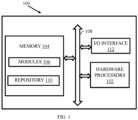
- FIG. 1 illustrates an exemplary system for Quantitative susceptibility mapping (QSM) reconstruction, according to some embodiments of the present disclosure.
- QSM Quantitative susceptibility mapping
- the system 100 includes or is otherwise in communication with hardware processors 102, at least one memory such as a memory 104, an I/O interface 112.
- the hardware processors 102, memory 104, and the Input /Output (I/O) interface 112 may be coupled by a system bus such as a system bus 108 or a similar mechanism.
- the hardware processors 102 can be one or more hardware processors.
- the I/O interface 112 may include a variety of software and hardware interfaces, for example, a web interface, a graphical user interface, and the like.
- the I/O interface 112 may include a variety of software and hardware interfaces, for example, interfaces for peripheral device(s), such as a keyboard, a mouse, an external memory, a printer and the like. Further, the I/O interface 112 may enable the system 100 to communicate with other devices, such as web servers, and external databases.
- the I/O interface 112 can facilitate multiple communications within a wide variety of networks and protocol types, including wired networks, for example, local area network (LAN), cable, etc., and wireless networks, such as Wireless LAN (WLAN), cellular, or satellite.
- the I/O interface 112 may include one or more ports for connecting several computing systems with one another or to another server computer.
- the I/O interface 112 may include one or more ports for connecting several devices to one another or to another server.
- the one or more hardware processors 102 may be implemented as one or more microprocessors, microcomputers, microcontrollers, digital signal processors, central processing units, node machines, logic circuitries, and/or any devices that manipulate signals based on operational instructions.
- the one or more hardware processors 102 is configured to fetch and execute computer-readable instructions stored in the memory 104.
- the memory 104 may include any computer-readable medium known in the art including, for example, volatile memory, such as static random-access memory (SRAM) and dynamic random-access memory (DRAM), and/or non-volatile memory, such as read only memory (ROM), erasable programmable ROM, flash memories, hard disks, optical disks, and magnetic tapes.
- volatile memory such as static random-access memory (SRAM) and dynamic random-access memory (DRAM)
- non-volatile memory such as read only memory (ROM), erasable programmable ROM, flash memories, hard disks, optical disks, and magnetic tapes.
- ROM read only memory
- erasable programmable ROM erasable programmable ROM
- flash memories hard disks
- optical disks optical disks
- magnetic tapes magnetic tapes
- the plurality of modules 106 include programs or coded instructions that supplement applications or functions performed by the system 100 for executing different steps involved in the QSM reconstruction, being performed by the system 100.
- the plurality of modules 106 can include routines, programs, objects, components, and data structures, which performs particular tasks or implement particular abstract data types.
- the plurality of modules 106 may also be used as, signal processor(s), node machine(s), logic circuitries, and/or any other device or component that manipulates signals based on operational instructions. Further, the plurality of modules 106 can be used by hardware, by computer-readable instructions executed by the one or more hardware processors 102, or by a combination thereof.
- the plurality of modules 106 can include various sub-modules (not shown).
- the plurality of modules 106 may include computer-readable instructions that supplement applications or functions performed by the system 100 for the QSM reconstruction.
- the data repository (or repository) 110 may include a plurality of abstracted piece of code for refinement and data that is processed, received, or generated as a result of the execution of the plurality of modules in the module(s) 106.
- the data repository 110 is shown internal to the system 100, it will be noted that, in alternate embodiments, the data repository 110 can also be implemented external to the system 100, where the data repository 110 may be stored within a database (repository 110) communicatively coupled to the system 100.
- the data contained within such external database may be periodically updated. For example, new data may be added into the database (not shown in FIG. 1 ) and/or existing data may be modified and/or non-useful data may be deleted from the database.
- the data may be stored in an external system, such as a Lightweight Directory Access Protocol (LDAP) directory and a Relational Database Management System (RDBMS).
- LDAP Lightweight Directory Access Protocol
- RDBMS Relational Database Management System
- FIGS. 2A and 2B (collectively referred to as FIG. 2 ) is a functional block diagram according to some embodiments of the present disclosure.
- the system 100 obtains, via one or more hardware processors, at least one low-field measurement of a subject as input.
- the term 'low-field' refers to the fact that low intensity magnetic field is used for MRI imaging of the subject.
- the system 100 enhances, via the one or more hardware processors, the obtained at least one low field measurement to generate an enhanced low field measurement, using at least one pre-processing technique. Enhancing may mean pre-processing of the input data to improve/boost quality of the input, and may involve steps such as but not limited to normalization, and outlier removal.
- the system 100 constructs a magnetic resonance (MR) image by processing the enhanced low field measurement, via the one or more hardware processors. Further, at step 208 of the method 200, the system 100 removes perturbations from the MR image by performing forward operator drift correction, via the one or more hardware processors. Further, at step 210 of the method 200, the system 100 reconstructs the QSM image from the MR image, via the one or more hardware processors. The QSM image is reconstructed by iteratively performing the following steps.
- MR magnetic resonance
- a reconstructed QSM image obtained in each iteration is compared with a reference image, to obtain a feedback representing extent of similarity of the reconstructed QSM image with the reference image, wherein the reference image is obtained by inverting the low-field measurement, further wherein the reconstructed QSM image is obtained based on an image prior enforced by an unsupervised CNN.
- the feedback may be used as a mathematical loss function to update the weights of the unsupervised CNN.
- Input to the unsupervised CNN for enforcing the image prior is the structural image of the subject.
- the system 100 refines the reconstructed QSM image from previous iteration in subsequent iteration, based on feedback based on comparison of the reconstructed QSM image with the reference image. Further, at step 210c, a similarity function is computed at each iteration, wherein the similarity function at each iteration represents extent of similarity of the reconstructed QSM image with a structural image obtained from the subject. Further, at step 210d, the system 100 terminates the iterative reconstruction when the extent of similarity represented by the similarity function is above a threshold.
- the system 100 uses the loss function to address non-uniformity in the input data, wherein the loss function is represented using the equation: ⁇ N F H DFf ⁇ i z ⁇ ⁇ ⁇ 2 2 + ⁇ ⁇ f ⁇ i z ⁇ ⁇ i ⁇ 2 2
- N is the noise matrix which accounts for non-uniformity
- F and F H are Fourier transform and it's Hermetian
- D is the dipole kernel.
- f ⁇ ( ⁇ ) is the deep neural network parameterised by ⁇
- ⁇ is the MR phase
- X is the susceptibility map.
- the noise matrix N is estimated using a low-resolution scan.
- the diagonal matrix has been used because the noise in MRI phase can be modelled as Gaussian only when SNR is high. Under low-field imaging, along with low SNR, the noise properties are non-uniform due to various physical properties and interference. To handle the non-uniformity, the loss function has been modified to accommodate a weight matrix N which is computed using a fast low-resolution scan.
- the overall loss function is the linear combination of two terms. First term corresponds to comparing the estimated phase with the measured phase and the second term compares the estimated susceptibility image with the susceptibility image from the ith iteration. The term ⁇ theta _i indicates the parameters for the ith iteration.
- ⁇ tissue magnetic susceptibility
- ⁇ a measured tissue phase
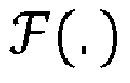
- F . and F ⁇ 1 denote forward and inverse Fourier transform
- d is the dipole kernel in image domain
- Equation (7) corresponds to denoising ⁇ corrupted with a Gaussian noise of level ⁇ ⁇ .
- D k may be any suitable denoiser which introduces the prior.
- ⁇ represents network characters
- z is input image to network, which may be plane noise as well.
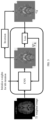
- the implementation (alternately referred to as "network") in FIG. 3 obtains the noise/noisy image/image by performing inversion of the low field measurement obtained as input.
- the network uses the structural MRI image of the subject as the prior information to condition the input data.
- the system 100 may use a super-resolution technique, thus obtaining a high resolution image. Having the high resolution eases diagnosis of diseases from the image.
- the system 100 may be implemented in the form of a plug-and-play iterative image reconstruction, which can be connected with state of the art low-field MRI imaging systems using appropriate interface(s), so as to improve quality of the reconstructed image.
- the system 100 may be implemented as a stand-alone system that accepts low-field image data as input and performs the reconstruction, without having to connect be connected directly to the imaging systems.
- the method 200 was evaluated on a synthetically generated digital phantom in silico data.
- tissue phase data was generated by convolving the ground truth susceptibility map with the dipole kernel suited for the desired reconstruction grid 160* 160* 160. Gaussian noise was added to the phase data to simulate practical acquisition scenarios.
- the in vivo data consisted of a single orientation gradient-echo images of a healthy subject.
- the data was acquired with a 3T system with an isotropic resolution of 1.06 mm.
- the ground truth reference susceptibility map was computed using the susceptibility tensor imaging algorithm.
- the phase data was simulated using the physical forward model and random Gaussian noise was added.
- the method 200 was compared against four other methods, which use single orientation phase data for computing the susceptibility maps: (i) thresholded k-space division (TKD), (ii) regularization by '2 norm of the gradient, (iii) 3D total variation (TV) which enforces a smoothed ' 1 norm on the gradients, and (iv) BM4D denoiser within the HQS framework (BM4D-HQS).
- TKD thresholded k-space division
- TV 3D total variation
- BM4D-HQS BM4D denoiser within the HQS framework
- RRMSE relative root mean squared error
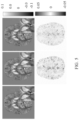
- FIG. 4 shows the results obtained on the synthetic digital phantom data.
- the tissue phase was corrupted with 5% zero-mean Gaussian noise.
- the reconstructed image using TKD suffered from severe streaking artifacts and retained significant amount of noise making it difficult to distinguish closely placed structures.
- the method 200 was able to restore the fine-scale structures as well as overall regularity without causing artifacts.
- FIG. 6 shows the results obtained on the in vivo data. Both 3D TV and BM4D within the HQS framework improved over the method that enforces '2 norm on the gradient of the image. The quality of the images using TKD and the '2 gradient norm are comparable.
- the method 200 was found to be restoring both gradients and textural features and was closest to the ground truth image. This is reflected in the residual maps where the method 200 was shown to have the least bias and the other methods showed a strong structural presence. While the residual magnitude was evenly spread for the TV method, the higher residual magnitudes were found in the caudatea and the thalamus region for the BM4D method with reduced residuals in other regions of the brain.
- FIG. 5 compares the output of the system 100 with two different inputs to the CNN denoiser: (i) with random noise as input as originally proposed for the DIP, and (ii) using the T1 MPRAGE as conditioned input to the CNN.
- the zoomed insets show the caudate nuclei region where the noise as input method is quite blurry and the method 200 restores sharper features and is closer to the ground truth. Additionally, it was observed that for the same number of iterations, the resulting image with T1 information has enhanced finer structures such as gyri and sulci. This was also conveyed by the absence of a clearly distinguishable structures in the residual image. On the other hand, when noise is used as input, such finer structures were not restored completely and there is stronger bias (as reflected in the residual) compared to the method 200.
- the embodiments of present disclosure herein address unresolved problem of low-field MRI imaging.
- the embodiment thus provides a method and system for QSM reconstruction in MRI imaging.
- the embodiments herein further provide a mechanism for QSM reconstruction by using same subject's MRI data as prior information.
- Such computer-readable storage means contain program-code means for implementation of one or more steps of the method, when the program runs on a server or mobile device or any suitable programmable device.
- the hardware device can be any kind of device which can be programmed including e.g., any kind of computer like a server or a personal computer, or the like, or any combination thereof.
- the device may also include means which could be e.g., hardware means like e.g., an application-specific integrated circuit (ASIC), a field-programmable gate array (FPGA), or a combination of hardware and software means, e.g., an ASIC and an FPGA, or at least one microprocessor and at least one memory with software processing components located therein.
- the means can include both hardware means and software means.
- the method embodiments described herein could be implemented in hardware and software.
- the device may also include software means. Alternatively, the embodiments may be implemented on different hardware devices, e.g., using a plurality of CPUs.
- the embodiments herein can comprise hardware and software elements.
- the embodiments that are implemented in software include but are not limited to, firmware, resident software, microcode, etc.
- the functions performed by various components described herein may be implemented in other components or combinations of other components.
- a computer-usable or computer readable medium can be any apparatus that can comprise, store, communicate, propagate, or transport the program for use by or in connection with the instruction execution system, apparatus, or device.
- a computer-readable storage medium refers to any type of physical memory on which information or data readable by a processor may be stored.
- a computer-readable storage medium may store instructions for execution by one or more processors, including instructions for causing the processor(s) to perform steps or stages consistent with the embodiments described herein.
- the term "computer-readable medium” should be understood to include tangible items and exclude carrier waves and transient signals, i.e., be non-transitory. Examples include random access memory (RAM), read-only memory (ROM), volatile memory, nonvolatile memory, hard drives, CD ROMs, DVDs, flash drives, disks, and any other known physical storage media.
Landscapes
- Physics & Mathematics (AREA)
- Health & Medical Sciences (AREA)
- Engineering & Computer Science (AREA)
- General Physics & Mathematics (AREA)
- High Energy & Nuclear Physics (AREA)
- Condensed Matter Physics & Semiconductors (AREA)
- Nuclear Medicine, Radiotherapy & Molecular Imaging (AREA)
- General Health & Medical Sciences (AREA)
- Radiology & Medical Imaging (AREA)
- Life Sciences & Earth Sciences (AREA)
- Signal Processing (AREA)
- Artificial Intelligence (AREA)
- Computer Vision & Pattern Recognition (AREA)
- Pathology (AREA)
- Spectroscopy & Molecular Physics (AREA)
- Biophysics (AREA)
- Theoretical Computer Science (AREA)
- Biomedical Technology (AREA)
- Heart & Thoracic Surgery (AREA)
- Medical Informatics (AREA)
- Molecular Biology (AREA)
- Surgery (AREA)
- Animal Behavior & Ethology (AREA)
- Public Health (AREA)
- Veterinary Medicine (AREA)
- Magnetic Resonance Imaging Apparatus (AREA)
Abstract
Description
- The present application claims priority to
Indian application no. 202221017927, filed on March 28, 2022 - The disclosure herein generally relates to magnetic resonance imaging (MRI) imaging systems, and, more particularly, to a method and system for quantitative susceptibility mapping (QSM) reconstruction in magnetic resonance imaging (MRI) systems under low-field imaging conditions.
- Abnormal deposition of iron has been linked to the pathophysiological process of several neurodegenerative diseases such as Alzheimer's, Parkinson's and Huntington's disease. Quantitative susceptibility mapping (QSM) is a magnetic resonance imaging (MRI) technique that enables estimation of magnetic susceptibility of the underlying tissues. QSM allows to quantify iron concentration in the tissues as well as venous blood oxygenation. Estimation of a susceptibility map from the unwrapped phase obtained from a single scan is an ill-posed problem and suffers due to the presence of noise. One way to overcome this issue is by acquiring multiple measurements with varied orientations of the subject. However, the problem of estimating the susceptibility maps from a single orientation is an active area of research. Several reconstruction approaches have been explored for QSM starting with direct k-space inversion, conventional Bayesian iterative frameworks with suitable regularization techniques, and deep learning-based approaches. The state-of-the-art approaches have explored prior information from both magnitude and phase data. However, the underlying assumption is that the susceptibility maps and the magnitude images have coinciding edges. Establishing the ground-truth susceptibility maps is difficult and leads to limited applicability of supervised methods. Further, low-field imaging suffers from reduced image quality since low magnetic field results in weak NMR signals. The low-quality image reconstruction is due to the presence of noise while obtaining the measurements. The perturbations such as gradient delays, main magnetic field inhomogeneity, resonating frequency drifts cause degradation in reconstruction. Also due to weak spatial encoding gradient field, the attainable spatial resolution is limited. With all these factors combined, it becomes challenging to obtain diagnostic quality susceptibility maps under low-field imaging conditions.
- Embodiments of the present disclosure present technological improvements as solutions to one or more of the above-mentioned technical problems recognized by the inventors in conventional systems. For example, in one embodiment, a processor implemented method of Quantitative Susceptibility Mapping (QSM) reconstruction in magnetic resonance imaging (MRI) systems is provided. In this method, initially at least one low-field measurement of a subject is obtained as input, via one or more hardware processors. Further, the at least one low field measurement is enhanced, via the one or more hardware processors, to generate an enhanced low field measurement, using at least one pre-processing technique. Further, a magnetic resonance (MR) image is constructed by processing the enhanced low field measurement, via the one or more hardware processors. Further, perturbations from the MR image are removed by performing forward operator drift correction, via the one or more hardware processors. Further, the QSM image is reconstructed from the MR image, via the one or more hardware processors. The QSM image is reconstructed by iteratively performing the following steps. A reconstructed QSM image obtained in each iteration is compared with a reference image, to obtain a feedback representing extent of similarity of the reconstructed QSM image with the reference image, wherein the reference image is obtained by inverting the low-field measurement, further wherein the reconstructed QSM image is obtained based on an image prior enforced by an unsupervised CNN. The reconstructed QSM image from previous iteration is refined in subsequent iteration, based on the obtained feedback . Further, a similarity function is computed at each iteration, wherein the similarity function at each iteration represents extent of similarity of the reconstructed QSM image with a structural image obtained from the subject. The system terminates the iterative reconstruction when the extent of similarity represented by the similarity function exceeds a threshold.
- In another aspect, a system for Quantitative Susceptibility Mapping (QSM) reconstruction is provided. The system includes one or more hardware processors, a communication interface, and a memory storing a plurality of instructions. The plurality of instructions when executed, cause the one or more hardware processors to obtain at least one low-field measurement of a subject as input. Further, the at least one low field measurement is enhanced, via the one or more hardware processors, to generate an enhanced low field measurement, using at least one pre-processing technique. Further, a magnetic resonance (MR) image is constructed by processing the enhanced low field measurement, via the one or more hardware processors. Further, perturbations from the MR image are removed by performing forward operator drift correction, via the one or more hardware processors. Further, the QSM image is reconstructed from the MR image, via the one or more hardware processors. The QSM image is reconstructed by iteratively performing the following steps. A reconstructed QSM image obtained in each iteration is compared with a reference image, to obtain a feedback representing extent of similarity of the reconstructed QSM image with the reference image, wherein the reference image is obtained by inverting the low-field measurement, further wherein the reconstructed QSM image is obtained based on an image prior enforced by an unsupervised CNN. The reconstructed QSM image from previous iteration is refined in subsequent iteration, based on the obtained feedback. Further, a similarity function is computed at each iteration, wherein the similarity function at each iteration represents extent of similarity of the reconstructed QSM image with a structural image obtained from the subject. The system terminates the iterative reconstruction when the extent of similarity represented by the similarity function exceeds a threshold.
- In yet another aspect, a non-transitory computer readable medium for Quantitative Susceptibility Mapping (QSM) reconstruction is provided. The non-transitory computer readable medium includes a plurality of instructions, which when executed, cause the one or more hardware processors to perform the QSM reconstruction involving the following steps. Initially at least one low-field measurement of a subject is obtained as input, via one or more hardware processors. Further, the at least one low field measurement is enhanced, via the one or more hardware processors, to generate an enhanced low field measurement, using at least one pre-processing technique. Further, a magnetic resonance (MR) image is constructed by processing the enhanced low field measurement, via the one or more hardware processors. Further, perturbations from the MR image are removed by performing forward operator drift correction, via the one or more hardware processors. Further, the QSM image is reconstructed from the MR image, via the one or more hardware processors. The QSM image is reconstructed by iteratively performing the following steps. A reconstructed QSM image obtained in each iteration is compared with a reference image, to obtain a feedback representing extent of similarity of the reconstructed QSM image with the reference image, wherein the reference image is obtained by inverting the low-field measurement, further wherein the reconstructed QSM image is obtained based on an image prior enforced by an unsupervised CNN. The reconstructed QSM image from previous iteration is refined in subsequent iteration, based on the obtained feedback. Further, a similarity function is computed at each iteration, wherein the similarity function at each iteration represents extent of similarity of the reconstructed QSM image with a structural image obtained from the subject. The system terminates the iterative reconstruction when the extent of similarity represented by the similarity function exceeds a threshold.
- It is to be understood that both the foregoing general description and the following detailed description are exemplary and explanatory only and are not restrictive of the invention, as claimed.
- The accompanying drawings, which are incorporated in and constitute a part of this disclosure, illustrate exemplary embodiments and, together with the description, serve to explain the disclosed principles:
-
FIG. 1 illustrates an exemplary system for Quantitative susceptibility mapping (QSM) reconstruction, according to some embodiments of the present disclosure. -
FIGS. 2A and2B (collectively referred to asFIG. 2 ) is a functional block diagram according to some embodiments of the present disclosure. -
FIG. 3 is an example two loop implementation of the system ofFIG. 1 , for the QSM reconstruction, in accordance with some embodiments of the present disclosure. -
FIG. 4 through FIG. 6 depict examples of validation of the QSM reconstruction by the system ofFIG. 1 , using different training datasets, according to some embodiments of the present disclosure. - Exemplary embodiments are described with reference to the accompanying drawings. In the figures, the left-most digit(s) of a reference number identifies the figure in which the reference number first appears. Wherever convenient, the same reference numbers are used throughout the drawings to refer to the same or like parts. While examples and features of disclosed principles are described herein, modifications, adaptations, and other implementations are possible without departing from the scope of the disclosed embodiments.
- QSM allows to quantify iron concentration in the tissues as well as venous blood oxygenation. Estimation of a susceptibility map from the unwrapped phase is an ill-posed problem and suffers in the presence of noise. One way to overcome this issue is by acquiring multiple measurements with varied orientations of the object of interest. However, the problem of estimating the susceptibility maps from a single orientation is an active area of research. Several reconstruction approaches have been explored for QSM starting with direct k-space inversion, conventional Bayesian iterative frameworks with suitable regularization techniques, and deep learning-based approaches. The state-of-the-art approaches have explored prior information from both magnitude and phase data. However, the underlying assumption is that the susceptibility maps and the magnitude images have coinciding edges. Establishing the ground-truth susceptibility maps is difficult and leads to limited applicability of supervised methods.
- Embodiments disclosed herein refer to a method and system for QSM reconstruction to address the aforementioned challenges/disadvantages of the state of the art systems.
- Referring now to the drawings, and more particularly to
FIG. 1 through FIG. 6 , where similar reference characters denote corresponding features consistently throughout the figures, there are shown preferred embodiments and these embodiments are described in the context of the following exemplary system and/or method. -
FIG. 1 illustrates an exemplary system for Quantitative susceptibility mapping (QSM) reconstruction, according to some embodiments of the present disclosure. - The
system 100 includes or is otherwise in communication withhardware processors 102, at least one memory such as amemory 104, an I/O interface 112. Thehardware processors 102,memory 104, and the Input /Output (I/O)interface 112 may be coupled by a system bus such as asystem bus 108 or a similar mechanism. In an embodiment, thehardware processors 102 can be one or more hardware processors. - The I/
O interface 112 may include a variety of software and hardware interfaces, for example, a web interface, a graphical user interface, and the like. The I/O interface 112 may include a variety of software and hardware interfaces, for example, interfaces for peripheral device(s), such as a keyboard, a mouse, an external memory, a printer and the like. Further, the I/O interface 112 may enable thesystem 100 to communicate with other devices, such as web servers, and external databases. - The I/
O interface 112 can facilitate multiple communications within a wide variety of networks and protocol types, including wired networks, for example, local area network (LAN), cable, etc., and wireless networks, such as Wireless LAN (WLAN), cellular, or satellite. For the purpose, the I/O interface 112 may include one or more ports for connecting several computing systems with one another or to another server computer. The I/O interface 112 may include one or more ports for connecting several devices to one another or to another server. - The one or
more hardware processors 102 may be implemented as one or more microprocessors, microcomputers, microcontrollers, digital signal processors, central processing units, node machines, logic circuitries, and/or any devices that manipulate signals based on operational instructions. Among other capabilities, the one ormore hardware processors 102 is configured to fetch and execute computer-readable instructions stored in thememory 104. - The
memory 104 may include any computer-readable medium known in the art including, for example, volatile memory, such as static random-access memory (SRAM) and dynamic random-access memory (DRAM), and/or non-volatile memory, such as read only memory (ROM), erasable programmable ROM, flash memories, hard disks, optical disks, and magnetic tapes. In an embodiment, thememory 104 includes a plurality ofmodules 106. - The plurality of
modules 106 include programs or coded instructions that supplement applications or functions performed by thesystem 100 for executing different steps involved in the QSM reconstruction, being performed by thesystem 100. The plurality ofmodules 106, amongst other things, can include routines, programs, objects, components, and data structures, which performs particular tasks or implement particular abstract data types. The plurality ofmodules 106 may also be used as, signal processor(s), node machine(s), logic circuitries, and/or any other device or component that manipulates signals based on operational instructions. Further, the plurality ofmodules 106 can be used by hardware, by computer-readable instructions executed by the one ormore hardware processors 102, or by a combination thereof. The plurality ofmodules 106 can include various sub-modules (not shown). The plurality ofmodules 106 may include computer-readable instructions that supplement applications or functions performed by thesystem 100 for the QSM reconstruction. - The data repository (or repository) 110 may include a plurality of abstracted piece of code for refinement and data that is processed, received, or generated as a result of the execution of the plurality of modules in the module(s) 106.
- Although the
data repository 110 is shown internal to thesystem 100, it will be noted that, in alternate embodiments, thedata repository 110 can also be implemented external to thesystem 100, where thedata repository 110 may be stored within a database (repository 110) communicatively coupled to thesystem 100. The data contained within such external database may be periodically updated. For example, new data may be added into the database (not shown inFIG. 1 ) and/or existing data may be modified and/or non-useful data may be deleted from the database. In one example, the data may be stored in an external system, such as a Lightweight Directory Access Protocol (LDAP) directory and a Relational Database Management System (RDBMS). Functions of the components of thesystem 100 are now explained with reference to steps in flow diagramFIG. 2 , the example implementation inFIG. 3 , and the example figures inFIGS. 4 through 6 . -
FIGS. 2A and2B (collectively referred to asFIG. 2 ) is a functional block diagram according to some embodiments of the present disclosure. - At
step 202 of amethod 200 depicted inFIG. 2 , thesystem 100 obtains, via one or more hardware processors, at least one low-field measurement of a subject as input. The term 'low-field' refers to the fact that low intensity magnetic field is used for MRI imaging of the subject. Further, atstep 204 of themethod 200, thesystem 100 enhances, via the one or more hardware processors, the obtained at least one low field measurement to generate an enhanced low field measurement, using at least one pre-processing technique. Enhancing may mean pre-processing of the input data to improve/boost quality of the input, and may involve steps such as but not limited to normalization, and outlier removal. Further, atstep 206 of themethod 200, thesystem 100 constructs a magnetic resonance (MR) image by processing the enhanced low field measurement, via the one or more hardware processors. Further, atstep 208 of themethod 200, thesystem 100 removes perturbations from the MR image by performing forward operator drift correction, via the one or more hardware processors. Further, atstep 210 of themethod 200, thesystem 100 reconstructs the QSM image from the MR image, via the one or more hardware processors. The QSM image is reconstructed by iteratively performing the following steps. Atstep 210a, a reconstructed QSM image obtained in each iteration is compared with a reference image, to obtain a feedback representing extent of similarity of the reconstructed QSM image with the reference image, wherein the reference image is obtained by inverting the low-field measurement, further wherein the reconstructed QSM image is obtained based on an image prior enforced by an unsupervised CNN. The feedback may be used as a mathematical loss function to update the weights of the unsupervised CNN. Input to the unsupervised CNN for enforcing the image prior is the structural image of the subject. Further, atstep 210b, thesystem 100 refines the reconstructed QSM image from previous iteration in subsequent iteration, based on feedback based on comparison of the reconstructed QSM image with the reference image. Further, atstep 210c, a similarity function is computed at each iteration, wherein the similarity function at each iteration represents extent of similarity of the reconstructed QSM image with a structural image obtained from the subject. Further, atstep 210d, thesystem 100 terminates the iterative reconstruction when the extent of similarity represented by the similarity function is above a threshold. - The
system 100 uses the loss function to address non-uniformity in the input data, wherein the loss function is represented using the equation:
entries 

- The diagonal matrix has been used because the noise in MRI phase can be modelled as Gaussian only when SNR is high. Under low-field imaging, along with low SNR, the noise properties are non-uniform due to various physical properties and interference. To handle the non-uniformity, the loss function has been modified to accommodate a weight matrix N which is computed using a fast low-resolution scan. The overall loss function is the linear combination of two terms. First term corresponds to comparing the estimated phase with the measured phase and the second term compares the estimated susceptibility image with the susceptibility image from the ith iteration. The term \theta _i indicates the parameters for the ith iteration.
- Working of the
system 100 for the QSM reconstruction is explained with reference to the example implementation and architecture inFIG. 3 . Let χ be tissue magnetic susceptibility, and Ø be a measured tissue phase. A forward model of the system inFIG. 3 is expressed as:
- Where, F is Fourier transform, η is noise, and D is dipole kernel. The dipole kernel in Fourier space is assuming the magnetic field to be along z axis, and is given as:

- where, kz , ky, kx are k-space values along z, y, and x axes. In a Bayesian setting, optimal susceptibility map χ̂ can be obtained as maximum a posteriori (MAP) estimate of (1), by solving:

- where, the
term 

- Where, ψ is auxiliary variable. Equation (4) is solved using the following iterative scheme:


- As the data fidelity and regularization terms are decoupled, the sub-problems in the above equations can be independently solved. Equation (6) corresponding to the forward operator FHDFχ has a closed form solution given as:

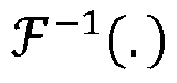

- Equation (7) corresponds to denoising ψ corrupted with a Gaussian noise of level

- The
system 100 may be configured to view the denoising problem as a regularized inverse problem, and may be represented as:
- The regularizer R(x) can be replaced by implicit prior captured by a network performing x = fθ (z), leading to the optimization problem:

- The implementation (alternately referred to as "network") in
FIG. 3 obtains the noise/noisy image/image by performing inversion of the low field measurement obtained as input. The network uses the structural MRI image of the subject as the prior information to condition the input data. - In an embodiment, to further enhance resolution of the reconstructed QSM image, the
system 100 may use a super-resolution technique, thus obtaining a high resolution image. Having the high resolution eases diagnosis of diseases from the image. - In an embodiment, the
system 100 may be implemented in the form of a plug-and-play iterative image reconstruction, which can be connected with state of the art low-field MRI imaging systems using appropriate interface(s), so as to improve quality of the reconstructed image. In another embodiment, thesystem 100 may be implemented as a stand-alone system that accepts low-field image data as input and performs the reconstruction, without having to connect be connected directly to the imaging systems. - In the experiments conducted, the
method 200 was evaluated on a synthetically generated digital phantom in silico data. Within a desired reconstruction grid, different geometric structures (three spheres and three cuboids) with varying sizes and locations were generated and within each structure, uniform values in the range of practical susceptibility values, i.e., [-0.1, 0.1] were added. The tissue phase data was generated by convolving the ground truth susceptibility map with the dipole kernel suited for the desired reconstruction grid 160* 160* 160. Gaussian noise was added to the phase data to simulate practical acquisition scenarios. - The in vivo data consisted of a single orientation gradient-echo images of a healthy subject. The data was acquired with a 3T system with an isotropic resolution of 1.06 mm. The ground truth reference susceptibility map was computed using the susceptibility tensor imaging algorithm. For a fair comparison, the phase data was simulated using the physical forward model and random Gaussian noise was added.
- The
method 200 was compared against four other methods, which use single orientation phase data for computing the susceptibility maps: (i) thresholded k-space division (TKD), (ii) regularization by '2 norm of the gradient, (iii) 3D total variation (TV) which enforces a smoothed ' 1 norm on the gradients, and (iv) BM4D denoiser within the HQS framework (BM4D-HQS). For quantitative comparison, relative root mean squared error (RRMSE) was used. RRMSE between two images a and b is defined as RRMSE(a, b) := ∥a - b∥ F /∥a∥ F , ∥.∥ F denotes Frobenius norm. -
FIG. 4 shows the results obtained on the synthetic digital phantom data. The tissue phase was corrupted with 5% zero-mean Gaussian noise. The reconstructed image using TKD suffered from severe streaking artifacts and retained significant amount of noise making it difficult to distinguish closely placed structures. On the other hand, themethod 200 was able to restore the fine-scale structures as well as overall regularity without causing artifacts.FIG. 6 shows the results obtained on the in vivo data. Both 3D TV and BM4D within the HQS framework improved over the method that enforces '2 norm on the gradient of the image. The quality of the images using TKD and the '2 gradient norm are comparable. On the other hand, themethod 200 was found to be restoring both gradients and textural features and was closest to the ground truth image. This is reflected in the residual maps where themethod 200 was shown to have the least bias and the other methods showed a strong structural presence. While the residual magnitude was evenly spread for the TV method, the higher residual magnitudes were found in the caudatea and the thalamus region for the BM4D method with reduced residuals in other regions of the brain. -
FIG. 5 compares the output of thesystem 100 with two different inputs to the CNN denoiser: (i) with random noise as input as originally proposed for the DIP, and (ii) using the T1 MPRAGE as conditioned input to the CNN. The zoomed insets show the caudate nuclei region where the noise as input method is quite blurry and themethod 200 restores sharper features and is closer to the ground truth. Additionally, it was observed that for the same number of iterations, the resulting image with T1 information has enhanced finer structures such as gyri and sulci. This was also conveyed by the absence of a clearly distinguishable structures in the residual image. On the other hand, when noise is used as input, such finer structures were not restored completely and there is stronger bias (as reflected in the residual) compared to themethod 200. - The written description describes the subject matter herein to enable any person skilled in the art to make and use the embodiments. The scope of the subject matter embodiments is defined by the claims and may include other modifications that occur to those skilled in the art. Such other modifications are intended to be within the scope of the claims if they have similar elements that do not differ from the literal language of the claims or if they include equivalent elements with insubstantial differences from the literal language of the claims.
- The embodiments of present disclosure herein address unresolved problem of low-field MRI imaging. The embodiment, thus provides a method and system for QSM reconstruction in MRI imaging. Moreover, the embodiments herein further provide a mechanism for QSM reconstruction by using same subject's MRI data as prior information.
- It is to be understood that the scope of the protection is extended to such a program and in addition to a computer-readable means having a message therein; such computer-readable storage means contain program-code means for implementation of one or more steps of the method, when the program runs on a server or mobile device or any suitable programmable device. The hardware device can be any kind of device which can be programmed including e.g., any kind of computer like a server or a personal computer, or the like, or any combination thereof. The device may also include means which could be e.g., hardware means like e.g., an application-specific integrated circuit (ASIC), a field-programmable gate array (FPGA), or a combination of hardware and software means, e.g., an ASIC and an FPGA, or at least one microprocessor and at least one memory with software processing components located therein. Thus, the means can include both hardware means and software means. The method embodiments described herein could be implemented in hardware and software. The device may also include software means. Alternatively, the embodiments may be implemented on different hardware devices, e.g., using a plurality of CPUs.
- The embodiments herein can comprise hardware and software elements. The embodiments that are implemented in software include but are not limited to, firmware, resident software, microcode, etc. The functions performed by various components described herein may be implemented in other components or combinations of other components. For the purposes of this description, a computer-usable or computer readable medium can be any apparatus that can comprise, store, communicate, propagate, or transport the program for use by or in connection with the instruction execution system, apparatus, or device.
- The illustrated steps are set out to explain the exemplary embodiments shown, and it should be anticipated that ongoing technological development will change the manner in which particular functions are performed. These examples are presented herein for purposes of illustration, and not limitation. Further, the boundaries of the functional building blocks have been arbitrarily defined herein for the convenience of the description. Alternative boundaries can be defined so long as the specified functions and relationships thereof are appropriately performed. Alternatives (including equivalents, extensions, variations, deviations, etc., of those described herein) will be apparent to persons skilled in the relevant art(s) based on the teachings contained herein. Such alternatives fall within the scope of the disclosed embodiments. Also, the words "comprising," "having," "containing," and "including," and other similar forms are intended to be equivalent in meaning and be open ended in that an item or items following any one of these words is not meant to be an exhaustive listing of such item or items, or meant to be limited to only the listed item or items. It must also be noted that as used herein and in the appended claims, the singular forms "a," "an," and "the" include plural references unless the context clearly dictates otherwise.
- Furthermore, one or more computer-readable storage media may be utilized in implementing embodiments consistent with the present disclosure. A computer-readable storage medium refers to any type of physical memory on which information or data readable by a processor may be stored. Thus, a computer-readable storage medium may store instructions for execution by one or more processors, including instructions for causing the processor(s) to perform steps or stages consistent with the embodiments described herein. The term "computer-readable medium" should be understood to include tangible items and exclude carrier waves and transient signals, i.e., be non-transitory. Examples include random access memory (RAM), read-only memory (ROM), volatile memory, nonvolatile memory, hard drives, CD ROMs, DVDs, flash drives, disks, and any other known physical storage media.
- It is intended that the disclosure and examples be considered as exemplary only, with a true scope of disclosed embodiments being indicated by the following claims.
Claims (9)
- A processor implemented method (200) of Quantitative Susceptibility Mapping (QSM) reconstruction in magnetic resonance imaging (MRI) systems, comprising:obtaining (202), via one or more hardware processors, at least one low-field measurement of a subject as input;enhancing (204), via the one or more hardware processors, obtained at least one low field measurement to generate an enhanced low field measurement, using at least one pre-processing technique;constructing (206) a magnetic resonance (MR) image by processing the enhanced low field measurement, via the one or more hardware processors;removing (208) perturbations from the MR image by performing forward operator drift correction, via the one or more hardware processors; andreconstructing (210) the QSM image from the MR image, via the one or more hardware processors, comprising, iteratively performing:comparing (210a) a reconstructed QSM image obtained in each iteration with a reference image to obtain a feedback representing extent of similarity of the reconstructed QSM image with the reference image, wherein the reference image is obtained by inverting the low-field measurement, further wherein the reconstructed QSM image is obtained based on an image prior enforced by an unsupervised CNN;refining (210b) the reconstructed QSM image from previous iteration in subsequent iteration, based on the obtained feedback;computing (210c) a similarity function at each iteration, wherein the similarity function at each iteration represents extent of similarity of the reconstructed QSM image with a structural image obtained from the subject; and terminating (210d) the iterative reconstruction when the extent of similarity represented by the similarity function exceeds a threshold.
- The method as claimed in claim 1, wherein a loss function is used to address non-uniformity in the input data, wherein the loss function is represented using the equation

- The method as claimed in claim 1, wherein input to the unsupervised CNN for enforcing the image prior is the structural image of the subject.
- A system (100) for Quantitative Susceptibility Mapping (QSM) reconstruction, comprising:one or more hardware processors (102);a communication interface (112); andmemory (104) storing a plurality of instructions, which when executed, cause the one or more hardware processors to:obtain at least one low-field measurement of a subject as input;enhance obtained at least one low field measurement to generate an enhanced low field measurement, using at least one pre-processing technique;construct a magnetic resonance (MR) image by processing the enhanced low field measurement;remove perturbations from the MR image by performing forward operator drift correction; andreconstruct the QSM image from the MR image, by iteratively performing:comparing a reconstructed QSM image obtained in each iteration with a reference image, to obtain a feedback representing extent of similarity of the reconstructed QSM image with the reference image, wherein the reference image is obtained by inverting the low-field measurement, further wherein the reconstructed QSM image is obtained based on an image prior enforced by an unsupervised CNN;refining the reconstructed QSM image from previous iteration in subsequent iteration, based on the obtained feedback;computing a similarity function at each iteration, wherein the similarity function at each iteration represents extent of similarity of the reconstructed QSM image with a structural image obtained from the subject; andterminating the iterative reconstruction when the extent of similarity represented by the similarity function exceeds a threshold.
- The system as claimed in claim 4, wherein the one or more hardware processors are configured to use a loss function to address non-uniformity in the input data, wherein the loss function is represented using the equation

- The system as claimed in claim 4, wherein input to the unsupervised CNN for enforcing the image prior is the structural image of the subject.
- One or more non-transitory machine-readable information storage mediums comprising one or more instructions which when executed by one or more hardware processors cause:obtaining at least one low-field measurement of a subject as input;enhancing obtained at least one low field measurement to generate an enhanced low field measurement, using at least one pre-processing technique;constructing a magnetic resonance (MR) image by processing the enhanced low field measurement;removing perturbations from the MR image by performing forward operator drift correction; andreconstructing the QSM image from the MR image, comprising, iteratively performing:comparing a reconstructed QSM image obtained in each iteration with a reference image to obtain a feedback representing extent of similarity of the reconstructed QSM image with the reference image, wherein the reference image is obtained by inverting the low-field measurement, further wherein the reconstructed QSM image is obtained based on an image prior enforced by an unsupervised CNN;refining the reconstructed QSM image from previous iteration in subsequent iteration, based on the obtained feedback;computing a similarity function at each iteration, wherein the similarity function at each iteration represents extent of similarity of the reconstructed QSM image with a structural image obtained from the subject; andterminating the iterative reconstruction when the extent of similarity represented by the similarity function exceeds a threshold.
- The one or more non-transitory machine-readable information storage mediums as claimed in claim 7, wherein a loss function is used to address non-uniformity in the input data, wherein the loss function is represented using the equation

- The One or more non-transitory machine-readable information storage mediums as claimed in claim 7, wherein input to the unsupervised CNN for enforcing the image prior is the structural image of the subject.
Applications Claiming Priority (1)
| Application Number | Priority Date | Filing Date | Title |
|---|---|---|---|
| IN202221017927 | 2022-03-28 |
Publications (1)
| Publication Number | Publication Date |
|---|---|
| EP4253983A1 true EP4253983A1 (en) | 2023-10-04 |
Family
ID=85380903
Family Applications (1)
| Application Number | Title | Priority Date | Filing Date |
|---|---|---|---|
| EP23158141.4A Pending EP4253983A1 (en) | 2022-03-28 | 2023-02-23 | Method and system for quantitative susceptibility mapping reconstruction in low-field magnetic resonance imaging (mri) systems |
Country Status (2)
| Country | Link |
|---|---|
| US (1) | US12504493B2 (en) |
| EP (1) | EP4253983A1 (en) |
Families Citing this family (2)
| Publication number | Priority date | Publication date | Assignee | Title |
|---|---|---|---|---|
| US11037330B2 (en) * | 2017-04-08 | 2021-06-15 | Intel Corporation | Low rank matrix compression |
| WO2025118277A1 (en) * | 2023-12-08 | 2025-06-12 | 中国科学院深圳先进技术研究院 | Super-resolution reconstruction method and apparatus for magnetic resonance image, device, and storage medium |
Family Cites Families (2)
| Publication number | Priority date | Publication date | Assignee | Title |
|---|---|---|---|---|
| US9542763B2 (en) | 2014-04-25 | 2017-01-10 | The General Hospital Corporation | Systems and methods for fast reconstruction for quantitative susceptibility mapping using magnetic resonance imaging |
| US11802927B2 (en) * | 2021-03-04 | 2023-10-31 | Cornell University | System and method of magnetic resonance imaging method for monitoring remyelination |
-
2023
- 2023-02-23 EP EP23158141.4A patent/EP4253983A1/en active Pending
- 2023-02-27 US US18/175,506 patent/US12504493B2/en active Active
Non-Patent Citations (3)
| Title |
|---|
| DEISTUNG ANDREAS ET AL: "Overview of quantitative susceptibility mapping : Overview of Quantitative Susceptibility Mapping", NMR IN BIOMEDICINE., vol. 30, no. 4, 19 July 2016 (2016-07-19), GB, pages e3569, XP055840587, ISSN: 0952-3480, DOI: 10.1002/nbm.3569 * |
| REDDY PAVAN KUMAR ET AL: "Structural-MR Informed QSM Reconstruction Using Deep Image Prior", 2022 IEEE 19TH INTERNATIONAL SYMPOSIUM ON BIOMEDICAL IMAGING (ISBI), IEEE, 28 March 2022 (2022-03-28), pages 1 - 4, XP034117428, DOI: 10.1109/ISBI52829.2022.9761569 * |
| SEEMA S BHAT ET AL: "Low-Field MRI of Stroke: Challenges and Opportunities", JOURNAL OF MAGNETIC RESONANCE IMAGING, SOCIETY FOR MAGNETIC RESONANCE IMAGING, OAK BROOK, IL, US, vol. 54, no. 2, 22 August 2020 (2020-08-22), pages 372 - 390, XP071965096, ISSN: 1053-1807, DOI: 10.1002/JMRI.27324 * |
Also Published As
| Publication number | Publication date |
|---|---|
| US12504493B2 (en) | 2025-12-23 |
| US20230305089A1 (en) | 2023-09-28 |
Similar Documents
| Publication | Publication Date | Title |
|---|---|---|
| US11004183B2 (en) | Un-supervised convolutional neural network for distortion map estimation and correction in MRI | |
| Ongie et al. | Off-the-grid recovery of piecewise constant images from few Fourier samples | |
| Rousseau | Brain hallucination | |
| US11941732B2 (en) | Multi-slice MRI data processing using deep learning techniques | |
| US11035919B2 (en) | Image reconstruction using a colored noise model with magnetic resonance compressed sensing | |
| US9542761B2 (en) | Generalized approximate message passing algorithms for sparse magnetic resonance imaging reconstruction | |
| Baselice et al. | Bayesian MRI denoising in complex domain | |
| US12504493B2 (en) | Method and system for quantitative susceptibility mapping reconstruction in low-field magnetic resonance imaging (MRI) system | |
| KR20230069501A (en) | Score-based Diffusion Model for Accelerated MRI and Apparatus thereof | |
| Mohsin et al. | Iterative shrinkage algorithm for patch-smoothness regularized medical image recovery | |
| Hu et al. | Non-local MRI denoising using random sampling | |
| EP2791907B1 (en) | Method of reconstructing a signal in medical imaging on the basis of perturbed experimental measurements, and medical imaging device implementing this method | |
| Thurnhofer-Hemsi et al. | Deep learning-based super-resolution of 3D magnetic resonance images by regularly spaced shifting | |
| Chahid et al. | A New ROI-Based performance evaluation method for image denoising using the Squared Eigenfunctions of the Schrödinger Operator | |
| Liu et al. | Image reconstruction by splitting deep learning regularization from iterative inversion | |
| US12086908B2 (en) | Reconstruction with magnetic resonance compressed sensing | |
| WO2024097700A1 (en) | Systems and methods for adaptive deep learning mr image enhancement with property constrained unrolled network | |
| Gopi et al. | Multiple regularization based MRI reconstruction | |
| Sindel et al. | Learning from a handful volumes: MRI resolution enhancement with volumetric super-resolution forests | |
| Lv et al. | Reconstruction of undersampled radial free‐breathing 3D abdominal MRI using stacked convolutional auto‐encoders | |
| Chowdhury et al. | Poissonian image restoration via the l 1/l 2-based minimization | |
| US12482149B2 (en) | Under-sampled magnetic resonance image reconstruction of an anatomical structure based on a machine-learned image reconstruction model | |
| Yan et al. | Nonlocal elastica model for sparse reconstruction | |
| US12462450B2 (en) | Methods and system for low dose x ray computed tomography perfusion imaging | |
| Gupta et al. | Bayesian dictionary learning and undersampled multishell HARDI reconstruction |
Legal Events
| Date | Code | Title | Description |
|---|---|---|---|
| PUAI | Public reference made under article 153(3) epc to a published international application that has entered the european phase |
Free format text: ORIGINAL CODE: 0009012 |
|
| STAA | Information on the status of an ep patent application or granted ep patent |
Free format text: STATUS: THE APPLICATION HAS BEEN PUBLISHED |
|
| AK | Designated contracting states |
Kind code of ref document: A1 Designated state(s): AL AT BE BG CH CY CZ DE DK EE ES FI FR GB GR HR HU IE IS IT LI LT LU LV MC ME MK MT NL NO PL PT RO RS SE SI SK SM TR |
|
| STAA | Information on the status of an ep patent application or granted ep patent |
Free format text: STATUS: REQUEST FOR EXAMINATION WAS MADE |
|
| 17P | Request for examination filed |
Effective date: 20240404 |
|
| RBV | Designated contracting states (corrected) |
Designated state(s): AL AT BE BG CH CY CZ DE DK EE ES FI FR GB GR HR HU IE IS IT LI LT LU LV MC ME MK MT NL NO PL PT RO RS SE SI SK SM TR |
|
| STAA | Information on the status of an ep patent application or granted ep patent |
Free format text: STATUS: EXAMINATION IS IN PROGRESS |
|
| 17Q | First examination report despatched |
Effective date: 20241016 |