EP4253535A1 - Polyrotaxane having hydroxy group or sulfo group - Google Patents
Polyrotaxane having hydroxy group or sulfo group Download PDFInfo
- Publication number
- EP4253535A1 EP4253535A1 EP21897917.7A EP21897917A EP4253535A1 EP 4253535 A1 EP4253535 A1 EP 4253535A1 EP 21897917 A EP21897917 A EP 21897917A EP 4253535 A1 EP4253535 A1 EP 4253535A1
- Authority
- EP
- European Patent Office
- Prior art keywords
- group
- polyrotaxane
- cyclodextrin
- represented
- differentiation
- Prior art date
- Legal status (The legal status is an assumption and is not a legal conclusion. Google has not performed a legal analysis and makes no representation as to the accuracy of the status listed.)
- Granted
Links
Images




Classifications
-
- C—CHEMISTRY; METALLURGY
- C12—BIOCHEMISTRY; BEER; SPIRITS; WINE; VINEGAR; MICROBIOLOGY; ENZYMOLOGY; MUTATION OR GENETIC ENGINEERING
- C12N—MICROORGANISMS OR ENZYMES; COMPOSITIONS THEREOF; PROPAGATING, PRESERVING, OR MAINTAINING MICROORGANISMS; MUTATION OR GENETIC ENGINEERING; CULTURE MEDIA
- C12N5/00—Undifferentiated human, animal or plant cells, e.g. cell lines; Tissues; Cultivation or maintenance thereof; Culture media therefor
- C12N5/06—Animal cells or tissues; Human cells or tissues
- C12N5/0602—Vertebrate cells
- C12N5/0652—Cells of skeletal and connective tissues; Mesenchyme
- C12N5/0653—Adipocytes; Adipose tissue
-
- C—CHEMISTRY; METALLURGY
- C12—BIOCHEMISTRY; BEER; SPIRITS; WINE; VINEGAR; MICROBIOLOGY; ENZYMOLOGY; MUTATION OR GENETIC ENGINEERING
- C12M—APPARATUS FOR ENZYMOLOGY OR MICROBIOLOGY; APPARATUS FOR CULTURING MICROORGANISMS FOR PRODUCING BIOMASS, FOR GROWING CELLS OR FOR OBTAINING FERMENTATION OR METABOLIC PRODUCTS, i.e. BIOREACTORS OR FERMENTERS
- C12M23/00—Constructional details, e.g. recesses, hinges
- C12M23/20—Material Coatings
-
- C—CHEMISTRY; METALLURGY
- C12—BIOCHEMISTRY; BEER; SPIRITS; WINE; VINEGAR; MICROBIOLOGY; ENZYMOLOGY; MUTATION OR GENETIC ENGINEERING
- C12N—MICROORGANISMS OR ENZYMES; COMPOSITIONS THEREOF; PROPAGATING, PRESERVING, OR MAINTAINING MICROORGANISMS; MUTATION OR GENETIC ENGINEERING; CULTURE MEDIA
- C12N5/00—Undifferentiated human, animal or plant cells, e.g. cell lines; Tissues; Cultivation or maintenance thereof; Culture media therefor
- C12N5/06—Animal cells or tissues; Human cells or tissues
- C12N5/0602—Vertebrate cells
- C12N5/0652—Cells of skeletal and connective tissues; Mesenchyme
- C12N5/0662—Stem cells
-
- C—CHEMISTRY; METALLURGY
- C08—ORGANIC MACROMOLECULAR COMPOUNDS; THEIR PREPARATION OR CHEMICAL WORKING-UP; COMPOSITIONS BASED THEREON
- C08G—MACROMOLECULAR COMPOUNDS OBTAINED OTHERWISE THAN BY REACTIONS ONLY INVOLVING UNSATURATED CARBON-TO-CARBON BONDS
- C08G83/00—Macromolecular compounds not provided for in groups C08G2/00 - C08G81/00
- C08G83/007—Polyrotaxanes; Polycatenanes
-
- C—CHEMISTRY; METALLURGY
- C09—DYES; PAINTS; POLISHES; NATURAL RESINS; ADHESIVES; COMPOSITIONS NOT OTHERWISE PROVIDED FOR; APPLICATIONS OF MATERIALS NOT OTHERWISE PROVIDED FOR
- C09D—COATING COMPOSITIONS, e.g. PAINTS, VARNISHES OR LACQUERS; FILLING PASTES; CHEMICAL PAINT OR INK REMOVERS; INKS; CORRECTING FLUIDS; WOODSTAINS; PASTES OR SOLIDS FOR COLOURING OR PRINTING; USE OF MATERIALS THEREFOR
- C09D187/00—Coating compositions based on unspecified macromolecular compounds, obtained otherwise than by polymerisation reactions only involving unsaturated carbon-to-carbon bonds
-
- C—CHEMISTRY; METALLURGY
- C12—BIOCHEMISTRY; BEER; SPIRITS; WINE; VINEGAR; MICROBIOLOGY; ENZYMOLOGY; MUTATION OR GENETIC ENGINEERING
- C12N—MICROORGANISMS OR ENZYMES; COMPOSITIONS THEREOF; PROPAGATING, PRESERVING, OR MAINTAINING MICROORGANISMS; MUTATION OR GENETIC ENGINEERING; CULTURE MEDIA
- C12N5/00—Undifferentiated human, animal or plant cells, e.g. cell lines; Tissues; Cultivation or maintenance thereof; Culture media therefor
- C12N5/0068—General culture methods using substrates
-
- C—CHEMISTRY; METALLURGY
- C12—BIOCHEMISTRY; BEER; SPIRITS; WINE; VINEGAR; MICROBIOLOGY; ENZYMOLOGY; MUTATION OR GENETIC ENGINEERING
- C12N—MICROORGANISMS OR ENZYMES; COMPOSITIONS THEREOF; PROPAGATING, PRESERVING, OR MAINTAINING MICROORGANISMS; MUTATION OR GENETIC ENGINEERING; CULTURE MEDIA
- C12N5/00—Undifferentiated human, animal or plant cells, e.g. cell lines; Tissues; Cultivation or maintenance thereof; Culture media therefor
- C12N5/06—Animal cells or tissues; Human cells or tissues
- C12N5/0602—Vertebrate cells
- C12N5/0652—Cells of skeletal and connective tissues; Mesenchyme
- C12N5/0654—Osteocytes, Osteoblasts, Odontocytes; Bones, Teeth
-
- C—CHEMISTRY; METALLURGY
- C12—BIOCHEMISTRY; BEER; SPIRITS; WINE; VINEGAR; MICROBIOLOGY; ENZYMOLOGY; MUTATION OR GENETIC ENGINEERING
- C12N—MICROORGANISMS OR ENZYMES; COMPOSITIONS THEREOF; PROPAGATING, PRESERVING, OR MAINTAINING MICROORGANISMS; MUTATION OR GENETIC ENGINEERING; CULTURE MEDIA
- C12N2506/00—Differentiation of animal cells from one lineage to another; Differentiation of pluripotent cells
- C12N2506/13—Differentiation of animal cells from one lineage to another; Differentiation of pluripotent cells from connective tissue cells, from mesenchymal cells
- C12N2506/1346—Differentiation of animal cells from one lineage to another; Differentiation of pluripotent cells from connective tissue cells, from mesenchymal cells from mesenchymal stem cells
-
- C—CHEMISTRY; METALLURGY
- C12—BIOCHEMISTRY; BEER; SPIRITS; WINE; VINEGAR; MICROBIOLOGY; ENZYMOLOGY; MUTATION OR GENETIC ENGINEERING
- C12N—MICROORGANISMS OR ENZYMES; COMPOSITIONS THEREOF; PROPAGATING, PRESERVING, OR MAINTAINING MICROORGANISMS; MUTATION OR GENETIC ENGINEERING; CULTURE MEDIA
- C12N2533/00—Supports or coatings for cell culture, characterised by material
- C12N2533/30—Synthetic polymers
Definitions
- the present invention relates to a polyrotaxane having a hydroxy group or a sulfo group.
- the culture substrate has a role as a scaffold to which cells adhere, and is required to have properties such as being a surface suitable for cell culture or being able to be processed, having no cytotoxicity, being able to be sterilized or maintaining a sterile state, being not deteriorated under culture conditions, and not interfering with observation with a microscope.
- a culture substrate obtained by molding a polystyrene resin is generally subjected to a surface treatment because the surface thereof is hydrophobic and affinity with cells is low.
- the surface treatment include a plasma treatment, a corona discharge treatment, an oxidizing agent treatment, and coating with a hydrophilic substance.
- the coating agent there are many coating agents promoting cell adhesion, and for example, Type I collagen, Type IV collagen, gelatin, fibronectin, vitronectin, laminin, matrigel, hydroxyapatite, and the like are known. It is also known that coating with water-soluble elastin promotes differentiation induction of vascular smooth muscle cells or elastin reactive cells.
- Mesenchymal stem cells are somatic stem cells derived from mesoderm having self-renewal ability and pluripotency into mesenchymal tissues such as osteoblasts, chondrocytes, adipocytes, skeletal muscle cells, and ligament cells.
- mesenchymal stem cells are present in connective tissues such as dermis, skeletal muscle, and adipose tissue and mainly in bone marrow stroma, and function to repair connective tissues, maintain homeostasis, and control proliferation and differentiation of hematopoietic stem cells. Differentiation of mesenchymal stem cells is complicatedly controlled by biological and physical factors.
- dexamethasone, ⁇ -glycerophosphate, or ascorbic acid is added to a medium for mesenchymal stem cells, differentiation into osteoblasts can be induced, and when dexamethasone, 3-isobutyl-1-methylxanthine, insulin, or indomethacin is added to a medium for mesenchymal stem cells, differentiation into adipocytes can be induced.
- Non-Patent Literatures 1 to 3 In recent years, attention has been paid to the fact that the properties (for example, bulk properties such as hardness, and surface properties of coating) of a culture substrate affect the function of cultured cells, and a study for proliferating cells having a desired function has been reported (Non-Patent Literatures 1 to 3).
- an object of the present invention is to provide a coating agent and a culture substrate which can promote differentiation induction of mesenchymal stem cells.
- the present invention provides the following [1] to [10].
- a coating agent capable of promoting osteoblast differentiation and/or adipocyte differentiation of mesenchymal stem cells.
- a substrate culture substrate coated with the coating agent.
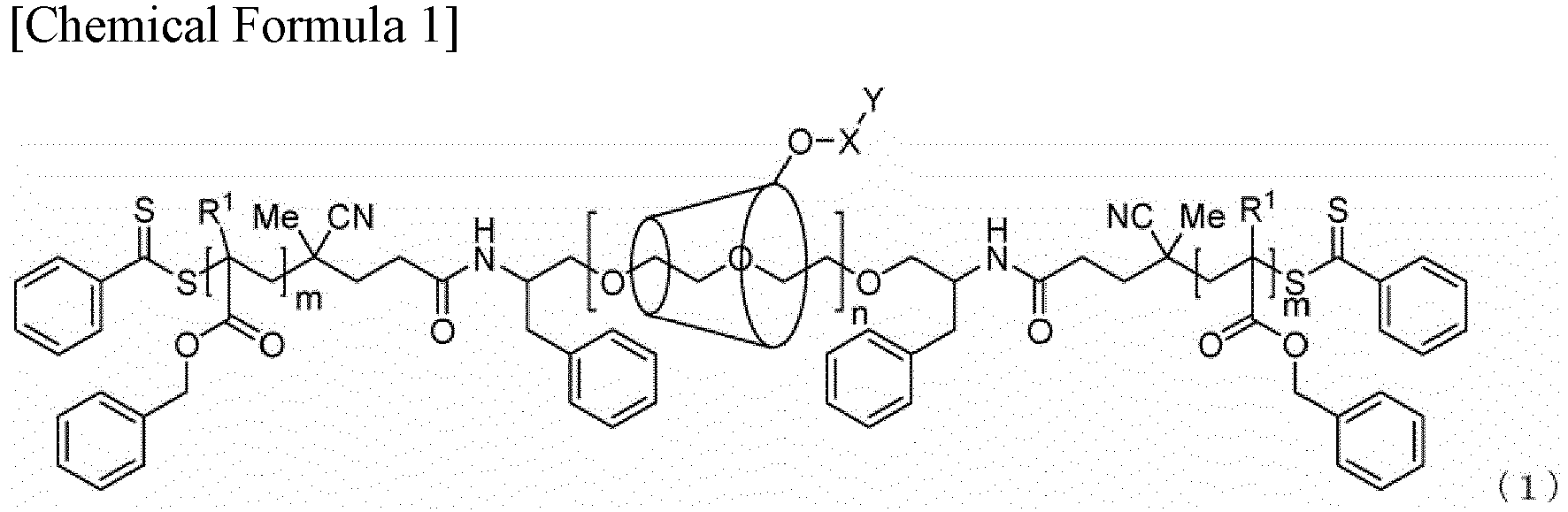
- a first embodiment of the present invention is a coating agent for promoting osteoblast differentiation and/or adipocyte differentiation of mesenchymal stem cells, the coating agent comprising a polyrotaxane represented by Formula (1): wherein R 1 is a hydrogen atom or a methyl group, m is 1 to 2000, and n is 10 to 500, is a cyclodextrin in which at least one hydroxyl group is modified with a group represented by -X-Y, X is a divalent organic group, and Y is a hydroxyl group (-OH) or a sulfo group (-SO 3 H). At least one of the cyclodextrins is contained in one molecule of the polyrotaxane.
- Formula (1) wherein R 1 is a hydrogen atom or a methyl group, m is 1 to 2000, and n is 10 to 500, is a cyclodextrin in which at least one hydroxyl group is modified with a group represented by -X-Y,
- the polyrotaxane represented by Formula (1) includes an axial molecule (linear polymer) and a modified cyclodextrin (CD, cyclic molecule), and the axial molecule threads at least one modified cyclodextrin and is capped at both ends thereof.
- the axial molecule is represented by Formula (2) below, has a polyethylene glycol structure at the center of the molecule, and has a poly(meth)acrylate structure capped with a phenyldithioester group at the terminal.
- R 1 is a hydrogen atom or a methyl group.
- the cyclodextrin is threaded to the polyethylene glycol structure portion.
- Each R 1 may be the same as or different from each other.
- R 1 is preferably a methyl group.
- the polyethylene glycol structure may include ethylene glycol as a monomer unit and have a molecular length capable of threading at least one cyclodextrin.
- the number of ethylene glycol units forming the polyethylene glycol structure may be 20 to 1000, and is preferably 85 to 800 and more preferably 100 to 700.
- n may be 10 to 500, and is preferably 43 to 400 and more preferably 50 to 350.
- the poly(meth)acrylate structure includes benzyl (meth)acrylate as a monomer unit.
- the term "(meth)acrylate” means both "acrylate” and "methacrylate”.
- the present inventors consider that since the poly(meth)acrylate structure has an action of enhancing adhesion to a substrate such as polystyrene, the polyethylene glycol moiety threading the cyclodextrin is separated from the substrate in a loop shape.
- the number m of benzyl (meth)acrylate units forming the poly(meth)acrylate structure may be 1 to 2000, and is preferably 20 to 1000 and more preferably 30 to 500, per polybenzyl (meth)acrylate at one terminal of the triblock copolymer. Each m may be the same as or different from each other.
- the modified cyclodextrin used in the present embodiment is represented by Formula (3) below, and at least one hydroxyl group of glucose constituting the cyclodextrin is modified with -X-Y.
- the cyclodextrin may be any of ⁇ -cyclodextrin, ⁇ -cyclodextrin, ⁇ -cyclodextrin, and combinations thereof.
- a preferred cyclodextrin is ⁇ -cyclodextrin.
- the following is a figure schematically showing a cyclodextrin modified with -X-Y. "-O-X-Y" in the figure indicates that a hydroxyl group in glucose constituting the cyclodextrin is modified with -X-Y. In the figure, only one "-O-X-Y" is shown, but it should not be interpreted restrictively that only one hydroxyl group is modified with -X-Y
- At least one modified cyclodextrin is threaded by an axial molecule.
- the number of cyclodextrins per polyrotaxane molecule can be independently determined and need not be uniquely determined by the molecular length of the polyethylene glycol structure. Stoichiometrically, since the cyclodextrin can include two units of ethylene glycol, which is a repeating unit of polyethylene glycol, the number of cyclic molecules has an upper limit depending on the molecular weight of the linear polymer to be used.
- the number of cyclodextrins per polyethylene glycol molecule having a number average molecular weight of 20000 may be 3 to 220, and is preferably 5 to 150, more preferably 5 to 120, and particularly preferably 5 to 100.
- the length (total length when the polyrotaxane has a plurality of cyclodextrins) of the axial molecule of the cyclodextrin in the main chain direction does not exceed the molecular length of polyethylene glycol.
- the number of hydroxyl groups modified with -X-Y in the cyclodextrin may be 1 to 18, and is preferably 1 to 10 and more preferably 2 to 8, with respect to one cyclodextrin.
- the number of hydroxyl groups modified with -X-Y is within the above range, the effect of promoting adipocyte differentiation and/or osteoblast differentiation of mesenchymal stem cells is more excellent.
- solubility in an organic solvent such as dimethyl sulfoxide (DMSO) is more excellent.
- the amount of change in molecular mobility, the chemical composition of the surface, and the amount of change in physicochemical properties (for example, contact angle and zeta potential) of the surface increase. Since the molecular mobility, the chemical composition of the surface, and the physicochemical properties (for example, contact angle and zeta potential) of the surface of the polyrotaxane can be adjusted by the number of hydroxyl groups modified with -X-Y, a polyrotaxane surface having molecular mobility suitable for promotion of adipocyte differentiation and/or osteoblast differentiation of mesenchymal stem cells can be produced.
- X is a divalent organic group, and is not particularly limited.
- the organic group include an alkylene group having 1 to 10 carbon atoms, an alkenylene group having 1 to 20 carbon atoms, and an alkynylene group having 1 to 20 carbon atoms, and the organic group may have an oxo group at any position, may be through an oxy group or an imino group, and may be a combination thereof.
- a combination of a carbon atom having an oxo group and an oxy group forms an ester bond
- a combination of a carbon atom having an oxo group and an imino group forms an amide bond.
- the alkylene group having a plurality of oxy groups is also referred to as an oxyalkylene group, and includes, for example, a polyoxyethylene group having 1 to 10 carbon atoms and a polyoxypropylene group having 1 to 10 carbon atoms.
- organic group examples include alkylene groups such as a methylene group, an ethylene group, a propylene group, a butylene group, a pentylene group, a hexylene group, a heptylene group, an octylene group, a nonanylene group, and a decylene group; alkenylene groups such as a propynylene group, a butenylene group, a pentenylene group, a hexenylene group, a heptenylene group, an octenylene group, a nonenylene group, and a decenylene group; and alkynylene groups such as a propargyl group, a butynylene group, a pentynylene group, a hexynylene group, a heptynylene group, an octynylene group, a nonylene group, and a decynylene group
- An organic group having an oxo group, an oxy group, or an imino group preferably forms an ester bond, a carbonate bond, or a urethane bond together with an oxygen atom derived from the hydroxyl group of the cyclodextrin.
- the modified cyclodextrin is preferably represented by Formula (4).
- Xa is an organic group having 1 to 9 carbon atoms, preferably an alkylene group having 2 to 9 carbon atoms, and more preferably a polyoxyethylene group having 2 to 8 carbon atoms.
- the polyrotaxane includes a structure in which an axial molecule threads at least one cyclodextrin. Each cyclodextrin can move along the main chain direction of the axial molecule and rotate about the main chain of the axial molecule. Such structural properties are referred to as molecular mobility.
- the molecular mobility can vary, for example, according to the number of cyclodextrins, the number of substituents modified to glucose constituting the constituting cyclodextrin.
- the molecular mobility can be evaluated by coating the surface of a culture substrate, then measuring the static contact angle of the coating surface using a contact angle meter, and using a droplet method and a captive bubble method.
- a contact angle meter for example, methods described in Soft Matter, 2012, 8, 5477-5485 (Ji-Hun Seo et al.), Adv. Healthcare Mater. 2015, 4, 215-222, and the like may be referred to.
- the contact angle hysteresis value of the coating surface can be calculated from a difference between the contact angle of water (contact angle of water in the atmosphere) measured by the droplet method and the contact angle of water (contact angle of water in water) determined from the contact angle of air bubbles measured by the captive bubble method.
- comparison with the effect on a culture substrate coated with DMSO may be conducted.
- the molecular mobility can be adjusted by changing the number of threaded cyclodextrins and/or the number of hydroxyl groups modified with -X-Y in the cyclodextrin. For example, when the number of threaded cyclodextrins is 3 to 120, it can be more suitable for promoting adipocyte differentiation and/or osteoblast differentiation of mesenchymal stem cells. When the number of threaded cyclodextrins is large, the cyclodextrin is easily purified by reprecipitation.
- the content of the polyrotaxane may be 0.0005 to 5 mass%, preferably 0.01 to 1 mass%, and more preferably 0.02 to 0.5 mass%, based on the mass of the coating agent.
- the coating agent of the present embodiment may comprise a solvent and an optional additive in addition to the above-described polyrotaxane.
- the solvent include dimethyl sulfoxide (DMSO), tetrahydrofuran (THF), N,N-dimethylformamide (DMF), methanol, 2-propanol, chloroform, and methylene chloride.
- an additive include an antioxidant.
- the coating agent of the present embodiment is used for coating a surface of a substrate that can be used as a culture substrate.
- the substrate that can be used as a culture substrate may be a substrate well known to those skilled in the art.
- the material for the substrate include glass, polystyrene, polypropylene, polyethylene, polyolefin, polycarbonate, and an acrylic block copolymer (BCF).
- the coating agent of the present embodiment by adjusting the number of hydroxyl groups modified with -X-Y in glucose constituting the cyclodextrin, it is possible to adjust promotion of adipocyte differentiation and/or osteoblast differentiation of mesenchymal stem cells without depending on the bulk properties of the substrate itself. More specifically, as adipocyte differentiation progresses, the amount of lipid droplets accumulated in cells increases. Lipid droplets accumulated in cells can be stained with Oil Red O dye to evaluate the degree of lipid droplet accumulation in cells. Adipocyte differentiation of mesenchymal stem cells may be determined by the expression level of a differentiation marker gene (for example, PPAP ⁇ , C/EBP ⁇ , and aP2), which is an index indicating adipocyte differentiation.
- a differentiation marker gene for example, PPAP ⁇ , C/EBP ⁇ , and aP2
- osteoblast differentiation As the differentiation progresses, bone nodules are formed (also called calcification). The bone nodules can be stained with Alizarin Red S to evaluate the extent of calcification.
- Osteoblast differentiation of mesenchymal stem cells may be determined by the expression level of a differentiation marker gene (for example, RUNX2, alkaline phosphatase, osteocalcin, osteopontin, bone sialoprotein, and Type I collagen), which is an index indicating osteoblast differentiation.
- a differentiation marker gene for example, RUNX2, alkaline phosphatase, osteocalcin, osteopontin, bone sialoprotein, and Type I collagen
- the polyrotaxane can be produced with reference to Examples, and may be produced as follows. Hydroxyl groups at both ends of polyethylene glycol having a desired length are converted into leaving groups (for example, halogenation, methanesulfonylation, or toluenesulfonylation), and etherified with phenylalaninol to obtain a diamine. The obtained diamine is mixed with a cyclodextrin to obtain a pseudo-rotaxane. At this time, the number of threaded cyclodextrins can be adjusted by adjusting the amount of cyclodextrin per diamine molecule.
- RAFT polymerization reaction RAFT polymerization reaction
- a second embodiment of the present invention is a cell culture method for promoting adipocyte differentiation of mesenchymal stem cells, the method comprising: culturing mesenchymal stem cells on a surface of a substrate coated with a composition comprising a polyrotaxane represented by Formula (1).
- polyrotaxane represented by Formula (1) those described in the first embodiment can be referred to, and as the "composition comprising a polyrotaxane represented by Formula (1)", the coating agent described in the first embodiment can be used.
- a substrate coated with a composition comprising a polyrotaxane represented by Formula (1) is used as the culture substrate.
- Cells are cultured by adhering the cells to the surface of the coated substrate.
- the culture substrate is obtained by applying a coating comprising a polyrotaxane represented by Formula (1) to a substrate.
- the substrate may be a substrate well known to those skilled in the art. Examples of the material for the substrate include glass, polystyrene, polypropylene, polyethylene, polyolefin, polycarbonate, and an acrylic block copolymer (BCF).
- the substrate may be a commercially available glass substrate or plastic substrate.
- a medium is put on the coating surface provided on the substrate so that the cells are immersed, and the cells to be cultured are seeded and cultured.
- the medium may be replaced with a new medium as necessary.
- a step of injecting a medium for proliferation before differentiating the cells to proliferate the seeded cells may be provided.
- the medium for proliferation is replaced with a medium for differentiation.
- a medium well known to those skilled in the art can be used.
- mesenchymal stem cells for example, Mesenchymal Stem Cell Adipogenic Differentiation Medium 2 (C-28016) available from PromoCell GmbH (Heidelberg, Germany) can be used.
- C-28016 Mesenchymal Stem Cell Adipogenic Differentiation Medium 2
- the cell culture environment can be arbitrarily set under the conditions well known to those skilled in the art.
- Adipocyte differentiation of mesenchymal stem cells means differentiation of mesenchymal stem cells into adipocytes. As adipocyte differentiation progresses, the amount of lipid droplets accumulated in cells increases. The effect of promoting adipocyte differentiation of mesenchymal stem cells can be evaluated by cell staining with Oil Red O (staining of lipid droplets in cells). The effect may be determined by measuring a change in the expression level of a differentiation marker. Examples of the differentiation marker of adipocyte differentiation include PPAP ⁇ , C/EBP ⁇ , and aP2.
- the cell culture method of the present embodiment may comprise coating the composition comprising a polyrotaxane represented by Formula (1) onto the surface of the substrate.
- composition comprising a polyrotaxane represented by Formula (1) can be coated on a substrate.
- the coating method is not particularly limited, and examples thereof include casting, spin coating, gravure coating, die coating, knife coating, bar coating, blade coating, and roll coating.
- a preferred coating method is casting.
- a third embodiment of the present invention is a cell culture method for promoting osteoblast differentiation of mesenchymal stem cells, the method comprising: culturing mesenchymal stem cells on a surface of a substrate coated with a composition comprising a polyrotaxane represented by Formula (1).
- polyrotaxane represented by Formula (1) those described in the first embodiment can be referred to, and as the "composition comprising a polyrotaxane represented by Formula (1)", the coating agent described in the first embodiment can be used.
- a substrate coated with a composition comprising a polyrotaxane represented by Formula (1) is used as the culture substrate.
- Cells are cultured by adhering the cells to the surface of the coated substrate.
- the culture substrate is obtained by applying a coating comprising a polyrotaxane represented by Formula (1) to a substrate.
- the substrate may be a substrate well known to those skilled in the art. Examples of the material for the substrate include glass, polystyrene, polypropylene, polyethylene, polyolefin, polycarbonate, and an acrylic block copolymer (BCF).
- the substrate may be a commercially available glass substrate or plastic substrate.
- a medium is put on the coating surface provided on the substrate so that the cells are immersed, and the cells to be cultured are seeded and cultured.
- the medium may be replaced with a new medium as necessary.
- a step of injecting a medium for proliferation before differentiating the cells to proliferate the seeded cells may be provided.
- the medium for proliferation is replaced with a medium for differentiation.
- a medium well known to those skilled in the art can be used.
- mesenchymal stem cells for example, Mesenchymal Stem Cell Osteogenic Differentiation Medium (C-28013) available from PromoCell GmbH (Heidelberg, Germany) can be used.
- C-28013 Mesenchymal Stem Cell Osteogenic Differentiation Medium
- the cell culture environment can be arbitrarily set under the conditions well known to those skilled in the art.
- Osteoblast differentiation of mesenchymal stem cells means differentiation of mesenchymal stem cells into osteoblasts. As osteoblast differentiation progresses, bone nodules are formed (also called calcification). The effect of promoting osteoblast differentiation of mesenchymal stem cells can be evaluated by cell staining with Alizarin Red S (bone nodules are stained). The effect may be determined by measuring a change in the expression level of a differentiation marker. Examples of the differentiation marker of osteoblast differentiation include RUNX2, alkaline phosphatase, osteocalcin, osteopontin, bone sialoprotein, and Type I collagen.
- the cell culture method of the present embodiment may comprise coating the composition comprising a polyrotaxane represented by Formula (1) onto the surface of the substrate.
- composition comprising a polyrotaxane represented by Formula (1) can be coated on a substrate.
- the coating method is not particularly limited, and examples thereof include casting, spin coating, gravure coating, die coating, knife coating, bar coating, blade coating, and roll coating.
- a preferred coating method is casting.
- a fourth embodiment of the present invention is a culture substrate comprising a substrate coated with a composition comprising a polyrotaxane represented by Formula (1).
- the coating agent described in the first embodiment can be used.
- the coating method the method described in the second or third embodiment can be referred to.
- the coated substrate (culture substrate) of the present embodiment is particularly suitable as a culture substrate for promoting adipocyte differentiation and/or osteoblast differentiation of mesenchymal stem cells.
- the culture substrate of the present embodiment by adjusting the number of hydroxyl groups modified with -X-Y in glucose constituting the cyclodextrin, it is possible to adjust differentiation (promotion of adipocyte differentiation and/or osteoblast differentiation) of mesenchymal stem cells and proliferation (promotion or suppression) of mesenchymal stem cells without depending on the bulk properties of the substrate itself.
- Step 1 Synthesis of ⁇ , ⁇ -Bismesyl polyethylene glycol
- Polyethylene glycol having a number average molecular weight of 20000 (25.0 g, 1.25 mmol) and TEA (5.3 mL, 37.5 mmol) were dissolved in anhydrous THF (130 mL), MsCl (2.0 mL, 25.0 mmol) was added dropwise, and the mixture was stirred at 23°C. After 5 hours, the reaction solution was filtered, the filtrate was precipitated with diethyl ether, and the precipitate was collected as a solid. The obtained precipitate was dried under reduced pressure to obtain ⁇ , ⁇ -bismesyl polyethylene glycol (21.1 g, yield: 84%).
- Polyrotaxane PRX-CPADB (1.50 g, 13.9 ⁇ mol) was dissolved in anhydrous DMSO (12 mL), and benzyl methacrylate (1.71 g, 9.70 mmol) and 4,4'-azobis(4-cyanovaleric acid) (1.55 mg, 5.54 ⁇ mol) were added to this mixed liquid. After degassing by FPT cycle (Freeze-Pump-Thaw cycle), the mixture was stirred at 70°C. After 1 day, the crude product was precipitated with diethyl ether and dried under reduced pressure to obtain the polyrotaxane PRX-PBzMA (3.13 g, yield: 98%). The number m of benzyl methacrylate units forming the polybenzyl methacrylate structure was determined by 1 H-NMR (solvent: DMSO-d 6 ).
- Step 6a Synthesis of Polyrotaxane (NH 2 -PRX) of Comparative
- Polyrotaxane PRX-PBzMA 200 mg, 0.895 ⁇ mol was dissolved in anhydrous DMSO (10 mL) and then CDI (104 mg, 0.643 mmol) was added to the solution. After stirring at 23°C for 1 day, ethylenediamine (0.43 mL, 6.43 mmol) was added to the solution, and the mixture was further stirred at 23°C for 1 day. Next, the reaction solution was purified by dialysis for 4 days. The product was freeze-dried for 7 days to obtain NH 2 -PRX (176 mg, yield: 73%) as a powder. The number of amino groups was determined by 1 H-NMR analysis (solvent: DMSO-d 6 ).
- Step 6b Synthesis of Polyrotaxane (CH 3 -PRX) of Comparative Example 2
- Polyrotaxane PRX-PBzMA (0.15 g, 0.671 ⁇ mol) was dissolved in anhydrous DMSO (1.31 mL), sodium hydroxide (28.7 mg, 0.716 mmol) and iodomethane (15 ⁇ L, 0.239 mmol) were added thereto, and the mixture was stirred at 23°C. After 1 hour, methanol was added to stop the reaction, and the mixture was dialyzed for 3 days to obtain a polyrotaxane (115 mg, yield: 75%) of Comparative Example 1. The number of methyl groups was determined by 1 H-NMR analysis (solvent: DMSO-d 6 ).
- Polyrotaxane PRX-PBzMA 200 mg, 0.895 ⁇ mol was dissolved in anhydrous DMSO (10 mL) and CDI (130 mg, 0.804 mmol) was added to the solution. After stirring at 23°C for 1 day, 2-(2-aminoethoxy)ethanol (0.80 mL, 8.04 mmol) was added to the solution, and the mixture was further stirred at 23°C for 1 day. Next, the reaction solution was purified by dialysis for 4 days. The product was freeze-dried for 7 days to obtain OH-PRX (194 mg, yield: 74%) as a powder. The number of OH groups was determined by 1 H-NMR analysis (solvent: DMSO-d 6 ).
- Polyrotaxane PRX-PBzMA 150 mg, 0.671 ⁇ mol was dissolved in anhydrous DMSO (3.0 mL) and then NaOH powder (65.1 mg, 1.63 mmol) and 1,3-propane sultone (66.3 mg, 0.543 mmol) were added to the solution. After stirring at 23°C for 1 day, the mixture was dialyzed and purified for 5 days. The product was freeze-dried for 7 days to obtain SO 3 H-PRX (155 mg, yield: 68%) as a powder. The number of sulfo groups (-SO 3 H) was determined by 1 H-NMR analysis (solvent: DMSO-d 6 ).
- FIG. 1 is a view comparing 1 H-NMR spectra of polyrotaxanes of Reference Example 1, Examples 1 and 2, and Comparative Examples 1 and 2. Characteristic peaks in each spectrum were shown in gray. The number in parentheses indicates the number of functional group modifications per cyclodextrin.
- the obtained polyrotaxane was dissolved in DMSO to produce a coating agent.
- the obtained coating agent was cast on TCPS.
- the chemical composition of the polyrotaxane surface was analyzed by TOF-SIMS(PHI NanoTOF II, ULVAC-PHI) with 30 keV Bi3 ++ primary ions.
- the analysis field is 100 ⁇ 100 ⁇ m.
- the elemental composition of the surface was determined by X-ray photoelectron spectroscopy (Al-K ⁇ , Thermo Fisher Scientific, East Grinstead) using monochromatized X-ray radiation with an energy of 1486.6 eV.
- the diameter of the analysis region was 400 ⁇ m, and the elemental composition was calculated from the average of three points on each surface.
- FIGS. 2 and 3 show mass spectra obtained by TOF-SIMS measurement.
- the coatings comprising polyrotaxane of Examples 1 and 2 and Comparative Examples 1and 2 were applied to the surface of polystyrene for cell culture (TCPS).
- the static contact angle of the coating surface was measured using a contact angle meter (trade name: DM-501, manufactured by Kyowa Interface Science Co., Ltd. by both of a droplet method and a captive bubble method.
- the contact angle hysteresis value of each surface was calculated from a difference between the contact angle of water (contact angle of water in the atmosphere) measured by the droplet method and the contact angle of water (contact angle of water in water) determined from the contact angle of air bubbles measured by the captive bubble method. All measurement values were obtained on four different surfaces, and an average value of three different points on each surface was recorded. It is known that a difference in contact angle hysteresis indicates a difference in molecular mobility between surfaces.
- the contact angle and the contact angle hysteresis of the polyrotaxane surfaces of Reference Example 1, Examples 1 and 2, and Comparative Examples 1 and 2 are shown in Table 3.
- the contact angle of water in the atmosphere on the polyrotaxane surface was in a range of 80 to 100°, and it was confirmed that wettability with the TCPS surface (contact angle: 74°) surface was changed by the polyrotaxane coating.
- the contact angles of water in the atmosphere on the polyrotaxane surfaces of Examples 1 and 2 and Comparative Examples 1 and 2 were slightly smaller than the contact angle of the polyrotaxane of Reference Example 1, and there was no significant difference between the polyrotaxane surfaces.
- the contact angle of water in water measured using the captive bubble method in water tended to be different, and a significant difference was observed between the polyrotaxane surfaces.
- the polyrotaxane surface has molecular mobility derived from the interlocking structure between ⁇ CD and the polyethylene glycol chain and exhibits unique behavior in the hydrated state.
- the molecular mobility upon hydration of the polyrotaxane surface is related to (1) a result obtained from dissipation energy loss (QCM-D) measured in water using a quartz crystal microbalance with dissipation and (2) a result of the contact angle hysteresis measured by a difference between a contact angle of water in air and a contact angle of water obtained from a contact angle of bubbles in water.
- QCM-D dissipation energy loss
- the zeta potential of the polyrotaxane surface was measured using quartz flow cell for a flat plate sample using an electrophoretic light scattering spectrometer (ELSZ-2, Otsuka Electronics Co., Ltd.).
- ELSZ-2 electrophoretic light scattering spectrometer
- the mobility of electroosmosis on the surface was analyzed using monitoring particles (Otsuka Electronics Co., Ltd.) in 10 mM PBS to calculate the zeta potential on the surface. All measurements were performed on three different surfaces.
- the zeta potentials of the polyrotaxane surfaces of Reference Example 1, Examples 1 and 2, and Comparative Examples 1 and 2 are shown in Table 3.
- the polyrotaxane surface of Comparative Example 1 had the least negative charge, and Example 2 had the most negative charge of all surfaces. While the amino group should be positively charged at pH 7.4, the polyrotaxane surface of Comparative Example 1 was negatively charged. This is considered to be due to the negative charge of the underlying substrate (TCPS) of the coating and the negative charge of the unmodified PRX surface.
- TCPS underlying substrate
- a PBS solution of human fibronectin 100 ⁇ g/mL was incubated at 37°C for 3 hours on each of the surfaces of Reference Example 1, Examples 1 and 2, and Comparative Examples 1 and 2. Each well was washed three times with PBS to remove unadsorbed fibronectin. Adsorbed fibronectin was extracted by adding 5% SDS and a 0.1 N NaOH aqueous solution and incubating at 37°C for 1 hour according to the method described in J. Biomater. Sci. Polym. Ed., 2017, 28, 986-999 or ACS Biomater. Sci. Eng., 2018, 4, 1591-1597 . The fibronectin concentrations were measured using a protein assay kit (Micro BCA (trade name), Thermo Scientific) with human fibronectin standards according to the manufacturer's instructions.
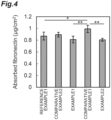
- the results are shown in FIG. 4 .
- the fibronectin was most adsorbed on the surface of Comparative Example 1. Fibronectin was negatively charged, and it was considered that a large amount of fibronectin was adsorbed by electrostatic interaction with a positively charged amino group.
- the fibronectin adsorption amounts on the polyrotaxane surfaces of Examples 1 and 2 and Comparative Example 2 were not significantly different from that of Reference Example 1.
- hMSCs were seeded on each polyrotaxane surface at a density of 2.4 ⁇ 10 4 cells/cm 2 , and cultured for 5 days at 37°C in a humidified atmosphere containing 5% CO 2 using a medium for hMSC proliferation BulletKit until the density of cells became excessive confluent.
- the medium for proliferation was replaced with a medium for osteoblast differentiation, and the cells were incubated for 14 days.
- the medium was replaced with a fresh medium every 3 to 4 days.
- Mesenchymal Stem Cell Osteogenic Differentiation Medium (C-28013) available from PromoCell GmbH (Heidelberg, Germany) was used.
- the cells were stained with Alizarin Red S to evaluate the extent of calcification of hMSC.
- the cells were washed twice with PBS and fixed by treatment with a 4% paraformaldehyde solution for 10 minutes at 23 °C.
- the cells were washed twice with MilliQ water and stained with an Alizarin Red S solution for 10 minutes at 23°C.
- After removal of the stain solution the cells were washed four times with MilliQ water and observed with a microscope.
- the stained area was calculated using ImageJ software. All measurement values were obtained on three different surfaces, and an average value of four different points on each surface was taken as an average value of each surface.
- FIG. 6 After induction of osteogenic differentiation, the cell morphology changed from an elongated shape to a square shape and the cell density increased, particularly, on the surface of Example 2.
- calcium nodules were stained using Alizarin Red S on Day 14 after osteoblast differentiation induction.
- FIG. 7(A) shows photographs stained with Alizarin Red S
- FIG. 7(B) is a graph comparing stained areas in respective polyrotaxane surfaces.
- Example 2 Significant differences in stained area were observed, and the significant difference was the largest on the most negatively charged surface (Example 2), was the smallest on the most negatively uncharged surface (Comparative Example 1), and was moderate on other surfaces (Reference Example 1, Example 1, and Comparative Example 2).
- hMSCs were seeded on each polyrotaxane surface at a density of 1.0 ⁇ 10 4 cells/cm 2 , and cultured for 5 days at 37°C in a humidified atmosphere containing 5% CO 2 using a medium for hMSC proliferation BulletKit.
- the medium for proliferation was replaced with a medium for adipocyte differentiation, and the cells were cultured for 15 days.
- the medium was replaced with a fresh medium every 3 to 4 days.
- a medium for adipocyte differentiation Mesenchymal Stem Cell Adipogenic Differentiation Medium 2 (C-28016) available from PromoCell GmbH (Heidelberg, Germany) was used.
- the cells were stained with Oil Red O to evaluate lipid droplet accumulation in cells.
- the cells were washed twice with PBS and fixed by treatment with a 4% paraformaldehyde solution for 10 minutes at 23 °C.
- the cells were washed twice with PBS and washed once with 60% 2-propanol.
- the cells were stained with an Oil Red O solution for 20 minutes at 23°C and washed once with 60% 2-propanol.
- the cells were washed twice with PBS and observed in PBS using a microscope.
- the stained area was calculated using ImageJ software. All measurement values were obtained on three different surfaces, and an average value of three different points on each surface was taken as an average value of each surface.
- FIG. 8 Intracellular droplet formation associated with adipocyte differentiation was observed on all surfaces, and an increase in lipid droplets was observed according to the culture period.
- FIG. 9(A) shows photographs stained with Oil Red O
- FIG. 9(B) is a graph comparing stained areas in respective polyrotaxane surfaces. The stained areas on the surfaces of Comparative Example 1 and Examples 1 and 2 were larger than the stained areas on the surfaces of Reference Example 1 and Comparative Example 2. The stained area with Oil Red O tended to increase as the contact angle hysteresis increased.
- the difference in the contact angle hysteresis indicates a difference in molecular mobility of the surface, it is considered that the molecular mobility of, particularly, the polyrotaxane surfaces of Comparative Example 1 and Examples 1 and 2 is more suitable for promoting adipocyte differentiation.
Landscapes
- Health & Medical Sciences (AREA)
- Engineering & Computer Science (AREA)
- Life Sciences & Earth Sciences (AREA)
- Chemical & Material Sciences (AREA)
- Biomedical Technology (AREA)
- Organic Chemistry (AREA)
- Wood Science & Technology (AREA)
- Zoology (AREA)
- Bioinformatics & Cheminformatics (AREA)
- Genetics & Genomics (AREA)
- Biotechnology (AREA)
- General Engineering & Computer Science (AREA)
- Biochemistry (AREA)
- Microbiology (AREA)
- General Health & Medical Sciences (AREA)
- Cell Biology (AREA)
- Rheumatology (AREA)
- Chemical Kinetics & Catalysis (AREA)
- Materials Engineering (AREA)
- Developmental Biology & Embryology (AREA)
- Medicinal Chemistry (AREA)
- Polymers & Plastics (AREA)
- Orthopedic Medicine & Surgery (AREA)
- Immunology (AREA)
- Clinical Laboratory Science (AREA)
- Sustainable Development (AREA)
- Micro-Organisms Or Cultivation Processes Thereof (AREA)
- Polysaccharides And Polysaccharide Derivatives (AREA)
- Materials For Medical Uses (AREA)
Abstract
Description
- The present invention relates to a polyrotaxane having a hydroxy group or a sulfo group.
- Cell culture technology is widely used in the pharmaceutical and cosmetic fields and regenerative medicine research, and is an important technology. As environments for cell culture, appropriate culture environments, culture solutions, and culture substrates are required. Among them, the culture substrate has a role as a scaffold to which cells adhere, and is required to have properties such as being a surface suitable for cell culture or being able to be processed, having no cytotoxicity, being able to be sterilized or maintaining a sterile state, being not deteriorated under culture conditions, and not interfering with observation with a microscope.
- Conventionally, as culture substrates, glass products have been widely used, but polystyrene products are now widely used. However, a culture substrate obtained by molding a polystyrene resin is generally subjected to a surface treatment because the surface thereof is hydrophobic and affinity with cells is low. Examples of the surface treatment include a plasma treatment, a corona discharge treatment, an oxidizing agent treatment, and coating with a hydrophilic substance. As the coating agent, there are many coating agents promoting cell adhesion, and for example, Type I collagen, Type IV collagen, gelatin, fibronectin, vitronectin, laminin, matrigel, hydroxyapatite, and the like are known. It is also known that coating with water-soluble elastin promotes differentiation induction of vascular smooth muscle cells or elastin reactive cells.
- Mesenchymal stem cells are somatic stem cells derived from mesoderm having self-renewal ability and pluripotency into mesenchymal tissues such as osteoblasts, chondrocytes, adipocytes, skeletal muscle cells, and ligament cells. In adult tissues, mesenchymal stem cells are present in connective tissues such as dermis, skeletal muscle, and adipose tissue and mainly in bone marrow stroma, and function to repair connective tissues, maintain homeostasis, and control proliferation and differentiation of hematopoietic stem cells. Differentiation of mesenchymal stem cells is complicatedly controlled by biological and physical factors. For example, it is known that when dexamethasone, β-glycerophosphate, or ascorbic acid is added to a medium for mesenchymal stem cells, differentiation into osteoblasts can be induced, and when dexamethasone, 3-isobutyl-1-methylxanthine, insulin, or indomethacin is added to a medium for mesenchymal stem cells, differentiation into adipocytes can be induced.
- In recent years, attention has been paid to the fact that the properties (for example, bulk properties such as hardness, and surface properties of coating) of a culture substrate affect the function of cultured cells, and a study for proliferating cells having a desired function has been reported (Non-Patent
Literatures 1 to 3). -
- Non-Patent Literature 1: Cell, 2006, 126, 677-689.
- Non-Patent Literature 2: Nature Reviews Materials, 2020, 5, 686-705.
- Non-Patent Literature 3: Adv. Healthcare Mater. 2015, 4, 215-222.
- However, it is still difficult to finely adjust the bulk properties (hardness or the like) of cell culture substrate in order to obtain cells having a desired function. It is considered that selecting appropriate physical factors is useful to differentiate mesenchymal stem cells into the desired cell lineage. Therefore, an object of the present invention is to provide a coating agent and a culture substrate which can promote differentiation induction of mesenchymal stem cells.
- The present invention provides the following [1] to [10].
- [1] A coating agent for promoting osteoblast differentiation and/or adipocyte differentiation of mesenchymal stem cells, the coating agent comprising a polyrotaxane represented by Formula (1):



- [2] The coating agent according to [1], wherein the polyrotaxane comprises a cyclodextrin in which 1 to 18 hydroxyl groups are modified with the group represented by -X-Y
- [3] The coating agent according to [1] or [2], in which the polyrotaxane has a number of threaded cyclodextrins of 3 to 220.
- [4] A cell culture method for promoting osteoblast differentiation and/or adipocyte differentiation of mesenchymal stem cells, the method comprising:
- culturing mesenchymal stem cells on a surface of a substrate coated with a composition comprising a polyrotaxane represented by Formula (1):

- wherein R1 is a hydrogen atom or a methyl group, m is 1 to 2000, and n is 10 to 500,

- culturing mesenchymal stem cells on a surface of a substrate coated with a composition comprising a polyrotaxane represented by Formula (1):
- [5] The method according to [4], comprising coating the composition comprising a polyrotaxane represented by Formula (1) onto the surface of the substrate.
- [6] The method according to [4] or [5], in which the polyrotaxane comprises a cyclodextrin in which 1 to 18 hydroxyl groups are modified with the group represented by -X-Y.
- [7] The method according to any one of [4] to [6], in which the polyrotaxane has a number of threaded cyclodextrins of 3 to 220.
- [8] A culture substrate comprising a substrate coated with a composition comprising a polyrotaxane represented by Formula (1):


- [9] The culture substrate according to [8], in which the polyrotaxane comprises a cyclodextrin in which 1 to 18 hydroxyl groups are modified with the group represented by -X-Y
- [10] The culture substrate according to [8] or [9], in which the polyrotaxane has a number of threaded cyclodextrins of 3 to 200.
- According to the present invention, it is possible to provide a coating agent capable of promoting osteoblast differentiation and/or adipocyte differentiation of mesenchymal stem cells. According to the present invention, it is also possible to provide a substrate (culture substrate) coated with the coating agent.
-
-
FIG. 1 is a view comparing 1H-NMR spectra of Reference Example 1, Examples 1 and 2, and Comparative Examples 1 and 2. -
FIG. 2 shows mass spectra obtained by TOF-SIMS measurement of Reference Example 1, Example 1, and Comparative Example 2. -
FIG. 3 shows mass spectra obtained by TOF-SIMS measurement of Comparative Example 1, Example 2, and TCPS. -
FIG. 4 is a graph showing fibronectin adsorption amounts of Reference Example 1, Examples 1 and 2, and Comparative Examples 1 and 2. -
FIG. 5 is a graph showing cell densities of Reference Example 1, Examples 1 and 2, and Comparative Examples 1 and 2. -
FIG. 6 shows micrographs (scale bar: 100 µm) obtained by photographing cells induced to osteoblast differentiation using Reference Example 1, Examples 1 and 2, and Comparative Examples 1 and 2. -
FIG. 7(A) shows photographs (scale bar: 200 µm) in which cells induced to osteoblast differentiation were stained with Alizarin Red S, using Reference Example 1, Examples 1 and 2, and Comparative Examples 1 and 2, andFIG. 7(B) is a graph comparing stained areas. -
FIG. 8 shows micrographs (scale bar: 100 µm) obtained by photographing cells induced to adipocyte differentiation of Reference Example 1, Examples 1 and 2, and Comparative Examples 1 and 2. -
FIG. 9(A) shows photographs (scale bar: 100 µm) in which cells induced to adipocyte differentiation were stained with Oil Red O, using Reference Example 1, Examples 1 and 2, and Comparative Examples 1 and 2, andFIG. 9(B) is a graph comparing stained areas. - A first embodiment of the present invention is a coating agent for promoting osteoblast differentiation and/or adipocyte differentiation of mesenchymal stem cells, the coating agent comprising a polyrotaxane represented by Formula (1):


- The polyrotaxane represented by Formula (1) includes an axial molecule (linear polymer) and a modified cyclodextrin (CD, cyclic molecule), and the axial molecule threads at least one modified cyclodextrin and is capped at both ends thereof.
- The axial molecule is represented by Formula (2) below, has a polyethylene glycol structure at the center of the molecule, and has a poly(meth)acrylate structure capped with a phenyldithioester group at the terminal. In the formula, R1 is a hydrogen atom or a methyl group. The cyclodextrin is threaded to the polyethylene glycol structure portion. Each R1 may be the same as or different from each other. R1 is preferably a methyl group.

- The polyethylene glycol structure may include ethylene glycol as a monomer unit and have a molecular length capable of threading at least one cyclodextrin. The number of ethylene glycol units forming the polyethylene glycol structure may be 20 to 1000, and is preferably 85 to 800 and more preferably 100 to 700. In the formula, n may be 10 to 500, and is preferably 43 to 400 and more preferably 50 to 350.
- The poly(meth)acrylate structure includes benzyl (meth)acrylate as a monomer unit. In the present specification, the term "(meth)acrylate" means both "acrylate" and "methacrylate". The present inventors consider that since the poly(meth)acrylate structure has an action of enhancing adhesion to a substrate such as polystyrene, the polyethylene glycol moiety threading the cyclodextrin is separated from the substrate in a loop shape. The number m of benzyl (meth)acrylate units forming the poly(meth)acrylate structure may be 1 to 2000, and is preferably 20 to 1000 and more preferably 30 to 500, per polybenzyl (meth)acrylate at one terminal of the triblock copolymer. Each m may be the same as or different from each other.
- The modified cyclodextrin used in the present embodiment is represented by Formula (3) below, and at least one hydroxyl group of glucose constituting the cyclodextrin is modified with -X-Y. The cyclodextrin may be any of α-cyclodextrin, β-cyclodextrin, γ-cyclodextrin, and combinations thereof. A preferred cyclodextrin is α-cyclodextrin. The following is a figure schematically showing a cyclodextrin modified with -X-Y. "-O-X-Y" in the figure indicates that a hydroxyl group in glucose constituting the cyclodextrin is modified with -X-Y. In the figure, only one "-O-X-Y" is shown, but it should not be interpreted restrictively that only one hydroxyl group is modified with -X-Y

- In the polyrotaxane, at least one modified cyclodextrin is threaded by an axial molecule. The number of cyclodextrins per polyrotaxane molecule can be independently determined and need not be uniquely determined by the molecular length of the polyethylene glycol structure. Stoichiometrically, since the cyclodextrin can include two units of ethylene glycol, which is a repeating unit of polyethylene glycol, the number of cyclic molecules has an upper limit depending on the molecular weight of the linear polymer to be used. For example, the number of cyclodextrins per polyethylene glycol molecule having a number average molecular weight of 20000 may be 3 to 220, and is preferably 5 to 150, more preferably 5 to 120, and particularly preferably 5 to 100. However, the length (total length when the polyrotaxane has a plurality of cyclodextrins) of the axial molecule of the cyclodextrin in the main chain direction does not exceed the molecular length of polyethylene glycol.
- The number of hydroxyl groups modified with -X-Y in the cyclodextrin may be 1 to 18, and is preferably 1 to 10 and more preferably 2 to 8, with respect to one cyclodextrin. When the number of hydroxyl groups modified with -X-Y is within the above range, the effect of promoting adipocyte differentiation and/or osteoblast differentiation of mesenchymal stem cells is more excellent. When the number of hydroxyl groups modified with -X-Y is 10 or less, solubility in an organic solvent such as dimethyl sulfoxide (DMSO) is more excellent. When the number of hydroxyl groups modified with -X-Y is 2 or more, the amount of change in molecular mobility, the chemical composition of the surface, and the amount of change in physicochemical properties (for example, contact angle and zeta potential) of the surface increase. Since the molecular mobility, the chemical composition of the surface, and the physicochemical properties (for example, contact angle and zeta potential) of the surface of the polyrotaxane can be adjusted by the number of hydroxyl groups modified with -X-Y, a polyrotaxane surface having molecular mobility suitable for promotion of adipocyte differentiation and/or osteoblast differentiation of mesenchymal stem cells can be produced.
- X is a divalent organic group, and is not particularly limited. Examples of the organic group include an alkylene group having 1 to 10 carbon atoms, an alkenylene group having 1 to 20 carbon atoms, and an alkynylene group having 1 to 20 carbon atoms, and the organic group may have an oxo group at any position, may be through an oxy group or an imino group, and may be a combination thereof. For example, a combination of a carbon atom having an oxo group and an oxy group forms an ester bond, and a combination of a carbon atom having an oxo group and an imino group forms an amide bond. The alkylene group having a plurality of oxy groups is also referred to as an oxyalkylene group, and includes, for example, a polyoxyethylene group having 1 to 10 carbon atoms and a polyoxypropylene group having 1 to 10 carbon atoms. Specific examples of the organic group include alkylene groups such as a methylene group, an ethylene group, a propylene group, a butylene group, a pentylene group, a hexylene group, a heptylene group, an octylene group, a nonanylene group, and a decylene group; alkenylene groups such as a propynylene group, a butenylene group, a pentenylene group, a hexenylene group, a heptenylene group, an octenylene group, a nonenylene group, and a decenylene group; and alkynylene groups such as a propargyl group, a butynylene group, a pentynylene group, a hexynylene group, a heptynylene group, an octynylene group, a nonylene group, and a decynylene group. An organic group having an oxo group, an oxy group, or an imino group preferably forms an ester bond, a carbonate bond, or a urethane bond together with an oxygen atom derived from the hydroxyl group of the cyclodextrin. Examples of the organic group having an oxo group, an oxy group, or an imino group include carbonyl alkylene groups such as a carbonyl methylene group (-C(=O)CH2-); alkylene carbonyl groups such as a methylenecarbonyl group (-CH2C(=O)-); carbonylaminoalkylene groups such as a carbonylaminomethylene group (-C(=O)NHCH2-); alkylenecarbonylamino groups such as a methylenecarbonylamino group (-CH2C(=O)NH-); carbonylaminoalkylene groups such as a carbonylaminoethylene group (-C(=O)NHCH2CH2-), carbonylaminoalkylene oxyalkylene groups such as a carbonylaminoethyleneoxyethylene group (-C(=O)NHCH2CH2OCH2CH2-); and oxyalkylene groups such as an oxypropylene group (-OCH2CH2CH2-).
- The modified cyclodextrin is preferably represented by Formula (4). In the formula, -C(=O)NH-Xa- corresponds to X in Formula (3), and corresponds to one of aspects in which X has an oxo group and an imino group. Xa is an organic group having 1 to 9 carbon atoms, preferably an alkylene group having 2 to 9 carbon atoms, and more preferably a polyoxyethylene group having 2 to 8 carbon atoms.

- The polyrotaxane includes a structure in which an axial molecule threads at least one cyclodextrin. Each cyclodextrin can move along the main chain direction of the axial molecule and rotate about the main chain of the axial molecule. Such structural properties are referred to as molecular mobility. The molecular mobility can vary, for example, according to the number of cyclodextrins, the number of substituents modified to glucose constituting the constituting cyclodextrin.
- The molecular mobility can be evaluated by coating the surface of a culture substrate, then measuring the static contact angle of the coating surface using a contact angle meter, and using a droplet method and a captive bubble method. For the evaluation of molecular mobility, for example, methods described in Soft Matter, 2012, 8, 5477-5485 (Ji-Hun Seo et al.), Adv. Healthcare Mater. 2015, 4, 215-222, and the like may be referred to. Specifically, the contact angle hysteresis value of the coating surface can be calculated from a difference between the contact angle of water (contact angle of water in the atmosphere) measured by the droplet method and the contact angle of water (contact angle of water in water) determined from the contact angle of air bubbles measured by the captive bubble method. As a control, comparison with the effect on a culture substrate coated with DMSO may be conducted.
- The molecular mobility can be adjusted by changing the number of threaded cyclodextrins and/or the number of hydroxyl groups modified with -X-Y in the cyclodextrin. For example, when the number of threaded cyclodextrins is 3 to 120, it can be more suitable for promoting adipocyte differentiation and/or osteoblast differentiation of mesenchymal stem cells. When the number of threaded cyclodextrins is large, the cyclodextrin is easily purified by reprecipitation.
- The content of the polyrotaxane may be 0.0005 to 5 mass%, preferably 0.01 to 1 mass%, and more preferably 0.02 to 0.5 mass%, based on the mass of the coating agent.
- The coating agent of the present embodiment may comprise a solvent and an optional additive in addition to the above-described polyrotaxane. Examples of the solvent include dimethyl sulfoxide (DMSO), tetrahydrofuran (THF), N,N-dimethylformamide (DMF), methanol, 2-propanol, chloroform, and methylene chloride. Examples of such an additive include an antioxidant.
- The coating agent of the present embodiment is used for coating a surface of a substrate that can be used as a culture substrate. The substrate that can be used as a culture substrate may be a substrate well known to those skilled in the art. Examples of the material for the substrate include glass, polystyrene, polypropylene, polyethylene, polyolefin, polycarbonate, and an acrylic block copolymer (BCF).
- According to the coating agent of the present embodiment, by adjusting the number of hydroxyl groups modified with -X-Y in glucose constituting the cyclodextrin, it is possible to adjust promotion of adipocyte differentiation and/or osteoblast differentiation of mesenchymal stem cells without depending on the bulk properties of the substrate itself. More specifically, as adipocyte differentiation progresses, the amount of lipid droplets accumulated in cells increases. Lipid droplets accumulated in cells can be stained with Oil Red O dye to evaluate the degree of lipid droplet accumulation in cells. Adipocyte differentiation of mesenchymal stem cells may be determined by the expression level of a differentiation marker gene (for example, PPAPγ, C/EBPα, and aP2), which is an index indicating adipocyte differentiation. In osteoblast differentiation, as the differentiation progresses, bone nodules are formed (also called calcification). The bone nodules can be stained with Alizarin Red S to evaluate the extent of calcification. Osteoblast differentiation of mesenchymal stem cells may be determined by the expression level of a differentiation marker gene (for example, RUNX2, alkaline phosphatase, osteocalcin, osteopontin, bone sialoprotein, and Type I collagen), which is an index indicating osteoblast differentiation.
- The polyrotaxane can be produced with reference to Examples, and may be produced as follows. Hydroxyl groups at both ends of polyethylene glycol having a desired length are converted into leaving groups (for example, halogenation, methanesulfonylation, or toluenesulfonylation), and etherified with phenylalaninol to obtain a diamine. The obtained diamine is mixed with a cyclodextrin to obtain a pseudo-rotaxane. At this time, the number of threaded cyclodextrins can be adjusted by adjusting the amount of cyclodextrin per diamine molecule. Subsequently, the mixture is reacted with CPADB and DMT-MM to cap the cyclodextrin so as not to be removed from the axial molecule, and then benzyl methacrylate (corresponding to a (meth)acrylate structure) is introduced at both terminals as an anchoring segment by a reversible addition-fragmentation chain transfer polymerization reaction (RAFT polymerization reaction).
- A second embodiment of the present invention is a cell culture method for promoting adipocyte differentiation of mesenchymal stem cells, the method comprising: culturing mesenchymal stem cells on a surface of a substrate coated with a composition comprising a polyrotaxane represented by Formula (1).
- In the present embodiment, as the "polyrotaxane represented by Formula (1)", those described in the first embodiment can be referred to, and as the "composition comprising a polyrotaxane represented by Formula (1)", the coating agent described in the first embodiment can be used.
- In the cell culture method of the present embodiment, as the culture substrate, a substrate coated with a composition comprising a polyrotaxane represented by Formula (1) is used. Cells are cultured by adhering the cells to the surface of the coated substrate.
- The culture substrate is obtained by applying a coating comprising a polyrotaxane represented by Formula (1) to a substrate. The substrate may be a substrate well known to those skilled in the art. Examples of the material for the substrate include glass, polystyrene, polypropylene, polyethylene, polyolefin, polycarbonate, and an acrylic block copolymer (BCF). The substrate may be a commercially available glass substrate or plastic substrate.
- In the cell culture method of the present embodiment, a medium is put on the coating surface provided on the substrate so that the cells are immersed, and the cells to be cultured are seeded and cultured. The medium may be replaced with a new medium as necessary. A step of injecting a medium for proliferation before differentiating the cells to proliferate the seeded cells may be provided. In this case, after the cells are proliferated until a sufficient number of cells is obtained, the medium for proliferation is replaced with a medium for differentiation. As the medium for proliferation and the medium for differentiation, a medium well known to those skilled in the art can be used.
- As a medium for adipocyte differentiation of mesenchymal stem cells, for example, Mesenchymal Stem Cell Adipogenic Differentiation Medium 2 (C-28016) available from PromoCell GmbH (Heidelberg, Germany) can be used.
- The cell culture environment can be arbitrarily set under the conditions well known to those skilled in the art.
- Adipocyte differentiation of mesenchymal stem cells means differentiation of mesenchymal stem cells into adipocytes. As adipocyte differentiation progresses, the amount of lipid droplets accumulated in cells increases. The effect of promoting adipocyte differentiation of mesenchymal stem cells can be evaluated by cell staining with Oil Red O (staining of lipid droplets in cells). The effect may be determined by measuring a change in the expression level of a differentiation marker. Examples of the differentiation marker of adipocyte differentiation include PPAPγ, C/EBPα, and aP2. When differentiation is statistically significantly promoted as compared with the case of using a culture substrate in which a substrate (made of glass or polystyrene) is coated with an unmodified polyrotaxane (for example, PRX-PBzMA described below), it can be determined that the effect of promoting adipocyte differentiation of mesenchymal stem cells is exhibited.
- The cell culture method of the present embodiment may comprise coating the composition comprising a polyrotaxane represented by Formula (1) onto the surface of the substrate.
- The composition comprising a polyrotaxane represented by Formula (1) can be coated on a substrate. The coating method is not particularly limited, and examples thereof include casting, spin coating, gravure coating, die coating, knife coating, bar coating, blade coating, and roll coating. A preferred coating method is casting.
- A third embodiment of the present invention is a cell culture method for promoting osteoblast differentiation of mesenchymal stem cells, the method comprising: culturing mesenchymal stem cells on a surface of a substrate coated with a composition comprising a polyrotaxane represented by Formula (1).
- In the present embodiment, as the "polyrotaxane represented by Formula (1)", those described in the first embodiment can be referred to, and as the "composition comprising a polyrotaxane represented by Formula (1)", the coating agent described in the first embodiment can be used.
- In the cell culture method of the present embodiment, as the culture substrate, a substrate coated with a composition comprising a polyrotaxane represented by Formula (1) is used. Cells are cultured by adhering the cells to the surface of the coated substrate.
- The culture substrate is obtained by applying a coating comprising a polyrotaxane represented by Formula (1) to a substrate. The substrate may be a substrate well known to those skilled in the art. Examples of the material for the substrate include glass, polystyrene, polypropylene, polyethylene, polyolefin, polycarbonate, and an acrylic block copolymer (BCF). The substrate may be a commercially available glass substrate or plastic substrate.
- In the cell culture method of the present embodiment, a medium is put on the coating surface provided on the substrate so that the cells are immersed, and the cells to be cultured are seeded and cultured. The medium may be replaced with a new medium as necessary. A step of injecting a medium for proliferation before differentiating the cells to proliferate the seeded cells may be provided. In this case, after the cells are proliferated until a sufficient number of cells is obtained, the medium for proliferation is replaced with a medium for differentiation. As the medium for proliferation and the medium for differentiation, a medium well known to those skilled in the art can be used.
- As a medium for osteoblast differentiation of mesenchymal stem cells, for example, Mesenchymal Stem Cell Osteogenic Differentiation Medium (C-28013) available from PromoCell GmbH (Heidelberg, Germany) can be used.
- The cell culture environment can be arbitrarily set under the conditions well known to those skilled in the art.
- Osteoblast differentiation of mesenchymal stem cells means differentiation of mesenchymal stem cells into osteoblasts. As osteoblast differentiation progresses, bone nodules are formed (also called calcification). The effect of promoting osteoblast differentiation of mesenchymal stem cells can be evaluated by cell staining with Alizarin Red S (bone nodules are stained). The effect may be determined by measuring a change in the expression level of a differentiation marker. Examples of the differentiation marker of osteoblast differentiation include RUNX2, alkaline phosphatase, osteocalcin, osteopontin, bone sialoprotein, and Type I collagen. When differentiation is statistically significantly promoted as compared with the case of using a culture substrate in which a substrate (made of glass or polystyrene) is coated with an unmodified polyrotaxane (for example, PRX-PBzMA described below), it can be determined that the effect of promoting osteoblast differentiation of mesenchymal stem cells is exhibited.
- The cell culture method of the present embodiment may comprise coating the composition comprising a polyrotaxane represented by Formula (1) onto the surface of the substrate.
- The composition comprising a polyrotaxane represented by Formula (1) can be coated on a substrate. The coating method is not particularly limited, and examples thereof include casting, spin coating, gravure coating, die coating, knife coating, bar coating, blade coating, and roll coating. A preferred coating method is casting.
- A fourth embodiment of the present invention is a culture substrate comprising a substrate coated with a composition comprising a polyrotaxane represented by Formula (1).
- In the present embodiment, as the "polyrotaxane represented by Formula (1)", those described in the first embodiment can be referred to, and as the "composition comprising a polyrotaxane represented by Formula (1)", the coating agent described in the first embodiment can be used. As the coating method, the method described in the second or third embodiment can be referred to.
- The coated substrate (culture substrate) of the present embodiment is particularly suitable as a culture substrate for promoting adipocyte differentiation and/or osteoblast differentiation of mesenchymal stem cells.
- According to the culture substrate of the present embodiment, by adjusting the number of hydroxyl groups modified with -X-Y in glucose constituting the cyclodextrin, it is possible to adjust differentiation (promotion of adipocyte differentiation and/or osteoblast differentiation) of mesenchymal stem cells and proliferation (promotion or suppression) of mesenchymal stem cells without depending on the bulk properties of the substrate itself.
- Hereinafter, the present invention will be described in more detail with reference to Examples. However, the present invention is not limited thereto. The abbreviations used in the examples are conventional abbreviations well known to those skilled in the art, and the meanings of some abbreviations are shown below.
- αCD: α-cyclodextrin
- CDI: carbonyl diimidazole
- CPADB: 4-cyanopentanoic acid dithiobenzoate
- DMEM: Dulbecco's modified Eagle medium
- DMF: N,N-dimethylformamide
- DMSO: dimethyl sulfoxide
- DMT-MM: 4-(4,6-dimethoxy-1,3,5-triazine-2-yl)-4-methylmorpholinium chloride
- EDTA: ethylenediaminetetraacetic acid
- FBS: fetal bovine serum
- IBMX: 3-isobutyl-1-methylxanthine
- α-MEM: α-minimum essential medium
- MeOH: methanol
- MsCl: methanesulfonic acid chloride
- PBS: phosphate buffered saline
- PEG: polyethylene glycol
- TCPS: polystyrene for cell culture
- TEA: triethylamine
- THF: tetrahydrofuran
- 1H-NMR: proton nuclear magnetic resonance spectrometry
- A method for synthesizing a polyrotaxane is shown below.

- Polyethylene glycol having a number average molecular weight of 20000 (25.0 g, 1.25 mmol) and TEA (5.3 mL, 37.5 mmol) were dissolved in anhydrous THF (130 mL), MsCl (2.0 mL, 25.0 mmol) was added dropwise, and the mixture was stirred at 23°C. After 5 hours, the reaction solution was filtered, the filtrate was precipitated with diethyl ether, and the precipitate was collected as a solid. The obtained precipitate was dried under reduced pressure to obtain α,ω-bismesyl polyethylene glycol (21.1 g, yield: 84%).
- L-Phenylalaninol (1.49 g, 9.85 mmol) and sodium hydride (0.971 g, 60% mineral oil) were dissolved in anhydrous DMF (86 mL) under a nitrogen atmosphere. To this mixed liquid, α,ω-bismesyl polyethylene glycol (20.0 g, 0.992 mmol) was added, and the mixture was stirred at 23°C. After 24 hours, the reaction solution was filtered, the filtrate was precipitated with diethyl ether, and the precipitate was collected as a solid. The obtained precipitate was dried under reduced pressure to obtain bis(2-amino-3-phenylpropyl)polyethylene glycol (11.8 g, yield: 59%).
- Bis(2-amino-3-phenylpropyl)polyethylene glycol (10.1 g, 0.499 mmol) was dissolved in water (50 mL), a saturated aqueous solution (380 mL) of αCD (55.2 g, 56.6 mmol) was added thereto, and the mixture was stirred at 23°C. After 19 hours, the reaction solution was centrifuged to collect a precipitate, and freeze-dried for 9 days to obtain a pseudo-polyrotaxane as a crude product.
- CPADB (5.50 g, 19.7 mmol) and DMT-MM (5.50 g, 19.9 mmol) were dissolved in methanol (500 mL), and the pseudo-polyrotaxane obtained above was added to the reaction solution at 23°C, followed by stirring. After 1 day, the crude product was washed with methanol, reprecipitated with hydrous DMSO, centrifuged and lyophilized for 9 days to obtain the polyrotaxane PRX-CPADB (11.9 g, 2-step yield: 18%) as a powder. The structure of polyrotaxane PRX-CPADB was confirmed by 1H-NMR (solvent: DMSO-d6). The number of threaded αCD was determined by 1H-NMR (solvent: D2O).
- 1H-NMR(500 MHz, DMSO-d6) δ 3.12-3.91 (m, PEG backbone and H2, H3, H4, H5,and H6 protons of αCD), 4.43 (m, OH6 of αCD), 4.80 (m, H1 of αCD), 5.49 (m, OH3 of αCD), 5.65 (m, OH2 of αCD), 7.17 (t, aromatics of phenylalanyl group), 7.25(t, aromatics of phenylalanyl group), 7.52 (t, aromatics of CPADB group), 7.70(t, aromatics of CPADB), and 7.91 (t, aromatics of CPADB).
- Polyrotaxane PRX-CPADB (1.50 g, 13.9 µmol) was dissolved in anhydrous DMSO (12 mL), and benzyl methacrylate (1.71 g, 9.70 mmol) and 4,4'-azobis(4-cyanovaleric acid) (1.55 mg, 5.54 µmol) were added to this mixed liquid. After degassing by FPT cycle (Freeze-Pump-Thaw cycle), the mixture was stirred at 70°C. After 1 day, the crude product was precipitated with diethyl ether and dried under reduced pressure to obtain the polyrotaxane PRX-PBzMA (3.13 g, yield: 98%). The number m of benzyl methacrylate units forming the polybenzyl methacrylate structure was determined by 1H-NMR (solvent: DMSO-d6).
- 1H-NMR(500 MHz, DMSO-d6) δ 0.40-0.95 (m, -CH(-CH3)-CH2-of PBzMA),1.43-2,10 (m, -CH(-CH3)- CH2- of PBzMA), 3.17-4.02 (m, PEG backbone and H2, H3, H4, H5, and H6 protons of αCD), 4.44 (m, OH6 of αCD), 4.80 (m, H1 of αCD), 4.86 (m, -CH2-Ph of PBzMA), 5.49 (m, OH3 of αCD), 5.66 (m, OH2 of αCD), and 7.26 (m, aromatics of PBzMA).
-

- Polyrotaxane PRX-PBzMA (200 mg, 0.895 µmol) was dissolved in anhydrous DMSO (10 mL) and then CDI (104 mg, 0.643 mmol) was added to the solution. After stirring at 23°C for 1 day, ethylenediamine (0.43 mL, 6.43 mmol) was added to the solution, and the mixture was further stirred at 23°C for 1 day. Next, the reaction solution was purified by dialysis for 4 days. The product was freeze-dried for 7 days to obtain NH2-PRX (176 mg, yield: 73%) as a powder. The number of amino groups was determined by 1H-NMR analysis (solvent: DMSO-d6).
- 1H-NMR (500 MHz, DMSO-d6) δ = 0.38-0.92 (m, -CH(-CH3)-CH2- of PBzMA),1.47-2.02 (m, -CH(-CH3)- CH2- of PBzMA), 3.00 (m, -O-CO-NH-CH2-CH2-NH2), 3.15-4.55 (m, PEG backbone, H2, H3, H4, H5, and H6 protons of α-CD, and OH6 of α-CD), 4.86 (m, -CH2-Ph of PBzMA, H1 of α-CD), and 7.26 (m, aromatics of PBzMA).
-

- Polyrotaxane PRX-PBzMA (0.15 g, 0.671 µmol) was dissolved in anhydrous DMSO (1.31 mL), sodium hydroxide (28.7 mg, 0.716 mmol) and iodomethane (15 µL, 0.239 mmol) were added thereto, and the mixture was stirred at 23°C. After 1 hour, methanol was added to stop the reaction, and the mixture was dialyzed for 3 days to obtain a polyrotaxane (115 mg, yield: 75%) of Comparative Example 1. The number of methyl groups was determined by 1H-NMR analysis (solvent: DMSO-d6).
- 1H-NMR (500 MHz, DMSO-d6) δ 0.40-0.95(m, -CH(-CH3)-CH2-of PBzMA), 1.43-2.10 (m, -CH(-CH3)- CH2- of PBzMA),3.17-4.02 (m, PEG backbone, H2, H3, H4, H5, and H6 protons of αCD, and -OCH3 of αCD), 4.44 (m, OH6 of αCD), 4.57-5.10 (m, H1 of αCD and -CH2-Ph of PBzMA), 5.49 (m, OH3 of αCD), 5.64 (m, OH2 of αCD), and 7.26 (m, aromatics of PBzMA).
-

- Polyrotaxane PRX-PBzMA (200 mg, 0.895 µmol) was dissolved in anhydrous DMSO (10 mL) and CDI (130 mg, 0.804 mmol) was added to the solution. After stirring at 23°C for 1 day, 2-(2-aminoethoxy)ethanol (0.80 mL, 8.04 mmol) was added to the solution, and the mixture was further stirred at 23°C for 1 day. Next, the reaction solution was purified by dialysis for 4 days. The product was freeze-dried for 7 days to obtain OH-PRX (194 mg, yield: 74%) as a powder. The number of OH groups was determined by 1H-NMR analysis (solvent: DMSO-d6).
- 1H-NMR (500 MHz, DMSO-d6) δ 0.42-0.95 (m, -CH(-CH3)-CH2- of PBzMA), 1.45-2.02(m, -CH(-CH3)- CH2- of PBzMA), 3.14 (m, -O-CO-NH-CH2-CH2-O-CH2-CH2-OH),3.17-4.70 (m, PEG backbone, H2, H3, H4, H5, and H6 protons of α-CD, OH6 of α-CD, and -O-CO-NH-CH2-CH2-O-CH2-CH2-OH), 4.86 (m, -CH2-Ph of PBzMA, H1 of α-CD), and 7.26 (m, aromatics of PBzMAH).
-

- Polyrotaxane PRX-PBzMA (150 mg, 0.671 µmol) was dissolved in anhydrous DMSO (3.0 mL) and then NaOH powder (65.1 mg, 1.63 mmol) and 1,3-propane sultone (66.3 mg, 0.543 mmol) were added to the solution. After stirring at 23°C for 1 day, the mixture was dialyzed and purified for 5 days. The product was freeze-dried for 7 days to obtain SO3H-PRX (155 mg, yield: 68%) as a powder. The number of sulfo groups (-SO3H) was determined by 1H-NMR analysis (solvent: DMSO-d6).
- 1H-NMR (500 MHz, DMSO-d6) δ = 0.33-0.95 (m, -CH(-CH3)-CH2- of PBzMA),1.41-2.12 (m, -CH(-CH3)- CH2- of PBzMA and -O-CH2-CH2-CH2-SO3Na),2.92-4.23 (m, PEG backbone, H2, H3, H4, H5, and H6 protons of α-CD, and -O-CH2-CH2-CH2-SO3Na),4.86 (m, -CH2-Ph of PBzMA, H1 of α-CD), 7.26 (m, aromatics of PBzMA).
- Data of the obtained polyrotaxane are shown in Table 1.
FIG. 1 is a view comparing 1H-NMR spectra of polyrotaxanes of Reference Example 1, Examples 1 and 2, and Comparative Examples 1 and 2. Characteristic peaks in each spectrum were shown in gray. The number in parentheses indicates the number of functional group modifications per cyclodextrin.[Table 1] Number average molecular weight of PEG moiety Number average molecular weight of polybenzyl methacrylate Number of threaded αCD Number of functionalized hydroxyl groups Reference Example 1 20000 115200 89.8 0(0) Comparative Example 1 20000 115200 89.8 310 (3.5) Comparative Example 2 20000 115200 89.8 312 (3.5) Example 1 20000 115200 89.8 392 (4.4) Example 2 20000 115200 89.8 568 (6.3) - The obtained polyrotaxane was dissolved in DMSO to produce a coating agent. The obtained coating agent was cast on TCPS.
- The chemical composition of the polyrotaxane surface was analyzed by TOF-SIMS(PHI NanoTOF II, ULVAC-PHI) with 30 keV Bi3++ primary ions. The analysis field is 100×100 µm. The elemental composition of the surface was determined by X-ray photoelectron spectroscopy (Al-Kα, Thermo Fisher Scientific, East Grinstead) using monochromatized X-ray radiation with an energy of 1486.6 eV. The diameter of the analysis region was 400 µm, and the elemental composition was calculated from the average of three points on each surface.
-
FIGS. 2 and3 show mass spectra obtained by TOF-SIMS measurement. A characteristic peak at m/z = 85 was observed on the surface other than TCPS. This peak suggested the presence of a methacrylate group (C4H5O2 -), and it was speculated that the TCPS surface was coated with a triblock copolymer having a PBzMA structure. Characteristic peaks at m/z = 42 suggesting the presence of an N-containing group (CNO-) were detected on the surfaces of Comparative Example 1 and Example 1. From the results of the XPS analysis shown in Table 2, the elemental composition of nitrogen and oxygen was significantly higher on the NH2-PRX surface (Comparative Example 1) and OH-PRX (Example 1) than on other surfaces.[Table 2] Element (atom%) C1s O1s N1s S2p Reference Example 1 95.8±0.3 4.0±0.5 0.2±0.1 0.0±0.0 Comparative Example 1 78.8±0.2 19.1±0.3 2.1±0.1 0.0±0.0 Comparative Example 2 94.0±2.4 5.8±2.3 0.3±0.1 0.0±0.0 Example 1 77.7±0.4 20.4±0.4 1.9±0.0 0.0±0.0 Example 2 92.6±2.7 6.5±2.3 0.2±0.2 0.3±0.2 - The coatings comprising polyrotaxane of Examples 1 and 2 and
Comparative Examples 1and 2 were applied to the surface of polystyrene for cell culture (TCPS). The static contact angle of the coating surface was measured using a contact angle meter (trade name: DM-501, manufactured by Kyowa Interface Science Co., Ltd. by both of a droplet method and a captive bubble method. The contact angle hysteresis value of each surface was calculated from a difference between the contact angle of water (contact angle of water in the atmosphere) measured by the droplet method and the contact angle of water (contact angle of water in water) determined from the contact angle of air bubbles measured by the captive bubble method. All measurement values were obtained on four different surfaces, and an average value of three different points on each surface was recorded. It is known that a difference in contact angle hysteresis indicates a difference in molecular mobility between surfaces. - The contact angle and the contact angle hysteresis of the polyrotaxane surfaces of Reference Example 1, Examples 1 and 2, and Comparative Examples 1 and 2 are shown in Table 3. The contact angle of water in the atmosphere on the polyrotaxane surface was in a range of 80 to 100°, and it was confirmed that wettability with the TCPS surface (contact angle: 74°) surface was changed by the polyrotaxane coating. The contact angles of water in the atmosphere on the polyrotaxane surfaces of Examples 1 and 2 and Comparative Examples 1 and 2 were slightly smaller than the contact angle of the polyrotaxane of Reference Example 1, and there was no significant difference between the polyrotaxane surfaces. On the other hand, the contact angle of water in water measured using the captive bubble method in water tended to be different, and a significant difference was observed between the polyrotaxane surfaces.
- The polyrotaxane surface has molecular mobility derived from the interlocking structure between αCD and the polyethylene glycol chain and exhibits unique behavior in the hydrated state. For example, it is known that the molecular mobility upon hydration of the polyrotaxane surface is related to (1) a result obtained from dissipation energy loss (QCM-D) measured in water using a quartz crystal microbalance with dissipation and (2) a result of the contact angle hysteresis measured by a difference between a contact angle of water in air and a contact angle of water obtained from a contact angle of bubbles in water. Since the value of the contact angle hysteresis changed depending on the type of surface functional group on each coating surface using Examples 1 and 2 and Comparative Examples 1 and 2, functional group modification of the hydroxyl group of the cyclodextrin is considered to be useful for adjusting molecular mobility.
- The zeta potential of the polyrotaxane surface was measured using quartz flow cell for a flat plate sample using an electrophoretic light scattering spectrometer (ELSZ-2, Otsuka Electronics Co., Ltd.). The mobility of electroosmosis on the surface was analyzed using monitoring particles (Otsuka Electronics Co., Ltd.) in 10 mM PBS to calculate the zeta potential on the surface. All measurements were performed on three different surfaces.
- The zeta potentials of the polyrotaxane surfaces of Reference Example 1, Examples 1 and 2, and Comparative Examples 1 and 2 are shown in Table 3. The polyrotaxane surface of Comparative Example 1 had the least negative charge, and Example 2 had the most negative charge of all surfaces. While the amino group should be positively charged at pH 7.4, the polyrotaxane surface of Comparative Example 1 was negatively charged. This is considered to be due to the negative charge of the underlying substrate (TCPS) of the coating and the negative charge of the unmodified PRX surface.
[Table 3] Contact angle of water in atmosphere (θ) Contact angle of water in water (θ) Contact angle hysteresis (θ) Zeta potential (mV) Reference Example 1 93.8±1.3 75.5±1.5 18.3±1.1 -24.6±2.8 Comparative Example 1 80.8±2.1 43.0±1.4 37.8±2.8 -9.9±0.7 Comparative Example 2 85.0±1.7 60.0±2.4 25.0±3.9 -29.3±2.8 Example 1 83.5±1.1 52.9±4.0 30.7±5.1 -16.3±6.3 Example 2 86.5±2.7 22.2±2.0 64.3±3.8 -33.6±3.4 - In order to examine fibronectin adsorption on the polyrotaxane surface, a PBS solution of human fibronectin (100 µg/mL) was incubated at 37°C for 3 hours on each of the surfaces of Reference Example 1, Examples 1 and 2, and Comparative Examples 1 and 2. Each well was washed three times with PBS to remove unadsorbed fibronectin. Adsorbed fibronectin was extracted by adding 5% SDS and a 0.1 N NaOH aqueous solution and incubating at 37°C for 1 hour according to the method described in J. Biomater. Sci. Polym. Ed., 2017, 28, 986-999 or ACS Biomater. Sci. Eng., 2018, 4, 1591-1597. The fibronectin concentrations were measured using a protein assay kit (Micro BCA (trade name), Thermo Scientific) with human fibronectin standards according to the manufacturer's instructions.
- The results are shown in
FIG. 4 . The fibronectin was most adsorbed on the surface of Comparative Example 1. Fibronectin was negatively charged, and it was considered that a large amount of fibronectin was adsorbed by electrostatic interaction with a positively charged amino group. The fibronectin adsorption amounts on the polyrotaxane surfaces of Examples 1 and 2 and Comparative Example 2 were not significantly different from that of Reference Example 1. - In order to evaluate initial adhesion and proliferation of hMSCs on each polyrotaxane surface, cells were seeded on each surface at a concentration of 6.0×10³ cells/cm2 and cultured at 37°C for 3 days in a humidified atmosphere containing 5% CO2 using a medium for hMSC proliferation BulletKit. The morphology of the cells was observed using a phase contrast microscope (BZ-X700, KEYENCE CORPORATION), the adhered cells were removed from the substrate by treatment with a trypsin/EDTA solution, and the number of hMSCs adhered to each surface was measured at intervals of one day using a hemocytometer.
- The results are shown in
FIG. 5 . OnDay 1 after seeding, there was no significant difference in cell density between the polyrotaxane surfaces. OnDay 3 of seeding, the cell density on the surface of Comparative Example 1 was the lowest. - In order to induce osteoblast differentiation (osteogenic differentiation), hMSCs were seeded on each polyrotaxane surface at a density of 2.4×10⁴ cells/cm2, and cultured for 5 days at 37°C in a humidified atmosphere containing 5% CO2 using a medium for hMSC proliferation BulletKit until the density of cells became excessive confluent. The medium for proliferation was replaced with a medium for osteoblast differentiation, and the cells were incubated for 14 days. The medium was replaced with a fresh medium every 3 to 4 days. As a medium for osteoblast differentiation, Mesenchymal Stem Cell Osteogenic Differentiation Medium (C-28013) available from PromoCell GmbH (Heidelberg, Germany) was used.
- After 14 days of differentiation induction, the cells were stained with Alizarin Red S to evaluate the extent of calcification of hMSC. The cells were washed twice with PBS and fixed by treatment with a 4% paraformaldehyde solution for 10 minutes at 23 °C. The cells were washed twice with MilliQ water and stained with an Alizarin Red S solution for 10 minutes at 23°C. After removal of the stain solution, the cells were washed four times with MilliQ water and observed with a microscope. The stained area was calculated using ImageJ software. All measurement values were obtained on three different surfaces, and an average value of four different points on each surface was taken as an average value of each surface.
- The results are shown in
FIG. 6 . After induction of osteogenic differentiation, the cell morphology changed from an elongated shape to a square shape and the cell density increased, particularly, on the surface of Example 2. In order to evaluate formation of bone nodules of hMSCs cultured on each surface, calcium nodules were stained using Alizarin Red S onDay 14 after osteoblast differentiation induction.FIG. 7(A) shows photographs stained with Alizarin Red S, andFIG. 7(B) is a graph comparing stained areas in respective polyrotaxane surfaces. Significant differences in stained area were observed, and the significant difference was the largest on the most negatively charged surface (Example 2), was the smallest on the most negatively uncharged surface (Comparative Example 1), and was moderate on other surfaces (Reference Example 1, Example 1, and Comparative Example 2). - In order to induce adipocyte differentiation, hMSCs were seeded on each polyrotaxane surface at a density of 1.0×10⁴ cells/cm2, and cultured for 5 days at 37°C in a humidified atmosphere containing 5% CO2 using a medium for hMSC proliferation BulletKit. The medium for proliferation was replaced with a medium for adipocyte differentiation, and the cells were cultured for 15 days. The medium was replaced with a fresh medium every 3 to 4 days. As a medium for adipocyte differentiation, Mesenchymal Stem Cell Adipogenic Differentiation Medium 2 (C-28016) available from PromoCell GmbH (Heidelberg, Germany) was used.
- After 15 days of differentiation induction, the cells were stained with Oil Red O to evaluate lipid droplet accumulation in cells. The cells were washed twice with PBS and fixed by treatment with a 4% paraformaldehyde solution for 10 minutes at 23 °C. The cells were washed twice with PBS and washed once with 60% 2-propanol. The cells were stained with an Oil Red O solution for 20 minutes at 23°C and washed once with 60% 2-propanol. Finally, the cells were washed twice with PBS and observed in PBS using a microscope. The stained area was calculated using ImageJ software. All measurement values were obtained on three different surfaces, and an average value of three different points on each surface was taken as an average value of each surface.
- The results are shown in
FIG. 8 . Intracellular droplet formation associated with adipocyte differentiation was observed on all surfaces, and an increase in lipid droplets was observed according to the culture period.FIG. 9(A) shows photographs stained with Oil Red O, andFIG. 9(B) is a graph comparing stained areas in respective polyrotaxane surfaces. The stained areas on the surfaces of Comparative Example 1 and Examples 1 and 2 were larger than the stained areas on the surfaces of Reference Example 1 and Comparative Example 2. The stained area with Oil Red O tended to increase as the contact angle hysteresis increased. Since the difference in the contact angle hysteresis indicates a difference in molecular mobility of the surface, it is considered that the molecular mobility of, particularly, the polyrotaxane surfaces of Comparative Example 1 and Examples 1 and 2 is more suitable for promoting adipocyte differentiation.
Claims (10)
- A coating agent for promoting osteoblast differentiation or adipocyte differentiation of mesenchymal stem cells, the coating agent comprising: a polyrotaxane represented by Formula (1):


- The coating agent according to claim 1, wherein the polyrotaxane comprises a cyclodextrin in which 1 to 18 hydroxyl groups are modified with the group represented by -X-Y
- The coating agent according to claim 1 or 2, wherein the polyrotaxane has a number of threaded cyclodextrins of 3 to 220.
- A cell culture method for promoting osteoblast differentiation or adipocyte differentiation of mesenchymal stem cells, the method comprising:culturing mesenchymal stem cells on a surface of a substrate coated with a composition comprising a polyrotaxane represented by Formula (1):
 wherein R1 is a hydrogen atom or a methyl group, m is 1 to 2000, and n is 10 to 500,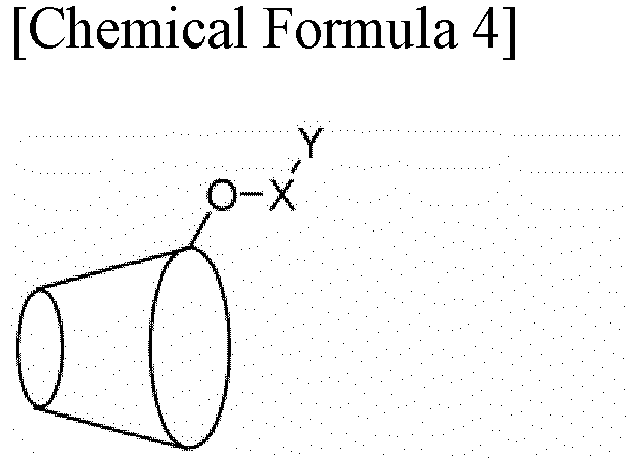
- The method according to claim 4, comprising coating the composition comprising a polyrotaxane represented by Formula (1) onto the surface of the substrate.
- The method according to claim 4 or 5, wherein the polyrotaxane comprises a cyclodextrin in which 1 to 18 hydroxyl groups are modified with the group represented by -X-Y.
- The method according to any one of claims 4 to 6, wherein the polyrotaxane has a number of threaded cyclodextrins of 3 to 220.
- A culture substrate comprising a substrate coated with a composition comprising a polyrotaxane represented by Formula (1):


- The culture substrate according to claim 8, wherein the polyrotaxane comprises a cyclodextrin in which 1 to 18 hydroxyl groups are modified with the group represented by -X-Y
- The culture substrate according to claim 8 or 9, wherein the polyrotaxane has a number of threaded cyclodextrins of 3 to 200.
Applications Claiming Priority (2)
| Application Number | Priority Date | Filing Date | Title |
|---|---|---|---|
| JP2020196323 | 2020-11-26 | ||
| PCT/JP2021/042832 WO2022113944A1 (en) | 2020-11-26 | 2021-11-22 | Polyrotaxane having hydroxy group or sulfo group |
Publications (4)
| Publication Number | Publication Date |
|---|---|
| EP4253535A1 true EP4253535A1 (en) | 2023-10-04 |
| EP4253535A4 EP4253535A4 (en) | 2024-05-15 |
| EP4253535C0 EP4253535C0 (en) | 2025-11-12 |
| EP4253535B1 EP4253535B1 (en) | 2025-11-12 |
Family
ID=81754563
Family Applications (1)
| Application Number | Title | Priority Date | Filing Date |
|---|---|---|---|
| EP21897917.7A Active EP4253535B1 (en) | 2020-11-26 | 2021-11-22 | Polyrotaxane having hydroxy group or sulfo group |
Country Status (9)
| Country | Link |
|---|---|
| US (1) | US20230416682A1 (en) |
| EP (1) | EP4253535B1 (en) |
| JP (1) | JP7687632B2 (en) |
| KR (1) | KR20230091943A (en) |
| CN (1) | CN116648501A (en) |
| AU (1) | AU2021389338A1 (en) |
| CA (1) | CA3203150A1 (en) |
| TW (1) | TW202227539A (en) |
| WO (1) | WO2022113944A1 (en) |
Families Citing this family (2)
| Publication number | Priority date | Publication date | Assignee | Title |
|---|---|---|---|---|
| JP2023124226A (en) * | 2022-02-25 | 2023-09-06 | 横浜ゴム株式会社 | Rotaxane, production method thereof, crosslinked polymer, polymer fine particles, and polymer resin member |
| CN120966238B (en) * | 2025-10-20 | 2026-01-06 | 浙江美亚特精密机械有限公司 | A corrosion-resistant composite material, its preparation method, and its application in gears. |
Family Cites Families (3)
| Publication number | Priority date | Publication date | Assignee | Title |
|---|---|---|---|---|
| DE60235472D1 (en) * | 2001-07-30 | 2010-04-08 | Japan Tissue Eng Co Ltd | IMPLANTING MATERIAL FOR TEXTILE GENERATION |
| KR101718803B1 (en) * | 2015-09-03 | 2017-03-22 | 경희대학교 산학협력단 | Compositon based on supramolecular hydrogel and use thereof |
| JPWO2017191827A1 (en) * | 2016-05-02 | 2019-04-11 | 国立大学法人 東京医科歯科大学 | Internally decomposed polyrotaxane and method for synthesizing the same |
-
2021
- 2021-11-22 JP JP2022565330A patent/JP7687632B2/en active Active
- 2021-11-22 US US18/254,488 patent/US20230416682A1/en active Pending
- 2021-11-22 CA CA3203150A patent/CA3203150A1/en active Pending
- 2021-11-22 KR KR1020237016818A patent/KR20230091943A/en not_active Ceased
- 2021-11-22 AU AU2021389338A patent/AU2021389338A1/en not_active Abandoned
- 2021-11-22 CN CN202180078206.4A patent/CN116648501A/en active Pending
- 2021-11-22 EP EP21897917.7A patent/EP4253535B1/en active Active
- 2021-11-22 WO PCT/JP2021/042832 patent/WO2022113944A1/en not_active Ceased
- 2021-11-24 TW TW110143718A patent/TW202227539A/en unknown
Also Published As
| Publication number | Publication date |
|---|---|
| CN116648501A (en) | 2023-08-25 |
| JP7687632B2 (en) | 2025-06-03 |
| JPWO2022113944A1 (en) | 2022-06-02 |
| US20230416682A1 (en) | 2023-12-28 |
| EP4253535C0 (en) | 2025-11-12 |
| KR20230091943A (en) | 2023-06-23 |
| CA3203150A1 (en) | 2022-06-02 |
| EP4253535A4 (en) | 2024-05-15 |
| EP4253535B1 (en) | 2025-11-12 |
| AU2021389338A1 (en) | 2023-06-29 |
| WO2022113944A1 (en) | 2022-06-02 |
| TW202227539A (en) | 2022-07-16 |
Similar Documents
| Publication | Publication Date | Title |
|---|---|---|
| US11046803B2 (en) | Block copolymer and surface treatment agent using same | |
| EP4253535B1 (en) | Polyrotaxane having hydroxy group or sulfo group | |
| Dworak et al. | Poly (2-substituted-2-oxazoline) surfaces for dermal fibroblasts adhesion and detachment | |
| Takezawa et al. | Cell culture on a thermo-responsive polymer surface | |
| Yuan et al. | Copolymer coatings consisting of 2-methacryloyloxyethyl phosphorylcholine and 3-methacryloxypropyl trimethoxysilane via ATRP to improve cellulose biocompatibility | |
| EP3129494B1 (en) | Hydrogel compositions for use in promoting tubulogenesis | |
| US20240052097A1 (en) | Synthesis of peg-based thiol-norbornene hydrogels with tunable hydroylitic degradation properties | |
| Sekiya-Aoyama et al. | Dual effect of molecular mobility and functional groups of polyrotaxane surfaces on the fate of mesenchymal stem cells | |
| JP6756201B2 (en) | Stimulus responsive polymer | |
| EP4253446B1 (en) | Polyrotaxane having amino group | |
| Yu et al. | PEG-functionalized aliphatic polycarbonate brushes with self-polishing dynamic antifouling properties | |
| EP3584318A1 (en) | Polymer bead | |
| Du et al. | Mediating the migration of mesenchymal stem cells by dynamically changing the density of cell-selective peptides immobilized on β-cyclodextrin-modified cell-resisting polymer brushes | |
| JP2018201463A (en) | Method and kit for preparing stem cell | |
| Tamaño-Machiavello et al. | Maintenance of pluripotency and osteogenic differentiation of human mesenchymal stem cells on acrylate-based substrates exhibiting gelatin or heparin grafting | |
| JP3311074B2 (en) | Cell culture substrate | |
| JP7250248B2 (en) | BLOCK COPOLYMER, SURFACE TREATMENT AGENT AND MEMBRANE CONTAINING THE SAME, AND CELL CULTURE EQUIPMENT AND CELL CULTURE METHOD USING THE SAME | |
| EP4600345A1 (en) | Cell culture method using temperature-responsive microcarrier, and beads for temperature-responsive cell culture | |
| Nelson et al. | Glycosaminoglycan-Inspired Polymer Brushes Promote Human Mesenchymal Stem Cell Proliferation While Retaining Trilineage Differentiation Potential | |
| US20240034836A1 (en) | Coating agent, culture substrate, and cell culture method | |
| JP2007049918A (en) | Cell culture support, cell culture method, recovery of cell, and cell | |
| EP4053191A1 (en) | Method for hydrating water-insoluble polymer capable of containing intermediate water | |
| Sempere et al. | María Noel Tamaño-Machiavello1, Juan Carlos Marín Payá1, Silvia Flores1, Lourdes Cordón2, 3 | |
| JP2023036217A (en) | Copolymer, Surface Modifier, Composition, Medical Device, Silicone Substrate, and Cell Culture Vessel |
Legal Events
| Date | Code | Title | Description |
|---|---|---|---|
| STAA | Information on the status of an ep patent application or granted ep patent |
Free format text: STATUS: THE INTERNATIONAL PUBLICATION HAS BEEN MADE |
|
| PUAI | Public reference made under article 153(3) epc to a published international application that has entered the european phase |
Free format text: ORIGINAL CODE: 0009012 |
|
| STAA | Information on the status of an ep patent application or granted ep patent |
Free format text: STATUS: REQUEST FOR EXAMINATION WAS MADE |
|
| 17P | Request for examination filed |
Effective date: 20230601 |
|
| AK | Designated contracting states |
Kind code of ref document: A1 Designated state(s): AL AT BE BG CH CY CZ DE DK EE ES FI FR GB GR HR HU IE IS IT LI LT LU LV MC MK MT NL NO PL PT RO RS SE SI SK SM TR |
|
| DAV | Request for validation of the european patent (deleted) | ||
| DAX | Request for extension of the european patent (deleted) | ||
| REG | Reference to a national code |
Ref country code: DE Ref legal event code: R079 Free format text: PREVIOUS MAIN CLASS: C12N0011020000 Ref country code: DE Ref legal event code: R079 Ref document number: 602021042434 Country of ref document: DE Free format text: PREVIOUS MAIN CLASS: C12N0011020000 Ipc: C08G0065334000 |
|
| A4 | Supplementary search report drawn up and despatched |
Effective date: 20240416 |
|
| RIC1 | Information provided on ipc code assigned before grant |
Ipc: C08B 37/16 20060101ALI20240410BHEP Ipc: C12N 5/0775 20100101ALI20240410BHEP Ipc: C12M 3/00 20060101ALI20240410BHEP Ipc: C09D 171/02 20060101ALI20240410BHEP Ipc: C08F 293/00 20060101ALI20240410BHEP Ipc: C08G 65/334 20060101AFI20240410BHEP |
|
| STAA | Information on the status of an ep patent application or granted ep patent |
Free format text: STATUS: EXAMINATION IS IN PROGRESS |
|
| 17Q | First examination report despatched |
Effective date: 20250203 |
|
| GRAP | Despatch of communication of intention to grant a patent |
Free format text: ORIGINAL CODE: EPIDOSNIGR1 |
|
| STAA | Information on the status of an ep patent application or granted ep patent |
Free format text: STATUS: GRANT OF PATENT IS INTENDED |
|
| INTG | Intention to grant announced |
Effective date: 20250606 |
|
| GRAS | Grant fee paid |
Free format text: ORIGINAL CODE: EPIDOSNIGR3 |
|
| GRAA | (expected) grant |
Free format text: ORIGINAL CODE: 0009210 |
|
| STAA | Information on the status of an ep patent application or granted ep patent |
Free format text: STATUS: THE PATENT HAS BEEN GRANTED |
|
| AK | Designated contracting states |
Kind code of ref document: B1 Designated state(s): AL AT BE BG CH CY CZ DE DK EE ES FI FR GB GR HR HU IE IS IT LI LT LU LV MC MK MT NL NO PL PT RO RS SE SI SK SM TR |
|
| RAP1 | Party data changed (applicant data changed or rights of an application transferred) |
Owner name: DENKA COMPANY LIMITED Owner name: INSTITUTE OF SCIENCE TOKYO |
|
| REG | Reference to a national code |
Ref country code: CH Ref legal event code: F10 Free format text: ST27 STATUS EVENT CODE: U-0-0-F10-F00 (AS PROVIDED BY THE NATIONAL OFFICE) Effective date: 20251112 Ref country code: GB Ref legal event code: FG4D |
|
| REG | Reference to a national code |
Ref country code: IE Ref legal event code: FG4D |
|
| U01 | Request for unitary effect filed |
Effective date: 20251114 |
|
| U07 | Unitary effect registered |
Designated state(s): AT BE BG DE DK EE FI FR IT LT LU LV MT NL PT RO SE SI Effective date: 20251121 |
|
| U20 | Renewal fee for the european patent with unitary effect paid |
Year of fee payment: 5 Effective date: 20251125 |
|
| PGFP | Annual fee paid to national office [announced via postgrant information from national office to epo] |
Ref country code: AT Payment date: 20260113 Year of fee payment: 5 |
|
| PG25 | Lapsed in a contracting state [announced via postgrant information from national office to epo] |
Ref country code: ES Free format text: LAPSE BECAUSE OF FAILURE TO SUBMIT A TRANSLATION OF THE DESCRIPTION OR TO PAY THE FEE WITHIN THE PRESCRIBED TIME-LIMIT Effective date: 20251112 |
|
| PG25 | Lapsed in a contracting state [announced via postgrant information from national office to epo] |
Ref country code: NO Free format text: LAPSE BECAUSE OF FAILURE TO SUBMIT A TRANSLATION OF THE DESCRIPTION OR TO PAY THE FEE WITHIN THE PRESCRIBED TIME-LIMIT Effective date: 20260212 |
|
| PG25 | Lapsed in a contracting state [announced via postgrant information from national office to epo] |
Ref country code: HR Free format text: LAPSE BECAUSE OF FAILURE TO SUBMIT A TRANSLATION OF THE DESCRIPTION OR TO PAY THE FEE WITHIN THE PRESCRIBED TIME-LIMIT Effective date: 20251112 |
|
| PG25 | Lapsed in a contracting state [announced via postgrant information from national office to epo] |
Ref country code: RS Free format text: LAPSE BECAUSE OF FAILURE TO SUBMIT A TRANSLATION OF THE DESCRIPTION OR TO PAY THE FEE WITHIN THE PRESCRIBED TIME-LIMIT Effective date: 20260212 |
|
| PG25 | Lapsed in a contracting state [announced via postgrant information from national office to epo] |
Ref country code: IS Free format text: LAPSE BECAUSE OF FAILURE TO SUBMIT A TRANSLATION OF THE DESCRIPTION OR TO PAY THE FEE WITHIN THE PRESCRIBED TIME-LIMIT Effective date: 20260312 |
|
| PG25 | Lapsed in a contracting state [announced via postgrant information from national office to epo] |
Ref country code: PL Free format text: LAPSE BECAUSE OF FAILURE TO SUBMIT A TRANSLATION OF THE DESCRIPTION OR TO PAY THE FEE WITHIN THE PRESCRIBED TIME-LIMIT Effective date: 20251112 |
|
| REG | Reference to a national code |
Ref country code: CH Ref legal event code: H13 Free format text: ST27 STATUS EVENT CODE: U-0-0-H10-H13 (AS PROVIDED BY THE NATIONAL OFFICE) Effective date: 20260623 |
|
| PG25 | Lapsed in a contracting state [announced via postgrant information from national office to epo] |
Ref country code: SM Free format text: LAPSE BECAUSE OF FAILURE TO SUBMIT A TRANSLATION OF THE DESCRIPTION OR TO PAY THE FEE WITHIN THE PRESCRIBED TIME-LIMIT Effective date: 20251112 |
|
| PG25 | Lapsed in a contracting state [announced via postgrant information from national office to epo] |
Ref country code: CH Free format text: LAPSE BECAUSE OF NON-PAYMENT OF DUE FEES Effective date: 20251130 |
|
| PG25 | Lapsed in a contracting state [announced via postgrant information from national office to epo] |
Ref country code: CZ Free format text: LAPSE BECAUSE OF FAILURE TO SUBMIT A TRANSLATION OF THE DESCRIPTION OR TO PAY THE FEE WITHIN THE PRESCRIBED TIME-LIMIT Effective date: 20251112 |
|
| PG25 | Lapsed in a contracting state [announced via postgrant information from national office to epo] |
Ref country code: SK Free format text: LAPSE BECAUSE OF FAILURE TO SUBMIT A TRANSLATION OF THE DESCRIPTION OR TO PAY THE FEE WITHIN THE PRESCRIBED TIME-LIMIT Effective date: 20251112 |
|
| PG25 | Lapsed in a contracting state [announced via postgrant information from national office to epo] |
Ref country code: MC Free format text: LAPSE BECAUSE OF FAILURE TO SUBMIT A TRANSLATION OF THE DESCRIPTION OR TO PAY THE FEE WITHIN THE PRESCRIBED TIME-LIMIT Effective date: 20251112 |