EP4253326A1 - Ternary positive electrode material, preparation method therefor and use thereof - Google Patents
Ternary positive electrode material, preparation method therefor and use thereof Download PDFInfo
- Publication number
- EP4253326A1 EP4253326A1 EP21896595.2A EP21896595A EP4253326A1 EP 4253326 A1 EP4253326 A1 EP 4253326A1 EP 21896595 A EP21896595 A EP 21896595A EP 4253326 A1 EP4253326 A1 EP 4253326A1
- Authority
- EP
- European Patent Office
- Prior art keywords
- ternary cathode
- calcinated
- cathode material
- compound
- lithium
- Prior art date
- Legal status (The legal status is an assumption and is not a legal conclusion. Google has not performed a legal analysis and makes no representation as to the accuracy of the status listed.)
- Pending
Links
- 238000002360 preparation method Methods 0.000 title abstract description 22
- 239000007774 positive electrode material Substances 0.000 title 1
- 239000000843 powder Substances 0.000 claims abstract description 78
- 239000010406 cathode material Substances 0.000 claims abstract description 62
- 239000000463 material Substances 0.000 claims abstract description 56
- WHXSMMKQMYFTQS-UHFFFAOYSA-N Lithium Chemical compound [Li] WHXSMMKQMYFTQS-UHFFFAOYSA-N 0.000 claims abstract description 37
- 229910052744 lithium Inorganic materials 0.000 claims abstract description 37
- 239000000126 substance Substances 0.000 claims abstract description 11
- 150000001639 boron compounds Chemical class 0.000 claims abstract description 7
- 150000002822 niobium compounds Chemical class 0.000 claims abstract description 7
- 150000003609 titanium compounds Chemical class 0.000 claims abstract description 7
- RTAQQCXQSZGOHL-UHFFFAOYSA-N Titanium Chemical compound [Ti] RTAQQCXQSZGOHL-UHFFFAOYSA-N 0.000 claims abstract description 6
- ZOXJGFHDIHLPTG-UHFFFAOYSA-N Boron Chemical compound [B] ZOXJGFHDIHLPTG-UHFFFAOYSA-N 0.000 claims abstract description 3
- 229910052796 boron Inorganic materials 0.000 claims abstract description 3
- 239000010955 niobium Substances 0.000 claims abstract description 3
- 229910052758 niobium Inorganic materials 0.000 claims abstract description 3
- GUCVJGMIXFAOAE-UHFFFAOYSA-N niobium atom Chemical compound [Nb] GUCVJGMIXFAOAE-UHFFFAOYSA-N 0.000 claims abstract description 3
- 239000010936 titanium Substances 0.000 claims abstract description 3
- 229910052719 titanium Inorganic materials 0.000 claims abstract description 3
- 238000000498 ball milling Methods 0.000 claims description 31
- LFQSCWFLJHTTHZ-UHFFFAOYSA-N Ethanol Chemical compound CCO LFQSCWFLJHTTHZ-UHFFFAOYSA-N 0.000 claims description 24
- XLYOFNOQVPJJNP-UHFFFAOYSA-N water Substances O XLYOFNOQVPJJNP-UHFFFAOYSA-N 0.000 claims description 24
- WMFOQBRAJBCJND-UHFFFAOYSA-M Lithium hydroxide Chemical compound [Li+].[OH-] WMFOQBRAJBCJND-UHFFFAOYSA-M 0.000 claims description 20
- 239000000203 mixture Substances 0.000 claims description 20
- 239000011259 mixed solution Substances 0.000 claims description 19
- 238000010438 heat treatment Methods 0.000 claims description 18
- 238000000034 method Methods 0.000 claims description 18
- 238000001354 calcination Methods 0.000 claims description 17
- 238000001816 cooling Methods 0.000 claims description 16
- ZKATWMILCYLAPD-UHFFFAOYSA-N niobium pentoxide Chemical compound O=[Nb](=O)O[Nb](=O)=O ZKATWMILCYLAPD-UHFFFAOYSA-N 0.000 claims description 14
- 239000003960 organic solvent Substances 0.000 claims description 11
- 238000001704 evaporation Methods 0.000 claims description 10
- 238000003756 stirring Methods 0.000 claims description 10
- 238000002156 mixing Methods 0.000 claims description 9
- 238000012216 screening Methods 0.000 claims description 9
- 230000008569 process Effects 0.000 claims description 7
- GWEVSGVZZGPLCZ-UHFFFAOYSA-N Titan oxide Chemical compound O=[Ti]=O GWEVSGVZZGPLCZ-UHFFFAOYSA-N 0.000 claims description 6
- 150000001875 compounds Chemical class 0.000 claims description 6
- 239000002243 precursor Substances 0.000 claims description 5
- CSCPPACGZOOCGX-UHFFFAOYSA-N Acetone Chemical compound CC(C)=O CSCPPACGZOOCGX-UHFFFAOYSA-N 0.000 claims description 4
- KFZMGEQAYNKOFK-UHFFFAOYSA-N Isopropanol Chemical compound CC(C)O KFZMGEQAYNKOFK-UHFFFAOYSA-N 0.000 claims description 4
- 229910003327 LiNbO3 Inorganic materials 0.000 claims description 4
- KFDQGLPGKXUTMZ-UHFFFAOYSA-N [Mn].[Co].[Ni] Chemical compound [Mn].[Co].[Ni] KFDQGLPGKXUTMZ-UHFFFAOYSA-N 0.000 claims description 4
- 229910007848 Li2TiO3 Inorganic materials 0.000 claims description 3
- 239000012298 atmosphere Substances 0.000 claims description 3
- QVGXLLKOCUKJST-UHFFFAOYSA-N atomic oxygen Chemical compound [O] QVGXLLKOCUKJST-UHFFFAOYSA-N 0.000 claims description 3
- XGZVUEUWXADBQD-UHFFFAOYSA-L lithium carbonate Chemical compound [Li+].[Li+].[O-]C([O-])=O XGZVUEUWXADBQD-UHFFFAOYSA-L 0.000 claims description 3
- 229910052808 lithium carbonate Inorganic materials 0.000 claims description 3
- 229910052760 oxygen Inorganic materials 0.000 claims description 3
- 239000001301 oxygen Substances 0.000 claims description 3
- -1 titanate ester Chemical class 0.000 claims description 3
- 229910011131 Li2B4O7 Inorganic materials 0.000 claims description 2
- 229910013178 LiBO2 Inorganic materials 0.000 claims description 2
- 229910013172 LiNixCoy Inorganic materials 0.000 claims description 2
- 229910020042 NbS2 Inorganic materials 0.000 claims description 2
- 229910006178 NixCoyMn(1-x-y)(OH)2 Inorganic materials 0.000 claims description 2
- KGBXLFKZBHKPEV-UHFFFAOYSA-N boric acid Chemical compound OB(O)O KGBXLFKZBHKPEV-UHFFFAOYSA-N 0.000 claims description 2
- 239000013078 crystal Substances 0.000 abstract description 10
- 230000007547 defect Effects 0.000 abstract description 9
- 238000006243 chemical reaction Methods 0.000 abstract description 8
- GQYHUHYESMUTHG-UHFFFAOYSA-N lithium niobate Chemical compound [Li+].[O-][Nb](=O)=O GQYHUHYESMUTHG-UHFFFAOYSA-N 0.000 abstract description 3
- RIUWBIIVUYSTCN-UHFFFAOYSA-N trilithium borate Chemical compound [Li+].[Li+].[Li+].[O-]B([O-])[O-] RIUWBIIVUYSTCN-UHFFFAOYSA-N 0.000 abstract description 3
- 229910013716 LiNi Inorganic materials 0.000 abstract 1
- 239000007788 liquid Substances 0.000 description 23
- 230000000052 comparative effect Effects 0.000 description 17
- 239000011324 bead Substances 0.000 description 14
- 239000011248 coating agent Substances 0.000 description 10
- 238000010902 jet-milling Methods 0.000 description 8
- 229910017223 Ni0.8Co0.1Mn0.1(OH)2 Inorganic materials 0.000 description 7
- 229910015872 LiNi0.8Co0.1Mn0.1O2 Inorganic materials 0.000 description 6
- 229910001416 lithium ion Inorganic materials 0.000 description 6
- 239000002002 slurry Substances 0.000 description 6
- HBBGRARXTFLTSG-UHFFFAOYSA-N Lithium ion Chemical compound [Li+] HBBGRARXTFLTSG-UHFFFAOYSA-N 0.000 description 5
- 238000000576 coating method Methods 0.000 description 5
- 230000014759 maintenance of location Effects 0.000 description 5
- 239000002245 particle Substances 0.000 description 3
- SECXISVLQFMRJM-UHFFFAOYSA-N N-Methylpyrrolidone Chemical compound CN1CCCC1=O SECXISVLQFMRJM-UHFFFAOYSA-N 0.000 description 2
- NIPNSKYNPDTRPC-UHFFFAOYSA-N N-[2-oxo-2-(2,4,6,7-tetrahydrotriazolo[4,5-c]pyridin-5-yl)ethyl]-2-[[3-(trifluoromethoxy)phenyl]methylamino]pyrimidine-5-carboxamide Chemical compound O=C(CNC(=O)C=1C=NC(=NC=1)NCC1=CC(=CC=C1)OC(F)(F)F)N1CC2=C(CC1)NN=N2 NIPNSKYNPDTRPC-UHFFFAOYSA-N 0.000 description 2
- 230000008901 benefit Effects 0.000 description 2
- 230000001351 cycling effect Effects 0.000 description 2
- 238000000151 deposition Methods 0.000 description 2
- 238000009826 distribution Methods 0.000 description 2
- 238000012986 modification Methods 0.000 description 2
- 230000004048 modification Effects 0.000 description 2
- 238000011056 performance test Methods 0.000 description 2
- 230000008439 repair process Effects 0.000 description 2
- 239000002904 solvent Substances 0.000 description 2
- 239000000758 substrate Substances 0.000 description 2
- OKTJSMMVPCPJKN-UHFFFAOYSA-N Carbon Chemical compound [C] OKTJSMMVPCPJKN-UHFFFAOYSA-N 0.000 description 1
- 229910032387 LiCoO2 Inorganic materials 0.000 description 1
- 229910052493 LiFePO4 Inorganic materials 0.000 description 1
- 229910002097 Lithium manganese(III,IV) oxide Inorganic materials 0.000 description 1
- AFCARXCZXQIEQB-UHFFFAOYSA-N N-[3-oxo-3-(2,4,6,7-tetrahydrotriazolo[4,5-c]pyridin-5-yl)propyl]-2-[[3-(trifluoromethoxy)phenyl]methylamino]pyrimidine-5-carboxamide Chemical compound O=C(CCNC(=O)C=1C=NC(=NC=1)NCC1=CC(=CC=C1)OC(F)(F)F)N1CC2=C(CC1)NN=N2 AFCARXCZXQIEQB-UHFFFAOYSA-N 0.000 description 1
- 239000002033 PVDF binder Substances 0.000 description 1
- 238000002441 X-ray diffraction Methods 0.000 description 1
- 239000006230 acetylene black Substances 0.000 description 1
- 230000004075 alteration Effects 0.000 description 1
- 229910052782 aluminium Inorganic materials 0.000 description 1
- XAGFODPZIPBFFR-UHFFFAOYSA-N aluminium Chemical compound [Al] XAGFODPZIPBFFR-UHFFFAOYSA-N 0.000 description 1
- 230000009286 beneficial effect Effects 0.000 description 1
- 239000011230 binding agent Substances 0.000 description 1
- 230000008859 change Effects 0.000 description 1
- 239000003153 chemical reaction reagent Substances 0.000 description 1
- 239000003795 chemical substances by application Substances 0.000 description 1
- 239000011247 coating layer Substances 0.000 description 1
- 238000002485 combustion reaction Methods 0.000 description 1
- 239000006258 conductive agent Substances 0.000 description 1
- 238000001035 drying Methods 0.000 description 1
- 239000003792 electrolyte Substances 0.000 description 1
- 239000011888 foil Substances 0.000 description 1
- 238000001879 gelation Methods 0.000 description 1
- 230000002687 intercalation Effects 0.000 description 1
- 238000009830 intercalation Methods 0.000 description 1
- 238000004519 manufacturing process Methods 0.000 description 1
- 229910052751 metal Inorganic materials 0.000 description 1
- 239000002103 nanocoating Substances 0.000 description 1
- 229920002981 polyvinylidene fluoride Polymers 0.000 description 1
- 239000002994 raw material Substances 0.000 description 1
- 238000011160 research Methods 0.000 description 1
- 238000001878 scanning electron micrograph Methods 0.000 description 1
- 239000000243 solution Substances 0.000 description 1
- 230000002269 spontaneous effect Effects 0.000 description 1
- 238000012360 testing method Methods 0.000 description 1
- LLZRNZOLAXHGLL-UHFFFAOYSA-J titanic acid Chemical class O[Ti](O)(O)O LLZRNZOLAXHGLL-UHFFFAOYSA-J 0.000 description 1
Images

Classifications
-
- C—CHEMISTRY; METALLURGY
- C01—INORGANIC CHEMISTRY
- C01G—COMPOUNDS CONTAINING METALS NOT COVERED BY SUBCLASSES C01D OR C01F
- C01G53/00—Compounds of nickel
- C01G53/40—Complex oxides containing nickel and at least one other metal element
- C01G53/42—Complex oxides containing nickel and at least one other metal element containing alkali metals, e.g. LiNiO2
- C01G53/44—Complex oxides containing nickel and at least one other metal element containing alkali metals, e.g. LiNiO2 containing manganese
- C01G53/50—Complex oxides containing nickel and at least one other metal element containing alkali metals, e.g. LiNiO2 containing manganese of the type (MnO2)n-, e.g. Li(NixMn1-x)O2 or Li(MyNixMn1-x-y)O2
-
- C—CHEMISTRY; METALLURGY
- C01—INORGANIC CHEMISTRY
- C01B—NON-METALLIC ELEMENTS; COMPOUNDS THEREOF; METALLOIDS OR COMPOUNDS THEREOF NOT COVERED BY SUBCLASS C01C
- C01B35/00—Boron; Compounds thereof
- C01B35/08—Compounds containing boron and nitrogen, phosphorus, oxygen, sulfur, selenium or tellurium
- C01B35/10—Compounds containing boron and oxygen
- C01B35/12—Borates
-
- C—CHEMISTRY; METALLURGY
- C01—INORGANIC CHEMISTRY
- C01G—COMPOUNDS CONTAINING METALS NOT COVERED BY SUBCLASSES C01D OR C01F
- C01G23/00—Compounds of titanium
- C01G23/003—Titanates
- C01G23/005—Alkali titanates
-
- C—CHEMISTRY; METALLURGY
- C01—INORGANIC CHEMISTRY
- C01G—COMPOUNDS CONTAINING METALS NOT COVERED BY SUBCLASSES C01D OR C01F
- C01G33/00—Compounds of niobium
-
- C—CHEMISTRY; METALLURGY
- C01—INORGANIC CHEMISTRY
- C01G—COMPOUNDS CONTAINING METALS NOT COVERED BY SUBCLASSES C01D OR C01F
- C01G53/00—Compounds of nickel
- C01G53/80—Compounds containing nickel, with or without oxygen or hydrogen, and containing one or more other elements
- C01G53/82—Compounds containing nickel, with or without oxygen or hydrogen, and containing two or more other elements
-
- H—ELECTRICITY
- H01—ELECTRIC ELEMENTS
- H01M—PROCESSES OR MEANS, e.g. BATTERIES, FOR THE DIRECT CONVERSION OF CHEMICAL ENERGY INTO ELECTRICAL ENERGY
- H01M10/00—Secondary cells; Manufacture thereof
- H01M10/05—Accumulators with non-aqueous electrolyte
- H01M10/052—Li-accumulators
-
- H—ELECTRICITY
- H01—ELECTRIC ELEMENTS
- H01M—PROCESSES OR MEANS, e.g. BATTERIES, FOR THE DIRECT CONVERSION OF CHEMICAL ENERGY INTO ELECTRICAL ENERGY
- H01M10/00—Secondary cells; Manufacture thereof
- H01M10/05—Accumulators with non-aqueous electrolyte
- H01M10/052—Li-accumulators
- H01M10/0525—Rocking-chair batteries, i.e. batteries with lithium insertion or intercalation in both electrodes; Lithium-ion batteries
-
- H—ELECTRICITY
- H01—ELECTRIC ELEMENTS
- H01M—PROCESSES OR MEANS, e.g. BATTERIES, FOR THE DIRECT CONVERSION OF CHEMICAL ENERGY INTO ELECTRICAL ENERGY
- H01M4/00—Electrodes
- H01M4/02—Electrodes composed of, or comprising, active material
- H01M4/36—Selection of substances as active materials, active masses, active liquids
-
- H—ELECTRICITY
- H01—ELECTRIC ELEMENTS
- H01M—PROCESSES OR MEANS, e.g. BATTERIES, FOR THE DIRECT CONVERSION OF CHEMICAL ENERGY INTO ELECTRICAL ENERGY
- H01M4/00—Electrodes
- H01M4/02—Electrodes composed of, or comprising, active material
- H01M4/36—Selection of substances as active materials, active masses, active liquids
- H01M4/48—Selection of substances as active materials, active masses, active liquids of inorganic oxides or hydroxides
- H01M4/485—Selection of substances as active materials, active masses, active liquids of inorganic oxides or hydroxides of mixed oxides or hydroxides for inserting or intercalating light metals, e.g. LiTi2O4 or LiTi2OxFy
-
- H—ELECTRICITY
- H01—ELECTRIC ELEMENTS
- H01M—PROCESSES OR MEANS, e.g. BATTERIES, FOR THE DIRECT CONVERSION OF CHEMICAL ENERGY INTO ELECTRICAL ENERGY
- H01M4/00—Electrodes
- H01M4/02—Electrodes composed of, or comprising, active material
- H01M4/36—Selection of substances as active materials, active masses, active liquids
- H01M4/48—Selection of substances as active materials, active masses, active liquids of inorganic oxides or hydroxides
- H01M4/50—Selection of substances as active materials, active masses, active liquids of inorganic oxides or hydroxides of manganese
- H01M4/505—Selection of substances as active materials, active masses, active liquids of inorganic oxides or hydroxides of manganese of mixed oxides or hydroxides containing manganese for inserting or intercalating light metals, e.g. LiMn2O4 or LiMn2OxFy
-
- H—ELECTRICITY
- H01—ELECTRIC ELEMENTS
- H01M—PROCESSES OR MEANS, e.g. BATTERIES, FOR THE DIRECT CONVERSION OF CHEMICAL ENERGY INTO ELECTRICAL ENERGY
- H01M4/00—Electrodes
- H01M4/02—Electrodes composed of, or comprising, active material
- H01M4/36—Selection of substances as active materials, active masses, active liquids
- H01M4/48—Selection of substances as active materials, active masses, active liquids of inorganic oxides or hydroxides
- H01M4/52—Selection of substances as active materials, active masses, active liquids of inorganic oxides or hydroxides of nickel, cobalt or iron
- H01M4/525—Selection of substances as active materials, active masses, active liquids of inorganic oxides or hydroxides of nickel, cobalt or iron of mixed oxides or hydroxides containing iron, cobalt or nickel for inserting or intercalating light metals, e.g. LiNiO2, LiCoO2 or LiCoOxFy
-
- C—CHEMISTRY; METALLURGY
- C01—INORGANIC CHEMISTRY
- C01P—INDEXING SCHEME RELATING TO STRUCTURAL AND PHYSICAL ASPECTS OF SOLID INORGANIC COMPOUNDS
- C01P2002/00—Crystal-structural characteristics
- C01P2002/70—Crystal-structural characteristics defined by measured X-ray, neutron or electron diffraction data
- C01P2002/72—Crystal-structural characteristics defined by measured X-ray, neutron or electron diffraction data by d-values or two theta-values, e.g. as X-ray diagram
-
- C—CHEMISTRY; METALLURGY
- C01—INORGANIC CHEMISTRY
- C01P—INDEXING SCHEME RELATING TO STRUCTURAL AND PHYSICAL ASPECTS OF SOLID INORGANIC COMPOUNDS
- C01P2002/00—Crystal-structural characteristics
- C01P2002/70—Crystal-structural characteristics defined by measured X-ray, neutron or electron diffraction data
- C01P2002/74—Crystal-structural characteristics defined by measured X-ray, neutron or electron diffraction data by peak-intensities or a ratio thereof only
-
- C—CHEMISTRY; METALLURGY
- C01—INORGANIC CHEMISTRY
- C01P—INDEXING SCHEME RELATING TO STRUCTURAL AND PHYSICAL ASPECTS OF SOLID INORGANIC COMPOUNDS
- C01P2004/00—Particle morphology
- C01P2004/01—Particle morphology depicted by an image
- C01P2004/03—Particle morphology depicted by an image obtained by SEM
-
- C—CHEMISTRY; METALLURGY
- C01—INORGANIC CHEMISTRY
- C01P—INDEXING SCHEME RELATING TO STRUCTURAL AND PHYSICAL ASPECTS OF SOLID INORGANIC COMPOUNDS
- C01P2004/00—Particle morphology
- C01P2004/51—Particles with a specific particle size distribution
-
- C—CHEMISTRY; METALLURGY
- C01—INORGANIC CHEMISTRY
- C01P—INDEXING SCHEME RELATING TO STRUCTURAL AND PHYSICAL ASPECTS OF SOLID INORGANIC COMPOUNDS
- C01P2004/00—Particle morphology
- C01P2004/60—Particles characterised by their size
- C01P2004/61—Micrometer sized, i.e. from 1-100 micrometer
-
- C—CHEMISTRY; METALLURGY
- C01—INORGANIC CHEMISTRY
- C01P—INDEXING SCHEME RELATING TO STRUCTURAL AND PHYSICAL ASPECTS OF SOLID INORGANIC COMPOUNDS
- C01P2006/00—Physical properties of inorganic compounds
- C01P2006/40—Electric properties
-
- Y—GENERAL TAGGING OF NEW TECHNOLOGICAL DEVELOPMENTS; GENERAL TAGGING OF CROSS-SECTIONAL TECHNOLOGIES SPANNING OVER SEVERAL SECTIONS OF THE IPC; TECHNICAL SUBJECTS COVERED BY FORMER USPC CROSS-REFERENCE ART COLLECTIONS [XRACs] AND DIGESTS
- Y02—TECHNOLOGIES OR APPLICATIONS FOR MITIGATION OR ADAPTATION AGAINST CLIMATE CHANGE
- Y02E—REDUCTION OF GREENHOUSE GAS [GHG] EMISSIONS, RELATED TO ENERGY GENERATION, TRANSMISSION OR DISTRIBUTION
- Y02E60/00—Enabling technologies; Technologies with a potential or indirect contribution to GHG emissions mitigation
- Y02E60/10—Energy storage using batteries
Definitions
- the present disclosure belongs to the field of lithium ion battery materials, and in particular to a ternary cathode material, a preparation method and application thereof.
- the most critical part of the electric automobile is a lithium ion battery, which generally consists of a cathode, an anode, a diaphragm and electrolyte, wherein the performance of the cathode material directly relates to the energy density, the safety performance and the service life of a lithium ion battery.
- lithium intercalation compounds such as LiMn 2 O 4 , LiFePO 4 , LiCoO 2 , and ternary cathode material Li(Ni) x Co y Mn z )O 2 are commonly adopted as cathode materials of a lithium ion battery.
- the ternary cathode materials possess the advantage of higher energy density, and thus being the focus of research in various large battery manufacturers.
- micro powder of the material can be introduced. Especially during a crushing process of the preparation of a single crystal ternary cathode material, the content of the micro powder of the ternary material increases significantly as well as the surface defects of the single crystal ternary material. High micro powder content and high residual lithium will affect the slurry mixing and electrode coating in the electrode preparation process adopting the ternary cathode material, making it easy to produce gelation during the slurry mixing process leading to uneven coating and a too low or too high battery capacity. In this situation, lithium will be released from the electrode during the battery cycle, which will affect the battery life.
- the present disclosure aims to provide a ternary cathode material, a preparation method and application thereof, in order to address the shortcomings of current traditional ternary cathode materials.
- a nano-scale coating agent is uniformly dispersed in a solvent by stirring so as to contact with the surface of a ternary material evenly.
- a reaction of a niobium compound, a boron compound and a titanium compound with the residual lithium on the surface of the ternary material is introduced by calcinating.
- micro powder of the ternary material deposits into the crystal defect position on the surface of the ternary material to reduce the micro powder content.
- the reaction will also consume part of the residual lithium to generate lithium niobate, lithium borate or lithium titanate, which will be uniformly coated on the surface of the ternary material to obtain the claimed ternary cathode material. Therefore, this preparation method will significantly reduce the contents of the micro powder and residual lithium in the material, which is helpful for slurry mixing and coating operation in the electrode preparation process. Meanwhile, the micro powder depositing in the crystal defect position on the surface of the material will effectively repair the material surface defects and synergize with the coating layer to improve the cycle performance and rate performance of the ternary cathode material.
- a ternary cathode material has a chemical formula of LiNi x Co y Mn (1-x-y) MO 2 , Wherein 0.5 ⁇ x ⁇ 1, y ⁇ 0, 1-x-y>0, and M contains at least one element selected from the group consisting of niobium, boron and titanium.
- the ternary cathode material has a D 50 of 3-6 ⁇ m, and a K 90 of 1.0-1.6; the ternary cathode material has an operating voltage window of 2.8-4.25V; the ternary cathode material has an initial capacity of 198-202 mAh/g at 0.1C rate, and the capacity retention ratio is 90-96% after 50 cycles at 1C rate.
- a preparation method of a ternary cathode material comprises the following steps:
- the precursor of nickel-cobalt-manganese has a chemical formula of Ni x Co y Mn (1-x-y) (OH) 2 , Wherein 0.5 ⁇ x ⁇ 1, y ⁇ 0, and 1-x-y>0.
- the lithium source is at least one selected from the group consisting of LiOH and Li 2 CO 3 .
- step (1) the molar ratio of Li in the lithium source to the total metal elements in the precursor is (1-1.3): 1.
- step (1) the ball-milling is carried out with a rotation speed of 100-500 rpm for 1-4 h, wherein a ball-to-powder mass ratio is (0.5-2): 1.
- step (2) the first calcinating is divided into two stage: a first-stage calcinating is carried out at a temperature of 400-800°C for 2-8 h, and the heating rate is 1-10°C/min; a second-stage calcinating is carryout out at a temperature of 650-1100°C for 8-16 h.
- step (2) the first calcinating is carried out in air or oxygen atmosphere.
- step (2) the crushing is carried out by jet milling.
- the niobium compound is at least one selected from the group consisting of Nb 2 O 5 , NbS 2 , C 10 H 25 NbO 5 and C 4 H 4 NNbO 9 .
- the boron compound is at least one selected from the group consisting of B 2 O 3 , H 3 BO 3 , LiBO 2 and Li 2 B 4 O 7 .
- the titanium compound is at least one selected from the group consisting of TiO 2 , Li 2 TiO 3 and titanic acid esters.
- step (3) the calcinated material and the compounds are in a mass ratio of (0.28-1): 100.
- step (3) the calcinated material and the mixed solution are in a mass ratio of (0.1-5): 1.
- step (3) the organic solvent and the water of the mixed solution are in a mass ratio of (0.2-100): 1.
- the mixed solution comprising the organic solvent and water is prepared in a mass ratio of (0.2-100): 1, in order to effectively avoid bringing the residual lithium out of the lithium crystal lattice on the surface of the material.
- the organic solvent is at least one selected from the group consisting of ethanol, acetone and isopropanol.
- step (3) the evaporating to dryness is carried out by a thermostat bath, which is a water bath or oil bath.
- step (3) the evaporating to dryness is carried out at a temperature of 50-150°C.
- step (3) the stirring is carried out at a rotation speed of 50-500 rpm.
- the calcinated material obtained in step (2) contains undesirable micro powder.
- step (3) by mixing with the mixed solution of the organic solvent and water, the micro powder is dispersed evenly on the surface of the calcinated material, and then in the following step, the micro powder is attached to the surface of the ternary cathode material by reacting with the coating agent and depositing in the crystal defect position on the surface of the ternary cathode material.
- the coating agent is also dispersed uniformly in the mixed solution, which facilitates the reaction between the coating agent and the residual lithium on surface of the calcinated material, leading to a consumption of the residual lithium thereby the residual lithium content is reduced.
- step (4) the second calcinating is carried out with a heating rate of 1-10°C/min ,and the second calcinating is carried out at a temperature of 400°C-700°C for 2-10 h.
- step (4) the second calcinating is carried out in air or an oxygen atmosphere.
- the present disclosure also provides a lithium ion battery which comprises the ternary cathode material.
- a preparation method of the ternary cathode material of this example comprises the following steps:
- the ternary cathode material has a chemical formula of LiNi 0.8 Co 0.1 Mn 0.1 O 2 •LiNbO 3 .
- a preparation method of the ternary cathode material of this example comprises the following steps:
- the ternary cathode material has a chemical formula of LiNi 0.8 Co 0.1 Mn 0.1 O 2 •LiNbO 3 .
- a preparation method of the ternary cathode material of this example comprises the following steps:
- the ternary cathode material has a chemical formula of LiNi 0.8 Co 0.1 Mn 0.1 O 2 •.1 te 3 .
- a preparation method of the ternary cathode material of this example comprises the following steps:
- the ternary cathode material has a chemical formula of LiNi 0.8 Co 0.1 Mn 0.1 O 2 •.1 3 BO 3 .
- a preparation method of the ternary cathode material of this example comprises the following steps:
- the ternary cathode material has a chemical formula of LiNi 0.8 Co 0.1 Mn 0.1 O 2 •Li 2 TiO 3 .
- a preparation method of the ternary cathode material of this example comprises the following steps:
- the ternary cathode material has a chemical formula of LiNi 0.8 Co 0.1 Mn 0.1 O 2 •LiNbO 3 .
- a preparation method of the ternary cathode material of this example comprises the following steps:
- Example 1 The calcinated material and the ternary cathode material obtained in the Example 1-3 and the Comparative Example 1 have particle distributions as listed in Table 1.
- each of the ternary cathode material obtained has a particle size larger than the calcinated material.
- SEM of FIG. 2 it is illustrated that the micro powder of the calcinated material deposits in the defect position of the lithium crystal lattice, indicating that the preparation method of the present disclosure can effectively reduce the micro powder content and repair the surface defects of the material.
- Table 2 shows the results of the residual lithium in Examples 1-3 and Comparative Example 1.
- Table 2 Results of the residual lithium in Examples 1-3 and Comparative Example 1 Name LiOH (wt%) Li 2 CO 3 (wt%) Residual lithium (wt%) Calcinated material 0.4325 0.2398 0.1704 Example 1 0.2957 0.1961 0.1226 Example 2 0.3798 0.2404 0.1552 Example 3 0.3227 0.2075 0.1325 Comparative Example 1 0.1174 0.0780 0.0487
- Example 1 has relatively lower content of residual lithium.
- the difference between Example 1 and Comparative Example is the ratio of water to alcohol in the mixed solution, indicating that the ratio of water to alcohol is a factor affecting the residual lithium content and lithium lattice structure of the calcinated material.
- the ternary cathode material prepared in Example 1-5 and Comparative Example 1-2 was mixed uniformly with the conductive agent acetylene black and the binder PVDF, and then an proper amount of N-methylpyrrolidone (NMP) solvent was added dropwise to prepare a slurry.
- NMP N-methylpyrrolidone
- the slurry is evenly coated on a processed aluminum foil substrate. And after drying, the substrate is punched into a circular cathode sheet and assembled into a button battery for a battery performance test.
- the test results are shown in Table 3.
- Example 1 It can be seen from Table 3 that the initial capacity and capacity retention rate of Examples 1-3 are better than those of Comparative Examples 1 and 2. Among them, I (003) /I (104) value of Example 1 is the highest, which proves that the Li + /Ni 2+ cation mixing is the lowest, and the layered structure is relatively intact. The initial capacity of Example 1is also the highest, and the capacity retention rate is the best. On the contrary, the Comparative Example 1 exhibits the lowest I (003) /I (104) as well as the initial capacity, and the capacity retention rate is the worst, indicating that the ratio of organic solvent to water has a certain impact on the battery performance of the ternary cathode material.
Landscapes
- Chemical & Material Sciences (AREA)
- Organic Chemistry (AREA)
- Inorganic Chemistry (AREA)
- Chemical Kinetics & Catalysis (AREA)
- General Chemical & Material Sciences (AREA)
- Electrochemistry (AREA)
- Engineering & Computer Science (AREA)
- Manufacturing & Machinery (AREA)
- Materials Engineering (AREA)
- Life Sciences & Earth Sciences (AREA)
- Environmental & Geological Engineering (AREA)
- General Life Sciences & Earth Sciences (AREA)
- Geology (AREA)
- Battery Electrode And Active Subsutance (AREA)
Abstract
Description
- The present disclosure belongs to the field of lithium ion battery materials, and in particular to a ternary cathode material, a preparation method and application thereof.
- In the field of electric automobiles, the endurance mileage of electric automobiles is generally concerned. With increasing occurrence of various spontaneous combustion events of electric automobiles, the safety performance of electric automobiles also draws more and more attention. The most critical part of the electric automobile is a lithium ion battery, which generally consists of a cathode, an anode, a diaphragm and electrolyte, wherein the performance of the cathode material directly relates to the energy density, the safety performance and the service life of a lithium ion battery. At present, lithium intercalation compounds such as LiMn2O4, LiFePO4, LiCoO2, and ternary cathode material Li(Ni)xCoyMnz)O2 are commonly adopted as cathode materials of a lithium ion battery. Among them, the ternary cathode materials possess the advantage of higher energy density, and thus being the focus of research in various large battery manufacturers.
- In the preparation process of a ternary cathode material, micro powder of the material can be introduced. Especially during a crushing process of the preparation of a single crystal ternary cathode material, the content of the micro powder of the ternary material increases significantly as well as the surface defects of the single crystal ternary material. High micro powder content and high residual lithium will affect the slurry mixing and electrode coating in the electrode preparation process adopting the ternary cathode material, making it easy to produce gelation during the slurry mixing process leading to uneven coating and a too low or too high battery capacity. In this situation, lithium will be released from the electrode during the battery cycle, which will affect the battery life.
- The present disclosure aims to provide a ternary cathode material, a preparation method and application thereof, in order to address the shortcomings of current traditional ternary cathode materials. In the preparation method of present disclosure, a nano-scale coating agent is uniformly dispersed in a solvent by stirring so as to contact with the surface of a ternary material evenly. Then a reaction of a niobium compound, a boron compound and a titanium compound with the residual lithium on the surface of the ternary material is introduced by calcinating. During this reaction, micro powder of the ternary material deposits into the crystal defect position on the surface of the ternary material to reduce the micro powder content. The reaction will also consume part of the residual lithium to generate lithium niobate, lithium borate or lithium titanate, which will be uniformly coated on the surface of the ternary material to obtain the claimed ternary cathode material. Therefore, this preparation method will significantly reduce the contents of the micro powder and residual lithium in the material, which is helpful for slurry mixing and coating operation in the electrode preparation process. Meanwhile, the micro powder depositing in the crystal defect position on the surface of the material will effectively repair the material surface defects and synergize with the coating layer to improve the cycle performance and rate performance of the ternary cathode material.
- In order to achieve the aforementioned objective, the following technical solution is adopted in the present disclosure.
- A ternary cathode material has a chemical formula of LiNixCoyMn(1-x-y)MO2, Wherein 0.5≤x≤1, y≥0, 1-x-y>0, and M contains at least one element selected from the group consisting of niobium, boron and titanium.
- In some embodiments, the ternary cathode material has a D50 of 3-6 µm, and a K90 of 1.0-1.6; the ternary cathode material has an operating voltage window of 2.8-4.25V; the ternary cathode material has an initial capacity of 198-202 mAh/g at 0.1C rate, and the capacity retention ratio is 90-96% after 50 cycles at 1C rate.
- A preparation method of a ternary cathode material comprises the following steps:
- (1) Ball-milling a mixture of a lithium source and a precursor of nickel-cobalt-manganese to obtain a milled powder;
- (2) Subsequently subjecting the milled powder to a first calcinating, crushing and screening to obtain a calcinated material;
- (3) Adding the calcinated material and a coating agent into a mixed solution of an organic solvent and water to obtain a calcinated material mixture, stirring the calcinated material mixture, and evaporating the calcinated material mixture to dryness to obtain a residue;
- (4) Performing a second calcinating to the residue, and followed by cooling to obtain the ternary cathode material;
In step (3), the compound is at least one selected from the group consisting of a niobium compound, a boron compound and a titanium compound. - In some embodiments, in step (1), the precursor of nickel-cobalt-manganese has a chemical formula of NixCoyMn(1-x-y)(OH)2, Wherein 0.5≤x≤1, y≥0, and 1-x-y>0.
- In some embodiments, in step (1), the lithium source is at least one selected from the group consisting of LiOH and Li2CO3.
- In some embodiments, in step (1), the molar ratio of Li in the lithium source to the total metal elements in the precursor is (1-1.3): 1.
- In some embodiments, in step (1), the ball-milling is carried out with a rotation speed of 100-500 rpm for 1-4 h, wherein a ball-to-powder mass ratio is (0.5-2): 1.
- In some embodiments, in step (2), the first calcinating is divided into two stage: a first-stage calcinating is carried out at a temperature of 400-800°C for 2-8 h, and the heating rate is 1-10°C/min; a second-stage calcinating is carryout out at a temperature of 650-1100°C for 8-16 h.
- In some embodiments, in step (2), the first calcinating is carried out in air or oxygen atmosphere.
- In some embodiments, in step (2), the crushing is carried out by jet milling.
- In some embodiments, in step (3), the niobium compound is at least one selected from the group consisting of Nb2O5, NbS2, C10H25NbO5 and C4H4NNbO9.
- In some embodiments, in step (3), the boron compound is at least one selected from the group consisting of B2O3, H3BO3, LiBO2 and Li2B4O7.
- In some embodiments, in step (3), the titanium compound is at least one selected from the group consisting of TiO2, Li2TiO3 and titanic acid esters.
- In some embodiments, in step (3), the calcinated material and the compounds are in a mass ratio of (0.28-1): 100.
- In some embodiments, in step (3), the calcinated material and the mixed solution are in a mass ratio of (0.1-5): 1.
- In some embodiments, in step (3), the organic solvent and the water of the mixed solution are in a mass ratio of (0.2-100): 1.
- The mixed solution comprising the organic solvent and water is prepared in a mass ratio of (0.2-100): 1, in order to effectively avoid bringing the residual lithium out of the lithium crystal lattice on the surface of the material.
- In some other embodiments, in step (3), the organic solvent is at least one selected from the group consisting of ethanol, acetone and isopropanol.
- In some embodiments, in step (3), the evaporating to dryness is carried out by a thermostat bath, which is a water bath or oil bath.
- In some embodiments, in step (3), the evaporating to dryness is carried out at a temperature of 50-150°C.
- In some embodiments, in step (3), the stirring is carried out at a rotation speed of 50-500 rpm.
- The calcinated material obtained in step (2) contains undesirable micro powder. In step (3), by mixing with the mixed solution of the organic solvent and water, the micro powder is dispersed evenly on the surface of the calcinated material, and then in the following step, the micro powder is attached to the surface of the ternary cathode material by reacting with the coating agent and depositing in the crystal defect position on the surface of the ternary cathode material. Besides, the coating agent is also dispersed uniformly in the mixed solution, which facilitates the reaction between the coating agent and the residual lithium on surface of the calcinated material, leading to a consumption of the residual lithium thereby the residual lithium content is reduced.
- In some embodiments, in step (4), the second calcinating is carried out with a heating rate of 1-10°C/min ,and the second calcinating is carried out at a temperature of 400°C-700°C for 2-10 h.
- In some embodiments, in step (4), the second calcinating is carried out in air or an oxygen atmosphere.
- The present disclosure also provides a lithium ion battery which comprises the ternary cathode material.
-
- 1. By adopting the reaction between the niobium compound, the boron compound or the titanium compound with the residual lithium on the surface of the calcinated materials, the micro powder deposits in the defect position of the lithium crystal lattice on the surface of the calcinated material, so that the content of the micro powder can be greatly reduced. Meanwhile part of the surface residual lithium is consumed by the reaction to generate lithium niobate, lithium borate or lithium titanate which is uniformly coated on the surface of the material, thereby obtaining the ternary cathode material with excellent cycle and rate performance.
- 2. In the present disclosure, the coating agent is uniformly dispersed by mixing with the mixed solution of the organic solvent and water. And by adopting the mixed solution with a proper ratio of the organic solvent to water, the residual lithium on surface of the material will not be brought out of the lithium crystal lattice when the calcinated material is dispersed in the mixed solution.
- 3. The method provided by the present disclosure can reduce the micro powder content and content of the residual lithium on the surface of the material to a great extent, which facilitates a simple and easy operation of slurry mixing and electrode coating in the following electrode preparation process without introducing other complex equipment. And the coating on the ternary cathode material improves the cycle performance and rate capability of the ternary cathode material.
-
-
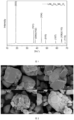
FIG. 1 is an XRD pattern of the ternary cathode material prepared in example 1 of the present disclosure; -
FIG. 2 is an SEM image of the ternary cathode materials prepared in examples 1-3 and comparative example 1 of the present disclosure; -
FIG. 3 is a graph showing the cycling stability of the ternary cathode materials prepared in examples 1-3 and comparative examples 1-2 of the present disclosure at a voltage of 2.8-4.25V and a cycling rate of 1C. - In order to fully understand the present disclosure, the preferred experimental scheme of the present disclosure will be described below in conjunction with examples to further illustrate the characteristics and advantages of the present disclosure. Any change or alteration that does not deviate from the gist of the present disclosure can be understood by those skilled in the art. The scope of protection of the present disclosure is determined by the scope of the claims.
- Where specific conditions are not indicated in the examples of the present disclosure, it shall be carried out under the conventional conditions or the conditions recommended by the manufacturer. The raw materials, reagents, etc. used without indicating their manufacturers are all conventional products commercially available.
- A preparation method of the ternary cathode material of this example comprises the following steps:
- (1) Ball milling a mixture of 300g of Ni0.8Co0.1Mn0.1(OH)2, 142.53g of LiOH•H2O, and 442.53g of ball milling beads in a ball-milling tank at a rotation speed of 300 rpm for 1 h to obtain a milled powder;
- (2) Removing the ball-milling beads from the milled powder, placing the milled powder in a clean sagger and transferring the sagger to a box furnace heated at a heating rate of 5°C/min; keeping the milled powder at 500°C for 4 h, then keeping the milled powder at 810°Cfor 12 h; naturally cooling the milled powder to room temperature to obtain a calcinated powder; jet milling and screening the calcinated powder to obtain a calcined material;
- (3) Subsequently dispersing 0.43g of Nb2O5 and the calcinated material in step (2) to 100.43g of a mixed solution of alcohol and water (water: ethanol=1:5) to obtain a mixed liquid, transferring the mixed liquid to an oil bath and stirring it (at a rotation speed of 300 rpm and a temperature of 90°C) until evaporating the mixed liquid to dryness, to obtain the residue;
- (4) Placing the residue in step (3) in a clean sagger, transferring the sagger to a box furnace heated at a heating rate of 5°C/min, keeping the residue at 600°C for 6 h, and naturally cooling to room temperature to obtain a ternary cathode material.
- The ternary cathode material has a chemical formula of LiNi0.8Co0.1Mn0.1O2•LiNbO3.
- A preparation method of the ternary cathode material of this example comprises the following steps:
- (1) Ball milling a mixture of 300g of Ni0.8Co0.1Mn0.1(OH)2, 142.53g of LiOH•H2O, and 442.53g of ball milling beads in a ball-milling tank at a rotation speed of 300 rpm for 1 h to obtain a milled powder;
- (2) Removing the ball-milling beads from the milled powder, placing the milled powder in a clean sagger and transferring the sagger to a box furnace heated at a heating rate of 5°C/min; keeping the milled powder at 500°C for 4 h, then keeping the milled powder at 810°C for 12 h; naturally cooling the milled powder to room temperature to obtain a calcinated powder; jet milling and screening the calcinated powder to obtain a calcined material;
- (3) Subsequently dispersing 0.43g of Nb2O5 and 100 g of the calcinated material in step (2) to 200.56g of a mixed solution of alcohol and water (water: ethanol=1:5) to obtain a mixed liquid, transferring the mixed liquid to an oil bath and stirring the mixed liquid (at a rotation of 300 rpm speed and a temperature of 90°C) until evaporating the mixed liquid to dryness, to obtain the residue;
- (4) Placing the residue in step (3) in a clean sagger, transferring the sagger to a box furnace heated at a heating rate of 5°C/min, keeping the residue at 600°C for 6 h, and naturally cooling to room temperature to obtain a ternary cathode material.
- The ternary cathode material has a chemical formula of LiNi0.8Co0.1Mn0.1O2•LiNbO3.
- A preparation method of the ternary cathode material of this example comprises the following steps:
- (1) Ball milling a mixture of 300g of Ni0.8Co0.1Mn0.1(OH)2, 142.53g of LiOH•H2O, and 442.53g of ball milling beads in a ball-milling tank at a rotation speed of 300 rpm for 1 h to obtain a milled powder;
- (2) Removing the ball-milling beads from the milled powder, placing the milled powder in a clean sagger and transferring the sagger to a box furnace heated at a heating rate of 5°C/min; keeping the milled powder at 500°C for 4 h, then keeping the milled powder at 810°C for 12 h; naturally cooling the milled powder to room temperature to obtain a calcinated powder; jet milling and screening the calcinated powder to obtain a calcined material;
- (3) Subsequently dispersing 0.86g of Nb2O5 and 100 g of the calcinated material in step (2) to 100.43g of a mixed solution of alcohol and water (water: ethanol=1:5) to obtain a mixed liquid, transferring the mixed liquid to an oil bath and stirring the mixed liquid (at a rotation of 300rpm speed and a temperature of 90°C) until evaporating the mixed liquid to dryness, to obtain a residue;
- (4) Placing the residue in step (3) in a clean sagger, transferring the sagger to a box furnace heated at a heating rate of 5°C/min, keeping the residue at 550°C for 6 h, and naturally cooling to room temperature to obtain a ternary cathode material.
- The ternary cathode material has a chemical formula of LiNi0.8Co0.1Mn0.1O2•.1 te3.
- A preparation method of the ternary cathode material of this example comprises the following steps:
- (1) Ball milling a mixture of 300g of Ni0.8Co0.1Mn0.1(OH)2, 142.53g of LiOH•i2O, and 442.53g of ball milling beads in a ball-milling tank at a rotation speed of 300 rpm for 1 h to obtain a milled powder;
- (2) Removing the ball-milling beads from the milled powder, placing the milled powder in a clean sagger and transferring the sagger to a box furnace heated at a heating rate of 5°C/min; keeping the milled powder at 500°C for 4 h, then keeping the milled powder at 810°C for 12 h; naturally cooling the milled powder to room temperature to obtain a calcinated powder; jet milling and screening the calcinated powder to obtain a calcined material;
- (3) Subsequently dispersing 0.97g of B2O3 and 100 g of the calcinated material in step (2) to 100.43g of a mixed solution of alcohol and water (water: ethanol=1:5) to obtain a mixed liquid, transferring the mixed liquid to an oil bath and stirring the mixed liquid (at a rotation of 300rpm speed and a temperature of 90°C) until evaporating the mixed liquid to dryness, to obtain a residue;
- (4) Placing the residue in step (3) in a clean sagger, transferring the sagger to a box furnace heated at a heating rate of 5°C/min, keeping the residue at 300°C for 6 h, and naturally cooling to room temperature to obtain a ternary cathode material.
- The ternary cathode material has a chemical formula of LiNi0.8Co0.1Mn0.1O2•.13BO3.
- A preparation method of the ternary cathode material of this example comprises the following steps:
- (1) Ball milling a mixture of 300g of Ni0.8Co0.1Mn0.1(OH)2, 142.53g of LiOH•i2O, and 442.53g of ball milling beads in a ball-milling tank at a rotation speed of 300 rpm for 1 hour to obtain a milled powder;
- (2) Removing the ball-milling beads from the milled powder, placing the milled powder in a clean sagger and transferring the sagger to a box furnace heated at a heating rate of 5°C/min; keeping the milled powder at 500°C for 4 h, then keeping the milled powder at 810°C for 12 h; naturally cooling the milled powder to room temperature to obtain a calcinated powder; jet milling and screening the calcinated powder to obtain a calcined material;
- (3) Subsequently dispersing 0.51g of TiO2 and 100 g of the calcinated material in step (2) to 100.43g of a mixed solution of alcohol and water (water: ethanol=1:5) to obtain a mixed liquid, transferring the mixed liquid to an oil bath and stirring the mixed liquid (at a rotation of 300rpm speed and a temperature of 90°C) until evaporating the mixed liquid to dryness, to obtain a residue;
- (4) Placing the residue in step (3) in a clean sagger, transferring the sagger to a box furnace heated at a heating rate of 5°C/min, keeping the residue at 600°C for 6 h, and naturally cooling to room temperature to obtain a ternary cathode material.
- The ternary cathode material has a chemical formula of LiNi0.8Co0.1Mn0.1O2•Li2TiO3.
- A preparation method of the ternary cathode material of this example comprises the following steps:
- (1) Ball milling a mixture of 300g of Ni0.8Co0.1Mn0.1(OH)2, 142.53g of LiOH•H2O, and 442.53g of ball milling beads in a ball-milling tank at a rotation speed of 300 rpm for 1 hour to obtain a milled powder;
- (2) Removing the ball-milling beads from the milled powder, placing the milled powder in a clean sagger and transferring the sagger to a box furnace heated at a heating rate of 5°C/min; keeping the milled powder at 500°C for 4 h, then keeping the milled powder at 810°C for 12 h; naturally cooling the milled powder to room temperature to obtain a calcinated powder; jet milling and screening the calcinated powder to obtain a calcined material;
- (3) Subsequently dispersing 0.43g of Nb2O5 and 100 g of the calcinated material in step (2) to 100.43g of a mixed solution of alcohol and water (water: ethanol=10: 1) to obtain a mixed liquid, transferring the mixed liquid to an oil bath and stirring the mixed liquid (at a rotation of 300rpm speed and a temperature of 90°C) until evaporating the mixed liquid to dryness, to obtain a residue;
- (4) Placing the residue in step (3) in a clean sagger, transferring the sagger to a box furnace heated at a heating rate of 5°C/min, keeping the residue at 600°C for 6 h, and naturally cooling to room temperature to obtain a ternary cathode material.
- The ternary cathode material has a chemical formula of LiNi0.8Co0.1Mn0.1O2•LiNbO3.
- A preparation method of the ternary cathode material of this example comprises the following steps:
- (1) Ball milling a mixture of 300g of Ni0.8Co0.1Mn0.1(OH)2, 142.53g of LiOH•i2O, and 442.53g of ball milling beads in a ball-milling tank at a rotation speed of 300 rpm for 1 hour to obtain a milled powder;
- (2) Removing the ball-milling beads from the milled powder, placing the milled powder in a clean sagger and transferring the sagger to a box furnace heated at a heating rate of 5°C/min; keeping the milled powder at 500°C for 4 h, then keeping the milled powder at 810°C for 12 h; naturally cooling the milled powder to room temperature to obtain a calcinated powder; jet milling and screening the calcinated powder to obtain a calcined material;
- (3) Mixing 0.43g of Nb2O5 and 100 g of the calcinated material in step (2) to obtain a mixture, transferring the mixture to a box furnace heated at a heating rate of 5°C/min, keeping the mixture at 600°C for 6 h, and naturally cooling the mixture to room temperature to obtain a ternary cathode material.
- The calcinated material and the ternary cathode material obtained in the Example 1-3 and the Comparative Example 1 have particle distributions as listed in Table 1.
Table 1 Particle size distributions of Example 1-3 and the Comparative Example 1 Name D10 (µm) D50 (µm) D90 (µm) D99 (µm) Calcinated material 1.61 3.30 6.87 9.03 Example 1 2.51 4.61 8.15 11.72 Example 2 2.56 4.73 8.45 12.03 Example 3 2.43 4.58 8.22 11.82 Comparative Example 1 2.31 4.51 8.26 11.88 - It can be seen from Table 1 that each of the ternary cathode material obtained has a particle size larger than the calcinated material. Combined with the SEM of
FIG. 2 , it is illustrated that the micro powder of the calcinated material deposits in the defect position of the lithium crystal lattice, indicating that the preparation method of the present disclosure can effectively reduce the micro powder content and repair the surface defects of the material. - Table 2 shows the results of the residual lithium in Examples 1-3 and Comparative Example 1.
Table 2 Results of the residual lithium in Examples 1-3 and Comparative Example 1 Name LiOH (wt%) Li2CO3 (wt%) Residual lithium (wt%) Calcinated material 0.4325 0.2398 0.1704 Example 1 0.2957 0.1961 0.1226 Example 2 0.3798 0.2404 0.1552 Example 3 0.3227 0.2075 0.1325 Comparative Example 1 0.1174 0.0780 0.0487 - It can be seen from Table 2 that the ternary cathode material obtained in Examples 1-3 have lower contents of residual lithium compared with that of the calcinated material, indicating that the preparation method can reduce the residual lithium on the surface. Comparative Example 1 has relatively lower content of residual lithium. The difference between Example 1 and Comparative Example is the ratio of water to alcohol in the mixed solution, indicating that the ratio of water to alcohol is a factor affecting the residual lithium content and lithium lattice structure of the calcinated material.
- The ternary cathode material prepared in Example 1-5 and Comparative Example 1-2 was mixed uniformly with the conductive agent acetylene black and the binder PVDF, and then an proper amount of N-methylpyrrolidone (NMP) solvent was added dropwise to prepare a slurry. The slurry is evenly coated on a processed aluminum foil substrate. And after drying, the substrate is punched into a circular cathode sheet and assembled into a button battery for a battery performance test. The test results are shown in Table 3.
Table 3 Performance test of the ternary cathode materials Name I(003)/I (104) 
Initial capacity (0.1C/4.25V, mAh/g) Capacity retention rate (50 cycles at 1C) Example 1 1.33 1.22 200.4 94.48% Example 2 1.30 1.25 200.3 90.81% Example 3 1.31 1.26 199.7 94.15% Comparative Example 1 1.25 1.32 194.9 47.63% Comparative Example 2 1.28 1.56 199.4 86.24% - It can be seen from Table 3 that the initial capacity and capacity retention rate of Examples 1-3 are better than those of Comparative Examples 1 and 2. Among them, I(003)/I(104) value of Example 1 is the highest, which proves that the Li+/Ni2+ cation mixing is the lowest, and the layered structure is relatively intact. The initial capacity of Example 1is also the highest, and the capacity retention rate is the best. On the contrary, the Comparative Example 1 exhibits the lowest I(003)/I(104) as well as the initial capacity, and the capacity retention rate is the worst, indicating that the ratio of organic solvent to water has a certain impact on the battery performance of the ternary cathode material.
- In the above, a ternary cathode material and its preparation method and application provided by the present disclosure have been introduced in detail. Specific examples are used to illustrate the principle and implementation of the present disclosure. The description of the above examples is only used to help understand the method and core idea of the present disclosure, including the best mode, and also enables any skilled in the art to practice the present disclosure, including manufacturing and using any device or system, and implementing any combined method. It should be pointed out that for those of ordinary skill in the art, without departing from the principle of the present disclosure, several improvements and modifications can be made to the present disclosure, and these improvements and modifications also fall within the protection scope of the claims of the present disclosure. The scope of patent protection of the present disclosure is defined by the claims, and may include other embodiments that those skilled in the art can think of. If these other embodiments have structural elements that are not different from the literal expression of the claims, or if they include equivalent structural elements that are not substantially different from the literal expression of the claims, these other embodiments should also be included in the scope of the claims.
Claims (10)
- A ternary cathode material, wherein the ternary cathode material has a chemical formula of LiNixCoyMn(1-x-y)MO2, wherein 0.5the , y≥0, and 1-x-y>0; M comprises an element of at least one selected from the group consisting of niobium, boron, and titanium.
- A method of preparing the ternary cathode material according to claim 1, comprising the following steps:(1) mixing a lithium source and a precursor of nickel-cobalt-manganese to obtain a mixture, ball-milling the mixture to obtain a milled powder;(2) subjecting the milled powder to a first calcinating process, crushing, and screening to obtain a calcinated material;(3) adding the calcinated material and a compound into a mixed solution of an organic solvent and water to obtain a calcinated material mixture, stirring the calcinated material mixture, and evaporating the calcinated material mixture to dryness to obtain a residue;(4) subjecting the residue to a second calcinating process, followed by cooling to obtain the ternary cathode material;wherein the compound of step (3) is at least one selected from the group consisting of a niobium compound, a boron compound, and a titanium compound.
- The method according to claim 2, wherein in step (1), the precursor of nickel-cobalt-manganese has a chemical formula of NixCoyMn(1-x-y)(OH)2, wherein 0.5≤x≤1, y≥0, and 1-x-y>0.
- The method according to claim 2, wherein in step (1), the lithium source is at least one selected from the group consisting of LiOH and Li2CO3.
- The method according to claim 2, wherein in step (2), the first calcinating process is carried out in two stages: a first-stage calcinating is carried out at a first temperature of 400-800°C for 2-8 h, and at a heating rate of 1-10°C/min; a second-stage calcinating is carried out at a temperature of 650-1 100°C for 8-16 h.
- The method according to claim 2, wherein in step (3), the niobium compound is at least one selected from the group consisting of Nb2O5, NbS2, C10H25NbO5, C4H4NNbO9, and LiNbO3; and
the boron compound is at least one selected from the group consisting of B2O3, H3BO3, LiBO2, and Li2B4O7; the titanium compound is at least one selected from the group consisting of TiO2, Li2TiO3, and a titanate ester. - The method according to claim 2, wherein in step (3), the calcinated material and the compound are in a mass ratio of (0.28-1): 100; the calcinated material and the mixed solution are in a mass ratio of (0.1-5): 1; the organic solvent and the water of the mixed solution are in a mass ratio of (0.2-100): 1.
- The method according to claim 2, wherein in step (3), the organic solvent is at least one selected from the group consisting of ethanol, acetone, and isopropanol.
- The method according to claim 2, wherein in step (4), the second calcinating process is carried out at 400°C-700°C for 2-10 h, at a heating rate of 1-10°C/min; wherein the second calcinating process is carried out in air or an oxygen atmosphere.
- A battery comprising the ternary cathode material according to claim 1.
Applications Claiming Priority (2)
| Application Number | Priority Date | Filing Date | Title |
|---|---|---|---|
| CN202011364568.3A CN112479267B (en) | 2020-11-27 | 2020-11-27 | Ternary cathode material and preparation method and application thereof |
| PCT/CN2021/123409 WO2022111093A1 (en) | 2020-11-27 | 2021-10-13 | Ternary positive electrode material, preparation method therefor and use thereof |
Publications (2)
| Publication Number | Publication Date |
|---|---|
| EP4253326A1 true EP4253326A1 (en) | 2023-10-04 |
| EP4253326A4 EP4253326A4 (en) | 2024-06-19 |
Family
ID=74936676
Family Applications (1)
| Application Number | Title | Priority Date | Filing Date |
|---|---|---|---|
| EP21896595.2A Pending EP4253326A4 (en) | 2020-11-27 | 2021-10-13 | TERNARY POSITIVE ELECTRODE MATERIAL, PRODUCTION METHOD AND USE THEREOF |
Country Status (4)
| Country | Link |
|---|---|
| US (1) | US20230303407A1 (en) |
| EP (1) | EP4253326A4 (en) |
| CN (1) | CN112479267B (en) |
| WO (1) | WO2022111093A1 (en) |
Families Citing this family (11)
| Publication number | Priority date | Publication date | Assignee | Title |
|---|---|---|---|---|
| CN112479267B (en) * | 2020-11-27 | 2022-10-18 | 广东邦普循环科技有限公司 | Ternary cathode material and preparation method and application thereof |
| CN113258072B (en) * | 2021-06-16 | 2021-10-15 | 浙江帕瓦新能源股份有限公司 | Nickel-cobalt-manganese positive electrode material and preparation method thereof |
| CN113540434B (en) * | 2021-07-12 | 2022-09-13 | 浙江帕瓦新能源股份有限公司 | Lithium borate modified double-doped positive electrode material and preparation method thereof |
| CN113690399A (en) * | 2021-08-04 | 2021-11-23 | 中国电子科技集团公司第十八研究所 | Anion-cation co-doped and surface double-coated high-nickel single crystal ternary material and preparation method thereof |
| KR20230038123A (en) * | 2021-09-10 | 2023-03-17 | 주식회사 엘지에너지솔루션 | Positive electrode active material, producing method threrof, positive electrode and lithium secondary battery comprising the same |
| CN114583103B (en) * | 2022-02-23 | 2023-11-03 | 上海瑞浦青创新能源有限公司 | Ternary positive electrode material with double oxide surface coating, preparation method of ternary positive electrode material, positive electrode plate and lithium ion battery |
| CN114864914B (en) * | 2022-06-15 | 2023-10-27 | 郴州杉杉新材料有限公司 | Lithium niobate coated high-nickel ternary positive electrode material, preparation method, battery and application |
| CN120565614A (en) * | 2022-06-20 | 2025-08-29 | 宁德时代新能源科技股份有限公司 | Secondary battery and manufacturing method thereof, battery module, battery pack and power-consuming device |
| CN115360330A (en) * | 2022-08-18 | 2022-11-18 | 湘潭大学 | Preparation method of positive pole piece, positive pole piece and lithium ion battery |
| CN117276522B (en) * | 2023-11-22 | 2024-01-26 | 天津润光恒科技开发有限公司 | Nano-lithium niobate-coated ternary cathode material and its preparation method and application |
| CN119833610A (en) * | 2025-01-09 | 2025-04-15 | 深圳大学 | Wide-temperature-range ultrahigh-nickel ternary lithium ion positive electrode material, battery and preparation method |
Family Cites Families (12)
| Publication number | Priority date | Publication date | Assignee | Title |
|---|---|---|---|---|
| CN103762352B (en) * | 2014-01-16 | 2016-04-06 | 东莞新能源科技有限公司 | Lithium nickel-cobalt-manganese ternary positive electrode material of modification and preparation method thereof |
| CN105161693B (en) * | 2015-10-27 | 2018-11-23 | 湖南桑顿新能源有限公司 | A kind of high circulation lithium electricity polynary positive pole material NCM and preparation method thereof |
| CN106602055A (en) * | 2016-11-23 | 2017-04-26 | 广东邦普循环科技有限公司 | Small-granule monocrystal lithium nickel cobalt manganate positive electrode material and preparation method therefor |
| CN106684323B (en) * | 2016-12-22 | 2018-06-01 | 广州朝锂新能源科技有限公司 | A kind of activating oxide improves ternary cathode material of lithium ion battery and preparation method thereof |
| CN108832103B (en) * | 2018-06-20 | 2021-04-02 | 江苏翔鹰新能源科技有限公司 | Modified high-nickel ternary cathode material and preparation method and application thereof |
| CN108899539A (en) * | 2018-06-28 | 2018-11-27 | 上海电力学院 | A kind of nickelic ternary lithium ion anode material and preparation method thereof |
| CN110085831A (en) * | 2019-04-28 | 2019-08-02 | 合肥工业大学 | A kind of metatitanic acid lithium cladding nickel-cobalt-manganternary ternary anode material and preparation method thereof |
| CN110676453A (en) * | 2019-10-10 | 2020-01-10 | 山东友邦科思茂新材料有限公司 | Preparation method of single-crystal high-nickel NCM622 ternary cathode material |
| CN110943219A (en) * | 2019-11-22 | 2020-03-31 | 中伟新材料股份有限公司 | High-performance ternary cathode material, preparation method thereof and lithium ion battery |
| CN112301428B (en) * | 2020-09-24 | 2022-01-07 | 广东邦普循环科技有限公司 | A kind of ternary single crystal cathode material, preparation method and application thereof |
| CN112479267B (en) * | 2020-11-27 | 2022-10-18 | 广东邦普循环科技有限公司 | Ternary cathode material and preparation method and application thereof |
| CN112479271A (en) * | 2020-12-09 | 2021-03-12 | 山东丰元化学股份有限公司 | Preparation method of high-nickel ternary cathode material |
-
2020
- 2020-11-27 CN CN202011364568.3A patent/CN112479267B/en active Active
-
2021
- 2021-10-13 EP EP21896595.2A patent/EP4253326A4/en active Pending
- 2021-10-13 WO PCT/CN2021/123409 patent/WO2022111093A1/en not_active Ceased
-
2023
- 2023-05-27 US US18/202,921 patent/US20230303407A1/en active Pending
Also Published As
| Publication number | Publication date |
|---|---|
| WO2022111093A1 (en) | 2022-06-02 |
| US20230303407A1 (en) | 2023-09-28 |
| CN112479267B (en) | 2022-10-18 |
| EP4253326A4 (en) | 2024-06-19 |
| CN112479267A (en) | 2021-03-12 |
Similar Documents
| Publication | Publication Date | Title |
|---|---|---|
| EP4253326A1 (en) | Ternary positive electrode material, preparation method therefor and use thereof | |
| CN113955809B (en) | Nickel-cobalt-manganese-lithium aluminate positive electrode material with shell-core structure and preparation method thereof | |
| CN110931768B (en) | High-nickel monocrystal lithium ion battery positive electrode material and preparation method thereof | |
| CN115763749B (en) | A composite-doped high-nickel large single-crystal ternary layered oxide cathode material, its preparation method and application | |
| EP4468384A1 (en) | Double-coated high-nickel lithium-ion cathode material, preparation method thereof and application thereof | |
| CN115084506B (en) | Large-particle-size monocrystal ternary positive electrode material, and preparation method and application thereof | |
| CN112349885B (en) | Modified lithium ion battery positive electrode material and preparation method thereof | |
| CN117497728B (en) | Sodium ion battery positive electrode material and preparation method thereof | |
| WO2021243928A1 (en) | Positive electrode material used for lithium ion battery, preparation method therefor, and lithium ion battery | |
| CN111682174B (en) | A kind of antimony-coated lithium battery cathode material and its preparation method and application | |
| CN113013389A (en) | Ternary positive electrode material coated with manganese oxide compound and preparation method thereof | |
| CN114695875A (en) | High-capacity single crystal ternary cathode material and preparation method thereof | |
| CN113764671A (en) | Anode material of lithium ion battery | |
| CN111933929B (en) | F-doped anode material and preparation method thereof | |
| WO2025223412A1 (en) | Lithium composite metal oxide and preparation method therefor, and lithium-ion battery | |
| CN111952552B (en) | Glass state coated positive electrode material and preparation method thereof | |
| CN113422039A (en) | Ternary composite oxide matrix material, ternary positive electrode material, preparation method and lithium ion battery prepared from ternary composite oxide matrix material and ternary positive electrode material | |
| CN118970031A (en) | Sodium ion battery positive electrode material and preparation method thereof, manganese-containing oxide, sodium ion battery, and electrical equipment | |
| CN120300178A (en) | Positive electrode active material and method for producing positive electrode active material | |
| CN114094085A (en) | Positive electrode material and preparation method and application thereof | |
| CN118676350B (en) | Modified positive electrode material and preparation method thereof, positive electrode sheet and battery | |
| CN113264550A (en) | Preparation method of lithium titanate negative electrode material | |
| CN119542393B (en) | Lanthanide perovskite oxide coated high nickel ternary positive electrode material and preparation method | |
| CN116812990B (en) | A single crystal nickel-cobalt-manganese ternary positive electrode material and its preparation method | |
| CN120319799A (en) | A stable, reversible, high-capacity positive electrode material and preparation method thereof, positive electrode sheet and sodium ion battery |
Legal Events
| Date | Code | Title | Description |
|---|---|---|---|
| STAA | Information on the status of an ep patent application or granted ep patent |
Free format text: STATUS: THE INTERNATIONAL PUBLICATION HAS BEEN MADE |
|
| PUAI | Public reference made under article 153(3) epc to a published international application that has entered the european phase |
Free format text: ORIGINAL CODE: 0009012 |
|
| STAA | Information on the status of an ep patent application or granted ep patent |
Free format text: STATUS: REQUEST FOR EXAMINATION WAS MADE |
|
| 17P | Request for examination filed |
Effective date: 20230626 |
|
| AK | Designated contracting states |
Kind code of ref document: A1 Designated state(s): AL AT BE BG CH CY CZ DE DK EE ES FI FR GB GR HR HU IE IS IT LI LT LU LV MC MK MT NL NO PL PT RO RS SE SI SK SM TR |
|
| DAX | Request for extension of the european patent (deleted) | ||
| RAV | Requested validation state of the european patent: fee paid |
Extension state: MA Effective date: 20230626 |
|
| A4 | Supplementary search report drawn up and despatched |
Effective date: 20240517 |
|
| RIC1 | Information provided on ipc code assigned before grant |
Ipc: H01M 10/0525 20100101ALI20240513BHEP Ipc: H01M 4/525 20100101ALI20240513BHEP Ipc: H01M 4/505 20100101ALI20240513BHEP Ipc: C01G 53/00 20060101AFI20240513BHEP |