EP4252876A1 - Audio system and method - Google Patents
Audio system and method Download PDFInfo
- Publication number
- EP4252876A1 EP4252876A1 EP23163084.9A EP23163084A EP4252876A1 EP 4252876 A1 EP4252876 A1 EP 4252876A1 EP 23163084 A EP23163084 A EP 23163084A EP 4252876 A1 EP4252876 A1 EP 4252876A1
- Authority
- EP
- European Patent Office
- Prior art keywords
- audio
- game
- language
- audio data
- output
- Prior art date
- Legal status (The legal status is an assumption and is not a legal conclusion. Google has not performed a legal analysis and makes no representation as to the accuracy of the status listed.)
- Pending
Links
Images


Classifications
-
- A—HUMAN NECESSITIES
- A63—SPORTS; GAMES; AMUSEMENTS
- A63F—CARD, BOARD, OR ROULETTE GAMES; INDOOR GAMES USING SMALL MOVING PLAYING BODIES; VIDEO GAMES; GAMES NOT OTHERWISE PROVIDED FOR
- A63F13/00—Video games, i.e. games using an electronically generated display having two or more dimensions
- A63F13/85—Providing additional services to players
-
- A—HUMAN NECESSITIES
- A63—SPORTS; GAMES; AMUSEMENTS
- A63F—CARD, BOARD, OR ROULETTE GAMES; INDOOR GAMES USING SMALL MOVING PLAYING BODIES; VIDEO GAMES; GAMES NOT OTHERWISE PROVIDED FOR
- A63F13/00—Video games, i.e. games using an electronically generated display having two or more dimensions
- A63F13/70—Game security or game management aspects
- A63F13/79—Game security or game management aspects involving player-related data, e.g. identities, accounts, preferences or play histories
-
- A—HUMAN NECESSITIES
- A63—SPORTS; GAMES; AMUSEMENTS
- A63F—CARD, BOARD, OR ROULETTE GAMES; INDOOR GAMES USING SMALL MOVING PLAYING BODIES; VIDEO GAMES; GAMES NOT OTHERWISE PROVIDED FOR
- A63F13/00—Video games, i.e. games using an electronically generated display having two or more dimensions
- A63F13/50—Controlling the output signals based on the game progress
- A63F13/54—Controlling the output signals based on the game progress involving acoustic signals, e.g. for simulating revolutions per minute [RPM] dependent engine sounds in a driving game or reverberation against a virtual wall
-
- A—HUMAN NECESSITIES
- A63—SPORTS; GAMES; AMUSEMENTS
- A63F—CARD, BOARD, OR ROULETTE GAMES; INDOOR GAMES USING SMALL MOVING PLAYING BODIES; VIDEO GAMES; GAMES NOT OTHERWISE PROVIDED FOR
- A63F13/00—Video games, i.e. games using an electronically generated display having two or more dimensions
- A63F13/60—Generating or modifying game content before or while executing the game program, e.g. authoring tools specially adapted for game development or game-integrated level editor
-
- A—HUMAN NECESSITIES
- A63—SPORTS; GAMES; AMUSEMENTS
- A63F—CARD, BOARD, OR ROULETTE GAMES; INDOOR GAMES USING SMALL MOVING PLAYING BODIES; VIDEO GAMES; GAMES NOT OTHERWISE PROVIDED FOR
- A63F13/00—Video games, i.e. games using an electronically generated display having two or more dimensions
- A63F13/70—Game security or game management aspects
- A63F13/77—Game security or game management aspects involving data related to game devices or game servers, e.g. configuration data, software version or amount of memory
-
- A—HUMAN NECESSITIES
- A63—SPORTS; GAMES; AMUSEMENTS
- A63F—CARD, BOARD, OR ROULETTE GAMES; INDOOR GAMES USING SMALL MOVING PLAYING BODIES; VIDEO GAMES; GAMES NOT OTHERWISE PROVIDED FOR
- A63F13/00—Video games, i.e. games using an electronically generated display having two or more dimensions
- A63F13/80—Special adaptations for executing a specific game genre or game mode
- A63F13/847—Cooperative playing, e.g. requiring coordinated actions from several players to achieve a common goal
-
- A—HUMAN NECESSITIES
- A63—SPORTS; GAMES; AMUSEMENTS
- A63F—CARD, BOARD, OR ROULETTE GAMES; INDOOR GAMES USING SMALL MOVING PLAYING BODIES; VIDEO GAMES; GAMES NOT OTHERWISE PROVIDED FOR
- A63F13/00—Video games, i.e. games using an electronically generated display having two or more dimensions
- A63F13/85—Providing additional services to players
- A63F13/87—Communicating with other players during game play, e.g. by e-mail or chat
-
- G—PHYSICS
- G06—COMPUTING OR CALCULATING; COUNTING
- G06F—ELECTRIC DIGITAL DATA PROCESSING
- G06F40/00—Handling natural language data
- G06F40/40—Processing or translation of natural language
- G06F40/58—Use of machine translation, e.g. for multi-lingual retrieval, for server-side translation for client devices or for real-time translation
-
- A—HUMAN NECESSITIES
- A63—SPORTS; GAMES; AMUSEMENTS
- A63F—CARD, BOARD, OR ROULETTE GAMES; INDOOR GAMES USING SMALL MOVING PLAYING BODIES; VIDEO GAMES; GAMES NOT OTHERWISE PROVIDED FOR
- A63F2300/00—Features of games using an electronically generated display having two or more dimensions, e.g. on a television screen, showing representations related to the game
- A63F2300/50—Features of games using an electronically generated display having two or more dimensions, e.g. on a television screen, showing representations related to the game characterized by details of game servers
- A63F2300/55—Details of game data or player data management
-
- A—HUMAN NECESSITIES
- A63—SPORTS; GAMES; AMUSEMENTS
- A63F—CARD, BOARD, OR ROULETTE GAMES; INDOOR GAMES USING SMALL MOVING PLAYING BODIES; VIDEO GAMES; GAMES NOT OTHERWISE PROVIDED FOR
- A63F2300/00—Features of games using an electronically generated display having two or more dimensions, e.g. on a television screen, showing representations related to the game
- A63F2300/60—Methods for processing data by generating or executing the game program
- A63F2300/6063—Methods for processing data by generating or executing the game program for sound processing
- A63F2300/6081—Methods for processing data by generating or executing the game program for sound processing generating an output signal, e.g. under timing constraints, for spatialization
Definitions
- the present invention relates to an audio system and method.
- multiplayer games take one of two forms.
- first form separate users with respective games machines join an game hosted online (for example by a server) to play together.
- game hosted online for example by a server
- each user's respective games machine has their own copy of the game, and their respective copy will be configured for the nationality of the user (for example in terms of language used within the game).
- a group of users all play a single game together on a single games machine, for example by using a plurality of handheld controllers, and all the users are in the same room and typically friends.
- the language of the game is not a consideration as it can be assumed that all the users in the group can share the same language as the person whose games machine it is.
- a method of audio provision is provided in accordance with claim 1.
- an audio provision system is provided in accordance with claim 11.
- Figure 1 shows an example of an entertainment system 10 in the form of a computer or console such as the Sony ® PlayStation 5 ® (PS5).
- the entertainment system (either as a home videogame console, a development console, a rack-mounted server console, or a virtualised console) is an example of the audio system described herein.
- the entertainment system 10 comprises a central processor 20. This may be a single or multi core processor, for example comprising eight cores as in the PS5.
- the entertainment system also comprises a graphical processing unit or GPU 30.
- the GPU can be physically separate to the CPU, or integrated with the CPU as a system on a chip 'SoC' as in the PS5.
- the entertainment device may transmit or receive data via one or more data ports 60, such as a USB port, Ethernet ® port, WiFi ® port, Bluetooth ® port or similar, as appropriate. It may also optionally receive data via an optical drive 70.
- data ports 60 such as a USB port, Ethernet ® port, WiFi ® port, Bluetooth ® port or similar, as appropriate. It may also optionally receive data via an optical drive 70.
- Interaction with the system is typically provided using one or more handheld controllers 80, such as the DualSense ® controller in the case of the PS5.
- Audio/visual outputs from the entertainment device are typically provided through one or more A/V ports 90, or through one or more of the wired or wireless data ports 60.
- An example of a device for displaying images output by the entertainment system is a head mounted display 'HMD' 802, worn by a user 800.
- FIG. 2A this illustrates a typical local co-op game where two or more players (indicated by controllers 80A and 80B) interact with the same entertainment device 10.
- audio from the game in a default language is output from the AV port 90 (or alternatively the data port 60) to a speaker 92.
- the entertainment device 10 outputs audio from the game in a default language as before to the speaker 92, but also sends audio (and typically video) to a separate device 10A such as a mobile phone or portable videogame console, typically via a local area network or potentially the Internet 110.
- a separate device 10A such as a mobile phone or portable videogame console
- the output from the entertainment device and as shown on the separate device are the same, simply to enable a single user to continue playing a game away from the entertainment device, but optionally the output may be different to enable a local co-op game where one player is potentially remote from the other.
- entertainment device 10 is incorporated into a server, either as hardware or a virtual machine.
- the output of the device is streamed to both separate players on respective devices 10A and 10B, and like the scenario of figure 2B , the players may be geographically separate.
- audio for different languages is provided for a single executing instance of the video game. It will be appreciated that this is in contrast to conventional multiplayer games where each user has their own instance of the game which may be configured to output the respective language of its user.
- FIG 3A this illustrates a conventional local co-op game 42A running within entertainment device 10.
- the game executes, it requests audio files as needed for a particular language from storage device SSD 50 (or any other suitable data source including optical drive, hard drive, USB drive, or network), and outputs the resulting audio to AV port 90 (or data port 60 depending on the nature of the required communication with a desired speaker system).
- storage device SSD 50 or any other suitable data source including optical drive, hard drive, USB drive, or network
- conventional local co-op game 42A may be used in the scenario shown in figure 2A , but only in the scenario as shown in figures 2B and 2C if geographically separate users share the same language.
- a local co-op game 42B is modified to comprise helper function 44B, which causes the game as it executes to request audio files as needed for two particular languages from storage device SSD 50 or similar, and outputs the resulting audio in parallel to AV port 90 (or data port 60 depending on the nature of the required communication with a desired speaker system).
- the helper function can either modify the game to explicitly request audio files in two languages, or can intercept or tap a single request for an audio file in a single language, and then duplicate that request for the corresponding audio file in the other preferred language.
- the preferred language of each player may be based on profile information associated with respective user logins and accounts.
- the preferred language information for the user of the host device 10 may already be known, whilst the preferred language information for the user of the separate remote device 10A may either be provided to the host device directly from the separate remote device 10A, or may be provided by or via a separate server administering login processes and/or optionally administering routing between host device 10 and the separate device 10A.
- the host device is typically not owned by either player, and so the preferred language information for both users may be provided by their respective separate remote devices 10A and 10B, and/or they provided by or via a server administering login processes and/or optionally administering routing between host device 10 and the separate devices 10A and 10B.
- the optionally the server may be part of the same server system comprising the host entertainment device 10.
- the two or more spoken language audios may be played in conjunction with non-language audio (such as music and/or sound effects) that can be common to some or all players.
- non-language audio such as music and/or sound effects
- the game or helper app affects the audio mixing pipeline.
- An example of such an audio mixing pipeline is found with the PlayStation 5 ® Tempest audio engine.
- the pipeline may prepare common elements of the audio once, and optionally any user-specific non-language audio separately (for example where audio effects such as echoes are dependent upon the player's in-game position, or different players want different volume levels or other personalisations for their own headphones, if worn), and also prepare the language audio separately for respective users.
- the audio engine then generates personalised audio for respective users by mixing the language (and optionally non-language) user-specific elements with respective copies of the common elements to create respective user's audio.
- the audio may be sent unmixed (for example sending common elements only once) and then be mixed by the client, to reduce streaming bandwidth.
- a modified version of the local co-op game can provide respective audio to two or more players in their preferred languages.
- the original and unmodified local co-op game 42A operates as originally shown in figure 3A , outputting audio in a single language (for example of the preferred language of player one, or whichever user first logged into the current session of entertainment device 10, or based on whatever scheme is already coded in the game).
- the entertainment device also hosts a helper app 44A.
- This helper app in effect is a stand-alone version of the helper function 44B.
- the separate helper app can monitor file accesses from the storage device.
- the corresponding audio file for the second (and optionally third, fourth, etc.) languages of other players can be accessed by the helper app.
- the helper app can the output the corresponding audio in parallel with the audio from the game in a similar manner to the arrangement in Figure 3B .
- the help app may user any suitable means to approximately synchronise the language audio.
- the helper app can also store the corresponding language files in RAM and use them in parallel; in this case the helper app may use software hooks or system interrupts to detect access to the audio files, or have system assistance or permission to monitor access to the RAM address holding the file.
- the helper app may be configured to access a configuration file for the particular game title that tells it which audio files for language A correspond with audio files for languages B, C, D, etc., to the extent that audio filed for these languages exist.
- the helper app may be further equipped to apply a typically undetectable audio watermark to the audio files.
- a typically undetectable audio watermark For example it may encoding an identifier for an audio file, and optionally also a time stamp or counter, as a binary code in the lowest significant bit (LSB) of the audio data stream, optionally only for every Nth LSB as the bit rate of the audio version the bit rate required for identification may mean that relatively few bits need encoding in this manner. This will have a small impact on audio quality whilst making tracking of the audio data in the absence of other more direct monitoring mechanisms easier, by using template matching or pattern correlation or the like within relevant data streams input to, used by, or output from the game.
- LSB lowest significant bit
- the audio output by the game is mixed to include language and non-language audio
- the audio output by the game can be muted or reduced in volume so that the two languages do not clash.
- the helper app can also access the language files used in the games audio output, and use these to substantially subtract the first language audio from the output audio before adding the second language audio.
- the entertainment device takes a single instance of a videogame that conventionally outputs audio for a single language of a first player, and outputs corresponding audio for one or more other languages of choice by one or more other players.
- a second step 420 outputting for the game first audio in a preferred language of a first user, as described elsewhere herein.
- a third step 430 outputting for the game second audio in a different preferred language of a second user, as described elsewhere herein. It will be appreciated that outputting audio in two languages substantially simultaneously for one instance of a game running in a local co-op mode is contrary to the normal functioning of a local co-op mode game, but recognises that new arrangements where some or all of the ' local ' players are in fact remote from the host entertainment device are possible, either with the game being explicitly modified to accommodate these, or the operating system of the host entertainment device placing a legacy game within a legacy operating environment and monitoring / intercepting its activities to in order route separate or duplicate outputs to remote players.
- a conventional equivalent device may be implemented in the form of a computer program product comprising processor implementable instructions stored on a non-transitory machine-readable medium such as a floppy disk, optical disk, hard disk, solid state disk, PROM, RAM, flash memory or any combination of these or other storage media, or realised in hardware as an ASIC (application specific integrated circuit) or an FPGA (field programmable gate array) or other configurable circuit suitable to use in adapting the conventional equivalent device.
- a computer program may be transmitted via data signals on a network such as an Ethernet, a wireless network, the Internet, or any combination of these or other networks.
- an audio provision ecosystem comprises the audio provision system as described and claimed herein, and optionally also one or more selected from the list consisting of a server administering a real or virtual instance of the audio provision system configured to route audio data (and typically other data) to two or more recipients; and one or more remote separate devices configured to receive the respective audio data (and typically other data) and output it for the user of that device to hear.
Landscapes
- Engineering & Computer Science (AREA)
- Multimedia (AREA)
- Physics & Mathematics (AREA)
- Business, Economics & Management (AREA)
- Computer Security & Cryptography (AREA)
- General Business, Economics & Management (AREA)
- Acoustics & Sound (AREA)
- Theoretical Computer Science (AREA)
- Artificial Intelligence (AREA)
- Audiology, Speech & Language Pathology (AREA)
- Computational Linguistics (AREA)
- General Health & Medical Sciences (AREA)
- General Engineering & Computer Science (AREA)
- General Physics & Mathematics (AREA)
- Health & Medical Sciences (AREA)
- Information Transfer Between Computers (AREA)
- Electrically Operated Instructional Devices (AREA)
- User Interface Of Digital Computer (AREA)
Abstract
A method of audio provision comprises the steps of executing a game in a local co-operative play mode, outputting for the game first audio in a preferred language of a first user, and also outputting for the game second audio in a different preferred language of a second user.
Description
- The present invention relates to an audio system and method.
- Conventionally, multiplayer games take one of two forms. In the first form, separate users with respective games machines join an game hosted online (for example by a server) to play together. In this case, each user's respective games machine has their own copy of the game, and their respective copy will be configured for the nationality of the user (for example in terms of language used within the game).
- In the second form, a group of users all play a single game together on a single games machine, for example by using a plurality of handheld controllers, and all the users are in the same room and typically friends. In this circumstance, the language of the game is not a consideration as it can be assumed that all the users in the group can share the same language as the person whose games machine it is.
- However, there is scope for additional forms of multiplayer game, where issues of language may again need to be accommodated.
- Various aspects and features of the present invention are defined in the appended claims and within the text of the accompanying description.
- In a first aspect, a method of audio provision is provided in accordance with claim 1.
- In another aspect, an audio provision system is provided in accordance with claim 11.
- A more complete appreciation of the disclosure and many of the attendant advantages thereof will be readily obtained as the same becomes better understood by reference to the following detailed description when considered in connection with the accompanying drawings, wherein:
-
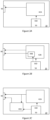
Figure 1 is a schematic diagram of an entertainment device operable as an audio provision system in accordance with embodiments of the present description. -
Figure 2A is a respective configuration of an entertainment device. -
Figures 2B - 2C are respective configurations of an entertainment device in accordance with embodiments of the present description. -
Figure 3A is a respective configuration of an entertainment device executing a game. -
Figures 3B - 3C are respective configurations of an entertainment device executing a game, in accordance with embodiments of the present description. -
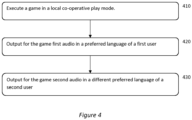
Figure 4 is a flow diagram of a method of audio provision in accordance with embodiments of the present description. - An audio system and method are disclosed. In the following description, a number of specific details are presented in order to provide a thorough understanding of the embodiments of the present invention. It will be apparent, however, to a person skilled in the art that these specific details need not be employed to practice the present invention. Conversely, specific details known to the person skilled in the art are omitted for the purposes of clarity where appropriate.
- Referring now to the drawings, wherein like reference numerals designate identical or corresponding parts throughout the several views,
Figure 1 shows an example of anentertainment system 10 in the form of a computer or console such as the Sony ® PlayStation 5 ® (PS5). The entertainment system (either as a home videogame console, a development console, a rack-mounted server console, or a virtualised console) is an example of the audio system described herein. - The
entertainment system 10 comprises acentral processor 20. This may be a single or multi core processor, for example comprising eight cores as in the PS5. The entertainment system also comprises a graphical processing unit orGPU 30. The GPU can be physically separate to the CPU, or integrated with the CPU as a system on a chip 'SoC' as in the PS5. - The entertainment device also comprises
RAM 40, and may either have separate RAM for each of the CPU and GPU, or shared RAM as in the PS5. The or each RAM can be physically separate, or integrated as part of an SoC as in the PS5. Further storage is provided by adisk 50, either as an external or internal hard drive, or as an external solid state drive, or an internal solid state drive as in the PS5. - The entertainment device may transmit or receive data via one or
more data ports 60, such as a USB port, Ethernet ® port, WiFi ® port, Bluetooth ® port or similar, as appropriate. It may also optionally receive data via anoptical drive 70. - Interaction with the system is typically provided using one or more
handheld controllers 80, such as the DualSense ® controller in the case of the PS5. - Audio/visual outputs from the entertainment device are typically provided through one or more A/
V ports 90, or through one or more of the wired orwireless data ports 60. - Where components are not integrated, they may be connected as appropriate either by a dedicated data link or via a
bus 100. - An example of a device for displaying images output by the entertainment system is a head mounted display 'HMD' 802, worn by a
user 800. - Turning now to
Figure 2A , this illustrates a typical local co-op game where two or more players (indicated bycontrollers same entertainment device 10. In this case, audio from the game in a default language is output from the AV port 90 (or alternatively the data port 60) to aspeaker 92. - Turning now to
Figure 2B , in another configuration comprising so-called 'remote play', theentertainment device 10 outputs audio from the game in a default language as before to thespeaker 92, but also sends audio (and typically video) to aseparate device 10A such as a mobile phone or portable videogame console, typically via a local area network or potentially the Internet 110. In some use cases, the output from the entertainment device and as shown on the separate device are the same, simply to enable a single user to continue playing a game away from the entertainment device, but optionally the output may be different to enable a local co-op game where one player is potentially remote from the other. - Turning next to
Figure 2C , in yet anotherconfiguration entertainment device 10 is incorporated into a server, either as hardware or a virtual machine. In this case effectively the output of the device is streamed to both separate players onrespective devices figure 2B , the players may be geographically separate. - Consequently a local co-op game designed for the scenario shown in
figure 2A , which outputs audio in a default language, is not necessarily suited to use in the scenario is shown infigures 2B and 2C , in which the users may potentially be located in different countries and have different native /preferred languages. - To address this problem, in embodiments of the present invention, audio for different languages is provided for a single executing instance of the video game. It will be appreciated that this is in contrast to conventional multiplayer games where each user has their own instance of the game which may be configured to output the respective language of its user.
- Turning to
figure 3A , this illustrates a conventionallocal co-op game 42A running withinentertainment device 10. As the game executes, it requests audio files as needed for a particular language from storage device SSD 50 (or any other suitable data source including optical drive, hard drive, USB drive, or network), and outputs the resulting audio to AV port 90 (ordata port 60 depending on the nature of the required communication with a desired speaker system). - As such conventional
local co-op game 42A may be used in the scenario shown infigure 2A , but only in the scenario as shown infigures 2B and 2C if geographically separate users share the same language. - Accordingly, turning to
figure 3B , in an embodiment of the present invention, alocal co-op game 42B is modified to comprisehelper function 44B, which causes the game as it executes to request audio files as needed for two particular languages from storage device SSD 50 or similar, and outputs the resulting audio in parallel to AV port 90 (ordata port 60 depending on the nature of the required communication with a desired speaker system). - The helper function can either modify the game to explicitly request audio files in two languages, or can intercept or tap a single request for an audio file in a single language, and then duplicate that request for the corresponding audio file in the other preferred language.
- In this case, the respective parallel outputs are sent to the respective end-users, either based on physical routing (e.g. by choice of audio channel) or logical routing (e.g. the use of addresses in data packets, or meta data indicating which user should be the recipient of the audio).
- In this case, the preferred language of each player may be based on profile information associated with respective user logins and accounts.
- In the scenario shown in
figure 2B , the preferred language information for the user of thehost device 10 may already be known, whilst the preferred language information for the user of the separateremote device 10A may either be provided to the host device directly from the separateremote device 10A, or may be provided by or via a separate server administering login processes and/or optionally administering routing betweenhost device 10 and theseparate device 10A. - Meanwhile in the scenario shown in
figure 2C , the host device is typically not owned by either player, and so the preferred language information for both users may be provided by their respective separateremote devices host device 10 and theseparate devices host entertainment device 10. - In the case of
Figure 3B , it will be appreciated that optionally the two or more spoken language audios may be played in conjunction with non-language audio (such as music and/or sound effects) that can be common to some or all players. Accordingly, optionally the game or helper app affects the audio mixing pipeline. An example of such an audio mixing pipeline is found with the PlayStation 5 ® Tempest audio engine. - The pipeline may prepare common elements of the audio once, and optionally any user-specific non-language audio separately (for example where audio effects such as echoes are dependent upon the player's in-game position, or different players want different volume levels or other personalisations for their own headphones, if worn), and also prepare the language audio separately for respective users.
- The audio engine then generates personalised audio for respective users by mixing the language (and optionally non-language) user-specific elements with respective copies of the common elements to create respective user's audio.
- Optionally in the case of remote server based devices (e.g. cloud hosted systems such as in
Figure 2C ), the audio may be sent unmixed (for example sending common elements only once) and then be mixed by the client, to reduce streaming bandwidth. - Hence in this way, a modified version of the local co-op game can provide respective audio to two or more players in their preferred languages.
- Unfortunately however for some games it may not be possible to modify them in this manner. For example they may be legacy games for which source code is no longer readily accessible, making functional modification of the game difficult. Alternatively or in addition, it may simply be costly or impractical to make this modification for a large back catalogue of games.
- Accordingly, turning now to
figure 3C , in an embodiment of the present invention the original and unmodifiedlocal co-op game 42A operates as originally shown infigure 3A , outputting audio in a single language (for example of the preferred language of player one, or whichever user first logged into the current session ofentertainment device 10, or based on whatever scheme is already coded in the game). - Hence as before as the game executes it requests audio files as needed for the single language from
storage device SSD 50 or similar. - However, in this case the entertainment device also hosts a
helper app 44A. This helper app in effect is a stand-alone version of thehelper function 44B. - Rather than modifying the game itself, or intercepting or tapping audio file requests within the game, the separate helper app can monitor file accesses from the storage device. When an audio file for the default language being used by the game is accessed, the corresponding audio file for the second (and optionally third, fourth, etc.) languages of other players can be accessed by the helper app.
- The helper app can the output the corresponding audio in parallel with the audio from the game in a similar manner to the arrangement in
Figure 3B . In this case, the help app may user any suitable means to approximately synchronise the language audio. - In one instance, if the audio is being streamed from the storage device, then synchronisation can be achieved by starting to stream at substantially the same time, or accessing a similar position within the stream to that being read for the default language.
- In another instance, where the audio file for the default language is being stored in RAM and used in response to game events, the helper app can also store the corresponding language files in RAM and use them in parallel; in this case the helper app may use software hooks or system interrupts to detect access to the audio files, or have system assistance or permission to monitor access to the RAM address holding the file.
- In another instance, an audio output buffer may be monitored. The buffer holds audio data prior to either digital to analog conversion, or packetisation, for output from the entertainment device. The helper app can compare the audio data with the data stored on the SSD to detect when a given piece of audio data from the SSD is being used, and then inject one or more parallel audio data streams to be sent to the or each other user.
- To help with tracking audio files, either when accessed from storage, accessed from RAM, or output to an audio buffer, the helper app may be configured to access a configuration file for the particular game title that tells it which audio files for language A correspond with audio files for languages B, C, D, etc., to the extent that audio filed for these languages exist.
- Optionally, the helper app may be further equipped to apply a typically undetectable audio watermark to the audio files. For example it may encoding an identifier for an audio file, and optionally also a time stamp or counter, as a binary code in the lowest significant bit (LSB) of the audio data stream, optionally only for every Nth LSB as the bit rate of the audio version the bit rate required for identification may mean that relatively few bits need encoding in this manner. This will have a small impact on audio quality whilst making tracking of the audio data in the absence of other more direct monitoring mechanisms easier, by using template matching or pattern correlation or the like within relevant data streams input to, used by, or output from the game.
- In this case, if the audio output by the game is mixed to include language and non-language audio, then for the additional language audio version the audio output by the game can be muted or reduced in volume so that the two languages do not clash. Alternatively, the helper app can also access the language files used in the games audio output, and use these to substantially subtract the first language audio from the output audio before adding the second language audio.
- Hence using any one of the above embodiments, the entertainment device takes a single instance of a videogame that conventionally outputs audio for a single language of a first player, and outputs corresponding audio for one or more other languages of choice by one or more other players.
- The respective audio can be output by the entertainment device to respective audio streams associated with the entertainment device and a secondary device (as in the arrangement of
Figure 2B ) or output to two secondary devices (as in the arrangement ofFigure 2C ). - This may be achieved by a
helper function 44B that modifies the game to access, use, and output multiple language files in parallel rather than files for one language (as in the arrangement ofFigure 3B ), or such a helper function may be astandalone app 44A (as in the arrangement ofFigure 3C ) that tracks the functioning of the game to output additional audio in parallel with the single language audio output by the game. - This tracking can be based on analysis of the state of the game software, analysis of access to audio files in storage or in RAM, analysis of audio data being output by the game software for playback, or any suitable combination of these. The tracking can optionally be further facilitated by configuration data for a given game title that identifies corresponding language audio files, and / or by watermarking the audio in the files in an audibly undetectable (or inoffensive) manner.
- Hence referring now to
Figure 4 , in a summary embodiment of the present description, a method of audio provision, comprising the following steps. - In a
first step 410, executing a game in a local co-operative play mode; as described elsewhere herein, a notable feature of such a mode is that it assumes that everyone playing is in the same place and sharing the same audio (and by extension, the same language of audio). - In a
second step 420, outputting for the game first audio in a preferred language of a first user, as described elsewhere herein. - And also in a
third step 430, outputting for the game second audio in a different preferred language of a second user, as described elsewhere herein. It will be appreciated that outputting audio in two languages substantially simultaneously for one instance of a game running in a local co-op mode is contrary to the normal functioning of a local co-op mode game, but recognises that new arrangements where some or all of the 'local' players are in fact remote from the host entertainment device are possible, either with the game being explicitly modified to accommodate these, or the operating system of the host entertainment device placing a legacy game within a legacy operating environment and monitoring / intercepting its activities to in order route separate or duplicate outputs to remote players. - It will be apparent to a person skilled in the art that variations in the above method corresponding to operation of the various embodiments of the apparatus as described and claimed herein are considered within the scope of the present invention, including but not limited to that:
- In an instance of the summary embodiment, the step of executing the game in a local co-operative play mode comprises executing a modified version of the game, the modified version configured to access corresponding second audio data for the second language when accessing selected first audio data for the first language; and output the corresponding second audio data for the second language when outputting selected first audio data for the first language, the outputs being directed to respective audio playback systems for the first and second users, as described elsewhere herein;
- In an instance of the summary embodiment, the method comprises executing a helper application in conjunction with the game, the helper application being configured to monitor what selected first audio data for the first language is being used by the game, access corresponding second audio data for the second language in response to which selected first audio is being used, and output the corresponding second audio data for the second language when the game outputs the selected first audio, as described elsewhere herein;
- In this instance, optionally the monitoring step comprises monitoring which first audio data for the first language is accessed by the game from a storage means, as described elsewhere herein;
- In this instance, optionally the monitoring step comprises monitoring which first audio data for the first language is being accessed by the game in memory, as described elsewhere herein;
- In this instance, optionally the monitoring step comprises monitoring which first audio data for the first language is being output by the game to an output buffer, as described elsewhere herein;
- In this latter case, optionally the first audio data is identified by comparing the output first audio data with first audio data filed in a storage means, as described elsewhere herein;
- In this instance, optionally the method comprises the step of encoding corresponding identifiers for the first audio data and second audio data within the first audio data and second audio data, as described elsewhere herein; and
- In an instance of the summary embodiment, the method comprises the step of providing a configuration file for the game that identifies the correspondence between the first audio data and the second audio data, as described elsewhere herein.
- It will be appreciated that the above methods may be carried out on conventional hardware suitably adapted as applicable by software instruction or by the inclusion or substitution of dedicated hardware.
- Thus the required adaptation to existing parts of a conventional equivalent device may be implemented in the form of a computer program product comprising processor implementable instructions stored on a non-transitory machine-readable medium such as a floppy disk, optical disk, hard disk, solid state disk, PROM, RAM, flash memory or any combination of these or other storage media, or realised in hardware as an ASIC (application specific integrated circuit) or an FPGA (field programmable gate array) or other configurable circuit suitable to use in adapting the conventional equivalent device. Separately, such a computer program may be transmitted via data signals on a network such as an Ethernet, a wireless network, the Internet, or any combination of these or other networks.
- Accordingly, referring again to
Figures 1 to 3 , in a summary embodiment of the description an audio provision system (such asentertainment device 10, either in a domestic, developer, server, or virtualised setting) comprises a game execution processor (for example CPU 20) configured (for example by suitable software instruction) to execute a game in a local co-operative play mode, an audio output processor (forexample CPU 20 and/or GPU 30) configured (for example by suitable software instruction originating as appropriate from one or more of the operating system, the game, or a helper app) to output for the game first audio in a preferred language of a first user, and wherein the audio output processor is also configured to output for the game second audio in a different preferred language of a second user, as all described elsewhere herein. - Instances of this summary embodiment implementing the methods and techniques described herein (for example by use of suitable software instruction) are envisaged within the scope of the application, including but not limited to that:
- In an instance of the summary embodiment, the game execution processor is configured to execute a modified version of the game, the modified version being configured to access corresponding second audio data for the second language when accessing selected first audio data for the first language, and output using the audio output processor the corresponding second audio data for the second language when outputting selected first audio data for the first language, the outputs being directed to respective audio playback systems for the first and second users, as described elsewhere herein;
- In an instance of the summary embodiment, the game execution processor is configured to execute a helper application in conjunction with the game, the helper application being configured to monitor what selected first audio data for the first language is being used by the game, access corresponding second audio data for the second language in response to which selected first audio is being used, and output using the audio output processor the corresponding second audio data for the second language when the game outputs the selected first audio, as described elsewhere herein;
- In this instance, optionally the helper app is configured to monitor what selected first audio data for the first language is being used by the game by one or more selected from the list consisting of monitoring which first audio data for the first language is accessed by the game from a storage means, monitoring which first audio data for the first language is being accessed by the game in memory, and monitoring which first audio data for the first language is being output by the game to an output buffer, as described elsewhere herein; and
- In an instance of the summary embodiment, the game execution processor is configured to access a configuration file provided for the game that identifies the correspondence between the first audio data and the second audio data, as described elsewhere herein.
- It will also be appreciated that the audio provision system, comprising the entertainment device, may also comprise a wider ecosystem operating cooperatively to output the respective audio to the respective users.
- Accordingly, an audio provision ecosystem comprises the audio provision system as described and claimed herein, and optionally also one or more selected from the list consisting of a server administering a real or virtual instance of the audio provision system configured to route audio data (and typically other data) to two or more recipients; and one or more remote separate devices configured to receive the respective audio data (and typically other data) and output it for the user of that device to hear.
- The foregoing discussion discloses and describes merely exemplary embodiments of the present invention. As will be understood by those skilled in the art, the present invention may be embodied in other specific forms without departing from the spirit or essential characteristics thereof. Accordingly, the disclosure of the present invention is intended to be illustrative, but not limiting of the scope of the invention, as well as other claims. The disclosure, including any readily discernible variants of the teachings herein, defines, in part, the scope of the foregoing claim terminology such that no inventive subject matter is dedicated to the public.
Claims (15)
- A method of audio provision, comprising the steps of:executing a game in a local co-operative play mode;outputting for the game first audio in a preferred language of a first user; and also outputting for the game second audio in a different preferred language of a second user.
- The method of claim 1, in which:
the step of executing the game in a local co-operative play mode comprises executing a modified version of the game, the modified version configured to:access corresponding second audio data for the second language when accessing selected first audio data for the first language; andoutput the corresponding second audio data for the second language when outputting selected first audio data for the first language, the outputs being directed to respective audio playback systems for the first and second users. - The method of claim 1, comprising the steps of:
executing a helper application in conjunction with the game, the helper application being configured to:monitor what selected first audio data for the first language is being used by the game;access corresponding second audio data for the second language in response to which selected first audio is being used; andoutput the corresponding second audio data for the second language when the game outputs the selected first audio. - The method of claim 3, in which the monitoring step comprises:
monitoring which first audio data for the first language is accessed by the game from a storage means. - The method of claim 3 or claim 4, in which the monitoring step comprises:
monitoring which first audio data for the first language is being accessed by the game in memory. - The method of any one of claims 3 to 5, in which the monitoring step comprises:
monitoring which first audio data for the first language is being output by the game to an output buffer. - The method of claim 6, in which the first audio data is identified by comparing the output first audio data with first audio data filed in a storage means.
- The method of any one of claims 3 to 7, comprising the step of:
encoding corresponding identifiers for the first audio data and second audio data within the first audio data and second audio data. - The method of any preceding claim, comprising the step of:
providing a configuration file for the game that identifies the correspondence between the first audio data and the second audio data. - A computer program comprising computer executable instructions adapted to cause a computer system to perform the method of any one of the preceding claims.
- An audio provision system, comprising:a game execution processor configured to execute a game in a local co-operative play mode;an audio output processor configured to output for the game first audio in a preferred language of a first user; and whereinthe audio output processor is also configured to output for the game second audio in a different preferred language of a second user.
- The audio provision system of claim 11, in which:
the game execution processor is configured to execute a modified version of the game, the modified version being configured to:access corresponding second audio data for the second language when accessing selected first audio data for the first language; andoutput using the audio output processor the corresponding second audio data for the second language when outputting selected first audio data for the first language, the outputs being directed to respective audio playback systems for the first and second users. - The audio provision system of claim 11, in which:
the game execution processor is configured to execute a helper application in conjunction with the game, the helper application being configured to:monitor what selected first audio data for the first language is being used by the game;access corresponding second audio data for the second language in response to which selected first audio is being used; andoutput using the audio output processor the corresponding second audio data for the second language when the game outputs the selected first audio. - The audio provision system of claim 13, in which:
the helper app is configured to monitor what selected first audio data for the first language is being used by the game by one or more selected from the list consisting of:i. monitoring which first audio data for the first language is accessed by the game from a storage means;ii. monitoring which first audio data for the first language is being accessed by the game in memory; andiii. monitoring which first audio data for the first language is being output by the game to an output buffer. - The audio provision system of any one of claims 11 to 14, in which:
the game execution processor is configured to access a configuration file provided for the game that identifies the correspondence between the first audio data and the second audio data.
Applications Claiming Priority (1)
| Application Number | Priority Date | Filing Date | Title |
|---|---|---|---|
| GB2204721.1A GB2617185A (en) | 2022-03-31 | 2022-03-31 | Audio system and method |
Publications (1)
| Publication Number | Publication Date |
|---|---|
| EP4252876A1 true EP4252876A1 (en) | 2023-10-04 |
Family
ID=81581338
Family Applications (1)
| Application Number | Title | Priority Date | Filing Date |
|---|---|---|---|
| EP23163084.9A Pending EP4252876A1 (en) | 2022-03-31 | 2023-03-21 | Audio system and method |
Country Status (5)
| Country | Link |
|---|---|
| US (1) | US12447410B2 (en) |
| EP (1) | EP4252876A1 (en) |
| JP (1) | JP2023152877A (en) |
| CN (1) | CN116889727A (en) |
| GB (1) | GB2617185A (en) |
Families Citing this family (1)
| Publication number | Priority date | Publication date | Assignee | Title |
|---|---|---|---|---|
| CN121565173B (en) * | 2026-01-21 | 2026-04-07 | 厦门铠甲网络股份有限公司 | Cloud game interaction method and system based on voice recognition |
Citations (3)
| Publication number | Priority date | Publication date | Assignee | Title |
|---|---|---|---|---|
| US20120122577A1 (en) * | 2010-11-17 | 2012-05-17 | Steel Series Hq. | Apparatus and method for managing user inputs in video games |
| CN108595020A (en) * | 2018-04-28 | 2018-09-28 | 程爱云 | A kind of intelligent switch method of input method, device and its readable storage medium storing program for executing machine terminal equipment |
| CN111841006A (en) * | 2019-04-19 | 2020-10-30 | 宏碁股份有限公司 | Multimedia processing method and electronic system |
Family Cites Families (5)
| Publication number | Priority date | Publication date | Assignee | Title |
|---|---|---|---|---|
| US7930167B2 (en) * | 2008-01-31 | 2011-04-19 | Microsoft Corporation | Videogame localization using language packs |
| US8677402B2 (en) * | 2010-11-10 | 2014-03-18 | Sony Corporation | Second display support of character set unsupported on playback device |
| CN119170019A (en) * | 2018-04-11 | 2024-12-20 | 谷歌有限责任公司 | Low latency proximity group translation |
| US11443737B2 (en) * | 2020-01-14 | 2022-09-13 | Sony Corporation | Audio video translation into multiple languages for respective listeners |
| US11586834B2 (en) * | 2020-06-30 | 2023-02-21 | Roblox Corporation | Automatic localization of dynamic content |
-
2022
- 2022-03-31 GB GB2204721.1A patent/GB2617185A/en active Pending
-
2023
- 2023-03-21 EP EP23163084.9A patent/EP4252876A1/en active Pending
- 2023-03-24 JP JP2023048359A patent/JP2023152877A/en active Pending
- 2023-03-28 US US18/191,406 patent/US12447410B2/en active Active
- 2023-03-30 CN CN202310334085.6A patent/CN116889727A/en active Pending
Patent Citations (3)
| Publication number | Priority date | Publication date | Assignee | Title |
|---|---|---|---|---|
| US20120122577A1 (en) * | 2010-11-17 | 2012-05-17 | Steel Series Hq. | Apparatus and method for managing user inputs in video games |
| CN108595020A (en) * | 2018-04-28 | 2018-09-28 | 程爱云 | A kind of intelligent switch method of input method, device and its readable storage medium storing program for executing machine terminal equipment |
| CN111841006A (en) * | 2019-04-19 | 2020-10-30 | 宏碁股份有限公司 | Multimedia processing method and electronic system |
Also Published As
| Publication number | Publication date |
|---|---|
| JP2023152877A (en) | 2023-10-17 |
| GB2617185A (en) | 2023-10-04 |
| CN116889727A (en) | 2023-10-17 |
| GB202204721D0 (en) | 2022-05-18 |
| US12447410B2 (en) | 2025-10-21 |
| US20230310993A1 (en) | 2023-10-05 |
Similar Documents
| Publication | Publication Date | Title |
|---|---|---|
| US12005355B2 (en) | Using connection quality history to optimize user experience | |
| US10569169B2 (en) | Data processing method and apparatus for network system | |
| US20180219929A1 (en) | Method and system for distributed processing, rendering, and displaying of content | |
| CN113226500B (en) | Crowdsourced cloud gaming using peer-to-peer streaming | |
| US9839854B2 (en) | Built-in support of in-game virtual split screens with peer-to peer-video conferencing | |
| US20170142201A1 (en) | System and method for network coupled cloud gaming | |
| TWI528794B (en) | System and method for delivering media over network | |
| US20170201563A1 (en) | Video data providing method, video playback method, device, and system | |
| US9908047B2 (en) | User save data migration based on location information | |
| EP3410290B1 (en) | Audio processing method, server, user equipment, and system | |
| JP6379107B2 (en) | Information processing apparatus, control method therefor, and program | |
| US20210252395A1 (en) | System and method for network coupled gaming | |
| US9233308B2 (en) | System and method for delivering media over network | |
| KR102110195B1 (en) | Apparatus and method for providing streaming video or application program | |
| WO2021202412A1 (en) | Creating cloud-hosted, streamed augmented reality experiences with low perceived latency | |
| US10258886B2 (en) | Dynamic interface control device mapping when game sharing | |
| KR102157790B1 (en) | Method, system, and computer program for operating live quiz show platform including characters | |
| EP4252876A1 (en) | Audio system and method | |
| US20160035182A1 (en) | Peer-to-peer (p2p) code exchange facilitation in centrally managed online service | |
| CN111541905A (en) | Live broadcast method and device, computer equipment and storage medium | |
| JP2023035898A (en) | Audio analysis and accessibility across applications and platforms | |
| CN112295233A (en) | Control right transfer method and system | |
| US20150106497A1 (en) | Communication destination determination apparatus, communication destination determination method, communication destination determination program, and game system | |
| CN113874830B (en) | Aggregation hardware loop back | |
| JP2023033166A (en) | Translation and communication filters for social interaction |
Legal Events
| Date | Code | Title | Description |
|---|---|---|---|
| PUAI | Public reference made under article 153(3) epc to a published international application that has entered the european phase |
Free format text: ORIGINAL CODE: 0009012 |
|
| STAA | Information on the status of an ep patent application or granted ep patent |
Free format text: STATUS: REQUEST FOR EXAMINATION WAS MADE |
|
| 17P | Request for examination filed |
Effective date: 20230321 |
|
| AK | Designated contracting states |
Kind code of ref document: A1 Designated state(s): AL AT BE BG CH CY CZ DE DK EE ES FI FR GB GR HR HU IE IS IT LI LT LU LV MC ME MK MT NL NO PL PT RO RS SE SI SK SM TR |
|
| STAA | Information on the status of an ep patent application or granted ep patent |
Free format text: STATUS: EXAMINATION IS IN PROGRESS |
|
| 17Q | First examination report despatched |
Effective date: 20250528 |