EP4252706A1 - Automatische erkennung dentaler indikationen - Google Patents
Automatische erkennung dentaler indikationen Download PDFInfo
- Publication number
- EP4252706A1 EP4252706A1 EP22165854.5A EP22165854A EP4252706A1 EP 4252706 A1 EP4252706 A1 EP 4252706A1 EP 22165854 A EP22165854 A EP 22165854A EP 4252706 A1 EP4252706 A1 EP 4252706A1
- Authority
- EP
- European Patent Office
- Prior art keywords
- dental object
- digital dental
- class
- recognition method
- digital
- Prior art date
- Legal status (The legal status is an assumption and is not a legal conclusion. Google has not performed a legal analysis and makes no representation as to the accuracy of the status listed.)
- Granted
Links
Images



Classifications
-
- A—HUMAN NECESSITIES
- A61—MEDICAL OR VETERINARY SCIENCE; HYGIENE
- A61C—DENTISTRY; APPARATUS OR METHODS FOR ORAL OR DENTAL HYGIENE
- A61C13/00—Dental prostheses; Making same
- A61C13/0003—Making bridge-work, inlays, implants or the like
- A61C13/0004—Computer-assisted sizing or machining of dental prostheses
-
- G—PHYSICS
- G06—COMPUTING OR CALCULATING; COUNTING
- G06V—IMAGE OR VIDEO RECOGNITION OR UNDERSTANDING
- G06V10/00—Arrangements for image or video recognition or understanding
- G06V10/70—Arrangements for image or video recognition or understanding using pattern recognition or machine learning
- G06V10/764—Arrangements for image or video recognition or understanding using pattern recognition or machine learning using classification, e.g. of video objects
-
- A—HUMAN NECESSITIES
- A61—MEDICAL OR VETERINARY SCIENCE; HYGIENE
- A61C—DENTISTRY; APPARATUS OR METHODS FOR ORAL OR DENTAL HYGIENE
- A61C5/00—Filling or capping teeth
- A61C5/70—Tooth crowns; Making thereof
-
- A—HUMAN NECESSITIES
- A61—MEDICAL OR VETERINARY SCIENCE; HYGIENE
- A61C—DENTISTRY; APPARATUS OR METHODS FOR ORAL OR DENTAL HYGIENE
- A61C13/00—Dental prostheses; Making same
- A61C13/0003—Making bridge-work, inlays, implants or the like
-
- A—HUMAN NECESSITIES
- A61—MEDICAL OR VETERINARY SCIENCE; HYGIENE
- A61C—DENTISTRY; APPARATUS OR METHODS FOR ORAL OR DENTAL HYGIENE
- A61C13/00—Dental prostheses; Making same
- A61C13/0003—Making bridge-work, inlays, implants or the like
- A61C13/0006—Production methods
-
- A—HUMAN NECESSITIES
- A61—MEDICAL OR VETERINARY SCIENCE; HYGIENE
- A61C—DENTISTRY; APPARATUS OR METHODS FOR ORAL OR DENTAL HYGIENE
- A61C13/00—Dental prostheses; Making same
- A61C13/0003—Making bridge-work, inlays, implants or the like
- A61C13/0006—Production methods
- A61C13/0019—Production methods using three dimensional printing
-
- A—HUMAN NECESSITIES
- A61—MEDICAL OR VETERINARY SCIENCE; HYGIENE
- A61C—DENTISTRY; APPARATUS OR METHODS FOR ORAL OR DENTAL HYGIENE
- A61C13/00—Dental prostheses; Making same
- A61C13/08—Artificial teeth; Making same
-
- A—HUMAN NECESSITIES
- A61—MEDICAL OR VETERINARY SCIENCE; HYGIENE
- A61C—DENTISTRY; APPARATUS OR METHODS FOR ORAL OR DENTAL HYGIENE
- A61C5/00—Filling or capping teeth
-
- A—HUMAN NECESSITIES
- A61—MEDICAL OR VETERINARY SCIENCE; HYGIENE
- A61C—DENTISTRY; APPARATUS OR METHODS FOR ORAL OR DENTAL HYGIENE
- A61C5/00—Filling or capping teeth
- A61C5/007—Dental splints; teeth or jaw immobilisation devices; stabilizing retainers bonded to teeth after orthodontic treatments
-
- A—HUMAN NECESSITIES
- A61—MEDICAL OR VETERINARY SCIENCE; HYGIENE
- A61C—DENTISTRY; APPARATUS OR METHODS FOR ORAL OR DENTAL HYGIENE
- A61C5/00—Filling or capping teeth
- A61C5/30—Securing inlays, onlays or crowns
-
- A—HUMAN NECESSITIES
- A61—MEDICAL OR VETERINARY SCIENCE; HYGIENE
- A61C—DENTISTRY; APPARATUS OR METHODS FOR ORAL OR DENTAL HYGIENE
- A61C5/00—Filling or capping teeth
- A61C5/70—Tooth crowns; Making thereof
- A61C5/77—Methods or devices for making crowns
-
- B—PERFORMING OPERATIONS; TRANSPORTING
- B33—ADDITIVE MANUFACTURING TECHNOLOGY
- B33Y—ADDITIVE MANUFACTURING, i.e. MANUFACTURING OF THREE-DIMENSIONAL [3D] OBJECTS BY ADDITIVE DEPOSITION, ADDITIVE AGGLOMERATION OR ADDITIVE LAYERING, e.g. BY 3D PRINTING, STEREOLITHOGRAPHY OR SELECTIVE LASER SINTERING
- B33Y10/00—Processes of additive manufacturing
-
- B—PERFORMING OPERATIONS; TRANSPORTING
- B33—ADDITIVE MANUFACTURING TECHNOLOGY
- B33Y—ADDITIVE MANUFACTURING, i.e. MANUFACTURING OF THREE-DIMENSIONAL [3D] OBJECTS BY ADDITIVE DEPOSITION, ADDITIVE AGGLOMERATION OR ADDITIVE LAYERING, e.g. BY 3D PRINTING, STEREOLITHOGRAPHY OR SELECTIVE LASER SINTERING
- B33Y30/00—Apparatus for additive manufacturing; Details thereof or accessories therefor
-
- B—PERFORMING OPERATIONS; TRANSPORTING
- B33—ADDITIVE MANUFACTURING TECHNOLOGY
- B33Y—ADDITIVE MANUFACTURING, i.e. MANUFACTURING OF THREE-DIMENSIONAL [3D] OBJECTS BY ADDITIVE DEPOSITION, ADDITIVE AGGLOMERATION OR ADDITIVE LAYERING, e.g. BY 3D PRINTING, STEREOLITHOGRAPHY OR SELECTIVE LASER SINTERING
- B33Y50/00—Data acquisition or data processing for additive manufacturing
-
- G—PHYSICS
- G06—COMPUTING OR CALCULATING; COUNTING
- G06F—ELECTRIC DIGITAL DATA PROCESSING
- G06F18/00—Pattern recognition
- G06F18/20—Analysing
- G06F18/24—Classification techniques
-
- G—PHYSICS
- G06—COMPUTING OR CALCULATING; COUNTING
- G06F—ELECTRIC DIGITAL DATA PROCESSING
- G06F30/00—Computer-aided design [CAD]
- G06F30/20—Design optimisation, verification or simulation
- G06F30/27—Design optimisation, verification or simulation using machine learning, e.g. artificial intelligence, neural networks, support vector machines [SVM] or training a model
-
- G—PHYSICS
- G06—COMPUTING OR CALCULATING; COUNTING
- G06N—COMPUTING ARRANGEMENTS BASED ON SPECIFIC COMPUTATIONAL MODELS
- G06N3/00—Computing arrangements based on biological models
- G06N3/02—Neural networks
- G06N3/04—Architecture, e.g. interconnection topology
- G06N3/0464—Convolutional networks [CNN, ConvNet]
-
- G—PHYSICS
- G06—COMPUTING OR CALCULATING; COUNTING
- G06V—IMAGE OR VIDEO RECOGNITION OR UNDERSTANDING
- G06V10/00—Arrangements for image or video recognition or understanding
- G06V10/70—Arrangements for image or video recognition or understanding using pattern recognition or machine learning
- G06V10/82—Arrangements for image or video recognition or understanding using pattern recognition or machine learning using neural networks
-
- G—PHYSICS
- G06—COMPUTING OR CALCULATING; COUNTING
- G06V—IMAGE OR VIDEO RECOGNITION OR UNDERSTANDING
- G06V20/00—Scenes; Scene-specific elements
- G06V20/60—Type of objects
- G06V20/64—Three-dimensional [3D] objects
-
- G—PHYSICS
- G16—INFORMATION AND COMMUNICATION TECHNOLOGY [ICT] SPECIALLY ADAPTED FOR SPECIFIC APPLICATION FIELDS
- G16H—HEALTHCARE INFORMATICS, i.e. INFORMATION AND COMMUNICATION TECHNOLOGY [ICT] SPECIALLY ADAPTED FOR THE HANDLING OR PROCESSING OF MEDICAL OR HEALTHCARE DATA
- G16H30/00—ICT specially adapted for the handling or processing of medical images
- G16H30/40—ICT specially adapted for the handling or processing of medical images for processing medical images, e.g. editing
-
- G—PHYSICS
- G16—INFORMATION AND COMMUNICATION TECHNOLOGY [ICT] SPECIALLY ADAPTED FOR SPECIFIC APPLICATION FIELDS
- G16H—HEALTHCARE INFORMATICS, i.e. INFORMATION AND COMMUNICATION TECHNOLOGY [ICT] SPECIALLY ADAPTED FOR THE HANDLING OR PROCESSING OF MEDICAL OR HEALTHCARE DATA
- G16H50/00—ICT specially adapted for medical diagnosis, medical simulation or medical data mining; ICT specially adapted for detecting, monitoring or modelling epidemics or pandemics
- G16H50/20—ICT specially adapted for medical diagnosis, medical simulation or medical data mining; ICT specially adapted for detecting, monitoring or modelling epidemics or pandemics for computer-aided diagnosis, e.g. based on medical expert systems
-
- G—PHYSICS
- G16—INFORMATION AND COMMUNICATION TECHNOLOGY [ICT] SPECIALLY ADAPTED FOR SPECIFIC APPLICATION FIELDS
- G16H—HEALTHCARE INFORMATICS, i.e. INFORMATION AND COMMUNICATION TECHNOLOGY [ICT] SPECIALLY ADAPTED FOR THE HANDLING OR PROCESSING OF MEDICAL OR HEALTHCARE DATA
- G16H50/00—ICT specially adapted for medical diagnosis, medical simulation or medical data mining; ICT specially adapted for detecting, monitoring or modelling epidemics or pandemics
- G16H50/50—ICT specially adapted for medical diagnosis, medical simulation or medical data mining; ICT specially adapted for detecting, monitoring or modelling epidemics or pandemics for simulation or modelling of medical disorders
-
- A—HUMAN NECESSITIES
- A61—MEDICAL OR VETERINARY SCIENCE; HYGIENE
- A61C—DENTISTRY; APPARATUS OR METHODS FOR ORAL OR DENTAL HYGIENE
- A61C2204/00—Features not otherwise provided for
- A61C2204/005—Features not otherwise provided for using chip tag or any electronic identification mean, e.g. RFID
-
- G—PHYSICS
- G06—COMPUTING OR CALCULATING; COUNTING
- G06F—ELECTRIC DIGITAL DATA PROCESSING
- G06F2113/00—Details relating to the application field
- G06F2113/10—Additive manufacturing, e.g. three-dimensional [3D] printing
-
- G—PHYSICS
- G06—COMPUTING OR CALCULATING; COUNTING
- G06V—IMAGE OR VIDEO RECOGNITION OR UNDERSTANDING
- G06V2201/00—Indexing scheme relating to image or video recognition or understanding
- G06V2201/03—Recognition of patterns in medical or anatomical images
Definitions
- the present invention relates to a dental object recognition method, a dental object manufacturing apparatus and a computer program for recognizing a dental object.
- dental restorations are created in the CAD software and saved in a 3D CAD file format.
- so-called metadata can be created and stored together with the 3D CAD file, which includes additional information.
- Metadata can be helpful to control or optimize the abrasive manufacturing processes, such as being able to assign milling strategies for a specific type of restoration.
- abrasive manufacturing processes such as being able to assign milling strategies for a specific type of restoration.
- certain surfaces of dental restorations should be free of the connection of support structures to positively influence precision and surface quality.
- Metadata is that it is already generated in the CAD software and is a proprietary data format.
- any CAM software used must have the associated proprietary metadata import and interpret. Since these metadata formats are not universal, a separate interface must be programmed for each proprietary metadata format. If there is no metadata for an object, the CAM software cannot determine what indication it is during import.
- the classification can also be used for further data processing and for determining further process steps for manufacturing or material processing in the digital workflow.
- the publication US 10,856,957 B2 relates to a method for producing a three-dimensional digital model of a prosthetic base for manufacture using a light-based three-dimensional printing device.
- the technical task of the invention is to recognize the indication of digital dental objects based on the geometric shape so that a suitable manufacturing process can be selected.
- the technical problem is solved by a recognition method for a dental object, with the steps of providing a digital dental object in a coordinate system that has a shape of the one to be produced describes the dental object; and automatically assigning the digital dental object to a predetermined class based on the shape using a self-learning algorithm.
- the class can be assigned a specific manufacturing process with which the real dental object can be manufactured based on the digital dental object.
- customized manufacturing processes with optimal parameters can be used.
- a number of points on the surface of the digital dental object are detected. This achieves, for example, the technical advantage that the digital dental object can be quickly assigned with a small amount of classification data.
- the points on the surface of the digital dental object are randomly selected. This achieves, for example, the technical advantage that the population of classification data can be obtained without complicated calculations.
- the coordinates of the detected points form an input for an artificial neural network. This achieves, for example, the technical advantage that the digital dental object can be efficiently assigned to a class.
- the artificial neural network has been trained using a plurality of training data sets.
- the class of the digital dental object is output by the artificial neural network. This also achieves the technical advantage, for example, that the digital dental object can be efficiently assigned to a class.
- a digital reference object is assigned to the digital dental object based on the assigned class. This achieves, for example, the technical advantage that a workflow can be further optimized.
- the digital dental object is transformed in the coordinate system based on the assigned class and/or the reference object.
- the digital dental object can, for example, be aligned with the reference object or moved to the reference object. This achieves, for example, the technical advantage that the manufacturing process can be carried out with an adapted orientation and/or position of the digital dental object.
- the digital dental object is assigned a manufacturing method based on the assigned class. This achieves, for example, the technical advantage that the dental object can be manufactured efficiently and the production of different dental objects can be automated.
- spatial structures are added to the digital dental object based on the associated manufacturing method.
- the spatial structures can be support structures for a construction platform or holding structures for a blank. This achieves, for example, the technical advantage that the production of the dental object can be further improved.
- the dental object is produced by the manufacturing method. This achieves, for example, the technical advantage that the dental object is manufactured using a suitable manufacturing process.
- the manufacturing method is an additive or subtractive manufacturing method. This achieves, for example, the technical advantage that particularly suitable manufacturing processes are used for dental objects.
- the correctness of the assignment is checked using geometric features of the digital dental object. This achieves, for example, the technical advantage of improving the accuracy of the method.
- the technical problem is solved by a manufacturing device for a dental object which is designed to carry out the recognition method according to the first aspect.
- the manufacturing device achieves the same technical advantages as the detection method.
- the technical task is solved by a computer program, with commands which, when the computer program is executed by a computer, cause the computer to carry out the method according to the first aspect.
- the computer program offers the same technical advantages as the recognition process.
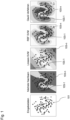
- Fig. 1 shows a schematic representation of classification procedures.
- a real dental object 100-2 is, for example, a crown, a bridge, a veneer, an abutment, an inlay, an onlay, a splint or a partial or full denture.
- the dental object 100-2 can be any object in the dental field that is to be manufactured additively or subtractively as part of a three-dimensional manufacturing process.
- a digital dental object 100-1 can exist in which the three-dimensional shape and the color values are specified. This information is stored, for example, in a data record for the digital dental object 100-1.
- the type of digital dental object 100-1 may be, for example, “crown”, “bridge”, “veneer”, “abutment”, “inlay”, “onlay”, “splint” or “partial denture” or “full denture”.
- the type of digital dental object 100-1 can be any type that can be used to distinguish real dental objects 100-2 from one another.
- a distinction between the digital dental objects 100-1 can be carried out, for example, based on the respective shape.
- the classification can therefore be based on Classification data sets 101 are carried out, which include a large number of points on the surface of the digital dental object 100-1. If numerous points 115 are known on the surface of the digital dental object 100-1, it can be determined automatically, for example, whether it is an abutment or a full denture.
- Each point in the diagrams represents a single classification data set 101 for a digital dental object 100-1 as input data.
- nearest neighbor classification a non-parametric method of estimating probability density functions for the classification data sets 101 is performed.
- the resulting K-nearest neighbor algorithm is a classification method in which a class assignment is made taking into account its k nearest neighbors.
- a classifier and a regressor are used for regression analysis.
- the Support Vector Machine divides the set of digital dental objects into classes in such a way that the widest possible area around the class boundaries remains free of objects.
- the support vector machine is a so-called large margin classifier.
- a radial basis function RBF
- a stochastic process is used for the classification data sets 101, in which each finite subset of random variables is multidimensionally normally distributed (Gaussian distributed).
- Each classification data set 101 can be assigned to a class 103-1, ..., 103-n through the classification method, such as whether it is the "abutment” class or the "complete denture” class.
- the manufacturing method for a real dental object 100-2 can finally be determined based on the class of the digital dental object 100-1.
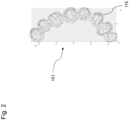
- Fig. 2 shows a variety of points 115 on the surface of the digital dental object 100-1, which may be present in a classification data set 101.
- the points 115 are each defined by the coordinates X, Y, and Z of a coordinate system.
- This classification data set 101 is assigned to the “full denture” class by the classification method.
- symmetric functions are used.
- a symmetric function is a function in which the variables can be interchanged without changing the function value.
- the classification method can be trained with a large number of classification data sets 101, of which the respective class is known. New classification data sets 101 can then be classified based on their similarity to the learned classification data sets 101.
- the classification algorithm independently learns a suitable similarity measure during training depending on the input data and its properties in order to distinguish the different classes of dental objects 100-1. Therefore, there is no need for an explicit similarity measure define.
- the classification algorithm like a neural network, implicitly determines during the training phase based on the training data which properties of the point clouds are relevant in order to map a similarity. This is then used to classify the classification data set 101.
- the similarity measure can vary. This is an effect that generally occurs with more complex classification algorithms and that is consciously accepted.
- Fig. 3 shows a schematic view of an artificial neural network 109.
- the artificial neural network 109 is a network of artificial neurons and can be used to assign the digital dental object 100-1.
- the artificial neural network 109 includes an input layer 111-IN with a number of neurons 113, which corresponds, for example, to the number of points 115 on the surface of the digital dental object 100-1 in the classification data set 101. In this case, each point from the classification data set 101 is entered into its own neuron 113.
- the neural network 109 When the neural network 109 is trained, a large number of classification data sets 101 are supplied, of which the respective class is known. The neural network 109 learns by modifying the weights between the neurons 113. The weights are adjusted until the output class corresponds to the class that is known for the classification data set 101.
- Convolutional Layer convolutional Layer
- Dense Layer fully connected layers
- Sigmoid, Tanh or ReLU functions can be used as activation functions.
- Batch normalization can be performed after each layer.
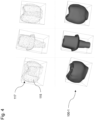
- Fig. 4 shows several digital dental objects 100-1 of different classes, such as a crown (left), an abutment (middle) and another crown (right).
- the surface of these dental objects 100-1 is described by a point cloud 117 of random points.
- Fig. 5 shows a display of a recognized class.
- the class of digital dental object 100-1 can be displayed.
- a unique identifier can be added to the data record of the digital dental object 100-1. This means that an initially unknown data set can become a data set that is correctly classified and can be used again to train the classification algorithm.
- Fig. 6 shows a block diagram of a recognition method for a dental object 100-1.
- the detection procedure includes the step S101 of providing the digital dental object 100-1 in a coordinate system that describes a shape of the dental object 100-2 to be produced.
- the dental 3D data set of the digital dental object 100-1 is imported.
- a large number of evenly distributed random points can then be determined on the surface of the dental object 100-1, such as 4096 random points, and stored in a classification data set 101.
- step S102 the digital dental object 100-1 is automatically assigned to a predetermined class based on the shape by a self-learning algorithm.
- this algorithm was previously trained with a large number of known digital dental objects 100-1 and their respective dental classification and/or indication. Each indication is a subset of a class.
- the self-learning algorithm can optimize the parameters of a function that maps the geometric information of the digital dental object 100-1 to the respective class.
- the recognition process allows the three-dimensional data sets for the digital dental objects 100-1 to be identified automatically and without attached metadata when imported into the CAM software.
- a static algorithm is not used to explicitly identify certain features of the digital dental object 100-1, but rather a dynamic machine learning algorithm from which the features are learned implicitly.
- a review and plausibility check of the classification can be carried out based on simple geometric features, such as based on dimensions of the digital dental object 100-1 (bounding box, centroid, local curvature).
- the plausibility check is carried out after the classification when the classification result has already been determined in order to check it again.
- the volume of the dental object 100-1 can be used.
- the volume can be used to check whether the previous classification result “single crown” is correct.
- the volume can be used to check whether it is actually a single crown or whether the volume is too large for a single crown and is more similar to the volume of a bridge.
- features such as the dimensions of a bounding box, a maximum size of the bounding box, the aspect ratios of the bounding box, a curvature of the dental object or a position of the center of mass of the dental object can be used for the plausibility check. Combinations of several features can also be used for this.
- a classification of the digital dental object 100-1 should be known.
- rules for an orientation of the digital dental object can be defined so that an optimized support structure can be generated automatically.
- a digital reference object can be retrieved from a database based on the determined class. For example, if it were recognized that the digital dental object 100-1 is a full denture, a digital reference object of the “full denture” class can be retrieved from the database. The digital dental object 100-1 can then be transformed to the reference object in the coordinate system. For example, an orientation, a position or a size of the digital dental object 100-1 is adapted to the reference object. In addition, a manufacturing process can be provided for the reference object of the respective class, which is used to produce the digital dental object.
- the recognition method for the dental object 100-1 can be implemented in a manufacturing device 200 with which the real dental objects 100-2 can be produced based on the digital dental objects 100-1, such as a printing device for 3D printing or a milling device.
- the manufacturing device 200 includes, for example, a computer with a digital memory and a processor for execution a computer program through which the recognition method is implemented.
- All method steps can be implemented by devices that are suitable for carrying out the respective method step. All functions that are carried out by physical features can be a procedural step of a process.
Landscapes
- Health & Medical Sciences (AREA)
- Engineering & Computer Science (AREA)
- General Health & Medical Sciences (AREA)
- Public Health (AREA)
- Epidemiology (AREA)
- Life Sciences & Earth Sciences (AREA)
- Theoretical Computer Science (AREA)
- Oral & Maxillofacial Surgery (AREA)
- Dentistry (AREA)
- Animal Behavior & Ethology (AREA)
- Veterinary Medicine (AREA)
- Medical Informatics (AREA)
- Physics & Mathematics (AREA)
- Evolutionary Computation (AREA)
- General Physics & Mathematics (AREA)
- Artificial Intelligence (AREA)
- Data Mining & Analysis (AREA)
- Manufacturing & Machinery (AREA)
- Databases & Information Systems (AREA)
- Software Systems (AREA)
- Computer Vision & Pattern Recognition (AREA)
- Primary Health Care (AREA)
- Biomedical Technology (AREA)
- Multimedia (AREA)
- Computing Systems (AREA)
- Materials Engineering (AREA)
- Chemical & Material Sciences (AREA)
- General Engineering & Computer Science (AREA)
- Nuclear Medicine, Radiotherapy & Molecular Imaging (AREA)
- Radiology & Medical Imaging (AREA)
- Pathology (AREA)
- Evolutionary Biology (AREA)
- Bioinformatics & Computational Biology (AREA)
- Bioinformatics & Cheminformatics (AREA)
- Biophysics (AREA)
- Computational Linguistics (AREA)
- Molecular Biology (AREA)
- Mathematical Physics (AREA)
- Computer Hardware Design (AREA)
- Geometry (AREA)
Abstract
Description
- Die vorliegende Erfindung betrifft ein Erkennungsverfahren für ein Dentalobjekt, ein Herstellungsgerät für ein Dentalobjekt und ein Computerprogramm zum Erkennen eines Dentalobjekts.
- In bekannten digitalen Arbeitsabläufen werden in der CAD-Software dentale Restaurationen erzeugt und in einem 3D-CAD-Dateiformat abgespeichert. In Abhängigkeit von der verwendeten CAD-Software und dem sich anschließenden Arbeitsablauf können zusammen mit der 3D-CAD-Datei sogenannte Metadaten erzeugt und abgelegt werden, die zusätzliche umfassen Informationen.
- Metadaten können hilfreich sein, um die abtragenden Fertigungsprozesse zu steuern oder optimieren, wie beispielsweise Frässtrategien für eine speziellen Restaurationstyp zuordnen zu können. In dreidimensionalen Druckverfahren, bei denen Stützstrukturen erforderlich sind, wie beispielsweise in der Stereolithografie, einer VAT-Polymerisation, einem 3D-DLP-Druck, oder einem selektiven Laser-Sintern von Metallen, sollten bestimmte Flächen von dentalen Restaurationen frei von der Anbindung von Stützstrukturen sein, um eine Präzision und Flächenqualität positiv zu beeinflussen.
- Bei Metadaten besteht jedoch der Nachteil, dass diese bereits zuvor in der CAD-Software erzeugt werden und es sich um proprietäre Datenformate handelt. In diesem Fall muss eine verwendete CAM-Software die zugeordneten proprietären Metadaten importieren und interpretieren können. Da diese Metadaten-Formate nicht universell sind, muss für jedes proprietäre Metadaten-Format eine eigene Schnittstelle programmiert werden. Liegen keine Metadaten zu einem Objekt vor, kann die CAM-Software beim Import nicht bestimmen, um welche Indikation es sich handelt.
- Allerdings ist die Indikation wichtig, um zu bestimmen, mit welchem Herstellungsverfahren ein Dentalobjekt hergestellt werden soll. Die Klassifizierung kann zudem bei der weiteren Datenverarbeitung und für die Bestimmung von weiteren Prozessschritten zur Fertigung oder zur Materialverarbeitung im digitalen Arbeitsablauf verwendet werden.
- Die Druckschrift
US 10,856,957 B2 - Die technische Aufgabe der Erfindung, die Indikation von digitalen Dentalobjekten anhand der geometrischen Form zu erkennen, so dass ein passendes Herstellungsverfahren ausgewählt werden kann.
- Diese technische Aufgabe wird durch Gegenstände nach den unabhängigen Ansprüchen gelöst. Technisch vorteilhafte Ausführungsformen sind Gegenstand der abhängigen Ansprüche, der Beschreibung und der Zeichnungen.
- Gemäß einem ersten Aspekt wird die technische Aufgabe durch ein Erkennungsverfahren für ein Dentalobjekt gelöst, mit den Schritten eines Bereitstellens eines digitalen Dentalobjekts in einem Koordinatensystem, das eine Form des herzustellenden Dentalobjekts beschreibt; und eines automatischen Zuordnens des digitalen Dentalobjektes zu einer vorgegebenen Klasse auf Basis der Form durch einen selbstlernenden Algorithmus. Der Klasse kann ein bestimmtes Herstellungsverfahren zugeordnet sein, mit dem sich das reale Dentalobjekt auf Basis des digitalen Dentalobjekts herstellen lässt. Je nach Klasse des Dentalobjekts können angepasste Herstellungsverfahren mit optimalen Parametern verwendet werden.
- In einer technisch vorteilhaften Ausführungsform des Erkennungsverfahrens wird eine Anzahl von Punkten auf der Oberfläche des digitalen Dentalobjekts erfasst. Dadurch wird beispielsweise der technische Vorteil erreicht, dass sich das digitalen Dentalobjekt mit einer geringen Menge an Klassifizierungsdaten schnell zuordnen lässt.
- In einer weiteren technisch vorteilhaften Ausführungsform des Erkennungsverfahrens werden die Punkte auf der Oberfläche des digitalen Dentalobjekts zufällig ausgewählt. Dadurch wird beispielsweise der technische Vorteil erreicht, dass das die Grundgesamtheit an Klassifizierungsdaten ohne komplizierte Berechnungen gewonnen werden kann.
- In einer weiteren technisch vorteilhaften Ausführungsform des Erkennungsverfahrens bilden die Koordinaten der erfassten Punkte eine Eingabe für ein künstliches neuronales Netz. Dadurch wird beispielsweise der technische Vorteil erreicht, dass sich das digitale Dentalobjekt effizient einer Klasse zuordnen lässt.
- In einer weiteren technisch vorteilhaften Ausführungsform des Erkennungsverfahrens ist das künstliche neuronales Netz durch eine Mehrzahl von Trainingsdatensätzen angelernt worden. Dadurch wird beispielsweise ebenfalls der technische Vorteil erreicht, dass sich das digitale Dentalobjekt effizient einer Klasse zuordnen lässt.
- In einer weiteren technisch vorteilhaften Ausführungsform des Erkennungsverfahrens wird die Klasse des digitalen Dentalobjekts durch das künstliche neuronale Netz ausgegeben. Dadurch wird beispielsweise ebenfalls der technische Vorteil erreicht, dass sich das digitale Dentalobjekt effizient einer Klasse zuordnen lässt.
- In einer weiteren technisch vorteilhaften Ausführungsform des Erkennungsverfahrens wird dem digitalen Dentalobjekt auf Basis der zugeordneten Klasse ein digitales Referenzobjekt zugeordnet. Dadurch wird beispielsweise der technische Vorteil erreicht, dass ein Arbeitsablauf weiter optimiert werden kann.
- In einer weiteren technisch vorteilhaften Ausführungsform des Erkennungsverfahrens wird das digitale Dentalobjekt auf Basis der zugeordneten Klasse und/oder des Referenzobjekts im Koordinatensystem transformiert. Das digitale Dentalobjekt kann beispielsweise an dem Referenzobjekt ausgerichtet werden oder zu dem Referenzobjekt verschoben werden. Dadurch wird beispielsweise der technische Vorteil erreicht, dass das Herstellungsverfahren mit einer angepassten Orientierung und/oder Position des digitalen Dentalobjekt durchgeführt werden kann.
- In einer weiteren technisch vorteilhaften Ausführungsform des Erkennungsverfahrens wird dem digitalen Dentalobjekt ein Herstellungsverfahren auf Basis der zugeordneten Klasse zugeordnet. Dadurch wird beispielsweise der technische Vorteil erreicht, dass sich das Dentalobjekt effizient Herstellen lässt und sich die Herstellung unterschiedlicher Dentalobjekte automatisieren lässt.
- In einer weiteren technisch vorteilhaften Ausführungsform des Erkennungsverfahrens werden dem digitalen Dentalobjekt auf Basis des zugeordneten Herstellungsverfahrens weitere räumliche Strukturen hinzugefügt. Die räumlichen Strukturen können Stützstrukturen für eine Bauplattform oder Haltestrukturen für einen Rohling sein. Dadurch wird beispielsweise der technische Vorteil erreicht, dass sich die Herstellung des Dentalobjekts weiter verbessern lässt.
- In einer weiteren technisch vorteilhaften Ausführungsform des Erkennungsverfahrens wird das Dentalobjekt durch das Herstellungsverfahren hergestellt. Dadurch wird beispielsweise der technische Vorteil erreicht, dass das Dentalobjekt mit einem geeigneten Herstellungsverfahren hergestellt wird.
- In einer weiteren technisch vorteilhaften Ausführungsform des Erkennungsverfahrens ist das Herstellungsverfahren ein additives oder subtraktives Herstellungsverfahren. Dadurch wird beispielsweise der technische Vorteil erreicht, dass besonders geeignete Herstellungsverfahren für Dentalobjekte verwendet werden.
- In einer weiteren technisch vorteilhaften Ausführungsform des Erkennungsverfahrens wird eine Korrektheit der Zuordnung durch geometrische Merkmale des digitalen Dentalobjekts überprüft. Dadurch wird beispielsweise der technische Vorteil erreicht, dass sich die Genauigkeit des Verfahrens verbessert.
- Gemäß einem zweiten Aspekt wird die technische Aufgabe durch ein Herstellungsgerät für ein Dentalobjekt gelöst, das ausgebildet ist, das Erkennungsverfahren nach dem ersten Aspekt durchzuführen. Durch das Herstellungsgerät werden die gleichen technische Vorteile wie durch das Erkennungsverfahren gelöst.
- Gemäß einem dritten Aspekt wird die technische Aufgabe durch ein Computerprogramm gelöst, mit Befehlen, die bei der Ausführung des Computerprogramms durch einen Computer diesen veranlassen, das Verfahren nach dem ersten Aspekt auszuführen. Durch das Computerprogramm werden die gleichen technische Vorteile wie durch das Erkennungsverfahren gelöst.
- Ausführungsbeispiele der Erfindung sind in den Zeichnungen dargestellt und werden im Folgenden näher beschrieben.
- Es zeigen:
- Fig. 1
- eine schematische Darstellung von Klassifikationsverfahren;
- Fig. 2
- eine Vielzahl von Punkten aus einem Klassifikationsdatensatz;
- Fig. 3
- eine schematische Ansicht eines künstlichen neuronalen Netzes;
- Fig. 4
- digitale Dentalobjekte unterschiedlicher Klassen;
- Fig. 5
- eine Anzeige einer erkannten Klasse; und
- Fig. 6
- ein Blockdiagramm eines Erkennungsverfahren für ein Dentalobjekt.
-
Fig. 1 zeigt eine schematische Darstellung von Klassifikationsverfahren. Ein reales Dentalobjekt 100-2 ist beispielsweise eine Krone, eine Brücke, ein Veneer, ein Abutment, ein Inlay, ein Onlay, eine Schiene oder eine Teil- oder Vollprothese. Im Allgemeinen kann das Dentalobjekt 100-2 jedes Objekt im Dentalbereich sein, das im Rahmen eines dreidimensionalen Herstellungsverfahrens additiv oder subtraktiv hergestellt werden soll. - Zu jedem dieser realen Dentalobjekte 100-2 kann ein digitales Dentalobjekt 100-1 existieren, in dem die dreidimensionale Form und die Farbwerte angegeben sind. Diese Informationen sind beispielswese in einem Datensatz zu dem digitalen Dentalobjekt 100-1 gespeichert.
- Mithilfe einer Klassifizierung des digitalen Dentalobjektes 100-1 kann festgestellt werden, zu welchem Typ dieses gehört. Der Typ des digitalen Dentalobjektes 100-1 kann beispielsweise "Krone", "Brücke", "Veneer", "Abutment", "Inlay", "Onlay", "Schiene" oder "Teilprothese" oder "Vollprothese" sein. Im Allgemeinen kann der Typ des digitalen Dentalobjektes 100-1 jeder Typ sein, anhand dessen sich reale Dentalobjekte 100-2 voneinander unterscheiden lassen.
- Eine Unterscheidung der digitalen Dentalobjekte 100-1 kann beispielsweise auf Basis der jeweiligen Form durchgeführt werden. Die Klassifikation kann daher auf Basis von Klassifikationsdatensätzen 101 durchgeführt werden, die eine Vielzahl von Punkten auf der Oberfläche des digitalen Dentalobjektes 100-1 umfassen. Sind zahlreiche Punkte 115 auf der Oberfläche des digitalen Dentalobjektes 100-1 bekannt, kann beispielsweise automatisch festgestellt werden, ob es sich um ein Abutment oder eine Vollprothese handelt.
- Jeder Punkt in den Diagrammen stellt einen einzelnen Klassifikationsdatensatz 101 für ein digitales Dentalobjekt 100-1 als Eingabedaten dar. Bei einer Nächste-Nachbarn-Klassifikation wird eine nichtparametrische Methode zur Schätzung von Wahrscheinlichkeitsdichtefunktionen für die Klassifikationsdatensätze 101 durchgeführt. Der daraus resultierende K-Nearest-Neighbor-Algorithmus ist ein Klassifikationsverfahren, bei dem eine Klassenzuordnung unter Berücksichtigung seiner k nächsten Nachbarn vorgenommen wird.
- Bei einer Klassifikation mit einer linearen Support Vector Machine - SVM (Stützvektormaschine) für die Klassifikationsdatensätze 101 wird ein Klassifikator und ein Regressor zur Regressionsanalyse verwendet. Die Support Vector Machine unterteilt die Menge von digitalen Dentalobjekten so in Klassen, dass um die Klassengrenzen herum ein möglichst breiter Bereich frei von Objekten bleibt. Die Support Vector Machine ist ein sogenannter Large Margin Classifier (Breiter-Rand-Klassifikator). Zusätzlich kann eine radiale Basisfunktion (RBF) verwendet werden, deren Wert vom Abstand zum Ursprung abhängig ist. Bei einer Klassifikation mit einen Gauß-Verfahren wird ein stochastischer Prozess für die Klassifikationsdatensätze 101 verwendet, bei dem jede endliche Teilmenge von Zufallsvariablen mehrdimensional normalverteilt (gaußverteilt) ist.
- Jeder Klassifikationsdatensatz 101 kann durch das Klassifizierungsverfahren einer Klasse 103-1, ..., 103-n zugeordnet werden, wie beispielsweise, ob es sich um die Klasse "Abutment" oder die Klasse "Vollprothese" handelt. Das Herstellungsverfahren für ein reale Dentalobjekt 100-2 kann schließend auf Basis der Klasse des digitalen Dentalobjektes 100-1 bestimmt werden.
-
Fig. 2 zeigt eine Vielzahl von Punkten 115 auf der Oberfläche des digitalen Dentalobjektes 100-1, die in einem Klassifikationsdatensatz 101 vorhanden sein können. Die Punkte 115 sind jeweils durch die Koordinaten X, Y, und Z eines Koordinatensystems festgelegt. - Dieser Klassifikationsdatensatz 101 wird durch das Klassifikationsverfahren der Klasse "Vollprothese" zugeordnet. Um das Klassifikationsverfahren invariant gegenüber einer Eingabepermutation zu machen, werden symmetrische Funktionen verwendet. Eine symmetrische Funktion ist eine Funktion, bei der die Variablen untereinander vertauscht werden können, ohne den Funktionswert zu ändern.
- Das Klassifikationsverfahren kann mit einer Vielzahl von Klassifikationsdatensätzen 101 angelernt werden, von denen die jeweilige Klasse bekannt ist. Neue Klassifikationsdatensätze 101 können dann auf Basis ihrer Ähnlichkeit zu den gelernten Klassifikationsdatensätzen 101 klassifiziert werden.
- Bei der Klassifizierung lernt der Klassifizierungsalgorithmus beim Training je nach Eingabedaten und deren Eigenschaften selbstständig ein geeignetes Ähnlichkeitsmaß, um die verschiedenen Klassen von Dentalobjekten 100-1 zu unterscheiden. Daher ist es nicht erforderlich, ein explizites Ähnlichkeitsmaß zu definieren. Der Klassifizierungsalgorithmus bestimmt, wie beispielsweise ein neuronales Netz, während der Trainingsphase auf Basis der Trainingsdaten implizit selbst, welche Eigenschaften der Punktwolken relevant sind, um eine Ähnlichkeit abzubilden. Dies wird dann zur Klassifizierung des Klassifikationsdatensätze 101 verwendet. Je nach Form des Trainingsdatensatzes kann das Ähnlichkeitsmaß variieren. Hierbei handelt es sich um einen Effekt, der grundsätzlich bei komplexeren Klassifizierungsalgorithmen auftritt und der bewusst in Kauf genommen wird.
-
Fig. 3 zeigt eine schematische Ansicht eines künstlichen neuronalen Netzes 109. Das künstliche neuronale Netz 109 ist ein Netz aus künstlichen Neuronen und kann zum Zuordnen des digitalen Dentalobjektes 100-1 verwendet werden. Das künstliche neuronale Netz 109 umfasst eine Eingabeschicht 111-IN mit einer Anzahl an Neuronen 113, die beispielsweise der Anzahl der Punkte 115 auf der Oberfläche des digitalen Dentalobjektes 100-1 im Klassifikationsdatensatz 101 entspricht. In diesem Fall wird jeder Punkt aus dem Klassifikationsdatensatz 101 in ein eigenes Neuron 113 eingegeben. - Diese werden an die Neuronen 113 verborgener Schichten 111-Hidden weitergeleitet. Dabei findet eine individuelle Gewichtung jedes Signals von einem Neuron 113 zu einem anderen Neuron 113 statt. Anschließend wird das Ergebnis an der Ausgabeschicht 111-OUT ausgegeben. Die Anzahl der Neuronen 113 der Ausgabeschicht 111-OUT entspricht beispielsweise der Anzahl der Klassen. Auf diese Weise entsteht eine Abbildung:
F(X1,Y1,Z1, ..., Xn,Yn,Zn) -> Klasse1, ..., Klassem - Bei einem Anlernen des neuronalen Netzes 109 wird eine Vielzahl von Klassifikationsdatensätzen 101 zugeführt, von denen die jeweilige Klasse bekannt ist. Das neuronale Netz 109 lernt durch eine Modifikation der Gewichte zwischen den Neuronen 113. Dabei werden die Gewichte so lange angepasst, bis die ausgegebene Klasse derjenigen Klasse entspricht, die für den Klassifikationsdatensatz 101 bekannt ist.
- Im Allgemeinen kann eine Kombination aus Faltungsschichten (Convolutional Layer) und voll verbundenen Schichten verwendet werden (Dense Layer). Als Aktivierungsfunktionen können Sigmoid-, Tanh- oder ReLU-Funktionen verwendet werden. Nach jeder Schicht kann eine Batch-Normalisierung durchgeführt werden.
- Die Erfindung lässt sich beispielsweise durch folgenden Quellcode ausführen:
     from tensorflow import keras
     from lib import *
     import numpy as np
     import trimesh
     import tensorflow as tf
     # load map of currently trained classes
     CLASS_MAP = load_dict(CLASS_MAP_FILE_PATH)
     # load neural net
     model = keras.models.load_model("saved_models/model")
     # load stl file
     mesh = trimesh.load("example.stl")
     points = mesh.sample(2048) # sample point cloud of 2048
     points from the mesh
     points = np.expand_dims(points, axis=0) # expand dimension
     to create a batch
     # to classify multiple files, just add more point sets to
     the batch
     # get classification of the model
     p = model.predict(points)
     p = tf.math.argmax(p, -1)
     p = CLASS_MAP[str(p[0].numpy())] # get string label of
     classification
     print(p) # show class
- 100-1
- digitales Dentalobjekt
- 100-2
- herzustellendes Dentalobjekt
- 101
- Klassifikationsdatensatz
- 103
- Klasse
- 109
- künstliches neuronales Netz
- 111
- Schicht
- 113
- Neuron
- 115
- Punkt
- 117
- Punktewolke
- 200
- Herstellungsgerät
Claims (15)
- Erkennungsverfahren für ein Dentalobjekt (100-1), mit den Schritten:- Bereitstellen (S101) eines digitalen Dentalobjekts (100-1) in einem Koordinatensystem, das eine Form des herzustellenden Dentalobjekts (100-2) beschreibt; und- Automatisches Zuordnen (S102) des digitalen Dentalobjektes (100-1) zu einer vorgegebenen Klasse auf Basis der Form durch einen selbstlernenden Algorithmus.
- Erkennungsverfahren nach Anspruch 1, wobei eine Anzahl von Punkten auf der Oberfläche des digitalen Dentalobjekts (100-1) erfasst wird.
- Erkennungsverfahren nach Anspruch 2, wobei die Punkte auf der Oberfläche des digitalen Dentalobjekts (100-1) zufällig ausgewählt werden.
- Erkennungsverfahren nach Anspruch 2 oder 3, wobei die Koordinaten der erfassten Punkte eine Eingabe für ein künstliches neuronales Netz (109) bilden.
- Erkennungsverfahren nach einem der Ansprüche 2 bis 4, wobei das künstliche neuronales Netz (109) durch eine Mehrzahl von Trainingsdatensätzen angelernt worden ist.
- Erkennungsverfahren einem der Ansprüche 2 bis 5, wobei die Klasse durch das künstliche neuronale Netz (109) ausgegeben wird.
- Erkennungsverfahren nach einem der vorangehenden Ansprüche, wobei dem digitalen Dentalobjekt (100-1) auf Basis der zugeordneten Klasse ein digitales Referenzobjekt zugeordnet wird.
- Erkennungsverfahren nach einem der vorangehenden Ansprüche, wobei das digitale Dentalobjekt (100-1) auf Basis der zugeordneten Klasse und/oder des Referenzobjekts im Koordinatensystem transformiert wird.
- Erkennungsverfahren nach einem der vorangehenden Ansprüche, wobei dem digitalen Dentalobjekt (100-1) ein Herstellungsverfahren auf Basis der zugeordneten Klasse zugeordnet wird.
- Erkennungsverfahren nach Anspruch 9, wobei dem digitalen Dentalobjekt (100-1) auf Basis des zugeordneten Herstellungsverfahrens weitere räumliche Strukturen hinzugefügt werden.
- Erkennungsverfahren nach einem der Anspruch 9 oder 10, wobei das Dentalobjekt (100-2) durch das Herstellungsverfahren hergestellt wird.
- Erkennungsverfahren nach Anspruch 11, wobei das Herstellungsverfahren ein additives oder subtraktives Herstellungsverfahren ist.
- Erkennungsverfahren nach einem der vorangehenden Ansprüche, wobei eine Korrektheit der Zuordnung durch geometrische Merkmale des digitalen Dentalobjekts (100-1) überprüft wird.
- Herstellungsgerät (200) für ein Dentalobjekt (100-2), das ausgebildet ist, das Erkennungsverfahren nach einem der Ansprüche 1 bis 13 durchzuführen.
- Computerprogramm, mit Befehlen, die bei der Ausführung des Computerprogramms durch einen Computer diesen veranlassen, das Verfahren nach einem der Ansprüche 1 bis 13 auszuführen.
Priority Applications (5)
| Application Number | Priority Date | Filing Date | Title |
|---|---|---|---|
| EP22165854.5A EP4252706B1 (de) | 2022-03-31 | 2022-03-31 | Automatische erkennung dentaler indikationen |
| ES22165854T ES3041853T3 (en) | 2022-03-31 | 2022-03-31 | Automatic detection of dental indications |
| JP2023055761A JP7614245B2 (ja) | 2022-03-31 | 2023-03-30 | 歯科用の指標の自動検出方法 |
| US18/193,550 US20230316719A1 (en) | 2022-03-31 | 2023-03-30 | Automatic detection of dental indications |
| CN202310334042.8A CN116889477A (zh) | 2022-03-31 | 2023-03-30 | 牙科物件的识别方法、制造设备和计算机程序 |
Applications Claiming Priority (1)
| Application Number | Priority Date | Filing Date | Title |
|---|---|---|---|
| EP22165854.5A EP4252706B1 (de) | 2022-03-31 | 2022-03-31 | Automatische erkennung dentaler indikationen |
Publications (2)
| Publication Number | Publication Date |
|---|---|
| EP4252706A1 true EP4252706A1 (de) | 2023-10-04 |
| EP4252706B1 EP4252706B1 (de) | 2025-08-20 |
Family
ID=81074308
Family Applications (1)
| Application Number | Title | Priority Date | Filing Date |
|---|---|---|---|
| EP22165854.5A Active EP4252706B1 (de) | 2022-03-31 | 2022-03-31 | Automatische erkennung dentaler indikationen |
Country Status (5)
| Country | Link |
|---|---|
| US (1) | US20230316719A1 (de) |
| EP (1) | EP4252706B1 (de) |
| JP (1) | JP7614245B2 (de) |
| CN (1) | CN116889477A (de) |
| ES (1) | ES3041853T3 (de) |
Citations (2)
| Publication number | Priority date | Publication date | Assignee | Title |
|---|---|---|---|---|
| US10856957B2 (en) | 2018-05-03 | 2020-12-08 | Dentsply Sirona Inc. | Methods of three-dimensional printing for fabricating a dental appliance |
| US20210255600A1 (en) * | 2020-02-19 | 2021-08-19 | Ivoclar Vivadent Ag | Method For Producing A Dental Restoration |
Family Cites Families (6)
| Publication number | Priority date | Publication date | Assignee | Title |
|---|---|---|---|---|
| US7639868B1 (en) * | 2003-06-16 | 2009-12-29 | Drexel University | Automated learning of model classifications |
| DE102017203475A1 (de) * | 2017-03-03 | 2018-09-06 | Sirona Dental Systems Gmbh | Verfahren zur Konstruktion einer Restauration |
| WO2020204915A1 (en) * | 2019-04-03 | 2020-10-08 | Siemens Industry Software Inc | System and method for design and manufacture using multi-axis machine tools |
| US11995839B2 (en) * | 2019-09-04 | 2024-05-28 | Align Technology, Inc. | Automated detection, generation and/or correction of dental features in digital models |
| KR20220056234A (ko) * | 2019-09-05 | 2022-05-04 | 덴츠플라이 시로나 인코포레이티드 | 맞춤형 치과용 오브젝트의 즉각적인 자동화 설계를 위한 방법, 시스템 및 디바이스 |
| EP4113373A1 (de) * | 2021-07-01 | 2023-01-04 | DENTSPLY SIRONA Inc. | Dentale eingriffe |
-
2022
- 2022-03-31 ES ES22165854T patent/ES3041853T3/es active Active
- 2022-03-31 EP EP22165854.5A patent/EP4252706B1/de active Active
-
2023
- 2023-03-30 CN CN202310334042.8A patent/CN116889477A/zh active Pending
- 2023-03-30 JP JP2023055761A patent/JP7614245B2/ja active Active
- 2023-03-30 US US18/193,550 patent/US20230316719A1/en active Pending
Patent Citations (2)
| Publication number | Priority date | Publication date | Assignee | Title |
|---|---|---|---|---|
| US10856957B2 (en) | 2018-05-03 | 2020-12-08 | Dentsply Sirona Inc. | Methods of three-dimensional printing for fabricating a dental appliance |
| US20210255600A1 (en) * | 2020-02-19 | 2021-08-19 | Ivoclar Vivadent Ag | Method For Producing A Dental Restoration |
Also Published As
| Publication number | Publication date |
|---|---|
| EP4252706B1 (de) | 2025-08-20 |
| US20230316719A1 (en) | 2023-10-05 |
| JP7614245B2 (ja) | 2025-01-15 |
| CN116889477A (zh) | 2023-10-17 |
| JP2023153040A (ja) | 2023-10-17 |
| ES3041853T3 (en) | 2025-11-17 |
Similar Documents
| Publication | Publication Date | Title |
|---|---|---|
| DE112021000251T5 (de) | Verfahren zum auswählen von datensätzen zum aktualisieren eines moduls mit künstlicher intelligenz | |
| DE102018206108A1 (de) | Generieren von Validierungsdaten mit generativen kontradiktorischen Netzwerken | |
| DE102018116911A1 (de) | Verfahren zur Erzeugung von Quellcode | |
| DE112019007889T5 (de) | Bearbeitungsprogramm-umwandlungseinrichtung, numerische-steuereinrichtung und bearbeitungsprogramm-umwandlungsverfahren | |
| DE102019211672A1 (de) | Trainingsverfahren für ein künstliches neuronales Netzwerk | |
| EP4252706B1 (de) | Automatische erkennung dentaler indikationen | |
| WO2023280531A1 (de) | Computerimplementiertes verfahren, computerprogramm und vorrichtung zum erzeugen einer daten-basierten modellkopie in einem sensor | |
| DE102019204118A1 (de) | Verfahren zum Übertragen eines Merkmals eines ersten Bilds an ein zweites Bild | |
| DE102021133483A1 (de) | Verfahren zur Gestaltung eines Exterieur-Designs eines kraftangetriebenen Fortbewegungsmittels | |
| DE102021204550A1 (de) | Verfahren zum Erzeugen wenigstens eines Datensatzes zum Trainieren eines Algorithmus maschinellen Lernens | |
| DE112010005924T5 (de) | Verfahren und System zum Weitergeben von Änderungen an einer Master-Einheit zu Duplikaten | |
| EP3736709A1 (de) | Klassifikatorsystem und verfahren zum verteilten erzeugen von klassifikationsmodellen | |
| DE102020211596A1 (de) | Verfahren zum Generieren eines trainierten neuronalen Faltungs-Netzwerks mit invarianter Integrationsschicht zum Klassifizieren von Objekten | |
| WO2020193481A1 (de) | Verfahren und vorrichtung für training und herstellung eines künstlichen neuronalen netzes | |
| EP3716058A1 (de) | Verfahren zum ansteuern eines geräts mit einem neuen programmcode | |
| EP0469315B1 (de) | Verfahren zur visuellen Inspektion zwei- oder dreidimensionaler Bilder | |
| WO2022078781A1 (de) | COMPUTERIMPLEMENTIERTES VERFAHREN UND VORRICHTUNG ZUR BESTIMMUNG EINES KONFIDENZMAßES EINER MODELLIERTEN PHYSIKALISCHEN GRÖßE EINES VIRTUELLEN SENSORS | |
| DE102020208765A1 (de) | Bildklassifikator mit variablen rezeptiven Feldern in Faltungsschichten | |
| EP4172840B1 (de) | Verfahren zur steuerung der herstellung eines blechbauteils und verfahren zum herstellen eines blechbauteils bzw. mehrerer unterschiedlicher blechbauteile | |
| EP1025539B1 (de) | Fraktal darwinistische objekterzeugung | |
| DE102020106857A1 (de) | Mikroskopiesystem und verfahren zum verarbeiten von mikroskopbildern | |
| DE102019217951A1 (de) | Verfahren und Vorrichtung zum Bestimmen einer Domänendistanz zwischen mindestens zwei Datendomänen | |
| DE102021129108A1 (de) | Verfahren, System und Computerprogrammprodukt zum Ausgeben von Ausgabewerten zur Analyse und/oder Bewertung und/oder Prozesssteuerung einer Entität | |
| DE102024201389A1 (de) | Verfahren zur Validierung von Verarbeitungsdaten, Verfahren zur Bereitstellung eines durch Maschinenlernen trainierten Modells, Verarbeitungsvorrichtung, Computerprogramm und Datenträger | |
| DE102024122092A1 (de) | Verfahren zum Bestimmen einer Herstellbarkeit eines Artikels |
Legal Events
| Date | Code | Title | Description |
|---|---|---|---|
| PUAI | Public reference made under article 153(3) epc to a published international application that has entered the european phase |
Free format text: ORIGINAL CODE: 0009012 |
|
| STAA | Information on the status of an ep patent application or granted ep patent |
Free format text: STATUS: REQUEST FOR EXAMINATION WAS MADE |
|
| 17P | Request for examination filed |
Effective date: 20221130 |
|
| AK | Designated contracting states |
Kind code of ref document: A1 Designated state(s): AL AT BE BG CH CY CZ DE DK EE ES FI FR GB GR HR HU IE IS IT LI LT LU LV MC MK MT NL NO PL PT RO RS SE SI SK SM TR |
|
| STAA | Information on the status of an ep patent application or granted ep patent |
Free format text: STATUS: EXAMINATION IS IN PROGRESS |
|
| 17Q | First examination report despatched |
Effective date: 20231109 |
|
| GRAP | Despatch of communication of intention to grant a patent |
Free format text: ORIGINAL CODE: EPIDOSNIGR1 |
|
| STAA | Information on the status of an ep patent application or granted ep patent |
Free format text: STATUS: GRANT OF PATENT IS INTENDED |
|
| INTG | Intention to grant announced |
Effective date: 20241029 |
|
| GRAJ | Information related to disapproval of communication of intention to grant by the applicant or resumption of examination proceedings by the epo deleted |
Free format text: ORIGINAL CODE: EPIDOSDIGR1 |
|
| STAA | Information on the status of an ep patent application or granted ep patent |
Free format text: STATUS: EXAMINATION IS IN PROGRESS |
|
| GRAJ | Information related to disapproval of communication of intention to grant by the applicant or resumption of examination proceedings by the epo deleted |
Free format text: ORIGINAL CODE: EPIDOSDIGR1 |
|
| GRAL | Information related to payment of fee for publishing/printing deleted |
Free format text: ORIGINAL CODE: EPIDOSDIGR3 |
|
| GRAS | Grant fee paid |
Free format text: ORIGINAL CODE: EPIDOSNIGR3 |
|
| GRAP | Despatch of communication of intention to grant a patent |
Free format text: ORIGINAL CODE: EPIDOSNIGR1 |
|
| STAA | Information on the status of an ep patent application or granted ep patent |
Free format text: STATUS: GRANT OF PATENT IS INTENDED |
|
| INTC | Intention to grant announced (deleted) | ||
| P01 | Opt-out of the competence of the unified patent court (upc) registered |
Free format text: CASE NUMBER: APP_10930/2025 Effective date: 20250305 |
|
| INTG | Intention to grant announced |
Effective date: 20250317 |
|
| GRAA | (expected) grant |
Free format text: ORIGINAL CODE: 0009210 |
|
| STAA | Information on the status of an ep patent application or granted ep patent |
Free format text: STATUS: THE PATENT HAS BEEN GRANTED |
|
| AK | Designated contracting states |
Kind code of ref document: B1 Designated state(s): AL AT BE BG CH CY CZ DE DK EE ES FI FR GB GR HR HU IE IS IT LI LT LU LV MC MK MT NL NO PL PT RO RS SE SI SK SM TR |
|
| REG | Reference to a national code |
Ref country code: GB Ref legal event code: FG4D Free format text: NOT ENGLISH |
|
| REG | Reference to a national code |
Ref country code: CH Ref legal event code: EP |
|
| REG | Reference to a national code |
Ref country code: IE Ref legal event code: FG4D Free format text: LANGUAGE OF EP DOCUMENT: GERMAN |
|
| REG | Reference to a national code |
Ref country code: DE Ref legal event code: R096 Ref document number: 502022005083 Country of ref document: DE |
|
| REG | Reference to a national code |
Ref country code: NL Ref legal event code: FP |
|
| REG | Reference to a national code |
Ref country code: ES Ref legal event code: FG2A Ref document number: 3041853 Country of ref document: ES Kind code of ref document: T3 Effective date: 20251117 |
|
| PG25 | Lapsed in a contracting state [announced via postgrant information from national office to epo] |
Ref country code: IS Free format text: LAPSE BECAUSE OF FAILURE TO SUBMIT A TRANSLATION OF THE DESCRIPTION OR TO PAY THE FEE WITHIN THE PRESCRIBED TIME-LIMIT Effective date: 20251220 |
|
| PG25 | Lapsed in a contracting state [announced via postgrant information from national office to epo] |
Ref country code: NO Free format text: LAPSE BECAUSE OF FAILURE TO SUBMIT A TRANSLATION OF THE DESCRIPTION OR TO PAY THE FEE WITHIN THE PRESCRIBED TIME-LIMIT Effective date: 20251120 |
|
| REG | Reference to a national code |
Ref country code: LT Ref legal event code: MG9D |
|
| PG25 | Lapsed in a contracting state [announced via postgrant information from national office to epo] |
Ref country code: PT Free format text: LAPSE BECAUSE OF FAILURE TO SUBMIT A TRANSLATION OF THE DESCRIPTION OR TO PAY THE FEE WITHIN THE PRESCRIBED TIME-LIMIT Effective date: 20251222 |
|
| PG25 | Lapsed in a contracting state [announced via postgrant information from national office to epo] |
Ref country code: FI Free format text: LAPSE BECAUSE OF FAILURE TO SUBMIT A TRANSLATION OF THE DESCRIPTION OR TO PAY THE FEE WITHIN THE PRESCRIBED TIME-LIMIT Effective date: 20250820 |
|
| PG25 | Lapsed in a contracting state [announced via postgrant information from national office to epo] |
Ref country code: HR Free format text: LAPSE BECAUSE OF FAILURE TO SUBMIT A TRANSLATION OF THE DESCRIPTION OR TO PAY THE FEE WITHIN THE PRESCRIBED TIME-LIMIT Effective date: 20250820 |
|
| PG25 | Lapsed in a contracting state [announced via postgrant information from national office to epo] |
Ref country code: GR Free format text: LAPSE BECAUSE OF FAILURE TO SUBMIT A TRANSLATION OF THE DESCRIPTION OR TO PAY THE FEE WITHIN THE PRESCRIBED TIME-LIMIT Effective date: 20251121 |
|
| PG25 | Lapsed in a contracting state [announced via postgrant information from national office to epo] |
Ref country code: SE Free format text: LAPSE BECAUSE OF FAILURE TO SUBMIT A TRANSLATION OF THE DESCRIPTION OR TO PAY THE FEE WITHIN THE PRESCRIBED TIME-LIMIT Effective date: 20250820 |
|
| PG25 | Lapsed in a contracting state [announced via postgrant information from national office to epo] |
Ref country code: LV Free format text: LAPSE BECAUSE OF FAILURE TO SUBMIT A TRANSLATION OF THE DESCRIPTION OR TO PAY THE FEE WITHIN THE PRESCRIBED TIME-LIMIT Effective date: 20250820 |
|
| PG25 | Lapsed in a contracting state [announced via postgrant information from national office to epo] |
Ref country code: BG Free format text: LAPSE BECAUSE OF FAILURE TO SUBMIT A TRANSLATION OF THE DESCRIPTION OR TO PAY THE FEE WITHIN THE PRESCRIBED TIME-LIMIT Effective date: 20250820 Ref country code: PL Free format text: LAPSE BECAUSE OF FAILURE TO SUBMIT A TRANSLATION OF THE DESCRIPTION OR TO PAY THE FEE WITHIN THE PRESCRIBED TIME-LIMIT Effective date: 20250820 |
|
| PG25 | Lapsed in a contracting state [announced via postgrant information from national office to epo] |
Ref country code: RS Free format text: LAPSE BECAUSE OF FAILURE TO SUBMIT A TRANSLATION OF THE DESCRIPTION OR TO PAY THE FEE WITHIN THE PRESCRIBED TIME-LIMIT Effective date: 20251120 |
|
| PG25 | Lapsed in a contracting state [announced via postgrant information from national office to epo] |
Ref country code: SM Free format text: LAPSE BECAUSE OF FAILURE TO SUBMIT A TRANSLATION OF THE DESCRIPTION OR TO PAY THE FEE WITHIN THE PRESCRIBED TIME-LIMIT Effective date: 20250820 |
|
| PGFP | Annual fee paid to national office [announced via postgrant information from national office to epo] |
Ref country code: GB Payment date: 20260324 Year of fee payment: 5 |
|
| PG25 | Lapsed in a contracting state [announced via postgrant information from national office to epo] |
Ref country code: DK Free format text: LAPSE BECAUSE OF FAILURE TO SUBMIT A TRANSLATION OF THE DESCRIPTION OR TO PAY THE FEE WITHIN THE PRESCRIBED TIME-LIMIT Effective date: 20250820 |
|
| PGFP | Annual fee paid to national office [announced via postgrant information from national office to epo] |
Ref country code: DE Payment date: 20260320 Year of fee payment: 5 |
|
| PGFP | Annual fee paid to national office [announced via postgrant information from national office to epo] |
Ref country code: NL Payment date: 20260320 Year of fee payment: 5 |
|
| PGFP | Annual fee paid to national office [announced via postgrant information from national office to epo] |
Ref country code: FR Payment date: 20260327 Year of fee payment: 5 |
|
| PG25 | Lapsed in a contracting state [announced via postgrant information from national office to epo] |
Ref country code: CZ Free format text: LAPSE BECAUSE OF FAILURE TO SUBMIT A TRANSLATION OF THE DESCRIPTION OR TO PAY THE FEE WITHIN THE PRESCRIBED TIME-LIMIT Effective date: 20250820 |
|
| PG25 | Lapsed in a contracting state [announced via postgrant information from national office to epo] |
Ref country code: EE Free format text: LAPSE BECAUSE OF FAILURE TO SUBMIT A TRANSLATION OF THE DESCRIPTION OR TO PAY THE FEE WITHIN THE PRESCRIBED TIME-LIMIT Effective date: 20250820 Ref country code: SK Free format text: LAPSE BECAUSE OF FAILURE TO SUBMIT A TRANSLATION OF THE DESCRIPTION OR TO PAY THE FEE WITHIN THE PRESCRIBED TIME-LIMIT Effective date: 20250820 |
|
| REG | Reference to a national code |
Ref country code: DE Ref legal event code: R097 Ref document number: 502022005083 Country of ref document: DE |
|
| REG | Reference to a national code |
Ref country code: CH Ref legal event code: U11 Free format text: ST27 STATUS EVENT CODE: U-0-0-U10-U11 (AS PROVIDED BY THE NATIONAL OFFICE) Effective date: 20260528 |
|
| PLBE | No opposition filed within time limit |
Free format text: ORIGINAL CODE: 0009261 |
|
| STAA | Information on the status of an ep patent application or granted ep patent |
Free format text: STATUS: NO OPPOSITION FILED WITHIN TIME LIMIT |
|
| PG25 | Lapsed in a contracting state [announced via postgrant information from national office to epo] |
Ref country code: LT Free format text: LAPSE BECAUSE OF FAILURE TO SUBMIT A TRANSLATION OF THE DESCRIPTION OR TO PAY THE FEE WITHIN THE PRESCRIBED TIME-LIMIT Effective date: 20250820 |
|
| REG | Reference to a national code |
Ref country code: CH Ref legal event code: L10 Free format text: ST27 STATUS EVENT CODE: U-0-0-L10-L00 (AS PROVIDED BY THE NATIONAL OFFICE) Effective date: 20260701 |
|
| PGFP | Annual fee paid to national office [announced via postgrant information from national office to epo] |
Ref country code: ES Payment date: 20260402 Year of fee payment: 5 |
|
| PGFP | Annual fee paid to national office [announced via postgrant information from national office to epo] |
Ref country code: IT Payment date: 20260317 Year of fee payment: 5 |
|
| PGFP | Annual fee paid to national office [announced via postgrant information from national office to epo] |
Ref country code: CH Payment date: 20260528 Year of fee payment: 5 |
|
| 26N | No opposition filed |
Effective date: 20260521 |