EP4250804A1 - User equipment with access performance prediction and associated wireless communication method - Google Patents
User equipment with access performance prediction and associated wireless communication method Download PDFInfo
- Publication number
- EP4250804A1 EP4250804A1 EP23160923.1A EP23160923A EP4250804A1 EP 4250804 A1 EP4250804 A1 EP 4250804A1 EP 23160923 A EP23160923 A EP 23160923A EP 4250804 A1 EP4250804 A1 EP 4250804A1
- Authority
- EP
- European Patent Office
- Prior art keywords
- 3gpp access
- access
- performance
- predicted
- 3gpp
- Prior art date
- Legal status (The legal status is an assumption and is not a legal conclusion. Google has not performed a legal analysis and makes no representation as to the accuracy of the status listed.)
- Pending
Links
Images



Classifications
-
- H—ELECTRICITY
- H04—ELECTRIC COMMUNICATION TECHNIQUE
- H04W—WIRELESS COMMUNICATION NETWORKS
- H04W24/00—Supervisory, monitoring or testing arrangements
- H04W24/02—Arrangements for optimising operational condition
-
- G—PHYSICS
- G06—COMPUTING OR CALCULATING; COUNTING
- G06N—COMPUTING ARRANGEMENTS BASED ON SPECIFIC COMPUTATIONAL MODELS
- G06N3/00—Computing arrangements based on biological models
- G06N3/02—Neural networks
- G06N3/04—Architecture, e.g. interconnection topology
- G06N3/044—Recurrent networks, e.g. Hopfield networks
-
- G—PHYSICS
- G06—COMPUTING OR CALCULATING; COUNTING
- G06N—COMPUTING ARRANGEMENTS BASED ON SPECIFIC COMPUTATIONAL MODELS
- G06N3/00—Computing arrangements based on biological models
- G06N3/02—Neural networks
- G06N3/08—Learning methods
-
- H—ELECTRICITY
- H04—ELECTRIC COMMUNICATION TECHNIQUE
- H04L—TRANSMISSION OF DIGITAL INFORMATION, e.g. TELEGRAPHIC COMMUNICATION
- H04L41/00—Arrangements for maintenance, administration or management of data switching networks, e.g. of packet switching networks
- H04L41/16—Arrangements for maintenance, administration or management of data switching networks, e.g. of packet switching networks using machine learning or artificial intelligence
-
- H—ELECTRICITY
- H04—ELECTRIC COMMUNICATION TECHNIQUE
- H04W—WIRELESS COMMUNICATION NETWORKS
- H04W24/00—Supervisory, monitoring or testing arrangements
- H04W24/04—Arrangements for maintaining operational condition
-
- H—ELECTRICITY
- H04—ELECTRIC COMMUNICATION TECHNIQUE
- H04W—WIRELESS COMMUNICATION NETWORKS
- H04W28/00—Network traffic management; Network resource management
- H04W28/02—Traffic management, e.g. flow control or congestion control
- H04W28/08—Load balancing or load distribution
- H04W28/086—Load balancing or load distribution among access entities
- H04W28/0861—Load balancing or load distribution among access entities between base stations
- H04W28/0865—Load balancing or load distribution among access entities between base stations of different Radio Access Technologies [RATs], e.g. LTE® or Wi-Fi®
-
- H—ELECTRICITY
- H04—ELECTRIC COMMUNICATION TECHNIQUE
- H04W—WIRELESS COMMUNICATION NETWORKS
- H04W28/00—Network traffic management; Network resource management
- H04W28/02—Traffic management, e.g. flow control or congestion control
- H04W28/08—Load balancing or load distribution
- H04W28/09—Management thereof
- H04W28/0958—Management thereof based on metrics or performance parameters
-
- H—ELECTRICITY
- H04—ELECTRIC COMMUNICATION TECHNIQUE
- H04W—WIRELESS COMMUNICATION NETWORKS
- H04W48/00—Access restriction; Network selection; Access point selection
- H04W48/18—Selecting a network or a communication service
-
- G—PHYSICS
- G06—COMPUTING OR CALCULATING; COUNTING
- G06N—COMPUTING ARRANGEMENTS BASED ON SPECIFIC COMPUTATIONAL MODELS
- G06N3/00—Computing arrangements based on biological models
- G06N3/02—Neural networks
-
- G—PHYSICS
- G06—COMPUTING OR CALCULATING; COUNTING
- G06N—COMPUTING ARRANGEMENTS BASED ON SPECIFIC COMPUTATIONAL MODELS
- G06N3/00—Computing arrangements based on biological models
- G06N3/02—Neural networks
- G06N3/08—Learning methods
- G06N3/091—Active learning
-
- H—ELECTRICITY
- H04—ELECTRIC COMMUNICATION TECHNIQUE
- H04W—WIRELESS COMMUNICATION NETWORKS
- H04W88/00—Devices specially adapted for wireless communication networks, e.g. terminals, base stations or access point devices
- H04W88/02—Terminal devices
- H04W88/06—Terminal devices adapted for operation in multiple networks or having at least two operational modes, e.g. multi-mode terminals
Definitions
- the present invention relates to wireless communications, and more particularly, to a user equipment (UE) with access performance prediction and an associated wireless communication method.
- UE user equipment
- Access traffic steering, switching and splitting is standardized for enabling traffic steering across multiple accesses, including a 3 rd generation partnership project (3GPP) access (e.g., fifth generation (5G) cellular network) and a non-3GPP access (e.g., WiFi network).
- 3GPP 3 rd generation partnership project
- 5G fifth generation
- non-3GPP e.g., WiFi network
- an ATSSS capable UE can use the ATSSS functionality to steer, switch and split the traffic across the 3GPP access and the non-3GPP access.
- Steering on the 3GPP access and the non-3GPP access can select one of the 3GPP access and the non-3GPP access for best access network selection.
- Switching on the 3GPP access and the non-3GPP access can switch the 3GPP access to/from the non-3GPP access network for seamless handover.
- the splitting on the 3GPP access and the non-3GPP access can select both of the 3GPP access and the non-3GPP access for access network
- the ATSSS capable UE can perform access performance measurements to decide how to distribute traffic over 3GPP access and non-3GPP access.
- the performance measurement function (PMF) needs to report measurement result (availability and round-trip time) to the network, and then the network may make decision to change the steering mode via ATSSS rules. It is hard for the ATSSS capable UE to take action (e.g., steer, switch, split) properly according to the measurement result since the 3GPP and non-3GPP access network environments change rapidly. Consequently, the end-user experience will be downgraded since the ATSSS capable UE (e.g., mobile phone) spends more response time to take proper action.
- action e.g., steer, switch, split
- One of the objectives of the claimed invention is to provide a user equipment with access performance prediction and an associated wireless communication method.
- a user equipment and a wireless communication method according to the invention are defined in the independent claims.
- the dependent claims define preferred embodiments thereof.
- an exemplary user equipment includes an access performance prediction circuit and a wireless communication circuit.
- the access performance prediction circuit is arranged to predict performance of a 3rd generation partnership project (3GPP) access and performance of a non-3GPP access.
- the wireless communication circuit is arranged to take action in response to predicted performance of the 3GPP access and predicted performance of the non-3GPP access.
- an exemplary wireless communication method applicable to a user equipment includes: performing access performance prediction for predicting performance of a 3rd generation partnership project (3GPP) access and performance of a non-3GPP access; and taking action in response to predicted performance of the 3GPP access and predicted performance of the non-3GPP access.
- 3GPP 3rd generation partnership project
- FIG. 1 is a diagram illustrating a user equipment (UE) according to an embodiment of the present invention.
- the UE 100 may be a 5G system (5GS) ATSSS capable UE.
- the UE 100 includes an access performance prediction circuit 102 and a wireless communication circuit 104. It should be noted that only the components pertinent to the present invention are shown in FIG. 1 . In practice, the UE 100 is allowed to have other components to achieve other designated functions.
- the access performance prediction circuit 102 is arranged to predict performance of a 3rd generation partnership project (3GPP) access (e.g., 5G New Radio) 12 and performance of a non-3GPP access (e.g., WiFi) 14.
- 3GPP 3rd generation partnership project
- 5G New Radio e.g., 5G New Radio
- the access performance prediction circuit 102 may be implemented by pure hardware, or a processor that loads and executes program codes, or a combination thereof. That is, the proposed UE-side access performance prediction may be achieved through hardware-based means, software-based means, or a combination thereof.
- the wireless communication circuit 104 includes components needed to deal with traffic steering across multiple accesses, including the 3GPP access 12 and the non-3GPP access 14, under a steering mode of ATSSS.
- a network (NW) 10 e.g., 5G core network
- the UE 100 may take action (e.g., steer, switch, split) under a steering mode of ATSSS, where the steering mode may be an Active-Standby mode, a Smallest Delay mode, a load-Balancing mode, or a Priority-based mode.
- the steering mode may be an Active-Standby mode, a Smallest Delay mode, a load-Balancing mode, or a Priority-based mode.
- the traffic steering at the UE 100 depends on the predicted performance P_3GGP of the 3GPP access 12 and the predicted performance P_non-3GPP of the non-3GPP access 14.
- the predicted performance P_3GGP is a prediction result of a future network environment (i.e., a predicted measurement result) of the 3GPP access 12, rather than a measurement result of a current network environment of the 3GPP access 12; and the predicted performance P_non-3GGP is a prediction result of a future network environment (i.e., a predicted measurement result) of the non-3GPP access 14, rather than a measurement result of a current network environment of the non-3GPP access 14.
- the network environments of the 3GPP access 12 and the non-3GPP access 14 change rapidly. Since the traffic steering at the UE 100 is determined on the basis of the predicted performance P_3GGP of the 3GPP access 12 and the predicted performance P_non-3GPP of the non-3GPP access 14 (i.e., knowledge of future measurement results of the 3GPP access 12 and the non-3GPP access 14 provided by the proposed access performance prediction), the UE 100 (particularly, wireless communication circuit 104 of UE 100) can take action (e.g., steer, switch, split) in advance, thereby improving the end-user experience greatly.
- action e.g., steer, switch, split
- the proposed access performance prediction may be achieved through machine learning. That is, the access performance prediction circuit 102 is arranged to obtain the predicted performance P_3GPP of the 3GPP access 12 and the predicted performance P_non-3GPP of the non-3GPP access 104 through machine learning.
- FIG. 2 is a diagram illustrating a machine-learning assisted access performance prediction circuit according to an embodiment of the present invention.
- the access performance prediction circuit 102 shown in FIG. 1 may be implemented by the machine-learning assisted access performance prediction circuit 200 shown in FIG. 2 .
- the machine-learning assisted access performance prediction circuit 200 includes a radio-frequency (RF) feature extraction circuit 202, an environment classification circuit 204, and an action circuit 206.
- RF radio-frequency
- the RF feature extraction circuit 202 is arranged to receive RF signal information INF_3GPP of the 3GPP access 12 and RF signal information INF_non-3GPP of the non-3GPP access 14, and convert the RF signal information INF_3GPP of the 3GPP access 12 and the RF signal information INF_non-3GPP of the non-3GPP access 14 into feature metrics FM of the 3GPP access 12 and the non-3GPP access 14.
- the environment classification circuit 204 is arranged to classify environments of the 3GPP access 12 and the non-3GPP access 14 according to the feature metrics FM of the 3GPP access 12 and the non-3GPP access 14.
- the action circuit 206 arranged to obtain the predicted performance P_3GPP of the 3GPP access 12 and the predicted performance P_non-3GPP of the non-3GPP access 14 according to a classification result CR of the environments of the 3GPP access 12 and the non-3GPP access 14.
- At least one of the RF feature extraction circuit 202 and the environment classification circuit 204 may employ a neural-network (NN) model.
- the RF feature extraction circuit 202 employs an NN model 208 for RF feature extraction
- the environment classification circuit 204 employs an NN model 210 for environment classification.
- the NN model 208 may be a pre-trained NN model (i.e., an NN model with pre-trained parameters), and the NN model 210 may be an adaptive machine-learning model (i.e., an NN model with parameters trained by adaptive learning).
- the environment classification circuit 204 may provide feedbacks FB to the RF feature extraction circuit 202 for adaption to environmental changes.
- the RF feature extraction circuit 202 may adjust pre-trained parameters of the NN model 210 in response to the feedbacks FB provided from the environment classification circuit 204.
- this is for illustrative purposes only, and is not meant to be a limitation of the present invention.
- Each of the predicted performance P_3GGP of the 3GPP access 12 and the predicted performance P_non-3GPP of the non-3GPP access 14 may include information needed by the UE 100 to decide how to distribute traffic over 3GPP access 12 and non-3GPP access 14.
- each of the predicted performance P_3GGP of the 3GPP access 12 and the predicted performance P_non-3GPP of the non-3GPP access 14 may include predicted availability (which indicates if an access will be available in a future network environment), predicted round-trip time (RTT) (which indicates the RTT of an access in a future network environment), and/or predicted congestion (which indicates if an access will be congested in a future network environment).
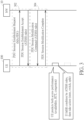
- FIG. 3 is a first sequence diagram illustrating interactions between the UE 100 and the NW 10 shown in FIG. 1 according to an embodiment of the present invention.
- the UE 100 establishes a multi-access protocol data unit (MA-PDU) session by initializing a PDU session establishment procedure 302 with the NW 10 over the 3GPP access 12. For example, the UE 100 sends a PDU Session Establishment Request message to the NW 10, with a "MA-PDU Request" indication indicating to the NW 10 that this PDU Session Establishment Request message is to establish an MA-PDU session and to apply the ATSSS function for steering the traffic of this MA-PDU session.
- the UE 100 receives a PDU Session Establishment Accept message from the NW 10.
- the PDU Session Establishment Accept message indicates to the UE 100 that the requested MA-PDU session was successfully established, and it includes the ATSSS rules for the MA-PDU session.
- the ATSSS rules may be a set of one or more ATSSS rules, each having a precedence value (which identifies the precedence of the ATSSS rule), a traffic descriptor, and an access selection descriptor (which includes a steering functionality, a steering mode, and steering mode information).
- the NW 10 may initiate a PDU session modification procedure 304 by sending a PDU Session Modification Command message to the UE 100.
- the ATSSS rules provided by the NW 10 are carried in the PDU Session Modification Command message.
- the UE 100 acknowledges the PDU Session Modification Command message, and sends a PDU Session Modification Complete message to the NW 10.
- the UE 100 can receive ATSSS rules during the UE-requested PDU session establishment procedure 302 for an MA-PDU session or the NW-requested PDU session modification procedure 304, and the UE 100 can distribute the traffic across the 3GPP access 12 and the non-3GPP access 14 according to the ATSSS rules.
- the UE 100 performs NN-based 3GPP and non-3GPP access performance prediction to obtain the predicted performance P_3GPP of the 3GPP access 12 and the predicted performance P_non-3GPP of the non-3GPP access 14. If a condition of the UE 100 that is evaluated based on the access performance prediction results (P_3GPP and P_non-3GPP) fulfills one of the ATSSS rules 16, the UE 100 can take action (e.g., steer, switch, or split) in advance for better user-experience.
- action e.g., steer, switch, or split
- the steering mode of ATSSS for the traffic may be an Active-Standby mode, a Smallest Delay mode, a load-Balancing mode, or a Priority-based mode.
- the steering mode is the Active-Standby mode
- the UE 100 uses predicted access availability that is obtained from observing the network environment for access selection. That is, the UE 100 can steer the traffic by using the access which is predicted to be available more possibly. Hence, the UE 100 selects the active access if it is predicted to be available, or selects the standby access if the standby access is predicted to be available and the active access is predicted to be unavailable.
- the steering mode is the Smallest Delay mode
- the UE 100 uses the predicted smallest RTT that is obtained from observing the network environment for access selection.
- the UE 100 selects the access which is predicted to have the smallest RTT.
- the steering mode is the Load-Balancing mode
- the UE 100 uses the predicted quality of both predicted available accesses that is obtained from observing the network environment to dynamically adjust the percentage of both predicted available accesses, or sends all traffic to one predicted available access. That is, if both of the accesses are predicted to be available, the UE 100 can distribute the traffic across both 3GPP access 12 and non-3GPP access 14. If only one access is predicted to be available, the UE steers the traffic by using the available access only.
- the UE 100 uses the predicted congestion or unavailability of the high priority access that is obtained from observing the network environment, and then acts in advance. That is, the UE 100 steers the traffic to the high priority access, and predicts if it will become congested or unavailable and then acts in advance.
- the access performance prediction circuit 102 predicts performance of the 3GPP access 12 and performance of the non-3GPP access 14, and the wireless communication circuit 104 takes action (e.g., steer, switch, split) in response to predicted performance P_3GPP of the 3GPP access 12 and predicted performance P_non-3GPP of the non-3GPP access 14.
- the wireless communication circuit 104 may take further action (e.g., report) in response to predicted performance P_3GPP of the 3GPP access 12 and predicted performance P_non-3GPP of the non-3GPP access 14.
- the wireless communication circuit 104 reports the predicted performance P_3GPP of the 3GPP access 12 and the predicted performance P_non-3GPP of the non-3GPP access 14 to the NW 10 for use of ATSSS rule modification.
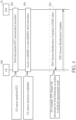
- FIG. 4 is a second sequence diagram illustrating interactions between the UE 100 and the NW 10 shown in FIG. 1 according to an embodiment of the present invention.
- the NW 10 may initiate an RTT measurement procedure 402 by sending one or more performance measurement function protocol (PMFP) ECHO REQUEST messages over the access of the MA-PDU session.
- PMFP performance measurement function protocol
- the UE 100 Upon reception of the PMFP ECHO REQUEST message, the UE 100 creates a PMFP ECHO RESPONSE message, and sends the PMFP ECHO RESPONSE message over the access of the MA-PDU session via which the PMFP ECHO REQUEST message was received.
- PMFP performance measurement function protocol
- the UE 100 performs NN-based 3GPP and non-3GPP access performance prediction to obtain the predicted performance P_3GPP of the 3GPP access 12 and the predicted performance P_non-3GPP of the non-3GPP access 14.
- Each of the predicted performance P_3GPP of the 3GPP access 12 and the predicted performance P_non-3GPP of the non-3GPP access 14 may include predicted availability, predicted RTT, etc.
- the UE 100 reports the predicted RTT of each access to the NW 10, for example, via the PMFP ECHO RESPONSE message.
- the UE 100 may inform the NW 10 about availability or unavailability of an access of an MA-PDU session.
- the UE 100 may initiate an access availability or unavailability report procedure 404 by creating a PMFP ACCESS REPORT message and sending the PMFP ACCESS REPORT message to the NW 10.
- the UE 100 reports the predicted availability of each access to the NW 10, for example, via the PMFP ACCESS REPORT message.
- the NW 10 Upon reception of the PMFP ACCESS REPORT message, the NW 10 creates a PMFP ACKNOWLEDGEMENT message, and sends the PMFP ACKNOWLEDGEMENT message over the access of the MA-PDU session via which the PMFP ACCESS REPORT message was received.
- the NW 10 may decide to adjust the ATSSS rules 16 through the PDU session modification procedure 304.
- the ATSSS rules adjusted by the NW 10 are carried in the PDU Session Modification Command message sent from the NW 10 to the UE 100.
- the NW 10 may change the percentage for load-balancing according to the predicted measurement result.
- the UE 100 performs NN-based 3GPP and non-3GPP access performance prediction to obtain the predicted performance P_3GPP of the 3GPP access 12 and the predicted performance P_non-3GPP of the non-3GPP access 14.
- the NN model employed by the UE 100 is defined by NN parameters (e.g., weights) .
- the NN parameters may be provided by the NW 10 to assist the UE 100 on the NN-based access performance prediction. In this way, better prediction can be achieved by the NN parameters communicated between UE 100 and NW 10.
- the wireless communication circuit 104 is arranged to receive NN parameters PR_NN transmitted from the NW 10, and the access performance prediction circuit 102 is arranged to use an NN model indicated by the NN parameters PR_NN to obtain the predicted performance P_3GPP of the 3GPP access 12 and the predicted performance P_non-3GPP of the non-3GPP access 14.
- FIG. 5 is a third sequence diagram illustrating interactions between the UE 100 and the NW 10 shown in FIG. 1 according to an embodiment of the present invention.
- the PDU session establishment procedure 302 may be modified to have the NN parameters PR_NN carried by a modified PDU Session Establishment Accept message that is sent from the NW 10 to the UE 100.
- the PDU session modification procedure 304 may be modified to have the NN parameters PR_NN carried by a modified PDU Session Modification Command message that is sent from the NW 10 to the UE 100.
- a new PDU session procedure 502 may be proposed for sending the NN parameters PR_NN via a new Message Request.
- the UE 100 can use an NN model indicated by the NN parameters PR_NN assisted by the NW 10 to perform the access performance prediction upon both of the 3GPP access 12 and the non-3GPP access 14.
Landscapes
- Engineering & Computer Science (AREA)
- Computer Networks & Wireless Communication (AREA)
- Signal Processing (AREA)
- Theoretical Computer Science (AREA)
- Physics & Mathematics (AREA)
- Evolutionary Computation (AREA)
- Software Systems (AREA)
- Artificial Intelligence (AREA)
- Life Sciences & Earth Sciences (AREA)
- General Physics & Mathematics (AREA)
- Computational Linguistics (AREA)
- Data Mining & Analysis (AREA)
- Biomedical Technology (AREA)
- General Health & Medical Sciences (AREA)
- Molecular Biology (AREA)
- Computing Systems (AREA)
- General Engineering & Computer Science (AREA)
- Biophysics (AREA)
- Mathematical Physics (AREA)
- Health & Medical Sciences (AREA)
- Computer Vision & Pattern Recognition (AREA)
- Databases & Information Systems (AREA)
- Medical Informatics (AREA)
- Computer Security & Cryptography (AREA)
- Mobile Radio Communication Systems (AREA)
Abstract
Description
- This application claims the benefit of
U.S. Provisional Application No. 63/321,864 - The present invention relates to wireless communications, and more particularly, to a user equipment (UE) with access performance prediction and an associated wireless communication method.
- Access traffic steering, switching and splitting (ATSSS) is standardized for enabling traffic steering across multiple accesses, including a 3rd generation partnership project (3GPP) access (e.g., fifth generation (5G) cellular network) and a non-3GPP access (e.g., WiFi network). Specifically, an ATSSS capable UE can use the ATSSS functionality to steer, switch and split the traffic across the 3GPP access and the non-3GPP access. Steering on the 3GPP access and the non-3GPP access can select one of the 3GPP access and the non-3GPP access for best access network selection. Switching on the 3GPP access and the non-3GPP access can switch the 3GPP access to/from the non-3GPP access network for seamless handover. The splitting on the 3GPP access and the non-3GPP access can select both of the 3GPP access and the non-3GPP access for access network aggregation.
- The ATSSS capable UE can perform access performance measurements to decide how to distribute traffic over 3GPP access and non-3GPP access. In addition, the performance measurement function (PMF) needs to report measurement result (availability and round-trip time) to the network, and then the network may make decision to change the steering mode via ATSSS rules. It is hard for the ATSSS capable UE to take action (e.g., steer, switch, split) properly according to the measurement result since the 3GPP and non-3GPP access network environments change rapidly. Consequently, the end-user experience will be downgraded since the ATSSS capable UE (e.g., mobile phone) spends more response time to take proper action.
- One of the objectives of the claimed invention is to provide a user equipment with access performance prediction and an associated wireless communication method. A user equipment and a wireless communication method according to the invention are defined in the independent claims. The dependent claims define preferred embodiments thereof.
- According to a first aspect of the present invention, an exemplary user equipment (UE) is disclosed. The exemplary UE includes an access performance prediction circuit and a wireless communication circuit. The access performance prediction circuit is arranged to predict performance of a 3rd generation partnership project (3GPP) access and performance of a non-3GPP access. The wireless communication circuit is arranged to take action in response to predicted performance of the 3GPP access and predicted performance of the non-3GPP access.
- According to a second aspect of the present invention, an exemplary wireless communication method applicable to a user equipment is disclosed. The exemplary wireless communication method includes: performing access performance prediction for predicting performance of a 3rd generation partnership project (3GPP) access and performance of a non-3GPP access; and taking action in response to predicted performance of the 3GPP access and predicted performance of the non-3GPP access.
- These and other objectives of the present invention will no doubt become obvious to those of ordinary skill in the art after reading the following detailed description of the preferred embodiment that is illustrated in the various figures and drawings.
-
-
FIG. 1 is a diagram illustrating a user equipment (UE) according to an embodiment of the present invention. -
FIG. 2 is a diagram illustrating a machine-learning assisted access performance prediction circuit according to an embodiment of the present invention. -
FIG. 3 is a first sequence diagram illustrating interactions between UE and network (NW) shown inFIG. 1 according to an embodiment of the present invention. -
FIG. 4 is a second sequence diagram illustrating interactions between UE and NW shown inFIG. 1 according to an embodiment of the present invention. -
FIG. 5 is a third sequence diagram illustrating interactions between UE and NW shown inFIG. 1 according to an embodiment of the present invention. - Certain terms are used throughout the following description and claims, which refer to particular components. As one skilled in the art will appreciate, electronic equipment manufacturers may refer to a component by different names. This document does not intend to distinguish between components that differ in name but not in function. In the following description and in the claims, the terms "include" and "comprise" are used in an open-ended fashion, and thus should be interpreted to mean "include, but not limited to ...". Also, the term "couple" is intended to mean either an indirect or direct electrical connection. Accordingly, if one device is coupled to another device, that connection may be through a direct electrical connection, or through an indirect electrical connection via other devices and connections.
-
FIG. 1 is a diagram illustrating a user equipment (UE) according to an embodiment of the present invention. By way of example, but not limitation, the UE 100 may be a 5G system (5GS) ATSSS capable UE. As shown inFIG. 1 , the UE 100 includes an accessperformance prediction circuit 102 and awireless communication circuit 104. It should be noted that only the components pertinent to the present invention are shown inFIG. 1 . In practice, the UE 100 is allowed to have other components to achieve other designated functions. The accessperformance prediction circuit 102 is arranged to predict performance of a 3rd generation partnership project (3GPP) access (e.g., 5G New Radio) 12 and performance of a non-3GPP access (e.g., WiFi) 14. The accessperformance prediction circuit 102 may be implemented by pure hardware, or a processor that loads and executes program codes, or a combination thereof. That is, the proposed UE-side access performance prediction may be achieved through hardware-based means, software-based means, or a combination thereof. Thewireless communication circuit 104 includes components needed to deal with traffic steering across multiple accesses, including the3GPP access 12 and thenon-3GPP access 14, under a steering mode of ATSSS. A network (NW) 10 (e.g., 5G core network) may configureATSSS rules 16 and push them to the UE 100. If a condition of the UE 100 fulfills one of the ATSSSrules 16, the UE 100 (particularly,wireless communication circuit 104 of UE 100) may take action (e.g., steer, switch, split) under a steering mode of ATSSS, where the steering mode may be an Active-Standby mode, a Smallest Delay mode, a load-Balancing mode, or a Priority-based mode. - In this embodiment, the traffic steering at the UE 100 depends on the predicted performance P_3GGP of the
3GPP access 12 and the predicted performance P_non-3GPP of thenon-3GPP access 14. It should be noted that the predicted performance P_3GGP is a prediction result of a future network environment (i.e., a predicted measurement result) of the3GPP access 12, rather than a measurement result of a current network environment of the3GPP access 12; and the predicted performance P_non-3GGP is a prediction result of a future network environment (i.e., a predicted measurement result) of thenon-3GPP access 14, rather than a measurement result of a current network environment of thenon-3GPP access 14. The network environments of the3GPP access 12 and thenon-3GPP access 14 change rapidly. Since the traffic steering at the UE 100 is determined on the basis of the predicted performance P_3GGP of the3GPP access 12 and the predicted performance P_non-3GPP of the non-3GPP access 14 (i.e., knowledge of future measurement results of the3GPP access 12 and thenon-3GPP access 14 provided by the proposed access performance prediction), the UE 100 (particularly,wireless communication circuit 104 of UE 100) can take action (e.g., steer, switch, split) in advance, thereby improving the end-user experience greatly. - Preferably, the proposed access performance prediction may be achieved through machine learning. That is, the access
performance prediction circuit 102 is arranged to obtain the predicted performance P_3GPP of the3GPP access 12 and the predicted performance P_non-3GPP of thenon-3GPP access 104 through machine learning.FIG. 2 is a diagram illustrating a machine-learning assisted access performance prediction circuit according to an embodiment of the present invention. The accessperformance prediction circuit 102 shown inFIG. 1 may be implemented by the machine-learning assisted accessperformance prediction circuit 200 shown inFIG. 2 . In this embodiment, the machine-learning assisted accessperformance prediction circuit 200 includes a radio-frequency (RF)feature extraction circuit 202, anenvironment classification circuit 204, and anaction circuit 206. The RFfeature extraction circuit 202 is arranged to receive RF signal information INF_3GPP of the3GPP access 12 and RF signal information INF_non-3GPP of thenon-3GPP access 14, and convert the RF signal information INF_3GPP of the3GPP access 12 and the RF signal information INF_non-3GPP of thenon-3GPP access 14 into feature metrics FM of the3GPP access 12 and thenon-3GPP access 14. Theenvironment classification circuit 204 is arranged to classify environments of the3GPP access 12 and thenon-3GPP access 14 according to the feature metrics FM of the3GPP access 12 and thenon-3GPP access 14. Theaction circuit 206 arranged to obtain the predicted performance P_3GPP of the3GPP access 12 and the predicted performance P_non-3GPP of thenon-3GPP access 14 according to a classification result CR of the environments of the3GPP access 12 and thenon-3GPP access 14. At least one of the RFfeature extraction circuit 202 and theenvironment classification circuit 204 may employ a neural-network (NN) model. For example, the RFfeature extraction circuit 202 employs anNN model 208 for RF feature extraction, and/or theenvironment classification circuit 204 employs anNN model 210 for environment classification. In this embodiment, the NNmodel 208 may be a pre-trained NN model (i.e., an NN model with pre-trained parameters), and the NNmodel 210 may be an adaptive machine-learning model (i.e., an NN model with parameters trained by adaptive learning). Furthermore, theenvironment classification circuit 204 may provide feedbacks FB to the RFfeature extraction circuit 202 for adaption to environmental changes. For example, the RFfeature extraction circuit 202 may adjust pre-trained parameters of theNN model 210 in response to the feedbacks FB provided from theenvironment classification circuit 204. However, this is for illustrative purposes only, and is not meant to be a limitation of the present invention. - Each of the predicted performance P_3GGP of the
3GPP access 12 and the predicted performance P_non-3GPP of thenon-3GPP access 14 may include information needed by theUE 100 to decide how to distribute traffic over3GPP access 12 andnon-3GPP access 14. For example, each of the predicted performance P_3GGP of the3GPP access 12 and the predicted performance P_non-3GPP of thenon-3GPP access 14 may include predicted availability (which indicates if an access will be available in a future network environment), predicted round-trip time (RTT) (which indicates the RTT of an access in a future network environment), and/or predicted congestion (which indicates if an access will be congested in a future network environment). -
FIG. 3 is a first sequence diagram illustrating interactions between theUE 100 and theNW 10 shown inFIG. 1 according to an embodiment of the present invention. TheUE 100 establishes a multi-access protocol data unit (MA-PDU) session by initializing a PDUsession establishment procedure 302 with theNW 10 over the3GPP access 12. For example, theUE 100 sends a PDU Session Establishment Request message to theNW 10, with a "MA-PDU Request" indication indicating to theNW 10 that this PDU Session Establishment Request message is to establish an MA-PDU session and to apply the ATSSS function for steering the traffic of this MA-PDU session. TheUE 100 receives a PDU Session Establishment Accept message from theNW 10. The PDU Session Establishment Accept message indicates to theUE 100 that the requested MA-PDU session was successfully established, and it includes the ATSSS rules for the MA-PDU session. The ATSSS rules may be a set of one or more ATSSS rules, each having a precedence value (which identifies the precedence of the ATSSS rule), a traffic descriptor, and an access selection descriptor (which includes a steering functionality, a steering mode, and steering mode information). - The
NW 10 may initiate a PDUsession modification procedure 304 by sending a PDU Session Modification Command message to theUE 100. The ATSSS rules provided by theNW 10 are carried in the PDU Session Modification Command message. TheUE 100 acknowledges the PDU Session Modification Command message, and sends a PDU Session Modification Complete message to theNW 10. - To put it simply, the
UE 100 can receive ATSSS rules during the UE-requested PDUsession establishment procedure 302 for an MA-PDU session or the NW-requested PDUsession modification procedure 304, and theUE 100 can distribute the traffic across the3GPP access 12 and thenon-3GPP access 14 according to the ATSSS rules. - The
UE 100 performs NN-based 3GPP and non-3GPP access performance prediction to obtain the predicted performance P_3GPP of the3GPP access 12 and the predicted performance P_non-3GPP of thenon-3GPP access 14. If a condition of theUE 100 that is evaluated based on the access performance prediction results (P_3GPP and P_non-3GPP) fulfills one of the ATSSS rules 16, theUE 100 can take action (e.g., steer, switch, or split) in advance for better user-experience. - The steering mode of ATSSS for the traffic may be an Active-Standby mode, a Smallest Delay mode, a load-Balancing mode, or a Priority-based mode. When the steering mode is the Active-Standby mode, the
UE 100 uses predicted access availability that is obtained from observing the network environment for access selection. That is, theUE 100 can steer the traffic by using the access which is predicted to be available more possibly. Hence, theUE 100 selects the active access if it is predicted to be available, or selects the standby access if the standby access is predicted to be available and the active access is predicted to be unavailable. When the steering mode is the Smallest Delay mode, theUE 100 uses the predicted smallest RTT that is obtained from observing the network environment for access selection. That is, theUE 100 selects the access which is predicted to have the smallest RTT. When the steering mode is the Load-Balancing mode, theUE 100 uses the predicted quality of both predicted available accesses that is obtained from observing the network environment to dynamically adjust the percentage of both predicted available accesses, or sends all traffic to one predicted available access. That is, if both of the accesses are predicted to be available, theUE 100 can distribute the traffic across both3GPP access 12 andnon-3GPP access 14. If only one access is predicted to be available, the UE steers the traffic by using the available access only. When the steering mode is the Priority-based mode, theUE 100 uses the predicted congestion or unavailability of the high priority access that is obtained from observing the network environment, and then acts in advance. That is, theUE 100 steers the traffic to the high priority access, and predicts if it will become congested or unavailable and then acts in advance. - As mentioned above, the access
performance prediction circuit 102 predicts performance of the3GPP access 12 and performance of thenon-3GPP access 14, and thewireless communication circuit 104 takes action (e.g., steer, switch, split) in response to predicted performance P_3GPP of the3GPP access 12 and predicted performance P_non-3GPP of thenon-3GPP access 14. In some embodiments, thewireless communication circuit 104 may take further action (e.g., report) in response to predicted performance P_3GPP of the3GPP access 12 and predicted performance P_non-3GPP of thenon-3GPP access 14. For example, thewireless communication circuit 104 reports the predicted performance P_3GPP of the3GPP access 12 and the predicted performance P_non-3GPP of thenon-3GPP access 14 to theNW 10 for use of ATSSS rule modification. -
FIG. 4 is a second sequence diagram illustrating interactions between theUE 100 and theNW 10 shown inFIG. 1 according to an embodiment of the present invention. TheNW 10 may initiate anRTT measurement procedure 402 by sending one or more performance measurement function protocol (PMFP) ECHO REQUEST messages over the access of the MA-PDU session. Upon reception of the PMFP ECHO REQUEST message, theUE 100 creates a PMFP ECHO RESPONSE message, and sends the PMFP ECHO RESPONSE message over the access of the MA-PDU session via which the PMFP ECHO REQUEST message was received. TheUE 100 performs NN-based 3GPP and non-3GPP access performance prediction to obtain the predicted performance P_3GPP of the3GPP access 12 and the predicted performance P_non-3GPP of thenon-3GPP access 14. Each of the predicted performance P_3GPP of the3GPP access 12 and the predicted performance P_non-3GPP of thenon-3GPP access 14 may include predicted availability, predicted RTT, etc. During theRTT measurement procedure 402, theUE 100 reports the predicted RTT of each access to theNW 10, for example, via the PMFP ECHO RESPONSE message. - The
UE 100 may inform theNW 10 about availability or unavailability of an access of an MA-PDU session. For example, theUE 100 may initiate an access availability orunavailability report procedure 404 by creating a PMFP ACCESS REPORT message and sending the PMFP ACCESS REPORT message to theNW 10. During the access availability orunavailability report procedure 404, theUE 100 reports the predicted availability of each access to theNW 10, for example, via the PMFP ACCESS REPORT message. Upon reception of the PMFP ACCESS REPORT message, theNW 10 creates a PMFP ACKNOWLEDGEMENT message, and sends the PMFP ACKNOWLEDGEMENT message over the access of the MA-PDU session via which the PMFP ACCESS REPORT message was received. After being informed of the access performance prediction result (e.g., predicted measurement result including predicted availability, predicted RTT, etc.) obtained by theUE 100, theNW 10 may decide to adjust the ATSSS rules 16 through the PDUsession modification procedure 304. The ATSSS rules adjusted by theNW 10 are carried in the PDU Session Modification Command message sent from theNW 10 to theUE 100. For example, theNW 10 may change the percentage for load-balancing according to the predicted measurement result. - As mentioned above, the
UE 100 performs NN-based 3GPP and non-3GPP access performance prediction to obtain the predicted performance P_3GPP of the3GPP access 12 and the predicted performance P_non-3GPP of thenon-3GPP access 14. The NN model employed by theUE 100 is defined by NN parameters (e.g., weights) . In some embodiments, the NN parameters may be provided by theNW 10 to assist theUE 100 on the NN-based access performance prediction. In this way, better prediction can be achieved by the NN parameters communicated betweenUE 100 andNW 10. Hence, thewireless communication circuit 104 is arranged to receive NN parameters PR_NN transmitted from theNW 10, and the accessperformance prediction circuit 102 is arranged to use an NN model indicated by the NN parameters PR_NN to obtain the predicted performance P_3GPP of the3GPP access 12 and the predicted performance P_non-3GPP of thenon-3GPP access 14. -
FIG. 5 is a third sequence diagram illustrating interactions between theUE 100 and theNW 10 shown inFIG. 1 according to an embodiment of the present invention. For example, the PDUsession establishment procedure 302 may be modified to have the NN parameters PR_NN carried by a modified PDU Session Establishment Accept message that is sent from theNW 10 to theUE 100. For another example, the PDUsession modification procedure 304 may be modified to have the NN parameters PR_NN carried by a modified PDU Session Modification Command message that is sent from theNW 10 to theUE 100. For yet another example, a newPDU session procedure 502 may be proposed for sending the NN parameters PR_NN via a new Message Request. TheUE 100 can use an NN model indicated by the NN parameters PR_NN assisted by theNW 10 to perform the access performance prediction upon both of the3GPP access 12 and thenon-3GPP access 14. - Those skilled in the art will readily observe that numerous modifications and alterations of the device and method may be made while retaining the teachings of the invention. Accordingly, the above disclosure should be construed as limited only by the metes and bounds of the appended claims.
Claims (15)
- A user equipment, in the following also referred to as UE, (100) comprising:an access performance prediction circuit (102), arranged to predict performance of a 3rd generation partnership project, in the following also referred to as 3GPP, access and performance of a non-3GPP access; anda wireless communication circuit (104), arranged to take action in response to predicted performance of the 3GPP access and predicted performance of the non-3GPP access.
- The UE of claim 1, wherein the access performance prediction circuit (102) is arranged to obtain the predicted performance of the 3GPP access and the predicted performance of the non-3GPP access through machine learning.
- The UE of claim 1 or 2, wherein the access performance prediction circuit (102) comprises:a radio-frequency, in the following also referred to as RF, feature extraction circuit (202), arranged to receive RF signal information of the 3GPP access and RF signal information of the non-3GPP access, and convert the RF signal information of the 3GPP access and the RF signal information of the non-3GPP access into feature metrics of the 3GPP access and the non-3GPP access;an environment classification circuit (204), arranged to classify environments of the 3GPP access and the non-3GPP access according to the feature metrics of the 3GPP access and the non-3GPP access; andan action circuit (206), arranged to obtain the predicted performance of the 3GPP access and the predicted performance of the non-3GPP access according to a classification result of the environments of the 3GPP access and the non-3GPP access;wherein at least one of the RF feature extraction circuit (202) and the environment classification circuit (204) employs a neural-network, in the following also referred to as NN, model.
- The UE of claim 3, wherein the environment classification circuit (204) employs adaptive machine learning; and/orwherein the RF feature extraction circuit (202) employs a pre-trained NN model,wherein preferably the environment classification circuit (204) is further arranged to provide feedbacks to the RF feature extraction circuit (202) for adaption to environmental changes.
- The UE of any one of claims 1 to 4, wherein the wireless communication circuit (104) is further arranged to receive NN parameters transmitted from a network, and the access performance prediction circuit (102) uses an NN model indicated by the NN parameters to obtain the predicted performance of the 3GPP access and the predicted performance of the non-3GPP access.
- The UE of any one of claims 1 to 5, wherein each of the predicted performance of the 3GPP access and the predicted performance of the non-3GPP access comprises at least one of predicted availability, predicted round-trip time, in the following also referred to as RTT, and predicted congestion.
- The UE of any one of claims 1 to 6, wherein the wireless communication circuit (104) refers to the predicted performance of the 3GPP access and the predicted performance of the non-3GPP access to deal with traffic steering across the 3GPP access and the non-3GPP access under a steering mode of access traffic steering, switching and splitting, in the following also referred to as ATSSS.
- The UE of any one of claims 1 to 7, wherein the wireless communication circuit (104) reports the predicted performance of the 3GPP access and the predicted performance of the non-3GPP access to a network.
- A wireless communication method applicable to a user equipment, comprising:performing access performance prediction for predicting performance of a 3rd generation partnership project, in the following also referred to as 3GPP, access and performance of a non-3GPP access; andtaking action in response to predicted performance of the 3GPP access and predicted performance of the non-3GPP access.
- The wireless communication method of claim 9, wherein performing the access performance prediction for predicting performance of the 3GPP access and performance of the non-3GPP access comprises:
obtaining the predicted performance of the 3GPP access and the predicted performance of the non-3GPP access through machine learning. - The wireless communication method of claim 9 or 10, wherein obtaining the predicted performance of the 3GPP access and the predicted performance of the non-3GPP access through machine learning comprises:performing radio-frequency, in the following also referred to as RF, feature extraction for converting RF signal information of the 3GPP access and RF signal information of the non-3GPP access into feature metrics of the 3GPP access and the non-3GPP access;performing environment classification for classifying environments of the 3GPP access and the non-3GPP access according to the feature metrics of the 3GPP access and the non-3GPP access; andobtaining the predicted performance of the 3GPP access and the predicted performance of the non-3GPP access according to a classification result of the environments of the 3GPP access and the non-3GPP access;wherein at least one of the RF feature extraction and the environment classification employs a neural-network, in the following also referred to as NN, model.
- The wireless communication method of claim 11, wherein the environment classification employs adaptive machine learning; and/orwherein the RF feature extraction employs a pre-trained NN model,wherein preferably the environment classification is further arranged to provide feedbacks to the RF feature extraction for adaption to environmental changes.
- The wireless communication method of any one of claims 9 to 12, further comprising:receiving NN parameters transmitted from a network; andwherein performing the access performance prediction for predicting performance of the 3GPP access and performance of the non-3GPP access comprises:
using an NN model indicated by the NN parameters to obtain the predicted performance of the 3GPP access and the predicted performance of the non-3GPP access. - The wireless communication method of any one of claims 9 to 13, wherein each of the predicted performance of the 3GPP access and the predicted performance of the non-3GPP access comprises at least one of predicted availability, predicted round-trip time, in the following also referred to as RTT, and predicted congestion.
- The wireless communication method of any one of claims 9 to 14, wherein taking action in response to the predicted performance of the 3GPP access and the predicted performance of the non-3GPP access comprises:referring to the predicted performance of the 3GPP access and the predicted performance of the non-3GPP access to deal with traffic steering across the 3GPP access and the non-3GPP access under a steering mode of access traffic steering, switching and splitting, in the following also referred to as ATSSS; and/orreporting the predicted performance of the 3GPP access and the predicted performance of the non-3GPP access to a network.
Applications Claiming Priority (2)
| Application Number | Priority Date | Filing Date | Title |
|---|---|---|---|
| US202263321864P | 2022-03-21 | 2022-03-21 | |
| US18/109,265 US20230300635A1 (en) | 2022-03-21 | 2023-02-14 | User equipment with access performance prediction and associated wireless communication method |
Publications (1)
| Publication Number | Publication Date |
|---|---|
| EP4250804A1 true EP4250804A1 (en) | 2023-09-27 |
Family
ID=85556395
Family Applications (1)
| Application Number | Title | Priority Date | Filing Date |
|---|---|---|---|
| EP23160923.1A Pending EP4250804A1 (en) | 2022-03-21 | 2023-03-09 | User equipment with access performance prediction and associated wireless communication method |
Country Status (3)
| Country | Link |
|---|---|
| US (1) | US20230300635A1 (en) |
| EP (1) | EP4250804A1 (en) |
| TW (1) | TWI836933B (en) |
Families Citing this family (1)
| Publication number | Priority date | Publication date | Assignee | Title |
|---|---|---|---|---|
| WO2026005362A1 (en) * | 2024-06-26 | 2026-01-02 | Samsung Electronics Co., Ltd. | Predicting network congestion in a wireless network system |
Citations (2)
| Publication number | Priority date | Publication date | Assignee | Title |
|---|---|---|---|---|
| US20210092664A1 (en) * | 2019-06-18 | 2021-03-25 | Mediatek Inc. | Handover Handling for Multi-Access PDU Session |
| WO2021155090A1 (en) * | 2020-01-29 | 2021-08-05 | Convida Wireless, Llc | Traffic steering enhancements for cellular networks |
Family Cites Families (3)
| Publication number | Priority date | Publication date | Assignee | Title |
|---|---|---|---|---|
| DE112020007003T5 (en) * | 2020-04-01 | 2023-01-19 | Intel Corporation | MULTI-RADIO ACCESS TECHNOLOGY TRAFFIC MANAGEMENT |
| CN117716720A (en) * | 2021-07-27 | 2024-03-15 | 联想(新加坡)私人有限公司 | Analysis-based round trip time determination |
| US12219398B2 (en) * | 2022-01-04 | 2025-02-04 | Qualcomm Incorporated | Techniques for operating in accordance with a dual networking mode for steering, switching and splitting traffic |
-
2023
- 2023-02-14 US US18/109,265 patent/US20230300635A1/en active Pending
- 2023-03-09 EP EP23160923.1A patent/EP4250804A1/en active Pending
- 2023-03-16 TW TW112109699A patent/TWI836933B/en active
Patent Citations (2)
| Publication number | Priority date | Publication date | Assignee | Title |
|---|---|---|---|---|
| US20210092664A1 (en) * | 2019-06-18 | 2021-03-25 | Mediatek Inc. | Handover Handling for Multi-Access PDU Session |
| WO2021155090A1 (en) * | 2020-01-29 | 2021-08-05 | Convida Wireless, Llc | Traffic steering enhancements for cellular networks |
Non-Patent Citations (2)
| Title |
|---|
| "3rd Generation Partnership Project; Technical Specification Group Services and System Aspects; Study on enablers for network automation for the 5G System (5GS); Phase 2 (Release 17)", vol. SA WG2, no. V17.0.0, 17 December 2020 (2020-12-17), pages 1 - 382, XP051999941, Retrieved from the Internet <URL:https://ftp.3gpp.org/Specs/latest/Rel-17/23_series/23700-91-h00.zip 23700-91-h00.docx> [retrieved on 20201217] * |
| ERICSSON: "KI#21, sol#77 - Update to clarify the added measurement", vol. SA WG2, no. e-meeting; 20201116 - 20201120, 9 November 2020 (2020-11-09), XP051952502, Retrieved from the Internet <URL:https://ftp.3gpp.org/tsg_sa/WG2_Arch/TSGS2_142e_Electronic/Docs/S2-2008446.zip S2-2008446_eNA_Ph2_KI#21 sol#77 - Update to explain the added measurement.doc> [retrieved on 20201109] * |
Also Published As
| Publication number | Publication date |
|---|---|
| TW202339531A (en) | 2023-10-01 |
| TWI836933B (en) | 2024-03-21 |
| US20230300635A1 (en) | 2023-09-21 |
Similar Documents
| Publication | Publication Date | Title |
|---|---|---|
| US20230354131A1 (en) | Communication Method, Access Network Device, Core Network Device, and User Equipment | |
| US11943662B2 (en) | Link quality obtaining method and apparatus | |
| CN115552976A (en) | Energy-aware traffic management for multiple access data sessions | |
| US20230300679A1 (en) | User equipment with non-network-decided access traffic steering, switching and splitting policy determination and associated wireless communication method | |
| US20230422079A1 (en) | Data packet transmission method, communication device, computer-readable storage medium and computer program product | |
| WO2019064542A1 (en) | Communication system, base station device, terminal device, and communication method | |
| US12457578B2 (en) | Method and apparatus for task management in next generation networks | |
| CN118104278A (en) | Device, method and computer program | |
| KR20200088441A (en) | Request processing method and corresponding entity | |
| WO2023185850A1 (en) | Ursp rule optimization methods and apparatuses, terminal, network side device and medium | |
| CN110140397B (en) | Information transmission method and device in cell handover process | |
| US20230300635A1 (en) | User equipment with access performance prediction and associated wireless communication method | |
| CN117425181A (en) | Network function determining method, device and storage medium | |
| CN116801313A (en) | Network and method for access service guidance, handover and diversion rule selection | |
| EP4250812A1 (en) | Network using parameters provided from user equipment for access traffic steering, switching and splitting rule selection and associated wireless communication method | |
| WO2024235617A1 (en) | Apparatus, method and computer program | |
| CN116801270A (en) | Wireless communication method and user equipment for access performance prediction | |
| JP7526713B2 (en) | Network device, control method thereof, communication system and program | |
| EP3614728B1 (en) | Method and device for determining service path | |
| US20190021127A1 (en) | Method for service transmission and transmission device | |
| EP4513953A1 (en) | Communication method and apparatus | |
| WO2025149562A1 (en) | Method, apparatus and computer program | |
| CN116801312A (en) | Method and user equipment for wireless communications | |
| WO2025218587A1 (en) | Data offloading processing method and apparatus, terminal, and network side device | |
| CN118678384A (en) | Method, device and electronic device for reporting air interface delay of wireless network |
Legal Events
| Date | Code | Title | Description |
|---|---|---|---|
| PUAI | Public reference made under article 153(3) epc to a published international application that has entered the european phase |
Free format text: ORIGINAL CODE: 0009012 |
|
| STAA | Information on the status of an ep patent application or granted ep patent |
Free format text: STATUS: THE APPLICATION HAS BEEN PUBLISHED |
|
| AK | Designated contracting states |
Kind code of ref document: A1 Designated state(s): AL AT BE BG CH CY CZ DE DK EE ES FI FR GB GR HR HU IE IS IT LI LT LU LV MC ME MK MT NL NO PL PT RO RS SE SI SK SM TR |
|
| STAA | Information on the status of an ep patent application or granted ep patent |
Free format text: STATUS: REQUEST FOR EXAMINATION WAS MADE |
|
| 17P | Request for examination filed |
Effective date: 20240326 |
|
| RBV | Designated contracting states (corrected) |
Designated state(s): AL AT BE BG CH CY CZ DE DK EE ES FI FR GB GR HR HU IE IS IT LI LT LU LV MC ME MK MT NL NO PL PT RO RS SE SI SK SM TR |
|
| GRAP | Despatch of communication of intention to grant a patent |
Free format text: ORIGINAL CODE: EPIDOSNIGR1 |
|
| STAA | Information on the status of an ep patent application or granted ep patent |
Free format text: STATUS: GRANT OF PATENT IS INTENDED |
|
| RIC1 | Information provided on ipc code assigned before grant |
Ipc: H04W 24/02 20090101AFI20260126BHEP Ipc: H04W 28/086 20230101ALI20260126BHEP Ipc: H04W 24/04 20090101ALI20260126BHEP Ipc: H04W 48/18 20090101ALI20260126BHEP Ipc: G06N 3/044 20230101ALI20260126BHEP Ipc: G06N 3/08 20230101ALI20260126BHEP Ipc: H04W 28/08 20230101ALI20260126BHEP Ipc: H04W 88/06 20090101ALN20260126BHEP Ipc: G06N 3/02 20060101ALN20260126BHEP |
|
| RIC1 | Information provided on ipc code assigned before grant |
Ipc: H04W 24/02 20090101AFI20260206BHEP Ipc: H04W 28/086 20230101ALI20260206BHEP Ipc: H04W 24/04 20090101ALI20260206BHEP Ipc: H04W 48/18 20090101ALI20260206BHEP Ipc: G06N 3/044 20230101ALI20260206BHEP Ipc: G06N 3/08 20230101ALI20260206BHEP Ipc: H04W 28/08 20230101ALI20260206BHEP Ipc: H04W 88/06 20090101ALN20260206BHEP Ipc: G06N 3/02 20060101ALN20260206BHEP |
|
| INTG | Intention to grant announced |
Effective date: 20260220 |
|
| GRAS | Grant fee paid |
Free format text: ORIGINAL CODE: EPIDOSNIGR3 |
|
| GRAA | (expected) grant |
Free format text: ORIGINAL CODE: 0009210 |
|
| STAA | Information on the status of an ep patent application or granted ep patent |
Free format text: STATUS: THE PATENT HAS BEEN GRANTED |