EP4249435B1 - Transition metal oxide particles coated with an amorphous lithium-containing powder and the use thereof in energy-storage devices - Google Patents
Transition metal oxide particles coated with an amorphous lithium-containing powder and the use thereof in energy-storage devices Download PDFInfo
- Publication number
- EP4249435B1 EP4249435B1 EP23161643.4A EP23161643A EP4249435B1 EP 4249435 B1 EP4249435 B1 EP 4249435B1 EP 23161643 A EP23161643 A EP 23161643A EP 4249435 B1 EP4249435 B1 EP 4249435B1
- Authority
- EP
- European Patent Office
- Prior art keywords
- lithium
- metal oxide
- oxide
- transition metal
- partially amorphous
- Prior art date
- Legal status (The legal status is an assumption and is not a legal conclusion. Google has not performed a legal analysis and makes no representation as to the accuracy of the status listed.)
- Active
Links
Images

Classifications
-
- C—CHEMISTRY; METALLURGY
- C01—INORGANIC CHEMISTRY
- C01G—COMPOUNDS CONTAINING METALS NOT COVERED BY SUBCLASSES C01D OR C01F
- C01G53/00—Compounds of nickel
- C01G53/40—Complex oxides containing nickel and at least one other metal element
- C01G53/42—Complex oxides containing nickel and at least one other metal element containing alkali metals, e.g. LiNiO2
- C01G53/44—Complex oxides containing nickel and at least one other metal element containing alkali metals, e.g. LiNiO2 containing manganese
-
- C—CHEMISTRY; METALLURGY
- C01—INORGANIC CHEMISTRY
- C01D—COMPOUNDS OF ALKALI METALS, i.e. LITHIUM, SODIUM, POTASSIUM, RUBIDIUM, CAESIUM, OR FRANCIUM
- C01D15/00—Lithium compounds
- C01D15/08—Carbonates; Bicarbonates
-
- C—CHEMISTRY; METALLURGY
- C01—INORGANIC CHEMISTRY
- C01G—COMPOUNDS CONTAINING METALS NOT COVERED BY SUBCLASSES C01D OR C01F
- C01G53/00—Compounds of nickel
- C01G53/80—Compounds containing nickel, with or without oxygen or hydrogen, and containing one or more other elements
- C01G53/82—Compounds containing nickel, with or without oxygen or hydrogen, and containing two or more other elements
-
- H—ELECTRICITY
- H01—ELECTRIC ELEMENTS
- H01M—PROCESSES OR MEANS, e.g. BATTERIES, FOR THE DIRECT CONVERSION OF CHEMICAL ENERGY INTO ELECTRICAL ENERGY
- H01M10/00—Secondary cells; Manufacture thereof
- H01M10/05—Accumulators with non-aqueous electrolyte
- H01M10/052—Li-accumulators
-
- H—ELECTRICITY
- H01—ELECTRIC ELEMENTS
- H01M—PROCESSES OR MEANS, e.g. BATTERIES, FOR THE DIRECT CONVERSION OF CHEMICAL ENERGY INTO ELECTRICAL ENERGY
- H01M10/00—Secondary cells; Manufacture thereof
- H01M10/05—Accumulators with non-aqueous electrolyte
- H01M10/052—Li-accumulators
- H01M10/0525—Rocking-chair batteries, i.e. batteries with lithium insertion or intercalation in both electrodes; Lithium-ion batteries
-
- H—ELECTRICITY
- H01—ELECTRIC ELEMENTS
- H01M—PROCESSES OR MEANS, e.g. BATTERIES, FOR THE DIRECT CONVERSION OF CHEMICAL ENERGY INTO ELECTRICAL ENERGY
- H01M10/00—Secondary cells; Manufacture thereof
- H01M10/05—Accumulators with non-aqueous electrolyte
- H01M10/056—Accumulators with non-aqueous electrolyte characterised by the materials used as electrolytes, e.g. mixed inorganic/organic electrolytes
- H01M10/0561—Accumulators with non-aqueous electrolyte characterised by the materials used as electrolytes, e.g. mixed inorganic/organic electrolytes the electrolyte being constituted of inorganic materials only
- H01M10/0562—Solid materials
-
- H—ELECTRICITY
- H01—ELECTRIC ELEMENTS
- H01M—PROCESSES OR MEANS, e.g. BATTERIES, FOR THE DIRECT CONVERSION OF CHEMICAL ENERGY INTO ELECTRICAL ENERGY
- H01M4/00—Electrodes
- H01M4/02—Electrodes composed of, or comprising, active material
- H01M4/13—Electrodes for accumulators with non-aqueous electrolyte, e.g. for lithium-accumulators; Processes of manufacture thereof
- H01M4/131—Electrodes based on mixed oxides or hydroxides, or on mixtures of oxides or hydroxides, e.g. LiCoOx
-
- H—ELECTRICITY
- H01—ELECTRIC ELEMENTS
- H01M—PROCESSES OR MEANS, e.g. BATTERIES, FOR THE DIRECT CONVERSION OF CHEMICAL ENERGY INTO ELECTRICAL ENERGY
- H01M4/00—Electrodes
- H01M4/02—Electrodes composed of, or comprising, active material
- H01M4/13—Electrodes for accumulators with non-aqueous electrolyte, e.g. for lithium-accumulators; Processes of manufacture thereof
- H01M4/139—Processes of manufacture
- H01M4/1391—Processes of manufacture of electrodes based on mixed oxides or hydroxides, or on mixtures of oxides or hydroxides, e.g. LiCoOx
-
- H—ELECTRICITY
- H01—ELECTRIC ELEMENTS
- H01M—PROCESSES OR MEANS, e.g. BATTERIES, FOR THE DIRECT CONVERSION OF CHEMICAL ENERGY INTO ELECTRICAL ENERGY
- H01M4/00—Electrodes
- H01M4/02—Electrodes composed of, or comprising, active material
- H01M4/36—Selection of substances as active materials, active masses, active liquids
- H01M4/362—Composites
- H01M4/366—Composites as layered products
-
- H—ELECTRICITY
- H01—ELECTRIC ELEMENTS
- H01M—PROCESSES OR MEANS, e.g. BATTERIES, FOR THE DIRECT CONVERSION OF CHEMICAL ENERGY INTO ELECTRICAL ENERGY
- H01M4/00—Electrodes
- H01M4/02—Electrodes composed of, or comprising, active material
- H01M4/36—Selection of substances as active materials, active masses, active liquids
- H01M4/48—Selection of substances as active materials, active masses, active liquids of inorganic oxides or hydroxides
- H01M4/50—Selection of substances as active materials, active masses, active liquids of inorganic oxides or hydroxides of manganese
- H01M4/505—Selection of substances as active materials, active masses, active liquids of inorganic oxides or hydroxides of manganese of mixed oxides or hydroxides containing manganese for inserting or intercalating light metals, e.g. LiMn2O4 or LiMn2OxFy
-
- H—ELECTRICITY
- H01—ELECTRIC ELEMENTS
- H01M—PROCESSES OR MEANS, e.g. BATTERIES, FOR THE DIRECT CONVERSION OF CHEMICAL ENERGY INTO ELECTRICAL ENERGY
- H01M4/00—Electrodes
- H01M4/02—Electrodes composed of, or comprising, active material
- H01M4/36—Selection of substances as active materials, active masses, active liquids
- H01M4/48—Selection of substances as active materials, active masses, active liquids of inorganic oxides or hydroxides
- H01M4/52—Selection of substances as active materials, active masses, active liquids of inorganic oxides or hydroxides of nickel, cobalt or iron
- H01M4/525—Selection of substances as active materials, active masses, active liquids of inorganic oxides or hydroxides of nickel, cobalt or iron of mixed oxides or hydroxides containing iron, cobalt or nickel for inserting or intercalating light metals, e.g. LiNiO2, LiCoO2 or LiCoOxFy
-
- H—ELECTRICITY
- H01—ELECTRIC ELEMENTS
- H01M—PROCESSES OR MEANS, e.g. BATTERIES, FOR THE DIRECT CONVERSION OF CHEMICAL ENERGY INTO ELECTRICAL ENERGY
- H01M4/00—Electrodes
- H01M4/02—Electrodes composed of, or comprising, active material
- H01M4/62—Selection of inactive substances as ingredients for active masses, e.g. binders, fillers
-
- C—CHEMISTRY; METALLURGY
- C01—INORGANIC CHEMISTRY
- C01P—INDEXING SCHEME RELATING TO STRUCTURAL AND PHYSICAL ASPECTS OF SOLID INORGANIC COMPOUNDS
- C01P2002/00—Crystal-structural characteristics
- C01P2002/02—Amorphous compounds
-
- C—CHEMISTRY; METALLURGY
- C01—INORGANIC CHEMISTRY
- C01P—INDEXING SCHEME RELATING TO STRUCTURAL AND PHYSICAL ASPECTS OF SOLID INORGANIC COMPOUNDS
- C01P2002/00—Crystal-structural characteristics
- C01P2002/70—Crystal-structural characteristics defined by measured X-ray, neutron or electron diffraction data
- C01P2002/72—Crystal-structural characteristics defined by measured X-ray, neutron or electron diffraction data by d-values or two theta-values, e.g. as X-ray diagram
-
- C—CHEMISTRY; METALLURGY
- C01—INORGANIC CHEMISTRY
- C01P—INDEXING SCHEME RELATING TO STRUCTURAL AND PHYSICAL ASPECTS OF SOLID INORGANIC COMPOUNDS
- C01P2004/00—Particle morphology
- C01P2004/51—Particles with a specific particle size distribution
-
- C—CHEMISTRY; METALLURGY
- C01—INORGANIC CHEMISTRY
- C01P—INDEXING SCHEME RELATING TO STRUCTURAL AND PHYSICAL ASPECTS OF SOLID INORGANIC COMPOUNDS
- C01P2004/00—Particle morphology
- C01P2004/60—Particles characterised by their size
- C01P2004/61—Micrometer sized, i.e. from 1-100 micrometer
-
- C—CHEMISTRY; METALLURGY
- C01—INORGANIC CHEMISTRY
- C01P—INDEXING SCHEME RELATING TO STRUCTURAL AND PHYSICAL ASPECTS OF SOLID INORGANIC COMPOUNDS
- C01P2004/00—Particle morphology
- C01P2004/80—Particles consisting of a mixture of two or more inorganic phases
-
- C—CHEMISTRY; METALLURGY
- C01—INORGANIC CHEMISTRY
- C01P—INDEXING SCHEME RELATING TO STRUCTURAL AND PHYSICAL ASPECTS OF SOLID INORGANIC COMPOUNDS
- C01P2004/00—Particle morphology
- C01P2004/80—Particles consisting of a mixture of two or more inorganic phases
- C01P2004/82—Particles consisting of a mixture of two or more inorganic phases two phases having the same anion, e.g. both oxidic phases
- C01P2004/84—Particles consisting of a mixture of two or more inorganic phases two phases having the same anion, e.g. both oxidic phases one phase coated with the other
-
- C—CHEMISTRY; METALLURGY
- C01—INORGANIC CHEMISTRY
- C01P—INDEXING SCHEME RELATING TO STRUCTURAL AND PHYSICAL ASPECTS OF SOLID INORGANIC COMPOUNDS
- C01P2006/00—Physical properties of inorganic compounds
- C01P2006/12—Surface area
-
- C—CHEMISTRY; METALLURGY
- C01—INORGANIC CHEMISTRY
- C01P—INDEXING SCHEME RELATING TO STRUCTURAL AND PHYSICAL ASPECTS OF SOLID INORGANIC COMPOUNDS
- C01P2006/00—Physical properties of inorganic compounds
- C01P2006/40—Electric properties
-
- H—ELECTRICITY
- H01—ELECTRIC ELEMENTS
- H01M—PROCESSES OR MEANS, e.g. BATTERIES, FOR THE DIRECT CONVERSION OF CHEMICAL ENERGY INTO ELECTRICAL ENERGY
- H01M4/00—Electrodes
- H01M4/02—Electrodes composed of, or comprising, active material
- H01M2004/026—Electrodes composed of, or comprising, active material characterised by the polarity
- H01M2004/028—Positive electrodes
-
- H—ELECTRICITY
- H01—ELECTRIC ELEMENTS
- H01M—PROCESSES OR MEANS, e.g. BATTERIES, FOR THE DIRECT CONVERSION OF CHEMICAL ENERGY INTO ELECTRICAL ENERGY
- H01M2300/00—Electrolytes
- H01M2300/0017—Non-aqueous electrolytes
- H01M2300/0065—Solid electrolytes
- H01M2300/0068—Solid electrolytes inorganic
- H01M2300/0071—Oxides
-
- Y—GENERAL TAGGING OF NEW TECHNOLOGICAL DEVELOPMENTS; GENERAL TAGGING OF CROSS-SECTIONAL TECHNOLOGIES SPANNING OVER SEVERAL SECTIONS OF THE IPC; TECHNICAL SUBJECTS COVERED BY FORMER USPC CROSS-REFERENCE ART COLLECTIONS [XRACs] AND DIGESTS
- Y02—TECHNOLOGIES OR APPLICATIONS FOR MITIGATION OR ADAPTATION AGAINST CLIMATE CHANGE
- Y02E—REDUCTION OF GREENHOUSE GAS [GHG] EMISSIONS, RELATED TO ENERGY GENERATION, TRANSMISSION OR DISTRIBUTION
- Y02E60/00—Enabling technologies; Technologies with a potential or indirect contribution to GHG emissions mitigation
- Y02E60/10—Energy storage using batteries
Definitions
- the present invention relates to a method for making a transition metal oxide coated with an at least partially amorphous lithium-containing coating and a method for making an at least partially amorphous lithium-containing powder as well as the coated transition metal oxide and the lithium-containing powder obtainable by these methods.
- the present invention further relates to an electrode, electrolyte, or energy-storage device, such as a lithium-ion battery, comprising the coated transition metal oxide.
- Secondary lithium ion batteries are one of the most important battery types currently used.
- the secondary lithium ion batteries are typically composed of an anode made of a carbon material or a lithium-metal alloy, a cathode made of a lithium-metal oxide (mixed transition metal oxide), an electrolyte in which a lithium salt is dissolved in an organic solvent and a separator providing the passage of lithium ions between the positive and the negative electrode during the charging and the discharging processes.
- CAMs cathode active materials
- Such coated cathode active materials are typically formed by wet coating of an alkoxide solution containing lithium, titanium, aluminum, niobium, tantalum, and/or zirconium on cathode active material particle surfaces and calcining the thus obtained mixture at a temperature of 200 - 600 °C.
- WO 2020/256358 discloses a positive active material for a lithium secondary battery that comprises a lithium composite metal oxide and a coating layer located on the core and including an amorphous phase that includes a mixture of lithium oxide and tungsten oxide.
- US 2022/013774 discloses a cathode active material for a lithium secondary battery comprising a core containing lithium composite metal oxide and a coating layer disposed on the core, containing a mixture of lithium oxide, tungsten oxide, boron oxide and phosphorus oxide, and having an amorphous phase.
- a cathode active material for a lithium secondary battery comprising a core containing lithium composite metal oxide and a coating layer disposed on the core, containing a mixture of lithium oxide, tungsten oxide, boron oxide and phosphorus oxide, and having an amorphous phase.
- powders are dry mixed.
- Lithium oxide was produced by oxidation of lithium by products remaining on the surface of the lithium composite metal oxide.
- US 2020/194788 discloses a positive electrode active substance for an all solid state lithium secondary battery, wherein a surface of core particles composed of a spinel-type lithium manganese-containing composite oxide containing at least Li, Mn, O, and two or more elements other than Li, Mn, and O, is coated with an amorphous compound containing Li and A, where A represents one or a combination of two or more elements selected from the group consisting of Ti, Zr, Ta, Nb, Zn, W, and Al, and O.
- the raw materials for the core can be mixed e.g. by dry mixing, however, the surface coating process is solution-based.
- JP 4 982866 discloses lithium transition metal oxide as a positive electrode active material for an all-solid lithium battery.
- the surface of the positive electrode active material is coated with a lithium ion conductive oxide having substantially no electron conductivity.
- the coating layer is heat-treated at a low temperature, it is usually in an amorphous state.
- Suitable lithium ion conductive oxides for use for the coating layer include niobium or tantalum or both, and lithium.
- a method for preparing encapsulated mixed transition metal oxide particles by dry mixing of transition metal oxides with a mixture of pyrogenically produced aluminum oxide and titanium dioxide is disclosed in WO 2018/149834 A1 .
- the encapsulated mixed transition metal oxide particles positively affect the long-term cycling stability of the electrodes.
- deterioration of lithium-ion diffusion in solid-state batteries has sometimes been observed due to a reduced ionic conductivity of the coating materials, such as aluminum oxide or titanium oxide.
- a method of coating transition metal oxide particles by dry-mixing such particles with preformed calcinated crystalline lithium aluminate or lithium titanate has been described in EP 20206870.6 and a method for producing calcinated alpha lithium aluminate has been described in EP 20197533.1 .
- transition metal oxides used e.g., as cathode material are applied with very laborious wet coating or Atomic Layer Deposition (ALD) coating methods with subsequent calcination and thereby converted into a crystalline solid in order to obtain an effective material.
- ALD Atomic Layer Deposition
- transition metal oxides coated with an at least partially amorphous coating comprising lithium and an oxide of a metal other than lithium, selected from the group consisting of niobium, aluminum, titanium, zirconium, silicon, tungsten, and mixtures thereof, can be produced by simple dry-mixing and that the coated transition metal oxides thus obtained can improve the cycling performance and discharge capacity of energy-storage devices, such as lithium-ion batteries.
- the present invention relates to a method for making a transition metal oxide coated with an at least partially amorphous lithium-containing coating, comprising the step of dry mixing a transition metal oxide with an at least partially amorphous powder comprising lithium and an oxide of a metal other than lithium selected from the group consisting of niobium, aluminum, titanium, zirconium, silicon, tungsten, and mixtures thereof.
- the term "dry mixing” relates to a step of mixing wherein no liquid is added or used during the process, i.e., substantially dry powders are mixed with each other.
- the mixture of the transition metal oxide and the at least partially amorphous lithium-containing powder contains less than 5 wt.-%, preferably less than 3 wt.-%, more preferably less than 1 wt.-% of water and/or any other substance liquid at room temperature (23 °C) and atmospheric pressure (1013 mbar).
- Dry mixing according to the present invention may be carried out by means of an electric mixing unit having a specific electrical power of 0.05 kW to 1.5 kW per kg of the transition metal oxide.
- electric mixing unit relates to any mixing device operated by supply of electric energy.
- Electrical power is the rate, per unit time, at which electrical energy is transferred by an electric circuit.
- specific electrical power relates to the electrical power, supplied by the electrical mixing unit during the mixing step, per kg of the transition metal oxide.
- the specific electrical power may be in the range of from 0.05 to 1.5 kW per kg of the transition metal oxide.
- the nominal electrical power of the mixing unit according to the present invention may range from 0.1 kWto 1000 kW.
- the nominal electrical power is the nameplate, maximal absolute electrical power of the mixing unit.
- the volume of the mixing unit according to the present invention is not particularly limited and may range, for instance, of from 0.1 L to 2.5 m 3 .
- volume of the mixing unit refers to the maximal volume of the chamber of the electric mixing unit where the substances to be mixed can be placed.
- Forced mixers may be used in the form of intensive mixers with high-speed mixing tools.
- the speed of the mixing tool may range from 5 m/s to 30 m/s, preferably from 10 m/s to 25 m/s.
- the term "mixing tool" refers to any object in the mixing unit, which can be moved, e.g., rotated, shaken etc., and thus mix the contents of the mixing unit.
- Suitable mixing units according to the present invention may be stirrers of various form.
- Suitable mixing units that can be used according to the present invention may be commercially available mixing units, such as, but not limited, to Henschel mixers or Eirich mixers.
- the mixing time may typically range of from 0.1 to 120 minutes, preferably of from 0.2 to 60 minutes, more preferably of from 0.5 to 10 minutes.
- transition metal comprises the following elements: Ti, V, Cr, Mn, Fe, Co, Ni, Cu, Zn, Nb, Mo, Ru, Rh, Pd, Ag, Cd, Ta, W, Re, Os, Ir, Pt, and Au.
- the transition metal oxide according to the present invention may be selected from oxides of any of these transition metals.
- the transition metal may be selected from the group consisting of nickel, cobalt, manganese, and mixtures thereof.
- the transition metal oxide may be selected from the group consisting of cobalt oxides, nickel oxides, manganese oxides, mixed nickel-cobalt oxides, mixed nickel-manganese-cobalt oxides, mixed nickel-manganese oxides, mixed nickel-cobalt-aluminum oxides or mixtures thereof, and more preferably may be a mixed nickel-manganese-cobalt oxide.
- the transition metal oxide may be a mixed transition metal oxide comprising one or more transition metals and lithium cations, which preferably may be selected from the group consisting of lithium cobalt oxides (LCO), lithium nickel oxides (LNO), lithium manganese oxides (LMO), mixed lithium nickel-cobalt oxides (LNCO), mixed lithium nickel-manganese-cobalt oxides (NMC), mixed lithium nickel-manganese oxides (LNMO), mixed lithium nickel-cobalt-aluminum oxides (NCA) or mixtures thereof, and more preferably may be a mixed lithium nickel-manganese-cobalt oxide (NMC).
- LCO lithium cobalt oxides
- LNO lithium nickel oxides
- LMO lithium manganese oxides
- LNCO mixed lithium nickel-cobalt oxides
- NMC mixed lithium nickel-manganese-cobalt oxides
- NMC mixed lithium nickel-manganese oxides
- NCA mixed lithium nickel-cobalt-alum
- mixed oxide refers to a metal oxide having cations of more than one chemical element or cations of a single element in several states of oxidation as well as to compounds of oxygen and two or more other elements, where some or all of the oxygen atoms are covalently bound into oxyanions.
- the term "at least partially amorphous powder” refers to a powder that is either completely amorph or partially amorph, wherein the term “partially” means that the powder also contains crystalline material.
- the "at least partially amorphous powder” may have an X-ray powder diffraction (XRPD) peak ratio of the 20 peak at 5° to any 20 peak at > 15° of at least 1:1, such as 1.5:1, such as 2:1.
- the peak ratio refers to the ratio of the intensity of the 20 peak at 5° to each individual 20 peak at > 15° in an XRPD spectrum.
- XRPD spectra can be measured for instance, with PANalytical Theta/Theta Diffractometer X'Pert MPD Pro (PANalytical, Almelo, Netherlands).
- lithium-containing refers to a composition or coating comprising lithium in form of an ion or as part of a compound, such as a lithium salt, or a lithium oxide, etc., but typically not in form of elemental lithium.
- the at least partially amorphous powder may comprise lithium carbonate.
- the at least partially amorphous powder may further comprise a lithium metal oxide, the metal preferably comprising niobium, aluminum, titanium, zirconium, silicon, tungsten, and mixtures thereof.
- the at least partially amorphous powder comprises a lithium metal oxide, wherein the metal is selected from the group consisting of niobium, aluminum, titanium, zirconium, silicon, tungsten, and mixtures thereof, alone or as a mixture with lithium carbonate or lithium hydroxide.
- the metal is selected from the group consisting of niobium, aluminum, titanium, zirconium, silicon, tungsten, and mixtures thereof, alone or as a mixture with lithium carbonate or lithium hydroxide.
- the at least partially amorphous powder may be a short-term dried powder, preferably a spray-dried powder or a spin flash dried powder. More preferably, the at least partially amorphous powder may be a spray-dried powder.
- the method according to the present invention may further comprise a subsequent step of sintering the transition metal oxide coated with an at least partially amorphous lithium-containing coating at temperatures between 100 and 900°C, preferably between 150 and 800 °C and more preferably between 200 and 700 °C.
- the sintering time may vary between 10 minutes and 12 hours, preferably between 20 minutes and 10 hours. It is preferred to use O 2 atmosphere during the sintering.
- the method according to the present invention may further comprise, prior to the step of dry mixing the transition metal oxide and the at least partially amorphous lithium-containing powder, the steps of:
- the dispersion may comprise an alkali metal carbonate and/or ammonium carbonate.
- the short-term drying according to the method above is preferably selected from spray drying and spin flash drying, and more preferably is spray drying.
- aqueous dispersion refers to a plurality of finely divided solid or liquid particles in a continuous solvent phase, wherein at least 50 wt.-% of the solvent is water, based on the total weight of the solvent in the dispersion.
- the present invention further relates to a method for making an at least partially amorphous lithium-containing powder, comprising the steps of:
- the short-term drying is preferably selected from spray drying and spin flash drying, and more preferably is spray drying.
- the aqueous dispersion typically comprises a pyrogenically produced oxide of a metal other than lithium selected from the group consisting of niobium, aluminum, titanium, zirconium, silicon, tungsten, and mixtures thereof, a water-soluble lithium compound and, if the water-soluble compound is not lithium carbonate, an alkali metal carbonate and/or ammonium carbonate; and the short-term drying typically is spray drying; provided that when the water-soluble lithium compound is lithium hydroxide and ammonium carbonate, but no alkali metal carbonate is added to the dispersion, the metal oxide is not aluminum oxide.
- the dispersion prepared in any of the methods according to the present invention is subjected to short-term drying to evaporate water and other volatiles and to obtain the at least partially amorphous lithium-containing powder.
- the term "short-term drying” refers to any drying procedure, wherein the drying can be effected in a short time, such as in 1 min, such in 30 sec, such as in 10 sec. Such short-term drying can be effected by contacting the dispersion with a hot drying gas, such as air, for instance in a commercially available spray drying or spin flash drying apparatus.
- the outlet temperature of the short-term drying process according to the present invention i.e., the temperature of the drying gas containing the dried particles just before they are separated and collected from the gas stream, may typically range of from 50 °C to 200 °C, preferably of from 80 °C to 150 °C, and more preferably of from 90 °C to 140 °C.
- the short-term drying according to the present method may preferably be selected from spray drying or spin flash drying. More preferably, the short-term drying is spray drying.
- spin flash drying relates to a drying process, wherein a liquid product is dried in a short time, such as in 1 min, such in 30 sec, such as in 10 sec, by introducing air as an intense swirl flow into a cylindrical drying chamber.
- the outlet temperature of the spin flash drying process according to the present invention typically may range of from 50 °C to 200 °C, preferably of from 80 °C to 150 °C, and more preferably of from 90 °C to 140 °C.
- Spin flash drying may be carried out in any suitable spin flash drier exemplified by Anhydro Spin Flash ® dryer commercially available from SPXFLOW (Charlotte, USA) or Niro SWIRL FLUIDIZER TM commercially available from GEA Group (Düsseldorf, Germany).
- the term “spray drying” relates to a process of rapidly drying a liquid product feed into a powdered material using heated gas.
- the term “rapidly drying” relates to a drying time of 1 min, such as 30 sec, such as 10 sec or even shorter.
- an atomizer or spray nozzle is used to disperse the liquid or slurry into a controlled drop size spray.
- the spray nozzle can be a two- or three-component jet nozzle.
- the spray drying may be carried out in any suitable spray drier, such as a pilot plant spray drier or a laboratory spray dryer exemplified by Büchi T0630 commercially available from Büchi Labortechnik GmbH (Essen, Germany).
- the spray drying according to the present invention may be carried out using an inlet air temperature of the spray drier of less than 600 °C and an outlet air temperature of from 50 °C to 200 °C, preferably of from 80 °C to 150 °C, and more preferably of from 90 °C to 140 °C. It is known in the art that the outlet temperature results from all heat and mass exchanges inside a drying chamber and theoretically is the highest temperature to which the dried powder can be heated.
- the metal oxide used in any methods according to the present invention may be a pyrogenically produced metal oxide or a precipitated metal oxide. Typically, the metal oxide is pyrogenically produced.
- pyrogenically produced metal oxide relates to metal oxides which are directly produced by pyrogenic methods, also known as “fumed” methods, or by further modification of pyrogenically produced precursors.
- the term “pyrogenically produced”, “pyrogenic” and “fumed” are used equivalently in the context of the present invention.
- the fumed metal oxides may be prepared by means of flame hydrolysis or flame oxidation. This involves oxidizing or hydrolysing of hydrolysable or oxidizable starting materials, generally in a hydrogen/oxygen flame. Starting materials typically used for pyrogenic methods include organic or inorganic substances, such as metal chlorides.
- precipitated metal oxide relates to a metal oxide which is produced by a precipitation reaction.
- the metal of the metal oxide may be selected from the group consisting of niobium, aluminum, titanium, zirconium, silicon, tungsten, and mixtures thereof.
- Suitable metal oxides may be niobium(V) oxide (Nb 2 O 5 ), aluminum oxide (Al 2 O 3 ), titanium(IV) oxide (TiOz), zirconium(IV) oxide (ZrO 2 ), silicon dioxide (SiO 2 ), and tungsten(VI) oxide (WO 3 ).
- the amount of metal oxide in the dispersion may range of from 0.5 to 20 wt.-%, preferably of from 1.0 to 10 wt.-%, based on the total weight of the dispersion.
- total weight of the dispersion relates to the total mass of the complete dispersion including all solid and liquid ingredients, including the solvent.
- the metal oxide may have a specific surface area of from 10 m 2 /g to 500 m 2 /g, preferably of from 30 m 2 /g to 250 m 2 /g, more preferably of from 50 m 2 /g to 200 m 2 /g.
- specific surface area refers to the total surface area of a material per unit of mass. The specific surface area can be determined according to DIN 9277:2014 by nitrogen adsorption according to Brunauer-Emmett-Teller (BET) procedure.
- water-soluble lithium compound refers to lithium compounds having a solubility in water of at least 0.1 g, preferably at least 1.0 g of the compound in 100 g water at 20 °C.
- the water-soluble lithium compound may be selected from the group consisting of lithium hydroxide, lithium oxide, lithium carbonate, lithium bicarbonate, lithium oxalate, lithium acetate, lithium formate, lithium nitrate, lithium chloride, lithium bromide, lithium sulfate, lithium perchlorate, and mixtures thereof.
- the amount of the water-soluble lithium compound in the dispersion used in the method according to the present invention may range from 0.1 to 10 wt.-%, preferably from 0.5 to 7.5 wt.-%, based on the total weight of the dispersion.
- the alkali metal carbonate may be selected from the group consisting of lithium carbonate, lithium bicarbonate, sodium carbonate, sodium bicarbonate, potassium carbonate, potassium bicarbonate, and mixtures thereof.
- the ammonium carbonate can be a compound with the chemical formula (NH 4 ) 2 CO 3 (ammonium carbonate) or NH 4 HCO 3 (ammonium bicarbonate).
- the amount of alkali metal carbonate and/or ammonium carbonate, if present in the dispersion ranges from 0.1 to 10 wt.-%, preferably from 0.5 to 7.5 wt.-%, based on the total weight of the dispersion.
- the particles of the at least partially amorphous lithium-containing powder according to the present invention may have a numerical mean particle size d 50 of not more than 20 ⁇ m, preferably ranging of from 1 ⁇ m to 15 ⁇ m, more preferably of from 2 ⁇ m to 10 ⁇ m.
- the numerical mean particle size d 50 of the particles of the at least partially amorphous lithium-containing powder may be determined by static light scattering (SLS) in the aqueous dispersion according to ISO 13320:2020-01 after treating the aqueous dispersion with ultrasonics for 5 minutes.
- SLS static light scattering
- the term "numerical mean particle size" relates to the surface-weighted mean diameter of the particles.
- the d-value is used in its common meaning, i.e., d x gives the diameter of which x percentage of the particles are smaller.
- the particles of the at least partially amorphous lithium-containing powder according to the present invention may have a narrow particle size distribution.
- the span of the particle size distribution (dso-d 10 )/d 50 may be not more than 2.5, preferably of from 0.8 to 2.0, more preferably of from 0.9 to 1.5.
- the specific surface area of the at least partially amorphous powder may be of from 20 to 300 m 2 /g, preferably from of 35 to 250 m 2 /g, more preferably of from 50 to 200 m 2 /g, and most preferably of from 100 to 200 m 2 /g, as determined by the BET method.
- the specific surface area can be determined according to DIN 9277:2014 by nitrogen adsorption according to Brunauer-Emmett-Teller (BET) procedure.
- the at least partially amorphous powder may be used in an amount of from 0.1 to 10 wt.-%, preferably of from 0.5 to 5.0 wt.-%, based on the combined weight of the transition metal oxide and the at least partially amorphous powder.
- the single at least partially amorphous powder is not subjected to a temperature equal or above 300 °C before, during, or after the step of short-term drying for more than 1 min, preferably for more than 30 sec.
- the amorphous powder is at least not subjected to a calcination step before coating on a cathode material.
- the present invention further relates to an at least partially amorphous lithium-containing powder, comprising lithium and an oxide of a metal other than lithium selected from the group consisting of niobium, aluminum, titanium, zirconium, silicon, tungsten, and mixtures thereof, made by the method described above.
- the present invention further relates to a transition metal oxide coated with an at least partially amorphous lithium-containing coating comprising an oxide of a metal other than lithium selected from the group consisting of niobium, aluminum, titanium, zirconium, silicon, tungsten, and mixtures thereof.
- the specific surface area of the at least partially amorphous powder ranges of from 10 to 300 m 2 /g, preferably 20 to 300 m 2 /g, preferably from of 25 to 250 m 2 /g, more preferably of from 40 to 200 m 2 /g, and most preferably of from 50 to 180 m 2 /g, as determined by the BET method.
- the transition metal oxide may be selected from the materials already described above and preferably may be selected from the group consisting of lithium cobalt oxides (LCO), lithium nickel oxides (LNO), lithium manganese oxides (LMO), mixed lithium nickel-cobalt oxides (LNCO), mixed lithium nickel-manganese-cobalt oxides (NMC), mixed lithium nickel-manganese oxides (LNMO), mixed lithium nickel-cobalt-aluminum oxides (NCA) or mixtures thereof, and more preferably may be a mixed lithium nickel-manganese-cobalt oxide (NMC).
- LCO lithium cobalt oxides
- LNO lithium nickel oxides
- LMO lithium manganese oxides
- LNCO mixed lithium nickel-cobalt oxides
- NMC mixed lithium nickel-manganese-cobalt oxides
- NMC mixed lithium nickel-manganese oxides
- NCA mixed lithium nickel-cobalt-aluminum oxides
- the coated transition metal oxide according to the present invention may be coated with the at least partially amorphous lithium-containing coating formed from a powder, preferably from the at least partially amorphous lithium-containing powder described above.
- the coated transition metal oxide may be made by the method according to the present invention.
- the present invention further relates to an electrode or an electrolyte comprising the coated transition metal oxide according to the present invention as well as to an energy-storage device comprising the coated transition metal oxide according to the present invention or the electrode or the electrolyte comprising the coated transition metal oxide according to the present invention.
- the energy-storage device may be a lithium-containing energy-storage device. It may, for instance, be a battery, a cell, a secondary battery, a battery pack, a pseudocapacitor, a capacitor, or a supercapacitor, such as a lithium-ion battery or battery pack.
- the energy-storage device is a lithium-ion battery.
- the electrode comprising the coated transition metal oxide may be a positive electrode, also known as the cathode, of a lithium-ion battery, typically including a current collector and an active cathode material layer formed on the current collector.
- the current collector may be an aluminum foil, a copper foil, a nickel foil, a stainless-steel foil, a titanium foil, a polymer substrate coated with a conductive metal, or a combination thereof, wherein the active cathode material layer comprises the described coated transition metal oxide according to the present invention.
- the lithium-ion battery according to the present invention apart from the cathode, may contain an anode, optionally a separator and an electrolyte comprising a lithium salt or a lithium compound.
- the anode of the lithium battery may comprise any suitable material commonly used in the secondary lithium batteries, capable of reversibly intercalating/deintercalating lithium ions.
- Typical examples thereof are carbonaceous materials including crystalline carbon such as natural or artificial graphite in the form of plate-like, flake, spherical or fibrous type graphite; amorphous carbon, such as soft carbon, hard carbon, mesophase pitch carbide, fired coke and the like, or mixtures thereof.
- lithium metal or conversion materials e.g., Si or Sn
- Si or Sn can be used as anode active materials.
- the lithium-ion battery may contain a liquid, gel, polymer, or solid electrolyte.
- a liquid mixture of a lithium salt and an organic solvent, which is not cured, polymerized, or cross-linked, is referred to as "liquid electrolyte” in the context of the present invention.
- a gelled or solid mixture comprising a cured, polymerized, or cross-linked compound or their mixtures, optionally a solvent, and a lithium salt is referred to as a "gel electrolyte” or "polymer electrolyte”.
- Such electrolytes can be prepared by polymerization or cross-linking of a mixture, containing at least one reactive, i.e., polymerizable or cross-linkable, compound and a lithium salt.
- a liquid electrolyte of a lithium-ion battery may comprise any suitable organic solvent commonly used in the lithium-ion batteries, such as anhydrous ethylene carbonate (EC), dimethyl carbonate (DMC), propylene carbonate, methylethyl carbonate, diethyl carbonate, gamma butyrolactone, dimethoxyethane, fluoroethylene carbonate, vinylethylene carbonate, or a mixture thereof.
- the gel electrolytes may include gelled polymers.
- the electrolyte of a lithium-ion battery usually contains a lithium salt.
- lithium salts include lithium hexafluorophosphate (LiPF 6 ), lithium bis 2-(trifluoromethylsulfonyl)imide (LiTFSI), lithium bis (fluorosulfonyl) imide (LiFSI), lithium perchlorate (LiClO 4 ), lithium tetrafluoroborate (LiBF 4 ), Li 2 SiF 6 , lithium triflate, LiN(SO 2 CF 2 CF 3 ) 2 and mixtures thereof.
- the lithium-ion battery may be one of a solid-state type.
- solid-state type battery relates to a battery having solid electrodes and a solid electrolyte.
- Such a battery may comprise various types of solid electrolytes.
- the solid electrolyte of the lithium battery may comprise oxides, e.g., lithium metal oxides, sulfides, phosphates, or solid polymers.
- the battery according to the present invention may be a lithium metal battery, such as Li-air, lithium sulphur (Li-S), and other types of lithium metal batteries.
- a Li-sulfur (Li-S) battery typically contains an iron disulfide (FeS 2 ), an iron sulfide (FeS), a copper sulfide (CuS), or a lead sulfide and a copper sulfide (PbS + CuS) cathode.
- the lithium-ion battery comprising the coated transition metal oxide may preferably be a sulfide-based solid-state type lithium-ion battery.
- the present invention further relates to the use of the previously described coated transition metal oxide for improving the discharge capacity of an energy-storage device in comparison to the same energy-storage device comprising a transition metal oxide coated with a previously calcinated lithium-containing powder.
- a pyrogenic niobium oxide particle was produced by a pyrogenic process according to DE 4102328 A1 . Therefore, 430 g/h NbCl 5 , 180 l/h H 2 , 400 l/h N 2 and 4,1 m 3 /h air were premixed and the resulting gas mixture was continuously burnt in a burner. The burner was connected to a flame tube, a cooling coil and a filter to separate the particles. The particles were treated with steam at 600 °C to remove HCl physiosorbed on the surface. Physicochemical properties of the resulting product are shown in Table 1.
- a pyrogenic niobium oxide (as obtained in Example 1) were dispersed in a solution of 23 g (NH 4 ) 2 CO 3 in 875 ml water and the resulting dispersion was stirred for 30 minutes.
- a solution of 19 g LiOH monohydrate in 280 ml deionized water was added slowly, and the resulting dispersion was additionally stirred for 30 minutes.
- This dispersion was spray-dried with a product residence time of 30 seconds in the drying chamber on a laboratory spray drier (inlet air temperature of 200 °C, outlet air temperature of 130°C) (Büchi T0630).
- Physicochemical properties of the resulting product are shown in Table 1.
- Pyrogenic aluminum oxide powder was produced by a flame process according to US 7,749,322 B2 .
- Physicochemical properties of the resulting product are shown in Table 1.
- Lithium-nickel-manganese-cobalt mixed (NMC) oxide powder NMC811 commercially available from GELON ENERGY CORP. (Linyi, China) having a BET surface area of 0.45 to 0.70 m 2 /g and a diameter d 50 4.5 ⁇ 1.5 ⁇ m (determined by laser scattering method) was used as the transition metal oxide in the following Examples.
- the NMC powder was mixed with the respective amount (1.0 wt.-%) of the powders obtained in Examples 1 to 8 (Step I) in a high intensity laboratory mixer (SOMAKON mixer MP-GL with 0.5 L mixing unit) at first for 1 min at 500 rpm to homogeneously mix the two powders. Afterwards, the mixing intensity was increased to 2000 rpm for 5 min to achieve the dry coating of the NMC powder by the respective powders obtained in Examples 1 to 8 (Step I).
- a high intensity laboratory mixer SOMAKON mixer MP-GL with 0.5 L mixing unit
- a powdered composite electrode was prepared by mixing the coated NMC (obtained in Step II of the Examples above), conductive carbon additive carbon nanofibers (CNF), and solid electrolyte (Li 6 PS 5 Cl, SE) in the mass ratio of 63:2:35 for 30 min in an agate mortar.
- the above prepared powder electrode was mixed with 0.3 wt.-% of polytetrafluoroethylene (PTFE, emulsion polymerized fine powder; particle size 300 to 700 ⁇ m; softening point 320 to 330 °C; molecular weight 107 to 108 g/mol) in a mortar at 100 °C.
- PTFE polytetrafluoroethylene
- a test cell was prepared for measuring the basic characteristics of the cathode composite, such as the charge/discharge potential profiles, rated discharge capability.
- the cell was prepared using a die with a diameter of 13 mm.
- the test cell comprised a stainless-steel outer casing with a Teflon insulator.
- the electrolyte Li 6 PS 5 Cl powder was uniformly spread inside the die by a micro-spatula.
- the powder was once temporally compressed (300 MPa) and compacted into a pellet.
- the cathode composite powder was homogeneously distributed across the compacted electrolyte surface in the die. Then the cathode layer was compressed.
- a lithium-indium alloy anode was placed and compressed. All the cell components were again compressed together and completely pelletized by using a hydraulic press (4 tons for 30 s were applied; resulting in a pressure of 300 MPa).
- the cell stack was placed inside the outer steel casing, where a screw maintained the electric contact in the cell.
- the screw was fastened at 3.0 Nm using a preset torque.
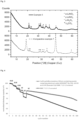
- the discharge capacity at 0.75C in 4 th cycle can be improved by using a transition metal oxide coated with an at least partially amorphous lithium-containing powder obtained in step I of inventive Examples 2, 5 and 6 when compared to the same transition metal oxide coated with either the calcinated powder or the fumed metal oxide itself.
- Figure 2 shows the influence of Al based coating layers on the rate characteristics at the discharge current 1.4 mA (0.75C) at the 4 th cycle.
- the discharge capacities of NMC dry coated with either a fumed aluminum oxide AEROXIDE ® Alu 130 powder (Comp. Example 4), a partially amorphous lithium-containing powder comprising Al 2 O 3 , Li 2 CO 3 and LiOH (Examples 5 and 6) or a calcinated LiAlO 2 powder (Comp. Examples 7 and 8) at 1.4 mA are compared with that of the uncoated NMC as a reference.
- inventive Examples 5 and 6 improves the discharge capacity of NMC in sulfide-based all-solid-state batteries compared to the calcinated lithium aluminate (Comp Examples 7 and 8) or fumed aluminum oxide (Comp. Example 4).
- inventive Examples 5 and 6 when comparing inventive Examples 5 and 6 with each other, it had been observed that a partially amorphous lithium-containing powder coating with a higher specific surface area significantly improves the discharge capacity of NMC in sulfide based all-solid-state batteries.
- a high intensity laboratory mixer SOMAKON mixer MP-GL with 0.5 L mixing unit
- the mixing intensity was increased to 2000 rpm for 5 min to achieve the dry coating of the NMC particles by the partially amorphous lithium-containing powder comprising aluminum oxide AEROXIDE ® Alu 130, Li 2 CO 3 and LiOH (Example 5).
- Coated NMC particles are achieved with a partially amorphous lithium-containing powder comprising aluminum oxide AEROXIDE ® Alu 130, Li2CO3 and LiOH -coating layer thickness of 20-200 nm. Afterwards, the coated NMC 7 1.5 1.5 -powder is sintered for 8h at 600°C in oxygen atmosphere.
- a partially amorphous lithium-containing powder comprising aluminum oxide AEROXIDE ® Alu 130, Li2CO3 and LiOH -coating layer thickness of 20-200 nm.
- Electrodes for electrochemical measurements were prepared by blending 90 wt% NMC with 5 wt% PVDF (Solef PVDF 5130) as a binder and 5 wt% SUPER C65 (IMERYS) as a conductive additive under inert gas atmosphere. N-Methyl-2-pyrrolidone (NMP) was used as the solvent. The slurry was casted on aluminum foil and dried for 20 min on 120 °C heating plate in air. Afterward, the electrode sheet was dried in a vacuum furnace at 120 °C for 2 h. The area-related cathode loading is adjusted to 2,0 ⁇ 0,1 mAh cm -2 .
- NMP N-Methyl-2-pyrrolidone
- Circular electrodes with a diameter of 12 mm were punched out, calendered to achieve an electrode density of 3.0 g cm -3 , and dried again in a vacuum furnace at 120 °C for 12 h to remove any residual water and NMP.
- the cells were assembled as CR2032 type coin cells (MTI Corporation) in an argon-filled glovebox (GLOVEBOX SYSTEMTECHNIK GmbH). Lithium metal (ROCKWOOD LITHIUM GmbH) is used as the anode material. Celgard 2500 was used as the separator.
- Figure 4 shows the influence of the received partially amorphous lithium-containing powder comprising aluminum oxide AEROXIDE ® Alu 130, Li 2 CO 3 and LiOH (Example 5) -coating layer on the cycling performance in liquid lithium ion batteries.
- the performance of NMC coated by partially amorphous lithium-containing powder comprising aluminum oxide AEROXIDE ® Alu 130, Li 2 CO 3 and LiOH (Example 5) and subsequently sintered is compared against the uncoated NMC. From the graph data, it can be intuitively concluded that the received coating improves the performance and cycle life of NMC significantly.
- the coated NMC shows an improved rate capability and long-term cycling stability.
Landscapes
- Chemical & Material Sciences (AREA)
- Electrochemistry (AREA)
- General Chemical & Material Sciences (AREA)
- Chemical Kinetics & Catalysis (AREA)
- Inorganic Chemistry (AREA)
- Engineering & Computer Science (AREA)
- Organic Chemistry (AREA)
- Manufacturing & Machinery (AREA)
- Materials Engineering (AREA)
- Composite Materials (AREA)
- General Physics & Mathematics (AREA)
- Condensed Matter Physics & Semiconductors (AREA)
- Physics & Mathematics (AREA)
- Battery Electrode And Active Subsutance (AREA)
- Inorganic Compounds Of Heavy Metals (AREA)
- Secondary Cells (AREA)
Description
- The present invention relates to a method for making a transition metal oxide coated with an at least partially amorphous lithium-containing coating and a method for making an at least partially amorphous lithium-containing powder as well as the coated transition metal oxide and the lithium-containing powder obtainable by these methods. The present invention further relates to an electrode, electrolyte, or energy-storage device, such as a lithium-ion battery, comprising the coated transition metal oxide.
- Secondary lithium ion batteries are one of the most important battery types currently used. The secondary lithium ion batteries are typically composed of an anode made of a carbon material or a lithium-metal alloy, a cathode made of a lithium-metal oxide (mixed transition metal oxide), an electrolyte in which a lithium salt is dissolved in an organic solvent and a separator providing the passage of lithium ions between the positive and the negative electrode during the charging and the discharging processes.
- A major problem with cathode active materials (CAMs) is the aging and thus the loss of performance during cycling. This phenomenon is especially relevant for CAMs with a high nickel-content. During cycling the CAM suffers from several electrochemical degradation mechanisms, resulting in a decrease of capacity, performance and cycle life.
- Surface coating has proven to be an extremely important method to address this aging problem of CAMs by suppressing the direct contact between the active materials surfaces and the electrolyte.
- In endeavor to develop secondary batteries with improved intrinsic safety and energy density, the use of solid electrolytes instead of liquid electrolytes has considerably progressed in the recent time. Among such systems, secondary lithium batteries with electrodes made of lithium metal or lithium metal alloys are believed to provide high energy density and be particularly suitable. Such all-solid-state secondary lithium-ion batteries should have high ionic conductivity at an interface between an electrode active material and an electrolyte. This high ionic conductivity can be improved by coating the surface of an active electrode material by certain lithium-comprising compounds, such as LiNbOs, LiTaOs, Li2ZrO3, as described in
JP 4982866 B2 JP 2018106974 A -
WO 2020/256358 discloses a positive active material for a lithium secondary battery that comprises a lithium composite metal oxide and a coating layer located on the core and including an amorphous phase that includes a mixture of lithium oxide and tungsten oxide. -
US 2022/013774 discloses a cathode active material for a lithium secondary battery comprising a core containing lithium composite metal oxide and a coating layer disposed on the core, containing a mixture of lithium oxide, tungsten oxide, boron oxide and phosphorus oxide, and having an amorphous phase. In example 1, powders are dry mixed. Lithium oxide was produced by oxidation of lithium by products remaining on the surface of the lithium composite metal oxide. -
US 2020/194788 discloses a positive electrode active substance for an all solid state lithium secondary battery, wherein a surface of core particles composed of a spinel-type lithium manganese-containing composite oxide containing at least Li, Mn, O, and two or more elements other than Li, Mn, and O, is coated with an amorphous compound containing Li and A, where A represents one or a combination of two or more elements selected from the group consisting of Ti, Zr, Ta, Nb, Zn, W, and Al, and O. The raw materials for the core can be mixed e.g. by dry mixing, however, the surface coating process is solution-based. -
JP 4 982866 - A method for preparing encapsulated mixed transition metal oxide particles by dry mixing of transition metal oxides with a mixture of pyrogenically produced aluminum oxide and titanium dioxide is disclosed in
WO 2018/149834 A1 . The encapsulated mixed transition metal oxide particles positively affect the long-term cycling stability of the electrodes. However, deterioration of lithium-ion diffusion in solid-state batteries has sometimes been observed due to a reduced ionic conductivity of the coating materials, such as aluminum oxide or titanium oxide. - A method of coating transition metal oxide particles by dry-mixing such particles with preformed calcinated crystalline lithium aluminate or lithium titanate has been described in
EP 20206870.6 EP 20197533.1 - Until now, it has been commonly assumed that the material for coating transition metal oxides used e.g., as cathode material, are applied with very laborious wet coating or Atomic Layer Deposition (ALD) coating methods with subsequent calcination and thereby converted into a crystalline solid in order to obtain an effective material. There still remains a need for providing transition metal oxides as cathode material in an efficient manner in order to improve the electrochemical performance of energy-storage devices, such as cycling performance or discharge capacity.
- This object has been solved by the methods, the coated transition metal oxide and the energy-storage device of the present invention, as defined in the appended claims.
- It has surprisingly been found that transition metal oxides coated with an at least partially amorphous coating comprising lithium and an oxide of a metal other than lithium, selected from the group consisting of niobium, aluminum, titanium, zirconium, silicon, tungsten, and mixtures thereof, can be produced by simple dry-mixing and that the coated transition metal oxides thus obtained can improve the cycling performance and discharge capacity of energy-storage devices, such as lithium-ion batteries.
- Accordingly, the present invention relates to a method for making a transition metal oxide coated with an at least partially amorphous lithium-containing coating, comprising the step of dry mixing a transition metal oxide with an at least partially amorphous powder comprising lithium and an oxide of a metal other than lithium selected from the group consisting of niobium, aluminum, titanium, zirconium, silicon, tungsten, and mixtures thereof.
- According to the present invention, the term "dry mixing" relates to a step of mixing wherein no liquid is added or used during the process, i.e., substantially dry powders are mixed with each other. However, it is possible that trace amounts of moisture or some liquids other than water are present in the feedstock materials and/or these materials may include crystallization water. Preferably, the mixture of the transition metal oxide and the at least partially amorphous lithium-containing powder contains less than 5 wt.-%, preferably less than 3 wt.-%, more preferably less than 1 wt.-% of water and/or any other substance liquid at room temperature (23 °C) and atmospheric pressure (1013 mbar).
- Dry mixing according to the present invention may be carried out by means of an electric mixing unit having a specific electrical power of 0.05 kW to 1.5 kW per kg of the transition metal oxide. As used herein, the term "electric mixing unit" relates to any mixing device operated by supply of electric energy.
- Electrical power is the rate, per unit time, at which electrical energy is transferred by an electric circuit. As used herein, the term "specific electrical power" relates to the electrical power, supplied by the electrical mixing unit during the mixing step, per kg of the transition metal oxide. The specific electrical power may be in the range of from 0.05 to 1.5 kW per kg of the transition metal oxide.
- The nominal electrical power of the mixing unit according to the present invention may range from 0.1 kWto 1000 kW. Thus, it is possible to use mixing units on the laboratory scale with a nominal power of 0.1
kWto 5 kW or mixing units for the production scale with a nominal electrical power of 10 kWto 1000 kW. The nominal electrical power is the nameplate, maximal absolute electrical power of the mixing unit. - The volume of the mixing unit according to the present invention is not particularly limited and may range, for instance, of from 0.1 L to 2.5 m3. Thus, it is possible to use mixing units on the laboratory scale with a volume of 0.1 L to 10 L or mixing units for the production scale with a volume of 0.1 m3 to 2.5 m3. The term "volume of the mixing unit" according to the present invention refers to the maximal volume of the chamber of the electric mixing unit where the substances to be mixed can be placed.
- Forced mixers may be used in the form of intensive mixers with high-speed mixing tools. The speed of the mixing tool may range from 5 m/s to 30 m/s, preferably from 10 m/s to 25 m/s. As used herein, the term "mixing tool" refers to any object in the mixing unit, which can be moved, e.g., rotated, shaken etc., and thus mix the contents of the mixing unit. Suitable mixing units according to the present invention may be stirrers of various form. Suitable mixing units that can be used according to the present invention may be commercially available mixing units, such as, but not limited, to Henschel mixers or Eirich mixers.
- The mixing time may typically range of from 0.1 to 120 minutes, preferably of from 0.2 to 60 minutes, more preferably of from 0.5 to 10 minutes.
- As used herein, the term "transition metal" comprises the following elements: Ti, V, Cr, Mn, Fe, Co, Ni, Cu, Zn, Nb, Mo, Ru, Rh, Pd, Ag, Cd, Ta, W, Re, Os, Ir, Pt, and Au. The transition metal oxide according to the present invention may be selected from oxides of any of these transition metals. Preferably the transition metal may be selected from the group consisting of nickel, cobalt, manganese, and mixtures thereof. Preferably, the transition metal oxide may be selected from the group consisting of cobalt oxides, nickel oxides, manganese oxides, mixed nickel-cobalt oxides, mixed nickel-manganese-cobalt oxides, mixed nickel-manganese oxides, mixed nickel-cobalt-aluminum oxides or mixtures thereof, and more preferably may be a mixed nickel-manganese-cobalt oxide. The transition metal oxide may be a mixed transition metal oxide comprising one or more transition metals and lithium cations, which preferably may be selected from the group consisting of lithium cobalt oxides (LCO), lithium nickel oxides (LNO), lithium manganese oxides (LMO), mixed lithium nickel-cobalt oxides (LNCO), mixed lithium nickel-manganese-cobalt oxides (NMC), mixed lithium nickel-manganese oxides (LNMO), mixed lithium nickel-cobalt-aluminum oxides (NCA) or mixtures thereof, and more preferably may be a mixed lithium nickel-manganese-cobalt oxide (NMC).
- As used herein, the term "mixed oxide" refers to a metal oxide having cations of more than one chemical element or cations of a single element in several states of oxidation as well as to compounds of oxygen and two or more other elements, where some or all of the oxygen atoms are covalently bound into oxyanions.
- As used herein, the term "at least partially amorphous powder" refers to a powder that is either completely amorph or partially amorph, wherein the term "partially" means that the powder also contains crystalline material. The "at least partially amorphous powder" may have an X-ray powder diffraction (XRPD) peak ratio of the 20 peak at 5° to any 20 peak at > 15° of at least 1:1, such as 1.5:1, such as 2:1. The peak ratio refers to the ratio of the intensity of the 20 peak at 5° to each individual 20 peak at > 15° in an XRPD spectrum. XRPD spectra can be measured for instance, with PANalytical Theta/Theta Diffractometer X'Pert MPD Pro (PANalytical, Almelo, Netherlands).
- As used herein, the term "lithium-containing" refers to a composition or coating comprising lithium in form of an ion or as part of a compound, such as a lithium salt, or a lithium oxide, etc., but typically not in form of elemental lithium.
- According to the present invention the at least partially amorphous powder may comprise lithium carbonate. The at least partially amorphous powder may further comprise a lithium metal oxide, the metal preferably comprising niobium, aluminum, titanium, zirconium, silicon, tungsten, and mixtures thereof.
- Preferably the at least partially amorphous powder comprises a lithium metal oxide, wherein the metal is selected from the group consisting of niobium, aluminum, titanium, zirconium, silicon, tungsten, and mixtures thereof, alone or as a mixture with lithium carbonate or lithium hydroxide.
- The at least partially amorphous powder may be a short-term dried powder, preferably a spray-dried powder or a spin flash dried powder. More preferably, the at least partially amorphous powder may be a spray-dried powder.
- The method according to the present invention may further comprise a subsequent step of sintering the transition metal oxide coated with an at least partially amorphous lithium-containing coating at temperatures between 100 and 900°C, preferably between 150 and 800 °C and more preferably between 200 and 700 °C. The sintering time may vary between 10 minutes and 12 hours, preferably between 20 minutes and 10 hours. It is preferred to use O2 atmosphere during the sintering.
- The method according to the present invention may further comprise, prior to the step of dry mixing the transition metal oxide and the at least partially amorphous lithium-containing powder, the steps of:
- preparing an aqueous dispersion comprising an oxide of a metal other than lithium selected from the group consisting of niobium, aluminum, titanium, zirconium, silicon, tungsten, and mixtures thereof, a water-soluble lithium compound and, optionally, an alkali metal carbonate and/or ammonium carbonate, and
- short-term drying the dispersion to obtain the at least partially amorphous lithium-containing powder.
- In particular, if the water-soluble compound is not lithium carbonate, the dispersion may comprise an alkali metal carbonate and/or ammonium carbonate.
- The short-term drying according to the method above is preferably selected from spray drying and spin flash drying, and more preferably is spray drying.
- As used herein, the term "aqueous dispersion" refers to a plurality of finely divided solid or liquid particles in a continuous solvent phase, wherein at least 50 wt.-% of the solvent is water, based on the total weight of the solvent in the dispersion.
- The present invention further relates to a method for making an at least partially amorphous lithium-containing powder, comprising the steps of:
- preparing an aqueous dispersion comprising an oxide of a metal other than lithium selected from the group consisting of niobium, aluminum, titanium, zirconium, silicon, tungsten, and mixtures thereof, a water-soluble lithium compound and, optionally, an alkali metal carbonate and/or ammonium carbonate, and
- short-term drying the dispersion to obtain the at least partially amorphous lithium-containing powder; wherein neither the dispersion nor the at least partially amorphous powder is subjected to a temperature equal to or above 300 °C for more than 1 min, preferably for more than 30 sec; provided that when the water-soluble lithium compound is lithium hydroxide and ammonium carbonate, but no alkali metal carbonate is added to the dispersion, and the dispersion is dried by spray drying, the metal oxide is not aluminum oxide.
- The short-term drying is preferably selected from spray drying and spin flash drying, and more preferably is spray drying.
- In the method of making an at least partially amorphous lithium-containing powder according to the present invention, the aqueous dispersion typically comprises a pyrogenically produced oxide of a metal other than lithium selected from the group consisting of niobium, aluminum, titanium, zirconium, silicon, tungsten, and mixtures thereof, a water-soluble lithium compound and, if the water-soluble compound is not lithium carbonate, an alkali metal carbonate and/or ammonium carbonate; and the short-term drying typically is spray drying; provided that when the water-soluble lithium compound is lithium hydroxide and ammonium carbonate, but no alkali metal carbonate is added to the dispersion, the metal oxide is not aluminum oxide.
- The dispersion prepared in any of the methods according to the present invention is subjected to short-term drying to evaporate water and other volatiles and to obtain the at least partially amorphous lithium-containing powder.
- As used herein, the term "short-term drying" refers to any drying procedure, wherein the drying can be effected in a short time, such as in 1 min, such in 30 sec, such as in 10 sec. Such short-term drying can be effected by contacting the dispersion with a hot drying gas, such as air, for instance in a commercially available spray drying or spin flash drying apparatus. The outlet temperature of the short-term drying process according to the present invention, i.e., the temperature of the drying gas containing the dried particles just before they are separated and collected from the gas stream, may typically range of from 50 °C to 200 °C, preferably of from 80 °C to 150 °C, and more preferably of from 90 °C to 140 °C. The short-term drying according to the present method may preferably be selected from spray drying or spin flash drying. More preferably, the short-term drying is spray drying.
- As used herein, the term "spin flash drying" relates to a drying process, wherein a liquid product is dried in a short time, such as in 1 min, such in 30 sec, such as in 10 sec, by introducing air as an intense swirl flow into a cylindrical drying chamber. The outlet temperature of the spin flash drying process according to the present invention typically may range of from 50 °C to 200 °C, preferably of from 80 °C to 150 °C, and more preferably of from 90 °C to 140 °C. Spin flash drying may be carried out in any suitable spin flash drier exemplified by Anhydro Spin Flash® dryer commercially available from SPXFLOW (Charlotte, USA) or Niro SWIRL FLUIDIZER™ commercially available from GEA Group (Düsseldorf, Germany).
- As used herein, the term "spray drying" relates to a process of rapidly drying a liquid product feed into a powdered material using heated gas. As used herein, the term "rapidly drying" relates to a drying time of 1 min, such as 30 sec, such as 10 sec or even shorter. Hereby, an atomizer or spray nozzle is used to disperse the liquid or slurry into a controlled drop size spray. The spray nozzle can be a two- or three-component jet nozzle. The spray drying may be carried out in any suitable spray drier, such as a pilot plant spray drier or a laboratory spray dryer exemplified by Büchi T0630 commercially available from Büchi Labortechnik GmbH (Essen, Germany).
- The spray drying according to the present invention may be carried out using an inlet air temperature of the spray drier of less than 600 °C and an outlet air temperature of from 50 °C to 200 °C, preferably of from 80 °C to 150 °C, and more preferably of from 90 °C to 140 °C. It is known in the art that the outlet temperature results from all heat and mass exchanges inside a drying chamber and theoretically is the highest temperature to which the dried powder can be heated.
- The metal oxide used in any methods according to the present invention may be a pyrogenically produced metal oxide or a precipitated metal oxide. Typically, the metal oxide is pyrogenically produced.
- As used herein, the term "pyrogenically produced metal oxide" relates to metal oxides which are directly produced by pyrogenic methods, also known as "fumed" methods, or by further modification of pyrogenically produced precursors. The term "pyrogenically produced", "pyrogenic" and "fumed" are used equivalently in the context of the present invention. The fumed metal oxides may be prepared by means of flame hydrolysis or flame oxidation. This involves oxidizing or hydrolysing of hydrolysable or oxidizable starting materials, generally in a hydrogen/oxygen flame. Starting materials typically used for pyrogenic methods include organic or inorganic substances, such as metal chlorides.
- As used herein, the term "precipitated metal oxide" relates to a metal oxide which is produced by a precipitation reaction.
- According to the present invention the metal of the metal oxide may be selected from the group consisting of niobium, aluminum, titanium, zirconium, silicon, tungsten, and mixtures thereof. Suitable metal oxides may be niobium(V) oxide (Nb2O5), aluminum oxide (Al2O3), titanium(IV) oxide (TiOz), zirconium(IV) oxide (ZrO2), silicon dioxide (SiO2), and tungsten(VI) oxide (WO3).
- The amount of metal oxide in the dispersion may range of from 0.5 to 20 wt.-%, preferably of from 1.0 to 10 wt.-%, based on the total weight of the dispersion.
- As used herein, the term "total weight of the dispersion" relates to the total mass of the complete dispersion including all solid and liquid ingredients, including the solvent.
- According to the present invention, the metal oxide may have a specific surface area of from 10 m2/g to 500 m2/g, preferably of from 30 m2/g to 250 m2/g, more preferably of from 50 m2/g to 200 m2/g. As used herein, the term "specific surface area" refers to the total surface area of a material per unit of mass. The specific surface area can be determined according to DIN 9277:2014 by nitrogen adsorption according to Brunauer-Emmett-Teller (BET) procedure.
- As used herein, the term "water-soluble lithium compound" refers to lithium compounds having a solubility in water of at least 0.1 g, preferably at least 1.0 g of the compound in 100 g water at 20 °C.
- The water-soluble lithium compound may be selected from the group consisting of lithium hydroxide, lithium oxide, lithium carbonate, lithium bicarbonate, lithium oxalate, lithium acetate, lithium formate, lithium nitrate, lithium chloride, lithium bromide, lithium sulfate, lithium perchlorate, and mixtures thereof.
- The amount of the water-soluble lithium compound in the dispersion used in the method according to the present invention may range from 0.1 to 10 wt.-%, preferably from 0.5 to 7.5 wt.-%, based on the total weight of the dispersion.
- The alkali metal carbonate may be selected from the group consisting of lithium carbonate, lithium bicarbonate, sodium carbonate, sodium bicarbonate, potassium carbonate, potassium bicarbonate, and mixtures thereof. The ammonium carbonate can be a compound with the chemical formula (NH4)2CO3 (ammonium carbonate) or NH4HCO3 (ammonium bicarbonate). The amount of alkali metal carbonate and/or ammonium carbonate, if present in the dispersion, ranges from 0.1 to 10 wt.-%, preferably from 0.5 to 7.5 wt.-%, based on the total weight of the dispersion.
- The particles of the at least partially amorphous lithium-containing powder according to the present invention may have a numerical mean particle size d50 of not more than 20 µm, preferably ranging of from 1 µm to 15 µm, more preferably of from 2 µm to 10 µm. The numerical mean particle size d50 of the particles of the at least partially amorphous lithium-containing powder may be determined by static light scattering (SLS) in the aqueous dispersion according to ISO 13320:2020-01 after treating the aqueous dispersion with ultrasonics for 5 minutes. As used herein, the term "numerical mean particle size" relates to the surface-weighted mean diameter of the particles. The d-value is used in its common meaning, i.e., dx gives the diameter of which x percentage of the particles are smaller.
- The particles of the at least partially amorphous lithium-containing powder according to the present invention may have a narrow particle size distribution. The span of the particle size distribution (dso-d10)/d50 may be not more than 2.5, preferably of from 0.8 to 2.0, more preferably of from 0.9 to 1.5.
- The specific surface area of the at least partially amorphous powder may be of from 20 to 300 m2/g, preferably from of 35 to 250 m2/g, more preferably of from 50 to 200 m2/g, and most preferably of from 100 to 200 m2/g, as determined by the BET method. The specific surface area can be determined according to DIN 9277:2014 by nitrogen adsorption according to Brunauer-Emmett-Teller (BET) procedure.
- The at least partially amorphous powder may be used in an amount of from 0.1 to 10 wt.-%, preferably of from 0.5 to 5.0 wt.-%, based on the combined weight of the transition metal oxide and the at least partially amorphous powder.
- According to the present invention, the single at least partially amorphous powder is not subjected to a temperature equal or above 300 °C before, during, or after the step of short-term drying for more than 1 min, preferably for more than 30 sec. This means that the amorphous powder is at least not subjected to a calcination step before coating on a cathode material.
- The present invention further relates to an at least partially amorphous lithium-containing powder, comprising lithium and an oxide of a metal other than lithium selected from the group consisting of niobium, aluminum, titanium, zirconium, silicon, tungsten, and mixtures thereof, made by the method described above.
- The present invention further relates to a transition metal oxide coated with an at least partially amorphous lithium-containing coating comprising an oxide of a metal other than lithium selected from the group consisting of niobium, aluminum, titanium, zirconium, silicon, tungsten, and mixtures thereof. The specific surface area of the at least partially amorphous powder ranges of from 10 to 300 m2/g, preferably 20 to 300 m2/g, preferably from of 25 to 250 m2/g, more preferably of from 40 to 200 m2/g, and most preferably of from 50 to 180 m2/g, as determined by the BET method. The transition metal oxide may be selected from the materials already described above and preferably may be selected from the group consisting of lithium cobalt oxides (LCO), lithium nickel oxides (LNO), lithium manganese oxides (LMO), mixed lithium nickel-cobalt oxides (LNCO), mixed lithium nickel-manganese-cobalt oxides (NMC), mixed lithium nickel-manganese oxides (LNMO), mixed lithium nickel-cobalt-aluminum oxides (NCA) or mixtures thereof, and more preferably may be a mixed lithium nickel-manganese-cobalt oxide (NMC).
- The coated transition metal oxide according to the present invention may be coated with the at least partially amorphous lithium-containing coating formed from a powder, preferably from the at least partially amorphous lithium-containing powder described above.
- The coated transition metal oxide may be made by the method according to the present invention.
- The present invention further relates to an electrode or an electrolyte comprising the coated transition metal oxide according to the present invention as well as to an energy-storage device comprising the coated transition metal oxide according to the present invention or the electrode or the electrolyte comprising the coated transition metal oxide according to the present invention.
- According to the present invention the energy-storage device may be a lithium-containing energy-storage device. It may, for instance, be a battery, a cell, a secondary battery, a battery pack, a pseudocapacitor, a capacitor, or a supercapacitor, such as a lithium-ion battery or battery pack. Preferably, the energy-storage device is a lithium-ion battery.
- According to the present invention, the electrode comprising the coated transition metal oxide may be a positive electrode, also known as the cathode, of a lithium-ion battery, typically including a current collector and an active cathode material layer formed on the current collector.
- The current collector may be an aluminum foil, a copper foil, a nickel foil, a stainless-steel foil, a titanium foil, a polymer substrate coated with a conductive metal, or a combination thereof, wherein the active cathode material layer comprises the described coated transition metal oxide according to the present invention.
- The lithium-ion battery according to the present invention, apart from the cathode, may contain an anode, optionally a separator and an electrolyte comprising a lithium salt or a lithium compound.
- The anode of the lithium battery may comprise any suitable material commonly used in the secondary lithium batteries, capable of reversibly intercalating/deintercalating lithium ions. Typical examples thereof are carbonaceous materials including crystalline carbon such as natural or artificial graphite in the form of plate-like, flake, spherical or fibrous type graphite; amorphous carbon, such as soft carbon, hard carbon, mesophase pitch carbide, fired coke and the like, or mixtures thereof. In addition, lithium metal or conversion materials (e.g., Si or Sn) can be used as anode active materials.
- According to the present invention, the lithium-ion battery may contain a liquid, gel, polymer, or solid electrolyte.
- A liquid mixture of a lithium salt and an organic solvent, which is not cured, polymerized, or cross-linked, is referred to as "liquid electrolyte" in the context of the present invention. A gelled or solid mixture comprising a cured, polymerized, or cross-linked compound or their mixtures, optionally a solvent, and a lithium salt is referred to as a "gel electrolyte" or "polymer electrolyte". Such electrolytes can be prepared by polymerization or cross-linking of a mixture, containing at least one reactive, i.e., polymerizable or cross-linkable, compound and a lithium salt.
- A liquid electrolyte of a lithium-ion battery may comprise any suitable organic solvent commonly used in the lithium-ion batteries, such as anhydrous ethylene carbonate (EC), dimethyl carbonate (DMC), propylene carbonate, methylethyl carbonate, diethyl carbonate, gamma butyrolactone, dimethoxyethane, fluoroethylene carbonate, vinylethylene carbonate, or a mixture thereof. The gel electrolytes may include gelled polymers.
- The electrolyte of a lithium-ion battery usually contains a lithium salt. Examples of such lithium salts include lithium hexafluorophosphate (LiPF6), lithium bis 2-(trifluoromethylsulfonyl)imide (LiTFSI), lithium bis (fluorosulfonyl) imide (LiFSI), lithium perchlorate (LiClO4), lithium tetrafluoroborate (LiBF4), Li2SiF6, lithium triflate, LiN(SO2CF2CF3)2 and mixtures thereof.
- According to the present invention, the lithium-ion battery may be one of a solid-state type. As used herein, the term "solid-state type battery" relates to a battery having solid electrodes and a solid electrolyte. Such a battery may comprise various types of solid electrolytes. The solid electrolyte of the lithium battery may comprise oxides, e.g., lithium metal oxides, sulfides, phosphates, or solid polymers.
- The battery according to the present invention may be a lithium metal battery, such as Li-air, lithium sulphur (Li-S), and other types of lithium metal batteries. A Li-sulfur (Li-S) battery typically contains an iron disulfide (FeS2), an iron sulfide (FeS), a copper sulfide (CuS), or a lead sulfide and a copper sulfide (PbS + CuS) cathode.
- According to the present invention, the lithium-ion battery comprising the coated transition metal oxide may preferably be a sulfide-based solid-state type lithium-ion battery.
- The present invention further relates to the use of the previously described coated transition metal oxide for improving the discharge capacity of an energy-storage device in comparison to the same energy-storage device comprising a transition metal oxide coated with a previously calcinated lithium-containing powder.
-
-
Figure 1 shows the discharge curves (voltage over capacity) at the 4th cycle at a discharge current of 1.4 mA (0.75C) for niobium-based coating materials in sulfide-based all-solid-state batteries with a solid electrolyte of Li6PSSCl. -
Figure 2 shows the discharge curves (voltage over capacity) at the 4th cycle at a discharge current of 1.4 mA (0.75C) for aluminum-based coating materials in sulfide-based all-solid-state batteries with a solid electrolyte of Li6PS5Cl. -
Figure 3 shows XRPD spectra of an amorphous powder obtained in Example 5 (Step I) and a calcinated powder obtained in Comparative Example 7 (Step I). The samples were analyzed on the X'Pert MPD Pro diffractometer from PANalytical in Bragg-Brentano geometry. -
Figure 4 shows the influence of the partially amorphous lithium-containing powder comprising aluminum oxide AEROXIDE® Alu 130, Li2CO3 and LiOH on the cycling performance in liquid lithium ion batteries after it has been coated on NMC cathode material by simple dry mixing and subsequently sintered. The performance of NMC coated by the partially amorphous lithium-containing powder comprising aluminum oxide AEROXIDE® Alu 130, Li2CO3 and LiOH is compared against the uncoated NMC. - A pyrogenic niobium oxide particle was produced by a pyrogenic process according to
DE 4102328 A1 . Therefore, 430 g/h NbCl5, 180 l/h H2, 400 l/h N2 and 4,1 m3/h air were premixed and the resulting gas mixture was continuously burnt in a burner. The burner was connected to a flame tube, a cooling coil and a filter to separate the particles. The particles were treated with steam at 600 °C to remove HCl physiosorbed on the surface. Physicochemical properties of the resulting product are shown in Table 1. - 60 Grams of a pyrogenic niobium oxide (as obtained in Example 1) were dispersed in a solution of 23 g (NH4)2CO3 in 875 ml water and the resulting dispersion was stirred for 30 minutes. A solution of 19 g LiOH monohydrate in 280 ml deionized water was added slowly, and the resulting dispersion was additionally stirred for 30 minutes. This dispersion was spray-dried with a product residence time of 30 seconds in the drying chamber on a laboratory spray drier (inlet air temperature of 200 °C, outlet air temperature of 130°C) (Büchi T0630). Physicochemical properties of the resulting product are shown in Table 1.
- The obtained powder from the Example 2 was subjected to calcination at 550 °C for 6 h. Physicochemical properties of the resulting product are shown in Table 1.
- Pyrogenic aluminum oxide powder was produced by a flame process according to
US 7,749,322 B2 . Physicochemical properties of the resulting product are shown in Table 1. - 3000 Grams of the commercially available pyrogenic aluminum oxide AEROXIDE® Alu 130 (manufactured by Evonik Industries AG) were dispersed in a solution of 2969 g (NH4)2CO3 in 43 L deionized water and the resulting dispersion was stirred for 15 minutes. A solution of 2469 g LiOH • H2O in 14 L deionized water was added and the resulting dispersion was stirred for 30 minutes. This dispersion was spray-dried with a product residence time of 60 seconds in the drying chamber on a pilot plant spray drier (inlet air temperature of 450 °C, outlet air temperature of 105°C). Physicochemical properties of the resulting product are shown in Table 1.
- 100 Grams of a pyrogenic aluminum oxide having a BET surface of 221 m2/g (manufactured by Evonik Industries AG) were dispersed in a solution of 99 g (NH4)2CO3 in 1450 g deionized water and the resulting dispersion was stirred for 30 minutes. A solution of 83 g LiOH • H2O in 469 g deionized water was added and stirred for 30 minutes. Additionally, 700 ml deionized water were added to lower the viscosity. This dispersion was spray-dried with a product residence time of 30 seconds in the drying chamber on a laboratory spray drier (inlet air temperature of 200 °C, outlet air temperature of 130°C) (Büchi T0630). Physicochemical properties of the resulting product are shown in Table 1.
- The obtained powder from the Example 5 was subjected to calcination at 600 °C for 6 h. Physicochemical properties of the resulting product are shown in Table 1.
- The obtained powder from the example 6 was subjected to calcination at 600°C for 6 h. Physicochemical properties of the resulting product are shown in Table 1.
Table 1: Physicochemical properties of the powders obtained in Examples 1 to 8 (Step I). Example BET [m2/g] The main crystallographic phase (XRD) Example 1 (Comp.) 84 Orthorhombic Nb2O5 Example 2 58 Nb2O5 / Li2CO3 Example 3 (Comp.) 29 Hexagonal LiNbO3 Example 4 (Comp.) 130 δ-Al2O3 Example 5 67 Al2O3 / Li2CO3 Example 6 124 Al2O3 / Li2CO3 Example 7 (Comp.) 59 α-LiAlO2 / Li2CO3 Example 8 (Comp.) 56 α-LiAlO2 / γ -LiAlO2 - Lithium-nickel-manganese-cobalt mixed (NMC) oxide powder NMC811 commercially available from GELON ENERGY CORP. (Linyi, China) having a BET surface area of 0.45 to 0.70 m2/g and a diameter d50 = 4.5 ± 1.5 µm (determined by laser scattering method) was used as the transition metal oxide in the following Examples.
- The NMC powder was mixed with the respective amount (1.0 wt.-%) of the powders obtained in Examples 1 to 8 (Step I) in a high intensity laboratory mixer (SOMAKON mixer MP-GL with 0.5 L mixing unit) at first for 1 min at 500 rpm to homogeneously mix the two powders. Afterwards, the mixing intensity was increased to 2000 rpm for 5 min to achieve the dry coating of the NMC powder by the respective powders obtained in Examples 1 to 8 (Step I).
- A powdered composite electrode was prepared by mixing the coated NMC (obtained in Step II of the Examples above), conductive carbon additive carbon nanofibers (CNF), and solid electrolyte (Li6PS5Cl, SE) in the mass ratio of 63:2:35 for 30 min in an agate mortar. To fabricate a free-standing and flexible dry film, the above prepared powder electrode was mixed with 0.3 wt.-% of polytetrafluoroethylene (PTFE, emulsion polymerized fine powder; particle size 300 to 700 µm; softening point 320 to 330 °C; molecular weight 107 to 108 g/mol) in a mortar at 100 °C.
- After 1 min of mixing and shearing, a single flake was formed. The flake was placed on a hot plate and rolled out to the desired thickness (≈100 µm). Each sample was prepared at least twice to confirm the reproducibility of the process. To prepare a free-standing electrolyte film, the solid electrolyte was mixed with 0.15 wt.-% of PTFE and treated in the same way as the cathode film.
- A test cell was prepared for measuring the basic characteristics of the cathode composite, such as the charge/discharge potential profiles, rated discharge capability.
- The cell was prepared using a die with a diameter of 13 mm. The test cell comprised a stainless-steel outer casing with a Teflon insulator. For a typical cell, the electrolyte Li6PS5Cl powder was uniformly spread inside the die by a micro-spatula. Next, the powder was once temporally compressed (300 MPa) and compacted into a pellet. The cathode composite powder was homogeneously distributed across the compacted electrolyte surface in the die. Then the cathode layer was compressed. On the opposite side of the cell stack, a lithium-indium alloy anode was placed and compressed. All the cell components were again compressed together and completely pelletized by using a hydraulic press (4 tons for 30 s were applied; resulting in a pressure of 300 MPa).
- After compression, the cell stack was placed inside the outer steel casing, where a screw maintained the electric contact in the cell. The screw was fastened at 3.0 Nm using a preset torque.
- All above mentioned processes were carried out in an Ar filled glove box (<0.1 ppm H2O and Oz). The cycle and rate performances of the cell were measured using a battery tester CTS-Lab (BaSyTec, Asselfingen, Germany). The standard rate performance test plan consisted of 3 different discharge currents ranging from 0.066 mA (0.035C) to 1.4 mA (0.75C) while the charging rate was kept constant at 0.14 mA (0.075C) including a constant voltage (CV) step. The standard cut-off voltages for the cycle test were set at 3.63 V and 1.93 V for charge and discharge, respectively.
Table 2: Discharge capacities at 0.75C (1.4mA) in sulfide based all-solid-state batteries Example Discharge capacity at 0.75C in 4th cycle [mAh/g] Example 1 (Comp.) 125.7 Example 2 144.9 Example 3 (Comp.) 125.0 Example 4 (Comp.) 79.4 Example 5 120.9 Example 6 139.7 Example 7 (Comp.) 105.0 Example 8 (Comp.) 119.7 - It has surprisingly been found that the discharge capacity at 0.75C in 4th cycle can be improved by using a transition metal oxide coated with an at least partially amorphous lithium-containing powder obtained in step I of inventive Examples 2, 5 and 6 when compared to the same transition metal oxide coated with either the calcinated powder or the fumed metal oxide itself.
- This can also be seen in
Figures 1 and 2 . The influence of niobium-based coating layers on the rate characteristics at the discharge current 1.4 mA (0.75C) at the 4th cycle is shown inFigure 1 . - The discharge capacities of NMC dry coated with either fumed NbzOs powder (Comp. Example 1), a partially amorphous lithium-containing powder, comprising NbzOs, Li2CO3 and LiOH (Example 2) or calcinated LiNbOs powder (Comp. Example 3) at 1.4 mA are compared with that of the uncoated NMC as a reference. It can be readily recognized from the shown graphs, that the dry coated partially amorphous lithium-containing powder coating of Example 2 significantly improves the discharge capacity of NMC in sulfide-based all-solid-state batteries, when compared to a coating with either a fumed metal oxide (Comp. Example 1) or a calcinated lithium niobium oxide (Comp. Example 3).
-
Figure 2 shows the influence of Al based coating layers on the rate characteristics at the discharge current 1.4 mA (0.75C) at the 4th cycle. The discharge capacities of NMC dry coated with either a fumed aluminum oxide AEROXIDE® Alu 130 powder (Comp. Example 4), a partially amorphous lithium-containing powder comprising Al2O3, Li2CO3 and LiOH (Examples 5 and 6) or a calcinated LiAlO2 powder (Comp. Examples 7 and 8) at 1.4 mA are compared with that of the uncoated NMC as a reference. It can be readily recognized from the shown graphs, that the dry coated partially amorphous lithium-containing powder coating of inventive Examples 5 and 6 improves the discharge capacity of NMC in sulfide-based all-solid-state batteries compared to the calcinated lithium aluminate (Comp Examples 7 and 8) or fumed aluminum oxide (Comp. Example 4). In addition, when comparing inventive Examples 5 and 6 with each other, it had been observed that a partially amorphous lithium-containing powder coating with a higher specific surface area significantly improves the discharge capacity of NMC in sulfide based all-solid-state batteries. - The
commercial NMC 7 1.5 1.5 -powder (Linyi Gelon LIB Co., Type PLB-H7) with a BET surface area of 0.30-0.60 m2/g, medium diameter d50 = 10,6 ± 2 µm (via laser scattering), was mixed with the respective amount (1.0 wt%) of the partially amorphous lithium-containing powder comprising aluminum oxide AEROXIDE® Alu 130, Li2CO3 and LiOH (Example 5) in a high intensity laboratory mixer (SOMAKON mixer MP-GL with 0.5 L mixing unit) at first for 1 min at 500 rpm to homogeneously mix the two powders. Afterwards the mixing intensity was increased to 2000 rpm for 5 min to achieve the dry coating of the NMC particles by the partially amorphous lithium-containing powder comprising aluminum oxide AEROXIDE® Alu 130, Li2CO3 and LiOH (Example 5). - Coated NMC particles are achieved with a partially amorphous lithium-containing powder comprising aluminum oxide AEROXIDE® Alu 130, Li2CO3 and LiOH -coating layer thickness of 20-200 nm. Afterwards, the
coated NMC 7 1.5 1.5 -powder is sintered for 8h at 600°C in oxygen atmosphere. - Electrodes for electrochemical measurements were prepared by blending 90 wt% NMC with 5 wt% PVDF (Solef PVDF 5130) as a binder and 5 wt% SUPER C65 (IMERYS) as a conductive additive under inert gas atmosphere. N-Methyl-2-pyrrolidone (NMP) was used as the solvent. The slurry was casted on aluminum foil and dried for 20 min on 120 °C heating plate in air. Afterward, the electrode sheet was dried in a vacuum furnace at 120 °C for 2 h. The area-related cathode loading is adjusted to 2,0 ± 0,1 mAh cm-2. Circular electrodes with a diameter of 12 mm were punched out, calendered to achieve an electrode density of 3.0 g cm-3, and dried again in a vacuum furnace at 120 °C for 12 h to remove any residual water and NMP. For the cycling tests the cells were assembled as CR2032 type coin cells (MTI Corporation) in an argon-filled glovebox (GLOVEBOX SYSTEMTECHNIK GmbH). Lithium metal (ROCKWOOD LITHIUM GmbH) is used as the anode material. Celgard 2500 was used as the separator. 35 µL of a solution of 1 molar LiPF6 in ethylene carbonate and ethyl methyl carbonate (50:50 wt/wt; SIGMA-ALDRICH) was used as electrolyte. The cells were locked with a crimper (MTI).
- For electrochemical evaluations galvanostatic cycling was performed between 3.0 and 4.3 V vs Li+/Li at 25 °C. For the calculation of the capacities and the specific currents, only the mass of the active material was considered and a theoretical capacity of 180 mAh/g of
NMC 7 1.5 1.5 is supposed. For the coin half-cells during cycling, the C-rate was increased every four cycles, starting from 0.1/0.1 (Charge/Discharge) to 0.2/0.2, 0.5/0.5, 1.0/1.0 and 1.0/2.0 C. Afterward, the cell was cycled at 1/1 C for long term stability test. -
Figure 4 shows the influence of the received partially amorphous lithium-containing powder comprising aluminum oxide AEROXIDE® Alu 130, Li2CO3 and LiOH (Example 5) -coating layer on the cycling performance in liquid lithium ion batteries. The performance of NMC coated by partially amorphous lithium-containing powder comprising aluminum oxide AEROXIDE® Alu 130, Li2CO3 and LiOH (Example 5) and subsequently sintered is compared against the uncoated NMC. From the graph data, it can be intuitively concluded that the received coating improves the performance and cycle life of NMC significantly. The coated NMC shows an improved rate capability and long-term cycling stability.
Claims (15)
- A method for making a transition metal oxide coated with an at least partially amorphous lithium-containing coating, comprising the step of:- dry mixing a transition metal oxide with an at least partially amorphous powder comprising lithium and an oxide of a metal other than lithium selected from the group consisting of niobium, aluminum, titanium, zirconium, silicon, tungsten, and mixtures thereof.
- The method of claim 1, wherein the transition metal oxide is a mixed transition metal oxide selected from the group consisting of lithium cobalt oxides (LCO), lithium nickel oxides (LNO), lithium manganese oxides (LMO), mixed lithium nickel-cobalt oxides (LNCO), mixed lithium nickel-manganese-cobalt oxides (NMC), mixed lithium nickel-manganese oxides (LNMO), mixed lithium nickel-cobalt-aluminum oxides (NCA) or mixtures thereof, and preferably is a mixed lithium nickel-manganese-cobalt oxide (NMC).
- The method of claims 1 or 2, wherein the at least partially amorphous powder comprises a lithium metal oxide, wherein the metal is selected from the group consisting of niobium, aluminum, titanium, zirconium, silicon, tungsten, and mixtures thereof, alone or as a mixture with lithium carbonate or lithium hydroxide.,
- The method of any of the preceding claims, wherein the specific surface area of the at least partially amorphous powder ranges of from 10 to 300 m2/g, preferably 20 to 300 m2/g, preferably from of 35 to 250 m2/g, more preferably of from 50 to 200 m2/g, and most preferably of from 100 to 200 m2/g, as determined by the BET method.
- The method of any of the preceding claims, further comprising the subsequent step of sintering the transition metal oxide coated with an at least partially amorphous lithium-containing coating at temperatures between 100 and 900°C.
- The method of any of the preceding claims, further comprising, prior to the step of dry mixing the transition metal oxide and the at least partially amorphous lithium-containing powder, the steps of:- preparing an aqueous dispersion comprising an oxide of a metal other than lithium selected from the group consisting of niobium, aluminum, titanium, zirconium, silicon, tungsten, and mixtures thereof, a water-soluble lithium compound and, optionally an alkali metal carbonate and/or ammonium carbonate, and- short-term drying the dispersion to obtain the at least partially amorphous lithium-containing powder.
- A method for making an at least partially amorphous lithium-containing powder, comprising the steps of:- preparing an aqueous dispersion comprising an oxide of a metal other than lithium selected from the group consisting of niobium, aluminum, titanium, zirconium, silicon, tungsten, and mixtures thereof, a water-soluble lithium compound and, optionally an alkali metal carbonate and/or ammonium carbonate, and- short-term drying the dispersion to obtain the at least partially amorphous lithium-containing powder;wherein neither the dispersion nor the at least partially amorphous powder is subjected to a temperature equal to or above 300 °C for more than 1 min; provided that, when the water-soluble lithium compound is lithium hydroxide and ammonium carbonate, but no alkali metal carbonate is added to the dispersion, and the dispersion is dried by spray drying, the metal oxide is not aluminum oxide.
- The method of claims 6 or 7 wherein the short-term drying is selected from spray drying and spin flash drying, and preferably is spray drying.
- The method of any of claims 5 to 8, wherein the amount of the water-soluble lithium compound in the dispersion ranges from 0.1 to 10 wt.-%, preferably from 0.5 to 7.5 wt.-%, based on the total weight of the dispersion; and/orwherein, if present, the amount of alkali metal carbonate and/or ammonium carbonate in the dispersion ranges from 0.1 to 10 wt.-%, preferably from 0.5 to 7.5 wt.-%, based on the total weight of the dispersion;and/or wherein the amount of the oxide of a metal other than lithium selected from the group consisting of niobium, aluminum, titanium, zirconium, silicon, tungsten, and mixtures thereof in the dispersion ranges of from 0.5 to 20 wt.-%, preferably of from 1.0 to 10 wt.-%, based on the total weight of the dispersion.
- An at least partially amorphous lithium-containing powder, comprising an oxide of a metal other than lithium selected from the group consisting of niobium, aluminum, titanium, zirconium, silicon, tungsten, and mixtures thereof made by the method of any of claims 6 to 9.
- A transition metal oxide coated with an at least partially amorphous lithium-containing coating, the coating further comprising an oxide of a metal other than lithium selected from the group consisting of niobium, aluminum, titanium, zirconium, silicon, tungsten, and mixtures thereof wherein the specific surface area of the at least partially amorphous powder ranges of from 10 to 300 m2/g, as determined by the BET method.
- The coated transition metal oxide of claim 11, wherein the at least partially amorphous lithium-containing coating is formed from a powder, preferably a powder as defined in claim 3, 4 and/or claim 10.
- The coated transition metal oxide of claim 11 or 12 made by the method of any of claims 1 to 5 or 7 to 9.
- An electrode or electrolyte comprising the coated transition metal oxide according to any of claims 11 to 13.
- An energy-storage device comprising the coated transition metal oxide according to any of claims 11 to 13 or the electrode or electrolyte of claim 14.
Applications Claiming Priority (1)
| Application Number | Priority Date | Filing Date | Title |
|---|---|---|---|
| EP22163798 | 2022-03-23 |
Publications (2)
| Publication Number | Publication Date |
|---|---|
| EP4249435A1 EP4249435A1 (en) | 2023-09-27 |
| EP4249435B1 true EP4249435B1 (en) | 2024-08-21 |
Family
ID=80930293
Family Applications (1)
| Application Number | Title | Priority Date | Filing Date |
|---|---|---|---|
| EP23161643.4A Active EP4249435B1 (en) | 2022-03-23 | 2023-03-14 | Transition metal oxide particles coated with an amorphous lithium-containing powder and the use thereof in energy-storage devices |
Country Status (12)
| Country | Link |
|---|---|
| US (1) | US12552683B2 (en) |
| EP (1) | EP4249435B1 (en) |
| JP (1) | JP2023143776A (en) |
| KR (1) | KR20230138415A (en) |
| CN (1) | CN116805688A (en) |
| BR (1) | BR102023005143A2 (en) |
| ES (1) | ES2996632T3 (en) |
| HU (1) | HUE068827T2 (en) |
| IL (1) | IL301461A (en) |
| MX (1) | MX2023003134A (en) |
| PL (1) | PL4249435T3 (en) |
| TW (1) | TW202341561A (en) |
Family Cites Families (13)
| Publication number | Priority date | Publication date | Assignee | Title |
|---|---|---|---|---|
| DE4102328A1 (en) | 1991-01-26 | 1992-07-30 | Degussa | Pyrogenic niobium oxide - useful for prodn. of catalysts, ceramics and glass |
| DE10360087A1 (en) | 2003-12-20 | 2005-07-21 | Degussa Ag | Flame hydrolysis produced, hochoberflächiges alumina powder |
| US7993782B2 (en) | 2005-07-01 | 2011-08-09 | National Institute For Materials Science | All-solid lithium battery |
| JP2018106974A (en) | 2016-12-27 | 2018-07-05 | 三星電子株式会社Samsung Electronics Co.,Ltd. | Lithium ion secondary battery, method for producing electrode active material particles, and method for producing lithium ion secondary battery |
| US11760693B2 (en) | 2017-02-17 | 2023-09-19 | Evonik Operations Gmbh | Lithium-mixed oxide particles encapsulated in aluminum oxide and titanium dioxide, and method for using same |
| CN111033828B (en) | 2017-08-28 | 2023-03-24 | 三井金属矿业株式会社 | Positive electrode active material for all-solid-state lithium secondary battery |
| KR102212549B1 (en) | 2018-11-29 | 2021-02-05 | 주식회사 엘 앤 에프 | Cathode Active Material for Lithium Secondary Battery |
| US10946161B2 (en) | 2018-12-05 | 2021-03-16 | Aires Medical LLC | Pulsed pressure swing adsorption system and method |
| KR102265999B1 (en) | 2019-06-17 | 2021-06-17 | 주식회사 엘 앤 에프 | Cathode Active Material for Lithium Secondary Battery |
| TWI778405B (en) | 2019-08-27 | 2022-09-21 | 德商贏創運營有限公司 | Mixed lithium transition metal oxide coated with pyrogenically produced zirconium-containing oxides |
| CN114556628B (en) | 2019-10-18 | 2024-08-30 | Ecoprobm有限公司 | Lithium secondary battery positive electrode active material, preparation method thereof and lithium secondary battery containing the same |
| EP3971139A1 (en) | 2020-09-22 | 2022-03-23 | Evonik Operations GmbH | Synthesis of nanostructured alpha lithium aluminate |
| EP4002519A1 (en) | 2020-11-11 | 2022-05-25 | Evonik Operations GmbH | Transition metal oxide particles encapsulated in nanostructured lithium titanate or lithium aluminate, and the use thereof in lithium ion batteries |
-
2023
- 2023-03-09 JP JP2023036339A patent/JP2023143776A/en active Pending
- 2023-03-14 HU HUE23161643A patent/HUE068827T2/en unknown
- 2023-03-14 PL PL23161643.4T patent/PL4249435T3/en unknown
- 2023-03-14 EP EP23161643.4A patent/EP4249435B1/en active Active
- 2023-03-14 ES ES23161643T patent/ES2996632T3/en active Active
- 2023-03-16 MX MX2023003134A patent/MX2023003134A/en unknown
- 2023-03-17 US US18/122,709 patent/US12552683B2/en active Active
- 2023-03-19 IL IL301461A patent/IL301461A/en unknown
- 2023-03-20 KR KR1020230035701A patent/KR20230138415A/en active Pending
- 2023-03-20 BR BR102023005143-0A patent/BR102023005143A2/en unknown
- 2023-03-21 TW TW112110461A patent/TW202341561A/en unknown
- 2023-03-22 CN CN202310282346.4A patent/CN116805688A/en active Pending
Also Published As
| Publication number | Publication date |
|---|---|
| US20230303406A1 (en) | 2023-09-28 |
| US12552683B2 (en) | 2026-02-17 |
| TW202341561A (en) | 2023-10-16 |
| CN116805688A (en) | 2023-09-26 |
| JP2023143776A (en) | 2023-10-06 |
| HUE068827T2 (en) | 2025-01-28 |
| KR20230138415A (en) | 2023-10-05 |
| ES2996632T3 (en) | 2025-02-12 |
| BR102023005143A2 (en) | 2023-10-03 |
| MX2023003134A (en) | 2023-09-25 |
| EP4249435A1 (en) | 2023-09-27 |
| PL4249435T3 (en) | 2024-12-16 |
| IL301461A (en) | 2023-10-01 |
Similar Documents
| Publication | Publication Date | Title |
|---|---|---|
| JP5268134B2 (en) | Method for producing positive electrode active material and non-aqueous electrolyte battery using the same | |
| EP1391950A1 (en) | Anode active matter and production method therefor, non- aqueous electrolyte secondary battery-use anode, and non-aqueous electrolyte secondary battery | |
| KR20120099375A (en) | Metal oxide coated positive electrode materials for lithium-based batteries | |
| KR20150004645A (en) | Positive active material for rechargeable lithium battery, method of preparing the same, and positive electrode for rechargeable lithium battery and rechargeable lithium battery including the same | |
| WO2011122448A1 (en) | Positive electrode active material for non-aqueous electrolyte secondary battery and production method for same, precursor for positive electrode active material, and non-aqueous electrolyte secondary battery using positive electrode active material | |
| CN118414722B (en) | Active electrode material | |
| KR20220064316A (en) | Transition metal oxide particles encapsulated in nanostructured lithium titanate or lithium aluminate, and the use thereof in lithium ion batteries | |
| KR101655241B1 (en) | Manufacturing method of lithium manganese complex oxide coated with lithium polysilicate, lithium manganese complex oxide for lithium rechargeable batteries made by the same, and lithium rechargeable batteries comprising the same | |
| KR20250093399A (en) | Cathode active material for lithium ion secondary battery, lithium ion secondary battery | |
| KR20240153561A (en) | Electrodes and manufacturing methods | |
| EP4033566B1 (en) | Positive electrode active material for lithium ion secondary batteries, and lithium ion secondary battery | |
| EP4614607A1 (en) | Method for manufacturing positive electrode active material for lithium-ion secondary battery | |
| JP7205114B2 (en) | Method for producing transition metal composite hydroxide and method for producing positive electrode active material for lithium ion secondary battery | |
| EP4249435B1 (en) | Transition metal oxide particles coated with an amorphous lithium-containing powder and the use thereof in energy-storage devices | |
| JP2020167014A (en) | Method for manufacturing lithium ion secondary battery positive electrode material, lithium ion secondary battery positive electrode material additive, lithium ion secondary battery and lithium ion secondary battery positive electrode material | |
| KR100824931B1 (en) | Active material. The manufacturing method and a lithium secondary battery having the same | |
| WO2022168780A1 (en) | Lithium-metal composite oxide, positive electrode active material for lithium secondary battery, positive electrode for lithium secondary battery, and lithium secondary battery | |
| EP3951947A1 (en) | Positive-electrode active material for lithium-ion secondary cell, method for manufacturing positive-electrode active material, and lithium-ion secondary cell | |
| KR100490784B1 (en) | Powder of lithium manganese composite oxide, manufacturing method thereof, positive electrode active material for lithium secondary batteries containing the same and lithium secondary batteries containing the same | |
| KR20220026284A (en) | Composite positive electrode active material with strong superstructure, preparing method for the same, positive electrtode including the same, and lithium ion battery including the same | |
| RU2819175C2 (en) | Mixed lithium and transition metal oxide containing zirconium-containing oxides obtained by pyrogenic method | |
| WO2026049012A1 (en) | Positive electrode active material for lithium ion secondary battery, and lithium ion secondary battery | |
| WO2026049010A1 (en) | Positive electrode active material for lithium ion secondary battery, and lithium ion secondary battery | |
| WO2026049011A1 (en) | Positive electrode active material for lithium ion secondary batteries, and lithium ion secondary battery | |
| JP2026071368A (en) | Method for manufacturing a positive electrode active material for lithium-ion secondary batteries, positive electrode active material for lithium-ion secondary batteries, and lithium-ion secondary batteries |
Legal Events
| Date | Code | Title | Description |
|---|---|---|---|
| PUAI | Public reference made under article 153(3) epc to a published international application that has entered the european phase |
Free format text: ORIGINAL CODE: 0009012 |
|
| STAA | Information on the status of an ep patent application or granted ep patent |
Free format text: STATUS: REQUEST FOR EXAMINATION WAS MADE |
|
| 17P | Request for examination filed |
Effective date: 20230314 |
|
| AK | Designated contracting states |
Kind code of ref document: A1 Designated state(s): AL AT BE BG CH CY CZ DE DK EE ES FI FR GB GR HR HU IE IS IT LI LT LU LV MC ME MK MT NL NO PL PT RO RS SE SI SK SM TR |
|
| GRAP | Despatch of communication of intention to grant a patent |
Free format text: ORIGINAL CODE: EPIDOSNIGR1 |
|
| STAA | Information on the status of an ep patent application or granted ep patent |
Free format text: STATUS: GRANT OF PATENT IS INTENDED |
|
| INTG | Intention to grant announced |
Effective date: 20240531 |
|
| GRAS | Grant fee paid |
Free format text: ORIGINAL CODE: EPIDOSNIGR3 |
|
| GRAA | (expected) grant |
Free format text: ORIGINAL CODE: 0009210 |
|
| STAA | Information on the status of an ep patent application or granted ep patent |
Free format text: STATUS: THE PATENT HAS BEEN GRANTED |
|
| AK | Designated contracting states |
Kind code of ref document: B1 Designated state(s): AL AT BE BG CH CY CZ DE DK EE ES FI FR GB GR HR HU IE IS IT LI LT LU LV MC ME MK MT NL NO PL PT RO RS SE SI SK SM TR |
|
| P01 | Opt-out of the competence of the unified patent court (upc) registered |
Free format text: CASE NUMBER: APP_42215/2024 Effective date: 20240717 |
|
| REG | Reference to a national code |
Ref country code: GB Ref legal event code: FG4D |
|
| REG | Reference to a national code |
Ref country code: CH Ref legal event code: EP |
|
| REG | Reference to a national code |
Ref country code: DE Ref legal event code: R096 Ref document number: 602023000412 Country of ref document: DE |
|
| REG | Reference to a national code |
Ref country code: IE Ref legal event code: FG4D |
|
| REG | Reference to a national code |
Ref country code: NL Ref legal event code: FP |
|
| REG | Reference to a national code |
Ref country code: SK Ref legal event code: T3 Ref document number: E 44984 Country of ref document: SK |
|
| REG | Reference to a national code |
Ref country code: SE Ref legal event code: TRGR |
|
| REG | Reference to a national code |
Ref country code: LT Ref legal event code: MG9D |
|
| REG | Reference to a national code |
Ref country code: AT Ref legal event code: MK05 Ref document number: 1715358 Country of ref document: AT Kind code of ref document: T Effective date: 20240821 |
|
| PG25 | Lapsed in a contracting state [announced via postgrant information from national office to epo] |
Ref country code: FI Free format text: LAPSE BECAUSE OF FAILURE TO SUBMIT A TRANSLATION OF THE DESCRIPTION OR TO PAY THE FEE WITHIN THE PRESCRIBED TIME-LIMIT Effective date: 20240821 Ref country code: GR Free format text: LAPSE BECAUSE OF FAILURE TO SUBMIT A TRANSLATION OF THE DESCRIPTION OR TO PAY THE FEE WITHIN THE PRESCRIBED TIME-LIMIT Effective date: 20241122 Ref country code: PT Free format text: LAPSE BECAUSE OF FAILURE TO SUBMIT A TRANSLATION OF THE DESCRIPTION OR TO PAY THE FEE WITHIN THE PRESCRIBED TIME-LIMIT Effective date: 20241223 |
|
| PG25 | Lapsed in a contracting state [announced via postgrant information from national office to epo] |
Ref country code: BG Free format text: LAPSE BECAUSE OF FAILURE TO SUBMIT A TRANSLATION OF THE DESCRIPTION OR TO PAY THE FEE WITHIN THE PRESCRIBED TIME-LIMIT Effective date: 20240821 |
|
| PG25 | Lapsed in a contracting state [announced via postgrant information from national office to epo] |
Ref country code: LV Free format text: LAPSE BECAUSE OF FAILURE TO SUBMIT A TRANSLATION OF THE DESCRIPTION OR TO PAY THE FEE WITHIN THE PRESCRIBED TIME-LIMIT Effective date: 20240821 |
|
| PG25 | Lapsed in a contracting state [announced via postgrant information from national office to epo] |
Ref country code: AT Free format text: LAPSE BECAUSE OF FAILURE TO SUBMIT A TRANSLATION OF THE DESCRIPTION OR TO PAY THE FEE WITHIN THE PRESCRIBED TIME-LIMIT Effective date: 20240821 Ref country code: IS Free format text: LAPSE BECAUSE OF FAILURE TO SUBMIT A TRANSLATION OF THE DESCRIPTION OR TO PAY THE FEE WITHIN THE PRESCRIBED TIME-LIMIT Effective date: 20241221 |
|
| PG25 | Lapsed in a contracting state [announced via postgrant information from national office to epo] |
Ref country code: HR Free format text: LAPSE BECAUSE OF FAILURE TO SUBMIT A TRANSLATION OF THE DESCRIPTION OR TO PAY THE FEE WITHIN THE PRESCRIBED TIME-LIMIT Effective date: 20240821 |
|
| PG25 | Lapsed in a contracting state [announced via postgrant information from national office to epo] |
Ref country code: RS Free format text: LAPSE BECAUSE OF FAILURE TO SUBMIT A TRANSLATION OF THE DESCRIPTION OR TO PAY THE FEE WITHIN THE PRESCRIBED TIME-LIMIT Effective date: 20241121 |
|
| REG | Reference to a national code |
Ref country code: HU Ref legal event code: AG4A Ref document number: E068827 Country of ref document: HU |
|
| PG25 | Lapsed in a contracting state [announced via postgrant information from national office to epo] |
Ref country code: RS Free format text: LAPSE BECAUSE OF FAILURE TO SUBMIT A TRANSLATION OF THE DESCRIPTION OR TO PAY THE FEE WITHIN THE PRESCRIBED TIME-LIMIT Effective date: 20241121 Ref country code: PT Free format text: LAPSE BECAUSE OF FAILURE TO SUBMIT A TRANSLATION OF THE DESCRIPTION OR TO PAY THE FEE WITHIN THE PRESCRIBED TIME-LIMIT Effective date: 20241223 Ref country code: LV Free format text: LAPSE BECAUSE OF FAILURE TO SUBMIT A TRANSLATION OF THE DESCRIPTION OR TO PAY THE FEE WITHIN THE PRESCRIBED TIME-LIMIT Effective date: 20240821 Ref country code: IS Free format text: LAPSE BECAUSE OF FAILURE TO SUBMIT A TRANSLATION OF THE DESCRIPTION OR TO PAY THE FEE WITHIN THE PRESCRIBED TIME-LIMIT Effective date: 20241221 Ref country code: HR Free format text: LAPSE BECAUSE OF FAILURE TO SUBMIT A TRANSLATION OF THE DESCRIPTION OR TO PAY THE FEE WITHIN THE PRESCRIBED TIME-LIMIT Effective date: 20240821 Ref country code: GR Free format text: LAPSE BECAUSE OF FAILURE TO SUBMIT A TRANSLATION OF THE DESCRIPTION OR TO PAY THE FEE WITHIN THE PRESCRIBED TIME-LIMIT Effective date: 20241122 Ref country code: FI Free format text: LAPSE BECAUSE OF FAILURE TO SUBMIT A TRANSLATION OF THE DESCRIPTION OR TO PAY THE FEE WITHIN THE PRESCRIBED TIME-LIMIT Effective date: 20240821 Ref country code: BG Free format text: LAPSE BECAUSE OF FAILURE TO SUBMIT A TRANSLATION OF THE DESCRIPTION OR TO PAY THE FEE WITHIN THE PRESCRIBED TIME-LIMIT Effective date: 20240821 Ref country code: AT Free format text: LAPSE BECAUSE OF FAILURE TO SUBMIT A TRANSLATION OF THE DESCRIPTION OR TO PAY THE FEE WITHIN THE PRESCRIBED TIME-LIMIT Effective date: 20240821 |
|
| REG | Reference to a national code |
Ref country code: ES Ref legal event code: FG2A Ref document number: 2996632 Country of ref document: ES Kind code of ref document: T3 Effective date: 20250212 |
|
| PG25 | Lapsed in a contracting state [announced via postgrant information from national office to epo] |
Ref country code: RO Free format text: LAPSE BECAUSE OF FAILURE TO SUBMIT A TRANSLATION OF THE DESCRIPTION OR TO PAY THE FEE WITHIN THE PRESCRIBED TIME-LIMIT Effective date: 20240821 Ref country code: DK Free format text: LAPSE BECAUSE OF FAILURE TO SUBMIT A TRANSLATION OF THE DESCRIPTION OR TO PAY THE FEE WITHIN THE PRESCRIBED TIME-LIMIT Effective date: 20240821 Ref country code: SM Free format text: LAPSE BECAUSE OF FAILURE TO SUBMIT A TRANSLATION OF THE DESCRIPTION OR TO PAY THE FEE WITHIN THE PRESCRIBED TIME-LIMIT Effective date: 20240821 |
|
| PGFP | Annual fee paid to national office [announced via postgrant information from national office to epo] |
Ref country code: HU Payment date: 20250314 Year of fee payment: 3 |
|
| PG25 | Lapsed in a contracting state [announced via postgrant information from national office to epo] |
Ref country code: EE Free format text: LAPSE BECAUSE OF FAILURE TO SUBMIT A TRANSLATION OF THE DESCRIPTION OR TO PAY THE FEE WITHIN THE PRESCRIBED TIME-LIMIT Effective date: 20240821 |
|
| REG | Reference to a national code |
Ref country code: DE Ref legal event code: R097 Ref document number: 602023000412 Country of ref document: DE |
|
| PLBE | No opposition filed within time limit |
Free format text: ORIGINAL CODE: 0009261 |
|
| STAA | Information on the status of an ep patent application or granted ep patent |
Free format text: STATUS: NO OPPOSITION FILED WITHIN TIME LIMIT |
|
| PGFP | Annual fee paid to national office [announced via postgrant information from national office to epo] |
Ref country code: ES Payment date: 20250429 Year of fee payment: 3 |
|
| PGFP | Annual fee paid to national office [announced via postgrant information from national office to epo] |
Ref country code: IT Payment date: 20250331 Year of fee payment: 3 |
|
| 26N | No opposition filed |
Effective date: 20250522 |
|
| PG25 | Lapsed in a contracting state [announced via postgrant information from national office to epo] |
Ref country code: MC Free format text: LAPSE BECAUSE OF FAILURE TO SUBMIT A TRANSLATION OF THE DESCRIPTION OR TO PAY THE FEE WITHIN THE PRESCRIBED TIME-LIMIT Effective date: 20240821 |
|
| PG25 | Lapsed in a contracting state [announced via postgrant information from national office to epo] |
Ref country code: LU Free format text: LAPSE BECAUSE OF NON-PAYMENT OF DUE FEES Effective date: 20250314 |
|
| REG | Reference to a national code |
Ref country code: BE Ref legal event code: MM Effective date: 20250331 |
|
| PG25 | Lapsed in a contracting state [announced via postgrant information from national office to epo] |
Ref country code: BE Free format text: LAPSE BECAUSE OF NON-PAYMENT OF DUE FEES Effective date: 20250331 |
|
| PGFP | Annual fee paid to national office [announced via postgrant information from national office to epo] |
Ref country code: SE Payment date: 20260319 Year of fee payment: 4 |
|
| PGFP | Annual fee paid to national office [announced via postgrant information from national office to epo] |
Ref country code: NO Payment date: 20260323 Year of fee payment: 4 Ref country code: IE Payment date: 20260319 Year of fee payment: 4 Ref country code: DE Payment date: 20260319 Year of fee payment: 4 |
|
| PGFP | Annual fee paid to national office [announced via postgrant information from national office to epo] |
Ref country code: NL Payment date: 20260319 Year of fee payment: 4 |
|
| PGFP | Annual fee paid to national office [announced via postgrant information from national office to epo] |
Ref country code: FR Payment date: 20260323 Year of fee payment: 4 |
|
| PGFP | Annual fee paid to national office [announced via postgrant information from national office to epo] |
Ref country code: CZ Payment date: 20260310 Year of fee payment: 4 |
|
| PGFP | Annual fee paid to national office [announced via postgrant information from national office to epo] |
Ref country code: PL Payment date: 20260310 Year of fee payment: 4 |
|
| PGFP | Annual fee paid to national office [announced via postgrant information from national office to epo] |
Ref country code: SK Payment date: 20260310 Year of fee payment: 4 |