EP4246878A1 - Program executing system, data processing device, program executing method, and program - Google Patents
Program executing system, data processing device, program executing method, and program Download PDFInfo
- Publication number
- EP4246878A1 EP4246878A1 EP20961636.6A EP20961636A EP4246878A1 EP 4246878 A1 EP4246878 A1 EP 4246878A1 EP 20961636 A EP20961636 A EP 20961636A EP 4246878 A1 EP4246878 A1 EP 4246878A1
- Authority
- EP
- European Patent Office
- Prior art keywords
- encrypted
- data
- program
- data processing
- processing apparatus
- Prior art date
- Legal status (The legal status is an assumption and is not a legal conclusion. Google has not performed a legal analysis and makes no representation as to the accuracy of the status listed.)
- Pending
Links
Images



Classifications
-
- H—ELECTRICITY
- H04—ELECTRIC COMMUNICATION TECHNIQUE
- H04L—TRANSMISSION OF DIGITAL INFORMATION, e.g. TELEGRAPHIC COMMUNICATION
- H04L9/00—Cryptographic mechanisms or cryptographic arrangements for secret or secure communications; Network security protocols
- H04L9/08—Key distribution or management, e.g. generation, sharing or updating, of cryptographic keys or passwords
- H04L9/0816—Key establishment, i.e. cryptographic processes or cryptographic protocols whereby a shared secret becomes available to two or more parties, for subsequent use
- H04L9/0819—Key transport or distribution, i.e. key establishment techniques where one party creates or otherwise obtains a secret value, and securely transfers it to the other(s)
- H04L9/0825—Key transport or distribution, i.e. key establishment techniques where one party creates or otherwise obtains a secret value, and securely transfers it to the other(s) using asymmetric-key encryption or public key infrastructure [PKI], e.g. key signature or public key certificates
-
- H—ELECTRICITY
- H04—ELECTRIC COMMUNICATION TECHNIQUE
- H04L—TRANSMISSION OF DIGITAL INFORMATION, e.g. TELEGRAPHIC COMMUNICATION
- H04L9/00—Cryptographic mechanisms or cryptographic arrangements for secret or secure communications; Network security protocols
- H04L9/08—Key distribution or management, e.g. generation, sharing or updating, of cryptographic keys or passwords
- H04L9/0894—Escrow, recovery or storing of secret information, e.g. secret key escrow or cryptographic key storage
-
- G—PHYSICS
- G06—COMPUTING OR CALCULATING; COUNTING
- G06F—ELECTRIC DIGITAL DATA PROCESSING
- G06F21/00—Security arrangements for protecting computers, components thereof, programs or data against unauthorised activity
- G06F21/10—Protecting distributed programs or content, e.g. vending or licensing of copyrighted material ; Digital rights management [DRM]
- G06F21/12—Protecting executable software
-
- G—PHYSICS
- G06—COMPUTING OR CALCULATING; COUNTING
- G06F—ELECTRIC DIGITAL DATA PROCESSING
- G06F21/00—Security arrangements for protecting computers, components thereof, programs or data against unauthorised activity
- G06F21/50—Monitoring users, programs or devices to maintain the integrity of platforms, e.g. of processors, firmware or operating systems
- G06F21/52—Monitoring users, programs or devices to maintain the integrity of platforms, e.g. of processors, firmware or operating systems during program execution, e.g. stack integrity ; Preventing unwanted data erasure; Buffer overflow
- G06F21/53—Monitoring users, programs or devices to maintain the integrity of platforms, e.g. of processors, firmware or operating systems during program execution, e.g. stack integrity ; Preventing unwanted data erasure; Buffer overflow by executing in a restricted environment, e.g. sandbox or secure virtual machine
-
- G—PHYSICS
- G06—COMPUTING OR CALCULATING; COUNTING
- G06F—ELECTRIC DIGITAL DATA PROCESSING
- G06F21/00—Security arrangements for protecting computers, components thereof, programs or data against unauthorised activity
- G06F21/60—Protecting data
- G06F21/62—Protecting access to data via a platform, e.g. using keys or access control rules
-
- H—ELECTRICITY
- H04—ELECTRIC COMMUNICATION TECHNIQUE
- H04L—TRANSMISSION OF DIGITAL INFORMATION, e.g. TELEGRAPHIC COMMUNICATION
- H04L63/00—Network architectures or network communication protocols for network security
- H04L63/04—Network architectures or network communication protocols for network security for providing a confidential data exchange among entities communicating through data packet networks
- H04L63/0428—Network architectures or network communication protocols for network security for providing a confidential data exchange among entities communicating through data packet networks wherein the data content is protected, e.g. by encrypting or encapsulating the payload
- H04L63/0435—Network architectures or network communication protocols for network security for providing a confidential data exchange among entities communicating through data packet networks wherein the data content is protected, e.g. by encrypting or encapsulating the payload wherein the sending and receiving network entities apply symmetric encryption, i.e. same key used for encryption and decryption
-
- H—ELECTRICITY
- H04—ELECTRIC COMMUNICATION TECHNIQUE
- H04L—TRANSMISSION OF DIGITAL INFORMATION, e.g. TELEGRAPHIC COMMUNICATION
- H04L9/00—Cryptographic mechanisms or cryptographic arrangements for secret or secure communications; Network security protocols
- H04L9/32—Cryptographic mechanisms or cryptographic arrangements for secret or secure communications; Network security protocols including means for verifying the identity or authority of a user of the system or for message authentication, e.g. authorization, entity authentication, data integrity or data verification, non-repudiation, key authentication or verification of credentials
- H04L9/3247—Cryptographic mechanisms or cryptographic arrangements for secret or secure communications; Network security protocols including means for verifying the identity or authority of a user of the system or for message authentication, e.g. authorization, entity authentication, data integrity or data verification, non-repudiation, key authentication or verification of credentials involving digital signatures
Definitions
- the present invention relates to a confidentiality protection technology in the information and communication fields.
- Non Patent Literature 1 Non Patent Literature 1
- Confidential VM Prior Art Literature 2
- the present invention has been made in view of the above aspects, and aims to provide a technology for preventing data leakage to the program provider and program leakage to the data holder in a case where a data processing apparatus having a confidential computing mechanism processes data held by the data holder according to a program provided by the program provider.
- the technology disclosed herein provides a program execution system that includes a data holding apparatus, a program providing apparatus, and a data processing apparatus having a mechanism that performs secret computing in a secure region, in which
- the technology disclosed herein provides a technology for preventing data leakage to the program provider and program leakage to the data holder in a case where a data processing apparatus having a confidential computing mechanism processes data held by the data holder according to a program provided by the program provider.
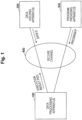
- Fig. 1 illustrates an example configuration of a program execution system according to an embodiment of the present invention.
- the program execution system according to the present embodiment includes a data processing apparatus 100, a data holding apparatus 200, and a program providing apparatus 300.
- Each of the data processing apparatus 100, the data holding apparatus 200, and the program providing apparatus 300 may be a physical machine (a computer), or may be a virtual machine in a cloud.
- each of the data holding apparatus 200 and the program providing apparatus 300 may be a function (a web browser, for example) that operates in a physical machine or a virtual machine.
- the data processing apparatus 100 has a trusted execution environment (TEE) function (which may be referred to as a secret computing mechanism or a confidential computing mechanism) that performs data processing separately from an existing OS.
- TEE trusted execution environment
- SGX of Intel registered trademark
- SEV SEV of AMD (registered trademark), TrustZone (registered trademark) of Arm (registered trademark), and the like.
- a secure channel 400 is constructed between the data processing apparatus 100 and the data holding apparatus 200, and between the data processing apparatus 100 and the program providing apparatus 300, and data and programs can be safely transmitted and received.
- this secure channel is constructed by a remote authentication protocol called Remote Attestation in SGX.
- Remote Attestation in SGX.
- the secure channel may be constructed by any means.
- a program P is transmitted from the program providing apparatus 300 to the data processing apparatus 100, data D is transmitted from the data holding apparatus 200 to the data processing apparatus 100, and the data processing apparatus 100 processes the data D according to the program P, and provides an execution result P(D) to the data holding apparatus 200.
- the data processing apparatus 100 does not leak the program P and the data D to the outside of the secure region (for example, to a cloud in which the data processing apparatus 100 is operating).
- the present embodiment provides not only this mechanism, but also a mechanism in which the program P does not leak to the data holding apparatus 200, and the data D does not leak to the program providing apparatus 300.
- the data holder (the data holding apparatus 200) having the highly confidential data D and the program author (the program providing apparatus 300) having the highly confidential program P can combine and execute the data and the program while keeping the data and the program secret from each other.
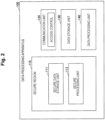
- Fig. 2 illustrates an example functional configuration of the data processing apparatus 100.
- the data processing apparatus 100 includes a secure region 110, a communication unit 120, a data storage unit 130, and a data processing unit 140.
- the secure region 110 is a protected region in which confidentiality is maintained, and the contents of data and programs therein cannot be known to the outside. Outside the secure region 110, conventional data storing, data processing (program execution), and transmission/reception can be performed. Access control can also be performed by the communication unit 120.
- Fig. 2 illustrates a secure data storage unit 111 and a secure processing unit 112 as functional units that perform these operations in the secure region 110.
- the secure region 110 can be formed by an existing technique. Any technology may be used as an existing technique for forming the secure region 110.
- the secure region 110 may be formed as a separate chip independent of the main CPU and the memory in terms of hardware, or the secure region 110 may be formed in terms of software by an encryption technique and an authentication technique.
- An example technique for forming the secure region 110 in terms of software is SGX described above. In the present embodiment, SGX is used as an example.
- the secure region 110 may be called an Enclave. As described later, the secure region 110 in the present embodiment is activated (generated) by execution of a trusted application (TA) in the data processing apparatus 100.
- TA trusted application
- Fig. 3 illustrates an image of data processing in the secure region 110.
- Enc means encryption.
- Enc(D) means encrypted data.
- the data processing apparatus 100 receives Enc(D) from the data holding apparatus 200, and Enc(P) from the program providing apparatus 300.
- Enc(D) and Enc(P) are decrypted, so that D and P are obtained. Further, in the secure region 110, P(D) is computed, and Enc(P(D)) is further computed. Enc(P(D)) is transmitted to the data holding apparatus 200. In this manner, a mechanism in which the program P does not leak to the data holding apparatus 200, and the data D does not leak to the program providing apparatus 300 is formed by a combination of computing and encrypted communication in the secure region 110.
- a remote attestation mechanism is used in generating (sharing) a common key. More specifically, a protocol in which a mechanism for verifying the data processing apparatus 100 is inserted into the Elliptic Curve Diffie-Hellman Key Exchange (ECDHKE) protocol is used. In the present embodiment, this is referred to as the ECDHE with attestation.
- ECDHKE Elliptic Curve Diffie-Hellman Key Exchange
- a third party verification organization Intel Attestation Service (IAS), for example) intervenes.
- IAS Intel Attestation Service
- the process of generating a common key with the third party verification organization's intervention is an existing technology remote attestation. Therefore, in the explanation of Examples 1 to 3, only an outline of the process related to remote attestation is described, and portions related to the present invention are described in detail.
- HA is a host application, and is a program such as a standard input-output program, for example.
- HA is a program that operates outside the secure region 110 in the data processing apparatus 100.
- PKp and SKp are a public key and a secret key of the program providing apparatus 300, respectively.
- PKd and SKd are a public key and a secret key of the data holding apparatus 200, respectively.
- Enc(A, B) means information obtained by encrypting A with B (a key).
- H(A) means a hash value of A.
- Sig(H(A), B) means a signature for A by B (a secret key).
- MAC(A, B) is a message authentication code for A using B (a common key).
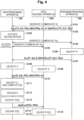
- Example 1 is described with reference to Fig. 4 .
- the processing flow in Fig. 4 is based on the assumption that the data holding apparatus 200 holds D, PKd, and SKd, and the program providing apparatus 300 holds HA, TA, P, PKp, and SKp.
- the operating company of the data processing apparatus 100 may provide the program providing apparatus 300 with TA and HA in the format of SDK or in a library format in advance, so that P can be packaged together with TA and HA in the program providing apparatus 300.
- Example 1 is based on the assumption that the data processing apparatus 100 provides Web services to each user (the data holding apparatus 200 and the program providing apparatus 300), and user authentication (for each user) and server authentication (for the data processing apparatus 100) that are used in general Web services are performed.
- the data processing apparatus 100 and the program providing apparatus 300 each generate (compute) a common key Kt by the ECDHE with attestation.
- the program providing apparatus 300 transmits Enc(TA, Kt), PKp, MAC(PKp, Kt), and Sig(H(Enc(TA, Kt)), SKp) to the data processing apparatus 100.
- the data processing apparatus 100 verifies the signature from the information received in S102, decrypts TA using Kt, and obtains PKp. In S103, the data processing apparatus 100 executes TA, to activate (generate) the secure region 110.
- PKp may be obtained from an external trusted server that manages public keys.
- the data processing apparatus 100 and the program providing apparatus 300 each generate and hold a common key Kp by the ECDHE with attestation.
- the common key Kp is generated in the secure region 110, and the common key Kp is held in the secure region 110.
- the data processing apparatus 100 and the data holding apparatus 200 each generate and hold a common key Kd by the ECDHE with attestation.
- the common key Kd is generated in the secure region 110, and the common key Kd is held in the secure region 110.
- the data processing apparatus 100 may perform access control to determine whether the secure region 110 can exchange keys with the data holding apparatus 200. For example, with the use of an access list including the data holding apparatus 200 permitted by the program providing apparatus 300, key exchange can be performed only with the data holding apparatus 200 permitted by the program providing apparatus 300.
- the program providing apparatus 300 encrypts P with Kp.
- the program providing apparatus 300 transmits Enc(P, Kp) and SIG(H(Enc(P, Kp)), SKp) to the data processing apparatus 100.
- the data processing apparatus 100 verifies the signature, decrypts P with Kp in the secure region 110, and holds P therein.
- the data holding apparatus 200 encrypts D with Kd.
- the data holding apparatus 200 transmits Enc(D, Kd), PKd, and MAC(PKd, Kd) to the data processing apparatus 100.
- the data processing apparatus 100 verifies MAC, and decrypts D with Kd and computes P(D) in the secure region 110.
- the data processing apparatus 100 also holds PKd in the secure region 110.
- the data processing apparatus 100 discards D held in the secure region 110.
- the timing of discarding may be immediately after the end of processing of D according to P.
- P may also be discarded.
- the data processing apparatus 100 obtains HybEnc(P(D), PKd) by encrypting P(D) held in the secure region 110 with the use of PKd.
- the data processing apparatus 100 transmits HybEnc(P(D), PKd) to the data holding apparatus 200.
- the data processing apparatus 100 discards P(D).
- the timing of the discarding may be immediately after the generation of HybEnc(P(D), PKd), or immediately after the transmission of HybEnc(P(D), PKd).
- HybEnc(P(D), PKd) may be stored for audit, backup, or the like.
- the data holding apparatus 200 decrypts P(D), using SKd. Thus, the data holding apparatus 200 can obtain P(D).
- P(D) is encrypted and decrypted on the public key basis, with the use of PKd and SKd.
- P(D) may be encrypted and decrypted with the use of Kd instead. That is, processing may be performed as follows.
- the data processing apparatus 100 obtains Enc(P(D), Kd) by encrypting P(D) held in the secure region 110, with the use of Kd.
- the data processing apparatus 100 transmits Enc(P(D), Kd) to the data holding apparatus 200.
- the data processing apparatus 100 discards P(D).
- the timing of the discarding may be immediately after the generation of Enc(P(D), Kd), or immediately after the transmission of Enc(P(D), Kd).
- Enc(P(D), Kd) may be stored for audit, backup, or the like.
- the data holding apparatus 200 decrypts P(D), using Kd. Thus, the data holding apparatus 200 can obtain P(D).
- the communication unit 120 of the data processing apparatus 100 may block communication other than the communication by the secure region 110 related to P or D. Particularly, downloading communication with devices other than the data holding apparatus 200 may be blocked.
- Example 1 it is possible to provide a result of execution of P(D) to the data holder (the data holding apparatus 200) without the program author (the program providing apparatus 300) knowing D and P(D), while P and D are kept secret from the data processing apparatus 100, and P is kept secret from the data holder (the data holding apparatus 200), mainly from the viewpoint of the program author (the program providing apparatus 300.
- Example 2 is described with reference to Fig. 5 .
- the processing flow in Fig. 5 is based on the assumption that the data holding apparatus 200 holds D, PKd, and SKd, and the program providing apparatus 300 holds HA, TA, P, PKp, and SKp.
- the operating company of the data processing apparatus 100 may provide the program providing apparatus 300 with TA and HA in the format of SDK or in a library format in advance, so that P can be packaged together with TA and HA in the program providing apparatus 300.
- Example 2 is based on the assumption that the data processing apparatus 100 provides Web services to each user (the data holding apparatus 200 and the program providing apparatus 300), and user authentication (for each user) and server authentication (for the data processing apparatus 100) that are used in general Web services are performed.
- the data holding apparatus 200 transmits HybEnc(D, PKd) obtained by encrypting D with PKd, to the data processing apparatus 100.
- the program providing apparatus 300 transmits HybEnc(P, PKp) obtained by encrypting P with PKp, to the data processing apparatus 100.
- HybEnc(D, PKd) and HybEnc(P, PKp) are both stored in a storage (the data storage unit 130 located outside the secure region 110) of the data processing apparatus 100. Note that HybEnc(D, PKd) and HybEnc(P, PKp) may be stored into the data processing apparatus 100 offline.
- the data processing apparatus 100 and the program providing apparatus 300 each generate (compute) a common key Kt by the ECDHE with attestation.
- the program providing apparatus 300 transmits Enc(TA, Kt), PKp, MAC(PKp, Kt), and Sig(H(Enc(TA, Kt)), SKp) to the data processing apparatus 100.
- the data processing apparatus 100 obtains PKp from the information received in S204, and decrypts TA with the use of Kt. In S205, the data processing apparatus 100 executes TA, to activate (generate) the secure region 110.
- PKp may be obtained from an external trusted server that manages public keys.
- the data processing apparatus 100 and the program providing apparatus 300 each generate and hold a common key Kp by the ECDHE with attestation.
- the common key Kp is generated in the secure region 110, and the common key Kp is held in the secure region 110.
- the data processing apparatus 100 and the data holding apparatus 200 each generate and hold a common key Kd by the ECDHE with attestation.
- the common key Kd is generated in the secure region 110, and the common key Kd is held in the secure region 110.
- the data processing apparatus 100 may perform access control to determine whether the secure region 110 can exchange keys with the data holding apparatus 200. For example, with the use of an access list including the data holding apparatus 200 permitted by the program providing apparatus 300, key exchange can be performed only with the data holding apparatus 200 permitted by the program providing apparatus 300.
- the program providing apparatus 300 encrypts SKp with Kp.
- the program providing apparatus 300 transmits Enc(SKp, Kp) and SIG(H(Enc(SKp, Kp)), SKp) to the data processing apparatus 100.
- the data processing apparatus 100 performs signature verification, and decrypts SKp with Kp and decrypts P from HybEnc(P, PKp) with SKp in the secure region 110. After completing the decryption using SKp, the data processing apparatus 100 discards SKp.
- the data holding apparatus 200 encrypts SKd with Kd.
- the data holding apparatus 200 transmits Enc(SKd, Kd), PKd, and MAC(PKd, Kd) to the data processing apparatus 100.
- the data processing apparatus 100 performs signature verification, and decrypts SKd with Kd and decrypts D from HybEnc(D, PKd) with SKd in the secure region 110. After completing the decryption using SKd, the data processing apparatus 100 discards SKd. Also, PKd is held in the secure region 110.
- the data processing apparatus 100 computes P(D) in the secure region 110.
- the data processing apparatus 100 discards D held in the secure region 110. The timing of discarding may be immediately after the end of processing of D according to P. Also, P may be discarded like D.
- the data processing apparatus 100 obtains HybEnc(P(D), PKd) by encrypting P(D) held in the secure region 110 with the use of PKd.
- the data processing apparatus 100 transmits HybEnc(P(D), PKd) to the data holding apparatus 200.
- the data processing apparatus 100 discards P(D).
- the timing of the discarding may be immediately after the generation of HybEnc(P(D), PKd), or immediately after the transmission of HybEnc(P(D), PKd).
- HybEnc(P(D), PKd) may be stored for audit, backup, or the like.
- the data holding apparatus 200 decrypts P(D), using SKd.
- the data holding apparatus 200 can obtain P(D).
- P(D) is encrypted and decrypted on the public key basis, with the use of PKd and SKd.
- P(D) may be encrypted and decrypted with the use of a common key (referred to as a second common key or Kd2 herein) shared by the data processing apparatus 100 and the data holding apparatus 200 instead. That is, processing may be performed as follows.
- the data processing apparatus 100 obtains Enc(P(D), Kd2) by encrypting P(D) held in the secure region 110, with the use of Kd2.
- the data processing apparatus 100 transmits Enc(P(D), Kd2) to the data holding apparatus 200.
- the data processing apparatus 100 discards P(D).
- the timing of the discarding may be immediately after the generation of Enc(P(D), Kd2), or immediately after the transmission of Enc(P(D), Kd2).
- Enc(P(D), Kd2) may be stored for audit, backup, or the like.
- the data holding apparatus 200 decrypts P(D), using Kd2.
- the data holding apparatus 200 can obtain P(D).
- D and P are encrypted with the use of public keys in S201 and S202.
- D and P may be encrypted with the use of common keys instead. That is, processing may be performed as follows.
- the data holding apparatus 200 transmits Enc(D, Kd2) obtained by encrypting D with Kd2, to the data processing apparatus 100.
- the program providing apparatus 300 transmits Enc(P, Kp2) obtained by encrypting P with Kp2, to the data processing apparatus 100.
- Enc(D, Kd2) and Enc(P, Kp2) are both stored in a storage (the data storage unit 130 located outside the secure region 110) of the data processing apparatus 100. Note that Enc(D, Kd2) and Enc(P, Kp2) may be stored into the data processing apparatus 100 offline.
- Kp2 is transmitted from the program providing apparatus 300 to the data processing apparatus 100 in a process similar to the process of transmitting and receiving SKp described in S208 to S210, and the data processing apparatus 100 acquires Kp2.
- Kd2 is transmitted from the data holding apparatus 200 to the data processing apparatus 100 in a process similar to the process of transmitting and receiving SKd described in S211 to S213, and the data processing apparatus 100 acquires Kd2.
- the data processing apparatus 100 decrypts D with Kd2, and decrypts P with Kp2.
- the data processing apparatus 100 computes P(D) in the secure region 110.
- the data processing apparatus 100 discards D held in the secure region 110. The timing of discarding may be immediately after the end of processing of D according to P. Also, P may be discarded like D.
- the data processing apparatus 100 obtains Enc(P(D), Kd2) by encrypting P(D) held in the secure region 110, with the use of Kd2.
- the data processing apparatus 100 transmits Enc(P(D), Kd2) to the data holding apparatus 200.
- the data processing apparatus 100 discards P(D).
- the timing of the discarding may be immediately after the generation of Enc(P(D), Kd2), or immediately after the transmission of Enc(P(D), Kd2).
- Enc(P(D), Kd2) may be stored for audit, backup, or the like.
- the data holding apparatus 200 decrypts P(D), using Kd2.
- the data holding apparatus 200 can obtain P(D).
- the communication unit 120 of the data processing apparatus 100 may block communication other than the communication by the secure region 110 related to P or D. Particularly, downloading communication with devices other than the data holding apparatus 200 may be blocked.
- Example 2 it is possible to provide a result of execution of P(D) to the data holder (the data holding apparatus 200) without the program author (the program providing apparatus 300) knowing D and P(D), while P and D are kept secret from the data processing apparatus 100, and P is kept secret from the data holder (the data holding apparatus 200), mainly from the viewpoint of the program author (the program providing apparatus 300, as in Example 1.
- P and D are encrypted and stored into the data processing apparatus 100 in advance. Accordingly, it is possible to perform desired data processing using P and D simply by sending small-size keys (SKp and SKd) to the data processing apparatus 100. Thus, even in a case where the sizes of the program P and the data D are large, a user's waiting time such as an upload time does not increase.
- a cloud storage in a cloud assumed as an example of a specific embodiment form of the data processing apparatus 100 can be used as the storage for the encrypted P and D.
- services according to Example 2 can be easily provided to a user who is using the cloud storage.
- Example 3 is described with reference to Fig. 6 .
- the processing flow in Fig. 6 is based on the assumption that the data holding apparatus 200 holds D, PKd, and SKd, and the program providing apparatus 300 holds HA, TA, P, PKp, and SKp.
- the operating company of the data processing apparatus 100 may provide the program providing apparatus 300 with TA and HA in the format of SDK or in a library format in advance, so that P can be packaged together with TA and HA in the program providing apparatus 300.
- Example 3 is based on the assumption that the data processing apparatus 100 provides Web services to each user (the data holding apparatus 200 and the program providing apparatus 300), and user authentication (for each user) and server authentication (for the data processing apparatus 100) that are used in general Web services are performed.
- the data holding apparatus 200 transmits HybEnc(D, PKd) obtained by encrypting D with PKd, to the data processing apparatus 100.
- the program providing apparatus 300 transmits, to the data processing apparatus 100, "HA + TA (including interpreter) + HybEnc(P, PKp) & Sig(H(TA + HybEnc(P, PKp)), SKp)", which is a signature with HA, TA including an interpreter, HybEnc(P, PKp) obtained by encrypting P with PKp, and SKp.
- HybEnc(D, PKd) and "HA + TA (including interpreter) + HybEnc(P, PKp) & Sig(H(TA + HybEnc(P, PKp)), SKp)" are stored in a storage (the data storage unit 130 located outside the secure region 110) of the data processing apparatus 100. Note that HybEnc(D, PKd) and "HA + TA (including interpreter) + HybEnc(P, PKp) & Sig(H (TA + HybEnc(P, PKp)), SKp)" may be stored into the data processing apparatus 100 offline.
- Example 3 TA (including interpreter) and HybEnc(P, PKp) are formed as a set. Therefore, a set of P in an encrypted state and the interpreter included in TA is fixed to the secure region 110 at the time of activation (initialization) of the secure region 110 by TA (including interpreter). As described later, P is decrypted with SKp in the secure region 110, is interpreted by the interpreter, and is executed.
- the technique using the interpreter in the secure region may be a technique for inserting a program into a secure region after the secure region is activated.
- this technique there is a possibility that an unauthorized program is inserted and executed.
- the technique according to Example 3 only the encrypted P forming a set with TA (including interpreter) is decrypted, interpreted, and executed. Thus, it is possible to eliminate the possibility of execution of an unauthorized program.
- the program providing apparatus 300 transmits PKp and Sig(PKp, SKp) to the data processing apparatus 100.
- the data processing apparatus 100 verifies the signature, and obtains PKp.
- the data processing apparatus 100 activates (generates) the secure region 110 by executing TA (including interpreter) stored in the storage.
- the interpreter is incorporated into the secure region 110. Further, the encrypted P is fixed.
- PKp may be obtained from an external trusted server that manages public keys.
- the data processing apparatus 100 and the program providing apparatus 300 each generate and hold a common key Kp by the ECDHE with attestation.
- the common key Kp is generated in the secure region 110, and the common key Kp is held in the secure region 110.
- the data processing apparatus 100 and the data holding apparatus 200 each generate and hold a common key Kd by the ECDHE with attestation.
- the common key Kd is generated in the secure region 110, and the common key Kd is held in the secure region 110.
- the data processing apparatus 100 may perform access control to determine whether the secure region 110 can exchange keys with the data holding apparatus 200. For example, with the use of an access list including the data holding apparatus 200 permitted by the program providing apparatus 300, key exchange can be performed only with the data holding apparatus 200 permitted by the program providing apparatus 300.
- the program providing apparatus 300 encrypts SKp with Kp.
- the program providing apparatus 300 transmits Enc(SKp, Kp) and SIG(H(Enc(SKp, Kp)), SKp) to the data processing apparatus 100.
- the data processing apparatus 100 decrypts SKp with Kp and decrypts P from HybEnc(P, PKp) with SKp in the secure region 110. After completing the decryption using SKp, the data processing apparatus 100 discards SKp.
- the data holding apparatus 200 encrypts SKd with Kd.
- the data holding apparatus 200 transmits Enc(SKd, Kd), PKd, and MAC(PKd, Kd) to the data processing apparatus 100.
- the data processing apparatus 100 verifies MAC, and decrypts SKd with Kd and decrypts D from HybEnc(D, PKd) with SKd in the secure region 110. After completing the decryption using SKd, the data processing apparatus 100 discards SKd. Also, PKd is held in the secure region 110.
- the data processing apparatus 100 computes P(D) in the secure region 110.
- the data processing apparatus 100 discards D held in the secure region 110. The timing of discarding may be immediately after the end of processing of D according to P. Also, P may be discarded like D.
- the data processing apparatus 100 obtains HybEnc(P(D), PKd) by encrypting P(D) held in the secure region 110 with the use of PKd.
- the data processing apparatus 100 transmits HybEnc(P(D), PKd) to the data holding apparatus 200.
- the data processing apparatus 100 discards P(D).
- the timing of the discarding may be immediately after the generation of HybEnc(P(D), PKd), or immediately after the transmission of HybEnc(P(D), PKd).
- HybEnc(P(D), PKd) may be stored for audit, backup, or the like.
- the data holding apparatus 200 decrypts P(D), using SKd. Thus, the data holding apparatus 200 can obtain P(D).
- P(D) is encrypted and decrypted on the public key basis, with the use of PKd and SKd.
- P(D) may be encrypted and decrypted with the use of a common key (referred to as a second common key or Kd2 herein) shared by the data processing apparatus 100 and the data holding apparatus 200 instead. That is, processing may be performed as follows.
- the data processing apparatus 100 obtains Enc(P(D), Kd2) by encrypting P(D) held in the secure region 110, with the use of Kd2.
- the data processing apparatus 100 transmits Enc(P(D), Kd2) to the data holding apparatus 200.
- the data processing apparatus 100 discards P(D).
- the timing of the discarding may be immediately after the generation of Enc(P(D), Kd2), or immediately after the transmission of Enc(P(D), Kd2).
- Enc(P(D), Kd2) may be stored for audit, backup, or the like.
- the data holding apparatus 200 decrypts P(D), using Kd2. Thus, the data holding apparatus 200 can obtain P(D).
- D and P are encrypted with the use of public keys in S301 and S302.
- D and P may be encrypted with the use of common keys instead. That is, processing may be performed as follows.
- the data holding apparatus 200 transmits Enc(D, Kd2) obtained by encrypting D with Kd2, to the data processing apparatus 100.
- the program providing apparatus 300 transmits, to the data processing apparatus 100, "HA + TA (including interpreter) + Enc(P, Kp2)", which includes HA, TA including an interpreter, and Enc(P, Kp2) obtained by encrypting P with Kp2. Note that a signature may be attached to "HA + TA (including interpreter) + Enc(P, Kp2)".
- Enc(D, Kd2) and "HA + TA (including interpreter) + Enc(P, Kp2)" are stored in a storage (the data storage unit 130 located outside the secure region 110) of the data processing apparatus 100. Note that Enc(D, Kd2) and "HA + TA (including interpreter) + Enc(P, Kp2)" may be stored into the data processing apparatus 100 offline.
- Kp2 is transmitted from the program providing apparatus 300 to the data processing apparatus 100 in a process similar to the process of transmitting and receiving SKp described in S307 to S309, and the data processing apparatus 100 acquires Kp2.
- Kd2 is transmitted from the data holding apparatus 200 to the data processing apparatus 100 in a process similar to the process of transmitting and receiving SKd described in S310 to S312, and the data processing apparatus 100 acquires Kd2.
- the data processing apparatus 100 decrypts D with Kd2, and decrypts P with Kp2.
- the data processing apparatus 100 computes P(D) in the secure region 110.
- the data processing apparatus 100 discards D held in the secure region 110. The timing of discarding may be immediately after the end of processing of D according to P. Also, P may be discarded like D.
- the data processing apparatus 100 obtains Enc(P(D), Kd2) by encrypting P(D) held in the secure region 110, with the use of Kd2.
- the data processing apparatus 100 transmits Enc(P(D), Kd2) to the data holding apparatus 200.
- the data processing apparatus 100 discards P(D).
- the timing of the discarding may be immediately after the generation of Enc(P(D), Kd2), or immediately after the transmission of Enc(P(D), Kd2).
- Enc(P(D), Kd2) may be stored for audit, backup, or the like.
- the data holding apparatus 200 decrypts P(D), using Kd2. Thus, the data holding apparatus 200 can obtain P(D).
- the communication unit 120 of the data processing apparatus 100 may block communication other than the communication by the secure region 110 related to P or D. Particularly, downloading communication with devices other than the data holding apparatus 200 may be blocked.
- Example 3 it is possible to provide a result of execution of P(D) to the data holder (the data holding apparatus 200) without the program author (the program providing apparatus 300) knowing D and P(D), while P and D are kept secret from the data processing apparatus 100, and P is kept secret from the data holder (the data holding apparatus 200), mainly from the viewpoint of the program author (the program providing apparatus 300, as in Example 1.
- Example 3 P and D are encrypted and stored into the data processing apparatus 100 in advance, as in Example 2. Accordingly, it is possible to perform desired data processing simply by sending small-size keys (SKp and SKd) to the data processing apparatus 100. Thus, even in a case where the sizes of the program P and the data D are large, a user's waiting time such as an upload time does not increase.
- SKp and SKd small-size keys
- a cloud storage in a cloud assumed as an example of a specific embodiment form of the data processing apparatus 100 can be used as the storage for the encrypted P and D.
- services according to Example 3 can be easily provided to a user who is using the cloud storage.
- an interpreter in the secure region may have a configuration in which a program is inserted later so as to increase the degree of freedom of the program in the secure region.
- this configuration there is a high possibility that an unauthorized program is inserted and executed in the secure region.
- the data processing apparatus 100, the data holding apparatus 200, and the program providing apparatus 300 are collectively referred to as an "apparatus".
- the apparatus can be implemented by executing a program corresponding to the processing to be performed in the apparatus, using hardware resources such as a CPU and a memory installed in the computer.
- the above program can be recorded in a computer-readable recording medium (such as a portable memory), and be stored or distributed. Further, the above program can also be provided through a network such as the Internet or electronic mail.
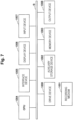
- Fig. 7 is a diagram illustrating an example hardware configuration of the above computer.
- the computer in Fig. 7 includes a drive device 1000, an auxiliary storage device 1002, a memory device 1003, a CPU 1004, an interface device 1005, a display device 1006, an input device 1007, and an output device 1008, which are connected to one another by a bus BS. Note that some of these devices are not necessarily included. For example, in a case where display is not to be performed, the display device 1006 may not be included.
- the program for performing the processing in the computer is provided through a recording medium 1001 such as a CD-ROM or a memory card, for example.
- a recording medium 1001 such as a CD-ROM or a memory card
- the program is installed from the recording medium 1001 into the auxiliary storage device 1002 via the drive device 1000.
- the program is not necessarily installed from the recording medium 1001, and may be downloaded from another computer via a network.
- the auxiliary storage device 1002 stores the installed program, and also stores necessary files, data, and the like.
- the memory device 1003 reads the program from the auxiliary storage device 1002, and stores the program.
- the CPU 1004 implements a function related to the apparatus in accordance with a program stored in the memory device 1003.
- the interface device 1005 is used as an interface for connecting to a network, and functions as a transmission unit and a reception unit.
- the display device 1006 displays a graphical user interface (GUI) or the like according to the program.
- the input device 1007 includes a keyboard and mouse, buttons, a touch panel, or the like, and is used to input various operation instructions.
- the output device 1008 outputs an arithmetic operation result.
- the technology according to the present embodiment provides a technology for preventing data leakage to the program provider and program leakage to the data holder in a case where a data processing apparatus having a confidential computing mechanism processes data held by the data holder according to a program provided by the program provider.
- the present specification discloses at least the program execution systems, the data processing apparatuses, the program execution method, and the program of the items described below.
- a program execution system including a data holding apparatus, a program providing apparatus, and a data processing apparatus having a mechanism that performs secret computing in a secure region, in which
- a program execution system including a data holding apparatus, a program providing apparatus, and a data processing apparatus having a mechanism that performs secret computing in a secure region, in which
- the program execution system in which the data processing apparatus executes an application including an interpreter, to activate the secure region including the encrypted program, and cause the interpreter to interpret the decrypted program.
- the program execution system according to any one of items 1 to 3, in which the data processing apparatus discards the data and the result of the execution after executing the program in the secure region.
- a data processing apparatus in a program execution system that includes a data holding apparatus, a program providing apparatus, and the data processing apparatus having a mechanism that performs secret computing in a secure region, the data processing apparatus including:
- a data processing apparatus in a program execution system that includes a data holding apparatus, a program providing apparatus, and the data processing apparatus having a mechanism that performs secret computing in a secure region, the data processing apparatus including:
- a program execution method in a program execution system that includes a data holding apparatus, a program providing apparatus, and a data processing apparatus having a mechanism that performs secret computing in a secure region, the program execution method including:
Landscapes
- Engineering & Computer Science (AREA)
- Computer Security & Cryptography (AREA)
- Theoretical Computer Science (AREA)
- Software Systems (AREA)
- General Engineering & Computer Science (AREA)
- Computer Hardware Design (AREA)
- General Physics & Mathematics (AREA)
- Physics & Mathematics (AREA)
- Signal Processing (AREA)
- Computer Networks & Wireless Communication (AREA)
- Multimedia (AREA)
- Technology Law (AREA)
- Computing Systems (AREA)
- Health & Medical Sciences (AREA)
- Bioethics (AREA)
- General Health & Medical Sciences (AREA)
- Storage Device Security (AREA)
Abstract
Description
- The present invention relates to a confidentiality protection technology in the information and communication fields.
- Examples of conventional techniques for performing computing while keeping data and programs secret from cloud providers include Confidential Computing (Non Patent Literature 1) and Confidential VM (Prior Art Literature 2). By these techniques, it is possible to isolate and keep highly confidential data secret while processing the data in a cloud, for example.
- However, these conventional techniques do not take into consideration the risk that data and programs leak to each other user in a case where different users hold the data and programs.
-
- Non Patent Literature 1: Microsoft Azure Confidential Computing Official Web Page https://docs.microsoft.com/ja-jp/azure/confidential-computing/overview
- Non Patent Literature 2: Google Confidential VM Official Web Page https://cloud.google.com/compute/confidential-vm/docs?hl=ja
- The present invention has been made in view of the above aspects, and aims to provide a technology for preventing data leakage to the program provider and program leakage to the data holder in a case where a data processing apparatus having a confidential computing mechanism processes data held by the data holder according to a program provided by the program provider.
- The technology disclosed herein provides a program execution system that includes a data holding apparatus, a program providing apparatus, and a data processing apparatus having a mechanism that performs secret computing in a secure region,
in which - the data holding apparatus transmits encrypted data to the data processing apparatus, and the program providing apparatus transmits an encrypted program to the data processing apparatus, the encrypted data being encrypted with a first common key, the encrypted program being encrypted with a second common key,
- in the secure region, the data processing apparatus acquires data by decrypting the encrypted data with the first common key, acquires a program by decrypting the encrypted program with the second common key, executes the program for the data, and encrypts a result of the execution with a public key of the data holding apparatus or the first common key,
- the data processing apparatus transmits the encrypted result of the execution to the data holding apparatus, and
- the data holding apparatus acquires the result of the execution by decrypting the encrypted result of the execution with a secret key or the first common key.
- The technology disclosed herein provides a technology for preventing data leakage to the program provider and program leakage to the data holder in a case where a data processing apparatus having a confidential computing mechanism processes data held by the data holder according to a program provided by the program provider.
-
- [
Fig. 1] Fig. 1 is a system configuration diagram according to an embodiment of the present invention; - [
Fig. 2] Fig. 2 is a functional configuration diagram of a data processing apparatus; - [
Fig. 3] Fig. 3 is a diagram illustrating an image of processing in a secure region; - [
Fig. 4] Fig. 4 is a sequence diagram illustrating processing in Example 1; - [
Fig. 5] Fig. 5 is a sequence diagram illustrating processing in Example 2; - [
Fig. 6] Fig. 6 is a sequence diagram illustrating processing in Example 3; and - [
Fig. 7] Fig. 7 is a diagram illustrating an example hardware configuration of an apparatus. - In the description below, an embodiment of the present invention (the present embodiment) will be explained with reference to the drawings. The embodiment described below is merely an example, and embodiments to which the present invention is applied are not limited to the following embodiment. Note that, in the description below, a program is denoted by P, data to be processed according to P is denoted by D, and a result of processing of D according to P is denoted by P(D).
-
Fig. 1 illustrates an example configuration of a program execution system according to an embodiment of the present invention. As illustrated inFig. 1 , the program execution system according to the present embodiment includes adata processing apparatus 100, adata holding apparatus 200, and aprogram providing apparatus 300. - Each of the
data processing apparatus 100, thedata holding apparatus 200, and theprogram providing apparatus 300 may be a physical machine (a computer), or may be a virtual machine in a cloud. Alternatively, each of thedata holding apparatus 200 and theprogram providing apparatus 300 may be a function (a web browser, for example) that operates in a physical machine or a virtual machine. - In the present embodiment, the
data processing apparatus 100 has a trusted execution environment (TEE) function (which may be referred to as a secret computing mechanism or a confidential computing mechanism) that performs data processing separately from an existing OS. In the present embodiment, SGX of Intel (registered trademark) is assumed as this function, for example. However, this is merely an example, and the present invention can be applied to any TEE function. For example, the present invention can also be applied to SEV of AMD (registered trademark), TrustZone (registered trademark) of Arm (registered trademark), and the like. - As illustrated in
Fig. 1 , asecure channel 400 is constructed between thedata processing apparatus 100 and thedata holding apparatus 200, and between thedata processing apparatus 100 and theprogram providing apparatus 300, and data and programs can be safely transmitted and received. For example, this secure channel is constructed by a remote authentication protocol called Remote Attestation in SGX. However, this is merely an example, and the secure channel may be constructed by any means. - In the present embodiment, a program P is transmitted from the
program providing apparatus 300 to thedata processing apparatus 100, data D is transmitted from thedata holding apparatus 200 to thedata processing apparatus 100, and thedata processing apparatus 100 processes the data D according to the program P, and provides an execution result P(D) to thedata holding apparatus 200. - With its secret computing mechanism, the
data processing apparatus 100 does not leak the program P and the data D to the outside of the secure region (for example, to a cloud in which thedata processing apparatus 100 is operating). The present embodiment provides not only this mechanism, but also a mechanism in which the program P does not leak to thedata holding apparatus 200, and the data D does not leak to theprogram providing apparatus 300. - Thus, in the program execution system according to the present embodiment, in a use case where the secret computing mechanism is applied to data distribution, the data holder (the data holding apparatus 200) having the highly confidential data D and the program author (the program providing apparatus 300) having the highly confidential program P can combine and execute the data and the program while keeping the data and the program secret from each other.
-
Fig. 2 illustrates an example functional configuration of thedata processing apparatus 100. As illustrated inFig. 2 , thedata processing apparatus 100 includes asecure region 110, acommunication unit 120, adata storage unit 130, and adata processing unit 140. - The
secure region 110 is a protected region in which confidentiality is maintained, and the contents of data and programs therein cannot be known to the outside. Outside thesecure region 110, conventional data storing, data processing (program execution), and transmission/reception can be performed. Access control can also be performed by thecommunication unit 120. - In the
secure region 110, it is possible to perform data storing and data processing (program execution) while maintaining confidentiality.Fig. 2 illustrates a securedata storage unit 111 and asecure processing unit 112 as functional units that perform these operations in thesecure region 110. - The
secure region 110 can be formed by an existing technique. Any technology may be used as an existing technique for forming thesecure region 110. For example, thesecure region 110 may be formed as a separate chip independent of the main CPU and the memory in terms of hardware, or thesecure region 110 may be formed in terms of software by an encryption technique and an authentication technique. An example technique for forming thesecure region 110 in terms of software is SGX described above. In the present embodiment, SGX is used as an example. - The
secure region 110 may be called an Enclave. As described later, thesecure region 110 in the present embodiment is activated (generated) by execution of a trusted application (TA) in thedata processing apparatus 100. -
Fig. 3 illustrates an image of data processing in thesecure region 110. Note that, in the present embodiment, "Enc" means encryption. For example, Enc(D) means encrypted data. - As illustrated in
Fig. 3 , thedata processing apparatus 100 receives Enc(D) from thedata holding apparatus 200, and Enc(P) from theprogram providing apparatus 300. - In the
secure region 110, Enc(D) and Enc(P) are decrypted, so that D and P are obtained. Further, in thesecure region 110, P(D) is computed, and Enc(P(D)) is further computed. Enc(P(D)) is transmitted to thedata holding apparatus 200. In this manner, a mechanism in which the program P does not leak to thedata holding apparatus 200, and the data D does not leak to theprogram providing apparatus 300 is formed by a combination of computing and encrypted communication in thesecure region 110. - In the description below, Examples 1 to 3 are explained as example processing flows in the present embodiment. In each of the examples described below, a remote attestation mechanism is used in generating (sharing) a common key. More specifically, a protocol in which a mechanism for verifying the
data processing apparatus 100 is inserted into the Elliptic Curve Diffie-Hellman Key Exchange (ECDHKE) protocol is used. In the present embodiment, this is referred to as the ECDHE with attestation. - In the verification of the
data processing apparatus 100, a third party verification organization (Intel Attestation Service (IAS), for example) intervenes. However, the process of generating a common key with the third party verification organization's intervention is an existing technology remote attestation. Therefore, in the explanation of Examples 1 to 3, only an outline of the process related to remote attestation is described, and portions related to the present invention are described in detail. - In the description below, HA is a host application, and is a program such as a standard input-output program, for example. HA is a program that operates outside the
secure region 110 in thedata processing apparatus 100. PKp and SKp are a public key and a secret key of theprogram providing apparatus 300, respectively. PKd and SKd are a public key and a secret key of thedata holding apparatus 200, respectively. Further, Enc(A, B) means information obtained by encrypting A with B (a key). H(A) means a hash value of A. Sig(H(A), B) means a signature for A by B (a secret key). MAC(A, B) is a message authentication code for A using B (a common key). - First, Example 1 is described with reference to
Fig. 4 . The processing flow inFig. 4 is based on the assumption that thedata holding apparatus 200 holds D, PKd, and SKd, and theprogram providing apparatus 300 holds HA, TA, P, PKp, and SKp. Note that the operating company of thedata processing apparatus 100 may provide theprogram providing apparatus 300 with TA and HA in the format of SDK or in a library format in advance, so that P can be packaged together with TA and HA in theprogram providing apparatus 300. - Also, Example 1 is based on the assumption that the
data processing apparatus 100 provides Web services to each user (thedata holding apparatus 200 and the program providing apparatus 300), and user authentication (for each user) and server authentication (for the data processing apparatus 100) that are used in general Web services are performed. - In S101, the
data processing apparatus 100 and theprogram providing apparatus 300 each generate (compute) a common key Kt by the ECDHE with attestation. - In S102, the
program providing apparatus 300 transmits Enc(TA, Kt), PKp, MAC(PKp, Kt), and Sig(H(Enc(TA, Kt)), SKp) to thedata processing apparatus 100. - The
data processing apparatus 100 verifies the signature from the information received in S102, decrypts TA using Kt, and obtains PKp. In S103, thedata processing apparatus 100 executes TA, to activate (generate) thesecure region 110. - Note that the method by which the
data processing apparatus 100 acquires PKp is not limited to the above method. For example, PKp may be obtained from an external trusted server that manages public keys. - In S104, the
data processing apparatus 100 and theprogram providing apparatus 300 each generate and hold a common key Kp by the ECDHE with attestation. In thedata processing apparatus 100, the common key Kp is generated in thesecure region 110, and the common key Kp is held in thesecure region 110. - In S105, the
data processing apparatus 100 and thedata holding apparatus 200 each generate and hold a common key Kd by the ECDHE with attestation. In thedata processing apparatus 100, the common key Kd is generated in thesecure region 110, and the common key Kd is held in thesecure region 110. - Note that, at the time of S103, the
data processing apparatus 100 has already verified the signature of theprogram providing apparatus 300, but has not yet verified the signature of thedata holding apparatus 200. Therefore, before carrying out S105, thedata processing apparatus 100 may perform access control to determine whether thesecure region 110 can exchange keys with thedata holding apparatus 200. For example, with the use of an access list including thedata holding apparatus 200 permitted by theprogram providing apparatus 300, key exchange can be performed only with thedata holding apparatus 200 permitted by theprogram providing apparatus 300. - In S106, the
program providing apparatus 300 encrypts P with Kp. In S107, theprogram providing apparatus 300 transmits Enc(P, Kp) and SIG(H(Enc(P, Kp)), SKp) to thedata processing apparatus 100. - In S108, the
data processing apparatus 100 verifies the signature, decrypts P with Kp in thesecure region 110, and holds P therein. - In S109, the
data holding apparatus 200 encrypts D with Kd. In S110, thedata holding apparatus 200 transmits Enc(D, Kd), PKd, and MAC(PKd, Kd) to thedata processing apparatus 100. - In S111, the
data processing apparatus 100 verifies MAC, and decrypts D with Kd and computes P(D) in thesecure region 110. Thedata processing apparatus 100 also holds PKd in thesecure region 110. - In S112, the
data processing apparatus 100 discards D held in thesecure region 110. The timing of discarding may be immediately after the end of processing of D according to P. Like D, P may also be discarded. - In S113, the
data processing apparatus 100 obtains HybEnc(P(D), PKd) by encrypting P(D) held in thesecure region 110 with the use of PKd. - In S114, the
data processing apparatus 100 transmits HybEnc(P(D), PKd) to thedata holding apparatus 200. In S115, thedata processing apparatus 100 discards P(D). The timing of the discarding may be immediately after the generation of HybEnc(P(D), PKd), or immediately after the transmission of HybEnc(P(D), PKd). HybEnc(P(D), PKd) may be stored for audit, backup, or the like. - In S116, the
data holding apparatus 200 decrypts P(D), using SKd. Thus, thedata holding apparatus 200 can obtain P(D). - Note that, in the above example, P(D) is encrypted and decrypted on the public key basis, with the use of PKd and SKd. However, P(D) may be encrypted and decrypted with the use of Kd instead. That is, processing may be performed as follows.
- In S113, the
data processing apparatus 100 obtains Enc(P(D), Kd) by encrypting P(D) held in thesecure region 110, with the use of Kd. - In S114, the
data processing apparatus 100 transmits Enc(P(D), Kd) to thedata holding apparatus 200. In S115, thedata processing apparatus 100 discards P(D). The timing of the discarding may be immediately after the generation of Enc(P(D), Kd), or immediately after the transmission of Enc(P(D), Kd). Enc(P(D), Kd) may be stored for audit, backup, or the like. - In S116, the
data holding apparatus 200 decrypts P(D), using Kd. Thus, thedata holding apparatus 200 can obtain P(D). - Note that, in the above processing flow, the
communication unit 120 of thedata processing apparatus 100 may block communication other than the communication by thesecure region 110 related to P or D. Particularly, downloading communication with devices other than thedata holding apparatus 200 may be blocked. - According to Example 1, it is possible to provide a result of execution of P(D) to the data holder (the data holding apparatus 200) without the program author (the program providing apparatus 300) knowing D and P(D), while P and D are kept secret from the
data processing apparatus 100, and P is kept secret from the data holder (the data holding apparatus 200), mainly from the viewpoint of the program author (theprogram providing apparatus 300. - Next, Example 2 is described with reference to
Fig. 5 . The processing flow inFig. 5 is based on the assumption that thedata holding apparatus 200 holds D, PKd, and SKd, and theprogram providing apparatus 300 holds HA, TA, P, PKp, and SKp. Note that the operating company of thedata processing apparatus 100 may provide theprogram providing apparatus 300 with TA and HA in the format of SDK or in a library format in advance, so that P can be packaged together with TA and HA in theprogram providing apparatus 300. - Also, Example 2 is based on the assumption that the
data processing apparatus 100 provides Web services to each user (thedata holding apparatus 200 and the program providing apparatus 300), and user authentication (for each user) and server authentication (for the data processing apparatus 100) that are used in general Web services are performed. - In S201, the
data holding apparatus 200 transmits HybEnc(D, PKd) obtained by encrypting D with PKd, to thedata processing apparatus 100. In S202, theprogram providing apparatus 300 transmits HybEnc(P, PKp) obtained by encrypting P with PKp, to thedata processing apparatus 100. - HybEnc(D, PKd) and HybEnc(P, PKp) are both stored in a storage (the
data storage unit 130 located outside the secure region 110) of thedata processing apparatus 100. Note that HybEnc(D, PKd) and HybEnc(P, PKp) may be stored into thedata processing apparatus 100 offline. - In S203, the
data processing apparatus 100 and theprogram providing apparatus 300 each generate (compute) a common key Kt by the ECDHE with attestation. - In S204, the
program providing apparatus 300 transmits Enc(TA, Kt), PKp, MAC(PKp, Kt), and Sig(H(Enc(TA, Kt)), SKp) to thedata processing apparatus 100. - The
data processing apparatus 100 obtains PKp from the information received in S204, and decrypts TA with the use of Kt. In S205, thedata processing apparatus 100 executes TA, to activate (generate) thesecure region 110. - Note that the method by which the
data processing apparatus 100 acquires PKp is not limited to the above method. For example, PKp may be obtained from an external trusted server that manages public keys. - In S206, the
data processing apparatus 100 and theprogram providing apparatus 300 each generate and hold a common key Kp by the ECDHE with attestation. In thedata processing apparatus 100, the common key Kp is generated in thesecure region 110, and the common key Kp is held in thesecure region 110. - In S207, the
data processing apparatus 100 and thedata holding apparatus 200 each generate and hold a common key Kd by the ECDHE with attestation. In thedata processing apparatus 100, the common key Kd is generated in thesecure region 110, and the common key Kd is held in thesecure region 110. - Note that, at the time of S205, the
data processing apparatus 100 has already verified the signature of theprogram providing apparatus 300, but has not yet verified the signature of thedata holding apparatus 200. Therefore, before carrying out S207, thedata processing apparatus 100 may perform access control to determine whether thesecure region 110 can exchange keys with thedata holding apparatus 200. For example, with the use of an access list including thedata holding apparatus 200 permitted by theprogram providing apparatus 300, key exchange can be performed only with thedata holding apparatus 200 permitted by theprogram providing apparatus 300. - In S208, the
program providing apparatus 300 encrypts SKp with Kp. In S209, theprogram providing apparatus 300 transmits Enc(SKp, Kp) and SIG(H(Enc(SKp, Kp)), SKp) to thedata processing apparatus 100. - In S210, the
data processing apparatus 100 performs signature verification, and decrypts SKp with Kp and decrypts P from HybEnc(P, PKp) with SKp in thesecure region 110. After completing the decryption using SKp, thedata processing apparatus 100 discards SKp. - In S211, the
data holding apparatus 200 encrypts SKd with Kd. In S212, thedata holding apparatus 200 transmits Enc(SKd, Kd), PKd, and MAC(PKd, Kd) to thedata processing apparatus 100. - In S213, the
data processing apparatus 100 performs signature verification, and decrypts SKd with Kd and decrypts D from HybEnc(D, PKd) with SKd in thesecure region 110. After completing the decryption using SKd, thedata processing apparatus 100 discards SKd. Also, PKd is held in thesecure region 110. - In S214, the
data processing apparatus 100 computes P(D) in thesecure region 110. In S215, thedata processing apparatus 100 discards D held in thesecure region 110. The timing of discarding may be immediately after the end of processing of D according to P. Also, P may be discarded like D. - In S216, the
data processing apparatus 100 obtains HybEnc(P(D), PKd) by encrypting P(D) held in thesecure region 110 with the use of PKd. - In S217, the
data processing apparatus 100 transmits HybEnc(P(D), PKd) to thedata holding apparatus 200. In S218, thedata processing apparatus 100 discards P(D). The timing of the discarding may be immediately after the generation of HybEnc(P(D), PKd), or immediately after the transmission of HybEnc(P(D), PKd). HybEnc(P(D), PKd) may be stored for audit, backup, or the like. - In S219, the
data holding apparatus 200 decrypts P(D), using SKd. Thus, thedata holding apparatus 200 can obtain P(D). - Note that, in the above example, P(D) is encrypted and decrypted on the public key basis, with the use of PKd and SKd. However, P(D) may be encrypted and decrypted with the use of a common key (referred to as a second common key or Kd2 herein) shared by the
data processing apparatus 100 and thedata holding apparatus 200 instead. That is, processing may be performed as follows. - In S216, the
data processing apparatus 100 obtains Enc(P(D), Kd2) by encrypting P(D) held in thesecure region 110, with the use of Kd2. - In S217, the
data processing apparatus 100 transmits Enc(P(D), Kd2) to thedata holding apparatus 200. In S218, thedata processing apparatus 100 discards P(D). The timing of the discarding may be immediately after the generation of Enc(P(D), Kd2), or immediately after the transmission of Enc(P(D), Kd2). Enc(P(D), Kd2) may be stored for audit, backup, or the like. - In S219, the
data holding apparatus 200 decrypts P(D), using Kd2. Thus, thedata holding apparatus 200 can obtain P(D). - Further, in the above example, D and P are encrypted with the use of public keys in S201 and S202. However, D and P may be encrypted with the use of common keys instead. That is, processing may be performed as follows.
- In S201, the
data holding apparatus 200 transmits Enc(D, Kd2) obtained by encrypting D with Kd2, to thedata processing apparatus 100. In S202, theprogram providing apparatus 300 transmits Enc(P, Kp2) obtained by encrypting P with Kp2, to thedata processing apparatus 100. - Enc(D, Kd2) and Enc(P, Kp2) are both stored in a storage (the
data storage unit 130 located outside the secure region 110) of thedata processing apparatus 100. Note that Enc(D, Kd2) and Enc(P, Kp2) may be stored into thedata processing apparatus 100 offline. - In this case, it is not necessary to transmit a secret key/public key from the
program providing apparatus 300/thedata holding apparatus 200 to thedata processing apparatus 100. However, Kp2 is transmitted from theprogram providing apparatus 300 to thedata processing apparatus 100 in a process similar to the process of transmitting and receiving SKp described in S208 to S210, and thedata processing apparatus 100 acquires Kp2. Also, Kd2 is transmitted from thedata holding apparatus 200 to thedata processing apparatus 100 in a process similar to the process of transmitting and receiving SKd described in S211 to S213, and thedata processing apparatus 100 acquires Kd2. - After the secure region is activated in S205, the
data processing apparatus 100 decrypts D with Kd2, and decrypts P with Kp2. In S214, thedata processing apparatus 100 computes P(D) in thesecure region 110. In S215, thedata processing apparatus 100 discards D held in thesecure region 110. The timing of discarding may be immediately after the end of processing of D according to P. Also, P may be discarded like D. - In S216, the
data processing apparatus 100 obtains Enc(P(D), Kd2) by encrypting P(D) held in thesecure region 110, with the use of Kd2. - In S217, the
data processing apparatus 100 transmits Enc(P(D), Kd2) to thedata holding apparatus 200. In S218, thedata processing apparatus 100 discards P(D). The timing of the discarding may be immediately after the generation of Enc(P(D), Kd2), or immediately after the transmission of Enc(P(D), Kd2). Enc(P(D), Kd2) may be stored for audit, backup, or the like. - In S219, the
data holding apparatus 200 decrypts P(D), using Kd2. Thus, thedata holding apparatus 200 can obtain P(D). - Note that, in the above processing flow, the
communication unit 120 of thedata processing apparatus 100 may block communication other than the communication by thesecure region 110 related to P or D. Particularly, downloading communication with devices other than thedata holding apparatus 200 may be blocked. - According to Example 2, it is possible to provide a result of execution of P(D) to the data holder (the data holding apparatus 200) without the program author (the program providing apparatus 300) knowing D and P(D), while P and D are kept secret from the
data processing apparatus 100, and P is kept secret from the data holder (the data holding apparatus 200), mainly from the viewpoint of the program author (theprogram providing apparatus 300, as in Example 1. - Also, according to Example 2, P and D are encrypted and stored into the
data processing apparatus 100 in advance. Accordingly, it is possible to perform desired data processing using P and D simply by sending small-size keys (SKp and SKd) to thedata processing apparatus 100. Thus, even in a case where the sizes of the program P and the data D are large, a user's waiting time such as an upload time does not increase. - Further, a cloud storage in a cloud assumed as an example of a specific embodiment form of the
data processing apparatus 100 can be used as the storage for the encrypted P and D. Thus, services according to Example 2 can be easily provided to a user who is using the cloud storage. - Next, Example 3 is described with reference to
Fig. 6 . The processing flow inFig. 6 is based on the assumption that thedata holding apparatus 200 holds D, PKd, and SKd, and theprogram providing apparatus 300 holds HA, TA, P, PKp, and SKp. Note that the operating company of thedata processing apparatus 100 may provide theprogram providing apparatus 300 with TA and HA in the format of SDK or in a library format in advance, so that P can be packaged together with TA and HA in theprogram providing apparatus 300. - Also, Example 3 is based on the assumption that the
data processing apparatus 100 provides Web services to each user (thedata holding apparatus 200 and the program providing apparatus 300), and user authentication (for each user) and server authentication (for the data processing apparatus 100) that are used in general Web services are performed. - In S301, the
data holding apparatus 200 transmits HybEnc(D, PKd) obtained by encrypting D with PKd, to thedata processing apparatus 100. In S302, theprogram providing apparatus 300 transmits, to thedata processing apparatus 100, "HA + TA (including interpreter) + HybEnc(P, PKp) & Sig(H(TA + HybEnc(P, PKp)), SKp)", which is a signature with HA, TA including an interpreter, HybEnc(P, PKp) obtained by encrypting P with PKp, and SKp. - HybEnc(D, PKd) and "HA + TA (including interpreter) + HybEnc(P, PKp) & Sig(H(TA + HybEnc(P, PKp)), SKp)" are stored in a storage (the
data storage unit 130 located outside the secure region 110) of thedata processing apparatus 100. Note that HybEnc(D, PKd) and "HA + TA (including interpreter) + HybEnc(P, PKp) & Sig(H (TA + HybEnc(P, PKp)), SKp)" may be stored into thedata processing apparatus 100 offline. - Here, the above-mentioned interpreter is described. In Example 3, TA (including interpreter) and HybEnc(P, PKp) are formed as a set. Therefore, a set of P in an encrypted state and the interpreter included in TA is fixed to the
secure region 110 at the time of activation (initialization) of thesecure region 110 by TA (including interpreter). As described later, P is decrypted with SKp in thesecure region 110, is interpreted by the interpreter, and is executed. - The technique using the interpreter in the secure region may be a technique for inserting a program into a secure region after the secure region is activated. However, by this technique, there is a possibility that an unauthorized program is inserted and executed. On the other hand, by the technique according to Example 3, only the encrypted P forming a set with TA (including interpreter) is decrypted, interpreted, and executed. Thus, it is possible to eliminate the possibility of execution of an unauthorized program.
- In S303, the
program providing apparatus 300 transmits PKp and Sig(PKp, SKp) to thedata processing apparatus 100. - From the information received in S303, the
data processing apparatus 100 verifies the signature, and obtains PKp. In S304, thedata processing apparatus 100 activates (generates) thesecure region 110 by executing TA (including interpreter) stored in the storage. The interpreter is incorporated into thesecure region 110. Further, the encrypted P is fixed. - Note that the method by which the
data processing apparatus 100 acquires PKp is not limited to the above method. For example, PKp may be obtained from an external trusted server that manages public keys. - In S305, the
data processing apparatus 100 and theprogram providing apparatus 300 each generate and hold a common key Kp by the ECDHE with attestation. In thedata processing apparatus 100, the common key Kp is generated in thesecure region 110, and the common key Kp is held in thesecure region 110. - In S306, the
data processing apparatus 100 and thedata holding apparatus 200 each generate and hold a common key Kd by the ECDHE with attestation. In thedata processing apparatus 100, the common key Kd is generated in thesecure region 110, and the common key Kd is held in thesecure region 110. - Note that, at the time of S304, the
data processing apparatus 100 has already verified the signature of theprogram providing apparatus 300, but has not yet verified the signature of thedata holding apparatus 200. Therefore, before carrying out S306, thedata processing apparatus 100 may perform access control to determine whether thesecure region 110 can exchange keys with thedata holding apparatus 200. For example, with the use of an access list including thedata holding apparatus 200 permitted by theprogram providing apparatus 300, key exchange can be performed only with thedata holding apparatus 200 permitted by theprogram providing apparatus 300. - In S307, the
program providing apparatus 300 encrypts SKp with Kp. In S308, theprogram providing apparatus 300 transmits Enc(SKp, Kp) and SIG(H(Enc(SKp, Kp)), SKp) to thedata processing apparatus 100. - In S309, the
data processing apparatus 100 decrypts SKp with Kp and decrypts P from HybEnc(P, PKp) with SKp in thesecure region 110. After completing the decryption using SKp, thedata processing apparatus 100 discards SKp. - In S310, the
data holding apparatus 200 encrypts SKd with Kd. In S311, thedata holding apparatus 200 transmits Enc(SKd, Kd), PKd, and MAC(PKd, Kd) to thedata processing apparatus 100. - In S312, the
data processing apparatus 100 verifies MAC, and decrypts SKd with Kd and decrypts D from HybEnc(D, PKd) with SKd in thesecure region 110. After completing the decryption using SKd, thedata processing apparatus 100 discards SKd. Also, PKd is held in thesecure region 110. - In S313, the
data processing apparatus 100 computes P(D) in thesecure region 110. In S314, thedata processing apparatus 100 discards D held in thesecure region 110. The timing of discarding may be immediately after the end of processing of D according to P. Also, P may be discarded like D. - In S315, the
data processing apparatus 100 obtains HybEnc(P(D), PKd) by encrypting P(D) held in thesecure region 110 with the use of PKd. - In S316, the
data processing apparatus 100 transmits HybEnc(P(D), PKd) to thedata holding apparatus 200. In S317, thedata processing apparatus 100 discards P(D). The timing of the discarding may be immediately after the generation of HybEnc(P(D), PKd), or immediately after the transmission of HybEnc(P(D), PKd). HybEnc(P(D), PKd) may be stored for audit, backup, or the like. - In S318, the
data holding apparatus 200 decrypts P(D), using SKd. Thus, thedata holding apparatus 200 can obtain P(D). - Note that, in the above example, P(D) is encrypted and decrypted on the public key basis, with the use of PKd and SKd. However, P(D) may be encrypted and decrypted with the use of a common key (referred to as a second common key or Kd2 herein) shared by the
data processing apparatus 100 and thedata holding apparatus 200 instead. That is, processing may be performed as follows. - In S315, the
data processing apparatus 100 obtains Enc(P(D), Kd2) by encrypting P(D) held in thesecure region 110, with the use of Kd2. - In S316, the
data processing apparatus 100 transmits Enc(P(D), Kd2) to thedata holding apparatus 200. In S317, thedata processing apparatus 100 discards P(D). The timing of the discarding may be immediately after the generation of Enc(P(D), Kd2), or immediately after the transmission of Enc(P(D), Kd2). Enc(P(D), Kd2) may be stored for audit, backup, or the like. - In S318, the
data holding apparatus 200 decrypts P(D), using Kd2. Thus, thedata holding apparatus 200 can obtain P(D). - Further, in the above example, D and P are encrypted with the use of public keys in S301 and S302. However, D and P may be encrypted with the use of common keys instead. That is, processing may be performed as follows.
- In S301, the
data holding apparatus 200 transmits Enc(D, Kd2) obtained by encrypting D with Kd2, to thedata processing apparatus 100. In S302, theprogram providing apparatus 300 transmits, to thedata processing apparatus 100, "HA + TA (including interpreter) + Enc(P, Kp2)", which includes HA, TA including an interpreter, and Enc(P, Kp2) obtained by encrypting P with Kp2. Note that a signature may be attached to "HA + TA (including interpreter) + Enc(P, Kp2)". - Enc(D, Kd2) and "HA + TA (including interpreter) + Enc(P, Kp2)" are stored in a storage (the
data storage unit 130 located outside the secure region 110) of thedata processing apparatus 100. Note that Enc(D, Kd2) and "HA + TA (including interpreter) + Enc(P, Kp2)" may be stored into thedata processing apparatus 100 offline. - In this case, it is not necessary to transmit a secret key/public key from the
program providing apparatus 300/thedata holding apparatus 200 to thedata processing apparatus 100. However, Kp2 is transmitted from theprogram providing apparatus 300 to thedata processing apparatus 100 in a process similar to the process of transmitting and receiving SKp described in S307 to S309, and thedata processing apparatus 100 acquires Kp2. Also, Kd2 is transmitted from thedata holding apparatus 200 to thedata processing apparatus 100 in a process similar to the process of transmitting and receiving SKd described in S310 to S312, and thedata processing apparatus 100 acquires Kd2. - After the secure region is activated in S304, the
data processing apparatus 100 decrypts D with Kd2, and decrypts P with Kp2. In S313, thedata processing apparatus 100 computes P(D) in thesecure region 110. In S314, thedata processing apparatus 100 discards D held in thesecure region 110. The timing of discarding may be immediately after the end of processing of D according to P. Also, P may be discarded like D. - In S315, the
data processing apparatus 100 obtains Enc(P(D), Kd2) by encrypting P(D) held in thesecure region 110, with the use of Kd2. - In S316, the
data processing apparatus 100 transmits Enc(P(D), Kd2) to thedata holding apparatus 200. In S317, thedata processing apparatus 100 discards P(D). The timing of the discarding may be immediately after the generation of Enc(P(D), Kd2), or immediately after the transmission of Enc(P(D), Kd2). Enc(P(D), Kd2) may be stored for audit, backup, or the like. - In S318, the
data holding apparatus 200 decrypts P(D), using Kd2. Thus, thedata holding apparatus 200 can obtain P(D). - Note that, in the above processing flow, the
communication unit 120 of thedata processing apparatus 100 may block communication other than the communication by thesecure region 110 related to P or D. Particularly, downloading communication with devices other than thedata holding apparatus 200 may be blocked. - According to Example 3, it is possible to provide a result of execution of P(D) to the data holder (the data holding apparatus 200) without the program author (the program providing apparatus 300) knowing D and P(D), while P and D are kept secret from the
data processing apparatus 100, and P is kept secret from the data holder (the data holding apparatus 200), mainly from the viewpoint of the program author (theprogram providing apparatus 300, as in Example 1. - Also, according to Example 3, P and D are encrypted and stored into the
data processing apparatus 100 in advance, as in Example 2. Accordingly, it is possible to perform desired data processing simply by sending small-size keys (SKp and SKd) to thedata processing apparatus 100. Thus, even in a case where the sizes of the program P and the data D are large, a user's waiting time such as an upload time does not increase. - Further, a cloud storage in a cloud assumed as an example of a specific embodiment form of the
data processing apparatus 100 can be used as the storage for the encrypted P and D. Thus, services according to Example 3 can be easily provided to a user who is using the cloud storage. - Also, an interpreter in the secure region may have a configuration in which a program is inserted later so as to increase the degree of freedom of the program in the secure region. However, in this configuration, there is a high possibility that an unauthorized program is inserted and executed in the secure region.
- By the technique according to Example 3, on the other hand, P created by the program provider at will can be fixed within the
secure region 110 at the time of activation of thesecure region 110. Accordingly, it is possible to lower the possibility of later insertion of an unauthorized program, while maintaining the degree of freedom of the program. - It is possible to implement all of the
data processing apparatus 100, thedata holding apparatus 200, and theprogram providing apparatus 300, by causing a computer to execute a program, for example. This computer may be a physical computer, or may be a virtual machine in a cloud. Thedata processing apparatus 100, thedata holding apparatus 200, and theprogram providing apparatus 300 are collectively referred to as an "apparatus". - Specifically, the apparatus can be implemented by executing a program corresponding to the processing to be performed in the apparatus, using hardware resources such as a CPU and a memory installed in the computer. The above program can be recorded in a computer-readable recording medium (such as a portable memory), and be stored or distributed. Further, the above program can also be provided through a network such as the Internet or electronic mail.
-
Fig. 7 is a diagram illustrating an example hardware configuration of the above computer. The computer inFig. 7 includes adrive device 1000, anauxiliary storage device 1002, amemory device 1003, aCPU 1004, aninterface device 1005, adisplay device 1006, aninput device 1007, and anoutput device 1008, which are connected to one another by a bus BS. Note that some of these devices are not necessarily included. For example, in a case where display is not to be performed, thedisplay device 1006 may not be included. - The program for performing the processing in the computer is provided through a
recording medium 1001 such as a CD-ROM or a memory card, for example. When therecording medium 1001 storing the program is set in thedrive device 1000, the program is installed from therecording medium 1001 into theauxiliary storage device 1002 via thedrive device 1000. However, the program is not necessarily installed from therecording medium 1001, and may be downloaded from another computer via a network. Theauxiliary storage device 1002 stores the installed program, and also stores necessary files, data, and the like. - In a case where an instruction to start the program is issued, the
memory device 1003 reads the program from theauxiliary storage device 1002, and stores the program. TheCPU 1004 implements a function related to the apparatus in accordance with a program stored in thememory device 1003. Theinterface device 1005 is used as an interface for connecting to a network, and functions as a transmission unit and a reception unit. Thedisplay device 1006 displays a graphical user interface (GUI) or the like according to the program. Theinput device 1007 includes a keyboard and mouse, buttons, a touch panel, or the like, and is used to input various operation instructions. Theoutput device 1008 outputs an arithmetic operation result. - The technology described in the present embodiment can be applied to various use cases. Examples of use cases can be listed as below.
- • Traffic flow simulator
(http://www.jste.or.jp/sim/models/index.html) - • Human flow simulator (https://info.hitachi-ics.co.jp/product/h_flow/)
- • Heart simulator (https://blog.global.fujitsu.com/jp/2018-05-10/01/)
- • Brain simulator (https://bicr.atr.jp/cbi/research-ja/%E8%84%B3%E6%B4%BB%E5%8B%95%E8%A8%88%E6%B8%AC%E3%83%87%E 3%83%BC%E3%82%BF%E3%82%B7%E3%83%9F%E3%83%A5%E3%83%AC%E3%83% BC%E3%82%BF/)
- • Material physical properties simulator (https://www.jsol-cae.com/product/material/jocta/)
- • Robot simulator (http://www.idec-fs.com/robodk/)
- • FPGA simulator (https://www.intel.co.jp/content/www/jp/ja/software/ programmable/quartus-prime/model-sim.html)
- · Space simulator (http://www.astro.phys.s.chiba-u.ac.jp/netlab/astro/index2.html)
- • Virtual pet (https://www.discoverychannel.jp/0000007144/)
- • Speech synthesis (https://cloud.google.com/text-to-speech?hl=ja)
- As described so far, the technology according to the present embodiment provides a technology for preventing data leakage to the program provider and program leakage to the data holder in a case where a data processing apparatus having a confidential computing mechanism processes data held by the data holder according to a program provided by the program provider.
- The present specification discloses at least the program execution systems, the data processing apparatuses, the program execution method, and the program of the items described below.
- A program execution system including a data holding apparatus, a program providing apparatus, and a data processing apparatus having a mechanism that performs secret computing in a secure region,
in which - the data holding apparatus transmits encrypted data to the data processing apparatus, and the program providing apparatus transmits an encrypted program to the data processing apparatus, the encrypted data being encrypted with a first common key, the encrypted program being encrypted with a second common key,
- in the secure region, the data processing apparatus acquires data by decrypting the encrypted data with the first common key, acquires a program by decrypting the encrypted program with the second common key, executes the program for the data, and encrypts a result of the execution with a public key of the data holding apparatus or the first common key,
- the data processing apparatus transmits the encrypted result of the execution to the data holding apparatus, and
- the data holding apparatus acquires the result of the execution by decrypting the encrypted result of the execution with a secret key or the first common key.
- A program execution system including a data holding apparatus, a program providing apparatus, and a data processing apparatus having a mechanism that performs secret computing in a secure region,
in which - the data processing apparatus holds beforehand encrypted data encrypted with a first public key that is a public key of the data holding apparatus, and an encrypted program encrypted with a second public key that is a public key of the program providing apparatus,
- the data holding apparatus transmits an encrypted first secret key to the data processing apparatus, and the program providing apparatus transmits an encrypted second secret key to the data processing apparatus, the encrypted data being encrypted with a first common key, the encrypted program being encrypted with a second common key,
- in the secure region, the data processing apparatus acquires a first secret key by decrypting the encrypted first secret key with the first common key, acquires data by decrypting the encrypted data with the first secret key, acquires a second secret key by decrypting the encrypted second secret key with the second common key, acquires a program by decrypting the encrypted program with the second secret key, executes the program for the data, and encrypts a result of the execution with a public key of the data holding apparatus,
- the data processing apparatus transmits the encrypted result of the execution to the data holding apparatus, and
- the data holding apparatus acquires the result of the execution by decrypting the encrypted result of the execution, using a secret key.
- The program execution system according to item 2, in which
the data processing apparatus executes an application including an interpreter, to activate the secure region including the encrypted program, and cause the interpreter to interpret the decrypted program. - The program execution system according to any one of items 1 to 3, in which
the data processing apparatus discards the data and the result of the execution after executing the program in the secure region. - A data processing apparatus in a program execution system that includes a data holding apparatus, a program providing apparatus, and the data processing apparatus having a mechanism that performs secret computing in a secure region,
the data processing apparatus including: - a reception unit that receives encrypted data encrypted with a first common key from the data holding apparatus, and receives an encrypted program encrypted with a second common key from the program providing apparatus;
- a processing unit that acquires data by decrypting the encrypted data with the first common key, acquires a program by decrypting the encrypted program with the second common key, executes the program for the data, and encrypts a result of the execution with a public key of the data holding apparatus or the first common key in the secure region; and
- a transmission unit that transmits the encrypted result of the execution to the data holding apparatus.
- A data processing apparatus in a program execution system that includes a data holding apparatus, a program providing apparatus, and the data processing apparatus having a mechanism that performs secret computing in a secure region,
the data processing apparatus including: - a storage unit that holds beforehand encrypted data encrypted with a first public key that is a public key of the data holding apparatus, and an encrypted program encrypted with a second public key that is a public key of the program providing apparatus;
- a reception unit that receives an encrypted first secret key encrypted with a first common key from the data holding apparatus, and receives an encrypted second secret key encrypted with a second common key from the program providing apparatus;
- a processing unit that acquires a first secret key by decrypting the encrypted first secret key with the first common key, acquires data by decrypting the encrypted data with the first secret key, acquires a second secret key by decrypting the encrypted second secret key with the second common key, acquires a program by decrypting the encrypted program with the second secret key, executes the program for the data, and encrypts a result of the execution with a public key of the data holding apparatus in the secure region; and
- a transmission unit that transmits the encrypted result of the execution to the data holding apparatus.
- A program execution method in a program execution system that includes a data holding apparatus, a program providing apparatus, and a data processing apparatus having a mechanism that performs secret computing in a secure region,
the program execution method including: - causing the data holding apparatus to transmit encrypted data to the data processing apparatus and the program providing apparatus to transmit an encrypted program to the data processing apparatus, the encrypted data being encrypted with a first common key, the encrypted program being encrypted with a second common key,
- causing, in the secure region, the data processing apparatus to acquire data by decrypting the encrypted data with the first common key, acquire a program by decrypting the encrypted program with the second common key, execute the program for the data, and encrypt a result of the execution with a public key of the data holding apparatus or the first common key,
- causing the data processing apparatus to transmit the encrypted result of the execution to the data holding apparatus, and
- causing the data holding apparatus to acquire the result of the execution by decrypting the encrypted result of the execution with a secret key or the first common key.
- A program for causing a computer to function as each unit of the data processing apparatus according to item 5 or 6.
- Although the present embodiment has been described so far, the present invention is not limited to such a specific embodiment, and various modifications and changes can be made to it within the scope of the present invention disclosed in the claims.
-
- 100
- data processing apparatus
- 200
- data holding apparatus
- 300
- program providing apparatus
- 110
- secure region
- 111
- secure data storage unit
- 112
- secure processing unit
- 120
- communication unit
- 130
- data storage unit
- 140
- data processing unit
- 1000
- drive device
- 1001
- recording medium
- 1002
- auxiliary storage device
- 1003
- memory device
- 1004
- CPU
- 1005
- interface device
- 1006
- display device
- 1007
- input device
- 1008
- output device
Claims (8)
- A program execution system comprising:a data holding apparatus; a program providing apparatus; and a data processing apparatus having a mechanism that performs secret computing in a secure region,whereinthe data holding apparatus transmits encrypted data to the data processing apparatus, and the program providing apparatus transmits an encrypted program to the data processing apparatus, the encrypted data being encrypted with a first common key, the encrypted program being encrypted with a second common key,in the secure region, the data processing apparatus acquires data by decrypting the encrypted data with the first common key, acquires a program by decrypting the encrypted program with the second common key, executes the program for the data, and encrypts a result of the execution with a public key of the data holding apparatus or the first common key,the data processing apparatus transmits the encrypted result of the execution to the data holding apparatus, andthe data holding apparatus acquires the result of the execution by decrypting the encrypted result of the execution with a secret key or the first common key.
- A program execution system comprising:a data holding apparatus; a program providing apparatus; and a data processing apparatus having a mechanism that performs secret computing in a secure region,whereinthe data processing apparatus holds beforehand encrypted data encrypted with a first public key that is a public key of the data holding apparatus, and an encrypted program encrypted with a second public key that is a public key of the program providing apparatus,the data holding apparatus transmits an encrypted first secret key to the data processing apparatus, and the program providing apparatus transmits an encrypted second secret key to the data processing apparatus, the encrypted first secret key being encrypted with a first common key, the encrypted second secret key being encrypted with a second common key,in the secure region, the data processing apparatus acquires a first secret key by decrypting the encrypted first secret key with the first common key, acquires data by decrypting the encrypted data with the first secret key, acquires a second secret key by decrypting the encrypted second secret key with the second common key, acquires a program by decrypting the encrypted program with the second secret key, executes the program for the data, and encrypts a result of the execution with a public key of the data holding apparatus,the data processing apparatus transmits the encrypted result of the execution to the data holding apparatus, andthe data holding apparatus acquires the result of the execution by decrypting the encrypted result of the execution, using a secret key.
- The program execution system according to claim 2, wherein
the data processing apparatus executes an application including an interpreter, to activate the secure region including the encrypted program, and cause the interpreter to interpret the decrypted program. - The program execution system according to any one of claims 1 to 3, wherein
the data processing apparatus discards the data and the result of the execution after executing the program in the secure region. - A data processing apparatus in a program execution system that includes a data holding apparatus, a program providing apparatus, and the data processing apparatus having a mechanism that performs secret computing in a secure region,
the data processing apparatus comprising:a reception unit that receives encrypted data encrypted with a first common key from the data holding apparatus, and receives an encrypted program encrypted with a second common key from the program providing apparatus;a processing unit that acquires data by decrypting the encrypted data with the first common key, acquires a program by decrypting the encrypted program with the second common key, executes the program for the data, and encrypts a result of the execution with a public key of the data holding apparatus or the first common key in the secure region; anda transmission unit that transmits the encrypted result of the execution to the data holding apparatus. - A data processing apparatus in a program execution system that includes a data holding apparatus, a program providing apparatus, and the data processing apparatus having a mechanism that performs secret computing in a secure region,
the data processing apparatus comprising:a storage unit that holds beforehand encrypted data encrypted with a first public key that is a public key of the data holding apparatus, and an encrypted program encrypted with a second public key that is a public key of the program providing apparatus;a reception unit that receives an encrypted first secret key encrypted with a first common key from the data holding apparatus, and receives an encrypted second secret key encrypted with a second common key from the program providing apparatus;a processing unit that acquires a first secret key by decrypting the encrypted first secret key with the first common key, acquires data by decrypting the encrypted data with the first secret key, acquires a second secret key by decrypting the encrypted second secret key with the second common key, acquires a program by decrypting the encrypted program with the second secret key, executes the program for the data, and encrypts a result of the execution with a public key of the data holding apparatus in the secure region; anda transmission unit that transmits the encrypted result of the execution to the data holding apparatus. - A program execution method in a program execution system that includes a data holding apparatus, a program providing apparatus, and a data processing apparatus having a mechanism that performs secret computing in a secure region, the program execution method comprising:causing the data holding apparatus to transmit encrypted data to the data processing apparatus and the program providing apparatus to transmit an encrypted program to the data processing apparatus, the encrypted data being encrypted with a first common key, the encrypted program being encrypted with a second common key,causing, in the secure region, the data processing apparatus to acquire data by decrypting the encrypted data with the first common key, acquire a program by decrypting the encrypted program with the second common key, execute the program for the data, and encrypt a result of the execution with a public key of the data holding apparatus or the first common key,causing the data processing apparatus to transmit the encrypted result of the execution to the data holding apparatus, andcausing the data holding apparatus to acquire the result of the execution by decrypting the encrypted result of the execution with a secret key or the first common key.
- A program for causing a computer to function as each unit of the data processing apparatus according to claim 5 or 6.
Applications Claiming Priority (1)
| Application Number | Priority Date | Filing Date | Title |
|---|---|---|---|
| PCT/JP2020/042532 WO2022102108A1 (en) | 2020-11-13 | 2020-11-13 | Program executing system, data processing device, program executing method, and program |
Publications (2)
| Publication Number | Publication Date |
|---|---|
| EP4246878A1 true EP4246878A1 (en) | 2023-09-20 |
| EP4246878A4 EP4246878A4 (en) | 2024-07-24 |
Family
ID=81602159
Family Applications (1)
| Application Number | Title | Priority Date | Filing Date |
|---|---|---|---|
| EP20961636.6A Pending EP4246878A4 (en) | 2020-11-13 | 2020-11-13 | PROGRAM EXECUTION SYSTEM, DATA PROCESSING DEVICE, PROGRAM EXECUTION METHOD, AND PROGRAM |
Country Status (4)
| Country | Link |
|---|---|
| US (1) | US12407496B2 (en) |
| EP (1) | EP4246878A4 (en) |
| JP (2) | JP7452697B2 (en) |
| WO (1) | WO2022102108A1 (en) |
Family Cites Families (19)
| Publication number | Priority date | Publication date | Assignee | Title |
|---|---|---|---|---|
| JP2000124887A (en) * | 1998-10-14 | 2000-04-28 | Fuji Xerox Co Ltd | Enciphering/decoding method for group unit, and method and device for signature |
| JP2001353678A (en) * | 2000-06-12 | 2001-12-25 | Sony Corp | Authoring system, authoring method, and storage medium |
| JP4074057B2 (en) * | 2000-12-28 | 2008-04-09 | 株式会社東芝 | Method for sharing encrypted data area among tamper resistant processors |
| JP2007334821A (en) * | 2006-06-19 | 2007-12-27 | Trinity Security Systems Inc | Application protection device, application protection method, and application protection program |
| JP2008098696A (en) * | 2006-10-05 | 2008-04-24 | Toshiba Corp | Encryption key management apparatus and encryption key management method |
| WO2008156107A1 (en) * | 2007-06-18 | 2008-12-24 | Nec Corporation | Electronic data encryption and encrypted data decryption system, and its method |
| KR101200572B1 (en) * | 2007-07-09 | 2012-11-13 | 삼성전자주식회사 | Method for authenticating and reproducing contents using public broadcast encryption and apparatus thereof |
| JP5393038B2 (en) * | 2008-03-04 | 2014-01-22 | キヤノン株式会社 | Information processing apparatus, information processing method and system |
| US9413538B2 (en) * | 2011-12-12 | 2016-08-09 | Microsoft Technology Licensing, Llc | Cryptographic certification of secure hosted execution environments |
| US9536063B2 (en) * | 2013-10-24 | 2017-01-03 | Intel Corporation | Methods and apparatus for protecting software from unauthorized copying |
| JP6389110B2 (en) * | 2014-11-28 | 2018-09-12 | Kddi株式会社 | Biometric authentication system, secure element, terminal device, biometric authentication method, and computer program |
| JP2016139861A (en) * | 2015-01-26 | 2016-08-04 | パナソニックIpマネジメント株式会社 | ENCRYPTION DEVICE, ENCRYPTION METHOD, AND DISTRIBUTION SYSTEM |
| JP6805654B2 (en) * | 2016-09-06 | 2020-12-23 | 大日本印刷株式会社 | Software update system |
| IL277974B2 (en) * | 2018-05-28 | 2025-03-01 | Royal Bank Of Canada | System and method for secure electronic transaction platform |
| US11126757B2 (en) * | 2018-10-19 | 2021-09-21 | Microsoft Technology Licensing, Llc | Peripheral device |
| JP6793880B1 (en) * | 2019-06-28 | 2020-12-02 | 三菱電機株式会社 | Data management equipment, data management methods and programs |
| US10783054B2 (en) * | 2019-07-29 | 2020-09-22 | Alibaba Group Holding Limited | Method, apparatus, and device for storing operation record based on trusted execution environment |
| JP6867718B1 (en) * | 2020-02-20 | 2021-05-12 | Eaglys株式会社 | Information processing system, information processing device, information processing method, and information processing program |
| JP6803598B1 (en) * | 2020-08-04 | 2020-12-23 | Eaglys株式会社 | Data sharing systems, data sharing methods, and data sharing programs |
-
2020
- 2020-11-13 US US18/249,659 patent/US12407496B2/en active Active
- 2020-11-13 JP JP2022561232A patent/JP7452697B2/en active Active
- 2020-11-13 WO PCT/JP2020/042532 patent/WO2022102108A1/en not_active Ceased
- 2020-11-13 EP EP20961636.6A patent/EP4246878A4/en active Pending
-
2024
- 2024-03-06 JP JP2024033659A patent/JP7643609B2/en active Active
Also Published As
| Publication number | Publication date |
|---|---|
| WO2022102108A1 (en) | 2022-05-19 |
| US20230396415A1 (en) | 2023-12-07 |
| JPWO2022102108A1 (en) | 2022-05-19 |
| JP7643609B2 (en) | 2025-03-11 |
| JP2024053012A (en) | 2024-04-12 |
| US12407496B2 (en) | 2025-09-02 |
| JP7452697B2 (en) | 2024-03-19 |
| EP4246878A4 (en) | 2024-07-24 |
Similar Documents
| Publication | Publication Date | Title |
|---|---|---|
| EP3229397B1 (en) | Method for fulfilling a cryptographic request requiring a value of a private key | |
| US9584311B2 (en) | Decrypting data | |
| EP4096146B1 (en) | Information processing system, information processing device, information processing method, and information processing program | |
| CN101965574B (en) | Authentication information generation system, authentication information generation method and a client device | |
| KR100834364B1 (en) | System and memthod for encrypting and verifying messages using three-phase encryption | |
| EP3843323B1 (en) | Computation device, computation method, computation program, and computation system | |
| SE517116C2 (en) | Method and device for secure communication services | |
| CN103258152A (en) | System, devices and methods for collaborative execution of a software application comprising encrypted instruction | |
| US12147508B2 (en) | Systems and methods for securely processing content | |
| US20140059341A1 (en) | Creating and accessing encrypted web based content in hybrid applications | |
| CN119766502B (en) | Secure SMS transmission methods, systems, and electronic devices based on post-quantum algorithms | |
| CN113572604B (en) | Method, device and system for sending secret key and electronic equipment | |
| KR20150050231A (en) | Apparatus and method for performing key derivation on closed domain | |
| US11232219B1 (en) | Protection of electronic designs | |
| CN113301036A (en) | Communication encryption method and device, equipment and storage medium | |
| US12407496B2 (en) | Program execution system, data processing apparatus, program execution method and program | |
| US12463827B2 (en) | Program execution system, data processing apparatus, program execution method, and program | |
| JP2018006896A (en) | Terminal registration method and terminal registration system | |
| CN118041694A (en) | Encrypted data authorization method, storage medium, program product and related device | |
| US12621146B2 (en) | Program execution system, data processing apparatus, program execution method, and program | |
| CN110968878A (en) | Information transmission method, system, electronic device and readable medium | |
| CN101795194A (en) | Method for protecting multi-digital certificate of intelligent card | |
| JP7771857B2 (en) | Program execution system, program execution method, and program | |
| CN106911625A (en) | A kind of text handling method of safe input method, device and system | |
| CN104142866A (en) | Interaction control method and system for applications and data platform system |
Legal Events
| Date | Code | Title | Description |
|---|---|---|---|
| STAA | Information on the status of an ep patent application or granted ep patent |
Free format text: STATUS: THE INTERNATIONAL PUBLICATION HAS BEEN MADE |
|
| PUAI | Public reference made under article 153(3) epc to a published international application that has entered the european phase |
Free format text: ORIGINAL CODE: 0009012 |
|
| STAA | Information on the status of an ep patent application or granted ep patent |
Free format text: STATUS: REQUEST FOR EXAMINATION WAS MADE |
|
| 17P | Request for examination filed |
Effective date: 20230329 |
|
| AK | Designated contracting states |
Kind code of ref document: A1 Designated state(s): AL AT BE BG CH CY CZ DE DK EE ES FI FR GB GR HR HU IE IS IT LI LT LU LV MC MK MT NL NO PL PT RO RS SE SI SK SM TR |
|
| DAV | Request for validation of the european patent (deleted) | ||
| DAX | Request for extension of the european patent (deleted) | ||
| A4 | Supplementary search report drawn up and despatched |
Effective date: 20240626 |
|
| RIC1 | Information provided on ipc code assigned before grant |
Ipc: H04L 9/40 20220101ALI20240620BHEP Ipc: H04L 9/32 20060101ALI20240620BHEP Ipc: H04L 9/08 20060101ALI20240620BHEP Ipc: G06F 21/53 20130101ALI20240620BHEP Ipc: G06F 21/62 20130101ALI20240620BHEP Ipc: G06F 21/60 20130101ALI20240620BHEP Ipc: G06F 21/12 20130101ALI20240620BHEP Ipc: H04L 9/14 20060101AFI20240620BHEP |
|
| RAP3 | Party data changed (applicant data changed or rights of an application transferred) |
Owner name: NTT, INC. |
|
| STAA | Information on the status of an ep patent application or granted ep patent |
Free format text: STATUS: EXAMINATION IS IN PROGRESS |
|
| 17Q | First examination report despatched |
Effective date: 20260224 |