EP4246857A2 - Method to use a single signal processing chain for multiple nb-iot cells on consecutive carriers - Google Patents
Method to use a single signal processing chain for multiple nb-iot cells on consecutive carriers Download PDFInfo
- Publication number
- EP4246857A2 EP4246857A2 EP23162317.4A EP23162317A EP4246857A2 EP 4246857 A2 EP4246857 A2 EP 4246857A2 EP 23162317 A EP23162317 A EP 23162317A EP 4246857 A2 EP4246857 A2 EP 4246857A2
- Authority
- EP
- European Patent Office
- Prior art keywords
- nbiot
- cell
- cells
- standalone
- guard region
- Prior art date
- Legal status (The legal status is an assumption and is not a legal conclusion. Google has not performed a legal analysis and makes no representation as to the accuracy of the status listed.)
- Pending
Links
Images





Classifications
-
- H—ELECTRICITY
- H04—ELECTRIC COMMUNICATION TECHNIQUE
- H04L—TRANSMISSION OF DIGITAL INFORMATION, e.g. TELEGRAPHIC COMMUNICATION
- H04L5/00—Arrangements affording multiple use of the transmission path
- H04L5/0001—Arrangements for dividing the transmission path
- H04L5/0003—Two-dimensional division
- H04L5/0005—Time-frequency
- H04L5/0007—Time-frequency the frequencies being orthogonal, e.g. OFDM(A) or DMT
- H04L5/001—Time-frequency the frequencies being orthogonal, e.g. OFDM(A) or DMT the frequencies being arranged in component carriers
-
- H—ELECTRICITY
- H04—ELECTRIC COMMUNICATION TECHNIQUE
- H04J—MULTIPLEX COMMUNICATION
- H04J11/00—Orthogonal multiplex systems, e.g. using WALSH codes
- H04J11/0023—Interference mitigation or co-ordination
- H04J11/005—Interference mitigation or co-ordination of intercell interference
-
- H—ELECTRICITY
- H04—ELECTRIC COMMUNICATION TECHNIQUE
- H04L—TRANSMISSION OF DIGITAL INFORMATION, e.g. TELEGRAPHIC COMMUNICATION
- H04L27/00—Modulated-carrier systems
- H04L27/26—Systems using multi-frequency codes
- H04L27/2601—Multicarrier modulation systems
- H04L27/2602—Signal structure
- H04L27/26035—Maintenance of orthogonality, e.g. for signals exchanged between cells or users, or by using covering codes or sequences
-
- H—ELECTRICITY
- H04—ELECTRIC COMMUNICATION TECHNIQUE
- H04L—TRANSMISSION OF DIGITAL INFORMATION, e.g. TELEGRAPHIC COMMUNICATION
- H04L27/00—Modulated-carrier systems
- H04L27/26—Systems using multi-frequency codes
- H04L27/2601—Multicarrier modulation systems
- H04L27/2626—Arrangements specific to the transmitter only
- H04L27/2627—Modulators
- H04L27/2628—Inverse Fourier transform modulators, e.g. inverse fast Fourier transform [IFFT] or inverse discrete Fourier transform [IDFT] modulators
-
- H—ELECTRICITY
- H04—ELECTRIC COMMUNICATION TECHNIQUE
- H04L—TRANSMISSION OF DIGITAL INFORMATION, e.g. TELEGRAPHIC COMMUNICATION
- H04L27/00—Modulated-carrier systems
- H04L27/26—Systems using multi-frequency codes
- H04L27/2601—Multicarrier modulation systems
- H04L27/2647—Arrangements specific to the receiver only
- H04L27/2649—Demodulators
- H04L27/265—Fourier transform demodulators, e.g. fast Fourier transform [FFT] or discrete Fourier transform [DFT] demodulators
-
- H—ELECTRICITY
- H04—ELECTRIC COMMUNICATION TECHNIQUE
- H04L—TRANSMISSION OF DIGITAL INFORMATION, e.g. TELEGRAPHIC COMMUNICATION
- H04L5/00—Arrangements affording multiple use of the transmission path
- H04L5/003—Arrangements for allocating sub-channels of the transmission path
- H04L5/0044—Allocation of payload; Allocation of data channels, e.g. PDSCH or PUSCH
Definitions
- the present disclosure relates to Radio Access Network (RAN) for 4G- and 5G-based mobile networks, and relates more particularly to interfaces (e.g., air and/or physical interfaces) for Narrowband Internet of Things (NBIOT) cells.
- RAN Radio Access Network
- NBIOT Narrowband Internet of Things
- NBIOT Evolved Node B NBIOT Evolved Node B
- eNodeB NBIOT Evolved Node B
- the NBIOT eNodeB needs to utilize multiple digital filters to avoid interference between consecutive NBIOT standalone cells.
- each NBIOT standalone cell is processed independently, i.e., the RAN needs to use N downlink (DL) signal chains and N uplink (UL) signal chains (e.g., utilizing Fast Fourier Transform (FFT) and/or Inverse Fast Fourier Transform (iFFT)).
- FFT Fast Fourier Transform
- iFFT Inverse Fast Fourier Transform
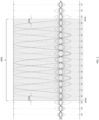
- FIG. 1 is a diagram illustrating an example NBIOT standalone cell 1001 of 200 KHz containing i) 12 sub carriers occupying 180KHz and ii) 10KHz guard on the two ends of the cell. As shown in FIG. 1 , all 12 sub carriers are orthogonal to each other, i.e., at the peak of a given sub carrier, all other 11 subcarriers are zero, and vice versa.
- FIG. 2 is a diagram illustrating an example embodiment of two consecutive NBIOT standalone cells 2001 and 2002 each spanning 200 KHz and each containing 12 sub carriers. As can be seen in FIG.
- the 12 sub carriers of the respective cell are orthogonal to each other, but the subcarriers of NBIOT standalone cell 2001 are not orthogonal to the subcarriers of neighboring NBIOT standalone cell 2002, which leads to interference between the NBIOT standalone cells 2001 and 2002.
- the conventional solution is for the RAN to use filters between NBIOT standalone cells 2001 and 2002.
- the RAN can't use the same FFT/iFFT for multiple NBIOT standalone cells.
- a method is presented in which multiple NBIOT cells are aligned to make all sub carriers across cells to be mutually orthogonal.
- one of: i) at least one first NBIOT cell is shifted relative to an adjacent second NBIOT cell to align all sub carriers of the first and second NBIOT cells to be mutually orthogonal; or ii) for a sequence of NBIOT cells, every third NBIOT cell is grouped into a single group, wherein all sub carriers of the NBIOT cells in the single group are mutually orthogonal.
- a single fast Fourier transform (FFT) or inverse fast Fourier transform (iFFT) can be used, e.g., by a radio access network (RAN), to process one of i) both the first and second NBIOT cells, or ii) multiple NBIOT cells in the single group formed from every third NBIOT cell.
- FFT fast Fourier transform
- iFFT inverse fast Fourier transform
- a method is presented in which, for two sequential and adjacent NBIOT standalone cells, the second NBIOT standalone cell following the first NBIOT standalone cell is left-shifted relative to the first NBIOT standalone cell by 5 KHz to make all subcarriers of the first and second NBIOT standalone cells to be mutually orthogonal.
- a method in the case of two sequential and adjacent NBIOT standalone cells for which the second NBIOT standalone cell following the first NBIOT standalone cell is left-shifted relative to the first NBIOT standalone cell by 5 KHz, a method is presented in which an extra (e.g., 13 th ) subcarrier is provided in the common guard region.
- a method is presented in which, for three sequential and adjacent NBIOT standalone cells, the following relative shifts for the cells are provided: the first NBIOT standalone cell is right-shifted relative to the second NBIOT standalone cell by 5 KHz, and the third NBIOT standalone cell is left-shifted relative to the second NBIOT standalone cell by 5 KHz to make all subcarriers of the first, second and third NBIOT standalone cells to be mutually orthogonal.
- the following configurations for the guard regions are provided: the combined guard region between the first and second NBIOT standalone cells is 15KHz; and the combined guard region between the second and third NBIOT standalone cells is 15KHz.
- the above-described configurations for the set of three sequential and adjacent NBIOT standalone cells can be repeated to provide six sequential and adjacent NBIOT standalone cells.
- the combined guard region between the third NBIOT standalone cell and the fourth NBIOT standalone cell is 30KHz.
- a method is presented in which, for three sequential and adjacent NBIOT standalone cells, the following configurations for the cells are provided: the first NBIOT standalone cell is right-shifted relative to the second NBIOT standalone cell by 5 KHz, and the third NBIOT standalone cell is left-shifted relative to the second NBIOT standalone cell by 5 KHz.
- an extra (e.g., 13 th ) subcarrier is provided in the combined guard regions i) between the first and second NBIOT standalone cells, and ii) between the second and third NBIOT standalone cells.
- the above-described configurations for the set of three sequential and adjacent NBIOT standalone cells containing an extra subcarrier in the combined guard region between two adjacent NBIOT standalone cells can be repeated one or more times to provide, e.g., six sequential and adjacent NBIOT standalone cells.
- the combined guard region between the third NBIOT standalone cell and the fourth NBIOT standalone cell is 15KHz.
- a further extra (e.g., 14 th ) subcarrier is provided between the third and fourth NBIOT standalone cells.
- a method is presented in which a single lower physical layer (L-Phy) is utilized for multiple NBIOT standalone carriers.
- L-Phy lower physical layer
- a method is presented in which the same fast Fourier transform (FFT) and/or inverse fast Fourier transform (iFFT) can be used for every third NBIOT standalone cell.
- FFT fast Fourier transform
- iFFT inverse fast Fourier transform
- a method is presented in which the same fast Fourier transform (FFT) and/or corresponding inverse fast Fourier transform (iFFT) is used by the RAN for processing every third NBIOT standalone cell.
- FFT fast Fourier transform
- iFFT inverse fast Fourier transform
- at least one of the following configurations is provided for a sequence of NBIOT standalone cells sequentially positioned starting on the left: i) a first set of NBIOT standalone cells having sequence position numbers with quotient-1 of modulo-3 operation is processed by the RAN using at least one of a first FFT and a corresponding first iFFT; ii) a second set of NBIOT standalone cells having sequence position numbers with quotient-2 of modulo-3 operation is processed by the RAN using at least one of a second FFT and a corresponding second iFFT; and/or iii) a third set of NBIOT standalone cells having sequence position numbers with quotient-0 of modulo-3 operation is processed by the RAN using at least one of
- a method is presented in which, for at least two sequential and adjacent NBIOT standalone cells, the second NBIOT standalone cell following the first NBIOT standalone cell is left-shifted relative to the first NBIOT standalone cell by 5 KHz to make all subcarriers of the first and second NBIOT standalone cells to be mutually orthogonal.
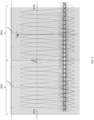
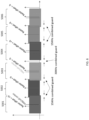
- FIG. 3 shows two consecutive NBIOT standalone cells 3001 and 3002 each spanning 200 KHz and each containing 12 sub carriers, with the second NBIOT standalone cell 3002 left-shifted by 5KHz, resulting in a -5KHz raster offset for the second NBIOT standalone cell 3002 (the raster offset will be explained in further detail in connection with FIGS. 4 and 5 ).
- all 24 subcarriers of both NBIOT standalone cells 3001 and 3002 are mutually orthogonal, which enables the RAN to use the same FFT and/or iFFT for both NBIOT standalone cells 3001 and 3002.
- FIGS. 4 and 5 illustrates the raster offset resulting from the 5KHz shifting of selected NBIOT standalone cells.
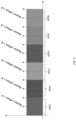
- FIG. 4 shows six equally spaced (e.g., each 200KHz) NBIOT cells 4001-4006 (each NBIOT standalone cell is represented by a box), with all NBIOT cells 4001-4006 having zero raster offset, as is the case in conventional arrangement of NBIOT cells.
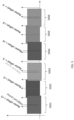
- FIG. 5 shows six NBIOT cells 5001-5006 which are each arranged with a 5KHz shift relative to at least one adjacent cell, in accordance with an example embodiment of the present disclosure. As shown in FIG.
- NBIOT cells 5002 and 5005 are placed with 0 raster offset (the center of the cell, or physical resource block (PRB), has not shifted relative to the original position); NBIOT cells 5001 and 5004 are placed with +5KHz raster offset (the center of the cell or PRB has shifted 5KHz to the right of the original position); and NBIOT cells 5003 and 5006 are placed with -5KHz raster offset (the center of the cell or PRB has shifted 5KHz to the left of the original position). It should be noted that the NBIOT cell 5004 has shifted 5KHz to the right of the original position of the NBIOT cell 5003 (and has right-shifted 10 KHz in total relative to the NBIOT cell 5003).
- PRB physical resource block
- all the subcarriers in the six NBIOT cells 5001-5006 are aligned, and therefore all six NBIOT cells 5001-5006 can be processed using the same FFT and/or the same iFFT blocks in the RAN.
- the configuration shown in FIG. 5 eliminates the need for digital filters between the adjacent NBIOT cells.
- 6 NBIOT cells are shown in FIG. 5
- the alignment of the subcarriers is applicable to the group of first three NBIOT cells, the groups of first 4 NBIOT cells, or the group of first 5 NBIOT cells.
- FIG. 6 is a diagram illustrating the combined guard regions among the consecutive NBIOT cells 5001-5006 shown in FIG. 5 .
- the following are provided as combined guard regions: i) 15Khz combined guard region between NBIOT cells 5001 and 5002; ii) 15Khz combined guard region between NBIOT cells 5002 and 5003; iii) 30Khz combined guard region between NBIOT cells 5003 and 5004; iv) 15Khz combined guard region between NBIOT cells 5004 and 5005; and v) 15Khz combined guard region between NBIOT cells 5005 and 5006.
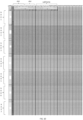
- FIG. 7 illustrates a combined resource grid for 7 consecutive NBIOT standalone cells, which resource grid encompasses the configuration shown in FIG. 6 .
- Referenced on the left side of FIG. 7 are the NBIOT standalone cells 5001-5007, each cell containing 12 utilized subcarriers (shaded), and the combined guard regions (shown unshaded) between adjacent NBIOT standalone cells.
- the 13 th row (unshaded) from the top corresponds to the 15KHZ combined guard region between NBIOT standalone cells 5001 and 5002;
- the 26 th row (unshaded) from the top corresponds to the 15KHZ combined guard region between NBIOT standalone cells 5002 and 50032; etc. Shown on top of the FIG.
- a resource block (RB), which is the smallest unit of resource that is allocated to a user, is 180 kHz wide (12 subcarriers, each 15KHz) in frequency and 1 slot long in time.
- 3GPP 3 rd Generation Partnership Project
- TS Technical Specification
- FIGS. 5-7 there is no cross interference among NBIOT standalone cells, and all the NBIOT standalone cells can be handled with the same FFT/iFFT.
- the combined (common) guard region between two NBIOT standalone cells can be utilized for an extra subcarrier (i.e., a 13 th subcarrier).
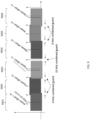
- FIG. 8 illustrates an example embodiment of the 13 th subcarrier in the combined (common) guard region between two NBIOT standalone cells 8001 and 8002.
- FIG. 9 illustrates the combined guard regions between adjacent NBIOT cells in the example case of using 13 sub carriers in NBIOT standalone cells. As shown in FIG.
- NBIOT cells 9001-9006 the following configurations are provided for the sequence of six NBIOT cells 9001-9006: i) zero KHz combined guard region between NBIOT cells 9001 and 9002; ii) zero KHz combined guard region between NBIOT cells 9002 and 9003; iii) 15KHz combined guard region between NBIOT cells 9003 and 9004; iv) zero KHz combined guard region between NBIOT cells 9004 and 9005; and v) zero KHz combined guard region between NBIOT cells 9005 and 9006.
- the raster offsets for the configuration shown in FIG. 9 correspond to the raster offsets shown in FIGS.
- NBIOT cells 9002 and 9005 are placed with 0 raster offset
- NBIOT cells 9001 and 9004 are placed with +5KHz raster offset
- NBIOT cells 9003 and 9006 are placed with -5KHz raster offset.
- FIG. 10 illustrates a resource grid for 7 consecutive NBIOT standalone cells, which resource grid encompasses the configuration shown in FIG. 9 .
- the combined guard regions among the NBIOT cells 9001-9007 are utilized for subcarriers, with the exceptions of i) a 15KHz band (unshaded) of the combined guard region between NBIOT cells 9003 and 9004, and ii) a 15KHz band (unshaded) of the combined guard region between NBIOT cells 9006 and 9007.
- FIG. 11 shows a resource grid for 7 consecutive NBIOT standalone cells 1101-1107, which resource grid deviates from the resource grid shown in FIG. 10 by the additional inclusion of one further (i.e., 14 th ) subcarrier for NBIOT cell 1104 and 1107.
- the 14 th subcarrier can be assigned to either one of the adjacent NBIOT cells, e.g., NBIOT cells 1103 and 1106 could have been assigned the 14 th subcarrier.
- a method is presented in which the same fast Fourier transform (FFT) and/or corresponding inverse fast Fourier transform (iFFT) is used by the RAN for processing every third NBIOT standalone cell in a sequence of consecutive NBIOT cells.
- All NBIOT standalone cells occupy 200 KHz, and subcarriers in every 3rd NBIOT cell are orthogonal to each other, i.e., align to the same grid, which means it is possible to use the same FFT/iFFT for every 3rd NBIOT cell.
- FFT fast Fourier transform
- iFFT inverse fast Fourier transform
- At least one of the following configurations is provided for a sequence of NBIOT standalone cells sequentially positioned starting on the left: i) a first set of NBIOT standalone cells (referenced by 1201 in FIG. 12 ) having sequence position numbers with quotient-1 of modulo-3 operation is processed by the RAN using at least one of a first FFT and a corresponding first iFFT; ii) a second set of NBIOT standalone cells (referenced by 1202 in FIG.
Landscapes
- Engineering & Computer Science (AREA)
- Signal Processing (AREA)
- Computer Networks & Wireless Communication (AREA)
- Physics & Mathematics (AREA)
- Discrete Mathematics (AREA)
- General Physics & Mathematics (AREA)
- Mathematical Physics (AREA)
- Mobile Radio Communication Systems (AREA)
- Micro-Organisms Or Cultivation Processes Thereof (AREA)
Abstract

Description
- The present disclosure relates to Radio Access Network (RAN) for 4G- and 5G-based mobile networks, and relates more particularly to interfaces (e.g., air and/or physical interfaces) for Narrowband Internet of Things (NBIOT) cells.
- Currently, when multiple NBIOT standalone cells are served by an NBIOT Evolved Node B (eNodeB) of a RAN, at least two issues must be addressed. First, the NBIOT eNodeB needs to utilize multiple digital filters to avoid interference between consecutive NBIOT standalone cells. Second, when there are multiple (e.g., number N) consecutive NBIOT standalone cells, each NBIOT standalone cell is processed independently, i.e., the RAN needs to use N downlink (DL) signal chains and N uplink (UL) signal chains (e.g., utilizing Fast Fourier Transform (FFT) and/or Inverse Fast Fourier Transform (iFFT)). These conventional solutions require substantial capital expenditures and heightened complexity of RAN operation.
-
FIG. 1 is a diagram illustrating an example NBIOTstandalone cell 1001 of 200 KHz containing i) 12 sub carriers occupying 180KHz and ii) 10KHz guard on the two ends of the cell. As shown inFIG. 1 , all 12 sub carriers are orthogonal to each other, i.e., at the peak of a given sub carrier, all other 11 subcarriers are zero, and vice versa.FIG. 2 is a diagram illustrating an example embodiment of two consecutive NBIOTstandalone cells FIG. 2 , within each NBIOTstandalone cell standalone cell 2001 are not orthogonal to the subcarriers of neighboring NBIOTstandalone cell 2002, which leads to interference between the NBIOTstandalone cells standalone cells cell 2001 are not aligned with the subcarriers of thecell 2002, the RAN can't use the same FFT/iFFT for multiple NBIOT standalone cells. - Therefore, there is a need for a solution that optimizes interference reduction while reducing cost and complexity of RAN operation when multiple NBIOT standalone cells are served by an NBIOT eNodeB.
- According to an example embodiment of the present disclosure, a method is presented in which multiple NBIOT cells are aligned to make all sub carriers across cells to be mutually orthogonal.
- According to an example embodiment of the present disclosure, one of: i) at least one first NBIOT cell is shifted relative to an adjacent second NBIOT cell to align all sub carriers of the first and second NBIOT cells to be mutually orthogonal; or ii) for a sequence of NBIOT cells, every third NBIOT cell is grouped into a single group, wherein all sub carriers of the NBIOT cells in the single group are mutually orthogonal. A single fast Fourier transform (FFT) or inverse fast Fourier transform (iFFT) can be used, e.g., by a radio access network (RAN), to process one of i) both the first and second NBIOT cells, or ii) multiple NBIOT cells in the single group formed from every third NBIOT cell.
- According to an example embodiment of the present disclosure, a method is presented in which, for two sequential and adjacent NBIOT standalone cells, the second NBIOT standalone cell following the first NBIOT standalone cell is left-shifted relative to the first NBIOT standalone cell by 5 KHz to make all subcarriers of the first and second NBIOT standalone cells to be mutually orthogonal.
- According to an example embodiment of the present disclosure, in the case of two sequential and adjacent NBIOT standalone cells for which the second NBIOT standalone cell following the first NBIOT standalone cell is left-shifted relative to the first NBIOT standalone cell by 5 KHz, a method is presented in which an extra (e.g., 13th) subcarrier is provided in the common guard region.
- According to an example embodiment of the present disclosure, a method is presented in which, for three sequential and adjacent NBIOT standalone cells, the following relative shifts for the cells are provided: the first NBIOT standalone cell is right-shifted relative to the second NBIOT standalone cell by 5 KHz, and the third NBIOT standalone cell is left-shifted relative to the second NBIOT standalone cell by 5 KHz to make all subcarriers of the first, second and third NBIOT standalone cells to be mutually orthogonal. In this example embodiment, the following configurations for the guard regions are provided: the combined guard region between the first and second NBIOT standalone cells is 15KHz; and the combined guard region between the second and third NBIOT standalone cells is 15KHz.
- According to an example embodiment of the present disclosure, the above-described configurations for the set of three sequential and adjacent NBIOT standalone cells can be repeated to provide six sequential and adjacent NBIOT standalone cells. In this example embodiment, the combined guard region between the third NBIOT standalone cell and the fourth NBIOT standalone cell is 30KHz.
- According to an example embodiment of the present disclosure, a method is presented in which, for three sequential and adjacent NBIOT standalone cells, the following configurations for the cells are provided: the first NBIOT standalone cell is right-shifted relative to the second NBIOT standalone cell by 5 KHz, and the third NBIOT standalone cell is left-shifted relative to the second NBIOT standalone cell by 5 KHz. In this example embodiment, an extra (e.g., 13th) subcarrier is provided in the combined guard regions i) between the first and second NBIOT standalone cells, and ii) between the second and third NBIOT standalone cells.
- According to an example embodiment of the present disclosure, the above-described configurations for the set of three sequential and adjacent NBIOT standalone cells containing an extra subcarrier in the combined guard region between two adjacent NBIOT standalone cells can be repeated one or more times to provide, e.g., six sequential and adjacent NBIOT standalone cells. In this example embodiment, the combined guard region between the third NBIOT standalone cell and the fourth NBIOT standalone cell is 15KHz.
- According to an example embodiment of the present disclosure, for the above-described configurations for the six sequential and adjacent NBIOT standalone cells containing extra (e.g., 13th) subcarriers in the combined guard regions, e.g., i) between the first and second NBIOT standalone cells, and ii) between the second and third NBIOT standalone cells, a further extra (e.g., 14th) subcarrier is provided between the third and fourth NBIOT standalone cells.
- According to an example embodiment of the present disclosure, a method is presented in which a single lower physical layer (L-Phy) is utilized for multiple NBIOT standalone carriers.
- According to an example embodiment of the present disclosure, a method is presented in which the same fast Fourier transform (FFT) and/or inverse fast Fourier transform (iFFT) can be used for every third NBIOT standalone cell.
- According to an example embodiment of the present disclosure, a method is presented in which the same fast Fourier transform (FFT) and/or corresponding inverse fast Fourier transform (iFFT) is used by the RAN for processing every third NBIOT standalone cell. In this example embodiment, at least one of the following configurations is provided for a sequence of NBIOT standalone cells sequentially positioned starting on the left: i) a first set of NBIOT standalone cells having sequence position numbers with quotient-1 of modulo-3 operation is processed by the RAN using at least one of a first FFT and a corresponding first iFFT; ii) a second set of NBIOT standalone cells having sequence position numbers with quotient-2 of modulo-3 operation is processed by the RAN using at least one of a second FFT and a corresponding second iFFT; and/or iii) a third set of NBIOT standalone cells having sequence position numbers with quotient-0 of modulo-3 operation is processed by the RAN using at least one of a third FFT and a corresponding third iFFT.
-
-
FIG. 1 is a diagram illustrating an example embodiment of an NBIOT standalone cell of 200 KHz with 12 sub carriers. -
FIG. 2 is a diagram illustrating an example embodiment of two consecutive NBIOT standalone cells each spanning 200 KHz with 12 sub carriers. -
FIG. 3 is a diagram illustrating an example embodiment of two consecutive NBIOT standalone cells with the second cell being left-shifted by 5KHz. -
FIG. 4 is a diagram illustrating an example embodiment of six consecutive, equally spaced NBIOT cells with zero raster offset. -
FIG. 5 is a diagram illustrating an example embodiment of six consecutive NBIOT cells with one of zero, +5KHz or -5KHz raster offset. -
FIG. 6 is a diagram illustrating the combined guard regions between consecutive NBIOT cells shown inFIG. 5 . -
FIG. 7 illustrates a resource grid for 7 consecutive NBIOT standalone cells, which resource grid encompasses the configuration shown inFIG. 6 . -
FIG. 8 is a diagram illustrating an example embodiment of two consecutive NBIOT standalone cells for which an extra subcarrier in the common (or combined) guard region is utilized. -
FIG. 9 is a diagram illustrating the combined guard regions in a sequence of six consecutive NBIOT cells for which an extra subcarrier in each combined guard region is utilized. -
FIG. 10 illustrates a resource grid for 7 consecutive NBIOT standalone cells, which resource grid encompasses the configuration shown inFIG. 9 . -
FIG. 11 illustrates a resource grid for 7 consecutive NBIOT standalone cells, which resource grid deviates from the resource grid shown inFIG. 10 by the additional inclusion of one further subcarrier for every third NBIOT standalone cell. -
FIG. 12 is a diagram illustrating an example embodiment in which the same FFT/iFFT is used by the RAN for processing every third NBIOT standalone cell in a sequence of consecutive NBIOT cells. - According to an example embodiment of the present disclosure, a method is presented in which, for at least two sequential and adjacent NBIOT standalone cells, the second NBIOT standalone cell following the first NBIOT standalone cell is left-shifted relative to the first NBIOT standalone cell by 5 KHz to make all subcarriers of the first and second NBIOT standalone cells to be mutually orthogonal. This example embodiment is illustrated in
FIG. 3 , which shows two consecutive NBIOTstandalone cells standalone cell 3002 left-shifted by 5KHz, resulting in a -5KHz raster offset for the second NBIOT standalone cell 3002 (the raster offset will be explained in further detail in connection withFIGS. 4 and5 ). As can be seen fromFIG. 3 , all 24 subcarriers of both NBIOTstandalone cells standalone cells - A comparison of
FIGS. 4 and5 illustrates the raster offset resulting from the 5KHz shifting of selected NBIOT standalone cells.FIG. 4 shows six equally spaced (e.g., each 200KHz) NBIOT cells 4001-4006 (each NBIOT standalone cell is represented by a box), with all NBIOT cells 4001-4006 having zero raster offset, as is the case in conventional arrangement of NBIOT cells. In contrast,FIG. 5 shows six NBIOT cells 5001-5006 which are each arranged with a 5KHz shift relative to at least one adjacent cell, in accordance with an example embodiment of the present disclosure. As shown inFIG. 5 ,NBIOT cells NBIOT cells NBIOT cells cell 5004 has shifted 5KHz to the right of the original position of the NBIOT cell 5003 (and has right-shifted 10 KHz in total relative to the NBIOT cell 5003). In the configuration shown inFIG. 5 , all the subcarriers in the six NBIOT cells 5001-5006 are aligned, and therefore all six NBIOT cells 5001-5006 can be processed using the same FFT and/or the same iFFT blocks in the RAN. In addition, the configuration shown inFIG. 5 eliminates the need for digital filters between the adjacent NBIOT cells. Although 6 NBIOT cells are shown inFIG. 5 , the alignment of the subcarriers is applicable to the group of first three NBIOT cells, the groups of first 4 NBIOT cells, or the group of first 5 NBIOT cells. -
FIG. 6 is a diagram illustrating the combined guard regions among the consecutive NBIOT cells 5001-5006 shown inFIG. 5 . As shown inFIG. 6 , the following are provided as combined guard regions: i) 15Khz combined guard region betweenNBIOT cells NBIOT cells NBIOT cells NBIOT cells NBIOT cells -
FIG. 7 illustrates a combined resource grid for 7 consecutive NBIOT standalone cells, which resource grid encompasses the configuration shown inFIG. 6 . Referenced on the left side ofFIG. 7 are the NBIOT standalone cells 5001-5007, each cell containing 12 utilized subcarriers (shaded), and the combined guard regions (shown unshaded) between adjacent NBIOT standalone cells. InFIG. 7 , the 13th row (unshaded) from the top corresponds to the 15KHZ combined guard region between NBIOTstandalone cells standalone cells 5002 and 50032; etc. Shown on top of theFIG. 7 are the divisions for individual slots and subframes, with each subframe containing two slots, and each slot containing multiple (e.g., 7) symbols. A resource block (RB), which is the smallest unit of resource that is allocated to a user, is 180 kHz wide (12 subcarriers, each 15KHz) in frequency and 1 slot long in time. - In order to accommodate and/or support the novel technique presented in the present disclosure, 3rd Generation Partnership Project (3GPP) Technical Specification (TS) 36.331 can be modified, e.g., as follows:
- i) ChannelRasterOffset-NB information element can be enhanced by adding the following additional components (underlined):
- -- ASN1START
ChannelRasterOffset-NB-r13 ::= ENUMERATED {khz-7dot5, khz-5 , khz-2dot5, khzzero , khz2dot5, khz5 , khz7dot5}
- -- ASN1START
- ii) MasterlnformationBlock-NB element can be enhanced by adding the following additional components (underlined):
        MasterlnformationBlock-NB -> Standalone-NB-r13
        Standalone-NB-r13 ::= SEQUENCE {
        rasterOffset-r13 Channel RasterOffset-NB-r13,
        spare BIT STRING (SIZE (5))
        }
Claims (20)
- A method of processing multiple consecutive Narrowband Internet of Things (NBIOT) cells by a Radio Access Network (RAN) for one of 4G or 5G mobile network, the method comprising:
one of:a)1) at least one first NBIOT cell is shifted relative to an adjacent second NBIOT cell to align all sub carriers of the first and second NBIOT cells to be mutually orthogonal; and2) using a first single fast Fourier transform (FFT) or first single inverse fast Fourier transform (iFFT) by the RAN to process both the first and second NBIOT cells; orb)1) for a sequence of NBIOT cells, every third NBIOT cell is grouped into a single group, wherein all sub carriers of the NBIOT cells in the single group are mutually orthogonal; and2) using the first single FFT or the first single iFFT by the RAN to process multiple NBIOT cells in the single group formed from the every third NBIOT cell. - The method according to claim 1, wherein the at least one first NBIOT cell is shifted relative to an adjacent second NBIOT cell by 5KHz to align all sub carriers of the first and second NBIOT cells to be mutually orthogonal.
- The method according to claim 2, wherein a 15KHz common guard region is provided between the at least one first NBIOT cell and the adjacent second NBIOT cell.
- The method according to claim 3, wherein an extra subcarrier provided in the 15Khz common guard region between the at least one first NBIOT cell and the adjacent second NBIOT cell is utilized.
- The method according to claim 2, wherein:a third NBIOT cell adjacent to the second NBIOT cell is provided; andthe at least one first NBIOT cell is right-shifted relative to the second NBIOT cell by 5 KHz, and the third NBIOT cell is left-shifted relative to the second NBIOT cell by 5 KHz.
- The method according to claim 5, wherein a 15KHz common guard region is provided between the second NBIOT cell and the third NBIOT cell.
- The method according to claim 6, wherein an extra subcarrier provided in the 15Khz common guard region between the second NBIOT cell and the third NBIOT cell is utilized.
- The method according to claim 5, wherein:a fourth NBIOT cell adjacent to the third NBIOT cell is provided; anda 30KHz common guard region is provided between the third NBIOT cell and the fourth NBIOT cell.
- The method according to claim 8, wherein:
a first extra subcarrier provided in the 30Khz common guard region between the third NBIOT cell and the fourth NBIOT cell is utilized. - The method according to claim 9, wherein:
a second extra subcarrier provided in the 30Khz common guard region between the third NBIOT cell and the fourth NBIOT cell is utilized. - The method according to claim 8, wherein:a fifth NBIOT cell adjacent to the fourth NBIOT cell is provided; andthe fourth NBIOT cell is right-shifted relative to the fifth NBIOT cell by 5KHz.
- The method of claim 11, wherein a 15KHz common guard region is provided between the fourth NBIOT cell and the fifth NBIOT cell.
- The method according to claim 12, wherein an extra subcarrier provided in the 15Khz common guard region between the fourth NBIOT cell and the fifth NBIOT cell is utilized.
- The method according to claim 9, wherein the first extra subcarrier provided in the 30Khz common guard region between the third NBIOT cell and the fourth NBIOT cell is utilized as a part of the third NBIOT cell.
- The method according to claim 10, wherein the second extra subcarrier provided in the 30Khz common guard region between the third NBIOT cell and the fourth NBIOT cell is utilized as a part of the fourth NBIOT cell.
- The method of claim 13, wherein the extra subcarrier provided in the 15Khz common guard region between the fourth NBIOT cell and the fifth NBIOT cell is utilized as a part of the fourth NBIOT cell.
- The method according to claim 10, wherein:a fifth NBIOT cell adjacent to the fourth NBIOT cell is provided;the fourth NBIOT cell is right-shifted relative to the fifth NBIOT cell by 5KHz; anda 15KHz common guard region is provided between the fourth NBIOT cell and the fifth NBIOT cell.
- The method according to claim 17, wherein an extra subcarrier provided in the 15KHz common guard region between the fourth NBIOT cell and the fifth NBIOT cell is utilized.
- The method according to claim 18, wherein the extra subcarrier provided in the 15Khz common guard region between the fourth NBIOT cell and the fifth NBIOT cell is utilized as a part of the fourth NBIOT cell.
- The method of claim 1, wherein:for a sequence of NBIOT cells, every third NBIOT cell is grouped into a single group, and all sub carriers of the NBIOT cells in the single group are mutually orthogonal; andat least one of the following configurations is provided for the sequence of NBIOT cells sequentially positioned: i) a first set of NBIOT standalone cells having sequence position numbers with quotient-1 of modulo-3 operation is processed by the RAN using at least one of a first FFT and a corresponding first iFFT; ii) a second set of NBIOT standalone cells having sequence position numbers with quotient-2 of modulo-3 operation is processed by the RAN using at least one of a second FFT and a corresponding second iFFT; and iii) a third set of NBIOT standalone cells having sequence position numbers with quotient-0 of modulo-3 operation is processed by the RAN using at least one of a third FFT and a corresponding third iFFT.
Applications Claiming Priority (2)
| Application Number | Priority Date | Filing Date | Title |
|---|---|---|---|
| IN202221014871 | 2022-03-17 | ||
| US18/181,633 US20230300013A1 (en) | 2022-03-17 | 2023-03-10 | Method to use common signal chain for multiple nb-iot standalone cells |
Publications (2)
| Publication Number | Publication Date |
|---|---|
| EP4246857A2 true EP4246857A2 (en) | 2023-09-20 |
| EP4246857A3 EP4246857A3 (en) | 2023-12-27 |
Family
ID=85703668
Family Applications (1)
| Application Number | Title | Priority Date | Filing Date |
|---|---|---|---|
| EP23162317.4A Pending EP4246857A3 (en) | 2022-03-17 | 2023-03-16 | Method to use a single signal processing chain for multiple nb-iot cells on consecutive carriers |
Country Status (1)
| Country | Link |
|---|---|
| EP (1) | EP4246857A3 (en) |
Family Cites Families (1)
| Publication number | Priority date | Publication date | Assignee | Title |
|---|---|---|---|---|
| EP3542491B1 (en) * | 2016-11-18 | 2020-10-07 | Telefonaktiebolaget LM Ericsson (publ) | Flexible standalone spectrum for nb-iot |
-
2023
- 2023-03-16 EP EP23162317.4A patent/EP4246857A3/en active Pending
Also Published As
| Publication number | Publication date |
|---|---|
| EP4246857A3 (en) | 2023-12-27 |
Similar Documents
| Publication | Publication Date | Title |
|---|---|---|
| JP7416748B2 (en) | Information transmission method and device based on scanning time blocks | |
| US12381768B2 (en) | Data transmission method and apparatus, data modulation method and apparatus, electronic device, and storage medium | |
| CN102469059B (en) | Demodulated reference signal bearing method and device | |
| EP2991423B1 (en) | Efficient wireless communication using band extension techniques in lte communication systems | |
| CN110557237B (en) | A wireless communication method and device for reducing network delay | |
| CN107483166A (en) | A kind of method and apparatus in radio communication | |
| CN102804625A (en) | Method and apparatus for allocating channel state information-reference signal in wireless communication system | |
| CN103391563A (en) | Downlink control information transmission method, detection method, base station and user equipment | |
| KR20110127208A (en) | Insertion of Downlink Demodulation Reference Signal in ODF Frame | |
| EP2991422B1 (en) | Efficient band extension techniques for lte communication systems | |
| EP2204938A2 (en) | Pilot allocation for multicarrier MIMO transmission | |
| CN101212416B (en) | Physical channel mapping method | |
| CN103581095A (en) | Downlink user dedicated demodulation reference signal transmitting method and device | |
| JP2008516483A (en) | Frequency spectrum bandwidth allocation method for coexistence system of OFDM and OFDMA. | |
| EP2276308A1 (en) | Method for mapping physical random access channels | |
| CN101247658B (en) | Physical accidental access channel mapping method | |
| CN101193086B (en) | A frequency planning method for OFDM system | |
| US20230300013A1 (en) | Method to use common signal chain for multiple nb-iot standalone cells | |
| CN101742666B (en) | Multi-carrier-based method for mapping resource | |
| CN106685612A (en) | Pilot signal transmission method and pilot signal transmission device in multi-carrier system | |
| CN101946427B (en) | How to communicate using frames | |
| KR101089022B1 (en) | OPDMA communication system and communication method | |
| CN101115269B (en) | Method, device and application for identifying cell identifier ID number | |
| EP2346200A1 (en) | Method and a device for determining information derived from at least a first, a second and a third parameters | |
| EP2346202B1 (en) | Method and device for determining information derived from a first and a second and a third parameter |
Legal Events
| Date | Code | Title | Description |
|---|---|---|---|
| PUAI | Public reference made under article 153(3) epc to a published international application that has entered the european phase |
Free format text: ORIGINAL CODE: 0009012 |
|
| STAA | Information on the status of an ep patent application or granted ep patent |
Free format text: STATUS: REQUEST FOR EXAMINATION WAS MADE |
|
| 17P | Request for examination filed |
Effective date: 20230316 |
|
| AK | Designated contracting states |
Kind code of ref document: A2 Designated state(s): AL AT BE BG CH CY CZ DE DK EE ES FI FR GB GR HR HU IE IS IT LI LT LU LV MC ME MK MT NL NO PL PT RO RS SE SI SK SM TR |
|
| PUAL | Search report despatched |
Free format text: ORIGINAL CODE: 0009013 |
|
| AK | Designated contracting states |
Kind code of ref document: A3 Designated state(s): AL AT BE BG CH CY CZ DE DK EE ES FI FR GB GR HR HU IE IS IT LI LT LU LV MC ME MK MT NL NO PL PT RO RS SE SI SK SM TR |
|
| RIC1 | Information provided on ipc code assigned before grant |
Ipc: H04J 11/00 20060101ALI20231120BHEP Ipc: H04L 27/26 20060101ALI20231120BHEP Ipc: H04L 5/00 20060101AFI20231120BHEP |
|
| GRAP | Despatch of communication of intention to grant a patent |
Free format text: ORIGINAL CODE: EPIDOSNIGR1 |
|
| STAA | Information on the status of an ep patent application or granted ep patent |
Free format text: STATUS: GRANT OF PATENT IS INTENDED |
|
| INTG | Intention to grant announced |
Effective date: 20251023 |
|
| GRAS | Grant fee paid |
Free format text: ORIGINAL CODE: EPIDOSNIGR3 |
|
| P01 | Opt-out of the competence of the unified patent court (upc) registered |
Free format text: CASE NUMBER: UPC_APP_0004812_4246857/2026 Effective date: 20260210 |