EP4245691A1 - Supporting foldable element - Google Patents
Supporting foldable element Download PDFInfo
- Publication number
- EP4245691A1 EP4245691A1 EP22161876.2A EP22161876A EP4245691A1 EP 4245691 A1 EP4245691 A1 EP 4245691A1 EP 22161876 A EP22161876 A EP 22161876A EP 4245691 A1 EP4245691 A1 EP 4245691A1
- Authority
- EP
- European Patent Office
- Prior art keywords
- panel
- supporting
- foldable
- article
- foldable element
- Prior art date
- Legal status (The legal status is an assumption and is not a legal conclusion. Google has not performed a legal analysis and makes no representation as to the accuracy of the status listed.)
- Withdrawn
Links
Images

Classifications
-
- B—PERFORMING OPERATIONS; TRANSPORTING
- B65—CONVEYING; PACKING; STORING; HANDLING THIN OR FILAMENTARY MATERIAL
- B65D—CONTAINERS FOR STORAGE OR TRANSPORT OF ARTICLES OR MATERIALS, e.g. BAGS, BARRELS, BOTTLES, BOXES, CANS, CARTONS, CRATES, DRUMS, JARS, TANKS, HOPPERS, FORWARDING CONTAINERS; ACCESSORIES, CLOSURES, OR FITTINGS THEREFOR; PACKAGING ELEMENTS; PACKAGES
- B65D85/00—Containers, packaging elements or packages, specially adapted for particular articles or materials
- B65D85/64—Containers, packaging elements or packages, specially adapted for particular articles or materials for bulky articles
-
- B—PERFORMING OPERATIONS; TRANSPORTING
- B65—CONVEYING; PACKING; STORING; HANDLING THIN OR FILAMENTARY MATERIAL
- B65D—CONTAINERS FOR STORAGE OR TRANSPORT OF ARTICLES OR MATERIALS, e.g. BAGS, BARRELS, BOTTLES, BOXES, CANS, CARTONS, CRATES, DRUMS, JARS, TANKS, HOPPERS, FORWARDING CONTAINERS; ACCESSORIES, CLOSURES, OR FITTINGS THEREFOR; PACKAGING ELEMENTS; PACKAGES
- B65D2585/00—Containers, packaging elements or packages specially adapted for particular articles or materials
- B65D2585/68—Containers, packaging elements or packages specially adapted for particular articles or materials for machines, engines, or vehicles in assembled or dismantled form
- B65D2585/6802—Containers, packaging elements or packages specially adapted for particular articles or materials for machines, engines, or vehicles in assembled or dismantled form specific machines, engines or vehicles
- B65D2585/6845—Containers, packaging elements or packages specially adapted for particular articles or materials for machines, engines, or vehicles in assembled or dismantled form specific machines, engines or vehicles other household devices
- B65D2585/6857—Containers, packaging elements or packages specially adapted for particular articles or materials for machines, engines, or vehicles in assembled or dismantled form specific machines, engines or vehicles other household devices domestic water storage heaters
Definitions
- the invention relates to a supporting foldable element for supporting an article and a packaging product for packaging said product. Also, the invention relates to a method for packaging an article and to a use of the supporting foldable element or packaging product for packaging an article, in particular a water heater device.
- Water heaters are products that do not currently benefit from an efficient packaging solution. Indeed, their general characteristics make them difficult to pack. As a matter of fact, these articles are large and long products, with a small footprint and a center of gravity located far from the footprint. In addition, some product technologies such as heat pump water heaters may require only vertical transport, making the product prone to falling; horizontally may be allowed but only on one side, without taking support on the heat pump head.
- plastic foam parts mainly polystyrene
- wooden board sometimes some wooden board and a cardboard box or plastic cover.
- the foam plastic parts are the link between the geometry of the product and the outer packaging.
- all-cardboard solutions are being developed for electric water heaters at the top and bottom of the tank. This is because electric water heaters are smaller and less fragile and therefore do not require packaging reinforcement on the sides.
- Other all-carboard solutions designed for thermodynamic water heater have four triangular cardboard supports made of four sides folded over the entire height of the product, asking a lot of cardboard. At present, this function of reinforcement on the sides on water heaters is mainly filled with plastic or foam.
- the packaging needs to be suitable for high articles, with a small footprint and a high center of gravity.
- a supporting foldable element for supporting an article, in particular having a cylindrical cross-section, the supporting foldable element being configured for being movable from a flat configuration to a folded configuration, and vice versa, wherein the supporting foldable element comprises a first portion defining, in the folded configuration, a receiving region configured to receive a surface of the article and a second portion connected to the first portion and defining, in the folded configuration, a supporting region opposite to the receiving region, wherein receiving region is formed as a consequence of folding up the first portion against the second portion.
- the present supporting element can be used for supporting an article in a folded configuration, this element being delivered flat and can be unfolded after use, limiting the space required for transport, therefore the environmental footprint.
- the present supporting element further offers a reliable packaging reinforcement on the sides of the product.
- the supporting element is a high-performance solution to absorb article shocks and is compatible with all phases of article use. In addition, it is an easily modifiable solution as it does not require major industrial tools.
- the present supporting element is made such that the vertical part exceeds the center of gravity of the article and the panels are sufficiently robust. This allows the article to be placed horizontally when packed and to be compatible with the following handling operations: horizontal storage, horizontal transport, horizontal toppling.
- the complete packaging of the product can be as follows: at least two panels on the sides of the article, a cardboard wedge under the product, a pallet under the product, a wedge assembly and a cardboard box globally covering the sides and the top of the product.
- the supporting foldable element extends longitudinally wherein the receiving region is located in an upper part of the supporting foldable element and the supporting region defines the length of the supporting foldable element.
- the receiving region can overlap, at least in part, the supporting region.
- the first portion is connected to the second portion at a connection point and the receiving region can extend between said connection point and a first point and the supporting region can extend between said connection point and a second point, wherein the distance between the connection point and the first point can be smaller than the distance between the connection point and the second point.
- the supporting region defines the length of the supporting foldable element, said length being greater than the height of the center of gravity of the article. This improves the stability of the article when supported by the foldable element.
- the first portion comprises at least a foldable first panel and the second portion comprises at least a foldable second panel, a foldable third panel and a foldable fourth panel.
- the supporting foldable element in the folded configuration, can assume a three-dimensional T-shaped structure, wherein the receiving region is arranged transversally to the supporting region.
- the receiving region can have a curved profile.
- the first panel has a polygonal shape with a central aperture, the central aperture having in particular an oval or circular shape.
- the first panel can be foldable so that a first half of the first panel is folded up against a second half of the first panel to create a curved outline.
- the first panel comprises at least a first slot arranged on the second half and being insertable in a portion of the second panel.
- the first panel can comprise at least a first reinforcing flap arranged on the first half and being foldable against the second half.
- the first panel can further comprise a second slot arranged on the second half for receiving a first reinforcing flap, wherein in particular the first reinforcing flap is hinged to a portion of the central aperture and the second slot is located opposite to the first reinforcing flap.
- the second panel has a polygonal shape having a main sub-panel, a first lateral sub-panel and a second lateral sub-panel, wherein in the folded configuration the first and second lateral sub-panels together with the receiving region of the first portion are configured to horizontally support the article.
- the foldable supporting element is able to support the weight of the article on the main direction of the first portion.
- the second panel can comprise at least a third slot and being insertable in a portion of the first panel.
- the third panel and the fourth panel have a polygonal shape each comprising a first sub-panel and a second sub-panel.
- the third panel and the fourth panel can comprise each at least an opening and the second panel can comprise at least two second reinforcing flaps, wherein the second reinforcing flap of the second panel is insertable in a corresponding opening of the third panel and of the fourth panel in the folded configuration.
- the supporting foldable element is a one-piece element made of recyclable material, in particular cardboard.
- the supporting foldable element can devoid of any polymeric material, in particular of polystyrene.
- the supporting foldable element can be composed of different types of material used as plates, e.g. cardboard, extruded plastic, foam board, cellulose sheet etc...
- the cardboard sheets can be of several types, such as honeycomb, corrugated, wood, laminated, counter-glued, etc.
- the foldable supporting element in the folded configuration forms a three-dimensional structure extending at least in part longitudinally along an external surface of the article and covering a distance between a third point and a fourth point, wherein the third point is located at the bottom of the article and the fourth point is located at the center of gravity of the article.
- the foldable supporting element can advantageously be shaped so that it can be inserted into other parts of the article or its packaging to ensure its position. Also, it can be shaped to accommodate other components, e.g. accessories or manual instructions.
- a packaging product for packaging an article, in particular having a cylindrical cross-section, the packaging product comprising at least an inventive supporting foldable element, at least a base element located at the bottom of the article and a containing box element for containing the article, the at least one supporting foldable element and the at least base element.
- the product comprises two supporting foldable elements arranged such that the receiving region of one supporting foldable element faces the receiving region of the other supporting foldable element.
- the product can comprise at least two base elements, wherein each supporting foldable elements is inserted, at least in part, in a gap formed between two consecutive base elements.
- a method for packaging an article, in particular having a cylindrical cross-section comprises:
- the method comprises using two supporting foldable elements, wherein the folded supporting foldable elements are arranged equidistant from each other around the surface of the article.
- inventive supporting foldable element or of the inventive packaging product for packaging and article.
- inventive supporting foldable element or inventive packaging product is used for packaging a heating device, in particular a water heater device.
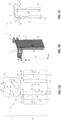
- Figure 1A illustrates the supporting foldable element 3 in the flat configuration. It is noted that this configuration can be provided before use and after use. Therefore, the supporting foldable element 3 can be easily transported and/or replaced in a storage space.
- the supporting foldable element 3 comprises a first portion 5 and a second portion 37 connected to the first portion 5 at a connection point 38.
- the first portion 5 is made of a foldable first panel 7 having a polygonal shape.
- the first panel 7 is square-shaped, or rectangular shaped, with an oval or circular central aperture 14.
- the second portion 37 is made of a foldable second panel 8, a foldable third panel 9 and a foldable fourth panel 10.
- first panel 7 is connected to a portion of the second panel 8 through a first fold line 11 at the connection point 38.
- a portion of the third panel 9 is connected to a portion of the second panel 8 through a second fold line 12 and a portion of the fourth panel 10 is connected to a portion of the second panel 8 through a third fold line 13.
- Figures 1B and 1C show the supporting foldable element 3 in the folded configuration.
- the first portion 5 defines a receiving region 4 that is configured to receive a surface of the article.
- the receiving region 4 has a curved profile that can fit the external surface of an article having a cylindrical cross-section, such as for example a water heater unit.
- a supporting section 6 is provided.
- the supporting section 6 is defined by the second portion 37 in the folded configuration.
- the supporting section 6 has an almost flat surface that is suitable for being flush to an external packaging element when provided around the article 2 (as in figure 3C).
- the supporting foldable element 3 forms a three-dimensional T-shaped structure wherein the receiving region 4 extends transversally to the supporting region 37.
- the receiving region 4 is formed by folding up the first portion 5 against the second portion 37.
- the first panel 7 of the first portion 5 comprises a first half 15 and a second half 16 and is folded so that the first half 15 is folded up against the second half 16 to create a curved outline.
- the second half 16 is provided with two first slots 18 that are configured to be inserted into a portion of the second panel 8 of the second portion 37.
- the two first slots 18 are insertable into two corresponding third slots 24 present in the second panel 8 arranged closed to the first fold line 11.
- the first panel 7 of the first portion 5 is also provided with first reinforcing flaps 17 hinged at the central aperture 14. At least one first reinforcing flap 17 is arranged on the first half 15 of the first panel 7 and a second slot 34 is arranged on the second half 16 of the first panel 7 opposite to the first reinforcing flap 17 so that in the folded configuration, when the second half 16 is folded up against the second portion 37 to for the receiving region 4, the first reinforcing flap 17 can be inserted in the second slot 34.
- the supporting region 6 is formed by folding up the third panel 9 and the fourth panel 10 against the second panel 8.
- second panel 8 has a polygonal shape having a main sub-panel 19, a first lateral sub-panel 20 and a second lateral sub-panel 21.
- the first lateral sub-panel 20 is connected to a portion of the main sub-panel 19 through a fourth fold line 22 and the second lateral sub-panel 21 is connected to a portion of the main sub-panel 19 through a fifth fold line 23.
- the third panel 9 and the fourth panel 10 have a polygonal shape each comprising a first sub-panel 25 and a second sub-panel 26.
- Each first sub-panel 25 is connected to each second sub-panel 26 through a sixth fold line 27 and the second sub-panel 26 of the third panel 9 is connected to a portion of the second panel 8 through the second fold line 12 and the second sub-panel 26 of the fourth panel 10 is connected to a portion of the second panel 8 through the third fold line 13.
- the third panel 9 and the fourth panel 10 comprise each at least an opening 28 (in the first sub-panel 25) and the second panel 8 comprises at least two second reinforcing flaps 29 (in the main sub-panel 19).
- the second reinforcing flap 29 of the second panel 8 is insertable in a corresponding opening 29 of the third panel 9 and of the fourth panel 10.
- Figure 1C shows a configuration where the second reinforcing flaps 29 are not yet inserted in the openings 28 and the second sub-panels 26 are not completely folded up against the main subpanel 19 (for clarity reasons, the first sub-panels 25 are not drawn).
- the receiving region 4 is located in an upper part of the supporting foldable element 3 and the supporting region 6 defines the length of the supporting foldable element 3, wherein the receiving region 4 partly overlaps the supporting region 6 in the upper part.
- the receiving region 4 extends between the connection point 38 and a first point 39 and the supporting region 37 extends between the connection point 38 and a second point 40. It is noted that the distance L1 between the connection point 38 and the first point 39 is smaller than the distance L2 between the connection point 38 and the second point 40.
- Figures 2A-2C illustrate the application of the supporting foldable element 3 for supporting an article 2 and for packaging the article 2.
- the article 2 is for example a device with a cylindrical cross-section, in particular a water heater unit.
- two supporting foldable elements 3 can be used in the folded configuration. Accordingly, after folding each of the two supporting foldable elements 3, they are arranged so that the receiving region 4 faces a surface of the article 2.
- Figure 2A shows the situation where no article 2 is present
- figure 2B shows the situation where an article 2 is placed between the two supporting foldable elements 3.
- the two supporting foldable elements 3 are arranged one opposing the other and are inserted in a gap 35 formed between two base elements 32.
- the base element 32 can be for example a cardboard foldable element.
- the two supporting foldable elements 3 have the function of reinforcing the sides of the article 2 (i.e., water heater) without the need of filling the packaging with plastic or foam.
- the foldable supporting element 3 in the folded configuration forms a three-dimensional structure extending at least in part longitudinally along an external surface of the article 2 and covering a distance between a third point 30 and a fourth point 31.
- the third point 30 is located at the bottom of the article 2 and the fourth point 31 is located at the center of gravity of the article 2. This allows a better stability of the packaging. As a matter of fact, this configuration prevent the falling of the article 2 during for example transport.
- the article 2 with the supporting foldable elements 3 and the base elements 32 can be arranged on a pallet element 36.
- the packaging of the article 2 can be completed with providing a containing box element 33.
- the containing box element 33 contains the article 2, the supporting foldable elements 3 and the base elements 32, thereby forming a packaging product 1. It is noted that portions of the containing box element 33 are flush with the supporting region 6 of the folded supporting foldable element 3.
Landscapes
- Engineering & Computer Science (AREA)
- Mechanical Engineering (AREA)
- Packaging Of Machine Parts And Wound Products (AREA)
- Buffer Packaging (AREA)
Abstract
Supporting foldable element (3) for supporting an article (2), in particular having a cylindrical cross-section, the supporting foldable element (3) being configured for being movable from a flat configuration to a folded configuration, and vice versa, wherein the supporting foldable element (3) comprises a first portion (5) defining, in the folded configuration, a receiving region (4) configured to receive a surface of the article (2) and a second portion (37) connected to the first portion (5) and defining, in the folded configuration, a supporting region (6) opposite to the receiving region (4), wherein the receiving region (4) is formed as a consequence of folding up the first portion (5) against the second portion (37).
Description
- The invention relates to a supporting foldable element for supporting an article and a packaging product for packaging said product. Also, the invention relates to a method for packaging an article and to a use of the supporting foldable element or packaging product for packaging an article, in particular a water heater device.
- Water heaters are products that do not currently benefit from an efficient packaging solution. Indeed, their general characteristics make them difficult to pack. As a matter of fact, these articles are large and long products, with a small footprint and a center of gravity located far from the footprint. In addition, some product technologies such as heat pump water heaters may require only vertical transport, making the product prone to falling; horizontally may be allowed but only on one side, without taking support on the heat pump head.
- At present, the vast majority of water heater packaging consists of plastic foam parts (mainly polystyrene), sometimes some wooden board and a cardboard box or plastic cover. The foam plastic parts are the link between the geometry of the product and the outer packaging. These solutions are efficient and economical but are not environmentally friendly since the recycling channels for plastic foam are not developed and the parts cannot be directly reused.
- Some all-cardboard solutions are being developed for electric water heaters at the top and bottom of the tank. This is because electric water heaters are smaller and less fragile and therefore do not require packaging reinforcement on the sides. Other all-carboard solutions designed for thermodynamic water heater have four triangular cardboard supports made of four sides folded over the entire height of the product, asking a lot of cardboard. At present, this function of reinforcement on the sides on water heaters is mainly filled with plastic or foam.
- It is therefore desirable to obtain a packaging product and a method for packaging that is efficient and at the same time environmentally friendly. In particular, the packaging needs to be suitable for high articles, with a small footprint and a high center of gravity.
- The object is solved by a supporting foldable element for supporting an article, in particular having a cylindrical cross-section, the supporting foldable element being configured for being movable from a flat configuration to a folded configuration, and vice versa, wherein the supporting foldable element comprises a first portion defining, in the folded configuration, a receiving region configured to receive a surface of the article and a second portion connected to the first portion and defining, in the folded configuration, a supporting region opposite to the receiving region, wherein receiving region is formed as a consequence of folding up the first portion against the second portion.
- Advantageously, the present supporting element can be used for supporting an article in a folded configuration, this element being delivered flat and can be unfolded after use, limiting the space required for transport, therefore the environmental footprint. The present supporting element further offers a reliable packaging reinforcement on the sides of the product. Also, the supporting element is a high-performance solution to absorb article shocks and is compatible with all phases of article use. In addition, it is an easily modifiable solution as it does not require major industrial tools.
- The present supporting element is made such that the vertical part exceeds the center of gravity of the article and the panels are sufficiently robust. This allows the article to be placed horizontally when packed and to be compatible with the following handling operations: horizontal storage, horizontal transport, horizontal toppling.
- The complete packaging of the product can be as follows: at least two panels on the sides of the article, a cardboard wedge under the product, a pallet under the product, a wedge assembly and a cardboard box globally covering the sides and the top of the product. This solution thus makes it possible to avoid the need for a packaging wedge on the top of the product, which is an advantage over existing common solutions.
- According to an example, in the folded configuration the supporting foldable element extends longitudinally wherein the receiving region is located in an upper part of the supporting foldable element and the supporting region defines the length of the supporting foldable element. In particular, the receiving region can overlap, at least in part, the supporting region. In addition, the first portion is connected to the second portion at a connection point and the receiving region can extend between said connection point and a first point and the supporting region can extend between said connection point and a second point, wherein the distance between the connection point and the first point can be smaller than the distance between the connection point and the second point. In addition, in one example the supporting region defines the length of the supporting foldable element, said length being greater than the height of the center of gravity of the article. This improves the stability of the article when supported by the foldable element.
- In one example, the first portion comprises at least a foldable first panel and the second portion comprises at least a foldable second panel, a foldable third panel and a foldable fourth panel. In particular, in the folded configuration, the supporting foldable element can assume a three-dimensional T-shaped structure, wherein the receiving region is arranged transversally to the supporting region.
- In order to support an article with a cylindrical cross-section, in the folded configuration, the receiving region can have a curved profile.
- In a further example, the first panel has a polygonal shape with a central aperture, the central aperture having in particular an oval or circular shape. The first panel can be foldable so that a first half of the first panel is folded up against a second half of the first panel to create a curved outline.
- In another example, the first panel comprises at least a first slot arranged on the second half and being insertable in a portion of the second panel. In addition, the first panel can comprise at least a first reinforcing flap arranged on the first half and being foldable against the second half. In particular, the first panel can further comprise a second slot arranged on the second half for receiving a first reinforcing flap, wherein in particular the first reinforcing flap is hinged to a portion of the central aperture and the second slot is located opposite to the first reinforcing flap.
- In a still another example, the second panel has a polygonal shape having a main sub-panel, a first lateral sub-panel and a second lateral sub-panel, wherein in the folded configuration the first and second lateral sub-panels together with the receiving region of the first portion are configured to horizontally support the article. It is noted that the foldable supporting element is able to support the weight of the article on the main direction of the first portion. In particular thanks to the geometry of the lateral sub-panels and of the first and second half of the first panel of the first portion, it is possible to support the article horizontally, which is very important in the packaging. The second panel can comprise at least a third slot and being insertable in a portion of the first panel.
- In one example, the third panel and the fourth panel have a polygonal shape each comprising a first sub-panel and a second sub-panel. In addition, the third panel and the fourth panel can comprise each at least an opening and the second panel can comprise at least two second reinforcing flaps, wherein the second reinforcing flap of the second panel is insertable in a corresponding opening of the third panel and of the fourth panel in the folded configuration.
- In a further example, the supporting foldable element is a one-piece element made of recyclable material, in particular cardboard. The supporting foldable element can devoid of any polymeric material, in particular of polystyrene.
- The supporting foldable element can be composed of different types of material used as plates, e.g. cardboard, extruded plastic, foam board, cellulose sheet etc...
- The cardboard sheets can be of several types, such as honeycomb, corrugated, wood, laminated, counter-glued, etc.
- The use of recyclable material with available and free recycling channels makes this element environmentally friendly. Also, having a single material part without lamination allows recycling without industrial action.
- In one example, the foldable supporting element in the folded configuration forms a three-dimensional structure extending at least in part longitudinally along an external surface of the article and covering a distance between a third point and a fourth point, wherein the third point is located at the bottom of the article and the fourth point is located at the center of gravity of the article. This makes possible a good shocks absorption and a safe packaging of articles having high center of gravity.
- It is noted that the foldable supporting element can advantageously be shaped so that it can be inserted into other parts of the article or its packaging to ensure its position. Also, it can be shaped to accommodate other components, e.g. accessories or manual instructions.
- In another aspect of the invention, a packaging product, for packaging an article, in particular having a cylindrical cross-section, is provided, the packaging product comprising at least an inventive supporting foldable element, at least a base element located at the bottom of the article and a containing box element for containing the article, the at least one supporting foldable element and the at least base element.
- In one example, that the product comprises two supporting foldable elements arranged such that the receiving region of one supporting foldable element faces the receiving region of the other supporting foldable element. In particular, the product can comprise at least two base elements, wherein each supporting foldable elements is inserted, at least in part, in a gap formed between two consecutive base elements.
- In a further aspect of the invention, a method for packaging an article, in particular having a cylindrical cross-section is provided. The method comprises:
- using at least an inventive supporting foldable element and folding said supporting foldable element in the folded configuration;
- arranging the folded supporting foldable element so that the receiving region faces a surface of the article;
- arranging at least a base element at the bottom of the article; and
- providing a containing box element for containing the article, the at least one supporting foldable element and the at least base element, wherein portions of the containing box element are flush with the supporting region of the folded supporting foldable element.
- In one example, the method comprises using two supporting foldable elements, wherein the folded supporting foldable elements are arranged equidistant from each other around the surface of the article.
- In a still further aspect of the invention, a use of the inventive supporting foldable element or of the inventive packaging product for packaging and article is provided. The inventive supporting foldable element or inventive packaging product is used for packaging a heating device, in particular a water heater device.
- In the figures, the subject-matter of the invention is schematically shown, wherein identical or similarly acting elements are usually provided with the same reference signs.
- Figures 1A-C
- show a representation of the supporting foldable element in the flat configuration and in the folded configuration according to an example.
- Figures 2A-C
- show a perspective view of the supporting foldable element and the packaging product according to an example.
-
Figure 1A illustrates the supportingfoldable element 3 in the flat configuration. It is noted that this configuration can be provided before use and after use. Therefore, the supportingfoldable element 3 can be easily transported and/or replaced in a storage space. The supportingfoldable element 3 comprises afirst portion 5 and asecond portion 37 connected to thefirst portion 5 at aconnection point 38. In particular, thefirst portion 5 is made of a foldablefirst panel 7 having a polygonal shape. According to the example offigure 1A , thefirst panel 7 is square-shaped, or rectangular shaped, with an oval or circularcentral aperture 14. Thesecond portion 37 is made of a foldablesecond panel 8, a foldablethird panel 9 and a foldablefourth panel 10. It is noted that a portion of thefirst panel 7 is connected to a portion of thesecond panel 8 through afirst fold line 11 at theconnection point 38. A portion of thethird panel 9 is connected to a portion of thesecond panel 8 through asecond fold line 12 and a portion of thefourth panel 10 is connected to a portion of thesecond panel 8 through athird fold line 13. -
Figures 1B and 1C show the supportingfoldable element 3 in the folded configuration. In this configuration, thefirst portion 5 defines a receiving region 4 that is configured to receive a surface of the article. In particular, the receiving region 4 has a curved profile that can fit the external surface of an article having a cylindrical cross-section, such as for example a water heater unit. Opposite to the receiving section 4, a supportingsection 6 is provided. The supportingsection 6 is defined by thesecond portion 37 in the folded configuration. The supportingsection 6 has an almost flat surface that is suitable for being flush to an external packaging element when provided around the article 2 (as in figure 3C). In the folded configuration, the supportingfoldable element 3 forms a three-dimensional T-shaped structure wherein the receiving region 4 extends transversally to the supportingregion 37. - The receiving region 4 is formed by folding up the
first portion 5 against thesecond portion 37. Specifically, thefirst panel 7 of thefirst portion 5 comprises afirst half 15 and asecond half 16 and is folded so that thefirst half 15 is folded up against thesecond half 16 to create a curved outline. In order to maintain thefirst portion 5 in the folded configuration, thesecond half 16 is provided with twofirst slots 18 that are configured to be inserted into a portion of thesecond panel 8 of thesecond portion 37. In particular, the twofirst slots 18 are insertable into two correspondingthird slots 24 present in thesecond panel 8 arranged closed to thefirst fold line 11. - The
first panel 7 of thefirst portion 5 is also provided with first reinforcingflaps 17 hinged at thecentral aperture 14. At least one first reinforcingflap 17 is arranged on thefirst half 15 of thefirst panel 7 and asecond slot 34 is arranged on thesecond half 16 of thefirst panel 7 opposite to the first reinforcingflap 17 so that in the folded configuration, when thesecond half 16 is folded up against thesecond portion 37 to for the receiving region 4, the first reinforcingflap 17 can be inserted in thesecond slot 34. - The supporting
region 6 is formed by folding up thethird panel 9 and thefourth panel 10 against thesecond panel 8. In particular,second panel 8 has a polygonal shape having amain sub-panel 19, a firstlateral sub-panel 20 and a secondlateral sub-panel 21. The firstlateral sub-panel 20 is connected to a portion of themain sub-panel 19 through afourth fold line 22 and the secondlateral sub-panel 21 is connected to a portion of themain sub-panel 19 through afifth fold line 23. Thethird panel 9 and thefourth panel 10 have a polygonal shape each comprising afirst sub-panel 25 and asecond sub-panel 26. Eachfirst sub-panel 25 is connected to eachsecond sub-panel 26 through asixth fold line 27 and thesecond sub-panel 26 of thethird panel 9 is connected to a portion of thesecond panel 8 through thesecond fold line 12 and thesecond sub-panel 26 of thefourth panel 10 is connected to a portion of thesecond panel 8 through thethird fold line 13. - The
third panel 9 and thefourth panel 10 comprise each at least an opening 28 (in the first sub-panel 25) and thesecond panel 8 comprises at least two second reinforcing flaps 29 (in the main sub-panel 19). In the folded configuration, in order to for the supportingregion 6, the second reinforcingflap 29 of thesecond panel 8 is insertable in acorresponding opening 29 of thethird panel 9 and of thefourth panel 10.Figure 1C shows a configuration where the second reinforcingflaps 29 are not yet inserted in theopenings 28 and the second sub-panels 26 are not completely folded up against the main subpanel 19 (for clarity reasons, the first sub-panels 25 are not drawn). - As shown in the figures, the receiving region 4 is located in an upper part of the supporting
foldable element 3 and the supportingregion 6 defines the length of the supportingfoldable element 3, wherein the receiving region 4 partly overlaps the supportingregion 6 in the upper part. In particular, the receiving region 4 extends between theconnection point 38 and afirst point 39 and the supportingregion 37 extends between theconnection point 38 and asecond point 40. It is noted that the distance L1 between theconnection point 38 and thefirst point 39 is smaller than the distance L2 between theconnection point 38 and thesecond point 40. -
Figures 2A-2C illustrate the application of the supportingfoldable element 3 for supporting anarticle 2 and for packaging thearticle 2. Thearticle 2 is for example a device with a cylindrical cross-section, in particular a water heater unit. - For supporting the
article 2, two supportingfoldable elements 3 can be used in the folded configuration. Accordingly, after folding each of the two supportingfoldable elements 3, they are arranged so that the receiving region 4 faces a surface of thearticle 2.Figure 2A shows the situation where noarticle 2 is present, whereasfigure 2B shows the situation where anarticle 2 is placed between the two supportingfoldable elements 3. The two supportingfoldable elements 3 are arranged one opposing the other and are inserted in agap 35 formed between twobase elements 32. It is noted that thebase element 32 can be for example a cardboard foldable element. As shown infigure 2B , the two supportingfoldable elements 3 have the function of reinforcing the sides of the article 2 (i.e., water heater) without the need of filling the packaging with plastic or foam. The foldable supportingelement 3 in the folded configuration forms a three-dimensional structure extending at least in part longitudinally along an external surface of thearticle 2 and covering a distance between athird point 30 and afourth point 31. Specifically, thethird point 30 is located at the bottom of thearticle 2 and thefourth point 31 is located at the center of gravity of thearticle 2. This allows a better stability of the packaging. As a matter of fact, this configuration prevent the falling of thearticle 2 during for example transport. - To improve the movement of the
article 2, thearticle 2 with the supportingfoldable elements 3 and thebase elements 32 can be arranged on apallet element 36. - The packaging of the
article 2 can be completed with providing a containingbox element 33. As shown infigure 2C , the containingbox element 33 contains thearticle 2, the supportingfoldable elements 3 and thebase elements 32, thereby forming apackaging product 1. It is noted that portions of the containingbox element 33 are flush with the supportingregion 6 of the folded supportingfoldable element 3. -
- 1
- Packaging product
- 2
- Article
- 3
- Supporting foldable element
- 4
- Receiving region
- 5
- First portion
- 6
- Supporting region
- 7
- First panel
- 8
- Second panel
- 9
- Third panel
- 10
- Fourth panel
- 11
- First fold line
- 12
- Second fold line
- 13
- Third fold line
- 14
- Central aperture
- 15
- First half
- 16
- Second half
- 17
- First reinforcing flap
- 18
- First slot
- 19
- Main sub-panel
- 20
- First lateral sub-panel
- 21
- Second lateral sub-panel
- 22
- Fourth fold line
- 23
- Fifth fold line
- 24
- Third slot
- 25
- First sub-panel
- 26
- Second sub-panel
- 27
- Sixth fold line
- 28
- Opening
- 29
- Second reinforcing flap
- 30
- Third point
- 31
- Fourth point
- 32
- Base element
- 33
- Containing box element
- 34
- Second slot
- 35
- Gap
- 36
- Pallet element
- 37
- Second portion
- 38
- Connection point
- 39
- First point
- 40
- Second point
Claims (15)
- Supporting foldable element (3) for supporting an article (2), in particular having a cylindrical cross-section, the supporting foldable element (3) being configured for being movable from a flat configuration to a folded configuration, and vice versa, wherein the supporting foldable element (3) comprises a first portion (5) defining, in the folded configuration, a receiving region (4) configured to receive a surface of the article (2) and a second portion (37) connected to the first portion (5) and defining, in the folded configuration, a supporting region (6) opposite to the receiving region (4), wherein the receiving region (4) is formed as a consequence of folding up the first portion (5) against the second portion (37).
- Foldable element (3) according to claim 1, characterized in that in the folded configuration the supporting foldable element (3) extends longitudinally and in that:a. the receiving region (4) is located in an upper part of the supporting foldable element (3) and the supporting region (6) defines the length (L2) of the supporting foldable element (3); and/orb. the receiving region (4) overlaps, at least in part, the supporting region (6); and/orc. the first portion (5) is connected to the second portion (37) at a connection point (38) and the receiving region (4) extends between said connection point (38) and a first point (39) and the supporting region (37) extends between said connection point (38) and a second point (40), wherein the distance between the connection point (38) and the first point (39) is smaller than the distance between the connection point (38) and the second point (40); and/ord. the supporting region (6) defines the length (L2) of the supporting foldable element (3), said length (L2) being configured to be greater than the height of the center of gravity of the article (2).
- Foldable element (3) according to any one of claims 1 to 2, characterized in thata. the first portion (5) comprises at least a foldable first panel (7) and the second portion (37) comprises at least a foldable second panel (8), a foldable third panel (9) and a foldable fourth panel (10); and/orb. in the folded configuration, the supporting foldable element (3) assumes a three-dimensional T-shaped structure, wherein the receiving region (4) is arranged transversally to the supporting region (6); and/orc. in the folded configuration, the receiving region (4) has a curved profile.
- Foldable element (3) according to claim 3, characterized in thata. the first panel (7) has a polygonal shape with a central aperture (14), the central aperture (14) having in particular an oval or circular shape, and/orb. the first panel (7) is foldable so that a first half (15) of the first panel (7) is folded up against a second half (16) of the first panel (7) to create a curved outline.
- Foldable element (3) according to claim 4, characterized in thata. the first panel (7) comprises at least a first slot (18) arranged on the second half (16) and being insertable in a portion of the second panel (8); and/orb. the first panel (7) comprises at least a first reinforcing flap (17) arranged on the first half (15) and being foldable against the second half (16),c. the first panel further comprising a second slot (34) arranged on the second half (16) for receiving a first reinforcing flap (17), wherein in particular the first reinforcing flap (17) is hinged to a portion of the central aperture (14) and the second slot (34) is located opposite to the first reinforcing flap (17).
- Foldable element (3) according to any one of claims 2 to 5, characterized in thata. the second panel (8) has a polygonal shape having a main sub-panel (19), a first lateral sub-panel (20) and a second lateral sub-panel (21), wherein in the folded configuration the first and second lateral sub-panels (20, 21) together with the receiving region (4) of the first portion (5) are configured to horizontally support the article (2); and/orb. the second panel (8) comprises at least a third slot (24) and being insertable in a portion of the first panel (7).
- Foldable element (3) according to any one of claims 2 to 7, characterized in thata. the third panel (9) and the fourth panel (10) have a polygonal shape each comprising a first sub-panel (25) and a second sub-panel (26); and/orb. the third panel (9) and the fourth panel (10) comprise each at least an opening (28) and the second panel (8) comprises at least two second reinforcing flaps (29), wherein the second reinforcing flap (28) of the second panel (8) is insertable in a corresponding opening (29) of the third panel (9) and of the fourth panel (10) in the folded configuration.
- Foldable element (3) according to any one of claims 1 to 7, characterized in thata. the supporting foldable element (3) is a one-piece element made of recyclable material, in particular cardboard; and/orb. the supporting foldable element (3) is devoid of any polymeric material, in particular of polystyrene.
- Foldable element (3) according to any one of claims 1 to 8, characterized in that the foldable supporting element (3) in the folded configuration forms a three-dimensional structure extending at least in part longitudinally along an external surface of the article (2) and covering a distance between a third point (30) and a fourth point (31), wherein the third point (30) is located at the bottom of the article (2) and the fourth point (31) is located at the center of gravity of the article (2).
- Packaging product (1) for packaging an article (2), in particular having a cylindrical cross-section, the packaging product (1) comprising at least a supporting foldable element (3) according to any one of claims 1 to 9, at least a base element (32) located at the bottom of the article (2) and a containing box element (33) for containing the article (2), the at least one supporting foldable element (3) and the at least base element (32).
- Packaging product (1) according to claim 10, characterized in that the product (1) comprises two supporting foldable elements (3) arranged such that the receiving region (4) of one supporting foldable element (3) faces the receiving region (4) of the other supporting foldable element (3).
- Packaging product (1) according to any one of claims 10 to 11, characterized in that the product (1) comprises at least two base elements (32), wherein each supporting foldable elements (3) is inserted, at least in part, in a gap (35) formed between two consecutive base elements (32).
- Method for packaging an article (2), in particular having a cylindrical cross-section, the method comprising:using at least a supporting foldable element (3) according to any one of the claims 1 to 9 and folding said supporting foldable element (3) in the folded configuration; arranging the folded supporting foldable element (3) so that the receiving region (4) faces a surface of the article (2);arranging at least a base element (32) at the bottom of the article (2); andproviding a containing box element (33) for containing the article (2), the at least one supporting foldable element (3) and the at least base element (32), wherein portions of the containing box element (33) are flush with the supporting region (6) of the folded supporting foldable element (3).
- Method according to claim 13, characterized in that the method comprises using two supporting foldable elements (3), wherein the folded supporting foldable elements (3) are arranged equidistant from each other around the surface of the article (2).
- Use of the supporting foldable element (3) according to any one of claims 1 to 9 or of the packaging product according to any one of clams 10 to 12 for packaging an article (2), in particular a water heater device.
Priority Applications (4)
| Application Number | Priority Date | Filing Date | Title |
|---|---|---|---|
| EP22161876.2A EP4245691A1 (en) | 2022-03-14 | 2022-03-14 | Supporting foldable element |
| PCT/EP2023/055224 WO2023174698A1 (en) | 2022-03-14 | 2023-03-01 | Supporting foldable element |
| CN202380027840.4A CN118891202A (en) | 2022-03-14 | 2023-03-01 | Supporting foldable element |
| EP23707126.1A EP4493489A1 (en) | 2022-03-14 | 2023-03-01 | Supporting foldable element |
Applications Claiming Priority (1)
| Application Number | Priority Date | Filing Date | Title |
|---|---|---|---|
| EP22161876.2A EP4245691A1 (en) | 2022-03-14 | 2022-03-14 | Supporting foldable element |
Publications (1)
| Publication Number | Publication Date |
|---|---|
| EP4245691A1 true EP4245691A1 (en) | 2023-09-20 |
Family
ID=80781001
Family Applications (2)
| Application Number | Title | Priority Date | Filing Date |
|---|---|---|---|
| EP22161876.2A Withdrawn EP4245691A1 (en) | 2022-03-14 | 2022-03-14 | Supporting foldable element |
| EP23707126.1A Pending EP4493489A1 (en) | 2022-03-14 | 2023-03-01 | Supporting foldable element |
Family Applications After (1)
| Application Number | Title | Priority Date | Filing Date |
|---|---|---|---|
| EP23707126.1A Pending EP4493489A1 (en) | 2022-03-14 | 2023-03-01 | Supporting foldable element |
Country Status (3)
| Country | Link |
|---|---|
| EP (2) | EP4245691A1 (en) |
| CN (1) | CN118891202A (en) |
| WO (1) | WO2023174698A1 (en) |
Cited By (1)
| Publication number | Priority date | Publication date | Assignee | Title |
|---|---|---|---|---|
| EP4647356A1 (en) * | 2024-05-07 | 2025-11-12 | BDR Thermea Group B.V. | Packaging equipment made of moulded wood and heating device in combination with such a packaging equipment |
Citations (2)
| Publication number | Priority date | Publication date | Assignee | Title |
|---|---|---|---|---|
| US3107780A (en) * | 1961-09-27 | 1963-10-22 | Crown Zellerbach Corp | Spacer insert in a container |
| US4375261A (en) * | 1981-03-16 | 1983-03-01 | Union Camp Corporation | Pad and blank therefor to support an object in a shipping container |
-
2022
- 2022-03-14 EP EP22161876.2A patent/EP4245691A1/en not_active Withdrawn
-
2023
- 2023-03-01 CN CN202380027840.4A patent/CN118891202A/en active Pending
- 2023-03-01 EP EP23707126.1A patent/EP4493489A1/en active Pending
- 2023-03-01 WO PCT/EP2023/055224 patent/WO2023174698A1/en not_active Ceased
Patent Citations (2)
| Publication number | Priority date | Publication date | Assignee | Title |
|---|---|---|---|---|
| US3107780A (en) * | 1961-09-27 | 1963-10-22 | Crown Zellerbach Corp | Spacer insert in a container |
| US4375261A (en) * | 1981-03-16 | 1983-03-01 | Union Camp Corporation | Pad and blank therefor to support an object in a shipping container |
Cited By (2)
| Publication number | Priority date | Publication date | Assignee | Title |
|---|---|---|---|---|
| EP4647356A1 (en) * | 2024-05-07 | 2025-11-12 | BDR Thermea Group B.V. | Packaging equipment made of moulded wood and heating device in combination with such a packaging equipment |
| WO2025233400A1 (en) | 2024-05-07 | 2025-11-13 | BDR Thermea Group B.V | Packaging equipment made of moulded wood, heating device in combination with such a packaging equipment and associated method and use |
Also Published As
| Publication number | Publication date |
|---|---|
| WO2023174698A1 (en) | 2023-09-21 |
| CN118891202A (en) | 2024-11-01 |
| EP4493489A1 (en) | 2025-01-22 |
Similar Documents
| Publication | Publication Date | Title |
|---|---|---|
| US5080314A (en) | Roll stacker | |
| US4120443A (en) | Cushioning insert | |
| KR100845324B1 (en) | Folding container | |
| JP2011037474A (en) | Solar battery panel packaging material | |
| EP4493489A1 (en) | Supporting foldable element | |
| US8910786B2 (en) | Packaging for motors | |
| EP3871992B1 (en) | Collapsible container | |
| US20030052038A1 (en) | Corrugated container with integral pallet | |
| CN209009104U (en) | Collapsible box | |
| CN220997211U (en) | Folding plastics circulation case | |
| JP2011051648A (en) | Packing material for solar battery panel | |
| GB2544743B (en) | Stackable box | |
| RU108020U1 (en) | CONTAINER | |
| JP2017001731A (en) | Paper-made pallet and packaging case with paper-made pallet | |
| WO2010096739A2 (en) | Carton with stacking strength enhancing feature | |
| JPH0118514Y2 (en) | ||
| CN218259212U (en) | Buffer baffle and packing box | |
| CN102514789B (en) | A corrugated packaging container for flat products | |
| KR101838282B1 (en) | Shock-absorbing support for flat product packing and its packing structure using the same | |
| JPH018515Y2 (en) | ||
| CN223822356U (en) | Display packing box with buffer lining | |
| JP2001002115A (en) | Spacer and packaging device for packaging solar cell module | |
| CN220350357U (en) | Blocking gel packaging and transporting structure based on hexa-poly-amino sugar | |
| WO2018157180A1 (en) | Panel transport cradle | |
| CN221586139U (en) | High strength paper tray convenient to recycle |
Legal Events
| Date | Code | Title | Description |
|---|---|---|---|
| PUAI | Public reference made under article 153(3) epc to a published international application that has entered the european phase |
Free format text: ORIGINAL CODE: 0009012 |
|
| STAA | Information on the status of an ep patent application or granted ep patent |
Free format text: STATUS: THE APPLICATION HAS BEEN PUBLISHED |
|
| AK | Designated contracting states |
Kind code of ref document: A1 Designated state(s): AL AT BE BG CH CY CZ DE DK EE ES FI FR GB GR HR HU IE IS IT LI LT LU LV MC MK MT NL NO PL PT RO RS SE SI SK SM TR |
|
| STAA | Information on the status of an ep patent application or granted ep patent |
Free format text: STATUS: THE APPLICATION IS DEEMED TO BE WITHDRAWN |
|
| 18D | Application deemed to be withdrawn |
Effective date: 20240321 |