EP4245297A1 - Lipid hydrogel, preparation method and use thereof - Google Patents
Lipid hydrogel, preparation method and use thereof Download PDFInfo
- Publication number
- EP4245297A1 EP4245297A1 EP21891289.7A EP21891289A EP4245297A1 EP 4245297 A1 EP4245297 A1 EP 4245297A1 EP 21891289 A EP21891289 A EP 21891289A EP 4245297 A1 EP4245297 A1 EP 4245297A1
- Authority
- EP
- European Patent Office
- Prior art keywords
- lipid
- hydrogel
- lipids
- hydrogel according
- dispersion
- Prior art date
- Legal status (The legal status is an assumption and is not a legal conclusion. Google has not performed a legal analysis and makes no representation as to the accuracy of the status listed.)
- Pending
Links
- 150000002632 lipids Chemical class 0.000 title claims abstract description 98
- 239000000017 hydrogel Substances 0.000 title claims abstract description 53
- 238000002360 preparation method Methods 0.000 title abstract description 6
- XLYOFNOQVPJJNP-UHFFFAOYSA-N water Substances O XLYOFNOQVPJJNP-UHFFFAOYSA-N 0.000 claims abstract description 25
- 150000003904 phospholipids Chemical class 0.000 claims abstract description 23
- 239000004480 active ingredient Substances 0.000 claims abstract description 11
- 229920000642 polymer Polymers 0.000 claims abstract description 10
- 239000004094 surface-active agent Substances 0.000 claims abstract description 10
- 235000014113 dietary fatty acids Nutrition 0.000 claims abstract description 9
- 239000000194 fatty acid Substances 0.000 claims abstract description 9
- 229930195729 fatty acid Natural products 0.000 claims abstract description 9
- 150000004665 fatty acids Chemical class 0.000 claims abstract description 9
- 150000002191 fatty alcohols Chemical class 0.000 claims abstract description 9
- 239000006185 dispersion Substances 0.000 claims description 23
- WTBFLCSPLLEDEM-JIDRGYQWSA-N 1,2-dioleoyl-sn-glycero-3-phospho-L-serine Chemical compound CCCCCCCC\C=C/CCCCCCCC(=O)OC[C@H](COP(O)(=O)OC[C@H](N)C(O)=O)OC(=O)CCCCCCC\C=C/CCCCCCCC WTBFLCSPLLEDEM-JIDRGYQWSA-N 0.000 claims description 22
- 238000000034 method Methods 0.000 claims description 13
- HEDRZPFGACZZDS-UHFFFAOYSA-N Chloroform Chemical group ClC(Cl)Cl HEDRZPFGACZZDS-UHFFFAOYSA-N 0.000 claims description 10
- -1 cationic lipid Chemical class 0.000 claims description 10
- HEMHJVSKTPXQMS-UHFFFAOYSA-M Sodium hydroxide Chemical compound [OH-].[Na+] HEMHJVSKTPXQMS-UHFFFAOYSA-M 0.000 claims description 9
- 230000002496 gastric effect Effects 0.000 claims description 9
- 125000000129 anionic group Chemical group 0.000 claims description 6
- 239000003960 organic solvent Substances 0.000 claims description 6
- VEXZGXHMUGYJMC-UHFFFAOYSA-N Hydrochloric acid Chemical compound Cl VEXZGXHMUGYJMC-UHFFFAOYSA-N 0.000 claims description 5
- 239000003223 protective agent Substances 0.000 claims description 5
- 238000003756 stirring Methods 0.000 claims description 5
- 230000015572 biosynthetic process Effects 0.000 claims description 4
- HVYWMOMLDIMFJA-DPAQBDIFSA-N cholesterol Chemical compound C1C=C2C[C@@H](O)CC[C@]2(C)[C@@H]2[C@@H]1[C@@H]1CC[C@H]([C@H](C)CCCC(C)C)[C@@]1(C)CC2 HVYWMOMLDIMFJA-DPAQBDIFSA-N 0.000 claims description 4
- 238000010438 heat treatment Methods 0.000 claims description 3
- 210000004400 mucous membrane Anatomy 0.000 claims description 3
- WTJKGGKOPKCXLL-RRHRGVEJSA-N phosphatidylcholine Chemical compound CCCCCCCCCCCCCCCC(=O)OC[C@H](COP([O-])(=O)OCC[N+](C)(C)C)OC(=O)CCCCCCCC=CCCCCCCCC WTJKGGKOPKCXLL-RRHRGVEJSA-N 0.000 claims description 3
- 239000003242 anti bacterial agent Substances 0.000 claims description 2
- 230000003110 anti-inflammatory effect Effects 0.000 claims description 2
- 239000003963 antioxidant agent Substances 0.000 claims description 2
- 230000003078 antioxidant effect Effects 0.000 claims description 2
- 230000003115 biocidal effect Effects 0.000 claims description 2
- 235000012000 cholesterol Nutrition 0.000 claims description 2
- 238000001816 cooling Methods 0.000 claims description 2
- 238000001035 drying Methods 0.000 claims description 2
- 238000001704 evaporation Methods 0.000 claims description 2
- 238000007710 freezing Methods 0.000 claims description 2
- 230000008014 freezing Effects 0.000 claims description 2
- 230000036571 hydration Effects 0.000 claims description 2
- 238000006703 hydration reaction Methods 0.000 claims description 2
- 238000002156 mixing Methods 0.000 claims description 2
- 150000008105 phosphatidylcholines Chemical class 0.000 claims description 2
- 150000008104 phosphatidylethanolamines Chemical class 0.000 claims description 2
- 229940067605 phosphatidylethanolamines Drugs 0.000 claims description 2
- 108090000623 proteins and genes Proteins 0.000 claims description 2
- 102000004169 proteins and genes Human genes 0.000 claims description 2
- 150000003408 sphingolipids Chemical group 0.000 claims description 2
- 238000010257 thawing Methods 0.000 claims description 2
- ATUOYWHBWRKTHZ-UHFFFAOYSA-N Propane Chemical compound CCC ATUOYWHBWRKTHZ-UHFFFAOYSA-N 0.000 claims 2
- 239000001294 propane Substances 0.000 claims 1
- 239000000499 gel Substances 0.000 description 92
- KWVJHCQQUFDPLU-YEUCEMRASA-N 2,3-bis[[(z)-octadec-9-enoyl]oxy]propyl-trimethylazanium Chemical compound CCCCCCCC\C=C/CCCCCCCC(=O)OCC(C[N+](C)(C)C)OC(=O)CCCCCCC\C=C/CCCCCCCC KWVJHCQQUFDPLU-YEUCEMRASA-N 0.000 description 30
- 239000000203 mixture Substances 0.000 description 17
- 239000000463 material Substances 0.000 description 13
- 239000000523 sample Substances 0.000 description 12
- 239000012071 phase Substances 0.000 description 9
- 238000012360 testing method Methods 0.000 description 9
- 238000004736 wide-angle X-ray diffraction Methods 0.000 description 8
- 238000000235 small-angle X-ray scattering Methods 0.000 description 7
- 230000002378 acidificating effect Effects 0.000 description 6
- 238000005259 measurement Methods 0.000 description 6
- 230000003534 oscillatory effect Effects 0.000 description 5
- 239000000232 Lipid Bilayer Substances 0.000 description 4
- 238000000333 X-ray scattering Methods 0.000 description 4
- 150000002430 hydrocarbons Chemical group 0.000 description 4
- 238000001228 spectrum Methods 0.000 description 4
- LFQSCWFLJHTTHZ-UHFFFAOYSA-N Ethanol Chemical compound CCO LFQSCWFLJHTTHZ-UHFFFAOYSA-N 0.000 description 3
- PEDCQBHIVMGVHV-UHFFFAOYSA-N Glycerine Chemical compound OCC(O)CO PEDCQBHIVMGVHV-UHFFFAOYSA-N 0.000 description 3
- OKKJLVBELUTLKV-UHFFFAOYSA-N Methanol Chemical compound OC OKKJLVBELUTLKV-UHFFFAOYSA-N 0.000 description 3
- FAPWRFPIFSIZLT-UHFFFAOYSA-M Sodium chloride Chemical compound [Na+].[Cl-] FAPWRFPIFSIZLT-UHFFFAOYSA-M 0.000 description 3
- 230000007935 neutral effect Effects 0.000 description 3
- 238000012856 packing Methods 0.000 description 3
- 239000000243 solution Substances 0.000 description 3
- 238000010998 test method Methods 0.000 description 3
- 239000003929 acidic solution Substances 0.000 description 2
- 239000000654 additive Substances 0.000 description 2
- 238000004458 analytical method Methods 0.000 description 2
- 125000002091 cationic group Chemical group 0.000 description 2
- 150000001875 compounds Chemical class 0.000 description 2
- 238000001218 confocal laser scanning microscopy Methods 0.000 description 2
- 238000000942 confocal micrograph Methods 0.000 description 2
- 238000004624 confocal microscopy Methods 0.000 description 2
- 230000029087 digestion Effects 0.000 description 2
- 230000000694 effects Effects 0.000 description 2
- 239000007850 fluorescent dye Substances 0.000 description 2
- 210000003128 head Anatomy 0.000 description 2
- 239000007788 liquid Substances 0.000 description 2
- 239000011159 matrix material Substances 0.000 description 2
- 239000012528 membrane Substances 0.000 description 2
- 210000004379 membrane Anatomy 0.000 description 2
- 230000004044 response Effects 0.000 description 2
- 229920006395 saturated elastomer Polymers 0.000 description 2
- 238000000926 separation method Methods 0.000 description 2
- 239000007790 solid phase Substances 0.000 description 2
- 239000002904 solvent Substances 0.000 description 2
- 239000000126 substance Substances 0.000 description 2
- 230000005469 synchrotron radiation Effects 0.000 description 2
- WRIDQFICGBMAFQ-UHFFFAOYSA-N (E)-8-Octadecenoic acid Natural products CCCCCCCCCC=CCCCCCCC(O)=O WRIDQFICGBMAFQ-UHFFFAOYSA-N 0.000 description 1
- LQJBNNIYVWPHFW-UHFFFAOYSA-N 20:1omega9c fatty acid Natural products CCCCCCCCCCC=CCCCCCCCC(O)=O LQJBNNIYVWPHFW-UHFFFAOYSA-N 0.000 description 1
- QSBYPNXLFMSGKH-UHFFFAOYSA-N 9-Heptadecensaeure Natural products CCCCCCCC=CCCCCCCCC(O)=O QSBYPNXLFMSGKH-UHFFFAOYSA-N 0.000 description 1
- FOXXZZGDIAQPQI-XKNYDFJKSA-N Asp-Pro-Ser-Ser Chemical compound OC(=O)C[C@H](N)C(=O)N1CCC[C@H]1C(=O)N[C@@H](CO)C(=O)N[C@@H](CO)C(O)=O FOXXZZGDIAQPQI-XKNYDFJKSA-N 0.000 description 1
- 101000575029 Bacillus subtilis (strain 168) 50S ribosomal protein L11 Proteins 0.000 description 1
- 102100035793 CD83 antigen Human genes 0.000 description 1
- 101000946856 Homo sapiens CD83 antigen Proteins 0.000 description 1
- ZQPPMHVWECSIRJ-UHFFFAOYSA-N Oleic acid Natural products CCCCCCCCC=CCCCCCCCC(O)=O ZQPPMHVWECSIRJ-UHFFFAOYSA-N 0.000 description 1
- 239000005642 Oleic acid Substances 0.000 description 1
- 150000001338 aliphatic hydrocarbons Chemical class 0.000 description 1
- 150000003863 ammonium salts Chemical class 0.000 description 1
- 239000012736 aqueous medium Substances 0.000 description 1
- 239000003125 aqueous solvent Substances 0.000 description 1
- 238000003556 assay Methods 0.000 description 1
- 239000003637 basic solution Substances 0.000 description 1
- 239000006227 byproduct Substances 0.000 description 1
- 239000000599 controlled substance Substances 0.000 description 1
- 229940124447 delivery agent Drugs 0.000 description 1
- 238000001514 detection method Methods 0.000 description 1
- 238000003745 diagnosis Methods 0.000 description 1
- 201000010099 disease Diseases 0.000 description 1
- 208000037265 diseases, disorders, signs and symptoms Diseases 0.000 description 1
- 239000003814 drug Substances 0.000 description 1
- 229940079593 drug Drugs 0.000 description 1
- 238000012377 drug delivery Methods 0.000 description 1
- 230000008020 evaporation Effects 0.000 description 1
- 230000005284 excitation Effects 0.000 description 1
- 230000001747 exhibiting effect Effects 0.000 description 1
- 238000002474 experimental method Methods 0.000 description 1
- 238000009472 formulation Methods 0.000 description 1
- 239000012634 fragment Substances 0.000 description 1
- 239000003349 gelling agent Substances 0.000 description 1
- 239000011521 glass Substances 0.000 description 1
- 230000005484 gravity Effects 0.000 description 1
- 150000002433 hydrophilic molecules Chemical class 0.000 description 1
- 230000002209 hydrophobic effect Effects 0.000 description 1
- 125000002887 hydroxy group Chemical group [H]O* 0.000 description 1
- 238000007654 immersion Methods 0.000 description 1
- 238000010348 incorporation Methods 0.000 description 1
- 238000011534 incubation Methods 0.000 description 1
- 230000003993 interaction Effects 0.000 description 1
- 230000002452 interceptive effect Effects 0.000 description 1
- QXJSBBXBKPUZAA-UHFFFAOYSA-N isooleic acid Natural products CCCCCCCC=CCCCCCCCCC(O)=O QXJSBBXBKPUZAA-UHFFFAOYSA-N 0.000 description 1
- 238000002368 isothermal capactiance transient spectroscopy Methods 0.000 description 1
- 150000002634 lipophilic molecules Chemical class 0.000 description 1
- 239000002502 liposome Substances 0.000 description 1
- 239000004973 liquid crystal related substance Substances 0.000 description 1
- 239000006193 liquid solution Substances 0.000 description 1
- 239000000693 micelle Substances 0.000 description 1
- 230000000116 mitigating effect Effects 0.000 description 1
- 230000004001 molecular interaction Effects 0.000 description 1
- VYQNWZOUAUKGHI-UHFFFAOYSA-N monobenzone Chemical compound C1=CC(O)=CC=C1OCC1=CC=CC=C1 VYQNWZOUAUKGHI-UHFFFAOYSA-N 0.000 description 1
- 150000002762 monocarboxylic acid derivatives Chemical class 0.000 description 1
- 239000000178 monomer Substances 0.000 description 1
- 239000002086 nanomaterial Substances 0.000 description 1
- ZQPPMHVWECSIRJ-KTKRTIGZSA-N oleic acid Chemical compound CCCCCCCC\C=C/CCCCCCCC(O)=O ZQPPMHVWECSIRJ-KTKRTIGZSA-N 0.000 description 1
- 230000010355 oscillation Effects 0.000 description 1
- 230000000144 pharmacologic effect Effects 0.000 description 1
- 230000010399 physical interaction Effects 0.000 description 1
- 230000002265 prevention Effects 0.000 description 1
- 239000000047 product Substances 0.000 description 1
- 230000003938 response to stress Effects 0.000 description 1
- 238000000518 rheometry Methods 0.000 description 1
- PYWVYCXTNDRMGF-UHFFFAOYSA-N rhodamine B Chemical compound [Cl-].C=12C=CC(=[N+](CC)CC)C=C2OC2=CC(N(CC)CC)=CC=C2C=1C1=CC=CC=C1C(O)=O PYWVYCXTNDRMGF-UHFFFAOYSA-N 0.000 description 1
- 229940043267 rhodamine b Drugs 0.000 description 1
- 238000004088 simulation Methods 0.000 description 1
- 238000001464 small-angle X-ray scattering data Methods 0.000 description 1
- 239000011780 sodium chloride Substances 0.000 description 1
- 239000007787 solid Substances 0.000 description 1
- 239000012798 spherical particle Substances 0.000 description 1
- 238000013112 stability test Methods 0.000 description 1
- 239000002691 unilamellar liposome Substances 0.000 description 1
Images





Classifications
-
- A—HUMAN NECESSITIES
- A61—MEDICAL OR VETERINARY SCIENCE; HYGIENE
- A61K—PREPARATIONS FOR MEDICAL, DENTAL OR TOILETRY PURPOSES
- A61K9/00—Medicinal preparations characterised by special physical form
- A61K9/06—Ointments; Bases therefor; Other semi-solid forms, e.g. creams, sticks, gels
-
- A—HUMAN NECESSITIES
- A61—MEDICAL OR VETERINARY SCIENCE; HYGIENE
- A61K—PREPARATIONS FOR MEDICAL, DENTAL OR TOILETRY PURPOSES
- A61K47/00—Medicinal preparations characterised by the non-active ingredients used, e.g. carriers or inert additives; Targeting or modifying agents chemically bound to the active ingredient
- A61K47/06—Organic compounds, e.g. natural or synthetic hydrocarbons, polyolefins, mineral oil, petrolatum or ozokerite
- A61K47/16—Organic compounds, e.g. natural or synthetic hydrocarbons, polyolefins, mineral oil, petrolatum or ozokerite containing nitrogen, e.g. nitro-, nitroso-, azo-compounds, nitriles, cyanates
- A61K47/18—Amines; Amides; Ureas; Quaternary ammonium compounds; Amino acids; Oligopeptides having up to five amino acids
-
- A—HUMAN NECESSITIES
- A61—MEDICAL OR VETERINARY SCIENCE; HYGIENE
- A61K—PREPARATIONS FOR MEDICAL, DENTAL OR TOILETRY PURPOSES
- A61K47/00—Medicinal preparations characterised by the non-active ingredients used, e.g. carriers or inert additives; Targeting or modifying agents chemically bound to the active ingredient
- A61K47/06—Organic compounds, e.g. natural or synthetic hydrocarbons, polyolefins, mineral oil, petrolatum or ozokerite
- A61K47/24—Organic compounds, e.g. natural or synthetic hydrocarbons, polyolefins, mineral oil, petrolatum or ozokerite containing atoms other than carbon, hydrogen, oxygen, halogen, nitrogen or sulfur, e.g. cyclomethicone or phospholipids
-
- A—HUMAN NECESSITIES
- A61—MEDICAL OR VETERINARY SCIENCE; HYGIENE
- A61K—PREPARATIONS FOR MEDICAL, DENTAL OR TOILETRY PURPOSES
- A61K9/00—Medicinal preparations characterised by special physical form
- A61K9/0012—Galenical forms characterised by the site of application
- A61K9/0014—Skin, i.e. galenical aspects of topical compositions
-
- A—HUMAN NECESSITIES
- A61—MEDICAL OR VETERINARY SCIENCE; HYGIENE
- A61K—PREPARATIONS FOR MEDICAL, DENTAL OR TOILETRY PURPOSES
- A61K9/00—Medicinal preparations characterised by special physical form
- A61K9/0012—Galenical forms characterised by the site of application
- A61K9/0048—Eye, e.g. artificial tears
-
- A—HUMAN NECESSITIES
- A61—MEDICAL OR VETERINARY SCIENCE; HYGIENE
- A61K—PREPARATIONS FOR MEDICAL, DENTAL OR TOILETRY PURPOSES
- A61K9/00—Medicinal preparations characterised by special physical form
- A61K9/0012—Galenical forms characterised by the site of application
- A61K9/0053—Mouth and digestive tract, i.e. intraoral and peroral administration
-
- A—HUMAN NECESSITIES
- A61—MEDICAL OR VETERINARY SCIENCE; HYGIENE
- A61K—PREPARATIONS FOR MEDICAL, DENTAL OR TOILETRY PURPOSES
- A61K9/00—Medicinal preparations characterised by special physical form
- A61K9/0012—Galenical forms characterised by the site of application
- A61K9/0053—Mouth and digestive tract, i.e. intraoral and peroral administration
- A61K9/0065—Forms with gastric retention, e.g. floating on gastric juice, adhering to gastric mucosa, expanding to prevent passage through the pylorus
-
- A—HUMAN NECESSITIES
- A61—MEDICAL OR VETERINARY SCIENCE; HYGIENE
- A61K—PREPARATIONS FOR MEDICAL, DENTAL OR TOILETRY PURPOSES
- A61K9/00—Medicinal preparations characterised by special physical form
- A61K9/10—Dispersions; Emulsions
- A61K9/107—Emulsions ; Emulsion preconcentrates; Micelles
- A61K9/1075—Microemulsions or submicron emulsions; Preconcentrates or solids thereof; Micelles, e.g. made of phospholipids or block copolymers
-
- A—HUMAN NECESSITIES
- A61—MEDICAL OR VETERINARY SCIENCE; HYGIENE
- A61K—PREPARATIONS FOR MEDICAL, DENTAL OR TOILETRY PURPOSES
- A61K9/00—Medicinal preparations characterised by special physical form
- A61K9/10—Dispersions; Emulsions
- A61K9/127—Synthetic bilayered vehicles, e.g. liposomes or liposomes with cholesterol as the only non-phosphatidyl surfactant
Definitions
- the object of the invention is a nanostructured lipid hydrogel consisting of a three-dimensional network of interconnected sheets and vesicles comprising at least one zwitterionic phospholipid and water.
- the present invention also relates to the preparation method and use thereof, particularly as an active ingredient release system.
- the present invention could, therefore, be included in the field of gel formulations with potential biomedical applications.
- Gels can be described as materials in which either an aqueous or organic solvent becomes trapped within a network of solute molecules.
- This composition allows gels to behave as soft solids and viscous liquids, depending on their composition.
- Their rheological behaviour is related to the molecular interactions that act on their microscopic structure. Chemical interactions in polymer gels, like covalent bonds, provide mechanical resistance to deformation. In contrast, physical interactions in supramolecular gels, like electrostatic forces, are weaker and allow the gels to deform and flow more easily. The ease of combining gelling agents to form gels with different properties gives rise to a rapid growth of gel byproducts. Understanding the parameters that control their formation and rheological behaviour is key to developing new applications for these materials.
- a supramolecular gel made up of oleic acid and phospholipids has been described, as disclosed in document ES2754476 A1 .
- This gel was formed from a dilute dispersion of lipids in water at pH between 5 and 8, which followed a freezing-heating process. Fluorescence confocal microscopy revealed that the gel structure consisted of aggregated lipid vesicles and lipid bilayers.
- the gels described in said document are stable at pH between 5 and 8, which limits their application to media with pH comprised between these values, and are not useful in strongly acidic or basic media.
- the present invention proposes stable lipid gels that maintain their rheological properties in a broader range of pH between 2 and 13. In that sense, for example, it could be used for gastric applications where the pH ranges between 1 and 4.
- the object of the present invention is a nanostructured lipid hydrogel consisting of a three-dimensional network of interconnected sheets and vesicles.
- lipid hydrogel refers to a gel the major component of which is water, but which further comprises lipids.
- the lipids are grouped or arranged in structures in the form of sheets and vesicles within an aqueous matrix.
- nanostructured in reference to the hydrogel shall be understood as relating to materials with a gel-type rheological behaviour which are organised with at least one dimension below 100 nm. It has also been observed that they are organised on a micro scale. That is, they are organised both on a nano and micro scale.
- the hydrogels of the present invention exhibit gel behaviour, since their elastic modulus value G' is higher than the value of the viscous modulus G" in a wide range of frequencies (preferably between 0.01 and 10Hz).
- the nanostructured hydrogel of the present invention can be formed with a low lipid content, where the intervention of polymers, surfactants, fatty acids or fatty alcohols is not required to favour dispersion.
- the first aspect of the present invention relates to a nanostructured lipid hydrogel consisting of a three-dimensional network of interconnected sheets and vesicles, characterised in that it comprises:
- Phospholipids are amphiphilic molecules that are made up of two chemically different parts: a hydrophilic polar head and one or two hydrophobic hydrocarbon chains. According to the nature of the polar head of phospholipids, these can be classified as cationic, anionic and zwitterionic phospholipids. Zwitterionic phospholipids have positive and negative formal charges on different atoms and can acquire a net charge depending on the pH of the solution in which they are found.
- the term “surfactant” refers to synthetic compounds capable of lowering the surface tension of the water-air interface and exhibiting a critical micellar concentration, that is, they spontaneously form micelles in water. According to the present invention, the term “surfactant” does not include phospholipids.
- polymer refers to a compound formed by the attachment, by means of covalent bonds, of at least five simple units called monomers (whether these are the same or different from each other).
- fatty acid refers to a monocarboxylic acid with a linear hydrocarbon chain with a minimum of 4 carbons, and it can be saturated or unsaturated.
- fatty alcohol also called “long-chain alcohol” refers to an aliphatic hydrocarbon which contains at least one primary hydroxyl group and has a linear hydrocarbon chain with a minimum of 5 carbons, and it can be saturated or unsaturated.
- the hydrogel of the present invention consists of:
- the lipid:water weight ratio is 5:95.
- the zwitterionic phospholipid is selected from the list comprising: phosphatidylcholines and phosphatidylethanolamines. More preferably, the zwitterionic phospholipid is hydrogenated soy phosphatidylcholine (HSPC, also referred to as L- ⁇ -phosphatidylcholine, hydrogenated (Soy)).
- HSPC soy phosphatidylcholine
- Soy hydrogenated
- the lipids comprise an anionic or cationic lipid in addition to zwitterionic phospholipid.
- the molar ratio between the zwitterionic phospholipid and the anionic or cationic lipid is preferably between 100:1 and 3:1, more preferably between 80:1 and 3:1, and even more preferably, the molar ratio is 20:1.
- the cationic lipid is 1,2-dioleoyl-3-trimethylammonium propane (DOTAP).
- DOTAP 1,2-dioleoyl-3-trimethylammonium propane
- the anionic lipid is 1,2-dioleoyl-sn-glycero-3-phosphoserine (DOPS).
- DOPS 1,2-dioleoyl-sn-glycero-3-phosphoserine
- the hydrogel also comprises an active ingredient, such as, for example, a sphingolipid, cholesterol, an antioxidant, a drug (such as an antibiotic, an anti-inflammatory), a protein or combinations thereof.
- an active ingredient such as, for example, a sphingolipid, cholesterol, an antioxidant, a drug (such as an antibiotic, an anti-inflammatory), a protein or combinations thereof.
- the term "active ingredient” refers to any component that potentially provides a pharmacological activity or other different effect in the diagnosis, cure, mitigation, treatment or prevention of a disease, or that beneficially affects the structure or function of a subject's body.
- the active ingredients that can be comprised in the hydrogel of the present invention can be lipophilic or hydrophilic compounds.
- the weight ratio of the active ingredient in the hydrogel may vary between 0 and 20% by weight with respect to the total weight of the gel.
- the hydrogel of the present invention consists of:
- the structure and fluidity of the lipid hydrogels of the present invention respond reversibly to temperature and pH and are capable of transporting at least one hydrophilic substance within the skin and also to the follicles.
- Their exclusively lipid composition ensures high biocompatibility and their rheological behaviour makes them easily applicable on the skin, eyes or mucous membranes.
- the hydrogels described in the present invention are stable in a very broad pH range, between pH 2 and 13. To that end, for example, they can be used in gastric applications where the pH can range between 1 and 4.
- the gels have proven to be stable over time, even without the need to add additives, maintaining their rheological behaviour, since their viscous modulus G" and elastic modulus G' values remain unchanged over time.
- the hydrogels of the present invention exhibit gel behaviour, since their elastic modulus G' value is greater than the viscous modulus G" value in a wide range of frequencies.
- Another aspect of the invention relates to the preparation method for preparing a nanostructured lipid hydrogel as described in the first aspect of the invention, comprising the steps of:
- the dispersion of the lipids in water is preferably carried out by mixing the corresponding lipids in an organic solvent at the specified concentrations and molar ratios and evaporation thereof in a rotary evaporator followed by desiccation and subsequent hydration by adding water in the range of specified concentrations under conditions of stirring and at room temperature.
- the organic solvent used can be chloroform, methanol, ethanol, mixtures thereof, etc., depending on the lipids used.
- the organic solvent is chloroform.
- the adjustment of the pH of the lipid dispersion between 2 and 13 is performed by adding an acidic or basic solution, for example, with a hydrochloric acid or sodium hydroxide solution.
- the pH value to which the dispersion must be adjusted so that at least one lipid is charged is something that the skilled person can easily determine based on the lipid or lipids present in the dispersion. If there is a positive lipid, it is preferably adjusted to neutral or basic pH; if there is a negative lipid, it is adjusted to neutral or acidic, so that they hold their charge. If there are only zwitterionic lipids, the pH can be adjusted to both acidic and basic pH for the lipid to become ionised.
- a third aspect of the invention relates to the use of a hydrogel described in the first aspect of the invention as an active ingredient release system or as a protective agent for the skin and mucous membranes, more preferably as a gastric protective agent.
- the hydrogel can be for cutaneous, mucosal or ocular, as well as oral, application.
- Example 1 Preparation of lipid hydrogels according to the present invention
- Example 1.1 Hydrogels with an HSPC/DOTAP composition with 5% by weight total lipids and with HSPC/DOTAP molar ratios of 80:1, 20:1 and 3:1.
- Hydrogenated soy phosphatidylcholine (HSPC) and 1,2-dioleoyl-3-trimethylammonium-propane (DOTAP) were purchased from Lipoid GmbH (Ludwigshafen, Germany). The chloroform was purchased from Merck (Darmstadt, Germany). 1,2-dioleoyl-sn-glycero-3-phosphoserine (DOPS) was purchased from Lipoid GmbH.
- an aqueous dispersion of HSPC and DOTAP was formed (the molar ratio between said lipids was set at 3:1, 20:1 and 80:1), for which purpose the lipids were dissolved in chloroform and then the solvent was evaporated by means of a rotary evaporator to form a lipid film, and water was added until a total lipid concentration of 5% by weight was obtained.
- the pH was adjusted to 7 by adding a 0.1% by weight NaOH solution.
- the aqueous lipid dispersion was first stored at -20°C in a closed vial for two hours to completely freeze the sample. Then, the samples were heated at 70°C for 10 minutes until all the dispersion was clear. The gels were left to cool to room temperature and stored 24h in the refrigerator (5°C) before any measurement. Gelling and the absence of water separation were confirmed by inverting the vials.
- Example 1.2 Hydrogels with an HSPC/DOPS composition with 5% by weight total lipids and with HSPC/DOPS molar ratios of 80:1, 20:1 and 3:1
- hydrogels with an HSPC/DOPS composition were prepared following the same methodology as in example 1.1., but using DOPS instead of DOTAP.
- Example 1.3 Hydrogel comprising as a lipid only the phospholipid HSPC at 5% by weight.
- This hydrogel was prepared like in the previous cases, but using only HSPC as the lipid and adjusting the pH to 2.5 in one case and to 11.5 in another (two gels of the same composition were prepared at different pH).
- This technique allows us to observe the microstructure of the gel and how it is organised in the aqueous medium.
- the formation of structures with different morphologies and sizes, as well as the interconnection between said structures in the gel matrix, can be detected.
- Fluorescence confocal microscopy tests were performed with the following hydrogels prepared in Example 1: HSPC/DOTAP at a ratio of 80:1, 20:1 and 3:1; and HSPC/DOPS at a ratio of 20:1.
- the fluorescent probe 1,2-dipalmitoyl-sn-glycero-3-phosphoethanolamine-N-(lissamine rhodamine B sulfonyl) (ammonium salt) from Avanti Polar Lipids Inc. (Alabaster, AL, USA) was used.
- the final concentration of the probe was 0.005% by weight in all the samples to have sufficient fluorescent intensity without interfering with the gel structure.
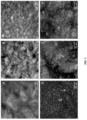
- the lower magnification images make it possible to see how the lipids are organised in interconnected aggregates occupying a large part of the space, as expected in a gel.
- the higher magnification images show how these lipid domains are formed by aggregates of lipid sheets (indicated with arrows) and vesicle-like spherical particles about 5-20 nm in diameter.
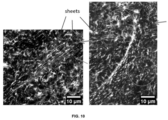
- Figure 2 shows in more detail the structure of the 3:1 HSPC/DOTAP gel shown in Figure 3D. These interconnected sheets and vesicles can be clearly seen here.
- Figure 3 shows an image of the 20:1 HSPC/DOPS gel in which these interconnected sheets and vesicles can also be seen.
- Tests were carried out with the following hydrogels prepared in Example 1: HSPC/DOTAP at a ratio of 80:1, 20:1 and 3:1; and HSPC/DOPS at a ratio of 20:1.
- the rheological behaviour of the gels was studied by performing oscillatory tests with an AR-G2 controlled stress rheometer (TA Instruments) equipped with a Peltier temperature control system. The measurements were carried out by the Nanostructured Liquids Unit (U12) of CIBER-BBN, in ICTS NANBIOSIS. A cone-plate geometry of 40 mm in diameter, a cone angle of 4° and a gap of 105 ⁇ m were used. The samples were evaluated at 25°C and drying of the samples was prevented by using a solvent trap. Before each oscillatory measurement, gels were pre-cut at 10 s -1 for 10 s to obtain homogeneous conditions. Then, the sample was subjected to sinusoidal shear deformation while the stress response was measured at each point.
- the elastic modulus G' is related to stored energy, while the viscous modulus G" represents dissipated energy.
- the elastic modulus (G') and the viscous modulus (G") of the sample are measured by applying a fixed deformation in a range of frequencies. It is thereby possible to see how the material behaves depending on the time that the applied deformation lasts.
- Table 1 shows the differences in G' and G" values from Figure 5 for the HSPC/DOPS and HSPC/DOTAP gels in a molar ratio of 20:1. It can be seen how the DOTAP gel is the most resistant to deformation, since it presents higher of G' and G" values. Likewise, DOTAP gel has a lower phase angle (G"/G' ratio) at low frequencies, indicating a greater predominance of the elastic behaviour of the structure compared to the DOPS gel.
- G"/G' ratio phase angle
- Figure 7 shows how the same rheological behaviour of the gel is maintained after 3 months in a 20:1 HSPC/DOTAP gel stored at 5°C in an airtight container.
- X-ray scattering is an analytical technique that measures the intensities of scattered X-rays in a sample based on the scattering angle. From Bragg's law, it is understood that with the decrease of the scattering angle, increasingly larger structural characteristics are analysed.
- SAXS small angle X-ray scattering signal
- WAXS wide angle X-ray scattering
- these techniques allow detection of the nanostructure of the lipid bilayer of the sheets and vesicles forming the gel (SAXS) as well as the lateral packing between the lipids (WAXS).
- Tests were carried out with the following hydrogels prepared in Example 1: HSPC/DOTAP at ratios of 80:1, 20:1 and 3:1 and HSPC/DOPS at ratios of 80:1, 20:1 and 3:1.
- X-ray scattering measurements were performed with synchrotron radiation at the BL11 - NCD-SWEET beamline of ALBA (Cerdanyola del Vallès, Barcelona, Spain). Samples were loaded into a 1.5 mm glass capillary and placed in a Linkam chamber, which is used to control the temperature at 25°C. The samples were aligned with the X-ray beam with an energy of 12.4 keV. Small angle (SAXS) measurements were acquired using a 1M Pilatus detector placed 2.71 m from the sample and wide angle (WAXS) measurements were acquired using a Rayonix LX255-HS detector placed at 0.134 m. The spectra were collected with an acquisition time of 5s.
- SAXS Small angle
- WAXS wide angle
- Figure 8 and Figure 9 show the scattering pattern at small (SAXS) and large (WAXS) angles of the HSPC/DOTAP and HSPC/DOPS gels, respectively.
- SAXS small
- WAXS large
- the molar ratios used were 80:1, 20:1 and 3:1.
- This type of pattern is characteristic of systems formed by lipid bilayers with very little correlation.
- this scattering pattern is compatible with a system consisting mainly of unilamellar vesicles and lipid sheets where the distance between bilayers is variable around 6 nm. If, in contrast, it were a multilamellar system, where most lipids are organised in closely spaced bilayers with regular distances between them, a scattering pattern with narrow and equidistant bands would be obtained.
- the WAXS pattern makes it possible to study the lateral packing of the molecules making up the lipid bilayers.
- a small band centred at 15 nm -1 can be seen in the spectrum corresponding to a lateral separation between lipid molecules of 4.2 nm, which would correspond to an orthorhombic or hexagonal packing. It is important to mention that the low intensity broadband occurring at 20-22 nm -1 is probably due to the signal produced by the sample water and therefore should not be considered.
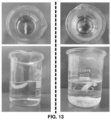
- the 20:1 HSPC/DOTAP gel was subjected to an incubation simulating gastric digestion. In this test, a saline solution at pH 2 was prepared with HCl and NaCl and then the gel was added and left to stir back and forth at 37°C for 2 hours. It was observed ( Figure 13 ) how a part of the gel broke into smaller fragments due to stirring, but without dissolving and maintaining the gel appearance. This would allow the use of the gel as a controlled drug delivery agent or as a potential gastric protective agent.
Landscapes
- Health & Medical Sciences (AREA)
- Chemical & Material Sciences (AREA)
- Life Sciences & Earth Sciences (AREA)
- Pharmacology & Pharmacy (AREA)
- Veterinary Medicine (AREA)
- Public Health (AREA)
- General Health & Medical Sciences (AREA)
- Animal Behavior & Ethology (AREA)
- Epidemiology (AREA)
- Medicinal Chemistry (AREA)
- Chemical Kinetics & Catalysis (AREA)
- Oil, Petroleum & Natural Gas (AREA)
- General Chemical & Material Sciences (AREA)
- Engineering & Computer Science (AREA)
- Molecular Biology (AREA)
- Biophysics (AREA)
- Nutrition Science (AREA)
- Physiology (AREA)
- Dispersion Chemistry (AREA)
- Ophthalmology & Optometry (AREA)
- Dermatology (AREA)
- Proteomics, Peptides & Aminoacids (AREA)
- Medicinal Preparation (AREA)
- Medicines That Contain Protein Lipid Enzymes And Other Medicines (AREA)
- Pharmaceuticals Containing Other Organic And Inorganic Compounds (AREA)
- Acyclic And Carbocyclic Compounds In Medicinal Compositions (AREA)
- Colloid Chemistry (AREA)
Abstract
Description
- The object of the invention is a nanostructured lipid hydrogel consisting of a three-dimensional network of interconnected sheets and vesicles comprising at least one zwitterionic phospholipid and water. The present invention also relates to the preparation method and use thereof, particularly as an active ingredient release system.
- The present invention could, therefore, be included in the field of gel formulations with potential biomedical applications.
- Gels can be described as materials in which either an aqueous or organic solvent becomes trapped within a network of solute molecules. This composition allows gels to behave as soft solids and viscous liquids, depending on their composition. Their rheological behaviour is related to the molecular interactions that act on their microscopic structure. Chemical interactions in polymer gels, like covalent bonds, provide mechanical resistance to deformation. In contrast, physical interactions in supramolecular gels, like electrostatic forces, are weaker and allow the gels to deform and flow more easily. The ease of combining gelling agents to form gels with different properties gives rise to a rapid growth of gel byproducts. Understanding the parameters that control their formation and rheological behaviour is key to developing new applications for these materials.
- In the prior art, a supramolecular gel made up of oleic acid and phospholipids has been described, as disclosed in document
ES2754476 A1 - In order to broaden the scope of application, the present invention proposes stable lipid gels that maintain their rheological properties in a broader range of pH between 2 and 13. In that sense, for example, it could be used for gastric applications where the pH ranges between 1 and 4.
- The following prior art documents merit mention:
- "The interdigitated gel phase in mixtures of cationic and zwitterionic phospholipids" Eric A. Smith, Phoebe K Dea Biophysical Chemistry 196 (2015) 86-91; and
- "Phospholipid-cationic lipid interactions: influences on membrane and vesicle properties" Robert B. Campbell, Sathyamangalam V. Balasubramanian, Robert M. Straubinger. Biochemistry and Biophysics Act 1512 (2001) 27-39.
- Different phases associated with the organisation of lipid membranes are described in the two mentioned articles. Among these phases are the so-called gel or crystalline solid phase and the liquid crystal phase (among others).
- The organisation in gel or crystalline solid phase does not mean that the system behaves macroscopically like a gel, but rather that the hydrocarbon chains are packed at the molecular level, giving the system-forming membranes greater rigidity. Although the term used, that is, "gel", is the same, the gel phase described in said documents has nothing to do with the lipid gel of the present invention which, due to its structure, presents macroscopic gel behaviour and rheological properties suitable for the application for which they are intended. In fact, the lipid mixtures mentioned in the two articles are diluted dispersions or referred to directly as liposomes, which means that they are liquid solutions.
- The object of the present invention is a nanostructured lipid hydrogel consisting of a three-dimensional network of interconnected sheets and vesicles.
- The term "lipid hydrogel" refers to a gel the major component of which is water, but which further comprises lipids. The lipids are grouped or arranged in structures in the form of sheets and vesicles within an aqueous matrix.
- In the context of the present invention, the term "nanostructured" in reference to the hydrogel shall be understood as relating to materials with a gel-type rheological behaviour which are organised with at least one dimension below 100 nm. It has also been observed that they are organised on a micro scale. That is, they are organised both on a nano and micro scale.
- The hydrogels of the present invention exhibit gel behaviour, since their elastic modulus value G' is higher than the value of the viscous modulus G" in a wide range of frequencies (preferably between 0.01 and 10Hz).
- Unlike other gels known in the prior art, the nanostructured hydrogel of the present invention can be formed with a low lipid content, where the intervention of polymers, surfactants, fatty acids or fatty alcohols is not required to favour dispersion.
- The first aspect of the present invention relates to a nanostructured lipid hydrogel consisting of a three-dimensional network of interconnected sheets and vesicles, characterised in that it comprises:
- between 3% and 30% by weight of lipids, wherein the lipids comprise at least one zwitterionic phospholipid,
- between 70% and 97% by weight of water,
- Phospholipids are amphiphilic molecules that are made up of two chemically different parts: a hydrophilic polar head and one or two hydrophobic hydrocarbon chains. According to the nature of the polar head of phospholipids, these can be classified as cationic, anionic and zwitterionic phospholipids. Zwitterionic phospholipids have positive and negative formal charges on different atoms and can acquire a net charge depending on the pH of the solution in which they are found.
- In the present invention, the term "surfactant" refers to synthetic compounds capable of lowering the surface tension of the water-air interface and exhibiting a critical micellar concentration, that is, they spontaneously form micelles in water. According to the present invention, the term "surfactant" does not include phospholipids.
- In the present invention, the term "polymer" refers to a compound formed by the attachment, by means of covalent bonds, of at least five simple units called monomers (whether these are the same or different from each other).
- The term "fatty acid" refers to a monocarboxylic acid with a linear hydrocarbon chain with a minimum of 4 carbons, and it can be saturated or unsaturated.
- The term "fatty alcohol", also called "long-chain alcohol", refers to an aliphatic hydrocarbon which contains at least one primary hydroxyl group and has a linear hydrocarbon chain with a minimum of 5 carbons, and it can be saturated or unsaturated.
- In a preferred embodiment, the hydrogel of the present invention consists of:
- between 3% and 30% by weight of lipids, wherein the lipids comprise at least one zwitterionic phospholipid,
- between 70% and 97% by weight of water.
- In a preferred embodiment of the method of the present invention, the lipid:water weight ratio is 5:95.
- In a preferred embodiment, the zwitterionic phospholipid is selected from the list comprising: phosphatidylcholines and phosphatidylethanolamines. More preferably, the zwitterionic phospholipid is hydrogenated soy phosphatidylcholine (HSPC, also referred to as L-α-phosphatidylcholine, hydrogenated (Soy)).
- In a preferred embodiment, the lipids comprise an anionic or cationic lipid in addition to zwitterionic phospholipid. In this case, the molar ratio between the zwitterionic phospholipid and the anionic or cationic lipid is preferably between 100:1 and 3:1, more preferably between 80:1 and 3:1, and even more preferably, the molar ratio is 20:1.
- In a preferred embodiment, the cationic lipid is 1,2-dioleoyl-3-trimethylammonium propane (DOTAP).
- In a preferred embodiment, the anionic lipid is 1,2-dioleoyl-sn-glycero-3-phosphoserine (DOPS).
- In a preferred embodiment, the hydrogel also comprises an active ingredient, such as, for example, a sphingolipid, cholesterol, an antioxidant, a drug (such as an antibiotic, an anti-inflammatory), a protein or combinations thereof.
- According to the present invention, the term "active ingredient" refers to any component that potentially provides a pharmacological activity or other different effect in the diagnosis, cure, mitigation, treatment or prevention of a disease, or that beneficially affects the structure or function of a subject's body. The active ingredients that can be comprised in the hydrogel of the present invention can be lipophilic or hydrophilic compounds.
- The weight ratio of the active ingredient in the hydrogel may vary between 0 and 20% by weight with respect to the total weight of the gel.
- In a preferred embodiment, the hydrogel of the present invention consists of:
- between 3% and 30% by weight of lipids, wherein the lipids comprise at least one zwitterionic phospholipid,
- between 70% and 97% by weight of water,
- between 0% and 20% of active ingredient.
- The structure and fluidity of the lipid hydrogels of the present invention respond reversibly to temperature and pH and are capable of transporting at least one hydrophilic substance within the skin and also to the follicles. Their particular organisation, with part of the water trapped in vesicles and these vesicles trapped or intercalated between extended sheets, makes them very suitable as systems for incorporating molecules of a different polar nature in different compartments. Their exclusively lipid composition ensures high biocompatibility and their rheological behaviour makes them easily applicable on the skin, eyes or mucous membranes.
- As the inventors have demonstrated in the examples provided, the hydrogels described in the present invention are stable in a very broad pH range, between pH 2 and 13. To that end, for example, they can be used in gastric applications where the pH can range between 1 and 4.
- Furthermore, the gels have proven to be stable over time, even without the need to add additives, maintaining their rheological behaviour, since their viscous modulus G" and elastic modulus G' values remain unchanged over time.
- As mentioned above, the hydrogels of the present invention exhibit gel behaviour, since their elastic modulus G' value is greater than the viscous modulus G" value in a wide range of frequencies.
- Another aspect of the invention relates to the preparation method for preparing a nanostructured lipid hydrogel as described in the first aspect of the invention, comprising the steps of:
- dispersing lipids in water without the intervention of polymers, surfactants, fatty alcohols or fatty acids,
- forming the hydrogel from the lipid dispersion obtained in the previous step, characterised in that the method is carried out without the intervention of polymers, surfactants, fatty alcohols or fatty acids, the formation of the hydrogel comprising the following sub-steps:
- adjusting the pH of the lipid dispersion between 2 and 13, so that at least one of the lipids present in the dispersion acquires a net charge or maintains its charge, either positive or negative,
- freezing the dispersion with pH adjusted to a temperature equal to or less than -20°C for a time period of equal to or greater than 1 minute,
- thawing and heating the dispersion to a temperature comprised between 5°C and 90°C,
- cooling the gelled dispersion from the previous sub-step at room temperature.
- The dispersion of the lipids in water is preferably carried out by mixing the corresponding lipids in an organic solvent at the specified concentrations and molar ratios and evaporation thereof in a rotary evaporator followed by desiccation and subsequent hydration by adding water in the range of specified concentrations under conditions of stirring and at room temperature.
- The organic solvent used can be chloroform, methanol, ethanol, mixtures thereof, etc., depending on the lipids used. Preferably, the organic solvent is chloroform.
- The adjustment of the pH of the lipid dispersion between 2 and 13 is performed by adding an acidic or basic solution, for example, with a hydrochloric acid or sodium hydroxide solution.
- The pH value to which the dispersion must be adjusted so that at least one lipid is charged is something that the skilled person can easily determine based on the lipid or lipids present in the dispersion. If there is a positive lipid, it is preferably adjusted to neutral or basic pH; if there is a negative lipid, it is adjusted to neutral or acidic, so that they hold their charge. If there are only zwitterionic lipids, the pH can be adjusted to both acidic and basic pH for the lipid to become ionised.
- Lastly, a third aspect of the invention relates to the use of a hydrogel described in the first aspect of the invention as an active ingredient release system or as a protective agent for the skin and mucous membranes, more preferably as a gastric protective agent.
- The hydrogel can be for cutaneous, mucosal or ocular, as well as oral, application.
- Throughout the description and the claims, the word "comprises" and its variants do not intend to exclude other technical features, additives, components or steps. For those skilled in the art, other objects, advantages and features of the invention may be partially deduced from both the description and the embodiment of the invention. The following examples and figures are provided by way of illustration and are not intended to limit the present invention.
-
-
Fig. 1 . Confocal microscopy images of the HSPC/DOTAP gels, magnifications of x10 (A, B and C) and x63 (D, E and F). 3:1 sample (A and D), 20:1 sample (B and E) and 80:1 sample (C and F). The fluorescence signal (light areas) arises from the lipid phase due to the incorporation of the fluorescent probe, and the dark areas correspond to water. The arrows indicate lamellar structures. -
Fig. 2 . Enlarged image of the 3:1 HSPC/DOTAP gel. The arrows indicate lamellar structures. -
Fig. 3 . Structure of the 20:1 HSPC/DOPS gel. The arrows indicate lamellar structures. -
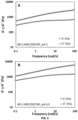
Fig. 4 . Oscillatory frequency sweep test comparing an HSPC/DOTAP gel with different molar ratios. -
Fig. 5 . Oscillatory frequency sweep test comparing an HSPC/DOTAP gel with an HSPC/DOPS gel. -
Fig. 6 . Rheological behaviour of gels at different pH. -
Fig. 7 . Stability of a 20:1 HSPC/DOPS gel over time. -
Fig. 8 . SAXS (A) and WAXS (B) spectra of HSPC/DOTAP gels at different molar ratios. -
Fig. 9 . SAXS (A) and WAXS (B) spectra of HSPC/DOPS gels at different molar ratios. -
Fig. 10 . It shows a confocal microscopy image of the hydrogel prepared in Example 1 with a 5% by weight HSPC/DOTAP lipid composition (3:1 HSPC/DOTAP molar ratio) and 95% water. The sheets and vesicles forming the three-dimensional network can be seen in said image. The folded sheets intertwined with structures compatible with vesicles can be seen in the circled areas. -
Fig. 11 . It shows an image of three gels formed at different pH and/or composition: HSPC gel at pH 11.5, HSPC gel at pH 2.5 and 20:1 HSPC/DOPS gel at pH 7.
The three gels have been formed at a 5% lipid concentration following the protocol described in Example 1 of the present invention. A rigid gel behaviour is observed with the naked eye since the gels do not move due to the effect of gravity inside the Eppendorf tubes. -
Fig. 12 . It shows an image with three HSPC/DOTAP gels formed at 5% lipid. HSPC/DOTAP molar ratios are 3:1, 20:1 and 80:1. It can be seen how the 20:1 gel is the most rigid, while the 3:1 gel flows more easily over time when turning the Eppendorf tube. The image also shows the differences in the lipid structure by means of confocal microscopy: gray corresponds to lipids and black to water. -
Fig. 13 . Simulation of the gastric digestion process for an HSPC/DOTAP gel at pH 2 according to Example 5. The moment in which 0.5 ml of gel were added to the acidic solution can be seen in the image on the left. The photos on the right show the state of the gel after 2 hours of stirring at 37°C. - Next, the invention will be illustrated by means of assays carried out by the inventors that demonstrate the effectiveness of the product of the invention.
- Hydrogenated soy phosphatidylcholine (HSPC) and 1,2-dioleoyl-3-trimethylammonium-propane (DOTAP) were purchased from Lipoid GmbH (Ludwigshafen, Germany). The chloroform was purchased from Merck (Darmstadt, Germany). 1,2-dioleoyl-sn-glycero-3-phosphoserine (DOPS) was purchased from Lipoid GmbH.
- First, an aqueous dispersion of HSPC and DOTAP was formed (the molar ratio between said lipids was set at 3:1, 20:1 and 80:1), for which purpose the lipids were dissolved in chloroform and then the solvent was evaporated by means of a rotary evaporator to form a lipid film, and water was added until a total lipid concentration of 5% by weight was obtained. Next, the pH was adjusted to 7 by adding a 0.1% by weight NaOH solution. To form the gels, the aqueous lipid dispersion was first stored at -20°C in a closed vial for two hours to completely freeze the sample. Then, the samples were heated at 70°C for 10 minutes until all the dispersion was clear. The gels were left to cool to room temperature and stored 24h in the refrigerator (5°C) before any measurement. Gelling and the absence of water separation were confirmed by inverting the vials.
- The hydrogels with an HSPC/DOPS composition were prepared following the same methodology as in example 1.1., but using DOPS instead of DOTAP.
- This hydrogel was prepared like in the previous cases, but using only HSPC as the lipid and adjusting the pH to 2.5 in one case and to 11.5 in another (two gels of the same composition were prepared at different pH).
- This technique allows us to observe the microstructure of the gel and how it is organised in the aqueous medium. The formation of structures with different morphologies and sizes, as well as the interconnection between said structures in the gel matrix, can be detected.
- Fluorescence confocal microscopy tests were performed with the following hydrogels prepared in Example 1: HSPC/DOTAP at a ratio of 80:1, 20:1 and 3:1; and HSPC/DOPS at a ratio of 20:1.
- In order to label the lipid part of the gels, the
fluorescent probe 1,2-dipalmitoyl-sn-glycero-3-phosphoethanolamine-N-(lissamine rhodamine B sulfonyl) (ammonium salt) from Avanti Polar Lipids Inc. (Alabaster, AL, USA) was used. The final concentration of the probe was 0.005% by weight in all the samples to have sufficient fluorescent intensity without interfering with the gel structure. - A Zeiss LSM 880 confocal microscope equipped with a 561 nm DPSS laser was used for Rhodamine B excitation. Images were obtained using a 10X 0.4NA objective and a 63X 1.4NA glycerol immersion objective. Images were processed using imaged 1.52d software (J. Schindelin, et al. Nat. Methods. 9 (2012) 676).
- The organisation of the lipids forming the microstructure of the HSPC/DOTAP and HSPC/DOTAP gel can be seen in
Figure 1 andFigure 2 , respectively. Lipids appear in gray scale, while water appears black. - In
Figure 1 , the lower magnification images (above) make it possible to see how the lipids are organised in interconnected aggregates occupying a large part of the space, as expected in a gel. The higher magnification images (below) show how these lipid domains are formed by aggregates of lipid sheets (indicated with arrows) and vesicle-like spherical particles about 5-20 nm in diameter. -
Figure 2 shows in more detail the structure of the 3:1 HSPC/DOTAP gel shown in Figure 3D. These interconnected sheets and vesicles can be clearly seen here. -
Figure 3 shows an image of the 20:1 HSPC/DOPS gel in which these interconnected sheets and vesicles can also be seen. - Rheology allows the macroscopic properties of the gel to be described. In the rheological study described below, the response of the material to an oscillatory stress is determined, determining the variables elastic modulus (G') and viscous modulus (G"). In materials that exhibit gel behaviour, elasticity, measured with G', will be greater than the dissipated energy or viscous behaviour, determined by G" for a given range of frequencies.
- Tests were carried out with the following hydrogels prepared in Example 1: HSPC/DOTAP at a ratio of 80:1, 20:1 and 3:1; and HSPC/DOPS at a ratio of 20:1.
- The rheological behaviour of the gels was studied by performing oscillatory tests with an AR-G2 controlled stress rheometer (TA Instruments) equipped with a Peltier temperature control system. The measurements were carried out by the Nanostructured Liquids Unit (U12) of CIBER-BBN, in ICTS NANBIOSIS. A cone-plate geometry of 40 mm in diameter, a cone angle of 4° and a gap of 105 µm were used. The samples were evaluated at 25°C and drying of the samples was prevented by using a solvent trap. Before each oscillatory measurement, gels were pre-cut at 10 s-1 for 10 s to obtain homogeneous conditions. Then, the sample was subjected to sinusoidal shear deformation while the stress response was measured at each point. Data was analysed using TRIOS software (TA Instruments, U.S.A.). The viscoelastic behaviour of the sample was described by the complex modulus
 is the shear deformation. With the phase angle δ between the applied and the resulting oscillation response, the software determined the elastic modulus G' and the viscous modulus G" of the vector G* as follows:


- The elastic modulus G' is related to stored energy, while the viscous modulus G" represents dissipated energy.
- In these tests, the elastic modulus (G') and the viscous modulus (G") of the sample are measured by applying a fixed deformation in a range of frequencies. It is thereby possible to see how the material behaves depending on the time that the applied deformation lasts.
- It can be seen in
Figures 4 and 5 that, in all gels, the elastic modulus (G') is higher than the viscous modulus (G") in the entire range of frequencies. This is indicative that the material exhibits a gel-like macroscopic behaviour. As expected in these materials, G' and G" increase at high frequencies (rapid deformations) since the internal structure of the sample has less time to adapt to the deformation applied, and therefore there is greater resistance to it. - Table 1 shows the differences in G' and G" values from
Figure 5 for the HSPC/DOPS and HSPC/DOTAP gels in a molar ratio of 20:1. It can be seen how the DOTAP gel is the most resistant to deformation, since it presents higher of G' and G" values. Likewise, DOTAP gel has a lower phase angle (G"/G' ratio) at low frequencies, indicating a greater predominance of the elastic behaviour of the structure compared to the DOPS gel. Thus, it can be deduced that, depending on the lipid composition used, gels with different rheological properties can be obtained, maintaining a structure formed by interconnected vesicles and sheets. This fact allows a great versatility of application, since it is possible to prepare materials with different rheological behaviour depending on the final use. Furthermore, it has been found that by using the aforementioned lipid compositions, the presence of other types of molecules is not necessary to obtain the gel.
- The same gel behaviour can be observed in
Figure 6 when the gels are prepared at acidic, neutral and basic pH (3, 6.5 and 10.5, respectively). The different combinations that have been tested are shown in Table 2.Table 2. Different compositions of gels with their range of stability versus pH Lipid composition (5% by weight) Mol. Ratio Stable pH range HSPC 1 2-5 and 9-12 HSPC/DOTAP 80:1 2-9 20:1 3:1 HSPC/DOPS 80:1 5-12 20:1 3:1 - Regarding stability, these gels have been found to be stable over time.
Figure 7 shows how the same rheological behaviour of the gel is maintained after 3 months in a 20:1 HSPC/DOTAP gel stored at 5°C in an airtight container. - X-ray scattering is an analytical technique that measures the intensities of scattered X-rays in a sample based on the scattering angle. From Bragg's law, it is understood that with the decrease of the scattering angle, increasingly larger structural characteristics are analysed.
- A small angle X-ray scattering signal (SAXS) is observed when the material contains structural characteristics on the nanometer scale, generally, in the range of between 1 and 100. On the other hand, wide angle X-ray scattering (WAXS) analyses the structures in the material on a much smaller length scale, as interatomic and smaller distances.
- In the experiments for the present invention, these techniques allow detection of the nanostructure of the lipid bilayer of the sheets and vesicles forming the gel (SAXS) as well as the lateral packing between the lipids (WAXS).
- Tests were carried out with the following hydrogels prepared in Example 1: HSPC/DOTAP at ratios of 80:1, 20:1 and 3:1 and HSPC/DOPS at ratios of 80:1, 20:1 and 3:1.
- X-ray scattering measurements were performed with synchrotron radiation at the BL11 - NCD-SWEET beamline of ALBA (Cerdanyola del Vallès, Barcelona, Spain). Samples were loaded into a 1.5 mm glass capillary and placed in a Linkam chamber, which is used to control the temperature at 25°C. The samples were aligned with the X-ray beam with an energy of 12.4 keV. Small angle (SAXS) measurements were acquired using a 1M Pilatus detector placed 2.71 m from the sample and wide angle (WAXS) measurements were acquired using a Rayonix LX255-HS detector placed at 0.134 m. The spectra were collected with an acquisition time of 5s.
- In order to study the organisation of the lipid structure at the molecular level, an X-ray scattering technique using synchrotron radiation was used.
Figure 8 andFigure 9 show the scattering pattern at small (SAXS) and large (WAXS) angles of the HSPC/DOTAP and HSPC/DOPS gels, respectively. The molar ratios used were 80:1, 20:1 and 3:1. - It can be seen how the SAXS pattern (
Figure 8A andFigure 9A ) has a main band centred at q = 1 nm-1 followed by two very small harmonics located on q= 2.4 and 3.6 nm-1. This type of pattern is characteristic of systems formed by lipid bilayers with very little correlation. Thus, this scattering pattern is compatible with a system consisting mainly of unilamellar vesicles and lipid sheets where the distance between bilayers is variable around 6 nm. If, in contrast, it were a multilamellar system, where most lipids are organised in closely spaced bilayers with regular distances between them, a scattering pattern with narrow and equidistant bands would be obtained. - The WAXS pattern makes it possible to study the lateral packing of the molecules making up the lipid bilayers. In
Figures 8B and9B , a small band centred at 15 nm-1 can be seen in the spectrum corresponding to a lateral separation between lipid molecules of 4.2 nm, which would correspond to an orthorhombic or hexagonal packing. It is important to mention that the low intensity broadband occurring at 20-22 nm-1 is probably due to the signal produced by the sample water and therefore should not be considered. - The ability of gels to be stable at different pH, even extreme acidic and basic pH, allows a very wide application range. For example, they can be used in gastric applications where the pH can range between 1 and 4. The 20:1 HSPC/DOTAP gel was subjected to an incubation simulating gastric digestion. In this test, a saline solution at pH 2 was prepared with HCl and NaCl and then the gel was added and left to stir back and forth at 37°C for 2 hours. It was observed (
Figure 13 ) how a part of the gel broke into smaller fragments due to stirring, but without dissolving and maintaining the gel appearance. This would allow the use of the gel as a controlled drug delivery agent or as a potential gastric protective agent.
Claims (18)
- A nanostructured lipid hydrogel formed by a three-dimensional network of interconnected sheets and vesicles, characterised in that it comprises:- between 3% and 30% by weight of lipids, wherein the lipids comprise at least one zwitterionic phospholipid,- between 70% and 97% by weight of water,and wherein the hydrogel does not comprise polymers, surfactants, fatty acids or fatty alcohols.
- The lipid hydrogel according to claim 1, wherein the zwitterionic phospholipid is selected from the list comprising: phosphatidylcholines, and phosphatidylethanolamines.
- The lipid hydrogel according to claim 2, wherein the zwitterionic phospholipid is hydrogenated soy phosphatidylcholine.
- The lipid hydrogel according to any of the preceding claims 1 to 3, wherein the lipids comprise an anionic or cationic lipid in addition to the zwitterionic phospholipid.
- The lipid hydrogel according to claim 4, wherein the molar ratio between the zwitterionic phospholipid and the anionic or cationic lipid is between 100:1 and 3:1
- The lipid hydrogel according to claim 5, wherein the molar ratio between the zwitterionic phospholipid and the anionic or cationic lipid is 20:1.
- The lipid hydrogel according to any of claims 4 to 6, wherein the cationic lipid is 2-dioleoyl-3-trimethylammonium propane.
- The lipid hydrogel according to any of claims 4 to 6, wherein the cationic lipid is 1,2-dioleoyl-sn-glycero-3-phosphoserine.
- The lipid hydrogel according to any of claims 1 to 8, further comprising an active ingredient.
- The lipid hydrogel according to claim 9, wherein the active ingredient is a sphingolipid, cholesterol, an antioxidant, an antibiotic, an anti-inflammatory, a protein or combinations thereof.
- The lipid hydrogel according to any of claims 1 to 10, wherein the lipid:water weight ratio is 5:95.
- A method for preparing a nanostructured lipid hydrogel as defined in claims 1 to 11, comprising the steps of:- dispersing lipids in water without the intervention of polymers, surfactants, fatty alcohols or fatty acids,- forming the hydrogel from the lipid dispersion obtained in the previous step, characterised in that the method is carried out without the intervention of polymers, surfactants, fatty alcohols or fatty acids, the formation of the hydrogel comprising the following sub-steps:- adjusting the pH of the lipid dispersion between 2 and 13,- freezing the dispersion with pH adjusted to a temperature equal to or less than -20°C for a time period of equal to or greater than 1 minute,- thawing and heating the dispersion to a temperature comprised between 5°C and 90°C,- cooling the gelled dispersion from the previous sub-step at room temperature.
- The method for preparing a lipid hydrogel according to claim 12, wherein the dispersion of the lipids in water is carried out by mixing the corresponding lipids in an organic solvent and evaporating same in a rotary evaporator, followed by drying and subsequent hydration by means of adding water in the range of specified concentrations under conditions of stirring and at room temperature.
- The method for preparing a lipid hydrogel according to claim 12 or 13, wherein the organic solvent is chloroform.
- The method for preparing a lipid hydrogel according to any of claims 12 to 14, wherein the adjustment of the pH of the lipid dispersion is carried out with a sodium hydroxide or hydrochloric acid solution.
- Use of a nanostructured lipid hydrogel as defined in any of claims 1 to 11 for the release of active ingredients or as a protective agent for the skin and mucous membranes.
- Use according to claim 16 as a gastric protective agent.
- Use according to claim 16 or 17, by means of cutaneous application, mucosal application, ocular application, or by means of oral administration.
Applications Claiming Priority (2)
| Application Number | Priority Date | Filing Date | Title |
|---|---|---|---|
| ES202031135A ES2910201B2 (en) | 2020-11-11 | 2020-11-11 | LIPID HYDROGEL, PREPARATION PROCEDURE AND USE OF THE SAME |
| PCT/ES2021/070815 WO2022101537A1 (en) | 2020-11-11 | 2021-11-11 | Lipid hydrogel, preparation method and use thereof |
Publications (2)
| Publication Number | Publication Date |
|---|---|
| EP4245297A1 true EP4245297A1 (en) | 2023-09-20 |
| EP4245297A4 EP4245297A4 (en) | 2024-10-09 |
Family
ID=81455881
Family Applications (1)
| Application Number | Title | Priority Date | Filing Date |
|---|---|---|---|
| EP21891289.7A Pending EP4245297A4 (en) | 2020-11-11 | 2021-11-11 | Lipid hydrogel, preparation method and use thereof |
Country Status (6)
| Country | Link |
|---|---|
| US (1) | US20240115498A1 (en) |
| EP (1) | EP4245297A4 (en) |
| JP (1) | JP2023548937A (en) |
| CN (1) | CN116669706A (en) |
| ES (1) | ES2910201B2 (en) |
| WO (1) | WO2022101537A1 (en) |
Family Cites Families (9)
| Publication number | Priority date | Publication date | Assignee | Title |
|---|---|---|---|---|
| US20050019266A1 (en) * | 1997-05-06 | 2005-01-27 | Unger Evan C. | Novel targeted compositions for diagnostic and therapeutic use |
| EP2601934A1 (en) * | 2009-01-22 | 2013-06-12 | Ludwig-Maximilians-Universität München | Vesicular phospholipid gels comprising proteinaceous substances |
| IT1398268B1 (en) * | 2009-03-10 | 2013-02-22 | Prigen Srl | GLYCEROSOMES AND THEIR USE IN PHARMACEUTICAL AND COSMETIC PREPARATIONS FOR TOPICAL USE |
| EP3016637B1 (en) * | 2013-07-04 | 2020-11-11 | Yeda Research and Development Co., Ltd. | Low friction hydrogels and hydrogel-containing composite materials |
| EP3731846A4 (en) * | 2017-12-29 | 2022-03-02 | Wayne State University | DRUG DELIVERY SYSTEMS FOR THE TREATMENT OF INFECTIONS |
| CN108452299A (en) * | 2018-02-11 | 2018-08-28 | 上海络祥基因科技有限公司 | A kind of preparation method of liposome and the method for making Liposome Adjuvant |
| ES2754476B2 (en) * | 2018-10-15 | 2020-09-14 | Consejo Superior Investigacion | NANOSTRUCTURED LIPID GEL, PREPARATION AND USE PROCEDURE |
| CN110522724A (en) * | 2019-09-10 | 2019-12-03 | 华东理工大学 | Targeted EpCAM liposome nanoparticle loaded with gene drug and its preparation method and application |
| CN110680804A (en) * | 2019-11-11 | 2020-01-14 | 乐土佑嘉(深圳)医药科技有限公司 | Cationic liposome for delivering siRNA medicament and preparation method thereof |
-
2020
- 2020-11-11 ES ES202031135A patent/ES2910201B2/en active Active
-
2021
- 2021-11-11 WO PCT/ES2021/070815 patent/WO2022101537A1/en not_active Ceased
- 2021-11-11 EP EP21891289.7A patent/EP4245297A4/en active Pending
- 2021-11-11 CN CN202180088128.6A patent/CN116669706A/en active Pending
- 2021-11-11 US US18/036,547 patent/US20240115498A1/en active Pending
- 2021-11-11 JP JP2023528256A patent/JP2023548937A/en active Pending
Also Published As
| Publication number | Publication date |
|---|---|
| CN116669706A (en) | 2023-08-29 |
| ES2910201B2 (en) | 2022-09-21 |
| ES2910201A1 (en) | 2022-05-11 |
| EP4245297A4 (en) | 2024-10-09 |
| US20240115498A1 (en) | 2024-04-11 |
| JP2023548937A (en) | 2023-11-21 |
| WO2022101537A1 (en) | 2022-05-19 |
Similar Documents
| Publication | Publication Date | Title |
|---|---|---|
| JP5952410B2 (en) | Water-in-oil emulsion and preparation method thereof | |
| Coldren et al. | From vesicle size distributions to bilayer elasticity via cryo-transmission and freeze-fracture electron microscopy | |
| Manca et al. | Molecular arrangements and interconnected bilayer formation induced by alcohol or polyalcohol in phospholipid vesicles | |
| Manca et al. | Development of novel diolein–niosomes for cutaneous delivery of tretinoin: Influence of formulation and in vitro assessment | |
| Johnsson et al. | Aqueous phase behavior and dispersed nanoparticles of diglycerol monooleate/glycerol dioleate mixtures | |
| Chountoulesi et al. | Cubic lyotropic liquid crystals as drug delivery carriers: Physicochemical and morphological studies | |
| Sahle et al. | Lecithin-based microemulsions for targeted delivery of ceramide AP into the stratum corneum: formulation, characterizations, and in vitro release and penetration studies | |
| Wei et al. | Structural properties, in vitro release and radical scavenging activity of lecithin based curcumin-encapsulated inverse hexagonal (HII) liquid crystals | |
| Angelico et al. | Physicochemical and rheological properties of a novel monoolein-based vesicle gel | |
| Talló et al. | Preparation and characterization of a supramolecular hydrogel made of phospholipids and oleic acid with a high water content | |
| Yu et al. | Stabilization of oil-in-water high internal phase emulsions with octenyl succinic acid starch and beeswax oleogel | |
| Koifman et al. | Nanostructure formation in the lecithin/isooctane/water system | |
| Rodriguez et al. | A unique bicellar nanosystem combining two effects on stratum corneum lipids | |
| Wang et al. | Development and characterization of a new non-aqueous self-double-emulsifying drug delivery system for topical application of rutin | |
| Kiselev et al. | Membrane self assembly in mixed DMPC/NaC systems by SANS | |
| Peng et al. | Gelled non-toxic microemulsions: Phase behavior & rheology | |
| US20240115498A1 (en) | Lipid hydrogel, preparation method and use thereof | |
| Richard et al. | Influence of dermal formulation additives on the physicochemical characteristics of catanionic vesicles | |
| Rodríguez et al. | Characterization of new DOPC/DHPC platform for dermal applications | |
| Farooqui et al. | Enhanced Topical Delivery Of Azelaic Acid Through Nanoemulsion Formulation: Optimization, Characterization, And Potential Therapeutic Application For Skin Disorders. | |
| Nabi et al. | Phase behaviour and vesicle formation in catanionic mixtures of Na oleate and alkyl trimethyl ammonium bromide and its salt-free version | |
| Nakagawa et al. | Requirement of charged lipids for the hexadecanol-induced gelation in the phospholipid bilayer system | |
| EP3868362B1 (en) | Nanostructured lipid gel, method for preparation and use | |
| Lim et al. | Influence of surfactant and lipid chain length on the solubilisation of phosphatidylcholine vesicles by micelles comprised of polyoxyethylene sorbitan monoesters | |
| Tubtimsri et al. | Monolaurin-loaded gel-like microemulsion for oropharyngeal candidiasis treatment: structural characterisation and in vitro antifungal property |
Legal Events
| Date | Code | Title | Description |
|---|---|---|---|
| STAA | Information on the status of an ep patent application or granted ep patent |
Free format text: STATUS: THE INTERNATIONAL PUBLICATION HAS BEEN MADE |
|
| PUAI | Public reference made under article 153(3) epc to a published international application that has entered the european phase |
Free format text: ORIGINAL CODE: 0009012 |
|
| STAA | Information on the status of an ep patent application or granted ep patent |
Free format text: STATUS: REQUEST FOR EXAMINATION WAS MADE |
|
| 17P | Request for examination filed |
Effective date: 20230529 |
|
| AK | Designated contracting states |
Kind code of ref document: A1 Designated state(s): AL AT BE BG CH CY CZ DE DK EE ES FI FR GB GR HR HU IE IS IT LI LT LU LV MC MK MT NL NO PL PT RO RS SE SI SK SM TR |
|
| DAV | Request for validation of the european patent (deleted) | ||
| DAX | Request for extension of the european patent (deleted) | ||
| A4 | Supplementary search report drawn up and despatched |
Effective date: 20240911 |
|
| RIC1 | Information provided on ipc code assigned before grant |
Ipc: A61K 9/00 20060101ALI20240905BHEP Ipc: A61K 47/18 20170101ALI20240905BHEP Ipc: A61K 47/24 20060101ALI20240905BHEP Ipc: A61K 9/107 20060101ALI20240905BHEP Ipc: A61K 9/06 20060101AFI20240905BHEP |