EP4243456B1 - Method and apparatus for managing vehicle calibration database - Google Patents
Method and apparatus for managing vehicle calibration database Download PDFInfo
- Publication number
- EP4243456B1 EP4243456B1 EP23160699.7A EP23160699A EP4243456B1 EP 4243456 B1 EP4243456 B1 EP 4243456B1 EP 23160699 A EP23160699 A EP 23160699A EP 4243456 B1 EP4243456 B1 EP 4243456B1
- Authority
- EP
- European Patent Office
- Prior art keywords
- calibration
- calibration data
- label
- relevance
- relevances
- Prior art date
- Legal status (The legal status is an assumption and is not a legal conclusion. Google has not performed a legal analysis and makes no representation as to the accuracy of the status listed.)
- Active
Links
Images

Classifications
-
- G—PHYSICS
- G06—COMPUTING OR CALCULATING; COUNTING
- G06F—ELECTRIC DIGITAL DATA PROCESSING
- G06F16/00—Information retrieval; Database structures therefor; File system structures therefor
- G06F16/20—Information retrieval; Database structures therefor; File system structures therefor of structured data, e.g. relational data
- G06F16/23—Updating
-
- H—ELECTRICITY
- H04—ELECTRIC COMMUNICATION TECHNIQUE
- H04W—WIRELESS COMMUNICATION NETWORKS
- H04W4/00—Services specially adapted for wireless communication networks; Facilities therefor
- H04W4/02—Services making use of location information
- H04W4/023—Services making use of location information using mutual or relative location information between multiple location based services [LBS] targets or of distance thresholds
-
- G—PHYSICS
- G06—COMPUTING OR CALCULATING; COUNTING
- G06F—ELECTRIC DIGITAL DATA PROCESSING
- G06F16/00—Information retrieval; Database structures therefor; File system structures therefor
- G06F16/20—Information retrieval; Database structures therefor; File system structures therefor of structured data, e.g. relational data
- G06F16/21—Design, administration or maintenance of databases
- G06F16/217—Database tuning
-
- G—PHYSICS
- G06—COMPUTING OR CALCULATING; COUNTING
- G06F—ELECTRIC DIGITAL DATA PROCESSING
- G06F16/00—Information retrieval; Database structures therefor; File system structures therefor
- G06F16/20—Information retrieval; Database structures therefor; File system structures therefor of structured data, e.g. relational data
- G06F16/21—Design, administration or maintenance of databases
-
- G—PHYSICS
- G06—COMPUTING OR CALCULATING; COUNTING
- G06F—ELECTRIC DIGITAL DATA PROCESSING
- G06F16/00—Information retrieval; Database structures therefor; File system structures therefor
- G06F16/20—Information retrieval; Database structures therefor; File system structures therefor of structured data, e.g. relational data
- G06F16/23—Updating
- G06F16/2365—Ensuring data consistency and integrity
-
- G—PHYSICS
- G07—CHECKING-DEVICES
- G07C—TIME OR ATTENDANCE REGISTERS; REGISTERING OR INDICATING THE WORKING OF MACHINES; GENERATING RANDOM NUMBERS; VOTING OR LOTTERY APPARATUS; ARRANGEMENTS, SYSTEMS OR APPARATUS FOR CHECKING NOT PROVIDED FOR ELSEWHERE
- G07C9/00—Individual registration on entry or exit
- G07C9/00174—Electronically operated locks; Circuits therefor; Nonmechanical keys therefor, e.g. passive or active electrical keys or other data carriers without mechanical keys
- G07C9/00896—Electronically operated locks; Circuits therefor; Nonmechanical keys therefor, e.g. passive or active electrical keys or other data carriers without mechanical keys specially adapted for particular uses
-
- H—ELECTRICITY
- H04—ELECTRIC COMMUNICATION TECHNIQUE
- H04W—WIRELESS COMMUNICATION NETWORKS
- H04W4/00—Services specially adapted for wireless communication networks; Facilities therefor
- H04W4/30—Services specially adapted for particular environments, situations or purposes
- H04W4/40—Services specially adapted for particular environments, situations or purposes for vehicles, e.g. vehicle-to-pedestrians [V2P]
-
- H—ELECTRICITY
- H04—ELECTRIC COMMUNICATION TECHNIQUE
- H04W—WIRELESS COMMUNICATION NETWORKS
- H04W64/00—Locating users or terminals or network equipment for network management purposes, e.g. mobility management
- H04W64/006—Locating users or terminals or network equipment for network management purposes, e.g. mobility management with additional information processing, e.g. for direction or speed determination
-
- B—PERFORMING OPERATIONS; TRANSPORTING
- B60—VEHICLES IN GENERAL
- B60R—VEHICLES, VEHICLE FITTINGS, OR VEHICLE PARTS, NOT OTHERWISE PROVIDED FOR
- B60R25/00—Fittings or systems for preventing or indicating unauthorised use or theft of vehicles
- B60R25/01—Fittings or systems for preventing or indicating unauthorised use or theft of vehicles operating on vehicle systems or fittings, e.g. on doors, seats or windscreens
-
- B—PERFORMING OPERATIONS; TRANSPORTING
- B60—VEHICLES IN GENERAL
- B60R—VEHICLES, VEHICLE FITTINGS, OR VEHICLE PARTS, NOT OTHERWISE PROVIDED FOR
- B60R25/00—Fittings or systems for preventing or indicating unauthorised use or theft of vehicles
- B60R25/20—Means to switch the anti-theft system on or off
- B60R25/24—Means to switch the anti-theft system on or off using electronic identifiers containing a code not memorised by the user
-
- G—PHYSICS
- G07—CHECKING-DEVICES
- G07C—TIME OR ATTENDANCE REGISTERS; REGISTERING OR INDICATING THE WORKING OF MACHINES; GENERATING RANDOM NUMBERS; VOTING OR LOTTERY APPARATUS; ARRANGEMENTS, SYSTEMS OR APPARATUS FOR CHECKING NOT PROVIDED FOR ELSEWHERE
- G07C9/00—Individual registration on entry or exit
- G07C9/00174—Electronically operated locks; Circuits therefor; Nonmechanical keys therefor, e.g. passive or active electrical keys or other data carriers without mechanical keys
- G07C9/00309—Electronically operated locks; Circuits therefor; Nonmechanical keys therefor, e.g. passive or active electrical keys or other data carriers without mechanical keys operated with bidirectional data transmission between data carrier and locks
Definitions
- the disclosure relates to the field of automobiles, and more specifically relates to a method and a data processing apparatus for managing a vehicle calibration database, a storage medium, and a terminal device having a digital key function.
- a digital key based on Bluetooth technology relies on strength information of a signal between a vehicle's Bluetooth antenna and a smart device for positioning.
- a Bluetooth positioning algorithm is used to calculate a position of the smart device relative to the vehicle based on the current strength of the signal between the vehicle's Bluetooth antenna and the smart device, in combination with calibration data.
- CN112243020A relates to smart key calibration data synchronization method, which stores the latest calibration data in the calibration database, and stores the corresponding calibration data of the smart key at the mobile terminal. According to CN112243020A , when the mobile terminal is connected to the vehicle, it can query in real time whether the calibration data is updated, obtain the latest calibration data from the calibration database, and transmit it to the vehicle communication terminal to achieve the function of the smart key.
- a method for managing a vehicle calibration database for digital key calibration including the following steps: A. generating a calibration database including one or more sets of calibration data and a preconfigured label set associated with each set of calibration data; B. in response to a calibration request, obtaining a current label set associated with a user account from a vehicle end and a digital key end; C. separately calculating relevances between the current label set and the one or more preconfigured label sets; and D. selecting a set of calibration data from the calibration database based at least on the relevances as calibration data to be distributed.
- the method according to an embodiment of the disclosure further includes: E. transmitting the calibration data to be distributed to the vehicle end and the digital key end, the digital key end including a smartphone or a smart wearable device.
- the label set includes one or more of the following: a vehicle model label, a device type label, a device model label, an operating system version label, an application version label, or an antenna performance label.
- R 1 is a device type relevance
- R 2 is an operating system relevance
- R 3 is a device model relevance
- R 4 is an application version relevance
- R 5 is an antenna performance relevance
- R 6 is an adaptive relevance
- a, b, c, d, e, and f are preset coefficients.
- step D includes: D1. if a maximum relevance among the relevances is greater than or equal to a first threshold, selecting calibration data corresponding to the maximum relevance as the calibration data to be distributed; and D2. if the maximum relevance among the relevances is less than the first threshold, selecting the default calibration data as the calibration data to be distributed.
- step D further includes: D3. obtaining positioning parameters in the calibration process from the vehicle end and the digital key end, the positioning parameters including an antenna field strength parameter, a distance parameter, a distance-field strength characteristic curve, and a result parameter; D4. training a ranging model using the positioning parameters, and generating new calibration data based on the ranging model; and D5. updating the calibration database with the new calibration data.
- a data processing apparatus for managing a vehicle calibration database for digital key calibration, the apparatus including: a memory; a processor; and a computer program stored on the memory and executable on the processor, where the execution of the computer program causes the following steps to be performed: A. generating a calibration database including one or more sets of calibration data and a preconfigured label set associated with each set of calibration data; B. in response to a calibration request, obtaining a current label set associated with a user account from a vehicle end and a digital key end; C. separately calculating relevances between the current label set and the one or more preconfigured label sets; and D. selecting a set of calibration data from the calibration database based at least on the relevances as calibration data to be distributed.
- the execution of the computer program further causes the following step to be performed: E. transmitting the calibration data to be distributed to a vehicle controller and a key device, the key device including a smartphone or a smart wearable device.
- the label set includes one or more of the following: a vehicle model label, a device type label, a device model label, an operating system version label, an application version label, or an antenna performance label.
- step C causes step C to be performed as follows:
- step D causes step D to be performed as follows: D1. if a maximum relevance among the relevances is greater than or equal to a first threshold, selecting calibration data corresponding to the maximum relevance as the calibration data to be distributed; and D2. if the maximum relevance among the relevances is less than the first threshold, selecting the default calibration data as the calibration data to be distributed.
- the execution of the computer program further causes step D to be performed as follows: D3. obtaining positioning parameters in the calibration process from the vehicle end and the digital key end, the positioning parameters including an antenna field strength parameter, a distance parameter, a distance-field strength characteristic curve, and a result parameter; D4. training a ranging model using the positioning parameters, and generating new calibration data based on the ranging model; and D5. updating the calibration database with the new calibration data.
- a computer-readable storage medium storing a computer program, where when the program is executed by a processor, any one of the methods described above is implemented.
- a terminal device having a digital key function including: a memory; a processor; and a computer program stored on the memory and executable on the processor, where the execution of the computer program causes the following steps to be performed: A. in response to a digital key activation command, obtaining one or more preconfigured label sets from a calibration database end; B. separately calculating relevances between a current label set associated with a user account and the one or more preconfigured label sets; C. sending a calibration request to the calibration database end based at least on the relevances to download corresponding calibration data.
- step C causes step C to be performed as follows: C1. if a maximum relevance among the relevances is greater than or equal to a first threshold, sending a first request to the calibration database end to download calibration data corresponding to the maximum relevance; and C2. if the maximum relevance among the relevances is less than the first threshold, sending a second request to the calibration database end to download default calibration data.
- the execution of the computer program further causes one or more of the following steps to be performed: D. downloading the corresponding calibration data from the calibration database end; E. obtaining positioning parameters in the calibration process, the positioning parameters including an antenna field strength parameter, a distance parameter, a distance-field strength characteristic curve, and a result parameter; and F. transmitting the positioning parameters to the calibration database end to update the calibration database.
- the solution for managing a vehicle calibration database proposed in the disclosure can perform labeling management of the user account information (for example, information such as the vehicle model used by the user, the device type, the device model, the operating system version, the application version, or the antenna performance), and innovatively proposes the concept of relevance between the current user information and the calibration data (that is, the relevance between the current label set associated with the user account and the preconfigured label set existing on the calibration database end), so that the user can quickly and efficiently download the calibration data that match their current account information, thereby reducing the randomness of calibration data distribution and improving the positioning accuracy of the digital key and user experience.
- the user account information for example, information such as the vehicle model used by the user, the device type, the device model, the operating system version, the application version, or the antenna performance
- the concept of relevance between the current user information and the calibration data that is, the relevance between the current label set associated with the user account and the preconfigured label set existing on the calibration database end
- the solution for managing a vehicle calibration database proposed in the disclosure can record the positioning parameters in real time according to the actual calibration situation of the digital key, and adaptively adjust the stored calibration data.
- the calibration data corresponding to the maximum relevance may be downloaded when the relevance is high (for example, the digital key end is a known device for the calibration database, or a key label is known), to provide the best positioning experience.
- the default calibration data may be downloaded when the relevance is low (for example, a key label on the digital key end is unknown for the calibration database); in addition, positioning parameters in the calibration process are frequently recorded and uploaded to train and obtain new calibration data, so as to update the existing calibration database.
- the disclosure proposes a solution for interconnection and interoperability between a vehicle end, a digital key end, and a calibration database end, which obviates the need for storing all calibration data corresponding to different devices on the vehicle end, thereby saving the storage space of the vehicle end.
- vehicle or other similar terms include general motor vehicles, such as passenger vehicles (including sport utility vehicles, buses, trucks, etc.) and various commercial vehicles, and include hybrid vehicles, electric vehicles, plug-in hybrid electric vehicles, etc.
- a hybrid vehicle is a vehicle with two or more power sources, such as a vehicle powered by a gasoline engine and an electric motor.
- digital key end refers to any electronic device that can be used to unlock a vehicle, which may include, but is not limited to: a wearable electronic device such as a smart watch, a smart bracelet, a smart necklace, or a smart key, or a mobile terminal such as a smartphone.
- the digital key can provide for keyless entry and one-button start.
- an onboard communication module is required to utilize a sensor to comprehensively determine whether a distance between the digital key end (for example, a smart key or a mobile phone) and the vehicle is within an effective range (for example, less than or equal to 3 m).
- an effective range for example, less than or equal to 3 m.
- RSSIs received signal strength indicators
- FIG. 1 is a schematic flowchart of a method 10 for managing a vehicle calibration database according to an embodiment of the disclosure.
- step S110 a calibration database including one or more sets of calibration data and a default label set associated with each set of calibration data is generated.
- the calibration data refers to a threshold distance parameter for determining whether to perform vehicle state switching (e.g., auto unlock, auto lock, or trunk opening).
- vehicle state switching e.g., auto unlock, auto lock, or trunk opening.
- the calibration data may include one or more of a key activation determination threshold, a vehicle start determination threshold, a vehicle keyless entry determination threshold, a vehicle welcome determination threshold, a vehicle auto unlock determination threshold, a vehicle auto lock determination threshold, and a trunk opening determination threshold.
- digital key calibration data of each vehicle model that matches different digital key ends needs to be pre-stored in the calibration database (for example, a cloud database).
- digital key calibration data of each vehicle model corresponding to a digital key end of each device type, each device model, each operating system version, each application version, and each antenna performance version may be obtained in advance through manual calibration, and stored in the calibration database.
- a label for each device type, each device model, each operating system version, each application version, and each antenna performance version may further be generated in advance as a default label, and the label set is matched with corresponding calibration data in a hash manner.
- a first set of calibration data and its corresponding first label set may be stored in the calibration database
- a second set of calibration data and its corresponding second label set may be stored in the calibration database, and so on.
- each set of calibration data is in a one-to-one correspondence with its default label set.
- step S 120 in response to a calibration request, a current label set associated with a user account is obtained from a vehicle end and a digital key end.
- the digital key end may send a calibration request to a calibration database end over a network and access the calibration database.
- the vehicle end may alternatively send a calibration request to the calibration database end and access the calibration database.
- the calibration database end may verify identity information of the vehicle end and/or digital key end, and after the verification is successful, send response information indicating the successful identity verification to the vehicle end and/or digital key end.
- the vehicle end and the digital key end may send the current label set associated with the user account to the calibration database end.
- the current label set may include one or more of the following: a vehicle model label, a device type label, a device model label, an operating system version label, an application version label, or an antenna performance label.
- step S130 relevances between the current label set and the one or more default label sets may be separately calculated.
- the relevances may be calculated by the calibration database end.
- the relevance reflects the degree of matching between the current label set and the stored default label set.
- R 1 is a device type relevance
- R 2 is an operating system relevance
- R 3 is a device model relevance
- R 4 is an application version relevance
- R 5 is an antenna performance relevance
- R 6 is an adaptive relevance
- a, b, c, d, e, and f are preset coefficients.
- the adaptive relevance R 6 is a preset fixed value, or represents the degree of matching of other variable environmental factors such as a software environment version.
- a set of calibration data is selected from the calibration database based at least on the relevances as calibration data to be distributed.
- the calibration data to be distributed may be selected based on the magnitudes of the one or more calculated relevances.
- calibration data corresponding to a calculated maximum relevance may be selected as the calibration data to be distributed. For example, if a relevance between the current label set and a first default label set is 0.32, and a relevance between the current label set and a second default label set is 0.74, a second set of calibration data corresponding to the second default label set may be directly selected as the calibration data to be distributed.
- the calibration data to be distributed may alternatively be selected by comparing the calculated relevance with a preset threshold.
- a maximum relevance among the relevances is greater than or equal to a first threshold
- calibration data corresponding to the maximum relevance is selected as the calibration data to be distributed
- the first threshold is 0.8.
- the range of the preset value (for example, the first threshold) described herein may be set according to actual requirements, and is not limited to the range shown in this embodiment.
- the calibration data corresponding to the maximum relevance may be selected as the calibration data to be distributed, so as to provide the best positioning experience.
- the default calibration data may be directly selected as the calibration data to be distributed.
- positioning parameters in the calibration process are frequently recorded and uploaded to train and obtain new calibration data, and the existing calibration database is updated with the new calibration data.
- the calibration database may be updated as follows: obtaining positioning parameters in the calibration process from the vehicle end and the digital key end, the positioning parameters including an antenna field strength parameter, a distance parameter, a distance-field strength characteristic curve, and a result parameter; training a ranging model using the positioning parameters, to generate new calibration data; and updating the calibration database with the new calibration data.
- the ranging model is constructed based on a training data set including annotations of the positioning parameters (for example, the antenna field strength parameter, the distance parameter, and the distance-field strength characteristic curve) and the result parameter characterizing whether the vehicle successfully performs vehicle state switching (for example, auto unlock, auto lock, or trunk opening).
- the positioning parameters for example, the antenna field strength parameter, the distance parameter, and the distance-field strength characteristic curve
- the result parameter characterizing whether the vehicle successfully performs vehicle state switching (for example, auto unlock, auto lock, or trunk opening).
- the vehicle end and the digital key end may perform calibration based on the calibration data downloaded from the calibration database.
- the vehicle end and the digital key end can perform data communication via a Bluetooth connection, a near field communication (NFC) connection, an ultra wideband (UWB) connection, etc., and an accurate position of the digital key end is determined by the vehicle end.
- the vehicle end may determine whether the digital key end is outside or inside the vehicle, as well as a distance between the digital key end and the vehicle end, based on an RSSI value of the current digital key end and the calibration data.
- the vehicle end may send the position information to a passive entry passive start (PEPS) system to perform a subsequent operation (for example, opening the door or starting the vehicle).
- PEPS passive entry passive start
- the vehicle end and/or the digital key end may transmit the positioning parameters (for example, the antenna field strength parameter, the distance parameter, the distance-field strength characteristic curve, and the result parameter) recorded in the calibration process to the calibration database end.
- the calibration database end may train the ranging model using the positioning parameters, and continuously update and adaptively adjust the existing calibration data in the calibration database.
- the calibration database may be maintained manually on a regular basis, and invalid calibration data may be discarded or merged.
- a child class calibration database may also be automatically called or completed from a parent class calibration database according to a preset global dependency and inheritance relationship. For example, an iPhone X can automatically inherit calibration data of an iPhone 8, and an Apple watch can automatically inherit calibration data of an iPhone.
- FIG. 2 is a schematic block diagram of a data processing apparatus 20 for managing a vehicle calibration database according to an embodiment of the disclosure.
- the apparatus 20 shown in FIG. 2 may be configured to implement the procedure shown in FIG. 1 .
- the data processing apparatus 20 includes a communications unit 210, a memory 220 (for example, a non-volatile memory such as a flash memory, a ROM, a hard disk drive, a magnetic disk, or an optical disc), a processor 230 (for example, a microprocessor or a microcontroller), and a computer program 240 stored on the memory 220 and executable on the processor 230.
- a communications unit 210 for example, a non-volatile memory such as a flash memory, a ROM, a hard disk drive, a magnetic disk, or an optical disc
- a processor 230 for example, a microprocessor or a microcontroller
- a computer program 240 stored on the memory 220 and executable on the processor 230.
- the communications unit 210 is configured to establish a communication connection between the apparatus and an external device or network (for example, a vehicle end or a digital key end).
- an external device or network for example, a vehicle end or a digital key end.
- the memory 220 stores the computer program 240 executable by the processor 230.
- the processor 230 is configured to execute the computer program 240 to implement the corresponding procedure for managing a vehicle calibration database.
- the procedure for managing a vehicle calibration database has been described in detail above and will not be repeated here.
- FIG. 3 is a schematic block diagram of a terminal device 30 having a digital key function according to an embodiment of the disclosure.
- the terminal device 30 may be a wearable electronic device such as a smart watch, a smart bracelet, a smart necklace, or a smart key, or may be a mobile terminal such as a smartphone.
- a terminal device 30 includes a communications unit 310, a memory 320, a processor 330, and a computer program 340 stored on the memory 320 and executable on the processor 330.
- the communications unit 310 is configured to establish a communication connection between the apparatus and an external device or network (for example, a vehicle end or a calibration database end).
- an external device or network for example, a vehicle end or a calibration database end.
- the memory 320 stores the computer program 340 executable by the processor 330.
- the processor 330 is configured to execute the computer program 340 to implement a calibration data download procedure as shown in FIG. 4 .
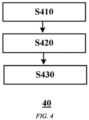
- FIG. 4 is a schematic flowchart of a calibration data download procedure 40 according to an embodiment of the disclosure.
- step S410 a vehicle end or a digital key end, in response to a digital key activation command, obtains one or more default label sets from a calibration database end.
- step S420 the vehicle end or the digital key end separately calculates relevances between a current label set associated with a user account and the one or more default label sets.
- step S430 the vehicle end or the digital key end sends a calibration request to the calibration database end based at least on the relevances to download corresponding calibration data.
- step S410 includes: if a maximum relevance among the relevances is greater than or equal to a first threshold, sending a first request to the calibration database end to download calibration data corresponding to the maximum relevance; and C2. if the maximum relevance among the relevances is less than the first threshold, sending a second request to the calibration database end to download default calibration data.
- the procedure 40 may further include step S440: downloading the corresponding calibration data from the calibration database end.
- the procedure 40 may further include step S450: obtaining positioning parameters in the calibration process, the positioning parameters including an antenna field strength parameter, a distance parameter, a distance-field strength characteristic curve, and a result parameter; and optionally, the procedure 40 may further include step S460: transmitting the positioning parameters to the calibration database end to update the calibration database.
- a computer-readable storage medium storing a computer program is further provided, where when the program is executed by a processor, the method shown in FIG. 1 or FIG. 4 is implemented.
- the computer-readable storage medium may include a random access memory (RAM) (such as a synchronous dynamic random access memory (SDRAM)), a read-only memory (ROM), a non-volatile random access memory (NVRAM), an electrically erasable programmable read-only memory (EEPROM), a flash memory, or another known storage medium.
- RAM random access memory
- SDRAM synchronous dynamic random access memory
- ROM read-only memory
- NVRAM non-volatile random access memory
- EEPROM electrically erasable programmable read-only memory
- flash memory or another known storage medium.
- labeling management of user account information and calculating the relevances between the current user information and the default label set enable the user to quickly and efficiently download the calibration data that match their current account information, thereby reducing the randomness of calibration data distribution and improving the positioning accuracy of the digital key and user experience.
- the positioning parameters in the actual calibration process of the digital key can be recorded and uploaded to train and obtain new calibration data, so that the data in the calibration database can be adaptively updated according to changes of the digital key end and the actual positioning situation.
Landscapes
- Engineering & Computer Science (AREA)
- Theoretical Computer Science (AREA)
- Databases & Information Systems (AREA)
- Physics & Mathematics (AREA)
- General Physics & Mathematics (AREA)
- Data Mining & Analysis (AREA)
- General Engineering & Computer Science (AREA)
- Computer Networks & Wireless Communication (AREA)
- Signal Processing (AREA)
- Computer Security & Cryptography (AREA)
- Lock And Its Accessories (AREA)
- Vehicle Cleaning, Maintenance, Repair, Refitting, And Outriggers (AREA)
Description
- The disclosure relates to the field of automobiles, and more specifically relates to a method and a data processing apparatus for managing a vehicle calibration database, a storage medium, and a terminal device having a digital key function.
- Nowadays, more and more passenger vehicles use a digital key that uses a mobile phone via Bluetooth to replace a traditional physical key. In a Bluetooth positioning process, a digital key based on Bluetooth technology relies on strength information of a signal between a vehicle's Bluetooth antenna and a smart device for positioning. During the Bluetooth positioning, a Bluetooth positioning algorithm is used to calculate a position of the smart device relative to the vehicle based on the current strength of the signal between the vehicle's Bluetooth antenna and the smart device, in combination with calibration data.
- However, compared with physical keys, digital keys have problems such as instability and poor positioning effect. This is mainly caused by different hardware chips, antennas, and powers that are used by different mobile phone brands and models. If a vehicle end responds to mobile phone requests at a fixed receiving power, or adapts to a combination of hundreds of mainstream smartphones or smart wearable devices on the market using one set of calibration parameters, there is great randomness, which results in a very poor performance experience.
- In addition, at present, cloud service platforms for most head units and mobile phone applications are not interconnected or interoperable. For example, cloud services for a head unit and a mobile phone are provided by two or more suppliers. Most platforms, including OnStar, Mercedes Cloud, and ECARX, support transfer of only a part of public data (for example, user names and simple instructions such as remote operation commands), and no existing interoperable platform database can implement adaptive optimization of mobile phones and head units.
CN112243020A relates to smart key calibration data synchronization method, which stores the latest calibration data in the calibration database, and stores the corresponding calibration data of the smart key at the mobile terminal. According toCN112243020A , when the mobile terminal is connected to the vehicle, it can query in real time whether the calibration data is updated, obtain the latest calibration data from the calibration database, and transmit it to the vehicle communication terminal to achieve the function of the smart key. - According to one aspect of the disclosure, a method for managing a vehicle calibration database for digital key calibration is provided, the method including the following steps: A. generating a calibration database including one or more sets of calibration data and a preconfigured label set associated with each set of calibration data; B. in response to a calibration request, obtaining a current label set associated with a user account from a vehicle end and a digital key end; C. separately calculating relevances between the current label set and the one or more preconfigured label sets; and D. selecting a set of calibration data from the calibration database based at least on the relevances as calibration data to be distributed.
- As an alternative or addition to the foregoing solution, the method according to an embodiment of the disclosure further includes: E. transmitting the calibration data to be distributed to the vehicle end and the digital key end, the digital key end including a smartphone or a smart wearable device.
- As an alternative or addition to the foregoing solution, in the method according to an embodiment of the disclosure, the label set includes one or more of the following: a vehicle model label, a device type label, a device model label, an operating system version label, an application version label, or an antenna performance label.
- As an alternative or addition to the foregoing solution, in the method according to an embodiment of the disclosure, in step C, the relevances R between the current label set and the one or more preconfigured label sets are calculated using the following formulas:


- As an alternative or addition to the foregoing solution, in the method according to an embodiment of the disclosure, step D includes: D1. if a maximum relevance among the relevances is greater than or equal to a first threshold, selecting calibration data corresponding to the maximum relevance as the calibration data to be distributed; and D2. if the maximum relevance among the relevances is less than the first threshold, selecting the default calibration data as the calibration data to be distributed.
- As an alternative or addition to the foregoing solution, in the method according to an embodiment of the disclosure, step D further includes: D3. obtaining positioning parameters in the calibration process from the vehicle end and the digital key end, the positioning parameters including an antenna field strength parameter, a distance parameter, a distance-field strength characteristic curve, and a result parameter; D4. training a ranging model using the positioning parameters, and generating new calibration data based on the ranging model; and D5. updating the calibration database with the new calibration data.
- According to another aspect of the disclosure, a data processing apparatus for managing a vehicle calibration database for digital key calibration is provided, the apparatus including: a memory; a processor; and a computer program stored on the memory and executable on the processor, where the execution of the computer program causes the following steps to be performed: A. generating a calibration database including one or more sets of calibration data and a preconfigured label set associated with each set of calibration data; B. in response to a calibration request, obtaining a current label set associated with a user account from a vehicle end and a digital key end; C. separately calculating relevances between the current label set and the one or more preconfigured label sets; and D. selecting a set of calibration data from the calibration database based at least on the relevances as calibration data to be distributed.
- As an alternative or addition to the foregoing solution, in the apparatus according to an embodiment of the disclosure, the execution of the computer program further causes the following step to be performed: E. transmitting the calibration data to be distributed to a vehicle controller and a key device, the key device including a smartphone or a smart wearable device.
- As an alternative or addition to the foregoing solution, in the apparatus according to an embodiment of the disclosure, the label set includes one or more of the following: a vehicle model label, a device type label, a device model label, an operating system version label, an application version label, or an antenna performance label.
- As an alternative or addition to the foregoing solution, in the apparatus according to an embodiment of the disclosure, the execution of the computer program causes step C to be performed as follows:
- calculating the relevances R between the current label set and the one or more preconfigured label sets using the following formulas:


- where R1 is a device type relevance, R2 is an operating system relevance, R3 is a device model relevance, R4 is an application version relevance, R5 is an antenna performance relevance, R6 is an adaptive relevance, and a, b, c, d, e, and f are preset coefficients.
- As an alternative or addition to the foregoing solution, in the apparatus according to an embodiment of the disclosure, the execution of the computer program causes step D to be performed as follows: D1. if a maximum relevance among the relevances is greater than or equal to a first threshold, selecting calibration data corresponding to the maximum relevance as the calibration data to be distributed; and D2. if the maximum relevance among the relevances is less than the first threshold, selecting the default calibration data as the calibration data to be distributed.
- As an alternative or addition to the foregoing solution, in the apparatus according to an embodiment of the disclosure, the execution of the computer program further causes step D to be performed as follows: D3. obtaining positioning parameters in the calibration process from the vehicle end and the digital key end, the positioning parameters including an antenna field strength parameter, a distance parameter, a distance-field strength characteristic curve, and a result parameter; D4. training a ranging model using the positioning parameters, and generating new calibration data based on the ranging model; and D5. updating the calibration database with the new calibration data.
- According to still another aspect of the disclosure, a computer-readable storage medium storing a computer program is provided, where when the program is executed by a processor, any one of the methods described above is implemented.
- According to yet another aspect of the disclosure, a terminal device having a digital key function is provided, the terminal device including: a memory; a processor; and a computer program stored on the memory and executable on the processor, where the execution of the computer program causes the following steps to be performed: A. in response to a digital key activation command, obtaining one or more preconfigured label sets from a calibration database end; B. separately calculating relevances between a current label set associated with a user account and the one or more preconfigured label sets; C. sending a calibration request to the calibration database end based at least on the relevances to download corresponding calibration data.
- As an alternative or addition to the foregoing solution, in the device according to an embodiment of the disclosure, the execution of the computer program causes step C to be performed as follows: C1. if a maximum relevance among the relevances is greater than or equal to a first threshold, sending a first request to the calibration database end to download calibration data corresponding to the maximum relevance; and C2. if the maximum relevance among the relevances is less than the first threshold, sending a second request to the calibration database end to download default calibration data.
- As an alternative or addition to the foregoing solution, in the device according to an embodiment of the disclosure, the execution of the computer program further causes one or more of the following steps to be performed: D. downloading the corresponding calibration data from the calibration database end; E. obtaining positioning parameters in the calibration process, the positioning parameters including an antenna field strength parameter, a distance parameter, a distance-field strength characteristic curve, and a result parameter; and F. transmitting the positioning parameters to the calibration database end to update the calibration database.
- The solution for managing a vehicle calibration database proposed in the disclosure can perform labeling management of the user account information (for example, information such as the vehicle model used by the user, the device type, the device model, the operating system version, the application version, or the antenna performance), and innovatively proposes the concept of relevance between the current user information and the calibration data (that is, the relevance between the current label set associated with the user account and the preconfigured label set existing on the calibration database end), so that the user can quickly and efficiently download the calibration data that match their current account information, thereby reducing the randomness of calibration data distribution and improving the positioning accuracy of the digital key and user experience.
- In addition, the solution for managing a vehicle calibration database proposed in the disclosure can record the positioning parameters in real time according to the actual calibration situation of the digital key, and adaptively adjust the stored calibration data. According to some embodiments, the calibration data corresponding to the maximum relevance may be downloaded when the relevance is high (for example, the digital key end is a known device for the calibration database, or a key label is known), to provide the best positioning experience. According to other embodiments, the default calibration data may be downloaded when the relevance is low (for example, a key label on the digital key end is unknown for the calibration database); in addition, positioning parameters in the calibration process are frequently recorded and uploaded to train and obtain new calibration data, so as to update the existing calibration database.
- In addition, the disclosure proposes a solution for interconnection and interoperability between a vehicle end, a digital key end, and a calibration database end, which obviates the need for storing all calibration data corresponding to different devices on the vehicle end, thereby saving the storage space of the vehicle end.
- The above-mentioned and/or other aspects and advantages of the disclosure will become more apparent and more readily appreciated from the following description of various aspects in conjunction with the accompanying drawings, in which the same or similar units are denoted by the same reference numerals. In the accompanying drawings:
-
FIG. 1 is a schematic flowchart of amethod 10 for managing a vehicle calibration database according to an embodiment of the disclosure; -
FIG. 2 is a schematic block diagram of adata processing apparatus 20 for managing a vehicle calibration database according to an embodiment of the disclosure; -
FIG. 3 is a schematic block diagram of aterminal device 30 having a digital key function according to an embodiment of the disclosure; and -
FIG. 4 is a schematic flowchart of a calibrationdata download procedure 40 according to an embodiment of the disclosure. - In this specification, the disclosure is described more fully with reference to the accompanying drawings in which schematic embodiments of the disclosure are illustrated. However, the disclosure may be implemented in different forms, and should not be construed as being limited to the embodiments provided herein. The embodiments provided herein are intended to make the disclosure of this specification full and complete, to convey the scope of protection of the disclosure more fully to those skilled in the art.
- It should be noted that the terms such as "first" and "second" herein are intended to distinguish between similar objects, and do not necessarily describe a sequence of objects in terms of time, space, size, and the like. In addition, unless otherwise specified, the terms "including/comprising", "having", and similar expressions herein are intended to mean a non-exclusive inclusion.
- In this specification, the term "vehicle" or other similar terms include general motor vehicles, such as passenger vehicles (including sport utility vehicles, buses, trucks, etc.) and various commercial vehicles, and include hybrid vehicles, electric vehicles, plug-in hybrid electric vehicles, etc. A hybrid vehicle is a vehicle with two or more power sources, such as a vehicle powered by a gasoline engine and an electric motor.
- In this specification, the term "digital key end" refers to any electronic device that can be used to unlock a vehicle, which may include, but is not limited to: a wearable electronic device such as a smart watch, a smart bracelet, a smart necklace, or a smart key, or a mobile terminal such as a smartphone.
- For a better understanding of the disclosure, the meaning of digital key calibration is briefly described herein. The digital key can provide for keyless entry and one-button start. In order to ensure safety, an onboard communication module is required to utilize a sensor to comprehensively determine whether a distance between the digital key end (for example, a smart key or a mobile phone) and the vehicle is within an effective range (for example, less than or equal to 3 m). Considering differences between various digital key ends, in order to ensure accurate positioning of the digital key end by the vehicle, calibration is required before use. In the calibration process, received signal strength indicators (RSSIs) of the digital key end at different positions inside and outside the vehicle need to be acquired as positioning parameters.
- Various exemplary embodiments according to the disclosure will be described below in detail with reference to the accompanying drawings.
- Referring now to
FIG. 1, FIG. 1 is a schematic flowchart of amethod 10 for managing a vehicle calibration database according to an embodiment of the disclosure. - In step S110, a calibration database including one or more sets of calibration data and a default label set associated with each set of calibration data is generated.
- For example, the calibration data refers to a threshold distance parameter for determining whether to perform vehicle state switching (e.g., auto unlock, auto lock, or trunk opening). Optionally, the calibration data may include one or more of a key activation determination threshold, a vehicle start determination threshold, a vehicle keyless entry determination threshold, a vehicle welcome determination threshold, a vehicle auto unlock determination threshold, a vehicle auto lock determination threshold, and a trunk opening determination threshold.
- It can be understood that digital key calibration data of each vehicle model that matches different digital key ends needs to be pre-stored in the calibration database (for example, a cloud database). Optionally, in step S110, digital key calibration data of each vehicle model corresponding to a digital key end of each device type, each device model, each operating system version, each application version, and each antenna performance version may be obtained in advance through manual calibration, and stored in the calibration database.
- Optionally, a label for each device type, each device model, each operating system version, each application version, and each antenna performance version may further be generated in advance as a default label, and the label set is matched with corresponding calibration data in a hash manner. For example, a first set of calibration data and its corresponding first label set may be stored in the calibration database, a second set of calibration data and its corresponding second label set may be stored in the calibration database, and so on. In the calibration database, each set of calibration data is in a one-to-one correspondence with its default label set.
- In step S 120, in response to a calibration request, a current label set associated with a user account is obtained from a vehicle end and a digital key end.
- For example, when a user starts a smart key program on the digital key end, the digital key end may send a calibration request to a calibration database end over a network and access the calibration database. Optionally, the vehicle end may alternatively send a calibration request to the calibration database end and access the calibration database.
- Optionally, after receiving the calibration request from the vehicle end and/or the digital key end, the calibration database end may verify identity information of the vehicle end and/or digital key end, and after the verification is successful, send response information indicating the successful identity verification to the vehicle end and/or digital key end. Optionally, after the successful identity verification, the vehicle end and the digital key end may send the current label set associated with the user account to the calibration database end.
- Optionally, the current label set may include one or more of the following: a vehicle model label, a device type label, a device model label, an operating system version label, an application version label, or an antenna performance label.
- In step S130, relevances between the current label set and the one or more default label sets may be separately calculated. For example, the relevances may be calculated by the calibration database end. The relevance reflects the degree of matching between the current label set and the stored default label set.
- Optionally, the relevances R between the current label set and the one or more default label sets may be calculated using the following formulas:


- Optionally, a = 0.4, b = 0.2, c = 0.2, d = 0.1, e = 0.05, and f = 0.05.
- Optionally, the device type relevance R1 represents the degree of matching between a device type of the current digital key end and a default device type. For example, if the device type of the current digital key end is a smartphone, and the default device type represented by the device type label in the default label set is a smart watch, then R1 = 0; and if the device type of the current digital key end and the default device type represented by the device type label in the default label set are both smart watches, then R1 = 1.
- Optionally, the operating system relevance R2 represents the degree of matching between an operating system of the current digital key end and a default operating system. For example, if the operating system of the current digital key end and the default operating system represented by the operating system label in the default label set are systems across platforms (for example, the current operating system is Linux, and the default operating system is RTOS), then R2 = 0; if the operating system of the current digital key end and the default operating system represented by the operating system label in the default label set are systems across platforms of the same type (for example, the current operating system is Linux, and the default operating system is RTOS), then R2 = 0.5; if the operating system of the current digital key end and the default operating system represented by the operating system label in the default label set are systems across operating system versions (for example, the current operating system is Linux xx. 1, and the default operating system is Linux xx.2), then R2 = 0.8; and if the operating system of the current digital key end and the default operating system represented by the operating system label in the default label set are the same, then R2 = 1.
- Optionally, the device model relevance R3 represents the degree of matching between a device model of the current digital key end and a default device model. For example, if the device model of the current digital key end and the default device model represented by the device model label in the default label set are models across brands (for example, the current device model is Android OPPO, and the default device model is Android VIVO), then R3 = 0; if the device model of the current digital key end and the default device model represented by the device model label in the default label set are models across model platforms (for example, the current device model is
Huawei Mate 40, and the default device model isHuawei Mate 40 pro), then R3 = 0.5; and if the device model of the current digital key end and the default device model represented by the device model label in the default label set are the same, then R3 = 1. - Optionally, the application version relevance R4 represents the degree of matching between an application version of the current digital key end and a default application version. For example, if the application version of the current digital key end and the default application version represented by the application version label in the default label set are versions across major versions, then R4 = 0; if they are versions across minor versions, then R4 = 0.2; and if they are equal, then R4 = 1.
- Optionally, the antenna performance relevance R5 represents the degree of matching between an antenna performance version of the current digital key end and a default antenna performance version. For example, if the antenna performance version of the current digital key end and the default antenna performance version represented by the antenna performance version label in the default label set are versions across major versions (for example, the current antenna performance version is Bluetooth 5.0, and the default antenna performance version is Bluetooth 4.0), then R5 = 0; if they are versions across minor versions (for example, the current antenna performance version is Bluetooth 4.3, and the default antenna performance version is Bluetooth 4.2), then R5 = 0.2; and if they are equal, then R5 = 1.
- Optionally, the adaptive relevance R6 is a preset fixed value, or represents the degree of matching of other variable environmental factors such as a software environment version.
- In
step S 140, a set of calibration data is selected from the calibration database based at least on the relevances as calibration data to be distributed. For example, the calibration data to be distributed may be selected based on the magnitudes of the one or more calculated relevances. - Optionally, calibration data corresponding to a calculated maximum relevance may be selected as the calibration data to be distributed. For example, if a relevance between the current label set and a first default label set is 0.32, and a relevance between the current label set and a second default label set is 0.74, a second set of calibration data corresponding to the second default label set may be directly selected as the calibration data to be distributed.
- Optionally, the calibration data to be distributed may alternatively be selected by comparing the calculated relevance with a preset threshold.
- For example, if a maximum relevance among the relevances is greater than or equal to a first threshold, calibration data corresponding to the maximum relevance is selected as the calibration data to be distributed; and if the maximum relevance among the relevances is less than the first threshold, the default calibration data is selected as the calibration data to be distributed. For example, the first threshold is 0.8.
- The range of the preset value (for example, the first threshold) described herein may be set according to actual requirements, and is not limited to the range shown in this embodiment.
- For example, if the calculated maximum relevance is high (for example, greater than or equal to 0.8), it can be considered that the current digital key end is a known device for the calibration database, or that a key label (for example, the device type label, the operating system label, or the device model label) is known. In this case, the calibration data corresponding to the maximum relevance may be selected as the calibration data to be distributed, so as to provide the best positioning experience.
- For example, if the calculated maximum relevance is low (for example, less than 0.8), it can be considered that the current digital key end is an unknown device for the calibration database, or that a key label is unknown. In this case, the default calibration data may be directly selected as the calibration data to be distributed. In addition, positioning parameters in the calibration process are frequently recorded and uploaded to train and obtain new calibration data, and the existing calibration database is updated with the new calibration data.
- Optionally, the calibration database may be updated as follows: obtaining positioning parameters in the calibration process from the vehicle end and the digital key end, the positioning parameters including an antenna field strength parameter, a distance parameter, a distance-field strength characteristic curve, and a result parameter; training a ranging model using the positioning parameters, to generate new calibration data; and updating the calibration database with the new calibration data.
- For example, the ranging model is constructed based on a training data set including annotations of the positioning parameters (for example, the antenna field strength parameter, the distance parameter, and the distance-field strength characteristic curve) and the result parameter characterizing whether the vehicle successfully performs vehicle state switching (for example, auto unlock, auto lock, or trunk opening).
- For example, the vehicle end and the digital key end may perform calibration based on the calibration data downloaded from the calibration database. Optionally, the vehicle end and the digital key end can perform data communication via a Bluetooth connection, a near field communication (NFC) connection, an ultra wideband (UWB) connection, etc., and an accurate position of the digital key end is determined by the vehicle end. The vehicle end may determine whether the digital key end is outside or inside the vehicle, as well as a distance between the digital key end and the vehicle end, based on an RSSI value of the current digital key end and the calibration data. After determining the accurate position of the digital key end, the vehicle end may send the position information to a passive entry passive start (PEPS) system to perform a subsequent operation (for example, opening the door or starting the vehicle). This content is not the focus of the disclosure, and will not be described in detail here.
- Optionally, after the end of the calibration process, the vehicle end and/or the digital key end may transmit the positioning parameters (for example, the antenna field strength parameter, the distance parameter, the distance-field strength characteristic curve, and the result parameter) recorded in the calibration process to the calibration database end. The calibration database end may train the ranging model using the positioning parameters, and continuously update and adaptively adjust the existing calibration data in the calibration database.
- Optionally, the calibration database may be maintained manually on a regular basis, and invalid calibration data may be discarded or merged. Optionally, a child class calibration database may also be automatically called or completed from a parent class calibration database according to a preset global dependency and inheritance relationship. For example, an iPhone X can automatically inherit calibration data of an iPhone 8, and an Apple watch can automatically inherit calibration data of an iPhone.
- Referring further to
FIG. 2, FIG. 2 is a schematic block diagram of adata processing apparatus 20 for managing a vehicle calibration database according to an embodiment of the disclosure. Theapparatus 20 shown inFIG. 2 may be configured to implement the procedure shown inFIG. 1 . - As shown in
FIG. 2 , thedata processing apparatus 20 includes acommunications unit 210, a memory 220 (for example, a non-volatile memory such as a flash memory, a ROM, a hard disk drive, a magnetic disk, or an optical disc), a processor 230 (for example, a microprocessor or a microcontroller), and acomputer program 240 stored on thememory 220 and executable on theprocessor 230. - The
communications unit 210, as a communications interface, is configured to establish a communication connection between the apparatus and an external device or network (for example, a vehicle end or a digital key end). - The
memory 220 stores thecomputer program 240 executable by theprocessor 230. Theprocessor 230 is configured to execute thecomputer program 240 to implement the corresponding procedure for managing a vehicle calibration database. The procedure for managing a vehicle calibration database has been described in detail above and will not be repeated here. -
FIG. 3 is a schematic block diagram of aterminal device 30 having a digital key function according to an embodiment of the disclosure. For example, theterminal device 30 may be a wearable electronic device such as a smart watch, a smart bracelet, a smart necklace, or a smart key, or may be a mobile terminal such as a smartphone. - As shown in
FIG. 3 , aterminal device 30 includes acommunications unit 310, amemory 320, aprocessor 330, and acomputer program 340 stored on thememory 320 and executable on theprocessor 330. - The
communications unit 310, as a communications interface, is configured to establish a communication connection between the apparatus and an external device or network (for example, a vehicle end or a calibration database end). - The
memory 320 stores thecomputer program 340 executable by theprocessor 330. Theprocessor 330 is configured to execute thecomputer program 340 to implement a calibration data download procedure as shown inFIG. 4 . - Referring further to
FIG. 4, FIG. 4 is a schematic flowchart of a calibrationdata download procedure 40 according to an embodiment of the disclosure. - In step S410, a vehicle end or a digital key end, in response to a digital key activation command, obtains one or more default label sets from a calibration database end.
- In step S420, the vehicle end or the digital key end separately calculates relevances between a current label set associated with a user account and the one or more default label sets.
- In step S430, the vehicle end or the digital key end sends a calibration request to the calibration database end based at least on the relevances to download corresponding calibration data. Optionally, step S410 includes: if a maximum relevance among the relevances is greater than or equal to a first threshold, sending a first request to the calibration database end to download calibration data corresponding to the maximum relevance; and C2. if the maximum relevance among the relevances is less than the first threshold, sending a second request to the calibration database end to download default calibration data.
- Optionally, the
procedure 40 may further include step S440: downloading the corresponding calibration data from the calibration database end. - Optionally, the
procedure 40 may further include step S450: obtaining positioning parameters in the calibration process, the positioning parameters including an antenna field strength parameter, a distance parameter, a distance-field strength characteristic curve, and a result parameter; and
optionally, theprocedure 40 may further include step S460: transmitting the positioning parameters to the calibration database end to update the calibration database. - According to another aspect of the disclosure, a computer-readable storage medium storing a computer program is further provided, where when the program is executed by a processor, the method shown in
FIG. 1 orFIG. 4 is implemented. The computer-readable storage medium may include a random access memory (RAM) (such as a synchronous dynamic random access memory (SDRAM)), a read-only memory (ROM), a non-volatile random access memory (NVRAM), an electrically erasable programmable read-only memory (EEPROM), a flash memory, or another known storage medium. - According to some embodiments of the disclosure, labeling management of user account information and calculating the relevances between the current user information and the default label set enable the user to quickly and efficiently download the calibration data that match their current account information, thereby reducing the randomness of calibration data distribution and improving the positioning accuracy of the digital key and user experience.
- According to some embodiments of the disclosure, the positioning parameters in the actual calibration process of the digital key can be recorded and uploaded to train and obtain new calibration data, so that the data in the calibration database can be adaptively updated according to changes of the digital key end and the actual positioning situation.
- It should be understood that, some of the block diagrams shown in the accompanying drawings of the disclosure are functional entities and do not necessarily correspond to physically or logically independent entities. These functional entities may be implemented in the form of software, in one or more hardware modules or integrated circuits, or in different networks and/or processor apparatuses and/or micro-controller apparatuses.
- It should also be understood that, in some alternative embodiments, the functions/steps included in the foregoing methods may not occur in the order shown in the flowchart. For example, two functions/steps shown in sequence may be executed substantially simultaneously or even in a reverse order. This specifically depends on the functions/steps involved.
- In addition, those skilled in the art readily understand that the method provided in the foregoing one or more embodiments of the disclosure can be implemented by using a computer program. For example, when a computer storage medium (for example, a USB flash drive) storing the computer program is connected to a computer, the method in one or more embodiments of the disclosure can be performed by executing the computer program.
- Although only some implementations of the disclosure are described above, a person of ordinary skill in the art should understand that the disclosure may be implemented in multiple other forms without departing from the essence and scope of the disclosure. Accordingly, the presented examples and implementations are considered to be illustrative rather than restrictive, and the disclosure may encompass various modifications and replacements without departing from the scope of the invention that is defined by the appended claims.
Claims (15)
- A method (10) for managing a vehicle calibration database for digital key calibration, comprising the following steps:A. generating a calibration database comprising one or more sets of calibration data and a preconfigured label set associated with each set of calibration data (S110);B. in response to a calibration request, obtaining from a vehicle end and a digital key end a current label set associated with a user account (S 120);C. separately for one or more labels included in the current label set calculating relevances reflecting the degree of matching between the current label set and the one or more preconfigured label sets (S130); andD. selecting a set of calibration data from the calibration database based at least on the relevances as calibration data to be distributed (S 140).
- The method (10) according to claim 1, further comprising:
E. transmitting the calibration data to be distributed to the vehicle end and the digital key end, the digital key end comprising a smartphone or a smart wearable device. - The method (10) according to claim 1 or 2, wherein the label set comprises one or more of the following: a vehicle model label, a device type label, a device model label, an operating system version label, an application version label, or an antenna performance label.
- The method (10) according to any one of claims 1 to 3, wherein in step C, the relevances R between the current label set and the one or more preconfigured label sets are calculated using the following formulas:


- The method according to any one of claims 1 to 4, wherein step D comprises:D1. if a maximum relevance among the relevances is greater than or equal to a first threshold, selecting a set of calibration data corresponding to the maximum relevance as the calibration data to be distributed; andD2. if the maximum relevance among the relevances is less than the first threshold, selecting the default calibration data as the calibration data to be distributed.
- The method (10) according to claim 5, wherein step D further comprises:D3. obtaining positioning parameters in the calibration process from the vehicle end and the digital key end, the positioning parameters comprising an antenna field strength parameter, a distance parameter, a distance-field strength characteristic curve, and a result parameter;D4. training a ranging model using the positioning parameters, and generating new calibration data based on the ranging model; andD5. updating the calibration database with the new calibration data.
- A data processing apparatus (20) for managing a vehicle calibration database for digital key calibration, comprising:a memory (220);a processor (230); anda computer program (240) stored on the memory and executable on the processor, wherein the execution of the computer program (240) causes the following steps to be performed:A. generating a calibration database comprising one or more sets of calibration data and a preconfigured label set associated with each set of calibration data;B. in response to a calibration request, obtaining from a vehicle end and a digital key end a current label set associated with a user account;C. separately for one or more labels included in the current label set calculating relevances reflecting the degree of matching between the current label set and the one or more preconfigured label sets; andD. selecting a set of calibration data from the calibration database based at least on the relevances as calibration data to be distributed.
- The apparatus (20) according to claim 7, wherein the execution of the computer program (240) further causes the following step to be performed:
E. transmitting the calibration data to be distributed to a vehicle controller and a key device, the key device comprising a smartphone or a smart wearable device. - The apparatus (20) according to claim 7 or 8, wherein the label set comprises one or more of the following: a vehicle model label, a device type label, a device model label, an operating system version label, an application version label, or an antenna performance label.
- The apparatus (20) according to any one of claims 7 to 9, wherein the execution of the computer program (240) causes step C to be performed as follows: calculating the relevances R between the current label set and the one or more preconfigured label sets using the following formulas:


- The apparatus according to any one of claims 7 to 10, wherein the execution of the computer program causes step D to be performed as follows:D1. if a maximum relevance among the relevances is greater than or equal to a first threshold, selecting a set of calibration data corresponding to the maximum relevance as the calibration data to be distributed; andD2. if the maximum relevance among the relevances is less than the first threshold, selecting the default calibration data as the calibration data to be distributed.
- The apparatus (20) according to claim 11, wherein the execution of the computer program further causes step D to be performed as follows:D3. obtaining positioning parameters in the calibration process from the vehicle end and the digital key end, the positioning parameters comprising an antenna field strength parameter, a distance parameter, a distance-field strength characteristic curve, and a result parameter;D4. training a ranging model using the positioning parameters, and generating new calibration data based on the ranging model; andD5. updating the calibration database with the new calibration data.
- A terminal device (30) having a digital key function, comprising:a memory (320);a processor (330); anda computer program (340) stored on the memory and executable on the processor, wherein the execution of the computer program (340) causes the following operations:A. in response to a digital key activation command, obtaining one or more preconfigured label sets from a calibration database end, where the database comprises one or more sets of calibration data and a preconfigured label set associated with each set of calibration data;B. separately for one or more labels included in a current label set associated with a user account calculating relevances reflecting the degree of matching between the current label set and the one or more preconfigured label sets; andC. sending a calibration request to the calibration database end based at least on the relevances to download corresponding calibration data.
- The terminal device according to claim 13, wherein the execution of the computer program causes step C to be performed as follows:C1. if a maximum relevance among the relevances is greater than or equal to a first threshold, sending a first request to the calibration database end to download calibration data corresponding to the maximum relevance; andC2. if the maximum relevance among the relevances is less than the first threshold, sending a second request to the calibration database end to download default calibration data.
- The terminal device (30) according to claim 13 or 14, wherein the execution of the computer program (340) further causes one or more of the following steps to be performed:D. downloading the corresponding calibration data from the calibration database end;E. obtaining positioning parameters in the calibration process, the positioning parameters comprising an antenna field strength parameter, a distance parameter, a distance-field strength characteristic curve, and a result parameter; andF. transmitting the positioning parameters to the calibration database end to update the calibration database.
Applications Claiming Priority (1)
| Application Number | Priority Date | Filing Date | Title |
|---|---|---|---|
| CN202210218693.6A CN114637735B (en) | 2022-03-08 | 2022-03-08 | Method, device and storage medium for managing vehicle calibration database |
Publications (2)
| Publication Number | Publication Date |
|---|---|
| EP4243456A1 EP4243456A1 (en) | 2023-09-13 |
| EP4243456B1 true EP4243456B1 (en) | 2025-02-19 |
Family
ID=81948673
Family Applications (1)
| Application Number | Title | Priority Date | Filing Date |
|---|---|---|---|
| EP23160699.7A Active EP4243456B1 (en) | 2022-03-08 | 2023-03-08 | Method and apparatus for managing vehicle calibration database |
Country Status (3)
| Country | Link |
|---|---|
| US (1) | US12405932B2 (en) |
| EP (1) | EP4243456B1 (en) |
| CN (1) | CN114637735B (en) |
Families Citing this family (7)
| Publication number | Priority date | Publication date | Assignee | Title |
|---|---|---|---|---|
| CN116132959B (en) * | 2023-02-03 | 2026-01-27 | 赛力斯汽车有限公司 | Calibration method, system, equipment and medium for automobile Bluetooth non-inductive unlocking function |
| CN116279296B (en) * | 2023-03-23 | 2024-11-08 | 浙江零跑科技股份有限公司 | Vehicle door control method, device and storage medium |
| CN117315819A (en) * | 2023-08-31 | 2023-12-29 | 一汽奔腾轿车有限公司 | Method, device and medium for using a keyless start vehicle system calibration tool |
| CN118075683A (en) * | 2024-01-05 | 2024-05-24 | 浙江极氪智能科技有限公司 | Digital key calibration method, device, electronic device, vehicle and storage medium |
| CN118102438A (en) * | 2024-01-22 | 2024-05-28 | 浙江极氪智能科技有限公司 | Digital key calibration method, device, calibration equipment and readable storage medium |
| CN118631931B (en) * | 2024-08-05 | 2025-08-01 | 比亚迪股份有限公司 | Data processing method, system, electronic device, storage medium and vehicle |
| CN119729347B (en) * | 2025-02-27 | 2025-07-08 | 江西五十铃汽车有限公司 | A Bluetooth key calibration method and system based on UWB physical key |
Family Cites Families (14)
| Publication number | Priority date | Publication date | Assignee | Title |
|---|---|---|---|---|
| CA2495115A1 (en) * | 2002-09-13 | 2004-03-25 | Southern California Edison Company | Calibration process management system and method |
| JP2012159924A (en) * | 2011-01-31 | 2012-08-23 | Alpine Electronics Inc | Installation system |
| US20140075517A1 (en) * | 2012-09-12 | 2014-03-13 | GM Global Technology Operations LLC | Authorization scheme to enable special privilege mode in a secure electronic control unit |
| US8881308B2 (en) * | 2012-09-12 | 2014-11-04 | GM Global Technology Operations LLC | Method to enable development mode of a secure electronic control unit |
| US12488633B2 (en) * | 2015-08-05 | 2025-12-02 | EZ Lynk SEZC | System and method for remote engine control unit monitoring and reprogramming |
| GB2544575B (en) * | 2016-06-27 | 2019-10-09 | Sensyne Health Group Ltd | Method and apparatus for sensing and for improving sensor accuracy |
| CN106218551B (en) * | 2016-07-29 | 2019-08-30 | 北京车和家信息技术有限公司 | Scaling method, calibration terminal and the calibration system of automobile |
| CN110392088B (en) * | 2018-04-23 | 2022-05-03 | 江苏迪纳数字科技股份有限公司 | A method for monitoring the matching degree of vehicle terminal to reverse control after ECU upgrade |
| CN112243020B (en) * | 2019-07-19 | 2023-12-05 | 广州汽车集团股份有限公司 | Smart key calibration data synchronization method, device, vehicle communication module and system |
| CN111432337B (en) * | 2020-04-20 | 2021-05-18 | 北京经纬恒润科技股份有限公司 | A method and device for locating a bluetooth key for a vehicle |
| CN111653088B (en) * | 2020-04-21 | 2022-02-01 | 长安大学 | Vehicle driving quantity prediction model construction method, prediction method and system |
| CN111768528A (en) * | 2020-06-30 | 2020-10-13 | 成都四海万联智能电子设备有限公司 | Bluetooth digital key positioning system based on calibration and calibration signal sharing and distribution |
| US12568070B2 (en) * | 2020-10-02 | 2026-03-03 | Fca Us Llc | Systems and methods for managing and transferring personalized vehicle settings and digital vehicle keys |
| CN113612824A (en) * | 2021-07-23 | 2021-11-05 | 上海瓶钵信息科技有限公司 | Calibration data management method, system, medium, and device |
-
2022
- 2022-03-08 CN CN202210218693.6A patent/CN114637735B/en active Active
-
2023
- 2023-03-08 EP EP23160699.7A patent/EP4243456B1/en active Active
- 2023-03-08 US US18/180,236 patent/US12405932B2/en active Active
Also Published As
| Publication number | Publication date |
|---|---|
| CN114637735A (en) | 2022-06-17 |
| CN114637735B (en) | 2025-03-28 |
| EP4243456A1 (en) | 2023-09-13 |
| US20230289334A1 (en) | 2023-09-14 |
| US12405932B2 (en) | 2025-09-02 |
Similar Documents
| Publication | Publication Date | Title |
|---|---|---|
| EP4243456B1 (en) | Method and apparatus for managing vehicle calibration database | |
| CN105376293B (en) | Method and system for remote vehicle access enabled key fob base station | |
| US9575743B1 (en) | Apparatus for updating software of vehicle terminal and software providing server | |
| US9858064B2 (en) | Methods and apparatus for vehicle computing system software updates | |
| US10402184B2 (en) | Module interface for vehicle updates | |
| EP3933576A1 (en) | Server, managing method, non-transitory storage medium, software updating device, center, and over-the-air master | |
| US10061574B2 (en) | Method and apparatus for multiple vehicle software module reflash | |
| CN105635245B (en) | Method and system for vehicle computing system to communicate with device | |
| US9940762B2 (en) | Systems and methods for identification of a compromised module | |
| US20180107473A1 (en) | Determining whether to install a vehicle system update in a vehicle | |
| US20190392664A1 (en) | System and method for pairing a key with a vehicle via a vehicle communications port by a dongle | |
| CN113212371A (en) | Time-of-flight based security for multiple key fobs | |
| US10919495B2 (en) | Method and apparatus for dynamic vehicle key generation and handling | |
| CN105704794B (en) | Telematics control system and method | |
| US11288054B2 (en) | Vehicular communication system | |
| CN113612824A (en) | Calibration data management method, system, medium, and device | |
| CN110647137A (en) | Method, device, equipment and medium for acquiring frozen frame data | |
| CN104972970A (en) | Vehicle light anomaly state warning | |
| CN114553694A (en) | Vehicle OTA pushing system and method based on machine learning | |
| WO2018131223A1 (en) | Relay device, communication control method, and communication control program | |
| CN114143754A (en) | Method and device for reducing vehicle-mounted power consumption, vehicle and computer-readable storage medium | |
| US11886862B2 (en) | Vehicle software updating technique | |
| US20240004636A1 (en) | Mobility service providing system, in-vehicle device, and application usability determination method | |
| CN112116733A (en) | Backup and acquisition method and system of vehicle Bluetooth key and electronic equipment | |
| CN119052351A (en) | Vehicle digital key communication method, device, terminal equipment and storage medium |
Legal Events
| Date | Code | Title | Description |
|---|---|---|---|
| PUAI | Public reference made under article 153(3) epc to a published international application that has entered the european phase |
Free format text: ORIGINAL CODE: 0009012 |
|
| STAA | Information on the status of an ep patent application or granted ep patent |
Free format text: STATUS: REQUEST FOR EXAMINATION WAS MADE |
|
| 17P | Request for examination filed |
Effective date: 20230308 |
|
| AK | Designated contracting states |
Kind code of ref document: A1 Designated state(s): AL AT BE BG CH CY CZ DE DK EE ES FI FR GB GR HR HU IE IS IT LI LT LU LV MC ME MK MT NL NO PL PT RO RS SE SI SK SM TR |
|
| GRAP | Despatch of communication of intention to grant a patent |
Free format text: ORIGINAL CODE: EPIDOSNIGR1 |
|
| STAA | Information on the status of an ep patent application or granted ep patent |
Free format text: STATUS: GRANT OF PATENT IS INTENDED |
|
| INTG | Intention to grant announced |
Effective date: 20241023 |
|
| GRAS | Grant fee paid |
Free format text: ORIGINAL CODE: EPIDOSNIGR3 |
|
| GRAA | (expected) grant |
Free format text: ORIGINAL CODE: 0009210 |
|
| STAA | Information on the status of an ep patent application or granted ep patent |
Free format text: STATUS: THE PATENT HAS BEEN GRANTED |
|
| AK | Designated contracting states |
Kind code of ref document: B1 Designated state(s): AL AT BE BG CH CY CZ DE DK EE ES FI FR GB GR HR HU IE IS IT LI LT LU LV MC ME MK MT NL NO PL PT RO RS SE SI SK SM TR |
|
| REG | Reference to a national code |
Ref country code: GB Ref legal event code: FG4D |
|
| REG | Reference to a national code |
Ref country code: CH Ref legal event code: EP |
|
| REG | Reference to a national code |
Ref country code: IE Ref legal event code: FG4D |
|
| REG | Reference to a national code |
Ref country code: DE Ref legal event code: R096 Ref document number: 602023002051 Country of ref document: DE |
|
| PGFP | Annual fee paid to national office [announced via postgrant information from national office to epo] |
Ref country code: AT Payment date: 20250417 Year of fee payment: 3 |
|
| REG | Reference to a national code |
Ref country code: NL Ref legal event code: MP Effective date: 20250219 |
|
| PG25 | Lapsed in a contracting state [announced via postgrant information from national office to epo] |
Ref country code: RS Free format text: LAPSE BECAUSE OF FAILURE TO SUBMIT A TRANSLATION OF THE DESCRIPTION OR TO PAY THE FEE WITHIN THE PRESCRIBED TIME-LIMIT Effective date: 20250519 |
|
| PG25 | Lapsed in a contracting state [announced via postgrant information from national office to epo] |
Ref country code: FI Free format text: LAPSE BECAUSE OF FAILURE TO SUBMIT A TRANSLATION OF THE DESCRIPTION OR TO PAY THE FEE WITHIN THE PRESCRIBED TIME-LIMIT Effective date: 20250219 |
|
| PG25 | Lapsed in a contracting state [announced via postgrant information from national office to epo] |
Ref country code: PL Free format text: LAPSE BECAUSE OF FAILURE TO SUBMIT A TRANSLATION OF THE DESCRIPTION OR TO PAY THE FEE WITHIN THE PRESCRIBED TIME-LIMIT Effective date: 20250219 |
|
| PG25 | Lapsed in a contracting state [announced via postgrant information from national office to epo] |
Ref country code: ES Free format text: LAPSE BECAUSE OF FAILURE TO SUBMIT A TRANSLATION OF THE DESCRIPTION OR TO PAY THE FEE WITHIN THE PRESCRIBED TIME-LIMIT Effective date: 20250219 |
|
| REG | Reference to a national code |
Ref country code: LT Ref legal event code: MG9D |
|
| PG25 | Lapsed in a contracting state [announced via postgrant information from national office to epo] |
Ref country code: IS Free format text: LAPSE BECAUSE OF FAILURE TO SUBMIT A TRANSLATION OF THE DESCRIPTION OR TO PAY THE FEE WITHIN THE PRESCRIBED TIME-LIMIT Effective date: 20250619 Ref country code: NO Free format text: LAPSE BECAUSE OF FAILURE TO SUBMIT A TRANSLATION OF THE DESCRIPTION OR TO PAY THE FEE WITHIN THE PRESCRIBED TIME-LIMIT Effective date: 20250519 |
|
| PG25 | Lapsed in a contracting state [announced via postgrant information from national office to epo] |
Ref country code: NL Free format text: LAPSE BECAUSE OF FAILURE TO SUBMIT A TRANSLATION OF THE DESCRIPTION OR TO PAY THE FEE WITHIN THE PRESCRIBED TIME-LIMIT Effective date: 20250219 |
|
| PG25 | Lapsed in a contracting state [announced via postgrant information from national office to epo] |
Ref country code: HR Free format text: LAPSE BECAUSE OF FAILURE TO SUBMIT A TRANSLATION OF THE DESCRIPTION OR TO PAY THE FEE WITHIN THE PRESCRIBED TIME-LIMIT Effective date: 20250219 |
|
| PG25 | Lapsed in a contracting state [announced via postgrant information from national office to epo] |
Ref country code: LV Free format text: LAPSE BECAUSE OF FAILURE TO SUBMIT A TRANSLATION OF THE DESCRIPTION OR TO PAY THE FEE WITHIN THE PRESCRIBED TIME-LIMIT Effective date: 20250219 Ref country code: PT Free format text: LAPSE BECAUSE OF FAILURE TO SUBMIT A TRANSLATION OF THE DESCRIPTION OR TO PAY THE FEE WITHIN THE PRESCRIBED TIME-LIMIT Effective date: 20250620 |
|
| PG25 | Lapsed in a contracting state [announced via postgrant information from national office to epo] |
Ref country code: BG Free format text: LAPSE BECAUSE OF FAILURE TO SUBMIT A TRANSLATION OF THE DESCRIPTION OR TO PAY THE FEE WITHIN THE PRESCRIBED TIME-LIMIT Effective date: 20250219 Ref country code: GR Free format text: LAPSE BECAUSE OF FAILURE TO SUBMIT A TRANSLATION OF THE DESCRIPTION OR TO PAY THE FEE WITHIN THE PRESCRIBED TIME-LIMIT Effective date: 20250520 |
|
| REG | Reference to a national code |
Ref country code: AT Ref legal event code: MK05 Ref document number: 1769527 Country of ref document: AT Kind code of ref document: T Effective date: 20250219 |
|
| PG25 | Lapsed in a contracting state [announced via postgrant information from national office to epo] |
Ref country code: SE Free format text: LAPSE BECAUSE OF FAILURE TO SUBMIT A TRANSLATION OF THE DESCRIPTION OR TO PAY THE FEE WITHIN THE PRESCRIBED TIME-LIMIT Effective date: 20250219 |
|
| PG25 | Lapsed in a contracting state [announced via postgrant information from national office to epo] |
Ref country code: SM Free format text: LAPSE BECAUSE OF FAILURE TO SUBMIT A TRANSLATION OF THE DESCRIPTION OR TO PAY THE FEE WITHIN THE PRESCRIBED TIME-LIMIT Effective date: 20250219 |
|
| PG25 | Lapsed in a contracting state [announced via postgrant information from national office to epo] |
Ref country code: DK Free format text: LAPSE BECAUSE OF FAILURE TO SUBMIT A TRANSLATION OF THE DESCRIPTION OR TO PAY THE FEE WITHIN THE PRESCRIBED TIME-LIMIT Effective date: 20250219 |
|
| PG25 | Lapsed in a contracting state [announced via postgrant information from national office to epo] |
Ref country code: IT Free format text: LAPSE BECAUSE OF FAILURE TO SUBMIT A TRANSLATION OF THE DESCRIPTION OR TO PAY THE FEE WITHIN THE PRESCRIBED TIME-LIMIT Effective date: 20250219 |
|
| PG25 | Lapsed in a contracting state [announced via postgrant information from national office to epo] |
Ref country code: AT Free format text: LAPSE BECAUSE OF FAILURE TO SUBMIT A TRANSLATION OF THE DESCRIPTION OR TO PAY THE FEE WITHIN THE PRESCRIBED TIME-LIMIT Effective date: 20250219 |
|
| PG25 | Lapsed in a contracting state [announced via postgrant information from national office to epo] |
Ref country code: EE Free format text: LAPSE BECAUSE OF FAILURE TO SUBMIT A TRANSLATION OF THE DESCRIPTION OR TO PAY THE FEE WITHIN THE PRESCRIBED TIME-LIMIT Effective date: 20250219 Ref country code: CZ Free format text: LAPSE BECAUSE OF FAILURE TO SUBMIT A TRANSLATION OF THE DESCRIPTION OR TO PAY THE FEE WITHIN THE PRESCRIBED TIME-LIMIT Effective date: 20250219 |
|
| PG25 | Lapsed in a contracting state [announced via postgrant information from national office to epo] |
Ref country code: RO Free format text: LAPSE BECAUSE OF FAILURE TO SUBMIT A TRANSLATION OF THE DESCRIPTION OR TO PAY THE FEE WITHIN THE PRESCRIBED TIME-LIMIT Effective date: 20250219 |
|
| PG25 | Lapsed in a contracting state [announced via postgrant information from national office to epo] |
Ref country code: SK Free format text: LAPSE BECAUSE OF FAILURE TO SUBMIT A TRANSLATION OF THE DESCRIPTION OR TO PAY THE FEE WITHIN THE PRESCRIBED TIME-LIMIT Effective date: 20250219 |
|
| PG25 | Lapsed in a contracting state [announced via postgrant information from national office to epo] |
Ref country code: LU Free format text: LAPSE BECAUSE OF NON-PAYMENT OF DUE FEES Effective date: 20250308 |
|
| REG | Reference to a national code |
Ref country code: DE Ref legal event code: R097 Ref document number: 602023002051 Country of ref document: DE |
|
| REG | Reference to a national code |
Ref country code: BE Ref legal event code: MM Effective date: 20250331 |
|
| PG25 | Lapsed in a contracting state [announced via postgrant information from national office to epo] |
Ref country code: MC Free format text: LAPSE BECAUSE OF FAILURE TO SUBMIT A TRANSLATION OF THE DESCRIPTION OR TO PAY THE FEE WITHIN THE PRESCRIBED TIME-LIMIT Effective date: 20250219 |
|
| PLBE | No opposition filed within time limit |
Free format text: ORIGINAL CODE: 0009261 |
|
| STAA | Information on the status of an ep patent application or granted ep patent |
Free format text: STATUS: NO OPPOSITION FILED WITHIN TIME LIMIT |
|
| PG25 | Lapsed in a contracting state [announced via postgrant information from national office to epo] |
Ref country code: BE Free format text: LAPSE BECAUSE OF NON-PAYMENT OF DUE FEES Effective date: 20250331 |
|
| PG25 | Lapsed in a contracting state [announced via postgrant information from national office to epo] |
Ref country code: IE Free format text: LAPSE BECAUSE OF NON-PAYMENT OF DUE FEES Effective date: 20250308 |
|
| 26N | No opposition filed |
Effective date: 20251120 |
|
| PGFP | Annual fee paid to national office [announced via postgrant information from national office to epo] |
Ref country code: DE Payment date: 20260319 Year of fee payment: 4 |
|
| PGFP | Annual fee paid to national office [announced via postgrant information from national office to epo] |
Ref country code: FR Payment date: 20260323 Year of fee payment: 4 |