EP4243244A1 - Continuous packet transmission for wireless charging - Google Patents
Continuous packet transmission for wireless charging Download PDFInfo
- Publication number
- EP4243244A1 EP4243244A1 EP23160770.6A EP23160770A EP4243244A1 EP 4243244 A1 EP4243244 A1 EP 4243244A1 EP 23160770 A EP23160770 A EP 23160770A EP 4243244 A1 EP4243244 A1 EP 4243244A1
- Authority
- EP
- European Patent Office
- Prior art keywords
- packet
- electronic device
- generating
- wireless charging
- control method
- Prior art date
- Legal status (The legal status is an assumption and is not a legal conclusion. Google has not performed a legal analysis and makes no representation as to the accuracy of the status listed.)
- Withdrawn
Links
Images




Classifications
-
- H—ELECTRICITY
- H02—GENERATION; CONVERSION OR DISTRIBUTION OF ELECTRIC POWER
- H02J—ELECTRIC POWER NETWORKS; CIRCUIT ARRANGEMENTS OR SYSTEMS FOR SUPPLYING OR DISTRIBUTING ELECTRIC POWER; SYSTEMS FOR STORING ELECTRIC ENERGY
- H02J50/00—Circuit arrangements or systems for wireless supply or distribution of electric power
- H02J50/10—Circuit arrangements or systems for wireless supply or distribution of electric power using inductive coupling
-
- H—ELECTRICITY
- H02—GENERATION; CONVERSION OR DISTRIBUTION OF ELECTRIC POWER
- H02J—ELECTRIC POWER NETWORKS; CIRCUIT ARRANGEMENTS OR SYSTEMS FOR SUPPLYING OR DISTRIBUTING ELECTRIC POWER; SYSTEMS FOR STORING ELECTRIC ENERGY
- H02J50/00—Circuit arrangements or systems for wireless supply or distribution of electric power
- H02J50/001—Energy harvesting or scavenging
-
- H—ELECTRICITY
- H02—GENERATION; CONVERSION OR DISTRIBUTION OF ELECTRIC POWER
- H02J—ELECTRIC POWER NETWORKS; CIRCUIT ARRANGEMENTS OR SYSTEMS FOR SUPPLYING OR DISTRIBUTING ELECTRIC POWER; SYSTEMS FOR STORING ELECTRIC ENERGY
- H02J50/00—Circuit arrangements or systems for wireless supply or distribution of electric power
- H02J50/40—Circuit arrangements or systems for wireless supply or distribution of electric power using two or more transmitting or receiving devices
-
- H—ELECTRICITY
- H02—GENERATION; CONVERSION OR DISTRIBUTION OF ELECTRIC POWER
- H02J—ELECTRIC POWER NETWORKS; CIRCUIT ARRANGEMENTS OR SYSTEMS FOR SUPPLYING OR DISTRIBUTING ELECTRIC POWER; SYSTEMS FOR STORING ELECTRIC ENERGY
- H02J50/00—Circuit arrangements or systems for wireless supply or distribution of electric power
- H02J50/80—Circuit arrangements or systems for wireless supply or distribution of electric power involving the exchange of data, concerning supply or distribution of electric power, between transmitting devices and receiving devices
-
- H—ELECTRICITY
- H02—GENERATION; CONVERSION OR DISTRIBUTION OF ELECTRIC POWER
- H02J—ELECTRIC POWER NETWORKS; CIRCUIT ARRANGEMENTS OR SYSTEMS FOR SUPPLYING OR DISTRIBUTING ELECTRIC POWER; SYSTEMS FOR STORING ELECTRIC ENERGY
- H02J7/00—Circuit arrangements for charging or discharging batteries or for supplying loads from batteries
- H02J7/40—Circuit arrangements for charging or discharging batteries or for supplying loads from batteries characterised by the exchange of charge or discharge related data
- H02J7/42—Circuit arrangements for charging or discharging batteries or for supplying loads from batteries characterised by the exchange of charge or discharge related data with electronic devices having internal batteries, e.g. mobile phones
-
- H—ELECTRICITY
- H02—GENERATION; CONVERSION OR DISTRIBUTION OF ELECTRIC POWER
- H02J—ELECTRIC POWER NETWORKS; CIRCUIT ARRANGEMENTS OR SYSTEMS FOR SUPPLYING OR DISTRIBUTING ELECTRIC POWER; SYSTEMS FOR STORING ELECTRIC ENERGY
- H02J7/00—Circuit arrangements for charging or discharging batteries or for supplying loads from batteries
- H02J7/40—Circuit arrangements for charging or discharging batteries or for supplying loads from batteries characterised by the exchange of charge or discharge related data
- H02J7/47—Arrangements for checking compatibility or authentication between one component, e.g. a battery or a battery charger, and another component, e.g. a power source
-
- H—ELECTRICITY
- H02—GENERATION; CONVERSION OR DISTRIBUTION OF ELECTRIC POWER
- H02J—ELECTRIC POWER NETWORKS; CIRCUIT ARRANGEMENTS OR SYSTEMS FOR SUPPLYING OR DISTRIBUTING ELECTRIC POWER; SYSTEMS FOR STORING ELECTRIC ENERGY
- H02J7/00—Circuit arrangements for charging or discharging batteries or for supplying loads from batteries
- H02J7/80—Circuit arrangements for charging or discharging batteries or for supplying loads from batteries including monitoring or indicating arrangements
- H02J7/82—Control of state of charge [SOC]
- H02J7/825—Detection of fully charged condition
Definitions
- the present invention relates to a wireless charging method.
- a control method of an electronic device comprises the steps of enabling a wireless charging mode; generating a packet, wherein the packet comprises content that is not recognized by other electronic devices to issue an acknowledgement; and wirelessly transmitting the packet, and continuously retransmitting the packet.
- a circuitry within an electronic device is configured to perform the steps of: enabling a wireless charging mode; generating a packet, wherein the packet comprises content that is not recognized by other electronic devices to issue an acknowledgement; and wirelessly transmitting the packet, and continuously retransmitting the packet.
- an electronic device comprising a processor and a wireless communication module.
- the processor is configured to enable a wireless charging mode and generate a packet, wherein the packet comprises content that is not recognized by other electronic devices to issue an acknowledgement.
- the wireless communication module is configured to wirelessly transmit the packet, and continuously retransmit the packet.
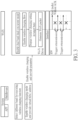
- FIG. 1 is a diagram illustrating a communication system according to one embodiment of the present invention.
- the communication system comprises a plurality of electronic devices 100, 180 and 190, wherein the electronic device 100 is capable of communicating with the electronic devices 180 and 190.
- the electronic device 100 comprises a processor 110, a storage device 120 comprising a program code 122 and a Wi-Fi driver 124, and a wireless communication module 130, wherein the wireless communication module 130 comprises at least a Wi-Fi chip.
- the electronic device 180 comprises an RF energy harvesting charge circuit 182 and a battery 184, wherein the RF energy harvesting charge circuit 182 can transfer the captured W-Fi signal to energy to charge the battery 184.
- the electronic device 100 may be a television, and the electronic device 180 may be a remote controller used for controlling the electronic device 100, but it's not a limitation of the present invention.
- the electronic device 100 can be any suitable device capable of generating Wi-Fi signals, and the electronic device 180 can be any device having wireless charging function.
- the electronic device 180 may communicate with the electronic device 100 by using Bluetooth, and the electronic device 180 may not have Wi-Fi receiver for processing the Wi-Fi signals. That is, for the electronic device 180, the Wi-Fi signal is only used for charging the battery 184.
- the processor 110 reads the program code 122 from the storage device 120, and executes the program code 122 to control the operation of the electronic device 100.
- the processor 110 executes the Wi-Fi driver 124 to have the wireless communication function.
- the processor 110 can enable or disable a wireless charging mode, wherein when the processor 110 enables the wireless charging mode, a packet retransmission mechanism is triggered so that the Wi-Fi packets can be automatically delivered in a continuous and high-density manner, so that the electronic device 180 has high wireless charging efficiency.
- FIG. 2 is a diagram illustrating a packet transmission method for wireless charging according to a first embodiment of the present invention.
- an application and a middle of a system side enables the wireless charging mode and provides a virtual media access control (MAC) address, wherein the virtual MAC address is user configurable parameter, and is different from a physical MAC address (i.e., a burned-in address on the hardware), that is the virtual MAC address does not correspond to any electronic device.
- the processor 110 executes the Wi-Fi driver 124 to enable a wireless charging flow, prepare wireless charging setting and generate a Wi-Fi packet.
- MAC media access control
- a header of the Wi-Fi packet comprises the virtual MAC address (i.e., the header of the Wi-Fi packet does not have any physical MAC address), and the Wi-Fi packet has a payload with large size or a maximum size.
- the processor 110 transmits the Wi-Fi packet to the wireless communication module 130 via an interface, wherein the interface may be Universal Serial Bus (USB) interface, Secure Digital Input/Output (SDIO) interface, Peripheral Component Interconnect Express (PCIe) interface, or any other suitable interface.
- USB Universal Serial Bus
- SDIO Secure Digital Input/Output
- PCIe Peripheral Component Interconnect Express
- the Wi-Fi packet comprises the virtual MAC address instead of the physical MAC address
- no electronic device will send an acknowledgement (ACK) back to the electronic device 100. If no ACK is received for a period of time, the wireless communication module 130 triggers a retransmission mechanism to retransmit the Wi-Fi packet.
- ACK acknowledgement
- the wireless communication module 130 because the wireless communication module 130 always sends the Wi-Fi packet with virtual MAC address, the wireless communication module 130 will not receive any ACK in response to the Wi-Fi packet, so the Wi-Fi packet is continuously retransmitted, and the RF energy harvesting charge circuit 182 can generate higher energy to charge the battery 184 efficiently due to the high-density Wi-Fi packets in the air.
- the retransmission of the Wi-Fi packet is performed by hardware circuits within the wireless communication module 130. Because the retransmission mechanism is triggered by hardware circuits instead of software or firmware, the wireless communication module 130 can have faster packet retransmission speed.
- Wi-Fi protocol Wi-Fi protocol
- the electronic device 180 can send battery information to the electronic device 100 to notify that the battery 184 is full.
- the processor 110 can disable the wireless charging mode and the wireless communication module 130 does not transmit the Wi-Fi packets with virtual MAC address, or the wireless communication module 130 can decrease the transmission density of the Wi-Fi packets (e.g., increase the packet transmission interval or shorten the packet transmission time/size).
- the processor 110 may periodically detect whether the packet retransmission stops or no Wi-Fi packet is transmitted. If the processor 110 detects that the packet retransmission stops, the processor 110 will enable the wireless charging mode again and generate another virtual MAC address or generate another Wi-Fi packet to the wireless communication module 130, to transmit the Wi-Fi packet.
- FIG. 3 is a diagram illustrating a packet transmission method for wireless charging according to a second embodiment of the present invention.
- the electronic device 100 has been communicated with the electronic device 190 by using a channel within a first band such as 5GHz band, and an application and a middle of a system side selects a second band such as 2.4GHz for wireless charging function.
- the system enables the wireless charging mode and provides a virtual MAC address.
- the processor 110 executes the Wi-Fi driver 124 to enable a dual band dual concurrent mode, so that the first band and the second band can be used to transmit packets simultaneously.
- the dual band dual concurrent mode is known by a person skilled in the art, so further descriptions are omitted here.
- the processor 110 further enables a wireless charging flow, prepares wireless charging setting and generates a Wi-Fi packet.
- a header of the Wi-Fi packet comprises the virtual MAC address, and the Wi-Fi packet has a payload with large size or a maximum size.
- the processor 110 transmits the Wi-Fi packet to the wireless communication module 130 via USB interface, SDIO interface or PCIe interface.
- the wireless communication module 130 starts to transmit the Wi-Fi packet, and the contents of the Wi-Fi packet are temporarily stored in a buffer within the wireless communication module 130.
- the Wi-Fi packet comprises the virtual MAC address instead of the physical MAC address, no electronic device will send an ACK back to the electronic device 100. If no ACK is received for a period of time, the wireless communication module 130 triggers a retransmission mechanism to retransmit the Wi-Fi packet.
- the wireless communication module 130 because the wireless communication module 130 always sends the Wi-Fi packet with virtual MAC address, the wireless communication module 130 will not receive any ACK in response to the Wi-Fi packet, so the Wi-Fi packet is continuously retransmitted, and the RF energy harvesting charge circuit 182 can generate higher energy to charge the battery 184 efficiently due to the high-density Wi-Fi packets in the air.
- the high-density Wi-Fi packet transmission will not affect the communications between the electronic devices 100 and 190.
- FIG. 4 is a diagram illustrating a packet transmission method for wireless charging according to a third embodiment of the present invention.
- an application and a middle of a system side enables the wireless charging mode and provides a MAC address.
- the processor 110 executes the Wi-Fi driver 124 to enable a wireless charging flow, prepare wireless charging setting and generate a Wi-Fi packet.
- a header of the Wi-Fi packet comprises the MAC address, and the Wi-Fi packet has a payload with large size or a maximum size.
- the processor 110 transmits the Wi-Fi packet to the wireless communication module 130 via USB interface, SDIO interface or PCIe interface.
- the wireless communication module 130 After obtaining the Wi-Fi packet, the wireless communication module 130 intentionally generates a wrong frame check sequence (FCS) or a wrong Cyclic redundancy check (CRC) according to the Wi-Fi packet, and the wireless communication module 130 writes the wrong FCS or wrong CRC into the Wi-Fi packet.
- FCS frame check sequence
- CRC Cyclic redundancy check
- FCS and CRC are for illustrative, in other embodiments, the FCS/CRC can be replaced by any other suitable error detection code that is used to determine if the packet is correct.
- the wireless communication module 130 starts to transmit the Wi-Fi packet with wrong FCS/CRC, and the contents of the Wi-Fi packet are temporarily stored in a buffer within the wireless communication module 130.
- the other electronic device such as 180 will determine that the received Wi-Fi packet has an error, so no electronic device will send an ACK back to the electronic device 100 in response to the Wi-Fi packet. If no ACK is received for a period of time, the wireless communication module 130 triggers a retransmission mechanism to retransmit the Wi-Fi packet.
- the wireless communication module 130 because the wireless communication module 130 always sends the Wi-Fi packet with wrong FCS/CRC, the wireless communication module 130 will not receive any ACK in response to the Wi-Fi packet, so the Wi-Fi packet is continuously retransmitted, and the RF energy harvesting charge circuit 182 can generate higher energy to charge the battery 184 efficiently due to the high-density Wi-Fi packets in the air.
- FIG. 5 is a diagram illustrating a packet transmission method for wireless charging according to a fourth embodiment of the present invention.
- the electronic device 100 has been communicated with the electronic device 190 by using a channel within first band such as 5GHz band, and an application and a middle of a system side selects a second band such as 2.4GHz for wireless charging function.
- the system enables the wireless charging mode and provides a MAC address.
- the processor 110 executes the Wi-Fi driver 124 to enable a dual band dual concurrent mode, so that the first band and the second band can be used to transmit packets simultaneously.
- the processor 110 further enables a wireless charging flow, prepare wireless charging setting and generate a Wi-Fi packet.
- a header of the Wi-Fi packet comprises the MAC address
- the Wi-Fi packet has a payload with large size or a maximum size.
- the processor 110 transmits the Wi-Fi packet to the wireless communication module 130 via USB interface, SDIO interface or PCIe interface.
- the wireless communication module 130 intentionally generates a wrong FCS or a wrong CRC according to the Wi-Fi packet, and the wireless communication module 130 writes the wrong FCS or wrong CRC into the Wi-Fi packet.
- the wireless communication module 130 starts to transmit the Wi-Fi packet with MAC address and wrong FCS/CRC, and the contents of the Wi-Fi packet are temporarily stored in a buffer within the wireless communication module 130.
- the Wi-Fi packet comprises MAC address and wrong FCS/CRC
- no electronic device will send an ACK back to the electronic device 100 in response to the Wi-Fi packet. If no ACK is received for a period of time, the wireless communication module 130 triggers a retransmission mechanism to retransmit the Wi-Fi packet.
- the wireless communication module 130 because the wireless communication module 130 always sends the Wi-Fi packet with MAC address and wrong FCS/CRC, the wireless communication module 130 will not receive any ACK in response to the Wi-Fi packet, so the Wi-Fi packet is continuously retransmitted, and the RF energy harvesting charge circuit 182 can generate higher energy to charge the battery 184 efficiently due to the high-density Wi-Fi packets in the air.
- a retransmission mechanism in communication system of the present invention, by controlling an electronic device to send a packet including content that is not recognized by other electronic devices to issue an acknowledgement, such that the packet comprises a virtual MAC address or a wrong error detection code, a retransmission mechanism can be triggered and the packet can be continuously retransmitted so that the other electronic device can generate higher energy to charge its battery. Therefore, the other electronic device can have better wireless charging efficiency.
Landscapes
- Engineering & Computer Science (AREA)
- Power Engineering (AREA)
- Computer Networks & Wireless Communication (AREA)
- Mobile Radio Communication Systems (AREA)
- Charge And Discharge Circuits For Batteries Or The Like (AREA)
- Selective Calling Equipment (AREA)
Abstract
Description
- The present invention relates to a wireless charging method.
- In the process of using radio frequency (RF) signals for wireless charging, in order to achieve better charging efficiency, an electronic device needs to continuously transmit packets and the transmission interval should be shortened as much as possible. However, because a packet generation speed is limited by a working frequency of a microprocessor within the electronic device, and the microprocessor usually has lower performance, the wireless charging efficiency cannot be further improved due to the limited packet transmission rate.
- It is therefore an objective of the present invention to provide a wireless charging method, which uses a Wi-Fi retransmission mechanism to continuously generate packets for a remote device to use the packets to charge its internal battery, to solve the above-mentioned problems.
- This is achieved by a control method of an electronic device according to claim 1, a circuitry within an electronic device according to claim 8, and an electronic device according to claim 10. The dependent claims pertain to corresponding further developments and improvements.
- As will be seen more clearly from the detailed description following below, a control method of an electronic device comprises the steps of enabling a wireless charging mode; generating a packet, wherein the packet comprises content that is not recognized by other electronic devices to issue an acknowledgement; and wirelessly transmitting the packet, and continuously retransmitting the packet.
- As will be seen more clearly from the detailed description following below, a circuitry within an electronic device is configured to perform the steps of: enabling a wireless charging mode; generating a packet, wherein the packet comprises content that is not recognized by other electronic devices to issue an acknowledgement; and wirelessly transmitting the packet, and continuously retransmitting the packet.
- As will be seen more clearly from the detailed description following below, an electronic device comprising a processor and a wireless communication module is disclosed. The processor is configured to enable a wireless charging mode and generate a packet, wherein the packet comprises content that is not recognized by other electronic devices to issue an acknowledgement. The wireless communication module is configured to wirelessly transmit the packet, and continuously retransmit the packet.
-
-
FIG. 1 is a diagram illustrating a communication system according to one embodiment of the present invention. -
FIG. 2 is a diagram illustrating a packet transmission method for wireless charging according to a first embodiment of the present invention. -
FIG. 3 is a diagram illustrating a packet transmission method for wireless charging according to a second embodiment of the present invention. -
FIG. 4 is a diagram illustrating a packet transmission method for wireless charging according to a third embodiment of the present invention. -
FIG. 5 is a diagram illustrating a packet transmission method for wireless charging according to a fourth embodiment of the present invention. - Certain terms are used throughout the following description and claims to refer to particular system components. As one skilled in the art will appreciate, manufacturers may refer to a component by different names. This document does not intend to distinguish between components that differ in name but not function. In the following discussion and in the claims, the terms "including" and "comprising" are used in an open-ended fashion, and thus should be interpreted to mean "including, but not limited to ...". The terms "couple" and "couples" are intended to mean either an indirect or a direct electrical connection. Thus, if a first device couples to a second device, that connection may be through a direct electrical connection, or through an indirect electrical connection via other devices and connections.
-
FIG. 1 is a diagram illustrating a communication system according to one embodiment of the present invention. As shown inFIG. 1 , the communication system comprises a plurality ofelectronic devices electronic device 100 is capable of communicating with theelectronic devices electronic device 100 comprises aprocessor 110, astorage device 120 comprising aprogram code 122 and a Wi-Fi driver 124, and awireless communication module 130, wherein thewireless communication module 130 comprises at least a Wi-Fi chip. Theelectronic device 180 comprises an RF energyharvesting charge circuit 182 and abattery 184, wherein the RF energyharvesting charge circuit 182 can transfer the captured W-Fi signal to energy to charge thebattery 184. - In one embodiment, the
electronic device 100 may be a television, and theelectronic device 180 may be a remote controller used for controlling theelectronic device 100, but it's not a limitation of the present invention. In another embodiment, theelectronic device 100 can be any suitable device capable of generating Wi-Fi signals, and theelectronic device 180 can be any device having wireless charging function. - In one embodiment, the
electronic device 180 may communicate with theelectronic device 100 by using Bluetooth, and theelectronic device 180 may not have Wi-Fi receiver for processing the Wi-Fi signals. That is, for theelectronic device 180, the Wi-Fi signal is only used for charging thebattery 184. - In the operation of the
electronic device 100, theprocessor 110 reads theprogram code 122 from thestorage device 120, and executes theprogram code 122 to control the operation of theelectronic device 100. In addition, theprocessor 110 executes the Wi-Fi driver 124 to have the wireless communication function. In this embodiment, theprocessor 110 can enable or disable a wireless charging mode, wherein when theprocessor 110 enables the wireless charging mode, a packet retransmission mechanism is triggered so that the Wi-Fi packets can be automatically delivered in a continuous and high-density manner, so that theelectronic device 180 has high wireless charging efficiency. -
FIG. 2 is a diagram illustrating a packet transmission method for wireless charging according to a first embodiment of the present invention. Referring toFIG. 1 andFIG. 2 together, initially an application and a middle of a system side enables the wireless charging mode and provides a virtual media access control (MAC) address, wherein the virtual MAC address is user configurable parameter, and is different from a physical MAC address (i.e., a burned-in address on the hardware), that is the virtual MAC address does not correspond to any electronic device. Then, theprocessor 110 executes the Wi-Fi driver 124 to enable a wireless charging flow, prepare wireless charging setting and generate a Wi-Fi packet. In this embodiment, a header of the Wi-Fi packet comprises the virtual MAC address (i.e., the header of the Wi-Fi packet does not have any physical MAC address), and the Wi-Fi packet has a payload with large size or a maximum size. Then, theprocessor 110 transmits the Wi-Fi packet to thewireless communication module 130 via an interface, wherein the interface may be Universal Serial Bus (USB) interface, Secure Digital Input/Output (SDIO) interface, Peripheral Component Interconnect Express (PCIe) interface, or any other suitable interface. After obtaining the Wi-Fi packet, thewireless communication module 130 starts to transmit the Wi-Fi packet, and the contents of the Wi-Fi packet are temporarily stored in a buffer within thewireless communication module 130 for the following packet retransmission. Then, because the Wi-Fi packet comprises the virtual MAC address instead of the physical MAC address, no electronic device will send an acknowledgement (ACK) back to theelectronic device 100. If no ACK is received for a period of time, thewireless communication module 130 triggers a retransmission mechanism to retransmit the Wi-Fi packet. - In light of above, because the
wireless communication module 130 always sends the Wi-Fi packet with virtual MAC address, thewireless communication module 130 will not receive any ACK in response to the Wi-Fi packet, so the Wi-Fi packet is continuously retransmitted, and the RF energyharvesting charge circuit 182 can generate higher energy to charge thebattery 184 efficiently due to the high-density Wi-Fi packets in the air. - In one embodiment, without a limitation of the present invention, the retransmission of the Wi-Fi packet is performed by hardware circuits within the
wireless communication module 130. Because the retransmission mechanism is triggered by hardware circuits instead of software or firmware, thewireless communication module 130 can have faster packet retransmission speed. - It is noted that the retransmission mechanism is defined in Wi-Fi protocol, so the retransmission of the Wi-Fi packets follows the Wi-Fi specification and does not affect other devices.
- In one embodiment, if the
battery 184 has been charged with enough energy, theelectronic device 180 can send battery information to theelectronic device 100 to notify that thebattery 184 is full. After receiving this battery information, theprocessor 110 can disable the wireless charging mode and thewireless communication module 130 does not transmit the Wi-Fi packets with virtual MAC address, or thewireless communication module 130 can decrease the transmission density of the Wi-Fi packets (e.g., increase the packet transmission interval or shorten the packet transmission time/size). - In addition, sometimes a time of packet transmission or number of packet retransmissions may be limited, so the
processor 110 may periodically detect whether the packet retransmission stops or no Wi-Fi packet is transmitted. If theprocessor 110 detects that the packet retransmission stops, theprocessor 110 will enable the wireless charging mode again and generate another virtual MAC address or generate another Wi-Fi packet to thewireless communication module 130, to transmit the Wi-Fi packet. -
FIG. 3 is a diagram illustrating a packet transmission method for wireless charging according to a second embodiment of the present invention. Referring toFIG. 1 andFIG. 3 together, initially theelectronic device 100 has been communicated with theelectronic device 190 by using a channel within a first band such as 5GHz band, and an application and a middle of a system side selects a second band such as 2.4GHz for wireless charging function. In addition, the system enables the wireless charging mode and provides a virtual MAC address. Then, theprocessor 110 executes the Wi-Fi driver 124 to enable a dual band dual concurrent mode, so that the first band and the second band can be used to transmit packets simultaneously. It is noted that the dual band dual concurrent mode is known by a person skilled in the art, so further descriptions are omitted here. In addition, theprocessor 110 further enables a wireless charging flow, prepares wireless charging setting and generates a Wi-Fi packet. In this embodiment, a header of the Wi-Fi packet comprises the virtual MAC address, and the Wi-Fi packet has a payload with large size or a maximum size. Then, theprocessor 110 transmits the Wi-Fi packet to thewireless communication module 130 via USB interface, SDIO interface or PCIe interface. After obtaining the Wi-Fi packet, thewireless communication module 130 starts to transmit the Wi-Fi packet, and the contents of the Wi-Fi packet are temporarily stored in a buffer within thewireless communication module 130. Then, because the Wi-Fi packet comprises the virtual MAC address instead of the physical MAC address, no electronic device will send an ACK back to theelectronic device 100. If no ACK is received for a period of time, thewireless communication module 130 triggers a retransmission mechanism to retransmit the Wi-Fi packet. - In light of above, because the
wireless communication module 130 always sends the Wi-Fi packet with virtual MAC address, thewireless communication module 130 will not receive any ACK in response to the Wi-Fi packet, so the Wi-Fi packet is continuously retransmitted, and the RF energyharvesting charge circuit 182 can generate higher energy to charge thebattery 184 efficiently due to the high-density Wi-Fi packets in the air. In addition, because of the dual band dual concurrent mode, the high-density Wi-Fi packet transmission will not affect the communications between theelectronic devices -
FIG. 4 is a diagram illustrating a packet transmission method for wireless charging according to a third embodiment of the present invention. Referring toFIG. 1 andFIG. 4 together, initially an application and a middle of a system side enables the wireless charging mode and provides a MAC address. Then, theprocessor 110 executes the Wi-Fi driver 124 to enable a wireless charging flow, prepare wireless charging setting and generate a Wi-Fi packet. In this embodiment, a header of the Wi-Fi packet comprises the MAC address, and the Wi-Fi packet has a payload with large size or a maximum size. Then, theprocessor 110 transmits the Wi-Fi packet to thewireless communication module 130 via USB interface, SDIO interface or PCIe interface. After obtaining the Wi-Fi packet, thewireless communication module 130 intentionally generates a wrong frame check sequence (FCS) or a wrong Cyclic redundancy check (CRC) according to the Wi-Fi packet, and thewireless communication module 130 writes the wrong FCS or wrong CRC into the Wi-Fi packet. It is noted that the above-mentioned FCS and CRC are for illustrative, in other embodiments, the FCS/CRC can be replaced by any other suitable error detection code that is used to determine if the packet is correct. Then, thewireless communication module 130 starts to transmit the Wi-Fi packet with wrong FCS/CRC, and the contents of the Wi-Fi packet are temporarily stored in a buffer within thewireless communication module 130. Then, because the Wi-Fi packet comprises wrong FCS/CRC, the other electronic device such as 180 will determine that the received Wi-Fi packet has an error, so no electronic device will send an ACK back to theelectronic device 100 in response to the Wi-Fi packet. If no ACK is received for a period of time, thewireless communication module 130 triggers a retransmission mechanism to retransmit the Wi-Fi packet. - In light of above, because the
wireless communication module 130 always sends the Wi-Fi packet with wrong FCS/CRC, thewireless communication module 130 will not receive any ACK in response to the Wi-Fi packet, so the Wi-Fi packet is continuously retransmitted, and the RF energyharvesting charge circuit 182 can generate higher energy to charge thebattery 184 efficiently due to the high-density Wi-Fi packets in the air. -
FIG. 5 is a diagram illustrating a packet transmission method for wireless charging according to a fourth embodiment of the present invention. Referring toFIG. 1 andFIG. 5 together, initially theelectronic device 100 has been communicated with theelectronic device 190 by using a channel within first band such as 5GHz band, and an application and a middle of a system side selects a second band such as 2.4GHz for wireless charging function. In addition, the system enables the wireless charging mode and provides a MAC address. Then, theprocessor 110 executes the Wi-Fi driver 124 to enable a dual band dual concurrent mode, so that the first band and the second band can be used to transmit packets simultaneously. In addition, theprocessor 110 further enables a wireless charging flow, prepare wireless charging setting and generate a Wi-Fi packet. In this embodiment, a header of the Wi-Fi packet comprises the MAC address, and the Wi-Fi packet has a payload with large size or a maximum size. Then, theprocessor 110 transmits the Wi-Fi packet to thewireless communication module 130 via USB interface, SDIO interface or PCIe interface. After obtaining the Wi-Fi packet, thewireless communication module 130 intentionally generates a wrong FCS or a wrong CRC according to the Wi-Fi packet, and thewireless communication module 130 writes the wrong FCS or wrong CRC into the Wi-Fi packet. Then, thewireless communication module 130 starts to transmit the Wi-Fi packet with MAC address and wrong FCS/CRC, and the contents of the Wi-Fi packet are temporarily stored in a buffer within thewireless communication module 130. Then, because the Wi-Fi packet comprises MAC address and wrong FCS/CRC, no electronic device will send an ACK back to theelectronic device 100 in response to the Wi-Fi packet. If no ACK is received for a period of time, thewireless communication module 130 triggers a retransmission mechanism to retransmit the Wi-Fi packet. - In light of above, because the
wireless communication module 130 always sends the Wi-Fi packet with MAC address and wrong FCS/CRC, thewireless communication module 130 will not receive any ACK in response to the Wi-Fi packet, so the Wi-Fi packet is continuously retransmitted, and the RF energyharvesting charge circuit 182 can generate higher energy to charge thebattery 184 efficiently due to the high-density Wi-Fi packets in the air. - Briefly summarized, in communication system of the present invention, by controlling an electronic device to send a packet including content that is not recognized by other electronic devices to issue an acknowledgement, such that the packet comprises a virtual MAC address or a wrong error detection code, a retransmission mechanism can be triggered and the packet can be continuously retransmitted so that the other electronic device can generate higher energy to charge its battery. Therefore, the other electronic device can have better wireless charging efficiency.
Claims (15)
- A control method of an electronic device (100), comprising:enabling a wireless charging mode;generating a packet, wherein the packet comprises content that is not recognized by other electronic devices (180, 190) to issue an acknowledgement; andwirelessly transmitting the packet, and continuously retransmitting the packet.
- The control method of claim 1, wherein the step of the generating the packet comprises:
generating the packet having a virtual media access control (MAC) address. - The control method of claim 1, wherein the step of generating the packet comprises:
generating the packet having a wrong error-detection code. - The control method of claim 1, wherein the step of wirelessly transmitting the packet comprises:using a first frequency band to transmit the packet;and the control method further comprises
wirelessly communicating another electronic device by using a second frequency band different from the first frequency band. - The control method of claim 4, wherein the packet is a Wi-Fi packet, the first frequency band is a 2.4 GHz band, and the second frequency band is a 5GHz frequency band.
- The control method of claim 1, 2, 3, 4 or 5, further comprising:
after receiving battery information indicating that a battery of another electronic device has been charged with enough energy, disabling the wireless charging mode or decreasing a retransmission density of the packet. - The control method of claim 1, 2, 3, 4, 5 or 6, further comprising:detecting whether the packet retransmission stops or no packet is transmitted to generate a detection result;in response to the detection result indicating that the packet retransmission stops or no packet is transmitted, generating another packet, and wirelessly transmitting the another packet, and continuously retransmitting the another packet.
- A circuitry within an electronic device (100), configured to perform the steps ofenabling a wireless charging mode;generating a packet, wherein the packet comprises content that is not recognized by other electronic devices to issue an acknowledgement; andwirelessly transmitting the packet, and continuously retransmitting the packet.
- The circuitry of claim 8, wherein the step of the generating the packet comprises:
generating the packet having a virtual media access control (MAC) address or generating the packet having a wrong error-detection code. - An electronic device (100), comprising:a processor (110), configured to enable a wireless charging mode and generate a packet; anda wireless communication module (130), configured to wirelessly transmit the packet, and continuously retransmit the packet;wherein the packet comprises content that is not recognized by other electronic devices (180, 190) to issue an acknowledgement.
- The electronic device (100) of claim 10, wherein the processor generates the packet having a virtual media access control (MAC) address.
- The electronic device (100) of claim 10, wherein the wireless communication module (130) generates a wrong error-detection code, and writes the wrong error-detection code into the packet.
- The electronic device (100) of claim 10, 11 or 12, wherein after wirelessly transmitting the packet, if no acknowledgement in response to the packet is received, using a hardware circuit within the wireless communication module to trigger a retransmission mechanism to retransmit the packet.
- The electronic device (100) of claim 10, 11, 12 or 13, wherein after receiving battery information indicating that a battery of another electronic device has been charged with enough energy, the processor (110) disables the wireless charging mode or decreasing a retransmission density of the packet.
- The electronic device (100) of claim 10, 11, 12, 13 or 14, wherein the processor (110) detects whether the packet retransmission stops or no packet is transmitted to generate a detection result; and in response to the detection result indicating that the packet retransmission stops or no packet is transmitted, the processor (110) generates another packet, and wirelessly transmits the another packet, and continuously retransmitting the another packet.
Applications Claiming Priority (2)
| Application Number | Priority Date | Filing Date | Title |
|---|---|---|---|
| US202263318804P | 2022-03-11 | 2022-03-11 | |
| US18/117,476 US20230291239A1 (en) | 2022-03-11 | 2023-03-06 | Continuous packet transmission for wireless charging |
Publications (1)
| Publication Number | Publication Date |
|---|---|
| EP4243244A1 true EP4243244A1 (en) | 2023-09-13 |
Family
ID=85556526
Family Applications (1)
| Application Number | Title | Priority Date | Filing Date |
|---|---|---|---|
| EP23160770.6A Withdrawn EP4243244A1 (en) | 2022-03-11 | 2023-03-08 | Continuous packet transmission for wireless charging |
Country Status (3)
| Country | Link |
|---|---|
| US (1) | US20230291239A1 (en) |
| EP (1) | EP4243244A1 (en) |
| TW (1) | TWI841277B (en) |
Citations (3)
| Publication number | Priority date | Publication date | Assignee | Title |
|---|---|---|---|---|
| US20140111153A1 (en) * | 2012-10-19 | 2014-04-24 | Samsung Electronics Co., Ltd. | Wireless power transmitters and receivers, and method for permitting a wireless power receiver by a wireless power transmitter |
| US20170181110A1 (en) * | 2015-12-16 | 2017-06-22 | Intel Corporation | Power harvesting |
| US20200389060A1 (en) * | 2018-04-16 | 2020-12-10 | Lg Electronics Inc. | Apparatus and method for performing data stream transmission in wireless power transfer system |
Family Cites Families (17)
| Publication number | Priority date | Publication date | Assignee | Title |
|---|---|---|---|---|
| US7400253B2 (en) * | 2005-08-04 | 2008-07-15 | Mhcmos, Llc | Harvesting ambient radio frequency electromagnetic energy for powering wireless electronic devices, sensors and sensor networks and applications thereof |
| US20090086657A1 (en) * | 2007-10-01 | 2009-04-02 | Comsys Communication & Signal Processing Ltd. | Hybrid automatic repeat request buffer flushing mechanism |
| CN106230062B (en) * | 2011-09-08 | 2019-06-28 | 三星电子株式会社 | Wireless power receiver and control method thereof |
| US9397522B2 (en) * | 2012-03-08 | 2016-07-19 | Ricoh Co., Ltd. | Method and system to control ambient RF energy for wireless devices |
| US11502551B2 (en) * | 2012-07-06 | 2022-11-15 | Energous Corporation | Wirelessly charging multiple wireless-power receivers using different subsets of an antenna array to focus energy at different locations |
| US9685791B2 (en) * | 2012-07-09 | 2017-06-20 | Sandisk Technologies Llc | Apparatus and method for controlling wireless power transfer to mobile devices |
| US9553473B2 (en) * | 2013-02-04 | 2017-01-24 | Ossia Inc. | Systems and methods for optimally delivering pulsed wireless power |
| EP3005522B1 (en) * | 2013-06-04 | 2018-04-11 | Koninklijke Philips N.V. | Wireless inductive power transfer |
| MX352346B (en) * | 2014-03-31 | 2017-11-22 | Koninklijke Philips Nv | Wireless inductive power transfer. |
| WO2016037100A1 (en) * | 2014-09-05 | 2016-03-10 | University Of Washington | Power transmission using wireless communication signals |
| US9705569B2 (en) * | 2015-05-26 | 2017-07-11 | Samsung Electro-Mechanics Co., Ltd. | Wireless power transmitter and method for controlling the same |
| US11497964B1 (en) * | 2015-09-17 | 2022-11-15 | Canary Medical Switzerland Ag | Devices, systems and methods for using and monitoring sports equipment and sports activities |
| JP6773616B2 (en) * | 2017-08-21 | 2020-10-21 | 株式会社東芝 | Wireless communication device and wireless communication method |
| US20190181685A1 (en) * | 2017-12-08 | 2019-06-13 | Atmosic Technologies Inc. | Method and apparatus for wireless transmission and reception of power |
| US10999848B2 (en) * | 2018-10-01 | 2021-05-04 | Research & Business Foundation Sungkyunkwan University | Sparse-coded ambient backscatter communication method and system |
| CN114365381A (en) * | 2019-07-10 | 2022-04-15 | 优林克实验室公司 | System, apparatus and method for establishing a wireless link |
| JP6864801B1 (en) * | 2020-08-18 | 2021-04-28 | 株式会社Space Power Technologies | Power transmission device, power reception device, power transmission control method, power transmission control program, power reception control method, and power reception control program |
-
2023
- 2023-03-06 US US18/117,476 patent/US20230291239A1/en active Pending
- 2023-03-07 TW TW112108192A patent/TWI841277B/en active
- 2023-03-08 EP EP23160770.6A patent/EP4243244A1/en not_active Withdrawn
Patent Citations (3)
| Publication number | Priority date | Publication date | Assignee | Title |
|---|---|---|---|---|
| US20140111153A1 (en) * | 2012-10-19 | 2014-04-24 | Samsung Electronics Co., Ltd. | Wireless power transmitters and receivers, and method for permitting a wireless power receiver by a wireless power transmitter |
| US20170181110A1 (en) * | 2015-12-16 | 2017-06-22 | Intel Corporation | Power harvesting |
| US20200389060A1 (en) * | 2018-04-16 | 2020-12-10 | Lg Electronics Inc. | Apparatus and method for performing data stream transmission in wireless power transfer system |
Also Published As
| Publication number | Publication date |
|---|---|
| TWI841277B (en) | 2024-05-01 |
| TW202337247A (en) | 2023-09-16 |
| US20230291239A1 (en) | 2023-09-14 |
Similar Documents
| Publication | Publication Date | Title |
|---|---|---|
| CN106559739B (en) | Lightweight data transmission method suitable for Bluetooth low-power wireless communication system | |
| KR101668768B1 (en) | Systems and methods for packet relaying | |
| US10667285B2 (en) | ZigBee, Thread and BLE co-existence with 2.4 GHz WiFi | |
| US10728006B2 (en) | Device that convey data for a block acknowledge (ACK) | |
| JP7081623B2 (en) | Information processing equipment, communication systems, information processing methods and programs | |
| US9859969B2 (en) | Relay apparatus and method of controlling relay apparatus | |
| US7706338B2 (en) | Method and system for a bandwidth efficient medium access control (MAC) protocol | |
| EP3982611B1 (en) | Data processing method and device, and terminal | |
| CN100423468C (en) | Wireless communication device, method thereof, and wireless communication system using the same | |
| US10869218B2 (en) | Information processing devices and communication system for controlling transmission of acknowledgement and data | |
| US20200235863A1 (en) | Wireless lan communication apparatus, wireless lan communication method, and wireless lan communication program | |
| EP4243244A1 (en) | Continuous packet transmission for wireless charging | |
| TW201601579A (en) | Media configuration time method and its wireless transmission system | |
| WO2002023853A2 (en) | Hardware mac | |
| US9112587B2 (en) | Transmitting/receiving device and method for transmitting data in a radio network | |
| CN1239619A (en) | Method and apparatus for determining the activation status of a receiving station in a wireless communication system | |
| US8780934B2 (en) | Method for performing serial transport communication, and associated device | |
| CN116744362A (en) | Control methods of electronic equipment and related circuits and electronic equipment | |
| US8538336B2 (en) | Radio LSI device and interfering wave detecting circuit | |
| KR101616128B1 (en) | Apparatus and method for transmitting/receiving data in point to point communication | |
| US20220330255A1 (en) | Communication system, wireless terminal, and wireless communication method | |
| CN121176079A (en) | Wireless communication device and wireless communication method | |
| WO2025243846A1 (en) | Communication method and communication device | |
| CN115687198A (en) | A device communication device and method based on SPI | |
| CN112822664A (en) | Data communication method and device in smart home environment |
Legal Events
| Date | Code | Title | Description |
|---|---|---|---|
| PUAI | Public reference made under article 153(3) epc to a published international application that has entered the european phase |
Free format text: ORIGINAL CODE: 0009012 |
|
| STAA | Information on the status of an ep patent application or granted ep patent |
Free format text: STATUS: THE APPLICATION HAS BEEN PUBLISHED |
|
| AK | Designated contracting states |
Kind code of ref document: A1 Designated state(s): AL AT BE BG CH CY CZ DE DK EE ES FI FR GB GR HR HU IE IS IT LI LT LU LV MC ME MK MT NL NO PL PT RO RS SE SI SK SM TR |
|
| STAA | Information on the status of an ep patent application or granted ep patent |
Free format text: STATUS: REQUEST FOR EXAMINATION WAS MADE |
|
| 17P | Request for examination filed |
Effective date: 20240312 |
|
| RBV | Designated contracting states (corrected) |
Designated state(s): AL AT BE BG CH CY CZ DE DK EE ES FI FR GB GR HR HU IE IS IT LI LT LU LV MC ME MK MT NL NO PL PT RO RS SE SI SK SM TR |
|
| STAA | Information on the status of an ep patent application or granted ep patent |
Free format text: STATUS: EXAMINATION IS IN PROGRESS |
|
| 17Q | First examination report despatched |
Effective date: 20250801 |
|
| STAA | Information on the status of an ep patent application or granted ep patent |
Free format text: STATUS: THE APPLICATION HAS BEEN WITHDRAWN |
|
| 18W | Application withdrawn |
Effective date: 20251118 |