EP4243149A1 - Novel additive for nonaqueous electrolyte, and lithium secondary battery comprising same - Google Patents
Novel additive for nonaqueous electrolyte, and lithium secondary battery comprising same Download PDFInfo
- Publication number
- EP4243149A1 EP4243149A1 EP22895872.4A EP22895872A EP4243149A1 EP 4243149 A1 EP4243149 A1 EP 4243149A1 EP 22895872 A EP22895872 A EP 22895872A EP 4243149 A1 EP4243149 A1 EP 4243149A1
- Authority
- EP
- European Patent Office
- Prior art keywords
- structural formula
- group
- carbon atoms
- formula
- secondary battery
- Prior art date
- Legal status (The legal status is an assumption and is not a legal conclusion. Google has not performed a legal analysis and makes no representation as to the accuracy of the status listed.)
- Granted
Links
Images


Classifications
-
- H—ELECTRICITY
- H01—ELECTRIC ELEMENTS
- H01M—PROCESSES OR MEANS, e.g. BATTERIES, FOR THE DIRECT CONVERSION OF CHEMICAL ENERGY INTO ELECTRICAL ENERGY
- H01M4/00—Electrodes
- H01M4/02—Electrodes composed of, or comprising, active material
- H01M4/36—Selection of substances as active materials, active masses, active liquids
- H01M4/48—Selection of substances as active materials, active masses, active liquids of inorganic oxides or hydroxides
- H01M4/50—Selection of substances as active materials, active masses, active liquids of inorganic oxides or hydroxides of manganese
- H01M4/505—Selection of substances as active materials, active masses, active liquids of inorganic oxides or hydroxides of manganese of mixed oxides or hydroxides containing manganese for inserting or intercalating light metals, e.g. LiMn2O4 or LiMn2OxFy
-
- C—CHEMISTRY; METALLURGY
- C07—ORGANIC CHEMISTRY
- C07C—ACYCLIC OR CARBOCYCLIC COMPOUNDS
- C07C311/00—Amides of sulfonic acids, i.e. compounds having singly-bound oxygen atoms of sulfo groups replaced by nitrogen atoms, not being part of nitro or nitroso groups
- C07C311/48—Amides of sulfonic acids, i.e. compounds having singly-bound oxygen atoms of sulfo groups replaced by nitrogen atoms, not being part of nitro or nitroso groups having nitrogen atoms of sulfonamide groups further bound to another hetero atom
-
- H—ELECTRICITY
- H01—ELECTRIC ELEMENTS
- H01M—PROCESSES OR MEANS, e.g. BATTERIES, FOR THE DIRECT CONVERSION OF CHEMICAL ENERGY INTO ELECTRICAL ENERGY
- H01M10/00—Secondary cells; Manufacture thereof
- H01M10/05—Accumulators with non-aqueous electrolyte
- H01M10/052—Li-accumulators
- H01M10/0525—Rocking-chair batteries, i.e. batteries with lithium insertion or intercalation in both electrodes; Lithium-ion batteries
-
- H—ELECTRICITY
- H01—ELECTRIC ELEMENTS
- H01M—PROCESSES OR MEANS, e.g. BATTERIES, FOR THE DIRECT CONVERSION OF CHEMICAL ENERGY INTO ELECTRICAL ENERGY
- H01M10/00—Secondary cells; Manufacture thereof
- H01M10/05—Accumulators with non-aqueous electrolyte
- H01M10/056—Accumulators with non-aqueous electrolyte characterised by the materials used as electrolytes, e.g. mixed inorganic/organic electrolytes
- H01M10/0564—Accumulators with non-aqueous electrolyte characterised by the materials used as electrolytes, e.g. mixed inorganic/organic electrolytes the electrolyte being constituted of organic materials only
- H01M10/0566—Liquid materials
- H01M10/0567—Liquid materials characterised by the additives
-
- H—ELECTRICITY
- H01—ELECTRIC ELEMENTS
- H01M—PROCESSES OR MEANS, e.g. BATTERIES, FOR THE DIRECT CONVERSION OF CHEMICAL ENERGY INTO ELECTRICAL ENERGY
- H01M10/00—Secondary cells; Manufacture thereof
- H01M10/05—Accumulators with non-aqueous electrolyte
- H01M10/056—Accumulators with non-aqueous electrolyte characterised by the materials used as electrolytes, e.g. mixed inorganic/organic electrolytes
- H01M10/0564—Accumulators with non-aqueous electrolyte characterised by the materials used as electrolytes, e.g. mixed inorganic/organic electrolytes the electrolyte being constituted of organic materials only
- H01M10/0566—Liquid materials
- H01M10/0568—Liquid materials characterised by the solutes
-
- H—ELECTRICITY
- H01—ELECTRIC ELEMENTS
- H01M—PROCESSES OR MEANS, e.g. BATTERIES, FOR THE DIRECT CONVERSION OF CHEMICAL ENERGY INTO ELECTRICAL ENERGY
- H01M10/00—Secondary cells; Manufacture thereof
- H01M10/05—Accumulators with non-aqueous electrolyte
- H01M10/056—Accumulators with non-aqueous electrolyte characterised by the materials used as electrolytes, e.g. mixed inorganic/organic electrolytes
- H01M10/0564—Accumulators with non-aqueous electrolyte characterised by the materials used as electrolytes, e.g. mixed inorganic/organic electrolytes the electrolyte being constituted of organic materials only
- H01M10/0566—Liquid materials
- H01M10/0569—Liquid materials characterised by the solvents
-
- H—ELECTRICITY
- H01—ELECTRIC ELEMENTS
- H01M—PROCESSES OR MEANS, e.g. BATTERIES, FOR THE DIRECT CONVERSION OF CHEMICAL ENERGY INTO ELECTRICAL ENERGY
- H01M4/00—Electrodes
- H01M4/02—Electrodes composed of, or comprising, active material
- H01M4/36—Selection of substances as active materials, active masses, active liquids
- H01M4/38—Selection of substances as active materials, active masses, active liquids of elements or alloys
- H01M4/386—Silicon or alloys based on silicon
-
- H—ELECTRICITY
- H01—ELECTRIC ELEMENTS
- H01M—PROCESSES OR MEANS, e.g. BATTERIES, FOR THE DIRECT CONVERSION OF CHEMICAL ENERGY INTO ELECTRICAL ENERGY
- H01M4/00—Electrodes
- H01M4/02—Electrodes composed of, or comprising, active material
- H01M4/36—Selection of substances as active materials, active masses, active liquids
- H01M4/48—Selection of substances as active materials, active masses, active liquids of inorganic oxides or hydroxides
- H01M4/483—Selection of substances as active materials, active masses, active liquids of inorganic oxides or hydroxides for non-aqueous cells
-
- H—ELECTRICITY
- H01—ELECTRIC ELEMENTS
- H01M—PROCESSES OR MEANS, e.g. BATTERIES, FOR THE DIRECT CONVERSION OF CHEMICAL ENERGY INTO ELECTRICAL ENERGY
- H01M4/00—Electrodes
- H01M4/02—Electrodes composed of, or comprising, active material
- H01M4/36—Selection of substances as active materials, active masses, active liquids
- H01M4/48—Selection of substances as active materials, active masses, active liquids of inorganic oxides or hydroxides
- H01M4/485—Selection of substances as active materials, active masses, active liquids of inorganic oxides or hydroxides of mixed oxides or hydroxides for inserting or intercalating light metals, e.g. LiTi2O4 or LiTi2OxFy
-
- H—ELECTRICITY
- H01—ELECTRIC ELEMENTS
- H01M—PROCESSES OR MEANS, e.g. BATTERIES, FOR THE DIRECT CONVERSION OF CHEMICAL ENERGY INTO ELECTRICAL ENERGY
- H01M4/00—Electrodes
- H01M4/02—Electrodes composed of, or comprising, active material
- H01M4/36—Selection of substances as active materials, active masses, active liquids
- H01M4/48—Selection of substances as active materials, active masses, active liquids of inorganic oxides or hydroxides
- H01M4/52—Selection of substances as active materials, active masses, active liquids of inorganic oxides or hydroxides of nickel, cobalt or iron
- H01M4/525—Selection of substances as active materials, active masses, active liquids of inorganic oxides or hydroxides of nickel, cobalt or iron of mixed oxides or hydroxides containing iron, cobalt or nickel for inserting or intercalating light metals, e.g. LiNiO2, LiCoO2 or LiCoOxFy
-
- H—ELECTRICITY
- H01—ELECTRIC ELEMENTS
- H01M—PROCESSES OR MEANS, e.g. BATTERIES, FOR THE DIRECT CONVERSION OF CHEMICAL ENERGY INTO ELECTRICAL ENERGY
- H01M4/00—Electrodes
- H01M4/02—Electrodes composed of, or comprising, active material
- H01M4/36—Selection of substances as active materials, active masses, active liquids
- H01M4/58—Selection of substances as active materials, active masses, active liquids of inorganic compounds other than oxides or hydroxides, e.g. sulfides, selenides, tellurides, halogenides or LiCoFy; of polyanionic structures, e.g. phosphates, silicates or borates
- H01M4/583—Carbonaceous material, e.g. graphite-intercalation compounds or CFx
-
- H—ELECTRICITY
- H01—ELECTRIC ELEMENTS
- H01M—PROCESSES OR MEANS, e.g. BATTERIES, FOR THE DIRECT CONVERSION OF CHEMICAL ENERGY INTO ELECTRICAL ENERGY
- H01M4/00—Electrodes
- H01M4/02—Electrodes composed of, or comprising, active material
- H01M4/36—Selection of substances as active materials, active masses, active liquids
- H01M4/58—Selection of substances as active materials, active masses, active liquids of inorganic compounds other than oxides or hydroxides, e.g. sulfides, selenides, tellurides, halogenides or LiCoFy; of polyanionic structures, e.g. phosphates, silicates or borates
- H01M4/583—Carbonaceous material, e.g. graphite-intercalation compounds or CFx
- H01M4/587—Carbonaceous material, e.g. graphite-intercalation compounds or CFx for inserting or intercalating light metals
-
- H—ELECTRICITY
- H01—ELECTRIC ELEMENTS
- H01M—PROCESSES OR MEANS, e.g. BATTERIES, FOR THE DIRECT CONVERSION OF CHEMICAL ENERGY INTO ELECTRICAL ENERGY
- H01M50/00—Constructional details or processes of manufacture of the non-active parts of electrochemical cells other than fuel cells, e.g. hybrid cells
- H01M50/40—Separators; Membranes; Diaphragms; Spacing elements inside cells
- H01M50/46—Separators, membranes or diaphragms characterised by their combination with electrodes
-
- C—CHEMISTRY; METALLURGY
- C07—ORGANIC CHEMISTRY
- C07C—ACYCLIC OR CARBOCYCLIC COMPOUNDS
- C07C2601/00—Systems containing only non-condensed rings
- C07C2601/12—Systems containing only non-condensed rings with a six-membered ring
- C07C2601/14—The ring being saturated
-
- H—ELECTRICITY
- H01—ELECTRIC ELEMENTS
- H01M—PROCESSES OR MEANS, e.g. BATTERIES, FOR THE DIRECT CONVERSION OF CHEMICAL ENERGY INTO ELECTRICAL ENERGY
- H01M4/00—Electrodes
- H01M4/02—Electrodes composed of, or comprising, active material
- H01M2004/026—Electrodes composed of, or comprising, active material characterised by the polarity
- H01M2004/027—Negative electrodes
-
- H—ELECTRICITY
- H01—ELECTRIC ELEMENTS
- H01M—PROCESSES OR MEANS, e.g. BATTERIES, FOR THE DIRECT CONVERSION OF CHEMICAL ENERGY INTO ELECTRICAL ENERGY
- H01M4/00—Electrodes
- H01M4/02—Electrodes composed of, or comprising, active material
- H01M2004/026—Electrodes composed of, or comprising, active material characterised by the polarity
- H01M2004/028—Positive electrodes
-
- H—ELECTRICITY
- H01—ELECTRIC ELEMENTS
- H01M—PROCESSES OR MEANS, e.g. BATTERIES, FOR THE DIRECT CONVERSION OF CHEMICAL ENERGY INTO ELECTRICAL ENERGY
- H01M2300/00—Electrolytes
- H01M2300/0017—Non-aqueous electrolytes
- H01M2300/0025—Organic electrolyte
-
- H—ELECTRICITY
- H01—ELECTRIC ELEMENTS
- H01M—PROCESSES OR MEANS, e.g. BATTERIES, FOR THE DIRECT CONVERSION OF CHEMICAL ENERGY INTO ELECTRICAL ENERGY
- H01M2300/00—Electrolytes
- H01M2300/0017—Non-aqueous electrolytes
- H01M2300/0025—Organic electrolyte
- H01M2300/0028—Organic electrolyte characterised by the solvent
-
- Y—GENERAL TAGGING OF NEW TECHNOLOGICAL DEVELOPMENTS; GENERAL TAGGING OF CROSS-SECTIONAL TECHNOLOGIES SPANNING OVER SEVERAL SECTIONS OF THE IPC; TECHNICAL SUBJECTS COVERED BY FORMER USPC CROSS-REFERENCE ART COLLECTIONS [XRACs] AND DIGESTS
- Y02—TECHNOLOGIES OR APPLICATIONS FOR MITIGATION OR ADAPTATION AGAINST CLIMATE CHANGE
- Y02E—REDUCTION OF GREENHOUSE GAS [GHG] EMISSIONS, RELATED TO ENERGY GENERATION, TRANSMISSION OR DISTRIBUTION
- Y02E60/00—Enabling technologies; Technologies with a potential or indirect contribution to GHG emissions mitigation
- Y02E60/10—Energy storage using batteries
Definitions
- the present disclosure relates to a novel additive for a non-aqueous electrolyte and a lithium secondary battery including the same.
- secondary batteries are widely applied not only to small devices such as portable electronic devices, but to medium and large devices such as battery packs or power storage devices of hybrid or electric vehicles.
- secondary batteries may include non-aqueous electrolyte batteries such as lithium-ion batteries, lithium batteries, lithium-ion capacitors, and sodium ion batteries.
- lithium-ion batteries are used by injecting an electrolyte into a battery cell including a positive electrode including a positive electrode active material that enables intercalation and deintercalation of lithium and a negative electrode including a negative electrode active material that enables intercalation and deintercalation of lithium.
- an electrolyte uses an organic solvent in which a lithium salt is dissolved, and it is important to determine the stability and performance of a lithium secondary battery.
- LiPF 6 which is the most widely used lithium salt for an electrolyte, reacts with an electrolyte solvent to promote the depletion of the solvent and generate HF.
- the HF generated thereby may not only generate a large amount of gas under a high temperature condition, but also elute metal ions from a positive electrode active material, and when the eluted metal ions are generated in the form of a precipitate on the surface of a negative electrode, it causes an increase in potential of a negative electrode and a drop in cell open-circuit voltage (OCV), leading to problems such as degraded battery performance as well as a reduction in lifespan and high-temperature safety.
- OCV cell open-circuit voltage
- the present disclosure is directed to providing a developed technology of forming a coating film on an electrode surface to prevent direct contact between a positive electrode and an electrolyte, inhibit gas generation by lowering the oxidative decomposition of the electrolyte while blocking direct contact between the positive electrode and HF or PF 5 , and improve a capacity retention rate and prevent the OCV drop of a battery by improving a metal ion precipitation phenomenon of the positive electrode.
- R 1 may be hydrogen or a methyl group
- the compound represented by Formula 1 may be one or more compounds selected from Structural Formula 1 to Structural Formula 120 below: Structural Formula 1 Structural Formula 2 Structural Formula 3 Structural Formula 4 Structural Formula 5 Structural Formula 6 Structural Formula 7 Structural Formula 8 Structural Formula 9 Structural Formula 10 Structural Formula 11 Structural Formula 12 Structural Formula 13 Structural Formula 14 Structural Formula 15 Structural Formula 16 Structural Formula 17 Structural Formula 18 Structural Formula 19 Structural Formula 20 Structural Formula 21 Structural Formula 22 Structural Formula 23 Structural Formula 24 Structural Formula 25 Structural Formula 26 Structural Formula 27 Structural Formula 28 Structural Formula 29 Structural Formula 30 Structural Formula 31 Structural Formula 32 Structural Formula 33 Structural Formula 34 Structural Formula 35 Structural Formula 36 Structural Formula 37 Struct
- one embodiment of the present disclosure provides an electrolyte composition for a lithium secondary battery, which includes a non-aqueous organic solvent; a lithium salt; and a compound represented by Formula 1 below: wherein,
- the compound represented by Formula 1 may be included at 0.01 to 3 wt% with respect to the total weight of the electrolyte composition.
- the lithium salt may include one or more selected from the group consisting of LiCl, LiBr, LiI, LiClO 4 , LiBF 4 , LiB 10 Cl 10 , LiPF 6 , LiCF 3 SO 3 , LiCF 3 CO 2 , LiAsF 6 , LiSbF 6 , LiAlCl 4 , CH 3 SO 3 Li, (CF 3 SO 2 ) 2 NLi, and (FSO 2 ) 2 NLi.
- the non-aqueous organic solvent may include N-methyl-2-pyrrolidinone, ethylene carbonate, propylene carbonate, butylene carbonate, dimethyl carbonate, diethyl carbonate, ⁇ -butyrolactone, 1,2-dimethyoxy ethane, tetrahydrofuran, 2-methyl tetrahydrofuran, dimethyl sulfoxide, 1,3-dioxolane, formamide, dimethylformamide, dioxolane, acetonitrile, nitromethane, methyl formate, methyl citrate, phosphoric acid triester, trimethoxy methane, a dioxolane derivative, sulfolane, methyl sulfolane, 1,3-dimethyl-2-imidazolidinone, a propylene carbonate derivative, a tetrahydrofuran derivative, ether, methyl propionate, and ethyl propionate.
- N-methyl-2-pyrrolidinone
- a lithium secondary battery which includes:
- the positive electrode active material may include one or more selected from the group consisting of LiNi 0.8 Co 0.1 Mno 0.1 O 2 , LiNi 0.6 Co 0.2 Mno 0.2 O 2 , LiNi 0.9 CO 0.05 Mn 0.05 O 2 , LiNio 0.6 CO 0.2 Mn 0.1 Al 0.1 O 2 , LiNi 0.6 CO 0.2 Mno 0.15 Al 0.05 O 2 , LiNi 0.7 Co 0.1 Mn 0.1 Al 0.1 O 2 , and LiNi 0.5 Mn 1.5 O 4 .
- the negative electrode active material may consist of a carbon material and a silicon material, wherein the silicon material may include one or more of silicon (Si), silicon carbide (SiC) and silicon oxide (SiO q , 0.8 ⁇ q ⁇ 2.5).
- the silicon material may be included at 1 to 20 wt% with respect to the total weight of the negative electrode active material.
- An electrolyte additive according to the present disclosure forms a coating film on an electrode surface in the activation of a secondary battery, so the generation of a large amount of gas under a high temperature condition can be prevented, and a cell OCV drop and a decrease in capacity retention rate, which are caused by elution of metal ions from an electrode, can be effectively prevented, resulting in effective improvement in durability, performance and high-temperature safety of the battery.
- the "included as a main component” may mean that a defined component is included at 50 wt% or more, 60 wt% or more, F70 wt% or more, 80 wt% or more, 90 wt% or more, or 95 wt% or more with respect to the total weight.
- the "graphite is included as a main ingredient in a negative electrode active material” means that graphite is included at 50 wt% or more, 60 wt% or more, 70 wt% or more, 80 wt% or more, 90 wt% or more, or 95 wt% or more with respect to the total weight of the negative electrode active material, and in some cases, it means that a negative electrode active material totally consists of graphite and thus includes 100 wt% of graphite.
- One embodiment of the present disclosure provides an electrolyte additive for a secondary battery including the compound represented by Formula 1 below: wherein,
- the electrolyte additive for a secondary battery according to the present disclosure includes an ionic compound including a mother nucleus to which a (meth)acrylate group or an acrylamide group is bonded via a functional group that includes a saturated hydrocarbon chain or a structure to which an oxygen atom is introduced to a saturated hydrocarbon chain, at one side based on a sulfonylimide group as shown in Formula 1.
- an organic and/or inorganic coating film may be uniformly formed on the surface of the positive electrode and/or the negative electrode in the activation of the secondary battery including the electrolyte additive.
- the electrolyte addictive may be directly included in the organic and/or inorganic coating film formed on the surface of the positive electrode and/or the negative electrode in the form of a monomolecular(or monomer) in the activation of a secondary battery, and thus, the electrolyte additive can inhibit gas generation due to decomposition of the electrolyte when the battery is exposed to a high temperature, and improve the OCV drop phenomenon and capacity reduction of the battery, which occur at the positive electrode.
- R 1 may be hydrogen or a methyl group
- the compound represented by Formula 1 may be one or more compounds selected from Structural Formula 1 to Structural Formula 120 below: Structural Formula 1 Structural Formula 2 Structural Formula 3 Structural Formula 4 Structural Formula 5 Structural Formula 6 Structural Formula 7 Structural Formula 8 Structural Formula 9 Structural Formula 10 Structural Formula 11 Structural Formula 12 Structural Formula 13 Structural Formula 14 Structural Formula 15 Structural Formula 16 Structural Formula 17 Structural Formula 18 Structural Formula 19 Structural Formula 20 Structural Formula 21 Structural Formula 22 Structural Formula 23 Structural Formula 24 Structural Formula 25 Structural Formula 26 Structural Formula 27 Structural Formula 28 Structural Formula 29 Structural Formula 30 Structural Formula 31 Structural Formula 32 Structural Formula 33 Structural Formula 34 Structural Formula 35 Structural Formula 36 Structural Formula 37
- the electrolyte additive according to the present disclosure has a structure that has a (meth)acrylate group or an acrylamide group binding via a functional group that has an alkylene structure of a saturated hydrocarbon chain or an ether group formed by introducing an oxygen atom to a saturated hydrocarbon chain and has a charge in the molecule, at one side based on a sulfonylimide group, the electrolyte additive may be directly involved in a solvation shell of lithium ions even under a low potential in the activation of the battery to uniformly form an inorganic coating film through a reduction reaction on the surface of the negative electrode and to uniformly form an inorganic coating film through an oxidation reaction on the surface of the positive electrode at the same time.
- the electrolyte additive can inhibit gas generation caused by decomposition of the electrolyte when the battery is exposed to a high temperature, and improve the OCV drop phenomenon and capacity reduction of the battery, which occur at the positive electrode, resulting in the prevention of the deterioration of a secondary battery and further improvement in high-temperature safety.
- one embodiment of the present disclosure provides an electrolyte composition for a lithium secondary battery, which includes a non-aqueous organic solvent; a lithium salt; and a compound represented by Formula 1 below: wherein,
- the electrolyte composition for a lithium secondary battery is a non-aqueous electrolyte composition
- it may be a liquid electrolyte which has a composition in which a lithium salt and an electrolyte additive are included in a non-aqueous organic solvent.
- the electrolyte composition includes the above-described electrolyte additive, which includes the compound represented by Formula 1, so it may be directly involved in a solvation shell of lithium ions in the activation of the battery including the electrolyte composition, thereby uniformly forming a negatively charged and/or inorganic coating film on the surface of a negative electrode through a reduction reaction.
- R 1 may be hydrogen or a methyl group
- the compound represented by Formula 1 may be included at a certain content in the electrolyte composition. Specifically, the compound represented by Formula 1 may be included at 0.01 to 5 wt%, and more specifically, 0.05 to 3 wt% or 1.0 to 2.5 wt% with respect to the total weight of the electrolyte composition.
- the degradation of wettability of an electrode and a separator due to the increase the viscosity of the electrolyte composition, when the content of the electrolyte additive is used in excess outside the above range is prevented.
- a polymerization by self-reaction is induced in the electrolyte composition, thereby preventing degraded battery performance due to a reduction in ion conductivity of the electrolyte composition.
- the present disclosure may prevent the additive effect from being insignificantly implemented when the electrolyte additive is used at a trace amount outside the above range.
- the lithium salt used in the electrolyte composition may be applied without particular limitation as long as it is used in a non-aqueous electrolyte in the art.
- the lithium salt may include one or more selected from the group consisting of LiCl, LiBr, LiI, LiClO 4 , LiBF 4 , LiB 10 Cl 10 , LiPF 6 , LiCF 3 SO 3 , LiCF 3 CO 2 , LiAsF 6 , LiSbF 6 , LiAlCl 4 , CH 3 SO 3 Li, (CF 3 SO 2 ) 2 NLi, and (FSO 2 ) 2 NLi.
- the concentration of the lithium salt is not particularly limited, and the lower limit of the appropriate concentration range is 0.5 mol/L or more, specifically 0.7 mol/L or more, and more specifically 0.9 mol/L or more, and the upper limit of the appropriate concentration range is 2.5 mol/L or less, specifically 2.0 mol/L or less, and more specifically 1.5 mol/L or less.
- concentration of the lithium salt is lower than 0.5 mol/L, there is a risk that ion conductivity is reduced, and the cycle characteristics and output characteristics of a non-aqueous electrolyte battery are lowered.
- the liquid temperature may increase because of the dissolution heat for the lithium salt.
- the temperature of the non-aqueous organic solvent significantly increases due to the dissolution heat for the lithium salt, there is a risk that the decomposition may be accelerated to generate hydrogen fluoride (HF).
- Hydrogen fluoride (HF) is not preferable because it causes degraded battery performance. Therefore, a temperature at which the lithium salt is dissolved in a non-aqueous organic solvent may be adjusted to -20 to 80 °C, and specifically 0 to 60 °C, but the present disclosure is not particularly limited thereto.
- a non-aqueous organic solvent used in the electrolyte composition may be applied without particular limitation as long as it can be used in a non-aqueous electrolyte in the art.
- the non-aqueous organic solvents may include aprotic organic solvents such as N-methyl-2-pyrrolidinone, ethylene carbonate (EC), propylene carbonate, butylene carbonate, dimethyl carbonate, diethyl carbonate, ⁇ -butyrolactone, 1,2-dimethyoxy ethane, tetrahydrofuran, 2-methyl tetrahydrofuran, dimethyl sulfoxide, 1,3-dioxolane, formamide, dimethylformamide, dioxolane, acetonitrile, nitromethane, methyl formate, methyl citrate, phosphoric acid triester, trimethoxy methane, a dioxolane derivative, sulfolane, methyl sulfolane, 1,3-
- non-aqueous solvent used in the present disclosure one type of the above examples may be used alone, or two or more types thereof may be used by mixing in any combination and ratio according to purpose.
- electrochemical stability against the oxidation/reduction of the solvent and chemical stability against heat or the reaction with a solute among the above examples, particularly, propylene carbonate, ethylene carbonate, fluoroethylene carbonate, diethyl carbonate, dimethyl carbonate, or ethyl methyl carbonate is preferable.
- the electrolyte composition may further include an additive, other than the above-described basic components.
- an additive generally used in the non-aqueous electrolyte of the present disclosure may be added at any ratio.
- the additive may be a compound having an overcharge prevention effect, a negative electrode coating film-forming effect, and a positive electrode protection effect, such as cyclohexylbenzene, biphenyl, t-butylbenzene, vinylene carbonate, vinylethylene carbonate, difluoroanisole, fluoroethylene carbonate, propane sultone, succinonitrile, or dimethylvinylene carbonate.
- non-aqueous electrolyte battery called a lithium polymer battery
- an electrolyte for a non-aqueous electrolyte battery after being pseudo-solidified by a gelling agent or cross-linked polymer it is also possible to use an electrolyte for a non-aqueous electrolyte battery after being pseudo-solidified by a gelling agent or cross-linked polymer.
- a lithium secondary battery which includes:
- the lithium secondary battery according to the present disclosure includes a positive electrode including a positive electrode active material, a negative electrode including a negative electrode active material, a separator interposed between the positive electrode and the negative electrode, and the lithium salt-containing non-aqueous electrolyte composition of the present disclosure, which is described above.
- the positive electrode includes a positive electrode mixture layer formed by applying, drying, and pressing a positive electrode active material on a positive electrode current collector, and may selectively further include a conductive material, a binder, or other additives as needed.
- the positive electrode active material is a material that can cause an electrochemical reaction on the positive electrode current collector and may include one or more lithium metal oxides represented by Formula 2 and Formula 3, which enable reversible intercalation and deintercalation of lithium ions.
- the lithium metal oxides represented by Formula 2 and Formula 3 are materials containing nickel (Ni) and manganese (Mn) at high contents, respectively, and have advantages of stably supplying high capacity and/or high voltage electricity when used as a positive electrode active material.
- the activation of the secondary battery requires a high charging potential of about 4.0V or more to form a coating film on the surface of the positive electrode and/or the negative electrode.
- the lithium metal oxides Unlike the conventional positive electrode active materials with a charging potential of less than 4.0V such as iron phosphate, the lithium metal oxides have a high charging potential of about 4.0 or more, and thus, a coating film may be formed easily on the electrode.
- examples of the lithium metal oxides represented by Formula 2 may include LiNi 0.8 Co 0.1 Mn 0.1 O 2 , LiNi 0.6 Co 0.2 Mno 0.2 O 2 , LiNi 0.9 Co 0.05 Mn 0.05 O 2 , LiNi 0.6 Co 0.2 Mn 0.1 Al 0.1 O 2 , LiNi O.6 CO 0.2 Mn 0.15 Al 0.05 O 2 , and LiNi 0.7 Co 0.1 Mn 0.1 Al 0.1 O 2
- examples of the lithium metal oxides represented by Formula 3 may include LiNi 0.7 Mn 1.3 O 4 ; LiNi 0.5 Mn 1.5 O 4 ; and LiNi 0.3 Mn 1.7 O 4 , and these oxides may be used alone or in combination.
- a positive electrode current collector a material that does not cause a chemical change in the corresponding battery and has high conductivity may be used.
- a material that does not cause a chemical change in the corresponding battery and has high conductivity may be used.
- stainless steel, aluminum, nickel, titanium, or calcined carbon may be used and in the case of aluminum or stainless steel, one that is surface treated with carbon, nickel, titanium or silver may also be used.
- the average thickness of the current collector may be suitably selected within 3 to 500 ⁇ m in consideration of the conductivity and total thickness of the positive electrode to be formed.
- the negative electrode like the positive electrode, includes a negative electrode mixture layer formed by applying, drying and pressing a negative electrode active material on a negative electrode current collector, and may selectively further include a conductive material, a binder, or other additives as needed.
- the negative electrode active material may include a carbon material and a silicon material.
- the carbon material refers to a material that has a carbon atom as the main component, and examples of the carbon materials may include one or more selected from the group consisting of natural graphite, artificial graphite, expanded graphite, non-graphitizing carbon, carbon black, acetylene black, and Ketjen black.
- the silicon material refers to a material that has a silicon atom as the main component, and may include silicon (Si), silicon carbide (SiC), silicon monoxide (SiO) or silicon dioxide (SiO 2 ) alone or in combination.
- silicon (Si)-containing materials silicon monoxide (SiO) and silicon dioxide (SiO 2 ) are uniformly mixed or combined to be included in the negative electrode mixture layer, these materials may be represented as a silicon oxide (SiO q , 0.8 ⁇ q ⁇ 2.5).
- the silicon material may be included at 1 to 20 wt%, and specifically, 3 to 10 wt%, 8 to 15 wt%, 13 to 18 wt%, or 2 to 8 wt% with respect to the total weight of the negative electrode active material.
- the present disclosure may maximize the energy density of the battery by controlling the content of the silicon material in the above content range.
- the negative electrode current collector is not particularly limited as long as it has high conductivity without causing a chemical change in the battery, and for example, copper, stainless steel, nickel, titanium or calcined carbon may be used, and in the case of copper or stainless steel, one whose surface is treated with carbon, nickel, titanium or silver may be used.
- the average thickness of the negative electrode current collector may be suitably selected within 1 to 500 ⁇ m in consideration of the conductivity and total thickness of the negative electrode to be formed.
- the separator interposed between the positive electrode and the negative electrode of each unit cell is an insulating thin film having high ion permeability and high mechanical strength, and is not particularly limited as long as it is one that is commonly used in the art.
- the separator may include one or more polymers selected from chemical-resistant and hydrophobic polypropylene, polyethylene and a polyethylene-propylene copolymer.
- the separator may have the form of a porous polymer substrate, such as a sheet or non-woven fabric including the above-described polymer, and in some cases, have the form of a composite separator in which organic or inorganic particles on the porous polymer substrate are coated with an organic binder.
- the separator may have an average pore diameter of 0.01 to 10 ⁇ m, and an average thickness of 5 to 300 ⁇ m.
- the secondary battery includes the above-described non-aqueous electrolyte composition according to the present disclosure as an electrolyte.
- the electrolyte composition includes an ionic compound represented by Formula 1 below as an electrolyte additive, which has a mother nucleus to which a (meth)acrylate group or an acrylamide group is bonded via a functional group that has an alkylene structure of a saturated hydrocarbon chain or an ether group formed by introducing an oxygen atom to a saturated hydrocarbon chain, at one side based on a sulfonylimide group: wherein,
- an organic and/or inorganic coating film may be uniformly formed on the surface of a positive electrode and/or a negative electrode.
- the electrolyte additive may inhibit gas generation caused by the decomposition of the electrolyte when the battery is exposed to a high temperature, and improve the OCV drop phenomenon and capacity reduction of the battery, which occur at the positive electrode, resulting in further improvement in performance and high-temperature safety of the battery.
- R 1 may be hydrogen or a methyl group
- the compound represented by Formula 1 may be any one or more compounds selected from Structural Formula 1 to Structural Formula 120: Structural Formula 1 Structural Formula 2 Structural Formula 3 Structural Formula 4 Structural Formula 5 Structural Formula 6 Structural Formula 7 Structural Formula 8 Structural Formula 9 Structural Formula 10 Structural Formula 11 Structural Formula 12 Structural Formula 13 Structural Formula 14 Structural Formula 15 Structural Formula 16 Structural Formula 17 Structural Formula 18 Structural Formula 19 Structural Formula 20 Structural Formula 21 Structural Formula 22 Structural Formula 23 Structural Formula 24 Structural Formula 25 Structural Formula 26 Structural Formula 27 Structural Formula 28 Structural Formula 29 Structural Formula 30 Structural Formula 31 Structural Formula 32 Structural Formula 33 Structural Formula 34 Structural Formula 35 Structural Formula 36 Structural Formula 37
- a non-aqueous electrolyte composition was prepared by dissolving 1M LiPF 6 as a lithium salt in a solvent in which ethylene carbonate (EC) and ethyl methyl carbonate (EMC) were mixed in a volume ratio of 3:7, and dissolving an additive to be 2 wt% with respect to the total weight of the electrolyte as shown in Table 1 below.
- Table 1 Type of non-aqueous electrolyte additive Example 1 Example 2 Example 3 Example 4 Example 5 Example 6 Comparative Example 1 Not added Comparative Example 2 Comparative Example 3 Comparative Example 4 Comparative Example 5
- a non-aqueous electrolyte composition was manufactured by in the same manner as in the Example 1, except that an oligomer (Weight-average molecular weight: 2,500-5,000) polymerized from the compound represented by Structural Formula 61 was used instead of the compound represented by Structural Formula 61 as the electrolyte additive.
- an oligomer Weight-average molecular weight: 2,500-5,000
- a positive electrode was manufactured by preparing LiNi 0.5 Mn 1.5 O 4 having a particle size of 5 ⁇ m as a positive electrode active material, preparing a slurry by mixing the positive electrode active material with a carbon-based conductive material and polyvinylidene fluoride as a binder in a weight ratio of 94:3:3 in N-methyl pyrrolidone (NMP), casting the slurry on an aluminum thin film, drying the slurry in a vacuum oven at 120 °C, and rolling the resultant.
- NMP N-methyl pyrrolidone
- a negative electrode was manufactured by preparing a negative electrode active material in which artificial graphite and silicon oxide (SiO 2 ) were mixed in a weight ratio of 9:1, preparing a slurry by mixing 97 parts by weight of the negative electrode active material and 3 parts by weight of styrene butadiene rubber (SBR) with water, casting the slurry on a copper thin film, drying the slurry in a vacuum oven at 130 °C, and rolling the resultant.
- SiO 2 artificial graphite and silicon oxide
- a lithium secondary battery was manufactured by interposing a separator consisting of 18- ⁇ m polypropylene between the positive electrode and negative electrode obtained above, inserting the resultant into a case, and injecting each of the electrolyte compositions prepared in each of Examples 1 to 6 and Comparative Examples 1 to 6 as shown in Table 2 below.
- the electrolyte composition of Example 1 including the electrolyte additive represented by Formula 1 according to the present disclosure has an increased Raman spectrum band intensity in the vicinity of 743 ⁇ 1 cm -1 .
- This is a phenomenon that occurs by forming a coordinate bond between ionic materials such as a negatively charged nitrogen atom included in sulfonylimide and a positively-charged lithium ion (Li + ) of the electrolyte additive represented by Formula 1, indicating that there is an ionic compound in the electrolyte composition of Example 1.
- the increase in band intensity indicates that the ionic compound can cause a reduction reaction on the surface of a negative electrode.
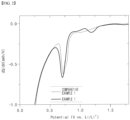
- the electrolyte composition of Example 1 including the electrolyte additive represented by Formula 1 according to the present disclosure shows a descending peak at a voltage near 1.32V compared to lithium.
- the descending peak indicates that a reduction reaction occurred on the graphite surface, which is the negative electrode, and the electrolyte additive represented by Formula 1 contained in the electrolyte composition is converted into a coating material through a reduction reaction on the surface of the negative electrode at approximately 1.32V compared to lithium.
- a three-electrode battery was prepared by injecting each of the electrolyte compositions prepared in Example 1 and Comparative Example 1, which includes three electrodes including two platinum electrodes and a lithium metal electrode, and linear sweep voltammetry (LSV) was performed thereon.
- LSV linear sweep voltammetry
- LSV was performed under the conditions of an observation range of 3.0 to 6.0V (based on lithium), a step voltage of 50 mV and a measurement rate of 50 mV/s. The result is shown in FIG. 3 .
- the electrolyte composition of Example 1 including the electrolyte additive represented by Formula 1 according to the present disclosure has an increased current near 4.2V compared to lithium.
- the oxidation reaction is induced at a lower potential than the surface of the platinum electrode in a carbon electrode or a positive electrode, due to the catalytic properties of carbon or a transition metal.
- the electrolyte additive according to the present disclosure is an ionic material, which has an oxidation reaction and a reduction reaction at the positive electrode and the negative electrode, respectively, during charging/discharging of the electrode, thereby forming a coating film on the surface of each electrode.
- the targeted lithium secondary batteries were the secondary batteries of Examples 13 to 18 and Comparative Examples 13 to 18 manufactured in the same manner as in Examples 7 to 12 and Comparative Examples 7 to 12, except that LiNi 0.6 Co 0.2 Mn 0.2 O 2 and artificial graphite were used.
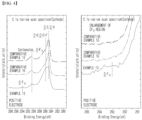
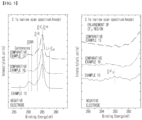
- the secondary batteries of Example 13, Comparative Example 16 and Comparative Example 18 were charged/discharged three times at a charge/discharge current density of 0.33C/0.33C, a final charging voltage of 4.2V (NMC/graphite) and a final discharging voltage of 2.5V (NMC/graphite), and X-ray photoelectron spectroscopy (XPS) was performed on the surfaces of the positive and negative electrodes of each battery at full charge. The results are shown in FIGS. 4A to 4B and 5A to 5B.
- the secondary battery (Example 13) including the electrolyte composition of Example 1 shows peaks in the range of 280 to 300 eV indicating the carbon-fluorine binding energy at the positive and negative electrodes in X-ray photoelectron spectroscopy (XPS) performed on the electrode surface.
- XPS X-ray photoelectron spectroscopy
- the positive and negative electrodes of the secondary battery showed peaks indicating the binding energy of a CF 3 group at 293 ⁇ 0.2 eV, which means that the electrolyte additive represented by Formula 1 contained in the electrolyte composition is involved in the formation of a coating film formed on the surfaces of the positive and negative electrodes.
- the electrolyte additive according to the present disclosure includes an ionic compound in the form of monomolecular(or monomer) represented by Formula 1 including a mother nucleus to which a (meth)acrylate group or an acrylamide group is bonded via a functional group that has an alkylene structure of a saturated hydrocarbon chain or an ether group formed by introducing an oxygen atom to a saturated hydrocarbon chain, at one side based on a sulfonylimide group, a coating film which includes the ionic compound may be formed on the surface of an electrode in the activation of a secondary battery.
- each secondary battery was charged/discharged three times at a charge/discharge current density of 0.33C/0.33C, a final charging voltage of 4.2V (NMC/graphite), and a final discharging voltage of 2.5V (NMC/graphite) to measure a battery capacity.
- each secondary battery was fully charged with 0.33C at a final charging voltage of 4.2V in a CC/CV mode, followed by starting high temperature storage.
- the high temperature storage was to store the battery in a constant temperature chamber at 60 °C for a total of 56 days. Also, while each secondary battery was stored at 60 °C for 56 days, an amount of gas generation in the secondary battery and open-circuit voltage (OCV) of the secondary battery were observed over time.
- OCV is measured using HOIKI (OCV measuring device, model: BT3554).
- the volume of gas generated in the secondary battery was calculated using the Archimedes principle.
- the OCV deviation i.e., the degree of OCV drop
- the total volume of gas generated in the secondary battery was calculated.
- each secondary battery was charged/discharged at a charge/discharge current density of 0.33C/0.33C, a final charging voltage of 4.2V (NMC/graphite), and a final discharging voltage of 2.5V (NMC/graphite) to measure a battery capacity.
- the capacity retention rates of each secondary battery after high-temperature storage were assessed from the measured values. The result is shown in Table 3 below.
Landscapes
- Chemical & Material Sciences (AREA)
- Chemical Kinetics & Catalysis (AREA)
- Electrochemistry (AREA)
- General Chemical & Material Sciences (AREA)
- Inorganic Chemistry (AREA)
- Engineering & Computer Science (AREA)
- Manufacturing & Machinery (AREA)
- General Physics & Mathematics (AREA)
- Condensed Matter Physics & Semiconductors (AREA)
- Physics & Mathematics (AREA)
- Organic Chemistry (AREA)
- Materials Engineering (AREA)
- Secondary Cells (AREA)
- Battery Electrode And Active Subsutance (AREA)
Abstract
Description
- The present disclosure relates to a novel additive for a non-aqueous electrolyte and a lithium secondary battery including the same.
- This application claims priority from
Korean Patent Application No. 10-2021-0157225, filed on November 16, 2021 Korean Patent Application No. 10-2022-0131377, filed on October 13, 2022 - Recently, secondary batteries are widely applied not only to small devices such as portable electronic devices, but to medium and large devices such as battery packs or power storage devices of hybrid or electric vehicles. Examples of these secondary batteries may include non-aqueous electrolyte batteries such as lithium-ion batteries, lithium batteries, lithium-ion capacitors, and sodium ion batteries.
- Among these non-aqueous electrolyte batteries, lithium-ion batteries are used by injecting an electrolyte into a battery cell including a positive electrode including a positive electrode active material that enables intercalation and deintercalation of lithium and a negative electrode including a negative electrode active material that enables intercalation and deintercalation of lithium. Particularly, an electrolyte uses an organic solvent in which a lithium salt is dissolved, and it is important to determine the stability and performance of a lithium secondary battery.
- For example, LiPF6, which is the most widely used lithium salt for an electrolyte, reacts with an electrolyte solvent to promote the depletion of the solvent and generate HF. The HF generated thereby may not only generate a large amount of gas under a high temperature condition, but also elute metal ions from a positive electrode active material, and when the eluted metal ions are generated in the form of a precipitate on the surface of a negative electrode, it causes an increase in potential of a negative electrode and a drop in cell open-circuit voltage (OCV), leading to problems such as degraded battery performance as well as a reduction in lifespan and high-temperature safety.
- Therefore, the present disclosure is directed to providing a developed technology of forming a coating film on an electrode surface to prevent direct contact between a positive electrode and an electrolyte, inhibit gas generation by lowering the oxidative decomposition of the electrolyte while blocking direct contact between the positive electrode and HF or PF5, and improve a capacity retention rate and prevent the OCV drop of a battery by improving a metal ion precipitation phenomenon of the positive electrode.
- To solve the above-described problem,
- one embodiment of the present disclosure provides
- an electrolyte additive for a secondary battery, which includes a compound represented by Formula 1 below:

- R1 is hydrogen or an alkyl group having 1 to 4 carbon atoms,
- R2 includes one or more selected from an alkylene group having 1 to 10 carbon atoms, an oxyalkylene group having 1 to 10 carbon atoms, a cycloalkylene group having 5 to 10 carbon atoms, and

- R3 is a fluoro group, an alkyl group having 1 to 10 carbon atoms, an alkoxy group having 1 to 10 carbon atoms, or


- X is an oxygen atom (O) or -NR4, wherein R4 is hydrogen or an alkyl group having 1 to 4 carbon atoms,
- M includes one or more selected from the group consisting of lithium, sodium, potassium, tetraalkyl ammonium having 1 to 4 carbon atoms, and tetraalkyl phosphonium having 1 to 4 carbons,
- 1 is an integer of 1 to 6, and
- each of m and n is an integer of 2 to 20.
- Specifically, R1 may be hydrogen or a methyl group,
- R2 comprises one or more selected from a methylene group, an ethylene group, a propylene group, an oxymethylene group, an oxyethylene group, an oxypropylene group, a cyclobutylene group, a cyclopentylene group, a cyclohexylene group, a cycloheptylene group,

- R3 may be a fluoro group, a methyl group, an ethyl group, a propyl group, a methoxy group, an ethoxy group,

- X may be an oxygen atom (O), -NH, or -NCH3, M may be lithium, 1 may be an integer of 1 or 2, and each of m and n may be an integer of 2 to 10.
- More specifically, the compound represented by Formula 1 may be one or more compounds selected from
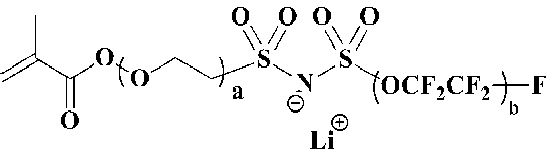
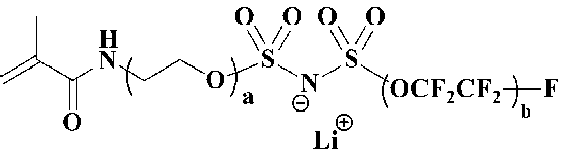
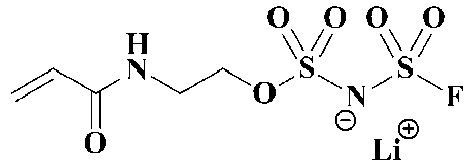
Structural Formula 1 to Structural Formula 120 below:Structural Formula 1Structural Formula 2 Structural Formula 3 


Structural Formula 4 Structural Formula 5 Structural Formula 6 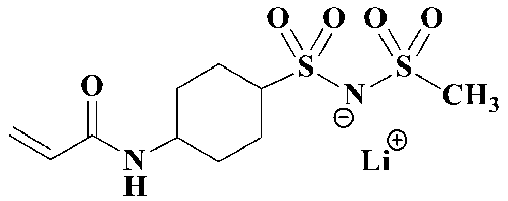


Structural Formula 7 Structural Formula 8 Structural Formula 9 


Structural Formula 10 Structural Formula 11 Structural Formula 12 


Structural Formula 13Structural Formula 14 Structural Formula 15 


Structural Formula 16Structural Formula 17 Structural Formula 18 


Structural Formula 19 Structural Formula 20 Structural Formula 21 

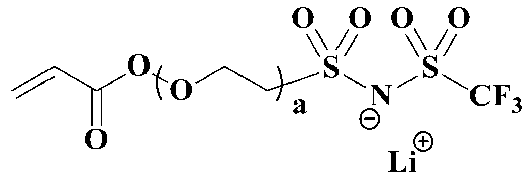
Structural Formula 22 Structural Formula 23 Structural Formula 24 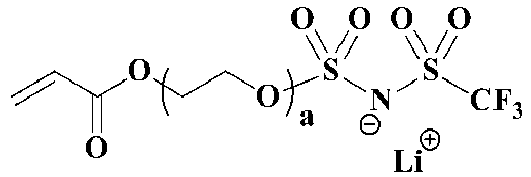

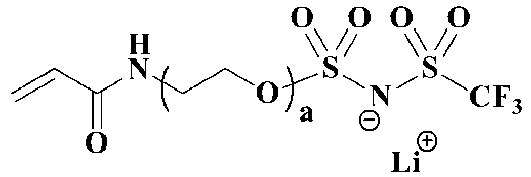
Structural Formula 25 Structural Formula 26 Structural Formula 27 


Structural Formula 28 Structural Formula 29 Structural Formula 30 


Structural Formula 31 Structural Formula 32 Structural Formula 33 


Structural Formula 34 Structural Formula 35 Structural Formula 36 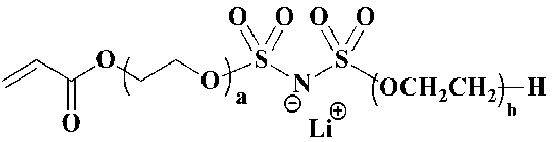


Structural Formula 37 Structural Formula 38 Structural Formula 39 


Structural Formula 40 Structural Formula 41 Structural Formula 42 


Structural Formula 43 Structural Formula 44 Structural Formula 45 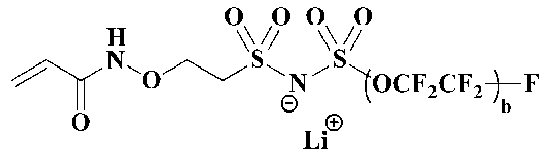


Structural Formula 46 Structural Formula 47 Structural Formula 48 


Structural Formula 49 Structural Formula 50 Structural Formula 51 


Structural Formula 52 Structural Formula 53 Structural Formula 54 
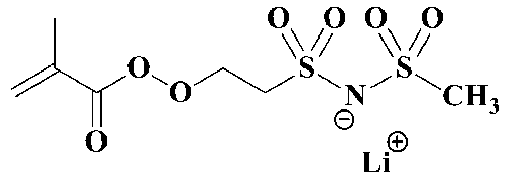
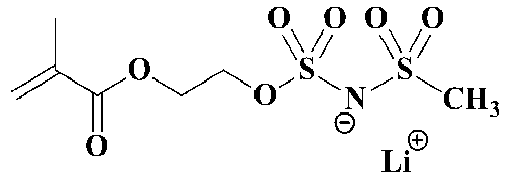
Structural Formula 55 Structural Formula 56 Structural Formula 57 


Structural Formula 58 Structural Formula 59 Structural Formula 60 


Structural Formula 61 Structural Formula 62 Structural Formula 63 


Structural Formula 64 Structural Formula 65 Structural Formula 66 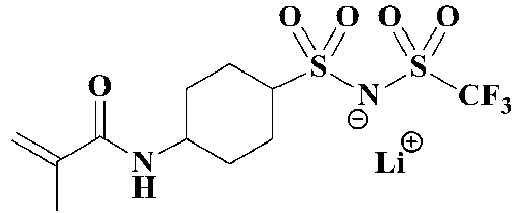


Structural Formula 67 Structural Formula 68 Structural Formula 69 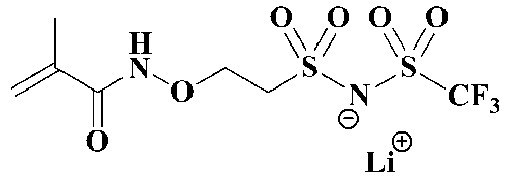


Structural Formula 70 Structural Formula 71 Structural Formula 72 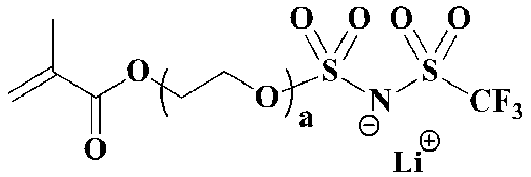


Structural Formula 73 Structural Formula 74 Structural Formula 75 


Structural Formula 76 Structural Formula 77 Structural Formula 78 


Structural Formula 79 Structural Formula 80 Structural Formula 81 


Structural Formula 82 Structural Formula 83 Structural Formula 84 


Structural Formula 85 Structural Formula 86 Structural Formula 87 

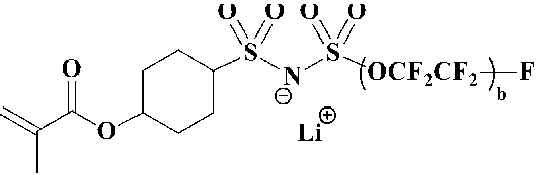
Structural Formula 88 Structural Formula 89 Structural Formula 90 
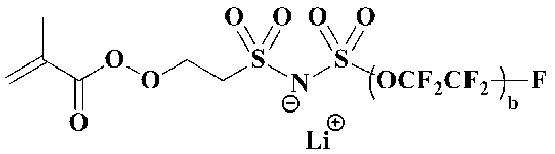

Structural Formula 91 Structural Formula 92 Structural Formula 93 

Structural Formula 94 Structural Formula 95 Structural Formula 96 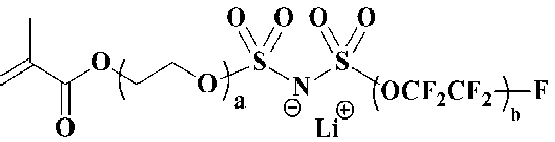

Structural Formula 97 Structural Formula 98 Structural Formula 99 


Structural Formula 100 Structural Formula 101 Structural Formula 102 


Structural Formula 103 Structural Formula 104 Structural Formula 105 

Structural Formula 106 Structural Formula 107 Structural Formula 108 


Structural Formula 109 Structural Formula 110 Structural Formula 111 


Structural Formula 112 Structural Formula 113 Structural Formula 114 


Structural Formula 115 Structural Formula 116 Structural Formula 117 


Structural Formula 118 Structural Formula 119 Structural Formula 120 

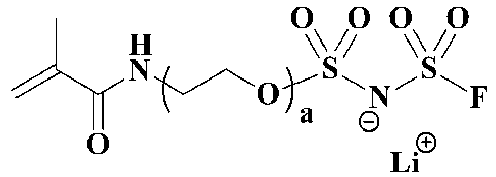
- In Structural Formula 9-12, 21-48, 57-60, 69-96, 105-108, and 117-120 a and b is an integer of 2 to 4 respectively.
- In addition, one embodiment of the present disclosure provides
an electrolyte composition for a lithium secondary battery, which includes a non-aqueous organic solvent; a lithium salt; and a compound represented by Formula 1 below: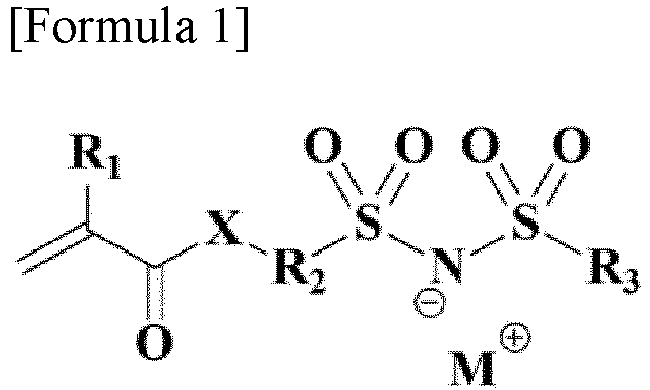
- R1 is hydrogen or an alkyl group having 1 to 4 carbon atoms,
- R2 includes one or more selected from an alkylene group having 1 to 10 carbon atoms, an oxyalkylene group having 1 to 10 carbon atoms, a cycloalkylene group having 5 to 10 carbon atoms, and

- R3 is a fluoro group, an alkyl group having 1 to 10 carbon atoms, an alkoxy group having 1 to 10 carbon atoms, or


- X is an oxygen atom (O) or -NR4, wherein R4 is hydrogen or an alkyl group having 1 to 4 carbon atoms,
- M includes one or more selected from the group consisting of lithium, sodium, potassium, tetraalkyl ammonium having 1 to 4 carbon atoms, and tetraalkyl phosphonium having 1 to 4 carbon atoms,
- 1 is an integer of 1 to 6, and
- each of m and n is an integer of 2 to 20.
- Here, the compound represented by Formula 1 may be included at 0.01 to 3 wt% with respect to the total weight of the electrolyte composition.
- In addition, the lithium salt may include one or more selected from the group consisting of LiCl, LiBr, LiI, LiClO4, LiBF4, LiB10Cl10, LiPF6, LiCF3SO3, LiCF3CO2, LiAsF6, LiSbF6, LiAlCl4, CH3SO3Li, (CF3SO2)2NLi, and (FSO2)2NLi.
- In addition, the non-aqueous organic solvent may include N-methyl-2-pyrrolidinone, ethylene carbonate, propylene carbonate, butylene carbonate, dimethyl carbonate, diethyl carbonate, γ-butyrolactone, 1,2-dimethyoxy ethane, tetrahydrofuran, 2-methyl tetrahydrofuran, dimethyl sulfoxide, 1,3-dioxolane, formamide, dimethylformamide, dioxolane, acetonitrile, nitromethane, methyl formate, methyl citrate, phosphoric acid triester, trimethoxy methane, a dioxolane derivative, sulfolane, methyl sulfolane, 1,3-dimethyl-2-imidazolidinone, a propylene carbonate derivative, a tetrahydrofuran derivative, ether, methyl propionate, and ethyl propionate.
- Furthermore, one embodiment of the present disclosure provides a lithium secondary battery, which includes:
- an electrode assembly that includes a positive electrode including one or more positive electrode active materials of lithium metal oxides represented by Formulas 2 and 3 below, a negative electrode, and a separator interposed between the positive electrode and the negative electrode; and
- the electrolyte composition according to the present disclosure:
[Formula 2] Lix[NiyCozMnwM1 v]O2
[Formula 3] LiM2 pMn(2-p)O4
- In Formulas 2 and 3,
- M1 is one or more elements selected from the group consisting of W, Cu, Fe, V, Cr, Ti, Zr, Zn, Al, In, Ta, Y, La, Sr, Ga, Sc, Gd, Sm, Ca, Ce, Nb, Mg, B, and Mo,
- x, y, z, w and v satisfy 1.0≤x≤1.30, 0.5≤y≤1, 0≤z≤0.3, 0≤w≤0.3, and 0≤v≤0.1, respectively, wherein y+z+w+v=1,
- M2 is Ni, Co or Fe, and
- p is 0.05≤p≤0.6.
- Here, the positive electrode active material may include one or more selected from the group consisting of LiNi0.8Co0.1Mno0.1O2, LiNi0.6Co0.2Mno0.2O2, LiNi0.9CO0.05Mn0.05O2, LiNio0.6CO0.2Mn0.1Al0.1O2, LiNi0.6CO0.2Mno0.15Al0.05O2, LiNi0.7Co0.1Mn0.1Al0.1O2, and LiNi0.5Mn1.5O4.
- In addition, the negative electrode active material may consist of a carbon material and a silicon material, wherein the silicon material may include one or more of silicon (Si), silicon carbide (SiC) and silicon oxide (SiOq, 0.8<q<2.5).
- Moreover, the silicon material may be included at 1 to 20 wt% with respect to the total weight of the negative electrode active material.
- An electrolyte additive according to the present disclosure forms a coating film on an electrode surface in the activation of a secondary battery, so the generation of a large amount of gas under a high temperature condition can be prevented, and a cell OCV drop and a decrease in capacity retention rate, which are caused by elution of metal ions from an electrode, can be effectively prevented, resulting in effective improvement in durability, performance and high-temperature safety of the battery.
-
-
FIG. 1 is a graph showing the results of Raman spectroscopy of electrolyte compositions respectively prepared in Example 1 and Comparative Example 1 according to the present disclosure. -
FIG. 2 is a graph showing the results of differential capacity curve analysis for half-cells including the electrolyte compositions respectively prepared in Example 1 and Comparative Example 1 according to the present disclosure. -
FIG. 3 is a graph showing the results of linear sweep voltammetry for three-electrode batteries including the electrolyte compositions respectively prepared in Example 1 and Comparative Example 1 according to the present disclosure. - FIGS. 4A and 4B are a set of graphs showing the results of X-ray photoelectron spectroscopy for coating films formed on positive electrodes surfaces of each lithium secondary battery prepared in Example 13 and Comparative Examples 13 and 16 according to the present disclosure, respectively, after charging/discharging.
- FIGS. 5A and 5B are a set of graphs showing the results of X-ray photoelectron spectroscopy for coating films formed on negative electrodes surfaces of each lithium secondary battery including the electrolyte composition prepared in Example 13 and Comparative Examples 13 and 16 according to the present disclosure, respectively, after charging/discharging.
- The present disclosure may have various modifications and various examples, and thus specific examples are illustrated in the drawings and described in detail in the detailed description.
- However, it should be understood that the present disclosure is not limited to specific embodiments, and includes all modifications, equivalents or alternatives within the spirit and technical scope of the present disclosure.
- The terms "comprise," "include" and "have" used herein designate the presence of characteristics, numbers, steps, actions, components or members described in the specification or a combination thereof, and it should be understood that the possibility of the presence or addition of one or more other characteristics, numbers, steps, actions, components, members or a combination thereof is not excluded in advance.
- In addition, when a part of a layer, film, region or plate is disposed "on" another part, this includes not only a case in which one part is disposed "directly on" another part, but a case in which a third part is interposed therebetween. In contrast, when a part of a layer, film, region or plate is disposed "under" another part, this includes not only a case in which one part is disposed "directly under" another part, but a case in which a third part is interposed therebetween. In addition, in this application, "on" may include not only a case of disposed on an upper part but also a case of disposed on a lower part.
- In addition, in the present disclosure, the "included as a main component" may mean that a defined component is included at 50 wt% or more, 60 wt% or more, F70 wt% or more, 80 wt% or more, 90 wt% or more, or 95 wt% or more with respect to the total weight. For example, the "graphite is included as a main ingredient in a negative electrode active material" means that graphite is included at 50 wt% or more, 60 wt% or more, 70 wt% or more, 80 wt% or more, 90 wt% or more, or 95 wt% or more with respect to the total weight of the negative electrode active material, and in some cases, it means that a negative electrode active material totally consists of graphite and thus includes 100 wt% of graphite.
- Hereinafter, the present disclosure will be described in further detail.
- One embodiment of the present disclosure provides
an electrolyte additive for a secondary battery including the compound represented byFormula 1 below:
- R1 is hydrogen or an alkyl group having 1 to 4 carbon atoms,
- R2 includes one or more selected from an alkylene group having 1 to 10 carbon atoms, an oxyalkylene group having 1 to 10 carbon atoms, a cycloalkylene group having 5 to 10 carbon atoms, and

- R3 is a fluoro group, an alkyl group having 1 to 10 carbon atoms, an alkoxy group having 1 to 10 carbon atoms, or


- X is an oxygen atom (O) or -NR4, wherein R4 is hydrogen or an alkyl group having 1 to 4 carbon atoms,
- M includes one or more selected from the group consisting of lithium, sodium, potassium, tetraalkyl ammonium having 1 to 4 carbon atoms, and tetraalkyl phosphonium having 1 to 4 carbon atoms,
- 1 is an integer of 1 to 6, and
- each of m and n is an integer of 2 to 20.
- The electrolyte additive for a secondary battery according to the present disclosure includes an ionic compound including a mother nucleus to which a (meth)acrylate group or an acrylamide group is bonded via a functional group that includes a saturated hydrocarbon chain or a structure to which an oxygen atom is introduced to a saturated hydrocarbon chain, at one side based on a sulfonylimide group as shown in
Formula 1. As the compound has a structure including a (meth)acrylate group or an acrylamide group bonded at one side based on a sulfonylimide group using a functional group that has an alkylene structure of a saturated hydrocarbon chain or an ether group formed by introducing an oxygen atom to a saturated hydrocarbon chain as a linker, and having a charge in this molecule, an organic and/or inorganic coating film may be uniformly formed on the surface of the positive electrode and/or the negative electrode in the activation of the secondary battery including the electrolyte additive. Therefore, the electrolyte addictive may be directly included in the organic and/or inorganic coating film formed on the surface of the positive electrode and/or the negative electrode in the form of a monomolecular(or monomer) in the activation of a secondary battery, and thus, the electrolyte additive can inhibit gas generation due to decomposition of the electrolyte when the battery is exposed to a high temperature, and improve the OCV drop phenomenon and capacity reduction of the battery, which occur at the positive electrode. - To this end, in the compound represented by
Formula 1, - R1 is hydrogen, a methyl group, an ethyl group or a propyl group,
- R2 includes one or more selected from a methylene group, an ethylene group, a propylene group, a butylene group, an oxymethylene group, an oxyethylene group, an oxypropylene group, an oxybutylene group, a cyclobutylene group, a cyclopentylene group, a cyclohexylene group, a cycloheptylene group,

- R3 is a fluoro group, a methyl group, an ethyl group, a propyl group, a butyl group, a methoxy group, an ethoxy group, a propoxy group,


- X is an oxygen atom (O), -NH, -NCH3, or -NCH2CH3,
- M includes one or more selected from the group consisting of lithium, sodium, tetramethyl ammonium having 1 to 4 carbon atoms, and tetraalkyl phosphonium having 1 to 4 carbon atoms, 1 is an integer of 1 to 6, and each of m and n is an integer of 2 to 20.
- Specifically, R1 may be hydrogen or a methyl group,
- R2 comprises one or more selected from a methylene group, an ethylene group, a propylene group, an oxymethylene group, an oxyethylene group, an oxypropylene group, a cyclobutylene group, a cyclopentylene group, a cyclohexylene group, a cycloheptylene group,

- R3 may be a fluoro group, a methyl group, an ethyl group, a propyl group, a methoxy group, an ethoxy group,

- X may be an oxygen atom (O), -NH, or -NCH3,
- M may be lithium, l may be an integer of 1 or 2, and each of m and n may be an integer of 2 to 10.
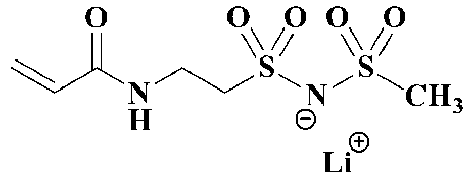
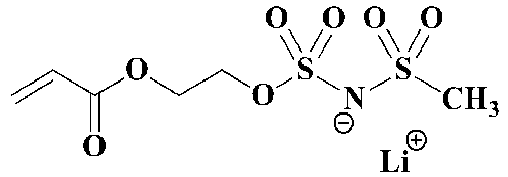
- In one example, the compound represented by Formula 1 may be one or more compounds selected from Structural Formula 1 to Structural Formula 120 below:
Structural Formula 1 Structural Formula 2 Structural Formula 3 

Structural Formula 4 Structural Formula 5 Structural Formula 6 

Structural Formula 7 Structural Formula 8 Structural Formula 9 


Structural Formula 10 Structural Formula 11 Structural Formula 12 


Structural Formula 13 Structural Formula 14 Structural Formula 15 
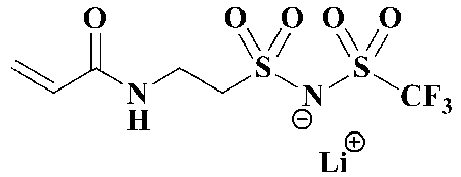

Structural Formula 16 Structural Formula 17 Structural Formula 18 


Structural Formula 19 Structural Formula 20 Structural Formula 21 
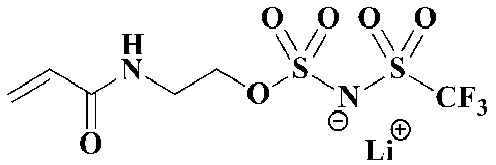

Structural Formula 22 Structural Formula 23 Structural Formula 24 


Structural Formula 25 Structural Formula 26 Structural Formula 27 
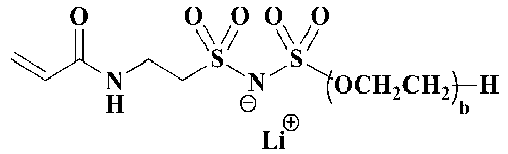
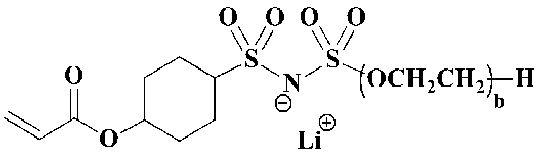
Structural Formula 28 Structural Formula 29 Structural Formula 30 


Structural Formula 31 Structural Formula 32 Structural Formula 33 


Structural Formula 34 Structural Formula 35 Structural Formula 36 


Structural Formula 37 Structural Formula 38 Structural Formula 39 


Structural Formula 40 Structural Formula 41 Structural Formula 42 


Structural Formula 43 Structural Formula 44 Structural Formula 45 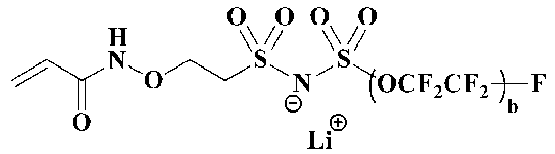


Structural Formula 46 Structural Formula 47 Structural Formula 48 
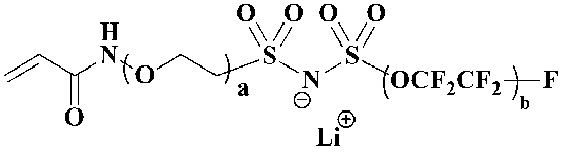

Structural Formula 49 Structural Formula 50 Structural Formula 51 


Structural Formula 52 Structural Formula 53 Structural Formula 54 


Structural Formula 55 Structural Formula 56 Structural Formula 57 
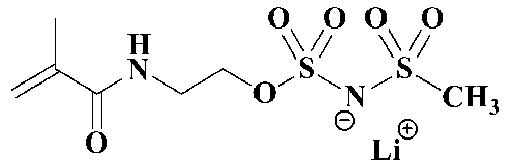
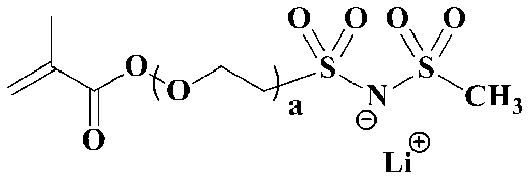
Structural Formula 58 Structural Formula 59 Structural Formula 60 


Structural Formula 61 Structural Formula 62 Structural Formula 63 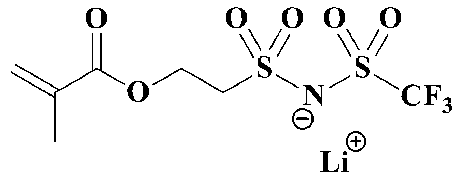


Structural Formula 64 Structural Formula 65 Structural Formula 66 


Structural Formula 67 Structural Formula 68 Structural Formula 69 

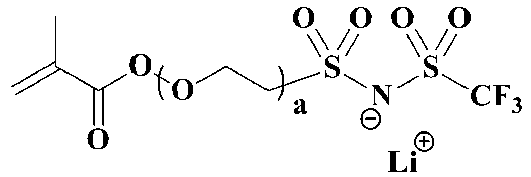
Structural Formula 70 Structural Formula 71 Structural Formula 72 
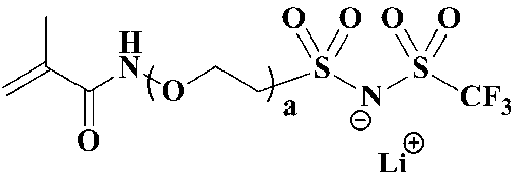

Structural Formula 73 Structural Formula 74 Structural Formula 75 


Structural Formula 76 Structural Formula 77 Structural Formula 78 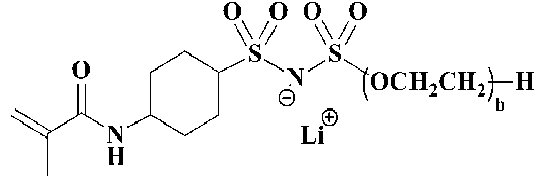

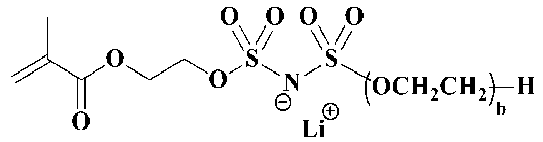
Structural Formula 79 Structural Formula 80 Structural Formula 81 


Structural Formula 82 Structural Formula 83 Structural Formula 84 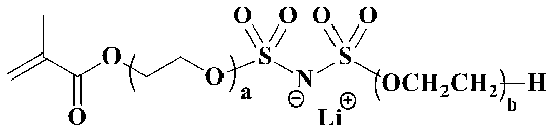


Structural Formula 85 Structural Formula 86 Structural Formula 87 

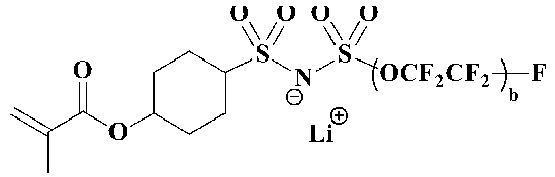
Structural Formula 88 Structural Formula 89 Structural Formula 90 


Structural Formula 91 Structural Formula 92 Structural Formula 93 
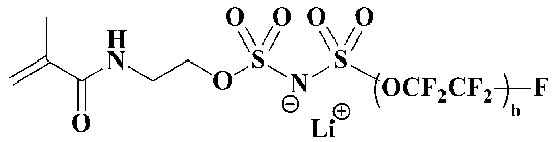

Structural Formula 94 Structural Formula 95 Structural Formula 96 


Structural Formula 97 Structural Formula 98 Structural Formula 99 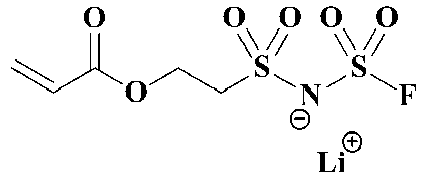


Structural Formula 100 Structural Formula 101 Structural Formula 102 


Structural Formula 103 Structural Formula 104 Structural Formula 105 


Structural Formula 106 Structural Formula 107 Structural Formula 108 


Structural Formula 109 Structural Formula 110 Structural Formula 111 


Structural Formula 112 Structural Formula 113 Structural Formula 114 


Structural Formula 115 Structural Formula 116 Structural Formula 117 


Structural Formula 118 Structural Formula 119 Structural Formula 120 
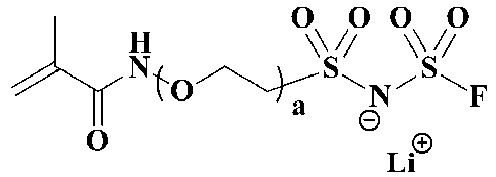

- In Structural Formula 9-12, 21-48, 57-60, 69-96, 105-108, and 117-120 a and b is an integer of 2 to 4 respectively.
- Since the electrolyte additive according to the present disclosure, as described above, has a structure that has a (meth)acrylate group or an acrylamide group binding via a functional group that has an alkylene structure of a saturated hydrocarbon chain or an ether group formed by introducing an oxygen atom to a saturated hydrocarbon chain and has a charge in the molecule, at one side based on a sulfonylimide group, the electrolyte additive may be directly involved in a solvation shell of lithium ions even under a low potential in the activation of the battery to uniformly form an inorganic coating film through a reduction reaction on the surface of the negative electrode and to uniformly form an inorganic coating film through an oxidation reaction on the surface of the positive electrode at the same time.
- Therefore, the electrolyte additive can inhibit gas generation caused by decomposition of the electrolyte when the battery is exposed to a high temperature, and improve the OCV drop phenomenon and capacity reduction of the battery, which occur at the positive electrode, resulting in the prevention of the deterioration of a secondary battery and further improvement in high-temperature safety.
- In addition, one embodiment of the present disclosure provides
an electrolyte composition for a lithium secondary battery, which includes a non-aqueous organic solvent; a lithium salt; and a compound represented byFormula 1 below:
- R1 is hydrogen or an alkyl group having 1 to 4 carbon atoms,
- R2 includes one or more selected from an alkylene group having 1 to 10 carbon atoms, an oxyalkylene group having 1 to 10 carbon atoms, a cycloalkylene group having 5 to 10 carbon atoms, and

- R3 is a fluoro group, an alkyl group having 1 to 10 carbon atoms, an alkoxy group having 1 to 10 carbon atoms, or


- X is an oxygen atom (O) or -NR4, wherein R4 is hydrogen or an alkyl group having 1 to 4 carbon atoms,
- M includes one or more selected from the group consisting of lithium, sodium, potassium, tetraalkyl ammonium having 1 to 4 carbon atoms, and tetraalkyl phosphonium having 1 to 4 carbon atoms,
- 1 is an integer of 1 to 6, and
- each of m and n is an integer of 2 to 20.
- As the electrolyte composition for a lithium secondary battery according to the present disclosure is a non-aqueous electrolyte composition, it may be a liquid electrolyte which has a composition in which a lithium salt and an electrolyte additive are included in a non-aqueous organic solvent. Here, the electrolyte composition includes the above-described electrolyte additive, which includes the compound represented by
Formula 1, so it may be directly involved in a solvation shell of lithium ions in the activation of the battery including the electrolyte composition, thereby uniformly forming a negatively charged and/or inorganic coating film on the surface of a negative electrode through a reduction reaction. - To this end, in the compound represented by
Formula 1, - R1 is hydrogen, a methyl group, an ethyl group or a propyl group,
- R2 includes one or more selected from a methylene group, an ethylene group, a propylene group, a butylene group, an oxymethylene group, an oxyethylene group, an oxypropylene group, an oxybutylene group, a cyclobutylene group, a cyclopentylene group, a cyclohexylene group, a cycloheptylene group,

- R3 is a fluoro group, a methyl group, an ethyl group, a propyl group, a butyl group, a methoxy group, an ethoxy group, a propoxy group,


- X is an oxygen atom (O), -NH, -NCH3, or -NCH2CH3,
- M includes one or more selected from the group consisting of lithium, sodium, tetramethyl ammonium having 1 to 4 carbon atoms, and tetraalkyl phosphonium having 1 to 4 carbon atoms, l is an integer of 1 to 6, and each of m and n is an integer of 2 to 20.
- Specifically, R1 may be hydrogen or a methyl group,
- R2 comprises one or more selected from a methylene group, an ethylene group, a propylene group, an oxymethylene group, an oxyethylene group, an oxypropylene group, a cyclobutylene group, a cyclopentylene group, a cyclohexylene group, a cycloheptylene group,

- R3 may be a fluoro group, a methyl group, an ethyl group, a propyl group, a methoxy group, an ethoxy group,

- X may be an oxygen atom (O), -NH, or -NCH3,
- M may be lithium, l may be an integer of 1 or 2, and each of m and n may be an integer of 2 to 10.
- Here, the compound represented by
Formula 1 may be included at a certain content in the electrolyte composition. Specifically, the compound represented byFormula 1 may be included at 0.01 to 5 wt%, and more specifically, 0.05 to 3 wt% or 1.0 to 2.5 wt% with respect to the total weight of the electrolyte composition. In the present disclosure, the degradation of wettability of an electrode and a separator due to the increase the viscosity of the electrolyte composition, when the content of the electrolyte additive is used in excess outside the above range, is prevented. Furthermore, a polymerization by self-reaction is induced in the electrolyte composition, thereby preventing degraded battery performance due to a reduction in ion conductivity of the electrolyte composition. In addition, the present disclosure may prevent the additive effect from being insignificantly implemented when the electrolyte additive is used at a trace amount outside the above range. - Meanwhile, the lithium salt used in the electrolyte composition may be applied without particular limitation as long as it is used in a non-aqueous electrolyte in the art. Specifically, the lithium salt may include one or more selected from the group consisting of LiCl, LiBr, LiI, LiClO4, LiBF4, LiB10Cl10, LiPF6, LiCF3SO3, LiCF3CO2, LiAsF6, LiSbF6, LiAlCl4, CH3SO3Li, (CF3SO2)2NLi, and (FSO2)2NLi.
- The concentration of the lithium salt is not particularly limited, and the lower limit of the appropriate concentration range is 0.5 mol/L or more, specifically 0.7 mol/L or more, and more specifically 0.9 mol/L or more, and the upper limit of the appropriate concentration range is 2.5 mol/L or less, specifically 2.0 mol/L or less, and more specifically 1.5 mol/L or less. When the concentration of the lithium salt is lower than 0.5 mol/L, there is a risk that ion conductivity is reduced, and the cycle characteristics and output characteristics of a non-aqueous electrolyte battery are lowered. In addition, when the concentration of the lithium salt exceeds 2.5 mol/L, the viscosity of an electrolyte for non-aqueous electrolyte battery increases, and thus there is a risk of decreasing ion conductivity and lowering the cycle characteristics and output characteristics of a non-aqueous electrolyte battery.
- In addition, when a large amount of lithium salt is dissolved in a non-aqueous organic solvent at one time, the liquid temperature may increase because of the dissolution heat for the lithium salt. As described above, when the temperature of the non-aqueous organic solvent significantly increases due to the dissolution heat for the lithium salt, there is a risk that the decomposition may be accelerated to generate hydrogen fluoride (HF). Hydrogen fluoride (HF) is not preferable because it causes degraded battery performance. Therefore, a temperature at which the lithium salt is dissolved in a non-aqueous organic solvent may be adjusted to -20 to 80 °C, and specifically 0 to 60 °C, but the present disclosure is not particularly limited thereto.
- Furthermore, a non-aqueous organic solvent used in the electrolyte composition may be applied without particular limitation as long as it can be used in a non-aqueous electrolyte in the art. Specifically, examples of the non-aqueous organic solvents may include aprotic organic solvents such as N-methyl-2-pyrrolidinone, ethylene carbonate (EC), propylene carbonate, butylene carbonate, dimethyl carbonate, diethyl carbonate, γ-butyrolactone, 1,2-dimethyoxy ethane, tetrahydrofuran, 2-methyl tetrahydrofuran, dimethyl sulfoxide, 1,3-dioxolane, formamide, dimethylformamide, dioxolane, acetonitrile, nitromethane, methyl formate, methyl citrate, phosphoric acid triester, trimethoxy methane, a dioxolane derivative, sulfolane, methyl sulfolane, 1,3-diethyl-2-imidazolidinone, a propylene carbonate derivative, a tetrahydrofuran derivative, ether, methyl propionate, and ethyl propionate.
- In addition, as a non-aqueous solvent used in the present disclosure, one type of the above examples may be used alone, or two or more types thereof may be used by mixing in any combination and ratio according to purpose. In terms of electrochemical stability against the oxidation/reduction of the solvent and chemical stability against heat or the reaction with a solute, among the above examples, particularly, propylene carbonate, ethylene carbonate, fluoroethylene carbonate, diethyl carbonate, dimethyl carbonate, or ethyl methyl carbonate is preferable.
- Meanwhile, the electrolyte composition may further include an additive, other than the above-described basic components. Without departing the gist of the present disclosure, an additive generally used in the non-aqueous electrolyte of the present disclosure may be added at any ratio. Specifically, the additive may be a compound having an overcharge prevention effect, a negative electrode coating film-forming effect, and a positive electrode protection effect, such as cyclohexylbenzene, biphenyl, t-butylbenzene, vinylene carbonate, vinylethylene carbonate, difluoroanisole, fluoroethylene carbonate, propane sultone, succinonitrile, or dimethylvinylene carbonate. In addition, in the case of use in a non-aqueous electrolyte battery called a lithium polymer battery, it is also possible to use an electrolyte for a non-aqueous electrolyte battery after being pseudo-solidified by a gelling agent or cross-linked polymer.
- Further, one embodiment of the present disclosure provides a lithium secondary battery, which includes:
- an electrode assembly that includes a positive electrode including one or more positive electrode active materials of lithium metal oxides represented by Formulas 2 and 3 below, a negative electrode, and a separator interposed between the positive electrode and the negative electrode; and
- the electrolyte composition according to the present disclosure:
[Formula 2] Lix[NiyCozMnwM1 v]O2
[Formula 3] LiM2 pMn(2-p)O4
- In Formula 2 and Formula 3,
- M1 is one or more elements selected from the group consisting of W, Cu, Fe, V, Cr, Ti, Zr, Zn, Al, In, Ta, Y, La, Sr, Ga, Sc, Gd, Sm, Ca, Ce, Nb, Mg, B, and Mo,
- x, y, z, w and v satisfy 1.0≤x≤1.30, 0.5≤y<1, 0<z≤0.3, 0<w≤0.3, and 0≤v≤0.1, respectively, wherein y+z+w+v=1,
- M2 is Ni, Co or Fe, and p is 0.05≤p≤0.6.
- The lithium secondary battery according to the present disclosure includes a positive electrode including a positive electrode active material, a negative electrode including a negative electrode active material, a separator interposed between the positive electrode and the negative electrode, and the lithium salt-containing non-aqueous electrolyte composition of the present disclosure, which is described above.
- Specifically, the positive electrode includes a positive electrode mixture layer formed by applying, drying, and pressing a positive electrode active material on a positive electrode current collector, and may selectively further include a conductive material, a binder, or other additives as needed.
- Here, the positive electrode active material is a material that can cause an electrochemical reaction on the positive electrode current collector and may include one or more lithium metal oxides represented by Formula 2 and Formula 3, which enable reversible intercalation and deintercalation of lithium ions.
- The lithium metal oxides represented by Formula 2 and Formula 3 are materials containing nickel (Ni) and manganese (Mn) at high contents, respectively, and have advantages of stably supplying high capacity and/or high voltage electricity when used as a positive electrode active material. In addition, the activation of the secondary battery requires a high charging potential of about 4.0V or more to form a coating film on the surface of the positive electrode and/or the negative electrode. Unlike the conventional positive electrode active materials with a charging potential of less than 4.0V such as iron phosphate, the lithium metal oxides have a high charging potential of about 4.0 or more, and thus, a coating film may be formed easily on the electrode.
- Here, examples of the lithium metal oxides represented by Formula 2 may include LiNi0.8Co0.1Mn0.1O2, LiNi0.6Co0.2Mno0.2O2, LiNi0.9Co0.05Mn0.05O2, LiNi0.6Co0.2Mn0.1Al0.1O2, LiNiO.6CO0.2Mn0.15Al0.05O2, and LiNi0.7Co0.1Mn0.1Al0.1O2, and examples of the lithium metal oxides represented by Formula 3 may include LiNi0.7Mn1.3O4; LiNi0.5Mn1.5O4; and LiNi0.3Mn1.7O4, and these oxides may be used alone or in combination.
- In addition, in the positive electrode, as a positive electrode current collector, a material that does not cause a chemical change in the corresponding battery and has high conductivity may be used. For example, stainless steel, aluminum, nickel, titanium, or calcined carbon may be used and in the case of aluminum or stainless steel, one that is surface treated with carbon, nickel, titanium or silver may also be used. In addition, the average thickness of the current collector may be suitably selected within 3 to 500 µm in consideration of the conductivity and total thickness of the positive electrode to be formed.
- In addition, the negative electrode, like the positive electrode, includes a negative electrode mixture layer formed by applying, drying and pressing a negative electrode active material on a negative electrode current collector, and may selectively further include a conductive material, a binder, or other additives as needed.
- The negative electrode active material may include a carbon material and a silicon material. Specifically, the carbon material refers to a material that has a carbon atom as the main component, and examples of the carbon materials may include one or more selected from the group consisting of natural graphite, artificial graphite, expanded graphite, non-graphitizing carbon, carbon black, acetylene black, and Ketjen black. In addition, the silicon material refers to a material that has a silicon atom as the main component, and may include silicon (Si), silicon carbide (SiC), silicon monoxide (SiO) or silicon dioxide (SiO2) alone or in combination. When, as the silicon (Si)-containing materials, silicon monoxide (SiO) and silicon dioxide (SiO2) are uniformly mixed or combined to be included in the negative electrode mixture layer, these materials may be represented as a silicon oxide (SiOq, 0.8<q<2.5).
- In addition, the silicon material may be included at 1 to 20 wt%, and specifically, 3 to 10 wt%, 8 to 15 wt%, 13 to 18 wt%, or 2 to 8 wt% with respect to the total weight of the negative electrode active material. The present disclosure may maximize the energy density of the battery by controlling the content of the silicon material in the above content range.
- In addition, the negative electrode current collector is not particularly limited as long as it has high conductivity without causing a chemical change in the battery, and for example, copper, stainless steel, nickel, titanium or calcined carbon may be used, and in the case of copper or stainless steel, one whose surface is treated with carbon, nickel, titanium or silver may be used. Furthermore, the average thickness of the negative electrode current collector may be suitably selected within 1 to 500 µm in consideration of the conductivity and total thickness of the negative electrode to be formed.
- Meanwhile, the separator interposed between the positive electrode and the negative electrode of each unit cell is an insulating thin film having high ion permeability and high mechanical strength, and is not particularly limited as long as it is one that is commonly used in the art. Specifically, the separator may include one or more polymers selected from chemical-resistant and hydrophobic polypropylene, polyethylene and a polyethylene-propylene copolymer. The separator may have the form of a porous polymer substrate, such as a sheet or non-woven fabric including the above-described polymer, and in some cases, have the form of a composite separator in which organic or inorganic particles on the porous polymer substrate are coated with an organic binder. In addition, the separator may have an average pore diameter of 0.01 to 10 µm, and an average thickness of 5 to 300 µm.
- Further, the secondary battery includes the above-described non-aqueous electrolyte composition according to the present disclosure as an electrolyte.
- The electrolyte composition includes an ionic compound represented by
Formula 1 below as an electrolyte additive, which has a mother nucleus to which a (meth)acrylate group or an acrylamide group is bonded via a functional group that has an alkylene structure of a saturated hydrocarbon chain or an ether group formed by introducing an oxygen atom to a saturated hydrocarbon chain, at one side based on a sulfonylimide group:

- R1 is hydrogen or an alkyl group having 1 to 4 carbon atoms,
- R2 includes one or more selected from an alkylene group having 1 to 10 carbon atoms, an oxyalkylene group having 1 to 10 carbon atoms, a cycloalkylene group having 5 to 10 carbon atoms, and

- R3 is a fluoro group, an alkyl group having 1 to 10 carbon atoms, an alkoxy group having 1 to 10 carbon atoms, or


- X is an oxygen atom (O) or -NR4, wherein R4 is hydrogen or an alkyl group having 1 to 4 carbon atoms,
- M includes one or more selected from the group consisting of lithium, sodium, potassium, tetraalkyl ammonium having 1 to 4 carbon atoms, and tetraalkyl phosphonium having 1 to 4 carbon atoms,
- 1 is an integer of 1 to 6, and
- each of m and n is an integer of 2 to 20.
- Since the compound has the structure represented by
Formula 1, in the activation of a secondary battery including the same, an organic and/or inorganic coating film may be uniformly formed on the surface of a positive electrode and/or a negative electrode. To this end, the electrolyte additive may inhibit gas generation caused by the decomposition of the electrolyte when the battery is exposed to a high temperature, and improve the OCV drop phenomenon and capacity reduction of the battery, which occur at the positive electrode, resulting in further improvement in performance and high-temperature safety of the battery. - To this end, in the compound represented by
Formula 1, - R1 is hydrogen, a methyl group, an ethyl group or a propyl group,
- R2 includes one or more selected from a methylene group, an ethylene group, a propylene group, a butylene group, an oxymethylene group, an oxyethylene group, an oxypropylene group, an oxybutylene group, a cyclobutylene group, a cyclopentylene group, a cyclohexylene group, a cycloheptylene group,

- R3 is a fluoro group, a methyl group, an ethyl group, a propyl group, a butyl group, a methoxy group, an ethoxy group, a propoxy group,


- X is an oxygen atom (O), -NH, -NCH3, or -NCH2CH3,
- M includes one or more selected from the group consisting of lithium, sodium, tetramethyl ammonium having 1 to 4 carbon atoms, and tetraalkyl phosphonium having 1 to 4 carbon atoms, 1 is an integer of 1 to 6, and each of m and n is an integer of 2 to 20.
- Specifically, R1 may be hydrogen or a methyl group,
- R2 comprises one or more selected from a methylene group, an ethylene group, a propylene group, an oxymethylene group, an oxyethylene group, an oxypropylene group, a cyclobutylene group, a cyclopentylene group, a cyclohexylene group, a cycloheptylene group,

- R3 may be a fluoro group, a methyl group, an ethyl group, a propyl group, a methoxy group, an ethoxy group,

- X may be an oxygen atom (O), -NH, or -NCH3,
- M may be lithium, 1 may be an integer of 1 or 2, and each of m and n may be an integer of 2 to 10.
- In one example, the compound represented by Formula 1 may be any one or more compounds selected from Structural Formula 1 to Structural Formula 120:
Structural Formula 1 Structural Formula 2 Structural Formula 3 


Structural Formula 4 Structural Formula 5 Structural Formula 6 


Structural Formula 7 Structural Formula 8 Structural Formula 9 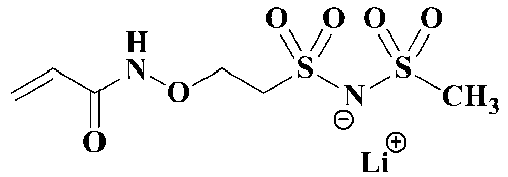

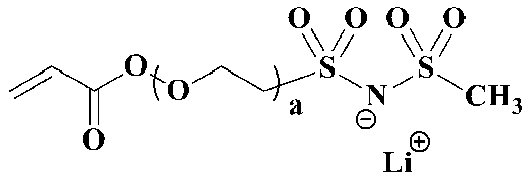
Structural Formula 10 Structural Formula 11 Structural Formula 12 


Structural Formula 13 Structural Formula 14 Structural Formula 15 
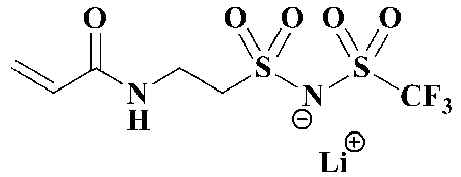

Structural Formula 16 Structural Formula 17 Structural Formula 18 


Structural Formula 19 Structural Formula 20 Structural Formula 21 


Structural Formula 22 Structural Formula 23 Structural Formula 24 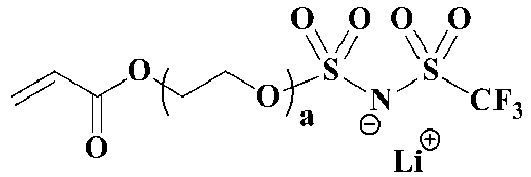


Structural Formula 25 Structural Formula 26 Structural Formula 27 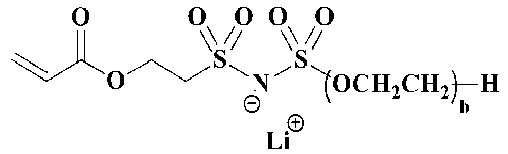

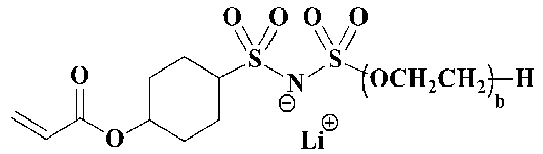
Structural Formula 28 Structural Formula 29 Structural Formula 30 


Structural Formula 31 Structural Formula 32 Structural Formula 33 


Structural Formula 34 Structural Formula 35 Structural Formula 36 


Structural Formula 37 Structural Formula 38 Structural Formula 39 


Structural Formula 40 Structural Formula 41 Structural Formula 42 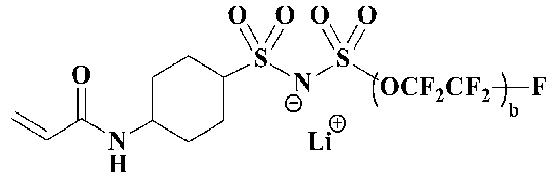


Structural Formula 43 Structural Formula 44 Structural Formula 45 
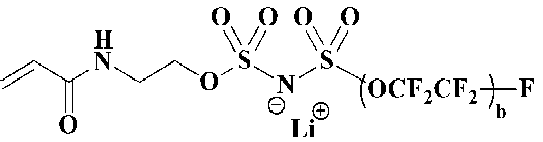

Structural Formula 46 Structural Formula 47 Structural Formula 48 


Structural Formula 49 Structural Formula 50 Structural Formula 51 


Structural Formula 52 Structural Formula 53 Structural Formula 54 


Structural Formula 55 Structural Formula 56 Structural Formula 57 

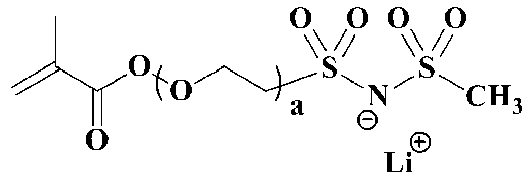
Structural Formula 58 Structural Formula 59 Structural Formula 60 


Structural Formula 61 Structural Formula 62 Structural Formula 63 


Structural Formula 64 Structural Formula 65 Structural Formula 66 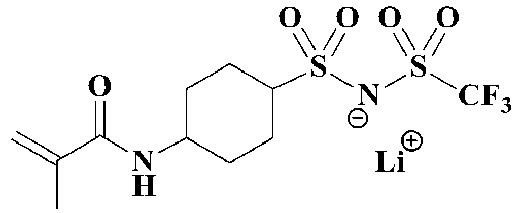


Structural Formula 67 Structural Formula 68 Structural Formula 69 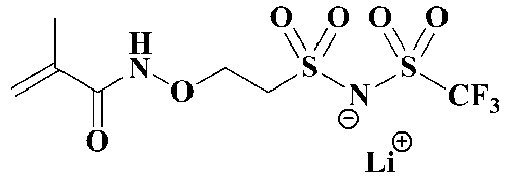


Structural Formula 70 Structural Formula 71 Structural Formula 72 


Structural Formula 73 Structural Formula 74 Structural Formula 75 


Structural Formula 76 Structural Formula 77 Structural Formula 78 


Structural Formula 79 Structural Formula 80 Structural Formula 81 


Structural Formula 82 Structural Formula 83 Structural Formula 84 


Structural Formula 85 Structural Formula 86 Structural Formula 87 


Structural Formula 88 Structural Formula 89 Structural Formula 90 
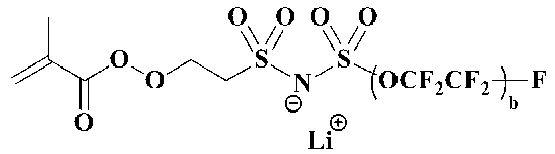

Structural Formula 91 Structural Formula 92 Structural Formula 93 


Structural Formula 94 Structural Formula 95 Structural Formula 96 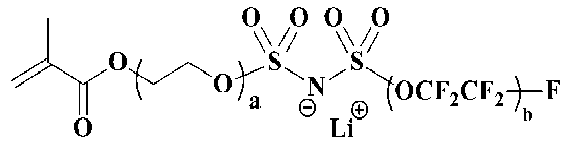


Structural Formula 97 Structural Formula 98 Structural Formula 99 


Structural Formula 100 Structural Formula 101 Structural Formula 102 


Structural Formula 103 Structural Formula 104 Structural Formula 105 
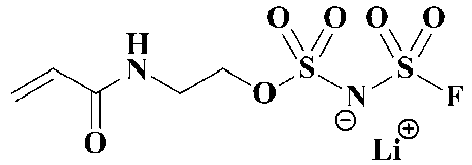

Structural Formula 106 Structural Formula 107 Structural Formula 108 


Structural Formula 109 Structural Formula 110 Structural Formula 111 


Structural Formula 112 Structural Formula 113 Structural Formula 114 


Structural Formula 115 Structural Formula 116 Structural Formula 117 


Structural Formula 118 Structural Formula 119 Structural Formula 120 


- In Structural Formula 9-12, 21-48, 57-60, 69-96, 105-108, and 117-120 a and b is an integer of 2 to 4 respectively.
- Hereinafter, the present disclosure will be described in further detail with reference to examples and experimental examples.
- However, the following examples and experimental example merely illustrate the present disclosure, and the content of the present disclosure is not limited to the following examples and experimental examples.
- A non-aqueous electrolyte composition was prepared by dissolving 1M LiPF6 as a lithium salt in a solvent in which ethylene carbonate (EC) and ethyl methyl carbonate (EMC) were mixed in a volume ratio of 3:7, and dissolving an additive to be 2 wt% with respect to the total weight of the electrolyte as shown in Table 1 below.
[Table 1] Type of non-aqueous electrolyte additive Example 1 
Example 2 
Example 3 
Example 4 
Example 5 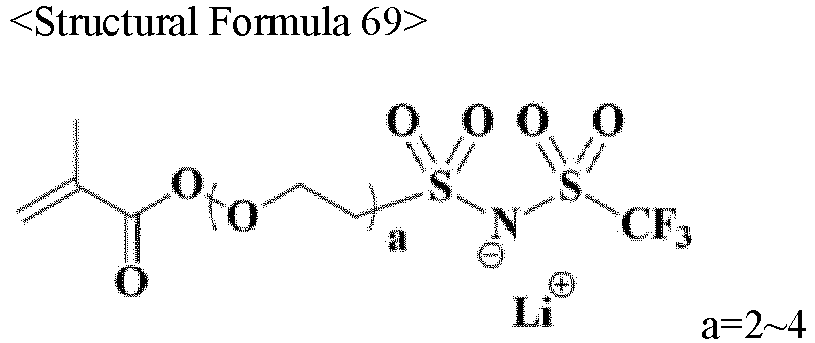
Example 6 
Comparative Example 1 Not added Comparative Example 2 
Comparative Example 3 
Comparative Example 4 
Comparative Example 5 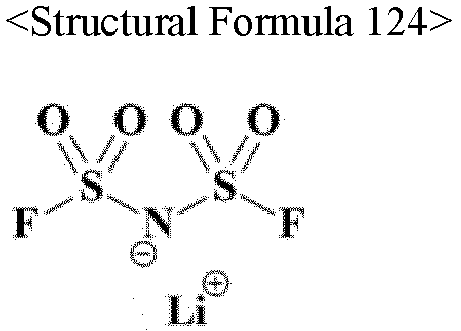
- A non-aqueous electrolyte composition was manufactured by in the same manner as in the Example 1, except that an oligomer (Weight-average molecular weight: 2,500-5,000) polymerized from the compound represented by Structural Formula 61 was used instead of the compound represented by Structural Formula 61 as the electrolyte additive.
- A positive electrode was manufactured by preparing LiNi0.5Mn1.5O4 having a particle size of 5 µm as a positive electrode active material, preparing a slurry by mixing the positive electrode active material with a carbon-based conductive material and polyvinylidene fluoride as a binder in a weight ratio of 94:3:3 in N-methyl pyrrolidone (NMP), casting the slurry on an aluminum thin film, drying the slurry in a vacuum oven at 120 °C, and rolling the resultant.
- Separately, a negative electrode was manufactured by preparing a negative electrode active material in which artificial graphite and silicon oxide (SiO2) were mixed in a weight ratio of 9:1, preparing a slurry by mixing 97 parts by weight of the negative electrode active material and 3 parts by weight of styrene butadiene rubber (SBR) with water, casting the slurry on a copper thin film, drying the slurry in a vacuum oven at 130 °C, and rolling the resultant.
- A lithium secondary battery was manufactured by interposing a separator consisting of 18-µm polypropylene between the positive electrode and negative electrode obtained above, inserting the resultant into a case, and injecting each of the electrolyte compositions prepared in each of Examples 1 to 6 and Comparative Examples 1 to 6 as shown in Table 2 below.
[Table 2] Type of electrolyte composition Example 7 Electrolyte composition of Example 1 Example 8 Electrolyte composition of Example 2 Example 9 Electrolyte composition of Example 3 Example 10 Electrolyte composition of Example 4 Example 11 Electrolyte composition of Example 5 Example 12 Electrolyte composition of Example 6 Comparative Example 7 Electrolyte composition of Comparative Example 1 Comparative Example 8 Electrolyte composition of Comparative Example 2 Comparative Example 9 Electrolyte composition of Comparative Example 3 Comparative Example 10 Electrolyte composition of Comparative Example 4 Comparative Example 11 Electrolyte composition of Comparative Example 5 Comparative Example 12 Electrolyte composition of Comparative Example 6 - To analyze the form in which the electrolyte composition for a lithium secondary battery is present in a secondary battery, the following experiment was performed on the electrolyte compositions prepared in Example 1 and Comparative Example 1, respectively.
- Raman spectroscopy was performed on each electrolyte composition (5 ml) using 532-mm laser at a wavelength range of 650 to 760 cm-1. The result is shown in
FIG. 1 . - Referring to
FIG. 1 , it was confirmed that, compared with the electrolyte composition prepared in Comparative Example 1 not including an electrolyte additive, the electrolyte composition of Example 1 including the electrolyte additive represented byFormula 1 according to the present disclosure has an increased Raman spectrum band intensity in the vicinity of 743±1 cm-1. This is a phenomenon that occurs by forming a coordinate bond between ionic materials such as a negatively charged nitrogen atom included in sulfonylimide and a positively-charged lithium ion (Li+) of the electrolyte additive represented byFormula 1, indicating that there is an ionic compound in the electrolyte composition of Example 1. In addition, the increase in band intensity indicates that the ionic compound can cause a reduction reaction on the surface of a negative electrode. - A half-cell was manufactured using lithium metal and graphite (mixture of artificial graphite:natural graphite = 9:1 (weight ratio)), and each of the electrolyte compositions prepared in Example 1 and Comparative Example 1 was injected into the half-cell. Afterward, after charging the half-cell at 25 °C from 3.5±0.5V to 0.05V at a rate of 0.005C, a potential value (V) and a capacity value (mAh) were measured, and a reduction potential value was determined by differentiating the capacitance value with respect to the potential value (dQ/dV). The result is shown in
FIG. 2 . - Referring to
FIG. 2 , it was confirmed that the electrolyte composition of Example 1 including the electrolyte additive represented byFormula 1 according to the present disclosure, unlike the electrolyte composition of Comparative Example 1 not including an electrolyte additive, shows a descending peak at a voltage near 1.32V compared to lithium. The descending peak indicates that a reduction reaction occurred on the graphite surface, which is the negative electrode, and the electrolyte additive represented byFormula 1 contained in the electrolyte composition is converted into a coating material through a reduction reaction on the surface of the negative electrode at approximately 1.32V compared to lithium. - A three-electrode battery was prepared by injecting each of the electrolyte compositions prepared in Example 1 and Comparative Example 1, which includes three electrodes including two platinum electrodes and a lithium metal electrode, and linear sweep voltammetry (LSV) was performed thereon. Here, LSV was performed under the conditions of an observation range of 3.0 to 6.0V (based on lithium), a step voltage of 50 mV and a measurement rate of 50 mV/s. The result is shown in
FIG. 3 . - Referring to
FIG. 3 , it can be seen that the electrolyte composition of Example 1 including the electrolyte additive represented byFormula 1 according to the present disclosure has an increased current near 4.2V compared to lithium. This means that there is an oxidation reaction on the lithium metal surface near 4.2V, and indicates that the electrolyte additive included in the electrolyte composition of Example 1 forms a coating film through an oxidation reaction on the surface of a positive electrode under a condition of 4.2V or more, compared to lithium. In addition, it shows that the oxidation reaction is induced at a lower potential than the surface of the platinum electrode in a carbon electrode or a positive electrode, due to the catalytic properties of carbon or a transition metal. - From the above results, it can be seen that the electrolyte additive according to the present disclosure is an ionic material, which has an oxidation reaction and a reduction reaction at the positive electrode and the negative electrode, respectively, during charging/discharging of the electrode, thereby forming a coating film on the surface of each electrode.
- To analyze a coating film formed on an electrode surface in the activation of a lithium secondary battery according to the present disclosure and evaluate the high-temperature safety of the lithium secondary battery, the following experiment was performed. Here, the targeted lithium secondary batteries were the secondary batteries of Examples 13 to 18 and Comparative Examples 13 to 18 manufactured in the same manner as in Examples 7 to 12 and Comparative Examples 7 to 12, except that LiNi0.6Co0.2Mn0.2O2 and artificial graphite were used.
- The secondary batteries of Example 13, Comparative Example 16 and Comparative Example 18 were charged/discharged three times at a charge/discharge current density of 0.33C/0.33C, a final charging voltage of 4.2V (NMC/graphite) and a final discharging voltage of 2.5V (NMC/graphite), and X-ray photoelectron spectroscopy (XPS) was performed on the surfaces of the positive and negative electrodes of each battery at full charge. The results are shown in FIGS. 4A to 4B and 5A to 5B.
- Referring to FIGS. 4A-4B and 5A-5B, it showed that the secondary battery (Example 13) including the electrolyte composition of Example 1 shows peaks in the range of 280 to 300 eV indicating the carbon-fluorine binding energy at the positive and negative electrodes in X-ray photoelectron spectroscopy (XPS) performed on the electrode surface. Specifically, the positive and negative electrodes of the secondary battery showed peaks indicating the binding energy of a CF3 group at 293±0.2 eV, which means that the electrolyte additive represented by
Formula 1 contained in the electrolyte composition is involved in the formation of a coating film formed on the surfaces of the positive and negative electrodes. On the other hand, it was confirmed that the secondary battery (Comparative Example 13) using the electrolyte composition of Comparative Example 1 not including an electrolyte additive; the secondary battery (Comparative Example 16) using the electrolyte composition of Comparative Example 4 which includes the additive including sulfonylimide; the secondary battery (Comparative Example 18) using the electrolyte composition of Comparative Example 6 including the electrolyte additive in the form of oligomer do not show the binding energy peak derived from the CF3 group at both of the positive and negative electrodes. - From the above results, it can be seen that, as the electrolyte additive according to the present disclosure includes an ionic compound in the form of monomolecular(or monomer) represented by
Formula 1 including a mother nucleus to which a (meth)acrylate group or an acrylamide group is bonded via a functional group that has an alkylene structure of a saturated hydrocarbon chain or an ether group formed by introducing an oxygen atom to a saturated hydrocarbon chain, at one side based on a sulfonylimide group, a coating film which includes the ionic compound may be formed on the surface of an electrode in the activation of a secondary battery. - While each secondary battery was stored at 60 °C for 56 days, ① an amount of gas generation in the secondary battery and ② OCV of the secondary battery were observed over time. And ③ capacity retention rates of each secondary battery after high-temperature storage were assessed.
- Specifically, each secondary battery was charged/discharged three times at a charge/discharge current density of 0.33C/0.33C, a final charging voltage of 4.2V (NMC/graphite), and a final discharging voltage of 2.5V (NMC/graphite) to measure a battery capacity.
- Afterward, each secondary battery was fully charged with 0.33C at a final charging voltage of 4.2V in a CC/CV mode, followed by starting high temperature storage. Here, the high temperature storage was to store the battery in a constant temperature chamber at 60 °C for a total of 56 days. Also, while each secondary battery was stored at 60 °C for 56 days, an amount of gas generation in the secondary battery and open-circuit voltage (OCV) of the secondary battery were observed over time. The OCV is measured using HOIKI (OCV measuring device, model: BT3554). And the volume of gas generated in the secondary battery was calculated using the Archimedes principle.
- After 56 days, the OCV deviation (i.e., the degree of OCV drop) and the total volume of gas generated in the secondary battery was calculated. In addition, each secondary battery was charged/discharged at a charge/discharge current density of 0.33C/0.33C, a final charging voltage of 4.2V (NMC/graphite), and a final discharging voltage of 2.5V (NMC/graphite) to measure a battery capacity. And the capacity retention rates of each secondary battery after high-temperature storage were assessed from the measured values. The result is shown in Table 3 below.
[Table 3] Type of electrolyte additive used OCV deviation [mV] Capacity retention rate [%] Amount of gas generation [µl] Example 13 
33.3 98.0 1302 Example 14 
33.4 97.9 1360 Example 15 
33.6 97.9 1418 Example 16 
34.0 97.3 1441 Example 17 
33.8 97.5 1380 Example 18 
34.2 97.2 1402 Comparative Example 13 Not added 38.5 95.6 2023 Comparative Example 14 
40.0 95.0 1710 Comparative Example 15 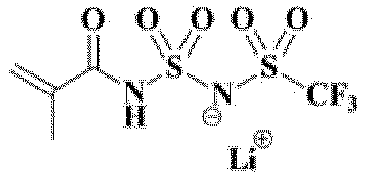
39.6 95.4 1943 Comparative Example 16 
38.1 95.8 1943 Comparative Example 17 
39.6 96.1 1928 Comparative Example 18 Oligomer originates from <Structural Formula 61> 39.2 95.7 1877 - As shown in Table 3, in the secondary batteries of Examples including the compound represented by
Formula 1 as an electrolyte additive according to the present disclosure, it can be seen that, even when being exposed to a high temperature condition, due to the coating film formed on the surfaces of the positive and negative electrodes, the amount of gas generated is significantly reduced by lowering the decomposition of the electrolyte, and the OCV drop phenomenon occurring at the positive electrode decreases. - As above, the present disclosure has been described with reference to exemplary embodiments, but it should be understood by those killed in the art or those of ordinary skill in the art that the present disclosure can be variously modified and changed without departing from the spirit and technical scope of the present disclosure described in the accompanying claims.
- Accordingly, the technical scope of the present disclosure is not limited to the content described in the detailed description of the specification, but should be defined by the claims.
Claims (11)
- An electrolyte additive for a secondary battery, comprising:
a compound represented by Formula 1: R1 is hydrogen or an alkyl group having 1 to 4 carbon atoms,R2 includes one or more selected from an alkylene group having 1 to 10 carbon atoms, an oxyalkylene group having 1 to 10 carbon atoms, a cycloalkylene group having 5 to 10 carbon atoms, and
 R3 is a fluoro group, an alkyl group having 1 to 10 carbon atoms, an alkoxy group having 1 to 10 carbon atoms, or
 wherein one or more hydrogens included in the alkyl groups, the alkylene group, the alkoxy group, the oxyalkylene group, the cycloalkylene group,
 X is an oxygen atom (O) or -NR4, R4 is hydrogen or an alkyl group having 1 to 4 carbon atoms,M includes one or more selected from the group consisting of lithium, sodium, potassium, tetraalkyl ammonium having 1 to 4 carbon atoms, and tetraalkyl phosphonium having 1 to 4 carbon atoms,1 is an integer of 1 to 6, andeach of m and n is an integer of 2 to 20.
 - The electrolyte additive of claim 1, wherein R1 is hydrogen or a methyl group,R2 comprises one or more selected from a methylene group, an ethylene group, a propylene group, an oxymethylene group, an oxyethylene group, an oxypropylene group, a cyclobutylene group, a cyclopentylene group, a cyclohexylene group, a cycloheptylene group,
 R3 is a fluoro group, a methyl group, an ethyl group, a propyl group, a methoxy group, an ethoxy group,
 X is an oxygen atom (O), -NH, or -NCH3,M is lithium,1 is an integer of 1 or 2, andeach of m and n is an integer of 2 to 10.
 - The electrolyte additive of claim 1, wherein the compound represented by Formula 1 is one or more compounds selected from Structural Formula 1 to Structural Formula 120 below:
Structural Formula 1 Structural Formula 2 Structural Formula 3 


Structural Formula 4 Structural Formula 5 Structural Formula 6 
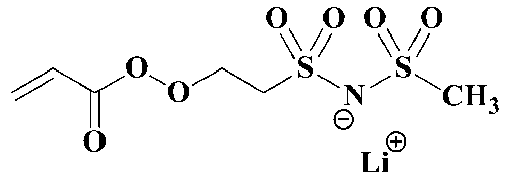

Structural Formula 7 Structural Formula 8 Structural Formula 9 


Structural Formula 10 Structural Formula 11 Structural Formula 12 


Structural Formula 13 Structural Formula 14 Structural Formula 15 


Structural Formula 16 Structural Formula 17 Structural Formula 18 


Structural Formula 19 Structural Formula 20 Structural Formula 21 


Structural Formula 22 Structural Formula 23 Structural Formula 24 


Structural Formula 25 Structural Formula 26 Structural Formula 27 


Structural Formula 28 Structural Formula 29 Structural Formula 30 


Structural Formula 31 Structural Formula 32 Structural Formula 33 


Structural Formula 34 Structural Formula 35 Structural Formula 36 

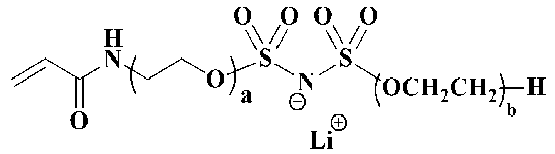
Structural Formula 37 Structural Formula 38 Structural Formula 39 


Structural Formula 40 Structural Formula 41 Structural Formula 42 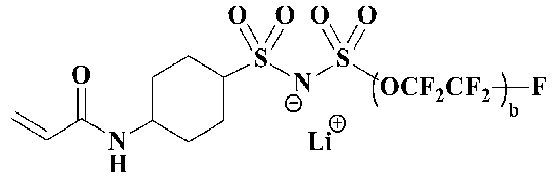


Structural Formula 43 Structural Formula 44 Structural Formula 45 


Structural Formula 46 Structural Formula 47 Structural Formula 48 


Structural Formula 49 Structural Formula 50 Structural Formula 51 


Structural Formula 52 Structural Formula 53 Structural Formula 54 


Structural Formula 55 Structural Formula 56 Structural Formula 57 
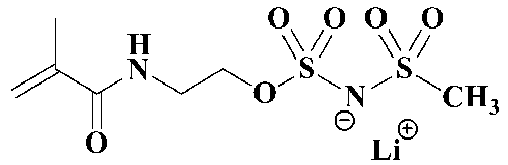

Structural Formula 58 Structural Formula 59 Structural Formula 60 


Structural Formula 61 Structural Formula 62 Structural Formula 63 


Structural Formula 64 Structural Formula 65 Structural Formula 66 


Structural Formula 67 Structural Formula 68 Structural Formula 69 


Structural Formula 70 Structural Formula 71 Structural Formula 72 


Structural Formula 73 Structural Formula 74 Structural Formula 75 


Structural Formula 76 Structural Formula 77 Structural Formula 78 

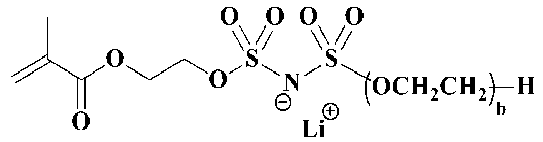
Structural Formula 79 Structural Formula 80 Structural Formula 81 
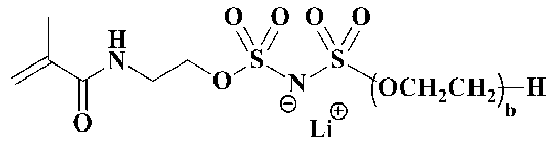
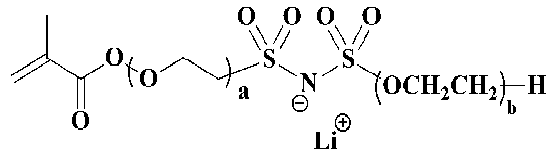
Structural Formula 82 Structural Formula 83 Structural Formula 84 


Structural Formula 85 Structural Formula 86 Structural Formula 87 


Structural Formula 88 Structural Formula 89 Structural Formula 90 


Structural Formula 91 Structural Formula 92 Structural Formula 93 
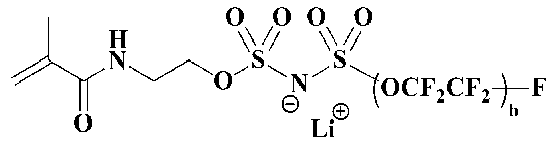

Structural Formula 94 Structural Formula 95 Structural Formula 96 


Structural Formula 97 Structural Formula 98 Structural Formula 99 


Structural Formula 100 Structural Formula 101 Structural Formula 102 


Structural Formula 103 Structural Formula 104 Structural Formula 105 

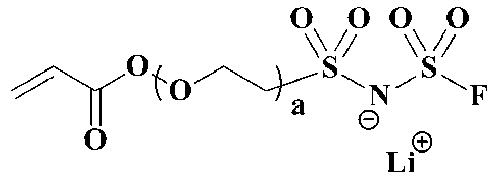
Structural Formula 106 Structural Formula 107 Structural Formula 108 


Structural Formula 109 Structural Formula 110 Structural Formula 111 


Structural Formula 112 Structural Formula 113 Structural Formula 114 
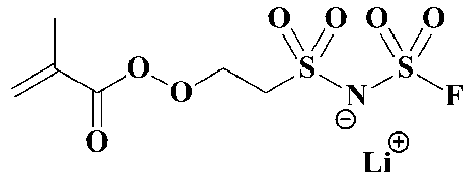
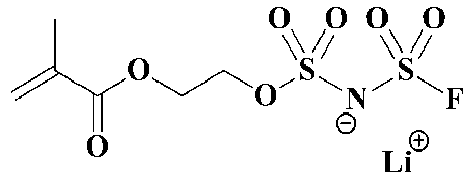
Structural Formula 115 Structural Formula 116 Structural Formula 117 


Structural Formula 118 Structural Formula 119 Structural Formula 120 


- An electrolyte composition for a lithium secondary battery, comprising:a non-aqueous organic solvent;a lithium salt; anda compound represented by Formula 1:
 R1 is hydrogen or an alkyl group having 1 to 4 carbon atoms,R2 includes one or more selected from an alkylene group having 1 to 10 carbon atoms, an oxyalkylene group having 1 to 10 carbon atoms, a cycloalkylene group having 5 to 10 carbon atoms, and
 R3 is a fluoro group, an alkyl group having 1 to 10 carbon atoms, an alkoxy group having 1 to 10 carbon atoms, or
 X is an oxygen atom (O) or -NR4, R4 is hydrogen or an alkyl group having 1 to 4 carbon atoms,M comprises one or more selected from the group consisting of one or more selected from the group consisting of lithium, sodium, potassium, tetraalkyl ammonium having 1 to 4 carbon atoms, and tetraalkyl phosphonium having 1 to 4 carbon atoms,1 is an integer of 1 to 6, andeach of m and n is an integer of 2 to 20.
 - The electrolyte composition of claim 4, wherein the compound represented by Formula 1 is present in an amount of 0.01 to 3 wt% with respect to the total weight of the electrolyte composition.
- The electrolyte composition of claim 4, wherein the lithium salt comprises one or more selected from the group consisting of LiCl, LiBr, LiI, LiClO4, LiBF4, LiB10Cl10, LiPF6, LiCF3SO3, LiCF3CO2, LiAsF6, LiSbF6, LiAlCl4, CH3SO3Li, (CF3SO2)2NLi, and (FSO2)2NLi.
- The electrolyte composition of claim 4, wherein the non-aqueous organic solvent comprises one or more selected from the group consisting of N-methyl-2-pyrrolidinone, ethylene carbonate, propylene carbonate, butylene carbonate, dimethyl carbonate, diethyl carbonate, γ-butyrolactone, 1,2-dimethyoxy ethane, tetrahydrofuran, 2-methyl tetrahydrofuran, dimethyl sulfoxide, 1,3-dioxolane, formamide, dimethylformamide, dioxolane, acetonitrile, nitromethane, methyl formate, methyl citrate, phosphoric acid triester, trimethoxy methane, a dioxolane derivative, sulfolane, methyl sulfolane, 1,3-dimethyl-2-imidazolidinone, a propylene carbonate derivative, a tetrahydrofuran derivative, ether, methyl propionate, and ethyl propionate.
- A lithium secondary battery, comprising:an electrode assembly having a positive electrode, a negative electrode, and a separator interposed between the positive electrode and the negative electrode, and the electrolyte of claim 4,wherein the positive electrode comprises one or more positive electrode active materials of lithium metal oxides represented by Formulas 2 and 3:
[Formula 2] Lix[NiyCozMnwM1 v]O2
[Formula 3] LiM2 pMn(2-p)O4
In Formulas 2 and 3,M1 is one or more elements selected from the group consisting of W, Cu, Fe, V, Cr, Ti, Zr, Zn, Al, In, Ta, Y, La, Sr, Ga, Sc, Gd, Sm, Ca, Ce, Nb, Mg, B, and Mo,x, y, z, w and v satisfy 1.0≤x≤1.30, 0.5≤y<1, 0<z≤0.3, 0<w≤0.3, and 0≤v≤0.1, respectively, wherein y+z+w+v=1,M2 is Ni, Co or Fe, andp is 0.05≤p≤0.6. - The secondary battery of claim 8, wherein the positive electrode active material comprises one or more selected from the group consisting of LiNi0.8Co0.1Mn0.1O2, LiNi0.6Co0.2Mn0.2O2, LiNi0.9Co0.05Mn0.05O2, LiNi0.6Co0.2Mn0.1Al0.1O2, LiNi0.6Co0.2Mn0.15Al0.05O2, LiNi0.7Co0.1Mn0.1Al0.1O2, and LiNi0.5Mn1.5O4.
- The secondary battery of claim 8, wherein the negative electrode active material consists of a carbon material and a silicon material, and
the silicon material comprises one or more of silicon (Si), silicon carbide (SiC) and silicon oxide (SiOq, 0.8≤q≤2.5). - The secondary battery of claim 10, wherein the silicon material is present in an amount of 1 to 20 wt% with respect to the total weight of the negative electrode active material.
Applications Claiming Priority (3)
| Application Number | Priority Date | Filing Date | Title |
|---|---|---|---|
| KR20210157225 | 2021-11-16 | ||
| KR1020220131377A KR102676187B1 (en) | 2021-11-16 | 2022-10-13 | Novle additives for nonaqueous electrolyte and lithium secondary battery containing the same |
| PCT/KR2022/016109 WO2023090664A1 (en) | 2021-11-16 | 2022-10-21 | Novel additive for nonaqueous electrolyte, and lithium secondary battery comprising same |
Publications (3)
| Publication Number | Publication Date |
|---|---|
| EP4243149A1 true EP4243149A1 (en) | 2023-09-13 |
| EP4243149A4 EP4243149A4 (en) | 2024-08-14 |
| EP4243149B1 EP4243149B1 (en) | 2026-01-28 |
Family
ID=86322980
Family Applications (1)
| Application Number | Title | Priority Date | Filing Date |
|---|---|---|---|
| EP22895872.4A Active EP4243149B1 (en) | 2021-11-16 | 2022-10-21 | Novel additive for nonaqueous electrolyte, and lithium secondary battery comprising same |
Country Status (5)
| Country | Link |
|---|---|
| US (1) | US20230155176A1 (en) |
| EP (1) | EP4243149B1 (en) |
| JP (1) | JP7527718B2 (en) |
| CA (1) | CA3204818A1 (en) |
| WO (1) | WO2023090664A1 (en) |
Cited By (1)
| Publication number | Priority date | Publication date | Assignee | Title |
|---|---|---|---|---|
| EP4421936A4 (en) * | 2022-08-26 | 2025-10-01 | Lg Energy Solution Ltd | ANHYDROUS ELECTROLYTE COMPOSITION AND LITHIUM SECONDARY BATTERY THEREFOR |
Families Citing this family (1)
| Publication number | Priority date | Publication date | Assignee | Title |
|---|---|---|---|---|
| KR20250000025A (en) * | 2023-06-22 | 2025-01-02 | 주식회사 엘지에너지솔루션 | Lithium secondary battery having enhanced safety |
Family Cites Families (15)
| Publication number | Priority date | Publication date | Assignee | Title |
|---|---|---|---|---|
| JPH11260407A (en) * | 1998-03-16 | 1999-09-24 | Mitsubishi Paper Mills Ltd | Polymer electrolyte for lithium secondary battery |
| JP2000082494A (en) * | 1998-09-03 | 2000-03-21 | Sanyo Chem Ind Ltd | Flame-resistant nonaqueous electrolyte and secondary battery using the same |
| JP4790105B2 (en) * | 2000-08-29 | 2011-10-12 | 富士フイルム株式会社 | Electrolyte composition and electrochemical cell using the same |
| JP2010225510A (en) | 2009-03-25 | 2010-10-07 | Konica Minolta Holdings Inc | Electrolyte composition and secondary battery |
| KR20130119431A (en) * | 2010-09-30 | 2013-10-31 | 바스프 에스이 | Additive for electrolytes |
| FR2979630B1 (en) | 2011-09-05 | 2013-10-04 | Univ Provence Aix Marseille 1 | BLOCK COPOLYMERS HAVING A POLYANIONIC BASED ON ANION MONOMER TYPE TFSILI AS ELECTROLYTE BATTERY. |
| DE102012209313A1 (en) * | 2012-06-01 | 2013-12-05 | Robert Bosch Gmbh | Lithium-air cell useful e.g. in lithium-air battery, comprises negative electrode comprising intercalation material, positive electrode comprising oxygen, and separator comprising lithium ion conductive inorganic and solid-state electrolyte |
| JP2016027028A (en) * | 2014-07-02 | 2016-02-18 | セントラル硝子株式会社 | Ionic complex, electrolyte for nonaqueous electrolyte battery, nonaqueous electrolyte battery and ionic complex synthesis method |
| JP6319632B2 (en) * | 2014-07-23 | 2018-05-09 | 株式会社豊田自動織機 | Positive electrode for lithium ion secondary battery, method for producing the same, and lithium ion secondary battery |
| JP6366550B2 (en) * | 2015-08-24 | 2018-08-01 | 信越化学工業株式会社 | Polymer compound for conductive polymer and method for producing the same |
| CN109065951A (en) * | 2018-07-31 | 2018-12-21 | 东莞市杉杉电池材料有限公司 | Lithium ion battery electrolyte and lithium ion battery |
| KR102427345B1 (en) * | 2018-09-21 | 2022-08-01 | 주식회사 엘지에너지솔루션 | Composition for gel polymer electrolyte and lithium secondary battery comprising the gel polymer electrolyte formed therefrom |
| CN113646262B (en) | 2019-03-28 | 2024-03-01 | 松下知识产权经营株式会社 | Non-aqueous electrolyte secondary battery |
| KR20210157225A (en) | 2020-06-19 | 2021-12-28 | 강기현 | plant observation camera |
| EP4087116B1 (en) | 2021-03-19 | 2025-05-07 | Suzhou BeiAng Smart Technology Co., Ltd. | Switch controller, and electronic device |
-
2022
- 2022-10-21 WO PCT/KR2022/016109 patent/WO2023090664A1/en not_active Ceased
- 2022-10-21 JP JP2023534404A patent/JP7527718B2/en active Active
- 2022-10-21 CA CA3204818A patent/CA3204818A1/en active Pending
- 2022-10-21 EP EP22895872.4A patent/EP4243149B1/en active Active
- 2022-11-09 US US17/983,896 patent/US20230155176A1/en active Pending
Cited By (1)
| Publication number | Priority date | Publication date | Assignee | Title |
|---|---|---|---|---|
| EP4421936A4 (en) * | 2022-08-26 | 2025-10-01 | Lg Energy Solution Ltd | ANHYDROUS ELECTROLYTE COMPOSITION AND LITHIUM SECONDARY BATTERY THEREFOR |
Also Published As
| Publication number | Publication date |
|---|---|
| EP4243149B1 (en) | 2026-01-28 |
| JP2024500661A (en) | 2024-01-10 |
| JP7527718B2 (en) | 2024-08-05 |
| CA3204818A1 (en) | 2023-05-25 |
| US20230155176A1 (en) | 2023-05-18 |
| WO2023090664A1 (en) | 2023-05-25 |
| EP4243149A4 (en) | 2024-08-14 |
Similar Documents
| Publication | Publication Date | Title |
|---|---|---|
| EP4243150B1 (en) | Novel additive for non-aqueous electrolyte solution and lithium secondary battery comprising same | |
| EP4243149A1 (en) | Novel additive for nonaqueous electrolyte, and lithium secondary battery comprising same | |
| EP4307428B1 (en) | Novel additive for non-aqueous electrolyte solution and lithium secondary battery comprising same | |
| KR102676187B1 (en) | Novle additives for nonaqueous electrolyte and lithium secondary battery containing the same | |
| KR102613280B1 (en) | Lithium secondary battery improved safety | |
| EP4273992B1 (en) | Lithium secondary battery having enhanced high-temperature safety | |
| EP4307406A1 (en) | Lithium secondary battery | |
| KR102695943B1 (en) | Lithium secondary battery | |
| EP4421936A1 (en) | Non-aqueous electrolyte composition and lithium secondary battery comprising same | |
| EP4307427A1 (en) | Non-aqueous electrolyte solution composition and lithium secondary battery comprising same | |
| CN116711116A (en) | Novel additive for non-aqueous electrolyte and lithium secondary battery containing same | |
| EP4280306B1 (en) | Lithium secondary battery with enhanced safety | |
| EP4254585B1 (en) | Lithium secondary battery with enhanced safety | |
| EP4307429A1 (en) | Lithium secondary battery with inhibited metal dissolution |
Legal Events
| Date | Code | Title | Description |
|---|---|---|---|
| STAA | Information on the status of an ep patent application or granted ep patent |
Free format text: STATUS: THE INTERNATIONAL PUBLICATION HAS BEEN MADE |
|
| PUAI | Public reference made under article 153(3) epc to a published international application that has entered the european phase |
Free format text: ORIGINAL CODE: 0009012 |
|
| STAA | Information on the status of an ep patent application or granted ep patent |
Free format text: STATUS: REQUEST FOR EXAMINATION WAS MADE |
|
| 17P | Request for examination filed |
Effective date: 20230606 |
|
| AK | Designated contracting states |
Kind code of ref document: A1 Designated state(s): AL AT BE BG CH CY CZ DE DK EE ES FI FR GB GR HR HU IE IS IT LI LT LU LV MC ME MK MT NL NO PL PT RO RS SE SI SK SM TR |
|
| A4 | Supplementary search report drawn up and despatched |
Effective date: 20240711 |
|
| RIC1 | Information provided on ipc code assigned before grant |
Ipc: H01M 10/0525 20100101ALI20240705BHEP Ipc: C07C 311/48 20060101ALI20240705BHEP Ipc: H01M 4/58 20100101ALI20240705BHEP Ipc: H01M 4/48 20100101ALI20240705BHEP Ipc: H01M 4/38 20060101ALI20240705BHEP Ipc: H01M 4/587 20100101ALI20240705BHEP Ipc: H01M 4/36 20060101ALI20240705BHEP Ipc: H01M 4/505 20100101ALI20240705BHEP Ipc: H01M 4/525 20100101ALI20240705BHEP Ipc: H01M 10/052 20100101ALI20240705BHEP Ipc: H01M 10/0567 20100101AFI20240705BHEP |
|
| DAV | Request for validation of the european patent (deleted) | ||
| DAX | Request for extension of the european patent (deleted) | ||
| STAA | Information on the status of an ep patent application or granted ep patent |
Free format text: STATUS: EXAMINATION IS IN PROGRESS |
|
| 17Q | First examination report despatched |
Effective date: 20250402 |
|
| GRAP | Despatch of communication of intention to grant a patent |
Free format text: ORIGINAL CODE: EPIDOSNIGR1 |
|
| STAA | Information on the status of an ep patent application or granted ep patent |
Free format text: STATUS: GRANT OF PATENT IS INTENDED |
|
| INTG | Intention to grant announced |
Effective date: 20250910 |
|
| P01 | Opt-out of the competence of the unified patent court (upc) registered |
Free format text: CASE NUMBER: UPC_APP_0011663_4243149/2025 Effective date: 20251030 |
|
| GRAS | Grant fee paid |
Free format text: ORIGINAL CODE: EPIDOSNIGR3 |
|
| GRAA | (expected) grant |
Free format text: ORIGINAL CODE: 0009210 |
|
| STAA | Information on the status of an ep patent application or granted ep patent |
Free format text: STATUS: THE PATENT HAS BEEN GRANTED |
|
| AK | Designated contracting states |
Kind code of ref document: B1 Designated state(s): AL AT BE BG CH CY CZ DE DK EE ES FI FR GB GR HR HU IE IS IT LI LT LU LV MC ME MK MT NL NO PL PT RO RS SE SI SK SM TR |
|
| REG | Reference to a national code |
Ref country code: CH Ref legal event code: F10 Free format text: ST27 STATUS EVENT CODE: U-0-0-F10-F00 (AS PROVIDED BY THE NATIONAL OFFICE) Effective date: 20260128 Ref country code: GB Ref legal event code: FG4D |
|
| REG | Reference to a national code |
Ref country code: DE Ref legal event code: R096 Ref document number: 602022029542 Country of ref document: DE |
|
| REG | Reference to a national code |
Ref country code: IE Ref legal event code: FG4D |