EP4242980A1 - Labeling anatomical structures in medical imaging datasets - Google Patents
Labeling anatomical structures in medical imaging datasets Download PDFInfo
- Publication number
- EP4242980A1 EP4242980A1 EP22161374.8A EP22161374A EP4242980A1 EP 4242980 A1 EP4242980 A1 EP 4242980A1 EP 22161374 A EP22161374 A EP 22161374A EP 4242980 A1 EP4242980 A1 EP 4242980A1
- Authority
- EP
- European Patent Office
- Prior art keywords
- tree
- anatomical
- segmentation
- labels
- substructures
- Prior art date
- Legal status (The legal status is an assumption and is not a legal conclusion. Google has not performed a legal analysis and makes no representation as to the accuracy of the status listed.)
- Granted
Links
Images



Classifications
-
- G—PHYSICS
- G06—COMPUTING OR CALCULATING; COUNTING
- G06T—IMAGE DATA PROCESSING OR GENERATION, IN GENERAL
- G06T7/00—Image analysis
- G06T7/10—Segmentation; Edge detection
- G06T7/11—Region-based segmentation
-
- G—PHYSICS
- G16—INFORMATION AND COMMUNICATION TECHNOLOGY [ICT] SPECIALLY ADAPTED FOR SPECIFIC APPLICATION FIELDS
- G16H—HEALTHCARE INFORMATICS, i.e. INFORMATION AND COMMUNICATION TECHNOLOGY [ICT] SPECIALLY ADAPTED FOR THE HANDLING OR PROCESSING OF MEDICAL OR HEALTHCARE DATA
- G16H30/00—ICT specially adapted for the handling or processing of medical images
- G16H30/40—ICT specially adapted for the handling or processing of medical images for processing medical images, e.g. editing
-
- G—PHYSICS
- G06—COMPUTING OR CALCULATING; COUNTING
- G06V—IMAGE OR VIDEO RECOGNITION OR UNDERSTANDING
- G06V10/00—Arrangements for image or video recognition or understanding
- G06V10/40—Extraction of image or video features
- G06V10/42—Global feature extraction by analysis of the whole pattern, e.g. using frequency domain transformations or autocorrelation
- G06V10/422—Global feature extraction by analysis of the whole pattern, e.g. using frequency domain transformations or autocorrelation for representing the structure of the pattern or shape of an object therefor
- G06V10/426—Graphical representations
-
- G—PHYSICS
- G06—COMPUTING OR CALCULATING; COUNTING
- G06N—COMPUTING ARRANGEMENTS BASED ON SPECIFIC COMPUTATIONAL MODELS
- G06N3/00—Computing arrangements based on biological models
- G06N3/02—Neural networks
- G06N3/04—Architecture, e.g. interconnection topology
- G06N3/0464—Convolutional networks [CNN, ConvNet]
-
- G—PHYSICS
- G06—COMPUTING OR CALCULATING; COUNTING
- G06N—COMPUTING ARRANGEMENTS BASED ON SPECIFIC COMPUTATIONAL MODELS
- G06N3/00—Computing arrangements based on biological models
- G06N3/02—Neural networks
- G06N3/08—Learning methods
-
- G—PHYSICS
- G06—COMPUTING OR CALCULATING; COUNTING
- G06T—IMAGE DATA PROCESSING OR GENERATION, IN GENERAL
- G06T7/00—Image analysis
- G06T7/0002—Inspection of images, e.g. flaw detection
- G06T7/0012—Biomedical image inspection
-
- G—PHYSICS
- G06—COMPUTING OR CALCULATING; COUNTING
- G06T—IMAGE DATA PROCESSING OR GENERATION, IN GENERAL
- G06T7/00—Image analysis
- G06T7/10—Segmentation; Edge detection
- G06T7/143—Segmentation; Edge detection involving probabilistic approaches, e.g. Markov random field [MRF] modelling
-
- G—PHYSICS
- G06—COMPUTING OR CALCULATING; COUNTING
- G06T—IMAGE DATA PROCESSING OR GENERATION, IN GENERAL
- G06T7/00—Image analysis
- G06T7/10—Segmentation; Edge detection
- G06T7/162—Segmentation; Edge detection involving graph-based methods
-
- G—PHYSICS
- G06—COMPUTING OR CALCULATING; COUNTING
- G06V—IMAGE OR VIDEO RECOGNITION OR UNDERSTANDING
- G06V10/00—Arrangements for image or video recognition or understanding
- G06V10/20—Image preprocessing
- G06V10/26—Segmentation of patterns in the image field; Cutting or merging of image elements to establish the pattern region, e.g. clustering-based techniques; Detection of occlusion
- G06V10/267—Segmentation of patterns in the image field; Cutting or merging of image elements to establish the pattern region, e.g. clustering-based techniques; Detection of occlusion by performing operations on regions, e.g. growing, shrinking or watersheds
-
- G—PHYSICS
- G06—COMPUTING OR CALCULATING; COUNTING
- G06V—IMAGE OR VIDEO RECOGNITION OR UNDERSTANDING
- G06V10/00—Arrangements for image or video recognition or understanding
- G06V10/70—Arrangements for image or video recognition or understanding using pattern recognition or machine learning
- G06V10/764—Arrangements for image or video recognition or understanding using pattern recognition or machine learning using classification, e.g. of video objects
-
- G—PHYSICS
- G06—COMPUTING OR CALCULATING; COUNTING
- G06V—IMAGE OR VIDEO RECOGNITION OR UNDERSTANDING
- G06V10/00—Arrangements for image or video recognition or understanding
- G06V10/70—Arrangements for image or video recognition or understanding using pattern recognition or machine learning
- G06V10/764—Arrangements for image or video recognition or understanding using pattern recognition or machine learning using classification, e.g. of video objects
- G06V10/765—Arrangements for image or video recognition or understanding using pattern recognition or machine learning using classification, e.g. of video objects using rules for classification or partitioning the feature space
-
- G—PHYSICS
- G06—COMPUTING OR CALCULATING; COUNTING
- G06V—IMAGE OR VIDEO RECOGNITION OR UNDERSTANDING
- G06V10/00—Arrangements for image or video recognition or understanding
- G06V10/70—Arrangements for image or video recognition or understanding using pattern recognition or machine learning
- G06V10/82—Arrangements for image or video recognition or understanding using pattern recognition or machine learning using neural networks
-
- G—PHYSICS
- G06—COMPUTING OR CALCULATING; COUNTING
- G06V—IMAGE OR VIDEO RECOGNITION OR UNDERSTANDING
- G06V20/00—Scenes; Scene-specific elements
- G06V20/70—Labelling scene content, e.g. deriving syntactic or semantic representations
-
- G—PHYSICS
- G16—INFORMATION AND COMMUNICATION TECHNOLOGY [ICT] SPECIALLY ADAPTED FOR SPECIFIC APPLICATION FIELDS
- G16H—HEALTHCARE INFORMATICS, i.e. INFORMATION AND COMMUNICATION TECHNOLOGY [ICT] SPECIALLY ADAPTED FOR THE HANDLING OR PROCESSING OF MEDICAL OR HEALTHCARE DATA
- G16H30/00—ICT specially adapted for the handling or processing of medical images
- G16H30/20—ICT specially adapted for the handling or processing of medical images for handling medical images, e.g. DICOM, HL7 or PACS
-
- G—PHYSICS
- G06—COMPUTING OR CALCULATING; COUNTING
- G06T—IMAGE DATA PROCESSING OR GENERATION, IN GENERAL
- G06T2207/00—Indexing scheme for image analysis or image enhancement
- G06T2207/10—Image acquisition modality
- G06T2207/10072—Tomographic images
- G06T2207/10081—Computed x-ray tomography [CT]
-
- G—PHYSICS
- G06—COMPUTING OR CALCULATING; COUNTING
- G06T—IMAGE DATA PROCESSING OR GENERATION, IN GENERAL
- G06T2207/00—Indexing scheme for image analysis or image enhancement
- G06T2207/10—Image acquisition modality
- G06T2207/10072—Tomographic images
- G06T2207/10088—Magnetic resonance imaging [MRI]
-
- G—PHYSICS
- G06—COMPUTING OR CALCULATING; COUNTING
- G06T—IMAGE DATA PROCESSING OR GENERATION, IN GENERAL
- G06T2207/00—Indexing scheme for image analysis or image enhancement
- G06T2207/10—Image acquisition modality
- G06T2207/10072—Tomographic images
- G06T2207/10104—Positron emission tomography [PET]
-
- G—PHYSICS
- G06—COMPUTING OR CALCULATING; COUNTING
- G06T—IMAGE DATA PROCESSING OR GENERATION, IN GENERAL
- G06T2207/00—Indexing scheme for image analysis or image enhancement
- G06T2207/10—Image acquisition modality
- G06T2207/10116—X-ray image
-
- G—PHYSICS
- G06—COMPUTING OR CALCULATING; COUNTING
- G06T—IMAGE DATA PROCESSING OR GENERATION, IN GENERAL
- G06T2207/00—Indexing scheme for image analysis or image enhancement
- G06T2207/20—Special algorithmic details
- G06T2207/20076—Probabilistic image processing
-
- G—PHYSICS
- G06—COMPUTING OR CALCULATING; COUNTING
- G06T—IMAGE DATA PROCESSING OR GENERATION, IN GENERAL
- G06T2207/00—Indexing scheme for image analysis or image enhancement
- G06T2207/20—Special algorithmic details
- G06T2207/20081—Training; Learning
-
- G—PHYSICS
- G06—COMPUTING OR CALCULATING; COUNTING
- G06T—IMAGE DATA PROCESSING OR GENERATION, IN GENERAL
- G06T2207/00—Indexing scheme for image analysis or image enhancement
- G06T2207/20—Special algorithmic details
- G06T2207/20084—Artificial neural networks [ANN]
-
- G—PHYSICS
- G06—COMPUTING OR CALCULATING; COUNTING
- G06T—IMAGE DATA PROCESSING OR GENERATION, IN GENERAL
- G06T2207/00—Indexing scheme for image analysis or image enhancement
- G06T2207/30—Subject of image; Context of image processing
- G06T2207/30004—Biomedical image processing
- G06T2207/30048—Heart; Cardiac
-
- G—PHYSICS
- G06—COMPUTING OR CALCULATING; COUNTING
- G06T—IMAGE DATA PROCESSING OR GENERATION, IN GENERAL
- G06T2207/00—Indexing scheme for image analysis or image enhancement
- G06T2207/30—Subject of image; Context of image processing
- G06T2207/30004—Biomedical image processing
- G06T2207/30101—Blood vessel; Artery; Vein; Vascular
-
- G—PHYSICS
- G06—COMPUTING OR CALCULATING; COUNTING
- G06V—IMAGE OR VIDEO RECOGNITION OR UNDERSTANDING
- G06V2201/00—Indexing scheme relating to image or video recognition or understanding
- G06V2201/03—Recognition of patterns in medical or anatomical images
Definitions
- Various examples of the disclosure generally relate to determining a label set including multiple labels for labeling an anatomical structure in a medical imaging dataset.
- Medical imaging datasets - e.g., acquired using Computed Tomography (CT), Magnetic Resonance Tomography (MRT) or X-ray imaging, to give just a few examples - can be analyzed using computer-implemented algorithms. Specifically, it is possible to detect and localize anatomical structures in the medical imaging datasets. A segmentation can be determined that delimits the anatomical structure. Further, once one or more anatomical structures have been detected in localized, it can be helpful to determine a label set. A label set includes one or more labels that provide a textual description of semantic context information of the anatomical structure. Thereby, analysis of the medical imaging dataset by a radiologist or another user can be facilitated.
- CT Computed Tomography
- MRT Magnetic Resonance Tomography
- X-ray imaging e.g., X-ray imaging
- complex anatomical structures need to be labeled.
- Such complex anatomical structures can include multiple anatomical substructures.
- Such anatomical substructures can form parts of the greater anatomical structure.
- the anatomical substructures are arranged in one or more spatial sequences, i.e., next to each other in a type of chain.
- An example would be arteries or blood vessels, e.g., the coronary artery, that include varies sections.
- a computer-implemented method of determining a label set includes multiple labels for anatomical substructures of an anatomical structure.
- the anatomical structure is depicted by a medical imaging data set.
- the anatomical structure includes the multiple anatomical substructures arranged in multiple sequences.
- the multiple sequences of the anatomical substructures are joined at bifurcation points.
- the method includes obtaining a tree-structured segmentation of the anatomical structure in the medical imaging data set.
- the tree-structured segmentation includes multiple sequences of sections.
- the multiple sequences of sections are associated with the sequences of substructures of the anatomical structure.
- the method also includes obtaining, for each section of the tree-structured segmentation, a respective predetermined list of candidate labels and associated probabilities.
- the method includes obtaining a ruleset of anatomical interrelationships between the substructures of the anatomical structure.
- the method further includes determining the label set by performing a selection for each section of the tree-structured segmentation, from the respective predetermined list of candidate labels. The selection pertains to a respective label. The selection is based on the associated probabilities and takes into account the rule set of anatomical interrelationships.
- a computer program or a computer-program product or a computer-readable storage medium includes program code.
- the program code can be loaded and executed by at least one processor.
- the at least one processor Upon loading and executing the program code, the at least one processor performs a method of determining a label set.
- the label set includes multiple labels for anatomical substructures of an anatomical structure.
- the anatomical structure is depicted by a medical imaging data set.
- the anatomical structure includes the multiple anatomical substructures arranged in multiple sequences.
- the multiple sequences of the anatomical substructures are joined at bifurcation points.
- the method includes obtaining a tree-structured segmentation of the anatomical structure in the medical imaging data set.
- the tree-structured segmentation includes multiple sequences of sections.
- the multiple sequences of sections are associated with the sequences of substructures of the anatomical structure.
- the method also includes obtaining, for each section of the tree-structured segmentation, a respective predetermined list of candidate labels and associated probabilities. Also, the method includes obtaining a ruleset of anatomical interrelationships between the substructures of the anatomical structure.
- the method further includes determining the label set by performing a selection for each section of the tree-structured segmentation, from the respective predetermined list of candidate labels. The selection pertains to a respective label. The selection is based on the associated probabilities and takes into account the rule set of anatomical interrelationships.
- a device comprising at least one processor and a memory
- the memory includes program code that can be executed by the at least one processor.
- the at least one processor Upon executing the program code, the at least one processor performs a method of determining a label set.
- the label set includes multiple labels for anatomical substructures of an anatomical structure.
- the anatomical structure is depicted by a medical imaging data set.
- the anatomical structure includes the multiple anatomical substructures arranged in multiple sequences.
- the multiple sequences of the anatomical substructures are joined at bifurcation points.
- the method includes obtaining a tree-structured segmentation of the anatomical structure in the medical imaging data set.
- the tree-structured segmentation includes multiple sequences of sections.
- the multiple sequences of sections are associated with the sequences of substructures of the anatomical structure.
- the method also includes obtaining, for each section of the tree-structured segmentation, a respective predetermined list of candidate labels and associated probabilities.
- the method includes obtaining a ruleset of anatomical interrelationships between the substructures of the anatomical structure.
- the method further includes determining the label set by performing a selection for each section of the tree-structured segmentation, from the respective predetermined list of candidate labels.
- the selection pertains to a respective label.
- the selection is based on the associated probabilities and takes into account the rule set of anatomical interrelationships.
- circuits and other electrical devices generally provide for a plurality of circuits or other electrical devices. All references to the circuits and other electrical devices and the functionality provided by each are not intended to be limited to encompassing only what is illustrated and described herein. While particular labels may be assigned to the various circuits or other electrical devices disclosed, such labels are not intended to limit the scope of operation for the circuits and the other electrical devices. Such circuits and other electrical devices may be combined with each other and/or separated in any manner based on the particular type of electrical implementation that is desired.
- any circuit or other electrical device disclosed herein may include any number of microcontrollers, a graphics processor unit (GPU), integrated circuits, memory devices (e.g., FLASH, random access memory (RAM), read only memory (ROM), electrically programmable read only memory (EPROM), electrically erasable programmable read only memory (EEPROM), or other suitable variants thereof), and software which co-act with one another to perform operation(s) disclosed herein.
- any one or more of the electrical devices may be configured to execute a program code that is embodied in a non-transitory computer readable medium programmed to perform any number of the functions as disclosed.
- Various examples disclosed herein pertain to postprocessing of medical imaging datasets.
- medical imaging datasets could be acquired using CT, MRT, or X-ray imaging, to give just a few examples.
- Imaging modalities are conceivable, e.g., Positron Emission Tomography or ultrasound imaging.
- a medical imaging dataset can include one or more images, e.g., two-dimensional images.
- a medical imaging dataset can include volumetric three-dimensional data.
- One or more algorithms to postprocessing medical imaging datasets can be used, e.g., to extract information.
- one or more anatomical structures may be detected and localized in the medical imaging dataset.
- different types of anatomical structures can be detected and localized. For instance, for angiography, it would be possible that the coronary artery is subject to the postprocessing. For instance, where the brain is imaged, carotid arteries or vertrebal arteries could subject to the postprocessing.
- complex anatomical structures can be subject to the postprocessing.
- Such complex anatomical structures can include multiple substructures. These substructures may be arranged in a certain spatial relationship with each other. Specifically, it would be possible that the substructures are arranged in one or more sequences. This means that a spatial sequence or chain of substructures is formed, i.e., a given substructure can be connected to one or more other substructures. This would be typical for arteries, but other examples would be possible, e.g., muscle structures including tendons and muscles.
- the complex anatomical structures can include multiple substructures forming multiple sequences. Two or more of the sequences can be joined at bifurcation points. For instance, an artery may bifurcate into two vessels at such a bifurcation point.
- a tree-type data structure can include a root node from which one or more segments extend to one or more child nodes. Some of these child nodes can implement bifurcations, i.e., some of these child nodes can include multiple respective child nodes.
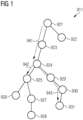
- FIG. 1 illustrates aspects with respect to an example tree-type data structure 911.
- the specific data structure 911 that is depicted in FIG. 1 is only one possible example and is used to illustrate concepts associated with tree-type data structures in general.
- the tree-type data structure 911 includes multiple nodes 921-931.
- a root node 921 is illustrated.
- Multiple child nodes 922-931 of the root node are illustrated.
- Adjacent nodes can be referred to as parent node and child node, respectively.
- the node 929 would be the parent node with respect to the child node 930.
- the nodes 924, 925, as well as the root node 921 are bifurcations.
- the nodes 926, 928, 931, 922 are leaf nodes, i.e., form ends of respective sequences of nodes.
- Nodes having a similar distance to the root node 921 or a bifurcation can be referred to as sibling nodes.
- the nodes 925 and 929 would be sibling nodes.
- the nodes 921-931 forms sequences.
- One example sequence 941 is illustrated in FIG. 1 . This sequence 941 extends from the root node 921 to the child node 924; the child node 924 implements a bifurcation such that two further sequences 942, 943 extend towards the leafs.
- a segmentation of a medical imaging dataset can be obtained in the form of a tree-type data structure.
- the segmentation can include sections, i.e., parts of the segmented area, that are respectively associated with or implement nodes.
- postprocessing of medical imaging datasets can include multiple tasks. Some tasks are summarized in TAB. 1 below.
- TAB. 1 Various postprocessing tasks for postprocessing a medical imaging dataset.
- Task Example details I Segmentation A first task can correspond to the detection and localization of one or more anatomical structures. For instance, it would be possible to determine a segmentation of the anatomical structure. To give an example, it would be possible to segment a centerline of a blood vessel, e.g., the coronary artery or other arteries. The segmentation can be provided as a tree-type data structure, i.e., including multiple sections that form sequences (cf. FIG. 1 ).
- II Classification A second tasks can include classifying substructures of anatomical structures.
- a classification result can be associated with probabilities that a given substructure of the anatomical structure is of a given class. For instance, different classification results can be associated with different probabilities. For instance, for a given section of a tree-structure segmentation of an anatomical structure, this section being associated with a given anatomical substructure, it would be possible to obtain a list of possible classification results, wherein different classification results are associated with different probabilities. Such probabilities can be obtained from an appropriate classification algorithm, e.g., depending on the relative occurrence were activation strength of certain features that are associated with a given classification result.
- III Labeling A third task can include determining a label set of multiple labels for the anatomical substructures. For instance, such labels could be provided as textual description attached to the respective section of the tree-type segmentation that is associated with a given anatomical substructure.
- a segmentation of the anatomical structure is available that includes multiple sections associated with different anatomical substructures.
- the particular algorithms used to provide such segmentation is not germane for the functioning of the techniques described herein.
- reference techniques may be used, e.g., see Kong, Bin, et al. "Learning tree-structured representation for 3D coronary artery segmentation.”
- Such segmentation can, in particular, be structured in accordance with a tree-type data structure. I.e., a tree-structured segmentation of the anatomical structure can be obtained, the tree-structure segmentation included with multiple sequences of section that are associated with the sequences of substructures.
- FIG. 2 illustrates a CT image of the heart.
- a segmentation 121 of the coronary artery cf. FIG. 3
- different sections 125 of the segmentation 121 are provided with a predetermined list 126 of candidate labels 127 and associated probabilities 128.
- Such list 126 can be obtain as a result of the classification algorithm, e.g., based on classification activation maps or other representation of probabilities of different classification results.
- the sections 125 can be organized as nodes of a tree-type data structure (cf. FIG. 1 ).
- the label set includes multiple labels for the anatomical substructures. This means that labels can be attached as textual description of semantic context information 2 different sections of the segmentation.
- the label set can be determined based on such additional information pertaining to the predetermined list of candidate labels and the associated probabilities.
- Such ruleset can be seen as prior knowledge regarding possible variances of the anatomical structure.
- the ruleset can define anatomical relationships, i.e., what combinations of anatomical substructures are potentially possible. For instance, such ruleset can be provided based on expert knowledge. To give some examples, such ruleset can exclude certain combinations of substructures to be in direct neighborhood. Such ruleset could specify allowed combinations of substructures to be in direct neighborhood. Such ruleset can thus be used to determine which labels for a given section of the tree-type segmentation are generally allowed or not allowed, e.g., depending on the choice of one or more labels of neighboring sections of the tree-type segmentation.
- Such ruleset may include the possible labels for a parent node of the tree-type segmentation given that a certain label has been assigned to a child node of that parent node. Similarly, such ruleset could specify the allowed labels for a child node, given that the parent node has been assigned a given label. Such ruleset could specify the allowed labels for a node given that one or more sibling nodes have been assigned with labels.
- ruleset of anatomical relationships can be expressed in various data structures.
- An example data structure implementing such ruleset 151 of anatomical interrelationships is shown in FIG. 4 .
- FIG. 4 illustrates aspects with respect to a ruleset 151 of anatomical interrelationships.
- the ruleset 151 is structured to enable determining of valid child labels given the tree-structured segmentation and a label of a section of the tree-structured segmentation represented by a respective parent node.
- the ruleset 151 can be used to determine, for each "parent label" of a parent node for a tree-structure segmentation, one or more allowed "child labels" for one or more child nodes of the parent node.
- the valid labels 962 of the one or more child nodes are provided, e.g., in form of a list.
- likelihoods 963 are provided (these likelihoods 963 are generally distinct from the probabilities 128, cf. FIG. 3 ). These likelihoods 963 could be associated with respective rights of occurrence of the parent label - child labeled pair is expected based on prior knowledge.
- the candidate child labels may depend on the count of child nodes that are associated with a parent node for which the label 961 is provided.
- different lists of candidate labels may be provided depending on the tree structure of the tree-structured segmentation.
- ruleset 151 are not germane for the functioning of the techniques described herein. Accordingly, various options are conceivable for determining such ruleset 151. In one example, it would be possible to determine the ruleset 151 based on an annotation process used for obtaining ground truth labels for training a machine-learning algorithm that provides the classification of the segments of the segmentation (cf. TAB. 1: task II). For instance, respective manual annotations performed by an expert for parent node - child node pairs can be recorded and expressed in form of the ruleset 151. Respective occurrences can be counted, to thereby obtain the likelihoods 963. Also, the ruleset is generally explainable and can therefore be inspected and modified by experts.
- Various techniques are based on the finding that the list of candidate labels (cf. FIG. 3 : list 126 including the candidate labels 127 and the associated probabilities 128) for a given section of the tree-structured segmentation and sometimes differ from the list of allowed labels determined based on the ruleset for the same given section. For instance, some candidate labels may not be allowed by the ruleset while the ruleset may on the other hand allow certain labels that are not candidates.
- the label assignment can be constrained by the ruleset, thereby taking into account additional prior knowledge.
- a selection algorithm can be used that iteratively performs, for each segment of the tree-structured segmentation, a respective selection. I.e., a "walkthrough” through the tree-type segmentation, "visiting" each section of the tree-type segmentation can be implemented.
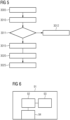
- FIG. 5 is a flowchart of a method according to various examples.
- FIG. 5 illustrates aspects with respect to a recursion loop implemented by a selection algorithm.
- a (previously determined, i.e., at a higher recursion layer) label of a parent node of the tree-structured segmentation is obtained.
- all allowed labels for the currently considered node can be determined.
- the ruleset can specify multiple allowed labels as being valid for this label given the label of the parent node (cf. FIG. 4 ). For instance, only such valid labels may be considered that are also candidate labels.
- this list of allowed labels can be sorted by descending probability, at box 3020 (cf. FIG. 3 : probabilities 128).
- Sorting can be performed such that the allowed label for the currently considered node having maximum probability is put at the beginning of the list.
- Additional sorting criteria can influence the sorting at box 3030 such as how often a certain rule was seen in the training set etc., i.e., the likelihoods 963.
- a label for a child node can then be picked at box 3025.
- This picking can be done by indexing the sorted list of valid labels, and picking the list entry using a certain offset index.
- the offset index that can be specific to each section of the tree-structured segmentation.
- a picking rule could be considered at box 3025.
- the picking rule can specify which label is picked to propagate to lower recursions.
- the label having the highest probability can be used (at the top of the list).
- the algorithm Given one or more candidate solutions, the algorithm can recurse until all sections have labels or the algorithm fails.
- Multiple possible solutions can be sampled by trying multiple sets of offsets and then choosing the solution with the maximum global label likelihood given the label probabilities for each section. In other words, it would be possible that the recursive walkthrough visits at least some sections of the tree-structured segmentation multiple times to determine multiple alternative solutions for the label set.
- One of these alternative solutions - associated with different picks from the list of valid labels provided by the ruleset - can be selected to eventually determine the label set based on the sums of the probabilities associated with the labels that are chosen for each one of the alternative solutions.
- Offsets might be picked randomly (i.e., the picking rule could include a random contribution) or according to a specific schedule. Given that the underlying probabilities are of good quality, one may assume that offset value "0" is oftentimes the best solution. Therefore, a useful schedule would for example test all zero offset and all one-hot offsets, i.e. all offsets zero except for one section where one might test "1","2" or "3". This means, more generally, that the picking rule can take into account interrelationships between picks at different sections of the tree-type segmentation. Further samples might be two hot and three hot offsets.
- evidence such as geometric features (bifurcation angle, distance to root/parent or main branch, curvature, etc.) or certain landmarks (e.g., left main bifurcation) can be incorporated in addition to the probabilities.
- FIG. 6 illustrates aspects with respect to a processing device 91.
- the processing device 91 includes a processor 92 and a memory 93.
- the processor 92 can load program code from the memory 93 and execute the program code.
- the processor 92 can communicate with remote entities via an interface 94.
- the processor 92 could receive, via the interface 94, medical imaging datasets, segmentations, and/or rulesets.
- the processor 92 could output, via the interface 94, a label set.
- the processor 92 upon loading and executing the program code, could perform techniques as described herein, e.g.:
- Determining a label set selecting, for each section of a tree-structured segmentation, a respective label from a plurality of candidate labels and taking into account a predetermined ruleset; executing a respective selection algorithm.
- FIG. 7 An example processing pipeline of data processing that could be implemented by the processor 92 is illustrated in FIG. 7 .
- FIG. 7 is schematically illustrating aspects with respect to a processing pipeline for postprocessing of a medical imaging dataset 111.
- the medical imaging dataset 111 can be processed by a segmentation algorithm 131 to obtain a segmentation 121.
- the segmentation 121 includes multiple sections 125 and each section 125 is associated with a respective list of candidate labels and associated probabilities. This has been explained in connection with FIG. 3 .
- the segmentation algorithm 131 could be a trained algorithm, e.g., a machine-learning algorithm.
- a convolutional neural network may be used.
- a further algorithm 132 is used to determine a label set 122, for the tree-type segmentation 121.
- the further algorithm 132 also takes into account the predetermined ruleset 151 which may be loaded from, e.g., a database 112.
- the ruleset 151 defines one or more valid labels for a given "child section" of the tree-type segmentation 121, given a previously determined label for a "parent section".
- the algorithm 132 can, specifically, implement a recursive walkthrough through the sections of the tree-type segmentation 121. A respective recursion has been discussed in connection with FIG. 5 above.
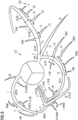
- the label set 122 that is obtained by such techniques could take the form as illustrated in FIG. 8 .
- FIG. 8 schematically illustrates the label set 122 where textual description of various sections of the coronary artery are shown next to the coronary artery. Multiple anatomical substructures 1-18, i.e., sections of the coronary artery, are shown.
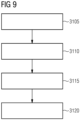
- FIG. 9 is a flowchart of a method according to various examples.
- the method of FIG. 9 could be executed by a processing device, e.g., the processing device 91 according to FIG. 6 .
- the method of FIG. 9 could be executed by a processor such as the processor 92, upon loading and executing program code from a memory such as the memory 93.
- the flowchart of FIG. 9 could implement the processing pipeline of FIG. 7 .
- a tree-structured segmentation of an anatomical structure This can include executing a respective segmentation algorithm (cf. FIG. 7 : segmentation algorithm 131).
- a respective segmentation algorithm cf. FIG. 7 : segmentation algorithm 131.
- the tree-structure segmentation has been preprepared and, at box 3105, is loaded from a database.
- the tree-structure segmentation could be loaded from a picture archiving system, e.g., together with the underlying medical imaging data set.
- the tree-structured segmentation includes multiple sections arranged in sequences, i.e., next to each other forming a chain; the sequences correspond to branches of the underlying tree-type data structure. Each sequence can include at least one section. The sequences are also associated with sequences of substructures of the anatomical structure.
- a respective list of candidate labels can be obtained along with associated probabilities.
- the ruleset can define one or more valid labels for a given anatomical substructure, depending on the assumption of another assigned label to another anatomical substructure. Thus, meaningless or unrealistic or artificial combinations of labels of adjacent substructures are avoided.
- the label set taking into account the trees-structured segmentation of box 3105, the list of candidate labels for the sections of the tree-structured segmentation as obtained in box 3110, as well as the ruleset as obtained in box 3115. For instance, for each section, a respective selection of a label can be made, e.g., using a recursive algorithm such as the one as explained in connection with FIG. 5 .
- a ruleset of allowable combinations of labels for adjacent substructures of an anatomical structure can be generated from an annotation process for annotating a training set used for training of a segmentation algorithm that segments that anatomical structure.
- a ruleset can be manually generated. The rules it can be explainable and can be edited.
- a data structure for such a ruleset has been disclosed which enables a recursive construction of multiple solutions for a labeling set taking into account the ruleset.
- An efficient walkthrough scheme has been disclosed, for implementing the recursive algorithm to make a selection of a label for each section of a tree-structured segmentation.
- Empirical testing for labeling of a coronary artery showed a significant improvement of the accuracy.
- the main classify security for a coronary artery labeling problem with 29 labels went from 77% to 86%.
Landscapes
- Engineering & Computer Science (AREA)
- Theoretical Computer Science (AREA)
- Physics & Mathematics (AREA)
- General Physics & Mathematics (AREA)
- Health & Medical Sciences (AREA)
- Computer Vision & Pattern Recognition (AREA)
- General Health & Medical Sciences (AREA)
- Medical Informatics (AREA)
- Multimedia (AREA)
- Evolutionary Computation (AREA)
- Software Systems (AREA)
- Artificial Intelligence (AREA)
- Computing Systems (AREA)
- Nuclear Medicine, Radiotherapy & Molecular Imaging (AREA)
- Radiology & Medical Imaging (AREA)
- Databases & Information Systems (AREA)
- Computational Linguistics (AREA)
- Quality & Reliability (AREA)
- Life Sciences & Earth Sciences (AREA)
- Epidemiology (AREA)
- Primary Health Care (AREA)
- Public Health (AREA)
- Biomedical Technology (AREA)
- Biophysics (AREA)
- Data Mining & Analysis (AREA)
- Molecular Biology (AREA)
- General Engineering & Computer Science (AREA)
- Mathematical Physics (AREA)
- Probability & Statistics with Applications (AREA)
- Apparatus For Radiation Diagnosis (AREA)
Abstract
Description
- Various examples of the disclosure generally relate to determining a label set including multiple labels for labeling an anatomical structure in a medical imaging dataset.
- Medical imaging datasets - e.g., acquired using Computed Tomography (CT), Magnetic Resonance Tomography (MRT) or X-ray imaging, to give just a few examples - can be analyzed using computer-implemented algorithms. Specifically, it is possible to detect and localize anatomical structures in the medical imaging datasets. A segmentation can be determined that delimits the anatomical structure. Further, once one or more anatomical structures have been detected in localized, it can be helpful to determine a label set. A label set includes one or more labels that provide a textual description of semantic context information of the anatomical structure. Thereby, analysis of the medical imaging dataset by a radiologist or another user can be facilitated.
- Sometimes complex anatomical structures need to be labeled. Such complex anatomical structures can include multiple anatomical substructures. Such anatomical substructures can form parts of the greater anatomical structure. Specifically, it would be possible that the anatomical substructures are arranged in one or more spatial sequences, i.e., next to each other in a type of chain. An example would be arteries or blood vessels, e.g., the coronary artery, that include varies sections.
- See, e.g., Gülsün, Mehmet A., et al. "CTA coronary labeling through efficient geodesics between trees using anatomy priors." International Conference on Medical Image Computing and Computer-Assisted Intervention. Springer, Cham, 2014. Yang, Guanyu, et al. "Automatic coronary artery tree labeling in coronary computed tomographic angiography datasets." 2011 Computing in Cardiology. IEEE, 2011. Also see Wang, Xingce, et al. "Automatic labeling of vascular structures with topological constraints via HMM." International Conference on Medical Image Computing and Computer-Assisted Intervention. Springer, Cham, 2017.
- A need exists for advanced techniques of determining label sets for medical imaging datasets. Specifically, a need exists for advanced techniques for determining label sets including multiple labels for labeling complex anatomical structures, e.g., the coronary artery.
- This need is met by the features of the independent claims. The features of the dependent claims define embodiments.
- A computer-implemented method of determining a label set is disclosed. The label set includes multiple labels for anatomical substructures of an anatomical structure. The anatomical structure is depicted by a medical imaging data set. The anatomical structure includes the multiple anatomical substructures arranged in multiple sequences. The multiple sequences of the anatomical substructures are joined at bifurcation points. The method includes obtaining a tree-structured segmentation of the anatomical structure in the medical imaging data set. The tree-structured segmentation includes multiple sequences of sections. The multiple sequences of sections are associated with the sequences of substructures of the anatomical structure. The method also includes obtaining, for each section of the tree-structured segmentation, a respective predetermined list of candidate labels and associated probabilities. Also, the method includes obtaining a ruleset of anatomical interrelationships between the substructures of the anatomical structure. The method further includes determining the label set by performing a selection for each section of the tree-structured segmentation, from the respective predetermined list of candidate labels. The selection pertains to a respective label. The selection is based on the associated probabilities and takes into account the rule set of anatomical interrelationships.
- A computer program or a computer-program product or a computer-readable storage medium includes program code. The program code can be loaded and executed by at least one processor. Upon loading and executing the program code, the at least one processor performs a method of determining a label set. The label set includes multiple labels for anatomical substructures of an anatomical structure. The anatomical structure is depicted by a medical imaging data set. The anatomical structure includes the multiple anatomical substructures arranged in multiple sequences. The multiple sequences of the anatomical substructures are joined at bifurcation points. The method includes obtaining a tree-structured segmentation of the anatomical structure in the medical imaging data set. The tree-structured segmentation includes multiple sequences of sections. The multiple sequences of sections are associated with the sequences of substructures of the anatomical structure. The method also includes obtaining, for each section of the tree-structured segmentation, a respective predetermined list of candidate labels and associated probabilities. Also, the method includes obtaining a ruleset of anatomical interrelationships between the substructures of the anatomical structure. The method further includes determining the label set by performing a selection for each section of the tree-structured segmentation, from the respective predetermined list of candidate labels. The selection pertains to a respective label. The selection is based on the associated probabilities and takes into account the rule set of anatomical interrelationships.
- A device comprising at least one processor and a memory is disclosed. The memory includes program code that can be executed by the at least one processor. Upon executing the program code, the at least one processor performs a method of determining a label set. The label set includes multiple labels for anatomical substructures of an anatomical structure.
- The anatomical structure is depicted by a medical imaging data set. The anatomical structure includes the multiple anatomical substructures arranged in multiple sequences. The multiple sequences of the anatomical substructures are joined at bifurcation points. The method includes obtaining a tree-structured segmentation of the anatomical structure in the medical imaging data set. The tree-structured segmentation includes multiple sequences of sections. The multiple sequences of sections are associated with the sequences of substructures of the anatomical structure. The method also includes obtaining, for each section of the tree-structured segmentation, a respective predetermined list of candidate labels and associated probabilities. Also, the method includes obtaining a ruleset of anatomical interrelationships between the substructures of the anatomical structure. The method further includes determining the label set by performing a selection for each section of the tree-structured segmentation, from the respective predetermined list of candidate labels. The selection pertains to a respective label. The selection is based on the associated probabilities and takes into account the rule set of anatomical interrelationships.
- It is to be understood that the features mentioned above and those yet to be explained below may be used not only in the respective combinations indicated, but also in other combinations or in isolation without departing from the scope of the invention.
-
FIG. 1 schematically illustrates a tree-type data structure that could be used, e.g., to represent a tree-structured segmentation according to various examples. -
FIG. 2 is a medical imaging dataset, specifically, a CT scan of the heart. -
FIG. 3 schematically illustrates a tree-structured segmentation of the coronary artery for the medical imaging data set according tofig. 2 , whereinFIG. 3 also illustrates lists of candidate labels associated with different sections of the tree-structured segmentation and associated probabilities according to various examples. -
FIG. 4 schematically illustrates a rule set defining allowable labels according to various examples. -
FIG. 5 is a flowchart of a method for implementing a recursive walk-through through a tree-type data structures such as the tree-structured segmentation according to various examples. -
FIG. 6 schematically illustrates a processing device according to various examples. -
FIG. 7 schematically illustrates a data processing pipeline for post processing medical imaging datasets according to various examples. -
FIG. 8 schematically illustrates a label set overlaid on a medical imaging dataset. -
FIG. 9 is a flowchart of a method according to various examples. - Some examples of the present disclosure generally provide for a plurality of circuits or other electrical devices. All references to the circuits and other electrical devices and the functionality provided by each are not intended to be limited to encompassing only what is illustrated and described herein. While particular labels may be assigned to the various circuits or other electrical devices disclosed, such labels are not intended to limit the scope of operation for the circuits and the other electrical devices. Such circuits and other electrical devices may be combined with each other and/or separated in any manner based on the particular type of electrical implementation that is desired. It is recognized that any circuit or other electrical device disclosed herein may include any number of microcontrollers, a graphics processor unit (GPU), integrated circuits, memory devices (e.g., FLASH, random access memory (RAM), read only memory (ROM), electrically programmable read only memory (EPROM), electrically erasable programmable read only memory (EEPROM), or other suitable variants thereof), and software which co-act with one another to perform operation(s) disclosed herein. In addition, any one or more of the electrical devices may be configured to execute a program code that is embodied in a non-transitory computer readable medium programmed to perform any number of the functions as disclosed.
- In the following, embodiments of the invention will be described in detail with reference to the accompanying drawings. It is to be understood that the following description of embodiments is not to be taken in a limiting sense. The scope of the invention is not intended to be limited by the embodiments described hereinafter or by the drawings, which are taken to be illustrative only.
- The drawings are to be regarded as being schematic representations and elements illustrated in the drawings are not necessarily shown to scale. Rather, the various elements are represented such that their function and general purpose become apparent to a person skilled in the art. Any connection or coupling between functional blocks, devices, components, or other physical or functional units shown in the drawings or described herein may also be implemented by an indirect connection or coupling. A coupling between components may also be established over a wireless connection. Functional blocks may be implemented in hardware, firmware, software, or a combination thereof.
- Various examples disclosed herein pertain to postprocessing of medical imaging datasets.
- For instance, medical imaging datasets could be acquired using CT, MRT, or X-ray imaging, to give just a few examples.
- Other imaging modalities are conceivable, e.g., Positron Emission Tomography or ultrasound imaging.
- A medical imaging dataset can include one or more images, e.g., two-dimensional images. A medical imaging dataset can include volumetric three-dimensional data.
- One or more algorithms to postprocessing medical imaging datasets can be used, e.g., to extract information. For instance, one or more anatomical structures may be detected and localized in the medical imaging dataset. Depending on the particular field of view, different types of anatomical structures can be detected and localized. For instance, for angiography, it would be possible that the coronary artery is subject to the postprocessing. For instance, where the brain is imaged, carotid arteries or vertrebal arteries could subject to the postprocessing.
- As a general rule, complex anatomical structures can be subject to the postprocessing. Such complex anatomical structures can include multiple substructures. These substructures may be arranged in a certain spatial relationship with each other. Specifically, it would be possible that the substructures are arranged in one or more sequences. This means that a spatial sequence or chain of substructures is formed, i.e., a given substructure can be connected to one or more other substructures. This would be typical for arteries, but other examples would be possible, e.g., muscle structures including tendons and muscles.
- According to various examples, the complex anatomical structures can include multiple substructures forming multiple sequences. Two or more of the sequences can be joined at bifurcation points. For instance, an artery may bifurcate into two vessels at such a bifurcation point.
- For instance, it is possible to represent such complex anatomical structures that include one or more sequences of substructures in a tree-type data structure.
- As a general rule, a tree-type data structure can include a root node from which one or more segments extend to one or more child nodes. Some of these child nodes can implement bifurcations, i.e., some of these child nodes can include multiple respective child nodes.
-
FIG. 1 illustrates aspects with respect to an example tree-type data structure 911. Thespecific data structure 911 that is depicted inFIG. 1 is only one possible example and is used to illustrate concepts associated with tree-type data structures in general. - The tree-
type data structure 911 includes multiple nodes 921-931. - Specifically, a
root node 921 is illustrated. Multiple child nodes 922-931 of the root node are illustrated. Adjacent nodes can be referred to as parent node and child node, respectively. For instance, thenode 929 would be the parent node with respect to thechild node 930. - The
nodes root node 921 are bifurcations. - The
nodes - Nodes having a similar distance to the
root node 921 or a bifurcation can be referred to as sibling nodes. For instance, thenodes - As will be appreciated, the nodes 921-931 forms sequences. One
example sequence 941 is illustrated inFIG. 1 . Thissequence 941 extends from theroot node 921 to thechild node 924; thechild node 924 implements a bifurcation such that twofurther sequences - According to various examples, a segmentation of a medical imaging dataset can be obtained in the form of a tree-type data structure. I.e., the segmentation can include sections, i.e., parts of the segmented area, that are respectively associated with or implement nodes.
- According to various examples, postprocessing of medical imaging datasets can include multiple tasks. Some tasks are summarized in TAB. 1 below.
TAB. 1: Various postprocessing tasks for postprocessing a medical imaging dataset. Task Example details I Segmentation A first task can correspond to the detection and localization of one or more anatomical structures. For instance, it would be possible to determine a segmentation of the anatomical structure. To give an example, it would be possible to segment a centerline of a blood vessel, e.g., the coronary artery or other arteries. The segmentation can be provided as a tree-type data structure, i.e., including multiple sections that form sequences (cf. FIG. 1 ).II Classification A second tasks can include classifying substructures of anatomical structures. A classification result can be associated with probabilities that a given substructure of the anatomical structure is of a given class. For instance, different classification results can be associated with different probabilities. For instance, for a given section of a tree-structure segmentation of an anatomical structure, this section being associated with a given anatomical substructure, it would be possible to obtain a list of possible classification results, wherein different classification results are associated with different probabilities. Such probabilities can be obtained from an appropriate classification algorithm, e.g., depending on the relative occurrence were activation strength of certain features that are associated with a given classification result. III Labeling A third task can include determining a label set of multiple labels for the anatomical substructures. For instance, such labels could be provided as textual description attached to the respective section of the tree-type segmentation that is associated with a given anatomical substructure. - Hereinafter, details will be specifically described with respect to the task of determining a label set including multiple labels for anatomical substructures of a complex anatomical structure (cf. TAB. 1: task III). Techniques will be described that facilitate determining a label set for a complex anatomical structure that includes multiple substructures arranged in sequences. Techniques will be described that facilitate determining a label set using a tree-structured segmentation as input (cf. TAB. 1: example I), along with lists of candidate labels and associated probabilities that can be obtained, e.g., from respective classification of the anatomical substructures (cf. TAB. 1: example II) associated with different sections of the tree-structured segmentation.
- In other words, it is assumed that, based on other postprocessing tasks of the medical imaging dataset, a segmentation of the anatomical structure is available that includes multiple sections associated with different anatomical substructures. The particular algorithms used to provide such segmentation is not germane for the functioning of the techniques described herein. For instance, reference techniques may be used, e.g., see Kong, Bin, et al. "Learning tree-structured representation for 3D coronary artery segmentation." Computerized Medical Imaging and Graphics 80 (2020): 101688 or Kerkeni, Asma, et al. "A coronary artery segmentation method based on multiscale analysis and region growing." Computerized Medical Imaging and Graphics 48 (2016): 49-61 for segmentation of the coronary artery.
- Such segmentation, can, in particular, be structured in accordance with a tree-type data structure. I.e., a tree-structured segmentation of the anatomical structure can be obtained, the tree-structure segmentation included with multiple sequences of section that are associated with the sequences of substructures.
- For illustration,
FIG. 2 illustrates a CT image of the heart. Using an appropriate postprocessing algorithm, it is possible to obtain asegmentation 121 of the coronary artery (cf.FIG. 3 ). Along with thesegmentation 121,different sections 125 of thesegmentation 121 are provided with apredetermined list 126 of candidate labels 127 and associatedprobabilities 128.Such list 126 can be obtain as a result of the classification algorithm, e.g., based on classification activation maps or other representation of probabilities of different classification results. - The
sections 125 can be organized as nodes of a tree-type data structure (cf.FIG. 1 ). - Thus, along with the segmentation of the anatomical structure, further information is available regarding relative arrangement of the sections of the segmentation and associated probabilities of a classification result for the respective anatomical substructures of that anatomical structure. This classification result can serve as a list of candidate labels and associated probabilities.
- Then, it is possible to determine a label set. The label set includes multiple labels for the anatomical substructures. This means that labels can be attached as textual description of semantic context information 2 different sections of the segmentation. The label set can be determined based on such additional information pertaining to the predetermined list of candidate labels and the associated probabilities.
- Various techniques are based on the finding that - beyond the list of candidate labels and the associated probabilities, e.g., as obtained from a classification algorithm - oftentimes additional rules or constraints are available that limit the choice of a particular label for a given substructure/section of the segmentation.
- Such ruleset can be seen as prior knowledge regarding possible variances of the anatomical structure. The ruleset can define anatomical relationships, i.e., what combinations of anatomical substructures are potentially possible. For instance, such ruleset can be provided based on expert knowledge. To give some examples, such ruleset can exclude certain combinations of substructures to be in direct neighborhood. Such ruleset could specify allowed combinations of substructures to be in direct neighborhood. Such ruleset can thus be used to determine which labels for a given section of the tree-type segmentation are generally allowed or not allowed, e.g., depending on the choice of one or more labels of neighboring sections of the tree-type segmentation. To give an example: Such ruleset may include the possible labels for a parent node of the tree-type segmentation given that a certain label has been assigned to a child node of that parent node. Similarly, such ruleset could specify the allowed labels for a child node, given that the parent node has been assigned a given label. Such ruleset could specify the allowed labels for a node given that one or more sibling nodes have been assigned with labels.
- As a general rule, such ruleset of anatomical relationships can be expressed in various data structures. An example data structure implementing
such ruleset 151 of anatomical interrelationships is shown inFIG. 4 . -
FIG. 4 illustrates aspects with respect to aruleset 151 of anatomical interrelationships. Theruleset 151 is structured to enable determining of valid child labels given the tree-structured segmentation and a label of a section of the tree-structured segmentation represented by a respective parent node. Theruleset 151 can be used to determine, for each "parent label" of a parent node for a tree-structure segmentation, one or more allowed "child labels" for one or more child nodes of the parent node. - As illustrated in
FIG. 4 , given acertain label 961 of a parent node (i.e., for a respective section of the tree-type segmentation represented by that parent node), thevalid labels 962 of the one or more child nodes are provided, e.g., in form of a list. - Also, indications of
respective likelihoods 963 are provided (theselikelihoods 963 are generally distinct from theprobabilities 128, cf.FIG. 3 ). Theselikelihoods 963 could be associated with respective rights of occurrence of the parent label - child labeled pair is expected based on prior knowledge. - Sometimes, the candidate child labels may depend on the count of child nodes that are associated with a parent node for which the
label 961 is provided. In other words, different lists of candidate labels may be provided depending on the tree structure of the tree-structured segmentation. - Techniques for determining
such ruleset 151 are not germane for the functioning of the techniques described herein. Accordingly, various options are conceivable for determiningsuch ruleset 151. In one example, it would be possible to determine theruleset 151 based on an annotation process used for obtaining ground truth labels for training a machine-learning algorithm that provides the classification of the segments of the segmentation (cf. TAB. 1: task II). For instance, respective manual annotations performed by an expert for parent node - child node pairs can be recorded and expressed in form of theruleset 151. Respective occurrences can be counted, to thereby obtain thelikelihoods 963. Also, the ruleset is generally explainable and can therefore be inspected and modified by experts. - Various techniques are based on the finding that the list of candidate labels (cf.
FIG. 3 :list 126 including the candidate labels 127 and the associated probabilities 128) for a given section of the tree-structured segmentation and sometimes differ from the list of allowed labels determined based on the ruleset for the same given section. For instance, some candidate labels may not be allowed by the ruleset while the ruleset may on the other hand allow certain labels that are not candidates. - Various techniques are disclosed that facilitate determining the label set considering such discrepancies between the list of candidate labels and constraints imposed by the ruleset.
- According to various examples, it is possible to determine the label set taking into account such additional ruleset, beyond the tree-structured segmentation and the lists of candidate labels and associated probabilities obtained for the various sections of the tree-structured segmentation. I.e., the label assignment can be constrained by the ruleset, thereby taking into account additional prior knowledge. Specifically, it is possible to perform a selection, for each segment of the tree-structured segmentation, from the respective predetermined list of candidate labels, to thereby determine the respective label for that segment. This selection can be based, both, on the associated probabilities, as well as taking into account the ruleset of anatomical interrelationships.
- Thereby, it is possible to optimize the label said with respect to, both, the predetermined ruleset, as well as the list of candidate labels and the associated probabilities associated with the tree-structured segmentation. The overall quality of the label set can thereby be improved; erroneous labels may be avoided.
- As a general rule, various options are available for performing the selection for each segment of the tree-structured segmentation. Specifically, a selection algorithm can be used that iteratively performs, for each segment of the tree-structured segmentation, a respective selection. I.e., a "walkthrough" through the tree-type segmentation, "visiting" each section of the tree-type segmentation can be implemented.
- For instance, such selection algorithm could operate recursively. Thus, a recursive walkthrough the tree-structured segmentation would be possible. Such an implementation of the segmentation algorithm is explained below in connection with
FIG. 5 . -
FIG. 5 is a flowchart of a method according to various examples.FIG. 5 illustrates aspects with respect to a recursion loop implemented by a selection algorithm. - At
box 3005, a (previously determined, i.e., at a higher recursion layer) label of a parent node of the tree-structured segmentation is obtained. - At
box 3010, based on the ruleset, all allowed labels for the currently considered node can be determined. The ruleset can specify multiple allowed labels as being valid for this label given the label of the parent node (cf.FIG. 4 ). For instance, only such valid labels may be considered that are also candidate labels. - Then, at
box 3015, from this list of allowed labels, all permutations can be generated, resulting in a list of possible assignments of the labels to the child nodes. - To be able to take into account the predetermined probabilities associated with the various child nodes of the tree-structured segmentation, this list of allowed labels can be sorted by descending probability, at box 3020 (cf.
FIG. 3 : probabilities 128). - Sorting can be performed such that the allowed label for the currently considered node having maximum probability is put at the beginning of the list.
- Additional sorting criteria can influence the sorting at box 3030 such as how often a certain rule was seen in the training set etc., i.e., the
likelihoods 963. - A label for a child node can then be picked at
box 3025. This picking can be done by indexing the sorted list of valid labels, and picking the list entry using a certain offset index. The offset index that can be specific to each section of the tree-structured segmentation. - More generally, a picking rule could be considered at
box 3025. The picking rule can specify which label is picked to propagate to lower recursions. - For instance, if the offset is "0", the label having the highest probability can be used (at the top of the list).
- Thus, the using different offsets result in different candidate solutions for the respective label set at the observed one or more child nodes.
- Given one or more candidate solutions, the algorithm can recurse until all sections have labels or the algorithm fails.
- Failure happens if the list of valid labels has zero length, i.e., when it is not possible to find a solution compatible with the ruleset; this would be checked at
box 3011 of the recursion and failure would be passed backed to the higher recursion atbox 3012. - Multiple possible solutions can be sampled by trying multiple sets of offsets and then choosing the solution with the maximum global label likelihood given the label probabilities for each section. In other words, it would be possible that the recursive walkthrough visits at least some sections of the tree-structured segmentation multiple times to determine multiple alternative solutions for the label set. One of these alternative solutions - associated with different picks from the list of valid labels provided by the ruleset - can be selected to eventually determine the label set based on the sums of the probabilities associated with the labels that are chosen for each one of the alternative solutions.
- The picking rules for picking offsets / i.e., picking multiple possible solutions and trying out the result by propagating to further recursions is described next. Offsets might be picked randomly (i.e., the picking rule could include a random contribution) or according to a specific schedule. Given that the underlying probabilities are of good quality, one may assume that offset value "0" is oftentimes the best solution. Therefore, a useful schedule would for example test all zero offset and all one-hot offsets, i.e. all offsets zero except for one section where one might test "1","2" or "3". This means, more generally, that the picking rule can take into account interrelationships between picks at different sections of the tree-type segmentation. Further samples might be two hot and three hot offsets. In a variant of the picking rule, evidence such as geometric features (bifurcation angle, distance to root/parent or main branch, curvature, etc.) or certain landmarks (e.g., left main bifurcation) can be incorporated in addition to the probabilities.
- In some examples, it may not be required to a priori pick multiple offsets, i.e., try, a priori, multiple alternative solutions for a given label; rather, it would be possible to visit sections of the tree-structured segmentation multiple times only upon finding no valid solution for the label set based on the ruleset, i.e., if a failure is reported from another recursion.
- Note that the above-described implementation of testing multiple alternative solutions for the label set in accordance with picking different offsets is only one of various possible options. As a general rule, it would be possible that the recursive walkthrough through the tree-structured segmentation visits at least some sections of the tree-structured segmentation multiple times in an ordered fashion, wherein such order is in accordance with the probabilities associated with the allowed labels.
-
FIG. 6 illustrates aspects with respect to aprocessing device 91. Theprocessing device 91 includes aprocessor 92 and amemory 93. Theprocessor 92 can load program code from thememory 93 and execute the program code. Theprocessor 92 can communicate with remote entities via aninterface 94. For instance, theprocessor 92 could receive, via theinterface 94, medical imaging datasets, segmentations, and/or rulesets. Theprocessor 92 could output, via theinterface 94, a label set. Theprocessor 92, upon loading and executing the program code, could perform techniques as described herein, e.g.: - Determining a label set; selecting, for each section of a tree-structured segmentation, a respective label from a plurality of candidate labels and taking into account a predetermined ruleset; executing a respective selection algorithm.
- An example processing pipeline of data processing that could be implemented by the
processor 92 is illustrated inFIG. 7 . -
FIG. 7 is schematically illustrating aspects with respect to a processing pipeline for postprocessing of amedical imaging dataset 111. Themedical imaging dataset 111 can be processed by asegmentation algorithm 131 to obtain asegmentation 121. Thesegmentation 121 includesmultiple sections 125 and eachsection 125 is associated with a respective list of candidate labels and associated probabilities. This has been explained in connection withFIG. 3 . - For instance, the
segmentation algorithm 131 could be a trained algorithm, e.g., a machine-learning algorithm. A convolutional neural network may be used. - A
further algorithm 132 is used to determine alabel set 122, for the tree-type segmentation 121. Thefurther algorithm 132 also takes into account thepredetermined ruleset 151 which may be loaded from, e.g., adatabase 112. Theruleset 151 defines one or more valid labels for a given "child section" of the tree-type segmentation 121, given a previously determined label for a "parent section". - The
algorithm 132 can, specifically, implement a recursive walkthrough through the sections of the tree-type segmentation 121. A respective recursion has been discussed in connection withFIG. 5 above. - The label set 122 that is obtained by such techniques could take the form as illustrated in
FIG. 8 . -
FIG. 8 schematically illustrates the label set 122 where textual description of various sections of the coronary artery are shown next to the coronary artery. Multiple anatomical substructures 1-18, i.e., sections of the coronary artery, are shown. -
FIG. 9 is a flowchart of a method according to various examples. The method ofFIG. 9 could be executed by a processing device, e.g., theprocessing device 91 according toFIG. 6 . The method ofFIG. 9 could be executed by a processor such as theprocessor 92, upon loading and executing program code from a memory such as thememory 93. The flowchart ofFIG. 9 could implement the processing pipeline ofFIG. 7 . - At
box 3105, it would be possible to obtain a tree-structured segmentation of an anatomical structure. This can include executing a respective segmentation algorithm (cf.FIG. 7 : segmentation algorithm 131). In other scenarios, it would be possible that the tree-structure segmentation has been preprepared and, atbox 3105, is loaded from a database. For instance, the tree-structure segmentation could be loaded from a picture archiving system, e.g., together with the underlying medical imaging data set. - The tree-structured segmentation includes multiple sections arranged in sequences, i.e., next to each other forming a chain; the sequences correspond to branches of the underlying tree-type data structure. Each sequence can include at least one section. The sequences are also associated with sequences of substructures of the anatomical structure.
- At
box 3110, along with the tree-structured segmentation, for each section of the tree-structured segmentation (implementing nodes of a tree-type data structure), a respective list of candidate labels can be obtained along with associated probabilities. - At
box 3115, a ruleset of anatomical interrelationships between substructures of the respective anatomical structure can be obtained. - Thus, the ruleset can define one or more valid labels for a given anatomical substructure, depending on the assumption of another assigned label to another anatomical substructure. Thus, meaningless or unrealistic or artificial combinations of labels of adjacent substructures are avoided.
- At
box 3120, it is then possible to determine the label set, taking into account the trees-structured segmentation ofbox 3105, the list of candidate labels for the sections of the tree-structured segmentation as obtained inbox 3110, as well as the ruleset as obtained inbox 3115. For instance, for each section, a respective selection of a label can be made, e.g., using a recursive algorithm such as the one as explained in connection withFIG. 5 . - Summarizing, a data-driven approach for postprocessing medical imaging data sets has been disclosed.
- A ruleset of allowable combinations of labels for adjacent substructures of an anatomical structure can be generated from an annotation process for annotating a training set used for training of a segmentation algorithm that segments that anatomical structure. A ruleset can be manually generated. The rules it can be explainable and can be edited.
- A data structure for such a ruleset has been disclosed which enables a recursive construction of multiple solutions for a labeling set taking into account the ruleset.
- An efficient walkthrough scheme has been disclosed, for implementing the recursive algorithm to make a selection of a label for each section of a tree-structured segmentation.
- Sampling can be efficiently implemented using offsets and schedules.
- This enables an efficient way to find high-likelihood and consistent solutions.
- Empirical testing for labeling of a coronary artery showed a significant improvement of the accuracy. The main classify security for a coronary artery labeling problem with 29 labels went from 77% to 86%.
- Although the invention has been shown and described with respect to certain preferred embodiments, equivalents and modifications will occur to others skilled in the art upon the reading and understanding of the specification. The present invention includes all such equivalents and modifications and is limited only by the scope of the appended claims.
- For illustration, various techniques have been disclosed in the context of labeling complex anatomical structures that include multiple sequences of substructures and bifurcations. Specifically, examples have been disclosed for labeling the coronary artery. As a general rule, similar techniques could also be employed for other blood vessels or even for other fields of postprocessing of imaging datasets, e.g., in the field of surveillance or analyzing satellite/aerial images.
Claims (16)
- A computer-implemented method of determining a label set (121) of multiple labels (122) for anatomical substructures of an anatomical structure depicted by a medical imaging dataset (111), the anatomical structure comprising the multiple anatomical substructures arranged in multiple sequences, the multiple sequences of the anatomical substructures being joined at bifurcation points,
wherein the method comprises:- obtaining a tree-structured segmentation (121) of the anatomical structure in the medical imaging dataset, the tree-structured segmentation comprising multiple sequences of sections (125) associated with the sequences of substructures of the anatomical structure,- obtaining, for each section of the tree-structured segmentation, a respective predetermined list (126) of candidate labels (127) and associated probabilities (128),- obtaining a ruleset (151) of anatomical interrelationships between the substructures of the anatomical structure, and- determining the label set by performing a selection, for each section of the tree-structured segmentation, from the respective predetermined list of candidate labels of a respective label based on the associated probabilities and taking into account the ruleset of anatomical interrelationships. - The computer-implemented method of claim 1,
wherein the selections for the sections of the tree-structured segmentation are performed in accordance with a recursive walkthrough through the tree-structured segmentation. - The computer-implemented method of claim 2,
wherein the recursive walkthrough visits at least some sections of the tree-structured segmentation multiple times to determine multiple alternative solutions for the label set. - The method of claim 3, further comprising:- selecting one of the multiple alternative solutions to determine the label set based on sums of the probabilities associated with labels each one of the multiple alternative solutions.
- The method of claim 3 or 4,wherein alternative solutions for a given section correspond to different picks from the predetermined list of candidate labels of the section,wherein a sequence of the different picks is determined in accordance with one or more picking rules.
- The method of claim 5,
wherein the one or more picking rules comprise a random contribution. - The method of claim 5 or 6,
wherein the one or more picking rules take into account at least one geometric feature of the respective section. - The method of any one of claims 5 to 7,
wherein the one or more picking rules take into account interrelationships between different sections. - The method of any one of claims 2 to 8,
wherein the recursive walkthrough visits at least some sections of the tree-structured segmentation multiple times upon finding no valid solution for the label set based on the ruleset. - The computer-implemented method of any one of the preceding claims,
wherein the ruleset (151) defines, for each parent label (961) of a parent node of the tree-structured segmentation (121), one or more allowed labels (962) for one or more child nodes of the parent node. - The computer-implemented method of claim 10,
wherein the ruleset (151) defines different one or more allowed labels (962) depending on a count of child nodes of a respective parent node. - The computer-implemented method of claim 10 or 11,
wherein the ruleset (151) defines, for each one of the one or more allowed labels (962) of the one or more child nodes of the parent node, a respective likelihood. - The computer-implemented method of any one of claims 10 to 12,wherein the selections for the sections of the tree-structured segmentation are performed in accordance with a recursive walkthrough through the tree-structured segmentation,wherein the recursive walkthrough visits at least some sections of the tree-structured segmentation multiple times to determine multiple alternative solutions for the label set,wherein different alternative solutions are associated with different ones of the one or more allowed labels.
- The computer-implemented method of claim 13,
wherein different visits to the same section are ordered in accordance with the probabilities associated with the one or more allowed labels - The computer-implemented method of any one of the preceding claims, further comprising:- processing the medical imaging dataset in a trained algorithm to determine the lists of candidate labels and associated probabilities.
- A computer program comprising program code that can be executed by at least one processor, wherein the at least one processor, upon executing the program code, performs a method of determining a label set (121) of multiple labels (122) for anatomical substructures of an anatomical structure depicted by a medical imaging dataset (111), the anatomical structure comprising the multiple anatomical substructures arranged in multiple sequences, the multiple sequences of the anatomical substructures being joined at bifurcation points,
wherein the method comprises:- obtaining a tree-structured segmentation (121) of the anatomical structure in the medical imaging dataset, the tree-structured segmentation comprising multiple sequences of sections (125) associated with the sequences of substructures of the anatomical structure,- obtaining, for each section of the tree-structured segmentation, a respective predetermined list (126) of candidate labels (127) and associated probabilities (128),- obtaining a ruleset (151) of anatomical interrelationships between the substructures of the anatomical structure, and- determining the label set by performing a selection, for each section of the tree-structured segmentation, from the respective predetermined list of candidate labels of a respective label based on the associated probabilities and taking into account the ruleset of anatomical interrelationships.
Priority Applications (3)
| Application Number | Priority Date | Filing Date | Title |
|---|---|---|---|
| EP22161374.8A EP4242980B1 (en) | 2022-03-10 | 2022-03-10 | Labeling anatomical structures in medical imaging datasets |
| CN202310219488.6A CN116741351A (en) | 2022-03-10 | 2023-03-08 | Labeling anatomical structures in medical imaging datasets |
| US18/181,004 US12555243B2 (en) | 2022-03-10 | 2023-03-09 | Labeling anatomical structures in medical imaging datasets |
Applications Claiming Priority (1)
| Application Number | Priority Date | Filing Date | Title |
|---|---|---|---|
| EP22161374.8A EP4242980B1 (en) | 2022-03-10 | 2022-03-10 | Labeling anatomical structures in medical imaging datasets |
Publications (2)
| Publication Number | Publication Date |
|---|---|
| EP4242980A1 true EP4242980A1 (en) | 2023-09-13 |
| EP4242980B1 EP4242980B1 (en) | 2025-02-12 |
Family
ID=80999281
Family Applications (1)
| Application Number | Title | Priority Date | Filing Date |
|---|---|---|---|
| EP22161374.8A Active EP4242980B1 (en) | 2022-03-10 | 2022-03-10 | Labeling anatomical structures in medical imaging datasets |
Country Status (3)
| Country | Link |
|---|---|
| US (1) | US12555243B2 (en) |
| EP (1) | EP4242980B1 (en) |
| CN (1) | CN116741351A (en) |
Family Cites Families (9)
| Publication number | Priority date | Publication date | Assignee | Title |
|---|---|---|---|---|
| US8150113B2 (en) * | 2008-01-23 | 2012-04-03 | Carestream Health, Inc. | Method for lung lesion location identification |
| WO2016182943A1 (en) * | 2015-05-08 | 2016-11-17 | Vida Diagnostics, Inc. | Systems and methods for quantifying regional fissure features |
| CN104867147A (en) * | 2015-05-21 | 2015-08-26 | 北京工业大学 | SYNTAX automatic scoring method based on coronary angiogram image segmentation |
| EP3633612A4 (en) * | 2017-06-30 | 2020-06-03 | Shanghai United Imaging Healthcare Co., Ltd. | IMAGE SEGMENTATION METHOD AND SYSTEM |
| CN112541893B (en) * | 2020-12-11 | 2022-11-11 | 清华大学 | Method for detecting tree-structure bifurcation key points in three-dimensional tomography image |
| US12094596B2 (en) * | 2021-04-23 | 2024-09-17 | Shenzhen Keya Medical Technology Corporation | Method and system for anatomical labels generation |
| US12112470B2 (en) * | 2021-09-29 | 2024-10-08 | Siemens Healthineers Ag | Probabilistic tree tracing and large vessel occlusion detection in medical imaging |
| JP2025521206A (en) * | 2022-06-07 | 2025-07-08 | パイ メディカル イメージング ビー ヴイ | Method and system for assessing functionally significant vascular obstruction based on machine learning - Patent Application 20070123633 |
| US12555230B2 (en) * | 2023-03-28 | 2026-02-17 | Siemens Healthineers Ag | Regression-based approach for measurement of rotator cuff tears in shoulder MRI images |
-
2022
- 2022-03-10 EP EP22161374.8A patent/EP4242980B1/en active Active
-
2023
- 2023-03-08 CN CN202310219488.6A patent/CN116741351A/en active Pending
- 2023-03-09 US US18/181,004 patent/US12555243B2/en active Active
Non-Patent Citations (7)
| Title |
|---|
| CAO QING ET AL: "A model-guided method for improving coronary artery tree extractions from CCTA images", INTERNATIONAL JOURNAL OF COMPUTER ASSISTED RADIOLOGY AND SURGERY, SPRINGER, DE, vol. 14, no. 2, 28 November 2018 (2018-11-28), pages 373 - 383, XP037012536, ISSN: 1861-6410, [retrieved on 20181128], DOI: 10.1007/S11548-018-1891-7 * |
| GULSUN, MEHMET A. ET AL.: "International Conference on Medical Image Computing and Computer-Assisted Intervention", 2017, SPRINGER, article "CTA coronary labeling through efficient geodesies between trees using anatomy priors" |
| KERKENI, ASMA ET AL.: "A coronary artery segmentation method based on multiscale analysis and region growing", COMPUTERIZED MEDICAL IMAGING AND GRAPHICS, vol. 48, 2016, pages 49 - 61, XP029418724, DOI: 10.1016/j.compmedimag.2015.12.004 |
| KONG, BIN ET AL.: "Learning tree-structured representation for 3D coronary artery segmentation", COMPUTERIZED MEDICAL IMAGING AND GRAPHICS, vol. 80, 2020, pages 101688 |
| WANG TSAIPEI: "Iterative data-driven coronary vessel labeling", 2017 IEEE 27TH INTERNATIONAL WORKSHOP ON MACHINE LEARNING FOR SIGNAL PROCESSING (MLSP), IEEE, 25 September 2017 (2017-09-25), pages 1 - 6, XP033263955, DOI: 10.1109/MLSP.2017.8168190 * |
| YANG, GUANYU ET AL.: "Computing in Cardiology", 2011, IEEE, article "Automatic coronary artery tree labeling in coronary computed tomographic angiography datasets" |
| ZHOU CHEN: "A Hybrid Approach for Coronary Artery Anatomical Labeling in Cardiac CT Angiography A Hybrid Approach for Coronary Artery Anatomical Labeling in Cardiac CT Angiography", J. PHYS.: CONF. SER. JOURNAL OF PHYSICS: CONFERENCE SERIES, 1 January 2020 (2020-01-01), XP055944256, Retrieved from the Internet <URL:https://iopscience.iop.org/article/10.1088/1742-6596/1642/1/012020/pdf> [retrieved on 20220719] * |
Also Published As
| Publication number | Publication date |
|---|---|
| CN116741351A (en) | 2023-09-12 |
| EP4242980B1 (en) | 2025-02-12 |
| US20230289973A1 (en) | 2023-09-14 |
| US12555243B2 (en) | 2026-02-17 |
Similar Documents
| Publication | Publication Date | Title |
|---|---|---|
| Farhan et al. | RETRACTED ARTICLE: Automatic lung disease classification from the chest X-ray images using hybrid deep learning algorithm | |
| Tang et al. | Automated pulmonary nodule detection using 3D deep convolutional neural networks | |
| De Vos et al. | 2D image classification for 3D anatomy localization: employing deep convolutional neural networks | |
| US7646903B2 (en) | System and method for path based tree matching | |
| Yan et al. | Deeplesion: Automated deep mining, categorization and detection of significant radiology image findings using large-scale clinical lesion annotations | |
| US9406141B2 (en) | Segmentation of a structure | |
| RU2530220C1 (en) | System and method for automatic detection of anatomical points in three-dimensional medical images | |
| US10878564B2 (en) | Systems and methods for processing 3D anatomical volumes based on localization of 2D slices thereof | |
| Banerjee et al. | Multi-planar spatial-ConvNet for segmentation and survival prediction in brain cancer | |
| González et al. | Computer aided detection for pulmonary embolism challenge (CAD-PE) | |
| Xu et al. | Automatic detection of pulmonary embolism in computed tomography pulmonary angiography using Scaled‐YOLOv4 | |
| Peng et al. | Pulmonary lobe segmentation in CT images based on lung anatomy knowledge | |
| Bi et al. | Multiple instance learning of pulmonary embolism detection with geodesic distance along vascular structure | |
| Biswas et al. | Active learning on medical image | |
| Zhao et al. | Semantic segmentation to extract coronary arteries in invasive coronary angiograms | |
| Kumar et al. | Recent advances in machine learning for diagnosis of lung disease: A broad view | |
| Sukumar et al. | Deep learning based pulmonary embolism detection using convolutional feature maps of ct pulmonary angiography images | |
| Wu et al. | Bone segmentation and 3D visualization of CT images for traumatic pelvic injuries | |
| EP4242980B1 (en) | Labeling anatomical structures in medical imaging datasets | |
| US7379576B2 (en) | Method and system for patient identification in 3D digital medical images | |
| Zhang et al. | Robust infrarenal aortic aneurysm lumen centerline detection for rupture status classification | |
| Zhang et al. | TTN: topological transformer network for automated coronary artery branch labeling in cardiac CT angiography | |
| Cheng et al. | Automatic centerline detection of small three-dimensional vessel structures | |
| Quevedo et al. | Detection of pathologies in X-Ray chest images using a deep convolutional neural network with appropriate data augmentation techniques | |
| EP4445329B1 (en) | Selecting training data for annotation |
Legal Events
| Date | Code | Title | Description |
|---|---|---|---|
| PUAI | Public reference made under article 153(3) epc to a published international application that has entered the european phase |
Free format text: ORIGINAL CODE: 0009012 |
|
| STAA | Information on the status of an ep patent application or granted ep patent |
Free format text: STATUS: REQUEST FOR EXAMINATION WAS MADE |
|
| 17P | Request for examination filed |
Effective date: 20230217 |
|
| AK | Designated contracting states |
Kind code of ref document: A1 Designated state(s): AL AT BE BG CH CY CZ DE DK EE ES FI FR GB GR HR HU IE IS IT LI LT LU LV MC MK MT NL NO PL PT RO RS SE SI SK SM TR |
|
| STAA | Information on the status of an ep patent application or granted ep patent |
Free format text: STATUS: EXAMINATION IS IN PROGRESS |
|
| 17Q | First examination report despatched |
Effective date: 20231006 |
|
| RAP1 | Party data changed (applicant data changed or rights of an application transferred) |
Owner name: SIEMENS HEALTHINEERS AG |
|
| REG | Reference to a national code |
Ref country code: DE Ref legal event code: R079 Ipc: G06T0007143000 Ref country code: DE Ref legal event code: R079 Ref document number: 602022010348 Country of ref document: DE Free format text: PREVIOUS MAIN CLASS: G06V0010426000 Ipc: G06T0007143000 |
|
| RIC1 | Information provided on ipc code assigned before grant |
Ipc: G06V 10/764 20220101ALI20240828BHEP Ipc: G06V 10/426 20220101ALI20240828BHEP Ipc: G06V 20/70 20220101ALI20240828BHEP Ipc: G06T 7/162 20170101ALI20240828BHEP Ipc: G06T 7/143 20170101AFI20240828BHEP |
|
| GRAP | Despatch of communication of intention to grant a patent |
Free format text: ORIGINAL CODE: EPIDOSNIGR1 |
|
| STAA | Information on the status of an ep patent application or granted ep patent |
Free format text: STATUS: GRANT OF PATENT IS INTENDED |
|
| INTG | Intention to grant announced |
Effective date: 20241008 |
|
| GRAS | Grant fee paid |
Free format text: ORIGINAL CODE: EPIDOSNIGR3 |
|
| GRAA | (expected) grant |
Free format text: ORIGINAL CODE: 0009210 |
|
| STAA | Information on the status of an ep patent application or granted ep patent |
Free format text: STATUS: THE PATENT HAS BEEN GRANTED |
|
| AK | Designated contracting states |
Kind code of ref document: B1 Designated state(s): AL AT BE BG CH CY CZ DE DK EE ES FI FR GB GR HR HU IE IS IT LI LT LU LV MC MK MT NL NO PL PT RO RS SE SI SK SM TR |
|
| REG | Reference to a national code |
Ref country code: GB Ref legal event code: FG4D |
|
| REG | Reference to a national code |
Ref country code: CH Ref legal event code: EP |
|
| REG | Reference to a national code |
Ref country code: DE Ref legal event code: R081 Ref document number: 602022010348 Country of ref document: DE Owner name: SIEMENS HEALTHINEERS AG, DE Free format text: FORMER OWNER: ANMELDERANGABEN UNKLAR / UNVOLLSTAENDIG, 80297 MUENCHEN, DE |
|
| REG | Reference to a national code |
Ref country code: IE Ref legal event code: FG4D |
|
| REG | Reference to a national code |
Ref country code: DE Ref legal event code: R096 Ref document number: 602022010348 Country of ref document: DE |
|
| PGFP | Annual fee paid to national office [announced via postgrant information from national office to epo] |
Ref country code: AT Payment date: 20250417 Year of fee payment: 4 |
|
| REG | Reference to a national code |
Ref country code: NL Ref legal event code: MP Effective date: 20250212 |
|
| PG25 | Lapsed in a contracting state [announced via postgrant information from national office to epo] |
Ref country code: RS Free format text: LAPSE BECAUSE OF FAILURE TO SUBMIT A TRANSLATION OF THE DESCRIPTION OR TO PAY THE FEE WITHIN THE PRESCRIBED TIME-LIMIT Effective date: 20250512 |
|
| PG25 | Lapsed in a contracting state [announced via postgrant information from national office to epo] |
Ref country code: FI Free format text: LAPSE BECAUSE OF FAILURE TO SUBMIT A TRANSLATION OF THE DESCRIPTION OR TO PAY THE FEE WITHIN THE PRESCRIBED TIME-LIMIT Effective date: 20250212 |
|
| PG25 | Lapsed in a contracting state [announced via postgrant information from national office to epo] |
Ref country code: PL Free format text: LAPSE BECAUSE OF FAILURE TO SUBMIT A TRANSLATION OF THE DESCRIPTION OR TO PAY THE FEE WITHIN THE PRESCRIBED TIME-LIMIT Effective date: 20250212 |
|
| PGFP | Annual fee paid to national office [announced via postgrant information from national office to epo] |
Ref country code: DE Payment date: 20250520 Year of fee payment: 4 |
|
| PG25 | Lapsed in a contracting state [announced via postgrant information from national office to epo] |
Ref country code: ES Free format text: LAPSE BECAUSE OF FAILURE TO SUBMIT A TRANSLATION OF THE DESCRIPTION OR TO PAY THE FEE WITHIN THE PRESCRIBED TIME-LIMIT Effective date: 20250212 |
|
| REG | Reference to a national code |
Ref country code: LT Ref legal event code: MG9D |
|
| PG25 | Lapsed in a contracting state [announced via postgrant information from national office to epo] |
Ref country code: IS Free format text: LAPSE BECAUSE OF FAILURE TO SUBMIT A TRANSLATION OF THE DESCRIPTION OR TO PAY THE FEE WITHIN THE PRESCRIBED TIME-LIMIT Effective date: 20250612 Ref country code: NO Free format text: LAPSE BECAUSE OF FAILURE TO SUBMIT A TRANSLATION OF THE DESCRIPTION OR TO PAY THE FEE WITHIN THE PRESCRIBED TIME-LIMIT Effective date: 20250512 |
|
| PG25 | Lapsed in a contracting state [announced via postgrant information from national office to epo] |
Ref country code: NL Free format text: LAPSE BECAUSE OF FAILURE TO SUBMIT A TRANSLATION OF THE DESCRIPTION OR TO PAY THE FEE WITHIN THE PRESCRIBED TIME-LIMIT Effective date: 20250212 |
|
| PG25 | Lapsed in a contracting state [announced via postgrant information from national office to epo] |
Ref country code: HR Free format text: LAPSE BECAUSE OF FAILURE TO SUBMIT A TRANSLATION OF THE DESCRIPTION OR TO PAY THE FEE WITHIN THE PRESCRIBED TIME-LIMIT Effective date: 20250212 |
|
| PG25 | Lapsed in a contracting state [announced via postgrant information from national office to epo] |
Ref country code: PT Free format text: LAPSE BECAUSE OF FAILURE TO SUBMIT A TRANSLATION OF THE DESCRIPTION OR TO PAY THE FEE WITHIN THE PRESCRIBED TIME-LIMIT Effective date: 20250612 Ref country code: LV Free format text: LAPSE BECAUSE OF FAILURE TO SUBMIT A TRANSLATION OF THE DESCRIPTION OR TO PAY THE FEE WITHIN THE PRESCRIBED TIME-LIMIT Effective date: 20250212 |
|
| PG25 | Lapsed in a contracting state [announced via postgrant information from national office to epo] |
Ref country code: BG Free format text: LAPSE BECAUSE OF FAILURE TO SUBMIT A TRANSLATION OF THE DESCRIPTION OR TO PAY THE FEE WITHIN THE PRESCRIBED TIME-LIMIT Effective date: 20250212 Ref country code: GR Free format text: LAPSE BECAUSE OF FAILURE TO SUBMIT A TRANSLATION OF THE DESCRIPTION OR TO PAY THE FEE WITHIN THE PRESCRIBED TIME-LIMIT Effective date: 20250513 |
|
| PG25 | Lapsed in a contracting state [announced via postgrant information from national office to epo] |
Ref country code: AT Free format text: LAPSE BECAUSE OF FAILURE TO SUBMIT A TRANSLATION OF THE DESCRIPTION OR TO PAY THE FEE WITHIN THE PRESCRIBED TIME-LIMIT Effective date: 20250212 |
|
| REG | Reference to a national code |
Ref country code: AT Ref legal event code: MK05 Ref document number: 1766810 Country of ref document: AT Kind code of ref document: T Effective date: 20250212 |
|
| PG25 | Lapsed in a contracting state [announced via postgrant information from national office to epo] |
Ref country code: SE Free format text: LAPSE BECAUSE OF FAILURE TO SUBMIT A TRANSLATION OF THE DESCRIPTION OR TO PAY THE FEE WITHIN THE PRESCRIBED TIME-LIMIT Effective date: 20250212 |
|
| PG25 | Lapsed in a contracting state [announced via postgrant information from national office to epo] |
Ref country code: SM Free format text: LAPSE BECAUSE OF FAILURE TO SUBMIT A TRANSLATION OF THE DESCRIPTION OR TO PAY THE FEE WITHIN THE PRESCRIBED TIME-LIMIT Effective date: 20250212 |
|
| PG25 | Lapsed in a contracting state [announced via postgrant information from national office to epo] |
Ref country code: DK Free format text: LAPSE BECAUSE OF FAILURE TO SUBMIT A TRANSLATION OF THE DESCRIPTION OR TO PAY THE FEE WITHIN THE PRESCRIBED TIME-LIMIT Effective date: 20250212 |
|
| PG25 | Lapsed in a contracting state [announced via postgrant information from national office to epo] |
Ref country code: IT Free format text: LAPSE BECAUSE OF FAILURE TO SUBMIT A TRANSLATION OF THE DESCRIPTION OR TO PAY THE FEE WITHIN THE PRESCRIBED TIME-LIMIT Effective date: 20250212 |
|
| PG25 | Lapsed in a contracting state [announced via postgrant information from national office to epo] |
Ref country code: EE Free format text: LAPSE BECAUSE OF FAILURE TO SUBMIT A TRANSLATION OF THE DESCRIPTION OR TO PAY THE FEE WITHIN THE PRESCRIBED TIME-LIMIT Effective date: 20250212 Ref country code: CZ Free format text: LAPSE BECAUSE OF FAILURE TO SUBMIT A TRANSLATION OF THE DESCRIPTION OR TO PAY THE FEE WITHIN THE PRESCRIBED TIME-LIMIT Effective date: 20250212 |
|
| PG25 | Lapsed in a contracting state [announced via postgrant information from national office to epo] |
Ref country code: RO Free format text: LAPSE BECAUSE OF FAILURE TO SUBMIT A TRANSLATION OF THE DESCRIPTION OR TO PAY THE FEE WITHIN THE PRESCRIBED TIME-LIMIT Effective date: 20250212 |
|
| REG | Reference to a national code |
Ref country code: CH Ref legal event code: H13 Free format text: ST27 STATUS EVENT CODE: U-0-0-H10-H13 (AS PROVIDED BY THE NATIONAL OFFICE) Effective date: 20251024 |
|
| PG25 | Lapsed in a contracting state [announced via postgrant information from national office to epo] |
Ref country code: SK Free format text: LAPSE BECAUSE OF FAILURE TO SUBMIT A TRANSLATION OF THE DESCRIPTION OR TO PAY THE FEE WITHIN THE PRESCRIBED TIME-LIMIT Effective date: 20250212 |
|
| REG | Reference to a national code |
Ref country code: DE Ref legal event code: R097 Ref document number: 602022010348 Country of ref document: DE |
|
| PG25 | Lapsed in a contracting state [announced via postgrant information from national office to epo] |
Ref country code: LU Free format text: LAPSE BECAUSE OF NON-PAYMENT OF DUE FEES Effective date: 20250310 |
|
| REG | Reference to a national code |
Ref country code: BE Ref legal event code: MM Effective date: 20250331 |
|
| PLBE | No opposition filed within time limit |
Free format text: ORIGINAL CODE: 0009261 |
|
| STAA | Information on the status of an ep patent application or granted ep patent |
Free format text: STATUS: NO OPPOSITION FILED WITHIN TIME LIMIT |
|
| PG25 | Lapsed in a contracting state [announced via postgrant information from national office to epo] |
Ref country code: MC Free format text: LAPSE BECAUSE OF FAILURE TO SUBMIT A TRANSLATION OF THE DESCRIPTION OR TO PAY THE FEE WITHIN THE PRESCRIBED TIME-LIMIT Effective date: 20250212 |
|
| PG25 | Lapsed in a contracting state [announced via postgrant information from national office to epo] |
Ref country code: BE Free format text: LAPSE BECAUSE OF NON-PAYMENT OF DUE FEES Effective date: 20250331 |
|
| PG25 | Lapsed in a contracting state [announced via postgrant information from national office to epo] |
Ref country code: CH Free format text: LAPSE BECAUSE OF NON-PAYMENT OF DUE FEES Effective date: 20250331 |
|
| PG25 | Lapsed in a contracting state [announced via postgrant information from national office to epo] |
Ref country code: IE Free format text: LAPSE BECAUSE OF NON-PAYMENT OF DUE FEES Effective date: 20250310 |
|
| 26N | No opposition filed |
Effective date: 20251113 |
|
| PGFP | Annual fee paid to national office [announced via postgrant information from national office to epo] |
Ref country code: FR Payment date: 20260316 Year of fee payment: 5 |