EP4239926A1 - Service maintaining method in sidelink relay system and relay device, and medium - Google Patents
Service maintaining method in sidelink relay system and relay device, and medium Download PDFInfo
- Publication number
- EP4239926A1 EP4239926A1 EP21885039.4A EP21885039A EP4239926A1 EP 4239926 A1 EP4239926 A1 EP 4239926A1 EP 21885039 A EP21885039 A EP 21885039A EP 4239926 A1 EP4239926 A1 EP 4239926A1
- Authority
- EP
- European Patent Office
- Prior art keywords
- feedback
- mbms service
- data packet
- transmitted data
- determining
- Prior art date
- Legal status (The legal status is an assumption and is not a legal conclusion. Google has not performed a legal analysis and makes no representation as to the accuracy of the status listed.)
- Withdrawn
Links
Images

Classifications
-
- H—ELECTRICITY
- H04—ELECTRIC COMMUNICATION TECHNIQUE
- H04W—WIRELESS COMMUNICATION NETWORKS
- H04W4/00—Services specially adapted for wireless communication networks; Facilities therefor
- H04W4/06—Selective distribution of broadcast services, e.g. multimedia broadcast multicast service [MBMS]; Services to user groups; One-way selective calling services
-
- H—ELECTRICITY
- H04—ELECTRIC COMMUNICATION TECHNIQUE
- H04L—TRANSMISSION OF DIGITAL INFORMATION, e.g. TELEGRAPHIC COMMUNICATION
- H04L1/00—Arrangements for detecting or preventing errors in the information received
- H04L1/12—Arrangements for detecting or preventing errors in the information received by using return channel
- H04L1/16—Arrangements for detecting or preventing errors in the information received by using return channel in which the return channel carries supervisory signals, e.g. repetition request signals
- H04L1/18—Automatic repetition systems, e.g. Van Duuren systems
- H04L1/1812—Hybrid protocols; Hybrid automatic repeat request [HARQ]
-
- H—ELECTRICITY
- H04—ELECTRIC COMMUNICATION TECHNIQUE
- H04L—TRANSMISSION OF DIGITAL INFORMATION, e.g. TELEGRAPHIC COMMUNICATION
- H04L1/00—Arrangements for detecting or preventing errors in the information received
- H04L1/12—Arrangements for detecting or preventing errors in the information received by using return channel
- H04L1/16—Arrangements for detecting or preventing errors in the information received by using return channel in which the return channel carries supervisory signals, e.g. repetition request signals
- H04L1/18—Automatic repetition systems, e.g. Van Duuren systems
- H04L1/1829—Arrangements specially adapted for the receiver end
- H04L1/1854—Scheduling and prioritising arrangements
-
- H—ELECTRICITY
- H04—ELECTRIC COMMUNICATION TECHNIQUE
- H04W—WIRELESS COMMUNICATION NETWORKS
- H04W28/00—Network traffic management; Network resource management
- H04W28/02—Traffic management, e.g. flow control or congestion control
-
- H—ELECTRICITY
- H04—ELECTRIC COMMUNICATION TECHNIQUE
- H04W—WIRELESS COMMUNICATION NETWORKS
- H04W28/00—Network traffic management; Network resource management
- H04W28/02—Traffic management, e.g. flow control or congestion control
- H04W28/0215—Traffic management, e.g. flow control or congestion control based on user or device properties, e.g. MTC-capable devices
-
- H—ELECTRICITY
- H04—ELECTRIC COMMUNICATION TECHNIQUE
- H04W—WIRELESS COMMUNICATION NETWORKS
- H04W40/00—Communication routing or communication path finding
- H04W40/02—Communication route or path selection, e.g. power-based or shortest path routing
- H04W40/22—Communication route or path selection, e.g. power-based or shortest path routing using selective relaying for reaching a BTS [Base Transceiver Station] or an access point
-
- H—ELECTRICITY
- H04—ELECTRIC COMMUNICATION TECHNIQUE
- H04W—WIRELESS COMMUNICATION NETWORKS
- H04W72/00—Local resource management
- H04W72/40—Resource management for direct mode communication, e.g. D2D or sidelink
-
- H—ELECTRICITY
- H04—ELECTRIC COMMUNICATION TECHNIQUE
- H04L—TRANSMISSION OF DIGITAL INFORMATION, e.g. TELEGRAPHIC COMMUNICATION
- H04L1/00—Arrangements for detecting or preventing errors in the information received
- H04L2001/0092—Error control systems characterised by the topology of the transmission link
- H04L2001/0093—Point-to-multipoint
-
- H—ELECTRICITY
- H04—ELECTRIC COMMUNICATION TECHNIQUE
- H04L—TRANSMISSION OF DIGITAL INFORMATION, e.g. TELEGRAPHIC COMMUNICATION
- H04L1/00—Arrangements for detecting or preventing errors in the information received
- H04L2001/0092—Error control systems characterised by the topology of the transmission link
- H04L2001/0097—Relays
Definitions
- the present disclosure generally relates to radio communication technology field, and more particularly, to a service maintaining method in a sidelink relay system, a relay device, and a medium.
- a User Equipment communicates with a base station, where a link between the UE and the base station is called an Uplink (UL) or a Downlink (DL), and an interface is called Uu interface.
- UL Uplink
- DL Downlink
- Uu interface an interface between the UEs
- SL Sidelink
- sidelink was introduced to realize direct communication between LTEs with a short distance, where data does not need to be forwarded by the base station to reduce a transmission delay.
- a sidelink relay is designed, where sidelink technique is applied to a link between the relay and the UE, while uplink and downlink technology is adopted between a traditional relay and the UE.
- FIG. 1 is a structural diagram of a traditional relay in existing techniques.
- a base station and a relay device communicate through uplink and downlink, and the relay device and a UE communicate through uplink and downlink.
- FIG. 2 is a structural diagram of a sidelink relay in the existing techniques. Different from FIG. 1 , in FIG. 2 , the relay device and the UE communicate through sidelink.
- the relay is capable of forwarding unicast data and multicast data, and a target receiving UE of the multicast data is a UE interested in a particular multicast service, and the multicast service may be a TV service.
- the relay device may stop forwarding the multicast service.
- MBMS Multimedia Broadcast/Multicast Service
- Embodiments of the present disclosure may avoid a waste of radio resources in forwarding of MBMS service in a relay scenario.
- a service maintaining method in a sidelink relay system including: receiving feedback on a transmitted data packet from at least one LTE in response to being configured to forward multicast services; and determining to stop forwarding a current MBMS service or continue to forward the current MBMS service based on the feedback on the transmitted data packet from the at least one UE.
- said receiving feedback on a transmitted data packet from at least one UE includes: receiving the feedback on the transmitted data packet from the at least one UE on a physical sidelink feedback signal resource.
- said determining to stop forwarding a current MBMS service or continue to forward the current MBMS service based on the feedback on the transmitted data packet from the at least one UE includes: determining to stop forwarding the current MBMS service based on detecting that no UE feedback on the transmitted data packet has been received from any UE for N consecutive times, wherein N ⁇ 1, and the feedback on the transmitted data packet includes Hybrid Automatic Repeat reQuest (HARQ) Acknowledgement (ACK) and HARQ Negative Acknowledgement (NACK).
- HARQ Hybrid Automatic Repeat reQuest
- ACK Hybrid Automatic Repeat reQuest
- NACK HARQ Negative Acknowledgement
- said determining to stop forwarding a current MBMS service or continue to forward the current MBMS service based on the feedback on the transmitted data packet from the at least one UE includes: determining to stop forwarding the current MBMS service based on detecting that a HARQ ACK fails to be received from the at least one UE for N consecutive times, wherein N ⁇ 1.
- said determining to stop forwarding the current MBMS service based on detecting that a HARQ ACK fails to be received from the at least one UE for N consecutive times includes: determining to stop forwarding the current MBMS service based on detecting that the feedback on the transmitted data packet from the at least one UE is a HARQ NACK for N consecutive times, wherein N ⁇ 1.
- said determining to stop forwarding the current MBMS service based on detecting that a HARQ ACK fails to be received from the at least one LTE for N consecutive times includes: determining to stop forwarding the current MBMS service based on detecting that N consecutive times of feedback on the transmitted data packet from the at least one UE includes M times of HARQ NACK and (N-M) times of unsuccessful feedback, wherein 0 ⁇ M ⁇ N, and N ⁇ 1.
- said determining to stop forwarding a current MBMS service or continue to forward the current MBMS service based on the feedback on the transmitted data packet from the at least one UE includes: determining to continue to forward the current MBMS service and restarting a timer based on detecting the feedback on the transmitted data packet from any one of the at least one UE, wherein the feedback on the transmitted data packet includes ACK and NACK.
- said determining to stop forwarding a current MBMS service or continue to forward the current MBMS service based on the feedback on the transmitted data packet from the at least one UE includes: determining to continue to forward the current MBMS service and restarting a timer based on detecting that the feedback on the transmitted data packet from any one of the at least one UE is ACK.
- a relay device including: a receiving circuitry configured to receive feedback on a transmitted data packet from at least one UE in response to being configured to forward multicast services; and a determining circuitry configured to determine to stop forwarding a current MBMS service or continue to forward the current MBMS service based on the feedback on the transmitted data packet from the at least one UE.
- a non-volatile or non-transitory computer-readable storage medium having computer instructions stored therein wherein when the computer instructions are executed by a processor, any one of the above methods is performed.
- a relay device including a memory and a processor
- the memory has computer instructions stored therein, and when the processor executes the computer instructions, any one of the above methods is performed.
- Embodiments of the present disclosure may provide following advantages.
- a relay device receives feedback on a transmitted data packet from at least one UE in response to being configured to forward multicast services, and determines to stop forwarding a current MBMS service or continue to forward the current MBMS service based on the feedback on the transmitted data packet from the at least one UE. In embodiments of the present disclosure, whether to continue to forward the current MBMS service is determined based on the feedback on the transmitted data packet from the at least one UE, thereby effectively preventing the UE from frequently re-requesting the MBMS service, and enabling the relay device to stop forwarding the MBMS service in time.
- a timer is restarted, thereby avoiding termination of the current MBMS service caused by timeout of the timer.
- a following process may be used to request a relay device to forward the MBMS service.
- the UE transmits a request message of TMGI MONITORING REQLTEST which contains at least identity information of the MBMS service.
- the relay device feeds back a message of TMGI_MONITORING_RESPONSE information accordingly which carries a group ID.
- the LTE receives the MBMS service by monitoring the group ID.
- the relay device When transmitting the message of TMGI MONITORING RESPONSE, the relay device starts or restarts a T4105 timer. After the T4105 timer expires, the relay device stops forwarding the MBMS service.
- the UE When receiving the message of TMGI MONITORING RESPONSE, the UE starts or restarts the T4104 timer. After the T4104 timer expires, if the UE is still interested in the MBMS service, the UE may retransmit the message of TMGI_MONITORING_RESPONSE, that is, re-requesting the relay device to forward the MBMS service.
- the forwarding of the MBMS service by the relay device is realized by the UE re-requesting the MBMS service periodically. If timing durations configured for T4104 and T4105 timers are short, it may cause the UE to frequently re-request the MBMS service. If timing durations configured for the T4104 and T4105 timers are too long, the relay device cannot stop forwarding the MBMS service in time. Both of the above two scenarios will lead to a waste of radio resources.
- whether to continue to forward a current MBMS service is determined based on feedback on a transmitted data packet from at least one UE, thereby effectively preventing the UE from frequently re-requesting the MBMS service, and enabling the relay device to stop forwarding the MBMS service in time.
- a service maintaining method in a sidelink relay system is provided. Referring to FIG. 3 , details of the method are provided via specific steps below.
- the method including S301 and S302 may be performed by a chip (such as a baseband chip) with a data processing function in a relay device, or by a chip module containing a chip (such as a baseband chip) with a data processing function in the relay device.
- a chip such as a baseband chip
- a chip module containing a chip such as a baseband chip
- a relay device receives feedback on a transmitted data packet from at least one UE in response to being configured to forward multicast service.
- a network side may configure the relay device and the UE, wherein the relay device is configured to forward multicast services in response to a request, and each UE is configured to feedback HARQ ACK or HARQ NACK based on decoding of a data packet transmitted each time.
- the UE may feed back the feedback on the transmitted data packet on a Physical Sidelink Feedback Channel (PSFCH) resource, and the feedback of the UE may be HARQ ACK or HARQ NACK.
- the relay device receives the feedback from the UE on the PSFCH resource.
- PSFCH Physical Sidelink Feedback Channel
- the relay device determines to stop forwarding a current MBMS service or continue to forward the current MBMS service based on the feedback on the transmitted data packet from the at least one UE.
- the relay device determines that UEs within a coverage of the relay device are not interested in the current MBMS service forwarded by the relay device. Therefore, the relay device determines to stop forwarding the current MBMS service.
- N may be 1, 2 or a greater integer value.
- the relay device may record a number of times of unsuccessfully receiving HARQ ACK/HARQ NACK. Based on failing to receive the HARQ ACK and HARQ NACK fed back by any UE for N consecutive times, the relay device may stop forwarding the current MBMS service without waiting for expiration of the T4105 timer.
- the relay device in response to failing to receive the HARQ ACK or HARQ NACK fed back by any one of the at least one UE for N consecutive times, the relay device may stop forwarding the current MBMS service in advance to improve utilization efficiency of radio resources.
- the relay device may record the number of failing to receive HARQ ACK. When the HARQ ACK fails to be received for N consecutive times, the relay device may stop forwarding the current MBMS service without waiting for expiration of the T4105 timer.
- the relay device in response to failing to receive the HARQ ACK for N consecutive times, may stop forwarding the current MBMS service in advance to improve utilization efficiency of radio resources.
- said the relay device failing to receive the HARQ ACK for N consecutive times includes the relay device detecting that at least one UE has transmitted feedback but the feedback on the transmitted data packet from the UE being HARQ NACK for N consecutive times.
- the relay device may determine that the UE is not interested in the current MBMS service forwarded by the relay device, and determine to stop forwarding the current MBMS service.
- N may be 1, 2 or a greater integer value.
- the relay device records that all the four UEs feedback HARQ NACK on data packets transmitted at a first time, and records that all the four UEs feedback HARQ NACK on data packets transmitted at a second time. In this case, the relay device may determine to stop forwarding the current MBMS service.
- said the relay device failing to receive the HARQ ACK for N consecutive times includes the relay device failing to receive HARQ ACK/HARQ NACK for (N-M) times and receiving HARQ NACK for M times when transmitting data packets for N consecutive times.
- the relay device may determine that the LTE is not interested in the forwarded MBMS service, and determine to stop forwarding the current MBMS service, where 0 ⁇ M ⁇ N.
- the relay device determines that HARQ ACK fed back by the UEs fails to be received for two consecutive times.
- the relay device When transmitting data packets at a third time, the relay device receives HARQ NACK fed back by UE 1 and HARQ NACK fed back by UE 2, thus, the relay device determines that HARQ ACK fed back by the UEs fails to be received for three consecutive times.
- the relay device fails to receive HARQ ACK for N consecutive times, and N refers to a number of times of transmitting data packets.
- the relay device may detect whether feedback is received from the LTE, and whether the received feedback from the UE is HARQ ACK or HARQ NACK. Based on detecting that no UE feeds back HARQ ACK, the relay device may determine that no HARQ ACK has been successfully received for that time of data packet transmission.
- No UE feeding back HARQ ACK includes two situations, where one situation is that the at least one LTE feeds back HARQ NACK, and the other situation is that the at least one UE does not feed back on that time of data packet transmission (that is, the at least one UE does not feed back HARQ NACK or HARQ ACK).
- the relay device based on detecting feedback on the transmitted data packet from any one of the at least one UE, no matter the feedback on the transmitted data packet is ACK or NACK, the relay device determines that the UE is interested in the current MBMS service. Therefore, the relay device may forward the current MBMS service and restart a T4105 timer.
- the relay device based on detecting feedback on the transmitted data packet from any one of the at least one UE, if the UE's feedback on the transmitted data packet is ACK, the relay device determines that the UE is interested in the current MBMS service interested. Therefore, the relay device may forward the current MBMS service and restart the T4105 timer.
- the T4105 timer is a timer set in the relay device as specified in 3GPP standards.
- the relay device may start or restart the T4105 timer, and when the T4105 timer expires, the relay device stops forwarding the MBMS service.
- the relay device restarts the T4105 timer, thereby avoiding termination of the current MBMS service caused by timeout of the T4105 timer.
- the T4105 timer of the relay device will not time out until detecting that all of the at least one UE is not interested in the current MBMS service.
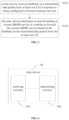
- FIG. 4 is a structural diagram of a relay device 40 according to an embodiment.
- the relay device 40 includes a receiving circuitry 401 and a determining circuitry 402.
- the receiving circuitry 401 is configured to receive feedback on a transmitted data packet from at least one UE in response to being configured to forward multicast services.
- the determining circuitry 402 is configured to determine to stop forwarding a current MBMS service or continue to forward the current MBMS service based on the feedback on the transmitted data packet from the at least one UE.
- more details of the receiving circuitry 401 and the determining circuitry 402 may be referred to the above descriptions of S301 and S302, and are not repeated here.
- modules/units included in each apparatus and product described in the above embodiments may be software modules/units, hardware modules/units, or a combination of software modules/units and hardware modules/units.
- each module/unit included therein may be implemented by hardware such as circuits; or, at least some modules/units may be implemented by a software program running on a processor integrated inside the chip, and the remaining (if any) part of the modules/units may be implemented by hardware such as circuits.
- each module/unit included therein may be implemented by hardware such as circuits. Different modules/units may be disposed in a same component (such as a chip or a circuit module) or in different components of the chip module.
- modules/units may be implemented by a software program running on a processor integrated inside the chip module, and the remaining (if any) part of the modules/units may be implemented by hardware such as circuits.
- each module/unit included therein may be implemented by hardware such as circuits.
- Different modules/units may be disposed in a same component (such as a chip or a circuit module) or in different components of the terminal.
- at least some modules/units may be implemented by a software program running on a processor integrated inside the terminal, and the remaining (if any) part of the modules/units may be implemented by hardware such as circuits.
- a non-volatile or non-transitory computer-readable storage medium having computer instructions stored therein wherein when the computer instructions are executed by a processor, the method for triggering the sidelink pre-emptive buffer status report provided in any one of the above embodiments is performed.
- a non-volatile or non-transitory computer-readable storage medium having computer instructions stored therein wherein when the computer instructions are executed by a processor, the service maintaining method in the sidelink relay system provided in any one of the above embodiments is performed.
- a relay device which includes a memory and a processor is provided, wherein the memory has computer instructions stored therein, and when the processor executes the computer instructions, the method for triggering the sidelink pre-emptive buffer status report provided in any one of the above embodiments is performed.
Landscapes
- Engineering & Computer Science (AREA)
- Computer Networks & Wireless Communication (AREA)
- Signal Processing (AREA)
- Multimedia (AREA)
- Mobile Radio Communication Systems (AREA)
Abstract
Description
- This application claims priority to
Chinese Patent Application No. 202011174054.1, filed on October 28, 2020 - The present disclosure generally relates to radio communication technology field, and more particularly, to a service maintaining method in a sidelink relay system, a relay device, and a medium.
- Sidelink communication technology is different from traditional wireless cellular network communication. In a traditional cellular network, a User Equipment (UE) communicates with a base station, where a link between the UE and the base station is called an Uplink (UL) or a Downlink (DL), and an interface is called Uu interface. However, in the sidelink communication, a UE directly communicates with another UE, where a link between the UEs is called a Sidelink (SL), and an interface is called PC5 interface.
- Initially, sidelink was introduced to realize direct communication between LTEs with a short distance, where data does not need to be forwarded by the base station to reduce a transmission delay. On the basis of sidelink, a sidelink relay is designed, where sidelink technique is applied to a link between the relay and the UE, while uplink and downlink technology is adopted between a traditional relay and the UE.
- Referring to
FIG. 1, FIG. 1 is a structural diagram of a traditional relay in existing techniques. A base station and a relay device communicate through uplink and downlink, and the relay device and a UE communicate through uplink and downlink. Referring toFIG. 2, FIG. 2 is a structural diagram of a sidelink relay in the existing techniques. Different fromFIG. 1 , inFIG. 2 , the relay device and the UE communicate through sidelink. - The relay is capable of forwarding unicast data and multicast data, and a target receiving UE of the multicast data is a UE interested in a particular multicast service, and the multicast service may be a TV service. In 3GPP Rel-13, if the relay device determines that no UE is interested in a particular multicast service, the relay device may stop forwarding the multicast service.
- In 3GPP Rel-13, forwarding of the Multimedia Broadcast/Multicast Service (MBMS) in a relay scenario is realized by periodically re-requesting the MBMS service by the UE, which causes a waste of resources.
- Embodiments of the present disclosure may avoid a waste of radio resources in forwarding of MBMS service in a relay scenario.
- In an embodiment of the present disclosure, a service maintaining method in a sidelink relay system is provided, including: receiving feedback on a transmitted data packet from at least one LTE in response to being configured to forward multicast services; and determining to stop forwarding a current MBMS service or continue to forward the current MBMS service based on the feedback on the transmitted data packet from the at least one UE.
- Optionally, said receiving feedback on a transmitted data packet from at least one UE includes: receiving the feedback on the transmitted data packet from the at least one UE on a physical sidelink feedback signal resource.
- Optionally, said determining to stop forwarding a current MBMS service or continue to forward the current MBMS service based on the feedback on the transmitted data packet from the at least one UE includes: determining to stop forwarding the current MBMS service based on detecting that no UE feedback on the transmitted data packet has been received from any UE for N consecutive times, wherein N≥1, and the feedback on the transmitted data packet includes Hybrid Automatic Repeat reQuest (HARQ) Acknowledgement (ACK) and HARQ Negative Acknowledgement (NACK).
- Optionally, said determining to stop forwarding a current MBMS service or continue to forward the current MBMS service based on the feedback on the transmitted data packet from the at least one UE includes: determining to stop forwarding the current MBMS service based on detecting that a HARQ ACK fails to be received from the at least one UE for N consecutive times, wherein N≥1.
- Optionally, said determining to stop forwarding the current MBMS service based on detecting that a HARQ ACK fails to be received from the at least one UE for N consecutive times includes: determining to stop forwarding the current MBMS service based on detecting that the feedback on the transmitted data packet from the at least one UE is a HARQ NACK for N consecutive times, wherein N≥1.
- Optionally, said determining to stop forwarding the current MBMS service based on detecting that a HARQ ACK fails to be received from the at least one LTE for N consecutive times includes: determining to stop forwarding the current MBMS service based on detecting that N consecutive times of feedback on the transmitted data packet from the at least one UE includes M times of HARQ NACK and (N-M) times of unsuccessful feedback, wherein 0≤M≤N, and N≥1.
- Optionally, said determining to stop forwarding a current MBMS service or continue to forward the current MBMS service based on the feedback on the transmitted data packet from the at least one UE includes: determining to continue to forward the current MBMS service and restarting a timer based on detecting the feedback on the transmitted data packet from any one of the at least one UE, wherein the feedback on the transmitted data packet includes ACK and NACK.
- Optionally, said determining to stop forwarding a current MBMS service or continue to forward the current MBMS service based on the feedback on the transmitted data packet from the at least one UE includes: determining to continue to forward the current MBMS service and restarting a timer based on detecting that the feedback on the transmitted data packet from any one of the at least one UE is ACK.
- In an embodiment of the present disclosure, a relay device is provided, including: a receiving circuitry configured to receive feedback on a transmitted data packet from at least one UE in response to being configured to forward multicast services; and a determining circuitry configured to determine to stop forwarding a current MBMS service or continue to forward the current MBMS service based on the feedback on the transmitted data packet from the at least one UE.
- In an embodiment of the present disclosure, a non-volatile or non-transitory computer-readable storage medium having computer instructions stored therein is provided, wherein when the computer instructions are executed by a processor, any one of the above methods is performed.
- In an embodiment of the present disclosure, a relay device including a memory and a processor is provided, wherein the memory has computer instructions stored therein, and when the processor executes the computer instructions, any one of the above methods is performed.
- Embodiments of the present disclosure may provide following advantages.
- A relay device receives feedback on a transmitted data packet from at least one UE in response to being configured to forward multicast services, and determines to stop forwarding a current MBMS service or continue to forward the current MBMS service based on the feedback on the transmitted data packet from the at least one UE. In embodiments of the present disclosure, whether to continue to forward the current MBMS service is determined based on the feedback on the transmitted data packet from the at least one UE, thereby effectively preventing the UE from frequently re-requesting the MBMS service, and enabling the relay device to stop forwarding the MBMS service in time.
- Further, after detecting the feedback on the transmitted data packet from any one of the at least one UE, a timer is restarted, thereby avoiding termination of the current MBMS service caused by timeout of the timer.
-
-
FIG. 1 is a structural diagram of a traditional relay in existing techniques; -
FIG. 2 is a structural diagram of a sidelink relay in the existing techniques; -
FIG. 3 is a flow chart of a service maintaining method in a sidelink relay system according to an embodiment; and -
FIG. 4 is a structural diagram of a relay device according to an embodiment. - In 3GPP Rel-13, when a LTE is interested in an MBMS service, a following process may be used to request a relay device to forward the MBMS service. First, the UE transmits a request message of TMGI MONITORING REQLTEST which contains at least identity information of the MBMS service. The relay device feeds back a message of TMGI_MONITORING_RESPONSE information accordingly which carries a group ID. The LTE receives the MBMS service by monitoring the group ID.
- When transmitting the message of TMGI MONITORING RESPONSE, the relay device starts or restarts a T4105 timer. After the T4105 timer expires, the relay device stops forwarding the MBMS service.
- When receiving the message of TMGI MONITORING RESPONSE, the UE starts or restarts the T4104 timer. After the T4104 timer expires, if the UE is still interested in the MBMS service, the UE may retransmit the message of TMGI_MONITORING_RESPONSE, that is, re-requesting the relay device to forward the MBMS service.
- From above, in 3GPP Rel-13, the forwarding of the MBMS service by the relay device is realized by the UE re-requesting the MBMS service periodically. If timing durations configured for T4104 and T4105 timers are short, it may cause the UE to frequently re-request the MBMS service. If timing durations configured for the T4104 and T4105 timers are too long, the relay device cannot stop forwarding the MBMS service in time. Both of the above two scenarios will lead to a waste of radio resources.
- In embodiments of the present disclosure, whether to continue to forward a current MBMS service is determined based on feedback on a transmitted data packet from at least one UE, thereby effectively preventing the UE from frequently re-requesting the MBMS service, and enabling the relay device to stop forwarding the MBMS service in time.
- In order to clarify the objects, characteristics and advantages of the disclosure, embodiments of present disclosure will be described in detail in conjunction with accompanying drawings.
- In an embodiment, a service maintaining method in a sidelink relay system is provided. Referring to
FIG. 3 , details of the method are provided via specific steps below. - In some embodiments, the method including S301 and S302 may be performed by a chip (such as a baseband chip) with a data processing function in a relay device, or by a chip module containing a chip (such as a baseband chip) with a data processing function in the relay device.
- In S301, a relay device receives feedback on a transmitted data packet from at least one UE in response to being configured to forward multicast service.
- In some embodiments, a network side may configure the relay device and the UE, wherein the relay device is configured to forward multicast services in response to a request, and each UE is configured to feedback HARQ ACK or HARQ NACK based on decoding of a data packet transmitted each time.
- In the embodiments of the present disclosure, the UE may feed back the feedback on the transmitted data packet on a Physical Sidelink Feedback Channel (PSFCH) resource, and the feedback of the UE may be HARQ ACK or HARQ NACK. The relay device receives the feedback from the UE on the PSFCH resource.
- In S302, the relay device determines to stop forwarding a current MBMS service or continue to forward the current MBMS service based on the feedback on the transmitted data packet from the at least one UE.
- In some embodiments, based on detecting that no UE feedback on the transmitted data packet has been received from any UE for N consecutive times, the relay device determines that UEs within a coverage of the relay device are not interested in the current MBMS service forwarded by the relay device. Therefore, the relay device determines to stop forwarding the current MBMS service. N may be 1, 2 or a greater integer value.
- In some embodiments, the relay device may record a number of times of unsuccessfully receiving HARQ ACK/HARQ NACK. Based on failing to receive the HARQ ACK and HARQ NACK fed back by any UE for N consecutive times, the relay device may stop forwarding the current MBMS service without waiting for expiration of the T4105 timer.
- In other words, in some embodiments, in response to failing to receive the HARQ ACK or HARQ NACK fed back by any one of the at least one UE for N consecutive times, the relay device may stop forwarding the current MBMS service in advance to improve utilization efficiency of radio resources.
- In some embodiments, the relay device may record the number of failing to receive HARQ ACK. When the HARQ ACK fails to be received for N consecutive times, the relay device may stop forwarding the current MBMS service without waiting for expiration of the T4105 timer.
- In other words, in some embodiments, in response to failing to receive the HARQ ACK for N consecutive times, the relay device may stop forwarding the current MBMS service in advance to improve utilization efficiency of radio resources.
- In some embodiments, said the relay device failing to receive the HARQ ACK for N consecutive times includes the relay device detecting that at least one UE has transmitted feedback but the feedback on the transmitted data packet from the UE being HARQ NACK for N consecutive times. In this case, the relay device may determine that the UE is not interested in the current MBMS service forwarded by the relay device, and determine to stop forwarding the current MBMS service. N may be 1, 2 or a greater integer value.
- For example, there are four UEs within the coverage of the relay device, and N=2. The relay device records that all the four UEs feedback HARQ NACK on data packets transmitted at a first time, and records that all the four UEs feedback HARQ NACK on data packets transmitted at a second time. In this case, the relay device may determine to stop forwarding the current MBMS service.
- In some embodiments, said the relay device failing to receive the HARQ ACK for N consecutive times includes the relay device failing to receive HARQ ACK/HARQ NACK for (N-M) times and receiving HARQ NACK for M times when transmitting data packets for N consecutive times. In this case, the relay device may determine that the LTE is not interested in the forwarded MBMS service, and determine to stop forwarding the current MBMS service, where 0≤M≤N.
- For example, there are two UEs within the coverage of the relay device. When transmitting data packets at a first time, the relay device does not receive HARQ ACK/HARQ NACK fed back by any UE. When transmitting data packets at a second time, the relay device receives HARQ NACK fed back by UE 1, and does not receive HARQ ACK/HARQ NACK fed back by UE 2, thus, the relay device determines that HARQ ACK fed back by the UEs fails to be received for two consecutive times. When transmitting data packets at a third time, the relay device receives HARQ NACK fed back by UE 1 and HARQ NACK fed back by UE 2, thus, the relay device determines that HARQ ACK fed back by the UEs fails to be received for three consecutive times.
- That is, the relay device fails to receive HARQ ACK for N consecutive times, and N refers to a number of times of transmitting data packets. After each time of data packet transmission, the relay device may detect whether feedback is received from the LTE, and whether the received feedback from the UE is HARQ ACK or HARQ NACK. Based on detecting that no UE feeds back HARQ ACK, the relay device may determine that no HARQ ACK has been successfully received for that time of data packet transmission. No UE feeding back HARQ ACK includes two situations, where one situation is that the at least one LTE feeds back HARQ NACK, and the other situation is that the at least one UE does not feed back on that time of data packet transmission (that is, the at least one UE does not feed back HARQ NACK or HARQ ACK).
- In some embodiments, based on detecting feedback on the transmitted data packet from any one of the at least one UE, no matter the feedback on the transmitted data packet is ACK or NACK, the relay device determines that the UE is interested in the current MBMS service. Therefore, the relay device may forward the current MBMS service and restart a T4105 timer.
- In some embodiments, based on detecting feedback on the transmitted data packet from any one of the at least one UE, if the UE's feedback on the transmitted data packet is ACK, the relay device determines that the UE is interested in the current MBMS service interested. Therefore, the relay device may forward the current MBMS service and restart the T4105 timer.
- From practical applications, the T4105 timer is a timer set in the relay device as specified in 3GPP standards. When transmitting a message of TMGI_MONITORING_RESPONSE, the relay device may start or restart the T4105 timer, and when the T4105 timer expires, the relay device stops forwarding the MBMS service.
- From above, based on determining that the UE is interested in the current MBMS service, the relay device restarts the T4105 timer, thereby avoiding termination of the current MBMS service caused by timeout of the T4105 timer.
- In other words, if the relay device detects that there is a UE interested in the current MBMS service during the forwarding of the MBMS service, the T4105 timer of the relay device will not time out until detecting that all of the at least one UE is not interested in the current MBMS service.
- It can be seen from above that in the embodiments of the present disclosure, when it is determined whether to continue to forward the current MBMS service through the feedback of the transmitted data packet by the UE, it can effectively prevent the UE from frequently re-requesting the MBMS service, and make the relay device timely Stop forwarding the MBMS service accordingly.
-
FIG. 4 is a structural diagram of arelay device 40 according to an embodiment. Therelay device 40 includes a receivingcircuitry 401 and a determiningcircuitry 402. - The receiving
circuitry 401 is configured to receive feedback on a transmitted data packet from at least one UE in response to being configured to forward multicast services. - The determining
circuitry 402 is configured to determine to stop forwarding a current MBMS service or continue to forward the current MBMS service based on the feedback on the transmitted data packet from the at least one UE. - In some embodiments, more details of the receiving
circuitry 401 and the determiningcircuitry 402 may be referred to the above descriptions of S301 and S302, and are not repeated here. - In some embodiments, modules/units included in each apparatus and product described in the above embodiments may be software modules/units, hardware modules/units, or a combination of software modules/units and hardware modules/units.
- For example, for each apparatus or product applied to or integrated in a chip, each module/unit included therein may be implemented by hardware such as circuits; or, at least some modules/units may be implemented by a software program running on a processor integrated inside the chip, and the remaining (if any) part of the modules/units may be implemented by hardware such as circuits. For each apparatus or product applied to or integrated in a chip module, each module/unit included therein may be implemented by hardware such as circuits. Different modules/units may be disposed in a same component (such as a chip or a circuit module) or in different components of the chip module. Or at least some modules/units may be implemented by a software program running on a processor integrated inside the chip module, and the remaining (if any) part of the modules/units may be implemented by hardware such as circuits. For each apparatus or product applied to or integrated in a terminal, each module/unit included therein may be implemented by hardware such as circuits. Different modules/units may be disposed in a same component (such as a chip or a circuit module) or in different components of the terminal. Or at least some modules/units may be implemented by a software program running on a processor integrated inside the terminal, and the remaining (if any) part of the modules/units may be implemented by hardware such as circuits. In an embodiment of the present disclosure, a non-volatile or non-transitory computer-readable storage medium having computer instructions stored therein is provided, wherein when the computer instructions are executed by a processor, the method for triggering the sidelink pre-emptive buffer status report provided in any one of the above embodiments is performed.
- In an embodiment of the present disclosure, a non-volatile or non-transitory computer-readable storage medium having computer instructions stored therein is provided, wherein when the computer instructions are executed by a processor, the service maintaining method in the sidelink relay system provided in any one of the above embodiments is performed.
- In an embodiment of the present disclosure, a relay device which includes a memory and a processor is provided, wherein the memory has computer instructions stored therein, and when the processor executes the computer instructions, the method for triggering the sidelink pre-emptive buffer status report provided in any one of the above embodiments is performed.
- Those skilled in the art could understand that all or part of steps in the various methods in the above embodiments can be completed by instructing relevant hardware through a program, and the program can be stored in any computer-readable storage medium which includes a ROM, a RAM, a magnetic disk or an optical disk.
- Although the present disclosure has been disclosed above with reference to preferred embodiments thereof, it should be understood that the disclosure is presented by way of example only, and not limitation. Those skilled in the art can modify and vary the embodiments without departing from the spirit and scope of the present disclosure.
Claims (11)
- A service maintaining method in a sidelink relay system, characterized by comprising:receiving feedback on a transmitted data packet from at least one User Equipment (UE) in response to being configured to forward multicast services; anddetermining to stop forwarding a current Multimedia Broadcast/Multicast Service (MBMS) service or continue to forward the current MBMS service based on the feedback on the transmitted data packet from the at least one UE.
- The method according to claim 1, characterized in that said receiving feedback on a transmitted data packet from at least one UE comprises:
receiving the feedback on the transmitted data packet from the at least one UE on a physical sidelink feedback signal resource. - The method according to claim 1 or 2, characterized in that said determining to stop forwarding a current MBMS service or continue to forward the current MBMS service based on the feedback on the transmitted data packet from the at least one UE comprises:
determining to stop forwarding the current MBMS service based on detecting that no UE feedback on the transmitted data packet has been received from any UE for N consecutive times, wherein N≥1, and the feedback on the transmitted data packet includes Hybrid Automatic Repeat reQuest (HARQ) Acknowledgement (ACK) and HARQ Negative Acknowledgement (NACK). - The method according to claim 1 or 2, characterized in that said determining to stop forwarding a current MBMS service or continue to forward the current MBMS service based on the feedback on the transmitted data packet from the at least one UE comprises:
determining to stop forwarding the current MBMS service based on detecting that a HARQ ACK fails to be received from the at least one UE for N consecutive times, wherein N≥1. - The method according to claim 4, characterized in that said determining to stop forwarding the current MBMS service based on detecting that a HARQ ACK fails to be received from the at least one UE for N consecutive times comprises:
determining to stop forwarding the current MBMS service based on detecting that the feedback on the transmitted data packet from the at least one UE is a HARQ NACK for N consecutive times, wherein N≥1. - The method according to claim 4, characterized in that said determining to stop forwarding the current MBMS service based on detecting that a HARQ ACK fails to be received from the at least one UE for N consecutive times comprises:
determining to stop forwarding the current MBMS service based on detecting that N consecutive times of feedback on the transmitted data packet from the at least one UE comprises M times of HARQ NACK and (N-M) times of unsuccessful feedback, wherein 0≤M≤N, and N≥1. - The method according to claim 1 or 2, characterized in that said determining to stop forwarding a current MBMS service or continue to forward the current MBMS service based on the feedback on the transmitted data packet from the at least one UE comprises:
determining to continue to forward the current MBMS service and restarting a timer based on detecting the feedback on the transmitted data packet from any one of the at least one UE, wherein the feedback on the transmitted data packet comprises ACK and NACK. - The method according to claim 1 or 2, characterized in that said determining to stop forwarding a current MBMS service or continue to forward the current MBMS service based on the feedback on the transmitted data packet from the at least one UE comprises:
determining to continue to forward the current MBMS service and restarting a timer based on detecting that the feedback on the transmitted data packet from any one of the at least one UE is ACK. - A relay device, characterized by comprising:a receiving circuitry configured to receive feedback on a transmitted data packet from at least one User Equipment (UE) in response to being configured to forward multicast services; anda determining circuitry configured to determine to stop forwarding a current Multimedia Broadcast/Multicast Service (MBMS) service or continue to forward the current MBMS service based on the feedback on the transmitted data packet from the at least one UE.
- A non-volatile or non-transitory computer readable storage medium having computer instructions stored therein, characterized in that when the computer instructions are executed by a processor, the method of any one of claims 1 to 8 is performed.
- A relay device comprising a memory and a processor, characterized in that the memory has computer instructions stored therein, and when the processor executes the computer instructions, the method of any one of claims 1 to 8 is performed.
Applications Claiming Priority (2)
| Application Number | Priority Date | Filing Date | Title |
|---|---|---|---|
| CN202011174054.1A CN114422091B (en) | 2020-10-28 | 2020-10-28 | Service maintenance method, relay equipment and medium in edge link relay system |
| PCT/CN2021/125585 WO2022089312A1 (en) | 2020-10-28 | 2021-10-22 | Service maintaining method in sidelink relay system and relay device, and medium |
Publications (2)
| Publication Number | Publication Date |
|---|---|
| EP4239926A1 true EP4239926A1 (en) | 2023-09-06 |
| EP4239926A4 EP4239926A4 (en) | 2024-04-17 |
Family
ID=81260537
Family Applications (1)
| Application Number | Title | Priority Date | Filing Date |
|---|---|---|---|
| EP21885039.4A Withdrawn EP4239926A4 (en) | 2020-10-28 | 2021-10-22 | Service maintaining method in sidelink relay system and relay device, and medium |
Country Status (4)
| Country | Link |
|---|---|
| US (1) | US12598446B2 (en) |
| EP (1) | EP4239926A4 (en) |
| CN (1) | CN114422091B (en) |
| WO (1) | WO2022089312A1 (en) |
Families Citing this family (2)
| Publication number | Priority date | Publication date | Assignee | Title |
|---|---|---|---|---|
| CN114390586B (en) * | 2020-10-22 | 2025-08-12 | 展讯通信(上海)有限公司 | Method for triggering side link pre-emptive buffer status report, relay equipment and medium |
| WO2024031494A1 (en) * | 2022-08-11 | 2024-02-15 | Apple Inc. | Methods and apparatus for using multple harq-ack groups for network-controlled repeaters |
Family Cites Families (12)
| Publication number | Priority date | Publication date | Assignee | Title |
|---|---|---|---|---|
| CN102264033B (en) * | 2010-05-27 | 2015-06-03 | 中兴通讯股份有限公司 | Method and device for processing MBMS (Multimedia Broadcast Multicast Service) statistics message |
| US10547354B2 (en) | 2015-12-30 | 2020-01-28 | Idac Holdings, Inc. | Methods, systems and devices for wireless transmit/receive unit cooperation |
| US10251155B2 (en) * | 2016-01-08 | 2019-04-02 | Qualcomm, Incorporated | Techniques for multicast wireless communications |
| CN107135486B (en) * | 2016-02-29 | 2020-04-21 | 展讯通信(上海)有限公司 | Multicast or multicast service transmission method and device |
| CN108039939B (en) * | 2018-01-19 | 2019-12-27 | 北京邮电大学 | HARQ feedback method and device for multicast service of Internet of things |
| CN110380828B (en) * | 2018-04-13 | 2021-05-07 | 维沃移动通信有限公司 | Sidelink operation method and terminal |
| US10938591B2 (en) * | 2018-08-02 | 2021-03-02 | Dell Products L.P. | Multicast system |
| EP3857768A1 (en) | 2018-09-25 | 2021-08-04 | IDAC Holdings, Inc. | Methods, devices, and systems for supporting harq on v2x |
| CN111148061B (en) * | 2018-11-02 | 2021-09-28 | 大唐移动通信设备有限公司 | Resource indication method and communication equipment |
| CN111147188B (en) * | 2018-11-02 | 2021-12-24 | 大唐移动通信设备有限公司 | Transmission feedback method and user equipment |
| CN118174830A (en) | 2019-01-09 | 2024-06-11 | 交互数字专利控股公司 | Side link feedback channel |
| CN111756495B (en) * | 2019-03-28 | 2022-12-13 | 华为技术有限公司 | A hybrid automatic repeat request HARQ feedback control method and related equipment |
-
2020
- 2020-10-28 CN CN202011174054.1A patent/CN114422091B/en active Active
-
2021
- 2021-10-22 US US18/033,953 patent/US12598446B2/en active Active
- 2021-10-22 EP EP21885039.4A patent/EP4239926A4/en not_active Withdrawn
- 2021-10-22 WO PCT/CN2021/125585 patent/WO2022089312A1/en not_active Ceased
Also Published As
| Publication number | Publication date |
|---|---|
| US20230396964A1 (en) | 2023-12-07 |
| WO2022089312A1 (en) | 2022-05-05 |
| CN114422091A (en) | 2022-04-29 |
| EP4239926A4 (en) | 2024-04-17 |
| CN114422091B (en) | 2025-05-27 |
| US12598446B2 (en) | 2026-04-07 |
Similar Documents
| Publication | Publication Date | Title |
|---|---|---|
| US11140731B2 (en) | Data transmission method, communication device, and data transmission system | |
| US9094910B2 (en) | Methods utilized in mobile device for handling situations when time alignment timer expires, and mobile device thereof | |
| EP2809126A1 (en) | Data transmission method, base station and user equipment | |
| US20230422346A1 (en) | Multicast service receiving method, multicast service configuration method, terminal, and network side device | |
| EP4007378A1 (en) | Data sending method and apparatus, data receiving method and apparatus, first node, and second node | |
| US11765688B2 (en) | Data transmission method, device, base station, terminal and readable storage medium | |
| EP3598818A1 (en) | Data transmission method, terminal device, and network device | |
| CN119094095B (en) | Wireless communication methods, wireless communication devices, computer-readable media | |
| US20230354469A1 (en) | Data reception method and apparatus and system | |
| EP4221328A1 (en) | Multicast service transmission method, apparatus, and communication device | |
| CN102118236B (en) | Feedback method and feedback device based on competitive resource | |
| US12114191B2 (en) | Method and apparatus for receiving system information, method and apparatus for sending system information, and storage medium | |
| CN110679191B (en) | Method and terminal equipment for transmitting information | |
| US12598446B2 (en) | Service maintaining method in sidelink relay system and relay device, and medium | |
| US10652861B2 (en) | Uplink grant-free transmission enhancement for latency and reliability | |
| WO2015152583A1 (en) | Method for transmitting and receiving signal for device-to-device communication in wireless communication system and device therefor | |
| CN116326030B (en) | Hybrid automatic repeat request method, semi-persistent scheduling method and communication equipment | |
| EP4444011A1 (en) | Sps activation request for mbs multicast in rrc_inactive | |
| CN121908394A (en) | Information feedback method and device and computer storage medium | |
| US12628160B2 (en) | Feedback information transmission method and apparatus, base station, user equipment and storage medium | |
| CN114503771B (en) | Termination of monitoring window during random access | |
| CN117796123A (en) | wireless feedback technology | |
| CN112702147A (en) | Emtc and method, terminal and storage medium for reducing downlink scheduling HARQ feedback time delay | |
| WO2022027204A1 (en) | Method for configuring discontinuous reception cycle, terminal and storage medium | |
| CN116132924B (en) | Information transmission method, device, related equipment and storage medium |
Legal Events
| Date | Code | Title | Description |
|---|---|---|---|
| STAA | Information on the status of an ep patent application or granted ep patent |
Free format text: STATUS: THE INTERNATIONAL PUBLICATION HAS BEEN MADE |
|
| PUAI | Public reference made under article 153(3) epc to a published international application that has entered the european phase |
Free format text: ORIGINAL CODE: 0009012 |
|
| STAA | Information on the status of an ep patent application or granted ep patent |
Free format text: STATUS: REQUEST FOR EXAMINATION WAS MADE |
|
| 17P | Request for examination filed |
Effective date: 20230525 |
|
| AK | Designated contracting states |
Kind code of ref document: A1 Designated state(s): AL AT BE BG CH CY CZ DE DK EE ES FI FR GB GR HR HU IE IS IT LI LT LU LV MC MK MT NL NO PL PT RO RS SE SI SK SM TR |
|
| DAV | Request for validation of the european patent (deleted) | ||
| DAX | Request for extension of the european patent (deleted) | ||
| A4 | Supplementary search report drawn up and despatched |
Effective date: 20240319 |
|
| RIC1 | Information provided on ipc code assigned before grant |
Ipc: H04L 1/18 20060101AFI20240313BHEP |
|
| STAA | Information on the status of an ep patent application or granted ep patent |
Free format text: STATUS: THE APPLICATION HAS BEEN WITHDRAWN |
|
| 18W | Application withdrawn |
Effective date: 20250922 |