EP4239625A1 - Real-time image transformation monitoring for display systems - Google Patents
Real-time image transformation monitoring for display systems Download PDFInfo
- Publication number
- EP4239625A1 EP4239625A1 EP23159751.9A EP23159751A EP4239625A1 EP 4239625 A1 EP4239625 A1 EP 4239625A1 EP 23159751 A EP23159751 A EP 23159751A EP 4239625 A1 EP4239625 A1 EP 4239625A1
- Authority
- EP
- European Patent Office
- Prior art keywords
- transformation
- pixel
- image
- fiducial
- source image
- Prior art date
- Legal status (The legal status is an assumption and is not a legal conclusion. Google has not performed a legal analysis and makes no representation as to the accuracy of the status listed.)
- Pending
Links
Images



Classifications
-
- G—PHYSICS
- G06—COMPUTING OR CALCULATING; COUNTING
- G06V—IMAGE OR VIDEO RECOGNITION OR UNDERSTANDING
- G06V10/00—Arrangements for image or video recognition or understanding
- G06V10/40—Extraction of image or video features
- G06V10/44—Local feature extraction by analysis of parts of the pattern, e.g. by detecting edges, contours, loops, corners, strokes or intersections; Connectivity analysis, e.g. of connected components
- G06V10/443—Local feature extraction by analysis of parts of the pattern, e.g. by detecting edges, contours, loops, corners, strokes or intersections; Connectivity analysis, e.g. of connected components by matching or filtering
-
- G—PHYSICS
- G09—EDUCATION; CRYPTOGRAPHY; DISPLAY; ADVERTISING; SEALS
- G09G—ARRANGEMENTS OR CIRCUITS FOR CONTROL OF INDICATING DEVICES USING STATIC MEANS TO PRESENT VARIABLE INFORMATION
- G09G5/00—Control arrangements or circuits for visual indicators common to cathode-ray tube indicators and other visual indicators
- G09G5/003—Details of a display terminal, the details relating to the control arrangement of the display terminal and to the interfaces thereto
-
- G—PHYSICS
- G06—COMPUTING OR CALCULATING; COUNTING
- G06T—IMAGE DATA PROCESSING OR GENERATION, IN GENERAL
- G06T1/00—General purpose image data processing
- G06T1/60—Memory management
-
- G—PHYSICS
- G06—COMPUTING OR CALCULATING; COUNTING
- G06T—IMAGE DATA PROCESSING OR GENERATION, IN GENERAL
- G06T7/00—Image analysis
- G06T7/0002—Inspection of images, e.g. flaw detection
-
- G—PHYSICS
- G06—COMPUTING OR CALCULATING; COUNTING
- G06T—IMAGE DATA PROCESSING OR GENERATION, IN GENERAL
- G06T2207/00—Indexing scheme for image analysis or image enhancement
- G06T2207/10—Image acquisition modality
- G06T2207/10016—Video; Image sequence
-
- G—PHYSICS
- G06—COMPUTING OR CALCULATING; COUNTING
- G06V—IMAGE OR VIDEO RECOGNITION OR UNDERSTANDING
- G06V2201/00—Indexing scheme relating to image or video recognition or understanding
- G06V2201/02—Recognising information on displays, dials, clocks
-
- G—PHYSICS
- G09—EDUCATION; CRYPTOGRAPHY; DISPLAY; ADVERTISING; SEALS
- G09G—ARRANGEMENTS OR CIRCUITS FOR CONTROL OF INDICATING DEVICES USING STATIC MEANS TO PRESENT VARIABLE INFORMATION
- G09G2330/00—Aspects of power supply; Aspects of display protection and defect management
- G09G2330/12—Test circuits or failure detection circuits included in a display system, as permanent part thereof
-
- G—PHYSICS
- G09—EDUCATION; CRYPTOGRAPHY; DISPLAY; ADVERTISING; SEALS
- G09G—ARRANGEMENTS OR CIRCUITS FOR CONTROL OF INDICATING DEVICES USING STATIC MEANS TO PRESENT VARIABLE INFORMATION
- G09G2360/00—Aspects of the architecture of display systems
- G09G2360/12—Frame memory handling
-
- G—PHYSICS
- G09—EDUCATION; CRYPTOGRAPHY; DISPLAY; ADVERTISING; SEALS
- G09G—ARRANGEMENTS OR CIRCUITS FOR CONTROL OF INDICATING DEVICES USING STATIC MEANS TO PRESENT VARIABLE INFORMATION
- G09G2380/00—Specific applications
- G09G2380/10—Automotive applications
-
- G—PHYSICS
- G09—EDUCATION; CRYPTOGRAPHY; DISPLAY; ADVERTISING; SEALS
- G09G—ARRANGEMENTS OR CIRCUITS FOR CONTROL OF INDICATING DEVICES USING STATIC MEANS TO PRESENT VARIABLE INFORMATION
- G09G2380/00—Specific applications
- G09G2380/12—Avionics applications
Definitions
- Modern display systems may combine a camera-captured image stream with a variety of image processing operations to modify the image stream for optimal display to a user via a display system, e.g., a conventional head-down display (HDD); head-up and helmet-mounted displays (HUD, HMD) worn by a user; or augmented reality, virtual reality, and/or mixed-reality (AR, VR, MR) devices.
- a display system e.g., a conventional head-down display (HDD); head-up and helmet-mounted displays (HUD, HMD) worn by a user; or augmented reality, virtual reality, and/or mixed-reality (AR, VR, MR) devices.
- the image stream may be transformed via additional processing (e.g., enhanced vision and/or synthetic vision systems (EVS, SVS) that augment the image stream with additional information relevant to the scenes portrayed thereby; image filtering or convolution; image distortion for optimal display on a particular display surface, e.g., a transparent or translucent visor functioning as an HMD display surface on which the images are projected).
- additional processing e.g., enhanced vision and/or synthetic vision systems (EVS, SVS) that augment the image stream with additional information relevant to the scenes portrayed thereby; image filtering or convolution; image distortion for optimal display on a particular display surface, e.g., a transparent or translucent visor functioning as an HMD display surface on which the images are projected.
- EVS enhanced vision and/or synthetic vision systems
- SVS synthetic vision systems
- HMI hazardously misleading information
- display integrity monitors may store a group of critical symbols, checking the accuracy of displayed critical symbols based on lookup tables, but the pool of reference critical symbols is limited and by no means comprehensive.
- distortion monitors may check an appended test pattern region but with large bounds on the expected location and/or alignment of pixels as a result of image distortion.
- a real-time image transformation monitoring system (e.g., for monitoring transformations of a source image into a transformed output image) is disclosed.
- the monitoring system includes a pixel buffer for receiving pixel data of a source image and appending to each pixel of source image data fiducial data associated with a reference checksum calculation.
- the reference checksum is associated with a transformation map, which in turn relates to one or more transformations of the source image by an output image processor.
- the source image data and appended fiducial data is stored to the pixel buffer.
- the monitoring system includes an image transformation monitor for, as the output image processor reads out each set of stored source image data, extracting the fiducial data appended to each pixel and incorporating each set of extracted fiducial data into a checksum calculation for the source image.
- the image transformation monitor determines a system status by comparing the cumulative checksum calculation for the source image to the reference checksum. For example, a checksum calculation equivalent to the reference checksum indicates a nominal status consistent with correct storage by and operation of the pixel buffer.
- each set of source image data extracted from the pixel buffer corresponds to a two-dimensional (2D) pixel array within the source image.
- the image transformation monitor determines an image transformation monitor fault if the checksum calculation for the source image does not match the reference checksum.
- the transformation map includes an ordered sequence of transformation addresses, e.g., each transformation address corresponding to a relationship between one or more pixels of the source image and the equivalent pixels of the transformed output image where each pixel dataset extracted from the pixel buffer includes a transformation address of the sequence.
- the pixel buffer may maintain more than one set of fiducial data and designate a particular set of fiducial data as the current fiducial data appended to each pixel of the source image when received by the pixel buffer.
- the monitoring system includes an independent remote device and/or independent processor (e.g., different than, external to, and/or remotely located from the pixel buffer/image transformation monitor or embodying device/s).
- the independent processor may calibrate the monitoring system by generating the one or more fiducial datasets maintained by the pixel buffer, each set of fiducial data corresponding to a reference checksum.
- the pixel buffer selects a new or subsequent set of fiducial data for appending to the next source image immediately subsequent to the current source image, such that the fiducial data (and corresponding reference checksum) is changed (at least alternated) for each new source image.
- the image transformation monitor stores a checksum calculation for the source image and compares the subsequent checksum calculation (e.g., for the immediately subsequent source image) to the stored checksum calculation. If, for example, two consecutive checksum calculations are compared and found equivalent, a pixel buffer fault is indicated.
- the transformation addresses include fractional pixel addresses not corresponding to a discrete pixel.
- the transformation maps include transformation-specific maps, e.g., distortion correction maps, image convolution maps, and/or image filtering maps.
- a method for real-time image transformation monitoring in a display system includes receiving, via a pixel buffer, pixels of source image data, the source image to be transformed via one or more image transformations into an output image for display.
- the method includes, as the source image data is received by the pixel buffer, appending to each pixel of the source image data fiducial data maintained by the pixel buffer.
- the fiducial data corresponds to a reference checksum for the source image, the reference checksum also associated with a transformation map for the image transformations of the source image.
- the method includes storing the source image data and appended fiducial data via the pixel buffer.
- the method includes, as each pixel dataset of source image data is read from the pixel buffer by the output image processor (e.g., for transformation into the output image), extracting the fiducial data appended to each pixel via an image transformation monitor.
- the method includes incorporating each extracted set of fiducial data into a cumulative checksum calculation for the source image.
- the method includes, when image transformations of the source image are complete, determining a system status by comparing the cumulative checksum calculation to the current reference checksum; if, for example, the two are equivalent a nominal state of the pixel buffer may be returned.
- the method includes determining an image transformation error status (e.g., a fault of the image transformation monitor) based on a dissimilarity or non-equivalence of the current checksum calculation and the current reference checksum.
- an image transformation error status e.g., a fault of the image transformation monitor
- the current transformation map comprises a sequence of transformation addresses within the source image, where each pixel dataset extracted from the pixel buffer includes a transformation address in the sequence, and the method includes designating, via the pixel buffer, a fiducial dataset of one or more fiducial datasets maintained by the pixel buffer as the current fiducial data for the current source image.
- the method includes generating the one or more fiducial datasets via an independent processor external to, or remote from, the image transformation monitoring system.
- the method includes forwarding the generated fiducial datasets to the pixel buffer.
- the method includes designating, via the pixel buffer, a new or different fiducial dataset of the one or more fiducial datasets maintained by the pixel buffer as the fiducial data to be appended to a new or different source image immediately subsequent to the current (e.g., most recently processed) source image, where the new fiducial data is also associated with a new or different reference checksum.
- the method includes storing, the image transformation monitor, the checksum calculation for the most recently processed source image.
- the method includes comparing, via the image transformation monitor, the stored checksum calculation and the next checksum calculation. For example, if two consecutive checksum calculations are equivalent, a pixel buffer fault is indicated.
- a letter following a reference numeral is intended to reference an embodiment of the feature or element that may be similar, but not necessarily identical, to a previously described element or feature bearing the same reference numeral (e.g., 1, 1a, 1b).
- reference numeral e.g. 1, 1a, 1b
- Such shorthand notations are used for purposes of convenience only and should not be construed to limit the disclosure in any way unless expressly stated to the contrary.
- any reference to “one embodiment” or “some embodiments” means that a particular element, feature, structure, or characteristic described in connection with the embodiment is included in at least one embodiment disclosed herein.
- the appearances of the phrase “in some embodiments” in various places in the specification are not necessarily all referring to the same embodiment, and embodiments may include one or more of the features expressly described or inherently present herein, or any combination or sub-combination of two or more such features, along with any other features which may not necessarily be expressly described or inherently present in the instant disclosure.
- the monitoring system 100 may include a pixel buffer 102, image transformation monitor 104, and output image processor 106.
- the pixel buffer 102, image transformation monitor 104, and output image processor 106 may be embodied in a single processor or in a single device, e.g., a line replaceable unit (LRU).
- LRU line replaceable unit
- the pixel buffer 102, image transformation monitor 104, and output image processor 106 may be embodied across multiple processors or physical devices/LRUs in communication with each other.
- the monitoring system 100 may be implemented in a cockpit or control center of an aircraft, automobile, or other air-based, land-based, or water-based vehicle.
- the monitoring system 100 may monitor the transformation of images or image streams captured by a camera or image sensor (not shown) for display via display units 108.
- the images or image streams Prior to ultimate display to a user via a display unit 108, the images or image streams may be transformed via various types of image processing or image enhancement to optimize display of the images or image streams via the display unit including, but not limited to: augmentation via EVS or SVS symbology; image convolution; image filtering; and/or image distortion.
- the display unit 108 may include, but is not limited to, any combination of head-down displays (HDD), head-up displays (HUD), helmet-mounted displays (HMD), head-worn displays (HWD), augmented reality (AR) viewers, virtual reality (VR) viewers, and/or mixed reality (MR) viewers.
- HDD head-down displays
- HUD head-up displays
- HMD helmet-mounted displays
- HWD head-worn displays
- AR augmented reality
- VR virtual reality
- MR mixed reality
- the transformed image stream for display to the user via the display unit 108 may be based on a source image 110 (e.g., source frame) or continuous sequence of source images.
- a source image 110 e.g., source frame
- an output image 112 based on the transformed source image 110 may be displayed via the display unit 108 at a predetermined or required minimum frame rate (e.g., 60 fps), such that the output image provides the user with safety-critical visual intelligence in real time or near real time.
- the pixel buffer 102 may receive and store source image data 110a (e.g., pixel data) from the source image 110.
- the pixel buffer 102 may receive all or a portion of the source image data 110a; as the source image data is received, the pixel buffer may append fiducial data 114 to each pixel of source image data.
- the pixel buffer 102 may maintain multiple sets of fiducial data 114, each set of fiducial data corresponding to a reference checksum 116 (e.g., a current set of fiducial data used for a particular source image 110 will also be associated with a current reference checksum maintained by the image transformation monitor 104).
- sets of fiducial data 114 may be generated based on predetermined fiducial functions, such that each individual pixel of source image data 110a may have a unique or different element of fiducial data appended thereto.
- fiducial functions may have a unique seed value for generating pseudorandom sequences of fiducial data 114, e.g., a linear feedback shift register (LFSR) reset for ensuring unique seeds (and therefore unique fiducial data and a unique reference checksum 116) for at least any two consecutive source images 110.
- LFSR linear feedback shift register
- each set of fiducial data 114 maintained by the pixel buffer 102 may be associated with a transformation map 118.
- each transformation map 118 may correspond to a specific image transformation or set of image transformations of the source image 110 (e.g., from which the output image 112 may be generated), including, but not limited to: image distortion correction (e.g., distortion maps 118a) for display on a curved surface; image convolution (e.g., convolution maps 118b); image filtering (e.g., filtering maps 118c); image scaling; image decimation; image offset, image alignment, etc.
- the image transformation monitor 104 may extract the appended fiducial data.
- the source image data 110a may be read from the pixel buffer 102 by the output image processor 106 as a sequence of discrete pixel datasets 120, each pixel dataset including a group of pixels of source image data and the set of fiducial data (114a) appended thereto.
- each set of fiducial data 114a extracted from a pixel dataset 120 may be incorporated by the image transformation monitor 104 into a cumulative checksum calculation 122 for the current source image 110.
- the image transformation monitor 104 may match the checksum calculation 122 based on each set of extracted fiducial data 114a to the reference checksum 116 also corresponding to the current fiducial data.
- the image transformation monitor 104 may output a nominal system status 124.
- the nominal status 124 may correspond to normal operations of the pixel buffer 102 and/or high integrity of image transformation operations, and may be associated with one or more integrity assurances including, but not limited to: proper storage of each pixel dataset 120 by the pixel buffer 102, correct designation of the current fiducial data 114 by the pixel buffer, and the proper sequence of transformation addresses comprising the transformation map 118 (e.g., the selected pixel datasets 120 were not only correctly stored by the pixel buffer 102, but extracted from the pixel buffer by the image transformation monitor 104 in the correct order provided for by the current transformation map).
- the checksum calculation 122 may be a cumulative checksum calculation corresponding to the current source image 110 or set of source image data 110a, e.g., incorporating cyclic redundancy check (CRC) and/or any other appropriate integrity check and/or hashing algorithms known in the art.
- CRC cyclic redundancy check
- the cumulative checksum calculation 122 based on the cumulative fiducial data 114a may be compared to the reference checksum 116.
- the image transformation monitor 104 may output one or more error statuses 126 based on the comparison of the checksum calculation 122 and reference checksum 116. For example, if the checksum calculation 122 and reference checksum 116 are not equivalent, the error status 126 may indicate a fault in the image transformation monitor 104.
- the fiducial data 114 and reference checksum 116 may be changed by the pixel buffer 102 after each source image 110 is processed and transformed. For example, the pixel buffer 102 may select a new set of fiducial data 114 (corresponding to a new reference checksum 116) for each subsequent source image 110.
- a checksum calculation 122 may be stored (122a) by the image transformation monitor 104. For example, each stored checksum calculation 122a may also be compared to the immediately subsequent checksum calculation 122 corresponding to the next source image immediately preceding the current source image 110. If a stored checksum calculation 122a is found equivalent to the subsequent checksum calculation 122, the error status 126 may indicate a fault in the pixel buffer 102. For example, a match in two consecutive checksum calculations 122, 122a may indicate a failure of the pixel buffer 102 to load new fiducial data 114 between consecutive source images 110.
- the image transformation monitor 104 is shown.
- the source image data 110a stored to the pixel buffer 102 may be extracted from the pixel buffer 102 by the output image processor 106.
- the output image processor 106 may sequentially extract from the stored source image data 110a pixel datasets 120.
- each transformation map 118 may include a sequential list of transformation addresses 200, such that the sequence of transformation addresses determines the sequence of pixel datasets 120 extracted from the pixel buffer 102.
- each transformation address 200 may define a relationship between a pixel or pixels of source image data 110a and the corresponding pixel/s of the transformed output image (112, FIG. 1 ) displayed by the display unit (108, FIG. 1 ).
- the image transformation monitor 104 may extract the fiducial data 114 appended to pixels of source image data 110a individually, and the transformation map 118 may comprise a sequence of transformation addresses 200 where each transformation address corresponds to a discrete pixel of source image data 110a.
- transformation addresses 200 in the transformation map 118 may include fractional pixel addresses not corresponding to a discrete pixel 202, e.g., (1.186, -2.241).
- the source image data 110a appended and stored by the pixel buffer 102 may be extracted from the pixel buffer by the image transformation monitor 104 as a sequence of pixel datasets 120, e.g., two-dimensional (2D) pixel arrays or groups of pixels of source image data, each current or next pixel array corresponding to the current or next transformation address 200 in the sequence.
- a pixel dataset 120 or array may include the current transformation address 200 but may not be centered on the transformation address.
- each pixel dataset 120 or array may comprise an m x n or m x m pixel array (of mn or m 2 discrete pixels 202 respectively, where m , n are integers).
- the pixel dataset 120 corresponding to transformation address 200 (1890.6, 200.2) may be a 4 x 4-pixel array incorporating the pixel 202 having discrete pixel address (1890, 200) as one of 16 component pixels.
- the output image processor 106 and image transformation monitor 104 may extract from the pixel buffer 102 pixel datasets 120 or arrays of any size sufficient to allow resampling without adversely affecting system latency.
- the image transformation monitor 104 may extract from each pixel dataset 120 the set of fiducial data 114a appended to each component pixel 202 as the component pixels are read out of the pixel buffer 102 by the output image processor 106.
- the appended fiducial data 114a extracted from each pixel of the pixel array may be incorporated by the image transformation monitor 104 into the checksum calculation (122, FIG. 1 ) corresponding to the current source image 110.
- the appended fiducial data 114a extracted from each pixel dataset 120 may be received by the image transformation monitor 104 as an unordered dataset or as a fiducial data sequence 204 of ordered fiducial data.
- fiducial data 114 maintained by the pixel buffer 102 may be stored to memory on a device, line replaceable unit (LRU), memory module, or other device in communication with the pixel buffer 102 such that new fiducial data selected by the pixel buffer may be passed to the pixel buffer for each subsequent source image 110.
- the monitoring system (100, FIG. 1 ) may include multiple devices in communication with each other, such that one or more of the pixel buffer 102, the image transformation monitor 104, or the output image processor 106 may be co-located or embodied in different physical devices or interfaces.
- the monitoring system 100 may self-calibrate (e.g., at initial startup or based on, e.g., optical data maps or real-world measurements) by generating fiducial data 114 (and, e.g., the associated reference checksums (116, FIG. 1 ) and/or transformation maps (118, FIG. 1 : 118a-118c) for a cycle of source images 110 via one or more independent processors 206 in communication with the monitoring system.
- fiducial data 114 and, e.g., the associated reference checksums (116, FIG. 1 ) and/or transformation maps (118, FIG. 1 : 118a-118c) for a cycle of source images 110 via one or more independent processors 206 in communication with the monitoring system.
- the transformation maps, fiducial data, and reference checksums may be insulated from any system faults (124, 126; FIG. 1 ) otherwise detectable by the monitoring system.
- the image transformation monitor 104 is shown.
- the image transformation monitor 104 may maintain one or more reference checksums 116 (e.g., generated by the independent processors 206) corresponding to specific sets of fiducial data (114, FIG. 1 ).
- the image transformation monitor 104 may incorporate each sequence 204 (or, e.g., unordered dataset) of received fiducial data (114a, FIG. 2 ) extracted from each pixel dataset (120, FIG. 2 ) of source image data (110a, FIG. 1 ) into a cumulative checksum calculation 122 corresponding to the current source image 110 and fiducial data (114, FIG. 1 ).
- the checksum calculation 122 may include or incorporate cyclic redundancy checks (CRC) or any appropriate error detection algorithm known in the art.
- the image transformation monitor 104 may detect system statuses (nominal status 124, error statuses 126a-b) by comparing (300) each checksum calculation 122 to the current reference checksum 116.
- system statuses nominal status 124, error statuses 126a-b
- the current reference checksum 116 may be preloaded to data storage within the image transformation monitor 104, or to other memory or data storage devices in communication with the image transformation monitor or monitoring system 100.
- two or more reference checksums 116 may be provided (e.g., corresponding to one or more transformation maps 114, each reference checksum corresponding to a set of fiducial data 114 maintained by the pixel buffer 102) such that the image transformation monitor 104 may designate a new or different reference checksum for each subsequent source image 110, e.g., when the pixel buffer 102 designates a new set of fiducial data 114.
- a minimum of two sets of fiducial data 114 may allow the pixel buffer to alternate fiducial data between each pair of consecutive source images 110, such that the image transformation monitor 104 may likewise alternate reference checksums 116between each consecutive pair of source images.
- a memory module, LRU, or other device in communication with the image transformation monitor 104 may provide the current reference checksum 116 at the time of calculation or comparison (300).
- the independent processor 206 may generate reference checksums 116 during calibration of the monitoring system 100, along with the corresponding fiducial data 114 provided to the pixel buffer 102.
- the image transformation monitor 104 may output or return a nominal status 124 associated with one or more integrity assurances including, but not limited to: correct storage of each pixel dataset 120 and appending of fiducial data 114 by the pixel buffer 102, a correctly designated current transformation map 118, and the proper sequence of transformation addresses 200 comprising the current transformation map (e.g., the selected transformation addresses and corresponding pixel datasets were not only correct, but extracted from the pixel buffer by the image transformation monitor in the correct order provided for by the transformation map).
- the image transformation monitor 104 may output or return one or more error statuses 126a-b based on the comparison 300 of the checksum calculation 122, current reference checksum 116, and/or stored prior checksum calculation 122a. For example, if the checksum calculation 122 and the current reference checksum 116 are found not equivalent, the image transformation monitor 104 may indicate an image transformation error status 126a, e.g., an error in image distortion, image convolution, image filtering (e.g., or some other image transformation) based on the corresponding transformation map (118, FIG. 1 : 118a-118c) defining the sequence in which the sequences 204 of fiducial data 118 were extracted from the pixel buffer 102.
- an image transformation error status 126a e.g., an error in image distortion, image convolution, image filtering (e.g., or some other image transformation) based on the corresponding transformation map (118, FIG. 1 : 118a-118c) defining the sequence in which the sequences 204 of
- the image transformation monitor 104 may output or return a pixel buffer error status 126b indicative of a pixel buffer 102 that may be stuck, frozen, or otherwise unable to load new fiducial data 114 for the current source image 110.
- output of either an image transformation error status 126a or a pixel buffer error status 126b by the image transformation monitor 104 may result in visual, aural, and/or haptic alerts provided to the user or operator.
- the image transformation monitor 104 may preclude display of the associated output image (112, FIG. 1 ) based on the possibility of hazardously misleading information (HMI) contained therein.
- HMI hazardously misleading information
- the method 400 may be implemented by the real-time image transformation monitoring system 100 and may include the following steps.
- the pixel buffer receives one or more pixel datasets of source image data associated with a source image, each pixel dataset including a 2D array or group of component pixels from the source image.
- the pixel buffer appends fiducial data to each pixel of the received source image data.
- each set of fiducial data is associated with a reference checksum for the current source image, the reference checksum also associated with a transformation map, the transformation map in turn associated with one or more transformations of the source image data resulting in an output image for display.
- the pixel buffer stores the pixel dataset and appended fiducial data.
- the image transformation monitor extracts the fiducial data appended to each pixel of the pixel dataset.
- each set of appended fiducial data may be extracted as a dataset or as an ordered sequence.
- the image transformation monitor incorporates the extracted fiducial data into a continuous or cumulative checksum calculation associated with the current source image.
- the image transformation monitor determines a system status based on the checksum calculation incorporating the fiducial data extracted from each pixel dataset originating with the current source image. For example, the checksum calculation is compared to the current reference checksum; an error status (e.g., an image transformation fault) is indicated if the two checksums are not equivalent. If, however, the checksum calculation and current reference checksum are found equivalent (and, e.g., the current and prior checksum calculations are not equivalent), a nominal system status is indicated.
- an error status e.g., an image transformation fault
- the nominal status is indicative of one or more of: a correct storage of the pixel dataset and appended fiducial data by the pixel buffer, a correctly designated set of fiducial data for the current source image, or a correct sequence of transformation addresses comprising the current transformation map.
- the method 400 may include additional steps 414 and 416.
- an independent processor e.g., external to, or remote from, the monitoring system
- the sets of fiducial data (and corresponding reference checksums) may be generated by a system calibration operation.
- the sets of fiducial data may be maintained remotely from the monitoring system and forwarded to the pixel buffer when a new set of fiducial data is selected for a new source image.
- the independent processor forwards the generated sets of fiducial data to the pixel buffer.
- the method 400 may include an additional step 418.
- the pixel buffer designates a new or different fiducial dataset as the current fiducial data, e.g., for a new source image immediately subsequent to the current source image.
- the image transformation monitor may likewise designate as the reference checksum a new or different reference checksum for the new source image).
- the method 400 may include an additional step 420.
- the image transformation monitor stores a completed checksum calculation for a current source image. For example, the stored checksum calculation may be compared to a subsequent checksum calculation for the source image immediately following the current source image; if the two consecutive checksum calculations are found equivalent, an error status of the pixel butter is indicated.
- embodiments of the methods disclosed herein may include one or more of the steps described herein. Further, such steps may be carried out in any desired order and two or more of the steps may be carried out simultaneously with one another. Two or more of the steps disclosed herein may be combined in a single step, and in some embodiments, one or more of the steps may be carried out as two or more sub-steps. Further, other steps or sub-steps may be carried in addition to, or as substitutes to one or more of the steps disclosed herein.
Landscapes
- Engineering & Computer Science (AREA)
- Physics & Mathematics (AREA)
- General Physics & Mathematics (AREA)
- Theoretical Computer Science (AREA)
- Computer Vision & Pattern Recognition (AREA)
- Quality & Reliability (AREA)
- Multimedia (AREA)
- Computer Hardware Design (AREA)
- Image Processing (AREA)
Abstract
Description
- This technology was developed with U.S. government support under contract number FA8625-11-C-6600 awarded by the United States Air Force. The U.S. government has certain rights in this invention.
- Modern display systems may combine a camera-captured image stream with a variety of image processing operations to modify the image stream for optimal display to a user via a display system, e.g., a conventional head-down display (HDD); head-up and helmet-mounted displays (HUD, HMD) worn by a user; or augmented reality, virtual reality, and/or mixed-reality (AR, VR, MR) devices. For example, the image stream may be transformed via additional processing (e.g., enhanced vision and/or synthetic vision systems (EVS, SVS) that augment the image stream with additional information relevant to the scenes portrayed thereby; image filtering or convolution; image distortion for optimal display on a particular display surface, e.g., a transparent or translucent visor functioning as an HMD display surface on which the images are projected). In any or all of these cases, it is important to prevent the presentation of misleading information to the display user. This is especially true in safety-critical scenarios associated with cockpit-based or automobile-based users, who may rely on the display system for real-time or near real-time visual intelligence enabling the user to control an aircraft or vehicle. For example, even minor misalignments may lead to significant errors in depth cues or larger misalignments, which may constitute hazardously misleading information (HMI) that may lead to a catastrophic failure affecting the aircraft/automobile/vehicle, its operator, its payload, and/or its passengers.
- Conventional approaches for integrity monitoring of image transformation do exist, but they fail to accurately and comprehensively monitor image transformation across multiple dimensions in real time. For example, display integrity monitors may store a group of critical symbols, checking the accuracy of displayed critical symbols based on lookup tables, but the pool of reference critical symbols is limited and by no means comprehensive. Similarly, distortion monitors may check an appended test pattern region but with large bounds on the expected location and/or alignment of pixels as a result of image distortion.
- In a first aspect, a real-time image transformation monitoring system (e.g., for monitoring transformations of a source image into a transformed output image) is disclosed. In embodiments, the monitoring system includes a pixel buffer for receiving pixel data of a source image and appending to each pixel of source image data fiducial data associated with a reference checksum calculation. For example, the reference checksum is associated with a transformation map, which in turn relates to one or more transformations of the source image by an output image processor. The source image data and appended fiducial data is stored to the pixel buffer. The monitoring system includes an image transformation monitor for, as the output image processor reads out each set of stored source image data, extracting the fiducial data appended to each pixel and incorporating each set of extracted fiducial data into a checksum calculation for the source image. When the transformation of the source image (e.g., by the output image processor) is complete, the image transformation monitor determines a system status by comparing the cumulative checksum calculation for the source image to the reference checksum. For example, a checksum calculation equivalent to the reference checksum indicates a nominal status consistent with correct storage by and operation of the pixel buffer.
- In some embodiments, each set of source image data extracted from the pixel buffer corresponds to a two-dimensional (2D) pixel array within the source image.
- In some embodiments, the image transformation monitor determines an image transformation monitor fault if the checksum calculation for the source image does not match the reference checksum.
- In some embodiments, the transformation map includes an ordered sequence of transformation addresses, e.g., each transformation address corresponding to a relationship between one or more pixels of the source image and the equivalent pixels of the transformed output image where each pixel dataset extracted from the pixel buffer includes a transformation address of the sequence. The pixel buffer may maintain more than one set of fiducial data and designate a particular set of fiducial data as the current fiducial data appended to each pixel of the source image when received by the pixel buffer.
- In some embodiments, the monitoring system includes an independent remote device and/or independent processor (e.g., different than, external to, and/or remotely located from the pixel buffer/image transformation monitor or embodying device/s). For example, the independent processor may calibrate the monitoring system by generating the one or more fiducial datasets maintained by the pixel buffer, each set of fiducial data corresponding to a reference checksum.
- In some embodiments, the pixel buffer selects a new or subsequent set of fiducial data for appending to the next source image immediately subsequent to the current source image, such that the fiducial data (and corresponding reference checksum) is changed (at least alternated) for each new source image.
- In some embodiments, the image transformation monitor stores a checksum calculation for the source image and compares the subsequent checksum calculation (e.g., for the immediately subsequent source image) to the stored checksum calculation. If, for example, two consecutive checksum calculations are compared and found equivalent, a pixel buffer fault is indicated.
- In some embodiments, the transformation addresses include fractional pixel addresses not corresponding to a discrete pixel.
- In some embodiments, the transformation maps include transformation-specific maps, e.g., distortion correction maps, image convolution maps, and/or image filtering maps.
- In a further aspect, a method for real-time image transformation monitoring in a display system is also disclosed. In embodiments, the method includes receiving, via a pixel buffer, pixels of source image data, the source image to be transformed via one or more image transformations into an output image for display. The method includes, as the source image data is received by the pixel buffer, appending to each pixel of the source image data fiducial data maintained by the pixel buffer. For example, the fiducial data corresponds to a reference checksum for the source image, the reference checksum also associated with a transformation map for the image transformations of the source image. The method includes storing the source image data and appended fiducial data via the pixel buffer. The method includes, as each pixel dataset of source image data is read from the pixel buffer by the output image processor (e.g., for transformation into the output image), extracting the fiducial data appended to each pixel via an image transformation monitor. The method includes incorporating each extracted set of fiducial data into a cumulative checksum calculation for the source image. The method includes, when image transformations of the source image are complete, determining a system status by comparing the cumulative checksum calculation to the current reference checksum; if, for example, the two are equivalent a nominal state of the pixel buffer may be returned.
- In some embodiments, the method includes determining an image transformation error status (e.g., a fault of the image transformation monitor) based on a dissimilarity or non-equivalence of the current checksum calculation and the current reference checksum.
- In some embodiments, the current transformation map comprises a sequence of transformation addresses within the source image, where each pixel dataset extracted from the pixel buffer includes a transformation address in the sequence, and the method includes designating, via the pixel buffer, a fiducial dataset of one or more fiducial datasets maintained by the pixel buffer as the current fiducial data for the current source image.
- In some embodiments, the method includes generating the one or more fiducial datasets via an independent processor external to, or remote from, the image transformation monitoring system. The method includes forwarding the generated fiducial datasets to the pixel buffer.
- In some embodiments, the method includes designating, via the pixel buffer, a new or different fiducial dataset of the one or more fiducial datasets maintained by the pixel buffer as the fiducial data to be appended to a new or different source image immediately subsequent to the current (e.g., most recently processed) source image, where the new fiducial data is also associated with a new or different reference checksum.
- In some embodiments, the method includes storing, the image transformation monitor, the checksum calculation for the most recently processed source image. The method includes comparing, via the image transformation monitor, the stored checksum calculation and the next checksum calculation. For example, if two consecutive checksum calculations are equivalent, a pixel buffer fault is indicated.
- This Summary is provided solely as an introduction to subject matter that is fully described in the Detailed Description and Drawings. The Summary should not be considered to describe essential features nor be used to determine the scope of the Claims. Moreover, it is to be understood that both the foregoing Summary and the following Detailed Description are example and explanatory only and are not necessarily restrictive of the subject matter claimed.
- The detailed description is described with reference to the accompanying figures. The use of the same reference numbers in different instances in the description and the figures may indicate similar or identical items. Various embodiments or examples ("examples") of the present disclosure are disclosed in the following detailed description and the accompanying drawings. The drawings are not necessarily to scale. In general, operations of disclosed processes may be performed in an arbitrary order, unless otherwise provided in the claims. In the drawings:
-
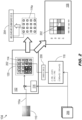
FIG. 1 is a block diagram illustrating a real-time image transformation monitoring system for a display system according to example embodiments of this disclosure; -
FIG. 2 is a block diagram illustrating the real-time image transformation monitoring system ofFIG. 1 ; -
FIG. 3 is a block diagram illustrating the image transformation monitor and downstream image processing of the real-time image transformation monitoring system ofFIG. 1 ; - and
FIGS. 4A through 4D are flow diagrams illustrating a method for real-time image transformation monitoring according to example embodiments of this disclosure. - Before explaining one or more embodiments of the disclosure in detail, it is to be understood that the embodiments are not limited in their application to the details of construction and the arrangement of the components or steps or methodologies set forth in the following description or illustrated in the drawings. In the following detailed description of embodiments, numerous specific details may be set forth in order to provide a more thorough understanding of the disclosure. However, it will be apparent to one of ordinary skill in the art having the benefit of the instant disclosure that the embodiments disclosed herein may be practiced without some of these specific details. In other instances, well-known features may not be described in detail to avoid unnecessarily complicating the instant disclosure.
- As used herein a letter following a reference numeral is intended to reference an embodiment of the feature or element that may be similar, but not necessarily identical, to a previously described element or feature bearing the same reference numeral (e.g., 1, 1a, 1b). Such shorthand notations are used for purposes of convenience only and should not be construed to limit the disclosure in any way unless expressly stated to the contrary.
- Further, unless expressly stated to the contrary, "or" refers to an inclusive or and not to an exclusive or. For example, a condition A or B is satisfied by any one of the following: A is true (or present) and B is false (or not present), A is false (or not present) and B is true (or present), and both A and B are true (or present).
- In addition, use of "a" or "an" may be employed to describe elements and components of embodiments disclosed herein. This is done merely for convenience and "a" and "an" are intended to include "one" or "at least one," and the singular also includes the plural unless it is obvious that it is meant otherwise.
- Finally, as used herein any reference to "one embodiment" or "some embodiments" means that a particular element, feature, structure, or characteristic described in connection with the embodiment is included in at least one embodiment disclosed herein. The appearances of the phrase "in some embodiments" in various places in the specification are not necessarily all referring to the same embodiment, and embodiments may include one or more of the features expressly described or inherently present herein, or any combination or sub-combination of two or more such features, along with any other features which may not necessarily be expressly described or inherently present in the instant disclosure.
- Referring to
FIG. 1 , a real-time imagetransformation monitoring system 100 is disclosed. Themonitoring system 100 may include apixel buffer 102,image transformation monitor 104, andoutput image processor 106. For example, thepixel buffer 102,image transformation monitor 104, andoutput image processor 106 may be embodied in a single processor or in a single device, e.g., a line replaceable unit (LRU). Alternatively, thepixel buffer 102,image transformation monitor 104, andoutput image processor 106 may be embodied across multiple processors or physical devices/LRUs in communication with each other. - In embodiments, the
monitoring system 100 may be implemented in a cockpit or control center of an aircraft, automobile, or other air-based, land-based, or water-based vehicle. For example, themonitoring system 100 may monitor the transformation of images or image streams captured by a camera or image sensor (not shown) for display viadisplay units 108. Prior to ultimate display to a user via adisplay unit 108, the images or image streams may be transformed via various types of image processing or image enhancement to optimize display of the images or image streams via the display unit including, but not limited to: augmentation via EVS or SVS symbology; image convolution; image filtering; and/or image distortion. In embodiments, thedisplay unit 108 may include, but is not limited to, any combination of head-down displays (HDD), head-up displays (HUD), helmet-mounted displays (HMD), head-worn displays (HWD), augmented reality (AR) viewers, virtual reality (VR) viewers, and/or mixed reality (MR) viewers. - In embodiments, the transformed image stream for display to the user via the
display unit 108 may be based on a source image 110 (e.g., source frame) or continuous sequence of source images. For example, anoutput image 112 based on the transformedsource image 110 may be displayed via thedisplay unit 108 at a predetermined or required minimum frame rate (e.g., 60 fps), such that the output image provides the user with safety-critical visual intelligence in real time or near real time. - In embodiments, the
pixel buffer 102 may receive and storesource image data 110a (e.g., pixel data) from thesource image 110. For example, thepixel buffer 102 may receive all or a portion of thesource image data 110a; as the source image data is received, the pixel buffer may appendfiducial data 114 to each pixel of source image data. In embodiments, thepixel buffer 102 may maintain multiple sets offiducial data 114, each set of fiducial data corresponding to a reference checksum 116 (e.g., a current set of fiducial data used for aparticular source image 110 will also be associated with a current reference checksum maintained by the image transformation monitor 104). For example, sets offiducial data 114 may be generated based on predetermined fiducial functions, such that each individual pixel ofsource image data 110a may have a unique or different element of fiducial data appended thereto. In some embodiments, fiducial functions may have a unique seed value for generating pseudorandom sequences offiducial data 114, e.g., a linear feedback shift register (LFSR) reset for ensuring unique seeds (and therefore unique fiducial data and a unique reference checksum 116) for at least any twoconsecutive source images 110. - In embodiments, each set of
fiducial data 114 maintained by thepixel buffer 102 may be associated with atransformation map 118. For example, eachtransformation map 118 may correspond to a specific image transformation or set of image transformations of the source image 110 (e.g., from which theoutput image 112 may be generated), including, but not limited to: image distortion correction (e.g., distortion maps 118a) for display on a curved surface; image convolution (e.g., convolution maps 118b); image filtering (e.g., filteringmaps 118c); image scaling; image decimation; image offset, image alignment, etc. - In embodiments, as the
source image data 110a (to which thefiducial data 114 has been appended) is read from thepixel buffer 102 by theoutput image processor 106, theimage transformation monitor 104 may extract the appended fiducial data. For example, thesource image data 110a may be read from thepixel buffer 102 by theoutput image processor 106 as a sequence ofdiscrete pixel datasets 120, each pixel dataset including a group of pixels of source image data and the set of fiducial data (114a) appended thereto. - In embodiments, each set of
fiducial data 114a extracted from apixel dataset 120 may be incorporated by theimage transformation monitor 104 into acumulative checksum calculation 122 for thecurrent source image 110. For example, when the image transformation/s (and the output image 112) associated with thecurrent source image 110 is complete, theimage transformation monitor 104 may match thechecksum calculation 122 based on each set of extractedfiducial data 114a to thereference checksum 116 also corresponding to the current fiducial data. In embodiments, if thechecksum calculation 122 andreference checksum 116 are equivalent or otherwise match, theimage transformation monitor 104 may output anominal system status 124. For example, thenominal status 124 may correspond to normal operations of thepixel buffer 102 and/or high integrity of image transformation operations, and may be associated with one or more integrity assurances including, but not limited to: proper storage of eachpixel dataset 120 by thepixel buffer 102, correct designation of the currentfiducial data 114 by the pixel buffer, and the proper sequence of transformation addresses comprising the transformation map 118 (e.g., the selectedpixel datasets 120 were not only correctly stored by thepixel buffer 102, but extracted from the pixel buffer by theimage transformation monitor 104 in the correct order provided for by the current transformation map). - In embodiments, the
checksum calculation 122 may be a cumulative checksum calculation corresponding to thecurrent source image 110 or set ofsource image data 110a, e.g., incorporating cyclic redundancy check (CRC) and/or any other appropriate integrity check and/or hashing algorithms known in the art. For example, when allpixel datasets 120 indicated by thecurrent transformation map 118 are extracted from the pixel buffer 102 (e.g., when theoutput image 112 based on transformations of thesource image data 110a is generated), thecumulative checksum calculation 122 based on the cumulativefiducial data 114a may be compared to thereference checksum 116. - In embodiments, the
image transformation monitor 104 may output one ormore error statuses 126 based on the comparison of thechecksum calculation 122 andreference checksum 116. For example, if thechecksum calculation 122 andreference checksum 116 are not equivalent, theerror status 126 may indicate a fault in theimage transformation monitor 104. In some embodiments, thefiducial data 114 andreference checksum 116 may be changed by thepixel buffer 102 after eachsource image 110 is processed and transformed. For example, thepixel buffer 102 may select a new set of fiducial data 114 (corresponding to a new reference checksum 116) for eachsubsequent source image 110. - In embodiments, a
checksum calculation 122 may be stored (122a) by theimage transformation monitor 104. For example, each storedchecksum calculation 122a may also be compared to the immediatelysubsequent checksum calculation 122 corresponding to the next source image immediately preceding thecurrent source image 110. If a storedchecksum calculation 122a is found equivalent to thesubsequent checksum calculation 122, theerror status 126 may indicate a fault in thepixel buffer 102. For example, a match in twoconsecutive checksum calculations pixel buffer 102 to load newfiducial data 114 betweenconsecutive source images 110. - Referring now to
FIG. 2 , theimage transformation monitor 104 is shown. - In embodiments, the
source image data 110a stored to the pixel buffer 102 (and to which the pixel buffer has appended fiducial data 114) may be extracted from thepixel buffer 102 by theoutput image processor 106. For example, theoutput image processor 106 may sequentially extract from the storedsource image data 110apixel datasets 120. In embodiments, eachtransformation map 118 may include a sequential list of transformation addresses 200, such that the sequence of transformation addresses determines the sequence ofpixel datasets 120 extracted from thepixel buffer 102. For example, eachtransformation address 200 may define a relationship between a pixel or pixels ofsource image data 110a and the corresponding pixel/s of the transformed output image (112,FIG. 1 ) displayed by the display unit (108,FIG. 1 ). In the simplest case, where there is nopixel buffer 102, theimage transformation monitor 104 may extract thefiducial data 114 appended to pixels ofsource image data 110a individually, and thetransformation map 118 may comprise a sequence of transformation addresses 200 where each transformation address corresponds to a discrete pixel ofsource image data 110a. - In embodiments, transformation addresses 200 in the
transformation map 118 may include fractional pixel addresses not corresponding to adiscrete pixel 202, e.g., (1.186, -2.241). For example, thesource image data 110a appended and stored by thepixel buffer 102 may be extracted from the pixel buffer by theimage transformation monitor 104 as a sequence ofpixel datasets 120, e.g., two-dimensional (2D) pixel arrays or groups of pixels of source image data, each current or next pixel array corresponding to the current ornext transformation address 200 in the sequence. In some embodiments, apixel dataset 120 or array may include thecurrent transformation address 200 but may not be centered on the transformation address. For example, eachpixel dataset 120 or array may comprise an m x n or m x m pixel array (of mn or m2discrete pixels 202 respectively, where m , n are integers). For example, thepixel dataset 120 corresponding to transformation address 200 (1890.6, 200.2) may be a 4 x 4-pixel array incorporating thepixel 202 having discrete pixel address (1890, 200) as one of 16 component pixels. In embodiments, theoutput image processor 106 andimage transformation monitor 104 may extract from thepixel buffer 102pixel datasets 120 or arrays of any size sufficient to allow resampling without adversely affecting system latency. - In embodiments, the
image transformation monitor 104 may extract from eachpixel dataset 120 the set offiducial data 114a appended to eachcomponent pixel 202 as the component pixels are read out of thepixel buffer 102 by theoutput image processor 106. For example, the appendedfiducial data 114a extracted from each pixel of the pixel array may be incorporated by theimage transformation monitor 104 into the checksum calculation (122,FIG. 1 ) corresponding to thecurrent source image 110. In embodiments, the appendedfiducial data 114a extracted from eachpixel dataset 120 may be received by theimage transformation monitor 104 as an unordered dataset or as afiducial data sequence 204 of ordered fiducial data. - In some embodiments,
fiducial data 114 maintained by the pixel buffer 102 (and, e.g.,corresponding reference checksums 116 maintained by the image transformation monitor) may be stored to memory on a device, line replaceable unit (LRU), memory module, or other device in communication with thepixel buffer 102 such that new fiducial data selected by the pixel buffer may be passed to the pixel buffer for eachsubsequent source image 110. In some embodiments, the monitoring system (100,FIG. 1 ) may include multiple devices in communication with each other, such that one or more of thepixel buffer 102, theimage transformation monitor 104, or theoutput image processor 106 may be co-located or embodied in different physical devices or interfaces. - In some embodiments, the
monitoring system 100 may self-calibrate (e.g., at initial startup or based on, e.g., optical data maps or real-world measurements) by generating fiducial data 114 (and, e.g., the associated reference checksums (116,FIG. 1 ) and/or transformation maps (118,FIG. 1 : 118a-118c) for a cycle ofsource images 110 via one or moreindependent processors 206 in communication with the monitoring system. For example, by generating thefiducial data 114, transformation maps 118, and/orreference checksums 116 viaprocessors 206 independent of themonitoring system 100 and forwarding saidfiducial data 114, transformation maps 118, and/or reference checksums to the appropriate components of the monitoring system, the transformation maps, fiducial data, and reference checksums may be insulated from any system faults (124, 126;FIG. 1 ) otherwise detectable by the monitoring system. - Referring to
FIG. 3 , theimage transformation monitor 104 is shown. - In embodiments, the
image transformation monitor 104 may maintain one or more reference checksums 116 (e.g., generated by the independent processors 206) corresponding to specific sets of fiducial data (114,FIG. 1 ). - In embodiments, the
image transformation monitor 104 may incorporate each sequence 204 (or, e.g., unordered dataset) of received fiducial data (114a,FIG. 2 ) extracted from each pixel dataset (120,FIG. 2 ) of source image data (110a,FIG. 1 ) into acumulative checksum calculation 122 corresponding to thecurrent source image 110 and fiducial data (114,FIG. 1 ). For example, thechecksum calculation 122 may include or incorporate cyclic redundancy checks (CRC) or any appropriate error detection algorithm known in the art. - In embodiments, the
image transformation monitor 104 may detect system statuses (nominal status 124,error statuses 126a-b) by comparing (300) eachchecksum calculation 122 to thecurrent reference checksum 116. For example, one ormore reference checksums 116 corresponding to the current fiducial data (114,FIG. 2 ) and/orsource image 110 may be preloaded to data storage within theimage transformation monitor 104, or to other memory or data storage devices in communication with the image transformation monitor ormonitoring system 100. In some embodiments, two ormore reference checksums 116 may be provided (e.g., corresponding to one ormore transformation maps 114, each reference checksum corresponding to a set offiducial data 114 maintained by the pixel buffer 102) such that theimage transformation monitor 104 may designate a new or different reference checksum for eachsubsequent source image 110, e.g., when thepixel buffer 102 designates a new set offiducial data 114. For example, a minimum of two sets offiducial data 114 may allow the pixel buffer to alternate fiducial data between each pair ofconsecutive source images 110, such that theimage transformation monitor 104 may likewise alternate reference checksums 116between each consecutive pair of source images. In some embodiments, a memory module, LRU, or other device in communication with theimage transformation monitor 104 may provide thecurrent reference checksum 116 at the time of calculation or comparison (300). In some embodiments, theindependent processor 206 may generatereference checksums 116 during calibration of themonitoring system 100, along with the correspondingfiducial data 114 provided to thepixel buffer 102. - In embodiments, when 1) the
checksum calculation 122 and thecurrent reference checksum 116 are compared (300) and found equivalent, and 2) thechecksum calculation 122 and theprior checksum calculation 122a (e.g., the stored checksum calculation corresponding to the source image immediately preceding the current source image 110) are found not equivalent (e.g., different, non-matching), theimage transformation monitor 104 may output or return anominal status 124 associated with one or more integrity assurances including, but not limited to: correct storage of eachpixel dataset 120 and appending offiducial data 114 by thepixel buffer 102, a correctly designatedcurrent transformation map 118, and the proper sequence of transformation addresses 200 comprising the current transformation map (e.g., the selected transformation addresses and corresponding pixel datasets were not only correct, but extracted from the pixel buffer by the image transformation monitor in the correct order provided for by the transformation map). - In embodiments, the
image transformation monitor 104 may output or return one ormore error statuses 126a-b based on thecomparison 300 of thechecksum calculation 122,current reference checksum 116, and/or storedprior checksum calculation 122a. For example, if thechecksum calculation 122 and thecurrent reference checksum 116 are found not equivalent, theimage transformation monitor 104 may indicate an imagetransformation error status 126a, e.g., an error in image distortion, image convolution, image filtering (e.g., or some other image transformation) based on the corresponding transformation map (118,FIG. 1 : 118a-118c) defining the sequence in which thesequences 204 offiducial data 118 were extracted from thepixel buffer 102. Similarly, if thecomparison 300 results in thechecksum calculation 122 being found equivalent to the immediatelyprior checksum calculation 122a, theimage transformation monitor 104 may output or return a pixelbuffer error status 126b indicative of apixel buffer 102 that may be stuck, frozen, or otherwise unable to load newfiducial data 114 for thecurrent source image 110. - In embodiments, output of either an image
transformation error status 126a or a pixelbuffer error status 126b by theimage transformation monitor 104 may result in visual, aural, and/or haptic alerts provided to the user or operator. In some embodiments, theimage transformation monitor 104 may preclude display of the associated output image (112,FIG. 1 ) based on the possibility of hazardously misleading information (HMI) contained therein. - Referring now to
FIG. 4A , themethod 400 may be implemented by the real-time imagetransformation monitoring system 100 and may include the following steps. - At a
step 402, the pixel buffer receives one or more pixel datasets of source image data associated with a source image, each pixel dataset including a 2D array or group of component pixels from the source image. - At a
step 404, the pixel buffer appends fiducial data to each pixel of the received source image data. For example, each set of fiducial data is associated with a reference checksum for the current source image, the reference checksum also associated with a transformation map, the transformation map in turn associated with one or more transformations of the source image data resulting in an output image for display. - At a
step 406, the pixel buffer stores the pixel dataset and appended fiducial data. - At a
step 408, as each pixel dataset is read out of the pixel buffer by the output image processor, the image transformation monitor extracts the fiducial data appended to each pixel of the pixel dataset. For example, each set of appended fiducial data may be extracted as a dataset or as an ordered sequence. - At a
step 410, the image transformation monitor incorporates the extracted fiducial data into a continuous or cumulative checksum calculation associated with the current source image. - At a
step 412, e.g., when the output image based on the transformed source image is complete, the image transformation monitor determines a system status based on the checksum calculation incorporating the fiducial data extracted from each pixel dataset originating with the current source image. For example, the checksum calculation is compared to the current reference checksum; an error status (e.g., an image transformation fault) is indicated if the two checksums are not equivalent. If, however, the checksum calculation and current reference checksum are found equivalent (and, e.g., the current and prior checksum calculations are not equivalent), a nominal system status is indicated. The nominal status is indicative of one or more of: a correct storage of the pixel dataset and appended fiducial data by the pixel buffer, a correctly designated set of fiducial data for the current source image, or a correct sequence of transformation addresses comprising the current transformation map. - Referring also to
FIG. 4B , themethod 400 may includeadditional steps step 414, an independent processor (e.g., external to, or remote from, the monitoring system) generates one or more sets of fiducial data, each set corresponding to a reference checksum. For example, the sets of fiducial data (and corresponding reference checksums) may be generated by a system calibration operation. The sets of fiducial data may be maintained remotely from the monitoring system and forwarded to the pixel buffer when a new set of fiducial data is selected for a new source image. - At a
step 416, the independent processor forwards the generated sets of fiducial data to the pixel buffer. - Referring also to
FIG. 4C , themethod 400 may include anadditional step 418. At thestep 418, the pixel buffer designates a new or different fiducial dataset as the current fiducial data, e.g., for a new source image immediately subsequent to the current source image. For example, the image transformation monitor may likewise designate as the reference checksum a new or different reference checksum for the new source image). - Referring also to
FIG. 4D , themethod 400 may include anadditional step 420. At thestep 420, the image transformation monitor stores a completed checksum calculation for a current source image. For example, the stored checksum calculation may be compared to a subsequent checksum calculation for the source image immediately following the current source image; if the two consecutive checksum calculations are found equivalent, an error status of the pixel butter is indicated. - It is to be understood that embodiments of the methods disclosed herein may include one or more of the steps described herein. Further, such steps may be carried out in any desired order and two or more of the steps may be carried out simultaneously with one another. Two or more of the steps disclosed herein may be combined in a single step, and in some embodiments, one or more of the steps may be carried out as two or more sub-steps. Further, other steps or sub-steps may be carried in addition to, or as substitutes to one or more of the steps disclosed herein.
- Although inventive concepts have been described with reference to the embodiments illustrated in the attached drawing figures, equivalents may be employed and substitutions made herein without departing from the scope of the claims. Components illustrated and described herein are merely examples of a system/device and components that may be used to implement embodiments of the inventive concepts and may be replaced with other devices and components without departing from the scope of the claims. Furthermore, any dimensions, degrees, and/or numerical ranges provided herein are to be understood as non-limiting examples unless otherwise specified in the claims.
Claims (15)
- A real-time image transformation monitoring system for a display system, comprising:at least one pixel buffer (102) configured to:receive at least one pixel dataset (120) associated with a source image, each pixel dataset (120) comprising one or more pixels of source image data;append fiducial data (114) associated with a current reference checksum to each pixel of the at least one pixel dataset (120), the current reference checksum associated with a current transformation map, the current transformation map associated with at least one transformation of the source image data by an output image processor;
andstore the at least one pixel dataset (120) and the appended fiducial data (114);at least one transformation monitor in communication with the pixel buffer (102), the transformation monitor configured to:as the output image processor reads the at least one pixel dataset (120) from the pixel buffer (102), extract from the at least one pixel dataset (120) the fiducial data (114) appended to each pixel;incorporate the extracted fiducial data (114) into a checksum calculation associated with the source image;
andwhen the at least one transformation of the source image is complete, determine a system status by comparing the checksum calculation to the current reference checksum. - The real-time image transformation monitoring system of Claim 1, wherein the at least one pixel dataset (120) includes at least one two-dimensional (2D) pixel array.
- The real-time image transformation monitoring system of any preceding Claim, wherein the system status includes at least one monitor fault associated with the image transformation monitor, the monitor fault based on a non-equivalence of the checksum calculation and the current reference checksum.
- The real-time image transformation monitoring system of any preceding Claim, wherein:the current transformation map comprises a sequence of transformation addresses associated with the source image;wherein each pixel dataset (120) corresponds to a transformation address of the sequence of transformation addresses;
andwherein the pixel buffer (102) is configured to designate as the fiducial data (114) a fiducial dataset of one or more fiducial datasets maintained by the pixel buffer (102). - The real-time image transformation monitoring system of Claim 4, further comprising:
at least one independent processor in communication with the pixel buffer (102) and the image transformation monitor, the at least one independent processor configured to calibrate the real-time image transformation monitoring system by generating the one or more fiducial datasets, each fiducial dataset corresponding to a reference checksum. - The real-time image transformation monitoring system of Claim 4, wherein the source image is a first source image, the fiducial dataset is a first fiducial dataset, and the current reference checksum is a first reference checksum, and:
wherein the pixel buffer (102) is configured to designate a second fiducial dataset of the one or more fiducial datasets as the fiducial data corresponding to a second source image immediately subsequent to the first source image, the second fiducial dataset associated with a second reference checksum. - The real-time image transformation monitoring system of Claim 6, wherein the image transformation monitor is configured to:store the checksum calculation corresponding to the first source image; andcompare the stored checksum calculation to a subsequent checksum calculation corresponding to the second source image;wherein the system status includes at least one buffer fault associated with the pixel buffer (102), the buffer fault based on an equivalence of the checksum calculation and the subsequent checksum calculation.
- The real-time image transformation monitoring system of Claim 4, wherein the sequence of transformation addresses includes at least one fractional pixel address.
- The real-time image transformation monitoring system of Claim 4, wherein the current transformation map includes one or more of:a distortion map associated with monitoring a distortion of the source image data;a convolution map associated with monitoring a convolution of the source image data;
ora filtering map associated with monitoring a filtering of the source image data. - A method for real-time image transformation monitoring in a display system, comprising:receiving from a source image and via a pixel buffer (102), at least one pixel dataset (120) comprising one or more pixels of source image data;appending to each pixel of the at least one pixel dataset (120), via the pixel buffer (102), fiducial data (114) associated with a current reference checksum, the current reference checksum associated with a current transformation map, the current transformation map associated with at least one transformation of the source image data by an output image processor;storing, via the pixel buffer (102), the at least one pixel dataset (120) and the appended fiducial data (114);as the at least one pixel dataset (120) is read from the pixel buffer (102) by the output image processor, extracting, via an image transformation monitor, the fiducial data (114) appended to each pixel of the at least one pixel dataset (120);incorporating, via the image transformation monitor, the fiducial data (114) extracted from the at least one pixel dataset (120) into a checksum calculation associated with the source image;
andwhen the transformation of the source image data is complete, determining a system status by comparing, via the image transformation monitor, the checksum calculation to the reference checksum. - The method of claim 10, wherein determining a system status by comparing, via the image transformation monitor, the checksum calculation to a reference checksum includes:
determining at least one image transformation fault based on a non-equivalence of the checksum calculation and the reference checksum. - The method of claim 10 or 11, wherein the current transformation map comprises a sequence of transformation addresses associated with the source image, each pixel dataset (120) corresponding to a transformation address of the sequence of transformation addresses, further comprising:
designating, via the pixel buffer (102), a fiducial dataset of one or more fiducial datasets maintained by the pixel buffer (102) as the fiducial data (114). - The method of Claim 12, further comprising:generating, via at least one independent processor in communication with the pixel buffer (102) and the image transformation monitor, the one or more fiducial datasets;
andforwarding the one or more fiducial datasets to the pixel buffer (102). - The method of Claim 12, wherein the source image is a first source image, the reference checksum is a first reference checksum, and the fiducial data (114) is a first fiducial dataset of the one or more fiducial datasets, further comprising:
designating, via the pixel buffer (102), a second fiducial dataset of the one or more fiducial datasets as the fiducial data corresponding to a second source image immediately subsequent to the first source image, the second fiducial dataset associated with a second reference checksum. - The method of claim 14, further comprising:storing, via the image transformation monitor, the checksum calculation corresponding to the first source image;whereindetermining a system status by comparing, via the image transformation monitor, the checksum calculation to a reference checksum includes:
determining at least one pixel buffer (102) fault based on a comparison of the checksum calculation corresponding to the first source image and a checksum calculation corresponding to the second source image.
Applications Claiming Priority (1)
| Application Number | Priority Date | Filing Date | Title |
|---|---|---|---|
| US17/685,158 US12131515B2 (en) | 2022-03-02 | 2022-03-02 | Real-time image transformation monitoring for display systems |
Publications (1)
| Publication Number | Publication Date |
|---|---|
| EP4239625A1 true EP4239625A1 (en) | 2023-09-06 |
Family
ID=85462417
Family Applications (1)
| Application Number | Title | Priority Date | Filing Date |
|---|---|---|---|
| EP23159751.9A Pending EP4239625A1 (en) | 2022-03-02 | 2023-03-02 | Real-time image transformation monitoring for display systems |
Country Status (2)
| Country | Link |
|---|---|
| US (1) | US12131515B2 (en) |
| EP (1) | EP4239625A1 (en) |
Families Citing this family (1)
| Publication number | Priority date | Publication date | Assignee | Title |
|---|---|---|---|---|
| CN116828168A (en) * | 2022-03-28 | 2023-09-29 | 蓝碧石科技株式会社 | Video signal processing apparatus |
Citations (1)
| Publication number | Priority date | Publication date | Assignee | Title |
|---|---|---|---|---|
| EP2254039B1 (en) * | 2009-05-20 | 2012-12-12 | Bombardier Transportation GmbH | Visual display module with control of display data by checksum |
Family Cites Families (14)
| Publication number | Priority date | Publication date | Assignee | Title |
|---|---|---|---|---|
| US7113615B2 (en) * | 1993-11-18 | 2006-09-26 | Digimarc Corporation | Watermark embedder and reader |
| US20100142838A1 (en) * | 2008-12-05 | 2010-06-10 | Micronic Laser Systems Ab | Gradient assisted image resampling in micro-lithographic printing |
| US9269021B2 (en) | 2010-05-21 | 2016-02-23 | Verizon Patent And Licensing Inc. | Image comparison based on checksums |
| US8965140B1 (en) * | 2011-01-31 | 2015-02-24 | Teradici Corporation | Method and apparatus for encoding mixed content image sequences |
| US9965486B2 (en) * | 2015-08-18 | 2018-05-08 | Facebook, Inc. | Embedding information within metadata |
| US10079886B2 (en) * | 2015-08-19 | 2018-09-18 | Spatial Digital Systems, Inc. | Mobile accessing private data on cloud |
| US20190034108A1 (en) * | 2015-08-19 | 2019-01-31 | Spatial Digital Systems, Inc. | Private access to media data on network storage |
| US10319271B2 (en) | 2016-03-22 | 2019-06-11 | Manufacturing Resources International, Inc. | Cyclic redundancy check for electronic displays |
| US11036946B2 (en) * | 2016-05-07 | 2021-06-15 | Canyon Navigation, LLC | Navigation using self-describing fiducials |
| US10643573B2 (en) | 2018-09-24 | 2020-05-05 | Intel Corporation | Technologies for end-to-end display integrity verification for functional safety |
| US11001143B2 (en) | 2018-12-19 | 2021-05-11 | Qualcomm Incorporated | Dynamically re-configurable displays with reconfigurable regions of interest for safety critical content |
| KR102617390B1 (en) | 2019-02-15 | 2023-12-27 | 삼성디스플레이 주식회사 | Display device and method for driving the same |
| EP3796147B1 (en) | 2019-09-20 | 2021-11-10 | Audi AG | Method for coordinating an electronic control unit and a touch screen input device in a motor vehicle and vehicle operating apparatus and motor vehicle |
| TWI786497B (en) * | 2020-12-22 | 2022-12-11 | 宏正自動科技股份有限公司 | Image output device, image receiving device and image transmission method |
-
2022
- 2022-03-02 US US17/685,158 patent/US12131515B2/en active Active
-
2023
- 2023-03-02 EP EP23159751.9A patent/EP4239625A1/en active Pending
Patent Citations (1)
| Publication number | Priority date | Publication date | Assignee | Title |
|---|---|---|---|---|
| EP2254039B1 (en) * | 2009-05-20 | 2012-12-12 | Bombardier Transportation GmbH | Visual display module with control of display data by checksum |
Also Published As
| Publication number | Publication date |
|---|---|
| US12131515B2 (en) | 2024-10-29 |
| US20230281950A1 (en) | 2023-09-07 |
Similar Documents
| Publication | Publication Date | Title |
|---|---|---|
| US7012553B2 (en) | Aircraft flat panel display system | |
| US10867582B2 (en) | Method and apparatus for generating an image | |
| US7724259B2 (en) | Aircraft flat panel display system with improved information availability | |
| CA2819956C (en) | High accuracy camera modelling and calibration method | |
| US7589735B2 (en) | Aircraft flat panel display system with graphical image integrity | |
| CN111510669B (en) | Video signal processing device, video freeze detection circuit, and video freeze detection method | |
| US20080297436A1 (en) | Head mounted display, display, and control method thereof | |
| US10565753B2 (en) | Method and apparatus for generating an image | |
| US20130278636A1 (en) | Object display device, object display method, and object display program | |
| US12131515B2 (en) | Real-time image transformation monitoring for display systems | |
| US12576985B2 (en) | Display system with improved reliability | |
| WO2019099835A1 (en) | Method and system for monitoring safety critical symbols on a display | |
| US10929946B2 (en) | Display buffering methods and systems | |
| US20220397955A1 (en) | Pose augmentation of head worn display video for latency reduction | |
| JP5207823B2 (en) | Image judging apparatus and image judging method | |
| WO2017056412A1 (en) | Monitor control system, monitor control method, and monitor control program | |
| US20240430402A1 (en) | Integrity monitoring of image sensor data | |
| US12081731B2 (en) | Video signal processing device | |
| EP4152738A1 (en) | Integrity monitoring of image sensor data | |
| US20220383532A1 (en) | Surface grid scanning and display method, system and apparatus | |
| US8072451B2 (en) | Efficient Z testing | |
| CN111918035B (en) | Vehicle-mounted looking-around method and device, storage medium and vehicle-mounted terminal | |
| JP4677621B2 (en) | Anomaly detection system and anomaly detection method | |
| JP2008103916A (en) | Head-mounted image display device and system | |
| JP5183423B2 (en) | Video display device |
Legal Events
| Date | Code | Title | Description |
|---|---|---|---|
| PUAI | Public reference made under article 153(3) epc to a published international application that has entered the european phase |
Free format text: ORIGINAL CODE: 0009012 |
|
| STAA | Information on the status of an ep patent application or granted ep patent |
Free format text: STATUS: THE APPLICATION HAS BEEN PUBLISHED |
|
| AK | Designated contracting states |
Kind code of ref document: A1 Designated state(s): AL AT BE BG CH CY CZ DE DK EE ES FI FR GB GR HR HU IE IS IT LI LT LU LV MC ME MK MT NL NO PL PT RO RS SE SI SK SM TR |
|
| STAA | Information on the status of an ep patent application or granted ep patent |
Free format text: STATUS: REQUEST FOR EXAMINATION WAS MADE |
|
| 17P | Request for examination filed |
Effective date: 20240306 |
|
| RBV | Designated contracting states (corrected) |
Designated state(s): AL AT BE BG CH CY CZ DE DK EE ES FI FR GB GR HR HU IE IS IT LI LT LU LV MC ME MK MT NL NO PL PT RO RS SE SI SK SM TR |
|
| STAA | Information on the status of an ep patent application or granted ep patent |
Free format text: STATUS: EXAMINATION IS IN PROGRESS |
|
| 17Q | First examination report despatched |
Effective date: 20250901 |