EP4239553A1 - Management device, management method, and management system - Google Patents
Management device, management method, and management system Download PDFInfo
- Publication number
- EP4239553A1 EP4239553A1 EP22211113.0A EP22211113A EP4239553A1 EP 4239553 A1 EP4239553 A1 EP 4239553A1 EP 22211113 A EP22211113 A EP 22211113A EP 4239553 A1 EP4239553 A1 EP 4239553A1
- Authority
- EP
- European Patent Office
- Prior art keywords
- battery
- emissions
- amount
- management device
- business operator
- Prior art date
- Legal status (The legal status is an assumption and is not a legal conclusion. Google has not performed a legal analysis and makes no representation as to the accuracy of the status listed.)
- Pending
Links
Images





Classifications
-
- G—PHYSICS
- G06—COMPUTING OR CALCULATING; COUNTING
- G06Q—INFORMATION AND COMMUNICATION TECHNOLOGY [ICT] SPECIALLY ADAPTED FOR ADMINISTRATIVE, COMMERCIAL, FINANCIAL, MANAGERIAL OR SUPERVISORY PURPOSES; SYSTEMS OR METHODS SPECIALLY ADAPTED FOR ADMINISTRATIVE, COMMERCIAL, FINANCIAL, MANAGERIAL OR SUPERVISORY PURPOSES, NOT OTHERWISE PROVIDED FOR
- G06Q50/00—Information and communication technology [ICT] specially adapted for implementation of business processes of specific business sectors, e.g. utilities or tourism
- G06Q50/10—Services
-
- G—PHYSICS
- G06—COMPUTING OR CALCULATING; COUNTING
- G06Q—INFORMATION AND COMMUNICATION TECHNOLOGY [ICT] SPECIALLY ADAPTED FOR ADMINISTRATIVE, COMMERCIAL, FINANCIAL, MANAGERIAL OR SUPERVISORY PURPOSES; SYSTEMS OR METHODS SPECIALLY ADAPTED FOR ADMINISTRATIVE, COMMERCIAL, FINANCIAL, MANAGERIAL OR SUPERVISORY PURPOSES, NOT OTHERWISE PROVIDED FOR
- G06Q10/00—Administration; Management
- G06Q10/06—Resources, workflows, human or project management; Enterprise or organisation planning; Enterprise or organisation modelling
- G06Q10/063—Operations research, analysis or management
- G06Q10/0631—Resource planning, allocation, distributing or scheduling for enterprises or organisations
- G06Q10/06313—Resource planning in a project environment
-
- G—PHYSICS
- G06—COMPUTING OR CALCULATING; COUNTING
- G06Q—INFORMATION AND COMMUNICATION TECHNOLOGY [ICT] SPECIALLY ADAPTED FOR ADMINISTRATIVE, COMMERCIAL, FINANCIAL, MANAGERIAL OR SUPERVISORY PURPOSES; SYSTEMS OR METHODS SPECIALLY ADAPTED FOR ADMINISTRATIVE, COMMERCIAL, FINANCIAL, MANAGERIAL OR SUPERVISORY PURPOSES, NOT OTHERWISE PROVIDED FOR
- G06Q50/00—Information and communication technology [ICT] specially adapted for implementation of business processes of specific business sectors, e.g. utilities or tourism
- G06Q50/06—Energy or water supply
-
- G—PHYSICS
- G06—COMPUTING OR CALCULATING; COUNTING
- G06Q—INFORMATION AND COMMUNICATION TECHNOLOGY [ICT] SPECIALLY ADAPTED FOR ADMINISTRATIVE, COMMERCIAL, FINANCIAL, MANAGERIAL OR SUPERVISORY PURPOSES; SYSTEMS OR METHODS SPECIALLY ADAPTED FOR ADMINISTRATIVE, COMMERCIAL, FINANCIAL, MANAGERIAL OR SUPERVISORY PURPOSES, NOT OTHERWISE PROVIDED FOR
- G06Q10/00—Administration; Management
- G06Q10/30—Administration of product recycling or disposal
-
- B—PERFORMING OPERATIONS; TRANSPORTING
- B60—VEHICLES IN GENERAL
- B60L—PROPULSION OF ELECTRICALLY-PROPELLED VEHICLES; SUPPLYING ELECTRIC POWER FOR AUXILIARY EQUIPMENT OF ELECTRICALLY-PROPELLED VEHICLES; ELECTRODYNAMIC BRAKE SYSTEMS FOR VEHICLES IN GENERAL; MAGNETIC SUSPENSION OR LEVITATION FOR VEHICLES; MONITORING OPERATING VARIABLES OF ELECTRICALLY-PROPELLED VEHICLES; ELECTRIC SAFETY DEVICES FOR ELECTRICALLY-PROPELLED VEHICLES
- B60L58/00—Methods or circuit arrangements for monitoring or controlling batteries or fuel cells, specially adapted for electric vehicles
- B60L58/10—Methods or circuit arrangements for monitoring or controlling batteries or fuel cells, specially adapted for electric vehicles for monitoring or controlling batteries
- B60L58/12—Methods or circuit arrangements for monitoring or controlling batteries or fuel cells, specially adapted for electric vehicles for monitoring or controlling batteries responding to state of charge [SoC]
-
- B—PERFORMING OPERATIONS; TRANSPORTING
- B60—VEHICLES IN GENERAL
- B60L—PROPULSION OF ELECTRICALLY-PROPELLED VEHICLES; SUPPLYING ELECTRIC POWER FOR AUXILIARY EQUIPMENT OF ELECTRICALLY-PROPELLED VEHICLES; ELECTRODYNAMIC BRAKE SYSTEMS FOR VEHICLES IN GENERAL; MAGNETIC SUSPENSION OR LEVITATION FOR VEHICLES; MONITORING OPERATING VARIABLES OF ELECTRICALLY-PROPELLED VEHICLES; ELECTRIC SAFETY DEVICES FOR ELECTRICALLY-PROPELLED VEHICLES
- B60L58/00—Methods or circuit arrangements for monitoring or controlling batteries or fuel cells, specially adapted for electric vehicles
- B60L58/10—Methods or circuit arrangements for monitoring or controlling batteries or fuel cells, specially adapted for electric vehicles for monitoring or controlling batteries
- B60L58/16—Methods or circuit arrangements for monitoring or controlling batteries or fuel cells, specially adapted for electric vehicles for monitoring or controlling batteries responding to battery ageing, e.g. to the number of charging cycles or the state of health [SoH]
-
- G—PHYSICS
- G01—MEASURING; TESTING
- G01R—MEASURING ELECTRIC VARIABLES; MEASURING MAGNETIC VARIABLES
- G01R31/00—Arrangements for testing electric properties; Arrangements for locating electric faults; Arrangements for electrical testing characterised by what is being tested not provided for elsewhere
- G01R31/36—Arrangements for testing, measuring or monitoring the electrical condition of accumulators or electric batteries, e.g. capacity or state of charge [SoC]
- G01R31/382—Arrangements for monitoring battery or accumulator variables, e.g. SoC
-
- G—PHYSICS
- G01—MEASURING; TESTING
- G01R—MEASURING ELECTRIC VARIABLES; MEASURING MAGNETIC VARIABLES
- G01R31/00—Arrangements for testing electric properties; Arrangements for locating electric faults; Arrangements for electrical testing characterised by what is being tested not provided for elsewhere
- G01R31/36—Arrangements for testing, measuring or monitoring the electrical condition of accumulators or electric batteries, e.g. capacity or state of charge [SoC]
- G01R31/392—Determining battery ageing or deterioration, e.g. state of health
-
- G—PHYSICS
- G06—COMPUTING OR CALCULATING; COUNTING
- G06Q—INFORMATION AND COMMUNICATION TECHNOLOGY [ICT] SPECIALLY ADAPTED FOR ADMINISTRATIVE, COMMERCIAL, FINANCIAL, MANAGERIAL OR SUPERVISORY PURPOSES; SYSTEMS OR METHODS SPECIALLY ADAPTED FOR ADMINISTRATIVE, COMMERCIAL, FINANCIAL, MANAGERIAL OR SUPERVISORY PURPOSES, NOT OTHERWISE PROVIDED FOR
- G06Q50/00—Information and communication technology [ICT] specially adapted for implementation of business processes of specific business sectors, e.g. utilities or tourism
- G06Q50/04—Manufacturing
-
- G—PHYSICS
- G06—COMPUTING OR CALCULATING; COUNTING
- G06Q—INFORMATION AND COMMUNICATION TECHNOLOGY [ICT] SPECIALLY ADAPTED FOR ADMINISTRATIVE, COMMERCIAL, FINANCIAL, MANAGERIAL OR SUPERVISORY PURPOSES; SYSTEMS OR METHODS SPECIALLY ADAPTED FOR ADMINISTRATIVE, COMMERCIAL, FINANCIAL, MANAGERIAL OR SUPERVISORY PURPOSES, NOT OTHERWISE PROVIDED FOR
- G06Q50/00—Information and communication technology [ICT] specially adapted for implementation of business processes of specific business sectors, e.g. utilities or tourism
- G06Q50/10—Services
- G06Q50/26—Government or public services
-
- H—ELECTRICITY
- H01—ELECTRIC ELEMENTS
- H01M—PROCESSES OR MEANS, e.g. BATTERIES, FOR THE DIRECT CONVERSION OF CHEMICAL ENERGY INTO ELECTRICAL ENERGY
- H01M10/00—Secondary cells; Manufacture thereof
- H01M10/42—Methods or arrangements for servicing or maintenance of secondary cells or secondary half-cells
- H01M10/48—Accumulators combined with arrangements for measuring, testing or indicating the condition of cells, e.g. the level or density of the electrolyte
-
- H—ELECTRICITY
- H04—ELECTRIC COMMUNICATION TECHNIQUE
- H04W—WIRELESS COMMUNICATION NETWORKS
- H04W4/00—Services specially adapted for wireless communication networks; Facilities therefor
- H04W4/30—Services specially adapted for particular environments, situations or purposes
- H04W4/40—Services specially adapted for particular environments, situations or purposes for vehicles, e.g. vehicle-to-pedestrians [V2P]
-
- B—PERFORMING OPERATIONS; TRANSPORTING
- B60—VEHICLES IN GENERAL
- B60L—PROPULSION OF ELECTRICALLY-PROPELLED VEHICLES; SUPPLYING ELECTRIC POWER FOR AUXILIARY EQUIPMENT OF ELECTRICALLY-PROPELLED VEHICLES; ELECTRODYNAMIC BRAKE SYSTEMS FOR VEHICLES IN GENERAL; MAGNETIC SUSPENSION OR LEVITATION FOR VEHICLES; MONITORING OPERATING VARIABLES OF ELECTRICALLY-PROPELLED VEHICLES; ELECTRIC SAFETY DEVICES FOR ELECTRICALLY-PROPELLED VEHICLES
- B60L2260/00—Operating Modes
- B60L2260/40—Control modes
- B60L2260/44—Control modes by parameter estimation
-
- H—ELECTRICITY
- H01—ELECTRIC ELEMENTS
- H01M—PROCESSES OR MEANS, e.g. BATTERIES, FOR THE DIRECT CONVERSION OF CHEMICAL ENERGY INTO ELECTRICAL ENERGY
- H01M10/00—Secondary cells; Manufacture thereof
- H01M10/42—Methods or arrangements for servicing or maintenance of secondary cells or secondary half-cells
- H01M10/425—Structural combination with electronic components, e.g. electronic circuits integrated to the outside of the casing
-
- H—ELECTRICITY
- H01—ELECTRIC ELEMENTS
- H01M—PROCESSES OR MEANS, e.g. BATTERIES, FOR THE DIRECT CONVERSION OF CHEMICAL ENERGY INTO ELECTRICAL ENERGY
- H01M10/00—Secondary cells; Manufacture thereof
- H01M10/54—Reclaiming serviceable parts of waste accumulators
-
- Y—GENERAL TAGGING OF NEW TECHNOLOGICAL DEVELOPMENTS; GENERAL TAGGING OF CROSS-SECTIONAL TECHNOLOGIES SPANNING OVER SEVERAL SECTIONS OF THE IPC; TECHNICAL SUBJECTS COVERED BY FORMER USPC CROSS-REFERENCE ART COLLECTIONS [XRACs] AND DIGESTS
- Y02—TECHNOLOGIES OR APPLICATIONS FOR MITIGATION OR ADAPTATION AGAINST CLIMATE CHANGE
- Y02E—REDUCTION OF GREENHOUSE GAS [GHG] EMISSIONS, RELATED TO ENERGY GENERATION, TRANSMISSION OR DISTRIBUTION
- Y02E60/00—Enabling technologies; Technologies with a potential or indirect contribution to GHG emissions mitigation
- Y02E60/10—Energy storage using batteries
-
- Y—GENERAL TAGGING OF NEW TECHNOLOGICAL DEVELOPMENTS; GENERAL TAGGING OF CROSS-SECTIONAL TECHNOLOGIES SPANNING OVER SEVERAL SECTIONS OF THE IPC; TECHNICAL SUBJECTS COVERED BY FORMER USPC CROSS-REFERENCE ART COLLECTIONS [XRACs] AND DIGESTS
- Y02—TECHNOLOGIES OR APPLICATIONS FOR MITIGATION OR ADAPTATION AGAINST CLIMATE CHANGE
- Y02P—CLIMATE CHANGE MITIGATION TECHNOLOGIES IN THE PRODUCTION OR PROCESSING OF GOODS
- Y02P70/00—Climate change mitigation technologies in the production process for final industrial or consumer products
- Y02P70/50—Manufacturing or production processes characterised by the final manufactured product
-
- Y—GENERAL TAGGING OF NEW TECHNOLOGICAL DEVELOPMENTS; GENERAL TAGGING OF CROSS-SECTIONAL TECHNOLOGIES SPANNING OVER SEVERAL SECTIONS OF THE IPC; TECHNICAL SUBJECTS COVERED BY FORMER USPC CROSS-REFERENCE ART COLLECTIONS [XRACs] AND DIGESTS
- Y02—TECHNOLOGIES OR APPLICATIONS FOR MITIGATION OR ADAPTATION AGAINST CLIMATE CHANGE
- Y02P—CLIMATE CHANGE MITIGATION TECHNOLOGIES IN THE PRODUCTION OR PROCESSING OF GOODS
- Y02P90/00—Enabling technologies with a potential contribution to greenhouse gas [GHG] emissions mitigation
- Y02P90/80—Management or planning
- Y02P90/84—Greenhouse gas [GHG] management systems
Definitions
- the present disclosure relates to a management device, a management method, and a management system for managing the amount of carbon dioxide (CO2) emissions emitted by manufacturing secondary batteries.
- CO2 carbon dioxide
- JP 2016-126372 A discloses a method of calculating the amount of CO2 emissions in the transportation process of products (including materials and parts).
- the secondary batteries mounted on the vehicles may be recycled (for example, reused or rebuilt) by recycling business operators.
- the recycling business operators can operate the business using recycled secondary batteries without any burden of the amount of CO2 emissions emitted to manufacture the secondary batteries (the amount of CO2 emissions of the secondary batteries).
- Unfairness arises in terms of the burden of the amount of CO2 emissions between the automobile manufacturer bearing the amount of CO2 emissions of the secondary batteries and the recycling business operators.
- the present disclosure provides a management device, a management method, and a management system, which can appropriately apportion the amount of CO2 emissions emitted by manufacturing secondary batteries to a business operator who recycles secondary batteries.
- a first aspect of the present disclosure relates to a management device including a storage and a controller.
- the storage is configured to store an amount of CO2 emissions emitted by manufacturing a secondary battery.
- the controller is configured to, when the secondary battery is recycled by a business operator who recycles the secondary battery, apportion the amount of CO2 emissions with the business operator according to a degree of deterioration of the secondary battery at a time of being recycled.
- the amount of CO2 emissions is apportioned with the business operator who recycles the secondary battery according to the degree of deterioration of the secondary battery at the time of being recycled.
- the business operator can be made to bear an appropriate amount of CO2 emissions.
- the management device may further include a communicator.
- the secondary battery may be mounted on a moving body.
- the communicator may be configured to communicate with the moving body, and the controller may be configured to acquire information about the secondary battery from the moving body through the communicator, and calculate the degree of deterioration by using the information when the secondary battery is recycled.
- the controller of the management device calculates the degree of deterioration of the secondary battery by using the information about the secondary battery acquired from the moving body.
- the controller can appropriately apportion the amount of CO2 emissions with the business operator according to the calculated degree of deterioration.
- the management device may further include a communicator.
- the secondary battery may be mounted on a moving body.
- the communicator may be configured to communicate with the moving body, and the controller may be configured to, when the secondary battery is recycled, acquire the degree of deterioration from the moving body through the communicator.
- the controller of the management device acquires the degree of deterioration from the moving body.
- the controller can appropriately apportion the amount of CO2 emissions with the business operator according to the acquired degree of deterioration.
- the management device may further include a communicator configured to communicate with a management device of the business operator.
- the controller may be configured to, when the secondary battery is recycled, acquire the degree of deterioration from the management device of the business operator through the communicator.
- the controller of the management device acquires the degree of deterioration from the management device of the business operator.
- the controller can appropriately apportion the amount of CO2 emissions with the business operator according to the acquired degree of deterioration.
- the management device may further include a communicator configured to communicate with a management device of the business operator.
- the controller may be configured to, when the secondary battery is recycled, acquire a burden share of the amount of CO2 emissions corresponding to the degree of deterioration from the management device of the business operator through the communicator.
- the controller of the management device acquires the burden share of the amount of CO2 emissions corresponding to the degree of deterioration from the management device of the business operator. For example, the controller can update the amount of CO2 emissions stored in the storage based on the acquired burden share. Therefore, it is possible to appropriately apportion the amount of CO2 emissions with the business operator.
- the degree of deterioration may be a capacity maintenance rate of the secondary battery.
- the amount of CO2 emissions can be apportioned with the business operator according to the capacity maintenance rate, and thus the business operator can be made to bear an appropriate amount of CO2 emissions.
- the controller may be configured to increase a burden share of the amount of CO2 emissions of the business operator as the capacity maintenance rate when the secondary battery is recycled is higher.
- the higher the capacity maintenance rate of the secondary battery the greater the burden share of the amount of CO2 emissions on the business operator, and thus the business operator can be made to bear an appropriate amount of CO2 emissions.
- a second aspect of the present disclosure relates to a management method.
- the management method includes storing an amount of CO2 emissions emitted by manufacturing a secondary battery, and when the secondary battery is recycled by a business operator who recycles the secondary battery, apportioning the amount of CO2 emissions with the business operator according to a degree of deterioration of the secondary battery at the time of being recycled.
- the amount of CO2 emissions is apportioned with the business operator who recycles the secondary battery according to the degree of deterioration of the secondary battery at the time of being recycled.
- the business operator can be made to bear an appropriate amount of CO2 emissions.
- a third aspect of the present disclosure relates to a management system includes a first device configured to manage an amount of CO2 emissions emitted by manufacturing a secondary battery and a second device of a business operator who recycles the secondary battery.
- the first device is configured to, when the secondary battery is recycled, update the amount of CO2 emissions according to a degree of deterioration of the secondary battery at the time of being recycled, and the second device is configured to manage the amount of CO2 emissions corresponding to the degree of deterioration.
- the amount of CO2 emissions is apportioned between the first device and the second device according to the degree of deterioration of the secondary battery. Therefore, the amount of CO2 emissions can be appropriately apportioned between the first device and the second device. Therefore, the business operator can be made to bear an appropriate amount of CO2 emissions.
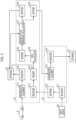
- FIG. 1 is an overall configuration diagram of a management system 1 according to Embodiment 1.
- the management system 1 is a system for managing the amount of CO2 emissions emitted from battery manufacturing.
- the management system 1 includes a management device 2 belonging to an automobile manufacturer (vehicle manufacturer) and a management device 3 belonging to a battery recycling business operator.
- the vehicle manufacturer supplies a vehicle 5 manufactured at a factory 4 (including the manufacturer's own factory and a cooperating company's factory) to the market through dealers and other sales companies.
- the vehicle 5 is a battery electric vehicle equipped with a battery 51.
- the vehicle 5 may be any vehicle equipped with the battery 51, and is not limited to the battery electric vehicle.
- the vehicle 5 may be, for example, a hybrid electric vehicle, a plug-in hybrid electric vehicle, or a fuel cell electric vehicle.
- the battery 51 is mounted on the vehicle 5 as, for example, a driving electric power source (that is, power source).
- the battery 51 includes a plurality of stacked cells.
- the cell is, for example, a secondary cell, such as a nickel-metal hydride cell or a lithium-ion cell. Further, the cell may be a cell having a liquid electrolyte between a positive electrode and a negative electrode, or a cell having a solid electrolyte (all-solid-state cell).
- a "battery ID" for identifying the battery is attached to the battery 51. Further, a "cell ID" for identifying the cell may be attached to each of the cells.
- the management device 2 of the vehicle manufacturer manages the amount of CO2 emissions emitted by manufacturing the vehicle 5.
- the amount of CO2 emissions emitted by manufacturing the vehicle 5 includes the amount of CO2 emissions emitted by manufacturing each of parts (including materials) that constitutes the vehicle 5, and the amount of CO2 emissions emitted from the transportation or the like of each of the parts (including materials).
- a vehicle manufacturer purchases each of the parts that constitutes the vehicle 5 from an upstream company in a supply chain. Together with the delivered part, the vehicle manufacturer receives reports from the upstream company on the amount of CO2 emissions emitted by manufacturing the part and the amount of CO2 emissions emitted by the transportation of the part or the like.
- the management device 2 calculates the amount of CO2 emissions emitted by manufacturing the vehicle 5 (hereinafter also referred to as "CO2 of the vehicle 5"), including, for example, the amount of CO2 emissions received from each upstream company and the amount of CO2 emissions emitted to complete the vehicle 5 using the parts.
- CO2 of the vehicle 5" the amount of CO2 emissions emitted by manufacturing the parts (including materials) and the amount of CO2 emissions emitted from the transportation of the parts (including materials) are collectively referred to as "the amount of CO2 emissions of parts”.
- the management device 2 includes a control device 21, a storage device 22, a communication device 23, an input device 24, and a display device 25.
- the control device 21, storage device 22, communication device 23, input device 24 and display device 25 are connected to a bus 26.
- a database 27 is communicably connected to the management device 2. Note that the management device 2 is an example of a "first device”.
- the control device 21 is built with, for example, an integrated circuit including a central processing unit (CPU).
- the control device 21 executes various programs stored in the storage device 22.
- Various programs include an operating system and the like.
- the storage device 22 may include, for example, a read only memory (ROM) that stores the various programs, and a random access memory (RAM) that functions as a working memory and temporarily stores various data needed to execute the various programs.
- ROM read only memory
- RAM random access memory
- the control device 21 is an example of a "controller”.
- the communication device 23 is configured to communicate with management device 3 and vehicle 5. Communication between communication device 23 and management device 3 and vehicle 5 is performed, for example, through the Internet. In addition, the communication device 23 is an example of a "communicator".
- the input device 24 includes a device for inputting.
- the device for inputting is, for example, a mouse, a keyboard, a touch panel, and/or another device capable of accepting user operations.
- the display device 25 includes a display.
- the display device 25 displays various images on the display according to a control signal from the control device 21.
- the display is, for example, a liquid crystal display, an organic electro luminescence (EL) display, or another display device.
- EL organic electro luminescence
- the database 27 stores information according to a control signal from the management device 2 (control device 21).
- the control device 21 stores, in the database 27, the amount of CO2 emissions of each of the parts that constitute the vehicle 5 (that is, the reported value received from the upstream company).
- the control device 21 stores, in the database 27, a value obtained by adding up the amounts of CO2 emissions of each of the parts that constitute the vehicle 5 as the amount of CO2 emissions of the vehicle 5.
- the database 27 stores the amounts of CO2 emissions of all vehicles supplied to the market by vehicle manufacturer, in addition to the vehicle 5.
- the database 27 can also be provided as a storage device within the management device 2. Note that the database 27 is an example of a "storage”.
- FIG. 2 is a diagram for describing an example of the amount of CO2 emissions of a vehicle that is stored in the database 27.
- the amount of CO2 emissions of the vehicle is stored for each vehicle ID.
- the vehicle ID is information for specifying a vehicle, and may be, for example, a vehicle identification number (VIN).
- VIN vehicle identification number
- the vehicle ID may be any information that can uniquely identify the vehicle, and may be other information. In the present embodiment, it is assumed that vehicle 5 has a vehicle ID of "V001".
- FIG. 2 shows, as an example, a vehicle ID, a battery ID, the amount of CO2 emissions associated with the battery ID (the amount of CO2 emissions of the battery), an engine ID, the amount of CO2 emissions associated with the engine ID (the amount of CO2 emissions of an engine), and the amount of CO2 emissions of the vehicle.
- the vehicle ID "V001” the battery 51 specified by the battery ID "B001”, the amount of CO2 emissions “M1” of the battery 51, the engine specified by the engine ID "E001", the amount of CO2 emissions "N1” of the engine, and the amount of CO2 emissions “SI” of the vehicle 5 are associated with each other.
- the sum of the amount of CO2 emissions "M1" of the battery 51, the amount of CO2 emissions “N1” of the engine, and the amount of CO2 emissions of other parts (not shown) that constitutes the vehicle 5 is the amount of CO2 emissions "SI" of the vehicle 5 specified by the vehicle ID "V001".
- the vehicle manufacturer reports the amount of CO2 emissions of the vehicle 5 stored in the database 27 to, for example, a government agency or a private agency when the vehicle manufacturer supplies the vehicle 5 to the market. For example, a tax may be imposed on the vehicle manufacturer depending on the amount of CO2 emissions.
- the above-mentioned report is made through the communication device 23 by the control device 21 controlling each part in response to an input to the input device 24 by a manager of the management device 2 (e.g., an employee of the vehicle manufacturer) or the like.
- the report may be in a form that allows recognition of the amount of CO2 emissions for each of the parts that constitutes the vehicle 5 (for example, the amount of CO2 emissions of the battery 51).
- the management device 2 acquires information about the battery 51 (hereinafter also referred to as "battery information") from the vehicle 5 supplied to the market. Specifically, once the vehicle 5 is started, the control device 21 acquires the battery information from the vehicle 5 through the communication device 23 at every predetermined control cycle until the vehicle 5 enters a sleep state.
- the battery information includes information on the voltage of the battery 51 (battery voltage), information on current input/output to/from the battery 51 (battery current), and information on the temperature of the battery 51 (battery temperature).
- the control device 21 stores the battery information in the database 27 in association with the battery ID.
- the parts that constitute the vehicle 5 there are parts that are highly likely to be taken out from the vehicle 5 and recycled later.
- An example of such a part is the battery 51.
- Battery recycling includes, for example, reusing and rebuilding.
- Reuse refers to re-supplying (distributing) the battery 51 that has been collected (removed) from the vehicle 5 with the same function and performance at the time of the collection.
- the collected battery 51 is subjected to inspections needed, and the battery 51 that satisfies the requirements in the inspections are distributed on the market as reuse products.
- Rebuilding is recovering or maintaining the function and performance of the battery 51 collected from the vehicle 5 and changing the structure and/or performance of the battery 51 and supplying the battery 51.
- the collected battery 51 is once disassembled into cells. Then, among the cells from the disassembling of the battery 51, usable cells (cells that become usable after recovery of performance may be used) are combined to manufacture a new battery.
- a recycling business operator is a business operator that collects the battery 51 from the vehicle 5 and reuses the collected battery 51.
- the recycling business operator is not limited to a business operator that performs reuse, and may be any business operator that performs at least one of reuse or rebuild.
- the recycling business operator may be a business operator that reuses or rebuilds the collected battery 51 depending on the condition of the collected battery.
- the vehicle manufacturer bears the amount of CO2 emissions (the amount of CO2 emissions from the battery 51) emitted from the manufacture of the battery 51 when the vehicle 5 is manufactured.
- the recycling business operator recycles the battery 51, the recycling business operator can operate the business using the recycled battery 51 without any burden of the amount of CO2 emissions from the battery 51, which has been borne by the vehicle manufacturer. Therefore, there is an unfairness in terms of the burden of the amount of CO2 emissions between the vehicle manufacturer and the recycling business operator.
- the recycling business operator bears a part of the amount of CO2 emissions of the battery 51, which has been borne by the vehicle manufacturer, according to the degree of deterioration of the battery 51 at a point of time when the battery 51 is recycled. That is, in the management system 1, the amount of CO2 emissions of the battery 51 is apportioned between the vehicle manufacturer and the recycling business operator according to the degree of deterioration of the battery 51 at the point of time when the battery 51 is recycled.
- the degree of deterioration is, for example, a State of -Health (SOH).
- SOH is a capacity maintenance rate, and is represented by the ratio [unit: %] of the current full charge capacity C of the battery 51 to a full charge capacity C0 of the battery 51 in an initial state.
- SOH can be calculated, for example, by the following Equation (1).
- SOH C / C 0 ⁇ 100
- the initial value C0 of the full charge capacity the full charge capacity measured at the time of the manufacture of the battery 51 (or the vehicle 5) may be used, or the specification value (catalog value) of the full charge capacity of the battery 51 may be used.
- the SOH is calculated by the management device 2 of the vehicle manufacturer.
- the management device 3 of the recycling business operator manages the amount of CO2 emissions of the battery 51 to be recycled.
- the amount of CO2 emissions of the battery 51 to be recycled includes the amount of CO2 emissions apportioned according to the SOH of the battery 51 at the point of time of recycling and the amount of CO2 emissions emitted in a recycling process.
- the management device 3 includes a control device 31, a storage device 32, a communication device 33, an input device 34, and a display device 35.
- the control device 31, the storage device 32, the communication device 33, the input device 34, and the display device 35 are connected to a bus 36.
- a database 37 is communicably connected to the management device 3. Note that the management device 3 is an example of a "second device”.
- the control device 31 is built with, for example, an integrated circuit including a CPU.
- the control device 31 executes various programs stored in the storage device 32.
- Various programs include an operating system and the like.
- the storage device 32 includes, for example, a ROM that stores the various programs, and a RAM that functions as a working memory and temporarily stores various data needed to execute the various programs.
- the communication device 33 is configured to communicate with the management device 2. Communication between the communication device 33 and the management device 2 (communication device 23) is performed, for example, through the Internet.
- the input device 34 includes a device for inputting.
- the device for inputting is, for example, a mouse, a keyboard, a touch panel, and/or another device capable of accepting user operations.
- the display device 35 includes a display.
- the display device 35 displays various images on the display according to a control signal from the control device 31.
- the display is, for example, a liquid crystal display, an organic EL display, or another display device.
- the database 37 stores information according to a control signal from the management device 3 (control device 31).
- the control device 31 stores the amount of CO2 emissions (burden share) of the battery 51 to be recycled in the database 37.
- the amount of CO2 emissions of the battery 51 stored in the database 37 is the amount of CO2 emissions of the battery 51 to be borne by the recycling business operator.
- the database 37 can also be provided as a storage device within the management device 3.
- a manager of the management device 3 When the recycling business operator recycles the battery 51, a manager of the management device 3 (for example, an employee of the recycling business operator) first takes out (collects) the battery 51 from the vehicle 5. A battery ID is attached to the battery 51.
- the manager of the management device 3 operates the input device 34 to display a screen for applying for battery recycling on the display device 35.
- the manager of the management device 3 operates the input device 34 to enter the battery ID of the battery 51 in a battery ID entry field displayed on the display device 35 and clicks an application button displayed on the display device 35.
- the recycling notification of the battery 51 is transmitted to the management device 2 of the vehicle manufacturer that has supplied the vehicle 5 on which the battery 51 specified by the battery ID is mounted to the market.
- the recycling notification includes the battery ID for specifying the battery 51 to be recycled.
- the management device 2 that receives the recycling notification from the management device 3 specifies the battery 51 based on the battery ID, and reads the battery information for the battery 51 from the database 27. Then, the management device 2 calculates the SOH of the battery 51 by using the battery information, and decides an apportion ratio of the amount of CO2 emissions of the battery 51 corresponding to the calculated SOH. According to the apportion ratio, the management device 2 updates the amount of CO2 emissions emitted by manufacturing the battery 51 (the amount of CO2 emissions of the battery 51), and notifies the management device 3 of the amount of CO2 emissions of the battery 51, which is the burden share of the recycling business operator.
- the management device 3 stores the amount of CO2 emissions of the battery 51 received from the management device 2 in the database 37 as the amount of CO2 emissions of the battery 51 to be recycled, and manages the stored amount.
- the amount of CO2 emissions of the battery 51 may be, for example, reported to a purchaser who has purchased the battery from the recycling business operator as the amount of CO2 emissions of a reuse product.
- FIG. 3 is a functional block diagram of the control device 21 of the management device 2 and the control device 31 of the management device 3.
- the control device 21 of the management device 2 includes an information acquirer 211, a register 212, a receiver 213, a reader 214, a SOH calculator 215, a decider 216, an amount-of-CO2-emissions calculator 217, an updater 218, and a notifier 219.
- the control device 21 functions as the information acquirer 211, the register 212, the receiver 213, the reader 214, the SOH calculator 215, the decider 216, the amount-of-CO2-emissions calculator 217, the updater 218, and the notifier 219.
- the information acquirer 211, the register 212, the receiver 213, the reader 214, the SOH calculator 215, the decider 216, the amount-of-CO2-emissions calculator 217, the updater 218, and the notifier 219 may be implemented by, for example, dedicated hardware (electronic circuit).
- the information acquirer 211 acquires battery information (the battery voltage, battery current, battery temperature) from the vehicle 5 through the communication device 23.
- the information acquirer 211 acquires the battery information from the vehicle 5 at predetermined control cycles at the time when the vehicle 5 is started.
- the information acquirer 211 outputs the acquired battery information to the register 212.
- the register 212 stores, in the database 27, the battery information acquired by the information acquirer 211.
- the register 212 stores the battery information in the database 27 in association with the battery ID of the battery 51 mounted on the vehicle 5.
- the receiver 213 receives a recycling notification from the management device 3 of the recycling business operator. Upon receiving the recycling notification, the receiver 213 outputs the recycling notification to the reader 214.
- the reader 214 specifies the battery ID from the recycling notification.
- the reader 214 reads the battery information associated with the battery ID from the database 27.
- the reader 214 does not read all the battery information associated with the battery ID; in contrast, the reader 214 reads the most recently stored battery information for a predetermined period (for example, several weeks or several months).
- the reader 214 outputs the read battery information to the SOH calculator 215.
- the SOH calculator 215 extracts battery information that satisfies conditions from the battery information received from the reader 214.
- the conditions are, for example, that the battery temperature is within a reference temperature range for a predetermined period of time (several minutes to several tens of minutes) and that the battery is continuously discharged.
- the SOH calculator 215 may relax the conditions. For example, the SOH calculator 215 may reduce the predetermined period of time (several minutes to several tens of minutes).
- the reader 214 may read battery information that satisfies the conditions from the database 27 and output the battery information to the SOH calculator 215.
- the SOH calculator 215 calculates the SOC of the battery 51 using the temporally earliest battery information in the battery information that satisfies the conditions.
- the SOC is referred to as a "first SOC” and is also referred to as SOC1.
- a method of estimating the SOC for example, a method of obtaining the SOC from an open circuit voltage (OCV) by referring to the OCV-SOC curve of the battery 51 acquired in advance can be used.
- OCV-SOC curve can be stored in advance in the storage device 22, for example.
- the SOH calculator 215 calculates the SOC of the battery 51 using the temporally latest battery information in the battery information that satisfies the conditions.
- the SOC is referred to as a "second SOC” and is also referred to as SOC2.
- the SOH calculator 215 calculates a charge and discharge electric power amount ⁇ Ah that has charged the battery 51 and been discharged from the battery 51, during an interval from the first SOC up to the second SOC.
- the charge and discharge electric power amount ⁇ Ah can be calculated by integrating the current values included in the battery information during the interval from the first SOC up to the second SOC.
- the unit of the charge and discharge electric power amount ⁇ Ah is not limited to ampere-hours, and may be watt-hours.
- the SOH calculator 215 calculates the full charge capacity C of the battery 51 according to the following Equation (2) by using the first SOC, the second SOC, and the charge and discharge electric power amount ⁇ Ah.
- C ⁇ Ah / SOC 1 ⁇ SOC 2 ⁇ 100
- the SOH calculator 215 calculates the SOH of the battery 51 by dividing the full charge capacity C by the initial value C0 of the full charge capacity of the battery 51 according to Equation (1).
- the SOH calculator 215 outputs the calculated SOH to the decider 216.
- the decider 216 decides an apportion ratio (burden ratio) for the amount of CO2 emissions of the battery 51 according to the SOH. For example, the decider 216 decides that the apportion ratio for the amount of CO2 emissions of the battery 51 between the vehicle manufacturer and the recycling business operator is 60:40 when the SOH is 40%.
- the decider 216 decides that the vehicle manufacturer continues to bear 60% of the amount of CO2 emissions "M1" of the battery 51, which has been borne by the vehicle manufacturer at the time of supplying the vehicle 5 to the market (for example, at the time of shipment), and that 40% of the amount of CO2 emissions "M1" of the battery 51 are borne by the recycling business operator.
- the decider 216 outputs the decided apportion ratio to the amount-of-CO2-emissions calculator 217.
- the amount-of-CO2-emissions calculator 217 calculates the amount of CO2 emissions of the battery 51 to be borne by the vehicle manufacturer (M1 ⁇ 0.6 in the example) and the amount of CO2 emissions of the battery 51 to be borne by the recycling business operator (M1 ⁇ 0.4 in the above example), according to the apportion ratio decided by the decider 216. Then, the amount-of-CO2-emissions calculator 217 outputs, to the notifier 219, each of the amount of CO2 emissions of the battery 51 to be borne by the vehicle manufacturer to the updater 218 and the amount of CO2 emissions of the battery 51 to be borne by the recycling business operator.
- the updater 218 updates the information about the amount of CO2 emissions of the vehicle ( FIG. 2 ) stored in the database 27.
- the updater 218 updates the amount of CO2 emissions "M1" of the battery ID "B001" to "M1 ⁇ 0.6".
- the updater 218 also updates the amount of CO2 emissions "SI" of the vehicle.
- the notifier 219 notifies, through the communication device 23, the management device 3 of the recycling business operator of the amount of CO2 emissions of the battery 51 to be borne by the recycling business operator.
- the control device 31 of the management device 3 includes a receiver 311, a notifier 312, an information acquirer 313, and a register 314.
- the control device 31 functions as the receiver 311, the notifier 312, the information acquirer 313, and the register 314 by executing programs stored in the storage device 32, for example.
- the receiver 311, the notifier 312, the information acquirer 313, and the register 314 may be implemented by dedicated hardware (electronic circuits), for example.
- the receiver 311 receives an application for recycling from the input device 34.
- the application for recycling includes the battery ID.
- the receiver 311 Upon receiving the application for recycling, the receiver 311 outputs the application for recycling to notifier 312 together with the battery ID.
- the notifier 312 generates a recycling notification and transmits the generated recycling notification to the management device 2 of the vehicle manufacturer through the communication device 33.
- the recycling notification is acquired by the receiver 213 of the control device 21. In this way, the notification of the amount of CO2 emissions of the battery 51 to be borne by the recycling business operator is issued from the management device 2.
- the information acquirer 313 acquires the amount of CO2 emissions of the battery 51 to be borne by the recycling business operator from the management device 2 of the vehicle manufacturer through the communication device 33.
- the information acquirer 313 outputs the acquired amount of CO2 emissions of the battery 51 to the register 314.
- the register 314 stores the amount of CO2 emissions of the battery 51 in the database 37 in association with the battery ID of the battery 51.
- the amount of CO2 emissions is added to the amount of CO2 emissions of the battery 51 stored in the database 37 (M1 ⁇ 0.4 in the example), and the information in the database 37 is updated.
- the timing at which the amount of CO2 emissions emitted due to recycling of the battery 51 is added is optional.
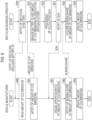
- FIG. 4 is a flowchart showing a procedure of a process executed at the time when the battery is recycled.
- the flowchart is executed by the control device 21 of the management device 2 and the control device 31 of the management device 3 when the battery is recycled.
- Each step (hereinafter abbreviated as "S") of the flowchart shown in FIG. 4 is described as being carried out by software processing by the control device 21 of the management device 2 and the control device 31 of the management device 3; however, some or all of the steps may be carried out by hardware (electrical circuits) fabricated in the control devices 21, 31.
- control device 31 upon receiving an application for recycling of the battery 51 from the input device 34, the control device 31 generates a recycling notification regarding the battery 51 and transmits the generated recycling notification to the management device 2.
- the control device 21 when the control device 21 receives the recycling notification, the control device 21 reads battery information associated with the battery ID (for example, battery ID "B001") from the database 27 based on the battery ID (for example, battery ID "B001") included in the recycling notification.
- the battery information read in S20 is the most recently stored battery information for a predetermined period.
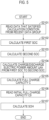
- FIG. 5 is a flowchart showing a detailed process for an operation of S21.
- control device 21 extracts battery information that satisfies a condition in the read battery information.
- control device 21 calculates the first SOC by using the temporally earliest battery information in the battery information that satisfies the condition.
- control device 21 calculates the second SOC by using the temporally latest battery information in the battery information that satisfies the condition.
- control device 21 calculates the charge and discharge electric power amount ⁇ Ah that has charged the battery 51 and/or been discharged from the battery 51 by integrating current values during the interval from the first SOC up to the second SOC.
- control device 21 calculates the full charge capacity C of the battery 51 according to Equation (2) by using the first SOC, the second SOC, and the charge and discharge electric power amount ⁇ Ah.
- control device 21 reads the initial full charge capacity C0 of the battery 51 from the database 27.
- the full charge capacity C0 may be stored in the storage device 22.
- control device 21 calculates the SOH of the battery 51 by dividing the full charge capacity C by the initial value C0 of the full charge capacity of the battery 51 according to Equation (1).
- the control device 21 decides the apportion ratio (burden ratio) of the amount of CO2 emissions between the vehicle manufacturer and the recycling business operator according to the SOH.
- the control device 21 calculates the amount of CO2 emissions of the battery 51 to be borne by the vehicle manufacturer and the amount of CO2 emissions of the battery 51 to be borne by the recycling business operator, according to the decided apportion ratio. Then, the control device 21 notifies the management device 3 of the amount of CO2 emissions (burden share) of the battery 51 to be borne by the recycling business operator through the communication device 23.
- the control device 21 updates the amount of CO2 emissions of the battery 51, which is included in the amount of CO2 emissions of the vehicle stored in the database 27, to the amount of CO2 emissions of the battery 51 to be borne by the vehicle manufacturer, and ends the process.
- the control device 21 updates the amount of CO2 emissions "M1" of the battery 51 included in the amount of CO2 emissions "S1" of the vehicle stored in the database 27 to the amount of CO2 emissions "M1 ⁇ 0.6" of the battery 51, which is the burden share of the vehicle manufacturer, and ends the process.
- control device 31 acquires the amount of CO2 emissions of the battery 51, which is the burden share of the recycling business operator, from the management device 2 through the communication device 33.
- the control device 31 stores the amount of CO2 emissions of the battery 51 in the database 37 in association with the battery ID of the battery 51.
- the stored amount of CO2 emissions of the battery 51 may be, for example, reported to a business operator who has purchased the battery 51 from the recycling business operator as the amount of CO2 emissions of a reuse product.
- the management device 2 of the vehicle manufacturer apportions the amount of CO2 emissions of the battery 51, which has been borne by the vehicle manufacturer, with the management device 3 of the recycling business operator, according to the SOH of the battery 51 at the point of time when the battery 51 is recycled. Since the amount of CO2 emissions of the battery 51 is apportioned according to the SOH at the point of time of being recycled, the amount of CO2 emissions of the battery 51 can be fairly borne by the management devices 2, 3.
- the vehicle 5 is a battery electric vehicle, a hybrid electric vehicle, a plug-in hybrid electric vehicle, a fuel cell electric vehicle, or the like.
- the vehicle 5 is a vehicle capable of external charging in which the battery 51 is charged using electric power supplied from an external power supply. That is, examples of the vehicle 5 include a battery electric vehicle, a plug-in hybrid electric vehicle, and a plug-in fuel cell electric vehicle.
- the external charging may be alternating current (AC) charging in which the battery 51 is charged by receiving AC power supplied from an external AC power supply, or may be direct current (DC) charging in which the battery 51 is charged by receiving DC power supplied from an external DC power supply.
- AC alternating current
- DC direct current
- Modification Example 1 a condition that the battery information is acquired during external charging can be employed as the condition for battery information used to calculate the SOH.
- a process shown in FIG. 6 can be employed as the details of the process for S21 (SOH calculation process) shown in FIG. 4 .
- FIG. 6 is a flowchart showing a detailed process for the operation of S21 in FIG. 4 , according to Modification Example 1.
- the control device 21 extracts battery information that satisfies a condition in the read battery information.
- the condition is that the battery information is acquired during external charging.
- a determination as to whether or not the battery information is acquired during external charging can be made based on, for example, a charging start flag and a charging end flag included in the battery information.
- control device 21 calculates the SOC at the start of external charging (start SOC) by using the battery information at the start of external charging.
- control device 21 calculates the SOC (end SOC) at the end of the external charging by using the battery information at the end of the external charging.
- control device 21 calculates the charge and discharge electric power amount ⁇ Ah that has charged the battery 51 and been discharged from the battery 51 by integrating the current values during an interval from the start to the end of external charging (that is, from the start SOC to the end SOC).
- control device 21 calculates the full charge capacity C of the battery 51 according to Equation (2) by using the start SOC, the end SOC, and the charge and discharge electric power amount ⁇ Ah.
- control device 21 reads the initial full charge capacity C0 of the battery 51 from the database 27.
- the full charge capacity C0 may be stored in the storage device 22.
- control device 21 calculates the SOH of the battery 51 by dividing the full charge capacity C by the initial value C0 of the full charge capacity of the battery 51 according to Equation (1).
- the SOH of the battery 51 is calculated by using the battery information acquired during external charging. It can be said that the battery information acquired during external charging is data acquired in a more stable environment than the battery information acquired while the vehicle 5 is traveling. Therefore, by calculating the SOH of the battery 51 by using the battery information acquired during external charging, the accuracy of the SOH calculation can be improved.
- Embodiment 1 and Modification Example 1 the examples in which the management device 2 of the vehicle manufacturer calculates the SOH of the battery 51 have been described.
- the vehicle 5 may calculate the SOH, and the management device 2 may acquire information indicating the SOH from the vehicle 5.
- the vehicle 5 calculates the SOH of the battery 51 when a predetermined calculation condition is established.
- a condition that external charging is executed, a condition that discharging is performed over a certain period while the vehicle is traveling, or the like can be employed.
- the vehicle 5 transmits the calculated SOH to the management device 2 together with the battery ID.
- control device 21 of the management device 2 receives the SOH and the battery ID through the communication device 23
- the control device 21 stores the received SOH in the database 27 in association with the battery ID.
- the control device 21 stores the received SOH in the database 27 in association with the battery ID every time the control device 21 receives the SOH from the vehicle 5.
- the control device 21 When the battery 51 is recycled (when a recycling notification is received), the control device 21 reads out the most recently received SOH from the database 27. Then, the control device 21 decides the apportion ratio of the amount of CO2 emissions of the battery 51 between itself (vehicle manufacturer) and the recycling business operator, according to the read SOH.
- Embodiment 1 and Modification Example 1 the examples in which the management device 2 of the vehicle manufacturer calculates the SOH of the battery 51 have been described.
- Modification Example 2 the example in which the vehicle 5 calculates the SOH of the battery 51 and the SOH is transmitted to the management device 2 of the vehicle manufacturer has been described.
- Embodiment 2 an example in which the management device 3 of the recycling business operator calculates the SOH of the battery 51 will be described.
- a management system 1A according to Embodiment 2 includes a control device 21A and a control device 31A, which are substituted for the control device 21 of the management device 2 and the control device 31 of the management device 3 in the management system 1 according to Embodiment 1, respectively.
- Other configurations of the management system 1A are basically the same as those of the management system 1.
- the management device 3 of the recycling business operator calculates the SOH of the battery 51, and decides the apportion ratio of the amount of CO2 emissions emitted by manufacturing the battery 51 according to the calculated SOH. Then, the management device 3 of the recycling business operator notifies the management device 2 of the vehicle manufacturer of the amount of CO2 emissions (burden share) of the battery 51 to be borne by the vehicle manufacturer.
- FIG. 7 is a functional block diagram of the control device 21A of the management device 2 and the control device 31A of the management device 3 according to Embodiment 2.
- the control device 21A of management device 2 includes an information acquirer 611, a register 612, a receiver 613, a reader 614, a notifier 615, an information acquirer 616, and an updater 617.
- the control device 21A functions as the information acquirer 611, the register 612, the receiver 613, the reader 614, the notifier 615, the information acquirer 616, and the updater 617.
- the information acquirer 611, the register 612, the receiver 613, the reader 614, the notifier 615, the information acquirer 616, and the updater 617 may be implemented by, for example, dedicated hardware (electronic circuit).
- the information acquirer 611 and the register 612 have the same functions as the information acquirer 211 and the register 212 according to Embodiment 1, respectively, and thus description thereof will not be repeated.
- the receiver 613 receives a recycling notification from the management device 3 of the recycling business operator. Upon receiving the recycling notification, the receiver 613 outputs the recycling notification to the reader 614.
- the reader 614 specifies the battery ID from the recycling notification.
- the reader 614 reads the amount of CO2 emissions (the amount of CO2 emissions of the battery 51) emitted by manufacturing the battery 51 from the database 27 based on the battery ID. In the example shown in FIG. 2 , when the battery ID of the battery 51 is "B001", the reader 614 reads the amount of CO2 emissions "M1" of the battery 51. The reader 614 outputs the read amount of CO2 emissions "M1" of the battery 51 to the notifier 615.
- the notifier 615 notifies the management device 3 of the recycling business operator of the amount of CO2 emissions "M1" of the battery 51 through the communication device 23.
- the information acquirer 616 acquires the amount of CO2 emissions of the battery 51 to be continuously borne by the vehicle manufacturer from the management device 3 of the recycling business operator.
- the information acquirer 616 outputs the received burden share of the amount of CO2 emissions to the updater 617.
- the updater 617 updates information about the amount of CO2 emissions of the vehicle ( FIG. 2 ) stored in the database 27 based on the burden share of the amount of CO2 emissions received from the information acquirer 616.
- the updater 617 updates the amount of CO2 emissions "M1" of the battery ID "B001” to "M1 ⁇ 0.6".
- the updater 617 also updates the amount of CO2 emissions "S1" of the vehicle.
- the control device 31A of the management device 3 includes a receiver 711, a notifier 712, an information acquirer 713, a register 714, an SOH calculator 715, a decider 716, an amount-of-CO2-emissions calculator 717, an updater 718, and a notifier 719.
- the control device 31A functions as the receiver 711, the notifier 712, the information acquirer 713, the register 714, the SOH calculator 715, the decider 716, the amount-of-CO2-emissions calculator 717, the updater 718, and the notifier 719.
- the receiver 711, the notifier 712, the information acquirer 713, the register 714, the SOH calculator 715, the decider 716, the amount-of-CO2-emissions calculator 717, the updater 718, and the notifier 719 may be implemented by, for example, dedicated hardware (electronic circuit).
- the receiver 711 and notifier 712 have the same functions as the receiver 311 and the notifier 312 according to Embodiment 1, respectively, and thus description thereof will not be repeated.
- the information acquirer 713 acquires the amount of CO2 emissions of the battery 51 from the management device 2 of the vehicle manufacturer through the communication device 33.
- the information acquirer 713 outputs the acquired amount of CO2 emissions of the battery 51 to the register 714 and the SOH calculator 715.
- the battery 51 specified by the battery ID "B001" is recycled. That is, the information acquirer 713 outputs the amount of CO2 emissions "M1" of the battery 51 to the register 714 and the SOH calculator 715.
- the register 714 stores the amount of CO2 emissions of the battery 51 acquired by the information acquirer 713 in the database 37 in association with the battery ID of the battery 51. Specifically, information about the amount of CO2 emissions "M1" of the battery 51 is stored in the database 37 in association with the battery ID "B001". The information is stored in the database 37 as temporary information before the apportionment of the amount of CO2 emissions.
- the SOH calculator 715 calculates the SOH of the battery 51.
- the recycling business operator implements an inspection process for checking the SOH of the battery 51 collected from the vehicle 5.
- the inspection process for example, the battery 51 is charged until the battery 51 is fully charged, and then the battery 51 is discharged until the battery 51 reaches a specified SOC. Then, an integrated value of current values discharged from the battery 51 during an interval from full charge up to the specified SOC is acquired.
- inspection information including information such as the voltage of the battery 51 at the time of being fully charged, the voltage of the battery 51 at the specified SOC, and the integrated value of the current value is acquired.
- the inspection information is stored in the database 37.
- the SOH calculator 715 reads the inspection information from the database 37.
- the SOH calculator 715 calculates the SOH of the battery 51 based on the inspection information.
- the SOH calculator 715 outputs the calculated SOH and the amount of CO2 emissions "M1" of the battery 51 received from the information acquirer 713 to the decider 716.
- the inspection process may be executed by using, for example, a dedicated or general-purpose charging/discharging device.
- the timing of executing the inspection process is optional.
- the inspection process may be executed before the recycling notification is transmitted from the management device 3 to the management device 2, or may be executed after the transmission.
- the SOH calculator 715 waits for the registration of the inspection information, for example.
- the decider 716 decides the apportion ratio (burden ratio) of the amount of CO2 emissions of the battery 51 according to the SOH by the same method as the decider 216 according to Embodiment 1.
- the SOH is 40% and the apportion ratio of the amount of CO2 emissions of the battery 51 between the vehicle manufacturer and the recycling business operator is decided to be 60:40.
- the decider 716 outputs the decided apportion ratio to the amount-of-CO2-emissions calculator 717. Further, the decider 716 outputs the amount of CO2 emissions "M1" of the battery 51 to the amount-of-CO2-emissions calculator 717.
- the amount-of-CO2-emissions calculator 717 calculates the amount of CO2 emissions of the battery 51 to be borne by the vehicle manufacturer (M1 ⁇ 0.6 in the example) and the amount of CO2 emissions of the battery 51 to be borne by the recycling business operator (M1 ⁇ 0.4 in the example), according to the apportion ratio decided by the decider 716. Then, the amount-of-CO2-emissions calculator 717 outputs, to the updater 718, the amount of CO2 emissions of the battery 51 to be borne by the recycling business operator "M1 ⁇ 0.4" and outputs, to the notifier 719, the amount of CO2 emissions of the battery 51 to be borne by the vehicle manufacturer "M1 ⁇ 0.6".
- the updater 718 updates the amount of CO2 emissions of the battery 51 stored in the database 37 (information registered by the register 714). In the example, the updater 718 updates the amount of CO2 emissions "M1" of the battery ID "B001" to "M1 ⁇ 0.4". When there is the amount of CO2 emissions emitted due to recycling of the battery 51, the updater 718 adds the amount of CO2 emissions to the amount of CO2 emissions of the battery 51 stored in the database 37 (in the above example, M1 ⁇ 0.4).
- the notifier 719 notifies the management device 2 of the vehicle manufacturer of the amount of CO2 emissions "M1 ⁇ 0.6" of the battery 51 to be borne by the vehicle manufacturer together with the battery ID "001", through the communication device 33.
- FIG. 8 is a flowchart showing a procedure of a process executed at the time when a battery is recycled, according to Embodiment 2. The flowchart is executed by the control device 21A of the management device 2 and the control device 31A of the management device 3 when the battery is recycled.
- the control device 31A upon receiving an application for recycling of the battery 51 from the input device 34, the control device 31A generates a recycling notification regarding the battery 51 and transmits the generated recycling notification to the management device 2 through the communication device 33.
- the battery 51 specified by the battery ID "B001" is recycled.
- control device 21A when the control device 21A receives the recycling notification through the communication device 23, the control device 21A reads the amount of CO2 emissions (amount of CO2 emissions of the battery 51) "M1" emitted by manufacturing the battery 51 from the database 27, based on the battery ID "B001" included in the recycling notification.
- control device 21A transmits the amount of CO2 emissions "M1" of the battery 51 that has been read in S40 to the management device 3 through the communication device 23.
- control device 31A acquires the amount of CO2 emissions "M1" of the battery 51 from the management device 2 through the communication device 33.
- the control device 31A stores the amount of CO2 emissions "M1" of the battery 51 in the database 37 in association with the battery ID "B001".
- the control device 31A reads inspection information from the database 37. Then, the control device 31A calculates the SOH of the battery 51 based on the inspection information. Here, it is assumed that the SOH of the battery 51 is 40%.
- the inspection information is acquired by the inspection process for the battery 51. The inspection process may be executed in advance or may be executed at the timing of S32. The inspection information acquired by the inspection process is stored in the database 37.
- control device 31A decides the apportion ratio (burden ratio) of the amount of CO2 emissions between the vehicle manufacturer and the recycling business operator according to the SOH.
- the control device 31A calculates the amount of CO2 emissions "M1 ⁇ 0.6" of the battery 51 to be borne by the vehicle manufacturer and the amount of CO2 emissions "M1 ⁇ 0.4" of the battery 51 to be borne by the recycling business operator, according to the decided apportion ratio. Then, the control device 31A notifies the management device 2 of the amount of CO2 emissions (burden share) of the battery 51 to be borne by the vehicle manufacturer through the communication device 33.
- control device 31A updates the amount of CO2 emissions "M1" of the battery 51 stored in the database 37 in S31 to the amount of CO2 emissions "M1 ⁇ 0.4" of the battery 51 to be borne by the recycling business operator, which is calculated in S34, and ends the process.
- control device 21A acquires the amount of CO2 emissions "M1 ⁇ 0.6" of the battery 51, which is the burden share of the vehicle manufacturer, from the management device 3 through the communication device 23.
- the control device 21A updates the amount of CO2 emissions "M1" of the battery 51, which is included in the amount of CO2 emissions of the vehicle stored in the database 27, to the amount of CO2 emissions "M1 ⁇ 0.6" of the battery 51 to be borne by the vehicle manufacturer, and ends the process.
- the management device 3 of the recycling business operator decides the apportion ratio of the amount of CO2 emissions between the vehicle manufacturer and the recycling business operator according to the SOH of the battery 51 at the point of time when the battery 51 is recycled. Then, based on the apportion ratio, the management device 3 bears a portion of the amount of CO2 emissions of the battery 51 that has been borne by the vehicle manufacturer. Since the amount of CO2 emissions of the battery 51 is apportioned between the vehicle manufacturer and the recycling business operator according to the SOH at the point of time of being recycled, the amount of CO2 emissions of the battery 51 can be fairly borne by the vehicle manufacturer and the recycling business operator.
- the management device 3 of the recycling business operator has calculated the SOH of the battery 51 and decided the apportion ratio of the amount of CO2 emissions of the battery 51 according to the SOH.
- the management device 3 of the recycling business operator may transmit the calculated SOH of the battery 51 to the management device 2 of the vehicle manufacturer, and the management device 2 of the vehicle manufacturer may decide the apportion ratio of the amount of CO2 emissions of the battery 51 according to the SOH. That is, in the functional block diagram shown in FIG. 7 , the control device 21A of the management device 2 may have the functions of the decider 716 and the amount-of-CO2-emissions calculator 717 that the control device 31A of the management device 3 has.
- FIG. 9 is a flowchart showing a procedure of a process executed at the time when a battery is recycled, according to Modification Example 3.
- operations of S33 and S34 are deleted from the operations executed by the control device 31A
- operations of S51, S52 are added to the operations executed by the control device 31A
- operations of S61, S62 are added to the operations executed by the control device 21A.
- Other operations in the flowchart of FIG. 9 is the same as the operations in the flowchart of FIG. 8 , and thus the same numbers are given to the same steps and the description thereof will not be repeated.
- control device 31A transmits the SOH of the battery 51 calculated in S32 to the management device 2 through the communication device 33.
- control device 21A decides the apportion ratio of the amount of CO2 emissions between the vehicle manufacturer and the recycling business operator according to the SOH.
- the control device 21A calculates the amount of CO2 emissions of the battery 51 to be borne by the vehicle manufacturer and the amount of CO2 emissions of the battery 51 to be borne by the recycling business operator, according to the decided apportion ratio. Then, the control device 21A notifies the management device 3 of the amount of CO2 emissions (burden share) of the battery 51 to be borne by the recycling business operator through the communication device 23.
- control device 31A acquires the amount of CO2 emissions of the battery 51, which is the burden share of the recycling business operator, from the management device 2 through the communication device 33.
- Embodiment 1 the examples in which the management device 2 of the vehicle manufacturer calculates the SOH of the battery 51 have been described.
- Modification Example 2 the example in which the vehicle 5 calculates the SOH of the battery 51 and the SOH is transmitted to the management device 2 of the vehicle manufacturer has been described.
- Embodiment 2 and Modification Example 3 the examples in which the management device 3 of the recycling business operator calculates the SOH of the battery 51 have been described.
- the SOH of the battery 51 may be calculated by a neutral third party different from the vehicle manufacturer and the recycling business operator. Both the vehicle manufacturer and the recycling business operator may request that the vehicle manufacturer and the recycling business operator themselves calculate the SOH of the battery 51 related to the amount of CO2 emissions to be borne. Therefore, a service provider (third party) that provides a service for calculating the SOH of the battery 51 and the like may be entrusted with the calculation of the SOH of the battery 51.
- the management device 2 of the vehicle manufacturer may transmit the battery information to the service provider and acquire the SOH of the battery 51 from the service provider as a reply.
- the management device 3 of the recycling business operator may transmit the inspection information to the service provider and acquire the SOH of the battery 51 from the service provider as a reply.
- Embodiment 1 and Embodiment 2 and Modification Example 1 to Modification Example 4 the examples in which the recycling business operator reuses the battery have been described.
- the battery can be read as a "cell" in the methods described in Embodiment 1 and Embodiment 2, and Modification Example 1 to Modification Example 4.
- a cell ID for specifying a cell is attached to each of the plurality of cells included in the battery.
- the amount of CO2 emissions is apportioned in units of cells in the same manner as in Embodiment 1 and Embodiment 2, and Modification Example 1 to Modification Example 4, when the battery is rebuilt, the amount of CO2 emissions emitted by manufacturing the battery can be appropriately apportioned between the vehicle manufacturer and the recycling business operator.
- the management device 3 of the recycling business operator determines whether to reuse or rebuild the battery 51 based on the SOH of the battery 51 collected from the vehicle 5, for example. For example, the management device 3 may reuse the battery 51 when the SOH of the battery 51 is greater than the reference value, and may rebuild the battery 51 when the SOH of the battery 51 is equal to or lower than the reference value.
- the reference value can be appropriately set based on, for example, the specifications of the battery 51, the business content of the recycling business operator, or a use application of the reseller.
- Embodiment 1 and Embodiment 2 and Modification Example 1 to Modification Example 5 the case where the battery mounted on the automobile is recycled has been described as an example.
- the object on which the recycled battery is mounted is not limited to the automobile.
- the object on which the recycled battery is mounted may be any moving body on which the battery is mounted, such as a two-wheeled vehicle, a train, a ship, an airplane, or the like.
Landscapes
- Engineering & Computer Science (AREA)
- Business, Economics & Management (AREA)
- Human Resources & Organizations (AREA)
- Physics & Mathematics (AREA)
- General Physics & Mathematics (AREA)
- Tourism & Hospitality (AREA)
- Economics (AREA)
- Strategic Management (AREA)
- Marketing (AREA)
- Theoretical Computer Science (AREA)
- General Business, Economics & Management (AREA)
- Life Sciences & Earth Sciences (AREA)
- Sustainable Development (AREA)
- Health & Medical Sciences (AREA)
- Primary Health Care (AREA)
- General Health & Medical Sciences (AREA)
- Sustainable Energy (AREA)
- Power Engineering (AREA)
- Mechanical Engineering (AREA)
- Transportation (AREA)
- Entrepreneurship & Innovation (AREA)
- Operations Research (AREA)
- Manufacturing & Machinery (AREA)
- Quality & Reliability (AREA)
- Educational Administration (AREA)
- Development Economics (AREA)
- Electrochemistry (AREA)
- Chemical & Material Sciences (AREA)
- Chemical Kinetics & Catalysis (AREA)
- General Chemical & Material Sciences (AREA)
- Water Supply & Treatment (AREA)
- Signal Processing (AREA)
- Biodiversity & Conservation Biology (AREA)
- Public Health (AREA)
- Computer Networks & Wireless Communication (AREA)
- Game Theory and Decision Science (AREA)
- Secondary Cells (AREA)
- Management, Administration, Business Operations System, And Electronic Commerce (AREA)
Abstract
A management device (2) includes a storage (27) configured to store an amount of CO2 emissions emitted by manufacturing a secondary battery, and a controller (21; 21A) configured to, when the secondary battery is recycled by a business operator who recycles the secondary battery, apportion the amount of CO2 emissions with the business operator according to a degree of deterioration of the secondary battery at a time of being recycled.
Description
- The present disclosure relates to a management device, a management method, and a management system for managing the amount of carbon dioxide (CO2) emissions emitted by manufacturing secondary batteries.
- With the growing awareness of environmental issues, there is growing concern about the amount of CO2 emissions emitted to manufacture products distributed on the market. Therefore, in some cases, companies calculate and manage the amount of CO2 emissions emitted to manufacture products. For example,
Japanese Unexamined Patent Application Publication No. 2016-126372 JP 2016-126372 A - Vehicles equipped with secondary batteries for traveling are rapidly becoming popular. The secondary batteries mounted on the vehicles may be recycled (for example, reused or rebuilt) by recycling business operators. In this case, the recycling business operators can operate the business using recycled secondary batteries without any burden of the amount of CO2 emissions emitted to manufacture the secondary batteries (the amount of CO2 emissions of the secondary batteries). Unfairness arises in terms of the burden of the amount of CO2 emissions between the automobile manufacturer bearing the amount of CO2 emissions of the secondary batteries and the recycling business operators.
- The present disclosure provides a management device, a management method, and a management system, which can appropriately apportion the amount of CO2 emissions emitted by manufacturing secondary batteries to a business operator who recycles secondary batteries.
- A first aspect of the present disclosure relates to a management device including a storage and a controller. The storage is configured to store an amount of CO2 emissions emitted by manufacturing a secondary battery. The controller is configured to, when the secondary battery is recycled by a business operator who recycles the secondary battery, apportion the amount of CO2 emissions with the business operator according to a degree of deterioration of the secondary battery at a time of being recycled.
- According to the first aspect, when the secondary battery is recycled, the amount of CO2 emissions is apportioned with the business operator who recycles the secondary battery according to the degree of deterioration of the secondary battery at the time of being recycled. By apportioning the amount of CO2 emissions according to the degree of deterioration, the business operator can be made to bear an appropriate amount of CO2 emissions.
- In the first aspect of the present disclosure, the management device may further include a communicator. The secondary battery may be mounted on a moving body. The communicator may be configured to communicate with the moving body, and the controller may be configured to acquire information about the secondary battery from the moving body through the communicator, and calculate the degree of deterioration by using the information when the secondary battery is recycled.
- According to the first aspect, the controller of the management device calculates the degree of deterioration of the secondary battery by using the information about the secondary battery acquired from the moving body. The controller can appropriately apportion the amount of CO2 emissions with the business operator according to the calculated degree of deterioration.
- In the first aspect of the present disclosure, the management device may further include a communicator. The secondary battery may be mounted on a moving body. The communicator may be configured to communicate with the moving body, and the controller may be configured to, when the secondary battery is recycled, acquire the degree of deterioration from the moving body through the communicator.
- According to the first aspect, the controller of the management device acquires the degree of deterioration from the moving body. The controller can appropriately apportion the amount of CO2 emissions with the business operator according to the acquired degree of deterioration.
- In the first aspect of the present disclosure, the management device may further include a communicator configured to communicate with a management device of the business operator. The controller may be configured to, when the secondary battery is recycled, acquire the degree of deterioration from the management device of the business operator through the communicator.
- According to the first aspect, the controller of the management device acquires the degree of deterioration from the management device of the business operator. The controller can appropriately apportion the amount of CO2 emissions with the business operator according to the acquired degree of deterioration.
- In the first aspect of the present disclosure, the management device may further include a communicator configured to communicate with a management device of the business operator. The controller may be configured to, when the secondary battery is recycled, acquire a burden share of the amount of CO2 emissions corresponding to the degree of deterioration from the management device of the business operator through the communicator.
- According to the first aspect, the controller of the management device acquires the burden share of the amount of CO2 emissions corresponding to the degree of deterioration from the management device of the business operator. For example, the controller can update the amount of CO2 emissions stored in the storage based on the acquired burden share. Therefore, it is possible to appropriately apportion the amount of CO2 emissions with the business operator.
- In the first aspect of the present disclosure, the degree of deterioration may be a capacity maintenance rate of the secondary battery. According to the first aspect, the amount of CO2 emissions can be apportioned with the business operator according to the capacity maintenance rate, and thus the business operator can be made to bear an appropriate amount of CO2 emissions.
- In the first aspect of the present disclosure, the controller may be configured to increase a burden share of the amount of CO2 emissions of the business operator as the capacity maintenance rate when the secondary battery is recycled is higher.
- According to the first aspect, the higher the capacity maintenance rate of the secondary battery, the greater the burden share of the amount of CO2 emissions on the business operator, and thus the business operator can be made to bear an appropriate amount of CO2 emissions.
- A second aspect of the present disclosure relates to a management method. The management method includes storing an amount of CO2 emissions emitted by manufacturing a secondary battery, and when the secondary battery is recycled by a business operator who recycles the secondary battery, apportioning the amount of CO2 emissions with the business operator according to a degree of deterioration of the secondary battery at the time of being recycled.
- According to the second aspect, when the secondary battery is recycled, the amount of CO2 emissions is apportioned with the business operator who recycles the secondary battery according to the degree of deterioration of the secondary battery at the time of being recycled. By apportioning the amount of CO2 emissions according to the degree of deterioration, the business operator can be made to bear an appropriate amount of CO2 emissions.
- A third aspect of the present disclosure relates to a management system includes a first device configured to manage an amount of CO2 emissions emitted by manufacturing a secondary battery and a second device of a business operator who recycles the secondary battery. The first device is configured to, when the secondary battery is recycled, update the amount of CO2 emissions according to a degree of deterioration of the secondary battery at the time of being recycled, and the second device is configured to manage the amount of CO2 emissions corresponding to the degree of deterioration.
- According to the third aspect, the amount of CO2 emissions is apportioned between the first device and the second device according to the degree of deterioration of the secondary battery. Therefore, the amount of CO2 emissions can be appropriately apportioned between the first device and the second device. Therefore, the business operator can be made to bear an appropriate amount of CO2 emissions.
- According to the present disclosure, it is possible to appropriately apportion the amount of CO2 emissions emitted by manufacturing secondary batteries with a business operator who recycles secondary batteries.
- Features, advantages, and technical and industrial significance of exemplary embodiments of the invention will be described below with reference to the accompanying drawings, in which like signs denote like elements, and wherein:
-
FIG. 1 is an overall configuration diagram of a management system according toEmbodiment 1; -
FIG. 2 is a diagram for describing an example of the amount of CO2 emissions of a vehicle that is stored in a database; -
FIG. 3 is a functional block diagram of a control device of a management device and a control device of another management device; -
FIG. 4 is a flowchart showing a procedure of a process executed at the time when a battery is recycled; -
FIG. 5 is a flowchart showing a detailed process for S21 inFIG. 4 ; -
FIG. 6 is a flowchart showing a detailed process for S21 inFIG. 4 , according to Modification Example 1; -
FIG. 7 is a functional block diagram of a control device of a management device and a control device of another management device according toEmbodiment 2; -
FIG. 8 is a flowchart showing a procedure of a process executed at the time when a battery is recycled, according toEmbodiment 2; and -
FIG. 9 is a flowchart showing a procedure of a process executed at the time when a battery is recycled, according to Modification Example 3. - Hereinafter, embodiments of the present disclosure will be described in detail with reference to the drawings. In the drawings, the same or corresponding elements are denoted by the same reference numerals and descriptions thereof will not be repeated.
-
FIG. 1 is an overall configuration diagram of amanagement system 1 according toEmbodiment 1. Themanagement system 1 is a system for managing the amount of CO2 emissions emitted from battery manufacturing. Themanagement system 1 includes amanagement device 2 belonging to an automobile manufacturer (vehicle manufacturer) and a management device 3 belonging to a battery recycling business operator. - The vehicle manufacturer supplies a
vehicle 5 manufactured at a factory 4 (including the manufacturer's own factory and a cooperating company's factory) to the market through dealers and other sales companies. Thevehicle 5 is a battery electric vehicle equipped with abattery 51. Note that thevehicle 5 may be any vehicle equipped with thebattery 51, and is not limited to the battery electric vehicle. Thevehicle 5 may be, for example, a hybrid electric vehicle, a plug-in hybrid electric vehicle, or a fuel cell electric vehicle. - The
battery 51 is mounted on thevehicle 5 as, for example, a driving electric power source (that is, power source). Thebattery 51 includes a plurality of stacked cells. The cell is, for example, a secondary cell, such as a nickel-metal hydride cell or a lithium-ion cell. Further, the cell may be a cell having a liquid electrolyte between a positive electrode and a negative electrode, or a cell having a solid electrolyte (all-solid-state cell). A "battery ID" for identifying the battery is attached to thebattery 51. Further, a "cell ID" for identifying the cell may be attached to each of the cells. - The
management device 2 of the vehicle manufacturer manages the amount of CO2 emissions emitted by manufacturing thevehicle 5. The amount of CO2 emissions emitted by manufacturing thevehicle 5 includes the amount of CO2 emissions emitted by manufacturing each of parts (including materials) that constitutes thevehicle 5, and the amount of CO2 emissions emitted from the transportation or the like of each of the parts (including materials). A vehicle manufacturer purchases each of the parts that constitutes thevehicle 5 from an upstream company in a supply chain. Together with the delivered part, the vehicle manufacturer receives reports from the upstream company on the amount of CO2 emissions emitted by manufacturing the part and the amount of CO2 emissions emitted by the transportation of the part or the like. Themanagement device 2 calculates the amount of CO2 emissions emitted by manufacturing the vehicle 5 (hereinafter also referred to as "CO2 of thevehicle 5"), including, for example, the amount of CO2 emissions received from each upstream company and the amount of CO2 emissions emitted to complete thevehicle 5 using the parts. In addition, hereinafter, the amount of CO2 emissions emitted by manufacturing the parts (including materials) and the amount of CO2 emissions emitted from the transportation of the parts (including materials) are collectively referred to as "the amount of CO2 emissions of parts". - The
management device 2 includes acontrol device 21, astorage device 22, acommunication device 23, aninput device 24, and adisplay device 25. Thecontrol device 21,storage device 22,communication device 23,input device 24 anddisplay device 25 are connected to abus 26. Adatabase 27 is communicably connected to themanagement device 2. Note that themanagement device 2 is an example of a "first device". - The
control device 21 is built with, for example, an integrated circuit including a central processing unit (CPU). Thecontrol device 21 executes various programs stored in thestorage device 22. Various programs include an operating system and the like. Thestorage device 22 may include, for example, a read only memory (ROM) that stores the various programs, and a random access memory (RAM) that functions as a working memory and temporarily stores various data needed to execute the various programs. Note that thecontrol device 21 is an example of a "controller". - The
communication device 23 is configured to communicate with management device 3 andvehicle 5. Communication betweencommunication device 23 and management device 3 andvehicle 5 is performed, for example, through the Internet. In addition, thecommunication device 23 is an example of a "communicator". - The
input device 24 includes a device for inputting. The device for inputting is, for example, a mouse, a keyboard, a touch panel, and/or another device capable of accepting user operations. - The
display device 25 includes a display. Thedisplay device 25 displays various images on the display according to a control signal from thecontrol device 21. The display is, for example, a liquid crystal display, an organic electro luminescence (EL) display, or another display device. - The
database 27 stores information according to a control signal from the management device 2 (control device 21). Thecontrol device 21 stores, in thedatabase 27, the amount of CO2 emissions of each of the parts that constitute the vehicle 5 (that is, the reported value received from the upstream company). Thecontrol device 21 stores, in thedatabase 27, a value obtained by adding up the amounts of CO2 emissions of each of the parts that constitute thevehicle 5 as the amount of CO2 emissions of thevehicle 5. Note that thedatabase 27 stores the amounts of CO2 emissions of all vehicles supplied to the market by vehicle manufacturer, in addition to thevehicle 5. Thedatabase 27 can also be provided as a storage device within themanagement device 2. Note that thedatabase 27 is an example of a "storage". -
FIG. 2 is a diagram for describing an example of the amount of CO2 emissions of a vehicle that is stored in thedatabase 27. The amount of CO2 emissions of the vehicle is stored for each vehicle ID. The vehicle ID is information for specifying a vehicle, and may be, for example, a vehicle identification number (VIN). The vehicle ID may be any information that can uniquely identify the vehicle, and may be other information. In the present embodiment, it is assumed thatvehicle 5 has a vehicle ID of "V001". -
FIG. 2 shows, as an example, a vehicle ID, a battery ID, the amount of CO2 emissions associated with the battery ID (the amount of CO2 emissions of the battery), an engine ID, the amount of CO2 emissions associated with the engine ID (the amount of CO2 emissions of an engine), and the amount of CO2 emissions of the vehicle. For example, in the vehicle ID "V001", thebattery 51 specified by the battery ID "B001", the amount of CO2 emissions "M1" of thebattery 51, the engine specified by the engine ID "E001", the amount of CO2 emissions "N1" of the engine, and the amount of CO2 emissions "SI" of thevehicle 5 are associated with each other. The sum of the amount of CO2 emissions "M1" of thebattery 51, the amount of CO2 emissions "N1" of the engine, and the amount of CO2 emissions of other parts (not shown) that constitutes thevehicle 5 is the amount of CO2 emissions "SI" of thevehicle 5 specified by the vehicle ID "V001". - Referring back to
FIG. 1 , the vehicle manufacturer reports the amount of CO2 emissions of thevehicle 5 stored in thedatabase 27 to, for example, a government agency or a private agency when the vehicle manufacturer supplies thevehicle 5 to the market. For example, a tax may be imposed on the vehicle manufacturer depending on the amount of CO2 emissions. The above-mentioned report is made through thecommunication device 23 by thecontrol device 21 controlling each part in response to an input to theinput device 24 by a manager of the management device 2 (e.g., an employee of the vehicle manufacturer) or the like. The report may be in a form that allows recognition of the amount of CO2 emissions for each of the parts that constitutes the vehicle 5 (for example, the amount of CO2 emissions of the battery 51). - After the
vehicle 5 is supplied to the market, themanagement device 2 acquires information about the battery 51 (hereinafter also referred to as "battery information") from thevehicle 5 supplied to the market. Specifically, once thevehicle 5 is started, thecontrol device 21 acquires the battery information from thevehicle 5 through thecommunication device 23 at every predetermined control cycle until thevehicle 5 enters a sleep state. The battery information includes information on the voltage of the battery 51 (battery voltage), information on current input/output to/from the battery 51 (battery current), and information on the temperature of the battery 51 (battery temperature). Thecontrol device 21 stores the battery information in thedatabase 27 in association with the battery ID. - Among the parts that constitute the
vehicle 5, there are parts that are highly likely to be taken out from thevehicle 5 and recycled later. An example of such a part is thebattery 51. When thevehicle 5 is scrapped and so on after a predetermined number of years has passed since the distribution of thevehicle 5 in the market, thebattery 51 is collected from thevehicle 5 by a recycling business operator, and the collectedbattery 51 is recycled. Battery recycling includes, for example, reusing and rebuilding. - Reuse refers to re-supplying (distributing) the
battery 51 that has been collected (removed) from thevehicle 5 with the same function and performance at the time of the collection. The collectedbattery 51 is subjected to inspections needed, and thebattery 51 that satisfies the requirements in the inspections are distributed on the market as reuse products. - Rebuilding is recovering or maintaining the function and performance of the
battery 51 collected from thevehicle 5 and changing the structure and/or performance of thebattery 51 and supplying thebattery 51. The collectedbattery 51 is once disassembled into cells. Then, among the cells from the disassembling of thebattery 51, usable cells (cells that become usable after recovery of performance may be used) are combined to manufacture a new battery. - A recycling business operator according to the present embodiment is a business operator that collects the
battery 51 from thevehicle 5 and reuses the collectedbattery 51. Note that the recycling business operator is not limited to a business operator that performs reuse, and may be any business operator that performs at least one of reuse or rebuild. The recycling business operator may be a business operator that reuses or rebuilds the collectedbattery 51 depending on the condition of the collected battery. - Here, the vehicle manufacturer bears the amount of CO2 emissions (the amount of CO2 emissions from the battery 51) emitted from the manufacture of the
battery 51 when thevehicle 5 is manufactured. When the recycling business operator recycles thebattery 51, the recycling business operator can operate the business using the recycledbattery 51 without any burden of the amount of CO2 emissions from thebattery 51, which has been borne by the vehicle manufacturer. Therefore, there is an unfairness in terms of the burden of the amount of CO2 emissions between the vehicle manufacturer and the recycling business operator. - Accordingly, with the
management system 1 according toEmbodiment 1, the recycling business operator bears a part of the amount of CO2 emissions of thebattery 51, which has been borne by the vehicle manufacturer, according to the degree of deterioration of thebattery 51 at a point of time when thebattery 51 is recycled. That is, in themanagement system 1, the amount of CO2 emissions of thebattery 51 is apportioned between the vehicle manufacturer and the recycling business operator according to the degree of deterioration of thebattery 51 at the point of time when thebattery 51 is recycled. The degree of deterioration is, for example, a State of -Health (SOH). SOH is a capacity maintenance rate, and is represented by the ratio [unit: %] of the current full charge capacity C of thebattery 51 to a full charge capacity C0 of thebattery 51 in an initial state. SOH can be calculated, for example, by the following Equation (1).
- As the initial value C0 of the full charge capacity, the full charge capacity measured at the time of the manufacture of the battery 51 (or the vehicle 5) may be used, or the specification value (catalog value) of the full charge capacity of the
battery 51 may be used. Although the details will be described later, inEmbodiment 1, the SOH is calculated by themanagement device 2 of the vehicle manufacturer. - The management device 3 of the recycling business operator manages the amount of CO2 emissions of the
battery 51 to be recycled. The amount of CO2 emissions of thebattery 51 to be recycled includes the amount of CO2 emissions apportioned according to the SOH of thebattery 51 at the point of time of recycling and the amount of CO2 emissions emitted in a recycling process. - The management device 3 includes a
control device 31, astorage device 32, acommunication device 33, aninput device 34, and adisplay device 35. Thecontrol device 31, thestorage device 32, thecommunication device 33, theinput device 34, and thedisplay device 35 are connected to abus 36. Adatabase 37 is communicably connected to the management device 3. Note that the management device 3 is an example of a "second device". - The
control device 31 is built with, for example, an integrated circuit including a CPU. Thecontrol device 31 executes various programs stored in thestorage device 32. Various programs include an operating system and the like. Thestorage device 32 includes, for example, a ROM that stores the various programs, and a RAM that functions as a working memory and temporarily stores various data needed to execute the various programs. - The
communication device 33 is configured to communicate with themanagement device 2. Communication between thecommunication device 33 and the management device 2 (communication device 23) is performed, for example, through the Internet. - The
input device 34 includes a device for inputting. The device for inputting is, for example, a mouse, a keyboard, a touch panel, and/or another device capable of accepting user operations. - The
display device 35 includes a display. Thedisplay device 35 displays various images on the display according to a control signal from thecontrol device 31. The display is, for example, a liquid crystal display, an organic EL display, or another display device. - The
database 37 stores information according to a control signal from the management device 3 (control device 31). Thecontrol device 31 stores the amount of CO2 emissions (burden share) of thebattery 51 to be recycled in thedatabase 37. The amount of CO2 emissions of thebattery 51 stored in thedatabase 37 is the amount of CO2 emissions of thebattery 51 to be borne by the recycling business operator. Thedatabase 37 can also be provided as a storage device within the management device 3. - When the recycling business operator recycles the
battery 51, a manager of the management device 3 (for example, an employee of the recycling business operator) first takes out (collects) thebattery 51 from thevehicle 5. A battery ID is attached to thebattery 51. The manager of the management device 3 operates theinput device 34 to display a screen for applying for battery recycling on thedisplay device 35. The manager of the management device 3 operates theinput device 34 to enter the battery ID of thebattery 51 in a battery ID entry field displayed on thedisplay device 35 and clicks an application button displayed on thedisplay device 35. In this way, the recycling notification of thebattery 51 is transmitted to themanagement device 2 of the vehicle manufacturer that has supplied thevehicle 5 on which thebattery 51 specified by the battery ID is mounted to the market. The recycling notification includes the battery ID for specifying thebattery 51 to be recycled. - The
management device 2 that receives the recycling notification from the management device 3 specifies thebattery 51 based on the battery ID, and reads the battery information for thebattery 51 from thedatabase 27. Then, themanagement device 2 calculates the SOH of thebattery 51 by using the battery information, and decides an apportion ratio of the amount of CO2 emissions of thebattery 51 corresponding to the calculated SOH. According to the apportion ratio, themanagement device 2 updates the amount of CO2 emissions emitted by manufacturing the battery 51 (the amount of CO2 emissions of the battery 51), and notifies the management device 3 of the amount of CO2 emissions of thebattery 51, which is the burden share of the recycling business operator. - The management device 3 stores the amount of CO2 emissions of the
battery 51 received from themanagement device 2 in thedatabase 37 as the amount of CO2 emissions of thebattery 51 to be recycled, and manages the stored amount. The amount of CO2 emissions of thebattery 51 may be, for example, reported to a purchaser who has purchased the battery from the recycling business operator as the amount of CO2 emissions of a reuse product. -
FIG. 3 is a functional block diagram of thecontrol device 21 of themanagement device 2 and thecontrol device 31 of the management device 3. Referring toFIG. 3 , thecontrol device 21 of themanagement device 2 includes aninformation acquirer 211, aregister 212, areceiver 213, areader 214, aSOH calculator 215, adecider 216, an amount-of-CO2-emissions calculator 217, anupdater 218, and anotifier 219. For example, by executing a program stored in thestorage device 22, thecontrol device 21 functions as theinformation acquirer 211, theregister 212, thereceiver 213, thereader 214, theSOH calculator 215, thedecider 216, the amount-of-CO2-emissions calculator 217, theupdater 218, and thenotifier 219. Theinformation acquirer 211, theregister 212, thereceiver 213, thereader 214, theSOH calculator 215, thedecider 216, the amount-of-CO2-emissions calculator 217, theupdater 218, and thenotifier 219 may be implemented by, for example, dedicated hardware (electronic circuit). - The
information acquirer 211 acquires battery information (the battery voltage, battery current, battery temperature) from thevehicle 5 through thecommunication device 23. Theinformation acquirer 211 acquires the battery information from thevehicle 5 at predetermined control cycles at the time when thevehicle 5 is started. Theinformation acquirer 211 outputs the acquired battery information to theregister 212. - The
register 212 stores, in thedatabase 27, the battery information acquired by theinformation acquirer 211. Theregister 212 stores the battery information in thedatabase 27 in association with the battery ID of thebattery 51 mounted on thevehicle 5. - The
receiver 213 receives a recycling notification from the management device 3 of the recycling business operator. Upon receiving the recycling notification, thereceiver 213 outputs the recycling notification to thereader 214. - The
reader 214 specifies the battery ID from the recycling notification. Thereader 214 reads the battery information associated with the battery ID from thedatabase 27. Thereader 214 does not read all the battery information associated with the battery ID; in contrast, thereader 214 reads the most recently stored battery information for a predetermined period (for example, several weeks or several months). Thereader 214 outputs the read battery information to theSOH calculator 215. - The
SOH calculator 215 extracts battery information that satisfies conditions from the battery information received from thereader 214. The conditions are, for example, that the battery temperature is within a reference temperature range for a predetermined period of time (several minutes to several tens of minutes) and that the battery is continuously discharged. When there is no battery information that satisfies the conditions in the battery information received from thereader 214, theSOH calculator 215 may relax the conditions. For example, theSOH calculator 215 may reduce the predetermined period of time (several minutes to several tens of minutes). Thereader 214 may read battery information that satisfies the conditions from thedatabase 27 and output the battery information to theSOH calculator 215. - The
SOH calculator 215 calculates the SOC of thebattery 51 using the temporally earliest battery information in the battery information that satisfies the conditions. The SOC is referred to as a "first SOC" and is also referred to as SOC1. As a method of estimating the SOC, for example, a method of obtaining the SOC from an open circuit voltage (OCV) by referring to the OCV-SOC curve of thebattery 51 acquired in advance can be used. The OCV-SOC curve can be stored in advance in thestorage device 22, for example. Next, theSOH calculator 215 calculates the SOC of thebattery 51 using the temporally latest battery information in the battery information that satisfies the conditions. The SOC is referred to as a "second SOC" and is also referred to as SOC2. - The
SOH calculator 215 calculates a charge and discharge electric power amount ΔAh that has charged thebattery 51 and been discharged from thebattery 51, during an interval from the first SOC up to the second SOC. The charge and discharge electric power amount ΔAh can be calculated by integrating the current values included in the battery information during the interval from the first SOC up to the second SOC. The unit of the charge and discharge electric power amount ΔAh is not limited to ampere-hours, and may be watt-hours. - The
SOH calculator 215 calculates the full charge capacity C of thebattery 51 according to the following Equation (2) by using the first SOC, the second SOC, and the charge and discharge electric power amount ΔAh.
- Then, the
SOH calculator 215 calculates the SOH of thebattery 51 by dividing the full charge capacity C by the initial value C0 of the full charge capacity of thebattery 51 according to Equation (1). TheSOH calculator 215 outputs the calculated SOH to thedecider 216. - The
decider 216 decides an apportion ratio (burden ratio) for the amount of CO2 emissions of thebattery 51 according to the SOH. For example, thedecider 216 decides that the apportion ratio for the amount of CO2 emissions of thebattery 51 between the vehicle manufacturer and the recycling business operator is 60:40 when the SOH is 40%. Taking thebattery 51 with the battery ID "B001" as an example, when the SOH is 40%, thedecider 216 decides that the vehicle manufacturer continues to bear 60% of the amount of CO2 emissions "M1" of thebattery 51, which has been borne by the vehicle manufacturer at the time of supplying thevehicle 5 to the market (for example, at the time of shipment), and that 40% of the amount of CO2 emissions "M1" of thebattery 51 are borne by the recycling business operator. Thedecider 216 outputs the decided apportion ratio to the amount-of-CO2-emissions calculator 217. - The amount-of-CO2-
emissions calculator 217 calculates the amount of CO2 emissions of thebattery 51 to be borne by the vehicle manufacturer (M1 × 0.6 in the example) and the amount of CO2 emissions of thebattery 51 to be borne by the recycling business operator (M1 × 0.4 in the above example), according to the apportion ratio decided by thedecider 216. Then, the amount-of-CO2-emissions calculator 217 outputs, to thenotifier 219, each of the amount of CO2 emissions of thebattery 51 to be borne by the vehicle manufacturer to theupdater 218 and the amount of CO2 emissions of thebattery 51 to be borne by the recycling business operator. - The
updater 218 updates the information about the amount of CO2 emissions of the vehicle (FIG. 2 ) stored in thedatabase 27. In the above example, theupdater 218 updates the amount of CO2 emissions "M1" of the battery ID "B001" to "M1 × 0.6". Along with the update, theupdater 218 also updates the amount of CO2 emissions "SI" of the vehicle. - The
notifier 219 notifies, through thecommunication device 23, the management device 3 of the recycling business operator of the amount of CO2 emissions of thebattery 51 to be borne by the recycling business operator. - The
control device 31 of the management device 3 includes areceiver 311, anotifier 312, aninformation acquirer 313, and aregister 314. Thecontrol device 31 functions as thereceiver 311, thenotifier 312, theinformation acquirer 313, and theregister 314 by executing programs stored in thestorage device 32, for example. Thereceiver 311, thenotifier 312, theinformation acquirer 313, and theregister 314 may be implemented by dedicated hardware (electronic circuits), for example. - The
receiver 311 receives an application for recycling from theinput device 34. The application for recycling includes the battery ID. Upon receiving the application for recycling, thereceiver 311 outputs the application for recycling to notifier 312 together with the battery ID. - The
notifier 312 generates a recycling notification and transmits the generated recycling notification to themanagement device 2 of the vehicle manufacturer through thecommunication device 33. The recycling notification is acquired by thereceiver 213 of thecontrol device 21. In this way, the notification of the amount of CO2 emissions of thebattery 51 to be borne by the recycling business operator is issued from themanagement device 2. - The
information acquirer 313 acquires the amount of CO2 emissions of thebattery 51 to be borne by the recycling business operator from themanagement device 2 of the vehicle manufacturer through thecommunication device 33. Theinformation acquirer 313 outputs the acquired amount of CO2 emissions of thebattery 51 to theregister 314. - The
register 314 stores the amount of CO2 emissions of thebattery 51 in thedatabase 37 in association with the battery ID of thebattery 51. - When there is an amount of CO2 emissions emitted due to recycling of the
battery 51, the amount of CO2 emissions is added to the amount of CO2 emissions of thebattery 51 stored in the database 37 (M1 × 0.4 in the example), and the information in thedatabase 37 is updated. The timing at which the amount of CO2 emissions emitted due to recycling of thebattery 51 is added is optional. -
FIG. 4 is a flowchart showing a procedure of a process executed at the time when the battery is recycled. The flowchart is executed by thecontrol device 21 of themanagement device 2 and thecontrol device 31 of the management device 3 when the battery is recycled. Each step (hereinafter abbreviated as "S") of the flowchart shown inFIG. 4 is described as being carried out by software processing by thecontrol device 21 of themanagement device 2 and thecontrol device 31 of the management device 3; however, some or all of the steps may be carried out by hardware (electrical circuits) fabricated in thecontrol devices - In S10, upon receiving an application for recycling of the
battery 51 from theinput device 34, thecontrol device 31 generates a recycling notification regarding thebattery 51 and transmits the generated recycling notification to themanagement device 2. - In S20, when the
control device 21 receives the recycling notification, thecontrol device 21 reads battery information associated with the battery ID (for example, battery ID "B001") from thedatabase 27 based on the battery ID (for example, battery ID "B001") included in the recycling notification. As described above, the battery information read in S20 is the most recently stored battery information for a predetermined period. - In S21, the
control device 21 calculates the SOH of thebattery 51.FIG. 5 is a flowchart showing a detailed process for an operation of S21. - In S2101, the
control device 21 extracts battery information that satisfies a condition in the read battery information. - In S2102, the
control device 21 calculates the first SOC by using the temporally earliest battery information in the battery information that satisfies the condition. - In S2103, the
control device 21 calculates the second SOC by using the temporally latest battery information in the battery information that satisfies the condition. - In S2104, the
control device 21 calculates the charge and discharge electric power amount ΔAh that has charged thebattery 51 and/or been discharged from thebattery 51 by integrating current values during the interval from the first SOC up to the second SOC. - In S2105, the
control device 21 calculates the full charge capacity C of thebattery 51 according to Equation (2) by using the first SOC, the second SOC, and the charge and discharge electric power amount ΔAh. - In S2106, the
control device 21 reads the initial full charge capacity C0 of thebattery 51 from thedatabase 27. The full charge capacity C0 may be stored in thestorage device 22. - In S2107, the
control device 21 calculates the SOH of thebattery 51 by dividing the full charge capacity C by the initial value C0 of the full charge capacity of thebattery 51 according to Equation (1). - Referring back to
FIG. 4 , in S22, thecontrol device 21 decides the apportion ratio (burden ratio) of the amount of CO2 emissions between the vehicle manufacturer and the recycling business operator according to the SOH. - In S23, the
control device 21 calculates the amount of CO2 emissions of thebattery 51 to be borne by the vehicle manufacturer and the amount of CO2 emissions of thebattery 51 to be borne by the recycling business operator, according to the decided apportion ratio. Then, thecontrol device 21 notifies the management device 3 of the amount of CO2 emissions (burden share) of thebattery 51 to be borne by the recycling business operator through thecommunication device 23. - In S24, the
control device 21 updates the amount of CO2 emissions of thebattery 51, which is included in the amount of CO2 emissions of the vehicle stored in thedatabase 27, to the amount of CO2 emissions of thebattery 51 to be borne by the vehicle manufacturer, and ends the process. In the example (when thebattery 51 with the battery ID "B001" with the SOH of 40% is recycled), thecontrol device 21 updates the amount of CO2 emissions "M1" of thebattery 51 included in the amount of CO2 emissions "S1" of the vehicle stored in thedatabase 27 to the amount of CO2 emissions "M1 × 0.6" of thebattery 51, which is the burden share of the vehicle manufacturer, and ends the process. - In S11, the
control device 31 acquires the amount of CO2 emissions of thebattery 51, which is the burden share of the recycling business operator, from themanagement device 2 through thecommunication device 33. - In S12, the
control device 31 stores the amount of CO2 emissions of thebattery 51 in thedatabase 37 in association with the battery ID of thebattery 51. The stored amount of CO2 emissions of thebattery 51 may be, for example, reported to a business operator who has purchased thebattery 51 from the recycling business operator as the amount of CO2 emissions of a reuse product. - As described above, in the
management system 1 according to the present embodiment, themanagement device 2 of the vehicle manufacturer apportions the amount of CO2 emissions of thebattery 51, which has been borne by the vehicle manufacturer, with the management device 3 of the recycling business operator, according to the SOH of thebattery 51 at the point of time when thebattery 51 is recycled. Since the amount of CO2 emissions of thebattery 51 is apportioned according to the SOH at the point of time of being recycled, the amount of CO2 emissions of thebattery 51 can be fairly borne by themanagement devices 2, 3. - In
Embodiment 1, it is assumed that thevehicle 5 is a battery electric vehicle, a hybrid electric vehicle, a plug-in hybrid electric vehicle, a fuel cell electric vehicle, or the like. In Modification Example 1, it is assumed that thevehicle 5 is a vehicle capable of external charging in which thebattery 51 is charged using electric power supplied from an external power supply. That is, examples of thevehicle 5 include a battery electric vehicle, a plug-in hybrid electric vehicle, and a plug-in fuel cell electric vehicle. The external charging may be alternating current (AC) charging in which thebattery 51 is charged by receiving AC power supplied from an external AC power supply, or may be direct current (DC) charging in which thebattery 51 is charged by receiving DC power supplied from an external DC power supply. - In Modification Example 1, a condition that the battery information is acquired during external charging can be employed as the condition for battery information used to calculate the SOH. In Modification Example 1, a process shown in
FIG. 6 can be employed as the details of the process for S21 (SOH calculation process) shown inFIG. 4 . -
FIG. 6 is a flowchart showing a detailed process for the operation of S21 inFIG. 4 , according to Modification Example 1. - In S2111, the
control device 21 extracts battery information that satisfies a condition in the read battery information. The condition is that the battery information is acquired during external charging. A determination as to whether or not the battery information is acquired during external charging can be made based on, for example, a charging start flag and a charging end flag included in the battery information. - In S2112, the
control device 21 calculates the SOC at the start of external charging (start SOC) by using the battery information at the start of external charging. - In S2113, the
control device 21 calculates the SOC (end SOC) at the end of the external charging by using the battery information at the end of the external charging. - In S2114, the
control device 21 calculates the charge and discharge electric power amount ΔAh that has charged thebattery 51 and been discharged from thebattery 51 by integrating the current values during an interval from the start to the end of external charging (that is, from the start SOC to the end SOC). - In S2115, the
control device 21 calculates the full charge capacity C of thebattery 51 according to Equation (2) by using the start SOC, the end SOC, and the charge and discharge electric power amount ΔAh. - In S2116, the
control device 21 reads the initial full charge capacity C0 of thebattery 51 from thedatabase 27. The full charge capacity C0 may be stored in thestorage device 22. - In S2117, the
control device 21 calculates the SOH of thebattery 51 by dividing the full charge capacity C by the initial value C0 of the full charge capacity of thebattery 51 according to Equation (1). - As described above, in Modification Example 1, the SOH of the
battery 51 is calculated by using the battery information acquired during external charging. It can be said that the battery information acquired during external charging is data acquired in a more stable environment than the battery information acquired while thevehicle 5 is traveling. Therefore, by calculating the SOH of thebattery 51 by using the battery information acquired during external charging, the accuracy of the SOH calculation can be improved. - In
Embodiment 1 and Modification Example 1, the examples in which themanagement device 2 of the vehicle manufacturer calculates the SOH of thebattery 51 have been described. However, thevehicle 5 may calculate the SOH, and themanagement device 2 may acquire information indicating the SOH from thevehicle 5. - For example, the
vehicle 5 calculates the SOH of thebattery 51 when a predetermined calculation condition is established. As the calculation condition, a condition that external charging is executed, a condition that discharging is performed over a certain period while the vehicle is traveling, or the like can be employed. After calculating the SOH, thevehicle 5 transmits the calculated SOH to themanagement device 2 together with the battery ID. - When the
control device 21 of themanagement device 2 receives the SOH and the battery ID through thecommunication device 23, thecontrol device 21 stores the received SOH in thedatabase 27 in association with the battery ID. Thecontrol device 21 stores the received SOH in thedatabase 27 in association with the battery ID every time thecontrol device 21 receives the SOH from thevehicle 5. - When the
battery 51 is recycled (when a recycling notification is received), thecontrol device 21 reads out the most recently received SOH from thedatabase 27. Then, thecontrol device 21 decides the apportion ratio of the amount of CO2 emissions of thebattery 51 between itself (vehicle manufacturer) and the recycling business operator, according to the read SOH. - With the configuration as described above, the same effects as those of
Embodiment 1 and Modification Example 1 can be obtained. - In
Embodiment 1 and Modification Example 1, the examples in which themanagement device 2 of the vehicle manufacturer calculates the SOH of thebattery 51 have been described. In Modification Example 2, the example in which thevehicle 5 calculates the SOH of thebattery 51 and the SOH is transmitted to themanagement device 2 of the vehicle manufacturer has been described. InEmbodiment 2, an example in which the management device 3 of the recycling business operator calculates the SOH of thebattery 51 will be described. - Referring back to
FIG. 1 , amanagement system 1A according toEmbodiment 2 includes acontrol device 21A and acontrol device 31A, which are substituted for thecontrol device 21 of themanagement device 2 and thecontrol device 31 of the management device 3 in themanagement system 1 according toEmbodiment 1, respectively. Other configurations of themanagement system 1A are basically the same as those of themanagement system 1. - In the
management system 1A, the management device 3 of the recycling business operator calculates the SOH of thebattery 51, and decides the apportion ratio of the amount of CO2 emissions emitted by manufacturing thebattery 51 according to the calculated SOH. Then, the management device 3 of the recycling business operator notifies themanagement device 2 of the vehicle manufacturer of the amount of CO2 emissions (burden share) of thebattery 51 to be borne by the vehicle manufacturer. -
FIG. 7 is a functional block diagram of thecontrol device 21A of themanagement device 2 and thecontrol device 31A of the management device 3 according toEmbodiment 2. Referring toFIG. 7 , thecontrol device 21A ofmanagement device 2 includes aninformation acquirer 611, aregister 612, areceiver 613, areader 614, anotifier 615, aninformation acquirer 616, and anupdater 617. For example, by executing a program stored in thestorage device 22, thecontrol device 21A functions as theinformation acquirer 611, theregister 612, thereceiver 613, thereader 614, thenotifier 615, theinformation acquirer 616, and theupdater 617. Theinformation acquirer 611, theregister 612, thereceiver 613, thereader 614, thenotifier 615, theinformation acquirer 616, and theupdater 617 may be implemented by, for example, dedicated hardware (electronic circuit). - The
information acquirer 611 and theregister 612 have the same functions as theinformation acquirer 211 and theregister 212 according toEmbodiment 1, respectively, and thus description thereof will not be repeated. - The
receiver 613 receives a recycling notification from the management device 3 of the recycling business operator. Upon receiving the recycling notification, thereceiver 613 outputs the recycling notification to thereader 614. - The
reader 614 specifies the battery ID from the recycling notification. Thereader 614 reads the amount of CO2 emissions (the amount of CO2 emissions of the battery 51) emitted by manufacturing thebattery 51 from thedatabase 27 based on the battery ID. In the example shown inFIG. 2 , when the battery ID of thebattery 51 is "B001", thereader 614 reads the amount of CO2 emissions "M1" of thebattery 51. Thereader 614 outputs the read amount of CO2 emissions "M1" of thebattery 51 to thenotifier 615. - The
notifier 615 notifies the management device 3 of the recycling business operator of the amount of CO2 emissions "M1" of thebattery 51 through thecommunication device 23. - The
information acquirer 616 acquires the amount of CO2 emissions of thebattery 51 to be continuously borne by the vehicle manufacturer from the management device 3 of the recycling business operator. Theinformation acquirer 616 outputs the received burden share of the amount of CO2 emissions to theupdater 617. - The
updater 617 updates information about the amount of CO2 emissions of the vehicle (FIG. 2 ) stored in thedatabase 27 based on the burden share of the amount of CO2 emissions received from theinformation acquirer 616. Here, as an example, it is assumed that information indicating that the burden share is 60% for battery ID "B001" is received from theinformation acquirer 616. In this case, theupdater 617 updates the amount of CO2 emissions "M1" of the battery ID "B001" to "M1 × 0.6". Along with the update, theupdater 617 also updates the amount of CO2 emissions "S1" of the vehicle. - The
control device 31A of the management device 3 includes areceiver 711, anotifier 712, aninformation acquirer 713, aregister 714, anSOH calculator 715, adecider 716, an amount-of-CO2-emissions calculator 717, anupdater 718, and anotifier 719. For example, by executing a program stored in thestorage device 32, thecontrol device 31A functions as thereceiver 711, thenotifier 712, theinformation acquirer 713, theregister 714, theSOH calculator 715, thedecider 716, the amount-of-CO2-emissions calculator 717, theupdater 718, and thenotifier 719. Thereceiver 711, thenotifier 712, theinformation acquirer 713, theregister 714, theSOH calculator 715, thedecider 716, the amount-of-CO2-emissions calculator 717, theupdater 718, and thenotifier 719 may be implemented by, for example, dedicated hardware (electronic circuit). - The
receiver 711 andnotifier 712 have the same functions as thereceiver 311 and thenotifier 312 according toEmbodiment 1, respectively, and thus description thereof will not be repeated. - The
information acquirer 713 acquires the amount of CO2 emissions of thebattery 51 from themanagement device 2 of the vehicle manufacturer through thecommunication device 33. Theinformation acquirer 713 outputs the acquired amount of CO2 emissions of thebattery 51 to theregister 714 and theSOH calculator 715. Here, it is assumed that thebattery 51 specified by the battery ID "B001" is recycled. That is, theinformation acquirer 713 outputs the amount of CO2 emissions "M1" of thebattery 51 to theregister 714 and theSOH calculator 715. - The
register 714 stores the amount of CO2 emissions of thebattery 51 acquired by theinformation acquirer 713 in thedatabase 37 in association with the battery ID of thebattery 51. Specifically, information about the amount of CO2 emissions "M1" of thebattery 51 is stored in thedatabase 37 in association with the battery ID "B001". The information is stored in thedatabase 37 as temporary information before the apportionment of the amount of CO2 emissions. - The
SOH calculator 715 calculates the SOH of thebattery 51. The recycling business operator implements an inspection process for checking the SOH of thebattery 51 collected from thevehicle 5. In the inspection process, for example, thebattery 51 is charged until thebattery 51 is fully charged, and then thebattery 51 is discharged until thebattery 51 reaches a specified SOC. Then, an integrated value of current values discharged from thebattery 51 during an interval from full charge up to the specified SOC is acquired. In the inspection process, inspection information including information such as the voltage of thebattery 51 at the time of being fully charged, the voltage of thebattery 51 at the specified SOC, and the integrated value of the current value is acquired. The inspection information is stored in thedatabase 37. TheSOH calculator 715 reads the inspection information from thedatabase 37. TheSOH calculator 715 calculates the SOH of thebattery 51 based on the inspection information. TheSOH calculator 715 outputs the calculated SOH and the amount of CO2 emissions "M1" of thebattery 51 received from theinformation acquirer 713 to thedecider 716. The inspection process may be executed by using, for example, a dedicated or general-purpose charging/discharging device. - Note that the timing of executing the inspection process is optional. For example, the inspection process may be executed before the recycling notification is transmitted from the management device 3 to the
management device 2, or may be executed after the transmission. When the inspection information has not yet been registered in thedatabase 37, theSOH calculator 715 waits for the registration of the inspection information, for example. - The
decider 716 decides the apportion ratio (burden ratio) of the amount of CO2 emissions of thebattery 51 according to the SOH by the same method as thedecider 216 according toEmbodiment 1. Here, it is assumed that the SOH is 40% and the apportion ratio of the amount of CO2 emissions of thebattery 51 between the vehicle manufacturer and the recycling business operator is decided to be 60:40. Thedecider 716 outputs the decided apportion ratio to the amount-of-CO2-emissions calculator 717. Further, thedecider 716 outputs the amount of CO2 emissions "M1" of thebattery 51 to the amount-of-CO2-emissions calculator 717. - The amount-of-CO2-
emissions calculator 717 calculates the amount of CO2 emissions of thebattery 51 to be borne by the vehicle manufacturer (M1 × 0.6 in the example) and the amount of CO2 emissions of thebattery 51 to be borne by the recycling business operator (M1 × 0.4 in the example), according to the apportion ratio decided by thedecider 716. Then, the amount-of-CO2-emissions calculator 717 outputs, to theupdater 718, the amount of CO2 emissions of thebattery 51 to be borne by the recycling business operator "M1 × 0.4" and outputs, to thenotifier 719, the amount of CO2 emissions of thebattery 51 to be borne by the vehicle manufacturer "M1 × 0.6". - The
updater 718 updates the amount of CO2 emissions of thebattery 51 stored in the database 37 (information registered by the register 714). In the example, theupdater 718 updates the amount of CO2 emissions "M1" of the battery ID "B001" to "M1 × 0.4". When there is the amount of CO2 emissions emitted due to recycling of thebattery 51, theupdater 718 adds the amount of CO2 emissions to the amount of CO2 emissions of thebattery 51 stored in the database 37 (in the above example, M1 × 0.4). - The
notifier 719 notifies themanagement device 2 of the vehicle manufacturer of the amount of CO2 emissions "M1 × 0.6" of thebattery 51 to be borne by the vehicle manufacturer together with the battery ID "001", through thecommunication device 33. -
FIG. 8 is a flowchart showing a procedure of a process executed at the time when a battery is recycled, according toEmbodiment 2. The flowchart is executed by thecontrol device 21A of themanagement device 2 and thecontrol device 31A of the management device 3 when the battery is recycled. - In S30, upon receiving an application for recycling of the
battery 51 from theinput device 34, thecontrol device 31A generates a recycling notification regarding thebattery 51 and transmits the generated recycling notification to themanagement device 2 through thecommunication device 33. Here, it is assumed that thebattery 51 specified by the battery ID "B001" is recycled. - In S40, when the
control device 21A receives the recycling notification through thecommunication device 23, thecontrol device 21A reads the amount of CO2 emissions (amount of CO2 emissions of the battery 51) "M1" emitted by manufacturing thebattery 51 from thedatabase 27, based on the battery ID "B001" included in the recycling notification. - In S41, the
control device 21A transmits the amount of CO2 emissions "M1" of thebattery 51 that has been read in S40 to the management device 3 through thecommunication device 23. - In S31, the
control device 31A acquires the amount of CO2 emissions "M1" of thebattery 51 from themanagement device 2 through thecommunication device 33. Thecontrol device 31A stores the amount of CO2 emissions "M1" of thebattery 51 in thedatabase 37 in association with the battery ID "B001". - In S32, the
control device 31A reads inspection information from thedatabase 37. Then, thecontrol device 31A calculates the SOH of thebattery 51 based on the inspection information. Here, it is assumed that the SOH of thebattery 51 is 40%. As described above, the inspection information is acquired by the inspection process for thebattery 51. The inspection process may be executed in advance or may be executed at the timing of S32. The inspection information acquired by the inspection process is stored in thedatabase 37. - In S33, the
control device 31A decides the apportion ratio (burden ratio) of the amount of CO2 emissions between the vehicle manufacturer and the recycling business operator according to the SOH. - In S34, the
control device 31A calculates the amount of CO2 emissions "M1 × 0.6" of thebattery 51 to be borne by the vehicle manufacturer and the amount of CO2 emissions "M1 × 0.4" of thebattery 51 to be borne by the recycling business operator, according to the decided apportion ratio. Then, thecontrol device 31A notifies themanagement device 2 of the amount of CO2 emissions (burden share) of thebattery 51 to be borne by the vehicle manufacturer through thecommunication device 33. - In S35, the
control device 31A updates the amount of CO2 emissions "M1" of thebattery 51 stored in thedatabase 37 in S31 to the amount of CO2 emissions "M1 × 0.4" of thebattery 51 to be borne by the recycling business operator, which is calculated in S34, and ends the process. - In S42, the
control device 21A acquires the amount of CO2 emissions "M1 × 0.6" of thebattery 51, which is the burden share of the vehicle manufacturer, from the management device 3 through thecommunication device 23. - In S43, the
control device 21A updates the amount of CO2 emissions "M1" of thebattery 51, which is included in the amount of CO2 emissions of the vehicle stored in thedatabase 27, to the amount of CO2 emissions "M1 × 0.6" of thebattery 51 to be borne by the vehicle manufacturer, and ends the process. - As described above, in the
management system 1A according toEmbodiment 2, the management device 3 of the recycling business operator decides the apportion ratio of the amount of CO2 emissions between the vehicle manufacturer and the recycling business operator according to the SOH of thebattery 51 at the point of time when thebattery 51 is recycled. Then, based on the apportion ratio, the management device 3 bears a portion of the amount of CO2 emissions of thebattery 51 that has been borne by the vehicle manufacturer. Since the amount of CO2 emissions of thebattery 51 is apportioned between the vehicle manufacturer and the recycling business operator according to the SOH at the point of time of being recycled, the amount of CO2 emissions of thebattery 51 can be fairly borne by the vehicle manufacturer and the recycling business operator. - In
Embodiment 2, the management device 3 of the recycling business operator has calculated the SOH of thebattery 51 and decided the apportion ratio of the amount of CO2 emissions of thebattery 51 according to the SOH. However, the management device 3 of the recycling business operator may transmit the calculated SOH of thebattery 51 to themanagement device 2 of the vehicle manufacturer, and themanagement device 2 of the vehicle manufacturer may decide the apportion ratio of the amount of CO2 emissions of thebattery 51 according to the SOH. That is, in the functional block diagram shown inFIG. 7 , thecontrol device 21A of themanagement device 2 may have the functions of thedecider 716 and the amount-of-CO2-emissions calculator 717 that thecontrol device 31A of the management device 3 has. -
FIG. 9 is a flowchart showing a procedure of a process executed at the time when a battery is recycled, according to Modification Example 3. In the flowchart, with regard to the flowchart ofFIG. 8 , operations of S33 and S34 are deleted from the operations executed by thecontrol device 31A, operations of S51, S52 are added to the operations executed by thecontrol device 31A, and operations of S61, S62 are added to the operations executed by thecontrol device 21A. Other operations in the flowchart ofFIG. 9 is the same as the operations in the flowchart ofFIG. 8 , and thus the same numbers are given to the same steps and the description thereof will not be repeated. - In S51, the
control device 31A transmits the SOH of thebattery 51 calculated in S32 to themanagement device 2 through thecommunication device 33. - In S61, the
control device 21A decides the apportion ratio of the amount of CO2 emissions between the vehicle manufacturer and the recycling business operator according to the SOH. - In S62, the
control device 21A calculates the amount of CO2 emissions of thebattery 51 to be borne by the vehicle manufacturer and the amount of CO2 emissions of thebattery 51 to be borne by the recycling business operator, according to the decided apportion ratio. Then, thecontrol device 21A notifies the management device 3 of the amount of CO2 emissions (burden share) of thebattery 51 to be borne by the recycling business operator through thecommunication device 23. - In S52, the
control device 31A acquires the amount of CO2 emissions of thebattery 51, which is the burden share of the recycling business operator, from themanagement device 2 through thecommunication device 33. - As described above, even in the configuration of Modification Example 3, the same effect as in
Embodiment 2 can be obtained. - In
Embodiment 1, the examples in which themanagement device 2 of the vehicle manufacturer calculates the SOH of thebattery 51 have been described. In Modification Example 2, the example in which thevehicle 5 calculates the SOH of thebattery 51 and the SOH is transmitted to themanagement device 2 of the vehicle manufacturer has been described. Further, inEmbodiment 2 and Modification Example 3, the examples in which the management device 3 of the recycling business operator calculates the SOH of thebattery 51 have been described. The SOH of thebattery 51 may be calculated by a neutral third party different from the vehicle manufacturer and the recycling business operator. Both the vehicle manufacturer and the recycling business operator may request that the vehicle manufacturer and the recycling business operator themselves calculate the SOH of thebattery 51 related to the amount of CO2 emissions to be borne. Therefore, a service provider (third party) that provides a service for calculating the SOH of thebattery 51 and the like may be entrusted with the calculation of the SOH of thebattery 51. - For example, the
management device 2 of the vehicle manufacturer may transmit the battery information to the service provider and acquire the SOH of thebattery 51 from the service provider as a reply. Further, the management device 3 of the recycling business operator may transmit the inspection information to the service provider and acquire the SOH of thebattery 51 from the service provider as a reply. - By having the service provider, which is a third party, calculate the SOH of the
battery 51, it is possible to apportion the amount of CO2 emissions of thebattery 51 more appropriately between the vehicle manufacturer and the recycling business operator. - In
Embodiment 1 andEmbodiment 2, and Modification Example 1 to Modification Example 4, the examples in which the recycling business operator reuses the battery have been described. When the recycling business operator rebuilds the battery, the battery can be read as a "cell" in the methods described inEmbodiment 1 andEmbodiment 2, and Modification Example 1 to Modification Example 4. A cell ID for specifying a cell is attached to each of the plurality of cells included in the battery. Therefore, in the case where the amount of CO2 emissions is apportioned in units of cells in the same manner as inEmbodiment 1 andEmbodiment 2, and Modification Example 1 to Modification Example 4, when the battery is rebuilt, the amount of CO2 emissions emitted by manufacturing the battery can be appropriately apportioned between the vehicle manufacturer and the recycling business operator. - Further, when the recycling business operator performs both reusing and rebuilding, the management device 3 of the recycling business operator determines whether to reuse or rebuild the
battery 51 based on the SOH of thebattery 51 collected from thevehicle 5, for example. For example, the management device 3 may reuse thebattery 51 when the SOH of thebattery 51 is greater than the reference value, and may rebuild thebattery 51 when the SOH of thebattery 51 is equal to or lower than the reference value. The reference value can be appropriately set based on, for example, the specifications of thebattery 51, the business content of the recycling business operator, or a use application of the reseller. - In
Embodiment 1 andEmbodiment 2, and Modification Example 1 to Modification Example 5, the case where the battery mounted on the automobile is recycled has been described as an example. However, the object on which the recycled battery is mounted is not limited to the automobile. The object on which the recycled battery is mounted may be any moving body on which the battery is mounted, such as a two-wheeled vehicle, a train, a ship, an airplane, or the like. - The embodiments disclosed herein are to be considered to be illustrative and not restrictive in every respect. The scope of the present disclosure is defined not by the detailed description of embodiments but by the claims, and is intended to cover all equivalents and all modifications within the scope of the claims.
Claims (9)
- A management device (2) comprising:a storage (27) configured to store an amount of CO2 emissions emitted by manufacturing a secondary battery; anda controller (21; 21A) configured to, when the secondary battery is recycled by a business operator who recycles the secondary battery, apportion the amount of CO2 emissions with the business operator according to a degree of deterioration of the secondary battery at a time of being recycled.
- The management device (2) according to claim 1, further comprising a communicator (23), wherein:the secondary battery is mounted on a moving body;the communicator (23) is configured to communicate with the moving body; andthe controller (21; 21A) is configured toacquire information about the secondary battery from the moving body through the communicator (23), andwhen the secondary battery is recycled, calculate the degree of deterioration by using the information.
- The management device (2) according to claim 1, further comprising a communicator (23), wherein:the secondary battery is mounted on a moving body;the communicator (23) is configured to communicate with the moving body; andthe controller (21; 21A) is configured to, when the secondary battery is recycled, acquire the degree of deterioration from the moving body through the communicator (23).
- The management device (2) according to claim 1, further comprising a communicator (23) configured to communicate with a management device (3) of the business operator,
wherein the controller (21; 21A) is configured to, when the secondary battery is recycled, acquire the degree of deterioration from the management device (3) of the business operator through the communicator (23). - The management device (2) according to claim 1, further comprising a communicator (23) configured to communicate with a management device (3) of the business operator,
wherein the controller (21; 21A) is configured to, when the secondary battery is recycled, acquire a burden share of the amount of CO2 emissions corresponding to the degree of deterioration from the management device (3) of the business operator through the communicator (23). - The management device (2) according to any one of claims 1 to 5, wherein the degree of deterioration is a capacity maintenance rate of the secondary battery.
- The management device (2) according to claim 6, wherein the controller (21; 21A) is configured to increase a burden share of the amount of CO2 emissions of the business operator as the capacity maintenance rate when the secondary battery is recycled is higher.
- A management method comprising:storing an amount of CO2 emissions emitted by manufacturing a secondary battery; andwhen the secondary battery is recycled by a business operator who recycles the secondary battery, apportioning the amount of CO2 emissions with the business operator according to a degree of deterioration of the secondary battery at a time of being recycled.
- A management system (1; 1A) comprising:a first device (2) configured to manage an amount of CO2 emissions emitted by manufacturing a secondary battery; anda second device (3) of a business operator who recycles the secondary battery, wherein:the first device (2) is configured to, when the secondary battery is recycled, update the amount of CO2 emissions according to a degree of deterioration of the secondary battery at a time of being recycled; andthe second device (3) is configured to manage the amount of CO2 emissions corresponding to the degree of deterioration.
Applications Claiming Priority (1)
| Application Number | Priority Date | Filing Date | Title |
|---|---|---|---|
| JP2022031932A JP7589701B2 (en) | 2022-03-02 | 2022-03-02 | Management device, management method, and management system |
Publications (1)
| Publication Number | Publication Date |
|---|---|
| EP4239553A1 true EP4239553A1 (en) | 2023-09-06 |
Family
ID=84387932
Family Applications (1)
| Application Number | Title | Priority Date | Filing Date |
|---|---|---|---|
| EP22211113.0A Pending EP4239553A1 (en) | 2022-03-02 | 2022-12-02 | Management device, management method, and management system |
Country Status (6)
| Country | Link |
|---|---|
| US (1) | US20230316238A1 (en) |
| EP (1) | EP4239553A1 (en) |
| JP (1) | JP7589701B2 (en) |
| KR (1) | KR102942757B1 (en) |
| CN (1) | CN116703053A (en) |
| BR (1) | BR102022026346A2 (en) |
Families Citing this family (1)
| Publication number | Priority date | Publication date | Assignee | Title |
|---|---|---|---|---|
| JP2025023623A (en) | 2023-08-04 | 2025-02-17 | 日亜化学工業株式会社 | Light emitting element |
Citations (4)
| Publication number | Priority date | Publication date | Assignee | Title |
|---|---|---|---|---|
| US20110133688A1 (en) * | 2009-12-09 | 2011-06-09 | Sony Corporation | Battery control system, battery controller, battery control method and program |
| US20150019035A1 (en) * | 2012-01-30 | 2015-01-15 | Kabushiki Kaisha Toshiba | Operation planning system |
| JP2016126372A (en) | 2014-12-26 | 2016-07-11 | 日本電信電話株式会社 | Calculation device, calculation method and calculation program |
| WO2021241651A1 (en) * | 2020-05-26 | 2021-12-02 | エヌ・ティ・ティ・コミュニケーションズ株式会社 | Manufactured object information management device, method, and program |
Family Cites Families (7)
| Publication number | Priority date | Publication date | Assignee | Title |
|---|---|---|---|---|
| JP2003167953A (en) * | 2001-12-04 | 2003-06-13 | Sony Corp | Environmental load management device and system |
| JP5097728B2 (en) * | 2009-02-20 | 2012-12-12 | 株式会社日立製作所 | Carbon traceability management system |
| JP2016134151A (en) * | 2015-01-22 | 2016-07-25 | パナソニックIpマネジメント株式会社 | Environmental load information management system and environmental load information management method |
| TWI846683B (en) * | 2017-12-27 | 2024-07-01 | 日商F S R股份有限公司 | Secondary battery management device and program product for secondary battery management |
| JP7258702B2 (en) * | 2019-09-17 | 2023-04-17 | 株式会社東芝 | Remanufacturing Support Server, Battery Collection Support Server, Battery Database Management Server, Vendor Computer, and User Computer |
| JP6965399B1 (en) * | 2020-05-26 | 2021-11-10 | エヌ・ティ・ティ・コミュニケーションズ株式会社 | Information processing equipment, information processing methods and programs |
| US12026653B2 (en) * | 2020-09-08 | 2024-07-02 | Sap Se | Database system and method for carbon footprint optimization |
-
2022
- 2022-03-02 JP JP2022031932A patent/JP7589701B2/en active Active
- 2022-12-01 US US18/073,249 patent/US20230316238A1/en active Pending
- 2022-12-02 EP EP22211113.0A patent/EP4239553A1/en active Pending
- 2022-12-13 KR KR1020220173674A patent/KR102942757B1/en active Active
- 2022-12-22 BR BR102022026346-9A patent/BR102022026346A2/en unknown
-
2023
- 2023-02-14 CN CN202310108571.6A patent/CN116703053A/en active Pending
Patent Citations (5)
| Publication number | Priority date | Publication date | Assignee | Title |
|---|---|---|---|---|
| US20110133688A1 (en) * | 2009-12-09 | 2011-06-09 | Sony Corporation | Battery control system, battery controller, battery control method and program |
| US20150019035A1 (en) * | 2012-01-30 | 2015-01-15 | Kabushiki Kaisha Toshiba | Operation planning system |
| JP2016126372A (en) | 2014-12-26 | 2016-07-11 | 日本電信電話株式会社 | Calculation device, calculation method and calculation program |
| WO2021241651A1 (en) * | 2020-05-26 | 2021-12-02 | エヌ・ティ・ティ・コミュニケーションズ株式会社 | Manufactured object information management device, method, and program |
| US20230084454A1 (en) * | 2020-05-26 | 2023-03-16 | Ntt Communications Corporation | Product information management device, method and non-transitory computer-readable medium |
Also Published As
| Publication number | Publication date |
|---|---|
| KR102942757B1 (en) | 2026-03-23 |
| CN116703053A (en) | 2023-09-05 |
| US20230316238A1 (en) | 2023-10-05 |
| JP2023127938A (en) | 2023-09-14 |
| JP7589701B2 (en) | 2024-11-26 |
| BR102022026346A2 (en) | 2024-01-02 |
| KR20230129909A (en) | 2023-09-11 |
Similar Documents
| Publication | Publication Date | Title |
|---|---|---|
| KR102587694B1 (en) | Battery management system, battery management method, and method of manufacturing battery assembly | |
| KR102620001B1 (en) | Management apparatus and vehicle sales system | |
| JP2023021147A (en) | Remanufacturing Support Server, Battery Collection Support Server, Battery Database Management Server, Vendor Computer, and User Computer | |
| EP4064514A1 (en) | Battery management system and battery management method | |
| JP7244589B2 (en) | Information processing method, program and information processing device | |
| EP4239553A1 (en) | Management device, management method, and management system | |
| US20230417840A1 (en) | Battery management system | |
| Beckers et al. | Round-trip energy efficiency and energy-efficiency fade estimation for battery passport | |
| JP7626258B2 (en) | Secondary battery state detection device, learning unit, and secondary battery state detection method | |
| JP2022146859A (en) | Vehicle insurance system, vehicle dealer terminal, and vehicle sales method | |
| US20240169419A1 (en) | Leasing Method and Lease System, and Computer Apparatus | |
| EP4068460B1 (en) | Determination device, deterioration determination system, work assistance device, deterioration determination method, and computer program | |
| US20240127327A1 (en) | Method of leasing power storage, computer apparatus, and lease system | |
| US20250314711A1 (en) | Non-transitory computer-readable storage medium, battery management system, and method for battery management | |
| JP7170104B1 (en) | Information processing method, program and information processing device | |
| US12528355B2 (en) | Vehicle management method, vehicle management system, and computer system | |
| JP7228635B2 (en) | Information processing method, program and information processing device | |
| JP7249385B2 (en) | Information processing method, program and information processing device | |
| US20250269761A1 (en) | Information providing system | |
| US20250100414A1 (en) | Electric vehicle management apparatus, electric vehicle management method, and non-transitory computer-readable storage medium | |
| D'amore et al. | Evaluating the environmental impacts of self-sustaining batteries for electric vehicles: Influence of user charging behaviour | |
| US20240161553A1 (en) | Management Method and Management System for Managing Power Storage Device, and Computer Device | |
| JP2024034819A (en) | management system | |
| JP2025043925A (en) | POWER MANAGEMENT METHOD, POWER MANAGEMENT APPARATUS, AND INFORMATION PROCESSING SYSTEM |
Legal Events
| Date | Code | Title | Description |
|---|---|---|---|
| PUAI | Public reference made under article 153(3) epc to a published international application that has entered the european phase |
Free format text: ORIGINAL CODE: 0009012 |
|
| STAA | Information on the status of an ep patent application or granted ep patent |
Free format text: STATUS: REQUEST FOR EXAMINATION WAS MADE |
|
| 17P | Request for examination filed |
Effective date: 20221202 |
|
| AK | Designated contracting states |
Kind code of ref document: A1 Designated state(s): AL AT BE BG CH CY CZ DE DK EE ES FI FR GB GR HR HU IE IS IT LI LT LU LV MC ME MK MT NL NO PL PT RO RS SE SI SK SM TR |