EP4239035B1 - High transparency electrochromic polymers - Google Patents
High transparency electrochromic polymers Download PDFInfo
- Publication number
- EP4239035B1 EP4239035B1 EP23155676.2A EP23155676A EP4239035B1 EP 4239035 B1 EP4239035 B1 EP 4239035B1 EP 23155676 A EP23155676 A EP 23155676A EP 4239035 B1 EP4239035 B1 EP 4239035B1
- Authority
- EP
- European Patent Office
- Prior art keywords
- electrochromic polymer
- polymer
- electrochromic
- ars
- mcls
- Prior art date
- Legal status (The legal status is an assumption and is not a legal conclusion. Google has not performed a legal analysis and makes no representation as to the accuracy of the status listed.)
- Active
Links
Images



Classifications
-
- C—CHEMISTRY; METALLURGY
- C08—ORGANIC MACROMOLECULAR COMPOUNDS; THEIR PREPARATION OR CHEMICAL WORKING-UP; COMPOSITIONS BASED THEREON
- C08G—MACROMOLECULAR COMPOUNDS OBTAINED OTHERWISE THAN BY REACTIONS ONLY INVOLVING UNSATURATED CARBON-TO-CARBON BONDS
- C08G61/00—Macromolecular compounds obtained by reactions forming a carbon-to-carbon link in the main chain of the macromolecule
-
- C—CHEMISTRY; METALLURGY
- C09—DYES; PAINTS; POLISHES; NATURAL RESINS; ADHESIVES; COMPOSITIONS NOT OTHERWISE PROVIDED FOR; APPLICATIONS OF MATERIALS NOT OTHERWISE PROVIDED FOR
- C09K—MATERIALS FOR MISCELLANEOUS APPLICATIONS, NOT PROVIDED FOR ELSEWHERE
- C09K9/00—Tenebrescent materials, i.e. materials for which the range of wavelengths for energy absorption is changed as a result of excitation by some form of energy
- C09K9/02—Organic tenebrescent materials
-
- C—CHEMISTRY; METALLURGY
- C08—ORGANIC MACROMOLECULAR COMPOUNDS; THEIR PREPARATION OR CHEMICAL WORKING-UP; COMPOSITIONS BASED THEREON
- C08G—MACROMOLECULAR COMPOUNDS OBTAINED OTHERWISE THAN BY REACTIONS ONLY INVOLVING UNSATURATED CARBON-TO-CARBON BONDS
- C08G61/00—Macromolecular compounds obtained by reactions forming a carbon-to-carbon link in the main chain of the macromolecule
- C08G61/12—Macromolecular compounds containing atoms other than carbon in the main chain of the macromolecule
- C08G61/122—Macromolecular compounds containing atoms other than carbon in the main chain of the macromolecule derived from five- or six-membered heterocyclic compounds, other than imides
- C08G61/123—Macromolecular compounds containing atoms other than carbon in the main chain of the macromolecule derived from five- or six-membered heterocyclic compounds, other than imides derived from five-membered heterocyclic compounds
-
- C—CHEMISTRY; METALLURGY
- C08—ORGANIC MACROMOLECULAR COMPOUNDS; THEIR PREPARATION OR CHEMICAL WORKING-UP; COMPOSITIONS BASED THEREON
- C08G—MACROMOLECULAR COMPOUNDS OBTAINED OTHERWISE THAN BY REACTIONS ONLY INVOLVING UNSATURATED CARBON-TO-CARBON BONDS
- C08G61/00—Macromolecular compounds obtained by reactions forming a carbon-to-carbon link in the main chain of the macromolecule
- C08G61/12—Macromolecular compounds containing atoms other than carbon in the main chain of the macromolecule
- C08G61/122—Macromolecular compounds containing atoms other than carbon in the main chain of the macromolecule derived from five- or six-membered heterocyclic compounds, other than imides
- C08G61/123—Macromolecular compounds containing atoms other than carbon in the main chain of the macromolecule derived from five- or six-membered heterocyclic compounds, other than imides derived from five-membered heterocyclic compounds
- C08G61/124—Macromolecular compounds containing atoms other than carbon in the main chain of the macromolecule derived from five- or six-membered heterocyclic compounds, other than imides derived from five-membered heterocyclic compounds with a five-membered ring containing one nitrogen atom in the ring
-
- C—CHEMISTRY; METALLURGY
- C08—ORGANIC MACROMOLECULAR COMPOUNDS; THEIR PREPARATION OR CHEMICAL WORKING-UP; COMPOSITIONS BASED THEREON
- C08G—MACROMOLECULAR COMPOUNDS OBTAINED OTHERWISE THAN BY REACTIONS ONLY INVOLVING UNSATURATED CARBON-TO-CARBON BONDS
- C08G61/00—Macromolecular compounds obtained by reactions forming a carbon-to-carbon link in the main chain of the macromolecule
- C08G61/12—Macromolecular compounds containing atoms other than carbon in the main chain of the macromolecule
- C08G61/122—Macromolecular compounds containing atoms other than carbon in the main chain of the macromolecule derived from five- or six-membered heterocyclic compounds, other than imides
- C08G61/123—Macromolecular compounds containing atoms other than carbon in the main chain of the macromolecule derived from five- or six-membered heterocyclic compounds, other than imides derived from five-membered heterocyclic compounds
- C08G61/125—Macromolecular compounds containing atoms other than carbon in the main chain of the macromolecule derived from five- or six-membered heterocyclic compounds, other than imides derived from five-membered heterocyclic compounds with a five-membered ring containing one oxygen atom in the ring
-
- C—CHEMISTRY; METALLURGY
- C08—ORGANIC MACROMOLECULAR COMPOUNDS; THEIR PREPARATION OR CHEMICAL WORKING-UP; COMPOSITIONS BASED THEREON
- C08G—MACROMOLECULAR COMPOUNDS OBTAINED OTHERWISE THAN BY REACTIONS ONLY INVOLVING UNSATURATED CARBON-TO-CARBON BONDS
- C08G61/00—Macromolecular compounds obtained by reactions forming a carbon-to-carbon link in the main chain of the macromolecule
- C08G61/12—Macromolecular compounds containing atoms other than carbon in the main chain of the macromolecule
- C08G61/122—Macromolecular compounds containing atoms other than carbon in the main chain of the macromolecule derived from five- or six-membered heterocyclic compounds, other than imides
- C08G61/123—Macromolecular compounds containing atoms other than carbon in the main chain of the macromolecule derived from five- or six-membered heterocyclic compounds, other than imides derived from five-membered heterocyclic compounds
- C08G61/126—Macromolecular compounds containing atoms other than carbon in the main chain of the macromolecule derived from five- or six-membered heterocyclic compounds, other than imides derived from five-membered heterocyclic compounds with a five-membered ring containing one sulfur atom in the ring
-
- C—CHEMISTRY; METALLURGY
- C08—ORGANIC MACROMOLECULAR COMPOUNDS; THEIR PREPARATION OR CHEMICAL WORKING-UP; COMPOSITIONS BASED THEREON
- C08L—COMPOSITIONS OF MACROMOLECULAR COMPOUNDS
- C08L65/00—Compositions of macromolecular compounds obtained by reactions forming a carbon-to-carbon link in the main chain; Compositions of derivatives of such polymers
-
- C—CHEMISTRY; METALLURGY
- C09—DYES; PAINTS; POLISHES; NATURAL RESINS; ADHESIVES; COMPOSITIONS NOT OTHERWISE PROVIDED FOR; APPLICATIONS OF MATERIALS NOT OTHERWISE PROVIDED FOR
- C09D—COATING COMPOSITIONS, e.g. PAINTS, VARNISHES OR LACQUERS; FILLING PASTES; CHEMICAL PAINT OR INK REMOVERS; INKS; CORRECTING FLUIDS; WOODSTAINS; PASTES OR SOLIDS FOR COLOURING OR PRINTING; USE OF MATERIALS THEREFOR
- C09D165/00—Coating compositions based on macromolecular compounds obtained by reactions forming a carbon-to-carbon link in the main chain; Coating compositions based on derivatives of such polymers
-
- G—PHYSICS
- G02—OPTICS
- G02F—OPTICAL DEVICES OR ARRANGEMENTS FOR THE CONTROL OF LIGHT BY MODIFICATION OF THE OPTICAL PROPERTIES OF THE MEDIA OF THE ELEMENTS INVOLVED THEREIN; NON-LINEAR OPTICS; FREQUENCY-CHANGING OF LIGHT; OPTICAL LOGIC ELEMENTS; OPTICAL ANALOGUE/DIGITAL CONVERTERS
- G02F1/00—Devices or arrangements for the control of the intensity, colour, phase, polarisation or direction of light arriving from an independent light source, e.g. switching, gating or modulating; Non-linear optics
- G02F1/01—Devices or arrangements for the control of the intensity, colour, phase, polarisation or direction of light arriving from an independent light source, e.g. switching, gating or modulating; Non-linear optics for the control of the intensity, phase, polarisation or colour
- G02F1/15—Devices or arrangements for the control of the intensity, colour, phase, polarisation or direction of light arriving from an independent light source, e.g. switching, gating or modulating; Non-linear optics for the control of the intensity, phase, polarisation or colour based on an electrochromic effect
- G02F1/1514—Devices or arrangements for the control of the intensity, colour, phase, polarisation or direction of light arriving from an independent light source, e.g. switching, gating or modulating; Non-linear optics for the control of the intensity, phase, polarisation or colour based on an electrochromic effect characterised by the electrochromic material, e.g. by the electrodeposited material
- G02F1/1516—Devices or arrangements for the control of the intensity, colour, phase, polarisation or direction of light arriving from an independent light source, e.g. switching, gating or modulating; Non-linear optics for the control of the intensity, phase, polarisation or colour based on an electrochromic effect characterised by the electrochromic material, e.g. by the electrodeposited material comprising organic material
- G02F1/15165—Polymers
-
- H—ELECTRICITY
- H10—SEMICONDUCTOR DEVICES; ELECTRIC SOLID-STATE DEVICES NOT OTHERWISE PROVIDED FOR
- H10K—ORGANIC ELECTRIC SOLID-STATE DEVICES
- H10K85/00—Organic materials used in the body or electrodes of devices covered by this subclass
- H10K85/10—Organic polymers or oligomers
- H10K85/111—Organic polymers or oligomers comprising aromatic, heteroaromatic, or aryl chains, e.g. polyaniline, polyphenylene or polyphenylene vinylene
-
- H—ELECTRICITY
- H10—SEMICONDUCTOR DEVICES; ELECTRIC SOLID-STATE DEVICES NOT OTHERWISE PROVIDED FOR
- H10K—ORGANIC ELECTRIC SOLID-STATE DEVICES
- H10K85/00—Organic materials used in the body or electrodes of devices covered by this subclass
- H10K85/10—Organic polymers or oligomers
- H10K85/111—Organic polymers or oligomers comprising aromatic, heteroaromatic, or aryl chains, e.g. polyaniline, polyphenylene or polyphenylene vinylene
- H10K85/113—Heteroaromatic compounds comprising sulfur or selene, e.g. polythiophene
-
- C—CHEMISTRY; METALLURGY
- C08—ORGANIC MACROMOLECULAR COMPOUNDS; THEIR PREPARATION OR CHEMICAL WORKING-UP; COMPOSITIONS BASED THEREON
- C08G—MACROMOLECULAR COMPOUNDS OBTAINED OTHERWISE THAN BY REACTIONS ONLY INVOLVING UNSATURATED CARBON-TO-CARBON BONDS
- C08G2261/00—Macromolecular compounds obtained by reactions forming a carbon-to-carbon link in the main chain of the macromolecule
- C08G2261/10—Definition of the polymer structure
- C08G2261/12—Copolymers
-
- C—CHEMISTRY; METALLURGY
- C08—ORGANIC MACROMOLECULAR COMPOUNDS; THEIR PREPARATION OR CHEMICAL WORKING-UP; COMPOSITIONS BASED THEREON
- C08G—MACROMOLECULAR COMPOUNDS OBTAINED OTHERWISE THAN BY REACTIONS ONLY INVOLVING UNSATURATED CARBON-TO-CARBON BONDS
- C08G2261/00—Macromolecular compounds obtained by reactions forming a carbon-to-carbon link in the main chain of the macromolecule
- C08G2261/10—Definition of the polymer structure
- C08G2261/12—Copolymers
- C08G2261/124—Copolymers alternating
-
- C—CHEMISTRY; METALLURGY
- C08—ORGANIC MACROMOLECULAR COMPOUNDS; THEIR PREPARATION OR CHEMICAL WORKING-UP; COMPOSITIONS BASED THEREON
- C08G—MACROMOLECULAR COMPOUNDS OBTAINED OTHERWISE THAN BY REACTIONS ONLY INVOLVING UNSATURATED CARBON-TO-CARBON BONDS
- C08G2261/00—Macromolecular compounds obtained by reactions forming a carbon-to-carbon link in the main chain of the macromolecule
- C08G2261/10—Definition of the polymer structure
- C08G2261/14—Side-groups
- C08G2261/141—Side-chains having aliphatic units
- C08G2261/1412—Saturated aliphatic units
-
- C—CHEMISTRY; METALLURGY
- C08—ORGANIC MACROMOLECULAR COMPOUNDS; THEIR PREPARATION OR CHEMICAL WORKING-UP; COMPOSITIONS BASED THEREON
- C08G—MACROMOLECULAR COMPOUNDS OBTAINED OTHERWISE THAN BY REACTIONS ONLY INVOLVING UNSATURATED CARBON-TO-CARBON BONDS
- C08G2261/00—Macromolecular compounds obtained by reactions forming a carbon-to-carbon link in the main chain of the macromolecule
- C08G2261/10—Definition of the polymer structure
- C08G2261/14—Side-groups
- C08G2261/142—Side-chains containing oxygen
-
- C—CHEMISTRY; METALLURGY
- C08—ORGANIC MACROMOLECULAR COMPOUNDS; THEIR PREPARATION OR CHEMICAL WORKING-UP; COMPOSITIONS BASED THEREON
- C08G—MACROMOLECULAR COMPOUNDS OBTAINED OTHERWISE THAN BY REACTIONS ONLY INVOLVING UNSATURATED CARBON-TO-CARBON BONDS
- C08G2261/00—Macromolecular compounds obtained by reactions forming a carbon-to-carbon link in the main chain of the macromolecule
- C08G2261/10—Definition of the polymer structure
- C08G2261/14—Side-groups
- C08G2261/142—Side-chains containing oxygen
- C08G2261/1424—Side-chains containing oxygen containing ether groups, including alkoxy
-
- C—CHEMISTRY; METALLURGY
- C08—ORGANIC MACROMOLECULAR COMPOUNDS; THEIR PREPARATION OR CHEMICAL WORKING-UP; COMPOSITIONS BASED THEREON
- C08G—MACROMOLECULAR COMPOUNDS OBTAINED OTHERWISE THAN BY REACTIONS ONLY INVOLVING UNSATURATED CARBON-TO-CARBON BONDS
- C08G2261/00—Macromolecular compounds obtained by reactions forming a carbon-to-carbon link in the main chain of the macromolecule
- C08G2261/10—Definition of the polymer structure
- C08G2261/14—Side-groups
- C08G2261/148—Side-chains having aromatic units
-
- C—CHEMISTRY; METALLURGY
- C08—ORGANIC MACROMOLECULAR COMPOUNDS; THEIR PREPARATION OR CHEMICAL WORKING-UP; COMPOSITIONS BASED THEREON
- C08G—MACROMOLECULAR COMPOUNDS OBTAINED OTHERWISE THAN BY REACTIONS ONLY INVOLVING UNSATURATED CARBON-TO-CARBON BONDS
- C08G2261/00—Macromolecular compounds obtained by reactions forming a carbon-to-carbon link in the main chain of the macromolecule
- C08G2261/30—Monomer units or repeat units incorporating structural elements in the main chain
- C08G2261/31—Monomer units or repeat units incorporating structural elements in the main chain incorporating aromatic structural elements in the main chain
- C08G2261/312—Non-condensed aromatic systems, e.g. benzene
-
- C—CHEMISTRY; METALLURGY
- C08—ORGANIC MACROMOLECULAR COMPOUNDS; THEIR PREPARATION OR CHEMICAL WORKING-UP; COMPOSITIONS BASED THEREON
- C08G—MACROMOLECULAR COMPOUNDS OBTAINED OTHERWISE THAN BY REACTIONS ONLY INVOLVING UNSATURATED CARBON-TO-CARBON BONDS
- C08G2261/00—Macromolecular compounds obtained by reactions forming a carbon-to-carbon link in the main chain of the macromolecule
- C08G2261/30—Monomer units or repeat units incorporating structural elements in the main chain
- C08G2261/31—Monomer units or repeat units incorporating structural elements in the main chain incorporating aromatic structural elements in the main chain
- C08G2261/314—Condensed aromatic systems, e.g. perylene, anthracene or pyrene
-
- C—CHEMISTRY; METALLURGY
- C08—ORGANIC MACROMOLECULAR COMPOUNDS; THEIR PREPARATION OR CHEMICAL WORKING-UP; COMPOSITIONS BASED THEREON
- C08G—MACROMOLECULAR COMPOUNDS OBTAINED OTHERWISE THAN BY REACTIONS ONLY INVOLVING UNSATURATED CARBON-TO-CARBON BONDS
- C08G2261/00—Macromolecular compounds obtained by reactions forming a carbon-to-carbon link in the main chain of the macromolecule
- C08G2261/30—Monomer units or repeat units incorporating structural elements in the main chain
- C08G2261/32—Monomer units or repeat units incorporating structural elements in the main chain incorporating heteroaromatic structural elements in the main chain
- C08G2261/322—Monomer units or repeat units incorporating structural elements in the main chain incorporating heteroaromatic structural elements in the main chain non-condensed
- C08G2261/3223—Monomer units or repeat units incorporating structural elements in the main chain incorporating heteroaromatic structural elements in the main chain non-condensed containing one or more sulfur atoms as the only heteroatom, e.g. thiophene
-
- C—CHEMISTRY; METALLURGY
- C08—ORGANIC MACROMOLECULAR COMPOUNDS; THEIR PREPARATION OR CHEMICAL WORKING-UP; COMPOSITIONS BASED THEREON
- C08G—MACROMOLECULAR COMPOUNDS OBTAINED OTHERWISE THAN BY REACTIONS ONLY INVOLVING UNSATURATED CARBON-TO-CARBON BONDS
- C08G2261/00—Macromolecular compounds obtained by reactions forming a carbon-to-carbon link in the main chain of the macromolecule
- C08G2261/30—Monomer units or repeat units incorporating structural elements in the main chain
- C08G2261/32—Monomer units or repeat units incorporating structural elements in the main chain incorporating heteroaromatic structural elements in the main chain
- C08G2261/324—Monomer units or repeat units incorporating structural elements in the main chain incorporating heteroaromatic structural elements in the main chain condensed
- C08G2261/3241—Monomer units or repeat units incorporating structural elements in the main chain incorporating heteroaromatic structural elements in the main chain condensed containing one or more nitrogen atoms as the only heteroatom, e.g. carbazole
-
- C—CHEMISTRY; METALLURGY
- C08—ORGANIC MACROMOLECULAR COMPOUNDS; THEIR PREPARATION OR CHEMICAL WORKING-UP; COMPOSITIONS BASED THEREON
- C08G—MACROMOLECULAR COMPOUNDS OBTAINED OTHERWISE THAN BY REACTIONS ONLY INVOLVING UNSATURATED CARBON-TO-CARBON BONDS
- C08G2261/00—Macromolecular compounds obtained by reactions forming a carbon-to-carbon link in the main chain of the macromolecule
- C08G2261/40—Polymerisation processes
- C08G2261/41—Organometallic coupling reactions
- C08G2261/412—Yamamoto reactions
-
- C—CHEMISTRY; METALLURGY
- C08—ORGANIC MACROMOLECULAR COMPOUNDS; THEIR PREPARATION OR CHEMICAL WORKING-UP; COMPOSITIONS BASED THEREON
- C08G—MACROMOLECULAR COMPOUNDS OBTAINED OTHERWISE THAN BY REACTIONS ONLY INVOLVING UNSATURATED CARBON-TO-CARBON BONDS
- C08G2261/00—Macromolecular compounds obtained by reactions forming a carbon-to-carbon link in the main chain of the macromolecule
- C08G2261/50—Physical properties
- C08G2261/54—Physical properties electrochromatic
Definitions
- the present disclosure is related to a new type of electrochromic polymers that comprise meta-conjugated linkers and aromatic moieties, which present a high transparency in the visible light region in the neutral state.
- the polymers become highly absorbing in the visible light and near-infrared region and thus colored when their films are being oxidized.
- a device incorporating such conjugated electrochromic polymer films with a high optical contrast and a high transmittance is also disclosed.
- Electrochromic devices allow to adjust light transmittance and control solar-heat gain.
- polymer-based electrochromic windows can be manufactured through roll-to-roll coating and lamination. It thus renders a low-cost production and manufacturing flexibility.
- Polymer based electrochromic devices are typically composed of conjugated electrochromic polymers (ECPs), which feature fully conjugated polymer backbone made of sp 2 hybridized carbons.
- ECPs conjugated electrochromic polymers
- Conventionally, ECPs typically have strong absorbance in the visible light region and are thus colored in their neutral state. When they are oxidized, their absorption is shifted toward near-infrared (near-IR) region and they become transmissive in the visible light region.
- the oxidized polymers still have weak absorption in the visible light region, leading to residue colors. The problem becomes more severe when the polymer films are thick. As a result, it negatively impacts optical contrast of the polymers. Furthermore, it limits the highest optical transmittance a conjugated electrochromic polymer can achieve.
- conventional ECPs in the neutral state blocks visible light through the film and allow near-IR light passing through; while in the transmissive state, it allows visible light passing through and blocks near-IR light. This combination is not effective for thermal management and control the solar-heat gain (SHG). SHG describes the way radiation from the sun is turned into heat through a window product.
- D1 Fluorescent and electrochromic polymers from 2,8-di(carbozal-9-yl)dibenzothiophene and its S,S-dioxide derivative", DYES AND PIGMENTS, ELSEVIER APPLIED SCIENCE PUBLISHERS, vol. 134, pages 9571-9578, 29 June 2016 ) proposes using a carbazole endcapped dibenzothiophene and dibenzothiophene-S,S-dioxide monomers to synthesize an electrochromic polymer.
- Electrochromic polymer achieving synchronous electrofluorochromic switching for optoelectronic application ORGANIC ELECTRONICS, vol.51, pages 295-303 proposes synthesizing a polymer which includes biphenyl in a polythiophene backbone to form a twisting conformation.
- the disclosed electrochromic polymer has UV absorption and energy bandgap.
- An energy bandgap is the energy difference between the valence band of electrons and the conduction band. It is the minimum change in energy required to excite an electron up to a state in the conduction band where it can participate in conduction.
- Absorption onset ( ) is the wavelength at higher than which the polymer has no photon absorption.
- the energy bandgap can be calculated as 1240/wavelength of absorption onset.
- the electrochromic polymers disclosed in this application have an absorption onset at equal to or less than 450 nm in the neutral state.
- the X in the thiophene-based unit is O.
- Step 1-2 polymerization: carbazole-containing reaction unit polymerizing with a dimer unit.
- the obtained ECP-1 has an oxidation potential of around 0.75 V (vs. Ag/AgCl) and an energy bandgap of higher than 3.0 eV.
- the ECP-1 is fabricated into a solid-state ECD with ECP-1 used as the electrochromic layer, 0.2M of LiTFSI in PEGDA as the electrolyte, and VOx as the ion storage layer.
- the solid-state ECD can be stably switched between -0.5 V to 1.5 V ( FIG. 2 ).
- the neutral state and oxidized absorbance spectra of the ECP-1 are shown in FIG. 4 with of 405 nm and of 320 nm.
- the solid-state ECD shows a high transparency with transmittance as high as 93% in the neutral state ( FIG.
- the solid-state ECD shows high transparency with transmittance as high as 94% at neutral state at 550 nm ( FIG. 6 ), and switches to bright red color when ECP-2 is oxidized with one absorption peak at around 546 nm and another broader absorption band at the wavelength around 800-1100 nm ( FIG. 7 ).
- the optical contrast of the solid-state ECD is 87% ( FIG. 6 ).
- the disclosed ECP-3 has a formula of
- ECP-3 is synthesized by preparing a benzene-containing reaction unit and polymerizing it with a ProDot unit.
- the detail method includes the following steps:
- Step 3-1 the same as Step 2-1
- Step 3-2 polymerization: The polymerization method is similar to that in step 1-2 with the different reaction units of benzene-containing reaction unit (compound 4) and 3, 4-Ethylenedioxythiophene (EDOT, compound 9) with a structure of
- the disclosed ECP-4 has a formula of
- the ECP-4 is synthesized by preparing a naphthalene-containing reaction unit and then polymerizing it with an AcDOT unit.
- the detail method includes the following steps:
- Step 4-1 preparing naphthalene-containing reaction unit (compound 10) by two steps.
- Step 4-2 polymerization: The polymerization method is similar to that in step 1-2 with the different reaction units of the naphthalene-containing reaction unit (compound 10) and AcDOT (compound 8).
- the disclosed ECP-5 has a formula of
Landscapes
- Chemical & Material Sciences (AREA)
- Organic Chemistry (AREA)
- Chemical Kinetics & Catalysis (AREA)
- Medicinal Chemistry (AREA)
- Polymers & Plastics (AREA)
- Health & Medical Sciences (AREA)
- Engineering & Computer Science (AREA)
- Materials Engineering (AREA)
- Physics & Mathematics (AREA)
- Nonlinear Science (AREA)
- Life Sciences & Earth Sciences (AREA)
- Wood Science & Technology (AREA)
- General Physics & Mathematics (AREA)
- Optics & Photonics (AREA)
- Polyoxymethylene Polymers And Polymers With Carbon-To-Carbon Bonds (AREA)
- Electrochromic Elements, Electrophoresis, Or Variable Reflection Or Absorption Elements (AREA)
Description
- This application claims priority to and benefits of
US Application No. 18/093,287, filed on January 4, 2023 US Application No. 17/748,383, filed on May 19, 2022 US Application No. 17/668,300, filed on February 9, 2022 - The present disclosure is related to a new type of electrochromic polymers that comprise meta-conjugated linkers and aromatic moieties, which present a high transparency in the visible light region in the neutral state. The polymers become highly absorbing in the visible light and near-infrared region and thus colored when their films are being oxidized. A device incorporating such conjugated electrochromic polymer films with a high optical contrast and a high transmittance is also disclosed.
- Electrochromic devices allow to adjust light transmittance and control solar-heat gain. In comparison with inorganic-based electrochromic devices made through the vacuum sputtering process, polymer-based electrochromic windows can be manufactured through roll-to-roll coating and lamination. It thus renders a low-cost production and manufacturing flexibility. Polymer based electrochromic devices are typically composed of conjugated electrochromic polymers (ECPs), which feature fully conjugated polymer backbone made of sp2 hybridized carbons. Conventionally, ECPs typically have strong absorbance in the visible light region and are thus colored in their neutral state. When they are oxidized, their absorption is shifted toward near-infrared (near-IR) region and they become transmissive in the visible light region. However, the oxidized polymers still have weak absorption in the visible light region, leading to residue colors. The problem becomes more severe when the polymer films are thick. As a result, it negatively impacts optical contrast of the polymers. Furthermore, it limits the highest optical transmittance a conjugated electrochromic polymer can achieve. In addition, conventional ECPs in the neutral state blocks visible light through the film and allow near-IR light passing through; while in the transmissive state, it allows visible light passing through and blocks near-IR light. This combination is not effective for thermal management and control the solar-heat gain (SHG). SHG describes the way radiation from the sun is turned into heat through a window product.
- D1 (Fluorescent and electrochromic polymers from 2,8-di(carbozal-9-yl)dibenzothiophene and its S,S-dioxide derivative", DYES AND PIGMENTS, ELSEVIER APPLIED SCIENCE PUBLISHERS, vol. 134, pages 9571-9578, 29 June 2016) proposes using a carbazole endcapped dibenzothiophene and dibenzothiophene-S,S-dioxide monomers to synthesize an electrochromic polymer.
- D2 ("Effects of Substituent on Binaphthyl Hinge-Containing Conductive Polymers", Macromolecules, vol. 45, no. 24, 10 December 2012) describes synthesizing a polymer which contains a binaphthyl molecular hinges and oligothiophene electroactive segments.
- D3 ("Electrochromic polymer achieving synchronous electrofluorochromic switching for optoelectronic application", ORGANIC ELECTRONICS, vol.51, pages 295-303) proposes synthesizing a polymer which includes biphenyl in a polythiophene backbone to form a twisting conformation.
- D4 ("Synthesis and electrochromic performance of a novel polymer based on an oxidative polymer derived from carbazole and thiophene", JOURNAL OF POLYMER RESEARCH, SPRINGER, vol. 23, no. 4, pages 1-10, 8 March 2016) proposes synthesizing a purple electrochromic polymer, denoted polymer B2.
- D5 ("Substituent and heteroatom effects on the electrochromic properties of similar systems", Journal of Polymer Science Part A: Polymer Chemistry, vol. 50, no. 4, pages 615-621, 28 October 2011) discloses synthesizing different derivatives of 3,4-propylenedioxythiophene/selenophene having different substituent groups and investigating their optical properties.
- Aspects of the present invention provide an electrochromic polymer, as set out by the appended set of claims. In some embodiments, the disclosed electrochromic polymer is anodically-coloring electrochromic polymer (AC-ECP), becoming colored when it is oxidized.
- In some embodiments, the absorption maxima (, the wavelength at which the polymer has its strongest photon absorption) are less than 410 nm in the neutral state. In some embodiments, the disclosed electrochromic polymer is colorless in the neutral state, while it is colored and visible and near-infrared absorbing in the oxidized state. The oxidized electrochromic polymer has an absorption coefficient larger than 104 cm-1 in the visible and/or near-IR region and thus colored in the oxidized state.

- In spite of their high bandgaps, the disclosed electrochromic polymers still have relatively low oxidation potential in the ranges of 0.1-1.5 V inclusive versus Ag/AgCl electrode in some embodiments.
- The MCL comprises at least one of an aromatic structure, or a fused aromatic structure, or the combinations thereof. The aromatic structure comprises a benzene or heterocyclic structure. The fused aromatic structure comprises a fused benzene structure or a fused heterocyclic structures or a fused benzene and heterocyclic structure.
- In some embodiments, for the disclosed electrochromic polymers, the one or more MCLs and the one or more Ars are arranged in an alternative or random fashion with a general formula of

- In some embodiments, the thiophene-based unit comprises a formula of


wherein X is S, Se, N, C, or O; each of R15 - R18 is independently selected from the following substituents, including, but not limited to, hydrogen, C1-C30 alkyl, C2-C30 alkenyl, C2-C30 alkynyl, C2-C30 alkylcarbonyl, C1-C30 alkoxy, C3-C30 alkoxyalkyl, C2-C30 alkoxycarbonyl, C4-C30alkoxycarbonylalkyl, C1-C30 alkylthio, C1-C30aminylcarbonyl, C4-C30 aminylalkyl, C1-C30 alkylaminyl, C1-C30 alkylsulfonyl, C3-C30 alkylsulfonylalkyl, C6-C18 aryl, C3-C15 cycloalkyl, C3-C30 cycloalkylaminyl, C5-C30 cycloalkylalkylaminyl, C5-C30 cycloalkylalkyl, C5-C30 cycloalkylalkyloxy, C1-C12 heterocyclyl, C1-C12 heterocyclyloxy, C1-C30 heterocyclylalkyloxy, C1-C30 heterocyclylaminyl, C5-C30 heterocyclylalkylaminyl, C2-C12 heterocyclylcarbonyl, C3-C30 heterocyclylalkyl, C1-C13 heteroaryl, or C3-C30 heteroarylalkyl. Y is any one or more of Ars, or aromatic structures, or fused aromatic structures, or a combinations thereof. - In some embodiments, X in the thiophene-based unit is O.
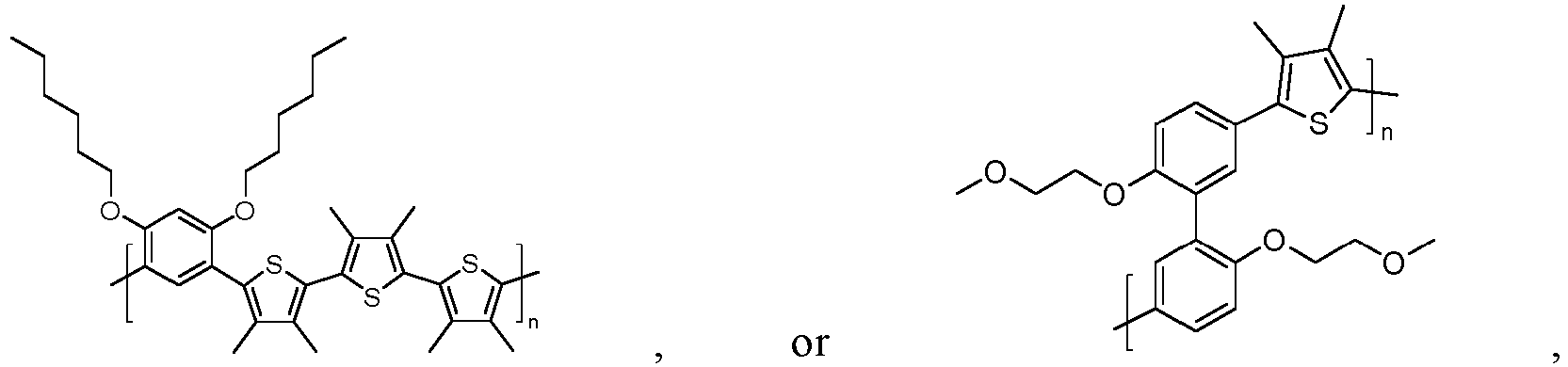
- In some embodiments, the disclosed electrochromic polymers comprise a formula of







- Certain features of various embodiments of the present technology are set forth with particularity in the appended claims. A better understanding of the features and advantages of the technology will be obtained by reference to the following detailed description that sets forth illustrative embodiments, in which the principles of the invention are utilized, and the accompanying drawings below. For the purpose of illustrating the invention, the drawings show aspects of one or more embodiments of the invention. However, it should be understood that the present invention is not limited to the precise arrangements and instrumentalities shown in the drawings.
-
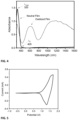
FIGS. 1(A)-(B) are diagrams representing the different color changing mechanisms of the disclosed ECP (FIG. 1(A) ) compared to conventional ECP (FIG. 1(B) ). -
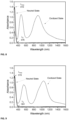
FIG. 2 is the CV data of an exemplary solid-state device using an example ECP-1, according to one embodiment. -
FIG. 3 is the switching kinetics of the exemplary solid-state device using the example ECP-1 at 545 nm, according to one embodiment. -
FIG. 4 are the absorbance spectra of the exemplary ECP-1 thin film at different voltages, according to one embodiment. -
FIG. 5 is the CV data of an exemplary solid-state device using another example ECP-2, according to one embodiment. -
FIG. 6 is the switching kinetics of the exemplary solid-state device using the example ECP-2 at 550nm, according to one embodiment. -
FIG. 7 are the absorbance spectra of the exemplary ECP-2 thin film at different voltages, according to one embodiment. -
FIG. 8 are the absorbance spectra of the exemplary ECP-6 solution 0.1 mg/mL in dichloromethane at different voltages, according to one embodiment. -
FIG. 9 are the absorbance spectra of the exemplary ECP-7 solution 0.1 mg/mL in dichloromethane at different voltages, according to one embodiment. - In the following description, certain specific details are set forth in order to provide a thorough understanding of various embodiments of the invention. However, one skilled in the art will understand that the invention may be practiced without these details. Moreover, while various embodiments of the invention are disclosed herein, many adaptations and modifications may be made within the scope of the invention in accordance with the common general knowledge of those skilled in this art. Such modifications include the substitution of known equivalents for any aspect of the invention in order to achieve the same result in substantially the same way.
- Unless the context requires otherwise, throughout the present specification and claims, the word "comprise" and variations thereof, such as "comprises" and "comprising" are to be construed in an open, inclusive sense, that is as "including, but not limited to." Recitation of numeric ranges of values throughout the specification is intended to serve as a shorthand notation of referring individually to each separate value falling within the range inclusive of the values defining the range, and each separate value is incorporated in the specification as it was individually recited herein. Additionally, the singular forms "a" "an", and "the" include plural referents unless the context clearly dictates otherwise.
- Reference throughout this specification to "one embodiment" or "an embodiment" means that a particular feature, structure, or characteristic described in connection with the embodiment is included in at least one embodiment of the present invention. Thus, the appearances of the phrases "in one embodiment" or "in an embodiment" in various places throughout this specification are not necessarily all referring to the same embodiment, but maybe in some instances. Furthermore, the particular features, structures, or characteristics may be combined in any suitable manner in one or more embodiments.
- The present disclosure is related to a new type of electrochromic polymers. The electrochromic polymer disclosed in this application consists of a polymer backbone comprising one or more meta-conjugated linkers (MCLs) and one or more aromatic moieties (Ars). Each of the one or more MCLs is partially conjugated with the one or more Ars at meta positions of the one or more MCLs to form the polymer backbone of an electrochromic polymer. In some embodiments, the electrochromic polymer disclosed in this application consists of a repeat unit comprising one or more MCLs and one or more Ars, where meta-conjugation is introduced along the polymer backbone through the use of the MCLs. In some embodiments, the electrochromic polymer is anodically-coloring electrochromic polymer (AC-ECP), becoming colored when it is oxidized.
- As illustrated in
FIG. 1 , conventional conjugated ECPs (FIG. 1(B) ) are fully conjugated and have strong absorbance in the visible light region and are thus colored in their neutral state, while when oxidized (oxidized state), their absorption is shifted toward near-IR region and they become transmissive. However, the oxidized polymers still have weak absorption in the visible light region, leading to residue colors. On the other hand, as illustrated for one example disclosed ECP inFIG. 1(A) , the ECP exhibits substantially no absorption after 450 nm in the neutral state and has several absorption peaks in visible light range and the near infrared range in the oxidized state, demonstrating coloring in the visible light range and near-infrared absorbing. - The disclosed electrochromic polymers allows passing or blocking of visible light and near-IR light to be synchronized, which is in one embodiment very useful in an electrochromic window for the management of solar heat gain. The disclosed electrochromic polymers are transparent in the neutral state, and are colored and IR-absorbing in the oxidized state, which are highly desired in order to achieve a high optical contrast, a high transmittance and a synergistic solar-heat gain.
- The disclosed electrochromic polymers are transparent in the visible light region in the neutral state and are colored in the oxidized state. For example, the disclosed electrochromic polymers may have a transmittance of at least 60% in the visible light range (e.g., 450-750 nm) in the neutral state. In some embodiments, the disclosed electrochromic polymers may have a transmittance of at least 65%, 70%, 75%, 80%, 85%, 90%, 92%, 95%, 98%, or above in the range of 450-750 nm in the neutral state. In some embodiments, the disclosed electrochromic polymers are transparent in the visible light range in the neutral state. In the oxidized state, the disclosed electrochromic polymers have absorption in the visible light range (e.g., about 360 to 750 nm) and the near-IR range (e.g., about 750 to 1600 nanometers), thereby being colored and near-infrared absorbing.
- The disclosed electrochromic polymer has UV absorption and energy bandgap. An energy bandgap is the energy difference between the valence band of electrons and the conduction band. It is the minimum change in energy required to excite an electron up to a state in the conduction band where it can participate in conduction. Absorption onset () is the wavelength at higher than which the polymer has no photon absorption. The energy bandgap can be calculated as 1240/wavelength of absorption onset. In some embodiments, the electrochromic polymers disclosed in this application have an absorption onset at equal to or less than 450 nm in the neutral state. In some embodiments, the disclosed electrochromic polymer has an absorption onset at equal to or less than 440 nm, 430 nm, 420nm, 410nm, 405nm, or 400 nm in the neutral state. In some embodiments, the absorption maxima (
 , the wavelength at which the polymer has its strongest photon absorption) are less than 420 nm in the neutral state. In some embodiments, the absorption maxima are less than 410 nm or 405 nm or 400 nm in the neutral state. In some embodiments, the disclosed electrochromic polymer has an energy bandgap equal to or higher than 2.8 eV and less than 4.0 eV in the neutral state. In some embodiments, the disclosed electrochromic polymer has an energy bandgap equal to or higher than 2.9, 3.0 or 3.1 eV and less than 4.0 eV in the neutral state. In some embodiments, the disclosed electrochromic polymer is colorless (e.g., no absorbance in 400-750 nm or 410-750 nm or 420-750 nm) or yellow (e.g., tailing absorption in 400-500 nm, or 410-500nm, or 420-500 nm or 400-480 nm, or 410-480 nm, or 420-480 nm or 400-450 nm, or 410-450 nm or 420-450 nm) in the neutral state and is colored and visible and near-IR absorbing in the oxidized state. The oxidized electrochromic polymer has an absorption coefficient larger than 104 cm-1 in the visible and/or near-IR region and thus colored in the oxidized state.
- Due to substantial lack of absorbance in the visible light range in the neutral state and high absorbance in the visible light range in the oxidized state, the disclosed electrochromic polymers demonstrate high optical contrast and high optical transmittance when comparing with conventional ECPs. In spite of their high bandgaps, the disclosed electrochromic polymers have relatively low oxidation potential in the ranges of 0.1-1.5 V inclusive versus Ag/AgCl electrode in some embodiments. In some embodiments, the disclosed electrochromic polymers have low oxidation potential in the ranges of 0.1-1 V inclusive versus Ag/AgCl electrode. The relatively low oxidation potential can benefit cycling durability of ECPs. Thus, the disclosed electrochromic polymers can be successfully incorporated into a device with a good cycling stability/reliability and a high optical contrast.
- The MCL comprises at least one of an aromatic structure, or a fused aromatic structure, or the combinations thereof. The aromatic structure comprises a benzene or heterocyclic structure. The fused aromatic structure comprises a fused benzene structure or a fused heterocyclic structures or a fused benzene and heterocyclic structure. In some embodiments, the MCL comprises at least one of benzene, or naphthalene, or five-membered heterocycle, or benzene fused five-membered heterocycle, or a combination of these structures. Side chains or aromatic side chains can also be introduced onto the MCL to adjust its performance, for example, solubility or processibility or stability.
- In some embodiments, the one or more MCLs and the one or more Ars are arranged in an alternative or random fashion with a general formula of

- Meta-conjugation is introduced in the polymer backbone through the use of the one or more MCLs. Each of the one or more MCLs is partially conjugated in the polymer backbone by connecting with the one or more Ars through its meta-positions. For example, the meta-positions are two positions of the aromatic structure or a fused aromatic structure of the MCLs. When the meta-positions are connected, the pi electrons from an aromatic structure or a fused aromatic structure cannot be fully delocalized to another adjacently-connected unit through p-orbitals.
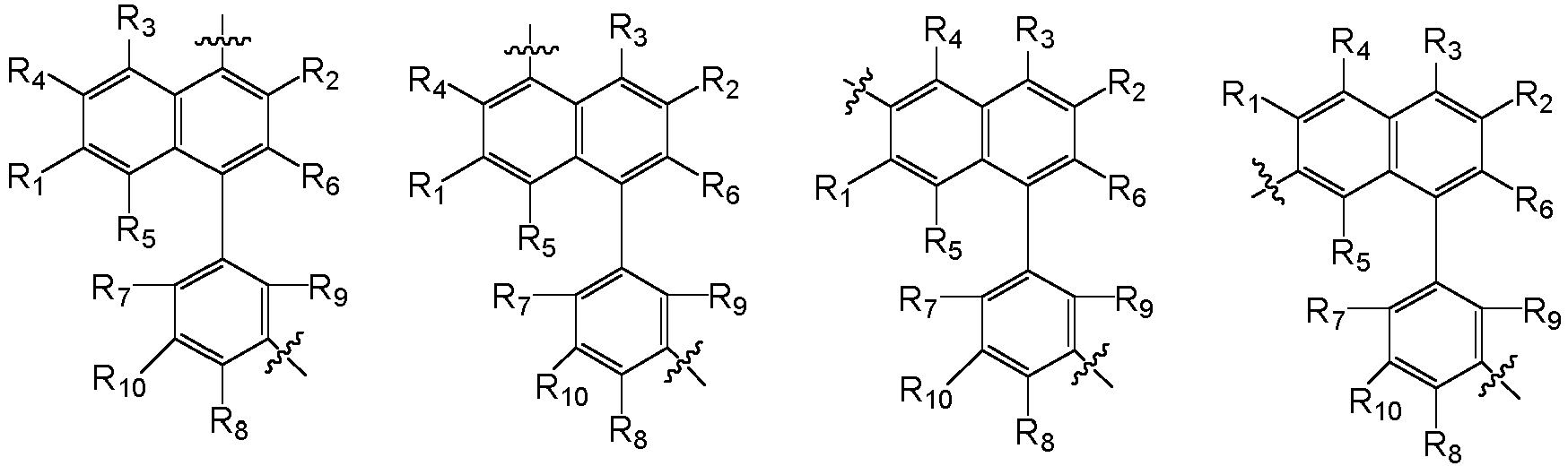
- In some embodiments, an aromatic structure of the MCLs comprises a benzene structure or a five-membered heterocyclic structure, and the aromatic structure of the MCLs is substituted at meta-positions, which are the 1- and 3- positions on the aromatic structure. In some embodiments, a fused aromatic structure of the MCLs comprises naphthalene, and the fused aromatic structure is substituted at meta-positions, which are the 1- and 3-, or 1- and 4-, or 1- and 6- positions on naphthalene. In some embodiments, a fused aromatic structure of the MCLs comprises benzene fused with a five-membered heterocycle, and the fused aromatic structure is substituted at meta-positions, which are the 1- and 3-, or 1- and 5- positions on the benzene fused heterocycle.
- Structures of the one or more MCLs and corresponding meta-positions include one of the following:





- The one or more Ars include any one of a thiophene-based unit, a furan-based unit, a selenophene-based unit, or a pyrrole-based unit with a formula of

- An example thiophene-based unit may include, but is not limited to, the formula of




- In some embodiments, the X in the thiophene-based unit is O.
- By introducing meta-conjugation into the electrochromic polymer backbone, the electronic conjugation along the polymer backbone is interrupted and leads to a high bandgap (>2.0 eV). Thus, the disclosed electrochromic polymer appears highly transmissive (or even transparent) in the neutral state. Oxidation of the ECP results in a lower bandgap (<1.5 eV), and the absorbance of the polymer is red-shifted from UV region to visible and near-IR region. Thus, the polymer becomes highly colored.
- The one or more Ars might include one or more aromatic structures or fused aromatic structures. By controlling the types and amounts of the Ars, the redox potentials of the disclosed electrochromic polymer can be easily tuned while maintaining its high transparency within the visible light range in the neutral state. For example, more electron-rich units (e.g., dioxythiophenes) can be introduced onto the backbone to make the polymer more favorable to be oxidized, thereby decreasing its onset potential and improving its electrochemical stability and electrochromic cycling stability. The redox potentials of the disclosed electrochromic polymer can also be adjusted by varying substituents on MCLs (e.g., introducing alkoxy side chains).
- The disclosed electrochromic polymers can be dissolved in a solvent, for example, toluene or p-xylene, which can be used for solution-processable film casting processes. By controlling the concentration of the polymer solution, a polymer thin film with a controllable thickness can be obtained. Furthermore, the excellent solubility makes the disclosed electrochromic polymers compatible with various casting methods, for example, spin-coating, spray-coating, and drop-casting. Manufacturing friendly process makes its extended applications feasible.
- Examples are shown in the following.
- In some embodiments, the disclosed ECP-1 has a formula of

- The ECP-1 is synthesized by preparing a carbazole-containing reaction unit and then polymerizing it with a dimer unit. The detail method includes the following steps:
-

- 3,6-Dibromocarbazole is dissolved in DMF. Subsequently, 1.2 eq of NaH is added, and the mixture is stirred for 2 hours. Then 1.2 eq compound 1 is added into the reaction , and the mixture is stirred overnight. After that water is added into the reaction to precipitate out the solid. The suspension is filtered to get the desired
product compound 2 as a white solid. -

- Compound 2 (1 eq), compound 3 (1 eq), K2CO3 (2.6 eq), PivOH(0.3 eq), Pd(OAc)2, (0.02 eq) are added into a Schenk tube. Then vacuum(3-5min) and refill the tube with nitrogen. Repeat this procedure for three times. Subsequently, nitrogen degassed solvent Dimethylacetamide (DMAc) is added, and the mixture is heated to 120°C and last for 14 hours. Then the mixture is poured into methanol to precipitate out the crude polymer solid. Filter to get the solid and re-dissolve the solid into chloroform and wash with water for three times. The chloroform solution is added into large amount of methanol and precipitate out the polymer. The suspension is filtered to get the desired product polymer ECP-1.
- The obtained ECP-1 has an oxidation potential of around 0.75 V (vs. Ag/AgCl) and an energy bandgap of higher than 3.0 eV. The ECP-1 is fabricated into a solid-state ECD with ECP-1 used as the electrochromic layer, 0.2M of LiTFSI in PEGDA as the electrolyte, and VOx as the ion storage layer. The solid-state ECD can be stably switched between -0.5 V to 1.5 V (
FIG. 2 ). The neutral state and oxidized absorbance spectra of the ECP-1 are shown inFIG. 4 withof 405 nm and of 320 nm. The solid-state ECD shows a high transparency with transmittance as high as 93% in the neutral state (
FIG. 3 ), and switches to a bright blue color when ECP-1 is oxidized with one absorption peak at about 614 nm and another boarder absorption band at the near-IR region, around 900-1100 nm (FIG. 4 ). The optical contrast of the solid-state ECD is about 75% (FIG. 3 ). - In some embodiments, the disclosed ECP-2 has a formula of

- The ECP-2 is synthesized by first preparing a substituted benzene reaction unit and then polymerizing it with an acyclic dioxythiophene (AcDOT) unit. The detail method includes the following steps:
-

- Compound 5 and p-toluenesulfonic acid are dissolved in acetonitrile. Subsequently, N-bromosuccinimide is added, and the mixture is agitated overnight. The suspension is filtered to get the desired product. The product compound 6 is a white solid.

- Compound 6 is dissolved in DMF under N2. K2CO3 is added to the solution, and the reaction mixture is stirred for 15 mins, after which 2-ethylhexyl bromide is added. The reaction mixture is stirred at 1000C overnight. The reaction is stopped and cooled down to room temperature. The solvent is removed in vacuum, and the residue is dissolved in diethyl ether. The organic phase is washed with water, and the aqueous phases are extracted with ethyl acetate. The combined organic phases are dried, and the volatiles is removed by vacuum. The crude is passed through a small silica column, and the solvent is dried in vacuum to get the compound 4 as a yellow oil..
- Step 2-2: polymerization: The polymerization method is similar to that in step 1-2 with the reaction units of the substituted benzene reaction unit (compound 4) and AcDOT (compound 8) with a structure of

- The obtained ECP-2 has a oxidation potential around 0.95 V (vs. Ag/AgCl) and an energy bandgap higher than 3.1 eV. The ECP-2 is fabricated into a solid-state ECD with ECP-2 used as the electrochromic layer, 1M of LiPF6 in PEGMEA as the electrolyte, and VOx as the ion storage layer. The solid-state ECD can be stably switched between -0.6 V to 1.7 V (
FIG. 5 ). The neutral state and oxidized state absorbance spectra of the ECP-2 are shown inFIG. 7 withof 410 nm and of 350 nm. The solid-state ECD shows high transparency with transmittance as high as 94% at neutral state at 550 nm (
FIG. 6 ), and switches to bright red color when ECP-2 is oxidized with one absorption peak at around 546 nm and another broader absorption band at the wavelength around 800-1100 nm (FIG. 7 ). The optical contrast of the solid-state ECD is 87% (FIG. 6 ). - In some embodiments, the disclosed ECP-3 has a formula of

- ECP-3 is synthesized by preparing a benzene-containing reaction unit and polymerizing it with a ProDot unit. The detail method includes the following steps:
- Step 3-2: polymerization: The polymerization method is similar to that in step 1-2 with the different reaction units of benzene-containing reaction unit (compound 4) and 3, 4-Ethylenedioxythiophene (EDOT, compound 9) with a structure of

- In some embodiments, the disclosed ECP-4 has a formula of

- The ECP-4 is synthesized by preparing a naphthalene-containing reaction unit and then polymerizing it with an AcDOT unit. The detail method includes the following steps:
-

- To a solution of compound 11 in dichloromethane was added dropwise a solution of bromine in dichloromethane over 15 minutes at -78°C. The reaction mixture is stirred for 2 hours at -780C and then warmed gradually to room temperature and stay at room temperature for an additional 2 hours. The excess bromine was quenched by saturated aqueous sodium sulfite solution and stirred for 2 hours at room temperature. After extraction with dichloromethane, the combined organic layer was washed with brine, dried over sodium sulfate, and concentrated in vacuum.

- Compound 12 is dissolved in DMF under N2, K2CO3 is added to the solution, and the reaction mixture is stirred for 15 minutes, after which 2-ethylexyl bromide is added. The reaction mixture is stirred at 1000C overnight. The reaction is stopped and cooled down to room temperature. The solvent is removed in vacuum, and the residue is dissolved in diethyl ether. The organic phase is washed with water, and the aqueous phases are extracted with ethyl acetate. The combined organic phases are dried by vacuum.
- Step 4-2: polymerization: The polymerization method is similar to that in step 1-2 with the different reaction units of the naphthalene-containing reaction unit (compound 10) and AcDOT (compound 8).
- In some embodiments, the disclosed ECP-5 has a formula of

- The ECP-5 is synthesized by a similar polymerization method to that in step 1-2 with the different reaction units of 1,5-dibromo-2,4-bis(hexyloxy)benzene and 3,4-dimethylthiophene.
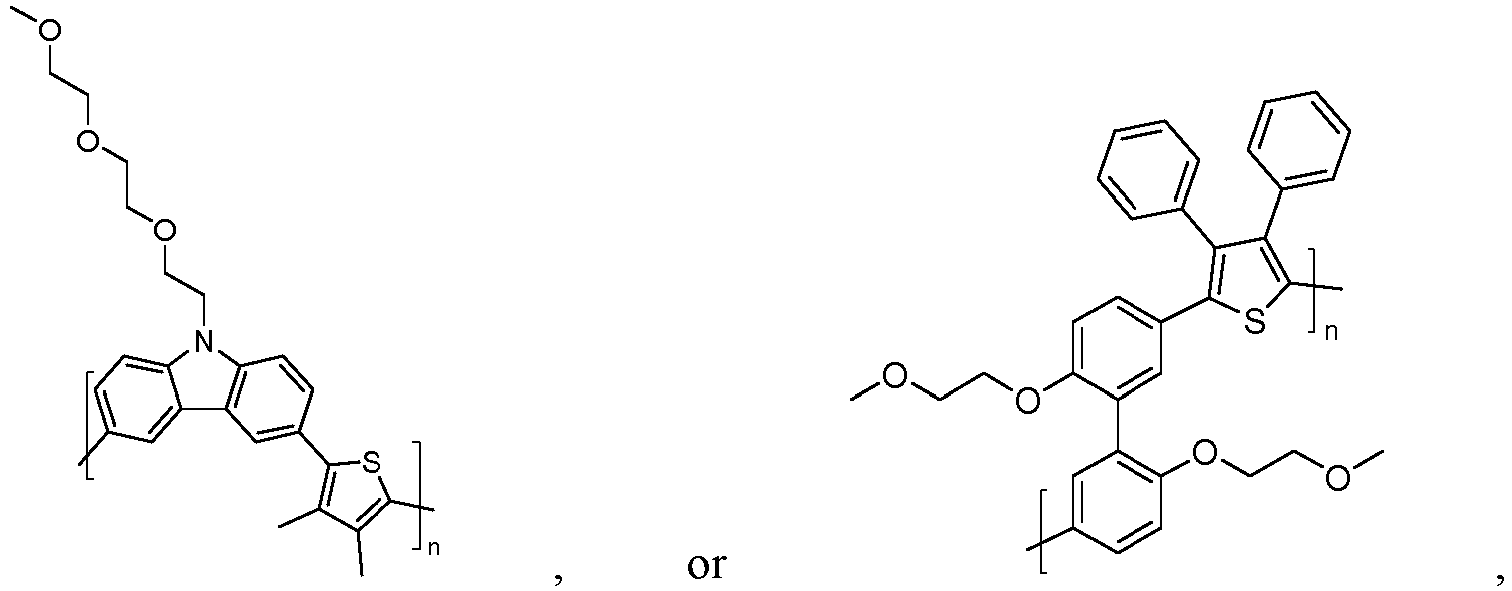
- In some embodiments, the disclosed ECP has a formula of


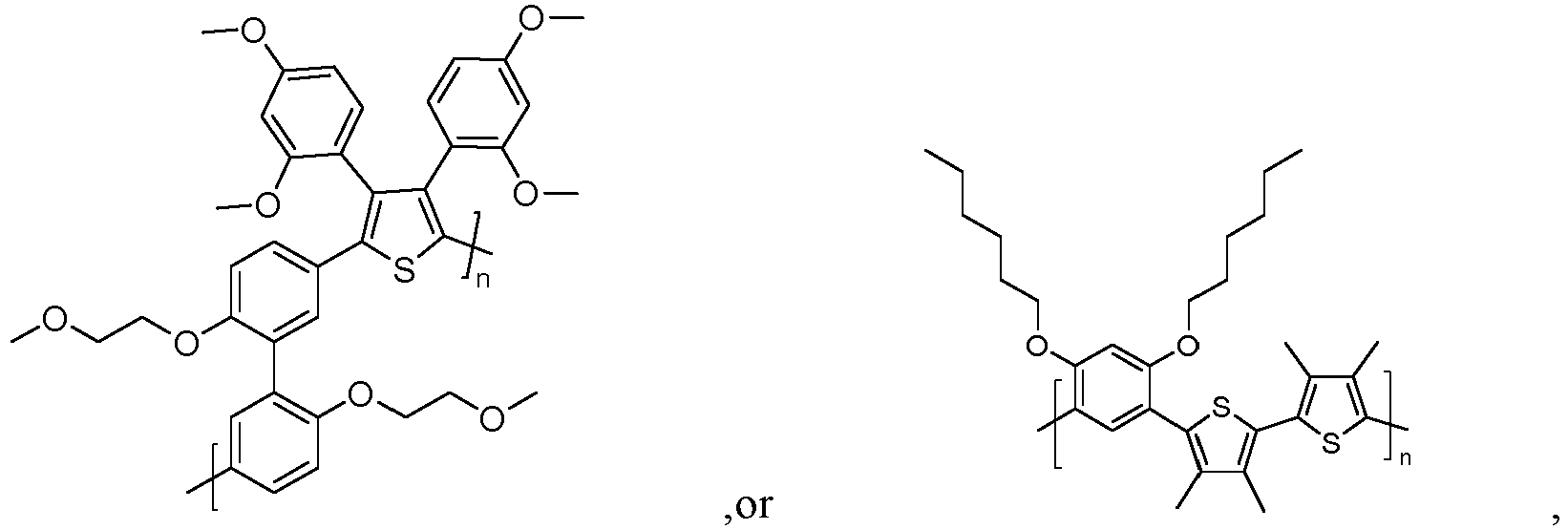


- In some embodiments, the disclosed ECP has an absorption onset less than 400nm. In one embodiment, the ECP-6 solution with the formula of
 of 376 nm as shown in
FIG. 8 . In one embodiment, the ECP-7 solution with the formula of of 391 nm as shown in
FIG. 9 . Both ECP-6 and ECP-7 were made into thin films and presented similar absorption spectra as the ones in solution. - In another aspect, the disclosed polymers can have fluorescent emission and can be applied to fluorescent products.
- The foregoing description of the present disclosure has been provided for the purposes of illustration and description. It is not intended to be exhaustive or to limit the disclosure to the precise forms disclosed. The breadth and scope of the present disclosure should not be limited by any of the above-described exemplary embodiments. Many modifications and variations will be apparent to the practitioner skilled in the art. The embodiments were chosen and described in order to best explain the principles of the disclosure and its practical application, thereby enabling others skilled in the art to understand the disclosure for various embodiments and with various modifications that are suited to the particular use contemplated. It is intended that the scope of the disclosure be defined by the following claims.
Claims (9)
- An electrochromic polymer, comprising :
a repeat unit comprising one or more meta-conjugated linkers (MCLs) and one or more aromatic moieties (Ars),wherein each of the one or more MCLs is partially conjugated with the one or more Ars at meta positions of the one or more MCLs to form a polymer backbone of the electrochromic polymer,wherein each of the one or more MCLs and corresponding meta positions comprise one of the following formulas:


 wherein each of the one or more Ars comprises one of a thiophene-based unit, a furan-based unit, a selenophene-based unit, or a pyrrole-based unit with one of the following formulas:
 wherein the electrochromic polymer is colorless in the neutral state, or wherein the electrochromic polymer has an absorption onset equal to or smaller than 420 nm in a neutral state.
 - The electrochromic polymer of claim 1, wherein the electrochromic polymer has an absorption maximum () smaller than 410 nm in the neutral state.

- The electrochromic polymer of claim 1, wherein the electrochromic polymer has absorption in visible and/or near-infrared wavelengths in an oxidized state.
- The electrochromic polymer of claim 4, wherein the electrochromic polymer has an absorption coefficient larger than 104 cm-1 in the oxidized state.
- The electrochromic polymer of claim 1, wherein the electrochromic polymer has an oxidation potential in the ranges of 0.1-1.5 V inclusive versus Ag/AgCl electrode.
- The electrochromic polymer of claim 1, wherein the one or more MCLs and the one or more Ars are arranged in an alternative fashion with a formula of

- The electrochromic polymer of claim 1, wherein each of the one or more Ars comprises a thiophene-based unit, wherein the thiophene-based unit comprises one of the following formulas:


- The electrochromic polymer of claim 7, wherein X in the thiophene-based unit is O.
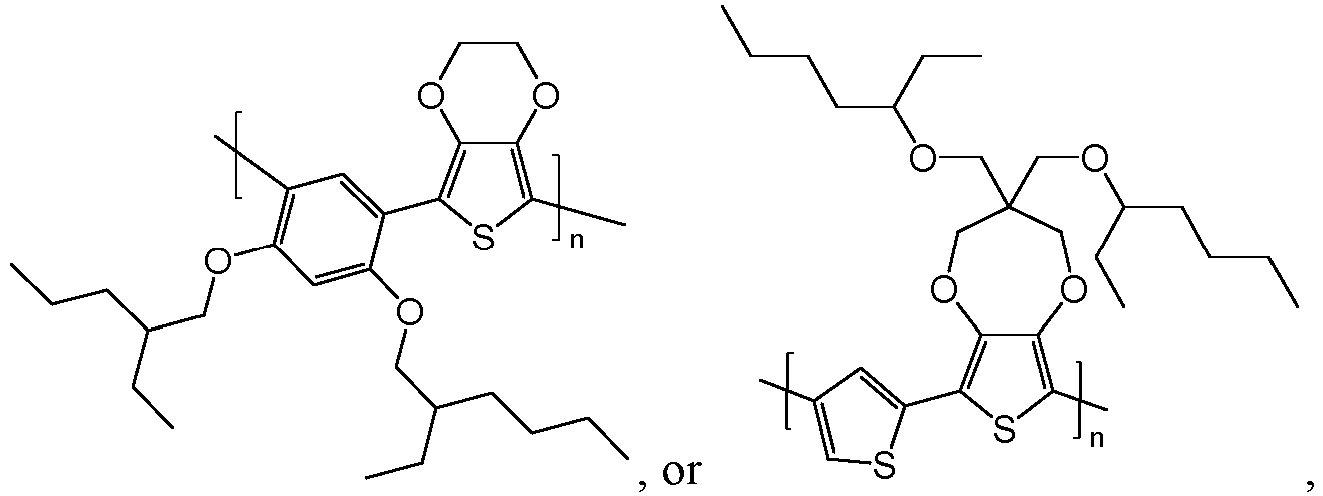
- The electrochromic polymer of claim 1, wherein the electrochromic polymer comprises a formula of:




Priority Applications (1)
| Application Number | Priority Date | Filing Date | Title |
|---|---|---|---|
| EP25186661.2A EP4654806A3 (en) | 2022-02-09 | 2023-02-08 | High transparency electrochromic polymers |
Applications Claiming Priority (3)
| Application Number | Priority Date | Filing Date | Title |
|---|---|---|---|
| US17/668,300 US11879098B2 (en) | 2022-02-09 | 2022-02-09 | High transparency electrochromic polymers |
| US17/748,383 US11874578B2 (en) | 2022-02-09 | 2022-05-19 | High transparency electrochromic polymers |
| US18/093,287 US20230250223A1 (en) | 2022-02-09 | 2023-01-04 | High transparency electrochromic polymers |
Related Child Applications (1)
| Application Number | Title | Priority Date | Filing Date |
|---|---|---|---|
| EP25186661.2A Division EP4654806A3 (en) | 2022-02-09 | 2023-02-08 | High transparency electrochromic polymers |
Publications (4)
| Publication Number | Publication Date |
|---|---|
| EP4239035A2 EP4239035A2 (en) | 2023-09-06 |
| EP4239035A3 EP4239035A3 (en) | 2023-09-20 |
| EP4239035B1 true EP4239035B1 (en) | 2025-07-02 |
| EP4239035C0 EP4239035C0 (en) | 2025-07-02 |
Family
ID=85202030
Family Applications (2)
| Application Number | Title | Priority Date | Filing Date |
|---|---|---|---|
| EP23155676.2A Active EP4239035B1 (en) | 2022-02-09 | 2023-02-08 | High transparency electrochromic polymers |
| EP25186661.2A Pending EP4654806A3 (en) | 2022-02-09 | 2023-02-08 | High transparency electrochromic polymers |
Family Applications After (1)
| Application Number | Title | Priority Date | Filing Date |
|---|---|---|---|
| EP25186661.2A Pending EP4654806A3 (en) | 2022-02-09 | 2023-02-08 | High transparency electrochromic polymers |
Country Status (6)
| Country | Link |
|---|---|
| US (1) | US20230250223A1 (en) |
| EP (2) | EP4239035B1 (en) |
| JP (1) | JP2023116422A (en) |
| KR (1) | KR20230120599A (en) |
| CN (1) | CN115975158A (en) |
| ES (1) | ES3036064T3 (en) |
Families Citing this family (2)
| Publication number | Priority date | Publication date | Assignee | Title |
|---|---|---|---|---|
| US12529932B2 (en) * | 2022-02-09 | 2026-01-20 | Ambilight Inc | High transparency electrochromic polymers |
| EP4715024A1 (en) * | 2024-09-20 | 2026-03-25 | Ambilight Inc | High transparency electrochromic polymers |
Family Cites Families (5)
| Publication number | Priority date | Publication date | Assignee | Title |
|---|---|---|---|---|
| BR112013010583A2 (en) * | 2010-10-28 | 2016-08-09 | Univ Florida | cathodically soluble yellow light-emitting and electrochromic polymers |
| JP2012181437A (en) * | 2011-03-02 | 2012-09-20 | Canon Inc | Novel organic polymer compound and electrochromic element including the same |
| CN110092891B (en) * | 2019-05-09 | 2022-05-10 | 北京大学深圳研究生院 | Thienothiophene electrochromic polymer and preparation method thereof |
| CN112126043B (en) * | 2020-08-14 | 2023-06-27 | 浙江工业大学 | Soluble electrochromic polymer taking tetrathiofuran as color-changing main body, and preparation and application thereof |
| US11874578B2 (en) * | 2022-02-09 | 2024-01-16 | Ambilight Inc. | High transparency electrochromic polymers |
-
2023
- 2023-01-04 US US18/093,287 patent/US20230250223A1/en active Pending
- 2023-02-08 ES ES23155676T patent/ES3036064T3/en active Active
- 2023-02-08 EP EP23155676.2A patent/EP4239035B1/en active Active
- 2023-02-08 JP JP2023017747A patent/JP2023116422A/en active Pending
- 2023-02-08 KR KR1020230016985A patent/KR20230120599A/en active Pending
- 2023-02-08 CN CN202310083647.4A patent/CN115975158A/en active Pending
- 2023-02-08 EP EP25186661.2A patent/EP4654806A3/en active Pending
Also Published As
| Publication number | Publication date |
|---|---|
| JP2023116422A (en) | 2023-08-22 |
| EP4654806A2 (en) | 2025-11-26 |
| EP4654806A3 (en) | 2026-01-14 |
| ES3036064T3 (en) | 2025-09-12 |
| EP4239035C0 (en) | 2025-07-02 |
| EP4239035A3 (en) | 2023-09-20 |
| EP4239035A2 (en) | 2023-09-06 |
| US20230250223A1 (en) | 2023-08-10 |
| CN115975158A (en) | 2023-04-18 |
| KR20230120599A (en) | 2023-08-17 |
Similar Documents
| Publication | Publication Date | Title |
|---|---|---|
| He et al. | Low bandgap conjugated polymers based on a nature-inspired bay-annulated indigo (BAI) acceptor as stable electrochromic materials | |
| Privado et al. | Influence of the dipole moment on the photovoltaic performance of polymer solar cells employing non-fullerene small molecule acceptor | |
| EP4654806A2 (en) | High transparency electrochromic polymers | |
| US11874578B2 (en) | High transparency electrochromic polymers | |
| WO2007017066A1 (en) | Electroluminescent polymers and use thereof | |
| Chang et al. | Multifunctional quinoxaline containing small molecules with multiple electron-donating moieties: Solvatochromic and optoelectronic properties | |
| Badawy et al. | Advancements in metal-free organic dyes: Achieving over 10% efficiency in DSSCs | |
| Yano et al. | Near-infrared absorption of a benzothiophene-appended triphenylamine radical cation: A novel molecular design of NIR-II dye | |
| Wang et al. | Electropolymerization of V-shape DAD type monomers for efficient and tunable electrochromics | |
| Yafei et al. | Synthesis and electrochromic properties of soluble 4, 9-dihydro-s-indaceno [1, 2-b: 5, 6-b'] dithiophene-embedded conjugated polymers and their applications on preparing green-to-transmissive electrochromics via solution co-processing | |
| Kuai et al. | Self-assembled flexible metallo-supramolecular film based on Fe (II) ion and triphenylamine-subsituted alkyl terpyridine towards electrochromic application | |
| Zhao et al. | Yellow-transmissive blue electrochromic polymers based on triphenylamine and ProDOT derivatives | |
| Unver et al. | Effect of conjugated core building block dibenzo [a, c] phenazine unit on π‐conjugated electrochromic polymers: Red‐shifted absorption | |
| Pan et al. | Molecular engineering of colorless triphenylamine-based polymers for multicolor electrochromism and energy storage | |
| Shah et al. | Fluorene substituted thieno [3, 2-b] thiophene–a new electrochromic conjugated polymer | |
| KR102093470B1 (en) | Novel compound and organic electronic device using them | |
| EP4407012A2 (en) | High transparency electrochromic polymers | |
| Idzik et al. | Development of structural characterization and physicochemical behaviour of triphenylamine blocks | |
| Bagde et al. | Diketopyrrolopyrrole-based narrow band gap donors for efficient solution-processed organic solar cells | |
| US11879098B2 (en) | High transparency electrochromic polymers | |
| Tejeda-Orusco et al. | 4H-pyranylidene-based small push-pull chromophores: Synthesis, structure, electronic properties and photovoltaic evaluation | |
| EP3977530B1 (en) | Bispyranilidenes, dithiobispyranilidenes and diselenobispyranilidene and use thereof | |
| Brzeczek et al. | Synthesis and characterization of 1, 3, 5-triphenylamine derivatives with star-shaped architecture | |
| Zou et al. | Synthesis, Electrochemical and Photovoltaic Properties of Multi‐Armed Polythiophenes with Triphenylamine Trivinylene as Conjugated Linker | |
| EP4715024A1 (en) | High transparency electrochromic polymers |
Legal Events
| Date | Code | Title | Description |
|---|---|---|---|
| PUAI | Public reference made under article 153(3) epc to a published international application that has entered the european phase |
Free format text: ORIGINAL CODE: 0009012 |
|
| STAA | Information on the status of an ep patent application or granted ep patent |
Free format text: STATUS: REQUEST FOR EXAMINATION WAS MADE |
|
| PUAL | Search report despatched |
Free format text: ORIGINAL CODE: 0009013 |
|
| 17P | Request for examination filed |
Effective date: 20230208 |
|
| AK | Designated contracting states |
Kind code of ref document: A2 Designated state(s): AL AT BE BG CH CY CZ DE DK EE ES FI FR GB GR HR HU IE IS IT LI LT LU LV MC ME MK MT NL NO PL PT RO RS SE SI SK SM TR |
|
| AK | Designated contracting states |
Kind code of ref document: A3 Designated state(s): AL AT BE BG CH CY CZ DE DK EE ES FI FR GB GR HR HU IE IS IT LI LT LU LV MC ME MK MT NL NO PL PT RO RS SE SI SK SM TR |
|
| RIC1 | Information provided on ipc code assigned before grant |
Ipc: H10K 85/10 20230101ALI20230817BHEP Ipc: C08L 65/00 20060101ALI20230817BHEP Ipc: G02F 1/1516 20190101ALI20230817BHEP Ipc: C08G 61/12 20060101ALI20230817BHEP Ipc: C09K 9/02 20060101AFI20230817BHEP |
|
| P01 | Opt-out of the competence of the unified patent court (upc) registered |
Effective date: 20230907 |
|
| RIN1 | Information on inventor provided before grant (corrected) |
Inventor name: YOU, LIYAN Inventor name: WANG, ZHIYANG Inventor name: PANDIT, VAIDEHI Inventor name: MEI, JIANGUO |
|
| GRAP | Despatch of communication of intention to grant a patent |
Free format text: ORIGINAL CODE: EPIDOSNIGR1 |
|
| STAA | Information on the status of an ep patent application or granted ep patent |
Free format text: STATUS: GRANT OF PATENT IS INTENDED |
|
| RIC1 | Information provided on ipc code assigned before grant |
Ipc: H10K 85/10 20230101ALI20240625BHEP Ipc: C09D 165/00 20060101ALI20240625BHEP Ipc: C08L 65/00 20060101ALI20240625BHEP Ipc: G02F 1/1516 20190101ALI20240625BHEP Ipc: C08G 61/12 20060101ALI20240625BHEP Ipc: C09K 9/02 20060101AFI20240625BHEP |
|
| GRAJ | Information related to disapproval of communication of intention to grant by the applicant or resumption of examination proceedings by the epo deleted |
Free format text: ORIGINAL CODE: EPIDOSDIGR1 |
|
| STAA | Information on the status of an ep patent application or granted ep patent |
Free format text: STATUS: REQUEST FOR EXAMINATION WAS MADE |
|
| INTG | Intention to grant announced |
Effective date: 20240729 |
|
| GRAP | Despatch of communication of intention to grant a patent |
Free format text: ORIGINAL CODE: EPIDOSNIGR1 |
|
| STAA | Information on the status of an ep patent application or granted ep patent |
Free format text: STATUS: GRANT OF PATENT IS INTENDED |
|
| INTC | Intention to grant announced (deleted) | ||
| INTG | Intention to grant announced |
Effective date: 20240906 |
|
| GRAJ | Information related to disapproval of communication of intention to grant by the applicant or resumption of examination proceedings by the epo deleted |
Free format text: ORIGINAL CODE: EPIDOSDIGR1 |
|
| STAA | Information on the status of an ep patent application or granted ep patent |
Free format text: STATUS: REQUEST FOR EXAMINATION WAS MADE |
|
| GRAP | Despatch of communication of intention to grant a patent |
Free format text: ORIGINAL CODE: EPIDOSNIGR1 |
|
| STAA | Information on the status of an ep patent application or granted ep patent |
Free format text: STATUS: GRANT OF PATENT IS INTENDED |
|
| INTC | Intention to grant announced (deleted) | ||
| INTG | Intention to grant announced |
Effective date: 20250124 |
|
| RAP3 | Party data changed (applicant data changed or rights of an application transferred) |
Owner name: AMBILIGHT INC |
|
| GRAS | Grant fee paid |
Free format text: ORIGINAL CODE: EPIDOSNIGR3 |
|
| GRAA | (expected) grant |
Free format text: ORIGINAL CODE: 0009210 |
|
| STAA | Information on the status of an ep patent application or granted ep patent |
Free format text: STATUS: THE PATENT HAS BEEN GRANTED |
|
| AK | Designated contracting states |
Kind code of ref document: B1 Designated state(s): AL AT BE BG CH CY CZ DE DK EE ES FI FR GB GR HR HU IE IS IT LI LT LU LV MC ME MK MT NL NO PL PT RO RS SE SI SK SM TR |
|
| REG | Reference to a national code |
Ref country code: GB Ref legal event code: FG4D |
|
| REG | Reference to a national code |
Ref country code: CH Ref legal event code: EP |
|
| REG | Reference to a national code |
Ref country code: DE Ref legal event code: R096 Ref document number: 602023004375 Country of ref document: DE |
|
| REG | Reference to a national code |
Ref country code: IE Ref legal event code: FG4D |
|
| U01 | Request for unitary effect filed |
Effective date: 20250722 |
|
| U07 | Unitary effect registered |
Designated state(s): AT BE BG DE DK EE FI FR IT LT LU LV MT NL PT RO SE SI Effective date: 20250730 |
|
| REG | Reference to a national code |
Ref country code: ES Ref legal event code: FG2A Ref document number: 3036064 Country of ref document: ES Kind code of ref document: T3 Effective date: 20250912 |
|
| REG | Reference to a national code |
Ref country code: CH Ref legal event code: R17 Free format text: ST27 STATUS EVENT CODE: U-0-0-R10-R17 (AS PROVIDED BY THE NATIONAL OFFICE) Effective date: 20251119 |
|
| PG25 | Lapsed in a contracting state [announced via postgrant information from national office to epo] |
Ref country code: IS Free format text: LAPSE BECAUSE OF FAILURE TO SUBMIT A TRANSLATION OF THE DESCRIPTION OR TO PAY THE FEE WITHIN THE PRESCRIBED TIME-LIMIT Effective date: 20251102 |
|
| PG25 | Lapsed in a contracting state [announced via postgrant information from national office to epo] |
Ref country code: NO Free format text: LAPSE BECAUSE OF FAILURE TO SUBMIT A TRANSLATION OF THE DESCRIPTION OR TO PAY THE FEE WITHIN THE PRESCRIBED TIME-LIMIT Effective date: 20251002 |
|
| PG25 | Lapsed in a contracting state [announced via postgrant information from national office to epo] |
Ref country code: HR Free format text: LAPSE BECAUSE OF FAILURE TO SUBMIT A TRANSLATION OF THE DESCRIPTION OR TO PAY THE FEE WITHIN THE PRESCRIBED TIME-LIMIT Effective date: 20250702 |
|
| PG25 | Lapsed in a contracting state [announced via postgrant information from national office to epo] |
Ref country code: GR Free format text: LAPSE BECAUSE OF FAILURE TO SUBMIT A TRANSLATION OF THE DESCRIPTION OR TO PAY THE FEE WITHIN THE PRESCRIBED TIME-LIMIT Effective date: 20251003 |
|
| PG25 | Lapsed in a contracting state [announced via postgrant information from national office to epo] |
Ref country code: CZ Free format text: LAPSE BECAUSE OF FAILURE TO SUBMIT A TRANSLATION OF THE DESCRIPTION OR TO PAY THE FEE WITHIN THE PRESCRIBED TIME-LIMIT Effective date: 20250702 |
|
| PG25 | Lapsed in a contracting state [announced via postgrant information from national office to epo] |
Ref country code: PL Free format text: LAPSE BECAUSE OF FAILURE TO SUBMIT A TRANSLATION OF THE DESCRIPTION OR TO PAY THE FEE WITHIN THE PRESCRIBED TIME-LIMIT Effective date: 20250702 |
|
| PG25 | Lapsed in a contracting state [announced via postgrant information from national office to epo] |
Ref country code: RS Free format text: LAPSE BECAUSE OF FAILURE TO SUBMIT A TRANSLATION OF THE DESCRIPTION OR TO PAY THE FEE WITHIN THE PRESCRIBED TIME-LIMIT Effective date: 20251002 |
|
| REG | Reference to a national code |
Ref country code: CH Ref legal event code: U11 Free format text: ST27 STATUS EVENT CODE: U-0-0-U10-U11 (AS PROVIDED BY THE NATIONAL OFFICE) Effective date: 20260301 |
|
| PG25 | Lapsed in a contracting state [announced via postgrant information from national office to epo] |
Ref country code: SM Free format text: LAPSE BECAUSE OF FAILURE TO SUBMIT A TRANSLATION OF THE DESCRIPTION OR TO PAY THE FEE WITHIN THE PRESCRIBED TIME-LIMIT Effective date: 20250702 |
|
| U20 | Renewal fee for the european patent with unitary effect paid |
Year of fee payment: 4 Effective date: 20260227 |
|
| PGFP | Annual fee paid to national office [announced via postgrant information from national office to epo] |
Ref country code: ES Payment date: 20260302 Year of fee payment: 4 |
|
| PGFP | Annual fee paid to national office [announced via postgrant information from national office to epo] |
Ref country code: CH Payment date: 20260301 Year of fee payment: 4 |
|
| PG25 | Lapsed in a contracting state [announced via postgrant information from national office to epo] |
Ref country code: SK Free format text: LAPSE BECAUSE OF FAILURE TO SUBMIT A TRANSLATION OF THE DESCRIPTION OR TO PAY THE FEE WITHIN THE PRESCRIBED TIME-LIMIT Effective date: 20250702 |
|
| U1N | Appointed representative for the unitary patent procedure changed after the registration of the unitary effect |
Representative=s name: MARKS & CLERK LLP; GB |
|
| PLBE | No opposition filed within time limit |
Free format text: ORIGINAL CODE: 0009261 |
|
| STAA | Information on the status of an ep patent application or granted ep patent |
Free format text: STATUS: NO OPPOSITION FILED WITHIN TIME LIMIT |