EP4238936A1 - Solid electrolyte material, and battery using same - Google Patents
Solid electrolyte material, and battery using same Download PDFInfo
- Publication number
- EP4238936A1 EP4238936A1 EP21885684.7A EP21885684A EP4238936A1 EP 4238936 A1 EP4238936 A1 EP 4238936A1 EP 21885684 A EP21885684 A EP 21885684A EP 4238936 A1 EP4238936 A1 EP 4238936A1
- Authority
- EP
- European Patent Office
- Prior art keywords
- solid electrolyte
- electrolyte material
- molar ratio
- battery
- positive electrode
- Prior art date
- Legal status (The legal status is an assumption and is not a legal conclusion. Google has not performed a legal analysis and makes no representation as to the accuracy of the status listed.)
- Withdrawn
Links
Images


Classifications
-
- H—ELECTRICITY
- H01—ELECTRIC ELEMENTS
- H01B—CABLES; CONDUCTORS; INSULATORS; SELECTION OF MATERIALS FOR THEIR CONDUCTIVE, INSULATING OR DIELECTRIC PROPERTIES
- H01B1/00—Conductors or conductive bodies characterised by the conductive materials; Selection of materials as conductors
- H01B1/06—Conductors or conductive bodies characterised by the conductive materials; Selection of materials as conductors mainly consisting of other non-metallic substances
- H01B1/08—Conductors or conductive bodies characterised by the conductive materials; Selection of materials as conductors mainly consisting of other non-metallic substances oxides
-
- H—ELECTRICITY
- H01—ELECTRIC ELEMENTS
- H01M—PROCESSES OR MEANS, e.g. BATTERIES, FOR THE DIRECT CONVERSION OF CHEMICAL ENERGY INTO ELECTRICAL ENERGY
- H01M10/00—Secondary cells; Manufacture thereof
- H01M10/05—Accumulators with non-aqueous electrolyte
- H01M10/056—Accumulators with non-aqueous electrolyte characterised by the materials used as electrolytes, e.g. mixed inorganic/organic electrolytes
- H01M10/0561—Accumulators with non-aqueous electrolyte characterised by the materials used as electrolytes, e.g. mixed inorganic/organic electrolytes the electrolyte being constituted of inorganic materials only
- H01M10/0562—Solid materials
-
- C—CHEMISTRY; METALLURGY
- C01—INORGANIC CHEMISTRY
- C01G—COMPOUNDS CONTAINING METALS NOT COVERED BY SUBCLASSES C01D OR C01F
- C01G23/00—Compounds of titanium
- C01G23/002—Compounds containing titanium, with or without oxygen or hydrogen, and containing two or more other elements
-
- C—CHEMISTRY; METALLURGY
- C01—INORGANIC CHEMISTRY
- C01G—COMPOUNDS CONTAINING METALS NOT COVERED BY SUBCLASSES C01D OR C01F
- C01G25/00—Compounds of zirconium
- C01G25/006—Compounds containing zirconium, with or without oxygen or hydrogen, and containing two or more other elements
-
- C—CHEMISTRY; METALLURGY
- C01—INORGANIC CHEMISTRY
- C01G—COMPOUNDS CONTAINING METALS NOT COVERED BY SUBCLASSES C01D OR C01F
- C01G27/00—Compounds of hafnium
- C01G27/006—Compounds containing hafnium, with or without oxygen or hydrogen, and containing two or more other elements
-
- H—ELECTRICITY
- H01—ELECTRIC ELEMENTS
- H01M—PROCESSES OR MEANS, e.g. BATTERIES, FOR THE DIRECT CONVERSION OF CHEMICAL ENERGY INTO ELECTRICAL ENERGY
- H01M10/00—Secondary cells; Manufacture thereof
- H01M10/05—Accumulators with non-aqueous electrolyte
- H01M10/052—Li-accumulators
- H01M10/0525—Rocking-chair batteries, i.e. batteries with lithium insertion or intercalation in both electrodes; Lithium-ion batteries
-
- H—ELECTRICITY
- H01—ELECTRIC ELEMENTS
- H01M—PROCESSES OR MEANS, e.g. BATTERIES, FOR THE DIRECT CONVERSION OF CHEMICAL ENERGY INTO ELECTRICAL ENERGY
- H01M2300/00—Electrolytes
- H01M2300/0017—Non-aqueous electrolytes
- H01M2300/0065—Solid electrolytes
- H01M2300/0068—Solid electrolytes inorganic
- H01M2300/008—Halides
-
- Y—GENERAL TAGGING OF NEW TECHNOLOGICAL DEVELOPMENTS; GENERAL TAGGING OF CROSS-SECTIONAL TECHNOLOGIES SPANNING OVER SEVERAL SECTIONS OF THE IPC; TECHNICAL SUBJECTS COVERED BY FORMER USPC CROSS-REFERENCE ART COLLECTIONS [XRACs] AND DIGESTS
- Y02—TECHNOLOGIES OR APPLICATIONS FOR MITIGATION OR ADAPTATION AGAINST CLIMATE CHANGE
- Y02E—REDUCTION OF GREENHOUSE GAS [GHG] EMISSIONS, RELATED TO ENERGY GENERATION, TRANSMISSION OR DISTRIBUTION
- Y02E60/00—Enabling technologies; Technologies with a potential or indirect contribution to GHG emissions mitigation
- Y02E60/10—Energy storage using batteries
Definitions
- the present disclosure relates to a solid electrolyte material and a battery using the same.
- Patent Literature 1 discloses an all-solid-state battery using a sulfide solid electrolyte material.
- Patent Literature 2 discloses a solid electrolyte material represented by Li 6 - 4a M a X 6 , where M is at least one selected from the group consisting of Zr, Hf, and Ti, X is a halogen element, and a mathematical relation 0 ⁇ a ⁇ 1.5 is satisfied.
- the present disclosure aims to provide a novel and highly useful solid electrolyte.
- a solid electrolyte material of the present disclosure includes:
- the present disclosure provides a novel and highly useful solid electrolyte.
- a solid electrolyte material includes Li, M, O, X, and A.
- M is at least one selected from the group consisting of Ti, Zr, and Hf.
- X is at least one selected from the group consisting of F, Cl, Br, and I.
- A is at least one selected from the group consisting of P and B.
- the molar ratio of Li to M is 1.0 or more and 3.0 or less.
- the molar ratio of O to X is 0.2 or more and 0.7 or less.
- the molar ratio of A to M is 0.02 or more and 0.80 or less.
- the solid electrolyte material according to the first embodiment is a novel and highly useful solid electrolyte material that is, for example, suitable for conduction of lithium ions.
- the solid electrolyte material according to the first embodiment can have, for example, a practical lithium-ion conductivity, and has, for example, a high lithium-ion conductivity.
- a high lithium-ion conductivity is, for example, 0.42 mS/cm or more near room temperature. That is, the solid electrolyte material according to the first embodiment can have an ionic conductivity of, for example, 0.42 mS/cm or more.
- the concentration of Li serving as the conduction carrier is optimized.
- the molar ratio of O to X is 0.2 or more and 0.7 or less, paths for diffusion of lithium ions are easily formed. As a result, the solid electrolyte material according to the first embodiment has a high lithium-ion conductivity.
- the solid electrolyte material has a high stability to heat. For example, even when heated to 150°C, the solid electrolyte material according to the first embodiment hardly decreases in lithium-ion conductivity.
- the molar ratio of Li to M is calculated from a mathematical expression (the amount of substance of Li)/(the total of the amounts of substance of Ti, Zr, and Hf).
- the molar ratio of O to X is calculated from a mathematical expression (the amount of substance of O)/(the total of the amounts of substance of F, Cl, Br, and I).
- the molar ratio of A to M is calculated from a mathematical expression (the total of the amounts of substance of P and B)/(the total of the amounts of substance of Ti, Zr, and Hf).
- Li/M Li/M
- O/X molar ratio of O to X
- A/M molar ratio of A to M
- the solid electrolyte material according to the first embodiment can be used to achieve a battery having excellent charge and discharge characteristics.
- An example of the battery is an all-solid-state battery.
- the all-solid-state battery may be a primary battery or a secondary battery.
- the solid electrolyte material according to the first embodiment can maintain a high lithium-ion conductivity within an expected battery operating temperature range. Therefore, a battery using the solid electrolyte material according to the first embodiment can stably operate even in an environment where the temperature varies.
- the battery operating temperature range is, for example, from -30°C to 80°C.
- the solid electrolyte material according to the first embodiment should be substantially free of sulfur.
- the phrase "the solid electrolyte material according to the first embodiment is substantially free of sulfur” means that the solid electrolyte material does not contain sulfur as a constituent element except for sulfur inevitably introduced as impurities. In this case, sulfur introduced as impurities into the solid electrolyte material has an amount of, for example, 1 mol% or less. From the viewpoint of safety, it is preferable that the solid electrolyte material according to the first embodiment should be free of sulfur.
- a solid electrolyte material that is free of sulfur generates no hydrogen sulfide when exposed to the atmosphere, and is accordingly excellent in safety. Note that the sulfide solid electrolyte material disclosed in Patent Literature 1 can generate hydrogen sulfide when exposed to the atmosphere.
- the solid electrolyte material according to the first embodiment may consist substantially of Li, M, O, X, and A.
- the phrase "the solid electrolyte material according to the first embodiment consists substantially of Li, M, O, X, and A" means that the ratio of the sum of the amounts of substance of Li, M, O, X, and A to the total of the amounts of substance of all the elements constituting the solid electrolyte material according to the first embodiment (i.e., the mole fraction) is 90% or more. In an example, the ratio may be 95% or more.
- the solid electrolyte material according to the first embodiment may consist of Li, M, O, X, and A.
- M may include Zr.
- M may be Zr.
- X may include Cl.
- X may be Cl.
- A may include P.
- A may be P.
- the upper and lower limits for the molar ratio of Li to M can be defined by any combination of numerical values selected from 1.0, 1.3, 1.4, 1.5, and 3.0.
- the molar ratio of Li to M may be 1.3 or more and less than 2.0, or 1.3 or more and 1.5 or less.
- the upper and lower limits for the molar ratio of O to X can be defined by any combination of numerical values selected from 0.2, 0.30, 0.31, 0.32, 0.35, 0.37, 0.39, 0.41, 0.52, 0.63, and 0.7.
- the molar ratio of O to X may be 0.3 or more and 0.63 or less, 0.3 or more and 0.52 or less, or 0.3 or more and 0.41 or less.
- the upper and lower limits for the molar ratio of A to M can be defined by any combination of numerical values selected from 0.02, 0.04, 0.08, 0.12, 0.13, 0.16, 0.20, 0.40, 0.60, and 0.80.
- the molar ratio of A to M may be 0.04 or more and 0.60 or less.
- the molar ratio of A to M may be 0.04 or more and 0.20 or less.
- the solid electrolyte material according to the first embodiment may be crystalline or amorphous.
- the solid electrolyte material according to the first embodiment may be amorphous.
- An amorphous solid electrolyte has advantages such as no crystalline orientation anisotropy and less influence of the grain boundary as well as less deterioration in ionic conductivity after processing such as pulverization.
- the solid electrolyte material according to the first embodiment may include a crystalline phase.
- the crystalline phase is attributed to, for example, LiX or Li 6 - 4a M a X 6 (a mathematical relation 0 ⁇ a ⁇ 1.5 is satisfied).
- the solid electrolyte material according to the first embodiment may include both or only one of an amorphous phase and a crystalline phase.
- the microstructure of the solid electrolyte material can be examined by X-ray diffraction measurement.
- the shape of the solid electrolyte material according to the first embodiment is not limited.
- the shape is, for example, acicular, spherical, or ellipsoidal.
- the solid electrolyte material according to the first embodiment may be particulate.
- the solid electrolyte material according to the first embodiment may be formed in the shape of a pellet or a plate.
- the solid electrolyte material may have a median diameter of 0.1 ⁇ m or more and 100 ⁇ m or less, or may have a median diameter of 0.5 ⁇ m or more and 10 ⁇ m or less.
- the solid electrolyte material according to the first embodiment and other materials can be favorably dispersed.
- the median diameter of particles means the particle diameter (d50) at a cumulative volume equal to 50% in the volumetric particle size distribution.
- the volumetric particle size distribution can be measured with a laser diffraction measurement device or an image analysis device.
- the solid electrolyte material according to the first embodiment is particulate (e.g., spherical)
- the solid electrolyte material may have a smaller median diameter than the active material.
- the solid electrolyte material according to the first embodiment and the active material can form a favorable dispersion state.
- the solid electrolyte material according to the first embodiment can be manufactured by the following method.
- Raw material powders are prepared so as to obtain a target composition.
- Examples of the raw material powders include an oxide, a hydroxide, a halide, and an acid halide.
- a solid electrolyte material consists of Li, Zr, O, Cl, and P (i.e., a solid electrolyte material includes M that is Zr, X that is Cl, and A that is P) and has a molar ratio Li/M of 1.4, a molar ratio O/X of 0.375, and a molar ratio A/M of 0.04 in the raw material mixing.
- M, X, and A are determined by selecting the raw material powders.
- the molar ratios Li/M, O/X, and A/M are determined by selecting the mixing ratio between the raw material powders.
- the raw material powders may be mixed together at a molar ratio adjusted in advance so as to cancel out a composition change which can occur in the synthesis process.
- the mixture of the raw material powders is fired to obtain a reaction product.
- the mixture of the raw material powders may be sealed in an airtight container formed of quartz glass or borosilicate glass and fired in a vacuum or an inert gas atmosphere.
- the inert gas atmosphere is, for example, an argon atmosphere or a nitrogen atmosphere.
- the mixture of the raw material powders may be reacted with each other mechanochemically in a mixer such as a planetary ball mill to obtain a reaction product. That is, mixing and reaction of the raw material powders may be performed by a mechanochemical milling method. By these methods, the solid electrolyte material according to the first embodiment is obtained.
- Firing or mechanochemical reaction of the mixture of the raw material powders sometimes causes a portion of O to evaporate from the raw material powders. This can result in a smaller value of the molar ratio O/X in the solid electrolyte material than the value of the molar ratio O/X calculated from the molar ratio between the raw material powders.
- the composition of the solid electrolyte material can be determined, for example, by an inductively coupled plasma (ICP) emission spectrometry, an ion chromatography, an inert gas fusion-infrared absorption method, or an electron probe micro-analyzer (EPMA) method.
- ICP inductively coupled plasma
- EPMA electron probe micro-analyzer
- the compositions of Li and M can be determined by the ICP emission spectrometry
- the composition of X can be determined by the ion chromatography
- the composition of O can be determined by the inert gas fusion-infrared absorption method
- the composition of A can be determined by the EPMA method.
- a battery according to the second embodiment includes a positive electrode, an electrolyte layer, and a negative electrode.
- the electrolyte layer is disposed between the positive electrode and the negative electrode.
- At least one selected from the group consisting of the positive electrode, the electrolyte layer, and the negative electrode includes the solid electrolyte material according to the first embodiment.
- the battery according to the second embodiment has excellent charge and discharge characteristics.
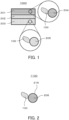
- FIG. 1 shows a cross-sectional view of a battery 1000 according to the second embodiment.
- the battery 1000 includes a positive electrode 201, an electrolyte layer 202, and a negative electrode 203.
- the electrolyte layer 202 is disposed between the positive electrode 201 and the negative electrode 203.
- the positive electrode 201 includes positive electrode active material particles 204 and solid electrolyte particles 100.
- the electrolyte layer 202 includes an electrolyte material.
- the electrolyte material is, for example, a solid electrolyte material.
- the negative electrode 203 includes negative electrode active material particles 205 and the solid electrolyte particles 100.
- the solid electrolyte particles 100 are particles including the solid electrolyte material according to the first embodiment.
- the solid electrolyte particles 100 may be particles including the solid electrolyte material according to the first embodiment as the main component.
- the particles including the solid electrolyte material according to the first embodiment as the main component refer to particles in which the component contained in the largest amount in molar ratio is the solid electrolyte material according to the first embodiment.
- the solid electrolyte particles 100 may be particles consisting of the solid electrolyte material according to the first embodiment.
- the positive electrode 201 includes a material capable of occluding and releasing metal ions such as lithium ions.
- the positive electrode 201 includes, for example, a positive electrode active material (e.g., the positive electrode active material particles 204).
- Examples of the positive electrode active material include a lithium-containing transition metal oxide, a transition metal fluoride, a polyanion material, a fluorinated polyanion material, a transition metal sulfide, a transition metal oxysulfide, and a transition metal oxynitride.
- Examples of the lithium-containing transition metal oxide include Li(Ni, Co, Al)O 2 , Li(Ni, Co, Mn)O 2 , and LiCoO 2 .
- an expression "(A, B, C)” refers to "at least one selected from the group consisting of A, B, and C".
- lithium phosphate may be used as the positive electrode active material.
- lithium iron phosphate may be used as the positive electrode active material.
- the solid electrolyte material according to the first embodiment that includes I is susceptible to oxidation.
- Using lithium iron phosphate as the positive electrode active material suppresses an oxidation reaction of the solid electrolyte material. That is, formation of an oxide layer having a low lithium-ion conductivity is suppressed. As a result, the battery has a high charge and discharge efficiency.
- the positive electrode 201 may include, in addition to the solid electrolyte material according to the first embodiment, a transition metal oxyfluoride as the positive electrode active material.
- the solid electrolyte material according to the first embodiment is not susceptible to formation of a resistance layer even when the solid electrolyte material is fluorinated by the transition metal fluoride. As a result, the battery has a high charge and discharge efficiency.
- the transition metal oxyfluoride contains oxygen and fluorine.
- the transition metal oxyfluoride may be a compound represented by a composition formula Li p Me q O m F n .
- Me is at least one selected from the group consisting of Mn, Co, Ni, Fe, Al, Cu, V, Nb, Mo, Ti, Cr, Zr, Zn, Na, K, Ca, Mg, Pt, Au, Ag, Ru, W, B, Si, and P, and the following mathematical relations are satisfied: 0.5 ⁇ p ⁇ 1.5; 0.5 ⁇ q ⁇ 1.0; 1 ⁇ m ⁇ 2; and 0 ⁇ n ⁇ 1.
- An example of such a transition metal oxyfluoride is Li 1 . 05 (Ni 0.35 C0 0.35 Mn 0.3 ) 0.95 O 1.9 F 0.1 .
- the positive electrode active material particles 204 may have a median diameter of 0.1 ⁇ m or more and 100 ⁇ m or less. In the case where the positive electrode active material particles 204 have a median diameter of 0.1 ⁇ m or more, the positive electrode active material particles 204 and the solid electrolyte particles 100 can form a favorable dispersion state in the positive electrode 201. This improves the charge and discharge characteristics of the battery. In the case where the positive electrode active material particles 204 have a median diameter of 100 ⁇ m or less, the diffusion rate of lithium in the positive electrode active material particles 204 is improved. This enables the battery to operate at a high power.
- the positive electrode active material particles 204 may have a larger median diameter than the solid electrolyte particles 100. In this case, the positive electrode active material particles 204 and the solid electrolyte particles 100 can form a favorable dispersion state.
- the ratio of the volume of the positive electrode active material particles 204 to the sum of the volume of the positive electrode active material particles 204 and the volume of the solid electrolyte particles 100 in the positive electrode 201 may be 0.30 or more and 0.95 or less.
- FIG. 2 shows a cross-sectional view of an electrode material 1100 according to the second embodiment.
- the electrode material 1100 is, for example, included in the positive electrode 201.
- a coating layer 216 may be formed on the surface of each of the electrode active material particles 206. In this case, an increase in reaction overvoltage of the battery can be suppressed.
- the coating material included in the coating layer 216 include a sulfide solid electrolyte, an oxide solid electrolyte, and a halide solid electrolyte.
- the coating material may be the solid electrolyte material according to the first embodiment.
- the solid electrolyte material according to the first embodiment is less susceptible to oxidation than the sulfide solid electrolyte. Accordingly, an increase in reaction overvoltage of the battery can be suppressed.
- the coating material may be a solid electrolyte material according to the first embodiment in which X is at least one selected from the group consisting of Cl and Br.
- X is at least one selected from the group consisting of Cl and Br.
- a solid electrolyte material according to the first embodiment that does not include I is less susceptible to oxidation than a solid electrolyte material according to the first embodiment that includes I. As a result, the battery has a high charge and discharge efficiency.
- the coating material may include an oxide solid electrolyte.
- the oxide solid electrolyte may be lithium niobate, which exhibits an excellent stability even at a high potential. In this case, the battery has a high charge and discharge efficiency.
- the positive electrode 201 may consist of a first positive electrode layer including a first positive electrode active material and a second positive electrode layer including a second positive electrode active material.
- the second positive electrode layer is disposed between the first positive electrode layer and the electrolyte layer 202, the first positive electrode layer and the second positive electrode layer include the solid electrolyte material according to the first embodiment that includes I, and the coating layer 216 is formed on the surface of the second positive electrode active material.
- Examples of the coating material included in the coating layer 216 include a sulfide solid electrolyte, an oxide solid electrolyte, a solid polymer electrolyte, and a halide solid electrolyte. Note that in the case where the coating material is a halide solid electrolyte, the coating material does not include I as a halogen element.
- the first positive electrode active material may be the same material as the second positive electrode active material, or may be a different material from the second positive electrode active material.
- the positive electrode 201 may have a thickness of 10 ⁇ m or more and 500 ⁇ m or less.
- the electrolyte layer 202 includes an electrolyte material.
- the electrolyte material is, for example, a solid electrolyte material.
- the electrolyte layer 202 may be a solid electrolyte layer.
- the electrolyte layer 202 may include the solid electrolyte material according to the first embodiment.
- the electrolyte layer 202 may consist of the solid electrolyte material according to the first embodiment.
- the electrolyte layer 202 may consist of a solid electrolyte material different from the solid electrolyte material according to the first embodiment.
- the solid electrolyte material different from the solid electrolyte material according to the first embodiment include Li 2 MgX' 4 , Li 2 FeX' 4 , Li(Al, Ga, ln)X' 4 , Li 3 (Al, Ga, In)X' 6 , and Lil.
- X' is at least one selected from the group consisting of F, Cl, Br, and I.
- the solid electrolyte material according to the first embodiment is referred to as a first solid electrolyte material.
- the solid electrolyte material different from the solid electrolyte material according to the first embodiment is referred to as a second solid electrolyte material.
- the electrolyte layer 202 may include the first solid electrolyte material, and in addition, include the second solid electrolyte material.
- the first solid electrolyte material and the second solid electrolyte material may be homogenously dispersed.
- a layer consisting of the first solid electrolyte material and a layer consisting of the second solid electrolyte material may be stacked along the stacking direction of the battery 1000.
- the electrolyte layer 202 may have a thickness of 1 ⁇ m or more and 100 ⁇ m or less. In the case where the electrolyte layer 202 has a thickness of 1 ⁇ m or more, a short-circuit between the positive electrode 201 and the negative electrode 203 tends not to occur. In the case where the electrolyte layer 202 has a thickness of 100 ⁇ m or less, the battery can operate at a high power.
- Another electrolyte layer may be further provided between the electrolyte layer 202 and the negative electrode 203. That is, a second electrolyte layer may be further provided between the electrolyte layer 202 and the negative electrode 203.
- the second electrolyte layer may consist of another solid electrolyte material that is electrochemically more stable than the first solid electrolyte material.
- the solid electrolyte material constituting the second electrolyte layer may have a lower reduction potential than the first solid electrolyte material. In this case, the first solid electrolyte material can be used without being reduced. As a result, the charge and discharge efficiency of the battery can be improved.
- the negative electrode 203 includes a material capable of occluding and releasing metal ions (e.g., lithium ions).
- the negative electrode 203 includes, for example, a negative electrode active material (e.g., the negative electrode active material particles 205).
- Examples of the negative electrode active material include a metal material, a carbon material, an oxide, a nitride, a tin compound, and a silicon compound.
- the metal material may be a metal simple substance or an alloy.
- Examples of the metal material include a lithium metal and a lithium alloy.
- Examples of the carbon material include natural graphite, coke, semi-graphitized carbon, a carbon fiber, spherical carbon, artificial graphite, and amorphous carbon. From the viewpoint of capacity density, preferred examples of the negative electrode active material include silicon (Si), tin (Sn), a silicon compound, and a tin compound.
- the negative electrode active material may be selected on the basis of the reduction resistance of the solid electrolyte material included in the negative electrode 203.
- the negative electrode active material to be used may be a material capable of occluding and releasing lithium ions at 1.6 V or more versus lithium. Using such a material as the negative electrode active material can suppress reduction of the first solid electrolyte material included in the negative electrode 203. As a result, the battery has a high charge and discharge efficiency.
- the material include a titanium oxide, an indium metal, and a lithium alloy.
- the titanium oxide include Li 4 Ti 5 O 12 , LiTi 2 O 4 , and TiO 2 .
- the negative electrode active material particles 205 may have a median diameter of 0.1 ⁇ m or more and 100 ⁇ m or less. In the case where the negative electrode active material particles 205 have a median diameter of 0.1 ⁇ m or more, the negative electrode active material particles 205 and the solid electrolyte particles 100 can form a favorable dispersion state in the negative electrode 203. This improves the charge and discharge characteristics of the battery. In the case where the negative electrode active material particles 205 have a median diameter of 100 ⁇ m or less, the diffusion rate of lithium in the negative electrode active material particles 205 is improved. This enables the battery to operate at a high power.
- the negative electrode active material particles 205 may have a larger median diameter than the solid electrolyte particles 100. In this case, the negative electrode active material particles 205 and the solid electrolyte particles 100 can form a favorable dispersion state.
- the ratio of the volume of the negative electrode active material particles 205 to the sum of the volume of the negative electrode active material particles 205 and the volume of the solid electrolyte particles 100 in the negative electrode 203 may be 0.30 or more and 0.95 or less.
- the electrode material 1100 shown in FIG. 2 may be included in the negative electrode 203.
- the coating layer 216 may be formed on the surface of each of the electrode active material particles 206.
- the battery has a high charge and discharge efficiency.
- the coating material included in the coating layer 216 include a sulfide solid electrolyte, an oxide solid electrolyte, a solid polymer electrolyte, and a halide solid electrolyte.
- the coating material may be a sulfide solid electrolyte, an oxide solid electrolyte, or a solid polymer electrolyte.
- An example of the sulfide solid electrolyte is Li 2 S-P 2 S 5 .
- An example of the oxide solid electrolyte is trilithium phosphate.
- An example of the solid polymer electrolyte is a composite compound of polyethylene oxide and a lithium salt. Such a solid polymer electrolyte is, for example, lithium bis(trifluoromethanesulfonyl)imide.
- the negative electrode 203 may have a thickness of 10 ⁇ m or more and 500 ⁇ m or less.
- At least one selected from the group consisting of the positive electrode 201, the electrolyte layer 202, and the negative electrode 203 may include the second solid electrolyte material.
- the second solid electrolyte material include a sulfide solid electrolyte, an oxide solid electrolyte, a halide solid electrolyte, and a solid organic polymer electrolyte.
- the term “sulfide solid electrolyte” refers to a solid electrolyte containing sulfur.
- oxide solid electrolyte refers to a solid electrolyte containing oxygen.
- the oxide solid electrolyte may contain anions in addition to oxygen (excluding sulfur anions and halogen anions).
- halide solid electrolyte refers to a solid electrolyte containing a halogen element and being free of sulfur.
- the halide solid electrolyte may contain oxygen in addition to a halogen element.
- Examples of the sulfide solid electrolyte include Li 2 S-P 2 S 5 , Li 2 S-SiS 2 , Li 2 S-B 2 S 3 , Li 2 S-GeS 2 , L 13.25 G 20.25 P 0.75 S 4 , and Li 10 GeP 2 S 12 .
- oxide solid electrolyte examples include:
- halide solid electrolyte is a compound represented by Li a Me' b Y c Z 6 .
- Me' is at least one selected from the group consisting of metalloid elements and metal elements excluding Li
- Y Z is at least one selected from the group consisting of F, Cl, Br, and I.
- the value m represents the valence of Me'.
- the "metalloid elements” are B, Si, Ge, As, Sb, and Te.
- the “metal elements” are: all the elements included in Groups 1 to 12 of the periodic table (excluding hydrogen); and all the elements included in Groups 13 to 16 of the periodic table (excluding B, Si, Ge, As, Sb, Te, C, N, P, O, S, and Se).
- Me' may be at least one selected from the group consisting of Mg, Ca, Sr, Ba, Zn, Sc, Al, Ga, Bi, Zr, Hf, Ti, Sn, Ta, and Nb.
- halide solid electrolyte examples include Li 3 YCl 6 and LisYBre.
- the negative electrode 203 may include a sulfide solid electrolyte.
- the sulfide solid electrolyte that is electrochemically stable with respect to the negative electrode active material suppresses contact between the first solid electrolyte material and the negative electrode active material. As a result, the battery has a low internal resistance.
- An example of the solid organic polymer electrolyte is a compound of a polymer compound and a lithium salt.
- the polymer compound may have an ethylene oxide structure.
- a polymer compound having an ethylene oxide structure can contain a large amount of a lithium salt, and accordingly has a higher ionic conductivity.
- lithium salt examples include LiPF 6 , LiBF 4 , LiSbF 6 , LiAsF 6 , LiSO 3 CF 3 , LiN(SO 2 CF 3 ) 2 , LiN(SO 2 C 2 F 5 ) 2 , LiN(SO 2 CF 3 )(SO 2 C 4 F 9 ), and LiC(SO 2 CF 3 ) 3 .
- LiPF 6 LiBF 4 , LiSbF 6 , LiAsF 6 , LiSO 3 CF 3 , LiN(SO 2 CF 3 ) 2 , LiN(SO 2 C 2 F 5 ) 2 , LiN(SO 2 CF 3 )(SO 2 C 4 F 9 ), and LiC(SO 2 CF 3 ) 3 .
- LiPF 6 LiBF 4 , LiSbF 6 , LiAsF 6 , LiSO 3 CF 3 , LiN(SO 2 CF 3 ) 2 , LiN(SO 2 C 2 F 5 ) 2 , LiN(SO 2 CF
- At least one selected from the group consisting of the positive electrode 201, the electrolyte layer 202, and the negative electrode 203 may include a nonaqueous electrolyte solution, a gel electrolyte, or an ionic liquid.
- the nonaqueous electrolyte solution contains a nonaqueous solvent and a lithium salt dissolved in the nonaqueous solvent.
- the nonaqueous solvent include a cyclic carbonate solvent, a linear carbonate solvent, a cyclic ether solvent, a linear ether solvent, a cyclic ester solvent, a linear ester solvent, and a fluorinated solvent.
- the cyclic carbonate solvent include ethylene carbonate, propylene carbonate, and butylene carbonate.
- Examples of the linear carbonate solvent include dimethyl carbonate, ethyl methyl carbonate, and diethyl carbonate.
- Examples of the cyclic ether solvent include tetrahydrofuran, 1,4-dioxane, and 1,3-dioxolane.
- Examples of the linear ether solvent include 1,2-dimethoxyethane and 1,2-diethoxyethane.
- Examples of the cyclic ester solvent include ⁇ -butyrolactone.
- Examples of the linear ester solvent include methyl acetate.
- Examples of the fluorinated solvent include fluoroethylene carbonate, methyl fluoropropionate, fluorobenzene, fluoroethyl methyl carbonate, and fluorodimethylene carbonate.
- One nonaqueous solvent selected from these may be used alone. Alternatively, a mixture of two or more nonaqueous solvents selected from these may be used.
- lithium salt examples include LiPF 6 , LiBF 4 , LiSbF 6 , LiAsF 6 , LiSOsCFs, LiN(SO 2 CF 3 ) 2 , LiN(SO 2 C 2 F 5 ) 2 , LiN(SO 2 CF 3 )(SO 2 C 4 F 9 ), and LiC(SO 2 CF 3 ) 3 .
- One lithium salt selected from these may be used alone. Alternatively, a mixture of two or more lithium salts selected from these may be used. The concentration of the lithium salt falls within a range, for example, from 0.5 mol/L to 2 mol/L.
- a polymer material impregnated with a nonaqueous electrolyte solution can be used.
- the polymer material include polyethylene oxide, polyacrylonitrile, polyvinylidene fluoride, polymethyl methacrylate, and a polymer having an ethylene oxide bond.
- Examples of cations contained in the ionic liquid include:
- Examples of anions contained in the ionic liquid include PF 6 - , BF 4 - , SbF 6 - , AsF 6 - , SO 3 CF 3 - , N(SO 2 CF 3 ) 2 - , N(SO 2 C 2 F 5 ) 2 - , N(SO 2 CF 3 )(SO 2 C 4 F 9 ) - , and C(SO 2 CF 3 ) 3 - .
- the ionic liquid may contain a lithium salt.
- At least one selected from the group consisting of the positive electrode 201, the electrolyte layer 202, and the negative electrode 203 may contain a binder.
- binder examples include polyvinylidene fluoride, polytetrafluoroethylene, polyethylene, polypropylene, aramid resin, polyamide, polyimide, polyamide-imide, polyacrylonitrile, polyacrylic acid, polyacrylic acid methyl ester, polyacrylic acid ethyl ester, polyacrylic acid hexyl ester, polymethacrylic acid, polymethacrylic acid methyl ester, polymethacrylic acid ethyl ester, polymethacrylic acid hexyl ester, polyvinyl acetate, polyvinylpyrrolidone, polyether, polyethersulfone, hexafluoropolypropylene, styrenebutadiene rubber, and carboxymethylcellulose.
- a copolymer may be used as the binder.
- the binder include a copolymer of two or more materials selected from the group consisting of tetrafluoroethylene, hexafluoroethylene, hexafluoropropylene, perfluoroalkyl vinyl ether, vinylidene fluoride, chlorotrifluoroethylene, ethylene, propylene, pentafluoropropylene, fluoromethyl vinyl ether, acrylic acid, and hexadiene.
- a mixture of two or more selected from the above materials may be used.
- At least one selected from the group consisting of the positive electrode 201 and the negative electrode 203 may contain a conductive additive.
- Examples of the conductive additive include:
- Examples of the shape of the battery according to the second embodiment include a coin type, a cylindrical type, a prismatic type, a sheet type, a button type, a flat type, and a stack type.
- the battery according to the second embodiment may be manufactured, for example, by preparing a material for forming a positive electrode, a material for forming an electrolyte layer, and a material for forming a negative electrode, and producing by a known method a stack in which the positive electrode, the electrolyte layer, and the negative electrode are disposed in this order.
- the content of Li and the content of Zr were measured by a high-frequency inductively coupled plasma emission spectrometry with a high-frequency inductively coupled plasma emission spectrometer (iCAP7400 manufactured by Thermo Fisher Scientific K.K.).
- the content of Cl was measured by an ion chromatography with an ion chromatography device (ICS-2000 manufactured by Dionex Corporation).
- the content of O was measured by an inert gas fusion-infrared absorption method with an oxygen analyzer (EMGA-930 manufactured by HORIBA, Ltd.).
- the molar ratio Li/M, the molar ratio O/X, and the molar ratio A/M were calculated from the measurement results.
- the content of A adopted here was the charge amount.
- the solid electrolyte material according to Example 1 had a molar ratio Li/M of 1.4, a molar ratio O/X of 0.31, and a molar ratio A/M of 0.04.
- FIG. 3 shows a schematic view of a pressure-molding die 300 used to evaluate the ionic conductivity of solid electrolyte materials.
- the pressure-molding die 300 included an upper punch 301, a die 302, and a lower punch 303.
- the die 302 was formed of polycarbonate, which is insulating.
- the upper punch 301 and the lower punch 303 were each formed of stainless steel, which is electronically conductive.
- the pressure-molding die 300 shown in FIG. 3 was used to measure the ionic conductivity of the solid electrolyte material according to Example 1 by the following method.
- the powder of the solid electrolyte material according to Example 1 i.e., a solid electrolyte material powder 101 in FIG. 3
- a pressure of 300 MPa was applied to the solid electrolyte material according to Example 1 with the upper punch 301.
- an evaluation cell according to Example 1 was obtained.
- the upper punch 301 and the lower punch 303 were connected to a potentiostat (VersaSTAT4 manufactured by Princeton Applied Research) equipped with a frequency response analyzer.
- the upper punch 301 was connected to the working electrode and the potential measurement terminal.
- the lower punch 303 was connected to the counter electrode and the reference electrode.
- the ionic conductivity of the solid electrolyte material according to Example 1 was measured at room temperature by an electrochemical impedance measurement method. The results indicate that the ionic conductivity measured at 22°C was 1.82 mS/cm.
- the solid electrolyte material according to Example 1 80 mg
- the positive electrode mixture 8.2 mg
- a pressure of 360 MPa was applied to this stack to form a solid electrolyte layer and a positive electrode.
- the solid electrolyte layer had a thickness of 500 ⁇ m.
- Li-In alloy (thickness: 200 ⁇ m) was stacked on the solid electrolyte layer. A pressure of 80 MPa was applied to this stack to form a negative electrode.
- an insulating ferrule was used to block the inside of the insulating tube from the outside air atmosphere and seal the tube.
- FIG. 4 is a graph showing the initial discharge characteristics of the battery according to Example 1.
- the horizontal axis represents the discharge capacity.
- the vertical axis represents the voltage. The results shown in FIG. 4 were obtained from measurement performed by the following method.
- the battery according to Example 1 was placed in a thermostatic chamber kept at 25°C.
- the battery according to Example 1 was charged to a voltage of 3.6 V at a current value of 0.05 C rate (20 hour rate) with respect to the theoretical capacity of the battery. Next, the battery according to Example 1 was discharged to a voltage of 1.9 V at a current value of 0.05 C rate.
- Example 1 the compositions were analyzed with respect to the solid electrolyte materials according to Examples 2 to 9 and Comparative Example 1.
- the solid electrolyte material according to Example 2 had a molar ratio Li/M of 1.5, a molar ratio O/X of 0.35, and a molar ratio A/M of 0.08.
- the solid electrolyte material according to Example 3 had a molar ratio Li/M of 1.5, a molar ratio O/X of 0.37, and a molar ratio A/M of 0.12.
- the solid electrolyte material according to Example 4 had a molar ratio Li/M of 1.5, a molar ratio O/X of 0.39, and a molar ratio A/M of 0.16.
- the solid electrolyte material according to Example 5 had a molar ratio Li/M of 1.5, a molar ratio O/X of 0.41, and a molar ratio A/M of 0.20.
- the solid electrolyte material according to Example 6 had a molar ratio Li/M of 1.5, a molar ratio O/X of 0.52, and a molar ratio A/M of 0.40.
- the solid electrolyte material according to Example 7 had a molar ratio Li/M of 1.5, a molar ratio O/X of 0.63, and a molar ratio A/M of 0.60.
- the solid electrolyte material according to Example 8 had a molar ratio Li/M of 1.3, a molar ratio O/X of 0.30, and a molar ratio A/M of 0.13.
- the solid electrolyte material according to Example 9 had a molar ratio Li/M of 1.3, a molar ratio O/X of 0.32, and a molar ratio A/M of 0.20.
- the solid electrolyte material according to Comparative Example 1 had a molar ratio Li/M of 2.0 and a molar ratio O/X of 0.
- Example 1 the ionic conductivity was measured with respect to the solid electrolyte materials according to Examples 2 to 9 and Comparative Example 1. The measurement results are shown in Table 1.
- Table 1 Constituent element M A X Molar ratio Li/M Molar ratio O/X Molar ratio AIM Ionic conductivity [mS/cm]
- Example 1 Li, Zr, O, Cl, P Zr P Cl 1.4 0.31 0.04 1.82
- Example 2 Zr P Cl 1.5 0.35 0.08 1.91
- Example 3 Zr P Cl 1.5 0.37 0.12 1.90
- Example 4 Zr P Cl 1.5 0.39 0.16 1.53
- Example 5 Zr P Cl 1.5 0.41 0.20 1.63
- Example 6 Zr P Cl 1.5 0.52 0.40 1.24
- Example 8 Li, Zr, O, Cl, B Zr B Cl 1.3 0.30 0.13 1.53
- Example 9 Zr B Cl 1.3 0.32 0.20 1.02 Comparative Example 1 Li, Zr, Cl Zr - Cl 2.0 0
- the solid electrolyte materials according to Examples 1 to 9 each have a high ionic conductivity of 0.42 mS/cm or more near room temperature.
- a solid electrolyte material having a molar ratio A/M of 0.04 or more and 0.20 or less has a higher ionic conductivity.
- Example 5 which have a molar ratio A/M of the same value, demonstrates that a solid electrolyte material in which A includes P tends to have an improved ionic conductivity.
- the batteries according to all the examples were charged and discharged at room temperature.
- the solid electrolyte materials according to Examples 1 to 9 are free of sulfur, and accordingly generate no hydrogen sulfide.
- the solid electrolyte material according to the present disclosure is a highly useful material that can, for example, improve the lithium-ion conductivity while suppressing generation of hydrogen sulfide, and is suitable for providing batteries that can be favorably charged and discharged.
- the solid electrolyte material of the present disclosure is utilized, for example, in all-solid-state lithium-ion secondary batteries.
Landscapes
- Chemical & Material Sciences (AREA)
- Organic Chemistry (AREA)
- Inorganic Chemistry (AREA)
- Engineering & Computer Science (AREA)
- Electrochemistry (AREA)
- Manufacturing & Machinery (AREA)
- Chemical Kinetics & Catalysis (AREA)
- General Chemical & Material Sciences (AREA)
- General Physics & Mathematics (AREA)
- Physics & Mathematics (AREA)
- Condensed Matter Physics & Semiconductors (AREA)
- Life Sciences & Earth Sciences (AREA)
- Environmental & Geological Engineering (AREA)
- General Life Sciences & Earth Sciences (AREA)
- Geology (AREA)
- Materials Engineering (AREA)
- Secondary Cells (AREA)
- Conductive Materials (AREA)
- Battery Electrode And Active Subsutance (AREA)
Abstract
Description
- The present disclosure relates to a solid electrolyte material and a battery using the same.
-
Patent Literature 1 discloses an all-solid-state battery using a sulfide solid electrolyte material. - Patent Literature 2 discloses a solid electrolyte material represented by Li6-4aMaX6, where M is at least one selected from the group consisting of Zr, Hf, and Ti, X is a halogen element, and a mathematical relation 0 < a < 1.5 is satisfied.
-
- Patent Literature 1:
JP 2011-129312A - Patent Literature 2:
WO 2020/070955 A1 - The present disclosure aims to provide a novel and highly useful solid electrolyte.
- A solid electrolyte material of the present disclosure includes:
- Li;
- M;
- O;
- X; and
- A, wherein
- the M is at least one selected from the group consisting of Ti, Zr, and Hf,
- the X is at least one selected from the group consisting of F, Cl, Br, and I,
- the A is at least one selected from the group consisting of P and B,
- a molar ratio of the Li to the M is 1.0 or more and 3.0 or less,
- a molar ratio of the O to the X is 0.2 or more and 0.7 or less, and
- a molar ratio of the A to the M is 0.02 or more and 0.80 or less.
- The present disclosure provides a novel and highly useful solid electrolyte.
-
-
FIG. 1 shows a cross-sectional view of abattery 1000 according to a second embodiment. -
FIG. 2 shows a cross-sectional view of anelectrode material 1100 according to the second embodiment. -
FIG. 3 shows a schematic view of a pressure-molding die 300 used to evaluate the ionic conductivity of solid electrolyte materials. -
FIG. 4 is a graph showing the initial discharge characteristics of a battery according to Example 1. - Embodiments of the present disclosure will be described below with reference to the drawings. The present disclosure is not limited to the following embodiments.
- A solid electrolyte material according to a first embodiment includes Li, M, O, X, and A. M is at least one selected from the group consisting of Ti, Zr, and Hf. X is at least one selected from the group consisting of F, Cl, Br, and I. A is at least one selected from the group consisting of P and B. The molar ratio of Li to M is 1.0 or more and 3.0 or less. The molar ratio of O to X is 0.2 or more and 0.7 or less. The molar ratio of A to M is 0.02 or more and 0.80 or less.
- The solid electrolyte material according to the first embodiment is a novel and highly useful solid electrolyte material that is, for example, suitable for conduction of lithium ions. The solid electrolyte material according to the first embodiment can have, for example, a practical lithium-ion conductivity, and has, for example, a high lithium-ion conductivity. Here, a high lithium-ion conductivity is, for example, 0.42 mS/cm or more near room temperature. That is, the solid electrolyte material according to the first embodiment can have an ionic conductivity of, for example, 0.42 mS/cm or more.
- In the case where the molar ratio of Li to M is 1.0 or more and 3.0 or less, the concentration of Li serving as the conduction carrier is optimized. In the case where the molar ratio of O to X is 0.2 or more and 0.7 or less, paths for diffusion of lithium ions are easily formed. As a result, the solid electrolyte material according to the first embodiment has a high lithium-ion conductivity.
- In the case where the molar ratio of A to M is 0.02 or more and 0.80 or less, the solid electrolyte material has a high stability to heat. For example, even when heated to 150°C, the solid electrolyte material according to the first embodiment hardly decreases in lithium-ion conductivity.
- The molar ratio of Li to M is calculated from a mathematical expression (the amount of substance of Li)/(the total of the amounts of substance of Ti, Zr, and Hf). The molar ratio of O to X is calculated from a mathematical expression (the amount of substance of O)/(the total of the amounts of substance of F, Cl, Br, and I). The molar ratio of A to M is calculated from a mathematical expression (the total of the amounts of substance of P and B)/(the total of the amounts of substance of Ti, Zr, and Hf). Hereinafter, the molar ratio of Li to M is also denoted as "Li/M", the molar ratio of O to X is also denoted as "O/X", and the molar ratio of A to M is also denoted as "A/M".
- The solid electrolyte material according to the first embodiment can be used to achieve a battery having excellent charge and discharge characteristics. An example of the battery is an all-solid-state battery. The all-solid-state battery may be a primary battery or a secondary battery.
- The solid electrolyte material according to the first embodiment can maintain a high lithium-ion conductivity within an expected battery operating temperature range. Therefore, a battery using the solid electrolyte material according to the first embodiment can stably operate even in an environment where the temperature varies. The battery operating temperature range is, for example, from -30°C to 80°C.
- It is desirable that the solid electrolyte material according to the first embodiment should be substantially free of sulfur. The phrase "the solid electrolyte material according to the first embodiment is substantially free of sulfur" means that the solid electrolyte material does not contain sulfur as a constituent element except for sulfur inevitably introduced as impurities. In this case, sulfur introduced as impurities into the solid electrolyte material has an amount of, for example, 1 mol% or less. From the viewpoint of safety, it is preferable that the solid electrolyte material according to the first embodiment should be free of sulfur. A solid electrolyte material that is free of sulfur generates no hydrogen sulfide when exposed to the atmosphere, and is accordingly excellent in safety. Note that the sulfide solid electrolyte material disclosed in
Patent Literature 1 can generate hydrogen sulfide when exposed to the atmosphere. - To increase the ionic conductivity of the solid electrolyte material, the solid electrolyte material according to the first embodiment may consist substantially of Li, M, O, X, and A. Here, the phrase "the solid electrolyte material according to the first embodiment consists substantially of Li, M, O, X, and A" means that the ratio of the sum of the amounts of substance of Li, M, O, X, and A to the total of the amounts of substance of all the elements constituting the solid electrolyte material according to the first embodiment (i.e., the mole fraction) is 90% or more. In an example, the ratio may be 95% or more.
- To increase the ionic conductivity of the solid electrolyte material, the solid electrolyte material according to the first embodiment may consist of Li, M, O, X, and A.
- To increase the ionic conductivity of the solid electrolyte material, M may include Zr. M may be Zr.
- To increase the ionic conductivity of the solid electrolyte material, X may include Cl. X may be Cl.
- To increase the ionic conductivity of the solid electrolyte material, A may include P. A may be P.
- The upper and lower limits for the molar ratio of Li to M can be defined by any combination of numerical values selected from 1.0, 1.3, 1.4, 1.5, and 3.0.
- To increase the ionic conductivity of the solid electrolyte material, the molar ratio of Li to M may be 1.3 or more and less than 2.0, or 1.3 or more and 1.5 or less.
- The upper and lower limits for the molar ratio of O to X can be defined by any combination of numerical values selected from 0.2, 0.30, 0.31, 0.32, 0.35, 0.37, 0.39, 0.41, 0.52, 0.63, and 0.7.
- To increase the ionic conductivity of the solid electrolyte material, the molar ratio of O to X may be 0.3 or more and 0.63 or less, 0.3 or more and 0.52 or less, or 0.3 or more and 0.41 or less.
- The upper and lower limits for the molar ratio of A to M can be defined by any combination of numerical values selected from 0.02, 0.04, 0.08, 0.12, 0.13, 0.16, 0.20, 0.40, 0.60, and 0.80.
- To increase the ionic conductivity of the solid electrolyte material, the molar ratio of A to M may be 0.04 or more and 0.60 or less.
- To increase the ionic conductivity of the solid electrolyte material, the molar ratio of A to M may be 0.04 or more and 0.20 or less.
- The solid electrolyte material according to the first embodiment may be crystalline or amorphous.
- The solid electrolyte material according to the first embodiment may be amorphous. An amorphous solid electrolyte has advantages such as no crystalline orientation anisotropy and less influence of the grain boundary as well as less deterioration in ionic conductivity after processing such as pulverization.
- The solid electrolyte material according to the first embodiment may include a crystalline phase. The crystalline phase is attributed to, for example, LiX or Li6-4aMaX6 (a mathematical relation 0 < a < 1.5 is satisfied).
- The solid electrolyte material according to the first embodiment may include both or only one of an amorphous phase and a crystalline phase. The microstructure of the solid electrolyte material can be examined by X-ray diffraction measurement.
- The shape of the solid electrolyte material according to the first embodiment is not limited. The shape is, for example, acicular, spherical, or ellipsoidal. The solid electrolyte material according to the first embodiment may be particulate. The solid electrolyte material according to the first embodiment may be formed in the shape of a pellet or a plate.
- In the case where the shape of the solid electrolyte material according to the first embodiment is particulate (e.g., spherical), the solid electrolyte material may have a median diameter of 0.1 µm or more and 100 µm or less, or may have a median diameter of 0.5 µm or more and 10 µm or less. In this case, the solid electrolyte material according to the first embodiment and other materials can be favorably dispersed. The median diameter of particles means the particle diameter (d50) at a cumulative volume equal to 50% in the volumetric particle size distribution. The volumetric particle size distribution can be measured with a laser diffraction measurement device or an image analysis device.
- In the case where the shape of the solid electrolyte material according to the first embodiment is particulate (e.g., spherical), the solid electrolyte material may have a smaller median diameter than the active material. In this case, the solid electrolyte material according to the first embodiment and the active material can form a favorable dispersion state.
- The solid electrolyte material according to the first embodiment can be manufactured by the following method.
- Raw material powders are prepared so as to obtain a target composition. Examples of the raw material powders include an oxide, a hydroxide, a halide, and an acid halide.
- In an example, assume a case where a solid electrolyte material consists of Li, Zr, O, Cl, and P (i.e., a solid electrolyte material includes M that is Zr, X that is Cl, and A that is P) and has a molar ratio Li/M of 1.4, a molar ratio O/X of 0.375, and a molar ratio A/M of 0.04 in the raw material mixing. In this case, Li2O2, ZrCl4, and P2O5 are mixed together at a molar ratio of Li2O2: ZrCl4: P2O5 = 0.7: 1: 0.02. M, X, and A are determined by selecting the raw material powders. The molar ratios Li/M, O/X, and A/M are determined by selecting the mixing ratio between the raw material powders. The raw material powders may be mixed together at a molar ratio adjusted in advance so as to cancel out a composition change which can occur in the synthesis process.
- The mixture of the raw material powders is fired to obtain a reaction product. To suppress evaporation of the raw materials due to firing, the mixture of the raw material powders may be sealed in an airtight container formed of quartz glass or borosilicate glass and fired in a vacuum or an inert gas atmosphere. The inert gas atmosphere is, for example, an argon atmosphere or a nitrogen atmosphere.
- Alternatively, the mixture of the raw material powders may be reacted with each other mechanochemically in a mixer such as a planetary ball mill to obtain a reaction product. That is, mixing and reaction of the raw material powders may be performed by a mechanochemical milling method. By these methods, the solid electrolyte material according to the first embodiment is obtained.
- Firing or mechanochemical reaction of the mixture of the raw material powders sometimes causes a portion of O to evaporate from the raw material powders. This can result in a smaller value of the molar ratio O/X in the solid electrolyte material than the value of the molar ratio O/X calculated from the molar ratio between the raw material powders.
- The composition of the solid electrolyte material can be determined, for example, by an inductively coupled plasma (ICP) emission spectrometry, an ion chromatography, an inert gas fusion-infrared absorption method, or an electron probe micro-analyzer (EPMA) method. For example, the compositions of Li and M can be determined by the ICP emission spectrometry, the composition of X can be determined by the ion chromatography, the composition of O can be determined by the inert gas fusion-infrared absorption method, and the composition of A can be determined by the EPMA method.
- A second embodiment will be described below. The matters described in the first embodiment may be omitted as appropriate.
- A battery according to the second embodiment includes a positive electrode, an electrolyte layer, and a negative electrode. The electrolyte layer is disposed between the positive electrode and the negative electrode. At least one selected from the group consisting of the positive electrode, the electrolyte layer, and the negative electrode includes the solid electrolyte material according to the first embodiment.
- Owing to including the solid electrolyte material according to the first embodiment, the battery according to the second embodiment has excellent charge and discharge characteristics.
-
FIG. 1 shows a cross-sectional view of abattery 1000 according to the second embodiment. - The
battery 1000 includes apositive electrode 201, anelectrolyte layer 202, and anegative electrode 203. Theelectrolyte layer 202 is disposed between thepositive electrode 201 and thenegative electrode 203. - The
positive electrode 201 includes positive electrodeactive material particles 204 andsolid electrolyte particles 100. - The
electrolyte layer 202 includes an electrolyte material. The electrolyte material is, for example, a solid electrolyte material. - The
negative electrode 203 includes negative electrodeactive material particles 205 and thesolid electrolyte particles 100. - The
solid electrolyte particles 100 are particles including the solid electrolyte material according to the first embodiment. Thesolid electrolyte particles 100 may be particles including the solid electrolyte material according to the first embodiment as the main component. The particles including the solid electrolyte material according to the first embodiment as the main component refer to particles in which the component contained in the largest amount in molar ratio is the solid electrolyte material according to the first embodiment. Thesolid electrolyte particles 100 may be particles consisting of the solid electrolyte material according to the first embodiment. - The
positive electrode 201 includes a material capable of occluding and releasing metal ions such as lithium ions. Thepositive electrode 201 includes, for example, a positive electrode active material (e.g., the positive electrode active material particles 204). - Examples of the positive electrode active material include a lithium-containing transition metal oxide, a transition metal fluoride, a polyanion material, a fluorinated polyanion material, a transition metal sulfide, a transition metal oxysulfide, and a transition metal oxynitride. Examples of the lithium-containing transition metal oxide include Li(Ni, Co, Al)O2, Li(Ni, Co, Mn)O2, and LiCoO2.
- In the present disclosure, an expression "(A, B, C)" refers to "at least one selected from the group consisting of A, B, and C".
- From the viewpoint of cost and safety of the battery, lithium phosphate may be used as the positive electrode active material.
- In the case where the
positive electrode 201 includes a solid electrolyte material according to the first embodiment in which X includes I (i.e., iodine), lithium iron phosphate may be used as the positive electrode active material. The solid electrolyte material according to the first embodiment that includes I is susceptible to oxidation. Using lithium iron phosphate as the positive electrode active material suppresses an oxidation reaction of the solid electrolyte material. That is, formation of an oxide layer having a low lithium-ion conductivity is suppressed. As a result, the battery has a high charge and discharge efficiency. - The
positive electrode 201 may include, in addition to the solid electrolyte material according to the first embodiment, a transition metal oxyfluoride as the positive electrode active material. The solid electrolyte material according to the first embodiment is not susceptible to formation of a resistance layer even when the solid electrolyte material is fluorinated by the transition metal fluoride. As a result, the battery has a high charge and discharge efficiency. - The transition metal oxyfluoride contains oxygen and fluorine. In an example, the transition metal oxyfluoride may be a compound represented by a composition formula LipMeqOmFn. Here, Me is at least one selected from the group consisting of Mn, Co, Ni, Fe, Al, Cu, V, Nb, Mo, Ti, Cr, Zr, Zn, Na, K, Ca, Mg, Pt, Au, Ag, Ru, W, B, Si, and P, and the following mathematical relations are satisfied: 0.5 ≤ p ≤ 1.5; 0.5 ≤ q ≤ 1.0; 1 ≤ m < 2; and 0 < n ≤ 1. An example of such a transition metal oxyfluoride is Li1.05(Ni0.35C00.35Mn0.3)0.95O1.9F0.1.
- The positive electrode
active material particles 204 may have a median diameter of 0.1 µm or more and 100 µm or less. In the case where the positive electrodeactive material particles 204 have a median diameter of 0.1 µm or more, the positive electrodeactive material particles 204 and thesolid electrolyte particles 100 can form a favorable dispersion state in thepositive electrode 201. This improves the charge and discharge characteristics of the battery. In the case where the positive electrodeactive material particles 204 have a median diameter of 100 µm or less, the diffusion rate of lithium in the positive electrodeactive material particles 204 is improved. This enables the battery to operate at a high power. - The positive electrode
active material particles 204 may have a larger median diameter than thesolid electrolyte particles 100. In this case, the positive electrodeactive material particles 204 and thesolid electrolyte particles 100 can form a favorable dispersion state. - From the viewpoint of energy density and power output of the battery, the ratio of the volume of the positive electrode
active material particles 204 to the sum of the volume of the positive electrodeactive material particles 204 and the volume of thesolid electrolyte particles 100 in thepositive electrode 201 may be 0.30 or more and 0.95 or less. -
FIG. 2 shows a cross-sectional view of anelectrode material 1100 according to the second embodiment. Theelectrode material 1100 is, for example, included in thepositive electrode 201. To prevent thesolid electrolyte particles 100 from reacting with the positive electrode active material (i.e., electrode active material particles 206), acoating layer 216 may be formed on the surface of each of the electrodeactive material particles 206. In this case, an increase in reaction overvoltage of the battery can be suppressed. Examples of the coating material included in thecoating layer 216 include a sulfide solid electrolyte, an oxide solid electrolyte, and a halide solid electrolyte. - In the case where the
solid electrolyte particles 100 are those of a sulfide solid electrolyte, the coating material may be the solid electrolyte material according to the first embodiment. The solid electrolyte material according to the first embodiment is less susceptible to oxidation than the sulfide solid electrolyte. Accordingly, an increase in reaction overvoltage of the battery can be suppressed. - In the case where the
solid electrolyte particles 100 are those of a solid electrolyte material according to the first embodiment in which X includes I, the coating material may be a solid electrolyte material according to the first embodiment in which X is at least one selected from the group consisting of Cl and Br. A solid electrolyte material according to the first embodiment that does not include I is less susceptible to oxidation than a solid electrolyte material according to the first embodiment that includes I. As a result, the battery has a high charge and discharge efficiency. - In the case where the
solid electrolyte particles 100 are those of the solid electrolyte material according to the first embodiment in which X includes I, the coating material may include an oxide solid electrolyte. The oxide solid electrolyte may be lithium niobate, which exhibits an excellent stability even at a high potential. In this case, the battery has a high charge and discharge efficiency. - The
positive electrode 201 may consist of a first positive electrode layer including a first positive electrode active material and a second positive electrode layer including a second positive electrode active material. Here, the second positive electrode layer is disposed between the first positive electrode layer and theelectrolyte layer 202, the first positive electrode layer and the second positive electrode layer include the solid electrolyte material according to the first embodiment that includes I, and thecoating layer 216 is formed on the surface of the second positive electrode active material. According to the above configuration, it is possible to suppress oxidation of the solid electrolyte material according to the first embodiment included in theelectrolyte layer 202 caused by the second positive electrode active material. As a result, the battery has a high charge capacity. Examples of the coating material included in thecoating layer 216 include a sulfide solid electrolyte, an oxide solid electrolyte, a solid polymer electrolyte, and a halide solid electrolyte. Note that in the case where the coating material is a halide solid electrolyte, the coating material does not include I as a halogen element. The first positive electrode active material may be the same material as the second positive electrode active material, or may be a different material from the second positive electrode active material. - From the viewpoint of energy density and power output of the battery, the
positive electrode 201 may have a thickness of 10 µm or more and 500 µm or less. - The
electrolyte layer 202 includes an electrolyte material. The electrolyte material is, for example, a solid electrolyte material. Theelectrolyte layer 202 may be a solid electrolyte layer. Theelectrolyte layer 202 may include the solid electrolyte material according to the first embodiment. Theelectrolyte layer 202 may consist of the solid electrolyte material according to the first embodiment. - The
electrolyte layer 202 may consist of a solid electrolyte material different from the solid electrolyte material according to the first embodiment. Examples of the solid electrolyte material different from the solid electrolyte material according to the first embodiment include Li2MgX'4, Li2FeX'4, Li(Al, Ga, ln)X'4, Li3(Al, Ga, In)X'6, and Lil. Here, X' is at least one selected from the group consisting of F, Cl, Br, and I. - Hereinafter, the solid electrolyte material according to the first embodiment is referred to as a first solid electrolyte material. The solid electrolyte material different from the solid electrolyte material according to the first embodiment is referred to as a second solid electrolyte material.
- The
electrolyte layer 202 may include the first solid electrolyte material, and in addition, include the second solid electrolyte material. In theelectrolyte layer 202, the first solid electrolyte material and the second solid electrolyte material may be homogenously dispersed. A layer consisting of the first solid electrolyte material and a layer consisting of the second solid electrolyte material may be stacked along the stacking direction of thebattery 1000. - The
electrolyte layer 202 may have a thickness of 1 µm or more and 100 µm or less. In the case where theelectrolyte layer 202 has a thickness of 1 µm or more, a short-circuit between thepositive electrode 201 and thenegative electrode 203 tends not to occur. In the case where theelectrolyte layer 202 has a thickness of 100 µm or less, the battery can operate at a high power. - Another electrolyte layer may be further provided between the
electrolyte layer 202 and thenegative electrode 203. That is, a second electrolyte layer may be further provided between theelectrolyte layer 202 and thenegative electrode 203. For example, in the case where theelectrolyte layer 202 includes the first solid electrolyte material, the second electrolyte layer may consist of another solid electrolyte material that is electrochemically more stable than the first solid electrolyte material. Specifically, the solid electrolyte material constituting the second electrolyte layer may have a lower reduction potential than the first solid electrolyte material. In this case, the first solid electrolyte material can be used without being reduced. As a result, the charge and discharge efficiency of the battery can be improved. - The
negative electrode 203 includes a material capable of occluding and releasing metal ions (e.g., lithium ions). Thenegative electrode 203 includes, for example, a negative electrode active material (e.g., the negative electrode active material particles 205). - Examples of the negative electrode active material include a metal material, a carbon material, an oxide, a nitride, a tin compound, and a silicon compound. The metal material may be a metal simple substance or an alloy. Examples of the metal material include a lithium metal and a lithium alloy. Examples of the carbon material include natural graphite, coke, semi-graphitized carbon, a carbon fiber, spherical carbon, artificial graphite, and amorphous carbon. From the viewpoint of capacity density, preferred examples of the negative electrode active material include silicon (Si), tin (Sn), a silicon compound, and a tin compound.
- The negative electrode active material may be selected on the basis of the reduction resistance of the solid electrolyte material included in the
negative electrode 203. In the case where thenegative electrode 203 includes the first solid electrolyte material, the negative electrode active material to be used may be a material capable of occluding and releasing lithium ions at 1.6 V or more versus lithium. Using such a material as the negative electrode active material can suppress reduction of the first solid electrolyte material included in thenegative electrode 203. As a result, the battery has a high charge and discharge efficiency. Examples of the material include a titanium oxide, an indium metal, and a lithium alloy. Examples of the titanium oxide include Li4Ti5O12, LiTi2O4, and TiO2. - The negative electrode
active material particles 205 may have a median diameter of 0.1 µm or more and 100 µm or less. In the case where the negative electrodeactive material particles 205 have a median diameter of 0.1 µm or more, the negative electrodeactive material particles 205 and thesolid electrolyte particles 100 can form a favorable dispersion state in thenegative electrode 203. This improves the charge and discharge characteristics of the battery. In the case where the negative electrodeactive material particles 205 have a median diameter of 100 µm or less, the diffusion rate of lithium in the negative electrodeactive material particles 205 is improved. This enables the battery to operate at a high power. - The negative electrode
active material particles 205 may have a larger median diameter than thesolid electrolyte particles 100. In this case, the negative electrodeactive material particles 205 and thesolid electrolyte particles 100 can form a favorable dispersion state. - From the viewpoint of energy density and power output of the battery, the ratio of the volume of the negative electrode
active material particles 205 to the sum of the volume of the negative electrodeactive material particles 205 and the volume of thesolid electrolyte particles 100 in thenegative electrode 203 may be 0.30 or more and 0.95 or less. - The
electrode material 1100 shown inFIG. 2 may be included in thenegative electrode 203. To prevent thesolid electrolyte particles 100 from reacting with the negative electrode active material (i.e., the electrode active material particles 206), thecoating layer 216 may be formed on the surface of each of the electrodeactive material particles 206. In this case, the battery has a high charge and discharge efficiency. Examples of the coating material included in thecoating layer 216 include a sulfide solid electrolyte, an oxide solid electrolyte, a solid polymer electrolyte, and a halide solid electrolyte. - In the case where the
solid electrolyte particles 100 are those of the first solid electrolyte material, the coating material may be a sulfide solid electrolyte, an oxide solid electrolyte, or a solid polymer electrolyte. An example of the sulfide solid electrolyte is Li2S-P2S5. An example of the oxide solid electrolyte is trilithium phosphate. An example of the solid polymer electrolyte is a composite compound of polyethylene oxide and a lithium salt. Such a solid polymer electrolyte is, for example, lithium bis(trifluoromethanesulfonyl)imide. - From the viewpoint of energy density and power output of the battery, the
negative electrode 203 may have a thickness of 10 µm or more and 500 µm or less. - To increase the ionic conductivity, at least one selected from the group consisting of the
positive electrode 201, theelectrolyte layer 202, and thenegative electrode 203 may include the second solid electrolyte material. Examples of the second solid electrolyte material include a sulfide solid electrolyte, an oxide solid electrolyte, a halide solid electrolyte, and a solid organic polymer electrolyte. - In the present disclosure, the term "sulfide solid electrolyte" refers to a solid electrolyte containing sulfur. The term "oxide solid electrolyte" refers to a solid electrolyte containing oxygen. The oxide solid electrolyte may contain anions in addition to oxygen (excluding sulfur anions and halogen anions). The term "halide solid electrolyte" refers to a solid electrolyte containing a halogen element and being free of sulfur. The halide solid electrolyte may contain oxygen in addition to a halogen element.
- Examples of the sulfide solid electrolyte include Li2S-P2S5, Li2S-SiS2, Li2S-B2S3, Li2S-GeS2, L13.25G20.25P0.75S4, and Li10GeP2S12.
- Examples of the oxide solid electrolyte include:
- (i) a NASICON solid electrolyte such as LiTi2(PO4)3 and element-substituted substances thereof;
- (ii) a perovskite solid electrolyte such as (LaLi)TiOs;
- (iii) a LISICON solid electrolyte such as Li14ZnGe4O16, Li4SiO4, and LiGeO4 and element-substituted substances thereof;
- (iv) a garnet solid electrolyte such as Li7La3Zr2O12 and element-substituted substances thereof; and
- (v) Li3PO4 and N-substituted substances thereof.
- An example of the halide solid electrolyte is a compound represented by LiaMe'bYcZ6. Here, mathematical relations a + mb + 3c = 6 and c > 0 are satisfied. Me' is at least one selected from the group consisting of metalloid elements and metal elements excluding Li and Y Z is at least one selected from the group consisting of F, Cl, Br, and I. The value m represents the valence of Me'.
- The "metalloid elements" are B, Si, Ge, As, Sb, and Te. The "metal elements" are: all the elements included in
Groups 1 to 12 of the periodic table (excluding hydrogen); and all the elements included in Groups 13 to 16 of the periodic table (excluding B, Si, Ge, As, Sb, Te, C, N, P, O, S, and Se). - To increase the ionic conductivity of the halide solid electrolyte, Me' may be at least one selected from the group consisting of Mg, Ca, Sr, Ba, Zn, Sc, Al, Ga, Bi, Zr, Hf, Ti, Sn, Ta, and Nb.
- Examples of the halide solid electrolyte include Li3YCl6 and LisYBre.
- In the case where the
electrolyte layer 202 includes the first solid electrolyte material, thenegative electrode 203 may include a sulfide solid electrolyte. In this case, the sulfide solid electrolyte that is electrochemically stable with respect to the negative electrode active material suppresses contact between the first solid electrolyte material and the negative electrode active material. As a result, the battery has a low internal resistance. - An example of the solid organic polymer electrolyte is a compound of a polymer compound and a lithium salt. The polymer compound may have an ethylene oxide structure. A polymer compound having an ethylene oxide structure can contain a large amount of a lithium salt, and accordingly has a higher ionic conductivity.
- Examples of the lithium salt include LiPF6, LiBF4, LiSbF6, LiAsF6, LiSO3CF3, LiN(SO2CF3)2, LiN(SO2C2F5)2, LiN(SO2CF3)(SO2C4F9), and LiC(SO2CF3)3. One lithium salt selected from these may be used alone. Alternatively, a mixture of two or more lithium salts selected from these may be used.
- To facilitate transfer of lithium ions and thereby improve the output characteristics of the battery, at least one selected from the group consisting of the
positive electrode 201, theelectrolyte layer 202, and thenegative electrode 203 may include a nonaqueous electrolyte solution, a gel electrolyte, or an ionic liquid. - The nonaqueous electrolyte solution contains a nonaqueous solvent and a lithium salt dissolved in the nonaqueous solvent. Examples of the nonaqueous solvent include a cyclic carbonate solvent, a linear carbonate solvent, a cyclic ether solvent, a linear ether solvent, a cyclic ester solvent, a linear ester solvent, and a fluorinated solvent. Examples of the cyclic carbonate solvent include ethylene carbonate, propylene carbonate, and butylene carbonate. Examples of the linear carbonate solvent include dimethyl carbonate, ethyl methyl carbonate, and diethyl carbonate. Examples of the cyclic ether solvent include tetrahydrofuran, 1,4-dioxane, and 1,3-dioxolane. Examples of the linear ether solvent include 1,2-dimethoxyethane and 1,2-diethoxyethane. Examples of the cyclic ester solvent include γ-butyrolactone. Examples of the linear ester solvent include methyl acetate. Examples of the fluorinated solvent include fluoroethylene carbonate, methyl fluoropropionate, fluorobenzene, fluoroethyl methyl carbonate, and fluorodimethylene carbonate. One nonaqueous solvent selected from these may be used alone. Alternatively, a mixture of two or more nonaqueous solvents selected from these may be used.
- Examples of the lithium salt include LiPF6, LiBF4, LiSbF6, LiAsF6, LiSOsCFs, LiN(SO2CF3)2, LiN(SO2C2F5)2, LiN(SO2CF3)(SO2C4F9), and LiC(SO2CF3)3. One lithium salt selected from these may be used alone. Alternatively, a mixture of two or more lithium salts selected from these may be used. The concentration of the lithium salt falls within a range, for example, from 0.5 mol/L to 2 mol/L.
- As the gel electrolyte, a polymer material impregnated with a nonaqueous electrolyte solution can be used. Examples of the polymer material include polyethylene oxide, polyacrylonitrile, polyvinylidene fluoride, polymethyl methacrylate, and a polymer having an ethylene oxide bond.
- Examples of cations contained in the ionic liquid include:
- (i) aliphatic linear quaternary salts such as tetraalkylammoniums and tetraalkylphosphoniums;
- (ii) aliphatic cyclic ammoniums such as pyrrolidiniums, morpholiniums, imidazoliniums, tetrahydropyrimidiniums, piperaziniums, and piperidiniums; and
- (iii) nitrogen-containing heterocyclic aromatic cations such as pyridiniums and imidazoliums.
- Examples of anions contained in the ionic liquid include PF6 -, BF4 -, SbF6 -, AsF6 -, SO3CF3 -, N(SO2CF3)2 -, N(SO2C2F5)2 -, N(SO2CF3)(SO2C4F9)-, and C(SO2CF3)3 -.
- The ionic liquid may contain a lithium salt.
- To improve the adhesion between particles, at least one selected from the group consisting of the
positive electrode 201, theelectrolyte layer 202, and thenegative electrode 203 may contain a binder. - Examples of the binder include polyvinylidene fluoride, polytetrafluoroethylene, polyethylene, polypropylene, aramid resin, polyamide, polyimide, polyamide-imide, polyacrylonitrile, polyacrylic acid, polyacrylic acid methyl ester, polyacrylic acid ethyl ester, polyacrylic acid hexyl ester, polymethacrylic acid, polymethacrylic acid methyl ester, polymethacrylic acid ethyl ester, polymethacrylic acid hexyl ester, polyvinyl acetate, polyvinylpyrrolidone, polyether, polyethersulfone, hexafluoropolypropylene, styrenebutadiene rubber, and carboxymethylcellulose. As the binder, a copolymer may be used. Examples of the binder include a copolymer of two or more materials selected from the group consisting of tetrafluoroethylene, hexafluoroethylene, hexafluoropropylene, perfluoroalkyl vinyl ether, vinylidene fluoride, chlorotrifluoroethylene, ethylene, propylene, pentafluoropropylene, fluoromethyl vinyl ether, acrylic acid, and hexadiene. A mixture of two or more selected from the above materials may be used.
- To increase the electronic conductivity, at least one selected from the group consisting of the
positive electrode 201 and thenegative electrode 203 may contain a conductive additive. - Examples of the conductive additive include:
- (i) graphites such as natural graphite and artificial graphite;
- (ii) carbon blacks such as acetylene black and ketjen black;
- (iii) conductive fibers such as a carbon fiber and a metal fiber;
- (iv) fluorinated carbon;
- (v) metal powders such as an aluminum powder;
- (vi) conductive whiskers such as a zinc oxide whisker and a potassium titanate whisker;
- (vii) a conductive metal oxide such as titanium oxide; and
- (viii) a conductive polymer compound such as polyaniline compound, polypyrrole compound, and polythiophene compound. To reduce the cost, the conductive additive in (i) or (ii) above may be used.
- Examples of the shape of the battery according to the second embodiment include a coin type, a cylindrical type, a prismatic type, a sheet type, a button type, a flat type, and a stack type.
- The battery according to the second embodiment may be manufactured, for example, by preparing a material for forming a positive electrode, a material for forming an electrolyte layer, and a material for forming a negative electrode, and producing by a known method a stack in which the positive electrode, the electrolyte layer, and the negative electrode are disposed in this order.
- The present disclosure will be described below in more detail with reference to examples and a comparative example.
- In a dry atmosphere with a dew point of -30°C or less (hereinafter referred to as "dry atmosphere"), Li2O2, ZrCl4, and P2O5 were prepared as raw material powders at a molar ratio of Li2O2: ZrCl4: P2O5 = 0.7: 1: 0.02. These raw material powders were mixed together in a mortar to obtain a mixed powder. The obtained mixed powder was milled with a planetary ball mill at 600 rpm for 24 hours. Thus, a solid electrolyte material consisting of Li, Zr, O, Cl, and P according to Example 1 was obtained.
- As for the obtained solid electrolyte material according to Example 1, the content of Li and the content of Zr were measured by a high-frequency inductively coupled plasma emission spectrometry with a high-frequency inductively coupled plasma emission spectrometer (iCAP7400 manufactured by Thermo Fisher Scientific K.K.). The content of Cl was measured by an ion chromatography with an ion chromatography device (ICS-2000 manufactured by Dionex Corporation). The content of O was measured by an inert gas fusion-infrared absorption method with an oxygen analyzer (EMGA-930 manufactured by HORIBA, Ltd.). The molar ratio Li/M, the molar ratio O/X, and the molar ratio A/M were calculated from the measurement results. The content of A adopted here was the charge amount.
- The solid electrolyte material according to Example 1 had a molar ratio Li/M of 1.4, a molar ratio O/X of 0.31, and a molar ratio A/M of 0.04.
-
FIG. 3 shows a schematic view of a pressure-molding die 300 used to evaluate the ionic conductivity of solid electrolyte materials. - The pressure-
molding die 300 included anupper punch 301, adie 302, and alower punch 303. Thedie 302 was formed of polycarbonate, which is insulating. Theupper punch 301 and thelower punch 303 were each formed of stainless steel, which is electronically conductive. - The pressure-
molding die 300 shown inFIG. 3 was used to measure the ionic conductivity of the solid electrolyte material according to Example 1 by the following method. - In a dry atmosphere, the powder of the solid electrolyte material according to Example 1 (i.e., a solid
electrolyte material powder 101 inFIG. 3 ) was charged into the pressure-molding die 300. Inside the pressure-molding die 300, a pressure of 300 MPa was applied to the solid electrolyte material according to Example 1 with theupper punch 301. Thus, an evaluation cell according to Example 1 was obtained. - While the pressure was applied to the evaluation cell, the
upper punch 301 and thelower punch 303 were connected to a potentiostat (VersaSTAT4 manufactured by Princeton Applied Research) equipped with a frequency response analyzer. Theupper punch 301 was connected to the working electrode and the potential measurement terminal. Thelower punch 303 was connected to the counter electrode and the reference electrode. The ionic conductivity of the solid electrolyte material according to Example 1 was measured at room temperature by an electrochemical impedance measurement method. The results indicate that the ionic conductivity measured at 22°C was 1.82 mS/cm. - In an argon atmosphere with a dew point of -60°C or less, the solid electrolyte material according to Example 1 and LiCoO2 were prepared at a volume ratio of the solid electrolyte material: LiCoO2 = 30: 70. These materials were mixed together in an agate mortar. Thus, a positive electrode mixture was obtained.
- In an insulating tube having an inner diameter of 9.5 mm, the solid electrolyte material according to Example 1 (80 mg) and the positive electrode mixture (8.2 mg) were stacked to obtain a stack. A pressure of 360 MPa was applied to this stack to form a solid electrolyte layer and a positive electrode. The solid electrolyte layer had a thickness of 500 µm.
- Next, a Li-In alloy (thickness: 200 µm) was stacked on the solid electrolyte layer. A pressure of 80 MPa was applied to this stack to form a negative electrode.
- Next, stainless steel current collectors were attached to the positive electrode and the negative electrode, and current collector leads were attached to the current collectors.
- Finally, an insulating ferrule was used to block the inside of the insulating tube from the outside air atmosphere and seal the tube.
- Thus, a battery according to Example 1 was obtained.
-
FIG. 4 is a graph showing the initial discharge characteristics of the battery according to Example 1. The horizontal axis represents the discharge capacity. The vertical axis represents the voltage. The results shown inFIG. 4 were obtained from measurement performed by the following method. - The battery according to Example 1 was placed in a thermostatic chamber kept at 25°C.
- The battery according to Example 1 was charged to a voltage of 3.6 V at a current value of 0.05 C rate (20 hour rate) with respect to the theoretical capacity of the battery. Next, the battery according to Example 1 was discharged to a voltage of 1.9 V at a current value of 0.05 C rate.
- The results of the charge and discharge test indicate that the battery according to Example 1 had an initial discharge capacity of 0.99 mAh.
- In Example 2, Li2O2, ZrCl4, and P2O5 were prepared as raw material powders at a molar ratio of Li2O2: ZrCl4: P2O5 = 0.75: 1: 0.04.
- In Example 3, Li2O2, ZrCl4, and P2O5 were prepared as raw material powders at a molar ratio of Li2O2: ZrCl4: P2O5 = 0.75: 1: 0.06.
- In Example 4, Li2O2, ZrCl4, and P2O5 were prepared as raw material powders at a molar ratio of Li2O2: ZrCl4: P2O5 = 0.75: 1: 0.08.
- In Example 5, Li2O2, ZrCl4, and P2O5 were prepared as raw material powders at a molar ratio of Li2O2: ZrCl4: P2O5 = 0.75: 1: 0.1.
- In Example 6, Li2O2, ZrCl4, and P2O5 were prepared as raw material powders at a molar ratio of Li2O2: ZrCl4: P2O5 = 0.75: 1: 0.2.
- In Example 7, Li2O2, ZrCl4, and P2O5 were prepared as raw material powders at a molar ratio of Li2O2: ZrCl4: P2O5 = 0.75: 1: 0.3.
- In Example 8, Li2O2, ZrCl4, and B2O3 were prepared as raw material powders at a molar ratio of Li2O2: ZrCl4: B2O3 = 0.65: 1: 0.066.
- In Example 9, Li2O2, ZrCl4, and B2O3 were prepared as raw material powders at a molar ratio of Li2O2: ZrCl4: B2O3 = 0.65: 1: 0.10.
- In Comparative Example 1, LiCl and ZrCl4 were prepared as raw material powders at a molar ratio of LiCl: ZrCl4 = 2: 1.
- Solid electrolyte materials according to Examples 2 to 9 and Comparative Example 1 were obtained as in Example 1 except for the matters described above.
- As in Example 1, the compositions were analyzed with respect to the solid electrolyte materials according to Examples 2 to 9 and Comparative Example 1.
- The solid electrolyte material according to Example 2 had a molar ratio Li/M of 1.5, a molar ratio O/X of 0.35, and a molar ratio A/M of 0.08.
- The solid electrolyte material according to Example 3 had a molar ratio Li/M of 1.5, a molar ratio O/X of 0.37, and a molar ratio A/M of 0.12.
- The solid electrolyte material according to Example 4 had a molar ratio Li/M of 1.5, a molar ratio O/X of 0.39, and a molar ratio A/M of 0.16.
- The solid electrolyte material according to Example 5 had a molar ratio Li/M of 1.5, a molar ratio O/X of 0.41, and a molar ratio A/M of 0.20.
- The solid electrolyte material according to Example 6 had a molar ratio Li/M of 1.5, a molar ratio O/X of 0.52, and a molar ratio A/M of 0.40.
- The solid electrolyte material according to Example 7 had a molar ratio Li/M of 1.5, a molar ratio O/X of 0.63, and a molar ratio A/M of 0.60.
- The solid electrolyte material according to Example 8 had a molar ratio Li/M of 1.3, a molar ratio O/X of 0.30, and a molar ratio A/M of 0.13.
- The solid electrolyte material according to Example 9 had a molar ratio Li/M of 1.3, a molar ratio O/X of 0.32, and a molar ratio A/M of 0.20.
- The solid electrolyte material according to Comparative Example 1 had a molar ratio Li/M of 2.0 and a molar ratio O/X of 0.
- As in Example 1, the ionic conductivity was measured with respect to the solid electrolyte materials according to Examples 2 to 9 and Comparative Example 1. The measurement results are shown in Table 1.
[Table 1] Constituent element M A X Molar ratio Li/M Molar ratio O/X Molar ratio AIM Ionic conductivity [mS/cm] Example 1 Li, Zr, O, Cl, P Zr P Cl 1.4 0.31 0.04 1.82 Example 2 Zr P Cl 1.5 0.35 0.08 1.91 Example 3 Zr P Cl 1.5 0.37 0.12 1.90 Example 4 Zr P Cl 1.5 0.39 0.16 1.53 Example 5 Zr P Cl 1.5 0.41 0.20 1.63 Example 6 Zr P Cl 1.5 0.52 0.40 1.24 Example 7 Zr P Cl 1.5 0.63 0.60 0.42 Example 8 Li, Zr, O, Cl, B Zr B Cl 1.3 0.30 0.13 1.53 Example 9 Zr B Cl 1.3 0.32 0.20 1.02 Comparative Example 1 Li, Zr, Cl Zr - Cl 2.0 0 - 0.40 - As is clear from Table 1, the solid electrolyte materials according to Examples 1 to 9 each have a high ionic conductivity of 0.42 mS/cm or more near room temperature.
- As is clear from comparing Examples 1 to 5 with Examples 6 and 7, a solid electrolyte material having a molar ratio A/M of 0.04 or more and 0.20 or less has a higher ionic conductivity.
- The comparison between Example 5 and Example 9, which have a molar ratio A/M of the same value, demonstrates that a solid electrolyte material in which A includes P tends to have an improved ionic conductivity.
- In the case where F, Br, or I is used as X, an ionic conductivity comparable to those of the solid electrolyte materials according to Examples 1 to 9 can be achieved as well. Further, the above tendency holds true for this case as well. These elements have chemical and electronic properties that are quite similar to those of Cl, and these elements can be substituted for part or the whole of Cl.
- In the case where Ti or Hf is used as M, an ionic conductivity comparable to those of the solid electrolyte materials according to Examples 1 to 9 can be achieved as well. Further, the above tendency holds true for this case as well. These elements have chemical and electronic properties that are quite similar to those of Zr, and these elements can be substituted for part or the whole of Zr.
- The batteries according to all the examples were charged and discharged at room temperature.
- The solid electrolyte materials according to Examples 1 to 9 are free of sulfur, and accordingly generate no hydrogen sulfide.
- As described above, the solid electrolyte material according to the present disclosure is a highly useful material that can, for example, improve the lithium-ion conductivity while suppressing generation of hydrogen sulfide, and is suitable for providing batteries that can be favorably charged and discharged.
- The solid electrolyte material of the present disclosure is utilized, for example, in all-solid-state lithium-ion secondary batteries.
Claims (6)
- A solid electrolyte material comprising:Li;M;O;X; andA, whereinthe M is at least one selected from the group consisting of Ti, Zr, and Hf,the X is at least one selected from the group consisting of F, Cl, Br, and I,the A is at least one selected from the group consisting of P and B,a molar ratio of the Li to the M is 1.0 or more and 3.0 or less,a molar ratio of the O to the X is 0.2 or more and 0.7 or less, anda molar ratio of the A to the M is 0.02 or more and 0.80 or less.
- The solid electrolyte material according to claim 1, wherein
the M includes Zr. - The solid electrolyte material according to claim 1 or 2, wherein
the X includes Cl. - The solid electrolyte material according to any one of claims 1 to 3, wherein the A includes P.
- The solid electrolyte material according to any one of claims 1 to 4, wherein the molar ratio of the A to the M is 0.04 or more and 0.20 or less.
- A battery comprising:a positive electrode;a negative electrode; andan electrolyte layer disposed between the positive electrode and the negative electrode, whereinat least one selected from the group consisting of the positive electrode, the negative electrode, and the electrolyte layer includes the solid electrolyte material according to any one of claims 1 to 5.
Applications Claiming Priority (2)
| Application Number | Priority Date | Filing Date | Title |
|---|---|---|---|
| JP2020180937 | 2020-10-28 | ||
| PCT/JP2021/031797 WO2022091565A1 (en) | 2020-10-28 | 2021-08-30 | Solid electrolyte material, and battery using same |
Publications (1)
| Publication Number | Publication Date |
|---|---|
| EP4238936A1 true EP4238936A1 (en) | 2023-09-06 |
Family
ID=81383955
Family Applications (1)
| Application Number | Title | Priority Date | Filing Date |
|---|---|---|---|
| EP21885684.7A Withdrawn EP4238936A1 (en) | 2020-10-28 | 2021-08-30 | Solid electrolyte material, and battery using same |
Country Status (5)
| Country | Link |
|---|---|
| US (1) | US20230307703A1 (en) |
| EP (1) | EP4238936A1 (en) |
| JP (1) | JP7825178B2 (en) |
| CN (1) | CN116368653A (en) |
| WO (1) | WO2022091565A1 (en) |
Family Cites Families (10)
| Publication number | Priority date | Publication date | Assignee | Title |
|---|---|---|---|---|
| JP2006156284A (en) | 2004-12-01 | 2006-06-15 | Matsushita Electric Ind Co Ltd | Lithium ion conductor and secondary battery using the same |
| JP5141675B2 (en) | 2009-12-16 | 2013-02-13 | トヨタ自動車株式会社 | Method for producing sulfide solid electrolyte material, sulfide solid electrolyte material, and lithium battery |
| CN102456918B (en) * | 2011-07-20 | 2015-05-27 | 宁波大学 | A NASICON solid Li-ion electrolyte co-doped with F-, Zn2+, B3+ ions |
| JP6165546B2 (en) * | 2013-08-09 | 2017-07-19 | 株式会社日立製作所 | Solid electrolyte and all-solid lithium ion secondary battery |
| JP6587555B2 (en) * | 2016-02-19 | 2019-10-09 | 富士フイルム株式会社 | Solid electrolyte composition, sheet for all-solid secondary battery and all-solid-state secondary battery using the same, and method for producing them |
| WO2019146293A1 (en) * | 2018-01-26 | 2019-08-01 | パナソニックIpマネジメント株式会社 | Battery |
| EP3745518B1 (en) * | 2018-01-26 | 2022-04-13 | Panasonic Intellectual Property Management Co., Ltd. | Battery |
| WO2020070955A1 (en) | 2018-10-01 | 2020-04-09 | パナソニックIpマネジメント株式会社 | Halide solid electrolyte material and battery using same |
| JP7283122B2 (en) * | 2019-02-26 | 2023-05-30 | セイコーエプソン株式会社 | Garnet-type solid electrolyte, method for producing garnet-type solid electrolyte, secondary battery, electronic device |
| CN114207895B (en) * | 2019-08-07 | 2024-03-01 | Tdk株式会社 | Solid electrolytes, solid electrolyte layers, and solid electrolyte batteries |
-
2021
- 2021-08-30 WO PCT/JP2021/031797 patent/WO2022091565A1/en not_active Ceased
- 2021-08-30 JP JP2022558886A patent/JP7825178B2/en active Active
- 2021-08-30 CN CN202180070484.5A patent/CN116368653A/en active Pending
- 2021-08-30 EP EP21885684.7A patent/EP4238936A1/en not_active Withdrawn
-
2023
- 2023-04-27 US US18/308,320 patent/US20230307703A1/en active Pending
Also Published As
| Publication number | Publication date |
|---|---|
| JP7825178B2 (en) | 2026-03-06 |
| CN116368653A (en) | 2023-06-30 |
| JPWO2022091565A1 (en) | 2022-05-05 |
| US20230307703A1 (en) | 2023-09-28 |
| WO2022091565A1 (en) | 2022-05-05 |
Similar Documents
| Publication | Publication Date | Title |
|---|---|---|
| US12113166B2 (en) | Battery | |
| EP3905272B1 (en) | Solid electrolyte material and battery using same | |
| EP4044291A1 (en) | Solid electrolyte material and battery using same | |
| US20220384843A1 (en) | Solid electrolyte material and battery using same | |
| WO2019135315A1 (en) | Solid electrolyte material and battery | |
| JP7624631B2 (en) | battery | |
| US12542300B2 (en) | Solid electrolyte material and battery using same | |
| EP4046971A1 (en) | Solid electrolyte material and battery using same | |
| EP3736832B1 (en) | Solid electrolyte material, and battery | |
| US20230103996A1 (en) | Solid electrolyte material, and battery in which same is used | |
| US20230055771A1 (en) | Solid electrolyte material and battery using same | |
| US20230307704A1 (en) | Solid electrolyte material, and battery in which same is used | |
| US20230021952A1 (en) | Solid electrolyte material and battery using same | |
| EP4538235A1 (en) | Vanadium oxide and battery using same | |
| US20230155170A1 (en) | Solid electrolyte material and battery using same | |
| US20240039044A1 (en) | Solid electrolyte material and battery using same | |
| US20230108478A1 (en) | Solid electrolyte material and battery using same | |
| US20220384844A1 (en) | Solid electrolyte material and battery using same | |
| US20220393233A1 (en) | Solid electrolyte material and battery using same | |
| EP4325603A1 (en) | Solid electrolyte material and battery using same | |
| US20230307703A1 (en) | Solid electrolyte material, and battery using same | |
| US20260062309A1 (en) | Vanadium oxide and battery using same | |
| US20260074208A1 (en) | Negative electrode material and battery employing same | |
| EP4489031A1 (en) | Solid electrolyte material | |
| EP4160746A1 (en) | Solid electrolyte material and battery in which same is used |
Legal Events
| Date | Code | Title | Description |
|---|---|---|---|
| STAA | Information on the status of an ep patent application or granted ep patent |
Free format text: STATUS: THE INTERNATIONAL PUBLICATION HAS BEEN MADE |
|
| PUAI | Public reference made under article 153(3) epc to a published international application that has entered the european phase |
Free format text: ORIGINAL CODE: 0009012 |
|
| STAA | Information on the status of an ep patent application or granted ep patent |
Free format text: STATUS: REQUEST FOR EXAMINATION WAS MADE |
|
| STAA | Information on the status of an ep patent application or granted ep patent |
Free format text: STATUS: THE APPLICATION HAS BEEN WITHDRAWN |
|
| 17P | Request for examination filed |
Effective date: 20230426 |
|
| AK | Designated contracting states |
Kind code of ref document: A1 Designated state(s): AL AT BE BG CH CY CZ DE DK EE ES FI FR GB GR HR HU IE IS IT LI LT LU LV MC MK MT NL NO PL PT RO RS SE SI SK SM TR |
|
| 18W | Application withdrawn |
Effective date: 20230830 |