EP4238789A1 - Proactive adjustment of transport refrigeration units - Google Patents
Proactive adjustment of transport refrigeration units Download PDFInfo
- Publication number
- EP4238789A1 EP4238789A1 EP23159222.1A EP23159222A EP4238789A1 EP 4238789 A1 EP4238789 A1 EP 4238789A1 EP 23159222 A EP23159222 A EP 23159222A EP 4238789 A1 EP4238789 A1 EP 4238789A1
- Authority
- EP
- European Patent Office
- Prior art keywords
- refrigeration unit
- transport refrigeration
- power supply
- supply system
- transport
- Prior art date
- Legal status (The legal status is an assumption and is not a legal conclusion. Google has not performed a legal analysis and makes no representation as to the accuracy of the status listed.)
- Granted
Links
Images
Classifications
-
- B—PERFORMING OPERATIONS; TRANSPORTING
- B60—VEHICLES IN GENERAL
- B60H—ARRANGEMENTS OF HEATING, COOLING, VENTILATING OR OTHER AIR-TREATING DEVICES SPECIALLY ADAPTED FOR PASSENGER OR GOODS SPACES OF VEHICLES
- B60H1/00—Heating, cooling or ventilating devices
- B60H1/32—Cooling devices
- B60H1/3204—Cooling devices using compression
- B60H1/3232—Cooling devices using compression particularly adapted for load transporting vehicles
-
- B—PERFORMING OPERATIONS; TRANSPORTING
- B60—VEHICLES IN GENERAL
- B60H—ARRANGEMENTS OF HEATING, COOLING, VENTILATING OR OTHER AIR-TREATING DEVICES SPECIALLY ADAPTED FOR PASSENGER OR GOODS SPACES OF VEHICLES
- B60H1/00—Heating, cooling or ventilating devices
- B60H1/00007—Combined heating, ventilating, or cooling devices
- B60H1/00014—Combined heating, ventilating, or cooling devices for load cargos on load transporting vehicles
-
- B—PERFORMING OPERATIONS; TRANSPORTING
- B60—VEHICLES IN GENERAL
- B60H—ARRANGEMENTS OF HEATING, COOLING, VENTILATING OR OTHER AIR-TREATING DEVICES SPECIALLY ADAPTED FOR PASSENGER OR GOODS SPACES OF VEHICLES
- B60H1/00—Heating, cooling or ventilating devices
- B60H1/00357—Air-conditioning arrangements specially adapted for particular vehicles
- B60H1/00385—Air-conditioning arrangements specially adapted for particular vehicles for vehicles having an electrical drive, e.g. hybrid or fuel cell
-
- B—PERFORMING OPERATIONS; TRANSPORTING
- B60—VEHICLES IN GENERAL
- B60H—ARRANGEMENTS OF HEATING, COOLING, VENTILATING OR OTHER AIR-TREATING DEVICES SPECIALLY ADAPTED FOR PASSENGER OR GOODS SPACES OF VEHICLES
- B60H1/00—Heating, cooling or ventilating devices
- B60H1/00421—Driving arrangements for parts of a vehicle air-conditioning
- B60H1/00428—Driving arrangements for parts of a vehicle air-conditioning electric
-
- B—PERFORMING OPERATIONS; TRANSPORTING
- B60—VEHICLES IN GENERAL
- B60H—ARRANGEMENTS OF HEATING, COOLING, VENTILATING OR OTHER AIR-TREATING DEVICES SPECIALLY ADAPTED FOR PASSENGER OR GOODS SPACES OF VEHICLES
- B60H1/00—Heating, cooling or ventilating devices
- B60H1/00492—Heating, cooling or ventilating devices comprising regenerative heating or cooling means, e.g. heat accumulators
-
- B—PERFORMING OPERATIONS; TRANSPORTING
- B60—VEHICLES IN GENERAL
- B60H—ARRANGEMENTS OF HEATING, COOLING, VENTILATING OR OTHER AIR-TREATING DEVICES SPECIALLY ADAPTED FOR PASSENGER OR GOODS SPACES OF VEHICLES
- B60H1/00—Heating, cooling or ventilating devices
- B60H1/00642—Control systems or circuits; Control members or indication devices for heating, cooling or ventilating devices
- B60H1/00735—Control systems or circuits characterised by their input, i.e. by the detection, measurement or calculation of particular conditions, e.g. signal treatment, dynamic models
- B60H1/00764—Control systems or circuits characterised by their input, i.e. by the detection, measurement or calculation of particular conditions, e.g. signal treatment, dynamic models the input being a vehicle driving condition, e.g. speed
- B60H1/00771—Control systems or circuits characterised by their input, i.e. by the detection, measurement or calculation of particular conditions, e.g. signal treatment, dynamic models the input being a vehicle driving condition, e.g. speed the input being a vehicle position or surrounding, e.g. GPS-based position or tunnel
-
- B—PERFORMING OPERATIONS; TRANSPORTING
- B60—VEHICLES IN GENERAL
- B60H—ARRANGEMENTS OF HEATING, COOLING, VENTILATING OR OTHER AIR-TREATING DEVICES SPECIALLY ADAPTED FOR PASSENGER OR GOODS SPACES OF VEHICLES
- B60H1/00—Heating, cooling or ventilating devices
- B60H1/32—Cooling devices
- B60H1/3204—Cooling devices using compression
- B60H1/3228—Cooling devices using compression characterised by refrigerant circuit configurations
-
- B—PERFORMING OPERATIONS; TRANSPORTING
- B60—VEHICLES IN GENERAL
- B60P—VEHICLES ADAPTED FOR LOAD TRANSPORTATION OR TO TRANSPORT, TO CARRY, OR TO COMPRISE SPECIAL LOADS OR OBJECTS
- B60P3/00—Vehicles adapted to transport, to carry or to comprise special loads or objects
- B60P3/20—Refrigerated goods vehicles
-
- B—PERFORMING OPERATIONS; TRANSPORTING
- B60—VEHICLES IN GENERAL
- B60R—VEHICLES, VEHICLE FITTINGS, OR VEHICLE PARTS, NOT OTHERWISE PROVIDED FOR
- B60R16/00—Electric or fluid circuits specially adapted for vehicles and not otherwise provided for; Arrangement of elements of electric or fluid circuits specially adapted for vehicles and not otherwise provided for
- B60R16/02—Electric or fluid circuits specially adapted for vehicles and not otherwise provided for; Arrangement of elements of electric or fluid circuits specially adapted for vehicles and not otherwise provided for electric constitutive elements
- B60R16/03—Electric or fluid circuits specially adapted for vehicles and not otherwise provided for; Arrangement of elements of electric or fluid circuits specially adapted for vehicles and not otherwise provided for electric constitutive elements for supply of electrical power to vehicle subsystems or for
Definitions
- the external data may be data about at least one of: a route of the transport refrigeration unit and the power supply system; a current condition of a vehicle, the refrigeration unit, or a perishable good; or a predicted condition of the vehicle, the refrigeration unit, or the perishable good.
- the method described above may be implemented on the transport refrigeration system described above.
- the refrigerant heat absorption heat exchanger 38 may, for example, also comprise one or more refrigerant conveying coiled tubes or one or more tube banks formed of a plurality of refrigerant conveying tubes extending across flow path from a return air intake 136.
- the fan(s) 44 are operative to pass air drawn from the refrigerated cargo space 119 across the tubes of the refrigerant heat absorption heat exchanger 38 to heat and evaporate refrigerant liquid passing through the tubes and cool the air.
- the air cooled in traversing the refrigerant heat absorption heat exchanger 38 is supplied back to the refrigerated cargo space 119 through a refrigeration unit outlet 140.
- the processor 634 may be but is not limited to a single-processor or multi-processor system of any of a wide array of possible architectures, including field programmable gate array (FPGA), central processing unit (CPU), application specific integrated circuits (ASIC), digital signal processor (DSP) or graphics processing unit (GPU) hardware arranged homogenously or heterogeneously.
- the memory 632 may be a storage device such as, for example, a random access memory (RAM), read only memory (ROM), or other electronic, optical, magnetic or any other computer readable medium.
- the energy storage device 510 may include a battery system 512, a capacitor 514, and/or any other electricity storage system known to one of skill in the art.
- the battery system 512 may comprise, chemical batteries, lithium-ion batteries, solid state batteries, flow batteries, or any other type of battery known to one of skill in the art.
- the battery system 512 may employ multiple batteries organized into battery banks.
- the capacitor 514 may be an electrolytic capacitor, a mica capacitor, a paper capacitor a film capacitor, a non-polarized capacitor, a ceramic capacitor, or any type of capacitor known to one of skill in the art.
- the generator 388 may be a hub generator or a wheel generator operably connect to a wheel or axle of the transport container 106 that is configured to generator electricity during the slowing of the vehicle 102 or the downward descent of the vehicle 102.
- the generator 388 may serve as part of the power supply system 300 and assist in generating supplemental electricity for the power supply system 300 as required.
- FIG. 2 also illustrates a transportation refrigeration unit performance adjustment system 700. It should be appreciated that, although particular systems are separately defined in the schematic block diagrams, each or any of the systems may be otherwise combined or separated via hardware and/or software.
- the computing device 800 may be a desktop computer, a stationary device (e.g., control panel), a laptop computer, or a mobile computing device that is typically carried by a person, such as, for example a phone, a smart phone, smart glasses, a PDA, a smart watch, a tablet, a laptop, a fixed computing module on the refrigeration unit 22 or in the vehicle 102, or any other mobile computing device known to one of skill in the art.
- a mobile computing device such as, for example a phone, a smart phone, smart glasses, a PDA, a smart watch, a tablet, a laptop, a fixed computing module on the refrigeration unit 22 or in the vehicle 102, or any other mobile computing device known to one of skill in the art.
- the computing device 800 includes a controller 810 configured to control operations of the computing device 800.
- the controller 810 may be an electronic controller including a processor 830 and an associated memory 820 comprising computer-executable instructions (i.e., computer program product) that, when executed by the processor 830, cause the processor 830 to perform various operations.
- the processor 830 may be, but is not limited to, a single-processor or multi-processor system of any of a wide array of possible architectures, including field programmable gate array (FPGA), central processing unit (CPU), application specific integrated circuits (ASIC), digital signal processor (DSP) or graphics processing unit (GPU) hardware arranged homogenously or heterogeneously.
- the memory 820 may be but is not limited to a random access memory (RAM), read only memory (ROM), or other electronic, optical, magnetic or any other computer readable medium.
- the computer application 850 may be a mobile application installed on the computing device 800.
- the computer application 850 may be accessible from computing device 800, such as, for example, a software-as-as service or a website.
- the computer application 850 may be in communication with the cloud-based controller 740 via the internet 306.
- the computing device 800 may include a display device 880, such as for example a computer display, an LCD display, an LED display, an OLED display, a touchscreen of a smart phone, tablet, or any other similar display device known to one of the skill in the art.
- the individual 404 operating the computing device 800 is able to view the computer application 850 through the display device 880. If the computing device 800 is a pair of smart glasses, then the display device 880 may be a transparent lens of the pair of smart glasses.
- the computing device 800 includes an input device 870 configured to receive a manual input from a user (e.g., human being) of computing device 800.
- the input device 870 may be a keyboard, a touch screen, a joystick, a knob, a touchpad, one or more physical buttons, a microphone configured to receive a voice command, a camera or sensor configured to receive a gesture command, an inertial measurement unit configured to detect a shake of the computing device 800, or any similar input device known to one of skill in the art.
- the user operating the computing device 800 is able to enter data into the computer application 850 through the input device 870.
- the input device 870 allows the user operating the computing device 800 to data into the computer application 850 via a manual input to input device 870.
- the user may respond to a prompt on the display device 880 by entering a manual input via the input device 870.
- the manual input may be a touch on the touchscreen.
- the display device 880 and the input device 870 may be combined into a single device, such as, for example, a touchscreen on a smart phone.
- the computing device 800 may also include a location determination device 890 that may be configured to determine a location of the computing device 800 using cellular signal triangulation, a global position satellite (GPS), or any location termination method known to one of skill in the art.
- a location determination device 890 may be configured to determine a location of the computing device 800 using cellular signal triangulation, a global position satellite (GPS), or any location termination method known to one of skill in the art.
- GPS global position satellite
- An analytics module 348 may be stored on the memory 344 of the cloud-based controller 740 and/or the controller 600. In another embodiment, the analytics module 348 may be distributed amongst multiple cloud-based controllers (rather than the single cloud-based controller 740 that is illustrated in FIG. 2 ) and/or the controller 600. In another embodiment, the analytics module 348 may be located locally on the memory 632 of the controller 600.
- the operational data 380 may be detected by the sensors 320.
- the operational data 380 may be data relating to the operation and/or performance of the transport refrigeration unit 22 and/or power supply system 300.
- the operational data 380 may include an operating temperature, an operating pressure, and an operating speed of any component of the transport refrigeration unit 22 or the power supply system 300.
- the external data 384 may be obtained from the internet 306 and/or other remote databases.
- the external data 384 may include, but is not limited to, delivery schedules, predicted delays due to traffic or weather, predicted weather, predicted weather that may affect anticipated solar gain, temperature, or humidity conditions, en route changes due to cancellations, typical operational patterns (e.g., breaks, refueling), locations of fuel stations on a present route (and their status - open/closed pricing) or recommended revised routing.
- the external data 384 may also relate to the condition of a digital twin, which may indicate problems with the vehicle 102, the refrigeration system 200, or the status of the perishable goods 118 (e.g., it may predict that the thermal conditions maintained have caused, or will cause the condition of the cargo (118) to degrade).
- the analytics module 348 is configured to determine a recommended adjustment command 382 based on the external data 384 and/or the operational data 380.
- the recommended adjustment command 382 is configured to adjust a performance of the transport refrigeration unit 22 and/or the power supply system 300.
- the analytics module 348 generates a recommended adjustment command 382 that increases cooling to the transport container 106 in advance of transport refrigeration system 200 reaching hotter weather, experiencing lengthy traffic, or stopping where the doors 117 may be opened for extended period of time.
- this recommended adjustment command 382 may help alleviate strain on the transport refrigeration unit 22, or protect/improve the condition of the goods (118), when it experiences these conditions.
- the analytics module 348 generates a recommended adjustment command 382 that commands the thermal storage system 516 to generate ice to keep the transport container 106 cool in advance of transport refrigeration system 200 reaching hotter weather, experiencing lengthy traffic, or stopping where the doors 117 may be opened for extended period of time.
- this recommended adjustment command 382 may help alleviate strain on the transport refrigeration unit 22 when it experiences these conditions.
- the recommended adjustment command 382 may be transmitted to the computing device 800 and the individual 404 may manually adjust operation of the transport refrigeration unit 22 and/or the power supply system 300 based on the recommended adjustment command 382.
- the analytics module 348 may continuously learn from each route taken and update the underlying algorithms to provide for better performance and optimization of the transport refrigeration unit 22 and the power supply system 300 on future routes. This learned data from each route may be shared across multiple different transport refrigeration units 22 in a fleet of transport refrigeration units 22 to better optimize the data learned from each route, which would lead to better performance of each transport refrigeration unit 22 in the fleet.
- a flow process of a method 900 of operating a transport refrigeration system 200 is illustrated.
- the method 900 may be performed by the analytics module 348.
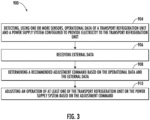
- one or more sensors 320 are used to detect operational data 380 of a transport refrigeration unit 22 and a power supply system 300 configured to provide electricity to the transport refrigeration unit 22.
- external data 384 may be data about at least one of a route of the transport refrigeration unit 22 and the power supply system 300, a current condition of the vehicle 102, the refrigeration unit 22, or a perishable good 118, or a predicted condition of the vehicle 102, the refrigeration unit 22, or the perishable good 118 is received.
- a recommended adjustment command 382 is determined based on the operational data 380 and the external data 384. The recommended adjustment command may be determined using at least one of artificial intelligence or machine learning.
- Machine learning and/or artificial intelligence may be applied in real time to the operational data 380 and the external data 384 including historical fleet data and contemporaneous fleet data to determine recommended adjustment commands 382 that optimize operation of the transport refrigeration system 200.
- the external data 384 may include historical fleet data and contemporaneous fleet data of similar transport refrigeration systems.
- an operation of at least one of the transport refrigeration unit 22 or the power supply system 300 is adjusted based on the recommended adjustment command 382.
- the operation may be automatically adjusted based on the recommended adjustment command 382 by at least one of a controller 600 of the transport refrigeration unit 22 or a power management module 310 of the power supply system 300.
- the recommended adjustment command 382 may be transmitted to a computing device 800 of an individual 404 and the individual 404 adjusts the operation based on the recommended adjustment command 382.
- the power supply system 300 includes at least a fuel cell 400
- the external data 384 includes at least a location of a fuel station 389 on a present route
- the recommended adjustment command 382 may call for increasing fuel consumption by the fuel cell 400, electricity generation by the fuel cell 400, and electricity consumption by the transport refrigeration unit 22 from the fuel cell 400 to increase cooling of a transport container 106 by the transport refrigeration unit 22 generating conditioned air 138 prior to the location of the fuel station 389 on the present route.
- the power supply system 300 includes at least an energy storage device 510
- the external data 384 includes at least a location of a charging station 386 on a present route
- the recommended adjustment command 382 may call for increasing electricity consumption by the transport refrigeration unit 22 from the energy storage device 510 to increase cooling of a transport container 106 by the transport refrigeration unit 22 generating conditioned air 138 prior to the location of the charging station 386 on the present route.
- the power supply system 300 includes at least an energy storage device 510 and an axle generator or a hub generator
- the external data 384 includes at least a location of a downhill descent on a present route
- the recommended adjustment command 382 may call for increasing electricity consumption by the transport refrigeration unit 22 from the energy storage device 510 to increase cooling of a transport container 106 by the transport refrigeration unit 22 generating conditioned air 138 prior to the location of the downhill descent on the present route.
- the power supply system 300 includes at least an energy storage device 510 and an axle generator or a hub generator
- the external data 384 includes at least a location of a braking area on a present route
- the recommended adjustment command 382 may call for increasing electricity consumption by the transport refrigeration unit 22 from the energy storage device 510 to increase cooling of a transport container 106 by the transport refrigeration unit 22 generating conditioned air 138 prior to the location of the braking area on the present route.
- the power supply system 300 is a fuel cell 400
- the external data 384 includes at least a location of a fuel station 389 on a present route
- the recommended adjustment command 382 may call for increasing fuel consumption by the fuel cell 400, electricity generation by the fuel cell 400, and electricity consumption by a thermal storage system 516 from the fuel cell 400 to increase cooling of a transport container 106 by charging the thermal storage system 516 prior to the location of the fuel station 389 on the present route.
- the power supply system 300 includes at least an energy storage device 510
- the external data 384 includes at least a location of a charging station 386 on a present route
- the recommended adjustment command 382 may call for increasing electricity consumption by a thermal storage system 516 from the energy storage device 510 to increase cooling of a transport container 106 by charging the thermal storage system 516 prior to the location of the charging station 386 on the present route.
- the power supply system 300 includes at least an energy storage device 510
- the external data 384 includes at least a location of a charging station 386 on a present route
- the recommended adjustment command 382 may call for increasing electricity consumption by a transport refrigeration unit 22 from the energy storage device 510 to increase cooling of a transport container 106 by the transport refrigeration unit generating conditioned air prior to the location of the charging station 386 on the present route.
- the external data 384 includes at least a location on a present route where a door will be opened to a transport container 106 operably connected to the transport refrigeration unit 22, and then the recommended adjustment command 382 may call for increasing electricity consumption by the transport refrigeration unit 22 from the power supply system to increase cooling of a transport container 106 by the transport refrigeration unit 22 generating conditioned air 138 prior to the location on the present route where the door will be opened to the transport container 106.
- the external data 384 includes at least a future weather event on a present route that will be experienced by the transport refrigeration unit 22, and then the recommended adjustment command 382 may call for increasing electricity consumption by the transport refrigeration unit 22 from the power supply system to increase cooling of a transport container 106 by the transport refrigeration unit 22 generating conditioned air 138 prior to the future weather event on the present route.
- the future weather event may be an increase in temperature or solar gain experienced by the transport container 106.
- the external data 384 includes at least a future weather event on a present route that will be experienced by the transport refrigeration unit 22, and then the recommended adjustment command 382 may call for decreasing electricity consumption by the transport refrigeration unit 22 from the power supply system to decrease cooling of a transport container 106 by the transport refrigeration unit 22 generating less conditioned air 138 prior to the future weather event on the present route.
- the future weather event may be a decrease in temperature or solar gain experienced by the transport container 106.
- the external data 384 includes at least a future weather event on a present route that will be experienced by the transport refrigeration unit 22, and then the recommended adjustment command 382 may call for increasing electricity consumption by the transport refrigeration unit 22 from the power supply system to increase heating of a transport container 106 by the transport refrigeration unit 22 hotter conditioned air 138 prior to the future weather event on the present route.
- the future weather event may be a decrease in temperature or solar gain experienced by the transport container 106.
- the external data 384 includes at least a future weather event on a present route that will be experienced by the transport refrigeration unit 22, and then the recommended adjustment command 382 may call for increasing electricity consumption by a thermal storage system 516 from the power supply system to increase cooling of the transport container 106 by charging the thermal storage system 516 prior to the future weather event on the present route.
- the future weather event may be an increase in temperature or solar gain experienced by the transport container 106.
- the method 900 may further include rerouting the transportation refrigeration unit 22 based on the at least one of the operational data 380 and the external data 384.
- the analytics module 348 may make control decisions based on the actual conditions of the perishable goods 118 (e.g., operational data 380) and predicted conditions of the perishable goods 118 (e.g., external data 384).
- the operational data 380 may include the actual conditions of the perishable goods 118 and the external data 384 may include the predicted conditions of the perishable goods 118.
- the control decisions may include intelligent rerouting that could maximize the value of the perishable goods 118). For example, ice cream may be dropped off at a store earlier in the route than originally planned because it is going to melt. This may have been caused by weather, traffic, equipment problems, other issues, or any combination thereof.
- embodiments can be in the form of processor-implemented processes and devices for practicing those processes, such as a processor.
- Embodiments can also be in the form of computer program code (e.g., computer program product) containing instructions embodied in tangible media (e.g., non-transitory computer readable medium), such as floppy diskettes, CD ROMs, hard drives, or any other non-transitory computer readable medium, wherein, when the computer program code is loaded into and executed by a computer, the computer becomes a device for practicing the embodiments.
- Embodiments can also be in the form of computer program code, for example, whether stored in a storage medium, loaded into and/or executed by a computer, or transmitted over some transmission medium, such as over electrical wiring or cabling, through fiber optics, or via electromagnetic radiation, wherein, when the computer program code is loaded into and executed by a computer, the computer becomes a device for practicing the exemplary embodiments.
- the computer program code segments configure the microprocessor to create specific logic circuits.
Landscapes
- Engineering & Computer Science (AREA)
- Mechanical Engineering (AREA)
- Thermal Sciences (AREA)
- Physics & Mathematics (AREA)
- Remote Sensing (AREA)
- Radar, Positioning & Navigation (AREA)
- Public Health (AREA)
- Transportation (AREA)
- Health & Medical Sciences (AREA)
- Life Sciences & Earth Sciences (AREA)
- Sustainable Development (AREA)
- Sustainable Energy (AREA)
- Devices That Are Associated With Refrigeration Equipment (AREA)
Abstract
Description
- The embodiments herein generally relate to a transport refrigeration system and a method of operating a transport refrigeration system. Specifically, this disclosure relates to proactive adjustment of transport refrigeration unit (TRU) settings to optimize system performance and efficiency.
- Refrigerated vehicles and trailers are commonly used to transport perishable goods. A transport refrigeration unit is commonly mounted to the vehicles or to the trailer in operative association with a cargo space defined within the vehicles or trailer for maintaining a controlled temperature environment within the cargo space.
- Conventionally, transport refrigeration units used in connection with refrigerated vehicles and refrigerated trailers include a refrigerant compressor, a condenser with one or more associated condenser fans, an expansion device, and an evaporator with one or more associated evaporator fans, which are connected via appropriate refrigerant lines in a closed refrigerant flow circuit. Air or an air/gas mixture is drawn from the interior volume of the cargo space by means of the evaporator fan(s) associated with the evaporator, passed through the airside of the evaporator in heat exchange relationship with refrigerant whereby the refrigerant absorbs heat from the air, thereby cooling the air. The cooled air is then supplied back to the cargo space.
- On many commercially available transport refrigeration units the compressor, and typically other components of the transport refrigeration unit, is powered during transit by a prime mover, either through a direct mechanical coupling or a belt drive. Alternatively, the transport refrigeration unit may be electrically powered (e.g., using an alternating current (AC) synchronous generator that generates AC power). The generated AC power is typically used to power an electric motor for driving the refrigerant compressor, and other components of the transport refrigeration unit. In a different electrically powered transport refrigeration unit, the AC generator may be replaced with a battery pack to provide power to the loads. The battery pack is a finite source of power that must be closely monitored to preserve energy. Accordingly, additional methods of conserving battery energy are desired.
- According to one aspect, a method of operating a transport refrigeration system is provided. The method includes: detecting, using one or more sensors, operational data of a transport refrigeration unit and a power supply system configured to provide electricity to the transport refrigeration unit; receiving external data; determining a recommended adjustment command based on the operational data and the external data; and adjusting an operation of at least one of the transport refrigeration unit or the power supply system based on the recommended adjustment command.
- The operation may be automatically adjusted based on the recommended adjustment command by at least one of a controller of the transport refrigeration unit or a power management module of the power supply system.
- The recommended adjustment command may be transmitted to a computing device of an individual, wherein the individual can adjust the operation based on the recommended adjustment command.
- Optionally, the power supply system comprises a fuel cell, wherein the external data comprises a location of a fuel station on a present route, and wherein adjusting operation of at least one of the transport refrigeration unit or the power supply system based on the recommended adjustment command further comprises: increasing fuel consumption by the fuel cell, electricity generation by the fuel cell, and electricity consumption by the transport refrigeration unit from the fuel cell to increase cooling of a transport container by the transport refrigeration unit generating conditioned air prior to the location of the fuel station on the present route.
- Optionally, the power supply system comprises an energy storage device, wherein the external data comprises a location of a charging station on a present route, and wherein adjusting operation of at least one of the transport refrigeration unit or the power supply system based on the recommended adjustment command further comprises: adjusting electricity consumption by the transport refrigeration unit from the energy storage device to adjust cooling of a transport container by the transport refrigeration unit air generating conditioned air prior to the location of the charging station on the present route.
- Optionally, the power supply system comprises an energy storage device and an axle generator or a hub generator, wherein the external data comprises a location of a downhill descent on a present route, and wherein adjusting operation of at least one of the transport refrigeration unit or the power supply system based on the recommended adjustment command further comprises: increasing electricity consumption by the transport refrigeration unit from the energy storage device to increase cooling of a transport container by the transport refrigeration unit generating conditioned air prior to the location of the downhill descent on the present route.
- Optionally, the power supply system comprises an energy storage device and an axle generator or a hub generator, wherein the external data comprises a location of a braking area on a present route, and wherein adjusting operation of at least one of the transport refrigeration unit or the power supply system based on the recommended adjustment command further comprises: increasing electricity consumption by the transport refrigeration unit from the energy storage device to increase cooling of a transport container by the transport refrigeration unit generating conditioned air prior to the location of the braking area on the present route.
- Optionally, the power supply system comprises a fuel cell, wherein the external data comprises a location of a fuel station on a present route, and wherein adjusting operation of at least one of the transport refrigeration unit or the power supply system based on the recommended adjustment command further comprises: increasing fuel consumption by the fuel cell, electricity generation by the fuel cell, and electricity consumption by a thermal storage system from the fuel cell to increase cooling of a transport container by charging the thermal storage system prior to the location of the fuel station on the present route.
- Optionally, the power supply system comprises an energy storage device, wherein the external data comprises a location of a charging station on a present route, and wherein adjusting operation of at least one of the transport refrigeration unit or the power supply system based on the recommended adjustment command further comprises: increasing electricity consumption by a thermal storage system from the energy storage device to increase cooling of a transport container by charging the thermal storage system prior to the location of the charging station on the present route.
- Optionally, the power supply system comprises an energy storage device and an axle generator or a hub generator, wherein the external data comprises a location of a downhill descent on a present route, and wherein adjusting operation of at least one of the transport refrigeration unit or the power supply system based on the recommended adjustment command further comprises: increasing electricity consumption by a thermal storage system from the energy storage device to increase cooling of a transport container by charging the thermal storage system prior to the location of the downhill descent on the present route.
- Optionally, the power supply system comprises an energy storage device and an axle generator or a hub generator, wherein the external data comprises a location of a braking area on a present route, and wherein adjusting operation of at least one of the transport refrigeration unit or the power supply system based on the recommended adjustment command further comprises: increasing electricity consumption by a thermal storage system from the energy storage device to increase cooling of a transport container by charging the thermal storage system prior to the location of the braking area on the present route.
- Optionally, the external data comprises a location on a present route where a door will be opened to a transport container operably connected to the transport refrigeration unit, and wherein adjusting operation of at least one of the transport refrigeration unit or the power supply system based on the recommended adjustment command further comprises: increasing electricity consumption by the transport refrigeration unit from the power supply system to increase cooling of a transport container by the transport refrigeration unit generating conditioned air prior to the location on the present route where the door will be opened to the transport container.
- Optionally, the external data comprises a future weather event on a present route that will be experienced by the transport refrigeration unit, and wherein adjusting operation of at least one of the transport refrigeration unit or the power supply system based on the recommended adjustment command further comprises: adjusting electricity consumption by the transport refrigeration unit from the power supply system to adjusting cooling of a transport container by the transport refrigeration unit generating conditioned air prior to the future weather event on the present route.
- Optionally, the external data comprises a location on a present route where a door will be opened to a transport container operably connected to the transport refrigeration unit, and wherein adjusting operation of at least one of the transport refrigeration unit or the power supply system based on the recommended adjustment command further comprises: increasing electricity consumption by a thermal storage system from the power supply system to increase cooling of the transport container the thermal storage system generating ice prior to the location on the present route where the door will be opened to the transport container.
- Optionally, the external data comprises a future weather event on a present route that will be experienced by the transport refrigeration unit, and wherein adjusting operation of at least one of the transport refrigeration unit or the power supply system based on the recommended adjustment command further comprises: increasing electricity consumption by a thermal storage system from the power supply system to increase cooling of the transport container by charging the thermal storage system prior to the future weather event on the present route.
- The recommended adjustment command may be determined using at least one of artificial intelligence or machine learning.
- The external data may be data about at least one of: a route of the transport refrigeration unit and the power supply system; a current condition of a vehicle, the refrigeration unit, or a perishable good; or a predicted condition of the vehicle, the refrigeration unit, or the perishable good.
- The transportation refrigeration unit may be rerouted based on the at least one of the operational data and the external data.
- According to another aspect, there is provided a transport refrigeration system comprising: a transport refrigeration unit configured to provide conditioned air to a refrigerated cargo space of a transport container; a power supply system configured to provide electricity to the transport refrigeration unit; one or more sensors configured to detect operational data of the transport refrigeration unit and the power supply system; and an analytics module configured received external data and determine a recommended adjustment command based on the operational data and the external data, wherein an operation of at least one of the transport refrigeration unit or the power supply system is adjusted based on the recommended adjustment command.
- The method described above may be implemented on the transport refrigeration system described above.
- According to yet another aspect, there is provided a computer program product tangibly embodied on a non-transitory computer readable medium, the computer program product including instructions that, when executed by a processor, cause the processor to perform operations comprising: detecting, using one or more sensors, operational data of a transport refrigeration unit and a power supply system configured to provide electricity to the transport refrigeration unit; receiving external data; determining a recommended adjustment command based on the operational data and the external data; and adjusting an operation of at least one of the transport refrigeration unit or the power supply system based on the recommended adjustment command.
- The computer program product described above may implement the method described above.
- Technical effects of embodiments of the present invention include adjusting operation of a transport refrigeration unit and/or a power supply of the transport refrigeration unit based on external data and operational data.
- The foregoing features and elements may be combined in various combinations without exclusivity, unless expressly indicated otherwise. These features and elements as well as the operation thereof will become more apparent in light of the following description and the accompanying drawings. It should be understood, however, that the following description and drawings are intended to be illustrative and explanatory in nature and non-limiting.
- Certain exemplary embodiments will now be described in greater detail by way of example only and with reference to the accompanying drawings (like elements are numbered alike) in which::
-
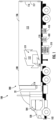
FIG. 1 is a schematic illustration of an exemplary transport refrigeration system; -
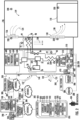
FIG. 2 is an enlarged schematic illustration of an exemplary transport refrigeration unit of the transport refrigeration system ofFIG. 1 ; and -
FIG. 3 is a flow process illustrating an exemplary method of operating the transport refrigeration system ofFIGS. 1 and2 . - A detailed description of one or more embodiments of the disclosed apparatus and method are presented herein by way of exemplification and not limitation with reference to the Figures.
- Embodiments disclosed herein preemptively adjusting operation of a transport refrigeration unit and/or a power supply for the transport refrigeration unit to account for future conditions experienced along a route.
- Referring now to
FIG. 1 , a schematic view of atransport refrigeration system 200 is illustrated. Thetransport refrigeration system 200 is being illustrated as atrailer system 100, as seen inFIG. 1 . Thetrailer system 100 includes avehicle 102 integrally connected to atransport container 106. Thevehicle 102 includes an operator's compartment orcab 104 and apropulsion motor 120 which acts as the drive system of thetrailer system 100. Thepropulsion motor 120 is configured to power thevehicle 102. The energy source that powers thepropulsion motor 120 may be at least one of compressed natural gas, liquefied natural gas, gasoline, electricity, diesel, hydrogen, electricity from a fuel cell, a electricity from a hydrogen fueled proton exchange membrane (PEM) fuel cell, electricity from a battery, electricity from a generator, or any combination thereof. Thepropulsion motor 120 may be an electric motor or a hybrid motor (e.g., a combustion engine and an electric motor). Thetransport container 106 is coupled to thevehicle 102. Thetransport container 106 may be removably coupled to thevehicle 102. Thetransport container 106 is a refrigerated trailer and includes atop wall 108, a directly opposedbottom wall 110, opposedside walls 112, and afront wall 114, with thefront wall 114 being closest to thevehicle 102. Thetransport container 106 further includes a door ordoors 117 at arear wall 116, opposite thefront wall 114. The walls of thetransport container 106 define a refrigeratedcargo space 119. It is appreciated by those of skill in the art that embodiments described herein may be applied to a tractor-trailer refrigerated system or non-trailer refrigeration such as, for example a rigid truck, a truck having refrigerated compartment. - Typically,
transport refrigeration systems 200 are used to transport and distribute perishable goods and environmentally sensitive goods (herein referred to as perishable goods 118). Theperishable goods 118 may include but are not limited to fruits, vegetables, grains, beans, nuts, eggs, dairy, seed, flowers, meat, poultry, fish, ice, blood, pharmaceuticals, or any other suitable cargo requiring temperature controlled transport. Thetransport refrigeration unit 22 is in operative association with the refrigeratedcargo space 119 and is configured to provide conditioned air to thetransport container 106. - The
transport refrigeration unit 22 is powered by afuel cell 400 and/or anenergy storage device 510. Thefuel cell 400, associatedfuel tanks 410, andenergy storage device 510 may be attached to thetrailer system 100. Thefuel cell 400, associatedfuel tanks 410, andenergy storage device 510 may be attached to a bottom of thetrailer system 100. - Referring now to
FIG. 2 , with continued reference toFIG. 1 , an enlarged schematic view of thetransport refrigeration system 200 is illustrated. Thetransport refrigeration system 200 includes atransport refrigeration unit 22, arefrigerant compression device 32, anelectric motor 26 for driving therefrigerant compression device 32, acontroller 600, a refrigerant heatrejection heat exchanger 34, an expansion device 36, and a refrigerant heatabsorption heat exchanger 38 connected in refrigerant flow communication in a closed loop refrigerant circuit and arranged in a conventional refrigeration cycle. Thetransport refrigeration unit 22 functions, under the control of thecontroller 600, to establish and regulate a desired environmental parameters, such as, for example temperature, pressure, humidity, carbon dioxide, ethylene, ozone, light exposure, vibration exposure, and other conditions in the refrigeratedcargo space 119, as known to one of ordinary skill in the art. In an embodiment, thetransport refrigeration unit 22 is capable of providing a desired temperature and humidity range. - The
transport refrigeration unit 22 also includes one ormore fans 40 associated with the refrigerant heatrejection heat exchanger 34 and driven by fan motor(s) 42 and one ormore fans 44 associated with the refrigerant heatabsorption heat exchanger 38 and driven by fan motor(s) 46. Thetransport refrigeration unit 22 may also include aheater 48 associated with the refrigerant heatabsorption heat exchanger 38. In an embodiment, theheater 48 may be an electric resistance heater. It is to be understood that other components (not shown) may be incorporated into the refrigerant circuit as desired, including for example, but not limited to, a suction modulation valve, a receiver, a filter/dryer, an economizer circuit. - The refrigerant heat
rejection heat exchanger 34 may, for example, comprise one or more refrigerant conveying coiled tubes or one or more tube banks formed of a plurality of refrigerant conveying tubes across flow path to theheat outlet 142. The fan(s) 40 are operative to pass air, typically ambient air, across the tubes of the refrigerant heatrejection heat exchanger 34 to cool refrigerant vapor passing through the tubes. The refrigerant heatrejection heat exchanger 34 may operate either as a refrigerant condenser, such as if thetransport refrigeration unit 22 is operating in a subcritical refrigerant cycle or as a refrigerant gas cooler, such as if thetransport refrigeration unit 22 is operating in a transcritical cycle. - The refrigerant heat
absorption heat exchanger 38 may, for example, also comprise one or more refrigerant conveying coiled tubes or one or more tube banks formed of a plurality of refrigerant conveying tubes extending across flow path from areturn air intake 136. The fan(s) 44 are operative to pass air drawn from the refrigeratedcargo space 119 across the tubes of the refrigerant heatabsorption heat exchanger 38 to heat and evaporate refrigerant liquid passing through the tubes and cool the air. The air cooled in traversing the refrigerant heatabsorption heat exchanger 38 is supplied back to the refrigeratedcargo space 119 through arefrigeration unit outlet 140. It is to be understood that the term "air" when used herein with reference to the atmosphere within the cargo box includes mixtures of air with other gases, such as for example, but not limited to, nitrogen or carbon dioxide, sometimes introduced into a refrigerated cargo box for transport of perishable produce. - Airflow is circulated into and through the refrigerated
cargo space 119 of thetransport container 106 by means of thetransport refrigeration unit 22. Areturn air 134 flows into thetransport refrigeration unit 22 from the refrigeratedcargo space 119 through the transport refrigeration unitreturn air intake 136, and across the refrigerant heatabsorption heat exchanger 38 via thefan 44, thus conditioning thereturn air 134 to a selected or predetermined temperature. Thereturn air 134, now referred to asconditioned air 138, is supplied into therefrigerated cargo space 119 of thetransport container 106 through the transportrefrigeration unit outlet 140.Heat 135 is removed from the refrigerant heatrejection heat exchanger 34 through theheat outlet 142. Thetransport refrigeration unit 22 may contain anexternal air inlet 144, as shown inFIG. 2 , to aid in the removal ofheat 135 from the refrigerant heatrejection heat exchanger 34 by pulling inexternal air 137. Theconditioned air 138 may cool theperishable goods 118 in the refrigeratedcargo space 119 of thetransport container 106. It is to be appreciated that thetransport refrigeration unit 22 can further be operated in reverse to warm thetransport container 106 when, for example, the outside temperature is very low. In the illustrated embodiment, thereturn air intake 136, the transportrefrigeration unit outlet 140, theheat outlet 142, and theexternal air inlet 144 are configured as grilles to help prevent foreign objects from entering thetransport refrigeration unit 22. - The
transport refrigeration system 200 also includes acontroller 600 configured for controlling the operation of thetransport refrigeration system 200 including, but not limited to, the operation of various components of therefrigerant unit 22 to provide and maintain a desired thermal environment within the refrigeratedcargo space 119. Thecontroller 600 may also be able to selectively operate theelectric motor 26. Thecontroller 600 may be an electronic controller including aprocessor 634 and an associatedmemory 632 comprising computer-executable instructions that, when executed by theprocessor 634, cause theprocessor 634 to perform various operations. Theprocessor 634 may be but is not limited to a single-processor or multi-processor system of any of a wide array of possible architectures, including field programmable gate array (FPGA), central processing unit (CPU), application specific integrated circuits (ASIC), digital signal processor (DSP) or graphics processing unit (GPU) hardware arranged homogenously or heterogeneously. Thememory 632 may be a storage device such as, for example, a random access memory (RAM), read only memory (ROM), or other electronic, optical, magnetic or any other computer readable medium. - The
fuel cell 400 may include an anode electrode and a cathode electrode separated by an electrolyte (not shown for simplicity). A reducing fluid such as hydrogen is supplied to the anode electrode, and an oxidant such as oxygen or air is supplied to the cathode electrode. In a cell utilizing a proton exchange membrane ("PEM") as the electrolyte, the hydrogen electrochemically reacts at a catalyst surface of the anode electrode to produce hydrogen ions and electrons. The electrons are conducted to an external load circuit (e.g., thetransport refrigeration unit 22 or energy storage device 510) and then returned to the cathode electrode, while the hydrogen ions transfer through the electrolyte to the cathode electrode, where they react with the oxidant and electrons to produce water and release thermal energy. Afuel tank 410 is configured to store and provide the reducing fluid to thefuel cell 400. In an embodiment, the reducing fluid is hydrogen. Thefuel tank 410 may be refilled with fuel at afuel station 389. - In one embodiment, the
fuel cell 400 andfuel tank 410 may be located inside thetransport refrigeration unit 22, as shown inFIG. 2 . In another embodiment, thefuel cell 400 andfuel tank 410 may be located outside of thetransport refrigeration unit 22. - In one embodiment, the
energy storage device 510 may be located within thetransport refrigeration unit 22, as shown inFIG. 2 . In another embodiment, theenergy storage device 510 may be located outside of thetransport refrigeration unit 22. Thefuel cell 400 may power thetransport refrigeration unit 22 directly or may provide electricity to theenergy storage device 510, which then provides power to thetransport refrigeration unit 22. - The
energy storage device 510 may include a battery system 512, a capacitor 514, and/or any other electricity storage system known to one of skill in the art. The battery system 512 may comprise, chemical batteries, lithium-ion batteries, solid state batteries, flow batteries, or any other type of battery known to one of skill in the art. The battery system 512 may employ multiple batteries organized into battery banks. The capacitor 514 may be an electrolytic capacitor, a mica capacitor, a paper capacitor a film capacitor, a non-polarized capacitor, a ceramic capacitor, or any type of capacitor known to one of skill in the art. - The
energy storage device 510 may be charged by astationary charging station 386 such as, for example a three-phase 460Vac (60Hz) or 400Vac (50Hz) power outlet. The chargingstation 386 may provide single phase (e.g., level 2 charging capability) or three phase AC power to theenergy storage device 510. It is understood that the chargingstation 386 may have any phase charging and embodiments disclosed herein are not limited to single phase or three phase AC power. In an embodiment, the charging station may be a high voltage DC power, such as, for example, 500VDC. One function of the chargingstation 386 is to balance the cell voltage of individual cells of the battery system at some regular cadence. - A thermal storage system 516 may be present to sink electrical energy into in order to cool the
transport container 106. The thermal storage system 516 may utilize a phase change material, heat transfer fluids, or thermochemical reactions to provide cooling to thetransport container 106. For example, the thermal storage system 516 may utilize electricity to change the phase change material from one phase to another phase to cool thetransport container 106. The thermal storage system 516 may be an ice generation system to create ice to cool thetransport container 106. The thermal storage system 516 may be an ice generation system to create ice to cool thetransport container 106. The ice generation system may generate ice when electricity is available or plentiful to provide lasting cooling for thetransport container 106 to conserve electricity later by reducing use of thecompression device 32 for cooling. - The
transport refrigeration unit 22 has a plurality of electrical power demand loads on theenergy storage device 510, including, but not limited to, theelectric motor 26 for thecompression device 32, the fan motor 42 for thefan 40 associated with the refrigerant heatrejection heat exchanger 34, and thefan motor 46 for thefan 44 associated with the refrigerant heatabsorption heat exchanger 38. As each of thefan motors 42, 46 and theelectric motor 26 may be an AC motor or a DC motor, it is to be understood thatvarious power converters 52, such as AC to DC rectifiers, DC to AC inverters, AC to AC voltage/frequency converters, and DC to DC voltage converters, may be employed in connection with or without theenergy storage device 510 as appropriate. In the depicted embodiment, theheater 48 also constitutes an electrical power demand load. Theelectric resistance heater 48 may be selectively operated by thecontroller 600 whenever a control temperature within the temperature controlled cargo box drops below a preset lower temperature limit, which may occur in a cold ambient environment. In such an event thecontroller 600 would activate theheater 48 to heat air circulated over theheater 48 by the fan(s) 44 associated with the refrigerant heatabsorption heat exchanger 38. Theheater 48 may also be used to de-ice thereturn air intake 136. Additionally, theelectric motor 26 being used to power therefrigerant compression device 32 constitutes a demand load. Therefrigerant compression device 32 may comprise a single-stage or multiple-stage compressor such as, for example, a reciprocating compressor or a scroll compressor. Thetransport refrigeration system 200 may also include avoltage sensor 28 to sense the voltage coming into thetransport refrigeration unit 22. - The power demand loads of the
transport refrigeration unit 22 may be managed and fulfilled by apower supply system 300. Thepower supply system 300 may be configured to provide electricity to power thetransport refrigeration system 22. The power supply system may store and/or generate electricity. Thepower supply system 300 may include thefuel cell 400, thefuel tank 410, theenergy storage device 510, and thepower management module 310. It is understood that the embodiment disclosed herein may be applicable to other power supply systems that may or may not include fuel cells. Some examples of other power supply systems may include a fossil fuel generator, a generator 388 (e.g., a hub generator, an axle generator), a solar panel, a battery system, thepropulsion motor 120 of thevehicle 102, or any other power supply system known to one of skill in the art. Thegenerator 388 may be a hub generator or a wheel generator operably connect to a wheel or axle of thetransport container 106 that is configured to generator electricity during the slowing of thevehicle 102 or the downward descent of thevehicle 102. Thegenerator 388 may serve as part of thepower supply system 300 and assist in generating supplemental electricity for thepower supply system 300 as required. - The
power management module 310 may be an electronic controller including aprocessor 324 and an associatedmemory 322 comprising computer-executable instructions (i.e., computer program product) that, when executed by theprocessor 324, cause theprocessor 324 to perform various operations. Theprocessor 324 may be, but is not limited to, a single-processor or multi-processor system of any of a wide array of possible architectures, including field programmable gate array (FPGA), central processing unit (CPU), application specific integrated circuits (ASIC), digital signal processor (DSP) or graphics processing unit (GPU) hardware arranged homogenously or heterogeneously. Thememory 322 may be but is not limited to a random access memory (RAM), read only memory (ROM), or other electronic, optical, magnetic or any other computer readable medium. While thepower management module 310 is being illustrated and described herein as a separate electronic controller the embodiments described herein are applicable to thepower management module 310 being incorporated as software within thecontroller 600 of thetransport refrigeration unit 22 or a controller of thefuel cell 400. -
FIG. 2 also illustrates a transportation refrigeration unitperformance adjustment system 700. It should be appreciated that, although particular systems are separately defined in the schematic block diagrams, each or any of the systems may be otherwise combined or separated via hardware and/or software. - The transportation refrigeration unit
performance adjustment system 700, as illustrated, may include the cloud-basedcontroller 740, thecontroller 600 of thetransport refrigeration unit 22, one ormore sensors 320, and acomputer application 850 installed or accessible on acomputing device 800. The one ormore sensors 320 that may be distributed throughout thetransport refrigeration unit 22 and therefrigerated cargo space 119. For example, thesensors 320 may be located on in thetransport container 106, proximate or on theperishable goods 118, proximate or on thereturn air intake 136, proximate or on therefrigeration unit outlet 140, proximate or on the refrigerant heatabsorption heat exchanger 38, proximate or on the refrigerant heatrejection heat exchanger 34, proximate or on therefrigerant compression device 32, proximate or on theelectric motor 26, proximate or on theenergy storage device 510, proximate or on thefuel cell 400, proximate or on thefuel tank 410, or any other conceivable location that may require sensing. Eachsensor 320 is configured to detectoperational data 380 and transmit theoperational data 380.Operational data 380 may include temperature, pressure, speed, operational parameters of the component that thesensor 320 is attached to, operational inputs from an operator, humidity, voltage, current, charge level, flow, solar radiation, VOC levels, refrigerant or gas leaks, vibration, door opening status, occupancy/cargo load levels, location and altitude (via GPS), or any other similar parameter known to one of skill in the art. Some of thesensors 320 may be located in thevehicle 102 and may be in local communication with thecontroller 600. - The
controller 600 is configured to communicate with thecomputer application 850 and the cloud-basedcontroller 740. Thecontroller 600 may be configured to communicate with thecomputer application 850 through the cloud-basedcontroller 740. Thecontroller 600 includes acommunication device 636 to enable this communication. Thecommunication device 636 may be capable of wireless communication including but not limited to Wi-Fi, Bluetooth, Zigbee, Sub-GHz RF Channel, cellular, satellite, or any other wireless signal known to one of skill in the art. Thecommunication device 636 may be configured to communicate with the cloud-basedcontroller 740 through theinternet 306 using thecommunication device 636. Thecommunication device 636 may be connected to theinternet 306 through a Wi-Fi router or a building management system at a terminal or delivery stop. Alternatively, or additionally, thecommunication device 636 may be configured to communicate directly with the cloud-basedcontroller 740. - The cloud-based
controller 740 may be a remote computer server that includes aprocessor 342 and an associatedmemory 344 comprising computer-executable instructions (i.e., computer program product) that, when executed by theprocessor 342, cause theprocessor 342 to perform various operations. Theprocessor 342 may be, but is not limited to, a single-processor or multi-processor system of any of a wide array of possible architectures, including field programmable gate array (FPGA), central processing unit (CPU), application specific integrated circuits (ASIC), digital signal processor (DSP) or graphics processing unit (GPU) hardware arranged homogenously or heterogeneously. Thememory 344 may be but is not limited to a random access memory (RAM), read only memory (ROM), or other electronic, optical, magnetic or any other computer readable medium. - The cloud-based
controller 740 also includes acommunication device 346. Thecommunication device 346 may be capable of communication with theinternet 306. Thecommunication device 346 may be configured to communicate with thecomputing device 800 through theinternet 306. Thecommunication device 346 may be a software module that handles communications to and from thecomputer application 850 or to and from thecontroller 600. - The
computing device 800 may belong to or be in possession of an individual 404. The individual 404 may be a driver of thevehicle 102, a mechanic or technician maintaining thetransport refrigeration unit 22, a worker loading or unloading therefrigerated cargo space 119, a manager responsible for monitoring thetransport refrigeration unit 22, or any other individual that may be responsible for thetransport refrigeration unit 22. - The
computing device 800 may be a desktop computer, a stationary device (e.g., control panel), a laptop computer, or a mobile computing device that is typically carried by a person, such as, for example a phone, a smart phone, smart glasses, a PDA, a smart watch, a tablet, a laptop, a fixed computing module on therefrigeration unit 22 or in thevehicle 102, or any other mobile computing device known to one of skill in the art. - The
computing device 800 includes acontroller 810 configured to control operations of thecomputing device 800. Thecontroller 810 may be an electronic controller including aprocessor 830 and an associatedmemory 820 comprising computer-executable instructions (i.e., computer program product) that, when executed by theprocessor 830, cause theprocessor 830 to perform various operations. Theprocessor 830 may be, but is not limited to, a single-processor or multi-processor system of any of a wide array of possible architectures, including field programmable gate array (FPGA), central processing unit (CPU), application specific integrated circuits (ASIC), digital signal processor (DSP) or graphics processing unit (GPU) hardware arranged homogenously or heterogeneously. Thememory 820 may be but is not limited to a random access memory (RAM), read only memory (ROM), or other electronic, optical, magnetic or any other computer readable medium. - It is understood that the
computer application 850 may be a mobile application installed on thecomputing device 800. Thecomputer application 850 may be accessible fromcomputing device 800, such as, for example, a software-as-as service or a website. Thecomputer application 850 may be in communication with the cloud-basedcontroller 740 via theinternet 306. - The
computing device 800 includes acommunication device 840 configured to communicate with theinternet 306 through one or more wireless signals. The one or more wireless signals may include Wi-Fi, Bluetooth, Zigbee, Sub-GHz RF Channel, cellular, satellite, or any other wireless signal known to one of skill in the art. Alternatively, thecomputing device 800 may be connected to theinternet 306 through a hardwired connection. Thecomputing device 800 is configured to communicate with the cloud-basedcontroller 740 through theinternet 306. - The
computing device 800 may include adisplay device 880, such as for example a computer display, an LCD display, an LED display, an OLED display, a touchscreen of a smart phone, tablet, or any other similar display device known to one of the skill in the art. The individual 404 operating thecomputing device 800 is able to view thecomputer application 850 through thedisplay device 880. If thecomputing device 800 is a pair of smart glasses, then thedisplay device 880 may be a transparent lens of the pair of smart glasses. - The
computing device 800 includes aninput device 870 configured to receive a manual input from a user (e.g., human being) ofcomputing device 800. Theinput device 870 may be a keyboard, a touch screen, a joystick, a knob, a touchpad, one or more physical buttons, a microphone configured to receive a voice command, a camera or sensor configured to receive a gesture command, an inertial measurement unit configured to detect a shake of thecomputing device 800, or any similar input device known to one of skill in the art. The user operating thecomputing device 800 is able to enter data into thecomputer application 850 through theinput device 870. Theinput device 870 allows the user operating thecomputing device 800 to data into thecomputer application 850 via a manual input toinput device 870. For example, the user may respond to a prompt on thedisplay device 880 by entering a manual input via theinput device 870. In one example, the manual input may be a touch on the touchscreen. In an embodiment, thedisplay device 880 and theinput device 870 may be combined into a single device, such as, for example, a touchscreen on a smart phone. - The
computing device 800 device may also include afeedback device 860. Thefeedback device 860 may activate in response to a manual input via theinput device 870. Thefeedback device 860 may be a haptic feedback vibration device and/or a speaker emitting a sound. Thefeedback device 860 may activate to confirm that the manual input entered via theinput device 870 was received via thecomputer application 850. For example, thefeedback device 860 may activate by emitting an audible sound or vibrate thecomputing device 800 to confirm that the manual input entered via theinput device 870 was received via thecomputer application 850. - The
computing device 800 may also include alocation determination device 890 that may be configured to determine a location of thecomputing device 800 using cellular signal triangulation, a global position satellite (GPS), or any location termination method known to one of skill in the art. - An
analytics module 348 may be stored on thememory 344 of the cloud-basedcontroller 740 and/or thecontroller 600. In another embodiment, theanalytics module 348 may be distributed amongst multiple cloud-based controllers (rather than the single cloud-basedcontroller 740 that is illustrated inFIG. 2 ) and/or thecontroller 600. In another embodiment, theanalytics module 348 may be located locally on thememory 632 of thecontroller 600. - The
analytics module 348 may be a software algorithm capable of performing artificial intelligence and/or machining learning functions to analyze theoperational data 380 from thetransport refrigeration unit 22 andexternal data 384 from theinternet 306 to determine recommendedadjustment command 382. - As aforementioned the
operational data 380 may be detected by thesensors 320. Theoperational data 380 may be data relating to the operation and/or performance of thetransport refrigeration unit 22 and/orpower supply system 300. Theoperational data 380 may include an operating temperature, an operating pressure, and an operating speed of any component of thetransport refrigeration unit 22 or thepower supply system 300. Specific examples ofoperational data 380 may include, a temperature of theperishable goods 118, a temperature ofreturn air 134 flowing through thereturn air intake 136, a temperature ofconditioned air 138 flowing through therefrigeration unit outlet 140, a temperature of the refrigerant heatabsorption heat exchanger 38, a temperature the refrigerant heatrejection heat exchanger 34, a pressure of therefrigerant compression device 32, a speed of therefrigerant compression device 32, a speed of theelectric motor 26, a temperature of theelectric motor 26, a state of charge of theenergy storage device 510, a temperature of theenergy storage device 510, an energy output of thefuel cell 400, a temperature of thefuel cell 400, a pressure of thefuel tank 410, a fuel level of thefuel tank 410, a Global Positioning Satellite (GPS) location of thetransport container 106, or any other conceivable data parameter. Advantageously, the GPS location may be useful to determine where the transport container is located in its present route. - The
external data 384 may be obtained from theinternet 306 and/or other remote databases. Theexternal data 384 may include, but is not limited to, delivery schedules, predicted delays due to traffic or weather, predicted weather, predicted weather that may affect anticipated solar gain, temperature, or humidity conditions, en route changes due to cancellations, typical operational patterns (e.g., breaks, refueling), locations of fuel stations on a present route (and their status - open/closed pricing) or recommended revised routing. Theexternal data 384 may also relate to the condition of a digital twin, which may indicate problems with thevehicle 102, therefrigeration system 200, or the status of the perishable goods 118 (e.g., it may predict that the thermal conditions maintained have caused, or will cause the condition of the cargo (118) to degrade). - The
analytics module 348 is configured to determine a recommendedadjustment command 382 based on theexternal data 384 and/or theoperational data 380. The recommendedadjustment command 382 is configured to adjust a performance of thetransport refrigeration unit 22 and/or thepower supply system 300. - In one example, the
analytics module 348 generates a recommendedadjustment command 382 that increases cooling to thetransport container 106 in advance oftransport refrigeration system 200 reaching hotter weather, experiencing lengthy traffic, or stopping where thedoors 117 may be opened for extended period of time. Advantageously, this recommendedadjustment command 382 may help alleviate strain on thetransport refrigeration unit 22, or protect/improve the condition of the goods (118), when it experiences these conditions. In another example, theanalytics module 348 generates a recommendedadjustment command 382 that commands the thermal storage system 516 to generate ice to keep thetransport container 106 cool in advance oftransport refrigeration system 200 reaching hotter weather, experiencing lengthy traffic, or stopping where thedoors 117 may be opened for extended period of time. Advantageously, this recommendedadjustment command 382 may help alleviate strain on thetransport refrigeration unit 22 when it experiences these conditions. - In another example, the
analytics module 348 generates a recommendedadjustment command 382 that increases cooling to thetransport container 106 or commands the thermal storage system 516 to generate ice to keep thetransport container 106 cool in order to drain theenergy storage device 510 in advance of thetransport refrigeration system 200 approaching a hill where thegenerator 388 may be able to generate energy from the hub or axle due to the downhill descent, a braking area where thegenerator 388 may be able to generate energy from the hub or axle due to the slowing of thevehicle 102, or a chargingstation 386 where theenergy storage device 510 may be recharged. Advantageously, this recommendedadjustment command 382 may help dump energy into cooling or ice creation when other energy sources will be immediately available to recharge theenergy storage device 510, thus allowing the overall system to operate for longer periods of time. - In another example, the
analytics module 348 generates a recommendedadjustment command 382 that increases electricity generation by thefuel cell 400 to increase cooling to thetransport container 106 or generate ice using the thermal storage system 516 to keep thetransport container 106 cool in order to drain thefuel tank 410 advance of thetransport refrigeration system 200 approaching afuel station 389 where thefuel tank 410 may be refilled. Advantageously, this recommendedadjustment command 382 may help empty thefuel tank 410 by dumping energy into cooling or ice creation when other fuel sources will be immediately available to refill thefuel tank 410, thus allowing the overall system to operate for longer periods of time. - The
analytics module 348 may also be configured to temporarily reduce the nominal cargo temperature setpoint in times of limited power/capacity. At a minimum theanalytics module 348 may also be configured to operate thetransport refrigeration unit 22 at the lower limits of acceptable temperature (analogous to setting your home thermostat a little higher or lower than preferred to save energy). In severe limiting conditions it may be advisable to violate the desired temperature conditions. - The recommended
adjustment command 382 may be transmitted to thecontroller 600 and thecontroller 600 may automatically adjust operation of thetransport refrigeration unit 22 and/or thepower supply system 300 based on the recommendedadjustment command 382. Alternatively, thecontroller 600 may relay the recommendedadjustment command 382 to thepower supply system 300 and thepower supply system 300 may automatically adjust operation of thepower supply system 300 based on the recommendedadjustment command 382. - Alternatively, the recommended
adjustment command 382 may be transmitted to thecomputing device 800 and the individual 404 may manually adjust operation of thetransport refrigeration unit 22 and/or thepower supply system 300 based on the recommendedadjustment command 382. - The
analytics module 348 may continuously learn from each route taken and update the underlying algorithms to provide for better performance and optimization of thetransport refrigeration unit 22 and thepower supply system 300 on future routes. This learned data from each route may be shared across multiple differenttransport refrigeration units 22 in a fleet oftransport refrigeration units 22 to better optimize the data learned from each route, which would lead to better performance of eachtransport refrigeration unit 22 in the fleet. - Referring now to
FIG. 3 , with continued reference toFIGS. 1 and2 . A flow process of amethod 900 of operating atransport refrigeration system 200 is illustrated. In an embodiment, themethod 900 may be performed by theanalytics module 348. - At
block 904, one ormore sensors 320 are used to detectoperational data 380 of atransport refrigeration unit 22 and apower supply system 300 configured to provide electricity to thetransport refrigeration unit 22. Atblock 906,external data 384. Theexternal data 384 may be data about at least one of a route of thetransport refrigeration unit 22 and thepower supply system 300, a current condition of thevehicle 102, therefrigeration unit 22, or a perishable good 118, or a predicted condition of thevehicle 102, therefrigeration unit 22, or the perishable good 118 is received. Atblock 908, a recommendedadjustment command 382 is determined based on theoperational data 380 and theexternal data 384. The recommended adjustment command may be determined using at least one of artificial intelligence or machine learning. - Machine learning and/or artificial intelligence may be applied in real time to the
operational data 380 and theexternal data 384 including historical fleet data and contemporaneous fleet data to determine recommended adjustment commands 382 that optimize operation of thetransport refrigeration system 200. Theexternal data 384 may include historical fleet data and contemporaneous fleet data of similar transport refrigeration systems. - At
block 910, an operation of at least one of thetransport refrigeration unit 22 or thepower supply system 300 is adjusted based on the recommendedadjustment command 382. The operation may be automatically adjusted based on the recommendedadjustment command 382 by at least one of acontroller 600 of thetransport refrigeration unit 22 or apower management module 310 of thepower supply system 300. Alternatively, the recommendedadjustment command 382 may be transmitted to acomputing device 800 of an individual 404 and the individual 404 adjusts the operation based on the recommendedadjustment command 382. - In one embodiment, the
power supply system 300 includes at least afuel cell 400, theexternal data 384 includes at least a location of afuel station 389 on a present route, and then the recommendedadjustment command 382 may call for increasing fuel consumption by thefuel cell 400, electricity generation by thefuel cell 400, and electricity consumption by thetransport refrigeration unit 22 from thefuel cell 400 to increase cooling of atransport container 106 by thetransport refrigeration unit 22 generating conditionedair 138 prior to the location of thefuel station 389 on the present route. - In another embodiment, the
power supply system 300 includes at least anenergy storage device 510, theexternal data 384 includes at least a location of a chargingstation 386 on a present route, and then the recommendedadjustment command 382 may call for increasing electricity consumption by thetransport refrigeration unit 22 from theenergy storage device 510 to increase cooling of atransport container 106 by thetransport refrigeration unit 22 generating conditionedair 138 prior to the location of the chargingstation 386 on the present route. - In another embodiment, the
power supply system 300 includes at least anenergy storage device 510 and an axle generator or a hub generator, theexternal data 384 includes at least a location of a downhill descent on a present route, and then the recommendedadjustment command 382 may call for increasing electricity consumption by thetransport refrigeration unit 22 from theenergy storage device 510 to increase cooling of atransport container 106 by thetransport refrigeration unit 22 generating conditionedair 138 prior to the location of the downhill descent on the present route. - In another embodiment, the
power supply system 300 includes at least anenergy storage device 510 and an axle generator or a hub generator, theexternal data 384 includes at least a location of a braking area on a present route, and then the recommendedadjustment command 382 may call for increasing electricity consumption by thetransport refrigeration unit 22 from theenergy storage device 510 to increase cooling of atransport container 106 by thetransport refrigeration unit 22 generating conditionedair 138 prior to the location of the braking area on the present route. - In another embodiment, the
power supply system 300 is afuel cell 400, theexternal data 384 includes at least a location of afuel station 389 on a present route, and then the recommendedadjustment command 382 may call for increasing fuel consumption by thefuel cell 400, electricity generation by thefuel cell 400, and electricity consumption by a thermal storage system 516 from thefuel cell 400 to increase cooling of atransport container 106 by charging the thermal storage system 516 prior to the location of thefuel station 389 on the present route. - In another embodiment, the
power supply system 300 includes at least anenergy storage device 510, theexternal data 384 includes at least a location of a chargingstation 386 on a present route, and then the recommendedadjustment command 382 may call for increasing electricity consumption by a thermal storage system 516 from theenergy storage device 510 to increase cooling of atransport container 106 by charging the thermal storage system 516 prior to the location of the chargingstation 386 on the present route. - In another embodiment, the
power supply system 300 includes at least anenergy storage device 510, theexternal data 384 includes at least a location of a chargingstation 386 on a present route, and then the recommendedadjustment command 382 may call for increasing electricity consumption by atransport refrigeration unit 22 from theenergy storage device 510 to increase cooling of atransport container 106 by the transport refrigeration unit generating conditioned air prior to the location of the chargingstation 386 on the present route. - In another embodiment, the
power supply system 300 includes at least anenergy storage device 510 and an axle generator or a hub generator, theexternal data 384 includes at least a location of a downhill descent on a present route, and then the recommendedadjustment command 382 may call for increasing electricity consumption by a thermal storage system 516 from theenergy storage device 510 to increase cooling of atransport container 106 by charging the thermal storage system 516 prior to the location of the downhill descent on the present route. - In another embodiment, the
power supply system 300 includes at least anenergy storage device 510 and an axle generator or a hub generator, theexternal data 384 includes at least a location of a braking area on a present route, and then the recommendedadjustment command 382 may call for increasing electricity consumption by a thermal storage system 516 from theenergy storage device 510 to increase cooling of atransport container 106 by charging the thermal storage system 516 prior to the location of the braking area on the present route. - In another embodiment, the
external data 384 includes at least a location on a present route where a door will be opened to atransport container 106 operably connected to thetransport refrigeration unit 22, and then the recommendedadjustment command 382 may call for increasing electricity consumption by thetransport refrigeration unit 22 from the power supply system to increase cooling of atransport container 106 by thetransport refrigeration unit 22 generating conditionedair 138 prior to the location on the present route where the door will be opened to thetransport container 106. - In another embodiment, the
external data 384 includes at least a future weather event on a present route that will be experienced by thetransport refrigeration unit 22, and then the recommendedadjustment command 382 may call for increasing electricity consumption by thetransport refrigeration unit 22 from the power supply system to increase cooling of atransport container 106 by thetransport refrigeration unit 22 generating conditionedair 138 prior to the future weather event on the present route. The future weather event may be an increase in temperature or solar gain experienced by thetransport container 106. - In another embodiment, the
external data 384 includes at least a future weather event on a present route that will be experienced by thetransport refrigeration unit 22, and then the recommendedadjustment command 382 may call for decreasing electricity consumption by thetransport refrigeration unit 22 from the power supply system to decrease cooling of atransport container 106 by thetransport refrigeration unit 22 generating lessconditioned air 138 prior to the future weather event on the present route. The future weather event may be a decrease in temperature or solar gain experienced by thetransport container 106. - In another embodiment, the
external data 384 includes at least a future weather event on a present route that will be experienced by thetransport refrigeration unit 22, and then the recommendedadjustment command 382 may call for increasing electricity consumption by thetransport refrigeration unit 22 from the power supply system to increase heating of atransport container 106 by thetransport refrigeration unit 22 hotterconditioned air 138 prior to the future weather event on the present route. The future weather event may be a decrease in temperature or solar gain experienced by thetransport container 106. - In another embodiment, the
external data 384 includes at least a location on a present route where a door will be opened to atransport container 106 operably connected to thetransport refrigeration unit 22, and then the recommendedadjustment command 382 may call for increasing electricity consumption by a thermal storage system 516 from the power supply system to increase cooling of thetransport container 106 by charging the thermal storage system 516 prior to the location on the present route where the door will be opened to thetransport container 106. - In another embodiment, the
external data 384 includes at least a future weather event on a present route that will be experienced by thetransport refrigeration unit 22, and then the recommendedadjustment command 382 may call for increasing electricity consumption by a thermal storage system 516 from the power supply system to increase cooling of thetransport container 106 by charging the thermal storage system 516 prior to the future weather event on the present route. The future weather event may be an increase in temperature or solar gain experienced by thetransport container 106. - Further, in the event the refrigerated
cargo space 119 is subdivided into sub-spaces, each separately temperature controlled, then the aforementioned control examples could be applied individually to the separate compartments and that preference could be given one compartment over another. - The
method 900 may further include rerouting thetransportation refrigeration unit 22 based on the at least one of theoperational data 380 and theexternal data 384. Theanalytics module 348 may make control decisions based on the actual conditions of the perishable goods 118 (e.g., operational data 380) and predicted conditions of the perishable goods 118 (e.g., external data 384). Theoperational data 380 may include the actual conditions of theperishable goods 118 and theexternal data 384 may include the predicted conditions of theperishable goods 118. The control decisions may include intelligent rerouting that could maximize the value of the perishable goods 118). For example, ice cream may be dropped off at a store earlier in the route than originally planned because it is going to melt. This may have been caused by weather, traffic, equipment problems, other issues, or any combination thereof. - While the above description has described the flow process of
FIG. 3 , in a particular order, it should be appreciated that unless otherwise specifically required in the attached claims that the ordering of the steps may be varied. - As described above, embodiments can be in the form of processor-implemented processes and devices for practicing those processes, such as a processor. Embodiments can also be in the form of computer program code (e.g., computer program product) containing instructions embodied in tangible media (e.g., non-transitory computer readable medium), such as floppy diskettes, CD ROMs, hard drives, or any other non-transitory computer readable medium, wherein, when the computer program code is loaded into and executed by a computer, the computer becomes a device for practicing the embodiments. Embodiments can also be in the form of computer program code, for example, whether stored in a storage medium, loaded into and/or executed by a computer, or transmitted over some transmission medium, such as over electrical wiring or cabling, through fiber optics, or via electromagnetic radiation, wherein, when the computer program code is loaded into and executed by a computer, the computer becomes a device for practicing the exemplary embodiments. When implemented on a general-purpose microprocessor, the computer program code segments configure the microprocessor to create specific logic circuits.
- The term "about" is intended to include the degree of error associated with measurement of the particular quantity based upon the equipment available at the time of filing the application. For example, "about" can include a range of ± 8% or 5%, or 2% of a given value.
- The terminology used herein is for the purpose of describing particular embodiments only and is not intended to be limiting of the present invention. As used herein, the singular forms "a", "an" and "the" are intended to include the plural forms as well, unless the context clearly indicates otherwise. It will be further understood that the terms "comprises" and/or "comprising," when used in this specification, specify the presence of stated features, integers, steps, operations, elements, and/or components, but do not preclude the presence or addition of one or more other features, integers, steps, operations, element components, and/or groups thereof.
- While the present invention has been described with reference to an exemplary embodiment or embodiments, it will be understood by those skilled in the art that various changes may be made and equivalents may be substituted for elements thereof without departing from the scope of the present invention as defined by the appended claims. In addition, many modifications may be made to adapt a particular situation or material to the teachings of the present invention without departing from the scope thereof. Therefore, it is intended that the present invention not be limited to the particular embodiment disclosed as the best mode contemplated for carrying out this present invention, but that the present invention will include all embodiments falling within the scope of the claims.
Claims (15)
- A method (900) of operating a transport refrigeration system (200), the method comprising:detecting, using one or more sensors (320), operational data (380) of a transport refrigeration unit (22) and a power supply system (300) configured to provide electricity to the transport refrigeration unit (22);receiving external data (384);determining a recommended adjustment command (382) based on the operational data (380) and the external data (384); andadjusting an operation of at least one of the transport refrigeration unit (22) or the power supply system (300) based on the recommended adjustment command (382).
- The method (900) of claim 1, wherein the operation is automatically adjusted based on the recommended adjustment command (382) by at least one of a controller (600) of the transport refrigeration unit (22) or a power management module (310) of the power supply system (300).
- The method of claim 1 or 2, further comprising:
transmitting the recommended adjustment command (382) to a computing device (800) of an individual (404), wherein the individual (404) can adjust the operation based on the recommended adjustment command (382). - The method (900) of claim 1, 2 or 3, wherein the power supply system (300) comprises a fuel cell (400), wherein the external data (384) comprises a location of a fuel station (389) on a present route, and wherein adjusting operation of at least one of the transport refrigeration unit (22) or the power supply system (300) based on the recommended adjustment command (382) further comprises:
increasing fuel consumption by the fuel cell (400), electricity generation by the fuel cell (400), and electricity consumption by the transport refrigeration unit (22) from the fuel cell (400) to increase cooling of a transport container (106) by the transport refrigeration unit (22) generating conditioned (138) air prior to the location of the fuel station (389) on the present route. - The method (900) of any preceding claim, wherein the power supply system (300) comprises an energy storage device (510), wherein the external data (384) comprises a location of a charging station (386) on a present route, and wherein adjusting operation of at least one of the transport refrigeration unit (22) or the power supply system (300) based on the recommended adjustment command (382) further comprises:adjusting electricity consumption by the transport refrigeration unit (22) from the energy storage device (510) to adjust cooling of a transport container (106) by the transport refrigeration unit (22) generating conditioned air (138) prior to the location of the charging station (386) on the present route; and/orincreasing electricity consumption by a thermal storage system (516) from the energy storage device (510) to increase cooling of a transport container (106) by charging the thermal storage system (516) prior to the location of the charging station (386) on the present route.
- The method (900) of any preceding claim, wherein the power supply system (300) comprises an energy storage device (510) and an axle generator or a hub generator (388), wherein the external data (384) comprises a location of a downhill descent on a present route, and wherein adjusting operation of at least one of the transport refrigeration unit (22) or the power supply system (300) based on the recommended adjustment command (382) further comprises:increasing electricity consumption by the transport refrigeration unit (22) from the energy storage device (510) to increase cooling of a transport container (106) by the transport refrigeration unit (22) generating conditioned air (138) prior to the location of the downhill descent on the present route; and/orincreasing electricity consumption by a thermal storage system (300) from the energy storage device (510) to increase cooling of a transport container (106) by charging the thermal storage system (516) prior to the location of the downhill descent on the present route.
- The method (900) of any preceding claim, wherein the power supply system (300) comprises an energy storage device (510) and an axle generator or a hub generator (388), wherein the external data (384) comprises a location of a braking area on a present route, and wherein adjusting operation of at least one of the transport refrigeration unit (22) or the power supply system (300) based on the recommended adjustment command (382) further comprises:increasing electricity consumption by the transport refrigeration unit (22) from the energy storage device (510) to increase cooling of a transport container (106) by the transport refrigeration unit (22) generating conditioned air (138) prior to the location of the braking area on the present route; and/or,increasing electricity consumption by a thermal storage system (516) from the energy storage device (510) to increase cooling of a transport container (106) by charging the thermal storage system (516) prior to the location of the braking area on the present route.
- The method (900) of any preceding claim, wherein the power supply system (300) comprises a fuel cell (400), wherein the external data (384) comprises a location of a fuel station (389) on a present route, and wherein adjusting operation of at least one of the transport refrigeration unit (22) or the power supply system (300) based on the recommended adjustment command further comprises:
increasing fuel consumption by the fuel cell (400), electricity generation by the fuel cell (400), and electricity consumption by a thermal storage system (516) from the fuel cell (400) to increase cooling of a transport container by charging the thermal storage system (516) prior to the location of the fuel station on the present route. - The method (900) of any preceding claim, wherein the external data (384) comprises a location on a present route where a door will be opened to a transport container (106) operably connected to the transport refrigeration unit (22), and wherein adjusting operation of at least one of the transport refrigeration unit (22) or the power supply system (300) based on the recommended adjustment command (382) further comprises:increasing electricity consumption by the transport refrigeration unit (22) from the power supply system (300) to increase cooling of a transport container (106) by the transport refrigeration unit (22) generating conditioned air (138) prior to the location on the present route where the door will be opened to the transport container (106); and/orincreasing electricity consumption by a thermal storage system (516) from the power supply system (300) to increase cooling of the transport container (106) by the thermal storage system (516) generating ice prior to the location on the present route where the door will be opened to the transport container (106).
- The method (900) of any preceding claim, wherein the external data (384) comprises a future weather event on a present route that will be experienced by the transport refrigeration unit (22), and wherein adjusting operation of at least one of the transport refrigeration unit (22) or the power supply system (300) based on the recommended adjustment command (382) further comprises:adjusting electricity consumption by the transport refrigeration unit (22) from the power supply system (300) to adjust cooling of a transport container (106) by the transport refrigeration unit (22) generating conditioned air (138) prior to the future weather event on the present route; and/orincreasing electricity consumption by a thermal storage system (516) from the power supply system (300) to increase cooling of the transport container (106) by charging the thermal storage system (516) prior to the future weather event on the present route.
- The method of any preceding claim, wherein the recommended adjustment command (382) is determined using at least one of artificial intelligence or machine learning.
- The method of any preceding claim, wherein the external data (384) is data about at least one of: a route of the transport refrigeration unit (22) and the power supply system (300); a current condition of a vehicle, the refrigeration unit (22), or a perishable good (118); or a predicted condition of the vehicle, the refrigeration unit (22), or the perishable good (118).
- The method of any preceding claim, further comprising:
rerouting the transportation refrigeration unit (22) based on the at least one of the operational data (380) and the external data (384). - A transport refrigeration system (200) comprising:a transport refrigeration unit (22) configured to provide conditioned air (138) to a refrigerated cargo space (119) of a transport container (106);a power supply system (300) configured to provide electricity to the transport refrigeration unit (22);one or more sensors (320) configured to detect operational data (380) of the transport refrigeration unit (22) and the power supply system (300); andan analytics module (348) configured to receive external data (384) and determine a recommended adjustment command (382) based on the operational data (380) and the external data (384),wherein an operation of at least one of the transport refrigeration unit (22) or the power supply system (300) is adjusted based on the recommended adjustment command (382).
- A computer program product tangibly embodied on a non-transitory computer readable medium, the computer program product including instructions that, when executed by a processor (830), cause the processor to perform operations comprising:detecting, using one or more sensors (320), operational data (380) of a transport refrigeration unit (22) and a power supply system (300) configured to provide electricity to the transport refrigeration unit (22);receiving external data (384);determining a recommended adjustment command (382) based on the operational data (380) and the external data (384); andadjusting an operation of at least one of the transport refrigeration unit (22) or the power supply system (300) based on the recommended adjustment command (382).
Applications Claiming Priority (1)
| Application Number | Priority Date | Filing Date | Title |
|---|---|---|---|
| US202263315168P | 2022-03-01 | 2022-03-01 |
Publications (2)
| Publication Number | Publication Date |
|---|---|
| EP4238789A1 true EP4238789A1 (en) | 2023-09-06 |
| EP4238789B1 EP4238789B1 (en) | 2025-11-05 |
Family
ID=85410344
Family Applications (1)
| Application Number | Title | Priority Date | Filing Date |
|---|---|---|---|
| EP23159222.1A Active EP4238789B1 (en) | 2022-03-01 | 2023-02-28 | Proactive adjustment of transport refrigeration units |
Country Status (3)
| Country | Link |
|---|---|
| US (1) | US12358340B2 (en) |
| EP (1) | EP4238789B1 (en) |
| CN (1) | CN116691286A (en) |
Cited By (1)
| Publication number | Priority date | Publication date | Assignee | Title |
|---|---|---|---|---|
| US20230234418A1 (en) * | 2022-01-26 | 2023-07-27 | Polestar Performance Ab | Route optimized thermal management |
Families Citing this family (5)
| Publication number | Priority date | Publication date | Assignee | Title |
|---|---|---|---|---|
| WO2021001027A1 (en) * | 2019-07-02 | 2021-01-07 | Volvo Truck Corporation | A fuel gas system for a vehicle |
| EP4582284A1 (en) * | 2024-01-02 | 2025-07-09 | Carrier Corporation | Power system and method for optimizing power supply to an electrified transportation refrigeration unit (e-tru) |
| US20250283650A1 (en) * | 2024-03-05 | 2025-09-11 | Carrier Corporation | Transport refrigeration unit with modular power modules |
| FI20245706A1 (en) * | 2024-05-31 | 2025-12-01 | Jaspi Holding L L C Fz | Method in a thermo-regulated space |
| EP4711160A1 (en) * | 2024-09-11 | 2026-03-18 | Schmitz Cargobull AG | Road utility vehicle comprising a transport refrigeration machine |
Citations (9)
| Publication number | Priority date | Publication date | Assignee | Title |
|---|---|---|---|---|
| US20150316301A1 (en) * | 2014-05-02 | 2015-11-05 | Thermo King Corporation | Method and system for charging a transport refrigeration system |
| US20190277647A1 (en) * | 2018-03-06 | 2019-09-12 | Carrier Corporation | Interactive trip-planning application for transportation refrigeration unit with an energy storage device |
| WO2020072265A1 (en) * | 2018-10-03 | 2020-04-09 | Carrier Corporation | Generator temperature control |
| EP3647087A1 (en) * | 2018-11-01 | 2020-05-06 | Thermo King Corporation | Method and system for predicting stored energy consumption of a transport refrigeration system |
| EP3674115A1 (en) * | 2018-12-28 | 2020-07-01 | Thermo King Corporation | Method and system for preserving autonomous operation of a transport climate control system |
| EP3677459A1 (en) * | 2018-12-31 | 2020-07-08 | Thermo King Corporation | Systems and methods for smart load shedding of a transport vehicle while in transit |
| WO2020142066A1 (en) * | 2018-12-31 | 2020-07-09 | Thermo King Corporation | Methods and systems for providing predictive energy consumption feedback for powering a transport climate control system using external data |
| EP3819145A1 (en) * | 2019-11-08 | 2021-05-12 | Thermo King Corporation | Methods and systems of minimizing c-rate fluctuation by adjusting operation of a transport climate control system |
| WO2021244832A1 (en) * | 2020-06-02 | 2021-12-09 | Sunswap Ltd | Electric mobile refrigeration unit |
Family Cites Families (2)
| Publication number | Priority date | Publication date | Assignee | Title |
|---|---|---|---|---|
| JP4831925B2 (en) * | 2002-09-26 | 2011-12-07 | トヨタ自動車株式会社 | Warning about fuel level in fuel cell system |
| US10933825B2 (en) * | 2017-12-28 | 2021-03-02 | Thermo King Corporation | Operation of vehicle accessories based on predicted runtime of a primary system |
-
2023
- 2023-02-27 CN CN202310169185.8A patent/CN116691286A/en active Pending
- 2023-02-28 US US18/175,637 patent/US12358340B2/en active Active
- 2023-02-28 EP EP23159222.1A patent/EP4238789B1/en active Active
Patent Citations (9)
| Publication number | Priority date | Publication date | Assignee | Title |
|---|---|---|---|---|
| US20150316301A1 (en) * | 2014-05-02 | 2015-11-05 | Thermo King Corporation | Method and system for charging a transport refrigeration system |
| US20190277647A1 (en) * | 2018-03-06 | 2019-09-12 | Carrier Corporation | Interactive trip-planning application for transportation refrigeration unit with an energy storage device |
| WO2020072265A1 (en) * | 2018-10-03 | 2020-04-09 | Carrier Corporation | Generator temperature control |
| EP3647087A1 (en) * | 2018-11-01 | 2020-05-06 | Thermo King Corporation | Method and system for predicting stored energy consumption of a transport refrigeration system |
| EP3674115A1 (en) * | 2018-12-28 | 2020-07-01 | Thermo King Corporation | Method and system for preserving autonomous operation of a transport climate control system |
| EP3677459A1 (en) * | 2018-12-31 | 2020-07-08 | Thermo King Corporation | Systems and methods for smart load shedding of a transport vehicle while in transit |
| WO2020142066A1 (en) * | 2018-12-31 | 2020-07-09 | Thermo King Corporation | Methods and systems for providing predictive energy consumption feedback for powering a transport climate control system using external data |
| EP3819145A1 (en) * | 2019-11-08 | 2021-05-12 | Thermo King Corporation | Methods and systems of minimizing c-rate fluctuation by adjusting operation of a transport climate control system |
| WO2021244832A1 (en) * | 2020-06-02 | 2021-12-09 | Sunswap Ltd | Electric mobile refrigeration unit |
Cited By (1)
| Publication number | Priority date | Publication date | Assignee | Title |
|---|---|---|---|---|
| US20230234418A1 (en) * | 2022-01-26 | 2023-07-27 | Polestar Performance Ab | Route optimized thermal management |
Also Published As
| Publication number | Publication date |
|---|---|
| US12358340B2 (en) | 2025-07-15 |
| US20230278392A1 (en) | 2023-09-07 |
| EP4238789B1 (en) | 2025-11-05 |
| CN116691286A (en) | 2023-09-05 |
Similar Documents
| Publication | Publication Date | Title |
|---|---|---|
| EP4238789B1 (en) | Proactive adjustment of transport refrigeration units | |
| EP3472542B1 (en) | Transport refrigeration system with a battery system and corresponding method | |
| US20240343089A1 (en) | Methods and systems for providing predictive energy consumption feedback for powering a transport climate control system using external data | |
| EP3906172B1 (en) | Methods and systems for notifying and mitigating a suboptimal event occurring in a transport climate control system | |
| EP3750725A1 (en) | Battery powered transportation refrigeration unit with a variable inverter | |
| EP4253108B1 (en) | Autonomous selection and identification of trips and transport refrigeration unit operating behavior | |
| EP4003766B1 (en) | Trailer compartment transportation refrigeration unit operation visualization | |
| US20230278512A1 (en) | Transport refrigeration unit with multiple voltage source arrangements | |
| US12591710B2 (en) | Obfuscating data in controller area network messages for transport refrigeration units | |
| EP4238790A1 (en) | Transport refrigeration system powered by a fuel cell | |
| EP4480725B1 (en) | System and method for controlling operation of a transport refrigeration unit in a vehicle | |
| US12570122B2 (en) | Zero carbon emission and highly efficient intelligent hydrogen-powered refrigeration system for transportation | |
| US20230278390A1 (en) | Transport refrigeration units for primary and auxiliary applications | |
| EP4234287B1 (en) | Hybridized fuel cell transport refrigeration units | |
| EP4215850A1 (en) | Aggregating reefer parameters and inspection test results for allocation of healthy reefers with high confidence | |
| KR20230076157A (en) | Control method of electric truck having cold chain refrigeration system powered by high voltage driving battery |
Legal Events
| Date | Code | Title | Description |
|---|---|---|---|
| PUAI | Public reference made under article 153(3) epc to a published international application that has entered the european phase |
Free format text: ORIGINAL CODE: 0009012 |
|
| STAA | Information on the status of an ep patent application or granted ep patent |
Free format text: STATUS: THE APPLICATION HAS BEEN PUBLISHED |
|
| AK | Designated contracting states |
Kind code of ref document: A1 Designated state(s): AL AT BE BG CH CY CZ DE DK EE ES FI FR GB GR HR HU IE IS IT LI LT LU LV MC ME MK MT NL NO PL PT RO RS SE SI SK SM TR |
|
| STAA | Information on the status of an ep patent application or granted ep patent |
Free format text: STATUS: REQUEST FOR EXAMINATION WAS MADE |
|
| 17P | Request for examination filed |
Effective date: 20240306 |
|
| RBV | Designated contracting states (corrected) |
Designated state(s): AL AT BE BG CH CY CZ DE DK EE ES FI FR GB GR HR HU IE IS IT LI LT LU LV MC ME MK MT NL NO PL PT RO RS SE SI SK SM TR |
|
| STAA | Information on the status of an ep patent application or granted ep patent |
Free format text: STATUS: EXAMINATION IS IN PROGRESS |
|
| 17Q | First examination report despatched |
Effective date: 20250317 |
|
| GRAP | Despatch of communication of intention to grant a patent |
Free format text: ORIGINAL CODE: EPIDOSNIGR1 |
|
| STAA | Information on the status of an ep patent application or granted ep patent |
Free format text: STATUS: GRANT OF PATENT IS INTENDED |
|
| INTG | Intention to grant announced |
Effective date: 20250606 |
|
| GRAS | Grant fee paid |
Free format text: ORIGINAL CODE: EPIDOSNIGR3 |
|
| GRAA | (expected) grant |
Free format text: ORIGINAL CODE: 0009210 |
|
| STAA | Information on the status of an ep patent application or granted ep patent |
Free format text: STATUS: THE PATENT HAS BEEN GRANTED |
|
| AK | Designated contracting states |
Kind code of ref document: B1 Designated state(s): AL AT BE BG CH CY CZ DE DK EE ES FI FR GB GR HR HU IE IS IT LI LT LU LV MC ME MK MT NL NO PL PT RO RS SE SI SK SM TR |
|
| REG | Reference to a national code |
Ref country code: CH Ref legal event code: F10 Free format text: ST27 STATUS EVENT CODE: U-0-0-F10-F00 (AS PROVIDED BY THE NATIONAL OFFICE) Effective date: 20251105 Ref country code: GB Ref legal event code: FG4D |
|
| REG | Reference to a national code |
Ref country code: DE Ref legal event code: R096 Ref document number: 602023008165 Country of ref document: DE |
|
| REG | Reference to a national code |
Ref country code: NL Ref legal event code: FP Ref country code: IE Ref legal event code: FG4D |
|
| PGFP | Annual fee paid to national office [announced via postgrant information from national office to epo] |
Ref country code: NL Payment date: 20260121 Year of fee payment: 4 |
|
| PG25 | Lapsed in a contracting state [announced via postgrant information from national office to epo] |
Ref country code: ES Free format text: LAPSE BECAUSE OF FAILURE TO SUBMIT A TRANSLATION OF THE DESCRIPTION OR TO PAY THE FEE WITHIN THE PRESCRIBED TIME-LIMIT Effective date: 20251105 |
|
| REG | Reference to a national code |
Ref country code: LT Ref legal event code: MG9D |
|
| PG25 | Lapsed in a contracting state [announced via postgrant information from national office to epo] |
Ref country code: NO Free format text: LAPSE BECAUSE OF FAILURE TO SUBMIT A TRANSLATION OF THE DESCRIPTION OR TO PAY THE FEE WITHIN THE PRESCRIBED TIME-LIMIT Effective date: 20260205 |
|
| PGFP | Annual fee paid to national office [announced via postgrant information from national office to epo] |
Ref country code: DE Payment date: 20260121 Year of fee payment: 4 |
|
| PG25 | Lapsed in a contracting state [announced via postgrant information from national office to epo] |
Ref country code: FI Free format text: LAPSE BECAUSE OF FAILURE TO SUBMIT A TRANSLATION OF THE DESCRIPTION OR TO PAY THE FEE WITHIN THE PRESCRIBED TIME-LIMIT Effective date: 20251105 Ref country code: HR Free format text: LAPSE BECAUSE OF FAILURE TO SUBMIT A TRANSLATION OF THE DESCRIPTION OR TO PAY THE FEE WITHIN THE PRESCRIBED TIME-LIMIT Effective date: 20251105 Ref country code: AT Free format text: LAPSE BECAUSE OF FAILURE TO SUBMIT A TRANSLATION OF THE DESCRIPTION OR TO PAY THE FEE WITHIN THE PRESCRIBED TIME-LIMIT Effective date: 20251105 |
|
| REG | Reference to a national code |
Ref country code: AT Ref legal event code: MK05 Ref document number: 1853989 Country of ref document: AT Kind code of ref document: T Effective date: 20251105 |
|
| PG25 | Lapsed in a contracting state [announced via postgrant information from national office to epo] |
Ref country code: RS Free format text: LAPSE BECAUSE OF FAILURE TO SUBMIT A TRANSLATION OF THE DESCRIPTION OR TO PAY THE FEE WITHIN THE PRESCRIBED TIME-LIMIT Effective date: 20260205 |
|
| PG25 | Lapsed in a contracting state [announced via postgrant information from national office to epo] |
Ref country code: IS Free format text: LAPSE BECAUSE OF FAILURE TO SUBMIT A TRANSLATION OF THE DESCRIPTION OR TO PAY THE FEE WITHIN THE PRESCRIBED TIME-LIMIT Effective date: 20260305 |
|
| PGFP | Annual fee paid to national office [announced via postgrant information from national office to epo] |
Ref country code: FR Payment date: 20260121 Year of fee payment: 4 |
|
| PG25 | Lapsed in a contracting state [announced via postgrant information from national office to epo] |
Ref country code: PT Free format text: LAPSE BECAUSE OF FAILURE TO SUBMIT A TRANSLATION OF THE DESCRIPTION OR TO PAY THE FEE WITHIN THE PRESCRIBED TIME-LIMIT Effective date: 20260305 |
|
| PG25 | Lapsed in a contracting state [announced via postgrant information from national office to epo] |
Ref country code: PL Free format text: LAPSE BECAUSE OF FAILURE TO SUBMIT A TRANSLATION OF THE DESCRIPTION OR TO PAY THE FEE WITHIN THE PRESCRIBED TIME-LIMIT Effective date: 20251105 |
|
| PG25 | Lapsed in a contracting state [announced via postgrant information from national office to epo] |
Ref country code: LV Free format text: LAPSE BECAUSE OF FAILURE TO SUBMIT A TRANSLATION OF THE DESCRIPTION OR TO PAY THE FEE WITHIN THE PRESCRIBED TIME-LIMIT Effective date: 20251105 |
|
| PG25 | Lapsed in a contracting state [announced via postgrant information from national office to epo] |
Ref country code: BG Free format text: LAPSE BECAUSE OF FAILURE TO SUBMIT A TRANSLATION OF THE DESCRIPTION OR TO PAY THE FEE WITHIN THE PRESCRIBED TIME-LIMIT Effective date: 20251105 |