EP4238560A1 - Therapeutic agent for covid-19 - Google Patents
Therapeutic agent for covid-19 Download PDFInfo
- Publication number
- EP4238560A1 EP4238560A1 EP21886416.3A EP21886416A EP4238560A1 EP 4238560 A1 EP4238560 A1 EP 4238560A1 EP 21886416 A EP21886416 A EP 21886416A EP 4238560 A1 EP4238560 A1 EP 4238560A1
- Authority
- EP
- European Patent Office
- Prior art keywords
- mutant strains
- mutant
- cov
- sars
- compound
- Prior art date
- Legal status (The legal status is an assumption and is not a legal conclusion. Google has not performed a legal analysis and makes no representation as to the accuracy of the status listed.)
- Granted
Links
Images

Classifications
-
- A—HUMAN NECESSITIES
- A61—MEDICAL OR VETERINARY SCIENCE; HYGIENE
- A61K—PREPARATIONS FOR MEDICAL, DENTAL OR TOILETRY PURPOSES
- A61K31/00—Medicinal preparations containing organic active ingredients
- A61K31/21—Esters, e.g. nitroglycerine, selenocyanates
- A61K31/27—Esters, e.g. nitroglycerine, selenocyanates of carbamic or thiocarbamic acids, meprobamate, carbachol, neostigmine
-
- A—HUMAN NECESSITIES
- A61—MEDICAL OR VETERINARY SCIENCE; HYGIENE
- A61K—PREPARATIONS FOR MEDICAL, DENTAL OR TOILETRY PURPOSES
- A61K31/00—Medicinal preparations containing organic active ingredients
- A61K31/16—Amides, e.g. hydroxamic acids
- A61K31/18—Sulfonamides
-
- A—HUMAN NECESSITIES
- A61—MEDICAL OR VETERINARY SCIENCE; HYGIENE
- A61P—SPECIFIC THERAPEUTIC ACTIVITY OF CHEMICAL COMPOUNDS OR MEDICINAL PREPARATIONS
- A61P31/00—Antiinfectives, i.e. antibiotics, antiseptics, chemotherapeutics
- A61P31/12—Antivirals
- A61P31/14—Antivirals for RNA viruses
Definitions
- the present disclosure relates to a COVID-19 treatment agent and the like.
- the contents of all of the documents described herein are incorporated herein by reference.
- Novel coronavirus infection caused by infection with severe acute respiratory syndrome coronavirus 2 (SARS coronavirus 2: SARS-CoV-2) has recently been raging around the world, and providing a method for treating this disease is an urgent issue.
- SARS coronavirus 2 severe acute respiratory syndrome coronavirus 2
- NPL 1 Jun Inoue et al., J. Med. Chem. 2003, 46, 868-871
- the main object of the present inventors was to develop a method for treating COVID-19.
- the present inventors found that a specific compound may be effective in the treatment of COVID-19, and made further improvements.
- An agent for preventing and/or treating COVID-19 caused by SARS-CoV-2 or mutant strains thereof comprising at least one compound selected from the group consisting of a compound represented by formula (I): and a compound represented by formula (II):
- the preventive and/or treatment agent according to Item 1 which is for a person infected with SARS-CoV-2 or a mutant thereof.
- the preventive and/or treatment agent according to Item 2 which is for an asymptomatic or symptomatic person infected with SARS-CoV-2 or a mutant thereof.
- An inhibitor for denaturation of cells infected with SARS-CoV-2 or a mutant thereof comprising at least one compound selected from the group consisting of a compound represented by formula (I): and a compound represented by formula (II):
- An antiviral drug for inhibiting denaturation of cells infected with SARS-CoV-2 or a mutant thereof in a person infected with SARS-CoV-2 or a mutant thereof comprising at least one compound selected from the group consisting of a compound represented by formula (I): and a compound represented by formula (II): as an active ingredient.
- mutant of SARS-CoV-2 is at least one member selected from the group consisting of ⁇ mutant strains, ⁇ mutant strains, ⁇ mutant strains, ⁇ mutant strains, ⁇ mutant strains, ⁇ mutant strains, ⁇ mutant strains, t mutant strains, ⁇ mutant strains, ⁇ mutant strains, and ⁇ mutant strains.
- a method for preventing and/or treating COVID-19 caused by SARS-CoV-2 or mutant strains thereof comprising administering a required amount of at least one compound selected from the group consisting of a compound represented by formula (I): and a compound represented by formula (II): to a subject in need.
- the mutant of SARS-CoV-2 is at least one member selected from the group consisting of ⁇ mutant strains, ⁇ mutant strains, ⁇ mutant strains, ⁇ mutant strains, ⁇ mutant strains, ⁇ mutant strains, ⁇ mutant strains, t mutant strains, ⁇ mutant strains, ⁇ mutant strains, and ⁇ mutant strains.
- a method for inhibiting denaturation of cells infected with SARS-CoV-2 or a mutant thereof comprising applying at least one compound selected from a compound represented by formula (I): and a compound represented by formula (II): to cells infected with SARS-CoV-2 or a mutant thereof.
- the SARS-CoV-2 mutant is at least one member selected from the group consisting of ⁇ mutant strains, ⁇ mutant strains, ⁇ mutant strains, ⁇ mutant strains, ⁇ mutant strains, ⁇ mutant strains, ⁇ mutant strains, t mutant strains, ⁇ mutant strains, ⁇ mutant strains, and ⁇ mutant strains.
- a method for inhibiting denaturation of cells infected with SARS-CoV-2 or a mutant thereof in a person infected with SARS-CoV-2 or a mutant thereof comprising administering at least one compound selected from the group consisting of a compound represented by formula (I): and a compound represented by formula (II): to a person infected with SARS-CoV-2 or a mutant thereof.
- mutant of SARS-CoV-2 is at least one member selected from the group consisting of ⁇ mutant strains, ⁇ mutant strains, ⁇ mutant strains, ⁇ mutant strains, ⁇ mutant strains, ⁇ mutant strains, ⁇ mutant strains, t mutant strains, ⁇ mutant strains, ⁇ mutant strains, and ⁇ mutant strains.
- At least one compound for use in prevention and/or treatment of COVID-19 the at least one compound being selected from the group consisting of a compound represented by formula (I) : and a compound represented by formula (II):
- the compound according to Item 1b for use in a person infected with SARS-CoV-2 or a mutant thereof.
- the compound according to Item 2b for use in an asymptomatic or symptomatic person infected with SARS-CoV-2 or a mutant thereof.
- At least one compound for use in inhibiting denaturation of cells infected with SARS-CoV-2 or a mutant thereof the at least one compound being selected from the group consisting of a compound represented by formula (I): and a compound represented by formula (II):
- At least one compound for use in inhibiting denaturation of cells infected with SARS-CoV-2 or a mutant thereof in a person infected with SARS-CoV-2 or a mutant thereof the at least one compound selected from the group consisting of a compound represented by formula (I): and a compound represented by formula (II):
- At least one compound for producing a composition for preventing and/or treating COVID-19 caused by SARS-CoV-2 or a mutant strain thereof, the at least one compound being selected from the group consisting of a compound represented by formula (I) : and a compound represented by formula (II):
- At least one compound for producing a composition for treating a person infected with SARS-CoV-2 or a mutant thereof, the at least one compound being selected from the group consisting of a compound represented by formula (I): and a compound represented by formula (II):
- At least one compound for producing a composition for inhibiting denaturation of cells infected with SARS-CoV-2 or a mutant thereof, at least one compound being selected from the group consisting of a compound represented by formula (I): and a compound represented by formula (II):
- At least one compound for producing a composition for inhibiting denaturation of cells infected with SARS-CoV-2 or a mutant thereof in a person infected with SARS-CoV-2 or a mutant thereof, the at least one compound being selected from the group consisting of a compound represented by formula (I): and a compound represented by formula (II):
- the present invention provides a novel agent for preventing and/or treating COVID-19 caused by SARS-CoV-2 or a mutant strain thereof.
- Fig. 1 shows a diagram indicating the effect of exhibiting the compound of the present invention on various mutants described in Examples.
- Embodiments encompassed by the present disclosure are described in more detail below.
- the present disclosure preferably includes an agent for preventing and/or treating COVID-19 caused by SARS-CoV-2 or a mutant strain thereof; however, the present invention is not limited to this.
- the present disclosure encompasses all that is disclosed in the present specification and that could be acknowledged by a person skilled in the art.
- the agent for preventing and/or treating COVID-19 caused by SARS-CoV-2 or a mutant strain thereof encompassed by the present disclosure contains a specific compound that has an effect of inhibiting physiological phenomena caused by SARS-CoV-2 or a mutant strain thereof, and that can act as an active ingredient for COVID-19 caused by SARS-CoV-2 or a mutant strain thereof.
- the agent for preventing and/or treating COVID-19 caused by SARS-CoV-2 or a mutant strain thereof is sometimes referred to as the treatment agent of the present disclosure.
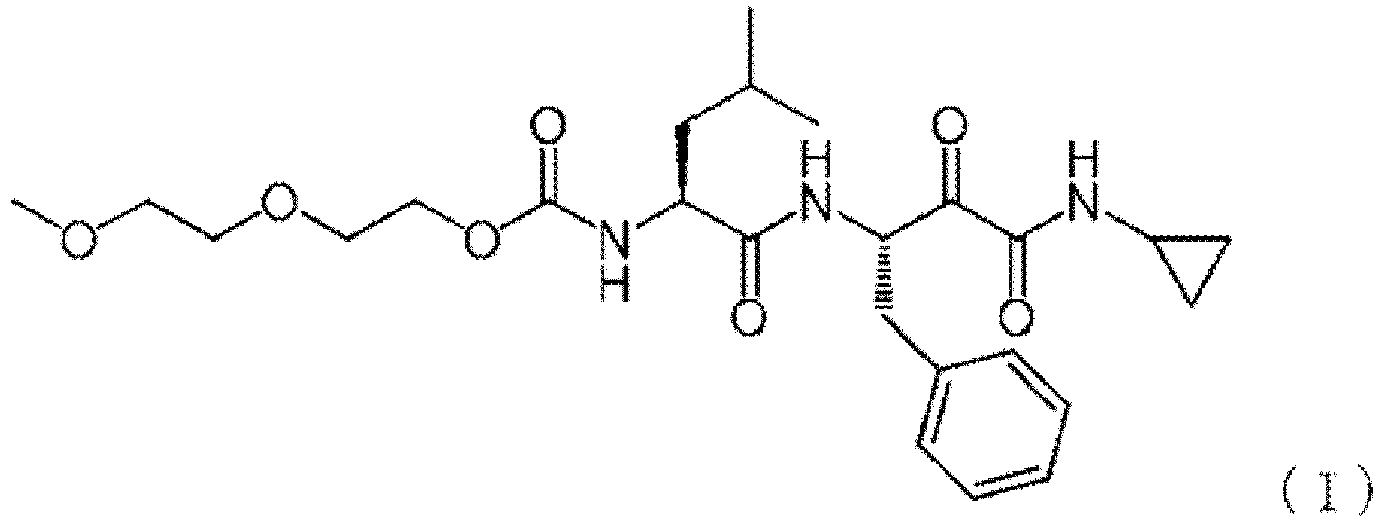
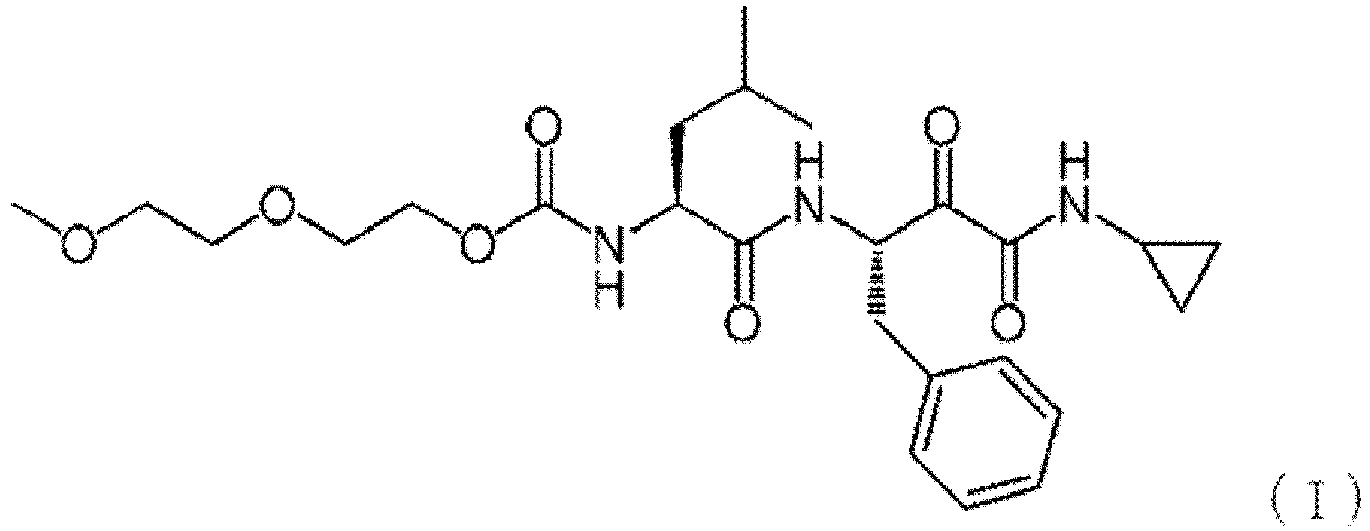
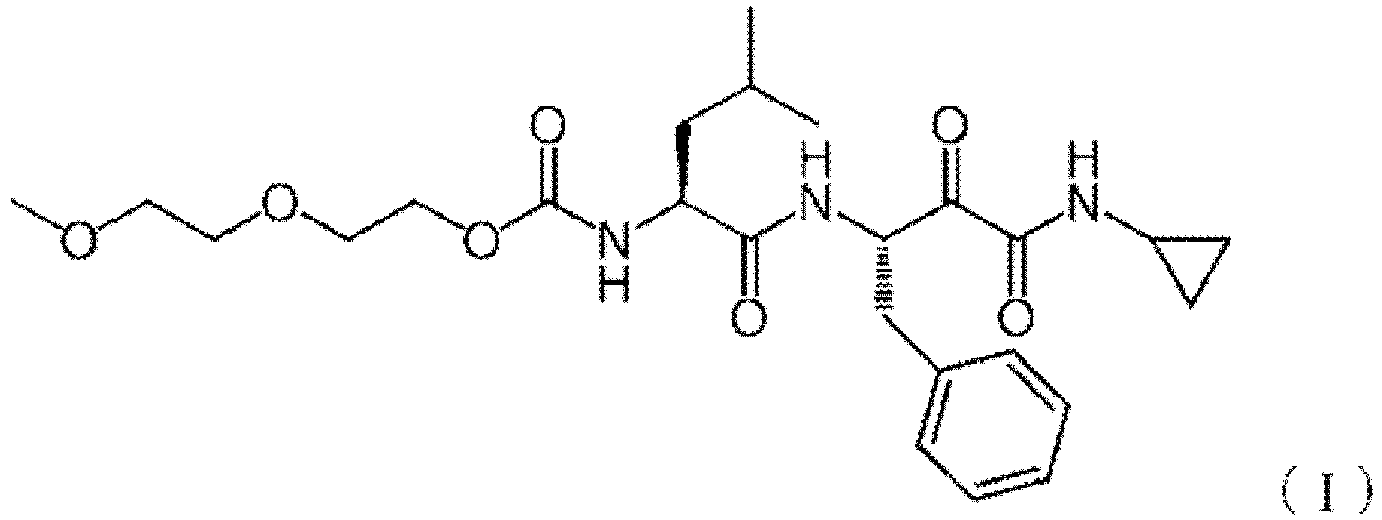
- One compound is a compound represented by formula (I):
- the compound (I) is a known compound and is disclosed in, for example, Patent Literature 1 to 3.
- the compound (I) can be produced according to the method described in this literature.
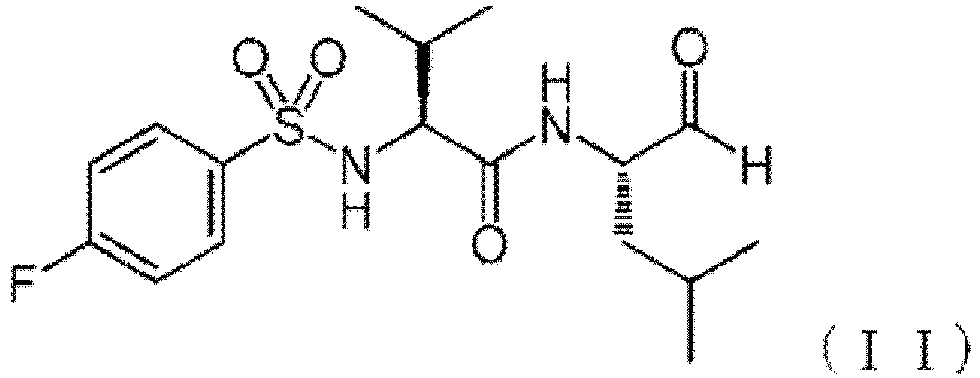
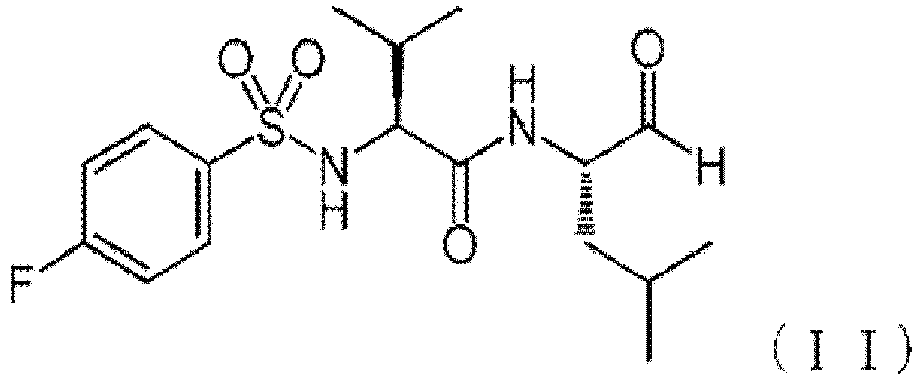
- the second compound is a compound represented by formula (II):
- the compound (II) is a known compound and is disclosed, for example, in Patent Literature 4 and Non-Patent Literature 1.
- the compound (II) can be produced according to the method described in this literature.
- the compound (I) or compound (II) also includes diastereo mixtures of compound (I) or compound (II) unless otherwise specified.
- the treatment agent of the present disclosure may be formed of the compound (I) and/or the compound (II) alone, or may be a composition (particularly a pharmaceutical composition) comprising the compound (I) and/or compound (II) in combination with other components.
- Pharmaceutically acceptable bases, carriers, additives e.g., excipients, binders, disintegrants, lubricants, solvents, sweetening agents, coloring agents, taste masking agents, odor-masking agents, surfactants, moisturizing agents, preservatives, pH-adjusting agents, viscosifying agents), etc. are added to the compound (I) and/or compound (II), which are active ingredients, as required.
- the dosage form is not particularly limited.
- the active ingredient can be mixed with other components in an ordinary method to prepare a preparation in the form of tablets, coated tablets, dispersions, granules, fine granules, capsules, pills, liquids (e.g., injections and infusions), suspensions, emulsions, jelly, chewable agents, soft tablets, or the like.
- the amounts of the compound (I) and/or compound (II) in the treatment agent of the present disclosure are not particularly limited, and can be suitably set as long as a treatment effect on COVID-19 is exhibited.
- the compound is, for example, 0.0005 to 100 mass%, more preferably 0.005 to 90 mass%, and even more preferably 0.05 to 80 mass%.
- COVID-19 is an infectious disease characterized by respiratory symptoms caused by a newly specified coronavirus, which is officially named "SARS-CoV-2.” It was first reported in Wuhan, Hubei province, China, in December 2019, and then infection spread widely throughout China and even worldwide. COVID-19 is considered to spread from person to person mainly via airborne droplets dispersed by coughing and sneezing of infected people. Most people infected show no symptoms at all or only mild symptoms; however, some become seriously ill and die. Symptoms include fever, coughing, and shortness of breath. Symptoms usually appear approximately 1 to 14 days after infection.
- SARS-CoV-2 is a coronavirus with single-stranded plus-stranded RNA as its genome and is classified in the family Coronaviridae, genus ⁇ coronavirus, and has a base sequence (SEQ No. 1) shown in NCBI accession number NC_045512.
- Known examples of coronaviruses that infect humans include four coronaviruses that routinely infect humans (HCoV-229E, HCoV-OC43, HCoV-NL63, and HCoV-HKU1) and two severe pneumonia viruses (SARS-CoV and MERS-CoV) that are transmitted from animals.
- SARS-CoV-2 is considered to have been transmitted from bats to humans.
- Coronaviruses have a bilayer containing lipid as a constituent component, which is referred to as an "envelope" on the outermost side of the particle. Coronaviruses cannot multiply on their own, but can attach to and enter host cells to increase. S protein expressed on the surface of SARS-CoV-2 binds to an ACE2 receptor on the surface of host cells and enables infection of host cells. SARS-CoV-2 is similar to SARS-CoV in that it uses an ACE2 receptor for human infection and differs from MERS-CoV, which uses a DPP-4 receptor. SARS-CoV-2 also differs from other coronaviruses in its structural proteins.
- SARS-CoV-2 targeted by the treatment agent of the present disclosure include those having the following homologies.
- the homology of SARS-CoV-2 and SARS-CoV is about 76% for the S protein, about 90% for the N protein, about 90% for the M protein, and about 94% for the E protein.
- the homology of SARS-CoV-2 and MERS-CoV is about 35% for the S protein, 48% for the N protein, 42% for the M protein, and 36% for the E protein.
- the treatment agent of the present disclosure exhibits a treatment and/or prevention effect on various types of SARS-CoV-2 mutants, regardless of whether it is pathogenic or not, and is not particularly limited.
- Examples include a mutant having a base sequence having 70% or more homology to the base sequence shown in SEQ ID No. 1.
- Examples include a mutant having a base sequence having more preferably 75% or more, even more preferably 80% or more, even more preferably 85% or more, even more preferably 90% or more, and even more preferably 95% or more homology to the base sequence shown in SEQ ID No. 1.
- mutant strains examples include ⁇ mutant strains, ⁇ mutant strains, ⁇ mutant strains, ⁇ mutant strains, ⁇ mutant strains, ⁇ mutant strains, ⁇ mutant strains, ⁇ mutant strains, t mutant strains, ⁇ mutant strains, ⁇ mutant strains, ⁇ mutant strains, ⁇ mutant strains, and the like. These are mutant strains named by the WHO.
- ⁇ mutant strains, ⁇ mutant strains, ⁇ mutant strains, ⁇ mutant strains, ⁇ mutant strains, ⁇ mutant strains, or ⁇ mutant strains are preferred.
- ⁇ mutant strains, ⁇ mutant strains, ⁇ mutant strains, or ⁇ mutant strains are more preferred.
- the subject to whom the treatment agent of the present disclosure is administered is not particularly limited. It is preferably a person infected with SARS-CoV-2 or a mutant thereof, and particularly preferably a subject who has reacted positively to SARS-CoV-2 or a mutant thereof.
- the positive reaction is performed by a method capable of (preferably specifically) detecting SARS-CoV-2 or a mutant thereof. Examples of the method include a PCR test or an antigen/antibody test (e.g., ELISA) capable of detecting SARS-CoV-2 or a mutant thereof.
- the severity of COVID-19 is not particularly limited.
- the present invention can be used for asymptomatic patients, mildly ill patients, or moderately to severely ill patients.
- the treatment agent of the present disclosure is effective not only for symptom suppression in those who develop the disease (mild, or moderate to severe), but also for inhibition (reduction) of SARS-CoV-2 or a mutant thereof in the bodies of asymptomatic and symptomatic individuals.
- Symptoms of the disease are not particularly limited. Examples include fever, dry cough, fatigue, sputum, shortness of breath, sore throat, headache, diarrhea, pneumonia, dyspnoea, etc.
- the treatment agent of the present invention can be used for the purpose of prevention for subjects not yet infected with SARS-CoV-2 or a mutant thereof.
- the target of the treatment agent of the present disclosure includes not only humans but also non-human mammals (in particular non-human mammals infected with SARS-CoV-2 or a mutant thereof). Mammals kept as pets and livestock are particularly preferred as such non-human mammals. Examples include dogs, cats, monkeys, cows, horses, sheep, goats, pigs, rabbits, mice, rats, camels, and llamas. In mammals, as in humans, the treatment agent of the present disclosure can also be used for the purpose of prevention.
- the time at which the treatment agent of the present disclosure is administered is not particularly limited, and may be suitably selected, taking into account, for example, the dosage form of preparation, the age of the subject, and the severity of symptoms of the subject.
- the dosage form is also not particularly limited.
- oral administration, intravascular (particularly intravenous) administration, and subcutaneous administration are preferable.
- the dosage of the treatment agent of the present disclosure may be suitably selected according to the age of the subject, the severity of symptoms of the subject, and other conditions.
- the amount of the compound (I) in the treatment agent of the present disclosure is preferably 10 to 3000 mg, and more preferably 20 to 2000 mg per adult per day.
- the amount of the compound (II) in the treatment agent of the present disclosure is preferably 10 to 3000 mg, and more preferably 20 to 2000 mg per adult per day.
- the treatment agent can be administered once a day or several times a day (preferably two to three times). In the case of mammals, the dosage can be suitably set with reference to the human case.
- the treatment agent of the present disclosure can be preferably used as a pharmaceutical composition.
- the treatment agent of the present disclosure has an effect of inhibiting the entry of SARS-CoV-2 or a mutant thereof into cells, and an effect of inhibiting the denaturation of infection cells. Accordingly, the treatment agent of the present disclosure is considered to be effective for the prevention of infection by administering it before infection with SARS-CoV-2 or a mutant thereof.
- the treatment agent of the present disclosure can also be preferably used as a preventive agent.
- the present disclosure preferably includes a COVID-19 preventive agent and/or a COVID-19 treatment agent.
- Cellular denaturation refers to physiological and/or morphological changes that occur after infection of cells with a virus. Since the denaturation of SARS-CoV-2 infection cells is considered to be due to the proliferation of SARS-CoV-2, the treatment agent of the present disclosure can be considered to have an effect of inhibiting the proliferation of SARS-CoV-2.
- the various characteristics (properties, structures, functions, etc.) described in each embodiment of the present disclosure described above may be combined in any way in specifying the main subjects included in the present disclosure.
- the present disclosure includes all the main subjects comprising all combinations of the combinable characteristics described in the present specification.
- DMSO dimethyl sulfoxide
- Chloroquine and hydroxychloroquine are compounds that are considered to have a potential effect on the treatment of COVID-19.
- Remdesivir is a drug that was approved as a treatment agent of COVID-19 in the US in 2020. It is disclosed that E64d is a protease inhibitor and has antiviral activity by inhibiting the action of proteases of the host.
- SNJ-1945 is a compound (I)
- SJA-6017 is a compound (II).
- Table 1 Compound Stock solution Test concentration ( ⁇ M) 10 points double common ratio SNJ-1945 30 mM 30 15 7.5 3.75 1.88 0.94 0.47 0.23 0.12 0.06 SJA-6017 30 mM 30 15 7.5 3.75 1.88 0.94 0.47 0.23 0.12 0.06 Chloroquine 30 mM 30 15 7.5 3.75 1.88 0.94 0.47 0.23 0.12 0.06 Hydroxychloroquine E64d Remdesivir
- Vero E6 cells (a cell line derived from African green monkey kidney epithelial cells) were cultured in minimum essential medium (MEM) containing 10% fetal bovine serum (FBS), and on the day of assay, the medium was replaced with MEM containing 1% penicillin-streptomycin and 2% FBS.
- MEM minimum essential medium
- FBS fetal bovine serum
- SARS-CoV-2 virus USA_WA1/2020, M.O.I. to 0.002 was added to Vero E6 cells to achieve a cell viability of 5% after 72 hours of inoculation.
- Vero E6 cells alone before virus inoculation (100% CPE inhibition group) or Vero E6 cells after virus inoculation alone (0% CPE inhibition group) were set.
- Cell-Titer-Glo Promega Corporation was added to each well, and incubation for 10 minutes at room temperature was performed. Thereafter, luminescence was measured with a CLARIO star plate reader (BMG Labtech Japan Ltd.).
- the cytopathic effect is a viral cytopathic effect in host cells
- the Cell-Titer-Glo (Promega Corporation) assay kit is a kit for measuring intracellular ATP as an alternative measurement value of host cell viability.
- the cytotoxicity of a compound was evaluated in conjunction with the antiviral effect measurement.
- An assay plate to which 30 nL of a test compound and 5 ⁇ L of medium were added was prepared, and 25 ⁇ L of Vero E6 cells (4000 cells/well) were added thereto, followed by incubation for 72 hours at 37°C, 5% CO 2 , and 90% humidity.
- Vero E6 cells alone (survival rate: 100%) and addition of 100 ⁇ M Hyamine (survival rate: 0%) were respectively determined to be a high-signal control and a low-signal control.
- Cell-Titer-Glo Promega Corporation
- was added to each well and incubation for 10 minutes at room temperature was performed. Thereafter, luminescence was measured with a PHERAstar plate reader (BMG Labtech Japan Ltd.).
- Activity Base is a plate assay data management system.
- CPE inhibition rate % 100 ⁇ each sample value ⁇ average value of 0 % CPE inhibition group / average value of 100 % CPE inhibition group ⁇ average value of 0 % CPE inhibition group
- survival rate % 100 ⁇ each sample value ⁇ average value of low signal control / average value of high signal control ⁇ average value of low signal control
- the results are shown in Table 2 below.
- the IC 50 of E64d was 8.23 ⁇ M.
- the IC 50 s of SNJ-1945 and SJA-6017 were 1.52 ⁇ M and 0.21 ⁇ M, respectively.
- pPACK-SPIKE SARS-CoV-2 S Pseudotype Lentivector Packaging Mix wild type: WT
- pPACK-SPIKE N501Y wild type: WT
- SARS-CoV-2 S Pseudotype-N501Y Mutant-Lentivector Packaging Mix N501Y mutant strain
- pPACK-SPIKE B.1.429 SARS-CoV-2 S Pseudotype-B.1.429
- Variant-Lentivector Packaging Mix B.1.429 mutant strain: ⁇ strain
- spike proteins of corona virus mutants of WT, N501Y mutant strain, and S13I/W152C/L452R/D614G(B.1.429) mutant strain ⁇ strain
- lentiviruses sometimes referred to below as "pseudotype viruses”
- pseudotype viruses were concentrated and used for SARS-CoV-2 infection evaluation.
- ACE2-expressing HEK293T cells (Human ACE2 293T cells, Takara Bio Inc.) were used to evaluate the virus entry inhibition effect of the compound against infection with pseudotype virus particles encapsulating GFP-expressing plasmids.
- SNJ-1945 compound 1
- a DMSO solution of each test compound was added at a concentration of 100 ⁇ M, which was the highest concentration at which each test compound did not show cytotoxicity, to a dish in which ACE2-expressing HEK293T cells were seeded, followed by incubation for 30 minutes.
- the pseudotype viruses (WT, N501Y, and ⁇ mutant strain) were added to examine entry inhibition activity. Infection by these pseudotype virus particles was observed by confocal laser microscopy for fluorescence of GFP, and its inhibitory activity was calculated.
- the results shown in Fig. 1 reveal that the compound 1 inhibits entry of WT, N501Y mutant strain, and ⁇ mutant strain into cells.
- N501Y mutation is a mutation found in ⁇ , ⁇ , and ⁇ mutant strains; accordingly, the compound 1 is expected to inhibit the entry of ⁇ , ⁇ , and ⁇ mutant strains into cells. Since the ⁇ mutant strain has mutations such as S13L, W152C, L452R, and D614G, the compound 1 is also expected to inhibit the entry of a mutant strain such as ⁇ strain showing a mutation in any of these amino acid sequences, into cells.
- Eight-week-old male S.D. rats were used for the examination of SNJ-1945. Each animal was kept in a room at a temperature of 21.6°C to 22.3°C, a humidity of 47.7% to 60.3%, with lighting for 12 hours/day, and a ventilation frequency of 6 to 20 times/hour. The rats were fasted from the evening of the day before administration, and feeding was resumed after the completion of blood sampling, which was conducted 8 hours after the administration. Water was taken freely.
- mice Male S.D. rats weighing 160 to 210 g were used for the examination of SJA-6017. Each animal was kept in a room at a temperature of 23 ⁇ 2°C, a humidity of 55 ⁇ 10%, with lighting for 12 hours, and a ventilation frequency of 15 times/hour or more. The rats were fasted from the night before administration and feeding was resumed immediately after the administration. Water was taken freely.
- methylcellulose was dissolved in water for injection to a concentration of 1 w/v%.
- a test substance was suspended in the resultant to prepare samples having concentrations of 0.25 mg/mL (for 1 mg/kg), 0.75 mg/mL (for 3 mg/kg), 2.5 mg/mL (for 10 mg/kg), and 7.5 mg/mL (for 30 mg/kg).
- the administration solution was dispensed into brown glass bottles.
- SNJ-1945 was orally administered forcibly a single time by using a gastric sonde at doses of 1, 3, 10, and 30 mg/4 mL/kg.
- SJA-6017 was orally administered forcibly a single time using a gastric sonde at a dose of 5 mL/kg.
- Plasma (20 ⁇ L) obtained from the SNJ-1945 administration group was placed in a polypropylene tube, methanol (20 ⁇ L) was added thereto, and an internal standard solution (SNJ-1945-d 7 ; 100 ⁇ L) was added thereto, followed by stirring for about 5 minutes. Thereafter, centrifugation (10,000 ⁇ g) was performed for 5 minutes, and 100 ⁇ L of a supernatant was transferred to another polypropylene tube. 1 mmol/L EDTA-2K (100 ⁇ L) was added, followed by stirring for about 10 seconds. The solution was set in an autosampler and measured within 72 hours.
- a Shimadzu 20AD LC System 2 (prominence UFLC XR system; Shimadzu Corporation) and a mass spectrometer (API5000; AB SCIEX) were used as measuring instruments.
- High-performance liquid chromatography was performed according to the following conditions. Column: CAPCELL CORE AQ, 2.7 pm, 2.1 ⁇ 50 mm (Shiseido Japan Co., Ltd.); column temperature: 60°C; mobile phase A: 5 mmol/L ammonium hydrogen carbonate/1 mmol/LEDTA-2K (500:1, v/v); mobile phase B: methanol; flow rate: 0.8 mL/min.
- Mobile phase gradient conditions were set as shown in Table 3 below. Table 3 Time (min) Mobile phase A (%) Mobile phase B (%) 0.0 75 25 5.0 40 60 5.1 75 25 6.0 75 25
- the mass spectrometer was set according to the following conditions: ionization mode: turbo ion spray; measurement mode: multiple reaction monitoring; detection mode: negative; collision gas: N 2 , 6 (number of valves opened); curtain gas: N 2 , 15 psi, ion source gas 1: air, 80 psi; ion source gas 2: air, 80 psi; ion spray voltage: -4500 V; temperature: 500°C; channel electron multiplier: 1800 V or 2000 V.
- Monitoring ions and dwell time were set as shown in Table 4 below. Table 4 Monitoring ions Dwell time SNJ-1945 m/z 490 ⁇ m/z 155 50 msec SNJ-1945-d 7 m/z 497 ⁇ m/z 162 50 msec
- Pharmacokinetic parameters (C max , AUC 0-8 ) at the administration of 1 mg/kg were 186 ng/mL and 167.5 ng ⁇ h/mL, pharmacokinetic parameters at the administration of 3 mg/kg were 391 ng/mL and 379.8 ng ⁇ h/mL, pharmacokinetic parameters at the administration of 10 mg/kg were 553 ng/mL and 691.1 ng ⁇ h/mL, and pharmacokinetic parameters at the administration of 30 mg/kg were 821 ng/mL and 1165.9 ng ⁇ h/mL.
- Plasma (200 ⁇ L) obtained from the SJA-6017 administration group was placed in a brown Spitz tube, and 0.01 M HCl (0.5 mL) was added thereto, and diethyl ether (3 mL) was further added, followed by shaking for 10 minutes. Thereafter, centrifugation (3,000 rpm) for 10 minutes was performed to separate the aqueous layer from the diethyl ether phase. The lower aqueous layer alone was frozen in dry-ice acetone, and the diethyl ether layer was separated into another brown Spitz tube.
- Pharmacokinetic parameters for C max and AUC 0-8 at the administration of 100 mg/kg were respectively 284 ng/mL and 678.9 ng ⁇ h/mL, and pharmacokinetic parameters for C max and AUC 0-8 at the administration of 500 mg/kg were respectively 348 ng/mL and 1837.3 ng ⁇ h/mL.
- the low dose (30 mg/kg) of SNJ-1945 showed a high blood concentration as compared to the high dose (100 mg/kg) of SJA-6017. Assuming a dose-proportional increase in blood concentration, SNJ-1945 showed about a five to ten times higher blood concentration difference.
- SJA-6017 has stronger activity of inhibiting denaturation of SARS-CoV-2 infection cells than that of SNJ-1945 (IC 50 being as follows: SNJ-1945: 1.52 ⁇ M and SJA-6017: 0.21 ⁇ M).
- IC 50 being as follows: SNJ-1945: 1.52 ⁇ M and SJA-6017: 0.21 ⁇ M.
- the blood concentration of SNJ-1945 is about 5 to 10 times higher, it is predicted that SNJ-1945 has a higher distribution to target tissues and that SNJ-1945 has a stronger SARS-CoV-2 inhibition activity in tissues than that of SJA-6017.
Landscapes
- Health & Medical Sciences (AREA)
- Life Sciences & Earth Sciences (AREA)
- Public Health (AREA)
- Veterinary Medicine (AREA)
- Chemical & Material Sciences (AREA)
- Medicinal Chemistry (AREA)
- Pharmacology & Pharmacy (AREA)
- Animal Behavior & Ethology (AREA)
- General Health & Medical Sciences (AREA)
- Epidemiology (AREA)
- Virology (AREA)
- Emergency Medicine (AREA)
- Molecular Biology (AREA)
- Communicable Diseases (AREA)
- Oncology (AREA)
- Chemical Kinetics & Catalysis (AREA)
- General Chemical & Material Sciences (AREA)
- Nuclear Medicine, Radiotherapy & Molecular Imaging (AREA)
- Organic Chemistry (AREA)
- Pharmaceuticals Containing Other Organic And Inorganic Compounds (AREA)
- Medicines That Contain Protein Lipid Enzymes And Other Medicines (AREA)
Abstract
Description
- The present disclosure relates to a COVID-19 treatment agent and the like. The contents of all of the documents described herein are incorporated herein by reference.
- Novel coronavirus infection (COVID-19) caused by infection with severe acute respiratory syndrome coronavirus 2 (SARS coronavirus 2: SARS-CoV-2) has recently been raging around the world, and providing a method for treating this disease is an urgent issue.
- It is also generally known that viruses mutate to maintain their own survival more efficiently, and there is a need to look at a treatment method for COVID-19 caused by SARS-CoV-2 or mutant strains thereof.
-
- PTL 1:
JP2006-76989A - PTL 2:
WO2012/074120 - PTL 3:
WO2017/204166 - PTL 4: JPH10-147564A
- NPL 1: Jun Inoue et al., J. Med. Chem. 2003, 46, 868-871
- The main object of the present inventors was to develop a method for treating COVID-19.
- The present inventors found that a specific compound may be effective in the treatment of COVID-19, and made further improvements.
- The present disclosure encompasses, for example, the subject matter described in the following items.
- An agent for preventing and/or treating COVID-19 caused by SARS-CoV-2 or mutant strains thereof, comprising at least one compound selected from the group consisting of a compound represented by formula (I):


- The preventive and/or treatment agent according to
Item 1, which is for a person infected with SARS-CoV-2 or a mutant thereof. - The preventive and/or treatment agent according to Item 2, which is for an asymptomatic or symptomatic person infected with SARS-CoV-2 or a mutant thereof.
- The preventive and/or treatment agent according to any one of
Items 1 to 3, wherein the SARS-CoV-2 mutant is at least one member selected from the group consisting of α mutant strains, β mutant strains, γ mutant strains, δ mutant strains, λ mutant strains, µ mutant strains, ε mutant strains, η mutant strains, t mutant strains, κ mutant strains, ζ mutant strains, and θ mutant strains. - An inhibitor for denaturation of cells infected with SARS-CoV-2 or a mutant thereof, comprising at least one compound selected from the group consisting of a compound represented by formula (I):

- The denaturation inhibitor according to Item 5, wherein the mutant of SARS-CoV-2 is at least one member selected from the group consisting of α mutant strains, β mutant strains, γ mutant strains, δ mutant strains, λ mutant strains, µ mutant strains, ε mutant strains, η mutant strains, t mutant strains, κ mutant strains, ζ mutant strains, and θ mutant strains.
- An antiviral drug for inhibiting denaturation of cells infected with SARS-CoV-2 or a mutant thereof in a person infected with SARS-CoV-2 or a mutant thereof, comprising at least one compound selected from the group consisting of a compound represented by formula (I):


- The antiviral drug according to Item 7, wherein the mutant of SARS-CoV-2 is at least one member selected from the group consisting of α mutant strains, β mutant strains, γ mutant strains, δ mutant strains, λ mutant strains, µ mutant strains, ε mutant strains, η mutant strains, t mutant strains, κ mutant strains, ζ mutant strains, and θ mutant strains.
- A method for preventing and/or treating COVID-19 caused by SARS-CoV-2 or mutant strains thereof, comprising administering a required amount of at least one compound selected from the group consisting of a compound represented by formula (I):


- The method according to Item 1a, wherein the subject in need is a person infected with SARS-CoV-2 or a mutant thereof.
- The method according to Item 1a, wherein the subject in need is an asymptomatic or symptomatic person infected with SARS-CoV-2 or a mutant thereof.
- The method according to any one of Items 1a to 3a, wherein the mutant of SARS-CoV-2 is at least one member selected from the group consisting of α mutant strains, β mutant strains, γ mutant strains, δ mutant strains, λ mutant strains, µ mutant strains, ε mutant strains, η mutant strains, t mutant strains, κ mutant strains, ζ mutant strains, and θ mutant strains.
- A method for inhibiting denaturation of cells infected with SARS-CoV-2 or a mutant thereof, comprising applying at least one compound selected from a compound represented by formula (I):

- The method according to Item 5a, wherein the SARS-CoV-2 mutant is at least one member selected from the group consisting of α mutant strains, β mutant strains, γ mutant strains, δ mutant strains, λ mutant strains, µ mutant strains, ε mutant strains, η mutant strains, t mutant strains, κ mutant strains, ζ mutant strains, and θ mutant strains.
- A method for inhibiting denaturation of cells infected with SARS-CoV-2 or a mutant thereof in a person infected with SARS-CoV-2 or a mutant thereof, comprising administering at least one compound selected from the group consisting of a compound represented by formula (I):


- The method according to Item 7a, wherein the mutant of SARS-CoV-2 is at least one member selected from the group consisting of α mutant strains, β mutant strains, γ mutant strains, δ mutant strains, λ mutant strains, µ mutant strains, ε mutant strains, η mutant strains, t mutant strains, κ mutant strains, ζ mutant strains, and θ mutant strains.
- At least one compound for use in prevention and/or treatment of COVID-19, the at least one compound being selected from the group consisting of a compound represented by formula (I) :


- The compound according to Item 1b, for use in a person infected with SARS-CoV-2 or a mutant thereof.
- The compound according to Item 2b, for use in an asymptomatic or symptomatic person infected with SARS-CoV-2 or a mutant thereof.
- At least one compound for use in inhibiting denaturation of cells infected with SARS-CoV-2 or a mutant thereof, the at least one compound being selected from the group consisting of a compound represented by formula (I):


- At least one compound for use in inhibiting denaturation of cells infected with SARS-CoV-2 or a mutant thereof in a person infected with SARS-CoV-2 or a mutant thereof, the at least one compound selected from the group consisting of a compound represented by formula (I):

- Use of at least one compound for producing a composition (preferably a pharmaceutical composition) for preventing and/or treating COVID-19 caused by SARS-CoV-2 or a mutant strain thereof, the at least one compound being selected from the group consisting of a compound represented by formula (I) :


- Use of at least one compound for producing a composition (preferably a pharmaceutical composition) for treating a person infected with SARS-CoV-2 or a mutant thereof, the at least one compound being selected from the group consisting of a compound represented by formula (I):


- The use according to Item 2c, wherein the person infected with SARS-CoV-2 or a mutant thereof is an asymptomatic or symptomatic person.
- Use of at least one compound for producing a composition (preferably a pharmaceutical composition) for inhibiting denaturation of cells infected with SARS-CoV-2 or a mutant thereof, at least one compound being selected from the group consisting of a compound represented by formula (I):

- Use of at least one compound for producing a composition (preferably a pharmaceutical composition) for inhibiting denaturation of cells infected with SARS-CoV-2 or a mutant thereof in a person infected with SARS-CoV-2 or a mutant thereof, the at least one compound being selected from the group consisting of a compound represented by formula (I):


- The present invention provides a novel agent for preventing and/or treating COVID-19 caused by SARS-CoV-2 or a mutant strain thereof.
-
Fig. 1 shows a diagram indicating the effect of exhibiting the compound of the present invention on various mutants described in Examples. - Embodiments encompassed by the present disclosure are described in more detail below. The present disclosure preferably includes an agent for preventing and/or treating COVID-19 caused by SARS-CoV-2 or a mutant strain thereof; however, the present invention is not limited to this. The present disclosure encompasses all that is disclosed in the present specification and that could be acknowledged by a person skilled in the art.
- The agent for preventing and/or treating COVID-19 caused by SARS-CoV-2 or a mutant strain thereof encompassed by the present disclosure contains a specific compound that has an effect of inhibiting physiological phenomena caused by SARS-CoV-2 or a mutant strain thereof, and that can act as an active ingredient for COVID-19 caused by SARS-CoV-2 or a mutant strain thereof. The agent for preventing and/or treating COVID-19 caused by SARS-CoV-2 or a mutant strain thereof is sometimes referred to as the treatment agent of the present disclosure.
- Examples of the specific compound include the following two types of compounds. One compound is a compound represented by formula (I):

- The compound is sometimes referred to as "compound (I)" or "SNJ-1945."
- The compound (I) is a known compound and is disclosed in, for example,
Patent Literature 1 to 3. The compound (I) can be produced according to the method described in this literature. - The second compound is a compound represented by formula (II):

- The compound is sometimes referred to as "compound (II)" or "SJA-6017".
- The compound (II) is a known compound and is disclosed, for example, in Patent Literature 4 and
Non-Patent Literature 1. The compound (II) can be produced according to the method described in this literature. - The compound (I) or compound (II) also includes diastereo mixtures of compound (I) or compound (II) unless otherwise specified.
- The treatment agent of the present disclosure may be formed of the compound (I) and/or the compound (II) alone, or may be a composition (particularly a pharmaceutical composition) comprising the compound (I) and/or compound (II) in combination with other components. Pharmaceutically acceptable bases, carriers, additives (e.g., excipients, binders, disintegrants, lubricants, solvents, sweetening agents, coloring agents, taste masking agents, odor-masking agents, surfactants, moisturizing agents, preservatives, pH-adjusting agents, viscosifying agents), etc. are added to the compound (I) and/or compound (II), which are active ingredients, as required. As such bases, carriers, additives, etc., components known in this technical art can be suitably selected and used. The dosage form is not particularly limited. The active ingredient can be mixed with other components in an ordinary method to prepare a preparation in the form of tablets, coated tablets, dispersions, granules, fine granules, capsules, pills, liquids (e.g., injections and infusions), suspensions, emulsions, jelly, chewable agents, soft tablets, or the like.
- The amounts of the compound (I) and/or compound (II) in the treatment agent of the present disclosure are not particularly limited, and can be suitably set as long as a treatment effect on COVID-19 is exhibited. The compound is, for example, 0.0005 to 100 mass%, more preferably 0.005 to 90 mass%, and even more preferably 0.05 to 80 mass%.
- COVID-19 is an infectious disease characterized by respiratory symptoms caused by a newly specified coronavirus, which is officially named "SARS-CoV-2." It was first reported in Wuhan, Hubei Province, China, in December 2019, and then infection spread widely throughout China and even worldwide. COVID-19 is considered to spread from person to person mainly via airborne droplets dispersed by coughing and sneezing of infected people. Most people infected show no symptoms at all or only mild symptoms; however, some become seriously ill and die. Symptoms include fever, coughing, and shortness of breath. Symptoms usually appear approximately 1 to 14 days after infection.
- SARS-CoV-2 is a coronavirus with single-stranded plus-stranded RNA as its genome and is classified in the family Coronaviridae, genus β coronavirus, and has a base sequence (SEQ No. 1) shown in NCBI accession number NC_045512. Known examples of coronaviruses that infect humans include four coronaviruses that routinely infect humans (HCoV-229E, HCoV-OC43, HCoV-NL63, and HCoV-HKU1) and two severe pneumonia viruses (SARS-CoV and MERS-CoV) that are transmitted from animals. SARS-CoV-2 is considered to have been transmitted from bats to humans.
- Coronaviruses have a bilayer containing lipid as a constituent component, which is referred to as an "envelope" on the outermost side of the particle. Coronaviruses cannot multiply on their own, but can attach to and enter host cells to increase. S protein expressed on the surface of SARS-CoV-2 binds to an ACE2 receptor on the surface of host cells and enables infection of host cells. SARS-CoV-2 is similar to SARS-CoV in that it uses an ACE2 receptor for human infection and differs from MERS-CoV, which uses a DPP-4 receptor. SARS-CoV-2 also differs from other coronaviruses in its structural proteins. Preferable examples of SARS-CoV-2 targeted by the treatment agent of the present disclosure include those having the following homologies. The homology of SARS-CoV-2 and SARS-CoV is about 76% for the S protein, about 90% for the N protein, about 90% for the M protein, and about 94% for the E protein. The homology of SARS-CoV-2 and MERS-CoV is about 35% for the S protein, 48% for the N protein, 42% for the M protein, and 36% for the E protein.
- Many reports have reported the emergence of mutant strains in the S protein expressed on the surface of SARS-CoV-2 (Abdul Aleem et al., Emerging Variants of SARS-CoV-2 And Novel Therapeutics Against Coronavirus (COVID-19). StatPearls (Internet): 2021), and the reduced efficacy of the SARS-CoV-2 vaccine is a challenge in the treatment of COVID-19 (Ravindra K Gupta, Nat. Rev. Immunol. 21: 340-341: 2021; Matthew McCallum et al., Science 373: 648-654: 2021).
- The treatment agent of the present disclosure exhibits a treatment and/or prevention effect on various types of SARS-CoV-2 mutants, regardless of whether it is pathogenic or not, and is not particularly limited. Examples include a mutant having a base sequence having 70% or more homology to the base sequence shown in SEQ ID No. 1. Examples include a mutant having a base sequence having more preferably 75% or more, even more preferably 80% or more, even more preferably 85% or more, even more preferably 90% or more, and even more preferably 95% or more homology to the base sequence shown in SEQ ID No. 1.
- Examples of the mutant include α mutant strains, β mutant strains, γ mutant strains, δ mutant strains, λ mutant strains, µ mutant strains, ε mutant strains, η mutant strains, t mutant strains, κ mutant strains, ζ mutant strains, θ mutant strains, and the like. These are mutant strains named by the WHO.
- Of the SARS-CoV-2 mutants, α mutant strains, β mutant strains, γ mutant strains, ε mutant strains, δ mutant strains, µ mutant strains, or κ mutant strains are preferred. α mutant strains, β mutant strains, γ mutant strains, or ε mutant strains are more preferred.
- α mutant strains are mutant strains that were reportedly first discovered in the UK, and are known as strain B.1.1.7. They are mainly known as strains having a mutation such as N501Y.
- β mutant strains are mutant strains that were reportedly first discovered in South Africa, and are known as strain B.1.351. They are mainly known as strains having mutations such as N501Y, E484K, and K417N.
- γ mutant strains are mutant strains that were reportedly first discovered in Brazil, and are known as strain P.1. They are mainly known as strains having mutations such as N501Y, E484K, and K417T.
- δ mutant strains are mutant strains that were reportedly first discovered in India, and are known as strain B.1.617.2. They are mainly known as strains having mutations such as L452R, T478K, D614G, and P681R.
- λ mutant strains are mutant strains that were reportedly first discovered in Peru, and are known as strain C.37. They are mainly known as strains having mutations such as L452Q, F490S, D614G, and T859N.
- µ mutant strains are mutant strains that were reportedly first discovered in Colombia, and are known as strain B.1.621.1. They are mainly known as strains having mutations such as E484K, N501Y, D614G, and P681H.
- ε mutant strains are mutant strains that were reportedly first discovered in the USA, and are known as strain B.1.427/B.1.429. They are mainly known as strains having mutations such as S13L, W152C, L452R, and D614G.
- η mutant strains are mutant strains that were reportedly first discovered in the UK and Nigeria, and are known as strain B.1.525. They are mainly known as strains having mutations such as E484K, D614G, and F888L.
- mutant strains are mutant strains that were reportedly first discovered in the USA, and are known as strain B.1.526. They are mainly known as strains having mutations such as E484K, D614G, and A701L.

- κ mutant strains are mutant strains that were reportedly first discovered in India, and are known as strain B.1.617.1. They are mainly known as strains having mutations such as L452R, E484Q, D614G, and P681R.
- ζ mutant strains are mutant strains that were reportedly first discovered in Brazil, and are known as strain P2 or B,1,1,28.2. They are mainly known as strains having mutations such as E484K, D615G, and V1176F.
- θ mutant strains are mutant strains that were reportedly first discovered in the Philippines, and are known as strain P.3 or B.1.1.28.3. They are mainly known as strains having mutations such as E484K, N501Y, D614G, P681H, E1092K, H1101Y, and V1176F.
- The subject to whom the treatment agent of the present disclosure is administered is not particularly limited. It is preferably a person infected with SARS-CoV-2 or a mutant thereof, and particularly preferably a subject who has reacted positively to SARS-CoV-2 or a mutant thereof. The positive reaction is performed by a method capable of (preferably specifically) detecting SARS-CoV-2 or a mutant thereof. Examples of the method include a PCR test or an antigen/antibody test (e.g., ELISA) capable of detecting SARS-CoV-2 or a mutant thereof.
- The severity of COVID-19 is not particularly limited. The present invention can be used for asymptomatic patients, mildly ill patients, or moderately to severely ill patients. The treatment agent of the present disclosure is effective not only for symptom suppression in those who develop the disease (mild, or moderate to severe), but also for inhibition (reduction) of SARS-CoV-2 or a mutant thereof in the bodies of asymptomatic and symptomatic individuals. Symptoms of the disease are not particularly limited. Examples include fever, dry cough, fatigue, sputum, shortness of breath, sore throat, headache, diarrhea, pneumonia, dyspnoea, etc. Furthermore, the treatment agent of the present invention can be used for the purpose of prevention for subjects not yet infected with SARS-CoV-2 or a mutant thereof.
- The target of the treatment agent of the present disclosure includes not only humans but also non-human mammals (in particular non-human mammals infected with SARS-CoV-2 or a mutant thereof). Mammals kept as pets and livestock are particularly preferred as such non-human mammals. Examples include dogs, cats, monkeys, cows, horses, sheep, goats, pigs, rabbits, mice, rats, camels, and llamas. In mammals, as in humans, the treatment agent of the present disclosure can also be used for the purpose of prevention.
- The time at which the treatment agent of the present disclosure is administered is not particularly limited, and may be suitably selected, taking into account, for example, the dosage form of preparation, the age of the subject, and the severity of symptoms of the subject. The dosage form is also not particularly limited. For example, oral administration, intravascular (particularly intravenous) administration, and subcutaneous administration are preferable.
- The dosage of the treatment agent of the present disclosure may be suitably selected according to the age of the subject, the severity of symptoms of the subject, and other conditions. For example, the amount of the compound (I) in the treatment agent of the present disclosure is preferably 10 to 3000 mg, and more preferably 20 to 2000 mg per adult per day. For example, the amount of the compound (II) in the treatment agent of the present disclosure is preferably 10 to 3000 mg, and more preferably 20 to 2000 mg per adult per day. The treatment agent can be administered once a day or several times a day (preferably two to three times). In the case of mammals, the dosage can be suitably set with reference to the human case. The treatment agent of the present disclosure can be preferably used as a pharmaceutical composition.
- As shown in the Examples below, the treatment agent of the present disclosure has an effect of inhibiting the entry of SARS-CoV-2 or a mutant thereof into cells, and an effect of inhibiting the denaturation of infection cells. Accordingly, the treatment agent of the present disclosure is considered to be effective for the prevention of infection by administering it before infection with SARS-CoV-2 or a mutant thereof. For this reason, the treatment agent of the present disclosure can also be preferably used as a preventive agent. In other words, the present disclosure preferably includes a COVID-19 preventive agent and/or a COVID-19 treatment agent. Cellular denaturation refers to physiological and/or morphological changes that occur after infection of cells with a virus. Since the denaturation of SARS-CoV-2 infection cells is considered to be due to the proliferation of SARS-CoV-2, the treatment agent of the present disclosure can be considered to have an effect of inhibiting the proliferation of SARS-CoV-2.
- The term "comprising" includes consisting essentially of and consisting of. Further, the present disclosure includes all of any combinations of the constituent requirements described in the present specification.
- In addition, the various characteristics (properties, structures, functions, etc.) described in each embodiment of the present disclosure described above may be combined in any way in specifying the main subjects included in the present disclosure. In other words, the present disclosure includes all the main subjects comprising all combinations of the combinable characteristics described in the present specification.
- The contents of the references described above can be incorporated herein by reference.
- The embodiments of the present disclosure are described in more detail below by means of examples; however, the embodiments of the present disclosure are not limited to the Examples below.
- As shown in Table 1, compound stock solutions (80 µL of dimethyl sulfoxide (DMSO) solutions containing each compound) were individually placed in a plate, and 40 µL of each stock solution was serially diluted 2 fold to prepare sample solutions. 30 nL of each sample solution was dispensed into a 384-well assay plate by using the ECHO555 acoustic liquid handling system (Labcyte Inc.). Chloroquine, hydroxychloroquine, E64d, and Remdesivir were used as compounds other than SNJ-1945 and SJA-6017. DMSO was dispensed in control wells so that all of the wells had a DMSO concentration of 0.1%.
- Chloroquine and hydroxychloroquine are compounds that are considered to have a potential effect on the treatment of COVID-19. Remdesivir is a drug that was approved as a treatment agent of COVID-19 in the US in 2020. It is disclosed that E64d is a protease inhibitor and has antiviral activity by inhibiting the action of proteases of the host. As mentioned above, SNJ-1945 is a compound (I), and SJA-6017 is a compound (II).
Table 1 Compound Stock solution Test concentration (µM) 10 points double common ratio SNJ-1945 30 mM 30 15 7.5 3.75 1.88 0.94 0.47 0.23 0.12 0.06 SJA-6017 30 mM 30 15 7.5 3.75 1.88 0.94 0.47 0.23 0.12 0.06 Chloroquine 30 mM 30 15 7.5 3.75 1.88 0.94 0.47 0.23 0.12 0.06 Hydroxychloroquine E64d Remdesivir - Vero E6 cells (a cell line derived from African green monkey kidney epithelial cells) were cultured in minimum essential medium (MEM) containing 10% fetal bovine serum (FBS), and on the day of assay, the medium was replaced with MEM containing 1% penicillin-streptomycin and 2% FBS. SARS-CoV-2 virus (USA_WA1/2020, M.O.I. to 0.002) was added to Vero E6 cells to achieve a cell viability of 5% after 72 hours of inoculation. An assay plate to which 30 nL of a test compound and 5 µL of medium were added was prepared, and Vero E6 cells after 25 µL of virus inoculation (4000 cells/well) were added thereto, followed by incubation for 72 hours at 37°C, 5% CO2, and 90% humidity. As a control, Vero E6 cells alone before virus inoculation (100% CPE inhibition group) or Vero E6 cells after virus inoculation alone (0% CPE inhibition group) were set. After 72 hours, Cell-Titer-Glo (Promega Corporation) was added to each well, and incubation for 10 minutes at room temperature was performed. Thereafter, luminescence was measured with a CLARIO star plate reader (BMG Labtech Japan Ltd.).
- The cytopathic effect (CPE) is a viral cytopathic effect in host cells, and the Cell-Titer-Glo (Promega Corporation) assay kit is a kit for measuring intracellular ATP as an alternative measurement value of host cell viability. When CPE occurs due to viral infection, the depletion of ATP is measured, which is proportional to viral load; accordingly, the amount of detected ATP is directly proportional to the number of living host cells in culture, allowing the viral cytopathic effect to be quantified.
- The cytotoxicity of a compound was evaluated in conjunction with the antiviral effect measurement. An assay plate to which 30 nL of a test compound and 5 µL of medium were added was prepared, and 25 µL of Vero E6 cells (4000 cells/well) were added thereto, followed by incubation for 72 hours at 37°C, 5% CO2, and 90% humidity. Vero E6 cells alone (survival rate: 100%) and addition of 100 µM Hyamine (survival rate: 0%) were respectively determined to be a high-signal control and a low-signal control. After 72 hours, Cell-Titer-Glo (Promega Corporation) was added to each well, and incubation for 10 minutes at room temperature was performed. Thereafter, luminescence was measured with a PHERAstar plate reader (BMG Labtech Japan Ltd.).
- For all assays, raw data from the plate reader was imported into Activity Base, which is a plate assay data management system.
- In the measurement of antiviral effects, signal values were converted into the CPE inhibition rate by using the following formula.

- The survival rate in the cytotoxicity evaluation was calculated using the following formula.

- Values of 50% inhibitory concentration (IC50) and 50% cytotoxic concentration (CC50) were calculated from a four-parameter logistic fit of the data by using the Xlfit module of Activity Base.
- The results are shown in Table 2 below. The IC50s of remdesivir, chloroquine, and hydroxychloroquine, whose effects of inhibiting SARS-CoV-2 virus replication were already shown, were 10.56, 2.06, and 6.49 µM, respectively. The IC50 of E64d was 8.23 µM. In contrast, the IC50s of SNJ-1945 and SJA-6017 were 1.52 µM and 0.21 µM, respectively.
- The results are summarized in the following table.
Table 2 CPE reduction (IC50, µM) SNJ-1945 1.52 SJA-6017 0.21 Chloroquine 2.06 Hydroxychloroquine 6.49 E64d 8.23 Remdesivir 10.56 - None of the compounds had cytotoxicity at the concentrations used in the examination.
- The results indicate that SNJ-1945 and SJA-6017 have an excellent effect of inhibiting the denaturation of SARS-CoV-2 virus infection cells.
- Using pPACK-SPIKE SARS-CoV-2 S Pseudotype Lentivector Packaging Mix (wild type: WT), pPACK-SPIKE N501Y, SARS-CoV-2 S Pseudotype-N501Y Mutant-Lentivector Packaging Mix (N501Y mutant strain), and pPACK-SPIKE B.1.429, and SARS-CoV-2 S Pseudotype-B.1.429 (CAL. 20C) Variant-Lentivector Packaging Mix (B.1.429 mutant strain: ε strain), spike proteins of corona virus mutants of WT, N501Y mutant strain, and S13I/W152C/L452R/D614G(B.1.429) mutant strain (ε strain) were expressed to prepare lentiviruses (sometimes referred to below as "pseudotype viruses") encapsulating GFP expression plasmids, and an experiment to confirm the effect of the compound of the present invention was performed. These pseudotype viruses were concentrated and used for SARS-CoV-2 infection evaluation.
- ACE2-expressing HEK293T cells (Human ACE2 293T cells, Takara Bio Inc.) were used to evaluate the virus entry inhibition effect of the compound against infection with pseudotype virus particles encapsulating GFP-expressing plasmids. Using SNJ-1945 (compound 1) as a test compound, a DMSO solution of each test compound was added at a concentration of 100 µM, which was the highest concentration at which each test compound did not show cytotoxicity, to a dish in which ACE2-expressing HEK293T cells were seeded, followed by incubation for 30 minutes. Thereafter, the pseudotype viruses (WT, N501Y, and ε mutant strain) were added to examine entry inhibition activity. Infection by these pseudotype virus particles was observed by confocal laser microscopy for fluorescence of GFP, and its inhibitory activity was calculated.
- For confocal laser microscopy (Olympus Corporation: FV1000) observation, infection cells were sealed after immobilization with 4% PFA/PBS, and the excitation wavelength and fluorescence wavelength for EGFP were observed. In this experiment, the observation of strong GFP fluorescence intensity means that the pseudotype virus infects ACE2-expressing HEK293T cells. The results are shown in
Fig. 1 . - The results shown in
Fig. 1 reveal that thecompound 1 inhibits entry of WT, N501Y mutant strain, and ε mutant strain into cells. N501Y mutation is a mutation found in α, β, and γ mutant strains; accordingly, thecompound 1 is expected to inhibit the entry of α, β, and γ mutant strains into cells. Since the ε mutant strain has mutations such as S13L, W152C, L452R, and D614G, thecompound 1 is also expected to inhibit the entry of a mutant strain such as ε strain showing a mutation in any of these amino acid sequences, into cells. - Eight-week-old male S.D. rats were used for the examination of SNJ-1945. Each animal was kept in a room at a temperature of 21.6°C to 22.3°C, a humidity of 47.7% to 60.3%, with lighting for 12 hours/day, and a ventilation frequency of 6 to 20 times/hour. The rats were fasted from the evening of the day before administration, and feeding was resumed after the completion of blood sampling, which was conducted 8 hours after the administration. Water was taken freely.
- Male S.D. rats weighing 160 to 210 g were used for the examination of SJA-6017. Each animal was kept in a room at a temperature of 23 ± 2°C, a humidity of 55 ± 10%, with lighting for 12 hours, and a ventilation frequency of 15 times/hour or more. The rats were fasted from the night before administration and feeding was resumed immediately after the administration. Water was taken freely.
- For the examination of SNJ-1945, four groups of 1, 3, 10, and 30 mg/kg (n=3 for each) were set. For the examination of SJA-6017, two groups of 100 mg/kg (n=3 for each) and 500 mg/kg (n=8 for each) were set.
- For SNJ-1945, methylcellulose was dissolved in water for injection to a concentration of 1 w/v%. A test substance was suspended in the resultant to prepare samples having concentrations of 0.25 mg/mL (for 1 mg/kg), 0.75 mg/mL (for 3 mg/kg), 2.5 mg/mL (for 10 mg/kg), and 7.5 mg/mL (for 30 mg/kg). The administration solution was dispensed into brown glass bottles.
- For SJA-6017, sodium carboxymethylcellulose was dissolved in distilled water to a concentration of 0.5% (w/v). A test substance was suspended in the resultant to prepare samples having concentrations of 10% (for 500 g/kg) and 2% (for 100 mg/kg).
- SNJ-1945 was orally administered forcibly a single time by using a gastric sonde at doses of 1, 3, 10, and 30 mg/4 mL/kg. SJA-6017 was orally administered forcibly a single time using a gastric sonde at a dose of 5 mL/kg.
- In the SNJ-1945 administration group, blood samples were taken over time from the subclavian vein 30 minutes and 1, 2, 4, and 8 hours after administration. The obtained blood was immediately centrifuged at 10000 × g for 3 minutes, and plasma was collected.
- In the SJA-6017 administration group, blood samples were collected from the abdominal aorta under ether anesthesia 30 minutes and 1, 2, 4 and 8 hours after administration. The resulting blood was immediately centrifuged at 5,000 rpm for 10 minutes, and plasma was collected.
- Plasma (20 µL) obtained from the SNJ-1945 administration group was placed in a polypropylene tube, methanol (20 µL) was added thereto, and an internal standard solution (SNJ-1945-d7; 100 µL) was added thereto, followed by stirring for about 5 minutes. Thereafter, centrifugation (10,000 × g) was performed for 5 minutes, and 100 µL of a supernatant was transferred to another polypropylene tube. 1 mmol/L EDTA-2K (100 µL) was added, followed by stirring for about 10 seconds. The solution was set in an autosampler and measured within 72 hours.
- A Shimadzu 20AD LC System 2 (prominence UFLCXR system; Shimadzu Corporation) and a mass spectrometer (API5000; AB SCIEX) were used as measuring instruments. High-performance liquid chromatography was performed according to the following conditions. Column: CAPCELL CORE AQ, 2.7 pm, 2.1 × 50 mm (Shiseido Japan Co., Ltd.); column temperature: 60°C; mobile phase A: 5 mmol/L ammonium hydrogen carbonate/1 mmol/LEDTA-2K (500:1, v/v); mobile phase B: methanol; flow rate: 0.8 mL/min. Mobile phase gradient conditions were set as shown in Table 3 below.
Table 3 Time (min) Mobile phase A (%) Mobile phase B (%) 0.0 75 25 5.0 40 60 5.1 75 25 6.0 75 25 - The mass spectrometer was set according to the following conditions: ionization mode: turbo ion spray; measurement mode: multiple reaction monitoring; detection mode: negative; collision gas: N2, 6 (number of valves opened); curtain gas: N2, 15 psi, ion source gas 1: air, 80 psi; ion source gas 2: air, 80 psi; ion spray voltage: -4500 V; temperature: 500°C; channel electron multiplier: 1800 V or 2000 V. Monitoring ions and dwell time were set as shown in Table 4 below.
Table 4 Monitoring ions Dwell time SNJ-1945 m/z 490 → m/z 155 50 msec SNJ-1945-d7 m/z 497 → m/z 162 50 msec - The measurement results of plasma concentration were analyzed by non-compartmental analysis in the pharmacokinetic analysis software Phoenix WinNonlin Ver. 6.3 (Pharsight Corporation as part of Certara), and each pharmacokinetic parameter was calculated in accordance with the method shown in Table 5 below.
Table 5 Calculation method Cmax Cmax was obtained from the actual measurement value. AUC0-8 AUC0-8 was calculated by a trapezoidal method using the actual measurement value. C0 was calculated as 0. - Pharmacokinetic parameters (Cmax, AUC0-8) at the administration of 1 mg/kg were 186 ng/mL and 167.5 ng·h/mL, pharmacokinetic parameters at the administration of 3 mg/kg were 391 ng/mL and 379.8 ng·h/mL, pharmacokinetic parameters at the administration of 10 mg/kg were 553 ng/mL and 691.1 ng·h/mL, and pharmacokinetic parameters at the administration of 30 mg/kg were 821 ng/mL and 1165.9 ng·h/mL.
- Plasma (200 µL) obtained from the SJA-6017 administration group was placed in a brown Spitz tube, and 0.01 M HCl (0.5 mL) was added thereto, and diethyl ether (3 mL) was further added, followed by shaking for 10 minutes. Thereafter, centrifugation (3,000 rpm) for 10 minutes was performed to separate the aqueous layer from the diethyl ether phase. The lower aqueous layer alone was frozen in dry-ice acetone, and the diethyl ether layer was separated into another brown Spitz tube. Thereafter, drying was conducted under reduced pressure, and acetonitrile (100 µL) and a 0.01M hydrochloric acid solution (200 µL) of 5mM phenylhydrazine hydrochloride were added, followed by stirring and dissolving. The solution was transferred to an HPLC vial and allowed to react for 1 hour at 40°C using a water bath. 150 µL of this sample solution was analyzed by HPLC.
-
- Detector: UV absorbance spectrophotometer (measurement wavelength: 272 nm)
- Column: Capcell-pak SG-120 (250 mm)
- Column temperature: 40°C
- Mobile phase: 0.02 M phosphate buffer (pH of 7.0)/acetonitrile mixture (45:55)
- Flow rate: 1.0 mL/min
- Cmax and AUC0-8 were calculated from the mean plasma concentration at each time point.
- Pharmacokinetic parameters for Cmax and AUC0-8 at the administration of 100 mg/kg were respectively 284 ng/mL and 678.9 ng·h/mL, and pharmacokinetic parameters for Cmax and AUC0-8 at the administration of 500 mg/kg were respectively 348 ng/mL and 1837.3 ng·h/mL.
- The results were summarized and shown in Table 6.
Table 6 Dose (mg/kg) Cmax (ng/mL) AUC0-8 (ng·h/mL) SNJ-1945 1 186 167.5 3 391 379.8 10 553 691.1 30 821 1165.9 SJA-6017 100 284 678.9 500 348 1837.3 - The low dose (30 mg/kg) of SNJ-1945 showed a high blood concentration as compared to the high dose (100 mg/kg) of SJA-6017. Assuming a dose-proportional increase in blood concentration, SNJ-1945 showed about a five to ten times higher blood concentration difference.
- The results indicate that SJA-6017 has stronger activity of inhibiting denaturation of SARS-CoV-2 infection cells than that of SNJ-1945 (IC50 being as follows: SNJ-1945: 1.52 µM and SJA-6017: 0.21 µM). However, since the blood concentration of SNJ-1945 is about 5 to 10 times higher, it is predicted that SNJ-1945 has a higher distribution to target tissues and that SNJ-1945 has a stronger SARS-CoV-2 inhibition activity in tissues than that of SJA-6017.
Claims (4)
- An agent for preventing and/or treating COVID-19, comprising at least one compound selected from the group consisting of a compound represented by formula (I):

- The preventive and/or treatment agent according to claim 1, which is for a person infected with SARS-CoV-2 or a mutant thereof.
- The preventive and/or treatment agent according to claim 2, which is for an asymptomatic or symptomatic person infected with SARS-CoV-2 or a mutant thereof.
- The preventive and/or treatment agent according to any one of claims 1 to 3, wherein the SARS-CoV-2 mutant is at least one member selected from the group consisting of α mutant strains, β mutant strains, γ mutant strains, δ mutant strains, λ mutant strains, µ mutant strains, ε mutant strains, η mutant strains, t mutant strains, κ mutant strains, ζ mutant strains, and θ mutant strains.
Applications Claiming Priority (2)
| Application Number | Priority Date | Filing Date | Title |
|---|---|---|---|
| JP2020183229 | 2020-10-30 | ||
| PCT/JP2021/040153 WO2022092299A1 (en) | 2020-10-30 | 2021-10-29 | Therapeutic agent for covid-19 |
Publications (3)
| Publication Number | Publication Date |
|---|---|
| EP4238560A1 true EP4238560A1 (en) | 2023-09-06 |
| EP4238560A4 EP4238560A4 (en) | 2024-09-18 |
| EP4238560B1 EP4238560B1 (en) | 2025-09-17 |
Family
ID=81382640
Family Applications (1)
| Application Number | Title | Priority Date | Filing Date |
|---|---|---|---|
| EP21886416.3A Active EP4238560B1 (en) | 2020-10-30 | 2021-10-29 | Therapeutic agent for covid-19 |
Country Status (4)
| Country | Link |
|---|---|
| US (1) | US20230390235A1 (en) |
| EP (1) | EP4238560B1 (en) |
| JP (1) | JP7875124B2 (en) |
| WO (1) | WO2022092299A1 (en) |
Family Cites Families (10)
| Publication number | Priority date | Publication date | Assignee | Title |
|---|---|---|---|---|
| JP3185700B2 (en) * | 1996-09-19 | 2001-07-11 | 千寿製薬株式会社 | Peptidyl aldehyde derivatives and uses thereof |
| DE602004023873D1 (en) * | 2003-12-12 | 2009-12-10 | Senju Pharma Co | USE OF THIS |
| JP4758641B2 (en) * | 2003-12-12 | 2011-08-31 | 千寿製薬株式会社 | α-Ketoamide derivative, process for producing the same, and use thereof |
| US20110117106A1 (en) * | 2008-03-06 | 2011-05-19 | Alice Prince | Uses of calpain inhibitors to inhibit inflammation |
| EA201290041A1 (en) * | 2009-08-06 | 2012-07-30 | Ньюралтус Фармасьютикалс, Инк. | TREATMENT OF DISORDERS ASSOCIATED WITH MACROPHAGES |
| US9371359B2 (en) * | 2010-11-29 | 2016-06-21 | Osaka City University | Lissencephaly therapeutic agent |
| JP6989825B2 (en) * | 2016-05-23 | 2022-01-12 | 公立大学法人大阪 | Compositions for the treatment and / or prevention of peripheral neuropathy |
| US20200095551A1 (en) * | 2017-03-17 | 2020-03-26 | Longboat Amniotics Ab | Methods, systems, factors, and media for reduction of cellular stress and reactive oxygen species |
| IL296067A (en) * | 2020-03-02 | 2022-11-01 | Pharma Mar Sa | Flitidepsin for use in combination to treat the corona virus |
| WO2021207409A2 (en) * | 2020-04-08 | 2021-10-14 | Arizona Board Of Regents On Behalf Of The University Of Arizona | Small molecule inhibitors of sars-cov-2 viral replication and uses thereof |
-
2021
- 2021-10-29 JP JP2022559281A patent/JP7875124B2/en active Active
- 2021-10-29 EP EP21886416.3A patent/EP4238560B1/en active Active
- 2021-10-29 WO PCT/JP2021/040153 patent/WO2022092299A1/en not_active Ceased
- 2021-10-29 US US18/034,661 patent/US20230390235A1/en active Pending
Also Published As
| Publication number | Publication date |
|---|---|
| US20230390235A1 (en) | 2023-12-07 |
| JP7875124B2 (en) | 2026-06-17 |
| JPWO2022092299A1 (en) | 2022-05-05 |
| EP4238560B1 (en) | 2025-09-17 |
| WO2022092299A1 (en) | 2022-05-05 |
| EP4238560A4 (en) | 2024-09-18 |
Similar Documents
| Publication | Publication Date | Title |
|---|---|---|
| CN110325187A (en) | The method for treating influenza | |
| US11213511B2 (en) | Composition for preventing or treating SARS coronavirus 2 infection disease | |
| EP4146192A1 (en) | Methods and compositions for the treatment of sars-cov-2 | |
| US20120064062A1 (en) | Inhibitors of bacterial plasminogen activators | |
| EP4313010B1 (en) | Compounds for use in the treatment and prevention of covid- 19 | |
| JP2023522688A (en) | AAK1 inhibitors used to treat viral infections | |
| US8431617B2 (en) | Use of resveratrol for the preparation of a medicament useful for the treatment of influenza virus infections | |
| US11666575B2 (en) | Pyrazolo[1,5]pyrimidine-based compounds and methods of their use to treat viral infections | |
| CN113855654B (en) | Composition for preventing and treating coronavirus infection | |
| CN114748458A (en) | Application of propranolol in resisting coronavirus infection | |
| US20230158103A1 (en) | Pld for use in combination in the treatment of coronavirus | |
| Endo et al. | Multipurpose drugs active against both plasmodium spp. and microorganisms: potential application for new drug development | |
| EP4238560B1 (en) | Therapeutic agent for covid-19 | |
| CN114272244A (en) | New application of enretinib or salt thereof | |
| US20230381141A1 (en) | Conjoint therapies for treating viral infections | |
| EP4333867B1 (en) | Peptides inhibiting covid-19 | |
| CN114903897B (en) | Application of Stephanatine in Preparing Drugs Against Tick-borne Encephalitis Virus | |
| Blaess et al. | Lysosomotropic active compounds—hidden protection against COVID-19/SARS-CoV-2 infection? | |
| KR20220033450A (en) | Anti-influenza viral composition comprising niclosamide | |
| RU2860135C1 (en) | Derivatives of 7-amino-[1,2,4]triazolo[1,5-a]pyrimidine and pharmaceutically acceptable salts thereof, possessing antiviral and antimicrobial activity | |
| US20260021204A1 (en) | Anti-sars-cov-1 and anti-sars-cov-2 activatable rnase guide sequences | |
| US20240122893A1 (en) | Methods for inhibiting coronaviruses using sulforaphane | |
| Kaur | Discovery of OJT010 as a Novel Inhibitor of Severe Acute Respiratory Syndrome Coronavirus 2 | |
| EP4333839A1 (en) | Use of chlorophyll derivatives for the treatment of sars-cov-2 infection | |
| WO2023115220A1 (en) | Drug combinations for inhibiting coronavirus replication |
Legal Events
| Date | Code | Title | Description |
|---|---|---|---|
| STAA | Information on the status of an ep patent application or granted ep patent |
Free format text: STATUS: THE INTERNATIONAL PUBLICATION HAS BEEN MADE |
|
| PUAI | Public reference made under article 153(3) epc to a published international application that has entered the european phase |
Free format text: ORIGINAL CODE: 0009012 |
|
| STAA | Information on the status of an ep patent application or granted ep patent |
Free format text: STATUS: REQUEST FOR EXAMINATION WAS MADE |
|
| 17P | Request for examination filed |
Effective date: 20230503 |
|
| AK | Designated contracting states |
Kind code of ref document: A1 Designated state(s): AL AT BE BG CH CY CZ DE DK EE ES FI FR GB GR HR HU IE IS IT LI LT LU LV MC MK MT NL NO PL PT RO RS SE SI SK SM TR |
|
| DAV | Request for validation of the european patent (deleted) | ||
| DAX | Request for extension of the european patent (deleted) | ||
| A4 | Supplementary search report drawn up and despatched |
Effective date: 20240820 |
|
| RIC1 | Information provided on ipc code assigned before grant |
Ipc: A61P 31/14 20060101ALI20240813BHEP Ipc: A61K 31/18 20060101ALI20240813BHEP Ipc: A61K 31/27 20060101AFI20240813BHEP |
|
| GRAP | Despatch of communication of intention to grant a patent |
Free format text: ORIGINAL CODE: EPIDOSNIGR1 |
|
| STAA | Information on the status of an ep patent application or granted ep patent |
Free format text: STATUS: GRANT OF PATENT IS INTENDED |
|
| INTG | Intention to grant announced |
Effective date: 20250409 |
|
| GRAS | Grant fee paid |
Free format text: ORIGINAL CODE: EPIDOSNIGR3 |
|
| GRAA | (expected) grant |
Free format text: ORIGINAL CODE: 0009210 |
|
| STAA | Information on the status of an ep patent application or granted ep patent |
Free format text: STATUS: THE PATENT HAS BEEN GRANTED |
|
| AK | Designated contracting states |
Kind code of ref document: B1 Designated state(s): AL AT BE BG CH CY CZ DE DK EE ES FI FR GB GR HR HU IE IS IT LI LT LU LV MC MK MT NL NO PL PT RO RS SE SI SK SM TR |
|
| REG | Reference to a national code |
Ref country code: GB Ref legal event code: FG4D |
|
| REG | Reference to a national code |
Ref country code: CH Ref legal event code: EP |
|
| REG | Reference to a national code |
Ref country code: IE Ref legal event code: FG4D |
|
| REG | Reference to a national code |
Ref country code: DE Ref legal event code: R096 Ref document number: 602021038943 Country of ref document: DE |
|
| PG25 | Lapsed in a contracting state [announced via postgrant information from national office to epo] |
Ref country code: NO Free format text: LAPSE BECAUSE OF FAILURE TO SUBMIT A TRANSLATION OF THE DESCRIPTION OR TO PAY THE FEE WITHIN THE PRESCRIBED TIME-LIMIT Effective date: 20251217 |
|
| REG | Reference to a national code |
Ref country code: LT Ref legal event code: MG9D |
|
| PGFP | Annual fee paid to national office [announced via postgrant information from national office to epo] |
Ref country code: AT Payment date: 20260113 Year of fee payment: 5 |
|
| PG25 | Lapsed in a contracting state [announced via postgrant information from national office to epo] |
Ref country code: FI Free format text: LAPSE BECAUSE OF FAILURE TO SUBMIT A TRANSLATION OF THE DESCRIPTION OR TO PAY THE FEE WITHIN THE PRESCRIBED TIME-LIMIT Effective date: 20250917 |
|
| PG25 | Lapsed in a contracting state [announced via postgrant information from national office to epo] |
Ref country code: HR Free format text: LAPSE BECAUSE OF FAILURE TO SUBMIT A TRANSLATION OF THE DESCRIPTION OR TO PAY THE FEE WITHIN THE PRESCRIBED TIME-LIMIT Effective date: 20250917 |
|
| PG25 | Lapsed in a contracting state [announced via postgrant information from national office to epo] |
Ref country code: GR Free format text: LAPSE BECAUSE OF FAILURE TO SUBMIT A TRANSLATION OF THE DESCRIPTION OR TO PAY THE FEE WITHIN THE PRESCRIBED TIME-LIMIT Effective date: 20251218 |
|
| PG25 | Lapsed in a contracting state [announced via postgrant information from national office to epo] |
Ref country code: SE Free format text: LAPSE BECAUSE OF FAILURE TO SUBMIT A TRANSLATION OF THE DESCRIPTION OR TO PAY THE FEE WITHIN THE PRESCRIBED TIME-LIMIT Effective date: 20250917 |
|
| REG | Reference to a national code |
Ref country code: NL Ref legal event code: MP Effective date: 20250917 |
|
| PG25 | Lapsed in a contracting state [announced via postgrant information from national office to epo] |
Ref country code: LV Free format text: LAPSE BECAUSE OF FAILURE TO SUBMIT A TRANSLATION OF THE DESCRIPTION OR TO PAY THE FEE WITHIN THE PRESCRIBED TIME-LIMIT Effective date: 20250917 |
|
| PG25 | Lapsed in a contracting state [announced via postgrant information from national office to epo] |
Ref country code: BG Free format text: LAPSE BECAUSE OF FAILURE TO SUBMIT A TRANSLATION OF THE DESCRIPTION OR TO PAY THE FEE WITHIN THE PRESCRIBED TIME-LIMIT Effective date: 20250917 |
|
| PG25 | Lapsed in a contracting state [announced via postgrant information from national office to epo] |
Ref country code: RS Free format text: LAPSE BECAUSE OF FAILURE TO SUBMIT A TRANSLATION OF THE DESCRIPTION OR TO PAY THE FEE WITHIN THE PRESCRIBED TIME-LIMIT Effective date: 20251217 |
|
| PG25 | Lapsed in a contracting state [announced via postgrant information from national office to epo] |
Ref country code: NL Free format text: LAPSE BECAUSE OF FAILURE TO SUBMIT A TRANSLATION OF THE DESCRIPTION OR TO PAY THE FEE WITHIN THE PRESCRIBED TIME-LIMIT Effective date: 20250917 |
|
| REG | Reference to a national code |
Ref country code: AT Ref legal event code: MK05 Ref document number: 1837708 Country of ref document: AT Kind code of ref document: T Effective date: 20250917 |
|
| PG25 | Lapsed in a contracting state [announced via postgrant information from national office to epo] |
Ref country code: SM Free format text: LAPSE BECAUSE OF FAILURE TO SUBMIT A TRANSLATION OF THE DESCRIPTION OR TO PAY THE FEE WITHIN THE PRESCRIBED TIME-LIMIT Effective date: 20250917 |
|
| PG25 | Lapsed in a contracting state [announced via postgrant information from national office to epo] |
Ref country code: ES Free format text: LAPSE BECAUSE OF FAILURE TO SUBMIT A TRANSLATION OF THE DESCRIPTION OR TO PAY THE FEE WITHIN THE PRESCRIBED TIME-LIMIT Effective date: 20250917 |
|
| PG25 | Lapsed in a contracting state [announced via postgrant information from national office to epo] |
Ref country code: AT Free format text: LAPSE BECAUSE OF FAILURE TO SUBMIT A TRANSLATION OF THE DESCRIPTION OR TO PAY THE FEE WITHIN THE PRESCRIBED TIME-LIMIT Effective date: 20250917 |
|
| PG25 | Lapsed in a contracting state [announced via postgrant information from national office to epo] |
Ref country code: IT Free format text: LAPSE BECAUSE OF FAILURE TO SUBMIT A TRANSLATION OF THE DESCRIPTION OR TO PAY THE FEE WITHIN THE PRESCRIBED TIME-LIMIT Effective date: 20250917 Ref country code: RO Free format text: LAPSE BECAUSE OF FAILURE TO SUBMIT A TRANSLATION OF THE DESCRIPTION OR TO PAY THE FEE WITHIN THE PRESCRIBED TIME-LIMIT Effective date: 20250917 |
|
| PG25 | Lapsed in a contracting state [announced via postgrant information from national office to epo] |
Ref country code: IS Free format text: LAPSE BECAUSE OF FAILURE TO SUBMIT A TRANSLATION OF THE DESCRIPTION OR TO PAY THE FEE WITHIN THE PRESCRIBED TIME-LIMIT Effective date: 20260117 |
|
| PG25 | Lapsed in a contracting state [announced via postgrant information from national office to epo] |
Ref country code: PT Free format text: LAPSE BECAUSE OF FAILURE TO SUBMIT A TRANSLATION OF THE DESCRIPTION OR TO PAY THE FEE WITHIN THE PRESCRIBED TIME-LIMIT Effective date: 20260119 Ref country code: CZ Free format text: LAPSE BECAUSE OF FAILURE TO SUBMIT A TRANSLATION OF THE DESCRIPTION OR TO PAY THE FEE WITHIN THE PRESCRIBED TIME-LIMIT Effective date: 20250917 |
|
| PG25 | Lapsed in a contracting state [announced via postgrant information from national office to epo] |
Ref country code: PL Free format text: LAPSE BECAUSE OF FAILURE TO SUBMIT A TRANSLATION OF THE DESCRIPTION OR TO PAY THE FEE WITHIN THE PRESCRIBED TIME-LIMIT Effective date: 20250917 |
|
| PG25 | Lapsed in a contracting state [announced via postgrant information from national office to epo] |
Ref country code: SK Free format text: LAPSE BECAUSE OF FAILURE TO SUBMIT A TRANSLATION OF THE DESCRIPTION OR TO PAY THE FEE WITHIN THE PRESCRIBED TIME-LIMIT Effective date: 20250917 Ref country code: EE Free format text: LAPSE BECAUSE OF FAILURE TO SUBMIT A TRANSLATION OF THE DESCRIPTION OR TO PAY THE FEE WITHIN THE PRESCRIBED TIME-LIMIT Effective date: 20250917 |
|
| REG | Reference to a national code |
Ref country code: DE Ref legal event code: R119 Ref document number: 602021038943 Country of ref document: DE |
|
| REG | Reference to a national code |
Ref country code: CH Ref legal event code: H13 Free format text: ST27 STATUS EVENT CODE: U-0-0-H10-H13 (AS PROVIDED BY THE NATIONAL OFFICE) Effective date: 20260527 |
|
| PG25 | Lapsed in a contracting state [announced via postgrant information from national office to epo] |
Ref country code: LU Free format text: LAPSE BECAUSE OF NON-PAYMENT OF DUE FEES Effective date: 20251029 |
|
| REG | Reference to a national code |
Ref country code: BE Ref legal event code: MM Effective date: 20251031 |
|
| PG25 | Lapsed in a contracting state [announced via postgrant information from national office to epo] |
Ref country code: MC Free format text: LAPSE BECAUSE OF FAILURE TO SUBMIT A TRANSLATION OF THE DESCRIPTION OR TO PAY THE FEE WITHIN THE PRESCRIBED TIME-LIMIT Effective date: 20250917 Ref country code: LT Free format text: LAPSE BECAUSE OF FAILURE TO SUBMIT A TRANSLATION OF THE DESCRIPTION OR TO PAY THE FEE WITHIN THE PRESCRIBED TIME-LIMIT Effective date: 20250917 |
|
| PG25 | Lapsed in a contracting state [announced via postgrant information from national office to epo] |
Ref country code: DK Free format text: LAPSE BECAUSE OF FAILURE TO SUBMIT A TRANSLATION OF THE DESCRIPTION OR TO PAY THE FEE WITHIN THE PRESCRIBED TIME-LIMIT Effective date: 20250917 |
|
| PG25 | Lapsed in a contracting state [announced via postgrant information from national office to epo] |
Ref country code: DE Free format text: LAPSE BECAUSE OF NON-PAYMENT OF DUE FEES Effective date: 20260501 |
|
| PG25 | Lapsed in a contracting state [announced via postgrant information from national office to epo] |
Ref country code: CH Free format text: LAPSE BECAUSE OF NON-PAYMENT OF DUE FEES Effective date: 20251031 Ref country code: BE Free format text: LAPSE BECAUSE OF NON-PAYMENT OF DUE FEES Effective date: 20251031 |
|
| PLBE | No opposition filed within time limit |
Free format text: ORIGINAL CODE: 0009261 |
|
| STAA | Information on the status of an ep patent application or granted ep patent |
Free format text: STATUS: NO OPPOSITION FILED WITHIN TIME LIMIT |
|
| REG | Reference to a national code |
Ref country code: CH Ref legal event code: L10 Free format text: ST27 STATUS EVENT CODE: U-0-0-L10-L00 (AS PROVIDED BY THE NATIONAL OFFICE) Effective date: 20260729 |