EP4237265B1 - Electric drive module for driving an axle - Google Patents
Electric drive module for driving an axle Download PDFInfo
- Publication number
- EP4237265B1 EP4237265B1 EP22715521.5A EP22715521A EP4237265B1 EP 4237265 B1 EP4237265 B1 EP 4237265B1 EP 22715521 A EP22715521 A EP 22715521A EP 4237265 B1 EP4237265 B1 EP 4237265B1
- Authority
- EP
- European Patent Office
- Prior art keywords
- axle
- gearbox
- drive module
- differential
- electric drive
- Prior art date
- Legal status (The legal status is an assumption and is not a legal conclusion. Google has not performed a legal analysis and makes no representation as to the accuracy of the status listed.)
- Active
Links
Images



Classifications
-
- B—PERFORMING OPERATIONS; TRANSPORTING
- B60—VEHICLES IN GENERAL
- B60K—ARRANGEMENT OR MOUNTING OF PROPULSION UNITS OR OF TRANSMISSIONS IN VEHICLES; ARRANGEMENT OR MOUNTING OF PLURAL DIVERSE PRIME-MOVERS IN VEHICLES; AUXILIARY DRIVES FOR VEHICLES; INSTRUMENTATION OR DASHBOARDS FOR VEHICLES; ARRANGEMENTS IN CONNECTION WITH COOLING, AIR INTAKE, GAS EXHAUST OR FUEL SUPPLY OF PROPULSION UNITS IN VEHICLES
- B60K1/00—Arrangement or mounting of electrical propulsion units
-
- B—PERFORMING OPERATIONS; TRANSPORTING
- B60—VEHICLES IN GENERAL
- B60K—ARRANGEMENT OR MOUNTING OF PROPULSION UNITS OR OF TRANSMISSIONS IN VEHICLES; ARRANGEMENT OR MOUNTING OF PLURAL DIVERSE PRIME-MOVERS IN VEHICLES; AUXILIARY DRIVES FOR VEHICLES; INSTRUMENTATION OR DASHBOARDS FOR VEHICLES; ARRANGEMENTS IN CONNECTION WITH COOLING, AIR INTAKE, GAS EXHAUST OR FUEL SUPPLY OF PROPULSION UNITS IN VEHICLES
- B60K1/00—Arrangement or mounting of electrical propulsion units
- B60K1/02—Arrangement or mounting of electrical propulsion units comprising more than one electric motor
-
- B—PERFORMING OPERATIONS; TRANSPORTING
- B60—VEHICLES IN GENERAL
- B60K—ARRANGEMENT OR MOUNTING OF PROPULSION UNITS OR OF TRANSMISSIONS IN VEHICLES; ARRANGEMENT OR MOUNTING OF PLURAL DIVERSE PRIME-MOVERS IN VEHICLES; AUXILIARY DRIVES FOR VEHICLES; INSTRUMENTATION OR DASHBOARDS FOR VEHICLES; ARRANGEMENTS IN CONNECTION WITH COOLING, AIR INTAKE, GAS EXHAUST OR FUEL SUPPLY OF PROPULSION UNITS IN VEHICLES
- B60K17/00—Arrangement or mounting of transmissions in vehicles
- B60K17/04—Arrangement or mounting of transmissions in vehicles characterised by arrangement, location or kind of gearing
-
- B—PERFORMING OPERATIONS; TRANSPORTING
- B60—VEHICLES IN GENERAL
- B60T—VEHICLE BRAKE CONTROL SYSTEMS OR PARTS THEREOF; BRAKE CONTROL SYSTEMS OR PARTS THEREOF, IN GENERAL; ARRANGEMENT OF BRAKING ELEMENTS ON VEHICLES IN GENERAL; PORTABLE DEVICES FOR PREVENTING UNWANTED MOVEMENT OF VEHICLES; VEHICLE MODIFICATIONS TO FACILITATE COOLING OF BRAKES
- B60T1/00—Arrangements of braking elements, i.e. of those parts where braking effect occurs specially for vehicles
- B60T1/02—Arrangements of braking elements, i.e. of those parts where braking effect occurs specially for vehicles acting by retarding wheels
-
- F—MECHANICAL ENGINEERING; LIGHTING; HEATING; WEAPONS; BLASTING
- F16—ENGINEERING ELEMENTS AND UNITS; GENERAL MEASURES FOR PRODUCING AND MAINTAINING EFFECTIVE FUNCTIONING OF MACHINES OR INSTALLATIONS; THERMAL INSULATION IN GENERAL
- F16H—GEARING
- F16H57/00—General details of gearing
- F16H57/08—General details of gearing of gearings with members having orbital motion
- F16H57/10—Braking arrangements
-
- B—PERFORMING OPERATIONS; TRANSPORTING
- B60—VEHICLES IN GENERAL
- B60K—ARRANGEMENT OR MOUNTING OF PROPULSION UNITS OR OF TRANSMISSIONS IN VEHICLES; ARRANGEMENT OR MOUNTING OF PLURAL DIVERSE PRIME-MOVERS IN VEHICLES; AUXILIARY DRIVES FOR VEHICLES; INSTRUMENTATION OR DASHBOARDS FOR VEHICLES; ARRANGEMENTS IN CONNECTION WITH COOLING, AIR INTAKE, GAS EXHAUST OR FUEL SUPPLY OF PROPULSION UNITS IN VEHICLES
- B60K1/00—Arrangement or mounting of electrical propulsion units
- B60K2001/001—Arrangement or mounting of electrical propulsion units one motor mounted on a propulsion axle for rotating right and left wheels of this axle
-
- B—PERFORMING OPERATIONS; TRANSPORTING
- B60—VEHICLES IN GENERAL
- B60Y—INDEXING SCHEME RELATING TO ASPECTS CROSS-CUTTING VEHICLE TECHNOLOGY
- B60Y2300/00—Purposes or special features of road vehicle drive control systems
- B60Y2300/18—Propelling the vehicle
- B60Y2300/18008—Propelling the vehicle related to particular drive situations
- B60Y2300/18108—Braking
- B60Y2300/18141—Braking for parking
Definitions
- the invention relates to an electric drive module for driving an axle, in particular for commercial trucks or independent suspension axles.
- the electric drive module is composed of a housing on which 1-2 electric motors are flange-mounted, driving via mechanical gears the main gear wheel, which is directly connected to a two-stage gearbox which drives the drive shafts of the moving wheels via axle differential.
- Drive modules for driving truck axles or independent suspension axles must have a high value of output torque to drive the shafts of carriers and moving wheels. Compared to passenger cars and light commercial vehicles, the output torque value of truck axles is typically 5-10 times higher. In order to achieve a high value of the output torque, the motor power must be efficiently transferred to the shafts of the carriers. This is usually associated with a number of mechanical connections, gears and similar components that are subject to high mechanical stress, so there is a principle that the less the better. It is therefore necessary to get as much power as possible to the output. Electric motors provide a more efficient option than internal combustion, or diesel, motors, but they need to be connected to a battery of sufficient capacity to be of real value in practice.
- the aim of the invention is to design the most compact possible electric drive module that will include the possibility of drive by one or two electric motors, a two-stage gearbox, and a mechanical axle differential. At the same time, this drive module provides high output torque values to the wheels attached to the output shaft flanges.
- the object of the present invention is also modularity and the possibility of placement in already existing axle spaces.
- a further object of the invention is to provide this solution with a parking brake that will meet the standards imposed on these drive modules and, consequently, on the entire vehicles, where the requirements require effective braking of the vehicle on, for example, a 30° incline.
- the electric drive module is described, for example, in document EP 2 414 184 B1 .
- This solution includes only a one-stage gearbox and a two-stage gearbox can be added only modularly.
- the default arrangement therefore comprises only one motor, which is usually not enough for sufficient power in trucks, and the one-stage gearbox will not be sufficient for the optimum speed range.
- the modular inclusion of a second gearbox in itself represents a complex mechanical solution, as both parts need to be mechanically connected and thus involve a significant number of moving parts, which increases the complexity of the whole system and consequently its weight, the stress on individual parts, and the difficulty in subsequent repair. Just from looking at e.g., Fig.
- This drive module is also provided with a braking mechanism, which is implemented by means of a ratchet that fits into the gearing of the parking wheel. It therefore prevents only one-sided rotation. It does not achieve a very useful braking effect, since an additional braking system is envisaged. In addition, it causes enormous stress on this ratchet.
- an electric drive module for driving an axle comprising a housing, at least one electric motor attached to the housing, a main gear wheel mechanically connected to the electric motor by mechanical gears, a gearbox, wherein the gearbox input member is driven by the main gear wheel, an axle differential located in an axle differential housing and driven by the gearbox output, drive shafts driven by the axle differential, wherein the axis of the shafts is parallel to the axis of the gearbox.
- the electric drive module preferably further comprises a parking brake system. This system comprises a parking brake shaft, a pinion located on the first side of the parking brake shaft, and a brake disc located on the opposite side of the shaft.
- a braking effect is exerted on the brake disc by a braking element, preferably a brake caliper, or its rotational movement is fixed.
- the parking brake system is located such that the rotational movement of the main gear wheel is transmitted to the pinion. This arrangement allows the braking of the main gear wheel and hence the entire electric drive module, wherein it is compact, comprises only a few mechanical elements, and is therefore less subject to wear and mechanical stress.
- the axis of the brake shaft is at an angle of less than 5° to the axis of the gearbox.
- the parking brake system further comprises at least one parking brake countershaft provided with a first gear and a second gear.
- the countershaft is placed such that the first gear is connected to the main gear wheel by its gearing and the second gear is connected to the pinion by its gearing.
- This arrangement allows for a more efficient transmission of the braking effect due to the gear ratio between the pinion and the main gear wheel.
- Another preferred embodiment of the parking brake system comprises one additional countershaft, which multiplies the braking effect even further. Further improvement of the braking effect is achieved by the use of two brake calipers placed at opposite ends of the circumference of the brake disc.
- the parking brake system is placed such that the brake disc and brake caliper are placed in the space defined by the position of the differential and the output flange of the shaft on the fork side.
- the present drive module is preferably arranged such that at least a part of the differential housing is rigidly connected to the output member of the gearbox.
- the differential comprises differential pinions adapted for rotation about the axis of the gearbox and side gears attached to drive shafts and connected to the differential pinions by bevel gear.
- the gearbox is designed as a planetary gearbox and comprises a sun gear torsionally rigidly connected to the main gear wheel, planet gears, and a ring gear rotatably mounted on the carrier on the side of the main gear wheel.
- the carrier is designed as an output member of the gearbox and is rigidly connected to a part of the differential housing or is a part thereof.
- the connection to the differential housing part is made in the region defined by the planet gears faces.
- the part of the carrier on the side of the main gear wheel is provided with a number of openings in which pins are inserted.
- the planet gears are then rotatably mounted on these pins. These openings are placed in the space between the hole for the differential pinions, side gears, and sun gear, and the outer diameter of the axle differential housing part.
- the electric drive module preferably further comprises a shift ring, a shift sleeve slidably mounted in the ring gear and slidably engaged in the spline on the differential housing part, and a shift fork by which the shift sleeve is moved.
- the shift sleeve can be shifted in at least three positions corresponding to two gears and neutral. This preferable embodiment allows for a compact two-stage gearbox structure.
- the drive shaft preferably passes through the main gear wheel and sun gear holes on the gear wheel side.
- one of the output shafts lies directly in the gearbox.
- the compact solution of the electric drive module also allows the use of two electric motors that are arranged such that their axes are parallel to the axis of the gearbox. This achieves a higher power of the electric drive module.
- At least a part of the differential housing is by bearingrotatably mounted on a hub part of the main gear wheel.
- the way it is mounted thus enables smooth rotational movement of the differential housing part and thus the differential as a whole.
- the electric drive module further comprises an electromagnetic sensor mounted in the housing and a sensing ring rigidly connected to the differential housing part. This preferred embodiment enables the measurement of the output speed.
- the electric drive module comprises a parking brake system 9.
- the electric motor 2 is connected by mechanical gears 3 to the main gear wheel 4, to which the output rotational movement of the electric motor 2 is transmitted by the mechanical gears 3.
- the main gear wheel 4 is directly connected to gearbox 5.
- the main gear wheel 4 therefore serves as the input member of the gearbox 5.
- the smooth rotational movement of the main gear wheel 4 is provided by the first bearing 42 and the second bearing 43.
- the main gear wheel 4 is further provided with a hub 41 and a main gear wheel hole 44 located in the center of the main gear wheel 4.
- the invention is not limited to the use of only one electric motor 2, for example, multiple electric motors 2 may be used, wherein the electric motors 2 are arranged such that their axes 45 are parallel or perpendicular and the overall structure of the housing 1 , the electric motors 2, and the gearbox 5 is symmetrical. In the case of a perpendicular arrangement of the axes 45 of the electric motors, these axes 45 can be in different planes. All electric motors 2 are then used to drive the rotational movement of the main gear wheel 4. For example, the electric motors 2 are arranged such that their axes of rotation are parallel to the axis 58 of the gearbox.
- the electric drive module further comprises a parking brake system 9 attached to the housing 1 in the space defined by the electric motors 2.
- the parking brake system 9 comprises at least a parking brake shaft 93, a pinion 91 rigidly connected to the parking brake shaft 93 on one side thereof, a parking brake disc 92 rigidly connected to the parking brake shaft 93 on a side opposite to the pinion 91, and at least one braking element 94 securing the rotation of the brake disc 92 by pressure.
- a brake caliper 94 is used as the braking element 94, but the invention is not limited to the use of this braking element, e.g., a drum brake mechanism may be selected as another exemplary embodiment.
- two brake calipers 94 placed opposite each other may be used, as shown in Fig. 8 , or in such a way that they grip the brake disc 92 at opposite ends of its circumference.
- the brake calipers 94 are placed on the side of the drive shaft 8 on the fork side, i.e., at the point where the size of the differential housing 6 is already decreasing.
- the axis of the parking brake shaft 93 is approximately parallel to the axis 58 of the gearbox.
- the parking brake system 9 is placed such that the rotational movement of the main gear wheel 4 is transmitted to the pinion 91 rigidly attached on the parking brake shaft 93 and it rotates the parking brake shaft 93 and, therefore, the parking brake disc 92.
- the parking brake system 9 has braking effect when the electric drive module is either idling or switched off. The braking effect is achieved by pressing the brake disc 92 with the brake caliper 94. This prevents the rotation of the parking brake shaft 93 and the pinion 91. Due to the connection between the pinion 91 and the main gear wheel 4, the rotational movement of the main gear wheel 4 is prevented, which ultimately prevents the rotation of the carriers 71 , 72 and therefore the rotation of the wheels through the gearbox 5 and the differential 6.
- the parking brake system 9 further comprises at least one parking brake countershaft 95 provided with a first gear 951 and a second gear 952.
- the countershaft 95 is placed such that its first gear 951 is connected by its gearing to the gearing of the main gear wheel 4 and its second gear 952 is connected by its gearing to the pinion 91.
- the second countershaft 95 is placed such that the above arrangement conditions are met.
- the parking brake system 9 is placed such that the axes of the disc and spindle are as close as possible to the axis 58 of the gearbox.
- the parking brake system 9 is exemplarily placed such that the brake disc 92 and the brake caliper 94 lie in the region defined by the position of the differential 6 and the output flange 81 of the shaft on the fork side, as can be seen in Fig. 6 and 7 .
- the electric drive module comprises a housing 1 in which at least one electric motor 2 is attached, further comprising a gearbox 5, an axle differential 6, and rigidly attached shift ring 11.
- the electric motor 2 is attached in the housing 2 by means of screws, flanges, or other fixing mechanism and then connected by means of mechanical gears 3 to the main gear wheel 4, to which the output rotational movement of the electric motor 2 is transmitted by the mechanical gears 3.
- the mechanical gears 3 are a set of geared wheels, shafts, chains, or wheels and belts and serve to transmit the output rotation of the electric motor 2 to other mechanisms of the electric drive module.
- the main gear wheel 4 is connected to the gearbox 5.
- the main gear wheel 4 therefore serves as the input member of the gearbox 5.
- the smooth rotational movement of the main gear wheel 4 is provided by the way it is pivotally housed by means of the first bearing 42 and the second bearing 43.
- the main gear wheel 4 is further provided with a hub 41 and a main wheel hole 44 located in the center of the main gear wheel 4.
- the invention is not limited to the use of only one electric motor 2, for example, multiple electric motors 2 may be used, wherein the electric motors 2 are arranged such that their axes 45 are parallel or perpendicular and the overall structure of the housing 1 , the electric motors 2, and the gearbox 5 is symmetrical. In the case of a perpendicular arrangement of the axes 45 of the electric motors, these axes 45 can be in different planes. All electric motors 2 are then used to drive the rotational movement of the main gear wheel 4.
- the electric motors 2 are arranged such that their axes 45 of rotation are parallel to the axis 58 of the gearbox.
- This exemplary embodiment is the preferred variant in terms of drive module symmetry and parallelism of all axes of rotation.
- the gearbox 5 typically comprises an input member with angular velocity corresponding to the input angular velocity of an element of the gearbox 5. This angular velocity is then increased, decreased, or kept constant by means of the individual gears of the gearbox 5 and then transmitted to the output member of the gearbox 5.
- the angular velocities of the input and output members of the gearbox 5 may therefore differ.
- the gearbox 5 is implemented as a two-stage planetary gearbox, however this choice does not represent any limitation in terms of the scope of protection.
- the gearbox 5 comprises a sun gear 51, at least three planet gears 52 attached on a carrier 510, for example four of them, and a ring gear 54.
- the sun gear 51 is fitted with the planet gears 52, which by their gearing fit into the gearing of the ring gear 54.
- the rotational movement of the sun gear 51 is made possible by the connection to the main gear wheel 4, to which the sun gear 51 is torsionally rigidly connected in its hole 44, their angular velocities are therefore the same.
- the sun gear 51 serves as the input member of the gearbox 5
- the carrier 510 serves as the output member of the gearbox 5. Since the rotation of the sun gear 51 corresponds to the rotation of the main gear wheel 4, the main gear wheel 4 can be regarded as the input member of the gearbox 5.
- the sun gear 51, the planet gears 52, and the ring gear 54 can rotate about the axis 58 of the gearbox.
- the gearbox 5 further comprises a shift sleeve 56 slidably housed in the ring gear 54 for changing the gear of the gearbox 5, and a control fork 57 adapted to change the position of the shift sleeve 56.
- the axle differential 6 is housed in the axle differential housing.
- the axle differential 6 housing may be a single piece, but is exemplarily composed of two or more connected parts 61, 62.
- the differential housing parts 61, 62 may designate certain regions on the differential 6 housing without the need to physically divide it into two separable parts.
- the differential 6 housing is divided into two connected parts, namely a housing part 61 on the main gear wheel side and a housing part 62 on the fork side.
- the axle differential 6 is used to drive the moving wheels to which it is connected and transmits movement to them by means of the drive shaft 7 on the main gear wheel side and the carriers 71 attached thereto and the drive shaft 8 on the fork side and the carriers 81 attached thereto.
- the central axes of the first and second shafts 7 , 8 are identical or parallel to the axis 58 of the gearbox.
- the drive shaft 7 on the main gear wheel side passes through the hole of the central gear 51 and the main gear wheel 4, thus in this arrangement the shafts 7, 8 lie on the axis 58 of the gearbox.
- the axle differential 6 is housed in the axle differential housing and comprises differential pinions 63, differential lock sleeve 67 and control fork 68.
- the differential pinions 63 are connected by gearing to the first side gear 64 attached on the first shaft 7 and to the second side gear 66 attached on the second shaft 8.
- the differential pinions 63 rotate about the axis 58 of the gearbox or an axis parallel thereto and with this rotational movement rotate the first and second planetary gears 64, 66 and hence the shafts 7, 8.
- the differential pinions 63 can further rotate about an axis passing through their center.
- the differential lock sleeve 67 is slidably housed on the drive shaft 8 on the fork side. During its translational movement, the differential lock sleeve 67 engages the gearing on the housing part 62 on the fork side.
- This movement of the differential lock sleeve 67 is controlled electronically by the differential lock fork fork 68.
- the number of degrees of freedom of the differential 6 is controlled by the differential lock 68, where in a first position of the differential lock 68 the differential pinions 63 are allowed to rotate both about their central axis, generally perpendicular to the axis 58 of the gearbox, and about the axis 58 of the gearbox. In this position, the shafts 7, 8 can therefore rotate at different speeds.
- the differential pinions 63 In the second position of the differential lock sleeve 67, the differential pinions 63 are fixed and can only perform rotation about the axis 58 of the gearbox and the shafts 7 , 8 therefore rotate at the same speed.
- At least the housing part 61 on the main gear wheel side is pivotally housed by the first differential bearing 65 on the main gear wheel hub part 11, and its rotational movement is thus allowed.
- the differential housing consists of a single piece, it is pivotally housed by the first differential bearing 65 on the main gear wheel hub part 11.
- at least a part of the housing may perform rotational movement about an axis parallel or identical to the axis 58 of the gearbox.
- the rotation of the entire housing as a whole is enabled by the rigid connection of the housing parts 61, 62.
- the rotation of the housing is independent of the rotation of the main gear wheel 4.
- the housing 61 part on the main gear wheel side is further provided with an outer gearing and a number of openings 611 located in the space defined by the differential pinions 63, the first side gear 64, the sun gear 51, and the outer circumference of the housing part 61 on the main gear wheel side.
- the openings 611 correspond in their arrangement and number to the arrangement and number of the gearbox planet gears 52.
- the planet gear pins 53, on which the planet gears 52 are pivotally attached, are then rigidly housed in these openings 611.
- At least the housing part 61 on the main gear wheel side is pivotally housed in the housing 1 on the main gear wheel hub part 41 via the first differential bearing 65, and thus, due to its direct connection to the planet gears 52, serves as their carrier 510 and thus as the output member of the gearbox 5.
- the ring gear 54 is pivotally housed on the housing part 61 on the main gear wheel side by means of the ring gear bearing 55, the housing part 61 on the main gear wheel side is therefore the closest element of the differential 6 with respect to the main gear wheel 4.
- This pivotal housing allows independent rotational movement of the ring gear 54 and part 51 of the differential housing on the main gear wheel side.
- the housing part 62 on the fork side is pivotally housed by the second differential bearing 69.
- this housing part 62 can perform rotational movement also when these parts 61, 62 are separated. In an exemplary embodiment of the invention, however, these parts 61, 62 are connected and thus perform the rotational movement together.
- two gears and neutral can be used in the gearbox 5.
- the shift sleeve 56 can thus be in three positions, where in the first position of the shift sleeve 56 shown in Fig. 4a , the first gear is engaged, in the second position of the shift sleeve 56 shown in Fig. 4b , the neutral is engaged, and in the third position of the shift sleeve 56 shown in Fig. 4c , the second gear is engaged.
- the change of position of the shift sleeve 56 is controlled electronically by the shift fork 57.
- the sun gear 51 is driven by the main gear wheel 4 and the ring gear 54 is braked.
- the planet gears 52 to which the rotation of the sun gear 51 is transmitted, are connected to the sun gear 51 by the gearing.
- the ring gear 54 is fixed and the planet gears 52 are thus forced to orbit around the sun gear 51 while rotating about their own axis.
- the rotational movement of the planet gears 52 about the axis 58 of the gearbox is transmitted to the carrier 510, i.e., the output member.
- the output rotation of the planet gears 52 about the gearbox axis 58 is transmitted to at least the housing part 61, which itself serves as the carrier 510 and thus the output member, by means of the planet gear pins 53 placed in the housing openings 611.
- the differential housing part 61 rotates about the axis 58 of the gearbox.
- the differential pinions 63 placed in the differential housing 61, 62 begin to rotate about the axis 58 of the gearbox, they transmit the rotational movement by means of the bevel gear to the first and second side gears 64 , 66 and thus begin to rotate the drive shafts 7 and 8.
- the slow gear, or first gear thus slows the input rotational movement in a ratio determined by the ratios of the sun gear 51, planet gears 52, and ring gear 54.
- the ratio of the rotation speed of the input and output of the gearbox 5 is 1:3.4, however, in terms of the scope of protection, this value is not limiting, but optional according to the application of the invention.
- the ring gear 54 is rigidly pivotally connected by the shift sleeve 56 to at least the housing part 61.
- the rotation of the housing part 61 is associated with the rotation of the ring gear 54.
- This housing part 61 which also serves as the output member and carrier 510, rotates together with the ring gear 54 and the planet gears 52 about the axis 58 of the gearbox. Due to the direct connection of the ring gear 54 to the carrier 510, the rotational movement of the ring gear 54 is the output of the gearbox 5 with an output angular velocity ratio of 1:1.
- the differential 6 housing begins to rotate, the differential pinions 63 begin to rotate about the axis 58 of the gearbox, they transmit the rotational movement by means of the bevel gear to the first and second side gears 64, 66 and thus begin to rotate the drive shafts 7 and 8.
- the electric drive module is further equipped with a speed sensor 59 and a sensing ring 621.
- the speed sensor 59 is designed as an electromagnetic sensor and is mounted in the housing 1 of the electric drive module.
- the sensing ring 621 is attached on the differential housing, which is designed as an output member and thus rotates about the axis 58 of the gearbox. Similarly, the sensing ring 621 rotates about this axis and periodically comes into proximity of the speed sensor 59.
- the sensing ring 621 induces in the speed sensor 59 an electrical voltage with a periodic waveform, where the period of the voltage waveform corresponds to the period of rotation of the sensing ring 621 about the axis 58 of the gearbox.
- the axle width, or the distance between the axle carriers 71 is 700 mm.
Landscapes
- Engineering & Computer Science (AREA)
- Mechanical Engineering (AREA)
- Transportation (AREA)
- Chemical & Material Sciences (AREA)
- Combustion & Propulsion (AREA)
- General Engineering & Computer Science (AREA)
- Retarders (AREA)
- Braking Arrangements (AREA)
- Arrangement Of Transmissions (AREA)
Description
- The invention relates to an electric drive module for driving an axle, in particular for commercial trucks or independent suspension axles. The electric drive module is composed of a housing on which 1-2 electric motors are flange-mounted, driving via mechanical gears the main gear wheel, which is directly connected to a two-stage gearbox which drives the drive shafts of the moving wheels via axle differential.
- Drive modules for driving truck axles or independent suspension axles must have a high value of output torque to drive the shafts of carriers and moving wheels. Compared to passenger cars and light commercial vehicles, the output torque value of truck axles is typically 5-10 times higher. In order to achieve a high value of the output torque, the motor power must be efficiently transferred to the shafts of the carriers. This is usually associated with a number of mechanical connections, gears and similar components that are subject to high mechanical stress, so there is a principle that the less the better. It is therefore necessary to get as much power as possible to the output. Electric motors provide a more efficient option than internal combustion, or diesel, motors, but they need to be connected to a battery of sufficient capacity to be of real value in practice. This creates the need to save as much space as possible in the vehicle structure, which is then used for the placement of the battery. Trucks technically require at least two gears to operate efficiently at higher speeds. In order to achieve optimum power using only electric motors, it is often necessary to have two electric motors in the drive module. For the transfer of motor power to the drive shafts, these types of drive modules often have a so-called bevel gear, which is a source of high mechanical stress, particularly evident in trucks and heavy commercial vehicles. An electric drive module according to the preamble of claim 1 is known from
US 9 637 127 - The aim of the invention is to design the most compact possible electric drive module that will include the possibility of drive by one or two electric motors, a two-stage gearbox, and a mechanical axle differential. At the same time, this drive module provides high output torque values to the wheels attached to the output shaft flanges. The object of the present invention is also modularity and the possibility of placement in already existing axle spaces. A further object of the invention is to provide this solution with a parking brake that will meet the standards imposed on these drive modules and, consequently, on the entire vehicles, where the requirements require effective braking of the vehicle on, for example, a 30° incline.
- The electric drive module is described, for example, in
document EP 2 414 184 B1 . This solution includes only a one-stage gearbox and a two-stage gearbox can be added only modularly. The default arrangement therefore comprises only one motor, which is usually not enough for sufficient power in trucks, and the one-stage gearbox will not be sufficient for the optimum speed range. The modular inclusion of a second gearbox in itself represents a complex mechanical solution, as both parts need to be mechanically connected and thus involve a significant number of moving parts, which increases the complexity of the whole system and consequently its weight, the stress on individual parts, and the difficulty in subsequent repair. Just from looking at e.g.,Fig. 4 , the complexity of this system is evident, as both one- and two-stage gearboxes need to be optionally connected. This drive module is also provided with a braking mechanism, which is implemented by means of a ratchet that fits into the gearing of the parking wheel. It therefore prevents only one-sided rotation. It does not achieve a very useful braking effect, since an additional braking system is envisaged. In addition, it causes enormous stress on this ratchet. - The above mentioned disadvantages are to some extent eliminated by an electric drive module for driving an axle comprising a housing, at least one electric motor attached to the housing, a main gear wheel mechanically connected to the electric motor by mechanical gears, a gearbox, wherein the gearbox input member is driven by the main gear wheel, an axle differential located in an axle differential housing and driven by the gearbox output, drive shafts driven by the axle differential, wherein the axis of the shafts is parallel to the axis of the gearbox. The electric drive module preferably further comprises a parking brake system. This system comprises a parking brake shaft, a pinion located on the first side of the parking brake shaft, and a brake disc located on the opposite side of the shaft. A braking effect is exerted on the brake disc by a braking element, preferably a brake caliper, or its rotational movement is fixed. The parking brake system is located such that the rotational movement of the main gear wheel is transmitted to the pinion. This arrangement allows the braking of the main gear wheel and hence the entire electric drive module, wherein it is compact, comprises only a few mechanical elements, and is therefore less subject to wear and mechanical stress.
- The axis of the brake shaft is at an angle of less than 5° to the axis of the gearbox. The parking brake system further comprises at least one parking brake countershaft provided with a first gear and a second gear. The countershaft is placed such that the first gear is connected to the main gear wheel by its gearing and the second gear is connected to the pinion by its gearing. This arrangement allows for a more efficient transmission of the braking effect due to the gear ratio between the pinion and the main gear wheel. Another preferred embodiment of the parking brake system comprises one additional countershaft, which multiplies the braking effect even further. Further improvement of the braking effect is achieved by the use of two brake calipers placed at opposite ends of the circumference of the brake disc.
- To achieve effective compactness of the electric drive module as a whole, the parking brake system is placed such that the brake disc and brake caliper are placed in the space defined by the position of the differential and the output flange of the shaft on the fork side.
- The present drive module is preferably arranged such that at least a part of the differential housing is rigidly connected to the output member of the gearbox. The advantage of this solution lies in the reduction of the number of mechanical and moving elements in the electric drive module, which results in less wear of the individual parts, as well as space savings that can be used, for example, for the placement of a larger battery to drive the electric motor.
- The differential comprises differential pinions adapted for rotation about the axis of the gearbox and side gears attached to drive shafts and connected to the differential pinions by bevel gear. The gearbox is designed as a planetary gearbox and comprises a sun gear torsionally rigidly connected to the main gear wheel, planet gears, and a ring gear rotatably mounted on the carrier on the side of the main gear wheel. The carrier is designed as an output member of the gearbox and is rigidly connected to a part of the differential housing or is a part thereof. The connection to the differential housing part is made in the region defined by the planet gears faces. This solution allows direct connection of the differential to the gearbox without the need for other mechanical elements, thus significantly reducing the weight and space requirements of the entire electric drive module, as well as reducing the number of mechanical moving parts and thus increasing the life of the module as a whole.
- The part of the carrier on the side of the main gear wheel is provided with a number of openings in which pins are inserted. The planet gears are then rotatably mounted on these pins. These openings are placed in the space between the hole for the differential pinions, side gears, and sun gear, and the outer diameter of the axle differential housing part.
- The electric drive module preferably further comprises a shift ring, a shift sleeve slidably mounted in the ring gear and slidably engaged in the spline on the differential housing part, and a shift fork by which the shift sleeve is moved. The shift sleeve can be shifted in at least three positions corresponding to two gears and neutral. This preferable embodiment allows for a compact two-stage gearbox structure.
- The drive shaft preferably passes through the main gear wheel and sun gear holes on the gear wheel side. Thus, one of the output shafts lies directly in the gearbox. The compact solution of the electric drive module also allows the use of two electric motors that are arranged such that their axes are parallel to the axis of the gearbox. This achieves a higher power of the electric drive module.
- Preferably, at least a part of the differential housing is by bearingrotatably mounted on a hub part of the main gear wheel. The way it is mounted thus enables smooth rotational movement of the differential housing part and thus the differential as a whole.
- In a further preferred embodiment, the electric drive module further comprises an electromagnetic sensor mounted in the housing and a sensing ring rigidly connected to the differential housing part. This preferred embodiment enables the measurement of the output speed.
- A summary of the invention is further clarified using exemplary embodiments thereof, which are described with reference to the accompanying drawings, where:
-
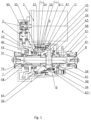
Fig. 1 shows a section of the electric drive module with one electric motor; -
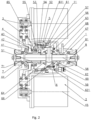
Fig. 2 shows a section of the electric drive module with two electric motors; -
Fig. 3 shows a front view of the electric drive module with two electric motors; -
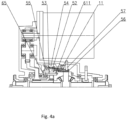
Fig. 4a shows a rectangular section of the electric drive module in the first gear; -
Fig. 4b shows a rectangular section of the electric drive module in neutral gear; -
Fig. 4c shows a rectangular section of the electric drive module in the second gear; -
Fig. 5 shows a rectangular section of the electric drive module; -
Fig. 6 shows a section of the electric drive module with the parking brake system; -
Fig. 7 shows a section of the electric drive module with the parking brake system with two countershafts; -
Fig. 8 shows a front view of the electric drive module with the parking brake system with two parking brake calipers; -
Fig. 9 shows a front view of the electric drive module with the parking brake system with two parking brake countershafts. - The invention will be further clarified using exemplary embodiments with reference to the respective drawings, which, however, have no limiting effect from the point of view of the scope of protection.
- In the exemplary embodiment shown in
Fig. 6 , the electric drive module comprises a parking brake system 9. Theelectric motor 2 is connected bymechanical gears 3 to themain gear wheel 4, to which the output rotational movement of theelectric motor 2 is transmitted by themechanical gears 3. Themain gear wheel 4 is directly connected to gearbox 5. Themain gear wheel 4 therefore serves as the input member of the gearbox 5. The smooth rotational movement of themain gear wheel 4 is provided by thefirst bearing 42 and thesecond bearing 43. Themain gear wheel 4 is further provided with ahub 41 and a maingear wheel hole 44 located in the center of themain gear wheel 4. The invention is not limited to the use of only oneelectric motor 2, for example, multipleelectric motors 2 may be used, wherein theelectric motors 2 are arranged such that theiraxes 45 are parallel or perpendicular and the overall structure of the housing 1, theelectric motors 2, and the gearbox 5 is symmetrical. In the case of a perpendicular arrangement of theaxes 45 of the electric motors, theseaxes 45 can be in different planes. Allelectric motors 2 are then used to drive the rotational movement of themain gear wheel 4. For example, theelectric motors 2 are arranged such that their axes of rotation are parallel to theaxis 58 of the gearbox. However, it is also possible to have an arrangement where their axes are perpendicular to theaxis 58 of the gearbox. The electric drive module further comprises a parking brake system 9 attached to the housing 1 in the space defined by theelectric motors 2. The parking brake system 9 comprises at least a parking brake shaft 93, apinion 91 rigidly connected to the parking brake shaft 93 on one side thereof, aparking brake disc 92 rigidly connected to the parking brake shaft 93 on a side opposite to thepinion 91, and at least onebraking element 94 securing the rotation of thebrake disc 92 by pressure. For example, abrake caliper 94 is used as thebraking element 94, but the invention is not limited to the use of this braking element, e.g., a drum brake mechanism may be selected as another exemplary embodiment. For example, twobrake calipers 94 placed opposite each other may be used, as shown inFig. 8 , or in such a way that they grip thebrake disc 92 at opposite ends of its circumference. Thebrake calipers 94 are placed on the side of thedrive shaft 8 on the fork side, i.e., at the point where the size of the differential housing 6 is already decreasing. The axis of the parking brake shaft 93 is approximately parallel to theaxis 58 of the gearbox. The parking brake system 9 is placed such that the rotational movement of themain gear wheel 4 is transmitted to thepinion 91 rigidly attached on the parking brake shaft 93 and it rotates the parking brake shaft 93 and, therefore, theparking brake disc 92. The parking brake system 9 has braking effect when the electric drive module is either idling or switched off. The braking effect is achieved by pressing thebrake disc 92 with thebrake caliper 94. This prevents the rotation of the parking brake shaft 93 and thepinion 91. Due to the connection between thepinion 91 and themain gear wheel 4, the rotational movement of themain gear wheel 4 is prevented, which ultimately prevents the rotation of thecarriers 71, 72 and therefore the rotation of the wheels through the gearbox 5 and the differential 6. - In another exemplary embodiment shown in
Fig. 7 and9 , the parking brake system 9 further comprises at least oneparking brake countershaft 95 provided with afirst gear 951 and asecond gear 952. Thecountershaft 95 is placed such that itsfirst gear 951 is connected by its gearing to the gearing of themain gear wheel 4 and itssecond gear 952 is connected by its gearing to thepinion 91. In the case where twocountershafts 95 are used, thesecond countershaft 95 is placed such that the above arrangement conditions are met. In the whole structure of the electric drive module, the parking brake system 9 is placed such that the axes of the disc and spindle are as close as possible to theaxis 58 of the gearbox. Then, in order to achieve a higher compactness of the entire electric drive module, the parking brake system 9 is exemplarily placed such that thebrake disc 92 and thebrake caliper 94 lie in the region defined by the position of the differential 6 and theoutput flange 81 of the shaft on the fork side, as can be seen inFig. 6 and7 . - In another exemplary embodiment shown in
Fig. 1-5 , the electric drive module comprises a housing 1 in which at least oneelectric motor 2 is attached, further comprising a gearbox 5, an axle differential 6, and rigidly attachedshift ring 11. - The
electric motor 2 is attached in thehousing 2 by means of screws, flanges, or other fixing mechanism and then connected by means ofmechanical gears 3 to themain gear wheel 4, to which the output rotational movement of theelectric motor 2 is transmitted by themechanical gears 3. Themechanical gears 3 are a set of geared wheels, shafts, chains, or wheels and belts and serve to transmit the output rotation of theelectric motor 2 to other mechanisms of the electric drive module. Themain gear wheel 4 is connected to the gearbox 5. Themain gear wheel 4 therefore serves as the input member of the gearbox 5. The smooth rotational movement of themain gear wheel 4 is provided by the way it is pivotally housed by means of thefirst bearing 42 and thesecond bearing 43. Themain gear wheel 4 is further provided with ahub 41 and amain wheel hole 44 located in the center of themain gear wheel 4. The invention is not limited to the use of only oneelectric motor 2, for example, multipleelectric motors 2 may be used, wherein theelectric motors 2 are arranged such that theiraxes 45 are parallel or perpendicular and the overall structure of the housing 1, theelectric motors 2, and the gearbox 5 is symmetrical. In the case of a perpendicular arrangement of theaxes 45 of the electric motors, theseaxes 45 can be in different planes. Allelectric motors 2 are then used to drive the rotational movement of themain gear wheel 4. For example, theelectric motors 2 are arranged such that theiraxes 45 of rotation are parallel to theaxis 58 of the gearbox. This exemplary embodiment is the preferred variant in terms of drive module symmetry and parallelism of all axes of rotation. However, it is also possible to have an arrangement where their axes are perpendicular to theaxis 58 of the gearbox. - The gearbox 5 typically comprises an input member with angular velocity corresponding to the input angular velocity of an element of the gearbox 5. This angular velocity is then increased, decreased, or kept constant by means of the individual gears of the gearbox 5 and then transmitted to the output member of the gearbox 5. The angular velocities of the input and output members of the gearbox 5 may therefore differ. In an exemplary embodiment, the gearbox 5 is implemented as a two-stage planetary gearbox, however this choice does not represent any limitation in terms of the scope of protection. The gearbox 5 comprises a
sun gear 51, at least threeplanet gears 52 attached on acarrier 510, for example four of them, and aring gear 54. Thesun gear 51 is fitted with the planet gears 52, which by their gearing fit into the gearing of thering gear 54. The rotational movement of thesun gear 51 is made possible by the connection to themain gear wheel 4, to which thesun gear 51 is torsionally rigidly connected in itshole 44, their angular velocities are therefore the same. In planetary gearboxes, thesun gear 51 serves as the input member of the gearbox 5, and thecarrier 510 serves as the output member of the gearbox 5. Since the rotation of thesun gear 51 corresponds to the rotation of themain gear wheel 4, themain gear wheel 4 can be regarded as the input member of the gearbox 5. Thesun gear 51, the planet gears 52, and thering gear 54 can rotate about theaxis 58 of the gearbox. Each of the planet gears 52 then has its own axis of rotation passing through its center. Thus, the planet gears 52 may perform a dual rotational movement, one about theaxis 58 of the gearbox, the other one about an axis proper to eachplanet gear 52. The gearbox 5 further comprises ashift sleeve 56 slidably housed in thering gear 54 for changing the gear of the gearbox 5, and acontrol fork 57 adapted to change the position of theshift sleeve 56. - The axle differential 6 is housed in the axle differential housing. The axle differential 6 housing may be a single piece, but is exemplarily composed of two or more
connected parts differential housing parts housing part 61 on the main gear wheel side and ahousing part 62 on the fork side. The axle differential 6 is used to drive the moving wheels to which it is connected and transmits movement to them by means of the drive shaft 7 on the main gear wheel side and thecarriers 71 attached thereto and thedrive shaft 8 on the fork side and thecarriers 81 attached thereto. The central axes of the first andsecond shafts 7, 8 are identical or parallel to theaxis 58 of the gearbox. For example, the drive shaft 7 on the main gear wheel side passes through the hole of thecentral gear 51 and themain gear wheel 4, thus in this arrangement theshafts 7, 8 lie on theaxis 58 of the gearbox. The axle differential 6 is housed in the axle differential housing and comprisesdifferential pinions 63,differential lock sleeve 67 andcontrol fork 68. The differential pinions 63 are connected by gearing to thefirst side gear 64 attached on the first shaft 7 and to thesecond side gear 66 attached on thesecond shaft 8. The differential pinions 63 rotate about theaxis 58 of the gearbox or an axis parallel thereto and with this rotational movement rotate the first and secondplanetary gears shafts 7, 8. The differential pinions 63 can further rotate about an axis passing through their center. Thedifferential lock sleeve 67 is slidably housed on thedrive shaft 8 on the fork side. During its translational movement, thedifferential lock sleeve 67 engages the gearing on thehousing part 62 on the fork side. This movement of thedifferential lock sleeve 67 is controlled electronically by the differentiallock fork fork 68. The number of degrees of freedom of the differential 6 is controlled by thedifferential lock 68, where in a first position of thedifferential lock 68 thedifferential pinions 63 are allowed to rotate both about their central axis, generally perpendicular to theaxis 58 of the gearbox, and about theaxis 58 of the gearbox. In this position, theshafts 7, 8 can therefore rotate at different speeds. In the second position of thedifferential lock sleeve 67, thedifferential pinions 63 are fixed and can only perform rotation about theaxis 58 of the gearbox and theshafts 7, 8 therefore rotate at the same speed. - At least the
housing part 61 on the main gear wheel side is pivotally housed by the firstdifferential bearing 65 on the main gearwheel hub part 11, and its rotational movement is thus allowed. In the case where the differential housing consists of a single piece, it is pivotally housed by the firstdifferential bearing 65 on the main gearwheel hub part 11. Thus, at least a part of the housing may perform rotational movement about an axis parallel or identical to theaxis 58 of the gearbox. In an exemplary embodiment, the rotation of the entire housing as a whole is enabled by the rigid connection of thehousing parts main gear wheel 4. Thehousing 61 part on the main gear wheel side is further provided with an outer gearing and a number ofopenings 611 located in the space defined by thedifferential pinions 63, thefirst side gear 64, thesun gear 51, and the outer circumference of thehousing part 61 on the main gear wheel side. Theopenings 611 correspond in their arrangement and number to the arrangement and number of the gearbox planet gears 52. The planet gear pins 53, on which the planet gears 52 are pivotally attached, are then rigidly housed in theseopenings 611. At least thehousing part 61 on the main gear wheel side is pivotally housed in the housing 1 on the main gearwheel hub part 41 via the firstdifferential bearing 65, and thus, due to its direct connection to the planet gears 52, serves as theircarrier 510 and thus as the output member of the gearbox 5. Further, thering gear 54 is pivotally housed on thehousing part 61 on the main gear wheel side by means of the ring gear bearing 55, thehousing part 61 on the main gear wheel side is therefore the closest element of the differential 6 with respect to themain gear wheel 4. This pivotal housing allows independent rotational movement of thering gear 54 andpart 51 of the differential housing on the main gear wheel side. Thehousing part 62 on the fork side is pivotally housed by the seconddifferential bearing 69. Thus, thishousing part 62 can perform rotational movement also when theseparts parts - In an exemplary embodiment of the invention, two gears and neutral can be used in the gearbox 5. The
shift sleeve 56 can thus be in three positions, where in the first position of theshift sleeve 56 shown inFig. 4a , the first gear is engaged, in the second position of theshift sleeve 56 shown inFig. 4b , the neutral is engaged, and in the third position of theshift sleeve 56 shown inFig. 4c , the second gear is engaged. The change of position of theshift sleeve 56 is controlled electronically by theshift fork 57. When changing the position of theshift sleeve 56, there is a sliding engagement with the outer gearing on thehousing part 61 on the side of the main gear wheel and theshift ring 11. In a slow gear, thesun gear 51 is driven by themain gear wheel 4 and thering gear 54 is braked. The planet gears 52, to which the rotation of thesun gear 51 is transmitted, are connected to thesun gear 51 by the gearing. However, thering gear 54 is fixed and the planet gears 52 are thus forced to orbit around thesun gear 51 while rotating about their own axis. The rotational movement of the planet gears 52 about theaxis 58 of the gearbox is transmitted to thecarrier 510, i.e., the output member. The output rotation of the planet gears 52 about thegearbox axis 58 is transmitted to at least thehousing part 61, which itself serves as thecarrier 510 and thus the output member, by means of the planet gear pins 53 placed in thehousing openings 611. Thus, at least thedifferential housing part 61 rotates about theaxis 58 of the gearbox. The differential pinions 63 placed in thedifferential housing axis 58 of the gearbox, they transmit the rotational movement by means of the bevel gear to the first and second side gears 64, 66 and thus begin to rotate thedrive shafts 7 and 8. The slow gear, or first gear, thus slows the input rotational movement in a ratio determined by the ratios of thesun gear 51, planet gears 52, andring gear 54. For example, the the ratio of the rotation speed of the input and output of the gearbox 5 is 1:3.4, however, in terms of the scope of protection, this value is not limiting, but optional according to the application of the invention. In the fast gear, thering gear 54 is rigidly pivotally connected by theshift sleeve 56 to at least thehousing part 61. Thus, the rotation of thehousing part 61 is associated with the rotation of thering gear 54. Thishousing part 61, which also serves as the output member andcarrier 510, rotates together with thering gear 54 and the planet gears 52 about theaxis 58 of the gearbox. Due to the direct connection of thering gear 54 to thecarrier 510, the rotational movement of thering gear 54 is the output of the gearbox 5 with an output angular velocity ratio of 1:1. The differential 6 housing begins to rotate, thedifferential pinions 63 begin to rotate about theaxis 58 of the gearbox, they transmit the rotational movement by means of the bevel gear to the first and second side gears 64, 66 and thus begin to rotate thedrive shafts 7 and 8. - In another exemplary embodiment shown in
Fig. 5 , the electric drive module is further equipped with aspeed sensor 59 and asensing ring 621. Thespeed sensor 59 is designed as an electromagnetic sensor and is mounted in the housing 1 of the electric drive module. Thesensing ring 621 is attached on the differential housing, which is designed as an output member and thus rotates about theaxis 58 of the gearbox. Similarly, thesensing ring 621 rotates about this axis and periodically comes into proximity of thespeed sensor 59. Thesensing ring 621 induces in thespeed sensor 59 an electrical voltage with a periodic waveform, where the period of the voltage waveform corresponds to the period of rotation of thesensing ring 621 about theaxis 58 of the gearbox. - In an exemplary embodiment, the axle width, or the distance between the
axle carriers 71, is 700 mm. -
- 1 -
- housing
- 11 -
- shift ring
- 2 -
- electric motor
- 3 -
- mechanical gears
- 4 -
- main gear wheel
- 41 -
- main gear wheel hub part
- 42 -
- main gear wheel first bearing
- 43 -
- main gear wheel second bearing
- 44 -
- main gear wheel hole
- 45 -
- axis of the electric motor
- 5 -
- gearbox
- 51 -
- sun gear
- 52 -
- planet gear
- 53 -
- planet gear pin
- 54 -
- ring gear
- 55 -
- ring gear bearing
- 56 -
- shift sleeve
- 57 -
- shift fork
- 58 -
- axis of the gearbox
- 59 -
- speed sensor
- 510 -
- carrier
- 511 -
- planet gear face
- 512 -
- planet gear face
- 6 -
- axle differential
- 61 -
- differential housing part on the main gear wheel side
- 611 -
- differential housing openings
- 62 -
- differential housing part on the fork side
- 621 -
- sensing ring
- 63 -
- differential pinion
- 64 -
- first side gear
- 65 -
- first differential bearing
- 66 -
- second side gear
- 67 -
- differential lock sleeve
- 68 -
- differential lock fork
- 69 -
- second differential bearing?
- 7 -
- drive shaft on the main gear wheel side
- 71 -
- output flange
- 8 -
- drive shaft on the fork side
- 81 -
- output flange
- 9 -
- parking brake
- 91 -
- pinion
- 92 -
- parking brake disc
- 93 -
- parking brake shaft
- 94 -
- brake caliper
- 95 -
- parking brake countershaft
- 951 -
- first parking brake gear
- 952 -
- second parking brake gear
Claims (16)
- An electric drive module for driving an axle comprising a housing (1), at least one electric motor (2) attached to the housing, a main gear wheel (4) mechanically connected to the electric motor (2) by mechanical gears (3), a gearbox (5), wherein the gearbox (5) input member is driven by the main gear wheel (4), an axle differential (6) located in an axle differential housing (61, 62) and driven by a gearbox (5) output, drive shafts (7, 8) driven by the axle differential (6), wherein the axis of the shafts (7, 8) is identical or parallel to the axis (58) of the gearbox, and it further comprises a parking brake system (9) characterized in that the parking brake system(9) comprises a parking brake shaft (93), a pinion (91) placed on the first side of the parking brake shaft (93), a brake disc (92) placed on the side of the shaft (93) opposite to the pinion, and a braking element (94) adapted to exert a braking effect on the brake disc (92), wherein the parking brake system (9) is placed such that the rotational movement of the main gear wheel (4) is transmitted to the pinion (91).
- The electric drive module for driving an axle of claim 1, characterized in that the axis of the shaft (93) forms an angle of less than 5° with the axis (58) of the gearbox.
- The electric drive module for driving an axle of claims 1 and 2, characterized in that the parking brake system (9) further comprises at least one parking brake countershaft (95) provided with a first gear (951) and a second gear (952) and placed such that the first gear (951) is connected by its gearing to the main gear wheel (4) and the second gear (952) is connected by its gearing to the pinion (91).
- The electric drive module for driving an axle of claim 3, characterized in that it comprises two countershafts (95) arranged around the circumference of the main gear wheel (4).
- The electric drive module for driving an axle of claims 1 to 4, characterized in that it comprises two brake calipers (94) placed at opposite ends of the circumference of the brake disc (92).
- The electric drive module for driving an axle of claims 1 to 5, characterized in that the brake disc (92) and the brake caliper (94) are placed in the space defined by the position of the differential (6) and the output flange (81) of the shaft (8) on the fork side.
- The electric drive module for driving an axle of claims 1 to 6, characterized in that at least a part (61, 62) of the differential housing is rigidly connected to the gearbox (5) output member.
- The electric drive module for driving an axle of claims 1 to 7, characterized in that the differential (6) comprises differential pinions (63) adapted for rotation about the axis (58) of the gearbox and side gears (64) attached on drive shafts (7, 8) and connected by bevel gear to the differential pinions (63).
- The electric drive module for driving an axle of claims 1 to 8, characterized in that the gearbox (5) is designed as a planetary gearbox (5), wherein it comprises a sun gear (51) torsionally rigidly connected to the main gear wheel (4), planet gears (52), wherein the carrier (510) is designed as the gearbox (5) output member and is rigidly connected to the differential housing part (61) or is a part thereof, wherein the connection to the differential housing part (61) is made in the region defined by the planet gear faces (511, 512); and the ring gear (54) pivotally housed on the housing part (61) on the main gear wheel side.
- The electric drive module for driving an axle of claim 9, characterized in that the housing part (61) on the main gear wheel side is provided with a number of openings (611) in which the pins (53) are inserted, wherein the planet gears (52) are pivotally housed on the pins (53).
- The electric drive module for driving an axle of claim 10, characterized in that the openings (611) are placed in the space between the hole for the differential pinions (63), the side gear (64), and the sun gear (51) and the outer circumference of the housing part (61) of the axle differential (6).
- The electric drive module for driving an axle of claims 9 to 11, characterized in that it further comprises a shift ring (11), a shift sleeve (56) slidably fitted in the ring gear (54) via connecting spline and slidably engaging with the spline of the housing part (61) on the main gear wheel side, and a shift fork (57) adapted to move the shift sleeve (56), wherein the shift sleeve (56) has at least three positions, where the first position corresponds to the first gear, the second position corresponds to the neutral, and the third position corresponds to the second gear.
- The electric drive module for driving an axle of claims 1 to 12, characterized in that the drive shaft (7) on the gear wheel side passes through the holes of the main gear wheel (4) and the sun gear (51).
- The electric drive module for driving an axle of claims 1 to 13, characterized in that it comprises two electric motors (2), wherein the axes (45) of the electric motors are parallel to the axis (58) of the gearbox.
- The electric drive module for driving an axle of claims 1 to 14, characterized in that the housing part (61) of the axle differential (6) is supported by a bearing (65) on a hub part (41) of the main gear wheel (4).
- The electric drive module for driving an axle of claims 1 to 15, characterized in that it further comprises an electromagnetic speed sensor (59) mounted in the housing (1) and a sensing ring (621) rigidly connected to the housing part (62) on the fork side, wherein the speed sensor (59) with a prescribed clearance is axially adjacent to the sensing ring (621).
Applications Claiming Priority (2)
| Application Number | Priority Date | Filing Date | Title |
|---|---|---|---|
| CZ2021-79A CZ310503B6 (en) | 2021-02-21 | 2021-02-21 | An electric power module to drive an axle |
| PCT/CZ2022/050018 WO2022174847A1 (en) | 2021-02-21 | 2022-02-21 | Electric drive module for driving an axle |
Publications (3)
| Publication Number | Publication Date |
|---|---|
| EP4237265A1 EP4237265A1 (en) | 2023-09-06 |
| EP4237265B1 true EP4237265B1 (en) | 2024-03-20 |
| EP4237265C0 EP4237265C0 (en) | 2024-03-20 |
Family
ID=81325474
Family Applications (1)
| Application Number | Title | Priority Date | Filing Date |
|---|---|---|---|
| EP22715521.5A Active EP4237265B1 (en) | 2021-02-21 | 2022-02-21 | Electric drive module for driving an axle |
Country Status (4)
| Country | Link |
|---|---|
| EP (1) | EP4237265B1 (en) |
| CN (1) | CN116829391A (en) |
| CZ (1) | CZ310503B6 (en) |
| WO (1) | WO2022174847A1 (en) |
Families Citing this family (2)
| Publication number | Priority date | Publication date | Assignee | Title |
|---|---|---|---|---|
| IT202300021954A1 (en) * | 2023-10-20 | 2025-04-20 | Fpt Ind Spa | IMPROVED ELECTRIC DRIVE AXLE/BRIDGE |
| JP2026043979A (en) * | 2024-08-29 | 2026-03-12 | トヨタ自動車株式会社 | Drive unit |
Citations (1)
| Publication number | Priority date | Publication date | Assignee | Title |
|---|---|---|---|---|
| EP2414184B1 (en) * | 2008-11-07 | 2014-07-16 | Magna Powertrain USA, Inc. | Electric drive two-speed transaxle |
Family Cites Families (7)
| Publication number | Priority date | Publication date | Assignee | Title |
|---|---|---|---|---|
| AT405924B (en) * | 1998-01-16 | 1999-12-27 | Oskar Wachauer | DRIVE FOR A VEHICLE, ESPECIALLY FOR A MULTI-TRACK ELECTRIC MOBILE |
| US9303745B2 (en) * | 2010-12-23 | 2016-04-05 | Magna Powertrain Inc. | Multi-speed transaxle for electric and hybrid vehicle application |
| US9637127B1 (en) * | 2015-12-29 | 2017-05-02 | Dana Automotive Systems Group, Llc | Two-speed electric drive unit |
| CN106985614B (en) * | 2017-04-18 | 2018-03-13 | 广州市新域动力技术有限公司 | The pure electric drive axle of the coaxial integrated double speed of dry pan formula |
| JP2020521661A (en) * | 2017-05-25 | 2020-07-27 | ダナ ヘビー ビーイクル システィムズ グループ、エルエルシー | Modular head assembly for electric axle |
| US10851881B2 (en) * | 2017-09-08 | 2020-12-01 | Guangzhou Sunmile Dynamic Technologies Corp., Ltd | Four-speed transaxle for electric vehicle |
| CN112368164B (en) * | 2018-06-29 | 2024-08-02 | Gkn汽车有限公司 | Transmission device with parking lock and electric drive with transmission device |
-
2021
- 2021-02-21 CZ CZ2021-79A patent/CZ310503B6/en unknown
-
2022
- 2022-02-21 EP EP22715521.5A patent/EP4237265B1/en active Active
- 2022-02-21 CN CN202280012299.5A patent/CN116829391A/en active Pending
- 2022-02-21 WO PCT/CZ2022/050018 patent/WO2022174847A1/en not_active Ceased
Patent Citations (1)
| Publication number | Priority date | Publication date | Assignee | Title |
|---|---|---|---|---|
| EP2414184B1 (en) * | 2008-11-07 | 2014-07-16 | Magna Powertrain USA, Inc. | Electric drive two-speed transaxle |
Also Published As
| Publication number | Publication date |
|---|---|
| CZ310503B6 (en) | 2025-08-27 |
| EP4237265A1 (en) | 2023-09-06 |
| CZ202179A3 (en) | 2022-08-31 |
| EP4237265C0 (en) | 2024-03-20 |
| CN116829391A (en) | 2023-09-29 |
| WO2022174847A1 (en) | 2022-08-25 |
Similar Documents
| Publication | Publication Date | Title |
|---|---|---|
| US5904634A (en) | Differential apparatus with additional speed increasing gear and speed decreasing gear selectively engageable with a single output shaft | |
| US20050124450A1 (en) | Variable ratio drive system | |
| WO2005120877A1 (en) | Epicyclic differential transmission | |
| EP4237265B1 (en) | Electric drive module for driving an axle | |
| KR100358003B1 (en) | Differential drive with N output shaft | |
| KR20040084669A (en) | Transfer case with overdrive/underdrive shifting | |
| CN115704462A (en) | Transmission for a vehicle and drive train having such a transmission | |
| KR20080093446A (en) | Differential with planetary gearing | |
| CN115875419A (en) | Transmission for a vehicle and drive train having such a transmission | |
| US4056018A (en) | Multiple power path concentric speed reducer | |
| EP4237266B1 (en) | Electric drive module for axle | |
| US6413186B1 (en) | Power train system for a vehicle | |
| US20230042398A1 (en) | A drive system for a skid steered vehicle | |
| US4843910A (en) | Pinion gear speed disc brake | |
| US12122653B2 (en) | Single drive axle brake of electric forklift | |
| CN111712392A (en) | Modular drive components | |
| CN115704461A (en) | Transmission for a vehicle and drive train having such a transmission | |
| WO1999030060A1 (en) | Power distributing mechanism for driving the driving axles and wheels of a vehicle | |
| CN116424033B (en) | Automobile duplex driving axle | |
| JP2728274B2 (en) | Four-wheel drive for automatic continuously variable transmission | |
| CN223803417U (en) | A novel single-motor electric drive bridge reduction structure | |
| CN116538257B (en) | Dual-speed reducer and automotive drive axle | |
| RU2023600C1 (en) | Transfer case wheeled vehicle | |
| JPH0752670A (en) | Four-wheel drive system for vehicles | |
| JPH0495641A (en) | Differential device |
Legal Events
| Date | Code | Title | Description |
|---|---|---|---|
| STAA | Information on the status of an ep patent application or granted ep patent |
Free format text: STATUS: UNKNOWN |
|
| STAA | Information on the status of an ep patent application or granted ep patent |
Free format text: STATUS: THE INTERNATIONAL PUBLICATION HAS BEEN MADE |
|
| PUAI | Public reference made under article 153(3) epc to a published international application that has entered the european phase |
Free format text: ORIGINAL CODE: 0009012 |
|
| STAA | Information on the status of an ep patent application or granted ep patent |
Free format text: STATUS: REQUEST FOR EXAMINATION WAS MADE |
|
| 17P | Request for examination filed |
Effective date: 20230529 |
|
| AK | Designated contracting states |
Kind code of ref document: A1 Designated state(s): AL AT BE BG CH CY CZ DE DK EE ES FI FR GB GR HR HU IE IS IT LI LT LU LV MC MK MT NL NO PL PT RO RS SE SI SK SM TR |
|
| GRAP | Despatch of communication of intention to grant a patent |
Free format text: ORIGINAL CODE: EPIDOSNIGR1 |
|
| STAA | Information on the status of an ep patent application or granted ep patent |
Free format text: STATUS: GRANT OF PATENT IS INTENDED |
|
| DAV | Request for validation of the european patent (deleted) | ||
| DAX | Request for extension of the european patent (deleted) | ||
| INTG | Intention to grant announced |
Effective date: 20231204 |
|
| GRAS | Grant fee paid |
Free format text: ORIGINAL CODE: EPIDOSNIGR3 |
|
| GRAA | (expected) grant |
Free format text: ORIGINAL CODE: 0009210 |
|
| STAA | Information on the status of an ep patent application or granted ep patent |
Free format text: STATUS: THE PATENT HAS BEEN GRANTED |
|
| AK | Designated contracting states |
Kind code of ref document: B1 Designated state(s): AL AT BE BG CH CY CZ DE DK EE ES FI FR GB GR HR HU IE IS IT LI LT LU LV MC MK MT NL NO PL PT RO RS SE SI SK SM TR |
|
| RAP3 | Party data changed (applicant data changed or rights of an application transferred) |
Owner name: ADVANCED DESIGN SOLUTION |
|
| REG | Reference to a national code |
Ref country code: GB Ref legal event code: FG4D |
|
| RIN1 | Information on inventor provided before grant (corrected) |
Inventor name: NEUMAN, VILEM |
|
| REG | Reference to a national code |
Ref country code: CH Ref legal event code: EP |
|
| REG | Reference to a national code |
Ref country code: IE Ref legal event code: FG4D |
|
| REG | Reference to a national code |
Ref country code: DE Ref legal event code: R096 Ref document number: 602022002467 Country of ref document: DE |
|
| U01 | Request for unitary effect filed |
Effective date: 20240409 |
|
| U07 | Unitary effect registered |
Designated state(s): AT BE BG DE DK EE FI FR IT LT LU LV MT NL PT SE SI Effective date: 20240416 |
|
| PG25 | Lapsed in a contracting state [announced via postgrant information from national office to epo] |
Ref country code: GR Free format text: LAPSE BECAUSE OF FAILURE TO SUBMIT A TRANSLATION OF THE DESCRIPTION OR TO PAY THE FEE WITHIN THE PRESCRIBED TIME-LIMIT Effective date: 20240621 |
|
| PG25 | Lapsed in a contracting state [announced via postgrant information from national office to epo] |
Ref country code: RS Free format text: LAPSE BECAUSE OF FAILURE TO SUBMIT A TRANSLATION OF THE DESCRIPTION OR TO PAY THE FEE WITHIN THE PRESCRIBED TIME-LIMIT Effective date: 20240620 Ref country code: HR Free format text: LAPSE BECAUSE OF FAILURE TO SUBMIT A TRANSLATION OF THE DESCRIPTION OR TO PAY THE FEE WITHIN THE PRESCRIBED TIME-LIMIT Effective date: 20240320 |
|
| PG25 | Lapsed in a contracting state [announced via postgrant information from national office to epo] |
Ref country code: RS Free format text: LAPSE BECAUSE OF FAILURE TO SUBMIT A TRANSLATION OF THE DESCRIPTION OR TO PAY THE FEE WITHIN THE PRESCRIBED TIME-LIMIT Effective date: 20240620 Ref country code: NO Free format text: LAPSE BECAUSE OF FAILURE TO SUBMIT A TRANSLATION OF THE DESCRIPTION OR TO PAY THE FEE WITHIN THE PRESCRIBED TIME-LIMIT Effective date: 20240620 Ref country code: HR Free format text: LAPSE BECAUSE OF FAILURE TO SUBMIT A TRANSLATION OF THE DESCRIPTION OR TO PAY THE FEE WITHIN THE PRESCRIBED TIME-LIMIT Effective date: 20240320 Ref country code: GR Free format text: LAPSE BECAUSE OF FAILURE TO SUBMIT A TRANSLATION OF THE DESCRIPTION OR TO PAY THE FEE WITHIN THE PRESCRIBED TIME-LIMIT Effective date: 20240621 |
|
| PG25 | Lapsed in a contracting state [announced via postgrant information from national office to epo] |
Ref country code: IS Free format text: LAPSE BECAUSE OF FAILURE TO SUBMIT A TRANSLATION OF THE DESCRIPTION OR TO PAY THE FEE WITHIN THE PRESCRIBED TIME-LIMIT Effective date: 20240720 |
|
| PG25 | Lapsed in a contracting state [announced via postgrant information from national office to epo] |
Ref country code: SM Free format text: LAPSE BECAUSE OF FAILURE TO SUBMIT A TRANSLATION OF THE DESCRIPTION OR TO PAY THE FEE WITHIN THE PRESCRIBED TIME-LIMIT Effective date: 20240320 |
|
| PG25 | Lapsed in a contracting state [announced via postgrant information from national office to epo] |
Ref country code: ES Free format text: LAPSE BECAUSE OF FAILURE TO SUBMIT A TRANSLATION OF THE DESCRIPTION OR TO PAY THE FEE WITHIN THE PRESCRIBED TIME-LIMIT Effective date: 20240320 |
|
| PG25 | Lapsed in a contracting state [announced via postgrant information from national office to epo] |
Ref country code: CZ Free format text: LAPSE BECAUSE OF FAILURE TO SUBMIT A TRANSLATION OF THE DESCRIPTION OR TO PAY THE FEE WITHIN THE PRESCRIBED TIME-LIMIT Effective date: 20240320 |
|
| PG25 | Lapsed in a contracting state [announced via postgrant information from national office to epo] |
Ref country code: PL Free format text: LAPSE BECAUSE OF FAILURE TO SUBMIT A TRANSLATION OF THE DESCRIPTION OR TO PAY THE FEE WITHIN THE PRESCRIBED TIME-LIMIT Effective date: 20240320 |
|
| PG25 | Lapsed in a contracting state [announced via postgrant information from national office to epo] |
Ref country code: SK Free format text: LAPSE BECAUSE OF FAILURE TO SUBMIT A TRANSLATION OF THE DESCRIPTION OR TO PAY THE FEE WITHIN THE PRESCRIBED TIME-LIMIT Effective date: 20240320 |
|
| PG25 | Lapsed in a contracting state [announced via postgrant information from national office to epo] |
Ref country code: SM Free format text: LAPSE BECAUSE OF FAILURE TO SUBMIT A TRANSLATION OF THE DESCRIPTION OR TO PAY THE FEE WITHIN THE PRESCRIBED TIME-LIMIT Effective date: 20240320 Ref country code: SK Free format text: LAPSE BECAUSE OF FAILURE TO SUBMIT A TRANSLATION OF THE DESCRIPTION OR TO PAY THE FEE WITHIN THE PRESCRIBED TIME-LIMIT Effective date: 20240320 Ref country code: RO Free format text: LAPSE BECAUSE OF FAILURE TO SUBMIT A TRANSLATION OF THE DESCRIPTION OR TO PAY THE FEE WITHIN THE PRESCRIBED TIME-LIMIT Effective date: 20240320 Ref country code: PL Free format text: LAPSE BECAUSE OF FAILURE TO SUBMIT A TRANSLATION OF THE DESCRIPTION OR TO PAY THE FEE WITHIN THE PRESCRIBED TIME-LIMIT Effective date: 20240320 Ref country code: IS Free format text: LAPSE BECAUSE OF FAILURE TO SUBMIT A TRANSLATION OF THE DESCRIPTION OR TO PAY THE FEE WITHIN THE PRESCRIBED TIME-LIMIT Effective date: 20240720 Ref country code: ES Free format text: LAPSE BECAUSE OF FAILURE TO SUBMIT A TRANSLATION OF THE DESCRIPTION OR TO PAY THE FEE WITHIN THE PRESCRIBED TIME-LIMIT Effective date: 20240320 Ref country code: CZ Free format text: LAPSE BECAUSE OF FAILURE TO SUBMIT A TRANSLATION OF THE DESCRIPTION OR TO PAY THE FEE WITHIN THE PRESCRIBED TIME-LIMIT Effective date: 20240320 |
|
| REG | Reference to a national code |
Ref country code: DE Ref legal event code: R097 Ref document number: 602022002467 Country of ref document: DE |
|
| PLBE | No opposition filed within time limit |
Free format text: ORIGINAL CODE: 0009261 |
|
| STAA | Information on the status of an ep patent application or granted ep patent |
Free format text: STATUS: NO OPPOSITION FILED WITHIN TIME LIMIT |
|
| 26N | No opposition filed |
Effective date: 20241223 |
|
| U20 | Renewal fee for the european patent with unitary effect paid |
Year of fee payment: 4 Effective date: 20250217 |
|
| PG25 | Lapsed in a contracting state [announced via postgrant information from national office to epo] |
Ref country code: MC Free format text: LAPSE BECAUSE OF FAILURE TO SUBMIT A TRANSLATION OF THE DESCRIPTION OR TO PAY THE FEE WITHIN THE PRESCRIBED TIME-LIMIT Effective date: 20240320 |
|
| REG | Reference to a national code |
Ref country code: CH Ref legal event code: PL |
|
| PG25 | Lapsed in a contracting state [announced via postgrant information from national office to epo] |
Ref country code: CH Free format text: LAPSE BECAUSE OF NON-PAYMENT OF DUE FEES Effective date: 20250228 |
|
| PG25 | Lapsed in a contracting state [announced via postgrant information from national office to epo] |
Ref country code: IE Free format text: LAPSE BECAUSE OF NON-PAYMENT OF DUE FEES Effective date: 20250221 |
|
| U20 | Renewal fee for the european patent with unitary effect paid |
Year of fee payment: 5 Effective date: 20260219 |