EP4234699A1 - Human alpha-galactosidase variants - Google Patents
Human alpha-galactosidase variants Download PDFInfo
- Publication number
- EP4234699A1 EP4234699A1 EP23168236.0A EP23168236A EP4234699A1 EP 4234699 A1 EP4234699 A1 EP 4234699A1 EP 23168236 A EP23168236 A EP 23168236A EP 4234699 A1 EP4234699 A1 EP 4234699A1
- Authority
- EP
- European Patent Office
- Prior art keywords
- seq
- gla
- alpha galactosidase
- sequence
- recombinant
- Prior art date
- Legal status (The legal status is an assumption and is not a legal conclusion. Google has not performed a legal analysis and makes no representation as to the accuracy of the status listed.)
- Pending
Links
Images


Classifications
-
- C—CHEMISTRY; METALLURGY
- C12—BIOCHEMISTRY; BEER; SPIRITS; WINE; VINEGAR; MICROBIOLOGY; ENZYMOLOGY; MUTATION OR GENETIC ENGINEERING
- C12N—MICROORGANISMS OR ENZYMES; COMPOSITIONS THEREOF; PROPAGATING, PRESERVING, OR MAINTAINING MICROORGANISMS; MUTATION OR GENETIC ENGINEERING; CULTURE MEDIA
- C12N9/00—Enzymes; Proenzymes; Compositions thereof; Processes for preparing, activating, inhibiting, separating or purifying enzymes
- C12N9/14—Hydrolases (3)
- C12N9/24—Hydrolases (3) acting on glycosyl compounds (3.2)
- C12N9/2402—Hydrolases (3) acting on glycosyl compounds (3.2) hydrolysing O- and S- glycosyl compounds (3.2.1)
- C12N9/2465—Hydrolases (3) acting on glycosyl compounds (3.2) hydrolysing O- and S- glycosyl compounds (3.2.1) acting on alpha-galactose-glycoside bonds, e.g. alpha-galactosidase (3.2.1.22)
-
- A—HUMAN NECESSITIES
- A61—MEDICAL OR VETERINARY SCIENCE; HYGIENE
- A61K—PREPARATIONS FOR MEDICAL, DENTAL OR TOILETRY PURPOSES
- A61K38/00—Medicinal preparations containing peptides
- A61K38/16—Peptides having more than 20 amino acids; Gastrins; Somatostatins; Melanotropins; Derivatives thereof
- A61K38/43—Enzymes; Proenzymes; Derivatives thereof
- A61K38/46—Hydrolases (3)
- A61K38/47—Hydrolases (3) acting on glycosyl compounds (3.2), e.g. cellulases, lactases
-
- A—HUMAN NECESSITIES
- A61—MEDICAL OR VETERINARY SCIENCE; HYGIENE
- A61K—PREPARATIONS FOR MEDICAL, DENTAL OR TOILETRY PURPOSES
- A61K38/00—Medicinal preparations containing peptides
-
- A—HUMAN NECESSITIES
- A61—MEDICAL OR VETERINARY SCIENCE; HYGIENE
- A61K—PREPARATIONS FOR MEDICAL, DENTAL OR TOILETRY PURPOSES
- A61K9/00—Medicinal preparations characterised by special physical form
- A61K9/0012—Galenical forms characterised by the site of application
- A61K9/0019—Injectable compositions; Intramuscular, intravenous, arterial, subcutaneous administration; Compositions to be administered through the skin in an invasive manner
-
- A—HUMAN NECESSITIES
- A61—MEDICAL OR VETERINARY SCIENCE; HYGIENE
- A61P—SPECIFIC THERAPEUTIC ACTIVITY OF CHEMICAL COMPOUNDS OR MEDICINAL PREPARATIONS
- A61P3/00—Drugs for disorders of the metabolism
-
- A—HUMAN NECESSITIES
- A61—MEDICAL OR VETERINARY SCIENCE; HYGIENE
- A61P—SPECIFIC THERAPEUTIC ACTIVITY OF CHEMICAL COMPOUNDS OR MEDICINAL PREPARATIONS
- A61P3/00—Drugs for disorders of the metabolism
- A61P3/06—Antihyperlipidemics
-
- A—HUMAN NECESSITIES
- A61—MEDICAL OR VETERINARY SCIENCE; HYGIENE
- A61P—SPECIFIC THERAPEUTIC ACTIVITY OF CHEMICAL COMPOUNDS OR MEDICINAL PREPARATIONS
- A61P43/00—Drugs for specific purposes, not provided for in groups A61P1/00-A61P41/00
-
- C—CHEMISTRY; METALLURGY
- C12—BIOCHEMISTRY; BEER; SPIRITS; WINE; VINEGAR; MICROBIOLOGY; ENZYMOLOGY; MUTATION OR GENETIC ENGINEERING
- C12N—MICROORGANISMS OR ENZYMES; COMPOSITIONS THEREOF; PROPAGATING, PRESERVING, OR MAINTAINING MICROORGANISMS; MUTATION OR GENETIC ENGINEERING; CULTURE MEDIA
- C12N15/00—Mutation or genetic engineering; DNA or RNA concerning genetic engineering, vectors, e.g. plasmids, or their isolation, preparation or purification; Use of hosts therefor
- C12N15/09—Recombinant DNA-technology
- C12N15/63—Introduction of foreign genetic material using vectors; Vectors; Use of hosts therefor; Regulation of expression
- C12N15/79—Vectors or expression systems specially adapted for eukaryotic hosts
-
- C—CHEMISTRY; METALLURGY
- C12—BIOCHEMISTRY; BEER; SPIRITS; WINE; VINEGAR; MICROBIOLOGY; ENZYMOLOGY; MUTATION OR GENETIC ENGINEERING
- C12Y—ENZYMES
- C12Y302/00—Hydrolases acting on glycosyl compounds, i.e. glycosylases (3.2)
- C12Y302/01—Glycosidases, i.e. enzymes hydrolysing O- and S-glycosyl compounds (3.2.1)
- C12Y302/01022—Alpha-galactosidase (3.2.1.22)
Definitions
- the present invention provides engineered human alpha-galactosidase polypeptides and compositions thereof.
- the engineered human alpha-galactosidase polypeptides have been optimized to provide improved stability under both acidic (pH ⁇ 4.5) and basic (pH >7) conditions.
- the invention also relates to the use of the compositions comprising the engineered human alpha-galactosidase polypeptides for therapeutic purposes.
- GLA Human alpha galactosidase
- Fabry disease also referred to as angiokeratoma corporis diffusum, Anderson-Fabry disease, hereditary dystopic lipidosis, alpha-galactosidase A deficiency, GLA deficiency, and ceramide trihexosidase deficiency
- Fabry disease is an X-linked inborn error of glycosphingolipid catabolism that results from deficient or absent activity of alpha-galactosidase A.
- Gb 3 globotriosylceramide
- related glycosphingolipids in the plasma and cellular lysosomes of blood vessels, tissue and organs (See e.g., Nance et al., Arch. Neurol., 63:453-457 [2006 ]).
- the blood vessels become progressively narrowed, due to the accumulation of these lipids, resulting in decreased blood flow and nourishment to the tissues, particularly in the skin, kidneys, heart, brain, and nervous system.
- Fabry disease is a systemic disorder that manifests as renal failure, cardiac disease, cerebrovascular disease, small-fiber peripheral neuropathy, and skin lesions, as well as other disorders (See e.g., Schiffmann, Pharm. Ther., 122:65-77 [2009] ).
- Affected patients exhibit symptoms such as painful hands and feet, clusters of small, dark red spots on their skin, the decreased ability to sweat, corneal opacity, gastrointestinal issues, tinnitus, and hearing loss.
- Potentially life-threatening complications include progressive renal damage, heart attacks, and stroke. This disease affects an estimated 1 in 40,000-60,000 males, but also occurs in females.
- the present invention provides engineered human alpha-galactosidase polypeptides and compositions thereof.
- the engineered human alpha-galactosidase polypeptides have been optimized to provide improved stability under both acidic (pH ⁇ 4.5) and basic (pH >7) conditions.
- the invention also relates to the use of the compositions comprising the engineered human alpha-galactosidase polypeptides for therapeutic purposes.
- the present invention provides recombinant alpha galactosidase A and/or biologically active recombinant alpha galactosidase A fragment comprising an amino acid sequence comprising at least about 70%, at least about 75%, at least about 80%, at least about 85%, at least about 90%, at least about 91%, at least about 92%, at least about 93%, at least about 94%, at least about 95%, at least about 96%, at least about 97%, at least about 98%, or at least about 99% sequence identity to SEQ ID NO:5.
- the alpha galactosidase A comprises at least one mutation in at least one position as provided in Tables 2.1, 2.2, 2.4, and/or 2.5, wherein the positions are numbered with reference to SEQ ID NO:5. In some embodiments, the alpha galactosidase A comprises at least one mutation in at least one position as provided in Table 2.3, wherein the positions are numbered with reference to SEQ ID NO: 10. In some additional embodiments, the recombinant alpha galactosidase A is derived from a human alpha galactosidase A. In some further embodiments, the recombinant alpha galactosidase A comprises the polypeptide sequence of SEQ ID NO:15, 13, 10, or 18.
- the recombinant alpha galactosidase A is more thermostable than the alpha galactosidase A of SEQ ID NO:5. In some further embodiments, the recombinant alpha galactosidase A is more stable at pH 7.4 than the alpha galactosidase A of SEQ ID NO:5, while in additional embodiments, the recombinant alpha galactosidase A is more stable at pH 4.3 than the alpha galactosidase A of SEQ ID NO:5.
- the recombinant alpha galactosidase A is more stable at pH 7.4 and pH 4.3 than the alpha galactosidase A of SEQ ID NO:5.
- the recombinant alpha galactosidase A is a deimmunized alpha galactosidase A.
- the recombinant alpha galactosidase A is a deimmunized alpha galactosidase A provided in Table 7.1.
- the recombinant alpha galactosidase A is purified.
- the recombinant alpha galactosidase A exhibits at least one improved property selected from: i) enhanced catalytic activity; ii) increased tolerance to pH 7.4; iii) increased tolerance to pH 4.3; or iv) reduced immunogenicity; or a combination of any of i), ii), iii), or iv), as compared to a reference sequence.
- the reference sequence is SEQ ID NO:5, while in some alternative embodiments, the reference sequence is SEQ ID NO: 10.
- the present invention also provides recombinant polynucleotide sequences encoding at least one recombinant alpha galactosidase A as provided herein (e.g., Tables 2.1, 2.2, 2.3, 2.4, 2.5, and/or Table 7.1).
- the recombinant polynucleotide sequence is codon-optimized.
- the present invention also provides expression vectors comprising the recombinant polynucleotide sequence encoding at least one recombinant alpha galactosidase A as provided herein (e.g., Tables 2.1, 2.2, 2.3, 2.4, 2.5, and/or Table 7.1).
- the recombinant polynucleotide sequence is operably linked to a control sequence.
- the control sequence is a promoter.
- the promoter is a heterologous promoter.
- the expression vector further comprises a signal sequence, as provided herein.
- the present invention also provides host cells comprising at least one expression vector as provided herein.
- the host cell comprises an expression vector comprising the recombinant polynucleotide sequence encoding at least one recombinant alpha galactosidase A as provided herein (e.g., Tables 2.1, 2.2, 2.3, 2.4, 2.5, and/or Table 7.1).
- the host cell is eukaryotic.
- the present invention also provides methods of producing an alpha galactosidase A variant, comprising culturing a host cell provided herein, under conditions that the alpha galactosidase A encoded by the recombinant polynucleotide is produced.
- the methods further comprise the step of recovering alpha galactosidase A.
- the methods further comprise the step of purifying the alpha galactosidase A.
- the present invention also provides compositions comprising at least one recombinant alpha galactosidase A as provided herein (e.g., Tables 2.1, 2.2, 2.3, 2.4, 2.5, and/or Table 7.1).
- the present invention provides pharmaceutical compositions.
- the present invention provides pharmaceutical compositions for the treatment of Fabry disease, comprising an enzyme composition provided herein.
- the pharmaceutical compositions further comprise a pharmaceutically acceptable carrier and/or excipient.
- the pharmaceutical composition is suitable for parenteral injection or infusion to a human.
- the present invention also provides methods for treating and/or preventing the symptoms of Fabry disease in a subject, comprising providing a subject having Fabry disease, and providing at least one pharmaceutical composition compositions comprising at least one recombinant alpha galactosidase A as provided herein (e.g., Tables 2.1, 2.2, 2.3, 2.4, 2.5, and/or Table 7.1), and administering the pharmaceutical composition to the subject.
- the symptoms of Fabry disease are ameliorated in the subject.
- the subject to whom the pharmaceutical composition of the present invention has been administered is able to eat a diet that is less restricted in its fat content than diets required by subjects exhibiting the symptoms of Fabry disease.
- the subject is an infant or child, while in some alternative embodiments, the subject is an adult or young adult.
- the present invention also provides for the use of the compositions provided herein.
- the present invention provides engineered human alpha-galactosidase polypeptides and compositions thereof.
- the engineered human alpha-galactosidase polypeptides have been optimized to provide improved stability under both acidic (pH ⁇ 4.5) and basic (pH >7) conditions.
- the invention also relates to the use of the compositions comprising the engineered human alpha-galactosidase polypeptides for therapeutic purposes.
- the engineered human alpha-galactosidase polypeptides have been optimized to provide improved stability at various levels.
- the invention also relates to the use of the compositions comprising the engineered human alpha-galactosidase polypeptides for therapeutic purposes.
- Enzyme replacement therapy for treatment of Fabry disease (e.g,. Fabrazyme ® agalsidase beta; Genzyme) is available and is considered for eligible individuals.
- Fabry disease e.g,. Fabrazyme ® agalsidase beta; Genzyme
- Currently used enzyme replacements therapies are recombinantly expressed forms of the wild-type human GLA. It is known that intravenously administered GLA circulates, becomes endocytosed, and travels to the endosomes/lysosomes of target organs, where it reduces the accumulation of Gb3. These drugs do not completely relieve patient symptoms, as neuropathic pain and transient ischemic attacks continue to occur at reduced rates. In addition, the uptake of GLA by most target organs is poor in comparison to the liver, and the enzyme is unstable at the pH of blood and lysosomes.
- the present invention is intended to provide more stable enzymes suitable for treatment of Fabry disease, yet with reduced side effects and improved outcomes, as compared to currently available treatments.
- the present invention is intended to provide recombinant GLA enzymes that have increased stability in blood (pH 7.4), which the enzyme encounters upon injection into the bloodstream.
- the enzyme has increased stability at the pH of the lysosome (pH 4.3), the location where the enzyme is active during therapy.
- nucleic acids are written left to right in 5' to 3' orientation; amino acid sequences are written left to right in amino to carboxy orientation, respectively.
- EC number refers to the Enzyme Nomenclature of the Nomenclature Committee of the International Union of Biochemistry and Molecular Biology (NC-IUBMB).
- NC-IUBMB biochemical classification is a numerical classification system for enzymes based on the chemical reactions they catalyze.
- ATCC refers to the American Type Culture Collection whose biorepository collection includes genes and strains.
- NCBI National Center for Biological Information and the sequence databases provided therein.
- Protein Polypeptide
- peptide a polymer of at least two amino acids covalently linked by an amide bond, regardless of length or post-translational modification (e.g., glycosylation or phosphorylation).
- amino acids are referred to herein by either their commonly known three-letter symbols or by the one-letter symbols recommended by IUPAC-IUB Biochemical Nomenclature Commission. Nucleotides, likewise, may be referred to by their commonly accepted single letter codes.
- a polynucleotide or a polypeptide refers to a material or a material corresponding to the natural or native form of the material that has been modified in a manner that would not otherwise exist in nature or is identical thereto but produced or derived from synthetic materials and/or by manipulation using recombinant techniques.
- wild-type and “naturally-occurring” refer to the form found in nature.
- a wild-type polypeptide or polynucleotide sequence is a sequence present in an organism that can be isolated from a source in nature and which has not been intentionally modified by human manipulation.
- “Deimmunized” as used herein refers to the manipulation of a protein sequence to create a variant that is predicted to be not as immunogenic as the wild-type or reference protein.
- the predicted deimmunization is complete, in that the variant protein is predicted to not stimulate an immune response in patients to whom the variant protein is administered. This response can be measured by various methods including but not limited to, the presence or abundance of anti-drug antibodies, the presence or abundance of neutralizing antibodies, the presence of an anaphylactic response, peptide presentation on major histocompatibility complex-II (MHC-II) proteins, or the prevalence or intensity of cytokine release upon administration of the protein.
- the variant protein is less immunogenic than the wild-type or reference protein.
- deimmunization involves modifications to subsequences of proteins (e.g., epitopes) that are recognized by human leukocyte antigen (HLA) receptors.
- these epitopes are removed by changing their amino acid sequences to produce a deimmunized variant protein in which such subsequences are no longer recognized by the HLA receptors.
- these epitopes retain binding affinity to HLA receptors, but are not presented.
- the deimmunized protein shows lower levels of response in biochemical and cell-biological predictors of human immunological responses including dendritic-cell T-cell activation assays, or (HLA) peptide binding assays.
- these epitopes are removed by changing their amino acid sequence to produce a deimmunized variant protein in which the epitopes are no longer recognized by T-cell receptors.
- the deimmunized protein induces anergy in its corresponding T-cells, activates T regulatory cells, or results in clonal deletion of recognizing B-cells.
- Coding sequence refers to that part of a nucleic acid (e.g., a gene) that encodes an amino acid sequence of a protein.
- percent (%) sequence identity is used herein to refer to comparisons among polynucleotides and polypeptides, and are determined by comparing two optimally aligned sequences over a comparison window, wherein the portion of the polynucleotide or polypeptide sequence in the comparison window may comprise additions or deletions ( i.e ., gaps) as compared to the reference sequence for optimal alignment of the two sequences.
- the percentage may be calculated by determining the number of positions at which the identical nucleic acid base or amino acid residue occurs in both sequences to yield the number of matched positions, dividing the number of matched positions by the total number of positions in the window of comparison and multiplying the result by 100 to yield the percentage of sequence identity.
- the percentage may be calculated by determining the number of positions at which either the identical nucleic acid base or amino acid residue occurs in both sequences or a nucleic acid base or amino acid residue is aligned with a gap to yield the number of matched positions, dividing the number of matched positions by the total number of positions in the window of comparison and multiplying the result by 100 to yield the percentage of sequence identity.
- Optimal alignment of sequences for comparison can be conducted, e.g., by the local homology algorithm of Smith and Waterman ( Smith and Waterman, Adv. Appl.
- HSPs high scoring sequence pairs
- the word hits are then extended in both directions along each sequence for as far as the cumulative alignment score can be increased. Cumulative scores are calculated using, for nucleotide sequences, the parameters M (reward score for a pair of matching residues; always >0) and N (penalty score for mismatching residues; always ⁇ 0). For amino acid sequences, a scoring matrix is used to calculate the cumulative score. Extension of the word hits in each direction are halted when: the cumulative alignment score falls off by the quantity X from its maximum achieved value; the cumulative score goes to zero or below, due to the accumulation of one or more negative-scoring residue alignments; or the end of either sequence is reached.
- the BLAST algorithm parameters W, T, and X determine the sensitivity and speed of the alignment.
- the BLASTP program uses as defaults a wordlength (W) of 3, an expectation (E) of 10, and the BLOSUM62 scoring matrix (See, Henikoff and Henikoff, Proc. Natl. Acad. Sci. USA 89:10915 [1989 ]).
- Exemplary determination of sequence alignment and % sequence identity can employ the BESTFIT or GAP programs in the GCG Wisconsin Software package (Accelrys, Madison WI), using default parameters provided.
- Reference sequence refers to a defined sequence used as a basis for a sequence comparison.
- a reference sequence may be a subset of a larger sequence, for example, a segment of a full-length gene or polypeptide sequence.
- a reference sequence is at least 20 nucleotide or amino acid residues in length, at least 25 residues in length, at least 50 residues in length, at least 100 residues in length or the full length of the nucleic acid or polypeptide.
- two polynucleotides or polypeptides may each (1) comprise a sequence ( i.e., a portion of the complete sequence) that is similar between the two sequences, and (2) may further comprise a sequence that is divergent between the two sequences
- sequence comparisons between two (or more) polynucleotides or polypeptide are typically performed by comparing sequences of the two polynucleotides or polypeptides over a "comparison window" to identify and compare local regions of sequence similarity.
- a "reference sequence” can be based on a primary amino acid sequence, where the reference sequence is a sequence that can have one or more changes in the primary sequence.
- Comparison window refers to a conceptual segment of at least about 20 contiguous nucleotide positions or amino acids residues wherein a sequence may be compared to a reference sequence of at least 20 contiguous nucleotides or amino acids and wherein the portion of the sequence in the comparison window may comprise additions or deletions ( i.e ., gaps) of 20 percent or less as compared to the reference sequence (which does not comprise additions or deletions) for optimal alignment of the two sequences.
- the comparison window can be longer than 20 contiguous residues, and includes, optionally 30, 40, 50, 100, or longer windows.
- “Corresponding to”, “reference to” or “relative to” when used in the context of the numbering of a given amino acid or polynucleotide sequence refers to the numbering of the residues of a specified reference sequence when the given amino acid or polynucleotide sequence is compared to the reference sequence.
- the residue number or residue position of a given polymer is designated with respect to the reference sequence rather than by the actual numerical position of the residue within the given amino acid or polynucleotide sequence.
- a given amino acid sequence such as that of an engineered GLA, can be aligned to a reference sequence by introducing gaps to optimize residue matches between the two sequences. In these cases, although the gaps are present, the numbering of the residue in the given amino acid or polynucleotide sequence is made with respect to the reference sequence to which it has been aligned.
- amino acid difference or “residue difference” refers to a difference in the amino acid residue at a position of a polypeptide sequence relative to the amino acid residue at a corresponding position in a reference sequence.
- the positions of amino acid differences generally are referred to herein as "Xn,” where n refers to the corresponding position in the reference sequence upon which the residue difference is based.
- a “residue difference at position X93 as compared to SEQ ID NO:2” refers to a difference of the amino acid residue at the polypeptide position corresponding to position 93 of SEQ ID NO:2.
- a "residue difference at position X93 as compared to SEQ ID NO:2" an amino acid substitution of any residue other than serine at the position of the polypeptide corresponding to position 93 of SEQ ID NO:2.
- the specific amino acid residue difference at a position is indicated as "XnY” where "Xn” specified the corresponding position as described above, and "Y” is the single letter identifier of the amino acid found in the engineered polypeptide ( i.e., the different residue than in the reference polypeptide).
- the present disclosure also provides specific amino acid differences denoted by the conventional notation "AnB", where A is the single letter identifier of the residue in the reference sequence, "n” is the number of the residue position in the reference sequence, and B is the single letter identifier of the residue substitution in the sequence of the engineered polypeptide.
- a polypeptide of the present disclosure can include one or more amino acid residue differences relative to a reference sequence, which is indicated by a list of the specified positions where residue differences are present relative to the reference sequence.
- the various amino acid residues that can be used are separated by a "/" (e.g ., X307H/X307P or X307H/P).
- the enzyme variants comprise more than one substitution. These substitutions are separated by a slash for ease in reading (e.g., C143A/K206A).
- the present application includes engineered polypeptide sequences comprising one or more amino acid differences that include either/or both conservative and non-conservative amino acid substitutions.
- Constant amino acid substitution refers to a substitution of a residue with a different residue having a similar side chain, and thus typically involves substitution of the amino acid in the polypeptide with amino acids within the same or similar defined class of amino acids.
- an amino acid with an aliphatic side chain may be substituted with another aliphatic amino acid (e.g., alanine, valine, leucine, and isoleucine); an amino acid with hydroxyl side chain is substituted with another amino acid with a hydroxyl side chain (e.g., serine and threonine); an amino acids having aromatic side chains is substituted with another amino acid having an aromatic side chain (e.g., phenylalanine, tyrosine, tryptophan, and histidine); an amino acid with a basic side chain is substituted with another amino acid with a basis side chain (e.g., lysine and arginine); an amino acid with an acidic side chain is substituted with another amino acid
- Non-conservative substitution refers to substitution of an amino acid in the polypeptide with an amino acid with significantly differing side chain properties. Non-conservative substitutions may use amino acids between, rather than within, the defined groups and affects (a) the structure of the peptide backbone in the area of the substitution (e.g., proline for glycine) (b) the charge or hydrophobicity, or (c) the bulk of the side chain.
- an exemplary non-conservative substitution can be an acidic amino acid substituted with a basic or aliphatic amino acid; an aromatic amino acid substituted with a small amino acid; and a hydrophilic amino acid substituted with a hydrophobic amino acid.
- “Deletion” refers to modification to the polypeptide by removal of one or more amino acids from the reference polypeptide.
- Deletions can comprise removal of 1 or more amino acids, 2 or more amino acids, 5 or more amino acids, 10 or more amino acids, 15 or more amino acids, or 20 or more amino acids, up to 10% of the total number of amino acids, or up to 20% of the total number of amino acids making up the reference enzyme while retaining enzymatic activity and/or retaining the improved properties of an engineered enzyme.
- Deletions can be directed to the internal portions and/or terminal portions of the polypeptide.
- the deletion can comprise a continuous segment or can be discontinuous.
- Insertions refers to modification to the polypeptide by addition of one or more amino acids from the reference polypeptide. Insertions can be in the internal portions of the polypeptide, or to the carboxy or amino terminus. Insertions as used herein include fusion proteins as is known in the art. The insertion can be a contiguous segment of amino acids or separated by one or more of the amino acids in the naturally occurring polypeptide.
- a “functional fragment” or a “biologically active fragment” used interchangeably herein refers to a polypeptide that has an amino-terminal and/or carboxy-terminal deletion(s) and/or internal deletions, but where the remaining amino acid sequence is identical to the corresponding positions in the sequence to which it is being compared (e.g., a full-length engineered GLA of the present invention) and that retains substantially all of the activity of the full-length polypeptide.
- isolated polypeptide refers to a polypeptide which is substantially separated from other contaminants that naturally accompany it, e.g., protein, lipids, and polynucleotides.
- the term embraces polypeptides which have been removed or purified from their naturally-occurring environment or expression system (e.g., host cell or in vitro synthesis).
- the recombinant GLA polypeptides may be present within a cell, present in the cellular medium, or prepared in various forms, such as lysates or isolated preparations. As such, in some embodiments, the recombinant GLA polypeptides can be an isolated polypeptide.
- substantially pure polypeptide refers to a composition in which the polypeptide species is the predominant species present (i.e., on a molar or weight basis it is more abundant than any other individual macromolecular species in the composition), and is generally a substantially purified composition when the object species comprises at least about 50 percent of the macromolecular species present by mole or % weight.
- a substantially pure GLA composition comprises about 60% or more, about 70% or more, about 80% or more, about 90% or more, about 95% or more, and about 98% or more of all macromolecular species by mole or % weight present in the composition.
- the object species is purified to essential homogeneity (i.e., contaminant species cannot be detected in the composition by conventional detection methods) wherein the composition consists essentially of a single macromolecular species. Solvent species, small molecules ( ⁇ 500 Daltons), and elemental ion species are not considered macromolecular species.
- the isolated recombinant GLA polypeptides are substantially pure polypeptide compositions.
- Improved enzyme property refers to an engineered GLA polypeptide that exhibits an improvement in any enzyme property as compared to a reference GLA polypeptide and/or as a wild-type GLA polypeptide or another engineered GLA polypeptide.
- Improved properties include but are not limited to such properties as increased protein expression, increased thermoactivity, increased thermostability, increased pH activity, increased stability, increased enzymatic activity, increased substrate specificity or affinity, increased specific activity, increased resistance to substrate or end-product inhibition, increased chemical stability, improved chemoselectivity, improved solvent stability, increased tolerance to acidic or basic pH, increased tolerance to proteolytic activity (i.e., reduced sensitivity to proteolysis), reduced aggregation, increased solubility, reduced immunogenicity, improved post-translational modification (e.g., glycosylation), and altered temperature profile.
- properties include but are not limited to such properties as increased protein expression, increased thermoactivity, increased thermostability, increased pH activity, increased stability, increased enzymatic activity, increased substrate specificity or affinity, increased specific activity, increased resistance to substrate or end-product inhibition, increased chemical stability, improved chemoselectivity, improved solvent stability, increased tolerance to acidic or basic pH, increased tolerance to proteolytic activity (i.e., reduced sensitivity to proteolysis), reduced
- “Increased enzymatic activity” or “enhanced catalytic activity” refers to an improved property of the engineered GLA polypeptides, which can be represented by an increase in specific activity (e.g., product produced/time/weight protein) or an increase in percent conversion of the substrate to the product (e.g., percent conversion of starting amount of substrate to product in a specified time period using a specified amount of GLA) as compared to the reference GLA enzyme. Exemplary methods to determine enzyme activity are provided in the Examples. Any property relating to enzyme activity may be affected, including the classical enzyme properties of K m , V max or k cat , changes of which can lead to increased enzymatic activity.
- Improvements in enzyme activity can be from about 1.1 fold the enzymatic activity of the corresponding wild-type enzyme, to as much as 2-fold, 5-fold, 10-fold, 20-fold, 25-fold, 50-fold, 75-fold, 100-fold, 150-fold, 200-fold or more enzymatic activity than the naturally occurring GLA or another engineered GLA from which the GLA polypeptides were derived.
- the engineered GLA polypeptides have a k cat of at least 0.1/sec, at least 0.5/sec, at least 1.0/sec, at least 5.0/sec, at least 10.0/sec and in some preferred embodiments greater than 10.0/sec.
- the K m is in the range of about 1 ⁇ M to about 5mM; in the range of about 5 ⁇ M to about 2mM; in the range of about10 ⁇ M to about 2mM; or in the range of about 10 ⁇ M to about 1mM.
- the engineered GLA enzyme exhibits improved enzymatic activity after exposure to certain conditions in the range of 1.5 to 10 fold, 1.5 to 25 fold, 1.5 to 50 fold, 1.5 to 100 fold or greater than that of a reference GLA enzyme (e.g., a wild-type GLA or any other reference GLA).
- GLA activity can be measured by any suitable method known in the art (e.g., standard assays, such as monitoring changes in spectrophotometric properties of reactants or products).
- the amount of products produced can be measured by High-Performance Liquid Chromatography (HPLC) separation combined with UV absorbance or fluorescent detection directly or following o-phthaldialdehyde (OPA) derivatization.
- HPLC High-Performance Liquid Chromatography
- OPA o-phthaldialdehyde
- Comparisons of enzyme activities are made using a defined preparation of enzyme, a defined assay under a set condition, and one or more defined substrates, as further described in detail herein. Generally, when lysates are compared, the numbers of cells and the amount of protein assayed are determined as well as use of identical expression systems and identical host cells to minimize variations in amount of enzyme produced by the host cells and present in the lysates.
- improved tolerance to acidic pH means that a recombinant GLA according to the invention will have increased stability (higher retained activity at about pH 4.8 after exposure to acidic pH for a specified period of time (1 hour, up to 24 hours)) as compared to a reference GLA or another enzyme.
- Physiological pH as used herein means the pH range generally found in a subject's (e.g., human) blood.
- basic pH e.g., used with reference to improved stability to basic pH conditions or increased tolerance to basic pH
- pH range of about 7 to 11.
- acidic pH e.g., used with reference to improved stability to acidic pH conditions or increased tolerance to acidic pH
- pH range of about 1.5 to 4.5.
- Conversion refers to the enzymatic conversion (or biotransformation) of a substrate(s) to the corresponding product(s).
- Percent conversion refers to the percent of the substrate that is converted to the product within a period of time under specified conditions.
- the "enzymatic activity” or “activity” of a GLA polypeptide can be expressed as “percent conversion” of the substrate to the product in a specific period of time.
- Hybridization stringency relates to hybridization conditions, such as washing conditions, in the hybridization of nucleic acids. Generally, hybridization reactions are performed under conditions of lower stringency, followed by washes of varying but higher stringency.
- the term “moderately stringent hybridization” refers to conditions that permit target-DNA to bind a complementary nucleic acid that has about 60% identity, preferably about 75% identity, about 85% identity to the target DNA, with greater than about 90% identity to target-polynucleotide.
- Exemplary moderately stringent conditions are conditions equivalent to hybridization in 50% formamide, 5 ⁇ Denhart's solution, 5 ⁇ SSPE, 0.2% SDS at 42°C, followed by washing in 0.2 ⁇ SSPE, 0.2% SDS, at 42°C.
- High stringency hybridization refers generally to conditions that are about 10°C or less from the thermal melting temperature T m as determined under the solution condition for a defined polynucleotide sequence.
- a high stringency condition refers to conditions that permit hybridization of only those nucleic acid sequences that form stable hybrids in 0.018M NaCl at 65°C ( i.e., if a hybrid is not stable in 0.018M NaCl at 65°C, it will not be stable under high stringency conditions, as contemplated herein).
- High stringency conditions can be provided, for example, by hybridization in conditions equivalent to 50% formamide, 5 ⁇ Denhart's solution, 5 ⁇ SSPE, 0.2% SDS at 42°C, followed by washing in 0.1 ⁇ SSPE, and 0.1% SDS at 65°C.
- Another high stringency condition is hybridizing in conditions equivalent to hybridizing in 5X SSC containing 0.1% (w:v) SDS at 65°C and washing in 0.1x SSC containing 0.1% SDS at 65°C.
- Other high stringency hybridization conditions, as well as moderately stringent conditions are described in the references cited above.
- Codon optimized refers to changes in the codons of the polynucleotide encoding a protein to those preferentially used in a particular organism such that the encoded protein is more efficiently expressed in the organism of interest.
- the genetic code is degenerate in that most amino acids are represented by several codons, called “synonyms” or “synonymous” codons, it is well known that codon usage by particular organisms is nonrandom and biased towards particular codon triplets. This codon usage bias may be higher in reference to a given gene, genes of common function or ancestral origin, highly expressed proteins versus low copy number proteins, and the aggregate protein coding regions of an organism's genome.
- the polynucleotides encoding the GLA enzymes may be codon optimized for optimal production from the host organism selected for expression.
- Control sequence refers herein to include all components, which are necessary or advantageous for the expression of a polynucleotide and/or polypeptide of the present application.
- Each control sequence may be native or foreign to the nucleic acid sequence encoding the polypeptide.
- control sequences include, but are not limited to, a leader, polyadenylation sequence, propeptide sequence, promoter sequence, signal peptide sequence, initiation sequence and transcription terminator.
- the control sequences include a promoter, and transcriptional and translational stop signals.
- the control sequences may be provided with linkers for the purpose of introducing specific restriction sites facilitating ligation of the control sequences with the coding region of the nucleic acid sequence encoding a polypeptide.
- Operaably linked is defined herein as a configuration in which a control sequence is appropriately placed (i.e., in a functional relationship) at a position relative to a polynucleotide of interest such that the control sequence directs or regulates the expression of the polynucleotide and/or polypeptide of interest.
- Promoter sequence refers to a nucleic acid sequence that is recognized by a host cell for expression of a polynucleotide of interest, such as a coding sequence.
- the promoter sequence contains transcriptional control sequences, which mediate the expression of a polynucleotide of interest.
- the promoter may be any nucleic acid sequence which shows transcriptional activity in the host cell of choice including mutant, truncated, and hybrid promoters, and may be obtained from genes encoding extracellular or intracellular polypeptides either homologous or heterologous to the host cell.
- Suitable reaction conditions refers to those conditions in the enzymatic conversion reaction solution (e.g., ranges of enzyme loading, substrate loading, temperature, pH, buffers, co-solvents, etc.) under which a GLA polypeptide of the present application is capable of converting a substrate to the desired product compound, Exemplary “suitable reaction conditions” are provided in the present application and illustrated by the Examples.
- “Loading”, such as in “compound loading” or “enzyme loading” refers to the concentration or amount of a component in a reaction mixture at the start of the reaction.
- Substrate in the context of an enzymatic conversion reaction process refers to the compound or molecule acted on by the GLA polypeptide.
- Process in the context of an enzymatic conversion process refers to the compound or molecule resulting from the action of the GLA polypeptide on a substrate.
- culturing refers to the growing of a population of microbial cells under any suitable conditions (e.g., using a liquid, gel or solid medium).
- Recombinant polypeptides can be produced using any suitable methods known the art. Genes encoding the wild-type polypeptide of interest can be cloned in vectors, such as plasmids, and expressed in desired hosts, such as E. coli, S. cerevisiae, etc. Variants of recombinant polypeptides can be generated by various methods known in the art. Indeed, there is a wide variety of different mutagenesis techniques well known to those skilled in the art. In addition, mutagenesis kits are also available from many commercial molecular biology suppliers.
- variants After the variants are produced, they can be screened for any desired property (e.g ., high or increased activity, or low or reduced activity, increased thermal activity, increased thermal stability, and/or acidic pH stability, etc.).
- desired property e.g ., high or increased activity, or low or reduced activity, increased thermal activity, increased thermal stability, and/or acidic pH stability, etc.
- “recombinant GLA polypeptides” also referred to herein as "engineered GLA polypeptides,” “variant GLA enzymes,” and "GLA variants" find use.
- a "vector” is a DNA construct for introducing a DNA sequence into a cell.
- the vector is an expression vector that is operably linked to a suitable control sequence capable of effecting the expression in a suitable host of the polypeptide encoded in the DNA sequence.
- an "expression vector” has a promoter sequence operably linked to the DNA sequence (e.g ., transgene) to drive expression in a host cell, and in some embodiments, also comprises a transcription terminator sequence.
- the term "expression” includes any step involved in the production of the polypeptide including, but not limited to, transcription, post-transcriptional modification, translation, and post-translational modification. In some embodiments, the term also encompasses secretion of the polypeptide from a cell.
- the term “produces” refers to the production of proteins and/or other compounds by cells. It is intended that the term encompass any step involved in the production of polypeptides including, but not limited to, transcription, post-transcriptional modification, translation, and post-translational modification. In some embodiments, the term also encompasses secretion of the polypeptide from a cell.
- an amino acid or nucleotide sequence e.g ., a promoter sequence, signal peptide, terminator sequence, etc.
- a promoter sequence e.g., a promoter sequence, signal peptide, terminator sequence, etc.
- the terms "host cell” and "host strain” refer to suitable hosts for expression vectors comprising DNA provided herein (e.g., the polynucleotides encoding the GLA variants).
- the host cells are prokaryotic or eukaryotic cells that have been transformed or transfected with vectors constructed using recombinant DNA techniques as known in the art.
- analogue means a polypeptide having more than 70% sequence identity but less than 100% sequence identity (e.g., more than 75%, 78%, 80%, 83%, 85%, 88%, 90%, 91%, 92%, 93%, 94%, 95%, 96%, 97%, 98%, 99% sequence identity) with a reference polypeptide.
- analogues means polypeptides that contain one or more non-naturally occurring amino acid residues including, but not limited, to homoarginine, ornithine and norvaline, as well as naturally occurring amino acids.
- analogues also include one or more D-amino acid residues and non-peptide linkages between two or more amino acid residues.
- terapéutica refers to a compound administered to a subject who shows signs or symptoms of pathology having beneficial or desirable medical effects.
- composition refers to a composition suitable for pharmaceutical use in a mammalian subject (e.g., human) comprising a pharmaceutically effective amount of an engineered GLA polypeptide encompassed by the invention and an acceptable carrier.
- the term "effective amount” means an amount sufficient to produce the desired result. One of general skill in the art may determine what the effective amount by using routine experimentation.
- isolated and purified are used to refer to a molecule (e.g., an isolated nucleic acid, polypeptide, etc.) or other component that is removed from at least one other component with which it is naturally associated.
- purified does not require absolute purity, rather it is intended as a relative definition.
- subject encompasses mammals such as humans, non-human primates, livestock, companion animals, and laboratory animals (e.g., rodents and lagamorphs). It is intended that the term encompass females as well as males.
- patient means any subject that is being assessed for, treated for, or is experiencing disease.
- infant refers to a child in the period of the first month after birth to approximately one (1) year of age.
- newborn refers to child in the period from birth to the 28 th day of life.
- premature infant refers to an infant born after the twentieth completed week of gestation, yet before full term, generally weighing -500 to -2499 grams at birth.
- a "very low birth weight infant” is an infant weighing less than 1500 g at birth.
- the term "child” refers to a person who has not attained the legal age for consent to treatment or research procedures. In some embodiments, the term refers to a person between the time of birth and adolescence.
- the term “adult” refers to a person who has attained legal age for the relevant jurisdiction (e.g., 18 years of age in the United States). In some embodiments, the term refers to any fully grown, mature organism. In some embodiments, the term “young adult” refers to a person less than 18 years of age, but who has reached sexual maturity.
- compositions and “formulation” encompass products comprising at least one engineered GLA of the present invention, intended for any suitable use (e.g., pharmaceutical compositions, dietary/nutritional supplements, feed, etc.).
- administration and “administering” a composition mean providing a composition of the present invention to a subject (e.g., to a person suffering from the effects of Fabry disease).
- carrier when used in reference to a pharmaceutical composition means any of the standard pharmaceutical carrier, buffers, and excipients, such as stabilizers, preservatives, and adjuvants.
- pharmaceutically acceptable means a material that can be administered to a subject without causing any undesirable biological effects or interacting in a deleterious manner with any of the components in which it is contained and that possesses the desired biological activity.
- excipient refers to any pharmaceutically acceptable additive, carrier, diluent, adjuvant, or other ingredient, other than the active pharmaceutical ingredient (API; e.g., the engineered GLA polypeptides of the present invention). Excipients are typically included for formulation and/or administration purposes.
- terapéuticaally effective amount when used in reference to symptoms of disease/condition refers to the amount and/or concentration of a compound (e.g., engineered GLA polypeptides) that ameliorates, attenuates, or eliminates one or more symptom of a disease/condition or prevents or delays the onset of symptom(s).
- a compound e.g., engineered GLA polypeptides
- terapéuticaally effective amount when used in reference to a disease/condition refers to the amount and/or concentration of a composition (e.g., engineered GLA polypeptides) that ameliorates, attenuates, or eliminates the disease/condition.
- a composition e.g., engineered GLA polypeptides
- the term is use in reference to the amount of a composition that elicits the biological (e.g., medical) response by a tissue, system, or animal subject that is sought by the researcher, physician, veterinarian, or other clinician.
- treating encompass preventative (e.g., prophylactic), as well as palliative treatment.
- MF-SP yeast MF ⁇ signal peptide
- MF-leader a longer leader sequence of 83 amino acids
- Clones were expressed from a pYT-72 vector in S. cerevisiae strain INVSc1. Both approaches provided supernatants with measurable activity on the fluorogenic substrate 4-methylumbelliferyl ⁇ -D-galactopyranoside (4-MuGal).
- the construct with the yeast MF ⁇ signal peptide provided 3-fold higher activities and was used as the starting sequence for directed evolution.
- the engineered GLA which exhibits an improved property has at least about 85%, at least about 88%, at least about 90%, at least about 91%, at least about 92%, at least about 93%, at least about 94%, at least about 95%, at least about 96%, at least about 97%, at least about 98%, at least about 99%, or at about 100% amino acid sequence identity with SEQ ID NO:5, and an amino acid residue difference as compared to SEQ ID NO:5, at one or more amino acid positions (such as at 1, 2, 3, 4, 5, 6, 7, 8, 9, 10, 11, 12, 14, 15, 20 or more amino acid positions compared to SEQ ID NO:5, or a sequence having at least 85%, at least 88%, at least 90%, at least 91%, at least 92%, at least 93%, at least 94%, at least 95%, at least 96%, at least 97%, at least 98%, at least 99% or greater amino acid sequence identity with SEQ ID NO:5).
- the residue difference as compared to SEQ ID NO:5, at one or more positions will include at least 1, 2, 3, 4, 5, 6, 7, 8, 9, 10 or more conservative amino acid substitutions.
- the engineered GLA polypeptide is a polypeptide listed in Table 2.1, 2.2, 2.4, 2.5, or Table 7.1.
- the engineered GLA which exhibits an improved property has at least about 85%, at least about 88%, at least about 90%, at least about 91%, at least about 92%, at least about 93%, at least about 94%, at least about 95%, at least about 96%, at least about 97%, at least about 98%, at least about 99%, or at about 100% amino acid sequence identity with SEQ ID NO:10, and an amino acid residue difference as compared to SEQ ID NO:10, at one or more amino acid positions (such as at 1, 2, 3, 4, 5, 6, 7, 8, 9, 10, 11, 12, 14, 15, 20 or more amino acid positions compared to SEQ ID NO:10, or a sequence having at least 85%, at least 88%, at least 90%, at least 91%, at least 92%, at least 93%, at least 94%, at least 95%, at least 96%, at least 97%, at least 98%, at least 99% or greater amino acid sequence identity with SEQ ID NO:10).
- the residue difference as compared to SEQ ID NO:10, at one or more positions will include at least 1, 2, 3, 4, 5, 6, 7, 8, 9, 10 or more conservative amino acid substitutions.
- the engineered GLA polypeptide is a polypeptide listed in Table 2.3.
- the engineered GLA which exhibits an improved property has at least 85%, at least 88%, at least 90%, at least 91%, at least 92%, at least 93%, at least 94%, at least 95%, at least 96%, at least 97%, at least 98%, or at least 99% amino acid sequence identity with SEQ ID NO:5.
- the engineered GLA which exhibits an improved property has at least 85%, at least 88%, at least 90%, at least 91%, at least 92%, at least 93%, at least 94%, at least 95%, at least 96%, at least 97%, at least 98%, or at least 99% amino acid sequence identity with SEQ ID NO:10.
- the engineered GLA polypeptide is selected from SEQ ID NOS:15, 13, 10, and 18.
- the engineered GLA polypeptide comprises a functional fragment of an engineered GLA polypeptide encompassed by the invention.
- Functional fragments have at least 80%, 81%, 82%, 83%, 84%, 85%, 86%, 87%, 88%, 89%, 90%, 91%, 92%, 93%, 94%, 95%, 96%, 97%, 98%, or 99% of the activity of the engineered GLA polypeptide from which is was derived (i.e., the parent engineered GLA).
- a functional fragment comprises at least 80%, 81%, 82%, 83%, 84%, 85%, 86%, 87%, 88%, 89%, 90%, 91%, 92%, 93%, 94%, 95%, 96%, 97%, 98% and even 99% of the parent sequence of the engineered GLA.
- the functional fragment is truncated by less than 5, less than 10, less than 15, less than 10, less than 25, less than 30, less than 35, less than 40, less than 45, and less than 50 amino acids.
- the present invention provides polynucleotides encoding the engineered GLA polypeptides described herein.
- the polynucleotides are operatively linked to one or more heterologous regulatory sequences that control gene expression to create a recombinant polynucleotide capable of expressing the polypeptide.
- Expression constructs containing a heterologous polynucleotide encoding the engineered GLA polypeptides can be introduced into appropriate host cells to express the corresponding GLA polypeptide.
- the present invention specifically contemplates each and every possible variation of polynucleotides that could be made encoding the polypeptides described herein by selecting combinations based on the possible codon choices, and all such variations are to be considered specifically disclosed for any polypeptide described herein, including the variants provided in Tables 2.1, 2.2, 2.3, 2.4, 2.5, and 6.1.
- the codons are preferably selected to fit the host cell in which the protein is being produced.
- preferred codons used in bacteria are used for expression in bacteria. Consequently, codon optimized polynucleotides encoding the engineered GLA polypeptides contain preferred codons at about 40%, 50%, 60%, 70%, 80%, or greater than 90% of codon positions of the full length coding region.
- the polynucleotide encodes an engineered polypeptide having GLA activity with the properties disclosed herein, wherein the polypeptide comprises an amino acid sequence having at least 80%, 81%, 82%, 83%, 84%, 85%, 86%, 87%, 88%, 89%, 90%, 91%, 92%, 93%, 94%, 95%, 96%, 97%, 98%, 99% or more identity to a reference sequence selected from SEQ ID NOS:5, and/or 10, or the amino acid sequence of any variant as disclosed in Tables 2.1, 2.2, 2.3, 2.4, 2.5, or 6.1, and one or more residue differences as compared to the reference polypeptide of SEQ ID NOS:5, and/or 10, or the amino acid sequence of any variant as disclosed in Tables 2.1, 2.2, 2.3, 2.4, 2.5, or 6.1, (for example 1, 2, 3, 4, 5, 6, 7, 8, 9, 10 or more amino acid residue positions).
- the reference sequence is selected from SEQ ID NO:5 and/or 10.
- the polynucleotide encodes an engineered polypeptide having GLA activity with the properties disclosed herein, wherein the polypeptide comprises an amino acid sequence having at least 80%, 81%, 82%, 83%, 84%, 85%, 86%, 87%, 88%, 89%, 90%, 91%, 92%, 93%, 94%, 95%, 96%, 97%, 98%, 99% or more sequence identity to reference sequence SEQ ID NO:5, and one or more residue differences as compared to SEQ ID NO:5, at residue positions selected from those provided in Tables 2.1, 2.2, 2.4, 2.5, or 6.1, when optimally aligned with the polypeptide of SEQ ID NO:5.
- the polynucleotide encodes an engineered polypeptide having GLA activity with the properties disclosed herein, wherein the polypeptide comprises an amino acid sequence having at least 80%, 81%, 82%, 83%, 84%, 85%, 86%, 87%, 88%, 89%, 90%, 91%, 92%, 93%, 94%, 95%, 96%, 97%, 98%, 99% or more sequence identity to reference sequence SEQ ID NO:10, and one or more residue differences as compared to SEQ ID NO:10, at residue positions selected from those provided in Tables 2.3, when optimally aligned with the polypeptide of SEQ ID NO:10.
- the polynucleotide encoding the engineered GLA polypeptides comprises a polynucleotide sequence selected from a polynucleotide sequence encoding SEQ ID NOS:10, 13, 15, 18, 21, and 24. In some embodiments, the polynucleotide encoding an engineered GLA polypeptide has at least 80%, 81%, 82%, 83%, 84%, 85%, 86%, 87%, 88%, 89%, 90%, 93%, 95%, 96%, 97%, 98%, 99% nucleotide residue identity to SEQ ID NOS: 8, 9, 11, 12, 14, 16, 17, 19, 20, 22, and/or 23. In some embodiments, the polynucleotide encoding the engineered GLA polypeptides comprises a polynucleotide sequence selected from SEQ ID NOS:8, 9, 11, 12, 14, 16, 17, 19, 20, 22, and 23.
- the polynucleotides are capable of hybridizing under highly stringent conditions to a reference polynucleotide sequence selected from SEQ ID NOS: 8, 9, 11, 12, 14, 16, 17, 19, 20, 22, and 23, or a complement thereof, or a polynucleotide sequence encoding any of the variant GLA polypeptides provided herein.
- the polynucleotide capable of hybridizing under highly stringent conditions encodes a GLA polypeptide comprising an amino acid sequence that has one or more residue differences as compared to SEQ ID NO:5 and/or 10, at residue positions selected from any positions as set forth in Tables 2.1, 2.2, 2.3, 2.4, 2.5, and/or 6.1.
- an isolated polynucleotide encoding any of the engineered GLA polypeptides provided herein is manipulated in a variety of ways to provide for expression of the polypeptide.
- the polynucleotides encoding the polypeptides are provided as expression vectors where one or more control sequences is present to regulate the expression of the polynucleotides and/or polypeptides.
- Manipulation of the isolated polynucleotide prior to its insertion into a vector may be desirable or necessary depending on the expression vector.
- the techniques for modifying polynucleotides and nucleic acid sequences utilizing recombinant DNA methods are well known in the art.
- control sequences include among other sequences, promoters, leader sequences, polyadenylation sequences, propeptide sequences, signal peptide sequences, and transcription terminators.
- suitable promoters can be selected based on the host cells used.
- promoters for filamentous fungal host cells include promoters obtained from the genes for Aspergillus oryzae TAKA amylase, Rhizomucor miehei aspartic proteinase, Aspergillus niger neutral alpha-amylase, Aspergillus niger acid stable alpha-amylase, Aspergillus niger or Aspergillus awamori glucoamylase (glaA), Rhizomucor miehei lipase, Aspergillus oryzae alkaline protease, Aspergillus oryzae triose phosphate isomerase, Aspergillus nidulans acetamidase, and Fusarium oxysporum trypsin-like protease (See e.g., WO 96/00787 ), as well as the NA2-tpi promoter (a hybrid of the promoters from the genes for Aspergillus niger neutral alpha
- Exemplary yeast cell promoters can be from the genes can be from the genes for Saccharomyces cerevisiae enolase (ENO-1), Saccharomyces cerevisiae galactokinase (GAL1), Saccharomyces cerevisiae alcohol dehydrogenase/glyceraldehyde-3-phosphate dehydrogenase (ADH2/GAP), and Saccharomyces cerevisiae 3-phosphoglycerate kinase.
- ENO-1 Saccharomyces cerevisiae enolase
- GAL1 Saccharomyces cerevisiae galactokinase
- ADH2/GAP Saccharomyces cerevisiae alcohol dehydrogenase/glyceraldehyde-3-phosphate dehydrogenase
- Saccharomyces cerevisiae 3-phosphoglycerate kinase Other useful promoters for yeast host cells are known in the art (See e.g.,
- Exemplary promoters for use in mammalian cells include, but are not limited to those from cytomegalovirus (CMV), Simian vacuolating virus 40 (SV40), from Homo sapiens phosphorglycerate kinase, beta actin, elongation factor-1a or glyceraldehyde-3-phosphate dehydrogenase, or from Gallus gallus' ⁇ -actin.
- CMV cytomegalovirus
- SV40 Simian vacuolating virus 40
- Homo sapiens phosphorglycerate kinase beta actin
- elongation factor-1a glyceraldehyde-3-phosphate dehydrogenase
- Gallus gallus' ⁇ -actin include, but are not limited to those from cytomegalovirus (CMV), Simian vacuolating virus 40 (SV40), from Homo sapiens phosphorglycerate kinase, beta actin,
- control sequence is a suitable transcription terminator sequence, a sequence recognized by a host cell to terminate transcription.
- the terminator sequence is operably linked to the 3' terminus of the nucleic acid sequence encoding the polypeptide.
- Any terminator which is functional in the host cell of choice finds use in the present invention.
- exemplary transcription terminators for filamentous fungal host cells can be obtained from the genes for Aspergillus oryzae TAKA amylase, Aspergillus niger glucoamylase, Aspergillus nidulans anthranilate synthase, Aspergillus niger alpha-glucosidase, and Fusarium oxysporum trypsin-like protease.
- Exemplary terminators for yeast host cells can be obtained from the genes for Saccharomyces cerevisiae enolase, Saccharomyces cerevisiae cytochrome C (CYC1), and Saccharomyces cerevisiae glyceraldehyde-3-phosphate dehydrogenase.
- Other useful terminators for yeast host cells are known in the art (See e.g., Romanos et al., supra ) .
- Exemplary terminators for mammalian cells include, but are not limited to those from cytomegalovirus (CMV), Simian vacuolating virus 40 (SV40), or from Homo sapiens growth hormone.
- control sequence is a suitable leader sequence, a non-translated region of an mRNA that is important for translation by the host cell.
- the leader sequence is operably linked to the 5' terminus of the nucleic acid sequence encoding the polypeptide. Any leader sequence that is functional in the host cell of choice may be used.
- Exemplary leaders for filamentous fungal host cells are obtained from the genes for Aspergillus oryzae TAKA amylase and Aspergillus nidulans triose phosphate isomerase.
- Suitable leaders for yeast host cells include, but are not limited to those obtained from the genes for Saccharomyces cerevisiae enolase (ENO-1), Saccharomyces cerevisiae 3- phosphoglycerate kinase, Saccharomyces cerevisiae alpha-factor, and Saccharomyces cerevisiae alcohol dehydrogenase/glyceraldehyde-3-phosphate dehydrogenase (ADH2/GAP).
- ENO-1 Saccharomyces cerevisiae enolase
- Saccharomyces cerevisiae 3- phosphoglycerate kinase Saccharomyces cerevisiae alpha-factor
- Saccharomyces cerevisiae alcohol dehydrogenase/glyceraldehyde-3-phosphate dehydrogenase ADH2/GAP
- the control sequence may also be a polyadenylation sequence, a sequence operably linked to the 3' terminus of the nucleic acid sequence and which, when transcribed, is recognized by the host cell as a signal to add polyadenosine residues to transcribed mRNA. Any polyadenylation sequence which is functional in the host cell of choice may be used in the present invention.
- Exemplary polyadenylation sequences for filamentous fungal host cells include, but are not limited to those from the genes for Aspergillus oryzae TAKA amylase, Aspergillus niger glucoamylase, Aspergillus nidulans anthranilate synthase, Fusarium oxysporum trypsin-like protease, and Aspergillus niger alpha-glucosidase.
- Useful polyadenylation sequences for yeast host cells are also known in the art (See e.g., Guo and Sherman, Mol. Cell. Bio., 15:5983-5990 [1995] ).
- control sequence is a signal peptide coding region that codes for an amino acid sequence linked to the amino terminus of a polypeptide and directs the encoded polypeptide into the cell's secretory pathway.
- the 5' end of the coding sequence of the nucleic acid sequence may inherently contain a signal peptide coding region naturally linked in translation reading frame with the segment of the coding region that encodes the secreted polypeptide.
- the 5' end of the coding sequence may contain a signal peptide coding region that is foreign to the coding sequence. Any signal peptide coding region that directs the expressed polypeptide into the secretory pathway of a host cell of choice finds use for expression of the engineered GLA polypeptides provided herein.
- Effective signal peptide coding regions for filamentous fungal host cells include, but are not limited to the signal peptide coding regions obtained from the genes for Aspergillus oryzae TAKA amylase, Aspergillus niger neutral amylase, Aspergillus niger glucoamylase, Rhizomucor miehei aspartic proteinase, Humicola insolens cellulase, and Humicola lanuginosa lipase.
- Useful signal peptides for yeast host cells include, but are not limited to those from the genes for Saccharomyces cerevisiae alpha-factor and Saccharomyces cerevisiae invertase.
- Useful signal peptides for mammalian host cells include but are not limited to those from the genes for immunoglobulin gamma (IgG).
- control sequence is a propeptide coding region that codes for an amino acid sequence positioned at the amino terminus of a polypeptide.
- the resultant polypeptide is referred to as a "proenzyme,” “propolypeptide,” or “zymogen,” in some cases).
- a propolypeptide can be converted to a mature active polypeptide by catalytic or autocatalytic cleavage of the propeptide from the propolypeptide.
- the present invention also provides a recombinant expression vector comprising a polynucleotide encoding an engineered GLA polypeptide, and one or more expression regulating regions such as a promoter and a terminator, a replication origin, etc., depending on the type of hosts into which they are to be introduced.
- the various nucleic acid and control sequences described above are joined together to produce a recombinant expression vector which includes one or more convenient restriction sites to allow for insertion or substitution of the nucleic acid sequence encoding the variant GLA polypeptide at such sites.
- the polynucleotide sequence(s) of the present invention are expressed by inserting the polynucleotide sequence or a nucleic acid construct comprising the polynucleotide sequence into an appropriate vector for expression.
- the coding sequence is located in the vector so that the coding sequence is operably linked with the appropriate control sequences for expression.
- the recombinant expression vector may be any vector (e.g ., a plasmid or virus), that can be conveniently subjected to recombinant DNA procedures and can result in the expression of the variant GLA polynucleotide sequence.
- the choice of the vector will typically depend on the compatibility of the vector with the host cell into which the vector is to be introduced.
- the vectors may be linear or closed circular plasmids.
- the expression vector is an autonomously replicating vector (i.e., a vector that exists as an extra-chromosomal entity, the replication of which is independent of chromosomal replication, such as a plasmid, an extra-chromosomal element, a minichromosome, or an artificial chromosome).
- the vector may contain any means for assuring self-replication.
- the vector may be one which, when introduced into the host cell, is integrated into the genome and replicated together with the chromosome(s) into which it has been integrated.
- a single vector or plasmid or two or more vectors or plasmids which together contain the total DNA to be introduced into the genome of the host cell, or a transposon may be used.
- the expression vector preferably contains one or more selectable markers, which permit easy selection of transformed cells.
- a "selectable marker” is a gene the product of which provides for biocide or viral resistance, resistance to heavy metals, prototrophy to auxotrophs, and the like. Suitable markers for yeast host cells include, but are not limited to ADE2, HIS3, LEU2, LYS2, MET3, TRP1, and URA3.
- Selectable markers for use in a filamentous fungal host cell include, but are not limited to, amdS (acetamidase), argB (ornithine carbamoyltransferases), bar (phosphinothricin acetyltransferase), hph (hygromycin phosphotransferase), niaD (nitrate reductase), pyrG (orotidine-5'-phosphate decarboxylase), sC (sulfate adenyltransferase), and trpC (anthranilate synthase), as well as equivalents thereof.
- the present invention provides a host cell comprising a polynucleotide encoding at least one engineered GLA polypeptide of the present application, the polynucleotide being operatively linked to one or more control sequences for expression of the engineered GLA enzyme(s) in the host cell.
- Host cells for use in expressing the polypeptides encoded by the expression vectors of the present invention are well known in the art and include but are not limited to, fungal cells, such as yeast cells (e.g ., Saccharomyces cerevisiae and Pichia pastoris [e.g., ATCC Accession No. 201178]); insect cells (e.g., Drosophila S2 and Spodoptera Sf9 cells), plant cells, animal cells (e.g., CHO, COS, and BHK), and human cells (e.g., HEK293T, human fibroblast, THP-1, Jurkat and Bowes melanoma cell lines).
- fungal cells such as yeast cells (e.g ., Saccharomyces cerevisiae and Pichia pastoris [e.g., ATCC Accession No. 201178]); insect cells (e.g., Drosophila S2 and Spodoptera Sf9 cells), plant cells, animal cells (e.g.,
- the present invention provides methods for producing the engineered GLA polypeptides, where the methods comprise culturing a host cell capable of expressing a polynucleotide encoding the engineered GLA polypeptide under conditions suitable for expression of the polypeptide. In some embodiments, the methods further comprise the steps of isolating and/or purifying the GLA polypeptides, as described herein.
- GLA polypeptides for expression of the GLA polypeptides may be introduced into cells by various methods known in the art. Techniques include, among others, electroporation, biolistic particle bombardment, liposome mediated transfection, calcium chloride transfection, and protoplast fusion.
- the engineered GLA with the properties disclosed herein can be obtained by subjecting the polynucleotide encoding the naturally occurring or engineered GLA polypeptide to mutagenesis and/or directed evolution methods known in the art, and as described herein.
- An exemplary directed evolution technique is mutagenesis and/or DNA shuffling (See e.g., Stemmer, Proc. Natl. Acad. Sci. USA 91:10747-10751 [1994] ; WO 95/22625 ; WO 97/0078 ; WO 97/35966 ; WO 98/27230 ; WO 00/42651 ; WO 01/75767 and U.S. Pat. 6,537,746 ).
- StEP staggered extension process
- in vitro recombination See e.g., Zhao et al., Nat. Biotechnol., 16:258-261 [1998]
- mutagenic PCR See e.g., Caldwell et al., PCR Methods Appl., 3:S136-S140 [1994 ]
- cassette mutagenesis See e.g., Black et al., Proc. Natl. Acad. Sci. USA 93:3525-3529 [1996] ).
- mutagenesis and directed evolution methods can be readily applied to polynucleotides to generate variant libraries that can be expressed, screened, and assayed.
- Mutagenesis and directed evolution methods are well known in the art ( See e.g., US Patent Nos.
- the enzyme variants obtained following mutagenesis treatment are screened by subjecting the enzyme variants to a defined temperature (or other assay conditions) and measuring the amount of enzyme activity remaining after heat treatments or other assay conditions.
- DNA containing the polynucleotide encoding the GLA polypeptide is then isolated from the host cell, sequenced to identify the nucleotide sequence changes (if any), and used to express the enzyme in a different or the same host cell.
- Measuring enzyme activity from the expression libraries can be performed using any suitable method known in the art (e.g., standard biochemistry techniques, such as HPLC analysis).
- the polynucleotides encoding the enzyme can be prepared by standard solid-phase methods, according to known synthetic methods. In some embodiments, fragments of up to about 100 bases can be individually synthesized, then joined (e.g., by enzymatic or chemical litigation methods, or polymerase mediated methods) to form any desired continuous sequence.
- polynucleotides and oligonucleotides disclosed herein can be prepared by chemical synthesis using the classical phosphoramidite method (See e.g., Beaucage et al., Tetra.
- oligonucleotides are synthesized (e.g., in an automatic DNA synthesizer), purified, annealed, ligated and cloned in appropriate vectors.
- a method for preparing the engineered GLA polypeptide can comprise: (a) synthesizing a polynucleotide encoding a polypeptide comprising an amino acid sequence selected from the amino acid sequence of any variant provided in Table 2.1, 2.2, 2.3, 2.4, 2.5, and/or 6.1, as well as SEQ ID NOS:10, 13, 15, 18, 21, and/or 24, and (b) expressing the GLA polypeptide encoded by the polynucleotide.
- the amino acid sequence encoded by the polynucleotide can optionally have one or several (e.g., up to 3, 4, 5, or up to 10) amino acid residue deletions, insertions and/or substitutions.
- the amino acid sequence has optionally 1-2, 1-3, 1-4, 1-5, 1-6, 1-7, 1-8, 1-9, 1-10, 1-15, 1-20, 1-21, 1-22, 1-23, 1-24, 1-25, 1-30, 1-35, 1-40, 1-45, or 1-50 amino acid residue deletions, insertions and/or substitutions.
- the amino acid sequence has optionally 1, 2, 3, 4, 5, 6, 7, 8, 9, 10, 11, 12, 13, 14, 15, 16, 17, 18, 19, 20, 21, 22, 23, 24, 25, 30, 30, 35, 40, 45, or 50 amino acid residue deletions, insertions and/or substitutions.
- the amino acid sequence has optionally 1, 2, 3, 4, 5, 6, 7, 8, 9, 10, 11, 12, 13, 14, 15, 16, 18, 20, 21, 22, 23, 24, or 25 amino acid residue deletions, insertions and/or substitutions.
- the substitutions can be conservative or non-conservative substitutions.
- the expressed engineered GLA polypeptide can be assessed for any desired improved property (e.g., activity, selectivity, stability, acid tolerance, protease sensitivity, etc.), using any suitable assay known in the art, including but not limited to the assays and conditions described herein.
- any desired improved property e.g., activity, selectivity, stability, acid tolerance, protease sensitivity, etc.
- any of the engineered GLA polypeptides expressed in a host cell are recovered from the cells and/or the culture medium using any one or more of the well-known techniques for protein purification, including, among others, lysozyme treatment, sonication, filtration, salting-out, ultra-centrifugation, and chromatography.
- Chromatographic techniques for isolation of the GLA polypeptides include, among others, reverse phase chromatography high performance liquid chromatography, ion exchange chromatography, hydrophobic interaction chromatography, gel electrophoresis, and affinity chromatography. Conditions for purifying a particular enzyme depends, in part, on factors such as net charge, hydrophobicity, hydrophilicity, molecular weight, molecular shape, etc., and will be apparent to those having skill in the art.
- affinity techniques may be used to isolate the improved variant GLA enzymes.
- any antibody which specifically binds the variant GLA polypeptide finds use.
- proteins that bind to the glycans covalently attached to GLA find use.
- any small molecule that binds to the GLA active site finds use.
- various host animals including but not limited to rabbits, mice, rats, etc., are immunized by injection with a GLA polypeptide (e.g., a GLA variant), or a fragment thereof.
- the GLA polypeptide or fragment is attached to a suitable carrier, such as BSA, by means of a side chain functional group or linkers attached to a side chain functional group.
- the engineered GLA polypeptide is produced in a host cell by a method comprising culturing a host cell (e.g., S . cerevisiae, Daucus carota, Nicotiana tabacum, H. sapiens (e.g., HEK293T), or Cricetulus griseus (e.g., CHO)) comprising a polynucleotide sequence encoding an engineered GLA polypeptide as described herein under conditions conducive to the production of the engineered GLA polypeptide and recovering the engineered GLA polypeptide from the cells and/or culture medium.
- a host cell e.g., S . cerevisiae, Daucus carota, Nicotiana tabacum, H. sapiens (e.g., HEK293T), or Cricetulus griseus (e.g., CHO)
- a host cell e.g., S . cerevisiae, Daucus carota
- the invention encompasses a method of producing an engineered GLA polypeptide comprising culturing a recombinant eukaryotic cell comprising a polynucleotide sequence encoding an engineered GLA polypeptide having at least 80%, 81%, 82%, 83%, 84%, 85%, 86%, 87%, 88%, 89%, 90%, 95%, 96%, 97%, 98%, 99%, or 100% sequence identity to reference sequences SEQ ID NOS:5 and/or 10, and one or more amino acid residue differences as compared to SEQ ID NO:5 and/or 10, selected from those provided in Tables 2.1, 2.2, 2.4, 2.5, and/or 6.1, and/or combinations thereof when optimally aligned with the amino acid sequence of SEQ ID NO:5 and/or 10, under suitable culture conditions to allow the production of the engineered GLA polypeptide and optionally recovering the engineered GLA polypeptide from the culture and/or cultured bacterial cells.
- the engineered GLA polypeptides are recovered from the recombinant host cells or cell culture medium, they are further purified by any suitable method(s) known in the art.
- the purified GLA polypeptides are combined with other ingredients and compounds to provide compositions and formulations comprising the engineered GLA polypeptide as appropriate for different applications and uses (e.g., pharmaceutical compositions).
- the purified GLA polypeptides, or the formulated GLA polypeptides are lyophilized.
- compositions are Compositions:
- the present invention provides various compositions and formats, including but not limited to those described below.
- the present invention provides engineered GLA polypeptides suitable for use in pharmaceutical and other compositions, such as dietary/nutritional supplements.
- compositions comprising a therapeutically effective amount of an engineered GLA according to the invention are in the form of a solid, semisolid, or liquid.
- the compositions include other pharmaceutically acceptable components such as diluents, buffers, excipients, salts, emulsifiers, preservatives, stabilizers, fillers, and other ingredients. Details on techniques for formulation and administration are well known in the art and described in the literature.
- the engineered GLA polypeptides are formulated for use in pharmaceutical compositions.
- Any suitable format for use in delivering the engineered GLA polypeptides find use in the present invention, including but not limited to pills, tablets, gel tabs, capsules, lozenges, dragees, powders, soft gels, sol-gels, gels, emulsions, implants, patches, sprays, ointments, liniments, creams, pastes, jellies, paints, aerosols, chewing gums, demulcents, sticks, solutions, suspensions (including but not limited to oil-based suspensions, oil-in water emulsions, etc.), slurries, syrups, controlled release formulations, suppositories, etc.
- the engineered GLA polypeptides are provided in a format suitable for injection or infusion (i.e., in an injectable formulation).
- the engineered GLA polypeptides are provided in biocompatible matrices such as sol-gels, including silica-based (e.g., oxysilane) sol-gels.
- the engineered GLA polypeptides are encapsulated.
- the engineered GLA polypeptides are encapsulated in nanostructures (e.g., nanotubes, nanotubules, nanocapsules, or microcapsules, microspheres, liposomes, etc.).
- the present invention be limited to any particular delivery formulation and/or means of delivery. It is intended that the engineered GLA polypeptides be administered by any suitable means known in the art, including but not limited to parenteral, oral, topical, transdermal, intranasal, intraocular, intrathecal, via implants, etc.
- the engineered GLA polypeptides are chemically modified by glycosylation, chemical crosslinking reagents, pegylation (i.e., modified with polyethylene glycol [PEG] or activated PEG, etc.) or other compounds (See e.g., Ikeda, Amino Acids 29:283-287 [2005] ; US Pat. Nos. 7,531,341 , 7,534,595 , 7,560,263 , and 7,53,653 ; US Pat. Appln. Publ. Nos. 2013/0039898 , 2012/0177722 , etc.). Indeed, it is not intended that the present invention be limited to any particular delivery method and/or mechanism.
- the engineered GLA polypeptides are provided in formulations comprising matrix-stabilized enzyme crystals.
- the formulation comprises a cross-linked crystalline engineered GLA enzyme and a polymer with a reactive moiety that adheres to the enzyme crystals.
- the present invention also provides engineered GLA polypeptides in polymers.
- compositions comprising the engineered GLA polypeptides of the present invention include one or more commonly used carrier compounds, including but not limited to sugars (e.g., lactose, sucrose, mannitol, and/or sorbitol), starches (e.g., corn, wheat, rice, potato, or other plant starch), cellulose (e.g., methyl cellulose, hydroxypropylmethyl cellulose, sodium carboxymethylcellulose), gums (e.g., arabic, tragacanth, guar, etc.), and/or proteins (e.g., gelatin, collagen, etc.).
- sugars e.g., lactose, sucrose, mannitol, and/or sorbitol
- starches e.g., corn, wheat, rice, potato, or other plant starch
- cellulose e.g., methyl cellulose, hydroxypropylmethyl cellulose, sodium carboxymethylcellulose
- gums e.g., arabic, traga
- the present invention provides engineered GLA polypeptides suitable for use in decreasing the concentration of glycolipids in fluids such as blood, cerebrospinal fluid, etc.
- the dosage of engineered GLA polypeptide(s) administered depends upon the condition or disease, the general condition of the subject, and other factors known to those in the art.
- the compositions are intended for single or multiple administrations.
- the concentration of engineered GLA polypeptide(s) in the composition(s) administered to a human with Fabry disease is sufficient to effectively treat, and/or ameliorate disease (e.g., Fabry disease).
- the engineered GLA polypeptides are administered in combination with other pharmaceutical and/or dietary compositions.
- ppm parts per million
- M molar
- mM millimolar
- uM and ⁇ M micromolar
- nM nanomolar
- mol molecular weight
- gm and g gram
- mg milligrams
- ug and ⁇ g micrograms
- L and l liter
- ml and mL milliliter
- cm centimeters
- mm millimeters
- um and ⁇ m micrometers
- coli strain available from the Coli Genetic Stock Center [CGSC], New Haven, CT); HPLC (high pressure liquid chromatography); MWCO (molecular weight cut-off); SDS-PAGE (sodium dodecyl sulfate polyacrylamide gel electrophoresis); PES (polyethersulfone); CFSE (carboxyfluorescein succinimidyl ester); IPTG (isopropyl ⁇ -D-1-thiogalactopyranoside); PMBS (polymyxin B sulfate); NADPH (nicotinamide adenine dinucleotide phosphate); GIDH (glutamate dehydrogenase); FIOPC (fold improvements over positive control); PBMC (peripheral blood mononuclear cells); LB (Luria broth); MeOH (methanol); Athens Research (Athens Research Technology, Athens, GA); ProSpec (ProSpec Tany Technogene, East Brunswick, NJ); Sigma-Al
- polynucleotide and polypeptide sequences find use in the present invention. In some cases (as shown below), the polynucleotide sequence is followed by the encoded polypeptide.
- a synthetic gene coding for a WT human GLA was designed for optimized gene expression in Saccharomyces cerevisiae (SEQ ID NO:3) , assembled, and subcloned into the E. coli expression vector pCK100900i (SEQ ID NO:6).
- a chimeric GLA expression construct encoding a 19 amino acid S. cerevisae MFalpha signal peptide fused to the mature form of yeast-optimized GLA was generated in a yeast expression vector designed for secreted expression, as follows.
- a fragment coding for the MFalpha signal peptide (SEQ ID NO:25) was amplified by PCR using the oligonucleotides MMO435 (SEQ ID NO:27)and MMO439 (SEQ ID NO:28) from S288C genomic DNA, and a fragment coding for a synthetic GLA (SEQ ID NO:3) was amplified using primers MMO514 (SEQ ID NO:29) and MMO481 (SEQ ID NO:30).
- oligonucleotides provide homology for yeast recombination cloning when cotransformed with linearized plasmid pYT-72Bgl (SEQ ID NO:7).
- the expression of fusion protein SP-GLA (SEQ ID NO:36) is driven by the ADH2 promoter.
- a fusion construct encoding a fusion of an 83 amino acid MFalpha leader peptide (SEQ ID NO:38) N-terminally fused to GLA (SEQ ID NO:37) was cloned using the same techniques. Recombination cloning and gene expression were performed in S. cerevisiae strain INVSc1. Directed evolution techniques generally known by those skilled in the art were used to generate libraries of gene variants from this plasmid construct (See e.g., US Pat. No. 8,383,346 and WO2010/144103 ).
- a chimeric GLA expression construct encoding a synthetic signal peptide fused to a synthetic gene coding for the mature human GLA coding sequence for secreted expression in transient transfections was generated as follows. Oligonucleotides PLEV113Fw (SEQ ID NO:32) and SPGLARv (SEQ ID NO:33) were used to amplify a fragment coding for a synthetic signal peptide (SEQ ID NO:31) using PCR. A second fragment coding for the native human coding sequence for the mature form of GLA (SEQ ID NO:4) was amplified using oligonucleotides SPGLAFw (SEQ ID NO:34) and GLARv (SEQ ID NO:35).
- Yeast (INVSc1) cells transformed with vectors expressing GLA and GLA variants using the lithium acetate method were selected on SD-Ura agar plates. After 72 h incubation at 30 °C colonies were placed into the wells of Axygen ® 1.1 ml 96-well deep well plates filled with 200 ⁇ l/well SD-Ura broth (2 g/L SD-Ura, 6.8 g/L yeast nitrogen base without amino acids [Sigma Aldrich]), 3.06 g/L sodium dihydrogen phosphate, 0.804 g/L disodium hydrogen phosphate, pH 6.0 supplemented with 6% glucose.
- the cells were allowed to grow for 20-24 hours in a Kuhner shaker (250 rpm, 30 °C, and 85% relative humidity). Overnight culture samples (20 ⁇ L) were transferred into Corning Costar ® 96-well deep plates filled with 380 ⁇ L of SD-ura broth supplemented with 2% glucose. The plates were incubated for 66-84 h in a Kuhner shaker (250 rpm, 30 °C, and 85% relative humidity). The cells were then pelleted (4000 rpm ⁇ 20 min), and the supernatants isolated and stored at 4 °C prior to analysis.
- GLA variant activity was determined by measuring the hydrolysis of 4-methylumbelliferyl ⁇ -D-galactopyranoside (MUGal).
- MUGal 4-methylumbelliferyl ⁇ -D-galactopyranoside
- 5-50 ⁇ L of yeast culture supernatant produced as described above was mixed with 0-45 ⁇ L of McIlvaine Buffer ( McIlvaine, J. Biol. Chem., 49:183-186 [1921] ), pH 4.8 and 50 ⁇ L of 2 mM MUGal in 50 mM citrate, 200 mM KCl, pH 4.6 in a 96-well, black, opaque bottom plate.
- the reactions were mixed briefly and incubated at 37 °C for 30-180 minutes, prior to quenching with 100 ⁇ L of 1 M sodium carbonate. Hydrolysis was analyzed using a SpectraMax ® M2 microplate reader monitoring fluorescence (Ex. 355 nm, Em. 448 nm).
- GLA variants were challenged with acidic buffer to simulate the extreme pHs that the variants may encounter in lysosomes.
- 50 ⁇ L of yeast culture supernatant and 50 uL of McIlvaine buffer (pH 3.3-4.3) were added to the wells of a 96-well round bottom plate.
- the plates were sealed with a PlateLoc Thermal Microplate Sealer (Agilent) and incubated at 37 °C for 1-3 h.
- GLA variants were challenged with basic (neutral) buffer to simulate the pHs that the variants encounter in the blood following their administration to a patient.
- 50 ⁇ L of yeast culture supernatant and 50 uL of McIlvaine buffer (pH 7.0-8.2) or 200 mM sodium bicarbonate (pH 9.1-9.7) were added to the wells of a 96-well round bottom plate. The plates were sealed and incubated at 37 °C for 1-18 h.
- GLA variants were challenged with bovine serum to simulate the conditions the variants encounter following infusion into a patient.
- 20 ⁇ L of yeast culture supernatant and 80 ⁇ L of bovine serum were added to the wells of a 96-well round bottom plate.
- the plates were sealed and incubated at 37 °C for 1 h.
- 50 ⁇ L of serum-challenged sample was mixed with 25 ⁇ L of 1 M citrate buffer pH 4.3 and 25 ⁇ L of 4 mM MUGal in McIlvaine buffer pH 4.8.
- the reactions were mixed briefly and incubated at 37 °C for 180 minutes, prior to quenching with 100 ⁇ L of 1 M sodium carbonate.
- Relative activity was calculated as activity of the variant/activity of WT GLA (SEQ ID NO:5 (encoded by SEQ ID NOG).
- Variant # 73 (Rd2BB) has the polynucleotide sequence of SEQ ID NO: 8 and polypeptide sequence of SEQ ID NO:10. 3.
- Relative activity was calculated as activity of the variant/activity of Rd2BB (SEQ ID NO:10) 2.
- Variant # 218 (Rd3BB) has the polynucleotide sequence of SEQ ID NO:11 and polypeptide sequence of SEQ ID NO: 13. 3.
- Relative activity was calculated as activity of the variant/activity of Rd3BB (SEQ ID NO:13 (encoded by SEQ ID NO:11).
- Variant # 326 (Rd4BB) has the polynucleotide sequence of SEQ ID NO:14 and polypeptide sequence of SEQ ID NO:15.
- Relative activity was calculated as activity of the variant/activity of Rd4BB (SEQ ID NO:15 (encoded by SEQ ID NO:14).
- Variant # 395 (Rd5BB) has the polynucleotide sequence of SEQ ID NO:39 and polypeptide sequence of SEQ ID NO:40.
- Variant # 402 (Rd6BB) has the polynucleotide sequence of SEQ ID NO:41 and polypeptide sequence of SEQ ID NO:42 4.
- Relative activity was calculated as activity of the variant/activity of Rd3BB (SEQ ID NO:13) (encoded by SEQ ID NO:11).
- Variant # 625 (Rd7BB) has the polynucleotide sequence of SEQ ID NO:43 and polypeptide sequence of SEQ ID NO:44.
- GLA variants secreted expression of GLA variants in mammalian cells was performed by transient transfection of HEK293 cells.
- Cells were transfected with GLA variants (SEQ ID NOS:3, 4, 9, 12, 17, 20, 23, and 41) fused to an N-terminal synthetic mammalian signal peptide and subcloned into the mammalian expression vector pLEV113 as described in Example 1.
- HEK293 cells were transfected with plasmid DNA and grown in suspension for 4 days using techniques known to those skilled in the art. Supernatants were collected and stored at 4 °C.
- GLA variants were purified from mammalian culture supernatant essentially as known in the art (See, Yasuda et al., Prot. Exp. Pur,. 37, 499-506 [2004] ).
- Concanavalin A resin Sigma Aldrich
- 0.1 M sodium acetate 0.1 M NaCl
- 1 mM MgCl 2 1 mM MgCl 2 , CaCl 2 , and MnCl 2 pH 6.0
- Supernatant was diluted 1:1 with binding buffer and loaded onto the column.
- the resin was washed with six volumes of ThioGal binding buffer and eluted with 25 mM citrate phosphate, 0.1 M NaCl, 0.1 M D-galactose, pH 5.5. Eluted samples were concentrated using a Centricon ® Plus-20 filtration unit with a 10 kDa molecular weight cut off. Purification resulted in between 2.4-10 ⁇ g of purified protein/ml of culture supernatant based on Bradford quantitation.
- the membrane was washed 4 x 5 min with Tris-buffered saline + 0.1% Tween ® 20 and probed with a 1:5000 dilution of IRDye800CW donkey ⁇ -rabbit IgG (LI-COR) in Odyssey blocking buffer with 0.2% Tween ® 20 and 0.01% SDS for 1 hr at RT.
- the membrane was washed 4 x 5 min with Tris-buffered saline + 0.1% Tween ® 20, and analyzed using an Odyssey Imager (LI-COR). Bands corresponding to the ⁇ 49 kDa predicted GLA molecular weight were found in both the mammalian cell culture and yeast supernatants. In S.
- mutants containing the mutation E367N ran at a slightly higher MW.
- This mutation introduces a canonical NXT N-linked glycosylation site (where X is any amino acid except P) and the possible introduction of an additional N-linked glycan may account for the higher MW.
- FIG. 1 provides a graph showing the relative activity of different GLA constructs in S. cerevisiae after 2-5 days of culturing. As indicated in this Figure, SP-GLA (SEQ ID NO:36) produced a high level of active enzyme that saturated after three days of growth.
- GLA variants were challenged with different buffers to assess the overall stability of the enzyme.
- 50 ⁇ L of supernatant from a GLA variant yeast culture and 50 uL of Mcllvaine buffer (pH 2.86-9.27) or 200 mM sodium carbonate (pH 9.69) were added to the wells of a 96-well round bottom plate (Costar #3798, Corning). The plates were sealed and incubated at 37 °C for 1h.
- 50 ⁇ L of challenged supernatant was mixed with 25 ⁇ L of 1 M citrate buffer pH 4.3 and 25 ⁇ L of 4 mM MUGal in Mcllvaine buffer pH 4.8.
- GLA variants were challenged at various temperatures in the presence and absence of 1 ⁇ M 1-deoxygalactonojirimycin (Migalastat; Toronto Research Chemicals) to assess the overall stability of the enzyme.
- 50 ⁇ L of supernatant from a GLA variant yeast culture and 50 uL of Mcllvaine buffer (pH 7.65) +/- 2 mM 1-deoxygalactonojirimycin were added to the wells of a 96-well PCR plate (Biorad, HSP-9601). The plates were sealed and incubated at 30-54 °C for 1h using the gradient program of a thermocycler.
- FIG. 4 provides graphs showing the absolute (Panels A and B) and relative (Panels C and D) activity of GLA variants after challenge with various percentages of serum.
- Figure 5 provides a graph showing the relative activity of GLA variants expressed in HEK293T cells.
- Supernatants from cells transfected with variant GLA enzymes showed markedly higher hydrolase activities compared to the WT enzymes, and much more activity per volume than was seen in S . cerevisiae expression.
- GLA variants were challenged with different buffers to assess their overall stability.
- Supernatants from mammalian cell cultures were normalized to equal activities by dilution with supernatant from a non GLA expressing culture.
- Normalized supernatants (50 ⁇ L) and 50 uL of Mcllvaine buffer (pH 4.06-8.14) were added to the wells of a 96-well round bottom plate (Costar #3798, Corning). The plates were sealed and incubated at 37 °C for 3 h.
- 50 ⁇ L of challenged supernatant was mixed with 25 ⁇ L of 1 M citrate buffer pH 4.3 and 25 ⁇ L of 4 mM MUGal in Mcllvaine buffer pH 4.8.
- Figure 6 provides graphs showing the absolute (Panel A) and relative (Panel B) activity of GLA variants expressed in HEK293T cells, normalized for activity, and incubated at various pHs.
- GLA variants were challenged at various temperatures in the presence and absence of 1 ⁇ M 1-deoxygalactonojirimycin (Migalastat) to assess their overall stability.
- Supernatants from mammalian cell cultures were normalized to approximately equal activities by dilution with supernatant from a non GLA expressing culture. Diluted supernatants were added to the wells of a 96-well PCR plate (Biorad, HSP-9601). The plates were sealed and incubated at 30-54 °C for 1h using the gradient program of a thermocycler.
- mammalian cell-expressed GLA variants were assayed using N-Dodecanoyl-NBD-ceramide trihexoside (NBD-GB3) as substrate.
- NBD-GB3 N-Dodecanoyl-NBD-ceramide trihexoside
- HEK293T culture supernatant (10 ⁇ L), 100 mM sodium citrate pH 4.8 (80 ⁇ L), and NBD-GB3 (0.1 mg/ml) in 10% ethanol (10 ⁇ L) were added to microcentrifuge tubes. Samples were inverted to mix, and incubated at 37 °C for 1 h.
- the reaction was quenched via addition of 50 ⁇ L methanol, diluted with 100 ⁇ L chloroform, vortexed and the organic layer was isolated for analysis.
- the organic phase (10 ⁇ L) was spotted onto a silica plate and analyzed by thin layer chromatography (chloroform:methanol:water, 100:42:6), detecting the starting material and product using a 365 nm UV lamp.
- Significant conversion was observed only with SEQ ID NO:13, confirming that the variant exhibits improved activity, as compared to the WT GLA.
- GLA variants purified as described in Example 4 were evaluated for their specific activity. Between 0-0.25 ng of purified enzyme was added to 4 mM MUGal in Mcllvaine buffer pH 4.8 (final pH of 4.8). Samples were incubated for 60 min at 37 °C and quenched via addition of 100 ⁇ L of 1 M sodium carbonate. Hydrolysis was analyzed using a SpectraMax ® M2 microplate reader monitoring fluorescence (Ex. 355 nm, Em. 448 nm), and correlated to absolute amounts of 4-methylumbelliferone through the use of a standard curve.
- WT GLA SEQ ID NO:5
- SEQ ID NO:42 were incubated in acidic or basic buffers and analyzed for residual activity.
- GLA variants 200 ng
- McIlvaine buffer pH 4.1 or 7.5 were added to McIlvaine buffer pH 4.1 or 7.5 and incubated for 0-24 h at 37 °C.
- Samples 50 ⁇ L were added to a mixture of 25 uL 1M citric acid pH 4.3 and 25 ⁇ L of 4 mM MUGal in Mcllvaine buffer pH 4.8, and incubated at 37 °C for 1h.
- thermostability of WT GLA (SEQ ID NO:5) and SEQ ID NO:42 were determined to assess their overall stability.
- Purified enzyme as described in Example 4 was diluted to 20 ⁇ g/ml in 1x PBS with 1x Sypro Orange (Thermo Fischer Scientific), and added to a 96-well PCR plate (Biorad, HSP-9601). The plates were heated from 30 to 75 °C at 0.5 °C/min on a RT-PCR machine and Sypro Orange fluorescence was monitored. Under these conditions WT GLA melted at 37 °C, while SEQ ID NO:42 melted at 55 °C
- Purified GLA variants produced as described in Example 4 were assessed for stability in the serum of live rats.
- WT GLA (SEQ ID NO:5) or SEQ ID NO:42 at 1 mg/ml were administered intravenously at 1 ml/kg to three naive jugular vein cannulated Sprague-Dawley rats (7-8 weeks old) each.
- Putative T-cell epitopes in a WT GLA were identified using the Immune Epitope Database (IEDB; Immune Epitope Database and Analysis Resource website) tools, as known in the art and proprietary statistical analysis tools (See e.g., iedb.org and Vita et al., Nucl. Acids Res., 38(Database issue):D854-62 [2010]. Epub 2009 Nov 11 ]).
- the WT GLA was parsed into all possible 15-mer analysis frames, with each frame overlapping the last by 14 amino acids.
- the 15-mer analysis frames were evaluated for immunogenic potential by scoring their 9-mer core regions for predicted binding to eight common class II HLA-DR alleles (DRB1 ⁇ 0101, DRB1 ⁇ 0301, DRB1 ⁇ 0401, DRB1 ⁇ 0701, DRB1 ⁇ 0801, DRB1 ⁇ 1101, DRB1 ⁇ 1301, and DRB1 ⁇ 1501) that collectively cover nearly 95% of the human population (See e.g., Southwood et al., J. Immunol., 160:3363-3373 [1998] ), using methods recommended on the IEDB website.
- T-cell epitope clusters contained within the enzyme were identified using statistical analysis tools, as known in the art.
- the identified T-cell epitope clusters were screened against the IEDB database of known epitopes. These screens identified five putative T-cell epitopes in the WT enzyme. These epitopes are referred to as TCE-I, II, III, IV, and V below.
- Example 2 the sequences of active GLA mutants identified in Example 2 are assessed for the presence of T-cell epitopes. Mutations identified to potentially reduce binding to the HLA-DR alleles are incorporated into a recombination library. Additional libraries are prepared using saturation mutagenesis of every single amino acid within the five T-cell epitopes. Hits from these libraries are subjected to further rounds of saturation mutagenesis, HTP screening, and recombination to remove all possible T-cell epitopes.
- Combinatorial and saturation mutagenesis libraries designed as described above were constructed by methods known in the art, and tested for activity in an unchallenged assay as described in Example 2. Active variants were identified and sequenced. Their activities and mutations with respect to WT GLA are provided in the table below.
- the total immunogenicity score and immunogenic hit count are shown in Table 7.1.
- the total immunogenicity score (TIS) reflects the overall predicted immunogenicity of the variant (i.e., a higher score indicates a higher level of predicted immunogenicity).
- the immunogenic "hit count" (IHC) indicates the number of 15-mer analysis frames with an unusually high potential for immunogenicity (i.e., a higher score indicates a higher potential for immunogenicity). Mutations resulting in a lower total immunogenicity score and/or an immunogenic hit count less than that of the reference sequence were considered to be potential "deimmunizing mutations".
- TIS total immunogenicity score
- IHC immunogenic hit count
Landscapes
- Health & Medical Sciences (AREA)
- Life Sciences & Earth Sciences (AREA)
- Chemical & Material Sciences (AREA)
- Engineering & Computer Science (AREA)
- Bioinformatics & Cheminformatics (AREA)
- Organic Chemistry (AREA)
- General Health & Medical Sciences (AREA)
- Genetics & Genomics (AREA)
- Medicinal Chemistry (AREA)
- Zoology (AREA)
- Wood Science & Technology (AREA)
- Pharmacology & Pharmacy (AREA)
- Animal Behavior & Ethology (AREA)
- Public Health (AREA)
- Veterinary Medicine (AREA)
- General Engineering & Computer Science (AREA)
- Biochemistry (AREA)
- Epidemiology (AREA)
- Biotechnology (AREA)
- Biomedical Technology (AREA)
- Microbiology (AREA)
- Molecular Biology (AREA)
- Proteomics, Peptides & Aminoacids (AREA)
- Immunology (AREA)
- Gastroenterology & Hepatology (AREA)
- Chemical Kinetics & Catalysis (AREA)
- General Chemical & Material Sciences (AREA)
- Nuclear Medicine, Radiotherapy & Molecular Imaging (AREA)
- Diabetes (AREA)
- Hematology (AREA)
- Obesity (AREA)
- Dermatology (AREA)
- Physics & Mathematics (AREA)
- Biophysics (AREA)
- Plant Pathology (AREA)
- Enzymes And Modification Thereof (AREA)
- Medicines That Contain Protein Lipid Enzymes And Other Medicines (AREA)
- Micro-Organisms Or Cultivation Processes Thereof (AREA)
- Preparation Of Compounds By Using Micro-Organisms (AREA)
Abstract
Description
- The present application claims priority to
US Prov. Pat. Appln. Ser. No. 62/095313, filed December 22, 2014 US Prov. Pat. Appln. Ser. No. 62/216452, filed September 10, 2015 - The present invention provides engineered human alpha-galactosidase polypeptides and compositions thereof. The engineered human alpha-galactosidase polypeptides have been optimized to provide improved stability under both acidic (pH <4.5) and basic (pH >7) conditions. The invention also relates to the use of the compositions comprising the engineered human alpha-galactosidase polypeptides for therapeutic purposes.
- The official copy of the Sequence Listing is submitted concurrently with the specification as an ASCII formatted text file via EFS-Web, with a file name of "CX7-147WO2_ST25.txt", a creation date of November 30, 2015, and a size of 2,545,851 bytes. The Sequence Listing filed via EFS-Web is part of the specification and is incorporated in its entirety by reference herein.
- Human alpha galactosidase ("GLA"; EC 3.2.1.22) is a lysosomal glycoprotein responsible for hydrolyzing terminal alpha galactosyl moieties from glycolipids and glycoproteins. It works on many substrates present in a range of human tissues. Fabry disease (also referred to as angiokeratoma corporis diffusum, Anderson-Fabry disease, hereditary dystopic lipidosis, alpha-galactosidase A deficiency, GLA deficiency, and ceramide trihexosidase deficiency) is an X-linked inborn error of glycosphingolipid catabolism that results from deficient or absent activity of alpha-galactosidase A. Patients affected with Fabry disease accumulate globotriosylceramide (Gb3) and related glycosphingolipids in the plasma and cellular lysosomes of blood vessels, tissue and organs (See e.g., Nance et al., Arch. Neurol., 63:453-457 [2006]). As the patient ages, the blood vessels become progressively narrowed, due to the accumulation of these lipids, resulting in decreased blood flow and nourishment to the tissues, particularly in the skin, kidneys, heart, brain, and nervous system. Thus, Fabry disease is a systemic disorder that manifests as renal failure, cardiac disease, cerebrovascular disease, small-fiber peripheral neuropathy, and skin lesions, as well as other disorders (See e.g., Schiffmann, Pharm. Ther., 122:65-77 [2009]). Affected patients exhibit symptoms such as painful hands and feet, clusters of small, dark red spots on their skin, the decreased ability to sweat, corneal opacity, gastrointestinal issues, tinnitus, and hearing loss. Potentially life-threatening complications include progressive renal damage, heart attacks, and stroke. This disease affects an estimated 1 in 40,000-60,000 males, but also occurs in females. Indeed, heterozygous women with Fabry disease experience significant life-threatening conditions requiring medical treatment, including nervous system abnormalities, chronic pain, fatigue, high blood pressure, heart disease, kidney failure, and stroke (See e.g., Want et al., Genet. Med., 13:457-484 [2011]). Signs of Fabry disease can start any time from infancy on, with signs usually beginning to show between
ages - The present invention provides engineered human alpha-galactosidase polypeptides and compositions thereof. The engineered human alpha-galactosidase polypeptides have been optimized to provide improved stability under both acidic (pH <4.5) and basic (pH >7) conditions. The invention also relates to the use of the compositions comprising the engineered human alpha-galactosidase polypeptides for therapeutic purposes.
- The present invention provides recombinant alpha galactosidase A and/or biologically active recombinant alpha galactosidase A fragment comprising an amino acid sequence comprising at least about 70%, at least about 75%, at least about 80%, at least about 85%, at least about 90%, at least about 91%, at least about 92%, at least about 93%, at least about 94%, at least about 95%, at least about 96%, at least about 97%, at least about 98%, or at least about 99% sequence identity to SEQ ID NO:5. In some embodiments, the alpha galactosidase A comprises at least one mutation in at least one position as provided in Tables 2.1, 2.2, 2.4, and/or 2.5, wherein the positions are numbered with reference to SEQ ID NO:5. In some embodiments, the alpha galactosidase A comprises at least one mutation in at least one position as provided in Table 2.3, wherein the positions are numbered with reference to SEQ ID NO: 10. In some additional embodiments, the recombinant alpha galactosidase A is derived from a human alpha galactosidase A. In some further embodiments, the recombinant alpha galactosidase A comprises the polypeptide sequence of SEQ ID NO:15, 13, 10, or 18. In still some additional embodiments, the recombinant alpha galactosidase A is more thermostable than the alpha galactosidase A of SEQ ID NO:5. In some further embodiments, the recombinant alpha galactosidase A is more stable at pH 7.4 than the alpha galactosidase A of SEQ ID NO:5, while in additional embodiments, the recombinant alpha galactosidase A is more stable at pH 4.3 than the alpha galactosidase A of SEQ ID NO:5. In some embodiments the recombinant alpha galactosidase A is more stable at pH 7.4 and pH 4.3 than the alpha galactosidase A of SEQ ID NO:5. In still some further embodiments, the recombinant alpha galactosidase A is a deimmunized alpha galactosidase A. In some embodiments, the recombinant alpha galactosidase A is a deimmunized alpha galactosidase A provided in Table 7.1. In still some additional embodiments, the recombinant alpha galactosidase A is purified. In some embodiments, the recombinant alpha galactosidase A exhibits at least one improved property selected from: i) enhanced catalytic activity; ii) increased tolerance to pH 7.4; iii) increased tolerance to pH 4.3; or iv) reduced immunogenicity; or a combination of any of i), ii), iii), or iv), as compared to a reference sequence. In some embodiments, the reference sequence is SEQ ID NO:5, while in some alternative embodiments, the reference sequence is SEQ ID NO: 10.
- The present invention also provides recombinant polynucleotide sequences encoding at least one recombinant alpha galactosidase A as provided herein (e.g., Tables 2.1, 2.2, 2.3, 2.4, 2.5, and/or Table 7.1). In some embodiments, the recombinant polynucleotide sequence is codon-optimized.
- The present invention also provides expression vectors comprising the recombinant polynucleotide sequence encoding at least one recombinant alpha galactosidase A as provided herein (e.g., Tables 2.1, 2.2, 2.3, 2.4, 2.5, and/or Table 7.1). In some embodiments, the recombinant polynucleotide sequence is operably linked to a control sequence. In some additional embodiments, the control sequence is a promoter. In some further embodiments, the promoter is a heterologous promoter. In some embodiments, the expression vector further comprises a signal sequence, as provided herein.
- The present invention also provides host cells comprising at least one expression vector as provided herein. In some embodiments, the host cell comprises an expression vector comprising the recombinant polynucleotide sequence encoding at least one recombinant alpha galactosidase A as provided herein (e.g., Tables 2.1, 2.2, 2.3, 2.4, 2.5, and/or Table 7.1). In some embodiments, , the host cell is eukaryotic.
- The present invention also provides methods of producing an alpha galactosidase A variant, comprising culturing a host cell provided herein, under conditions that the alpha galactosidase A encoded by the recombinant polynucleotide is produced. In some embodiments, the methods further comprise the step of recovering alpha galactosidase A. In some further embodiments, the methods further comprise the step of purifying the alpha galactosidase A.
- The present invention also provides compositions comprising at least one recombinant alpha galactosidase A as provided herein (e.g., Tables 2.1, 2.2, 2.3, 2.4, 2.5, and/or Table 7.1). In some embodiments, the present invention provides pharmaceutical compositions. In some additional embodiments, the present invention provides pharmaceutical compositions for the treatment of Fabry disease, comprising an enzyme composition provided herein. In some embodiments, the pharmaceutical compositions, further comprise a pharmaceutically acceptable carrier and/or excipient. In some additional embodiments, the pharmaceutical composition is suitable for parenteral injection or infusion to a human.
- The present invention also provides methods for treating and/or preventing the symptoms of Fabry disease in a subject, comprising providing a subject having Fabry disease, and providing at least one pharmaceutical composition compositions comprising at least one recombinant alpha galactosidase A as provided herein (e.g., Tables 2.1, 2.2, 2.3, 2.4, 2.5, and/or Table 7.1), and administering the pharmaceutical composition to the subject. In some embodiments, the symptoms of Fabry disease are ameliorated in the subject. In some additional embodiments, the subject to whom the pharmaceutical composition of the present invention has been administered is able to eat a diet that is less restricted in its fat content than diets required by subjects exhibiting the symptoms of Fabry disease. In some embodiments, the subject is an infant or child, while in some alternative embodiments, the subject is an adult or young adult.
- The present invention also provides for the use of the compositions provided herein.
-
-
Figure 1 provides a graph showing the relative activity of different GLA constructs in S. cerevisiae after 2-5 days of culturing. -
Figure 2 provides graphs showing the Absolute (Panel A) and relative (Panel B) activity of GLA variants after incubation at various pHs. -
Figure 3 provides graphs showing the absolute (Panel A) and relative (Panel B) activity of GLA variants after incubation at various temperatures. -
Figure 4 provides graphs showing the absolute (Panel A&B) and relative (Panel C&D) activity of GLA variants after challenge with buffers that contain increasing amounts of serum. -
Figure 5 provides a graph showing the relative activity of GLA variants expressed in HEK293Tcells. -
Figure 6 provides graphs showing the absolute (Panel A) and relative (Panel B) activity of GLA variants expressed in HEK293T cells, normalized for activity, and incubated at various pHs. -
Figure 7 provides graphs showing the absolute (Panel A) and relative (Panel B) activity of GLA variants expressed in HEK293T cells, normalized for activity, and incubated at various temperatures. -
Figure 8 provides graphs showing GLA variant activity remaining after incubation in acidic (Panel A) or basic (Panel B) solutions. -
Figure 9 provides a graph showing the GLA activity recovered in rat serum following administration of GLA variants. - The present invention provides engineered human alpha-galactosidase polypeptides and compositions thereof. The engineered human alpha-galactosidase polypeptides have been optimized to provide improved stability under both acidic (pH <4.5) and basic (pH >7) conditions. The invention also relates to the use of the compositions comprising the engineered human alpha-galactosidase polypeptides for therapeutic purposes.
- In some embodiments, the engineered human alpha-galactosidase polypeptides have been optimized to provide improved stability at various levels. The invention also relates to the use of the compositions comprising the engineered human alpha-galactosidase polypeptides for therapeutic purposes.
- Enzyme replacement therapy for treatment of Fabry disease (e.g,. Fabrazyme® agalsidase beta; Genzyme) is available and is considered for eligible individuals. Currently used enzyme replacements therapies are recombinantly expressed forms of the wild-type human GLA. It is known that intravenously administered GLA circulates, becomes endocytosed, and travels to the endosomes/lysosomes of target organs, where it reduces the accumulation of Gb3. These drugs do not completely relieve patient symptoms, as neuropathic pain and transient ischemic attacks continue to occur at reduced rates. In addition, the uptake of GLA by most target organs is poor in comparison to the liver, and the enzyme is unstable at the pH of blood and lysosomes. Thus, issues remain with available treatments. In addition, patients may develop an immune response (IgG and IgE antibodies targeting the administered drug), and suffer severe allergic (anaphylactic) reactions, severe infusion reactions, and even death. The present invention is intended to provide more stable enzymes suitable for treatment of Fabry disease, yet with reduced side effects and improved outcomes, as compared to currently available treatments. Indeed, the present invention is intended to provide recombinant GLA enzymes that have increased stability in blood (pH 7.4), which the enzyme encounters upon injection into the bloodstream. In addition, the enzyme has increased stability at the pH of the lysosome (pH 4.3), the location where the enzyme is active during therapy. Thus, directed evolution of recombinantly expressed human GLA in Saccharomyces cerevisiae, employing high throughput screening of diverse enzyme variant libraries, was used to provide novel GLA variants with desired stability properties. In addition, variant enzymes were screened and their amino acid sequence determined in order to identify novel GLA variants with a predicted reduced immunogenicity. By providing GLA variants with increased pH stability and reduced immunogenicity, the present invention provides compositions and methods suitable for use in patients by increasing patient tolerance of treatment and providing flexibility in dosing and formulation for improved patient outcomes.
- Unless defined otherwise, all technical and scientific terms used herein generally have the same meaning as commonly understood by one of ordinary skill in the art to which this invention pertains. Generally, the nomenclature used herein and the laboratory procedures of cell culture, molecular genetics, microbiology, biochemistry, organic chemistry, analytical chemistry and nucleic acid chemistry described below are those well-known and commonly employed in the art. Such techniques are well-known and described in numerous texts and reference works well known to those of skill in the art. Standard techniques, or modifications thereof, are used for chemical syntheses and chemical analyses. All patents, patent applications, articles and publications mentioned herein, both supra and infra, are hereby expressly incorporated herein by reference.
- Although any suitable methods and materials similar or equivalent to those described herein find use in the practice of the present invention, some methods and materials are described herein. It is to be understood that this invention is not limited to the particular methodology, protocols, and reagents described, as these may vary, depending upon the context they are used by those of skill in the art. Accordingly, the terms defined immediately below are more fully described by reference to the application as a whole. All patents, patent applications, articles and publications mentioned herein, both supra and infra, are hereby expressly incorporated herein by reference.
- Also, as used herein, the singular "a", "an," and "the" include the plural references, unless the context clearly indicates otherwise.
- Numeric ranges are inclusive of the numbers defining the range. Thus, every numerical range disclosed herein is intended to encompass every narrower numerical range that falls within such broader numerical range, as if such narrower numerical ranges were all expressly written herein. It is also intended that every maximum (or minimum) numerical limitation disclosed herein includes every lower (or higher) numerical limitation, as if such lower (or higher) numerical limitations were expressly written herein.
- The term "about" means an acceptable error for a particular value. In some instances "about" means within 0.05%, 0.5%, 1.0%, or 2.0%, of a given value range. In some instances, "about" means within 1, 2, 3, or 4 standard deviations of a given value.
- Furthermore, the headings provided herein are not limitations of the various aspects or embodiments of the invention which can be had by reference to the application as a whole. Accordingly, the terms defined immediately below are more fully defined by reference to the application as a whole. Nonetheless, in order to facilitate understanding of the invention, a number of terms are defined below.
- Unless otherwise indicated, nucleic acids are written left to right in 5' to 3' orientation; amino acid sequences are written left to right in amino to carboxy orientation, respectively.
- As used herein, the term "comprising" and its cognates are used in their inclusive sense (i.e., equivalent to the term "including" and its corresponding cognates).
- "EC" number refers to the Enzyme Nomenclature of the Nomenclature Committee of the International Union of Biochemistry and Molecular Biology (NC-IUBMB). The IUBMB biochemical classification is a numerical classification system for enzymes based on the chemical reactions they catalyze.
- "ATCC" refers to the American Type Culture Collection whose biorepository collection includes genes and strains.
- "NCBI" refers to National Center for Biological Information and the sequence databases provided therein.
- "Protein," "polypeptide," and "peptide" are used interchangeably herein to denote a polymer of at least two amino acids covalently linked by an amide bond, regardless of length or post-translational modification (e.g., glycosylation or phosphorylation).
- "Amino acids" are referred to herein by either their commonly known three-letter symbols or by the one-letter symbols recommended by IUPAC-IUB Biochemical Nomenclature Commission. Nucleotides, likewise, may be referred to by their commonly accepted single letter codes.
- The term "engineered," "recombinant," "non-naturally occurring," and "variant," when used with reference to a cell, a polynucleotide or a polypeptide refers to a material or a material corresponding to the natural or native form of the material that has been modified in a manner that would not otherwise exist in nature or is identical thereto but produced or derived from synthetic materials and/or by manipulation using recombinant techniques.
- As used herein, "wild-type" and "naturally-occurring" refer to the form found in nature. For example a wild-type polypeptide or polynucleotide sequence is a sequence present in an organism that can be isolated from a source in nature and which has not been intentionally modified by human manipulation.
- "Deimmunized" as used herein, refers to the manipulation of a protein sequence to create a variant that is predicted to be not as immunogenic as the wild-type or reference protein. In some embodiments, the predicted deimmunization is complete, in that the variant protein is predicted to not stimulate an immune response in patients to whom the variant protein is administered. This response can be measured by various methods including but not limited to, the presence or abundance of anti-drug antibodies, the presence or abundance of neutralizing antibodies, the presence of an anaphylactic response, peptide presentation on major histocompatibility complex-II (MHC-II) proteins, or the prevalence or intensity of cytokine release upon administration of the protein. In some embodiments, the variant protein is less immunogenic than the wild-type or reference protein. In some embodiments, deimmunization involves modifications to subsequences of proteins (e.g., epitopes) that are recognized by human leukocyte antigen (HLA) receptors. In some embodiments, these epitopes are removed by changing their amino acid sequences to produce a deimmunized variant protein in which such subsequences are no longer recognized by the HLA receptors. In some other embodiments, these epitopes retain binding affinity to HLA receptors, but are not presented. In some embodiments, the deimmunized protein shows lower levels of response in biochemical and cell-biological predictors of human immunological responses including dendritic-cell T-cell activation assays, or (HLA) peptide binding assays. In some embodiments, these epitopes are removed by changing their amino acid sequence to produce a deimmunized variant protein in which the epitopes are no longer recognized by T-cell receptors. In still other embodiments the deimmunized protein induces anergy in its corresponding T-cells, activates T regulatory cells, or results in clonal deletion of recognizing B-cells.
- "Coding sequence" refers to that part of a nucleic acid (e.g., a gene) that encodes an amino acid sequence of a protein.
- The term "percent (%) sequence identity" is used herein to refer to comparisons among polynucleotides and polypeptides, and are determined by comparing two optimally aligned sequences over a comparison window, wherein the portion of the polynucleotide or polypeptide sequence in the comparison window may comprise additions or deletions (i.e., gaps) as compared to the reference sequence for optimal alignment of the two sequences. The percentage may be calculated by determining the number of positions at which the identical nucleic acid base or amino acid residue occurs in both sequences to yield the number of matched positions, dividing the number of matched positions by the total number of positions in the window of comparison and multiplying the result by 100 to yield the percentage of sequence identity. Alternatively, the percentage may be calculated by determining the number of positions at which either the identical nucleic acid base or amino acid residue occurs in both sequences or a nucleic acid base or amino acid residue is aligned with a gap to yield the number of matched positions, dividing the number of matched positions by the total number of positions in the window of comparison and multiplying the result by 100 to yield the percentage of sequence identity. Those of skill in the art appreciate that there are many established algorithms available to align two sequences. Optimal alignment of sequences for comparison can be conducted, e.g., by the local homology algorithm of Smith and Waterman (Smith and Waterman, Adv. Appl. Math., 2:482 [1981]), by the homology alignment algorithm of Needleman and Wunsch (Needleman and Wunsch, J. Mol. Biol., 48:443 [1970), by the search for similarity method of Pearson and Lipman (Pearson and Lipman, Proc. Natl. Acad. Sci. USA 85:2444 [1988]), by computerized implementations of these algorithms (e.g., GAP, BESTFIT, FASTA, and TFASTA in the GCG Wisconsin Software Package), or by visual inspection, as known in the art. Examples of algorithms that are suitable for determining percent sequence identity and sequence similarity include, but are not limited to the BLAST and BLAST 2.0 algorithms, which are described by Altschul et al. (See, Altschul et al., J. Mol. Biol., 215: 403-410 [1990]; and Altschul et al., 1977, Nucleic Acids Res., 3389-3402 [1977], respectively). Software for performing BLAST analyses is publicly available through the National Center for Biotechnology Information website. This algorithm involves first identifying high scoring sequence pairs (HSPs) by identifying short words of length W in the query sequence, which either match or satisfy some positive-valued threshold score T when aligned with a word of the same length in a database sequence. T is referred to as, the neighborhood word score threshold (See, Altschul et al, supra). These initial neighborhood word hits act as seeds for initiating searches to find longer HSPs containing them. The word hits are then extended in both directions along each sequence for as far as the cumulative alignment score can be increased. Cumulative scores are calculated using, for nucleotide sequences, the parameters M (reward score for a pair of matching residues; always >0) and N (penalty score for mismatching residues; always <0). For amino acid sequences, a scoring matrix is used to calculate the cumulative score. Extension of the word hits in each direction are halted when: the cumulative alignment score falls off by the quantity X from its maximum achieved value; the cumulative score goes to zero or below, due to the accumulation of one or more negative-scoring residue alignments; or the end of either sequence is reached. The BLAST algorithm parameters W, T, and X determine the sensitivity and speed of the alignment. The BLASTN program (for nucleotide sequences) uses as defaults a wordlength (W) of 11, an expectation (E) of 10, M=5, N=-4, and a comparison of both strands. For amino acid sequences, the BLASTP program uses as defaults a wordlength (W) of 3, an expectation (E) of 10, and the BLOSUM62 scoring matrix (See, Henikoff and Henikoff, Proc. Natl. Acad. Sci. USA 89:10915 [1989]). Exemplary determination of sequence alignment and % sequence identity can employ the BESTFIT or GAP programs in the GCG Wisconsin Software package (Accelrys, Madison WI), using default parameters provided.
- "Reference sequence" refers to a defined sequence used as a basis for a sequence comparison. A reference sequence may be a subset of a larger sequence, for example, a segment of a full-length gene or polypeptide sequence. Generally, a reference sequence is at least 20 nucleotide or amino acid residues in length, at least 25 residues in length, at least 50 residues in length, at least 100 residues in length or the full length of the nucleic acid or polypeptide. Since two polynucleotides or polypeptides may each (1) comprise a sequence (i.e., a portion of the complete sequence) that is similar between the two sequences, and (2) may further comprise a sequence that is divergent between the two sequences, sequence comparisons between two (or more) polynucleotides or polypeptide are typically performed by comparing sequences of the two polynucleotides or polypeptides over a "comparison window" to identify and compare local regions of sequence similarity. In some embodiments, a "reference sequence" can be based on a primary amino acid sequence, where the reference sequence is a sequence that can have one or more changes in the primary sequence. "Comparison window" refers to a conceptual segment of at least about 20 contiguous nucleotide positions or amino acids residues wherein a sequence may be compared to a reference sequence of at least 20 contiguous nucleotides or amino acids and wherein the portion of the sequence in the comparison window may comprise additions or deletions (i.e., gaps) of 20 percent or less as compared to the reference sequence (which does not comprise additions or deletions) for optimal alignment of the two sequences. The comparison window can be longer than 20 contiguous residues, and includes, optionally 30, 40, 50, 100, or longer windows.
- "Corresponding to", "reference to" or "relative to" when used in the context of the numbering of a given amino acid or polynucleotide sequence refers to the numbering of the residues of a specified reference sequence when the given amino acid or polynucleotide sequence is compared to the reference sequence. In other words, the residue number or residue position of a given polymer is designated with respect to the reference sequence rather than by the actual numerical position of the residue within the given amino acid or polynucleotide sequence. For example, a given amino acid sequence, such as that of an engineered GLA, can be aligned to a reference sequence by introducing gaps to optimize residue matches between the two sequences. In these cases, although the gaps are present, the numbering of the residue in the given amino acid or polynucleotide sequence is made with respect to the reference sequence to which it has been aligned.
- "Amino acid difference" or "residue difference" refers to a difference in the amino acid residue at a position of a polypeptide sequence relative to the amino acid residue at a corresponding position in a reference sequence. The positions of amino acid differences generally are referred to herein as "Xn," where n refers to the corresponding position in the reference sequence upon which the residue difference is based. For example, a "residue difference at position X93 as compared to SEQ ID NO:2" refers to a difference of the amino acid residue at the polypeptide position corresponding to position 93 of SEQ ID NO:2. Thus, if the reference polypeptide of SEQ ID NO:2 has a serine at position 93, then a "residue difference at position X93 as compared to SEQ ID NO:2" an amino acid substitution of any residue other than serine at the position of the polypeptide corresponding to position 93 of SEQ ID NO:2. In most instances herein, the specific amino acid residue difference at a position is indicated as "XnY" where "Xn" specified the corresponding position as described above, and "Y" is the single letter identifier of the amino acid found in the engineered polypeptide (i.e., the different residue than in the reference polypeptide). In some instances (e.g., in Tables 2.1, 2.2, 2.3, 2.4, 2.5, and 6.1), the present disclosure also provides specific amino acid differences denoted by the conventional notation "AnB", where A is the single letter identifier of the residue in the reference sequence, "n" is the number of the residue position in the reference sequence, and B is the single letter identifier of the residue substitution in the sequence of the engineered polypeptide. In some instances, a polypeptide of the present disclosure can include one or more amino acid residue differences relative to a reference sequence, which is indicated by a list of the specified positions where residue differences are present relative to the reference sequence. In some embodiments, where more than one amino acid can be used in a specific residue position of a polypeptide, the various amino acid residues that can be used are separated by a "/" (e.g., X307H/X307P or X307H/P). In some embodiments, the enzyme variants comprise more than one substitution. These substitutions are separated by a slash for ease in reading (e.g., C143A/K206A). The present application includes engineered polypeptide sequences comprising one or more amino acid differences that include either/or both conservative and non-conservative amino acid substitutions.
- "Conservative amino acid substitution" refers to a substitution of a residue with a different residue having a similar side chain, and thus typically involves substitution of the amino acid in the polypeptide with amino acids within the same or similar defined class of amino acids. By way of example and not limitation, an amino acid with an aliphatic side chain may be substituted with another aliphatic amino acid (e.g., alanine, valine, leucine, and isoleucine); an amino acid with hydroxyl side chain is substituted with another amino acid with a hydroxyl side chain (e.g., serine and threonine); an amino acids having aromatic side chains is substituted with another amino acid having an aromatic side chain (e.g., phenylalanine, tyrosine, tryptophan, and histidine); an amino acid with a basic side chain is substituted with another amino acid with a basis side chain (e.g., lysine and arginine); an amino acid with an acidic side chain is substituted with another amino acid with an acidic side chain (e.g., aspartic acid or glutamic acid); and/or a hydrophobic or hydrophilic amino acid is replaced with another hydrophobic or hydrophilic amino acid, respectively.
- "Non-conservative substitution" refers to substitution of an amino acid in the polypeptide with an amino acid with significantly differing side chain properties. Non-conservative substitutions may use amino acids between, rather than within, the defined groups and affects (a) the structure of the peptide backbone in the area of the substitution (e.g., proline for glycine) (b) the charge or hydrophobicity, or (c) the bulk of the side chain. By way of example and not limitation, an exemplary non-conservative substitution can be an acidic amino acid substituted with a basic or aliphatic amino acid; an aromatic amino acid substituted with a small amino acid; and a hydrophilic amino acid substituted with a hydrophobic amino acid.
- "Deletion" refers to modification to the polypeptide by removal of one or more amino acids from the reference polypeptide. Deletions can comprise removal of 1 or more amino acids, 2 or more amino acids, 5 or more amino acids, 10 or more amino acids, 15 or more amino acids, or 20 or more amino acids, up to 10% of the total number of amino acids, or up to 20% of the total number of amino acids making up the reference enzyme while retaining enzymatic activity and/or retaining the improved properties of an engineered enzyme. Deletions can be directed to the internal portions and/or terminal portions of the polypeptide. In various embodiments, the deletion can comprise a continuous segment or can be discontinuous.
- "Insertion" refers to modification to the polypeptide by addition of one or more amino acids from the reference polypeptide. Insertions can be in the internal portions of the polypeptide, or to the carboxy or amino terminus. Insertions as used herein include fusion proteins as is known in the art. The insertion can be a contiguous segment of amino acids or separated by one or more of the amino acids in the naturally occurring polypeptide.
- A "functional fragment" or a "biologically active fragment" used interchangeably herein refers to a polypeptide that has an amino-terminal and/or carboxy-terminal deletion(s) and/or internal deletions, but where the remaining amino acid sequence is identical to the corresponding positions in the sequence to which it is being compared (e.g., a full-length engineered GLA of the present invention) and that retains substantially all of the activity of the full-length polypeptide.
- "Isolated polypeptide" refers to a polypeptide which is substantially separated from other contaminants that naturally accompany it, e.g., protein, lipids, and polynucleotides. The term embraces polypeptides which have been removed or purified from their naturally-occurring environment or expression system (e.g., host cell or in vitro synthesis). The recombinant GLA polypeptides may be present within a cell, present in the cellular medium, or prepared in various forms, such as lysates or isolated preparations. As such, in some embodiments, the recombinant GLA polypeptides can be an isolated polypeptide.
- "Substantially pure polypeptide" refers to a composition in which the polypeptide species is the predominant species present (i.e., on a molar or weight basis it is more abundant than any other individual macromolecular species in the composition), and is generally a substantially purified composition when the object species comprises at least about 50 percent of the macromolecular species present by mole or % weight. Generally, a substantially pure GLA composition comprises about 60% or more, about 70% or more, about 80% or more, about 90% or more, about 95% or more, and about 98% or more of all macromolecular species by mole or % weight present in the composition. In some embodiments, the object species is purified to essential homogeneity (i.e., contaminant species cannot be detected in the composition by conventional detection methods) wherein the composition consists essentially of a single macromolecular species. Solvent species, small molecules (<500 Daltons), and elemental ion species are not considered macromolecular species. In some embodiments, the isolated recombinant GLA polypeptides are substantially pure polypeptide compositions.
- "Improved enzyme property" refers to an engineered GLA polypeptide that exhibits an improvement in any enzyme property as compared to a reference GLA polypeptide and/or as a wild-type GLA polypeptide or another engineered GLA polypeptide. Improved properties include but are not limited to such properties as increased protein expression, increased thermoactivity, increased thermostability, increased pH activity, increased stability, increased enzymatic activity, increased substrate specificity or affinity, increased specific activity, increased resistance to substrate or end-product inhibition, increased chemical stability, improved chemoselectivity, improved solvent stability, increased tolerance to acidic or basic pH, increased tolerance to proteolytic activity (i.e., reduced sensitivity to proteolysis), reduced aggregation, increased solubility, reduced immunogenicity, improved post-translational modification (e.g., glycosylation), and altered temperature profile.
- "Increased enzymatic activity" or "enhanced catalytic activity" refers to an improved property of the engineered GLA polypeptides, which can be represented by an increase in specific activity (e.g., product produced/time/weight protein) or an increase in percent conversion of the substrate to the product (e.g., percent conversion of starting amount of substrate to product in a specified time period using a specified amount of GLA) as compared to the reference GLA enzyme. Exemplary methods to determine enzyme activity are provided in the Examples. Any property relating to enzyme activity may be affected, including the classical enzyme properties of Km, Vmax or kcat, changes of which can lead to increased enzymatic activity. Improvements in enzyme activity can be from about 1.1 fold the enzymatic activity of the corresponding wild-type enzyme, to as much as 2-fold, 5-fold, 10-fold, 20-fold, 25-fold, 50-fold, 75-fold, 100-fold, 150-fold, 200-fold or more enzymatic activity than the naturally occurring GLA or another engineered GLA from which the GLA polypeptides were derived.
- In some embodiments, the engineered GLA polypeptides have a kcat of at least 0.1/sec, at least 0.5/sec, at least 1.0/sec, at least 5.0/sec, at least 10.0/sec and in some preferred embodiments greater than 10.0/sec. In some embodiments, the Km is in the range of about 1µM to about 5mM; in the range of about 5µM to about 2mM; in the range of about10 µM to about 2mM; or in the range of about 10µM to about 1mM. In some specific embodiments, the engineered GLA enzyme exhibits improved enzymatic activity after exposure to certain conditions in the range of 1.5 to 10 fold, 1.5 to 25 fold, 1.5 to 50 fold, 1.5 to 100 fold or greater than that of a reference GLA enzyme (e.g., a wild-type GLA or any other reference GLA). GLA activity can be measured by any suitable method known in the art (e.g., standard assays, such as monitoring changes in spectrophotometric properties of reactants or products). In some embodiments, the amount of products produced can be measured by High-Performance Liquid Chromatography (HPLC) separation combined with UV absorbance or fluorescent detection directly or following o-phthaldialdehyde (OPA) derivatization. Comparisons of enzyme activities are made using a defined preparation of enzyme, a defined assay under a set condition, and one or more defined substrates, as further described in detail herein. Generally, when lysates are compared, the numbers of cells and the amount of protein assayed are determined as well as use of identical expression systems and identical host cells to minimize variations in amount of enzyme produced by the host cells and present in the lysates.
- The term "improved tolerance to acidic pH" means that a recombinant GLA according to the invention will have increased stability (higher retained activity at about pH 4.8 after exposure to acidic pH for a specified period of time (1 hour, up to 24 hours)) as compared to a reference GLA or another enzyme.
- "Physiological pH" as used herein means the pH range generally found in a subject's (e.g., human) blood.
- The term "basic pH" (e.g., used with reference to improved stability to basic pH conditions or increased tolerance to basic pH) means a pH range of about 7 to 11.
- The term "acidic pH" (e.g., used with reference to improved stability to acidic pH conditions or increased tolerance to acidic pH) means a pH range of about 1.5 to 4.5.
- "Conversion" refers to the enzymatic conversion (or biotransformation) of a substrate(s) to the corresponding product(s). "Percent conversion" refers to the percent of the substrate that is converted to the product within a period of time under specified conditions. Thus, the "enzymatic activity" or "activity" of a GLA polypeptide can be expressed as "percent conversion" of the substrate to the product in a specific period of time.
- "Hybridization stringency" relates to hybridization conditions, such as washing conditions, in the hybridization of nucleic acids. Generally, hybridization reactions are performed under conditions of lower stringency, followed by washes of varying but higher stringency. The term "moderately stringent hybridization" refers to conditions that permit target-DNA to bind a complementary nucleic acid that has about 60% identity, preferably about 75% identity, about 85% identity to the target DNA, with greater than about 90% identity to target-polynucleotide. Exemplary moderately stringent conditions are conditions equivalent to hybridization in 50% formamide, 5× Denhart's solution, 5×SSPE, 0.2% SDS at 42°C, followed by washing in 0.2×SSPE, 0.2% SDS, at 42°C. "High stringency hybridization" refers generally to conditions that are about 10°C or less from the thermal melting temperature Tm as determined under the solution condition for a defined polynucleotide sequence. In some embodiments, a high stringency condition refers to conditions that permit hybridization of only those nucleic acid sequences that form stable hybrids in 0.018M NaCl at 65°C (i.e., if a hybrid is not stable in 0.018M NaCl at 65°C, it will not be stable under high stringency conditions, as contemplated herein). High stringency conditions can be provided, for example, by hybridization in conditions equivalent to 50% formamide, 5× Denhart's solution, 5×SSPE, 0.2% SDS at 42°C, followed by washing in 0.1×SSPE, and 0.1% SDS at 65°C. Another high stringency condition is hybridizing in conditions equivalent to hybridizing in 5X SSC containing 0.1% (w:v) SDS at 65°C and washing in 0.1x SSC containing 0.1% SDS at 65°C. Other high stringency hybridization conditions, as well as moderately stringent conditions, are described in the references cited above.
- "Codon optimized" refers to changes in the codons of the polynucleotide encoding a protein to those preferentially used in a particular organism such that the encoded protein is more efficiently expressed in the organism of interest. Although the genetic code is degenerate in that most amino acids are represented by several codons, called "synonyms" or "synonymous" codons, it is well known that codon usage by particular organisms is nonrandom and biased towards particular codon triplets. This codon usage bias may be higher in reference to a given gene, genes of common function or ancestral origin, highly expressed proteins versus low copy number proteins, and the aggregate protein coding regions of an organism's genome. In some embodiments, the polynucleotides encoding the GLA enzymes may be codon optimized for optimal production from the host organism selected for expression.
- "Control sequence" refers herein to include all components, which are necessary or advantageous for the expression of a polynucleotide and/or polypeptide of the present application. Each control sequence may be native or foreign to the nucleic acid sequence encoding the polypeptide. Such control sequences include, but are not limited to, a leader, polyadenylation sequence, propeptide sequence, promoter sequence, signal peptide sequence, initiation sequence and transcription terminator. At a minimum, the control sequences include a promoter, and transcriptional and translational stop signals. The control sequences may be provided with linkers for the purpose of introducing specific restriction sites facilitating ligation of the control sequences with the coding region of the nucleic acid sequence encoding a polypeptide.
- "Operably linked" is defined herein as a configuration in which a control sequence is appropriately placed (i.e., in a functional relationship) at a position relative to a polynucleotide of interest such that the control sequence directs or regulates the expression of the polynucleotide and/or polypeptide of interest.
- "Promoter sequence" refers to a nucleic acid sequence that is recognized by a host cell for expression of a polynucleotide of interest, such as a coding sequence. The promoter sequence contains transcriptional control sequences, which mediate the expression of a polynucleotide of interest. The promoter may be any nucleic acid sequence which shows transcriptional activity in the host cell of choice including mutant, truncated, and hybrid promoters, and may be obtained from genes encoding extracellular or intracellular polypeptides either homologous or heterologous to the host cell.
- "Suitable reaction conditions" refers to those conditions in the enzymatic conversion reaction solution (e.g., ranges of enzyme loading, substrate loading, temperature, pH, buffers, co-solvents, etc.) under which a GLA polypeptide of the present application is capable of converting a substrate to the desired product compound, Exemplary "suitable reaction conditions" are provided in the present application and illustrated by the Examples. "Loading", such as in "compound loading" or "enzyme loading" refers to the concentration or amount of a component in a reaction mixture at the start of the reaction. "Substrate" in the context of an enzymatic conversion reaction process refers to the compound or molecule acted on by the GLA polypeptide. "Product" in the context of an enzymatic conversion process refers to the compound or molecule resulting from the action of the GLA polypeptide on a substrate.
- As used herein the term "culturing" refers to the growing of a population of microbial cells under any suitable conditions (e.g., using a liquid, gel or solid medium).
- Recombinant polypeptides can be produced using any suitable methods known the art. Genes encoding the wild-type polypeptide of interest can be cloned in vectors, such as plasmids, and expressed in desired hosts, such as E. coli, S. cerevisiae, etc. Variants of recombinant polypeptides can be generated by various methods known in the art. Indeed, there is a wide variety of different mutagenesis techniques well known to those skilled in the art. In addition, mutagenesis kits are also available from many commercial molecular biology suppliers. Methods are available to make specific substitutions at defined amino acids (site-directed), specific or random mutations in a localized region of the gene (regio-specific), or random mutagenesis over the entire gene (e.g., saturation mutagenesis). Numerous suitable methods are known to those in the art to generate enzyme variants, including but not limited to site-directed mutagenesis of single-stranded DNA or double-stranded DNA using PCR, cassette mutagenesis, gene synthesis, error-prone PCR, shuffling, and chemical saturation mutagenesis, or any other suitable method known in the art. Non-limiting examples of methods used for DNA and protein engineering are provided in the following patents:
US Pat. No. 6,117,679 ;US Pat. No. 6,420,175 ;US Pat. No. 6,376,246 ;US Pat. No. 6,586,182 ;US Pat. No. 7,747,391 ;US Pat. No. 7,747,393 ;US Pat. No. 7,783,428 ; andUS Pat. No. 8,383,346 . After the variants are produced, they can be screened for any desired property (e.g., high or increased activity, or low or reduced activity, increased thermal activity, increased thermal stability, and/or acidic pH stability, etc.). In some embodiments, "recombinant GLA polypeptides" (also referred to herein as "engineered GLA polypeptides," "variant GLA enzymes," and "GLA variants") find use. - As used herein, a "vector" is a DNA construct for introducing a DNA sequence into a cell. In some embodiments, the vector is an expression vector that is operably linked to a suitable control sequence capable of effecting the expression in a suitable host of the polypeptide encoded in the DNA sequence. In some embodiments, an "expression vector" has a promoter sequence operably linked to the DNA sequence (e.g., transgene) to drive expression in a host cell, and in some embodiments, also comprises a transcription terminator sequence.
- As used herein, the term "expression" includes any step involved in the production of the polypeptide including, but not limited to, transcription, post-transcriptional modification, translation, and post-translational modification. In some embodiments, the term also encompasses secretion of the polypeptide from a cell.
- As used herein, the term "produces" refers to the production of proteins and/or other compounds by cells. It is intended that the term encompass any step involved in the production of polypeptides including, but not limited to, transcription, post-transcriptional modification, translation, and post-translational modification. In some embodiments, the term also encompasses secretion of the polypeptide from a cell.
- As used herein, an amino acid or nucleotide sequence (e.g., a promoter sequence, signal peptide, terminator sequence, etc.) is "heterologous" to another sequence with which it is operably linked if the two sequences are not associated in nature.
- As used herein, the terms "host cell" and "host strain" refer to suitable hosts for expression vectors comprising DNA provided herein (e.g., the polynucleotides encoding the GLA variants). In some embodiments, the host cells are prokaryotic or eukaryotic cells that have been transformed or transfected with vectors constructed using recombinant DNA techniques as known in the art.
- The term "analogue" means a polypeptide having more than 70% sequence identity but less than 100% sequence identity (e.g., more than 75%, 78%, 80%, 83%, 85%, 88%, 90%, 91%, 92%, 93%, 94%, 95%, 96%, 97%, 98%, 99% sequence identity) with a reference polypeptide. In some embodiments, analogues means polypeptides that contain one or more non-naturally occurring amino acid residues including, but not limited, to homoarginine, ornithine and norvaline, as well as naturally occurring amino acids. In some embodiments, analogues also include one or more D-amino acid residues and non-peptide linkages between two or more amino acid residues.
- The term "therapeutic" refers to a compound administered to a subject who shows signs or symptoms of pathology having beneficial or desirable medical effects.
- The term "pharmaceutical composition" refers to a composition suitable for pharmaceutical use in a mammalian subject (e.g., human) comprising a pharmaceutically effective amount of an engineered GLA polypeptide encompassed by the invention and an acceptable carrier.
- The term "effective amount" means an amount sufficient to produce the desired result. One of general skill in the art may determine what the effective amount by using routine experimentation.
- The terms "isolated" and "purified" are used to refer to a molecule (e.g., an isolated nucleic acid, polypeptide, etc.) or other component that is removed from at least one other component with which it is naturally associated. The term "purified" does not require absolute purity, rather it is intended as a relative definition.
- The term "subject" encompasses mammals such as humans, non-human primates, livestock, companion animals, and laboratory animals (e.g., rodents and lagamorphs). It is intended that the term encompass females as well as males.
- As used herein, the term "patient" means any subject that is being assessed for, treated for, or is experiencing disease.
- The term "infant" refers to a child in the period of the first month after birth to approximately one (1) year of age. As used herein, the term "newborn" refers to child in the period from birth to the 28th day of life. The term "premature infant" refers to an infant born after the twentieth completed week of gestation, yet before full term, generally weighing -500 to -2499 grams at birth. A "very low birth weight infant" is an infant weighing less than 1500 g at birth.
- As used herein, the term "child" refers to a person who has not attained the legal age for consent to treatment or research procedures. In some embodiments, the term refers to a person between the time of birth and adolescence.
- As used herein, the term "adult" refers to a person who has attained legal age for the relevant jurisdiction (e.g., 18 years of age in the United States). In some embodiments, the term refers to any fully grown, mature organism. In some embodiments, the term "young adult" refers to a person less than 18 years of age, but who has reached sexual maturity.
- As used herein, "composition" and "formulation" encompass products comprising at least one engineered GLA of the present invention, intended for any suitable use (e.g., pharmaceutical compositions, dietary/nutritional supplements, feed, etc.).
- The terms "administration" and "administering" a composition mean providing a composition of the present invention to a subject (e.g., to a person suffering from the effects of Fabry disease).
- The term "carrier" when used in reference to a pharmaceutical composition means any of the standard pharmaceutical carrier, buffers, and excipients, such as stabilizers, preservatives, and adjuvants.
- The term "pharmaceutically acceptable" means a material that can be administered to a subject without causing any undesirable biological effects or interacting in a deleterious manner with any of the components in which it is contained and that possesses the desired biological activity.
- As used herein, the term "excipient" refers to any pharmaceutically acceptable additive, carrier, diluent, adjuvant, or other ingredient, other than the active pharmaceutical ingredient (API; e.g., the engineered GLA polypeptides of the present invention). Excipients are typically included for formulation and/or administration purposes.
- The term "therapeutically effective amount" when used in reference to symptoms of disease/condition refers to the amount and/or concentration of a compound (e.g., engineered GLA polypeptides) that ameliorates, attenuates, or eliminates one or more symptom of a disease/condition or prevents or delays the onset of symptom(s).
- The term "therapeutically effective amount" when used in reference to a disease/condition refers to the amount and/or concentration of a composition (e.g., engineered GLA polypeptides) that ameliorates, attenuates, or eliminates the disease/condition. In some embodiments, the term is use in reference to the amount of a composition that elicits the biological (e.g., medical) response by a tissue, system, or animal subject that is sought by the researcher, physician, veterinarian, or other clinician.
- It is intended that the terms "treating," "treat" and "treatment" encompass preventative (e.g., prophylactic), as well as palliative treatment.
- Two strategies for secreted GLA expression were utilized, using the yeast MFα signal peptide (MF-SP) or a longer leader sequence of 83 amino acids (MF-leader) to drive secretion of a yeast codon-optimized mature human GLA. Clones were expressed from a pYT-72 vector in S. cerevisiae strain INVSc1. Both approaches provided supernatants with measurable activity on the fluorogenic substrate 4-methylumbelliferyl α-D-galactopyranoside (4-MuGal). However, the construct with the yeast MFα signal peptide provided 3-fold higher activities and was used as the starting sequence for directed evolution.
- To identify mutational diversity, a 13-position conserved "homolog" combinatorial library and a 192-position site saturation mutagenesis library were constructed. Equivalent volumes of supernatant were screened in an unchallenged condition (no incubation, pH 4.8) or following a one-hour incubation in a low pH (3.9-4.2) or high pH (7.1- 8.2) environment. GLA variants with increased activity due to increased GLA expression or GLA specific activity were identified based on their fold improvement over the parent GLA. GLA variants with increased stability were identified by dividing the fold-improvement observed under challenged conditions by the fold-improvement observed under unchallenged conditions. This approach reduces the bias towards selecting variants based on increased expression but without changes in specific activity at pH extremes. Composite activity scores (the product of fold-improvements for all three conditions) and stability (the product of stability scores) were used to rank mutations in improved variants for inclusion in subsequent GLA libraries.
- In some embodiments the engineered GLA which exhibits an improved property has at least about 85%, at least about 88%, at least about 90%, at least about 91%, at least about 92%, at least about 93%, at least about 94%, at least about 95%, at least about 96%, at least about 97%, at least about 98%, at least about 99%, or at about 100% amino acid sequence identity with SEQ ID NO:5, and an amino acid residue difference as compared to SEQ ID NO:5, at one or more amino acid positions (such as at 1, 2, 3, 4, 5, 6, 7, 8, 9, 10, 11, 12, 14, 15, 20 or more amino acid positions compared to SEQ ID NO:5, or a sequence having at least 85%, at least 88%, at least 90%, at least 91%, at least 92%, at least 93%, at least 94%, at least 95%, at least 96%, at least 97%, at least 98%, at least 99% or greater amino acid sequence identity with SEQ ID NO:5). In some embodiment the residue difference as compared to SEQ ID NO:5, at one or more positions will include at least 1, 2, 3, 4, 5, 6, 7, 8, 9, 10 or more conservative amino acid substitutions. In some embodiments, the engineered GLA polypeptide is a polypeptide listed in Table 2.1, 2.2, 2.4, 2.5, or Table 7.1.
- In some embodiments the engineered GLA which exhibits an improved property has at least about 85%, at least about 88%, at least about 90%, at least about 91%, at least about 92%, at least about 93%, at least about 94%, at least about 95%, at least about 96%, at least about 97%, at least about 98%, at least about 99%, or at about 100% amino acid sequence identity with SEQ ID NO:10, and an amino acid residue difference as compared to SEQ ID NO:10, at one or more amino acid positions (such as at 1, 2, 3, 4, 5, 6, 7, 8, 9, 10, 11, 12, 14, 15, 20 or more amino acid positions compared to SEQ ID NO:10, or a sequence having at least 85%, at least 88%, at least 90%, at least 91%, at least 92%, at least 93%, at least 94%, at least 95%, at least 96%, at least 97%, at least 98%, at least 99% or greater amino acid sequence identity with SEQ ID NO:10). In some embodiment the residue difference as compared to SEQ ID NO:10, at one or more positions will include at least 1, 2, 3, 4, 5, 6, 7, 8, 9, 10 or more conservative amino acid substitutions. In some embodiments, the engineered GLA polypeptide is a polypeptide listed in Table 2.3.
- In some embodiments the engineered GLA which exhibits an improved property has at least 85%, at least 88%, at least 90%, at least 91%, at least 92%, at least 93%, at least 94%, at least 95%, at least 96%, at least 97%, at least 98%, or at least 99% amino acid sequence identity with SEQ ID NO:5. In some embodiments the engineered GLA which exhibits an improved property has at least 85%, at least 88%, at least 90%, at least 91%, at least 92%, at least 93%, at least 94%, at least 95%, at least 96%, at least 97%, at least 98%, or at least 99% amino acid sequence identity with SEQ ID NO:10.
- In some embodiments, the engineered GLA polypeptide is selected from SEQ ID NOS:15, 13, 10, and 18.
- In some embodiments, the engineered GLA polypeptide comprises a functional fragment of an engineered GLA polypeptide encompassed by the invention. Functional fragments have at least 80%, 81%, 82%, 83%, 84%, 85%, 86%, 87%, 88%, 89%, 90%, 91%, 92%, 93%, 94%, 95%, 96%, 97%, 98%, or 99% of the activity of the engineered GLA polypeptide from which is was derived (i.e., the parent engineered GLA). A functional fragment comprises at least 80%, 81%, 82%, 83%, 84%, 85%, 86%, 87%, 88%, 89%, 90%, 91%, 92%, 93%, 94%, 95%, 96%, 97%, 98% and even 99% of the parent sequence of the engineered GLA. In some embodiments the functional fragment is truncated by less than 5, less than 10, less than 15, less than 10, less than 25, less than 30, less than 35, less than 40, less than 45, and less than 50 amino acids.
- The present invention provides polynucleotides encoding the engineered GLA polypeptides described herein. In some embodiments, the polynucleotides are operatively linked to one or more heterologous regulatory sequences that control gene expression to create a recombinant polynucleotide capable of expressing the polypeptide. Expression constructs containing a heterologous polynucleotide encoding the engineered GLA polypeptides can be introduced into appropriate host cells to express the corresponding GLA polypeptide.
- As will be apparent to the skilled artisan, availability of a protein sequence and the knowledge of the codons corresponding to the various amino acids provide a description of all the polynucleotides capable of encoding the subject polypeptides. The degeneracy of the genetic code, where the same amino acids are encoded by alternative or synonymous codons, allows an extremely large number of nucleic acids to be made, all of which encode the engineered GLA polypeptide. Thus, having knowledge of a particular amino acid sequence, those skilled in the art could make any number of different nucleic acids by simply modifying the sequence of one or more codons in a way which does not change the amino acid sequence of the protein. In this regard, the present invention specifically contemplates each and every possible variation of polynucleotides that could be made encoding the polypeptides described herein by selecting combinations based on the possible codon choices, and all such variations are to be considered specifically disclosed for any polypeptide described herein, including the variants provided in Tables 2.1, 2.2, 2.3, 2.4, 2.5, and 6.1.
- In various embodiments, the codons are preferably selected to fit the host cell in which the protein is being produced. For example, preferred codons used in bacteria are used for expression in bacteria. Consequently, codon optimized polynucleotides encoding the engineered GLA polypeptides contain preferred codons at about 40%, 50%, 60%, 70%, 80%, or greater than 90% of codon positions of the full length coding region.
- In some embodiments, as described above, the polynucleotide encodes an engineered polypeptide having GLA activity with the properties disclosed herein, wherein the polypeptide comprises an amino acid sequence having at least 80%, 81%, 82%, 83%, 84%, 85%, 86%, 87%, 88%, 89%, 90%, 91%, 92%, 93%, 94%, 95%, 96%, 97%, 98%, 99% or more identity to a reference sequence selected from SEQ ID NOS:5, and/or 10, or the amino acid sequence of any variant as disclosed in Tables 2.1, 2.2, 2.3, 2.4, 2.5, or 6.1, and one or more residue differences as compared to the reference polypeptide of SEQ ID NOS:5, and/or 10, or the amino acid sequence of any variant as disclosed in Tables 2.1, 2.2, 2.3, 2.4, 2.5, or 6.1, (for example 1, 2, 3, 4, 5, 6, 7, 8, 9, 10 or more amino acid residue positions). In some embodiments, the reference sequence is selected from SEQ ID NO:5 and/or 10. In some embodiments, the polynucleotide encodes an engineered polypeptide having GLA activity with the properties disclosed herein, wherein the polypeptide comprises an amino acid sequence having at least 80%, 81%, 82%, 83%, 84%, 85%, 86%, 87%, 88%, 89%, 90%, 91%, 92%, 93%, 94%, 95%, 96%, 97%, 98%, 99% or more sequence identity to reference sequence SEQ ID NO:5, and one or more residue differences as compared to SEQ ID NO:5, at residue positions selected from those provided in Tables 2.1, 2.2, 2.4, 2.5, or 6.1, when optimally aligned with the polypeptide of SEQ ID NO:5.
- In some embodiments, the polynucleotide encodes an engineered polypeptide having GLA activity with the properties disclosed herein, wherein the polypeptide comprises an amino acid sequence having at least 80%, 81%, 82%, 83%, 84%, 85%, 86%, 87%, 88%, 89%, 90%, 91%, 92%, 93%, 94%, 95%, 96%, 97%, 98%, 99% or more sequence identity to reference sequence SEQ ID NO:10, and one or more residue differences as compared to SEQ ID NO:10, at residue positions selected from those provided in Tables 2.3, when optimally aligned with the polypeptide of SEQ ID NO:10.
- In some embodiments, the polynucleotide encoding the engineered GLA polypeptides comprises a polynucleotide sequence selected from a polynucleotide sequence encoding SEQ ID NOS:10, 13, 15, 18, 21, and 24. In some embodiments, the polynucleotide encoding an engineered GLA polypeptide has at least 80%, 81%, 82%, 83%, 84%, 85%, 86%, 87%, 88%, 89%, 90%, 93%, 95%, 96%, 97%, 98%, 99% nucleotide residue identity to SEQ ID NOS: 8, 9, 11, 12, 14, 16, 17, 19, 20, 22, and/or 23. In some embodiments, the polynucleotide encoding the engineered GLA polypeptides comprises a polynucleotide sequence selected from SEQ ID NOS:8, 9, 11, 12, 14, 16, 17, 19, 20, 22, and 23.
- In some embodiments, the polynucleotides are capable of hybridizing under highly stringent conditions to a reference polynucleotide sequence selected from SEQ ID NOS: 8, 9, 11, 12, 14, 16, 17, 19, 20, 22, and 23, or a complement thereof, or a polynucleotide sequence encoding any of the variant GLA polypeptides provided herein. In some embodiments, the polynucleotide capable of hybridizing under highly stringent conditions encodes a GLA polypeptide comprising an amino acid sequence that has one or more residue differences as compared to SEQ ID NO:5 and/or 10, at residue positions selected from any positions as set forth in Tables 2.1, 2.2, 2.3, 2.4, 2.5, and/or 6.1.
- In some embodiments, an isolated polynucleotide encoding any of the engineered GLA polypeptides provided herein is manipulated in a variety of ways to provide for expression of the polypeptide. In some embodiments, the polynucleotides encoding the polypeptides are provided as expression vectors where one or more control sequences is present to regulate the expression of the polynucleotides and/or polypeptides. Manipulation of the isolated polynucleotide prior to its insertion into a vector may be desirable or necessary depending on the expression vector. The techniques for modifying polynucleotides and nucleic acid sequences utilizing recombinant DNA methods are well known in the art.
- In some embodiments, the control sequences include among other sequences, promoters, leader sequences, polyadenylation sequences, propeptide sequences, signal peptide sequences, and transcription terminators. As known in the art, suitable promoters can be selected based on the host cells used. Exemplary promoters for filamentous fungal host cells, include promoters obtained from the genes for Aspergillus oryzae TAKA amylase, Rhizomucor miehei aspartic proteinase, Aspergillus niger neutral alpha-amylase, Aspergillus niger acid stable alpha-amylase, Aspergillus niger or Aspergillus awamori glucoamylase (glaA), Rhizomucor miehei lipase, Aspergillus oryzae alkaline protease, Aspergillus oryzae triose phosphate isomerase, Aspergillus nidulans acetamidase, and Fusarium oxysporum trypsin-like protease (See e.g.,
WO 96/00787 - In some embodiments, the control sequence is a suitable transcription terminator sequence, a sequence recognized by a host cell to terminate transcription. The terminator sequence is operably linked to the 3' terminus of the nucleic acid sequence encoding the polypeptide. Any terminator which is functional in the host cell of choice finds use in the present invention. For example, exemplary transcription terminators for filamentous fungal host cells can be obtained from the genes for Aspergillus oryzae TAKA amylase, Aspergillus niger glucoamylase, Aspergillus nidulans anthranilate synthase, Aspergillus niger alpha-glucosidase, and Fusarium oxysporum trypsin-like protease. Exemplary terminators for yeast host cells can be obtained from the genes for Saccharomyces cerevisiae enolase, Saccharomyces cerevisiae cytochrome C (CYC1), and Saccharomyces cerevisiae glyceraldehyde-3-phosphate dehydrogenase. Other useful terminators for yeast host cells are known in the art (See e.g., Romanos et al., supra). Exemplary terminators for mammalian cells include, but are not limited to those from cytomegalovirus (CMV), Simian vacuolating virus 40 (SV40), or from Homo sapiens growth hormone.
- In some embodiments, the control sequence is a suitable leader sequence, a non-translated region of an mRNA that is important for translation by the host cell. The leader sequence is operably linked to the 5' terminus of the nucleic acid sequence encoding the polypeptide. Any leader sequence that is functional in the host cell of choice may be used. Exemplary leaders for filamentous fungal host cells are obtained from the genes for Aspergillus oryzae TAKA amylase and Aspergillus nidulans triose phosphate isomerase. Suitable leaders for yeast host cells include, but are not limited to those obtained from the genes for Saccharomyces cerevisiae enolase (ENO-1), Saccharomyces cerevisiae 3-phosphoglycerate kinase, Saccharomyces cerevisiae alpha-factor, and Saccharomyces cerevisiae alcohol dehydrogenase/glyceraldehyde-3-phosphate dehydrogenase (ADH2/GAP).
- The control sequence may also be a polyadenylation sequence, a sequence operably linked to the 3' terminus of the nucleic acid sequence and which, when transcribed, is recognized by the host cell as a signal to add polyadenosine residues to transcribed mRNA. Any polyadenylation sequence which is functional in the host cell of choice may be used in the present invention. Exemplary polyadenylation sequences for filamentous fungal host cells include, but are not limited to those from the genes for Aspergillus oryzae TAKA amylase, Aspergillus niger glucoamylase, Aspergillus nidulans anthranilate synthase, Fusarium oxysporum trypsin-like protease, and Aspergillus niger alpha-glucosidase. Useful polyadenylation sequences for yeast host cells are also known in the art (See e.g., Guo and Sherman, Mol. Cell. Bio., 15:5983-5990 [1995]).
- In some embodiments, the control sequence is a signal peptide coding region that codes for an amino acid sequence linked to the amino terminus of a polypeptide and directs the encoded polypeptide into the cell's secretory pathway. The 5' end of the coding sequence of the nucleic acid sequence may inherently contain a signal peptide coding region naturally linked in translation reading frame with the segment of the coding region that encodes the secreted polypeptide. Alternatively, the 5' end of the coding sequence may contain a signal peptide coding region that is foreign to the coding sequence. Any signal peptide coding region that directs the expressed polypeptide into the secretory pathway of a host cell of choice finds use for expression of the engineered GLA polypeptides provided herein. Effective signal peptide coding regions for filamentous fungal host cells include, but are not limited to the signal peptide coding regions obtained from the genes for Aspergillus oryzae TAKA amylase, Aspergillus niger neutral amylase, Aspergillus niger glucoamylase, Rhizomucor miehei aspartic proteinase, Humicola insolens cellulase, and Humicola lanuginosa lipase. Useful signal peptides for yeast host cells include, but are not limited to those from the genes for Saccharomyces cerevisiae alpha-factor and Saccharomyces cerevisiae invertase. Useful signal peptides for mammalian host cells include but are not limited to those from the genes for immunoglobulin gamma (IgG).
- In some embodiments, the control sequence is a propeptide coding region that codes for an amino acid sequence positioned at the amino terminus of a polypeptide. The resultant polypeptide is referred to as a "proenzyme," "propolypeptide," or "zymogen," in some cases). A propolypeptide can be converted to a mature active polypeptide by catalytic or autocatalytic cleavage of the propeptide from the propolypeptide.
- In another aspect, the present invention also provides a recombinant expression vector comprising a polynucleotide encoding an engineered GLA polypeptide, and one or more expression regulating regions such as a promoter and a terminator, a replication origin, etc., depending on the type of hosts into which they are to be introduced. in some embodiments, the various nucleic acid and control sequences described above are joined together to produce a recombinant expression vector which includes one or more convenient restriction sites to allow for insertion or substitution of the nucleic acid sequence encoding the variant GLA polypeptide at such sites. Alternatively, the polynucleotide sequence(s) of the present invention are expressed by inserting the polynucleotide sequence or a nucleic acid construct comprising the polynucleotide sequence into an appropriate vector for expression. In creating the expression vector, the coding sequence is located in the vector so that the coding sequence is operably linked with the appropriate control sequences for expression.
- The recombinant expression vector may be any vector (e.g., a plasmid or virus), that can be conveniently subjected to recombinant DNA procedures and can result in the expression of the variant GLA polynucleotide sequence. The choice of the vector will typically depend on the compatibility of the vector with the host cell into which the vector is to be introduced. The vectors may be linear or closed circular plasmids.
- In some embodiments, the expression vector is an autonomously replicating vector (i.e., a vector that exists as an extra-chromosomal entity, the replication of which is independent of chromosomal replication, such as a plasmid, an extra-chromosomal element, a minichromosome, or an artificial chromosome). The vector may contain any means for assuring self-replication. In some alternative embodiments, the vector may be one which, when introduced into the host cell, is integrated into the genome and replicated together with the chromosome(s) into which it has been integrated. Furthermore, a single vector or plasmid or two or more vectors or plasmids which together contain the total DNA to be introduced into the genome of the host cell, or a transposon may be used.
- In some embodiments, the expression vector preferably contains one or more selectable markers, which permit easy selection of transformed cells. A "selectable marker" is a gene the product of which provides for biocide or viral resistance, resistance to heavy metals, prototrophy to auxotrophs, and the like. Suitable markers for yeast host cells include, but are not limited to ADE2, HIS3, LEU2, LYS2, MET3, TRP1, and URA3. Selectable markers for use in a filamentous fungal host cell include, but are not limited to, amdS (acetamidase), argB (ornithine carbamoyltransferases), bar (phosphinothricin acetyltransferase), hph (hygromycin phosphotransferase), niaD (nitrate reductase), pyrG (orotidine-5'-phosphate decarboxylase), sC (sulfate adenyltransferase), and trpC (anthranilate synthase), as well as equivalents thereof.In another aspect, the present invention provides a host cell comprising a polynucleotide encoding at least one engineered GLA polypeptide of the present application, the polynucleotide being operatively linked to one or more control sequences for expression of the engineered GLA enzyme(s) in the host cell. Host cells for use in expressing the polypeptides encoded by the expression vectors of the present invention are well known in the art and include but are not limited to, fungal cells, such as yeast cells (e.g., Saccharomyces cerevisiae and Pichia pastoris [e.g., ATCC Accession No. 201178]); insect cells (e.g., Drosophila S2 and Spodoptera Sf9 cells), plant cells, animal cells (e.g., CHO, COS, and BHK), and human cells (e.g., HEK293T, human fibroblast, THP-1, Jurkat and Bowes melanoma cell lines).
- Accordingly, in another aspect, the present invention provides methods for producing the engineered GLA polypeptides, where the methods comprise culturing a host cell capable of expressing a polynucleotide encoding the engineered GLA polypeptide under conditions suitable for expression of the polypeptide. In some embodiments, the methods further comprise the steps of isolating and/or purifying the GLA polypeptides, as described herein.
- Appropriate culture media and growth conditions for the above-described host cells are well known in the art. Polynucleotides for expression of the GLA polypeptides may be introduced into cells by various methods known in the art. Techniques include, among others, electroporation, biolistic particle bombardment, liposome mediated transfection, calcium chloride transfection, and protoplast fusion.
- The engineered GLA with the properties disclosed herein can be obtained by subjecting the polynucleotide encoding the naturally occurring or engineered GLA polypeptide to mutagenesis and/or directed evolution methods known in the art, and as described herein. An exemplary directed evolution technique is mutagenesis and/or DNA shuffling (See e.g., Stemmer, Proc. Natl. Acad. Sci. USA 91:10747-10751 [1994];
WO 95/22625 WO 97/0078 WO 97/35966 WO 98/27230 WO 00/42651 WO 01/75767 U.S. Pat. 6,537,746 ). Other directed evolution procedures that can be used include, among others, staggered extension process (StEP), in vitro recombination (See e.g., Zhao et al., Nat. Biotechnol., 16:258-261 [1998]), mutagenic PCR (See e.g., Caldwell et al., PCR Methods Appl., 3:S136-S140 [1994]), and cassette mutagenesis (See e.g., Black et al., Proc. Natl. Acad. Sci. USA 93:3525-3529 [1996]). - For example, mutagenesis and directed evolution methods can be readily applied to polynucleotides to generate variant libraries that can be expressed, screened, and assayed. Mutagenesis and directed evolution methods are well known in the art (See e.g.,
US Patent Nos. 5,605,793 ,5,811,238 ,5,830,721 ,5,834,252 ,5,837,458 ,5,928,905 ,6,096,548 ,6,117,679 ,6,132,970 ,6,165,793 ,6,180,406 ,6,251,674 ,6,277,638 ,6,287,861 ,6,287,862 ,6,291,242 ,6,297,053 ,6,303,344 ,6,309,883 ,6,319,713 ,6,319,714 ,6,323,030 ,6,326,204 ,6,335,160 ,6,335,198 ,6,344,356 ,6,352,859 ,6,355,484 ,6,358,740 ,6,358,742 ,6,365,377 ,6,365,408 ,6,368,861 ,6,372,497 ,6,376,246 ,6,379,964 ,6,387,702 ,6,391,552 ,6,391,640 ,6,395,547 ,6,406,855 ,6,406,910 ,6,413,745 ,6,413,774 ,6,420,175 ,6,423,542 ,6,426,224 ,6,436,675 ,6,444,468 ,6,455,253 ,6,479,652 ,6,482,647 ,6,489,146 ,6,506,602 ,6,506,603 ,6,519,065 ,6,521,453 ,6,528,311 ,6,537,746 ,6,573,098 ,6,576,467 ,6,579,678 ,6,586,182 ,6,602,986 ,6,613,514 ,6,653,072 ,6,716,631 ,6,946,296 ,6,961,664 ,6,995,017 ,7,024,312 ,7,058,515 ,7,105,297 ,7,148,054 ,7,288,375 ,7,421,347 ,7,430,477 ,7,534,564 ,7,620,500 ,7,620,502 ,7,629,170 ,7,702,464 ,7,747,391 ,7,747,393 ,7,751,986 ,7,776,598 ,7,783,428 ,7,795,030 ,7,853,410 ,7,868,138 ,7,873,499 ,7,904,249 ,7,957,912 ,8,383,346 ,8,504,498 ,8,849,575 ,8,876,066 ,8,768,871 , and all related non-US counterparts; Ling et al., Anal. Biochem., 254(2):157-78 [1997]; Dale et al., Meth. Mol. Biol., 57:369-74 [1996]; Smith, Ann. Rev. Genet, 19:423-462 [1985]; Botstein et al., Science, 229:1193-1201 [1985]; Carter, Biochem. J., 237:1-7 [1986]; Kramer et al., Cell, 38:879-887 [1984]; Wells et al., Gene, 34:315-323 [1985]; Minshull et al., Curr. Op. Chem. Biol., 3:284-290 [1999]; Christians et al., Nat. Biotechnol., 17:259-264 [1999]; Crameri et al., Nature, 391:288-291 [1998]; Crameri, et al., Nat. Biotechnol., 15:436-438 [1997]; Zhang et al., Proc. Nat. Acad. Sci. U.S.A., 94:4504-4509 [1997]; Crameri et al., Nat. Biotechnol., 14:315-319 [1996]; Stemmer, Nature, 370:389-391 [1994]; Stemmer, Proc. Nat. Acad. Sci. USA, 91:10747-10751 [1994];US Pat. Appln. Publn. Nos. 2008/0220990 ,US 2009/0312196 ,US2014/0005057 ,US2014/0214391 ,US2014/0221216 ;US2015/0050658 ,US2015/0133307 ,US2015/0134315 and all related non-US counterparts;WO 95/22625 WO 97/0078 WO 97/35966 WO 98/27230 WO 00/42651 WO 01/75767 WO 2009/152336 ; all of which are incorporated herein by reference). - In some embodiments, the enzyme variants obtained following mutagenesis treatment are screened by subjecting the enzyme variants to a defined temperature (or other assay conditions) and measuring the amount of enzyme activity remaining after heat treatments or other assay conditions. DNA containing the polynucleotide encoding the GLA polypeptide is then isolated from the host cell, sequenced to identify the nucleotide sequence changes (if any), and used to express the enzyme in a different or the same host cell. Measuring enzyme activity from the expression libraries can be performed using any suitable method known in the art (e.g., standard biochemistry techniques, such as HPLC analysis).
- For engineered polypeptides of known sequence, the polynucleotides encoding the enzyme can be prepared by standard solid-phase methods, according to known synthetic methods. In some embodiments, fragments of up to about 100 bases can be individually synthesized, then joined (e.g., by enzymatic or chemical litigation methods, or polymerase mediated methods) to form any desired continuous sequence. For example, polynucleotides and oligonucleotides disclosed herein can be prepared by chemical synthesis using the classical phosphoramidite method (See e.g., Beaucage et al., Tetra. Lett., 22:1859-69 [1981]; and Matthes et al., EMBO J., 3:801-05 [1984]), as it is typically practiced in automated synthetic methods. According to the phosphoramidite method, oligonucleotides are synthesized (e.g., in an automatic DNA synthesizer), purified, annealed, ligated and cloned in appropriate vectors.
- Accordingly, in some embodiments, a method for preparing the engineered GLA polypeptide can comprise: (a) synthesizing a polynucleotide encoding a polypeptide comprising an amino acid sequence selected from the amino acid sequence of any variant provided in Table 2.1, 2.2, 2.3, 2.4, 2.5, and/or 6.1, as well as SEQ ID NOS:10, 13, 15, 18, 21, and/or 24, and (b) expressing the GLA polypeptide encoded by the polynucleotide. In some embodiments of the method, the amino acid sequence encoded by the polynucleotide can optionally have one or several (e.g., up to 3, 4, 5, or up to 10) amino acid residue deletions, insertions and/or substitutions. In some embodiments, the amino acid sequence has optionally 1-2, 1-3, 1-4, 1-5, 1-6, 1-7, 1-8, 1-9, 1-10, 1-15, 1-20, 1-21, 1-22, 1-23, 1-24, 1-25, 1-30, 1-35, 1-40, 1-45, or 1-50 amino acid residue deletions, insertions and/or substitutions. In some embodiments, the amino acid sequence has optionally 1, 2, 3, 4, 5, 6, 7, 8, 9, 10, 11, 12, 13, 14, 15, 16, 17, 18, 19, 20, 21, 22, 23, 24, 25, 30, 30, 35, 40, 45, or 50 amino acid residue deletions, insertions and/or substitutions. In some embodiments, the amino acid sequence has optionally 1, 2, 3, 4, 5, 6, 7, 8, 9, 10, 11, 12, 13, 14, 15, 16, 18, 20, 21, 22, 23, 24, or 25 amino acid residue deletions, insertions and/or substitutions. In some embodiments, the substitutions can be conservative or non-conservative substitutions.
- The expressed engineered GLA polypeptide can be assessed for any desired improved property (e.g., activity, selectivity, stability, acid tolerance, protease sensitivity, etc.), using any suitable assay known in the art, including but not limited to the assays and conditions described herein.
- In some embodiments, any of the engineered GLA polypeptides expressed in a host cell are recovered from the cells and/or the culture medium using any one or more of the well-known techniques for protein purification, including, among others, lysozyme treatment, sonication, filtration, salting-out, ultra-centrifugation, and chromatography.
- Chromatographic techniques for isolation of the GLA polypeptides include, among others, reverse phase chromatography high performance liquid chromatography, ion exchange chromatography, hydrophobic interaction chromatography, gel electrophoresis, and affinity chromatography. Conditions for purifying a particular enzyme depends, in part, on factors such as net charge, hydrophobicity, hydrophilicity, molecular weight, molecular shape, etc., and will be apparent to those having skill in the art. In some embodiments, affinity techniques may be used to isolate the improved variant GLA enzymes. In some embodiments utilizing affinity chromatography purification, any antibody which specifically binds the variant GLA polypeptide finds use. In some embodiments utilizing affinity chromatography purification, proteins that bind to the glycans covalently attached to GLA find use. In still other embodiments utilizing affinity-chromatography purifications, any small molecule that binds to the GLA active site finds use. For the production of antibodies, various host animals, including but not limited to rabbits, mice, rats, etc., are immunized by injection with a GLA polypeptide (e.g., a GLA variant), or a fragment thereof. in some embodiments, the GLA polypeptide or fragment is attached to a suitable carrier, such as BSA, by means of a side chain functional group or linkers attached to a side chain functional group.
- In some embodiments, the engineered GLA polypeptide is produced in a host cell by a method comprising culturing a host cell (e.g., S. cerevisiae, Daucus carota, Nicotiana tabacum, H. sapiens (e.g., HEK293T), or Cricetulus griseus (e.g., CHO)) comprising a polynucleotide sequence encoding an engineered GLA polypeptide as described herein under conditions conducive to the production of the engineered GLA polypeptide and recovering the engineered GLA polypeptide from the cells and/or culture medium.
- In some embodiments, the invention encompasses a method of producing an engineered GLA polypeptide comprising culturing a recombinant eukaryotic cell comprising a polynucleotide sequence encoding an engineered GLA polypeptide having at least 80%, 81%, 82%, 83%, 84%, 85%, 86%, 87%, 88%, 89%, 90%, 95%, 96%, 97%, 98%, 99%, or 100% sequence identity to reference sequences SEQ ID NOS:5 and/or 10, and one or more amino acid residue differences as compared to SEQ ID NO:5 and/or 10, selected from those provided in Tables 2.1, 2.2, 2.4, 2.5, and/or 6.1, and/or combinations thereof when optimally aligned with the amino acid sequence of SEQ ID NO:5 and/or 10, under suitable culture conditions to allow the production of the engineered GLA polypeptide and optionally recovering the engineered GLA polypeptide from the culture and/or cultured bacterial cells.
- In some embodiments, once the engineered GLA polypeptides are recovered from the recombinant host cells or cell culture medium, they are further purified by any suitable method(s) known in the art. In some additional embodiments, the purified GLA polypeptides are combined with other ingredients and compounds to provide compositions and formulations comprising the engineered GLA polypeptide as appropriate for different applications and uses (e.g., pharmaceutical compositions). In some additional embodiments, the purified GLA polypeptides, or the formulated GLA polypeptides are lyophilized.
- The present invention provides various compositions and formats, including but not limited to those described below. In some embodiments, the present invention provides engineered GLA polypeptides suitable for use in pharmaceutical and other compositions, such as dietary/nutritional supplements.
- Depending on the mode of administration, these compositions comprising a therapeutically effective amount of an engineered GLA according to the invention are in the form of a solid, semisolid, or liquid. In some embodiments, the compositions include other pharmaceutically acceptable components such as diluents, buffers, excipients, salts, emulsifiers, preservatives, stabilizers, fillers, and other ingredients. Details on techniques for formulation and administration are well known in the art and described in the literature.
- In some embodiments, the engineered GLA polypeptides are formulated for use in pharmaceutical compositions. Any suitable format for use in delivering the engineered GLA polypeptides find use in the present invention, including but not limited to pills, tablets, gel tabs, capsules, lozenges, dragees, powders, soft gels, sol-gels, gels, emulsions, implants, patches, sprays, ointments, liniments, creams, pastes, jellies, paints, aerosols, chewing gums, demulcents, sticks, solutions, suspensions (including but not limited to oil-based suspensions, oil-in water emulsions, etc.), slurries, syrups, controlled release formulations, suppositories, etc. In some embodiments, the engineered GLA polypeptides are provided in a format suitable for injection or infusion (i.e., in an injectable formulation). In some embodiments, the engineered GLA polypeptides are provided in biocompatible matrices such as sol-gels, including silica-based (e.g., oxysilane) sol-gels. In some embodiments, the engineered GLA polypeptides are encapsulated. In some alternative embodiments, the engineered GLA polypeptides are encapsulated in nanostructures (e.g., nanotubes, nanotubules, nanocapsules, or microcapsules, microspheres, liposomes, etc.). Indeed, it is not intended that the present invention be limited to any particular delivery formulation and/or means of delivery. It is intended that the engineered GLA polypeptides be administered by any suitable means known in the art, including but not limited to parenteral, oral, topical, transdermal, intranasal, intraocular, intrathecal, via implants, etc.
- In some embodiments, the engineered GLA polypeptides are chemically modified by glycosylation, chemical crosslinking reagents, pegylation (i.e., modified with polyethylene glycol [PEG] or activated PEG, etc.) or other compounds (See e.g., Ikeda, Amino Acids 29:283-287 [2005];
US Pat. Nos. 7,531,341 ,7,534,595 ,7,560,263 , and7,53,653 ;US Pat. Appln. Publ. Nos. 2013/0039898 ,2012/0177722 , etc.). Indeed, it is not intended that the present invention be limited to any particular delivery method and/or mechanism. - In some additional embodiments, the engineered GLA polypeptides are provided in formulations comprising matrix-stabilized enzyme crystals. In some embodiments, the formulation comprises a cross-linked crystalline engineered GLA enzyme and a polymer with a reactive moiety that adheres to the enzyme crystals. The present invention also provides engineered GLA polypeptides in polymers.
- In some embodiments, compositions comprising the engineered GLA polypeptides of the present invention include one or more commonly used carrier compounds, including but not limited to sugars (e.g., lactose, sucrose, mannitol, and/or sorbitol), starches (e.g., corn, wheat, rice, potato, or other plant starch), cellulose (e.g., methyl cellulose, hydroxypropylmethyl cellulose, sodium carboxymethylcellulose), gums (e.g., arabic, tragacanth, guar, etc.), and/or proteins (e.g., gelatin, collagen, etc.).
- In some embodiments, the present invention provides engineered GLA polypeptides suitable for use in decreasing the concentration of glycolipids in fluids such as blood, cerebrospinal fluid, etc. The dosage of engineered GLA polypeptide(s) administered depends upon the condition or disease, the general condition of the subject, and other factors known to those in the art. In some embodiments, the compositions are intended for single or multiple administrations. In some embodiments, it is contemplated that the concentration of engineered GLA polypeptide(s) in the composition(s) administered to a human with Fabry disease is sufficient to effectively treat, and/or ameliorate disease (e.g., Fabry disease). In some embodiments, the engineered GLA polypeptides are administered in combination with other pharmaceutical and/or dietary compositions.
- The following Examples, including experiments and results achieved, are provided for illustrative purposes only and are not to be construed as limiting the present invention.
- In the experimental disclosure below, the following abbreviations apply: ppm (parts per million); M (molar); mM (millimolar), uM and µM (micromolar); nM (nanomolar); mol (moles); gm and g (gram); mg (milligrams); ug and µg (micrograms); L and l (liter); ml and mL (milliliter); cm (centimeters); mm (millimeters); um and µm (micrometers); sec. (seconds); min(s) (minute(s)); h(s) and hr(s) (hour(s)); U (units); MW (molecular weight); rpm (rotations per minute); °C (degrees Centigrade); CDS (coding sequence); DNA (deoxyribonucleic acid); RNA (ribonucleic acid); E. coli W3110 (commonly used laboratory E. coli strain, available from the Coli Genetic Stock Center [CGSC], New Haven, CT); HPLC (high pressure liquid chromatography); MWCO (molecular weight cut-off); SDS-PAGE (sodium dodecyl sulfate polyacrylamide gel electrophoresis);
PES (polyethersulfone); CFSE (carboxyfluorescein succinimidyl ester); IPTG (isopropyl β-D-1-thiogalactopyranoside); PMBS (polymyxin B sulfate); NADPH (nicotinamide adenine dinucleotide phosphate); GIDH (glutamate dehydrogenase); FIOPC (fold improvements over positive control); PBMC (peripheral blood mononuclear cells); LB (Luria broth); MeOH (methanol); Athens Research (Athens Research Technology, Athens, GA); ProSpec (ProSpec Tany Technogene, East Brunswick, NJ); Sigma-Aldrich (Sigma-Aldrich, St. Louis, MO); Ram Scientific (Ram Scientific, Inc., Yonkers, NY); Pall Corp. (Pall, Corp., Pt. Washington, NY); Millipore (Millipore, Corp., Billerica MA); Difco (Difco Laboratories, BD Diagnostic Systems, Detroit, MI); Molecular Devices (Molecular Devices, LLC, Sunnyvale, CA); Kuhner (Adolf Kuhner, AG, Basel, Switzerland); Axygen (Axygen, Inc., Union City, CA); Toronto Research Chemicals (Toronto Research Chemicals Inc., Toronto, Ontario, Canada); Cambridge Isotope Laboratories, (Cambridge Isotope Laboratories, Inc., Tewksbury, MA); Applied Biosystems (Applied Biosystems, part of Life Technologies, Corp., Grand Island, NY), Agilent (Agilent Technologies, Inc., Santa Clara, CA); Thermo Scientific (part of Thermo Fisher Scientific, Waltham, MA); Corning (Corning, Inc., Palo Alto, CA); Megazyme (Megazyme International, Wicklow, Ireland); Enzo (Enzo Life Sciences, Inc., Farmingdale, NY); GE Healthcare (GE Healthcare Bio-Sciences, Piscataway, NJ); Pierce (Pierce Biotechnology (now part of Thermo Fisher Scientific), Rockford, IL); LI-COR (LI-COR Biotechnology, Lincoln, NE); Amicus (Amicus Therapeutics, Cranbury, NJ); Phenomenex (Phenomenex, Inc., Torrance, CA); Optimal (Optimal Biotech Group, Belmont, CA); and Bio-Rad (Bio-Rad Laboratories, Hercules, CA). - The following polynucleotide and polypeptide sequences find use in the present invention. In some cases (as shown below), the polynucleotide sequence is followed by the encoded polypeptide.
- Polynucleotide sequence of full length human GLA cDNA (SEQ ID NO.1):
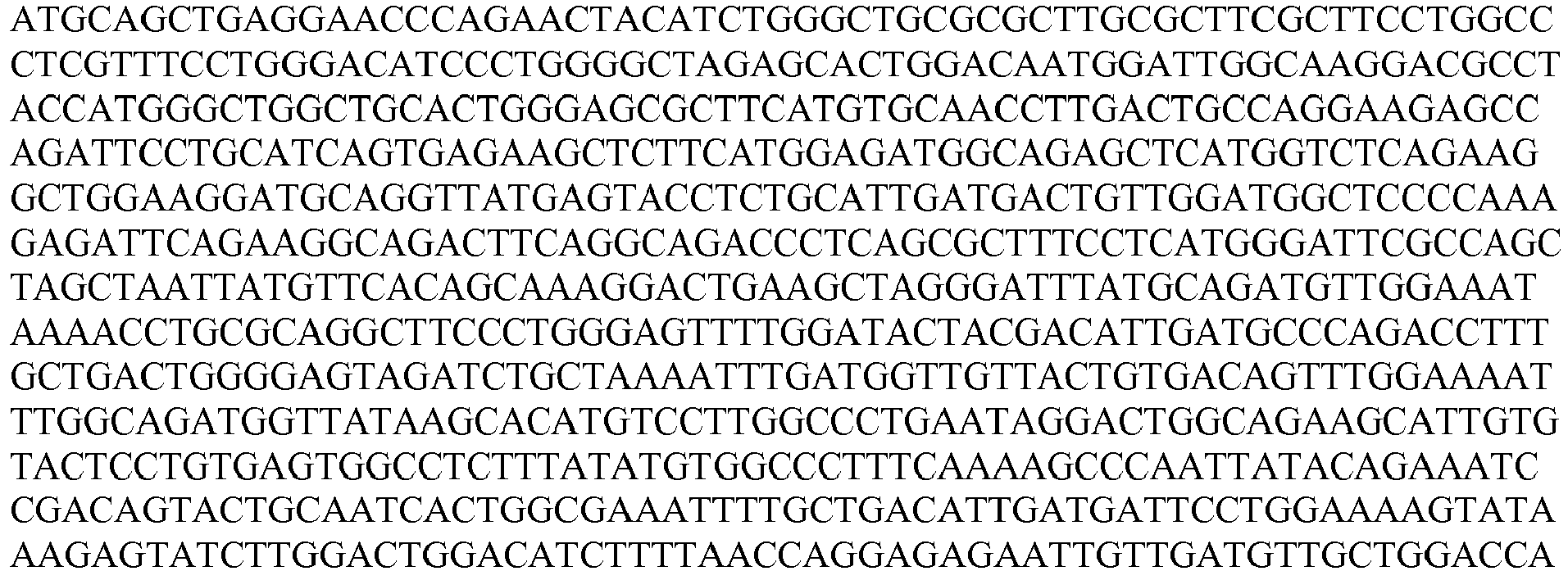

- Polypeptide sequence of full length human GLA:

- Polynucleotide sequence of mature yeast codon-optimized (yCDS) human GLA:

- Polynucleotide sequence of mature human GLA (native hCDS):


- Polypeptide sequence of mature Human GLA (SEQ ID NO.5):

- Polynucleotide sequence of pCK1 10900i E. coli expression vector:


- Polynucleotide sequence of pYT-72Bgl secreted yeast expression vector:
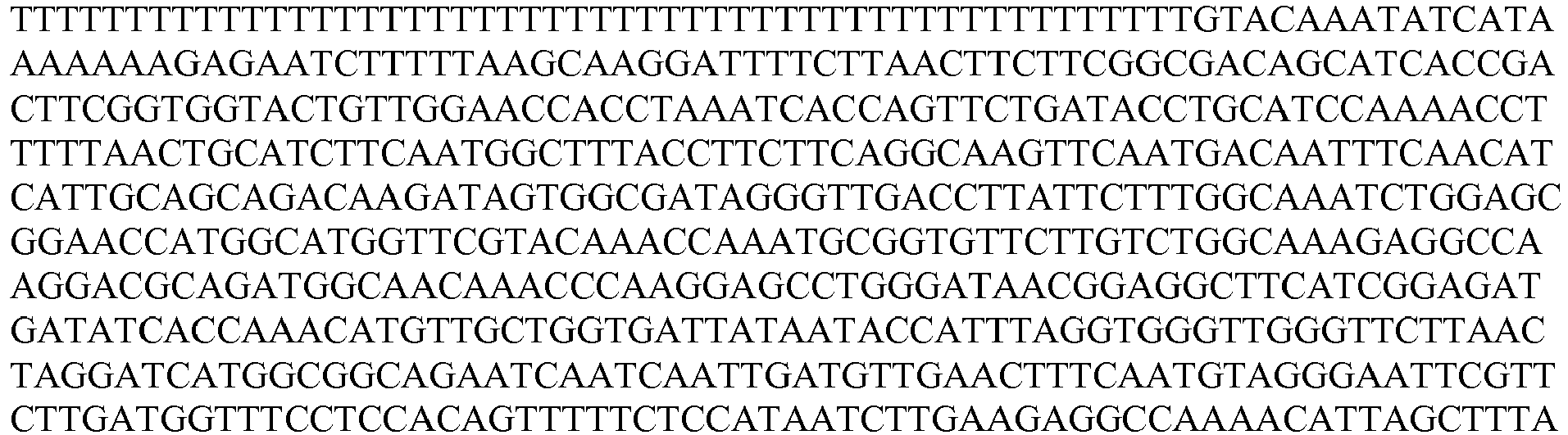


- Polynucleotide sequence of Variant No. 73 yCDS:


- Polynucleotide sequence of Variant No. 73:

- Polypeptide sequence of Variant No. 73:

- Polynucleotide sequence of Variant No. 218 yCDS:

- Polynucleotide sequence of Variant No. 218 hCDS:

- Polypeptide sequence of Variant No. 218:


- Polynucleotide sequence of Variant No. 326 yCDS:
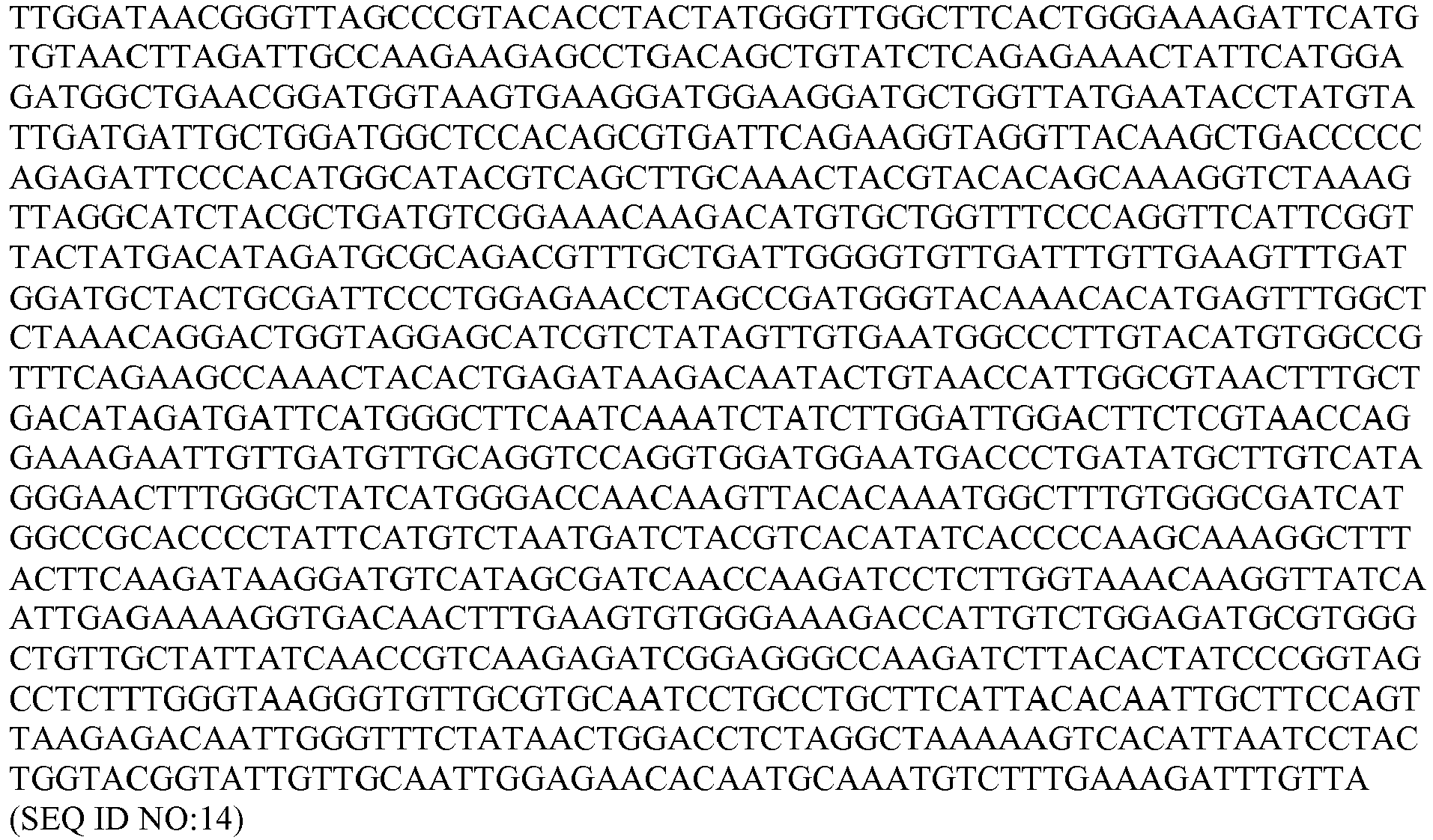
- Polypeptide sequence of Variant No. 326:

- Polynucleotide sequence of Variant No. 206 yCDS:


- Polynucleotide sequence of Variant No. 206 hCDS:

- Polypeptide sequence of Variant No. 206:

- Polynucleotide sequence of Variant No. 205 yCDS:

- Polynucleotide sequence of Variant No. 205 hCDS:

- Polypeptide sequence of Variant No. 205:


- Polynucleotide sequence of Variant No. 76 yCDS:

- Polynucleotide sequence of Variant No. 76 hCDS:

- Polypeptide sequence of Variant No. 76:

- Polynucleotide sequence of Mfalpha signal peptide:
ATGAGATTTCCTTCAATTTTTACTGCAGTTTTATTCGCAGCATCCTCCGCATTAGCT (SEQ ID NO:25) - Polypeptide sequence of Mfalpha signal peptide:
MRFPSIFTAVLFAASSALA (SEQ ID NO:26) - Polynucleotide sequence of MMO435:
ttaactatatcgtaatacacaggatccaccATGAGATTTCCTTCAATTTTTACTG (SEQ ID NO:27) - Polynucleotide sequence of MMO439:
AGTAGGTGTACGGGCTAACCCGTTATCCAAAGCTAATGCGGAGGATGC (SEQ ID NO:28) - Polynucleotide sequence of MMO514:
TTTTACTGCAGTTTTATTCGCAGCATCCTCCGCATTAGCTTTGGATAACGGGTTAGCCCG (SEQ ID NO:29) - Polynucleotide sequence of MMO481:

- Polynucleotide sequence of Synthetic mammalian signal peptide:
ATGGAATGGAGCTGGGTCTTTCTCTTCTTCCTGTCAGTAACGACTGGTGTCCACTCC (SEQ ID NO:31) - Polynucleotide sequence of LAKE Fw:
CGATCGAAGCTTCGCCACCA (SEQ ID NO.32) - Polynucleotide sequence of Br reverse:
CTTGCCAATCCATTGTCCAGGGAGTGGACACCAGTCGTTA (SEQ ID NO:33) - Polynucleotide sequence of Br Fw:
TAACGACTGGTGTCCACTCCCTGGACAATGGATTGGCAAG (SEQ ID NO:34) - Polynucleotide sequence of hGLA Rv:
CGATCGGCGGCCGCTCAAAGTAAGTCTTTTAATGACA (SEQ ID NO:35) - Polynucleotide sequence of SP-GLA (yCDS):

- Polynucleotide Sequence of MFleader-GLA (yCDS):


- Polypeptide Sequence of MFleader:

- Polynucleotide sequence of Variant No. 395 yCDS:

- Polypeptide sequence of Variant No. 395:
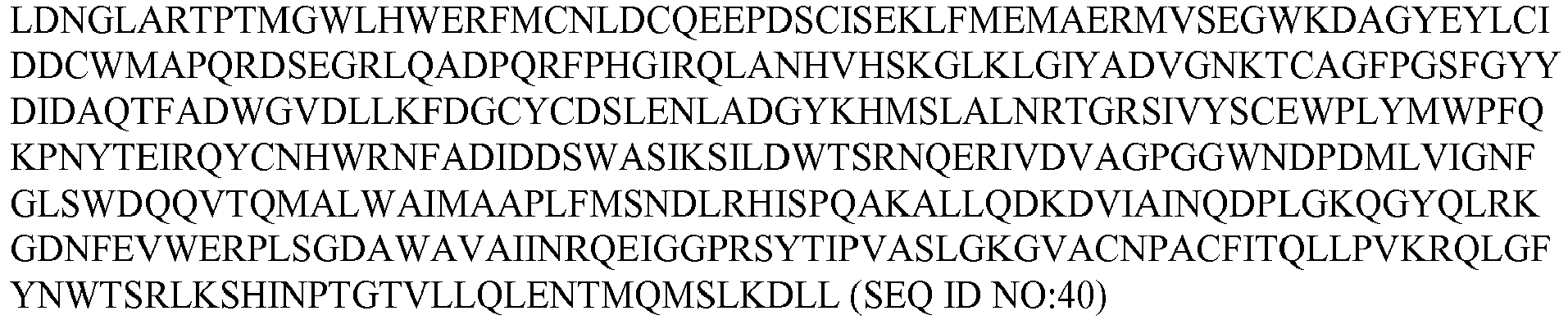
- Polynucleotide sequence of Variant No. 402 yCDS:


- Polypeptide sequence of Variant No. 402:

- Polynucleotide sequence of Variant No. 625 yCDS:

- Polypeptide sequence of Variant No. 625:


- Polynucleotide sequence of Variant No. 648 yCDS:

- Polypeptide sequence of Variant No. 648:

- A synthetic gene coding for a WT human GLA was designed for optimized gene expression in Saccharomyces cerevisiae (SEQ ID NO:3) , assembled, and subcloned into the E. coli expression vector pCK100900i (SEQ ID NO:6).
- A chimeric GLA expression construct encoding a 19 amino acid S. cerevisae MFalpha signal peptide fused to the mature form of yeast-optimized GLA was generated in a yeast expression vector designed for secreted expression, as follows. A fragment coding for the MFalpha signal peptide (SEQ ID NO:25) was amplified by PCR using the oligonucleotides MMO435 (SEQ ID NO:27)and MMO439 (SEQ ID NO:28) from S288C genomic DNA, and a fragment coding for a synthetic GLA (SEQ ID NO:3) was amplified using primers MMO514 (SEQ ID NO:29) and MMO481 (SEQ ID NO:30). Additional sequence at the 5' ends of these oligonucleotides provide homology for yeast recombination cloning when cotransformed with linearized plasmid pYT-72Bgl (SEQ ID NO:7). In the resulting vector, the expression of fusion protein SP-GLA (SEQ ID NO:36) is driven by the ADH2 promoter. A fusion construct encoding a fusion of an 83 amino acid MFalpha leader peptide (SEQ ID NO:38) N-terminally fused to GLA (SEQ ID NO:37) was cloned using the same techniques. Recombination cloning and gene expression were performed in S. cerevisiae strain INVSc1. Directed evolution techniques generally known by those skilled in the art were used to generate libraries of gene variants from this plasmid construct (See e.g.,
US Pat. No. 8,383,346 andWO2010/144103 ). - A chimeric GLA expression construct encoding a synthetic signal peptide fused to a synthetic gene coding for the mature human GLA coding sequence for secreted expression in transient transfections was generated as follows. Oligonucleotides PLEV113Fw (SEQ ID NO:32) and SPGLARv (SEQ ID NO:33) were used to amplify a fragment coding for a synthetic signal peptide (SEQ ID NO:31) using PCR. A second fragment coding for the native human coding sequence for the mature form of GLA (SEQ ID NO:4) was amplified using oligonucleotides SPGLAFw (SEQ ID NO:34) and GLARv (SEQ ID NO:35). Splicing by Overlap Extension PCR was used to recombine these fragments, and the resulting chimeric fragment was ligated into the HindIII/Not I linearized mammalian expression vector pLEV113. Directed evolution techniques generally known by those skilled in the art were used to generate specific gene variants from this plasmid construct.
- Yeast (INVSc1) cells transformed with vectors expressing GLA and GLA variants using the lithium acetate method were selected on SD-Ura agar plates. After 72 h incubation at 30 °C colonies were placed into the wells of Axygen® 1.1 ml 96-well deep well plates filled with 200 µl/well SD-Ura broth (2 g/L SD-Ura, 6.8 g/L yeast nitrogen base without amino acids [Sigma Aldrich]), 3.06 g/L sodium dihydrogen phosphate, 0.804 g/L disodium hydrogen phosphate, pH 6.0 supplemented with 6% glucose. The cells were allowed to grow for 20-24 hours in a Kuhner shaker (250 rpm, 30 °C, and 85% relative humidity). Overnight culture samples (20 µL) were transferred into Corning Costar® 96-well deep plates filled with 380µL of SD-ura broth supplemented with 2% glucose. The plates were incubated for 66-84 h in a Kuhner shaker (250 rpm, 30 °C, and 85% relative humidity). The cells were then pelleted (4000 rpm × 20 min), and the supernatants isolated and stored at 4 °C prior to analysis.
- GLA variant activity was determined by measuring the hydrolysis of 4-methylumbelliferyl α-D-galactopyranoside (MUGal). For this assay, 5-50 µL of yeast culture supernatant produced as described above, was mixed with 0-45 µL of McIlvaine Buffer (McIlvaine, J. Biol. Chem., 49:183-186 [1921]), pH 4.8 and 50 µL of 2 mM MUGal in 50 mM citrate, 200 mM KCl, pH 4.6 in a 96-well, black, opaque bottom plate. The reactions were mixed briefly and incubated at 37 °C for 30-180 minutes, prior to quenching with 100 µL of 1 M sodium carbonate. Hydrolysis was analyzed using a SpectraMax® M2 microplate reader monitoring fluorescence (Ex. 355 nm, Em. 448 nm).
- GLA variants were challenged with acidic buffer to simulate the extreme pHs that the variants may encounter in lysosomes. First, 50 µL of yeast culture supernatant and 50 uL of McIlvaine buffer (pH 3.3-4.3) were added to the wells of a 96-well round bottom plate. The plates were sealed with a PlateLoc Thermal Microplate Sealer (Agilent) and incubated at 37 °C for 1-3 h. For the assay, 10-50 µL of acid-pH-challenged sample was mixed with 0-40 µL of McIlvaine buffer pH 4.8, 25 µL of 1 M citrate buffer pH 4.3 and 25 µL of 4 mM MUGal in McIlvaine buffer pH 4.8. The reactions were mixed briefly and incubated at 37 °C for 30-180 minutes, prior to quenching with 100 µL of 1 M sodium carbonate. Hydrolysis was analyzed using a SpectraMax® M2 microplate reader monitoring fluorescence (Ex. 355 nm, Em. 448 nm).
- GLA variants were challenged with basic (neutral) buffer to simulate the pHs that the variants encounter in the blood following their administration to a patient. First, 50 µL of yeast culture supernatant and 50 uL of McIlvaine buffer (pH 7.0-8.2) or 200 mM sodium bicarbonate (pH 9.1-9.7) were added to the wells of a 96-well round bottom plate. The plates were sealed and incubated at 37 °C for 1-18 h. For the assay, 10-50 µL of basic-pH-challenged sample was mixed with 0-40 µL of McIlvaine buffer pH 4.8, 25 µL of 1 M citrate buffer pH 4.3 and 25 µL of 4 mM MUGal in McIlvaine buffer pH 4.8. The reactions were mixed briefly and incubated at 37 °C for 30-180 minutes, prior to quenching with 100 µL of 1 M sodium carbonate. Hydrolysis was analyzed using a SpectraMax® M2 microplate reader monitoring fluorescence (Ex. 355 nm, Em. 448 nm).
- GLA variants were challenged with bovine serum to simulate the conditions the variants encounter following infusion into a patient. First, 20 µL of yeast culture supernatant and 80 µL of bovine serum were added to the wells of a 96-well round bottom plate. The plates were sealed and incubated at 37 °C for 1 h. For the assay, 50 µL of serum-challenged sample was mixed with 25 µL of 1 M citrate buffer pH 4.3 and 25 µL of 4 mM MUGal in McIlvaine buffer pH 4.8. The reactions were mixed briefly and incubated at 37 °C for 180 minutes, prior to quenching with 100 µL of 1 M sodium carbonate. Hydrolysis was analyzed using a SpectraMax® M2 microplate reader monitoring fluorescence (Ex. 355 nm, Em. 448 nm).
Table 2.1 Relative Activity of GLA Variants After No Challenge (NC) or Challenge at the Indicated pH1,2 Variant # NC pH 4.3 pH 7.0 Amino Acid Differences Relative to SEQ ID NO:5 SEQ ID NO: 1 + + + A337S 47 2 + + + E43D 48 3 + + + E43D/E48D 49 4 + +++ + E43D/E48D/I208V/N247D/Q299R/Q302K/R373K/I376V 50 5 ++ ++ ++ E43D/E48D/I208V/R373K 51 6 + +++ + E43D/E48D/I208V/R373K/I376V 52 7 + ++ + E43D/E48D/N247D/Q299R/Q302K/R373K/I376V 53 8 ++ +++ +++ E43D/E48D/N247D/Q302K/R373K 54 9 + +++ + E43D/E48D/Q302K/R373K/I376V 55 10 ++ +++ ++ E43D/I208V/N247D 56 11 + +++ ++ E43D/I208V/N247D/Q299R/R373K/I376V 57 12 + ++ + E43D/I208V/Q299R/R373K/I376V 58 13 ++ +++ ++ E43D/N247D/R373K/I376V 59 14 + +++ ++ E43D/R373K/I376V 60 15 + + + E48D/I208V/Q299R/Q302K/R373K 61 16 + ++ + E48D/R373K/I376V 62 17 + + + E48G/R373K 63 18 + + ++ F217S 64 19 + ++ + I208V/N247D/Q299R/Q302K/R373K/I376V 65 20 + +++ ++ I208V/N247D/Q299R/R373K/I376V 66 21 + +++ ++ I208V/N247D/R373K/I376V 67 22 + + + I208V/Q299R/I376V 68 23 + +++ ++ I208V/Q302K/R373K/I376V 69 24 + ++ + I376V 70 25 + + + K36Q 71 26 + + + P179S/R373K 72 27 + + + Q299R/M322V/R373K 73 28 + + + Q299R/Q302K/R373K 74 29 + + + Q299R/Q302K/R373K/I376V 75 30 + ++ + Q302K/I376V 76 31 + + + R373K 77 32 + ++ + R373K/I376V 78 1. Relative activity was calculated as activity of the variant/activity of WT GLA (SEQ ID NO:5 (encoded by SEQ ID NOG).
2. + = 0.5 to 1.5 relative activity over WT GLA (SEQ ID NO:5);
++ = >1.5 to 2.5 relative activity over WT GLA (SEQ ID NO:5); and
+++ = >2.5 relative activity over WT GLA (SEQ ID NO:5).Table 2.2 - Relative Activity of GLA Variants After No Challenge (NC) or Challenge at the Indicated pH1,2,3 Variant # NC pH 4.2 pH 7.1 Amino Acid Differences Relative to SEQ ID NO:5 SEQ ID NO: 33 + + + A199H/E367S 79 34 + ++ ++ A337P 80 35 ++ ++ ++ A339S 81 36 + ++ ++ A350G 82 37 + + + D105A 83 38 - + - D105S 84 39 + ++ ++ 
85 40 ++ ++ ++ D396R 86 41 + + + D396T 87 42 +++ +++ +++ E367N 88 43 + + + E367T 89 44 + ++ + E387K 90 45 ++ ++ ++ E387Q 91 46 + +++ + E387R 92 47 + ++ + E387T 93 48 + + + E40D 94 49 + + + F180R 95 50 ++ ++ ++ F180S 96 51 ++ ++ + F198S 97 52 ++ + ++ F217D 98 53 + ++ ++ F217R 99 54 + + + F352I 100 55 ++ +++ ++ F352V/F365I 101 56 ++ ++ ++ F365I 102 57 ++ ++ ++ F365K 103 58 ++ ++ ++ F365L 104 59 + + + F365R 105 60 + + + F365T 106 61 ++ ++ ++ F365V 107 62 ++ + ++ G303Q/R373V 108 63 + + ++ H155A 109 64 + + ++ H155L 110 65 + + + H155R 111 66 + + + H155T 112 67 ++ + ++ H375E 113 68 + ++ + H84S 114 69 + + + I102L 115 70 + + + I102L/L394V 116 71 ++ + ++ I123T/T369N 117 72 + + + 1167V 118 73 + +++ ++ K206A 10 74 + +++ ++ K206M 119 75 + +++ ++ K206Q 120 76 + +++ ++ K206R 24 77 + ++ + K206T/V359S 121 78 ++ ++ ++ K343D 122 79 ++ ++ ++ K343G 123 80 + + + K362Q 124 81 + + + K362R 125 82 + + + K36D 126 83 + ++ + K36E 127 84 ++ ++ ++ K395* 128 85 + + + K395G 129 86 ++ ++ ++ K395P 130 87 + ++ + K395R 131 88 + ++ + K395S 132 89 ++ + + K395T 133 90 + + + K96I 134 91 + + ++ K96L 135 92 + + + K96R 136 93 ++ +++ + K96R/L397V 137 94 + + + L100F 138 95 + + + L158A 139 96 + + + L1581 140 97 + + + L158M 141 98 + + + L158R 142 99 + + + L23M 143 100 + + + L23T 144 101 +++ +++ +++ L316D 145 102 +++ +++ +++ L316E 146 103 ++ ++ ++ L384F 147 104 ++ ++ ++ L386V 148 105 +++ ++ ++ L394A 149 106 ++ ++ +++ L394R 150 107 +++ +++ +++ L394S 151 108 +++ +++ +++ L394T 152 109 ++ ++ +++ L397* 153 110 +++ ++ +++ L397D 154 111 ++ ++ ++ L397H 155 112 + ++ + L397I 156 113 ++ + +++ L397Q 157 114 ++ ++ ++ L397R 158 115 ++ ++ +++ L397T 159 116 ++ ++ ++ L398E 160 117 ++ ++ ++ L398G 161 118 ++ ++ ++ L398N 162 119 ++ ++ ++ L398Q 163 120 ++ ++ ++ L398R 164 121 + ++ ++ L44R/L384F 165 122 ++ ++ ++ L44T 166 123 - + - M20D/Q302K 167 124 ++ ++ + M253F 168 125 + + + M322I 169 126 +++ +++ +++ M390D 170 127 ++ ++ ++ M390R 171 128 + + + M390T 172 129 + ++ ++ M392G 173 130 + ++ + M392P 174 131 ++ + ++ M392S 175 132 + + + M39Y 176 133 + + + N388R 177 134 + + + N91Q 178 135 ++ +++ ++ Q190S/T369D 179 136 + + + Q249A 180 137 + + + Q302A 181 138 ++ ++ ++ Q385H 182 139 + + + Q385I 183 140 ++ ++ ++ Q385L 184 141 + + + Q391G 185 142 + + + Q80A 186 143 + + + Q80H 187 144 + ++ + Q80V 188 145 + + + Q88A 189 146 + + + Q88F 190 147 ++ ++ ++ Q88H 191 148 + ++ + Q88R 192 149 ++ + ++ Q88S 193 150 + + + R162H 194 151 + + + R162S 195 152 ++ ++ ++ R221K/A350G 196 153 + + ++ R221T 197 154 ++ + ++ R301I/K362T 198 155 + + + R301L 199 156 ++ + ++ R371S 200 157 ++ + ++ R371V 201 158 ++ + ++ R87K 202 159 + + + R87P/L398R 203 160 + ++ + S166A 204 161 + + + S166H 205 162 + + + S166K 206 163 + + + S31D 207 164 + - - S34D/M392P 208 165 + - - S34G 209 166 ++ + + S34H/M390R 210 167 + + + S34R 211 168 ++ ++ ++ S374M 212 169 ++ ++ ++ S374T 213 170 ++ ++ ++ S393E 214 171 ++ ++ ++ S393G 215 172 + + + S393H 216 173 ++ ++ ++ S393P 217 174 + + + S471 218 175 + ++ + S47R 219 176 + + + S47T 220 177 + ++ + S95D 221 178 ++ +++ ++ S95E 222 179 + + + S95Q 223 180 ++ ++ +++ T369D 224 181 + + + T369S 225 182 ++ + + T389S 226 183 + + + V1331 227 184 ++ + + V168A 228 185 + ++ + V168L 229 186 ++ ++ +++ V345N 230 187 + + + V345Y 231 188 + + + V359E 232 189 + + + V931 233 190 ++ + ++ W178H 234 191 + ++ + W178S 235 1. Relative activity was calculated as activity of the variant/activity of WT GLA (SEQ ID NO:5 (encoded by SEQ ID NOG).
2. Variant # 73 (Rd2BB) has the polynucleotide sequence of SEQ ID NO: 8 and polypeptide sequence of SEQ ID NO:10.
3. - = <0.5 relative activity to WT GLA (SEQ ID NO:5);
+ = 0.5 to 1.5 relative activity over WT GLA (SEQ ID NO:5);
++ = >1.5 to 2.5 relative activity over WT GLA (SEQ ID NO:5); and
+++ = >2.5 relative activity over WT GLA (SEQ ID NO:5).Table 2.3 - Relative Activity of GLA Variants After No Challenge (NC) or Challenge at the Indicated pH Variant # NC pH 4.2 pH 7.6 Amino Acid Differences Relative to SEQ ID NO:10 SEQ ID NO: 192 + + + A206E 236 193 + + + A206G 237 194 ++ ++ ++ A206R 238 195 + + + A206S 239 196 + + + A350G 240 197 ++ ++ ++ A350G/K362Q/T369A 241 198 ++ ++ +++ A350G/T369D 242 199 ++ ++ ++ A350G/T369S 243 200 + + + C143A 244 201 + + + C143T 245 202 + + + C59A 246 203 ++ ++ +++ E367A/T369D 247 204 + + + E367D 248 205 ++ ++ ++ E367D/T369D 21 206 +++ +++ +++ E367N 18 207 ++ +++ +++ E367N/R373K 249 208 ++ +++ +++ E367N/R373K/I376V 250 209 + + + E367P/T369D 251 210 ++ ++ ++ F365L/E367N 252 211 ++ ++ ++ F365L/E367N/I376V 253 212 ++ ++ ++ F365L/E367N/R373K/I376V 254 213 + - - H15Q/ 255 214 +++ +++ +++ K343D/F365L/E367N 256 215 + + + K343G 257 216 ++ +++ +++ K343G/F365L/E367N/R373K 258 217 ++ ++ ++ L316D 259 218 +++ +++ +++ M322I/E367N/R373K 13 219 + + + M322I/R373K 260 220 + + ++ M322V/R373K/I376V 261 221 + + + M3 901 262 222 ++ ++ + P228Q/T369D 263 223 + ++ ++ Q3 02K/A3 3 7P/A350G/K3 62Q 264 224 ++ +++ +++ Q302K/M322V/E367N 265 225 + + + R165S 266 226 + + ++ R221T/F365L 267 227 - - - R325H 268 228 + + + R373K 269 229 + - + R373K/I376V 270 230 + - + S374R 271 231 ++ ++ ++ T369D 272 232 ++ ++ ++ T369S 273 1. Relative activity was calculated as activity of the variant/activity of Rd2BB (SEQ ID NO:10)
2. Variant # 218 (Rd3BB) has the polynucleotide sequence of SEQ ID NO:11 and polypeptide sequence of SEQ ID NO: 13.
3. - = <0.5 relative activity to Rd2BB (SEQ ID NO:10);
+ = 0.5 to 1.5 relative activity over Rd2BB (SEQ ID NO:10);
++ = >1.5 to 2.5 relative activity over Rd2BB (SEQ ID NO:10); and
+++ = >2.5 relative activity over Rd2BB (SEQ ID NO:10).Table 2.4 - Relative Activity of GLA Variants After No Challenge (NC) or Challenge at the Indicated pH or Condition1,2 Varian t # NC pH 4.2 pH 7.6 Seru m Amino Acid Differences Relative to SEQ ID NO:5 (WT GLA) SEQ ID NO: 233 +++ +++ +++ +++ K206A/F217R/N247D/L316D/A350G/E367D/T369D 274 234 +++ +++ +++ +++ K206A/F217R/N247D/Q302K/A350G/E367D/T369D 275 235 +++ +++ +++ +++ 
276 236 +++ ++ +++ ++ K206A/F217R/Q3 02K/E3 67D/T3 69D 277 237 +++ +++ +++ +++ 
278 238 ++ +++ +++ ++ K206A/I208V/M322V/K343G/F365L/R373K/I376V 279 239 +++ +++ +++ ++ 
280 240 - + + + K206A/L269I/P349L/R373K 281 241 ++ +++ +++ ++ K206A/N247D/M322V/K343D/R373K/I376V 282 242 +++ +++ +++ +++ K206A/N247D/M322V/K343G/F365L/R373K 283 243 +++ +++ +++ +++ K206A/N247D/Q3 02K/A3 3 7P/K343 G/A3 50G 284 244 +++ +++ +++ +++ K206A/N247D/Q302K/L316D/A350G 285 245 ++ +++ +++ ++ K206A/N247D/Q302K/M322V/F365L/R373K/I376V 286 246 +++ +++ +++ +++ K206A/Q302K/L316D/A337P 287 247 +++ +++ +++ +++ K206A/R221K/N247D/M322V/K343D/R373K 288 248 + + + + K206A/R221T/M322V/K343 G/R3 73K 289 249 ++ ++ +++ ++ K206A/R221T/M322V/R373K 290 250 + + + + K96I/K206A/F217R 291 251 ++ + ++ + K96I/K206A/F217R/N247D 292 252 +++ +++ +++ +++ K96I/K206A/F217R/N247D/A350G/E367D/T369D 293 253 +++ +++ +++ +++ 
294 254 + + + + L100F/K206A 295 255 +++ +++ +++ ++ 
296 256 ++ +++ +++ +++ 
297 257 ++ ++ ++ ++ 
298 258 +++ ++ +++ ++ 
299 259 + + + + L100F/K206A/M322V/F365L/R373K/I376V 300 260 + + + + L100F/K206A/N247D/F365L/R373K/I376V 301 261 ++ ++ ++ + L100F/K206A/N247D/M322V/K343D/I376V 302 262 ++ +++ +++ +++ 
303 263 + ++ ++ +++ L100F/K206A/R221K/N247D/Q302K/M322V/I376V 304 264 ++ ++ +++ ++ 
305 265 + + + + L100F/K206A/R221K/R373K/I376V 306 266 ++ ++ +++ ++ L100F/K206A/R221T/M322I/K343E/F365L/R373K 307 267 +++ +++ +++ +++ 
308 268 + + + + L100F/K206A/R373K/I376V 309 269 - + + + L37I/K206A/R221K/N247D/M322I/R373K 310 270 + + + + L44R/C143 Y/K206A/A3 37P/A3 50G 311 271 - + + + L44R/E187G/K206A/A337P/A350G 312 272 + + + + L44R/K206A 313 273 + + + + L44R/K206A/E367D/T369D 314 274 + + + + L44R/K206A/F217R/A350G 315 275 ++ ++ ++ ++ L44R/K206A/F217R/N247D/A337P 316 276 +++ +++ +++ +++ 
317 277 +++ +++ +++ +++ 
318 278 +++ +++ +++ +++ 
319 279 ++ +++ +++ +++ L44R/K206A/F217R/N247D/Q3 02K/A3 50G 320 280 + + + + L44R/K206A/F217R/Q3 02K/E367D/T3 69D 321 281 + + + + 
322 282 + + + + L44R/K206A/N247D/A337P 323 283 +++ +++ +++ +++ 
324 284 +++ +++ +++ +++ 
325 285 + + ++ + L44R/K96I/K206A 326 286 + + ++ + L44R/K96I/K206A/F217R/N247D 327 287 +++ +++ +++ ++ 
328 288 +++ +++ +++ +++ 
329 289 + ++ ++ ++ L44R/K96I/K206A/F217R/Q302K/A350G 330 290 +++ +++ +++ +++ 
331 291 + + + + L44R/L100F/K206A/F365L 332 292 +++ ++ +++ ++ 
333 293 ++ + ++ + 
334 294 ++ ++ +++ + 
335 295 +++ +++ +++ +++ 
336 1. Relative activity was calculated as activity of the variant/activity of Rd2BB (SEQ ID NO:10 (encoded by SEQ ID NO:8).
2. - = <0.5 relative activity to Rd2BB (SEQ ID NO:10);
+ = 0.5 to 1.5 relative activity over Rd2BB (SEQ ID NO:10);
++ = >1.5 to 2.5 relative activity over Rd2BB (SEQ ID NO:10); and
+++ = >2.5 relative activity over Rd2BB (SEQ ID NO:10).Table 2.5 - Relative Activity of GLA Variants After No Challenge (NC) or Challenge at the Indicated pH or Condition 1,2,3 Variant # NC pH 4.0 pH 8.2 Serum Amino Acid Differences Relative to SEQ ID NO:5 (WT GLA) SEQ ID NO: 296 + - - + 
337 297 - - - - 
338 298 ++ +++ +++ +++ 
339 299 + - - - 
340 300 + ++ ++ ++ 
341 301 + + + - K206A/M322I/E367N/R373K 342 302 + + + + K206A/M322V/K343G/E367N/R373K 343 303 ++ ++ ++ + 
344 304 ++ ++ ++ ++ 
345 305 + + + ++ 
346 306 + ++ ++ ++ 
347 307 + + + + 
348 308 - - - + 
349 309 + ++ +++ ++ 
350 310 - + + + 
351 311 + + ++ + 
352 312 ++ +++ +++ +++ 
353 313 + + - + 
354 314 + ++ ++ + 
355 315 + + + + 
356 316 + + + + 
357 317 + + - - 
358 318 + + ++ + 
359 319 + + + + 
360 320 + + + + 
361 321 ++ ++ +++ + 
362 322 + + ++ + 
363 323 - - - + 
364 324 - - - - L23S/K206A/M322I/E367N/R373K 365 325 ++ +++ +++ +++ 
366 326 ++ +++ +++ +++ 
367 327 ++ +++ +++ +++ 
368 328 + + + + 
369 329 + ++ ++ ++ 
370 330 ++ ++ + + 
371 331 + ++ ++ + 
372 332 + + + + 
373 333 ++ ++ ++ + 
374 334 + ++ +++ ++ 
375 335 ++ +++ +++ +++ 
376 336 + + + - 
377 337 + ++ ++ ++ 
378 338 ++ +++ +++ +++ 
379 339 + + ++ + 
380 340 + + + + 
381 341 - + + + 
382 342 ++ +++ +++ +++ 
383 343 + + + + 
384 344 + + + ++ 
385 345 + ++ +++ + 
386 346 + + ++ + 
387 347 - - - - 
388 348 + + + + 
389 349 + + ++ + 
390 350 + ++ +++ + 
391 351 + + ++ + 
392 352 + + + + 
393 353 - - - + 
394 354 - + + + 
395 355 + ++ ++ + 
396 356 + + ++ + 
397 357 + ++ +++ + 
398 358 + + ++ + 
399 359 + + +++ + 
400 1. Relative activity was calculated as activity of the variant/activity of Rd3BB (SEQ ID NO:13 (encoded by SEQ ID NO:11).
2. Variant # 326 (Rd4BB) has the polynucleotide sequence of SEQ ID NO:14 and polypeptide sequence of SEQ ID NO:15.
3. - = <0.5 relative activity to Rd3BB (SEQ ID NO:13);
+ = 0.5 to 1.5 relative activity over Rd3BB (SEQ ID NO:13);
++ = >1.5 to 2.5 relative activity over Rd3BB (SEQ ID NO:13); and
+++ = >2.5 relative activity over Rd3BB (SEQ ID NO:13).Table 2.6 - Relative Activity of GLA Variants After No Challenge (NC) or Challenge at the Indicated pH or Condition 1,2,3,4 Variant # NC pH 3.7 pH 9.65 Amino acid differences relative to SEQ ID NO: 5 (WT GLA) SEQ ID NO: 360 + + + 
401 361 + + + 
402 362 + + + 
403 363 + + + 
404 364 + + - 
405 365 + + + 
406 366 + + + 
407 367 + + - 
408 368 + + + 
409 369 + + - 
410 370 + ++ + 
411 371 + - + 
412 372 + - + 
413 373 - - - 
414 374 + + + 
415 375 + + + 
416 376 - - - 
417 377 + ++ - 
418 378 + - + 
419 379 + ++ + 
420 380 + + - 
421 381 + + - 
422 382 - - - 
423 383 + - - 
424 384 + + - 
425 385 + + - 
426 386 - + - 
427 387 + + - 
428 388 + - + 
429 389 + + - 
430 390 + + - 
431 391 + + - 
432 392 + + - 
433 393 + - - 
434 394 + + - 
435 395 + + + 
40 396 + + + 
437 397 + + + 
438 398 + ++ - 
439 399 + + + 
440 400 + + - 
441 401 + + - 
442 402 + ++ + 
42 403 + + + 
444 404 + + - 
445 405 + ++ + 
446 406 + + + 
447 407 + + - 
448 408 + + + 
449 409 + + - 
450 410 + + - 
451 411 + + + 
452 412 + ++ + 
453 413 - - - 
454 414 + + + 
455 415 + + + 
456 416 + + - 
457 417 + + - 
458 418 + + - 
459 419 + + + 
460 420 + ++ - 
461 421 + + - 
462 422 + + - 
463 423 + + + 
464 424 + + - 
465 425 + - + 
466 426 + - - 
467 427 + - - 
468 428 + + - 
469 429 + + - 
470 430 + - + 
471 431 + - - 
472 432 + - + 
473 433 + + + 
474 434 + - - 
475 435 + ++ - 
476 436 + - - 
477 437 + + - 
478 438 - - - 
479 439 + + + 
480 440 + + - 
481 441 + - + 
482 442 + + - 
483 443 + +++ - 
484 444 + - + 
485 445 + + - 
486 446 + - - 
487 447 + - - 
488 448 + - - 
489 449 + ++ - 
490 450 + ++ - 
491 451 + ++ - 
492 452 + ++ + 
493 453 + - - 
494 454 + ++ + 
495 455 + + + 
496 456 + + + 
497 457 + + + 
498 458 + + + 
499 459 + ++ + 
500 460 + + + 
501 461 + + + 
502 462 + + + 
503 463 + + + 
504 464 + + + 
505 465 + + + 
506 466 + + + 
507 467 + + + 
508 468 + + + 
509 469 + + + 
510 470 + ++ + 
511 471 + + + 
512 472 + + + 
513 473 + + + 
514 474 + ++ + 
515 475 + + + 
516 476 + + + 
517 477 + - + 
518 478 + ++ + 
519 479 + + + 
520 480 + + + 
521 481 + + + 
522 482 + + + 
523 483 + + + 
524 484 + + + 
525 485 + + + 
526 486 + + + 
527 487 + + + 
528 488 + + + 
529 489 + + + 
530 490 + + + 
531 491 + + + 
532 492 + + + 
533 493 + + + 
534 494 + + + 
535 495 + + + 
536 496 + + + 
537 497 + ++ + 
538 498 + + + 
539 499 + + + 
540 500 + + + 
541 501 + ++ + 
542 502 - + - 
543 503 + + + 
544 504 + + + 
545 505 + + + 
546 506 + + - 
547 507 + ++ + 
548 508 - - - 
549 509 + + + 
550 510 + - + 
551 511 + + + 
552 512 + + + 
553 513 + + + 
554 514 + + + 
555 515 + + + 
556 1. Relative activity was calculated as activity of the variant/activity of Rd4BB (SEQ ID NO:15 (encoded by SEQ ID NO:14).
2. Variant # 395 (Rd5BB) has the polynucleotide sequence of SEQ ID NO:39 and polypeptide sequence of SEQ ID NO:40.
3. Variant # 402 (Rd6BB) has the polynucleotide sequence of SEQ ID NO:41 and polypeptide sequence of SEQ ID NO:42
4. - = <0.5 relative activity to Rd4BB (SEQ ID NO:15);
+ = 0.5 to 1.5 relative activity over Rd4BB (SEQ ID NO:15);
++ = >1.5 to 2.5 relative activity over Rd4BB (SEQ ID NO:15); and
+++ = >2.5 relative activity over Rd4BB (SEQ ID NO:15).Table 2.7 - Relative Activity of GLA Variants After No Challenge (NC) or Challenge at the Indicated pH or Condition Variant # NC pH 3.7 pH 9.7 Amino acid differences relative to SEQ ID NO: 5 (WT GLA) SEQ ID NO: 516 + ++ + + 
557 517 + + + 
558 518 + + ++ 
559 519 + + ++ 
560 520 + + + 
561 521 + + ++ 
562 522 + ++ + ++ 
563 523 + + + 
564 524 - + + 
565 525 + ++ ++ 
566 526 + + ++ 
567 527 + + ++ 
568 528 + + ++ 
569 529 + + ++ 
570 530 + + ++ 
571 531 + + ++ 
572 532 + + ++ 
573 533 + + ++ 
574 534 + + ++ 
575 535 + + ++ 
576 536 + + ++ 
577 537 + + ++ 
578 538 + + + 
579 
539 + + ++ 
580 540 + + ++ 
581 541 + + ++ 
582 542 + + ++ 
583 543 + + + 
584 544 + + + 
585 545 + + ++ 
586 546 + ++ + ++ 
587 547 + + ++ 
588 548 + ++ + ++ 
589 549 + ++ ++ 
590 550 + + ++ 
591 551 + + ++ 
592 552 + + ++ 
593 553 + + ++ 
594 554 + + ++ 
595 555 + + + 
596 556 - - + 
597 557 + + ++ 
598 558 - - + 
599 559 + + ++ 
600 560 + ++ ++ 
601 561 + + ++ 
602 562 + + ++ 
603 563 + + ++ 
604 564 + + ++ 
605 565 + + ++ 
606 566 + + ++ 
607 567 + + ++ 
608 568 + + ++ 
609 569 + + ++ 
610 570 + + ++ 
611 571 + + ++ 
612 572 + ++ + ++ 
613 573 + + ++ 
614 574 + + ++ 
615 575 + + ++ 
616 576 + + ++ 
617 577 + ++ + ++ 
618 578 + ++ + ++ 
619 579 + ++ + ++ 
620 580 + ++ + ++ 
621 581 + ++ ++ 
622 582 + + ++ 
623 583 + + ++ 
624 584 + + ++ 
625 585 + + ++ 
626 
586 + ++ ++ 
627 587 + + ++ 
628 588 + + + 
629 589 + + + 
630 590 + + + 
631 591 + + ++ 
632 592 + + ++ 
633 593 + + ++ 
634 594 + + ++ 
635 595 + + + 
636 596 + ++ ++ 
637 597 + - + 
638 598 + + ++ 
639 599 + + ++ 
640 600 + ++ + + 
641 601 - + + 
642 602 + + ++ 
643 603 + + + 
644 604 + + ++ 
645 605 + ++ + ++ 
646 606 + ++ + ++ 
647 607 + + ++ 
648 608 + + + 
649 1. Relative activity was calculated as activity of the variant/activity of Rd3BB (SEQ ID NO:13) (encoded by SEQ ID NO:11).
2. - = <1.5 relative activity to Rd3BB (SEQ ID NO:13);
+ = 1.5 to 5 relative activity over Rd3BB (SEQ ID NO:13);
++ = >5 to 10 relative activity over Rd3BB (SEQ ID NO:13); and
+++ = >10 relative activity over Rd3BB (SEQ ID NO:13).Table 2.8 - Relative Activity of GLA Variants After No Challenge (NC) or Challenge at the Indicated pH or Condition Variant # NC pH 3.3 pH 9.7 Amino acid differences relative to SEQ ID NO: 5 (WT GLA) SEQ ID NO: 609 + ++ ++ 
650 610 + + - 
651 611 + ++ + ++ 
652 612 + ++ ++ 
653 613 + ++ ++ 
654 614 + ++ ++ 
655 615 + ++ ++ 
656 616 + + ++ 
657 617 + ++ ++ 
658 618 + ++ ++ 
659 619 + ++ ++ 
660 620 - + ++ 
661 621 + ++ - 
662 622 + - ++ 
663 623 + ++ + ++ 
664 624 + ++ ++ 
665 625 + ++ ++ 
44 626 + ++ ++ 
666 627 + - ++ 
667 628 + + ++ 
668 629 + ++ ++ 
669 630 + - ++ 
670 631 + + ++ 
671 632 + ++ ++ 
672 633 + ++ ++ 
673 634 + ++ ++ 
674 635 + ++ ++ 
675 636 + + ++ 
676 637 + + ++ 
677 1. Relative activity was calculated as activity of the variant/activity of Rd3BB (SEQ ID NO:13) (encoded by SEQ ID NO:11).
2. Variant # 625 (Rd7BB) has the polynucleotide sequence of SEQ ID NO:43 and polypeptide sequence of SEQ ID NO:44.
3. - = <1.5 relative activity to Rd3BB (SEQ ID NO:13);
+ = 1.5 to 5 relative activity over Rd3BB (SEQ ID NO:13);
++ = >5 to 10 relative activity over Rd3BB (SEQ ID NO:13); and
+++ = >10 relative activity over Rd3BB (SEQ ID NO:13).Table 2.9 - Relative Activity of GLA Variants After No Challenge (NC) or Challenge at the Indicated pH or Condition Variant # NC pH 3.5 pH 7.5 Amino acid differences relative to SEQ ID NO: 5 (WT GLA) SEQ ID NO: 638 - - - 
678 639 - - - 
679 640 + + + 
680 641 - - - 
681 
642 + + + 
682 643 + - + 
683 644 - - - 
684 645 + + - 
685 646 - - - 
686 647 - - - 
687 648 + + + 
46 649 + + + 
689 650 + + + 
690 651 + + + 
691 652 + + - 
692 653 + + + 
693 654 + + + 
694 655 + - - 
695 656 + + + 
696 657 + + + 
697 658 + + + 
698 659 - - - 
699 660 + + - 
700 661 - - - 
701 662 + + + 
702 663 + + - 
703 664 - - - 
704 665 + + + 
705 666 + + - 
706 667 + + + 
707 668 + + + 
708 669 + - - 
709 670 + + + 
710 671 ++ ++ + 
711 672 + + - 
712 673 + + - 
713 674 - - - 
714 675 + + - 
715 676 + + + 
716 677 + + - 
717 678 - - - 
718 679 + + + 
719 680 + + + 
720 681 - - - 
721 682 + + + 
722 683 + + - 
723 684 + + + 
724 685 + - - 
725 686 - - + 
726 687 + - - 
727 688 + + - 
728 689 + + + 
729 690 + - - 
730 691 + + + 
731 692 - - - 
732 693 + + + 
733 1. Relative activity was calculated as activity of the variant/activity of Rd7BB (SEQ ID NO:44) (encoded by SEQ ID NO:43).
2. - = <0.5 relative activity to Rd7BB (SEQ ID NO:44);
+ = >0.5 to 1.5 relative activity over Rd7BB (SEQ ID NO:44); and
++ = >1.5 relative activity over Rd7BB (SEQ ID NO:44); - In order to produce GLA-containing supernatant, replica HTP-cultures of GLA were grown as described in Example 2. Supernatants from replica cultures (n = 12-36) were combined prior to further analysis.
- Secreted expression of GLA variants in mammalian cells was performed by transient transfection of HEK293 cells. Cells were transfected with GLA variants (SEQ ID NOS:3, 4, 9, 12, 17, 20, 23, and 41) fused to an N-terminal synthetic mammalian signal peptide and subcloned into the mammalian expression vector pLEV113 as described in Example 1. HEK293 cells were transfected with plasmid DNA and grown in suspension for 4 days using techniques known to those skilled in the art. Supernatants were collected and stored at 4 °C.
- GLA variants were purified from mammalian culture supernatant essentially as known in the art (See, Yasuda et al., Prot. Exp. Pur,. 37, 499-506 [2004]). Concanavalin A resin (Sigma Aldrich) was equilibrated with 0.1 M sodium acetate, 0.1 M NaCl, 1 mM MgCl2, CaCl2, and MnCl2 pH 6.0 (Con A binding buffer). Supernatant was diluted 1:1 with binding buffer and loaded onto the column. The column was washed with 15 volumes of Concanavalin A binding buffer, and samples were eluted by the addition of Concanavalin A binding buffer including 0.9 M methyl-α-D-mannopyranoside and 0.9 M methyl-α-D-glucopyranoside. Eluted protein was concentrated and buffer exchanged three times using a Centricon® Plus-20 filtration unit with a 10 kDa molecular weight cut off (Millipore) into ThioGal binding buffer (25 mM citrate-phosphate, 0.1 M NaCl, pH 4.8). Buffer exchanged samples were loaded onto a Immobilized-D-galactose resin (Pierce) equilibrated with ThioGal binding buffer. The resin was washed with six volumes of ThioGal binding buffer and eluted with 25 mM citrate phosphate, 0.1 M NaCl, 0.1 M D-galactose, pH 5.5. Eluted samples were concentrated using a Centricon® Plus-20 filtration unit with a 10 kDa molecular weight cut off. Purification resulted in between 2.4-10 µg of purified protein/ml of culture supernatant based on Bradford quantitation.
- Samples of yeast culture supernatant and mammalian cell culture supernatant and purified GLA were analyzed by SDS-PAGE. In the yeast supernatants, GLA levels were too low to be detected via this method. Bands corresponding to the ~49 kDa predicted GLA molecular weight were found in both mammalian cell culture supernatants and purified GLA samples.
- Samples of yeast supernatant and mammalian cell culture supernatant were analyzed by immunoblot. Briefly, samples were separated via SDS-PAGE. Protein was transferred to a PVDF membrane using an iBlot dry blot system (Life Technologies). The membrane was blocked with Odyssey blocking buffer (TBS) (LLCOR) for 1 h at RT and probed with a 1:250 dilution of rabbit α-GLA IgG (Thermo-Fischer) in Odyssey blocking buffer with 0.2
% Tween ® 20 for 14 h at 4 °C. The membrane was washed 4 x 5 min with Tris-buffered saline + 0.1% Tween ® 20 and probed with a 1:5000 dilution of IRDye800CW donkey α-rabbit IgG (LI-COR) in Odyssey blocking buffer with 0.2% Tween ® 20 and 0.01% SDS for 1 hr at RT. The membrane was washed 4 x 5 min with Tris-buffered saline + 0.1% Tween ® 20, and analyzed using an Odyssey Imager (LI-COR). Bands corresponding to the ~49 kDa predicted GLA molecular weight were found in both the mammalian cell culture and yeast supernatants. In S. cerevisiae expressed samples, mutants containing the mutation E367N ran at a slightly higher MW. This mutation introduces a canonical NXT N-linked glycosylation site (where X is any amino acid except P) and the possible introduction of an additional N-linked glycan may account for the higher MW. - S. cerevisiae transformed with Mfleader-GLA (SEQ ID NO:7), SP-GLA (SEQ ID NO:36) or a vector control were grown in HTP as described in Example 2. Cultures were grown for 48-120 h prior to harvest of the supernatant and analysis (n = 6) as described in Example 2.
Figure 1 provides a graph showing the relative activity of different GLA constructs in S. cerevisiae after 2-5 days of culturing. As indicated in this Figure, SP-GLA (SEQ ID NO:36) produced a high level of active enzyme that saturated after three days of growth. - GLA variants were challenged with different buffers to assess the overall stability of the enzyme. First, 50 µL of supernatant from a GLA variant yeast culture and 50 uL of Mcllvaine buffer (pH 2.86-9.27) or 200 mM sodium carbonate (pH 9.69) were added to the wells of a 96-well round bottom plate (Costar #3798, Corning). The plates were sealed and incubated at 37 °C for 1h. For the assay, 50 µL of challenged supernatant was mixed with 25 µL of 1 M citrate buffer pH 4.3 and 25 µL of 4 mM MUGal in Mcllvaine buffer pH 4.8. The reactions were mixed briefly and incubated at 37 °C for 60-180 minutes, prior to quenching with 100 µL of 1 M sodium carbonate. Hydrolysis was analyzed using a SpectraMax® M2 microplate reader monitoring fluorescence (Ex. 355 nm, Em. 448 nm).
Figure 2 provides graphs showing the absolute (Panel A) and relative (Panel B) activity of GLA variants after incubation at various pHs. - GLA variants were challenged at various temperatures in the presence and absence of 1 µM 1-deoxygalactonojirimycin (Migalastat; Toronto Research Chemicals) to assess the overall stability of the enzyme. First, 50 µL of supernatant from a GLA variant yeast culture and 50 uL of Mcllvaine buffer (pH 7.65) +/- 2 mM 1-deoxygalactonojirimycin were added to the wells of a 96-well PCR plate (Biorad, HSP-9601). The plates were sealed and incubated at 30-54 °C for 1h using the gradient program of a thermocycler. For the assay, 50 µL of challenged supernatant was mixed with 25 µL of 1 M citrate buffer pH 4.3 and 25 µL of 4 mM MUGal in Mcllvaine buffer pH 4.8. The reactions were mixed briefly and incubated at 37 °C for 90 minutes, prior to quenching with 100 µL of 1 M sodium carbonate. Hydrolysis was analyzed using a SpectraMax® M2 microplate reader monitoring fluorescence (Ex. 355 nm, Em. 448 nm).
Figure 3 provides graphs showing the absolute (Panel A) and relative (Panel B) activity of GLA variants after incubation at various temperatures. - To assess the relative stability of variants in the presence of blood, samples were exposed to serum. First, 20 µL of supernatant from a GLA variant yeast culture and 0-80 µL of water and 0-80 µL of bovine serum were added to the wells of a 96-well round bottom plate (Costar #3798, Corning). The plates were sealed and incubated at 37 °C for 1h. For the assay, 50 µL of challenged supernatant was mixed with 25 µL of 1 M citrate buffer pH 4.3 and 25 µL of 4 mM MUGal in Mcllvaine buffer pH 4.8. The reactions were mixed briefly and incubated at 37 °C for 90 minutes, prior to quenching with 100 µL of 1 M sodium carbonate. Hydrolysis was analyzed using a SpectraMax® M2 microplate reader monitoring fluorescence (Ex. 355 nm, Em. 448 nm).
Figure 4 provides graphs showing the absolute (Panels A and B) and relative (Panels C and D) activity of GLA variants after challenge with various percentages of serum. - Supernatants from GLA variants expressed in HEKT293T cells were serially diluted 2x with supernatant from an non GLA expressing yeast culture. Dilutions (50 µL) were mixed with 25 µL of 4 mM MUGal in Mcllvaine Buffer pH 4.8 and 25 µL of 1 M citrate buffer pH 4.3 in a Coming® 96-well, black, opaque bottom plate. The reactions were mixed briefly and incubated at 37 °C for 60 minutes, prior to quenching with 100 µL of 1 M sodium carbonate. Hydrolysis was analyzed using a SpectraMax® M2 microplate reader monitoring fluorescence (Ex. 355 nm, Em. 448 nm).
Figure 5 provides a graph showing the relative activity of GLA variants expressed in HEK293T cells. Supernatants from cells transfected with variant GLA enzymes showed markedly higher hydrolase activities compared to the WT enzymes, and much more activity per volume than was seen in S. cerevisiae expression. - GLA variants were challenged with different buffers to assess their overall stability. Supernatants from mammalian cell cultures were normalized to equal activities by dilution with supernatant from a non GLA expressing culture. Normalized supernatants (50 µL) and 50 uL of Mcllvaine buffer (pH 4.06-8.14) were added to the wells of a 96-well round bottom plate (Costar #3798, Corning). The plates were sealed and incubated at 37 °C for 3 h. For the assay, 50 µL of challenged supernatant was mixed with 25 µL of 1 M citrate buffer pH 4.3 and 25 µL of 4 mM MUGal in Mcllvaine buffer pH 4.8. The reactions were mixed briefly and incubated at 37 °C for 3 h, prior to quenching with 100 µL of 1 M sodium carbonate. Hydrolysis was analyzed using a SpectraMax® M2 microplate reader monitoring fluorescence (Ex. 355 nm, Em. 448 nm).
Figure 6 provides graphs showing the absolute (Panel A) and relative (Panel B) activity of GLA variants expressed in HEK293T cells, normalized for activity, and incubated at various pHs. - All enzymes were found to be more stable versus pH challenges when compared to WT GLA expressed in S. cerevisiae (compare with
Figure 2 ). This difference is possibly due to differential glycosylation between expression hosts. However, it is not intended that the present invention be limited to any particular mechanism or theory. Mutant enzymes had broader pH stability profiles compared to the WT enzyme expressed in HEK293T. - GLA variants were challenged at various temperatures in the presence and absence of 1 µM 1-deoxygalactonojirimycin (Migalastat) to assess their overall stability. Supernatants from mammalian cell cultures were normalized to approximately equal activities by dilution with supernatant from a non GLA expressing culture. Diluted supernatants were added to the wells of a 96-well PCR plate (Biorad, HSP-9601). The plates were sealed and incubated at 30-54 °C for 1h using the gradient program of a thermocycler. For the assay, 20 µL of challenged supernatant was mixed with 30 µL of 1 M citrate buffer pH 4.3 and 50 µL of 4 mM MUGal in Mcllvaine buffer pH 4.8. The reactions were mixed briefly and incubated at 37 °C for 90 minutes, prior to quenching with 100 µL of 1 M sodium carbonate. Hydrolysis was analyzed using a SpectraMax® M2 microplate reader monitoring fluorescence (Ex. 355 nm, Em. 448 nm).
Figure 7 provides graphs showing the absolute (Panel A) and relative (Panel B) activity of GLA variants expressed in HEK293T cells, normalized for activity, and incubated at various temperatures. As shown in this Figure, all of the enzymes were more stable after temperature challenges when compared to WT GLA expressed in S. cerevisiae (compare withFigure 2 ), likely due to differential glycosylation between expression hosts. In the GLA variants (SEQ ID NOS:10 and 13) the Tm of the enzyme was increased by 2 and 4°C respectively. Addition of Migalastat increased the Tm by 5.5 °C, however at a 0.2 µM final concentration in the assay, activity in the Migalastat treated sample was reduced by -60%. - To confirm that improved activity in MUGal hydrolysis corresponded to more native substrates, mammalian cell-expressed GLA variants were assayed using N-Dodecanoyl-NBD-ceramide trihexoside (NBD-GB3) as substrate. HEK293T culture supernatant (10 µL), 100 mM sodium citrate pH 4.8 (80 µL), and NBD-GB3 (0.1 mg/ml) in 10% ethanol (10 µL) were added to microcentrifuge tubes. Samples were inverted to mix, and incubated at 37 °C for 1 h. The reaction was quenched via addition of 50 µL methanol, diluted with 100 µL chloroform, vortexed and the organic layer was isolated for analysis. The organic phase (10 µL) was spotted onto a silica plate and analyzed by thin layer chromatography (chloroform:methanol:water, 100:42:6), detecting the starting material and product using a 365 nm UV lamp. Significant conversion was observed only with SEQ ID NO:13, confirming that the variant exhibits improved activity, as compared to the WT GLA.
- GLA variants purified as described in Example 4, were evaluated for their specific activity. Between 0-0.25 ng of purified enzyme was added to 4 mM MUGal in Mcllvaine buffer pH 4.8 (final pH of 4.8). Samples were incubated for 60 min at 37 °C and quenched via addition of 100 µL of 1 M sodium carbonate. Hydrolysis was analyzed using a SpectraMax® M2 microplate reader monitoring fluorescence (Ex. 355 nm, Em. 448 nm), and correlated to absolute amounts of 4-methylumbelliferone through the use of a standard curve.
- To confirm that purified GLA variants show the desired pH stability observed after expression in yeast, WT GLA (SEQ ID NO:5) and SEQ ID NO:42 were incubated in acidic or basic buffers and analyzed for residual activity. GLA variants (200 ng) were added to McIlvaine buffer pH 4.1 or 7.5 and incubated for 0-24 h at 37 °C. Samples (50 µL) were added to a mixture of 25 uL 1M citric acid pH 4.3 and 25 µL of 4 mM MUGal in Mcllvaine buffer pH 4.8, and incubated at 37 °C for 1h. Samples were quenched with 100 µL of 1 M sodium carbonate, diluted 1:4 in 1 M sodium carbonate and analyzed by fluorescence spectroscopy (Ex. 355, Em. 448). SEQ ID NO:42 was considerably more stable under both acidc and basic challenge conditions confirming that stability advances developed in yeast translated to the protein expressed in mammalian cells (See
Figure 8 for graphs of the results). - The thermostability of WT GLA (SEQ ID NO:5) and SEQ ID NO:42 were determined to assess their overall stability. Purified enzyme as described in Example 4 was diluted to 20 µg/ml in 1x PBS with 1x Sypro Orange (Thermo Fischer Scientific), and added to a 96-well PCR plate (Biorad, HSP-9601). The plates were heated from 30 to 75 °C at 0.5 °C/min on a RT-PCR machine and Sypro Orange fluorescence was monitored. Under these conditions WT GLA melted at 37 °C, while SEQ ID NO:42 melted at 55 °C
- Purified GLA variants produced as described in Example 4 were assessed for stability in the serum of live rats. WT GLA (SEQ ID NO:5) or SEQ ID NO:42 at 1 mg/ml were administered intravenously at 1 ml/kg to three naive jugular vein cannulated Sprague-Dawley rats (7-8 weeks old) each. Prior to administration and at 5, 15, 30, 60, 120, and 240 minutes post-administration, 200 µL of blood was collected from each rat in an EDTA tube and centrifuged at 4°C and 6000 rpm to generate >80 µL of serum per sample. Samples were frozen and stored on dry ice prior to analysis. For analysis, serum (10 µL) was added to 40 µL of 5 mM MUGal in Mcllvaine buffer pH 4.4, and incubated at 37 °C for 1h. Samples were quenched with 50 µL of 1 M sodium carbonate, diluted 1:100 in 1 M sodium carbonate and analyzed by fluorescence spectroscopy (Ex. 355, Em. 448). Four hours post-administration SEQ ID NO:42 retained 15.3% of maximal activity, while WT GLA retained only 0.66% (See,
Figure 9 ). - In this Example, experiments conducted to identify diversity that would remove predicted T-cell epitopes from GLA are described.
- To identify mutational diversity that would remove T-cell epitopes, computational methods were used to identify GLA subsequences that were predicted to bind efficiently to representative HLA receptors. In addition, experimental searches for amino acid mutations were conducted, particularly for mutations that do not affect GLA activity (e.g., in the assays described in Example 2). The amino acid sequences of active variants were then analyzed for predicted immunogenicity using computational methods.
- Putative T-cell epitopes in a WT GLA (SEQ ID NO:5) were identified using the Immune Epitope Database (IEDB; Immune Epitope Database and Analysis Resource website) tools, as known in the art and proprietary statistical analysis tools (See e.g., iedb.org and Vita et al., Nucl. Acids Res., 38(Database issue):D854-62 [2010]. Epub 2009 Nov 11]). The WT GLA was parsed into all possible 15-mer analysis frames, with each frame overlapping the last by 14 amino acids. The 15-mer analysis frames were evaluated for immunogenic potential by scoring their 9-mer core regions for predicted binding to eight common class II HLA-DR alleles (DRB1∗0101, DRB1∗0301, DRB1∗0401, DRB1∗0701, DRB1∗0801, DRB1∗1101, DRB1∗1301, and DRB1∗1501) that collectively cover nearly 95% of the human population (See e.g., Southwood et al., J. Immunol., 160:3363-3373 [1998]), using methods recommended on the IEDB website. Potential T-cell epitope clusters contained within the enzyme (i.e., sub-regions contained within GLA which have an unusually high potential for immunogenicity) were identified using statistical analysis tools, as known in the art. The identified T-cell epitope clusters were screened against the IEDB database of known epitopes. These screens identified five putative T-cell epitopes in the WT enzyme. These epitopes are referred to as TCE-I, II, III, IV, and V below.
- First, the sequences of active GLA mutants identified in Example 2 are assessed for the presence of T-cell epitopes. Mutations identified to potentially reduce binding to the HLA-DR alleles are incorporated into a recombination library. Additional libraries are prepared using saturation mutagenesis of every single amino acid within the five T-cell epitopes. Hits from these libraries are subjected to further rounds of saturation mutagenesis, HTP screening, and recombination to remove all possible T-cell epitopes.
- Combinatorial and saturation mutagenesis libraries designed as described above were constructed by methods known in the art, and tested for activity in an unchallenged assay as described in Example 2. Active variants were identified and sequenced. Their activities and mutations with respect to WT GLA are provided in the table below.
- Active variants were analyzed for their levels of predicted immunogenicity by evaluating their binding to the eight common Class II HLA-DR alleles as described above. The total immunogenicity score and immunogenic hit count are shown in Table 7.1. The total immunogenicity score (TIS) reflects the overall predicted immunogenicity of the variant (i.e., a higher score indicates a higher level of predicted immunogenicity). The immunogenic "hit count" (IHC) indicates the number of 15-mer analysis frames with an unusually high potential for immunogenicity (i.e., a higher score indicates a higher potential for immunogenicity). Mutations resulting in a lower total immunogenicity score and/or an immunogenic hit count less than that of the reference sequence were considered to be potential "deimmunizing mutations". A collection of the most deimmunizing mutations were recombined to generate a number of variants that were active and predicted to be significantly less immunogenic than WT GLA. In the following Table, total immunogenicity score (TIS) and immunogenic hit count (IHC) are provided.
Table 7.1 Total Immunogenicity Score (TIS), and Immunogenic Hit Count (IHC) for GLA Variants Variant # SEQ ID NO: Active Mutations TIS IHC 5 WT GLA 450 38 33 79 A199H/E367S 468 47 34 80 A337P 444 38 1 47 A337S 449 38 35 81 A339S 450 38 36 82 A350G 450 38 296 337 
429 38 200 244 C143A/K206A 429 38 201 245 C143T/K206A 429 38 202 246 C59A/K206A 427 38 37 83 D105A 458 38 38 84 D105S 462 38 39 85 
425 35 516 557 
386 24 517 558 
393 24 667 707 
345 8 40 86 D396R 451 38 41 87 D396T 452 38 42 88 E367N 462 43 43 89 E367T 462 45 44 90 E387K 460 38 45 91 E387Q 457 38 46 92 E387R 457 38 47 93 E387T 459 38 48 94 E40D 445 33 518 560 
390 24 519 561 
407 25 2 48 E43D 450 37 3 49 E43D/E48D 449 37 4 50 E43D/E48D/I208V/N247D/Q299R/Q302K/R373K/I376V 434 36 5 51 E43D/E48D/I208V/R373K 429 36 6 52 E43D/E48D/I208V/R373K/I376V 428 36 7 53 E43D/E48D/N247D/Q299R/Q302K/R373K/I376V 448 36 8 54 E43D/E48D/N247D/Q302K/R373K 442 36 9 55 E43D/E48D/Q302K/R373K/I376V 442 36 10 56 E43D/I208V/N247D 435 37 11 57 E43D/I208V/N247D/Q299R/R373K/I376V 435 36 12 58 E43D/I208V/Q299R/R373K/I376V 436 36 663 703 
315 1 685 725 
334 7 634 674 
362 21 635 375 
378 21 636 376 
366 21 633 673 
365 21 13 59 E43D/N247D/R373K/I376V 442 36 14 60 E43D/R373K/I376V 443 36 637 377 
370 21 15 61 E48D/I208V/Q299R/Q302K/R373K 437 37 16 62 E48D/R373K/I376V 443 37 17 63 E48G/R373K 444 37 49 95 F180R 454 38 50 96 F180S 449 38 51 97 F198S 450 38 52 98 F217D 450 38 53 99 F217R 450 38 18 64 F217S 452 38 54 100 F3521 450 38 55 101 F352V/F365I 447 38 56 102 F3651 447 38 57 103 F365K 446 38 58 104 F365L 448 38 59 105 F365R 447 38 60 106 F365T 436 38 61 107 F365V 447 38 62 108 G303Q/R373V 465 38 63 109 H155A 451 38 64 110 H155L 455 41 65 111 H155R 452 39 66 112 H155T 449 38 213 255 H15Q/K206A 429 38 67 113 H375E 437 36 68 114 H84S 450 38 69 115 I102L 450 38 70 116 I102L/L394V 449 37 71 117 I123T/T369N 449 38 72 118 I167V 438 37 19 65 I208V/N247D/Q299R/Q302K/R373K/I376V 435 37 20 66 I208V/N247D/Q299R/R373K/I376V 435 37 21 67 I208V/N247D/R373K/I376V 428 37 22 68 I208V/Q299R/I376V 436 37 23 69 I208V/Q302K/R373K/I376V 429 37 24 70 1376V 443 37 73 10 K206A 429 38 196 240 K206A/A350G 429 38 197 241 K206A/A350G/K362Q/T369A 413 38 198 242 K206A/A350G/T369D 426 38 199 243 K206A/A350G/T369S 429 38 203 247 K206A/E367A/T369D 439 42 204 248 K206A/E367D 427 38 205 21 K206A/E367D/T369D 419 37 206 18 K206A/E367N 441 43 207 249 K206A/E367N/R373K 430 38 208 250 K206A/E367N/R373K/I376V 429 38 209 251 K206A/E367P/T369D 430 38 297 338 
453 42 233 274 K206A/F217R/N247D/L316D/A350G/E367D/T369D 416 37 298 339 
420 37 299 340 
434 40 234 275 K206A/F217R/N247D/Q302K/A350G/E367D/T369D 418 37 235 276 
410 37 236 277 K206A/F217R/Q302K/E367D/T369D 419 37 237 278 K206A/F217R/Q302K/L316D/A337P/A350G/E367D/T369D 411 37 210 252 K206A/F365L/E367N 439 41 211 253 K206A/F365L/E367N/I376V 435 40 212 254 K206A/F365L/E367N/R373K/1376V 435 40 238 279 K206A/I208V/M322V/K343G/F365L/R373K/I376V 415 37 239 280 
425 37 300 341 K206A/I208V/R221T/N247D/M322V/K343G/E367N/R373K 424 38 214 256 K206A/K343D/F365L/E367N 433 41 215 257 K206A/K343G 424 38 216 258 K206A/K343G/F365L/E367N/R373K 431 40 240 281 K206A/L269I/P349L/R373K 428 42 217 289 K206A/L316D 427 38 218 13 K206A/M322I/E367N/R373K 442 38 301 342 K206A/M322I/E367N/R373K 442 38 219 260 K206A/M322I/R373K 435 37 302 343 K206A/M322V/K343G/E367N/R373K 425 38 220 261 K206A/M322V/R373K/I376V 422 37 221 262 K206A/M390I 414 33 303 344 
440 40 241 282 K206A/N247D/M322V/K343D/R373K/I376V 415 37 242 283 K206A/N247D/M322V/K343G/F365L/R373K 415 37 243 284 K206A/N247D/Q302K/A337P/K343G/A350G 417 38 244 285 K206A/N247D/Q302K/L316D/A350G 426 38 245 286 K206A/N247D/Q302K/M322V/F365L/R373K/I376V 419 37 222 263 K206A/P228Q/T369D 426 38 223 264 K206A/Q302K/A337P/A350G/K362Q 408 38 246 287 K206A/Q302K/L316D/A337P 421 38 304 345 
431 42 305 346 
438 42 224 265 K206A/Q302K/M322V/E367N 441 43 247 288 K206A/R221K/N247D/M322V/K343D/R373K 416 37 306 347 K206A/R221K/N247D/Q302K1M322I/E367N/R373K 441 38 307 348 K206A/R221K/Q302K/M322I/K343G/E367N/R373K/I376V 436 38 226 267 K206A/R221T/F365L 427 38 248 289 K206A/R221T/M322V/K343G/R373K 418 37 249 290 K206A/R221T/M322V/R373K 423 37 227 268 K206A/R325H 429 38 228 269 K206A/R373K 423 37 229 270 K206A/R373K/I376V 422 37 230 271 K206A/S374R 433 40 231 272 K206A/T369D 426 38 232 273 K206A/T369S 429 38 192 236 K206E 429 38 193 237 K206G 429 38 74 119 K206M 458 44 75 120 K206Q 450 38 76 24 K206R 450 38 194 238 K206R 450 38 195 239 K206S 429 38 77 121 K206T/V359S 437 44 78 122 K343D 444 38 79 123 K343G 445 38 80 124 K362Q 435 38 81 125 K362R 449 38 82 126 K36D 452 38 83 127 K36E 450 38 25 71 K36Q 450 38 84 128 K395* 432 34 85 129 K395G 448 37 86 130 K395P 448 37 87 131 K395R 451 38 88 132 K395S 450 38 89 133 K395T 448 37 90 134 K961 433 36 250 291 K96I/K206A/F217R 412 36 308 349 K96I/K206A/F217R/M322I/E367N/T369S/R373K 434 40 251 292 K96I/K206A/F217R/N247D 411 36 252 293 K96I/K206A/F217R/N247D/A350G/E367D/T369D 401 35 253 294 
393 35 309 350 
413 36 310 351 K96I/K206A/N247D/M322I/A350G/E367N/T369S/R373K 433 40 311 352 
425 40 312 353 
413 40 91 135 K96L 434 36 92 136 K96R 443 37 93 137 K96R/L397V 442 36 94 138 L100F 442 38 313 354 
429 38 254 295 L100F/K206A 421 38 314 355 
414 38 315 356 
427 40 316 357 L100F/K206A/I208V/R221K/M322V/K343D/E367N/R373K 416 38 317 358 
422 40 255 296 
417 37 256 297 
405 37 318 359 L100F/K206A/I208V/R221T/M322V/E367N/R373K/I376V 421 38 257 298 L100F/K206A/I208V/R221T/N247D/K343D/F365L/I376V 405 37 258 299 L100F/K206A/I208V/R221T/Q302K/M322I/K343D/I376V 420 37 319 360 L100F/K206A/M322I/E367N/R373K/I376V 433 38 259 300 L100F/K206A/M322V/F365L/R373K/I376V 412 37 260 301 L100F/K206A/N247D/F365L/R373K/I376V 411 37 261 302 L100F/K206A/N247D/M322V/K343D/I376V 407 37 320 361 L100F/K206A/N247D/Q302K/M322I/E367N/R373K 433 38 321 362 L100F/K206A/R221K/N247D/M322I/K343G/E367N/R373K 428 38 262 303 
411 37 263 304 L100F/K206A/R221K/N247D/Q302K/M322V/I376V 413 37 264 305 
407 37 265 306 L100F/K206A/R221K/R373K/I376V 414 37 266 307 L100F/K206A/R221T/M322I/K343E/F365L/R373K 419 37 267 308 L100F/K206A/R221T/N247D/Q302K/K343D/F365L/R373K 406 37 322 363 L100F/K206A/R221T/Q302K/M322I/K343D/E367N/R373K 428 38 268 309 L100F/K206A/R373K/I376V 414 37 323 364 L100F/L160I/K206A/R221K/M322V/E367N/R373K 424 42 647 387 
345 8 95 139 L158A 437 35 96 140 L1581 458 42 97 141 L158M 450 40 98 142 L158R 431 35 99 143 L23M 450 38 324 365 L23S/K206A/M322I/E367N/R373K 442 38 100 144 L23T 450 38 101 145 L316D 448 38 102 146 L316E 448 38 269 310 L37I/K206A/R221K/N247D/M322I/R373K 434 37 103 147 L384F 448 35 104 148 L386V 436 31 105 149 L394A 449 37 106 150 L394R 450 38 107 151 L394S 450 38 108 152 L394T 449 37 109 153 L397* 442 36 110 154 L397D 449 37 111 155 L397H 450 38 112 156 L397I 449 37 113 157 L397Q 449 37 114 158 L397R 449 37 115 159 L397T 449 37 116 160 L398E 449 37 117 161 L398G 450 38 118 162 L398N 449 37 119 163 L398Q 450 38 120 164 L398R 449 37 368 409 
N. D. 36 362 403 
N. D. 32 360 401 
N. D. 32 374 415 
N. D. 33 370 411 
N. D. 36 398 439 
N. D. 34 520 561 
393 24 270 311 L44R/C143Y/K206A/A337P/A350G 430 38 521 562 
393 24 271 312 L44R/E187G/K206A/A337P/A350G 430 38 522 563 
393 24 382 423 
N. D. 30 386 427 
N. D. 34 272 313 L44R/K206A 436 38 273 314 L44R/K206A/E367D/T369D 426 37 274 315 L44R/K206A/F217R/A350G 436 38 275 316 L44R/K206A/F217R/N247D/A337P 429 38 439 480 
N. D. 36 425 466 
N. D. 36 436 477 
N. D. 36 433 474 
N. D. 36 452 493 
N. D. 36 430 471 
N. D. 36 441 482 
N. D. 36 435 476 
N. D. 34 450 491 
N. D. 36 442 483 
N. D. 34 429 470 
N. D. 34 424 465 
N. D. 34 443 484 
N. D. 35 449 490 
N. D. 35 432 473 
N. D. 36 440 481 
N. D. 33 437 478 
N. D. 29 445 486 
N. D. 34 427 468 
N. D. 34 447 488 
N. D. 33 276 317 
417 37 277 318 L44R/K206A/F217R/N247D/L316D/A337P/E367D/T369D 417 37 278 319 L44R/K206A/F217R/N247D/L316D/A350G/E367D/T369D 423 37 325 366 
422 37 446 487 
N. D. 31 426 467 
N. D. 30 428 469 
N. D. 34 451 492 
N. D. 35 444 485 
N. D. 30 279 320 L44R/K206A/F217R/N247D/Q3 02K/A3 50G 435 38 326 367 
427 37 513 554 
N. D. 32 512 553 
N. D. 32 508 549 
N. D. 30 477 518 
N. D. 34 474 515 
N. D. 35 502 543 
N. D. 30 460 501 
N. D. 30 515 556 
N. D. 32 511 552 
N. D. 32 500 541 
N. D. 36 486 527 
N. D. 35 490 531 
N. D. 30 476 517 
N. D. 30 494 535 
N. D. 30 481 522 
N. D. 30 459 500 
N. D. 30 497 538 
N. D. 30 454 495 
N. D. 30 465 506 
N. D. 30 480 521 
N. D. 30 504 545 
N. D. 32 463 504 
N. D. 34 496 537 
N. D. 32 491 532 
N. D. 30 457 498 
N. D. 34 483 524 
N. D. 34 455 496 
N. D. 35 466 507 
N. D. 35 479 520 
N. D. 30 501 542 
N. D. 30 498 539 
N. D. 34 472 513 
N. D. 35 473 514 
N. D. 33 505 546 
N. D. 30 493 534 
N. D. 30 461 502 
N. D. 35 478 519 
N. D. 36 507 548 
N. D. 30 484 525 
N. D. 34 485 526 
N. D. 30 503 544 
N. D. 30 482 523 
N. D. 30 469 510 
N. D. 36 462 503 
N. D. 36 509 550 
N. D. 30 506 547 
N. D. 30 514 555 
N. D. 31 492 533 
N. D. 32 475 516 
N. D. 30 487 528 
N. D. 30 489 530 
N. D. 36 499 540 
N. D. 35 456 497 
N. D. 35 488 529 
N. D. 30 495 536 
N. D. 34 468 509 
N. D. 30 467 508 
N. D. 30 471 512 
N. D. 30 327 368 
427 37 434 475 
N. D. 36 431 472 
N. D. 36 453 494 
N. D. 36 448 489 
N. D. 36 280 321 L44R/K206A/F217R/Q3 02K/E367D/T3 69D 426 37 328 369 
452 42 329 370 
442 38 330 371 L44R/K206A/I208V/R221K/M322I/K343D/E367N/R373K 443 38 281 322 L44R/K206A/I208V/R221K/M322V/K343D/F365L/R373K 422 37 331 372 
441 38 332 373 
449 40 333 374 
450 42 282 323 L44R/K206A/N247D/A3 3 7P 429 38 334 375 
443 42 283 324 
419 37 335 376 
432 42 336 377 
457 42 337 378 
442 38 284 325 L44R/K206A/R221T/N247D/M322I/K343D/F365L/I376V 432 37 285 326 L44R/K96I/K206A 419 36 286 327 L44R/K96I/K206A/F217R/N247D 418 36 338 379 
410 35 339 380 
418 35 340 381 
428 40 341 382 
440 40 287 328 L44R/K96I/K206A/F217R/N247D/Q302K/A337P/A350G 412 36 288 329 
397 35 342 383 
423 36 343 384 
440 40 344 385 
418 35 
345 386 
429 41 289 330 L44R/K96I/K206A/F217R/Q302K/A350G 419 36 346 387 
429 40 347 388 L44R/K96I/K206A/M322I/A337P/E367N/T369S/R373K 435 40 290 331 
400 35 291 332 L44R/L100F/K206A/F365L 426 38 292 333 
416 37 348 389 
442 40 293 334 
418 37 349 390 
446 40 350 391 
427 38 294 335 L44R/L100F/K206A/I208V/R221T/N247D/M322V/I376V 420 37 295 336 
424 37 351 392 
440 38 352 393 L44R/L100F/K206A/Q302K/M322I/E367N/R373K/I376V 440 38 353 394 
446 40 354 395 L44R/L100F/K206A/R221T/M322I/F365L/E367N/R373K 447 40 355 396 
433 38 356 397 
440 38 357 398 
427 38 358 399 L44R/L100F/K206A/R221T/Q302K/M322I/E367N/R373K 441 38 359 400 
429 38 400 441 
N. D. 34 405 446 
N. D. 34 422 463 
N. D. 34 407 448 
N. D. 34 396 437 
N. D. 39 414 455 
N. D. 34 397 438 
N. D. 34 121 165 L44R/L384F 455 35 418 459 
N. D. 34 523 564 
396 28 524 565 
398 27 525 566 
388 23 423 464 
N. D. 35 416 457 
N. D. 34 410 451 
N. D. 34 406 447 
N. D. 34 421 462 
N. D. 36 417 458 
N. D. 36 409 450 
N. D. 36 399 440 
N. D. 36 526 567 
393 24 411 452 
N. D. 34 415 456 
N. D. 34 419 460 
N. D. 34 404 445 
N. D. 36 403 444 
N. D. 35 412 453 
N. D. 34 402 42 
N. D. 34 408 449 
N. D. 36 420 461 
N. D. 34 363 404 
N. D. 36 375 416 
N. D. 36 365 406 
N. D. 36 623 664 
386 25 624 665 
385 25 628 668 
350 12 613 654 
351 12 632 672 
352 12 627 667 
311 5 622 663 
305 5 615 656 
352 13 361 402 
N. D. 36 631 671 
344 8 379 420 
N. D. 32 675 715 
344 8 657 697 
338 8 629 669 
378 21 659 699 
345 8 672 712 
351 8 646 686 
345 8 644 684 
338 8 687 727 
340 7 618 659 
361 15 619 660 
343 8 620 661 
344 8 625 44 
345 8 673 713 
331 7 693 733 
340 7 682 722 
348 8 670 710 
345 8 689 729 
345 8 684 724 
340 7 678 718 
339 7 677 717 
338 7 621 662 
307 1 610 651 
310 2 630 670 
311 1 616 657 
312 1 669 709 
353 8 614 655 
363 16 692 732 
347 8 666 706 
345 8 688 728 
345 8 674 714 
345 8 662 702 
347 8 652 692 
312 1 655 695 
307 0 645 685 
340 8 661 701 
345 8 366 407 
N. D. 36 401 442 
N. D. 34 388 429 
N. D. 36 389 430 
N. D. 29 387 428 
N. D. 31 385 426 
N. D. 25 383 424 
N. D. 24 527 568 
377 24 393 434 
N. D. 24 528 569 
393 24 529 570 
386 24 530 571 
386 24 531 572 
386 24 532 573 
386 24 533 574 
386 24 534 575 
386 24 535 576 
386 24 536 577 
386 24 537 578 
386 24 538 579 
392 24 539 580 
394 24 540 581 
404 24 541 582 
384 24 542 583 
387 24 543 584 
385 24 544 585 
385 24 545 586 
393 24 546 587 
392 24 547 588 
409 24 548 589 
391 24 549 590 
393 24 550 591 
393 24 551 592 
392 24 552 593 
393 24 553 594 
393 24 554 595 
388 24 555 596 
395 24 556 597 
388 24 557 598 
388 24 558 599 
391 24 559 600 
386 23 395 40 
N. D. 24 560 601 
388 23 561 602 
412 31 562 603 
393 24 563 604 
400 28 564 605 
407 29 565 606 
393 24 566 607 
393 24 567 608 
393 24 568 609 
393 24 569 610 
393 24 570 611 
391 24 571 612 
400 24 572 613 
393 24 573 614 
393 24 574 615 
395 24 575 616 
388 24 576 617 
388 24 577 618 
395 24 578 619 
399 24 579 620 
387 24 580 621 
396 24 581 622 
402 24 582 623 
393 24 583 624 
393 24 584 625 
393 24 585 626 
407 24 586 627 
393 24 587 628 
408 24 588 629 
380 24 589 630 
399 26 617 658 
347 8 590 631 
414 29 591 632 
390 24 592 633 
398 24 626 666 
358 13 611 652 
360 14 612 953 
361 14 593 634 
396 27 594 635 
375 24 595 636 
393 24 596 637 
393 24 597 638 
401 24 598 639 
393 24 599 640 
393 24 600 641 
388 24 380 421 
N. D. 24 390 431 
N. D. 24 394 435 
N. D. 30 381 422 
N. D. 24 392 433 
N. D. 24 384 425 
N. D. 35 369 410 
N. D. 36 122 166 L44T 456 37 378 419 
N. D. 36 372 413 
N. D. 36 371 412 
N. D. 32 123 167 M20D/Q302K 450 38 124 168 M253F 444 38 125 169 M3221 462 38 126 170 M390D 425 31 127 171 M390R 430 31 128 172 M390T 438 35 129 173 M392G 435 31 130 174 M392P 433 31 131 175 M392S 448 37 601 642 
367 19 683 723 
309 6 660 700 
302 1 668 708 
329 8 676 716 
324 7 639 679 
343 8 658 698 
323 8 
602 643 
363 19 364 405 
N. D. 32 367 408 
N. D. 32 603 644 
368 19 377 418 
N. D. 32 604 645 
393 24 132 176 M39Y 451 37 376 417 
N. D. 35 373 414 
N. D. 36 133 177 N388R 454 38 134 178 N91Q 438 32 26 72 P179S/R373K 430 37 135 179 Q190S/T369D 448 38 136 180 Q249A 449 38 27 73 Q299R/M322V/R373K 451 37 28 74 Q299R/Q302K/R373K 451 37 29 75 Q299R/Q3 02K/R3 73K/I3 76V 450 37 137 181 Q302A 450 38 30 76 Q302K/I376V 443 37 138 182 Q385H 435 32 139 183 Q3851 447 38 140 184 Q385L 445 38 141 185 Q391G 449 36 142 186 Q80A 450 38 143 187 Q80H 450 38 144 188 Q80V 459 38 145 189 Q88A 448 38 146 190 Q88F 456 38 147 191 Q88H 448 38 148 192 Q88R 448 38 149 193 Q88S 448 38 150 194 R162H 446 35 151 195 R162S 450 37 225 226 R165S/K206A 427 39 152 196 R221K/A350G 450 38 153 197 R221T 450 38 154 198 R301I/K362T 449 41 155 199 R301L 450 38 156 200 R371S 456 39 157 201 R371V 452 40 31 77 R373K 444 37 32 78 R373K/I376V 443 37 665 705 
340 7 650 690 
345 8 681 721 
345 8 654 694 
345 8 158 202 R87K 435 32 159 203 R87P/L398R 423 31 160 204 S166A 440 35 161 205 S166H 447 35 162 206 S166K 441 35 163 207 S31D 450 38 164 208 S34D/M392P 439 31 165 209 S34G 450 38 166 210 S34H/M390R 430 31 167 211 S34R 450 38 168 212 S374M 454 40 169 213 S374T 439 37 170 214 S393E 447 37 171 215 S393G 447 37 172 216 S393H 454 38 173 217 S393P 452 37 174 218 S471 450 38 175 219 S47R 459 38 176 220 S47T 433 33 177 221 S95D 422 31 178 222 S95E 414 31 179 223 S95Q 446 36 686 728 
352 8 642 682 
315 1 690 730 
333 8 638 678 
318 1 651 691 
345 8 691 731 
345 8 671 711 
340 7 643 683 
335 8 664 704 
312 2 656 696 
312 1 653 693 
339 8 605 646 
393 24 606 647 
395 24 640 680 
329 8 648 46 
297 0 680 720 
329 8 679 719 
329 8 641 681 
313 8 649 689 
323 8 373K/M392T 180 224 T369D 447 38 181 225 T369S 450 38 182 226 T389S 436 31 607 648 
398 24 608 649 
393 24 183 227 V1331 457 38 184 228 V168A 434 37 185 229 V168L 445 38 186 230 V345N 447 38 187 231 V345Y 449 38 188 232 V359E 429 38 189 233 V931 443 37 190 234 W178H 448 38 191 235 W178S 442 38 N.D. - Not determined. - While the invention has been described with reference to the specific embodiments, various changes can be made and equivalents can be substituted to adapt to a particular situation, material, composition of matter, process, process step or steps, thereby achieving benefits of the invention without departing from the scope of what is claimed.
- For all purposes in the United States of America, each and every publication and patent document cited in this application is incorporated herein by reference as if each such publication or document was specifically and individually indicated to be incorporated herein by reference. Citation of publications and patent documents is not intended as an indication that any such document is pertinent prior art, nor does it constitute an admission as to its contents or date.
- The invention also encompasses the following numbered embodiments:
- 1. A recombinant alpha galactosidase A and/or biologically active recombinant alpha galactosidase A fragment comprising an amino acid sequence comprising at least about 70%, at least about 75%, at least about 80%, at least about 85%, at least about 90%, at least about 91%, at least about 92%, at least about 93%, at least about 94%, at least about 95%, at least about 96%, at least about 97%, at least about 98%, or at least about 99% sequence identity to SEQ ID NO:5.
- 2. The recombinant alpha galactosidase A of
Embodiment 1, wherein said alpha galactosidase A comprises at least one mutation in at least one position as provided in Tables 2.1, 2.2, 2.4, 2.5, 2.6, 2.7, 2.8, 2.9, and/or 7.1, wherein the positions are numbered with reference to SEQ ID NO:5. - 3. The recombinant alpha galactosidase A of
Embodiment 2, wherein said alpha galactosidase A comprises at least one mutation in at least one position as provided in Table 2.3, wherein the positions are numbered with reference to SEQ ID NO:10. - 4. The recombinant alpha galactosidase A of any of Embodiments 1-3, wherein said recombinant alpha galactosidase A is derived from a human alpha galactosidase A.
- 5. A recombinant alpha galactosidase A comprising the polypeptide sequence of SEQ ID NO:15, 13, 10, 18, 40, 42, 44, or 46.
- 6. The recombinant alpha galactosidase A of any of Embodiments 1-5, wherein said recombinant alpha galactosidase A is more thermostable than the alpha galactosidase A of SEQ ID NO:5.
- 7. The recombinant alpha galactosidase A of any of Embodiments 1-6, wherein said recombinant alpha galactosidase A is more stable at pH 7.4 than the alpha galactosidase A of SEQ ID NO:5.
- 8. The recombinant alpha galactosidase A of
Embodiment 7, wherein said recombinant alpha galactosidase A is more stable at pH 4.3 than the alpha galactosidase A of SEQ ID NO:5. - 9. The recombinant alpha galactosidase A of
Embodiment 7, wherein said recombinant alpha galactosidase A is more stable to exposure to serum than the alpha galactosidase A of SEQ ID NO:5. - 10. The recombinant alpha galactosidase A of any of Embodiments 1-9, wherein said recombinant alpha galactosidase A is a deimmunized alpha galactosidase A.
- 11. The recombinant alpha galactosidase A of any of Embodiments 1-10, wherein said recombinant alpha galactosidase A is a deimmunized alpha galactosidase A provided in Table 7.1.
- 12. The recombinant alpha galactosidase A of any of Embodiments 1-11, wherein said recombinant alpha galactosidase A is purified.
- 13. The recombinant alpha galactosidase A of any of Embodiments 1-12, wherein said recombinant alpha galactosidase A exhibits at least one improved property selected from: i) enhanced catalytic activity; ii) increased tolerance to pH 7.4; iii) increased tolerance to pH 4.3; iv) increased tolerance to serum; or v) reduced immunogenicity; or a combination of any of i), ii), iii), iv), or v), as compared to a reference sequence.
- 14. The recombinant alpha galactosidase A of
Embodiment 13, wherein said reference sequence is SEQ ID NO:5 or SEQ ID NO:10. - 15. A composition comprising at least one recombinant alpha galactosidase A of any of Embodiments 1-14.
- 16. A recombinant polynucleotide sequence encoding at least one recombinant alpha galactosidase A set forth in any of Embodiments 1-15.
- 17. The recombinant polynucleotide sequence of Embodiment 16, wherein said polynucleotide sequence is codon-optimized.
- 18. An expression vector comprising the recombinant polynucleotide sequence of Embodiment 16 and/or 17.
- 19. The expression vector of Embodiment 18, wherein said recombinant polynucleotide sequence is operably linked to a control sequence.
- 20. The expression vector of Embodiment 19, wherein said control sequence is a promoter.
- 21. The expression vector of
Embodiment 20, wherein said promoter is a heterologous promoter. - 22. A host cell comprising the expression vector of any of Embodiments 18-21.
- 23. The host cell of Embodiment 22, wherein said host cell is eukaryotic.
- 24. A method of producing an alpha galactosidase A variant, comprising culturing said host cell of Embodiment 22 or 23, under conditions that said alpha galactosidase A encoded by said recombinant polynucleotide is produced.
- 25. The method of Embodiment 24, further comprising the step of recovering said alpha galactosidase A.
- 26. The method of Embodiment 25, further comprising the step of purifying said alpha galactosidase A.
- 27. A pharmaceutical composition for the treatment of Fabry disease, comprising the enzyme composition of
Embodiment 15. - 28. The pharmaceutical composition of Embodiment 27, further comprising a pharmaceutically acceptable carrier and/or excipient.
- 29. The pharmaceutical composition of Embodiments 27 and/or 28, wherein said composition is suitable for parenteral injection or infusion to a human.
- 30. A method for treating and/or preventing the symptoms of Fabry disease in a subject, comprising providing a subject having Fabry disease, and providing the pharmaceutical composition of any of Embodiments 27-39, to said subject.
- 31. The method of
Embodiment 30, wherein said symptoms of Fabry disease are ameliorated. - 32. The method of
Embodiment 30 and/or 31, wherein said subject is able to eat a diet that is less restricted in its fat content than diets required by subjects exhibiting the symptoms of Fabry disease. - 33. The method of any of Embodiments 30-32, wherein said subject is an infant or child.
- 34. The method of any of Embodiments 30-32, wherein said subject is an adult or young adult.
- 35. Use of the compositions provided in any of
Embodiments 15, and 27-29.
Claims (15)
- A recombinant alpha galactosidase A and/or biologically active recombinant alpha galactosidase A fragment comprising an amino acid sequence comprising at least about 70%, at least about 75%, at least about 80%, at least about 85%, at least about 90%, at least about 91%, at least about 92%, at least about 93%, at least about 94%, at least about 95%, at least about 96%, at least about 97%, at least about 98%, or at least about 99% sequence identity to SEQ ID NO:5, wherein said alpha galactosidase A comprises a mutation at a position selected from 217, 316, 337, 47, 322, 362, or 373, and wherein the position is numbered with reference to SEQ ID NO: 5.
- The recombinant alpha galactosidase A of claim 1, wherein:a) the mutation at position 217 is a 217R, 217S or 2170 mutation;b) the mutation at position 316 is a 316D or 316E mutation;c) the mutation at position 337 is a 337P or 337S mutation;d) the mutation at position 47 is a 47T, 47R or 47I mutation;e) the mutation at position 322 is a 322I mutation;f) the mutation at position 362 is a 362Q or 362R mutation; org) the mutation at position 373 is a 373K mutation.
- The recombinant alpha galactosidase A of Claim 1, wherein:a) said alpha galactosidase A comprises at least one mutation in at least one position as provided in Tables 2.1, 2.2, 2.4, 2.5, 2.6, 2.7, 2.8, 2.9, and/or 7.1, wherein the positions are numbered with reference to SEQ ID NO:5;b) said alpha galactosidase A comprises at least one mutation in at least one position as provided in Table 2.3, wherein the positions are numbered with reference to SEQ ID NO:10;
and/orc) said recombinant alpha galactosidase A is derived from a human alpha galactosidase A. - A recombinant alpha galactosidase A comprising the polypeptide sequence of SEQ ID NO:15, 13, 40, 42, 44, or 46.
- The recombinant alpha galactosidase A of any of Claims 1-4, wherein:a) said recombinant alpha galactosidase A is more thermostable than the alpha galactosidase A of SEQ ID NO:5;b) said recombinant alpha galactosidase A is more stable at pH 7.4 than the alpha galactosidase A of SEQ ID NO:5, optionally wherein i) said recombinant alpha galactosidase A is more stable at pH 4.3 than the alpha galactosidase A of SEQ ID NO:5 or ii) said recombinant alpha galactosidase A is more stable to exposure to serum than the alpha galactosidase A of SEQ ID NO:5;c) said recombinant alpha galactosidase A is a deimmunized alpha galactosidase A;d) said recombinant alpha galactosidase A is a deimmunized alpha galactosidase A provided in Table 7.1;e) said recombinant alpha galactosidase A is purified; and/orf) said recombinant alpha galactosidase A exhibits at least one improved property selected from: i) enhanced catalytic activity; ii) increased tolerance to pH 7.4; iii) increased tolerance to pH 4.3; iv) increased tolerance to serum; or v) reduced immunogenicity; or a combination of any of i), ii), iii), iv), or v), as compared to a reference sequence, optionally wherein said reference sequence is SEQ ID NO:5 or SEQ ID NO:10.
- A composition comprising at least one recombinant alpha galactosidase A of any of Claims 1-5.
- A recombinant polynucleotide sequence encoding at least one recombinant alpha galactosidase A set forth in any of Claims 1-5, optionally wherein said polynucleotide sequence is codon-optimized.
- An expression vector comprising the recombinant polynucleotide sequence of Claim 7, optionally wherein said recombinant polynucleotide sequence is operably linked to a control sequence, such as wherein said control sequence is a promoter, for example wherein said promoter is a heterologous promoter.
- A host cell comprising the expression vector of Claim 8, optionally wherein said host cell is eukaryotic.
- A method of producing an alpha galactosidase A variant, comprising culturing said host cell of Claim 9, under conditions that said alpha galactosidase A encoded by said recombinant polynucleotide is produced, optionally further comprising the step of recovering said alpha galactosidase A;
optionally further comprising the step of purifying said alpha galactosidase A. - A pharmaceutical composition comprising the enzyme composition of Claim 6, optionally wherein said composition:a) further comprises a pharmaceutically acceptable carrier and/or excipient;b) is suitable for parenteral injection or infusion to a human; and/orc) is for the treatment of Fabry disease.
- The composition of claim 6 or claim 11 for use as a medicament.
- A pharmaceutical composition of Claim 11 for use in a method for treating and/or preventing the symptoms of Fabry disease in a subject.
- The pharmaceutical composition for use according to Claim 13, wherein:a) said symptoms of Fabry disease are ameliorated;b) said subject is able to eat a diet that is less restricted in its fat content than diets required by subjects exhibiting the symptoms of Fabry disease; and/orc) wherein said subject is:i) an infant or child; orii) an adult or young adult.
- Non-therapeutic use of the composition provided in Claim 6 as a nutritional supplement.
Applications Claiming Priority (4)
| Application Number | Priority Date | Filing Date | Title |
|---|---|---|---|
| US201462095313P | 2014-12-22 | 2014-12-22 | |
| US201562216452P | 2015-09-10 | 2015-09-10 | |
| EP15874075.3A EP3237621B1 (en) | 2014-12-22 | 2015-12-02 | Human alpha-galactosidase variants |
| PCT/US2015/063329 WO2016105889A1 (en) | 2014-12-22 | 2015-12-02 | Human alpha-galactosidase variants |
Related Parent Applications (1)
| Application Number | Title | Priority Date | Filing Date |
|---|---|---|---|
| EP15874075.3A Division EP3237621B1 (en) | 2014-12-22 | 2015-12-02 | Human alpha-galactosidase variants |
Publications (1)
| Publication Number | Publication Date |
|---|---|
| EP4234699A1 true EP4234699A1 (en) | 2023-08-30 |
Family
ID=56151383
Family Applications (2)
| Application Number | Title | Priority Date | Filing Date |
|---|---|---|---|
| EP15874075.3A Active EP3237621B1 (en) | 2014-12-22 | 2015-12-02 | Human alpha-galactosidase variants |
| EP23168236.0A Pending EP4234699A1 (en) | 2014-12-22 | 2015-12-02 | Human alpha-galactosidase variants |
Family Applications Before (1)
| Application Number | Title | Priority Date | Filing Date |
|---|---|---|---|
| EP15874075.3A Active EP3237621B1 (en) | 2014-12-22 | 2015-12-02 | Human alpha-galactosidase variants |
Country Status (20)
| Country | Link |
|---|---|
| US (6) | US20170360900A1 (en) |
| EP (2) | EP3237621B1 (en) |
| JP (5) | JP6650943B2 (en) |
| KR (2) | KR102438885B1 (en) |
| AU (2) | AU2015370125B2 (en) |
| BR (1) | BR112017013300A2 (en) |
| CA (1) | CA2970638A1 (en) |
| CY (1) | CY1126231T1 (en) |
| DK (1) | DK3237621T5 (en) |
| ES (1) | ES2944889T3 (en) |
| FI (1) | FI3237621T3 (en) |
| HR (1) | HRP20230468T1 (en) |
| HU (1) | HUE062016T2 (en) |
| IL (1) | IL252479B (en) |
| LT (1) | LT3237621T (en) |
| PL (1) | PL3237621T3 (en) |
| PT (1) | PT3237621T (en) |
| RS (1) | RS64574B1 (en) |
| SI (1) | SI3237621T1 (en) |
| WO (1) | WO2016105889A1 (en) |
Families Citing this family (10)
| Publication number | Priority date | Publication date | Assignee | Title |
|---|---|---|---|---|
| CA2970638A1 (en) | 2014-12-22 | 2016-06-30 | Codexis, Inc. | Human alpha-galactosidase variants |
| GB201508025D0 (en) | 2015-05-11 | 2015-06-24 | Ucl Business Plc | Fabry disease gene therapy |
| KR20180088919A (en) | 2015-12-24 | 2018-08-07 | 옥시레인 유케이 리미티드 | Human alpha-N-acetylgalactosaminidase polypeptide |
| US12239693B2 (en) | 2018-04-27 | 2025-03-04 | The Medical College Of Wisconsin, Inc. | Use of lentivector-transduced T-Rapa cells for amelioration of lysosomal storage disorders |
| US11708569B2 (en) | 2018-08-29 | 2023-07-25 | University Of Copenhagen | Modified recombinant lysosomal alpha-galactosidase A and aspartylglucoaminidase having low mannose-6-phosphate and high sialic acid |
| MY207075A (en) * | 2018-12-20 | 2025-01-28 | Codexis Inc | Human alpha-galactosidase variants |
| BR112022003705A2 (en) | 2019-08-30 | 2022-05-24 | Codexis Inc | Recombinant lipase, composition, recombinant polynucleotide sequence, expression vector, pharmaceutical composition for treating pancreatic insufficiency, host cell, methods for producing a recombinant lipase and for treating and/or preventing symptoms of pancreatic insufficiency, and, use |
| US12565643B2 (en) | 2019-09-18 | 2026-03-03 | The Medical College Of Wisconsin, Inc. | Alpha-galactosidase protein for enzyme replacement therapy (ERT) and methods of use |
| MX2022007399A (en) | 2019-12-20 | 2022-09-19 | Codexis Inc | Engineered acid alpha-glucosidase variants. |
| TW202146648A (en) * | 2020-02-28 | 2021-12-16 | 美商克迪科思股份有限公司 | Human alpha-galactosidase variants |
Citations (31)
| Publication number | Priority date | Publication date | Assignee | Title |
|---|---|---|---|---|
| US753653A (en) | 1903-09-14 | 1904-03-01 | American Car & Foundry Co | Hopper-bottom car. |
| US5356804A (en) * | 1990-10-24 | 1994-10-18 | Mount Sinai School Of Medicine Of The City Of New York | Cloning and expression of biologically active human α-galactosidase A |
| WO1995022625A1 (en) | 1994-02-17 | 1995-08-24 | Affymax Technologies N.V. | Dna mutagenesis by random fragmentation and reassembly |
| WO1996000787A1 (en) | 1994-06-30 | 1996-01-11 | Novo Nordisk Biotech, Inc. | Non-toxic, non-toxigenic, non-pathogenic fusarium expression system and promoters and terminators for use therein |
| WO1997000078A1 (en) | 1995-06-14 | 1997-01-03 | Valio Oy | Methods of preventing or treating allergies |
| WO1997035966A1 (en) | 1996-03-25 | 1997-10-02 | Maxygen, Inc. | Methods and compositions for cellular and metabolic engineering |
| WO1998027230A1 (en) | 1996-12-18 | 1998-06-25 | Maxygen, Inc. | Methods and compositions for polypeptide engineering |
| WO2000042651A1 (en) | 1999-01-13 | 2000-07-20 | Hitachi, Ltd. | Semiconductor device |
| US6117679A (en) | 1994-02-17 | 2000-09-12 | Maxygen, Inc. | Methods for generating polynucleotides having desired characteristics by iterative selection and recombination |
| WO2001075767A2 (en) | 2000-03-30 | 2001-10-11 | Maxygen, Inc. | In silico cross-over site selection |
| US6376246B1 (en) | 1999-02-05 | 2002-04-23 | Maxygen, Inc. | Oligonucleotide mediated nucleic acid recombination |
| US6537746B2 (en) | 1997-12-08 | 2003-03-25 | Maxygen, Inc. | Method for creating polynucleotide and polypeptide sequences |
| US20080220990A1 (en) | 2002-03-01 | 2008-09-11 | Maxygen, Inc. | Methods, systems, and software for identifying functional bio-molecules |
| US7531341B1 (en) | 2006-06-12 | 2009-05-12 | Biomarin Pharmaceutical Inc. | Compositions of prokaryotic phenylalanine ammonia-lyase and methods of using compositions thereof |
| US7534595B2 (en) | 2006-06-12 | 2009-05-19 | Biomarin Pharmaceutical Inc. | Compositions of prokaryotic phenylalanine ammonia-lyase and methods of using compositions thereof |
| US7560263B2 (en) | 2007-08-17 | 2009-07-14 | Biomarin Pharmaceutical Inc. | Compositions of prokaryotic phenylalanine ammonia-lyase and methods of treating cancer using compositions thereof |
| WO2009152336A1 (en) | 2008-06-13 | 2009-12-17 | Codexis, Inc. | Method of synthesizing polynucleotide variants |
| US20090312196A1 (en) | 2008-06-13 | 2009-12-17 | Codexis, Inc. | Method of synthesizing polynucleotide variants |
| US7747391B2 (en) | 2002-03-01 | 2010-06-29 | Maxygen, Inc. | Methods, systems, and software for identifying functional biomolecules |
| US7783428B2 (en) | 2002-03-01 | 2010-08-24 | Maxygen, Inc. | Methods, systems, and software for identifying functional biomolecules |
| US20110280856A1 (en) * | 1996-09-13 | 2011-11-17 | Richard F Selden | Treatment of alpha-galactosidase a deficiency |
| US20120177722A1 (en) | 2005-03-10 | 2012-07-12 | Weiner David P | Lyaseenzymes, Nucleic Acids Encoding Them and Methods For Making and Using Them |
| US20120328592A1 (en) * | 2009-11-17 | 2012-12-27 | Protalix Ltd. | Stabilized alpha-galactosidase and uses thereof |
| US20130039898A1 (en) | 2010-02-04 | 2013-02-14 | Biomarin Pharmaceutical Inc. | Compositions of prokaryotic phenylalanine ammonia-lyase variants and methods of using compositions thereof |
| US8383346B2 (en) | 2008-06-13 | 2013-02-26 | Codexis, Inc. | Combined automated parallel synthesis of polynucleotide variants |
| WO2013156552A1 (en) * | 2012-04-18 | 2013-10-24 | Vib Vzw | Means and methods for generating improved proteins |
| US20140005057A1 (en) | 2009-12-09 | 2014-01-02 | Codexis, Inc. | Protein variant generation by region shuffling |
| US20140214391A1 (en) | 2013-01-31 | 2014-07-31 | Codexis, Inc. | Methods, systems, and software for identifying bio-molecules with interacting components |
| US20150050658A1 (en) | 2012-03-15 | 2015-02-19 | Codexix, Inc. | Gene shuffling methods |
| US20150134315A1 (en) | 2013-09-27 | 2015-05-14 | Codexis, Inc. | Structure based predictive modeling |
| US20150133307A1 (en) | 2013-09-27 | 2015-05-14 | Codexis, Inc. | Automated screening of enzyme variants |
Family Cites Families (49)
| Publication number | Priority date | Publication date | Assignee | Title |
|---|---|---|---|---|
| US6846968B1 (en) | 1988-02-26 | 2005-01-25 | Large Scale Biology Corporation | Production of lysosomal enzymes in plants by transient expression |
| US5179023A (en) | 1989-03-24 | 1993-01-12 | Research Corporation Technologies, Inc. | Recombinant α-galactosidase a therapy for Fabry disease |
| US6165793A (en) | 1996-03-25 | 2000-12-26 | Maxygen, Inc. | Methods for generating polynucleotides having desired characteristics by iterative selection and recombination |
| US5928905A (en) | 1995-04-18 | 1999-07-27 | Glaxo Group Limited | End-complementary polymerase reaction |
| US5834252A (en) | 1995-04-18 | 1998-11-10 | Glaxo Group Limited | End-complementary polymerase reaction |
| US6395547B1 (en) | 1994-02-17 | 2002-05-28 | Maxygen, Inc. | Methods for generating polynucleotides having desired characteristics by iterative selection and recombination |
| US20060257890A1 (en) | 1996-05-20 | 2006-11-16 | Maxygen, Inc. | Methods and compositions for cellular and metabolic engineering |
| US6309883B1 (en) | 1994-02-17 | 2001-10-30 | Maxygen, Inc. | Methods and compositions for cellular and metabolic engineering |
| US6995017B1 (en) | 1994-02-17 | 2006-02-07 | Maxygen, Inc. | Methods for generating polynucleotides having desired characteristics by iterative selection and recombination |
| US6406855B1 (en) | 1994-02-17 | 2002-06-18 | Maxygen, Inc. | Methods and compositions for polypeptide engineering |
| US6096548A (en) | 1996-03-25 | 2000-08-01 | Maxygen, Inc. | Method for directing evolution of a virus |
| US6506602B1 (en) | 1996-03-25 | 2003-01-14 | Maxygen, Inc. | Methods for generating polynucleotides having desired characteristics by iterative selection and recombination |
| US6083725A (en) | 1996-09-13 | 2000-07-04 | Transkaryotic Therapies, Inc. | Tranfected human cells expressing human α-galactosidase A protein |
| NZ506214A (en) | 1996-09-13 | 2002-11-26 | Transkaryotic Therapies Inc | Therapy for alpha-galactosidase A deficiency |
| US7148054B2 (en) | 1997-01-17 | 2006-12-12 | Maxygen, Inc. | Evolution of whole cells and organisms by recursive sequence recombination |
| EP1717322B1 (en) | 1997-01-17 | 2012-07-18 | Codexis Mayflower Holdings, LLC | Evolution of whole cells and organisms by recursive sequence recombination |
| US6326204B1 (en) | 1997-01-17 | 2001-12-04 | Maxygen, Inc. | Evolution of whole cells and organisms by recursive sequence recombination |
| EP1027069B1 (en) | 1997-10-29 | 2006-07-26 | Genzyme Corporation | Gene therapy for gaucher disease |
| US6365408B1 (en) | 1998-06-19 | 2002-04-02 | Maxygen, Inc. | Methods of evolving a polynucleotides by mutagenesis and recombination |
| US6917882B2 (en) | 1999-01-19 | 2005-07-12 | Maxygen, Inc. | Methods for making character strings, polynucleotides and polypeptides having desired characteristics |
| US6436675B1 (en) | 1999-09-28 | 2002-08-20 | Maxygen, Inc. | Use of codon-varied oligonucleotide synthesis for synthetic shuffling |
| US6368861B1 (en) | 1999-01-19 | 2002-04-09 | Maxygen, Inc. | Oligonucleotide mediated nucleic acid recombination |
| US6961664B2 (en) | 1999-01-19 | 2005-11-01 | Maxygen | Methods of populating data structures for use in evolutionary simulations |
| US7702464B1 (en) | 2001-08-21 | 2010-04-20 | Maxygen, Inc. | Method and apparatus for codon determining |
| US7024312B1 (en) | 1999-01-19 | 2006-04-04 | Maxygen, Inc. | Methods for making character strings, polynucleotides and polypeptides having desired characteristics |
| JP2002534965A (en) | 1999-01-19 | 2002-10-22 | マキシジェン, インコーポレイテッド | Methods for producing character strings, polynucleotides and polypeptides having desired characteristics |
| AU3391900A (en) | 1999-03-05 | 2000-09-21 | Maxygen, Inc. | Encryption of traits using split gene sequences |
| US7430477B2 (en) | 1999-10-12 | 2008-09-30 | Maxygen, Inc. | Methods of populating data structures for use in evolutionary simulations |
| US6519065B1 (en) | 1999-11-05 | 2003-02-11 | Jds Fitel Inc. | Chromatic dispersion compensation device |
| US20020095135A1 (en) * | 2000-06-19 | 2002-07-18 | David Meeker | Combination enzyme replacement, gene therapy and small molecule therapy for lysosomal storage diseases |
| WO2003078583A2 (en) | 2002-03-09 | 2003-09-25 | Maxygen, Inc. | Optimization of crossover points for directed evolution |
| DK1503788T3 (en) | 2002-04-25 | 2011-10-17 | Shire Human Genetic Therapies | Treatment of alpha-galactosidase A deficiency |
| WO2009102901A1 (en) | 2008-02-12 | 2009-08-20 | Codexis, Inc. | Method of generating an optimized, diverse population of variants |
| US8504498B2 (en) | 2008-02-12 | 2013-08-06 | Codexis, Inc. | Method of generating an optimized, diverse population of variants |
| US8876066B1 (en) | 2009-12-17 | 2014-11-04 | Progressive Fastening, Inc. | Hanger with bolt closures |
| DK2865751T3 (en) * | 2010-03-02 | 2017-01-09 | Protalix Ltd | Stabilized alpha-galactosidase and uses thereof |
| KR20220025112A (en) | 2011-06-08 | 2022-03-03 | 샤이어 휴먼 지네틱 테라피즈 인크. | Lipid nanoparticle compositions and methods for mrna delivery |
| JP5431428B2 (en) | 2011-09-02 | 2014-03-05 | 京楽産業.株式会社 | Game machine |
| US9909113B2 (en) | 2014-06-12 | 2018-03-06 | Research Foundation Of The City University Of New York | Purification of recombinant alpha galactosidase A |
| CA2970638A1 (en) | 2014-12-22 | 2016-06-30 | Codexis, Inc. | Human alpha-galactosidase variants |
| US20170051267A1 (en) | 2015-08-20 | 2017-02-23 | Research Foundation Of The City University Of New York | Novel alpha-galactosidase a derivatives |
| JP7114485B2 (en) | 2016-05-18 | 2022-08-08 | モデルナティエックス インコーポレイテッド | Polynucleotides encoding α-galactosidase A for the treatment of Fabry disease |
| US11357834B2 (en) | 2017-01-10 | 2022-06-14 | Amicus Therapeutics, Inc. | Recombinant α-galactosidase A for treatment of Fabry disease |
| EP3708661A4 (en) | 2017-12-22 | 2021-12-01 | Hanmi Pharm. Co., Ltd. | NEW STRUCTURED THERAPEUTIC ENZYME FUSION PROTEIN AND ITS USE |
| MY207075A (en) | 2018-12-20 | 2025-01-28 | Codexis Inc | Human alpha-galactosidase variants |
| JP2021021820A (en) | 2019-07-26 | 2021-02-18 | 富士ゼロックス株式会社 | Image forming device, and program therefor |
| KR20220044560A (en) | 2019-08-07 | 2022-04-08 | 아미쿠스 세라퓨틱스, 인코포레이티드 | How to treat Fabry disease in patients with mutations in the GLA gene |
| TW202146648A (en) | 2020-02-28 | 2021-12-16 | 美商克迪科思股份有限公司 | Human alpha-galactosidase variants |
| KR20250052387A (en) | 2022-08-25 | 2025-04-18 | 다케다 야쿠힌 고교 가부시키가이샤 | Composition for use in the treatment of Fabry disease |
-
2015
- 2015-12-02 CA CA2970638A patent/CA2970638A1/en active Pending
- 2015-12-02 BR BR112017013300A patent/BR112017013300A2/en not_active Application Discontinuation
- 2015-12-02 LT LTEPPCT/US2015/063329T patent/LT3237621T/en unknown
- 2015-12-02 FI FIEP15874075.3T patent/FI3237621T3/en active
- 2015-12-02 KR KR1020177019488A patent/KR102438885B1/en active Active
- 2015-12-02 EP EP15874075.3A patent/EP3237621B1/en active Active
- 2015-12-02 DK DK15874075.3T patent/DK3237621T5/en active
- 2015-12-02 KR KR1020227029553A patent/KR102702200B1/en active Active
- 2015-12-02 ES ES15874075T patent/ES2944889T3/en active Active
- 2015-12-02 AU AU2015370125A patent/AU2015370125B2/en active Active
- 2015-12-02 JP JP2017533453A patent/JP6650943B2/en active Active
- 2015-12-02 WO PCT/US2015/063329 patent/WO2016105889A1/en not_active Ceased
- 2015-12-02 PL PL15874075.3T patent/PL3237621T3/en unknown
- 2015-12-02 EP EP23168236.0A patent/EP4234699A1/en active Pending
- 2015-12-02 US US15/529,383 patent/US20170360900A1/en not_active Abandoned
- 2015-12-02 HU HUE15874075A patent/HUE062016T2/en unknown
- 2015-12-02 PT PT158740753T patent/PT3237621T/en unknown
- 2015-12-02 SI SI201531947T patent/SI3237621T1/en unknown
- 2015-12-02 HR HRP20230468TT patent/HRP20230468T1/en unknown
- 2015-12-02 RS RS20230405A patent/RS64574B1/en unknown
-
2017
- 2017-05-24 IL IL252479A patent/IL252479B/en active IP Right Grant
-
2019
- 2019-01-23 JP JP2019009294A patent/JP2019076110A/en not_active Withdrawn
-
2020
- 2020-08-05 US US16/985,742 patent/US10973888B2/en active Active
- 2020-08-05 US US16/985,788 patent/US11497798B2/en active Active
- 2020-08-05 US US16/985,761 patent/US11278600B2/en active Active
- 2020-10-05 JP JP2020168384A patent/JP7785315B2/en active Active
-
2021
- 2021-03-09 US US17/196,858 patent/US12263207B2/en active Active
-
2022
- 2022-05-03 AU AU2022202939A patent/AU2022202939B2/en active Active
- 2022-05-11 JP JP2022078184A patent/JP7675443B2/en active Active
-
2023
- 2023-07-05 CY CY20231100317T patent/CY1126231T1/en unknown
-
2024
- 2024-05-06 US US18/656,340 patent/US12257291B2/en active Active
- 2024-07-16 JP JP2024113332A patent/JP2024150549A/en active Pending
Patent Citations (36)
| Publication number | Priority date | Publication date | Assignee | Title |
|---|---|---|---|---|
| US753653A (en) | 1903-09-14 | 1904-03-01 | American Car & Foundry Co | Hopper-bottom car. |
| US5356804A (en) * | 1990-10-24 | 1994-10-18 | Mount Sinai School Of Medicine Of The City Of New York | Cloning and expression of biologically active human α-galactosidase A |
| US6117679A (en) | 1994-02-17 | 2000-09-12 | Maxygen, Inc. | Methods for generating polynucleotides having desired characteristics by iterative selection and recombination |
| WO1995022625A1 (en) | 1994-02-17 | 1995-08-24 | Affymax Technologies N.V. | Dna mutagenesis by random fragmentation and reassembly |
| US6420175B1 (en) | 1994-02-17 | 2002-07-16 | Maxygen, Inc. | Methods for generating polynucleotides having desired characteristics by iterative selection and recombination |
| WO1996000787A1 (en) | 1994-06-30 | 1996-01-11 | Novo Nordisk Biotech, Inc. | Non-toxic, non-toxigenic, non-pathogenic fusarium expression system and promoters and terminators for use therein |
| WO1997000078A1 (en) | 1995-06-14 | 1997-01-03 | Valio Oy | Methods of preventing or treating allergies |
| WO1997035966A1 (en) | 1996-03-25 | 1997-10-02 | Maxygen, Inc. | Methods and compositions for cellular and metabolic engineering |
| US20110280856A1 (en) * | 1996-09-13 | 2011-11-17 | Richard F Selden | Treatment of alpha-galactosidase a deficiency |
| WO1998027230A1 (en) | 1996-12-18 | 1998-06-25 | Maxygen, Inc. | Methods and compositions for polypeptide engineering |
| US6586182B1 (en) | 1996-12-18 | 2003-07-01 | Maxygen, Inc. | Methods and compositions for polypeptide engineering |
| US6537746B2 (en) | 1997-12-08 | 2003-03-25 | Maxygen, Inc. | Method for creating polynucleotide and polypeptide sequences |
| WO2000042651A1 (en) | 1999-01-13 | 2000-07-20 | Hitachi, Ltd. | Semiconductor device |
| US6376246B1 (en) | 1999-02-05 | 2002-04-23 | Maxygen, Inc. | Oligonucleotide mediated nucleic acid recombination |
| WO2001075767A2 (en) | 2000-03-30 | 2001-10-11 | Maxygen, Inc. | In silico cross-over site selection |
| US20080220990A1 (en) | 2002-03-01 | 2008-09-11 | Maxygen, Inc. | Methods, systems, and software for identifying functional bio-molecules |
| US7747391B2 (en) | 2002-03-01 | 2010-06-29 | Maxygen, Inc. | Methods, systems, and software for identifying functional biomolecules |
| US7747393B2 (en) | 2002-03-01 | 2010-06-29 | Maxygen, Inc. | Methods, systems, and software for identifying functional biomolecules |
| US7783428B2 (en) | 2002-03-01 | 2010-08-24 | Maxygen, Inc. | Methods, systems, and software for identifying functional biomolecules |
| US20120177722A1 (en) | 2005-03-10 | 2012-07-12 | Weiner David P | Lyaseenzymes, Nucleic Acids Encoding Them and Methods For Making and Using Them |
| US7531341B1 (en) | 2006-06-12 | 2009-05-12 | Biomarin Pharmaceutical Inc. | Compositions of prokaryotic phenylalanine ammonia-lyase and methods of using compositions thereof |
| US7534595B2 (en) | 2006-06-12 | 2009-05-19 | Biomarin Pharmaceutical Inc. | Compositions of prokaryotic phenylalanine ammonia-lyase and methods of using compositions thereof |
| US7560263B2 (en) | 2007-08-17 | 2009-07-14 | Biomarin Pharmaceutical Inc. | Compositions of prokaryotic phenylalanine ammonia-lyase and methods of treating cancer using compositions thereof |
| WO2009152336A1 (en) | 2008-06-13 | 2009-12-17 | Codexis, Inc. | Method of synthesizing polynucleotide variants |
| US20090312196A1 (en) | 2008-06-13 | 2009-12-17 | Codexis, Inc. | Method of synthesizing polynucleotide variants |
| US8383346B2 (en) | 2008-06-13 | 2013-02-26 | Codexis, Inc. | Combined automated parallel synthesis of polynucleotide variants |
| WO2010144103A1 (en) | 2009-06-11 | 2010-12-16 | Codexis, Inc. | Combined automated parallel synthesis of polynucleotide variants |
| US20120328592A1 (en) * | 2009-11-17 | 2012-12-27 | Protalix Ltd. | Stabilized alpha-galactosidase and uses thereof |
| US20140005057A1 (en) | 2009-12-09 | 2014-01-02 | Codexis, Inc. | Protein variant generation by region shuffling |
| US20130039898A1 (en) | 2010-02-04 | 2013-02-14 | Biomarin Pharmaceutical Inc. | Compositions of prokaryotic phenylalanine ammonia-lyase variants and methods of using compositions thereof |
| US20150050658A1 (en) | 2012-03-15 | 2015-02-19 | Codexix, Inc. | Gene shuffling methods |
| WO2013156552A1 (en) * | 2012-04-18 | 2013-10-24 | Vib Vzw | Means and methods for generating improved proteins |
| US20140214391A1 (en) | 2013-01-31 | 2014-07-31 | Codexis, Inc. | Methods, systems, and software for identifying bio-molecules with interacting components |
| US20140221216A1 (en) | 2013-01-31 | 2014-08-07 | Codexis, Inc. | Methods, systems, and software for identifying bio-molecules using models of multiplicative form |
| US20150134315A1 (en) | 2013-09-27 | 2015-05-14 | Codexis, Inc. | Structure based predictive modeling |
| US20150133307A1 (en) | 2013-09-27 | 2015-05-14 | Codexis, Inc. | Automated screening of enzyme variants |
Non-Patent Citations (36)
| Title |
|---|
| ALTSCHUL ET AL., NUCLEIC ACIDS RES., 1977, pages 3389 - 3402 |
| ALTSCHULSEE, ALTSCHUL ET AL., J. MOL. BIOL., vol. 215, 1990, pages 403 - 410 |
| BEAUCAGE ET AL., TETRA. LETT., vol. 22, 1981, pages 1859 - 69 |
| BLACK ET AL., PROC. NATL. ACAD. SCI. USA, vol. 93, 1996, pages 3525 - 3529 |
| BOTSTEIN ET AL., SCIENCE, vol. 229, 1985, pages 1193 - 1201 |
| CARTER, BIOCHEM. J., vol. 237, 1986, pages 1 - 7 |
| CHRISTIANS ET AL., NAT. BIOTECHNOL., vol. 17, 1999, pages 259 - 264 |
| CRAMERI ET AL., NAT. BIOTECHNOL., vol. 14, 1996, pages 315 - 319 |
| CRAMERI ET AL., NAT. BIOTECHNOL., vol. 15, 1997, pages 436 - 438 |
| CRAMERI ET AL., NATURE, vol. 391, 1998, pages 288 - 291 |
| DALE ET AL., METH. MOL. BIOL., vol. 57, 1996, pages 369 - 74 |
| IKEDA, AMINO ACIDS, vol. 29, 2005, pages 283 - 287 |
| KRAMER ET AL., CELL, vol. 38, 1984, pages 879 - 887 |
| LING ET AL., ANAL. BIOCHEM., vol. 254, no. 2, 1997, pages 157 - 78 |
| MATTHES ET AL., EMBO J., vol. 3, 1984, pages 801 - 05 |
| MCLLVAINE, J. BIOL. CHEM., vol. 49, 1921, pages 183 - 186 |
| MINSHULL ET AL., CURR. OP. CHEM. BIOL., vol. 3, 1999, pages 284 - 290 |
| NEEDLEMANWUNSCH, J. MOL. BIOL., vol. 48, 1970, pages 443 |
| PEARSONLIPMAN, PROC. NATL. ACAD. SCI. USA, vol. 85, 1988, pages 2444 |
| SEE E.G., CALDWELL ET AL., PCR METHODS APPL, vol. 3, 1994, pages S136 - S140 |
| SEE E.G., GUO AND SHERMAN, MOL. CELL. BIO., vol. 15, 1995, pages 5983 - 5990 |
| SEE E.G., NANCE ET AL., ARCH. NEUROL., vol. 63, 2006, pages 453 - 457 |
| SEE E.G., ROMANOS ET AL., YEAST, vol. 8, 1992, pages 423 - 488 |
| SEE E.G., SCHIFFMANN, PHARM. THER., vol. 122, 2009, pages 65 - 77 |
| SEE E.G., WANT ET AL., GENET. MED., vol. 13, 2011, pages 457 - 484 |
| SEE, HENIKOFFHENIKOFF, PROC. NATL. ACAD. SCI. USA, vol. 91, 1994, pages 10747 - 10751 |
| SMITH, ANN., REV. GENET, vol. 19, 1985, pages 423 - 462 |
| SMITHWATERMAN, ADV. APPL. MATH., vol. 2, 1981, pages 482 |
| SOUTHWOOD ET AL., J. IMMUNOL., vol. 160, 1998, pages 3363 - 3373 |
| STEMMER, NATURE, vol. 370, 1994, pages 389 - 391 |
| STEMMER, PROC. NAT. ACAD. SCI. USA, vol. 91, 1994, pages 10747 - 10751 |
| VITA ET AL., NUCL. ACIDS RES., vol. 38, 11 November 2009 (2009-11-11), pages D854 - 62 |
| WELLS ET AL., GENE, vol. 34, 1985, pages 315 - 323 |
| YASUDA ET AL., PROT. EXP. PUR, vol. 37, 2004, pages 499 - 506 |
| ZHANG ET AL., PROC. NAT. ACAD. SCI. U.S.A., vol. 94, 1997, pages 4504 - 4509 |
| ZHAO ET AL., NAT. BIOTECHNOL., vol. 16, 1998, pages 258 - 261 |
Also Published As
Similar Documents
| Publication | Publication Date | Title |
|---|---|---|
| US12257291B2 (en) | Human alpha-galactosidase variants | |
| US12286655B2 (en) | Human alpha-galactosidase variants | |
| US20210269787A1 (en) | Human alpha-galactosidase variants | |
| HK40098554A (en) | Human alpha-galactosidase variants | |
| EA048650B1 (en) | HUMAN ALPHA-GALACTOSIDASE VARIANTS | |
| HK40062118A (en) | Human alpha-galactosidase variants | |
| NZ732171B2 (en) | Human alpha-galactosidase variants |
Legal Events
| Date | Code | Title | Description |
|---|---|---|---|
| PUAI | Public reference made under article 153(3) epc to a published international application that has entered the european phase |
Free format text: ORIGINAL CODE: 0009012 |
|
| STAA | Information on the status of an ep patent application or granted ep patent |
Free format text: STATUS: THE APPLICATION HAS BEEN PUBLISHED |
|
| AC | Divisional application: reference to earlier application |
Ref document number: 3237621 Country of ref document: EP Kind code of ref document: P |
|
| AK | Designated contracting states |
Kind code of ref document: A1 Designated state(s): AL AT BE BG CH CY CZ DE DK EE ES FI FR GB GR HR HU IE IS IT LI LT LU LV MC MK MT NL NO PL PT RO RS SE SI SK SM TR |
|
| STAA | Information on the status of an ep patent application or granted ep patent |
Free format text: STATUS: REQUEST FOR EXAMINATION WAS MADE |
|
| 17P | Request for examination filed |
Effective date: 20240229 |
|
| RBV | Designated contracting states (corrected) |
Designated state(s): AL AT BE BG CH CY CZ DE DK EE ES FI FR GB GR HR HU IE IS IT LI LT LU LV MC MK MT NL NO PL PT RO RS SE SI SK SM TR |
|
| REG | Reference to a national code |
Ref country code: HK Ref legal event code: DE Ref document number: 40098554 Country of ref document: HK |
|
| STAA | Information on the status of an ep patent application or granted ep patent |
Free format text: STATUS: EXAMINATION IS IN PROGRESS |
|
| 17Q | First examination report despatched |
Effective date: 20250623 |