EP4234566A1 - Modified nucleoside or nucleotide - Google Patents
Modified nucleoside or nucleotide Download PDFInfo
- Publication number
- EP4234566A1 EP4234566A1 EP21882101.5A EP21882101A EP4234566A1 EP 4234566 A1 EP4234566 A1 EP 4234566A1 EP 21882101 A EP21882101 A EP 21882101A EP 4234566 A1 EP4234566 A1 EP 4234566A1
- Authority
- EP
- European Patent Office
- Prior art keywords
- alkyl
- compound
- cycloalkyl
- independently selected
- detectable label
- Prior art date
- Legal status (The legal status is an assumption and is not a legal conclusion. Google has not performed a legal analysis and makes no representation as to the accuracy of the status listed.)
- Granted
Links
Images


Classifications
-
- C—CHEMISTRY; METALLURGY
- C07—ORGANIC CHEMISTRY
- C07H—SUGARS; DERIVATIVES THEREOF; NUCLEOSIDES; NUCLEOTIDES; NUCLEIC ACIDS
- C07H19/00—Compounds containing a hetero ring sharing one ring hetero atom with a saccharide radical; Nucleosides; Mononucleotides; Anhydro-derivatives thereof
- C07H19/02—Compounds containing a hetero ring sharing one ring hetero atom with a saccharide radical; Nucleosides; Mononucleotides; Anhydro-derivatives thereof sharing nitrogen
- C07H19/04—Heterocyclic radicals containing only nitrogen atoms as ring hetero atom
- C07H19/06—Pyrimidine radicals
- C07H19/10—Pyrimidine radicals with the saccharide radical esterified by phosphoric or polyphosphoric acids
-
- C—CHEMISTRY; METALLURGY
- C07—ORGANIC CHEMISTRY
- C07H—SUGARS; DERIVATIVES THEREOF; NUCLEOSIDES; NUCLEOTIDES; NUCLEIC ACIDS
- C07H19/00—Compounds containing a hetero ring sharing one ring hetero atom with a saccharide radical; Nucleosides; Mononucleotides; Anhydro-derivatives thereof
- C07H19/02—Compounds containing a hetero ring sharing one ring hetero atom with a saccharide radical; Nucleosides; Mononucleotides; Anhydro-derivatives thereof sharing nitrogen
- C07H19/04—Heterocyclic radicals containing only nitrogen atoms as ring hetero atom
- C07H19/16—Purine radicals
- C07H19/20—Purine radicals with the saccharide radical esterified by phosphoric or polyphosphoric acids
-
- C—CHEMISTRY; METALLURGY
- C12—BIOCHEMISTRY; BEER; SPIRITS; WINE; VINEGAR; MICROBIOLOGY; ENZYMOLOGY; MUTATION OR GENETIC ENGINEERING
- C12Q—MEASURING OR TESTING PROCESSES INVOLVING ENZYMES, NUCLEIC ACIDS OR MICROORGANISMS; COMPOSITIONS OR TEST PAPERS THEREFOR; PROCESSES OF PREPARING SUCH COMPOSITIONS; CONDITION-RESPONSIVE CONTROL IN MICROBIOLOGICAL OR ENZYMOLOGICAL PROCESSES
- C12Q1/00—Measuring or testing processes involving enzymes, nucleic acids or microorganisms; Compositions therefor; Processes of preparing such compositions
- C12Q1/68—Measuring or testing processes involving enzymes, nucleic acids or microorganisms; Compositions therefor; Processes of preparing such compositions involving nucleic acids
- C12Q1/6869—Methods for sequencing
-
- C—CHEMISTRY; METALLURGY
- C12—BIOCHEMISTRY; BEER; SPIRITS; WINE; VINEGAR; MICROBIOLOGY; ENZYMOLOGY; MUTATION OR GENETIC ENGINEERING
- C12Q—MEASURING OR TESTING PROCESSES INVOLVING ENZYMES, NUCLEIC ACIDS OR MICROORGANISMS; COMPOSITIONS OR TEST PAPERS THEREFOR; PROCESSES OF PREPARING SUCH COMPOSITIONS; CONDITION-RESPONSIVE CONTROL IN MICROBIOLOGICAL OR ENZYMOLOGICAL PROCESSES
- C12Q2535/00—Reactions characterised by the assay type for determining the identity of a nucleotide base or a sequence of oligonucleotides
- C12Q2535/122—Massive parallel sequencing
-
- C—CHEMISTRY; METALLURGY
- C12—BIOCHEMISTRY; BEER; SPIRITS; WINE; VINEGAR; MICROBIOLOGY; ENZYMOLOGY; MUTATION OR GENETIC ENGINEERING
- C12Q—MEASURING OR TESTING PROCESSES INVOLVING ENZYMES, NUCLEIC ACIDS OR MICROORGANISMS; COMPOSITIONS OR TEST PAPERS THEREFOR; PROCESSES OF PREPARING SUCH COMPOSITIONS; CONDITION-RESPONSIVE CONTROL IN MICROBIOLOGICAL OR ENZYMOLOGICAL PROCESSES
- C12Q2563/00—Nucleic acid detection characterized by the use of physical, structural and functional properties
- C12Q2563/107—Nucleic acid detection characterized by the use of physical, structural and functional properties fluorescence
-
- Y—GENERAL TAGGING OF NEW TECHNOLOGICAL DEVELOPMENTS; GENERAL TAGGING OF CROSS-SECTIONAL TECHNOLOGIES SPANNING OVER SEVERAL SECTIONS OF THE IPC; TECHNICAL SUBJECTS COVERED BY FORMER USPC CROSS-REFERENCE ART COLLECTIONS [XRACs] AND DIGESTS
- Y02—TECHNOLOGIES OR APPLICATIONS FOR MITIGATION OR ADAPTATION AGAINST CLIMATE CHANGE
- Y02P—CLIMATE CHANGE MITIGATION TECHNOLOGIES IN THE PRODUCTION OR PROCESSING OF GOODS
- Y02P20/00—Technologies relating to chemical industry
- Y02P20/50—Improvements relating to the production of bulk chemicals
- Y02P20/55—Design of synthesis routes, e.g. reducing the use of auxiliary or protecting groups
Definitions
- the invention relates to the field of nucleic acid sequencing.
- the present invention relates to modified nucleoside or nucleotide, wherein the 3'-OH of the modified nucleoside or nucleotide is reversibly blocked.
- NGS sequencing overcomes the disadvantages of Sanger's high cost and time requirements, and greatly promotes the application of gene sequencing technology.
- NGS sequencing has been deeply applied in fields such as prenatal screening, tumor diagnosis, tumor treatment, animal and plant breeding, and promotes the progress of science and medicine.
- Deoxy-ribonucleoside triphosphate (dNTP) analogues carrying reversible blocking groups are key raw materials in NGS sequencing. Due to the incorporation of reversible blocking group, the 3'-OH group in dNTP can be retained, which overcomes the shortcomings of Sanger sequencing and ensures the accuracy of base recognition. It can be said that deoxy-ribonucleoside triphosphate (dNTP) analogue with reversible blocking group is the most critical technology in NGS sequencing.
- the reversible blocking of dNTP is mainly realized through two kinds of ideas.
- Azidomethyl is a kind of highly effective 3'-OH reversible blocking group, possessing great advantages such as good stability, mild removal conditions and fast removal speed.
- the excision reaction of azido methyl on 3'-OH is essentially a cascade reaction, in that the azido group undergoes the Staudinger reaction under the action of phosphorous reagent to produce an intermediate with methylene amino group on 3'-OH, which then undergoes a rapid hydrolysis reaction to free the 3'-OH.
- both Staudinger reaction and the hydrolysis reaction proceed very fast, so that the azidomethyl may be removed at very fast rate (as shown in Figure 1 ).
- Azido group is a special chemical group with three nitrogen atoms in its chemical structure, forming a conjugated structure and in the same plane.
- the three nitrogen atoms are not positioned in a straight line but arranged with certain angle.
- the conjugated structure formed by the three nitrogen atoms in an azido group may be presented in several resonance modes, which contributes to its stability.
- Azido group is generally stable. However, due to the iterative structure of the three nitrogen atoms, azido group may react and quickly release nitrogen under the appropriate reaction conditions, and thus the azide group has a very active reactivity and is prone to explosive risk. It is precisely based on the characteristic of azide group that it is widely used in various click reactions.
- the inventor Based on such rapid reactivity of azido group, the inventor has designed a class of 3'-OH blocking groups carrying azido group that can undergo cascade reaction.
- the 3'-OH blocking group undergoes the Staudinger reaction to release amine group, which attacks the ester/carbonate protection group on 3'-OH to free 3'-OH (as shown in Figure 2 ).
- those groups capable of releasing a nucleophilic atom under appropriate conditions are all applicable to such design, such as-S-SR, -OCOR, - OCONHR and the like.
- the invention intends to develop a class of dNTP analogues carrying ester and carbonate group on 3'-OH, which are useful in NGS sequencing.
- dNTP analogues have the general structural formula shown in Figure 3 , with 3'-OH protected by reversible blocking group and a bulk structure comprising 2'-deoxyuridine triphosphate, 2'-deoxythymosine triphosphate, 2'-deoxycytidine triphosphate, 2'-deoxyadenosine triphosphate, 7-deaza-2'-deoxyadenosine triphosphate, 2'-deoxyguanosine triphosphate and 7-deaza-2'-deoxyguanosine triphosphate.
- the present invention provides compound of formula (A) or a salt thereof, wherein:
- Base is selected from a base, a deaza base or a tautomer thereof, for example, Base is selected from adenine, 7-deazaadenine, thymine, uracil, cytosine, guanine, 7-deazaguanine or a tautomer thereof.
- R is selected from
- R is selected from
- R is selected from
- the heteroaryl is selected from the followings: each heteroaryl is independently optionally substituted by one or more (e.g., 2, 3, 4, 5 or 6, preferably 2) R"s.
- the heteroaryl is selected from the followings: each heteroaryl is independently optionally substituted by one or more (e.g., 2, 3, 4, 5 or 6, preferably 2) R"s.
- the heteroaryl is selected from the followings: each heteroaryl is independently optionally substituted by one or more (e.g., 2, 3, 4, 5 or 6, preferably 2) R"s.
- the heteroaryl is selected from the followings: each heteroaryl is independently optionally substituted bv one or more (e.g., 2, 3, 4, 5 or 6, preferably 2) R"s.
- X is O.
- each Y is independently selected from a direct bond or CH 2 .
- R 0 is -N 3 or -SS-C 1 -C 6 alkyl (e.g., -SS-methyl, -SS-ethyl, -SS-isopropyl, -SS-tertbutyl).
- R 0 is -N 3 .
- R 1 is -N 3 or -SS-C 1 -C 6 alkyl (e.g., -SS-methyl, -SS-ethyl, -SS-isopropyl, -SS-tertbutyl).
- R 1 is -N 3 .
- R 2 , R 3 , and R 4 are each independently selected from O, NH, S, CH, CH 2 , C(CH 3 ) 2 , and meet the following conditions: when R 2 is selected from O or S, R 3 and R 4 are CH 2 ; when R 3 is selected from O or S, R 2 and R 4 are CH 2 ; when R 4 is selected from O or S, R 2 and R 3 are CH 2 ; when R 2 is C(CH 3 ) 2 , R 3 and R 4 are CH 2 ; when R 3 is C(CH 3 ) 2 , R 2 and R 4 are CH 2 ; when R 4 is C(CH 3 ) 2 , R 2 and R 3 are CH 2 ; when Y is CH, R 2 is CH, and R 3 and R 4 are CH 2 .
- R 2 , R 3 , and R 4 are each independently selected from CH or CH 2 .
- R 2 and R 3 are CH, and R 4 is CH 2 .
- each R" is independently selected from , preferably, R" is
- each heteroaryl when each heteroaryl is independently optionally substituted by more (e.g., 2, 3, 4, 5 or 6, preferably 2) R"s, one of the R" is selected from , and the remaining R"(s) is(are) each independently selected from -N 3 , nitro, amino, sulfo, carboxyl, aliphatic alkyl (e.g., C 1 -C 6 alkyl), cycloalkyl (e.g., C 3 -C 6 cycloalkyl), aromatic alkyl (e.g., phenyl C 1 -C 6 alkyl), F, I, Br, Cl, alkoxy (e.g., C 1 -C 6 alkoxy).
- aliphatic alkyl e.g., C 1 -C 6 alkyl
- cycloalkyl e.g., C 3 -C 6 cycloalkyl
- aromatic alkyl e.g., phenyl C 1 -C 6
- each heteroaryl when each heteroaryl is independently optionally substituted by more (e.g., 2 3 4 5 or 6, preferably 2) R"s, one of the R" is , and the remaining R"(s) is(are) each independently selected from nitro, aliphatic alkyl (e.g., C 1 -C 6 alkyl), F, I, Br, Cl.
- R"s when each heteroaryl is independently optionally substituted by more (e.g., 2 3 4 5 or 6, preferably 2) R"s, one of the R" is , and the remaining R"(s) is(are) each independently selected from nitro, aliphatic alkyl (e.g., C 1 -C 6 alkyl), F, I, Br, Cl.
- each heteroaryl is independently optionally substituted by more (e.g., 2, 3, 4, 5 or 6, preferably 2) R"s one of the R" is , and the remaining R"(s) is(are) each independently selected from nitro, C 1 -C 6 alkyl, preferably, the remaining R"(s) is(are) C 1 -C 6 alkyl.
- any one of R 5 , R 6 R 7 , R 8 , and R 9 is selected from and the remaining four thereof are each independently selected from H, -N 3 , nitro, amino, sulfo, carboxyl, aliphatic alkyl (e.g., C 1 -C 6 alkyl), cycloalkyl (e.g., C 3 -C 6 cycloalkyl), aromatic alkyl (e.g., phenyl C 1 -C 6 alkyl), F, I, Br, Cl, alkoxy (e.g., C 1 -C 6 alkoxy).
- aliphatic alkyl e.g., C 1 -C 6 alkyl
- cycloalkyl e.g., C 3 -C 6 cycloalkyl
- aromatic alkyl e.g., phenyl C 1 -C 6 alkyl
- F, I, Br, Cl, alkoxy e.g., C 1 -C
- any one of R 5 , R 6 R 7 , R 8 , and R 9 is selected from and the remaining four thereof are each independently selected from H, nitro, C 1 -C 6 alkyl.
- R 5 R 7 or R 9 is selected from and the remaining four thereof are each independently selected from H, nitro.
- aliphatic alkyl e.g., C 1 -C 6 alkyl
- cycloalkyl e.g., C 3 -C 6 cycloalkyl
- aromatic alkyl e.g., phenyl C 1 -C 6 alkyl
- R 5 , R 6 , R 7 , R 8 , and R 9 R 5 or R 9 is and the remaining four thereof are each independently selected from H, nitro, methoxy, acetamido.
- R 5 R 6 , R 7 , R 8 , and R 9 R 5 or R 9 is R 7 is selected from H, nitro, methoxy, acetamido, and the remaining three thereof are H.
- any one of R x and R y is selected from and the other is selected from H, -N 3 , nitro, amino, sulfo, carboxyl, aliphatic alkyl (e.g., C 1 -C 6 alkyl), cycloalkyl (e.g., C 3 -C 6 cycloalkyl), aromatic alkyl (e.g., phenyl C 1 -C 6 alkyl F I Br Cl alkoxy (e.g., C 1 -C 6 alkoxy).
- aliphatic alkyl e.g., C 1 -C 6 alkyl
- cycloalkyl e.g., C 3 -C 6 cycloalkyl
- aromatic alkyl e.g., phenyl C 1 -C 6 alkyl F I Br Cl alkoxy (e.g., C 1 -C 6 alkoxy).
- any one of R x and R y is selected from and the other is H.
- any one of R x and R y is and the other is H.
- R z is selected from
- R z is
- any one of R 10a , R 10b , and R 10c is selected from -N 3 , -SS-C 1 -C 6 alkyl (e.g., -SS-methyl, -SS-ethyl, -SS-isopropyl, -SS-tertbutyl or -SS-isobutyl), -ONH 2 , -OCOR m , -OCONHR m , and the other two are each independently selected from H, aliphatic alkyl (e.g., C 1 -C 6 alkyl, particularly such as methyl, ethyl, isopropyl, tertbutyl), aromatic alkyl (e.g., phenyl C 1 -C 6 alkyl), cycloalkyl (e.g., C 3 -C 6 cycloalkyl), wherein each R m is independently selected from aliphatic alkyl (e.g., C 1 -C 1 -C
- any one of R 10a , R 10b , and R 10c is -N 3 or -SS-C 1 -C 6 alkyl (e.g., -SS-methyl, -SS-ethyl, -SS-isopropyl, -SS-tertbutyl or -SS-isobutyl), and the other two are each independently selected from H, aliphatic alkyl (e.g., C 1 -C 6 alkyl, particularly such as methyl, ethyl, isopropyl, tertbutyl).
- aliphatic alkyl e.g., C 1 -C 6 alkyl, particularly such as methyl, ethyl, isopropyl, tertbutyl.
- any one of R 10a , R 10b , and R 10c is -N 3 or -SS-methyl, and the other two are each independently selected from H, methyl.
- any one of R 10a , R 10b , and R 10c is -N 3 , -SS-methyl, -SS-ethyl, -SS-isopropyl, -SS-tertbutyl or -SS-isobutyl, and the other two are each independently selected from H, methyl.
- R 11a and R 11b are each independently selected from H, aliphatic alkyl (e.g., C 1 -C 6 alkyl, particularly such as methyl, ethyl, isopropyl, tertbutyl).
- aliphatic alkyl e.g., C 1 -C 6 alkyl, particularly such as methyl, ethyl, isopropyl, tertbutyl.
- R 11a and R 11b are H.
- R 12 is selected from -N 3 , -SS-C 1 -C 6 alkyl (e.g., -SS-methyl, -SS-ethyl, -SS-isopropyl, -SS-tertbutyl), -ONH 2 , -OCOR m , -OCONHR m , wherein each R m is independently selected from aliphatic alkyl (e.g., C 1 -C 6 alkyl), cycloalkyl (e.g., C 3 -C 6 cycloalkyl) or aromatic alkyl (e.g., phenyl C 1 -C 6 alkyl).
- aliphatic alkyl e.g., C 1 -C 6 alkyl
- cycloalkyl e.g., C 3 -C 6 cycloalkyl
- aromatic alkyl e.g., phenyl C 1 -C 6 alkyl
- R 12 is -N 3 or -SS-C 1 -C 6 alkyl (e.g., -SS-methyl, -SS-ethyl, -SS-isopropyl, -SS-tertbutyl).
- R 12 is -N 3 .
- n is selected from 1, 2, 3.
- n is 2.
- m 1 is 1.
- each m 2 is independently selected from 0 or 1.
- R' is a triphosphate group
- Z is O.
- the Base is selected from
- the present invention provides the compound of formula (I) or a salt thereof, wherein:
- Base is selected from a base, a deaza base or a tautomer thereof, for example, Base is selected from adenine, 7-deazaadenine, thymine, uracil, cytosine, guanine, 7-deazaguanine or a tautomer thereof.
- X is O.
- Y is CH 2 .
- R 0 is -N 3 or -SS-C 1 -C 6 alkyl (e.g., -SS-methyl, -SS-ethyl, -SS-isopropyl, -SS-tertbutyl).
- R 0 is -N 3 .
- n is selected from 1, 2, 3.
- n is 2.
- R' is a triphosphate group
- Z is O.
- the Base is selected from
- the present invention provides the compound of formula (II) or a salt thereof, wherein:
- Base is selected from a base, a deaza base or a tautomer thereof, for example, Base is selected from adenine, 7-deazaadenine, thymine, uracil, cytosine, guanine, 7-deazaguanine or a tautomer thereof.
- X is O.
- Y is a direct bond
- R 1 is -N 3 or -SS-C 1 -C 6 alkyl (e.g., -SS-methyl, -SS-ethyl, -SS-isopropyl, -SS-tertbutyl).
- R 1 is -N 3 .
- R 2 , R 3 , and R 4 are each independently selected from O, NH, S, CH, CH 2 , C(CH 3 ) 2 , and meet the following conditions: when R 2 is selected from O or S, R 3 and R 4 are CH 2 ; when R 3 is selected from O or S, R 2 and R 4 are CH 2 ; when R 4 is selected from O or S, R 2 and R 3 are CH 2 ; when R 2 is C(CH 3 ) 2 , R 3 and R 4 are CH 2 ; when R 3 is C(CH 3 ) 2 , R 2 and R 4 are CH 2 ; when R 4 is C(CH 3 ) 2 , R 2 and R 3 are CH 2 ; when Y is CH, R 2 is CH, and R 3 and R 4 are CH 2 .
- R 2 , R 3 , and R 4 are each independently selected from CH or CH 2 .
- R 2 and R 3 are CH, and R 4 is CH 2 .
- R' is a triphosphate group
- Z is O.
- the Base is selected from
- the present invention provides the compound of formula (III) or a salt thereof, wherein:
- Base is selected from a base, a deaza base or a tautomer thereof, for example, Base is selected from adenine, 7-deazaadenine, thymine, uracil, cytosine, guanine, 7-deazaguanine or a tautomer thereof.
- the heteroaryl is selected from the followings: , each heteroaryl is independently optionally substituted by one or more (e.g., 2, 3, 4, 5 or 6, preferably 2) R"s.
- the heteroaryl is selected from the followings: each heteroaryl is independently optionally substituted by one or more (e.g., 2, 3, 4, 5 or 6, preferably 2) R"s.
- the heteroaryl is selected from the followings: , each heteroaryl is independently optionally substituted by one or more (e.g., 2, 3, 4, 5 or 6, preferably 2) R"s.
- the heteroaryl is selected from the followings: , each heteroaryl is independently optionally substituted by one or more (e.g., 2, 3, 4, 5 or 6, preferably 2) R"s.
- heteroaryl is selected from the followings:
- heteroaryl is selected from the followings:
- each R" is independently selected from preferably, R" is
- each heteroaryl when each heteroaryl is independently optionally substituted by more (e.g., 2, 3, 4, 5 or 6, preferably 2) R"s, one of the R" is selected from or and the remaining R"(s) is(are) each independently selected from -N 3 , nitro, amino, sulfo, carboxyl, aliphatic alkyl (e.g., C 1 -C 6 alkyl), cycloalkyl (e.g., C 3 -C 6 cycloalkyl), aromatic alkyl (e.g., phenyl C 1 -C 6 alkyl), F, I, Br, Cl, alkoxy (e.g., C 1 -C 6 alkoxy).
- aliphatic alkyl e.g., C 1 -C 6 alkyl
- cycloalkyl e.g., C 3 -C 6 cycloalkyl
- aromatic alkyl e.g., phenyl C 1 -C 6 al
- each heteroaryl is independently optionally substituted by more (e.g., 2, 3, 4, 5 or 6, preferably 2) R"s
- one of the R" is and the remaining R"(s) is(are) each independently selected from nitro, aliphatic alkyl (e.g., C 1 -C 6 alkyl), F, I, Br, Cl.
- each heteroaryl is independently optionally substituted by more (e.g., 2, 3, 4, 5 or 6, preferably 2) R"s
- one of the R" is and the remaining R"(s) is(are) each independently selected from nitro, C 1 -C 6 alkyl, preferably, the remaining R"(s) is(are) C 1 -C 6 alkyl, more preferably, the remaining R"(s) is(are) methyl.
- R 16 is and R 13 , R 14 , and R 15 are each independently selected from H, nitro, C 1 -C 6 alkyl (e.g., methyl).
- R 16 is R 14 , and R 15 are H. and R 13 ,
- R 19 is and R 17 and R 18 are each independently selected from H, nitro, C 1 -C 6 alkyl (e.g., methyl).
- R 19 is R 18 are H. and R 17 and
- R 20 , R 21 , and R 22 are and R 20 and R 21 are each independently selected from H, nitro, C 1 -C 6 alkyl (e.g., methyl).
- R 20 , R 21 , and R 22 are H. and R 20 and
- R 26 is and R 23 R 24 , and R 25 are each independently selected from H, nitro, C 1 -C 6 alkyl (e.g., methyl).
- R 26 is and R 23 , R 24 , and R 25 are H.
- R 29 is and R 17 and R 28 are each independently selected from H, nitro, C 1 -C 6 alkyl (e.g., methyl).
- R 29 is and R 17 and R 28 are H
- R 30 , R 31 , and R 32 are each independently selected from H, nitro, C 1 -C 6 alkyl (e.g., methyl).
- R 30 , R 31 , and R 32 are H.
- R 33 R 34 , and R 35 , R 34 or R 35 is and R 33 is selected from H, nitro, C 1 -C 6 alkyl (e.g., methyl).
- R 34 or R 35 is and R 33 is H or methyl.
- X is O.
- R 5 , R 6 , R 7 , R 8 , and R 9 is selected from and the remaining four thereof are each independently selected from H, -N 3 , nitro, amino, sulfo, carboxyl, aliphatic alkyl (e.g., C 1 -C 6 alkyl), cycloalkyl (e.g., C 3 -C 6 cycloalkyl), aromatic alkyl (e.g., phenyl C 1 -C 6 alkyl), F, I, Br, Cl, alkoxy (e.g., C 1 -C 6 alkoxy).
- aliphatic alkyl e.g., C 1 -C 6 alkyl
- cycloalkyl e.g., C 3 -C 6 cycloalkyl
- aromatic alkyl e.g., phenyl C 1 -C 6 alkyl
- F, I, Br, Cl, alkoxy e.g., C 1 -C 6
- any one of R 5 , R 6 , R 7 , R 8 , and R 9 is and the remaining four thereof are each independently selected from H, nitro, C 1 -C 6 alkyl.
- R 5 , R 6 , R 7 , R 8 , and R 9 R 5 or R 9 is and the remaining four thereof are each independently selected from H, nitro.
- aliphatic alkyl e.g., C 1 -C 6 alkyl
- cycloalkyl e.g., C 3 -C 6 cycloalkyl
- aromatic alkyl e.g., phenyl C 1 -C 6 alkyl
- R 5 , R 6 , R 7 , R 8 , and R 9 R 5 or R 9 is and the remaining four thereof are each independently selected from H, nitro, methoxy, acetamido.
- R 5 or R 9 is R 7 is selected from H, nitro, methoxy, acetamido, and the remaining three thereof are H.
- any one of R 10a , R 10b , and R 10c is selected from -N 3 , -SS-C 1 -C 6 alkyl (e.g., -SS-methyl, -SS-ethyl, -SS-isopropyl, -SS-tertbutyl or -SS-isobutyl), -ONH 2 , -OCOR m , -OCONHR m , and the other two are each independently selected from H, aliphatic alkyl (e.g., C 1 -C 6 alkyl, particularly such as methyl, ethyl, isopropyl, tertbutyl), aromatic alkyl (e.g., phenyl C 1 -C 6 alkyl), cycloalkyl (e.g., C 3 -C 6 cycloalkyl), wherein each R m is independently selected from aliphatic alkyl (e.g., C 1 -C 1 -C
- any one of R 10a , R 10b , and R 10c is -N 3 or -SS-C 1 -C 6 alkyl (e.g., -SS-methyl, -SS-ethyl, -SS-isopropyl, -SS-tertbutyl or -SS-isobutyl), and the other two are each independently selected from H, C 1 -C 6 alkyl (e.g., methyl, ethyl, isopropyl, tertbutyl).
- any one of R 10a , R 10b , and R 10c is -N 3 or -SS-methyl, and the other two are each independently selected from H, methyl.
- any one of R 10a , R 10b , and R 10c is -N 3 , -SS-methyl, -SS-ethyl, -SS-isopropyl, -SS-tertbutyl, -SS-isobutyl, and the other two are each independently selected from H, methyl.
- R 11a and R 11b are each independently selected from H, aliphatic alkyl (e.g., C 1 -C 6 alkyl, particularly such as methyl, ethyl, isopropyl, tertbutyl).
- aliphatic alkyl e.g., C 1 -C 6 alkyl, particularly such as methyl, ethyl, isopropyl, tertbutyl.
- R 11a and R 11b are H.
- R 12 is selected from -N 3 , -SS-C 1 -C 6 alkyl (e.g., -SS-methyl, -SS-ethyl, -SS-isopropyl, -SS-tertbutyl), -ONH 2 , -OCOR m , -OCONHR m , wherein each R m is independently selected from aliphatic alkyl (e.g., C 1 -C 6 alkyl), cycloalkyl (e.g., C 3 -C 6 cycloalkyl) or aromatic alkyl (e.g., phenyl C 1 -C 6 alkyl).
- aliphatic alkyl e.g., C 1 -C 6 alkyl
- cycloalkyl e.g., C 3 -C 6 cycloalkyl
- aromatic alkyl e.g., phenyl C 1 -C 6 alkyl
- R 12 is -N 3 or -SS-C 1 -C 6 alkyl (e.g., -SS-methyl, -SS-ethyl, -SS-isopropyl, -SS-tertbutyl).
- R 12 is -N 3 .
- m 1 is 1.
- m 2 is selected from 0 or 1.
- R' is a triphosphate group
- Z is O.
- the Base is selected from
- the present invention provides the compound of formula (IV) or a salt thereof, wherein:
- Base is selected from a base, a deaza base or a tautomer thereof, for example, Base is selected from adenine, 7-deazaadenine, thymine, uracil, cytosine, guanine, 7-deazaguanine or a tautomer thereof.
- A is selected from
- A is selected from
- A is N-(2-aminoethyl)-2-aminoethyl-N-(2-aminoethyl)-2-aminoethyl-N-(2-aminoethyl)-2-aminoethyl-N-(2-aminoethyl)-2-aminoethyl-N-(2-aminoethyl)-2-aminoethyl-N-phenyl
- the heteroaryl is selected from the followings: , each heteroaryl is independently optionally substituted by one or more (e.g., 2, 3, 4, 5 or 6, preferably 2) R"s.
- the heteroaryl is selected from the followings: each heteroaryl is independently optionally substituted by one or more (e.g., 2, 3, 4, 5 or 6, preferably 2) R"s.
- the heteroaryl is selected from the followings: each heteroaryl is independently optionally substituted by one or more (e.g., 2, 3, 4, 5 or 6, preferably 2) R"s.
- each R" is independently selected from preferably, R" is
- each heteroaryl when each heteroaryl is independently optionally substituted by more (e.g., 2, 3, 4, 5 or 6, preferably 2) R"s, one of the R" is selected from or , and the remaining R"(s) is(are) each independently selected from -N 3 , nitro, amino, sulfo, carboxyl, aliphatic alkyl (e.g., C 1 -C 6 alkyl), cycloalkyl (e.g., C 3 -C 6 cycloalkyl), aromatic alkyl (e.g., phenyl C 1 -C 6 alkyl), F, I, Br, Cl, alkoxy (e.g., C 1 -C 6 alkoxy).
- aliphatic alkyl e.g., C 1 -C 6 alkyl
- cycloalkyl e.g., C 3 -C 6 cycloalkyl
- aromatic alkyl e.g., phenyl C 1 -C
- each heteroaryl is independently optionally substituted by more (e.g., 2, 3, 4, 5 or 6 preferably 2) R"s
- one of the R" is and the remaining R"(s) is(are) each independently selected from nitro aliphatic alkyl (e.g., C 1 -C 6 alkyl), F, I, Br, Cl.
- each heteroaryl is independently optionally substituted by more (e.g., 2, 3, 4, 5 or 6, preferably 2) R"s
- one of the R" is and the remaining R"(s) is(are) each independently selected from nitro, C 1 -C 6 alkyl, preferably, the remaining R"(s) is(are) C 1 -C 6 alkyl.
- any one of R 5 , R 6 , R 7 , R 8 , and R 9 is selected from and the remaining four thereof are each independently selected from H, -N 3 , nitro, amino, sulfo, carboxyl, aliphatic alkyl (e.g., C 1 -C 6 alkyl), cycloalkyl (e.g., C 3 -C 6 cycloalkyl), aromatic alkyl (e.g., phenyl C 1 -C 6 alkyl), F, I, Br, Cl, alkoxy (e.g., C 1 -C 6 alkoxy).
- aliphatic alkyl e.g., C 1 -C 6 alkyl
- cycloalkyl e.g., C 3 -C 6 cycloalkyl
- aromatic alkyl e.g., phenyl C 1 -C 6 alkyl
- F, I, Br, Cl, alkoxy e.g., C 1
- any one of R 5 , R 6 , R 7 , R 8 , and R 9 is , and the remaining four thereof are each independently selected from H, nitro, C 1 -C 6 alkyl.
- R 7 is , and the remaining four thereof are H.
- any one of R x and R y is selected from and the other is selected from H, -N 3 , nitro, amino, sulfo, carboxyl, aliphatic alkyl (e.g., C 1 -C 6 alkyl), cycloalkyl (e.g., C 3 -C 6 cycloalkyl), aromatic alkyl (e.g., phenyl C 1 -C 6 alkyl), F, I, Br, Cl, alkoxy (e.g., C 1 -C 6 alkoxy).
- any one of R x and R y is and the other is H.
- R z is selected from
- R z is
- any one of R 10a , R 10b , and R 10c is selected from -N 3 , -SS-C 1 -C 6 alkyl (e.g., -SS-methyl, -SS-ethyl, -SS-isopropyl, -SS-tertbutyl), -ONH 2 , - OCOR m , -OCONHR m , and the other two are each independently selected from H, aliphatic alkyl (e.g., C 1 -C 6 alkyl, particularly such as methyl, ethyl, isopropyl, tertbutyl), aromatic alkyl (e.g., phenyl C 1 -C 6 alkyl), cycloalkyl (e.g., C 3 -C 6 cycloalkyl), wherein each R m is independently selected from aliphatic alkyl (e.g., C 1 -C 6 alkyl), cycloal
- any one of R 10a , R 10b , and R 10c is -N 3 or -SS-C 1 -C 6 alkyl (e.g., -SS-methyl, -SS-ethyl, -SS-isopropyl, -SS-tertbutyl), and the other two are each independently selected from H, aliphatic alkyl (e.g., C 1 -C 6 alkyl, particularly such as methyl, ethyl, isopropyl, tertbutyl).
- aliphatic alkyl e.g., C 1 -C 6 alkyl, particularly such as methyl, ethyl, isopropyl, tertbutyl.
- R 11a and R 11b are each independently selected from H, aliphatic alkyl (e.g., C 1 -C 6 alkyl, particularly such as methyl, ethyl, isopropyl, tertbutyl).
- aliphatic alkyl e.g., C 1 -C 6 alkyl, particularly such as methyl, ethyl, isopropyl, tertbutyl.
- R 11a and R 11b are H.
- R 12 is selected from -N 3 , -SS-C 1 -C 6 alkyl (e.g., -SS-methyl, -SS-ethyl, -SS-isopropyl, -SS-tertbutyl), -ONH 2 , -OCOR m , -OCONH m , wherein each R m is independently selected from aliphatic alkyl (e.g., C 1 -C 6 alkyl), cycloalkyl (e.g., C 3 -C 6 cycloalkyl) or aromatic alkyl (e.g., phenyl C 1 -C 6 alkyl).
- aliphatic alkyl e.g., C 1 -C 6 alkyl
- cycloalkyl e.g., C 3 -C 6 cycloalkyl
- aromatic alkyl e.g., phenyl C 1 -C 6 alkyl
- R 12 is -N 3 or -SS-C 1 -C 6 alkyl (e.g., -SS-methyl, -SS-ethyl, -SS-isopropyl, -SS-tertbutyl).
- R 12 is -N 3 .
- X is O.
- m 1 is 1.
- m 2 is selected from 0 or 1.
- R ' is a triphosphate group
- Z is O.
- the Base is selected from
- the present invention provides the following compounds or salts thereof,
- the compound or a salt thereof as described above carries an additional detectable label (e.g., a fluorescent label).
- an additional detectable label e.g., a fluorescent label
- the additional detectable label carried by the compound or a salt thereof is introduced by an affinity reagent (e.g., antibody, aptamer, Affimer, Knottin), wherein the affinity reagent carries the detectable label, and the affinity reagent can specifically recognize and bind to an epitope of the compound or a salt thereof.
- an affinity reagent e.g., antibody, aptamer, Affimer, Knottin
- the additional detectable label (e.g., a fluorescent label) is linked to the compound or a salt thereof optionally via a linker.
- the additional detectable label (e.g., a fluorescent label) is linked to the Base of the compound or a salt thereof optionally via a linker.
- the additional detectable label e.g., a fluorescent label is linked to the Base of the compound or a salt thereof optionally via a linker
- the structure of Base is selected from the followings: , preferably selected from
- the linker is a cleavable linker or a non-cleavable linker.
- the cleavable linker is selected from a linker capable of being cleaved by electrophilic reaction, a linker capable of being cleaved by nucleophilic reaction, a linker capable of being cleaved by photolysis, a linker capable of being cleaved under reductive conditions, a linker capable of being cleaved under oxidative conditions, a safety-catch linker, a linker capable of being cleaved by elimination mechanisms, or any combination thereof.
- the linker has a structure of formula (B): wherein:
- any one of R 36 , R 37 , R 38 , and R 39 is N 3 -C 1 -C 6 alkyl, and wherein the C 1 -C 6 alkyl is optionally substituted by C 1 -C 6 alkyl, the others are each independently selected from H, -N 3 , nitro, amino, sulfo, carboxyl, aliphatic alkyl (e.g., C 1 -C 6 alkyl), cycloalkyl (e.g., C 3 -C 6 cycloalkyl), aromatic alkyl (e.g., phenyl C 1 -C 6 alkyl), F, I, Br, Cl, alkoxy (e.g., C 1 -C 6 alkoxy).
- aliphatic alkyl e.g., C 1 -C 6 alkyl
- cycloalkyl e.g., C 3 -C 6 cycloalkyl
- aromatic alkyl e.g.,
- R 36 is N 3 -C 1 -C 6 alkyl, and wherein the C 1 -C 6 alkyl is optionally substituted by C 1 -C 6 alkyl, R 37 , R 38 , and R 39 are each independently selected from H, C 1 -C 6 alkyl.
- R 36 is N 3 -methyl optionally substituted by methyl, and R 37 , R 38 , and R 39 are H.
- p is selected from 1, 2, or 3.
- p is 1.
- q is selected from 2, 3, 4, 5, or 6.
- q is 4.
- methyl end of the linker of formula (B) is connected to the Base, and the amino end thereof is connected to the additional detectable label (e.g., a fluorescent label.
- additional detectable label e.g., a fluorescent label.
- the linker of formula (B) has the following structure
- the linker has the structure of formula (C) :
- the alkynyl end of the linker of formula (C) is connected to the Base, and the amino end thereof is connected to the additional detectable label (e.g., a fluorescent label.
- the additional detectable label e.g., a fluorescent label.
- the linker has the structure of formula (D) :
- the alkynyl end of the linker of formula (D) is connected to the Base, and the amino end thereof is connected to the additional detectable label (e.g., a fluorescent label.
- the additional detectable label e.g., a fluorescent label.
- the detectable label is selected from the followings:
- the detectable label e.g., a fluorescent label
- the detectable label varies.
- the compound or a salt thereof carrying the additional detectable label has the following structure:
- the compound or a salt thereof carrying additional detectable label has the following structure:
- the compound or a salt thereof carrying additional detectable label has the following structure:
- the compound or a salt thereof carrying additional detectable label has the following structure:
- the present invention provides a method for terminating a nucleic acid synthesis, which comprises incorporating the compound or a salt thereof as described above into nucleic acid molecule to be terminated.
- the incorporation of the compound or a salt thereof is achieved by a terminal transferase, a terminal polymerase or a reverse transcriptase.
- the method comprises incorporating the compound or a salt thereof into the nucleic acid molecule to be terminated by using a polymerase.
- the method comprises performing the nucleotide polymerization reaction using a polymerase under conditions where the polymerase is allowed to carry out the nucleotide polymerization reaction, thereby incorporating the compound or a salt thereof into the 3' end of the nucleic acid molecule to be terminated.
- the present invention provides a method for preparing a growing polynucleotide complementary to a target single-stranded polynucleotide in a sequencing reaction, which comprises incorporating the compound or a salt thereof as described above into the growing complementary polynucleotide, wherein the incorporation of the compound or a salt thereof prevents any subsequent nucleotides from being introduced into the growing complementary polynucleotide.
- the incorporation of the compound or a salt thereof is achieved by a terminal transferase, a terminal polymerase or a reverse transcriptase.
- the method comprises incorporating compound or a salt thereof into the growing complementary polynucleotide by using a polymerase.
- the method comprises performing the nucleotide polymerization reaction using a polymerase under conditions where the polymerase is allowed to carry out the nucleotide polymerization reaction, thereby incorporating the compound or a salt thereof into the 3' end of the growing complementary polynucleotide.
- the present invention provides a method for determining the sequence of a target single-stranded polynucleotide, which comprises:
- the additional detectable label (e.g., a fluorescent label) is linked to the compound or a salt thereof optionally via a linker.
- the linker is as described above.
- the additional detectable label is as described above.
- the detectable label e.g., a fluorescent label
- the detectable label carried by the compound or a salt thereof varies.
- the reversible blocking group (R) and the detectable label in the compound or a salt thereof are removed prior to introducing a next complementary nucleotide.
- the reversible blocking group (R) and the detectable label are removed simultaneously.
- the reversible blocking group (R) and the detectable label are removed sequentially; for example, after the detectable label is removed, the reversible blocking group is removed, or, after the reversible blocking group is removed, the detectable label is removed.
- the method comprises the following steps:
- the method comprises the following steps:
- the method comprises the following steps:
- the removal of the reversible blocking group and the removal of the detectable label are performed simultaneously, or, the removal of the reversible blocking group and the removal of the detectable label are performed sequentially (for example, the reversible blocking group is removed first, or the detectable label is removed first).
- the excision reagent used for the removal of the reversible blocking group is the same as that used for the removal of the detectable label.
- the excision reagent used for the removal of the reversible blocking group is different from that used for the removal of the detectable label.
- the duplex is linked to a support.
- the growing nucleic acid strand is a primer.
- the primer is annealed to the nucleic acid strand to be sequenced to form the duplex.
- the duplex, the compound or a salt thereof, and the polymerase together form a reaction system containing a solution phase and a solid phase.
- the Bases contained in the compounds or salts thereof are different from each other.
- the additional detectable label carried by the compound or a salt thereof are different from each other.
- the compound or a salt thereof is incorporated into the growing nucleic acid strand using a polymerase under conditions where the polymerase is allowed to carry out a nucleotide polymerization reaction, thereby forming a nucleic acid intermediate containing reversible blocking group and the detectable label.
- the polymerase is selected from KOD polymerase or its mutants thereof (e.g., KOD POL151, KOD POL157, KOD POL171, KOD POL174, KOD POL376, KOD POL391).
- the solution phase of the reaction system in the previous step is removed, and the duplex linked to the support is retained.
- the excision reagent is in contact with the duplex or the growing nucleic acid strand in the reaction system containing a solution phase and a solid phase.
- the excision reagent can remove the reversible blocking group and the additional detectable label carried by the compound that is incorporated into the growing nucleic acid strand, without affecting the phosphodiester bond on the backbone of the duplex.
- the solution phase of the reaction system in this step is removed.
- a washing operation is performed after any step comprising a removal operation.
- the method further comprises: determining the type of compound incorporated into the growing nucleic acid strand in step (i) according to the signal detected in step (ii), and determining the type of nucleotide at a corresponding position in the nucleic acid strand to be sequenced based on the principle of base complementary pairing.
- the present invention provides a kit comprising at least one compound or a salt thereof as described above.
- the kit comprises a first compound, a second compound, a third compound and a fourth compound, wherein the first, second, third and fourth compounds are each independently the compound or a salt thereof as described above.
- the Base in the first compound, is selected from adenine 7-deazaadenine or a tautomer thereof (e.g., ); in the second compound, the Base is selected from thymine, uracil or a tautomer thereof (e.g., ); in the third compound, the Base is selected from Cytosine or a tautomer thereof (e.g., ); in the fourth compund the Base is selected from guanine, 7-deazaguanine or a tautomer thereof (e.g., ).
- the first, second, third and fourth compounds carry an additional detectable label.
- the additional detectable labels carried by the first, second, third and fourth compounds are introduced by an affinity reagent (e.g., third compound.
- the Base is selected from cvtosine or a tautomer thereof (e.g., antibody, aptamer, Affimer, Knottin), wherein the affinity reagent carries the detectable label, and the affinity reagent can specifically recognize and bind to the epitope of the first, second, third or fourth compound.
- the first, second, third and fourth compounds are linked to the additional detectable label optionally via a linker.
- the Base of the first, second, third or fourth compound is linked to the additional detectable label optionally via a linker.
- the Bases contained in the first, second, third and fourth compounds are different from each other.
- the additional detectable labels carried by the first, second, third and fourth compounds are different from each other.
- the linker is as described above.
- the detectable label is as described above.
- the kit further comprises an reagent for pretreating the nucleic acid molecule; a support for linking nucleic acid molecule to be sequenced; a reagent for linking the nucleic acid molecule to be sequenced to the support (for example, covalently or non-covalently linking); a primer for initiating a nucleotide polymerization reaction; a polymerase for carrying out the nucleotide polymerization reaction; one or more buffer solutions; one or more washing solutions; or any combination thereof.
- the present invention provides the use of the compound or a salt thereof as described above or the kit as described above for determining the sequence of a target single-stranded polynucleotide.
- C 1 -C 6 alkyl particularly refers to independently disclosed methyl, ethyl, C 3 alkyl, C 4 alkyl, C 5 alkyl and C 6 alkyl.
- aliphatic alkyl means any straight or branched saturated group containing from 1 to 20 carbon atoms, for example, C 1 -C 12 alkyl, preferably C 1 -C 6 alkyl.
- C 1 -C 6 alkyl means any straight or branched saturated group containing from 1 to 6 carbon atoms, such as, methyl, ethyl, n-propyl, isopropyl, n-butyl, isobutyl, tertbutyl, sec-butyl, n-amyl, tert-amyl, n-hexyl, etc.
- alkoxy means any above-described alkyl (e.g., C 1 -C 6 alkyl, etc.), which is connected to the rest of the molecule through the oxygen atom (-O-).
- cycloalkyl means an saturated cyclic hydrocarbyl of 3-10 membered monocyclic ring system, for example, C 3 -C 8 cycloalkyl, preferably C 3 -C 6 cycloalkyl.
- C 3 -C 6 cycloalkyl means an saturated cyclic hydrocarbyl of 3-6 membered monocyclic ring system.
- C 3 -C 6 cycloalkyl may be cyclopropyl, cyclobutyl, cyclopentyl, cyclohexyl, etc.
- aromatic alkyl means an arylalkyl or heteroarylalkyl, wherein the alkyl is as defined above.
- heteroaryl means an aromatic heterocycle, generally a 5-, 6-, 7-, or 8-memberd heterocycle containing from one to three heteroatoms selected from N, O or S; and the heteroaryl ring may optionally be further fused to an aromatic or nonaromatic carbon ring or heterocycle.
- heteroaryl examples include such as pyridyl, pyrazinyl, pyrimidinyl, pyridazinyl, indolyl, imidazolyl, thiazolyl, isothiazolyl, thioxazolyl, pyrrolyl, phenyl-pyrrolyl, furanyl, phenyl-furanyl, oxazolyl, isoxazolyl, pyrazolyl, thiophenyl, benzofuranyl, benzothiophenyl, benzo-1,3-dioxolane (benzodioxane), isodihydroindolyl, benzimidazolyl, indazolyl, quinolinyl, isoquinolinyl, 1,2,3-triazolyl, 1-phenyl-1,2,3-triazolyl, 2,3-dihydroindolyl, 2,3-dihydrobenzofurany
- R may be selected from wherein each heteroaryl may be same or different. Further, when each heteroaryl is independently optionally substituted by one or more (e.g., 2, 3, 4, 5 or 6, preferably 2) R"s, it means that, the substituent R"s on different heteroaryl may be same or different, and, the substituent R"s on the same heteroaryl may be same or different.
- each R is independently selected from H, -N 3 , etc., and is not H at the same time" it means that, if the heteroaryl is substituted by one or more (e.g., 2, 3, 4, 5 or 6, preferably 2) R"s, at least one substituent R" is not H.
- aryl means carbon-ring aromatic group having 6-14 carbon atoms, such as, C 6 -C 10 aryl, preferably phenyl.
- any group having a combined name such as "phenyl C 1 -C 6 alkyl”
- phenyl C 1 -C 6 alkyl should be understood as being conventionally constructed from the parts from which it is derived, such as constructed from C 1 -C 6 alkyl substituted by phenyl, wherein the C 1 -C 6 alkyl group is as defined above.
- salt of the compound of formula (A), formula (I), formula (II), formula (III) or formula (IV) may be exemplified by those organic addition salts of the organic acids forming the anion, including but not limiting to formate, acetate, propionate, benzoate, maleate, fumarate, succinate, tartrate, citrate, ascorbate, ⁇ -ketoglutarate, ⁇ -glycerophosphate, alkyl sulfonate or aryl sulfonate; preferably, the alkyl sulfonate is methanesulfonate or ethanesulfonate; the aryl sulfonate is benzenesulfonate or p-toluenesulfonate.
- the term also means those inorganic salts, including but not limiting to hydrochloride, hydrobromide, hydroiodide, nitrate, bicarbonate and carbon
- R 2 , R 3 , and R 4 are each independently selected from CH or CH 2 " means: both R 2 and R 3 are CH, and the bond between R 2 and R 3 is a double bond, and R 4 is CH 2 , and the bond between R 3 and R 4 is a single bond; or, both R 3 and R 4 are CH, and the bond between R 3 and R 4 is a double bond, and R 2 is CH 2 , and the bond between R 2 and R 3 is a single bond.
- the single bond and/or double bond between Y and R 2 , or between R 3 and R 4 may be correspondingly understood with reference to the above contents.
- a direct bond means that the group on both sides are directly connected. For example, in when Y is a direct bond, will be
- R 36 is N 3 -C 1 -C 6 alkyl, and wherein the C 1 -C 6 alkyl is optionally substituted by C 1 -C 6 alkyl
- R 36 is N 3 -C 1 -C 6 alkyl
- the hydrogen atoms on C 1 -C 6 alkyl may further be replaced by other C 1 -C 6 alkyl.
- the compound of formula (B) may have the following structure , or .
- Other similar expressions may be correspondingly understood with reference to the above contents.
- any substance composed of two chains namely, the growing nucleic acid chain and the nucleic acid chain to be sequenced, may be called " a duplex ", regardless of the length of the growing nucleic acid chain or the nucleic acid chain to be sequenced, and wherein the nucleic acid chain to be sequenced may be longer than the length of the growing nucleic acid chain.
- the nucleic acid molecule to be sequenced may be any target nucleic acid molecule.
- the nucleic acid molecules to be sequenced include deoxyribonucleotides, ribonucleotides, modified deoxyribonucleotides, modified ribonucleotides, or any combination thereof.
- the nucleic acid molecule to be sequenced is not limited to any type.
- the nucleic acid molecule to be sequenced is DNA or RNA.
- the nucleic acid molecules to be sequenced may be genomic DNA, mitochondrial DNA, chloroplast DNA, mRNA, cDNA, miRNA, or siRNA.
- the nucleic acid molecule to be sequenced is linear or circular. In some preferred embodiments, the nucleic acid molecule to be sequenced is double-stranded or single-stranded.
- the nucleic acid molecule to be sequenced may be single-stranded DNA (ssDNA), double-stranded DNA (dsDNA), single-stranded RNA (ssRNA), double-stranded RNA (dsRNA), or a hybrid of DNA and RNA.
- the nucleic acid molecule to be sequenced is single-stranded DNA. In some preferred embodiments, the nucleic acid molecule to be sequenced is double-stranded DNA.
- the nucleic acid molecule to be sequenced is not limited by its source.
- the nucleic acid molecules to be sequenced may be obtained from any source, such as any cell, tissue or organism (e.g., viruses, bacteria, fungi, plants and animals).
- the nucleic acid molecules to be sequenced originate from mammals (e.g., humans, non-human primates, rodents or canines), plants, birds, reptiles, fish, fungi, bacteria or viruses.
- nucleic acid molecules from cells, tissues or organisms are well known to those skilled in the art. Suitable methods include but are not limited to such as ethanol precipitation and chloroform extraction. For a detailed description of such methods, see, for example, J. Sambrook et al., Molecular Cloning: A Laboratory Manual, 2nd Edition, Cold Spring Harbor Laboratory Press, 1989 ; and F.M. Ausubel et al., Short Protocols in Molecular Biology, 3rd Edition, John Wiley&Sons, Inc., 1995 . In addition, various commercial kits may be used for extracting nucleic acid molecules from various sources (e.g., cells, tissues or organisms).
- sources e.g., cells, tissues or organisms.
- the nucleic acid molecule to be sequenced is not limited by its length.
- the length of the nucleic acid molecule to be sequenced may be at least 10bp, at least 20bp, at least 30bp, at least 40bp, at least 50bp, at least 100bp, at least 200bp, at least 300bp, at least 400bp, at least 500bp, at least 1000bp, or at least 2000bp.
- the length of nucleic acid molecules to be sequenced may be 10-20bp, 20-30bp, 30-40bp, 40-50bp, 50-100bp, 100-200bp, 200-300bp, 300-400bp, 400-500bp, 500-1000bp, 1000-2000bp, or more than 2000bp.
- the nucleic acid molecule to be sequenced can have a length of 10-1000bp, to facilitate high-throughput sequencing.
- suitable polymerase may be used for performing nucleotide polymerization reaction.
- the polymerase can synthesize new DNA strands using DNA as a template (such as, a DNA polymerase) .
- the polymerase can synthesize new DNA strands using RNA as a template (e.g., a reverse transcriptase).
- the polymerase can synthesize new RNA chains using DNA or RNA as templates (e.g., a RNA polymerase). Therefore, in some preferred embodiments, the polymerase is selected from DNA polymerase, RNA polymerase, and reverse transcriptase.
- the polymerization reaction is a polymerase chain reaction (PCR). In some preferred embodiments, the polymerization reaction is a reverse transcription reaction.
- PCR polymerase chain reaction
- the polymerization reaction is a reverse transcription reaction.
- KOD polymerase or its mutants may be used for the nucleotide polymerization reaction.
- KOD polymerase or its mutants e.g., KOD POL151, KOD POL157, KOD POL171, KOD POL174, KOD POL376, KOD POL391
- KOD POL391 and KOD POL171 lead to acceptable Incorporation efficiency for the modified nucleotides of the invention.
- the Incorporation efficiency of KOD POL391 or KOD POL171 for the modified nucleotides of the invention is more than 70%, such as 70% - 80%, 80% - 90% or 90% - 100%.
- the polymerization reaction of nucleotides is carried out under suitable conditions.
- the suitable polymerization conditions include the composition of the solution phase, the concentration of each component, the pH of the solution phase, and the polymerization temperature. Polymerization is performed under suitable conditions to obtain acceptable and even higher Incorporation efficiency.
- the hydroxyl (-OH) at 3'-position of the deoxyribose in the compound of formula (A) is protected (by R), thereby can terminate the polymerization caused by polymerase (such as DNA polymerase).
- polymerase such as DNA polymerase
- the compound of formula (A) is introduced into the 3'-end of the growing nucleic acid chain, because there is no free hydroxyl (-OH) at the 3'-position of the deoxyribose of the compound, the polymerase cannot proceed to the next round of polymerization, and the polymerization is terminated. In such case, only one base will be incorporated into the growing nucleic acid chain in each round of polymerization.
- the protective group (R) of the hydroxyl (-OH) at the 3'-position of the deoxyribose in the compound of formula (A) can be removed to restore the free hydroxyl (-OH). Then the growing nucleic acid chain may undergo next round of polymerization reaction using polymerase and the compound of formula (A) to incorporate therein a base again.
- the hydroxyl (-OH) at the 3'-position of the deoxyribose in the compound of formula (A) is reversibly blocked: when the compound of formula (A) is incorporated into the 3' end of the growing nucleic acid chain, it will terminate the polymerization caused by the polymerase and stop any further extension of the growing nucleic acid chain; and, after the blocking group contained in the compound of formula (A) is removed, the polymerase can continue the polymerization of the growing nucleic acid chain to extend the nucleic acid chain.
- Detection may be realized by any suitable method, including fluorescence spectroscopy or other optical means.
- Preferred label is a fluorescent label, namely a fluorophore, which emits radiation of certain wavelength after absorbing energy.
- fluorescent labels are known in the art. For example, Welch et al., (Chem. Eur. J. 5(3):951-960,1999 ) discloses dansyl-functionalised fluorescent moieties that can be used in the present invention. Zhu et al. (Cytometry 28:206-211, 1997 ) describes the use of the fluorescent labels Cy3 and Cy5, which can also be used in the present invention.
- Labels suitable for use are also disclosed in Prober et al. (Science 238:336-341, 1987 ); Connell et al. (BioTechniques 5(4):342-384, 1987 ), Ansorge et al. (Nucl. Acids Res. 15(11):4593-4602, 1987 ) and Smith et al. (Nature 321:674, 1986 ).
- Other commercially available fluorescent labels include, but are not limited to, fluorescein, rhodamine (including TMR, texas red and Rox), alexa, BODIPY, acridine, coumarin, pyrene, benzanthracene and the cyanins.
- Multi-fluor dendrimeric systems J. Am. Chem. Soc. 123:8101-8108, 2001
- fluorescent labels are preferred, other forms of detectable labels will be apparent as useful to those of ordinary skill in the art.
- microparticles including quantum dots ( Empodocles et al., Nature 399:126-130, 1999 ), gold nanoparticles ( Reichert et al., Anal. Chem. 72:6025-6029, 2000 ) and microbeads ( Lacoste et al., Proc. Natl. Acad. Sci USA 97(17):9461-9466, 2000 ) can all be used.
- Multi-component labels can also be used in the present application.
- a multi-component label is one which is dependent on the interaction with a further compound for detection.
- the most common multi-component label used in biology is the biotin-streptavidin system. Biotin is used as the label attached to the nucleotide or modified nucleotide. Streptavidin is then added separately to enable detection to occur.
- Other multi-component systems can be used. For example, dinitrophenol has a commercially available fluorescent antibody that can be used for detection.
- carrying the detectable labels described above on the modified nucleotides or nucleoside molecules can be achieved through the incorporation of affinity reagents (e.g., antibodies, aptamers, Affimer, and Knottin), wherein the affinity reagent can specifically recognize and bind to the epitopes of the modified nucleotides or nucleoside molecules.
- affinity reagents e.g., antibodies, aptamers, Affimer, and Knottin
- the modified nucleotide or nucleoside molecule may be linked to a detectable label described above.
- the linker used may be cleaved. The use of cleavable linker ensures that the labels can be removed as needed after the detection, and thus avoiding any interference signals from any subsequently added labeled nucleotides or nucleosides.
- the linker used is not cleavable. Because in each circumstance where the labeled nucleotide of the present invention is incorporated, it is not necessary to subsequently incorporate any nucleotide, so it is not necessary to remove the label from the nucleotide.
- nucleotides of the present application may be of utility in Sanger methods and related protocols since the same effect achieved by using ddNTPs may be achieved by using the 3'-OH protecting groups described herein: both prevent incorporation of subsequent nucleotides.
- the modified nucleosides and nucleotides of the present application may be of utility in high-throughput sequencing, especially in the high-throughput sequencing platform based on sequencing by synthesis.
- the types of incorporated nucleotides may be determined one by one during the sequencing process.
- Cleavable linkers are known in the art, and conventional chemistry can be applied to attach a linker to a nucleotide or modified nucleotide and a label.
- the linker can be cleaved by any suitable method, including exposure to acids, bases, nucleophiles, electrophiles, radicals, metals, reducing or oxidizing agents, light, temperature, enzymes etc.
- the linker as discussed herein may also be cleaved with the same catalyst used to cleave the 3'-O-protecting group bond.
- Suitable linkers can be adapted from standard chemical protecting groups, as disclosed in Greene & Wuts, Protective Groups in Organic Synthesis, John Wiley & Sons . Further suitable cleavable linkers used in solid-phase synthesis are disclosed in Guillier et al. (Chem. Rev. 100:2092-2157, 2000 ).
- nucleoside cleavage site can be located at a position on the linker that ensures that part of the linker remains attached to the nucleotide or modified nucleotide after cleavage.
- the linker can be attached at any position on the nucleotide or modified nucleotide provided that Watson-Crick base pairing can still be carried out.
- Linkers capable of being cleaved by electrophilic reaction are typically cleaved by protons and include cleavages sensitive to acids.
- Suitable linkers include the modified benzylic systems such as trityl, p-alkoxybenzyl esters and p-alkoxybenzyl amides.
- Other suitable linkers include tert-butyloxycarbonyl (Boc) groups and the acetal system.
- thiophilic metals such as nickel, silver or mercury
- thioacetal or other sulfur-containing protecting groups can also be considered for the preparation of suitable linker molecules.
- Nucleophilic cleavage is also a well recognised method in the preparation of linker molecules.
- Groups such as esters that are labile in water (i.e., can be cleaved simply at basic pH) and groups that are labile to non-aqueous nucleophiles, can be used.
- Fluoride ions can be used to cleave silicon-oxygen bonds in groups such as triisopropyl silane (TIPS) or t-butyldimethyl silane (TBDMS).
- Linkers capable of being cleaved by photolysis have been used widely in carbohydrate chemistry. It is preferable that the light required to activate cleavage does not affect the other components of the modified nucleotides. For example, if a fluorophore is used as the label, it is preferable if this absorbs light of a different wavelength to that required to cleave the linker molecule.
- Suitable linkers include those based on O-nitrobenzyl compounds and nitroveratryl compounds. Linkers based on benzoin chemistry can also be used ( Lee et al., J. Org. Chem. 64:3454-3460, 1999 ).
- linkers There are many linkers known that are susceptible to reductive cleavage. Catalytic hydrogenation using palladium-based catalysts has been used to cleave benzyl and benzyloxycarbonyl groups. Disulfide bond reduction is also known in the art.
- Oxidation-based approaches are well known in the art. These include oxidation of p-alkoxybenzyl groups and the oxidation of sulfur and selenium linkers.
- aqueous iodine to cleave disulfides and other sulfur or selenium-based linkers is also within the scope of the invention.
- Safety-catch linkers are those that cleave in two steps.
- the first step is the generation of a reactive nucleophilic center followed by a second step involving an intra-molecular cyclization that results in cleavage.
- levulinic ester linkages can be treated with hydrazine or photochemistry to release an active amine, which can then be cyclised to cleave an ester elsewhere in the molecule ( Burgess et al., J. Org. Chem. 62:5165-5168, 1997 ).
- Elimination reactions can also be used.
- the base-catalysed elimination of groups such as Fmoc and cyanoethyl, and palladium-catalysed reductive elimination of allylic systems can be used.
- the linker can comprise a spacer unit.
- the length of the linker is unimportant provided that the label is held a sufficient distance from the nucleotide so as not to interfere with any interaction between the nucleotide and an enzyme.
- the linker may consist of the similar functionality as the 3'-OH protecting group. This will make the deprotection and deprotecting process more efficient, as only a single treatment will be required to remove both the label and the protecting group.
- Particularly preferred linkers are phosphine-cleavable azide containing linkers.
- the present invention will be further explained below in conjunction with specific examples. Unless otherwise specified, the reagents used in the following examples can be commercially available. In addition, for each modification of 3'-OH, if one or more of the nucleotide analogues, dTTP, dATP, dCTP and dGTP, are prepared, those skilled in the art can undoubtedly prepare and obtain the remaining one or several nucleotide analogues.
- the structure of the target compound is:
- T-nucleoside 500mg, 1.4mmol, 1eq
- azido protection group 268mg, 1.4mmol, 1eq
- reaction mixture was stirred at room temperature to facilitate dissolution, followed by adding DCC (435mg, 2.1mmol, 1.5eq) and DMAP (20mg, 0.14mmol, 0.1eq) separately, and allowed to react under nitrogen balloon for providing protection atmosphere at room temperature for further 4h.
- the reaction was monitored with TLC at half an hour interval, until the starting materials were substantially depleted.
- the yield of this step was 70%.
- the reaction was brought to 0°C, followed by slowly adding with syringe phosphorus oxychloride (120 ⁇ L , 1.3mmol, 1.5eq) and stirring continuously at 0°C for 1.5h.
- the two-necked 2# flask was filled with argon, followed by adding with syringe 2mL of anhydrous DMF and DIPEA (740 ⁇ L, 4.25mmol, 5eq) with stirring at 0°C to facilitate dissolution.
- the liquid in 1# flask was transferred with syringe into the 2# flask.
- the mixture was maintained at 0°C and continuously stirred for 3h, followed by adding 20 mL of solution of TEAB (0.1mol/L) to quench the reaction.
- H 2 O:TEAB(1mol/L) 10/1 ⁇ 0/1, DEAE column diameter 4.5cm, filler height 8cm.
- the structure of the target compound is:
- G-nucleoside 600mg, 1.58mmol, 1eq
- azido protection group 302mg, 1.58mmol, 1eq
- reaction mixture was stirred at room temperature to facilitate dissolution, followed by adding DCC (488mg, 2.37mmol, 1.5eq) and DMAP (20mg, 0.16mmol, 0.1eq) separately under nitrogen balloon for providing protection atmosphere, and allowed to react at room temperature for further 4h.
- the reaction was monitored with TLC at half an hour interval, until the starting materials were substantially depleted.
- the yield of this step was 70%.
- the reaction was brought to 0°C, followed by slowly adding with syringe phosphorus oxychloride (120 ⁇ L, 1.3mmol, 1.5eq) and stirring continuously at 0°C for 1.5h.
- the two-necked 2# flask was filled with argon, followed by adding with syringe SmL of anhydrous DMF and DIPEA (740 ⁇ L, 4.25mmol, 5eq) with stirring at 0°C to facilitate dissolution.
- the liquid in 1# flask was transferred with syringe into the 2# flask.
- the mixture was maintained at 0°C and continuously stirred for 3h, followed by adding 20 mL of solution of TEAB (0.1mol/L) to quench the reaction.
- the structure of the target compound is:
- reaction mixture was stirred at room temperature to facilitate dissolution, followed by adding DCC (480mg, 2.34mmol, 1.5eq) and DMAP (20mg, 0.16mmol, 0.1eq) separately under nitrogen balloon for providing protection atmosphere, and allowed to react at room temperature for further 4h.
- the reaction was monitored with TLC at half an hour interval, until the starting materials were substantially depleted.
- the yield of this step was 70%.
- the reaction was brought to 0°C, followed by slowly adding with syringe phosphorus oxychloride (120 ⁇ L, 1.3mmol, 1.5eq) and stirring continuously at 0°C for 1.5h.
- the two-necked 2# flask was filled with argon, followed by adding with syringe 2mL of anhydrous DMF and DIPEA (740 ⁇ L, 4.25mmol, 5eq) with stirring at 0°C to facilitate dissolution.
- the mixture was maintained at 0°C and continuously stirred for 3h, followed by adding 20mL of solution of TEAB (0.1mol/L) to quench the reaction.
- the structure of the target compound is:
- reaction mixture was stirred at room temperature to facilitate dissolution, followed by adding DCC (508mg, 2.5mmol, 1.5eq) and DMAP (24mg, 0.17mmol, 0.1eq) separately under nitrogen balloon for providing protection atmosphere, and allowed to react at room temperature for further 4h.
- the reaction was monitored with TLC at half an hour interval, until the starting materials were substantially depleted.
- the yield of this step was 70%.
- the reaction was brought to 0°C, followed by slowly adding with syringe phosphorus oxychloride (120 ⁇ L, 1.3mmol, 1.5eq) and stirring continuously at 0°C for 1.5h.
- the two-necked 2# flask was filled with argon, followed by adding with syringe 5mL of anhydrous DMF and DIPEA (740 ⁇ L, 4.25mmol, 5eq) with stirring at 0°C to facilitate dissolution.
- the mixture was maintained at 0°C and continuously stirred for 3h, followed by adding 20 mL of solution of TEAB (0.1mol/L) to quench the reaction.
- the structure of the target compound is:
- T-nucleoside 500 mg, 1.40 mmol, 1 eq
- disulfaneyl protection group 340 mg, 1.40 mmol, 1 eq
- reaction mixture was stirred at room temperature to facilitate dissolution, followed by adding DCC (433mg, 2.10mmol, 1.5eq) and DMAP (17 mg, 0.14 mmol, 0.1 eq) separately under nitrogen balloon for providing protection atmosphere, and allowed to react at room temperature for further 6h.
- the reaction was monitored with TLC at half an hour interval, until the starting materials were substantially depleted.
- the yield of this step was 80%.
- the reaction was brought to 0°C, followed by slowly adding with syringe phosphorus oxychloride (120 ⁇ L, 1.3 mmol, 1.5 eq) and stirring continuously at 0°C for 1.5h.
- the two-necked 2# flask was filled with argon, followed by adding with syringe 5mL of anhydrous DMF and DIPEA (740 ⁇ L, 4.25 mmol, 5 eq) at 0°C with stirring to facilitate dissolution.
- the mixture was maintained at 0°C and continuously stirred for 3h, followed by adding 20 mL of solution of TEAB (0.1mol/L) to quench the reaction.
- the structure of the target compound is:
- G-nucleoside 600 mg, 1.58 mmol, 1 eq
- disulfaneyl protection group 605 mg, 1.58 mmol, 1 eq
- reaction mixture was stirred at room temperature to facilitate dissolution, followed by adding DCC (488mg, 2.37mmol, 1.5eq) and DMAP (20mg, 0.16mmol, 0.1eq) separately under nitrogen balloon for providing protection atmosphere, and allowed to react at room temperature for further 4h.
- the reaction was monitored with TLC at half an hour interval, until the starting materials were substantially depleted.
- the yield of this step was 70%.
- the reaction was brought to 0 °C, followed by slowly adding with syringe phosphorus oxychloride (120 ⁇ L, 1.3 mmol, 1.5 eq) and stirring continuously at 0°C for 1.5h.
- the two-necked 2# flask was filled with argon, followed by adding with syringe 5mL of anhydrous DMF and DIPEA (740 ⁇ L, 4.25 mmol, 5 eq) with stirring at 0°C to facilitate dissolution.
- the mixture was maintained at 0°C and continuously stirred for 3h, followed by adding 20 mL of solution of TEAB (0.1mol/L) to quench the reaction.
- the structure of the target compound is:
- C-nucleoside (608 mg, 1.58 mmol, 1 eq) (available from Beijing Okeanos Tech. Co., Ltd., cat. No. OK-N-18104) and disulfaneyl protection group (605 mg, 1.58 mmol, 1 eq) (available from Beijing Okeanos Tech. Co., Ltd., cat. No. : OK-H-21003) separately, followed by adding with syringe 20mL of anhydrous methylene chloride as solvent.
- reaction mixture was stirred at room temperature to facilitate dissolution, followed by adding DCC (488mg, 2.37mmol, 1.5eq) and DMAP (20mg, 0.16mmol, 0.1eq) separately under nitrogen balloon for providing protection atmosphere, and allowed to react at room temperature for further 4h.
- the reaction was monitored with TLC at half an hour interval, until the starting materials were substantially depleted.
- the yield of this step was 80%.
- the reaction was brought to 0 °C, followed by slowly adding with syringe phosphorus oxychloride (120 ⁇ L, 1.3 mmol, 1.5 eq) and stirring continuously at 0°C for 1.5h.
- the two-necked 2# flask was filled with argon, followed by adding with syringe 5mL of anhydrous DMF and DIPEA (740 ⁇ L, 4.25 mmol, 5 eq) with stirring at 0°C to facilitate dissolution.
- the mixture was maintained at 0°C and continuously stirred for 3h, followed by adding 20 mL of solution of TEAB (0.1mol/L) to quench the reaction.
- the reaction mixture was continuously stirred for 0.5h.
- the structure of the target compound is:
- A-nucleoside (577 mg, 1.58 mmol, 1 eq) (available from Beijing Okeanos Tech. Co., Ltd., cat. No. OK-N-18101) and disulfaneyl protection group (605 mg, 1.58 mmol, 1 eq) (available from Beijing Okeanos Tech. Co., Ltd., cat. No. OK-H-21003) separately, followed by adding with syringe 20mL of anhydrous methylene chloride as solvent.
- reaction mixture was stirred at room temperature to facilitate dissolution, followed by adding DCC (488mg, 2.37mmol, 1.5eq) and DMAP (20mg, 0.16mmol, 0.1eq) separately under nitrogen balloon for providing protection atmosphere, and allowed to react at room temperature for further 4h.
- the reaction was monitored with TLC at half an hour interval until the starting materials were substantially depleted.
- the yield of this step was 80%.
- the reaction was brought to 0 °C, followed by slowly adding with syringe phosphorus oxychloride (120 ⁇ L, 1.3 mmol, 1.5 eq) and stirring continuously at 0°C for 1.5h.
- the two-necked 2# flask was filled with argon, followed by adding with syringe 5mL of anhydrous DMF and DIPEA (740 ⁇ L, 4.25 mmol, 5 eq) with stirring at 0°C to facilitate dissolution.
- the mixture was maintained at 0°C and continuously stirred for 3h, followed by adding 20 mL of solution of TEAB (0.1mol/L) to quench the reaction.
- nucleotide analogues of the present application led to both excellent blocking effect and excellent polymerization effect. Sequencing performed with these nucleotide analogues resulted in excellent effects, with both high mapping rate and low error rate.
- the inventor evaluated and tested the nucleotide analogues prepared in the above preparation examples on a high-throughput sequencer.
- Nucleotide substrate fluorescent labeled standard hot dNTP (four kinds) and standard cold dNTP (four kinds), with structures showed below, all available from MGISEQ-2000RS high-throughput sequencing kit (FCL SE50, MGI Tech Co., Ltd., cat. No. 1000012551).
- FCL SE50 MGI Tech Co., Ltd., cat. No. 1000012551.
- dTTP nucleotide analogues cold dNTP of the invention
- dATP dATP
- dCTP dCTP
- dGTP dGTP
- E I C 3 ⁇ C 4 C 1 ⁇ C 2
- EI incorporadation efficiency
- C1 is signal value of Test Round 1
- C2 is signal value of Test Round 2
- C3 is signal value of Test Round 3
- C4 is signal value of Test Round efficiency:
- E c 1 ⁇ ⁇ CGT c 3 ⁇ c 5 c 3 3 EI ⁇ 4 wherein:
- Nucleotide substrates fluorescent labeled standard hot dNTP (four kinds, all available from MGISEQ-2000RS high-throughput sequencing kit (FCL SE50), MGI Tech Co., Ltd., cat. No. 1000012551); and nucleotide analogues cold dNTP of the invention (four kinds, named as AEB ) with structures showed below. cold dNTP(AEB)
- Sequencing was conducted according to the operation protocol of MGISEQ2000 sequencer, using the above nucleotide substrates and MGISEQ-2000RS high-throughput sequencing kit (FCL SE50).
- Nucleotide substrates fluorescent labeled standard hot dNTP (four kinds, all available from MGISEQ-2000RS high-throughput sequencing kit (FCL SE50), MGI Tech Co., Ltd., cat. No. 1000012551); nucleotide analogues cold dNTP of the invention (four kinds, named as SSEB) with structures showed below. cold dNTP(SSEB)
- Nucleotide substrates fluorescent labeled standard hot dNTP (four kinds, all available from MGISEQ-2000RS high-throughput sequencing kit (FCL SE50), MGI Tech Co., Ltd., cat. No. 1000012551); nucleotide analogues cold dNTP of the invention four kinds, named as AZBN ) with structures showed below. cold dNTP Mix ( AZBN )
- Iodinated nucleoside substrate T (Okeanos Tech, cat. No. OK-N-16001, 1g) was dissolved in DMF, followed by adding Pd(PPh3)4 (10 mol%), CuI (15 mol%), triethylamine (3 eq) and substrate propargylamine (Okeanos Tech, cat. No. OK20A410, 1.5eq). The mixture was allowed to react at 60°C for 12h. The reaction was quenched with water, extracted with DCM, concentrated, and purified by column chromatography to provide the product 1.1 g, as a white solid. MS[ES(-)],m/z 491.1.
- the nucleoside from Step 1 (300mg) was dissolved in 10mL of DMF, followed by adding DCC (1.2 eq) and DMAP (10% mol). The mixture was stirred for 30 minutes, added with disulfaneyl carboxylic acid substrate (OKeanos Tech, cat. No. OK20A420)(1.5 eq). The mixture was stirred for 12 hours and subjected directly to column chromatography to provide the product 359mg, as a white solid.
- the nucleoside from Step 2 (300mg) was dissolved in 10mL of THF, followed by adding TBAF (2 eq, 1M in THF) at 0°C. The mixture was stirred at 0°C for 30 minutes, and allowed to warm back to room temperature with stirring for 4 hours. The mixture was subjected directly to column chromatography to provide the product 200mg, as a white solid.
- the nucleoside from Step 3 (200mg) was dissolved in 5mL of trimethyl phosphate. The mixture was added with phosphorus oxychloride (1.5 eq) at 0 °C with stirring at 0°C for 120minutes. The reaction mixture was added to a DMF solution (5 mL) of tributyl ammonium pyrophosphate (2 eq) with continuously stirring at 0°C for 3h. The reaction was quenched with 0.1 M TEAB buffer and separated by preparative HPLC reversed phase column (C18, mobile phase: 0.1 M TEAB-acetonitrile).
- dye-linker solid (Okeanos Tech, OK-F-20211)(9.3 mg, 1 eq.), dissolved with appropriate amount of DMF(3 ml), followed by adding in sequence TNTU solid (7 mg, 0.02 mmol, 2 eq.) and DIPEA (2.6 mg, 0.02 mmol, 2 eq.), wherein DIPEA was diluted with 0.5 ml of DMF in a 1.5 ml PE tube and added into the mixture dropwise with stirring for about 1 hour. The mixture was sampled and dissolved in acetonitrile, and monitored with HPLC and MS for AF532-V4 raw material depletion.
- T-mSSEB substrate 15 mg, 0.02 mmol, 1 eq.
- solid hot T-mSSEB substrate 15 mg, 0.02 mmol, 1 eq.
- HPLC and MS for reaction progress.
- the reaction was allowed to proceed overnight until a complete consumption of nhs ester, quenched with 0.1 M TEAB buffer, and separated with preparative HPLC reverse phase column chromatography (C18, mobile phase: 0.1 M TEAB-acetonitrile).
- Nucleotide substrates fluorescent labeled standard hot dNTP (available from MGISEQ-2000RS high-throughput sequencing kit (FCL SE50), MGI Tech Co., Ltd., cat. no. 1000012551), wherein hot dTTP was replaced by hot T-SSEB synthesized above, with structures showed below; and nucleotide analogues cold dNTP of the invention four kinds, named as SSEB) with structures showed below.
- the product was synthesized similarly to that in Sequencing Example 4, wherein an iodinated G-nucleoside substrate was used in place of the iodinated T-nucleoside substrate, and azdio carboxylic acid substrate was used in place of the disulfaneyl carboxylic acid substrate, both available from OKeanos Tech Co., Ltd. New dye-linker was required and available from MyChem LLC Co., Ltd. (cat. no. 110920Cy5). 10mg of final product was obtained. MS[ES(-)],m/z 1575.
- Nucleotide substrates fluorescent labeled standard hot dNTP (available from MGISEQ-2000RS high-throughput sequencing kit (FCL SE50), MGI Tech Co., Ltd., cat. no. 1000012551), wherein hot dGTP was replaced by SS-hot G synthesized above; nucleotide analogues cold dNTP of the invention (four kinds, named as SS-cold with structures showed below. cold dNTP (SS-cold)
Landscapes
- Chemical & Material Sciences (AREA)
- Organic Chemistry (AREA)
- Life Sciences & Earth Sciences (AREA)
- Engineering & Computer Science (AREA)
- Health & Medical Sciences (AREA)
- Biochemistry (AREA)
- Biotechnology (AREA)
- General Health & Medical Sciences (AREA)
- Genetics & Genomics (AREA)
- Molecular Biology (AREA)
- Proteomics, Peptides & Aminoacids (AREA)
- Wood Science & Technology (AREA)
- Zoology (AREA)
- Analytical Chemistry (AREA)
- Immunology (AREA)
- Microbiology (AREA)
- Biophysics (AREA)
- Physics & Mathematics (AREA)
- Bioinformatics & Cheminformatics (AREA)
- General Engineering & Computer Science (AREA)
- Saccharide Compounds (AREA)
- Measuring Or Testing Involving Enzymes Or Micro-Organisms (AREA)
- Pharmaceuticals Containing Other Organic And Inorganic Compounds (AREA)
- Preparation Of Compounds By Using Micro-Organisms (AREA)
Abstract
Description
- The invention relates to the field of nucleic acid sequencing. In particular, the present invention relates to modified nucleoside or nucleotide, wherein the 3'-OH of the modified nucleoside or nucleotide is reversibly blocked.
- The emergence of NGS sequencing overcomes the disadvantages of Sanger's high cost and time requirements, and greatly promotes the application of gene sequencing technology. At present, NGS sequencing has been deeply applied in fields such as prenatal screening, tumor diagnosis, tumor treatment, animal and plant breeding, and promotes the progress of science and medicine.
- Deoxy-ribonucleoside triphosphate (dNTP) analogues carrying reversible blocking groups are key raw materials in NGS sequencing. Due to the incorporation of reversible blocking group, the 3'-OH group in dNTP can be retained, which overcomes the shortcomings of Sanger sequencing and ensures the accuracy of base recognition. It can be said that deoxy-ribonucleoside triphosphate (dNTP) analogue with reversible blocking group is the most critical technology in NGS sequencing.
- Currently, many dNTP compounds carrying reversible blocking groups have been reported. The reversible blocking of dNTP is mainly realized through two kinds of ideas. The first kind of idea bases on the direct introduction of reversible blocking groups into 3'-OH of dNTP, and the advantage of such modified dNTP is that the blocking of 3'-OH ensures the blocking efficiency in sequencing. The other kind of idea bases on blocking the polymerase by base modification, rather than blocking 3'-OH, and the advantage of such idea is that the blocking groups may be selected from a wider range, rather than limited to polymerase.
- In general, the two kinds of reversible blocking ideas have their own advantages and disadvantages, but the method of introducing group blocking directly into 3'- OH shows more reliability and significantly higher blocking efficiency. Therefore, such scheme is mainly used in currently marketed NGS sequencing.
- Azidomethyl is a kind of highly effective 3'-OH reversible blocking group, possessing great advantages such as good stability, mild removal conditions and fast removal speed. The excision reaction of azido methyl on 3'-OH is essentially a cascade reaction, in that the azido group undergoes the Staudinger reaction under the action of phosphorous reagent to produce an intermediate with methylene amino group on 3'-OH, which then undergoes a rapid hydrolysis reaction to free the 3'-OH. During such cascade reaction, both Staudinger reaction and the hydrolysis reaction proceed very fast, so that the azidomethyl may be removed at very fast rate (as shown in
Figure 1 ). - Azido group is a special chemical group with three nitrogen atoms in its chemical structure, forming a conjugated structure and in the same plane. The three nitrogen atoms are not positioned in a straight line but arranged with certain angle. The conjugated structure formed by the three nitrogen atoms in an azido group may be presented in several resonance modes, which contributes to its stability.
- Azido group is generally stable. However, due to the iterative structure of the three nitrogen atoms, azido group may react and quickly release nitrogen under the appropriate reaction conditions, and thus the azide group has a very active reactivity and is prone to explosive risk. It is precisely based on the characteristic of azide group that it is widely used in various click reactions.
- Based on such rapid reactivity of azido group, the inventor has designed a class of 3'-OH blocking groups carrying azido group that can undergo cascade reaction. The 3'-OH blocking group undergoes the Staudinger reaction to release amine group, which attacks the ester/carbonate protection group on 3'-OH to free 3'-OH (as shown in
Figure 2 ). Similarly, those groups capable of releasing a nucleophilic atom under appropriate conditions are all applicable to such design, such as-S-SR, -OCOR, - OCONHR and the like. - The invention intends to develop a class of dNTP analogues carrying ester and carbonate group on 3'-OH, which are useful in NGS sequencing. Such dNTP analogues have the general structural formula shown in
Figure 3 , with 3'-OH protected by reversible blocking group and a bulk structure comprising 2'-deoxyuridine triphosphate, 2'-deoxythymosine triphosphate, 2'-deoxycytidine triphosphate, 2'-deoxyadenosine triphosphate, 7-deaza-2'-deoxyadenosine triphosphate, 2'-deoxyguanosine triphosphate and 7-deaza-2'-deoxyguanosine triphosphate. - Therefore, in the first aspect of the invention, the present invention provides compound of formula (A) or a salt thereof,

- R is a reversible blocking group, R is selected from


- the heteroaryl is selected from the followings:


- each X is independently selected from O, NH, S;
- each Y is independently selected from a direct bond, O, NH, S, CH, CH2,


- R0 is selected from -N3, -SS-C1-C6 alkyl (e.g., -SS-methyl, -SS-ethyl, -SS-isopropyl, -SS-tertbutyl), -ONH2, -OCORm, -OCONHRm, wherein each Rm is independently selected from aliphatic alkyl (e.g., C1-C6 alkyl), cycloalkyl (e.g., C3-C6 cycloalkyl) or aromatic alkyl (e.g., phenyl C1-C6 alkyl);
- R1 is selected from -N3, -SS-C1-C6 alkyl (e.g., -SS-methyl, -SS-ethyl, -SS-isopropyl, -SS-tertbutyl), -ONH2, -OCORm, -OCONHRm, wherein each Rm is independently selected from aliphatic alkyl (e.g., C1-C6 alkyl), cycloalkyl (e.g., C3-C6 cycloalkyl) or aromatic alkyl (e.g., phenyl C1-C6 alkyl);
- R2, R3, and R4 are each independently selected from O, NH, S, CH, CH2, C(CH3)2;
-
- - - represents a single bond - or a double bond =; - each R" is independently selected from H, -N3, nitro, amino, sulfo, carboxyl, aliphatic alkyl (e.g., C1-C6 alkyl cycloalkyl (e.g., C3-C6 cycloalkyl), aromatic alkyl (e.g., phenyl C1-C6 alkyl), F, I, Br, Cl, alkoxy (e.g., C1-C6 alkoxy),
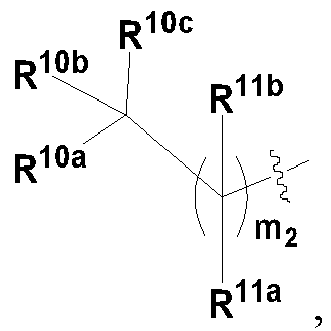
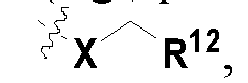
- R5, R6, R7, R8, R9, Rx, Ry, and Rz are each independently selected from H, -N3, nitro, amino, sulfo, carboxyl, aliphatic alkyl (e.g., C1-C6 alkyl), cycloalkyl (e.g., C3-C6 cycloalkyl), aromatic alkyl (e.g., phenyl C1-C6 alkyl F I, Br Cl alkoxy (e.g., C1-C6 alkoxy),

- or, R5, R6, R7, R8, R9, Rx, Ry, and Rz are each independently selected from H, - N3, nitro, amino, sulfo, carboxyl, aliphatic alkyl (e.g., C1-C6 alkyl), cycloalkyl (e.g., C3-C6 cycloalkyl), aromatic alkyl (e.g., phenyl C1-C6 alkyl), F, I, Br Cl, alkoxy (e.g., C1-C6 alkoxy), C1-C6 alkyl-C(=O)-NH2, R8, and R9 are not H at the same time;

- R10a, R10b, R10c, R11a, R11b, and R12 are each independently selected from H, -N3, - SS-C1-C6 alkyl (e.g., -SS-methyl, -SS-ethyl, -SS-isopropyl, -SS-tertbutyl or -SS-isobutyl), -ONH2, -OCORm, -OCONHRm, aliphatic alkyl (e.g., C1-C6 alkyl, particularly such as methyl (Me), ethyl (Et), isopropyl (iPr), tertbutyl (tBu)), aromatic alkyl (e.g., phenyl C1-C6 alkyl), cycloalkyl (e.g., C3-C6 cycloalkyl), wherein each Rm is independently selected from aliphatic alkyl (e.g., C1-C6 alkyl), cycloalkyl (e.g., C3-C6 cycloalkyl) or aromatic alkyl (e.g., phenyl C1-C6 alkyl), and R10a, R10b, and R10c are not H at the same time;
- n is selected from 1, 2, 3, 4, and 5;
- each m1 is independently selected from 1, 2, 3, 4, 5, and 6;
- each m2 is independently selected from 0, 1, 2, 3, 4, 5, and 6;
- R' is selected from H, monophosphate group

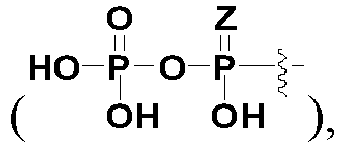


- each Z is independently selected from O, S, BH;
- Base is selected from a base, a deaza base or a tautomer thereof, for example, Base is selected from adenine, 7-deazaadenine, thymine, uracil, cytosine, guanine, 7-deazaguanine or a tautomer thereof.
- In some embodiments R is selected from


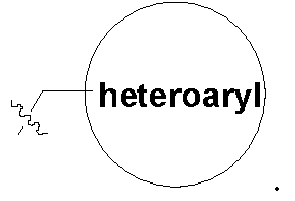
- In some embodiments, R is selected from


- In some embodiments, R is selected from


- In some embodiments, R is selected from


- In some embodiments, the heteroaryl is selected from the followings:




- In some embodiments, the heteroaryl is selected from the followings:


- In some embodiments, the heteroaryl is selected from the followings:


- In some embodiments, the heteroaryl is selected from the followings:


- In some embodiments, X is O.
- In some embodiments, each Y is independently selected from a direct bond or CH2.
- In some embodiments, R0 is -N3 or -SS-C1-C6 alkyl (e.g., -SS-methyl, -SS-ethyl, -SS-isopropyl, -SS-tertbutyl).
- In some embodiments, R0 is -N3.
- In some embodiments, R1 is -N3 or -SS-C1-C6 alkyl (e.g., -SS-methyl, -SS-ethyl, -SS-isopropyl, -SS-tertbutyl).
- In some embodiments, R1 is -N3.
- In some embodiments, R2, R3, and R4 are each independently selected from O, NH, S, CH, CH2, C(CH3)2, and meet the following conditions: when R2 is selected from O or S, R3 and R4 are CH2; when R3 is selected from O or S, R2 and R4 are CH2; when R4 is selected from O or S, R2 and R3 are CH2; when R2 is C(CH3)2, R3 and R4 are CH2; when R3 is C(CH3)2, R2 and R4 are CH2; when R4 is C(CH3)2, R2 and R3 are CH2; when Y is CH, R2is CH, and R3 and R4 are CH2.
- In some embodiments, R2, R3, and R4 are each independently selected from CH or CH2.
- In some embodiments, R2 and R3 are CH, and R4 is CH2.
- In some embodiments, when each heteroaryl is independently optionally substituted by one R", each R" is independently selected from

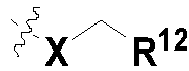

- In some embodiments, when each heteroaryl is independently optionally substituted by more (e.g., 2, 3, 4, 5 or 6, preferably 2) R"s, one of the R" is selected from

- In some embodiments, when each heteroaryl is independently optionally substituted by more (e.g., 2 3 4 5 or 6, preferably 2) R"s, one of the R" is

- In some embodiments, when each heteroaryl is independently optionally substituted by more (e.g., 2, 3, 4, 5 or 6, preferably 2) R"s one of the R" is

- In some embodiments any one of R5, R6 R7, R8, and R9 is selected from

- In some embodiments, any one of R5, R6 R7, R8, and R9 is selected from

- In some embodiments of R5, R6 R7, R8, and R9 R5 R7 or R9 is selected from

- In some embodiments, any one of R5, R6 R7, R8, and R9 is selected from

- In some embodiments, any one of R5, R6, R7, R8, and R9 is

- In some embodiments, of R5, R6, R7, R8, and R9, R5 or R9 is

- In some embodiments, of R5 R6, R7, R8, and R9, R5 or R9 is

- In some embodiments any one of Rx and Ry is selected from


- In some embodiments any one of Rx and Ry is selected from


- In some embodiments, any one of Rx and Ry is

- In some embodiments, Rz is selected from

- In some embodiments, Rz is

- In some embodiments, any one of R10a, R10b, and R10c is selected from -N3, -SS-C1-C6 alkyl (e.g., -SS-methyl, -SS-ethyl, -SS-isopropyl, -SS-tertbutyl or -SS-isobutyl), -ONH2, -OCORm, -OCONHRm, and the other two are each independently selected from H, aliphatic alkyl (e.g., C1-C6 alkyl, particularly such as methyl, ethyl, isopropyl, tertbutyl), aromatic alkyl (e.g., phenyl C1-C6 alkyl), cycloalkyl (e.g., C3-C6 cycloalkyl), wherein each Rm is independently selected from aliphatic alkyl (e.g., C1-C6 alkyl), cycloalkyl (e.g., C3-C6 cycloalkyl) or aromatic alkyl (e.g., phenyl C1-C6 alkyl).
- In some embodiments, any one of R10a, R10b, and R10c is -N3 or -SS-C1-C6 alkyl (e.g., -SS-methyl, -SS-ethyl, -SS-isopropyl, -SS-tertbutyl or -SS-isobutyl), and the other two are each independently selected from H, aliphatic alkyl (e.g., C1-C6 alkyl, particularly such as methyl, ethyl, isopropyl, tertbutyl).
- In some embodiments, any one of R10a, R10b, and R10c is -N3 or -SS-methyl, and the other two are each independently selected from H, methyl.
- In some embodiments, any one of R10a, R10b, and R10c is -N3, -SS-methyl, -SS-ethyl, -SS-isopropyl, -SS-tertbutyl or -SS-isobutyl, and the other two are each independently selected from H, methyl.
- In some embodiments, R11a and R11b are each independently selected from H, aliphatic alkyl (e.g., C1-C6 alkyl, particularly such as methyl, ethyl, isopropyl, tertbutyl).
- In some embodiments, R11a and R11b are H.
- In some embodiments, R12 is selected from -N3, -SS-C1-C6 alkyl (e.g., -SS-methyl, -SS-ethyl, -SS-isopropyl, -SS-tertbutyl), -ONH2, -OCORm, -OCONHRm, wherein each Rm is independently selected from aliphatic alkyl (e.g., C1-C6 alkyl), cycloalkyl (e.g., C3-C6 cycloalkyl) or aromatic alkyl (e.g., phenyl C1-C6 alkyl).
- In some embodiments, R12 is -N3 or -SS-C1-C6 alkyl (e.g., -SS-methyl, -SS-ethyl, -SS-isopropyl, -SS-tertbutyl).
- In some embodiments, R12 is -N3.
- In some embodiments, n is selected from 1, 2, 3.
- In some embodiments, n is 2.
- In some embodiments, m1 is 1.
- In some embodiments each m2 is independently selected from 0 or 1.
- In some embodiments,


- In some embodiments, R' is a triphosphate group

- In some embodiments. Z is O.
- In some embodiments, the Base is selected from


- In the second aspect of the invention, the present invention provides the compound of formula (I) or a salt thereof,

- X is selected from O, NH, S;
- Y is selected from a direct bond, O, NH, S, CH, CH2, C(CH3)2;
- R0 is selected from -N3, -SS-C1-C6 alkyl (e.g., -SS-methyl, -SS-ethyl, -SS-isopropyl, -SS-tertbutyl), -ONH2, -OCORm, -OCONHRm, wherein each Rm is independently selected from aliphatic alkyl (e.g., C1-C6 alkyl), cycloalkyl (e.g., C3-C6 cycloalkyl) or aromatic alkyl (e.g., phenyl C1-C6 alkyl);
- n is selected from 1, 2, 3, 4, and 5,
- R' is selected from H, monophosphate group


- each Z is independently selected from O, S, BH;
- Base is selected from a base, a deaza base or a tautomer thereof, for example, Base is selected from adenine, 7-deazaadenine, thymine, uracil, cytosine, guanine, 7-deazaguanine or a tautomer thereof.
- In some embodiments, X is O.
- In some embodiments, Y is CH2.
- In some embodiments, R0 is -N3 or -SS-C1-C6 alkyl (e.g., -SS-methyl, -SS-ethyl, -SS-isopropyl, -SS-tertbutyl).
- In some embodiments, R0 is -N3.
- In some embodiments, n is selected from 1, 2, 3.
- In some embodiments n is 2.
- In some embodiments, R' is a triphosphate group

- In some embodiments Z is O.
- In some embodiments, the Base is selected from


- In the third aspect of the invention, the present invention provides the compound of formula (II) or a salt thereof,

- X is selected from O, NH, S;
- Y is selected from a direct bond, O, NH, S, CH, CH2, C(CH3)2;
- R1 is selected from -N3, -SS-C1-C6 alkyl (e.g., -SS-methyl, -SS-ethyl, -SS-isopropyl, -SS-tertbutyl), -ONH2, -OCORm, -OCONHRm, wherein each Rm is independently selected from aliphatic alkyl (e.g., C1-C6 alkyl), cycloalkyl (e.g., C3-C6 cycloalkyl) or aromatic alkyl (e.g., phenyl C1-C6 alkyl);
- R2, R3, and R4 are each independently selected from O, NH, S, CH, CH2, C(CH3)2;
-
- - - represents a single bond - or a double bond =; - R' is selected from H, monophosphate group


- each Z is independently selected from O, S, BH;
- Base is selected from a base, a deaza base or a tautomer thereof, for example, Base is selected from adenine, 7-deazaadenine, thymine, uracil, cytosine, guanine, 7-deazaguanine or a tautomer thereof.
- In some embodiments, X is O.
- In some embodiments, Y is a direct bond.
- In some embodiments, R1 is -N3 or -SS-C1-C6 alkyl (e.g., -SS-methyl, -SS-ethyl, -SS-isopropyl, -SS-tertbutyl).
- In some embodiments, R1 is -N3.
- In some embodiments, R2, R3, and R4 are each independently selected from O, NH, S, CH, CH2, C(CH3)2, and meet the following conditions: when R2 is selected from O or S, R3 and R4 are CH2; when R3 is selected from O or S, R2 and R4 are CH2; when R4 is selected from O or S, R2 and R3 are CH2; when R2 is C(CH3)2, R3 and R4 are CH2; when R3 is C(CH3)2, R2 and R4 are CH2; when R4 is C(CH3)2, R2 and R3 are CH2; when Y is CH, R2 is CH, and R3 and R4 are CH2.
- In some embodiments, R2, R3, and R4 are each independently selected from CH or CH2.
- In some embodiments, R2 and R3 are CH, and R4 is CH2.
- In some embodiments, R' is a triphosphate group

- In some embodiments, Z is O.
- In some embodiments, the Base is selected from


- In the fourth aspect of the invention, the present invention provides the compound of formula (III) or a salt thereof,

- A' is selected from







- each R" is independently selected from H, -N3, nitro, amino, sulfo, carboxyl, aliphatic alkyl (e.g., C1-C6 alkyl), cycloalkyl (e.g., C3-C6 cycloalkyl), aromatic alkyl (e.g., phenyl C1-C6 alkyl), F, I, Br, Cl, alkoxy (e.g., C1-C6 alkoxy),


- X is selected from O, NH, S;
- R5, R6, R7, R8, and R9 are each independently selected from H, -N3, nitro, amino, sulfo, carboxyl, aliphatic alkyl (e.g., C1-C6 alkyl), cycloalkyl (e.g., C3-C6 cycloalkyl), aromatic alkyl (e.g., phenyl C1-C6 alkyl), F, I, Br, Cl, alkoxy (e.g., C1-C6 alkoxy),

- or, R5, R6, R7, R8, and R9 are each independently selected from H, -N3, nitro, amino, sulfo, carboxyl, aliphatic alkyl (e.g., C1-C6 alkyl), cycloalkyl (e.g., C3-C6 cycloalkyl), aromatic alkyl (e.g., phenyl C1-C6 alkyl), F, I, Br, Cl, alkoxy (e.g., C1-C6 alkoxy), C1-C6 alkyl-C(=O)-NH2-,

- R10a, R10b, R10c, R11a, R11b, and R12 are each independently selected from H, -N3, - SS-C1-C6 alkyl (e.g., -SS-methyl, -SS-ethyl, -SS-isopropyl, -SS-tertbutyl or -SS-isobutyl), -ONH2, -OCORm, -OCONHRm, aliphatic alkyl (e.g., C1-C6 alkyl, particularly such as methyl, ethyl, isopropyl, tertbutyl), aromatic alkyl (e.g., phenyl C1-C6 alkyl), cycloalkyl (e.g., C3-C6 cycloalkyl), wherein each Rm is independently selected from aliphatic alkyl (e.g., C1-C6 alkyl), cycloalkyl (e.g., C3-C6 cycloalkyl) or aromatic alkyl (e.g., phenyl C1-C6 alkyl), and R10a, R10b, and R10c are not H at the same time;
- m1 is selected from 1, 2, 3, 4, 5, and 6;
- m2 is selected from 0, 1, 2, 3, 4, 5, and 6;
- R' is selected from H, monophosphate group


- each Z is independently selected from O, S, BH;
- Base is selected from a base, a deaza base or a tautomer thereof, for example, Base is selected from adenine, 7-deazaadenine, thymine, uracil, cytosine, guanine, 7-deazaguanine or a tautomer thereof.
- In some embodiments, the heteroaryl is selected from the followings:

- In some embodiments, the heteroaryl is selected from the followings:


- In some embodiments, the heteroaryl is selected from the followings:


- In some embodiments, the heteroaryl is selected from the followings:


- In some embodiments, the heteroaryl is selected from the followings:

- In some embodiments, the heteroaryl is selected from the followings:

- In some embodiments, when each heteroaryl is independently optionally substituted by one R", each R" is independently selected from


- In some embodiments, when each heteroaryl is independently optionally substituted by more (e.g., 2, 3, 4, 5 or 6, preferably 2) R"s, one of the R" is selected from


- In some embodiments, when each heteroaryl is independently optionally substituted by more (e.g., 2, 3, 4, 5 or 6, preferably 2) R"s, one of the R" is

- In some embodiments, when each heteroaryl is independently optionally substituted by more (e.g., 2, 3, 4, 5 or 6, preferably 2) R"s, one of the R" is

- In some embodiments, of R13, R14, R15, and R16, R16 is

- In some embodiments, of R13, R14, R15, and R16, R16 is R14, and R15 are H.

- In some embodiments, of R17, R18, and R19, R19 is

- In some embodiments, of R17, R18, and R19, R19 is R18 are H.

- In some embodiments, of R20, R21, and R22, R22 is

- In some embodiments, of R20, R21, and R22, R22 is R21 are H.

- In some embodiments, of R23, R24, R25, and R26, R26 is

- In some embodiments of R23, R24, R25, and R26, R26 is

- In some embodiments, of R17, R28, and R29, R29 is

- In some embodiments, of R27, R28, and R29, R29 is

- In some embodiments, of R30, R31, and R32, R32 is

- In some embodiments, of R30, R31, and R32, R32 is

- In some embodiments of R33 R34, and R35, R34 or R35 is

- In some embodiments, of R33, R34, and R35, R34 or R35 is

- In some embodiments, X is O.
- In some embodiments of R5, R6, R7, R8, and R9 is selected from

- In some embodiments, any one of R5, R6, R7, R8, and R9 is

- In some embodiments, of R5, R6, R7, R8, and R9, R5 or R9 is

- In some embodiments, any one of R5, R6, R7, R8, and R9 is selected from

- In some embodiments, any one of R5, R6, R7, R8, and R9 is

- In some embodiments, of R5, R6, R7, R8, and R9, R5 or R9 is

- In some embodiments, of R5, R6, R7, R8, and R9, R5 or R9 is

- In some embodiments, any one of R10a, R10b, and R10c is selected from -N3, -SS-C1-C6 alkyl (e.g., -SS-methyl, -SS-ethyl, -SS-isopropyl, -SS-tertbutyl or -SS-isobutyl), -ONH2, -OCORm, -OCONHRm, and the other two are each independently selected from H, aliphatic alkyl (e.g., C1-C6 alkyl, particularly such as methyl, ethyl, isopropyl, tertbutyl), aromatic alkyl (e.g., phenyl C1-C6 alkyl), cycloalkyl (e.g., C3-C6 cycloalkyl), wherein each Rm is independently selected from aliphatic alkyl (e.g., C1-C6 alkyl), cycloalkyl (e.g., C3-C6 cycloalkyl) or aromatic alkyl (e.g., phenyl C1-C6 alkyl).
- In some embodiments, any one of R10a, R10b, and R10c is -N3 or -SS-C1-C6 alkyl (e.g., -SS-methyl, -SS-ethyl, -SS-isopropyl, -SS-tertbutyl or -SS-isobutyl), and the other two are each independently selected from H, C1-C6 alkyl (e.g., methyl, ethyl, isopropyl, tertbutyl).
- In some embodiments, any one of R10a, R10b, and R10c is -N3 or -SS-methyl, and the other two are each independently selected from H, methyl.
- In some embodiments, any one of R10a, R10b, and R10c is -N3, -SS-methyl, -SS-ethyl, -SS-isopropyl, -SS-tertbutyl, -SS-isobutyl, and the other two are each independently selected from H, methyl.
- In some embodiments, R11a and R11b are each independently selected from H, aliphatic alkyl (e.g., C1-C6 alkyl, particularly such as methyl, ethyl, isopropyl, tertbutyl).
- In some embodiments, R11a and R11b are H.
- In some embodiments, R12 is selected from -N3, -SS-C1-C6 alkyl (e.g., -SS-methyl, -SS-ethyl, -SS-isopropyl, -SS-tertbutyl), -ONH2, -OCORm, -OCONHRm, wherein each Rm is independently selected from aliphatic alkyl (e.g., C1-C6 alkyl), cycloalkyl (e.g., C3-C6 cycloalkyl) or aromatic alkyl (e.g., phenyl C1-C6 alkyl).
- In some embodiments, R12 is -N3 or -SS-C1-C6 alkyl (e.g., -SS-methyl, -SS-ethyl, -SS-isopropyl, -SS-tertbutyl).
- In some embodiments, R12 is -N3.
- In some embodiments, m1 is 1.
- In some embodiments, m2 is selected from 0 or 1.
- In some embodiments

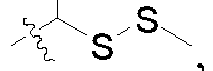

- In some embodiments, R' is a triphosphate group

- In some embodiments, Z is O.
- In some embodiments, the Base is selected from
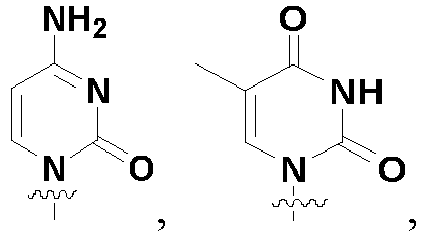

- In the fifth aspect of the invention, the present invention provides the compound of formula (IV) or a salt thereof,

- A is selected from


- the heteroaryl is selected from the followings:


- each R" is independently selected from H, -N3, nitro, amino, sulfo, carboxyl, aliphatic alkyl (e.g., C1-C6 alkyl), cycloalkyl (e.g., C3-C6 cycloalkyl), aromatic alkyl (e.g., phenyl C1-C6 alkyl), F, I, Br, Cl, alkoxy (e.g., C1-C6 alkoxy),


- R5, R6, R7, R8, R9, Rx, Ry, and Rz are each independently selected from H, -N3, nitro, amino, sulfo, carboxyl, aliphatic alkyl (e.g., C1-C6 alkyl), cycloalkyl (e.g., C3-C6 cycloalkyl), aromatic alkyl (e.g., phenyl C1-C6 alkyl), F, I, Br, Cl, alkoxy (e.g., C1-C6 alkoxy),

- R10a, R10b, R10c, R11a, R11b, and R12 are each independently selected from H, -N3, - SS-C1-C6 alkyl (e.g., -SS-methyl, -SS-ethyl, -SS-isopropyl, -SS-tertbutyl), -ONH2, - OCORm, -OCONHRm, aliphatic alkyl (e.g., C1-C6 alkyl, particularly such as methyl, ethyl, isopropyl, tertbutyl), aromatic alkyl (e.g., phenyl C1-C6 alkyl), cycloalkyl (e.g., C3-C6 cycloalkyl), wherein each Rm is independently selected from aliphatic alkyl (e.g., C1-C6 alkyl), cycloalkyl (e.g., C3-C6 cycloalkyl) or aromatic alkyl (e.g., phenyl C1-C6 alkyl), and R10a, R10b, and R10c are not H at the same time;
- X is selected from O, NH, S;
- m1 is selected from 1, 2, 3, 4, 5, and 6;
- m2 is selected from 0, 1.2. 3. 4. 5, and 6;
- R' is selected from H, monophosphate group


- each Z is independently selected from O, S, BH;
- Base is selected from a base, a deaza base or a tautomer thereof, for example, Base is selected from adenine, 7-deazaadenine, thymine, uracil, cytosine, guanine, 7-deazaguanine or a tautomer thereof.
- In some embodiments, A is selected from
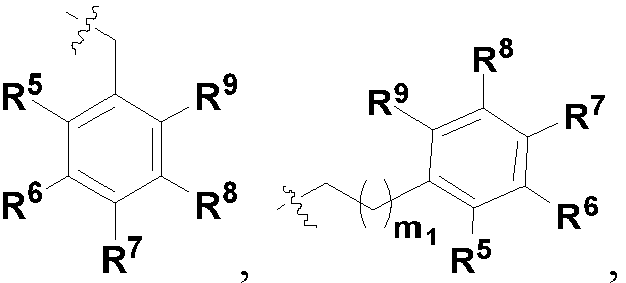

- In some embodiments, A is selected from

- In some embodiments, A is

- In some embodiments, the heteroaryl is selected from the followings:




- In some embodiments, the heteroaryl is selected from the followings:


- In some embodiments, the heteroaryl is selected from the followings:


- In some embodiments, when each heteroaryl is independently optionally substituted by one R", each R" is independently selected from


- In some embodiments, when each heteroaryl is independently optionally substituted by more (e.g., 2, 3, 4, 5 or 6, preferably 2) R"s, one of the R" is selected from


- In some embodiments, when each heteroaryl is independently optionally substituted by more (e.g., 2, 3, 4, 5 or 6 preferably 2) R"s, one of the R" is

- In some embodiments, when each heteroaryl is independently optionally substituted by more (e.g., 2, 3, 4, 5 or 6, preferably 2) R"s, one of the R" is

- In some embodiments, any one of R5, R6, R7, R8, and R9 is selected from

- In some embodiments, any one of R5, R6, R7, R8, and R9 is

- In some embodiments, of R5, R6, R7, R8, and R9, R7 is

- In some embodiments, any one of Rx and Ry is selected from
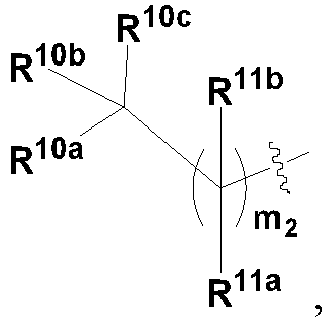

- In some embodiments, any one of Rx and Ry is

- In some embodiments, Rz is selected from

- In some embodiments, Rz is

- In some embodiments, any one of R10a, R10b, and R10c is selected from -N3, -SS-C1-C6 alkyl (e.g., -SS-methyl, -SS-ethyl, -SS-isopropyl, -SS-tertbutyl), -ONH2, - OCORm, -OCONHRm, and the other two are each independently selected from H, aliphatic alkyl (e.g., C1-C6 alkyl, particularly such as methyl, ethyl, isopropyl, tertbutyl), aromatic alkyl (e.g., phenyl C1-C6 alkyl), cycloalkyl (e.g., C3-C6 cycloalkyl), wherein each Rm is independently selected from aliphatic alkyl (e.g., C1-C6 alkyl), cycloalkyl (e.g., C3-C6 cycloalkyl) or aromatic alkyl (e.g., phenyl C1-C6 alkyl).
- In some embodiments, any one of R10a, R10b, and R10c is -N3 or -SS-C1-C6 alkyl (e.g., -SS-methyl, -SS-ethyl, -SS-isopropyl, -SS-tertbutyl), and the other two are each independently selected from H, aliphatic alkyl (e.g., C1-C6 alkyl, particularly such as methyl, ethyl, isopropyl, tertbutyl).
- In some embodiments, R11a and R11b are each independently selected from H, aliphatic alkyl (e.g., C1-C6 alkyl, particularly such as methyl, ethyl, isopropyl, tertbutyl).
- In some embodiments, R11a and R11b are H.
- In some embodiments, R12 is selected from -N3, -SS-C1-C6 alkyl (e.g., -SS-methyl, -SS-ethyl, -SS-isopropyl, -SS-tertbutyl), -ONH2, -OCORm, -OCONHm, wherein each Rm is independently selected from aliphatic alkyl (e.g., C1-C6 alkyl), cycloalkyl (e.g., C3-C6 cycloalkyl) or aromatic alkyl (e.g., phenyl C1-C6 alkyl).
- In some embodiments, R12 is -N3 or -SS-C1-C6 alkyl (e.g., -SS-methyl, -SS-ethyl, -SS-isopropyl, -SS-tertbutyl).
- In some embodiments, R12 is -N3.
- In some embodiments, X is O.
- In some embodiments, m1 is 1.
- In some embodiments, m2 is selected from 0 or 1.
- In some embodiments, R' is a triphosphate group

- In some embodiments, Z is O.
- In some embodiments, the Base is selected from


- In the sixth aspect of the invention, the present invention provides the following compounds or salts thereof,


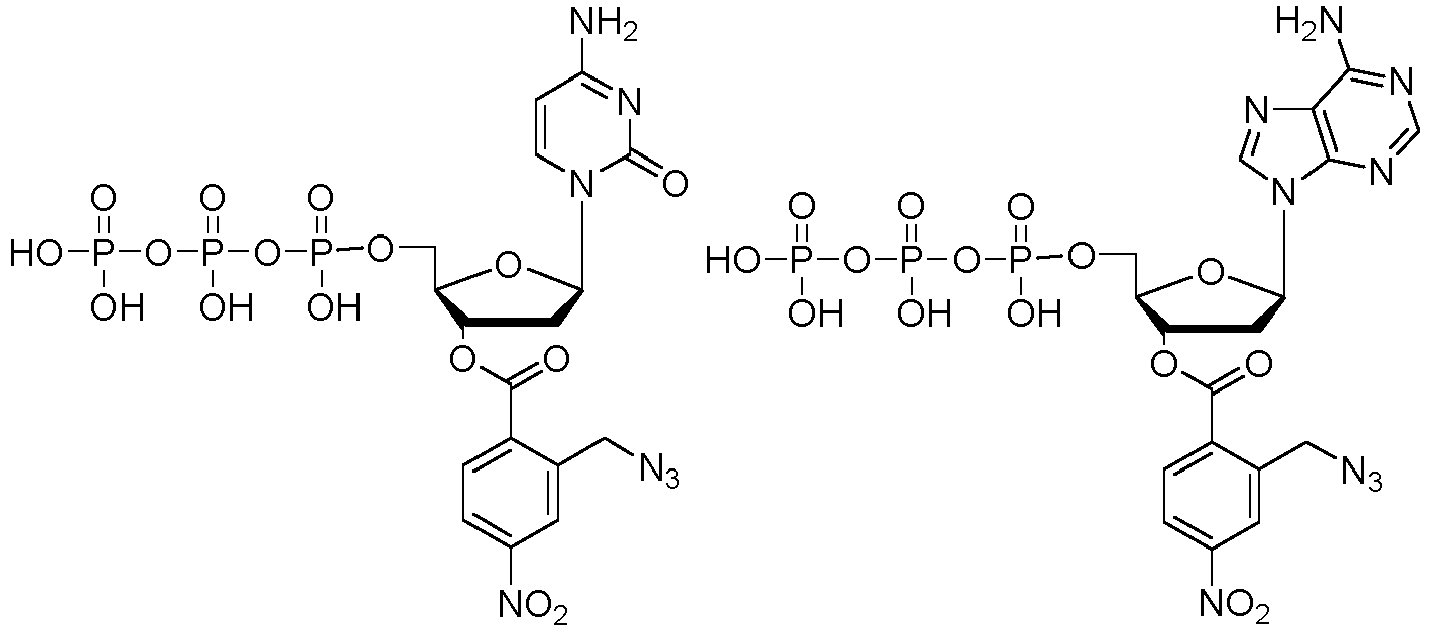

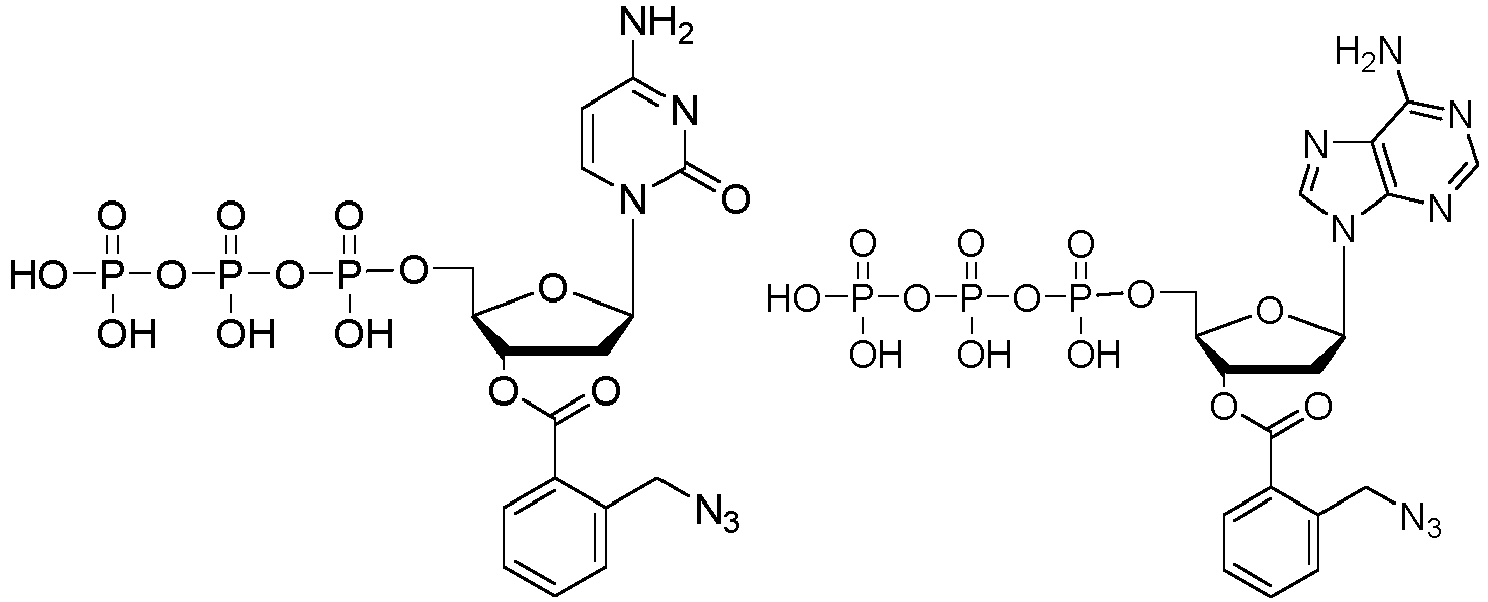


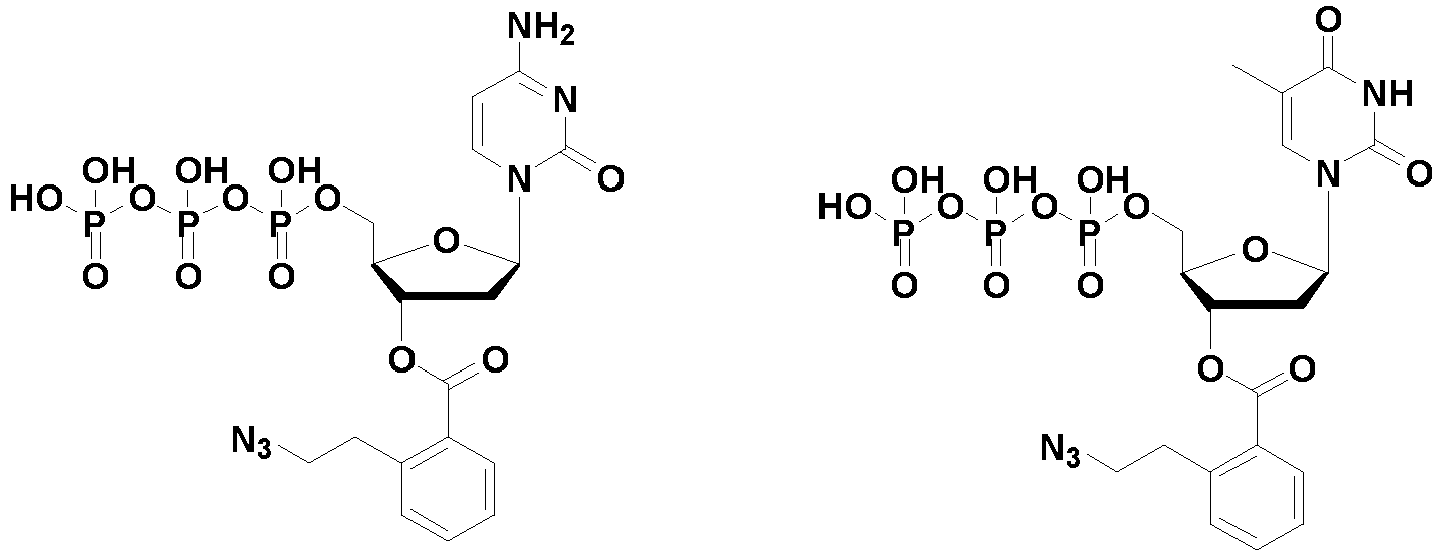


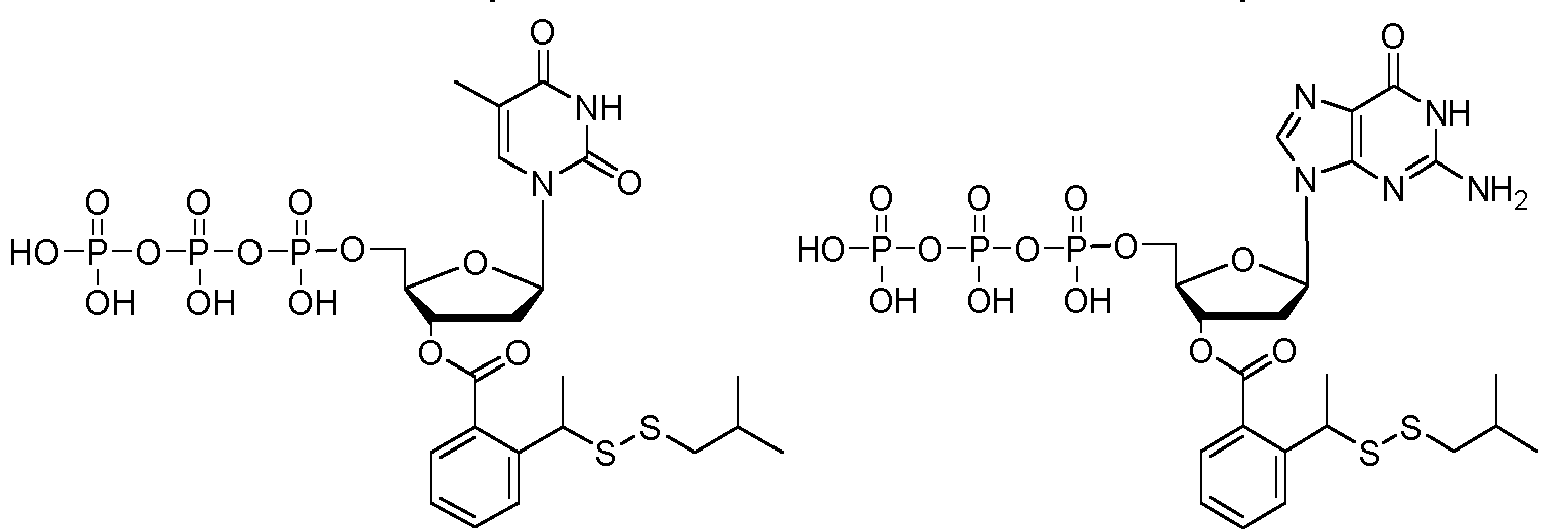


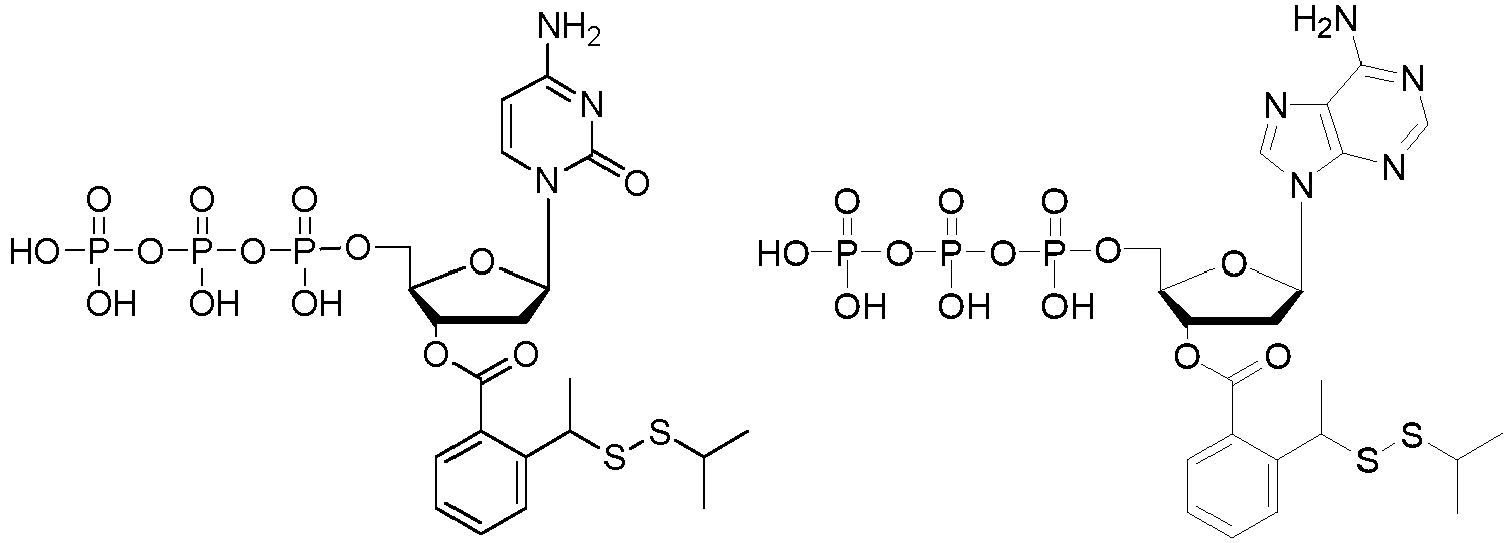


- In some embodiments, the compound or a salt thereof as described above carries an additional detectable label (e.g., a fluorescent label).
- In some embodiments, the additional detectable label carried by the compound or a salt thereof is introduced by an affinity reagent (e.g., antibody, aptamer, Affimer, Knottin), wherein the affinity reagent carries the detectable label, and the affinity reagent can specifically recognize and bind to an epitope of the compound or a salt thereof.
- In some embodiments, the additional detectable label (e.g., a fluorescent label) is linked to the compound or a salt thereof optionally via a linker.
- In some embodiments, the additional detectable label (e.g., a fluorescent label) is linked to the Base of the compound or a salt thereof optionally via a linker.
- In some embodiments, when the additional detectable label (e.g., a fluorescent label is linked to the Base of the compound or a salt thereof optionally via a linker the structure of Base is selected from the followings:


- In some embodiments, the linker is a cleavable linker or a non-cleavable linker.
- In some embodiments, the cleavable linker is selected from a linker capable of being cleaved by electrophilic reaction, a linker capable of being cleaved by nucleophilic reaction, a linker capable of being cleaved by photolysis, a linker capable of being cleaved under reductive conditions, a linker capable of being cleaved under oxidative conditions, a safety-catch linker, a linker capable of being cleaved by elimination mechanisms, or any combination thereof.
- In some embodiments, the linker has a structure of formula (B):

- R36, R37, R38, R39 are each independently selected from H, -N3, N3-C1-C6 alkyl, nitro, amino, sulfo, carboxyl, aliphatic alkyl (e.g., C1-C6 alkyl), cycloalkyl (e.g., C3-C6 cycloalkyl), aromatic alkyl (e.g., phenyl C1-C6 alkyl), F, I, Br, Cl, alkoxy (e.g., C1-C6 alkoxy), the C1-C6 alkyl is optionally substituted by C1-C6 alkyl;
- p is selected from 1, 2, 3, 4, 5, or 6;
- q is selected from any integer between 1 and 12.
- In some particular embodiments, any one of R36, R37, R38, and R39 is N3-C1-C6 alkyl, and wherein the C1-C6 alkyl is optionally substituted by C1-C6 alkyl, the others are each independently selected from H, -N3, nitro, amino, sulfo, carboxyl, aliphatic alkyl (e.g., C1-C6 alkyl), cycloalkyl (e.g., C3-C6 cycloalkyl), aromatic alkyl (e.g., phenyl C1-C6 alkyl), F, I, Br, Cl, alkoxy (e.g., C1-C6 alkoxy).
- In some particular embodiments, R36 is N3-C1-C6 alkyl, and wherein the C1-C6 alkyl is optionally substituted by C1-C6 alkyl, R37, R38, and R39 are each independently selected from H, C1-C6 alkyl.
- In some particular embodiments, R36 is N3-methyl optionally substituted by methyl, and R37, R38, and R39 are H.
- In some particular embodiments, p is selected from 1, 2, or 3.
- In some particular embodiments, p is 1.
- In some particular embodiments, q is selected from 2, 3, 4, 5, or 6.
- In some particular embodiments, q is 4.
- In some embodiments, methyl end of the linker of formula (B) is connected to the Base, and the amino end thereof is connected to the additional detectable label (e.g., a fluorescent label. For example,


- In some embodiments, the linker of formula (B) has the following structure

- In some embodiments, the linker has the structure of formula (C) :

- In some embodiments, the alkynyl end of the linker of formula (C) is connected to the Base, and the amino end thereof is connected to the additional detectable label (e.g., a fluorescent label. For example,


- In some embodiments, the linker has the structure of formula (D) :

- In some embodiments, the alkynyl end of the linker of formula (D)is connected to the Base, and the amino end thereof is connected to the additional detectable label (e.g., a fluorescent label. For example,


- In some embodiments, the detectable label is selected from the followings:


- In some embodiments, if the Base is different, the detectable label (e.g., a fluorescent label) varies.
- In some embodiments, the compound or a salt thereof carrying the additional detectable label has the following structure:


- In some embodiments, the compound or a salt thereof carrying additional detectable label has the following structure:


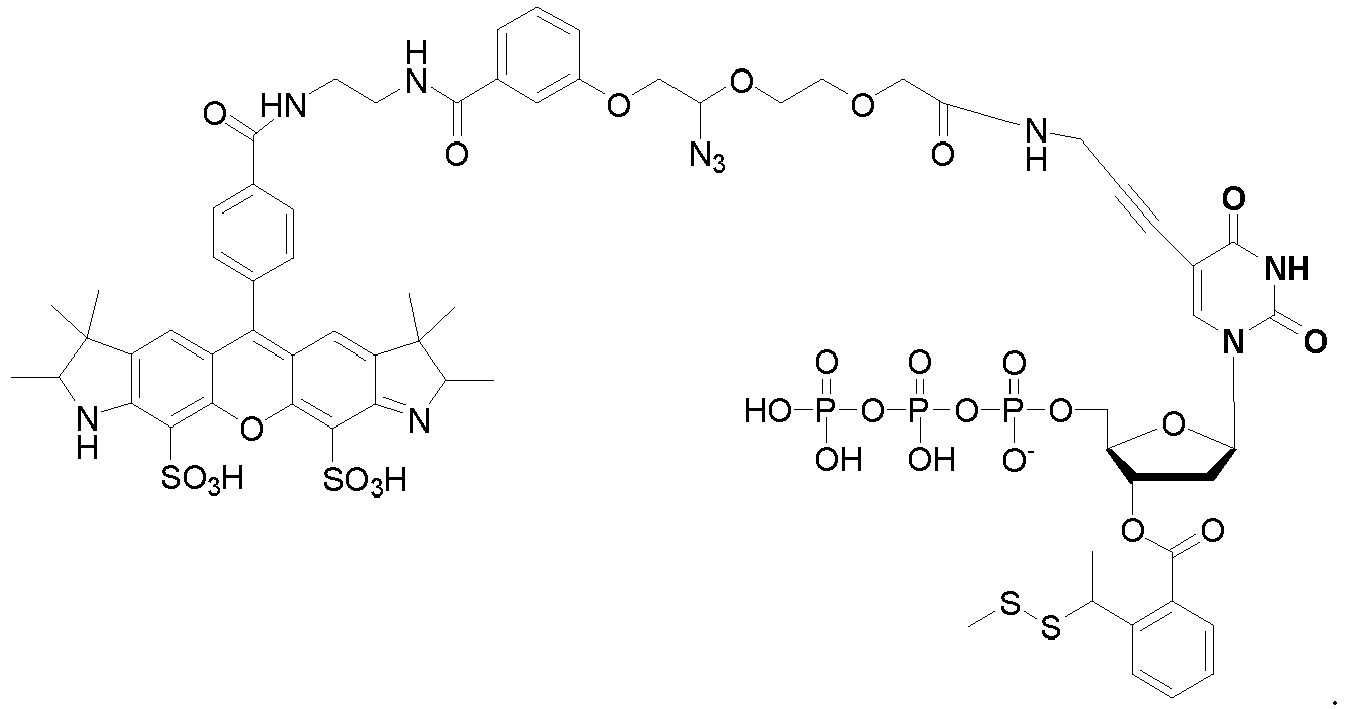
- In some embodiments, the compound or a salt thereof carrying additional detectable label has the following structure:


- In some embodiments, the compound or a salt thereof carrying additional detectable label has the following structure:


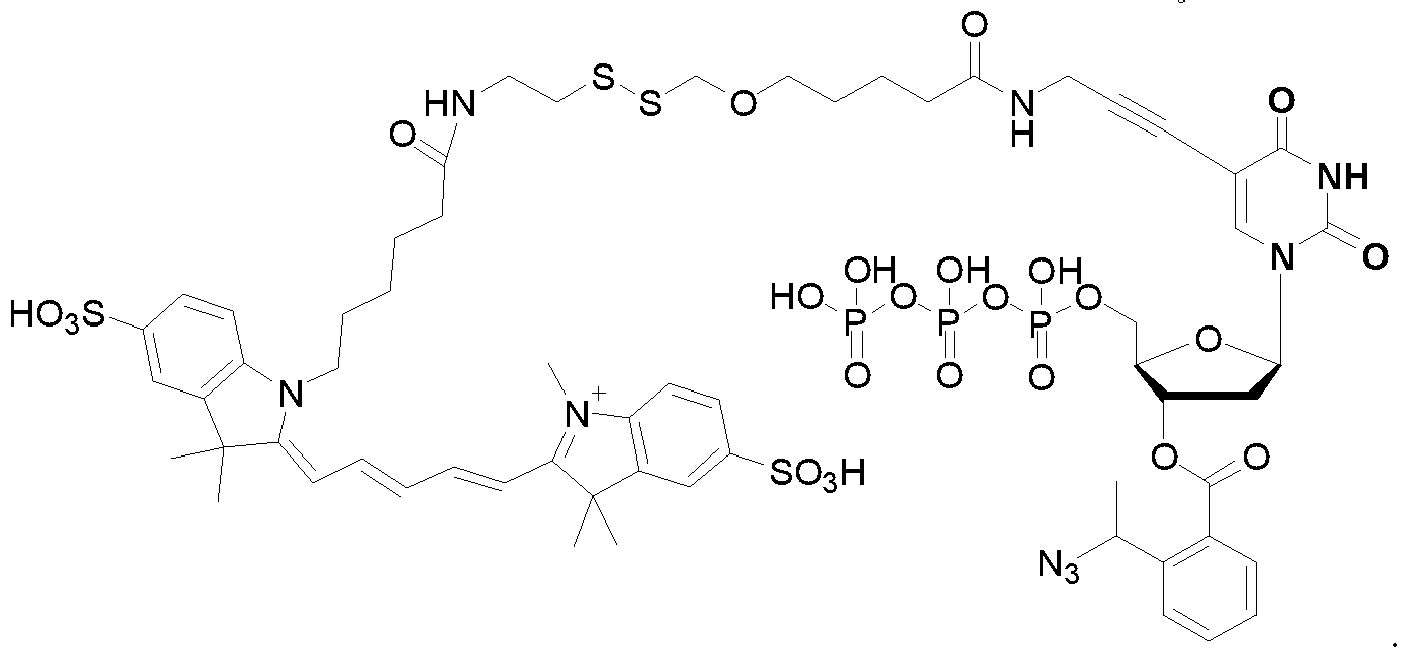
- In the seventh aspect of the invention, the present invention provides a method for terminating a nucleic acid synthesis, which comprises incorporating the compound or a salt thereof as described above into nucleic acid molecule to be terminated.
- In some embodiments, the incorporation of the compound or a salt thereof is achieved by a terminal transferase, a terminal polymerase or a reverse transcriptase.
- In some embodiments, the method comprises incorporating the compound or a salt thereof into the nucleic acid molecule to be terminated by using a polymerase.
- In some embodiments, the method comprises performing the nucleotide polymerization reaction using a polymerase under conditions where the polymerase is allowed to carry out the nucleotide polymerization reaction, thereby incorporating the compound or a salt thereof into the 3' end of the nucleic acid molecule to be terminated.
- In the eighth aspect of the invention, the present invention provides a method for preparing a growing polynucleotide complementary to a target single-stranded polynucleotide in a sequencing reaction, which comprises incorporating the compound or a salt thereof as described above into the growing complementary polynucleotide, wherein the incorporation of the compound or a salt thereof prevents any subsequent nucleotides from being introduced into the growing complementary polynucleotide.
- In some embodiments, the incorporation of the compound or a salt thereof is achieved by a terminal transferase, a terminal polymerase or a reverse transcriptase.
- In some embodiments, the method comprises incorporating compound or a salt thereof into the growing complementary polynucleotide by using a polymerase.
- In some embodiments, the method comprises performing the nucleotide polymerization reaction using a polymerase under conditions where the polymerase is allowed to carry out the nucleotide polymerization reaction, thereby incorporating the compound or a salt thereof into the 3' end of the growing complementary polynucleotide.
- In the ninth aspect of the invention, the present invention provides a method for determining the sequence of a target single-stranded polynucleotide, which comprises:
- 1) monitoring the sequential incorporation of nucleotides complementary to the target single-stranded polynucleotide in a growing nucleic acid strand, wherein at least one complementary nucleotide incorporated is the compound or a salt thereof as described above, and the compound or a salt thereof carries an additional detectable label (e.g., a fluorescent label), and,
- 2) detecting the detectable label.
- In some embodiments, the additional detectable label (e.g., a fluorescent label) is linked to the compound or a salt thereof optionally via a linker.
- In some embodiments, the linker is as described above.
- In some embodiments, the additional detectable label is as described above.
- In some embodiments, If the Base is different, the detectable label (e.g., a fluorescent label) carried by the compound or a salt thereof varies.
- In some embodiments, prior to introducing a next complementary nucleotide, the reversible blocking group (R) and the detectable label in the compound or a salt thereof are removed.
- In some embodiments, the reversible blocking group (R) and the detectable label are removed simultaneously.
- In some embodiments, the reversible blocking group (R) and the detectable label are removed sequentially; for example, after the detectable label is removed, the reversible blocking group is removed, or, after the reversible blocking group is removed, the detectable label is removed.
- In some embodiments, the method comprises the following steps:
- (a) providing a plurality of different nucleotides, wherein the plurality of different nucleotides are the compound or a salt thereof as described above, wherein each nucleotide carries an additional detectable label that can be distinguished from an additional detectable label carried by another nucleotide during detection;
- (b) incorporating the plurality of different nucleotides into sequence complementary to a target single-stranded polynucleotide;
- (c) detecting the additional detectable labels carried by the nucleotides in step (b) to determine the types of nucleotides incorporated;
- (d) removing the reversible blocking groups and the detectable labels carried by the nucleotides in step (b); and
- (e) optionally repeating steps (b)-(d) one or more times;
- In some embodiments, the method comprises the following steps:
- (1)providing a first nucleotide, a second nucleotide, a third nucleotide and a fourth nucleotide, wherein at least one of the four nucleotides is the compound or a salt thereof as described above, the Bases contained in the four nucleotides are different from each other, and the four nucleotides carry additional detectable label (e.g., a fluorescent label), preferably, the additional detectable label carried by the four nucleotides is introduced by an affinity reagent (e.g., antibody, aptamer, Affimer, Knottin), wherein the affinity reagent carries the detectable label, and the affinity reagent can specifically recognize and bind to an epitope of each nucleotide, or preferably, the four nucleotides are linked to the additional detectable label optionally via a linker, more preferably, the Base of the four nucleotides is linked to the additional detectable label optionally via a linker, most preferably, the additional detectable labels carried by the four nucleotides are different from each other;
- (2)contacting the four nucleotides with a target single-stranded polynucleotide; removing the nucleotides that are not incorporated into the growing nucleic acid strand; detecting the detectable labels carried by the nucleotides that are incorporated into the growing nucleic acid strand; removing the reversible blocking groups and the detectable labels carried by the nucleotides that are incorporated into the growing nucleic acid strand;
- In some embodiments, the method comprises the following steps:
- (a)providing a mixture comprising a duplex, at least one compound or a salt thereof as described above, polymerase and an excision reagent; wherein the duplex comprises growing nucleic acid strand and a nucleic acid strand to be sequenced; wherein the compound or a salt thereof carries an additional detectable label (e.g., a fluorescent label), preferably, the additional detectable label carried by the compound or a salt thereof is introduced by an affinity reagent (e.g., antibody, aptamer, Affimer, Knottin), wherein the affinity reagent carries the detectable label, and the affinity reagent can specifically recognize and bind to an epitope of the compound or a salt thereof, or preferably, the compound or a salt thereof is linked to the additional detectable label optionally via a linker, or more preferably, the Base of the compound or a salt thereof is linked to the additional detectable label optionally via a linker;
- (b) carrying out a reaction comprising the following steps (i), (ii) and (iii), optionally, repeating the steps for one or more times:
- step (i): incorporating the compound or a salt thereof into the growing nucleic acid strand using a polymerase to form a nucleic acid intermediate containing the reversible blocking group and the detectable label;
- step (ii): detecting the detectable label contained in the nucleic acid intermediate;
- step (iii): removing the reversible blocking group and/or the detectable label contained in the nucleic acid intermediate by using the excision reagent.
- In some embodiments, the removal of the reversible blocking group and the removal of the detectable label are performed simultaneously, or, the removal of the reversible blocking group and the removal of the detectable label are performed sequentially (for example, the reversible blocking group is removed first, or the detectable label is removed first).
- In some embodiments, the excision reagent used for the removal of the reversible blocking group is the same as that used for the removal of the detectable label.
- In some embodiments, the excision reagent used for the removal of the reversible blocking group is different from that used for the removal of the detectable label.
- In some embodiments, the duplex is linked to a support.
- In some embodiments, the growing nucleic acid strand is a primer.
- In some embodiments, the primer is annealed to the nucleic acid strand to be sequenced to form the duplex.
- In some embodiments, the duplex, the compound or a salt thereof, and the polymerase together form a reaction system containing a solution phase and a solid phase.
- In some embodiments, the Bases contained in the compounds or salts thereof are different from each other.
- In some embodiments, the additional detectable label carried by the compound or a salt thereof are different from each other.
- In some embodiments, the compound or a salt thereof is incorporated into the growing nucleic acid strand using a polymerase under conditions where the polymerase is allowed to carry out a nucleotide polymerization reaction, thereby forming a nucleic acid intermediate containing reversible blocking group and the detectable label.
- In some embodiments, the polymerase is selected from KOD polymerase or its mutants thereof (e.g., KOD POL151, KOD POL157, KOD POL171, KOD POL174, KOD POL376, KOD POL391).
- In some embodiments, before any step of detecting the detectable label contained in the nucleic acid intermediate, the solution phase of the reaction system in the previous step is removed, and the duplex linked to the support is retained.
- In some embodiments, the excision reagent is in contact with the duplex or the growing nucleic acid strand in the reaction system containing a solution phase and a solid phase.
- In some embodiments, the excision reagent can remove the reversible blocking group and the additional detectable label carried by the compound that is incorporated into the growing nucleic acid strand, without affecting the phosphodiester bond on the backbone of the duplex.
- In some embodiments, after any step of removing the reversible blocking group and/or additional detectable label contained in the nucleic acid intermediate, the solution phase of the reaction system in this step is removed.
- In some embodiments, a washing operation is performed after any step comprising a removal operation.
- In some embodiments, after step (ii), the method further comprises: determining the type of compound incorporated into the growing nucleic acid strand in step (i) according to the signal detected in step (ii), and determining the type of nucleotide at a corresponding position in the nucleic acid strand to be sequenced based on the principle of base complementary pairing.
- In the tenth aspect of the invention, the present invention provides a kit comprising at least one compound or a salt thereof as described above.
- In some embodiments, the kit comprises a first compound, a second compound, a third compound and a fourth compound, wherein the first, second, third and fourth compounds are each independently the compound or a salt thereof as described above.
- In some embodiments, in the first compound, the Base is selected from adenine 7-deazaadenine or a tautomer thereof (e.g.,


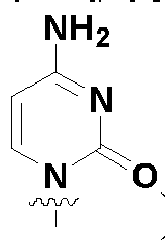

- In some embodiments, the first, second, third and fourth compounds carry an additional detectable label.
- In some embodiments, the additional detectable labels carried by the first, second, third and fourth compounds are introduced by an affinity reagent (e.g., third compound. the Base is selected from cvtosine or a tautomer thereof (e.g., antibody, aptamer, Affimer, Knottin), wherein the affinity reagent carries the detectable label, and the affinity reagent can specifically recognize and bind to the epitope of the first, second, third or fourth compound.
- In some embodiments, the first, second, third and fourth compounds are linked to the additional detectable label optionally via a linker.
- In some embodiments, the Base of the first, second, third or fourth compound is linked to the additional detectable label optionally via a linker.
- In some embodiments, the Bases contained in the first, second, third and fourth compounds are different from each other.
- In some embodiments, the additional detectable labels carried by the first, second, third and fourth compounds are different from each other.
- In some embodiments, the linker is as described above.
- In some embodiments, the detectable label is as described above.
- In some embodiments, the kit further comprises an reagent for pretreating the nucleic acid molecule; a support for linking nucleic acid molecule to be sequenced; a reagent for linking the nucleic acid molecule to be sequenced to the support (for example, covalently or non-covalently linking); a primer for initiating a nucleotide polymerization reaction; a polymerase for carrying out the nucleotide polymerization reaction; one or more buffer solutions; one or more washing solutions; or any combination thereof.
- In the eleventh aspect of the invention, the present invention provides the use of the compound or a salt thereof as described above or the kit as described above for determining the sequence of a target single-stranded polynucleotide.
-
-
Figure 1 illustrates the reaction for removing azidomethyl, as an example of the present invention; -
Figure 2 illustrates the nucleophilic cyclization cascade reaction for the reversible cleavage, as an example of the present invention; -
Figure 3 illustrates reversible blocking nucleotide analogues with 3'-OH labels, as an example of the present invention. - The embodiments of the invention are described in detail below through specific embodiments, but in no case should they be interpreted as restrictions on the invention.
- Unless otherwise specified, the above groups and substituents have common meanings in the field of pharmaceutical chemistry.
- In various parts of the specification, the substituents of the compounds disclosed in the invention are disclosed according to the type or range of the group. It is particularly noted that the present invention includes each independent subcombination of each and every member of these group types and ranges. For example, the term "C1-C6 alkyl" particularly refers to independently disclosed methyl, ethyl, C3 alkyl, C4 alkyl, C5 alkyl and C6 alkyl.
- In addition, it should be noted that, unless otherwise clearly pointed out, the expressions "each... independently is/are selected from" and "... are each independently is/are selected from", as used throughout the description, are interchangeable and both should be interpreted in a broad sense, i.e. it can mean that, in different groups, the specific options expressed by the same or different symbols are independent from each other, or it can mean that, in the same group, the specific options expressed by the same or different symbols are independent from each other.
- The term "aliphatic alkyl " means any straight or branched saturated group containing from 1 to 20 carbon atoms, for example, C1-C12 alkyl, preferably C1-C6 alkyl.
- The term "C1-C6 alkyl" means any straight or branched saturated group containing from 1 to 6 carbon atoms, such as, methyl, ethyl, n-propyl, isopropyl, n-butyl, isobutyl, tertbutyl, sec-butyl, n-amyl, tert-amyl, n-hexyl, etc.
- The term "alkoxy" means any above-described alkyl (e.g., C1-C6 alkyl, etc.), which is connected to the rest of the molecule through the oxygen atom (-O-).
- The term "cycloalkyl" means an saturated cyclic hydrocarbyl of 3-10 membered monocyclic ring system, for example, C3-C8 cycloalkyl, preferably C3-C6 cycloalkyl.
- The term "C3-C6 cycloalkyl" means an saturated cyclic hydrocarbyl of 3-6 membered monocyclic ring system. C3-C6 cycloalkyl may be cyclopropyl, cyclobutyl, cyclopentyl, cyclohexyl, etc.
- The term "aromatic alkyl" means an arylalkyl or heteroarylalkyl, wherein the alkyl is as defined above.
- The term "heteroaryl" means an aromatic heterocycle, generally a 5-, 6-, 7-, or 8-memberd heterocycle containing from one to three heteroatoms selected from N, O or S; and the heteroaryl ring may optionally be further fused to an aromatic or nonaromatic carbon ring or heterocycle. The non-limiting examples of the heteroaryl are such as pyridyl, pyrazinyl, pyrimidinyl, pyridazinyl, indolyl, imidazolyl, thiazolyl, isothiazolyl, thioxazolyl, pyrrolyl, phenyl-pyrrolyl, furanyl, phenyl-furanyl, oxazolyl, isoxazolyl, pyrazolyl, thiophenyl, benzofuranyl, benzothiophenyl, benzo-1,3-dioxolane (benzodioxane), isodihydroindolyl, benzimidazolyl, indazolyl, quinolinyl, isoquinolinyl, 1,2,3-triazolyl, 1-phenyl-1,2,3-triazolyl, 2,3-dihydroindolyl, 2,3-dihydrobenzofuranyl, 2,3-dihydrobenzothiophenyl, benzopyranyl, 2,3-dihydrobenzoxazinyl, 2,3-dihydroquinoxalinyl, etc.
- In the present invention


- In the present invention, R may be selected from

- In the present invention, "each R" is independently selected from H, -N3, etc., and is not H at the same time", it means that, if the heteroaryl is substituted by one or more (e.g., 2, 3, 4, 5 or 6, preferably 2) R"s, at least one substituent R" is not H.
- The term "aryl" means carbon-ring aromatic group having 6-14 carbon atoms, such as, C6-C10 aryl, preferably phenyl.
- It is obvious to those skilled in the art from all the above descriptions that, any group having a combined name, such as "phenyl C1-C6 alkyl", should be understood as being conventionally constructed from the parts from which it is derived, such as constructed from C1-C6 alkyl substituted by phenyl, wherein the C1-C6 alkyl group is as defined above.
- As used herein, the term " salt of the compound of formula (A), formula (I), formula (II), formula (III) or formula (IV)" may be exemplified by those organic addition salts of the organic acids forming the anion, including but not limiting to formate, acetate, propionate, benzoate, maleate, fumarate, succinate, tartrate, citrate, ascorbate, α-ketoglutarate, α-glycerophosphate, alkyl sulfonate or aryl sulfonate; preferably, the alkyl sulfonate is methanesulfonate or ethanesulfonate; the aryl sulfonate is benzenesulfonate or p-toluenesulfonate. Or alternatively, the term also means those inorganic salts, including but not limiting to hydrochloride, hydrobromide, hydroiodide, nitrate, bicarbonate and carbonate, sulfate or phosphate, etc.
- In the present invention R may be selected from

- - - represents a single bond - or a double bond =, and R2, R3, and R4 are each independently selected from O, NH, S, CH, CH2, C(CH3)2. It should be understood that, the bond between R2 and R3 is a double bond only when both R2 and R3are CH; when R2 and R3 are each independently selected from atoms or groups other than CH(i.e., O, NH, S, CH2, C(CH3)2), the bond between R2 and R3 is a single bond. For example, the expression "R2, R3, and R4 are each independently selected from CH or CH2" means: both R2 and R3 are CH, and the bond between R2 and R3 is a double bond, and R4 is CH2, and the bond between R3 and R4 is a single bond; or, both R3and R4 are CH, and the bond between R3 and R4 is a double bond, and R2 is CH2, and the bond between R2 and R3 is a single bond. Similarly, the single bond and/or double bond between Y and R2, or between R3 and R4, may be correspondingly understood with reference to the above contents. - The term "a direct bond" means that the group on both sides are directly connected. For example, in


- For the compound of formula (B)


- In the method of the invention, any substance composed of two chains, namely, the growing nucleic acid chain and the nucleic acid chain to be sequenced, may be called " a duplex ", regardless of the length of the growing nucleic acid chain or the nucleic acid chain to be sequenced, and wherein the nucleic acid chain to be sequenced may be longer than the length of the growing nucleic acid chain.
- In the method of the invention, the nucleic acid molecule to be sequenced may be any target nucleic acid molecule. In some preferred embodiments, the nucleic acid molecules to be sequenced include deoxyribonucleotides, ribonucleotides, modified deoxyribonucleotides, modified ribonucleotides, or any combination thereof. In the method of the invention, the nucleic acid molecule to be sequenced is not limited to any type. In some preferred embodiments, the nucleic acid molecule to be sequenced is DNA or RNA. In some preferred embodiments, the nucleic acid molecules to be sequenced may be genomic DNA, mitochondrial DNA, chloroplast DNA, mRNA, cDNA, miRNA, or siRNA. In some preferred embodiments, the nucleic acid molecule to be sequenced is linear or circular. In some preferred embodiments, the nucleic acid molecule to be sequenced is double-stranded or single-stranded. For example, the nucleic acid molecule to be sequenced may be single-stranded DNA (ssDNA), double-stranded DNA (dsDNA), single-stranded RNA (ssRNA), double-stranded RNA (dsRNA), or a hybrid of DNA and RNA. In some preferred embodiments, the nucleic acid molecule to be sequenced is single-stranded DNA. In some preferred embodiments, the nucleic acid molecule to be sequenced is double-stranded DNA.
- In the method of the invention, the nucleic acid molecule to be sequenced is not limited by its source. In some preferred embodiments, the nucleic acid molecules to be sequenced may be obtained from any source, such as any cell, tissue or organism (e.g., viruses, bacteria, fungi, plants and animals). In some preferred embodiments, the nucleic acid molecules to be sequenced originate from mammals (e.g., humans, non-human primates, rodents or canines), plants, birds, reptiles, fish, fungi, bacteria or viruses.
- The methods for extracting or obtaining nucleic acid molecules from cells, tissues or organisms are well known to those skilled in the art. Suitable methods include but are not limited to such as ethanol precipitation and chloroform extraction. For a detailed description of such methods, see, for example, J. Sambrook et al., Molecular Cloning: A Laboratory Manual, 2nd Edition, Cold Spring Harbor Laboratory Press, 1989; and F.M. Ausubel et al., Short Protocols in Molecular Biology, 3rd Edition, John Wiley&Sons, Inc., 1995. In addition, various commercial kits may be used for extracting nucleic acid molecules from various sources (e.g., cells, tissues or organisms).
- In the method of the invention, the nucleic acid molecule to be sequenced is not limited by its length. In some preferred embodiments, the length of the nucleic acid molecule to be sequenced may be at least 10bp, at least 20bp, at least 30bp, at least 40bp, at least 50bp, at least 100bp, at least 200bp, at least 300bp, at least 400bp, at least 500bp, at least 1000bp, or at least 2000bp. In some preferred embodiments, the length of nucleic acid molecules to be sequenced may be 10-20bp, 20-30bp, 30-40bp, 40-50bp, 50-100bp, 100-200bp, 200-300bp, 300-400bp, 400-500bp, 500-1000bp, 1000-2000bp, or more than 2000bp. In some preferred embodiments, the nucleic acid molecule to be sequenced can have a length of 10-1000bp, to facilitate high-throughput sequencing.
- In the method for polynucleotides preparation or sequencing of the invention, suitable polymerase may be used for performing nucleotide polymerization reaction. In some exemplary embodiments, the polymerase can synthesize new DNA strands using DNA as a template (such as, a DNA polymerase) . In some exemplary embodiments, the polymerase can synthesize new DNA strands using RNA as a template (e.g., a reverse transcriptase). In some exemplary embodiments, the polymerase can synthesize new RNA chains using DNA or RNA as templates (e.g., a RNA polymerase). Therefore, in some preferred embodiments, the polymerase is selected from DNA polymerase, RNA polymerase, and reverse transcriptase. Appropriate polymerase can be selected according to actual needs to carry out nucleotide polymerization reaction. In some preferred embodiments, the polymerization reaction is a polymerase chain reaction (PCR). In some preferred embodiments, the polymerization reaction is a reverse transcription reaction.
- In the method of the present invention, KOD polymerase or its mutants may be used for the nucleotide polymerization reaction. KOD polymerase or its mutants (e.g., KOD POL151, KOD POL157, KOD POL171, KOD POL174, KOD POL376, KOD POL391) may lead to acceptable Incorporation efficiency for the modified nucleoside or nucleotide of the invention. KOD POL391 and KOD POL171 lead to acceptable Incorporation efficiency for the modified nucleotides of the invention. In some embodiments, the Incorporation efficiency of KOD POL391 or KOD POL171 for the modified nucleotides of the invention is more than 70%, such as 70% - 80%, 80% - 90% or 90% - 100%.
- In the method for polynucleotide preparation or sequencing of the invention, the polymerization reaction of nucleotides is carried out under suitable conditions. The suitable polymerization conditions include the composition of the solution phase, the concentration of each component, the pH of the solution phase, and the polymerization temperature. Polymerization is performed under suitable conditions to obtain acceptable and even higher Incorporation efficiency.
- In the present invention, the hydroxyl (-OH) at 3'-position of the deoxyribose in the compound of formula (A) is protected (by R), thereby can terminate the polymerization caused by polymerase (such as DNA polymerase). For example, when the compound of formula (A) is introduced into the 3'-end of the growing nucleic acid chain, because there is no free hydroxyl (-OH) at the 3'-position of the deoxyribose of the compound, the polymerase cannot proceed to the next round of polymerization, and the polymerization is terminated. In such case, only one base will be incorporated into the growing nucleic acid chain in each round of polymerization.
- In addition, the protective group (R) of the hydroxyl (-OH) at the 3'-position of the deoxyribose in the compound of formula (A) can be removed to restore the free hydroxyl (-OH). Then the growing nucleic acid chain may undergo next round of polymerization reaction using polymerase and the compound of formula (A) to incorporate therein a base again.
- That is, the hydroxyl (-OH) at the 3'-position of the deoxyribose in the compound of formula (A) is reversibly blocked: when the compound of formula (A) is incorporated into the 3' end of the growing nucleic acid chain, it will terminate the polymerization caused by the polymerase and stop any further extension of the growing nucleic acid chain; and, after the blocking group contained in the compound of formula (A) is removed, the polymerase can continue the polymerization of the growing nucleic acid chain to extend the nucleic acid chain.
- Some embodiments described herein relate to the use of conventional detectable labels. Detection may be realized by any suitable method, including fluorescence spectroscopy or other optical means. Preferred label is a fluorescent label, namely a fluorophore, which emits radiation of certain wavelength after absorbing energy. Many suitable fluorescent labels are known in the art. For example, Welch et al., (Chem. Eur. J. 5(3):951-960,1999) discloses dansyl-functionalised fluorescent moieties that can be used in the present invention. Zhu et al. (Cytometry 28:206-211, 1997) describes the use of the fluorescent labels Cy3 and Cy5, which can also be used in the present invention. Labels suitable for use are also disclosed in Prober et al. (Science 238:336-341, 1987); Connell et al. (BioTechniques 5(4):342-384, 1987), Ansorge et al. (Nucl. Acids Res. 15(11):4593-4602, 1987) and Smith et al. (Nature 321:674, 1986). Other commercially available fluorescent labels include, but are not limited to, fluorescein, rhodamine (including TMR, texas red and Rox), alexa, BODIPY, acridine, coumarin, pyrene, benzanthracene and the cyanins.
- Multiple labels can also be used in the present application, for example, bi-fluorophore FRET cassettes (Tet. Let. 46:8867-8871, 2000). Multi-fluor dendrimeric systems (J. Am. Chem. Soc. 123:8101-8108, 2001) can also be used. Although fluorescent labels are preferred, other forms of detectable labels will be apparent as useful to those of ordinary skill in the art. For example, microparticles, including quantum dots (Empodocles et al., Nature 399:126-130, 1999), gold nanoparticles (Reichert et al., Anal. Chem. 72:6025-6029, 2000) and microbeads (Lacoste et al., Proc. Natl. Acad. Sci USA 97(17):9461-9466, 2000) can all be used.
- Multi-component labels can also be used in the present application. A multi-component label is one which is dependent on the interaction with a further compound for detection. The most common multi-component label used in biology is the biotin-streptavidin system. Biotin is used as the label attached to the nucleotide or modified nucleotide. Streptavidin is then added separately to enable detection to occur. Other multi-component systems can be used. For example, dinitrophenol has a commercially available fluorescent antibody that can be used for detection.
- In some embodiments described herein, carrying the detectable labels described above on the modified nucleotides or nucleoside molecules can be achieved through the incorporation of affinity reagents (e.g., antibodies, aptamers, Affimer, and Knottin), wherein the affinity reagent can specifically recognize and bind to the epitopes of the modified nucleotides or nucleoside molecules. The specific principle is shown in
WO2018129214A1 , which is herein incorporated by reference in its entirety. - In other embodiments described herein, the modified nucleotide or nucleoside molecule may be linked to a detectable label described above. In some such embodiments, the linker used may be cleaved. The use of cleavable linker ensures that the labels can be removed as needed after the detection, and thus avoiding any interference signals from any subsequently added labeled nucleotides or nucleosides.
- In other embodiments, the linker used is not cleavable. Because in each circumstance where the labeled nucleotide of the present invention is incorporated, it is not necessary to subsequently incorporate any nucleotide, so it is not necessary to remove the label from the nucleotide.
- Those skilled in the art will be aware of the utility of dideoxynucleoside triphosphates in Sanger sequencing methods, and related protocols (Sanger-type), which rely upon randomized chain-termination at particular type of nucleotide. The nucleotides of the present application, it will be recognized, may be of utility in Sanger methods and related protocols since the same effect achieved by using ddNTPs may be achieved by using the 3'-OH protecting groups described herein: both prevent incorporation of subsequent nucleotides. Similarly, the modified nucleosides and nucleotides of the present application may be of utility in high-throughput sequencing, especially in the high-throughput sequencing platform based on sequencing by synthesis. By using the reversible blocking nucleotides and analogues of the present application, the types of incorporated nucleotides may be determined one by one during the sequencing process.
- Cleavable linkers are known in the art, and conventional chemistry can be applied to attach a linker to a nucleotide or modified nucleotide and a label. The linker can be cleaved by any suitable method, including exposure to acids, bases, nucleophiles, electrophiles, radicals, metals, reducing or oxidizing agents, light, temperature, enzymes etc. The linker as discussed herein may also be cleaved with the same catalyst used to cleave the 3'-O-protecting group bond. Suitable linkers can be adapted from standard chemical protecting groups, as disclosed in Greene & Wuts, Protective Groups in Organic Synthesis, John Wiley & Sons. Further suitable cleavable linkers used in solid-phase synthesis are disclosed in Guillier et al. (Chem. Rev. 100:2092-2157, 2000).
- The use of the term "cleavable linker" is not meant to imply that the whole linker is required to be removed from, e.g., the nucleotide or modified nucleotide. Where the detectable label is attached to the nucleotide or modified nucleotide, the nucleoside cleavage site can be located at a position on the linker that ensures that part of the linker remains attached to the nucleotide or modified nucleotide after cleavage.
- Where the detectable label is attached to the nucleotide or modified nucleotide, the linker can be attached at any position on the nucleotide or modified nucleotide provided that Watson-Crick base pairing can still be carried out.
- Linkers capable of being cleaved by electrophilic reaction are typically cleaved by protons and include cleavages sensitive to acids. Suitable linkers include the modified benzylic systems such as trityl, p-alkoxybenzyl esters and p-alkoxybenzyl amides. Other suitable linkers include tert-butyloxycarbonyl (Boc) groups and the acetal system.
- The use of thiophilic metals, such as nickel, silver or mercury, in the cleavage of thioacetal or other sulfur-containing protecting groups can also be considered for the preparation of suitable linker molecules.
- Nucleophilic cleavage is also a well recognised method in the preparation of linker molecules. Groups such as esters that are labile in water (i.e., can be cleaved simply at basic pH) and groups that are labile to non-aqueous nucleophiles, can be used. Fluoride ions can be used to cleave silicon-oxygen bonds in groups such as triisopropyl silane (TIPS) or t-butyldimethyl silane (TBDMS).
- Linkers capable of being cleaved by photolysis have been used widely in carbohydrate chemistry. It is preferable that the light required to activate cleavage does not affect the other components of the modified nucleotides. For example, if a fluorophore is used as the label, it is preferable if this absorbs light of a different wavelength to that required to cleave the linker molecule. Suitable linkers include those based on O-nitrobenzyl compounds and nitroveratryl compounds. Linkers based on benzoin chemistry can also be used (Lee et al., J. Org. Chem. 64:3454-3460, 1999).
- There are many linkers known that are susceptible to reductive cleavage. Catalytic hydrogenation using palladium-based catalysts has been used to cleave benzyl and benzyloxycarbonyl groups. Disulfide bond reduction is also known in the art.
- Oxidation-based approaches are well known in the art. These include oxidation of p-alkoxybenzyl groups and the oxidation of sulfur and selenium linkers. The use of aqueous iodine to cleave disulfides and other sulfur or selenium-based linkers is also within the scope of the invention.
- Safety-catch linkers are those that cleave in two steps. In a preferred system the first step is the generation of a reactive nucleophilic center followed by a second step involving an intra-molecular cyclization that results in cleavage. For example, levulinic ester linkages can be treated with hydrazine or photochemistry to release an active amine, which can then be cyclised to cleave an ester elsewhere in the molecule (Burgess et al., J. Org. Chem. 62:5165-5168, 1997).
- Elimination reactions can also be used. For example, the base-catalysed elimination of groups such as Fmoc and cyanoethyl, and palladium-catalysed reductive elimination of allylic systems, can be used.
- In some embodiments, the linker can comprise a spacer unit. The length of the linker is unimportant provided that the label is held a sufficient distance from the nucleotide so as not to interfere with any interaction between the nucleotide and an enzyme.
- In some embodiments, the linker may consist of the similar functionality as the 3'-OH protecting group. This will make the deprotection and deprotecting process more efficient, as only a single treatment will be required to remove both the label and the protecting group. Particularly preferred linkers are phosphine-cleavable azide containing linkers.
- The present invention will be further explained below in conjunction with specific examples. Unless otherwise specified, the reagents used in the following examples can be commercially available. In addition, for each modification of 3'-OH, if one or more of the nucleotide analogues, dTTP, dATP, dCTP and dGTP, are prepared, those skilled in the art can undoubtedly prepare and obtain the remaining one or several nucleotide analogues.
- The structure of the target compound is:

-

- To a dried 100mL round bottom flask equipped with a magnetic stirrer and a rubber stopper with argon balloon, were added T-nucleoside (500mg, 1.4mmol, 1eq) (available from Beijing OKeanos Tech. Co., Ltd., cat. no. OK-N-18102) and azido protection group (268mg, 1.4mmol, 1eq) (available from Beijing OKeanos Tech. Co., Ltd., cat. no. OK-H-20001) separately, followed by adding with syringe 20mL of anhydrous methylene chloride as solvent. The reaction mixture was stirred at room temperature to facilitate dissolution, followed by adding DCC (435mg, 2.1mmol, 1.5eq) and DMAP (20mg, 0.14mmol, 0.1eq) separately, and allowed to react under nitrogen balloon for providing protection atmosphere at room temperature for further 4h. The reaction was monitored with TLC at half an hour interval, until the starting materials were substantially depleted. The reaction mixture was concentrated with a rotary evaporator, followed by product separation by silica gel column chromatography (Hexane/EA=10/1~1/1, silica gel column diameter 3.5cm, filler height 10cm). The yield of this step was 95%.
- 1H NMR (400 MHz, CDCl3) δ 8.41 (1H, s); 7.97(1H, m); 7.61 (3H, m); 7.40 (1H, m); 7.27(1H, s); 6.45 (1H, m); 5.67 (1H, m); 5.50 (1H, m); 4.28 (1H, m); 4.02 (1H, m); 2.59 (1H, m); 2.24 (1H, m); 1.96 (3H, s); 1.55 (3H, d, J = 6.8 Hz); 0.97 (9H, s); 0.10 (6H, s).
-

- To a dried 100mL round bottom flask equipped with a magnetic stirrer and a rubber stopper with argon balloon was added the product from Step 1 (750mg, 1.4mmol, 1eq), followed by adding with syringe 20mL of anhydrous THF as solvent. The reaction mixture was stirred to facilitate dissolution, followed by slowly adding with syringe 1mol/L solution of TBAF (1.8mL, 1.8mmol, 1.3eq) dropwise while in ice bath. The flask was brough to room temperature and stirred continuously for about 2h. The reaction was monitored with TLC at half an hour interval, until the dot of starting material on TLC plate disappeared. The reaction mixture was concentrated with a rotary evaporator, followed by product separation by silica gel column chromatography (Hexane/EA=10/1-1/1 to methylene chloride/anhydrous methanol=100/1~10/1, silica gel column diameter 3.5cm, filler height 10cm). The yield of this step was 70%.
1H NMR (400 MHz, DMSO-d6 ) δ 11.34 (1H, s); 7.89 (1H, m); 7.78 (1H, s); 7.70 - 7.62 (2H, m); 7.50- 7.46 (1H, m); 6.27 - 6.24 (1H, m); 5.58 -5.55 (1H, m), 5.26 (1H, t); 4.19 (1H, br.); 3.71 (2H, br.); 1.79 (3H, d); 1.49 (3H, d, J = 6.8 Hz). -

- To a dried 100mL two-necked 1# flask equipped with a magnetic stirrer and a three-way valve with argon balloon, were added product from Step 2 (350mg, 0.85mmol, 1eq) and proton sponge (363.5mg, 1.7mmol, 2eq). To a dried 100mL two-necked 2# flask equipped with a magnetic stirrer and a three-way valve with argon balloon was added tributyl ammonium pyrophosphate (932.5mg, 1.7mmol, 2eq). The two-necked 1# flask was filled with argon, followed by adding 15mL of trimethyl phosphate with stirring to facilitate dissolution. The reaction was brought to 0°C, followed by slowly adding with syringe phosphorus oxychloride (120µL , 1.3mmol, 1.5eq) and stirring continuously at 0°C for 1.5h. The two-necked 2# flask was filled with argon, followed by adding with syringe 2mL of anhydrous DMF and DIPEA (740µL, 4.25mmol, 5eq) with stirring at 0°C to facilitate dissolution. The liquid in 1# flask was transferred with syringe into the 2# flask. The mixture was maintained at 0°C and continuously stirred for 3h, followed by adding 20 mL of solution of TEAB (0.1mol/L) to quench the reaction. The reaction mixture was diluted with 50mL of deionized water, and then separated by DEAE resin column prepared-in-advance and eluted with gradient elution (H2O:TEAB(1mol/L)=10/1~0/1, DEAE column diameter 4.5cm, filler height 8cm). Fractions were identified with HPLC and MS, and those fractions containing the triphosphorylated product were collected and concentrated under vacuum to 10mL, followed by preparative liquid chromatography separation with gradient elution (CH3CN:TEAB(0.1mol/L)=2/98~98/2). The high-purity product solution recovered from the separation was concentrated with a rotary evaporator under vacuum, transferred to a plastic centrifuge tube, and then freeze-dried with a lyophilizer into a powder solid. MW=655. The yield of this step was 50%.
1H NMR (400 MHz, DMSO-d6 ) δ 11.32 (s, 1H), 7.97 (s, 1H), 7.93 - 7.88 (m, 1H), 7.72 - 7.60 (m, 2H), 7.52 - 7.46 (m, 1H), 6.40 - 6.29 (m, 1H), 5.64 - 5.54 (m, 2H), 4.33 (s, 1H), 4.17 - 4.01 (m, 2H), 2.54 - 2.50 (m, 1H), 2.45 - 2.36 (m, 1H), 1.85 (s, 3H), 1.49 (dd, J = 6.7, 1.0 Hz, 3H). - The structure of the target compound is:

-

- To a dried 100mL round bottom flask equipped with a magnetic stirrer and a rubber stopper with argon balloon were added G-nucleoside (600mg, 1.58mmol, 1eq) (available from Beijing Okeanos Tech. Co., Ltd., cat. No. OK-N-18103) and azido protection group (302mg, 1.58mmol, 1eq) (available from Beijing Okeanos Tech. Co., Ltd., cat. No. OK-H-20001) separately, followed by adding with syringe 20mL of anhydrous methylene chloride as solvent. The reaction mixture was stirred at room temperature to facilitate dissolution, followed by adding DCC (488mg, 2.37mmol, 1.5eq) and DMAP (20mg, 0.16mmol, 0.1eq) separately under nitrogen balloon for providing protection atmosphere, and allowed to react at room temperature for further 4h. The reaction was monitored with TLC at half an hour interval, until the starting materials were substantially depleted. The reaction mixture was concentrated with a rotary evaporator, followed by product separation by silica gel column chromatography (Hexane/EA=10/1~1/1, silica gel column diameter 3.5cm, filler height 10cm). The yield of this step was 95%.
1H NMR (500 MHz, DMSO-d6 ) δ 10.65 (s, 1H), 7.99 - 7.84 (m, 2H), 7.79 - 7.61 (m, 2H), 7.57 - 7.45 (m, 1H), 6.47 (s, 2H), 6.20 (ddd, J = 9.1, 5.8, 3.6 Hz, 1H), 5.65 - 5.49 (m, 2H), 4.27 (qd, J = 4.8, 1.9 Hz, 1H), 3.86 (dd, J = 4.6, 2.2 Hz, 2H), 2.99 - 2.80 (m, 1H), 2.78 - 2.61 (m, 1H), 1.50 (d, J = 6.7 Hz, 3H), 0.88 (s, 9H), 0.07 (dd, J = 4.5, 1.3 Hz, 6H). -

- To a dried 100mL round bottom flask equipped with a magnetic stirrer and a rubber stopper with argon balloon was added the product from Step 1 (850mg, 1.54mmol, 1eq) followed by adding with syringe 20mL of anhydrous THF as solvent and stirring at room temperature to facilitate dissolution. The reaction mixture was cooled in ice bath and slowly added with syringe 1mol/L solution of TBAF (2.0mL, 2.0mmol, 1.3eq) dropwise. The flask was brough to room temperature and stirred continuously for about 2h. The reaction was monitored with TLC at half an hour interval, until the dot of starting material on TLC plate disappeared. The reaction mixture was concentrated with a rotary evaporator, followed by product separation by silica gel column chromatography (Hexane/EA=10/1~1/1 to methylene chloride/anhydrous methanol=100/1~10/1, silica gel column diameter 3.5cm, filler height 10cm). The yield of this step was 70%.
1H NMR (500 MHz, DMSO-d6 ) δ 10.68(H, s), 7.99 (1H, s), 7.91 (1H, m), 7.67 (2H, m), 7.46(1H, m), 6.52 (2H, s), 6.17 (1H, m), 5.58 (2H, m), 5.25 (1H, m), 4.23 (1H, t), 3.66 (2H, t), 2.89 (1H, m), 2.61 (1H, m), 1.49 (3H, d, J = 6.8 Hz). -

- To a dried 100mL two-necked 1# flask equipped with a magnetic stirrer and a three-way valve with argon balloon were added product from Step 2 (375mg, 0.85mmol, 1eq) and proton sponge (363.5mg, 1.7mmol, 2eq). To a dried 100mL two-necked 2# flask equipped with a magnetic stirrer and a three-way valve with argon balloon was added tributyl ammonium pyrophosphate (932.5mg, 1.7mmol, 2eq). The two-necked 1# flask was filled with argon, added with 15mL of trimethyl phosphate with stirring to facilitate dissolution. The reaction was brought to 0°C, followed by slowly adding with syringe phosphorus oxychloride (120µL, 1.3mmol, 1.5eq) and stirring continuously at 0°C for 1.5h. The two-necked 2# flask was filled with argon, followed by adding with syringe SmL of anhydrous DMF and DIPEA (740µL, 4.25mmol, 5eq) with stirring at 0°C to facilitate dissolution. The liquid in 1# flask was transferred with syringe into the 2# flask. The mixture was maintained at 0°C and continuously stirred for 3h, followed by adding 20 mL of solution of TEAB (0.1mol/L) to quench the reaction. The reaction mixture was diluted with 50mL of deionized water, and then separated by DEAE resin column prepared-in-advance and eluted with gradient elution (H2O/TEAB(1mol/L)=10/1~0/1, DEAE column diameter 4.5cm, filler height 8cm). The fractions containing the triphosphated product were collected and concentrated with a rotary evaporator under vacuum, followed by preparative liquid chromatography separation with gradient elution (CH3CN:TEAB(0.1mol/L)=2/98~98/2). The high-purity product solution recovered from the separation was concentrated, transferred to a plastic centrifuge tube, and then freeze-dried with a lyophilizer into a powder solid. MW=680. The yield of this step was 45%.
1H NMR (400 MHz, DMSO-d6 ) δ 11.12 (s, 1H), 8.05 (d, J = 3.1 Hz, 1H), 7.93 (d, J = 7.6 Hz, 1H), 7.73 - 7.62 (m, 2H), 7.50 (t, J = 7.6 Hz, 1H), 6.87 (s, 2H), 6.25 - 6.19 (m, 1H), 5.72 (d, J = 4.9 Hz, 1H), 5.61 (q, J = 6.6 Hz, 1H), 4.36 - 4.33 (m, 1H), 4.25 - 4.18 (m, 1H), 4.06 - 4.01 (m, 1H), 3.27 - 3.12 (m, 1H), 2.60 - 2.52 (m, 1H), 1.50 (dd, J = 6.7, 2.0 Hz, 3H). - The structure of the target compound is:

-

- To a dried 100mL round bottom flask equipped with a magnetic stirrer and a rubber stopper with argon balloon were added C-nucleoside (600mg, 1.56mmol, 1eq) (available from Beijing Okeanos Tech. Co., Ltd., cat. No. OK-N-18104) and azido protection group (297mg, 1.56mmol, 1eq) (available from Beijing Okeanos Tech. Co., Ltd., cat. No. : OK-H-20001) separately, followed by adding with syringe 20mL of anhydrous methylene chloride as solvent. The reaction mixture was stirred at room temperature to facilitate dissolution, followed by adding DCC (480mg, 2.34mmol, 1.5eq) and DMAP (20mg, 0.16mmol, 0.1eq) separately under nitrogen balloon for providing protection atmosphere, and allowed to react at room temperature for further 4h. The reaction was monitored with TLC at half an hour interval, until the starting materials were substantially depleted. The reaction mixture was concentrated with a rotary evaporator, followed by product separation by silica gel column chromatography (Hexane/EA=10/1~1/1, silica gel column diameter 3.5cm, filler height 10cm). The yield of this step was 95%.
1H NMR (400 MHz, DMSO-d6 ) δ 10.91 (1H, s); 8.23 (1H, d, J =7.52 Hz); 7.89 (1H, d, J = 6.80 Hz); 7.66 (2H, m); 7.48 (1H, m); 7.23 (1H, d, J = 7.48); 6.19(1H, t), 5.55 (1H, m); 5.44 (1H, d, J =6.04 Hz), 4.42 (1H, t); 3.92 (2H, m); 2.74 (1H, m); 2.32(1H, m); 1.47 (3H, d, J = 6.7 Hz); 0.86 (9H, s); 0.09 (6H, s). -

- To a dried 100mL round bottom flask equipped with a magnetic stirrer and a rubber stopper with argon balloon was added the product from Step 1 (860mg, 1.54mmol, 1eq), followed by adding with syringe 20mL of anhydrous THF as solvent. The reaction mixture was stirred to facilitate dissolution, cooled in ice bath, followed by slowly adding with syringe 1mol/L solution of TBAF (2.0mL, 2.0mmol, 1.3eq), dropwise. The flask was brough to room temperature and stirred continuously for about 2h. The reaction was monitored with TLC at half an hour interval until the dot of starting material on TLC plate disappeared. The reaction mixture was concentrated with a rotary evaporator, followed by product separation by silica gel column chromatography (Hexane/EA=10/1~1/1 to methylene chloride/anhydrous methanol=100/1~10/1, silica gel column diameter 3.5cm, filler height 10cm). The yield of this step was 70%.
1H NMR (400 MHz, DMSO-d6 ) δ 10.90 (1H, s); 8.34(1H, d, J =7.48 Hz); 7.89(1H, d, J =7.84 Hz); 7.66 (2H, m); 7.48(1H, m); 7.23(1H, d, J=7.48 Hz); 6.22(1H, t); 5.57(1H, m); 5.47(1H, d, J = 6.00 Hz); 5.25 (1H, s); 4.32 (1H, m); 3.72 (1H, s); 2.67 (1H, m); 2.31 (1H, m); 1.45 (3H, d, J = 6.7 Hz). -

- To a dried 100mL two-necked 1# flask equipped with a magnetic stirrer and a three-way valve with argon balloon were added product from Step 2 (377mg, 0.85mmol, 1eq) and proton sponge (363.5mg, 1.7mmol, 2eq). To a dried 100mL two-necked 2# flask equipped with a magnetic stirrer and a three-way valve with argon balloon was added tributyl ammonium pyrophosphate (932.5mg, 1.7mmol, 2eq). The two-necked 1# flask was filled with argon, followed by adding 15mL of trimethyl phosphate with stirring to facilitate dissolution. The reaction was brought to 0°C, followed by slowly adding with syringe phosphorus oxychloride (120µL, 1.3mmol, 1.5eq) and stirring continuously at 0°C for 1.5h. The two-necked 2# flask was filled with argon, followed by adding with syringe 2mL of anhydrous DMF and DIPEA (740µL, 4.25mmol, 5eq) with stirring at 0°C to facilitate dissolution. The mixture was maintained at 0°C and continuously stirred for 3h, followed by adding 20mL of solution of TEAB (0.1mol/L) to quench the reaction. The reaction mixture was diluted with 50mL of deionized water, and then separated by DEAE resin column prepared-in-advance and eluted with gradient elution (H2O:TEAB(1mol/L)= 10/1~0/1, DEAE column diameter 4.5cm, filler height 8cm). The fractions containing the triphosphated product were collected and concentrated with a rotary evaporator, followed by preparative liquid chromatography separation with gradient elution (CH3CN:TEAB(0.1mol/L)=2/98~98/2). The high-purity product solution recovered from the separation was concentrated with a rotary evaporator under vacuum, transferred to a plastic centrifuge tube, and then freeze-dried with a lyophilizer into a powder solid. MW=684. The yield of this step was 40%.
-

- To a dried 100mL round bottom flask equipped with a magnetic stirrer were added the triphosphated product from Step 3(500mg, 0.73mmol, 1eq) and Sml of deionized water. The mixture was stirred at room temperature to complete dissolution and slowly added with 25% aqueous ammonia (2.5g, 36.5mmol, 50eq), followed by stirring at room temperature for about 6h. Ammonia in the solution was removed by a rotary evaporator under vacuum and the residue was diluted with deionized water to about 10mL. After separation with preparative liquid chromatography with gradient elution (CH3CN:TEAB(0.1mol/L)=2/98~98/2), the resulted high-purity product solution was concentrated with a rotary evaporator under vacuum, transferred to a plastic centrifuge tube, and freeze-dried with a lyophilizer into a powder solid. MW=642. The yield of this step was 90%.
1H NMR (400 MHz, DMSO-d6 ) δ 7.99 (dd, J = 7.5, 2.2 Hz, 1H), 7.90 (d, J = 7.8 Hz, 1H), 7.71 - 7.63 (m, 2H), 7.54 - 7.42 (m, 1H), 7.30 (s, 1H), 7.10 (s, 1H), 6.41 - 6.28 (m, 1H), 5.81 (d, J = 7.5 Hz, 1H), 5.65 - 5.50 (m, 2H), 4.33 (s, 1H), 4.18 - 3.96 (m, 2H), 2.46 - 2.26 (m, 2H), 1.49 (dd, J = 6.7, 1.4 Hz, 3H). - The structure of the target compound is:

-

- To a dried 100mL round bottom flask equipped with a magnetic stirrer and a rubber stopper with argon balloon were added A-nucleoside (600mg, 1.65mmol, 1eq) (available from Beijing Okeanos Tech. Co., Ltd., cat. No. OK-N-18101) and azido protection group (314mg, 1.65mmol, 1eq) (available from Beijing Okeanos Tech. Co., Ltd., cat. No. OK-H-20001) separately, followed by adding with syringe 20mL of anhydrous methylene chloride as solvent. The reaction mixture was stirred at room temperature to facilitate dissolution, followed by adding DCC (508mg, 2.5mmol, 1.5eq) and DMAP (24mg, 0.17mmol, 0.1eq) separately under nitrogen balloon for providing protection atmosphere, and allowed to react at room temperature for further 4h. The reaction was monitored with TLC at half an hour interval, until the starting materials were substantially depleted. The reaction mixture was concentrated with a rotary evaporator, followed by product separation by silica gel column chromatography (Hexane/EA=10/1~1/1, silica gel column diameter 3.5cm, filler height 10cm). The yield of this step was 95%.
1H NMR (500 MHz, CDCl3) δ 8.36 (1H, s); 8.28 (1H, d, J = 4.4 Hz); 7.98 (1H, m); 7.65 (2H, m); 7.41 (1H, m); 6.60 (1H, t); 6.0 (2H, br.), 5.68 (2H, m); 4.40 (1H, br.); 4.01 (2H, br.); 1.93 (1H, m); 1.68 (1H, m); 1.56 (3H, d, J = 6.7 Hz); 0.94 (9H, s); 0.15 (6H, s). -

- To a dried 100mL round bottom flask equipped with a magnetic stirrer and a rubber stopper with argon balloon was added the product from Step 1 (828mg, 1.54mmol, 1eq), followed by adding with syringe 20mL of anhydrous THF as solvent. The reaction mixture was stirred to facilitate dissolution, cooled in ice bath, followed by slowly adding with syringe 1mol/L solution of TBAF (2.0mL, 2.0mmol, 1.3eq) dropwise. The flask was brough to room temperature and stirred continuously for about 2h. The reaction was monitored with TLC at half an hour interval, until the dot of starting material on TLC plate disappeared. The reaction mixture was concentrated with a rotary evaporator, followed by product separation by silica gel column chromatography (Hexane/EA=10/1~1/1 to methylene chloride/anhydrous methanol=100/1~10/1, silica gel column diameter 3.5cm, filler height 10cm). The yield of this step was 70%.
1H NMR (500 MHz, DMSO-d6 ) δ 10.66 (s, 1H), 8.00 (d, J = 1.5 Hz, 1H), 7.92 (ddd, J = 8.0, 3.0, 1.4 Hz, 1H), 7.82 - 7.59 (m, 2H), 7.51 (t, J = 7.5 Hz, 1H), 6.46 (s, 2H), 6.20 (dt, J = 9.5, 5.4 Hz, 1H), 5.58 (ddd, J = 15.6, 6.2, 2.5 Hz, 2H), 5.21 (td, J = 5.6, 1.8 Hz, 1H), 4.24 (dd, J = 4.3, 1.7 Hz, 1H), 3.77 - 3.55 (m, 2H), 2.91 (qd, J = 9.1, 5.8 Hz, 1H), 2.62 (dt, J = 13.7, 6.6 Hz, 1H), 1.51 (dd, J = 6.7, 1.7 Hz, 3H). -

- To a dried 100mL two-necked 1# flask equipped with a magnetic stirrer and a three-way valve with argon balloon were added product from Step 2 (360mg, 0.85mmol, 1eq) and proton sponge (363.5mg, 1.7mmol, 2eq). To a dried 100mL two-necked 2# flask equipped with a magnetic stirrer and a three-way valve with argon balloon was added tributyl ammonium pyrophosphate (932.5mg, 1.7mmol, 2eq). The two-necked 1# flask was filled with argon, followed by adding 15mL of trimethyl phosphate with stirring to facilitate dissolution. The reaction was brought to 0°C, followed by slowly adding with syringe phosphorus oxychloride (120µL, 1.3mmol, 1.5eq) and stirring continuously at 0°C for 1.5h. The two-necked 2# flask was filled with argon, followed by adding with syringe 5mL of anhydrous DMF and DIPEA (740µL, 4.25mmol, 5eq) with stirring at 0°C to facilitate dissolution. The mixture was maintained at 0°C and continuously stirred for 3h, followed by adding 20 mL of solution of TEAB (0.1mol/L) to quench the reaction. The reaction mixture was diluted with 50mL of deionized water, and then separated by DEAE resin column prepared-in-advance and eluted with gradient elution (H2O:TEAB(1mol/L)= 10/1~0/1, DEAE column diameter 4.5cm, filler height 8cm). The fractions containing the triphosphated product were collected and concentrated with a rotary evaporator under vacuum, followed by preparative liquid chromatography separation with gradient elution (CH3CN:TEAB(0.1mol/L)=2/98~98/2). The high-purity product solution recovered from the separation was concentrated with a rotary evaporator under vacuum, transferred to a plastic centrifuge tube, and then freeze-dried with a lyophilizer into a powder solid. MW=664. The yield of this step was 40%.
1H NMR (400 MHz, DMSO-d 6) δ 8.62 (d, J = 3.6 Hz, 1H), 8.15 (d, J = 1.5 Hz, 1H), 7.97 (d, J = 7.8 Hz, 1H), 7.72 - 7.65 (m, 2H), 7.55 - 7.47 (m, 1H), 7.29 (s, 2H), 6.51 - 6.46 (m, 1H), 5.74 (d, J = 5.3 Hz, 1H), 5.68 - 5.58 (m, 1H), 4.44 - 4.41 (m, 1H), 4.14 - 4.01 (m, 2H), 3.19 - 3.11 (m, 1H), 2.75 - 2.65 (m, 1H), 1.51 (dd, J = 6.7, 1.5 Hz, 3H). - The structure of the target compound is:
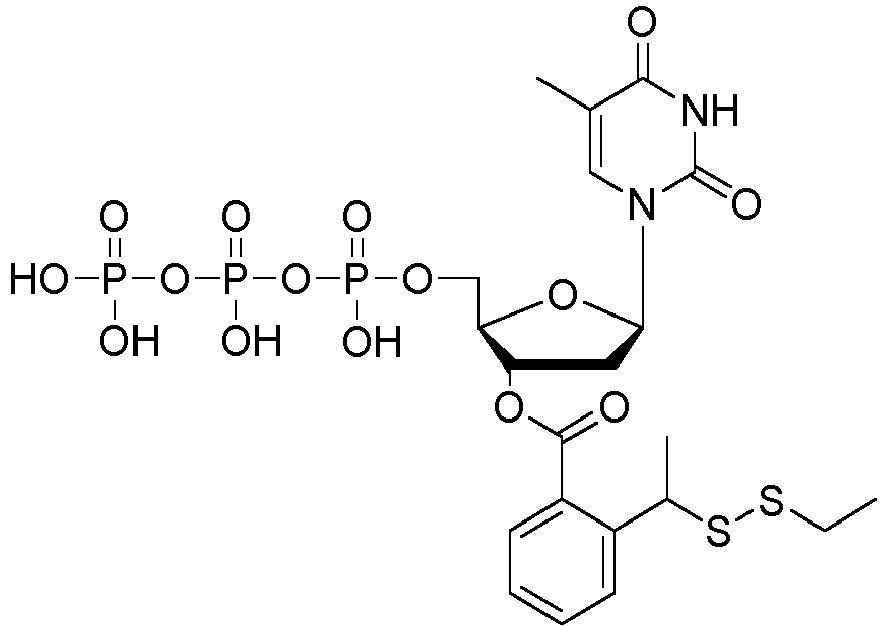
-

- To a dried 100mL round bottom flask equipped with a magnetic stirrer and a rubber stopper with argon balloon were added T-nucleoside (500 mg, 1.40 mmol, 1 eq) (available from Beijing Okeanos Tech. Co., Ltd., cat. No. OK-N-18102) and disulfaneyl protection group (340 mg, 1.40 mmol, 1 eq) (available from Beijing Okeanos Tech. Co., Ltd., cat. No. : OK-H-21003) separately, followed by adding with syringe 20 mL of anhydrous methylene chloride as solvent. The reaction mixture was stirred at room temperature to facilitate dissolution, followed by adding DCC (433mg, 2.10mmol, 1.5eq) and DMAP (17 mg, 0.14 mmol, 0.1 eq) separately under nitrogen balloon for providing protection atmosphere, and allowed to react at room temperature for further 6h. The reaction was monitored with TLC at half an hour interval, until the starting materials were substantially depleted. The reaction mixture was concentrated with a rotary evaporator, followed by product separation by silica gel column chromatography (Hexane/EA=10/1~1/1, silica gel column diameter 3.5cm, filler height 10cm), yield 85%. 1H NMR (400 MHz, CDCl3) δ 8.61 (d, J = 4.7 Hz, 1H), 7.84 (t, J = 8.3 Hz, 1H), 7.63 - 7.57 (m, 2H), 7.52 (t, J = 7.6 Hz, 1H), 7.33 (dd, J = 11.0, 4.1 Hz, 1H), 6.47 - 6.40 (m, 1H), 5.52 - 5.45 (m, 1H), 5.31 - 5.20 (m, 1H), 4.30 (d, J = 21.8 Hz, 1H), 4.07 - 3.94 (m, 2H), 3.51 - 3.44 (m, 1H), 2.63 - 2.53 (m, 1H), 2.29 - 2.20 (m, 2H), 1.94 (s, 3H), 1.69 (d, J = 7.0 Hz, 3H), 1.12 - 1.07 (m, 3H), 0.96 (s, 9H), 0.17 (s, 6H).
-

- To a dried 100mL round bottom flask equipped with a magnetic stirrer and a rubber stopper with argon balloon was added the product from Step 1 (690 mg, 1.19 mmol, 1eq), followed by adding with syringe 20mL of anhydrous THF as solvent. The reaction mixture was stirred at room temperature to facilitate dissolution, cooled in ice bath, followed by slowly adding with syringe 1mol/L solution of TBAF (1.6 mL, 1.6 mmol, 1.3eq) dropwise. The flask was brough to room temperature and stirred continuously for about 2h. The reaction was monitored with TLC at half an hour interval, until the dot of starting material on TLC plate disappeared. The reaction mixture was concentrated with a rotary evaporator, followed by product separation by silica gel column chromatography (Hexane/EA=5/1~1/1 to methylene chloride/anhydrous methanol=100/1~10/1, silica gel column diameter 3.5cm, filler height 10cm). The yield of this step was 80%.
1H NMR (500 MHz, CDCl3) δ 8.57 (s, 1H), 7.87 - 7.80 (m, 1H), 7.60 (dd, J = 7.8, 1.9 Hz, 1H), 7.57 - 7.50 (m, 2H), 7.39 - 7.29 (m, 1H), 6.35 - 6.25 (m, 1H), 5.64 - 5.56 (m, 1H), 5.23 (p, J = 7.1 Hz, 1H), 4.29 (dd, J = 14.3, 2.4 Hz, 1H), 4.02 (dd, J = 4.9, 2.5 Hz, 2H), 2.59 - 2.55 (m, 2H), 2.29 - 2.19 (m, 2H), 1.94 (d, J = 0.6 Hz, 3H), 1.70 (d, J = 7.0 Hz, 3H), 1.11 (td, J = 7.4, 2.6 Hz, 3H). -

- To a dried 100mL two-necked 1# flask equipped with a magnetic stirrer and a three-way valve with argon balloon were added product from Step 2 (396 mg, 0.85 mmol, 1 eq) and proton sponge (363.5 mg, 1.7 mmol, 2 eq). To a dried 100mL two-necked 2# flask equipped with a magnetic stirrer and a three-way valve with argon balloon was added tributyl ammonium pyrophosphate (932.5 mg, 1.7 mmol, 2 eq). The two-necked 1# flask was filled with argon, followed by adding 15mL of trimethyl phosphate with stirring to facilitate dissolution. The reaction was brought to 0°C, followed by slowly adding with syringe phosphorus oxychloride (120 µL, 1.3 mmol, 1.5 eq) and stirring continuously at 0°C for 1.5h. The two-necked 2# flask was filled with argon, followed by adding with syringe 5mL of anhydrous DMF and DIPEA (740 µL, 4.25 mmol, 5 eq) at 0°C with stirring to facilitate dissolution. The mixture was maintained at 0°C and continuously stirred for 3h, followed by adding 20 mL of solution of TEAB (0.1mol/L) to quench the reaction. The reaction mixture was diluted with 50mL of deionized water, and then separated by DEAE resin column prepared-in-advance and eluted with gradient elution (H2O:TEAB(1mol/L)= 10/1~0/1, DEAE column diameter 4.5cm, filler height 8cm). The fractions containing the triphosphated product were collected and concentrated with a rotary evaporator under vacuum, followed by preparative liquid chromatography separation with gradient elution (CH3CN:TEAB(0.1mol/L)=2/98~98/2). The high-purity product solution recovered from the separation was concentrated with a rotary evaporator under vacuum, transferred to a plastic centrifuge tube, and then freeze-dried with a lyophilizer into a powder solid. MW = 706. The yield of this step was 40%.
1H NMR (400 MHz, DMSO-d6 ) δ 11.30 (s, 1H), 7.96 (dd, J = 6.0, 1.0 Hz, 1H), 7.86 (d, J = 7.7 Hz, 1H), 7.68 - 7.5 6 (m, 2H), 7.46 - 7.41 (m, 1H), 6.38 - 6.27 (m, 1H), 5.60 (d, J = 5.3 Hz, 1H), 5.16 - 5.11 (m, 1H), 4.31 (d, J = 20.8 Hz, 1H), 4.18 - 4.00 (m, 2H), 2.58 - 2.51 (m, 1H), 2.44 - 2.22 (m, 3H), 1.85 (s, 3H), 1.65 (d, J = 7.0 Hz, 3H), 1.09-1.03 (m, 3H). - The structure of the target compound is:

-

- To a dried 100mL round bottom flask equipped with a magnetic stirrer and a rubber stopper with argon balloon were added G-nucleoside (600 mg, 1.58 mmol, 1 eq) (available from Beijing Okeanos Tech. Co., Ltd., cat. No. OK-N-18103) and disulfaneyl protection group (605 mg, 1.58 mmol, 1 eq) (available from Beijing Okeanos Tech. Co., Ltd., cat. No. OK-H-21003) separately, followed by adding with syringe 20mL of anhydrous methylene chloride as solvent. The reaction mixture was stirred at room temperature to facilitate dissolution, followed by adding DCC (488mg, 2.37mmol, 1.5eq) and DMAP (20mg, 0.16mmol, 0.1eq) separately under nitrogen balloon for providing protection atmosphere, and allowed to react at room temperature for further 4h. The reaction was monitored with TLC at half an hour interval, until the starting materials were substantially depleted. The reaction mixture was concentrated with a rotary evaporator, followed by product separation by silica gel column chromatography (Hexane/EA=10/1~1/2, silica gel column diameter 3.5cm, filler height 10cm). The yield of this step was 80%.
1H NMR (500 MHz, CDCl3) δ 12.00 (s, 1H), 7.93 (t, J = 9.2 Hz, 1H), 7.88 - 7.83 (m, 1H), 7.59 (dd, J = 13.6, 8.0 Hz, 1H), 7.53 (t, J = 7.6 Hz, 1H), 7.33 (t, J = 7.5 Hz, 1H), 6.37 - 6.33 (m, 2H), 5.62 (s, 1H), 5.30 - 5.22 (m, 1H), 4.36 (dd, J = 10.9, 1.5 Hz, 1H), 4.01 - 3.89 (m, 2H), 3.51 - 3.40 (m, 1H), 2.78 - 2.66 (m, 2H), 2.33 - 2.22 (m, 2H), 1.70 (d, J = 6.9 Hz, 3H), 1.13 (d, J = 2.5 Hz, 3H), 0.92 (s, 9H), 0.12 (s, 6H). -

- To a dried 100mL round bottom flask equipped with a magnetic stirrer and a rubber stopper with argon balloon was added the product from Step 1 (932 mg, 1.54 mmol, 1 eq), followed by adding with syringe 20mL of anhydrous THF as solvent. The reaction mixture was stirred to facilitate dissolution, cooled in ice bath, followed by slowly adding with syringe 1mol/L solution of TBAF (2.0 mL, 2.0 mmol, 1.3 eq) dropwise. The flask was brough to room temperature and stirred continuously for about 2h. The reaction was monitored with TLC at half an hour interval, until the dot of starting material on TLC plate disappeared. The reaction mixture was concentrated with a rotary evaporator, followed by product separation by silica gel column chromatography (Hexane/EA=10/1~1/1 to methylene chloride/anhydrous methanol=100/1~10/1, silica gel column diameter 3.5cm, filler height 10cm). The yield of this step was 70%.
1H NMR (400 MHz, CDCl3) δ 11.71 (s, 1H), 7.97 (d, J = 7.8 Hz, 1H), 7.62 (d, J = 7.9 Hz, 1H), 7.52 (t, J = 7.5 Hz, 2H), 7.32 (t, J = 7.2 Hz, 1H), 6.36 - 6.02 (m, 1H), 5.41 - 5.22 (m, 2H), 3.03 - 2.97 (m, 3H), 2.34 (dd, J = 14.6, 7.2 Hz, 2H), 2.26 - 2.20 (m, 1H), 2.06 - 1.97 (m, 1H), 1.69 (d, J = 6.9 Hz, 3H), 1.14 (t, J = 7.3 Hz, 3H). -

- To a dried 100mL two-necked 1# flask equipped with a magnetic stirrer and a three-way valve with argon balloon were added product from Step 2 (417 mg, 0.85 mmol, 1 eq) and proton sponge (363.5 mg, 1.7 mmol, 2 eq). To a dried 100mL two-necked 2# flask equipped with a magnetic stirrer and a three-way valve with argon balloon was added tributyl ammonium pyrophosphate (932.5 mg, 1.7 mmol, 2 eq). The two-necked 1# flask was filled with argon, followed by adding 15mL of trimethyl phosphate with stirring to facilitate dissolution. The reaction was brought to 0 °C, followed by slowly adding with syringe phosphorus oxychloride (120 µL, 1.3 mmol, 1.5 eq) and stirring continuously at 0°C for 1.5h. The two-necked 2# flask was filled with argon, followed by adding with syringe 5mL of anhydrous DMF and DIPEA (740 µL, 4.25 mmol, 5 eq) with stirring at 0°C to facilitate dissolution. The mixture was maintained at 0°C and continuously stirred for 3h, followed by adding 20 mL of solution of TEAB (0.1mol/L) to quench the reaction. The reaction mixture was continuously stirred for 0.5h, diluted with 50mL of deionized water, and then separated by DEAE resin column prepared-in-advance and eluted with gradient elution (H2O:TEAB(1mol/L)= 10/1~0/1, DEAE column diameter 4.5cm, filler height 8cm). The fractions containing the triphosphated product were collected and concentrated under vacuum to 10mL, followed by preparative liquid chromatography separation with gradient elution (CH3CN:TEAB(0.1mol/L)=2/98~98/2). The high-purity product solution recovered from the separation was concentrated with a rotary evaporator under vacuum, transferred to a plastic centrifuge tube, and then freeze-dried with a lyophilizer into a powder solid. MW = 706. The yield of this step was 40%.
1H NMR (400 MHz, DMSO-d6 ) δ 10.82 (s, 1H), 8.03 (d, J = 5.5 Hz, 1H), 7.88 (d, J = 7.8 Hz, 1H), 7.69 - 7.58 (m, 2H), 7.46 - 7.42 (m, 1H), 6.72 (s, 2H), 6.25 - 6.18 (m, 1H), 5.70 (t, J = 5.0 Hz, 1H), 5.22 - 5.10 (m, 1H), 4.40 - 4.27 (m, 1H), 4.21 (dd, J = 11.0, 5.0 Hz, 1H), 4.01 (dd, J = 7.0, 3.7 Hz, 1H), 2.59 - 2.52 (m, 1H), 2.48 - 2.30 (m, 3H), 1.65 (d, J = 7.0 Hz, 3H), 1.07 (t, J = 5.1 Hz, 3H). - The structure of the target compound is:

-

- To a dried 100mL round bottom flask equipped with a magnetic stirrer and a rubber stopper with argon balloon were added C-nucleoside (608 mg, 1.58 mmol, 1 eq) (available from Beijing Okeanos Tech. Co., Ltd., cat. No. OK-N-18104) and disulfaneyl protection group (605 mg, 1.58 mmol, 1 eq) (available from Beijing Okeanos Tech. Co., Ltd., cat. No. : OK-H-21003) separately, followed by adding with syringe 20mL of anhydrous methylene chloride as solvent. The reaction mixture was stirred at room temperature to facilitate dissolution, followed by adding DCC (488mg, 2.37mmol, 1.5eq) and DMAP (20mg, 0.16mmol, 0.1eq) separately under nitrogen balloon for providing protection atmosphere, and allowed to react at room temperature for further 4h. The reaction was monitored with TLC at half an hour interval, until the starting materials were substantially depleted. The reaction mixture was concentrated with a rotary evaporator, followed by product separation by silica gel column chromatography (Hexane/EA=10/1~1/2, silica gel column diameter 3.5cm, filler height 10cm). The yield of this step was 90%.
1H NMR (500 MHz, CDCl3) δ 9.53 (s, 1H), 8.35 (d, J = 6.0 Hz, 1H), 7.87 (ddd, J = 7.8, 4.4, 1.3 Hz, 1H), 7.59 (t, J = 7.9 Hz, 1H), 7.54 - 7.50 (m, 1H), 7.41 (d, J = 6.0 Hz, 1H), 7.32 (td, J = 7.7, 1.2 Hz, 1H), 6.44 - 6.38 (m, 1H), 5.50 - 5.48 (m, 1H), 5.29 - 5.21 (m, 1H), 4.45 - 4.36 (m, 1H), 4.01 (s, 2H), 3.50 - 3.44 (m, 1H), 2.93 - 2.86 (m, 1H), 2.24 - 2.12 (m, 2H), 1.69 (dd, J = 7.0, 0.6 Hz, 3H), 1.11 (td, J = 7.4, 3.3 Hz, 3H), 0.93 (s, 9H), 0.13 (s, 6H). -
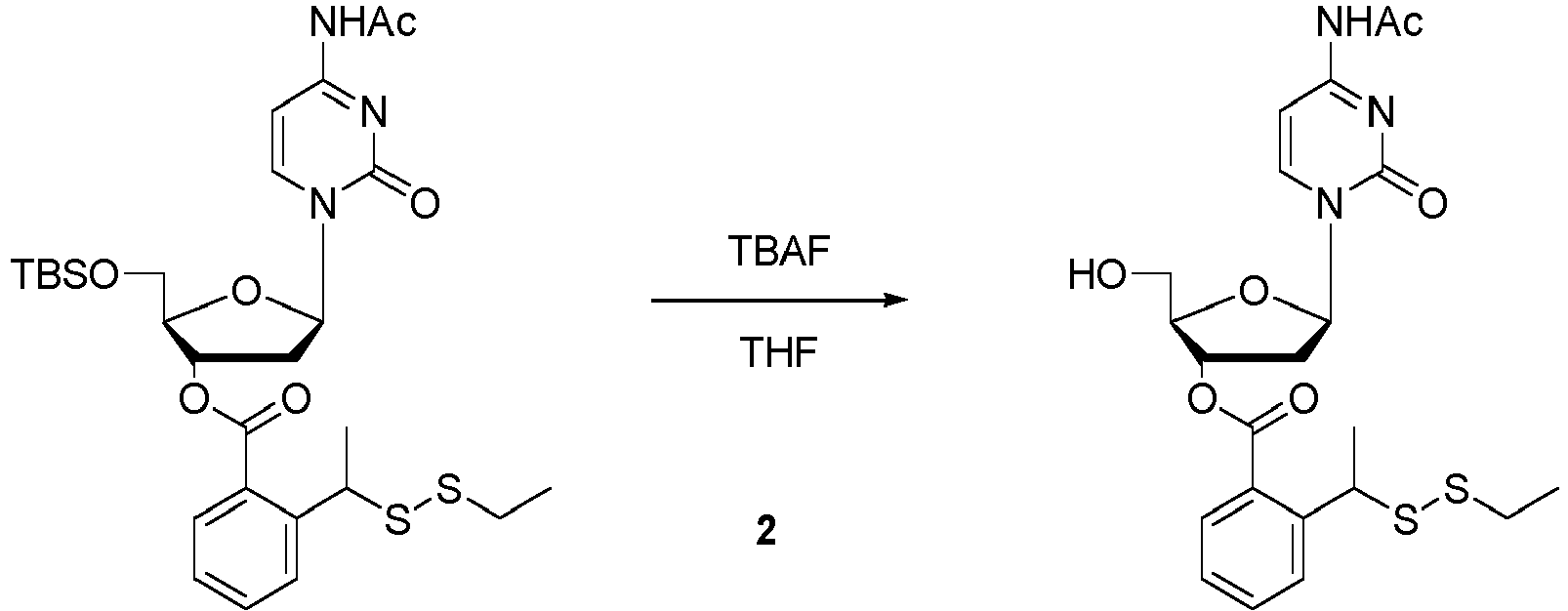
- To a dried 100mL round bottom flask equipped with a magnetic stirrer and a rubber stopper with argon balloon was added the product from Step 1 (938 mg, 1.54 mmol, 1 eq), followed by adding with syringe 20mL of anhydrous THF as solvent. The reaction mixture was stirred to facilitate dissolution, cooled in ice bath, followed by slowly adding with syringe 1mol/L solution of TBAF (2.0 mL, 2.0 mmol, 1.3 eq) dropwise . The flask was brough to room temperature and stirred continuously for about 2h. The reaction was monitored with TLC at half an hour interval until the dot of starting material on TLC plate disappeared. The reaction mixture was concentrated with a rotary evaporator, followed by product separation by silica gel column chromatography (Hexane/EA=10/1-1/1 to methylene chloride/anhydrous methanol=100/1~10/1, silica gel column diameter 3.5cm, filler height 10cm). The yield of this step was 80%.
1H NMR (400 MHz, CDCl3) δ 9.50 (s, 1H), 8.39 (s, 1H), 7.85 (t, J = 7.2 Hz, 1H), 7.61 - 7.51 (m, 3H), 7.34 (t, J = 7.3 Hz, 1H), 6.30 (s, 1H), 5.63 (d, J = 2.8 Hz, 1H), 5.27 - 5.19 (m, 1H), 4.40 (d, J = 15.5 Hz, 1H), 4.15 - 3.94 (m, 2H), 3.40 (s, 1H), 2.83 (td, J = 14.3, 4.8 Hz, 1H), 2.60 - 2.45 (m, 1H), 2.27 - 2.14 (m, 2H), 1.69 (d, J = 6.8 Hz, 3H), 1.10 (q, J = 6.8 Hz, 3H). -

- To a dried 100mL two-necked 1# flask equipped with a magnetic stirrer and a three-way valve with argon balloon were added product from Step 2 (421 mg, 0.85 mmol, 1 eq) and proton sponge (363.5 mg, 1.7 mmol, 2 eq). To a dried 100mL two-necked 2# flask equipped with a magnetic stirrer and a three-way valve with argon balloon was added tributyl ammonium pyrophosphate (932.5 mg, 1.7 mmol, 2 eq). The two-necked 1# flask was filled with argon, followed by adding 15mL of trimethyl phosphate with stirring to facilitate dissolution. The reaction was brought to 0 °C, followed by slowly adding with syringe phosphorus oxychloride (120 µL, 1.3 mmol, 1.5 eq) and stirring continuously at 0°C for 1.5h. The two-necked 2# flask was filled with argon, followed by adding with syringe 5mL of anhydrous DMF and DIPEA (740 µL, 4.25 mmol, 5 eq) with stirring at 0°C to facilitate dissolution. The mixture was maintained at 0°C and continuously stirred for 3h, followed by adding 20 mL of solution of TEAB (0.1mol/L) to quench the reaction. The reaction mixture was continuously stirred for 0.5h. The reaction mixture was diluted with 50mL of deionized water, and then separated by DEAE resin column prepared-in-advance and eluted with gradient elution (H2O:TEAB(1mol/L)= 10/1~0/1, DEAE column diameter 4.5cm, filler height 8cm). The fractions containing the triphosphated product were collected and concentrated with a rotary evaporator under vacuum, followed by preparative liquid chromatography separation with gradient elution (CH3CN:TEAB(0.1mol/L)=2/98~98/2). The high-purity product solution recovered from the separation was concentrated with a rotary evaporator under vacuum, transferred to a plastic centrifuge tube, and then freeze-dried with a lyophilizer into a powder solid. MW = 733. The yield of this step was 45%.
-

- To a dried 100mL round bottom flask equipped with a magnetic stirrer were added the triphosphated product from Step 3(537 mg, 0.73 mmol, 1 eq) and 5ml of deionized water. The mixture was stirred at room temperature to complete dissolution, followed by adding 25% aqueous ammonia (2.5 g, 36.5 mmol, 50 eq) and stirring at room temperature for about 2h. Ammonia in the solution was removed by a rotary evaporator under vacuum and the residue was diluted with deionized water to about 10mL. After separation with preparative liquid chromatography with gradient elution (CH3CN:TEAB(0.1mol/L)=2/98~98/2). The high-purity product solution recovered from the separation was concentrated with a rotary evaporator under vacuum, transferred to a plastic centrifuge tube, and then freeze-dried with a lyophilizer into a powder solid. MW=691. The yield of this step was 90%.
1H NMR (400 MHz, DMSO-d6 ) δ 7.97 (dd, J = 7.4, 6.2 Hz, 1H), 7.85 (d, J = 8.7 Hz, 1H), 7.66 - 7.58 (m, 2H), 7.45 - 7.41 (m, 1H), 7.31 (s, 1H), 7.10 (s, 1H), 6.39 - 6.29 (m, 1H), 5.81 (d, J = 7.4 Hz, 1H), 5.53 (d, J = 5.0 Hz, 1H), 5.17 - 5.10 (m, 1H), 4.31 (d, J= 19.8 Hz, 1H), 4.13 - 4.01 (m, 2H), 2.46 - 2.23 (m, 4H), 1.65 (d, J= 7.0 Hz, 3H), 1.09 - 1.03 (m, 3H). - The structure of the target compound is:

-

- To a dried 100mL round bottom flask equipped with a magnetic stirrer and a rubber stopper with argon balloon were added A-nucleoside (577 mg, 1.58 mmol, 1 eq) (available from Beijing Okeanos Tech. Co., Ltd., cat. No. OK-N-18101) and disulfaneyl protection group (605 mg, 1.58 mmol, 1 eq) (available from Beijing Okeanos Tech. Co., Ltd., cat. No. OK-H-21003) separately, followed by adding with syringe 20mL of anhydrous methylene chloride as solvent. The reaction mixture was stirred at room temperature to facilitate dissolution, followed by adding DCC (488mg, 2.37mmol, 1.5eq) and DMAP (20mg, 0.16mmol, 0.1eq) separately under nitrogen balloon for providing protection atmosphere, and allowed to react at room temperature for further 4h. The reaction was monitored with TLC at half an hour interval until the starting materials were substantially depleted. The reaction mixture was concentrated with a rotary evaporator, followed by product separation by silica gel column chromatography (Hexane/EA=10/1~1/2, silica gel column diameter 3.5cm, filler height 10cm). The yield of this step was 85%.
1H NMR (500 MHz, CDCl3) δ 8.34 (s, 1H), 8.24 (d, J = 11.2 Hz, 1H), 7.87 (ddd, J = 7.8, 4.4, 1.3 Hz, 1H), 7.60 (d, J = 7.9 Hz, 1H), 7.52 (t, J = 7.6 Hz, 1H), 7.32 (td, J = 7.7, 1.2 Hz, 1H), 6.58 (t, J = 7.1 Hz, 1H), 6.21 (s, 2H), 5.68 - 5.61 (m, 1H), 5.27 (p, J = 7.0 Hz, 1H), 4.45 - 4.36 (m, 1H), 4.04 - 3.95 (m, 2H), 2.83 - 2.73 (m, 2H), 2.31 - 2.18 (m, 2H), 1.69 (dd, J = 7.0, 0.6 Hz, 3H), 1.11 (td, J = 7.4, 3.3 Hz, 3H), 0.93 (s, 9H), 0.13 (t, J = 1.7 Hz, 6H). -

- To a dried 100mL round bottom flask equipped with a magnetic stirrer and a rubber stopper with argon balloon was added the product from Step 1 (907 mg, 1.54 mmol, 1 eq), followed by adding with syringe 20mL of anhydrous THF as solvent. The reaction mixture was stirred to facilitate dissolution, cooled in ice bath, followed by slowly adding with syringe 1mol/L solution of TBAF (2.0 mL, 2.0 mmol, 1.3 eq) dropwise. The flask was brough to room temperature and stirred continuously for about 2h. The reaction was monitored with TLC at half an hour interval until the dot of starting material on TLC plate disappeared. The reaction mixture was concentrated with a rotary evaporator, followed by product separation by silica gel column chromatography (Hexane/EA=10/1-1/1 to methylene chloride/anhydrous methanol=100/1~10/1, silica gel column diameter 3.5cm, filler height 10cm). The yield of this step was 80%.
1H NMR (500 MHz, CDCl3) δ 8.37 (s, 1H), 7.93 (s, 1H), 7.89 - 7.85 (m, 1H), 7.65 - 7.61 (m, 1H), 7.56 (td, J = 7.7, 1.3 Hz, 1H), 7.39 - 7.33 (m, 1H), 6.37 (dd, J = 9.3, 5.3 Hz, 1H), 6.02 (s, 2H), 5.83 (t, J = 5.5 Hz, 1H), 5.31 - 5.23 (m, 1H), 4.48 (d, J = 14.2 Hz, 1H), 4.09 - 3.97 (m, 2H), 3.33 - 3.28 (m, 1H), 2.63 (dd, J = 14.0, 4.9 Hz, 1H), 2.41 - 2.31 (m, 2H), 1.73 (d, J = 7.0 Hz, 3H), 1.17 (td, J = 7.4, 2.3 Hz, 3H). -

- To a dried 100mL two-necked 1# flask equipped with a magnetic stirrer and a three-way valve with argon balloon were added product from Step 2 (404 mg, 0.85 mmol, 1 eq) and proton sponge (363.5 mg, 1.7 mmol, 2 eq). To a dried 100mL two-necked 2# flask equipped with a magnetic stirrer and a three-way valve with argon balloon was added tributyl ammonium pyrophosphate (932.5 mg, 1.7 mmol, 2 eq). The two-necked 1# flask was filled with argon, followed by adding 15mL of trimethyl phosphate with stirring to facilitate dissolution. The reaction was brought to 0 °C, followed by slowly adding with syringe phosphorus oxychloride (120 µL, 1.3 mmol, 1.5 eq) and stirring continuously at 0°C for 1.5h. The two-necked 2# flask was filled with argon, followed by adding with syringe 5mL of anhydrous DMF and DIPEA (740 µL, 4.25 mmol, 5 eq) with stirring at 0°C to facilitate dissolution. The mixture was maintained at 0°C and continuously stirred for 3h, followed by adding 20 mL of solution of TEAB (0.1mol/L) to quench the reaction. The reaction mixture was continuously stirred for 0.5h, diluted with 50mL of deionized water, and then separated by DEAE resin column prepared-in-advance and eluted with gradient elution (H2O:TEAB(1mol/L)= 10/1~0/1, DEAE column diameter 4.5cm, filler height 8cm). The fractions containing the triphosphated product were collected and concentrated with a rotary evaporator under vacuum, followed by preparative liquid chromatography separation with gradient elution (CH3CN:TEAB(0.1mol/L)=2/98~98/2). The high-purity product solution recovered from the separation was concentrated with a rotary evaporator under vacuum, transferred to a plastic centrifuge tube, and then freeze-dried with a lyophilizer into a powder solid. MW = 715. The yield of this step was 40%.
1H NMR (400 MHz, DMSO-d6 ) δ 8.60 (s, 1H), 8.15 (s, 1H), 8.05 (d, J = 6.5 Hz, 1H), 7.69 (t, J = 8.2 Hz, 1H), 7.60 - 7.54 (m, 2H), 7.27 (s, 2H), 6.25 - 6.18 (m, 1H), 5.70 (t, J = 5.0 Hz, 1H), 5.22 - 5.10 (m, 1H), 4.40 - 4.27 (m, 1H), 4.21 (dd, J = 11.0, 5.0 Hz, 1H), 4.01 (dd, J = 7.0, 3.7 Hz, 1H), 2.59 - 2.52 (m, 1H), 2.48 - 2.30 (m, 3H), 1.65 (d, J = 7.0 Hz, 3H), 1.07 (t, J = 5.1 Hz, 3H). -

- The product was synthesized similarly to Example 4 step 1, wherein 2-(1-azidoethyl)benzoic acid was replaced by 2-(1-azidoethyl) nicotinic acid (available from Beijing Okeanos Tech. Co., Ltd., cat. No. : OK-H-20002), 85% yield, MW = 539.
1H NMR (400 MHz, DMSO-d6 ) δ 8.86 (dd, J = 4.7, 1.7 Hz, 1H), 8.38 (dt, J = 7.9, 1.7 Hz, 1H), 8.33 (s, 1H), 8.16 (d, J = 0.9 Hz, 1H), 7.58 (dd, J = 7.9, 4.7 Hz, 1H), 7.32 (s, 2H), 6.47 (ddd, J = 8.5, 6.1, 2.9 Hz, 1H), 5.66 (dq, J = 6.2, 2.0 Hz, 1H), 5.41 - 5.24 (m, 1H), 4.44 - 4.23 (m, 1H), 4.05 - 3.77 (m, 2H), 3.13 (ddd, J = 14.3, 8.3, 6.3 Hz, 1H), 2.87 - 2.68 (m, 1H), 1.61 (d, J = 6.7 Hz, 3H), 0.86 (s, 9H), 0.04 (d, J = 3.9 Hz, 6H). -

- The product is synthesized similarly to Example 4 Step 2, wherein 2-(1-azidoethyl)benzoic acid was replaced by 2-(1-azidoethyl) nicotinic acid (available from Beijing Okeanos Tech. Co., Ltd., cat. No. : OK-H-20002), 75% yield, MW = 425.
1H NMR (500 MHz, DMSO-d6 ) δ 8.86 (dd, J = 4.8, 1.8 Hz, 1H), 8.45 - 8.31 (m, 2H), 8.16 (d, J = 1.1 Hz, 1H), 7.59 (dd, J = 7.9, 4.7 Hz, 1H), 7.38 (s, 2H), 6.47 (ddd, J = 9.4, 5.8, 4.2 Hz, 1H), 5.71 - 5.62 (m, 1H), 5.57 (ddd, J = 7.5, 4.8, 2.8 Hz, 1H), 5.33 (p, J = 6.7 Hz, 1H), 4.34 (ddt, J = 7.6, 4.1, 2.2 Hz, 1H), 3.83 - 3.60 (m, 2H), 3.09 (ddd, J = 14.5, 9.0, 5.9 Hz, 1H), 2.85 - 2.65 (m, 1H), 1.61 (dd, J = 6.7, 2.7 Hz, 3H). -

- The product was synthesized similarly to Example 4 step 3, wherein 2-(1-azidoethyl)benzoic acid was replaced by 2-(1-azidoethyl) nicotinic acid (available from Beijing Okeanos Tech. Co., Ltd., cat. No. : OK-H-20002), 40% yield, MW = 665.
1H NMR (400 MHz, DMSO-d6 ) δ 8.85 (d, J = 3.6 Hz, 1H), 8.66 (d, J = 3.4 Hz, 1H), 8.40 (d, J = 7.3 Hz, 1H), 8.15 (s, 1H), 7.58 (dd, J = 7.9, 4.8 Hz, 1H), 7.31 (s, 2H), 6.54 - 6.45 (m, 1H), 5.77 (d, J = 5.1 Hz, 1H), 5.37 - 5.28 (m, 1H), 4.44 (d, J = 4.5 Hz, 1H), 4.14 - 4.02 (m, 2H), 3.23 - 3.12 (m, 1H), 2.76 - 2.66 (m, 1H), 1.61 (dd, J = 6.7, 2.1 Hz, 3H). -

- The product was synthesized similarly to Example 2 Steps 1-3, wherein 2-(1-azidoethyl)benzoic acid was replaced by 2-(1-azidoethyl) nicotinic acid (available from Beijing Okeanos Tech. Co., Ltd., cat. No. : OK-H-20002)), yield for the last step was 40%, MW = 681.
1H NMR (400 MHz, DMSO-d6 ) δ 10.77 (s, 1H), 8.84 (d, J = 4.6 Hz, 1H), 8.39 - 8.29 (m, 1H), 8.02 (d, J = 5.5 Hz, 1H), 7.57 (dd, J = 7.8, 4.8 Hz, 1H), 6.71 (s, 2H), 6.28 - 6.16 (m, 1H), 5.73 (d, J = 4.9 Hz, 1H), 5.35 - 5.28 (m, 1H), 4.36 (dd, J = 10.4, 6.0 Hz, 1H), 4.24 - 4.15 (m, 1H), 4.01 - 3.97 (m, 1H), 3.25 - 3.13 (m, 1H), 2.61 - 2.55 (m, 1H), 1.60 (dd, J = 6.6, 2.6 Hz, 3H). -

- The product was synthesized similarly to Example 3 Steps 1-4, wherein 2-(1-azidoethyl)benzoic acid was replaced by 2-(1-azidoethyl) nicotinic acid (available from Beijing Okeanos Tech. Co., Ltd., cat. No. : OK-H-20002), yield for the last two steps was 30%, MW = 641.
1H NMR (400 MHz, DMSO-d6 ) δ 8.83 (d, J = 3.5 Hz, 1H), 8.33 (d, J = 7.8 Hz, 1H), 7.95 (dd, J = 7.4, 2.9 Hz, 1H), 7.55 (dd, J = 7.9, 4.7 Hz, 1H), 7.30 (s, 1H), 7.08 (s, 1H), 6.37 - 6.34 (m, 1H), 5.82 (d, J = 7.4 Hz, 1H), 5.54 (d, J= 4.9 Hz, 1H), 5.39 - 5.20 (m, 1H), 4.39 - 4.32 (m, 1H), 4.14 - 3.98 (m, 2H), 2.47 - 2.41 (m, 1H), 2.36 - 2.24 (m, 1H), 1.59 (dd, J = 6.7, 1.7 Hz, 3H). -

- The product was synthesized similarly to Example 1 Steps 1-3, wherein 2-(1-azidoethyl)benzoic acid was replaced by 2-(1-azidoethyl) nicotinic acid (available from Beijing Okeanos Tech. Co., Ltd., cat. No. : OK-H-20002), yield for the last step was 45%, MW = 656.
1H NMR (400 MHz, DMSO-d 6) δ 11.31 (s, 1H), 8.84 (dd, J = 4.6, 1.1 Hz, 1H), 8.34 (d, J = 7.9 Hz, 1H), 7.98 (s, 1H), 7.56 (dd, J = 7.9, 4.8 Hz, 1H), 6.39 - 6.32 (m, 1H), 5.63 (d, J = 5.2 Hz, 1H), 5.33 - 5.26 (m, 1H), 4.35 (s, 1H), 4.15 - 4.04 (m, 2H), 2.55 - 2.52 (m, 1H), 2.46 - 2.38 (m, 1H), 1.84 (s, 3H), 1.58 (dd, J = 6.6, 1.3 Hz, 3H). -

- The product was synthesized similarly to Example 1 step 1, wherein 2-(1-azidoethyl)benzoic acid was replaced by 2-(azidomethyl)-4-nitrobenzoic acid (available from Beijing Okeanos Tech. Co., Ltd., cat. No. : OK-H-21004), the yield of this step was 85%, MW = 560.
1H NMR (500 MHz, CDCl3) δ 8.43 (d, J = 2.3 Hz, 1H), 8.34 - 8.23 (m, 2H), 8.20 (d, J = 8.6 Hz, 1H), 7.57 (d, J = 1.2 Hz, 1H), 6.45 (dd, J = 9.3, 5.2 Hz, 1H), 5.54 (d, J = 5.9 Hz, 1H), 5.04 - 4.84 (m, 2H), 4.28 (q, J = 1.8 Hz, 1H), 4.12 - 3.92 (m, 2H), 3.48 (s, 1H), 2.60 (dd, J = 14.0, 5.3 Hz, 1H), 2.28 (ddd, J = 14.0, 9.3, 6.1 Hz, 2H), 1.95 (d, J = 1.2 Hz, 3H), 0.97 (s, 9H), 0.18 (d, J = 1.1 Hz, 6H). -

- The product was synthesized similarly to Example 1 Steps 2-3, wherein 2-(1-azidoethyl)benzoic acid was replaced by 2-(azidomethyl)-4-nitrobenzoic acid (available from Beijing Okeanos Tech. Co., Ltd., cat. No. : OK-H-21004), yield for the last step was 40%, MW = 686.
1H NMR (400 MHz, DMSO-d6 ) δ 11.30 (s, 1H), 8.41 (d, J = 2.0 Hz, 1H), 8.33 (dd, J = 8.6, 2.2 Hz, 1H), 8.23 (d, J = 8.6 Hz, 1H), 7.95 (s, 1H), 6.36 (dd, J = 9.0, 6.0 Hz, 1H), 5.65 (d, J = 5.2 Hz, 1H), 4.97 (s, 2H), 4.37 (s, 1H), 4.15 - 4.04 (m, 2H), 2.56 - 2.52 (m, 1H), 2.44 (dd, J = 14.0, 5.9 Hz, 1H), 1.84 (s, 3H). -

- The product was synthesized similarly to Example 2 Steps 1-3, wherein 2-(1-azidoethyl)benzoic acid was replaced by 2-(azidomethyl)-4-nitrobenzoic acid (available from Beijing Okeanos Tech. Co., Ltd., cat. No. : OK-H-21004), yield for the last step was 40%, MW = 711.
1H NMR (400 MHz, DMSO-d6 ) δ 11.00 (s, 1H), 8.42 (d, J = 2.3 Hz, 1H), 8.34 (dd, J = 8.6, 2.3 Hz, 1H), 8.25 (d, J = 8.6 Hz, 1H), 8.03 (s, 1H), 6.82 (s, 2H), 6.23 (dd, J = 9.2, 5.9 Hz, 1H), 5.76 (d, J = 4.2 Hz, 1H), 4.99 (s, 2H), 4.39 (t, J = 4.8 Hz, 1H), 4.25 - 4.00 (m, 2H), 3.31 - 3.14 (m, 1H), 2.59 (dd, J = 14.0, 6.4 Hz, 1H). -

- The product was synthesized similarly to Example 3 Steps 1-4, wherein 2-(1-azidoethyl)benzoic acid was replaced by 2-(azidomethyl)-4-nitrobenzoic acid (available from Beijing Okeanos Tech. Co., Ltd., cat. No. : OK-H-21004), yield for the last two steps was 30%, MW = 671.
1H NMR (400 MHz, DMSO-d6 ) δ 8.41 (d, J = 2.1 Hz, 1H), 8.33 (dd, J = 8.5, 2.3 Hz, 1H), 8.23 (d, J = 8.6 Hz, 1H), 7.95 (d, J = 7.5 Hz, 1H), 7.28 (s, 1H), 7.07 (s, 1H), 6.37 (dd, J = 9.1, 5.6 Hz, 1H), 5.81 (d, J = 7.5 Hz, 1H), 5.56 (d, J = 5.4 Hz, 1H), 4.98 (s, 2H), 4.37 (s, 1H), 4.12 - 3.99 (m, 2H), 2.47 - 2.40 (m, 1H), 2.36 - 2.26 (m, 1H). -

- The product was synthesized similarly to Example 4 Steps 1-3, wherein 2-(1-azidoethyl)benzoic acid was replaced by 2-(azidomethyl)-4-nitrobenzoic acid (available from Beijing Okeanos Tech. Co., Ltd., cat. No. : OK-H-21004), yield for the last step was 40%, MW = 695.
1H NMR (400 MHz, DMSO-d6 ) δ 8.58 (s, 1H), 8.42 (d, J = 1.9 Hz, 1H), 8.34 (dd, J = 8.5, 2.2 Hz, 1H), 8.29 (d, J = 8.6 Hz, 1H), 8.15 (s, 1H), 7.29 (s, 2H), 6.51 (dd, J = 9.0, 6.1 Hz, 1H), 5.77 (d, J = 5.3 Hz, 1H), 5.02 (s, 2H), 4.47 (s, 1H), 4.14 - 4.00 (m, 2H), 3.17 - 3.08 (m, 1H), 2.75 - 2.70 (m, 1H). -
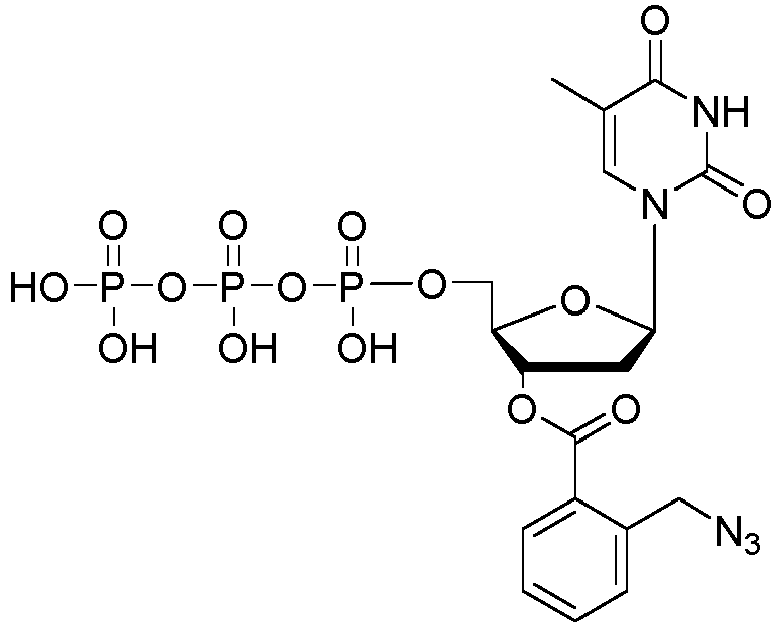
- The product was synthesized similarly to Example 1 Steps 1-3, wherein 2-(1-azidoethyl)benzoic acid was replaced by 2-(azidomethyl)benzoic acid (available from Beijing Okeanos Tech. Co., Ltd., cat. No. : OK-H-20003), yield for the last step was 45%, MW = 641.
1H NMR (400 MHz, DMSO-d6 ) δ 11.30 (s, 1H), 7.99 (dd, J = 9.6, 8.7 Hz, 2H), 7.68 (td, J = 7.6, 1.1 Hz, 1H), 7.61 - 7.50 (m, 2H), 6.35 (dd, J = 9.3, 5.7 Hz, 1H), 5.60 (d, J = 5.3 Hz, 1H), 4.80 (s, 2H), 4.31 (s, 1H), 4.18 - 4.00 (m, 2H), 2.57 - 2.50 (m, 1H), 2.39 (dd, J = 13.9, 5.7 Hz, 1H), 1.84 (s, 3H). -

- The product was synthesized similarly to Example 2 Steps 1-3, wherein 2-(1-azidoethyl)benzoic acid was replaced by 2-(azidomethyl)benzoic acid (available from Beijing Okeanos Tech. Co., Ltd., cat. No. : OK-H-20003), yield for the last step was 40%, MW = 666.
1H NMR (400 MHz, DMSO-d 6) δ 10.70 (s, 1H), 8.03 (d, J = 9.8 Hz, 2H), 7.69 (td, J = 7.6, 1.2 Hz, 1H), 7.60 - 7.51 (m, 2H), 6.67 (s, 2H), 6.23 (dd, J = 9.4, 5.8 Hz, 1H), 5.68 (d, J = 4.9 Hz, 1H), 4.82 (s, 2H), 4.40 - 4.30 (m, 1H), 4.21 - 4.16 (m, 1H), 4.05 - 3.96 (m, 1H), 3.22 - 3.10 (m, 1H), 2.60 - 2.51 (m, 1H). -

- The product was synthesized similarly to Example 3 Steps 1-4, wherein 2-(1-azidoethyl)benzoic acid was replaced by 2-(azidomethyl)benzoic acid (available from Beijing Okeanos Tech. Co., Ltd., cat. No. : OK-H-20003), yield for the last two steps was 30%, MW = 626.
1H NMR (400 MHz, DMSO-d6 ) δ 8.00 (dd, J = 7.8, 1.1 Hz, 1H), 7.95 (d, J = 7.5 Hz, 1H), 7.68 (td, J = 7.6, 1.4 Hz, 1H), 7.61 - 7.50 (m, 2H), 7.29 (s, 1H), 7.07 (s, 1H), 6.37 (dd, J = 9.2, 5.5 Hz, 1H), 5.82 (d, J = 7.5 Hz, 1H), 5.51 (d, J = 5.4 Hz, 1H), 4.81 (s, 2H), 4.32 (s, 1H), 4.13 - 3.97 (m, 2H), 2.41 (dd, J = 13.8, 5.6 Hz, 1H), 2.30 (ddd, J = 14.4, 7.5, 4.6 Hz, 1H). -

- The product was synthesized similarly to Example 4 Steps 1-3, wherein 2-(1-azidoethyl)benzoic acid was replaced by 2-(azidomethyl)benzoic acid (available from Beijing Okeanos Tech. Co., Ltd., cat. No. : OK-H-20003), yield for the last step was 40%, MW = 650.
1H NMR (400 MHz, DMSO-d6 ) δ 8.60 (s, 1H), 8.15 (s, 1H), 8.05 (d, J = 6.5 Hz, 1H), 7.69 (t, J = 8.2 Hz, 1H), 7.60 - 7.54 (m, 2H), 7.27 (s, 2H), 6.49 (dd, J = 8.8, 5.8 Hz, 1H), 5.71 (d, J = 5.6 Hz, 1H), 4.83 (s, 2H), 4.42 - 4.34 (m, 1H), 4.02 - 3.80 (m, 2H), 2.72 - 2.63 (m, 1H), 2.35 - 2.30 (m, 1H). -

- The product was synthesized similarly to Example 1 Steps 1-3, wherein 2-(1-azidoethyl)benzoic acid was replaced by 2-(1-azidoethyl)-4-methoxy benzoic acid (available from Beijing Okeanos Tech. Co., Ltd., cat. No. : OK-H-21005), yield for the last step was 45%, MW = 685.
1H NMR (400 MHz, DMSO-d 6) δ 11.30 (s, 1H), 8.00 - 7.90 (m, 2H), 7.11 (d, J = 2.6 Hz, 1H), 7.04 (dd, J = 8.8, 2.6 Hz, 1H), 6.39 - 6.29 (m, 1H), 5.74 - 5.68 (m, 1H), 5.55 (d, J = 5.1 Hz, 1H), 4.30 (s, 1H), 4.16 - 3.98 (m, 2H), 3.86 (s, 3H), 2.48 - 2.30 (m, 2H), 1.84 (s, 3H), 1.48 (dd, J = 6.7, 1.4 Hz, 3H). -

- The product was synthesized similarly to Example 3 Steps 1-3, wherein 2-(1-azidoethyl)benzoic acid was replaced by 2-(1-azidoethyl)-4-methoxy benzoic acid (available from Beijing Okeanos Tech. Co., Ltd., cat. No. : OK-H-21005), yield for the last two steps was 30%, MW = 670.
1H NMR (400 MHz, DMSO-d6 ) δ 8.00 - 7.89 (m, 2H), 7.32 (s, 1H), 7.11 (d, J = 2.5 Hz, 2H), 7.05 (dd, J = 8.8, 2.6 Hz, 1H), 6.41 - 6.31 (m, 1H), 5.82 (d, J = 7.5 Hz, 1H), 5.74 - 5.68 (m, 1H), 5.49 (d, J = 4.5 Hz, 1H), 4.30 (s, 1H), 4.10 - 4.00 (m, 2H), 3.86 (s, 3H), 2.42 - 2.36 (m, 1H), 2.33 - 2.23 (m, 1H), 1.48 (dd, J = 6.6, 1.5 Hz, 3H). -

- The product was synthesized similarly to Example 4 Steps 1-3, wherein 2-(1-azidoethyl)benzoic acid was replaced by 2-(1-azidoethyl)-4-methoxy benzoic acid (available from Beijing Okeanos Tech. Co., Ltd., cat. No. : OK-H-21005), the yield for the last step was 40%, MW = 694.
1H NMR (400 MHz, DMSO-d6 ) δ 8.61 (d, J = 3.4 Hz, 1H), 8.16 (d, J = 1.4 Hz, 1H), 8.02 (dd, J = 8.7, 1.7 Hz, 1H), 7.30 (s, 2H), 7.12 (d, J = 2.5 Hz, 1H), 7.07 (dd, J = 8.8, 2.6 Hz, 1H), 6.51 - 6.46 (m, 1H), 5.78 - 5.72 (m, 1H), 5.68 (d, J = 5.2 Hz, 1H), 4.43 - 4.36 (m, 1H), 4.14 - 4.00 (m, 2H), 3.87 (s, 3H), 3.18 - 3.08 (m, 1H), 2.71 - 2.62 (m, 1H), 1.50 (dd, J = 6.6, 2.0 Hz, 3H). -

- The product was synthesized similarly to Example 1 steps 1-2, wherein 2-(1-azidoethyl)benzoic acid was replaced by 2-(2-azidopropan-2-yl) nicotinic acid (available from Beijing Okeanos Tech. Co., Ltd., cat. No. : OK-H-20004), yield for the last step was 90%, MW = 430.
1H NMR (400 MHz, CDCl3) δ 9.12 (s, 1H), 8.31 (dd, J = 4.8, 1.7 Hz, 1H), 7.39 (dd, J = 7.7, 1.6 Hz, 1H), 6.96 (dd, J = 7.3, 5.2 Hz, 1H), 5.97 (t, J = 7.2 Hz, 1H), 5.33 (dd, J = 5.1, 2.7 Hz, 1H), 4.02 (d, J = 2.3 Hz, 1H), 3.70 (d, J = 2.4 Hz, 2H), 2.72 (s, 1H), 2.25 (dd, J= 10.7, 5.1 Hz, 2H), 1.60 (s, 3H), 1.45 (s, 6H). -

- The product was synthesized similarly to Example 1 step 3, wherein 2-(1-azidoethyl)benzoic acid was replaced by 2-(2-azidopropan-2-yl) nicotinic acid (available from Beijing Okeanos Tech. Co., Ltd., cat. No. : OK-H-20004), the yield of this step was 35%, MW = 670.
1H NMR (400 MHz, DMSO-d 6) δ 11.30 (s, 1H), 8.67 (dd, J = 4.7, 1.4 Hz, 1H), 8.02 (dd, J = 7.7, 1.4 Hz, 1H), 7.96 (s, 1H), 7.47 (dd, J = 7.7, 4.8 Hz, 1H), 6.29 (dd, J = 9.2, 5.7 Hz, 1H), 5.61 (d, J = 5.3 Hz, 1H), 4.31 (s, 1H), 4.19 - 4.03 (m, 2H), 2.56 - 2.52 (m, 1H), 2.36 (dd, J = 13.9, 5.6 Hz, 1H), 1.84 (s, 3H), 1.70 (d, J = 3.8 Hz, 6H). -

- The product was synthesized similarly to Example 1 steps 1-2, wherein 2-(1-azidoethyl)benzoic acid was replaced by 2-(2-(azidomethyl)phenyl)acetic acid (available from Beijing Okeanos Tech. Co., Ltd., cat. No. : OK-H-20005), yield for the last step was 90%, MW = 415.
1H NMR (500 MHz, CDCl3) δ 8.08 (s, 1H), 7.46 (d, J = 1.1 Hz, 1H), 7.39 - 7.32 (m, 3H), 7.30 (d, J = 6.8 Hz, 1H), 6.20 (dd, J = 8.5, 5.9 Hz, 1H), 5.37 - 5.35 (m, 1H), 4.40 (s, 2H), 4.08 (q, J = 2.4 Hz, 1H), 3.90 (qd, J = 11.8, 2.6 Hz, 2H), 3.76 (s, 2H), 2.48 - 2.33 (m, 2H), 1.92 (d, J = 1.0 Hz, 3H). -

- The product was synthesized similarly to Example 1 step 3, wherein 2-(1-azidoethyl)benzoic acid was replaced by 2-(2-(azidomethyl)phenyl)acetic acid (available from Beijing Okeanos Tech. Co., Ltd., cat. No. : OK-H-20005), the yield of this step was 40%, MW = 655.
1H NMR (400 MHz, DMSO-d 6) δ 11.33 (s, 1H), 7.91 (s, 1H), 7.43 - 7.28 (m, 4H), 6.26 (dd, J = 9.4, 5.6 Hz, 1H), 5.34 (d, J = 5.4 Hz, 1H), 4.50 (s, 2H), 4.09 (s, 1H), 4.05 - 3.95 (m, 2H), 3.84 (s, 2H), 2.44 - 2.31 (m, 1H), 2.18 (dd, J = 13.9, 5.5 Hz, 1H), 1.82 (s, 3H). -

- The product was synthesized similarly to Example 1 Steps 1-3, wherein 2-(1-azidoethyl)benzoic acid was replaced by 2-(2-(1-azidoethyl)phenyl)acetic acid (available from Beijing Okeanos Tech. Co., Ltd., cat. No. : OK-H-20006), yield for the last step was 40%, MW = 669.
1H NMR (400 MHz, DMSO-d 6) δ 11.29 (s, 1H), 7.87 (s, 1H), 7.44 (d, J = 7.6 Hz, 1H), 7.35 (dt, J = 7.9, 4.2 Hz, 1H), 7.30 (d, J = 4.0 Hz, 2H), 6.26 (dd, J = 9.5, 5.6 Hz, 1H), 5.33 (d, J = 5.4 Hz, 1H), 5.05 (q, J = 6.7 Hz, 1H), 4.10 (s, 1H), 4.02 - 3.94 (m, 2H), 3.90 (d, J = 2 Hz, 2H), 2.42 - 2.33 (m, 1H), 2.21-2.12 (m, 1H), 1.81 (s, 3H), 1.45 (dd, J = 6.7, 1.3 Hz, 3H). -

- The product was synthesized similarly to Example 1 steps 1-2, wherein 2-(1-azidoethyl)benzoic acid was replaced by 2-(2-azidoethyl)benzoic acid (available from Beijing Okeanos Tech. Co., Ltd., cat. No. : OK-H-21006), yield for the last step was 90%, MW = 415.
1H NMR (500 MHz, CDCl3) δ 8.40 (s, 1H), 7.98 (d, J = 7.8 Hz, 1H), 7.57 - 7.49 (m, 2H), 7.39 - 7.30 (m, 2H), 6.36 - 6.29 (m, 1H), 5.64 - 5.56 (m, 1H), 4.26 (d, J= 2.4 Hz, 1H), 4.02 (d, J= 2.5 Hz, 2H), 3.54 (t, J= 7.0 Hz, 2H), 3.27 (t, J= 7.1 Hz, 2H), 2.60 - 2.50 (m, 2H), 1.95 (s, 3H). -

- The product was synthesized similarly to Example 1 step 3, wherein 2-(1-azidoethyl)benzoic acid was replaced by 2-(2-azidoethyl)benzoic acid (available from Beijing Okeanos Tech. Co., Ltd., cat. No. : OK-H-21006), the yield of this step was 40%, MW = 655.
1H NMR (400 MHz, DMSO-d 6) δ 11.28 (s, 1H), 7.98 - 7.85 (m, 2H), 7.57 (t, J= 7.4 Hz, 1H), 7.42 (t, J = 7.7 Hz, 2H), 6.34 (dd, J = 9.3, 5.7 Hz, 1H), 5.57 (d, J = 5.3 Hz, 1H), 4.30 (s, 1H), 4.08 - 4.02 (m, 2H), 3.57 (t, J = 6.9 Hz, 2H), 3.21 (t, J = 6.9 Hz, 2H), 2.55 - 2.52 (m, 1H), 2.43 - 2.27 (m, 1H), 1.84 (s, 3H). -

- The product was synthesized similarly to Example 2 steps 1-2, wherein 2-(1-azidoethyl)benzoic acid was replaced by 2-(azidomethyl) nicotinic acid (available from Beijing Okeanos Tech. Co., Ltd., cat. No. : OK-H-21007), yield for the last step was 90%, MW = 427.
1H NMR (400 MHz, CDCl3) δ 8.52 (s, 2H), δ = 8.20 (d, 1H), δ = 7.90 (d, 1H), δ = 7.58 (s, 1H), δ = 7.35 (dd, 1H), δ = 6.26 (t, 1H), δ = 5.59 (dq, 1H), δ = 5.11 (s, 2H), δ = 4.61 (dt, 1H), δ = 3.90 (m, 2H), δ = 2.38 (m, 2H). -

- The product was synthesized similarly to Example 2 step 3, wherein 2-(1-azidoethyl)benzoic acid was replaced by 2-(azidomethyl) nicotinic acid (available from Beijing Okeanos Tech. Co., Ltd., cat. No. : OK-H-21007), the yield of this step was 30%, MW = 667.
1H NMR (400 MHz, DMSO-d 6) δ 10.76 (s, 1H), 8.83 (dd, J = 4.8, 1.5 Hz, 1H), 8.40 (dd, J = 7.9, 1.7 Hz, 1H), 8.00 (d, J = 6.6 Hz, 1H), 7.59 (dd, J = 7.9, 4.8 Hz, 1H), 6.73 (s, 2H), 6.23 (dd, J = 9.3, 5.8 Hz, 1H), 5.72 (d, J = 4.8 Hz, 1H), 4.85 (s, 2H), 4.36 (d, J = 4.9 Hz, 1H), 4.27 - 4.16 (m, 1H), 4.01 - 3.93 (m, 1H), 3.26 - 3.18 (d, J = 14.3 Hz, 1H), 2.56 (dd, J = 13.7, 5.3 Hz, 1H). -

- The product was synthesized similarly to Example 1 Steps 1-3, wherein 2-(1-azidoethyl)benzoic acid was replaced by 2-(azidomethyl) nicotinic acid (available from Beijing Okeanos Tech. Co., Ltd., cat. No. : OK-H-21007), yield for the last step was 40%, MW = 642.
1H NMR (400 MHz, DMSO-d 6) δ 11.29 (s, 1H), 8.81 (dd, J = 4.8, 1.7 Hz, 1H), 8.39 (dd, J= 7.9, 1.7 Hz, 1H), 7.89 (d, J= 4.2 Hz, 1H), 7.58 (dd, J= 7.9, 4.8 Hz, 1H), 6.35 (dd, J = 9.0, 6.0 Hz, 1H), 5.59 (d, J = 4.8 Hz, 1H), 4.83 (s, 2H), 4.35 (s, 1H), 4.14 - 3.97 (m, 2H), 2.46 - 2.36 (m, 2H), 1.83 (d, J= 2.7 Hz, 3H). -

- The product was synthesized similarly to Example 5 Steps 1-3, wherein 2-(1-(ethyldisulfaneyl)ethyl)benzoic acid was replaced by 2-(1-(methyldisulfaneyl)ethyl)benzoic acid (available from Beijing Okeanos Tech. Co., Ltd., cat. No. : OK-H-20007), yield for the last step was 30%, MW = 692.
1H NMR (400 MHz, D2O) δ 7.90 - 7.82 (m, 2H), 7.69 - 7.58 (m, 2H), 7.46 - 7.39 (m, 1H), 6.47 - 6.35 (m, 1H), 5.73 (s, 1H), 5.10 - 5.01 (m, 1H), 4.57 (dd, J = 13.6, 3.0 Hz, 1H), 4.41 - 4.24 (m, 2H), 2.65 - 2.52 (m, 2H), 1.98 (d, J= 15.2 Hz, 3H), 1.94 (s, 3H), 1.68 (d, J = 7.2 Hz, 3H). -

- The product was synthesized similarly to Example 6 Steps 1-3, wherein 2-(1-(ethyldisulfaneyl)ethyl)benzoic acid was replaced by 2-(1-(methyldisulfaneyl)ethyl)benzoic acid (available from Beijing Okeanos Tech. Co., Ltd., cat. No. : OK-H-20007), yield for the last step was 30%, MW = 717.
1H NMR (400 MHz, D2O) δ 8.14 (t, J = 3.1 Hz, 1H), 7.82 (dd, J= 8.1, 3.1 Hz, 1H), 7.55 (q, J = 3.2 Hz, 2H), 7.38 - 7.34 (m, 1H), 6.31 - 6.22 (m, 1H), 5.76 (d, J= 4.1 Hz, 1H), 5.10 - 5.00 (m, 1H), 4.65 - 4.55 (m, 1H), 4.36 - 4.21 (m, 2H), 3.02 - 2.94 (m, 1H), 2.71 - 2.61 (m, 1H), 1.94 (dd, J = 22.2, 3.2 Hz, 3H), 1.62 (dd, J = 7.2, 3.3 Hz, 3H). -

- The product was synthesized similarly to Example 7 Steps 1-4, wherein 2-(1-(ethyldisulfaneyl)ethyl)benzoic acid was replaced by 2-(1-(methyldisulfaneyl)ethyl)benzoic acid (available from Beijing Okeanos Tech. Co., Ltd., cat. No. : OK-H-20007), yield for the last two steps was 28%, MW = 677.
1H NMR (400 MHz, D2O) δ 8.08 - 8.00 (m, 1H), 7.91 - 7.84 (m, 1H), 7.72 - 7.59 (m, 2H), 7.49 - 7.40 (m, 1H), 6.48 - 6.40 (m, 1H), 6.19 (dd, J = 7.7, 2.3 Hz, 1H), 5.73 - 5.64 (m, 1H), 5.13 - 5.02 (m, 1H), 4.60 (d, J= 12.6 Hz, 1H), 4.36 - 4.27 (m, 2H), 2.71 - 2.64 (m, 1H), 2.55 - 2.44 (m, 1H), 2.00 (dd, J = 9.5, 2.2 Hz, 3H), 1.69 (dd, J = 7.2, 2.1 Hz, 3H). -

- The product was synthesized similarly to Example 8 Steps 1-3, wherein 2-(1-(ethyldisulfaneyl)ethyl)benzoic acid was replaced by 2-(1-(methyldisulfaneyl)ethyl)benzoic acid (available from Beijing Okeanos Tech. Co., Ltd., cat. No. : OK-H-20007), yield for the last step was 35%, MW = 701.
1H NMR (400 MHz, D2O) δ 8.53 (dd, J = 5.2, 1.8 Hz, 1H), 8.18 - 8.10 (m, 1H), 7.83 (d, J = 7.8 Hz, 1H), 7.55 - 7.51 (m, 2H), 7.38 - 7.34 (m, 1H), 6.49 - 6.40 (m, 1H), 5.81 - 5.73 (m, 1H), 5.07 - 5.00 (m, 1H), 4.67 - 4.57 (m, 1H), 4.39 - 4.18 (m, 2H), 3.06 - 2.95 (m, 1H), 2.75 (ddd, J = 21.2, 14.2, 5.6 Hz, 1H), 1.93 (dd, J = 25.1, 1.9 Hz, 3H), 1.60 (dd, J = 6.9, 4.0 Hz, 3H). -

- The product was synthesized similarly to Example 5 step 1, wherein 2-(1-(ethyldisulfaneyl)ethyl)benzoic acid was replaced by 2-(1-(isobutyldisulfaneyl)ethyl)benzoic acid (available from Beijing Okeanos Tech. Co., Ltd., cat. No. : OK-H-21008), the yield of this step was 79%, MW = 608.
1H NMR (400 MHz, CDCl3) δ 8.66 - 8.39 (m, 1H), 7.89 - 7.80 (m, 1H), 7.63 - 7.47 (m, 3H), 7.33 (td, J = 8.8, 4.5 Hz, 1H), 6.47 - 6.40 (m, 1H), 5.52 - 5.40 (m, 1H), 5.30 - 4.92 (m, 1H), 4.36 - 4.21 (m, 1H), 4.07 - 3.92 (m, 2H), 2.60 - 2.48 (m, 1H), 2.31 - 2.16 (m, 1H), 1.94 (s, 3H), 1.72 - 1.66 (m, 2H), 1.63 - 1.51 (m, 1H), 1.00 (d, J= 6.8 Hz, 2H), 0.98 - 0.93 (m, 9H), 0.87 - 0.81 (m, 4H), 0.19 - 0.13 (m, 6H). -

- The product was synthesized similarly to Example 5 Steps 2-3, wherein 2-(1-(ethyldisulfaneyl)ethyl)benzoic acid was replaced by 2-(1-(isobutyldisulfaneyl)ethyl)benzoic acid (available from Beijing Okeanos Tech. Co., Ltd., cat. No. : OK-H-21008), yield for the last step was 32 %, MW = 734.
1H NMR (400 MHz, DMSO-d 6) δ 11.31 (s, 1H), 7.96 (dd, J= 8.2, 0.9 Hz, 1H), 7.85 (d, J = 8.3 Hz, 1H), 7.62 (d, J = 3.9 Hz, 2H), 7.46 - 7.41 (m, 1H), 6.33 (td, J = 9.7, 5.6 Hz, 1H), 5.63 - 5.55 (m, 1H), 5.18 - 5.08 (m, 1H), 4.30 (d, J = 23.4 Hz, 1H), 4.18 - 4.02 (m, 2H), 2.57 - 2.51 (m, 1H), 2.43 - 2.29 (m, 1H), 2.12 - 1.93 (m, 2H), 1.84 (s, 3H), 1.70 - 1.56 (m, 4H), 0.85 - 0.71 (m, 6H). -

- The product was synthesized similarly to Example 6 Steps 1-3, wherein 2-(1-(ethyldisulfaneyl)ethyl)benzoic acid was replaced by 2-(1-(isobutyldisulfaneyl)ethyl)benzoic acid (available from Beijing Okeanos Tech. Co., Ltd., cat. No. : OK-H-21008), the yield for the last step was 40%, MW = 759.
1H NMR (400 MHz, DMSO-d 6) δ 10.73 (s, 1H), 8.03 (d, J = 6.9 Hz, 1H), 7.89 (d, J= 7.6 Hz, 1H), 7.63 (d, J = 2.8 Hz, 2H), 7.49 - 7.38 (m, 1H), 6.66 (s, 2H), 6.27 - 6.15 (m, 1H), 5.69 (dd, J = 8.2, 4.0 Hz, 1H), 5.16 (q, J= 6.9 Hz, 1H), 4.39 - 4.26 (m, 1H), 4.19 (dd, J = 10.6, 5.1 Hz, 1H), 4.01 (dd, J = 11.4, 5.9 Hz, 1H), 2.57 - 2.52 (m, 1H), 2.48 - 2.41 (m, 1H), 2.24 - 2.12 (m, 2H), 1.70 (dd, J = 13.2, 6.6 Hz, 1H), 1.65 (d, J = 6.8 Hz, 3H), 0.85 - 0.74 (m, 6H). -

- The product was synthesized similarly to Example 7 Steps 1-4, wherein 2-(1-(ethyldisulfaneyl)ethyl)benzoic acid was replaced by 2-(1-(isobutyldisulfaneyl)ethyl)benzoic acid (available from Beijing Okeanos Tech. Co., Ltd., cat. No. : OK-H-21008 (available from Beijing Okeanos Tech. Co., Ltd., cat. No. : OK-H-21008), the yield for the last two steps was 30%, MW = 719.
1H NMR (400 MHz, DMSO-d 6) δ 7.98 (dd, J = 9.4, 7.6 Hz, 1H), 7.85 (d, J = 7.8 Hz, 1H), 7.62 (d, J = 4.1 Hz, 2H), 7.46 - 7.42 (m, 1H), 7.33 (s, 1H), 7.12 (s, 1H), 6.40 - 6.30 (m, 1H), 5.82 (dd, J = 7.5, 1.0 Hz, 1H), 5.53 (d, J = 4.4 Hz, 1H), 5.17 - 5.11 (m, 1H), 4.30 (d, J = 21.7 Hz, 1H), 4.16 - 4.01 (m, 1H), 2.46 - 2.27 (m, 2H), 2.15 - 1.98 (m, 2H), 1.71 - 1.58 (m, 4H), 0.80 (d, J = 2.5 Hz, 3H), 0.78 (d, J = 2.6 Hz, 3H). -

- The product was synthesized similarly to Example 8 Steps 1-3, wherein 2-(1-(ethyldisulfaneyl)ethyl)benzoic acid was replaced by 2-(1-(isobutyldisulfaneyl)ethyl)benzoic acid (available from Beijing Okeanos Tech. Co., Ltd., cat. No. : OK-H-21008 (available from Beijing Okeanos Tech. Co., Ltd., cat. No. : OK-H-21008), the yield for the last step was 40%, MW = 743.
1H NMR (400 MHz, DMSO-d 6) δ 8.67 (d, J = 8.3 Hz, 1H), 8.14 (d, J= 5.9 Hz, 1H), 7.94 - 7.87 (m, 1H), 7.64 (d, J = 3.9 Hz, 2H), 7.46 (dt, J = 8.1, 4.2 Hz, 1H), 7.32 (s, 2H), 6.51 - 6.44 (m, 1H), 5.75 (s, 1H), 5.18 (q, J= 7.0 Hz, 1H), 4.45 - 4.33 (m, 1H), 4.16 - 4.04 (m, 2H), 3.25 - 3.12 (m, 1H), 2.71 - 2.57 (m, 1H), 2.19 - 2.01 (m, 2H), 1.73 - 1.59 (m, 4H), 0.81 (d, J= 6.7 Hz, 3H), 0.78 (d, J= 6.7 Hz, 3H). -

- The product was synthesized similarly to Example 5 step 1, wherein 2-(1-(ethyldisulfaneyl)ethyl)benzoic acid was replaced by 2-(1-(isopropyldisulfaneyl)ethyl)benzoic acid (available from Beijing Okeanos Tech. Co., Ltd., cat. No. : OK-H-21009), the yield of this step was 80%, MW = 594.
1H NMR (500 MHz, CDCl3) δ 8.51 (s, 1H), 7.85 (ddd, J= 12.8, 7.8, 1.2 Hz, 1H), 7.64 - 7.57 (m, 2H), 7.57 - 7.50 (m, 1H), 7.37 - 7.29 (m, 1H), 6.45 (ddd, J = 20.4, 9.2, 5.3 Hz, 1H), 5.50 (t, J= 5.3 Hz, 1H), 5.28 - 5.15 (m, 1H), 4.32 (dd, J= 36.3, 1.3 Hz, 1H), 4.07 - 3.96 (m, 2H), 2.59 (td, J= 13.5, 5.3 Hz, 1H), 2.47 - 2.16 (m, 2H), 1.95 (s, 3H), 1.70 (dd, J = 7.0, 1.0 Hz, 3H), 1.17 - 1.06 (m, 6H), 0.97 (s, 9H), 0.18 (s, 6H). -

- The product was synthesized similarly to Example 5 Step 2, wherein 2-(1-(ethyldisulfaneyl)ethyl)benzoic acid was replaced by 2-(1-(isopropyldisulfaneyl)ethyl)benzoic acid (available from Beijing Okeanos Tech. Co., Ltd., cat. No. : OK-H-21009), the yield of this step was 90%, MW = 594.
1H NMR (500 MHz, CDCl3) δ 8.84 (s, 1H), 7.84 (ddd, J= 7.4, 5.8, 1.3 Hz, 1H), 7.65 - 7.49 (m, 3H), 7.33 (td, J = 7.7, 1.2 Hz, 1H), 6.37 - 6.27 (m, 1H), 5.61 (tt, J = 4.7, 2.5 Hz, 1H), 5.22 (dq, J= 13.9, 7.0 Hz, 1H), 4.30 (dq, J= 19.8, 2.4 Hz, 1H), 4.03 (dd, J = 5.7, 2.7 Hz, 2H), 2.60 - 2.31 (m, 3H), 1.95 (d, J= 1.1 Hz, 3H), 1.70 (d, J = 7.0 Hz, 3H), 1.15 - 1.07 (m, 6H). -

- The product was synthesized similarly to Example 5 step 3, wherein 2-(1-(ethyldisulfaneyl)ethyl)benzoic acid was replaced by 2-(1-(isopropyldisulfaneyl)ethyl)benzoic acid (available from Beijing Okeanos Tech. Co., Ltd., cat. No. : OK-H-21009), the yield of this step was 40%, MW = 720.
1H NMR (400 MHz, DMSO-d 6) δ 11.29 (s, 1H), 7.98 (dd, J = 6.6, 0.9 Hz, 1H), 7.85 (dd, J = 7.7, 2.4 Hz, 1H), 7.61 (t, J= 6.4 Hz, 2H), 7.45 - 7.40 (m, 1H), 6.36 - 6.31 (m, 1H), 5.60 (d, J = 5.3 Hz, 1H), 5.11 (q, J = 6.9 Hz, 1H), 4.30 (d, J= 20.0 Hz, 1H), 4.12 - 4.04 (m, 2H), 2.58 - 2.51 (m, 1H), 2.46 - 2.29 (m, 2H), 1.84 (s, 3H), 1.64 (d, J = 7.0 Hz, 3H), 1.06 (d, J= 5.7 Hz, 6H). -

- The product was synthesized similarly to Example 6 Steps 1-3, wherein 2-(1-(ethyldisulfaneyl)ethyl)benzoic acid was replaced by 2-(1-(isopropyldisulfaneyl)ethyl)benzoic acid (available from Beijing Okeanos Tech. Co., Ltd., cat. No. : OK-H-21009), yield for the last step was 40%, MW = 745.
1H NMR (400 MHz, DMSO-d 6) δ 10.57 (s, 1H), 7.98 (d, J = 7.9 Hz, 1H), 7.88 (d, J= 7.5 Hz, 1H), 7.63 (d, J= 3.3 Hz, 2H), 7.47 - 7.40 (m, 1H), 6.63 (d, J= 25.9 Hz, 2H), 6.27 - 6.16 (m, 1H), 5.68 (t, J = 5.3 Hz, 1H), 5.32 (t, J = 4.7 Hz, 1H), 5.18 - 5.10 (m, 1H), 4.37 - 4.28 (m, 1H), 4.02 - 3.96 (m, 1H), 2.68 - 2.66 (m, 1H), 2.61 - 2.56 (m, 1H), 2.33 (dt, J= 3.5, 1.7 Hz, 1H), 1.65 (d, J= 6.9 Hz, 3H), 1.13 (d, J= 7.9 Hz, 6H). -

- The product was synthesized similarly to Example 7 Steps 1-4, wherein 2-(1-(ethyldisulfaneyl)ethyl)benzoic acid was replaced by 2-(1-(isopropyldisulfaneyl)ethyl)benzoic acid (available from Beijing Okeanos Tech. Co., Ltd., cat. No. : OK-H-21009), yield for the last two steps was 30%, MW = 705.
1H NMR (400 MHz, DMSO-d 6) δ 8.00 - 7.93 (m, 1H), 7.84 (dd, J = 7.6, 3.3 Hz, 1H), 7.62 (d, J = 3.7 Hz, 2H), 7.47 - 7.38 (m, 1H), 7.28 (s, 1H), 7.07 (s, 1H), 6.38 - 6.33 (m, 1H), 5.81 (d, J = 7.3 Hz, 1H), 5.52 (d, J = 5.2 Hz, 1H), 5.11 (q, J = 7.0 Hz, 1H), 4.30 (d, J = 19.7 Hz, 1H), 4.14 - 3.97 (m, 2H), 2.47 - 2.38 (m, 2H), 2.34 - 2.31 (m, 1H), 1.64 (d, J= 7.0 Hz, 3H), 1.10 (d, J= 2.1 Hz, 6H). -

- The product was synthesized similarly to Example 5 step 1, wherein 2-(1-(ethyldisulfaneyl)ethyl)benzoic acid was replaced by 2-(1-(tert-butyldisulfaneyl)ethyl)benzoic acid (available from Beijing Okeanos Tech. Co., Ltd., cat. No. : OK-H-21010), the yield of this step was 80%, MW = 608.
1H NMR (400 MHz, CDCl3) δ 8.73 (d, J= 5.8 Hz, 1H), 7.84 (ddd, J= 7.8, 3.5, 1.5 Hz, 1H), 7.70 - 7.45 (m, 3H), 7.32 (td, J = 7.6, 1.4 Hz, 1H), 6.46 (td, J= 9.5, 5.3 Hz, 1H), 5.57 - 5.35 (m, 1H), 5.16 (p, J = 7.1 Hz, 1H), 4.28 (dd, J = 17.9, 1.7 Hz, 1H), 4.13 - 3.90 (m, 2H), 2.58 (ddd, J = 14.7, 9.8, 5.3 Hz, 1H), 2.23 (dtd, J = 16.2, 6.2, 2.7 Hz, 1H), 1.98 - 1.92 (m, 3H), 1.69 (d, J= 6.7 Hz, 3H), 1.22 (d, J= 11.2 Hz, 8H), 0.96 (s, 9H), 0.17 (s, 6H). -

- The product was synthesized similarly to Example 5 Step 2, wherein 2-(1-(ethyldisulfaneyl)ethyl)benzoic acid was replaced by 2-(1-(tert-butyldisulfaneyl)ethyl)benzoic acid (available from Beijing Okeanos Tech. Co., Ltd., cat. No. : OK-H-21010), the yield of this step was 90%, MW = 494.
1H NMR (400 MHz, CDCl3) δ 8.90 (s, 1H), 7.83 (dt, J = 7.9, 1.6 Hz, 1H), 7.62 (d, J= 7.9 Hz, 1H), 7.55 (dtd, J = 7.8, 4.0, 1.4 Hz, 2H), 7.32 (td, J = 7.5, 1.4 Hz, 1H), 6.31 (ddd, J = 8.4, 6.0, 2.8 Hz, 1H), 5.59 (dt, J = 5.4, 2.5 Hz, 1H), 5.14 (dq, J = 18.4, 7.0 Hz, 1H), 4.27 (dt, J = 8.4, 2.5 Hz, 1H), 4.01 (d, J = 2.6 Hz, 2H), 2.65 - 2.48 (m, 2H), 2.35 (s, 2H), 1.94 (d, J = 1.2 Hz, 3H), 1.68 (dd, J = 6.9, 1.4 Hz, 3H), 1.22 (d, J = 2.9 Hz, 9H). -

- The product was synthesized similarly to Example 5 step 3, wherein 2-(1-(ethyldisulfaneyl)ethyl)benzoic acid was replaced by 2-(1-(tert-butyldisulfaneyl)ethyl)benzoic acid (available from Beijing Okeanos Tech. Co., Ltd., cat. No. : OK-H-21010), the yield of this step was 40%, MW = 734.
1H NMR (400 MHz, DMSO-d 6) δ 11.30 (s, 1H), 7.91 (d, J = 7.2 Hz, 1H), 7.84 (d, J= 8.0 Hz, 1H), 7.62 (d, J= 4.6 Hz, 2H), 7.44 - 7.39 (m, 1H), 6.37 - 6.29 (m, 1H), 5.56 (t, J = 5.0 Hz, 1H), 5.07 - 4.98 (m, 1H), 4.29 (d, J= 28.0 Hz, 1H), 4.14 - 3.99 (m, 2H), 2.39 (dd, J= 13.9, 5.9 Hz, 1H), 2.31 (dd, J= 14.2, 5.7 Hz, 1H), 1.83 (s, 3H), 1.63 (dd, J = 7.0, 1.1 Hz, 3H), 1.19 (d, J = 2.5 Hz, 9H). -

- The product was synthesized similarly to Example 5 step 1, wherein 2-(1-(ethyldisulfaneyl)ethyl)benzoic acid was replaced by 4-acetamido-2-(1-(methyldisulfaneyl)ethyl)benzoic acid (available from Beijing Okeanos Tech. Co., Ltd., cat. No. : OK-H-21002), the yield of this step was 80%, MW = 623.
1H NMR (400 MHz, CDCl3) δ 8.29 (s, 1H), 7.88 (d, J= 8.6 Hz, 1H), 7.68 (s, 1H), 7.64 - 7.58 (m, 2H), 7.46 (s, 1H), 6.42 (dd, J= 9.3, 5.1 Hz, 1H), 5.46 (d, J= 5.9 Hz, 1H), 5.42 - 5.36 (m, 1H), 4.29 (d, J = 1.8 Hz, 1H), 4.04 - 3.95 (m, 2H), 2.57 (dd, J= 13.8, 5.3 Hz, 1H), 2.29 - 2.23 (m, 1H), 2.22 (s, 3H), 2.06 (s, 3H), 1.94 (d, J= 1.2 Hz, 3H), 1.68 (d, J = 7.0 Hz, 3H), 0.95 (s, 9H), 0.17 (s, 6H). -

- The product was synthesized similarly to Example 5 Step 2, wherein 2-(1-(ethyldisulfaneyl)ethyl)benzoic acid was replaced by 4-acetamido-2-(1-(methyldisulfaneyl)ethyl)benzoic acid (available from Beijing Okeanos Tech. Co., Ltd., cat. No. : OK-H-21002), the yield of this step was 75%, MW = 509.
1H NMR (400 MHz, CDCl3) δ 8.08 (s, 1H), 7.89 (dd, J= 8.5, 5.6 Hz, 1H), 7.66 (d, J = 9.5 Hz, 2H), 7.54 (d, J= 7.2 Hz, 1H), 7.45 (s, 1H), 6.29 (t, J= 7.1 Hz, 1H), 5.59 - 5.56 (m, 1H), 5.41 - 5.35 (m, 1H), 4.29 - 4.25 (m, 1H), 4.01 (d, J = 2.2 Hz, 2H), 3.01 - 2.93 (m, 1H), 2.58 -2.55 (m, 1H), 2.23 (s, 3H), 2.09 (d, J = 5.6 Hz, 3H), 1.95 (d, J = 1.2 Hz, 3H), 1.68 (s, 3H). -

- The product was synthesized similarly to Example 5 step 3, wherein 2-(1-(ethyldisulfaneyl)ethyl)benzoic acid was replaced by 4-acetamido-2-(1-(methyldisulfaneyl)ethyl)benzoic acid (available from Beijing Okeanos Tech. Co., Ltd., cat. No. : OK-H-21002), the yield of this step was 35%, MW = 749.
1H NMR (400 MHz, DMSO-d 6) δ 11.30 (s, 1H), 10.52 (d, J= 3.1 Hz, 1H), 7.97 (d, J= 4.1 Hz, 1H), 7.92 - 7.82 (m, 2H), 7.69 (d, J = 8.8 Hz, 1H), 6.37 - 6.26 (m, 1H), 5.55 (d, J= 5.3 Hz, 1H), 5.34 - 5.25 (m, 1H), 4.27 (d, J= 16.7 Hz, 1H), 4.12 - 4.05 (m, 2H), 2.49 - 2.46 (m, 1H), 2.35 (td, J= 13.9, 5.7 Hz, 1H), 2.11 (d, J= 12.7 Hz, 3H), 2.08 (s, 3H), 1.84 (s, 3H), 1.61 (d, J= 6.9 Hz, 3H). -

- The product was synthesized similarly to Example 7 step 1, wherein 2-(1-(ethyldisulfaneyl)ethyl)benzoic acid was replaced by 4-methoxy-2-(1-(methyldisulfaneyl)ethyl)benzoic acid (available from Beijing Okeanos Tech. Co., Ltd., cat. No. : OK-H-21001), the yield of this step was 80%, MW = 623.
1H NMR (500 MHz, DMSO-d 6) δ 10.92 (s, 1H), 8.24 (d, J= 7.5 Hz, 1H), 7.92 (dd, J = 8.7, 4.0 Hz, 1H), 7.24 (d, J= 7.5 Hz, 1H), 7.10 (d, J= 2.6 Hz, 1H), 7.00 (ddd, J = 8.8, 2.6, 1.4 Hz, 1H), 6.19 (q, J = 6.3 Hz, 1H), 5.57 (d, J= 8.0 Hz, 3H), 5.46 - 5.37 (m, 1H), 5.37 - 5.27 (m, 1H), 4.37 (dd, J = 21.7, 2.9 Hz, 1H), 3.95 (dd, J = 11.3, 3.2 Hz, 1H), 3.85 (s, 3H), 2.78 - 2.62 (m, 1H), 2.38 - 2.26 (m, 1H), 2.14 - 2.09 (m, 6H), 0.86 (s, 9H), 0.09 (s, 6H). -

- The product was synthesized similarly to Example 7 Step 2, wherein 2-(1-(ethyldisulfaneyl)ethyl)benzoic acid was replaced by 4-methoxy-2-(1-(methyldisulfaneyl)ethyl)benzoic acid (available from Beijing Okeanos Tech. Co., Ltd., cat. No. : OK-H-21001), the yield of this step was 85%, MW = 509.
1H NMR (500 MHz, DMSO-d 6) δ 10.91 (s, 1H), 8.35 (d, J= 7.5 Hz, 1H), 7.92 (dd, J= 8.8, 4.1 Hz, 1H), 7.24 (d, J= 7.5 Hz, 1H), 7.10 (d, J= 2.7 Hz, 1H), 7.00 (ddd, J = 8.8, 2.7, 1.3 Hz, 1H), 6.22 (dt, J = 7.9, 6.0 Hz, 1H), 5.43 (dt, J = 6.6, 2.1 Hz, 1H), 5.39 - 5.30 (m, 1H), 5.26 (t, J = 5.3 Hz, 1H), 4.29 (dd, J = 18.4, 2.7 Hz, 1H), 3.85 (s, 3H), 3.72 (dd, J = 5.5, 3.2 Hz, 2H), 2.68 - 2.55 (m, 1H), 2.34 (dt, J = 14.1, 7.0 Hz, 1H), 2.16 - 2.08 (m, 6H), 1.65 (d, J= 7.0 Hz, 3H). -

- The product was synthesized similarly to Example 7 steps 3-4, wherein 2-(1-(ethyldisulfaneyl)ethyl)benzoic acid was replaced by 4-methoxy-2-(1-(methyldisulfaneyl)ethyl)benzoic acid (available from Beijing Okeanos Tech. Co., Ltd., cat. No. : OK-H-21001), total yield of these two steps was 30%, MW = 707.
1H NMR (400 MHz, DMSO) δ 7.96 - 7.90 (m, 2H), 7.29 (s, 1H), 7.09 (d, J = 2.3 Hz, 2H), 7.00 (dd, J = 8.8, 2.5 Hz, 1H), 6.34 (dd, J = 15.3, 6.6 Hz, 1H), 5.81 (d, J = 7.5 Hz, 1H), 5.47 (d, J= 4.3 Hz, 1H), 5.33 (q, J= 7.0 Hz, 1H), 4.28 (d, J= 17.7 Hz, 1H), 4.13 - 3.97 (m, 2H), 3.85 (s, 3H), 2.43 - 2.22 (m, 2H), 2.13 (d, J= 10.6 Hz, 3H), 1.64 (d, J = 7.0 Hz, 3H). -

- The product was synthesized similarly to Example 5 Steps 1-3, wherein 2-(1-(ethyldisulfaneyl)ethyl)benzoic acid was replaced by 3-(azidomethyl)furan-2-carboxylic acid (available from Beijing Okeanos Tech. Co., Ltd., cat. No. : OK-H-21011), yield for the last step was 45%, MW = 631.
1H NMR (400 MHz, DMSO-d 6) δ 11.31 (s, 1H), 8.01 (d, J = 1.6 Hz, 1H), 7.91 (d, J = 22.7 Hz, 1H), 6.83 (d, J = 1.6 Hz, 1H), 6.33 (dd, J = 9.4, 5.7 Hz, 1H), 5.63 - 5.56 (m, 1H), 4.65 (s, 2H), 4.25 (s, 1H), 4.10 - 3.99 (m, 2H), 2.48 - 2.46 (m, 1H), 2.37 - 2.32 (m, 1H), 1.83 (s, 3H). -

- The product was synthesized similarly to Example 5 Steps 1-3, wherein 2-(1-(ethyldisulfaneyl)ethyl)benzoic acid was replaced by 4-azidobutanoic acid (available from Beijing Okeanos Tech. Co., Ltd., cat. No. : OK-H-20008), yield for the last step was 20%, MW = 593.
1H NMR (400 MHz, DMSO-d 6) δ 11.28 (s, 1H), 7.90 (d, J= 0.9 Hz, 1H), 6.24 (dd, J= 9.5, 5.6 Hz, 1H), 5.33 (d, J = 5.5 Hz, 1H), 4.09 (s, 1H), 4.04 - 3.95 (m, 2H), 3.38 (t, J = 6.8 Hz, 2H), 2.44 (t, J = 7.3 Hz, 2H), 2.41 - 2.33 (m, 1H), 2.18 (dd, J = 13.8, 5.6 Hz, 1H), 1.82 (s, 3H), 1.81 - 1.75 (m, 2H). - The inventor found that the nucleotide analogues of the present application led to both excellent blocking effect and excellent polymerization effect. Sequencing performed with these nucleotide analogues resulted in excellent effects, with both high mapping rate and low error rate.
- Specifically, the inventor evaluated and tested the nucleotide analogues prepared in the above preparation examples on a high-throughput sequencer.
- Nucleotide substrate: fluorescent labeled standard hot dNTP (four kinds) and standard cold dNTP (four kinds), with structures showed below, all available from MGISEQ-2000RS high-throughput sequencing kit (FCL SE50, MGI Tech Co., Ltd., cat. No. 1000012551). For each test, only one of the nucleotide analogues cold dNTP of the invention (dTTP, dATP, dCTP, and dGTP) was used . For ease of presentation, only testing results for dTTP were provided in the following table 1 for each kind of 3'-OH modification.
- Sequencing was conducted according to the operation protocol of MGISEQ2000 sequencer, using the above nucleotide substrates and MGISEQ-2000RS high-throughput sequencing kit (FCL SE50).


- (1) Preparing DNA nanospheres by using Ecoli sequencing library;
- (2) Loading DNA nanospheres onto the MGISEQ2000 sequencing chip;
- (3) Amounting the loaded sequencing chip onto the MGISEQ2000 sequencer and set the sequencing process;
- (4) Performing Test Round 1: incorporating standard hot dNTP, taking photos for recording signal value, and then cleaving the blocking group with thpp reagent, 65 °C Imin.
- (5) Performing Test Round 2: incorporating standard cold dNTP, then incorporating standard hot dNTP, taking photos for recording signal value, and then cleaving blocking group with thpp reagent, 65 °C Imin.
- (6) Performing Test Round 3: incorporating standard hot dNTP, taking photos for recording signal value, and then cleaving blocking group with thpp reagent, 65 °C 1min.
- (7) Performing Test Round 4: incorporating nucleotide analogues cold dNTP of the invention (only one kind of cold dNTP incorporated for each test), then incorporating standard hot dNTP, taking photos for recording signal value, and then cleaving blocking group with thpp reagent, 65 °C Imin.
- (8) Performing Test Round 5: incorporating standard hot dNTP, taking photos for recording signal value.
- (9) Evaluating Incorporation efficiency and Cleavage efficiency. The results were showed in Table 1.
- Equation for calculating Incorporation efficiency:

EI (Incorporation efficiency) is the ratio of Incorporation efficiency values for testing nucleotide and comparative nucleotide;
C1 is signal value of Test Round 1;
C2 is signal value of Test Round 2;
C3 is signal value of Test Round 3;
C4 is signal value of Test Round efficiency:
wherein: - Ec (Cleavage efficiency) is the ratio of Cleavage efficiency values for testing nucleotide and comparative nucleotide;
- EI is the ratio of Incorporation efficiency values for testing nucleotide and comparative nucleotide;
- C3 is signal value of Test Round 3;
- C5 is signal value of Test Round 5;
- CGT is the signals of base C, base G and base T in Test Round 3.
- Nucleotide substrates: fluorescent labeled standard hot dNTP (four kinds, all available from MGISEQ-2000RS high-throughput sequencing kit (FCL SE50), MGI Tech Co., Ltd., cat. No. 1000012551); and nucleotide analogues cold dNTP of the invention (four kinds, named as AEB) with structures showed below.
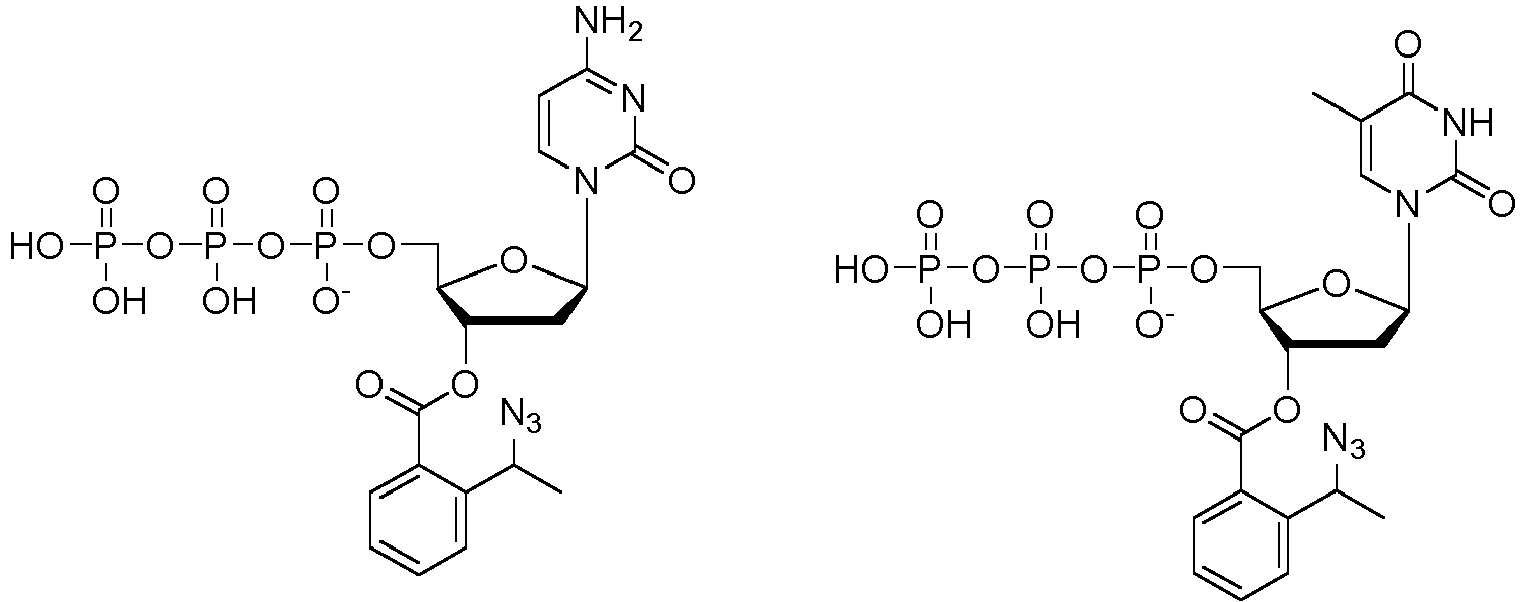

- Sequencing was conducted according to the operation protocol of MGISEQ2000 sequencer, using the above nucleotide substrates and MGISEQ-2000RS high-throughput sequencing kit (FCL SE50).
(1) Preparing DNA nanospheres by using Ecoli sequencing library;
(2) Loading DNA nanospheres onto the MGISEQ2000 sequencing chip;
(3) Amounting the loaded sequencing chip onto the MGISEQ2000 sequencer and set the sequencing process, hot dNTP incorporation : 60 °C 2min; cold dNTP incorporation : 60 °C 2min; signal acquisition; cleavage of blocking group: 65 °C 2min;
(4) Conducting Basecall analysis on offline data and output results of sequencing index including mapping rate, error rate, Q30, etc. The results were showed in Table 2.Table 2. Results of Basecall analysis Nucleotide analogues cold dNTP Mix AEB Reference Ecoli.fa Cycle Number 50 Q30(%) 84.61 Lag (1%) 0.18 Lag (2%) 0.23 Runon (1%) 0.3 Runon (2%) 0.37 ESR (%) 78.17 Mapping Rate, % 98.8 AvgError Rate, % 0.84 AvgError Rate!N, % 0.81 - Nucleotide substrates: fluorescent labeled standard hot dNTP (four kinds, all available from MGISEQ-2000RS high-throughput sequencing kit (FCL SE50), MGI Tech Co., Ltd., cat. No. 1000012551); nucleotide analogues cold dNTP of the invention (four kinds, named as SSEB) with structures showed below.


- Sequencing procedure was same as that above in Sequencing Example 1. Results of Basecall analysis were showed in Table 3.
Table 3. Results of Basecall analysis Nucleotide analogues cold dNTP Mix SSEB Reference Ecoli.fa Cycle Number 50 Q30(%) 91.89 Lag(%) 0.11 Runon(%) 0.23 ESR(%) 90.33 Mapping Rate, % 98.59 AvgError Rate, % 0.13 - Nucleotide substrates: fluorescent labeled standard hot dNTP (four kinds, all available from MGISEQ-2000RS high-throughput sequencing kit (FCL SE50), MGI Tech Co., Ltd., cat. No. 1000012551); nucleotide analogues cold dNTP of the invention four kinds, named as AZBN) with structures showed below.


- Sequencing procedure was same as that above in Sequencing Example 1. Results of Basecall analysis were showed in Table 4.
Table 4. Results of Basecall analysis Nucleotide analogues cold dNTP Mix AZBN Reference Ecoli.fa Cycle Number 50 Q30(%) 61.39 Lag(%) 0.03 Runon(%) 0.12 ESR(%) 62.17 Mapping Rate, % 5.75 AvgError Rate, % 4.94 AvgError Rate!N, % 4.89 -

- Iodinated nucleoside substrate T (Okeanos Tech, cat. No. OK-N-16001, 1g) was dissolved in DMF, followed by adding Pd(PPh3)4 (10 mol%), CuI (15 mol%), triethylamine (3 eq) and substrate propargylamine (Okeanos Tech, cat. No. OK20A410, 1.5eq). The mixture was allowed to react at 60°C for 12h. The reaction was quenched with water, extracted with DCM, concentrated, and purified by column chromatography to provide the product 1.1 g, as a white solid.
MS[ES(-)],m/z 491.1. 1H NMR (400 MHz, DMSO-d6) δ 11.67 (s, 1H), 10.00 (t, J = 5.5 Hz, 1H), 7.94 (s, 1H), 6.12 (dd, J = 7.6, 5.9 Hz, 1H), 5.28 (d, J = 4.1 Hz, 1H), 4.26 - 4.12 (m, 3H), 3.88 (q, J = 2.8 Hz, 1H), 3.81 (dd, J = 11.5, 2.6 Hz, 1H), 3.73 (dd, J = 11.5, 3.1 Hz, 1H), 2.17 (ddd, J = 13.2, 6.0, 2.8 Hz, 1H), 2.05 (ddd, J = 13.3, 7.7, 5.8 Hz, 1H), 0.87 (s, 9H), 0.08 (d, J = 1.8 Hz, 6H). -

- The nucleoside from Step 1 (300mg) was dissolved in 10mL of DMF, followed by adding DCC (1.2 eq) and DMAP (10% mol). The mixture was stirred for 30 minutes, added with disulfaneyl carboxylic acid substrate (OKeanos Tech, cat. No. OK20A420)(1.5 eq). The mixture was stirred for 12 hours and subjected directly to column chromatography to provide the product 359mg, as a white solid.
- MS[ES(-)],m/z 700.3. 1H NMR (400 MHz, DMSO-d6 ) δ 11.74 (s, 1H), 10.03 (t, J = 5.5 Hz, 1H), 7.98 (s, 1H), 7.90 - 7.82 (m, 1H), 7.68 - 7.58 (m, 2H), 7.47 - 7.40 (m, 1H), 6.23 - 6.18 (m, 1H), 5.45 -5.42 (m, 1H), 5.20 - 5.12 (m, 1H), 4.38 - 4.16 (m, 3H), 3.98 - 3.87 (m, 2H), 2.60 - 2.53 (m, 1H), 2.40 - 2.31 (m, 1H), 2.06 (d, J = 0.6 Hz, 3H), 1.65 (dd, J = 7.0, 1.0 Hz, 3H), 0.90 (s, 9H), 0.13 (d, J = 1.2 Hz, 6H).
-

- The nucleoside from Step 2 (300mg) was dissolved in 10mL of THF, followed by adding TBAF (2 eq, 1M in THF) at 0°C. The mixture was stirred at 0°C for 30 minutes, and allowed to warm back to room temperature with stirring for 4 hours. The mixture was subjected directly to column chromatography to provide the product 200mg, as a white solid.
- MS[ES(-)],m/z 587.2. 1H NMR (400 MHz, DMSO-d 6) δ 11.68 (d, J = 3.2 Hz, 1H), 10.06 (t, J = 5.6 Hz, 1H), 8.23 (d, J = 3.2 Hz, 1H), 7.88 - 7.78 (m, 1H), 7.66 - 7.56 (m, 2H), 7.43 - 7.39 (m, 1H), 6.25 - 6.13 (m, 1H), 5.48 - 5.45 (m, 1H), 5.31 (t, J = 5.2 Hz, 1H), 5.18 - 5.12 (m, 1H), 4.28 - 4.16 (m, 3H), 3.76 - 3.67 (m, 2H), 2.50 - 2.40 (m, 2H), 2.04 (d, J = 9.2 Hz, 3H), 1.68 - 1.59 (m, 3H).
-

- The nucleoside from Step 3 (200mg) was dissolved in 5mL of trimethyl phosphate. The mixture was added with phosphorus oxychloride (1.5 eq) at 0 °C with stirring at 0°C for 120minutes. The reaction mixture was added to a DMF solution (5 mL) of tributyl ammonium pyrophosphate (2 eq) with continuously stirring at 0°C for 3h. The reaction was quenched with 0.1 M TEAB buffer and separated by preparative HPLC reversed phase column (C18, mobile phase: 0.1 M TEAB-acetonitrile). After concentration, the residue was added to 3 mL of concentrated aqueous ammonia and allowed to react for 2h, followed by preparative HPLC reversed phase column chromatography(C18, mobile phase: 0.1 M TEAB-acetonitrile)to provide the product 120mg as a white solid. MS[ES(-)],m/z 745.5. 1H NMR (400 MHz, D2O) δ 8.51 (s, 1H), 7.90 (dd, J = 7.9, 1.4 Hz, 1H), 7.73 (d, J = 7.8 Hz, 1H), 7.67 (td, J = 7.6, 1.4 Hz, 1H), 7.48 (t, J = 7.5 Hz, 1H), 6.45 (td, J = 9.2, 5.7 Hz, 1H), 5.75 (t, J = 4.7 Hz, 1H), 5.15 - 5.07 (m, 1H), 4.72 - 4.64 (m, 1H), 4.39 (d, J = 3.3 Hz, 2H), 4.07 (s, 2H), 2.82 - 2.76 (m, 1H), 2.64 - 2.54 (m, 1H), 2.02 (d, J = 6.4 Hz, 3H), 1.73 (dd, J = 7.1, 2.2 Hz, 3H); 31P NMR (162 MHz, D2O) δ -9.79 (dd, J = 20.3, 9.6 Hz, 1P), -11.68 (d, J = 19.2 Hz, 1P), -22.82 (td, J = 19.2, 6.1 Hz, 1P).
-

- To a dried 20mL round bottom flask equipped with a magnetic stirrer was added dye-linker solid (Okeanos Tech, OK-F-20211)(9.3 mg, 1 eq.), dissolved with appropriate amount of DMF(3 ml), followed by adding in sequence TNTU solid (7 mg, 0.02 mmol, 2 eq.) and DIPEA (2.6 mg, 0.02 mmol, 2 eq.), wherein DIPEA was diluted with 0.5 ml of DMF in a 1.5 ml PE tube and added into the mixture dropwise with stirring for about 1 hour. The mixture was sampled and dissolved in acetonitrile, and monitored with HPLC and MS for AF532-V4 raw material depletion. To the mixture was added solid hot T-mSSEB substrate (15 mg, 0.02 mmol, 1 eq.) at room temperature with stirring for 1 hour, and sampled and dissolved in acetonitrile, and monitored with HPLC and MS for reaction progress. The reaction was allowed to proceed overnight until a complete consumption of nhs ester, quenched with 0.1 M TEAB buffer, and separated with preparative HPLC reverse phase column chromatography (C18, mobile phase: 0.1 M TEAB-acetonitrile). The desired fractions were concentrated, and added into 3 mL of concentrated aqueous ammonia to react for 2h, followed by purification with preparative HPLC reverse phase column chromatography (C18, mobile phase: 0.1 M TEAB-acetonitrile) to provide a solid 10mg.
MS[ES(-)],m/z 1815.0. 1H NMR (400 MHz, DMSO-d 6) δ 9.06 (d, J = 6.7 Hz, 1H), 8.80 (d, J= 47.0 Hz, 1H), 8.28 (t, J= 7.2 Hz, 1H), 8.18 - 8.00 (m, 1H), 7.86 (d, J = 7.7 Hz, 1H), 7.75 - 7.66 (m, 2H), 7.66 - 7.58 (m, 3H), 7.58 - 7.40 (m, 4H), 7.39 - 7.33 (m, 1H), 7.17 - 7.07 (m, 1H), 6.98 (s, 2H), 6.79 (s, 2H), 6.31 - 6.17 (m, 1H), 5.58 (d, J= 3.5 Hz, 1H), 5.21 - 5.14 (m, 2H), 4.34 (d, J= 19.3 Hz, 1H), 4.26 (dd, J= 10.5, 3.9 Hz, 1H), 4.18 (dd, J = 10.6, 4.5 Hz, 2H), 4.09 (d, J = 3.5 Hz, 2H), 3.99 (s, 2H), 3.95 - 3.82 (m, 2H), 3.68 (s, 6H), 3.52 (s, 4H), 3.33 - 3.24 (m, 2H), 3.22 - 3.15 (m, 2H), 3.14 - 3.06 (m, 2H), 2.65 (t, J = 7.6 Hz, 4H), 2.57 (t, J = 7.1 Hz, 5H), 2.46 - 2.37 (m, 1H), 2.05 (d, J = 16.8 Hz, 3H), 2.01 - 1.93 (m, 4H), 1.86 - 1.81 (m, 3H), 1.77 - 1.72 (m, 1H), 1.65 (d, J= 6.9 Hz, 3H). - Nucleotide substrates: fluorescent labeled standard hot dNTP (available from MGISEQ-2000RS high-throughput sequencing kit (FCL SE50), MGI Tech Co., Ltd., cat. no. 1000012551), wherein hot dTTP was replaced by hot T-SSEB synthesized above, with structures showed below; and nucleotide analogues cold dNTP of the invention four kinds, named as SSEB) with structures showed below.
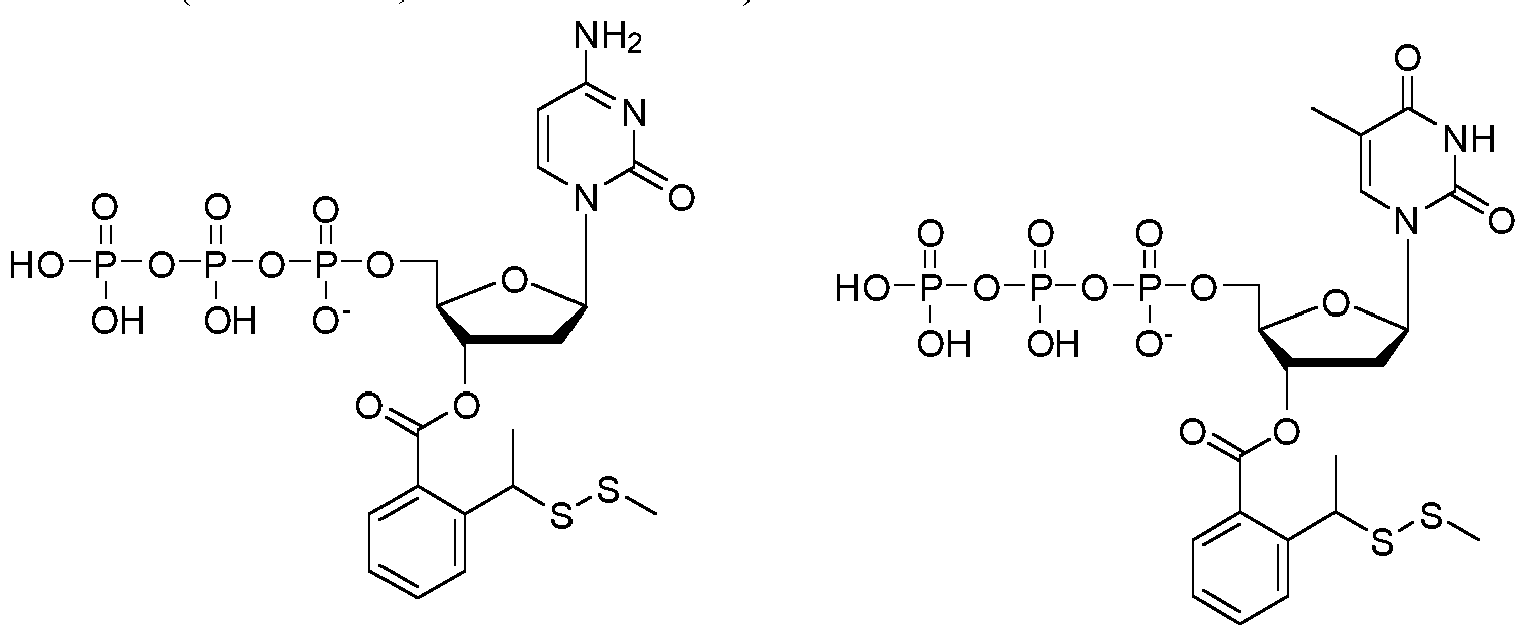


- Sequencing procedure was same as that above in Sequencing Example 1. Results of Basecall analysis were showed in Table 5.
Table 5. Results of Basecall analysis Nucleotide analogues hot T-SSEB + cold dNTP-SSEB, standard hot dNTP for others Reference Ecoli.fa Cycle Number 50 Q30(%) 87.24 Lag(%) 0.19 Runon(%) 0.24 ESR(%) 74.7 Mapping Rate, % 98.44 AvgError Rate, % 0.27 -

- The product was synthesized similarly to that in Sequencing Example 4, wherein an iodinated G-nucleoside substrate was used in place of the iodinated T-nucleoside substrate, and azdio carboxylic acid substrate was used in place of the disulfaneyl carboxylic acid substrate, both available from OKeanos Tech Co., Ltd. New dye-linker was required and available from MyChem LLC Co., Ltd. (cat. no. 110920Cy5). 10mg of final product was obtained.
MS[ES(-)],m/z 1575. 1H NMR (400 MHz, DMSO-d 6) δ 10.54 (s, 1H), 8.49 (s, 1H), 8.34 (t, J= 13.1 Hz, 2H), 8.07 (t, J= 5.5 Hz, 1H), 7.92 (dd, J= 7.2, 4.6 Hz, 2H), 7.80 (d, J = 1.7 Hz, 2H), 7.70 (d, J = 7.4 Hz, 1H), 7.67 - 7.62 (m, 4H), 7.49 (t, J = 7.4 Hz, 2H), 7.30 (d, J = 8.3 Hz, 3H), 6.58 (t, J = 12.3 Hz, 1H), 6.41 (s, 2H), 6.36 - 6.27 (m, 3H), 6.26 - 6.12 (m, 2H), 5.60 (dd, J = 13.1, 6.4 Hz, 3H), 4.86 (s, 2H), 4.48 (dd, J = 29.1, 16.7 Hz, 2H), 4.35 - 4.27 (m, 2H), 4.07 (d, J = 4.8 Hz, 4H), 3.59 (s, 2H), 3.50 (d, J= 5.7 Hz, 2H), 3.34 - 3.29 (m, 2H), 2.78 (t, J= 6.8 Hz, 2H), 2.13 (t, J= 6.7 Hz, 2H), 2.07 (t, J= 7.2 Hz, 2H), 1.68 (s, 12H), 1.53 - 1.48 (m, 8H), 1.35 (dt, J= 15.8, 8.1 Hz, 4H). - Nucleotide substrates: fluorescent labeled standard hot dNTP (available from MGISEQ-2000RS high-throughput sequencing kit (FCL SE50), MGI Tech Co., Ltd., cat. no. 1000012551), wherein hot dGTP was replaced by SS-hot G synthesized above; nucleotide analogues cold dNTP of the invention (four kinds, named as SS-cold with structures showed below.


- Sequencing procedure was same as that above in Sequencing Example 1. Results of Basecall analysis were showed in Table 6.
Table 6: Results of Basecall analysis nucleotide analogues SS-hot G + SS-cold dNTP, standard hot dNTP for others Reference Ecoli.fa Cycle Number 50 Q30(%) 53.08 Lag(%) 0.24 Runon(%) 0.32 ESR(%) 66.96 Mapping Rate, % 0.13 AvgError Rate, % 5.14
 | Incorporation efficiency (EI) |
| 95% | |
| Cleavage efficiency (EC) | |
| 36% | |
| Incorporation efficiency (EI) | |
| 101% | |
 | Cleavage efficiency (EC) |
| 5% | |
 | Incorporation efficiency (EI) |
| 101% | |
| Cleavage efficiency (EC) | |
| 105% | |
 | Incorporation efficiency (EI) |
| 100% | |
| Cleavage efficiency (EC) | |
| 110% | |
 | Incorporation efficiency (EI) |
| 100% | |
| Cleavage efficiency (EC) | |
| 115% | |
| Incorporation efficiency (EI) | |
| 101% | |
 | Cleavage efficiency (EC) |
| 112% | |
 | Incorporation efficiency (EI) |
| 98% | |
| Cleavage efficiency (EC) | |
| 91% | |
 | Incorporation efficiency (EI) |
| 101% | |
| Cleavage efficiency (EC) | |
| 98% | |
 | Incorporation efficiency (EI) |
| 95% | |
| Cleavage efficiency (EC) | |
| 110% | |
| Incorporation efficiency (EI) | |
| 95% | |
 | Cleavage efficiency (EC) |
| 89% | |
 | Incorporation efficiency (EI) |
| 98% | |
| Cleavage efficiency (EC) | |
| 91% | |
 | Incorporation efficiency (EI) |
| 100% | |
| Cleavage efficiency (EC) | |
| 100% | |
 | Incorporation efficiency (EI) |
| 100% | |
| Cleavage efficiency (EC) | |
| 111% | |
| Incorporation efficiency (EI) | |
| 90% | |
 | Cleavage efficiency (EC) |
| 98% | |
 | Incorporation efficiency (EI) |
| 95% | |
| Cleavage efficiency (EC) | |
| 103% | |
 | Incorporation efficiency (EI) |
| 100% | |
| Cleavage efficiency (EC) | |
| 98% | |
 | Incorporation efficiency (EI) |
| 104% | |
| Cleavage efficiency (EC) | |
| 101% |
Claims (15)
- A compound of formula (A) or a salt thereof
 R is a reversible blocking group, and R is selected from

 preferably, R is selected from
 more preferably, R is selected from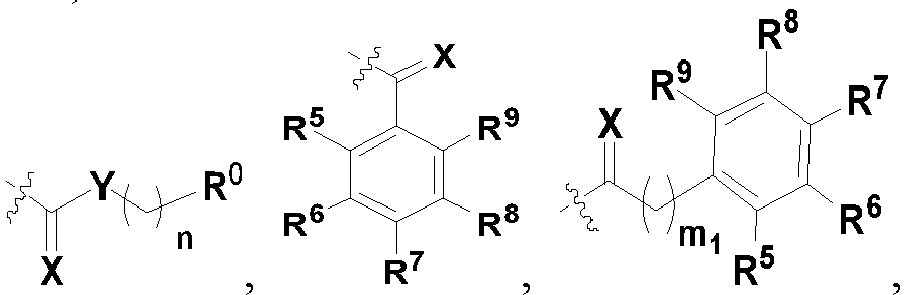
 the heteroaryl is selected from the followings:

 preferably, the heteroaryl is selected from the followings:
 more preferably, the heteroaryl is selected from the followings:
 each X is independently selected from O, NH, S;preferably, X is O;each Y is independently selected from a direct bond, O, NH, S, CH, CH2, C(CH3)2;preferably, each Y is independently selected from a direct bond or CH2;R0 is selected from -N3, -SS-C1-C6 alkyl (e.g., -SS-methyl, -SS-ethyl, -SS-isopropyl, -SS-tertbutyl), -ONH2, -OCORm, -OCONHRm, wherein each Rm is independently selected from aliphatic alkyl (e.g., C1-C6 alkyl), cycloalkyl (e.g., C3-C6 cycloalkyl) or aromatic alkyl (e.g., phenyl C1-C6 alkyl);preferably, R0 is -N3 or -SS-C1-C6 alkyl (e.g., -SS-methyl, -SS-ethyl, -SS-isopropyl, -SS-tertbutyl);more preferably, R0 is -N3;R1 is selected from -N3, -SS-C1-C6 alkyl (e.g., -SS-methyl, -SS-ethyl, -SS-isopropyl, -SS-tertbutyl), -ONH2, -OCORm, -OCONHRm, wherein each Rm is independently selected from aliphatic alkyl (e.g., C1-C6 alkyl), cycloalkyl (e.g., C3-C6 cycloalkyl) or aromatic alkyl (e.g., phenyl C1-C6 alkyl);preferably, R1 is -N3 or -SS-C1-C6 alkyl (e.g., -SS-methyl, -SS-ethyl, -SS-isopropyl, -SS-tertbutyl);more preferably, R1 is -N3;R2, R3, and R4 are each independently selected from O, NH, S, CH, CH2, C(CH3)2;preferably, R2, R3, and R4 are each independently selected from O, NH, S, CH, CH2, C(CH3)2, and meet the following conditions: when R2 is selected from O or S, R3 and R4 are CH2; when R3 is selected from O or S, R2 and R4 are CH2; when R4 is selected from O or S, R2 and R3 are CH2; when R2 is C(CH3)2, R3 and R4 are CH2; when R3 is C(CH3)2, R2 and R4 are CH2; when R4 is C(CH3)2, R2 and R3 are CH2; when Y is CH, R2 is CH, and R3 and R4 are CH2;more preferably, R2, R3, and R4 are each independently selected from CH, CH2;most preferably, R2 and R3 are CH, and R4 is CH2;
--- represents a single bond - or a double bond =;each R" is independently selected from H, -N3, nitro, amino, sulfo, carboxyl, aliphatic alkyl (e.g., C1-C6 alkyl), cycloalkyl (e.g., C3-C6 cycloalkyl), aromatic alkyl (e.g., phenyl C1-C6 alkyl), F, I, Br, Cl alkoxy (e.g., C1-C6 alkoxy),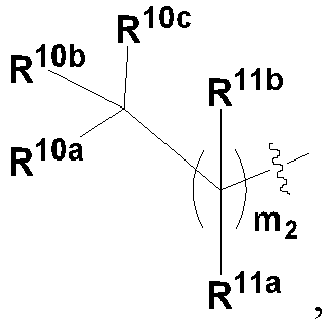
 preferably, when each heteroaryl is independently optionally substituted by one R", each R" is independently selected from
 or preferably, when each heteroaryl is independently optionally substituted by more (e.g., 2, 3, 4, 5 or 6, preferably 2) R"s, one of the R" is selected from
 or more preferably, when each heteroaryl is independently optionally substituted by more (e.g., 2, 3, 4, 5 or 6, preferably 2) R"s, one of the R" is
 or most preferably, when each heteroaryl is independently optionally substituted by more (e.g., 2, 3, 4, 5 or 6, preferably 2) R"s, one of the R" is
 R5, R6, R7, R8, R9, RX, Ry, and Rz are each independently selected from H, -N3, nitro, amino, sulfo, carboxyl, aliphatic alkyl (e.g., C1-C6 alkyl), cycloalkyl (e.g., C3-C6 cycloalkyl), aromatic alkyl (e.g., phenyl C1-C6 alkyl), F, I, Br, Cl, alkoxy (e.g., C1-C6 alkoxy), C1-C6 alkyl-C(=O)-NH2-,
 preferably, any one of R5, R6, R7, R8, and R9 is selected from
 more preferably, any one of R5, R6, R7, R8, and R9 is
 further preferably, of R5, R6, R7, R8, and R9, R5 or R9 is
 most preferably, of R5, R6, R7, R8, and R9, R5 or R9 is
 preferably, any one of RX and Ry is selected from
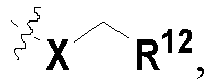 more preferably, any one of RX and Ry is selected from
 most referably an one of RX and Ry is
 preferably, Rz is selected from
 more preferably, Rz is
 R10a, R10b, R10c, R11a, R11b, and R12 are each independently selected from H, -N3, - SS-C1-C6 alkyl (e.g., -SS-methyl, -SS-ethyl, -SS-isopropyl, -SS-tertbutyl or -SS-isobutyl), -ONH2, -OCORm -OCONHRm, aliphatic alkyl (e.g., C1-C6 alkyl, particularly such as methyl, ethyl, isopropyl, tertbutyl), aromatic alkyl (e.g., phenyl C1-C6 alkyl), cycloalkyl (e.g., C3-C6 cycloalkyl), wherein each Rm is independently selected from aliphatic alkyl (e.g., C1-C6 alkyl), cycloalkyl (e.g., C3-C6 cycloalkyl) or aromatic alkyl (e.g., phenyl C1-C6 alkyl), and R10a, R10b, and R10c are not H at the same time;preferably, any one of R10a, R10b, and R10c is selected from -N3, -SS-C1-C6 alkyl (e.g., -SS-methyl, -SS-ethyl, -SS-isopropyl, -SS-tertbutyl or -SS-isobutyl), -ONH2, - OCORm, -OCONHRm, and the other two are each independently selected from H, aliphatic alkyl (e.g., C1-C6 alkyl, particularly such as methyl, ethyl, isopropyl, tertbutyl), aromatic alkyl (e.g., phenyl C1-C6 alkyl), cycloalkyl (e.g., C3-C6 cycloalkyl), wherein each Rm is independently selected from aliphatic alkyl (e.g., C1-C6 alkyl), cycloalkyl (e.g., C3-C6 cycloalkyl) or aromatic alkyl (e.g., phenyl C1-C6 alkyl);more preferably, any one of R10a, R10b, and R10c is -N3 or -SS-C1-C6 alkyl (e.g., - SS-methyl, -SS-ethyl, -SS-isopropyl, -SS-tertbutyl or -SS-isobutyl), and the other two are each independently selected from H, aliphatic alkyl (e.g., C1-C6 alkyl, particularly such as methyl, ethyl, isopropyl, tertbutyl);most preferably, any one of R10a, R10b, and R10c is -N3, -SS-methyl, -SS-ethyl, - SS-isopropyl, -SS-tertbutyl or -SS-isobutyl, and the other two are each independently selected from H or methyl;preferably, R11a and R11b are each independently selected from H or aliphatic alkyl (e.g., C1-C6 alkyl, particularly such as methyl, ethyl, isopropyl, tertbutyl);more preferably, R11a and R11b are H;preferably, R12 is selected from -N3, -SS-C1-C6 alkyl (e.g., -SS-methyl, -SS-ethyl, -SS-isopropyl, -SS-tertbutyl), -ONH2, -OCORm, -OCONHRm, wherein each Rm is independently selected from aliphatic alkyl (e.g., C1-C6 alkyl), cycloalkyl (e.g., C3-C6 cycloalkyl) or aromatic alkyl (e.g., phenyl C1-C6 alkyl);more preferably, R12 is -N3 or -SS-C1-C6 alkyl (e.g., -SS-methyl, -SS-ethyl, -SS-isopropyl, -SS-tertbutyl);most preferably, R12 is -N3;n is selected from 1, 2, 3, 4, or 5; preferably, n is selected from 1, 2, or 3; more preferably, n is 2;each m1 is independently selected from 1, 2, 3, 4, 5, and 6; preferably, m1 is 1;each m2 is independently selected from 0, 1, 2, 3, 4, 5, and 6; preferably, each m2 is independently selected from 0 or 1 most preferably,

 R' is selected from H, monophosphate group


 preferably, R' is a triphosphate group
 each Z is independently selected from O, S, BH; preferably, Z is O;Base is selected from a base, a deaza base or a tautomer thereof, for example, Base is selected from adenine, 7-deazaadenine, thymine, uracil, cytosine, guanine, 7-deazaguanine or a tautomer thereofpreferably, Base is selected from
- The compound or a salt thereof according to claim 1, wherein the compound has a structure represented by the formula (I),
 X is selected from O, NH, S;preferably, X is O;Y is selected from a direct bond, O, NH, S, CH, CH2, C(CH3)2;preferably, Y is CH2;R0 is selected from -N3, -SS-C1-C6 alkyl (e.g., -SS-methyl, -SS-ethyl, -SS-isopropyl, -SS-tertbutyl), -ONH2, -OCORm, -OCONHRm, wherein each Rm is independently selected from aliphatic alkyl (e.g., C1-C6 alkyl), cycloalkyl (e.g., C3-C6 cycloalkyl) or aromatic alkyl (e.g., phenyl C1-C6 alkyl);preferably, R0 is -N3 or -SS-C1-C6 alkyl (e.g., -SS-methyl, -SS-ethyl, -SS-isopropyl, -SS-tertbutyl);more preferably, R0 is -N3;n is selected from 1, 2, 3, 4, and 5;preferably, n is selected from 1, 2, and 3;more preferably, n is 2;R' is selected from H monophosphate group
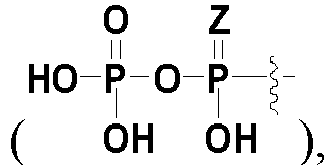

 preferably, R' is a triphosphate group
 each Z is independently selected from O, S, BH;preferably, Z is O;Base is selected from a base, a deaza base or a tautomer thereof, for example, Base is selected from adenine, 7-deazaadenine, thymine, uracil, cytosine, guanine, 7-deazaguanine or a tautomer thereofpreferably, Base is selected from
- The compound or a salt thereof according to claim 1, wherein the compound has a structure represented by the formula (III)
 A' is selected from
 the heteroaryl is selected from the followings:

 preferably, the heteroaryl is selected from the followings:
 more preferably, the heteroaryl is selected from the followings:
 or more preferably, the heteroaryl is selected from the followings: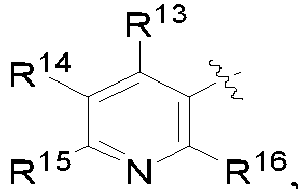

 most preferably, the heteroaryl is selected from the followings: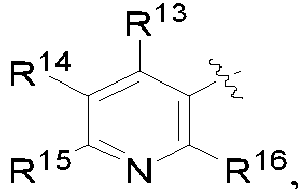
 each R" is independently selected from H, -N3, nitro, amino, sulfo, carboxyl, aliphatic alkyl (e.g., C1-C6 alkyl), cycloalkyl (e.g., C3-C6 cycloalkyl), aromatic alkyl (e.g., phenyl C1-C6 alkyl), F, I, Br, Cl, alkoxy (e.g., C1-C6 alkoxy),
 preferably, when each heteroaryl is independently optionally substituted by one R" each R" is independently selected from
 or preferably, when each heteroaryl is independently optionally substituted by more (e.g., 2, 3, 4, 5 or 6, preferably 2) R"s, one of the R" is selected from
 or more preferably, when each heteroaryl is independently optionally substituted by more (e.g., 2, 3, 4, 5 or 6, preferably 2) R"s, one of the R" is
 or most preferably, when each heteroaryl is independently optionally substituted by more (e.g., 2, 3, 4, 5 or 6, preferably 2) R"s, one of the R" is
 of R13, R14, R15, and R16, R16 is
 preferably, of R13, R14, R15, and R16, R16 is H;
 of R17, R18, and R19, R19 is
 preferably, of R17, R18, and R19, R19 is
 of R20, R21, and R22, R22 is
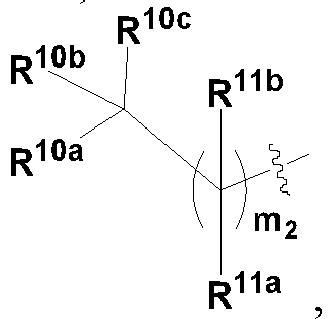 preferably, of R20, R21, and R22, R22 is
 of R23, R24, R25, and R26, R26 is
 preferably, of R23, R24, R25, and R26, R26 is
 of R27, R28, and R29, R29 is
 preferably, of R27, R28, and R29, R29 is
 of R30, R31, and R32, R32 is
 preferably, of R30, R31, and R32, R32 is
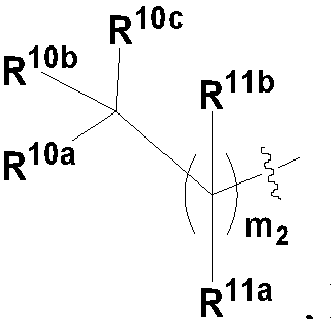 of R33 , R34, and R35, R34 or R35 is
 preferably, of R33, R34, and R35, R34 or R35 is
 X is selected from O, NH, S;preferably, X is O;R5, R6, R7, R8, and R9 are each independently selected from H, -N3, nitro, amino, sulfo, carboxyl, aliphatic alkyl (e.g., C1-C6 alkyl), cycloalkyl (e.g., C3-C6 cycloalkyl), aromatic alkyl (e.g., phenyl C1-C6 alkyl), F, I, Br, Cl, alkoxy (e.g., C1-C6 alkoxy), C1-C6 alkyl-C(=O)-NH2-,
 preferably, any one of R5, R6, R7, R8, and R9 is selected from
 more preferably, any one of R5, R6, R7, R8, and R9 is
 further preferably, of R5, R6, R7, R8, and R9, R5 or R9 is
 most preferably, of R5, R6, R7, R8, and R9, R5 or R9 is
 R10a, R10b, R10c, R11a, R11b, and R12 are each independently selected from H, -N3, - SS-C1-C6 alkyl (e.g., -SS-methyl, -SS-ethyl, -SS-isopropyl, -SS-tertbutyl or -SS-isobutyl), -ONH2, -OCORm, -OCONHRm, aliphatic alkyl (e.g., C1-C6 alkyl, particularly such as methyl, ethyl, isopropyl, tertbutyl), aromatic alkyl (e.g., phenyl C1-C6 alkyl), cycloalkyl (e.g., C3-C6 cycloalkyl), wherein each Rm is independently selected from aliphatic alkyl (e.g., C1-C6 alkyl), cycloalkyl (e.g., C3-C6 cycloalkyl) or aromatic alkyl (e.g., phenyl C1-C6 alkyl), and R10a, R10b, and R10c are not H at the same time;preferably, any one of R10a, R10b, and R10c is selected from -N3, -SS-C1-C6 alkyl (e.g., -SS-methyl, -SS-ethyl, -SS-isopropyl, -SS-tertbutyl or -SS-isobutyl), -ONH2, - OCORm, -OCONHRm, and the other two are each independently selected from H, aliphatic alkyl (e.g., C1-C6 alkyl, particularly such as methyl, ethyl, isopropyl, tertbutyl), aromatic alkyl (e.g., phenyl C1-C6 alkyl), cycloalkyl (e.g., C3-C6 cycloalkyl), wherein each Rm is independently selected from aliphatic alkyl (e.g., C1-C6 alkyl), cycloalkyl (e.g., C3-C6 cycloalkyl) or aromatic alkyl (e.g., phenyl C1-C6 alkyl);more preferably, any one of R10a, R10b, and R10c is -N3 or -SS-C1-C6 alkyl (e.g., - SS-methyl, -SS-ethyl, -SS-isopropyl, -SS-tertbutyl, -SS-isobutyl), and the other two are each independently selected from H, C1-C6 alkyl (e.g., methyl, ethyl, isopropyl, tertbutyl);most preferably, any one of R10a, R10b, and R10c is -N3, -SS-methyl, -SS-ethyl, - SS-isopropyl, -SS-tertbutyl, -SS-isobutyl, and the other two are each independently selected from H, methyl;preferably, R11a and R11b are each independently selected from H, aliphatic alkyl (e.g., C1-C6 alkyl, particularly such as methyl, ethyl, isopropyl, tertbutyl);more preferably, R11a and R11b are H;preferably, R12 is selected from -N3, -SS-C1-C6 alkyl (e.g., -SS-methyl, -SS-ethyl, -SS-isopropyl, -SS-tertbutyl), -ONH2, -OCORm, -OCONHRm, wherein each Rm is independently selected from aliphatic alkyl (e.g., C1-C6 alkyl), cycloalkyl (e.g., C3-C6 cycloalkyl) or aromatic alkyl (e.g., phenyl C1-C6 alkyl);more preferably, R12 is -N3 or -SS-C1-C6 alkyl (e.g., -SS-methyl, -SS-ethyl, -SS-isopropyl, -SS-tertbutyl);most preferably, R12 is -N3;m1 is selected from 1, 2, 3, 4, 5, and 6; preferably, m1 is 1;m2 is selected from 0, 1, 2, 3, 4, 5, and 6; preferably, m2 is selected from 0 or 1;most preferably,

 R' is selected from H monoohosohate group
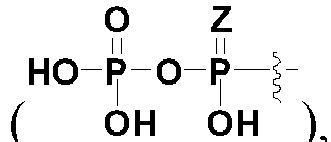

 preferably, R' is a triphosphate group
 each Z is independently selected from O, S, BH;preferably, Z is O;Base is selected from a base, a deaza base or a tautomer thereof, for example, Base is selected from adenine, 7-deazaadenine, thymine, uracil, cytosine, guanine, 7-deazaguanine or a tautomer thereof:preferably, Base is selected from
- The compound or a salt thereof according to claim 1, wherein the compound is selected from the followings:


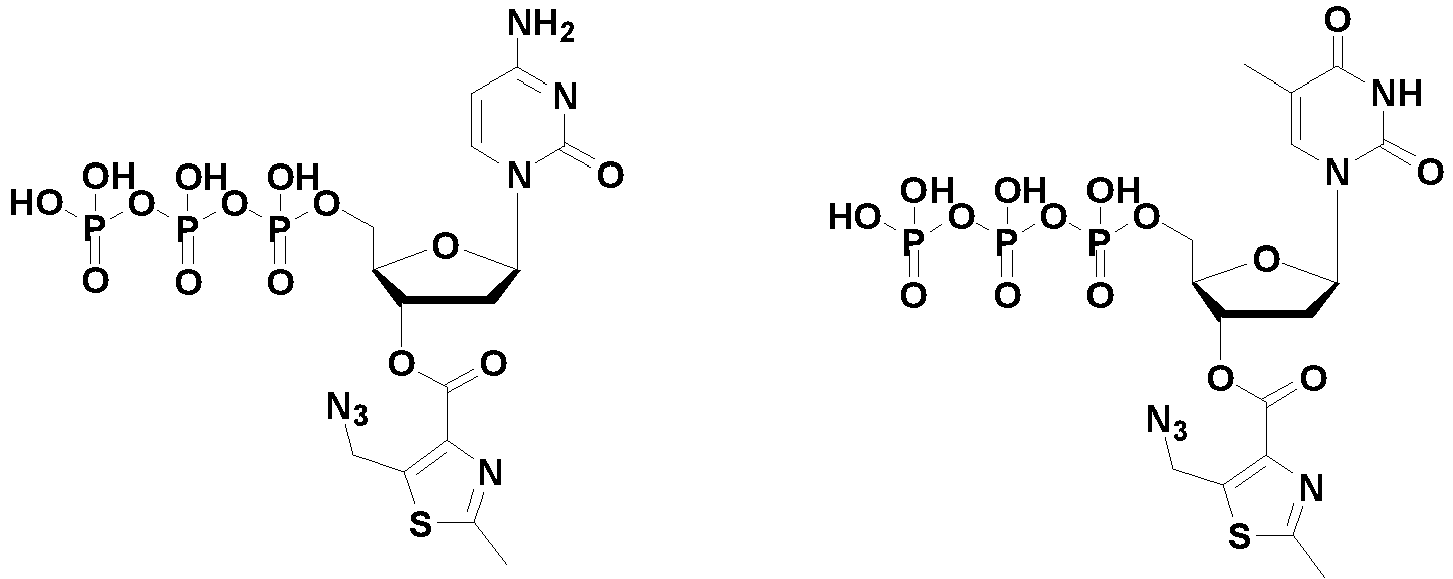
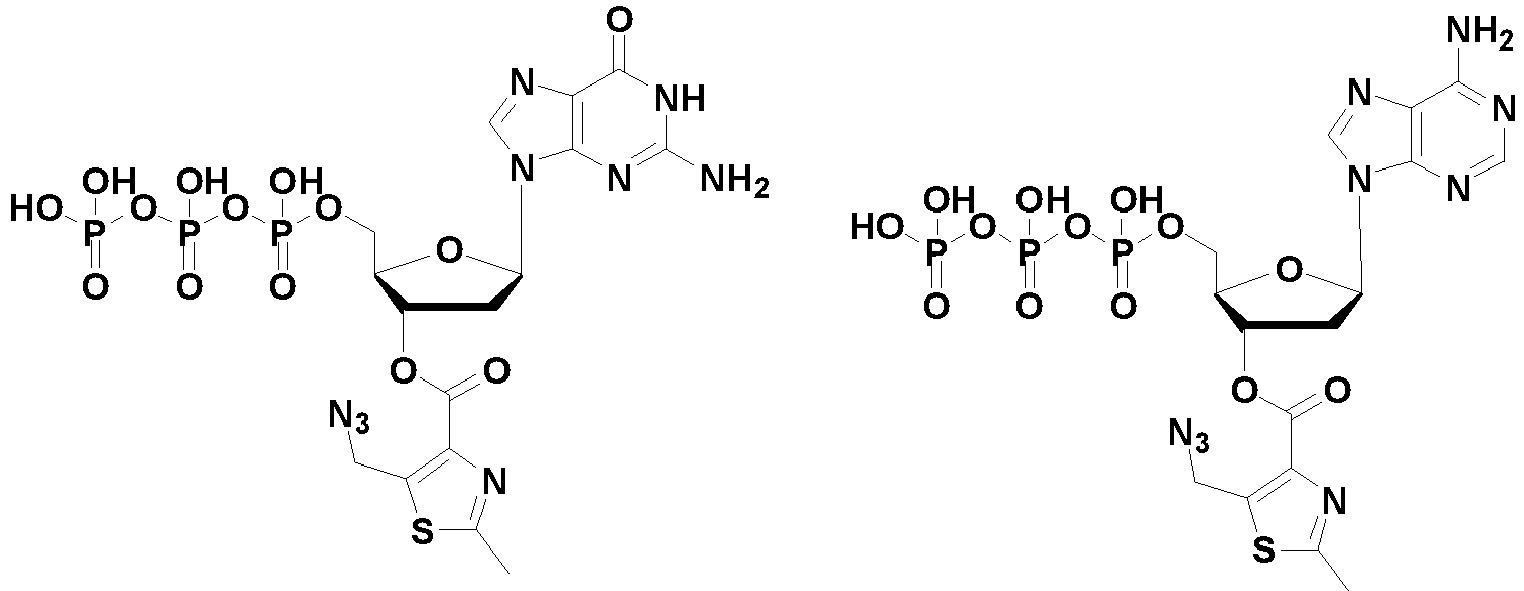


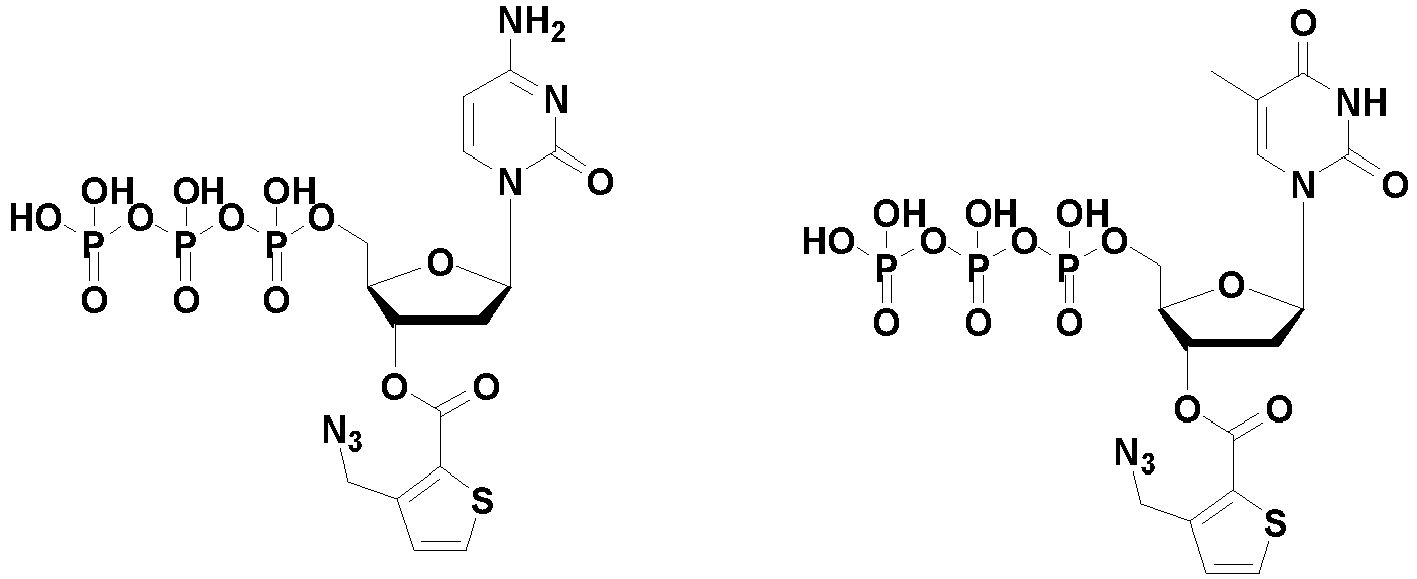


- The compound or a salt thereof according to any one of claims 1-4, which carries an additional detectable label (e.g., a fluorescent label);preferably, the additional detectable label carried by the compound or a salt thereof is introduced by an affinity reagent (e.g., antibody, aptamer, Affimer, Knottin), wherein the affinity reagent carries the detectable label, and the affinity reagent can specifically recognize and bind to an epitope of the compound or a salt thereof;preferably, the additional detectable label (e.g., a fluorescent label) is linked to the compound or a salt thereof optionally via a linker;preferably, the additional detectable label (e.g., a fluorescent label) is linked to the Base of the compound or a salt thereof optionally via a linker;preferably, the linker is a cleavable linker or a non-cleavable linker;preferably, the cleavable linker is selected from the group consisting of a linker capable of being cleaved by electrophilic reaction, a linker capable of being cleaved by nucleophilic reaction, a linker capable of being cleaved by photolysis, a linker capable of being cleaved under reductive conditions, a linker capable of being cleaved under oxidative conditions, a safety-catch linker, a linker capable of being cleaved by elimination mechanisms, or any combination thereof;preferably, the detectable label is selected from the followings:


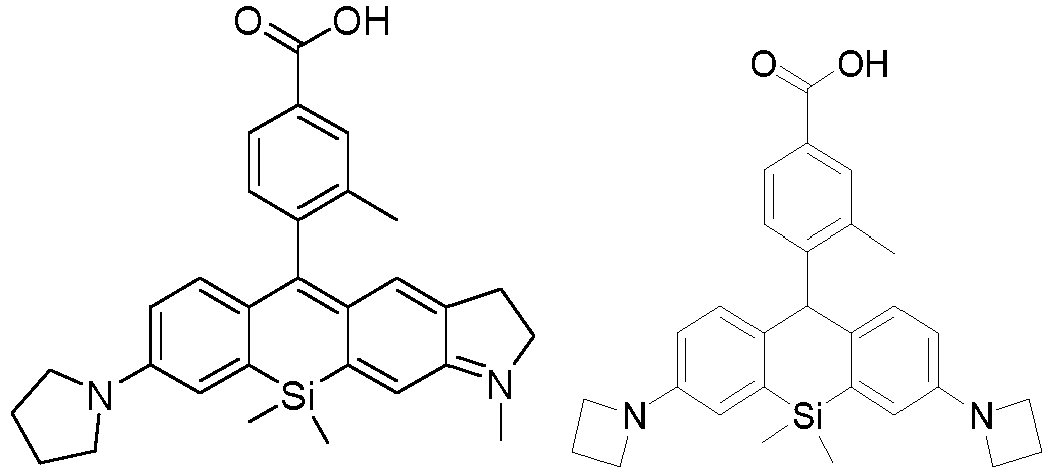

 preferably, if Base is different, the detectable label (e.g., a fluorescent label) varies.
 - A method for terminating a nucleic acid synthesis, which comprises incorporating the compound or a salt thereof according to any one of claims 1-5 into a nucleic acid molecule to be terminated;preferably, the incorporation of the compound or a salt thereof is achieved by a terminal transferase, a terminal polymerase or a reverse transcriptase;preferably, the method comprises incorporating the compound or a salt thereof into the nucleic acid molecule to be terminated by using a polymerase;preferably, the method comprises performing a nucleotide polymerization reaction using a polymerase under conditions where the polymerase is allowed to carry out the nucleotide polymerization reaction, thereby incorporating the compound or a salt thereof into the 3' end of the nucleic acid molecule to be terminated.
- A method for preparing a growing polynucleotide complementary to a target single-stranded polynucleotide in a sequencing reaction, which comprises incorporating the compound or a salt thereof according to any one of claims 1-5 into the growing complementary polynucleotide, wherein the incorporation of the compound or a salt thereof prevents any subsequent nucleotides from being introduced into the growing complementary polynucleotide;preferably, the incorporation of the compound or a salt thereof is achieved by a terminal transferase, a terminal polymerase or a reverse transcriptase;preferably, the method comprises incorporating the compound or a salt thereof into the growing complementary polynucleotide by using a polymerase;preferably, the method comprises performing a nucleotide polymerization reaction using a polymerase under conditions where the polymerase is allowed to carry out the nucleotide polymerization reaction, thereby incorporating the compound or a salt thereof into the 3' end of the growing complementary polynucleotide.
- A method for determining the sequence of a target single-stranded polynucleotide, which comprises:1) monitoring the incorporation of nucleotides complementary to the target single-stranded polynucleotide in a growing nucleic acid strand, wherein at least one complementary nucleotide incorporated is the compound or a salt thereof according to any one of claims 1 to 5, and the compound or a salt thereof carries an additional detectable label (e.g., a fluorescent label), and,2) detecting the detectable label to determine the incorporated nucleotide;preferably, the additional detectable label (e.g., a fluorescent label) is linked to the compound or a salt thereof optionally via a linker;preferably, the linker is as defined in claim 5;preferably, the additional detectable label is as defined in claim 5;preferably, if Base is different, the detectable label (e.g., a fluorescent label) carried by the compound or a salt thereof varies;preferably, the reversible blocking group (R) in the compound or a salt thereof and the detectable label are removed prior to introducing a next complementary nucleotide;preferably, the reversible blocking group and the detectable label are removed simultaneously; orpreferably, the reversible blocking group and the detectable label are removed sequentially; for example, after the detectable label is removed, the reversible blocking group is removed, or, after the reversible blocking group is removed, the detectable label is removed.
- The method according to claim 8, which comprises the following steps of:(a) providing a plurality of different nucleotides, wherein the plurality of different nucleotides are the compound or a salt thereof according to any one of claims 1-5, wherein each nucleotide carries an additional detectable label that can be distinguished from an additional detectable label carried by another nucleotide during detection;(b) incorporating the plurality of different nucleotides into a sequence complementary to a target single-stranded polynucleotide;(c) detecting the additional detectable labels carried by the nucleotides in step (b) to determine the types of nucleotides incorporated;(d) removing the reversible blocking groups and the detectable labels carried by the nucleotides in step (b); and(e) optionally repeating steps (b)-(d) one or more times;whereby the sequence of the target single-stranded polynucleotide is determined .
- The method according to claim 8, which comprises the following steps of:(1)providing a first nucleotide, a second nucleotide, a third nucleotide and a fourth nucleotide, wherein at least one of the four nucleotides is the compound or a salt thereof according to any one of claims 1-5, the Bases contained in the four nucleotides are different from each other, and the four nucleotides carry an additional detectable label (e.g., a fluorescent label), preferably, the additional detectable label carried by the four nucleotides is introduced by an affinity reagent (e.g., antibody, aptamer, Affimer, Knottin), wherein the affinity reagent carries the detectable label, and the affinity reagent can specifically recognize and bind to an epitope of each nucleotide, or preferably, the four nucleotides are linked to the additional detectable label optionally via a linker, or more preferably, the Base of the four nucleotides is linked to the additional detectable label optionally via a linker, most preferably, the additional detectable labels carried by the four nucleotides are different from each other;(2)contacting the four nucleotides with a target single-stranded polynucleotide; removing the nucleotides that are not incorporated into the growing nucleic acid strand; detecting the detectable labels carried by the nucleotides that are incorporated into the growing nucleic acid strand; removing the reversible blocking groups and the detectable labels carried by the nucleotides that are incorporated into the growing nucleic acid strand;optionally, it also includes (3): repeat the step (2) one or more times.
- The method according to claim 8, which comprises the following steps of:(a)providing a mixture comprising a duplex, at least one compound or a salt thereof according to any one of claims 1-5, polymerase and an excision reagent; wherein the duplex comprises a growing nucleic acid strand and a nucleic acid strand to be sequenced; wherein the compound or a salt thereof carries an additional detectable label (e.g., a fluorescent label), preferably, the additional detectable label carried by the compound or a salt thereof is introduced by an affinity reagent (e.g., antibody, aptamer, Affimer, Knottin), wherein the affinity reagent carries the detectable label, and the affinity reagent can specifically recognize and bind to an epitope of the compound or a salt thereof, or preferably, the compound or a salt thereof is linked to the additional detectable label optionally via a linker, or more preferably, the Base of the compound or a salt thereof is linked to the additional detectable label optionally via a linker;(b) carrying out a reaction comprising the following steps (i), (ii) and (iii), optionally, repeating the steps for one or more times:step (i): incorporating the compound or a salt thereof into the growing nucleic acid strand using a polymerase to form a nucleic acid intermediate containing the reversible blocking group and the detectable label;step (ii): detecting the detectable label contained in the nucleic acid intermediate;step (iii): removing the reversible blocking group and/or the detectable label contained in the nucleic acid intermediate by using the excision reagent;preferably, the removal of the reversible blocking group and the removal of the detectable label are performed simultaneously, or, the removal of the reversible blocking group and the removal of the detectable label are performed sequentially (for example, the reversible blocking group is removed first, or the detectable label is removed first);preferably, the excision reagent used for the removal of the reversible blocking group is the same as that used for the removal of the detectable label;preferably, the excision reagent used for the removal of the reversible blocking group is different from that used for the removal of the detectable label.
- The method according to claim 11, wherein the duplex is linked to a support;preferably, the growing nucleic acid strand is a primer;preferably, the primer is annealed to the nucleic acid strand to be sequenced to form the duplex;preferably, the duplex, the compound or a salt thereof, and the polymerase together form a reaction system containing a solution phase and a solid phase;preferably, the Bases contained in the compounds or salts thereof are different from each other;preferably, the additional detectable label carried by the compound or a salt thereof are different from each other;preferably, the compound or a salt thereof is incorporated into the growing nucleic acid strand using a polymerase under conditions where the polymerase is allowed to carry out a nucleotide polymerization reaction, thereby forming a nucleic acid intermediate containing reversible blocking group and the detectable label;preferably, the polymerase is selected from KOD polymerase or its mutants thereof (e.g., KOD POL151, KOD POL157, KOD POL171, KOD POL174, KOD POL376, KOD POL391);preferably, before any step of detecting the detectable label contained in the nucleic acid intermediate, the solution phase of the reaction system in the previous step is removed, and the duplex linked to the support is retained;preferably, the excision reagent is in contact with the duplex or the growing nucleic acid strand in the reaction system containing a solution phase and a solid phase;preferably, the excision reagent can remove the reversible blocking group and the additional detectable label carried by the compound that is incorporated into the growing nucleic acid strand, without affecting the phosphodiester bond on the backbone of the duplex;preferably, after any step of removing the reversible blocking group and/or additional detectable label contained in the nucleic acid intermediate, the solution phase of the reaction system in this step is removed;preferably, a washing operation is performed after any step comprising a removal operation;preferably, after step (ii), the method further comprises: determining the type of compound incorporated into the growing nucleic acid strand in step (i) according to the signal detected in step (ii), and determining the type of nucleotide at a corresponding position in the nucleic acid strand to be sequenced based on the principle of base complementary pairing.
- A kit comprising at least one compound or a salt thereof according to any one of claims 1-5;preferably, the kit comprises a first compound, a second compound, a third compound and a fourth compound, the first, second, third and fourth compounds are each independently the compound or a salt thereof according to any one of claims 1-5;preferably, in the first compound, the Base is selected from adenine, 7-deazaadenine or a tautomer thereof


 preferably, the first, second, third and fourth compounds carry additional detectable labels;preferably, the additional detectable labels carried by the first, second, third and fourth compounds are introduced by an affinity reagent (e.g., antibody, aptamer, Affimer, Knottin), wherein the affinity reagent carries the detectable label, and the affinity reagent can specifically recognize and bind to the epitope of the first, second, third or fourth compound;preferably, the first, second, third and fourth compounds are linked to the additional detectable label optionally via a linker;preferably, the Base of the first, second, third or fourth compound is linked to the additional detectable label optionally via a linker;preferably, the Bases contained in the first, second, third and fourth compounds are different from each other;preferably, the additional detectable labels carried by the first, second, third and fourth compounds are different from each other;preferably, the linker is as defined in claim 5;preferably, the detectable label is as defined in claim 5.
 - The kit according to claim 13, wherein the kit further comprises an reagent for pretreating the nucleic acid molecule; a support for linking nucleic acid molecule to be sequenced; a reagent for linking the nucleic acid molecule to be sequenced to the support (for example, covalently or non-covalently linking); a primer for initiating a nucleotide polymerization reaction; a polymerase for carrying out the nucleotide polymerization reaction; one or more buffer solutions; one or more washing solutions; or any combination thereof.
- Use of the compound or a salt thereof according to any one of claims 1-5 or the kit according to any one of claims 13-14 for determining the sequence of a target single-stranded polynucleotide.
Applications Claiming Priority (2)
| Application Number | Priority Date | Filing Date | Title |
|---|---|---|---|
| CN202011134947 | 2020-10-21 | ||
| PCT/CN2021/125262 WO2022083686A1 (en) | 2020-10-21 | 2021-10-21 | Modified nucleoside or nucleotide |
Publications (3)
| Publication Number | Publication Date |
|---|---|
| EP4234566A1 true EP4234566A1 (en) | 2023-08-30 |
| EP4234566A4 EP4234566A4 (en) | 2024-12-11 |
| EP4234566B1 EP4234566B1 (en) | 2026-04-15 |
Family
ID=81289694
Family Applications (1)
| Application Number | Title | Priority Date | Filing Date |
|---|---|---|---|
| EP21882101.5A Active EP4234566B1 (en) | 2020-10-21 | 2021-10-21 | Modified nucleoside or nucleotide |
Country Status (8)
| Country | Link |
|---|---|
| US (1) | US20240067673A1 (en) |
| EP (1) | EP4234566B1 (en) |
| JP (1) | JP2023546741A (en) |
| KR (1) | KR20230107259A (en) |
| CN (1) | CN116507736A (en) |
| AU (1) | AU2021363336A1 (en) |
| CA (1) | CA3199278A1 (en) |
| WO (1) | WO2022083686A1 (en) |
Cited By (1)
| Publication number | Priority date | Publication date | Assignee | Title |
|---|---|---|---|---|
| WO2024123866A1 (en) * | 2022-12-09 | 2024-06-13 | Illumina, Inc. | Nucleosides and nucleotides with 3´ blocking groups and cleavable linkers |
Families Citing this family (2)
| Publication number | Priority date | Publication date | Assignee | Title |
|---|---|---|---|---|
| EP4317168A4 (en) * | 2021-04-01 | 2025-08-27 | Bgi Shenzhen | Nucleotide analogue for sequencing |
| CN122029175A (en) * | 2024-01-15 | 2026-05-12 | 深圳华大智造科技股份有限公司 | Modified nucleotide for improving chain offset, preparation method and application thereof |
Family Cites Families (12)
| Publication number | Priority date | Publication date | Assignee | Title |
|---|---|---|---|---|
| FR2703052B1 (en) * | 1993-03-26 | 1995-06-02 | Pasteur Institut | New method of nucleic acid sequencing. |
| US5872244A (en) * | 1994-09-02 | 1999-02-16 | Andrew C. Hiatt | 3' protected nucleotides for enzyme catalyzed template-independent creation of phosphodiester bonds |
| ATE356222T1 (en) * | 2000-10-06 | 2007-03-15 | Univ Columbia | MASSIVE PARALLEL METHOD FOR DECODING DNA AND RNA |
| WO2008037568A2 (en) * | 2006-09-04 | 2008-04-03 | Quiatech Ab | Reversible terminators for efficient sequencing by synthesis |
| US8603741B2 (en) * | 2010-02-18 | 2013-12-10 | Pacific Biosciences Of California, Inc. | Single molecule sequencing with two distinct chemistry steps |
| WO2013188607A1 (en) * | 2012-06-14 | 2013-12-19 | The Trustees Of The University Of Pennsylvania | One step n-terminal tagging of proteins |
| KR102230831B1 (en) * | 2013-03-15 | 2021-03-22 | 일루미나 케임브리지 리미티드 | Modified nucleosides or nucleotides |
| CN109983136B (en) * | 2016-12-13 | 2022-07-22 | 深圳华大智造科技股份有限公司 | Method for purifying reversible blocking deoxyribonucleoside triphosphate and sequencing method |
| CA3048486A1 (en) | 2017-01-04 | 2018-07-12 | Complete Genomics, Inc. | Stepwise sequencing by non-labeled reversible terminators or natural nucleotides |
| WO2019071474A1 (en) * | 2017-10-11 | 2019-04-18 | 深圳华大智造科技有限公司 | Modified nucleoside or nucleotide |
| US20230148152A1 (en) * | 2019-01-31 | 2023-05-11 | Agency For Science, Technology And Research | Method of synthesizing single-stranded nucleotide sequence, blocked nucleoside triphosphates and related methods |
| WO2021067970A1 (en) * | 2019-10-04 | 2021-04-08 | Centrillion Technologies, Inc. | Reversible terminators for dna sequencing and methods of using the same |
-
2021
- 2021-10-21 EP EP21882101.5A patent/EP4234566B1/en active Active
- 2021-10-21 WO PCT/CN2021/125262 patent/WO2022083686A1/en not_active Ceased
- 2021-10-21 CA CA3199278A patent/CA3199278A1/en active Pending
- 2021-10-21 AU AU2021363336A patent/AU2021363336A1/en active Pending
- 2021-10-21 KR KR1020237017194A patent/KR20230107259A/en active Pending
- 2021-10-21 JP JP2023548993A patent/JP2023546741A/en active Pending
- 2021-10-21 US US18/033,037 patent/US20240067673A1/en active Pending
- 2021-10-21 CN CN202180071993.XA patent/CN116507736A/en active Pending
Cited By (1)
| Publication number | Priority date | Publication date | Assignee | Title |
|---|---|---|---|---|
| WO2024123866A1 (en) * | 2022-12-09 | 2024-06-13 | Illumina, Inc. | Nucleosides and nucleotides with 3´ blocking groups and cleavable linkers |
Also Published As
| Publication number | Publication date |
|---|---|
| WO2022083686A1 (en) | 2022-04-28 |
| EP4234566B1 (en) | 2026-04-15 |
| US20240067673A1 (en) | 2024-02-29 |
| EP4234566A4 (en) | 2024-12-11 |
| JP2023546741A (en) | 2023-11-07 |
| AU2021363336A1 (en) | 2023-05-18 |
| AU2021363336A9 (en) | 2024-09-05 |
| CA3199278A1 (en) | 2022-04-28 |
| KR20230107259A (en) | 2023-07-14 |
| CN116507736A (en) | 2023-07-28 |
Similar Documents
| Publication | Publication Date | Title |
|---|---|---|
| EP4234566B1 (en) | Modified nucleoside or nucleotide | |
| US10407721B2 (en) | Modified nucleosides or nucleotides | |
| AU2007315190B2 (en) | Click chemistry for the production of reporter molecules | |
| JP2022516244A (en) | 3'protective nucleotide | |
| JPH04290896A (en) | Nucleoside, nucleotide and oligonucleotide bonded with 3'-(2')-amino-or thiol- modified fluorescent dye, process for producing same and use thereof | |
| EP4317168A1 (en) | Nucleotide analogue for sequencing | |
| GB2479833A (en) | Modified nucleotides | |
| EP3580350B1 (en) | Polymerase enzyme from pyrococcus furiosus | |
| James et al. | The use of aluminum chloride for removal of Boc groups on 5′-amino-2′, 5′-dideoxyoligonucleotides during solid-phase synthesis | |
| HK40074525A (en) | Nucleotide analogue for sequencing | |
| EP4714951A1 (en) | Fluorescent dye, synthesis therefor and use thereof | |
| CN122029175A (en) | Modified nucleotide for improving chain offset, preparation method and application thereof | |
| HK1256227A1 (en) | Modified nucleosides or nucleotides | |
| HK1220463B (en) | Modified nucleosides or nucleotides |
Legal Events
| Date | Code | Title | Description |
|---|---|---|---|
| STAA | Information on the status of an ep patent application or granted ep patent |
Free format text: STATUS: THE INTERNATIONAL PUBLICATION HAS BEEN MADE |
|
| PUAI | Public reference made under article 153(3) epc to a published international application that has entered the european phase |
Free format text: ORIGINAL CODE: 0009012 |
|
| STAA | Information on the status of an ep patent application or granted ep patent |
Free format text: STATUS: REQUEST FOR EXAMINATION WAS MADE |
|
| 17P | Request for examination filed |
Effective date: 20230516 |
|
| AK | Designated contracting states |
Kind code of ref document: A1 Designated state(s): AL AT BE BG CH CY CZ DE DK EE ES FI FR GB GR HR HU IE IS IT LI LT LU LV MC MK MT NL NO PL PT RO RS SE SI SK SM TR |
|
| DAV | Request for validation of the european patent (deleted) | ||
| DAX | Request for extension of the european patent (deleted) | ||
| RIC1 | Information provided on ipc code assigned before grant |
Ipc: C12Q 1/68 20180101ALI20240522BHEP Ipc: C07H 19/10 20060101AFI20240522BHEP |
|
| A4 | Supplementary search report drawn up and despatched |
Effective date: 20241111 |
|
| RIC1 | Information provided on ipc code assigned before grant |
Ipc: C12Q 1/68 20180101ALI20241105BHEP Ipc: C07H 19/20 20060101ALI20241105BHEP Ipc: C07H 19/10 20060101AFI20241105BHEP |
|
| STAA | Information on the status of an ep patent application or granted ep patent |
Free format text: STATUS: EXAMINATION IS IN PROGRESS |
|
| 17Q | First examination report despatched |
Effective date: 20250612 |
|
| GRAP | Despatch of communication of intention to grant a patent |
Free format text: ORIGINAL CODE: EPIDOSNIGR1 |
|
| STAA | Information on the status of an ep patent application or granted ep patent |
Free format text: STATUS: GRANT OF PATENT IS INTENDED |
|
| INTG | Intention to grant announced |
Effective date: 20251106 |
|
| GRAS | Grant fee paid |
Free format text: ORIGINAL CODE: EPIDOSNIGR3 |
|
| GRAA | (expected) grant |
Free format text: ORIGINAL CODE: 0009210 |
|
| STAA | Information on the status of an ep patent application or granted ep patent |
Free format text: STATUS: THE PATENT HAS BEEN GRANTED |
|
| AK | Designated contracting states |
Kind code of ref document: B1 Designated state(s): AL AT BE BG CH CY CZ DE DK EE ES FI FR GB GR HR HU IE IS IT LI LT LU LV MC MK MT NL NO PL PT RO RS SE SI SK SM TR |
|
| REG | Reference to a national code |
Ref country code: CH Ref legal event code: F10 Free format text: ST27 STATUS EVENT CODE: U-0-0-F10-F00 (AS PROVIDED BY THE NATIONAL OFFICE) Effective date: 20260415 |
|
| REG | Reference to a national code |
Ref country code: CH Ref legal event code: W10 Free format text: ST27 STATUS EVENT CODE: U-0-0-W10-W00 (AS PROVIDED BY THE NATIONAL OFFICE) Effective date: 20260416 |
|
| REG | Reference to a national code |
Ref country code: DE Ref legal event code: R096 Ref document number: 602021052312 Country of ref document: DE |
|
| RAP4 | Party data changed (patent owner data changed or rights of a patent transferred) |
Owner name: BGI SHENZHEN Owner name: BGI SHENZHEN GROUP HOLDINGS CO., LIMITED |