EP4234498A1 - Doped high-nickel ternary material and preparation method therefor - Google Patents
Doped high-nickel ternary material and preparation method therefor Download PDFInfo
- Publication number
- EP4234498A1 EP4234498A1 EP21884934.7A EP21884934A EP4234498A1 EP 4234498 A1 EP4234498 A1 EP 4234498A1 EP 21884934 A EP21884934 A EP 21884934A EP 4234498 A1 EP4234498 A1 EP 4234498A1
- Authority
- EP
- European Patent Office
- Prior art keywords
- solution
- nickel
- rich ternary
- source
- ternary material
- Prior art date
- Legal status (The legal status is an assumption and is not a legal conclusion. Google has not performed a legal analysis and makes no representation as to the accuracy of the status listed.)
- Withdrawn
Links
- PXHVJJICTQNCMI-UHFFFAOYSA-N nickel Substances [Ni] PXHVJJICTQNCMI-UHFFFAOYSA-N 0.000 title claims abstract description 249
- 229910052759 nickel Inorganic materials 0.000 title claims abstract description 120
- 239000000463 material Substances 0.000 title claims abstract description 109
- 238000002360 preparation method Methods 0.000 title abstract description 10
- 239000004964 aerogel Substances 0.000 claims abstract description 48
- WHXSMMKQMYFTQS-UHFFFAOYSA-N Lithium Chemical compound [Li] WHXSMMKQMYFTQS-UHFFFAOYSA-N 0.000 claims abstract description 43
- 229910052744 lithium Inorganic materials 0.000 claims abstract description 43
- 239000002243 precursor Substances 0.000 claims abstract description 39
- 238000000227 grinding Methods 0.000 claims abstract description 36
- 239000011572 manganese Substances 0.000 claims abstract description 33
- 239000000203 mixture Substances 0.000 claims abstract description 30
- 238000001354 calcination Methods 0.000 claims abstract description 29
- 238000002156 mixing Methods 0.000 claims abstract description 27
- LCPVQAHEFVXVKT-UHFFFAOYSA-N 2-(2,4-difluorophenoxy)pyridin-3-amine Chemical compound NC1=CC=CN=C1OC1=CC=C(F)C=C1F LCPVQAHEFVXVKT-UHFFFAOYSA-N 0.000 claims abstract description 16
- CHQMHPLRPQMAMX-UHFFFAOYSA-L sodium persulfate Substances [Na+].[Na+].[O-]S(=O)(=O)OOS([O-])(=O)=O CHQMHPLRPQMAMX-UHFFFAOYSA-L 0.000 claims abstract description 16
- 229910052748 manganese Inorganic materials 0.000 claims abstract description 15
- 238000012216 screening Methods 0.000 claims abstract description 14
- GRYLNZFGIOXLOG-UHFFFAOYSA-N Nitric acid Chemical compound O[N+]([O-])=O GRYLNZFGIOXLOG-UHFFFAOYSA-N 0.000 claims abstract description 11
- 229910017604 nitric acid Inorganic materials 0.000 claims abstract description 11
- PWHULOQIROXLJO-UHFFFAOYSA-N Manganese Chemical compound [Mn] PWHULOQIROXLJO-UHFFFAOYSA-N 0.000 claims abstract description 10
- 230000001590 oxidative effect Effects 0.000 claims abstract description 10
- 239000007800 oxidant agent Substances 0.000 claims abstract description 9
- 229910017052 cobalt Inorganic materials 0.000 claims abstract description 8
- 239000010941 cobalt Substances 0.000 claims abstract description 8
- GUTLYIVDDKVIGB-UHFFFAOYSA-N cobalt atom Chemical compound [Co] GUTLYIVDDKVIGB-UHFFFAOYSA-N 0.000 claims abstract description 8
- 239000008139 complexing agent Substances 0.000 claims abstract description 6
- 239000000843 powder Substances 0.000 claims abstract description 6
- 238000001035 drying Methods 0.000 claims abstract description 5
- 239000002904 solvent Substances 0.000 claims abstract description 4
- 238000000034 method Methods 0.000 claims description 38
- 230000002441 reversible effect Effects 0.000 claims description 34
- QVGXLLKOCUKJST-UHFFFAOYSA-N atomic oxygen Chemical compound [O] QVGXLLKOCUKJST-UHFFFAOYSA-N 0.000 claims description 28
- 229910052760 oxygen Inorganic materials 0.000 claims description 28
- 239000001301 oxygen Substances 0.000 claims description 28
- 239000012298 atmosphere Substances 0.000 claims description 25
- 239000000126 substance Substances 0.000 claims description 12
- NIXOWILDQLNWCW-UHFFFAOYSA-N acrylic acid group Chemical group C(C=C)(=O)O NIXOWILDQLNWCW-UHFFFAOYSA-N 0.000 claims description 7
- 229910052782 aluminium Inorganic materials 0.000 claims description 7
- WMFOQBRAJBCJND-UHFFFAOYSA-M Lithium hydroxide Chemical compound [Li+].[OH-] WMFOQBRAJBCJND-UHFFFAOYSA-M 0.000 claims description 6
- 229910052758 niobium Inorganic materials 0.000 claims description 5
- 229910052726 zirconium Inorganic materials 0.000 claims description 5
- ROOXNKNUYICQNP-UHFFFAOYSA-N ammonium persulfate Chemical compound [NH4+].[NH4+].[O-]S(=O)(=O)OOS([O-])(=O)=O ROOXNKNUYICQNP-UHFFFAOYSA-N 0.000 claims description 4
- 150000001875 compounds Chemical class 0.000 claims description 4
- 229910052731 fluorine Inorganic materials 0.000 claims description 4
- 229910052746 lanthanum Inorganic materials 0.000 claims description 4
- 229910013172 LiNixCoy Inorganic materials 0.000 claims description 2
- 229910002651 NO3 Inorganic materials 0.000 claims description 2
- 229910019142 PO4 Inorganic materials 0.000 claims description 2
- QAOWNCQODCNURD-UHFFFAOYSA-L Sulfate Chemical compound [O-]S([O-])(=O)=O QAOWNCQODCNURD-UHFFFAOYSA-L 0.000 claims description 2
- 229910001870 ammonium persulfate Inorganic materials 0.000 claims description 2
- QGUAJWGNOXCYJF-UHFFFAOYSA-N cobalt dinitrate hexahydrate Chemical group O.O.O.O.O.O.[Co+2].[O-][N+]([O-])=O.[O-][N+]([O-])=O QGUAJWGNOXCYJF-UHFFFAOYSA-N 0.000 claims description 2
- XGZVUEUWXADBQD-UHFFFAOYSA-L lithium carbonate Chemical group [Li+].[Li+].[O-]C([O-])=O XGZVUEUWXADBQD-UHFFFAOYSA-L 0.000 claims description 2
- 229910052808 lithium carbonate Inorganic materials 0.000 claims description 2
- 229940082328 manganese acetate tetrahydrate Drugs 0.000 claims description 2
- CESXSDZNZGSWSP-UHFFFAOYSA-L manganese(2+);diacetate;tetrahydrate Chemical group O.O.O.O.[Mn+2].CC([O-])=O.CC([O-])=O CESXSDZNZGSWSP-UHFFFAOYSA-L 0.000 claims description 2
- AOPCKOPZYFFEDA-UHFFFAOYSA-N nickel(2+);dinitrate;hexahydrate Chemical group O.O.O.O.O.O.[Ni+2].[O-][N+]([O-])=O.[O-][N+]([O-])=O AOPCKOPZYFFEDA-UHFFFAOYSA-N 0.000 claims description 2
- NBIIXXVUZAFLBC-UHFFFAOYSA-K phosphate Chemical compound [O-]P([O-])([O-])=O NBIIXXVUZAFLBC-UHFFFAOYSA-K 0.000 claims description 2
- 239000010452 phosphate Substances 0.000 claims description 2
- PFUVRDFDKPNGAV-UHFFFAOYSA-N sodium peroxide Chemical compound [Na+].[Na+].[O-][O-] PFUVRDFDKPNGAV-UHFFFAOYSA-N 0.000 claims description 2
- 150000002823 nitrates Chemical class 0.000 claims 1
- 238000003756 stirring Methods 0.000 abstract description 21
- 238000010438 heat treatment Methods 0.000 abstract description 9
- 150000001768 cations Chemical class 0.000 abstract description 4
- 239000000243 solution Substances 0.000 description 123
- 239000012266 salt solution Substances 0.000 description 20
- 229910001416 lithium ion Inorganic materials 0.000 description 17
- HBBGRARXTFLTSG-UHFFFAOYSA-N Lithium ion Chemical compound [Li+] HBBGRARXTFLTSG-UHFFFAOYSA-N 0.000 description 16
- 239000010406 cathode material Substances 0.000 description 14
- 230000000052 comparative effect Effects 0.000 description 12
- 229910021645 metal ion Inorganic materials 0.000 description 11
- XLYOFNOQVPJJNP-UHFFFAOYSA-N water Substances O XLYOFNOQVPJJNP-UHFFFAOYSA-N 0.000 description 11
- 238000000137 annealing Methods 0.000 description 10
- UFMZWBIQTDUYBN-UHFFFAOYSA-N cobalt dinitrate Chemical compound [Co+2].[O-][N+]([O-])=O.[O-][N+]([O-])=O UFMZWBIQTDUYBN-UHFFFAOYSA-N 0.000 description 10
- 229910001981 cobalt nitrate Inorganic materials 0.000 description 10
- 230000001351 cycling effect Effects 0.000 description 10
- 239000008367 deionised water Substances 0.000 description 10
- 229910021641 deionized water Inorganic materials 0.000 description 10
- 229940071125 manganese acetate Drugs 0.000 description 10
- UOGMEBQRZBEZQT-UHFFFAOYSA-L manganese(2+);diacetate Chemical compound [Mn+2].CC([O-])=O.CC([O-])=O UOGMEBQRZBEZQT-UHFFFAOYSA-L 0.000 description 10
- KBJMLQFLOWQJNF-UHFFFAOYSA-N nickel(ii) nitrate Chemical compound [Ni+2].[O-][N+]([O-])=O.[O-][N+]([O-])=O KBJMLQFLOWQJNF-UHFFFAOYSA-N 0.000 description 10
- 238000011056 performance test Methods 0.000 description 10
- VHUUQVKOLVNVRT-UHFFFAOYSA-N Ammonium hydroxide Chemical compound [NH4+].[OH-] VHUUQVKOLVNVRT-UHFFFAOYSA-N 0.000 description 8
- QGZKDVFQNNGYKY-UHFFFAOYSA-N ammonia Natural products N QGZKDVFQNNGYKY-UHFFFAOYSA-N 0.000 description 8
- FYDKNKUEBJQCCN-UHFFFAOYSA-N lanthanum(3+);trinitrate Chemical compound [La+3].[O-][N+]([O-])=O.[O-][N+]([O-])=O.[O-][N+]([O-])=O FYDKNKUEBJQCCN-UHFFFAOYSA-N 0.000 description 8
- RFNVDVHSGPYDCD-UHFFFAOYSA-K niobium(5+);oxygen(2-);phosphate Chemical compound [O-2].[Nb+5].[O-]P([O-])([O-])=O RFNVDVHSGPYDCD-UHFFFAOYSA-K 0.000 description 8
- 230000008569 process Effects 0.000 description 7
- 239000003513 alkali Substances 0.000 description 3
- XAGFODPZIPBFFR-UHFFFAOYSA-N aluminium Chemical compound [Al] XAGFODPZIPBFFR-UHFFFAOYSA-N 0.000 description 3
- 230000006872 improvement Effects 0.000 description 3
- 239000010955 niobium Substances 0.000 description 3
- 230000010287 polarization Effects 0.000 description 3
- SMZOUWXMTYCWNB-UHFFFAOYSA-N 2-(2-methoxy-5-methylphenyl)ethanamine Chemical compound COC1=CC=C(C)C=C1CCN SMZOUWXMTYCWNB-UHFFFAOYSA-N 0.000 description 2
- 229910015872 LiNi0.8Co0.1Mn0.1O2 Inorganic materials 0.000 description 2
- VEQPNABPJHWNSG-UHFFFAOYSA-N Nickel(2+) Chemical compound [Ni+2] VEQPNABPJHWNSG-UHFFFAOYSA-N 0.000 description 2
- 230000008859 change Effects 0.000 description 2
- 230000000694 effects Effects 0.000 description 2
- 238000012986 modification Methods 0.000 description 2
- 230000004048 modification Effects 0.000 description 2
- 238000011160 research Methods 0.000 description 2
- 229910032387 LiCoO2 Inorganic materials 0.000 description 1
- 229910052493 LiFePO4 Inorganic materials 0.000 description 1
- 229910013467 LiNixCoyMnzO2 Inorganic materials 0.000 description 1
- NHNBFGGVMKEFGY-UHFFFAOYSA-N Nitrate Chemical compound [O-][N+]([O-])=O NHNBFGGVMKEFGY-UHFFFAOYSA-N 0.000 description 1
- PMZURENOXWZQFD-UHFFFAOYSA-L Sodium Sulfate Chemical compound [Na+].[Na+].[O-]S([O-])(=O)=O PMZURENOXWZQFD-UHFFFAOYSA-L 0.000 description 1
- 230000004075 alteration Effects 0.000 description 1
- AZDRQVAHHNSJOQ-UHFFFAOYSA-N alumane Chemical class [AlH3] AZDRQVAHHNSJOQ-UHFFFAOYSA-N 0.000 description 1
- WNROFYMDJYEPJX-UHFFFAOYSA-K aluminium hydroxide Chemical compound [OH-].[OH-].[OH-].[Al+3] WNROFYMDJYEPJX-UHFFFAOYSA-K 0.000 description 1
- 230000009286 beneficial effect Effects 0.000 description 1
- 230000015556 catabolic process Effects 0.000 description 1
- 238000006243 chemical reaction Methods 0.000 description 1
- 239000003153 chemical reaction reagent Substances 0.000 description 1
- 238000010276 construction Methods 0.000 description 1
- 238000005336 cracking Methods 0.000 description 1
- 239000013078 crystal Substances 0.000 description 1
- 230000007547 defect Effects 0.000 description 1
- 238000006731 degradation reaction Methods 0.000 description 1
- 238000011161 development Methods 0.000 description 1
- 238000004146 energy storage Methods 0.000 description 1
- 230000007613 environmental effect Effects 0.000 description 1
- 230000002427 irreversible effect Effects 0.000 description 1
- 229910003002 lithium salt Inorganic materials 0.000 description 1
- 159000000002 lithium salts Chemical class 0.000 description 1
- 238000004519 manufacturing process Methods 0.000 description 1
- 230000003446 memory effect Effects 0.000 description 1
- 239000004005 microsphere Substances 0.000 description 1
- 229910001453 nickel ion Inorganic materials 0.000 description 1
- 230000003647 oxidation Effects 0.000 description 1
- 238000007254 oxidation reaction Methods 0.000 description 1
- TWNQGVIAIRXVLR-UHFFFAOYSA-N oxo(oxoalumanyloxy)alumane Chemical compound O=[Al]O[Al]=O TWNQGVIAIRXVLR-UHFFFAOYSA-N 0.000 description 1
- 239000002245 particle Substances 0.000 description 1
- 239000012071 phase Substances 0.000 description 1
- 239000002994 raw material Substances 0.000 description 1
- 238000001878 scanning electron micrograph Methods 0.000 description 1
- 229910052938 sodium sulfate Inorganic materials 0.000 description 1
- 235000011152 sodium sulphate Nutrition 0.000 description 1
- 239000007790 solid phase Substances 0.000 description 1
- 239000013077 target material Substances 0.000 description 1
- 238000012360 testing method Methods 0.000 description 1
- 238000012719 thermal polymerization Methods 0.000 description 1
- 238000009827 uniform distribution Methods 0.000 description 1
- 239000003981 vehicle Substances 0.000 description 1
Images
Classifications
-
- C—CHEMISTRY; METALLURGY
- C01—INORGANIC CHEMISTRY
- C01G—COMPOUNDS CONTAINING METALS NOT COVERED BY SUBCLASSES C01D OR C01F
- C01G53/00—Compounds of nickel
- C01G53/40—Complex oxides containing nickel and at least one other metal element
- C01G53/70—Complex oxides containing nickel and at least one other metal element containing rare earths, e.g. LaNiO3
-
- C—CHEMISTRY; METALLURGY
- C01—INORGANIC CHEMISTRY
- C01G—COMPOUNDS CONTAINING METALS NOT COVERED BY SUBCLASSES C01D OR C01F
- C01G53/00—Compounds of nickel
- C01G53/40—Complex oxides containing nickel and at least one other metal element
- C01G53/42—Complex oxides containing nickel and at least one other metal element containing alkali metals, e.g. LiNiO2
- C01G53/44—Complex oxides containing nickel and at least one other metal element containing alkali metals, e.g. LiNiO2 containing manganese
- C01G53/50—Complex oxides containing nickel and at least one other metal element containing alkali metals, e.g. LiNiO2 containing manganese of the type (MnO2)n-, e.g. Li(NixMn1-x)O2 or Li(MyNixMn1-x-y)O2
-
- H—ELECTRICITY
- H01—ELECTRIC ELEMENTS
- H01M—PROCESSES OR MEANS, e.g. BATTERIES, FOR THE DIRECT CONVERSION OF CHEMICAL ENERGY INTO ELECTRICAL ENERGY
- H01M10/00—Secondary cells; Manufacture thereof
- H01M10/05—Accumulators with non-aqueous electrolyte
- H01M10/052—Li-accumulators
- H01M10/0525—Rocking-chair batteries, i.e. batteries with lithium insertion or intercalation in both electrodes; Lithium-ion batteries
-
- H—ELECTRICITY
- H01—ELECTRIC ELEMENTS
- H01M—PROCESSES OR MEANS, e.g. BATTERIES, FOR THE DIRECT CONVERSION OF CHEMICAL ENERGY INTO ELECTRICAL ENERGY
- H01M4/00—Electrodes
- H01M4/02—Electrodes composed of, or comprising, active material
- H01M4/36—Selection of substances as active materials, active masses, active liquids
- H01M4/48—Selection of substances as active materials, active masses, active liquids of inorganic oxides or hydroxides
- H01M4/50—Selection of substances as active materials, active masses, active liquids of inorganic oxides or hydroxides of manganese
- H01M4/505—Selection of substances as active materials, active masses, active liquids of inorganic oxides or hydroxides of manganese of mixed oxides or hydroxides containing manganese for inserting or intercalating light metals, e.g. LiMn2O4 or LiMn2OxFy
-
- H—ELECTRICITY
- H01—ELECTRIC ELEMENTS
- H01M—PROCESSES OR MEANS, e.g. BATTERIES, FOR THE DIRECT CONVERSION OF CHEMICAL ENERGY INTO ELECTRICAL ENERGY
- H01M4/00—Electrodes
- H01M4/02—Electrodes composed of, or comprising, active material
- H01M4/36—Selection of substances as active materials, active masses, active liquids
- H01M4/48—Selection of substances as active materials, active masses, active liquids of inorganic oxides or hydroxides
- H01M4/52—Selection of substances as active materials, active masses, active liquids of inorganic oxides or hydroxides of nickel, cobalt or iron
- H01M4/525—Selection of substances as active materials, active masses, active liquids of inorganic oxides or hydroxides of nickel, cobalt or iron of mixed oxides or hydroxides containing iron, cobalt or nickel for inserting or intercalating light metals, e.g. LiNiO2, LiCoO2 or LiCoOxFy
-
- C—CHEMISTRY; METALLURGY
- C01—INORGANIC CHEMISTRY
- C01P—INDEXING SCHEME RELATING TO STRUCTURAL AND PHYSICAL ASPECTS OF SOLID INORGANIC COMPOUNDS
- C01P2002/00—Crystal-structural characteristics
- C01P2002/50—Solid solutions
- C01P2002/52—Solid solutions containing elements as dopants
- C01P2002/54—Solid solutions containing elements as dopants one element only
-
- C—CHEMISTRY; METALLURGY
- C01—INORGANIC CHEMISTRY
- C01P—INDEXING SCHEME RELATING TO STRUCTURAL AND PHYSICAL ASPECTS OF SOLID INORGANIC COMPOUNDS
- C01P2004/00—Particle morphology
- C01P2004/01—Particle morphology depicted by an image
- C01P2004/03—Particle morphology depicted by an image obtained by SEM
-
- C—CHEMISTRY; METALLURGY
- C01—INORGANIC CHEMISTRY
- C01P—INDEXING SCHEME RELATING TO STRUCTURAL AND PHYSICAL ASPECTS OF SOLID INORGANIC COMPOUNDS
- C01P2006/00—Physical properties of inorganic compounds
- C01P2006/40—Electric properties
-
- H—ELECTRICITY
- H01—ELECTRIC ELEMENTS
- H01M—PROCESSES OR MEANS, e.g. BATTERIES, FOR THE DIRECT CONVERSION OF CHEMICAL ENERGY INTO ELECTRICAL ENERGY
- H01M4/00—Electrodes
- H01M4/02—Electrodes composed of, or comprising, active material
- H01M2004/021—Physical characteristics, e.g. porosity, surface area
-
- H—ELECTRICITY
- H01—ELECTRIC ELEMENTS
- H01M—PROCESSES OR MEANS, e.g. BATTERIES, FOR THE DIRECT CONVERSION OF CHEMICAL ENERGY INTO ELECTRICAL ENERGY
- H01M4/00—Electrodes
- H01M4/02—Electrodes composed of, or comprising, active material
- H01M2004/026—Electrodes composed of, or comprising, active material characterised by the polarity
- H01M2004/028—Positive electrodes
-
- H—ELECTRICITY
- H01—ELECTRIC ELEMENTS
- H01M—PROCESSES OR MEANS, e.g. BATTERIES, FOR THE DIRECT CONVERSION OF CHEMICAL ENERGY INTO ELECTRICAL ENERGY
- H01M2220/00—Batteries for particular applications
- H01M2220/30—Batteries in portable systems, e.g. mobile phone, laptop
-
- Y—GENERAL TAGGING OF NEW TECHNOLOGICAL DEVELOPMENTS; GENERAL TAGGING OF CROSS-SECTIONAL TECHNOLOGIES SPANNING OVER SEVERAL SECTIONS OF THE IPC; TECHNICAL SUBJECTS COVERED BY FORMER USPC CROSS-REFERENCE ART COLLECTIONS [XRACs] AND DIGESTS
- Y02—TECHNOLOGIES OR APPLICATIONS FOR MITIGATION OR ADAPTATION AGAINST CLIMATE CHANGE
- Y02E—REDUCTION OF GREENHOUSE GAS [GHG] EMISSIONS, RELATED TO ENERGY GENERATION, TRANSMISSION OR DISTRIBUTION
- Y02E60/00—Enabling technologies; Technologies with a potential or indirect contribution to GHG emissions mitigation
- Y02E60/10—Energy storage using batteries
Definitions
- the present disclosure relates to the field of battery materials, and in particular to a doped nickel-rich ternary material and a preparation method thereof.
- Lithium ion battery materials are widely used as energy storage devices for portable electronic equipment and power vehicles due to their advantages of high energy density, long service life, low self-discharge, no memory effect, and environmental friendly.
- the cathode material is the most critical part of lithium ion batteries, and its cost occupies about one-third of the total cost of batteries.
- the lithium ion in the cathode material is the only source to maintain the normal operation of the lithium battery, so the energy density of the cathode material determines the energy density of a battery to a large extent.
- the widely used cathode materials for lithium ion batteries are polyanionic material LiFePO 4 , layered material LiCoO 2 , and layered ternary material LiNixCoyMnzO 2 .
- ternary materials have attracted much attention because of their high energy density, high voltage platform, and high specific capacity.
- the content of nickel in the ternary material has a greater impact on its electrochemical performance. The higher the content of nickel, the higher the energy density and the higher the capacity.
- the development of ternary materials with higher nickel content has become a research hotspot nowadays.
- nickel-rich ternary materials have many shortcomings, such as the decrease in electrochemical performance caused by cation mixing, the lower thermal stability and poor conductivity due to the higher nickel content, serious battery polarization and rapid capacity decay brought about by the unstable surface structure, material failure caused by volume effects, and electrochemical performance degradation caused by excessive surface alkali content. With the nickel content increasing in ternary materials, these problems will become more obvious, and hinder the application scale of ternary materials.
- ternary materials To address the shortcomings of ternary materials, a lot of research work has been carried out. Studies have shown that element doping can solve the cracking of ternary microspheres during battery charge and discharge cycles.
- Commonly used doping elements include Al, Zr, Mn, Nb, etc., such as manganese and aluminum disclosed in the Chinese Present disclosure Patent Application No. 202010436417.8 , which are used to dope nickel-rich ternary materials and enables the nickel-rich ternary materials show good cycle stability.
- manganese/aluminum oxide is coated on the surface of the lithiated precursor of the nickel-rich ternary material, and then the target material is obtained by calcination, which cannot guarantee the uniform distribution of doping elements in the material.
- Chinese present disclosure patent application No. 201910186124.6 discloses an aluminum element doped NCM622 type nickel-rich ternary material and its preparation method.
- aluminum hydroxide and the precursor were added to the lithium salt and mixed uniformly to obtain a mixture and then the mixture was calcinated to obtain an aluminum doped NCM622 nickel-rich ternary material.
- the structural stability of the nickel-rich ternary material, the rate performance and cycle performance of the material were effectively improved by doping.
- this preparation method uses a dry method to directly grind the aluminum salt and the precursor, hence the accuracy and uniformity of the doping cannot be guaranteed, and the doping effect is not satisfied.
- alleviating the Li + and Ni 2+ mixing that is, how to increase the average valence of nickel in the material has become a new breakthrough in improving the performance of nickel-rich ternary materials.
- the objective of the present disclosure is to provide a doped high nickel ternary material and a preparation method thereof.
- the doped nickel-rich ternary material prepared by the method has the advantages of high capacity and long life.
- a method of preparing a doped nickel-rich ternary material comprising the following steps:
- the nickel source is nickel nitrate hexahydrate
- the cobalt source is cobalt nitrate hexahydrate
- the manganese source is manganese acetate tetrahydrate.
- the molar ratio of the nickel source, the cobalt source and the manganese source is (0.6-0.9) :(0.05-0.2): (0.05-0.2).
- the molar ratio of the nickel source, the cobalt source and the manganese source is 0.8 :0.1: 0.1 or 0.6:0.2:0.2.
- the solvent is water.
- step (1) total concentration of the metal ions in the solution A is 1-1.5 mol/L.
- the oxidant is at least one selected from the group consisting of sodium persulfate, sodium peroxide and ammonium persulfate.
- the doping element in step (1), is mixed with the solution A in the form of nitrate, phosphate or sulfate.
- the total content of the doping elements in the solution B is 0.01-0.05 mol/L.
- the complexing agent is an acrylic acid solution.
- step (2) the volume of the complexing agent mixed is 50-150 mL.
- step (2) the volume of the nitric acid mixed is 5-15 mL
- the drying temperature is 120°C-180°C, and the time for the drying is 4-8 h.
- step (4) the first calcinating is carried out at a temperature of 150°C-250°Cand the time for the first calcinating is 1-3 h;
- step (4) the first calcinating is carried out in air or oxygen atmosphere, and the oxygen flow rate is 0.2-0.4 mL/min.
- step (4) the second calcinating is carried out at a temperature of 400°C-600°C, and the time for the second calcinating is 4-8 h.
- step (4) the second calcinating is carried out in air or oxygen atmosphere.
- the lithium source is lithium carbonate or lithium hydroxide.
- step (5) the amount of the lithium in the lithium source is 0.2-0.25 mol.
- step (5) the calcinating is carried out at a temperature of 600°C-900°C, and the time for the calcinating is 8-16 h.
- step (5) the calcinating is carried out in an oxygen atmosphere, and the oxygen flow rate is 0.2-0.4 mL/min.
- step (5) the screening is carried out with a sieve of 325-400 meshes.
- a nickel-rich ternary material precursor is firstly synthesized by the thermal polymerization of acrylic acid.
- sodium persulfate (oxidant) and doping elements are added to obtain a product that is filtered, dried and ground and then placed in a tube furnace, in which low-temperature and high-temperature calcinating are carried out, and oxygen is slowly introduced into the calcinating process.
- the doped nickel-rich ternary precursor is ground and mixed with a lithium source to obtain a mixture, and the mixture is subjected to a high-temperature solid phase process to obtain the doped nickel-rich ternary material.
- the addition of sodium persulfate (oxidant) and the adoption of the low-temperature pre-oxidation process increase the average valence of nickel in the ternary precursor, reduce the positive divalent nickel ions, and eliminate crystal defects of ternary materials, leading to the lowered cation mixing degree and improvement of the cycle stability of the material.
- the second calcinating can effectively lower the alkali content on the surface of the material, prevent the polarization reaction of the battery, and improve the conductivity and cycle life of the material.
- the addition of the doping elements improves the thermal stability of the material, suppresses the capacity attenuation during the cycle, and improves the cycle stability and cycle life of the material.
- the doped nickel-rich ternary material synthesized by this method has the advantages of high capacity and long life.
- the doped nickel-rich ternary material has a first reversible capacity of 181-193 mAh/g at 0.2 C current.
- a lithium battery comprising the doped nickel-rich ternary material.
- a method of preparing a doped nickel-rich ternary material comprising the following steps:
- a doped nickel-rich ternary material has a chemical formula LiNi 0.797 Co 0.1 Mn 0.1 NbLa 0.003 O 2 . Its first reversible capacity reached 193 mAh/g at the current of 0.2 C.
- the doped nickel-rich ternary material prepared above has excellent electrochemical performance as a lithium ion battery cathode material.
- the first reversible capacity reached 193 mAh/g at a current of 0.2 C.
- the reversible capacity after 300 charge-discharge cycles was still 180 mAh/g, and the reversible capacity remained 161 mAh/g after 200 charge-discharge cycles at a current of 5 C.
- the cycling performance test of the battery was carried out at 70°C, and the reversible capacity was still 173 mAh/g after 200 charge-discharge cycles at a current of 0.1 C.
- a method of preparing a doped nickel-rich ternary material comprising the following steps:
- a doped nickel-rich ternary material has a chemical formula LiNi 0.797 Co 0.1 Mn 0.1 NbLa 0.003 O 2 . Its first reversible capacity reached 184mAh/g at the current of 0.2 C.
- the doped nickel-rich ternary material prepared above has excellent electrochemical performance as a lithium ion battery cathode material.
- the reversible capacity after 300 charge-discharge cycles at a current of 0.2 C was still 166 mAh/g, and remained 146 mAh/g after 200 charge-discharge cycles at a current of 5 C.
- the cycling performance test of the battery was carried out at 70°C, and the reversible capacity was still 163 mAh/g after 200 charge-discharge cycles at a current of 0.1 C.
- a method of preparing a doped nickel-rich ternary material comprising the following steps:
- a doped nickel-rich ternary material has a chemical formula LiNi 0.797 Co 0.1 Mn 0.1 NbLa 0.003 O 2 . Its first reversible capacity reached 186mAh/g at the current of 0.2 C.
- the doped nickel-rich ternary material prepared above has excellent electrochemical performance as a lithium ion battery cathode material.
- the reversible capacity after 300 charge-discharge cycles at a current of 0.2 C was still 170 mAh/g, and remained 128 mAh/g after 200 charge-discharge cycles at a current of 5 C.
- the cycling performance test of the battery was carried out at 70°C, and the reversible capacity was still 158 mAh/g after 200 charge-discharge cycles at a current of 0.1 C.
- a method of preparing a doped nickel-rich ternary material comprising the following steps:
- a doped nickel-rich ternary material has a chemical formula of LiNi 0.799 Co 0.1 Mn 0.1 NbLa 0.001 O 2 . Its first reversible capacity reached 183 mAh/g at the current of 0.2 C.
- the doped nickel-rich ternary material prepared above has excellent electrochemical performance as a lithium ion battery cathode material.
- the reversible capacity after 300 charge-discharge cycles at a current of 0.2 C was still 165 mAh/g, and remained 133 mAh/g after 200 charge-discharge cycles at a current of 5 C.
- the cycling performance test of the battery was carried out at 70°C, and the reversible capacity was still 133 mAh/g after 200 charge-discharge cycles at a current of 0.1 C.
- a method of preparing a doped nickel-rich ternary material comprising the following steps:
- a doped nickel-rich ternary material has a chemical formula of LiNi 0.799 Co 0.1 Mn 0.1 NbLa 0.001 O 2 . Its first reversible capacity reached 181 mAh/g at the current of 0.2 C.
- the doped nickel-rich ternary material prepared above has excellent electrochemical performance as a lithium ion battery cathode material.
- the reversible capacity after 300 charge-discharge cycles at a current of 0.2 C was still 164 mAh/g, and remained 139 mAh/g after 200 charge-discharge cycles at a current of 5C.
- the cycling performance test of the battery was carried out at 70°C, and the reversible capacity was still 142 mAh/g after 200 charge-discharge cycles at a current of 0.1 C.
- a method of preparing a doped nickel-rich ternary material comprising the following steps:
- a doped nickel-rich ternary material has a chemical formula of LiNi 0.797 Co 0.1 Mn 0.1 NbLa 0.003 O 2 . Its first reversible capacity reached 182 mAh/g at the current of 0.2 C.
- the doped nickel-rich ternary material prepared above has excellent electrochemical performance as a lithium ion battery cathode material.
- the reversible capacity after 300 charge-discharge cycles at a current of 0.2 C was still 159 mAh/g, and remained 135 mAh/g after 200 charge-discharge cycles at a current of 5 C.
- the cycling performance test of the battery was carried out at 70°C, and the reversible capacity was 123 mAh/g after 200 charge-discharge cycles at a current of 0.1 C.
- a method of preparing a doped nickel-rich ternary material comprising the following steps:
- a doped nickel-rich ternary material has a chemical formula of LiNi 0.797 Co 0.1 Mn 0.1 NbLa 0.003 O 2 . Its first reversible capacity reached 187 mAh/g at the current of 0.2 C.
- the doped nickel-rich ternary material prepared above has excellent electrochemical performance as a lithium ion battery cathode material.
- the reversible capacity after 300 charge-discharge cycles at a current of 0.2 C was still 168mAh/g, and remained 135 mAh/g after 200 charge-discharge cycles at a current of 5 C.
- the cycling performance test of the battery was carried out at 70°C, and the reversible capacity was 133 mAh/g after 200 charge-discharge cycles at a current of 0.1 C.
- a method of preparing a nickel-rich ternary material comprising the following steps:
- a nickel-rich ternary material has a chemical formula of LiNi 0.8 Co 0.1 Mn 0.1 O 2 . Its first reversible capacity reached 162 mAh/g at the current of 0.2 C.
- the nickel-rich ternary material prepared by comparative example 1 was used as a lithium ion battery cathode material.
- the reversible capacity after 100 charge-discharge cycles at a current of 0.2 C was 83 mAh/g, and remained 60 mAh/g after 100 charge-discharge cycles at a current of 5 C.
- the cycling performance test of the battery was carried out at 70°C, and the reversible capacity was 68 mAh/g after 100 charge-discharge cycles at a current of 0.1 C.
- a method of preparing a nickel-rich ternary material comprising the following steps:
- a doped nickel-rich ternary material has a chemical formula of LiNi 0.797 Co 0.1 Mn 0.1 NbLa 0.003 O 2 . Its first reversible capacity reached 158 mAh/g at a current of 0.2 C.
- the nickel-rich ternary material prepared by comparative example 2 was used as a lithium ion battery cathode material.
- the reversible capacity after 100 charge-discharge cycles at a current of 0.2 C was 95 mAh/g, and remained 63 mAh/g after 100 charge-discharge cycles at a current of 5 C.
- the cycling performance test of the battery was carried out at 70°C, and the reversible capacity was 78 mAh/g after 100 charge-discharge cycles at a current of 0.1 C.
- a method of preparing a nickel-rich ternary material comprising the following steps:
- a doped nickel-rich ternary material has a chemical formula of LiNi 0.8 Co 0.1 Mn 0.1 O 2 . Its first reversible capacity reached 152 mAh/g at a current of 0.2 C.
- the nickel-rich ternary material prepared by comparative example 3 was used as a lithium ion battery cathode material.
- the reversible capacity after 100 charge-discharge cycles at a current of 0.2 C was 89 mAh/g, and remained 69 mAh/g after 100 charge-discharge cycles at a current of 5 C.
- the cycling performance test of the battery was carried out at 70°C, and the reversible capacity was 73 mAh/g after 100 charge-discharge cycles at a current of 0.1 C.
- Example 1 Comparison of the cycle performance of the materials prepared in Examples 1-7 and Comparative Examples 1-3 Item Cycle performance/0.2C Specific capacity/ First Cycle perform ance/0.2C Specific capacity/ cycles Cycle perform ance/5C Specific capacity/ cycles Cycle performance under high temperature /70°C/0.1C Cycle performance/ 0.2C/rate/ cycles
- Example 1 193 mAhg -1 181 mAhg -1 /300th 161 mAhg -1 /200th 173 mAhg -1 /200th 88.29%
- Example 2 184 mAhg -1 166 mAhg -1 /300th 146 mAhg -1 /200th 163 mAhg -1 /200th 82.59%
- Example 3 186 mAhg -1 170 mAhg -1 /300th 128 mAhg -1 /200th 158 mAhg -1 /200th 86.73%
- Example 4 183 mAhg -1 165 mAh
Landscapes
- Chemical & Material Sciences (AREA)
- Inorganic Chemistry (AREA)
- Chemical Kinetics & Catalysis (AREA)
- General Chemical & Material Sciences (AREA)
- Electrochemistry (AREA)
- Organic Chemistry (AREA)
- Engineering & Computer Science (AREA)
- Manufacturing & Machinery (AREA)
- Materials Engineering (AREA)
- Life Sciences & Earth Sciences (AREA)
- General Life Sciences & Earth Sciences (AREA)
- Geology (AREA)
- Battery Electrode And Active Subsutance (AREA)
Abstract
Description
- The present disclosure relates to the field of battery materials, and in particular to a doped nickel-rich ternary material and a preparation method thereof.
- Lithium ion battery materials are widely used as energy storage devices for portable electronic equipment and power vehicles due to their advantages of high energy density, long service life, low self-discharge, no memory effect, and environmental friendly. The cathode material is the most critical part of lithium ion batteries, and its cost occupies about one-third of the total cost of batteries. The lithium ion in the cathode material is the only source to maintain the normal operation of the lithium battery, so the energy density of the cathode material determines the energy density of a battery to a large extent.
- At present, the widely used cathode materials for lithium ion batteries are polyanionic material LiFePO4, layered material LiCoO2, and layered ternary material LiNixCoyMnzO2. Compared with other materials, ternary materials have attracted much attention because of their high energy density, high voltage platform, and high specific capacity. The content of nickel in the ternary material has a greater impact on its electrochemical performance. The higher the content of nickel, the higher the energy density and the higher the capacity. In order to meet people's needs for long-life, large-capacity lithium-ion batteries, the development of ternary materials with higher nickel content has become a research hotspot nowadays. However, nickel-rich ternary materials have many shortcomings, such as the decrease in electrochemical performance caused by cation mixing, the lower thermal stability and poor conductivity due to the higher nickel content, serious battery polarization and rapid capacity decay brought about by the unstable surface structure, material failure caused by volume effects, and electrochemical performance degradation caused by excessive surface alkali content. With the nickel content increasing in ternary materials, these problems will become more obvious, and hinder the application scale of ternary materials.
- To address the shortcomings of ternary materials, a lot of research work has been carried out. Studies have shown that element doping can solve the cracking of ternary microspheres during battery charge and discharge cycles. Commonly used doping elements include Al, Zr, Mn, Nb, etc., such as manganese and aluminum disclosed in the
Chinese Present disclosure Patent Application No. 202010436417.8 Chinese present disclosure patent application No. 201910186124.6 - The objective of the present disclosure is to provide a doped high nickel ternary material and a preparation method thereof. The doped nickel-rich ternary material prepared by the method has the advantages of high capacity and long life.
- To achieve the above objective, the present disclosure adopts the following technical solutions:
- A method of preparing a doped nickel-rich ternary material, comprising the following steps:
- (1) Dissolving a nickel source, a cobalt source, and a manganese source in a solvent to obtain solution A, adding an oxidant and a doping element with the solution A to obtain solution B;
- (2) Adding a complexing agent and nitric acid to the solution B to obtain solution C;
- (3) Drying the solution C to obtain an aerogel compound, and grinding the compound to obtain aerogel D;
- (4) Subjecting the aerogel D to a first calcinating, and followed by a second calcinating to obtain precursor powder E;
- (5) Mixing the precursor powder E with a lithium source to obtain a mixture, subjecting the mixture to calcinating, grinding and screening to obtain a doped nickel-rich ternary material; the doping element is at least one selected from the group consisting of Zr, Nb, Al, F, Mn, and La.
- In some embodiments, in step (1), the nickel source is nickel nitrate hexahydrate, the cobalt source is cobalt nitrate hexahydrate, and the manganese source is manganese acetate tetrahydrate.
- In some embodiments, in step (1), the molar ratio of the nickel source, the cobalt source and the manganese source is (0.6-0.9) :(0.05-0.2): (0.05-0.2).
- In some other embodiments, in step (1), the molar ratio of the nickel source, the cobalt source and the manganese source is 0.8 :0.1: 0.1 or 0.6:0.2:0.2.
- In some embodiments, in step (1), the solvent is water.
- In some embodiments, in step (1), total concentration of the metal ions in the solution A is 1-1.5 mol/L.
- In some embodiments, in step (1), the oxidant is at least one selected from the group consisting of sodium persulfate, sodium peroxide and ammonium persulfate.
- In some embodiments, in step (1), the doping element is mixed with the solution A in the form of nitrate, phosphate or sulfate.
- In some embodiments, in step (1), the total content of the doping elements in the solution B is 0.01-0.05 mol/L.
- In some embodiments, in step (2), the complexing agent is an acrylic acid solution.
- In some embodiments, in step (2), the volume of the complexing agent mixed is 50-150 mL.
- In some embodiments, in step (2), the volume of the nitric acid mixed is 5-15 mL
- In some embodiments, in step (3), the drying temperature is 120°C-180°C, and the time for the drying is 4-8 h.
- In some embodiments, in step (4), the first calcinating is carried out at a temperature of 150°C-250°Cand the time for the first calcinating is 1-3 h;
- In some embodiments, in step (4), the first calcinating is carried out in air or oxygen atmosphere, and the oxygen flow rate is 0.2-0.4 mL/min.
- In some embodiments, in step (4), the second calcinating is carried out at a temperature of 400°C-600°C, and the time for the second calcinating is 4-8 h.
- In some embodiments, in step (4), the second calcinating is carried out in air or oxygen atmosphere.
- In some embodiments, in step (5), the lithium source is lithium carbonate or lithium hydroxide.
- In some embodiments, in step (5), the amount of the lithium in the lithium source is 0.2-0.25 mol.
- In some embodiments, in step (5), the calcinating is carried out at a temperature of 600°C-900°C, and the time for the calcinating is 8-16 h.
- In some embodiments, in step (5), the calcinating is carried out in an oxygen atmosphere, and the oxygen flow rate is 0.2-0.4 mL/min.
- In some embodiments, in step (5), the screening is carried out with a sieve of 325-400 meshes.
- In the above preparation method, a nickel-rich ternary material precursor is firstly synthesized by the thermal polymerization of acrylic acid. In this process, sodium persulfate (oxidant) and doping elements are added to obtain a product that is filtered, dried and ground and then placed in a tube furnace, in which low-temperature and high-temperature calcinating are carried out, and oxygen is slowly introduced into the calcinating process. After the calcinating, the doped nickel-rich ternary precursor is ground and mixed with a lithium source to obtain a mixture, and the mixture is subjected to a high-temperature solid phase process to obtain the doped nickel-rich ternary material. The addition of sodium persulfate (oxidant) and the adoption of the low-temperature pre-oxidation process increase the average valence of nickel in the ternary precursor, reduce the positive divalent nickel ions, and eliminate crystal defects of ternary materials, leading to the lowered cation mixing degree and improvement of the cycle stability of the material. The second calcinating can effectively lower the alkali content on the surface of the material, prevent the polarization reaction of the battery, and improve the conductivity and cycle life of the material. The addition of the doping elements improves the thermal stability of the material, suppresses the capacity attenuation during the cycle, and improves the cycle stability and cycle life of the material. The doped nickel-rich ternary material synthesized by this method has the advantages of high capacity and long life.
- A doped nickel-rich ternary material prepared by the above method, wherein the doped nickel-rich ternary material has a chemical formula of LiNixCoyMnzMiO2, wherein 0.6≤x≤0.9, 0.05≤y≤0.2, 0.05≤z≤0.2, 0.00001≤i<0.1, x+y+z+i=1, said M is at least one selected from the group consisting of Zr, Nb, Al, F, Mn, and La.
- In some embodiments, the doped nickel-rich ternary material has a first reversible capacity of 181-193 mAh/g at 0.2 C current.
- A lithium battery comprising the doped nickel-rich ternary material.
-
- (1) In the embodiments of the present disclosure, sodium persulfate is added when preparing the doped nickel-rich ternary precursor. Sodium persulfate has strong oxidizing properties, which can increase the average valence of nickel in the nickel-rich ternary precursor and alleviate the capacity attenuation caused by cation mixing.
- (2) The embodiments of the present disclosure adopt two calcinating processes when preparing the doped nickel-rich ternary precursor, first low-temperature pre-calcinating and then high-temperature calcinating. This method can effectively reduce the alkali content on the surface of the material and increase the conductivity of the material, prevent the battery polarization, thereby improving the conductivity and cycle life of the material.
- (3) The embodiments of the present disclosure involve addition of doping elements when preparing the doped nickel-rich ternary precursor. The addition of doping elements can effectively improve the thermal stability of the nickel-rich ternary material, thereby improving the safety performance and cycle life of the material.
- (4) The nickel-rich ternary material prepared by the embodiments of the present disclosure is prepared by sodium sulfate (oxidant) and a doped nickel-rich ternary precursor that has been calcinated twice. The doped nickel-rich ternary material prepared by this method also exhibits high specific capacity and long cycle life at high temperatures, in addition to high specific capacity and long cycle life.
-
-
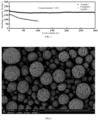
FIG. 1 is a graph of the cycle performance of the materials prepared in Example 1 and Comparative Example 1 of the present disclosure at a current density of 0.2 C; -
FIG. 2 is the SEM image of the doped nickel-rich ternary material prepared in Example 1 of the present disclosure. - In order to fully understand the present disclosure, the preferred experimental scheme of the present disclosure will be described below in conjunction with examples to further illustrate the characteristics and advantages of the present disclosure. Any change or alteration that does not deviate from the gist of the present disclosure can be understood by those skilled in the art. The scope of protection of the present disclosure is determined by the scope of the claims.
- Where specific conditions are not indicated in the embodiments of the present disclosure, it shall be carried out under the conventional conditions or the conditions recommended by the manufacturer. The raw materials, reagents, etc. used without indicating their manufacturers are all conventional products commercially available.
- A method of preparing a doped nickel-rich ternary material, comprising the following steps:
- (1) Preparing a solution of nickel nitrate, cobalt nitrate and manganese acetate with a molar ratio of Ni:Co:Mn=0.8:0.1:0.1 and a total concentration of 1 mol/L; Dissolving the above-mentioned salt solution in 200 mL deionized water and stirring until the salt solution is completely dissolved to obtain solution A; preparing a solution of sodium persulfate with a concentration of 0.1 mol/L, a solution of lanthanum nitrate and a solution of niobium oxide phosphate, both with a concentration of 0.015 mol/L, adding above solutions to the solution A and stirring well to obtain solution B;
- (2) Adding 100 mL aqueous ammonia and 10 mL nitric acid to the solution B, mixing the resulting solution well to obtain solution C;
- (3) Placing the solution C in an oven at 140°C for 6 h to obtain aerogel D;
- (4) Fully grinding the aerogel D, followed by keeping the aerogel at 200°C for 2 h in an oxygen atmosphere, and then heating the aerogel up to 500°C and keeping it at this temperature for 6h to obtain the doped nickel-rich ternary precursor;
- (5) Fully grinding and mixing the doped nickel-rich ternary precursor with a lithium source to obtain a mixture, and the stoichiometric ratio of the lithium content in the lithium source to the total metal ion content in the solution A prepared in step (1) is 1.06:1 (the amount of the lithium ions in the source is 0.2-0.25 mol). Placing the mixture at a temperature of 750°C in an oxygen atmosphere for 12 h, followed by annealing, grinding and screening the resulting product with a 325 mesh sieve to obtain the doped nickel-rich ternary material.
- A doped nickel-rich ternary material has a chemical formula LiNi0.797Co0.1Mn0.1NbLa0.003O2. Its first reversible capacity reached 193 mAh/g at the current of 0.2 C.
- During the first charge and discharge process, part of the active lithium participates in the construction of the SEI film, and cannot be released and returned to the positive electrode. An irreversible phase change occurs during the first delithiation process. After the first delithiation, the dynamic properties of the material decrease.
- The doped nickel-rich ternary material prepared above has excellent electrochemical performance as a lithium ion battery cathode material. The first reversible capacity reached 193 mAh/g at a current of 0.2 C. The reversible capacity after 300 charge-discharge cycles was still 180 mAh/g, and the reversible capacity remained 161 mAh/g after 200 charge-discharge cycles at a current of 5 C. The cycling performance test of the battery was carried out at 70°C, and the reversible capacity was still 173 mAh/g after 200 charge-discharge cycles at a current of 0.1 C.
- A method of preparing a doped nickel-rich ternary material, comprising the following steps:
- (1) Preparing a solution of nickel nitrate, cobalt nitrate and manganese acetate with a molar ratio of Ni:Co:Mn=0.8:0.1:0.1 and a total concentration of 1 mol/L; Dissolving the above-mentioned salt solution in 200 mL deionized water and stirring until the salt solution is completely dissolved to obtain solution A; preparing a solution of sodium persulfate with a concentration of 0.1 mol/L, a solution of lanthanum nitrate and a solution of niobium oxide phosphate, both with a concentration of 0.015 mol/L, adding above solutions to solution A and stirring well to obtain solution B;
- (2) Adding 100 mL aqueous ammonia and 10 mL nitric acid to the solution B, mixing the resulting solution well to obtain solution C;
- (3) Placing the solution C in an oven at 140°C for 6 h to obtain aerogel D;
- (4) Fully grinding the aerogel D, followed by keeping the aerogel at 200°C for 2 h in an oxygen atmosphere, and then heating the aerogel up to 500°C and keeping it at this temperature for 6 h to obtain the doped nickel-rich ternary precursor;
- (5) Fully grinding and mixing the doped nickel-rich ternary precursor with a lithium source to obtain a mixture, and the stoichiometric ratio of the lithium content in the lithium source to the total metal ion content in the solution A prepared in step (1) is 1.06:1. Placing the mixture at a temperature of 750 °C in an oxygen atmosphere for 12 h, followed by annealing, grinding and screening the resulting product with a 325 mesh sieve to obtain the doped nickel-rich ternary material.
- A doped nickel-rich ternary material has a chemical formula LiNi0.797Co0.1Mn0.1NbLa0.003O2. Its first reversible capacity reached 184mAh/g at the current of 0.2 C.
- The doped nickel-rich ternary material prepared above has excellent electrochemical performance as a lithium ion battery cathode material. The reversible capacity after 300 charge-discharge cycles at a current of 0.2 C was still 166 mAh/g, and remained 146 mAh/g after 200 charge-discharge cycles at a current of 5 C. The cycling performance test of the battery was carried out at 70°C, and the reversible capacity was still 163 mAh/g after 200 charge-discharge cycles at a current of 0.1 C.
- A method of preparing a doped nickel-rich ternary material, comprising the following steps:
- (1) Preparing a solution of nickel nitrate, cobalt nitrate and manganese acetate with a molar ratio of Ni:Co:Mn=0.8:0.1:0.1 and a total concentration of 1 mol/L; Dissolving the above-mentioned salt solution in 200 mL deionized water and stirring until the salt solution is completely dissolved to obtain solution A; preparing a solution of sodium persulfate with a concentration of 0.15 mol/L, a solution of lanthanum nitrate and a solution of niobium oxide phosphate, both with a concentration of 0.015 mol/L, adding above solutions to solution A and stirring well to obtain solution B;
- (2) Adding 100 mL aqueous ammonia and 10 mL nitric acid to the solution B, mixing the resulting solution well to obtain solution C;
- (3) Placing the solution C in an oven at 140°C for 6 h to obtain aerogel D;
- (4) Fully grinding the aerogel D, followed by keeping the aerogel at 200°C for 2 h in an oxygen atmosphere, and then heating the aerogel up to 500°C and keeping it at this temperature for 8h to obtain the doped nickel-rich ternary precursor;
- (5) Fully grinding and mixing the doped nickel-rich ternary precursor with a lithium source to obtain a mixture, and the stoichiometric ratio of the lithium content in the lithium source to the total metal ion content in the solution A prepared in step (1) is 1.06:1. Placing the mixture at a temperature of 750°C in an oxygen atmosphere for 12 h, followed by annealing, grinding and screening the resulting product with a 325 mesh sieve to obtain the doped nickel-rich ternary material.
- A doped nickel-rich ternary material has a chemical formula LiNi0.797Co0.1Mn0.1NbLa0.003O2. Its first reversible capacity reached 186mAh/g at the current of 0.2 C.
- The doped nickel-rich ternary material prepared above has excellent electrochemical performance as a lithium ion battery cathode material. The reversible capacity after 300 charge-discharge cycles at a current of 0.2 C was still 170 mAh/g, and remained 128 mAh/g after 200 charge-discharge cycles at a current of 5 C. The cycling performance test of the battery was carried out at 70°C, and the reversible capacity was still 158 mAh/g after 200 charge-discharge cycles at a current of 0.1 C.
- A method of preparing a doped nickel-rich ternary material, comprising the following steps:
- (1) Preparing a solution of nickel nitrate, cobalt nitrate and manganese acetate with a molar ratio of Ni:Co:Mn=0.8:0.1:0.1 and a total concentration of 1 mol/L; Dissolving the above-mentioned salt solution in 200 mL deionized water and stirring until the salt solution is completely dissolved to obtain solution A; preparing a solution of sodium persulfate with a concentration of 0.1 mol/L, a solution of lanthanum nitrate and a solution of niobium oxide phosphate, both with a concentration of 0.05 mol/L, adding above solutions to solution A and stirring well to obtain solution B;
- (2) Adding 100 mL aqueous ammonia and 10 mL nitric acid to the solution B, mixing the resulting solution well to obtain solution C;
- (3) Placing the solution C in an oven at 140°C for 6 h to obtain aerogel D;
- (4) Fully grinding the aerogel D, followed by keeping the aerogel at 200°C for 2 h in an oxygen atmosphere, and then heating the aerogel up to 500°C and keeping it at this temperature for 4 h to obtain the doped nickel-rich ternary precursor;
- (5) Fully grinding and mixing the doped nickel-rich ternary precursor with a lithium source to obtain a mixture, and the stoichiometric ratio of the lithium content in the lithium source to the total metal ion content in the solution A prepared in step (1) is 1.06:1. Placing the mixture at a temperature of 750°C in an oxygen atmosphere for 12 h, followed by annealing, grinding and screening the resulting product with a 325 mesh sieve to obtain the doped nickel-rich ternary material.
- A doped nickel-rich ternary material has a chemical formula of LiNi0.799Co0.1Mn0.1NbLa0.001O2. Its first reversible capacity reached 183 mAh/g at the current of 0.2 C.
- The doped nickel-rich ternary material prepared above has excellent electrochemical performance as a lithium ion battery cathode material. The reversible capacity after 300 charge-discharge cycles at a current of 0.2 C was still 165 mAh/g, and remained 133 mAh/g after 200 charge-discharge cycles at a current of 5 C. The cycling performance test of the battery was carried out at 70°C, and the reversible capacity was still 133 mAh/g after 200 charge-discharge cycles at a current of 0.1 C.
- A method of preparing a doped nickel-rich ternary material, comprising the following steps:
- (1) Preparing a solution of nickel nitrate, cobalt nitrate and manganese acetate with a molar ratio of Ni:Co:Mn=0.8:0.1:0.1 and a total concentration of 1 mol/L; Dissolving the above-mentioned salt solution in 200 mL deionized water and stirring until the salt solution is completely dissolved to obtain solution A; preparing a solution of sodium persulfate with a concentration of 0.1 mol/L, a solution of lanthanum nitrate and a solution of niobium oxide phosphate, both with a concentration of 0.005 mol/L, adding above solutions to solution A and stirring well to obtain solution B;
- (2) Adding 100 mL aqueous ammonia and 10 mL nitric acid to the solution B, mixing the resulting solution well to obtain solution C;
- (3) Placing the solution C in an oven at 140°C for 6 h to obtain aerogel D;
- (4) Fully grinding the aerogel D, followed by keeping the aerogel at 250°C for 2 h in an oxygen atmosphere, and then heating the aerogel up to 500°C and keeping it at this temperature for 6 h to obtain the doped nickel-rich ternary precursor;
- (5) Fully grinding and mixing the doped nickel-rich ternary precursor with a lithium source to obtain a mixture, and the stoichiometric ratio of the lithium content in the lithium source to the total metal ion content in the solution A prepared in step (1) is 1.06:1. Placing the mixture at a temperature of 700°C in an oxygen atmosphere for 12 h, followed by annealing, grinding and screening the resulting product with a 325 mesh sieve to obtain the doped nickel-rich ternary material.
- A doped nickel-rich ternary material has a chemical formula of LiNi0.799Co0.1Mn0.1NbLa0.001O2. Its first reversible capacity reached 181 mAh/g at the current of 0.2 C.
- The doped nickel-rich ternary material prepared above has excellent electrochemical performance as a lithium ion battery cathode material. The reversible capacity after 300 charge-discharge cycles at a current of 0.2 C was still 164 mAh/g, and remained 139 mAh/g after 200 charge-discharge cycles at a current of 5C. The cycling performance test of the battery was carried out at 70°C, and the reversible capacity was still 142 mAh/g after 200 charge-discharge cycles at a current of 0.1 C.
- A method of preparing a doped nickel-rich ternary material, comprising the following steps:
- (1) Preparing a solution of nickel nitrate, cobalt nitrate and manganese acetate with a molar ratio of Ni:Co:Mn=0.8:0.1:0.1 and a total concentration of 1 mol/L; Dissolving the above-mentioned salt solution in 200 mL deionized water and stirring until the salt solution is completely dissolved to obtain solution A; preparing a solution of sodium persulfate with a concentration of 0.1 mol/L, a solution of lanthanum nitrate and a solution of niobium oxide phosphate, both with a concentration of 0.015 mol/L, adding above solutions to solution A and stirring well to obtain solution B;
- (2) Adding 100 mL aqueous ammonia and 10mL nitric acid to the solution B, mixing the resulting solution well to obtain solution C;
- (3) Placing the solution C in an oven at 120°C for 4 h to obtain aerogel D;
- (4) Fully grinding the aerogel D, followed by keeping the aerogel at 150°C for 2 h in an oxygen atmosphere, and then heating the aerogel up to 400°C and keeping it at this temperature for 6 h to obtain the doped nickel-rich ternary precursor;
- (5) Fully grinding and mixing the doped nickel-rich ternary precursor with a lithium source to obtain a mixture, and the stoichiometric ratio of the lithium content in the lithium source to the total metal ion content in the solution A prepared in step (1) is 1.06:1. Placing the mixture at a temperature of 600°C in an oxygen atmosphere for 8 h, followed by annealing, grinding and screening the resulting product with a 325 mesh sieve to obtain the doped nickel-rich ternary material.
- A doped nickel-rich ternary material has a chemical formula of LiNi0.797Co0.1Mn0.1NbLa0.003O2. Its first reversible capacity reached 182 mAh/g at the current of 0.2 C.
- The doped nickel-rich ternary material prepared above has excellent electrochemical performance as a lithium ion battery cathode material. The reversible capacity after 300 charge-discharge cycles at a current of 0.2 C was still 159 mAh/g, and remained 135 mAh/g after 200 charge-discharge cycles at a current of 5 C. The cycling performance test of the battery was carried out at 70°C, and the reversible capacity was 123 mAh/g after 200 charge-discharge cycles at a current of 0.1 C.
- A method of preparing a doped nickel-rich ternary material, comprising the following steps:
- (1) Preparing a solution of nickel nitrate, cobalt nitrate and manganese acetate with a molar ratio of Ni:Co:Mn=0.8:0.1:0.1 and a total concentration of 1 mol/L; Dissolving the above-mentioned salt solution in 200 mL deionized water and stirring until the salt solution is completely dissolved to obtain solution A; preparing a solution of sodium persulfate with a concentration of 0.1 mol/L, a solution of lanthanum nitrate and a solution of niobium oxide phosphate, both with a concentration of 0.015 mol/L, adding above solutions to solution A and stirring well to obtain solution B;
- (2) Adding 100 mL aqueous ammonia and 10 mL nitric acid to the solution B, mixing the resulting solution well to obtain solution C;
- (3) Placing the solution C in an oven at 180°C for 8 h to obtain aerogel D;
- (4) Fully grinding the aerogel D, followed by keeping the aerogel at 250°C for 3 h in an oxygen atmosphere, and then heating the aerogel up to 600°C and keeping it at this temperature for 8 h to obtain the doped nickel-rich ternary precursor;
- (5) Fully grinding and mixing the doped nickel-rich ternary precursor with a lithium source to obtain a mixture, and the stoichiometric ratio of the lithium content in the lithium source to the total metal ion content in the solution A prepared in step (1) is 1.06:1. Placing the mixture at a temperature of 900°C in an oxygen atmosphere for 16 h, followed by annealing, grinding and screening the resulting product with a 325 mesh sieve to obtain the doped nickel-rich ternary material.
- A doped nickel-rich ternary material has a chemical formula of LiNi0.797Co0.1Mn0.1NbLa0.003O2. Its first reversible capacity reached 187 mAh/g at the current of 0.2 C.
- The doped nickel-rich ternary material prepared above has excellent electrochemical performance as a lithium ion battery cathode material. The reversible capacity after 300 charge-discharge cycles at a current of 0.2 C was still 168mAh/g, and remained 135 mAh/g after 200 charge-discharge cycles at a current of 5 C. The cycling performance test of the battery was carried out at 70°C, and the reversible capacity was 133 mAh/g after 200 charge-discharge cycles at a current of 0.1 C.
- A method of preparing a nickel-rich ternary material, comprising the following steps:
- (1) Preparing a solution of nickel nitrate, cobalt nitrate and manganese acetate with a molar ratio of Ni:Co:Mn=0.8:0.1:0.1 and a total concentration of 1 mol/L; Dissolving the above-mentioned salt solution in 200 mL deionized water and stirring until the salt solution is completely dissolved to obtain solution A; preparing a solution of sodium persulfate with a concentration of 0.1 mol/L, mixing the solution with 100 mL aqueous ammonia and the solution A and stirring well to obtain solution B;
- (2) Placing the solution B in an oven at 140°C for 6 h to obtain aerogel C;
- (3) Fully grinding the aerogel C, followed by keeping the aerogel at 500°C for 6h in an oxygen atmosphere to obtain a nickel-rich ternary precursor;
- (4) Fully grinding and mixing the nickel-rich ternary precursor with a lithium source to obtain a mixture, and the stoichiometric ratio of the lithium content in the lithium source to the total metal ion content in the solution A prepared in step (1) is 1.06:1. Placing the mixture at a temperature of 700°C in an oxygen atmosphere for 12 h, followed by annealing, grinding and screening the resulting product with a 325 mesh sieve to obtain the nickel-rich ternary material.
- A nickel-rich ternary material has a chemical formula of LiNi0.8Co0.1Mn0.1O2. Its first reversible capacity reached 162 mAh/g at the current of 0.2 C.
- The nickel-rich ternary material prepared by comparative example 1 was used as a lithium ion battery cathode material. The reversible capacity after 100 charge-discharge cycles at a current of 0.2 C was 83 mAh/g, and remained 60 mAh/g after 100 charge-discharge cycles at a current of 5 C. The cycling performance test of the battery was carried out at 70°C, and the reversible capacity was 68 mAh/g after 100 charge-discharge cycles at a current of 0.1 C.
- A method of preparing a nickel-rich ternary material, comprising the following steps:
- (1) Preparing a solution of nickel nitrate, cobalt nitrate and manganese acetate with a molar ratio of Ni:Co:Mn=0.8:0.1:0.1 and a total concentration of 1 mol/L; Dissolving the above-mentioned salt solution in 200 mL deionized water and stirring until the salt solution is completely dissolved to obtain solution A; preparing a solution of lanthanum nitrate and a solution of niobium oxide phosphate, both with a concentration of 0.015 mol/L, adding above solutions to the solution A and stirring well to obtain solution B;
- (2) Placing the solution B in an oven at 140°C for 6 h to obtain aerogel C;
- (3) Fully grinding the aerogel C, followed by keeping the aerogel at 500°C for 6 h in an oxygen atmosphere to obtain the doped nickel-rich ternary precursor;
- (4) Fully grinding and mixing the doped nickel-rich ternary precursor with the lithium source to obtain a mixture, and the stoichiometric ratio of the lithium content in the lithium source to the total metal ion content in the solution A prepared in step (1) is 1.06:1. Placing the mixture at a temperature of 700°C in an oxygen atmosphere for 12 h, followed by annealing, grinding and screening the resulting product with a 325 mesh sieve to obtain the doped nickel-rich ternary material.
- A doped nickel-rich ternary material has a chemical formula of LiNi0.797Co0.1Mn0.1NbLa0.003O2. Its first reversible capacity reached 158 mAh/g at a current of 0.2 C.
- The nickel-rich ternary material prepared by comparative example 2 was used as a lithium ion battery cathode material. The reversible capacity after 100 charge-discharge cycles at a current of 0.2 C was 95 mAh/g, and remained 63 mAh/g after 100 charge-discharge cycles at a current of 5 C. The cycling performance test of the battery was carried out at 70°C, and the reversible capacity was 78 mAh/g after 100 charge-discharge cycles at a current of 0.1 C.
- A method of preparing a nickel-rich ternary material, comprising the following steps:
- (1) Preparing a solution of nickel nitrate, cobalt nitrate and manganese acetate with a molar ratio of Ni:Co:Mn=0.8:0.1:0.1 and a total concentration of 1 mol/L; Dissolving the above-mentioned salt solution in 200 mL deionized water and stirring until the salt solution is completely dissolved to obtain solution A;
- (2) Placing the solution A in an oven at 140°C for 6 h to obtain aerogel B;
- (3) Fully grinding the aerogel B, followed by keeping the aerogel at 200°C for 2 h, and then heating the aerogel to 500°C and hold it at this temperature for 6h in an oxygen atmosphere to obtain the nickel-rich ternary precursor;
- (4) Fully grinding and mixing the nickel-rich ternary precursor with a lithium source to obtain a mixture, and the stoichiometric ratio of the lithium content in the lithium source to the total metal ion content in the solution A prepared in step (1) is 1.06:1. Placing the mixture at a temperature of 700°C in an oxygen atmosphere for 12 h, followed by annealing, grinding and screening the resulting product with a 325 mesh sieve to obtain the doped nickel-rich ternary material.
- A doped nickel-rich ternary material has a chemical formula of LiNi0.8Co0.1Mn0.1O2. Its first reversible capacity reached 152 mAh/g at a current of 0.2 C.
- The nickel-rich ternary material prepared by comparative example 3 was used as a lithium ion battery cathode material. The reversible capacity after 100 charge-discharge cycles at a current of 0.2 C was 89 mAh/g, and remained 69 mAh/g after 100 charge-discharge cycles at a current of 5 C. The cycling performance test of the battery was carried out at 70°C, and the reversible capacity was 73 mAh/g after 100 charge-discharge cycles at a current of 0.1 C.
- Comparing the preparation conditions and test results of the materials prepared in the examples and comparative examples, the results shown in Table 1 are obtained.
Table 1 Comparison of the cycle performance of the materials prepared in Examples 1-7 and Comparative Examples 1-3 Item Cycle performance/0.2C Specific capacity/ First Cycle perform ance/0.2C Specific capacity/ cycles Cycle perform ance/5C Specific capacity/ cycles Cycle performance under high temperature /70°C/0.1C Cycle performance/ 0.2C/rate/ cycles Example 1 193 mAhg-1 181 mAhg-1 /300th 161 mAhg-1 /200th 173 mAhg-1 /200th 88.29% Example 2 184 mAhg-1 166 mAhg-1 /300th 146 mAhg-1 /200th 163 mAhg-1 /200th 82.59% Example 3 186 mAhg-1 170 mAhg-1 /300th 128 mAhg-1 /200th 158 mAhg-1 /200th 86.73% Example 4 183 mAhg-1 165 mAhg-1 /300th 133 mAhg-1 /200th 133 mAhg-1 /200th 90.16% Example 5 181 mAhg-1 164 mAhg-1 /300th 139 mAhg-1 /200th 142 mAhg-1 /200th 83.2% Example 6 182 mAhg-1 159 mAhg-1 /300th 135 mAhg-1 /200th 123 mAhg-1 /300th 87.36% Example 7 187 mAhg-1 168 mAhg-1 /300th 135 mAhg-1 /200th 133 mAhg-1 /200th 88.40% Comparative Example 1 162 mAhg-1 83 mAhg-1 /100th 60 mAhg-1 /100th 68 mAhg-1 /100th 51.23% Comparative Example 2 158 mAhg-1 95 mAhg-1 /100th 63 mAhg-1 /100th 78 mAhg-1 1100th 0.6% Comparative Example 3 152 mAhg-1 89 mAhg-1 /100th 69 mAhg-1 /100th 73 mAhg-1 /100th 58.55% - It can be seen from Table 1 and
Figure 1 that the method of elements doping in presence of oxidant and adoption of second calcinating can effectively improve the electrochemical performance of the material. The material prepared by this method exhibits a high specific capacity and a long and stable cycle. It can be seen fromFigure 2 that the material particles prepared by this method are uniform and have a regular spherical shape. - In the above, a coated nickel-rich ternary material provided by the present disclosure and its preparation method and application have been introduced in detail. Specific examples are used to illustrate the principle and implementation of the present disclosure. The description of the above examples is only used to help understand the method and core idea of the present disclosure, including the best mode, and also enables any skilled in the art to practice the present disclosure, including manufacturing and using any device or system, and implementing any combined method. It should be pointed out that for those of ordinary skill in the art, without departing from the principle of the present disclosure, several improvements and modifications can be made to the present disclosure, and these improvements and modifications also fall within the protection scope of the claims of the present disclosure. The scope of patent protection of the present disclosure is defined by the claims, and may include other embodiments that those skilled in the art can think of. If these other embodiments have structural elements that are not different from the literal expression of the claims, or if they include equivalent structural elements that are not substantially different from the literal expression of the claims, these other embodiments should also be included in the scope of the claims.
Claims (10)
- A method of preparing a doped nickel-rich ternary material, comprising the following steps:(1) dissolving a nickel source, a cobalt source, and a manganese source in a solvent to obtain solution A, adding an oxidant and a doping element to the solution A to obtain solution B;(2) adding a complexing agent and nitric acid to the solution B to obtain solution C;(3) drying the solution C to obtain an aerogel compound, and grinding the aerogel compound to obtain aerogel D;(4) subjecting the aerogel D to a first calcinating, followed by a second calcinating to obtain a precursor powder E;(5) mixing the precursor powder E with a lithium source to obtain a mixture, subjecting the mixture to calcinating, grinding and screening to obtain the doped nickel-rich ternary material; wherein the doping element is at least one selected from the group consisting of Zr, Nb, Al, F, Mn, and La.
- The method according to claim 1, wherein in step (1), the nickel source is nickel nitrate hexahydrate, the cobalt source is cobalt nitrate hexahydrate, and the manganese source is manganese acetate tetrahydrate; a molar ratio of the nickel source to the cobalt source to the manganese source is (0.6-0.9) :(0.05-0.2): (0.05-0.2).
- The method according to claim 1, wherein in step (1), the oxidizing agent is at least one selected from the group consisting of sodium persulfate, sodium peroxide, and ammonium persulfate.
- The method according to claim 1, wherein in step (1), the doping element being added to the solution A is in the form of a nitrate, a phosphate, or a sulfate.
- The method according to claim 1, wherein in step (2), the complexing agent is an acrylic acid solution.
- The method according to claim 1, wherein in step (4), the first calcinating is carried out at a temperature of 150°C-250°C for 1-3 h in air or an oxygen atmosphere; the second calcinating is carried out at a temperature of 400°C-600°C for 4-8 h in air or an oxygen atmosphere.
- The method according to claim 1, wherein in step (5), the lithium source is lithium carbonate or lithium hydroxide.
- A doped nickel-rich ternary material prepared by the method of any one of claims 1-7, wherein the doped nickel-rich ternary material has a chemical formula of LiNixCoyMnzMiO2, M is at least one selected from the group consisting of Zr, Nb, Al, F, Mn, and La, wherein 0.6≤x≤0.9, 0.05≤y≤0.2, 0.05≤z≤0.2, 0.00001≤i<0.1, x+y+z+i=1.
- The doped nickel-rich ternary material according to claim 8, wherein the doped nickel-rich ternary material has a first reversible capacity of 181-193 mAh/g.
- A lithium battery comprising the doped nickel-rich ternary material according to any one of claims 8-9.
Applications Claiming Priority (2)
| Application Number | Priority Date | Filing Date | Title |
|---|---|---|---|
| CN202011156854.0A CN112340785B (en) | 2020-10-26 | 2020-10-26 | Doped high-nickel ternary material and preparation method thereof |
| PCT/CN2021/123411 WO2022089205A1 (en) | 2020-10-26 | 2021-10-13 | Doped high-nickel ternary material and preparation method therefor |
Publications (2)
| Publication Number | Publication Date |
|---|---|
| EP4234498A1 true EP4234498A1 (en) | 2023-08-30 |
| EP4234498A4 EP4234498A4 (en) | 2024-05-15 |
Family
ID=74358352
Family Applications (1)
| Application Number | Title | Priority Date | Filing Date |
|---|---|---|---|
| EP21884934.7A Withdrawn EP4234498A4 (en) | 2020-10-26 | 2021-10-13 | DOPED TERNARY MATERIAL WITH HIGH NICKEL CONTENT AND MANUFACTURING PROCESS THEREOF |
Country Status (4)
| Country | Link |
|---|---|
| US (1) | US20230264975A1 (en) |
| EP (1) | EP4234498A4 (en) |
| CN (1) | CN112340785B (en) |
| WO (1) | WO2022089205A1 (en) |
Families Citing this family (8)
| Publication number | Priority date | Publication date | Assignee | Title |
|---|---|---|---|---|
| CN112340785B (en) * | 2020-10-26 | 2022-11-15 | 广东邦普循环科技有限公司 | Doped high-nickel ternary material and preparation method thereof |
| CN114739762B (en) * | 2022-03-16 | 2022-12-02 | 国标(北京)检验认证有限公司 | Preparation method of nickel cobalt lithium manganate standard sample |
| CN115010190B (en) * | 2022-06-22 | 2023-12-22 | 北京理工大学重庆创新中心 | High-entropy oxide positive electrode material and preparation method and application thereof |
| CN115784322B (en) * | 2022-11-23 | 2024-09-10 | 上海大学 | Modified primary particles and preparation method and application thereof |
| CN116053477B (en) * | 2023-02-01 | 2025-06-27 | 厦门厦钨新能源材料股份有限公司 | Fluorine-rare earth element synergistically modified cathode material and preparation method thereof |
| CN117430171B (en) * | 2023-10-24 | 2026-03-03 | 荆门市格林美新材料有限公司 | Nickel-cobalt-manganese positive electrode precursor material doped with anions and cations as well as preparation method and application thereof |
| CN117658239A (en) * | 2023-12-06 | 2024-03-08 | 荆门市格林美新材料有限公司 | A kind of nickel-rich cathode precursor and its preparation method and application |
| CN118899432A (en) * | 2024-06-28 | 2024-11-05 | 南京航空航天大学 | A sodium-doped ultra-high nickel ternary lithium-ion battery positive electrode material and its preparation method and application |
Family Cites Families (20)
| Publication number | Priority date | Publication date | Assignee | Title |
|---|---|---|---|---|
| CN1315206C (en) * | 2004-06-15 | 2007-05-09 | 中国科学技术大学 | Liquid phase synthesis method of cathode material for lithium ion secondary battery |
| CN101764204A (en) * | 2009-10-14 | 2010-06-30 | 孙琦 | Preparation method of rear earth lanthanum doping type lithium manganate |
| CN102306765A (en) * | 2011-08-18 | 2012-01-04 | 合肥国轩高科动力能源有限公司 | A kind of preparation method of lithium ion cathode material nickel manganese cobalt |
| CN102496708A (en) * | 2011-12-12 | 2012-06-13 | 江南大学 | Multi-element lamellar positive pole material of lithium ion battery and preparation method for multi-element lamellar positive pole material |
| CN102709568A (en) * | 2012-06-25 | 2012-10-03 | 天津工业大学 | A kind of preparation method of LiNixCoyMn1-x-yO2 of nickel-cobalt manganese oxide lithium lithium ion battery cathode material |
| CN103151515B (en) * | 2013-03-27 | 2015-09-16 | 陕西汇沣新能源科技有限公司 | A kind of preparation method of niobium cation doping lithium manganate composite anode material |
| CN103337615A (en) * | 2013-06-08 | 2013-10-02 | 合肥国轩高科动力能源股份公司 | Positive pole material of high-capacity lithium ion battery and preparation method thereof |
| CN104253265A (en) * | 2013-06-28 | 2014-12-31 | 江南大学 | Cation-doped and modified lithium ion battery (4:4:2)type ternary cathode material and preparation method thereof |
| CN104201378B (en) * | 2014-09-12 | 2017-04-12 | 中信国安盟固利电源技术有限公司 | Method for preparing high-nickel ternary cathode material of lithium ion battery |
| CN105742595A (en) * | 2016-03-04 | 2016-07-06 | 广东精进能源有限公司 | Nickel-containing lithium-rich and manganese-based positive electrode material and preparation method thereof, positive electrode and battery |
| CN106571455B (en) * | 2016-11-10 | 2019-01-18 | 上海纳米技术及应用国家工程研究中心有限公司 | A kind of silver-colored mesopore silicon oxide cladding tertiary cathode material of load and preparation method and application |
| CN108878821A (en) * | 2018-06-19 | 2018-11-23 | 合肥国轩高科动力能源有限公司 | A kind of high-nickel ternary positive electrode material coated with lanthanum oxide on the surface and preparation method thereof |
| CN108899539A (en) * | 2018-06-28 | 2018-11-27 | 上海电力学院 | A kind of nickelic ternary lithium ion anode material and preparation method thereof |
| CN109461920B (en) * | 2018-11-08 | 2022-01-11 | 成都理工大学 | Lanthanum-aluminum-doped high-nickel layered oxide material and preparation method and application thereof |
| CN109728277A (en) * | 2018-12-29 | 2019-05-07 | 桂林电器科学研究院有限公司 | Method, product and battery for surface treatment of high nickel ternary cathode material |
| CN110862108A (en) * | 2019-11-21 | 2020-03-06 | 桂林理工大学 | A method for improving the electrochemical performance of high nickel ternary cathode materials by fluorine doping modification |
| CN111106343A (en) * | 2019-12-30 | 2020-05-05 | 华南理工大学 | A kind of lanthanum and fluorine co-doped high nickel ternary positive electrode material and its preparation method and application |
| CN111377487A (en) * | 2020-03-26 | 2020-07-07 | 江苏海基新能源股份有限公司 | Preparation method of Al and F co-doped high-nickel ternary cathode material |
| CN111463428A (en) * | 2020-04-15 | 2020-07-28 | 江南大学 | A kind of sodium ion doped ternary cathode material and preparation method thereof |
| CN112340785B (en) * | 2020-10-26 | 2022-11-15 | 广东邦普循环科技有限公司 | Doped high-nickel ternary material and preparation method thereof |
-
2020
- 2020-10-26 CN CN202011156854.0A patent/CN112340785B/en active Active
-
2021
- 2021-10-13 WO PCT/CN2021/123411 patent/WO2022089205A1/en not_active Ceased
- 2021-10-13 EP EP21884934.7A patent/EP4234498A4/en not_active Withdrawn
-
2023
- 2023-04-26 US US18/139,947 patent/US20230264975A1/en active Pending
Also Published As
| Publication number | Publication date |
|---|---|
| CN112340785A (en) | 2021-02-09 |
| EP4234498A4 (en) | 2024-05-15 |
| CN112340785B (en) | 2022-11-15 |
| WO2022089205A1 (en) | 2022-05-05 |
| US20230264975A1 (en) | 2023-08-24 |
Similar Documents
| Publication | Publication Date | Title |
|---|---|---|
| US20230264975A1 (en) | Doped nickel-rich ternary material and preparation method thereof | |
| CN111785960B (en) | Vanadium pentoxide/rGO coated nickel cobalt lithium manganate cathode material and preparation method | |
| CN109659542B (en) | High-voltage lithium cobalt oxide cathode material with core-shell structure and preparation method thereof | |
| US20190386293A1 (en) | Ternary material and preparation method thereof, battery slurry, positive electrode and lithium battery | |
| CN116632240A (en) | A kind of positive electrode material of lithium ion battery and preparation method thereof, lithium ion battery | |
| CN109616664B (en) | Nickel-cobalt-manganese precursor, preparation method of nickel-cobalt-manganese ternary material and lithium ion battery | |
| CN108550802B (en) | Y/La-doped Co/B Co-coated nickel-cobalt-manganese ternary positive electrode material and preparation method thereof | |
| CN107275620A (en) | One kind is mixed with modification lithium-ion battery stratiform nickel-rich positive pole material and preparation method thereof | |
| CN103811743A (en) | Lithium-rich anode material, lithium battery anode and lithium battery | |
| CN103618081A (en) | A high-voltage high-capacity lithium-ion battery positive electrode material and preparation method thereof | |
| CN111403710B (en) | A kind of aluminum trifluoride-coated ternary doped lithium manganate cathode material and preparation method thereof | |
| CN114784236B (en) | Coated Al and F co-doped monocrystalline lithium manganate positive electrode material and preparation method and application thereof | |
| CN111422919A (en) | Quaternary positive electrode material, preparation method thereof, positive electrode and battery | |
| CN103811753A (en) | Lithium-rich anode material, lithium battery anode and lithium battery | |
| CN108493435A (en) | Anode material for lithium-ion batteries Li (Ni0.8Co0.1Mn0.1)1-xYxO2And preparation method | |
| CN112002879A (en) | Zirconium tetrafluoride coated aluminum fluoride double-doped lithium manganate positive electrode material and preparation method thereof | |
| CN115881914B (en) | High-voltage nickel-manganese positive electrode material and preparation method thereof | |
| WO2024093820A1 (en) | Positive electrode material and preparation method therefor, positive electrode and battery | |
| CN114597372B (en) | Ultra-high nickel anode material and preparation method and application thereof | |
| CN108695506A (en) | A kind of nickel cobalt aluminic acid lithium material and preparation method thereof of sodium base oxidant cladding | |
| CN108539167A (en) | A kind of lithium ion battery nucleocapsid high-voltage anode material and preparation method thereof | |
| CN117300141B (en) | A lithium-rich manganese-based cathode material, its preparation method, battery cathode, and battery. | |
| CN116282220B (en) | Barium strontium titanate coated bimetal doped ternary positive electrode material and preparation method thereof | |
| CN115939368A (en) | A layered oxide cathode material with low volume change during charge and discharge and its preparation method | |
| CN114864911A (en) | Modified high-nickel ternary cathode material and preparation method and application thereof |
Legal Events
| Date | Code | Title | Description |
|---|---|---|---|
| STAA | Information on the status of an ep patent application or granted ep patent |
Free format text: STATUS: THE INTERNATIONAL PUBLICATION HAS BEEN MADE |
|
| PUAI | Public reference made under article 153(3) epc to a published international application that has entered the european phase |
Free format text: ORIGINAL CODE: 0009012 |
|
| STAA | Information on the status of an ep patent application or granted ep patent |
Free format text: STATUS: REQUEST FOR EXAMINATION WAS MADE |
|
| 17P | Request for examination filed |
Effective date: 20230525 |
|
| AK | Designated contracting states |
Kind code of ref document: A1 Designated state(s): AL AT BE BG CH CY CZ DE DK EE ES FI FR GB GR HR HU IE IS IT LI LT LU LV MC MK MT NL NO PL PT RO RS SE SI SK SM TR |
|
| DAX | Request for extension of the european patent (deleted) | ||
| RAV | Requested validation state of the european patent: fee paid |
Extension state: MA Effective date: 20230525 |
|
| A4 | Supplementary search report drawn up and despatched |
Effective date: 20240411 |
|
| RIC1 | Information provided on ipc code assigned before grant |
Ipc: H01M 4/505 20100101ALI20240405BHEP Ipc: C01G 53/00 20060101AFI20240405BHEP |
|
| STAA | Information on the status of an ep patent application or granted ep patent |
Free format text: STATUS: THE APPLICATION IS DEEMED TO BE WITHDRAWN |
|
| 18D | Application deemed to be withdrawn |
Effective date: 20241031 |