EP4233852B1 - Sublingual film dosage of rasagiline or pharmaceutically acceptable salt thereof, and preparation method therefor and use thereof - Google Patents
Sublingual film dosage of rasagiline or pharmaceutically acceptable salt thereof, and preparation method therefor and use thereof Download PDFInfo
- Publication number
- EP4233852B1 EP4233852B1 EP21881489.5A EP21881489A EP4233852B1 EP 4233852 B1 EP4233852 B1 EP 4233852B1 EP 21881489 A EP21881489 A EP 21881489A EP 4233852 B1 EP4233852 B1 EP 4233852B1
- Authority
- EP
- European Patent Office
- Prior art keywords
- rasagiline
- film
- pharmaceutically acceptable
- acceptable salt
- sublingual
- Prior art date
- Legal status (The legal status is an assumption and is not a legal conclusion. Google has not performed a legal analysis and makes no representation as to the accuracy of the status listed.)
- Active
Links
Images

Classifications
-
- A—HUMAN NECESSITIES
- A61—MEDICAL OR VETERINARY SCIENCE; HYGIENE
- A61K—PREPARATIONS FOR MEDICAL, DENTAL OR TOILETRY PURPOSES
- A61K9/00—Medicinal preparations characterised by special physical form
- A61K9/0012—Galenical forms characterised by the site of application
- A61K9/0053—Mouth and digestive tract, i.e. intraoral and peroral administration
- A61K9/006—Oral mucosa, e.g. mucoadhesive forms, sublingual droplets; Buccal patches or films; Buccal sprays
-
- A—HUMAN NECESSITIES
- A61—MEDICAL OR VETERINARY SCIENCE; HYGIENE
- A61K—PREPARATIONS FOR MEDICAL, DENTAL OR TOILETRY PURPOSES
- A61K31/00—Medicinal preparations containing organic active ingredients
- A61K31/13—Amines
- A61K31/135—Amines having aromatic rings, e.g. ketamine, nortriptyline
-
- A—HUMAN NECESSITIES
- A61—MEDICAL OR VETERINARY SCIENCE; HYGIENE
- A61K—PREPARATIONS FOR MEDICAL, DENTAL OR TOILETRY PURPOSES
- A61K47/00—Medicinal preparations characterised by the non-active ingredients used, e.g. carriers or inert additives; Targeting or modifying agents chemically bound to the active ingredient
- A61K47/02—Inorganic compounds
-
- A—HUMAN NECESSITIES
- A61—MEDICAL OR VETERINARY SCIENCE; HYGIENE
- A61K—PREPARATIONS FOR MEDICAL, DENTAL OR TOILETRY PURPOSES
- A61K47/00—Medicinal preparations characterised by the non-active ingredients used, e.g. carriers or inert additives; Targeting or modifying agents chemically bound to the active ingredient
- A61K47/06—Organic compounds, e.g. natural or synthetic hydrocarbons, polyolefins, mineral oil, petrolatum or ozokerite
- A61K47/26—Carbohydrates, e.g. sugar alcohols, amino sugars, nucleic acids, mono-, di- or oligo-saccharides; Derivatives thereof, e.g. polysorbates, sorbitan fatty acid esters or glycyrrhizin
-
- A—HUMAN NECESSITIES
- A61—MEDICAL OR VETERINARY SCIENCE; HYGIENE
- A61K—PREPARATIONS FOR MEDICAL, DENTAL OR TOILETRY PURPOSES
- A61K47/00—Medicinal preparations characterised by the non-active ingredients used, e.g. carriers or inert additives; Targeting or modifying agents chemically bound to the active ingredient
- A61K47/30—Macromolecular organic or inorganic compounds, e.g. inorganic polyphosphates
- A61K47/32—Macromolecular compounds obtained by reactions only involving carbon-to-carbon unsaturated bonds, e.g. carbomers, poly(meth)acrylates, or polyvinyl pyrrolidone
-
- A—HUMAN NECESSITIES
- A61—MEDICAL OR VETERINARY SCIENCE; HYGIENE
- A61K—PREPARATIONS FOR MEDICAL, DENTAL OR TOILETRY PURPOSES
- A61K47/00—Medicinal preparations characterised by the non-active ingredients used, e.g. carriers or inert additives; Targeting or modifying agents chemically bound to the active ingredient
- A61K47/30—Macromolecular organic or inorganic compounds, e.g. inorganic polyphosphates
- A61K47/36—Polysaccharides; Derivatives thereof, e.g. gums, starch, alginate, dextrin, hyaluronic acid, chitosan, inulin, agar or pectin
-
- A—HUMAN NECESSITIES
- A61—MEDICAL OR VETERINARY SCIENCE; HYGIENE
- A61K—PREPARATIONS FOR MEDICAL, DENTAL OR TOILETRY PURPOSES
- A61K47/00—Medicinal preparations characterised by the non-active ingredients used, e.g. carriers or inert additives; Targeting or modifying agents chemically bound to the active ingredient
- A61K47/30—Macromolecular organic or inorganic compounds, e.g. inorganic polyphosphates
- A61K47/36—Polysaccharides; Derivatives thereof, e.g. gums, starch, alginate, dextrin, hyaluronic acid, chitosan, inulin, agar or pectin
- A61K47/38—Cellulose; Derivatives thereof
-
- A—HUMAN NECESSITIES
- A61—MEDICAL OR VETERINARY SCIENCE; HYGIENE
- A61K—PREPARATIONS FOR MEDICAL, DENTAL OR TOILETRY PURPOSES
- A61K47/00—Medicinal preparations characterised by the non-active ingredients used, e.g. carriers or inert additives; Targeting or modifying agents chemically bound to the active ingredient
- A61K47/30—Macromolecular organic or inorganic compounds, e.g. inorganic polyphosphates
- A61K47/36—Polysaccharides; Derivatives thereof, e.g. gums, starch, alginate, dextrin, hyaluronic acid, chitosan, inulin, agar or pectin
- A61K47/40—Cyclodextrins; Derivatives thereof
-
- A—HUMAN NECESSITIES
- A61—MEDICAL OR VETERINARY SCIENCE; HYGIENE
- A61P—SPECIFIC THERAPEUTIC ACTIVITY OF CHEMICAL COMPOUNDS OR MEDICINAL PREPARATIONS
- A61P25/00—Drugs for disorders of the nervous system
- A61P25/14—Drugs for disorders of the nervous system for treating abnormal movements, e.g. chorea, dyskinesia
- A61P25/16—Anti-Parkinson drugs
-
- A—HUMAN NECESSITIES
- A61—MEDICAL OR VETERINARY SCIENCE; HYGIENE
- A61P—SPECIFIC THERAPEUTIC ACTIVITY OF CHEMICAL COMPOUNDS OR MEDICINAL PREPARATIONS
- A61P25/00—Drugs for disorders of the nervous system
- A61P25/28—Drugs for disorders of the nervous system for treating neurodegenerative disorders of the central nervous system, e.g. nootropic agents, cognition enhancers, drugs for treating Alzheimer's disease or other forms of dementia
Definitions
- the present disclosure relates to a sublingual film of Rasagiline or a pharmaceutically acceptable salt thereof, and a preparation method therefor and a use thereof.
- Parkinson's disease the second most common neurodegenerative disease, mostly occurs in people over the age of 40, and 2-3% of the elderly over the age of 65 are afflicted by this disease. Symptoms are different for each Parkinson's patient, but the most common symptoms are movement disorders and stiffness of skeletal muscles, tremors, slowness of movement, poor balance and gait disturbance. In addition, it is often accompanied by depression, sleep disturbance, dizziness, dementia, speech impairment, respiratory system disease and dysphagia, and the symptoms will worsen year by year, and even lead to death.
- the drugs for treating Parkinson's disease mainly include Levodopa, DA receptor agonists, MAO-B inhibitors, COMT inhibitors, anticholinergic agents, etc., wherein the most common one is Levodopa.
- Levodopa can quickly improve Parkinson's symptoms and has irreplaceable advantages, its advantage is merely in the initial few years of treatment, and the clinical effect will be significantly weakened after long-term use, and there are serious side effects, including symptoms like movement disorders, motor fluctuations (commonly known as the "on-off phenomenons"), and mental confusions, etc.
- Rasagiline mesylate is a potent, selective and irreversible MAO-B inhibitor used in the treatment of Parkinson's disease, Alzheimer's disease and a variety of other disorders by inhibiting MAO in the brain. Metabolism of Rasagiline does not produce Amphetamine and does not cause unwanted sympathomimetic effects. Compared with Levodopa, Rasagiline has better safety and can be used alone for the treatment of patients with early Parkinson's disease.
- the marketed formulation of Rasagiline mesylate is an ordinary tablet, with the product name AZILECT, which was first launched in Israel in March 2005, in the UK in June, in Ireland in September, in the United States in 2006, and officially launched in China in 2017.
- the specifications are 0.5 mg and 1 mg (calculated as Rasagiline).
- the formulation patents on Rasagiline and pharmaceutically acceptable salts thereof are all oral administration formulations, such as Rasagiline orally disintegrating composition ( CN101098685A ), a Rasagiline formulation and a preparation method therefor ( CN103315983A ), a Rasagiline tablet ( CN105496979A ), a Rasagiline tablet and a preparation method therefor ( CN107753446A ), Rasagiline oral solid formulations ( CN1911211A ), orally disintegrating tablets of Rasagiline or pharmaceutically acceptable salts thereof and preparation methods therefor ( CN101874790A ), Rasagiline soft gelatin capsules ( EP2285214B1 ), Rasagiline formulations and processes for their preparation ( US7619117B1 ), Rasagiline formulations ( WO2010111264A2 ).
- Rasagiline mesylate is affected by the first-pass effect of the liver, and bioavailability thereof is low, about 36%.
- the main risk source of Rasagiline in use is high blood pressure, which is often called the "cheese effect”.
- This effect is caused by the inhibition of peripheral MAO, which is found in high concentrations in the stomach.
- Rasagiline is absorbed through the gastrointestinal tract, and patients on a high-tyramine diet are at risk of raising blood pressure at any dose (FDA: AZILECT ® (Rasagiline) Tablets: Label).
- FDA AZILECT ® (Rasagiline) Tablets: Label.
- Parkinson's patients are usually accompanied by gastrointestinal motility disorders, mainly manifested as dysphagia, gastric emptying disorders and constipation ( Wolfgang, H.Jost. "Gastrointestinal motility problems in patients with Parkinson's disease” Drugs&Aging, 10, pages 249-258 (1997 )), which prolongs the time to inhibit peripheral MAO, and then aggravates the "cheese effect”.
- Chinese patent application CN200910191252.6 discloses a stable Rasagiline composition
- Example 11 discloses a film that is attached to the oral mucosa, but the film prepared thereof has poor stability, and the impurity content is as high as 2.6 to 15.33% after stored at 60°C for 10 days.
- RAO PINGALI SRINIVASA ET AL "Formulation, Optimization and Evaluation of Rasagiline Mouth Dissolving Films",INTERNATIONAL JOURNAL OF PHARMACEUTICAL SCIENCES AND NANOTECHNOLOGY, vol. 11, no. 6, 30 November 2018 (2018-11-30), pages 4323-4331 , dicloses fast-dissolving oral films (FDOF) of rasagiline; the optimized formulation showed the faster disintegration time i.e., 8 ⁇ 0.18 sec, good percentage elongation (9.4%), good folding endurance (120 ⁇ 4), and the in vitro drug release is 99.39 ⁇ 5.28% within 9 min.
- FDOF fast-dissolving oral films
- CN 105 616 389 A discloses an oral fast-dissolving film of loratadine, which has a short melting time, a rapid release of the drug, and does not require water to be swallowed, and has a good mouthfeel.
- the technical problem to be solved by the present disclosure is to overcome the defect of poor stability of Rasagiline formulations in the prior art, and to provide a sublingual film of Rasagiline or a pharmaceutically acceptable salt thereof, and a preparation method therefor and a use thereof.
- a drug is made into a sublingual film that is convenient for administration and stable in quality, without the need to be taken with water.
- the film melts swiftly, and the drug is quickly dissolved from the formulation, and the drug is absorbed through the oral mucosa, which can not only avoid the first-pass effect, but also improve bioavailability; it can also avoid the "cheese effect" caused by the inhibition of peripheral MAO in the stomach and reduce side effects.
- Rasagiline is easily oxidized, unstable under acidic and alkaline conditions, and easily soluble in water, with a small dose (less than 1 mg) and a large relative amount of excipients. Therefore, the stability of the drug is greatly affected by the excipients.
- the inventors found that a variety of excipients are prone to interact with Rasagiline, resulting in a significant increase in the content of oxidized impurities, and the addition of antioxidants still cannot effectively solve the stability problem.
- the present disclosure solves the above technical problem through the following technical solution.
- the present disclosure provides a sublingual film of Rasagiline or a pharmaceutically acceptable salt thereof, which comprises the following prescription components: Rasagiline or a pharmaceutical salt 0.5 to 15% polymer film-forming material 30 to 85% dextrin 5% to 40% other excipients 0 to 30%, but not 0% the dextrin is one or more of maltodextrin, hydroxypropyl- ⁇ -cyclodextrin and glucosyl- ⁇ -cyclodextrin; the above percentages are the mass percentages of each component relative to the total components of the prescription of the sublingual film of Rasagiline or the pharmaceutically acceptable salt thereof.
- the Rasagiline or the pharmaceutically acceptable salt thereof is preferably Rasagiline mesylate.
- the polymer film-forming material can be a conventional water-soluble polymer material that can be used for film formation in the art, such as one or more of hydroxypropyl methylcellulose (HPMC), polyvinyl alcohol (PVA), hydroxypropyl cellulose (HPC), sodium carboxymethylcellulose (CMC-Na), polyvinylpyrrolidone (PVP), polyethylene oxide (PEO), sodium alginate, pullulan, Bletilla gum, corn starch and carrageenan, preferably one or more of hydroxypropyl methylcellulose (HPMC), polyvinyl alcohol (PVA), hydroxypropyl cellulose (HPC), sodium carboxymethylcellulose (CMC-Na), sodium alginate, pullulan and corn starch, such as a mixture of hydroxypropyl methylcellulose (HPMC) and polyvinyl alcohol (PVA), a mixture of hydroxypropyl cellulose (HPC) and sodium carboxymethylcellulose (CMC-Na), a mixture of polyvinyl
- the mass ratio of hydroxypropyl methylcellulose (HPMC) to polyvinyl alcohol (PVA) can be (27.5 to 45):(22.5 to 40), such as 45:40, 42.5:37.5, 37.5:32.5, 32.5:27.5 or 27.5:22.5.
- the mass ratio of hydroxypropyl cellulose (HPC) to sodium carboxymethylcellulose (CMC-Na) can be 40:(25 to 35), such as 40:30.
- the mass ratio of polyvinyl alcohol (PVA) to corn starch can be 30:(25 to 35), such as 30:30.
- the mass ratio of pullulan to polyvinyl alcohol (PVA) can be 20:(15 to 25), such as 20:20.
- the mass ratio of hydroxypropyl methylcellulose (HPMC) to sodium alginate can be 20:(5 to 15), such as 20:10.
- the dextrin is preferably maltodextrin, hydroxypropyl- ⁇ -cyclodextrin, glucosyl- ⁇ -cyclodextrin, a mixture of maltodextrin and glucosyl- ⁇ -cyclodextrin, or a mixture of maltodextrin and hydroxypropyl- ⁇ -cyclodextrin.
- the mass ratio of maltodextrin to glucosyl- ⁇ -cyclodextrin is preferably 1:(0.8 to 1.2), such as 1:1.
- the mass ratio of maltodextrin to hydroxypropyl- ⁇ -cyclodextrin is preferably 1:(0.8 to 1.2), such as 1:1.
- the other excipients can be conventional in the art, preferably comprising one or more of an antioxidant, a disintegrant, a plasticizer, a colorant, an esssence and a sweetener.
- disintegrant can be sodium carboxymethyl starch CMS-Na.
- the amount of the disintegrant in use can be 3 to 7%, such as 5%, and the percentage is the mass percentage relative to the total components of the prescription of the sublingual film of Rasagiline or the pharmaceutically acceptable salt thereof.
- plasticizer can be PEG400.
- the amount of the plasticizer in use can be 7 to 11%, such as 9%, and the percentage is the mass percentage relative to the total components of the prescription of the sublingual film of Rasagiline or the pharmaceutically acceptable salt thereof.
- the colorant can be titanium dioxide.
- the amount of the colorant in use can be 2 to 6%, such as 4%, and the percentage is the mass percentage relative to the total components of the prescription of the sublingual film of Rasagiline or the pharmaceutically acceptable salt thereof.
- the essence can be one or more strawberry essence, grape essence and sweet orange essence.
- the amount of the essence in use can be 1% or 3%, and the percentage is the mass percentage relative to the total components of the prescription of the sublingual film of Rasagiline or the pharmaceutically acceptable salt thereof.
- the other excipients can also comprise a sweetener.
- the sweetener can be conventional in the art, preferably comprising one or more of xylitol, maltitol, steviol glycoside, sodium saccharin, aspartame, acesulfame potassium and sodium cyclamate, more preferably one or more of xylitol, maltitol, aspartame, sodium cyclamate and steviol glycoside, such as xylitol, maltitol, aspartame, sodium cyclamate or steviol glycoside.
- the amount of the sweetener in use can be conventional in the art, which can be 1%, 4%, 5%, 10% or 30%, preferably 3% to 30%, more preferably 5 to 20%; and the percentage is the mass percentage of the sweetener relative to the total components of the prescription of the sublingual film of Rasagiline or the pharmaceutically acceptable salt thereof.
- the amount of Rasagiline or the pharmaceutical salt thereof in use can be 1%, 5%, 8%, 10% or 15%, preferably 1 to 8%.
- the amount of polymer film-forming material in use can be 30%, 40%, 50%, 60%, 70%, 80% or 85%, preferably 40 to 60%. If the amount of the polymer film-forming material is lower than 30%, the film-forming property is not good, and the strength and toughness of the film may not meet the needs of use; if the amount of the polymer film-forming material is higher than 85%, the proportion of other excipients is too small, and the stability, taste and other aspects of the sublingual film of Rasagiline or the pharmaceutically acceptable salt thereof cannot meet the requirements.
- the amount of dextrin in use can be 5%, 10%, 20%, 25%, 30% or 40%, preferably 10 to 30%. If the amount of dextrin is lower than 5%, the stability of the sublingual film of Rasagiline or the pharmaceutically acceptable salt thereof cannot be significantly improved; if the amount of dextrin is higher than 40%, the film is brittle and easily broken.
- the amount of the other excipients in use is preferably 2 to 20%, such as 9%, 12%, 15% or 20%.
- the present disclosure also provides a preparation method for the sublingual film of Rasagiline or the pharmaceutically acceptable salt thereof, which comprises the following process: coating a slurry to prepare a film; wherein the slurry comprises the above prescription components of the sublingual film of Rasagiline or the pharmaceutically acceptable salt thereof and water.
- the slurry can be prepared by conventional methods in the art, preferably by the following method: adding prescription components other than the polymer film-forming material to the aqueous slurry containing the polymer film-forming material, and mixing evenly.
- the mass concentration of the polymer film-forming material is preferably 10% to 40%, more preferably 13% to 30%.
- the amount of water used in the slurry can be conventional in the art, generally based on the amount of water that can be made into a solution with a certain viscosity and good fluidity.
- the slurry is generally uniform. Before the slurry is coated to prepare the film, the slurry is generally left to stand for defoaming.
- the method of coating to prepare the film can be conventional in the art, for example, a conventional film coating machine in the art can be used for coating, followed by drying and cutting.
- the thickness of the coating film can be 0.3 to 0.5 mm, such as 0.4 mm.
- drying temperature can be 80 to 95°C.
- the film coating speed can be 40 to 150 cm/min, such as 50 cm/min.
- the present disclosure also provides the sublingual film of Rasagiline or the pharmaceutically acceptable salt thereof for use in the treatment of diseases related to Parkinson's disease or Alzheimer's disease.
- the reagents and raw materials used in the present disclosure are all commercially available.
- the raw materials and excipients used in the examples and comparative examples are conventional and commercially available.
- the content of related substances in the Comparative Prescriptions is as high as 1.33%, which is much higher than that of Prescriptions 1 to 5 of the present disclosure; after being placed at 60°C for 10 days, the content of related substances in the Comparative Prescriptions is as high as 2.35%, which is much higher than that of Prescriptions 1 to 5 of the present disclosure.
- Example 2 The prescription of Example 2 is as shown in Table 2.
- Table 2 Name of Raw Materials and Excipients Mass Percentage% Rasagiline mesylate 5 Hydroxypropyl cellulose (HPC) 40 Sodium carboxymethylcellulose (CMC-Na) 30 Maltodextrin 5 Glucosyl- ⁇ -cyclodextrin 5 Maltitol 10 Titanium dioxide 4 Grape essence 1 Total 100
- Example 3 The prescription of Example 3 is as shown in Table 3.
- Table 3 Name of Raw Materials and Excipients Mass Percentage% Rasagiline mesylate 8 Polyvinyl alcohol PVA 30 Corn starch 30 Maltodextrin 20 Aspartame 5 Titanium dioxide 4 Sweet orange essence 3 Total 100
- Comparative Example 4 The prescription of Comparative Example 4 is as shown in Table 4.
- Table 4 Name of Raw Materials and Excipients Mass Percentage% Rasagiline mesylate 10 Pullulan 20 Polyvinyl alcohol (PVA) 20 Sulfobutyl- ⁇ -cyclodextrin 30 Xylitol 10 Titanium dioxide 4 Strawberry essence 1 Disintegrant: sodium carboxymethyl starch (CMS-Na) 5 Total 100
- Example 5 The prescription of Example 5 is as shown in Table 5.
- Table 5 Name of Raw Materials and Excipients Mass Percentage% Rasagiline mesylate 15 Hydroxypropyl methylcellulose (HPMC) 20 Sodium alginate 10 Maltodextrin 20 Hydroxypropyl- ⁇ -cyclodextrin 20 Sodium cyclamate 1 Titanium dioxide 4 Strawberry essence 1 Plasticizer: PEG400 9 Total 100
- FIG. 1 shows that the sublingual film of the Rasagiline mesylate of the present disclosure dissolves rapidly and substantially completely in 3 min.
- Intravenous injection 4 healthy Beagle dogs, half male and half female, were respectively intravenously administered 4 mL of Rasagiline mesylate solution (the solvent was water) (0.5 mg/mL, calculated as Rasagiline), i.e., the administration dose was 2 mg.
- Sublingual film and intragastric administration A two-period double crossover test was adopted, and the washout period was 1 week. 4 healthy Beagle dogs, half male and half female, were randomly divided into two groups, respectively sublingually administered the sublingual film of Rasagiline mesylate (Example 3) and intragastrically administered Rasagiline mesylate solution, and the administration dose was 2 mg.
- the dogs were fasted for 16 hours before administration and had free access to water. After 4 hours of administration, the dogs had free access to water, and food was administered. 2 mL of blood was collected from the forelimb or hindlimb vein before administration (0 h) and 0.033 h, 0.083 h, 0.167 h, 0.25 h, 0.333 h, 0.5 h, 0.75 h, 1 h, 1.5 h, 2 h, 3 h, 4 h, 6 h after administration, and placed in heparin sodium anticoagulation tubes. The collected blood samples were centrifuged immediately (1006 ⁇ g, 10 min), separated to obtain the plasma and stored at -20°C.
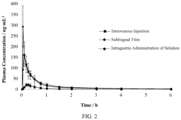
- the plasma concentration of Rasagiline in the sample was determined by LC-MS/MS, and the average drug-time curve was drawn ( FIG. 2 ).
- the non-compartmental model of DAS2.0 software was used to process the plasma concentration data and calculate the bioavailability of Rasagiline.
- Example 1 The films of Comparative Prescription and Prescriptions 1 to 5 in Example 1 (specification: 0.5 mg) were taken, and the outer packaging was removed, and a high temperature test was conducted to investigate the stability of the sample.
- the film was placed in a culture dish at 60°C for 10 days, and samples were taken on the 5th and 10th days to test the related substances of Rasagiline in the film.
- the test results show that the proportion of hydroxypropyl- ⁇ -cyclodextrin is in the range of 5 to 40%, and the stability of the drug under high temperature environment is enhanced with the increase of the amount of hydroxypropyl- ⁇ -cyclodextrin.
- the amount of film-forming materials needs to be reduced accordingly.
- the strength of the film gradually decreases, and the toughness gradually deteriorates.
- Table 8 The results are shown in Table 8.
- Comparative Example 1 Comparative Example 1, Comparative Example 2, Comparative Example 4 and Examples 2, 3 and 5 (specification: 0.5 mg) were taken, and the outer packaging was removed, and a high temperature test was conducted to investigate the stability of the sample.
- the film was placed in a culture dish at 60°C for 10 days, and samples were taken on the 5th and 10th days to test the content, related substances and dissolution rate of Rasagiline in the film (see Effect Example 2 for the dissolution method).
- the test result shows that during the investigation period, the related substances of the sublingual film of Rasagiline mesylate produced in Comparative Example 1 and Comparative Example 2 increase significantly, and the results are shown in Tables 9 to 10.
- the sublingual films of Rasagiline mesylate prepared in the present disclosure, i.e, Examples 2, 3 and 5; and Comparative Example 4 have no obvious change in each index and have stable product quality, and the results are shown in Tables 11 to 14.
- the oral film of Rasagiline does not need water or other liquids when taken.
- the packaging bag is torn open with dry hands, and the film is taken out, and placed in the oral cavity until completely dissolved.
- This product should not be folded, chewed or swallowed. Feeding or drinking should be avoided within 10 min after dosing.
- Example 3 Films with different water content were prepared according to the prescription and preparation method of Example 3 (column 2 in the table below), packaged and sealed in PET/Al/PE bags, and placed at 60°C for 10 days. The samples were taken on the 5th and 10th days to test the related substances in the film. The test results are shown in Table 15. Table 15 Stability Investigation Results of Different Water Content NO. Water Content (%) Related Substance (%) 0 d 60°C for 5 days 60°C for 10 days 1 2.2 0.10 0.52 0.67 2 4.7 0.09 0.40 0.49 3 6.0 0.08 0.30 0.42 4 7.7 0.09 0.25 0.35 5 10.8 0.10 0.18 0.26 6 13.2 0.09 0.15 0.22
Landscapes
- Health & Medical Sciences (AREA)
- Chemical & Material Sciences (AREA)
- Life Sciences & Earth Sciences (AREA)
- Medicinal Chemistry (AREA)
- Pharmacology & Pharmacy (AREA)
- Animal Behavior & Ethology (AREA)
- General Health & Medical Sciences (AREA)
- Public Health (AREA)
- Veterinary Medicine (AREA)
- Epidemiology (AREA)
- Inorganic Chemistry (AREA)
- Engineering & Computer Science (AREA)
- Bioinformatics & Cheminformatics (AREA)
- Biomedical Technology (AREA)
- Neurology (AREA)
- Neurosurgery (AREA)
- Chemical Kinetics & Catalysis (AREA)
- General Chemical & Material Sciences (AREA)
- Nuclear Medicine, Radiotherapy & Molecular Imaging (AREA)
- Organic Chemistry (AREA)
- Nutrition Science (AREA)
- Physiology (AREA)
- Psychology (AREA)
- Hospice & Palliative Care (AREA)
- Psychiatry (AREA)
- Biochemistry (AREA)
- Molecular Biology (AREA)
- Oil, Petroleum & Natural Gas (AREA)
- Medicinal Preparation (AREA)
- Acyclic And Carbocyclic Compounds In Medicinal Compositions (AREA)
Description
- The present application claims the priority of
Chinese patent application 2020111451096 filed on October 23, 2020 - The present disclosure relates to a sublingual film of Rasagiline or a pharmaceutically acceptable salt thereof, and a preparation method therefor and a use thereof.
- Parkinson's disease (PD), the second most common neurodegenerative disease, mostly occurs in people over the age of 40, and 2-3% of the elderly over the age of 65 are afflicted by this disease. Symptoms are different for each Parkinson's patient, but the most common symptoms are movement disorders and stiffness of skeletal muscles, tremors, slowness of movement, poor balance and gait disturbance. In addition, it is often accompanied by depression, sleep disturbance, dizziness, dementia, speech impairment, respiratory system disease and dysphagia, and the symptoms will worsen year by year, and even lead to death.
- Currently, the drugs for treating Parkinson's disease mainly include Levodopa, DA receptor agonists, MAO-B inhibitors, COMT inhibitors, anticholinergic agents, etc., wherein the most common one is Levodopa. Although Levodopa can quickly improve Parkinson's symptoms and has irreplaceable advantages, its advantage is merely in the initial few years of treatment, and the clinical effect will be significantly weakened after long-term use, and there are serious side effects, including symptoms like movement disorders, motor fluctuations (commonly known as the "on-off phenomenons"), and mental confusions, etc.
- Rasagiline mesylate is a potent, selective and irreversible MAO-B inhibitor used in the treatment of Parkinson's disease, Alzheimer's disease and a variety of other disorders by inhibiting MAO in the brain. Metabolism of Rasagiline does not produce Amphetamine and does not cause unwanted sympathomimetic effects. Compared with Levodopa, Rasagiline has better safety and can be used alone for the treatment of patients with early Parkinson's disease. Currently, the marketed formulation of Rasagiline mesylate is an ordinary tablet, with the product name AZILECT, which was first launched in Israel in March 2005, in the UK in June, in Ireland in September, in the United States in 2006, and officially launched in China in 2017. The specifications are 0.5 mg and 1 mg (calculated as Rasagiline). The formulation patents on Rasagiline and pharmaceutically acceptable salts thereof are all oral administration formulations, such as Rasagiline orally disintegrating composition (
CN101098685A ), a Rasagiline formulation and a preparation method therefor (CN103315983A ), a Rasagiline tablet (CN105496979A ), a Rasagiline tablet and a preparation method therefor (CN107753446A ), Rasagiline oral solid formulations (CN1911211A ), orally disintegrating tablets of Rasagiline or pharmaceutically acceptable salts thereof and preparation methods therefor (CN101874790A ), Rasagiline soft gelatin capsules (EP2285214B1 ), Rasagiline formulations and processes for their preparation (US7619117B1 ), Rasagiline formulations (WO2010111264A2 ). - After oral administration, Rasagiline mesylate is affected by the first-pass effect of the liver, and bioavailability thereof is low, about 36%. Moreover, the main risk source of Rasagiline in use is high blood pressure, which is often called the "cheese effect". (Simpson.G.M. and White K., "Tyramine studies and the safety of MAOI drugs", The Journal of Clinical Psychiatry, 01 Jul 1984, 45(7 Pt 2):59-61). This effect is caused by the inhibition of peripheral MAO, which is found in high concentrations in the stomach. Orally taken Rasagiline is absorbed through the gastrointestinal tract, and patients on a high-tyramine diet are at risk of raising blood pressure at any dose (FDA: AZILECT® (Rasagiline) Tablets: Label). In addition, Parkinson's patients are usually accompanied by gastrointestinal motility disorders, mainly manifested as dysphagia, gastric emptying disorders and constipation (Wolfgang, H.Jost. "Gastrointestinal motility problems in patients with Parkinson's disease" Drugs&Aging, 10, pages 249-258 (1997)), which prolongs the time to inhibit peripheral MAO, and then aggravates the "cheese effect".
- Chinese patent application
CN200910191252.6 - Further, RAO PINGALI SRINIVASA ET AL: "Formulation, Optimization and Evaluation of Rasagiline Mouth Dissolving Films",INTERNATIONAL JOURNAL OF PHARMACEUTICAL SCIENCES AND NANOTECHNOLOGY, vol. 11, no. 6, 30 November 2018 (2018-11-30), pages 4323-4331, dicloses fast-dissolving oral films (FDOF) of rasagiline; the optimized formulation showed the faster disintegration time i.e., 8±0.18 sec, good percentage elongation (9.4%), good folding endurance (120±4), and the in vitro drug release is 99.39±5.28% within 9 min.
- And
CN 105 616 389 A discloses an oral fast-dissolving film of loratadine, which has a short melting time, a rapid release of the drug, and does not require water to be swallowed, and has a good mouthfeel. - The technical problem to be solved by the present disclosure is to overcome the defect of poor stability of Rasagiline formulations in the prior art, and to provide a sublingual film of Rasagiline or a pharmaceutically acceptable salt thereof, and a preparation method therefor and a use thereof. In the present disclosure, a drug is made into a sublingual film that is convenient for administration and stable in quality, without the need to be taken with water. The film melts swiftly, and the drug is quickly dissolved from the formulation, and the drug is absorbed through the oral mucosa, which can not only avoid the first-pass effect, but also improve bioavailability; it can also avoid the "cheese effect" caused by the inhibition of peripheral MAO in the stomach and reduce side effects.
- Rasagiline is easily oxidized, unstable under acidic and alkaline conditions, and easily soluble in water, with a small dose (less than 1 mg) and a large relative amount of excipients. Therefore, the stability of the drug is greatly affected by the excipients. The inventors found that a variety of excipients are prone to interact with Rasagiline, resulting in a significant increase in the content of oxidized impurities, and the addition of antioxidants still cannot effectively solve the stability problem. In the prescription of the sublingual film prepared by Rasagiline or a pharmaceutical salt thereof, the inventor accidentally discovered through creative labor that a certain amount of one or more of maltodextrin, hydroxypropyl-β-cyclodextrin or glucosyl-β-cyclodextrin which cooperates with other components in the prescription may effectively improve the stability of the film and effectively enhance the stability of the drug during long-term placement.
- The present disclosure solves the above technical problem through the following technical solution.
- The present disclosure provides a sublingual film of Rasagiline or a pharmaceutically acceptable salt thereof, which comprises the following prescription components:
Rasagiline or a pharmaceutical salt 0.5 to 15% polymer film-forming material 30 to 85% dextrin 5% to 40% other excipients 0 to 30%, but not 0% the dextrin is one or more of maltodextrin, hydroxypropyl-β-cyclodextrin and glucosyl-β-cyclodextrin;
the above percentages are the mass percentages of each component relative to the total components of the prescription of the sublingual film of Rasagiline or the pharmaceutically acceptable salt thereof. - In the present disclosure, the Rasagiline or the pharmaceutically acceptable salt thereof is preferably Rasagiline mesylate.
- In the present disclosure, the polymer film-forming material can be a conventional water-soluble polymer material that can be used for film formation in the art, such as one or more of hydroxypropyl methylcellulose (HPMC), polyvinyl alcohol (PVA), hydroxypropyl cellulose (HPC), sodium carboxymethylcellulose (CMC-Na), polyvinylpyrrolidone (PVP), polyethylene oxide (PEO), sodium alginate, pullulan, Bletilla gum, corn starch and carrageenan, preferably one or more of hydroxypropyl methylcellulose (HPMC), polyvinyl alcohol (PVA), hydroxypropyl cellulose (HPC), sodium carboxymethylcellulose (CMC-Na), sodium alginate, pullulan and corn starch, such as a mixture of hydroxypropyl methylcellulose (HPMC) and polyvinyl alcohol (PVA), a mixture of hydroxypropyl cellulose (HPC) and sodium carboxymethylcellulose (CMC-Na), a mixture of polyvinyl alcohol (PVA) and corn starch, a mixture of pullulan and polyvinyl alcohol (PVA) or a mixture of hydroxypropyl methylcellulose (HPMC) and sodium alginate.
- When the polymer film-forming material is the mixture of hydroxypropyl methylcellulose (HPMC) and polyvinyl alcohol (PVA), the mass ratio of hydroxypropyl methylcellulose (HPMC) to polyvinyl alcohol (PVA) can be (27.5 to 45):(22.5 to 40), such as 45:40, 42.5:37.5, 37.5:32.5, 32.5:27.5 or 27.5:22.5.
- When the polymer film-forming material is the mixture of hydroxypropyl cellulose (HPC) and sodium carboxymethylcellulose (CMC-Na), the mass ratio of hydroxypropyl cellulose (HPC) to sodium carboxymethylcellulose (CMC-Na) can be 40:(25 to 35), such as 40:30.
- When the polymer film-forming material is the mixture of polyvinyl alcohol (PVA) and corn starch, the mass ratio of polyvinyl alcohol (PVA) to corn starch can be 30:(25 to 35), such as 30:30.
- When the polymer film-forming material is the mixture of pullulan and polyvinyl alcohol (PVA) the mass ratio of pullulan to polyvinyl alcohol (PVA) can be 20:(15 to 25), such as 20:20.
- When the polymer film-forming material is the mixture of hydroxypropyl methylcellulose (HPMC) and sodium alginate, the mass ratio of hydroxypropyl methylcellulose (HPMC) to sodium alginate can be 20:(5 to 15), such as 20:10.
- In the present disclosure, the dextrin is preferably maltodextrin, hydroxypropyl-β-cyclodextrin, glucosyl-β-cyclodextrin, a mixture of maltodextrin and glucosyl-β-cyclodextrin, or a mixture of maltodextrin and hydroxypropyl-β-cyclodextrin.
- When the dextrin is the mixture of maltodextrin and glucosyl-β-cyclodextrin, the mass ratio of maltodextrin to glucosyl-β-cyclodextrin is preferably 1:(0.8 to 1.2), such as 1:1.
- When the dextrin is the mixture of maltodextrin and hydroxypropyl-β-cyclodextrin, the mass ratio of maltodextrin to hydroxypropyl-β-cyclodextrin is preferably 1:(0.8 to 1.2), such as 1:1.
- In the present disclosure, the other excipients can be conventional in the art, preferably comprising one or more of an antioxidant, a disintegrant, a plasticizer, a colorant, an esssence and a sweetener.
- Where the disintegrant can be sodium carboxymethyl starch CMS-Na. The amount of the disintegrant in use can be 3 to 7%, such as 5%, and the percentage is the mass percentage relative to the total components of the prescription of the sublingual film of Rasagiline or the pharmaceutically acceptable salt thereof.
- Where the plasticizer can be PEG400. The amount of the plasticizer in use can be 7 to 11%, such as 9%, and the percentage is the mass percentage relative to the total components of the prescription of the sublingual film of Rasagiline or the pharmaceutically acceptable salt thereof.
- Where the colorant can be titanium dioxide. The amount of the colorant in use can be 2 to 6%, such as 4%, and the percentage is the mass percentage relative to the total components of the prescription of the sublingual film of Rasagiline or the pharmaceutically acceptable salt thereof.
- Where the essence can be one or more strawberry essence, grape essence and sweet orange essence. The amount of the essence in use can be 1% or 3%, and the percentage is the mass percentage relative to the total components of the prescription of the sublingual film of Rasagiline or the pharmaceutically acceptable salt thereof.
- In the present disclosure, the other excipients can also comprise a sweetener. The sweetener can be conventional in the art, preferably comprising one or more of xylitol, maltitol, steviol glycoside, sodium saccharin, aspartame, acesulfame potassium and sodium cyclamate, more preferably one or more of xylitol, maltitol, aspartame, sodium cyclamate and steviol glycoside, such as xylitol, maltitol, aspartame, sodium cyclamate or steviol glycoside.
- Where the amount of the sweetener in use can be conventional in the art, which can be 1%, 4%, 5%, 10% or 30%, preferably 3% to 30%, more preferably 5 to 20%; and the percentage is the mass percentage of the sweetener relative to the total components of the prescription of the sublingual film of Rasagiline or the pharmaceutically acceptable salt thereof.
- In the present disclosure, the amount of Rasagiline or the pharmaceutical salt thereof in use can be 1%, 5%, 8%, 10% or 15%, preferably 1 to 8%.
- In the present disclosure, the amount of polymer film-forming material in use can be 30%, 40%, 50%, 60%, 70%, 80% or 85%, preferably 40 to 60%. If the amount of the polymer film-forming material is lower than 30%, the film-forming property is not good, and the strength and toughness of the film may not meet the needs of use; if the amount of the polymer film-forming material is higher than 85%, the proportion of other excipients is too small, and the stability, taste and other aspects of the sublingual film of Rasagiline or the pharmaceutically acceptable salt thereof cannot meet the requirements.
- In the present disclosure, the amount of dextrin in use can be 5%, 10%, 20%, 25%, 30% or 40%, preferably 10 to 30%. If the amount of dextrin is lower than 5%, the stability of the sublingual film of Rasagiline or the pharmaceutically acceptable salt thereof cannot be significantly improved; if the amount of dextrin is higher than 40%, the film is brittle and easily broken.
- In the present disclosure, the amount of the other excipients in use is preferably 2 to 20%, such as 9%, 12%, 15% or 20%.
- The present disclosure also provides a preparation method for the sublingual film of Rasagiline or the pharmaceutically acceptable salt thereof, which comprises the following process: coating a slurry to prepare a film;
wherein the slurry comprises the above prescription components of the sublingual film of Rasagiline or the pharmaceutically acceptable salt thereof and water. - In the present disclosure, the slurry can be prepared by conventional methods in the art, preferably by the following method: adding prescription components other than the polymer film-forming material to the aqueous slurry containing the polymer film-forming material, and mixing evenly.
- Where, in the aqueous slurry containing the polymer film-forming material, the mass concentration of the polymer film-forming material is preferably 10% to 40%, more preferably 13% to 30%.
- In the present disclosure, the amount of water used in the slurry can be conventional in the art, generally based on the amount of water that can be made into a solution with a certain viscosity and good fluidity.
- In the present disclosure, the slurry is generally uniform. Before the slurry is coated to prepare the film, the slurry is generally left to stand for defoaming.
- In the present disclosure, the method of coating to prepare the film can be conventional in the art, for example, a conventional film coating machine in the art can be used for coating, followed by drying and cutting.
- Where, in the coating to prepare the film process, the thickness of the coating film can be 0.3 to 0.5 mm, such as 0.4 mm.
- Where the drying temperature can be 80 to 95°C.
- Where, in the coating to prepare the film process, the film coating speed can be 40 to 150 cm/min, such as 50 cm/min.
- Where the specification of the cut film can be selected according to actual needs.
- The present disclosure also provides the sublingual film of Rasagiline or the pharmaceutically acceptable salt thereof for use in the treatment of diseases related to Parkinson's disease or Alzheimer's disease.
- The above preferred conditions can be combined arbitrarily to obtain preferred embodiments of the present disclosure by common knowledge in the art.
- The reagents and raw materials used in the present disclosure are all commercially available.
- The positive and progressive effects of the present disclosure are:
- 1) The sublingual film of the present disclosure can adhere to the administration site without using water and dissolve quickly. The patient does not need to swallow, and the sublingual film has good compliance and is more convenient for the nursing staff to assist in administration.
- 2) The drug is absorbed through the oral mucosa, which avoids the first-pass effect of the liver and has high bioavailability, and reduces the dose of the drug compared with oral formulations.
- 3) The drug dissolves in the mouth and is absorbed through the oral mucosa without going through the gastrointestinal tract, which may avoid the "cheese effect" and reduce adverse responses.
- 4) The sublingual film of the present disclosure has good stability, and the impurity content is still low after long-term storage.
- 5) The sublingual film of the present disclosure has good dissolution characteristics, which is characterized by rapid and complete dissolution of the drug, and the drug is quickly absorbed into the blood circulation through the sublingual mucosa, and has a quick effect.
-
-
FIG. 1 is the dissolution curves of the sublingual films ofPrescription 1 in Example 1 and the sublingual films in Examples 2, 3, 5 and Comparative example 4. -
FIG. 2 is a curve showing the changes in the plasma concentration of Rasagiline with time after the administration of sublingual film in Example 3, intravenous injection and intragastric administration, respectively. - The present disclosure will be further described below with reference to examples, but the present disclosure is not therefore limited to the scope of the examples. Experimental methods without specific conditions in the following examples are selected according to conventional methods and conditions, or according to the commercial specification.
- The raw materials and excipients used in the examples and comparative examples are conventional and commercially available.
- The stability investigation, compatibility experiment, and dissolution curve test and the like in the effect examples are all carried out according to the experimental conditions and test methods specified in Pharmacopoeia.
- The components and doses of
Prescriptions 1 to 5 and Comparative Prescriptions are shown in Table 1.Table 1 Name of Raw Materials and Excipients Mass Percentage% Comparative Prescription Prescription 1 Prescription 2Prescription 3Prescription 4Prescription 5Rasagiline mesylate 1 1 1 1 1 1 Hydroxypropyl methylcellulose (HPMC) 47.5 45 42.5 37.5 32.5 27.5 Polyvinyl alcohol (PVA) 42.5 40 37.5 32.5 27.5 22.5 Hydroxypropyl-β- cyclodextrin 0 5 10 20 30 40 Steviol glycoside 4 4 4 4 4 4 Titanium dioxide 4 4 4 4 4 4 Strawberry essence 1 1 1 1 1 1 Total 100 100 100 100 100 100 Physical properties of the film The strength and toughness of the film are good The strength and toughness of the film are good The strength and toughness of the film are good The strength and toughness of the film are good The strength and toughness of the film can basically meet the needs The film is slightly brittle, and occasionally there will be edging phenomenon. -
- 1. Preparation of the aqueous slurry of the film-forming material: According to the ratio of the prescription, HPMC and PVA were dissolved in water to make an aqueous slurry with a mass concentration of 25%.
- 2. Rasagiline mesylate, hydroxypropyl-β-cyclodextrin, steviol glycoside, titanium dioxide and strawberry essence were added into the above aqueous slurry, and stirred evenly.
- 3. Standing for defoaming, and the film was coated under the condition that the thickness of the film was 0.4 mm and the drying temperature was 85°C. The speed of coating to prepare the film was 50 cm/min.
- 4. The mixture was cut and packaged according to the specification of 0.5 mg/tablet.
- It can be seen from Table 1 that (1) the physical properties of the films of
Prescriptions 1 to 3 of the present disclosure are better in strength and toughness than those of the films ofPrescriptions 4 to 5. (2) Although the physical properties of the films ofPrescriptions 4 to 5 of the present disclosure are relatively inferior to those of the Comparative Prescriptions, it can be seen from the Effect Example 4 that the Comparative Prescription has poor high-temperature stability and is unqualified. In particular, after being placed at 60°C for 5 days, the content of related substances in the Comparative Prescriptions is as high as 1.33%, which is much higher than that ofPrescriptions 1 to 5 of the present disclosure; after being placed at 60°C for 10 days, the content of related substances in the Comparative Prescriptions is as high as 2.35%, which is much higher than that ofPrescriptions 1 to 5 of the present disclosure. - The prescription of Example 2 is as shown in Table 2.
Table 2 Name of Raw Materials and Excipients Mass Percentage % Rasagiline mesylate 5 Hydroxypropyl cellulose (HPC) 40 Sodium carboxymethylcellulose (CMC-Na) 30 Maltodextrin 5 Glucosyl-β- cyclodextrin 5 Maltitol 10 Titanium dioxide 4 Grape essence 1 Total 100 -
- 1. Preparation of the aqueous slurry of the film-forming material: 40 g of HPC and 30 g of CMC-Na were dissolved in water to make an aqueous slurry with a mass concentration of 20%.
- 2. Rasagiline mesylate, maltodextrin, glucosyl-β-cyclodextrin, maltitol, titanium dioxide, and grape essence were added into the above aqueous slurry, and stirred evenly.
- 3. Standing for defoaming, and the film was coated under the condition that the thickness of the film was 0.4 mm and the drying temperature was 85°C. The speed of coating to prepare the film was 50 cm/min.
- 4. The mixture was cut and packaged according to the specification of 0.5 mg/tablet.
- The prescription of Example 3 is as shown in Table 3.
Table 3 Name of Raw Materials and Excipients Mass Percentage% Rasagiline mesylate 8 Polyvinyl alcohol PVA 30 Corn starch 30 Maltodextrin 20 Aspartame 5 Titanium dioxide 4 Sweet orange essence 3 Total 100 - Preparation processes:
- 1. Preparation of the aqueous slurry of the film-forming material: 30 g of PVA and 30 g of corn starch were dissolved in water to make an aqueous slurry with a mass concentration of 16%.
- 2. Rasagiline mesylate, maltodextrin, aspartame, titanium dioxide, and sweet orange essence were added into the above aqueous slurry, and stirred evenly.
- 3. Standing for defoaming, and the film was coated under the condition that the thickness of the film was 0.4 mm and the drying temperature was 85°C. The speed of coating to prepare the film was 50 cm/min.
- 4. The mixture was cut and packaged according to the specification of 0.5 mg/tablet.
- The prescription of Comparative Example 4 is as shown in Table 4.
Table 4 Name of Raw Materials and Excipients Mass Percentage% Rasagiline mesylate 10 Pullulan 20 Polyvinyl alcohol (PVA) 20 Sulfobutyl-β-cyclodextrin 30 Xylitol 10 Titanium dioxide 4 Strawberry essence 1 Disintegrant: sodium carboxymethyl starch (CMS-Na) 5 Total 100 -
- 1. Preparation of the aqueous slurry of the film-forming material: 20 g of pullulan and 30 g of PVA were dissolved in water to make an aqueous slurry with a mass concentration of 14%.
- 2. Rasagiline mesylate, sulfobutyl-β-cyclodextrin, xylitol, titanium dioxide, strawberry essence, and CMS-Na were added into the above aqueous slurry, and stirred evenly.
- 3. Standing for defoaming, and the film was coated under the condition that the thickness of the film was 0.4 mm and the drying temperature was 85°C. The speed of coating to prepare the film was 50 cm/min.
- 4. The mixture was cut and packaged according to the specification of 0.5 mg/tablet.
- The prescription of Example 5 is as shown in Table 5.
Table 5 Name of Raw Materials and Excipients Mass Percentage% Rasagiline mesylate 15 Hydroxypropyl methylcellulose (HPMC) 20 Sodium alginate 10 Maltodextrin 20 Hydroxypropyl-β-cyclodextrin 20 Sodium cyclamate 1 Titanium dioxide 4 Strawberry essence 1 Plasticizer: PEG400 9 Total 100 -
- 1. Preparation of the aqueous slurry of the film-forming material: 20 g of HPMC and 10 g of sodium alginate were dissolved in water to make an aqueous slurry with a mass concentration of 10%.
- 2. Rasagiline mesylate, maltodextrin, hydroxypropyl-β-cyclodextrin, sodium cyclamate, titanium dioxide, strawberry essence and PEG400 were added into the above aqueous slurry, and stirred evenly.
- 3. Standing for defoaming, and the film was coated under the condition that the thickness of the film was 0.4 mm and the drying temperature was 85°C. The speed of coating to prepare the film was 50 cm/min.
- 4. The mixture was cut and packaged according to the specification of 0.5 mg/tablet.
- The maltodextrin in the prescription of Example 3 was replaced with PVA, and the other processes of the prescription were unchanged.
- The sulfobutyl-β-cyclodextrin in the prescription of Comparative Example 4 was replaced with pullulan, and the other processes of the prescription were unchanged.
- After the excipients such as polymer film-forming materials and the drug were mixed in a certain proportion, purified water was added to grind evenly. The film was coated, dried, and placed at 60°C for 10 days. The sample was taken on the 5th and 10th days to investigate the variation of related substances. The results are shown in Table 6.
Table 6 Compatibility Test Results of Raw Materials and Excipients - Polymer Film-Forming Materials Excipients HPMC PVA HPMC + Maltodextrin (10:1) HPMC + Hydroxypropyl-β-cyclodextrin (10:1) HPMC + EDTA (10:1) HPMC + Sodium metabisulfite (10:1) HPMC + Ascorbic acid (10:1) HPMC + Sodium bisulfite (10:1) Mass ratio of raw materials : 1:11 1:11 1:11 1:11 1:11 1:11 1:11 1:11 excipients Total Impurity% Original 0.29 0.14 0.06 0.05 0.34 0.25 0.38 0.22 60°C for 5 days 1.59 0.95 0.51 0.47 1.85 1.42 1.87 1.63 60°C for 10 days 2.54 1.86 0.76 0.65 2.97 2.39 3.51 2.12 - As shown in Table 6, when HPMC and PVA film-forming materials are used alone, or when HPMC is compounded with EDTA, sodium pyrosulfate, ascorbic acid, and sodium bisulfite and many other conventional stabilizers, the total impurity content is much higher than when HPMC is compounded with "maltodextrin or hydroxypropyl-β-cyclodextrin".
- Other excipients and the drug were mixed in a certain proportion, followed by being placed at 60°C for 10 days. The sample was taken on the 5th and 10th days to investigate the variation of related substances. The results are shown in Table 7.
Table 7 Compatibility Test Results of Major Drugs and Excipients - Other Excipients Excipients Aspartame Xylitol Titanium dioxide Strawberry essence PEG400 CMC-Na Mass ratio of major drugs : excipients 1:5 1:5 1:5 1:5 1:5 1:5 Total Impurity% Original 0.28 0.95 0.26 0.08 0.14 0.22 60°C for 5 days 5.44 1.73 0.83 1.19 1.36 1.02 60°C for 10 days 11.45 2.25 1.42 3.72 2.75 1.93 - The results in Tables 6 to 7 show that the compatibility stability of Rasagiline mesylate and various excipients is poor, and there is still no improvement after adding various conventional stabilizers, but the stability is significantly enhanced after adding dextrin.
- 6 films each in
Prescription 1 of Example 1 and in Examples 2 to 5 (specification: 0.5 mg, i.e., each film contains 0.5 mg of Rasagiline) were taken, according to the dissolution test method (the second method of the general rule 0931 in the Chinese Pharmacopoeia (2015 edition, volume IV)), with 500 mL of phosphate buffered saline of pH 6.8 as a solvent and 50 rpm of the rotating speed, according to the method. After 1, 2, 3, 5, 10 and 15 min, 1 mL of the each solution was taken to filter, and 20 µL of the continued filtrate was precisely measured and tested according to high-performance liquid chromatography; the dissolution amount at different times was calculated. The dissolution curve is shown inFIG. 1 . - The result of
FIG. 1 shows that the sublingual film of the Rasagiline mesylate of the present disclosure dissolves rapidly and substantially completely in 3 min. - Intravenous injection: 4 healthy Beagle dogs, half male and half female, were respectively intravenously administered 4 mL of Rasagiline mesylate solution (the solvent was water) (0.5 mg/mL, calculated as Rasagiline), i.e., the administration dose was 2 mg.
- Sublingual film and intragastric administration: A two-period double crossover test was adopted, and the washout period was 1 week. 4 healthy Beagle dogs, half male and half female, were randomly divided into two groups, respectively sublingually administered the sublingual film of Rasagiline mesylate (Example 3) and intragastrically administered Rasagiline mesylate solution, and the administration dose was 2 mg.
- The dogs were fasted for 16 hours before administration and had free access to water. After 4 hours of administration, the dogs had free access to water, and food was administered. 2 mL of blood was collected from the forelimb or hindlimb vein before administration (0 h) and 0.033 h, 0.083 h, 0.167 h, 0.25 h, 0.333 h, 0.5 h, 0.75 h, 1 h, 1.5 h, 2 h, 3 h, 4 h, 6 h after administration, and placed in heparin sodium anticoagulation tubes. The collected blood samples were centrifuged immediately (1006×g, 10 min), separated to obtain the plasma and stored at -20°C. Using Selegiline hydrochloride as the internal standard and processing by using acetonitrile protein precipitation method, the plasma concentration of Rasagiline in the sample was determined by LC-MS/MS, and the average drug-time curve was drawn (
FIG. 2 ). The non-compartmental model of DAS2.0 software was used to process the plasma concentration data and calculate the bioavailability of Rasagiline. - The result in
FIG. 2 shows that after intragastric administration of Rasagiline mesylate to Beagle dogs, the bioavailability is low due to the first-pass effect, and the absolute bioavailability is 11.8%±3.3% (n=4). After sublingual administration of sublingual film of Rasagiline mesylate in the present disclosure, the drug is absorbed through the sublingual mucosa, and the bioavailability is significantly increased, and the absolute bioavailability is 77.8%±9.7% (n=4); increased to 6.9±1.3 times that of intragastric administration (n=4); and the onset of effect is rapid, Tmax is (0.07±0.02) h (n=4). - The films of Comparative Prescription and
Prescriptions 1 to 5 in Example 1 (specification: 0.5 mg) were taken, and the outer packaging was removed, and a high temperature test was conducted to investigate the stability of the sample. - The film was placed in a culture dish at 60°C for 10 days, and samples were taken on the 5th and 10th days to test the related substances of Rasagiline in the film. The test results show that the proportion of hydroxypropyl-β-cyclodextrin is in the range of 5 to 40%, and the stability of the drug under high temperature environment is enhanced with the increase of the amount of hydroxypropyl-β-cyclodextrin. However, with the increase of the amount of hydroxypropyl-β-cyclodextrin, the amount of film-forming materials needs to be reduced accordingly. The strength of the film gradually decreases, and the toughness gradually deteriorates. The results are shown in Table 8.
Table 8 Stability Investigation Result in Example 1 Investigation Item Original 60°C for 5 days 60°C for 10 days Related Substance (%) Comparative Prescription 0.13 1.33 2.35 Prescription 10.10 0.57 0.79 Prescription 20.09 0.49 0.63 Prescription 30.08 0.31 0.46 Prescription 40.08 0.25 0.39 Prescription 50.06 0.21 0.35 - The films in Comparative Example 1, Comparative Example 2, Comparative Example 4 and Examples 2, 3 and 5 (specification: 0.5 mg) were taken, and the outer packaging was removed, and a high temperature test was conducted to investigate the stability of the sample.
- The film was placed in a culture dish at 60°C for 10 days, and samples were taken on the 5th and 10th days to test the content, related substances and dissolution rate of Rasagiline in the film (see Effect Example 2 for the dissolution method). The test result shows that during the investigation period, the related substances of the sublingual film of Rasagiline mesylate produced in Comparative Example 1 and Comparative Example 2 increase significantly, and the results are shown in Tables 9 to 10. The sublingual films of Rasagiline mesylate prepared in the present disclosure, i.e, Examples 2, 3 and 5; and Comparative Example 4, have no obvious change in each index and have stable product quality, and the results are shown in Tables 11 to 14.
- Table 9 Stability Investigation Results in Comparative Example 1
Investigation Item Original 60°C for 5 days 60°C for 10 days Related substance (%) 0.10 1.27 1.96 Dissolution Rate in 3 Minutes (%) 98.7 97.5 96.2 Content (%) 100.2 98.9 97.4 Table 10 Stability Investigation Results in Comparative Example 2 Investigation Item Original 60°C for 5 days 60°C for 10 days Related Substance (%) 0.14 1.46 2.59 Dissolution Rate in 3 Minutes (%) 99.6 97.5 96.1 Content (%) 101.3 99.2 98.1 Table 11 Stability Investigation Results in Example 2 Investigation Item Original 60°C for 5 days 60°C for 10 days Related Substance (%) 0.07 0.41 0.64 Dissolution Rate in 3 Minutes (%) 99.6 98.9 98.1 Content (%) 101.0 100.5 100.6 Table 12 Stability Investigation Results in Example 3 Investigation Item Original 60°C for 5 days 60°C for 10 days Related Substance (%) 0.09 0.37 0.52 Dissolution Rate in 3 Minutes (%) 99.6 98.8 99.4 Content (%) 101.8 100.5 101.4 Table 13 Stability Investigation Results in Comparative Example 4 Investigation Item Original 60°C for 5 days 60°C for 10 days Related Substance (%) 0.05 0.33 0.41 Dissolution Rate in 3 Minutes (%) 99.8 98.5 99.3 Content (%) 100.5 101.2 100.4 Table 14 Stability Investigation Results in Example 5: Investigation Item Original 60°C for 5 days 60°C for 10 days Related Substance (%) 0.08 0.36 0.49 Dissolution Rate in 3 Minutes (%) 98.9 97.4 98.3 Content (%) 101.3 100.0 101.2 - The results in Tables 9 to 14 show that due to the synergistic effect of each component, the total impurity of the sublingual film of Rasagiline mesylate of the present disclosure does not exceed 1% after storing at a high temperature of 60°C for 10 days, and the stability increases with the increase of the proportion of dextrin. Compared with Comparative Example 1 and Comparative Example 2 without dextrin added, after being placed at high temperature, there is no obvious variation in the dissolution rate and content, and the increase of related substances is obviously reduced, and the stability is obviously enhanced.
- In the present disclosure, the oral film of Rasagiline does not need water or other liquids when taken. The packaging bag is torn open with dry hands, and the film is taken out, and placed in the oral cavity until completely dissolved. This product should not be folded, chewed or swallowed. Feeding or drinking should be avoided within 10 min after dosing.
- Films with different water content were prepared according to the prescription and preparation method of Example 3 (
column 2 in the table below), packaged and sealed in PET/Al/PE bags, and placed at 60°C for 10 days. The samples were taken on the 5th and 10th days to test the related substances in the film. The test results are shown in Table 15.Table 15 Stability Investigation Results of Different Water Content NO. Water Content (%) Related Substance (%) 0 d 60°C for 5 days 60°C for 10 days 1 2.2 0.10 0.52 0.67 2 4.7 0.09 0.40 0.49 3 6.0 0.08 0.30 0.42 4 7.7 0.09 0.25 0.35 5 10.8 0.10 0.18 0.26 6 13.2 0.09 0.15 0.22 - The results in Table 15 show that water content has an effect on the stability of the sublingual film of Rasagiline mesylate of the present disclosure, and as the water content increases, the stability of the sublingual film of the present disclosure is enhanced.
- Although the specific implementations of the present disclosure have been described above, those skilled in the art should understand that these are only examples, and various changes or modifications can be made to these implementations without departing from the principle and essence of the present disclosure. Accordingly, the protection scope of the present disclosure is defined by the appended claims.
Claims (10)
- A sublingual film of Rasagiline or a pharmaceutically acceptable salt thereof, wherein the sublingual film comprises the following prescription components:
Rasagiline or a pharmaceutical salt 0.5 to 15% polymer film-forming material 30 to 85% dextrin 5% to 40% other excipients 0 to 30%, and not 0% the dextrin is one or more of maltodextrin, hydroxypropyl-β-cyclodextrin and glucosyl-β-cyclodextrin;the above percentages are the mass percentages of each component relative to the total components of the prescription of the sublingual film of Rasagiline or the pharmaceutically acceptable salt thereof. - The sublingual film of Rasagiline or the pharmaceutically acceptable salt thereof as claimed in claim 1, wherein the Rasagiline or the pharmaceutically acceptable salt thereof is Rasagiline mesylate;and/or, the polymer film-forming material is one or more of hydroxypropyl methylcellulose HPMC, polyvinyl alcohol PVA, hydroxypropyl cellulose HPC, sodium carboxymethylcellulose CMC-Na, polyvinylpyrrolidone PVP, polyethylene oxide PEO, sodium alginate, pullulan, Bletilla gum, corn starch and carrageenan,and/or, the dextrin is maltodextrin, hydroxypropyl-β-cyclodextrin, glucosyl-β-cyclodextrin, a mixture of maltodextrin and glucosyl-β-cyclodextrin, or a mixture of maltodextrin and hydroxypropyl-β-cyclodextrin;and/or, the other excipients comprise one or more of an antioxidant, a disintegrant, a plasticizer, a colorant, an essence and a sweetener.
- The sublingual film of Rasagiline or the pharmaceutically acceptable salt thereof as claimed in claim 2, wherein the polymer film-forming material is one or more of hydroxypropyl methylcellulose HPMC, polyvinyl alcohol PVA, hydroxypropyl cellulose HPC, sodium carboxymethylcellulose CMC-Na, sodium alginate, pullulan and corn starch, preferably a mixture of hydroxypropyl methylcellulose HPMC and polyvinyl alcohol PVA, a mixture of hydroxypropyl cellulose HPC and sodium carboxymethylcellulose CMC-Na, a mixture of polyvinyl alcohol PVA and corn starch, a mixture of pullulan and polyvinyl alcohol PVA, or a mixture of hydroxypropyl methylcellulose HPMC and sodium alginate.
- The sublingual film of Rasagiline or the pharmaceutically acceptable salt thereof as claimed in claim 2 or 3, wherein when the polymer film-forming material is the mixture of hydroxypropyl methylcellulose HPMC and polyvinyl alcohol PVA, the mass ratio of hydroxypropyl methylcellulose HPMC to polyvinyl alcohol PVA is (27.5 to 45):(22.5 to 40), such as 45:40, 42.5:37.5, 37.5:32.5, 32.5:27.5 or 27.5:22.5;when the polymer film-forming material is the mixture of hydroxypropyl cellulose HPC and sodium carboxymethylcellulose CMC-Na, the mass ratio of hydroxypropyl cellulose HPC to sodium carboxymethylcellulose CMC-Na is 40:(25 to 35), such as 40:30;when the polymer film-forming material is the mixture of polyvinyl alcohol PVA and corn starch, the mass ratio of polyvinyl alcohol PVA to corn starch is 30:(25 to 35), such as 30:30;when the polymer film-forming material is the mixture of pullulan and polyvinyl alcohol PVA, the mass ratio of pullulan to polyvinyl alcohol PVA is 20:(15 to 25), such as 20:20;when the polymer film-forming material is the mixture of hydroxypropyl methylcellulose HPMC and sodium alginate, the mass ratio of hydroxypropyl methylcellulose HPMC to sodium alginate is 20:(5 to 15), such as 20:10.
- The sublingual film of Rasagiline or the pharmaceutically acceptable salt thereof as claimed in at least one of claims 2 to 4, wherein, when the dextrin is the mixture of maltodextrin and glucosyl-β-cyclodextrin, the mass ratio of maltodextrin to glucosyl-β-cyclodextrin is 1 :(0.8 to 1.2), such as 1:1;
when the dextrin is the mixture of maltodextrin and hydroxypropyl-β-cyclodextrin, the mass ratio of maltodextrin to hydroxypropyl-β-cyclodextrin is 1:(0.8 to 1.2), such as 1:1. - The sublingual film of Rasagiline or the pharmaceutically acceptable salt thereof as claimed in at least one of claims 2 to 5, wherein the disintegrant is sodium carboxymethyl starch CMS-Na; the amount of the disintegrant in use is preferably 3 to 7%, such as 5%, and the percentage is the mass percentage relative to the total components of the prescription of the sublingual film of Rasagiline or the pharmaceutically acceptable salt thereof;and/or, the plasticizer is PEG400; the amount of the plasticizer in use is preferably 7 to 11%, such as 9%, and the percentage is the mass percentage relative to the total components of the prescription of the sublingual film of Rasagiline or the pharmaceutically acceptable salt thereof;and/or, the colorant is titanium dioxide; the amount of the colorant in use is preferably 2 to 6%, such as 4%, and the percentage is the mass percentage relative to the total components of the prescription of the sublingual film of Rasagiline or the pharmaceutically acceptable salt thereof;and/or, the essence is one or more of strawberry essence, grape essence and sweet orange essence; the amount of the essence in use is preferably 1 to 3%, and the percentage is the mass percentage relative to the total components of the prescription of the sublingual film of Rasagiline or the pharmaceutically acceptable salt thereof;and/or, the sweetener comprises one or more of xylitol, maltitol, steviol glycoside, sodium saccharin, aspartame, acesulfame potassium and sodium cyclamate, preferably one or more of xylitol, maltitol, aspartame, sodium cyclamate and steviol glycoside, such as xylitol, maltitol, aspartame, sodium cyclamate or steviol glycoside;wherein the amount of the sweetener in use is, for example, 1%, 4%, 5%, 10% or 30%, preferably 3% to 30%, more preferably 5 to 20%; and the above percentage is the mass percentage of the sweetener relative to the total components of the prescription of the sublingual film of Rasagiline or the pharmaceutically acceptable salt thereof.
- The sublingual film of Rasagiline or the pharmaceutically acceptable salt thereof as claimed in at least one of claims 1 to 6, wherein, the amount of Rasagiline or the pharmaceutical salt in use is 1%, 5%, 8%, 10% or 15%, preferably 1 to 8%;and/or, the amount of the polymer film-forming material in use is 30%, 40%, 50%, 60%, 70%, 80% or 85%, preferably 40 to 60%;and/or, the amount of the dextrin in use is 5%, 10%, 20%, 25%, 30% or 40%, preferably 10 to 30%;and/or, the amount of the other excipients in use is 2 to 20%, such as 9%, 12%, 15% or 20%.
- A preparation method for the sublingual film of Rasagiline or the pharmaceutically acceptable salt thereof as claimed in at least one of claims 1 to 7, wherein the preparation method comprises the following process: coating a slurry to prepare a film;
wherein the slurry comprises prescription components of the sublingual film of Rasagiline or the pharmaceutically acceptable salt thereof, and water. - The preparation method for the sublingual film of Rasagiline or the pharmaceutically acceptable salt thereof as claimed in claim 8, wherein the slurry is prepared by the following method: adding prescription components other than the polymer film-forming material to an aqueous slurry containing the polymer film-forming material, and mixing evenly;wherein, in the aqueous slurry containing the polymer film-forming material, the mass concentration of the polymer film-forming material is preferably 10% to 40%, more preferably 13% to 30%;in the coating to prepare the film process, the thickness of the coating film is preferably 0.3 to 0.5 mm, such as 0.4 mm;in the coating to prepare the film process, the film coating speed is preferably 40 to 150 cm/min, such as 50 cm/min.
- The sublingual film of Rasagiline or the pharmaceutically acceptable salt thereof as claimed in at least one of claims 1 to 7 for use in the treatment of diseases related to Parkinson's disease or Alzheimer's disease.
Applications Claiming Priority (2)
| Application Number | Priority Date | Filing Date | Title |
|---|---|---|---|
| CN202011145109.6A CN114469902B (en) | 2020-10-23 | 2020-10-23 | Rasagiline or its pharmaceutical salt sublingual film and its preparation method and application |
| PCT/CN2021/083192 WO2022083063A1 (en) | 2020-10-23 | 2021-03-26 | Sublingual film dosage of rasagiline or pharmaceutically acceptable salt thereof, and preparation method therefor and use thereof |
Publications (4)
| Publication Number | Publication Date |
|---|---|
| EP4233852A4 EP4233852A4 (en) | 2023-08-30 |
| EP4233852A1 EP4233852A1 (en) | 2023-08-30 |
| EP4233852C0 EP4233852C0 (en) | 2024-10-23 |
| EP4233852B1 true EP4233852B1 (en) | 2024-10-23 |
Family
ID=81291477
Family Applications (1)
| Application Number | Title | Priority Date | Filing Date |
|---|---|---|---|
| EP21881489.5A Active EP4233852B1 (en) | 2020-10-23 | 2021-03-26 | Sublingual film dosage of rasagiline or pharmaceutically acceptable salt thereof, and preparation method therefor and use thereof |
Country Status (5)
| Country | Link |
|---|---|
| US (1) | US20230414499A1 (en) |
| EP (1) | EP4233852B1 (en) |
| JP (1) | JP7537032B2 (en) |
| CN (1) | CN114469902B (en) |
| WO (1) | WO2022083063A1 (en) |
Families Citing this family (4)
| Publication number | Priority date | Publication date | Assignee | Title |
|---|---|---|---|---|
| TW202430137A (en) * | 2023-01-19 | 2024-08-01 | 大陸商上海雲晟研新生物科技有限公司 | Rasagiline mesylate oral disintegrating film composition and preparation method and application thereof |
| US20240285554A1 (en) * | 2023-02-27 | 2024-08-29 | Emanate Biomedical, Inc. | Polyvinyl alcohol compositions and methods of making and using them |
| CN116421582A (en) * | 2023-04-03 | 2023-07-14 | 杭州成邦医药科技有限公司 | A kind of ramelteon sublingual film and preparation method thereof |
| CN118512421A (en) * | 2024-05-13 | 2024-08-20 | 上海现代药物制剂工程研究中心有限公司 | A microbubble film agent replacing titanium dioxide and preparation method thereof |
Family Cites Families (17)
| Publication number | Priority date | Publication date | Assignee | Title |
|---|---|---|---|---|
| US20090111892A1 (en) | 2004-11-24 | 2009-04-30 | Shulamit Patashnik | Rasagiline Orally Disintegrating Compositions |
| US7572834B1 (en) | 2005-12-06 | 2009-08-11 | Teva Pharmaceutical Industries, Ltd. | Rasagiline formulations and processes for their preparation |
| CN101032474B (en) * | 2006-03-06 | 2011-02-16 | 重庆医药工业研究院有限责任公司 | Rasagiline transparent patch for curing and preventing neurological diseases and the preparing method thereof |
| CN1911211B (en) | 2006-08-25 | 2010-04-14 | 重庆医药工业研究院有限责任公司 | Solid oral preparation of leishajilan |
| US20100008983A1 (en) | 2008-06-10 | 2010-01-14 | Muhammad Safadi | Rasagiline soft gelatin capsules |
| US20100189791A1 (en) | 2009-01-23 | 2010-07-29 | Teva Pharmaceutical Industries, Ltd. | Delayed release rasagiline malate formulation |
| WO2010111264A2 (en) * | 2009-03-24 | 2010-09-30 | Dr. Reddy's Laboratories Ltd. | Rasagiline formulations |
| CN101874790B (en) | 2009-04-29 | 2012-06-06 | 齐鲁制药有限公司 | Orally disintegrating tablet of Rasagiline or medicine salts thereof and preparation method thereof |
| CN102048717B (en) * | 2009-10-29 | 2014-02-19 | 重庆医药工业研究院有限责任公司 | Stable rasagiline composition |
| WO2013023775A1 (en) * | 2011-08-12 | 2013-02-21 | Labtec Gmbh | Orodispersible films for the manufacturing of individualised medicine or for large scale production |
| CN103239427A (en) * | 2012-02-13 | 2013-08-14 | 刘毅佳 | Film agent for dispersing and dissolving in oral cavity |
| WO2013168032A1 (en) * | 2012-05-07 | 2013-11-14 | Micro Labs Limited | Pharmaceutical compositions comprising rasagiline |
| CN103315983B (en) | 2012-12-20 | 2015-06-03 | 上海中西制药有限公司 | Rasagiline preparation and preparation method thereof |
| CN103784426B (en) * | 2014-02-19 | 2015-11-18 | 上海现代药物制剂工程研究中心有限公司 | Molten membrane of Aripiprazole mouth and preparation method thereof |
| CN105496979B (en) | 2015-12-08 | 2018-06-05 | 重庆华森制药股份有限公司 | A kind of Rasagiline tablet |
| CN105616389A (en) * | 2016-04-06 | 2016-06-01 | 合肥华方医药科技有限公司 | Desloratadine citrate disodium oral rapidly disintegrating film and preparation method thereof |
| CN107753446B (en) | 2017-03-07 | 2021-02-19 | 常州市第四制药厂有限公司 | Rasagiline tablet and preparation method thereof |
-
2020
- 2020-10-23 CN CN202011145109.6A patent/CN114469902B/en active Active
-
2021
- 2021-03-26 WO PCT/CN2021/083192 patent/WO2022083063A1/en not_active Ceased
- 2021-03-26 US US18/248,867 patent/US20230414499A1/en active Pending
- 2021-03-26 EP EP21881489.5A patent/EP4233852B1/en active Active
- 2021-03-26 JP JP2023548986A patent/JP7537032B2/en active Active
Also Published As
| Publication number | Publication date |
|---|---|
| EP4233852C0 (en) | 2024-10-23 |
| JP7537032B2 (en) | 2024-08-20 |
| CN114469902A (en) | 2022-05-13 |
| WO2022083063A1 (en) | 2022-04-28 |
| CN114469902B (en) | 2024-10-29 |
| US20230414499A1 (en) | 2023-12-28 |
| JP2023547273A (en) | 2023-11-09 |
| EP4233852A4 (en) | 2023-08-30 |
| EP4233852A1 (en) | 2023-08-30 |
Similar Documents
| Publication | Publication Date | Title |
|---|---|---|
| EP4233852A1 (en) | Sublingual film dosage of rasagiline or pharmaceutically acceptable salt thereof, and preparation method therefor and use thereof | |
| US11179330B2 (en) | Doxepin oral transmucosal film | |
| CN105030735B (en) | A kind of memantine hydrochloride mouth dissolving film preparation and preparation method and use thereof | |
| CN115867351A (en) | Oral cavity membrane of HIV medicine | |
| CN106619577A (en) | Novel loratadine oral quickly soluble film and preparation method thereof | |
| US20250009729A1 (en) | Donepezil oral films | |
| CN115671078A (en) | Epinastine oral soluble membrane composition, preparation method and application thereof | |
| HK40091661A (en) | Sublingual film dosage of rasagiline or pharmaceutically acceptable salt thereof, and preparation method therefor and use thereof | |
| HK40091661B (en) | Sublingual film dosage of rasagiline or pharmaceutically acceptable salt thereof, and preparation method therefor and use thereof | |
| CN114432272B (en) | Orally dissolving film, racecadotril orally dissolving film and preparation method thereof | |
| CN108685876A (en) | It is a kind of to take orally membranaceous pharmaceutical composition containing Risperidone | |
| CN101849926B (en) | Zolpidem tartrate film | |
| CN117618399A (en) | Suvorexant oral dissolved film with high bioavailability and preparation method and application thereof | |
| JP7614207B2 (en) | Liquid Compositions Comprising Ibuprofen and Phenylephrine | |
| EP3095466B1 (en) | Pharmaceutical formulations with improved solubility and stability | |
| CN118045064B (en) | Desloratadine orally disintegrating film composition, preparation method and application thereof | |
| RU2842648C1 (en) | Liquid composition containing ibuprofen and phenylephrine | |
| CN115768406A (en) | Bioavailable Glycosyl Diclofenac Formulations | |
| CN120381442A (en) | A pharmaceutical composition containing lurasidone hydrochloride | |
| JP2026050329A (en) | solid composition | |
| CN117838665A (en) | Rasagiline mesylate oral instant film agent and preparation method thereof | |
| HK40077494B (en) | Liquid composition comprising ibuprofen and phenylephrine | |
| HK40077494A (en) | Liquid composition comprising ibuprofen and phenylephrine | |
| JP2026049835A (en) | solid composition | |
| CN119970684A (en) | A sildenafil orodispersible film and preparation method thereof |
Legal Events
| Date | Code | Title | Description |
|---|---|---|---|
| STAA | Information on the status of an ep patent application or granted ep patent |
Free format text: STATUS: THE INTERNATIONAL PUBLICATION HAS BEEN MADE |
|
| PUAI | Public reference made under article 153(3) epc to a published international application that has entered the european phase |
Free format text: ORIGINAL CODE: 0009012 |
|
| STAA | Information on the status of an ep patent application or granted ep patent |
Free format text: STATUS: REQUEST FOR EXAMINATION WAS MADE |
|
| STAA | Information on the status of an ep patent application or granted ep patent |
Free format text: STATUS: EXAMINATION IS IN PROGRESS |
|
| 17P | Request for examination filed |
Effective date: 20230427 |
|
| A4 | Supplementary search report drawn up and despatched |
Effective date: 20230710 |
|
| AK | Designated contracting states |
Kind code of ref document: A1 Designated state(s): AL AT BE BG CH CY CZ DE DK EE ES FI FR GB GR HR HU IE IS IT LI LT LU LV MC MK MT NL NO PL PT RO RS SE SI SK SM TR |
|
| 17Q | First examination report despatched |
Effective date: 20230809 |
|
| REG | Reference to a national code |
Ref country code: HK Ref legal event code: DE Ref document number: 40091661 Country of ref document: HK |
|
| DAV | Request for validation of the european patent (deleted) | ||
| DAX | Request for extension of the european patent (deleted) | ||
| RIC1 | Information provided on ipc code assigned before grant |
Ipc: A61K 47/32 20060101ALN20240529BHEP Ipc: A61K 47/38 20060101ALN20240529BHEP Ipc: A61K 47/40 20060101ALI20240529BHEP Ipc: A61K 9/00 20060101ALI20240529BHEP Ipc: A61P 25/28 20060101ALI20240529BHEP Ipc: A61P 25/16 20060101ALI20240529BHEP Ipc: A61K 47/36 20060101ALI20240529BHEP Ipc: A61K 31/135 20060101AFI20240529BHEP |
|
| GRAP | Despatch of communication of intention to grant a patent |
Free format text: ORIGINAL CODE: EPIDOSNIGR1 |
|
| STAA | Information on the status of an ep patent application or granted ep patent |
Free format text: STATUS: GRANT OF PATENT IS INTENDED |
|
| INTG | Intention to grant announced |
Effective date: 20240711 |
|
| GRAS | Grant fee paid |
Free format text: ORIGINAL CODE: EPIDOSNIGR3 |
|
| GRAA | (expected) grant |
Free format text: ORIGINAL CODE: 0009210 |
|
| STAA | Information on the status of an ep patent application or granted ep patent |
Free format text: STATUS: THE PATENT HAS BEEN GRANTED |
|
| AK | Designated contracting states |
Kind code of ref document: B1 Designated state(s): AL AT BE BG CH CY CZ DE DK EE ES FI FR GB GR HR HU IE IS IT LI LT LU LV MC MK MT NL NO PL PT RO RS SE SI SK SM TR |
|
| REG | Reference to a national code |
Ref country code: GB Ref legal event code: FG4D |
|
| REG | Reference to a national code |
Ref country code: CH Ref legal event code: EP |
|
| REG | Reference to a national code |
Ref country code: DE Ref legal event code: R096 Ref document number: 602021020823 Country of ref document: DE |
|
| REG | Reference to a national code |
Ref country code: IE Ref legal event code: FG4D |
|
| U01 | Request for unitary effect filed |
Effective date: 20241114 |
|
| U07 | Unitary effect registered |
Designated state(s): AT BE BG DE DK EE FI FR IT LT LU LV MT NL PT RO SE SI Effective date: 20241121 |
|
| PG25 | Lapsed in a contracting state [announced via postgrant information from national office to epo] |
Ref country code: IS Free format text: LAPSE BECAUSE OF FAILURE TO SUBMIT A TRANSLATION OF THE DESCRIPTION OR TO PAY THE FEE WITHIN THE PRESCRIBED TIME-LIMIT Effective date: 20250223 Ref country code: HR Free format text: LAPSE BECAUSE OF FAILURE TO SUBMIT A TRANSLATION OF THE DESCRIPTION OR TO PAY THE FEE WITHIN THE PRESCRIBED TIME-LIMIT Effective date: 20241023 |
|
| PG25 | Lapsed in a contracting state [announced via postgrant information from national office to epo] |
Ref country code: ES Free format text: LAPSE BECAUSE OF FAILURE TO SUBMIT A TRANSLATION OF THE DESCRIPTION OR TO PAY THE FEE WITHIN THE PRESCRIBED TIME-LIMIT Effective date: 20241023 |
|
| PG25 | Lapsed in a contracting state [announced via postgrant information from national office to epo] |
Ref country code: NO Free format text: LAPSE BECAUSE OF FAILURE TO SUBMIT A TRANSLATION OF THE DESCRIPTION OR TO PAY THE FEE WITHIN THE PRESCRIBED TIME-LIMIT Effective date: 20250123 |
|
| U20 | Renewal fee for the european patent with unitary effect paid |
Year of fee payment: 5 Effective date: 20250320 |
|
| PG25 | Lapsed in a contracting state [announced via postgrant information from national office to epo] |
Ref country code: GR Free format text: LAPSE BECAUSE OF FAILURE TO SUBMIT A TRANSLATION OF THE DESCRIPTION OR TO PAY THE FEE WITHIN THE PRESCRIBED TIME-LIMIT Effective date: 20250124 |
|
| PG25 | Lapsed in a contracting state [announced via postgrant information from national office to epo] |
Ref country code: PL Free format text: LAPSE BECAUSE OF FAILURE TO SUBMIT A TRANSLATION OF THE DESCRIPTION OR TO PAY THE FEE WITHIN THE PRESCRIBED TIME-LIMIT Effective date: 20241023 |
|
| PG25 | Lapsed in a contracting state [announced via postgrant information from national office to epo] |
Ref country code: RS Free format text: LAPSE BECAUSE OF FAILURE TO SUBMIT A TRANSLATION OF THE DESCRIPTION OR TO PAY THE FEE WITHIN THE PRESCRIBED TIME-LIMIT Effective date: 20250123 |
|
| PG25 | Lapsed in a contracting state [announced via postgrant information from national office to epo] |
Ref country code: SM Free format text: LAPSE BECAUSE OF FAILURE TO SUBMIT A TRANSLATION OF THE DESCRIPTION OR TO PAY THE FEE WITHIN THE PRESCRIBED TIME-LIMIT Effective date: 20241023 |
|
| PG25 | Lapsed in a contracting state [announced via postgrant information from national office to epo] |
Ref country code: SK Free format text: LAPSE BECAUSE OF FAILURE TO SUBMIT A TRANSLATION OF THE DESCRIPTION OR TO PAY THE FEE WITHIN THE PRESCRIBED TIME-LIMIT Effective date: 20241023 |
|
| PG25 | Lapsed in a contracting state [announced via postgrant information from national office to epo] |
Ref country code: CZ Free format text: LAPSE BECAUSE OF FAILURE TO SUBMIT A TRANSLATION OF THE DESCRIPTION OR TO PAY THE FEE WITHIN THE PRESCRIBED TIME-LIMIT Effective date: 20241023 |
|
| PLBE | No opposition filed within time limit |
Free format text: ORIGINAL CODE: 0009261 |
|
| STAA | Information on the status of an ep patent application or granted ep patent |
Free format text: STATUS: NO OPPOSITION FILED WITHIN TIME LIMIT |
|
| 26N | No opposition filed |
Effective date: 20250724 |
|
| PG25 | Lapsed in a contracting state [announced via postgrant information from national office to epo] |
Ref country code: MC Free format text: LAPSE BECAUSE OF FAILURE TO SUBMIT A TRANSLATION OF THE DESCRIPTION OR TO PAY THE FEE WITHIN THE PRESCRIBED TIME-LIMIT Effective date: 20241023 |
|
| REG | Reference to a national code |
Ref country code: CH Ref legal event code: H13 Free format text: ST27 STATUS EVENT CODE: U-0-0-H10-H13 (AS PROVIDED BY THE NATIONAL OFFICE) Effective date: 20251024 |
|
| GBPC | Gb: european patent ceased through non-payment of renewal fee |
Effective date: 20250326 |
|
| PG25 | Lapsed in a contracting state [announced via postgrant information from national office to epo] |
Ref country code: GB Free format text: LAPSE BECAUSE OF NON-PAYMENT OF DUE FEES Effective date: 20250326 |
|
| PG25 | Lapsed in a contracting state [announced via postgrant information from national office to epo] |
Ref country code: CH Free format text: LAPSE BECAUSE OF NON-PAYMENT OF DUE FEES Effective date: 20250331 |
|
| PG25 | Lapsed in a contracting state [announced via postgrant information from national office to epo] |
Ref country code: IE Free format text: LAPSE BECAUSE OF NON-PAYMENT OF DUE FEES Effective date: 20250326 |
|
| U20 | Renewal fee for the european patent with unitary effect paid |
Year of fee payment: 6 Effective date: 20260209 |