EP4233571A1 - Flavor inhaler - Google Patents
Flavor inhaler Download PDFInfo
- Publication number
- EP4233571A1 EP4233571A1 EP21882495.1A EP21882495A EP4233571A1 EP 4233571 A1 EP4233571 A1 EP 4233571A1 EP 21882495 A EP21882495 A EP 21882495A EP 4233571 A1 EP4233571 A1 EP 4233571A1
- Authority
- EP
- European Patent Office
- Prior art keywords
- tobacco
- flavor inhaler
- segment
- filter
- flavor
- Prior art date
- Legal status (The legal status is an assumption and is not a legal conclusion. Google has not performed a legal analysis and makes no representation as to the accuracy of the status listed.)
- Pending
Links
Images

Classifications
-
- A—HUMAN NECESSITIES
- A24—TOBACCO; CIGARS; CIGARETTES; SIMULATED SMOKING DEVICES; SMOKERS' REQUISITES
- A24B—MANUFACTURE OR PREPARATION OF TOBACCO FOR SMOKING OR CHEWING; TOBACCO; SNUFF
- A24B15/00—Chemical features or treatment of tobacco; Tobacco substitutes, e.g. in liquid form
- A24B15/18—Treatment of tobacco products or tobacco substitutes
- A24B15/28—Treatment of tobacco products or tobacco substitutes by chemical substances
- A24B15/42—Treatment of tobacco products or tobacco substitutes by chemical substances by organic and inorganic substances
-
- A—HUMAN NECESSITIES
- A24—TOBACCO; CIGARS; CIGARETTES; SIMULATED SMOKING DEVICES; SMOKERS' REQUISITES
- A24B—MANUFACTURE OR PREPARATION OF TOBACCO FOR SMOKING OR CHEWING; TOBACCO; SNUFF
- A24B15/00—Chemical features or treatment of tobacco; Tobacco substitutes, e.g. in liquid form
- A24B15/18—Treatment of tobacco products or tobacco substitutes
- A24B15/28—Treatment of tobacco products or tobacco substitutes by chemical substances
- A24B15/281—Treatment of tobacco products or tobacco substitutes by chemical substances the action of the chemical substances being delayed
- A24B15/282—Treatment of tobacco products or tobacco substitutes by chemical substances the action of the chemical substances being delayed by indirect addition of the chemical substances, e.g. in the wrapper, in the case
-
- A—HUMAN NECESSITIES
- A24—TOBACCO; CIGARS; CIGARETTES; SIMULATED SMOKING DEVICES; SMOKERS' REQUISITES
- A24B—MANUFACTURE OR PREPARATION OF TOBACCO FOR SMOKING OR CHEWING; TOBACCO; SNUFF
- A24B15/00—Chemical features or treatment of tobacco; Tobacco substitutes, e.g. in liquid form
- A24B15/18—Treatment of tobacco products or tobacco substitutes
- A24B15/28—Treatment of tobacco products or tobacco substitutes by chemical substances
- A24B15/30—Treatment of tobacco products or tobacco substitutes by chemical substances by organic substances
- A24B15/36—Treatment of tobacco products or tobacco substitutes by chemical substances by organic substances containing a heterocyclic ring
- A24B15/40—Treatment of tobacco products or tobacco substitutes by chemical substances by organic substances containing a heterocyclic ring having only oxygen or sulfur as hetero atoms
- A24B15/403—Treatment of tobacco products or tobacco substitutes by chemical substances by organic substances containing a heterocyclic ring having only oxygen or sulfur as hetero atoms having only oxygen as hetero atoms
-
- A—HUMAN NECESSITIES
- A24—TOBACCO; CIGARS; CIGARETTES; SIMULATED SMOKING DEVICES; SMOKERS' REQUISITES
- A24D—CIGARS; CIGARETTES; TOBACCO SMOKE FILTERS; MOUTHPIECES OF CIGARS OR CIGARETTES; MANUFACTURE OF TOBACCO SMOKE FILTERS OR MOUTHPIECES
- A24D1/00—Cigars; Cigarettes
- A24D1/002—Cigars; Cigarettes with additives, e.g. for flavouring
-
- A—HUMAN NECESSITIES
- A24—TOBACCO; CIGARS; CIGARETTES; SIMULATED SMOKING DEVICES; SMOKERS' REQUISITES
- A24D—CIGARS; CIGARETTES; TOBACCO SMOKE FILTERS; MOUTHPIECES OF CIGARS OR CIGARETTES; MANUFACTURE OF TOBACCO SMOKE FILTERS OR MOUTHPIECES
- A24D1/00—Cigars; Cigarettes
- A24D1/02—Cigars; Cigarettes with special covers
-
- A—HUMAN NECESSITIES
- A24—TOBACCO; CIGARS; CIGARETTES; SIMULATED SMOKING DEVICES; SMOKERS' REQUISITES
- A24D—CIGARS; CIGARETTES; TOBACCO SMOKE FILTERS; MOUTHPIECES OF CIGARS OR CIGARETTES; MANUFACTURE OF TOBACCO SMOKE FILTERS OR MOUTHPIECES
- A24D1/00—Cigars; Cigarettes
- A24D1/20—Cigarettes specially adapted for simulated smoking devices
-
- A—HUMAN NECESSITIES
- A24—TOBACCO; CIGARS; CIGARETTES; SIMULATED SMOKING DEVICES; SMOKERS' REQUISITES
- A24D—CIGARS; CIGARETTES; TOBACCO SMOKE FILTERS; MOUTHPIECES OF CIGARS OR CIGARETTES; MANUFACTURE OF TOBACCO SMOKE FILTERS OR MOUTHPIECES
- A24D3/00—Tobacco smoke filters, e.g. filter tips or filtering inserts; Filters specially adapted for simulated smoking devices; Mouthpieces of cigars or cigarettes
- A24D3/06—Use of materials for tobacco smoke filters
- A24D3/08—Use of materials for tobacco smoke filters of organic materials as carrier or major constituent
- A24D3/10—Use of materials for tobacco smoke filters of organic materials as carrier or major constituent of cellulose or cellulose derivatives
-
- A—HUMAN NECESSITIES
- A24—TOBACCO; CIGARS; CIGARETTES; SIMULATED SMOKING DEVICES; SMOKERS' REQUISITES
- A24D—CIGARS; CIGARETTES; TOBACCO SMOKE FILTERS; MOUTHPIECES OF CIGARS OR CIGARETTES; MANUFACTURE OF TOBACCO SMOKE FILTERS OR MOUTHPIECES
- A24D3/00—Tobacco smoke filters, e.g. filter tips or filtering inserts; Filters specially adapted for simulated smoking devices; Mouthpieces of cigars or cigarettes
- A24D3/06—Use of materials for tobacco smoke filters
- A24D3/14—Use of materials for tobacco smoke filters of organic materials as additive
-
- A—HUMAN NECESSITIES
- A24—TOBACCO; CIGARS; CIGARETTES; SIMULATED SMOKING DEVICES; SMOKERS' REQUISITES
- A24D—CIGARS; CIGARETTES; TOBACCO SMOKE FILTERS; MOUTHPIECES OF CIGARS OR CIGARETTES; MANUFACTURE OF TOBACCO SMOKE FILTERS OR MOUTHPIECES
- A24D3/00—Tobacco smoke filters, e.g. filter tips or filtering inserts; Filters specially adapted for simulated smoking devices; Mouthpieces of cigars or cigarettes
- A24D3/06—Use of materials for tobacco smoke filters
- A24D3/16—Use of materials for tobacco smoke filters of inorganic materials
-
- A—HUMAN NECESSITIES
- A24—TOBACCO; CIGARS; CIGARETTES; SIMULATED SMOKING DEVICES; SMOKERS' REQUISITES
- A24D—CIGARS; CIGARETTES; TOBACCO SMOKE FILTERS; MOUTHPIECES OF CIGARS OR CIGARETTES; MANUFACTURE OF TOBACCO SMOKE FILTERS OR MOUTHPIECES
- A24D3/00—Tobacco smoke filters, e.g. filter tips or filtering inserts; Filters specially adapted for simulated smoking devices; Mouthpieces of cigars or cigarettes
- A24D3/04—Tobacco smoke filters characterised by their shape or structure
- A24D3/048—Tobacco smoke filters characterised by their shape or structure containing additives
Definitions
- the present invention relates to a flavor inhaler.
- acetate filters are usually used, in which cellulose acetate fibers are filled inside a tubular wrapper as filtering materials.
- cellulose acetate fibers are semi-synthetic fibers, and therefore they have low dispersibility and degradability when, for example, the flavor inhaler is disposed of, resulting in a heavy burden on the natural environment. Therefore, from the viewpoint of reducing environmental burden, development of a filter using natural fibers has been desired.
- Filters containing natural fibers include, for example, paper filters that contain paper made of plant pulp as filtering materials.
- the paper filter has different filtration characteristics from acetate filters in terms of smoke components, and the paper filter tends to remove more particle phase components and less vapor phase components, compared to the acetate filters. Due to this filtration characteristic, flavor inhalers provided with paper filters tend to have less umami taste components in the flavor and evoke a feeling of discomfort, thereby desiring the improvement of flavor quality.
- Patent literatures 1 and 2 disclose, for examples, a method for adding additives such as a polyalkylene glycol and triacetin to a paper filter, as a method for approximating filtration characteristics of paper filters to those of acetate filters.
- Patent Literature 3 discloses a method for obtaining an extract from a tobacco raw material with a specific ratio of saccharide content and glutamine content and pouring the extract back over a sheet formed of a residue after extraction, for the purpose of producing sheet tobacco with a low amount of formaldehyde to be generated.
- Patent Literatures 1 and 2 the method for adding additives to filters as disclosed in Patent Literatures 1 and 2 is complicated in terms of the manufacturing process and management thereof and may cause poor gluing of various wrappers and dissolution of inks due to additive seepage, which may result in lowering product quality. Therefore, the method necessitates advanced technology in controlling the physical properties of the additive and in the additive technology and therefore is not practical.
- Patent Literature 3 does not disclose a flavor inhaler provided with a filter containing natural fibers.
- An object of the present invention is to provide a flavor inhaler that is provided with a filter containing natural fibers and has improved flavor quality.
- the present invention includes the following embodiments.
- the flavor inhaler according to the first embodiment of the present invention is provided with a tobacco-containing segment and a first filter segment.
- the tobacco-containing segment includes a tubular wrapper and a tobacco filling filled inside the wrapper.
- the first filter segment is also provided with a filter containing natural fibers.
- the tobacco-containing segment contains trisaccharides composed of glucose, fructose, and sucrose, and tri amino acids composed of aspartic acid, glutamic acid, and asparagine. Further, a mass ratio of the trisaccharides to the tri amino acids (trisaccharides/tri amino acids) contained in the tobacco-containing segment is 12 to 60.
- the present inventors have found that in a flavor inhaler provided with the filter containing natural fibers, controlling the mass ratio of the trisaccharides to the tri amino acids (trisaccharides/tri amino acids) contained in the tobacco-containing segment within the range of 12 to 60 improved flavor quality.
- the acetate filter can sufficiently remove the causative components evoking a feeling of discomfort that are vapor phase components, however, the filter containing natural fibers cannot sufficiently remove such causative components evoking a feeling of discomfort.
- the aforementioned mass ratio (trisaccharides/tri amino acids) of 12 or more is presumed to increase sweetness and umami taste, alleviating a feeling of discomfort and improving the flavor quality.
- the mass ratio exceeding 60 increases the content ratio of the trisaccharides, evoking a feeling of discomfort derived from the trisaccharides. Therefore, the mass ratio within the range of 12 to 60 is presumed to improve the flavor quality. Furthermore, in the case of the mass ratio within the range of 12 to 60, the Maillard reaction takes place appropriately upon burning or heating the tobacco-containing segment, improving the umami taste, as a result of which the flavor quality is presumably improved.
- the mass ratio of the trisaccharides to the tri amino acids is 12 to 60, preferably 15 to 60, and more preferably 16.5 to 60. It is noted that the content of the tri amino acids and the trisaccharides contained in the tobacco-containing segment is measured by the following method.
- the extract after filtering is directly analyzed by high-performance liquid chromatography as described below for quantitative determination.
- the extract after filtering is directly analyzed by high-performance liquid chromatography as described below for quantitative determination.
- the aforementioned mass ratio can be controlled within the above range by, for example, adjusting a blending ratio of tobacco leaves or adding an additive containing the trisaccharide or the tri amino acid to the tobacco-containing segment.
- the present embodiment can control the above mass ratio and improve the flavor quality by directly utilizing the usual tobacco leaf blending technology and addition technology of flavor and the like, thereby requiring no special manufacturing process or the like and resulting in no effect on product quality.
- types of tobacco leaves and additives that can be selected are diverse, enabling the degree of freedom in designing to be greatly improved.
- the content of the trisaccharides contained in the tobacco-containing segment is preferably 68,800 ppm by mass or more.
- the content of 68,800 ppm by mass or more increases the sweetness.
- the content is more preferably 80,000 to 200,000 ppm by mass and still more preferably 100,000 to 150,000 ppm by mass.
- the content of the tri amino acids contained in the tobacco-containing segment is preferably 2,500 ppm by mass or more.
- the content of 2500 ppm by mass or more appropriately causes the Maillard reaction with the trisaccharides and increases the umami taste.
- the content is more preferably 2,500 to 10,000 ppm by mass and still more preferably 2,500 to 6,000 ppm by mass.
- the mass ratio of furaneol to methyl ethyl ketone (furaneol/methyl ethyl ketone) contained in smoke generated upon burning only the tobacco-containing segment is preferably 0.16 to 0.35, as in the second embodiment described below.
- the mass ratio is more preferably 0.18 to 0.35, and still more preferably 0.20 to 0.34.
- the flavor inhaler according to the second embodiment of the present invention is provided with the tobacco-containing segment and the first filter segment.
- the tobacco-containing segment includes a tubular wrapper and a tobacco filling filled inside the wrapper.
- the first filter segment is also provided with a filter containing natural fibers.
- the mass ratio of furaneol to methyl ethyl ketone (furaneol/methyl ethyl ketone) contained in smoke generated upon burning only the tobacco-containing segment is 0.16 to 0.35.
- the term "upon burning only the tobacco-containing segment” refers to removing the tobacco-containing segment from the flavor inhaler and burning the single tobacco-containing segment.
- the present inventors have found that analysis of smoke generated upon burning only the tobacco-containing segment without passing through the filter segment demonstrated that the mass ratio of furaneol to methyl ethyl ketone (furaneol/methyl ethyl ketone) contained in the smoke being 0.16 to 0.35 improved the flavor quality.
- Controlling the mass ratio of furaneol, which is considered one of the umami taste components, and methyl ethyl ketone, which is considered one of the causative components evoking a feeling of discomfort, within the aforementioned range is presumed to enable an appropriate smoke composition to be achieved for the filtration characteristics of the filter containing natural fibers, thereby enabling the flavor quality to be improved.
- the aforementioned mass ratio (furaneol/methyl ethyl ketone) is 0.16 to 0.35, preferably 0.18 to 0.35, and more preferably 0.20 to 0.34. It is noted that the content of furaneol and methyl ethyl ketone contained in the smoke is measured by the following method. The content is represented as content per crude tar amount (TPM).
- the measurement of the content of furaneol and methyl ethyl ketone is carried out according to the following procedure.
- the tobacco-containing segment is removed from the flavor inhaler, undergoes conditioning under ISO 3402 conditions, and then ignited under ISO 4387 conditions and burned.
- the produced mainstream smoke is passed through a glass fiber filter (Model: Filer 44mm ⁇ , manufactured by Borgwald KC, Inc.) and an impinger with 10mL of methanol collection liquid cooled to -70°C or lower, and then collected. To the impinger solution collected was added a glass fiber filter and they underwent shaking extraction at 180 rpm for 20 minutes.
- the extract obtained is filtered through a syringe filter with a pore diameter of 0.45 ⁇ m (manufactured by Millipore Corporation), and the filtrate is quantitatively analyzed by using the following gas chromatograph-mass spectrometer.
- the mass ratio of furaneol to methyl ethyl ketone is calculated based on the content of each component per crude tar amount (TPM) obtained.
- the crude tar amount (TPM) is measured by the following method.
- the tobacco-containing segment is removed from the flavor inhaler, undergoes conditioning under ISO 3402 conditions, and then ignited under ISO 4387 conditions and burned.
- the crude tar produced by pyrolysis from the tobacco-containing segment is collected to a glass fiber filter (Model: Filer 44mm ⁇ , manufactured by Borgwald KC, Inc.) and a crude tar amount (TPM) is measured from the difference between the mass of the glass fiber filter before collection and that after collection.
- the mass ratio can be controlled within the aforementioned range by controlling, for example, the mass ratio of the trisaccharides to the tri amino acids contained in the tobacco-containing segment (trisaccharides/tri amino acids) to 12 to 60, as in the first embodiment, and controlling the mass ratios of the saccharide other than the trisaccharides (maltose, inositol, or the like) and the amino acid other than the tri amino acids (proline, alanine, threonine, or the like), and the like.
- the mass ratio of the trisaccharides preferably stays within the same range as in the first embodiment.
- the content of the trisaccharides and the tri amino acids contained in the tobacco-containing segment preferably stays within the same range as in the first embodiment.
- the tobacco-containing segment according to the present embodiment includes a tubular wrapper and a tobacco filling filled inside the wrapper.
- the tobacco filling contains tobacco and may contain an aerosol-generating substrate, volatile fragrance component, water, and the like.
- the tobacco-containing segment may further contain an additive containing at least one of the trisaccharides or the tri amino acids in order to adjust the mass ratio of the trisaccharides to the tri amino acids to be in the range of the present embodiment.
- the additive may be contained inside the tobacco filling or may be imparted to the wrapper.
- a size of tobacco contained in the tobacco filling and the preparation method of the tobacco are not particularly limited.
- dried tobacco leaves may be shredded to a width of 0.8 to 1.2 mm for use. In the case of shredding it to the aforementioned width, the length of the shredding will be approximately 5 to 20 mm.
- dried tobacco leaves may be crushed to an average particle size of 20 to 200 ⁇ m, homogenized, processed into a sheet, which is then shredded to a width of 0.8 to 1.2 mm for use. In the case of shredding it to the above width, the length of the shredding will be approximately 5 to 20 mm.
- the sheet as processed above that underwent gather processing without shredding may be used as a filling.
- a plurality of sheets formed into cylindrical shapes may also be arranged in concentric circles.
- Various types of tobacco contained in the tobacco filling can be used, even in either case in which dried tobacco leaves are shredded for use, or crushed, homogenized and formed into a sheet.
- a flue-cured type, burley type, orient type, native type, as well as other Nicotiana tabacum-based varieties or Nicotiana rustica-based varieties can be blended as appropriate and used so that the mass ratio of the trisaccharides to the tri amino acids stays within the range of the present embodiment. Details on the varieties of the tobacco are disclosed in, for example, " Encyclopedia of Tobacco, Tobacco Research Center, 2009. 3. 31 .”
- the first one is a paper sheet made using a papermaking process
- the second is a cast sheet made by mixing a suitable solvent such as water to homogenize a product and then casting a thin layer of the homogenized product onto a metal plate or metal plate belt, which is then dried
- the third is a rolled sheet made by extruding a product mixed with a suitable solvent such as water and then homogenized, into sheet form and then molding it into rolled form. Details on the types of aforementioned homogenized sheets are disclosed in, for example, " Encyclopedia of Tobacco, Tobacco Research Center, 2009. 3. 31 .”
- the filling density of the tobacco filling is not particularly limited, and from the viewpoint of ensuring the performance of the flavor inhaler and imparting a favorable flavor, it is usually 150 mg/cm 3 or higher, and preferably 165 mg/cm 3 or higher, and is usually 320 mg/cm 3 or lower and preferably 300 mg/cm 3 or lower.
- the ranges of the content of the tobacco filling contained in the tobacco-containing segment include 408 to 872 mg and preferably 449 to 817 mg per tobacco-containing segment in the case of a tobacco-containing segment with a circumference of 24.5 mm and a length of 57 mm.
- the tobacco filling can contain an aerosol-generating substrate.
- the aerosol-generating substrate is a material that can generate an aerosol upon heating.
- the aerosol-generating substrates are not particularly limited, and include, for example, glycerin, propylene glycol (PG), triethyl citrate (TEC), triacetin, 1,3-butanediol, and the like. They may be used singly, or two or more thereof may be used in combination.
- the content of the aerosol-generating substrate in the tobacco filling is not particularly limited and is usually 5 to 50% by mass and preferably 10 to 20% by mass from the viewpoint of sufficiently generating aerosol and imparting a favorable flavor.
- the volatile fragrance components are not particularly limited, and include menthol, vanillin, esters, and the like from the viewpoint of imparting a favorable flavor. These volatile fragrance components may be used singly or combined for use.
- the content of the volatile fragrance component in the tobacco filling is not particularly limited, and is usually 100 ppm by mass or more, preferably 1,000 ppm by mass or more, and more preferably 25,000 ppm by mass or more, and usually 100,000 ppm by mass or less, preferably 50,000 ppm by mass or less, and more preferably 33,000 ppm by mass or less from the viewpoint of imparting a favorable flavor.
- Additives containing at least one of the aforementioned trisaccharides or the aforementioned tri amino acids include, for example, flavoring preparations, humectants, and the like.
- the tobacco containing segment may contain one type, two or more types thereof.
- a wrapper covering the outer circumference of the tobacco filling is not particularly limited, and for example, paper and the like can be used.
- the additive may be imparted to, for example, the inner surface of the wrapper, or may be contained inside the wrapper.
- the additive can be transferred to the tobacco filling with an elapsed time.
- the method for filling the tobacco filling inside the wrapper is not particularly limited, and for example, the tobacco filling may be wrapped in a wrapper, or the tobacco filling may be filled in a tubular wrapper.
- the tobacco may be filled so that each of the longitudinal tobacco directs to unspecified directions inside the wrapper or may be aligned and filled such that the tobacco directs to the axial direction of the tobacco-containing segment or the direction perpendicular to the axial direction thereof.
- the tobacco-containing segment according to the present embodiment can be wrapped by a tobacco packaging material arranged outside the wrapper, and the additive can be imparted to the tobacco packaging material.
- the additive can be transferred into the tobacco-containing segment with an elapsed time, enabling the mass ratio of the trisaccharides to the tri amino acids to be adjusted within the range of the present embodiment.
- tobacco packaging materials are not particularly limited, and include, for example, a metal foil such as an aluminum foil, aluminum laminated paper in which a metal foil and paper are adhered to each other, and the like.
- the additive can be imparted to, for example, the inner surface of the tobacco packaging material.
- the flavor inhaler can be provided with the tobacco packaging material described above.
- the first filter segment according to the present embodiment is provided with a filter containing natural fibers.
- the natural fibers include plant pulp, cotton, hemp, and the like. These natural fibers may be used singly, or two or more thereof may be used in combination.
- the content of the natural fibers contained in the filter is preferably 80% by mass or more and more preferably 90% by mass or more, and the filter may be composed of the natural fibers.
- the aforementioned filter may further contain other fibers such as synthetic fibers, semi-synthetic fibers or regenerated fibers in addition to natural fibers from the viewpoint of improving filter physical properties such as a tensile strength.
- Synthetic fibers include, for example, polyamide fibers, acrylic fibers, polyurethane fibers, polylactic acid fibers, polyethylene fibers, polypropylene fibers, polyester fibers, polyethylene terephthalate fibers, polyvinyl alcohol fibers, polyvinyl acetate fibers, ethylene-vinyl acetate copolymer fibers, and the like.
- Semi-synthetic fibers include, for example, acetylene fibers and the like.
- Regenerated fibers include, for example, rayon fibers and the like. These may be used singly, or two or more thereof may be used in combination.
- the content of the other fibers in the filter is preferably 20% by mass or less, more preferably 10% by mass or less, and the filter may be free of the other fiber
- the filters containing the natural fibers include, for example, paper filters.
- the type of the wood pulp used for paper filters is not particularly limited, and pulp from conifer or broad-leaved trees can be used.
- the type of the paper used for paper filters is not particularly limited, and gather paper, pleated paper, crimped paper, crepe paper, shredded paper, and the like can be used.
- the aforementioned filters are not particularly limited for the form thereof and include, for example, filters in integrated form, having, for example, a corrugated structure with a plurality of valleys and ridges.
- filters in integrated form having, for example, a corrugated structure with a plurality of valleys and ridges.
- the longitudinal direction of the valleys (or ridges) can be aligned so that it is substantially parallel to the axial direction of the first filter segment.
- the filter preferably further contains a flavor modifier from the viewpoint of further improving the flavor quality of the flavor inhaler provided with the filter containing natural fibers.
- the flavor modifiers include a polyalkylene glycol, triacetin, triethyl citrate, propylene glycol, cellulose acetate, and the like. These flavor modifiers may be used singly, or two or more thereof may be used in combination.
- the flavor modifier may be imparted to the surface of the filter or contained inside the filter.
- the content of the flavor modifier in the filter is preferably 3 to 30% by mass and more preferably 8 to 15% by mass.
- the first filter segment according to the present embodiment further contains a solid adsorbent in addition to the filter containing natural fibers.
- the first filter segment containing the solid adsorbent enables to remove vapor phase components that are difficult to be removed by the filter containing natural fibers, thereby further improving the flavor quality.
- the solid adsorbents include, for example, activated carbon, zeolite, and porous cellulose. These solid adsorbents may be used singly or in combination of two or more thereof.
- the aforementioned solid adsorbent can be arranged, for example, between the gaps of the filter containing natural fibers.
- the content of the solid adsorbent in the first filter segment is preferably 5 to 60 mg and more preferably 15 to 40 mg.
- the method for producing the first filter segment is not particularly limited and can be produced by publicly known methods.
- the filter containing natural fibers being a paper filter
- it can be produced, for example, by using paper obtained by papermaking from wood pulp and forming it into a filter tip.
- the paper obtained by papermaking can be subjected to a compression process such as crimping or folding using a crimping roll or the like to form paper with corrugated wrinkles, and then the paper with this corrugated structure can be gathered, rolled up with a packaging material, formed in rod-shape, and cut at a desired length to enable the first filter segment to be produced.
- a paper machine such as a cylinder paper machine, inclination-type tanmo paper machine, fourdrinier paper machine, or Tanmo paper machine can be used as a paper machine, and the paper machines can be appropriately combined for use according to required characteristics.
- the aforementioned packaging materials are not particularly limited, and for example, air permeable materials, air impermeable materials, films (polymer films such as a polyethylene film, a polyethylene wrap and the like), heat shrinkable films, cardboard, wood, woven fabrics (fabrics formed of two sets of knitted yarns interwoven with each other), nonwoven materials (aggregates of textile fibers entangled with each other and fixed to a random web or mat by mechanical or chemical means, for example, fused thermoplastic fibers), foil materials (metallic materials and the like), and any combination thereof, can be used.
- films polymer films such as a polyethylene film, a polyethylene wrap and the like
- heat shrinkable films cardboard, wood, woven fabrics (fabrics formed of two sets of knitted yarns interwoven with each other), nonwoven materials (aggregates of textile fibers entangled with each other and fixed to a random web or mat by mechanical or chemical means, for example, fused thermoplastic fibers), foil materials (metallic materials and the like), and any combination thereof,
- the flavor inhaler according to the present embodiment can be provided with a plurality of filter segments.
- at least one of the plurality of filter segments is the first filter segment.
- Other filter segments other than the first filter segment include, for example, a filter segment filled with synthetic fibers or semi-synthetic fibers such as acetate or a polylactic acid, a filter segment filled with films such as acetate or a polylactic acid, a filter segment with a hollow structure or coaxial structure, a filter segment including a flavor capsule with a core-shell structure in which a liquid flavoring is wrapped by a shell of gelatin, a polysaccharide, a resin, or the like, a filter segment containing a solid adsorbent such as activated carbon, and the like.
- the flavor inhaler having a plurality of filter segments enables the plurality of filter segments to be arranged adjacent to each other.
- the plurality of filter segments can be connected to each other by being covered on the periphery thereof by a filter plug wrapper, enabling a multi-filter to be formed.
- the flavor inhaler according to the present embodiment can be a combustion-type flavor inhaler.
- An example of the combustion-type flavor inhaler is shown in Fig. 1 .
- a combustion-type flavor inhaler 1 includes a tobacco-containing segment 2 and a first filter segment 3 provided adjacent to a tobacco-containing segment 2.
- Tobacco-containing segment 2 includes a tobacco filling 4 and a wrapper 5 wrapped around tobacco filling 4.
- Tobacco-containing segment 2 and first filter segment 3 are connected by a tip paper member 6 wound on tobacco-containing segment 2 and first filter segment 3.
- Tip paper member 6 may have a ventilation hole in a portion of the outer periphery.
- the number of ventilation holes may be one or plural, and for example, 10 to 40 holes may be formed.
- the ventilation holes can be arranged annularly, for example, in a row on the outer peripheral portion of tip paper member 6.
- the plurality of ventilation holes can be arranged at substantially constant intervals.
- the ventilation holes arranged allow air to be drawn into first filter segment 3 through the ventilation holes upon inhalation. By diluting mainstream smoke with outside air through the ventilation holes, a product design with a desired tar value can be achieved.
- Such combustion-type flavor inhalers generally include an inhaler represented by a cigarette.
- Combustion-type flavor inhaler 1 in which first filter segment 3 is provided with a filter containing natural fibers, can achieve a favorable flavor.
- the flavor inhaler according to the present embodiment can be a non-combustion-heating-type flavor inhaler.
- An example of the non-combustion-heating-type flavor inhaler according to the present embodiment is shown in Fig. 2 .
- a non-combustion-heating-type flavor inhaler 7 shown in Fig. 2 is provided with tobacco-containing segment 8 and a mouthpiece segment 9.
- Mouthpiece segment 9 is provided with a cooling segment 10, a center hole segment 11, and first filter segment 12.
- tobacco-containing segment 8 is heated, and each component contained in the tobacco filling is vaporized and transferred to mouthpiece segment 9 by inhalation. Then it undergoes inhalation procedure from the end of first filter segment 12.
- Cooling segment 10 can be configured of a tubular member 13.
- Tubular member 13 can be, for example, a paper tube made of cardboard processed into a cylindrical shape.
- Tubular member 13 and a mouthpiece lining paper 18 to be described below have perforations 14 penetrating both.
- the presence of perforations 14 allows outside air to be introduced into cooling segment 10 upon inhalation. This causes an aerosol vaporization component generated by heating tobacco-containing segment 8 to contact the outside air and lower the temperature of the aerosol vaporization component, whereby it is liquified and formed into aerosol.
- the diameter (span length) of perforation 14 is not particularly limited, and may be, for example, 0.5 to 1.5 mm.
- the number of perforations 14 is not particularly limited and can be one, two or more. For example, a plurality of perforations 14 may be arranged on the circumference of cooling segment 10.
- a center hole segment 11 can be configured of a filling layer 15 with a hollow portion, an inner plug wrapper 16 covering filling layer 15. Center hole segment 11 functions to increase the strength of mouthpiece segment 9.
- Filling layer 15 can be a rod with an inner diameter of ⁇ 5.0 to ⁇ 1.0 mm densely filled with, for example, cellulose acetate fibers and cured with a plasticizer containing triacetin added at 6 to 20% by mass relative to the cellulose acetate mass. Filling layer 15 has a high fiber filling density, so that air and aerosol flow only in the hollow section upon inhalation, and very little in filling layer 15.
- first filter segment 12 In a case in which it is desirable to lower the reduction of the aerosol components in first filter segment 12 by filtration, shortening the length of first filter segment 12 and replacing it with center hole segment 11 are effective to increase the delivery amount of aerosol components. Since filling layer 15 inside center hole segment 11 is a fiber-filled layer, it is pleasant to touch it from the outside upon use.
- Center hole segment 11 is connected to first filter segment 12 by an outer plug wrapper 17.
- Outer plug wrapper 17 can be, for example, cylindrical paper.
- tobacco-containing segment 8, cooling segment 10, the connected center hole segment 11 and first filter segment 12 are connected by a mouthpiece lining paper 18. They can be connected by, for example, coating the inner surface of mouthpiece lining paper 18 with a glue such as a vinyl acetate-based and then inserting and winding the aforementioned three segments.
- the axial length of the non-combustion-heating-type flavor inhaler according to the present embodiment is not particularly limited, and is preferably 40 to 90 mm, more preferably 50 to 75 mm, and still more preferably 50 to 60 mm.
- the circumference length of the non-combustion-heating-type flavor inhaler is preferably 16 to 25 mm, more preferably 20 to 24 mm, and still more preferably 21 and 23 mm.
- an aspect of the length of 20 mm of tobacco-containing segment 8, the length of 20 mm of cooling segment 10, the length of 8 mm of center hole segment 11, and the length of 7 mm of first filter segment 12, can be included.
- first filter segment 12 may be arranged downstream of cooling segment 10 without center hole segment 11.
- first filter segment 12 is provided with the filter containing natural fibers, thereby enabling to provide a favorable flavor.
- the non-combustion-heating-type flavor inhalation system according to the present embodiment can be provided with the non-combustion-heating-type flavor inhaler according to the present embodiment and a heater that heats the non-combustion-heating-type flavor inhaler.
- the non-combustion-heating-type flavor inhalation system according to the present embodiment may have other configurations other than the non-combustion-heating-type flavor inhaler according to the present embodiment and the heater described above.
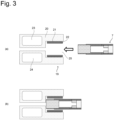
- FIG. 3 An example of the non-combustion-heating-type flavor inhalation system according to the present embodiment is shown in Fig. 3 .
- the non-combustion-heating-type flavor inhalation system shown in Fig. 3 has a non-combustion-heating-type flavor inhaler 7 according to the present embodiment and a heater 19 that heats the tobacco-containing segment of non-combustion-heating-type flavor inhaler 7 from the outside.
- Fig. 3 (a) shows the state of non-combustion-heating-type flavor inhaler 7 before inserting it into heater 19
- Fig. 3 (b) shows the state of non-combustion-heating-type flavor inhaler 7 that is inserted into heater 19 and heated.
- Body 20 has a cylindrical recessed portion 25, and heating body 21 and metal tube 22 are arranged at the position of the inner side of recessed portion 25, corresponding to the tobacco-containing segment of non-combustion-heating-type flavor inhaler 7 that is to be inserted into recessed portion 25.
- Heating body 21 can be an electric resistance heater and is heated by electric power supplied from a battery unit 23 under the direction of a control unit 24 that controls temperature. The heat emitted from heating body 21 is transferred to the tobacco-containing segment of the non-combustion-heating-type flavor inhaler 7 through metal tube 22 with high thermal conductivity.
- Fig. 3 (b) is schematically illustrated, however, there is a gap between the outer circumference of non-combustion-heating-type flavor inhaler 7 and the inner circumference of metal tube 22.
- the gap is desirably not present between the outer circumference of non-combustion-heating-type flavor inhaler 7 and the inner circumference of metal tube 22 for the purpose of transferring efficient heat.
- heater 19 heats the tobacco-containing segment of non-combustion-heating-type flavor inhaler 7 from outside, however it may also be a heater heated from inside.
- a rigid platy, bladed, or columnar heater instead of metal tube 22 is preferably used.
- the heaters related thereto include, for example, a ceramic heater with molybdenum or tungsten on a ceramic substrate.
- a heating temperature by the heater is not particularly limited, and is preferably 400°C or lower, more preferably 150°C or higher and 400°C or lower, and still more preferably 200°C or higher and 350°C or lower. It is noted that the heating temperature indicates the heating body temperature of the heater.
- a tobacco-containing segment was fabricated by blending leaf tobacco and shredding obtained by shredding reconstituted tobacco, using a cigarette manufacturing machine, Protos-M5 manufactured by Hauni Maschinenbau GmbH, wrapping them with rolling paper in rod form so that the content of the trisaccharides and tri amino acids were as shown in Table 1.
- the reconstituted tobacco refers to tobacco in which raw materials being fine powder, a stiffener, stem, scrap, and the like are formed into a sheet.
- a first filter segment was fabricated by subjecting paper filter paper with a basis weight of 35 gsm and a paper width of 220 mm, manufactured by Wattens GmbH to crepe treatment, wrapping it with normal rolling paper, forming into a rod with a circumference of 24.1 mm, and cutting it into 108 mm in length.
- a flavor inhaler was fabricated in the same manner as in Example 1 except that an acetate filter (circumference of 24.1 mm and length of 108 mm, fabricated by a filter manufacturing machine usually used) was used as a first filter segment in Example 1.
- an acetate filter circumference of 24.1 mm and length of 108 mm, fabricated by a filter manufacturing machine usually used
- the content of furaneol and methyl ethyl ketone contained in smoke generated upon burning only the tobacco-containing segment was measured by the method described above, and the mass ratio of furaneol to methyl ethyl ketone (furaneol/methyl ethyl ketone) was calculated.
- the results are shown in Table 2. It is noted that the content is represented as content per unit of crude tar amount (TPM).
- Trisaccharides [unit: ug/g] Tri amino acids [unit: ug/g] Mass ratio Trisaccharides/ Tri amino acids Fructose Glucose Sucrose Trisaccharides Aspartic acid Glutamic acid Asparagine Tri amino acids Comparative Example 1 32600 23300 31400 87300 2179 750 4479 7408 11.8 Example 1 36300 26800 8000 71100 949 656 3227 4832 14.7 Example 2 35100 26700 7000 68800 962 555 2754 4271 16.1 Example 3 40100 33400 12200 85700 1528 776 2789 5093 16.8 Example 4 48800 41000 11500 101300 1472 621 2337 4430 22.
- Example 5 53700 48700 20000 122400 557 538 3597 4692 26.1
- Example 6 56500 51600 19700 127800 568 508 2714 3790 33.7
- Example 7 68400 61800 19400 149600 440 378 1773 2591 57.7
- Reference Example 1 36300 26800 8000 71100 949 656 3227 4832 14.7
- Smoke component [unit: ug/g] B/A Methyl ethyl ketone (A) Furaneol (B) Comparative Example 1 3.027 0.463 0.153
- Example 1 2.574 0.430 0.167
- Example 2 2.467 0.475 0.193
- Example 3 2.471 0.512 0.207
- Example 4 2.492 0.603 0.242
- Example 5 2.466 0.610 0.247
- Example 6 2.383 0.639 0.268
- Example 7 2.320 0.780 0.336
- Reference Example 1 2.574 0.430 0.167
- Umami taste (X) Sweetness (Y
Landscapes
- Chemical & Material Sciences (AREA)
- Health & Medical Sciences (AREA)
- General Health & Medical Sciences (AREA)
- Toxicology (AREA)
- Chemical Kinetics & Catalysis (AREA)
- General Chemical & Material Sciences (AREA)
- Engineering & Computer Science (AREA)
- Materials Engineering (AREA)
- Inorganic Chemistry (AREA)
- Manufacture Of Tobacco Products (AREA)
- Cigarettes, Filters, And Manufacturing Of Filters (AREA)
Abstract
Description
- The present invention relates to a flavor inhaler.
- As filters for flavor inhalers containing flavor components such as tobacco, acetate filters are usually used, in which cellulose acetate fibers are filled inside a tubular wrapper as filtering materials. However, cellulose acetate fibers are semi-synthetic fibers, and therefore they have low dispersibility and degradability when, for example, the flavor inhaler is disposed of, resulting in a heavy burden on the natural environment. Therefore, from the viewpoint of reducing environmental burden, development of a filter using natural fibers has been desired.
- Filters containing natural fibers include, for example, paper filters that contain paper made of plant pulp as filtering materials. However, the paper filter has different filtration characteristics from acetate filters in terms of smoke components, and the paper filter tends to remove more particle phase components and less vapor phase components, compared to the acetate filters. Due to this filtration characteristic, flavor inhalers provided with paper filters tend to have less umami taste components in the flavor and evoke a feeling of discomfort, thereby desiring the improvement of flavor quality.
-
Patent literatures - On the other hand,
Patent Literature 3 discloses a method for obtaining an extract from a tobacco raw material with a specific ratio of saccharide content and glutamine content and pouring the extract back over a sheet formed of a residue after extraction, for the purpose of producing sheet tobacco with a low amount of formaldehyde to be generated. -
- PTL 1:
Japanese Patent Laid-Open No. 2001-352963 - PTL 2: International Publication No.
WO2019/149742 - PTL 3: International Publication No.
WO2016/203518 - However, the method for adding additives to filters as disclosed in
Patent Literatures Patent Literature 3 does not disclose a flavor inhaler provided with a filter containing natural fibers. - An object of the present invention is to provide a flavor inhaler that is provided with a filter containing natural fibers and has improved flavor quality.
- The present invention includes the following embodiments.
- The flavor inhaler according to the present embodiment includes
- a tobacco-containing segment including a tubular wrapper and a tobacco filling filled inside the wrapper, and
- a first filter segment provided with a filter containing natural fibers, wherein
- the tobacco-containing segment contains trisaccharides composed of glucose, fructose, and sucrose and tri amino acids composed of aspartic acid, glutamic acid, and asparagine and
- a mass ratio of the trisaccharides to the tri amino acids (trisaccharides/tri amino acids) is 12 to 60.
- The flavor inhaler according to the present embodiment includes
- a tobacco-containing segment including a tubular wrapper and a tobacco filling filled inside the wrapper, and
- a first filter segment provided with a filter containing natural fibers, wherein
- a mass ratio of furaneol to methyl ethyl ketone (furaneol/methyl ethyl ketone) contained in smoke generated upon burning only the tobacco-containing segment is 0.16 to 0.35.
- According to the present invention, it is possible to provide a flavor inhaler provided with a filter containing natural fibers and has improved flavor quality.
-
- [
Fig. 1] Fig. 1 is a cross-sectional view of one example of the combustion-type flavor inhaler according to the present embodiment. - [
Fig. 2] Fig. 2 is a cross-sectional view of an example of the non-combustion-heating-type flavor inhaler according to the present embodiment. - [
Fig. 3] Fig. 3 is an example of the non-combustion-heating-type flavor inhalation system according to the present embodiment, illustrating (a) a state before inserting the non-combustion-heating-type flavor inhaler into the heater, and (b) a state of inserting the non-combustion-heating-type flavor inhaler into the heater and heating it. - The flavor inhaler according to the first embodiment of the present invention is provided with a tobacco-containing segment and a first filter segment. The tobacco-containing segment includes a tubular wrapper and a tobacco filling filled inside the wrapper. Moreover, the first filter segment is also provided with a filter containing natural fibers. Here, the tobacco-containing segment contains trisaccharides composed of glucose, fructose, and sucrose, and tri amino acids composed of aspartic acid, glutamic acid, and asparagine. Further, a mass ratio of the trisaccharides to the tri amino acids (trisaccharides/tri amino acids) contained in the tobacco-containing segment is 12 to 60.
- The present inventors have found that in a flavor inhaler provided with the filter containing natural fibers, controlling the mass ratio of the trisaccharides to the tri amino acids (trisaccharides/tri amino acids) contained in the tobacco-containing segment within the range of 12 to 60 improved flavor quality. As describe above, the acetate filter can sufficiently remove the causative components evoking a feeling of discomfort that are vapor phase components, however, the filter containing natural fibers cannot sufficiently remove such causative components evoking a feeling of discomfort. However, the aforementioned mass ratio (trisaccharides/tri amino acids) of 12 or more is presumed to increase sweetness and umami taste, alleviating a feeling of discomfort and improving the flavor quality. Moreover, the mass ratio exceeding 60 increases the content ratio of the trisaccharides, evoking a feeling of discomfort derived from the trisaccharides. Therefore, the mass ratio within the range of 12 to 60 is presumed to improve the flavor quality. Furthermore, in the case of the mass ratio within the range of 12 to 60, the Maillard reaction takes place appropriately upon burning or heating the tobacco-containing segment, improving the umami taste, as a result of which the flavor quality is presumably improved.
- In the present embodiment, the mass ratio of the trisaccharides to the tri amino acids (trisaccharides/tri amino acids) is 12 to 60, preferably 15 to 60, and more preferably 16.5 to 60. It is noted that the content of the tri amino acids and the trisaccharides contained in the tobacco-containing segment is measured by the following method.
- A powder sample is prepared from the tobacco-containing segment by using an absolute mill (ABS-W: manufactured by Osaka Chemical Ind. Co., Ltd.), and to 1 g of the powder sample is added 40 mL of an extraction solvent (acetonitrile: ultrapure water (produced by Mili-Q) = 1:1,), and the mixture underwent supersonic waves treatment for 30 min to extract saccharides. The extract after filtering is directly analyzed by high-performance liquid chromatography as described below for quantitative determination.
- Analysis equipment: High performance liquid chromatography RI detector (manufactured by JASCO Corporation)
- Column: HPLC NH2 column (Capcell PakNH2 UG80, manufactured by Shiseido Company, Limited.)
- Mobile phase: 75% acetonitrile (NeCN: distilled water = 75:25)
- A powder sample is prepared from the tobacco-containing segment by using an absolute mill (ABS-W: manufactured by Osaka Chemical Ind. Co., Ltd.), and to 1 g of the powder sample is added 20 mL of an extraction solvent (80% methanol (methanol: ultrapure water (produced by MiliQ) = 8:2), and the mixture underwent supersonic waves treatment for 30 min to extract amino acids. The extract after filtering is directly analyzed by high-performance liquid chromatography as described below for quantitative determination.
- Analysis equipment: High performance liquid chromatography diode array (DAD) detector (Agilent 1290)
- Column: Agilent ZORBAX Eclipse AAA
- Mobile phase A: 40 mM phosphate buffer
- Mobile phase B: 45% acetonitrile/45% methanol aqueous solution
- Gradient mode: On
- The aforementioned mass ratio (trisaccharides/tri amino acids) can be controlled within the above range by, for example, adjusting a blending ratio of tobacco leaves or adding an additive containing the trisaccharide or the tri amino acid to the tobacco-containing segment. In such a way, the present embodiment can control the above mass ratio and improve the flavor quality by directly utilizing the usual tobacco leaf blending technology and addition technology of flavor and the like, thereby requiring no special manufacturing process or the like and resulting in no effect on product quality. Further, types of tobacco leaves and additives that can be selected are diverse, enabling the degree of freedom in designing to be greatly improved.
- The content of the trisaccharides contained in the tobacco-containing segment is preferably 68,800 ppm by mass or more. The content of 68,800 ppm by mass or more increases the sweetness. The content is more preferably 80,000 to 200,000 ppm by mass and still more preferably 100,000 to 150,000 ppm by mass.
- The content of the tri amino acids contained in the tobacco-containing segment is preferably 2,500 ppm by mass or more. The content of 2500 ppm by mass or more appropriately causes the Maillard reaction with the trisaccharides and increases the umami taste. The content is more preferably 2,500 to 10,000 ppm by mass and still more preferably 2,500 to 6,000 ppm by mass.
- In the present embodiment as well, the mass ratio of furaneol to methyl ethyl ketone (furaneol/methyl ethyl ketone) contained in smoke generated upon burning only the tobacco-containing segment is preferably 0.16 to 0.35, as in the second embodiment described below. The mass ratio is more preferably 0.18 to 0.35, and still more preferably 0.20 to 0.34.
- The flavor inhaler according to the second embodiment of the present invention is provided with the tobacco-containing segment and the first filter segment. The tobacco-containing segment includes a tubular wrapper and a tobacco filling filled inside the wrapper. Moreover, the first filter segment is also provided with a filter containing natural fibers. Herein, the mass ratio of furaneol to methyl ethyl ketone (furaneol/methyl ethyl ketone) contained in smoke generated upon burning only the tobacco-containing segment is 0.16 to 0.35. Here, the term "upon burning only the tobacco-containing segment" refers to removing the tobacco-containing segment from the flavor inhaler and burning the single tobacco-containing segment.
- The present inventors have found that analysis of smoke generated upon burning only the tobacco-containing segment without passing through the filter segment demonstrated that the mass ratio of furaneol to methyl ethyl ketone (furaneol/methyl ethyl ketone) contained in the smoke being 0.16 to 0.35 improved the flavor quality. Controlling the mass ratio of furaneol, which is considered one of the umami taste components, and methyl ethyl ketone, which is considered one of the causative components evoking a feeling of discomfort, within the aforementioned range is presumed to enable an appropriate smoke composition to be achieved for the filtration characteristics of the filter containing natural fibers, thereby enabling the flavor quality to be improved.
- In the present embodiment, the aforementioned mass ratio (furaneol/methyl ethyl ketone) is 0.16 to 0.35, preferably 0.18 to 0.35, and more preferably 0.20 to 0.34. It is noted that the content of furaneol and methyl ethyl ketone contained in the smoke is measured by the following method. The content is represented as content per crude tar amount (TPM).
- The measurement of the content of furaneol and methyl ethyl ketone is carried out according to the following procedure. The tobacco-containing segment is removed from the flavor inhaler, undergoes conditioning under ISO 3402 conditions, and then ignited under ISO 4387 conditions and burned. The produced mainstream smoke is passed through a glass fiber filter (Model: Filer 44mmφ, manufactured by Borgwald KC, Inc.) and an impinger with 10mL of methanol collection liquid cooled to -70°C or lower, and then collected. To the impinger solution collected was added a glass fiber filter and they underwent shaking extraction at 180 rpm for 20 minutes. The extract obtained is filtered through a syringe filter with a pore diameter of 0.45 µm (manufactured by Millipore Corporation), and the filtrate is quantitatively analyzed by using the following gas chromatograph-mass spectrometer. The mass ratio of furaneol to methyl ethyl ketone is calculated based on the content of each component per crude tar amount (TPM) obtained.
- Analysis equipment: Gas chromatograph-mass spectrometer
- Furaneol measurement (GC 7890B•MS59 77B manufactured by Agilent Technologies Inc. and MPS2•CIS4 (cooling apparatus) manufactured by GESTEL K. K.
- Methyl ethyl ketone measurement (GC 7890B•MS5977B manufactured by Agilent Technologies Inc.)
- The crude tar amount (TPM) is measured by the following method. The tobacco-containing segment is removed from the flavor inhaler, undergoes conditioning under ISO 3402 conditions, and then ignited under ISO 4387 conditions and burned. The crude tar produced by pyrolysis from the tobacco-containing segment is collected to a glass fiber filter (Model: Filer 44mmφ, manufactured by Borgwald KC, Inc.) and a crude tar amount (TPM) is measured from the difference between the mass of the glass fiber filter before collection and that after collection.
- The mass ratio (furaneol/methyl ethyl ketone) can be controlled within the aforementioned range by controlling, for example, the mass ratio of the trisaccharides to the tri amino acids contained in the tobacco-containing segment (trisaccharides/tri amino acids) to 12 to 60, as in the first embodiment, and controlling the mass ratios of the saccharide other than the trisaccharides (maltose, inositol, or the like) and the amino acid other than the tri amino acids (proline, alanine, threonine, or the like), and the like. For example, increasing the value of the mass ratio (trisaccharides/tri amino acids) tends to increase the value of the aforementioned mass ratio (furaneol/methyl ethyl ketone), which enables the adjustment. In the present embodiment, the mass ratio of the trisaccharides (trisaccharides/tri amino acids) preferably stays within the same range as in the first embodiment. Moreover, the content of the trisaccharides and the tri amino acids contained in the tobacco-containing segment preferably stays within the same range as in the first embodiment. Common configuration of the first embodiment and the second embodiment will be described below. It is noted that the embodiments of the present invention including the first embodiment and the second embodiment is referred to as "present embodiment."
- The tobacco-containing segment according to the present embodiment includes a tubular wrapper and a tobacco filling filled inside the wrapper. The tobacco filling contains tobacco and may contain an aerosol-generating substrate, volatile fragrance component, water, and the like. Moreover, the tobacco-containing segment may further contain an additive containing at least one of the trisaccharides or the tri amino acids in order to adjust the mass ratio of the trisaccharides to the tri amino acids to be in the range of the present embodiment. The additive may be contained inside the tobacco filling or may be imparted to the wrapper.
- A size of tobacco contained in the tobacco filling and the preparation method of the tobacco are not particularly limited. For example, dried tobacco leaves may be shredded to a width of 0.8 to 1.2 mm for use. In the case of shredding it to the aforementioned width, the length of the shredding will be approximately 5 to 20 mm. In addition, dried tobacco leaves may be crushed to an average particle size of 20 to 200 µm, homogenized, processed into a sheet, which is then shredded to a width of 0.8 to 1.2 mm for use. In the case of shredding it to the above width, the length of the shredding will be approximately 5 to 20 mm. Furthermore, the sheet as processed above that underwent gather processing without shredding may be used as a filling. A plurality of sheets formed into cylindrical shapes may also be arranged in concentric circles. Various types of tobacco contained in the tobacco filling can be used, even in either case in which dried tobacco leaves are shredded for use, or crushed, homogenized and formed into a sheet. For example, a flue-cured type, burley type, orient type, native type, as well as other Nicotiana tabacum-based varieties or Nicotiana rustica-based varieties, can be blended as appropriate and used so that the mass ratio of the trisaccharides to the tri amino acids stays within the range of the present embodiment. Details on the varieties of the tobacco are disclosed in, for example, "Encyclopedia of Tobacco, Tobacco Research Center, 2009. 3. 31."
- There are several conventional methods for crushing and processing tobacco into homogenized sheets: the first one is a paper sheet made using a papermaking process; the second is a cast sheet made by mixing a suitable solvent such as water to homogenize a product and then casting a thin layer of the homogenized product onto a metal plate or metal plate belt, which is then dried; and the third is a rolled sheet made by extruding a product mixed with a suitable solvent such as water and then homogenized, into sheet form and then molding it into rolled form. Details on the types of aforementioned homogenized sheets are disclosed in, for example, "Encyclopedia of Tobacco, Tobacco Research Center, 2009. 3. 31."
- The filling density of the tobacco filling is not particularly limited, and from the viewpoint of ensuring the performance of the flavor inhaler and imparting a favorable flavor, it is usually 150 mg/cm3 or higher, and preferably 165 mg/cm3 or higher, and is usually 320 mg/cm3 or lower and preferably 300 mg/cm3 or lower. Specifically, the ranges of the content of the tobacco filling contained in the tobacco-containing segment include 408 to 872 mg and preferably 449 to 817 mg per tobacco-containing segment in the case of a tobacco-containing segment with a circumference of 24.5 mm and a length of 57 mm.
- In the case of the flavor inhaler according to the present embodiment being a non-combustion-heating-type flavor inhaler, the tobacco filling can contain an aerosol-generating substrate. The aerosol-generating substrate is a material that can generate an aerosol upon heating. The aerosol-generating substrates are not particularly limited, and include, for example, glycerin, propylene glycol (PG), triethyl citrate (TEC), triacetin, 1,3-butanediol, and the like. They may be used singly, or two or more thereof may be used in combination. In the case of the tobacco-containing segment containing the aerosol-generating substrate, the content of the aerosol-generating substrate in the tobacco filling is not particularly limited and is usually 5 to 50% by mass and preferably 10 to 20% by mass from the viewpoint of sufficiently generating aerosol and imparting a favorable flavor.
- The volatile fragrance components are not particularly limited, and include menthol, vanillin, esters, and the like from the viewpoint of imparting a favorable flavor. These volatile fragrance components may be used singly or combined for use. In the case of the tobacco filling containing the volatile fragrance component, the content of the volatile fragrance component in the tobacco filling is not particularly limited, and is usually 100 ppm by mass or more, preferably 1,000 ppm by mass or more, and more preferably 25,000 ppm by mass or more, and usually 100,000 ppm by mass or less, preferably 50,000 ppm by mass or less, and more preferably 33,000 ppm by mass or less from the viewpoint of imparting a favorable flavor.
- Additives containing at least one of the aforementioned trisaccharides or the aforementioned tri amino acids include, for example, flavoring preparations, humectants, and the like. The tobacco containing segment may contain one type, two or more types thereof. In the case of the additive being contained inside the tobacco filling, the content of the additive in the tobacco filling is not particularly limited as long as it is an amount so that the mass ratio of the trisaccharides to the tri amino acids is within the range of the present embodiment (trisaccharides/tri amino acids = 12 to 60).
- A wrapper covering the outer circumference of the tobacco filling is not particularly limited, and for example, paper and the like can be used. In the case of the additive being imparted to the wrapper, the additive may be imparted to, for example, the inner surface of the wrapper, or may be contained inside the wrapper. The amount of the additive imparted to the wrapper is not particularly limited as long as it is an amount so that the mass ratio of the trisaccharides to the tri amino acids is within the range of the present embodiment (trisaccharides/tri amino acids = 12 to 60), and for example, it can be 0.005 g/m2 to 50 g/m2. In a case in which the additive is imparted to the wrapper, the additive can be transferred to the tobacco filling with an elapsed time.
- The method for filling the tobacco filling inside the wrapper is not particularly limited, and for example, the tobacco filling may be wrapped in a wrapper, or the tobacco filling may be filled in a tubular wrapper. In a case in which the tobacco has a shape with a side in a longitudinal direction, such as a rectangular shape, the tobacco may be filled so that each of the longitudinal tobacco directs to unspecified directions inside the wrapper or may be aligned and filled such that the tobacco directs to the axial direction of the tobacco-containing segment or the direction perpendicular to the axial direction thereof.
- The tobacco-containing segment according to the present embodiment can be wrapped by a tobacco packaging material arranged outside the wrapper, and the additive can be imparted to the tobacco packaging material. In this case, the additive can be transferred into the tobacco-containing segment with an elapsed time, enabling the mass ratio of the trisaccharides to the tri amino acids to be adjusted within the range of the present embodiment. Tobacco packaging materials are not particularly limited, and include, for example, a metal foil such as an aluminum foil, aluminum laminated paper in which a metal foil and paper are adhered to each other, and the like. The additive can be imparted to, for example, the inner surface of the tobacco packaging material. The amount of the additive imparted to the tobacco packaging material is not particularly limited as long as it is an amount so that the mass ratio of the trisaccharides to the tri amino acids stays within the range of the present embodiment (trisaccharides/tri amino acids = 12 to 60), and, for example, the amount of a coating liquid can be 3 to 10 ml/m2. Here, the flavor inhaler can be provided with the tobacco packaging material described above. The addition of the additive to the tobacco filling, the imparting of the additive to the wrapper, and/or the imparting of the additive to the tobacco packaging material enable the amount of the additive added to the tobacco filling, the amount of the additive imparted to the wrapper, and the amount of the additive imparted to the tobacco packaging material to be appropriately adjusted so that the mass ratio of the trisaccharides to the tri amino acids is within the range of the present embodiment (trisaccharides/tri amino acids = 12 to 60).
- The first filter segment according to the present embodiment is provided with a filter containing natural fibers. The natural fibers include plant pulp, cotton, hemp, and the like. These natural fibers may be used singly, or two or more thereof may be used in combination. The content of the natural fibers contained in the filter is preferably 80% by mass or more and more preferably 90% by mass or more, and the filter may be composed of the natural fibers.
- The aforementioned filter may further contain other fibers such as synthetic fibers, semi-synthetic fibers or regenerated fibers in addition to natural fibers from the viewpoint of improving filter physical properties such as a tensile strength. Synthetic fibers include, for example, polyamide fibers, acrylic fibers, polyurethane fibers, polylactic acid fibers, polyethylene fibers, polypropylene fibers, polyester fibers, polyethylene terephthalate fibers, polyvinyl alcohol fibers, polyvinyl acetate fibers, ethylene-vinyl acetate copolymer fibers, and the like. Semi-synthetic fibers include, for example, acetylene fibers and the like. Regenerated fibers include, for example, rayon fibers and the like. These may be used singly, or two or more thereof may be used in combination. The content of the other fibers in the filter is preferably 20% by mass or less, more preferably 10% by mass or less, and the filter may be free of the other fibers.
- The filters containing the natural fibers include, for example, paper filters. The type of the wood pulp used for paper filters is not particularly limited, and pulp from conifer or broad-leaved trees can be used. The type of the paper used for paper filters is not particularly limited, and gather paper, pleated paper, crimped paper, crepe paper, shredded paper, and the like can be used.
- The aforementioned filters are not particularly limited for the form thereof and include, for example, filters in integrated form, having, for example, a corrugated structure with a plurality of valleys and ridges. In the case of using the filter with a corrugated structure, the longitudinal direction of the valleys (or ridges) can be aligned so that it is substantially parallel to the axial direction of the first filter segment.
- In the present embodiment, the filter preferably further contains a flavor modifier from the viewpoint of further improving the flavor quality of the flavor inhaler provided with the filter containing natural fibers. Examples of the flavor modifiers include a polyalkylene glycol, triacetin, triethyl citrate, propylene glycol, cellulose acetate, and the like. These flavor modifiers may be used singly, or two or more thereof may be used in combination. The flavor modifier may be imparted to the surface of the filter or contained inside the filter. The content of the flavor modifier in the filter is preferably 3 to 30% by mass and more preferably 8 to 15% by mass.
- The first filter segment according to the present embodiment further contains a solid adsorbent in addition to the filter containing natural fibers. The first filter segment containing the solid adsorbent enables to remove vapor phase components that are difficult to be removed by the filter containing natural fibers, thereby further improving the flavor quality. The solid adsorbents include, for example, activated carbon, zeolite, and porous cellulose. These solid adsorbents may be used singly or in combination of two or more thereof. The aforementioned solid adsorbent can be arranged, for example, between the gaps of the filter containing natural fibers. The content of the solid adsorbent in the first filter segment is preferably 5 to 60 mg and more preferably 15 to 40 mg.
- The method for producing the first filter segment is not particularly limited and can be produced by publicly known methods. In the case of the filter containing natural fibers being a paper filter, it can be produced, for example, by using paper obtained by papermaking from wood pulp and forming it into a filter tip. Specifically, the paper obtained by papermaking can be subjected to a compression process such as crimping or folding using a crimping roll or the like to form paper with corrugated wrinkles, and then the paper with this corrugated structure can be gathered, rolled up with a packaging material, formed in rod-shape, and cut at a desired length to enable the first filter segment to be produced. A paper machine such as a cylinder paper machine, inclination-type tanmo paper machine, fourdrinier paper machine, or Tanmo paper machine can be used as a paper machine, and the paper machines can be appropriately combined for use according to required characteristics.
- The aforementioned packaging materials are not particularly limited, and for example, air permeable materials, air impermeable materials, films (polymer films such as a polyethylene film, a polyethylene wrap and the like), heat shrinkable films, cardboard, wood, woven fabrics (fabrics formed of two sets of knitted yarns interwoven with each other), nonwoven materials (aggregates of textile fibers entangled with each other and fixed to a random web or mat by mechanical or chemical means, for example, fused thermoplastic fibers), foil materials (metallic materials and the like), and any combination thereof, can be used.
- The flavor inhaler according to the present embodiment can be provided with a plurality of filter segments. In this case, at least one of the plurality of filter segments is the first filter segment. Other filter segments other than the first filter segment include, for example, a filter segment filled with synthetic fibers or semi-synthetic fibers such as acetate or a polylactic acid, a filter segment filled with films such as acetate or a polylactic acid, a filter segment with a hollow structure or coaxial structure, a filter segment including a flavor capsule with a core-shell structure in which a liquid flavoring is wrapped by a shell of gelatin, a polysaccharide, a resin, or the like, a filter segment containing a solid adsorbent such as activated carbon, and the like. The flavor inhaler having a plurality of filter segments enables the plurality of filter segments to be arranged adjacent to each other. The plurality of filter segments can be connected to each other by being covered on the periphery thereof by a filter plug wrapper, enabling a multi-filter to be formed.
- The flavor inhaler according to the present embodiment can be a combustion-type flavor inhaler. An example of the combustion-type flavor inhaler is shown in
Fig. 1 . As shown inFig. 1 , a combustion-type flavor inhaler 1 includes a tobacco-containingsegment 2 and afirst filter segment 3 provided adjacent to a tobacco-containingsegment 2. Tobacco-containingsegment 2 includes a tobacco filling 4 and awrapper 5 wrapped around tobacco filling 4. Tobacco-containingsegment 2 andfirst filter segment 3 are connected by atip paper member 6 wound on tobacco-containingsegment 2 andfirst filter segment 3.Tip paper member 6 may have a ventilation hole in a portion of the outer periphery. The number of ventilation holes may be one or plural, and for example, 10 to 40 holes may be formed. In the case of the number of ventilation holes being plural, the ventilation holes can be arranged annularly, for example, in a row on the outer peripheral portion oftip paper member 6. The plurality of ventilation holes can be arranged at substantially constant intervals. The ventilation holes arranged allow air to be drawn intofirst filter segment 3 through the ventilation holes upon inhalation. By diluting mainstream smoke with outside air through the ventilation holes, a product design with a desired tar value can be achieved. Such combustion-type flavor inhalers generally include an inhaler represented by a cigarette. - A user can enjoy flavor of tobacco by igniting the tip of tobacco-containing
segment 2 and sucking the mouthpiece end offirst filter segment 3 with a mouth. Combustion-type flavor inhaler 1 according to the present embodiment, in whichfirst filter segment 3 is provided with a filter containing natural fibers, can achieve a favorable flavor. - The flavor inhaler according to the present embodiment can be a non-combustion-heating-type flavor inhaler. An example of the non-combustion-heating-type flavor inhaler according to the present embodiment is shown in
Fig. 2 . A non-combustion-heating-type flavor inhaler 7 shown inFig. 2 is provided with tobacco-containingsegment 8 and amouthpiece segment 9.Mouthpiece segment 9 is provided with acooling segment 10, acenter hole segment 11, andfirst filter segment 12. Upon inhalation, tobacco-containingsegment 8 is heated, and each component contained in the tobacco filling is vaporized and transferred tomouthpiece segment 9 by inhalation. Then it undergoes inhalation procedure from the end offirst filter segment 12. - Cooling
segment 10 can be configured of atubular member 13.Tubular member 13 can be, for example, a paper tube made of cardboard processed into a cylindrical shape.Tubular member 13 and amouthpiece lining paper 18 to be described below haveperforations 14 penetrating both. The presence ofperforations 14 allows outside air to be introduced intocooling segment 10 upon inhalation. This causes an aerosol vaporization component generated by heating tobacco-containingsegment 8 to contact the outside air and lower the temperature of the aerosol vaporization component, whereby it is liquified and formed into aerosol. The diameter (span length) ofperforation 14 is not particularly limited, and may be, for example, 0.5 to 1.5 mm. The number ofperforations 14 is not particularly limited and can be one, two or more. For example, a plurality ofperforations 14 may be arranged on the circumference ofcooling segment 10. - A
center hole segment 11 can be configured of afilling layer 15 with a hollow portion, aninner plug wrapper 16covering filling layer 15.Center hole segment 11 functions to increase the strength ofmouthpiece segment 9. Fillinglayer 15 can be a rod with an inner diameter of φ5.0 to φ1.0 mm densely filled with, for example, cellulose acetate fibers and cured with a plasticizer containing triacetin added at 6 to 20% by mass relative to the cellulose acetate mass. Fillinglayer 15 has a high fiber filling density, so that air and aerosol flow only in the hollow section upon inhalation, and very little in fillinglayer 15. In a case in which it is desirable to lower the reduction of the aerosol components infirst filter segment 12 by filtration, shortening the length offirst filter segment 12 and replacing it withcenter hole segment 11 are effective to increase the delivery amount of aerosol components. Since fillinglayer 15 insidecenter hole segment 11 is a fiber-filled layer, it is pleasant to touch it from the outside upon use. -
Center hole segment 11 is connected tofirst filter segment 12 by anouter plug wrapper 17.Outer plug wrapper 17 can be, for example, cylindrical paper. In addition, tobacco-containingsegment 8, coolingsegment 10, the connectedcenter hole segment 11 andfirst filter segment 12, are connected by amouthpiece lining paper 18. They can be connected by, for example, coating the inner surface ofmouthpiece lining paper 18 with a glue such as a vinyl acetate-based and then inserting and winding the aforementioned three segments. - The axial length of the non-combustion-heating-type flavor inhaler according to the present embodiment, i.e., the length in the horizontal direction in
Fig. 2 , is not particularly limited, and is preferably 40 to 90 mm, more preferably 50 to 75 mm, and still more preferably 50 to 60 mm. Moreover, the circumference length of the non-combustion-heating-type flavor inhaler is preferably 16 to 25 mm, more preferably 20 to 24 mm, and still more preferably 21 and 23 mm. For example, an aspect of the length of 20 mm of tobacco-containingsegment 8, the length of 20 mm of coolingsegment 10, the length of 8 mm ofcenter hole segment 11, and the length of 7 mm offirst filter segment 12, can be included. These individual segment lengths can be appropriately changed according to suitability for manufacturing, quality requirements, and the like. Furthermore, onlyfirst filter segment 12 may be arranged downstream ofcooling segment 10 withoutcenter hole segment 11. In the non-combustion-heating-type flavor inhaler according to the present embodiment,first filter segment 12 is provided with the filter containing natural fibers, thereby enabling to provide a favorable flavor. - The non-combustion-heating-type flavor inhalation system according to the present embodiment can be provided with the non-combustion-heating-type flavor inhaler according to the present embodiment and a heater that heats the non-combustion-heating-type flavor inhaler. The non-combustion-heating-type flavor inhalation system according to the present embodiment may have other configurations other than the non-combustion-heating-type flavor inhaler according to the present embodiment and the heater described above.
- An example of the non-combustion-heating-type flavor inhalation system according to the present embodiment is shown in
Fig. 3 . The non-combustion-heating-type flavor inhalation system shown inFig. 3 has a non-combustion-heating-type flavor inhaler 7 according to the present embodiment and aheater 19 that heats the tobacco-containing segment of non-combustion-heating-type flavor inhaler 7 from the outside.Fig. 3 (a) shows the state of non-combustion-heating-type flavor inhaler 7 before inserting it intoheater 19, andFig. 3 (b) shows the state of non-combustion-heating-type flavor inhaler 7 that is inserted intoheater 19 and heated.Heater 19 shown inFig. 3 is configured of abody 20, aheating body 21, ametal tube 22, a battery unit 23, and acontrol unit 24.Body 20 has a cylindrical recessedportion 25, andheating body 21 andmetal tube 22 are arranged at the position of the inner side of recessedportion 25, corresponding to the tobacco-containing segment of non-combustion-heating-type flavor inhaler 7 that is to be inserted into recessedportion 25.Heating body 21 can be an electric resistance heater and is heated by electric power supplied from a battery unit 23 under the direction of acontrol unit 24 that controls temperature. The heat emitted fromheating body 21 is transferred to the tobacco-containing segment of the non-combustion-heating-type flavor inhaler 7 throughmetal tube 22 with high thermal conductivity. -
Fig. 3 (b) is schematically illustrated, however, there is a gap between the outer circumference of non-combustion-heating-type flavor inhaler 7 and the inner circumference ofmetal tube 22. Actually the gap is desirably not present between the outer circumference of non-combustion-heating-type flavor inhaler 7 and the inner circumference ofmetal tube 22 for the purpose of transferring efficient heat. Moreover,heater 19 heats the tobacco-containing segment of non-combustion-heating-type flavor inhaler 7 from outside, however it may also be a heater heated from inside. In a case in whichheater 19 is heated from inside, a rigid platy, bladed, or columnar heater instead ofmetal tube 22 is preferably used. The heaters related thereto include, for example, a ceramic heater with molybdenum or tungsten on a ceramic substrate. - A heating temperature by the heater is not particularly limited, and is preferably 400°C or lower, more preferably 150°C or higher and 400°C or lower, and still more preferably 200°C or higher and 350°C or lower. It is noted that the heating temperature indicates the heating body temperature of the heater.
- The present invention will be described in detail below by way of Examples, however, the invention is not limited thereto.
- A tobacco-containing segment was fabricated by blending leaf tobacco and shredding obtained by shredding reconstituted tobacco, using a cigarette manufacturing machine, Protos-M5 manufactured by Hauni Maschinenbau GmbH, wrapping them with rolling paper in rod form so that the content of the trisaccharides and tri amino acids were as shown in Table 1. Here, the reconstituted tobacco refers to tobacco in which raw materials being fine powder, a stiffener, stem, scrap, and the like are formed into a sheet.
- A first filter segment was fabricated by subjecting paper filter paper with a basis weight of 35 gsm and a paper width of 220 mm, manufactured by Wattens GmbH to crepe treatment, wrapping it with normal rolling paper, forming into a rod with a circumference of 24.1 mm, and cutting it into 108 mm in length.
- A flavor inhaler with a circumference of 24.5 mm, having the tobacco-containing segment with a length of 57 mm and the first filter segment with a length of 27 mm, was fabricated by using a cigarette manufacturing machine, Protos-M5 and connecting the tobacco-containing segment and the first filter segment.
- A flavor inhaler was fabricated in the same manner as in Example 1 except that an acetate filter (circumference of 24.1 mm and length of 108 mm, fabricated by a filter manufacturing machine usually used) was used as a first filter segment in Example 1.
- For each of the flavor inhalers fabricated, the content of the tri amino acids and trisaccharides contained in the tobacco-containing segment was measured by the method described above, and the mass ratio of the trisaccharides to the tri amino acids (trisaccharides/tri amino acids) was calculated. The results are shown in Table 1.
- For each of the flavor inhalers fabricated, the content of furaneol and methyl ethyl ketone contained in smoke generated upon burning only the tobacco-containing segment was measured by the method described above, and the mass ratio of furaneol to methyl ethyl ketone (furaneol/methyl ethyl ketone) was calculated. The results are shown in Table 2. It is noted that the content is represented as content per unit of crude tar amount (TPM).
- Six panelists (panelists a to f) evaluated the flavor quality for each flavor inhaler fabricated. The evaluations were conducted on four items: "umami taste," "sweetness," "feeling of discomfort," and "overall evaluation." For "umami taste," "sweetness," and "feeling of discomfort," scores for "umami taste," "sweetness," and "feeling of discomfort" upon using the flavor inhaler in Reference Example 1 were set to
scale 5, and a scale of 1 (little umami taste or sweetness, week feeling of discomfort) to 10 (much umami taste or sweetness, strong feeling of discomfort) are scored for Examples 1 to 7 and Comparison Example 1. The results are shown in Table 3 and Table 4. Here, Table 3 shows the individual scores of each panelist and average values thereof, and Table 4 shows the average values. Moreover, for the "overall evaluation," "A" is scored for the overall flavor quality that is the same or higher, "B" is scored for the overall flavor quality that is slightly lower but having an improvement effect, and "C" is scored for the overall flavor quality that is significantly lower, compared to the overall flavor quality upon using the flavor inhaler of Reference Example 1, and the overall evaluation was evaluated by the consensus of all the panelists. The results are shown in Table 4. It is noted that the six panelists (panelists a to f) have been well trained using several samples with different concentrations, and it has been confirmed that their scores and evaluation thresholds for "umami taste," "sweetness," "feeling of discomfort," and "flavor quality (overall evaluation)" are equal and standardized among the panelists.[Table 1] Trisaccharides [unit: ug/g] Tri amino acids [unit: ug/g] Mass ratio Trisaccharides/ Tri amino acids Fructose Glucose Sucrose Trisaccharides Aspartic acid Glutamic acid Asparagine Tri amino acids Comparative Example 1 32600 23300 31400 87300 2179 750 4479 7408 11.8 Example 1 36300 26800 8000 71100 949 656 3227 4832 14.7 Example 2 35100 26700 7000 68800 962 555 2754 4271 16.1 Example 3 40100 33400 12200 85700 1528 776 2789 5093 16.8 Example 4 48800 41000 11500 101300 1472 621 2337 4430 22. 9 Example 5 53700 48700 20000 122400 557 538 3597 4692 26.1 Example 6 56500 51600 19700 127800 568 508 2714 3790 33.7 Example 7 68400 61800 19400 149600 440 378 1773 2591 57.7 Reference Example 1 36300 26800 8000 71100 949 656 3227 4832 14.7 [Table 2] Smoke component [unit: ug/g] B/A Methyl ethyl ketone (A) Furaneol (B) Comparative Example 1 3.027 0.463 0.153 Example 1 2.574 0.430 0.167 Example 2 2.467 0.475 0.193 Example 3 2.471 0.512 0.207 Example 4 2.492 0.603 0.242 Example 5 2.466 0.610 0.247 Example 6 2.383 0.639 0.268 Example 7 2.320 0.780 0.336 Reference Example 1 2.574 0.430 0.167 
[Table 4] Umami taste (X) Sweetness (Y) Feeling of discomfort (Z) (X+Y)/Z Overall evaluation Comparative Example 1 3.2 2.5 7.2 0.8 C Example 1 3.3 4.3 8.0 1.0 B Example 2 4.5 5.0 7.2 1.3 A Example 3 5.7 5.3 6.7 1.7 A Example 4 6.2 6.3 6.0 2.1 A Example 5 4.8 5.7 6.7 1.6 A Example 6 5.7 5.7 6.2 1.8 A Example 7 6.2 6.5 5.5 2.3 A Reference Example 1 5.0 5.0 5.0 2.0 - -
- 1
- combustion-type flavor inhaler
- 2, 8
- tobacco-containing segment
- 3, 12
- first filter segment
- 4
- tobacco filling
- 5
- wrapper
- 6
- tip paper member
- 7
- non-combustion-heating-type flavor inhaler
- 9
- mouthpiece segment
- 10
- cooling segment
- 11
- center hole segment
- 13
- tubular member
- 14
- perforation
- 15
- filling layer
- 16
- inner plug wrapper
- 17
- outer plug wrapper
- 18
- mouthpiece lining paper
- 19
- heater
- 20
- body
- 21
- heating body
- 22
- metal tube
- 23
- battery unit
- 24
- control unit
- 25
- recessed portion
Claims (17)
- A flavor inhaler comprisinga tobacco-containing segment comprising a tubular wrapper and a tobacco filling filled inside the wrapper, anda first filter segment provided with a filter comprising natural fibers, whereinthe tobacco-containing segment comprises trisaccharides composed of glucose, fructose, and sucrose and tri amino acids composed of aspartic acid, glutamic acid, and asparagine anda mass ratio of the trisaccharides to the tri amino acids (trisaccharides/tri amino acids) is 12 to 60.
- The flavor inhaler according to claim 1, wherein a mass ratio of furaneol to methyl ethyl ketone (furaneol/methyl ethyl ketone) contained in smoke generated upon burning only the tobacco-containing segment is 0.16 to 0.35.
- The flavor inhaler according to claim 1 or 2, wherein the content of the trisaccharides contained in the tobacco-containing segment is 68,800 ppm by mass or more.
- The flavor inhaler according to any one of claims 1 to 3, wherein the content of the tri amino acids contained in the tobacco-containing segment is 2,500 ppm by mass or more.
- A flavor inhaler comprisinga tobacco-containing segment comprising a tubular wrapper and a tobacco filling filled inside the wrapper, anda first filter segment provided with a filter comprising natural fibers, whereina mass ratio of furaneol to methyl ethyl ketone (furaneol/methyl ethyl ketone) contained in smoke generated upon burning only the tobacco-containing segment is 0.16 to 0.35.
- The flavor inhaler according to any one of claims 1 to 5, wherein the natural fiber is at least one selected from the group consisting of plant pulp, cotton, and hemp.
- The flavor inhaler according to any one of claims 1 to 6, wherein the filter further comprises a flavor modifier.
- The flavor inhaler according to claim 7, wherein the flavor modifier is at least one selected from the group consisting of a polyalkylene glycol, triacetin, triethyl citrate, a propylene glycol, and cellulose acetate.
- The flavor inhaler according to any one of claims 1 to 8, wherein the first filter segment further comprises a solid adsorbent.
- The flavor inhaler according to claim 9, wherein the solid adsorbent is at least one selected from the group consisting of activated carbon, zeolite, and porous cellulose.
- The flavor inhaler according to any one of claims 1 to 10, wherein the flavor inhaler is provided with a plurality of filter segments and at least one of the plurality of filter segments is the first filter segment.
- The flavor inhaler according to any one of claims 1 to 11, wherein the tobacco-containing segment further comprises an additive comprising at least one of the trisaccharides or the tri amino acids.
- The flavor inhaler according to claim 12, wherein the additive is comprised inside the tobacco filling.
- The flavor inhaler according to claim 12 or 13, wherein the additive is imparted to the wrapper.
- The flavor inhaler according to any one of claims 12 to 14, wherein the tobacco-containing segment is wrapped by a tobacco packaging material arranged outside the wrapper, and the additive is imparted to the tobacco packaging material.
- The flavor inhaler according to any one of claims 1 to 15, being a combustion-type flavor inhaler.
- The flavor inhaler according to any one of claims 1 to 15, being a non-combustion-heating-type flavor inhaler.
Applications Claiming Priority (2)
| Application Number | Priority Date | Filing Date | Title |
|---|---|---|---|
| JP2020177770 | 2020-10-23 | ||
| PCT/JP2021/034737 WO2022085354A1 (en) | 2020-10-23 | 2021-09-22 | Flavor inhaler |
Publications (2)
| Publication Number | Publication Date |
|---|---|
| EP4233571A1 true EP4233571A1 (en) | 2023-08-30 |
| EP4233571A4 EP4233571A4 (en) | 2025-01-29 |
Family
ID=81289826
Family Applications (1)
| Application Number | Title | Priority Date | Filing Date |
|---|---|---|---|
| EP21882495.1A Pending EP4233571A4 (en) | 2020-10-23 | 2021-09-22 | AROMA INHALER |
Country Status (3)
| Country | Link |
|---|---|
| EP (1) | EP4233571A4 (en) |
| JP (1) | JP7337284B2 (en) |
| WO (1) | WO2022085354A1 (en) |
Families Citing this family (1)
| Publication number | Priority date | Publication date | Assignee | Title |
|---|---|---|---|---|
| CN120265150A (en) * | 2022-12-14 | 2025-07-04 | 日本烟草产业株式会社 | Tobacco filler, flavored inhaler, and method for producing tobacco filler |
Family Cites Families (10)
| Publication number | Priority date | Publication date | Assignee | Title |
|---|---|---|---|---|
| US4379464A (en) * | 1981-02-18 | 1983-04-12 | Philip Morris Incorporated | Cooked flavors for smoking products |
| US4516590A (en) * | 1982-11-26 | 1985-05-14 | Philip Morris Incorporated | Air-cured bright tobacco filler, blends and smoking articles |
| JP2001352963A (en) | 2000-06-13 | 2001-12-25 | Japan Tobacco Inc | Cigarette filters and cigarettes |
| US20040231684A1 (en) | 2003-05-20 | 2004-11-25 | Zawadzki Michael A. | Smoking article and smoking article filter |
| US8944072B2 (en) * | 2009-06-02 | 2015-02-03 | R.J. Reynolds Tobacco Company | Thermal treatment process for tobacco materials |
| EP3287015A4 (en) | 2015-06-15 | 2019-01-09 | Japan Tobacco Inc. | PROCESS FOR PRODUCING SHEET TOBACCO |
| CN107955707A (en) * | 2017-11-22 | 2018-04-24 | 陕西易阳科技有限公司 | A kind of preparation method of the savory cigarette of pineapple |
| KR102792119B1 (en) * | 2018-02-01 | 2025-04-04 | 제이티 인터내셔널 소시에떼 아노님 | Biodegradable filters with improved taste |
| EP3777579A4 (en) * | 2018-05-01 | 2021-11-24 | Japan Tobacco Inc. | ROLLING PAPER FOR NON-COMBUSTION HEATING TYPE SMOKING MATERIAL, NON-COMBUSTION HEATING TYPE SMOKING MATERIAL, AND ELECTRIC HEATING TYPE SMOKING SYSTEM |
| CN210782888U (en) * | 2019-05-16 | 2020-06-19 | 内蒙古昆明卷烟有限责任公司 | A heat not burn cigarette |
-
2021
- 2021-09-22 WO PCT/JP2021/034737 patent/WO2022085354A1/en not_active Ceased
- 2021-09-22 EP EP21882495.1A patent/EP4233571A4/en active Pending
- 2021-09-22 JP JP2022557312A patent/JP7337284B2/en active Active
Also Published As
| Publication number | Publication date |
|---|---|
| EP4233571A4 (en) | 2025-01-29 |
| JPWO2022085354A1 (en) | 2022-04-28 |
| WO2022085354A1 (en) | 2022-04-28 |
| JP7337284B2 (en) | 2023-09-01 |
Similar Documents
| Publication | Publication Date | Title |
|---|---|---|
| JP7396778B2 (en) | tobacco composition | |
| EP3905905B1 (en) | A smoking article comprising a tube filter and a method of manufacturing the same | |
| KR20230046306A (en) | Consumables for Aerosol Delivery Systems | |
| US20260076405A1 (en) | Article for use with an apparatus for heating aerosolisable material | |
| EP4076034A1 (en) | A component for an article for use in a non-combustible aerosol provision system | |
| JP2023507157A (en) | Components for articles for use in aerosol delivery systems | |
| JP2023506996A (en) | Articles for use in aerosol delivery systems | |
| US20240277030A1 (en) | A component for use in a non-combustible aerosol provision system | |
| JP7337284B2 (en) | flavor aspirator | |
| US20250072481A1 (en) | An article for use in an aerosol provision system and a method of manufacturing an article | |
| US20250049108A1 (en) | An article for use in an aerosol provision system and a method of manufacturing an article for use in an aerosol provision system | |
| EP4380382A1 (en) | Aerosol-generating material comprising chitosan and an additional binder | |
| KR102694928B1 (en) | Reconstituted tobacco sheet including toasted tobacco leaves and manufacturing method thereof, and a non-combustible type smoking article including the reconstituted tobacco sheet | |
| EP4635307A1 (en) | Tobacco filler, flavor inhaler and production method for tobacco filler | |
| EP4368774A1 (en) | Paper-containing tobacco segment | |
| KR20250127480A (en) | Manufacturing method for smoking article and smoking article | |
| KR20250179248A (en) | Solid materials and aerosol generating articles comprising the same | |
| EP4716475A1 (en) | Aerosol-generating composition | |
| WO2023118854A1 (en) | An article for use in an aerosol provision system and a method of manufacturing an article for use in an aerosol provision system | |
| WO2025017488A2 (en) | An aerosol generating substrate, method and aerosol generating article thereof | |
| WO2023248604A1 (en) | Cigarette segment containing low-flavor raw material |
Legal Events
| Date | Code | Title | Description |
|---|---|---|---|
| STAA | Information on the status of an ep patent application or granted ep patent |
Free format text: STATUS: THE INTERNATIONAL PUBLICATION HAS BEEN MADE |
|
| PUAI | Public reference made under article 153(3) epc to a published international application that has entered the european phase |
Free format text: ORIGINAL CODE: 0009012 |
|
| STAA | Information on the status of an ep patent application or granted ep patent |
Free format text: STATUS: REQUEST FOR EXAMINATION WAS MADE |
|
| 17P | Request for examination filed |
Effective date: 20221121 |
|
| AK | Designated contracting states |
Kind code of ref document: A1 Designated state(s): AL AT BE BG CH CY CZ DE DK EE ES FI FR GB GR HR HU IE IS IT LI LT LU LV MC MK MT NL NO PL PT RO RS SE SI SK SM TR |
|
| DAV | Request for validation of the european patent (deleted) | ||
| DAX | Request for extension of the european patent (deleted) | ||
| A4 | Supplementary search report drawn up and despatched |
Effective date: 20250103 |
|
| RIC1 | Information provided on ipc code assigned before grant |
Ipc: A24D 3/04 20060101ALI20241220BHEP Ipc: A24D 3/10 20060101ALI20241220BHEP Ipc: A24D 1/00 20200101ALI20241220BHEP Ipc: A24B 15/42 20060101ALI20241220BHEP Ipc: A24B 15/28 20060101ALI20241220BHEP Ipc: A24D 3/17 20200101ALI20241220BHEP Ipc: A24D 3/16 20060101ALI20241220BHEP Ipc: A24D 3/14 20060101ALI20241220BHEP Ipc: A24D 1/20 20200101ALI20241220BHEP Ipc: A24D 1/02 20060101ALI20241220BHEP Ipc: A24B 15/40 20060101ALI20241220BHEP Ipc: A24B 15/32 20060101AFI20241220BHEP |