EP4231748A1 - Preamble sequence mapping method, apparatus, and terminal - Google Patents
Preamble sequence mapping method, apparatus, and terminal Download PDFInfo
- Publication number
- EP4231748A1 EP4231748A1 EP21879442.8A EP21879442A EP4231748A1 EP 4231748 A1 EP4231748 A1 EP 4231748A1 EP 21879442 A EP21879442 A EP 21879442A EP 4231748 A1 EP4231748 A1 EP 4231748A1
- Authority
- EP
- European Patent Office
- Prior art keywords
- index
- preamble sequence
- preamble
- occ
- sorting
- Prior art date
- Legal status (The legal status is an assumption and is not a legal conclusion. Google has not performed a legal analysis and makes no representation as to the accuracy of the status listed.)
- Pending
Links
Images


Classifications
-
- H—ELECTRICITY
- H04—ELECTRIC COMMUNICATION TECHNIQUE
- H04L—TRANSMISSION OF DIGITAL INFORMATION, e.g. TELEGRAPHIC COMMUNICATION
- H04L5/00—Arrangements affording multiple use of the transmission path
- H04L5/003—Arrangements for allocating sub-channels of the transmission path
- H04L5/0048—Allocation of pilot signals, i.e. of signals known to the receiver
-
- H—ELECTRICITY
- H04—ELECTRIC COMMUNICATION TECHNIQUE
- H04L—TRANSMISSION OF DIGITAL INFORMATION, e.g. TELEGRAPHIC COMMUNICATION
- H04L27/00—Modulated-carrier systems
- H04L27/26—Systems using multi-frequency codes
- H04L27/2601—Multicarrier modulation systems
- H04L27/2602—Signal structure
- H04L27/261—Details of reference signals
- H04L27/2613—Structure of the reference signals
-
- H—ELECTRICITY
- H04—ELECTRIC COMMUNICATION TECHNIQUE
- H04J—MULTIPLEX COMMUNICATION
- H04J13/00—Code division multiplex systems
- H04J13/0007—Code type
- H04J13/004—Orthogonal
-
- H—ELECTRICITY
- H04—ELECTRIC COMMUNICATION TECHNIQUE
- H04J—MULTIPLEX COMMUNICATION
- H04J13/00—Code division multiplex systems
- H04J13/16—Code allocation
- H04J13/18—Allocation of orthogonal codes
-
- H—ELECTRICITY
- H04—ELECTRIC COMMUNICATION TECHNIQUE
- H04L—TRANSMISSION OF DIGITAL INFORMATION, e.g. TELEGRAPHIC COMMUNICATION
- H04L27/00—Modulated-carrier systems
- H04L27/26—Systems using multi-frequency codes
- H04L27/2601—Multicarrier modulation systems
- H04L27/2647—Arrangements specific to the receiver only
- H04L27/2655—Synchronisation arrangements
- H04L27/2668—Details of algorithms
- H04L27/2673—Details of algorithms characterised by synchronisation parameters
- H04L27/2675—Pilot or known symbols
-
- H—ELECTRICITY
- H04—ELECTRIC COMMUNICATION TECHNIQUE
- H04L—TRANSMISSION OF DIGITAL INFORMATION, e.g. TELEGRAPHIC COMMUNICATION
- H04L5/00—Arrangements affording multiple use of the transmission path
- H04L5/0001—Arrangements for dividing the transmission path
- H04L5/0014—Three-dimensional division
- H04L5/0016—Time-frequency-code
-
- H—ELECTRICITY
- H04—ELECTRIC COMMUNICATION TECHNIQUE
- H04L—TRANSMISSION OF DIGITAL INFORMATION, e.g. TELEGRAPHIC COMMUNICATION
- H04L5/00—Arrangements affording multiple use of the transmission path
- H04L5/003—Arrangements for allocating sub-channels of the transmission path
- H04L5/0048—Allocation of pilot signals, i.e. of signals known to the receiver
- H04L5/005—Allocation of pilot signals, i.e. of signals known to the receiver of common pilots, i.e. pilots destined for multiple users or terminals
-
- H—ELECTRICITY
- H04—ELECTRIC COMMUNICATION TECHNIQUE
- H04W—WIRELESS COMMUNICATION NETWORKS
- H04W74/00—Wireless channel access
- H04W74/002—Transmission of channel access control information
- H04W74/004—Transmission of channel access control information in the uplink, i.e. towards network
-
- H—ELECTRICITY
- H04—ELECTRIC COMMUNICATION TECHNIQUE
- H04J—MULTIPLEX COMMUNICATION
- H04J11/00—Orthogonal multiplex systems, e.g. using WALSH codes
- H04J11/0069—Cell search, i.e. determining cell identity [cell-ID]
- H04J11/0073—Acquisition of primary synchronisation channel, e.g. detection of cell-ID within cell-ID group
-
- H—ELECTRICITY
- H04—ELECTRIC COMMUNICATION TECHNIQUE
- H04J—MULTIPLEX COMMUNICATION
- H04J11/00—Orthogonal multiplex systems, e.g. using WALSH codes
- H04J11/0069—Cell search, i.e. determining cell identity [cell-ID]
- H04J11/0076—Acquisition of secondary synchronisation channel, e.g. detection of cell-ID group
-
- H—ELECTRICITY
- H04—ELECTRIC COMMUNICATION TECHNIQUE
- H04L—TRANSMISSION OF DIGITAL INFORMATION, e.g. TELEGRAPHIC COMMUNICATION
- H04L5/00—Arrangements affording multiple use of the transmission path
- H04L5/0001—Arrangements for dividing the transmission path
- H04L5/0003—Two-dimensional division
- H04L5/0005—Time-frequency
- H04L5/0007—Time-frequency the frequencies being orthogonal, e.g. OFDM(A) or DMT
-
- H—ELECTRICITY
- H04—ELECTRIC COMMUNICATION TECHNIQUE
- H04L—TRANSMISSION OF DIGITAL INFORMATION, e.g. TELEGRAPHIC COMMUNICATION
- H04L5/00—Arrangements affording multiple use of the transmission path
- H04L5/0001—Arrangements for dividing the transmission path
- H04L5/0026—Division using four or more dimensions, e.g. beam steering or quasi-co-location [QCL]
-
- H—ELECTRICITY
- H04—ELECTRIC COMMUNICATION TECHNIQUE
- H04W—WIRELESS COMMUNICATION NETWORKS
- H04W74/00—Wireless channel access
- H04W74/08—Non-scheduled access, e.g. ALOHA
- H04W74/0833—Random access procedures, e.g. with 4-step access
-
- H—ELECTRICITY
- H04—ELECTRIC COMMUNICATION TECHNIQUE
- H04W—WIRELESS COMMUNICATION NETWORKS
- H04W74/00—Wireless channel access
- H04W74/08—Non-scheduled access, e.g. ALOHA
- H04W74/0833—Random access procedures, e.g. with 4-step access
- H04W74/0838—Random access procedures, e.g. with 4-step access using contention-free random access [CFRA]
Definitions
- This application relates to the field of communications technologies, and in particular, to a preamble sequence mapping method and apparatus, and a terminal.
- Wave beams are used in 5G new radio (New Radio, NR) random access procedures in which there are a plurality of occasions for sending synchronization signal and physical broadcast channel blocks (Synchronization Signal and PBCH block, SSB for short) within a time-domain period with corresponding serial numbers that correspond to different wave beams.
- the terminal can have an opportunity to send a random access preamble (preamble) sequence only when the terminal is within the coverage of beam scanning signals of the SSBs.
- a network side gets to know an optimal beam for downlink. Therefore, an SSB needs to be associated with a preamble, while a preamble can be sent only at a random access channel occasion (Random Access Channel occasion, RACH occasion), so that an SSB is associated with a RACH occasion.
- RACH occasion Random Access Channel occasion
- a quantity N of SSBs associated with each RACH occasion and a quantity R of contention-based preambles associated with each SSB are configured in a higher layer by using parameters.
- a quantity of contention-based preambles within one RACH occasion is R ⁇ max (1, N).
- a value of zeroCorrelationZoneConfig (zeroCorrelationZoneConfig, N cs ) is probably too large, and a large quantity of root sequences are needed for generating 64 preamble sequences.
- N cs a value of zeroCorrelationZoneConfig
- each root sequence cannot be cyclically shifted, and therefore, 64 root sequences are needed for generating 64 preamble sequences.
- a same root sequence may be used between several cells adjacent to each other, causing a difficulty for users at the edge of the cells to determine which cell has sent a preamble sequence and a mistake of accessing to a wrong cell.
- an orthogonal cover code (Orthogonal Cover Code, OCC) may be introduced for extending preamble sequences.
- OCC Orthogonal Cover Code
- Embodiments of this application provide a preamble sequence mapping method and apparatus, and a terminal that can solve an existing problem that a manner of mapping a preamble sequence to an SSB is not entirely applicable for mapping a preamble sequence processed with OCC to an SSB.
- an embodiment of this application provides a preamble sequence mapping method, including:
- an embodiment of this application provides a preamble sequence mapping apparatus, applied to a terminal and including:
- a terminal includes a processor, a memory, and a program or an instruction stored in the memory and executable on the processor, where when the program or the instruction is executed by the processor, the steps of the method according to the first aspect are implemented.
- a fourth aspect provides a readable storage medium.
- the readable storage medium stores a program or an instruction, and when the program or the instruction is executed by a processor, the steps of the method according to the first aspect are implemented.
- a fifth aspect provides a chip.
- the chip includes a processor and a communications interface, the communications interface is coupled to the processor, and the processor is configured to run a program or an instruction of a network side device to implement the method according to the first aspect.
- a computer program product is provided.
- the computer program product is stored in a non-volatile storage medium.
- the program product is configured to be executed by at least one processor to implement the method according to the first aspect.
- the target index corresponding to the second preamble sequence is re-determined according to the sorting rule, so that mapping to an SSB is established based on the re-determined target index of the second preamble sequence.
- first”, “second”, and the like in the description and the claims of this application are used to distinguish between similar objects, and do not need to be used to describe a specific order or sequence. It should be understood that, data used in such a way are interchangeable in proper circumstances, so that the embodiments of this application can be implemented in an order other than the order illustrated or described herein.
- Objects classified by “first”, “second”, and the like are usually of a same type, and the number of objects is not limited. For example, there may be one or more first objects.
- "and/or" represents at least one of connected objects, and a character “/" generally represents an "or” relationship between associated objects.
- LTE Long Term Evolution
- LTE-Advanced Long Term Evolution-Advanced
- LTE-A Long Term Evolution-Advanced
- CDMA Code Division Multiple Access
- TDMA Time Division Multiple Access
- FDMA Frequency Division Multiple Access
- OFDMA Orthogonal Frequency Division Multiple Access
- SC-FDMA Single-carrier Frequency-Division Multiple Access
- SC-FDMA Single-carrier Frequency-Division Multiple Access
- system and “network” in the embodiments of this application may be used interchangeably.
- the technologies described can be applied to both the systems and the radio technologies mentioned above as well as to other systems and radio technologies.
- NR New Radio
- the following descriptions describe a new radio (New Radio, NR) system for example purposes, and NR terms are used in most of the following descriptions, although these technologies can also be applied to an application other than an NR system application, for example, a 6th generation (6th Generation, 6G) communications system.
- 6G 6th generation
- FIG. 1 is a block diagram of a wireless communications system to which an embodiment of this application may be applied.
- the wireless communications system includes a terminal 11 and a network side device 12.
- the terminal 11 may also be referred to as a terminal device or user equipment (User Equipment, UE).
- UE User Equipment
- the terminal 11 may be a terminal side device such as a mobile phone, a tablet personal computer (Tablet Personal Computer), a laptop computer (Laptop Computer), or a notebook computer, a personal digital assistant (Personal Digital Assistant, PDA), a palmtop computer, a netbook, an ultra-mobile personal computer (ultra-mobile personal computer, UMPC), a mobile Internet device (Mobile Internet Device, MID), a wearable device (Wearable Device) or a vehicle user equipment (Vehicle User Equipment, VUE), or pedestrian user equipment (Pedestrian User Equipment, PUE).
- the wearable device includes a band, a headset, eyeglasses, or the like. It should be noted that a specific type of the terminal 11 is not limited in the embodiments of this application.
- the network side device 12 may be a base station or a core network device.
- the base station may be referred to as a Node B, an evolved Node B, an access point, a base transceiver station (Base Transceiver Station, BTS), a radio base station, a radio transceiver, a basic service set (Basic Service Set, BSS), an extended service set (Extended Service Set, ESS), a Node B, an evolved Node B (eNB), a home Node B, a home evolved Node B, a wireless local area network (Wireless Local Area Network, WLAN) access point, a wireless fidelity (Wireless Fidelity, Wi-Fi) node, a transmission reception point (Transmission Reception Point, TRP), or another specific appropriate term in the art, provided that the same technical effects are achieved, the base station is not limited to specific technical vocabulary. It should be noted that in the embodiments of this application, a base station in the NR system is merely used as an example, but does not limit
- an embodiment of this application provides a preamble sequence mapping method, including:
- a mapping rule is as follows: N (a quantity of SSBs, configured in a higher layer, associated with each random access channel occasion RO is N) is less than 1.
- R a quantity of preamble sequences, configured in a higher layer, associated with each SSB is R
- second preamble sequences with continuous target indices are mapped to an SSB n, and each valid RO starts with a target index 0 of a preamble sequence.
- N is greater than or equal to 1.
- R second preamble sequences with continuous target indices are mapped to an SSB n, and each valid RO starts with a target index n ⁇ N preamble total / N of a preamble sequence.
- the rule for sorting the T second preamble sequences includes any one of the following:
- OCC1 corresponds to 32 preambles ⁇ OCC 1,1 , OCC 1,2 , ..., OCC 1,M ⁇
- OCC2 corresponds to 32 preambles ⁇ OCC 2,1 , OCC 2,2 , ..., OCC 2,M ⁇ :
- step 201 includes:
- step 201 includes:
- the target index of the second preamble sequence includes:
- the second preamble sequences are all or some of preamble sequences processed with an OCC, that is, an OCC index is introduced in this application, in this embodiment of this application, in addition to mapping between an SSB index and the target index of the second preamble sequence and an RO index, mapping from an OCC index is further needed. That is, the method further includes: the terminal establishes mapping between an SSB index and a plurality of indices, where the plurality of indices include the target index of the second preamble sequence, an OCC index, and a random access channel occasion RO index.
- the RO index includes an RO frequency domain index, an RO time domain index within a random access channel slot, and a random access channel slot index; in other words, an RO is identified by the frequency domain index, the time domain index, and the random access channel slot index.
- an order of mapping the plurality of indices includes one of the following:
- that the terminal establishes mapping between the SSB index and the plurality of indices includes: the terminal establishes mapping between the SSB index and the target index of the second preamble sequence and the RO index preferentially, and maps each RO index to a same OCC index, or maps each RO index to OCC indices that are not entirely the same.
- RO indices are 0, 1, 2, and 3 respectively; and OCC indices are 1 and 2.
- each RO index is mapped to a same OCC index
- an RO 0 is mapped to an OCC 1
- an RO 1 is mapped to the OCC 1
- an RO 2 is mapped to the OCC 1
- an RO 3 is mapped to the OCC 1
- an RO 0 is mapped to an OCC 2
- an RO 1 is mapped to the OCC 2
- an RO 3 is mapped to an OCC 2
- each RO index is mapped to all OCC indices that are not entirely the same
- an RO 0 is mapped to an OCC 1
- an RO 1 is mapped to an OCC 2
- an RO 2 is mapped to the OCC 1
- an RO 3 is mapped to the OCC 2
- an RO 0 is mapped to an OCC 2
- an RO 1 is mapped to an OCC 1
- an RO 2 is mapped to the OCC 2
- an RO 3 is mapped to the OCC 1. All cases are not enumerated herein.
- each RO index may be mapped to different OCC indices.
- the preamble sequence mapping method provided in this embodiment of this application is applicable for, but is not limited to, the following scenarios: contention-based random access, contention-free random access, beam failure recovery, and a system information request.
- a quantity of SSBs, configured in a higher layer, associated with each random access channel occasion RO is N
- a quantity of preamble sequences, configured in a higher layer, associated with each SSB is R.
- Example 1 a scenario in which N is less than 1
- OCC1 there are 32 preambles ⁇ OCC 1,1 , OCC 1,2 , ..., OCC 1 , M ⁇
- OCC2 there are also 32 preambles ⁇ OCC 2,1 , OCC 2,2 , ..., OCC 2,M ⁇ .
- each RO is mapped to combined second preamble sequences.
- a first sorting pattern is, for example, ⁇ OCC 1,1 , OCC 1,2 , ..., OCC 1,M , ..., OCC 2,1 , OCC 2,2 , ..., OCC 2,M ⁇ ;
- mapping between an SSB and an RO index and a preamble index is established preferentially and a same preamble sequence is selected for each RO is shown in FIG. 4 .
- mapping between an SSB and an RO index and a preamble index is established preferentially and preamble sequences that are not entirely the same are selected for each RO is shown in FIG. 5 .
- Example 2 a scenario in which N is greater than or equal to 1
- OCC1 there are 32 preambles ⁇ OCC 1,1 , OCC 1,2 , ..., OCC 1,M ⁇
- OCC2 there are also 32 preambles ⁇ OCC 2,1 , OCC 2,2 , ..., OCC 2,M ⁇ .
- each RO is mapped to combined second preamble sequences.
- a first sorting pattern is, for example, ⁇ OCC 1,1 , OCC 1,2 , ..., OCC 1,M , ..., OCC 2,1 , OCC 2,2 , ..., OCC 2,M ⁇ ;
- a preamble index starts with 0; and for SSB 1, a preamble index starts with 32.
- SSB2 a preamble index starts with 0; and for SSB3, a preamble index starts with 32.
- mapping between an SSB and an RO index and a preamble index is established preferentially and a same preamble sequence is selected for each RO is shown in FIG. 7 .
- N preamble total M . That is, for SSB0, a preamble index starts with 0; and for SSB1, a preamble index starts with 16. For SSB2, a preamble index starts with 0; and for SSB3, a preamble index starts with 16.
- mapping between an SSB and an RO index and a preamble index is established preferentially and preamble sequences that are not entirely the same are selected for each RO is shown in FIG. 8 .
- SSB0/1 selects the 32 preambles in OCC1
- SSB2/3 selects 32 preambles in OCC2.
- N preamble total M . That is, for SSB0, a preamble index starts with preamble0 in the 32 preambles in OCC1; and for SSB1, a preamble index starts with preamble16 in the 32 preambles in OCC1. That is, for SSB2, a preamble index starts with preamble0 in the 32 preambles in OCC2; and for SSB3, a preamble index starts with preamble 16 in the 32 preambles in OCC2.
- the target index corresponding to the second preamble sequence is re-determined according to the sorting rule, so that mapping to an SSB is established based on the re-determined target index of the second preamble sequence.
- the preamble sequence mapping method provided in the embodiments of this application may be performed by a preamble sequence mapping apparatus or a control module that is in the preamble sequence mapping apparatus and that is configured to load the preamble sequence mapping method.
- that the preamble sequence mapping apparatus performs the preamble sequence mapping method is used as an example to describe the preamble sequence mapping apparatus provided in this embodiment of this application.
- an embodiment of this application further provides a preamble sequence mapping apparatus 900, applied to a terminal and including:
- the rule for sorting the T second preamble sequences includes any one of the following:
- the determining module includes:
- the determining module includes:
- the determining module includes:
- the apparatus further includes: a second mapping module, configured to establish mapping between an SSB index and a plurality of indices, where the plurality of indices include the target index of the second preamble sequence, an OCC index, and a random access channel occasion RO index.
- a second mapping module configured to establish mapping between an SSB index and a plurality of indices, where the plurality of indices include the target index of the second preamble sequence, an OCC index, and a random access channel occasion RO index.
- the RO index includes an RO frequency domain index, an RO time domain index within a random access channel slot, and a random access channel slot index.
- An order of mapping the plurality of indices includes one of the following:
- the second mapping module includes: a mapping submodule, configured to: establish mapping between the SSB index and the target index of the second preamble sequence and the RO index preferentially, and map each RO index to a same OCC index, or map each RO index to OCC indices that are not entirely the same.
- the target index corresponding to the second preamble sequence is re-determined according to the sorting rule, so that mapping to an SSB is established based on the re-determined target index of the second preamble sequence.
- the preamble sequence mapping apparatus provided in this embodiment of this application is an apparatus that can perform the foregoing preamble sequence mapping method. Therefore, all the embodiments of the foregoing preamble sequence mapping method are applicable for the apparatus, and a same or similar beneficial effect can be achieved.
- the preamble sequence mapping apparatus in this embodiment of this application may be an apparatus, or may be a component, an integrated circuit, or a chip in a terminal.
- the apparatus may be a mobile electronic device, or may be a non-mobile electronic device.
- the mobile electronic device may be a mobile phone, a tablet computer, a laptop computer, a palmtop computer, a vehicle-mounted electronic terminal, a wearable device, an ultra-mobile personal computer (Ultra-Mobile Personal Computer, UMPC), a netbook, or a personal digital assistant (Personal Digital Assistant, PDA).
- the non-mobile electronic device may be a server, a network attached storage (Network Attached Storage, NAS), a personal computer (Personal Computer, PC), a television (television, TV), an automated teller machine, or a self-service machine. This is not specifically limited in this embodiment of this application.
- Network Attached Storage NAS
- PC Personal Computer
- TV television
- automated teller machine or a self-service machine. This is not specifically limited in this embodiment of this application.
- the preamble sequence mapping apparatus in this embodiment of this application may be an apparatus with an operating system.
- the operating system may be an Android (Android) operating system, may be an iOS operating system, or may be another possible operating system. This is not specifically limited in this embodiment of this application.
- the preamble sequence mapping apparatus provided in this embodiment of this application can implement processes implemented in the method embodiments in FIG. 1 to FIG. 8 . To avoid repetition, details are not described herein again.
- an embodiment of this application further provides a terminal 500, including a processor 501, a memory 502, and a program or an instruction stored in the memory 502 and exetutable on the processor 501.
- a terminal 500 including a processor 501, a memory 502, and a program or an instruction stored in the memory 502 and exetutable on the processor 501.
- the program or the instruction is executed by the processor 501, the processes in the foregoing embodiments of the preamble sequence mapping method are implemented and a same technical effect can be achieved. To avoid repetition, details are not described herein again.
- FIG. 11 is a schematic diagram of a hardware structure of a terminal according to an embodiment of this application.
- the terminal 100 includes but is not limited to components such as a radio frequency unit 101, a network module 102, an audio output unit 103, an input unit 104, a sensor 105, a display unit 106, a user input unit 107, an interface unit 108, a memory 109, and a processor 110.
- components such as a radio frequency unit 101, a network module 102, an audio output unit 103, an input unit 104, a sensor 105, a display unit 106, a user input unit 107, an interface unit 108, a memory 109, and a processor 110.
- the terminal 100 may further include a power supply (for example, a battery) that supplies power to each component.
- the power supply may be logically connected to the processor 110 by using a power supply management system, to implement functions such as charging and discharging management, and power consumption management by using the power supply management system.
- the terminal structure shown in FIG. 11 constitutes no limitation on the terminal, and the terminal may include more or fewer components than those shown in the figure, or combine some components, or have different component arrangements. Details are not described herein.
- the input unit 104 may include a graphics processing unit (Graphics Processing Unit, GPU) 1041 and a microphone 1042, and the graphics processing unit 1041 processes image data of a still picture or a video obtained by an image capture apparatus (for example, a camera) in a video capture mode or an image capture mode.
- the display unit 106 may include a display panel 1061, and the display panel 1061 may be configured in a form of a liquid crystal display, an organic light-emitting diode, or the like.
- the user input unit 107 includes a touch panel 1071 and another input device 1072.
- the touch panel 1071 is also referred to as a touchscreen.
- the touch panel 1071 may include two parts: a touch detection apparatus and a touch controller.
- Another input device 1072 may include but is not limited to a physical keyboard, a functional button (such as a volume control button or a power on/off button), a trackball, a mouse, and a joystick. Details are not described herein.
- the radio frequency unit 101 receives downlink data from a network side device and then sends the downlink data to the processor 110 for processing; and sends uplink data to the network side device.
- the radio frequency unit 101 includes but is not limited to an antenna, at least one amplifier, a transceiver, a coupler, a low noise amplifier, a duplexer, and the like.
- the memory 109 may be configured to store a software program or an instruction and various data.
- the memory 109 may mainly include a program or instruction storage area and a data storage area.
- the program or instruction storage area may store an operating system, and an application or an instruction required by at least one function (for example, a sound playing function or an image playing function).
- the memory 109 may include a high-speed random access memory, and may further include a non-volatile memory.
- the non-volatile memory may be a read-only memory (Read-Only Memory, ROM), a programmable read-only memory (Programmable ROM, PROM), an erasable programmable read-only memory (Erasable PROM, EPROM), an electrically erasable programmable read-only memory (Electrically EPROM, EEPROM), or a flash memory, for example, at least one disk storage device, a flash memory device, or another non-volatile solid-state storage device.
- ROM Read-Only Memory
- PROM programmable read-only memory
- Erasable PROM Erasable PROM
- EPROM electrically erasable programmable read-only memory
- EEPROM electrically erasable programmable read-only memory
- flash memory for example, at least one disk storage device, a flash memory device, or another non-volatile solid-state storage device.
- the processor 110 may include one or more processing units.
- an application processor and a modem processor may be integrated into the processor 110.
- the application processor mainly processes an operating system, a user interface, an application, an instruction, or the like.
- the modem processor mainly processes wireless communications, for example, a baseband processor. It can be understood that, alternatively, the modem processor may not be integrated into the processor 110.
- the determining module 110 is configured to: determine, according to a rule for sorting T second preamble sequences, a target index of a second preamble sequence, where the T second preamble sequences are all or some of sequences obtained after the terminal performs code-division on M first preamble sequences by using Q orthogonal cover codes; and
- the target index corresponding to the second preamble sequence is re-determined according to the sorting rule, so that mapping to an SSB is established based on the re-determined target index of the second preamble sequence.
- the terminal provided in this embodiment of this application is a terminal that can perform the foregoing preamble sequence mapping method, and all the embodiments of the foregoing preamble sequence mapping method are applicable for the terminal, and a same or similar beneficial effect can be achieved.
- An embodiment of this application further provides a readable storage medium.
- the readable storage medium stores a program or an instruction, and when the program or the instruction is executed by a processor, the processes in the foregoing embodiments of the preamble sequence mapping method are implemented and a same technical effect can be achieved. To avoid repetition, details are not described herein again.
- the processor is a processor in the electronic device in the foregoing embodiment.
- the readable storage medium includes a computer-readable storage medium such as a read-only memory (Read-Only Memory, ROM), a random access memory (Random Access Memory, RAM), a magnetic disk, an optical disc, or the like.
- An embodiment of this application further provides a chip.
- the chip includes a processor and a communications interface, the communications interface is coupled to the processor, and the processor is configured to run a program or an instruction to implement the processes in the foregoing embodiments of the preamble sequence mapping method, and a same technical effect can be achieved. To avoid repetition, details are not described herein again.
- the chip mentioned in this embodiment of this application may also be referred to as a system-level chip, a system chip, a chip system, or a system on a chip.
- a scope of the method and the apparatus in the embodiments of this application is not limited to: performing a function in a sequence shown or discussed, and may further include: performing a function in a basically simultaneous manner or in a reverse sequence based on an involved function.
- the described method may be performed in a different order, and various steps may be added, omitted, or combined.
- features described with reference to some examples may be combined in other examples.
- the foregoing method embodiments may be implemented by using software and a required universal hardware platform, or certainly may be implemented by using hardware. However, in many cases, the former is a better implementation.
- the technical solutions of this application essentially or the part contributing to the prior art may be implemented in a form of a software product.
- the computer software product is stored in a storage medium (such as a ROM/RAM, a magnetic disk, or an optical disc) and includes several instructions for instructing a terminal (which may be a mobile phone, a computer, a server, an air conditioner, or a network device) to execute the methods described in the embodiments of this application.
Landscapes
- Engineering & Computer Science (AREA)
- Signal Processing (AREA)
- Computer Networks & Wireless Communication (AREA)
- Mobile Radio Communication Systems (AREA)
Abstract
Description
- This application claims priority to
Chinese Patent Application No. 202011109242.6, filed on October 16, 2020 - This application relates to the field of communications technologies, and in particular, to a preamble sequence mapping method and apparatus, and a terminal.
- Wave beams are used in 5G new radio (New Radio, NR) random access procedures in which there are a plurality of occasions for sending synchronization signal and physical broadcast channel blocks (Synchronization Signal and PBCH block, SSB for short) within a time-domain period with corresponding serial numbers that correspond to different wave beams. However, for a terminal, the terminal can have an opportunity to send a random access preamble (preamble) sequence only when the terminal is within the coverage of beam scanning signals of the SSBs. When receiving a preamble from the terminal, a network side gets to know an optimal beam for downlink. Therefore, an SSB needs to be associated with a preamble, while a preamble can be sent only at a random access channel occasion (Random Access Channel occasion, RACH occasion), so that an SSB is associated with a RACH occasion.
- A quantity N of SSBs associated with each RACH occasion and a quantity R of contention-based preambles associated with each SSB are configured in a higher layer by using parameters. A quantity of contention-based preambles within one RACH occasion is R×max (1, N).
- There are two types of configurations of N as follows:
- (a) N<1. In this case, one SSB is mapped to 1/N continuous valid RACH occasions (in frequency domain). For example, N=1/4. In this case, one SSB is mapped to four RACH occasions. Further, R preambles with continuous indices are mapped to an SSB n, and each valid RACH occasion starts with a preamble index 0. For example, R=4. In this case, on each RACH occasion, indices of four contention-based preambles corresponding to an SSB associated with the RACH occasion are {0, 1, 2, 3}.
- (b) N≥1. In this case, N SSBs are mapped to one valid RACH occasion (in frequency domain). For example, N=2. In this case, two SSBs are mapped to one RACH occasion. Further, R preambles with continuous indices are mapped to an SSB n, and each valid RACH occasion starts with a preamble index


SSB 1 start with 32.
- In a B52.6 GHz system, if an SCS of a larger value, for example, 480 KHz or 960 KHz, is used, in a case in which a specific coverage is required, a value of zeroCorrelationZoneConfig (zeroCorrelationZoneConfig, Ncs ) is probably too large, and a large quantity of root sequences are needed for generating 64 preamble sequences. For example, for a sequence whose length is 139, if a value of Ncs is greater than 69, each root sequence cannot be cyclically shifted, and therefore, 64 root sequences are needed for generating 64 preamble sequences. In this case, a same root sequence may be used between several cells adjacent to each other, causing a difficulty for users at the edge of the cells to determine which cell has sent a preamble sequence and a mistake of accessing to a wrong cell.
- In view of the above-mentioned problem, an orthogonal cover code (Orthogonal Cover Code, OCC) may be introduced for extending preamble sequences. However, a conventional manner of mapping a preamble sequence to an SSB is not entirely applicable for mapping a preamble sequence processed with OCC to an SSB.
- Embodiments of this application provide a preamble sequence mapping method and apparatus, and a terminal that can solve an existing problem that a manner of mapping a preamble sequence to an SSB is not entirely applicable for mapping a preamble sequence processed with OCC to an SSB.
- According to a first aspect, an embodiment of this application provides a preamble sequence mapping method, including:
- a terminal determines, according to a rule for sorting T second preamble sequences, a target index of a second preamble sequence, where the T second preamble sequences are all or some of sequences obtained after the terminal performs code-division on M first preamble sequences by using Q orthogonal cover codes OCCs; and
- the terminal establishes, based on the target index of the second preamble sequence, mapping to an SSB, where
- Q is an integer greater than or equal to 1, M is an integer greater than or equal to 1, and T is an integer greater than or equal to 2.
- According to a second aspect, an embodiment of this application provides a preamble sequence mapping apparatus, applied to a terminal and including:
- a determining module, configured to determine, according to a rule for sorting T second preamble sequences, a target index of a second preamble sequence, where the T second preamble sequences are all or some of sequences obtained after the terminal performs code-division on M first preamble sequences by using Q orthogonal cover codes OCCs; and
- a first mapping module, configured to establish, based on the target index of the second preamble sequence, mapping to an SSB, where
- Q is an integer greater than or equal to 1, M is an integer greater than or equal to 1, and T is an integer greater than or equal to 2.
- According to a third aspect, a terminal is provided. The terminal includes a processor, a memory, and a program or an instruction stored in the memory and executable on the processor, where when the program or the instruction is executed by the processor, the steps of the method according to the first aspect are implemented.
- A fourth aspect provides a readable storage medium. The readable storage medium stores a program or an instruction, and when the program or the instruction is executed by a processor, the steps of the method according to the first aspect are implemented.
- A fifth aspect provides a chip. The chip includes a processor and a communications interface, the communications interface is coupled to the processor, and the processor is configured to run a program or an instruction of a network side device to implement the method according to the first aspect.
- According to a sixth aspect, a computer program product is provided. The computer program product is stored in a non-volatile storage medium. The program product is configured to be executed by at least one processor to implement the method according to the first aspect.
- In the embodiments of this application, for all or some of the second preamble sequences obtained after the terminal performs code-division on the M first preamble sequences by using the Q orthogonal cover codes OCCs, the target index corresponding to the second preamble sequence is re-determined according to the sorting rule, so that mapping to an SSB is established based on the re-determined target index of the second preamble sequence. This solves the problem with mapping a processed preamble sequence to an SSB after the preamble sequence is processed in an OCC manner.
-
-
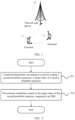
FIG. 1 is a block diagram of a wireless communications system to which embodiments of this application can be applied; -
FIG. 2 is a flowchart of steps of a preamble sequence mapping method according to an embodiment of this application; -
FIG. 3 is a first schematic diagram of mapping in Example 1 according to an embodiment of this application; -
FIG. 4 is a second schematic diagram of mapping in Example 1 according to an embodiment of this application; -
FIG. 5 is a third schematic diagram of mapping in Example 1 according to an embodiment of this application; -
FIG. 6 is a first schematic diagram of mapping in Example 2 according to an embodiment of this application; -
FIG. 7 is a second schematic diagram of mapping in Example 2 according to an embodiment of this application; -
FIG. 8 is a third schematic diagram of mapping in Example 2 according to an embodiment of this application; -
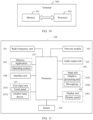
FIG. 9 is a schematic diagram of a structure of a preamble sequence mapping apparatus according to an embodiment of this application; -
FIG. 10 is a first schematic diagram of a structure of a terminal according to an embodiment of this application; and -
FIG. 11 is a second schematic diagram of a structure of a terminal according to an embodiment of this application. - The following clearly describes the technical solutions in the embodiments of this application with reference to the accompanying drawings in the embodiments of this application. Apparently, the described embodiments are some but not all of the embodiments of this application. Based on the embodiments of this application, all other embodiments obtained by a person of ordinary skill in the art without creative efforts shall fall within the protection scope of this application.
- The terms "first", "second", and the like in the description and the claims of this application are used to distinguish between similar objects, and do not need to be used to describe a specific order or sequence. It should be understood that, data used in such a way are interchangeable in proper circumstances, so that the embodiments of this application can be implemented in an order other than the order illustrated or described herein. Objects classified by "first", "second", and the like are usually of a same type, and the number of objects is not limited. For example, there may be one or more first objects. In addition, in the specification and the claims, "and/or" represents at least one of connected objects, and a character "/" generally represents an "or" relationship between associated objects.
- It should be noted that, the technologies described in the embodiments of this application are not limited to a Long Term Evolution (Long Term Evolution, LTE)/LTE-Advanced (LTE-Advanced, LTE-A) system, and can also be used in other wireless communications systems such as Code Division Multiple Access (Code Division Multiple Access, CDMA), Time Division Multiple Access (Time Division Multiple Access, TDMA), Frequency Division Multiple Access (Frequency Division Multiple Access, FDMA), Orthogonal Frequency Division Multiple Access (Orthogonal Frequency Division Multiple Access, OFDMA), Single-carrier Frequency-Division Multiple Access (Single-carrier Frequency-Division Multiple Access, SC-FDMA), and another system. The terms "system" and "network" in the embodiments of this application may be used interchangeably. The technologies described can be applied to both the systems and the radio technologies mentioned above as well as to other systems and radio technologies. However, the following descriptions describe a new radio (New Radio, NR) system for example purposes, and NR terms are used in most of the following descriptions, although these technologies can also be applied to an application other than an NR system application, for example, a 6th generation (6th Generation, 6G) communications system.
-
FIG. 1 is a block diagram of a wireless communications system to which an embodiment of this application may be applied. The wireless communications system includes a terminal 11 and anetwork side device 12. The terminal 11 may also be referred to as a terminal device or user equipment (User Equipment, UE). The terminal 11 may be a terminal side device such as a mobile phone, a tablet personal computer (Tablet Personal Computer), a laptop computer (Laptop Computer), or a notebook computer, a personal digital assistant (Personal Digital Assistant, PDA), a palmtop computer, a netbook, an ultra-mobile personal computer (ultra-mobile personal computer, UMPC), a mobile Internet device (Mobile Internet Device, MID), a wearable device (Wearable Device) or a vehicle user equipment (Vehicle User Equipment, VUE), or pedestrian user equipment (Pedestrian User Equipment, PUE). The wearable device includes a band, a headset, eyeglasses, or the like. It should be noted that a specific type of the terminal 11 is not limited in the embodiments of this application. Thenetwork side device 12 may be a base station or a core network device. The base station may be referred to as a Node B, an evolved Node B, an access point, a base transceiver station (Base Transceiver Station, BTS), a radio base station, a radio transceiver, a basic service set (Basic Service Set, BSS), an extended service set (Extended Service Set, ESS), a Node B, an evolved Node B (eNB), a home Node B, a home evolved Node B, a wireless local area network (Wireless Local Area Network, WLAN) access point, a wireless fidelity (Wireless Fidelity, Wi-Fi) node, a transmission reception point (Transmission Reception Point, TRP), or another specific appropriate term in the art, provided that the same technical effects are achieved, the base station is not limited to specific technical vocabulary. It should be noted that in the embodiments of this application, a base station in the NR system is merely used as an example, but does not limit a specific type of the base station. - The preamble sequence mapping method and apparatus, and the terminal according to the embodiments of this application are described in detail below in conjunction with the accompanying drawings in specific embodiments and application scenarios thereof.
- As shown in
FIG. 2 , an embodiment of this application provides a preamble sequence mapping method, including: - step 201: a terminal determines, according to a rule for sorting T second preamble sequences, a target index of a second preamble sequence, where the T second preamble sequences are all or some of sequences obtained after the terminal performs code-division on M first preamble sequences by using Q orthogonal cover codes OCCs; and
- step 202: the terminal establishes, based on the target index of the second preamble sequence, mapping to an SSB, where
- Q is an integer greater than or equal to 1, M is an integer greater than or equal to 1, and T is an integer greater than or equal to 2.
- In this embodiment of this application, in
step 202, for that the terminal establishes, based on the target index of the second preamble sequence, mapping to an SSB, a mapping rule is as follows:
N (a quantity of SSBs, configured in a higher layer, associated with each random access channel occasion RO is N) is less than 1. In this case, R (a quantity of preamble sequences, configured in a higher layer, associated with each SSB is R) second preamble sequences with continuous target indices are mapped to an SSB n, and each valid RO starts with a target index 0 of a preamble sequence. - N is greater than or equal to 1. In this case, R second preamble sequences with continuous target indices are mapped to an SSB n, and each valid RO starts with a target index

- In an optional embodiment, the rule for sorting the T second preamble sequences includes any one of the following:
- a first sorting rule of sorting first based on a serial number of a first preamble sequence and then based on a serial number of an OCC;
- a second sorting rule of sorting first based on a serial number of an OCC and then based on a serial number of a first preamble sequence; and
- a third sorting rule based on a group index after the second preamble sequences corresponding to different OCCs are grouped according to a preset rule, where an order within a group includes: first based on a serial number of a first preamble sequence and then based on a serial number of an OCC, or first based on a serial number of an OCC and then based on a serial number of a first preamble sequence.
- For example, M=32, Q=2. In this case, OCC1 corresponds to 32 preambles {OCC1,1, OCC1,2, ..., OCC1,M}, OCC2 corresponds to 32 preambles {OCC2,1, OCC2,2, ..., OCC2,M}:
- in a case in which the rule for sorting the T second preamble sequences is the first sorting rule, the T second preamble sequences are {OCC1,1, OCC1,2, ..., OCC1,M, ..., OCC2,1, OCC2,2, ..., OCC2,M};
- in a case in which the rule for sorting the T second preamble sequences is the second sorting rule, the T second preamble sequences are {OCC1,1, OCC2,1, OCC1,2, OCC2,2, ..., OCC1,M, OCC2,M}; and
- in a case in which the rule for sorting the T second preamble sequences is the third sorting rule, and each group includes two preamble sequences, the T second preamble sequences are {OCC1,1, OCC1,2, OCC2,1, OCC2,1, OCC1,3, ..., OCC2,M-1, OCC2,M}.
- In an optional embodiment, in a case in which the rule for sorting the T second preamble sequences is the first sorting rule,
step 201 includes: - determining, according to a first formula, a target index A1 of a second preamble sequence, where the first formula is:

- A1 is the target index of the second preamble sequence, m is an index of a first preamble sequence corresponding to the second preamble sequence, Q is a quantity of the OCCs, and M is a quantity of the first preamble sequences.
- In another optional embodiment, in a case in which the rule for sorting the T second preamble sequences is the second sorting rule,
step 201 includes: - determining, according to a second formula, a target index A2 of a second preamble sequence, where the second formula is:

- A2 is the target index of the second preamble sequence, q is an index of an OCC corresponding to the second preamble sequence, M is a quantity of the first preamble sequences, and Q is a quantity of the OCCs.
- In still another optional embodiment, in a case in which the rule for sorting the T second preamble sequences is the third sorting rule, that the terminal determines, according to the rule for sorting the T second preamble sequences, the target index of the second preamble sequence includes:
- determining, according to a third formula, a target index A3 of a second preamble sequence, where the third formula is:

- M is a quantity of the first preamble sequences, Q is a quantity of the OCCs, m is an index of a first preamble sequence corresponding to the second preamble sequence, and q is an index of an OCC corresponding to the second preamble sequence.
- Because in this embodiment of this application, the second preamble sequences are all or some of preamble sequences processed with an OCC, that is, an OCC index is introduced in this application, in this embodiment of this application, in addition to mapping between an SSB index and the target index of the second preamble sequence and an RO index, mapping from an OCC index is further needed. That is, the method further includes:
the terminal establishes mapping between an SSB index and a plurality of indices, where the plurality of indices include the target index of the second preamble sequence, an OCC index, and a random access channel occasion RO index. - The RO index includes an RO frequency domain index, an RO time domain index within a random access channel slot, and a random access channel slot index; in other words, an RO is identified by the frequency domain index, the time domain index, and the random access channel slot index.
- Optionally, in this embodiment of this application, an order of mapping the plurality of indices includes one of the following:
- the OCC index, the target index of the second preamble sequence, the RO frequency domain index, the RO time domain index within the random access channel slot, and the random access channel slot index;
- the target index of the second preamble sequence, the OCC index, the RO frequency domain index, the RO time domain index within the random access channel slot, and the random access channel slot index;
- the target index of the second preamble sequence, the RO frequency domain index, the OCC index, the RO time domain index within the random access channel slot, and the random access channel slot index; and
- the target index of the second preamble sequence, the RO frequency domain index, the RO time domain index within the random access channel slot, the OCC index, and the random access channel slot index.
- In an optional embodiment, in this application, that the terminal establishes mapping between the SSB index and the plurality of indices includes:
the terminal establishes mapping between the SSB index and the target index of the second preamble sequence and the RO index preferentially, and maps each RO index to a same OCC index, or maps each RO index to OCC indices that are not entirely the same. - For example, RO indices are 0, 1, 2, and 3 respectively; and OCC indices are 1 and 2.
- In a case in which each RO index is mapped to a same OCC index, an RO 0 is mapped to an
OCC 1, anRO 1 is mapped to theOCC 1, an RO 2 is mapped to theOCC 1, and anRO 3 is mapped to theOCC 1; or an RO 0 is mapped to an OCC 2, anRO 1 is mapped to the OCC 2, an RO 2 is mapped to the OCC 2, and anRO 3 is mapped to an OCC 2. - In a case in which each RO index is mapped to all OCC indices that are not entirely the same, an RO 0 is mapped to an
OCC 1, anRO 1 is mapped to an OCC 2, an RO 2 is mapped to theOCC 1, and anRO 3 is mapped to the OCC 2; or an RO 0 is mapped to an OCC 2, anRO 1 is mapped to anOCC 1, an RO 2 is mapped to the OCC 2, and anRO 3 is mapped to theOCC 1. All cases are not enumerated herein. In a case in which a quantity of OCC indices is greater than or equal to a quantity of RO indices, each RO index may be mapped to different OCC indices. - It should be noted that, the preamble sequence mapping method provided in this embodiment of this application is applicable for, but is not limited to, the following scenarios: contention-based random access, contention-free random access, beam failure recovery, and a system information request.
- To better describe the preamble sequence mapping method provided in the embodiments of this application, several examples are used below for description. A quantity of SSBs, configured in a higher layer, associated with each random access channel occasion RO is N, and a quantity of preamble sequences, configured in a higher layer, associated with each SSB is R.
- When N=1/4, it is assumed that a configured preamble quantity M=32, an OCC quantity Q=2. To be specific, in OCC1, there are 32 preambles {OCC1,1, OCC1,2, ..., OCC1,M}, and in OCC2, there are also 32 preambles {OCC2,1, OCC2,2, ..., OCC2,M}.
- As shown in
FIG. 3 , each RO is mapped to combined second preamble sequences. - A first sorting pattern is, for example, {OCC1,1, OCC1,2, ..., OCC1,M, ..., OCC2,1, OCC2,2, ..., OCC2,M};
- a second sorting pattern is, for example, {OCC1,1, OCC2,1, OCC1,2, OCC2,2, ..., OCC1,M, OCC2,M}; and
- a third sorting pattern is, for example, {OCC1,1, OCC1,2, OCC2,1, OCC2,1, OCC1,3, ..., OCC2,M-1, OCC2,M}, where an example of two preamble sequences in each OCC is used.
- A case in which mapping between an SSB and an RO index and a preamble index is established preferentially and a same preamble sequence is selected for each RO is shown in
FIG. 4 . - A case in which mapping between an SSB and an RO index and a preamble index is established preferentially and preamble sequences that are not entirely the same are selected for each RO is shown in
FIG. 5 . - When N=2, it is assumed that a configured preamble quantity M=32, an OCC quantity Q=2. To be specific, in OCC1, there are 32 preambles {OCC1,1, OCC1,2, ..., OCC1,M}, and in OCC2, there are also 32 preambles {OCC2,1, OCC2,2, ..., OCC2,M}.
- As shown in
FIG. 6 , each RO is mapped to combined second preamble sequences. - A first sorting pattern is, for example, {OCC1,1, OCC1,2, ..., OCC1,M, ..., OCC2,1, OCC2,2, ..., OCC2,M};
- a second sorting pattern is, for example, {OCC1,1, OCC2,1, OCC1,2, OCC2,2, ..., OCC1,M, OCC2,M}; and
- a third sorting pattern is, for example, {OCC1,1, OCC1,2, OCC2,1, OCC2,1, OCC1,3, ..., OCC2,M-1, OCC2,M}, where an example of two preamble sequences in each OCC is used.
- In this solution, 64 preambles after a combination of OCC1 and OCC2 are selected. That is, for SSB0, a preamble index starts with 0; and for
SSB 1, a preamble index starts with 32. For SSB2, a preamble index starts with 0; and for SSB3, a preamble index starts with 32. - A case in which mapping between an SSB and an RO index and a preamble index is established preferentially and a same preamble sequence is selected for each RO is shown in
FIG. 7 . - In this solution, only 32 preambles in OCC1 are selected, and it may be specified that

- A case in which mapping between an SSB and an RO index and a preamble index is established preferentially and preamble sequences that are not entirely the same are selected for each RO is shown in
FIG. 8 . - In this solution, SSB0/1 selects the 32 preambles in OCC1, SSB2/3 selects 32 preambles in OCC2. It may be specified that

- In conclusion, in this embodiment of this application, for all or some of the second preamble sequences obtained after the terminal performs code-division on the M first preamble sequences by using the Q orthogonal cover codes OCCs, the target index corresponding to the second preamble sequence is re-determined according to the sorting rule, so that mapping to an SSB is established based on the re-determined target index of the second preamble sequence. This solves the problem with mapping a processed preamble sequence to an SSB after the preamble sequence is processed in an OCC manner.
- It should be noted that the preamble sequence mapping method provided in the embodiments of this application may be performed by a preamble sequence mapping apparatus or a control module that is in the preamble sequence mapping apparatus and that is configured to load the preamble sequence mapping method. In an embodiment of this application, that the preamble sequence mapping apparatus performs the preamble sequence mapping method is used as an example to describe the preamble sequence mapping apparatus provided in this embodiment of this application.
- As shown in
FIG. 9 , an embodiment of this application further provides a preamblesequence mapping apparatus 900, applied to a terminal and including: - a determining
module 901, configured to determine, according to a rule for sorting T second preamble sequences, a target index of a second preamble sequence, where the T second preamble sequences are all or some of sequences obtained after the terminal performs code-division on M first preamble sequences by using Q orthogonal cover codes OCCs; and - a
first mapping module 902, configured to establish, based on the target index of the second preamble sequence, mapping to an SSB, where - Q is an integer greater than or equal to 1, M is an integer greater than or equal to 1, and T is an integer greater than or equal to 2.
- In an optional embodiment, the rule for sorting the T second preamble sequences includes any one of the following:
- a first sorting rule of sorting first based on a serial number of a first preamble sequence and then based on a serial number of an OCC;
- a second sorting rule of sorting first based on a serial number of an OCC and then based on a serial number of a first preamble sequence; and
- a third sorting rule based on a group index after the second preamble sequences corresponding to different OCCs are grouped according to a preset rule, where an order within a group includes: first based on a serial number of a first preamble sequence and then based on a serial number of an OCC, or first based on a serial number of an OCC and then based on a serial number of a first preamble sequence.
- In an optional embodiment, in a case in which the rule for sorting the T second preamble sequences is the first sorting rule, the determining module includes:
- a first determining submodule, configured to determine, according to a first formula, a target index A1 of a second preamble sequence, where the first formula is:

- A1 is the target index of the second preamble sequence, m is an index of a first preamble sequence corresponding to the second preamble sequence, Q is a quantity of the OCCs, and M is a quantity of the first preamble sequences.
- In an optional embodiment, in a case in which the rule for sorting the T second preamble sequences is the second sorting rule, the determining module includes:
- a second determining submodule, configured to determine, according to a second formula, a target index A2 of a second preamble sequence, where the second formula is:

- A2 is the target index of the second preamble sequence, q is an index of an OCC corresponding to the second preamble sequence, M is a quantity of the first preamble sequences, and Q is a quantity of the OCCs.
- In an optional embodiment, in a case in which the rule for sorting the T second preamble sequences is the third sorting rule, the determining module includes:
- a third determining submodule, configured to determine, according to a third formula, a target index A3 of a second preamble sequence, where the third formula is:

- M is a quantity of the first preamble sequences, Q is a quantity of the OCCs, m is an index of a first preamble sequence corresponding to the second preamble sequence, and q is an index of an OCC corresponding to the second preamble sequence.
- In an optional embodiment, the apparatus further includes:
a second mapping module, configured to establish mapping between an SSB index and a plurality of indices, where the plurality of indices include the target index of the second preamble sequence, an OCC index, and a random access channel occasion RO index. - In an optional embodiment, the RO index includes an RO frequency domain index, an RO time domain index within a random access channel slot, and a random access channel slot index.
- An order of mapping the plurality of indices includes one of the following:
- the OCC index, the target index of the second preamble sequence, the RO frequency domain index, the RO time domain index within the random access channel slot, and the random access channel slot index;
- the target index of the second preamble sequence, the OCC index, the RO frequency domain index, the RO time domain index within the random access channel slot, and the random access channel slot index;
- the target index of the second preamble sequence, the RO frequency domain index, the OCC index, the RO time domain index within the random access channel slot, and the random access channel slot index; and
- the target index of the second preamble sequence, the RO frequency domain index, the RO time domain index within the random access channel slot, the OCC index, and the random access channel slot index.
- In an optional embodiment, the second mapping module includes:
a mapping submodule, configured to: establish mapping between the SSB index and the target index of the second preamble sequence and the RO index preferentially, and map each RO index to a same OCC index, or map each RO index to OCC indices that are not entirely the same. - In the embodiments of this application, for all or some of the second preamble sequences obtained after the terminal performs code-division on the M first preamble sequences by using the Q orthogonal cover codes OCCs, the target index corresponding to the second preamble sequence is re-determined according to the sorting rule, so that mapping to an SSB is established based on the re-determined target index of the second preamble sequence. This solves the problem with mapping a processed preamble sequence to an SSB after the preamble sequence is processed in an OCC manner.
- It should be noted that the preamble sequence mapping apparatus provided in this embodiment of this application is an apparatus that can perform the foregoing preamble sequence mapping method. Therefore, all the embodiments of the foregoing preamble sequence mapping method are applicable for the apparatus, and a same or similar beneficial effect can be achieved.
- The preamble sequence mapping apparatus in this embodiment of this application may be an apparatus, or may be a component, an integrated circuit, or a chip in a terminal. The apparatus may be a mobile electronic device, or may be a non-mobile electronic device. For example, the mobile electronic device may be a mobile phone, a tablet computer, a laptop computer, a palmtop computer, a vehicle-mounted electronic terminal, a wearable device, an ultra-mobile personal computer (Ultra-Mobile Personal Computer, UMPC), a netbook, or a personal digital assistant (Personal Digital Assistant, PDA). The non-mobile electronic device may be a server, a network attached storage (Network Attached Storage, NAS), a personal computer (Personal Computer, PC), a television (television, TV), an automated teller machine, or a self-service machine. This is not specifically limited in this embodiment of this application.
- The preamble sequence mapping apparatus in this embodiment of this application may be an apparatus with an operating system. The operating system may be an Android (Android) operating system, may be an iOS operating system, or may be another possible operating system. This is not specifically limited in this embodiment of this application.
- The preamble sequence mapping apparatus provided in this embodiment of this application can implement processes implemented in the method embodiments in
FIG. 1 to FIG. 8 . To avoid repetition, details are not described herein again. - Optionally, as shown in
FIG. 10 , an embodiment of this application further provides a terminal 500, including aprocessor 501, amemory 502, and a program or an instruction stored in thememory 502 and exetutable on theprocessor 501. When the program or the instruction is executed by theprocessor 501, the processes in the foregoing embodiments of the preamble sequence mapping method are implemented and a same technical effect can be achieved. To avoid repetition, details are not described herein again. -
FIG. 11 is a schematic diagram of a hardware structure of a terminal according to an embodiment of this application. - The terminal 100 includes but is not limited to components such as a
radio frequency unit 101, anetwork module 102, anaudio output unit 103, aninput unit 104, asensor 105, adisplay unit 106, auser input unit 107, aninterface unit 108, amemory 109, and aprocessor 110. - A person skilled in the art can understand that the terminal 100 may further include a power supply (for example, a battery) that supplies power to each component. The power supply may be logically connected to the
processor 110 by using a power supply management system, to implement functions such as charging and discharging management, and power consumption management by using the power supply management system. The terminal structure shown inFIG. 11 constitutes no limitation on the terminal, and the terminal may include more or fewer components than those shown in the figure, or combine some components, or have different component arrangements. Details are not described herein. - It should be understood that, in this embodiment of this application, the
input unit 104 may include a graphics processing unit (Graphics Processing Unit, GPU) 1041 and amicrophone 1042, and thegraphics processing unit 1041 processes image data of a still picture or a video obtained by an image capture apparatus (for example, a camera) in a video capture mode or an image capture mode. Thedisplay unit 106 may include adisplay panel 1061, and thedisplay panel 1061 may be configured in a form of a liquid crystal display, an organic light-emitting diode, or the like. Theuser input unit 107 includes atouch panel 1071 and anotherinput device 1072. Thetouch panel 1071 is also referred to as a touchscreen. Thetouch panel 1071 may include two parts: a touch detection apparatus and a touch controller. Anotherinput device 1072 may include but is not limited to a physical keyboard, a functional button (such as a volume control button or a power on/off button), a trackball, a mouse, and a joystick. Details are not described herein. - In this embodiment of this application, the
radio frequency unit 101 receives downlink data from a network side device and then sends the downlink data to theprocessor 110 for processing; and sends uplink data to the network side device. Usually, theradio frequency unit 101 includes but is not limited to an antenna, at least one amplifier, a transceiver, a coupler, a low noise amplifier, a duplexer, and the like. - The
memory 109 may be configured to store a software program or an instruction and various data. Thememory 109 may mainly include a program or instruction storage area and a data storage area. The program or instruction storage area may store an operating system, and an application or an instruction required by at least one function (for example, a sound playing function or an image playing function). In addition, thememory 109 may include a high-speed random access memory, and may further include a non-volatile memory. The non-volatile memory may be a read-only memory (Read-Only Memory, ROM), a programmable read-only memory (Programmable ROM, PROM), an erasable programmable read-only memory (Erasable PROM, EPROM), an electrically erasable programmable read-only memory (Electrically EPROM, EEPROM), or a flash memory, for example, at least one disk storage device, a flash memory device, or another non-volatile solid-state storage device. - The
processor 110 may include one or more processing units. Optionally, an application processor and a modem processor may be integrated into theprocessor 110. The application processor mainly processes an operating system, a user interface, an application, an instruction, or the like. The modem processor mainly processes wireless communications, for example, a baseband processor. It can be understood that, alternatively, the modem processor may not be integrated into theprocessor 110. - The determining
module 110 is configured to: determine, according to a rule for sorting T second preamble sequences, a target index of a second preamble sequence, where the T second preamble sequences are all or some of sequences obtained after the terminal performs code-division on M first preamble sequences by using Q orthogonal cover codes; and - establish, based on the target index of the second preamble sequence, mapping to an SSB, where
- Q is an integer greater than or equal to 1, M is an integer greater than or equal to 1, and T is an integer greater than or equal to 2.
- In the embodiments of this application, for all or some of the second preamble sequences obtained after the terminal performs code-division on the M first preamble sequences by using the Q orthogonal cover codes OCCs, the target index corresponding to the second preamble sequence is re-determined according to the sorting rule, so that mapping to an SSB is established based on the re-determined target index of the second preamble sequence. This solves the problem with mapping a processed preamble sequence to an SSB after the preamble sequence is processed in an OCC manner.
- It should be noted that the terminal provided in this embodiment of this application is a terminal that can perform the foregoing preamble sequence mapping method, and all the embodiments of the foregoing preamble sequence mapping method are applicable for the terminal, and a same or similar beneficial effect can be achieved.
- An embodiment of this application further provides a readable storage medium. The readable storage medium stores a program or an instruction, and when the program or the instruction is executed by a processor, the processes in the foregoing embodiments of the preamble sequence mapping method are implemented and a same technical effect can be achieved. To avoid repetition, details are not described herein again.
- The processor is a processor in the electronic device in the foregoing embodiment. The readable storage medium includes a computer-readable storage medium such as a read-only memory (Read-Only Memory, ROM), a random access memory (Random Access Memory, RAM), a magnetic disk, an optical disc, or the like.
- An embodiment of this application further provides a chip. The chip includes a processor and a communications interface, the communications interface is coupled to the processor, and the processor is configured to run a program or an instruction to implement the processes in the foregoing embodiments of the preamble sequence mapping method, and a same technical effect can be achieved. To avoid repetition, details are not described herein again.
- It should be understood that the chip mentioned in this embodiment of this application may also be referred to as a system-level chip, a system chip, a chip system, or a system on a chip.
- It should be noted that, in this specification, the terms "include", "comprise", or any other variant thereof are intended to cover a non-exclusive inclusion, so that a process, a method, an article, or an apparatus that includes a list of elements not only includes those elements but also includes other elements which are not expressly listed, or further includes elements inherent to such process, method, article, or apparatus. In the absence of more restrictions, an element defined by the statement "including a..." does not preclude the presence of other identical elements in the process, method, article, or apparatus that includes the element. In addition, it should be noted that a scope of the method and the apparatus in the embodiments of this application is not limited to: performing a function in a sequence shown or discussed, and may further include: performing a function in a basically simultaneous manner or in a reverse sequence based on an involved function. For example, the described method may be performed in a different order, and various steps may be added, omitted, or combined. In addition, features described with reference to some examples may be combined in other examples.
- According to the descriptions of the foregoing implementations, a person skilled in the art may clearly understand that the foregoing method embodiments may be implemented by using software and a required universal hardware platform, or certainly may be implemented by using hardware. However, in many cases, the former is a better implementation. Based on such an understanding, the technical solutions of this application essentially or the part contributing to the prior art may be implemented in a form of a software product. The computer software product is stored in a storage medium (such as a ROM/RAM, a magnetic disk, or an optical disc) and includes several instructions for instructing a terminal (which may be a mobile phone, a computer, a server, an air conditioner, or a network device) to execute the methods described in the embodiments of this application.
- The embodiments of this application are described with reference to the accompanying drawings. However, this application is not limited to the foregoing specific implementations. The foregoing specific implementations are merely examples, but are not limiting. A person of ordinary skill in the art may make many forms without departing from the objective and the scope of the claims of this application, and these forms all fall within the protection scope of this application.
- The foregoing descriptions are merely specific implementations of this application, but are not intended to limit the protection scope of this application. Any variation or replacement readily figured out by a person skilled in the art within the technical scope disclosed in this application shall fall within the protection scope of this application. Therefore, the protection scope of this application shall be subject to the protection scope of the claims.
Claims (20)
- A preamble sequence mapping method, comprising:determining, by a terminal according to a rule for sorting T second preamble sequences, a target index of a second preamble sequence, wherein the T second preamble sequences are all or some of sequences obtained after the terminal performs code-division on M first preamble sequences by using Q orthogonal cover codes OCCs; andestablishing, by the terminal based on the target index of the second preamble sequence, mapping to a synchronization signal and PBCH block SSB, whereinQ is an integer greater than or equal to 1, M is an integer greater than or equal to 1, and T is an integer greater than or equal to 2.
- The method according to claim 1, wherein the rule for sorting the T second preamble sequences comprises any one of the following:a first sorting rule of sorting first based on a serial number of a first preamble sequence and then based on a serial number of an OCC;a second sorting rule of sorting first based on a serial number of an OCC and then based on a serial number of a first preamble sequence; anda third sorting rule based on a group index after the second preamble sequences corresponding to different OCCs are grouped according to a preset rule, wherein an order within a group comprises: first based on a serial number of a first preamble sequence and then based on a serial number of an OCC, or first based on a serial number of an OCC and then based on a serial number of a first preamble sequence.
- The method according to claim 2, wherein in a case in which the rule for sorting the T second preamble sequences is the first sorting rule, the determining, by a terminal according to a rule for sorting T second preamble sequences, a target index of a second preamble sequence comprises:determining, according to a first formula, a target index A1 of the second preamble sequence, wherein the first formula is:
 A1 is the target index of the second preamble sequence, m is an index of a first preamble sequence corresponding to the second preamble sequence, Q is a quantity of OCCs, and M is a quantity of first preamble sequences.
 - The method according to claim 2, wherein in a case in which the rule for sorting the T second preamble sequences is the second sorting rule, the determining, by a terminal according to a rule for sorting T second preamble sequences, a target index of a second preamble sequence comprises:determining, according to a second formula, a target index A2 of the second preamble sequence, wherein the second formula is:
 A2 is the target index of the second preamble sequence, q is an index of an OCC corresponding to the second preamble sequence, M is a quantity of first preamble sequences, and Q is a quantity of OCCs.
 - The method according to claim 2, wherein in a case in which the rule for sorting the T second preamble sequences is the third sorting rule, the determining, by a terminal according to a rule for sorting T second preamble sequences, a target index of a second preamble sequence comprises:determining, according to a third formula, a target index A3 of the second preamble sequence, wherein the third formula is:
 M is a quantity of first preamble sequences, Q is a quantity of OCCs, m is an index of a first preamble sequence corresponding to the second preamble sequence, and q is an index of an OCC corresponding to the second preamble sequence.
 - The method according to claim 1, wherein the method further comprises:
establishing, by the terminal, mapping between an SSB index and a plurality of indices, wherein the plurality of indices comprise the target index of the second preamble sequence, an OCC index, and a random access channel occasion RO index. - The method according to claim 6, wherein the RO index comprises an RO frequency domain index, an RO time domain index within a random access channel slot, and a random access channel slot index; and
an order of mapping the plurality of indices comprises one of the following:the OCC index, the target index of the second preamble sequence, the RO frequency domain index, the RO time domain index within the random access channel slot, and the random access channel slot index;the target index of the second preamble sequence, the OCC index, the RO frequency domain index, the RO time domain index within the random access channel slot, and the random access channel slot index;the target index of the second preamble sequence, the RO frequency domain index, the OCC index, the RO time domain index within the random access channel slot, and the random access channel slot index; andthe target index of the second preamble sequence, the RO frequency domain index, the RO time domain index within the random access channel slot, the OCC index, and the random access channel slot index. - The method according to claim 6, the establishing, by the terminal, mapping between an SSB index and a plurality of indices comprises:
establishing, by the terminal, mapping between the SSB index and the target index of the second preamble sequence and the RO index preferentially, and mapping each RO index to a same OCC index, or mapping each RO index to OCC indices that are not entirely the same. - A preamble sequence mapping apparatus, applied to a terminal and comprising:a determining module, configured to determine, according to a rule for sorting T second preamble sequences, a target index of a second preamble sequence, wherein the T second preamble sequences are all or some of sequences obtained after the terminal performs code-division on M first preamble sequences by using Q orthogonal cover codes OCCs; anda first mapping module, configured to establish, based on the target index of the second preamble sequence, mapping to a synchronization signal and PBCH block SSB, whereinQ is an integer greater than or equal to 1, M is an integer greater than or equal to 1, and T is an integer greater than or equal to 2.
- The apparatus according to claim 9, wherein the rule for sorting the T second preamble sequences comprises any one of the following:a first sorting rule of sorting first based on a serial number of a first preamble sequence and then based on a serial number of an OCC;a second sorting rule of sorting first based on a serial number of an OCC and then based on a serial number of a first preamble sequence; anda third sorting rule based on a group index after the second preamble sequences corresponding to different OCCs are grouped according to a preset rule, wherein an order within a group comprises: first based on a serial number of a first preamble sequence and then based on a serial number of an OCC, or first based on a serial number of an OCC and then based on a serial number of a first preamble sequence.
- The apparatus according to claim 10, wherein in a case in which the rule for sorting the T second preamble sequences is the first sorting rule, the determining module comprises:a first determining submodule, configured to determine, according to a first formula, a target index A1 of the second preamble sequence, wherein the first formula is:
 A1 is the target index of the second preamble sequence, m is an index of a first preamble sequence corresponding to the second preamble sequence, Q is a quantity of OCCs, and M is a quantity of first preamble sequences.
 - The apparatus according to claim 10, wherein in a case in which the rule for sorting the T second preamble sequences is the second sorting rule, the determining module comprises:a second determining submodule, configured to determine, according to a second formula, a target index A2 of the second preamble sequence, wherein the second formula is:
 A2 is the target index of the second preamble sequence, q is an index of an OCC corresponding to the second preamble sequence, M is a quantity of first preamble sequences, and Q is a quantity of OCCs.
 - The apparatus according to claim 10, wherein in a case in which the rule for sorting the T second preamble sequences is the third sorting rule, the determining module comprises:a third determining submodule, configured to determine, according to a third formula, a target index A3 of the second preamble sequence, wherein the third formula is:
 M is a quantity of first preamble sequences, Q is a quantity of OCCs, m is an index of a first preamble sequence corresponding to the second preamble sequence, and q is an index of an OCC corresponding to the second preamble sequence.
 - The apparatus according to claim 9, wherein the apparatus further comprises:
a second mapping module, configured to establish mapping between an SSB index and a plurality of indices, wherein the plurality of indices comprise the target index of the second preamble sequence, an OCC index, and a random access channel occasion RO index. - The apparatus according to claim 14, wherein the RO index comprises an RO frequency domain index, an RO time domain index within a random access channel slot, and a random access channel slot index; and
an order of mapping the plurality of indices comprises one of the following:the OCC index, the target index of the second preamble sequence, the RO frequency domain index, the RO time domain index within the random access channel slot, and the random access channel slot index;the target index of the second preamble sequence, the OCC index, the RO frequency domain index, the RO time domain index within the random access channel slot, and the random access channel slot index;the target index of the second preamble sequence, the RO frequency domain index, the OCC index, the RO time domain index within the random access channel slot, and the random access channel slot index; andthe target index of the second preamble sequence, the RO frequency domain index, the RO time domain index within the random access channel slot, the OCC index, and the random access channel slot index. - The apparatus according to claim 14, wherein the second mapping module comprises:
a mapping submodule, configured to: establish mapping between the SSB index and the target index of the second preamble sequence and the RO index preferentially, and map each RO index to a same OCC index, or map each RO index to OCC indices that are not entirely the same. - A terminal, comprising a processor, a memory, and a program or an instruction stored in the memory and executable on the processor, wherein when the program or the instruction is executed by the processor, the steps of the preamble sequence mapping method according to any one of claims 1 to 8 are implemented.
- A readable storage medium, wherein the readable storage medium stores a program or an instruction, and when the program or the instruction is executed by a processor, the steps of the preamble sequence mapping method according to any one of claims 1 to 8 are implemented.
- A chip, comprising a processor and a communications interface, wherein the communications interface is coupled to the processor, and the processor is configured to run a program or an instruction to implement the steps of the preamble sequence mapping method according to any one of claims 1 to 8.
- A computer program product, wherein the computer program product is stored in a non-volatile storage medium, and the computer program product is executed by at least one processor to implement the steps of the preamble sequence mapping method according to any one of claims 1 to 8.
Applications Claiming Priority (2)
| Application Number | Priority Date | Filing Date | Title |
|---|---|---|---|
| CN202011109242.6A CN114389765B (en) | 2020-10-16 | 2020-10-16 | Preamble sequence mapping method, device and terminal |
| PCT/CN2021/123567 WO2022078399A1 (en) | 2020-10-16 | 2021-10-13 | Preamble sequence mapping method, apparatus, and terminal |
Publications (2)
| Publication Number | Publication Date |
|---|---|
| EP4231748A1 true EP4231748A1 (en) | 2023-08-23 |
| EP4231748A4 EP4231748A4 (en) | 2024-04-10 |
Family
ID=81192627
Family Applications (1)
| Application Number | Title | Priority Date | Filing Date |
|---|---|---|---|
| EP21879442.8A Pending EP4231748A4 (en) | 2020-10-16 | 2021-10-13 | PREAMBLE SEQUENCE MAPPING METHOD, APPARATUS AND TERMINAL |
Country Status (4)
| Country | Link |
|---|---|
| US (1) | US20230254892A1 (en) |
| EP (1) | EP4231748A4 (en) |
| CN (1) | CN114389765B (en) |
| WO (1) | WO2022078399A1 (en) |
Families Citing this family (1)
| Publication number | Priority date | Publication date | Assignee | Title |
|---|---|---|---|---|
| CN117459196A (en) * | 2022-07-15 | 2024-01-26 | 维沃移动通信有限公司 | Conflict handling method between SRS and uplink resources, terminal and network side equipment |
Family Cites Families (14)
| Publication number | Priority date | Publication date | Assignee | Title |
|---|---|---|---|---|
| US11234273B2 (en) * | 2016-08-12 | 2022-01-25 | Qualcomm Incorporated | RACH conveyance of DL synchronization beam information for various DL-UL correspondence states |
| US20190387550A1 (en) * | 2017-01-06 | 2019-12-19 | Idac Holdings, Inc. | Physical broadcast channel, initial uplink transmission and system acquisition associated with new radio |
| CN108322282B (en) * | 2017-01-16 | 2021-11-12 | 北京三星通信技术研究有限公司 | Generation method, indication method and device of random access leader sequence |
| US11284440B2 (en) * | 2017-01-16 | 2022-03-22 | Samsung Electronics Co., Ltd. | Method and apparatus for performing random access |
| WO2018182385A1 (en) * | 2017-04-01 | 2018-10-04 | Samsung Electronics Co., Ltd. | Random access method, network node and user equipment |
| US11134492B2 (en) * | 2017-04-12 | 2021-09-28 | Samsung Electronics Co., Ltd. | Method and apparatus for beam recovery in next generation wireless systems |
| SG11201900189YA (en) * | 2017-05-03 | 2019-02-27 | Lg Electronics Inc | Method for transmitting and receiving random access channel, and device for same |
| WO2019061257A1 (en) * | 2017-09-29 | 2019-04-04 | Qualcomm Incorporated | Increasing physical random access capacity using orthogonal cover codes |
| CN111565471B (en) * | 2019-02-14 | 2022-05-03 | 大唐移动通信设备有限公司 | Information transmission method, device and equipment |
| JP7251653B2 (en) * | 2019-03-29 | 2023-04-04 | 富士通株式会社 | Random access method and apparatus |
| BR112021022076A2 (en) * | 2019-05-02 | 2023-02-28 | Zte Corp | WIRELESS COMMUNICATION METHOD, WIRELESS COMMUNICATION APPARATUS AND COMPUTER PROGRAM PRODUCT FOR RANDOM ACCESS CHANNEL STRUCTURE (RACH) |
| US11728948B2 (en) * | 2019-07-24 | 2023-08-15 | Qualcomm Incorporated | Code block group based multiplexing |
| JP7407918B2 (en) * | 2019-11-07 | 2024-01-04 | テレフオンアクチーボラゲット エルエム エリクソン(パブル) | Methods for balancing the resources utilized in random access procedures |
| CN111315034B (en) * | 2020-02-28 | 2021-12-28 | 四川创智联恒科技有限公司 | Method and device for generating random access leader sequence |
-
2020
- 2020-10-16 CN CN202011109242.6A patent/CN114389765B/en active Active
-
2021
- 2021-10-13 EP EP21879442.8A patent/EP4231748A4/en active Pending
- 2021-10-13 WO PCT/CN2021/123567 patent/WO2022078399A1/en not_active Ceased
-
2023
- 2023-04-13 US US18/134,561 patent/US20230254892A1/en active Pending
Also Published As
| Publication number | Publication date |
|---|---|
| CN114389765B (en) | 2023-09-22 |
| WO2022078399A1 (en) | 2022-04-21 |
| CN114389765A (en) | 2022-04-22 |
| EP4231748A4 (en) | 2024-04-10 |
| US20230254892A1 (en) | 2023-08-10 |
Similar Documents
| Publication | Publication Date | Title |
|---|---|---|
| CN115968035A (en) | PRACH (physical random Access channel) repeated transmission method, terminal and network side equipment | |
| EP4192088A1 (en) | Method for transmitting auxiliary information, and terminal device and network device | |
| EP4192114A1 (en) | Access control method and apparatus, and communication device | |
| EP4418795A1 (en) | Random access processing method and apparatus, and terminal, network-side device and storage medium | |
| CN113922933A (en) | Carrier switching processing method, device and terminal | |
| US20230319897A1 (en) | Ro time-domain resource configuration method and apparatus and electronic device | |
| EP4287710A1 (en) | Cell reselection method and apparatus, and terminal | |
| US20230345541A1 (en) | Ra-rnti processing method and apparatus, terminal, and readable storage medium | |
| CN114430578A (en) | Configuration and acquisition method of auxiliary cell group information and communication equipment | |
| CN114364048B (en) | Preamble sequence processing method, device and terminal | |
| EP4465602A1 (en) | Srs port mapping method and apparatus, and terminal | |
| EP4432765A1 (en) | Random access method, terminal and network side device | |
| CN114390657A (en) | Power determination method, device, terminal and readable storage medium | |
| US20230421338A1 (en) | Random access method and apparatus, terminal and storage medium | |
| EP4554303A1 (en) | Ra method and apparatus, and ue, network-side device, communication system and readable storage medium | |
| US20230254892A1 (en) | Preamble sequence mapping method and apparatus, and terminal | |
| WO2022068750A1 (en) | Sounding reference signal configuration method, terminal and network-side device | |
| CN115315016A (en) | Msg1 transmission resource determination method, terminal and network side equipment | |
| CN114641013A (en) | Information transmission method, device, terminal and network side equipment | |
| US20240031916A1 (en) | Information determination method and apparatus, and terminal | |
| EP4280491A1 (en) | Data transmission method and apparatus, and ue | |
| EP4167657A1 (en) | Synchronization signal and pbch block search information determination method and apparatus, and communication device | |
| EP4297508A1 (en) | Pdcch monitoring processing method and monitoring configuration method, and related device | |
| CN115133954A (en) | Frequency hopping processing method, device and terminal | |
| EP4301068A1 (en) | Method and device for indicating scs of initial downlink bwp |
Legal Events
| Date | Code | Title | Description |
|---|---|---|---|
| STAA | Information on the status of an ep patent application or granted ep patent |
Free format text: STATUS: THE INTERNATIONAL PUBLICATION HAS BEEN MADE |
|
| PUAI | Public reference made under article 153(3) epc to a published international application that has entered the european phase |
Free format text: ORIGINAL CODE: 0009012 |
|
| STAA | Information on the status of an ep patent application or granted ep patent |
Free format text: STATUS: REQUEST FOR EXAMINATION WAS MADE |
|
| 17P | Request for examination filed |
Effective date: 20230512 |
|
| AK | Designated contracting states |
Kind code of ref document: A1 Designated state(s): AL AT BE BG CH CY CZ DE DK EE ES FI FR GB GR HR HU IE IS IT LI LT LU LV MC MK MT NL NO PL PT RO RS SE SI SK SM TR |
|
| DAV | Request for validation of the european patent (deleted) | ||
| DAX | Request for extension of the european patent (deleted) | ||
| REG | Reference to a national code |
Ref country code: DE Ref legal event code: R079 Free format text: PREVIOUS MAIN CLASS: H04W0072040000 Ipc: H04W0074083300 |
|
| A4 | Supplementary search report drawn up and despatched |
Effective date: 20240313 |
|
| RIC1 | Information provided on ipc code assigned before grant |
Ipc: H04L 27/26 20060101ALI20240306BHEP Ipc: H04L 5/00 20060101ALI20240306BHEP Ipc: H04W 72/04 20090101ALI20240306BHEP Ipc: H04J 11/00 20060101ALI20240306BHEP Ipc: H04J 13/18 20110101ALI20240306BHEP Ipc: H04W 74/0833 20240101AFI20240306BHEP |