EP4224761A2 - Handling harq feedback in internet of things (iot) - Google Patents
Handling harq feedback in internet of things (iot) Download PDFInfo
- Publication number
- EP4224761A2 EP4224761A2 EP23155302.5A EP23155302A EP4224761A2 EP 4224761 A2 EP4224761 A2 EP 4224761A2 EP 23155302 A EP23155302 A EP 23155302A EP 4224761 A2 EP4224761 A2 EP 4224761A2
- Authority
- EP
- European Patent Office
- Prior art keywords
- harq
- iot
- field
- feedback
- disable
- Prior art date
- Legal status (The legal status is an assumption and is not a legal conclusion. Google has not performed a legal analysis and makes no representation as to the accuracy of the status listed.)
- Pending
Links
Images


Classifications
-
- H—ELECTRICITY
- H04—ELECTRIC COMMUNICATION TECHNIQUE
- H04L—TRANSMISSION OF DIGITAL INFORMATION, e.g. TELEGRAPHIC COMMUNICATION
- H04L1/00—Arrangements for detecting or preventing errors in the information received
- H04L1/12—Arrangements for detecting or preventing errors in the information received by using return channel
- H04L1/16—Arrangements for detecting or preventing errors in the information received by using return channel in which the return channel carries supervisory signals, e.g. repetition request signals
- H04L1/18—Automatic repetition systems, e.g. Van Duuren systems
- H04L1/1867—Arrangements specially adapted for the transmitter end
- H04L1/1896—ARQ related signaling
-
- H—ELECTRICITY
- H04—ELECTRIC COMMUNICATION TECHNIQUE
- H04L—TRANSMISSION OF DIGITAL INFORMATION, e.g. TELEGRAPHIC COMMUNICATION
- H04L1/00—Arrangements for detecting or preventing errors in the information received
- H04L1/12—Arrangements for detecting or preventing errors in the information received by using return channel
- H04L1/16—Arrangements for detecting or preventing errors in the information received by using return channel in which the return channel carries supervisory signals, e.g. repetition request signals
- H04L1/18—Automatic repetition systems, e.g. Van Duuren systems
- H04L1/1822—Automatic repetition systems, e.g. Van Duuren systems involving configuration of automatic repeat request [ARQ] with parallel processes
-
- H—ELECTRICITY
- H04—ELECTRIC COMMUNICATION TECHNIQUE
- H04L—TRANSMISSION OF DIGITAL INFORMATION, e.g. TELEGRAPHIC COMMUNICATION
- H04L1/00—Arrangements for detecting or preventing errors in the information received
- H04L1/12—Arrangements for detecting or preventing errors in the information received by using return channel
- H04L1/16—Arrangements for detecting or preventing errors in the information received by using return channel in which the return channel carries supervisory signals, e.g. repetition request signals
- H04L1/18—Automatic repetition systems, e.g. Van Duuren systems
- H04L1/1829—Arrangements specially adapted for the receiver end
- H04L1/1854—Scheduling and prioritising arrangements
-
- H—ELECTRICITY
- H04—ELECTRIC COMMUNICATION TECHNIQUE
- H04L—TRANSMISSION OF DIGITAL INFORMATION, e.g. TELEGRAPHIC COMMUNICATION
- H04L1/00—Arrangements for detecting or preventing errors in the information received
- H04L1/12—Arrangements for detecting or preventing errors in the information received by using return channel
- H04L1/16—Arrangements for detecting or preventing errors in the information received by using return channel in which the return channel carries supervisory signals, e.g. repetition request signals
- H04L1/18—Automatic repetition systems, e.g. Van Duuren systems
- H04L1/1829—Arrangements specially adapted for the receiver end
- H04L1/1861—Physical mapping arrangements
Definitions
- the disclosed embodiments relate generally to wireless communication, and, more particularly, to disabling/enabling HARQ feedback in Internet of Things (IoT).
- IoT Internet of Things
- IoT Internet of Things
- UEs user equipment
- the IoT network enables smart city, smart homes, pollution control, energy saving, smart transportation, and provides many innovative solutions to various challenges.
- the narrow band IoT (NB-IoT) and enhanced machine type communication (eMTC) devices uses fifth-generation (5G) telecommunication systems, including new radio (NR) network and non-terrestrial networks (NTN).
- 5G fifth-generation
- NR new radio
- NTN non-terrestrial networks
- HARQ Hybrid automatic repeat request
- HARQ is mainly used for scheduling management, such as the initial transmission and retransmission of information.
- HARQ increases transmission delays and power consumption.
- NDI new data indication
- Improvements and enhancements are required for enabling and disabling HARQ feedback process for IoT devices.
- the UE receives HARQ configuration information in an IoT network, determines an HARQ feedback enable-disable state for each HARQ process based on the HARQ configuration information.
- the HARQ configuration information includes one or more IoT HARQ information fields, including an IoT per-HARQ-process-feedback enable-disable field that indicates an HARQ feedback enable-disable state per HARQ process, an explicit IoT HARQ feedback field, and an implicit IoT HARQ feedback field.
- the UE determines the HARQ feedback enable-disable state for each HARQ process based on the IoT per-HARQ-process-feedback enable-disable field.
- the UE determines the HARQ feedback enable-disable state based on the explicit IoT field that explicitly indicates the HARQ feedback enable-disable state for one or more HARQ processes.
- the HARQ feedback enable-disable state for each HARQ process is determined the implicit IoT HARQ feedback field.
- the implicit IoT HARQ feedback field is a repetition number in corresponding DCI, and wherein the repetition number is compared to a predefined threshold value to determine the HARQ feedback enable-disable state for each HARQ process.
- the UE determines a new-data state for receiving data based on an IoT new-data rule, which overwrites the NDI field with HARQ feedback disabled.
- the IoT new-data rule is based on the NDI field and a HARQ-ACK resource field in data control information (DCI).
- the IoT new-data rule is based on the NDI field and a transmit power control (TPC) command for physical uplink control channel (PUCCH) field in DCI.
- TPC transmit power control
- the IoT new-data rule is based on the NDI field and a HARQ-ACK resource offset field in DCI.
- the IoT new-data rule is to ignore the NDI field and always takes the transmission as an initial transmission.
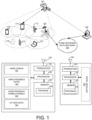
- FIG. 1 illustrates a schematic system diagram including an exemplary IoT network with HARQ feedback disabling procedure in accordance with embodiments of the current invention.
- IoT network includes multiple communication devices or mobile stations, such as mobile phones, tablets, laptops, and other 5G devices whether movable, mobile, or stationary, as exemplary illustrated UEs 111, 112, 113, 114, 115, and 116.
- the UE in the IoT network can establish a communication link with one or more network devices, i.e., NTN nodes, or NR base stations. For example, various NTN nodes 101, NTN gateway 102, and an NR base station 105.
- the network node can be a communication node, such as radio access network (RAN) such as a 5G base station (gNB), an evolved universal mobile telecommunications system (UMTS), a terrestrial radio access (E-UTRA), an enhanced 4G eNodeB E-UTRA base station (eNB), e.g., an enhanced Node B, an enhanced gNB (en-gNB), or a next generation eNB (ng-eNB).
- RAN radio access network
- gNB 5G base station
- UMTS evolved universal mobile telecommunications system
- E-UTRA terrestrial radio access
- eNB enhanced 4G eNodeB E-UTRA base station
- en-gNB enhanced Node B
- ng-eNB next generation eNB
- the NTN node can be implemented using various non-terrestrial systems.
- Core network/data network 109 can be a homogeneous network or heterogeneous network, which can be deployed with the same frequency or different frequencies.
- the UE receives HARQ configuration information from the network.
- the HARQ configuration information includes at last one of the following: the first indication information, the second indication information, the third indication information.
- the UE checks HARQ process ID and determines HARQ feedback enabling or disabling based on the first indication information. If there isn't the first indication information, or if UE cannot determine HARQ feedback enabling or disabling based on the first indication information, UE determines HARQ feedback enabling or disabling based on the second indication information when there is the second indication information.
- the second indication information indicates HARQ feedback enabling or disabling for all HARQ processes.
- UE determines HARQ feedback enabling or disabling based on the first indication information for HARQ process ID equals to 0. If there isn't the first indication information, or if UE cannot determine HARQ feedback enabling or disabling based on the first indication information, UE determines HARQ feedback enabling or disabling based on the third indication information when there is the third indication information.
- the third indication information indicates R_threshold enabling-disabling value. The UE checks "Repetition number" in DCI and determines HARQ feedback enabling or disabling based on the third indication information.
- Figure 1 further illustrates simplified block diagrams of a mobile device/UE to perform the enabling and disabling of HARQ feedback process in the IoT network.
- the UE has an antenna 125, which transmits and receives radio signals.
- An RF transceiver circuit 123 coupled with the antenna, receives RF signals from antenna 125, converts them to baseband signals, and sends them to processor 122.
- the RF transceiver may comprise two RF modules (not shown).
- RF transceiver circuit 123 also converts received baseband signals from processor 122, converts them to RF signals, and sends out to antenna 125.
- Processor 122 processes the received baseband signals and invokes different functional modules to perform features in the UE 111.
- Memory 121 stores program instructions and data 126 to control the operations of the UE 111.
- Antenna 125 sends uplink transmission and receives downlink transmissions to/from base stations.
- the UE also includes a set of control modules that carry out functional tasks. These control modules can be implemented by circuits, software, firmware, or a combination of them.
- An HARQ configuration module 191 receives HARQ configuration information, wherein the UE is configured with one or more HARQ processes, and wherein the HARQ configuration information comprises one or more IoT HARQ information fields.
- An HARQ state module 192 determines an HARQ feedback enable-disable state for each HARQ process based on the HARQ configuration information.
- An HARQ feedback enable-disable module 193 performs HARQ feedback enabling and disabling procedures for each HARQ process based on the HARQ configuration information.
- An IoT new-data module 194 that receives disabling information through non terrestrial link (NTN), wherein the HARQ feedback disabling information indicates that all HARQ processes are disabled, determines a new-data state for receiving data based on an IoT new-data rule, wherein the IoT new-data rule determines whether the receiving data is initial-transmission data or re-transmission data, and wherein the IoT new-data rule overwrites a new data indication (NDI) field, and processes the receiving data based on the new-data state.
- NTN non terrestrial link
- FIG. 1 further illustrates simplified block diagrams of an IoT network entity, such as a gNB 105.
- gNB 105 has antenna 156, which transmits and receives radio signals.
- An RF transceiver circuit 153 coupled with the antenna, receives RF signals from antenna 156, converts them to baseband signals, and sends them to processor 152.
- RF transceiver 153 also converts received baseband signals from processor 152, converts them to RF signals, and sends out to antenna 156.
- Processor 152 processes the received baseband signals and invokes different functional modules to perform features in gNB 105.
- Memory 151 stores program instructions and data 154 to control the operations of gNB 105.
- gNB 105 also includes a set of control modules 155 that carry out functional tasks to communicate with mobile devices, such as UE 112.
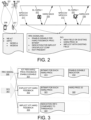
- FIG. 2 illustrates exemplary diagrams of HARQ feedback enabling and disabling procedures for IoT devices in accordance with embodiments of the current invention.
- the IoT system/network is mainly divided into NB-IoT and eMTC, based on different system bandwidth and coverage.
- the bandwidth used by NB-IoT is about 200kHz and supports the transmission of low traffic data at a rate below 100kbps.
- EMTC technology utilizes 1.4MHz bandwidth and the maximum data transmission rate is 1Mbps.
- the downlink supports one or two HARQ processes.
- the downlink can support up to sixteen HARQ processes for eMTC CE-Mode-A and up to four HARQ processes for eMTC CE-Mode-B.
- the IoT system can use NTN access and/or other wireless access such as NR.
- Exemplary IoT devices 206 and 207 can be configured to access NTN through network node 201 or other wireless access, such as gNB 202.
- IoT devices/UEs 206 and 207 can be NB IoT devices, eMTC CE-Mode-A devices or eMTC CE-Mode-B devices.
- the IoT devices configured with HARQ processes perform HARQ.
- configuration control signals were sent through narrowband downlink physical control channel (NPDCCH) or MTC DCCH (MDCCH).
- NPDCCH narrowband downlink physical control channel
- MDCCH MTC DCCH
- DL HARQ-1 process sent data packets to the UE. The data sending was not successful.
- HARQ NACK was sent.
- new configuration information was sent to UEs through NPDCCH or MPDCCH.
- DL HARQ-1 data was received by the UE successfully.
- HARQ ACK was sent to the network.
- the scheme of disabling HARQ feedback utilizes RRC parameter "HARQ feedback enabling disablingperharqprocess-r17" to pre-configure the HARQ ID corresponding to enabled feedback and the HARQ ID corresponding to disabled feedback.
- eNB performs HARQ scheduling, it schedules specific HARQ process with enabling and disabling of HARQ feedback through the "HARQ process number" field in DCI. That is, the UE can know the "HARQ process number" by receiving DCI.
- UE can know whether to disable HARQ feedback through the RRC parameter "HARQ feedback enabling disablingperharqprocess-r17".
- the RRC parameter "HARQ feedback enabling disablingperharqprocess-r17".
- disabling HARQ feedback is required to reduce the transmission delay and increase the transmission information throughput.
- the "HARQ process number" field may not exist.
- the method utilized in NR NTN isn't applicable in IoT scenarios with large delay.
- RRC signaling is provided to enable or disable feedback of HARQ process with a bitmap.
- an indicator is configured in the RRC signal and with one or more corresponding HARQ process ID in DCI.
- a new DCI field is used to provide HARQ per-process enable and disable feedback information.
- the HARQ enable and disable feedback information is provided explicitly with the new field or existing fields.
- DCI existing field is used to implicitly indicate enable and disable feedback per HARQ process.
- FIG. 3 illustrates a top level diagram enable and disable HARQ feedback procedure for per HARQ process in accordance with embodiments of the current invention.
- UE in the IoT network perform enable or disable HARQ feedback process based on one or more IoT HARQ information fields.
- the IoT HARQ information fields includes an IoT per-HARQ-process-feedback enable-disable field 301, an explicit IoT HARQ feedback field 302, and an implicit IoT HARQ feedback field 303.
- IoT per-HARQ-process-feedback enable-disable field 301 can be received from RRC signaling 306 or existing or new field in DCI 307 can be used as IoT per-HARQ-process-feedback enable-disable field 301.
- P explicit IoT HARQ feedback field 302 can be received from RRC signal 306 or DCI 307.
- Implicit IoT HARQ feedback field 303 is received from DCI 307 using existing DCI fields.
- IoT per-HARQ-process-feedback enable-disable field 301 is a bitmap 311. In an alternative or additional implementation, it is an indicator 312 for enabling or disabling one or more HARQ feedback processes.
- the HARQ process is either explicitly provided as HARQ process ID or is implicitly determined based on implicit IoT HARQ feedback field.
- Explicit IoT HARQ feedback field 302 can be a bitmap 321 to explicitly enable or disable one or more HARQ feedback processes; it can be HARQ process ID 322.
- the explicit feedback field 302 is one bit in DCI.
- the one bit in DCI indicates disabling with '0' and enabling with '1'.
- Implicit IoT HARQ feedback field 303 are existing DCI fields when set with predefined values, implicitly indicates enabling or disabling one or more HARQ feedback processes.
- bitmap 311 for each HARQ process is received.
- the UE performs enabling or disabling HARQ feedback processes based on bitmap 311 for each HARQ process.
- the UE performs enabling or disabling HARQ feedback processes based on bitmap 321 for each HARQ process from the DCI.
- the UE receives enable-disable indicator 312 and HARQ process ID 322 and performs HARQ feedback enabling and disabling accordingly.
- the UE is an NB IoT, both the IoT per-HARQ-process-feedback enable-disable field 301, and the explicit IoT HARQ field 302 may present.
- the explicit IoT overwrites the IoT per-HARQ-process-feedback enable-disable field for one or more corresponding HARQ processes when presented based on an overwriting rule.
- the overwriting rule may enable only overwriting the enabling of the HARQ feedback, or only overwriting the disabling of the HARQ feedback, or overwriting both enabling and disabling of the HARQ feedback.
- FIG. 4 illustrates exemplary diagrams for using one RRC parameter of "HARQ-feedback enabling-disabling per HARQ process" to enable or disable one or more HARQ feedback processes in accordance with embodiments of the current invention.
- RRC configures cell_specific/UE_specific RRC parameter "HARQ-feedback enabling-disabling per HARQ process.”
- a bitmap is received from RRC signal.
- the UE enables or disables one or more corresponding HARQ feedback processes based on the received RRC parameter.
- the RRC parameter is an indicator.
- the UE determines if one or more HARQ process IDs are presented.
- step 430 determines yes, at step 431, the UE enables or disables HARQ feedback based on the above RRC parameter and DCI "HARQ process number" field. If step 430 determines no, at step 432, the UE enables or disables HARQ feedback process based on the configuration of RRC parameter "HARQ-feedback enabling-disabling per HARQ process" for "HARQ process number” equals to zero.
- FIG. 5 illustrates exemplary diagrams to use two RRC parameters with HARQ-feedback enabling-disabling per HARQ process and HARQ-feedback enable or disable for all HARQ process in accordance with embodiments of the current invention.
- RRC configures cell_specific/UE_specific RRC parameter "HARQ feedback enable or disable" for all HARQ process.
- the UE determines whether cell_specific/UE_specific RRC parameter "HARQ-feedback enabling-disabling per HARQ process" exists.
- step 501 determines no, UE, at step 520, enables or disables HARQ feedback based on RRC parameter "HARQ feedback enable or disable.” If step 501 determines yes, the UE enables or disables HARQ feedback based on the above RRC parameter and DCI "HARQ process number" field. At step 502, the UE determines whether the HARQ process number exists. If step 502 determines no, UE, at step 520, enables or disables HARQ feedback based on RRC parameter "HARQ feedback enable or disable.” If step 502 determines yes, the UE enables or disables the HARQ feedback process based on the two parameters. "HARQ feedback enable or disable" can be updated by MAC CE.
- Figure 6 illustrates adding one or more DCI fields to indicate enable or disable one or more HARQ feedback processes in accordance with embodiments of the current invention.
- UE receives explicit IoT HARQ enable-disable indication.
- a new DCI field is added to carry the information.
- One bit DCI field "HARQ-feedback enabling-disabling” to indicate enable or disable of HARQ feedback. "0" indicates enable, while "1” indicates disable.
- the UE enables or disables the HARQ feedback process based on the new DCI field.
- Figure 7 illustrates exemplary diagrams to re-interpret existing DCI fields to indicate enabling or disabling feedback of one or more HARQ processes in accordance with embodiments of the current invention.
- explicit IoT HARQ field is used.
- An existing DCI field is used to carry the HARQ configuration information for the IoT devices.
- the "Scheduling delay" field and "HARQ-ACK resource” field are used to carry the explicit IoT HARQ information.
- implementation 710 applies for NB-IoT.
- the explicit IoT HARQ field indicates to disable the HARQ feedback, otherwise, to enable the HARQ feedback.
- the "TPC command for PUCCH” field and "HARQ-ACK resource offset” field are used to carry the explicit IoT HARQ information.
- implementation 720 applies for eMTC CE-Mode-A.
- the "Information for SC-MCCH(single-cell multicast control channel) change notification" field and "HARQ-ACK resource offset” field are used to carry the explicit IoT HARQ information.
- implementation 730 applies to eMTC CE-Mode-B.
- the UE enables or disables one or more HARQ feedback processes based on the IoT HARQ configuration.
- Figure 8 illustrates exemplary diagrams to compare R_threshold and DCI "Repetition Number” field to implicitly enable or disable one or more HARQ feedback processes in accordance with embodiments of the current invention.
- implicit IoT HARQ feedback field is used.
- RRC configures cell_specific/UE_specific RRC parameter 810 "R_threshold enabling-disabling” indicating the R_threshold value for NB-IoT, CE-Mode-A and CE-Mode-B respectively, UE utilized "R_threshold enabling-disabling” and DCI "Repetition number” 820 field to determine enable or disable.
- R_threshold enabling-disabling value equals to the maximum repetition number or specific repetition number equals to integer times of the maximum repetition number, or specific repetition number from ⁇ 1,2,..., the maximum repetition number ⁇ , or R_threshold enabling-disabling value equals to the max field number in DCI "Repetition number” field, or specific field number from ⁇ 1,2,..., the max field number in DCI "Repetition number” field ⁇ .
- R_threshold value can be updated by MAC CE.
- MAC CE updates differential value or full value of R_threshold value.
- the UE enables or disables one or more HARQ feedback processes based on the IoT HARQ configuration.
- FIG. 9 illustrates exemplary diagrams using two RRC parameters to implicitly enable or disable one or more HARQ feedback processes in accordance with embodiments of the current invention.
- RRC configures cell_specific/UE_specific RRC parameter "HARQ-feedback enabling-disabling per HARQ process", UE enables or disables HARQ feedback based on above RRC parameter and DCI "HARQ process number” field.
- RRC configures cell_specific/UE_specific RRC parameter "R_threshold enabling-disabling” indicating the R_threshold value for NB-IoT, CE-Mode-A and CE-Mode-B respectively.
- the UE determines enable or disable based on the RRC parameter.
- the UE determines whether the received data is an initial transmission or a retransmission based on an IoT new-data rule, which overwrites the new data indication (NDI) field.
- NDI new data indication
- FIG. 10 illustrates exemplary diagrams for IoT in NTN with HARQ feedback disabled applying IoT new-data rule in accordance with embodiments of the current invention.
- a UE 1002 in an IoT network is connected with a network node 1001.
- the new data indicator (NDI) indicates whether the current transmission is new or retransmission.
- IoT UE decodes the DCI and determines whether the transmission is new or retransmitted based on NDI field in DCI. For the same HARQ process number or without HARQ process (when downlink only supports 1 HARQ process), if NDI doesn't change, then UE thinks this transmission as the retransmitted one, else, as the new one.
- HARQ feedback for UE 1002 is disabled.
- three exemplary consecutive NDI was transmitted from the network to UE 1002.
- NDI 1011 is '0' indicating initial transmission
- NDI 1012 is '1' indicating new transmission
- NDI 1013 is '0' indicating initial transmission.
- UE 1002 may miss some transmission from the network.
- the UE receives NDI 1021 with '0' indicating initial transmission.
- UE 1002 When UE 1002 receives NDI 1023 with ⁇ 0', UE 1002 misunderstands the third transmission with NDI 1023 as retransmission of the first transmission with NDI 1021 when the second transmission is missed by UE.
- the IoT new-data rule 1052 is provided to overwrite the current NDI to help UE decide whether the transmission is new or retransmitted, to increase reliability and benefit UE power consumption.
- Figure 11 illustrates exemplary diagrams for IoT new-data rules in accordance with embodiments of the current invention.
- the new-data state which is an initial transmission, or a retransmission is determined based on IoT new-data rule 1100, which overwrites the NDI field.
- the IoT new-data rule is determined based on the UE type 1150, including an NB-IoT device 1151, an eMTC CE-Mode-A device 1152, and an eMTC NTN device 1153.
- the IoT new-data rule combines the NDI and a DCI field. When the DCI field is all zero, the UE determines it is an initial transmission regardless of the NDI value.
- the UE determines the new-data state based on the NDI value, which is when the NDI value is the same previous NDI value of the same process ID or without a process ID, it is a retransmission, otherwise, it is an initial transmission.
- the DCI field used for the IoT new-data rule is one of the DCI fields including the HARQ-ACK resource field, the HARQ-ACK resource offset field, and the transmit power control (TPC) command for physical uplink control channel (PUCCH) field.
- TPC transmit power control
- other existing or new data fields may be used to combine with the NDI value for IoT new-data state. (Further) alternatively or additionally preferably, the NDI is ignored, and all data received are determined to be initial transmission.
- the new-data rule determines the new-data state for the UE based on "New data indicator” field (1-bit) 1111 and "HARQ-ACK resource” field (4-bit) 1112 in DCI.
- new-data rule 1110 applies to NB-IoT devices 1151.
- the UE determines whether the transmission is based on the NDI (1-bit) and the HARQ-ACK resource (4-bit) fields. If the 4-bit HARQ-ACK resource field is all '0', (i.e., ⁇ 0000'), the new-data state is an initial transmission regardless of the NDI. If the 4-bit HARQ-ACK resource field is not '0000' and the NDI is the same as the previous NDI value with the same process ID or without process ID, the UE determines it is retransmission. If the 4-bit HARQ-ACK resource field is not '0000' and the NDI is not the same as the previous NDI value with the same process ID or without process ID, the UE determines it is a new transmission. Table-1a and Table-1b illustrate the new-data state for UE based on the NDI 1111 and HARQ-ACK resource" field 1112.
- Table-1a illustrates the IoT new-data state based on NDI and HARQ-ACK resource filed, when previous NDI received with the same process ID or without a process ID is '0'.
- New transmission/ re-transmission NDI 1-bit HARQ-ACK resource 4-bit new 0 0000 retransmission 0 0001 0 0010 0 0011 0 0100 0 0101 0 0110 0 0111 0 1000 0 1001 0 1010 0 1011 0 1100 0 1101 0 1110 0 1111 new 1 0000 1 0001 1 0010 1 0011 1 0100 1 0101 1 0110 1 0111 1 1000 1 1001 1 1010 1 1011 1 1100 1 1101 1 1110 1 1111 1111 1111
- Table-1b illustrates the IoT new-data state based on NDI and HARQ-ACK resource filed, when previous NDI received with the same process ID or without a process ID is '1'.
- New transmission/ re-transmission NDI 1-bit HARQ-ACK resource 4-bit new 0 0000 0 0001 0 0010 0 0011 0 0100 0 0101 0 0110 0 0111 0 1000 0 1001 0 1010 0 1011 0 1100 0 1101 0 1110 0 1111 new 1 0000 retransmission 1 0001 1 0010 1 0011 1 0100 1 0101 1 0110 1 0111 1 1000 1 1001 1 1010 1 1011 1 1100 1 1101 1 1110 1 1111 1111 1111
- the new-data rule determines the new-data state for the UE based on "New data indicator” field (1-bit) 1121 and "TPC command for PUCCH” field (2-bit) 1122 in DCI.
- new-data rule 1120 applies to eMTC CE-Mode-A devices 1152.
- the UE determines whether the transmission is based on the NDI (1-bit) and the HARQ-ACK resource offset (2-bit) fields. If the 2-bit HARQ-ACK resource offset field is all '0', (i.e., ⁇ 00'), the new-data state is an initial transmission regardless of the NDI. If the 2-bit TPC command for PUCCH field is not '00' and the NDI is the same as the previous NDI value with the same process ID or without process ID, the UE determines it is retransmission. If the 2-bit TPC command for PUCCH field is not '00' and the NDI is not the same as the previous NDI value with the same process ID or without process ID, the UE determines it is a new transmission. Table-2a and Table-2b illustrate the new-data state for UE based on the NDI 1121 and HARQ-ACK resource offset" field 1122.
- Table-2a illustrates the IoT new-data state based on NDI and TPC command for PUCCH filed, when previous NDI received with the same process ID or without a process ID is '0'.
- Table-2b illustrates the IoT new-data state based on NDI and TPC command for PUCCH filed, when previous NDI received with the same process ID or without a process ID is '1'.
- the new-data rule determines the new-data state for the UE based on "New data indicator” field (1-bit) 1131 and "HARQ-ACK resource offset” field (2-bit) 1132 in DCI.
- new-data rule 1130 applies to eMTC NTN devices 1153.
- the UE determines whether the transmission is based on the NDI (1-bit) and the HARQ-ACK resource offset (2-bit) fields. If the 2-bit HARQ-ACK resource offset field is all '0', (i.e., ⁇ 00'), the new-data state is an initial transmission regardless of the NDI. If the 2-bit HARQ-ACK resource offset field is not '00' and the NDI is the same as the previous NDI value with the same process ID or without process ID, the UE determines it is retransmission. If the 2-bit HARQ-ACK resource offset field is not '00' and the NDI is not the same as the previous NDI value with the same process ID or without process ID, the UE determines it is a new transmission. Table-3a and Table-3b illustrate the new-data state for UE based on the NDI 1131 and HARQ-ACK resource offset" field 1132.
- Table-3a illustrates the IoT new-data state based on NDI and HARQ-ACK resource offset field, when previous NDI received with the same process ID or without a process ID is '0'.
- New transmission/ re-transmission NDI 1-bit HARQ-ACK resource offset 2-bit new 0 00 retransmission 0 01 0 10 0 11 new 1 00 1 01 1 10 1 11
- Table-3b illustrates the IoT new-data state based on NDI and HARQ-ACK resource offset field, when previous NDI received with the same process ID or without a process ID is '1'.
- New transmission/re-transmission NDI 1-bit HARQ-ACK resource offset 2-bit new 0 00 0 01 0 10 0 11 new 1 00 retransmission 1 01 1 10 1 11
- IoT new-data rule 1140 applies.
- the UE ignores the NDI field and determines all receiving data are initial-transmission data.
- new-data rule 1140 applies to NB IoT and eMTC NTN.
- Figure 12 illustrates an exemplary flow chart for the UE in the IoT network to disable HARQ feedback process in accordance with embodiments of the current invention.
- the UE receives HARQ configuration information in an Internet of Things (IoT) network, wherein the UE is configured with one or more HARQ processes, and wherein the HARQ configuration information comprises one or more IoT HARQ information fields.
- the UE determines an HARQ feedback enable-disable state for each HARQ process based on the HARQ configuration information.
- the UE performing HARQ feedback enabling and disabling procedures for each HARQ process based on the HARQ configuration information..
- FIG. 13 illustrates an exemplary flow chart of an IoT UE in the NTN applying IoT new-data rule in accordance with embodiments of the current invention.
- the UE receives HARQ feedback disabling information in an Internet of Things (IoT) network, wherein the HARQ feedback disabling information indicates that HARQ feedback is disabled.
- the UE determines a new-data state for receiving data based on an IoT new-data rule, wherein the IoT new-data rule determines whether the receiving data is initial-transmission data or re-transmission data, and wherein the IoT new-data rule overwrites a new data indication (NDI) field.
- the UE processes the receiving data based on the new-data state.
- IoT Internet of Things
- Figure 14 illustrates an exemplary flow chart for the network entity in the IoT network to disable HARQ feedback process in accordance with embodiments of the current invention.
- the IoT network entity configures an HARQ feedback enable-disable state for each HARQ process based on HARQ configuration information.
- the network entity transmits the HARQ configuration information to a user equipment (UE), wherein the UE is configured with one or more HARQ processes, and wherein the HARQ configuration information comprises one or more IoT HARQ information fields.
- UE user equipment
- the one or more IoT HARQ information fields comprise an IoT per-HARQ-process-feedback enable-disable field that indicates an HARQ feedback enable-disable state per HARQ process, an explicit IoT HARQ feedback field, and an implicit IoT HARQ feedback field.
- the IoT per-HARQ-process-feedback enable-disable field is configured through UE specific radio resource control (RRC) signaling or cell specific RRC signaling, and wherein IoT per-HARQ-process-feedback enable-disable field is updated periodically or aperiodically with dedicated RRC signaling or MAC CE.
- RRC radio resource control
- the IoT HARQ information field includes the implicit IoT HARQ feedback field, which is a repetition number in corresponding DCI, and wherein the repetition number is compared to a predefined threshold value to configure the HARQ feedback enable-disable state for each HARQ process.
- the predefined threshold value equals to an predefined maximum repetition number, or a first specific repetition number that is integer times of an predefined maximum repetition number for corresponding HARQ process, or a second specific repetition number that is smaller than an predefined maximum repetition number for corresponding HARQ process, and wherein the second specific repetition number is configured through UE specific radio resource control (RRC) signaling or cell specific RRC signaling.
- RRC radio resource control
- the predefined threshold value is updated periodically or aperiodically with dedicated RRC signaling or MAC CE, and the IoT network updates a differential value or a full value of the predefined threshold value.
- FIG. 15 illustrates an exemplary flow chart of a network entity in the NTN applying IoT new-data rule in accordance with embodiments of the current invention.
- the IoT network entity transmits HARQ feedback disabling information to a user equipment (UE), wherein the HARQ feedback disabling information indicates that HARQ feedback is disabled.
- the IoT network entity transmits data based on an IoT new-data rule, wherein the IoT new-data rule determines whether the transmitted data is initial-transmission data or re-transmission data, and wherein the IoT new-data rule overwrites a new data indication (NDI) field.
- NDI new data indication
Landscapes
- Engineering & Computer Science (AREA)
- Computer Networks & Wireless Communication (AREA)
- Signal Processing (AREA)
- Mobile Radio Communication Systems (AREA)
Abstract
Description
- This application is filed under 35 U.S.C. §111(a) and is based on and hereby claims priority under 35 U.S.C. §120 and §365(c) from International Application No.
PCT/CN2022/075398, titled "Schemes on Disabling HARQ Feedback in IoT," with an international filing date of February 7, 2022 PCT/CN2022/089550, titled "Schemes on New Data Indicator for Disabled HARQ Feedback in IoT NTN," with an international filing date of April 27, 2022 - The disclosed embodiments relate generally to wireless communication, and, more particularly, to disabling/enabling HARQ feedback in Internet of Things (IoT).
- Internet of Things (IoT) network enables the communication between electronic devices / user equipment (UEs) through the internet. The IoT network enables smart city, smart homes, pollution control, energy saving, smart transportation, and provides many innovative solutions to various challenges. With the development of the wireless technology, IoT integrated with the latest wireless technology. The narrow band IoT (NB-IoT) and enhanced machine type communication (eMTC) devices uses fifth-generation (5G) telecommunication systems, including new radio (NR) network and non-terrestrial networks (NTN). Hybrid automatic repeat request (HARQ) is mainly used for scheduling management, such as the initial transmission and retransmission of information. In scenarios with large transmission delays, such as NTN, HARQ increases transmission delays and power consumption. The traditional way of HARQ handling does not fit the demanding growth of the IoT network. Further, when HARQ feedback are disabled, the traditional way of using the new data indication (NDI) field as the indication of initial transmission or retransmission causes mismatches when the UE misses one or more NDI indicator.
- Improvements and enhancements are required for enabling and disabling HARQ feedback process for IoT devices.
- Apparatus and methods are provided for HARQ feedback enabling and disabling in the IoT network. Methods according to the invention are defined in the independent claims. The dependent claims define preferred embodiments thereof. In one novel aspect, the UE receives HARQ configuration information in an IoT network, determines an HARQ feedback enable-disable state for each HARQ process based on the HARQ configuration information. Preferably, the HARQ configuration information includes one or more IoT HARQ information fields, including an IoT per-HARQ-process-feedback enable-disable field that indicates an HARQ feedback enable-disable state per HARQ process, an explicit IoT HARQ feedback field, and an implicit IoT HARQ feedback field. Preferably, the UE determines the HARQ feedback enable-disable state for each HARQ process based on the IoT per-HARQ-process-feedback enable-disable field. Preferably, when the IoT per-HARQ-process-feedback enable-disable field does not exist, the UE determines the HARQ feedback enable-disable state based on the explicit IoT field that explicitly indicates the HARQ feedback enable-disable state for one or more HARQ processes. Preferably, the HARQ feedback enable-disable state for each HARQ process is determined the implicit IoT HARQ feedback field. Preferably, the implicit IoT HARQ feedback field is a repetition number in corresponding DCI, and wherein the repetition number is compared to a predefined threshold value to determine the HARQ feedback enable-disable state for each HARQ process.
- In one novel aspect, the UE determines a new-data state for receiving data based on an IoT new-data rule, which overwrites the NDI field with HARQ feedback disabled. Preferably, the IoT new-data rule is based on the NDI field and a HARQ-ACK resource field in data control information (DCI). Alternatively or additionally preferably, the IoT new-data rule is based on the NDI field and a transmit power control (TPC) command for physical uplink control channel (PUCCH) field in DCI. Alternatively or (further) additionally preferably, the IoT new-data rule is based on the NDI field and a HARQ-ACK resource offset field in DCI. Alternatively or ((still) further) additionally preferably, the IoT new-data rule is to ignore the NDI field and always takes the transmission as an initial transmission.
- This summary does not purport to define the invention. The invention is defined by the claims.
- The accompanying drawings, where like numerals indicate like components, illustrate embodiments of the invention.
-
Figure 1 illustrates a schematic system diagram illustrating an exemplary IoT network with HARQ feedback disabling procedure in accordance with embodiments of the current invention. -
Figure 2 illustrates exemplary diagrams of HARQ feedback enabling and disabling procedures for IoT devices in accordance with embodiments of the current invention. -
Figure 3 illustrates a top level diagram for per HARQ process enable and disable feedback procedure in accordance with embodiments of the current invention. -
Figure 4 illustrates exemplary diagrams for using one RRC parameter of "HARQ-feedback enabling-disabling per process" to enable or disable one or more HARQ feedback processes in accordance with embodiments of the current invention -
Figure 5 illustrates exemplary diagrams to use two RRC parameters with HARQ-feedback enabling-disabling per HARQ process and HARQ-feedback enable or disable for all HARQ process in accordance with embodiments of the current invention. -
Figure 6 illustrates adding one or more DCI fields to indicate enable or disable one or more HARQ feedback processes in accordance with embodiments of the current invention. -
Figure 7 illustrates exemplary diagrams to re-interpret existing DCI fields to indicate enabling or disabling of one or more HARQ feedback processes in accordance with embodiments of the current invention. -
Figure 8 illustrates exemplary diagrams to compare R_threshold and DCI "Repetition Number" field to implicitly enable or disable one or more HARQ feedback processes in accordance with embodiments of the current invention. -
Figure 9 illustrates exemplary diagrams using two RRC parameters to implicitly enable or disable one or more HARQ feedback processes in accordance with embodiments of the current invention. -
Figure 10 illustrates exemplary diagrams for IoT in NTN with HARQ feedback disabled applying IoT new-data rule in accordance with embodiments of the current invention. -
Figure 11 illustrates exemplary diagrams for IoT new-data rules in accordance with embodiments of the current invention. -
Figure 12 illustrates an exemplary flow chart for the UE in the IoT network to disable HARQ feedback process in accordance with embodiments of the current invention. -
Figure 13 illustrates an exemplary flow chart of an IoT UE in the NTN applying IoT new-data rule in accordance with embodiments of the current invention. -
Figure 14 illustrates an exemplary flow chart for the network entity in the IoT network to disable HARQ feedback process in accordance with embodiments of the current invention. -
Figure 15 illustrates an exemplary flow chart of a network entity in the NTN applying IoT new-data rule in accordance with embodiments of the current invention. - Reference will now be made in detail to some embodiments of the invention, examples of which are illustrated in the accompanying drawings.
-
Figure 1 illustrates a schematic system diagram including an exemplary IoT network with HARQ feedback disabling procedure in accordance with embodiments of the current invention. IoT network includes multiple communication devices or mobile stations, such as mobile phones, tablets, laptops, and other 5G devices whether movable, mobile, or stationary, as exemplary illustrated UEs 111, 112, 113, 114, 115, and 116. The UE in the IoT network can establish a communication link with one or more network devices, i.e., NTN nodes, or NR base stations. For example, various NTN nodes 101, NTNgateway 102, and an NR base station 105. The network node can be a communication node, such as radio access network (RAN) such as a 5G base station (gNB), an evolved universal mobile telecommunications system (UMTS), a terrestrial radio access (E-UTRA), an enhanced 4G eNodeB E-UTRA base station (eNB), e.g., an enhanced Node B, an enhanced gNB (en-gNB), or a next generation eNB (ng-eNB). The NTN node can be implemented using various non-terrestrial systems. Core network/data network 109 can be a homogeneous network or heterogeneous network, which can be deployed with the same frequency or different frequencies. - In the scenario with relatively small transmission delay, such as terrestrial network (TN) system, using HARQ feedback has many advantages, such as increasing transmission reliability. In scenarios with large transmission delay, such as the NTN system, disabling HARQ feedback can reduce UE power consumption and transmission delay. In addition, disabling HARQ feedback for a downlink (DL) transmission can improve uplink (UL) throughput in large round-trip time (RTT) scenarios as more resources would be available in the uplink. In one novel aspect, the UE receives HARQ configuration information from the network. The HARQ configuration information includes at last one of the following: the first indication information, the second indication information, the third indication information. If there is the first indication information, which indicates HARQ-feedback enabling-disabling per HARQ process, the UE checks HARQ process ID and determines HARQ feedback enabling or disabling based on the first indication information. If there isn't the first indication information, or if UE cannot determine HARQ feedback enabling or disabling based on the first indication information, UE determines HARQ feedback enabling or disabling based on the second indication information when there is the second indication information. The second indication information indicates HARQ feedback enabling or disabling for all HARQ processes. If there is the first indication information but there isn't the second indication information, when UE receives no HARQ process ID, UE determines HARQ feedback enabling or disabling based on the first indication information for HARQ process ID equals to 0. If there isn't the first indication information, or if UE cannot determine HARQ feedback enabling or disabling based on the first indication information, UE determines HARQ feedback enabling or disabling based on the third indication information when there is the third indication information. The third indication information indicates R_threshold enabling-disabling value. The UE checks "Repetition number" in DCI and determines HARQ feedback enabling or disabling based on the third indication information.
-
Figure 1 further illustrates simplified block diagrams of a mobile device/UE to perform the enabling and disabling of HARQ feedback process in the IoT network. The UE has anantenna 125, which transmits and receives radio signals. AnRF transceiver circuit 123, coupled with the antenna, receives RF signals fromantenna 125, converts them to baseband signals, and sends them toprocessor 122. Preferably, the RF transceiver may comprise two RF modules (not shown).RF transceiver circuit 123 also converts received baseband signals fromprocessor 122, converts them to RF signals, and sends out toantenna 125.Processor 122 processes the received baseband signals and invokes different functional modules to perform features in theUE 111.Memory 121 stores program instructions anddata 126 to control the operations of theUE 111.Antenna 125 sends uplink transmission and receives downlink transmissions to/from base stations. - The UE also includes a set of control modules that carry out functional tasks. These control modules can be implemented by circuits, software, firmware, or a combination of them. An HARQ configuration module 191 receives HARQ configuration information, wherein the UE is configured with one or more HARQ processes, and wherein the HARQ configuration information comprises one or more IoT HARQ information fields. An
HARQ state module 192 determines an HARQ feedback enable-disable state for each HARQ process based on the HARQ configuration information. An HARQ feedback enable-disablemodule 193 performs HARQ feedback enabling and disabling procedures for each HARQ process based on the HARQ configuration information. An IoT new-data module 194 that receives disabling information through non terrestrial link (NTN), wherein the HARQ feedback disabling information indicates that all HARQ processes are disabled, determines a new-data state for receiving data based on an IoT new-data rule, wherein the IoT new-data rule determines whether the receiving data is initial-transmission data or re-transmission data, and wherein the IoT new-data rule overwrites a new data indication (NDI) field, and processes the receiving data based on the new-data state. -
Figure 1 further illustrates simplified block diagrams of an IoT network entity, such as a gNB 105. gNB 105 hasantenna 156, which transmits and receives radio signals. AnRF transceiver circuit 153, coupled with the antenna, receives RF signals fromantenna 156, converts them to baseband signals, and sends them toprocessor 152.RF transceiver 153 also converts received baseband signals fromprocessor 152, converts them to RF signals, and sends out toantenna 156.Processor 152 processes the received baseband signals and invokes different functional modules to perform features in gNB 105.Memory 151 stores program instructions anddata 154 to control the operations of gNB 105. gNB 105 also includes a set ofcontrol modules 155 that carry out functional tasks to communicate with mobile devices, such asUE 112. -
Figure 2 illustrates exemplary diagrams of HARQ feedback enabling and disabling procedures for IoT devices in accordance with embodiments of the current invention. The IoT system/network is mainly divided into NB-IoT and eMTC, based on different system bandwidth and coverage. The bandwidth used by NB-IoT is about 200kHz and supports the transmission of low traffic data at a rate below 100kbps. EMTC technology utilizes 1.4MHz bandwidth and the maximum data transmission rate is 1Mbps. In the NB-IoT scenario, the downlink supports one or two HARQ processes. In the eMTC scenario, the downlink can support up to sixteen HARQ processes for eMTC CE-Mode-A and up to four HARQ processes for eMTC CE-Mode-B. The IoT system can use NTN access and/or other wireless access such as NR. ExemplaryIoT devices network node 201 or other wireless access, such as gNB 202. IoT devices/UEs step 211, configuration control signals were sent through narrowband downlink physical control channel (NPDCCH) or MTC DCCH (MDCCH). Atstep 221, DL HARQ-1 process sent data packets to the UE. The data sending was not successful. Atstep 222, HARQ NACK was sent. Optionally, atstep 212, new configuration information was sent to UEs through NPDCCH or MPDCCH. Atstep 231, DL HARQ-1 data was received by the UE successfully. At step 233, HARQ ACK was sent to the network. - In the exemplary scenario, considering the problem of large transmission delay in NTN system, it is desirable to disable HARQ feedback to improve the system throughput. For NR NTN, the scheme of disabling HARQ feedback utilizes RRC parameter "HARQ feedback enabling disablingperharqprocess-r17" to pre-configure the HARQ ID corresponding to enabled feedback and the HARQ ID corresponding to disabled feedback. When eNB performs HARQ scheduling, it schedules specific HARQ process with enabling and disabling of HARQ feedback through the "HARQ process number" field in DCI. That is, the UE can know the "HARQ process number" by receiving DCI. Then UE can know whether to disable HARQ feedback through the RRC parameter "HARQ feedback enabling disablingperharqprocess-r17". When the IoT equipment needs to be used in the scenario with large delay, disabling HARQ feedback is required to reduce the transmission delay and increase the transmission information throughput. However, in NB-IoT and eMTC scenarios, the "HARQ process number" field may not exist. Hence, the method utilized in NR NTN isn't applicable in IoT scenarios with large delay.
- In one novel aspect, disabling and enabling HARQ feedback procedure per HARQ process for UEs in the IoT network is provided. Preferably, RRC signaling is provided to enable or disable feedback of HARQ process with a bitmap. Alternatively or additionally preferably, an indicator is configured in the RRC signal and with one or more corresponding HARQ process ID in DCI. Alternatively or additionally preferably, a new DCI field is used to provide HARQ per-process enable and disable feedback information. Preferably, the HARQ enable and disable feedback information is provided explicitly with the new field or existing fields. Preferably, DCI existing field is used to implicitly indicate enable and disable feedback per HARQ process.
-
Figure 3 illustrates a top level diagram enable and disable HARQ feedback procedure for per HARQ process in accordance with embodiments of the current invention. In one novel aspect, UE in the IoT network perform enable or disable HARQ feedback process based on one or more IoT HARQ information fields. The IoT HARQ information fields includes an IoT per-HARQ-process-feedback enable-disablefield 301, an explicit IoTHARQ feedback field 302, and an implicit IoT HARQ feedback field 303. IoT per-HARQ-process-feedback enable-disablefield 301 can be received from RRC signaling 306 or existing or new field inDCI 307 can be used as IoT per-HARQ-process-feedback enable-disablefield 301. P explicit IoTHARQ feedback field 302 can be received from RRC signal 306 orDCI 307. Implicit IoT HARQ feedback field 303 is received fromDCI 307 using existing DCI fields. In oneimplementation, IoT per-HARQ-process-feedback enable-disablefield 301 is abitmap 311. In an alternative or additional implementation, it is anindicator 312 for enabling or disabling one or more HARQ feedback processes. The HARQ process is either explicitly provided as HARQ process ID or is implicitly determined based on implicit IoT HARQ feedback field. Explicit IoTHARQ feedback field 302 can be abitmap 321 to explicitly enable or disable one or more HARQ feedback processes; it can beHARQ process ID 322. In oneimplementation, theexplicit feedback field 302 is one bit in DCI. In one scenario, the one bit in DCI indicates disabling with '0' and enabling with '1'. Implicit IoT HARQ feedback field 303 are existing DCI fields when set with predefined values, implicitly indicates enabling or disabling one or more HARQ feedback processes. - Preferably,
bitmap 311 for each HARQ process is received. The UE performs enabling or disabling HARQ feedback processes based onbitmap 311 for each HARQ process. Alternatively or additionally preferably, the UE performs enabling or disabling HARQ feedback processes based onbitmap 321 for each HARQ process from the DCI. Alternatively or additionally preferably, the UE receives enable-disableindicator 312 andHARQ process ID 322 and performs HARQ feedback enabling and disabling accordingly. Preferably, the UE is an NB IoT, both the IoT per-HARQ-process-feedback enable-disablefield 301, and the explicitIoT HARQ field 302 may present. The explicit IoT overwrites the IoT per-HARQ-process-feedback enable-disable field for one or more corresponding HARQ processes when presented based on an overwriting rule. The overwriting rule may enable only overwriting the enabling of the HARQ feedback, or only overwriting the disabling of the HARQ feedback, or overwriting both enabling and disabling of the HARQ feedback. -
Figure 4 illustrates exemplary diagrams for using one RRC parameter of "HARQ-feedback enabling-disabling per HARQ process" to enable or disable one or more HARQ feedback processes in accordance with embodiments of the current invention. Atstep 401, RRC configures cell_specific/UE_specific RRC parameter "HARQ-feedback enabling-disabling per HARQ process." In oneimplementation 410, a bitmap is received from RRC signal. Atstep 411, the UE enables or disables one or more corresponding HARQ feedback processes based on the received RRC parameter. In an alternative oradditional implementation 420, the RRC parameter is an indicator. Atstep 430, the UE determines if one or more HARQ process IDs are presented. Ifstep 430 determines yes, atstep 431, the UE enables or disables HARQ feedback based on the above RRC parameter and DCI "HARQ process number" field. Ifstep 430 determines no, atstep 432, the UE enables or disables HARQ feedback process based on the configuration of RRC parameter "HARQ-feedback enabling-disabling per HARQ process" for "HARQ process number" equals to zero. -
Figure 5 illustrates exemplary diagrams to use two RRC parameters with HARQ-feedback enabling-disabling per HARQ process and HARQ-feedback enable or disable for all HARQ process in accordance with embodiments of the current invention. Preferably, RRC configures cell_specific/UE_specific RRC parameter "HARQ feedback enable or disable" for all HARQ process. Atstep 501, the UE determines whether cell_specific/UE_specific RRC parameter "HARQ-feedback enabling-disabling per HARQ process" exists. Ifstep 501 determines no, UE, atstep 520, enables or disables HARQ feedback based on RRC parameter "HARQ feedback enable or disable." Ifstep 501 determines yes, the UE enables or disables HARQ feedback based on the above RRC parameter and DCI "HARQ process number" field. Atstep 502, the UE determines whether the HARQ process number exists. Ifstep 502 determines no, UE, atstep 520, enables or disables HARQ feedback based on RRC parameter "HARQ feedback enable or disable." Ifstep 502 determines yes, the UE enables or disables the HARQ feedback process based on the two parameters. "HARQ feedback enable or disable" can be updated by MAC CE. -
Figure 6 illustrates adding one or more DCI fields to indicate enable or disable one or more HARQ feedback processes in accordance with embodiments of the current invention. In oneembodiment 601, UE receives explicit IoT HARQ enable-disable indication. In oneimplementation 610, a new DCI field is added to carry the information. One bit DCI field "HARQ-feedback enabling-disabling" to indicate enable or disable of HARQ feedback. "0" indicates enable, while "1" indicates disable. Atstep 611, the UE enables or disables the HARQ feedback process based on the new DCI field. -
Figure 7 illustrates exemplary diagrams to re-interpret existing DCI fields to indicate enabling or disabling feedback of one or more HARQ processes in accordance with embodiments of the current invention. In one embodiment 701, explicit IoT HARQ field is used. An existing DCI field is used to carry the HARQ configuration information for the IoT devices. Inimplementation 710, the "Scheduling delay" field and "HARQ-ACK resource" field are used to carry the explicit IoT HARQ information. Preferably,implementation 710 applies for NB-IoT. In one example, when Scheduling delay" field = '000' and "HARQ-ACK resource" field = '0000', the explicit IoT HARQ field indicates to disable the HARQ feedback, otherwise, to enable the HARQ feedback. In alternative oradditional implementation 720, the "TPC command for PUCCH" field and "HARQ-ACK resource offset" field are used to carry the explicit IoT HARQ information. Preferably,implementation 720 applies for eMTC CE-Mode-A. When "TPC command for PUCCH" field = '00' and "HARQ-ACK resource offset" field = '00' and indicates disabling of HARQ feedback, otherwise, enable of HARQ feedback. In alternative oradditional implementation 730, the "Information for SC-MCCH(single-cell multicast control channel) change notification" field and "HARQ-ACK resource offset" field are used to carry the explicit IoT HARQ information. Preferably,implementation 730 applies to eMTC CE-Mode-B. When "Information for SC-MCCH change notification" field = '00' and "HARQ-ACK resource offset" field = '00' and indicates disable of HARQ feedback, otherwise, enable of HARQ feedback. Atstep 702, the UE enables or disables one or more HARQ feedback processes based on the IoT HARQ configuration. -
Figure 8 illustrates exemplary diagrams to compare R_threshold and DCI "Repetition Number" field to implicitly enable or disable one or more HARQ feedback processes in accordance with embodiments of the current invention. In oneembodiment 801, implicit IoT HARQ feedback field is used. In one implementation, RRC configures cell_specific/UE_specific RRC parameter 810 "R_threshold enabling-disabling" indicating the R_threshold value for NB-IoT, CE-Mode-A and CE-Mode-B respectively, UE utilized "R_threshold enabling-disabling" and DCI "Repetition number" 820 field to determine enable or disable. R_threshold enabling-disabling value equals to the maximum repetition number or specific repetition number equals to integer times of the maximum repetition number, or specific repetition number from {1,2,..., the maximum repetition number}, or R_threshold enabling-disabling value equals to the max field number in DCI "Repetition number" field, or specific field number from {1,2,..., the max field number in DCI "Repetition number" field}. UE compares the R_threshold and the repetition number notified in DCI "Repetition number" field. If R corresponds to "Repetition number" field >= R_threshold, the HARQ feedback is disable, else, the HARQ feedback is enable. R_threshold value can be updated by MAC CE. MAC CE updates differential value or full value of R_threshold value. Atstep 802, the UE enables or disables one or more HARQ feedback processes based on the IoT HARQ configuration. -
Figure 9 illustrates exemplary diagrams using two RRC parameters to implicitly enable or disable one or more HARQ feedback processes in accordance with embodiments of the current invention. In oneembodiment 910, RRC configures cell_specific/UE_specific RRC parameter "HARQ-feedback enabling-disabling per HARQ process", UE enables or disables HARQ feedback based on above RRC parameter and DCI "HARQ process number" field. RRC configures cell_specific/UE_specific RRC parameter "R_threshold enabling-disabling" indicating the R_threshold value for NB-IoT, CE-Mode-A and CE-Mode-B respectively. Atstep 902, the UE determines enable or disable based on the RRC parameter. Atstep 901, the UE determines whether DCI "HARQ process number" field exists. Ifstep 901 determines yes, the UE, atstep 902, enables or disables one or more HARQ feedback processes based on the IoT HARQ. Ifstep 901 determines no, UE, atstep 920, determines the enable-disable state of the HARQ feedback based on the comparison of the R_threshold and the repetition number notified in DCI "Repetition number" field. If R corresponds to "Repetition number" field >= R_threshold, the HARQ feedback is disabled, else, the HARQ feedback is enabled. Atstep 903, the UE determines enable or disable based on the RRC parameter. - In one novel aspect, when the HARQ feedback is disabled, the UE determines whether the received data is an initial transmission or a retransmission based on an IoT new-data rule, which overwrites the new data indication (NDI) field.
-
Figure 10 illustrates exemplary diagrams for IoT in NTN with HARQ feedback disabled applying IoT new-data rule in accordance with embodiments of the current invention. AUE 1002 in an IoT network is connected with anetwork node 1001. The new data indicator (NDI) indicates whether the current transmission is new or retransmission. For a DCI scheduled transmission, IoT UE decodes the DCI and determines whether the transmission is new or retransmitted based on NDI field in DCI. For the same HARQ process number or without HARQ process (when downlink only supports 1 HARQ process), if NDI doesn't change, then UE thinks this transmission as the retransmitted one, else, as the new one. - In one
scenario 1051, HARQ feedback forUE 1002 is disabled. As an example, for the same HARQ process with HARQ feedback disabled, there are three transmissions respectively with NDI {0,1,0}. At the transmitter side, three exemplary consecutive NDI was transmitted from the network toUE 1002.NDI 1011 is '0' indicating initial transmission,NDI 1012 is '1' indicating new transmission, andNDI 1013 is '0' indicating initial transmission. At the receiver side,UE 1002 may miss some transmission from the network. The UE receivesNDI 1021 with '0' indicating initial transmission.UE 1002 missesNDI 1022 with '1'. WhenUE 1002 receivesNDI 1023 with `0',UE 1002 misunderstands the third transmission withNDI 1023 as retransmission of the first transmission withNDI 1021 when the second transmission is missed by UE. In an IoT NTN scenario, in the case of disabling HARQ feedback, the IoT new-data rule 1052 is provided to overwrite the current NDI to help UE decide whether the transmission is new or retransmitted, to increase reliability and benefit UE power consumption. -
Figure 11 illustrates exemplary diagrams for IoT new-data rules in accordance with embodiments of the current invention. In one novel aspect, the new-data state, which is an initial transmission, or a retransmission is determined based on IoT new-data rule 1100, which overwrites the NDI field. Preferably, the IoT new-data rule is determined based on theUE type 1150, including an NB-IoT device 1151, an eMTC CE-Mode-A device 1152, and aneMTC NTN device 1153. Preferably, the IoT new-data rule combines the NDI and a DCI field. When the DCI field is all zero, the UE determines it is an initial transmission regardless of the NDI value. If the DCI field is not all zero, the UE determines the new-data state based on the NDI value, which is when the NDI value is the same previous NDI value of the same process ID or without a process ID, it is a retransmission, otherwise, it is an initial transmission. Preferably, the DCI field used for the IoT new-data rule is one of the DCI fields including the HARQ-ACK resource field, the HARQ-ACK resource offset field, and the transmit power control (TPC) command for physical uplink control channel (PUCCH) field. Alternatively or additionally preferably, other existing or new data fields may be used to combine with the NDI value for IoT new-data state. (Further) alternatively or additionally preferably, the NDI is ignored, and all data received are determined to be initial transmission. - In one
implementation 1110, the new-data rule determines the new-data state for the UE based on "New data indicator" field (1-bit) 1111 and "HARQ-ACK resource" field (4-bit) 1112 in DCI. Preferably, new-data rule 1110 applies to NB-IoT devices 1151. - The UE determines whether the transmission is based on the NDI (1-bit) and the HARQ-ACK resource (4-bit) fields. If the 4-bit HARQ-ACK resource field is all '0', (i.e., `0000'), the new-data state is an initial transmission regardless of the NDI. If the 4-bit HARQ-ACK resource field is not '0000' and the NDI is the same as the previous NDI value with the same process ID or without process ID, the UE determines it is retransmission. If the 4-bit HARQ-ACK resource field is not '0000' and the NDI is not the same as the previous NDI value with the same process ID or without process ID, the UE determines it is a new transmission. Table-1a and Table-1b illustrate the new-data state for UE based on the
NDI 1111 and HARQ-ACK resource"field 1112. - Table-1a illustrates the IoT new-data state based on NDI and HARQ-ACK resource filed, when previous NDI received with the same process ID or without a process ID is '0'.
New transmission/ re-transmission NDI 1-bit HARQ-ACK resource 4-bit new 0 0000 retransmission 0 0001 0 0010 0 0011 0 0100 0 0101 0 0110 0 0111 0 1000 0 1001 0 1010 0 1011 0 1100 0 1101 0 1110 0 1111 new 1 0000 1 0001 1 0010 1 0011 1 0100 1 0101 1 0110 1 0111 1 1000 1 1001 1 1010 1 1011 1 1100 1 1101 1 1110 1 1111 - Table-1b illustrates the IoT new-data state based on NDI and HARQ-ACK resource filed, when previous NDI received with the same process ID or without a process ID is '1'.
New transmission/ re-transmission NDI 1-bit HARQ-ACK resource 4-bit new 0 0000 0 0001 0 0010 0 0011 0 0100 0 0101 0 0110 0 0111 0 1000 0 1001 0 1010 0 1011 0 1100 0 1101 0 1110 0 1111 new 1 0000 retransmission 1 0001 1 0010 1 0011 1 0100 1 0101 1 0110 1 0111 1 1000 1 1001 1 1010 1 1011 1 1100 1 1101 1 1110 1 1111 - In one alternative or
additional implementation 1120, the new-data rule determines the new-data state for the UE based on "New data indicator" field (1-bit) 1121 and "TPC command for PUCCH" field (2-bit) 1122 in DCI. Preferably, new-data rule 1120 applies to eMTC CE-Mode-A devices 1152. - The UE determines whether the transmission is based on the NDI (1-bit) and the HARQ-ACK resource offset (2-bit) fields. If the 2-bit HARQ-ACK resource offset field is all '0', (i.e., `00'), the new-data state is an initial transmission regardless of the NDI. If the 2-bit TPC command for PUCCH field is not '00' and the NDI is the same as the previous NDI value with the same process ID or without process ID, the UE determines it is retransmission. If the 2-bit TPC command for PUCCH field is not '00' and the NDI is not the same as the previous NDI value with the same process ID or without process ID, the UE determines it is a new transmission. Table-2a and Table-2b illustrate the new-data state for UE based on the
NDI 1121 and HARQ-ACK resource offset"field 1122. - Table-2a illustrates the IoT new-data state based on NDI and TPC command for PUCCH filed, when previous NDI received with the same process ID or without a process ID is '0'.
New transmission/ re-transmission NDI 1-bit TPC command for PUCCH 2-bit new 0 00 retransmission 0 01 0 10 0 11 new 1 00 1 01 1 10 1 11 - Table-2b illustrates the IoT new-data state based on NDI and TPC command for PUCCH filed, when previous NDI received with the same process ID or without a process ID is '1'.
New transmission/ re-transmission NDI 1-bit TPC command for PUCCH 2-bit new 0 00 0 01 0 10 0 11 new 1 00 retransmission 1 01 1 10 1 11 - In one alternative or
additional implementation 1130, the new-data rule determines the new-data state for the UE based on "New data indicator" field (1-bit) 1131 and "HARQ-ACK resource offset" field (2-bit) 1132 in DCI. Preferably, new-data rule 1130 applies toeMTC NTN devices 1153. - The UE determines whether the transmission is based on the NDI (1-bit) and the HARQ-ACK resource offset (2-bit) fields. If the 2-bit HARQ-ACK resource offset field is all '0', (i.e., `00'), the new-data state is an initial transmission regardless of the NDI. If the 2-bit HARQ-ACK resource offset field is not '00' and the NDI is the same as the previous NDI value with the same process ID or without process ID, the UE determines it is retransmission. If the 2-bit HARQ-ACK resource offset field is not '00' and the NDI is not the same as the previous NDI value with the same process ID or without process ID, the UE determines it is a new transmission. Table-3a and Table-3b illustrate the new-data state for UE based on the
NDI 1131 and HARQ-ACK resource offset"field 1132. - Table-3a illustrates the IoT new-data state based on NDI and HARQ-ACK resource offset field, when previous NDI received with the same process ID or without a process ID is '0'.
New transmission/ re-transmission NDI 1-bit HARQ-ACK resource offset 2-bit new 0 00 retransmission 0 01 0 10 0 11 new 1 00 1 01 1 10 1 11 - Table-3b illustrates the IoT new-data state based on NDI and HARQ-ACK resource offset field, when previous NDI received with the same process ID or without a process ID is '1'.
New transmission/re-transmission NDI 1-bit HARQ-ACK resource offset 2-bit new 0 00 0 01 0 10 0 11 new 1 00 retransmission 1 01 1 10 1 11 - In another alternative or additional implementation IoT new-
data rule 1140 applies. The UE ignores the NDI field and determines all receiving data are initial-transmission data. Preferably, new-data rule 1140 applies to NB IoT and eMTC NTN. -
Figure 12 illustrates an exemplary flow chart for the UE in the IoT network to disable HARQ feedback process in accordance with embodiments of the current invention. Atstep 1201, the UE receives HARQ configuration information in an Internet of Things (IoT) network, wherein the UE is configured with one or more HARQ processes, and wherein the HARQ configuration information comprises one or more IoT HARQ information fields. Atstep 1202, the UE determines an HARQ feedback enable-disable state for each HARQ process based on the HARQ configuration information. Atstep 1203, the UE performing HARQ feedback enabling and disabling procedures for each HARQ process based on the HARQ configuration information.. -
Figure 13 illustrates an exemplary flow chart of an IoT UE in the NTN applying IoT new-data rule in accordance with embodiments of the current invention. Atstep 1301, the UE receives HARQ feedback disabling information in an Internet of Things (IoT) network, wherein the HARQ feedback disabling information indicates that HARQ feedback is disabled. Atstep 1302, the UE determines a new-data state for receiving data based on an IoT new-data rule, wherein the IoT new-data rule determines whether the receiving data is initial-transmission data or re-transmission data, and wherein the IoT new-data rule overwrites a new data indication (NDI) field. Atstep 1303, the UE processes the receiving data based on the new-data state. -
Figure 14 illustrates an exemplary flow chart for the network entity in the IoT network to disable HARQ feedback process in accordance with embodiments of the current invention. Atstep 1401, the IoT network entity configures an HARQ feedback enable-disable state for each HARQ process based on HARQ configuration information. Atstep 1402, the network entity transmits the HARQ configuration information to a user equipment (UE), wherein the UE is configured with one or more HARQ processes, and wherein the HARQ configuration information comprises one or more IoT HARQ information fields. Preferably, the one or more IoT HARQ information fields comprise an IoT per-HARQ-process-feedback enable-disable field that indicates an HARQ feedback enable-disable state per HARQ process, an explicit IoT HARQ feedback field, and an implicit IoT HARQ feedback field. Alternatively or additionally preferably, the IoT per-HARQ-process-feedback enable-disable field is configured through UE specific radio resource control (RRC) signaling or cell specific RRC signaling, and wherein IoT per-HARQ-process-feedback enable-disable field is updated periodically or aperiodically with dedicated RRC signaling or MAC CE. Alternatively or additionally preferably, the IoT HARQ information field includes the implicit IoT HARQ feedback field, which is a repetition number in corresponding DCI, and wherein the repetition number is compared to a predefined threshold value to configure the HARQ feedback enable-disable state for each HARQ process. Preferably, the predefined threshold value equals to an predefined maximum repetition number, or a first specific repetition number that is integer times of an predefined maximum repetition number for corresponding HARQ process, or a second specific repetition number that is smaller than an predefined maximum repetition number for corresponding HARQ process, and wherein the second specific repetition number is configured through UE specific radio resource control (RRC) signaling or cell specific RRC signaling. Alternatively or additionally preferably, the predefined threshold value is updated periodically or aperiodically with dedicated RRC signaling or MAC CE, and the IoT network updates a differential value or a full value of the predefined threshold value. -
Figure 15 illustrates an exemplary flow chart of a network entity in the NTN applying IoT new-data rule in accordance with embodiments of the current invention. Atstep 1501, the IoT network entity transmits HARQ feedback disabling information to a user equipment (UE), wherein the HARQ feedback disabling information indicates that HARQ feedback is disabled. Atstep 1502, the IoT network entity transmits data based on an IoT new-data rule, wherein the IoT new-data rule determines whether the transmitted data is initial-transmission data or re-transmission data, and wherein the IoT new-data rule overwrites a new data indication (NDI) field. - Although the present invention has been described in connection with certain specific embodiments for instructional purposes, the present invention is not limited thereto. Accordingly, various modifications, adaptations, and combinations of various features of the described embodiments can be practiced without departing from the scope of the invention as set forth in the claims.
Claims (15)
- A method, comprising:receiving, by a user equipment, in the following also referred to as UE, hybrid automatic repeat request, in the following also referred to as HARQ, configuration information in an Internet of Things, in the following also referred to as IoT, network, wherein the UE is configured with one or more HARQ processes, and wherein the HARQ configuration information comprises one or more IoT HARQ information fields (1201);determining an HARQ feedback enable-disable state for each HARQ process based on the HARQ configuration information (1202); andperforming HARQ feedback enabling and disabling procedures for each HARQ process based on the HARQ configuration information (1203).
- The method of claim 1, wherein the one or more IoT HARQ information fields comprise an IoT per-HARQ-process-feedback enable-disable field that indicates an HARQ feedback enable-disable state per HARQ process, an explicit IoT HARQ feedback field, and an implicit IoT HARQ feedback field.
- The method of claim 2, wherein the IoT per-HARQ-process-feedback enable-disable field is received through UE specific radio resource control, in the following also referred to as RRC, signaling, and wherein the determining HARQ feedback enable-disable state of each HARQ process is based on the IoT per-HARQ-process-feedback enable-disable field.
- The method of claim 2 or 3, wherein the IoT per-HARQ-process-feedback enable-disable field includes HARQ process number equals to zero, and wherein the HARQ feedback enabling and disabling procedures further includes: performing HARQ feedback enabling and disabling procedures for the HARQ process without HARQ process number.
- The method of any one of claims 2 to 4, wherein the explicit IoT HARQ feedback field is received in a downlink control information, in the following also referred to as DCI.
- The method of any one of claims 2 to 5, wherein the IoT per-HARQ-process-feedback enable-disable field is not present and the UE performing HARQ feedback enabling and disabling procedures based on the explicit IoT HARQ feedback field that explicitly indicates an enable-disable feedback state for one or more HARQ processes.
- The method of any one of claims 2 to 6, wherein the UE is a narrow band, in the following also referred to as NB, IoT device, and wherein the enable-disable feedback state for each HARQ process is determined based on the IoT per-HARQ-process-feedback enable-disable field, and wherein the explicit IoT HARQ feedback field overwrites the IoT per-HARQ-process-feedback enable-disable field for one or more corresponding HARQ processes when presented based on an overwriting rule.
- The method of any one of claims 2 to 7, wherein the HARQ feedback enable-disable state for each HARQ process is determined based on the implicit IoT HARQ feedback field.
- The method of claim 8, wherein the implicit IoT HARQ feedback field is a repetition number in corresponding DCI, and wherein the repetition number is compared to a predefined threshold value to determine the HARQ feedback enable-disable state for each HARQ process.
- The method of claim 8 or 9, wherein the UE is an NB IoT device, the implicit IoT HARQ feedback field are a Scheduling delay field and an HARQ-ACK resource field in corresponding DCI, and wherein the UE determines an HARQ feedback disable state for corresponding HARQ process when the Scheduling delay field is '000' and the HARQ-ACK resource field is `0000', otherwise, determines an HARQ feedback enable state for corresponding HARQ process.
- The method of any one of claims 8 to 10, wherein the UE is an eMTC CE-Mode-A IoT device, the implicit IoT HARQ feedback field are a TPC command for PUCCH field and an HARQ-ACK resource offset field in corresponding DCI, and wherein the UE determines an HARQ feedback disable state for corresponding HARQ process when the TPC command for PUCCH field is '00' and the HARQ-ACK resource offset field is '00', otherwise, determines an HARQ feedback enable state for corresponding HARQ process.
- The method of claim 8, wherein the UE is an eMTC CE-Mode-B IoT device, the implicit IoT HARQ feedback field are an Information for SC-MCCH change notification field and an HARQ-ACK resource offset field in corresponding DCI, and wherein the UE determines an HARQ feedback disable state for corresponding HARQ process when the Information for SC-MCCH change notification field is '00' and the HARQ-ACK resource offset field is '00', otherwise, determines an HARQ feedback enable state for corresponding HARQ process.
- A method, comprising:receiving, by a user equipment, in the following also referred to as UE, hybrid automatic repeat request, in the following also referred to as HARQ, feedback disabling information in an Internet of Things, in the following also referred to as IoT, network, wherein the HARQ feedback disabling information indicates that HARQ feedback is disabled (1301);determining a new-data state for receiving data based on an IoT new-data rule, wherein the IoT new-data rule determines whether the receiving data is initial-transmission data or re-transmission data, and wherein the IoT new-data rule overwrites a new data indication, in the following also referred to as NDI, field (1302); andprocessing the receiving data based on the new-data state (1303).
- The method of claim 13, wherein the UE is an NB IoT device and the IoT new-data rule is based on the NDI field and a HARQ-ACK resource field in data control information, in the following also referred to as DCI.
- The method of claim 13 or 14, wherein the UE is an enhanced machine type communication, in the following also referred to as eMTC, CE-Mode-A IoT device and the IoT new-data rule is based on the NDI field and a transmit power control, in the following also referred to as TPC, command for physical uplink control channel, in the following also referred to as PUCCH, field in DCI.
Applications Claiming Priority (3)
| Application Number | Priority Date | Filing Date | Title |
|---|---|---|---|
| PCT/CN2022/075398 WO2023147703A1 (en) | 2022-02-07 | 2022-02-07 | Schemes on disabling harq feedback in iot |
| PCT/CN2022/089550 WO2023206137A1 (en) | 2022-04-27 | 2022-04-27 | Schemes on new data indicator for disabled harq feedback in iot ntn |
| CN202310096659.0A CN116566555A (en) | 2022-02-07 | 2023-01-20 | Method for processing hybrid automatic repeat request feedback and user equipment thereof |
Publications (2)
| Publication Number | Publication Date |
|---|---|
| EP4224761A2 true EP4224761A2 (en) | 2023-08-09 |
| EP4224761A3 EP4224761A3 (en) | 2023-08-16 |
Family
ID=87068180
Family Applications (1)
| Application Number | Title | Priority Date | Filing Date |
|---|---|---|---|
| EP23155302.5A Pending EP4224761A3 (en) | 2022-02-07 | 2023-02-07 | Handling harq feedback in internet of things (iot) |
Country Status (2)
| Country | Link |
|---|---|
| EP (1) | EP4224761A3 (en) |
| TW (1) | TWI895690B (en) |
Cited By (4)
| Publication number | Priority date | Publication date | Assignee | Title |
|---|---|---|---|---|
| WO2023212937A1 (en) | 2022-05-06 | 2023-11-09 | Zte Corporation | Systems and methods for enabling or disabling harq feedback |
| WO2025044916A1 (en) * | 2023-08-25 | 2025-03-06 | 华为技术有限公司 | Satellite communication method and apparatus |
| WO2025173996A1 (en) * | 2024-02-13 | 2025-08-21 | 한국전자통신연구원 | Method and apparatus for supporting low specification terminal in communication system |
| WO2026073510A1 (en) * | 2024-10-04 | 2026-04-09 | Telefonaktiebolaget Lm Ericsson (Publ) | Method and apparatus for enabling ambient internet of things (aiot) device |
Family Cites Families (5)
| Publication number | Priority date | Publication date | Assignee | Title |
|---|---|---|---|---|
| CN120692671A (en) * | 2017-03-24 | 2025-09-23 | 北京三星通信技术研究有限公司 | Semi-static resource scheduling method, power control method and corresponding user equipment |
| GB2573577B (en) * | 2018-05-11 | 2020-09-02 | Tcl Communication Ltd | Transmission techniques in a cellular network |
| US20220045803A1 (en) * | 2018-09-27 | 2022-02-10 | Telefonaktiebolaget Lm Ericsson (Publ) | Adapting harq procedures for non-terrestrial networks |
| JP7593321B2 (en) * | 2019-08-14 | 2024-12-03 | ソニーグループ株式会社 | Terminal device, base station device, terminal device control method, and base station device control method |
| CN112204908B (en) * | 2020-08-03 | 2024-03-29 | 北京小米移动软件有限公司 | HARQ feedback processing method and device and storage medium |
-
2023
- 2023-02-07 TW TW112104252A patent/TWI895690B/en active
- 2023-02-07 EP EP23155302.5A patent/EP4224761A3/en active Pending
Cited By (5)
| Publication number | Priority date | Publication date | Assignee | Title |
|---|---|---|---|---|
| WO2023212937A1 (en) | 2022-05-06 | 2023-11-09 | Zte Corporation | Systems and methods for enabling or disabling harq feedback |
| EP4396980A4 (en) * | 2022-05-06 | 2024-08-28 | ZTE Corporation | SYSTEMS AND METHODS FOR ENABLING OR DEACTIVATING HARQ FEEDBACK |
| WO2025044916A1 (en) * | 2023-08-25 | 2025-03-06 | 华为技术有限公司 | Satellite communication method and apparatus |
| WO2025173996A1 (en) * | 2024-02-13 | 2025-08-21 | 한국전자통신연구원 | Method and apparatus for supporting low specification terminal in communication system |
| WO2026073510A1 (en) * | 2024-10-04 | 2026-04-09 | Telefonaktiebolaget Lm Ericsson (Publ) | Method and apparatus for enabling ambient internet of things (aiot) device |
Also Published As
| Publication number | Publication date |
|---|---|
| TWI895690B (en) | 2025-09-01 |
| TW202341686A (en) | 2023-10-16 |
| EP4224761A3 (en) | 2023-08-16 |
Similar Documents
| Publication | Publication Date | Title |
|---|---|---|
| US11140731B2 (en) | Data transmission method, communication device, and data transmission system | |
| CN115632747B (en) | Delayed transmission depending on transmission type and UE processing capability | |
| EP3942876B1 (en) | Method and apparatus for beam management, and ue | |
| CN114071776A (en) | Communication method, user equipment, network equipment and electronic equipment | |
| TWI895690B (en) | Methods and apparatus for handling harq feedback | |
| WO2021120031A1 (en) | Methods and apparatus of transmission prioritization between uplink and sidelink | |
| US12490048B2 (en) | Communication method and apparatus to improve resource utilization and reliability of transmission of service data | |
| US12107717B2 (en) | Beam failure recovery method and device and communication system | |
| WO2018202111A1 (en) | Data transmission method and device | |
| US10904713B2 (en) | Enhancing group communication services | |
| US20220022261A1 (en) | Link recovery in wireless communications | |
| WO2018171564A1 (en) | Channel quality indicator feedback method and device | |
| CN108365925A (en) | A kind of method and user equipment of data transmission | |
| US12289722B2 (en) | Enhanced uplink control information mapping to uplink channel allocations | |
| US20230096588A1 (en) | Apparatus and method for unknown pucch scell activation | |
| US20230308220A1 (en) | HANDLING HARQ FEEDBACK IN INTERNET OF THINGS (IoT) | |
| CN118282571A (en) | A communication method, communication device, medium and program product | |
| WO2021087926A1 (en) | Uplink signal sending and receiving method and apparatus | |
| US11133979B2 (en) | Completion of SCell beam failure recovery | |
| US12580637B2 (en) | Methods for enhancing RLC in IoT NTN | |
| US20250286602A1 (en) | Maximum permissible exposure reporting | |
| US11909539B2 (en) | Wireless communication method and apparatus for improving robustness of data transmission | |
| WO2023150911A1 (en) | Methods and apparatuses for sidelink transmission on unlicensed spectrum | |
| RU2796198C1 (en) | Information feedback method and corresponding device | |
| HK40121509A (en) | Enhanced uplink control information mapping to uplink channel allocations |
Legal Events
| Date | Code | Title | Description |
|---|---|---|---|
| PUAI | Public reference made under article 153(3) epc to a published international application that has entered the european phase |
Free format text: ORIGINAL CODE: 0009012 |
|
| STAA | Information on the status of an ep patent application or granted ep patent |
Free format text: STATUS: THE APPLICATION HAS BEEN PUBLISHED |
|
| PUAL | Search report despatched |
Free format text: ORIGINAL CODE: 0009013 |
|
| AK | Designated contracting states |
Kind code of ref document: A2 Designated state(s): AL AT BE BG CH CY CZ DE DK EE ES FI FR GB GR HR HU IE IS IT LI LT LU LV MC ME MK MT NL NO PL PT RO RS SE SI SK SM TR |
|
| AK | Designated contracting states |
Kind code of ref document: A3 Designated state(s): AL AT BE BG CH CY CZ DE DK EE ES FI FR GB GR HR HU IE IS IT LI LT LU LV MC ME MK MT NL NO PL PT RO RS SE SI SK SM TR |
|
| RIC1 | Information provided on ipc code assigned before grant |
Ipc: H04L 1/1867 20230101ALI20230712BHEP Ipc: H04L 1/1829 20230101ALI20230712BHEP Ipc: H04L 1/1822 20230101AFI20230712BHEP |
|
| STAA | Information on the status of an ep patent application or granted ep patent |
Free format text: STATUS: REQUEST FOR EXAMINATION WAS MADE |
|
| 17P | Request for examination filed |
Effective date: 20240119 |
|
| RBV | Designated contracting states (corrected) |
Designated state(s): AL AT BE BG CH CY CZ DE DK EE ES FI FR GB GR HR HU IE IS IT LI LT LU LV MC ME MK MT NL NO PL PT RO RS SE SI SK SM TR |