EP4224734A1 - Wave beam indication method and apparatus, network side device, and terminal - Google Patents
Wave beam indication method and apparatus, network side device, and terminal Download PDFInfo
- Publication number
- EP4224734A1 EP4224734A1 EP21874561.0A EP21874561A EP4224734A1 EP 4224734 A1 EP4224734 A1 EP 4224734A1 EP 21874561 A EP21874561 A EP 21874561A EP 4224734 A1 EP4224734 A1 EP 4224734A1
- Authority
- EP
- European Patent Office
- Prior art keywords
- dci
- feedback information
- information
- pdsch
- channel
- Prior art date
- Legal status (The legal status is an assumption and is not a legal conclusion. Google has not performed a legal analysis and makes no representation as to the accuracy of the status listed.)
- Pending
Links
Images

Classifications
-
- H—ELECTRICITY
- H04—ELECTRIC COMMUNICATION TECHNIQUE
- H04L—TRANSMISSION OF DIGITAL INFORMATION, e.g. TELEGRAPHIC COMMUNICATION
- H04L5/00—Arrangements affording multiple use of the transmission path
- H04L5/003—Arrangements for allocating sub-channels of the transmission path
- H04L5/0053—Allocation of signalling, i.e. of overhead other than pilot signals
-
- H—ELECTRICITY
- H04—ELECTRIC COMMUNICATION TECHNIQUE
- H04W—WIRELESS COMMUNICATION NETWORKS
- H04W72/00—Local resource management
- H04W72/20—Control channels or signalling for resource management
- H04W72/23—Control channels or signalling for resource management in the downlink direction of a wireless link, i.e. towards a terminal
-
- H—ELECTRICITY
- H04—ELECTRIC COMMUNICATION TECHNIQUE
- H04B—TRANSMISSION
- H04B7/00—Radio transmission systems, i.e. using radiation field
- H04B7/02—Diversity systems; Multi-antenna system, i.e. transmission or reception using multiple antennas
- H04B7/04—Diversity systems; Multi-antenna system, i.e. transmission or reception using multiple antennas using two or more spaced independent antennas
- H04B7/06—Diversity systems; Multi-antenna system, i.e. transmission or reception using multiple antennas using two or more spaced independent antennas at the transmitting station
- H04B7/0686—Hybrid systems, i.e. switching and simultaneous transmission
- H04B7/0695—Hybrid systems, i.e. switching and simultaneous transmission using beam selection
- H04B7/06952—Selecting one or more beams from a plurality of beams, e.g. beam training, management or sweeping
-
- H—ELECTRICITY
- H04—ELECTRIC COMMUNICATION TECHNIQUE
- H04L—TRANSMISSION OF DIGITAL INFORMATION, e.g. TELEGRAPHIC COMMUNICATION
- H04L5/00—Arrangements affording multiple use of the transmission path
- H04L5/0001—Arrangements for dividing the transmission path
- H04L5/0014—Three-dimensional division
- H04L5/0023—Time-frequency-space
-
- H—ELECTRICITY
- H04—ELECTRIC COMMUNICATION TECHNIQUE
- H04L—TRANSMISSION OF DIGITAL INFORMATION, e.g. TELEGRAPHIC COMMUNICATION
- H04L5/00—Arrangements affording multiple use of the transmission path
- H04L5/003—Arrangements for allocating sub-channels of the transmission path
- H04L5/0048—Allocation of pilot signals, i.e. of signals known to the receiver
-
- H—ELECTRICITY
- H04—ELECTRIC COMMUNICATION TECHNIQUE
- H04L—TRANSMISSION OF DIGITAL INFORMATION, e.g. TELEGRAPHIC COMMUNICATION
- H04L5/00—Arrangements affording multiple use of the transmission path
- H04L5/003—Arrangements for allocating sub-channels of the transmission path
- H04L5/0053—Allocation of signalling, i.e. of overhead other than pilot signals
- H04L5/0055—Physical resource allocation for ACK/NACK
-
- H—ELECTRICITY
- H04—ELECTRIC COMMUNICATION TECHNIQUE
- H04L—TRANSMISSION OF DIGITAL INFORMATION, e.g. TELEGRAPHIC COMMUNICATION
- H04L5/00—Arrangements affording multiple use of the transmission path
- H04L5/0091—Signalling for the administration of the divided path, e.g. signalling of configuration information
-
- H—ELECTRICITY
- H04—ELECTRIC COMMUNICATION TECHNIQUE
- H04W—WIRELESS COMMUNICATION NETWORKS
- H04W72/00—Local resource management
- H04W72/04—Wireless resource allocation
- H04W72/044—Wireless resource allocation based on the type of the allocated resource
- H04W72/046—Wireless resource allocation based on the type of the allocated resource the resource being in the space domain, e.g. beams
-
- H—ELECTRICITY
- H04—ELECTRIC COMMUNICATION TECHNIQUE
- H04W—WIRELESS COMMUNICATION NETWORKS
- H04W72/00—Local resource management
- H04W72/12—Wireless traffic scheduling
- H04W72/1263—Mapping of traffic onto schedule, e.g. scheduled allocation or multiplexing of flows
Definitions
- This application pertains to the field of communications technologies, and specifically, relates to a beam indication method and apparatus, a network-side device, and a terminal.
- a beamforming weight for each analog beam is implemented by adjusting parameters of radio frequency front-end devices such as a phase shifter.
- a polling mode is usually used to train an analog beamforming vector.
- array elements in each polarization direction on each antenna panel take turns to transmit training signals (that is, candidate beamforming vectors) at prescribed times in the time division multiplexing mode.
- a terminal feeds back beam reports after performing measurement, so that a network side uses the training signals to implement emission of analog beams for the next service transmission.
- Content of beam reports usually includes identifiers of several optimal transmit beams and measured received power of each transmit beam.
- the network may provide a beam indication for a downlink/uplink channel or reference signal, where the beam indication is used to establish a beam link between the network and the terminal to implement channel or reference signal transmission.
- the beam indication is used to establish a beam link between the network and the terminal to implement channel or reference signal transmission.
- beam indication mechanisms for various channels and reference signals are different, and high signaling overheads are required.
- Embodiments of this application are intended to provide a beam indication method and apparatus, a network-side device, and a terminal, so as to resolve a problem that signaling overheads are high due to different beam indication mechanisms for various channels and reference signals in the prior art.
- an embodiment of this application provides a beam indication method, applied to a network-side device.
- the method includes:
- an embodiment of this application provides a beam indication method, applied to a terminal.
- the method includes:
- an embodiment of this application provides a beam indication apparatus, applied to a network-side device.
- the apparatus includes:
- an embodiment of this application provides a beam indication apparatus, applied to a terminal.
- the apparatus includes:
- an embodiment of this application provides a network-side device.
- the network-side device includes a processor, a memory, and a program or instructions stored in the memory and executable on the processor.
- the program or instructions are executed by the processor, the step of the method according to the first aspect is implemented.
- an embodiment of this application provides a terminal.
- the terminal includes a processor, a memory, and a program or instructions stored in the memory and executable on the processor.
- the program or instructions are executed by the processor, the step of the method according to the second aspect is implemented.
- an embodiment of this application provides a readable storage medium.
- the readable storage medium stores a program or instructions.
- the program or instructions are executed by a processor, the step of the method according to the first aspect is implemented, or the step of the method according to the second aspect is implemented.
- an embodiment of this application provides a chip.
- the chip includes a processor and a communications interface.
- the communications interface is coupled to the processor.
- the processor is configured to execute a program or instructions to implement the method according to the first aspect or implement the method according to the second aspect.
- an embodiment of this application provides a computer program product stored in a readable storage medium.
- the computer program product is executed by at least one processor to implement the method according to the first aspect or implement the method according to the second aspect.
- an embodiment of this application provides a beam indication apparatus, configured to perform the method according to the first aspect or the method according to the second aspect.
- the DCI or the MAC CE is used to indicate the common beam information of the channel and/or reference signal, to reduce signaling overheads of the beam indication.
- a feedback mechanism and an effective time scheme for the common beam information are provided. Therefore, robustness of the beam indication method and consistent understanding of beam effectiveness by the network and the terminal are ensured, and system performance is improved.
- first, second, and the like in this specification and claims of this application are used to distinguish between similar objects rather than to describe a specific order or sequence. It should be understood that the terms used in this way are interchangeable in appropriate circumstances, so that the embodiments of this application can be implemented in other orders than the order illustrated or described herein.
- objects distinguished by “first” and “second” usually fall within one class, and a quantity of objects is not limited. For example, there may be one or more first objects.
- the term “and/or” in the specification and claims indicates at least one of connected objects, and the character “/" generally represents an "or” relationship between associated objects.
- technologies described in the embodiments of this application are not limited to a long term evolution (Long Term Evolution, LTE)/LTE-Advanced (LTE-Advanced, LTE-A) system, and can also be used in other wireless communications systems, such as code division multiple access (Code Division Multiple Access, CDMA), time division multiple access (Time Division Multiple Access, TDMA), frequency division multiple access (Frequency Division Multiple Access, FDMA), orthogonal frequency division multiple access (Orthogonal Frequency Division Multiple Access, OFDMA), single-carrier frequency-division multiple access (Single-carrier Frequency-Division Multiple Access, SC-FDMA), and other systems.
- code division multiple access Code Division Multiple Access
- TDMA time division multiple access
- FDMA frequency division multiple access
- OFDMA Orthogonal frequency division multiple access
- SC-FDMA single-carrier Frequency-Division Multiple Access
- system and “network” in the embodiments of this application are usually used interchangeably.
- the described technologies may be used for the foregoing systems and radio technologies, and may also be used for other systems and radio technologies.
- NR New Radio
- NR terms are used in most of the following descriptions, although these technologies may also be applied to other applications than an NR system application, for example, a 6th Generation (6th Generation, 6G) communications system.
- FIG. 1 is a block diagram of a wireless communications system to which an embodiment of this application can be applied.
- the wireless communications system includes a terminal 11 and a network-side device 12.
- the terminal 11 may also be referred to as a terminal device or a user terminal (User Equipment, UE).
- UE User Equipment
- the terminal 11 may be a terminal-side device such as a mobile phone, a tablet personal computer (Tablet Personal Computer), a laptop computer (Laptop Computer) or a notebook computer, a personal digital assistant (Personal Digital Assistant, PDA), a palmtop computer, a netbook, an ultra-mobile personal computer (ultra-mobile personal computer, UMPC), a mobile Internet device (Mobile Internet Device, MID), a wearable device (Wearable Device), vehicle user equipment (VUE), or pedestrian user equipment (PUE).
- the wearable device includes a bracelet, a headset, a pair of glasses, or the like. It should be noted that a specific type of the terminal 11 is not limited in the embodiments of this application.
- the network-side device 12 may be a base station or a core network.
- the base station may be referred to as a NodeB, an evolved NodeB, an access point, a base transceiver station (Base Transceiver Station, BTS), a radio base station, a radio transceiver, a basic service set (Basic Service Set, BSS), an extended service set (Extended Service Set, ESS), a NodeB, an evolved NodeB (eNB), a home NodeB, a home evolved NodeB, a WLAN access point, a Wi-Fi node, a transmission and reception point (Transmission and Reception Point, TRP), or another appropriate term in the art, as long as the same technical effect is achieved.
- the base station is not limited to specific technical terms. It should be noted that in the embodiments of this application, only a base station in an NR system is used as an example, but a specific type of the base station is not limited.
- beam information mentioned in the embodiments of this application may also be referred to as spatial relation (spatial relation) information, spatial domain transmission filter (spatial domain transmission filter) information, spatial filter (spatial filter) information, transmission configuration indicator state (transmission configuration indicator state, TCI state) information, quasi-co-location (Quasi Co-Location, QCL) information, or QCL parameters. This is not specifically limited herein.
- a beam indication method and apparatus, a network-side device, and a terminal provided in the embodiments of this application are hereinafter described in detail by using specific embodiments and application scenarios thereof with reference to the accompanying drawings.
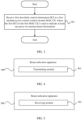
- an embodiment of this application provides a beam indication method.
- the method is applied to a network-side device and includes:
- Step 201 Transmit first downlink control information DCI or a first medium access control control element MAC CE, where the first DCI or the first MAC CE is used to indicate at least one piece of common beam information (which may be referred to as common beam information).
- the common beam information corresponds to at least two channels, or the common beam information corresponds to at least two reference signals, or the common beam information corresponds to at least one channel and at least one reference signal.
- the channel includes at least one of the following: a physical downlink shared channel (Physical Downlink Shared CHannel, PDSCH), a physical uplink shared channel (Physical Uplink Shared CHannel, PUSCH), a physical uplink control channel (Physical Uplink Control CHannel, PUCCH), and a physical downlink control channel (Physical Downlink Control CHannel, PDCCH); and the reference signal includes at least one of the following: a channel state information reference signal (Channel State Information Reference Signal, CSI-RS) and a sounding reference signal (Sounding Reference Signal, SRS).
- CSI-RS Channel State Information Reference Signal
- SRS Sounding Reference Signal
- the common beam information is applicable to all channels and reference signals of a corresponding terminal; or if the first DCI or the first MAC CE indicates at least two pieces of common beam information, each piece of common beam information corresponds to one type of channel or reference signal, where channels or reference signals may be classified into different types based on their functions or transmission directions. For example, one type is a data channel, another type is a control channel, and another type is a reference signal. In another example, one type is an uplink channel and an uplink reference signal, and one type is a downlink channel and a downlink reference signal. This is not specifically limited herein.
- the first DCI may be in a DCI format dedicated to indicating common beam information; or the first DCI may reuse an existing DCI format, such as a DCI format1_1, a DCI format1_0, a DCI format0_1, or a DCI format0_0.
- the common beam information indicated by the first DCI or the first MAC CE is applicable to any one of the following:
- the channel or reference signal associated with the first-type control resource set includes at least one of the following:
- a control resource set in which the first DCI is located belongs to the first-type control resource set.
- the common beam information indicated by the first DCI is applicable to the first-type control resource set to which the control resource set in which the first DCI is located belongs.
- the transmitting first downlink control information DCI in step 201 includes:
- the first DCI is carried on a PDCCH in the second-type control resource set, and the beam information (such as TCI state information) of the second-type control resource set is indicated by the second MAC CE, or indicated by the previous DCI of the first DCI.
- the method further includes:
- step 201 includes: in a case that a quantity of the at least one piece of common beam information satisfies a first condition, transmitting the first DCI; otherwise, transmitting the first MAC CE.
- the common beam information is indicated by using the first DCI; or if a quantity of common beam information to be indicated is greater than (or equal to) a preset value, the common beam information is indicated by using the first MAC CE.
- At least one embodiment of this application further provides a feedback mechanism for the common beam information, that is, after step 201, the method further includes: receiving first feedback information transmitted by a terminal, where the first feedback information is used to indicate whether the terminal has correctly received the first DCI or the first MAC CE.
- the first feedback information is hybrid automatic repeat request acknowledgement (Hybrid automatic repeat request acknowledgement, HARQ-ACK) information.
- HARQ-ACK hybrid automatic repeat request acknowledgement
- the first feedback information is used to indicate whether the terminal has correctly received the common beam information.
- the first feedback information may be carried on a PUCCH or a PUSCH.
- the method further includes: determining an uplink resource for the first feedback information in a first manner, where the first manner includes at least one of the following:
- the first DCI mentioned in this embodiment of this application may be DCI dedicated to indicating common beam information, or existing DCI may be used, for example, DCI for scheduling a PDSCH or DCI for scheduling a PUSCH.
- the method further includes: receiving feedback information about the PDSCH.
- the first feedback information and the feedback information about the PDSCH are jointly indicated in first target feedback information, that is, it is not distinguished which part of the first target feedback information is the first feedback information and which part of the first target feedback information is the feedback information about the PDSCH.
- the first target feedback information is one piece of feedback information.
- the first target feedback information is one bit. When the bit is set to 1, the first target feedback information is an ACK. In this case, both the first feedback information and the feedback information about the PDSCH are ACKs. When the bit is set to 0, the first target feedback information is a NACK. In this case, at least one of the first feedback information and the feedback information about the PDSCH is a NACK, but the network cannot distinguish which piece of feedback information is a NACK.
- the first feedback information and the feedback information about the PDSCH are separately indicated in second target feedback information, that is, it is not distinguished which part of the second target feedback information is the first feedback information and which part of the second target feedback information is the feedback information about the PDSCH.
- the second target feedback information includes two pieces of feedback information.
- the second target feedback information is two bits, where the first bit corresponds to the first feedback information, and the second bit corresponds to the feedback information about the PDSCH.
- the first feedback information is an ACK
- the feedback information about the PDSCH is a NACK
- the feedback information about the PDSCH is an ACK. Details are not exhaustively illustrated herein.
- the network can distinguish between the first feedback information and the feedback information about the PDSCH.
- the first target feedback information or the second target feedback information may reuse feedback information about a PDSCH in a prior art; or feedback information about a PDSCH in a prior art is modified.
- an uplink resource in which the first feedback information is located includes at least one of the following:
- the network-side device may check whether a HARQ process number (HARQ process number) used by the PUSCH scheduled by the second DCI is the same as a HARQ process number used by the PUSCH scheduled by the first DCI, to determine whether the terminal has correctly received the first DCI. For example, if the PUSCH scheduled by the second DCI and the PUSCH scheduled by the first DCI use the same HARQ process number, the network-side device determines that the terminal has correctly received the first DCI; otherwise, the network-side device considers that the terminal has not correctly received the first DCI.
- HARQ process number HARQ process number
- the method further includes at least one of the following:
- the common beam information is used for a channel or reference signal corresponding to the common beam information (which may also be referred to as "the common beam information becomes effective"). For example, the common beam information becomes effective after the first preset duration counting from the transmission time of the first feedback information being an ACK.
- ACK acknowledgement
- the common beam information is used for a channel or reference signal corresponding to the common beam information (which may also be referred to as "the common beam information becomes effective"), where the PUSCH scheduled by the second DCI and the PUSCH scheduled by the first DCI have a same hybrid automatic repeat request HARQ process number.
- the common beam information becomes effective after the second preset duration counting from the transmission time of the second DCI used by the PUSCH that is newly scheduled by the network and that has the same HARQ process number as the PUSCH scheduled by the first DCI.
- the method further includes: transmitting, by using first default beam information, the channel or reference signal scheduled by the third DCI, where the first default beam information includes:
- the control resource set with the smallest ID may be: a control resource set with a lowest ID in all control resource sets in a current cell; a control resource set with a lowest ID in the first-type control resource set and the second-type control resource set; or a control resource set with a lowest ID in a type of control resource set to which a control resource set of the third DCI for scheduling the channel or reference signal belongs.
- the method further includes: transmitting, by using second default beam information, the channel or reference signal scheduled by the fourth DCI, where the second default beam information includes:
- preceding a time at which the common beam information can be used may also be referred to as “before the common beam information becomes effective", where an effective time of the common beam information includes any one of the following:
- the control resource set with the smallest ID may be: a control resource set with a lowest ID in all control resource sets in a current cell; a control resource set with a lowest ID in the first-type control resource set and the second-type control resource set; or a control resource set with a lowest ID in a type of control resource set to which a control resource set of the fourth DCI for scheduling the channel or reference signal belongs.
- the method further includes:
- the method further includes: if the network-side device does not receive feedback information about the first DCI or the first MAC CE, retransmitting the first DCI or the first MAC CE indicating the at least one piece of common beam information.
- That the network-side device does not receive feedback information about the first DCI or the first MAC CE includes two cases: The terminal transmits the corresponding feedback information but the network-side device does not receive the feedback information; and the terminal does not transmit the corresponding feedback information.
- a transmission time sequence between the network-side device and the terminal is:
- a transmission time sequence between the network-side device and the terminal is: first DCI 4 PDSCH 4 HARQ-ACK, where the network-side device transmits the PDSCH by using the common beam information indicated in the first DCI.
- a transmission time sequence between the network-side device and the terminal is: first DCI ⁇ first PUSCH ⁇ second DCI ⁇ second PUSCH newly scheduled and having a same HARQ process number as the first PUSCH.
- the first target feedback information is one piece of feedback information.
- the first target feedback information is one bit.
- the first target feedback information is an ACK.
- both the first feedback information and the feedback information about the PDSCH are ACKs.
- the first target feedback information is a NACK.
- at least one of the first feedback information and the feedback information about the PDSCH is a NACK, but the network cannot distinguish which piece of feedback information is a NACK.
- the receiving first feedback information transmitted by a terminal includes:
- the common beam information can be used may also be referred to as “the common beam information becomes effective", where an effective time of the common beam information includes any one of the following:
- the method further includes:
- the network retransmits the first DCI indicating the at least one piece of common beam information.
- the network retransmits the first DCI, or the network retransmits the first DCI after the number of times that the PDSCH is retransmitted reaches the specific number of times.
- the network transmits the PDSCH by using the indicated common beam information, and the terminal receives the PDSCH; if the terminal feeds back an ACK or a NACK but the network does not receive the ACK or NACK, the network retransmits the first DCI, or retransmits the first DCI if no feedback is received or only NACKs are received before the number of times that the PDSCH is retransmitted reaches the specific number of times; if the terminal feeds back a NACK and the network receives the NACK, the network retransmits the PDSCH, or the network retransmits the first DCI, or the network retransmits the first DCI if no feedback is received or only NACKs are received before the number of times that the PDSCH is retransmitted reaches the preset number of times.
- the method further includes: if the PUSCH scheduled by the first DCI is not received, or the first feedback information is not received on the uplink resource in which the first feedback information is located, or the first feedback information being a negative acknowledgement is received, retransmitting the first DCI indicating the at least one piece of common beam information.
- the terminal does not transmit the PUSCH, and the network retransmits the first DCI.
- the terminal transmits the PUSCH; if the network does not receive the PUSCH correctly, the network retransmits the first DCI; if the network receives the PUSCH correctly, the subsequent DCI may be used to reschedule the PUSCH, and the terminal determines, based on the HARQ process number, the effective time of the common beam information indicated by the first DCI. Before the common beam information becomes effective, the terminal uses the original beam information (that is, the beam information used for channel or reference signal transmission between the network-side device and the terminal before the first DCI is transmitted).
- the original beam information that is, the beam information used for channel or reference signal transmission between the network-side device and the terminal before the first DCI is transmitted.
- the DCI or the MAC CE is used to indicate the common beam information of the channel and/or reference signal, to reduce signaling overheads of the beam indication.
- a feedback mechanism and an effective time scheme for the common beam information are provided. Therefore, robustness of the beam indication method and consistent understanding of beam effectiveness by the network and the terminal are ensured, and system performance is improved.
- an embodiment of this application further provides a beam indication method.
- the method is applied to a terminal and includes:
- Step 301 Receive first downlink control information DCI or a first medium access control control element MAC CE, where the first DCI or the first MAC CE is used to indicate at least one piece of common beam information.
- the common beam information corresponds to at least two channels, or the common beam information corresponds to at least two reference signals, or the common beam information corresponds to at least one channel and at least one reference signal.
- the channel includes at least one of the following: a physical downlink shared channel (Physical Downlink Shared CHannel, PDSCH), a physical uplink shared channel (Physical Uplink Shared CHannel, PUSCH), a physical uplink control channel (Physical Uplink Control CHannel, PUCCH), and a physical downlink control channel (Physical Downlink Control CHannel, PDCCH); and the reference signal includes at least one of the following: a channel state information reference signal (Channel State Information Reference Signal, CSI-RS) and a sounding reference signal (Sounding Reference Signal, SRS).
- CSI-RS Channel State Information Reference Signal
- SRS Sounding Reference Signal
- the common beam information is applicable to all channels and reference signals of a corresponding terminal; or if the first DCI or the first MAC CE indicates at least two pieces of common beam information, each piece of common beam information corresponds to one type of channel or reference signal, where channels or reference signals may be classified into different types based on their functions or transmission directions. For example, one type is a data channel, another type is a control channel, and another type is a reference signal. In another example, one type is an uplink channel and an uplink reference signal, and one type is a downlink channel and a downlink reference signal. This is not specifically limited herein.
- the first DCI may be in a DCI format dedicated to indicating common beam information; or the first DCI may reuse an existing DCI format, such as a DCI format1_1, a DCI format1_0, a DCI format0_1, or a DCI format0_0.
- the common beam information indicated by the first DCI or the first MAC CE is applicable to any one of the following:
- the channel or reference signal associated with the first-type control resource set includes at least one of the following:
- a control resource set in which the first DCI is located belongs to the first-type control resource set.
- the common beam information indicated by the first DCI is applicable to the first-type control resource set to which the control resource set in which the first DCI is located belongs.
- the receiving first downlink control information DCI in step 301 includes:
- the first DCI is carried on a PDCCH in the second-type control resource set, and the beam information (such as TCI state information) of the second-type control resource set is indicated by the second MAC CE, or indicated by the previous DCI of the first DCI.
- At least one embodiment of this application further provides a feedback mechanism for the common beam information, that is, after step 301, the method further includes: transmitting first feedback information to a network-side device, where the first feedback information is used to indicate whether the terminal has correctly received the first DCI or the first MAC CE.
- the first feedback information is hybrid automatic repeat request acknowledgement (Hybrid automatic repeat request acknowledgement, HARQ-ACK) information.
- HARQ-ACK hybrid automatic repeat request acknowledgement
- the first feedback information is used to indicate whether the terminal has correctly received the common beam information.
- the first feedback information may be carried on a PUCCH or a PUSCH.
- the method further includes: determining an uplink resource for the first feedback information in a first manner, where the first manner includes at least one of the following:
- the first DCI mentioned in this embodiment of this application may be DCI dedicated to indicating common beam information, or existing DCI may be reused, for example, DCI for scheduling a PDSCH or DCI for scheduling a PUSCH.
- the method further includes:
- an uplink resource in which the first feedback information is located includes at least one of the following:
- the network-side device may check whether a HARQ process number (HARQ process number) used by the PUSCH scheduled by the second DCI is the same as a HARQ process number used by the PUSCH scheduled by the first DCI, to determine whether the terminal has correctly received the first DCI. For example, if the PUSCH scheduled by the second DCI and the PUSCH scheduled by the first DCI use the same HARQ process number, the network-side device determines that the terminal has correctly received the first DCI; otherwise, the network-side device considers that the terminal has not correctly received the first DCI.
- HARQ process number HARQ process number
- the method further includes at least one of the following:
- the common beam information is used for a channel or reference signal corresponding to the common beam information (which may also be referred to as "the common beam information becomes effective"). For example, the common beam information becomes effective after the first preset duration counting from the transmission time of the first feedback information being an ACK.
- ACK acknowledgement
- the common beam information is used for a channel or reference signal corresponding to the common beam information (which may also be referred to as "the common beam information becomes effective"), where the PUSCH scheduled by the second DCI and the PUSCH scheduled by the first DCI have a same hybrid automatic repeat request HARQ process number.
- the common beam information becomes effective after the second preset duration counting from the transmission time of the second DCI used by the PUSCH that is newly scheduled by the network and that has the same HARQ process number as the PUSCH scheduled by the first DCI.
- the method further includes: transmitting, by using first default beam information, the channel or reference signal scheduled by the third DCI, where the first default beam information includes:
- the control resource set with the smallest ID may be: a control resource set with a lowest ID in all control resource sets in a current cell; a control resource set with a lowest ID in the first-type control resource set and the second-type control resource set; or a control resource set with a lowest ID in a type of control resource set to which a control resource set of the third DCI for scheduling the channel or reference signal belongs.
- the method further includes: transmitting, by using second default beam information, the channel or reference signal scheduled by the fourth DCI, where the second default beam information includes:
- preceding a time at which the common beam information can be used may also be referred to as “before the common beam information becomes effective", where an effective time of the common beam information includes any one of the following:
- the control resource set with the smallest ID may be: a control resource set with a lowest ID in all control resource sets in a current cell; a control resource set with a lowest ID in the first-type control resource set and the second-type control resource set; or a control resource set with a lowest ID in a type of control resource set to which a control resource set of the fourth DCI for scheduling the channel or reference signal belongs.
- the method further includes:
- That the network-side device does not receive feedback information about the first DCI or the first MAC CE includes two cases: The terminal transmits the corresponding feedback information but the network-side device does not receive the feedback information; and the terminal does not transmit the corresponding feedback information.
- a transmission time sequence between the network-side device and the terminal is:
- a transmission time sequence between the network-side device and the terminal is: first DCI 4 PDSCH 4 HARQ-ACK, where the network-side device transmits the PDSCH by using the common beam information indicated in the first DCI.
- a transmission time sequence between the network-side device and the terminal is: first DCI ⁇ first PUSCH ⁇ second DCI ⁇ second PUSCH newly scheduled and having a same HARQ process number as the first PUSCH.
- the first target feedback information is one piece of feedback information.
- the first target feedback information is one bit.
- the first target feedback information is an ACK.
- both the first feedback information and the feedback information about the PDSCH are ACKs.
- the first target feedback information is a NACK.
- at least one of the first feedback information and the feedback information about the PDSCH is a NACK, but the network cannot distinguish which piece of feedback information is a NACK.
- the transmitting first feedback information to a network-side device includes:
- the common beam information can be used may also be referred to as “the common beam information becomes effective", where an effective time of the common beam information includes any one of the following:
- the method further includes:
- the terminal receives the first DCI indicating the at least one piece of common beam information and retransmitted by the network.
- the terminal receives the first DCI retransmitted by the network, or the terminal receives the first DCI retransmitted by the network after the number of times that the PDSCH is retransmitted reaches the specific number of times.
- the first DCI is correctly received by the terminal, the network transmits the PDSCH by using the indicated common beam information, and the terminal receives the PDSCH; if the terminal feeds back an ACK or a NACK but the network does not receive the ACK or NACK, the terminal receives the first DCI retransmitted by the network, or the terminal receives the first DCI retransmitted by the network if no feedback is received or only NACKs are received before the number of times that the PDSCH is retransmitted reaches the specific number of times; if the terminal feeds back a NACK and the network receives the NACK, the terminal receives the PDSCH retransmitted by the network, or the terminal receives the first DCI retransmitted by the network, or the terminal receives the first DCI retransmitted by the network if no feedback is received or only NACKs are received before the number of times that the PDSCH is retransmitted reaches the preset number of times.
- the method further includes: if the terminal does not correctly receive the first DCI, or the terminal does not transmit the first feedback information on the uplink resource in which the first feedback information is located, or the terminal transmits the first feedback information being a negative acknowledgement, receiving again the first DCI indicating the at least one piece of common beam information.
- the terminal does not transmit the PUSCH, and the terminal receives the first DCI retransmitted by the network.
- the terminal transmits the PUSCH; if the network does not receive the PUSCH correctly, the terminal receives the first DCI retransmitted by the network; if the network receives the PUSCH correctly, the subsequent DCI may be used to reschedule the PUSCH, and the terminal determines, based on the HARQ process number, the effective time of the common beam information indicated by the first DCI. Before the common beam information becomes effective, the terminal uses the original beam information (that is, the beam information used for channel or reference signal transmission between the network-side device and the terminal before the first DCI is transmitted).
- the original beam information that is, the beam information used for channel or reference signal transmission between the network-side device and the terminal before the first DCI is transmitted.
- the DCI or the MAC CE is used to indicate the common beam information of the channel and/or reference signal, to reduce signaling overheads of the beam indication.
- a feedback mechanism and an effective time scheme for the common beam information are provided. Therefore, robustness of the beam indication method and consistent understanding of beam effectiveness by the network and the terminal are ensured, and system performance is improved.
- the beam indication method provided in this embodiment of this application may be performed by a beam indication apparatus or a control module for performing the beam indication method in the beam indication apparatus.
- a beam indication apparatus provided in an embodiment of this application is described by assuming that the beam indication method in this embodiment of this application is performed by the beam indication apparatus.
- an embodiment of this application further provides a beam indication apparatus 400.
- the apparatus is applied to a network-side device and includes:
- the common beam information indicated by the first DCI or the first MAC CE is applicable to any one of the following:
- the channel or reference signal associated with the first-type control resource set includes at least one of the following:
- a control resource set in which the first DCI is located belongs to the first-type control resource set.
- the transmitting module includes:
- the apparatus further includes:
- the transmitting module includes: a second transmitting submodule, configured to transmit the first DCI in a case that a quantity of the at least one piece of common beam information satisfies a first condition; otherwise, transmit the first MAC CE.
- the apparatus further includes: a first feedback receiving module, configured to receive first feedback information transmitted by a terminal, where the first feedback information is used to indicate whether the terminal has correctly received the first DCI or the first MAC CE.
- the apparatus further includes: a first resource determining module, configured to determine an uplink resource for the first feedback information in a first manner, where the first manner includes at least one of the following:
- the apparatus further includes:
- an uplink resource in which the first feedback information is located includes at least one of the following:
- the apparatus further includes at least one of the following:
- the apparatus further includes: a first transmission module, configured to transmit, by using first default beam information, the channel or reference signal scheduled by the third DCI, where the first default beam information includes:
- the apparatus further includes: a second transmission module, configured to transmit, by using second default beam information, the channel or reference signal scheduled by the fourth DCI, where the second default beam information includes:
- the apparatus further includes:
- the apparatus further includes: a fourth transmission module, configured to: if the network-side device does not receive feedback information about the first DCI or the first MAC CE, retransmit the first DCI or the first MAC CE indicating the at least one piece of common beam information.
- the first feedback receiving module includes:
- the apparatus further includes:
- the apparatus further includes: a sixth transmission module, configured to: if the PUSCH scheduled by the first DCI is not received, or the first feedback information is not received on the uplink resource in which the first feedback information is located, or the first feedback information being a negative acknowledgement is received, retransmit the first DCI indicating the at least one piece of common beam information.
- the DCI or the MAC CE is used to indicate the common beam information of the channel and/or reference signal, to reduce signaling overheads of the beam indication.
- a feedback mechanism and an effective time scheme for the common beam information are provided. Therefore, robustness of the beam indication method and consistent understanding of beam effectiveness by the network and the terminal are ensured, and system performance is improved.
- the beam indication apparatus provided in this embodiment of this application is an apparatus capable of performing the foregoing beam indication method, and all embodiments of the foregoing beam indication method are applicable to the apparatus, with the same or similar beneficial effects achieved.
- an embodiment of this application further provides a beam indication apparatus 500.
- the apparatus is applied to a terminal and includes:
- the common beam information indicated by the first DCI or the first MAC CE is applicable to any one of the following:
- the channel or reference signal associated with the first-type control resource set includes at least one of the following:
- a control resource set in which the first DCI is located belongs to the first-type control resource set.
- the receiving module includes:
- the apparatus further includes: a first feedback transmitting module, configured to transmit first feedback information to a network-side device, where the first feedback information is used to indicate whether the terminal has correctly received the first DCI or the first MAC CE.
- the apparatus further includes: a second resource determining module, configured to determine an uplink resource for the first feedback information in a first manner, where the first manner includes at least one of the following:
- the apparatus further includes:
- an uplink resource in which the first feedback information is located includes at least one of the following:
- the apparatus further includes at least one of the following:
- the apparatus further includes: a tenth transmission module, configured to transmit, by using first default beam information, the channel or reference signal scheduled by the third DCI, where the first default beam information includes:
- the apparatus further includes: an eleventh transmission module, configured to transmit, by using second default beam information, the channel or reference signal scheduled by the fourth DCI, where the second default beam information includes:
- the apparatus further includes:
- the first feedback transmitting module includes:
- the apparatus further includes:
- the apparatus further includes: a fifteenth transmission module, configured to: if the terminal does not correctly receive the first DCI, or the terminal does not transmit the first feedback information on the uplink resource in which the first feedback information is located, or the terminal transmits the first feedback information being a negative acknowledgement, receive again the first DCI indicating the at least one piece of common beam information.
- the DCI or the MAC CE is used to indicate the common beam information of the channel and/or reference signal, to reduce signaling overheads of the beam indication.
- a feedback mechanism and an effective time scheme for the common beam information are provided. Therefore, robustness of the beam indication method and consistent understanding of beam effectiveness by the network and the terminal are ensured, and system performance is improved.
- the beam indication apparatus provided in this embodiment of this application is an apparatus capable of performing the foregoing beam indication method, and all embodiments of the foregoing beam indication method are applicable to the apparatus, with the same or similar beneficial effects achieved.
- the beam indication apparatus in this embodiment of this application may be an apparatus, or may be a component, an integrated circuit, or a chip in a terminal.
- the apparatus may be a mobile electronic device, or may be a non-mobile electronic device.
- the mobile electronic device may be a mobile phone, a tablet computer, a notebook computer, a palmtop computer, an in-vehicle electronic device, a wearable device, an ultra-mobile personal computer (ultra-mobile personal computer, UMPC), a netbook, a personal digital assistant (personal digital assistant, PDA), or the like.
- the non-mobile electronic device may be a server, a network attached storage (Network Attached Storage, NAS), a personal computer (personal computer, PC), a television (television, TV), a teller machine, a self-service machine, or the like. This is not specifically limited in this embodiment of this application.
- Network Attached Storage NAS
- PC personal computer
- TV television
- teller machine a self-service machine
- the beam indication apparatus in this embodiment of this application may be an apparatus having an operating system.
- the operating system may be an Android (Android) operating system, an iOS operating system, or another possible operating system, and is not specifically limited in this embodiment of this application.
- the beam indication apparatus provided in this embodiment of this application is capable of implementing each process implemented in the method embodiment in FIG. 2 or FIG. 3 . To avoid repetition, details are not described herein again.
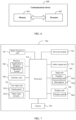
- an embodiment of this application further provides a communications device 600, including a processor 601, a memory 602, and a program or instructions stored in the memory 602 and executable on the processor 601.
- a communications device 600 including a processor 601, a memory 602, and a program or instructions stored in the memory 602 and executable on the processor 601.
- the communications device 600 is a terminal, and the program or instructions are executed by the processor 601, each process of the foregoing beam indication method embodiment is implemented, with the same technical effect achieved.
- the communications device 600 is a network-side device, and the program or instructions are executed by the processor 601, each process of the foregoing beam indication method embodiment is implemented, with the same technical effect achieved. To avoid repetition, details are not described herein again.
- FIG. 7 is a schematic diagram of a hardware structure of a terminal for implementing an embodiment of this application.
- the terminal 700 includes but is not limited to components such as a radio frequency unit 701, a network module 702, an audio output unit 703, an input unit 704, a sensor 705, a display unit 706, a user input unit 707, an interface unit 708, a memory 709, and a processor 710.
- the terminal 700 may further include a power supply (for example, a battery) supplying power to all components.
- the power supply may be logically connected to the processor 710 through a power management system. In this way, functions such as charge management, discharge management, and power consumption management are implemented by using the power management system.
- the terminal structure shown in FIG. 7 does not constitute a limitation to the terminal.
- the terminal may include more or fewer components than shown in the figure, or a combination of some components, or components disposed differently. Details are not described herein again.
- the input unit 704 may include a graphics processing unit (Graphics Processing Unit, GPU) 7041 and a microphone 7042.
- the graphics processing unit 7041 processes image data of a still picture or video obtained by an image capture apparatus (such as a camera) in a video capture mode or an image capture mode.
- the display unit 706 may include a display panel 7061, and the display panel 7061 may be configured in a form of a liquid crystal display, an organic light-emitting diode, or the like.
- the user input unit 707 includes a touch panel 7071 and other input devices 7072.
- the touch panel 7071 is also referred to as a touchscreen.
- the touch panel 7071 may include two parts: a touch detection apparatus and a touch controller.
- the other input devices 7072 may include but are not limited to a physical keyboard, a function key (such as a volume control key or a switch key), a trackball, a mouse, and a joystick. Details are not described herein again.
- the radio frequency unit 701 after receiving downlink data from a network-side device, the radio frequency unit 701 sends the downlink data to the processor 710 for processing, and in addition, sends uplink data to the network-side device.
- the radio frequency unit 701 includes but is not limited to an antenna, at least one amplifier, a transceiver, a coupler, a low noise amplifier, and a duplexer.
- the memory 709 may be configured to store software programs or instructions and various data.
- the memory 709 may primarily include a program or instruction storage area and a data storage area.
- the program or instruction storage area may store an operating system, an application program or instructions required by at least one function (such as an audio play function or an image play function), and the like.
- the memory 709 may include a high-speed random access memory, and may further include a non-volatile memory.
- the non-volatile memory may be a read-only memory (Read-Only Memory, ROM), a programmable read-only memory (Programmable ROM, PROM), an erasable programmable read-only memory (Erasable PROM, EPROM), an electrically erasable programmable read-only memory (Electrically EPROM, EEPROM), or a flash memory, for example, at least one disk storage device, a flash memory device, or another non-volatile solid-state storage device.
- ROM Read-Only Memory
- PROM programmable read-only memory
- Erasable PROM Erasable PROM
- EPROM electrically erasable programmable read-only memory
- EEPROM electrically erasable programmable read-only memory
- flash memory for example, at least one disk storage device, a flash memory device, or another non-volatile solid-state storage device.
- the processor 710 may include one or more processing units.
- the processor 710 may integrate an application processor and a modem processor.
- the application processor mainly processes the operating system, a user interface, an application program, an instruction, or the like.
- the modem processor mainly processes wireless communication.
- the modem processor is a baseband processor. It can be understood that the modem processor may alternatively be not integrated in the processor 710.
- the radio frequency unit 701 is configured to receive first downlink control information DCI or a first medium access control control element MAC CE, where the first DCI or the first MAC CE is used to indicate at least one piece of common beam information, where the common beam information corresponds to at least two channels, or the common beam information corresponds to at least two reference signals, or the common beam information corresponds to at least one channel and at least one reference signal.
- the DCI or the MAC CE is used to indicate the common beam information of the channel and/or reference signal, to reduce signaling overheads of the beam indication.
- a feedback mechanism and an effective time scheme for the common beam information are provided. Therefore, robustness of the beam indication method and consistent understanding of beam effectiveness by the network and the terminal are ensured, and system performance is improved.
- the terminal provided in this embodiment of this application is a terminal capable of performing the foregoing beam indication method, and all embodiments of the foregoing beam indication method are applicable to the terminal, with the same or similar beneficial effects achieved.
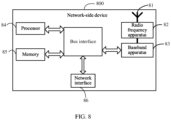
- the network-side device 800 includes an antenna 81, a radio frequency apparatus 82, and a baseband apparatus 83.
- the antenna 81 is connected to the radio frequency apparatus 82.
- the radio frequency apparatus 82 receives information by using the antenna 81, and sends the received information to the baseband apparatus 83 for processing.
- the baseband apparatus 83 processes to-be-sent information, and sends the information to the radio frequency apparatus 82; and the radio frequency apparatus 82 processes the received information and then sends the information out by using the antenna 81.
- the frequency band processing apparatus may be located in the baseband apparatus 83.
- the method performed by the network-side device in the foregoing embodiment may be implemented in the baseband apparatus 83, and the baseband apparatus 83 includes a processor 84 and a memory 85.
- the baseband apparatus 83 may include, for example, at least one baseband processing unit, where a plurality of chips are disposed on the baseband processing unit. As shown in FIG. 8 , one of the chips is, for example, the processor 84, connected to the memory 85, to invoke a program in the memory 85 to perform the operation of the network-side device shown in the foregoing method embodiment.
- the baseband apparatus 83 may further include a network interface 86, configured to exchange information with the radio frequency apparatus 82, where the interface is, for example, a common public radio interface (common public radio interface, CPRI for short).
- a network interface 86 configured to exchange information with the radio frequency apparatus 82, where the interface is, for example, a common public radio interface (common public radio interface, CPRI for short).
- the network-side device in this embodiment of this application further includes a program or instructions stored in the memory 85 and executable on the processor 84.
- the processor 84 invokes the program or instructions in the memory 85, the method performed by each module shown in FIG. 8 is performed, with the same technical effect achieved. To avoid repetition, details are not described herein again.
- An embodiment of this application further provides a readable storage medium.
- the readable storage medium stores a program or instructions.
- the program or instructions are executed by a processor, each process of the foregoing beam indication method embodiment is implemented, with the same technical effect achieved. To avoid repetition, details are not described herein again.
- the processor is a processor in the electronic device in the foregoing embodiment.
- the readable storage medium includes a computer-readable storage medium, for example, a computer read-only memory (Read-Only Memory, ROM), a random access memory (Random Access Memory, RAM), a magnetic disk, or an optical disc.
- an embodiment of this application provides a chip, where the chip includes a processor and a communications interface, the communications interface is coupled to the processor, and the processor is configured to execute a program or instructions to implement each process of the foregoing beam indication method embodiment, with the same technical effect achieved. To avoid repetition, details are not described herein again.
- the chip provided in this embodiment of this application may also be referred to as a system-level chip, a system chip, a chip system, a system-on-chip, or the like.
- the methods in the foregoing embodiments may be implemented by using software in combination with a necessary general hardware platform, and certainly may alternatively be implemented by using hardware. However, in most cases, the former is a preferred implementation.
- the technical solutions of this application essentially or the part contributing to the prior art may be implemented in a form of a software product.
- the computer software product is stored in a storage medium (such as a ROM/RAM, a magnetic disk, or an optical disc), and includes several instructions for instructing a terminal (which may be a mobile phone, a computer, a server, an air conditioner, a network-side device, or the like) to perform the methods described in the embodiments of this application.
- modules may be all or partly integrated on a physical entity, and may alternatively be separated physically.
- the modules may be all implemented in a form of software invoked by a processing component, or may be all implemented in a form of hardware; or some modules may be implemented in a form of software invoked by a processing component, and some modules may be implemented in a form of hardware.
- the receiving module may be a processing component that is separately disposed, or may be integrated in a chip of the apparatus for implementation.
- the receiving module may be stored in the memory of the apparatus in a form of program code, and is invoked by a processing component of the apparatus to perform a function of the receiving module.
- the modules may be all or partially integrated, or may be implemented independently.
- the processing component may be an integrated circuit, and has a signal processing capability. In an implementation process, steps in the foregoing method or the foregoing modules can be implemented by using a hardware integrated logical circuit in the processing component, or by using instructions in a form of software.
- each module, unit, subunit, or submodule may be configured as one or more integrated circuits for implementing the foregoing method, for example, one or more application-specific integrated circuits (Application-Specific Integrated Circuit, ASIC), or one or more microprocessors (digital signal processor, DSP), or one or more field programmable gate arrays (Field Programmable Gate Array, FPGA).
- ASIC Application-Specific Integrated Circuit
- DSP digital signal processor
- FPGA Field Programmable Gate Array
- the processing component may be a general processor, for example, a central processing unit (Central Processing Unit, CPU) or another processor that may invoke program code.
- the modules may be integrated and implemented in a form of a system-on-a-chip (system-on-a-chip, SOC).
Landscapes
- Engineering & Computer Science (AREA)
- Signal Processing (AREA)
- Computer Networks & Wireless Communication (AREA)
- Mobile Radio Communication Systems (AREA)
- Detection And Prevention Of Errors In Transmission (AREA)
Abstract
Description
- This application claims priority to
Chinese Patent Application No. 202011066307.3, filed in China on September 30, 2020 - This application pertains to the field of communications technologies, and specifically, relates to a beam indication method and apparatus, a network-side device, and a terminal.
- Analog beamforming features full-band transmission, and array elements in each polarization direction on a panel of each high-frequency antenna array can transmit only analog beams in a time division multiplexing mode. A beamforming weight for each analog beam is implemented by adjusting parameters of radio frequency front-end devices such as a phase shifter.
- Currently, a polling mode is usually used to train an analog beamforming vector. To be specific, array elements in each polarization direction on each antenna panel take turns to transmit training signals (that is, candidate beamforming vectors) at prescribed times in the time division multiplexing mode. A terminal feeds back beam reports after performing measurement, so that a network side uses the training signals to implement emission of analog beams for the next service transmission. Content of beam reports usually includes identifiers of several optimal transmit beams and measured received power of each transmit beam.
- After beam measurement and beam reporting, the network may provide a beam indication for a downlink/uplink channel or reference signal, where the beam indication is used to establish a beam link between the network and the terminal to implement channel or reference signal transmission. However, in the prior art, beam indication mechanisms for various channels and reference signals are different, and high signaling overheads are required.
- Embodiments of this application are intended to provide a beam indication method and apparatus, a network-side device, and a terminal, so as to resolve a problem that signaling overheads are high due to different beam indication mechanisms for various channels and reference signals in the prior art.
- According to a first aspect, an embodiment of this application provides a beam indication method, applied to a network-side device. The method includes:
- transmitting first downlink control information DCI or a first medium access control control element MAC CE, where the first DCI or the first MAC CE is used to indicate at least one piece of common beam information, where
- the common beam information corresponds to at least two channels, or the common beam information corresponds to at least two reference signals, or the common beam information corresponds to at least one channel and at least one reference signal.
- According to a second aspect, an embodiment of this application provides a beam indication method, applied to a terminal. The method includes:
- receiving first downlink control information DCI or a first medium access control control element MAC CE, where the first DCI or the first MAC CE is used to indicate at least one piece of common beam information, where
- the common beam information corresponds to at least two channels, or the common beam information corresponds to at least two reference signals, or the common beam information corresponds to at least one channel and at least one reference signal.
- According to a third aspect, an embodiment of this application provides a beam indication apparatus, applied to a network-side device. The apparatus includes:
- a transmitting module, configured to transmit first downlink control information DCI or a first medium access control control element MAC CE, where the first DCI or the first MAC CE is used to indicate at least one piece of common beam information, where
- the common beam information corresponds to at least two channels, or the common beam information corresponds to at least two reference signals, or the common beam information corresponds to at least one channel and at least one reference signal.
- According to a fourth aspect, an embodiment of this application provides a beam indication apparatus, applied to a terminal. The apparatus includes:
- a receiving module, configured to receive first downlink control information DCI or a first medium access control control element MAC CE, where the first DCI or the first MAC CE is used to indicate at least one piece of common beam information, where
- the common beam information corresponds to at least two channels, or the common beam information corresponds to at least two reference signals, or the common beam information corresponds to at least one channel and at least one reference signal.
- According to a fifth aspect, an embodiment of this application provides a network-side device. The network-side device includes a processor, a memory, and a program or instructions stored in the memory and executable on the processor. When the program or instructions are executed by the processor, the step of the method according to the first aspect is implemented.
- According to a sixth aspect, an embodiment of this application provides a terminal. The terminal includes a processor, a memory, and a program or instructions stored in the memory and executable on the processor. When the program or instructions are executed by the processor, the step of the method according to the second aspect is implemented.
- According to a seventh aspect, an embodiment of this application provides a readable storage medium. The readable storage medium stores a program or instructions. When the program or instructions are executed by a processor, the step of the method according to the first aspect is implemented, or the step of the method according to the second aspect is implemented.
- According to an eighth aspect, an embodiment of this application provides a chip. The chip includes a processor and a communications interface. The communications interface is coupled to the processor. The processor is configured to execute a program or instructions to implement the method according to the first aspect or implement the method according to the second aspect.
- According to a ninth aspect, an embodiment of this application provides a computer program product stored in a readable storage medium. The computer program product is executed by at least one processor to implement the method according to the first aspect or implement the method according to the second aspect.
- According to a tenth aspect, an embodiment of this application provides a beam indication apparatus, configured to perform the method according to the first aspect or the method according to the second aspect.
- In the embodiments of this application, the DCI or the MAC CE is used to indicate the common beam information of the channel and/or reference signal, to reduce signaling overheads of the beam indication. In addition, a feedback mechanism and an effective time scheme for the common beam information are provided. Therefore, robustness of the beam indication method and consistent understanding of beam effectiveness by the network and the terminal are ensured, and system performance is improved.
-
-
FIG. 1 is a block diagram of a wireless communications system to which the embodiments of this application are applicable; -
FIG. 2 is a first schematic diagram of steps of a beam indication method according to an embodiment of this application; -
FIG. 3 is a second schematic diagram of steps of a beam indication method according to an embodiment of this application; -
FIG. 4 is a first schematic structural diagram of a beam indication apparatus according to an embodiment of this application; -
FIG. 5 is a second schematic structural diagram of a beam indication apparatus according to an embodiment of this application; -
FIG. 6 is a schematic structural diagram of a communications device according to an embodiment of this application; -
FIG. 7 is a schematic structural diagram of a terminal according to an embodiment of this application; and -
FIG. 8 is a schematic structural diagram of a network-side device according to an embodiment of this application. - The following clearly and completely describes the technical solutions in the embodiments of this application with reference to the accompanying drawings in the embodiments of this application. Apparently, the described embodiments are only some rather than all of the embodiments of this application. All other embodiments obtained by persons of ordinary skill in the art based on the embodiments of this application without creative efforts shall fall within the protection scope of this application.
- The terms "first", "second", and the like in this specification and claims of this application are used to distinguish between similar objects rather than to describe a specific order or sequence. It should be understood that the terms used in this way are interchangeable in appropriate circumstances, so that the embodiments of this application can be implemented in other orders than the order illustrated or described herein. In addition, objects distinguished by "first" and "second" usually fall within one class, and a quantity of objects is not limited. For example, there may be one or more first objects. In addition, the term "and/or" in the specification and claims indicates at least one of connected objects, and the character "/" generally represents an "or" relationship between associated objects.
- It should be noted that technologies described in the embodiments of this application are not limited to a long term evolution (Long Term Evolution, LTE)/LTE-Advanced (LTE-Advanced, LTE-A) system, and can also be used in other wireless communications systems, such as code division multiple access (Code Division Multiple Access, CDMA), time division multiple access (Time Division Multiple Access, TDMA), frequency division multiple access (Frequency Division Multiple Access, FDMA), orthogonal frequency division multiple access (Orthogonal Frequency Division Multiple Access, OFDMA), single-carrier frequency-division multiple access (Single-carrier Frequency-Division Multiple Access, SC-FDMA), and other systems. The terms "system" and "network" in the embodiments of this application are usually used interchangeably. The described technologies may be used for the foregoing systems and radio technologies, and may also be used for other systems and radio technologies. However, in the following descriptions, a new radio (New Radio, NR) system is described for an illustration purpose, and NR terms are used in most of the following descriptions, although these technologies may also be applied to other applications than an NR system application, for example, a 6th Generation (6th Generation, 6G) communications system.
-
FIG. 1 is a block diagram of a wireless communications system to which an embodiment of this application can be applied. The wireless communications system includes a terminal 11 and a network-side device 12. The terminal 11 may also be referred to as a terminal device or a user terminal (User Equipment, UE). The terminal 11 may be a terminal-side device such as a mobile phone, a tablet personal computer (Tablet Personal Computer), a laptop computer (Laptop Computer) or a notebook computer, a personal digital assistant (Personal Digital Assistant, PDA), a palmtop computer, a netbook, an ultra-mobile personal computer (ultra-mobile personal computer, UMPC), a mobile Internet device (Mobile Internet Device, MID), a wearable device (Wearable Device), vehicle user equipment (VUE), or pedestrian user equipment (PUE). The wearable device includes a bracelet, a headset, a pair of glasses, or the like. It should be noted that a specific type of the terminal 11 is not limited in the embodiments of this application. The network-side device 12 may be a base station or a core network. The base station may be referred to as a NodeB, an evolved NodeB, an access point, a base transceiver station (Base Transceiver Station, BTS), a radio base station, a radio transceiver, a basic service set (Basic Service Set, BSS), an extended service set (Extended Service Set, ESS), a NodeB, an evolved NodeB (eNB), a home NodeB, a home evolved NodeB, a WLAN access point, a Wi-Fi node, a transmission and reception point (Transmission and Reception Point, TRP), or another appropriate term in the art, as long as the same technical effect is achieved. The base station is not limited to specific technical terms. It should be noted that in the embodiments of this application, only a base station in an NR system is used as an example, but a specific type of the base station is not limited. - It should be noted that "beam information" mentioned in the embodiments of this application may also be referred to as spatial relation (spatial relation) information, spatial domain transmission filter (spatial domain transmission filter) information, spatial filter (spatial filter) information, transmission configuration indicator state (transmission configuration indicator state, TCI state) information, quasi-co-location (Quasi Co-Location, QCL) information, or QCL parameters. This is not specifically limited herein.
- A beam indication method and apparatus, a network-side device, and a terminal provided in the embodiments of this application are hereinafter described in detail by using specific embodiments and application scenarios thereof with reference to the accompanying drawings.
- As shown in
FIG. 2 , an embodiment of this application provides a beam indication method. The method is applied to a network-side device and includes: -
Step 201. Transmit first downlink control information DCI or a first medium access control control element MAC CE, where the first DCI or the first MAC CE is used to indicate at least one piece of common beam information (which may be referred to as common beam information). - The common beam information corresponds to at least two channels, or the common beam information corresponds to at least two reference signals, or the common beam information corresponds to at least one channel and at least one reference signal.
- For example, the channel includes at least one of the following: a physical downlink shared channel (Physical Downlink Shared CHannel, PDSCH), a physical uplink shared channel (Physical Uplink Shared CHannel, PUSCH), a physical uplink control channel (Physical Uplink Control CHannel, PUCCH), and a physical downlink control channel (Physical Downlink Control CHannel, PDCCH); and the reference signal includes at least one of the following: a channel state information reference signal (Channel State Information Reference Signal, CSI-RS) and a sounding reference signal (Sounding Reference Signal, SRS).
- It should be noted that if the first DCI or the first MAC CE indicates one piece of common beam information, the common beam information is applicable to all channels and reference signals of a corresponding terminal; or if the first DCI or the first MAC CE indicates at least two pieces of common beam information, each piece of common beam information corresponds to one type of channel or reference signal, where channels or reference signals may be classified into different types based on their functions or transmission directions. For example, one type is a data channel, another type is a control channel, and another type is a reference signal. In another example, one type is an uplink channel and an uplink reference signal, and one type is a downlink channel and a downlink reference signal. This is not specifically limited herein.
- In an optional embodiment of this application, the first DCI may be in a DCI format dedicated to indicating common beam information; or the first DCI may reuse an existing DCI format, such as a DCI format1_1, a DCI format1_0, a DCI format0_1, or a DCI format0_0.
- In an optional embodiment of this application, the common beam information indicated by the first DCI or the first MAC CE is applicable to any one of the following:
- a first-type control resource set; and
- a first-type control resource set and a channel or reference signal associated with the first-type control resource set.
- The channel or reference signal associated with the first-type control resource set includes at least one of the following:
- a channel or reference signal scheduled by DCI in the first-type control resource set, for example, a PDSCH, a PUSCH, or a CSI-RS; and
- a feedback channel corresponding to a channel scheduled by DCI in the first-type control resource set, for example, a PUCCH or a PUSCH.
- In an optional embodiment, a control resource set in which the first DCI is located belongs to the first-type control resource set. In other words, the common beam information indicated by the first DCI is applicable to the first-type control resource set to which the control resource set in which the first DCI is located belongs.
- In at least one optional embodiment of this application, the transmitting first downlink control information DCI in
step 201 includes: - transmitting a downlink control channel in a second-type control resource set, where the downlink control channel includes the first DCI, where
- beam information of the second-type control resource set is indicated by using a second MAC CE or a piece of DCI before the first DCI, or target beam information is indicated by using a second MAC CE or a piece of DCI before the first DCI, where the target beam information is beam information of the second-type control resource set and a channel or reference signal associated with the second-type control resource set.
- In other words, the first DCI is carried on a PDCCH in the second-type control resource set, and the beam information (such as TCI state information) of the second-type control resource set is indicated by the second MAC CE, or indicated by the previous DCI of the first DCI.
- In this embodiment of this application, before
step 201, the method further includes: - determining the common beam information from a plurality of pieces of beam information configured by radio resource control RRC signaling, where for example, the network-side device selects one piece of beam information from the plurality of pieces of beam information configured by the RRC signaling as the common beam information; or
- determining the common beam information from a plurality of pieces of beam information activated by a third MAC CE, where for example, the network-side device selects one piece of beam information from the plurality of pieces of beam information activated by the third MAC CE as the common beam information.
- In an optional embodiment,
step 201 includes:
in a case that a quantity of the at least one piece of common beam information satisfies a first condition, transmitting the first DCI; otherwise, transmitting the first MAC CE. - For example, if a quantity of common beam information to be indicated is less than (or equal to) a preset value, the common beam information is indicated by using the first DCI; or if a quantity of common beam information to be indicated is greater than (or equal to) a preset value, the common beam information is indicated by using the first MAC CE.
- Further, at least one embodiment of this application further provides a feedback mechanism for the common beam information, that is, after
step 201, the method further includes:
receiving first feedback information transmitted by a terminal, where the first feedback information is used to indicate whether the terminal has correctly received the first DCI or the first MAC CE. For example, the first feedback information is hybrid automatic repeat request acknowledgement (Hybrid automatic repeat request acknowledgement, HARQ-ACK) information. Still further, the first feedback information is used to indicate whether the terminal has correctly received the common beam information. Optionally, the first feedback information may be carried on a PUCCH or a PUSCH. - In an optional embodiment, the method further includes:
determining an uplink resource for the first feedback information in a first manner, where the first manner includes at least one of the following: - determining the uplink resource for the first feedback information based on an uplink resource that is for the first feedback information and indicated in the first DCI or the first MAC CE, that is, the uplink resource for the first feedback information is directly carried in the first DCI or the first MAC CE;
- determining, based on a downlink resource in which the first DCI or the first MAC CE is located and an association relationship between uplink and downlink resources, that an uplink resource associated with the downlink resource in which the first DCI or the first MAC CE is located is the uplink resource for the first feedback information, that is, a preset association relationship exists between the downlink resource in which the first DCI or the first MAC CE is located and the corresponding uplink resource for the first feedback information; and
- determining, based on a transmission time of the first DCI or the first MAC CE and a preset timing relationship, that an uplink resource satisfying the preset timing relationship with the transmission time of the first DCI or the first MAC CE is the uplink resource for the first feedback information, that is, the preset timing relationship exists between the transmission time of the first DCI or the first MAC CE and the uplink resource for the first feedback information, for example, a first available uplink resource after preset duration counting from the transmission time of the first DCI or the first MAC CE is the uplink resource for the first feedback information.
- It should be noted that the first DCI mentioned in this embodiment of this application may be DCI dedicated to indicating common beam information, or existing DCI may be used, for example, DCI for scheduling a PDSCH or DCI for scheduling a PUSCH.
- In an optional embodiment, in a case that the first DCI is further used to schedule a physical downlink shared channel PDSCH, the method further includes:
receiving feedback information about the PDSCH. - The first feedback information and the feedback information about the PDSCH are jointly indicated in first target feedback information, that is, it is not distinguished which part of the first target feedback information is the first feedback information and which part of the first target feedback information is the feedback information about the PDSCH. The first target feedback information is one piece of feedback information. For example, the first target feedback information is one bit. When the bit is set to 1, the first target feedback information is an ACK. In this case, both the first feedback information and the feedback information about the PDSCH are ACKs. When the bit is set to 0, the first target feedback information is a NACK. In this case, at least one of the first feedback information and the feedback information about the PDSCH is a NACK, but the network cannot distinguish which piece of feedback information is a NACK.
- Alternatively, the first feedback information and the feedback information about the PDSCH are separately indicated in second target feedback information, that is, it is not distinguished which part of the second target feedback information is the first feedback information and which part of the second target feedback information is the feedback information about the PDSCH. The second target feedback information includes two pieces of feedback information. For example, the second target feedback information is two bits, where the first bit corresponds to the first feedback information, and the second bit corresponds to the feedback information about the PDSCH. In this case, when the two bits are 10, the first feedback information is an ACK, and the feedback information about the PDSCH is a NACK; or when the two bits are 01, the first feedback information is a NACK, and the feedback information about the PDSCH is an ACK. Details are not exhaustively illustrated herein. In this case, the network can distinguish between the first feedback information and the feedback information about the PDSCH.
- It should be noted that the first target feedback information or the second target feedback information may reuse feedback information about a PDSCH in a prior art; or feedback information about a PDSCH in a prior art is modified.
- In another optional embodiment, in a case that the first DCI is further used to schedule a physical uplink shared channel PUSCH, there is no feedback information about the PUSCH, and the first feedback information is feedback information for the first DCI; and correspondingly, in this case, an uplink resource in which the first feedback information is located includes at least one of the following:
- the PUSCH scheduled by the first DCI;
- a PUSCH scheduled by second DCI, where the PUSCH scheduled by the second DCI and the PUSCH scheduled by the first DCI use a same HARQ process number;
- a first available uplink resource after the PUSCH scheduled by the first DCI; and
- a first available uplink resource after the first DCI.
- In this case, the network-side device may check whether a HARQ process number (HARQ process number) used by the PUSCH scheduled by the second DCI is the same as a HARQ process number used by the PUSCH scheduled by the first DCI, to determine whether the terminal has correctly received the first DCI. For example, if the PUSCH scheduled by the second DCI and the PUSCH scheduled by the first DCI use the same HARQ process number, the network-side device determines that the terminal has correctly received the first DCI; otherwise, the network-side device considers that the terminal has not correctly received the first DCI.
- Referring to the foregoing example, in an optional embodiment, the method further includes at least one of the following:
- In a case that the first feedback information is an acknowledgement (ACK), after first preset duration from a transmission time of the first feedback information, the common beam information is used for a channel or reference signal corresponding to the common beam information (which may also be referred to as "the common beam information becomes effective"). For example, the common beam information becomes effective after the first preset duration counting from the transmission time of the first feedback information being an ACK.
- In a case that the first DCI is further used to schedule a physical uplink shared channel PUSCH, after second preset duration from a transmission time of second DCI, the common beam information is used for a channel or reference signal corresponding to the common beam information (which may also be referred to as "the common beam information becomes effective"), where the PUSCH scheduled by the second DCI and the PUSCH scheduled by the first DCI have a same hybrid automatic repeat request HARQ process number. For example, the common beam information becomes effective after the second preset duration counting from the transmission time of the second DCI used by the PUSCH that is newly scheduled by the network and that has the same HARQ process number as the PUSCH scheduled by the first DCI.
- In at least one optional embodiment of this application, there may be a case that a transmission time of a channel or reference signal scheduled by a piece of DCI precedes a time at which the common beam information becomes effective. To be specific, if a transmission time of a channel or reference signal scheduled by third DCI precedes a time at which the common beam information can be used, the method further includes:
transmitting, by using first default beam information, the channel or reference signal scheduled by the third DCI, where the first default beam information includes: - beam information corresponding to the transmission time of the channel or reference signal scheduled by the third DCI; or
- beam information of a control resource set with a smallest ID.
- The control resource set with the smallest ID may be: a control resource set with a lowest ID in all control resource sets in a current cell; a control resource set with a lowest ID in the first-type control resource set and the second-type control resource set; or a control resource set with a lowest ID in a type of control resource set to which a control resource set of the third DCI for scheduling the channel or reference signal belongs.
- In another optional embodiment of this application, there may be a case that a transmission time of a piece of DCI precedes a time at which the common beam information becomes effective, but a transmission time of a channel or reference signal scheduled by the DCI follows the time at which the common beam information becomes effective. To be specific, if a transmission time of fourth DCI precedes a time at which the common beam information can be used, and a transmission time of a channel or reference signal scheduled by the fourth DCI follows the time at which the common beam information can be used, the method further includes:
transmitting, by using second default beam information, the channel or reference signal scheduled by the fourth DCI, where the second default beam information includes: - beam information corresponding to the transmission time of the fourth DCI;
- beam information of a control resource set with a smallest ID; and
- the common beam information indicated by the first DCI or the first MAC CE.
- It should be noted that "preceding a time at which the common beam information can be used" may also be referred to as "before the common beam information becomes effective", where an effective time of the common beam information includes any one of the following:
- in a case that the first feedback information is an acknowledgement (ACK), after first preset duration from a transmission time of the first feedback information; and
- in a case that the first DCI is further used to schedule a physical uplink shared channel PUSCH, after second preset duration from a transmission time of second DCI.
- The control resource set with the smallest ID may be: a control resource set with a lowest ID in all control resource sets in a current cell; a control resource set with a lowest ID in the first-type control resource set and the second-type control resource set; or a control resource set with a lowest ID in a type of control resource set to which a control resource set of the fourth DCI for scheduling the channel or reference signal belongs.
- To ensure a robustness mechanism for the common beam information indicated by the first DCI or the first MAC CE, in at least one embodiment of this application, the method further includes:
- in a case that the first feedback information is an acknowledgement, transmitting a corresponding channel or reference signal by using the common beam information;
or - in a case that the first feedback information is a negative acknowledgement, retransmitting the first DCI or the first MAC CE indicating the at least one piece of common beam information.
- Alternatively, the method further includes:
if the network-side device does not receive feedback information about the first DCI or the first MAC CE, retransmitting the first DCI or the first MAC CE indicating the at least one piece of common beam information. - That the network-side device does not receive feedback information about the first DCI or the first MAC CE includes two cases: The terminal transmits the corresponding feedback information but the network-side device does not receive the feedback information; and the terminal does not transmit the corresponding feedback information.
- For example, in a case that the first DCI is only used to indicate the common beam information, a transmission time sequence between the network-side device and the terminal is:
- first DCI 4 HARQ-ACK 4 PDSCH/PUSCH; or
- first DCI 4 HARQ-ACK 4 second DCI 4 PDSCH/PUSCH.
- In another example, in a case that the first DCI is used to indicate the common beam information and also used to schedule a PDSCH, a transmission time sequence between the network-side device and the terminal is:
first DCI 4 PDSCH 4 HARQ-ACK, where the network-side device transmits the PDSCH by using the common beam information indicated in the first DCI. - In another example, in a case that the first DCI is used to indicate the common beam information and also used to schedule a PUSCH, a transmission time sequence between the network-side device and the terminal is:
first DCI → first PUSCH → second DCI → second PUSCH newly scheduled and having a same HARQ process number as the first PUSCH. - Optionally, in at least one embodiment of this application, in a case that the first feedback information and the feedback information about the PDSCH are jointly indicated in the first target feedback information,
- if the first target feedback information is an acknowledgement, both the first feedback information and the feedback information about the PDSCH are acknowledgements;
or - if the first target feedback information is a negative acknowledgement, at least one of the first feedback information and the feedback information about the PDSCH is a negative acknowledgement.
- In this embodiment of this application, it is not distinguished which part of the first target feedback information is the first feedback information and which part of the first target feedback information is the feedback information about the PDSCH. The first target feedback information is one piece of feedback information. For example, the first target feedback information is one bit. When the bit is set to 1, the first target feedback information is an ACK. In this case, both the first feedback information and the feedback information about the PDSCH are ACKs. When the bit is set to 0, the first target feedback information is a NACK. In this case, at least one of the first feedback information and the feedback information about the PDSCH is a NACK, but the network cannot distinguish which piece of feedback information is a NACK.
- Optionally, in at least one embodiment of this application, in a case that the first feedback information and the feedback information about the PDSCH are separately indicated in the second target feedback information,
- the second target feedback information further includes first indication information, where the first indication information is used to indicate that the second target feedback information includes the first feedback information or the feedback information about the PDSCH; for example, HARQ-ACK information explicitly indicates that the information is the first feedback information or the feedback information about the PDSCH; optionally, the indication information is carried only when a NACK is fed back; in another example, the second target feedback information includes information related to an M1-bit feedback, where one bit (that is, second indication information) is added before the information related to the M1-bit feedback, and the bit is set to 1 to indicate that subsequent M1 bits are the first feedback information, or the bit is set to 0 to indicate that subsequent M1 bits are the feedback information about the PDSCH;
or - the second target feedback information further includes second indication information, where the second indication information is used to indicate an arrangement order or position information of the first feedback information in the second target feedback information and the feedback information about the PDSCH in the second target feedback information; for example, the second target feedback information includes information related to an M2-bit feedback, one bit (that is, second indication information) is added before the information related to the M2-bit feedback, and the bit is set to 1 to indicate that first N1 bits in subsequent M2 bits are the first feedback information and that last N2 bits are the feedback information about the PDSCH, or the bit is set to 0 to indicate that first N1 bits in subsequent M2 bits are the feedback information about the PDSCH and that last N2 bits are the first feedback information;
or - at least one of an uplink resource, timing information, a scrambling mode, a time-frequency domain offset, and a code division mode respectively used by the first feedback information and the feedback information about the PDSCH indicates that the second target feedback information includes the first feedback information or the feedback information about the PDSCH; feedback information on an uplink resource 1 is the first feedback information, and feedback information on an uplink resource 2 is the feedback information about the PDSCH;
or - in the second target feedback information, the first feedback information and the feedback information about the PDSCH are separately encoded and arranged according to a preset rule; in this case, the network-side device may determine, based on an arrangement order, that the corresponding feedback information is the first feedback information or the feedback information about the PDSCH; for example, the first feedback information occupies first M3 bits, and the feedback information about the PDSCH occupies last M4 bits;
or - in the second target feedback information, the first feedback information and the feedback information about the PDSCH are jointly encoded, where a decoding result of the joint encoding can indicate the first feedback information and the feedback information about the PDSCH that are included in the second target feedback information; for example, the second target feedback information is M5 bits; assuming that M5 is equal to 2, as indicated by a preset encoding rule, a decoding result "01" indicates that the first feedback information and the feedback information about the PDSCH are both ACKs, and a decoding result "10" indicates that the first feedback information is an ACK and that the feedback information about the PDSCH is a NACK; details are not exhaustively illustrated herein.
- In an optional embodiment, the receiving first feedback information transmitted by a terminal includes:
- receiving the first feedback information transmitted by the terminal by using current beam information (which may also be referred to as original beam information, or beam information used for channel or reference signal transmission between the network-side device and the terminal before the first DCI is transmitted), until the common beam information can be used;
or - receiving the first feedback information transmitted by the terminal by using the common beam information.
- It should be noted that "the common beam information can be used" may also be referred to as "the common beam information becomes effective", where an effective time of the common beam information includes any one of the following:
- in a case that the first feedback information is an acknowledgement (ACK), after first preset duration from a transmission time of the first feedback information; and
- in a case that the first DCI is further used to schedule a physical uplink shared channel PUSCH, after second preset duration from a transmission time of second DCI.
- In another optional embodiment, if the first DCI is further used to schedule a PDSCH, the method further includes:
- if the network-side device does not receive the feedback information about the first DCI or receives negative acknowledgement feedback information about the first DCI, retransmitting the first DCI indicating the at least one piece of common beam information;
or - if the network-side device does not receive the feedback information about the first DCI or receives negative acknowledgement feedback information about the first DCI, retransmitting the PDSCH until the number of times that no feedback information about the PDSCH is received or the number of times that negative acknowledgement feedback information about the PDSCH is received reaches the first preset number of times, and retransmitting the first DCI indicating the at least one piece of common beam information. It should be noted that this manner is generally used in a scenario in which the first feedback information and the feedback information about the PDSCH are jointly indicated in the first target feedback information, that is, the network cannot distinguish whether a received negative acknowledgement is for the first DCI or the PDSCH.
- For example, if the first DCI is lost but the network still transmits the PDSCH by using the common beam information indicated by the first DCI, and the terminal does not feed back a HARQ-ACK because the terminal cannot receive the first DCI and the PDSCH, the network retransmits the first DCI indicating the at least one piece of common beam information.
- In another example, if the first DCI is decoded incorrectly but the network still transmits the PDSCH by using the common beam information indicated by the first DCI, and the terminal feeds back a NACK or provides no feedback because the terminal cannot receive the PDSCH, the network retransmits the first DCI, or the network retransmits the first DCI after the number of times that the PDSCH is retransmitted reaches the specific number of times.
- In another example, the first DCI is correctly received by the terminal, the network transmits the PDSCH by using the indicated common beam information, and the terminal receives the PDSCH; if the terminal feeds back an ACK or a NACK but the network does not receive the ACK or NACK, the network retransmits the first DCI, or retransmits the first DCI if no feedback is received or only NACKs are received before the number of times that the PDSCH is retransmitted reaches the specific number of times; if the terminal feeds back a NACK and the network receives the NACK, the network retransmits the PDSCH, or the network retransmits the first DCI, or the network retransmits the first DCI if no feedback is received or only NACKs are received before the number of times that the PDSCH is retransmitted reaches the preset number of times.
- In still another optional embodiment, if the first DCI is further used to schedule the PUSCH, the method further includes:
if the PUSCH scheduled by the first DCI is not received, or the first feedback information is not received on the uplink resource in which the first feedback information is located, or the first feedback information being a negative acknowledgement is received, retransmitting the first DCI indicating the at least one piece of common beam information. - For example, if the first DCI is lost or the first DCI is decoded incorrectly, the terminal does not transmit the PUSCH, and the network retransmits the first DCI.
- In another example, if the first DCI is decoded correctly, the terminal transmits the PUSCH; if the network does not receive the PUSCH correctly, the network retransmits the first DCI; if the network receives the PUSCH correctly, the subsequent DCI may be used to reschedule the PUSCH, and the terminal determines, based on the HARQ process number, the effective time of the common beam information indicated by the first DCI. Before the common beam information becomes effective, the terminal uses the original beam information (that is, the beam information used for channel or reference signal transmission between the network-side device and the terminal before the first DCI is transmitted).
- In summary, in this embodiment of this application, the DCI or the MAC CE is used to indicate the common beam information of the channel and/or reference signal, to reduce signaling overheads of the beam indication. In addition, a feedback mechanism and an effective time scheme for the common beam information are provided. Therefore, robustness of the beam indication method and consistent understanding of beam effectiveness by the network and the terminal are ensured, and system performance is improved.
- As shown in
FIG. 3 , an embodiment of this application further provides a beam indication method. The method is applied to a terminal and includes: -
Step 301. Receive first downlink control information DCI or a first medium access control control element MAC CE, where the first DCI or the first MAC CE is used to indicate at least one piece of common beam information. - The common beam information corresponds to at least two channels, or the common beam information corresponds to at least two reference signals, or the common beam information corresponds to at least one channel and at least one reference signal.
- For example, the channel includes at least one of the following: a physical downlink shared channel (Physical Downlink Shared CHannel, PDSCH), a physical uplink shared channel (Physical Uplink Shared CHannel, PUSCH), a physical uplink control channel (Physical Uplink Control CHannel, PUCCH), and a physical downlink control channel (Physical Downlink Control CHannel, PDCCH); and the reference signal includes at least one of the following: a channel state information reference signal (Channel State Information Reference Signal, CSI-RS) and a sounding reference signal (Sounding Reference Signal, SRS).
- It should be noted that if the first DCI or the first MAC CE indicates one piece of common beam information, the common beam information is applicable to all channels and reference signals of a corresponding terminal; or if the first DCI or the first MAC CE indicates at least two pieces of common beam information, each piece of common beam information corresponds to one type of channel or reference signal, where channels or reference signals may be classified into different types based on their functions or transmission directions. For example, one type is a data channel, another type is a control channel, and another type is a reference signal. In another example, one type is an uplink channel and an uplink reference signal, and one type is a downlink channel and a downlink reference signal. This is not specifically limited herein.
- In an optional embodiment of this application, the first DCI may be in a DCI format dedicated to indicating common beam information; or the first DCI may reuse an existing DCI format, such as a DCI format1_1, a DCI format1_0, a DCI format0_1, or a DCI format0_0.
- In an optional embodiment of this application, the common beam information indicated by the first DCI or the first MAC CE is applicable to any one of the following:
- a first-type control resource set; and
- a first-type control resource set and a channel or reference signal associated with the first-type control resource set.
- The channel or reference signal associated with the first-type control resource set includes at least one of the following:
- a channel or reference signal scheduled by DCI in the first-type control resource set, for example, a PDSCH, a PUSCH, or a CSI-RS; and
- a feedback channel corresponding to a channel scheduled by DCI in the first-type control resource set, for example, a PUCCH or a PUSCH.
- In an optional embodiment, a control resource set in which the first DCI is located belongs to the first-type control resource set. In other words, the common beam information indicated by the first DCI is applicable to the first-type control resource set to which the control resource set in which the first DCI is located belongs.
- In at least one optional embodiment of this application, the receiving first downlink control information DCI in
step 301 includes: - determining beam information of a second-type control resource set or target beam information based on an indication of a second MAC CE or a piece of DCI before the first DCI, where the target beam information is beam information of the second-type control resource set and a channel or reference signal associated with the second-type control resource set; and
- receiving a downlink control channel in the second-type control resource set, where the downlink control channel includes the first DCI.
- In other words, the first DCI is carried on a PDCCH in the second-type control resource set, and the beam information (such as TCI state information) of the second-type control resource set is indicated by the second MAC CE, or indicated by the previous DCI of the first DCI.
- Further, at least one embodiment of this application further provides a feedback mechanism for the common beam information, that is, after
step 301, the method further includes:
transmitting first feedback information to a network-side device, where the first feedback information is used to indicate whether the terminal has correctly received the first DCI or the first MAC CE. For example, the first feedback information is hybrid automatic repeat request acknowledgement (Hybrid automatic repeat request acknowledgement, HARQ-ACK) information. Still further, the first feedback information is used to indicate whether the terminal has correctly received the common beam information. Optionally, the first feedback information may be carried on a PUCCH or a PUSCH. - In an optional embodiment, the method further includes:
determining an uplink resource for the first feedback information in a first manner, where the first manner includes at least one of the following: - determining the uplink resource for the first feedback information based on an uplink resource that is for the first feedback information and indicated in the first DCI or the first MAC CE, that is, the uplink resource for the first feedback information is directly carried in the first DCI or the first MAC CE;
- determining, based on a downlink resource in which the first DCI or the first MAC CE is located and an association relationship between uplink and downlink resources, that an uplink resource associated with the downlink resource in which the first DCI or the first MAC CE is located is the uplink resource for the first feedback information, that is, a preset association relationship exists between the downlink resource in which the first DCI or the first MAC CE is located and the corresponding uplink resource for the first feedback information; and
- determining, based on a transmission time of the first DCI or the first MAC CE and a preset timing relationship, that an uplink resource satisfying the preset timing relationship with the transmission time of the first DCI or the first MAC CE is the uplink resource for the first feedback information, that is, the preset timing relationship exists between the transmission time of the first DCI or the first MAC CE and the uplink resource for the first feedback information, for example, a first available uplink resource after preset duration counting from the transmission time of the first DCI or the first MAC CE is the uplink resource for the first feedback information.
- It should be noted that the first DCI mentioned in this embodiment of this application may be DCI dedicated to indicating common beam information, or existing DCI may be reused, for example, DCI for scheduling a PDSCH or DCI for scheduling a PUSCH.
- In an optional embodiment, in a case that the first DCI is further used to schedule a physical downlink shared channel PDSCH, the method further includes:
- transmitting feedback information about the PDSCH, where
- the first feedback information and the feedback information about the PDSCH are jointly indicated (for example, the feedback information about the PDSCH is reused); or the first feedback information and the feedback information about the PDSCH are separately indicated (for example, the first feedback information is only used to indicate whether the terminal has correctly received the common beam information, and the feedback information about the PDSCH is only used to indicate whether the terminal has correctly received the PDSCH).
- In another optional embodiment, in a case that the first DCI is further used to schedule a physical uplink shared channel PUSCH, there is no feedback information about the PUSCH, and the first feedback information is feedback information for the first DCI; and correspondingly, in this case, an uplink resource in which the first feedback information is located includes at least one of the following:
- the PUSCH scheduled by the first DCI;
- a PUSCH scheduled by second DCI, where the PUSCH scheduled by the second DCI and the PUSCH scheduled by the first DCI use a same HARQ process number;
- a first available uplink resource after the PUSCH scheduled by the first DCI; and
- a first available uplink resource after the first DCI.
- In this case, the network-side device may check whether a HARQ process number (HARQ process number) used by the PUSCH scheduled by the second DCI is the same as a HARQ process number used by the PUSCH scheduled by the first DCI, to determine whether the terminal has correctly received the first DCI. For example, if the PUSCH scheduled by the second DCI and the PUSCH scheduled by the first DCI use the same HARQ process number, the network-side device determines that the terminal has correctly received the first DCI; otherwise, the network-side device considers that the terminal has not correctly received the first DCI.
- Referring to the foregoing example, in an optional embodiment, the method further includes at least one of the following:
- In a case that the first feedback information is an acknowledgement (ACK), after first preset duration from a transmission time of the first feedback information, the common beam information is used for a channel or reference signal corresponding to the common beam information (which may also be referred to as "the common beam information becomes effective"). For example, the common beam information becomes effective after the first preset duration counting from the transmission time of the first feedback information being an ACK.
- In a case that the first DCI is further used to schedule a physical uplink shared channel PUSCH, after second preset duration from a transmission time of second DCI, the common beam information is used for a channel or reference signal corresponding to the common beam information (which may also be referred to as "the common beam information becomes effective"), where the PUSCH scheduled by the second DCI and the PUSCH scheduled by the first DCI have a same hybrid automatic repeat request HARQ process number. For example, the common beam information becomes effective after the second preset duration counting from the transmission time of the second DCI used by the PUSCH that is newly scheduled by the network and that has the same HARQ process number as the PUSCH scheduled by the first DCI.
- In at least one optional embodiment of this application, there may be a case that a transmission time of a channel or reference signal scheduled by a piece of DCI precedes a time at which the common beam information becomes effective. To be specific, if a transmission time of a channel or reference signal scheduled by third DCI precedes a time at which the common beam information can be used, the method further includes:
transmitting, by using first default beam information, the channel or reference signal scheduled by the third DCI, where the first default beam information includes: - beam information corresponding to the transmission time of the channel or reference signal scheduled by the third DCI; or
- beam information of a control resource set with a smallest ID.
- The control resource set with the smallest ID may be: a control resource set with a lowest ID in all control resource sets in a current cell; a control resource set with a lowest ID in the first-type control resource set and the second-type control resource set; or a control resource set with a lowest ID in a type of control resource set to which a control resource set of the third DCI for scheduling the channel or reference signal belongs.
- In another optional embodiment of this application, there may be a case that a transmission time of a piece of DCI precedes a time at which the common beam information becomes effective, but a transmission time of a channel or reference signal scheduled by the DCI follows the time at which the common beam information becomes effective. To be specific, if a transmission time of fourth DCI precedes a time at which the common beam information can be used, and a transmission time of a channel or reference signal scheduled by the fourth DCI follows the time at which the common beam information can be used, the method further includes:
transmitting, by using second default beam information, the channel or reference signal scheduled by the fourth DCI, where the second default beam information includes: - beam information corresponding to the transmission time of the fourth DCI;
- beam information of a control resource set with a smallest ID; and
- the common beam information indicated by the first DCI or the first MAC CE.
- It should be noted that "preceding a time at which the common beam information can be used" may also be referred to as "before the common beam information becomes effective", where an effective time of the common beam information includes any one of the following:
- in a case that the first feedback information is an acknowledgement (ACK), after first preset duration from a transmission time of the first feedback information; and
- in a case that the first DCI is further used to schedule a physical uplink shared channel PUSCH, after second preset duration from a transmission time of second DCI.
- The control resource set with the smallest ID may be: a control resource set with a lowest ID in all control resource sets in a current cell; a control resource set with a lowest ID in the first-type control resource set and the second-type control resource set; or a control resource set with a lowest ID in a type of control resource set to which a control resource set of the fourth DCI for scheduling the channel or reference signal belongs.
- To ensure a robustness mechanism for the common beam information indicated by the first DCI or the first MAC CE, in at least one embodiment of this application, the method further includes:
- in a case that the first feedback information is an acknowledgement, transmitting a corresponding channel or reference signal by using the common beam information, or receiving again the first DCI or the first MAC CE indicating the at least one piece of common beam information, where for example, if the first feedback information is an ACK and the network-side device receives the ACK, the common beam information becomes effective; or if the first feedback information is an ACK but the network-side device does not receive the ACK, the first DCI or the first MAC CE is received again;
or - in a case that the first feedback information is a negative acknowledgement, receiving again the first DCI or the first MAC CE indicating the at least one piece of common beam information.
- That the network-side device does not receive feedback information about the first DCI or the first MAC CE includes two cases: The terminal transmits the corresponding feedback information but the network-side device does not receive the feedback information; and the terminal does not transmit the corresponding feedback information.
- For example, in a case that the first DCI is only used to indicate the common beam information, a transmission time sequence between the network-side device and the terminal is:
- first DCI 4 HARQ-ACK 4 PDSCH/PUSCH; or
- first DCI 4 HARQ-ACK 4 second DCI 4 PDSCH/PUSCH.
- In another example, in a case that the first DCI is used to indicate the common beam information and also used to schedule a PDSCH, a transmission time sequence between the network-side device and the terminal is:
first DCI 4 PDSCH 4 HARQ-ACK, where the network-side device transmits the PDSCH by using the common beam information indicated in the first DCI. - In another example, in a case that the first DCI is used to indicate the common beam information and also used to schedule a PUSCH, a transmission time sequence between the network-side device and the terminal is:
first DCI → first PUSCH → second DCI → second PUSCH newly scheduled and having a same HARQ process number as the first PUSCH. - Optionally, in at least one embodiment of this application, in a case that the first feedback information and the feedback information about the PDSCH are jointly indicated in the first target feedback information,
- if the first target feedback information is an acknowledgement, both the first feedback information and the feedback information about the PDSCH are acknowledgements;
or - if the first target feedback information is a negative acknowledgement, at least one of the first feedback information and the feedback information about the PDSCH is a negative acknowledgement.
- In this embodiment of this application, it is not distinguished which part of the first target feedback information is the first feedback information and which part of the first target feedback information is the feedback information about the PDSCH. The first target feedback information is one piece of feedback information. For example, the first target feedback information is one bit. When the bit is set to 1, the first target feedback information is an ACK. In this case, both the first feedback information and the feedback information about the PDSCH are ACKs. When the bit is set to 0, the first target feedback information is a NACK. In this case, at least one of the first feedback information and the feedback information about the PDSCH is a NACK, but the network cannot distinguish which piece of feedback information is a NACK.
- Optionally, in at least one embodiment of this application, in a case that the first feedback information and the feedback information about the PDSCH are separately indicated in the second target feedback information,
- the second target feedback information further includes first indication information, where the first indication information is used to indicate that the second target feedback information includes the first feedback information or the feedback information about the PDSCH; for example, HARQ-ACK information explicitly indicates that the information is the first feedback information or the feedback information about the PDSCH; optionally, the indication information is carried only when a NACK is fed back; in another example, the second target feedback information includes information related to an M1-bit feedback, where one bit (that is, second indication information) is added before the information related to the M1-bit feedback, and the bit is set to 1 to indicate that subsequent M1 bits are the first feedback information, or the bit is set to 0 to indicate that subsequent M1 bits are the feedback information about the PDSCH;
or - the second target feedback information further includes second indication information, where the second indication information is used to indicate an arrangement order or position information of the first feedback information in the second target feedback information and the feedback information about the PDSCH in the second target feedback information; for example, the second target feedback information includes information related to an M2-bit feedback, one bit (that is, second indication information) is added before the information related to the M2-bit feedback, and the bit is set to 1 to indicate that first N1 bits in subsequent M2 bits are the first feedback information and that last N2 bits are the feedback information about the PDSCH, or the bit is set to 0 to indicate that first N1 bits in subsequent M2 bits are the feedback information about the PDSCH and that last N2 bits are the first feedback information;
or - at least one of an uplink resource, timing information, a scrambling mode, a time-frequency domain offset, and a code division mode respectively used by the first feedback information and the feedback information about the PDSCH indicates that the second target feedback information includes the first feedback information or the feedback information about the PDSCH; feedback information on an uplink resource 1 is the first feedback information, and feedback information on an uplink resource 2 is the feedback information about the PDSCH;
or - in the second target feedback information, the first feedback information and the feedback information about the PDSCH are separately encoded and arranged according to a preset rule; in this case, the network-side device may determine, based on an arrangement order, that the corresponding feedback information is the first feedback information or the feedback information about the PDSCH; for example, the first feedback information occupies first M3 bits, and the feedback information about the PDSCH occupies last M4 bits;
or - in the second target feedback information, the first feedback information and the feedback information about the PDSCH are jointly encoded, where a decoding result of the joint encoding can indicate the first feedback information and the feedback information about the PDSCH that are included in the second target feedback information; for example, the second target feedback information is M5 bits; assuming that M5 is equal to 2, as indicated by a preset encoding rule, a decoding result "01" indicates that the first feedback information and the feedback information about the PDSCH are both ACKs, and a decoding result "10" indicates that the first feedback information is an ACK and that the feedback information about the PDSCH is a NACK; details are not exhaustively illustrated herein.
- In an optional embodiment, the transmitting first feedback information to a network-side device includes:
- transmitting the first feedback information by using current beam information (which may also be referred to as original beam information, or beam information used for channel or reference signal transmission between the network-side device and the terminal before the first DCI is transmitted), until the common beam information can be used; or
- transmitting the first feedback information by using the common beam information.
- It should be noted that "the common beam information can be used" may also be referred to as "the common beam information becomes effective", where an effective time of the common beam information includes any one of the following:
- in a case that the first feedback information is an acknowledgement (ACK), after first preset duration from a transmission time of the first feedback information; and
- in a case that the first DCI is further used to schedule a physical uplink shared channel PUSCH, after second preset duration from a transmission time of second DCI.
- In another optional embodiment, if the first DCI is further used to schedule a PDSCH, and if the terminal does not transmit feedback information, or the terminal transmits negative acknowledgement feedback information, or the terminal transmits feedback information (ACK or NACK) but a network-side device does not receive the feedback information, the method further includes:
- receiving again the first DCI indicating the at least one piece of common beam information;
or - receiving again the PDSCH until the number of times that no feedback information about the PDSCH is transmitted or the number of times that negative acknowledgement feedback information about the PDSCH is transmitted reaches the first preset number of times, and receiving again the first DCI indicating the at least one piece of common beam information. In other words, the PDSCH is received again until the number of times that no feedback information about the PDSCH is transmitted or the number of times that negative acknowledgement feedback information about the PDSCH is transmitted reaches the first preset number of times, and the first DCI indicating the at least one piece of common beam information is received again. It should be noted that this manner is generally used in a scenario in which the first feedback information and the feedback information about the PDSCH are jointly indicated in the first target feedback information, that is, the network cannot distinguish whether a received negative acknowledgement is for the first DCI or the PDSCH. Therefore, in this case, the feedback information transmitted by the terminal is the first target feedback information.
- For example, if the first DCI is lost but the network still transmits the PDSCH by using the common beam information indicated by the first DCI, and the terminal does not feed back a HARQ-ACK because the terminal cannot receive the first DCI and the PDSCH, the terminal receives the first DCI indicating the at least one piece of common beam information and retransmitted by the network.
- In another example, if the first DCI is decoded incorrectly but the network still transmits the PDSCH by using the common beam information indicated by the first DCI, and the terminal feeds back a NACK or provides no feedback because the terminal cannot receive the PDSCH, the terminal receives the first DCI retransmitted by the network, or the terminal receives the first DCI retransmitted by the network after the number of times that the PDSCH is retransmitted reaches the specific number of times.
- In another example, the first DCI is correctly received by the terminal, the network transmits the PDSCH by using the indicated common beam information, and the terminal receives the PDSCH; if the terminal feeds back an ACK or a NACK but the network does not receive the ACK or NACK, the terminal receives the first DCI retransmitted by the network, or the terminal receives the first DCI retransmitted by the network if no feedback is received or only NACKs are received before the number of times that the PDSCH is retransmitted reaches the specific number of times; if the terminal feeds back a NACK and the network receives the NACK, the terminal receives the PDSCH retransmitted by the network, or the terminal receives the first DCI retransmitted by the network, or the terminal receives the first DCI retransmitted by the network if no feedback is received or only NACKs are received before the number of times that the PDSCH is retransmitted reaches the preset number of times.
- In still another optional embodiment, if the first DCI is further used to schedule the PUSCH, the method further includes:
if the terminal does not correctly receive the first DCI, or the terminal does not transmit the first feedback information on the uplink resource in which the first feedback information is located, or the terminal transmits the first feedback information being a negative acknowledgement, receiving again the first DCI indicating the at least one piece of common beam information. - For example, if the first DCI is lost or the first DCI is decoded incorrectly, the terminal does not transmit the PUSCH, and the terminal receives the first DCI retransmitted by the network.
- In another example, if the first DCI is decoded correctly, the terminal transmits the PUSCH; if the network does not receive the PUSCH correctly, the terminal receives the first DCI retransmitted by the network; if the network receives the PUSCH correctly, the subsequent DCI may be used to reschedule the PUSCH, and the terminal determines, based on the HARQ process number, the effective time of the common beam information indicated by the first DCI. Before the common beam information becomes effective, the terminal uses the original beam information (that is, the beam information used for channel or reference signal transmission between the network-side device and the terminal before the first DCI is transmitted).
- In summary, in this embodiment of this application, the DCI or the MAC CE is used to indicate the common beam information of the channel and/or reference signal, to reduce signaling overheads of the beam indication. In addition, a feedback mechanism and an effective time scheme for the common beam information are provided. Therefore, robustness of the beam indication method and consistent understanding of beam effectiveness by the network and the terminal are ensured, and system performance is improved.
- It should be noted that the beam indication method provided in this embodiment of this application may be performed by a beam indication apparatus or a control module for performing the beam indication method in the beam indication apparatus. A beam indication apparatus provided in an embodiment of this application is described by assuming that the beam indication method in this embodiment of this application is performed by the beam indication apparatus.
- As shown in
FIG. 4 , an embodiment of this application further provides abeam indication apparatus 400. The apparatus is applied to a network-side device and includes: - a
transmitting module 401, configured to transmit first downlink control information DCI or a first medium access control control element MAC CE, where the first DCI or the first MAC CE is used to indicate at least one piece of common beam information, where - the common beam information corresponds to at least two channels, or the common beam information corresponds to at least two reference signals, or the common beam information corresponds to at least one channel and at least one reference signal.
- In an optional embodiment of this application, the common beam information indicated by the first DCI or the first MAC CE is applicable to any one of the following:
- a first-type control resource set; and
- a first-type control resource set and a channel or reference signal associated with the first-type control resource set.
- In an optional embodiment of this application, the channel or reference signal associated with the first-type control resource set includes at least one of the following:
- a channel or reference signal scheduled by DCI in the first-type control resource set; and
- a feedback channel corresponding to a channel scheduled by DCI in the first-type control resource set.
- In an optional embodiment of this application, a control resource set in which the first DCI is located belongs to the first-type control resource set.
- In an optional embodiment of this application, the transmitting module includes:
- a first transmitting submodule, configured to transmit a downlink control channel in a second-type control resource set, where the downlink control channel includes the first DCI, where
- beam information of the second-type control resource set is indicated by using a second MAC CE or a piece of DCI before the first DCI, or target beam information is indicated by using a second MAC CE or a piece of DCI before the first DCI, where the target beam information is beam information of the second-type control resource set and a channel or reference signal associated with the second-type control resource set.
- In an optional embodiment of this application, the apparatus further includes:
- an information determining module, configured to determine the common beam information from a plurality of pieces of beam information configured by radio resource control RRC signaling; or
- determine the common beam information from a plurality of pieces of beam information activated by a third MAC CE.
- In an optional embodiment of this application, the transmitting module includes:
a second transmitting submodule, configured to transmit the first DCI in a case that a quantity of the at least one piece of common beam information satisfies a first condition; otherwise, transmit the first MAC CE. - In an optional embodiment of this application, the apparatus further includes:
a first feedback receiving module, configured to receive first feedback information transmitted by a terminal, where the first feedback information is used to indicate whether the terminal has correctly received the first DCI or the first MAC CE. - In an optional embodiment of this application, the apparatus further includes:
a first resource determining module, configured to determine an uplink resource for the first feedback information in a first manner, where the first manner includes at least one of the following: - determining the uplink resource for the first feedback information based on an uplink resource that is for the first feedback information and indicated in the first DCI or the first MAC CE;
- determining, based on a downlink resource in which the first DCI or the first MAC CE is located and an association relationship between uplink and downlink resources, that an uplink resource associated with the downlink resource in which the first DCI or the first MAC CE is located is the uplink resource for the first feedback information; and
- determining, based on a transmission time of the first DCI or the first MAC CE and a preset timing relationship, that an uplink resource satisfying the preset timing relationship with the transmission time of the first DCI or the first MAC CE is the uplink resource for the first feedback information.
- In an optional embodiment of this application, in a case that the first DCI is further used to schedule a physical downlink shared channel PDSCH, the apparatus further includes:
- a second feedback receiving module, configured to receive feedback information about the PDSCH, where
- the first feedback information and the feedback information about the PDSCH are jointly indicated in first target feedback information; or the first feedback information and the feedback information about the PDSCH are separately indicated in second target feedback information.
- In an optional embodiment of this application, in a case that the first DCI is further used to schedule a physical uplink shared channel PUSCH,
an uplink resource in which the first feedback information is located includes at least one of the following: - the PUSCH scheduled by the first DCI;
- a PUSCH scheduled by second DCI, where the PUSCH scheduled by the second DCI and the PUSCH scheduled by the first DCI use a same HARQ process number;
- a first available uplink resource after the PUSCH scheduled by the first DCI; and
- a first available uplink resource after the first DCI.
- In an optional embodiment of this application, the apparatus further includes at least one of the following:
- a first processing module, configured to use the common beam information for a channel or reference signal corresponding to the common beam information after first preset duration from a transmission time of the first feedback information in a case that the first feedback information is an acknowledgement; and
- a second processing module, configured to use the common beam information for a channel or reference signal corresponding to the common beam information after second preset duration from a transmission time of second DCI in a case that the first DCI is further used to schedule a physical uplink shared channel PUSCH, where the PUSCH scheduled by the second DCI and the PUSCH scheduled by the first DCI have a same hybrid automatic repeat request HARQ process number.
- In an optional embodiment of this application, if a transmission time of a channel or reference signal scheduled by third DCI precedes a time at which the common beam information can be used, the apparatus further includes:
a first transmission module, configured to transmit, by using first default beam information, the channel or reference signal scheduled by the third DCI, where the first default beam information includes: - beam information corresponding to the transmission time of the channel or reference signal scheduled by the third DCI; or
- beam information of a control resource set with a smallest ID.
- In an optional embodiment of this application, if a transmission time of fourth DCI precedes a time at which the common beam information can be used, and a transmission time of a channel or reference signal scheduled by the fourth DCI follows the time at which the common beam information can be used, the apparatus further includes:
a second transmission module, configured to transmit, by using second default beam information, the channel or reference signal scheduled by the fourth DCI, where the second default beam information includes: - beam information corresponding to the transmission time of the fourth DCI;
- beam information of a control resource set with a smallest ID; and
- the common beam information indicated by the first DCI or the first MAC CE.
- In an optional embodiment of this application, the apparatus further includes:
- a third transmission module, configured to: in a case that the first feedback information is an acknowledgement, transmit a corresponding channel or reference signal by using the common beam information; or
- in a case that the first feedback information is a negative acknowledgement, retransmit the first DCI or the first MAC CE indicating the at least one piece of common beam information.
- In an optional embodiment of this application, the apparatus further includes:
a fourth transmission module, configured to: if the network-side device does not receive feedback information about the first DCI or the first MAC CE, retransmit the first DCI or the first MAC CE indicating the at least one piece of common beam information. - In an optional embodiment of this application, in a case that the first feedback information and the feedback information about the PDSCH are jointly indicated in the first target feedback information,
- if the first target feedback information is an acknowledgement, both the first feedback information and the feedback information about the PDSCH are acknowledgements;
or - if the first target feedback information is a negative acknowledgement, at least one of the first feedback information and the feedback information about the PDSCH is a negative acknowledgement.
- In an optional embodiment of this application, in a case that the first feedback information and the feedback information about the PDSCH are separately indicated in the second target feedback information,
- the second target feedback information further includes first indication information, where the first indication information is used to indicate that the second target feedback information includes the first feedback information or the feedback information about the PDSCH; and
- the second target feedback information further includes second indication information, where the second indication information is used to indicate an arrangement order or position information of the first feedback information in the second target feedback information and the feedback information about the PDSCH in the second target feedback information;
or - at least one of an uplink resource, timing information, a scrambling mode, a time-frequency domain offset, and a code division mode respectively used by the first feedback information and the feedback information about the PDSCH indicates that the second target feedback information includes the first feedback information or the feedback information about the PDSCH;
or - in the second target feedback information, the first feedback information and the feedback information about the PDSCH are separately encoded and arranged according to a preset rule;
or - in the second target feedback information, the first feedback information and the feedback information about the PDSCH are jointly encoded, where a decoding result of the joint encoding can indicate the first feedback information and the feedback information about the PDSCH that are included in the second target feedback information.
- In an optional embodiment of this application, the first feedback receiving module includes:
- a first feedback receiving submodule, configured to: receive the first feedback information transmitted by the terminal by using current beam information, until the common beam information can be used; or
- receive the first feedback information transmitted by the terminal by using the common beam information.
- In an optional embodiment of this application, if the first DCI is further used to schedule a PDSCH, the apparatus further includes:
- a fifth transmission module, configured to retransmit the first DCI indicating the at least one piece of common beam information; or
- retransmit the PDSCH until the number of times that no feedback information about the PDSCH is received or the number of times that negative acknowledgement feedback information about the PDSCH is received reaches the first preset number of times, and retransmit the first DCI indicating the at least one piece of common beam information.
- In an optional embodiment of this application, if the first DCI is further used to schedule the PUSCH, the apparatus further includes:
a sixth transmission module, configured to: if the PUSCH scheduled by the first DCI is not received, or the first feedback information is not received on the uplink resource in which the first feedback information is located, or the first feedback information being a negative acknowledgement is received, retransmit the first DCI indicating the at least one piece of common beam information. - In this embodiment of this application, the DCI or the MAC CE is used to indicate the common beam information of the channel and/or reference signal, to reduce signaling overheads of the beam indication. In addition, a feedback mechanism and an effective time scheme for the common beam information are provided. Therefore, robustness of the beam indication method and consistent understanding of beam effectiveness by the network and the terminal are ensured, and system performance is improved.
- It should be noted that the beam indication apparatus provided in this embodiment of this application is an apparatus capable of performing the foregoing beam indication method, and all embodiments of the foregoing beam indication method are applicable to the apparatus, with the same or similar beneficial effects achieved.
- As shown in
FIG. 5 , an embodiment of this application further provides abeam indication apparatus 500. The apparatus is applied to a terminal and includes: - a
receiving module 501, configured to receive first downlink control information DCI or a first medium access control control element MAC CE, where the first DCI or the first MAC CE is used to indicate at least one piece of common beam information, where - the common beam information corresponds to at least two channels, or the common beam information corresponds to at least two reference signals, or the common beam information corresponds to at least one channel and at least one reference signal.
- In an optional embodiment of this application, the common beam information indicated by the first DCI or the first MAC CE is applicable to any one of the following:
- a first-type control resource set; and
- a first-type control resource set and a channel or reference signal associated with the first-type control resource set.
- In an optional embodiment of this application, the channel or reference signal associated with the first-type control resource set includes at least one of the following:
- a channel or reference signal scheduled by DCI in the first-type control resource set; and
- a feedback channel corresponding to a channel scheduled by DCI in the first-type control resource set.
- In an optional embodiment of this application, a control resource set in which the first DCI is located belongs to the first-type control resource set.
- In an optional embodiment of this application, the receiving module includes:
- a first receiving submodule, configured to: determine beam information of a second-type control resource set or target beam information based on an indication of a second MAC CE or a piece of DCI before the first DCI, where the target beam information is beam information of the second-type control resource set and a channel or reference signal associated with the second-type control resource set; and
- receive a downlink control channel in the second-type control resource set, where the downlink control channel includes the first DCI.
- In an optional embodiment of this application, the apparatus further includes:
a first feedback transmitting module, configured to transmit first feedback information to a network-side device, where the first feedback information is used to indicate whether the terminal has correctly received the first DCI or the first MAC CE. - In an optional embodiment of this application, the apparatus further includes:
a second resource determining module, configured to determine an uplink resource for the first feedback information in a first manner, where the first manner includes at least one of the following: - determining the uplink resource for the first feedback information based on an uplink resource that is for the first feedback information and indicated in the first DCI or the first MAC CE;
- determining, based on a downlink resource in which the first DCI or the first MAC CE is located and an association relationship between uplink and downlink resources, that an uplink resource associated with the downlink resource in which the first DCI or the first MAC CE is located is the uplink resource for the first feedback information; and
- determining, based on a transmission time of the first DCI or the first MAC CE and a preset timing relationship, that an uplink resource satisfying the preset timing relationship with the transmission time of the first DCI or the first MAC CE is the uplink resource for the first feedback information.
- In an optional embodiment of this application, in a case that the first DCI is further used to schedule a physical downlink shared channel PDSCH, the apparatus further includes:
- a second feedback transmitting module, configured to transmit feedback information about the PDSCH, where
- the first feedback information and the feedback information about the PDSCH are jointly indicated in first target feedback information; or the first feedback information and the feedback information about the PDSCH are separately indicated in second target feedback information.
- In an optional embodiment of this application, in a case that the first DCI is further used to schedule a physical uplink shared channel PUSCH,
an uplink resource in which the first feedback information is located includes at least one of the following: - the PUSCH scheduled by the first DCI;
- a PUSCH scheduled by second DCI, where the PUSCH scheduled by the second DCI and the PUSCH scheduled by the first DCI use a same HARQ process number;
- a first available uplink resource after the PUSCH scheduled by the first DCI; and
- a first available uplink resource after the first DCI.
- In an optional embodiment of this application, the apparatus further includes at least one of the following:
- a third processing module, configured to use the common beam information for a channel or reference signal corresponding to the common beam information after first preset duration from a transmission time of the first feedback information in a case that the first feedback information is an acknowledgement; and
- a fourth processing module, configured to use the common beam information for a channel or reference signal corresponding to the common beam information after second preset duration from a transmission time of second DCI in a case that the first DCI is further used to schedule a physical uplink shared channel PUSCH, where the PUSCH scheduled by the second DCI and the PUSCH scheduled by the first DCI have a same hybrid automatic repeat request HARQ process number.
- In an optional embodiment of this application, if a transmission time of a channel or reference signal scheduled by third DCI precedes a time at which the common beam information can be used, the apparatus further includes:
a tenth transmission module, configured to transmit, by using first default beam information, the channel or reference signal scheduled by the third DCI, where the first default beam information includes: - beam information corresponding to the transmission time of the channel or reference signal scheduled by the third DCI; or
- beam information of a control resource set with a smallest ID.
- In an optional embodiment of this application, if a transmission time of fourth DCI precedes a time at which the common beam information can be used, and a transmission time of a channel or reference signal scheduled by the fourth DCI follows the time at which the common beam information can be used, the apparatus further includes:
an eleventh transmission module, configured to transmit, by using second default beam information, the channel or reference signal scheduled by the fourth DCI, where the second default beam information includes: - beam information corresponding to the transmission time of the fourth DCI;
- beam information of a control resource set with a smallest ID; and
- the common beam information indicated by the first DCI or the first MAC CE.
- In an optional embodiment of this application, the apparatus further includes:
- a twelfth transmission module, configured to: in a case that the first feedback information is an acknowledgement, transmit a corresponding channel or reference signal by using the common beam information, or receive again the first DCI or the first MAC CE indicating the at least one piece of common beam information; or
- in a case that the first feedback information is a negative acknowledgement, receive again the first DCI or the first MAC CE indicating the at least one piece of common beam information.
- In an optional embodiment of this application, in a case that the first feedback information and the feedback information about the PDSCH are jointly indicated in the first target feedback information,
- if the first feedback information and the feedback information about the PDSCH are both acknowledgements, the first target feedback information is an acknowledgement;
or - if at least one of the first feedback information and the feedback information about the PDSCH is a negative acknowledgement, the first target feedback information is a negative acknowledgement.
- In an optional embodiment of this application, in a case that the first feedback information and the feedback information about the PDSCH are separately indicated in the second target feedback information,
- the second target feedback information further includes first indication information, where the first indication information is used to indicate that the second target feedback information includes the first feedback information or the feedback information about the PDSCH; and
- the second target feedback information further includes second indication information, where the second indication information is used to indicate an arrangement order or position information of the first feedback information in the second target feedback information and the feedback information about the PDSCH in the second target feedback information;
or - at least one of an uplink resource, timing information, a scrambling mode, a time-frequency domain offset, and a code division mode respectively used by the first feedback information and the feedback information about the PDSCH indicates that the second target feedback information includes the first feedback information or the feedback information about the PDSCH;
or - in the second target feedback information, the first feedback information and the feedback information about the PDSCH are separately encoded and arranged according to a preset rule;
or - in the second target feedback information, the first feedback information and the feedback information about the PDSCH are jointly encoded, where a decoding result of the joint encoding can indicate the first feedback information and the feedback information about the PDSCH that are included in the second target feedback information.
- In an optional embodiment of this application, the first feedback transmitting module includes:
- a first feedback transmitting submodule, configured to: transmit the first feedback information by using current beam information, until the common beam information can be used; or
- transmit the first feedback information by using the common beam information.
- In an optional embodiment of this application, if the first DCI is further used to schedule a PDSCH, the apparatus further includes:
- a fourteenth transmission module, configured to: receive again the first DCI indicating the at least one piece of common beam information; or
- receive again the PDSCH until the number of times that no feedback information about the PDSCH is transmitted or the number of times that negative acknowledgement feedback information about the PDSCH is transmitted reaches the first preset number of times, and receive again the first DCI indicating the at least one piece of common beam information.
- In an optional embodiment of this application, if the first DCI is further used to schedule the PUSCH, the apparatus further includes:
a fifteenth transmission module, configured to: if the terminal does not correctly receive the first DCI, or the terminal does not transmit the first feedback information on the uplink resource in which the first feedback information is located, or the terminal transmits the first feedback information being a negative acknowledgement, receive again the first DCI indicating the at least one piece of common beam information. - In this embodiment of this application, the DCI or the MAC CE is used to indicate the common beam information of the channel and/or reference signal, to reduce signaling overheads of the beam indication. In addition, a feedback mechanism and an effective time scheme for the common beam information are provided. Therefore, robustness of the beam indication method and consistent understanding of beam effectiveness by the network and the terminal are ensured, and system performance is improved.
- It should be noted that the beam indication apparatus provided in this embodiment of this application is an apparatus capable of performing the foregoing beam indication method, and all embodiments of the foregoing beam indication method are applicable to the apparatus, with the same or similar beneficial effects achieved.
- The beam indication apparatus in this embodiment of this application may be an apparatus, or may be a component, an integrated circuit, or a chip in a terminal. The apparatus may be a mobile electronic device, or may be a non-mobile electronic device. For example, the mobile electronic device may be a mobile phone, a tablet computer, a notebook computer, a palmtop computer, an in-vehicle electronic device, a wearable device, an ultra-mobile personal computer (ultra-mobile personal computer, UMPC), a netbook, a personal digital assistant (personal digital assistant, PDA), or the like. The non-mobile electronic device may be a server, a network attached storage (Network Attached Storage, NAS), a personal computer (personal computer, PC), a television (television, TV), a teller machine, a self-service machine, or the like. This is not specifically limited in this embodiment of this application.
- The beam indication apparatus in this embodiment of this application may be an apparatus having an operating system. The operating system may be an Android (Android) operating system, an iOS operating system, or another possible operating system, and is not specifically limited in this embodiment of this application.
- The beam indication apparatus provided in this embodiment of this application is capable of implementing each process implemented in the method embodiment in
FIG. 2 orFIG. 3 . To avoid repetition, details are not described herein again. - Optionally, as shown in
FIG. 6 , an embodiment of this application further provides acommunications device 600, including aprocessor 601, amemory 602, and a program or instructions stored in thememory 602 and executable on theprocessor 601. For example, when thecommunications device 600 is a terminal, and the program or instructions are executed by theprocessor 601, each process of the foregoing beam indication method embodiment is implemented, with the same technical effect achieved. When thecommunications device 600 is a network-side device, and the program or instructions are executed by theprocessor 601, each process of the foregoing beam indication method embodiment is implemented, with the same technical effect achieved. To avoid repetition, details are not described herein again. -
FIG. 7 is a schematic diagram of a hardware structure of a terminal for implementing an embodiment of this application. - The terminal 700 includes but is not limited to components such as a
radio frequency unit 701, anetwork module 702, anaudio output unit 703, aninput unit 704, asensor 705, adisplay unit 706, auser input unit 707, aninterface unit 708, amemory 709, and aprocessor 710. - Persons skilled in the art may understand that the terminal 700 may further include a power supply (for example, a battery) supplying power to all components. Optionally, the power supply may be logically connected to the
processor 710 through a power management system. In this way, functions such as charge management, discharge management, and power consumption management are implemented by using the power management system. The terminal structure shown inFIG. 7 does not constitute a limitation to the terminal. The terminal may include more or fewer components than shown in the figure, or a combination of some components, or components disposed differently. Details are not described herein again. - It should be understood that, in this embodiment of this application, the
input unit 704 may include a graphics processing unit (Graphics Processing Unit, GPU) 7041 and amicrophone 7042. Thegraphics processing unit 7041 processes image data of a still picture or video obtained by an image capture apparatus (such as a camera) in a video capture mode or an image capture mode. Thedisplay unit 706 may include adisplay panel 7061, and thedisplay panel 7061 may be configured in a form of a liquid crystal display, an organic light-emitting diode, or the like. Theuser input unit 707 includes atouch panel 7071 andother input devices 7072. Thetouch panel 7071 is also referred to as a touchscreen. Thetouch panel 7071 may include two parts: a touch detection apparatus and a touch controller. Theother input devices 7072 may include but are not limited to a physical keyboard, a function key (such as a volume control key or a switch key), a trackball, a mouse, and a joystick. Details are not described herein again. - In this embodiment of this application, after receiving downlink data from a network-side device, the
radio frequency unit 701 sends the downlink data to theprocessor 710 for processing, and in addition, sends uplink data to the network-side device. Generally, theradio frequency unit 701 includes but is not limited to an antenna, at least one amplifier, a transceiver, a coupler, a low noise amplifier, and a duplexer. - The
memory 709 may be configured to store software programs or instructions and various data. Thememory 709 may primarily include a program or instruction storage area and a data storage area. The program or instruction storage area may store an operating system, an application program or instructions required by at least one function (such as an audio play function or an image play function), and the like. In addition, thememory 709 may include a high-speed random access memory, and may further include a non-volatile memory. The non-volatile memory may be a read-only memory (Read-Only Memory, ROM), a programmable read-only memory (Programmable ROM, PROM), an erasable programmable read-only memory (Erasable PROM, EPROM), an electrically erasable programmable read-only memory (Electrically EPROM, EEPROM), or a flash memory, for example, at least one disk storage device, a flash memory device, or another non-volatile solid-state storage device. - The
processor 710 may include one or more processing units. Optionally, theprocessor 710 may integrate an application processor and a modem processor. The application processor mainly processes the operating system, a user interface, an application program, an instruction, or the like. The modem processor mainly processes wireless communication. For example, the modem processor is a baseband processor. It can be understood that the modem processor may alternatively be not integrated in theprocessor 710. - The
radio frequency unit 701 is configured to receive first downlink control information DCI or a first medium access control control element MAC CE, where the first DCI or the first MAC CE is used to indicate at least one piece of common beam information, where
the common beam information corresponds to at least two channels, or the common beam information corresponds to at least two reference signals, or the common beam information corresponds to at least one channel and at least one reference signal. - In this embodiment of this application, the DCI or the MAC CE is used to indicate the common beam information of the channel and/or reference signal, to reduce signaling overheads of the beam indication. In addition, a feedback mechanism and an effective time scheme for the common beam information are provided. Therefore, robustness of the beam indication method and consistent understanding of beam effectiveness by the network and the terminal are ensured, and system performance is improved.
- It should be noted that the terminal provided in this embodiment of this application is a terminal capable of performing the foregoing beam indication method, and all embodiments of the foregoing beam indication method are applicable to the terminal, with the same or similar beneficial effects achieved.
- Specifically, an embodiment of this application further provides a network-side device. As shown in
FIG. 8 , the network-side device 800 includes anantenna 81, aradio frequency apparatus 82, and abaseband apparatus 83. Theantenna 81 is connected to theradio frequency apparatus 82. In an uplink direction, theradio frequency apparatus 82 receives information by using theantenna 81, and sends the received information to thebaseband apparatus 83 for processing. In a downlink direction, thebaseband apparatus 83 processes to-be-sent information, and sends the information to theradio frequency apparatus 82; and theradio frequency apparatus 82 processes the received information and then sends the information out by using theantenna 81. - The frequency band processing apparatus may be located in the
baseband apparatus 83. The method performed by the network-side device in the foregoing embodiment may be implemented in thebaseband apparatus 83, and thebaseband apparatus 83 includes aprocessor 84 and amemory 85. - The
baseband apparatus 83 may include, for example, at least one baseband processing unit, where a plurality of chips are disposed on the baseband processing unit. As shown inFIG. 8 , one of the chips is, for example, theprocessor 84, connected to thememory 85, to invoke a program in thememory 85 to perform the operation of the network-side device shown in the foregoing method embodiment. - The
baseband apparatus 83 may further include anetwork interface 86, configured to exchange information with theradio frequency apparatus 82, where the interface is, for example, a common public radio interface (common public radio interface, CPRI for short). - Specifically, the network-side device in this embodiment of this application further includes a program or instructions stored in the
memory 85 and executable on theprocessor 84. When theprocessor 84 invokes the program or instructions in thememory 85, the method performed by each module shown inFIG. 8 is performed, with the same technical effect achieved. To avoid repetition, details are not described herein again. - An embodiment of this application further provides a readable storage medium. The readable storage medium stores a program or instructions. When the program or instructions are executed by a processor, each process of the foregoing beam indication method embodiment is implemented, with the same technical effect achieved. To avoid repetition, details are not described herein again.
- The processor is a processor in the electronic device in the foregoing embodiment. The readable storage medium includes a computer-readable storage medium, for example, a computer read-only memory (Read-Only Memory, ROM), a random access memory (Random Access Memory, RAM), a magnetic disk, or an optical disc.
- In addition, an embodiment of this application provides a chip, where the chip includes a processor and a communications interface, the communications interface is coupled to the processor, and the processor is configured to execute a program or instructions to implement each process of the foregoing beam indication method embodiment, with the same technical effect achieved. To avoid repetition, details are not described herein again.
- It should be understood that the chip provided in this embodiment of this application may also be referred to as a system-level chip, a system chip, a chip system, a system-on-chip, or the like.
- It should be noted that in this specification, the term "comprise", "include", or any of their variants are intended to cover a non-exclusive inclusion, so that a process, a method, an article, or an apparatus that includes a list of elements not only includes those elements but also includes other elements that are not expressly listed, or further includes elements inherent to such process, method, article, or apparatus. In absence of more constraints, an element preceded by "includes a ..." does not preclude existence of other identical elements in the process, method, article, or apparatus that includes the element. In addition, it should be noted that the scope of the method and apparatus in the implementations of this application is not limited to performing the functions in an order shown or discussed, and may further include performing the functions in a substantially simultaneous manner or in a reverse order depending on the functions used. For example, the method described may be performed in an order different from that described, and various steps may be added, omitted, or combined. In addition, features described with reference to some examples may be combined in other examples.
- According to the foregoing description of the implementations, persons skilled in the art may clearly understand that the methods in the foregoing embodiments may be implemented by using software in combination with a necessary general hardware platform, and certainly may alternatively be implemented by using hardware. However, in most cases, the former is a preferred implementation. Based on such an understanding, the technical solutions of this application essentially or the part contributing to the prior art may be implemented in a form of a software product. The computer software product is stored in a storage medium (such as a ROM/RAM, a magnetic disk, or an optical disc), and includes several instructions for instructing a terminal (which may be a mobile phone, a computer, a server, an air conditioner, a network-side device, or the like) to perform the methods described in the embodiments of this application.
- It should be understood that division of modules in the foregoing device is merely based on logical functions. In an actual implementation, the modules may be all or partly integrated on a physical entity, and may alternatively be separated physically. In addition, the modules may be all implemented in a form of software invoked by a processing component, or may be all implemented in a form of hardware; or some modules may be implemented in a form of software invoked by a processing component, and some modules may be implemented in a form of hardware. For example, the receiving module may be a processing component that is separately disposed, or may be integrated in a chip of the apparatus for implementation. In addition, the receiving module may be stored in the memory of the apparatus in a form of program code, and is invoked by a processing component of the apparatus to perform a function of the receiving module. Implementation of other modules is similar to this. In addition, the modules may be all or partially integrated, or may be implemented independently. Herein, the processing component may be an integrated circuit, and has a signal processing capability. In an implementation process, steps in the foregoing method or the foregoing modules can be implemented by using a hardware integrated logical circuit in the processing component, or by using instructions in a form of software.
- For example, each module, unit, subunit, or submodule may be configured as one or more integrated circuits for implementing the foregoing method, for example, one or more application-specific integrated circuits (Application-Specific Integrated Circuit, ASIC), or one or more microprocessors (digital signal processor, DSP), or one or more field programmable gate arrays (Field Programmable Gate Array, FPGA). In another example, when one of the foregoing modules is implemented in a form of program code invoked by the processing component, the processing component may be a general processor, for example, a central processing unit (Central Processing Unit, CPU) or another processor that may invoke program code. In another example, the modules may be integrated and implemented in a form of a system-on-a-chip (system-on-a-chip, SOC).
- The embodiments of this application are described above with reference to the accompanying drawings. However, this application is not limited to the foregoing specific embodiments. The foregoing specific embodiments are merely illustrative rather than restrictive. Inspired by this application, persons of ordinary skill in the art can still derive a plurality of variations without departing from the essence of this application and the protection scope of the claims. All these variations shall fall within the protection scope of this application.
- The foregoing descriptions are merely specific implementations of this application, but are not intended to limit the protection scope of this application. Any variation or replacement readily figured out by persons skilled in the art within the technical scope disclosed in this application shall fall within the protection scope of this application. Therefore, the protection scope of this application shall be subject to the protection scope of the claims.
Claims (47)
- A beam indication method, applied to a network-side device and comprising:transmitting first downlink control information DCI or a first medium access control control element MAC CE, wherein the first DCI or the first MAC CE is used to indicate at least one piece of common beam information; whereinthe common beam information corresponds to at least two channels, or the common beam information corresponds to at least two reference signals, or the common beam information corresponds to at least one channel and at least one reference signal.
- The method according to claim 1, wherein the common beam information indicated by the first DCI or the first MAC CE is applicable to any one of following:a first-type control resource set; anda first-type control resource set and a channel or reference signal associated with the first-type control resource set.
- The method according to claim 2, wherein the channel or reference signal associated with the first-type control resource set comprises at least one of following:a channel or reference signal scheduled by DCI in the first-type control resource set; anda feedback channel corresponding to a channel scheduled by DCI in the first-type control resource set.
- The method according to claim 2, wherein a control resource set in which the first DCI is located belongs to the first-type control resource set.
- The method according to claim 1, wherein the transmitting first downlink control information DCI comprises:transmitting a downlink control channel in a second-type control resource set, wherein the downlink control channel comprises the first DCI; whereinbeam information of the second-type control resource set is indicated by using a second MAC CE or a piece of DCI before the first DCI, or target beam information is indicated by using a second MAC CE or a piece of DCI before the first DCI, wherein the target beam information is beam information of the second-type control resource set and a channel or reference signal associated with the second-type control resource set.
- The method according to claim 1, wherein before the transmitting first downlink control information DCI or a first medium access control control element MAC CE, the method further comprises:determining the common beam information from a plurality of pieces of beam information configured by radio resource control RRC signaling;
ordetermining the common beam information from a plurality of pieces of beam information activated by a third MAC CE. - The method according to claim 1, wherein the transmitting first downlink control information DCI or a first medium access control control element MAC CE comprises:in a case that a quantity of the at least one piece of common beam information satisfies a first condition, transmitting the first DCI; otherwise, transmitting the first MAC CE.
- The method according to claim 1, wherein after the transmitting first downlink control information DCI or a first medium access control control element MAC CE, the method further comprises:
receiving first feedback information transmitted by a terminal, wherein the first feedback information is used to indicate whether the terminal has correctly received the first DCI or the first MAC CE. - The method according to claim 8, further comprising:
determining an uplink resource for the first feedback information in a first manner, wherein the first manner comprises at least one of following:determining the uplink resource for the first feedback information based on an uplink resource that is for the first feedback information and indicated in the first DCI or the first MAC CE;determining, based on a downlink resource in which the first DCI or the first MAC CE is located and an association relationship between uplink and downlink resources, that an uplink resource associated with the downlink resource in which the first DCI or the first MAC CE is located is the uplink resource for the first feedback information; anddetermining, based on a transmission time of the first DCI or the first MAC CE and a preset timing relationship, that an uplink resource satisfying the preset timing relationship with the transmission time of the first DCI or the first MAC CE is the uplink resource for the first feedback information. - The method according to claim 8, wherein in a case that the first DCI is further used to schedule a physical downlink shared channel PDSCH, the method further comprises:receiving feedback information about the PDSCH; whereinthe first feedback information and the feedback information about the PDSCH are jointly indicated in first target feedback information; or the first feedback information and the feedback information about the PDSCH are separately indicated in second target feedback information.
- The method according to claim 8, wherein in a case that the first DCI is further used to schedule a physical uplink shared channel PUSCH,
an uplink resource in which the first feedback information is located comprises at least one of following:the PUSCH scheduled by the first DCI;a PUSCH scheduled by second DCI, wherein the PUSCH scheduled by the second DCI and the PUSCH scheduled by the first DCI use a same HARQ process number;first available uplink resource after the PUSCH scheduled by the first DCI; andfirst available uplink resource after the first DCI. - The method according to claim 8, further comprising at least one of following:in a case that the first feedback information is an acknowledgement, after first preset duration from a transmission time of the first feedback information, using the common beam information for a channel or reference signal corresponding to the common beam information; andin a case that the first DCI is further used to schedule a physical uplink shared channel PUSCH, after second preset duration from a transmission time of second DCI, using the common beam information for a channel or reference signal corresponding to the common beam information, wherein a PUSCH scheduled by the second DCI and the PUSCH scheduled by the first DCI have a same hybrid automatic repeat request HARQ process number.
- The method according to claim 12, wherein in a case that a transmission time of a channel or reference signal scheduled by third DCI precedes a time at which the common beam information becomes usable, the method further comprises:
transmitting, by using first default beam information, the channel or reference signal scheduled by the third DCI, wherein the first default beam information comprises:beam information corresponding to the transmission time of the channel or reference signal scheduled by the third DCI; orbeam information of a control resource set with a smallest ID. - The method according to claim 12, wherein in a case that a transmission time of fourth DCI precedes a time at which the common beam information becomes usable, and that a transmission time of a channel or reference signal scheduled by the fourth DCI follows the time at which the common beam information becomes usable, the method further comprises:
transmitting, by using second default beam information, the channel or reference signal scheduled by the fourth DCI, wherein the second default beam information comprises:beam information corresponding to the transmission time of the fourth DCI;beam information of a control resource set with a smallest ID; andthe common beam information indicated by the first DCI or the first MAC CE. - The method according to claim 8, further comprising:in a case that the first feedback information is an acknowledgement, transmitting a corresponding channel or reference signal by using the common beam information;
orin a case that the first feedback information is a negative acknowledgement, retransmitting the first DCI or the first MAC CE indicating the at least one piece of common beam information. - The method according to claim 1, further comprising:
in a case that the network-side device does not receive feedback information about the first DCI or the first MAC CE, retransmitting the first DCI or the first MAC CE indicating the at least one piece of common beam information. - The method according to claim 10, wherein in a case that the first feedback information and the feedback information about the PDSCH are jointly indicated in the first target feedback information,if the first target feedback information is an acknowledgement, both the first feedback information and the feedback information about the PDSCH are acknowledgements;
orif the first target feedback information is a negative acknowledgement, at least one of the first feedback information and the feedback information about the PDSCH is a negative acknowledgement. - The method according to claim 10, wherein in a case that the first feedback information and the feedback information about the PDSCH are separately indicated in the second target feedback information,the second target feedback information further comprises first indication information, wherein the first indication information is used to indicate that the second target feedback information comprises the first feedback information or the feedback information about the PDSCH; andthe second target feedback information further comprises second indication information, wherein the second indication information is used to indicate an arrangement order or position information of the first feedback information in the second target feedback information and the feedback information about the PDSCH in the second target feedback information;
orat least one of an uplink resource, timing information, a scrambling mode, a time-frequency domain offset, and a code division mode respectively used by the first feedback information and the feedback information about the PDSCH indicates that the second target feedback information comprises the first feedback information or the feedback information about the PDSCH;
orin the second target feedback information, the first feedback information and the feedback information about the PDSCH are separately encoded and arranged according to a preset rule;
orin the second target feedback information, the first feedback information and the feedback information about the PDSCH are jointly encoded, wherein a decoding result of joint encoding is able to indicate the first feedback information and the feedback information about the PDSCH that are comprised in the second target feedback information. - The method according to claim 8, wherein the receiving first feedback information transmitted by a terminal comprises:receiving the first feedback information transmitted by the terminal by using current beam information, until the common beam information becomes usable;
orreceiving the first feedback information transmitted by the terminal by using the common beam information. - The method according to claim 1, wherein in a case that the first DCI is further used to schedule a PDSCH, the method further comprises:retransmitting the first DCI indicating the at least one piece of common beam information;
orretransmitting the PDSCH until number of times that no feedback information about the PDSCH is received or number of times that negative acknowledgement feedback information about the PDSCH is received reaches first preset number of times, and retransmitting the first DCI indicating the at least one piece of common beam information. - The method according to claim 11, wherein in a case that the first DCI is further used to schedule the PUSCH, the method further comprises:
in a case that the PUSCH scheduled by the first DCI is not received, or the first feedback information is not received on the uplink resource in which the first feedback information is located, or the first feedback information being a negative acknowledgement is received, retransmitting the first DCI indicating the at least one piece of common beam information. - A beam indication method, applied to a terminal and comprising:receiving first downlink control information DCI or a first medium access control control element MAC CE, wherein the first DCI or the first MAC CE is used to indicate at least one piece of common beam information; whereinthe common beam information corresponds to at least two channels, or the common beam information corresponds to at least two reference signals, or the common beam information corresponds to at least one channel and at least one reference signal.
- The method according to claim 22, wherein the common beam information indicated by the first DCI or the first MAC CE is applicable to any one of following:a first-type control resource set; anda first-type control resource set and a channel or reference signal associated with the first-type control resource set.
- The method according to claim 23, wherein the channel or reference signal associated with the first-type control resource set comprises at least one of following:a channel or reference signal scheduled by DCI in the first-type control resource set; anda feedback channel corresponding to a channel scheduled by DCI in the first-type control resource set.
- The method according to claim 23, wherein a control resource set in which the first DCI is located belongs to the first-type control resource set.
- The method according to claim 22, wherein the receiving first downlink control information DCI comprises:determining beam information of a second-type control resource set or target beam information based on an indication of a second MAC CE or a piece of DCI before the first DCI, wherein the target beam information is beam information of the second-type control resource set and a channel or reference signal associated with the second-type control resource set; andreceiving a downlink control channel in the second-type control resource set, wherein the downlink control channel comprises the first DCI.
- The method according to claim 22, wherein after the receiving first downlink control information DCI or a first medium access control control element MAC CE, the method further comprises:
transmitting first feedback information to a network-side device, wherein the first feedback information is used to indicate whether the terminal has correctly received the first DCI or the first MAC CE. - The method according to claim 27, further comprising:
determining an uplink resource for the first feedback information in a first manner, wherein the first manner comprises at least one of following:determining the uplink resource for the first feedback information based on an uplink resource that is for the first feedback information and indicated in the first DCI or the first MAC CE;determining, based on a downlink resource in which the first DCI or the first MAC CE is located and an association relationship between uplink and downlink resources, that an uplink resource associated with the downlink resource in which the first DCI or the first MAC CE is located is the uplink resource for the first feedback information; anddetermining, based on a transmission time of the first DCI or the first MAC CE and a preset timing relationship, that an uplink resource satisfying the preset timing relationship with the transmission time of the first DCI or the first MAC CE is the uplink resource for the first feedback information. - The method according to claim 27, wherein in a case that the first DCI is further used to schedule a physical downlink shared channel PDSCH, the method further comprises:transmitting feedback information about the PDSCH; whereinthe first feedback information and the feedback information about the PDSCH are jointly indicated in first target feedback information; or the first feedback information and the feedback information about the PDSCH are separately indicated in second target feedback information.
- The method according to claim 27, wherein in a case that the first DCI is further used to schedule a physical uplink shared channel PUSCH,
an uplink resource in which the first feedback information is located comprises at least one of following:the PUSCH scheduled by the first DCI;a PUSCH scheduled by second DCI, wherein the PUSCH scheduled by the second DCI and the PUSCH scheduled by the first DCI use a same HARQ process number;first available uplink resource after the PUSCH scheduled by the first DCI; andfirst available uplink resource after the first DCI. - The method according to claim 27, further comprising at least one of following:in a case that the first feedback information is an acknowledgement, after first preset duration from a transmission time of the first feedback information, using the common beam information for a channel or reference signal corresponding to the common beam information; andin a case that the first DCI is further used to schedule a physical uplink shared channel PUSCH, after second preset duration from a transmission time of second DCI, using the common beam information for a channel or reference signal corresponding to the common beam information, wherein a PUSCH scheduled by the second DCI and the PUSCH scheduled by the first DCI have a same hybrid automatic repeat request HARQ process number.
- The method according to claim 31, wherein in a case that a transmission time of a channel or reference signal scheduled by third DCI precedes a time at which the common beam information becomes usable, the method further comprises:
transmitting, by using first default beam information, the channel or reference signal scheduled by the third DCI, wherein the first default beam information comprises:beam information corresponding to the transmission time of the channel or reference signal scheduled by the third DCI; orbeam information of a control resource set with a smallest ID. - The method according to claim 31, wherein in a case that a transmission time of fourth DCI precedes a time at which the common beam information becomes usable, and a transmission time of a channel or reference signal scheduled by the fourth DCI follows the time at which the common beam information becomes usable, the method further comprises:
transmitting, by using second default beam information, the channel or reference signal scheduled by the fourth DCI, wherein the second default beam information comprises:beam information corresponding to the transmission time of the fourth DCI;beam information of a control resource set with a smallest ID; andthe common beam information indicated by the first DCI or the first MAC CE. - The method according to claim 27, further comprising:in a case that the first feedback information is an acknowledgement, transmitting a corresponding channel or reference signal by using the common beam information, or receiving again the first DCI or the first MAC CE indicating the at least one piece of common beam information;
orin a case that the first feedback information is a negative acknowledgement, receiving again the first DCI or the first MAC CE indicating the at least one piece of common beam information. - The method according to claim 29, wherein in a case that the first feedback information and the feedback information about the PDSCH are jointly indicated in the first target feedback information,if the first feedback information and the feedback information about the PDSCH are acknowledgements, the first target feedback information is an acknowledgement;
orif at least one of the first feedback information and the feedback information about the PDSCH is a negative acknowledgement, the first target feedback information is a negative acknowledgement. - The method according to claim 29, wherein in a case that the first feedback information and the feedback information about the PDSCH are separately indicated in the second target feedback information,the second target feedback information further comprises first indication information, wherein the first indication information is used to indicate that the second target feedback information comprises the first feedback information or the feedback information about the PDSCH; andthe second target feedback information further comprises second indication information, wherein the second indication information is used to indicate an arrangement order or position information of the first feedback information in the second target feedback information and the feedback information about the PDSCH in the second target feedback information;
orat least one of an uplink resource, timing information, a scrambling mode, a time-frequency domain offset, and a code division mode respectively used by the first feedback information and the feedback information about the PDSCH indicates that the second target feedback information comprises the first feedback information or the feedback information about the PDSCH;
orin the second target feedback information, the first feedback information and the feedback information about the PDSCH are separately encoded and arranged according to a preset rule;
orin the second target feedback information, the first feedback information and the feedback information about the PDSCH are jointly encoded, wherein a decoding result of joint encoding is able to indicate the first feedback information and the feedback information about the PDSCH that are comprised in the second target feedback information. - The method according to claim 27, wherein the transmitting first feedback information to a network-side device comprises:transmitting the first feedback information by using current beam information, until the common beam information becomes usable;
ortransmitting the first feedback information by using the common beam information. - The method according to claim 22, wherein in a case that the first DCI is further used to schedule a PDSCH, the method further comprises:receiving again the first DCI indicating the at least one piece of common beam information;
orreceiving again the PDSCH until number of times that no feedback information about the PDSCH is transmitted or number of times that negative acknowledgement feedback information about the PDSCH is transmitted reaches first preset number of times, and receiving again the first DCI indicating the at least one piece of common beam information. - The method according to claim 30, wherein in a case that the first DCI is further used to schedule the PUSCH, the method further comprises:
in a case that the terminal does not correctly receive the first DCI, or the terminal does not transmit the first feedback information on the uplink resource in which the first feedback information is located, or the terminal transmits the first feedback information being a negative acknowledgement, receiving again the first DCI indicating the at least one piece of common beam information. - A beam indication apparatus, applied to a network-side device and comprising:a transmitting module, configured to transmit first downlink control information DCI or a first medium access control control element MAC CE, wherein the first DCI or the first MAC CE is used to indicate at least one piece of common beam information; whereinthe common beam information corresponds to at least two channels, or the common beam information corresponds to at least two reference signals, or the common beam information corresponds to at least one channel and at least one reference signal.
- A network-side device, comprising a processor, a memory, and a program or instructions stored in the memory and executable on the processor, wherein when the program or instructions are executed by the processor, steps of the beam indication method according to any one of claims 1 to 21 are implemented.
- A beam indication apparatus, applied to a terminal and comprising:a receiving module, configured to receive first downlink control information DCI or a first medium access control control element MAC CE, wherein the first DCI or the first MAC CE is used to indicate at least one piece of common beam information; whereinthe common beam information corresponds to at least two channels, or the common beam information corresponds to at least two reference signals, or the common beam information corresponds to at least one channel and at least one reference signal.
- A terminal, comprising a processor, a memory, and a program or instructions stored in the memory and executable on the processor, wherein when the program or instructions are executed by the processor, steps of the beam indication method according to any one of claims 22 to 39 are implemented.
- A readable storage medium, wherein the readable storage medium stores a program or instructions, and when the program or instructions are executed by a processor, steps of the beam indication method according to any one of claims 1 to 21 are implemented; or when the program or instructions are executed by a processor, steps of the beam indication method according to any one of claims 22 to 39 are implemented.
- A chip, comprising a processor and a communications interface, wherein the communications interface is coupled to the processor, and the processor is configured to execute a program or instructions to implement steps of the beam indication method according to any one of claims 1 to 21 or implement steps of the beam indication method according to any one of claims 22 to 39.
- A computer program product, stored in a non-transitory readable storage medium, wherein the computer program product is executed by at least one processor to implement steps of the beam indication method according to any one of claims 1 to 21 or implement steps of the beam indication method according to any one of claims 22 to 39.
- A beam indication apparatus, configured to perform steps of the beam indication method according to any one of claims 1 to 21 or steps of the beam indication method according to any one of claims 22 to 39.
Applications Claiming Priority (2)
| Application Number | Priority Date | Filing Date | Title |
|---|---|---|---|
| CN202011066307.3A CN114337758B (en) | 2020-09-30 | 2020-09-30 | Beam indication method, device, network side equipment and terminal |
| PCT/CN2021/121838 WO2022068906A1 (en) | 2020-09-30 | 2021-09-29 | Wave beam indication method and apparatus, network side device, and terminal |
Publications (2)
| Publication Number | Publication Date |
|---|---|
| EP4224734A1 true EP4224734A1 (en) | 2023-08-09 |
| EP4224734A4 EP4224734A4 (en) | 2024-03-13 |
Family
ID=80951218
Family Applications (1)
| Application Number | Title | Priority Date | Filing Date |
|---|---|---|---|
| EP21874561.0A Pending EP4224734A4 (en) | 2020-09-30 | 2021-09-29 | WAVE BEAM INDICATION METHOD AND APPARATUS, NETWORK SIDE DEVICE AND TERMINAL |
Country Status (5)
| Country | Link |
|---|---|
| US (2) | US12538320B2 (en) |
| EP (1) | EP4224734A4 (en) |
| JP (2) | JP7577847B2 (en) |
| CN (1) | CN114337758B (en) |
| WO (1) | WO2022068906A1 (en) |
Families Citing this family (4)
| Publication number | Priority date | Publication date | Assignee | Title |
|---|---|---|---|---|
| US12192882B2 (en) * | 2020-01-31 | 2025-01-07 | Lg Electronics Inc. | Method for transceiving system information in wireless communication system supporting carrier aggregation, and apparatus therefor |
| JP7667313B2 (en) * | 2021-05-07 | 2025-04-22 | 北京小米移動軟件有限公司 | Feedback method, feedback device and storage medium |
| CN118283829A (en) * | 2022-12-30 | 2024-07-02 | 大唐移动通信设备有限公司 | Beam indication method, device and equipment |
| CN117938329A (en) * | 2023-09-22 | 2024-04-26 | 中兴通讯股份有限公司 | Method, device, equipment and storage medium for determining beam indication application time |
Family Cites Families (15)
| Publication number | Priority date | Publication date | Assignee | Title |
|---|---|---|---|---|
| US10425139B2 (en) * | 2016-09-21 | 2019-09-24 | Samsung Electronics Co., Ltd. | Method and apparatus for beam management reference signals in wireless communication systems |
| US10979265B2 (en) * | 2016-12-07 | 2021-04-13 | Lg Electronics Inc. | Method and apparatus for configuring control channel for NR in wireless communication system |
| US10524246B2 (en) * | 2017-01-15 | 2019-12-31 | FG Innovation Company Limited | Two-stage downlink control information configurations for beam operation |
| US10433312B2 (en) * | 2017-02-05 | 2019-10-01 | Lg Electronics Inc. | Method of performing uplink transmission in wireless communication system and apparatus therefor |
| JP2019047375A (en) | 2017-09-04 | 2019-03-22 | シャープ株式会社 | Terminal apparatus, base station apparatus, and communication method |
| CN113922938B (en) | 2017-11-17 | 2024-02-02 | 中兴通讯股份有限公司 | Reference signal channel characteristic configuration method and device, and communication equipment |
| CN110809321B (en) * | 2018-08-06 | 2022-04-29 | 成都华为技术有限公司 | Method for receiving and transmitting signal and communication device |
| CN116112139B (en) * | 2018-09-21 | 2024-01-30 | 中兴通讯股份有限公司 | Beam failure recovery method and device |
| CN110971361B (en) * | 2018-09-28 | 2022-02-25 | 华为技术有限公司 | A kind of control channel beam indication method and device |
| WO2020142900A1 (en) * | 2019-01-08 | 2020-07-16 | 北京小米移动软件有限公司 | Downlink data receiving method and device, downlink data sending method and device, and storage medium |
| WO2020167023A1 (en) * | 2019-02-14 | 2020-08-20 | 엘지전자 주식회사 | Positioning method in wireless communication system, and device supporting same |
| US11349614B2 (en) * | 2019-04-24 | 2022-05-31 | Telefonaktiebolaget Lm Ericsson (Publ) | HARQ-ACK reporting with PDSCH grouping |
| CN110536452B (en) * | 2019-09-03 | 2025-07-15 | 中兴通讯股份有限公司 | A method, device and storage medium for indicating |
| WO2021163936A1 (en) | 2020-02-19 | 2021-08-26 | 北京小米移动软件有限公司 | Communication processing method and apparatus, and computer storage medium |
| US20230319608A1 (en) * | 2020-08-17 | 2023-10-05 | Ntt Docomo, Inc. | Terminal, radio communication method, and base station |
-
2020
- 2020-09-30 CN CN202011066307.3A patent/CN114337758B/en active Active
-
2021
- 2021-09-29 EP EP21874561.0A patent/EP4224734A4/en active Pending
- 2021-09-29 JP JP2023519859A patent/JP7577847B2/en active Active
- 2021-09-29 WO PCT/CN2021/121838 patent/WO2022068906A1/en not_active Ceased
-
2023
- 2023-03-30 US US18/192,877 patent/US12538320B2/en active Active
-
2024
- 2024-10-23 JP JP2024186520A patent/JP2025013931A/en active Pending
-
2025
- 2025-12-30 US US19/436,768 patent/US20260129651A1/en active Pending
Also Published As
| Publication number | Publication date |
|---|---|
| CN114337758A (en) | 2022-04-12 |
| CN114337758B (en) | 2025-09-23 |
| JP2023544578A (en) | 2023-10-24 |
| US20260129651A1 (en) | 2026-05-07 |
| WO2022068906A1 (en) | 2022-04-07 |
| JP7577847B2 (en) | 2024-11-05 |
| JP2025013931A (en) | 2025-01-28 |
| US20230239895A1 (en) | 2023-07-27 |
| US12538320B2 (en) | 2026-01-27 |
| EP4224734A4 (en) | 2024-03-13 |
Similar Documents
| Publication | Publication Date | Title |
|---|---|---|
| EP4258786B1 (en) | Pusch scheduling transmission methods, terminal and network side device | |
| US12538320B2 (en) | Beam indication method, network side device, and terminal | |
| US11140731B2 (en) | Data transmission method, communication device, and data transmission system | |
| EP4325760A1 (en) | Beam failure recovery method and apparatus for multi-transmission and receiving points, device and readable storage medium | |
| US20240007166A1 (en) | Csi feedback method and apparatus, device, and readable storage medium | |
| US20230362912A1 (en) | Channel information sending method, channel information receiving method, and related device | |
| US20230318755A1 (en) | Communication processing method and apparatus and communication device | |
| US20190207718A1 (en) | Information transmission method and device | |
| US20240023108A1 (en) | Method and apparatus for determining pucch resource, and terminal | |
| CN115529070B (en) | Device and method for transmission beam indication | |
| US20240171996A1 (en) | Method for determining beam information, and communication device and storage medium | |
| US12238769B2 (en) | Method, device and computer readable medium for contention window adjustment | |
| US20240080847A1 (en) | Information transmission method and apparatus, terminal, and storage medium | |
| EP4380092A1 (en) | Harq-ack transmission method and apparatus | |
| US20240048294A1 (en) | Pdsch transmission method and apparatus, pdsch reception method and apparatus, and communication device | |
| US20250310972A1 (en) | DCI Processing Method, UE, and Network-Side Device | |
| US20250260521A1 (en) | Hybrid Automatic Repeat Request Acknowledgement HARQ-ACK Information Feedback Method and Terminal, and Non-Transitory Readable Storage Medium | |
| CN114070473B (en) | Information feedback methods, devices, terminals and network-side equipment | |
| EP4307814A1 (en) | Information feedback method and apparatus, information sending method and apparatus, and terminal and network side device | |
| WO2025098258A1 (en) | Full-duplex communication processing method and apparatus, terminal and network side device | |
| CN118524548A (en) | Secondary link SL transmission method, device and first terminal | |
| WO2024012302A1 (en) | Sidelink feedback processing method, apparatus, terminal and network side device | |
| WO2026098455A1 (en) | Signaling acquisition method, terminal, and network side device | |
| WO2025209302A9 (en) | Information reporting method and apparatus, information receiving method and apparatus, device, readable storage medium and computer program product | |
| CN119946869A (en) | Method, device, terminal and network side equipment for sending and receiving downlink control information DCI |
Legal Events
| Date | Code | Title | Description |
|---|---|---|---|
| STAA | Information on the status of an ep patent application or granted ep patent |
Free format text: STATUS: THE INTERNATIONAL PUBLICATION HAS BEEN MADE |
|
| PUAI | Public reference made under article 153(3) epc to a published international application that has entered the european phase |
Free format text: ORIGINAL CODE: 0009012 |
|
| STAA | Information on the status of an ep patent application or granted ep patent |
Free format text: STATUS: REQUEST FOR EXAMINATION WAS MADE |
|
| 17P | Request for examination filed |
Effective date: 20230424 |
|
| AK | Designated contracting states |
Kind code of ref document: A1 Designated state(s): AL AT BE BG CH CY CZ DE DK EE ES FI FR GB GR HR HU IE IS IT LI LT LU LV MC MK MT NL NO PL PT RO RS SE SI SK SM TR |
|
| DAV | Request for validation of the european patent (deleted) | ||
| DAX | Request for extension of the european patent (deleted) | ||
| A4 | Supplementary search report drawn up and despatched |
Effective date: 20240208 |
|
| RIC1 | Information provided on ipc code assigned before grant |
Ipc: H04W 72/23 20230101ALN20240202BHEP Ipc: H04W 72/044 20230101ALN20240202BHEP Ipc: H04L 5/00 20060101ALI20240202BHEP Ipc: H04B 7/06 20060101AFI20240202BHEP |
|
| STAA | Information on the status of an ep patent application or granted ep patent |
Free format text: STATUS: EXAMINATION IS IN PROGRESS |
|
| 17Q | First examination report despatched |
Effective date: 20250930 |