EP4224236B1 - Flexible tube for endoscope, endoscope-type medical device, and methods for producing these - Google Patents
Flexible tube for endoscope, endoscope-type medical device, and methods for producing these Download PDFInfo
- Publication number
- EP4224236B1 EP4224236B1 EP21875025.5A EP21875025A EP4224236B1 EP 4224236 B1 EP4224236 B1 EP 4224236B1 EP 21875025 A EP21875025 A EP 21875025A EP 4224236 B1 EP4224236 B1 EP 4224236B1
- Authority
- EP
- European Patent Office
- Prior art keywords
- flexible
- tube
- layer
- cover layer
- polymer cover
- Prior art date
- Legal status (The legal status is an assumption and is not a legal conclusion. Google has not performed a legal analysis and makes no representation as to the accuracy of the status listed.)
- Active
Links
Images


Classifications
-
- A—HUMAN NECESSITIES
- A61—MEDICAL OR VETERINARY SCIENCE; HYGIENE
- A61B—DIAGNOSIS; SURGERY; IDENTIFICATION
- A61B1/00—Instruments for performing medical examinations of the interior of cavities or tubes of the body by visual or photographical inspection, e.g. endoscopes; Illuminating arrangements therefor
- A61B1/00064—Constructional details of the endoscope body
- A61B1/00071—Insertion part of the endoscope body
-
- A—HUMAN NECESSITIES
- A61—MEDICAL OR VETERINARY SCIENCE; HYGIENE
- A61B—DIAGNOSIS; SURGERY; IDENTIFICATION
- A61B1/00—Instruments for performing medical examinations of the interior of cavities or tubes of the body by visual or photographical inspection, e.g. endoscopes; Illuminating arrangements therefor
- A61B1/00064—Constructional details of the endoscope body
- A61B1/0011—Manufacturing of endoscope parts
-
- A—HUMAN NECESSITIES
- A61—MEDICAL OR VETERINARY SCIENCE; HYGIENE
- A61B—DIAGNOSIS; SURGERY; IDENTIFICATION
- A61B1/00—Instruments for performing medical examinations of the interior of cavities or tubes of the body by visual or photographical inspection, e.g. endoscopes; Illuminating arrangements therefor
- A61B1/00064—Constructional details of the endoscope body
- A61B1/00071—Insertion part of the endoscope body
- A61B1/00078—Insertion part of the endoscope body with stiffening means
-
- A—HUMAN NECESSITIES
- A61—MEDICAL OR VETERINARY SCIENCE; HYGIENE
- A61B—DIAGNOSIS; SURGERY; IDENTIFICATION
- A61B1/00—Instruments for performing medical examinations of the interior of cavities or tubes of the body by visual or photographical inspection, e.g. endoscopes; Illuminating arrangements therefor
- A61B1/005—Flexible endoscopes
-
- B—PERFORMING OPERATIONS; TRANSPORTING
- B32—LAYERED PRODUCTS
- B32B—LAYERED PRODUCTS, i.e. PRODUCTS BUILT-UP OF STRATA OF FLAT OR NON-FLAT, e.g. CELLULAR OR HONEYCOMB, FORM
- B32B1/00—Layered products having a non-planar shape
- B32B1/08—Tubular products
-
- B—PERFORMING OPERATIONS; TRANSPORTING
- B32—LAYERED PRODUCTS
- B32B—LAYERED PRODUCTS, i.e. PRODUCTS BUILT-UP OF STRATA OF FLAT OR NON-FLAT, e.g. CELLULAR OR HONEYCOMB, FORM
- B32B15/00—Layered products comprising a layer of metal
- B32B15/04—Layered products comprising a layer of metal comprising metal as the main or only constituent of a layer, which is next to another layer of the same or of a different material
- B32B15/08—Layered products comprising a layer of metal comprising metal as the main or only constituent of a layer, which is next to another layer of the same or of a different material of synthetic resin
-
- B—PERFORMING OPERATIONS; TRANSPORTING
- B32—LAYERED PRODUCTS
- B32B—LAYERED PRODUCTS, i.e. PRODUCTS BUILT-UP OF STRATA OF FLAT OR NON-FLAT, e.g. CELLULAR OR HONEYCOMB, FORM
- B32B15/00—Layered products comprising a layer of metal
- B32B15/04—Layered products comprising a layer of metal comprising metal as the main or only constituent of a layer, which is next to another layer of the same or of a different material
- B32B15/08—Layered products comprising a layer of metal comprising metal as the main or only constituent of a layer, which is next to another layer of the same or of a different material of synthetic resin
- B32B15/088—Layered products comprising a layer of metal comprising metal as the main or only constituent of a layer, which is next to another layer of the same or of a different material of synthetic resin comprising polyamides
-
- B—PERFORMING OPERATIONS; TRANSPORTING
- B32—LAYERED PRODUCTS
- B32B—LAYERED PRODUCTS, i.e. PRODUCTS BUILT-UP OF STRATA OF FLAT OR NON-FLAT, e.g. CELLULAR OR HONEYCOMB, FORM
- B32B15/00—Layered products comprising a layer of metal
- B32B15/04—Layered products comprising a layer of metal comprising metal as the main or only constituent of a layer, which is next to another layer of the same or of a different material
- B32B15/08—Layered products comprising a layer of metal comprising metal as the main or only constituent of a layer, which is next to another layer of the same or of a different material of synthetic resin
- B32B15/09—Layered products comprising a layer of metal comprising metal as the main or only constituent of a layer, which is next to another layer of the same or of a different material of synthetic resin comprising polyesters
-
- B—PERFORMING OPERATIONS; TRANSPORTING
- B32—LAYERED PRODUCTS
- B32B—LAYERED PRODUCTS, i.e. PRODUCTS BUILT-UP OF STRATA OF FLAT OR NON-FLAT, e.g. CELLULAR OR HONEYCOMB, FORM
- B32B15/00—Layered products comprising a layer of metal
- B32B15/04—Layered products comprising a layer of metal comprising metal as the main or only constituent of a layer, which is next to another layer of the same or of a different material
- B32B15/08—Layered products comprising a layer of metal comprising metal as the main or only constituent of a layer, which is next to another layer of the same or of a different material of synthetic resin
- B32B15/095—Layered products comprising a layer of metal comprising metal as the main or only constituent of a layer, which is next to another layer of the same or of a different material of synthetic resin comprising polyurethanes
-
- B—PERFORMING OPERATIONS; TRANSPORTING
- B32—LAYERED PRODUCTS
- B32B—LAYERED PRODUCTS, i.e. PRODUCTS BUILT-UP OF STRATA OF FLAT OR NON-FLAT, e.g. CELLULAR OR HONEYCOMB, FORM
- B32B15/00—Layered products comprising a layer of metal
- B32B15/18—Layered products comprising a layer of metal comprising iron or steel
-
- B—PERFORMING OPERATIONS; TRANSPORTING
- B32—LAYERED PRODUCTS
- B32B—LAYERED PRODUCTS, i.e. PRODUCTS BUILT-UP OF STRATA OF FLAT OR NON-FLAT, e.g. CELLULAR OR HONEYCOMB, FORM
- B32B27/00—Layered products comprising a layer of synthetic resin
- B32B27/12—Layered products comprising a layer of synthetic resin next to a fibrous or filamentary layer
-
- B—PERFORMING OPERATIONS; TRANSPORTING
- B32—LAYERED PRODUCTS
- B32B—LAYERED PRODUCTS, i.e. PRODUCTS BUILT-UP OF STRATA OF FLAT OR NON-FLAT, e.g. CELLULAR OR HONEYCOMB, FORM
- B32B27/00—Layered products comprising a layer of synthetic resin
- B32B27/34—Layered products comprising a layer of synthetic resin comprising polyamides
-
- B—PERFORMING OPERATIONS; TRANSPORTING
- B32—LAYERED PRODUCTS
- B32B—LAYERED PRODUCTS, i.e. PRODUCTS BUILT-UP OF STRATA OF FLAT OR NON-FLAT, e.g. CELLULAR OR HONEYCOMB, FORM
- B32B27/00—Layered products comprising a layer of synthetic resin
- B32B27/36—Layered products comprising a layer of synthetic resin comprising polyesters
-
- B—PERFORMING OPERATIONS; TRANSPORTING
- B32—LAYERED PRODUCTS
- B32B—LAYERED PRODUCTS, i.e. PRODUCTS BUILT-UP OF STRATA OF FLAT OR NON-FLAT, e.g. CELLULAR OR HONEYCOMB, FORM
- B32B27/00—Layered products comprising a layer of synthetic resin
- B32B27/40—Layered products comprising a layer of synthetic resin comprising polyurethanes
-
- B—PERFORMING OPERATIONS; TRANSPORTING
- B32—LAYERED PRODUCTS
- B32B—LAYERED PRODUCTS, i.e. PRODUCTS BUILT-UP OF STRATA OF FLAT OR NON-FLAT, e.g. CELLULAR OR HONEYCOMB, FORM
- B32B7/00—Layered products characterised by the relation between layers; Layered products characterised by the relative orientation of features between layers, or by the relative values of a measurable parameter between layers, i.e. products comprising layers having different physical, chemical or physicochemical properties; Layered products characterised by the interconnection of layers
- B32B7/04—Interconnection of layers
- B32B7/12—Interconnection of layers using interposed adhesives or interposed materials with bonding properties
-
- G—PHYSICS
- G02—OPTICS
- G02B—OPTICAL ELEMENTS, SYSTEMS OR APPARATUS
- G02B23/00—Telescopes, e.g. binoculars; Periscopes; Instruments for viewing the inside of hollow bodies; Viewfinders; Optical aiming or sighting devices
- G02B23/24—Instruments or systems for viewing the inside of hollow bodies, e.g. fibrescopes
-
- A—HUMAN NECESSITIES
- A61—MEDICAL OR VETERINARY SCIENCE; HYGIENE
- A61B—DIAGNOSIS; SURGERY; IDENTIFICATION
- A61B1/00—Instruments for performing medical examinations of the interior of cavities or tubes of the body by visual or photographical inspection, e.g. endoscopes; Illuminating arrangements therefor
- A61B1/005—Flexible endoscopes
- A61B1/0051—Flexible endoscopes with controlled bending of insertion part
- A61B1/0055—Constructional details of insertion parts, e.g. vertebral elements
-
- A—HUMAN NECESSITIES
- A61—MEDICAL OR VETERINARY SCIENCE; HYGIENE
- A61M—DEVICES FOR INTRODUCING MEDIA INTO, OR ONTO, THE BODY; DEVICES FOR TRANSDUCING BODY MEDIA OR FOR TAKING MEDIA FROM THE BODY; DEVICES FOR PRODUCING OR ENDING SLEEP OR STUPOR
- A61M25/00—Catheters; Hollow probes
- A61M25/0009—Making of catheters or other medical or surgical tubes
-
- A—HUMAN NECESSITIES
- A61—MEDICAL OR VETERINARY SCIENCE; HYGIENE
- A61M—DEVICES FOR INTRODUCING MEDIA INTO, OR ONTO, THE BODY; DEVICES FOR TRANSDUCING BODY MEDIA OR FOR TAKING MEDIA FROM THE BODY; DEVICES FOR PRODUCING OR ENDING SLEEP OR STUPOR
- A61M25/00—Catheters; Hollow probes
- A61M25/0043—Catheters; Hollow probes characterised by structural features
- A61M25/0045—Catheters; Hollow probes characterised by structural features multi-layered, e.g. coated
-
- A—HUMAN NECESSITIES
- A61—MEDICAL OR VETERINARY SCIENCE; HYGIENE
- A61M—DEVICES FOR INTRODUCING MEDIA INTO, OR ONTO, THE BODY; DEVICES FOR TRANSDUCING BODY MEDIA OR FOR TAKING MEDIA FROM THE BODY; DEVICES FOR PRODUCING OR ENDING SLEEP OR STUPOR
- A61M25/00—Catheters; Hollow probes
- A61M25/0043—Catheters; Hollow probes characterised by structural features
- A61M25/005—Catheters; Hollow probes characterised by structural features with embedded materials for reinforcement, e.g. wires, coils, braids
-
- B—PERFORMING OPERATIONS; TRANSPORTING
- B32—LAYERED PRODUCTS
- B32B—LAYERED PRODUCTS, i.e. PRODUCTS BUILT-UP OF STRATA OF FLAT OR NON-FLAT, e.g. CELLULAR OR HONEYCOMB, FORM
- B32B2255/00—Coating on the layer surface
- B32B2255/06—Coating on the layer surface on metal layer
-
- B—PERFORMING OPERATIONS; TRANSPORTING
- B32—LAYERED PRODUCTS
- B32B—LAYERED PRODUCTS, i.e. PRODUCTS BUILT-UP OF STRATA OF FLAT OR NON-FLAT, e.g. CELLULAR OR HONEYCOMB, FORM
- B32B2274/00—Thermoplastic elastomer material
-
- B—PERFORMING OPERATIONS; TRANSPORTING
- B32—LAYERED PRODUCTS
- B32B—LAYERED PRODUCTS, i.e. PRODUCTS BUILT-UP OF STRATA OF FLAT OR NON-FLAT, e.g. CELLULAR OR HONEYCOMB, FORM
- B32B2307/00—Properties of the layers or laminate
- B32B2307/50—Properties of the layers or laminate having particular mechanical properties
- B32B2307/546—Flexural strength; Flexion stiffness
-
- B—PERFORMING OPERATIONS; TRANSPORTING
- B32—LAYERED PRODUCTS
- B32B—LAYERED PRODUCTS, i.e. PRODUCTS BUILT-UP OF STRATA OF FLAT OR NON-FLAT, e.g. CELLULAR OR HONEYCOMB, FORM
- B32B2535/00—Medical equipment, e.g. bandage, prostheses or catheter
-
- B—PERFORMING OPERATIONS; TRANSPORTING
- B32—LAYERED PRODUCTS
- B32B—LAYERED PRODUCTS, i.e. PRODUCTS BUILT-UP OF STRATA OF FLAT OR NON-FLAT, e.g. CELLULAR OR HONEYCOMB, FORM
- B32B2597/00—Tubular articles, e.g. hoses, pipes
Definitions
- the present invention relates to a flexible tube for an endoscope, an endoscopic medical device, and methods for producing the same.
- Endoscopes are medical devices for examining the inside of the body cavity, the inside of the digestive tract, the esophagus, or the like of a patient. Since endoscopes are inserted and used in the body, it is desirable to provide endoscopes that do not damage organs or cause pain or discomfort to a patient.
- a flexible-tube base having a spiral tube formed by spirally winding a soft, bendable metal strip and a tubular mesh member that covers the spiral tube is employed for a flexible tube (flexible tube for an endoscope) that forms an insertion section (structural section to be inserted into the body cavity) of an endoscope.
- the periphery of the flexible-tube base is covered with a flexible resin or elastomer, and the resin or elastomer cover layer is covered with a topcoat layer as required so that the flexible tube does not cause stimulation or damage to the inner surface of, for example, the esophagus, digestive tract, or body cavity.
- WO2019/013243A discloses, as a technology that meets this requirement, a flexible tube for an endoscope, the flexible tube having a flexible-tube base containing metal as a constituent material and a resin cover layer that covers the outer periphery of the flexible-tube base, in which a primer layer that includes an amino silane coupling agent having a specific structure is provided between the flexible-tube base and the resin cover layer, and the resin cover layer includes a polyurethane elastomer at least on the side in contact with the primer layer.
- the tip portion of the flexible tube for an endoscope In addition, in order to smoothly and reliably deliver a tip portion of the flexible tube for an endoscope, the tip portion having a forceps port, an illumination window, etc., to an affected area or the like to obtain detailed information thereof or to perform treatment with high accuracy, it is necessary to enhance the flexibility of the flexible tube for an endoscope to improve the operability. On the other hand, since the endoscope is repeatedly used, the endoscope needs to be washed and disinfected with a chemical each time it is used. Therefore, the flexible tube for an endoscope is also required to have sufficient chemical resistance.
- the flexible tube having a primer layer including a silane coupling agent
- the structure of the flexible-tube base in particular, the structure of a tubular mesh member is important to further improve the elasticity.
- the present inventors have found that by using, as a tubular mesh member that forms a flexible-tube base, a mesh member made of braided metal wires and controlling the porosity of the tubular mesh member, the elasticity of the resulting flexible tube can be increased to a high level, and that the flexible tube also has good flexibility and sufficient chemical resistance. Further studies have been conducted on the basis of these findings, and the present invention has been completed.
- a numerical range represented using “to” means a range that includes a numerical value before “to” as a lower limit and a numerical value after “to” as an upper limit.
- the flexible tube for an endoscope according to the present invention as defined in claim 1 has good elasticity, good flexibility, and sufficient chemical resistance.
- the flexible tube which is a structural section to be inserted into the body, has good elasticity, good flexibility, and sufficient chemical resistance. Therefore, the endoscopic medical device according to the present invention can further reduce the burden on the subject during use and can repeatedly perform highly accurate medical examinations.
- the method for producing a flexible tube for an endoscope according to the present invention as defined in claim 8 can provide a flexible tube for an endoscope, the flexible tube having good elasticity, good flexibility, and sufficient chemical resistance.
- the flexible tube that forms this device can be made to have good elasticity, good flexibility, and sufficient chemical resistance. Therefore, the method for producing an endoscopic medical device according to the present invention can provide an endoscopic medical device that can further reduce the burden on the subject during use and can repeatedly perform highly accurate medical examinations.
- a flexible tube for an endoscope in which a flexible tube for an endoscope according to the present invention is incorporated will be described by taking an electronic endoscope as an example.
- a flexible tube for an endoscope hereinafter, the flexible tube for an endoscope may be simply referred to as a "flexible tube" according to the present invention is incorporated, and the electronic endoscope is used as a medical device for, for example, observing the inside of the body by inserting the flexible tube into the body cavity, the digestive tract, the esophagus, or the like.
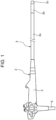
- an electronic endoscope 2 includes an insertion section 3 to be inserted into the body, a main-body operation section 5 connected to a proximal end portion of the insertion section 3, and a universal cord 6 to be connected to a processor device or a light source device.
- the insertion section 3 is constituted by a flexible tube 3a connected to the main-body operation section 5, an angle portion 3b connected to the flexible tube 3a, and a tip portion 3c connected to the distal end of the angle portion 3b and including therein an imaging device (not illustrated) for capturing an image of the inside of the body.
- the flexible tube 3a which accounts for most of the length of the insertion section 3, has flexibility across substantially the entire length thereof and is configured so that, in particular, a portion to be inserted into the inside of the body cavity or the like has higher flexibility.
- the flexible tube according to the present invention has a flexible-tube base that is tubular and that has flexibility and a polymer cover layer covering the flexible-tube base, and has a primer layer including a silane coupling agent between the flexible-tube base and the polymer cover layer.
- the flexible-tube base has a spiral tube made of a metal strip and a tubular mesh member covering the spiral tube and made of braided metal wires, and the tubular mesh member has a porosity of 2% to 10%.
- the tubular mesh member that forms the flexible-tube base and that has a braided structure has a porosity of 2% to 10%
- the primer layer including a silane coupling agent is provided on the flexible-tube base, and thus, in the formation of the polymer cover layer, the inside of pores of the tubular mesh member and the surface of the tubular mesh member (the outer periphery of the spiral tube) are covered with a polymer at a high density.
- the reaction area between the silane coupling agent and the polymer cover layer is increased, and the silane coupling agent and the polymer cover layer are effectively bonded to or in close contact with each other.
- the flexible tube according to the present invention has good elasticity is that the spiral tube and the tubular mesh member are integrally bent when the flexible tube is bent, while the polymer cover layer and the spiral tube are firmly in close contact with each other via the tubular mesh member filled with the polymer at a high density. As demonstrated in Examples described later, it has become clear as an experimental fact that this improvement in the elasticity becomes more apparent when the silane coupling agent has an amino group.
- the reason for this is also not clear, but presumably, one of the reasons is that when the silane coupling agent has an amino group, the molecular structure of the amino group responsible for bonding or adhesion between the silane coupling agent and the polymer cover layer contributes to an increase in bonding or adhesion points with the polymer cover layer.
- the tubular mesh member having a braided structure has a porosity of 2% to 10%, presumably, the contact area between the flexible-tube base and the polymer cover layer can be sufficiently ensured to effectively enhance the adhesiveness, good chemical resistance is also provided, and the above porosity also imparts sufficient flexibility to the flexible-tube base.
- a flexible-tube base 14 preferably has a form in which a spiral tube 11 disposed on the innermost side and formed by spirally winding a metal strip 11a is covered with a tubular mesh member 12 made of braided metal wires, and caps 13 are fitted to both ends of the flexible-tube base 14.
- the braided structure of the tubular mesh member 12 is not particularly limited and may be any structure in which metal wires are braided with their upper and lower sides being regularly interchanged. Examples of the braided structure include stockinette (warp/weft), plain weave, twill weave, and satin weave, and, of these, twill weave is preferred.
- FIG. 5 is a partial sectional view illustrating the configuration of the tubular mesh member 12 having a braided structure formed by twill weave according to an embodiment, in which bundles having a number of ends of three (bundles formed of three metal wires 41) are braided to form pores 42 between the bundles.
- the porosity of the tubular mesh member 12 made of braided metal wires is 2% to 10%, and from the viewpoint of elasticity of the flexible tube, the porosity is preferably 3% to 8%, more preferably 3% to 7%, and still more preferably 3% to 6%.
- the metal that constitutes the flexible-tube base 14 preferably has a surface that has been subjected to passivation treatment in order to prevent corrosion. That is, the flexible-tube base 14 preferably has a passivation film on an outer periphery (surface) thereof.
- This passivation treatment can be performed by an ordinary method.
- a passivation film can be formed on a surface of metal by, for example, immersing the metal in a solution including a strong oxidizing agent such as nitric acid, heating the metal in air (oxygen) or water (water vapor), or anodizing the metal in a solution including an oxidizing agent.
- the metal that constitutes the flexible-tube base 14 is preferably stainless steel.
- the spiral tube 11 formed by spirally winding a metal strip 11a on the innermost side and the tubular mesh member 12 made of braided metal wires are preferably composed of stainless steel.
- the surface of stainless steel is usually in a state in which chromium and oxygen (O 2 ) are bonded together to form a passivation film.
- O 2 chromium and oxygen
- a primer layer (not illustrated) is disposed on an outer periphery of a flexible-tube base.
- the primer layer includes a silane coupling agent.
- silane coupling agent used in the present invention typical silane coupling agents applicable to a primer layer of a flexible tube for an endoscope can be widely employed.
- an amino silane coupling agent preferably a silane coupling agent having at least one of an unsubstituted amino group or a monosubstituted amino group
- Specific examples of the silane coupling agent include silane coupling agents used in Examples described later, but the present invention is not limited thereto.
- the content of the silane coupling agent in the primer layer is preferably 50% by mass or more, more preferably 70% by mass or more, still more preferably 80% by mass or more, and even more preferably 90% by mass or more.
- the primer layer may be a layer composed of a silane coupling agent.
- the content of the amino silane coupling agent in the silane coupling agent is preferably 50% by mass or more, more preferably 70% by mass or more, still more preferably 80% by mass or more, and even more preferably 90% by mass or more.
- the primer layer may be a layer composed of an amino silane coupling agent.
- the coupling agent is not particularly limited as long as the effects of the present invention are not impaired, and examples thereof include aluminum coupling agents, zirconium coupling agents, and titanium coupling agents.
- the thickness of the primer layer is significantly smaller than that of a typical adhesive layer (in other words, the concept of the thickness cannot be conceived). That is, the primer layer that includes a silane coupling agent differs from the adhesive layer that requires a certain thickness and softness for adhesion between the flexible-tube base and the polymer cover layer.
- the flexible tube according to the present invention has a polymer cover layer (a layer including at least one of a resin or an elastomer) on the outer periphery of the flexible-tube base having the primer layer thereon.
- a polymer cover layer 15 is coated with a topcoat layer 16 that contains fluorine or the like and that contributes to, for example, chemical resistance.
- a topcoat layer 16 that contains fluorine or the like and that contributes to, for example, chemical resistance.
- a single spiral tube 11 is illustrated, but the spiral tube 11 may be formed by concentrically stacking two or more layers. Note that the polymer cover layer 15 and the topcoat layer 16 in the drawing are drawn to be thicker than the actual thicknesses with respect to the diameter of the flexible-tube base 14 for the sake of clearly illustrating the layer structure.
- the polymer cover layer may be formed of a single layer or multiple layers and is preferably formed of multiple layers.
- This polymer cover layer covers an outer peripheral surface of the flexible-tube base having the primer layer described above.
- the polymer cover layer 15 in the embodiment in Fig. 2 is not formed of a single layer but has a two-layer structure in which an inner layer 17 that covers the entire peripheral surface around the axis of the flexible-tube base 14 and an outer layer 18 that covers the entire peripheral surface around the axis of the inner layer 17 are laminated.
- a soft polymer is used as the material of the inner layer 17 and a hard polymer is used as the material of the outer layer 18, but the present invention is not limited to these embodiments.
- this polymer cover layer is formed of a single layer.
- different polymer cover layer forming materials are applied to the flexible-tube base a plurality of times to form a polymer cover layer formed of layers containing different types of polymers between adjacent layers, this polymer cover layer is formed of multiple layers.
- the polymer cover layer preferably includes a thermoplastic elastomer
- specific examples of the thermoplastic elastomer include fluorine-containing elastomers, polyolefin elastomers, acrylic elastomers, styrene elastomers, polyphenylene oxide elastomers, polyurethane elastomers, polyester elastomers, and polyamide elastomers.
- At least the innermost layer preferably includes at least one thermoplastic elastomer of a polyurethane elastomer, a polyester elastomer, or a polyamide elastomer, and more preferably includes a polyurethane elastomer.
- the single-layer polymer cover layer when the polymer cover layer is formed of a single layer, preferably includes at least one thermoplastic elastomer of a polyurethane elastomer, a polyester elastomer, or a polyamide elastomer, and more preferably includes a polyurethane elastomer. That is, in the present invention, the polymer cover layer preferably includes, at least on the side in contact with the primer layer, at least one thermoplastic elastomer of a polyurethane elastomer, a polyester elastomer, or a polyamide elastomer, and more preferably includes a polyurethane elastomer.
- polyurethane elastomers used in the polymer cover layer typical polyurethane elastomers applicable to the formation of a flexible tube can be employed.
- the polyurethane elastomers are each typically obtained by allowing a polyisocyanate, a polyol, and a chain extender to react with each other.
- the polyurethane elastomer is preferably a random copolymer or block copolymer having a soft segment formed by a reaction between a polymer polyol and a polyisocyanate and a hard segment formed by a reaction between a chain extender and a polyisocyanate, and more preferably a block copolymer.
- the polyurethane elastomer is preferably a polyether polyurethane elastomer, a polyester polyurethane elastomer, or a polycarbonate polyurethane elastomer, and more preferably a polyether polyurethane elastomer.
- the polyether polyurethane elastomer is preferably an elastomer having a soft segment formed by a reaction between a polyether polyol and a polyisocyanate and the above-described hard segment, that is, a polyurethane elastomer including a polyether in the soft segment.
- this soft segment includes neither an ester bond nor a carbonate bond.
- the polyester polyurethane elastomer is preferably an elastomer having a soft segment formed by a reaction between a polyester polyol and a polyisocyanate and the above-described hard segment, that is, a polyurethane elastomer including a polyester in the soft segment.
- this soft segment includes neither an ether bond nor a carbonate bond.
- the polycarbonate polyurethane elastomer is preferably an elastomer having a soft segment formed by a reaction between a polycarbonate polyol and a polyisocyanate and the above-described hard segment, that is, a polyurethane elastomer including a polycarbonate in the soft segment.
- this soft segment includes neither an ether bond nor an ester bond.
- polyisocyanate examples include diphenylmethane diisocyanate, hexamethylene diisocyanate, tolidine diisocyanate, 1,5-naphthalene diisocyanate, isophorone diisocyanate, and xylylene diisocyanate.
- polyether polyol examples include polytetramethylene ether glycol, polydimethylene ether glycol, polytrimethylene ether glycol, polypropylene ether glycol, polyhexamethylene ether glycol, and polyneopentyl ether glycol.
- the polyester polyol is obtained by a polycondensation reaction between a dicarboxylic acid and a polyol (preferably a diol).
- a dicarboxylic acid e.g., ethylene polyols (e.g., ethanediol), propylene polyols (1,3-propanediol), 1,3-butanediol, 1,4-butanediol, neopentyl polyols (e.g., 1,5-pentanediol), 1,6-hexanediol, and polycaprolactone diol, and these may be used alone or in combination.
- the dicarboxylic acid include adipic acid, sebacic acid, and dimer acid, and these may be used alone or in combination.
- polycaprolactone diol examples include PLACCEL 205 and PLACCEL 205H (trade names, manufactured by Daicel Corporation), TONE 0200 and TONE 0201 (trade names, manufactured by Union Carbide Corporation), and PLACCEL 208 (trade name, manufactured by Daicel Corporation).
- polycarbonate polyol examples include polyethylene carbonate diol, polytetramethylene carbonate diol, and polyhexamethylene carbonate diol.
- chain extender examples include aliphatic linear diols having 2 to 6 carbon atoms such as ethanediol, 1,4-butanediol, and 1,6-hexanediol; and 1,4-bis(hydroxyethoxy)benzene.
- Amines such as hexamethylenediamine, isophoronediamine, tolylenediamine, and monoethanolamine can also be used in combination as needed.
- polyurethane elastomers for the embodiment, disclosure of, for example, JP2005-015643A can be referred to.
- the above polyurethane elastomers may be used alone or in combination of two or more thereof.
- polyester elastomers applicable to the formation of a flexible tube can be used as the polyester elastomers.
- polyester elastomers used in the present invention are copolymers having a hard segment composed of a crystalline polyester and a soft segment composed of a polyether or a polyester.
- hard segment examples include polybutylene terephthalate and polyethylene terephthalate.
- soft segment examples include polyalkylene glycols such as polytetramethylene glycol and polypropylene glycol; bisphenol A-ethylene oxide adducts; bisphenol A-propylene oxide adducts; and polyesters such as polycaprolactone.
- polyalkylene glycols such as polytetramethylene glycol and polypropylene glycol
- bisphenol A-ethylene oxide adducts bisphenol A-propylene oxide adducts
- polyesters such as polycaprolactone.
- the "polyester elastomers" include neither a urethane bond nor an amide bond in the molecules thereof.
- the polyester elastomers may be used alone or in combination of two or more thereof.
- Typical polyamide elastomers applicable to the formation of a flexible tube can be used as the polyamide elastomers.
- the polyamide elastomers include neither a urethane bond nor an ester bond.
- the polyamide elastomers may be used alone or in combination of two or more thereof.
- thermoplastic elastomers used in the present invention include the thermoplastic elastomers (fluorine-containing elastomers, polyolefin elastomers, polyurethane elastomers, polyester elastomers, and polyamide elastomers) used in Examples described later, but the present invention is not limited thereto.
- the content of the thermoplastic elastomer in the polymer cover layer in the case of a polymer cover layer formed of a single layer and the content of the thermoplastic elastomer in the innermost layer in the case of a polymer cover layer formed of multiple layers are preferably 50% by mass or more, more preferably 70% by mass or more, still more preferably 80% by mass or more, and even more preferably 90% by mass or more.
- the polymer cover layer may be a layer composed of a thermoplastic elastomer.
- the innermost layer may be a layer composed of a thermoplastic elastomer.
- a total content of the polyurethane elastomer, the polyester elastomer, and the polyamide elastomer included in the thermoplastic elastomer is preferably 50% by mass or more, more preferably 70% by mass or more, still more preferably 80% by mass or more, and even more preferably 90% by mass or more, and may be 100% by mass.
- the polymer cover layer in the case of a polymer cover layer formed of a single layer and the innermost layer in the case of a polymer cover layer formed of multiple layers include a polymer other than a thermoplastic elastomer
- the polymer is not particularly limited as long as the effects of the present invention are not impaired.
- examples thereof include vinyl polymers such as acrylic resins and styrene resins, and condensation polymers such as polyesters and polyamides.
- layers other than the innermost layer preferably include at least one thermoplastic elastomer of a polyurethane elastomer, a polyester elastomer, or a polyamide elastomer.
- thermoplastic elastomers enables the formation of a layer having desired physical properties.
- the layers other than the innermost layer more preferably include a polyester elastomer and a polyamide elastomer from the viewpoint of further enhancing elasticity.
- a molecular weight of each of the elastomers that can be used in the polymer cover layer is preferably 10,000 to 1,000,000, more preferably 20,000 to 500,000, and particularly preferably 30,000 to 300,000.
- the molecular weight of the elastomer refers to a weight-average molecular weight unless otherwise noted.
- the weight-average molecular weight can be measured by GPC as a molecular weight in terms of polystyrene.
- a GPC apparatus HLC-8220 (trade name, manufactured by Tosoh Corporation) is used; an eluant used is chloroform in the case of a polyester elastomer, NMP (N-methyl-2-pyrrolidone) in the case of a polyurethane elastomer, and m-cresol/chloroform (manufactured by Shonan Wako Junyaku K.K.) in the case of a polyamide elastomer; G3000HXL + G2000HXL (each of which is a trade name, manufactured by Tosoh Corporation) are used as columns; the temperature is 23°C; the flow rate is 1 mL/min; and the detection is performed with an RI detector.
- the polymer cover layer 15 in the present invention is preferably formed so as to have a substantially uniform thickness in the longitudinal direction (axial direction) of the flexible-tube base 14.
- the polymer cover layer 15 has a thickness of, for example, 0.2 mm to 1.0 mm, and the flexible tube 3a has an outer diameter D of, for example, 11 to 14 mm.
- the inner layer 17 and the outer layer 18 are formed such that a ratio of the thickness of each of the layers 17 and 18 to the total thickness of the polymer cover layer 15 changes in the axial direction of the flexible-tube base 14.
- the thickness of the inner layer 17 is larger than the thickness of the outer layer 18 with respect to the total thickness of the polymer cover layer 15.
- the thickness of the inner layer 17 gradually decreases from the one end 14a toward the other end 14b side (proximal end side) to be attached to the main-body operation section 5.
- the thickness of the outer layer 18 is larger than the thickness of the inner layer 17.
- the ratio of the thickness of the inner layer 17 is maximum on the one end 14a, and the ratio of the thickness of the outer layer 18 is maximum on the other end 14b.
- a ratio of the thickness of the inner layer 17 to the thickness of the outer layer 18 may be, for example, 9:1 on the one end 14a, and, for example, 1:9 on the other end 14b.
- the thicknesses of the two layers are changed such that the ratio of the thickness of the inner layer 17 to the thickness of the outer layer 18 is reversed from the one end 14a to the other end 14b.
- the flexible tube 3a has a difference in hardness between the one end 14a side and the other end 14b side, and flexibility can be changed in the axial direction such that the one end 14a side is soft and the other end 14b side is hard.
- the inner layer and the outer layer are preferably formed such that the thickness ratio on the one end is 5:95 to 40:60 (inner layer:outer layer) and the thickness ratio on the other end is 95:5 to 60:40 (inner layer:outer layer).
- the thickness ratio of the inner layer 17 to the outer layer 18 is within the range of 5:95 to 95:5, the amount of extrusion of a polymer that forms a layer having a smaller thickness can also be accurately controlled.
- the soft polymer used in the inner layer 17 and the hard polymer used in the outer layer 18 preferably have a difference in 100% modulus, which is an indicator indicating a hardness after molding, of 1 MPa or more and more preferably 3 MPa or more.
- the difference in melt viscosity, which is an indicator indicating a fluidity of a polymer in a molten state, at a molding temperature of 150°C to 300°C is preferably 2,500 Pa ⁇ s or less.
- the topcoat layer 16 is disposed on an outer periphery of the polymer cover layer 15 as needed.
- the material of the top coat layer is not particularly limited, but a urethane coating, an acrylic coating, a fluorine coating, a silicone coating, an epoxy coating, a polyester coating, or the like is applied.
- the topcoat layer Main purposes of use of the topcoat layer are to protect the surface of the flexible tube or make the surface glossy, to impart slidability, and to impart chemical resistance. Therefore, the topcoat layer preferably has a high modulus of elasticity, a smooth surface, and good chemical resistance.
- a method for producing a flexible tube for an endoscope includes forming a primer layer including a silane coupling agent and a polymer cover layer in this order on an outer periphery of a flexible-tube base containing metal as a constituent material.
- the method includes forming the primer layer including a silane coupling agent and the polymer cover layer in this order on at least a portion of the outer periphery of the flexible-tube base, and a primer layer including a silane coupling agent and a polymer cover layer may be formed on an inner periphery of the flexible-tube base.
- the flexible-tube base can be prepared by an ordinary method except that a tubular mesh member having a porosity of 2% to 10% is formed by braiding metal wires.
- a tubular mesh member having a desired porosity is prepared by controlling, for example, the outer diameters, the number of ends, and the pitch of metal wires, and a spiral tube is covered with this tubular mesh member.
- a flexible-tube base can be obtained.
- a primer layer is formed on the flexible-tube base.
- the primer layer can be formed by dissolving a silane coupling agent in a solvent to prepare a coating liquid; forming a coating film on at least an outer periphery of the flexible-tube base by, for example, applying or spraying the coating liquid onto the outer periphery of the flexible-tube base or immersing the flexible-tube base in the coating liquid; and subsequently drying the coating film by an ordinary method (for example, high-temperature drying at about 100°C).
- the solvent that can be used in the coating liquid examples include alcohol solvents such as methanol and ethanol; ketone solvents such as acetone and methyl ethyl ketone; ester solvents such as ethyl acetate; hydrocarbon solvents such as toluene; and liquid mixtures thereof. It is preferable to further mix water with the solvents in order to accelerate hydrolysis of the silane coupling agent.
- the coating liquid may be prepared to be acidic (for example, pH 1 to 4 at 25°C) or alkaline (for example, pH 9 to 11 at 25°C).
- the content of the silane coupling agent in the coating liquid is not particularly limited, can be, for example, 0.01% by mass to 2% by mass, may be 0.02% by mass or more and less than 0.5% by mass, and may be 0.03% by mass or more and less than 0.4% by mass.
- the coating liquid may include, for example, a surfactant and a catalyst besides the silane coupling agent, the solvent, and a pH adjuster.
- the coating liquid is preferably constituted by the silane coupling agent and the solvent.
- a portion that is not covered with the primer layer may be present on the outer periphery of the flexible-tube base as long as the effects of the present invention are not impaired (that is, the primer layer may have a defect in a portion thereof).
- the flexible-tube base Prior to the formation of the primer layer, the flexible-tube base is preferably cleaned by degreasing with an alkali solution, an aqueous solution of a surfactant, an organic solvent, or the like. After the cleaning, the flexible-tube base is preferably further cleaned with water or hot water.
- Formation of a polymer cover layer will be described by taking, as an example, a case where the polymer cover layer has a two-layer structure.
- a flexible tube that includes a polymer cover layer having a two-layer structure composed of an inner layer and an outer layer can be produced by, for example, melt-kneading and extruding, around the flexible-tube base on which the primer layer has been formed, a first polymer material (for example, a polymer material including a thermoplastic elastomer) that forms the inner layer and a second polymer material that forms the outer layer, thereby covering the flexible-tube base.
- a first polymer material for example, a polymer material including a thermoplastic elastomer
- the polymer cover layer in an embodiment in which a polymer cover layer is formed of one layer or three or more layers, the polymer cover layer can also be produced by appropriately changing the layer configuration with reference to the method described below.
- a continuous molding machine is used to mold a polymer cover layer 15.
- a continuous molding machine 20 that includes well-known extrusion units 21 and 22 including hoppers, screws 21a and 22a, etc.; a head unit 23 configured to mold a polymer cover layer 15 so as to cover an outer peripheral surface of a flexible-tube base 14; a cooling unit 24; a transport unit 25 (including a feed drum 28 and a take-up drum 29) configured to transport a connected flexible-tube base 31 to the head unit 23; and a control unit 26 configured to control the above units.
- the head unit 23 preferably includes a nipple 32, a die 33, and a support 34 configured to fixedly support the nipple 32 and the die 33.
- the apparatus disclosed in Figs. 3 to 5 of JP2011-72391A can be used as an example of the apparatus having the above configuration.
- the inside of the die 33 is preferably heated to a predetermined molding temperature.
- the molding temperature is preferably set in a range of 150°C to 300°C.
- the temperatures of a first polymer material 39 and a second polymer material 40 can be increased by controlling the temperatures of a heating unit in the apparatus by heating. In addition to this, as the rotational speeds of the screws 21a and 22a become higher, the temperatures of the first polymer material 39 and the second polymer material 40 can be further increased to increase their fluidity.
- the molding thicknesses of the inner layer 17 and the outer layer 18 can be adjusted by changing the amounts of the molten first polymer material 39 and second polymer material 40 ejected while the transport speed of the connected flexible-tube base 31 is made constant.
- the process of molding the polymer cover layer 15 on the connected flexible-tube base 31 by the continuous molding machine 20 will be described.
- the continuous molding machine 20 performs a molding step
- the molten first polymer material 39 and second polymer material 40 are respectively extruded from the extrusion units 21 and 22 into the head unit 23.
- the transport unit 25 operates so that the connected flexible-tube base 31 is transported to the head unit 23.
- the extrusion units 21 and 22 are in a state of constantly extruding the first polymer material 39 and the second polymer material 40 to feed the polymer materials 39 and 40 to the head unit 23, and the first polymer material 39 and the second polymer material 40 that are respectively extruded from the extrusion units 21 and 22 to gates 35 and 36 pass through an edge and join to each other, and are fed, in a stacked state, through a polymer passage 38 to a molding passage 37.
- a two-layer molded polymer cover layer 15 is formed in which an inner layer 17 using the first polymer material 39 and an outer layer 18 using the second polymer material 40 are stacked.
- the connected flexible-tube base 31 includes a plurality of flexible-tube bases 14 (each having a primer layer on the outer periphery thereof) that are connected together. While the connected flexible-tube base 31 is transported through the molding passage 37, the polymer cover layer 15 is continuously molded on the plurality of flexible-tube bases 14. When the polymer cover layer 15 is molded from one end 14a side (distal end side) of one flexible-tube base to the other end 14b side (proximal end side) thereof, the thickness of the inner layer 17 is made large immediately after the extrusion units 21 and 22 start the ejection of the polymers. The ratio of the thickness of the outer layer 18 is then gradually increased over an intermediate portion toward the other end 14b side. It is preferable to control the amounts of the polymers ejected in this manner so as to achieve the above-described gradient thickness ratio of the polymer cover layer 15.
- Joint members 30 each function as a connecting portion of two flexible-tube bases 14, and thus the control unit 26 is used to switch the amounts of the polymers ejected from the extrusion units 21 and 22. Specifically, the control unit 26 preferably switches the amounts of the polymers ejected from the extrusion units 21 and 22 such that the thickness ratio changes from a thickness ratio on the other end 14b side (proximal end side) of one flexible-tube base 14 to a thickness ratio on one end 14a side (distal end side) of the next flexible-tube base 14.
- the extrusion units 21 and 22 are preferably similarly controlled such that the thickness of the outer layer gradually increases from the one end side toward the other end side.
- the connected flexible-tube base 31 on which the polymer cover layer 15 is molded to the rearmost end is removed from the continuous molding machine 20, and the joint members 30 are then removed from the flexible-tube bases 14 to separate the flexible-tube bases 14 from each other.
- the polymer cover layer 15 is coated with the topcoat layer 16 to complete flexible tubes 3a.
- the completed flexible tubes 3a are transported to an assembly step of an electronic endoscope.
- a functional layer may be disposed between layers that form the multiple layers.
- the flexible tube according to the present invention is widely applicable to endoscopic medical devices.
- the flexible tube according to the present invention is applicable to an endoscope equipped with a clip or wire at the distal end thereof or to a device equipped with a basket or brush.
- endoscopic medical device is meant to broadly include medical devices or diagnosis and treatment devices that include an insertion section having flexibility and that are introduced and used in the body, such as remote-controlled medical devices, in addition to medical devices including an endoscope as a basic structure, as described above.
- An endoscopic medical device has an insertion section in which the flexible tube for an endoscope according to the present invention is incorporated. That is, a method for producing an endoscopic medical device according to the present invention includes incorporating the flexible tube for an endoscope according to the present invention into an insertion section of an endoscopic medical device.
- a solution having a ratio water/ethanol of 5/75 on a mass basis was prepared.
- a coupling agent shown in Table 1 below was dissolved in the solution so as to have a concentration of 8.9 g/kg, and the resulting solution was used as a coating liquid for forming a primer layer.
- a flexible tube having the structure illustrated in Fig. 2 was prepared.
- the polymer cover layer had a single-layer structure or a two-layer structure as shown in Table 1 below.
- a flexible-tube base having a form in which a spiral tube 11 was formed using a metal strip 11a made of stainless steel, and the spiral tube 11 was covered with a tubular mesh member 12 made of braided stainless steel fibers (metal wires) was prepared.
- the spiral tube 11 used was a tube in which the width of the metal strip 11a and the gap between the strips were controlled so as to have a bending radius of 12.5 (mm).
- the tubular mesh member 12 having the porosity shown in Table 1 below was obtained by setting the element wire diameter (outer diameter of each of the metal wires 41) of the tubular mesh member 12 to 0.1 mm and setting the core diameter to 10.5 mm, and controlling the number of ends, the number of carriers, and the pitch in braiding (twill weaving) with a braiding machine.
- the outer periphery of the spiral tube 11 was covered with the tubular mesh member 12 obtained as described above to prepare a flexible-tube base.
- the flexible-tube base has a length of 80 cm and a diameter of 12 mm.
- This stainless steel flexible tube has a passivation layer on a surface thereof, the passivation layer being formed by annealing treatment (heating treatment) in the formation of the spiral tube 11 and the tubular mesh member 12.
- the flexible-tube base was cleaned by immersing in a 7.5% aqueous sodium hydroxide solution at 60°C for one minute. Subsequently, the flexible-tube base was rinsed with distilled water and then dried in an oven at 100°C for 10 minutes. The cleaned flexible-tube base was immersed in the above-prepared coating liquid for forming a primer layer at room temperature for one minute and then dried in an oven at 160°C for 10 minutes. Thus, a flexible-tube base having a primer layer on the outer periphery (coating surface) was prepared.
- the above-prepared solution for forming an adhesive layer was uniformly applied to the outer periphery of the stainless steel flexible-tube base and dried at room temperature for two hours. Subsequently, heat treatment was further performed at 150°C for two hours to prepare a flexible-tube base having an adhesive layer on the outer periphery (resin-coated surface).
- the adhesive layer had a thickness of about 80 ⁇ m.
- the outer periphery of the flexible-tube base having the primer layer or the adhesive layer was covered with an elastomer as shown in Table 1 below by extrusion (molding temperature: 200°C) to prepare a flexible tube for an endoscope, the flexible tube having a polymer cover layer.
- the polymer cover layer had a thickness of 0.4 mm (in the case of a two-layer structure, the total thickness of the two layers was 0.4 mm).
- the flexible tube for an endoscope prepared as described above was sealed such that liquid did not enter the inside, and then immersed in a 7.0% aqueous peracetic acid solution at 55°C for 150 hours. Subsequently, the surface was sufficiently washed with water. After washing with water, drying was performed at 23°C ⁇ 50% RH (relative humidity) for 24 hours. After drying, for the polymer cover layer of the flexible tube for an endoscope, a cut having a width of 1 cm and a length of 10 cm was formed in the axial direction of the flexible tube such that the cut reached the flexible-tube base.
- the flexible-tube base and the polymer cover layer were peeled from each other at a constant rate of 2 mm/min in the axial direction along the cut with a width of 1 cm to measure a 90° peel strength (this value is referred to as measured value X).
- the peel strength was measured with a force gauge (unit: N/cm).
- Each flexible tube for an endoscope the flexible tube not having been immersed in the aqueous peracetic acid solution, was used to measure the 90° peel strength in the same manner (measured value Y). For all the flexible tubes, the 90° peel strength was measured under the same conditions.
- a ratio (%, 100 ⁇ X/Y) of the measured value X to the measured value Y was determined and evaluated on the basis of the following criteria. "C" or higher is satisfactory.
- the polymers used in the polymer cover layer are as follows.
- Fluorine-containing elastomer DAI-EL T-530 (trade name), manufactured by Daikin Industries, Ltd.
- Polyolefin elastomer Zelas MC707 (trade name), manufactured by Mitsubishi Chemical Corporation
- the coupling agents used in the primer layer are as follows.
- the flexible tubes of Comparative Examples 16 to 30 each have a primer layer composed of a coupling agent other than a silane coupling agent.
- the flexible tubes of Comparative Examples 16 to 30 had poor elasticity, although the flexible tubes had a porosity satisfying the range specified in the present invention.
- the flexible tubes according to the present invention each have good elasticity, good flexibility, and sufficient chemical resistance.
- the comparison between the results of Examples 1 to 11 and the results of Examples 12 to 39 shows that when an amino silane coupling agent is used as the silane coupling agent, the elasticity can be increased to a higher level by controlling the porosity.
Landscapes
- Health & Medical Sciences (AREA)
- Life Sciences & Earth Sciences (AREA)
- Surgery (AREA)
- Physics & Mathematics (AREA)
- Engineering & Computer Science (AREA)
- Optics & Photonics (AREA)
- Biophysics (AREA)
- Animal Behavior & Ethology (AREA)
- Pathology (AREA)
- Radiology & Medical Imaging (AREA)
- Veterinary Medicine (AREA)
- Biomedical Technology (AREA)
- Heart & Thoracic Surgery (AREA)
- Medical Informatics (AREA)
- Molecular Biology (AREA)
- Nuclear Medicine, Radiotherapy & Molecular Imaging (AREA)
- General Health & Medical Sciences (AREA)
- Public Health (AREA)
- Manufacturing & Machinery (AREA)
- Astronomy & Astrophysics (AREA)
- General Physics & Mathematics (AREA)
- Mechanical Engineering (AREA)
- Endoscopes (AREA)
Applications Claiming Priority (2)
| Application Number | Priority Date | Filing Date | Title |
|---|---|---|---|
| JP2020163598 | 2020-09-29 | ||
| PCT/JP2021/031740 WO2022070722A1 (ja) | 2020-09-29 | 2021-08-30 | 内視鏡用可撓管、内視鏡型医療機器、及びこれらの製造方法 |
Publications (3)
| Publication Number | Publication Date |
|---|---|
| EP4224236A1 EP4224236A1 (en) | 2023-08-09 |
| EP4224236A4 EP4224236A4 (en) | 2024-02-21 |
| EP4224236B1 true EP4224236B1 (en) | 2024-11-20 |
Family
ID=80950029
Family Applications (1)
| Application Number | Title | Priority Date | Filing Date |
|---|---|---|---|
| EP21875025.5A Active EP4224236B1 (en) | 2020-09-29 | 2021-08-30 | Flexible tube for endoscope, endoscope-type medical device, and methods for producing these |
Country Status (5)
| Country | Link |
|---|---|
| US (1) | US20230190076A1 (https=) |
| EP (1) | EP4224236B1 (https=) |
| JP (1) | JP7461493B2 (https=) |
| CN (1) | CN116018539A (https=) |
| WO (1) | WO2022070722A1 (https=) |
Families Citing this family (1)
| Publication number | Priority date | Publication date | Assignee | Title |
|---|---|---|---|---|
| WO2020149261A1 (ja) * | 2019-01-16 | 2020-07-23 | 富士フイルム株式会社 | 内視鏡用可撓管、内視鏡型医療機器、及びこれらの製造方法 |
Family Cites Families (14)
| Publication number | Priority date | Publication date | Assignee | Title |
|---|---|---|---|---|
| JP2565970B2 (ja) * | 1988-03-11 | 1996-12-18 | オリンパス光学工業株式会社 | 内視鏡用可撓管 |
| US5788714A (en) * | 1995-08-14 | 1998-08-04 | Asahi Kogaku Kogyo Kabushiki Kaisha | Flexible tube for an endoscope |
| JPH0951871A (ja) * | 1995-08-14 | 1997-02-25 | Asahi Optical Co Ltd | 内視鏡の可撓管 |
| JP3231588B2 (ja) | 1995-09-12 | 2001-11-26 | 旭光学工業株式会社 | 内視鏡の可撓管用網状管 |
| JP2005015643A (ja) | 2003-06-26 | 2005-01-20 | Dic Bayer Polymer Ltd | 熱可塑性ポリウレタン樹脂組成物及び成形物 |
| JP4477460B2 (ja) * | 2004-09-15 | 2010-06-09 | オリンパス株式会社 | 内視鏡可撓管 |
| JP2007082802A (ja) | 2005-09-22 | 2007-04-05 | Kaneka Corp | 医療用カテーテルチューブ |
| JP5755835B2 (ja) | 2009-09-29 | 2015-07-29 | 富士フイルム株式会社 | 内視鏡用可撓管及びその製造方法 |
| JP5453156B2 (ja) * | 2010-03-31 | 2014-03-26 | 富士フイルム株式会社 | 内視鏡の可撓管及びその製造方法 |
| JP5468037B2 (ja) * | 2011-03-24 | 2014-04-09 | 富士フイルム株式会社 | 内視鏡用可撓管 |
| JPWO2016052208A1 (ja) * | 2014-10-03 | 2017-04-27 | オリンパス株式会社 | 挿入機器の挿入部及び挿入機器 |
| WO2018220867A1 (ja) * | 2017-06-01 | 2018-12-06 | Hoya株式会社 | 内視鏡 |
| JP6966549B2 (ja) * | 2017-07-12 | 2021-11-17 | 富士フイルム株式会社 | 内視鏡用可撓管、内視鏡型医療機器、及びこれらの製造方法 |
| JP2020178722A (ja) * | 2017-07-20 | 2020-11-05 | オリンパス株式会社 | 内視鏡用可撓管およびその製造方法 |
-
2021
- 2021-08-30 JP JP2022553560A patent/JP7461493B2/ja active Active
- 2021-08-30 CN CN202180055386.4A patent/CN116018539A/zh active Pending
- 2021-08-30 WO PCT/JP2021/031740 patent/WO2022070722A1/ja not_active Ceased
- 2021-08-30 EP EP21875025.5A patent/EP4224236B1/en active Active
-
2023
- 2023-02-15 US US18/169,324 patent/US20230190076A1/en active Pending
Also Published As
| Publication number | Publication date |
|---|---|
| CN116018539A (zh) | 2023-04-25 |
| US20230190076A1 (en) | 2023-06-22 |
| EP4224236A4 (en) | 2024-02-21 |
| JP7461493B2 (ja) | 2024-04-03 |
| WO2022070722A1 (ja) | 2022-04-07 |
| EP4224236A1 (en) | 2023-08-09 |
| JPWO2022070722A1 (https=) | 2022-04-07 |
Similar Documents
| Publication | Publication Date | Title |
|---|---|---|
| US20200100652A1 (en) | Flexible tube for endoscope, endoscopic medical device, and methods for producing the same | |
| JP6110827B2 (ja) | 内視鏡用可撓管、内視鏡用接着剤、内視鏡型医療機器、ならびに内視鏡用可撓管および内視鏡型医療機器の製造方法 | |
| JP5312380B2 (ja) | 内視鏡可撓管の製造方法 | |
| JPH02283346A (ja) | 内視鏡用可撓管 | |
| US20230190076A1 (en) | Flexible tube for endoscope, endoscope medical device, and methods for producing the same | |
| JP6329804B2 (ja) | 可撓管、これを用いた内視鏡型医療機器、その接着剤、可撓管および内視鏡型医療機器の製造方法 | |
| JP4589484B2 (ja) | 内視鏡用可撓管 | |
| JP5304005B2 (ja) | カテーテル用複合バルーン及びその製造方法 | |
| US12599705B2 (en) | Flexible tube for endoscope, endoscopic medical device, method for producing covering material constituting flexible tube for endoscope, and method for producing flexible tube for endoscope | |
| US12575715B2 (en) | Flexible tube for endoscope, endoscopic medical device, and methods for producing the same | |
| US12611091B2 (en) | Flexible tube for endoscope, endoscopic medical device, and methods for producing the same | |
| EP4268702B1 (en) | Flexible tube for endoscope, endoscope-type medical instrument, and manufacturing methods therefor | |
| JP2002224021A (ja) | 内視鏡用可撓管 | |
| US20210298565A1 (en) | Flexible tube for endoscope, endoscopic medical device, and methods for producing the same | |
| JP2002065590A (ja) | 内視鏡用可撓管 | |
| JP2003250901A (ja) | X線造影性に優れた医療用チューブ | |
| JP2001346754A (ja) | 内視鏡用可撓管 | |
| JP2002224018A (ja) | 内視鏡用可撓管 | |
| JP3793436B2 (ja) | 内視鏡用可撓管 |
Legal Events
| Date | Code | Title | Description |
|---|---|---|---|
| STAA | Information on the status of an ep patent application or granted ep patent |
Free format text: STATUS: THE INTERNATIONAL PUBLICATION HAS BEEN MADE |
|
| PUAI | Public reference made under article 153(3) epc to a published international application that has entered the european phase |
Free format text: ORIGINAL CODE: 0009012 |
|
| STAA | Information on the status of an ep patent application or granted ep patent |
Free format text: STATUS: REQUEST FOR EXAMINATION WAS MADE |
|
| 17P | Request for examination filed |
Effective date: 20230206 |
|
| AK | Designated contracting states |
Kind code of ref document: A1 Designated state(s): AL AT BE BG CH CY CZ DE DK EE ES FI FR GB GR HR HU IE IS IT LI LT LU LV MC MK MT NL NO PL PT RO RS SE SI SK SM TR |
|
| DAV | Request for validation of the european patent (deleted) | ||
| DAX | Request for extension of the european patent (deleted) | ||
| A4 | Supplementary search report drawn up and despatched |
Effective date: 20240124 |
|
| RIC1 | Information provided on ipc code assigned before grant |
Ipc: A61M 25/00 20060101ALN20240118BHEP Ipc: A61B 1/005 20060101ALI20240118BHEP Ipc: G02B 23/24 20060101AFI20240118BHEP |
|
| GRAP | Despatch of communication of intention to grant a patent |
Free format text: ORIGINAL CODE: EPIDOSNIGR1 |
|
| STAA | Information on the status of an ep patent application or granted ep patent |
Free format text: STATUS: GRANT OF PATENT IS INTENDED |
|
| RIC1 | Information provided on ipc code assigned before grant |
Ipc: A61M 25/00 20060101ALN20240820BHEP Ipc: A61B 1/005 20060101ALI20240820BHEP Ipc: G02B 23/24 20060101AFI20240820BHEP |
|
| INTG | Intention to grant announced |
Effective date: 20240904 |
|
| GRAS | Grant fee paid |
Free format text: ORIGINAL CODE: EPIDOSNIGR3 |
|
| GRAA | (expected) grant |
Free format text: ORIGINAL CODE: 0009210 |
|
| STAA | Information on the status of an ep patent application or granted ep patent |
Free format text: STATUS: THE PATENT HAS BEEN GRANTED |
|
| AK | Designated contracting states |
Kind code of ref document: B1 Designated state(s): AL AT BE BG CH CY CZ DE DK EE ES FI FR GB GR HR HU IE IS IT LI LT LU LV MC MK MT NL NO PL PT RO RS SE SI SK SM TR |
|
| REG | Reference to a national code |
Ref country code: GB Ref legal event code: FG4D |
|
| REG | Reference to a national code |
Ref country code: CH Ref legal event code: EP |
|
| REG | Reference to a national code |
Ref country code: DE Ref legal event code: R096 Ref document number: 602021022237 Country of ref document: DE |
|
| REG | Reference to a national code |
Ref country code: IE Ref legal event code: FG4D |
|
| REG | Reference to a national code |
Ref country code: LT Ref legal event code: MG9D |
|
| REG | Reference to a national code |
Ref country code: NL Ref legal event code: MP Effective date: 20241120 |
|
| PG25 | Lapsed in a contracting state [announced via postgrant information from national office to epo] |
Ref country code: IS Free format text: LAPSE BECAUSE OF FAILURE TO SUBMIT A TRANSLATION OF THE DESCRIPTION OR TO PAY THE FEE WITHIN THE PRESCRIBED TIME-LIMIT Effective date: 20250320 Ref country code: HR Free format text: LAPSE BECAUSE OF FAILURE TO SUBMIT A TRANSLATION OF THE DESCRIPTION OR TO PAY THE FEE WITHIN THE PRESCRIBED TIME-LIMIT Effective date: 20241120 Ref country code: PT Free format text: LAPSE BECAUSE OF FAILURE TO SUBMIT A TRANSLATION OF THE DESCRIPTION OR TO PAY THE FEE WITHIN THE PRESCRIBED TIME-LIMIT Effective date: 20250320 |
|
| PG25 | Lapsed in a contracting state [announced via postgrant information from national office to epo] |
Ref country code: FI Free format text: LAPSE BECAUSE OF FAILURE TO SUBMIT A TRANSLATION OF THE DESCRIPTION OR TO PAY THE FEE WITHIN THE PRESCRIBED TIME-LIMIT Effective date: 20241120 Ref country code: NL Free format text: LAPSE BECAUSE OF FAILURE TO SUBMIT A TRANSLATION OF THE DESCRIPTION OR TO PAY THE FEE WITHIN THE PRESCRIBED TIME-LIMIT Effective date: 20241120 |
|
| REG | Reference to a national code |
Ref country code: AT Ref legal event code: MK05 Ref document number: 1744096 Country of ref document: AT Kind code of ref document: T Effective date: 20241120 |
|
| PG25 | Lapsed in a contracting state [announced via postgrant information from national office to epo] |
Ref country code: BG Free format text: LAPSE BECAUSE OF FAILURE TO SUBMIT A TRANSLATION OF THE DESCRIPTION OR TO PAY THE FEE WITHIN THE PRESCRIBED TIME-LIMIT Effective date: 20241120 |
|
| PG25 | Lapsed in a contracting state [announced via postgrant information from national office to epo] |
Ref country code: ES Free format text: LAPSE BECAUSE OF FAILURE TO SUBMIT A TRANSLATION OF THE DESCRIPTION OR TO PAY THE FEE WITHIN THE PRESCRIBED TIME-LIMIT Effective date: 20241120 |
|
| PG25 | Lapsed in a contracting state [announced via postgrant information from national office to epo] |
Ref country code: NO Free format text: LAPSE BECAUSE OF FAILURE TO SUBMIT A TRANSLATION OF THE DESCRIPTION OR TO PAY THE FEE WITHIN THE PRESCRIBED TIME-LIMIT Effective date: 20250220 |
|
| PG25 | Lapsed in a contracting state [announced via postgrant information from national office to epo] |
Ref country code: LV Free format text: LAPSE BECAUSE OF FAILURE TO SUBMIT A TRANSLATION OF THE DESCRIPTION OR TO PAY THE FEE WITHIN THE PRESCRIBED TIME-LIMIT Effective date: 20241120 Ref country code: GR Free format text: LAPSE BECAUSE OF FAILURE TO SUBMIT A TRANSLATION OF THE DESCRIPTION OR TO PAY THE FEE WITHIN THE PRESCRIBED TIME-LIMIT Effective date: 20250221 Ref country code: AT Free format text: LAPSE BECAUSE OF FAILURE TO SUBMIT A TRANSLATION OF THE DESCRIPTION OR TO PAY THE FEE WITHIN THE PRESCRIBED TIME-LIMIT Effective date: 20241120 |
|
| PG25 | Lapsed in a contracting state [announced via postgrant information from national office to epo] |
Ref country code: PL Free format text: LAPSE BECAUSE OF FAILURE TO SUBMIT A TRANSLATION OF THE DESCRIPTION OR TO PAY THE FEE WITHIN THE PRESCRIBED TIME-LIMIT Effective date: 20241120 |
|
| PG25 | Lapsed in a contracting state [announced via postgrant information from national office to epo] |
Ref country code: RS Free format text: LAPSE BECAUSE OF FAILURE TO SUBMIT A TRANSLATION OF THE DESCRIPTION OR TO PAY THE FEE WITHIN THE PRESCRIBED TIME-LIMIT Effective date: 20250220 |
|
| PG25 | Lapsed in a contracting state [announced via postgrant information from national office to epo] |
Ref country code: SM Free format text: LAPSE BECAUSE OF FAILURE TO SUBMIT A TRANSLATION OF THE DESCRIPTION OR TO PAY THE FEE WITHIN THE PRESCRIBED TIME-LIMIT Effective date: 20241120 |
|
| PG25 | Lapsed in a contracting state [announced via postgrant information from national office to epo] |
Ref country code: DK Free format text: LAPSE BECAUSE OF FAILURE TO SUBMIT A TRANSLATION OF THE DESCRIPTION OR TO PAY THE FEE WITHIN THE PRESCRIBED TIME-LIMIT Effective date: 20241120 |
|
| PG25 | Lapsed in a contracting state [announced via postgrant information from national office to epo] |
Ref country code: EE Free format text: LAPSE BECAUSE OF FAILURE TO SUBMIT A TRANSLATION OF THE DESCRIPTION OR TO PAY THE FEE WITHIN THE PRESCRIBED TIME-LIMIT Effective date: 20241120 |
|
| PG25 | Lapsed in a contracting state [announced via postgrant information from national office to epo] |
Ref country code: RO Free format text: LAPSE BECAUSE OF FAILURE TO SUBMIT A TRANSLATION OF THE DESCRIPTION OR TO PAY THE FEE WITHIN THE PRESCRIBED TIME-LIMIT Effective date: 20241120 |
|
| PG25 | Lapsed in a contracting state [announced via postgrant information from national office to epo] |
Ref country code: SK Free format text: LAPSE BECAUSE OF FAILURE TO SUBMIT A TRANSLATION OF THE DESCRIPTION OR TO PAY THE FEE WITHIN THE PRESCRIBED TIME-LIMIT Effective date: 20241120 |
|
| PG25 | Lapsed in a contracting state [announced via postgrant information from national office to epo] |
Ref country code: CZ Free format text: LAPSE BECAUSE OF FAILURE TO SUBMIT A TRANSLATION OF THE DESCRIPTION OR TO PAY THE FEE WITHIN THE PRESCRIBED TIME-LIMIT Effective date: 20241120 |
|
| PG25 | Lapsed in a contracting state [announced via postgrant information from national office to epo] |
Ref country code: IT Free format text: LAPSE BECAUSE OF FAILURE TO SUBMIT A TRANSLATION OF THE DESCRIPTION OR TO PAY THE FEE WITHIN THE PRESCRIBED TIME-LIMIT Effective date: 20241120 |
|
| REG | Reference to a national code |
Ref country code: DE Ref legal event code: R097 Ref document number: 602021022237 Country of ref document: DE |
|
| PG25 | Lapsed in a contracting state [announced via postgrant information from national office to epo] |
Ref country code: SE Free format text: LAPSE BECAUSE OF FAILURE TO SUBMIT A TRANSLATION OF THE DESCRIPTION OR TO PAY THE FEE WITHIN THE PRESCRIBED TIME-LIMIT Effective date: 20241120 |
|
| PLBE | No opposition filed within time limit |
Free format text: ORIGINAL CODE: 0009261 |
|
| STAA | Information on the status of an ep patent application or granted ep patent |
Free format text: STATUS: NO OPPOSITION FILED WITHIN TIME LIMIT |
|
| PGFP | Annual fee paid to national office [announced via postgrant information from national office to epo] |
Ref country code: DE Payment date: 20250702 Year of fee payment: 5 |
|
| PGFP | Annual fee paid to national office [announced via postgrant information from national office to epo] |
Ref country code: GB Payment date: 20250703 Year of fee payment: 5 |
|
| PGFP | Annual fee paid to national office [announced via postgrant information from national office to epo] |
Ref country code: FR Payment date: 20250703 Year of fee payment: 5 |
|
| 26N | No opposition filed |
Effective date: 20250821 |
|
| REG | Reference to a national code |
Ref country code: CH Ref legal event code: H13 Free format text: ST27 STATUS EVENT CODE: U-0-0-H10-H13 (AS PROVIDED BY THE NATIONAL OFFICE) Effective date: 20260324 |
|
| PG25 | Lapsed in a contracting state [announced via postgrant information from national office to epo] |
Ref country code: MC Free format text: LAPSE BECAUSE OF FAILURE TO SUBMIT A TRANSLATION OF THE DESCRIPTION OR TO PAY THE FEE WITHIN THE PRESCRIBED TIME-LIMIT Effective date: 20241120 |
|
| PG25 | Lapsed in a contracting state [announced via postgrant information from national office to epo] |
Ref country code: LU Free format text: LAPSE BECAUSE OF NON-PAYMENT OF DUE FEES Effective date: 20250830 |