EP4223818A1 - Epoxy-urethane compounds and their thermosetting polymers - Google Patents
Epoxy-urethane compounds and their thermosetting polymers Download PDFInfo
- Publication number
- EP4223818A1 EP4223818A1 EP22154896.9A EP22154896A EP4223818A1 EP 4223818 A1 EP4223818 A1 EP 4223818A1 EP 22154896 A EP22154896 A EP 22154896A EP 4223818 A1 EP4223818 A1 EP 4223818A1
- Authority
- EP
- European Patent Office
- Prior art keywords
- diisocyanate
- epoxy
- methacrylate
- functional
- isocyanato
- Prior art date
- Legal status (The legal status is an assumption and is not a legal conclusion. Google has not performed a legal analysis and makes no representation as to the accuracy of the status listed.)
- Pending
Links
- 229920001187 thermosetting polymer Polymers 0.000 title claims abstract description 27
- 239000004634 thermosetting polymer Substances 0.000 title 1
- 239000000203 mixture Substances 0.000 claims abstract description 62
- JOYRKODLDBILNP-UHFFFAOYSA-N Ethyl urethane Chemical compound CCOC(N)=O JOYRKODLDBILNP-UHFFFAOYSA-N 0.000 claims abstract description 46
- 238000000576 coating method Methods 0.000 claims abstract description 38
- 239000005056 polyisocyanate Substances 0.000 claims abstract description 37
- 229920001228 polyisocyanate Polymers 0.000 claims abstract description 37
- 150000001875 compounds Chemical class 0.000 claims abstract description 36
- KXDHJXZQYSOELW-UHFFFAOYSA-M Carbamate Chemical compound NC([O-])=O KXDHJXZQYSOELW-UHFFFAOYSA-M 0.000 claims abstract description 34
- 239000003795 chemical substances by application Substances 0.000 claims abstract description 34
- 238000000034 method Methods 0.000 claims abstract description 34
- CERQOIWHTDAKMF-UHFFFAOYSA-M methacrylate group Chemical group C(C(=C)C)(=O)[O-] CERQOIWHTDAKMF-UHFFFAOYSA-M 0.000 claims abstract description 30
- -1 methyloxiranecarboxylate carbamate Chemical compound 0.000 claims abstract description 30
- 230000008569 process Effects 0.000 claims abstract description 30
- 230000001590 oxidative effect Effects 0.000 claims abstract description 23
- 239000004593 Epoxy Substances 0.000 claims abstract description 22
- 125000002887 hydroxy group Chemical group [H]O* 0.000 claims abstract description 21
- 239000003054 catalyst Substances 0.000 claims abstract description 18
- 239000000853 adhesive Substances 0.000 claims abstract description 15
- 230000001070 adhesive effect Effects 0.000 claims abstract description 15
- 239000002131 composite material Substances 0.000 claims abstract description 15
- 238000004132 cross linking Methods 0.000 claims abstract description 15
- 150000002576 ketones Chemical class 0.000 claims abstract description 14
- XLYOFNOQVPJJNP-UHFFFAOYSA-N water Substances O XLYOFNOQVPJJNP-UHFFFAOYSA-N 0.000 claims abstract description 14
- 239000007795 chemical reaction product Substances 0.000 claims abstract description 13
- 239000007800 oxidant agent Substances 0.000 claims abstract description 13
- 229920001971 elastomer Polymers 0.000 claims abstract description 11
- 239000000806 elastomer Substances 0.000 claims abstract description 11
- 238000005266 casting Methods 0.000 claims abstract description 10
- 239000000565 sealant Substances 0.000 claims abstract description 10
- 239000006260 foam Substances 0.000 claims abstract description 8
- 239000007864 aqueous solution Substances 0.000 claims abstract description 7
- 239000002904 solvent Substances 0.000 claims description 27
- CSCPPACGZOOCGX-UHFFFAOYSA-N Acetone Chemical compound CC(C)=O CSCPPACGZOOCGX-UHFFFAOYSA-N 0.000 claims description 24
- 150000001412 amines Chemical class 0.000 claims description 24
- ZWEHNKRNPOVVGH-UHFFFAOYSA-N 2-Butanone Chemical compound CCC(C)=O ZWEHNKRNPOVVGH-UHFFFAOYSA-N 0.000 claims description 23
- 239000011248 coating agent Substances 0.000 claims description 19
- RTZKZFJDLAIYFH-UHFFFAOYSA-N Diethyl ether Chemical compound CCOCC RTZKZFJDLAIYFH-UHFFFAOYSA-N 0.000 claims description 17
- ZMXDDKWLCZADIW-UHFFFAOYSA-N N,N-Dimethylformamide Chemical compound CN(C)C=O ZMXDDKWLCZADIW-UHFFFAOYSA-N 0.000 claims description 15
- YXFVVABEGXRONW-UHFFFAOYSA-N Toluene Chemical compound CC1=CC=CC=C1 YXFVVABEGXRONW-UHFFFAOYSA-N 0.000 claims description 15
- UIIMBOGNXHQVGW-UHFFFAOYSA-M Sodium bicarbonate Chemical compound [Na+].OC([O-])=O UIIMBOGNXHQVGW-UHFFFAOYSA-M 0.000 claims description 14
- RRAMGCGOFNQTLD-UHFFFAOYSA-N hexamethylene diisocyanate Chemical compound O=C=NCCCCCCN=C=O RRAMGCGOFNQTLD-UHFFFAOYSA-N 0.000 claims description 14
- KWYUFKZDYYNOTN-UHFFFAOYSA-M Potassium hydroxide Chemical compound [OH-].[K+] KWYUFKZDYYNOTN-UHFFFAOYSA-M 0.000 claims description 12
- HEMHJVSKTPXQMS-UHFFFAOYSA-M Sodium hydroxide Chemical compound [OH-].[Na+] HEMHJVSKTPXQMS-UHFFFAOYSA-M 0.000 claims description 12
- IAZDPXIOMUYVGZ-UHFFFAOYSA-N Dimethylsulphoxide Chemical compound CS(C)=O IAZDPXIOMUYVGZ-UHFFFAOYSA-N 0.000 claims description 10
- SECXISVLQFMRJM-UHFFFAOYSA-N N-Methylpyrrolidone Chemical compound CN1CCCC1=O SECXISVLQFMRJM-UHFFFAOYSA-N 0.000 claims description 10
- WYURNTSHIVDZCO-UHFFFAOYSA-N Tetrahydrofuran Chemical compound C1CCOC1 WYURNTSHIVDZCO-UHFFFAOYSA-N 0.000 claims description 10
- DKPFZGUDAPQIHT-UHFFFAOYSA-N butyl acetate Chemical compound CCCCOC(C)=O DKPFZGUDAPQIHT-UHFFFAOYSA-N 0.000 claims description 10
- DVKJHBMWWAPEIU-UHFFFAOYSA-N toluene 2,4-diisocyanate Chemical compound CC1=CC=C(N=C=O)C=C1N=C=O DVKJHBMWWAPEIU-UHFFFAOYSA-N 0.000 claims description 10
- 229940008841 1,6-hexamethylene diisocyanate Drugs 0.000 claims description 8
- RPNUMPOLZDHAAY-UHFFFAOYSA-N Diethylenetriamine Chemical compound NCCNCCN RPNUMPOLZDHAAY-UHFFFAOYSA-N 0.000 claims description 8
- CDBYLPFSWZWCQE-UHFFFAOYSA-L Sodium Carbonate Chemical compound [Na+].[Na+].[O-]C([O-])=O CDBYLPFSWZWCQE-UHFFFAOYSA-L 0.000 claims description 8
- NIMLQBUJDJZYEJ-UHFFFAOYSA-N isophorone diisocyanate Chemical compound CC1(C)CC(N=C=O)CC(C)(CN=C=O)C1 NIMLQBUJDJZYEJ-UHFFFAOYSA-N 0.000 claims description 8
- BWHMMNNQKKPAPP-UHFFFAOYSA-L potassium carbonate Substances [K+].[K+].[O-]C([O-])=O BWHMMNNQKKPAPP-UHFFFAOYSA-L 0.000 claims description 8
- UPMLOUAZCHDJJD-UHFFFAOYSA-N 4,4'-Diphenylmethane Diisocyanate Chemical compound C1=CC(N=C=O)=CC=C1CC1=CC=C(N=C=O)C=C1 UPMLOUAZCHDJJD-UHFFFAOYSA-N 0.000 claims description 7
- DZIHTWJGPDVSGE-UHFFFAOYSA-N 4-[(4-aminocyclohexyl)methyl]cyclohexan-1-amine Chemical compound C1CC(N)CCC1CC1CCC(N)CC1 DZIHTWJGPDVSGE-UHFFFAOYSA-N 0.000 claims description 7
- KORSJDCBLAPZEQ-UHFFFAOYSA-N dicyclohexylmethane-4,4'-diisocyanate Chemical compound C1CC(N=C=O)CCC1CC1CCC(N=C=O)CC1 KORSJDCBLAPZEQ-UHFFFAOYSA-N 0.000 claims description 7
- 229910000030 sodium bicarbonate Inorganic materials 0.000 claims description 7
- 235000017557 sodium bicarbonate Nutrition 0.000 claims description 7
- VKLNMSFSTCXMSB-UHFFFAOYSA-N 1,1-diisocyanatopentane Chemical compound CCCCC(N=C=O)N=C=O VKLNMSFSTCXMSB-UHFFFAOYSA-N 0.000 claims description 6
- YBRVSVVVWCFQMG-UHFFFAOYSA-N 4,4'-diaminodiphenylmethane Chemical compound C1=CC(N)=CC=C1CC1=CC=C(N)C=C1 YBRVSVVVWCFQMG-UHFFFAOYSA-N 0.000 claims description 6
- WOBHKFSMXKNTIM-UHFFFAOYSA-N Hydroxyethyl methacrylate Chemical compound CC(=C)C(=O)OCCO WOBHKFSMXKNTIM-UHFFFAOYSA-N 0.000 claims description 6
- CATSNJVOTSVZJV-UHFFFAOYSA-N heptan-2-one Chemical compound CCCCCC(C)=O CATSNJVOTSVZJV-UHFFFAOYSA-N 0.000 claims description 6
- WHIRALQRTSITMI-UJURSFKZSA-N (1s,5r)-6,8-dioxabicyclo[3.2.1]octan-4-one Chemical compound O1[C@@]2([H])OC[C@]1([H])CCC2=O WHIRALQRTSITMI-UJURSFKZSA-N 0.000 claims description 5
- 229920002818 (Hydroxyethyl)methacrylate Polymers 0.000 claims description 5
- ROHUXHMNZLHBSF-UHFFFAOYSA-N 1,4-bis(isocyanatomethyl)cyclohexane Chemical compound O=C=NCC1CCC(CN=C=O)CC1 ROHUXHMNZLHBSF-UHFFFAOYSA-N 0.000 claims description 5
- ATOUXIOKEJWULN-UHFFFAOYSA-N 1,6-diisocyanato-2,2,4-trimethylhexane Chemical compound O=C=NCCC(C)CC(C)(C)CN=C=O ATOUXIOKEJWULN-UHFFFAOYSA-N 0.000 claims description 5
- ZFPGARUNNKGOBB-UHFFFAOYSA-N 1-Ethyl-2-pyrrolidinone Chemical compound CCN1CCCC1=O ZFPGARUNNKGOBB-UHFFFAOYSA-N 0.000 claims description 5
- AFVMPODRAIDZQC-UHFFFAOYSA-N 1-isocyanato-2-(isocyanatomethyl)cyclopentane Chemical compound O=C=NCC1CCCC1N=C=O AFVMPODRAIDZQC-UHFFFAOYSA-N 0.000 claims description 5
- VLNDSAWYJSNKOU-UHFFFAOYSA-N 1-isocyanato-4-[(4-isocyanato-3-methylcyclohexyl)methyl]-2-methylcyclohexane Chemical compound C1CC(N=C=O)C(C)CC1CC1CC(C)C(N=C=O)CC1 VLNDSAWYJSNKOU-UHFFFAOYSA-N 0.000 claims description 5
- IEVADDDOVGMCSI-UHFFFAOYSA-N 2-hydroxybutyl 2-methylprop-2-enoate Chemical compound CCC(O)COC(=O)C(C)=C IEVADDDOVGMCSI-UHFFFAOYSA-N 0.000 claims description 5
- GNSFRPWPOGYVLO-UHFFFAOYSA-N 3-hydroxypropyl 2-methylprop-2-enoate Chemical compound CC(=C)C(=O)OCCCO GNSFRPWPOGYVLO-UHFFFAOYSA-N 0.000 claims description 5
- BJIYCGYRYLQFCG-HPVRKQOGSA-N CC(=C)C(O)=O.CC(=C)C(O)=O.CC(=C)C(O)=O.OC[C@H](O)[C@H](O)CO.OC[C@H](O)[C@H](O)CO.OC[C@H](O)[C@H](O)CO.OC[C@H](O)[C@H](O)CO.OC[C@H](O)[C@H](O)CO Chemical compound CC(=C)C(O)=O.CC(=C)C(O)=O.CC(=C)C(O)=O.OC[C@H](O)[C@H](O)CO.OC[C@H](O)[C@H](O)CO.OC[C@H](O)[C@H](O)CO.OC[C@H](O)[C@H](O)CO.OC[C@H](O)[C@H](O)CO BJIYCGYRYLQFCG-HPVRKQOGSA-N 0.000 claims description 5
- FXHOOIRPVKKKFG-UHFFFAOYSA-N N,N-Dimethylacetamide Chemical compound CN(C)C(C)=O FXHOOIRPVKKKFG-UHFFFAOYSA-N 0.000 claims description 5
- GQPVFBDWIUVLHG-UHFFFAOYSA-N [2,2-bis(hydroxymethyl)-3-(2-methylprop-2-enoyloxy)propyl] 2-methylprop-2-enoate Chemical compound CC(=C)C(=O)OCC(CO)(CO)COC(=O)C(C)=C GQPVFBDWIUVLHG-UHFFFAOYSA-N 0.000 claims description 5
- GCNKJQRMNYNDBI-UHFFFAOYSA-N [2-(hydroxymethyl)-2-(2-methylprop-2-enoyloxymethyl)butyl] 2-methylprop-2-enoate Chemical compound CC(=C)C(=O)OCC(CO)(CC)COC(=O)C(C)=C GCNKJQRMNYNDBI-UHFFFAOYSA-N 0.000 claims description 5
- UKMBKKFLJMFCSA-UHFFFAOYSA-N [3-hydroxy-2-(2-methylprop-2-enoyloxy)propyl] 2-methylprop-2-enoate Chemical compound CC(=C)C(=O)OCC(CO)OC(=O)C(C)=C UKMBKKFLJMFCSA-UHFFFAOYSA-N 0.000 claims description 5
- 229940072049 amyl acetate Drugs 0.000 claims description 5
- PGMYKACGEOXYJE-UHFFFAOYSA-N anhydrous amyl acetate Natural products CCCCCOC(C)=O PGMYKACGEOXYJE-UHFFFAOYSA-N 0.000 claims description 5
- MNWFXJYAOYHMED-UHFFFAOYSA-M heptanoate Chemical compound CCCCCCC([O-])=O MNWFXJYAOYHMED-UHFFFAOYSA-M 0.000 claims description 5
- WMOVHXAZOJBABW-UHFFFAOYSA-N tert-butyl acetate Chemical compound CC(=O)OC(C)(C)C WMOVHXAZOJBABW-UHFFFAOYSA-N 0.000 claims description 5
- YLQBMQCUIZJEEH-UHFFFAOYSA-N tetrahydrofuran Natural products C=1C=COC=1 YLQBMQCUIZJEEH-UHFFFAOYSA-N 0.000 claims description 5
- 239000008096 xylene Substances 0.000 claims description 5
- 150000003738 xylenes Chemical class 0.000 claims description 5
- XSCLFFBWRKTMTE-UHFFFAOYSA-N 1,3-bis(isocyanatomethyl)cyclohexane Chemical compound O=C=NCC1CCCC(CN=C=O)C1 XSCLFFBWRKTMTE-UHFFFAOYSA-N 0.000 claims description 4
- CDMDQYCEEKCBGR-UHFFFAOYSA-N 1,4-diisocyanatocyclohexane Chemical compound O=C=NC1CCC(N=C=O)CC1 CDMDQYCEEKCBGR-UHFFFAOYSA-N 0.000 claims description 4
- 239000011736 potassium bicarbonate Substances 0.000 claims description 4
- 235000015497 potassium bicarbonate Nutrition 0.000 claims description 4
- 229910000028 potassium bicarbonate Inorganic materials 0.000 claims description 4
- 229910000027 potassium carbonate Inorganic materials 0.000 claims description 4
- 235000011181 potassium carbonates Nutrition 0.000 claims description 4
- TYJJADVDDVDEDZ-UHFFFAOYSA-M potassium hydrogencarbonate Chemical compound [K+].OC([O-])=O TYJJADVDDVDEDZ-UHFFFAOYSA-M 0.000 claims description 4
- 235000011118 potassium hydroxide Nutrition 0.000 claims description 4
- 229910000029 sodium carbonate Inorganic materials 0.000 claims description 4
- 235000017550 sodium carbonate Nutrition 0.000 claims description 4
- 235000011121 sodium hydroxide Nutrition 0.000 claims description 4
- 238000010438 heat treatment Methods 0.000 claims description 3
- 239000012948 isocyanate Substances 0.000 abstract description 19
- 150000002513 isocyanates Chemical class 0.000 abstract description 16
- 150000003673 urethanes Chemical class 0.000 abstract description 7
- 239000010408 film Substances 0.000 abstract description 5
- 238000006243 chemical reaction Methods 0.000 description 32
- 239000000463 material Substances 0.000 description 24
- 229920002635 polyurethane Polymers 0.000 description 19
- 239000004814 polyurethane Substances 0.000 description 19
- 229920005989 resin Polymers 0.000 description 19
- 239000011347 resin Substances 0.000 description 19
- CTKINSOISVBQLD-UHFFFAOYSA-N Glycidol Chemical compound OCC1CO1 CTKINSOISVBQLD-UHFFFAOYSA-N 0.000 description 17
- 229920000647 polyepoxide Polymers 0.000 description 16
- 229920000582 polyisocyanurate Polymers 0.000 description 15
- 239000011495 polyisocyanurate Substances 0.000 description 15
- 239000003822 epoxy resin Substances 0.000 description 14
- 125000005442 diisocyanate group Chemical group 0.000 description 12
- XHVLHQYXDRREHR-UHFFFAOYSA-N oxiran-2-ylmethyl carbamate Chemical compound NC(=O)OCC1CO1 XHVLHQYXDRREHR-UHFFFAOYSA-N 0.000 description 12
- 230000015572 biosynthetic process Effects 0.000 description 11
- 229920000642 polymer Polymers 0.000 description 10
- 229920005862 polyol Polymers 0.000 description 10
- 239000000758 substrate Substances 0.000 description 10
- 238000003786 synthesis reaction Methods 0.000 description 10
- 150000003077 polyols Chemical class 0.000 description 9
- 238000013459 approach Methods 0.000 description 8
- LNEPOXFFQSENCJ-UHFFFAOYSA-N haloperidol Chemical compound C1CC(O)(C=2C=CC(Cl)=CC=2)CCN1CCCC(=O)C1=CC=C(F)C=C1 LNEPOXFFQSENCJ-UHFFFAOYSA-N 0.000 description 8
- IISBACLAFKSPIT-UHFFFAOYSA-N bisphenol A Chemical compound C=1C=C(O)C=CC=1C(C)(C)C1=CC=C(O)C=C1 IISBACLAFKSPIT-UHFFFAOYSA-N 0.000 description 7
- 239000000047 product Substances 0.000 description 7
- 239000000126 substance Substances 0.000 description 7
- 239000005057 Hexamethylene diisocyanate Substances 0.000 description 6
- FAPWRFPIFSIZLT-UHFFFAOYSA-M Sodium chloride Chemical compound [Na+].[Cl-] FAPWRFPIFSIZLT-UHFFFAOYSA-M 0.000 description 6
- 125000003700 epoxy group Chemical group 0.000 description 6
- 238000009472 formulation Methods 0.000 description 6
- 150000002924 oxiranes Chemical class 0.000 description 6
- 239000000654 additive Substances 0.000 description 5
- 125000001931 aliphatic group Chemical group 0.000 description 5
- 125000003118 aryl group Chemical group 0.000 description 5
- 239000011203 carbon fibre reinforced carbon Substances 0.000 description 5
- 239000008199 coating composition Substances 0.000 description 5
- IQPQWNKOIGAROB-UHFFFAOYSA-N isocyanate group Chemical group [N-]=C=O IQPQWNKOIGAROB-UHFFFAOYSA-N 0.000 description 5
- 239000007788 liquid Substances 0.000 description 5
- 239000011541 reaction mixture Substances 0.000 description 5
- 238000001228 spectrum Methods 0.000 description 5
- CNPURSDMOWDNOQ-UHFFFAOYSA-N 4-methoxy-7h-pyrrolo[2,3-d]pyrimidin-2-amine Chemical compound COC1=NC(N)=NC2=C1C=CN2 CNPURSDMOWDNOQ-UHFFFAOYSA-N 0.000 description 4
- 238000004483 ATR-FTIR spectroscopy Methods 0.000 description 4
- 125000004432 carbon atom Chemical group C* 0.000 description 4
- 150000004985 diamines Chemical class 0.000 description 4
- 238000005516 engineering process Methods 0.000 description 4
- 125000003055 glycidyl group Chemical group C(C1CO1)* 0.000 description 4
- 229910052739 hydrogen Inorganic materials 0.000 description 4
- 239000001257 hydrogen Substances 0.000 description 4
- 238000001644 13C nuclear magnetic resonance spectroscopy Methods 0.000 description 3
- VRRDONHGWVSGFH-UHFFFAOYSA-N 2,5-diethylcyclohexane-1,4-diamine Chemical compound CCC1CC(N)C(CC)CC1N VRRDONHGWVSGFH-UHFFFAOYSA-N 0.000 description 3
- RNLHGQLZWXBQNY-UHFFFAOYSA-N 3-(aminomethyl)-3,5,5-trimethylcyclohexan-1-amine Chemical compound CC1(C)CC(N)CC(C)(CN)C1 RNLHGQLZWXBQNY-UHFFFAOYSA-N 0.000 description 3
- YMWUJEATGCHHMB-UHFFFAOYSA-N Dichloromethane Chemical compound ClCCl YMWUJEATGCHHMB-UHFFFAOYSA-N 0.000 description 3
- XEKOWRVHYACXOJ-UHFFFAOYSA-N Ethyl acetate Chemical compound CCOC(C)=O XEKOWRVHYACXOJ-UHFFFAOYSA-N 0.000 description 3
- GOOHAUXETOMSMM-UHFFFAOYSA-N Propylene oxide Chemical group CC1CO1 GOOHAUXETOMSMM-UHFFFAOYSA-N 0.000 description 3
- 229910000831 Steel Inorganic materials 0.000 description 3
- UKLDJPRMSDWDSL-UHFFFAOYSA-L [dibutyl(dodecanoyloxy)stannyl] dodecanoate Chemical compound CCCCCCCCCCCC(=O)O[Sn](CCCC)(CCCC)OC(=O)CCCCCCCCCCC UKLDJPRMSDWDSL-UHFFFAOYSA-L 0.000 description 3
- 230000004888 barrier function Effects 0.000 description 3
- 229940106691 bisphenol a Drugs 0.000 description 3
- 238000005260 corrosion Methods 0.000 description 3
- 230000007797 corrosion Effects 0.000 description 3
- ASQQEOXYFGEFKQ-UHFFFAOYSA-N dioxirane Chemical compound C1OO1 ASQQEOXYFGEFKQ-UHFFFAOYSA-N 0.000 description 3
- ZFSLODLOARCGLH-UHFFFAOYSA-N isocyanuric acid Chemical compound OC1=NC(O)=NC(O)=N1 ZFSLODLOARCGLH-UHFFFAOYSA-N 0.000 description 3
- 238000012986 modification Methods 0.000 description 3
- 230000004048 modification Effects 0.000 description 3
- 239000012044 organic layer Substances 0.000 description 3
- 239000003973 paint Substances 0.000 description 3
- 239000003444 phase transfer catalyst Substances 0.000 description 3
- 239000011527 polyurethane coating Substances 0.000 description 3
- 239000011780 sodium chloride Substances 0.000 description 3
- 239000007787 solid Substances 0.000 description 3
- 239000010959 steel Substances 0.000 description 3
- FAGUFWYHJQFNRV-UHFFFAOYSA-N tetraethylenepentamine Chemical compound NCCNCCNCCNCCN FAGUFWYHJQFNRV-UHFFFAOYSA-N 0.000 description 3
- FKTHNVSLHLHISI-UHFFFAOYSA-N 1,2-bis(isocyanatomethyl)benzene Chemical compound O=C=NCC1=CC=CC=C1CN=C=O FKTHNVSLHLHISI-UHFFFAOYSA-N 0.000 description 2
- PCHXZXKMYCGVFA-UHFFFAOYSA-N 1,3-diazetidine-2,4-dione Chemical compound O=C1NC(=O)N1 PCHXZXKMYCGVFA-UHFFFAOYSA-N 0.000 description 2
- ZVEMLYIXBCTVOF-UHFFFAOYSA-N 1-(2-isocyanatopropan-2-yl)-3-prop-1-en-2-ylbenzene Chemical compound CC(=C)C1=CC=CC(C(C)(C)N=C=O)=C1 ZVEMLYIXBCTVOF-UHFFFAOYSA-N 0.000 description 2
- 238000005160 1H NMR spectroscopy Methods 0.000 description 2
- VILCJCGEZXAXTO-UHFFFAOYSA-N 2,2,2-tetramine Chemical compound NCCNCCNCCN VILCJCGEZXAXTO-UHFFFAOYSA-N 0.000 description 2
- DPQHRXRAZHNGRU-UHFFFAOYSA-N 2,4,4-trimethylhexane-1,6-diamine Chemical compound NCC(C)CC(C)(C)CCN DPQHRXRAZHNGRU-UHFFFAOYSA-N 0.000 description 2
- KUBDPQJOLOUJRM-UHFFFAOYSA-N 2-(chloromethyl)oxirane;4-[2-(4-hydroxyphenyl)propan-2-yl]phenol Chemical compound ClCC1CO1.C=1C=C(O)C=CC=1C(C)(C)C1=CC=C(O)C=C1 KUBDPQJOLOUJRM-UHFFFAOYSA-N 0.000 description 2
- FZZMTSNZRBFGGU-UHFFFAOYSA-N 2-chloro-7-fluoroquinazolin-4-amine Chemical compound FC1=CC=C2C(N)=NC(Cl)=NC2=C1 FZZMTSNZRBFGGU-UHFFFAOYSA-N 0.000 description 2
- LULAYUGMBFYYEX-UHFFFAOYSA-N 3-chlorobenzoic acid Chemical compound OC(=O)C1=CC=CC(Cl)=C1 LULAYUGMBFYYEX-UHFFFAOYSA-N 0.000 description 2
- 239000004971 Cross linker Substances 0.000 description 2
- 238000005033 Fourier transform infrared spectroscopy Methods 0.000 description 2
- OAKJQQAXSVQMHS-UHFFFAOYSA-N Hydrazine Chemical compound NN OAKJQQAXSVQMHS-UHFFFAOYSA-N 0.000 description 2
- UFHFLCQGNIYNRP-UHFFFAOYSA-N Hydrogen Chemical compound [H][H] UFHFLCQGNIYNRP-UHFFFAOYSA-N 0.000 description 2
- XEEYBQQBJWHFJM-UHFFFAOYSA-N Iron Chemical compound [Fe] XEEYBQQBJWHFJM-UHFFFAOYSA-N 0.000 description 2
- 239000005058 Isophorone diisocyanate Substances 0.000 description 2
- 239000012425 OXONE® Substances 0.000 description 2
- VYPSYNLAJGMNEJ-UHFFFAOYSA-N Silicium dioxide Chemical compound O=[Si]=O VYPSYNLAJGMNEJ-UHFFFAOYSA-N 0.000 description 2
- HEDRZPFGACZZDS-MICDWDOJSA-N Trichloro(2H)methane Chemical compound [2H]C(Cl)(Cl)Cl HEDRZPFGACZZDS-MICDWDOJSA-N 0.000 description 2
- FDLQZKYLHJJBHD-UHFFFAOYSA-N [3-(aminomethyl)phenyl]methanamine Chemical compound NCC1=CC=CC(CN)=C1 FDLQZKYLHJJBHD-UHFFFAOYSA-N 0.000 description 2
- ISKQADXMHQSTHK-UHFFFAOYSA-N [4-(aminomethyl)phenyl]methanamine Chemical compound NCC1=CC=C(CN)C=C1 ISKQADXMHQSTHK-UHFFFAOYSA-N 0.000 description 2
- 238000005299 abrasion Methods 0.000 description 2
- 229910052782 aluminium Inorganic materials 0.000 description 2
- XAGFODPZIPBFFR-UHFFFAOYSA-N aluminium Chemical compound [Al] XAGFODPZIPBFFR-UHFFFAOYSA-N 0.000 description 2
- 125000003277 amino group Chemical group 0.000 description 2
- 239000002518 antifoaming agent Substances 0.000 description 2
- 239000008346 aqueous phase Substances 0.000 description 2
- 230000008901 benefit Effects 0.000 description 2
- HTZCNXWZYVXIMZ-UHFFFAOYSA-M benzyl(triethyl)azanium;chloride Chemical compound [Cl-].CC[N+](CC)(CC)CC1=CC=CC=C1 HTZCNXWZYVXIMZ-UHFFFAOYSA-M 0.000 description 2
- 230000002051 biphasic effect Effects 0.000 description 2
- OHJMTUPIZMNBFR-UHFFFAOYSA-N biuret Chemical compound NC(=O)NC(N)=O OHJMTUPIZMNBFR-UHFFFAOYSA-N 0.000 description 2
- 239000012267 brine Substances 0.000 description 2
- 244000309464 bull Species 0.000 description 2
- 238000007334 copolymerization reaction Methods 0.000 description 2
- JHIVVAPYMSGYDF-UHFFFAOYSA-N cyclohexanone Chemical compound O=C1CCCCC1 JHIVVAPYMSGYDF-UHFFFAOYSA-N 0.000 description 2
- 239000012975 dibutyltin dilaurate Substances 0.000 description 2
- JZBWUTVDIDNCMW-UHFFFAOYSA-L dipotassium;oxido sulfate Chemical compound [K+].[K+].[O-]OS([O-])(=O)=O JZBWUTVDIDNCMW-UHFFFAOYSA-L 0.000 description 2
- 238000006735 epoxidation reaction Methods 0.000 description 2
- 238000011156 evaluation Methods 0.000 description 2
- 150000002430 hydrocarbons Chemical group 0.000 description 2
- SHFJWMWCIHQNCP-UHFFFAOYSA-M hydron;tetrabutylazanium;sulfate Chemical compound OS([O-])(=O)=O.CCCC[N+](CCCC)(CCCC)CCCC SHFJWMWCIHQNCP-UHFFFAOYSA-M 0.000 description 2
- 239000010410 layer Substances 0.000 description 2
- 238000005259 measurement Methods 0.000 description 2
- 229910052751 metal Inorganic materials 0.000 description 2
- 239000002184 metal Substances 0.000 description 2
- RBQRWNWVPQDTJJ-UHFFFAOYSA-N methacryloyloxyethyl isocyanate Chemical compound CC(=C)C(=O)OCCN=C=O RBQRWNWVPQDTJJ-UHFFFAOYSA-N 0.000 description 2
- VNWKTOKETHGBQD-UHFFFAOYSA-N methane Chemical compound C VNWKTOKETHGBQD-UHFFFAOYSA-N 0.000 description 2
- 238000002156 mixing Methods 0.000 description 2
- 239000000178 monomer Substances 0.000 description 2
- QOHMWDJIBGVPIF-UHFFFAOYSA-N n',n'-diethylpropane-1,3-diamine Chemical compound CCN(CC)CCCN QOHMWDJIBGVPIF-UHFFFAOYSA-N 0.000 description 2
- 239000012071 phase Substances 0.000 description 2
- 150000002989 phenols Chemical class 0.000 description 2
- 239000000049 pigment Substances 0.000 description 2
- 229920006122 polyamide resin Polymers 0.000 description 2
- 229920001296 polysiloxane Polymers 0.000 description 2
- 238000002360 preparation method Methods 0.000 description 2
- KIDHWZJUCRJVML-UHFFFAOYSA-N putrescine Chemical compound NCCCCN KIDHWZJUCRJVML-UHFFFAOYSA-N 0.000 description 2
- 150000003254 radicals Chemical class 0.000 description 2
- 239000012925 reference material Substances 0.000 description 2
- HPALAKNZSZLMCH-UHFFFAOYSA-M sodium;chloride;hydrate Chemical compound O.[Na+].[Cl-] HPALAKNZSZLMCH-UHFFFAOYSA-M 0.000 description 2
- 239000000243 solution Substances 0.000 description 2
- PFNFFQXMRSDOHW-UHFFFAOYSA-N spermine Chemical compound NCCCNCCCCNCCCN PFNFFQXMRSDOHW-UHFFFAOYSA-N 0.000 description 2
- 238000003756 stirring Methods 0.000 description 2
- 150000003512 tertiary amines Chemical class 0.000 description 2
- 238000012360 testing method Methods 0.000 description 2
- RUELTTOHQODFPA-UHFFFAOYSA-N toluene 2,6-diisocyanate Chemical compound CC1=C(N=C=O)C=CC=C1N=C=O RUELTTOHQODFPA-UHFFFAOYSA-N 0.000 description 2
- XFNJVJPLKCPIBV-UHFFFAOYSA-N trimethylenediamine Chemical compound NCCCN XFNJVJPLKCPIBV-UHFFFAOYSA-N 0.000 description 2
- AVWRKZWQTYIKIY-UHFFFAOYSA-N urea-1-carboxylic acid Chemical compound NC(=O)NC(O)=O AVWRKZWQTYIKIY-UHFFFAOYSA-N 0.000 description 2
- WZCQRUWWHSTZEM-UHFFFAOYSA-N 1,3-phenylenediamine Chemical compound NC1=CC=CC(N)=C1 WZCQRUWWHSTZEM-UHFFFAOYSA-N 0.000 description 1
- PWGJDPKCLMLPJW-UHFFFAOYSA-N 1,8-diaminooctane Chemical compound NCCCCCCCCN PWGJDPKCLMLPJW-UHFFFAOYSA-N 0.000 description 1
- XEZNGIUYQVAUSS-UHFFFAOYSA-N 18-crown-6 Chemical compound C1COCCOCCOCCOCCOCCO1 XEZNGIUYQVAUSS-UHFFFAOYSA-N 0.000 description 1
- KKVLCJIOPNYOQN-UHFFFAOYSA-N 2,4-bis[(4-aminophenyl)methyl]aniline Chemical compound C1=CC(N)=CC=C1CC1=CC=C(N)C(CC=2C=CC(N)=CC=2)=C1 KKVLCJIOPNYOQN-UHFFFAOYSA-N 0.000 description 1
- PISLZQACAJMAIO-UHFFFAOYSA-N 2,4-diethyl-6-methylbenzene-1,3-diamine Chemical compound CCC1=CC(C)=C(N)C(CC)=C1N PISLZQACAJMAIO-UHFFFAOYSA-N 0.000 description 1
- CSEUSVYSDPXJAP-UHFFFAOYSA-N 2-methyloxirane-2-carboxylic acid Chemical compound OC(=O)C1(C)CO1 CSEUSVYSDPXJAP-UHFFFAOYSA-N 0.000 description 1
- RXFCIXRFAJRBSG-UHFFFAOYSA-N 3,2,3-tetramine Chemical compound NCCCNCCNCCCN RXFCIXRFAJRBSG-UHFFFAOYSA-N 0.000 description 1
- MONKMMOKPDOZIP-UHFFFAOYSA-N 3-[1-(3-aminopropyl)piperazin-2-yl]propan-1-amine Chemical compound NCCCC1CNCCN1CCCN MONKMMOKPDOZIP-UHFFFAOYSA-N 0.000 description 1
- NHQDETIJWKXCTC-UHFFFAOYSA-N 3-chloroperbenzoic acid Chemical compound OOC(=O)C1=CC=CC(Cl)=C1 NHQDETIJWKXCTC-UHFFFAOYSA-N 0.000 description 1
- LIYPWFKBVHPWNB-UHFFFAOYSA-N 4-(3-aminopropyl)cyclohexan-1-amine Chemical compound NCCCC1CCC(N)CC1 LIYPWFKBVHPWNB-UHFFFAOYSA-N 0.000 description 1
- IGSBHTZEJMPDSZ-UHFFFAOYSA-N 4-[(4-amino-3-methylcyclohexyl)methyl]-2-methylcyclohexan-1-amine Chemical compound C1CC(N)C(C)CC1CC1CC(C)C(N)CC1 IGSBHTZEJMPDSZ-UHFFFAOYSA-N 0.000 description 1
- BDBZTOMUANOKRT-UHFFFAOYSA-N 4-[2-(4-aminocyclohexyl)propan-2-yl]cyclohexan-1-amine Chemical compound C1CC(N)CCC1C(C)(C)C1CCC(N)CC1 BDBZTOMUANOKRT-UHFFFAOYSA-N 0.000 description 1
- LSNVWJUXAFTVLR-UHFFFAOYSA-N 4-cyclohexylcyclohexane-1,2-diamine Chemical compound C1C(N)C(N)CCC1C1CCCCC1 LSNVWJUXAFTVLR-UHFFFAOYSA-N 0.000 description 1
- FQXNPLMUQMVWPO-UHFFFAOYSA-N 4-ethylcyclohexane-1,2-diamine Chemical compound CCC1CCC(N)C(N)C1 FQXNPLMUQMVWPO-UHFFFAOYSA-N 0.000 description 1
- UNKKRAOTXFZVTP-UHFFFAOYSA-N 5-hydroxy-3-phenyl-1,3-oxazinan-2-one Chemical compound C1C(O)COC(=O)N1C1=CC=CC=C1 UNKKRAOTXFZVTP-UHFFFAOYSA-N 0.000 description 1
- PJMDLNIAGSYXLA-UHFFFAOYSA-N 6-iminooxadiazine-4,5-dione Chemical compound N=C1ON=NC(=O)C1=O PJMDLNIAGSYXLA-UHFFFAOYSA-N 0.000 description 1
- GNBCKKSGQPLTRW-UHFFFAOYSA-N C(C=C)(=O)OC.C(N)(O)=O Chemical compound C(C=C)(=O)OC.C(N)(O)=O GNBCKKSGQPLTRW-UHFFFAOYSA-N 0.000 description 1
- KXDHJXZQYSOELW-UHFFFAOYSA-N Carbamic acid Chemical group NC(O)=O KXDHJXZQYSOELW-UHFFFAOYSA-N 0.000 description 1
- 241000196324 Embryophyta Species 0.000 description 1
- IAYPIBMASNFSPL-UHFFFAOYSA-N Ethylene oxide Chemical compound C1CO1 IAYPIBMASNFSPL-UHFFFAOYSA-N 0.000 description 1
- PIICEJLVQHRZGT-UHFFFAOYSA-N Ethylenediamine Chemical compound NCCN PIICEJLVQHRZGT-UHFFFAOYSA-N 0.000 description 1
- 239000004606 Fillers/Extenders Substances 0.000 description 1
- 238000001157 Fourier transform infrared spectrum Methods 0.000 description 1
- 229920000663 Hydroxyethyl cellulose Polymers 0.000 description 1
- 239000004354 Hydroxyethyl cellulose Substances 0.000 description 1
- 229920002153 Hydroxypropyl cellulose Polymers 0.000 description 1
- 229920000877 Melamine resin Polymers 0.000 description 1
- IIGAAOXXRKTFAM-UHFFFAOYSA-N N=C=O.N=C=O.CC1=C(C)C(C)=C(C)C(C)=C1C Chemical compound N=C=O.N=C=O.CC1=C(C)C(C)=C(C)C(C)=C1C IIGAAOXXRKTFAM-UHFFFAOYSA-N 0.000 description 1
- GWGWXYUPRTXVSY-UHFFFAOYSA-N N=C=O.N=C=O.CC1=CC=C(C)C=C1 Chemical compound N=C=O.N=C=O.CC1=CC=C(C)C=C1 GWGWXYUPRTXVSY-UHFFFAOYSA-N 0.000 description 1
- 238000005481 NMR spectroscopy Methods 0.000 description 1
- BPQQTUXANYXVAA-UHFFFAOYSA-N Orthosilicate Chemical compound [O-][Si]([O-])([O-])[O-] BPQQTUXANYXVAA-UHFFFAOYSA-N 0.000 description 1
- 229910019142 PO4 Inorganic materials 0.000 description 1
- 229920003171 Poly (ethylene oxide) Polymers 0.000 description 1
- 239000004952 Polyamide Substances 0.000 description 1
- 239000002202 Polyethylene glycol Substances 0.000 description 1
- 239000004721 Polyphenylene oxide Substances 0.000 description 1
- 239000004743 Polypropylene Substances 0.000 description 1
- 239000005700 Putrescine Substances 0.000 description 1
- 241000220010 Rhode Species 0.000 description 1
- ATJFFYVFTNAWJD-UHFFFAOYSA-N Tin Chemical compound [Sn] ATJFFYVFTNAWJD-UHFFFAOYSA-N 0.000 description 1
- 239000013036 UV Light Stabilizer Substances 0.000 description 1
- HCHKCACWOHOZIP-UHFFFAOYSA-N Zinc Chemical compound [Zn] HCHKCACWOHOZIP-UHFFFAOYSA-N 0.000 description 1
- QCWXUUIWCKQGHC-UHFFFAOYSA-N Zirconium Chemical compound [Zr] QCWXUUIWCKQGHC-UHFFFAOYSA-N 0.000 description 1
- XZAHJRZBUWYCBM-UHFFFAOYSA-N [1-(aminomethyl)cyclohexyl]methanamine Chemical compound NCC1(CN)CCCCC1 XZAHJRZBUWYCBM-UHFFFAOYSA-N 0.000 description 1
- OXIKYYJDTWKERT-UHFFFAOYSA-N [4-(aminomethyl)cyclohexyl]methanamine Chemical compound NCC1CCC(CN)CC1 OXIKYYJDTWKERT-UHFFFAOYSA-N 0.000 description 1
- 239000006096 absorbing agent Substances 0.000 description 1
- 239000002253 acid Substances 0.000 description 1
- 230000000996 additive effect Effects 0.000 description 1
- 239000013466 adhesive and sealant Substances 0.000 description 1
- 150000001298 alcohols Chemical class 0.000 description 1
- 150000001338 aliphatic hydrocarbons Chemical group 0.000 description 1
- 150000001336 alkenes Chemical class 0.000 description 1
- 150000001408 amides Chemical class 0.000 description 1
- IMUDHTPIFIBORV-UHFFFAOYSA-N aminoethylpiperazine Chemical compound NCCN1CCNCC1 IMUDHTPIFIBORV-UHFFFAOYSA-N 0.000 description 1
- 150000008064 anhydrides Chemical class 0.000 description 1
- 125000002029 aromatic hydrocarbon group Chemical group 0.000 description 1
- 125000003710 aryl alkyl group Chemical group 0.000 description 1
- 125000004429 atom Chemical group 0.000 description 1
- XMSVKICKONKVNM-UHFFFAOYSA-N bicyclo[2.2.1]heptane-3,4-diamine Chemical compound C1CC2(N)C(N)CC1C2 XMSVKICKONKVNM-UHFFFAOYSA-N 0.000 description 1
- 239000011230 binding agent Substances 0.000 description 1
- 229910052797 bismuth Inorganic materials 0.000 description 1
- JCXGWMGPZLAOME-UHFFFAOYSA-N bismuth atom Chemical compound [Bi] JCXGWMGPZLAOME-UHFFFAOYSA-N 0.000 description 1
- 230000001680 brushing effect Effects 0.000 description 1
- 239000006227 byproduct Substances 0.000 description 1
- 150000004657 carbamic acid derivatives Chemical class 0.000 description 1
- AJKZIPCWVAURSI-UHFFFAOYSA-N carbamic acid;2-methylprop-2-enoic acid Chemical compound NC(O)=O.CC(=C)C(O)=O AJKZIPCWVAURSI-UHFFFAOYSA-N 0.000 description 1
- VPKDCDLSJZCGKE-UHFFFAOYSA-N carbodiimide group Chemical group N=C=N VPKDCDLSJZCGKE-UHFFFAOYSA-N 0.000 description 1
- 238000001460 carbon-13 nuclear magnetic resonance spectrum Methods 0.000 description 1
- 150000001734 carboxylic acid salts Chemical class 0.000 description 1
- 229920002678 cellulose Polymers 0.000 description 1
- 239000000919 ceramic Substances 0.000 description 1
- 238000007156 chain growth polymerization reaction Methods 0.000 description 1
- 238000012512 characterization method Methods 0.000 description 1
- 239000003153 chemical reaction reagent Substances 0.000 description 1
- 239000000356 contaminant Substances 0.000 description 1
- 229920001577 copolymer Polymers 0.000 description 1
- 150000003983 crown ethers Chemical class 0.000 description 1
- 125000004122 cyclic group Chemical group 0.000 description 1
- GEQHKFFSPGPGLN-UHFFFAOYSA-N cyclohexane-1,3-diamine Chemical compound NC1CCCC(N)C1 GEQHKFFSPGPGLN-UHFFFAOYSA-N 0.000 description 1
- 239000008367 deionised water Substances 0.000 description 1
- JYIMWRSJCRRYNK-UHFFFAOYSA-N dialuminum;disodium;oxygen(2-);silicon(4+);hydrate Chemical compound O.[O-2].[O-2].[O-2].[O-2].[O-2].[O-2].[Na+].[Na+].[Al+3].[Al+3].[Si+4] JYIMWRSJCRRYNK-UHFFFAOYSA-N 0.000 description 1
- GPLRAVKSCUXZTP-UHFFFAOYSA-N diglycerol Chemical compound OCC(O)COCC(O)CO GPLRAVKSCUXZTP-UHFFFAOYSA-N 0.000 description 1
- FFHWGQQFANVOHV-UHFFFAOYSA-N dimethyldioxirane Chemical compound CC1(C)OO1 FFHWGQQFANVOHV-UHFFFAOYSA-N 0.000 description 1
- CZZYITDELCSZES-UHFFFAOYSA-N diphenylmethane Chemical compound C=1C=CC=CC=1CC1=CC=CC=C1 CZZYITDELCSZES-UHFFFAOYSA-N 0.000 description 1
- 238000007598 dipping method Methods 0.000 description 1
- 230000008034 disappearance Effects 0.000 description 1
- 239000002270 dispersing agent Substances 0.000 description 1
- QFTYSVGGYOXFRQ-UHFFFAOYSA-N dodecane-1,12-diamine Chemical compound NCCCCCCCCCCCCN QFTYSVGGYOXFRQ-UHFFFAOYSA-N 0.000 description 1
- 239000000839 emulsion Substances 0.000 description 1
- 229920006334 epoxy coating Polymers 0.000 description 1
- 150000002170 ethers Chemical class 0.000 description 1
- 238000001704 evaporation Methods 0.000 description 1
- 230000008020 evaporation Effects 0.000 description 1
- 239000004744 fabric Substances 0.000 description 1
- 239000000835 fiber Substances 0.000 description 1
- 238000007667 floating Methods 0.000 description 1
- 238000009408 flooring Methods 0.000 description 1
- IVJISJACKSSFGE-UHFFFAOYSA-N formaldehyde;1,3,5-triazine-2,4,6-triamine Chemical compound O=C.NC1=NC(N)=NC(N)=N1 IVJISJACKSSFGE-UHFFFAOYSA-N 0.000 description 1
- 239000007789 gas Substances 0.000 description 1
- 239000011521 glass Substances 0.000 description 1
- 239000000383 hazardous chemical Substances 0.000 description 1
- 231100000206 health hazard Toxicity 0.000 description 1
- PWSKHLMYTZNYKO-UHFFFAOYSA-N heptane-1,7-diamine Chemical compound NCCCCCCCN PWSKHLMYTZNYKO-UHFFFAOYSA-N 0.000 description 1
- NAQMVNRVTILPCV-UHFFFAOYSA-N hexane-1,6-diamine Chemical compound NCCCCCCN NAQMVNRVTILPCV-UHFFFAOYSA-N 0.000 description 1
- 229920001519 homopolymer Polymers 0.000 description 1
- 238000005984 hydrogenation reaction Methods 0.000 description 1
- 235000019447 hydroxyethyl cellulose Nutrition 0.000 description 1
- 239000001863 hydroxypropyl cellulose Substances 0.000 description 1
- 235000010977 hydroxypropyl cellulose Nutrition 0.000 description 1
- 239000001866 hydroxypropyl methyl cellulose Substances 0.000 description 1
- 229920003088 hydroxypropyl methyl cellulose Polymers 0.000 description 1
- UFVKGYZPFZQRLF-UHFFFAOYSA-N hydroxypropyl methyl cellulose Chemical compound OC1C(O)C(OC)OC(CO)C1OC1C(O)C(O)C(OC2C(C(O)C(OC3C(C(O)C(O)C(CO)O3)O)C(CO)O2)O)C(CO)O1 UFVKGYZPFZQRLF-UHFFFAOYSA-N 0.000 description 1
- 235000010979 hydroxypropyl methyl cellulose Nutrition 0.000 description 1
- 238000009863 impact test Methods 0.000 description 1
- 238000011065 in-situ storage Methods 0.000 description 1
- 238000012844 infrared spectroscopy analysis Methods 0.000 description 1
- 239000004615 ingredient Substances 0.000 description 1
- 239000003112 inhibitor Substances 0.000 description 1
- 150000007529 inorganic bases Chemical class 0.000 description 1
- 238000011835 investigation Methods 0.000 description 1
- 239000002608 ionic liquid Substances 0.000 description 1
- 229910052742 iron Inorganic materials 0.000 description 1
- 229910000398 iron phosphate Inorganic materials 0.000 description 1
- WBJZTOZJJYAKHQ-UHFFFAOYSA-K iron(3+) phosphate Chemical compound [Fe+3].[O-]P([O-])([O-])=O WBJZTOZJJYAKHQ-UHFFFAOYSA-K 0.000 description 1
- GKQPCPXONLDCMU-CCEZHUSRSA-N lacidipine Chemical compound CCOC(=O)C1=C(C)NC(C)=C(C(=O)OCC)C1C1=CC=CC=C1\C=C\C(=O)OC(C)(C)C GKQPCPXONLDCMU-CCEZHUSRSA-N 0.000 description 1
- 239000004922 lacquer Substances 0.000 description 1
- 229940018564 m-phenylenediamine Drugs 0.000 description 1
- IVSZLXZYQVIEFR-UHFFFAOYSA-N m-xylene Chemical compound CC1=CC=CC(C)=C1 IVSZLXZYQVIEFR-UHFFFAOYSA-N 0.000 description 1
- 238000010907 mechanical stirring Methods 0.000 description 1
- 150000002739 metals Chemical class 0.000 description 1
- 238000012544 monitoring process Methods 0.000 description 1
- 239000003921 oil Substances 0.000 description 1
- 238000006384 oligomerization reaction Methods 0.000 description 1
- 125000000962 organic group Chemical group 0.000 description 1
- 239000012074 organic phase Substances 0.000 description 1
- 239000003960 organic solvent Substances 0.000 description 1
- 230000003647 oxidation Effects 0.000 description 1
- 238000007254 oxidation reaction Methods 0.000 description 1
- WTSXICLFTPPDTL-UHFFFAOYSA-N pentane-1,3-diamine Chemical compound CCC(N)CCN WTSXICLFTPPDTL-UHFFFAOYSA-N 0.000 description 1
- HJKYXKSLRZKNSI-UHFFFAOYSA-I pentapotassium;hydrogen sulfate;oxido sulfate;sulfuric acid Chemical compound [K+].[K+].[K+].[K+].[K+].OS([O-])(=O)=O.[O-]S([O-])(=O)=O.OS(=O)(=O)O[O-].OS(=O)(=O)O[O-] HJKYXKSLRZKNSI-UHFFFAOYSA-I 0.000 description 1
- 230000035699 permeability Effects 0.000 description 1
- ISWSIDIOOBJBQZ-UHFFFAOYSA-N phenol group Chemical group C1(=CC=CC=C1)O ISWSIDIOOBJBQZ-UHFFFAOYSA-N 0.000 description 1
- CGEXUOTXYSGBLV-UHFFFAOYSA-N phenyl benzenesulfonate Chemical compound C=1C=CC=CC=1S(=O)(=O)OC1=CC=CC=C1 CGEXUOTXYSGBLV-UHFFFAOYSA-N 0.000 description 1
- NBIIXXVUZAFLBC-UHFFFAOYSA-K phosphate Chemical compound [O-]P([O-])([O-])=O NBIIXXVUZAFLBC-UHFFFAOYSA-K 0.000 description 1
- 239000010452 phosphate Substances 0.000 description 1
- 229920003023 plastic Polymers 0.000 description 1
- 239000004033 plastic Substances 0.000 description 1
- 239000004014 plasticizer Substances 0.000 description 1
- 229920005575 poly(amic acid) Polymers 0.000 description 1
- 229920000962 poly(amidoamine) Polymers 0.000 description 1
- 229920000058 polyacrylate Polymers 0.000 description 1
- 229920002647 polyamide Polymers 0.000 description 1
- 229920000768 polyamine Polymers 0.000 description 1
- 239000004417 polycarbonate Substances 0.000 description 1
- 229920000515 polycarbonate Polymers 0.000 description 1
- 229920005906 polyester polyol Polymers 0.000 description 1
- 229920000570 polyether Polymers 0.000 description 1
- 229920001223 polyethylene glycol Polymers 0.000 description 1
- 229920000098 polyolefin Polymers 0.000 description 1
- 229920001155 polypropylene Polymers 0.000 description 1
- 229920000909 polytetrahydrofuran Polymers 0.000 description 1
- 229920003225 polyurethane elastomer Polymers 0.000 description 1
- 229920005749 polyurethane resin Polymers 0.000 description 1
- OKBMCNHOEMXPTM-UHFFFAOYSA-M potassium peroxymonosulfate Chemical compound [K+].OOS([O-])(=O)=O OKBMCNHOEMXPTM-UHFFFAOYSA-M 0.000 description 1
- 238000012545 processing Methods 0.000 description 1
- ZNZJJSYHZBXQSM-UHFFFAOYSA-N propane-2,2-diamine Chemical compound CC(C)(N)N ZNZJJSYHZBXQSM-UHFFFAOYSA-N 0.000 description 1
- WGYKZJWCGVVSQN-UHFFFAOYSA-N propylamine Chemical compound CCCN WGYKZJWCGVVSQN-UHFFFAOYSA-N 0.000 description 1
- 230000001681 protective effect Effects 0.000 description 1
- 238000000746 purification Methods 0.000 description 1
- 150000003856 quaternary ammonium compounds Chemical class 0.000 description 1
- 230000005855 radiation Effects 0.000 description 1
- 239000002994 raw material Substances 0.000 description 1
- 238000006462 rearrangement reaction Methods 0.000 description 1
- 238000011160 research Methods 0.000 description 1
- 238000005096 rolling process Methods 0.000 description 1
- 150000003839 salts Chemical class 0.000 description 1
- 229920006395 saturated elastomer Polymers 0.000 description 1
- 150000004756 silanes Chemical class 0.000 description 1
- 239000000377 silicon dioxide Substances 0.000 description 1
- 239000002356 single layer Substances 0.000 description 1
- 241000894007 species Species 0.000 description 1
- 238000005507 spraying Methods 0.000 description 1
- 238000003860 storage Methods 0.000 description 1
- 238000006467 substitution reaction Methods 0.000 description 1
- 239000000725 suspension Substances 0.000 description 1
- 238000001308 synthesis method Methods 0.000 description 1
- 230000002194 synthesizing effect Effects 0.000 description 1
- 239000004753 textile Substances 0.000 description 1
- 150000003573 thiols Chemical class 0.000 description 1
- 150000003606 tin compounds Chemical class 0.000 description 1
- 238000004448 titration Methods 0.000 description 1
- 238000012546 transfer Methods 0.000 description 1
- 238000011282 treatment Methods 0.000 description 1
- IMNIMPAHZVJRPE-UHFFFAOYSA-N triethylenediamine Chemical compound C1CN2CCN1CC2 IMNIMPAHZVJRPE-UHFFFAOYSA-N 0.000 description 1
- 238000005829 trimerization reaction Methods 0.000 description 1
- 235000021122 unsaturated fatty acids Nutrition 0.000 description 1
- 150000004670 unsaturated fatty acids Chemical class 0.000 description 1
- 239000002699 waste material Substances 0.000 description 1
- 239000001993 wax Substances 0.000 description 1
- 238000009736 wetting Methods 0.000 description 1
- 239000000080 wetting agent Substances 0.000 description 1
- 229910052725 zinc Inorganic materials 0.000 description 1
- 239000011701 zinc Substances 0.000 description 1
- 229910052726 zirconium Inorganic materials 0.000 description 1
Images

Classifications
-
- C—CHEMISTRY; METALLURGY
- C08—ORGANIC MACROMOLECULAR COMPOUNDS; THEIR PREPARATION OR CHEMICAL WORKING-UP; COMPOSITIONS BASED THEREON
- C08G—MACROMOLECULAR COMPOUNDS OBTAINED OTHERWISE THAN BY REACTIONS ONLY INVOLVING UNSATURATED CARBON-TO-CARBON BONDS
- C08G18/00—Polymeric products of isocyanates or isothiocyanates
- C08G18/06—Polymeric products of isocyanates or isothiocyanates with compounds having active hydrogen
- C08G18/70—Polymeric products of isocyanates or isothiocyanates with compounds having active hydrogen characterised by the isocyanates or isothiocyanates used
- C08G18/72—Polyisocyanates or polyisothiocyanates
- C08G18/77—Polyisocyanates or polyisothiocyanates having heteroatoms in addition to the isocyanate or isothiocyanate nitrogen and oxygen or sulfur
- C08G18/771—Polyisocyanates or polyisothiocyanates having heteroatoms in addition to the isocyanate or isothiocyanate nitrogen and oxygen or sulfur oxygen
-
- C—CHEMISTRY; METALLURGY
- C08—ORGANIC MACROMOLECULAR COMPOUNDS; THEIR PREPARATION OR CHEMICAL WORKING-UP; COMPOSITIONS BASED THEREON
- C08G—MACROMOLECULAR COMPOUNDS OBTAINED OTHERWISE THAN BY REACTIONS ONLY INVOLVING UNSATURATED CARBON-TO-CARBON BONDS
- C08G18/00—Polymeric products of isocyanates or isothiocyanates
- C08G18/06—Polymeric products of isocyanates or isothiocyanates with compounds having active hydrogen
- C08G18/28—Polymeric products of isocyanates or isothiocyanates with compounds having active hydrogen characterised by the compounds used containing active hydrogen
- C08G18/30—Low-molecular-weight compounds
- C08G18/32—Polyhydroxy compounds; Polyamines; Hydroxyamines
- C08G18/3225—Polyamines
- C08G18/3234—Polyamines cycloaliphatic
-
- C—CHEMISTRY; METALLURGY
- C08—ORGANIC MACROMOLECULAR COMPOUNDS; THEIR PREPARATION OR CHEMICAL WORKING-UP; COMPOSITIONS BASED THEREON
- C08G—MACROMOLECULAR COMPOUNDS OBTAINED OTHERWISE THAN BY REACTIONS ONLY INVOLVING UNSATURATED CARBON-TO-CARBON BONDS
- C08G18/00—Polymeric products of isocyanates or isothiocyanates
- C08G18/06—Polymeric products of isocyanates or isothiocyanates with compounds having active hydrogen
- C08G18/70—Polymeric products of isocyanates or isothiocyanates with compounds having active hydrogen characterised by the isocyanates or isothiocyanates used
- C08G18/81—Unsaturated isocyanates or isothiocyanates
- C08G18/8108—Unsaturated isocyanates or isothiocyanates having only one isocyanate or isothiocyanate group
- C08G18/8116—Unsaturated isocyanates or isothiocyanates having only one isocyanate or isothiocyanate group esters of acrylic or alkylacrylic acid having only one isocyanate or isothiocyanate group
Definitions
- Thermoset polymers produced from the epoxy-functional urethanes of the invention may find use in or as coatings, adhesives, sealants, films, elastomers, castings, foams, and composites.
- Exemplary cycloaliphatic amine curing agents include, but are not limited to, 1,2- and 1,3-diaminocyclohexane; 1,4-diamino-2,5-diethylcyclohexane; 1,4-diamino-3,6-diethylcyclohexane; 1,2-diamino-4-ethylcyclohexane; 1,4-diamino-2,5-diethylcyclo-hexane; 1,2-diamino-4-cyclohexylcyclohexane; isophoronediamine; norbornanediamine; 4,4'-diaminodicyclohexylmethane; 4,4'-diaminodicyclohexylethane; 4,4'-diaminodicyclohexylpropane; 2,2-bis(4-aminocyclohexyl)propane; 3,3'-dimethyl-4,4'
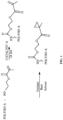
- Step two Epoxidation of POLYISO A-carbamate containing methacrylate intermediate
Landscapes
- Chemical & Material Sciences (AREA)
- Health & Medical Sciences (AREA)
- Chemical Kinetics & Catalysis (AREA)
- Medicinal Chemistry (AREA)
- Polymers & Plastics (AREA)
- Organic Chemistry (AREA)
- Emergency Medicine (AREA)
- Polyurethanes Or Polyureas (AREA)
Abstract
Provided is an epoxy-functional urethane comprising an oxidized methacrylate-functional carbamate which comprises a reaction product of a methacrylate-functional carbamate, a ketone, water, a base and an oxidant, wherein the methacrylate-functional carbamate comprises a reaction product of an isocyanate with a compound containing one or more hydroxyl groups and one or more methacrylate groups, optionally, in the presence of a catalyst. Also provided is a process for producing an epoxy-functional urethane, the process comprising:(1) reacting a polyisocyanate with a compound containing one or more hydroxyl groups and one or more methacrylate groups, optionally, in the presence of a catalyst to form a methacrylate-functional carbamate; and (2) oxidizing the methacrylate-functional carbamate to an epoxy urethane (methyloxiranecarboxylate carbamate), wherein oxidizing comprises (a) forming a mixture comprising the methacrylate-functional carbamate with a ketone, water, and a base, and (b) feeding an aqueous solution of oxidant into the mixture. The process may further include 3) curing the epoxy-functional urethane with a curing agent to form a thermoset polymer, and 4) self-crosslinking the epoxy-functional urethane to form a crosslinked thermoset polymer. The thermoset polymers produced from the epoxy-functional urethanes of the invention may find use in or as coatings, adhesives, sealants, films, elastomers, castings, foams, and composites.
Description
- The present invention relates in general to polymers, and more specifically, to epoxy-urethane thermosetting compositions made from methacrylate-functional carbamates.
- High performance paint and coating systems are needed for many applications ranging from aircraft, ships, chemical plants, flooring, bridges, and many others. Although there are many coatings binder systems available, the two most prominent are epoxy coatings and polyurethane coatings.
- Epoxy resin systems are often used as primers because they provide good adhesion to most substrates and provide a barrier for anticorrosion. A typical epoxy system involves a bisphenol-A (BPA) based epoxy resin that is cured with a multifunctional amine curing agent. Typically, liquid BPA epoxy resins are used such as EPON 828 (Hexion) or DER 331 (Olin Chemicals). Amine curing agents can be simple compounds such as bis(p-amino cyclohexyl) methane (PACM), isophorone diamine (IPDA) or more complex amine compounds such as polyamide resins, polyamidoamine resins, polyphenalkamine resins, or epoxy resin adducts. Because the reactions between the amine curing agent and the epoxy resin start as soon as the two ingredients are mixed, these materials are provided separately as two-component systems (2K) and are mixed just prior to application. The time after mixing the components during which the coating can still be applied is known as the "pot life." Sometimes the pot life is defined as the time for the viscosity to double; however, the pot life for any given coating system is that time where the viscosity is suitable for application. More information about epoxy resin technology can be found in various reference materials including B. Ellis, ed., "Chemistry and Technology of Epoxy Resins", Springer Science, 1993; H. Panda, "Epoxy Resins Technology Handbook", 2nd Revised Edition, Asia Pacific Business Press, 2019; C. May, "Epoxy Resins: Chemistry and Technology", 2nd Edition, Routledge, 2018.
- In addition to amines, epoxy resins also react with themselves (homopolymerization), anhydrides, phenols, and/or thiols. An epoxy formulation may contain multiple different kinds of curing agents as well as the right conditions for homopolymerization.
- Polyurethane coatings represent a class of high-performance systems that can be used for a number of different applications. Polyurethanes are highly desired for their durability, toughness, and abrasion resistance, which is believed to be a result of extensive hydrogen bonding. Two component (2K) polyurethane coatings involve the reaction of a polyol with a polyisocyanate. As with epoxy resins, the curing reactions start as soon as the components are mixed; therefore, the coating system is supplied in two packages that are mixed just prior to application. The polyol can be an acrylic polyol, a polyester polyol, a polyether polyol, a polyurethane polyol, or a polycarbonate polyol. The polyisocyanate component can be based on aromatic or aliphatic building blocks. Aromatic polyisocyanates react very rapidly, while aliphatic polyisocyanates react slower; however, it is possible to accelerate the curing with the use of catalysts. Aliphatic polyisocyanates are preferred for use where the coating requires weathering performance. More information about polyurethanes and their use in coatings can be found in various reference materials including "Szycher's Handbook of Polyurethanes", 2nd edition, CRC Press, 2012; U. Meier-Westhues, "Polyurethanes: Coatings, Adhesives and Sealants", Vincentz Network, 2007.
- However, due to concerns about exposure to isocyanates, there is a desire to be able to make polyurethanes without using isocyanates at the point of application. A number of approaches have been explored including cyclic carbonate-amine chemistry and carbamate-aldehyde chemistry, among others (Polym. Bull. 2019, 76 (6), 3233-3246; ChemSusChem 2019, 12 (15), 3410-3430; Eur. Polym. J. 2017, 87, 535-552; RSC Adv. 2013, 3 (13), 4110-4129; Polymer. Adv. Tech. 2015, 26 (7), 707-761).
- In making new coatings systems, it is desirable to maintain the polyurethane character as the hydrogen bonding it affords imparts significant toughness, durability, and abrasion resistance. Therefore, a system that results in crosslinked polyurethane materials, but uses a different crosslinking chemistry is desirable.
- As described previously, epoxy chemistry is well known and used extensively in the field of thermosetting materials for applications in coatings, composites, and adhesives. Having an epoxy functional polyurethane can meet this need.
- One approach to making epoxy functional polyurethanes is that of glycidyl carbamate functional resins. Glycidyl carbamate functional resins are made by reacting isocyanate functional resins with glycidol.

- Glycidyl carbamates are typically synthesized by the reaction of a polyisocyanate with glycidol. In
U.S. Pat. No. 2,830,038, Pattison discloses the synthesis of linear epoxy urethane compounds by the reaction of polytetramethylene ether glycol with an excess of toluene-2,4-diisocyanate (TDI), followed by reaction with glycidol. The product is mixed with a diamine and cured to form an elastomer. - Doss, in
U.S. Pat. No. 3,440,230 , teaches the synthesis of a glycidyl carbamate resin by the reaction of a mixture of 2,4- and 2,6-toluene diisocyanate (TDI) with glycidol. The product can be cured at elevated temperature (180 °C for 30 minutes) between aluminum strips and forms an adhesive. Pittman et al. disclose glycidol-modified polyurethanes as treatments for textiles inU.S. Pat. No. 3,814,578 . To prepare the glycidol-modified polyurethane, an isocyanate-terminated prepolymer was reacted with glycidol. The product is applied to a fabric either from solvent or as an aqueous emulsion and cured. - Several researchers have studied the rearrangement reactions of glycidyl carbamates. In an early report, Iwakura and Taneda indicate that N-substituted phenyl glycidyl carbamate would rearrange at elevated temperatures to 3-phenyl-5-hydroxytetrahydro-1,3-oxazin-2-one (J. Org. Chem, 24, 1992 (1959)). However, Farrisey and Nashu show that, when catalyzed by a tertiary amine, phenyl glycidyl carbamate rearranges at elevated temperatures to 3-phenyl-4-hydroxymethyl-2-oxazolidones (J. Heterocyl. Chem., 7, 331-333 (1970)).
- The group of Chen et al. report the synthesis of glycidol-terminated polyurethanes (glycidyl carbamates) and find that they had good adhesion at low temperatures as well as good storage stability and room temperature curing (J. Appl. Polym. Sci., 51, 1199-1206 (1994)). A subsequent study shows that the glycidol-terminated polyurethanes have better impact strength, fracture energy, and adhesion than a conventional epoxy resin (J. Appl. Polym. Sci., 52, 1137-1151 (1994). In
EP 0553701 A2 , Rehfuss, et al. report a coating system made from reacting a polyisocyanate with glycidol to form the glycidyl carbamate resin and then curing it with a polyfunctional acid compound. Yeganeh et al. synthesized biodegradable epoxy terminated polyurethanes by end-capping of isocyanate terminated prepolymers with glycidol which are cured with diamines to make thermosets (Eur. Polym. J. 41, 2370-2379 (2005); J. Polym. Sci. A Polym. Chem. 43, 2985-2006 (2005)). Yeganeh et al. also report polyurethane elastomers made from isocyanate terminated prepolymers capped with glycidol were cured with a polyamic acid to form crosslinked elastomers (J. Appl. Polym. Sci. 103, 1776-1785 (2007)). Yeganeh et al. also studied the curing of epoxy polyurethanes using a novel phenolic functionalized polyamide resin (High Perf Polym. 20, 126-145 (2008)). Solouck et al. synthesized isocyanate terminated prepolymers from difunctional polyols and diisocyanates that were then end-capped with glycidol. These were cured with diamines to form crosslinked elastomers (Iran. J. Pharma. Sci., 4, 281-288 (2008)). Sun et al. studied the kinetics of the reaction of glycidol with isocyanate terminated prepolymers from aromatic and cycloaliphatic diisocyanates. The epoxy urethane terminated polymers were mixed with conventional BPA epoxy resins and cured and their underwater acoustic properties were studied (Polym. Bull. 69, 621-633 (2012)). - In a series of investigations, Webster et al. studied the synthesis of glycidyl carbamate-functional resins made from the reaction of glycidol with multifunctional polyisocyanates derived from 1,6-hexamethylene diisocyanate (HDI). In one paper, the synthesis of multifunctional resins and their curing with amines to form coatings was studied (JCT Research, 2, 517-528 (2005)). In another paper, the self-crosslinking reaction at elevated temperature was studied as were the properties of coatings cured with the self-crosslinking reaction (Prog. Org. Coat., 57, 128-139(2006)). It was also shown that modification of the polyisocyanates with monofunctional alcohols, followed by reaction with glycidol could be used to moderate the viscosity of the resins. The resulting products could be cured with amines or through self-crosslinking to form coatings (J. Coat. Tech. & Res., 7, 531-546 (2010);
U.S. Pat. Nos. 9,051,413 9,593,258 U.S. Pat. No. 8,852,458 that polyfunctional glycidyl-carbamate resins could be blended with conventional BPA epoxy resins to form corrosion resistant coatings. Glycidyl carbamate-functional resins could be rendered water dispersible by partial replacement of glycidol with polyethylene glycol and cured using waterborne amine curing agents (J. Coat. Tech. Res., 6, 735-747 (2011);U.S. Pat. Nos. 7,776,956 ; and9,676,895 U.S. Pat. No. 8,097,741 ). - All these glycidyl carbamate resins are synthesized by reacting an isocyanate-functional material with glycidol. However, as those skilled in the art are aware, glycidol is very expensive and there are various health hazards associated with it.
- In another approach to the synthesis of epoxy-functional polyurethane resins, Ambrose et al., reported the reaction of isocyanate-functional compounds with a hydroxyl-functional polyepoxide having 2 or more epoxy groups per molecule (
U.S. Pat. Nos. 4,699,814 ; and4,749,743 ). An example of a hydroxyl-functional polyepoxide is a diglycerol polyglycidyl ether having three epoxy groups per molecule. - Therefore, a need exists in the art for a new approach to the synthesis of epoxy functional polyurethanes that does not make use of glycidol and which results in epoxy-functional urethanes with novel compositions.
- Accordingly, the present invention provides an epoxy-functional urethane comprising an oxidized methacrylate-functional carbamate which comprises a reaction product of a methacrylate-functional carbamate, a ketone, water, a base, and an oxidant, wherein the methacrylate-functional carbamate comprises a reaction product of an isocyanate with a compound containing one or more hydroxyl groups and one or more methacrylate groups, optionally, in the presence of a catalyst.
- The present invention also provides a process for producing an epoxy-functional urethane, the process comprising:(1) reacting an isocyanate compound with a compound containing one or more hydroxyl groups and one or more methacrylate groups, optionally, in the presence of a catalyst to form a methacrylate-functional carbamate; and (2) oxidizing the methacrylate-functional carbamate to an epoxy urethane (methyloxiranecarboxylate carbamate), wherein oxidizing comprises (a) mixing the methacrylate-functional carbamate with a ketone, water, and a base, and (b) feeding an aqueous solution of oxidant into the mixture. The process may further include 3) curing the epoxy-functional urethane with a curing agent to form a thermoset polymer, and 4) self-crosslinking the epoxy-functional urethane to form a crosslinked thermoset polymer.
- Thermoset polymers produced from the epoxy-functional urethanes of the invention may find use in or as coatings, adhesives, sealants, films, elastomers, castings, foams, and composites.
- These and other advantages and benefits of the present invention will be apparent from the Detailed Description of the Invention herein below.
- The present invention will now be described for purposes of illustration and not limitation in conjunction with the figures, wherein:
-
FIG. 1 shows the synthetic route to POLYISO A methyloxiranecarboxylate carbamate resin; -
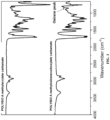
FIG. 2 provides the 13C NMR spectra of POLYISO A methacrylate carbamate and POLYISO A methyloxiranecarboxylate carbamate; and -
FIG. 3 shows the ATR-FTIR spectra of POLYISO A methylacrylate carbamate and POLYISO A methyloxiranecarboxylate carbamate resins. - The present invention will now be described for purposes of illustration and not limitation. Except in the operating examples, or where otherwise indicated, all numbers expressing quantities, percentages, and so forth in the specification are to be understood as being modified in all instances by the term "about."
- Any numerical range recited in this specification is intended to include all sub-ranges of the same numerical precision subsumed within the recited range. For example, a range of "1.0 to 10.0" is intended to include all sub-ranges between (and including) the recited minimum value of 1.0 and the recited maximum value of 10.0, that is, having a minimum value equal to or greater than 1.0 and a maximum value equal to or less than 10.0, such as, for example, 2.4 to 7.6. Any maximum numerical limitation recited in this specification is intended to include all lower numerical limitations subsumed therein and any minimum numerical limitation recited in this specification is intended to include all higher numerical limitations subsumed therein. Accordingly, Applicant reserves the right to amend this specification, including the claims, to expressly recite any sub-range subsumed within the ranges expressly recited herein. All such ranges are intended to be inherently described in this specification such that amending to expressly recite any such sub-ranges would comply with the requirements of 35 U.S.C. §112(a), and 35 U.S.C. §132(a). The various embodiments disclosed and described in this specification can comprise, consist of, or consist essentially of the features and characteristics as variously described herein.
- Any patent, publication, or other disclosure material identified herein is incorporated by reference into this specification in its entirety unless otherwise indicated, but only to the extent that the incorporated material does not conflict with existing definitions, statements, or other disclosure material expressly set forth in this specification. As such, and to the extent necessary, the express disclosure as set forth in this specification supersedes any conflicting material incorporated by reference herein. Any material, or portion thereof, that is said to be incorporated by reference into this specification, but which conflicts with existing definitions, statements, or other disclosure material set forth herein, is only incorporated to the extent that no conflict arises between that incorporated material and the existing disclosure material. Applicant reserves the right to amend this specification to expressly recite any subject matter, or portion thereof, incorporated by reference herein.
- Reference throughout this specification to "various non-limiting embodiments," "certain embodiments," or the like, means that a particular feature or characteristic may be included in an embodiment. Thus, use of the phrase "in various non-limiting embodiments," "in certain embodiments," or the like, in this specification does not necessarily refer to a common embodiment, and may refer to different embodiments. Further, the particular features or characteristics may be combined in any suitable manner in one or more embodiments. Thus, the particular features or characteristics illustrated or described in connection with various or certain embodiments may be combined, in whole or in part, with the features or characteristics of one or more other embodiments without limitation. Such modifications and variations are intended to be included within the scope of the present specification.
- The grammatical articles "a", "an", and "the", as used herein, are intended to include "at least one" or "one or more", unless otherwise indicated, even if "at least one" or "one or more" is expressly used in certain instances. Thus, these articles are used in this specification to refer to one or more than one (i.e., to "at least one") of the grammatical objects of the article. By way of example, and without limitation, "a component" means one or more components, and thus, possibly, more than one component is contemplated and may be employed or used in an implementation of the described embodiments. Further, the use of a singular noun includes the plural, and the use of a plural noun includes the singular, unless the context of the usage requires otherwise.
- In a first aspect, the invention is direct to an epoxy-functional urethane comprising an oxidized methacrylate-functional carbamate which comprises a reaction product of a methacrylate-functional carbamate, a ketone, water, a base and an oxidant, wherein the methacrylate-functional carbamate comprises a reaction product of an isocyanate with a compound containing one or more hydroxyl groups and one or more methacrylate groups, optionally, in the presence of a catalyst.
- In a second aspect, the invention is directed to a process for producing an epoxy-functional urethane, the process comprising:(1) reacting a polyisocyanate with a compound containing one or more hydroxyl groups and one or more methacrylate groups, optionally, in the presence of a catalyst to form a methacrylate-functional carbamate; and (2) oxidizing the methacrylate-functional carbamate to an epoxy urethane (methyloxiranecarboxylate carbamate), wherein oxidizing comprises (a) forming a mixture comprising the methacrylate-functional carbamate with a ketone, water, and a base, and (b) feeding an aqueous solution of oxidant into the mixture. The process may further include 3) curing the epoxy-functional urethane with a curing agent to form a thermoset polymer, and 4) self-crosslinking the epoxy-functional urethane to form a crosslinked thermoset polymer.
- The thermoset polymers produced from the epoxy-functional urethanes of the invention may find use in or as coatings, adhesives, sealants, films, elastomers, castings, foams, and composites.
- The present inventors have discovered an entirely new approach to the synthesis of epoxy functional polyurethanes that does not make use of glycidol and where the epoxy group and the carbamate group are separated by more than one atom. This approach also results in epoxy functional urethanes having novel compositions.
- The synthesis method involves a first reaction of an isocyanate functional compound with a compound containing one or more hydroxyl groups and one or more methacrylate groups. Then, the methacrylate groups are oxidized to covert the double bonds to epoxy groups.
- There are a number of approaches for converting terminal double bonds into epoxy groups. One of the more common approaches is to use m-chloroperbenzoic acid which reacts directly with a carbon-carbon double bond to convert it to the corresponding epoxide [see, e.g., J. Am. Chem. Soc., 120, 9513-9516 (1998)]. However, the by-product of the reaction is m-chlorobenzoic acid in stoichiometric amounts, which creates significant waste.
- An alternative method for epoxidizing olefins involves dioxirane, which can be generated in situ from the reaction of a ketone with potassium peroxymonosulfate, also known as potassium caroate or oxone [see J. Org. Chem. 45, 4758-4760 (1980)]. This method has been found to be useful in epoxidizing a number of different types of carbon-carbon double bonds [Org. Process Res. Dev., 6, 405-406 (2002), ACS Sustain. Chem. Eng., 6, 5115-5121 (2018)].
- Thus, the present inventors have discovered that novel epoxy functional polyurethanes can be synthesized by reacting an isocyanate with a compound containing one or more hydroxyl groups and one or more methacrylate groups followed by epoxidizing the carbon-carbon double bond of the methacrylate group (s) using dioxirane epoxidation. The resulting epoxy functional urethane compounds can be cured into thermosetting coatings by reaction with curing agents reactive with epoxy groups.
- As used herein, the term "polymer" encompasses prepolymers, oligomers, and both homopolymers and copolymers; the prefix "poly" in this context refers to two or more. As used herein, the term "molecular weight", when used in reference to a polymer, refers to the number average molecular weight, unless otherwise specified.
- As used herein, the term "polyol" refers to compounds comprising at least two free hydroxyl groups. Polyols include polymers comprising pendant and terminal hydroxyl groups.
- As used herein, the term "coating composition" refers to a mixture of chemical components that will cure and form a coating when applied to a substrate.
- The terms "adhesive" or "adhesive composition" refer to any substance that can adhere or bond two items together. Implicit in the definition of an "adhesive composition" or "adhesive formulation" is the concept that the composition or formulation is a combination or mixture of more than one species, component or compound, which can include adhesive monomers, oligomers, and polymers along with other materials.
- A "sealant" or "sealant composition" refers to a composition which may be applied to one or more surfaces to form a protective barrier, for example to prevent ingress or egress of solid, liquid or gaseous material or alternatively to allow selective permeability through the barrier to gas and liquid. In particular, it may provide a seal between surfaces.
- A "casting" or "casting composition" refers to a mixture of liquid chemical components which is usually poured into a mold containing a hollow cavity of the desired shape, and then allowed to solidify.
- A "composite" or "composite composition" refers to a material made from one or more polymers, containing at least one other type of material (e.g., a fiber) which retains its identity while contributing desirable properties to the composite. A composite has different properties from those of the individual polymers/materials which make it up.
- The terms "cured," "cured composition" or "cured compound" refer to components and mixtures obtained from reactive curable original compound(s) or mixture(s) thereof which have undergone chemical and/or physical changes such that the original compound(s) or mixture(s) is(are) transformed into a solid, substantially non-flowing material. A typical curing process may involve crosslinking.
- The term "curable" means that an original compound(s) or composition material(s) can be transformed into a solid, substantially non-flowing material by means of chemical reaction, crosslinking, radiation crosslinking, or the like. Thus, compositions of the invention are curable, but unless otherwise specified, the original compound(s) or composition material(s) is(are) not cured.
- The components useful in the present invention comprise a polyisocyanate. As used herein, the term "polyisocyanate" refers to compounds comprising at least two unreacted isocyanate groups, such as three or more unreacted isocyanate groups. The polyisocyanate may comprise diisocyanates such as linear aliphatic polyisocyanates, aromatic polyisocyanates, cycloaliphatic polyisocyanates and aralkyl polyisocyanates.
- Suitable polyisocyanates include aromatic, araliphatic, aliphatic or cycloaliphatic di- and/or polyisocyanates and mixtures thereof. In certain embodiments, the polyisocyanate may comprise a diisocyanate of the formula
R(NCO)2
wherein R represents an aliphatic hydrocarbon residue having 4 to 12 carbon atoms, a cycloaliphatic hydrocarbon residue having 6 to 15 carbon atoms, an aromatic hydrocarbon residue having 6 to 15 carbon atoms or an araliphatic hydrocarbon residue having 7 to 15 carbon atoms. - Examples of the organic diisocyanates which are particularly suitable for the present invention include 1,4-tetramethylene diisocyanate, 1,6-hexamethylene diisocyanate (HDI), 2,2,4-trimethyl-1,6-hexamethylene diisocyanate, 2,4,4-trimethyl-1,6-hexamethylene diisocyanate, 1,12-dodecamethylene diisocyanate, cyclohexane-1,3- and 1,4-diisocyanate, 1-isocyanato-2-isocyanato-methyl cyclopentane, 1-isocyanato-3,3,5-trimethyl-5-isocyanato-methylcyclohexane (IPDI), bis-(4-isocyanatocyclohexyl)methane (H12MDI), 1,3- and 1,4-bis(isocyanatomethyl)-cyclohexane, bis-(4-isocyanato-3-methyl-cyclohexyl)-methane, α,α,α',α'-tetramethyl-1,3- and 1,4-xylene diisocyanate, 1-isocyanato-1-methyl-4(3)-isocyanato-methyl cyclohexane, and 2,4- and 2,6-hexahydrotoluene diisocyanate, toluene diisocyanate (TDI), diphenylmethane diisocyanate (MDI), pentane diisocyanate (PDI) - bio-based), and, isomers of any of these; or combinations of any of these. Mixtures of diisocyanates may also be used. Preferred diisocyanates include 1,6-hexamethylene diisocyanate (HDI), isophorone diisocyanate (IPDI), and bis(4-isocyanatocyclohexyl)-methane (H12MDI) because they are readily available and yield relatively low viscosity oligomers.
- Polyisocyanate adducts containing isocyanurate, iminooxadiazine dione, urethane, biuret, allophanate, uretdione and/or carbodiimide groups are also suitable for use in the present invention, and may be prepared from the same organic groups, R, described above. Such polyisocyanates may have isocyanate functionalities of two to three or more and can be prepared, for example, by the trimerization or oligomerization of diisocyanates or by the reaction of diisocyanates with polyfunctional compounds containing hydroxyl or amine groups. In certain embodiments, the polyisocyanate is the isocyanurate of hexamethylene diisocyanate, which may be prepared in accordance with
U.S. Pat. No. 4,324,879 , at col. 3, line 5 to col. 6, line 47. - In various embodiments, the present invention relates to a process for synthesizing glycidyl carbamate-functional compositions.
- In a first step, an isocyanate functional compound is reacted with a compound containing a hydroxyl group and a methacrylate group to form a methacrylate functional carbamate. Although any isocyanate compound can be used, it is preferred to use isocyanate compounds that have two or more isocyanate groups, so that the final glycidyl carbamate functional composition can be cured into a thermoset material. Example diisocyanate compounds include 1,6-hexamethylene diisocyanate, 2,4-toluene diisocyanate, 2,6-toluene diisocyanate and mixtures thereof, methylene diphenyl diisocyanate, isophorone diisocyanate, bis(4-isocyanatocyclohexyl) methane, tetramethylxylene diisocyanate, xylylene diisocyanate, hydrogenated xylylene diisocyanate, 2,2,4 and 2,4,4,- trimethyl-1,6-hexamethylene diisocyanate, and 4-isocyanatomethyl-1,8-octane diisocyanate. Polyisocyanate compounds can also be used including the biuret and isocyanurate adducts of diisocyanates, polyisocyanates made by reacting a polyol with a diisocyanate, uretdione adducts, and allophanate polyisocyanates.
- Another type of polyisocyanate that can be used is one prepared by the free radical copolymerization of a compound containing an isocyanate and a carbon-carbon double bond that can be polymerized using a free radical chain growth polymerization. Examples are m-TMI (α,α-dimethyl meta-isopropenyl benzyl isocyanate) and isocyanato ethyl methacrylate (IEM). These monomers can be combined with others in a copolymerization to yield a polymer having multiple isocyanate groups.
- Examples of compounds having one or more hydroxyl groups and one or more methacrylate groups are hydroxy ethyl methacrylate, hydroxypropyl methacrylate, hydroxy butyl methacrylate, glycerol dimethacrylate, trimethylolpropane dimethacrylate, pentaerythritol dimethacrylate, penterythritol trimethacrylate, and the like.
- The first step can be carried out in the absence or presence of solvent and in the absence of presence of a catalyst. Possible solvents are toluene, xylenes, n-butyl acetate, t-butyl acetate, amyl acetate, acetone, methyl ethyl ketone, methyl amyl ketone, dihydrolevoglucosenone (CYRENE), N-methyl 2-pyrrolidone, N-ethyl-2-pyrrolidone, tetrahydrofuran, diethyl ether, dimethylsulfoxide, dimethyl formamide, and dimethylacetamide. It is preferred to carry out the reaction in the absence of solvent, or, if solvent is needed due to viscosity, to use a solvent that can be readily removed after the reaction is complete.
- Suitable catalysts include, but are not limited to, tin compounds such as dibutyl tin dilaurate, dibutyl tin diacetate; tertiary amines such as 1,4-diazabicyclo[2.2.2]octane (DABCO) and other metal salts based on bismuth, iron, zirconium, or zinc. It is preferred to carry out the reaction without a catalyst or with a tin-based catalyst.
- After reacting the isocyanate, step two, involving oxidation of the double bond to an epoxide occurs. The reaction occurs in a two-phase (biphasic) system. The methacrylate functional carbamate synthesized in step one is dissolved in a solvent. Preferably, the solvent is a ketone so that it can function as the source of ketone for the formation of the dioxirane. Solvents such as acetone, methyl ethyl ketone, methyl amyl ketone, and cyclohexanone can be used, with acetone being the preferred solvent. A mixture of a ketone and another solvent may also be used. Suitable solvents are those listed above for the isocyanate-alcohol reaction.
- A base is needed in the aqueous phase to maintain basic conditions to stabilize the dimethyldioxirane. Inorganic bases such as sodium hydrogen carbonate (sodium bicarbonate), sodium hydroxide, sodium carbonate, potassium bicarbonate, potassium carbonate, potassium hydroxide, and the like can be used. Sodium bicarbonate is preferred.
- The biphasic reaction mixture is stirred vigorously to create interfacial surface area between the organic and aqueous phases.
- An oxidant such as oxone (potassium peroxysulfate) may be dissolved in water and added slowly to the reaction mixture. A slow addition rate is preferred to yield the highest conversion of methacrylate groups to glycidyl groups.
- The reaction can be carried out at temperatures ranging from 2 °C to 90 °C. Ambient temperature of 18-25 °C is preferred.
- Optionally, a phase transfer catalyst can be used. Suitable phase transfer catalysts include tetrabutyl ammonium hydrogen sulfate, quaternary ammonium compounds such as benzyl triethyl ammonium chloride, and the like. Ionic liquids can also function as phase transfer compounds such as 1-dodecyl-3-methylimidazolium tetrafluoroborate (DoDMIImBF4). Crown ethers such as 18-crown-6 can also be used as a phase transfer catalyst.
- After completion of the reaction, an organic solvent is added to extract the product from the reaction mixture and the organic and aqueous layers are allowed to separate. The organic layer is then washed several times with aqueous sodium chloride and then the organic layer is separated from the aqueous layer and the solvent removed by evaporation to yield the glycidyl carbamate resin.
- Formulations are then prepared with the epoxy urethane (methyloxiranecarboxylate carbamate) resin and a multifunctional amine curing agent and, optionally, catalysts, solvents, additives, pigments.
- Suitable amine curing agents are those which are soluble or miscible in a coating composition of the invention. Amine curing agents known in the art include, for example, diethylenetriamine, triethylenetetramine, tetraethylene-pentamine, etc. as well as 2,2,4- and/or 2,4,4-trimethylhexamethylenediamine; 1,2- and 1,3-diaminopropane; 2,2-dimethylpropylenediamine; 1,4-diaminobutane; 1,6-hexanediamine; 1,7-diaminoheptane; 1,8-diaminooctane; 1,9-diaminononae; 1,12-diaminododecane; 4-azaheptamethylenediamine; N,N'-bis(3-aminopropyl)butane-1,4-diamine; 1-ethyl-1,3-propanediamine; 2,2(4),4-trimethyl-1,6-hexanediamin; bis(3-aminopropyl)piperazine; N-aminoethylpiperazine; N,N-bis(3-aminopropyl)ethylenediamine; 2,4(6)-toluenediamine; dicyandiamine; melamine formaldehyde; tetraethylenepentamine; 3-diethylaminopropylamine; 3,3"-iminobispropylamine; tetraethylenepentamine; 3-diethylaminopropylamine; and 2,2,4- and 2,4,4-trimethylhexamethylenediamine. Exemplary cycloaliphatic amine curing agents include, but are not limited to, 1,2- and 1,3-diaminocyclohexane; 1,4-diamino-2,5-diethylcyclohexane; 1,4-diamino-3,6-diethylcyclohexane; 1,2-diamino-4-ethylcyclohexane; 1,4-diamino-2,5-diethylcyclo-hexane; 1,2-diamino-4-cyclohexylcyclohexane; isophoronediamine; norbornanediamine; 4,4'-diaminodicyclohexylmethane; 4,4'-diaminodicyclohexylethane; 4,4'-diaminodicyclohexylpropane; 2,2-bis(4-aminocyclohexyl)propane; 3,3'-dimethyl-4,4'-diaminodicyclohexylmethane; 3-amino-1-(4-aminocyclohexyl)propane; 1,3- and 1,4-bis(aminomethyl)cyclohexane; and 1-cyclohexyl-3,4-dimino-cyelohexane. As exemplary araliphatic amines, in particular those amines are employed in which the amino groups are present on the aliphatic radical for example m- and p-xylylenediamine or their hydrogenation products as well as diamide diphenylmethane; diamide diphenylsulfonic acid (amine adduct); 4,4'-methylenedianiline; 2,4-bis(p-aminobenzyl)aniline; diethyltoluenediamine; and m-phenylene diamine. The amine curing agents may be used alone or as mixtures.
- Suitable amine-epoxide adducts are, for example, reaction products of diamines such as, for example, ethylenediamine, diethylenetriamine, triethylenetetramine, m-xylylenediamine and/or bis(aminomethyl)cyclohexane with terminal epoxides such as, for example, polyglycidyl ethers of polyhydric phenols listed above.
- Preferably, amine curing agents used with the coating formulations of the invention are PACM (bis(para-aminocyclohexyl)methane), diethylene triamine (DETA), and 4,4'-methylene dianiline (MDA). Stoichiometry ratios of amine to oxirane of the coating compositions may be based on amine hydrogen equivalent weight (AHEW) and on weight per epoxide (WPE). A formulation of 1:1 was based on one epoxide reacted with one amine active hydrogen.
- Solvents can be used in the formulation of the thermosets. Suitable solvents can include toluene, xylenes, n-butyl acetate, t-butyl acetate, amyl acetate, acetone, methyl ethyl ketone, methyl amyl ketone, dihydrolevoglucosenone (CYRENE), N-methyl 2-pyrrolidone, N-ethyl-2-pyrrolidone, ethyl ethoxy propionate, tetrahydrofuran, diethyl ether, dimethylsulfoxide, dimethyl formamide, and dimethylacetamide.
- Curing can be carried out at ambient conditions or at elevated temperatures.
- Coatings, adhesives, sealants, films, elastomers, castings, foams, and composites compositions of the invention may further contain at least one additive to, for example, enhance the composition's efficiency. Examples of suitable additives include, but are not limited to, leveling and flow control agents such as silicones, fluorocarbons or cellulosics; extenders; plasticizers; flattening agents; pigment wetting and dispersing agents; ultraviolet (UV) absorbers; UV light stabilizers; defoaming and antifoaming agents; anti-settling, antisag and bodying agents; anti-skinning agents; anti-flooding and anti-floating agents; and corrosion inhibitors. Specific examples of such additives are found in Raw Materials Index, published by the National Paint & Coatings Association, 1500 Rhode Island Avenue, N.W., Washington, D.C. 20005. Further examples of such additives may be found in
U.S. Pat. No. 5,371,148 . - Examples of flattening agents include, but are not limited to, synthetic silica, available from the Davison Chemical Division of W. R. Grace & Company as SYLOID; polypropylene, available from Hercules Inc., as HERCOFLAT; synthetic silicate, available from J. M. Huber Corporation, as ZEOLEX.
- Examples of viscosity, suspension, and flow control agents include, but are not limited to, polyaminoamide phosphate, high molecular weight carboxylic acid salts of polyamine amides, and alkylene amine salts of an unsaturated fatty acid, all available from BYK Chemie U.S.A. as ANTI TERRA. Further examples include, but are not limited to, polysiloxane copolymers, polyacrylate solution, cellulose esters, hydroxyethyl cellulose, hydroxypropyl cellulose, polyamide wax, polyolefin wax, hydroxypropyl methyl cellulose, polyethylene oxide, and the like.
- Where formulated as a coating, the inventive compositions may be applied to various substrates including, but not limited to, metals (e.g. aluminum, steel), plastics, ceramics, glass, natural materials, and concrete. The substrates may optionally be cleaned prior to coating to remove processing oils or other contaminants. The substrates may also be pretreated to improve adhesion and corrosion resistance. Additionally, a primer may be applied first to the substrate followed by application of the coating of the invention. Alternatively, the coating of the invention can be applied to the substrate first, followed by a topcoat of another or similar material.
- The compositions of the invention may be contacted with a substrate by any methods known to those skilled in the art, including but not limited to, spraying, dipping, flow coating, rolling, brushing, pouring, squeegeeing, and the like. In some embodiments, the inventive compositions may be applied in the form of paints or lacquers onto any compatible substrate. In certain embodiments, the inventive composition is applied as a single layer. In other embodiments, the composition may be applied as multiple layers as needed.
- The non-limiting and non-exhaustive examples that follow are intended to further describe various non-limiting and non-exhaustive embodiments without restricting the scope of the embodiments described in this specification. All quantities given in "percents" are understood to be by weight, unless otherwise indicated. For the purpose of mass to mole conversions, reagents with purity of 99% or higher are considered to be 100% pure.
- Although described herein in the context of a coating, those skilled in the art will recognize that the principles of the present invention are equally applicable to adhesives, sealants, films, elastomers, castings, foams, and composites.
- The following materials were used in preparation of the Examples:
- POLYISO A
- an allophanate-modified polyisocyanate based on hexamethylene diisocyanate (HDI), commercially available from Covestro LLC (Pittsburgh, PA) as DESMODUR XP 2580 (19.3% NCO);
- METHACRYLATE A
- 2-hydroxyethyl methacrylate, commercially available from Sigma-Aldrich;
- CATALYST A
- dibutyltin dilaurate 95% (DBTDL), one drop is ~ 20-30 mg, commercially available from Sigma-Aldrich;
- OXIDANT A
- potassium peroxysulfate, commercially available from Sigma-Aldrich as OXONE;
- BASE A
- sodium hydrogen carbonate, commercially available from Alfa Aesar;
- CROSSLINKER A
- para-aminocyclohexyl methane (PACM), commercially available from Evonik;
- SOLVENT A
- acetone, commercially available from Alfa Aesar;
- SOLVENT B
- dichloromethane, commercially available from Alfa Aesar;
- SOLVENT C
- ethyl acetate, commercially available from Alfa Aesar;
- DI water
- de-ionized water;
- MEK
- methyl ethyl ketone, commercially available from VWR International; and
- BRINE
- saturated aqueous solution of NaCl, prepared by dissolving 500 g NaCl (certified ACS, Sigma-Aldrich) into 1 L of DI water at room temperature.
- The following methods were used in the examples for the characterization of the compounds synthesized and materials prepared. FTIR measurements were made with a THERMO NICOLET 8700 FTIR spectrometer. Spectra acquisitions were based on 64 scans with data spacing of 4.0 cm-1 in the range of 4000-500 cm-1. NMR measurements were made at 25 ° C using a BRUKER AVANCE 400 MHz instrument and processed with TOPSPIN software. All measurements were made using CDCl3 as solvent. The bulk viscosity of samples was measured using an ARES Rheometer at room temperature.
- Epoxide equivalent weight (EEW, g/eq) of the epoxy products was determined by epoxy titration according to ASTM D1652-11 (2019). Impact tests were measured according to ASTM D2794-93 (2019) with a BYK-GARDNER Heavy Duty Impact Tester Model IG-1120, with a 1.8 kg (4 lb.) mass and 1.27 cm (0.5 in.) diameter round-nose punch. MEK double rubs of the cured film were determined according to ASTM D5402-19. Coatings that passed 400 double rubs without mar were considered fully cured. Film thickness was measured with a BYKO-TEST 8500. Konig pendulum hardness and pencil hardness were determined according to ASTM D4366-16 (2021) and ASTM D3363-20, respectively. The adhesion of coatings on steel substrate was evaluated using crosshatch adhesion ASTM D3359-17.
- POLYISO A (21.67 g 0.1mol) and METHACRYLATE A (13.1g, 0.101mol) were added into a 500mL three-neck, round bottom flask with stir bar, CATALYST A (three drops) was added. SOLVENT B was added into the reaction mixture to maintain stirring. Infrared spectroscopic analysis was performed to determine reaction completion by monitoring the disappearance of the isocyanate peak at 2275 cm-1. The resulting carbamate intermediate was directly and immediately used for the next step without purification.
- 1H NMR (400 MHz) δ 5.99 (s, 1H), 5.45 (s, 1H), 5.10 (d, J = 5.2 Hz, 1H), 4.15 (d, J = 16.9 Hz, 4H), 4.02 (ddd, J = 16.5, 9.7, 5.3 Hz, 1H), 3.77 - 3.50 (m, 2H), 3.07 (ddd, J = 41.5, 12.8, 6.6 Hz, 3H), 1.80 (s, 3H), 1.60 - 1.31 (m, 5H), 1.23 (dd, J = 14.6, 11.4 Hz, 5H), 0.89 - 0.71 (m, 1H).
- 13C NMR (400 MHz) δ 167.11, 156.32, 156.21, 154.47, 148.97, 135.95, 125.95, 68.17, 66.70, 66.42, 63.01, 62.71, 62.31, 43.54, 42.77, 40.86, 40.33, 30.58, 29.75, 29.70, 29.46, 29.01, 28.23, 28.03, 27.66, 26.51, 26.31, 26.26, 26.19, 22.21, 21.98, 19.12, 18.25, 13.97, 13.65, 10.46.
FIG. 2 shows the spectrum of the POLYISO A reacted with METHACRYLATE A. - ATR-FTIR (cm-1): 3342, 3017, 2934, 2860, 1709, 1690, 1529, 1462, 1405, 1377, 1321, 1297, 1239, 1168, 1143, 1044, 942, 815, 748, 666.
FIG. 3 shows the ATR-FTIR spectrum of the POLYISO A reacted with METHACRYLATE A. - The resulting POLYISO A -carbamate with methacrylate intermediate (containing about 0.1 mol double bond), SOLVENT A (100mL), and BASE A (84.01
g 10 equivalent, 1 mol) were added into a 2 L three-neck, round bottom flask equipped with a mechanical stirring apparatus. An aqueous solution (800 mL) which contained OXIDANT A (186g, 6 equivalent, 0.6 mol) was added dropwise at a flowrate of 1-2 mL min-1 using a pump at room temperature. After dropwise addition, the reaction solution was stirred at room temperature for another two hours. The reaction mixture was liquid-liquid extracted with SOLVENT C (3 x 150 mL). The organic layer was separated and washed with BRINE (3 x 100 mL) and evaporated. The carbon-carbon double bond conversion was about 100% (analyzed by 13C NMR spectroscopy,FIG. 2 ) and the yield was about 95%. - 1H NMR (400 MHz) δ 5.30 (d, J = 35.8 Hz, 1H), 4.26 - 3.95 (m, 4H), 3.53 (d, J = 52.8 Hz, 2H), 2.94 (dd, J = 46.5, 5.9 Hz, 2H), 2.68 (dd, J = 126.8, 6.0 Hz, 2H), 1.77 (d, J = 3.8 Hz, 1H), 1.56 - 1.35 (m, 2H), 1.30 (s, 4H), 1.24 (t, J = 13.9 Hz, 2H), 1.20 - 1.04 (m, 5H), 0.71 (ddd, J = 23.7, 13.5, 7.1 Hz, 1H).
- 13C NMR (400 MHz) δ 170.97, 156.78, 156.10, 154.36, 148.90, 63.80, 63.63, 62.08, 61.87, 53.52, 52.83, 43.50, 43.40, 42.62, 40.69, 40.20, 30.44, 29.58, 29.52, 29.32, 28.87, 28.10, 27.92, 27.51, 26.37, 26.18, 26.13, 22.07, 21.84, 21.54, 19.00, 17.19, 13.84, 13.51, 10.33.
FIG. 2 shows the spectrum of POLYISO A-carbamate with methyl oxirane groups. - ATR-FTIR (cm-1): 3340, 2935, 2860, 1710, 1684, 1526, 1462, 1404, 1373, 1295, 1239, 1171, 1137, 1044, 851, 755, 731.
FIG. 3 shows FTIR spectrum of POLYISO A-carbamate with methyl oxirane groups. - The POLYISO A-carbamate resin with methyl oxirane groups from Ex. 1 was mixed with CROSSLINKER A (at a ratio of 1:1.5) without any solvent. The coating formulations were applied on to iron phosphate pretreated 22-gauge steel test panels purchased from Q-panel. Coatings application was made using a drawdown bar for a final dry film thickness of approximately 80 µm. Coated panels were cured at 80 °C for three hours. The results of the coating evaluation are summarized in Table I.
Table I Coating Pencil hardness Crosshatch Thickness (µm) MEK König Hardness (s) Impact (in.-lb.) Ex. 2 HB 5B 109 5 52 172 - This specification has been written with reference to various non-limiting and non-exhaustive embodiments. However, it will be recognized by persons having ordinary skill in the art that various substitutions, modifications, or combinations of any of the disclosed embodiments (or portions thereof) may be made within the scope of this specification. Thus, it is contemplated and understood that this specification supports additional embodiments not expressly set forth herein. Such embodiments may be obtained, for example, by combining, modifying, or reorganizing any of the disclosed steps, components, elements, features, aspects, characteristics, limitations, and the like, of the various non-limiting embodiments described in this specification. In this manner, Applicant reserves the right to amend the claims during prosecution to add features as variously described in this specification, and such amendments comply with the requirements of 35 U.S.C. §112(a), and 35 U.S.C. §132(a).
- Various aspects of the subject matter described herein are set out in the following numbered clauses:
- Clause 1. An epoxy-functional urethane comprising an oxidized methacrylate-functional carbamate which comprises a reaction product of a methacrylate-functional carbamate, a ketone, water, a base, and an oxidant, wherein the methacrylate-functional carbamate comprises a reaction product of a polyisocyanate with a compound containing one or more hydroxyl groups and one or more methacrylate groups, optionally, in the presence of a catalyst.
- Clause 2. The epoxy-functional urethane according to Clause 1, wherein the polyisocyanate is selected from the group consisting of 1,4-tetramethylene diisocyanate, 1,6-hexamethylene diisocyanate, 2,2,4-trimethyl-1,6-hexamethylene diisocyanate, 2,4,4-trimethyl-1,6-hexamethylene diisocyanate, 1,12-dodecamethylene diisocyanate, cyclohexane-1,3-diisocyanate, cyclohexane-1,4-diisocyanate, 1-isocyanato-2-isocyanato-methyl cyclopentane, 1-isocyanato-3,3,5-trimethyl-5-isocyanato-methylcyclohexane, bis-(4-isocyanatocyclohexyl)methane, 1,3-bis(isocyanatomethyl)-cyclohexane, 1,4-bis(isocyanatomethyl)-cyclohexane, bis-(4-isocyanato-3-methyl-cyclohexyl)-methane, α,α,α',α'-tetramethyl-1,3-xylene diisocyanate, α,α,α',α'-tetramethy-1,4-xylene diisocyanate, 1-isocyanato-1-methyl-4(3)-isocyanato-methyl cyclohexane, 2,4-hexahydrotoluene diisocyanate, 2,6-hexahydrotoluene diisocyanate, toluene diisocyanate, diphenylmethane diisocyanate, pentane diisocyanate, isomers of any of these, biurets of any of these, allophanates of any of these, uretdiones of any of these, isocyanurates of any of these, uretdiones of any of these, and mixtures of any of these.
- Clause 3. The epoxy-functional urethane according to one of Clauses 1 and 2, wherein the compound containing one or more hydroxyl groups and one or more methacrylate groups is selected from the group consisting of hydroxy ethyl methacrylate, hydroxypropyl methacrylate, hydroxy butyl methacrylate, glycerol dimethacrylate, trimethylolpropane dimethacrylate, pentaerythritol dimethacrylate, penterythritol trimethacrylate, and mixtures of any of these.
- Clause 4. The epoxy-functional urethane according to any one of Clauses 1 to 3, further including a solvent selected from the group consisting of toluene, xylenes, n-butyl acetate, t-butyl acetate, amyl acetate, acetone, methyl ethyl ketone, methyl amyl ketone, dihydrolevoglucosenone, N-methyl 2-pyrrolidone, N-ethyl-2-pyrrolidone, tetrahydrofuran, diethyl ether, dimethylsulfoxide, dimethyl formamide, and dimethylacetamide, and mixtures of any of these.
- Clause 5. The epoxy-functional urethane according to any one of Clauses 1 to 4, wherein the base is selected from the group consisting of sodium hydrogen carbonate, sodium hydroxide, sodium carbonate, potassium bicarbonate, potassium carbonate, and potassium hydroxide, and mixtures of any of these.
- Clause 6. A thermoset polymer comprising a reaction product of the epoxy-functional urethane according to any one of Clauses 1 to 5 and a curing agent.
- Clause 7. The thermoset polymer according to Clause 6, wherein the curing agent comprises an amine curing agent selected from the group consisting of bis(para-aminocyclohexyl)methane, diethylene triamine, and 4,4'-methylene dianiline.
- Clause 8. The thermoset polymer according to one of Clauses 6 and 7 wherein the epoxy-functional urethane is self-crosslinked.
- Clause 9. The thermoset polymer according to Clause 8, wherein self-crosslinking comprises heating the epoxy-functional urethane to a temperature of from 20 °C to 100 °C.
-
Clause 10. One of a coating, an adhesive, a sealant, a film, an elastomer, a casting, a foam, and a composite comprising the epoxy-functional urethane according to any one of Clauses 1 to 5. - Clause 11. A process for producing an epoxy-functional urethane, the process comprising f:(1) reacting a polyisocyanate with a compound containing one or more hydroxyl groups and one or more methacrylate groups, optionally, in the presence of a catalyst to form a methacrylate-functional carbamate; and (2) oxidizing the methacrylate-functional carbamate to an epoxy urethane (methyloxiranecarboxylate carbamate), wherein oxidizing comprises (a) forming a mixture comprising the methacrylate-functional carbamate with a ketone, water, and a base, and (b) feeding an aqueous solution of oxidant into the mixture.
- Clause 12. The process according to Clause 11, wherein the polyisocyanate is selected from the group consisting of 1,4-tetramethylene diisocyanate, 1,6-hexamethylene diisocyanate, 2,2,4-trimethyl-1,6-hexamethylene diisocyanate, 2,4,4-trimethyl-1,6-hexamethylene diisocyanate, 1,12-dodecamethylene diisocyanate, cyclohexane-1,3-diisocyanate, cyclohexane-1,4-diisocyanate, 1-isocyanato-2-isocyanato-methyl cyclopentane, 1-isocyanato-3,3,5-trimethyl-5-isocyanato-methylcyclohexane, bis-(4-isocyanatocyclohexyl)methane, 1,3-bis(isocyanatomethyl)-cyclohexane, 1,4-bis(isocyanatomethyl)-cyclohexane, bis-(4-isocyanato-3-methyl-cyclohexyl)-methane, α,α,α',α'-tetramethyl-1,3-xylene diisocyanate, α,α,α',α'-tetramethy-1,4-xylene diisocyanate, 1-isocyanato-1-methyl-4(3)-isocyanato-methyl cyclohexane, 2,4-hexahydrotoluene diisocyanate, 2,6-hexahydrotoluene diisocyanate, toluene diisocyanate, diphenylmethane diisocyanate, pentane diisocyanate, isomers of any of these, biurets of any of these, allophanates of any of these, uretdiones of any of these, isocyanurates of any of these, uretdiones of any of these, and mixtures of any of these.
- Clause 13. The process according to one of Clauses 11 and 12, wherein the compound containing one or more hydroxyl groups and one or more methacrylate groups is selected from the group consisting of hydroxy ethyl methacrylate, hydroxypropyl methacrylate, hydroxy butyl methacrylate, glycerol dimethacrylate, trimethylolpropane dimethacrylate, pentaerythritol dimethacrylate, penterythritol trimethacrylate, and mixtures of any of these.
- Clause 14. The process according to any one of Clauses 11 to 13, further including a solvent selected from the group consisting of toluene, xylenes, n-butyl acetate, t-butyl acetate, amyl acetate, acetone, methyl ethyl ketone, methyl amyl ketone, dihydrolevoglucosenone, N-methyl 2-pyrrolidone, N-ethyl-2-pyrrolidone, tetrahydrofuran, diethyl ether, dimethylsulfoxide, dimethyl formamide, and dimethylacetamide, and mixtures of any of these.
- Clause 15. The process according to any one of Clauses 11 to 14, wherein the base is selected from the group consisting of sodium hydrogen carbonate, sodium hydroxide, sodium carbonate, potassium bicarbonate, potassium carbonate, and potassium hydroxide, and mixtures of any of these.
- Clause 16. The process according to any one of Clauses 11 to 15 further including 3) curing the epoxy-functional urethane with a curing agent to form a thermoset polymer.
- Clause 17. The process according to Clause 16, wherein the curing agent comprises an amine curing agent selected from the group consisting of bis(para-aminocyclohexyl)methane, diethylene triamine, and 4,4'-methylene dianiline.
- Clause 18. The process according to one of Clauses 16 and 17 further including 4) self-crosslinking the epoxy-functional urethane to form a crosslinked thermoset polymer.
- Clause 19. The process according to Clause 15, wherein self-crosslinking comprises heating the epoxy-functional urethane to a temperature of from 20 °C to 100 °C.
-
Clause 20. One of a coating, an adhesive, a sealant, a film, an elastomer, a casting, a foam, and a composite comprising the epoxy-functional urethane produced according to the process of any one of Clauses 11 to 19.
Claims (15)
- An epoxy-functional urethane comprising an oxidized methacrylate-functional carbamate which comprises a reaction product of a methacrylate-functional carbamate, a ketone, water, a base, and an oxidant, wherein the methacrylate-functional carbamate comprises a reaction product of a polyisocyanate with a compound containing one or more hydroxyl groups and one or more methacrylate groups, optionally, in the presence of a catalyst.
- The epoxy-functional urethane according to claim 1, wherein the polyisocyanate is selected from the group consisting of 1,4-tetramethylene diisocyanate, 1,6-hexamethylene diisocyanate, 2,2,4-trimethyl-1,6-hexamethylene diisocyanate, 2,4,4-trimethyl-1,6-hexamethylene diisocyanate, 1,12-dodecamethylene diisocyanate, cyclohexane-1,3-diisocyanate, cyclohexane-1,4-diisocyanate, 1-isocyanato-2-isocyanato-methyl cyclopentane, 1-isocyanato-3,3,5-trimethyl-5-isocyanato-methylcyclohexane, bis-(4-isocyanatocyclohexyl)methane, 1,3-bis(isocyanatomethyl)-cyclohexane, 1,4-bis(isocyanatomethyl)-cyclohexane, bis-(4-isocyanato-3-methyl-cyclohexyl)-methane, α,α,α',α'-tetramethyl-1,3-xylene diisocyanate, α,α,α',α'-tetramethy-1,4-xylene diisocyanate, 1-isocyanato-1-methyl-4(3)-isocyanato-methyl cyclohexane, 2,4-hexahydrotoluene diisocyanate, 2,6-hexahydrotoluene diisocyanate, toluene diisocyanate, diphenylmethane diisocyanate, pentane diisocyanate, isomers of any of these, biurets of any of these, allophanates of any of these, uretdiones of any of these, isocyanurates of any of these, uretdiones of any of these, and mixtures of any of these.
- The epoxy-functional urethane according to one of claims 1 and 2, wherein the compound containing one or more hydroxyl groups and one or more methacrylate groups is selected from the group consisting of hydroxy ethyl methacrylate, hydroxypropyl methacrylate, hydroxy butyl methacrylate, glycerol dimethacrylate, trimethylolpropane dimethacrylate, pentaerythritol dimethacrylate, penterythritol trimethacrylate, and mixtures of any of these.
- The epoxy-functional urethane according to any one of claims 1 to 3, further including a solvent selected from the group consisting of toluene, xylenes, n-butyl acetate, t-butyl acetate, amyl acetate, acetone, methyl ethyl ketone, methyl amyl ketone, dihydrolevoglucosenone, N-methyl 2-pyrrolidone, N-ethyl-2-pyrrolidone, tetrahydrofuran, diethyl ether, dimethylsulfoxide, dimethyl formamide, and dimethylacetamide, and mixtures of any of these.
- The epoxy-functional urethane according to any one of claims 1 to 4, wherein the base is selected from the group consisting of sodium hydrogen carbonate, sodium hydroxide, sodium carbonate, potassium bicarbonate, potassium carbonate, and potassium hydroxide, and mixtures of any of these.
- A thermoset polymer comprising a reaction product of the epoxy-functional urethane according to any one of claims 1 to 5 and a curing agent.
- The thermoset polymer according to claim 6, wherein the curing agent comprises an amine curing agent selected from the group consisting of bis(para-aminocyclohexyl)methane, diethylene triamine, and 4,4'-methylene dianiline.
- The thermoset polymer according to one of claims 6 and 7 wherein the epoxy-functional urethane is self-crosslinked.
- One of a coating, an adhesive, a sealant, a film, an elastomer, a casting, a foam, and a composite comprising the epoxy-functional urethane according to any one of claims 1 to 5.
- A process for producing an epoxy-functional urethane, the process comprising (1) reacting a polyisocyanate with a compound containing one or more hydroxyl groups and one or more methacrylate groups, optionally, in the presence of a catalyst to form a methacrylate-functional carbamate; and (2) oxidizing the methacrylate-functional carbamate to an epoxy urethane (methyloxiranecarboxylate carbamate), wherein oxidizing comprises (a) forming a mixture comprising the methacrylate-functional carbamate with a ketone, water, and a base, and (b) feeding an aqueous solution of oxidant into the mixture.
- The process according to claim 10, wherein the polyisocyanate is selected from the group consisting of 1,4-tetramethylene diisocyanate, 1,6-hexamethylene diisocyanate, 2,2,4-trimethyl-1,6-hexamethylene diisocyanate, 2,4,4-trimethyl-1,6-hexamethylene diisocyanate, 1,12-dodecamethylene diisocyanate, cyclohexane-1,3-diisocyanate, cyclohexane-1,4-diisocyanate, 1-isocyanato-2-isocyanato-methyl cyclopentane, 1-isocyanato-3,3,5-trimethyl-5-isocyanato-methylcyclohexane, bis-(4-isocyanatocyclohexyl)methane, 1,3-bis(isocyanatomethyl)-cyclohexane, 1,4-bis(isocyanatomethyl)-cyclohexane, bis-(4-isocyanato-3-methyl-cyclohexyl)-methane, α,α,α',α'-tetramethyl-1,3-xylene diisocyanate, α,α,α',α'-tetramethy-1,4-xylene diisocyanate, 1-isocyanato-1-methyl-4(3)-isocyanato-methyl cyclohexane, 2,4-hexahydrotoluene diisocyanate, 2,6-hexahydrotoluene diisocyanate, toluene diisocyanate, diphenylmethane diisocyanate, pentane diisocyanate, isomers of any of these, biurets of any of these, allophanates of any of these, uretdiones of any of these, isocyanurates of any of these, uretdiones of any of these, and mixtures of any of these.
- The process according to one of claims 10 and 11, wherein the compound containing one or more hydroxyl groups and one or more methacrylate groups is selected from the group consisting of hydroxy ethyl methacrylate, hydroxypropyl methacrylate, hydroxy butyl methacrylate, glycerol dimethacrylate, trimethylolpropane dimethacrylate, pentaerythritol dimethacrylate, penterythritol trimethacrylate, and mixtures of any of these.
- The process according to any one of claims 10 to 12 further including 3) curing the epoxy-functional urethane with a curing agent to form a thermoset polymer, wherein the curing agent comprises an amine curing agent selected from the group consisting of bis(para-aminocyclohexyl)methane, diethylene triamine, and 4,4'-methylene dianiline.
- The process according to one of claim 13 further including 4) self-crosslinking the epoxy-functional urethane to form a crosslinked thermoset polymer.
- The process according to claim 14, wherein self-crosslinking comprises heating the epoxy-functional urethane to a temperature of from 20 °C to 100 °C.
Priority Applications (2)
| Application Number | Priority Date | Filing Date | Title |
|---|---|---|---|
| EP22154896.9A EP4223818A1 (en) | 2022-02-03 | 2022-02-03 | Epoxy-urethane compounds and their thermosetting polymers |
| PCT/US2022/051510 WO2023114013A1 (en) | 2021-12-13 | 2022-12-01 | Epoxy-urethane compounds and their thermosetting polymers |
Applications Claiming Priority (1)
| Application Number | Priority Date | Filing Date | Title |
|---|---|---|---|
| EP22154896.9A EP4223818A1 (en) | 2022-02-03 | 2022-02-03 | Epoxy-urethane compounds and their thermosetting polymers |
Publications (1)
| Publication Number | Publication Date |
|---|---|
| EP4223818A1 true EP4223818A1 (en) | 2023-08-09 |
Family
ID=80225498
Family Applications (1)
| Application Number | Title | Priority Date | Filing Date |
|---|---|---|---|
| EP22154896.9A Pending EP4223818A1 (en) | 2021-12-13 | 2022-02-03 | Epoxy-urethane compounds and their thermosetting polymers |
Country Status (1)
| Country | Link |
|---|---|
| EP (1) | EP4223818A1 (en) |
Citations (15)
| Publication number | Priority date | Publication date | Assignee | Title |
|---|---|---|---|---|
| US2830038A (en) | 1957-05-07 | 1958-04-08 | Du Pont | Poly (polyalkylene ether urethane) polymers containing terminal epoxide groups |
| US3440230A (en) | 1966-05-02 | 1969-04-22 | Phillips Petroleum Co | Self-contained,curable resins prepared by reacting organic isocyanates and epoxy alcohols |
| US3814578A (en) | 1972-01-14 | 1974-06-04 | Us Agriculture | Treatment of textiles with glycidol-modified polyurethanes |
| US4324879A (en) | 1978-09-08 | 1982-04-13 | Bayer Aktiengesellschaft | Process for the preparation of polyisocyanates containing isocyanurate groups and the use thereof |
| US4699814A (en) | 1986-10-06 | 1987-10-13 | Ppg Industries, Inc. | Color plus clear application of high solids thermosetting coating compositions containing epoxy-functional polyurethanes |
| US4749743A (en) | 1986-10-06 | 1988-06-07 | Ppg Industries, Inc. | Epoxy-functional polyurethanes and high solids thermosetting coating compositions thereof |
| EP0553701A2 (en) | 1992-01-27 | 1993-08-04 | BASF Corporation | Epoxy-functional polyurethane and curable coating composition |
| US5371148A (en) | 1993-06-23 | 1994-12-06 | Union Carbide Chemicals & Plastics Technology Corporation | Reactive polymers having pendant flexible side chains prepared from ethylenically unsaturated carbodiimides |
| US7385014B2 (en) * | 2004-01-15 | 2008-06-10 | Hilti Aktiengesellschaft | Use of ethylenically unsaturated isocyanate derivatives for covalently bonding impurities in curable compositions having active hydrogen atoms |
| US7776956B2 (en) | 2006-08-04 | 2010-08-17 | Ndsu Research Foundation | Water dispersible epoxy urethane compounds and coating compositions |
| WO2010105119A1 (en) * | 2009-03-12 | 2010-09-16 | Corning Incorporated | Composites and methods of making and using the composites |
| US8097741B2 (en) | 2007-03-30 | 2012-01-17 | Ndsu Research Foundation | Hybrid coatings prepared from glycidyl carbamate resins |
| US8852458B2 (en) | 2007-12-12 | 2014-10-07 | Ndsu Research Foundation | Glycidyl carbamate coatings having improved corrosion resistance |
| US9051413B2 (en) | 2007-09-28 | 2015-06-09 | Ndsu Research Foundation | Modified glycidyl carbamate resins |
| US9676895B2 (en) | 2006-08-04 | 2017-06-13 | Ndsu Research Foundation | Water dispersible epoxy urethane compounds and coating compositions |
-
2022
- 2022-02-03 EP EP22154896.9A patent/EP4223818A1/en active Pending
Patent Citations (16)
| Publication number | Priority date | Publication date | Assignee | Title |
|---|---|---|---|---|
| US2830038A (en) | 1957-05-07 | 1958-04-08 | Du Pont | Poly (polyalkylene ether urethane) polymers containing terminal epoxide groups |
| US3440230A (en) | 1966-05-02 | 1969-04-22 | Phillips Petroleum Co | Self-contained,curable resins prepared by reacting organic isocyanates and epoxy alcohols |
| US3814578A (en) | 1972-01-14 | 1974-06-04 | Us Agriculture | Treatment of textiles with glycidol-modified polyurethanes |
| US4324879A (en) | 1978-09-08 | 1982-04-13 | Bayer Aktiengesellschaft | Process for the preparation of polyisocyanates containing isocyanurate groups and the use thereof |
| US4699814A (en) | 1986-10-06 | 1987-10-13 | Ppg Industries, Inc. | Color plus clear application of high solids thermosetting coating compositions containing epoxy-functional polyurethanes |
| US4749743A (en) | 1986-10-06 | 1988-06-07 | Ppg Industries, Inc. | Epoxy-functional polyurethanes and high solids thermosetting coating compositions thereof |
| EP0553701A2 (en) | 1992-01-27 | 1993-08-04 | BASF Corporation | Epoxy-functional polyurethane and curable coating composition |
| US5371148A (en) | 1993-06-23 | 1994-12-06 | Union Carbide Chemicals & Plastics Technology Corporation | Reactive polymers having pendant flexible side chains prepared from ethylenically unsaturated carbodiimides |
| US7385014B2 (en) * | 2004-01-15 | 2008-06-10 | Hilti Aktiengesellschaft | Use of ethylenically unsaturated isocyanate derivatives for covalently bonding impurities in curable compositions having active hydrogen atoms |
| US7776956B2 (en) | 2006-08-04 | 2010-08-17 | Ndsu Research Foundation | Water dispersible epoxy urethane compounds and coating compositions |
| US9676895B2 (en) | 2006-08-04 | 2017-06-13 | Ndsu Research Foundation | Water dispersible epoxy urethane compounds and coating compositions |
| US8097741B2 (en) | 2007-03-30 | 2012-01-17 | Ndsu Research Foundation | Hybrid coatings prepared from glycidyl carbamate resins |
| US9051413B2 (en) | 2007-09-28 | 2015-06-09 | Ndsu Research Foundation | Modified glycidyl carbamate resins |
| US9593258B2 (en) | 2007-09-28 | 2017-03-14 | Ndsu Research Foundation | Modified glycidyl carbamate resins |
| US8852458B2 (en) | 2007-12-12 | 2014-10-07 | Ndsu Research Foundation | Glycidyl carbamate coatings having improved corrosion resistance |
| WO2010105119A1 (en) * | 2009-03-12 | 2010-09-16 | Corning Incorporated | Composites and methods of making and using the composites |
Non-Patent Citations (24)
| Title |
|---|
| "Chemistry and Technology of Epoxy Resins", 1993, SPRINGER SCIENCE |
| ACS SUSTAIN. CHEM. ENG., vol. 6, 2018, pages 5115 - 5121 |
| CHEMSUSCHEM, vol. 12, no. 15, 2019, pages 3410 - 3430 |
| EUR. POLYM. J., vol. 41, 2005, pages 2370 - 2379 |
| EUR. POLYM. J., vol. 87, 2017, pages 535 - 552 |
| HIGH PERF POLYM, vol. 20, 2008, pages 126 - 145 |
| IRAN. J. PHARMA. SCI., vol. 4, 2008, pages 281 - 288 |
| J. AM. CHEM. SOC., vol. 120, 1998, pages 9513 - 9516 |
| J. APPL. POLYM. SCI., vol. 103, 2007, pages 1776 - 1785 |
| J. APPL. POLYM. SCI., vol. 52, 1994, pages 1137 - 1151 |
| J. COAT. TECH. & RES., vol. 7, 2010, pages 531 - 546 |
| J. COAT. TECH. RES., vol. 10, no. 2, 2012, pages 141 - 151 |
| J. COAT. TECH. RES., vol. 6, 2011, pages 735 - 747 |
| J. ORG. CHEM., vol. 45, 1980, pages 4758 - 4760 |
| J. POLYM. SCI. A POLYM. CHEM., vol. 43, 2005, pages 2985 - 2006 |
| JCTRESEARCH, vol. 2, 2005, pages 517 - 528 |
| ORG. PROCESS RES. DEV., vol. 6, 2002, pages 405 - 406 |
| POLYM. BULL., vol. 69, 2012, pages 621 - 633 |
| POLYM. BULL., vol. 76, no. 6, 2019, pages 3233 - 3246 |
| POLYMER. ADV. TECH., vol. 26, no. 7, 2015, pages 707 - 761 |
| PROG. ORG. COAT., vol. 57, 2006, pages 128 - 139 |
| PROG. ORG. COAT., vol. 63, no. 4, 2008, pages 405 - 415 |
| PROG. ORG. COAT., vol. 64, no. 1, 2009, pages 128 - 137 |
| RSC ADV, vol. 3, no. 13, 2013, pages 4110 - 4129 |
Similar Documents
| Publication | Publication Date | Title |
|---|---|---|
| Figovsky et al. | Features of reaction amino‐cyclocarbonate for production of new type nonisocyanate polyurethane coatings | |
| US7776956B2 (en) | Water dispersible epoxy urethane compounds and coating compositions | |
| US20100285311A1 (en) | Dual component (aqueous) hybrid reactive resin system, method for production and use thereof | |
| EP3197965B1 (en) | Sprayable polyurethane coating | |
| US20150099128A1 (en) | Linear glycidyl carbamate (gc) resins for highly flexible coatings | |
| JP2023521346A (en) | Phenol-blocked low-viscosity isocyanate prepolymer obtained from cashew nut shell oil, its production method and its use | |
| JP7440500B2 (en) | Aspartate functional polysiloxanes, their preparation and their uses | |
| WO2009042999A1 (en) | Modified glycidyl carbamate resins | |
| US7238767B2 (en) | Silicone modified polyurea | |
| AU2003294804A1 (en) | Polyurethane prepolymers blocked with ch-acidic cyclic ketones, reactive systems produced from said polymers and the use of the same | |
| CN113227301B (en) | Composition made of epoxy resin and polyurethane | |
| EP4223821A1 (en) | Novel epoxy-urethane compounds and their thermosetting polymers | |
| WO2023114040A1 (en) | Polyurethane resins with epoxy and cyclic carbonate functional groups and their thermosetting polymers | |
| EP4223819A1 (en) | Epoxy-urethane compounds and their thermosetting polymers | |
| EP4223820A1 (en) | Glycidyl urea compounds and their thermosetting polymers | |
| EP4223823A1 (en) | Novel polyurethanes having pendant epoxy groups and thermosets thereof | |
| EP4223825A1 (en) | Polyurethane resins with epoxy and cyclic carbonate functional groups and their thermosetting polymers | |
| EP4223824A1 (en) | Novel uretdione-containing epoxy-urethane compounds and their thermosetting polymers | |
| EP4223822A1 (en) | Glycidyl carbamate resins and their thermosetting polymers | |
| US6432485B1 (en) | Epoxide/amine based aqueous coating agents and use thereof in multicoat lacquers | |
| WO2023114013A1 (en) | Epoxy-urethane compounds and their thermosetting polymers | |
| WO2023114645A1 (en) | Novel polyurethanes having pendant epoxy groups and thermosets thereof | |
| EP4223817A1 (en) | Low temperature curing epoxy-urethane compositions | |
| WO2023114644A1 (en) | Glycidyl carbamate resins and their thermosetting polymers | |
| WO2023114015A1 (en) | Novel epoxy-urethane compounds and their thermosetting polymers |
Legal Events
| Date | Code | Title | Description |
|---|---|---|---|
| PUAI | Public reference made under article 153(3) epc to a published international application that has entered the european phase |
Free format text: ORIGINAL CODE: 0009012 |
|
| STAA | Information on the status of an ep patent application or granted ep patent |
Free format text: STATUS: THE APPLICATION HAS BEEN PUBLISHED |
|
| AK | Designated contracting states |
Kind code of ref document: A1 Designated state(s): AL AT BE BG CH CY CZ DE DK EE ES FI FR GB GR HR HU IE IS IT LI LT LU LV MC MK MT NL NO PL PT RO RS SE SI SK SM TR |