EP4223745B1 - Dendrene amide compound, bactericide and use thereof - Google Patents
Dendrene amide compound, bactericide and use thereof Download PDFInfo
- Publication number
- EP4223745B1 EP4223745B1 EP21874476.1A EP21874476A EP4223745B1 EP 4223745 B1 EP4223745 B1 EP 4223745B1 EP 21874476 A EP21874476 A EP 21874476A EP 4223745 B1 EP4223745 B1 EP 4223745B1
- Authority
- EP
- European Patent Office
- Prior art keywords
- mhz
- nmr
- cdcl3
- cdc13
- bactericide
- Prior art date
- Legal status (The legal status is an assumption and is not a legal conclusion. Google has not performed a legal analysis and makes no representation as to the accuracy of the status listed.)
- Active
Links
Classifications
-
- C—CHEMISTRY; METALLURGY
- C07—ORGANIC CHEMISTRY
- C07D—HETEROCYCLIC COMPOUNDS
- C07D231/00—Heterocyclic compounds containing 1,2-diazole or hydrogenated 1,2-diazole rings
- C07D231/02—Heterocyclic compounds containing 1,2-diazole or hydrogenated 1,2-diazole rings not condensed with other rings
- C07D231/10—Heterocyclic compounds containing 1,2-diazole or hydrogenated 1,2-diazole rings not condensed with other rings having two or three double bonds between ring members or between ring members and non-ring members
- C07D231/14—Heterocyclic compounds containing 1,2-diazole or hydrogenated 1,2-diazole rings not condensed with other rings having two or three double bonds between ring members or between ring members and non-ring members with hetero atoms or with carbon atoms having three bonds to hetero atoms with at the most one bond to halogen, e.g. ester or nitrile radicals, directly attached to ring carbon atoms
-
- A—HUMAN NECESSITIES
- A01—AGRICULTURE; FORESTRY; ANIMAL HUSBANDRY; HUNTING; TRAPPING; FISHING
- A01N—PRESERVATION OF BODIES OF HUMANS OR ANIMALS OR PLANTS OR PARTS THEREOF; BIOCIDES, e.g. AS DISINFECTANTS, AS PESTICIDES OR AS HERBICIDES; PEST REPELLANTS OR ATTRACTANTS; PLANT GROWTH REGULATORS
- A01N43/00—Biocides, pest repellants or attractants, or plant growth regulators containing heterocyclic compounds
- A01N43/48—Biocides, pest repellants or attractants, or plant growth regulators containing heterocyclic compounds having rings with two nitrogen atoms as the only ring hetero atoms
- A01N43/56—1,2-Diazoles; Hydrogenated 1,2-diazoles
-
- A—HUMAN NECESSITIES
- A01—AGRICULTURE; FORESTRY; ANIMAL HUSBANDRY; HUNTING; TRAPPING; FISHING
- A01P—BIOCIDAL, PEST REPELLANT, PEST ATTRACTANT OR PLANT GROWTH REGULATORY ACTIVITY OF CHEMICAL COMPOUNDS OR PREPARATIONS
- A01P1/00—Disinfectants; Antimicrobial compounds or mixtures thereof
-
- A—HUMAN NECESSITIES
- A01—AGRICULTURE; FORESTRY; ANIMAL HUSBANDRY; HUNTING; TRAPPING; FISHING
- A01P—BIOCIDAL, PEST REPELLANT, PEST ATTRACTANT OR PLANT GROWTH REGULATORY ACTIVITY OF CHEMICAL COMPOUNDS OR PREPARATIONS
- A01P3/00—Fungicides
-
- C—CHEMISTRY; METALLURGY
- C07—ORGANIC CHEMISTRY
- C07D—HETEROCYCLIC COMPOUNDS
- C07D231/00—Heterocyclic compounds containing 1,2-diazole or hydrogenated 1,2-diazole rings
- C07D231/02—Heterocyclic compounds containing 1,2-diazole or hydrogenated 1,2-diazole rings not condensed with other rings
- C07D231/10—Heterocyclic compounds containing 1,2-diazole or hydrogenated 1,2-diazole rings not condensed with other rings having two or three double bonds between ring members or between ring members and non-ring members
- C07D231/14—Heterocyclic compounds containing 1,2-diazole or hydrogenated 1,2-diazole rings not condensed with other rings having two or three double bonds between ring members or between ring members and non-ring members with hetero atoms or with carbon atoms having three bonds to hetero atoms with at the most one bond to halogen, e.g. ester or nitrile radicals, directly attached to ring carbon atoms
- C07D231/16—Halogen atoms or nitro radicals
Definitions
- the invention relates to the field of pesticides, and particularly relates to a dendrene amide compound, a bactericide and the use thereof.
- Succinate dehydrogenase inhibitors are bactericides which are used for preventing and treating diseases by acting on a complex II (also called succinate dehydrogenase or ubiquinone succinate reductase) on a respiratory electron transfer chain of mitochondria of pathogenic fungi to interfere the succinate dehydrogenase on the respiratory electron transfer chain to inhibit the functions of the mitochondria, prevent the mitochondria from generating energy, inhibit the growth of the pathogenic fungi and finally cause the death of the pathogenic fungi.
- a complex II also called succinate dehydrogenase or ubiquinone succinate reductase
- the succinate dehydrogenase inhibitor bactericide has become the most promising bactericide in recent years due to high efficiency, broad-spectrum fungicidal activity and relatively low resistance risk, and is concerned by various pesticide companies in the world.
- WO2011151369 discloses N-[(het)arylethyl)] pyrazolecarboxamides or thiocarboxamides useful for the control of phytopathogenic fungi of plants.
- WO2014060520 discloses methods for treating plants against fungi resistant to fungicides using N-cyclopropyl-N-[substituted-benzyl]-3-(difluoromethyl)-5-fluoro-1-methyl-1H-pyrazole-4-carboxamide or thiocarboxamide derivatives.
- the invention aims to overcome the aforementioned defects of the prior art and provide a novel class of compounds having succinate dehydrogenase inhibitory effect.
- the first aspect of the invention provides a dendrene amide compound having a structure shown in formula (I), wherein, in the formula (I),
- the second aspect of the invention provides the use of the aforementioned compounds as succinate dehydrogenase inhibitors in pesticides.
- the third aspect of the invention provides the use of the aforementioned compounds for controlling plant fungal diseases.
- the fourth aspect of the invention provides a bactericide which comprises an auxiliary material and an active ingredient selected from at least one of the aforementioned compounds; the active ingredient is contained in the bactericide in an amount of 5% to 99.99% by weight.
- the fifth aspect of the invention provides the use of the aforementioned bactericide for the control of fungal diseases in plants.
- the dendrene amide compound provided by the invention has high activity of inhibiting succinate dehydrogenase, the dendrene amide compound has high control effect on fungal diseases, and the dendrene amide compound particularly has excellent control effect on erysiphe graminis, sphaerotheca fuliginea, wheat scab, rice bakanae disease, sclerotinia rot of colza, corn leaf spot, wheat stripe rust and cucumber gray mold.
- the first aspect of the invention provides a dendrene amide compound having the structure represented by formula (I), wherein, in the formula (I),
- the compound shown in formula (I) is selected from at least one of compounds 1 to 219.
- the above compounds provided by the invention have significantly higher inhibitory activity against succinate dehydrogenase. It is a good succinate dehydrogenase inhibitor.
- the invention has no special requirements for the specific preparation method of the above-mentioned compounds, and those skilled in the art can select an appropriate synthetic route to prepare the compounds according to the structural formula provided by the present invention in combination with the known synthetic methods in the field of organic chemistry.
- Several specific synthetic methods are provided below and in the examples of the invention by way of example, and the person skilled in the art should not be understood as limiting the invention.
- the compound of the formula (I) of the invention is prepared by a method comprising the following steps:
- the synthesis route provided by the invention can comprise some post-treatment means known in the art to improve the purity of the target product and the like.
- the second aspect of the invention provides the use of the aforementioned compounds as succinate dehydrogenase inhibitors in pesticides.
- the third aspect of the invention provides the use of the aforementioned compounds for controlling plant fungal diseases.
- the fourth aspect of the invention provides a bactericide which comprises an auxiliary material and an active ingredient selected from at least one of the aforementioned compounds; the active ingredient is contained in the bactericide in an amount of 5% to 99.99% by weight.
- the dosage form of the bactericide is at least one selected from emulsifiable concentrates, suspending agents, wettable powders, dusts, granules, aqueous solutions, poison baits, mother liquors and mother powders.
- the invention has no special requirements for the specific types of the auxiliary materials in the bactericide, and the skilled person can select the corresponding auxiliary materials known in the art to prepare the bactericide of the invention according to the dosage form, and the invention is not described in detail herein, and the skilled person should not be construed as limiting the invention.
- the fifth aspect of the invention provides the use of the aforementioned bactericide for the control of fungal diseases in plants.
- the plant fungal diseases is selected from at least one of erysiphe graminis, sphaerotheca fuliginea, wheat scab, rice bakanae disease, sclerotinia rot of colza, corn leaf spot, wheat stripe rust and cucumber gray mold.
- the room temperature in the following examples means 25 ⁇ 2 °C unless otherwise specified.
- the brominated intermediate 3a (1 eq.) is added to acetonitrile, followed by potassium carbonate(3 eq.), adding various substituted amines (2.2 eq.) under ice bath, reacting at room temperature for 24h after the addition is finished, monitoring the reaction by TLC, adding water to quench the reaction after the reaction is finished, extracting by ethyl acetate, washing with water and saturated salt water for 3 times respectively, drying and desolventizing to obtain an aminated intermediate 4a without purification.
- the aminated intermediate 4a (1 eq.) is added to dichloromethane, followed by triethylamine (2 eq.), finally slowly adding pyrazole acyl chloride (1.5 eq.), monitoring the reaction by TLC, adding water to quench the reaction after the reaction is finished, extracting by dichloromethane, washing with water and saturated salt water for 3 times respectively, stirring a sample with silica gel, and performing column chromatography separation to obtain the product.
- the brominated intermediate 3a (1 eq.) is added to acetonitrile, followed by potassium carbonate(3 eq.), adding various substituted amines (2.2 eq.) under ice bath, reacting at room temperature for 24h after the addition is finished, monitoring the reaction by TLC, adding water to quench the reaction after the reaction is finished, extracting by ethyl acetate, washing with water and saturated salt water for 2-3 times respectively, drying and desolventizing to obtain an aminated intermediate 4a without purification.
- the aminated intermediate 4a (1 eq.) is added to dichloromethane, followed by triethylamine (2 eq.), finally slowly adding pyrazole acyl chloride (1.5 eq.), slowly adding the intermediate in ice bath if a large amount of the intermediate is reacted, adding a small amount of the intermediate at room temperature directly, monitoring whether the reaction is finished by TLC, adding water to quench the reaction after the reaction is finished, extracting by dichloromethane, washing the obtained product with water and saturated salt water for 2-3 times respectively, directly stirring the sample with silica gel if the reaction is finished in a small amount, carrying out column chromatography separation, and recrystallizing with ethanol and ethyl acetate if the reaction is finished in a large amount, wherein the product is a white solid.
- the brominated intermediate 3a (1 eq.) is added to acetonitrile, followed by potassium carbonate(3 eq.), then adding cyclopropylamine (2.2 eq.) under ice bath, reacting at room temperature for 24 hours after the addition is finished, monitoring by TLC, adding water for quenching reaction after the reaction is finished, extracting by ethyl acetate, washing by water and saturated salt for 3 times respectively, drying and desolventizing to obtain an aminated product without purification.
- the inhibitory activities of control agents and target compounds on succinate dehydrogenase are determined.
- the enzyme used in this test example is succinate dehydrogenase, which is isolated from porcine hearts.
- the enzyme activity test result shows that the compound provided by the invention has excellent inhibitory activity on succinate dehydrogenase.
- the fungicidal activity of the control agents and target compounds are determined.
- test and investigation method refers to SOP-SC-1116 erysiphe graminis potting method in disinfectant rolls written by KANGZHUO and GUBAOGEN in "Standard operation specification for testing biological activity of pesticides".
- test and investigation method refers to SOP-SC-1101 sphaerotheca fuliginea potting method in disinfectant rolls written by KANGZHUO and GUBAOGEN in "Standard operation specification for testing biological activity of pesticides".
- a and B both represent control ratings, and 80% ⁇ A ⁇ 100%; 70% ⁇ B ⁇ 80%; C ⁇ 70%.
- TABLE 4 Compound number Sphaerotheca fuliginea Compound number Sphaerotheca fuliginea Compound number Sphaerotheca fuliginea 100 mg/L 100 mg/L 100 mg/L 1 A 75 A 149 A 2 A 76 A 150 A 3 A 77 A 151 A 4 C 78 A 152 A 5 C 79 A 153 A 6 A 80 A 154 A 7 A 81 A 155 A 8 A 82 A 156 A 9 C 83 A 157 A 10 A 84 A 158 A 11 A 85 A 159 A 12 B 86 A 160 A 13 A 87 A 161 A 14 A 88 A 162 A 15 B 89 A 163 A 16 B 90 A 164 A 17 A 91 A 165 A 18 A 92 A 166 A 19 A 93 A 20 A 94 A 168 A 21 B 95 A 169 A 22 A 96 A 170 A 23 A
- a and B both represent control ratings, and 80% ⁇ A ⁇ 100%; 70% ⁇ B ⁇ 80%; C ⁇ 70%.
- Compound 1 is tested for isolated hyphae.
- the pathogenic fungi to be tested are primarily screened.
- the mycelial growth rate method is used to determine the inhibitory effect of the medicament on the mycelial growth of several tested pathogens. Take a plate with a diameter of 5 mm from the edge of the colony that has been continuously transferred and cultured for 4 days, and the plate is inoculated on PDA plates containing the medicament concentrations of 25 ⁇ g/mL, 6.25 ⁇ g/mL, 1.5625 ⁇ g/mL, respectively, and 3 replicates of each treatment are performed. All dishes are incubated in a sterile 25 °C incubator.
- the results of fungicidal activity test in vivo and in vitro mycelium show that the compound provided by the invention has excellent fungicidal activity on plant fungal diseasess, such as at least one of erysiphe graminis, sphaerotheca fuliginea, wheat scab, rice bakanae disease, sclerotinia rot of colza, corn small leaf spot, wheat stripe rust and cucumber gray mold, and most of the compounds are superior to commercialized control pydiflumetofen, fenaminstrobin and prothioconazole, and part of the compounds are basically equivalent to the current commercialized medicaments with the best powdery mildew.
- plant fungal diseasess such as at least one of erysiphe graminis, sphaerotheca fuliginea, wheat scab, rice bakanae disease, sclerotinia rot of colza, corn small leaf spot, wheat stripe rust and cucumber gray mold, and most of the compounds
- the test is carried out according to GB/T17980.30-2000 of pesticide field efficacy test guidelines.
- the survey method is to randomly take four points for each cell and survey all leaves of 2 plants per point. And investigating the sphaerotheca fuliginea incidence before the first application, and investigating the sphaerotheca fuliginea incidence 7 and 14 days after the second application respectively, and calculating the disease index and the controlling effect. The results are shown in table 6.
- the compound 1 can still maintain the controlling effect of more than 80% at the concentration of 50 mg/L. At 100 mg/L concentration, compound 1 has the same control effect as the current mainstream insecticides against sphaerotheca fuliginea, and it has strong development value.
- test and investigation method refers to SOP-SC-1112 rice bakanae disease potting method in disinfectant rolls written by KANGZHUO and GUBAOGEN in "Standard operation specification for testing biological activity of pesticides".
- the phenamacril is a mainstream medicament for preventing and treating the rice bakanae disease at present, resistant strains are more and more along with long-time use, and two strains showing sensitivity and one strain showing resistance to the cyhalothrin are selected as test strains.
- SX18-32, SX18-50, SX18-59 and SX18-63 are selected for testing strains, and the current mainstream commercial bactericide phenamacril is selected as a positive control.
- SX18-32, SX18-50 and SX18-59 show sensitivity to phenamacril and SX18-63 show resistance to phenamacril.
- Their protective and therapeutic activities are listed in table 7 and table 8.
- the compound 1 of the invention has far better therapeutic effect particularly on a resistant strain SX18-63(R) than the phenamacril, the phenamacril has almost no therapeutic activity on the resistant strain, in addition, the phenamacril has only about 50 percent of therapeutic effect at most on a sensitive strain, and the compound 1 of the invention has 96.8 percent of strong therapeutic effect on SX18-59 (S).
- the protective activity of the compound 1 of the invention on three strains is more than 90 percent, it is close to complete protection and it is also far superior to the phenamacril.
- the compound 1 has better therapeutic activity and protective activity on the rice bakanae disease than the current mainstream medicament of phenamacril, and it has great development prospect.
Landscapes
- Chemical & Material Sciences (AREA)
- Organic Chemistry (AREA)
- Life Sciences & Earth Sciences (AREA)
- Environmental Sciences (AREA)
- Wood Science & Technology (AREA)
- Plant Pathology (AREA)
- Zoology (AREA)
- Engineering & Computer Science (AREA)
- Pest Control & Pesticides (AREA)
- General Health & Medical Sciences (AREA)
- Dentistry (AREA)
- Health & Medical Sciences (AREA)
- Agronomy & Crop Science (AREA)
- Chemical Kinetics & Catalysis (AREA)
- General Chemical & Material Sciences (AREA)
- Microbiology (AREA)
- Mycology (AREA)
- Organic Low-Molecular-Weight Compounds And Preparation Thereof (AREA)
- Agricultural Chemicals And Associated Chemicals (AREA)
Description
- The invention relates to the field of pesticides, and particularly relates to a dendrene amide compound, a bactericide and the use thereof.
- Succinate dehydrogenase inhibitors (SDHIs) are bactericides which are used for preventing and treating diseases by acting on a complex II (also called succinate dehydrogenase or ubiquinone succinate reductase) on a respiratory electron transfer chain of mitochondria of pathogenic fungi to interfere the succinate dehydrogenase on the respiratory electron transfer chain to inhibit the functions of the mitochondria, prevent the mitochondria from generating energy, inhibit the growth of the pathogenic fungi and finally cause the death of the pathogenic fungi.
- The succinate dehydrogenase inhibitor bactericide has become the most promising bactericide in recent years due to high efficiency, broad-spectrum fungicidal activity and relatively low resistance risk, and is concerned by various pesticide companies in the world.
-
WO2011151369 discloses N-[(het)arylethyl)] pyrazolecarboxamides or thiocarboxamides useful for the control of phytopathogenic fungi of plants.WO2014060520 discloses methods for treating plants against fungi resistant to fungicides using N-cyclopropyl-N-[substituted-benzyl]-3-(difluoromethyl)-5-fluoro-1-methyl-1H-pyrazole-4-carboxamide or thiocarboxamide derivatives. - The invention aims to overcome the aforementioned defects of the prior art and provide a novel class of compounds having succinate dehydrogenase inhibitory effect.
- In order to achieve the above object, the first aspect of the invention provides a dendrene amide compound having a structure shown in formula (I),

- X is F;
- R1 and R2 are each independently selected from H, methyl, ethyl, n-propyl;
- R31, R32, R 33, R34 and R35 are each independently selected from H, F, Cl, Br, methyl, ethyl, n-propyl, isopropyl, n-butyl, tert-butyl, methoxy, trifluoromethyl, C1-3 alkylsulfonyl, ethoxy, substituted or unsubstituted ethynyl; the optional substituents on R31, R32, R33, R34 and R35 are selected from at least one of methyl, ethyl, n-propyl, cyclopropyl, isopropyl, n-butyl, t-butyl;
- R4 is cyclopropyl;
- R51 is difluoromethyl; R52 is methyl;
- R61 and R62 are each independently selected from H, F, Cl, Br.
- The second aspect of the invention provides the use of the aforementioned compounds as succinate dehydrogenase inhibitors in pesticides.
- The third aspect of the invention provides the use of the aforementioned compounds for controlling plant fungal diseases.
- The fourth aspect of the invention provides a bactericide which comprises an auxiliary material and an active ingredient selected from at least one of the aforementioned compounds; the active ingredient is contained in the bactericide in an amount of 5% to 99.99% by weight.
- The fifth aspect of the invention provides the use of the aforementioned bactericide for the control of fungal diseases in plants.
- The dendrene amide compound provided by the invention has high activity of inhibiting succinate dehydrogenase, the dendrene amide compound has high control effect on fungal diseases, and the dendrene amide compound particularly has excellent control effect on erysiphe graminis, sphaerotheca fuliginea, wheat scab, rice bakanae disease, sclerotinia rot of colza, corn leaf spot, wheat stripe rust and cucumber gray mold.
- The endpoints of the ranges and any values disclosed herein are not limited to the precise range or value, and these ranges or values should be understood to encompass values close to these ranges or values. For numerical ranges, each range between its endpoints and individual point values, and each individual point value can be combined with each other to give one or more new numerical ranges, and such numerical ranges should be construed as specifically disclosed herein.
- As described above, the first aspect of the invention provides a dendrene amide compound having the structure represented by formula (I),
wherein, in the formula (I), - R1 and R2 are each independently selected from H, methyl, ethyl, n-propyl;
- R31, R32, R33, R34 and R35 are each independently selected from H, F, Cl, Br, methyl, ethyl, n-propyl, isopropyl, n-butyl, tert-butyl, methoxy, trifluoromethyl, C1-3 alkylsulfonyl, ethoxy, substituted or unsubstituted ethynyl; the optional substituents on R31, R32, R33, R34 and R35 are selected from at least one of methyl, ethyl, n-propyl, cyclopropyl, isopropyl, n-butyl, t-butyl,
- R4 is cyclopropyl;
- R51 is difluoromethyl; R52 is methyl;
- R61 and R62 are each independently selected from H, F, Cl, Br.
- The compound shown in formula (I) is selected from at least one of compounds 1 to 219.
- The above compounds provided by the invention have significantly higher inhibitory activity against succinate dehydrogenase. It is a good succinate dehydrogenase inhibitor.
- The invention has no special requirements for the specific preparation method of the above-mentioned compounds, and those skilled in the art can select an appropriate synthetic route to prepare the compounds according to the structural formula provided by the present invention in combination with the known synthetic methods in the field of organic chemistry. Several specific synthetic methods are provided below and in the examples of the invention by way of example, and the person skilled in the art should not be understood as limiting the invention.
- Illustratively, the compound of the formula (I) of the invention is prepared by a method comprising the following steps:

- The synthesis route provided by the invention can comprise some post-treatment means known in the art to improve the purity of the target product and the like.
- As mentioned above, the second aspect of the invention provides the use of the aforementioned compounds as succinate dehydrogenase inhibitors in pesticides.
- As mentioned above, the third aspect of the invention provides the use of the aforementioned compounds for controlling plant fungal diseases.
- As mentioned above, the fourth aspect of the invention provides a bactericide which comprises an auxiliary material and an active ingredient selected from at least one of the aforementioned compounds;
the active ingredient is contained in the bactericide in an amount of 5% to 99.99% by weight. - Preferably, the dosage form of the bactericide is at least one selected from emulsifiable concentrates, suspending agents, wettable powders, dusts, granules, aqueous solutions, poison baits, mother liquors and mother powders.
- The invention has no special requirements for the specific types of the auxiliary materials in the bactericide, and the skilled person can select the corresponding auxiliary materials known in the art to prepare the bactericide of the invention according to the dosage form, and the invention is not described in detail herein, and the skilled person should not be construed as limiting the invention.
- As mentioned above, the fifth aspect of the invention provides the use of the aforementioned bactericide for the control of fungal diseases in plants.
- Preferably, the plant fungal diseases is selected from at least one of erysiphe graminis, sphaerotheca fuliginea, wheat scab, rice bakanae disease, sclerotinia rot of colza, corn leaf spot, wheat stripe rust and cucumber gray mold.
- The invention will be described in detail below by way of examples. In the following examples, the raw materials used are all ordinary commercial products unless otherwise specified.
- The room temperature in the following examples means 25 ± 2 °C unless otherwise specified.
- The objective compounds in the following examples are prepared by the following synthetic routes, unless otherwise specified. Specifically, the method comprises the following steps:

- Taking the compound 1a (80 mmol) in a 250 ml beaker, adding 120 ml THF, slowly adding potassium tert-butanol (80 mmol) in ice bath, reacting at room temperature for 1h, slowly adding various substituted ketones (40 mmol) in ice bath, heating to room temperature after adding, monitoring the reaction by TLC after 1h, adding water to quench the reaction after the reaction of the raw materials is completed, extracting by ethyl acetate, washing with water and saturated salt water for 3 times respectively, stirring by silica gel, and separating by column chromatography to obtain an oily compound, namely the intermediate 2 a.
- Dissolving the intermediate 2a (1 eq.) in chloroform, adding NBS (2 eq.) and p-toluenesulfonic acid (0.5 eq.) into the chloroform, heating the solution to reflux for about 2 hours, monitoring the reaction by TLC, stopping heating after the reaction is completed, cooling the solution to room temperature, adding water into the solution, extracting the solution by dichloromethane, washing with water and saturated salt water for 3 times respectively, drying and removing the solvent to obtain a brominated intermediate 3a without purification.
- The brominated intermediate 3a (1 eq.) is added to acetonitrile, followed by potassium carbonate(3 eq.), adding various substituted amines (2.2 eq.) under ice bath, reacting at room temperature for 24h after the addition is finished, monitoring the reaction by TLC, adding water to quench the reaction after the reaction is finished, extracting by ethyl acetate, washing with water and saturated salt water for 3 times respectively, drying and desolventizing to obtain an aminated intermediate 4a without purification.
- The aminated intermediate 4a (1 eq.) is added to dichloromethane, followed by triethylamine (2 eq.), finally slowly adding pyrazole acyl chloride (1.5 eq.), monitoring the reaction by TLC, adding water to quench the reaction after the reaction is finished, extracting by dichloromethane, washing with water and saturated salt water for 3 times respectively, stirring a sample with silica gel, and performing column chromatography separation to obtain the product.
- When R61= R62= F, Cl and Br, the synthesis method is as follows:
- Adding triphenylphosphine (4 eq.) and various substituted ketones (1 eq.) into a eggplant-shaped bottle with a proper size, adding a proper amount of DCM, slowly dropwise adding trichlorobromomethane (2 eq.) under ice bath, monitoring whether the reaction is finished or not after 30 min, adding water to quench the reaction if the reaction is finished, extracting by DCM, washing with water and saturated salt water for 2-3 times respectively, stirring with silica gel, and separating by column chromatography to obtain an oily compound, namely the intermediate 2 a.
- Dissolving the intermediate 2a (1 eq.) in chloroform, adding NBS (2 eq.) and p-toluenesulfonic acid (0.5 eq.) into the chloroform, heating the mixture to reflux for about 2 hours, monitoring whether the reaction is finished by TLC, stopping heating after the reaction is finished, cooling the mixture to room temperature, adding water into the mixture, extracting the mixture by dichloromethane, washing with water and saturated salt water for 2-3 times respectively, drying and removing the solvent to obtain a brominated intermediate 3a without purification.
- The brominated intermediate 3a (1 eq.) is added to acetonitrile, followed by potassium carbonate(3 eq.), adding various substituted amines (2.2 eq.) under ice bath, reacting at room temperature for 24h after the addition is finished, monitoring the reaction by TLC, adding water to quench the reaction after the reaction is finished, extracting by ethyl acetate, washing with water and saturated salt water for 2-3 times respectively, drying and desolventizing to obtain an aminated intermediate 4a without purification.
- The aminated intermediate 4a (1 eq.) is added to dichloromethane, followed by triethylamine (2 eq.), finally slowly adding pyrazole acyl chloride (1.5 eq.), slowly adding the intermediate in ice bath if a large amount of the intermediate is reacted, adding a small amount of the intermediate at room temperature directly, monitoring whether the reaction is finished by TLC, adding water to quench the reaction after the reaction is finished, extracting by dichloromethane, washing the obtained product with water and saturated salt water for 2-3 times respectively, directly stirring the sample with silica gel if the reaction is finished in a small amount, carrying out column chromatography separation, and recrystallizing with ethanol and ethyl acetate if the reaction is finished in a large amount, wherein the product is a white solid.
- The following illustratively provides a specific synthetic method for compound 1:

- Adding triphenyl methyl phosphorus bromide (80 mmol, 2 eq.) into a 250 ml eggplant-shaped bottle, adding 120 ml THF, slowly adding potassium tert-butanol (80 mmol, 2 eq.) in ice bath, reacting at room temperature for 1h, then slowly adding 2, 4-dichloroacetophenone (40 mmol, 1 eq.) in ice bath, heating to room temperature after the addition is finished, monitoring the reaction by TLC after 1h, adding water to quench the reaction after the reaction of the raw materials is finished, extracting by ethyl acetate, washing with water and saturated salt water for 3 times respectively, drying and desolventizing to obtain a yellow oily compound, wherein the yellow oily compound contains a product and triphenylphosphine oxide, separating, directly stirring by silica gel, separating by column chromatography, and eluting by petroleum ether.

- Dissolving 2, 4-dichlorostyrene (1 eq.) in chloroform , adding NBS (1.05 eq.), p-toluenesulfonic acid (0.3 eq.) into the chloroform, heating the solution to reflux for 2h at 70 °C, monitoring by TLC for reaction completion, stopping heating after the reaction is completed, cooling to room temperature, adding water, extracting by dichloromethane, washing with water and saturated salt for 2 times respectively, drying, and desolventizing to obtain a brominated intermediate without purification.

- The brominated intermediate 3a (1 eq.) is added to acetonitrile, followed by potassium carbonate(3 eq.), then adding cyclopropylamine (2.2 eq.) under ice bath, reacting at room temperature for 24 hours after the addition is finished, monitoring by TLC, adding water for quenching reaction after the reaction is finished, extracting by ethyl acetate, washing by water and saturated salt for 3 times respectively, drying and desolventizing to obtain an aminated product without purification.

- The aminated intermediate 4a (1 eq.) is added to dichloromethane, followed by triethylamine (2 eq.), finally slowly adding fluorine-containing pyrazole acyl chloride (1.5 eq.), monitoring by TLC, adding water to quench the reaction after the reaction is finished, extracting by dichloromethane, washing the dichloromethane with water and saturated salt water for 3 times respectively, directly stirring the sample with silica gel, and performing column chromatography separation (an eluent uses petroleum ether: ethyl acetate = 8: 1) to obtain a white solid product. Thus obtaining the compound 1.
- The nuclear magnetic data of the target compounds of the present invention are listed in table 1.
TABLE 1 Compound number Nuclear magnetic data 1 1H NMR (600 MHz, DMSO-d 6) δ 7.61 (s, 1H), 7.40 (d, J = 8.3 Hz, 1H), 7.29 (s, 1H), 6.83 (t, J= 53.5 Hz, 1H), 5.43 (s, 1H), 5.18 (s, 1H), 4.37 (s, 2H), 3.73 (s, 3H), 2.73 - 2.55 (m, 1H), 0.83 - 0.61 (m, 2H), 0.59 - 0.42 (m, 2H). 2 1H NMR (500 MHz, CDCl3) δ 7.36 - 7.31 (m, 1H), 7.31 - 7.25 (m, 2H), 7.17 (t, J = 57.3 Hz, 1H), 5.30 (s, 1H), 5.25 (s, 1H), 4.40 (s, 2H), 3.96 (s, 3H), 3.71 - 3.64 (m, 1H), 0.74 - 0.65 (m, 2H), 0.65 - 0.54 (m, 2H). 3 1H NMR (500 MHz, CDCl3) δ 7.66 - 7.61 (m, 1H), 7.46 (dd, J = 4.8, 3.0 Hz, 1H), 7.37 - 7.30 (m, 2H), 7.17 (t, J = 57.3 Hz, 1H), 5.23 (s, 1H), 5.16 (s, 1H), 4.39 (s, 2H), 3.96 (s, 3H), 3.74 - 3.63 (m, 1H), 0.76 - 0.65 (m, 2H), 0.65 - 0.56 (m, 2H). 4 1H NMR (500 MHz, CDCl3) δ 7.26 (t, J = 57.3 Hz, 1H), 7.23 - 7.20 (m, 2H), 7.15 - 7.04 (m, 2H), 5.26 (s, 1H), 5.18 (s, 1H), 4.36 (s, 2H), 3.96 (s, 3H), 3.74 - 3.62 (m, 1H), 2.38 (s, 3H), 0.75 - 0.65 (m, 2H), 0.65 - 0.55 (m, 2H). 5 1H NMR (500 MHz, CDCl3) δ 7.57 - 7.51 (m, 2H), 7.36 - 7.28 (m, 2H), 7.23 (t, J = 57.3 Hz, 1H), 5.30 (s, 1H), 5.20 (s, 1H), 4.37 (s, 2H), 3.96 (s, 3H), 3.72 - 3.63 (m, 1H), 0.73 - 0.65 (m, 2H), 0.65 - 0.57 (m, 2H). 6 1H NMR (500 MHz, CDCl3) δ 7.36 - 7.27 (m, 1H), 7.27 - 7.23 (m, 2H), 7.22 (t, J = 57.3 Hz, 1H), 7.18 - 7.11 (m, 1H), 5.24 (s, 1H), 5.17 (s, 1H), 4.31 (s, 2H), 3.96 (s, 3H), 3.74 - 3.59 (m, 1H), 2.35 (s, 3H), 0.74 - 0.65 (m, 2H), 0.65 - 0.56 (m, 2H). 7 1H NMR (500 MHz, CDCl3) δ 7.46 (dd, J = 6.3, 1.6 Hz, 1H), 7.42 - 7.32 (m, 2H), 7.28 (ddd, J= 7.5, 6.4, 1.8 Hz, 1H), 7.17 (t, J = 57.3 Hz, 1H), 5.26 (s, 1H), 5.18 (s, 1H), 4.18 (s, 2H), 3.96 (s, 3H), 3.72 - 3.64 (m, 1H), 0.73 - 0.65 (m, 2H), 0.65 - 0.57 (m, 2H). 8 1H NMR (500 MHz, CDCl3) δ 7.40 (dd, J = 6.9, 2.7 Hz, 1H), 7.36 - 7.29 (m, 1H), 7.28 (s, 1H), 7.17 (t, J = 57.3 Hz, 1H), 5.28 (s, 1H), 5.24 (s, 1H), 4.18 (s, 2H), 3.96 (s, 3H), 3.73 - 3.63 (m, 1H), 0.74 - 0.65 (m, 2H), 0.65 - 0.54 (m, 2H). 9 1H NMR (500 MHz, CDCl3) δ 7.44 - 7.27 (m, 5H), 7.23 (t, J = 57.3 Hz, 1H), 5.26 (s, 1H), 5.18 (s, 1H), 4.36 (s, 2H), 3.96 (s, 3H), 3.72 - 3.64 (m, 1H), 0.73 - 0.65 (m, 2H), 0.65 - 0.57 (m, 2H). 10 1H NMR (500 MHz, CDCl3) δ 7.53 -7.40 (m, 2H), 7.24 (t, J = 57.3 Hz, 1H), 7.15 - 7.11 (m, 1H), 5.30 (s, 1H), 5.20 (s, 1H), 4.37 (s, 2H), 3.96 (s, 3H), 3.74 - 3.61 (m, 1H), 0.75 - 0.65 (m, 2H), 0.65 - 0.56 (m, 2H). 11 1H NMR (500 MHz, CDCl3) δ 7.60 - 7.22 (m, 3H), 7.18 (t, J = 57.3 Hz, 1H), 5.30 (s, 1H), 5.20 (s, 1H), 4.37 (s, 2H), 3.96 (s, 3H), 3.73 - 3.62 (m, 1H), 0.74 - 0.65 (m, 2H), 0.65 - 0.57 (m, 2H). 12 1H NMR (500 MHz, CDCl3) δ 7.24 (t, J = 57.3 Hz, 1H), 7.20 - 7.05 (m, 3H), 5.28 (s, 1H), 5.21 (s, 1H), 4.46 (s, 2H), 3.96 (s, 3H), 3.73 - 3.64 (m, 1H), 0.74 - 0.65 (m, 2H), 0.65 - 0.57 (m, 2H). 13 1H NMR (500 MHz, CDC13) δ 7.56 (d, J = 4.9 Hz, 1H), 7.23 (t, J = 57.3 Hz, 1H), 7.02 (d, J = 8.1 Hz, 1H), 5.28 (s, 1H), 5.22 (s, 1H), 4.18 (s, 2H), 3.96 (s, 3H), 3.71 - 3.64 (m, 1H), 0.74 - 0.65 (m, 2H), 0.65 - 0.56 (m, 2H). 14 1H NMR (500 MHz, CDC13) δ 7.41 - 7.35 (m, 3H), 7.23 (t, J = 57.3 Hz, 1H), 5.28 (s, 1H), 5.24 (s, 1H), 4.18 (s, 2H), 3.96 (s, 3H), 3.71 - 3.65 (m, 1H), 0.73 - 0.65 (m, 2H), 0.65 - 0.57 (m, 2H). 15 1H NMR (500 MHz, CDC13) δ 7.87 - 7.78 (m, 2H), 7.55 (d, J = 7.8 Hz, 2H), 7.23 (t, J = 57.3 Hz, 1H), 5.26 (s, 1H), 5.18 (s, 1H), 4.36 (s, 2H), 3.96 (s, 3H), 3.73 - 3.62 (m, 1H), 3.18 (s, 3H), 0.73 - 0.65 (m, 2H), 0.65 - 0.57 (m, 2H). 16 1H NMR (500 MHz, CDCl3) δ 7.41 - 7.35 (m, 3H), 7.35 - 7.30 (m, 1H), 7.21 (t, J = 57.3 Hz, 1H), 5.30 (s, 1H), 5.20 (s, 1H), 4.37 (s, 2H), 3.96 (s, 3H), 3.71 - 3.64 (m, 1H), 0.73 - 0.65 (m, 2H), 0.65 - 0.57 (m, 2H). 17 1H NMR (500 MHz, CDCl3) δ 7.36 - 7.27 (m, 4H), 7.21 (t, J = 57.3 Hz, 1H), 5.26 (s, 1H), 5.18 (s, 1H), 4.36 (s, 2H), 3.96 (s, 3H), 3.71 - 3.64 (m, 1H), 0.73 - 0.65 (m, 2H), 0.65 - 0.57 (m, 2H). 18 1H NMR (500 MHz, CDC13) δ 7.41 - 7.33 (m, 3H), 7.22 (t, J = 57.3 Hz, 1H), 5.23 (s, 1H), 5.16 (s, 1H), 4.42 (s, 2H), 3.96 (s, 3H), 3.72 - 3.63 (m, 1H), 0.74 - 0.65 (m, 2H), 0.65 - 0.56 (m, 2H). 19 1H NMR (500 MHz, CDCl3) δ 7.25 (s, 2H), 7.17 (t, J = 57.3 Hz, 1H), 5.23 (s, 1H), 5.16 (s, 1H), 4.42 (s, 2H), 3.96 (s, 3H), 3.72 - 3.63 (m, 1H), 0.74 - 0.65 (m, 2H), 0.65 - 0.55 (m, 2H). 20 1H NMR (500 MHz, CDC13) δ 7.55 (ddd, J = 7.5, 5.0, 1.6 Hz, 1H), 7.45 -7.38 (m, 1H), 7.24 (t, J = 57.3 Hz, 1H), 7.18 - 7.09 (m, 2H), 5.23 (s, 1H), 5.19 (s, 1H), 4.38 (s, 2H), 3.96 (s, 3H), 3.72 - 3.63 (m, 1H), 0.74 - 0.65 (m, 2H), 0.65 - 0.56 (m, 2H). 21 1H NMR (500 MHz, CDC13) δ 7.38 -7.34 (m, 1H), 7.24 (t, J = 57.3 Hz, 1H), 7.20 -7.07 (m, 3H), 5.30 (s, 1H), 5.20 (s, 1H), 4.37 (s, 2H), 3.96 (s, 3H), 3.72 - 3.62 (m, 1H), 0.74 - 0.65 (m, 2H), 0.65 - 0.56 (m, 2H). 22 1H NMR (500 MHz, CDCl3) δ 7.44 (dd, J = 8.9, 5.0 Hz, 2H), 7.23 (t, J = 57.3 Hz, 1H), 7.05 (dd, J = 9.0, 8.0 Hz, 2H), 5.26 (s, 1H), 5.18 (s, 1H), 4.36 (s, 2H), 3.96 (s, 3H), 3.72 - 3.64 (m, 1H), 0.74 - 0.65 (m, 2H), 0.65 - 0.57 (m, 2H). 23 1H NMR (500 MHz, CDCl3) δ 7.26 (t, J = 57.3 Hz, 1H), 7.23 - 7.10 (m, 1H), 6.88 - 6.79 (m, 2H), 5.25 (s, 1H), 5.18 (s, 1H), 4.38 (s, 2H), 3.96 (s, 3H), 3.71 - 3.64 (m, 1H), 0.74 - 0.65 (m, 2H), 0.65 - 0.56 (m, 2H). 24 1H NMR (500 MHz, CDCl3) δ 7.20 (t, J = 57.3 Hz, 1H), 7.19 - 7.10 (m, 3H), 5.28 (s, 1H), 5.22 (s, 1H), 4.40 (s, 2H), 3.96 (s, 3H), 3.71 - 3.64 (m, 1H), 0.74 - 0.65 (m, 2H), 0.65 - 0.56 (m, 2H). 25 1H NMR (500 MHz, CDCl3) δ 7.42 (tt, J = 7.9, 5.1 Hz, 1H), 7.23 (t, J = 57.3 Hz, 1H), 7.00 (td, J = 7.5, 0.9 Hz, 2H), 5.27 (s, 1H), 5.20 (s, 1H), 4.39 (s, 2H), 3.96 (s, 3H), 3.71 - 3.64 (m, 1H), 0.74 - 0.65 (m, 2H), 0.65 - 0.56 (m, 2H). 26 1H NMR (500 MHz, CDCl3) δ 7.23 (t, J = 57.3 Hz, 1H), 6.67 (ddd, J = 8.3, 7.4, 0.9 Hz, 2H), 5.27 (s, 1H), 5.20 (s, 1H), 4.39 (s, 2H), 3.96 (s, 3H), 3.72 - 3.64 (m, 1H), 0.74 - 0.65 (m, 2H), 0.65 - 0.56 (m, 2H). 27 1H NMR (500 MHz, CDC13) δ 7.51 - 7.42 (m, 4H), 7.23 (t, J = 57.3 Hz, 1H), 5.26 (s, 1H), 5.18 (s, 1H), 4.36 (s, 2H), 3.96 (s, 3H), 3.71 - 3.64 (m, 1H), 0.74 - 0.65 (m, 2H), 0.65 - 0.56 (m, 2H). 28 1H NMR (500 MHz, CDCl3) δ 7.66 (d, J = 1.9 Hz, 1H), 7.44 (dd, J = 9.2, 1.9 Hz, 1H), 7.32 (d, J = 28.5 Hz, 1H), 7.21 (t, J = 57.3 Hz, 1H), 5.23 (s, 1H), 5.16 (s, 1H), 4.39 (s, 2H), 3.96 (s, 3H), 3.71 - 3.64 (m, 1H), 0.74 - 0.65 (m, 2H), 0.65 - 0.56 (m, 2H). 29 1H NMR (500 MHz, CDCl3) δ 7.59 - 7.48 (m, 3H), 7.23 (t, J = 57.3 Hz, 1H), 5.25 (s, 1H), 5.20 (s, 1H), 4.39 (s, 2H), 3.96 (s, 3H), 3.72 - 3.63 (m, 1H), 0.74 - 0.65 (m, 2H), 0.65 - 0.56 (m, 2H). 30 1H NMR (500 MHz, CDCl3) δ 7.49 (d, J = 8.1 Hz, 2H), 7.23 (t, J = 57.3 Hz, 1H), 7.08 (t, J = 8.2 Hz, 1H), 5.28 (s, 1H), 5.20 (s, 1H), 4.17 (s, 2H), 3.96 (s, 3H), 3.71 - 3.64 (m, 1H), 0.74 - 0.65 (m, 2H), 0.65 - 0.56 (m, 2H). 31 1H NMR (500 MHz, CDCl3) δ 7.62 (s, 2H), 7.23 (t, J = 57.3 Hz, 1H), 5.29 (s, 1H), 5.20 (s, 1H), 4.17 (s, 2H), 3.96 (s, 3H), 3.72 - 3.63 (m, 1H), 0.74 - 0.65 (m, 2H), 0.65 - 0.55 (m, 2H). 32 1H NMR (500 MHz, CDC13) δ 7.36 - 7.26 (m, 1H), 7.25 (t, J = 57.3 Hz, 1H), 7.18 - 7.11 (m, 3H), 5.30 (s, 1H), 5.20 (s, 1H), 4.37 (s,2H), 3.96 (s, 3H), 3.72 - 3.63 (m, 1H), 2.38 (s, 3H), 0.74 - 0.65 (m, 2H), 0.65 - 0.56 (m, 2H). 33 1H NMR (500 MHz, CDCl3) δ 7.23 (t, J = 57.3 Hz, 1H), 7.09 - 6.91 (m, 3H), 5.24 (s, 1H), 5.17 (s, 1H), 4.31 (s, 2H), 3.96 (s, 3H), 3.71 - 3.64 (m, 1H), 2.28 (d, J = 1.0 Hz, 6H), 0.74 - 0.65 (m, 2H), 0.65 - 0.56 (m, 2H). 34 1H NMR (500 MHz, CDC13) δ 7.23 (t, J = 57.3 Hz, 1H), 7.11 - 7.07 (m, 1H), 7.07 - 7.00 (m, 2H), 5.27 (s, 1H), 5.23 (s, 1H), 4.33 (s, 2H), 3.96 (s, 3H), 3.71 - 3.64 (m, 1H), 2.37 (s, 3H), 2.34 (s, 3H), 0.74 - 0.65 (m, 2H), 0.65 - 0.56 (m, 2H). 35 1H NMR (500 MHz, CDCl3) δ 7.24 (t, J = 57.3 Hz, 1H), 7.12 - 7.00 (m, 3H), 5.21 (s, 1H), 5.19 (s, 1H), 4.29 (s, 2H), 3.96 (s, 3H), 3.72 - 3.63 (m, 1H), 2.27 (s, 6H), 0.74 - 0.65 (m, 2H), 0.65 - 0.57 (m, 2H). 36 1H NMR (500 MHz, CDCl3) δ 7.23 (t, J = 57.3 Hz, 1H), 6.80 (s, 2H), 5.21 (s, 1H), 5.19 (s, 1H), 4.29 (s, 2H), 3.96 (s, 3H), 3.72 - 3.63 (m, 1H), 2.26 (d, J = 0.9 Hz, 9H), 0.74 - 0.65 (m, 2H), 0.65 - 0.57 (m, 2H). 37 1H NMR (500 MHz, CDC13) δ 7.22 (t, J = 57.3 Hz, 1H), 7.15 - 7.05 (m, 3H), 5.27 (s, 1H), 5.23 (s, 1H), 4.33 (s, 2H), 3.96 (s, 3H), 3.71 - 3.64 (m, 1H), 3.08 - 2.99 (m, 1H), 2.34 (s, 3H), 1.27 (d, J = 6.6 Hz, 6H), 0.75 - 0.65 (m, 2H), 0.65 - 0.55 (m, 2H). 38 1H NMR (500 MHz, CDCl3) δ 7.26 (t, J = 57.3 Hz, 1H), 7.20 - 7.10 (m, 2H), 6.97 - 6.93 (m, 1H), 5.26 (s, 1H), 5.19 (s, 1H), 4.35 (s, 2H), 3.96 (s, 3H), 3.71 - 3.64 (m, 1H), 3.32 - 3.22 (m, 1H), 2.37 (s, 3H), 1.26 (d, J = 6.8 Hz, 6H), 0.75 - 0.65 (m, 2H), 0.65 - 0.55 (m, 2H). 39 1H NMR (500 MHz, CDC13) δ 7.23 (t, J = 57.3 Hz, 1H), 7.11 - 6.92 (m, 3H), 5.27 (s, 1H), 5.21 (s, 1H), 4.35 (s, 2H), 3.96 (s, 3H), 3.71 - 3.64 (m, 1H), 2.37 (s, 3H), 1.34 (s, 9H), 0.75 - 0.64 (m, 2H), 0.64 - 0.55 (m, 2H). 40 1H NMR (500 MHz, CDCl3) δ 7.26 (t, J = 57.3 Hz, 1H), 7.23 - 7.04 (m, 3H), 5.27 (s, 1H), 5.23 (s, 1H), 4.34 (s, 2H), 3.96 (s, 3H), 3.72 - 3.63 (m, 1H), 2.34 (s, 3H), 1.33 (s, 9H), 0.74 - 0.65 (m, 2H), 0.65 - 0.56 (m, 2H). 41 1H NMR (500 MHz, CDCl3) δ 7.25 (t, J = 57.3 Hz, 1H), 7.18 - 7.06 (m, 3H), 5.24 (s, 1H), 5.17 (s, 1H), 4.31 (s, 2H), 3.96 (s, 3H), 3.71 - 3.64 (m, 1H), 2.94 - 2.86 (m, 1H), 2.34 (s, 3H), 1.27 (d, J = 6.6 Hz, 6H), 0.78 - 0.65 (m, 2H), 0.65 - 0.54 (m, 2H). 42 1H NMR (500 MHz, CDCl3) δ 7.37 - 7.31 (m, 1H), 7.24 (dd, J = 8.0, 1.9 Hz, 1H), 7.21 (t, J= 57.3 Hz, 1H), 7.18 - 7.11 (m, 1H), 5.23 (s, 1H), 5.19 (s, 1H), 4.38 (s, 2H), 3.96 (s, 3H), 3.71 - 3.64 (m, 1H), 0.74 - 0.65 (m, 2H), 0.65 - 0.56 (m, 2H). 43 1H NMR (500 MHz, CDCl3) δ 7.36 - 7.23 (m, 2H), 7.17 (t, J = 57.3 Hz, 1H), 7.01 (ddd, J = 9.1, 8.1, 1.8 Hz, 1H), 5.26 (s, 1H), 5.18 (s, 1H), 4.15 (s, 2H), 3.96 (s, 3H), 3.71 - 3.64 (m, 1H), 0.74 - 0.65 (m, 2H), 0.65 - 0.55 (m, 2H). 44 1H NMR (500 MHz, CDC13) δ 7.39 -7.32 (m, 2H), 7.23 (t, J = 57.3 Hz, 1H), 7.14 - 7.09 (m, 1H), 5.27 (s, 1H), 5.22 (s, 1H), 4.40 (s, 2H), 3.96 (s, 3H), 3.72 - 3.63 (m, 1H), 0.74 - 0.65 (m, 2H), 0.65 - 0.53 (m, 2H). 45 1H NMR (500 MHz, CDC13) δ 7.55 - 7.48 (m, 3H), 7.23 (t, J = 57.3 Hz, 1H), 5.28 (s, 1H), 5.24 (s, 1H), 4.18 (s, 2H), 3.96 (s, 3H), 3.71 - 3.64 (m, 1H), 0.75 - 0.65 (m, 2H), 0.65 - 0.56 (m, 2H). 46 1H NMR (500 MHz, CDCl3) δ 7.52 (dd, J = 10.6, 1.1 Hz, 1H), 7.36 -7.33 (m, 1H), 7.24 (t,J = 57.3 Hz, 1H), 7.17 - 7.10 (m, 1H), 5.28 (s, 1H), 5.24 (s, 1H), 4.18 (s, 2H), 3.96 (s, 3H), 3.72 - 3.63 (m, 1H), 0.74 - 0.65 (m, 2H), 0.65 - 0.55 (m, 2H). 47 1H NMR (500 MHz, CDCl3) δ 7.70 - 7.42 (m, 3H), 7.23 (t, J = 57.3 Hz, 1H), 5.26 (s, 1H), 5.18 (s, 1H), 4.18 (s, 2H), 3.96 (s, 3H), 3.73 - 3.63 (m, 1H), 0.74 - 0.65 (m, 2H), 0.65 - 0.55 (m, 2H). 48 1H NMR (500 MHz, CDC13) δ 7.81 (d, J = 2.0 Hz, 1H), 7.71 (dd, J = 7.8, 1.9 Hz, 1H), 7.51 (d, J = 7.8 Hz, 1H), 7.23 (t, J = 57.3 Hz, 1H), 5.26 (s, 1H), 5.18 (s, 1H), 4.18 (s, 2H), 3.96 (s, 3H), 3.73 - 3.63 (m, 1H), 3.21 (s, 3H), 0.75 - 0.65 (m, 2H), 0.65 - 0.55 (m, 2H). 49 1H NMR (500 MHz, CDCl3) δ 7.80 - 7.71 (m, 2H), 7.54 - 7.44 (m, 2H), 7.23 (t, J = 57.3 Hz, 1H), 5.30 (s, 1H), 5.20 (s, 1H), 4.37 (s, 2H), 3.96 (s, 3H), 3.71 - 3.63 (m, 1H), 3.18 (s, 3H), 0.74 - 0.65 (m, 2H), 0.65 - 0.56 (m, 2H). 50 1H NMR (500 MHz, CDCl3) δ 7.93 (dd, J = 8.2, 1.8 Hz, 1H), 7.60 (dd, J = 6.3, 1.8 Hz, 1H), 7.50 - 7.38 (m, 2H), 7.23 (t, J = 57.3 Hz, 1H), 5.31 (s, 1H), 5.25 (s, 1H), 4.37 (s, 2H), 3.96 (s, 3H), 3.73 - 3.63 (m, 1H), 3.20 (s, 3H), 0.75 - 0.65 (m, 2H), 0.65 - 0.55 (m, 2H). 51 1H NMR (500 MHz, CDC13) δ 7.95 - 7.50 (m, 3H), 7.23 (t, J = 57.3 Hz, 1H), 5.29 (s, 1H), 5.22 (s, 1H), 4.18 (s, 2H), 3.96 (s, 3H), 3.71 - 3.64 (m, 1H), 3.18 (s, 3H), 0.74 - 0.65 (m, 2H), 0.65 - 0.56 (m, 2H). 52 1H NMR (500 MHz, CDCl3) δ 7.82 - 7.76 (m, 2H), 7.58 - 7.52 (m, 2H), 7.23 (t, J = 57.3 Hz, 1H), 5.26 (s, 1H), 5.18 (s, 1H), 4.36 (s, 2H), 3.96 (s, 3H), 3.72 - 3.63 (m, 1H), 3.27 (q, J = 9.2 Hz, 2H), 1.27 (t, J = 9.2 Hz, 3H), 0.76 - 0.65 (m, 2H), 0.65 - 0.54 (m, 2H). 53 1H NMR (500 MHz, CDC13) δ 7.97 (t, J = 1.4 Hz, 1H), 7.80 - 7.73 (m, 1H), 7.55 - 7.46 (m, 2H), 7.23 (t, J= 57.3 Hz, 1H), 5.30 (s, 1H), 5.20 (s, 1H), 4.37 (s, 2H), 3.96 (s, 3H), 3.73 - 3.63 (m, 1H), 3.28 (q, J = 9.1 Hz, 2H), 1.26 (t, J = 9.1 Hz, 3H), 0.75 - 0.65 (m, 2H), 0.65 - 0.53 (m, 2H). 54 1H NMR (500 MHz, CDCl3) δ 7.53 (d, J = 1.9 Hz, 1H), 7.38 -7.31 (m, 2H), 7.24 (t, J = 57.3 Hz, 1H), 5.26 (s, 1H), 5.18 (s, 1H), 4.18 (s, 2H), 3.96 (s, 3H), 3.71 - 3.64 (m, 1H), 2.99 - 2.90 (m, 1H), 1.23 (s, 2H), 1.18 (s, 2H), 0.74 - 0.65 (m, 2H), 0.65 - 0.56 (m, 2H). 55 1H NMR (500 MHz, CDCl3) δ 7.43 (dd, J = 7.6, 4.9 Hz, 1H), 7.36 - 7.30 (m, 1H), 7.25 (t, J = 57.3 Hz, 1H), 7.23 - 7.09 (m, 1H), 5.23 (s, 1H), 5.19 (s, 1H), 4.38 (s, 2H), 3.96 (s, 3H), 3.72 - 3.63 (m, 1H), 2.99 - 2.90 (m, 1H), 1.31 - 1.21 (m, 2H), 1.21 - 1.12 (m, 2H), 0.78 - 0.65 (m, 2H), 0.65 - 0.51 (m, 2H). 56 1H NMR (500 MHz, CDCl3) δ 7.36 (ddd, J = 7.9, 6.5, 4.9 Hz, 1H), 7.20 (t, J = 57.3 Hz, 1H), 7.16 - 7.09 (m, 1H), 7.06 - 6.98 (m, 2H), 5.24 (s, 1H), 5.19 (s, 1H), 4.86 (q, J = 7.5, 0.9 Hz, 1H), 3.96 (s, 3H), 3.76 (p, J = 5.7 Hz, 1H), 1.24 (d, J = 7.7 Hz, 3H), 0.77 - 0.72 (m, 2H), 0.72 - 0.66 (m, 2H). 57 1H NMR (500 MHz, CDCl3) δ 7.40 - 7.31 (m, 3H), 7.23 (t, J = 57.3 Hz, 1H), 7.17 - 7.09 (m, 1H), 5.23 (s, 1H), 5.19 (s, 1H), 4.86 (q, J = 7.5, 1.0 Hz, 1H), 3.96 (s, 3H), 3.80 - 3.73 (m, 1H), 1.24 (d, J = 7.7 Hz, 3H), 0.78 - 0.72 (m, 2H), 0.72 - 0.65 (m, 2H). 58 1H NMR (500 MHz, CDC13) δ 7.41 (ddd, J = 8.7, 7.4, 5.0 Hz, 2H), 7.23 (t, J = 57.3 Hz, 1H), 7.18 - 7.08 (m, 2H), 5.23 (s, 1H), 5.15 (s, 1H), 4.82 (q, J= 7.5, 1.1 Hz, 1H), 3.96 (s, 3H), 3.79 - 3.72 (m, 1H), 1.25 (d, J = 7.5 Hz, 3H), 0.78 - 0.72 (m, 2H), 0.72 - 0.66 (m, 2H). 59 1H NMR (500 MHz, CDCl3) δ 7.33 - 7.28 (m, 2H), 7.19 (t, J = 57.3 Hz, 1H), 6.90 (d, J = 1.3 Hz, 1H), 6.89 (d, J = 1.3 Hz, 1H), 5.26 (s, 1H), 5.17 (s, 1H), 4.81 (q, J = 7.7, 1.1 Hz, 1H), 3.96 (s, 3H), 3.81 - 3.72 (m, 1H), 1.23 (d, J = 7.5 Hz, 3H), 0.80 - 0.72 (m, 2H), 0.72 - 0.64 (m, 2H). 60 1H NMR (500 MHz, CDCl3) δ 7.22 (t, J = 57.3 Hz, 1H), 7.11 - 7.02 (m, 4H), 5.26 (s, 1H), 5.17 (s, 1H), 4.81 (q, J = 7.7, 1.1 Hz, 1H), 3.96 (s, 3H), 3.80 - 3.72 (m, 1H), 2.38 (s, 3H), 1.23 (d, J = 7.5 Hz, 3H), 0.78 - 0.72 (m, 2H), 0.72 - 0.66 (m, 2H). 61 1H NMR (500 MHz, CDCl3) δ 7.34 - 7.29 (m, 2H), 7.20 (t, J = 59.5 Hz, 1H), 6.87 (d, J = 1.4 Hz, 1H), 6.85 (d, J = 1.3 Hz, 1H), 5.26 (s, 1H), 5.17 (s, 1H), 4.81 (q, J = 7.7, 1.1 Hz, 1H), 3.96 (s, 3H), 3.82 (s, 3H), 3.80 - 3.71 (m, 1H), 1.23 (d, J = 7.5 Hz, 3H), 0.78 - 0.72 (m, 2H), 0.72 - 0.67 (m, 2H). 62 1H NMR (500 MHz, CDCl3) δ 7.23 (t, J = 57.3 Hz, 1H), 7.18 - 7.08 (m, 2H), 7.01 (ddd, J = 9.8, 5.0, 2.2 Hz, 1H), 5.24 (s, 1H), 5.19 (s, 1H), 4.86 (q, J = 7.6, 0.9 Hz, 1H), 3.96 (s, 3H), 3.81 - 3.72 (m, 1H), 1.24 (d, J = 7.7 Hz, 3H), 0.78 - 0.72 (m, 2H), 0.72 - 0.66 (m, 2H). 63 1H NMR (500 MHz, CDC13) δ 7.21 (t, J = 57.3 Hz, 1H), 6.94 - 6.86 (m, 3H), 5.29 (s, 1H), 5.22 (s, 1H), 4.23 (q, J= 7.7, 1.1 Hz, 1H), 3.96 (s, 3H), 3.79 - 3.73 (m, 1H), 1.24 (d, J = 7.7 Hz, 3H), 0.77 - 0.72 (m, 2H), 0.72 - 0.67 (m, 2H). 64 1H NMR (500 MHz, CDC13) δ 7.19 (t, J = 57.3 Hz, 1H), 7.10 - 7.07 (m, 1H), 6.91 (td, J = 8.3, 2.7 Hz, 1H), 6.83 (td, J = 8.0, 2.7 Hz, 1H), 5.23 (s, 1H), 5.16 (s, 1H), 4.82 (q, J = 7.5, 1.1 Hz, 1H), 3.96 (s, 3H), 3.80 - 3.70 (m, 1H), 1.25 (d, J= 7.5 Hz, 3H), 0.77 - 0.72 (m, 2H), 0.72 - 0.67 (m, 2H). 65 1H NMR (500 MHz, CDCl3) δ 7.47 - 7.41 (m, 2H), 7.21 (t, J = 57.3 Hz, 1H), 7.07 (dd, J = 8.9, 2.3 Hz, 1H), 5.24 (s, 1H), 5.19 (s, 1H), 4.86 (q, J = 7.5, 1.0 Hz, 1H), 3.96 (s, 3H), 3.80 - 3.73 (m, 1H), 1.24 (d, J = 7.7 Hz, 3H), 0.79 - 0.72 (m, 2H), 0.72 - 0.65 (m, 2H). 66 1H NMR (500 MHz, CDCl3) δ 7.52 -7.46 (m, 2H), 7.36 -7.33 (m, 2H), 7.21 (t, J = 57.3 Hz, 1H), 5.26 (s, 1H), 5.17 (s, 1H), 4.81 (q, J = 7.7, 1.1 Hz, 1H), 3.96 (s, 3H), 3.79 - 3.72 (m, 1H), 1.23 (d, J = 7.5 Hz, 3H), 0.79 - 0.72 (m, 2H), 0.72 - 0.65 (m, 2H). 67 1H NMR (500 MHz, CDC13) δ 7.41 (d, J = 2.1 Hz, 1H), 7.34 - 7.24 (m, 1H), 7.21 (t, J = 57.3 Hz, 1H), 7.14 (d, J = 47.5 Hz, 1H), 5.21 (s, 1H), 5.15 (s, 1H), 4.87 (q, J = 7.7, 1.0 Hz, 1H), 3.96 (s, 3H), 3.78 - 3.72 (m, 1H), 1.24 (d, J = 7.5 Hz, 3H), 0.78 - 0.72 (m, 2H), 0.72 - 0.66 (m, 2H). 68 1H NMR (500 MHz, CDC13) δ 7.36 - 7.28 (m, 2H), 7.20 (t, J = 57.3 Hz, 1H), 7.06 - 7.00 (m, 2H), 5.26 (s, 1H), 5.18 (s, 1H), 4.81 (q, J = 7.7, 1.1 Hz, 1H), 3.96 (s, 3H), 3.80 - 3.72 (m, 1H), 1.23 (d, J = 7.5 Hz, 3H), 0.79 - 0.72 (m, 2H), 0.72 - 0.66 (m, 2H). 69 1H NMR (500 MHz, CDCl3) δ 7.34 - 7.22 (m, 1H), 7.17 (t, J = 57.3 Hz, 1H), 6.98 - 6.91 (m, 2H), 6.79 (dd, J = 2.6, 1.9 Hz, 1H), 5.24 (s, 1H), 5.19 (s, 1H), 4.86 (q, J = 7.5, 1.0 Hz, 1H), 3.96 (s, 3H), 3.82 (s, 3H), 3.80 - 3.73 (m, 1H), 1.24 (d, J = 7.7 Hz, 3H), 0.77 - 0.72 (m, 2H), 0.72 - 0.67 (m, 2H). 70 1H NMR (500 MHz, CDCl3) δ 7.27 (t, J = 57.3 Hz, 1H), 7.18 - 7.00 (m, 4H), 5.23 (s, 1H), 5.19 (s, 1H), 4.86 (q, J = 7.5, 0.9 Hz, 1H), 3.96 (s, 3H), 3.79 - 3.73 (m, 1H), 2.38 (s, 3H), 1.23 (d, J = 7.5 Hz, 3H), 0.77 - 0.72 (m, 2H), 0.72 - 0.67 (m, 2H). 71 1H NMR (500 MHz, CDCl3) δ 7.69 - 7.58 (m, 2H), 7.36 - 7.32 (m, 2H), 7.23 (t, J = 57.3 Hz, 1H), 5.26 (s, 1H), 5.17 (s, 1H), 4.79 (q, J = 7.5, 0.9 Hz, 1H), 3.96 (s, 3H), 3.80 - 3.73 (m, 1H), 1.24 (d, J = 7.5 Hz, 3H), 0.77 - 0.72 (m, 2H), 0.72 - 0.65 (m, 2H). 72 1H NMR (500 MHz, CDCl3) δ 7.44 - 7.27 (m, 4H), 7.21 (t, J = 57.3 Hz, 1H), 5.21 (s, 1H), 5.15 (s, 1H), 4.87 (q, J = 7.7, 1.0 Hz, 1H), 3.96 (s, 3H), 3.78 - 3.72 (m, 1H), 1.24 (d, J = 7.5 Hz, 3H), 0.78 - 0.72 (m, 2H), 0.72 - 0.66 (m, 2H). 73 1H NMR (500 MHz, CDC13) δ 7.41 - 7.33 (m, 3H), 7.15 (t, J = 57.3 Hz, 1H), 5.23 (s, 1H), 5.20 (s, 1H), 4.28 (q, J = 7.5, 0.9 Hz, 1H), 3.96 (s, 3H), 3.79 - 3.72 (m, 1H), 1.25 (d, J = 7.5 Hz, 3H), 0.77 - 0.72 (m, 2H), 0.72 - 0.66 (m, 2H). 74 1H NMR (500 MHz, CDC13) δ 7.29 (s, 2H), 7.15 (t, J = 57.3 Hz, 1H), 5.22 (s, 1H), 5.19 (s, 1H), 4.28 (q, J = 7.5, 0.9 Hz, 1H), 3.96 (s, 3H), 3.79 - 3.72 (m, 1H), 1.25 (d, J = 7.5 Hz, 3H), 0.79 - 0.72 (m, 2H), 0.72 - 0.66 (m, 2H). 75 1H NMR (500 MHz, CDC13) δ 7.42 - 7.32 (m, 2H), 7.24 (t, J = 57.3 Hz, 1H), 7.18 - 7.08 (m, 1H), 5.30 (s, 1H), 5.23 (s, 1H), 4.34 (q, J = 7.5, 0.9 Hz, 1H), 3.96 (s, 3H), 3.79 - 3.72 (m, 1H), 1.24 (d, J = 7.5 Hz, 3H), 0.78 - 0.72 (m, 2H), 0.72 - 0.66 (m, 2H). 76 1H NMR (500 MHz, CDC13) δ 7.50 (d, J = 2.3 Hz, 1H), 7.41 - 7.34 (m, 2H), 7.21 (t, J = 57.3 Hz, 1H), 5.31 (s, 1H), 5.24 (s, 1H), 4.34 (q, J = 7.5, 0.9 Hz, 1H), 3.96 (s, 3H), 3.79 - 3.71 (m, 1H), 1.24 (d, J = 7.5 Hz, 3H), 0.78 - 0.72 (m, 2H), 0.72 - 0.66 (m, 2H). 77 1H NMR (500 MHz, CDC13) δ 7.34 - 7.29 (m, 1H), 7.23 (t, J = 57.3 Hz, 1H), 7.19 - 7.09 (m, 2H), 5.23 (s, 1H), 5.19 (s, 1H), 4.88 (q, J = 7.7, 1.0 Hz, 1H), 3.96 (s, 3H), 3.79 - 3.72 (m, 1H), 1.25 (d, J = 7.5 Hz, 3H), 0.78 - 0.72 (m, 2H), 0.72 - 0.67 (m, 2H). 78 1H NMR (500 MHz, CDC13) δ 7.42 (tt, J = 7.9, 5.1 Hz, 1H), 7.21 (t, J = 57.3 Hz, 1H), 7.04 - 6.98 (m, 2H), 5.28 (s, 1H), 5.23 (s, 1H), 4.83 (q, J= 7.5, 1.1 Hz, 1H), 3.96 (s, 3H), 3.79 - 3.72 (m, 1H), 1.25 (d, J = 7.5 Hz, 3H), 0.77 - 0.72 (m, 2H), 0.72 - 0.67 (m, 2H). 79 1H NMR (500 MHz, CDCl3) δ 7.21 (t, J = 57.3 Hz, 1H), 6.67 (ddd, J = 8.3, 7.4, 1.0 Hz, 2H), 5.28 (s, 1H), 5.23 (s, 1H), 4.83 (q, J = 7.5, 0.9 Hz, 1H), 3.96 (s, 3H), 3.78 - 3.72 (m, 1H), 1.25 (d, J = 7.5 Hz, 3H), 0.78 - 0.72 (m, 2H), 0.72 - 0.67 (m, 2H). 80 1H NMR (500 MHz, CDCl3) δ 7.67 - 7.61 (m, 1H), 7.44 - 7.30 (m, 3H), 7.15 (t, J = 57.3 Hz, 1H), 5.19 (s, 1H), 5.11 (s, 1H), 4.83 (q, J= 7.5, 0.9 Hz, 1H), 3.96 (s, 3H), 3.79 - 3.72 (m, 1H), 1.24 (d, J = 7.5 Hz, 3H), 0.78 - 0.72 (m, 2H), 0.72 - 0.65 (m, 2H). 81 1H NMR (500 MHz, CDCl3) δ 7.54 (dt, J = 7.9, 1.6 Hz, 1H), 7.42 (t, J = 1.9 Hz, 1H), 7.29 (dd, J = 8.0, 6.8 Hz, 1H), 7.27 - 7.21 (m, 1H), 7.21 (t, J = 57.3 Hz, 1H), 5.23 (s, 1H), 5.19 (s, 1H), 4.90 - 4.82 (m, 1H), 3.96 (s, 2H), 3.80 - 3.72 (m, 1H), 1.24 (d, J = 7.7 Hz, 3H), 0.79 - 0.66 (m, 4H). 82 1H NMR (500 MHz, CDC13) δ 7.71 (d, J = 1.9 Hz, 1H), 7.47 (dd, J = 9.0, 2.0 Hz, 1H), 7.34 - 7.23 (m, 1H), 7.15 (t, J = 57.3 Hz, 1H), 5.18 (s, 1H), 5.09 (s, 1H), 4.83 (q, J = 7.5 Hz, 1H), 3.96 (s, 3H), 3.79 - 3.71 (m, 1H), 1.24 (d, J = 7.5 Hz, 3H), 0.77 - 0.72 (m, 2H), 0.72 - 0.67 (m, 2H). 83 1H NMR (500 MHz, CDCl3) δ 7.65 - 7.58 (m, 2H), 7.51 (dd, J = 7.9, 2.6 Hz, 1H), 7.21 (t, J = 57.3 Hz, 1H), 5.24 (s, 1H), 5.18 (s, 1H), 4.88 (d, J = 7.5 Hz, 1H), 3.96 (s, 3H), 3.79 - 3.72 (m, 1H), 1.24 (d, J = 7.5 Hz, 3H), 0.77 - 0.72 (m, 2H), 0.72 - 0.67 (m, 2H). 84 1H NMR (500 MHz, CDC13) δ 7.52 (d, J = 8.3 Hz, 2H), 7.21 (t, J = 57.3 Hz, 1H), 7.07 (d, J = 8.1 Hz, 1H), 5.23 (s, 1H), 5.22 (s, 1H), 4.82 (q, J = 7.6, 1.1 Hz, 1H), 3.96 (s, 3H), 3.78 - 3.72 (m, 1H), 1.25 (d, J = 7.5 Hz, 3H), 0.78 - 0.72 (m, 2H), 0.72 - 0.66 (m, 2H). 85 1H NMR (500 MHz, CDCl3) δ 7.68 (s, 2H), 7.21 (t, J = 57.3 Hz, 1H), 5.23 (s, 1H), 5.22 (s, 1H), 4.82 (d, J = 7.5 Hz, 1H), 3.96 (s, 3H), 3.78 - 3.72 (m, 1H), 1.25 (d, J = 7.5 Hz, 3H), 0.78 - 0.72 (m, 2H), 0.72 - 0.66 (m, 2H). 86 1H NMR (500 MHz, CDCl3) δ 7.60 (dd, J = 7.9, 1.5 Hz, 1H), 7.36 - 7.30 (m, 1H), 7.24 (t, J = 57.3 Hz, 1H), 7.19 -7.10 (m, 1H), 5.25 (s, 1H), 5.20 (s, 1H), 4.39 (s, 1H), 4.14 (s, 1H), 3.96 (s, 3H), 3.71 - 3.64 (m, 1H), 0.74 - 0.65 (m, 2H), 0.65 - 0.56 (m, 2H). 87 1H NMR (500 MHz, CDCl3) δ 7.33 - 7.26 (m, 1H), 7.26 - 7.21 (m, 1H), 7.19 (t, J = 57.3 Hz, 1H), 7.17 - 7.09 (m, 2H), 5.22 (s, 1H), 5.14 (s, 1H), 4.74 (d, J = 7.5 Hz, 1H), 3.96 (s, 3H), 3.79 - 3.73 (m, 1H), 2.35 (s, 3H), 1.24 (d, J = 7.5 Hz, 3H), 0.77 - 0.72 (m, 2H), 0.72 - 0.67 (m, 2H). 88 1H NMR (500 MHz, CDCl3) δ 7.21 (t, J = 57.3 Hz, 1H), 7.00 - 6.89 (m, 3H), 5.22 (s, 1H), 5.14 (s, 1H), 4.74 (d, J = 7.5 Hz, 1H), 3.96 (s, 3H), 3.79 - 3.73 (m, 1H), 2.29 (s, 3H), 2.28 (s, 3H), 1.24 (d, J = 7.5 Hz, 3H), 0.77 - 0.72 (m, 2H), 0.72 - 0.66 (m, 2H). 89 1H NMR (500 MHz, CDCl3) δ 7.27 (t, J = 57.3 Hz, 1H), 7.10 -7.01 (m, 3H), 5.26 (s, 1H), 5.18 (s, 1H), 4.79 (d, J = 7.5 Hz, 1H), 3.96 (s, 3H), 3.80 - 3.73 (m, 1H), 2.37 (d, J = 0.9 Hz, 6H), 1.24 (d, J = 7.5 Hz, 3H), 0.77 - 0.72 (m, 2H), 0.72 - 0.67 (m, 2H). 90 1H NMR (500 MHz, CDCl3) δ 7.22 (t, J = 57.3 Hz, 1H), 7.12 - 6.98 (m, 3H), 5.03 (s, 1H), 5.03 (s, 1H), 4.64 (q, J = 7.5 Hz, 1H), 3.96 (s, 3H), 3.79 - 3.73 (m, 1H), 2.29 (s, 6H), 1.25 (d, J = 7.6 Hz, 3H), 0.77 - 0.72 (m, 2H), 0.72 - 0.67 (m, 2H). 91 1H NMR (500 MHz, CDCl3) δ 7.21 (t, J = 57.3 Hz, 1H), 6.78 (s, 2H), 5.03 (s, 1H), 5.03 (s, 1H), 4.64 (q, J = 7.5 Hz, 1H), 3.96 (s, 3H), 3.79 - 3.73 (m, 1H), 2.26 (s, 3H), 2.25 (s, 6H), 1.25 (d, J = 7.6 Hz, 3H), 0.77 - 0.72 (m, 2H), 0.72 - 0.66 (m, 2H). 92 1H NMR (500 MHz, CDCl3) δ 7.20 (t, J = 57.3 Hz, 1H), 7.16 - 7.08 (m, 3H), 5.26 (s, 1H), 5.18 (s, 1H), 4.79 (q, J = 7.5 Hz, 1H), 3.96 (s, 3H), 3.80 - 3.73 (m, 1H), 3.08 - 2.99 (m, 1H), 2.37 (s, 3H), 1.30 (d, J = 6.6 Hz, 3H), 1.25 (d, J = 1.1 Hz, 3H), 1.24 (d, J = 2.0 Hz, 3H), 0.78 - 0.72 (m, 2H), 0.72 - 0.64 (m, 2H). 93 (500 MHz, CDCl3) δ 7.25 (t, J = 57.3 Hz, 1H), 7.21 - 6.93 (m, 3H), 5.26 (s, 1H), 5.17 (s, 1H), 4.78 (q, J = 7.5 Hz, 1H), 3.96 (s, 3H), 3.79 - 3.73 (m, 1H), 3.26 - 3.16 (m, 1H), 2.37 (s, 3H), 1.28 (d, J = 6.9 Hz, 3H), 1.25 (d, J= 5.9 Hz, 3H), 1.23 (d, J = 5.2 Hz, 3H), 0.78 - 0.72 (m, 2H), 0.72 - 0.67 (m, 2H). 94 1H NMR (500 MHz, CDCl3) δ 7.21 (t, J = 57.3 Hz, 1H), 7.08 (d, J = 7.5 Hz, 1H), 6.97 - 6.86 (m, 2H), 5.26 (s, 1H), 5.20 (s, 1H), 4.83 (q, J= 7.5 Hz, 1H), 3.96 (s, 3H), 3.79 - 3.73 (m, 1H), 2.37 (s, 3H), 1.34 (s, 9H), 1.24 (d, J = 7.5 Hz, 3H), 0.78 - 0.72 (m, 2H), 0.72 - 0.67 (m, 2H). 95 1H NMR (500 MHz, CDC13) δ 7.34 - 7.22 (m, 1H), 7.18 (t, J = 57.3 Hz, 1H), 7.07 - 7.00 (m, 2H), 5.26 (s, 1H), 5.18 (s, 1H), 4.79 (q, J = 7.5 Hz, 1H), 3.96 (s, 3H), 3.79 - 3.73 (m, 1H), 2.37 (s, 3H), 1.33 (s, 9H), 1.24 (d, J = 7.5 Hz, 3H), 0.78 - 0.72 (m, 2H), 0.72 - 0.64 (m, 2H). 96 1H NMR (500 MHz, CDCl3) δ 7.21 (t, J = 57.3 Hz, 1H), 7.08 (dt, J = 2.7, 1.2 Hz, 3H), 5.22 (s, 1H), 5.14 (s, 1H), 4.74 (q, J = 7.5 Hz, 1H), 3.96 (s, 3H), 3.80 - 3.71 (m, 1H), 2.95 - 2.86 (m, 1H), 2.35 (s, 3H), 1.30 (d, J = 6.6 Hz, 3H), 1.25 (s, 3H), 1.24 (d, J = 0.7 Hz, 3H), 0.78 - 0.72 (m, 2H), 0.72 - 0.66 (m, 2H). 97 1H NMR (500 MHz, CDCl3) δ 7.34 - 7.20 (m, 3H), 7.18 (t, J = 57.3 Hz, 1H), 5.23 (s, 1H), 5.15 (s, 1H), 4.82 (q, J = 7.5 Hz, 1H), 3.96 (s, 3H), 3.81 - 3.69 (m, 1H), 1.25 (d, J = 7.5 Hz, 3H), 0.77 - 0.72 (m, 2H), 0.72 - 0.67 (m, 2H). 98 1H NMR (500 MHz, CDCl3) δ 7.27 (t, J = 57.3 Hz, 1H), 7.24 - 7.09 (m, 2H), 7.05 (ddd, J = 9.0, 8.1, 1.8 Hz, 1H), 5.23 (s, 1H), 5.15 (s, 1H), 4.87 (q, J = 7.5 Hz, 1H), 3.96 (s, 3H), 3.80 - 3.72 (m, 1H), 1.24 (d, J = 7.5 Hz, 3H), 0.78 - 0.72 (m, 2H), 0.72 - 0.66 (m, 2H). 99 1H NMR (500 MHz, CDCl3) δ 7.49 (dd, J = 5.1, 2.5 Hz, 1H), 7.35 (ddd, J = 7.3, 4.9, 2.4 Hz, 1H), 7.23 (t, J = 57.3 Hz, 1H), 7.15 - 7.07 (m, 1H), 5.23 (s, 1H), 5.19 (s, 1H), 4.87 (q, J = 7.5 Hz, 1H), 3.96 (s, 3H), 3.79 - 3.72 (m, 1H), 1.25 (d, J = 7.5 Hz, 3H), 0.79 - 0.72 (m, 2H), 0.72 - 0.65 (m, 2H). 100 1H NMR (500 MHz, CDCl3) δ 7.65 - 7.43 (m, 3H), 7.21 (t, J = 57.3 Hz, 1H), 5.31 (s, 1H), 5.23 (s, 1H), 4.34 (q, J = 7.5 Hz, 1H), 3.96 (s, 3H), 3.79 - 3.71 (m, 1H), 1.24 (d, J = 7.5 Hz, 3H), 0.78 - 0.72 (m, 2H), 0.72 - 0.66 (m, 2H). 101 1H NMR (500 MHz, CDCl3) δ 7.52 (dd, J = 10.6, 1.3 Hz, 1H), 7.36 - 7.28 (m, 1H), 7.21 (t, J= 57.3 Hz, 1H), 7.20 - 7.07 (m, 1H), 5.32 (s, 1H), 5.24 (s, 1H), 4.34 (q, J = 7.5, 0.9 Hz, 1H), 3.96 (s, 3H), 3.79 - 3.72 (m, 1H), 1.24 (d, J = 7.5 Hz, 3H), 0.78 - 0.72 (m, 2H), 0.72 - 0.67 (m, 2H). 102 1H NMR (500 MHz, CDCl3) δ 7.71 -7.55 (m, 2H), 7.36 (d, J = 11.6 Hz, 1H), 7.21 (q, J = 57.3 Hz, 1H), 5.21 (s, 1H), 5.15 (s, 1H), 4.87 (q, J= 7.7, 1.0 Hz, 1H), 3.96 (s, 3H), 3.79 - 3.72 (m, 1H), 1.24 (d, J = 7.5 Hz, 3H), 0.78 - 0.72 (m, 2H), 0.72 - 0.66 (m, 2H). 103 1H NMR (500 MHz, CDCl3) δ 7.75 (d, J = 1.9 Hz, 1H), 7.70 (dd, J = 8.1, 2.0 Hz, 1H), 7.57 (d, J = 8.1 Hz, 1H), 7.21 (t, J = 57.3 Hz, 1H), 5.21 (s, 1H), 5.15 (s, 1H), 4.87 (q, J = 7.7, 1.0 Hz, 1H), 3.96 (s, 3H), 3.75 (p, J = 5.8 Hz, 1H), 3.21 (s, 3H), 1.24 (d, J = 7.5 Hz, 3H), 0.77 - 0.72 (m, 2H), 0.72 - 0.67 (m, 2H). 104 1H NMR (500 MHz, CDCl3) δ 7.75 (ddd, J = 8.6, 2.0, 1.2 Hz, 1H), 7.51 (t, J = 2.0 Hz, 1H), 7.48 (dd, J = 8.5, 6.7 Hz, 1H), 7.35 - 7.07 (m, 2H), 7.21 (t, J = 57.3 Hz, 1H), 5.24 (s, 1H), 5.19 (s, 1H), 4.86 (q, J= 7.5, 0.9 Hz, 1H), 3.96 (s, 3H), 3.80 - 3.72 (m, 1H), 3.18 (s, 3H), 1.24 (d, 3H), 0.78 - 0.72 (m, 2H), 0.72 - 0.67 (m, 2H). 105 1H NMR (500 MHz, CDCl3) δ 7.92 (dd, J = 8.2, 1.9 Hz, 1H), 7.63 (dd, J= 6.5, 1.8 Hz, 1H), 7.49 - 7.40 (m, 2H), 7.21 (t, J = 57.3 Hz, 1H), 5.26 (s, 1H), 5.20 (s, 1H), 4.89 (q, J = 7.5, 1.0 Hz, 1H), 3.96 (s, 3H), 3.79 - 3.71 (m, 1H), 3.20 (s, 3H), 1.24 (d, J = 7.5 Hz, 3H), 0.78 - 0.72 (m, 2H), 0.72 - 0.67 (m, 2H). 106 1H NMR (500 MHz, CDCl3) δ 7.70 - 7.60 (m, 2H), 7.56 (d, J = 9.3 Hz, 1H), 7.21 (t, J = 57.3 Hz, 1H), 5.31 (s, 1H), 5.24 (s, 1H), 4.34 (q, J = 7.5, 0.9 Hz, 1H), 3.96 (s, 3H), 3.80 - 3.72 (m, 1H), 3.18 (s, 3H), 1.24 (d, J = 7.5 Hz, 3H), 0.78 - 0.72 (m, 2H), 0.72 - 0.67 (m, 2H). 107 1H NMR (500 MHz, CDCl3) δ 7.84 - 7.74 (m, 2H), 7.51 - 7.43 (m, 2H), 7.21 (t, J = 57.3 Hz, 1H), 5.26 (s, 1H), 5.17 (s, 1H), 4.81 (q, J = 7.7, 1.1 Hz, 1H), 3.96 (s, 3H), 3.80 - 3.73 (m, 1H), 3.27 (q, J = 9.2, 1.4 Hz, 2H), 1.27 (t, J = 9.2 Hz, 3H), 1.23 (d, J = 7.5 Hz, 3H), 0.77 - 0.72 (m, 2H), 0.72 - 0.67 (m, 2H). 108 1H NMR (500 MHz, CDCl3) δ 7.77 (ddd, J = 8.4, 1.8, 1.1 Hz, 1H), 7.66 -7.46 (m, 2H), 7.35 - 7.31 (m, 1H), 7.21 (t, J = 57.3 Hz, 1H), 5.24 (s, 1H), 5.19 (s, 1H), 4.86 (q, J = 7.5, 0.9 Hz, 1H), 3.96 (s, 3H), 3.80 - 3.72 (m, 1H), 3.28 (q, J = 9.2, 2.6 Hz, 2H), 1.26 (t, J = 9.2 Hz, 3H), 1.24 (d, J = 7.5 Hz, 3H), 0.78 - 0.72 (m, 2H), 0.72 - 0.66 (m, 2H). 109 1H NMR (500 MHz, CDCl3) δ 7.51 (d, J = 1.5 Hz, 1H), 7.36 - 7.32 (m, 2H), 7.21 (t, J = 57.3 Hz, 1H), 5.21 (s, 1H), 5.15 (s, 1H), 4.87 (q, J = 7.7, 1.0 Hz, 1H), 3.96 (s, 3H), 3.79 - 3.71 (m, 1H), 2.98 - 2.90 (m, 1H), 1.25 (d, J = 7.5 Hz, 3H), 1.24 - 1.20 (m, 2H), 1.20 - 1.13 (m, 2H), 0.78 - 0.72 (m, 2H), 0.72 - 0.67 (m, 2H). 110 1H NMR (500 MHz, CDCl3) δ 7.34 - 7.21 (m, 3H), 7.18 (t, J = 57.3 Hz, 1H), 5.23 (s, 1H), 5.16 (s, 1H), 4.82 (q, J = 7.5, 1.1 Hz, 1H), 3.96 (s, 3H), 3.79 - 3.72 (m, 1H), 2.99 - 2.91 (m, 1H), 1.25 (d, J = 7.5 Hz, 3H), 1.24 - 1.20 (m, 2H), 1.20 - 1.13 (m, 2H), 0.78 - 0.72 (m, 2H), 0.72 - 0.67 (m, 2H). 111 1H NMR (500 MHz, CDCl3) δ 7.49 - 7.45 (m, 2H), 7.42 - 7.37 (m, 1H), 7.35 - 7.30 (m, 2H), 7.25 (t, J = 57.3 Hz, 1H), 4.66 (s, 2H), 3.96 (s, 3H), 3.64 - 3.57 (m, 1H), 0.74 - 0.65 (m, 2H), 0.65 - 0.55 (m, 2H). 112 1H NMR (500 MHz, CDC13) δ 7.57 - 7.52 (m, 2H), 7.36 - 7.28 (m, 2H), 7.21 (t, J= 57.3 Hz, 1H), 4.66 (s, 2H), 3.96 (s, 3H), 3.64 - 3.56 (m, 1H), 0.75 - 0.65 (m, 2H), 0.65 - 0.53 (m, 2H). 113 1H NMR (500 MHz, CDC13) δ 7.59 -7.51 (m, 2H), 7.38 -7.28 (m, 2H), 7.20 (t, J = 57.3 Hz, 1H), 4.69 (s, 2H), 4.02 (s, 3H), 3.64 - 3.58 (m, 1H), 0.74 - 0.65 (m, 2H), 0.65 - 0.56 (m, 2H). 116 1H NMR (500 MHz, CDC13) δ 7.49 (dd, J = 7.9, 1.6 Hz, 1H), 7.42 -7.35 (m, 2H), 7.35 - 7.25 (m, 1H), 7.21 (q, J = 57.3 Hz, 1H), 4.62 (s, 2H), 3.96 (s, 3H), 3.64 - 3.57 (m, 1H), 0.74 - 0.65 (m, 2H), 0.65 - 0.54 (m, 2H). 117 1H NMR (500 MHz, CDC13) δ 7.45 (t, J = 1.9 Hz, 1H), 7.42 -7.34 (m, 3H), 7.22 (t, J = 57.3 Hz, 1H), 4.66 (s, 2H), 3.96 (s, 3H), 3.64 - 3.57 (m, 1H), 0.74 - 0.65 (m, 2H), 0.65 - 0.56 (m, 2H). 118 1H NMR (500 MHz, CDC13) δ 7.43 - 7.38 (m, 2H), 7.27 (t, J = 57.3 Hz, 1H), 7.23 - 7.09 (m, 1H), 4.62 (s, 2H), 3.96 (s, 3H), 3.63 - 3.57 (m, 1H), 0.74 - 0.65 (m, 2H), 0.65 - 0.56 (m, 2H). 119 1H NMR (500 MHz, CDCl3) δ 7.45 -7.35 (m, 3H), 7.23 (t, J = 57.3 Hz, 1H), 4.66 (s, 2H), 3.96 (s, 3H), 3.64 - 3.57 (m, 1H), 0.74 - 0.65 (m, 2H), 0.65 - 0.56 (m, 2H). 120 1H NMR (500 MHz, CDCl3) δ 7.42 - 7.32 (m, 3H), 7.22 (t, J= 57.3 Hz, 1H), 4.65 (s, 2H), 3.96 (s, 3H), 3.62 - 3.54 (m, 1H), 0.74 - 0.65 (m, 2H), 0.65 - 0.56 (m, 2H). 121 1H NMR (500 MHz, CDCl3) δ 7.52 - 7.41 (m, 3H), 7.23 (t, J = 57.3 Hz, 1H), 4.66 (s, 2H), 3.96 (s, 3H), 3.64 - 3.57 (m, 1H), 0.74 - 0.65 (m, 2H), 0.65 - 0.55 (m, 2H). 122 1H NMR (500 MHz, CDCl3) δ 7.43 - 7.31 (m, 3H), 7.17 (t, J = 57.3 Hz, 1H), 4.76 (s, 2H), 3.96 (s, 3H), 3.64 - 3.57 (m, 1H), 0.75 - 0.65 (m, 2H), 0.65 - 0.56 (m, 2H). 123 1H NMR (500 MHz, CDCl3) δ 7.29 (t, J = 7.4 Hz, 2H), 7.17 (d, J = 57.3 Hz, 1H), 4.65 (s, 2H), 3.96 (s, 3H), 3.62 - 3.54 (m, 1H), 0.74 - 0.65 (m, 2H), 0.65 - 0.56 (m, 2H). 124 1H NMR (500 MHz, CDCl3) δ 7.36 - 7.31 (m, 2H), 7.31 - 7.24 (m, 1H), 7.19 (q, J= 7.4 Hz, 1H), 7.16 - 7.10 (m, 1H), 4.66 (s, 2H), 3.96 (s, 3H), 3.64 - 3.57 (m, 1H), 0.74 - 0.65 (m, 2H), 0.65 - 0.56 (m, 2H). 125 1H NMR (500 MHz, CDCl3) δ 7.34 -7.30 (m, 2H), 7.25 (ddd, J = 8.1, 2.5, 1.3 Hz, 1H), 7.23 (t, J = 57.3 Hz, 1H), 7.18 - 7.13 (m, 1H), 4.68 (s, 2H), 3.64 - 3.58 (m, 1H), 0.73 - 0.65 (m, 2H), 0.64 - 0.57 (m, 2H). 126 1H NMR (500 MHz, CDC13) δ 7.36 - 7.28 (m, 1H), 7.23 (t, J = 57.3 Hz, 1H), 6.88 - 6.78 (m, 2H), 4.65 (s, 2H), 3.96 (s, 3H), 3.61 - 3.54 (m, 1H), 0.74 - 0.65 (m, 2H), 0.65 - 0.56 (m, 2H). 127 1H NMR (500 MHz, CDC13) δ 7.36 - 7.24 (m, 1H), 7.23 (t, J = 57.3 Hz, 1H), 7.20 - 7.11 (m, 2H), 4.69 (s, 2H), 3.96 (s, 3H), 3.62 - 3.54 (m, 1H), 0.74 - 0.65 (m, 2H), 0.65 - 0.56 (m, 2H). 128 1H NMR (500 MHz, CDCl3) δ 7.43 (tt, J = 7.8, 4.9 Hz, 1H), 7.23 (t, J = 57.3 Hz, 1H), 6.98 (td, J = 7.5, 0.9 Hz, 2H), 4.66 (s, 2H), 3.96 (s, 3H), 3.62 - 3.54 (m, 1H), 0.74 - 0.65 (m, 2H), 0.65 - 0.55 (m, 2H). 129 1H NMR (500 MHz, CDCl3) δ 7.23 (t, J = 57.3 Hz, 1H), 6.73 (tt, J = 8.2, 0.9 Hz, 2H), 4.67 (s, 2H), 3.96 (s, 3H), 3.62 - 3.54 (m, 1H), 0.74 - 0.65 (m, 2H), 0.65 - 0.55 (m, 2H). 130 1H NMR (500 MHz, CDC13) δ 7.35 -7.30 (m, 1H), 7.23 (t, J = 57.3 Hz, 1H), 7.19 - 7.09 (m, 2H), 4.68 (s, 2H), 3.96 (s, 3H), 3.63 - 3.57 (m, 1H), 0.74 - 0.65 (m, 2H), 0.65 - 0.56 (m, 2H). 131 1H NMR (500 MHz, CDCl3) δ 7.46 (s, 4H), 7.23 (t, J = 57.3 Hz, 1H), 4.66 (s, 2H), 3.96 (s, 3H), 3.64 - 3.57 (m, 1H), 0.74 - 0.65 (m, 2H), 0.65 - 0.56 (m, 2H). 132 1H NMR (500 MHz, CDC13) δ 7.64 - 7.56 (m, 1H), 7.56 - 7.50 (m, 1H), 7.36 - 7.30 (m, 2H), 7.22 (t, J = 57.3 Hz, 1H), 4.66 (s, 2H), 3.96 (s, 3H), 3.64 - 3.56 (m, 1H), 0.74 - 0.65 (m, 2H), 0.65 - 0.54 (m, 2H). 133 1H NMR (500 MHz, CDCl3) δ 7.57 - 7.51 (m, 2H), 7.46 (ddd, J = 8.1, 2.0, 1.3 Hz, 1H), 7.36 - 7.28 (m, 1H), 7.21 (t, J= 57.3 Hz, 1H), 4.66 (s, 2H), 3.96 (s, 3H), 3.64 - 3.56 (m, 1H), 0.74 - 0.65 (m, 2H), 0.65 - 0.56 (m, 2H). 134 1H NMR (500 MHz, CDC13) δ 7.69 (d, J = 1.9 Hz, 1H), 7.45 -7.35 (m, 2H), 7.23 (t, J = 57.3 Hz, 1H), 4.66 (s, 2H), 3.96 (s, 3H), 3.64 - 3.56 (m, 1H), 0.74 - 0.65 (m, 2H), 0.65 - 0.54 (m, 2H). 135 1H NMR (500 MHz, CDCl3) δ 7.60 (d, J = 7.7 Hz, 1H), 7.55 -7.48 (m, 2H), 7.23 (t, J = 57.3 Hz, 1H), 4.68 (s, 2H), 3.96 (s, 3H), 3.64 - 3.56 (m, 1H), 0.74 - 0.65 (m, 2H), 0.65 - 0.55 (m, 2H). 136 1H NMR (500 MHz, CDCl3) δ 7.49 (d, J = 8.1 Hz, 2H), 7.23 (t, J = 57.3 Hz, 1H), 7.08 (t, J = 8.1 Hz, 1H), 4.66 (s, 2H), 3.96 (s, 3H), 3.63 - 3.55 (m, 1H), 0.74 - 0.65 (m, 2H), 0.65 - 0.55 (m, 2H). 137 1H NMR (500 MHz, CDCl3) δ 7.62 (s, 2H), 7.23 (t, J = 57.3 Hz, 1H), 4.66 (s, 2H), 3.96 (s, 3H), 3.63 - 3.55 (m, 1H), 0.74 - 0.65 (m, 2H), 0.65 - 0.56 (m, 2H). 138 1H NMR (500 MHz, CDCl3) δ 7.60 - 7.53 (m, 2H), 7.37 (dd, J = 8.8, 1.8 Hz, 1H), 7.23 (t, J= 57.3 Hz, 1H), 4.66 (s, 2H), 3.96 (s, 3H), 3.63 - 3.56 (m, 1H), 0.74 - 0.65 (m, 2H), 0.65 - 0.56 (m, 2H). 139 1H NMR (500 MHz, CDC13) δ 7.39 (dt, J = 7.0, 2.0 Hz, 1H), 7.25 (s, 1H), 7.23 (t, J = 57.3 Hz, 1H), 7.20 - 7.13 (m, 2H), 4.66 (s, 2H), 3.96 (s, 3H), 3.64 - 3.56 (m, 1H), 2.38 (s, 3H), 0.74 - 0.65 (m, 2H), 0.65 - 0.55 (m, 2H). 140 1H NMR (500 MHz, CDCl3) δ 7.29 (t, J = 57.3 Hz, 1H), 7.14 - 7.10 (m, 1H), 6.98 - 6.89 (m, 2H), 4.60 (s, 2H), 3.96 (s, 3H), 3.64 - 3.56 (m, 1H), 2.28 (s, 3H), 2.27 (s, 3H), 0.74 - 0.65 (m, 2H), 0.65 - 0.55 (m, 2H). 141 1H NMR (500 MHz, CDCl3) δ 7.23 (t, J = 57.3 Hz, 1H), 7.11 - 7.03 (m, 3H), 4.64 (s, 2H), 3.96 (s, 3H), 3.64 - 3.57 (m, 1H), 2.37 (s, 3H), 2.35 (s, 3H), 0.74 - 0.65 (m, 2H), 0.65 - 0.55 (m, 2H). 142 1H NMR (500 MHz, CDCl3) δ 7.24 (t, J = 57.3 Hz, 1H), 7.13 - 7.10 (m, 1H), 7.03 - 6.99 (m, 2H), 4.58 (s, 2H), 3.96 (s, 3H), 3.64 - 3.57 (m, 1H), 2.26 (s, 6H), 0.74 - 0.65 (m, 2H), 0.65 - 0.56 (m, 2H). 143 1H NMR (500 MHz, CDCl3) δ 7.23 (t, J = 57.3 Hz, 1H), 6.82 (s, 2H), 4.58 (s, 2H), 3.96 (s, 3H), 3.64 - 3.57 (m, 1H), 2.27 (s, 3H), 2.26 (s, 6H), 0.74 - 0.65 (m, 2H), 0.65 - 0.56 (m, 2H). 144 1H NMR (500 MHz, CDCl3) δ 7.22 (t, J = 57.3 Hz, 1H), 7.16 - 7.09 (m, 3H), 4.64 (s, 2H), 3.96 (s, 3H), 3.64 - 3.57 (m, 1H), 3.08 - 2.99 (m, 1H), 2.35 (s, 3H), 1.27 (d, J = 6.6 Hz, 6H), 0.74 - 0.65 (m, 2H), 0.65 - 0.56 (m, 2H). 145 1H NMR (500 MHz, CDCl3) δ 7.27 (t, J = 57.3 Hz, 1H), 7.22 - 7.10 (m, 2H), 7.00 - 6.95 (m, 1H), 4.65 (s, 2H), 3.96 (s, 3H), 3.64 - 3.57 (m, 1H), 3.34 - 3.23 (m, 1H), 2.37 (s, 3H), 1.26 (d, J = 6.8 Hz, 6H), 0.74 - 0.65 (m, 2H), 0.65 - 0.56 (m, 2H). 146 1H NMR (500 MHz, CDC13) δ 7.24 (t, J = 57.3 Hz, 1H), 7.12 (d, J = 1.9 Hz, 1H), 7.01-6.94 (m, 2H), 4.65 (s, 2H), 3.96 (s, 3H), 3.64 - 3.57 (m, 1H), 2.37 (s, 3H), 1.34 (s, 9H), 0.72 - 0.65 (m, 2H), 0.65 - 0.57 (m, 2H). 147 1H NMR (500 MHz, CDC13) δ 7.28 (t, J = 57.3 Hz, 1H), 7.25 - 7.11 (m, 2H), 7.06 (dq, J = 7.3, 1.0 Hz, 1H), 4.64 (s, 2H), 3.96 (s, 3H), 3.63 - 3.57 (m, 1H), 2.35 (s, 3H), 1.33 (s, 9H), 0.73 - 0.65 (m, 2H), 0.65 - 0.57 (m, 2H). 148 1H NMR (500 MHz, CDC13) δ 7.27 (t, J = 57.3 Hz, 1H), 7.16 (d, J = 44.5 Hz, 1H), 7.12 - 7.05 (m, 2H), 4.60 (s, 2H), 3.96 (s, 3H), 3.63 - 3.57 (m, 1H), 2.95 - 2.85 (m, 1H), 2.37 (s, 3H), 1.27 (d, J = 6.6 Hz, 6H), 0.74 - 0.65 (m, 2H), 0.65 - 0.56 (m, 2H). 149 1H NMR (500 MHz, CDCl3) δ 7.36 - 7.31 (m, 1H), 7.27 (td, J = 7.6, 1.9 Hz, 1H), 7.23 (t, J = 57.3 Hz, 1H), 7.22 - 7.01 (m, 2H), 4.60 (s, 2H), 3.96 (s, 3H), 3.63 - 3.57 (m, 1H), 2.36 (s, 3H), 0.74 - 0.65 (m, 2H), 0.65 - 0.56 (m, 2H). 150 1H NMR (500 MHz, CDCl3) δ 7.28 (t, J = 57.3 Hz, 2H), 7.25 - 7.10 (m, 1H), 7.04 - 6.99 (m, 2H), 4.66 (s, 2H), 3.96 (s, 3H), 3.63 - 3.57 (m, 1H), 2.38 (s, 3H), 0.74 - 0.65 (m, 2H), 0.65 - 0.56 (m, 2H). 151 1H NMR (500 MHz, CDCl3) δ 7.20 (t, J = 57.3 Hz, 1H), 7.12 - 7.04 (m, 3H), 4.66 (s, 2H), 3.96 (s, 3H), 3.64 - 3.56 (m, 1H), 2.32 (s, 3H), 2.30 (s, 3H), 0.74 - 0.65 (m, 2H), 0.65 - 0.55 (m, 2H). 152 1H NMR (500 MHz, CDCl3) δ 7.23 (t, J = 57.3 Hz, 1H), 7.11 - 6.95 (m, 3H), 4.75 (s, 2H), 3.96 (s, 3H), 3.63 - 3.57 (m, 1H), 2.28 (s, 6H), 0.74 - 0.65 (m, 2H), 0.65 - 0.56 (m, 2H). 153 1H NMR (500 MHz, CDC13) δ 7.38 (dd, J = 8.7, 4.9 Hz, 1H), 7.35 -7.25 (m, 1H), 7.22 (t, J = 57.3 Hz, 1H), 7.17 - 7.10 (m, 1H), 4.65 (s, 2H), 3.96 (s, 3H), 3.62 - 3.55 (m, 1H), 0.74 - 0.65 (m, 2H), 0.65 - 0.56 (m, 2H). 154 1H NMR (500 MHz, CDCl3) δ 7.36 (t, J = 57.3 Hz, 1H), 7.34 - 7.11 (m, 2H), 7.02 (ddd, J = 8.8, 8.0, 1.9 Hz, 1H), 4.61 (s, 2H), 3.96 (s, 3H), 3.64 - 3.57 (m, 1H), 0.74 - 0.65 (m, 2H), 0.65 - 0.56 (m, 2H). 155 1H NMR (500 MHz, CDCl3) δ 7.42 (dd, J = 5.0, 2.5 Hz, 1H), 7.38 -7.35 (m, 1H), 7.24 (t, J = 57.3 Hz, 1H), 7.15 - 7.09 (m, 1H), 4.69 (s, 2H), 3.96 (s, 3H), 3.62 - 3.55 (m, 1H), 0.74 - 0.65 (m, 2H), 0.65 - 0.56 (m, 2H). 156 1H NMR (500 MHz, CDCl3) δ 7.62 (d, J = 2.0 Hz, 1H), 7.54 - 7.47 (m, 2H), 7.23 (t, J = 57.3 Hz, 1H), 4.66 (s, 2H), 3.96 (s, 3H), 3.64 - 3.57 (m, 1H), 0.74 - 0.65 (m, 2H), 0.65 - 0.56 (m, 2H). 157 1H NMR (500 MHz, CDCl3) δ 7.53 (dd, J = 10.6, 1.1 Hz, 1H), 7.37 (dd, J = 7.6, 1.2 Hz, 1H), 7.25 (t, J = 57.3 Hz, 1H), 7.15 - 7.10 (m, 1H), 4.66 (s, 2H), 3.96 (s, 3H), 3.64 - 3.56 (m, 1H), 0.74 - 0.65 (m, 2H), 0.65 - 0.56 (m, 2H). 158 1H NMR (500 MHz, CDC13) δ 7.72 (d, J = 2.0 Hz, 1H), 7.62 - 7.50 (m, 2H), 7.23 (t, J = 57.3 Hz, 1H), 4.62 (s, 2H), 3.96 (s, 3H), 3.64 - 3.57 (m, 1H), 0.74 - 0.65 (m, 2H), 0.65 - 0.56 (m, 2H). 159 1H NMR (500 MHz, CDC13) δ 7.77 (d, J = 1.9 Hz, 1H), 7.70 (dd, J = 9.3, 1.9 Hz, 1H), 7.56 (d, J = 9.2 Hz, 1H), 7.23 (t, J = 57.3 Hz, 1H), 4.61 (s, 2H), 3.96 (s, 3H), 3.64 - 3.56 (m, 1H), 3.21 (s, 3H), 0.74 - 0.65 (m, 2H), 0.65 - 0.56 (m, 2H). 160 1H NMR (500 MHz, CDCl3) δ 8.04 (t, J = 1.9 Hz, 1H), 7.76 (ddd, J = 8.4, 1.8, 1.1 Hz, 1H), 7.63 (ddd, J = 7.9, 1.9, 1.2 Hz, 1H), 7.47 (dd, J = 8.5, 7.9 Hz, 1H), 7.23 (t, J = 57.3 Hz, 1H), 4.66 (s, 2H), 3.96 (s, 3H), 3.64 - 3.56 (m, 1H), 3.18 (s, 3H), 0.74 - 0.65 (m, 2H), 0.65 - 0.56 (m, 2H). 161 1H NMR (500 MHz, CDCl3) δ 7.89 (dd, J = 8.4, 1.6 Hz, 1H), 7.68 (dd, J = 8.0, 1.7 Hz, 1H), 7.50 -7.38 (m, 2H), 7.23 (t, J = 57.3 Hz, 1H), 4.53 (s, 2H), 3.96 (s, 3H), 3.63 - 3.55 (m, 1H), 3.20 (s, 3H), 0.74 - 0.65 (m, 2H), 0.65 - 0.56 (m, 2H). 162 1H NMR (500 MHz, CDC13) δ 8.08 (d, J = 2.2 Hz, 1H), 7.66 (dd, J = 9.3, 2.2 Hz, 1H), 7.58 (d, J = 9.4 Hz, 1H), 7.23 (t, J = 57.3 Hz, 1H), 4.66 (s, 2H), 3.96 (s, 3H), 3.64 - 3.57 (m, 1H), 3.18 (s, 3H), 0.74 - 0.65 (m, 2H), 0.65 - 0.56 (m, 2H). 163 1H NMR (500 MHz, CDCl3) δ 7.82 - 7.70 (m, 4H), 7.23 (t, J= 57.3 Hz, 1H), 4.66 (s, 2H), 3.96 (s, 3H), 3.66 - 3.56 (m, 1H), 3.27 (q, J = 9.2 Hz, 2H), 1.27 (t, J = 9.2 Hz, 3H), 0.75 - 0.65 (m, 2H), 0.65 - 0.56 (m, 2H). 164 1H NMR (500 MHz, CDCl3) δ 8.13 (t, J = 1.9 Hz, 1H), 7.78 (ddd, J = 8.6, 2.0, 1.3 Hz, 1H), 7.63 (ddd, J = 7.9, 1.9, 1.2 Hz, 1H), 7.50 (dd, J = 8.5, 7.9 Hz, 1H), 7.23 (t, J = 57.3 Hz, 1H), 4.66 (s, 2H), 3.96 (s, 3H), 3.64 - 3.56 (m, 1H), 3.28 (q, J = 9.1 Hz, 2H), 1.26 (t, J = 9.1 Hz, 3H), 0.74 - 0.65 (m, 2H), 0.65 - 0.56 (m, 2H). 165 1H NMR (500 MHz, CDCl3) δ 7.54 (d, J = 1.9 Hz, 1H), 7.47 (d, J = 8.0 Hz, 1H), 7.36 -7.28 (m, 1H), 7.21 (t, J = 57.3 Hz, 1H), 4.62 (s, 2H), 3.96 (s, 3H), 3.64 - 3.56 (m, 1H), 2.99 - 2.90 (m, 1H), 1.29 - 1.20 (m, 2H), 1.20 - 1.13 (m, 2H), 0.75 - 0.65 (m, 2H), 0.65 - 0.55 (m, 2H). 166 1H NMR (500 MHz, CDCl3) δ 7.50 (dd, J = 9.0, 5.0 Hz, 1H), 7.36 -7.24 (m, 1H), 7.23 (t, J = 57.3 Hz, 1H), 7.22 - 7.10 (m, 1H), 4.66 (s, 2H), 3.96 (s, 3H), 3.58 (s, 1H), 3.01 - 2.90 (m, 1H), 1.29 - 1.20 (m, 2H), 1.20 - 1.13 (m, 2H), 0.74 - 0.65 (m, 2H), 0.65 - 0.55 (m, 2H). 168 1H NMR (500 MHz, CDCl3) δ 7.44 (dd, J = 8.1, 1.8 Hz, 1H), 7.40 (dd, J = 8.0, 1.6 Hz, 1H), 7.37 (td, J = 7.7, 1.7 Hz, 1H), 7.33 - 7.26 (m, 1H), 7.20 (t, J = 57.3 Hz, 1H), 4.34 (q, J = 7.7 Hz, 1H), 3.96 (s, 3H), 3.77 - 3.70 (m, 1H), 1.34 (d, J = 7.7 Hz, 3H), 0.78 - 0.72 (m, 2H), 0.72 - 0.67 (m, 2H). 169 1H NMR (500 MHz, CDCl3) δ 7.42 (t, J = 1.9 Hz, 1H), 7.38 (dt, J = 8.1, 1.6 Hz, 1H), 7.35 (t,J = 8.0 Hz, 1H), 7.24 (t, J = 57.3 Hz, 1H), 7.21 - 7.08 (m, 1H), 4.32 (q, J = 7.7 Hz, 1H), 3.96 (s, 3H), 3.77 - 3.70 (m, 1H), 1.34 (d, J= 7.7 Hz, 3H), 0.77 - 0.72 (m, 2H), 0.72 - 0.67 (m, 2H). 170 1H NMR (500 MHz, CDCl3) δ 7.43 (d, J = 2.1 Hz, 1H), 7.34 - 7.26 (m, 1H), 7.23 (t, J = 57.3 Hz, 1H), 7.13 (d, J = 35.8 Hz, 1H), 4.34 (q, J = 7.7 Hz, 1H), 3.96 (s, 3H), 3.77 - 3.69 (m, 1H), 1.34 (d, J = 7.7 Hz, 3H), 0.78 - 0.72 (m, 2H), 0.72 - 0.67 (m, 2H). 171 1H NMR (500 MHz, CDCl3) δ 7.45 -7.39 (m, 2H), 7.36 (dd, J = 7.3, 2.4 Hz, 1H), 7.21 (t,J = 57.3 Hz, 1H), 4.35 (q, J = 7.7 Hz, 1H), 3.96 (s, 3H), 3.77 - 3.69 (m, 1H), 1.34 (d, J = 7.7 Hz, 3H), 0.78 - 0.72 (m, 2H), 0.72 - 0.67 (m, 2H). 172 1H NMR (500 MHz, CDC13) δ 7.39 (dd, J = 9.3, 6.8 Hz, 1H), 7.36 -7.32 (m, 2H), 7.21 (t, J = 57.3 Hz, 1H), 4.39 (q, J = 7.7 Hz, 1H), 3.96 (s, 3H), 3.77 - 3.70 (m, 1H), 1.36 (d, J = 7.7 Hz, 3H), 0.77 - 0.72 (m, 2H), 0.72 - 0.66 (m, 2H). 173 1H NMR (500 MHz, CDCl3) δ 7.49 - 7.44 (m, 2H), 7.23 (t, J = 57.3 Hz, 1H), 7.15 - 7.06 (m, 1H), 4.32 (q, J = 7.7 Hz, 1H), 3.96 (s, 3H), 3.77 - 3.70 (m, 1H), 1.34 (d, J = 7.7 Hz, 3H), 0.77 - 0.72 (m, 2H), 0.72 - 0.67 (m, 2H). 174 1H NMR (500 MHz, CDCl3) δ 7.35 -7.30 (m, 3H), 7.20 (t, J = 57.3 Hz, 1H), 4.33 (q, J = 7.8 Hz, 1H), 3.96 (s, 3H), 3.77 - 3.70 (m, 1H), 1.34 (d, J= 7.7 Hz, 3H), 0.78 - 0.72 (m, 2H), 0.72 - 0.67 (m, 2H). 175 1H NMR (500 MHz, CDC13) δ 7.31 (d, J = 16.1 Hz, 2H), 7.15 (t, J = 57.3 Hz, 1H), 4.39 (q,J = 7.7 Hz, 1H), 3.96 (s, 3H), 3.77 - 3.70 (m, 1H), 1.36 (d, J = 7.7 Hz, 3H), 0.77 - 0.72 (m, 2H), 0.72 - 0.67 (m, 2H). 176 1H NMR (500 MHz, CDC13) δ 7.41 (dddd, i J= 8.8, 7.9, 5.0, 1.6 Hz, 1H), 7.39 -7.34 (m, 1H), 7.22 (t, J = 57.3 Hz, 1H), 7.18 - 7.09 (m, 2H), 4.35 (q, J = 7.7 Hz, 1H), 3.96 (s, 3H), 3.77 - 3.70 (m, 1H), 1.35 (d, J = 7.7 Hz, 3H), 0.77 - 0.72 (m, 2H), 0.72 - 0.67 (m, 2H). 177 1H NMR (500 MHz, CDCl3) δ 7.36 - 7.32 (m, 1H), 7.24 (t, J = 57.3 Hz, 1H), 7.21 - 7.08 (m, 3H), 4.31 (q, J = 7.7 Hz, 1H), 3.96 (s, 3H), 3.77 - 3.70 (m, 1H), 1.34 (d, J = 7.7 Hz, 3H), 0.78 - 0.72 (m, 2H), 0.72 - 0.66 (m, 2H). 178 1H NMR (500 MHz, CDCl3) δ 7.35 -7.30 (m, 2H), 7.23 (t, J = 57.3 Hz, 1H), 7.07 - 7.00 (m, 2H), 4.32 (q, J = 7.7 Hz, 1H), 3.96 (s, 3H), 3.77 - 3.70 (m, 1H), 1.34 (d, J = 7.7 Hz, 3H), 0.78 - 0.72 (m, 2H), 0.72 - 0.67 (m, 2H). 179 1H NMR (500 MHz, CDCl3) δ 7.24 (t, J = 57.3 Hz, 1H), 7.21 - 7.09 (m, 1H), 6.91 (td, J = 8.2, 2.0 Hz, 1H), 6.84 (td, J = 7.9, 1.9 Hz, 1H), 4.35 (q, J = 7.7 Hz, 1H), 3.96 (s, 3H), 3.77 - 3.70 (m, 1H), 1.35 (d, J = 7.7 Hz, 3H), 0.78 - 0.72 (m, 2H), 0.72 - 0.67 (m, 2H). 180 1H NMR (500 MHz, CDC13) δ 7.34 - 7.29 (m, 1H), 7.21 (t, J = 57.3 Hz, 1H), 7.19 - 7.08 (m, 2H), 4.35 (q, J = 7.7 Hz, 1H), 3.96 (s, 3H), 3.77 - 3.70 (m, 1H), 1.35 (d, J = 7.7 Hz, 3H), 0.77 - 0.72 (m, 2H), 0.72 - 0.66 (m, 2H). 181 1H NMR (500 MHz, CDCl3) δ 7.43 (tt, J = 7.8, 4.9 Hz, 1H), 7.21 (t, J = 57.3 Hz, 1H), 7.00 (td, J = 7.5, 0.9 Hz, 2H), 4.40 (q, J = 7.7 Hz, 1H), 3.96 (s, 3H), 3.78 - 3.69 (m, 1H), 1.37 (d, J = 7.5 Hz, 3H), 0.78 - 0.72 (m, 2H), 0.72 - 0.67 (m, 2H). 182 1H NMR (500 MHz, CDC13) δ 7.21 (t, J = 57.3 Hz, 1H), 6.72 (tt, J = 8.1, 0.8 Hz, 2H), 4.40 (q, J = 7.7 Hz, 1H), 3.96 (s, 3H), 3.77 - 3.70 (m, 1H), 1.37 (d, J = 7.5 Hz, 3H), 0.78 - 0.72 (m, 2H), 0.72 - 0.66 (m, 2H). 183 1H NMR (500 MHz, CDC13) δ 7.34 - 7.28 (m, 1H), 7.20 (t, J = 57.3 Hz, 1H), 7.14 - 7.02 (m, 2H), 4.32 (q, J = 7.8 Hz, 1H), 3.96 (s, 3H), 3.78 - 3.68 (m, 1H), 1.34 (d, J = 7.7 Hz, 3H), 0.79 - 0.72 (m, 2H), 0.72 - 0.67 (m, 2H). 184 1H NMR (500 MHz, CDCl3) δ 7.49 -7.43 (m, 2H), 7.39 -7.34 (m, 2H), 7.21 (t, J = 57.3 Hz, 1H), 4.32 (q, J = 7.7 Hz, 1H), 3.96 (s, 3H), 3.77 - 3.70 (m, 1H), 1.34 (d, J = 7.7 Hz, 3H), 0.77 - 0.72 (m, 2H), 0.72 - 0.67 (m, 2H). 185 1H NMR (500 MHz, CDCl3) δ 7.64 - 7.57 (m, 1H), 7.48 - 7.43 (m, 1H), 7.34 - 7.29 (m, 2H), 7.23 (t, J = 57.3 Hz, 1H), 4.33 (q, J = 7.7 Hz, 1H), 3.96 (s, 3H), 3.77 - 3.70 (m, 1H), 1.34 (d, J = 7.7 Hz, 3H), 0.77 - 0.72 (m, 2H), 0.72 - 0.67 (m, 2H). 186 1H NMR (500 MHz, CDC13) δ 7.58 - 7.55 (m, 1H), 7.55 - 7.51 (m, 1H), 7.34 - 7.28 (m, 2H), 7.24 (t, J = 57.3 Hz, 1H), 4.32 (q, J = 7.7 Hz, 1H), 3.96 (s, 3H), 3.77 - 3.70 (m, 1H), 1.34 (d, J= 7.7 Hz, 3H), 0.78 - 0.72 (m, 2H), 0.72 - 0.67 (m, 2H). 187 1H NMR (500 MHz, CDC13) δ 7.72 (d, J = 1.9 Hz, 1H), 7.47 (dd, J = 8.7, 1.9 Hz, 1H), 7.34 - 7.25 (m, 1H), 7.15 (t,J = 57.3 Hz, 1H), 4.33 (q, J = 7.7 Hz, 1H), 3.96 (s, 3H), 3.77 - 3.70 (m, 1H), 1.34 (d, J = 7.7 Hz, 3H), 0.77 - 0.72 (m, 2H), 0.72 - 0.67 (m, 2H). 188 1H NMR (500 MHz, CDCl3) δ 7.64 (d, J = 2.6 Hz, 1H), 7.60 (d, J = 7.8 Hz, 1H), 7.51 (dd, J = 7.8, 2.5 Hz, 1H), 7.21 (t, J = 57.3 Hz, 1H), 4.34 (q, J = 7.7 Hz, 1H), 3.96 (s, 3H), 3.77 - 3.69 (m, 1H), 1.34 (d, J = 7.5 Hz, 3H), 0.77 - 0.72 (m, 2H), 0.72 - 0.67 (m, 2H). 189 1H NMR (500 MHz, CDC13) δ 7.52 (d, J = 8.1 Hz, 2H), 7.21 (t, J = 57.3 Hz, 1H), 7.10 - 7.04 (m, 1H), 4.36 (q, J = 7.7 Hz, 1H), 3.96 (s, 3H), 3.78 - 3.70 (m, 1H), 1.35 (d, J = 7.7 Hz, 3H), 0.77 - 0.72 (m, 2H), 0.72 - 0.67 (m, 2H). 190 1H NMR (500 MHz, CDC13) δ 7.68 (s, 2H), 7.21 (t, J = 57.3 Hz, 1H), 4.36 (q, J= 7.7 Hz, 1H), 3.96 (s, 3H), 3.77 - 3.70 (m, 1H), 1.35 (d, J = 7.7 Hz, 3H), 0.77 - 0.72 (m, 2H), 0.72 - 0.67 (m, 2H). 191 1H NMR (500 MHz, CDCl3) δ 7.64 (d, J = 1.9 Hz, 1H), 7.57 (d, J = 8.5 Hz, 1H), 7.34 - 7.24 (m, 1H), 7.18 (t, J = 57.3 Hz, 1H), 4.32 (q, J = 7.7 Hz, 1H), 3.96 (s, 3H), 3.77 - 3.69 (m, 1H), 1.34 (d, J = 7.7 Hz, 3H), 0.77 - 0.72 (m, 2H), 0.72 - 0.67 (m, 2H). 192 1H NMR (500 MHz, CDC13) δ 7.34 - 7.21 (m, 1H), 7.19 (t, J = 57.3 Hz, 1H), 7.18 - 7.07 (m, 3H), 4.32 (q, J = 7.7 Hz, 1H), 3.96 (s, 3H), 3.78 - 3.68 (m, 1H), 2.38 (s, 3H), 1.34 (d, J= 7.7 Hz, 3H), 0.77 - 0.72 (m, 2H), 0.72 - 0.67 (m, 2H). 193 1H NMR (500 MHz, CDC13) δ 7.21 (t, J = 57.3 Hz, 1H), 7.04 (d, J = 8.3 Hz, 1H), 6.95 - 6.91 (m, 1H), 6.90 (d, J = 1.8 Hz, 1H), 4.33 (q, J = 7.6 Hz, 1H), 3.96 (s, 3H), 3.77 - 3.70 (m, 1H), 2.31 (s, 3H), 2.28 (s, 3H), 1.34 (d, J = 7.7 Hz, 3H), 0.78 - 0.72 (m, 2H), 0.72 - 0.66 (m, 2H). 194 1H NMR (500 MHz, CDC13) δ 7.21 (t, J = 57.3 Hz, 1H), 7.10 - 7.03 (m, 2H), 7.00 (d, J = 2.0 Hz, 1H), 4.34 (q, J = 7.6 Hz, 1H), 3.96 (s, 3H), 3.77 - 3.70 (m, 1H), 2.38 (s, 3H), 2.37 (s, 3H), 1.34 (d, J= 7.6 Hz, 3H), 0.78 - 0.72 (m, 2H), 0.72 - 0.67 (m, 2H). 195 1H NMR (500 MHz, CDCl3) δ 7.23 (t, J = 57.3 Hz, 1H), 7.13 - 7.09 (m, 1H), 7.00 (d, J = 7.7 Hz, 2H), 4.35 (q, J = 7.6 Hz, 1H), 3.96 (s, 3H), 3.77 - 3.70 (m, 1H), 2.31 (s, 6H), 1.36 (d, J= 7.7 Hz, 3H), 0.77 - 0.72 (m, 2H), 0.72 - 0.67 (m, 2H). 196 1H NMR (500 MHz, CDC13) δ 7.21 (t, J = 57.3 Hz, 1H), 6.81 (s, 2H), 4.35 (q, J = 7.6 Hz, 1H), 3.96 (s, 3H), 3.79 - 3.69 (m, 1H), 2.27 (s, 3H), 2.24 (s, 6H), 1.36 (d, J = 7.7 Hz, 3H), 0.78 - 0.72 (m, 2H), 0.72 - 0.67 (m, 2H). 197 1H NMR (500 MHz, CDCl3) δ 7.24 (t, J = 57.3 Hz, 1H), 7.18 - 7.12 (m, 1H), 7.12 - 7.08 (m, 2H), 4.34 (q, J = 7.6 Hz, 1H), 3.96 (s, 3H), 3.77 - 3.70 (m, 1H), 3.09 - 3.00 (m, 1H), 2.38 (s, 3H), 1.34 (d, J = 7.7 Hz, 3H), 1.30 (d, J = 6.6 Hz, 3H), 1.25 (d, J = 6.6 Hz, 3H), 0.78 - 0.72 (m, 2H), 0.72 - 0.66 (m, 2H). 198 1H NMR (500 MHz, CDCl3) δ 7.34 - 7.22 (m, 1H), 7.18 (t, J = 57.3 Hz, 1H), 7.07 (d, J = 1.9 Hz, 1H), 7.00 - 6.95 (m, 1H), 4.33 (q, J = 7.7 Hz, 1H), 3.96 (s, 3H), 3.78 - 3.69 (m, 1H), 3.29 - 3.17 (m, 1H), 2.37 (s, 3H), 1.34 (d, J = 7.7 Hz, 3H), 1.28 (d, J = 6.9 Hz, 3H), 1.23 (d, J = 6.9 Hz, 3H), 0.78 - 0.72 (m, 2H), 0.72 - 0.65 (m, 2H). 199 1H NMR (500 MHz, CDCl3) δ 7.19 (t, J = 57.3 Hz, 1H), 7.10 (d, J = 2.7 Hz, 1H), 7.00 - 6.94 (m, 2H), 4.35 (q, J = 7.7 Hz, 1H), 3.96 (s, 3H), 3.78 - 3.70 (m, 1H), 2.37 (d, J = 0.8 Hz, 3H), 1.35 (s, 3H), 1.34 (d, J = 6.9 Hz, 6H), 1.34 (d, J = 6.9 Hz, 3H), 0.77 - 0.72 (m, 2H), 0.72 - 0.66 (m, 2H). 200 1H NMR (500 MHz, CDCl3) δ 7.34 - 7.23 (m, 1H), 7.22 (t, J = 57.3 Hz, 1H), 7.17 - 7.08 (m, 1H), 7.04 (dq, J = 7.4, 1.0 Hz, 1H), 4.34 (q, J = 7.6 Hz, 1H), 3.96 (s, 3H), 3.77 - 3.70 (m, 1H), 2.38 (d, J = 0.9 Hz, 3H), 1.34 (d, J = 7.7 Hz, 3H), 1.33 (s, 9H), 0.78 - 0.72 (m, 2H), 0.72 - 0.66 (m, 2H). 201 1H NMR (500 MHz, CDCl3) δ 7.18 (t, J = 57.3 Hz, 1H), 7.12 - 7.09 (m, 1H), 7.09 - 7.05 (m, 2H), 4.33 (q, J = 7.6 Hz, 1H), 3.96 (s, 3H), 3.78 - 3.69 (m, 1H), 2.96 - 2.85 (m, 1H), 2.38 (s, 3H), 1.34 (d, J = 7.7 Hz, 3H), 1.30 (d, J = 6.6 Hz, 3H), 1.25 (d, J = 6.6 Hz, 3H), 0.78 - 0.72 (m, 2H), 0.72 - 0.66 (m, 2H). 202 1H NMR (500 MHz, CDCl3) δ 7.34 - 7.26 (m, 1H), 7.23 (t, J = 57.3 Hz, 1H), 7.21 - 7.09 (m, 3H), 4.33 (q, J = 7.6 Hz, 1H), 3.96 (s, 3H), 3.78 - 3.70 (m, 1H), 2.35 (s, 3H), 1.34 (d, J = 7.7 Hz, 3H), 0.78 - 0.72 (m, 2H), 0.72 - 0.67 (m, 2H). 203 1H NMR (500 MHz, CDCl3) δ 7.23 (t, J = 57.3 Hz, 1H), 7.16 - 7.10 (m, 2H), 7.08 (dt, J = 8.2, 0.6 Hz, 2H), 4.32 (q, J = 7.7 Hz, 1H), 3.96 (s, 3H), 3.77 - 3.69 (m, 1H), 2.38 (s, 3H), 1.34 (d,J = 7.7 Hz, 3H), 0.78 - 0.72 (m, 2H), 0.72 - 0.66 (m, 2H). 204 1H NMR (500 MHz, CDC13) δ 7.21 (t, J = 57.3 Hz, 1H), 7.08 - 6.99 (m, 3H), 4.32 (q, J = 7.7 Hz, 1H), 3.96 (s, 3H), 3.77 - 3.70 (m, 1H), 2.32 (d, J = 0.9 Hz, 3H), 2.30 (s, 3H), 1.34 (d, J = 7.7 Hz, 3H), 0.77 - 0.72 (m, 2H), 0.72 - 0.66 (m, 2H). 205 1H NMR (500 MHz, CDC13) δ 7.21 (t, J = 57.3 Hz, 1H), 6.97 (t, J = 2.3 Hz, 1H), 6.95 (d, J = 2.1 Hz, 2H), 4.33 (q, J = 7.7 Hz, 1H), 3.96 (s, 3H), 3.77 - 3.69 (m, 1H), 2.28 (s, 6H), 1.34 (d, J = 7.7 Hz, 3H), 0.77 - 0.72 (m, 2H), 0.72 - 0.67 (m, 2H). 206 1H NMR (500 MHz, CDCl3) δ 7.34 - 7.30 (m, 1H), 7.30 - 7.25 (m, 1H), 7.23 (t, J = 57.3 Hz, 1H), 7.20 - 7.08 (m, 1H), 4.35 (q, J = 7.7 Hz, 1H), 3.96 (s, 3H), 3.77 - 3.70 (m, 1H), 1.35 (d, J = 7.7 Hz, 3H), 0.77 - 0.72 (m, 2H), 0.72 - 0.67 (m, 2H). 207 1H NMR (500 MHz, CDCl3) δ 7.34 - 7.23 (m, 2H), 7.18 (t, J = 57.3 Hz, 1H), 7.05 (ddd, J = 8.6, 7.9, 1.8 Hz, 1H), 4.34 (q, J = 7.7 Hz, 1H), 3.96 (s, 3H), 3.77 - 3.70 (m, 1H), 1.34 (d, J= 7.7 Hz, 3H), 0.77 - 0.72 (m, 2H), 0.72 - 0.66 (m, 2H). 208 1H NMR (500 MHz, CDCl3) δ 7.46 (dd, J = 5.0, 2.4 Hz, 1H), 7.36 (ddd, J = 7.5, 5.1, 2.6 Hz, 1H), 7.25 (t, J= 57.3 Hz, 1H), 7.19 - 7.08 (m, 1H), 4.35 (q, J= 7.7 Hz, 1H), 3.96 (s, 3H), 3.77 - 3.70 (m, 1H), 1.35 (d, J = 7.7 Hz, 3H), 0.78 - 0.72 (m, 2H), 0.72 - 0.66 (m, 2H). 209 1H NMR (500 MHz, CDC13) δ 7.61 (d, J = 2.2 Hz, 1H), 7.57 (d, J = 57.3 Hz, 1H), 7.52 (dd, J = 7.3, 2.2 Hz, 1H), 7.21 (t, J = 57.3 Hz, 1H), 4.35 (q, J = 7.7 Hz, 1H), 3.96 (s, 3H), 3.78 - 3.69 (m, 1H), 1.34 (d, J = 7.7 Hz, 3H), 0.78 - 0.72 (m, 2H), 0.72 - 0.66 (m, 2H). 210 1H NMR (500 MHz, CDCl3) δ 7.53 (dd, J = 10.6, 1.3 Hz, 1H), 7.35 -7.25 (m, 1H), 7.21 (t,J = 57.3 Hz, 1H), 7.18 - 7.06 (m, 1H), 4.35 (q, J = 7.7 Hz, 1H), 3.96 (s, 3H), 3.77 - 3.70 (m, 1H), 1.34 (d, J = 7.7 Hz, 3H), 0.78 - 0.72 (m, 2H), 0.72 - 0.66 (m, 2H). 211 1H NMR (500 MHz, CDC13) δ 7.72 (d, J = 1.9 Hz, 1H), 7.56 (dd, J = 11.4, 1.9 Hz, 1H), 7.37 (d, J = 11.5 Hz, 1H), 7.21 (t, J = 57.3 Hz, 1H), 4.34 (q, J = 7.7 Hz, 1H), 3.96 (s, 3H), 3.77 - 3.70 (m, 1H), 1.34 (d, J = 7.7 Hz, 3H), 0.77 - 0.72 (m, 2H), 0.72 - 0.67 (m, 2H). 212 1H NMR (500 MHz, CDC13) δ 7.74 (d, J = 1.9 Hz, 1H), 7.68 (dd, J = 9.5, 2.0 Hz, 1H), 7.49 (d, J = 9.5 Hz, 1H), 7.21 (t, J = 57.3 Hz, 1H), 4.34 (q, J = 7.7 Hz, 1H), 3.96 (s, 3H), 3.77 - 3.70 (m, 1H), 3.21 (s, 3H), 1.34 (d, J = 7.7 Hz, 3H), 0.77 - 0.72 (m, 2H), 0.72 - 0.67 (m, 2H). 213 1H NMR (500 MHz, CDC13) δ 8.03 - 7.99 (m, 1H), 7.79 - 7.73 (m, 1H), 7.50 - 7.42 (m, 2H), 7.21 (t, J = 57.3 Hz, 1H), 4.31 (q, J = 7.7 Hz, 1H), 3.96 (s, 3H), 3.78 - 3.70 (m, 1H), 3.18 (s, 3H), 1.34 (d, J = 7.7 Hz, 3H), 0.78 - 0.72 (m, 2H), 0.72 - 0.66 (m, 2H). 214 1H NMR (500 MHz, CDCl3) δ 7.88 (dd, J = 8.0, 2.0 Hz, 1H), 7.58 (dd, J = 7.8, 2.1 Hz, 1H), 7.50 - 7.41 (m, 2H), 7.21 (t, J = 57.3 Hz, 1H), 4.31 (q, J = 7.6 Hz, 1H), 3.96 (s, 3H), 3.77 - 3.70 (m, 1H), 3.20 (s, 3H), 1.34 (d, J = 7.7 Hz, 3H), 0.77 - 0.72 (m, 2H), 0.72 - 0.67 (m, 2H). 215 1H NMR (500 MHz, CDCl3) δ 7.92 (d, J = 2.2 Hz, 1H), 7.66 (dd, J = 9.3, 2.2 Hz, 1H), 7.57 (d, J = 9.4 Hz, 1H), 7.21 (t, J = 57.3 Hz, 1H), 4.35 (q, J = 7.7 Hz, 1H), 3.96 (s, 3H), 3.77 - 3.69 (m, 1H), 3.18 (s, 3H), 1.34 (d, J = 7.7 Hz, 3H), 0.78 - 0.72 (m, 2H), 0.72 - 0.67 (m, 2H). 216 1H NMR (500 MHz, CDC13) δ 7.83 - 7.76 (m, 2H), 7.57 - 7.50 (m, 2H), 7.21 (t, J = 57.3 Hz, 1H), 4.32 (q, J = 7.7 Hz, 1H), 3.96 (s, 3H), 3.78 - 3.69 (m, 1H), 3.27 (q, J= 9.2, 1.4 Hz, 2H), 1.34 (d, J = 7.7 Hz, 3H), 1.27 (t, J = 9.2 Hz, 3H), 0.79 - 0.72 (m, 2H), 0.72 - 0.64 (m, 2H). 217 1H NMR (500 MHz, CDC13) δ 7.83 - 7.74 (m, 2H), 7.52 - 7.44 (m, 2H), 7.21 (t, J = 57.3 Hz, 1H), 4.31 (q, J = 7.7 Hz, 1H), 3.96 (s, 3H), 3.77 - 3.70 (m, 1H), 3.28 (q, J = 9.2, 2.6 Hz, 2H), 1.34 (d, J = 7.7 Hz, 3H), 1.26 (t, J = 9.1 Hz, 3H), 0.77 - 0.72 (m, 2H), 0.72 - 0.66 (m, 2H). 218 1H NMR (500 MHz, CDCl3) δ 7.49 (d, J = 1.9 Hz, 1H), 7.35 - 7.29 (m, 1H), 7.28 (d, J = 11.1 Hz, 1H), 7.19 (t, J = 57.3 Hz, 1H), 4.34 (q, J = 7.7 Hz, 1H), 3.96 (s, 3H), 3.78 - 3.69 (m, 1H), 2.98 - 2.90 (m, 1H), 1.34 (d, J = 7.7 Hz, 3H), 1.29 - 1.20 (m, 2H), 1.20 - 1.10 (m, 2H), 0.77 - 0.72 (m, 2H), 0.72 - 0.66 (m, 2H). 219 1H NMR (500 MHz, CDCl3) δ 7.36 - 7.32 (m, 1H), 7.32 - 7.23 (m, 1H), 7.22 (t, J = 57.3 Hz, 1H), 7.21 - 7.08 (m, 1H), 4.35 (q, J = 7.7 Hz, 1H), 3.96 (s, 3H), 3.78 - 3.69 (m, 1H), 2.99 - 2.90 (m, 1H), 1.35 (d, J = 7.7 Hz, 3H), 1.28 - 1.20 (m, 2H), 1.20 - 1.13 (m, 2H), 0.77 - 0.72 (m, 2H), 0.72 - 0.66 (m, 2H). - The inhibitory activities of control agents and target compounds on succinate dehydrogenase are determined.
- The enzyme used in this test example is succinate dehydrogenase, which is isolated from porcine hearts.
- The test method comprises the following steps: The total volume of the system is 1.8 ml, and the system contained 100 mM Na2HPO4-NaH2PO4 buffer (pH=7.4), 0.3 mM EDTA, 20 mM sodium succinate, 53µM DCIP (2,6-dichloroindophenol sodium), and 2nM succinate dehydrogenase. Thermostatic waterbath at 23 °C and magnetic stirring at 600 rpm. The decrease in the light absorption of the substrate DCIP is monitored at a wavelength of 600 nm and experimental points in a linear range are collected. Control substrate consumption not more than 5% of the experimental points. The molar extinction coefficient of DCIP is 21 mM-1 cm-1. And calculating the reduction yield of the DCIP in the reaction time, fitting a linear slope, and deducting the baseline slope to obtain the initial reaction speed.
- The test results are shown in Table 2.
TABLE 2 Compound number Inhibitors (10 µM, SQR) Compound number Inhibitors (10 µM, SQR) Compound number Inhibitors (10 µM, SQR) 1 >90% 74 >90% 147 >90% 2 >90% 75 >90% 148 >90% 3 >90% 76 >90% 149 >90% 4 >90% 77 >90% 150 >90% 5 >90% 78 >90% 151 >90% 6 >90% 79 >90% 152 >90% 7 >90% 80 >90% 153 >90% 8 >90% 81 >90% 154 >90% 9 >90% 82 >90% 155 >90% 10 >90% 83 >90% 156 >90% 11 >90% 84 >90% 157 >90% 12 >90% 85 >90% 158 >90% 13 >90% 86 >90% 159 >90% 14 >90% 87 >90% 160 >90% 15 >90% 88 >90% 161 >90% 16 >90% 89 >90% 162 >90% 17 >90% 90 >90% 163 >90% 18 >90% 91 >90% 164 >90% 19 >90% 92 >90% 165 >90% 20 >90% 93 >90% 166 >90% 21 >90% 94 >90% 22 >90% 95 >90% 168 >90% 23 >90% 96 >90% 169 >90% 24 >90% 97 >90% 170 >90% 25 >90% 98 >90% 171 >90% 26 >90% 99 >90% 172 >90% 27 >90% 100 >90% 173 >90% 28 >90% 101 >90% 174 >90% 29 >90% 102 >90% 175 >90% 30 >90% 103 >90% 176 >90% 31 >90% 104 >90% 177 >90% 32 >90% 105 >90% 178 >90% 33 >90% 106 >90% 179 >90% 34 >90% 107 >90% 180 >90% 35 >90% 108 >90% 181 >90% 36 >90% 109 >90% 182 >90% 37 >90% 110 >90% 183 >90% 38 >90% 111 >90% 184 >90% 39 >90% 112 >90% 185 >90% 40 >90% 186 >90% 41 >90% 187 >90% 42 >90% 115 >90% 188 >90% 43 >90% 116 >90% 189 >90% 44 >90% 117 >90% 190 >90% 45 >90% 118 >90% 191 >90% 46 >90% 119 >90% 192 >90% 47 >90% 120 >90% 193 >90% 48 >90% 121 >90% 194 >90% 49 >90% 122 >90% 195 >90% 50 >90% 123 >90% 196 >90% 51 >90% 124 >90% 197 >90% 52 >90% 125 >90% 198 >90% 53 >90% 126 >90% 199 >90% 54 >90% 127 >90% 200 >90% 55 >90% 128 >90% 201 >90% 56 >90% 129 >90% 202 >90% 57 >90% 130 >90% 203 >90% 58 >90% 131 >90% 204 >90% 59 >90% 132 >90% 205 >90% 60 >90% 133 >90% 206 >90% 61 >90% 134 >90% 207 >90% 62 >90% 135 >90% 208 >90% 63 >90% 136 >90% 209 >90% 64 >90% 137 >90% 210 >90% 65 >90% 138 >90% 211 >90% 66 >90% 139 >90% 212 >90% 67 >90% 140 >90% 213 >90% 68 >90% 141 >90% 214 >90% 69 >90% 142 >90% 215 >90% 70 >90% 143 >90% 216 >90% 71 >90% 144 >90% 217 >90% 72 >90% 145 >90% 218 >90% 73 >90% 146 >90% 219 >90% - The enzyme activity test result shows that the compound provided by the invention has excellent inhibitory activity on succinate dehydrogenase.
- The fungicidal activity of the control agents and target compounds are determined.
- The test and investigation method refers to SOP-SC-1116 erysiphe graminis potting method in disinfectant rolls written by KANGZHUO and GUBAOGEN in "Standard operation specification for testing biological activity of pesticides".
- The test and investigation method refers to SOP-SC-1101 sphaerotheca fuliginea potting method in disinfectant rolls written by KANGZHUO and GUBAOGEN in "Standard operation specification for testing biological activity of pesticides".
- The controlling effect are shown in table 3 and table 4.
TABLE 3 Erysiphe graminis 100 mg/L 25 mg/L 6.25 mg/L Compounds 1 to 33 A A A Compound 34 A A B Compound 35 A A B Compound 36 A A A Compound 37 A A B Compound 38 A A B Compounds 39-112, 115-166 and 168-219 A A A Pydiflumetofen A A A Fenaminstrobin A A B Prothioconazole A A B - In table 3, A and B both represent control ratings, and 80% ≦ A ≦ 100%; 70% ≦ B<80%; C<70%.
TABLE 4 Compound number Sphaerotheca fuliginea Compound number Sphaerotheca fuliginea Compound number Sphaerotheca fuliginea 100 mg/L 100 mg/L 100 mg/L 1 A 75 A 149 A 2 A 76 A 150 A 3 A 77 A 151 A 4 C 78 A 152 A 5 C 79 A 153 A 6 A 80 A 154 A 7 A 81 A 155 A 8 A 82 A 156 A 9 C 83 A 157 A 10 A 84 A 158 A 11 A 85 A 159 A 12 B 86 A 160 A 13 A 87 A 161 A 14 A 88 A 162 A 15 B 89 A 163 A 16 B 90 A 164 A 17 A 91 A 165 A 18 A 92 A 166 A 19 A 93 A 20 A 94 A 168 A 21 B 95 A 169 A 22 A 96 A 170 A 23 A 97 A 171 A 24 A 98 A 172 A 25 A 99 A 173 A 26 A 100 A 174 A 27 A 101 A 175 A 28 A 102 A 176 A 29 A 103 A 177 A 30 A 104 A 178 A 31 A 105 A 179 A 32 B 106 A 180 A 33 A 107 A 181 A 34 A 108 A 182 A 35 A 109 A 183 A 36 A 110 A 184 A 37 B 111 A 185 A 38 B 112 A 186 A 39 B 187 A 40 B 188 A 41 A 115 A 189 A 42 A 116 A 190 A 43 A 117 A 191 A 44 A 118 A 192 A 45 A 119 A 193 A 46 A 120 A 194 A 47 A 121 A 195 A 48 A 122 A 196 A 49 A 123 A 197 A 50 A 124 A 198 A 51 A 125 A 199 A 52 A 126 A 200 A 53 B 127 A 201 A 54 A 128 A 202 A 55 A 129 A 203 A 56 A 130 A 204 A 57 A 131 A 205 A 58 A 132 A 206 A 59 A 133 A 207 A 60 A 134 A 208 A 61 A 135 A 209 A 62 A 136 A 210 A 63 A 137 A 211 A 64 A 138 A 212 A 65 A 139 A 213 A 66 A 140 A 214 A 67 A 141 A 215 A 68 A 142 A 216 A 69 A 143 A 217 A 70 A 144 A 218 A 71 A 145 A 219 A 72 A 146 A Pydiflumetofen A 73 A 147 A Prothioconazole B 74 A 148 A Fenaminstrobin B - In table 4, A and B both represent control ratings, and 80% ≦ A ≦ 100%; 70% ≦ B<80%; C<70%.
- First, the pathogenic fungi to be tested are primarily screened. The mycelial growth rate method is used to determine the inhibitory effect of the medicament on the mycelial growth of several tested pathogens. Take a plate with a diameter of 5 mm from the edge of the colony that has been continuously transferred and cultured for 4 days, and the plate is inoculated on PDA plates containing the medicament concentrations of 25µg/mL, 6.25µg/mL, 1.5625µg/mL, respectively, and 3 replicates of each treatment are performed. All dishes are incubated in a sterile 25 °C incubator. When the blank control fungi grow to 2/3 of the diameter of the culture dish, the diameters of the control and treated colonies are measured by adopting a cross method, and the hypha growth inhibition rate is calculated.
Inhibition = (control colony diameter-treated colony diameter)/(control colony diameter-mycelial plug) ×100% - The results are shown in table 5.
TABLE 5 Compou nd Concen tration Inhibition ratio (%) Number of µg/mL Phy top hth ora infe stan s Scle rotin ia scler otior um Gibbe rella zeae Rhizo ctonia cereal is Alter naria altern ata Alter naria solani Phyto phtho ra capsic i Fusari um wilt of water melon Corn big spot Pydiflu metofen 1.5625 A C A A A A B A A 6.25 A A A A A A A A A 25 A A A A A A A A A Compou nd 1 1.5625 A C A C A A B A A 6.25 A A A B A A A A A 25 A A A A A A A A A - The results of fungicidal activity test in vivo and in vitro mycelium show that the compound provided by the invention has excellent fungicidal activity on plant fungal diseasess, such as at least one of erysiphe graminis, sphaerotheca fuliginea, wheat scab, rice bakanae disease, sclerotinia rot of colza, corn small leaf spot, wheat stripe rust and cucumber gray mold, and most of the compounds are superior to commercialized control pydiflumetofen, fenaminstrobin and prothioconazole, and part of the compounds are basically equivalent to the current commercialized medicaments with the best powdery mildew.
- The test is carried out according to GB/T17980.30-2000 of pesticide field efficacy test guidelines. The survey method is to randomly take four points for each cell and survey all leaves of 2 plants per point. And investigating the sphaerotheca fuliginea incidence before the first application, and investigating the sphaerotheca fuliginea incidence 7 and 14 days after the second application respectively, and calculating the disease index and the controlling effect. The results are shown in table 6.
TABLE 6 Group Medicament Controlling effect % 1 Compound 1 at 50 mg/L 82 2 Compound 1 at 100 mg/L 88 3 Compound 1 at 200 mg/L 92 4 Pydiflumetofen 100 mg/L 92 5 29% Isopyrazam-azoxystrobin suspension (Reflect Xtra) 100 mg/L 95 6 CK 72 (disease index) - From the field test results of sphaerotheca fuliginea, the compound 1 can still maintain the controlling effect of more than 80% at the concentration of 50 mg/L. At 100 mg/L concentration, compound 1 has the same control effect as the current mainstream insecticides against sphaerotheca fuliginea, and it has strong development value.
- Test of protective activity and therapeutic activity of Compound 1 against rice bakanae disease.
- The test and investigation method refers to SOP-SC-1112 rice bakanae disease potting method in disinfectant rolls written by KANGZHUO and GUBAOGEN in "Standard operation specification for testing biological activity of pesticides".
- The phenamacril is a mainstream medicament for preventing and treating the rice bakanae disease at present, resistant strains are more and more along with long-time use, and two strains showing sensitivity and one strain showing resistance to the cyhalothrin are selected as test strains.
- Four Fusarium fujikura SX18-32, SX18-50, SX18-59 and SX18-63 are selected for testing strains, and the current mainstream commercial bactericide phenamacril is selected as a positive control. Wherein SX18-32, SX18-50 and SX18-59 show sensitivity to phenamacril and SX18-63 show resistance to phenamacril. Their protective and therapeutic activities are listed in table 7 and table 8.


- From the test of the therapeutic activity, it is obvious that the compound 1 of the invention has far better therapeutic effect particularly on a resistant strain SX18-63(R) than the phenamacril, the phenamacril has almost no therapeutic activity on the resistant strain, in addition, the phenamacril has only about 50 percent of therapeutic effect at most on a sensitive strain, and the compound 1 of the invention has 96.8 percent of strong therapeutic effect on SX18-59 (S).
- In the test of the protective activity, the protective activity of the compound 1 of the invention on three strains is more than 90 percent, it is close to complete protection and it is also far superior to the phenamacril.
- In conclusion, the compound 1 has better therapeutic activity and protective activity on the rice bakanae disease than the current mainstream medicament of phenamacril, and it has great development prospect.
- The preferred embodiments of the invention have been described above in detail, but the invention is not limited thereto. Within the scope of the technical idea of the invention, many simple modifications can be made to the technical solution of the invention, including various technical features being combined in any other suitable way, and these simple modifications and combinations should also be regarded as the disclosure of the invention, and all fall within the scope of the invention.
Claims (8)
- A dendrene amide compound, wherein the compound has the structure shown in formula (I),
 X is F;R1 and R2 are each independently selected from H, methyl, ethyl, n-propyl;R31, R32, R33, R34 and R35 are each independently selected from H, F, Cl, Br, methyl, ethyl, n-propyl, isopropyl, n-butyl, tert-butyl, methoxy, trifluoromethyl, C1-3 alkylsulfonyl, ethoxy, substituted or unsubstituted ethynyl; the optional substituents on R31, R32, R33, R34 and R35 are selected from at least one of methyl, ethyl, n-propyl, cyclopropyl, isopropyl, n-butyl, t-butyl;R4 is cyclopropyl;R51 is difluoromethyl; R52 is methyl;R61 and R62 are each independently selected from H, F, Cl, Br.
 - The compound according to claim 1, wherein the compound of formula (I) is selected from at least one of the following compounds:
Compoun d number Structure Compoun d number Structure 1 
110 
2 
111 
3 
112 
4 
5 
6 
115 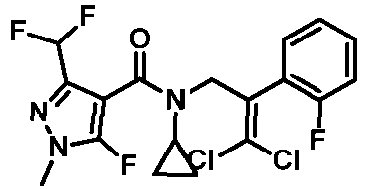
7 
116 
8 
117 
9 
118 
10 
119 
11 
120 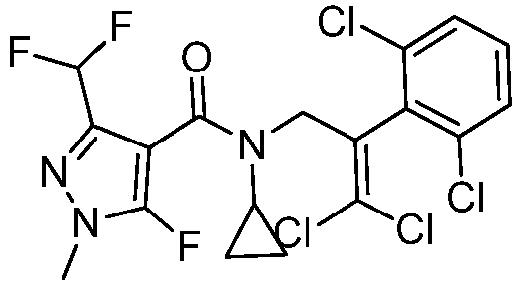
12 
121 
13 
122 
14 
123 
15 
124 
16 
125 
17 
126 
18 
127 
19 
128 
20 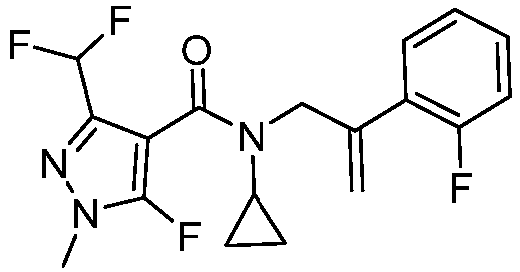
129 
21 
130 
22 
131 
23 
132 
24 
133 
25 
134 
26 
135 
27 
136 
28 
137 
29 
138 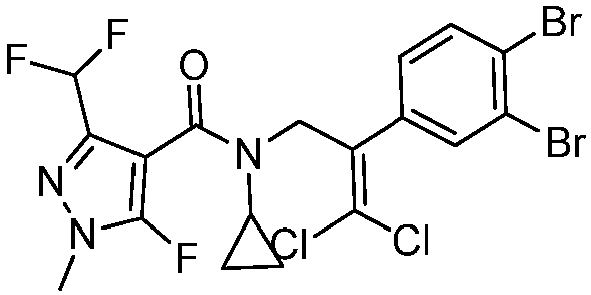
30 
139 
31 
140 
32 
141 
33 
142 
34 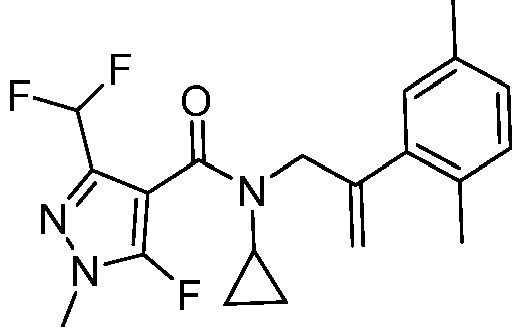
143 
35 
144 
36 
145 
37 
146 
38 
147 
39 
148 
40 
149 
41 
150 
42 
151 
43 
152 
44 
153 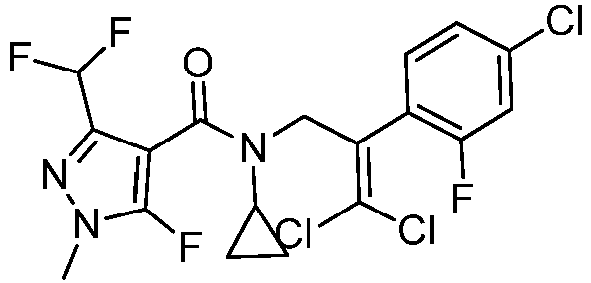
45 
154 
46 
155 
47 
156 
48 
157 
49 
158 
50 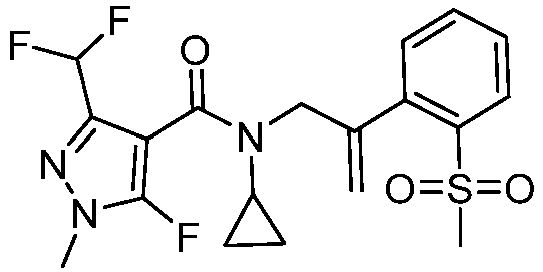
159 
51 
160 
52 
161 
53 
162 
54 
163 
55 
164 
56 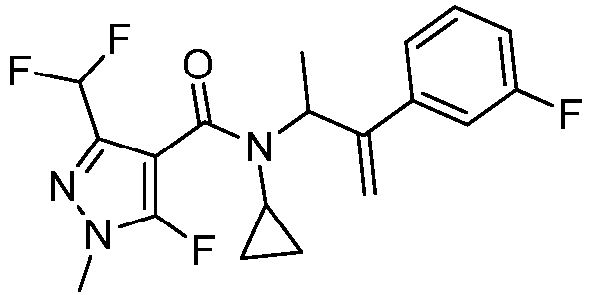
165 
57 
166 
58 
59 
168 
60 
169 
61 
170 
62 
171 
63 
172 
64 
173 
65 
174 
66 
175 
67 
176 
68 
177 
69 
178 
70 
179 
71 
180 
72 
181 
73 
182 
74 
183 
75 
184 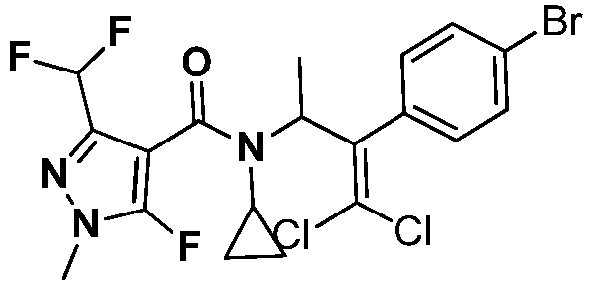
76 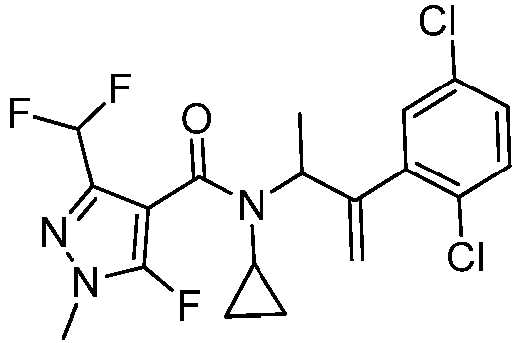
185 
77 
186 
78 
187 
79 
188 
80 
189 
81 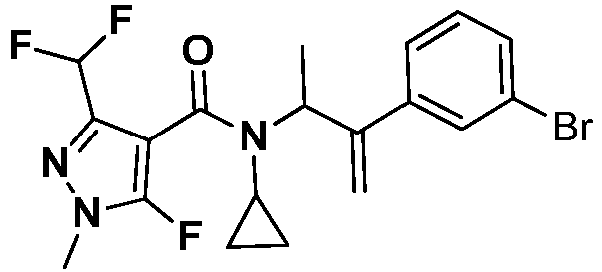
190 
82 
191 
83 
192 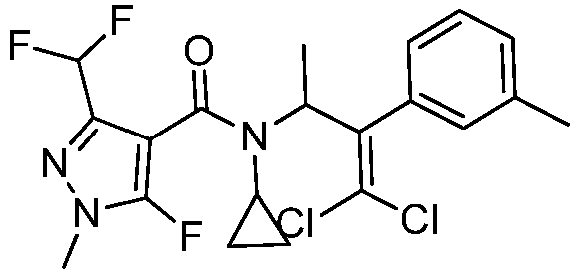
84 
193 
85 
194 
86 
195 
87 
196 
88 
197 
89 
198 
90 
199 
91 
200 
92 
201 
93 
202 
94 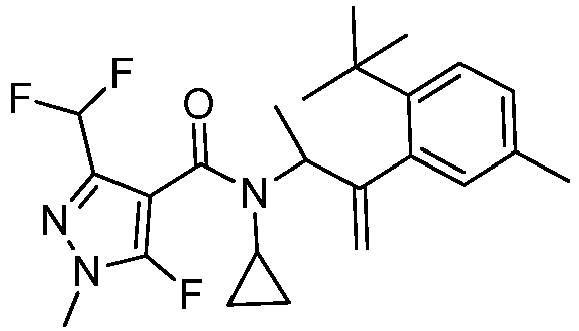
203 
95 
204 
96 
205 
97 
206 
98 
207 
99 
208 
100 
209 
101 
210 
102 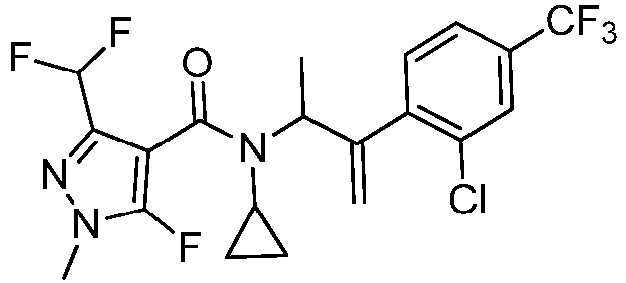
211 
103 
212 
104 
213 
105 
214 
106 
215 
107 
216 
108 
217 
109 
218 
219 
- Use of a compound according to claim 1 or 2 as succinate dehydrogenase inhibitor in pesticides.
- Use of a compound according to claim 1 or 2 for controlling fungal plant diseases.
- A bactericide, wherein the bactericide comprises an auxiliary material and an active ingredient selected from at least one of the compounds of claim 1 or 2;
the active ingredient is contained in the bactericide in an amount of 5% to 99.99% by weight. - The bactericide according to claim 5, wherein the dosage form of the bactericide is at least one selected from emulsifiable concentrates, suspending agents, wettable powders, dusts, granules, aqueous solutions, poison baits, mother liquors and mother powders.
- Use of the bactericide according to claim 5 or 6 for controlling fungal plant diseases.
- Use according to claim 7, wherein the plant fungal diseases is selected from at least one of erysiphe graminis, sphaerotheca fuliginea, wheat scab, rice bakanae disease, sclerotinia rot of colza, corn leaf spot, wheat stripe rust and cucumber gray mold.
Priority Applications (1)
| Application Number | Priority Date | Filing Date | Title |
|---|---|---|---|
| RS20250483A RS66833B1 (en) | 2020-09-30 | 2021-09-28 | Dendrene amide compound, bactericide and use thereof |
Applications Claiming Priority (2)
| Application Number | Priority Date | Filing Date | Title |
|---|---|---|---|
| CN202011064084 | 2020-09-30 | ||
| PCT/CN2021/121315 WO2022068816A1 (en) | 2020-09-30 | 2021-09-28 | Dendrene amide compound, bactericide and use thereof |
Publications (4)
| Publication Number | Publication Date |
|---|---|
| EP4223745A1 EP4223745A1 (en) | 2023-08-09 |
| EP4223745A4 EP4223745A4 (en) | 2024-04-03 |
| EP4223745C0 EP4223745C0 (en) | 2025-03-26 |
| EP4223745B1 true EP4223745B1 (en) | 2025-03-26 |
Family
ID=78980776
Family Applications (1)
| Application Number | Title | Priority Date | Filing Date |
|---|---|---|---|
| EP21874476.1A Active EP4223745B1 (en) | 2020-09-30 | 2021-09-28 | Dendrene amide compound, bactericide and use thereof |
Country Status (7)
| Country | Link |
|---|---|
| US (1) | US12540118B2 (en) |
| EP (1) | EP4223745B1 (en) |
| CN (1) | CN113845480B (en) |
| ES (1) | ES3032059T3 (en) |
| PL (1) | PL4223745T3 (en) |
| RS (1) | RS66833B1 (en) |
| WO (1) | WO2022068816A1 (en) |
Families Citing this family (6)
| Publication number | Priority date | Publication date | Assignee | Title |
|---|---|---|---|---|
| WO2024046311A1 (en) | 2022-08-29 | 2024-03-07 | 江苏中旗科技股份有限公司 | Composition used for killing fungi and method for applying composition |
| CN119431302A (en) * | 2023-07-31 | 2025-02-14 | 江苏中旗科技股份有限公司 | Compound containing synephene fragment and application thereof, pesticide for controlling nematodes and fungi, and method for controlling nematodes and fungi |
| WO2026101907A1 (en) | 2024-11-09 | 2026-05-15 | Corteva Agriscience Llc | Mixtures for fungal control in cereals |
| WO2026101908A1 (en) | 2024-11-09 | 2026-05-15 | Corteva Agriscience Llc | Mixtures for fungal control in soybeans |
| WO2026101909A1 (en) | 2024-11-09 | 2026-05-15 | Corteva Agriscience Llc | Mixtures for fungal control |
| WO2026101906A1 (en) | 2024-11-09 | 2026-05-15 | Corteva Agriscience Llc | Mixtures for fungal control in corn |
Family Cites Families (13)
| Publication number | Priority date | Publication date | Assignee | Title |
|---|---|---|---|---|
| CA2796194A1 (en) * | 2010-06-03 | 2011-12-08 | Bayer Cropscience Ag | N-[(het)arylalkyl)] pyrazole (thio)carboxamides and their heterosubstituted analogues |
| KR20130109940A (en) * | 2010-06-03 | 2013-10-08 | 바이엘 크롭사이언스 아게 | N-[(het)arylethyl] pyrazole(thio)carboxamides and their heterosubstituted analogues |
| CA2799328C (en) | 2010-06-04 | 2018-02-20 | Humberto Bartolome Arzeno | 2 -amino- pyrimidine derivatives useful as inhibitors of jnk |
| TWI654180B (en) * | 2012-06-29 | 2019-03-21 | 美商艾佛艾姆希公司 | Fungicidal heterocyclic carboxamide |
| US8815772B2 (en) * | 2012-06-29 | 2014-08-26 | E I Du Pont De Nemours And Company | Fungicidal heterocyclic carboxamides |
| EP2719280A1 (en) | 2012-10-11 | 2014-04-16 | Bayer CropScience AG | Use of N-phenylethylpyrazole carboxamide derivatives or salts thereof for resistance management of phytopathogenic fungi |
| AU2013333847B2 (en) * | 2012-10-19 | 2017-04-20 | Bayer Cropscience Ag | Method for treating plants against fungi resistant to fungicides using carboxamide or thiocarboxamide derivatives |
| EP3109234A4 (en) * | 2014-02-18 | 2017-07-05 | Nissan Chemical Industries, Ltd. | Alkynylpyridine-substituted amide compound and noxious organism control agent |
| WO2017188335A1 (en) * | 2016-04-27 | 2017-11-02 | 日産化学工業株式会社 | Fungicidal or bactericidal composition and method for controlling disease |
| CN109384722B (en) | 2017-08-14 | 2021-06-11 | 华中师范大学 | N-substituted amide compound, preparation method and application thereof, and bactericide |
| CN109422691B (en) * | 2017-08-24 | 2021-01-01 | 华中师范大学 | N-substituted amide compound, preparation method and application thereof, and bactericide |
| CN111943975B (en) * | 2019-07-31 | 2023-04-07 | 华中师范大学 | Pyrazole amide compound containing silicon atoms, preparation method and application thereof, and bactericide |
| CN114560824B (en) * | 2021-02-10 | 2023-08-29 | 江苏中旗科技股份有限公司 | Trifluoromethyl oxadiazole compound, preparation method and application thereof, and bactericide |
-
2021
- 2021-09-28 CN CN202111141736.7A patent/CN113845480B/en active Active
- 2021-09-28 WO PCT/CN2021/121315 patent/WO2022068816A1/en not_active Ceased
- 2021-09-28 EP EP21874476.1A patent/EP4223745B1/en active Active
- 2021-09-28 US US18/247,393 patent/US12540118B2/en active Active
- 2021-09-28 ES ES21874476T patent/ES3032059T3/en active Active
- 2021-09-28 PL PL21874476.1T patent/PL4223745T3/en unknown
- 2021-09-28 RS RS20250483A patent/RS66833B1/en unknown
Also Published As
| Publication number | Publication date |
|---|---|
| EP4223745C0 (en) | 2025-03-26 |
| US20230391728A1 (en) | 2023-12-07 |
| RS66833B1 (en) | 2025-06-30 |
| PL4223745T3 (en) | 2025-06-16 |
| CN113845480B (en) | 2023-05-12 |
| CN113845480A (en) | 2021-12-28 |
| US12540118B2 (en) | 2026-02-03 |
| WO2022068816A1 (en) | 2022-04-07 |
| EP4223745A1 (en) | 2023-08-09 |
| ES3032059T3 (en) | 2025-07-15 |
| EP4223745A4 (en) | 2024-04-03 |
Similar Documents
| Publication | Publication Date | Title |
|---|---|---|
| US12540118B2 (en) | Dendrene amide compound, bactericide and use thereof | |
| US4849439A (en) | α-phenyl-α-cyclopropylalkyene-1H-imidazole- and 1,2,4 triazole-ethanols as antimycotic agents | |
| US4910200A (en) | Acrylic acid morpholides, fungicidal compositions and use | |
| JP2871732B2 (en) | Heterocyclic-substituted α-aryl-acrylates and fungicides containing said compounds | |
| US4327104A (en) | 1-Phenyl-2-(1,2,4-triazolyl-1-yl)-ethyl ether | |
| US8865724B2 (en) | Preparation of 2-methyl-4-amino-5(substituted-1H-1,2,3-triazolyl)methylpyrimidine derivatives and microbicidal activity thereof | |
| HU176919B (en) | FUNGICIDNYE PREPARATY SODERZHAHHIE GALOGENOZAMEHHJONNY PROIZVODNYE 1-AZOLIL-BUTANA I SPOSOB POLUCHENIJA AKTIVNYKH VEHHESTV | |
| US4954497A (en) | Acrylic acid morpholides and fungicidal compositions | |
| JPS623147B2 (en) | ||
| US4542130A (en) | 5-Aminomethyl-1,3-oxathiolane microbicides, compositions and use | |
| JPH01190672A (en) | Triazole fungicide | |
| US4102891A (en) | 1-(2-Halogeno-2-phenyl-ethyl)-triazoles | |
| CN108069915B (en) | A kind of pyrazinamide compound and its preparation method and application and a kind of bactericide | |
| US5021442A (en) | Fungicide azolyl-derivatives | |
| US4636519A (en) | Ketene S,S-acetal derivative, a process for manufacturing thereof and a method for curing mycosis by administering it | |
| US4360528A (en) | Combating fungi with 1-azolyl-1-propen-3-ols | |
| EP0314478B1 (en) | Novel imidazole compounds, process for preparation thereof antifungal agent and mildewproof agent | |
| US4826836A (en) | Saccharine salts of aminomethyl heterocyclic compounds, compositions and use | |
| US4738976A (en) | Antimycotic agent and fungicidal agent | |
| EP0136063B1 (en) | Triazole antifungal agents | |
| CN102321103B (en) | A kind of 5-methyl-1,2,4-triazolo[3,4-b]benzothiazole derivative and its application | |
| CN108863962B (en) | A kind of amide compound containing 1-phenyl-1,2,3-triazole structure and application thereof | |
| CN114085199A (en) | A kind of chalcone derivative containing sulfonylpiperazine and its preparation method and application | |
| US4738962A (en) | Piperazinylmethyl-1,2,4-triazolylmethyl-carbinol fungicides | |
| JPS6026109B2 (en) | Novel 1-acyloxy-1-phenyl-2-azolyl-ethane or its salt, method for producing the same, and fungicide or nematicide composition containing the same as an active ingredient |
Legal Events
| Date | Code | Title | Description |
|---|---|---|---|
| STAA | Information on the status of an ep patent application or granted ep patent |
Free format text: STATUS: THE INTERNATIONAL PUBLICATION HAS BEEN MADE |
|
| PUAI | Public reference made under article 153(3) epc to a published international application that has entered the european phase |
Free format text: ORIGINAL CODE: 0009012 |
|
| STAA | Information on the status of an ep patent application or granted ep patent |
Free format text: STATUS: REQUEST FOR EXAMINATION WAS MADE |
|
| 17P | Request for examination filed |
Effective date: 20230413 |
|
| AK | Designated contracting states |
Kind code of ref document: A1 Designated state(s): AL AT BE BG CH CY CZ DE DK EE ES FI FR GB GR HR HU IE IS IT LI LT LU LV MC MK MT NL NO PL PT RO RS SE SI SK SM TR |
|
| DAV | Request for validation of the european patent (deleted) | ||
| DAX | Request for extension of the european patent (deleted) | ||
| REG | Reference to a national code |
Ref country code: DE Ref legal event code: R079 Free format text: PREVIOUS MAIN CLASS: C07D0231160000 Ipc: C07D0231140000 Ref document number: 602021028299 Country of ref document: DE |
|
| A4 | Supplementary search report drawn up and despatched |
Effective date: 20240304 |
|
| RIC1 | Information provided on ipc code assigned before grant |
Ipc: A01P 3/00 20060101ALI20240227BHEP Ipc: A01P 1/00 20060101ALI20240227BHEP Ipc: A01N 43/56 20060101ALI20240227BHEP Ipc: C07D 231/16 20060101ALI20240227BHEP Ipc: C07D 231/14 20060101AFI20240227BHEP |
|
| REG | Reference to a national code |
Ref country code: DE Ref legal event code: R079 Free format text: PREVIOUS MAIN CLASS: C07D0231140000 Ipc: C07D0231160000 Ref document number: 602021028299 Country of ref document: DE |
|
| GRAP | Despatch of communication of intention to grant a patent |
Free format text: ORIGINAL CODE: EPIDOSNIGR1 |
|
| STAA | Information on the status of an ep patent application or granted ep patent |
Free format text: STATUS: GRANT OF PATENT IS INTENDED |
|
| RIC1 | Information provided on ipc code assigned before grant |
Ipc: A01N 43/56 20060101ALI20240925BHEP Ipc: C07D 231/16 20060101AFI20240925BHEP |
|
| INTG | Intention to grant announced |
Effective date: 20241024 |
|
| GRAS | Grant fee paid |
Free format text: ORIGINAL CODE: EPIDOSNIGR3 |
|
| GRAA | (expected) grant |
Free format text: ORIGINAL CODE: 0009210 |
|
| STAA | Information on the status of an ep patent application or granted ep patent |
Free format text: STATUS: THE PATENT HAS BEEN GRANTED |
|
| AK | Designated contracting states |
Kind code of ref document: B1 Designated state(s): AL AT BE BG CH CY CZ DE DK EE ES FI FR GB GR HR HU IE IS IT LI LT LU LV MC MK MT NL NO PL PT RO RS SE SI SK SM TR |
|
| REG | Reference to a national code |
Ref country code: GB Ref legal event code: FG4D |
|
| REG | Reference to a national code |
Ref country code: CH Ref legal event code: EP |
|
| REG | Reference to a national code |
Ref country code: DE Ref legal event code: R096 Ref document number: 602021028299 Country of ref document: DE |
|
| REG | Reference to a national code |
Ref country code: IE Ref legal event code: FG4D |
|
| U01 | Request for unitary effect filed |
Effective date: 20250424 |
|
| U07 | Unitary effect registered |
Designated state(s): AT BE BG DE DK EE FI FR IT LT LU LV MT NL PT RO SE SI Effective date: 20250430 |
|
| PG25 | Lapsed in a contracting state [announced via postgrant information from national office to epo] |
Ref country code: NO Free format text: LAPSE BECAUSE OF FAILURE TO SUBMIT A TRANSLATION OF THE DESCRIPTION OR TO PAY THE FEE WITHIN THE PRESCRIBED TIME-LIMIT Effective date: 20250626 |
|
| REG | Reference to a national code |
Ref country code: ES Ref legal event code: FG2A Ref document number: 3032059 Country of ref document: ES Kind code of ref document: T3 Effective date: 20250715 |
|
| PG25 | Lapsed in a contracting state [announced via postgrant information from national office to epo] |
Ref country code: HR Free format text: LAPSE BECAUSE OF FAILURE TO SUBMIT A TRANSLATION OF THE DESCRIPTION OR TO PAY THE FEE WITHIN THE PRESCRIBED TIME-LIMIT Effective date: 20250326 |
|
| REG | Reference to a national code |
Ref country code: GR Ref legal event code: EP Ref document number: 20250401026 Country of ref document: GR Effective date: 20250613 |
|
| PG25 | Lapsed in a contracting state [announced via postgrant information from national office to epo] |
Ref country code: SM Free format text: LAPSE BECAUSE OF FAILURE TO SUBMIT A TRANSLATION OF THE DESCRIPTION OR TO PAY THE FEE WITHIN THE PRESCRIBED TIME-LIMIT Effective date: 20250326 |
|
| PGFP | Annual fee paid to national office [announced via postgrant information from national office to epo] |
Ref country code: GR Payment date: 20250923 Year of fee payment: 5 |
|
| PGFP | Annual fee paid to national office [announced via postgrant information from national office to epo] |
Ref country code: TR Payment date: 20250911 Year of fee payment: 5 Ref country code: PL Payment date: 20250908 Year of fee payment: 5 |
|
| PGFP | Annual fee paid to national office [announced via postgrant information from national office to epo] |
Ref country code: GB Payment date: 20250916 Year of fee payment: 5 |
|
| PGFP | Annual fee paid to national office [announced via postgrant information from national office to epo] |
Ref country code: RS Payment date: 20250911 Year of fee payment: 5 |
|
| PG25 | Lapsed in a contracting state [announced via postgrant information from national office to epo] |
Ref country code: SK Free format text: LAPSE BECAUSE OF FAILURE TO SUBMIT A TRANSLATION OF THE DESCRIPTION OR TO PAY THE FEE WITHIN THE PRESCRIBED TIME-LIMIT Effective date: 20250326 |
|
| PG25 | Lapsed in a contracting state [announced via postgrant information from national office to epo] |
Ref country code: IS Free format text: LAPSE BECAUSE OF FAILURE TO SUBMIT A TRANSLATION OF THE DESCRIPTION OR TO PAY THE FEE WITHIN THE PRESCRIBED TIME-LIMIT Effective date: 20250726 |
|
| U20 | Renewal fee for the european patent with unitary effect paid |
Year of fee payment: 5 Effective date: 20250923 |
|
| PG25 | Lapsed in a contracting state [announced via postgrant information from national office to epo] |
Ref country code: CZ Free format text: LAPSE BECAUSE OF FAILURE TO SUBMIT A TRANSLATION OF THE DESCRIPTION OR TO PAY THE FEE WITHIN THE PRESCRIBED TIME-LIMIT Effective date: 20250326 |
|
| PGFP | Annual fee paid to national office [announced via postgrant information from national office to epo] |
Ref country code: ES Payment date: 20251223 Year of fee payment: 5 |
|
| PLBE | No opposition filed within time limit |
Free format text: ORIGINAL CODE: 0009261 |
|
| STAA | Information on the status of an ep patent application or granted ep patent |
Free format text: STATUS: NO OPPOSITION FILED WITHIN TIME LIMIT |
|
| REG | Reference to a national code |
Ref country code: CH Ref legal event code: L10 Free format text: ST27 STATUS EVENT CODE: U-0-0-L10-L00 (AS PROVIDED BY THE NATIONAL OFFICE) Effective date: 20260211 |
|
| 26N | No opposition filed |
Effective date: 20260105 |
|
| REG | Reference to a national code |
Ref country code: CH Ref legal event code: H13 Free format text: ST27 STATUS EVENT CODE: U-0-0-H10-H13 (AS PROVIDED BY THE NATIONAL OFFICE) Effective date: 20260504 |
|
| PG25 | Lapsed in a contracting state [announced via postgrant information from national office to epo] |
Ref country code: MC Free format text: LAPSE BECAUSE OF FAILURE TO SUBMIT A TRANSLATION OF THE DESCRIPTION OR TO PAY THE FEE WITHIN THE PRESCRIBED TIME-LIMIT Effective date: 20250326 |
|
| PG25 | Lapsed in a contracting state [announced via postgrant information from national office to epo] |
Ref country code: CH Free format text: LAPSE BECAUSE OF NON-PAYMENT OF DUE FEES Effective date: 20250930 Ref country code: IE Free format text: LAPSE BECAUSE OF NON-PAYMENT OF DUE FEES Effective date: 20250928 |