EP4222030B1 - Braking device for autonomous guidance and method of operating said braking device - Google Patents
Braking device for autonomous guidance and method of operating said braking device Download PDFInfo
- Publication number
- EP4222030B1 EP4222030B1 EP21786118.6A EP21786118A EP4222030B1 EP 4222030 B1 EP4222030 B1 EP 4222030B1 EP 21786118 A EP21786118 A EP 21786118A EP 4222030 B1 EP4222030 B1 EP 4222030B1
- Authority
- EP
- European Patent Office
- Prior art keywords
- braking
- hydraulic
- piston
- braking device
- distributor block
- Prior art date
- Legal status (The legal status is an assumption and is not a legal conclusion. Google has not performed a legal analysis and makes no representation as to the accuracy of the status listed.)
- Active
Links
Images


Classifications
-
- B—PERFORMING OPERATIONS; TRANSPORTING
- B60—VEHICLES IN GENERAL
- B60T—VEHICLE BRAKE CONTROL SYSTEMS OR PARTS THEREOF; BRAKE CONTROL SYSTEMS OR PARTS THEREOF, IN GENERAL; ARRANGEMENT OF BRAKING ELEMENTS ON VEHICLES IN GENERAL; PORTABLE DEVICES FOR PREVENTING UNWANTED MOVEMENT OF VEHICLES; VEHICLE MODIFICATIONS TO FACILITATE COOLING OF BRAKES
- B60T11/00—Transmitting braking action from initiating means to ultimate brake actuator without power assistance or drive or where such assistance or drive is irrelevant
- B60T11/10—Transmitting braking action from initiating means to ultimate brake actuator without power assistance or drive or where such assistance or drive is irrelevant transmitting by fluid means, e.g. hydraulic
- B60T11/16—Master control, e.g. master cylinders
-
- B—PERFORMING OPERATIONS; TRANSPORTING
- B60—VEHICLES IN GENERAL
- B60T—VEHICLE BRAKE CONTROL SYSTEMS OR PARTS THEREOF; BRAKE CONTROL SYSTEMS OR PARTS THEREOF, IN GENERAL; ARRANGEMENT OF BRAKING ELEMENTS ON VEHICLES IN GENERAL; PORTABLE DEVICES FOR PREVENTING UNWANTED MOVEMENT OF VEHICLES; VEHICLE MODIFICATIONS TO FACILITATE COOLING OF BRAKES
- B60T11/00—Transmitting braking action from initiating means to ultimate brake actuator without power assistance or drive or where such assistance or drive is irrelevant
- B60T11/10—Transmitting braking action from initiating means to ultimate brake actuator without power assistance or drive or where such assistance or drive is irrelevant transmitting by fluid means, e.g. hydraulic
- B60T11/16—Master control, e.g. master cylinders
- B60T11/18—Connection thereof to initiating means
-
- B—PERFORMING OPERATIONS; TRANSPORTING
- B60—VEHICLES IN GENERAL
- B60T—VEHICLE BRAKE CONTROL SYSTEMS OR PARTS THEREOF; BRAKE CONTROL SYSTEMS OR PARTS THEREOF, IN GENERAL; ARRANGEMENT OF BRAKING ELEMENTS ON VEHICLES IN GENERAL; PORTABLE DEVICES FOR PREVENTING UNWANTED MOVEMENT OF VEHICLES; VEHICLE MODIFICATIONS TO FACILITATE COOLING OF BRAKES
- B60T13/00—Transmitting braking action from initiating means to ultimate brake actuator with power assistance or drive; Brake systems incorporating such transmitting means, e.g. air-pressure brake systems
- B60T13/10—Transmitting braking action from initiating means to ultimate brake actuator with power assistance or drive; Brake systems incorporating such transmitting means, e.g. air-pressure brake systems with fluid assistance, drive, or release
- B60T13/12—Transmitting braking action from initiating means to ultimate brake actuator with power assistance or drive; Brake systems incorporating such transmitting means, e.g. air-pressure brake systems with fluid assistance, drive, or release the fluid being liquid
- B60T13/14—Transmitting braking action from initiating means to ultimate brake actuator with power assistance or drive; Brake systems incorporating such transmitting means, e.g. air-pressure brake systems with fluid assistance, drive, or release the fluid being liquid using accumulators or reservoirs fed by pumps
- B60T13/142—Systems with master cylinder
- B60T13/145—Master cylinder integrated or hydraulically coupled with booster
Definitions
- the present invention relates, in general, to a hydraulic braking device for a motor vehicle and, more particularly, to a braking device suitable for autonomous guidance of the vehicle.
- the present invention also relates to a method of operating such braking device.
- the present invention applies in particular to agricultural tractors and the like, which have dual brake pedals and can perform a "steer-by-braking function" (SBF).
- SBF steering-by-braking function
- hydraulic braking systems comprising one or more master cylinders with a pump function, operated by a pedal or respective pedals, is known in the motor vehicle industry.
- braking systems also include hydraulic braking assistance devices or servo-devices, also referred to as hydroboosters, associated with each master cylinder.
- hydraulic braking systems comprising two coupled master cylinders is also known in the field of agricultural tractors and the like.
- Such braking systems typically use two pedals to control the braking of a rear right wheel and a rear left wheel, respectively, exerting respective braking pressures.
- the two pedals can be actuated by an operator individually, thereby steering the vehicle, hence the name “steer-by-braking function” (SBF).
- SBF steerer-by-braking function
- the two pedals can be actuated by an operator simultaneously, thus simultaneously braking at least both of the rear wheels of the vehicle.
- devices for balancing the braking pressures are used.
- Electrohydraulic braking systems comprising two brake pedals and two or more solenoid valves for regulating the flow of liquid to a first and a second brake of the vehicle (right and left brake), as described in US2019184952 A1 , are also known.
- Such a system may further comprise a steering control system that can act on the brakes to facilitate steering of the vehicle.
- the control unit acts on the solenoid valves of the braking system to actuate the brake corresponding to the direction in which the vehicle is to be steered.
- the abovementioned electrohydraulic braking system has the drawback of requiring special actuators to allow steering by means of actuation of the brakes.
- the Applicant has thus observed that the abovementioned electrohydraulic system is difficult to implement in existing vehicles having purely hydraulic braking systems that are not controlled electronically.
- the aim of the present invention is to overcome the problems and limitations of the prior art by providing a hydraulic braking device that is suitable for use in autonomous guidance and that can be implemented in existing vehicles equipped with hydraulic braking systems inexpensively and without requiring special actuators.
- the hydraulic braking device of a vehicle comprises a master cylinder and a servo-device.
- a hydraulic piston defines a pressure chamber which is adapted to contain a pressurized liquid and in which a control pressure is generated that is transmitted to one or more brake(s) of the vehicle.
- a plunger defines a first chamber and a second chamber of the servo-device, said chambers being associated with communication means adapted to establish, when the braking device is in a rest condition, a hydraulic communication between the first chamber and the second chamber and to interrupt said communication when the braking device is actuated.
- the braking device comprises a shuttle piston, which is connected to a thrusting rod associatable with a brake pedal and is mounted to be sealingly slidable in a plunging piston movably integral to the plunger of the servo-device.
- the braking device comprises a solenoid valve and a hydraulic coupling connected in a movably integral manner to the thrusting rod and comprising an inlet aperture opening into a rear inner cavity of the hydraulic coupling.
- This inlet aperture is hydraulically connected to the solenoid valve, preferably supplied by a hydraulic power unit of the vehicle.
- the braking device further comprises a stem, which is associated, on the side of a first end thereof, to the hydraulic coupling and having, on the side of its second end, the shape of a spherical tip.
- the braking device according to the invention also comprises a distributor block sealingly slidably received within the plunging piston and adapted to abut against the shuttle piston.
- the spherical tip of the stem is associated, in an articulated manner, to the distributor block. Furthermore, the rear inner cavity of the hydraulic coupling is in hydraulic communication with a through-channel formed within the stem, which is in turn in hydraulic communication with a driving duct formed in the distributor block, said driving duct opening into a region comprised between the distributor block and the shuttle piston.
- two gaskets longitudinally stacked on each other and having inner surfaces suitably shaped so as to match the spherical shape of the spherical tip.
- Said gaskets are configured so as to ensure articulation of the spherical tip and to ensure hydraulic sealing with said spherical tip.
- the braking device with the features described above makes it possible to incorporate, between the thrusting rod and the shuttle piston, a plurality of elements, described above, adapted to actuate the servo-device and, through these elements, hydraulically actuate the servo-device, said hydraulic actuation advantageously being managed by ordinary proportional valves and by the hydraulic power unit of the vehicle.
- the braking device is the first braking device of a pair of braking devices (which are substantially the same) of a braking system, in which a first braking device is arranged to actuate a first brake, associated with a rear right wheel of the vehicle, and a second braking device is arranged to actuate a second brake associated to a rear left wheel of the vehicle.
- Each braking device of such a braking system preferably has a balancing device, which comprises a balancing valve that is normally closed and adapted, when braking is actuated, to open a hydraulic connection between the pressure chamber of the respective braking device and a balancing duct of the braking system, to ensure balanced braking.
- a balancing device which comprises a balancing valve that is normally closed and adapted, when braking is actuated, to open a hydraulic connection between the pressure chamber of the respective braking device and a balancing duct of the braking system, to ensure balanced braking.
- a method of operating the braking device provides for said device to be actuated both manually and automatically.
- the manual actuation comprises the steps of:
- the automatic actuation comprises the steps of:
- a method of operating the braking system comprises the step of:
- a braking system not only makes it possible to actuate braking autonomously, but also allows the vehicle to be steered autonomously, acting on only one of the two braking devices of the system (the "steer-by-braking function"). Again in this case, the system also offers the possibility of actuating the individual braking devices manually, by acting on the brake pedals.
- the invention thus makes it possible to achieve autonomous guidance in agricultural tractors and the like at low cost, allowing the switch from autonomous guidance to manual guidance simply.
- a braking device 10 for controlling hydraulic brakes of a motor vehicle, is described below with reference to Figures 1-4 ; in particular, in Figures 1 and 3 the device is depicted in a rest condition (i.e. a condition in which the brakes are not actuated), and in Figures 2 and 4 the same device is depicted in a condition in which braking is actuated by means of automatic actuation.
- a rest condition i.e. a condition in which the brakes are not actuated
- Figures 2 and 4 the same device is depicted in a condition in which braking is actuated by means of automatic actuation.
- the braking device 10 comprises a thrusting rod 21, which can be actuated in a known manner by means of a brake pedal (not shown), and a master cylinder 70 adapted to convert the thrust exerted by means of the brake pedal into a hydraulic pressure for actuating the brakes of the vehicle.
- the thrusting rod 21 is connected to the brake pedal, for example by means of a fork 20.
- the master cylinder 70 comprises a pressure chamber 71 inside which a hydraulic piston 72 operates, this hydraulic piston being adapted to transfer the hydraulic pressure to the brakes of the vehicle, and a spring 73, adapted to act against the thrust exerted by the hydraulic piston 72.
- said elements extend longitudinally along an axis A of the braking device 10.
- front will be used to designate elements closer to or facing the master cylinder 70 and the term “rear” to designate elements closer to or facing the brake pedal.
- the braking device 10 is equipped with a braking servo-device (also referred to as a hydrobooster), of known type, to assist braking of the vehicle by providing a predetermined servo pressure.
- a braking servo-device also referred to as a hydrobooster
- the general structure of the servo-device included in the braking device 10 according to the present invention corresponds to that described in US2004212248 A1 , to which reference should be made for a detailed description of the structure and operation of this device. Only the main components of the servo-device and its operation will be described below, briefly, attention being focused on the aspects necessary to understand the present invention.
- the servo-device comprises, in a known manner, a plunging piston 40 mounted slidingly in the longitudinal direction and movably integral to an annular plunger 41 that separates a front chamber 42 from a rear chamber 43 of the servo-device.
- a shuttle piston 25 is also housed inside the plunging piston 40, slidingly with respect to the latter. Said shuttle piston 25 is associated with the hydraulic piston 72 of the master cylinder and is held in position, in a known manner, by internal springs 74 of the master cylinder 70.
- the front chamber 42 and the rear chamber 43 are hydraulically connected, for example by means of first holes 44 and second holes 45 formed radially in the plunging piston 40, which place the front chamber 42 and the rear chamber 43 in communication, respectively, with a channel 46, which is annular, formed on the outer surface of the shuttle piston 25.
- the same pressure prevails in the front chamber 42 and in the rear chamber 43 of the servo-device, in particular a high pressure, by virtue of the fact that pressurized oil from a volumetric pump and/or from an accumulator external to the braking device 10 flows in the rear chamber 43, in a known manner.
- the shuttle piston 25 slides relative to the plunging piston 40, advancing towards the master cylinder 70.
- the shuttle piston 25 is configured in such a way that its advancement results, in a known manner, in an interruption of the hydraulic connection between the front chamber 42 and the rear chamber 43 of the servo-device.
- the braking device 10 is further configured such that the advancement of the shuttle piston 25 also causes, in a known manner, the opening of a hydraulic connection between the front chamber 42 of the servo-device and a discharge chamber 47, for example by means of a discharge hole 48 formed in the plunging piston 40 and said channel 46 of the shuttle piston 25.
- the plunging piston 40 slides towards the hydraulic piston 72 of the master cylinder 70.
- the plunging piston 40 advancing, causes the closure of a hydraulic connection present, in rest conditions, between the pressure chamber 71 and the discharge chamber 47 and pushes the hydraulic piston 72 of the master cylinder 70, which thus exerts the pressure necessary to actuate the brakes of the vehicle.
- the servo-device thus performs the function of assisting braking.
- the thrusting rod 21 of the braking device 10 is connected in a movably integral manner to a hydraulic coupling 22, which is longitudinally hollow.
- the thrust rod 21 has an externally threaded end part 21a screwed into a rear cavity 22a of the hydraulic coupling, which is threaded internally.
- the hydraulic coupling 22 is in turn associated with a stem 23, which is coaxial to the hydraulic coupling 22 and is partly housed therein, preferably with some clearance in the longitudinal direction and so that it cannot slip out of said coupling.
- the stem 23 comprises a coupling portion 23d, which is threaded externally
- the hydraulic coupling 22 comprises a front inlet portion 22c, which is threaded internally and configured to be coupled with the coupling portion 23d of the stem 23 when the latter is inserted in the hydraulic coupling 22, after which there is a recess 35, configured to house, with clearance, the coupling portion 23d of the stem 23 after it has passed through the front inlet portion 22c of the hydraulic coupling 22.
- the hydraulic coupling 22 comprises an inlet aperture 26, preferably formed radially, opening into the rear cavity 22a and connected to a tube (not shown), preferably a flexible tube, associated with an electronically controlled proportional valve (not shown), supplied by a hydraulic power unit of the vehicle.
- a first end 23a (rear end) of the stem 23 is in abutment, with clearance, against the end part 21a of the thrusting rod.
- This clearance along with the abovementioned clearance between the coupling portion 23d of the stem 23 and the recess 35 of the hydraulic coupling 22, helps make up for any misalignments.
- the rear cavity 22a is fluid-tight, sealed by suitable connection means 21b.
- the rear cavity 22a is fluid-tight, sealed for example by means of an O-ring seal 34 housed in a groove 22b of the hydraulic coupling 22 and interacting with an outer surface 23c of the stem 23.
- the stem 23 comprises an internal through-channel 36, formed coaxially with respect to said stem, which extends from the rear end 23a of the stem to a front end 23b of the stem.
- the inlet aperture 26 of the hydraulic coupling 22 is in hydraulic connection, through the rear cavity 22a, with the channel 36 of the stem 23 in correspondence with the rear end 23a thereof.
- a radial score 37 is formed at the rear end 23a of the stem, adapted to ensure the hydraulic connection between the rear cavity 22a and the channel 36 when the rear end 23a of the stem is in abutment against the end part 21a of the thrusting rod 21.
- the stem 23, on the side of the its end front 23b, has the shape of a spherical tip 27, located externally to the hydraulic coupling 22.
- This spherical tip 27 is associated to a distributor block 24, housed inside the plunging piston 40 of the servo-device.
- This distributor block 24 abuts, at the rear, against a circlip 33, while at the front it is adapted to abut against the shuttle piston 25 of the servo-device.
- the distributor block 24 is divided in a main body 24a and a cap 24b, arranged at the side of the distributor block facing the hydraulic coupling 22, or at the rear side of the distributor block 24, from which, once the cap 24b has been removed, the spherical tip 27 and the associated gaskets 29, 30 are inserted.
- This cap 24b is adapted to close, for example by screwing, onto the main body 24a, after the insertion of the spherical tip 27 and the gaskets 29, 30, whereby said gaskets 29, 30 are retained, in a longitudinal direction, between the main body 24a and the cap 24b of the distributor block.
- the gaskets 29, 30 are preferably made of PTFE or another similar material and are configured so as to ensure articulation of the spherical tip 27 and to ensure hydraulic sealing.
- the channel 36 of the stem 23 is in hydraulic connection with the driving duct 31 and hence with said region 28 at the front of the main body 24a.
- the region 28 is hydraulically sealed, by virtue of appropriate O-ring seals 38, 39 arranged between the main body 24a of the distributor block and the plunging piston 40 and between the shuttle piston 25 and the plunging piston 40, respectively.
- the braking device 10 is further equipped with a pre-filling device, i.e. a device adapted to supply pressurized liquid so as to take up the clearance existing in the braking circuit downstream of the master cylinder 70 before the start of braking proper.
- a pre-filling device i.e. a device adapted to supply pressurized liquid so as to take up the clearance existing in the braking circuit downstream of the master cylinder 70 before the start of braking proper.
- Pre-filling devices of known type are described, for example, in patents US2004212248 A1 and WO2017037666 A1 , in the name of the Applicant. Only the main components of the pre-filling device and its operation will be described below, briefly, attention being focused on the aspects necessary to understand the present invention.
- the pre-filling device is housed in a cavity 25a, a longitudinal cavity, formed inside the shuttle piston 25, and comprises a valve piston 50, acting as hydraulic valve, in abutment against a front end of a spring 51, the rear end of which is, conversely, secured to a seat 52 formed in the cavity 25a of the shuttle piston 25, so as to be unable to slide longitudinally.
- the spring 51 is housed in a chamber 53 comprised between a front end 24c of the distributor block 24 and the valve piston 50 and tends to push the latter forward, in abutment against a shoulder 54 present in the cavity 25a of the shuttle piston 25, for example formed Integrally with said shuttle piston 25.
- the valve piston 50 is configured to close, at the front, in a fluid-tight manner, the chamber 53 in which the spring 51 is located, for example by means of an O-ring seal 55 housed in a seat of the valve piston 50 and adapted to interact with the walls of the cavity 25a of the shuttle piston 25.
- the chamber 53 on the other hand, is in communication, at the rear, with a region at atmospheric pressure, in such a way that the chamber 53 is also at atmospheric pressure. This communication is achieved, for example, by means of a duct 32 formed in the main body 24a of the distributor block 24.
- the valve piston 50 of the pre-filling device comprises a duct 50a, which is longitudinal, and which is open at the front towards a front portion of the cavity 25a (referred to hereinbelow as the pre-filling duct 56) and blind at the rear, and a radial hole (hole in the valve piston) 50b communicating with this duct 50a. Furthermore, when the valve piston 50 is in abutment against the shoulder 54, the radial hole 50b in the valve piston is in hydraulic communication with radial holes 57 formed in the shuttle piston 25 (holes in the shuttle piston) and communicating, in turn, with the second holes 45 in the plunging piston 40 and hence with the rear chamber 43 of the servo-device. In a rest condition of the braking device 10, the radial holes 57 in the shuttle piston 25 are also in hydraulic communication with the channel 46 in the shuttle piston 25 and hence with the front chamber 42 of the servo-device.
- the pre-filling device further comprises a valve unit positioned at the front with respect to the valve piston 50 and comprising a first sphere (front sphere) 58 and a second sphere (rear sphere) 59 between which there is a spring 60.
- the spring 60 is configured to keep the front sphere 58 in abutment against a first shoulder 61 formed in the pre-filling duct 56 and the rear sphere 59 in abutment against a second shoulder 62 formed in the pre-filling duct 56, thereby cutting off the hydraulic communication through the pre-filling duct 56.
- the pre-filling device further comprises a stem 63, which is fixed, positioned in such a way that its rear end 63a can interact with the front sphere 58, pushing same and opening the hydraulic communication between the pre-filling duct 56 and the pressure chamber 71 of the master cylinder 70 when the shuttle piston 25 starts to advance towards the master cylinder 70.
- pre-filling device described above is only one example of a pre-filling device that can be used in the braking device 10 according to the present invention.
- Other pre-filling devices such as those disclosed in the abovementioned documents, may just as easily be used without departing from the scope of the invention.
- the pre-filling device functions as follows. In the rest position, the servo pressure in the front 42 and rear 43 chambers of the servo-device, connected to one another as described above, supplies, by means of the channel 46 in the shuttle piston 25, through the holes 57 in the shuttle piston 25 and the hole 50b in the valve piston 50, the pre-filling duct 56.
- the front sphere 58 In the rest position, the front sphere 58 is closed and therefore the liquid coming from the rear chamber 43 increases in pressure in the pre-filling duct 56, exerting a hydraulic thrust on the valve piston 50 until it overcomes the load of the spring 51 arranged in the chamber 53, which, as stated above, is at atmospheric pressure. Once the "pre-filling pressure" has been reached, the valve piston 50 closes the hole 50b in the shuttle piston, blocking same.
- the pre-filling device stays in said position while the pressure in the pre-filling duct 56 is the same as or greater than the pre-filling pressure.
- the abovementioned opening of hydraulic communication between the pre-filling duct 56 and the pressure chamber 71 of the master cylinder 70 causes a fall in pressure in the pre-filling duct 56, such that the valve piston 50 of the pre-filling device again advances against the shoulder 54 present in the cavity 25a in the shuttle piston 25, reconnecting the rear chamber 43 of the servo-device to the pre-filling duct 56.
- the pre-filling device thus acts in such a way as to keep the pressure in the pre-filling duct 56 substantially constant through a modulated continuous movement of the valve piston 50 which causes opening and closure of the hydraulic communication between the pre-filling duct 56 and the rear chamber 43 of the servo-device.
- This constant pressure value is determined by the thrust exerted by the spring 51.
- the braking device according to the present invention does not have a pre-filling device.
- the braking device 10 includes a balancing device with a general structure, described below only briefly, corresponding to that described in patent application WO2017013595 A1 , in the name of the Applicant, to which reference should be made for a more detailed description.
- the balancing device comprises the abovementioned stem 63, which is coaxial to the shuttle piston 25 and fixed in correspondence with a front end wall 71a of the pressure chamber 71 of the master cylinder 70.
- a balancing channel 64 is formed inside the stem 63.
- a front end of the balancing channel 64 is connected, by means of a hole 65, to a balancing duct (not shown), which is in turn in communication with a front end of a balancing duct of the second braking device of the pair of braking devices.
- a rear end of the balancing channel 64 ends with at least one radial hole 64a. This radial hole 64a is blocked by a balancing valve 66, which is normally closed, movably integral with the shuttle piston 25. The balancing valve 66 opens when the shuttle piston 25, as a result of the actuation of the braking device 10, moves towards the front part of the braking device 10.
- the radial hole 64a is thus uncovered, thereby placing the balancing channel 64 in hydraulic connection with the pre-filling duct 56 and hence with the pressure chamber 71 of the master cylinder 70, through a radial hole 67 formed in the shuttle piston 25.
- Balancing between the control pressures prevailing inside the pressure chambers of the master cylinders of the two braking devices is thus actuated mechanically, after a predetermined stroke of the respective shuttle pistons.
- the braking device does not form part of a braking system comprising a pair of braking devices but is a single device, and is therefore configured to control by itself the braking of the right and left wheels of the vehicle.
- the braking device will therefore not have the balancing device.
- the stem 63 will only have the function of interacting with the front sphere 58 of the pre-filling device.
- the stem may therefore be a solid stem (not shown), without the balancing channel 64 and the related radial hole 64a.
- the braking device 10 is actuated so as to generate the hydraulic pressure necessary for braking, by means of two alternative types of actuation, namely manual and automatic actuation.
- braking is actuated by acting on the brake pedal.
- the thrust exerted by means of the brake pedal is transferred to the thrusting rod 21 and then, via the stem 23, to the distributor block 24, which, as it is in abutment against the shuttle piston 25, causes advancement of the latter towards the front part of the braking device 10.
- the advancement of the shuttle piston 25 causes, in a known manner, actuation of the servo-device, by means of the intermittent interruption of the hydraulic connection between its front chamber 42 and its rear chamber 43.
- the actuation of the servo-device in combination with the shuttle piston 23 causes actuation of the plunging piston 40 which engages the hydraulic piston 72 of the master cylinder 70, causing it to advance.
- This advancement in turn generates a pressure in the pressure chamber 71 of the master cylinder 70 adapted to actuate one or more brakes of the vehicle connected to the braking device 10.
- the pressure supplied at the inlet aperture 26 is transferred, via the channel 36 in the stem 23 and the driving duct 31 in the main body 24a of the distributor block 24, to the region 28 comprised between the main body 24a and the shuttle piston 25.
- the increase in pressure in the region 28 generates a thrust on the shuttle piston that causes the latter to advance towards the front part of the braking device 10.
- the usable area for generating the thrust on the shuttle piston 25 is the area between the guide diameter of the distributor block 24 and the diameter of the chamber 53.
- the advancement of the shuttle piston 25 causes actuation of the servo-device, by means of the intermittent interruption of the hydraulic connection between its front chamber 42 and its rear chamber 43, and the actuation of the servo-device in combination with the shuttle piston 25 causes actuation of the plunging piston 40 and thus advancement of the hydraulic piston 72 and consequent generation of a pressure in the pressure chamber 71 adapted to actuate one or more brakes of the vehicle connected to the braking device 10.
- the brake pedal of the braking device 10 When braking is actuated by means of automatic actuation, the brake pedal of the braking device 10 itself also moves as if it was actuated manually, as it is connected, as described above, to the thrusting rod 21 which is brought towards the front part of the braking device 10 owing to the advancement of the plunging piston 40, to which the thrusting rod 21 is connected via the distributor block 24, the stem 23 and the hydraulic coupling 22.
- actuation of braking whether manual or automatic, will include actuation of this pre-filling device, in the manner described above.
- both braking devices may be actuated simultaneously, causing simultaneous braking of at least both rear wheels of the vehicle, or just one of the two braking devices may be actuated, performing the "steer-by-braking" function.
- the pair of braking devices is actuated manually or automatically.
- automatic actuation of the braking devices of a braking system makes it possible to autonomously control not only braking of the vehicle but also steering of the vehicle, which is achieved, as stated above, by actuating only one of the two braking devices.
Landscapes
- Engineering & Computer Science (AREA)
- Transportation (AREA)
- Mechanical Engineering (AREA)
- Transmission Of Braking Force In Braking Systems (AREA)
- Regulating Braking Force (AREA)
Description
- The present invention relates, in general, to a hydraulic braking device for a motor vehicle and, more particularly, to a braking device suitable for autonomous guidance of the vehicle. The present invention also relates to a method of operating such braking device.
- The present invention applies in particular to agricultural tractors and the like, which have dual brake pedals and can perform a "steer-by-braking function" (SBF).
- The use of hydraulic braking systems comprising one or more master cylinders with a pump function, operated by a pedal or respective pedals, is known in the motor vehicle industry.
- Many such braking systems also include hydraulic braking assistance devices or servo-devices, also referred to as hydroboosters, associated with each master cylinder.
- An example of a braking system of this type is described in patent application
US2004212248 A1 , in the name of the Applicant. - The use of hydraulic braking systems comprising two coupled master cylinders is also known in the field of agricultural tractors and the like.
- Such braking systems typically use two pedals to control the braking of a rear right wheel and a rear left wheel, respectively, exerting respective braking pressures.
- The two pedals can be actuated by an operator individually, thereby steering the vehicle, hence the name "steer-by-braking function" (SBF).
- The two pedals can be actuated by an operator simultaneously, thus simultaneously braking at least both of the rear wheels of the vehicle. In this case, to ensure balanced braking, in other words braking of substantially equal intensity on both rear wheels, devices for balancing the braking pressures are used.
- An example of a braking system of this type is described in patent application
WO2017013595 A1 , in the name of the Applicant. - Electrohydraulic braking systems comprising two brake pedals and two or more solenoid valves for regulating the flow of liquid to a first and a second brake of the vehicle (right and left brake), as described in
US2019184952 A1 , are also known. Such a system may further comprise a steering control system that can act on the brakes to facilitate steering of the vehicle. On the basis of a signal supplied by turning the steering wheel of the vehicle, the control unit acts on the solenoid valves of the braking system to actuate the brake corresponding to the direction in which the vehicle is to be steered. - The abovementioned electrohydraulic braking system has the drawback of requiring special actuators to allow steering by means of actuation of the brakes. The Applicant has thus observed that the abovementioned electrohydraulic system is difficult to implement in existing vehicles having purely hydraulic braking systems that are not controlled electronically.
- The aim of the present invention is to overcome the problems and limitations of the prior art by providing a hydraulic braking device that is suitable for use in autonomous guidance and that can be implemented in existing vehicles equipped with hydraulic braking systems inexpensively and without requiring special actuators.
- This and other aims are achieved with the braking device as claimed in the attached claims.
- The hydraulic braking device of a vehicle according to the invention comprises a master cylinder and a servo-device. In the master cylinder, a hydraulic piston defines a pressure chamber which is adapted to contain a pressurized liquid and in which a control pressure is generated that is transmitted to one or more brake(s) of the vehicle. In the servo-device, a plunger defines a first chamber and a second chamber of the servo-device, said chambers being associated with communication means adapted to establish, when the braking device is in a rest condition, a hydraulic communication between the first chamber and the second chamber and to interrupt said communication when the braking device is actuated.
- The braking device comprises a shuttle piston, which is connected to a thrusting rod associatable with a brake pedal and is mounted to be sealingly slidable in a plunging piston movably integral to the plunger of the servo-device.
- According to the invention, the braking device comprises a solenoid valve and a hydraulic coupling connected in a movably integral manner to the thrusting rod and comprising an inlet aperture opening into a rear inner cavity of the hydraulic coupling. This inlet aperture is hydraulically connected to the solenoid valve, preferably supplied by a hydraulic power unit of the vehicle.
- The braking device according to the invention further comprises a stem, which is associated, on the side of a first end thereof, to the hydraulic coupling and having, on the side of its second end, the shape of a spherical tip.
- The braking device according to the invention also comprises a distributor block sealingly slidably received within the plunging piston and adapted to abut against the shuttle piston.
- According to the invention, the spherical tip of the stem is associated, in an articulated manner, to the distributor block. Furthermore, the rear inner cavity of the hydraulic coupling is in hydraulic communication with a through-channel formed within the stem, which is in turn in hydraulic communication with a driving duct formed in the distributor block, said driving duct opening into a region comprised between the distributor block and the shuttle piston.
- According to the invention, between the distributor block and the spherical tip of the stem there are preferably arranged two gaskets longitudinally stacked on each other and having inner surfaces suitably shaped so as to match the spherical shape of the spherical tip. Said gaskets are configured so as to ensure articulation of the spherical tip and to ensure hydraulic sealing with said spherical tip.
- The braking device with the features described above makes it possible to incorporate, between the thrusting rod and the shuttle piston, a plurality of elements, described above, adapted to actuate the servo-device and, through these elements, hydraulically actuate the servo-device, said hydraulic actuation advantageously being managed by ordinary proportional valves and by the hydraulic power unit of the vehicle.
- According to the invention, the braking device is the first braking device of a pair of braking devices (which are substantially the same) of a braking system, in which a first braking device is arranged to actuate a first brake, associated with a rear right wheel of the vehicle, and a second braking device is arranged to actuate a second brake associated to a rear left wheel of the vehicle.
- Each braking device of such a braking system preferably has a balancing device, which comprises a balancing valve that is normally closed and adapted, when braking is actuated, to open a hydraulic connection between the pressure chamber of the respective braking device and a balancing duct of the braking system, to ensure balanced braking.
- According to the invention, a method of operating the braking device provides for said device to be actuated both manually and automatically.
- The manual actuation comprises the steps of:
- acting onto the brake pedal,
- transferring, through the thrusting rod and the stem, the thrust exerted by the pedal to the distributor block, which in turn exerts a thrust onto the shuttle piston of the braking device, thus causing advancement thereof towards the master cylinder of the braking device,
- actuating, by means of the advancement of the shuttle piston, the servo-device of the braking device,
- actuating, by means of the combined action of the shuttle piston and the servo-device, a plunging piston to engage the hydraulic piston in the master cylinder, and
- generating, by means of the hydraulic piston in the master cylinder, a pressure in the pressure chamber, said pressure being adapted to operate one or more brake(s) of the vehicle connected to the braking device.
- The automatic actuation comprises the steps of:
- providing, by means of the solenoid valve, preferably supplied by a hydraulic power unit of the vehicle, a suitable hydraulic pressure in the inlet aperture of the hydraulic connection,
- transferring said hydraulic pressure, through the channel of the stem and the driving duct of the distributor block, to the region comprised between the distributor block and the shuttle piston,
- generating, by means of said hydraulic pressure in the region comprised between the distributor block and the shuttle piston, a thrust onto the shuttle piston, thus causing advancement thereof towards the master cylinder of the braking system,
- actuating, by means of the advancement of the shuttle piston, the servo-device of the braking system,
- actuating, by means of the combined action of the shuttle piston and the servo-device, the plunging piston to engage the hydraulic piston in the master cylinder, and
- generating, by means of the hydraulic piston in the master cylinder, a pressure in the pressure chamber, said pressure being adapted to operate one or more brake(s) of the vehicle connected to the braking system.
- According to the invention, a method of operating the braking system comprises the step of:
- simultaneously operating, manually or automatically, both braking devices of the braking system, and balancing the control pressures at the outlet of the pressure chambers of the master cylinders,
- individually actuating, manually or automatically, only one of the two braking devices of the braking system so as to thus perform a steer-by-braking function. The braking device according to the present invention is advantageously a device adapted for "autonomous guidance", since it makes it possible to actuate braking autonomously, without the need to act on the brake pedal. The braking device offers the further advantage that it can also be actuated manually, by acting on the brake pedal.
- In agricultural tractors and the like, a braking system according to the invention not only makes it possible to actuate braking autonomously, but also allows the vehicle to be steered autonomously, acting on only one of the two braking devices of the system (the "steer-by-braking function"). Again in this case, the system also offers the possibility of actuating the individual braking devices manually, by acting on the brake pedals.
- The invention thus makes it possible to achieve autonomous guidance in agricultural tractors and the like at low cost, allowing the switch from autonomous guidance to manual guidance simply.
- These and other features and advantages of the present invention will become clear from the following description of preferred embodiments, provided by way of non-limiting example, accompanied by the attached figures, in which elements designated using the same or similar reference numbers are elements with the same or similar operation and structure. In said figures:
-
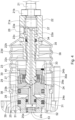
Figure 1 shows a view in longitudinal section of a braking device according to the present invention, in a rest condition; -
Figure 2 shows a view in longitudinal section of a braking device according to the present invention, in an automatic actuation condition; -
Figure 3 shows an enlarged view of a portion of the device shown inFigure 1 ; -
Figure 4 shows an enlarged view of a portion of the device shown inFigure 2 . - A
braking device 10 according to an embodiment of the present invention, for controlling hydraulic brakes of a motor vehicle, is described below with reference toFigures 1-4 ; in particular, inFigures 1 and3 the device is depicted in a rest condition (i.e. a condition in which the brakes are not actuated), and inFigures 2 and4 the same device is depicted in a condition in which braking is actuated by means of automatic actuation. - The
braking device 10 comprises a thrustingrod 21, which can be actuated in a known manner by means of a brake pedal (not shown), and amaster cylinder 70 adapted to convert the thrust exerted by means of the brake pedal into a hydraulic pressure for actuating the brakes of the vehicle. The thrustingrod 21 is connected to the brake pedal, for example by means of afork 20. Themaster cylinder 70 comprises apressure chamber 71 inside which ahydraulic piston 72 operates, this hydraulic piston being adapted to transfer the hydraulic pressure to the brakes of the vehicle, and aspring 73, adapted to act against the thrust exerted by thehydraulic piston 72. Preferably, said elements extend longitudinally along an axis A of thebraking device 10. - In the remainder of the description, for the sake of simplicity, the term "front" will be used to designate elements closer to or facing the
master cylinder 70 and the term
"rear" to designate elements closer to or facing the brake pedal. - The
braking device 10 according to the present invention is equipped with a braking servo-device (also referred to as a hydrobooster), of known type, to assist braking of the vehicle by providing a predetermined servo pressure. The general structure of the servo-device included in thebraking device 10 according to the present invention corresponds to that described inUS2004212248 A1 , to which reference should be made for a detailed description of the structure and operation of this device. Only the main components of the servo-device and its operation will be described below, briefly, attention being focused on the aspects necessary to understand the present invention. - With particular reference to
Figures 1 and2 , the servo-device comprises, in a known manner, a plungingpiston 40 mounted slidingly in the longitudinal direction and movably integral to anannular plunger 41 that separates afront chamber 42 from arear chamber 43 of the servo-device. Ashuttle piston 25 is also housed inside the plungingpiston 40, slidingly with respect to the latter. Saidshuttle piston 25 is associated with thehydraulic piston 72 of the master cylinder and is held in position, in a known manner, byinternal springs 74 of themaster cylinder 70. - In a rest condition, the
front chamber 42 and therear chamber 43 are hydraulically connected, for example by means offirst holes 44 andsecond holes 45 formed radially in theplunging piston 40, which place thefront chamber 42 and therear chamber 43 in communication, respectively, with achannel 46, which is annular, formed on the outer surface of theshuttle piston 25. In said rest condition, the same pressure prevails in thefront chamber 42 and in therear chamber 43 of the servo-device, in particular a high pressure, by virtue of the fact that pressurized oil from a volumetric pump and/or from an accumulator external to thebraking device 10 flows in therear chamber 43, in a known manner. - In an actuation condition of the
braking device 10, theshuttle piston 25 slides relative to theplunging piston 40, advancing towards themaster cylinder 70. Theshuttle piston 25 is configured in such a way that its advancement results, in a known manner, in an interruption of the hydraulic connection between thefront chamber 42 and therear chamber 43 of the servo-device. Thebraking device 10 is further configured such that the advancement of theshuttle piston 25 also causes, in a known manner, the opening of a hydraulic connection between thefront chamber 42 of the servo-device and adischarge chamber 47, for example by means of adischarge hole 48 formed in theplunging piston 40 and saidchannel 46 of theshuttle piston 25. - Owing to the difference in pressure created between the
front chamber 42 of the servo-device, at low pressure as it is in communication with thedischarge chamber 47, and therear chamber 43 of the servo-device, at high pressure, the plungingpiston 40 slides towards thehydraulic piston 72 of themaster cylinder 70. The plungingpiston 40, advancing, causes the closure of a hydraulic connection present, in rest conditions, between thepressure chamber 71 and thedischarge chamber 47 and pushes thehydraulic piston 72 of themaster cylinder 70, which thus exerts the pressure necessary to actuate the brakes of the vehicle. The servo-device thus performs the function of assisting braking. - With particular reference to
Figures 3 and4 , according to the present invention, the thrustingrod 21 of thebraking device 10 is connected in a movably integral manner to ahydraulic coupling 22, which is longitudinally hollow. For example, thethrust rod 21 has an externally threadedend part 21a screwed into arear cavity 22a of the hydraulic coupling, which is threaded internally. - The
hydraulic coupling 22 is in turn associated with astem 23, which is coaxial to thehydraulic coupling 22 and is partly housed therein, preferably with some clearance in the longitudinal direction and so that it cannot slip out of said coupling. For example, thestem 23 comprises acoupling portion 23d, which is threaded externally, and thehydraulic coupling 22 comprises afront inlet portion 22c, which is threaded internally and configured to be coupled with thecoupling portion 23d of thestem 23 when the latter is inserted in thehydraulic coupling 22, after which there is arecess 35, configured to house, with clearance, thecoupling portion 23d of thestem 23 after it has passed through thefront inlet portion 22c of thehydraulic coupling 22. This advantageously makes it possible to connect thestem 23 to thehydraulic coupling 22, preventing them from coming apart, while at the same time making up for any misalignments. - The
hydraulic coupling 22 comprises aninlet aperture 26, preferably formed radially, opening into therear cavity 22a and connected to a tube (not shown), preferably a flexible tube, associated with an electronically controlled proportional valve (not shown), supplied by a hydraulic power unit of the vehicle. - Inside the
rear cavity 22a of thehydraulic coupling 22, afirst end 23a (rear end) of thestem 23 is in abutment, with clearance, against theend part 21a of the thrusting rod. This clearance, along with the abovementioned clearance between thecoupling portion 23d of thestem 23 and therecess 35 of thehydraulic coupling 22, helps make up for any misalignments. On the side from which the thrustingrod 21 is inserted in thehydraulic coupling 22, i.e. on rear side of thehydraulic coupling 22, therear cavity 22a is fluid-tight, sealed by suitable connection means 21b. Moreover, on the side from which thestem 23 is inserted in thehydraulic coupling 22, i.e. on the front side of thehydraulic coupling 22, therear cavity 22a is fluid-tight, sealed for example by means of an O-ring seal 34 housed in agroove 22b of thehydraulic coupling 22 and interacting with anouter surface 23c of thestem 23. - The
stem 23 comprises an internal through-channel 36, formed coaxially with respect to said stem, which extends from therear end 23a of the stem to afront end 23b of the stem. Theinlet aperture 26 of thehydraulic coupling 22 is in hydraulic connection, through therear cavity 22a, with thechannel 36 of thestem 23 in correspondence with therear end 23a thereof. Preferably, aradial score 37 is formed at therear end 23a of the stem, adapted to ensure the hydraulic connection between therear cavity 22a and thechannel 36 when therear end 23a of the stem is in abutment against theend part 21a of the thrustingrod 21. Thestem 23, on the side of the itsend front 23b, has the shape of aspherical tip 27, located externally to thehydraulic coupling 22. Thisspherical tip 27 is associated to adistributor block 24, housed inside the plungingpiston 40 of the servo-device. Thisdistributor block 24 abuts, at the rear, against acirclip 33, while at the front it is adapted to abut against theshuttle piston 25 of the servo-device. - Between the
distributor block 24 and thespherical tip 27 of thestem 23, in the radial direction, there are twocircular gaskets braking device 10 and hence substantially coaxial to thestem 23, arranged in contact with and next to one another. Theinner surfaces spherical tip 27 and interact sealingly with said spherical tip. Preferably, to facilitate insertion of thespherical tip 27 and thecircular gaskets distributor block 24 is divided in amain body 24a and acap 24b, arranged at the side of the distributor block facing thehydraulic coupling 22, or at the rear side of thedistributor block 24, from which, once thecap 24b has been removed, thespherical tip 27 and the associatedgaskets cap 24b is adapted to close, for example by screwing, onto themain body 24a, after the insertion of thespherical tip 27 and thegaskets gaskets main body 24a and thecap 24b of the distributor block. - The
gaskets spherical tip 27 and to ensure hydraulic sealing. - A driving
duct 31, which is a through-duct, that hydraulically connects thesecond end 23b of thestem 23 to aregion 28 at the front of themain body 24a, comprised between the latter and theshuttle piston 25 is formed, preferably in the longitudinal direction, in themain body 24a of thedistributor block 24. - Because there is clearance between the
second end 23b of the stem and themain body 24a of the distributor block, thechannel 36 of thestem 23 is in hydraulic connection with the drivingduct 31 and hence with saidregion 28 at the front of themain body 24a. Theregion 28 is hydraulically sealed, by virtue of appropriate O-ring seals main body 24a of the distributor block and the plungingpiston 40 and between theshuttle piston 25 and the plungingpiston 40, respectively. - In the embodiment shown, the
braking device 10 is further equipped with a pre-filling device, i.e. a device adapted to supply pressurized liquid so as to take up the clearance existing in the braking circuit downstream of themaster cylinder 70 before the start of braking proper. Pre-filling devices of known type are described, for example, in patentsUS2004212248 A1 andWO2017037666 A1 , in the name of the Applicant. Only the main components of the pre-filling device and its operation will be described below, briefly, attention being focused on the aspects necessary to understand the present invention. - The pre-filling device according to the embodiment shown in
Figures 1 and2 is housed in acavity 25a, a longitudinal cavity, formed inside theshuttle piston 25, and comprises avalve piston 50, acting as hydraulic valve, in abutment against a front end of aspring 51, the rear end of which is, conversely, secured to aseat 52 formed in thecavity 25a of theshuttle piston 25, so as to be unable to slide longitudinally. Thespring 51 is housed in achamber 53 comprised between afront end 24c of thedistributor block 24 and thevalve piston 50 and tends to push the latter forward, in abutment against a shoulder 54 present in thecavity 25a of theshuttle piston 25, for example formed Integrally with saidshuttle piston 25. Thevalve piston 50 is configured to close, at the front, in a fluid-tight manner, thechamber 53 in which thespring 51 is located, for example by means of an O-ring seal 55 housed in a seat of thevalve piston 50 and adapted to interact with the walls of thecavity 25a of theshuttle piston 25. Thechamber 53, on the other hand, is in communication, at the rear, with a region at atmospheric pressure, in such a way that thechamber 53 is also at atmospheric pressure. This communication is achieved, for example, by means of aduct 32 formed in themain body 24a of thedistributor block 24. - The
valve piston 50 of the pre-filling device comprises aduct 50a, which is longitudinal, and which is open at the front towards a front portion of thecavity 25a (referred to hereinbelow as the pre-filling duct 56) and blind at the rear, and a radial hole (hole in the valve piston) 50b communicating with thisduct 50a. Furthermore, when thevalve piston 50 is in abutment against the shoulder 54, theradial hole 50b in the valve piston is in hydraulic communication withradial holes 57 formed in the shuttle piston 25 (holes in the shuttle piston) and communicating, in turn, with thesecond holes 45 in theplunging piston 40 and hence with therear chamber 43 of the servo-device. In a rest condition of thebraking device 10, the radial holes 57 in theshuttle piston 25 are also in hydraulic communication with thechannel 46 in theshuttle piston 25 and hence with thefront chamber 42 of the servo-device. - According to the embodiment shown, the pre-filling device further comprises a valve unit positioned at the front with respect to the
valve piston 50 and comprising a first sphere (front sphere) 58 and a second sphere (rear sphere) 59 between which there is a spring 60. The spring 60 is configured to keep thefront sphere 58 in abutment against afirst shoulder 61 formed in thepre-filling duct 56 and therear sphere 59 in abutment against asecond shoulder 62 formed in thepre-filling duct 56, thereby cutting off the hydraulic communication through thepre-filling duct 56. - The pre-filling device further comprises a
stem 63, which is fixed, positioned in such a way that itsrear end 63a can interact with thefront sphere 58, pushing same and opening the hydraulic communication between thepre-filling duct 56 and thepressure chamber 71 of themaster cylinder 70 when theshuttle piston 25 starts to advance towards themaster cylinder 70. - The pre-filling device described above is only one example of a pre-filling device that can be used in the
braking device 10 according to the present invention. Other pre-filling devices, such as those disclosed in the abovementioned documents, may just as easily be used without departing from the scope of the invention. - Briefly, the pre-filling device functions as follows. In the rest position, the servo pressure in the front 42 and rear 43 chambers of the servo-device, connected to one another as described above, supplies, by means of the
channel 46 in theshuttle piston 25, through theholes 57 in theshuttle piston 25 and thehole 50b in thevalve piston 50, thepre-filling duct 56. - In the rest position, the
front sphere 58 is closed and therefore the liquid coming from therear chamber 43 increases in pressure in thepre-filling duct 56, exerting a hydraulic thrust on thevalve piston 50 until it overcomes the load of thespring 51 arranged in thechamber 53, which, as stated above, is at atmospheric pressure. Once the "pre-filling pressure" has been reached, thevalve piston 50 closes thehole 50b in the shuttle piston, blocking same. - The pre-filling device stays in said position while the pressure in the
pre-filling duct 56 is the same as or greater than the pre-filling pressure. - When the braking device is actuated, following the advancement of the
shuttle piston 25, thefront sphere 58 is pushed by thestem 63, opening the hydraulic communication between thepre-filling duct 56 and thepressure chamber 71 of themaster cylinder 70 and the consequent passage of pressurized liquid from thepre-filling duct 56 to thepressure chamber 71, so as to take up the clearances present in the braking circuit downstream of themaster cylinder 70 before the start of braking proper. The abovementioned opening of hydraulic communication between thepre-filling duct 56 and thepressure chamber 71 of themaster cylinder 70 causes a fall in pressure in thepre-filling duct 56, such that thevalve piston 50 of the pre-filling device again advances against the shoulder 54 present in thecavity 25a in theshuttle piston 25, reconnecting therear chamber 43 of the servo-device to thepre-filling duct 56. The pre-filling device thus acts in such a way as to keep the pressure in thepre-filling duct 56 substantially constant through a modulated continuous movement of thevalve piston 50 which causes opening and closure of the hydraulic communication between thepre-filling duct 56 and therear chamber 43 of the servo-device. This constant pressure value is determined by the thrust exerted by thespring 51. According to other embodiments, the braking device according to the present invention does not have a pre-filling device. - According to the embodiment of the present invention described, the
braking device 10 represents the first braking device of a pair of braking devices (which are substantially the same) of a braking system (not shown) of an agricultural tractor or the like. In such braking systems, as is known, each braking device is associated with a respective brake of a rear wheel of the agricultural tractor, so that it can act on a single rear brake and perform the function known as "steer-by-braking". In such braking systems, when normal braking is desired, rather than steer-by-braking, acting on the pedals of both braking devices, it is necessary to balance out the control pressures provided by the master cylinders of the pair of braking devices so as to ensure balanced braking, i.e. braking of substantially equal intensity on both rear wheels. To this end, the braking devices are equipped with balancing devices. - The
braking device 10 according to the embodiment shown includes a balancing device with a general structure, described below only briefly, corresponding to that described in patent applicationWO2017013595 A1 , in the name of the Applicant, to which reference should be made for a more detailed description. With particular reference toFigures 1 and2 , the balancing device comprises theabovementioned stem 63, which is coaxial to theshuttle piston 25 and fixed in correspondence with afront end wall 71a of thepressure chamber 71 of themaster cylinder 70. A balancingchannel 64 is formed inside thestem 63. A front end of the balancingchannel 64 is connected, by means of ahole 65, to a balancing duct (not shown), which is in turn in communication with a front end of a balancing duct of the second braking device of the pair of braking devices. A rear end of the balancingchannel 64 ends with at least oneradial hole 64a. Thisradial hole 64a is blocked by a balancingvalve 66, which is normally closed, movably integral with theshuttle piston 25. The balancingvalve 66 opens when theshuttle piston 25, as a result of the actuation of thebraking device 10, moves towards the front part of thebraking device 10. Theradial hole 64a is thus uncovered, thereby placing the balancingchannel 64 in hydraulic connection with thepre-filling duct 56 and hence with thepressure chamber 71 of themaster cylinder 70, through aradial hole 67 formed in theshuttle piston 25. - Balancing between the control pressures prevailing inside the pressure chambers of the master cylinders of the two braking devices is thus actuated mechanically, after a predetermined stroke of the respective shuttle pistons.
- According to another embodiment (not shown), the braking device does not form part of a braking system comprising a pair of braking devices but is a single device, and is therefore configured to control by itself the braking of the right and left wheels of the vehicle. In this embodiment, the braking device will therefore not have the balancing device. In this case, the
stem 63 will only have the function of interacting with thefront sphere 58 of the pre-filling device. The stem may therefore be a solid stem (not shown), without the balancingchannel 64 and the relatedradial hole 64a. - The operation of the
braking device 10 according to the present invention is described below. - Starting from the condition of rest described above and shown in
Figures 1 and3 , thebraking device 10 is actuated so as to generate the hydraulic pressure necessary for braking, by means of two alternative types of actuation, namely manual and automatic actuation. - In the case of manual actuation, braking is actuated by acting on the brake pedal. The thrust exerted by means of the brake pedal is transferred to the thrusting
rod 21 and then, via thestem 23, to thedistributor block 24, which, as it is in abutment against theshuttle piston 25, causes advancement of the latter towards the front part of thebraking device 10. - The advancement of the
shuttle piston 25 causes, in a known manner, actuation of the servo-device, by means of the intermittent interruption of the hydraulic connection between itsfront chamber 42 and itsrear chamber 43. The actuation of the servo-device in combination with theshuttle piston 23 causes actuation of the plungingpiston 40 which engages thehydraulic piston 72 of themaster cylinder 70, causing it to advance. This advancement in turn generates a pressure in thepressure chamber 71 of themaster cylinder 70 adapted to actuate one or more brakes of the vehicle connected to thebraking device 10. In the case of automatic actuation, shown inFigures 2 and4 , braking is actuated by supplying an appropriate pressure at theinlet aperture 26 of thehydraulic coupling 22; this pressure, as described above, is regulated by a solenoid valve and supplied by the hydraulic power unit of the vehicle. - The pressure supplied at the
inlet aperture 26 is transferred, via thechannel 36 in thestem 23 and the drivingduct 31 in themain body 24a of thedistributor block 24, to theregion 28 comprised between themain body 24a and theshuttle piston 25. The increase in pressure in theregion 28 generates a thrust on the shuttle piston that causes the latter to advance towards the front part of thebraking device 10. The usable area for generating the thrust on theshuttle piston 25 is the area between the guide diameter of thedistributor block 24 and the diameter of thechamber 53. - As in the case of manual actuation, the advancement of the
shuttle piston 25 causes actuation of the servo-device, by means of the intermittent interruption of the hydraulic connection between itsfront chamber 42 and itsrear chamber 43, and the actuation of the servo-device in combination with theshuttle piston 25 causes actuation of the plungingpiston 40 and thus advancement of thehydraulic piston 72 and consequent generation of a pressure in thepressure chamber 71 adapted to actuate one or more brakes of the vehicle connected to thebraking device 10. - When braking is actuated by means of automatic actuation, the brake pedal of the
braking device 10 itself also moves as if it was actuated manually, as it is connected, as described above, to the thrustingrod 21 which is brought towards the front part of thebraking device 10 owing to the advancement of the plungingpiston 40, to which the thrustingrod 21 is connected via thedistributor block 24, thestem 23 and thehydraulic coupling 22. Obviously, in the case of automatic actuation, it is also possible to disengage the brake pedal from therespective fork 20. - When the
braking device 10 has a pre-filling device, actuation of braking, whether manual or automatic, will include actuation of this pre-filling device, in the manner described above. - Advantageously, automatic actuation of the braking device makes it possible to control braking of the vehicle autonomously.
- In the case of a braking system comprising a pair of
braking devices 10, both braking devices may be actuated simultaneously, causing simultaneous braking of at least both rear wheels of the vehicle, or just one of the two braking devices may be actuated, performing the "steer-by-braking" function. - As in the case of the single braking device, the pair of braking devices is actuated manually or automatically.
- When the braking devices are actuated simultaneously, if the braking devices are equipped with a balancing device, this makes it possible to balance out the control pressures at the outlet of the pressure chambers of the two master cylinders, ensuring the same braking action on at least both rear wheels of the vehicle.
- Advantageously, automatic actuation of the braking devices of a braking system makes it possible to autonomously control not only braking of the vehicle but also steering of the vehicle, which is achieved, as stated above, by actuating only one of the two braking devices.
Claims (10)
- Hydraulic braking device (10) for a vehicle, comprising a master cylinder (70) and a servo-device, wherein- a hydraulic piston (72) of the master cylinder (70) defines a pressure chamber (71) which is adapted to contain a pressurized liquid and in which a control pressure is generated that is transmitted to one or more brake(s) of the vehicle;- a plunger (41) of the servo-device defines a first chamber (42) and a second chamber (43) of the servo-device, said chambers being associated with communication means (44, 45, 46) adapted to establish, when the braking device (10) is in a rest condition, a hydraulic communication between the first chamber (42) and the second chamber (43) and to interrupt said communication when the braking device (10) is actuated;- a shuttle piston (25), connected to a thrusting rod (21) associatable with a brake pedal, is mounted to be sealingly slidable in a plunging piston (40) movably integral to the plunger (41) of the servo-device,
characterized in that it comprises- a hydraulic coupling (22) connected in a movably integral manner to the thrusting rod (21) and comprising an inlet aperture (26) opening into an rear inner cavity (22a) of the hydraulic coupling (22) and hydraulically connected to a solenoid valve,- a stem (23) associated, on the side of a first end (23a) thereof, to the hydraulic coupling (22) and having, on the side of its second end (23b), the shape of a spherical tip (27);- a distributor block (24) sealingly received within the plunging piston (40) and adapted to abut against the shuttle piston (25),wherein the spherical tip (27) of the stem (23) is associated, in an articulated manner, to the distributor block (24), and wherein the rear inner cavity (22a) of the hydraulic coupling (22) is in hydraulic communication with a through-channel (36) formed within the stem (23), said through-channel (36) being in turn in hydraulic communication with a driving duct (31) formed in the distributor block (24), said driving duct opening into a region (28) comprised between the distributor block (24) and the shuttle piston (25). - Device according to claim 1, wherein between the distributor block (24) and the spherical tip (27) of the stem (23) there are arranged two gaskets (29, 30) longitudinally stacked on each other and having inner surfaces (29a, 30a) suitably shaped so as to match the spherical shape of the spherical tip (27), said gaskets (29, 30) being configured so as to ensure articulation of the spherical tip (27) and to ensure hydraulic sealing with said spherical tip (27).
- Device according to claim 2, wherein the distributor block (24) is divided in a main body (24a) and a cap (24b), arranged at the side of the distributor block (24a) facing the hydraulic coupling (22), said cap (24b) being adapted to close onto the main body (24a), whereby said gaskets (29, 30) are retained, in a longitudinal direction, between the main body (24a) and the cap (24b) of the distributor block (24).
- Device according to any of the preceding claims, wherein the stem (23) is partly housed, on the side of its first end (23a), within the hydraulic coupling (22), preferably with some clearance in the longitudinal direction and so that it cannot slip out of said coupling.
- Device according to any of the preceding claims, wherein the region (28) comprised between the distributor block (24) and the shuttle piston (25) is a hydraulically sealed chamber.
- Device according to any of the preceding claims, wherein the rear inner cavity (22a) of the hydraulic coupling (22) cooperates in a fluid-tight manner with the thrusting rod (21) and the stem (23).
- Device according to any of the preceding claims, further comprising a pre-filling device, said pre-filling device including a valve piston (50) slidingly arranged in a cavity (25a) of the shuttle piston (25), and a chamber (53) defined in said cavity (25a) between the valve piston (50) and a front end (24c) of the distributor block (24), said chamber (53) communicating with a region at atmospheric pressure by means of duct (32) formed in the distributor block (24).
- Braking system comprising a first and a second braking device (10) according to any of claims 1 to 7, wherein the first braking device is arranged to actuate a first brake, associate with a rear right wheel of the vehicle, and the second braking device is arranged to actuate a second brake associated with a rear left wheel of the vehicle.
- Method of operating a braking device (10) according to any of claims 1 to 7, which can be actuated both manually and automatically,the manual actuation comprising the steps of:- acting onto the brake pedal,- transferring, through the thrusting rod (21) and the stem (23), the thrust exerted by the pedal to the distributor block (24), which in turn exerts a thrust onto the shuttle piston (25) of the braking device (10), thus causing advancement thereof towards the master cylinder (70) of the braking device (10),- actuating, by means of the advancement of the shuttle piston (25), the servo-device of the braking device (10),- actuating, by means of the combined action of the shuttle piston (25) and the servo-device, a plunging piston (40) to engage a hydraulic piston (72) in the master cylinder (70), and- generating, by means of the hydraulic piston (72) in the master cylinder (70), a pressure in the pressure chamber (71), said pressure being adapted to operate one or more brake(s) of the vehicle connected to the braking device (10);the automatic actuation comprising the steps of:- providing, by means of the solenoid valve, a suitable hydraulic pressure in the inlet aperture (26) of the hydraulic connection (22),- transferring said hydraulic pressure, through the channel (36) of the stem (23) and the driving duct (31) of the distributor block (24), to the region (28) comprised between the distributor block (24) and the shuttle piston (25),- generating, by means of said hydraulic pressure in the region (28) comprised between the distributor block (24) and the shuttle piston (25), a thrust onto the shuttle piston (25), thus causing advancement thereof towards the master cylinder (70) of the braking device (10),- actuating, by means of the advancement of the shuttle piston (25), the servo-device of the braking system (10),- actuating, by means of the combined action of the shuttle piston (25) and the servo-device, a plunging piston (40) to engage a hydraulic piston (72) in the master cylinder (70), and- generating, by means of the hydraulic piston (72) in the master cylinder (70), a pressure in the pressure chamber (71), said pressure being adapted to operate one or more brake(s) of the vehicle connected to the braking device (10).
- Method of operating a braking system according to claim 8, wherein the first braking device and the second braking device can be operated both manually and automatically according to claim 9,
said method comprising the step of:- simultaneously operating both braking devices of the braking systemor the step of:- individually actuating only one of the two braking devices of the braking system and thus performing a steer-by-braking function.
Applications Claiming Priority (2)
| Application Number | Priority Date | Filing Date | Title |
|---|---|---|---|
| IT202000023314 | 2020-10-02 | ||
| PCT/EP2021/076475 WO2022069398A1 (en) | 2020-10-02 | 2021-09-27 | Braking device for autonomous guidance |
Publications (2)
| Publication Number | Publication Date |
|---|---|
| EP4222030A1 EP4222030A1 (en) | 2023-08-09 |
| EP4222030B1 true EP4222030B1 (en) | 2024-11-27 |
Family
ID=73793710
Family Applications (1)
| Application Number | Title | Priority Date | Filing Date |
|---|---|---|---|
| EP21786118.6A Active EP4222030B1 (en) | 2020-10-02 | 2021-09-27 | Braking device for autonomous guidance and method of operating said braking device |
Country Status (2)
| Country | Link |
|---|---|
| EP (1) | EP4222030B1 (en) |
| WO (1) | WO2022069398A1 (en) |
Family Cites Families (6)
| Publication number | Priority date | Publication date | Assignee | Title |
|---|---|---|---|---|
| EP1457400B1 (en) | 2003-03-13 | 2011-01-26 | VHIT S.p.A. | Hydraulic brake device with improved braking sensitivity |
| JP4065231B2 (en) * | 2003-12-05 | 2008-03-19 | 日信工業株式会社 | Brake device for vehicle |
| ITUB20152356A1 (en) | 2015-07-21 | 2017-01-21 | Vhit Spa | Running balancing device for hydraulic braking systems, braking system that includes the device and method of the braking system |
| ITUB20153417A1 (en) | 2015-09-04 | 2017-03-04 | Vhit Spa | Pre-filling device for a braking system with interlocking device and method of operation of the pre-filling device |
| IT201700066182A1 (en) * | 2017-06-14 | 2018-12-14 | Vhit S P A Soc Unipersonale | Servo-assisted hydraulic braking device |
| US10793126B2 (en) | 2017-12-18 | 2020-10-06 | Cnh Industrial America Llc | Electro-hydraulic brake system and method |
-
2021
- 2021-09-27 WO PCT/EP2021/076475 patent/WO2022069398A1/en not_active Ceased
- 2021-09-27 EP EP21786118.6A patent/EP4222030B1/en active Active
Also Published As
| Publication number | Publication date |
|---|---|
| WO2022069398A1 (en) | 2022-04-07 |
| EP4222030A1 (en) | 2023-08-09 |
Similar Documents
| Publication | Publication Date | Title |
|---|---|---|
| US20020017820A1 (en) | Hydraulic brake apparatus for a vehicle | |
| US4444440A (en) | Hydraulic boosters for vehicle braking systems | |
| US5261456A (en) | Transmission engagement override valve | |
| US2924072A (en) | Burwell | |
| US4468927A (en) | Hydraulic boosters for vehicle braking systems | |
| US4516400A (en) | Master cylinder assembly for a vehicle braking system | |
| EP4222030B1 (en) | Braking device for autonomous guidance and method of operating said braking device | |
| US5234086A (en) | Fluid pressure type booster device | |
| US4319455A (en) | Hydraulic power brake system and hydraulic brake booster and controls therefor | |
| JPS6153265B2 (en) | ||
| JPH11344050A (en) | Quick connection coupler for hydraulic control system | |
| GB2098687A (en) | A twin master cylinder or booster assembly for a vehicle braking system | |
| US6513884B2 (en) | Hydraulic brake apparatus for a vehicle | |
| EP4011727B1 (en) | Braking device | |
| US3939658A (en) | Power brake booster | |
| JPH08529B2 (en) | Automotive hydraulic brake device | |
| US3973401A (en) | Power-operated boosters for vehicle braking systems | |
| EP0200386A2 (en) | Power booster valve arrangement | |
| US4317332A (en) | Hydraulic power brake system and hydraulic brake booster and controls therefor | |
| US6062654A (en) | Brake control valve | |
| US4442671A (en) | Control valve assemblies for two pedal-operated hydraulic braking systems | |
| US4924755A (en) | Hydraulic power booster | |
| EP3319848B1 (en) | Actuating device of a valve for the braking of a trailer | |
| EP3204277B1 (en) | Pressure balancing device for hydraulic braking systems | |
| EP3397534B1 (en) | Pressure balancing system for master cylinders of braking systems and operating method thereof |
Legal Events
| Date | Code | Title | Description |
|---|---|---|---|
| STAA | Information on the status of an ep patent application or granted ep patent |
Free format text: STATUS: UNKNOWN |
|
| STAA | Information on the status of an ep patent application or granted ep patent |
Free format text: STATUS: THE INTERNATIONAL PUBLICATION HAS BEEN MADE |
|
| PUAI | Public reference made under article 153(3) epc to a published international application that has entered the european phase |
Free format text: ORIGINAL CODE: 0009012 |
|
| STAA | Information on the status of an ep patent application or granted ep patent |
Free format text: STATUS: REQUEST FOR EXAMINATION WAS MADE |
|
| 17P | Request for examination filed |
Effective date: 20230327 |
|
| AK | Designated contracting states |
Kind code of ref document: A1 Designated state(s): AL AT BE BG CH CY CZ DE DK EE ES FI FR GB GR HR HU IE IS IT LI LT LU LV MC MK MT NL NO PL PT RO RS SE SI SK SM TR |
|
| P01 | Opt-out of the competence of the unified patent court (upc) registered |
Effective date: 20230809 |
|
| DAV | Request for validation of the european patent (deleted) | ||
| DAX | Request for extension of the european patent (deleted) | ||
| GRAP | Despatch of communication of intention to grant a patent |
Free format text: ORIGINAL CODE: EPIDOSNIGR1 |
|
| STAA | Information on the status of an ep patent application or granted ep patent |
Free format text: STATUS: GRANT OF PATENT IS INTENDED |
|
| INTG | Intention to grant announced |
Effective date: 20240215 |
|
| GRAJ | Information related to disapproval of communication of intention to grant by the applicant or resumption of examination proceedings by the epo deleted |
Free format text: ORIGINAL CODE: EPIDOSDIGR1 |
|
| STAA | Information on the status of an ep patent application or granted ep patent |
Free format text: STATUS: REQUEST FOR EXAMINATION WAS MADE |
|
| GRAP | Despatch of communication of intention to grant a patent |
Free format text: ORIGINAL CODE: EPIDOSNIGR1 |
|
| STAA | Information on the status of an ep patent application or granted ep patent |
Free format text: STATUS: GRANT OF PATENT IS INTENDED |
|
| INTC | Intention to grant announced (deleted) | ||
| INTG | Intention to grant announced |
Effective date: 20240702 |
|
| GRAS | Grant fee paid |
Free format text: ORIGINAL CODE: EPIDOSNIGR3 |
|
| GRAA | (expected) grant |
Free format text: ORIGINAL CODE: 0009210 |
|
| STAA | Information on the status of an ep patent application or granted ep patent |
Free format text: STATUS: THE PATENT HAS BEEN GRANTED |
|
| AK | Designated contracting states |
Kind code of ref document: B1 Designated state(s): AL AT BE BG CH CY CZ DE DK EE ES FI FR GB GR HR HU IE IS IT LI LT LU LV MC MK MT NL NO PL PT RO RS SE SI SK SM TR |
|
| REG | Reference to a national code |
Ref country code: GB Ref legal event code: FG4D |
|
| REG | Reference to a national code |
Ref country code: CH Ref legal event code: EP |
|
| REG | Reference to a national code |
Ref country code: IE Ref legal event code: FG4D |
|
| REG | Reference to a national code |
Ref country code: DE Ref legal event code: R096 Ref document number: 602021022510 Country of ref document: DE |
|
| REG | Reference to a national code |
Ref country code: LT Ref legal event code: MG9D |
|
| REG | Reference to a national code |
Ref country code: NL Ref legal event code: MP Effective date: 20241127 |
|
| PG25 | Lapsed in a contracting state [announced via postgrant information from national office to epo] |
Ref country code: IS Free format text: LAPSE BECAUSE OF FAILURE TO SUBMIT A TRANSLATION OF THE DESCRIPTION OR TO PAY THE FEE WITHIN THE PRESCRIBED TIME-LIMIT Effective date: 20250327 Ref country code: PT Free format text: LAPSE BECAUSE OF FAILURE TO SUBMIT A TRANSLATION OF THE DESCRIPTION OR TO PAY THE FEE WITHIN THE PRESCRIBED TIME-LIMIT Effective date: 20250327 Ref country code: HR Free format text: LAPSE BECAUSE OF FAILURE TO SUBMIT A TRANSLATION OF THE DESCRIPTION OR TO PAY THE FEE WITHIN THE PRESCRIBED TIME-LIMIT Effective date: 20241127 |
|
| PG25 | Lapsed in a contracting state [announced via postgrant information from national office to epo] |
Ref country code: FI Free format text: LAPSE BECAUSE OF FAILURE TO SUBMIT A TRANSLATION OF THE DESCRIPTION OR TO PAY THE FEE WITHIN THE PRESCRIBED TIME-LIMIT Effective date: 20241127 Ref country code: NL Free format text: LAPSE BECAUSE OF FAILURE TO SUBMIT A TRANSLATION OF THE DESCRIPTION OR TO PAY THE FEE WITHIN THE PRESCRIBED TIME-LIMIT Effective date: 20241127 |
|
| REG | Reference to a national code |
Ref country code: AT Ref legal event code: MK05 Ref document number: 1745433 Country of ref document: AT Kind code of ref document: T Effective date: 20241127 |
|
| PG25 | Lapsed in a contracting state [announced via postgrant information from national office to epo] |
Ref country code: BG Free format text: LAPSE BECAUSE OF FAILURE TO SUBMIT A TRANSLATION OF THE DESCRIPTION OR TO PAY THE FEE WITHIN THE PRESCRIBED TIME-LIMIT Effective date: 20241127 |
|
| PG25 | Lapsed in a contracting state [announced via postgrant information from national office to epo] |
Ref country code: ES Free format text: LAPSE BECAUSE OF FAILURE TO SUBMIT A TRANSLATION OF THE DESCRIPTION OR TO PAY THE FEE WITHIN THE PRESCRIBED TIME-LIMIT Effective date: 20241127 |
|
| PG25 | Lapsed in a contracting state [announced via postgrant information from national office to epo] |
Ref country code: NO Free format text: LAPSE BECAUSE OF FAILURE TO SUBMIT A TRANSLATION OF THE DESCRIPTION OR TO PAY THE FEE WITHIN THE PRESCRIBED TIME-LIMIT Effective date: 20250227 |
|
| PG25 | Lapsed in a contracting state [announced via postgrant information from national office to epo] |
Ref country code: GR Free format text: LAPSE BECAUSE OF FAILURE TO SUBMIT A TRANSLATION OF THE DESCRIPTION OR TO PAY THE FEE WITHIN THE PRESCRIBED TIME-LIMIT Effective date: 20250228 Ref country code: LV Free format text: LAPSE BECAUSE OF FAILURE TO SUBMIT A TRANSLATION OF THE DESCRIPTION OR TO PAY THE FEE WITHIN THE PRESCRIBED TIME-LIMIT Effective date: 20241127 Ref country code: AT Free format text: LAPSE BECAUSE OF FAILURE TO SUBMIT A TRANSLATION OF THE DESCRIPTION OR TO PAY THE FEE WITHIN THE PRESCRIBED TIME-LIMIT Effective date: 20241127 |
|
| PG25 | Lapsed in a contracting state [announced via postgrant information from national office to epo] |
Ref country code: PL Free format text: LAPSE BECAUSE OF FAILURE TO SUBMIT A TRANSLATION OF THE DESCRIPTION OR TO PAY THE FEE WITHIN THE PRESCRIBED TIME-LIMIT Effective date: 20241127 |
|
| PG25 | Lapsed in a contracting state [announced via postgrant information from national office to epo] |
Ref country code: RS Free format text: LAPSE BECAUSE OF FAILURE TO SUBMIT A TRANSLATION OF THE DESCRIPTION OR TO PAY THE FEE WITHIN THE PRESCRIBED TIME-LIMIT Effective date: 20250227 |
|
| PG25 | Lapsed in a contracting state [announced via postgrant information from national office to epo] |
Ref country code: SM Free format text: LAPSE BECAUSE OF FAILURE TO SUBMIT A TRANSLATION OF THE DESCRIPTION OR TO PAY THE FEE WITHIN THE PRESCRIBED TIME-LIMIT Effective date: 20241127 |
|
| PG25 | Lapsed in a contracting state [announced via postgrant information from national office to epo] |
Ref country code: DK Free format text: LAPSE BECAUSE OF FAILURE TO SUBMIT A TRANSLATION OF THE DESCRIPTION OR TO PAY THE FEE WITHIN THE PRESCRIBED TIME-LIMIT Effective date: 20241127 |
|
| PG25 | Lapsed in a contracting state [announced via postgrant information from national office to epo] |
Ref country code: EE Free format text: LAPSE BECAUSE OF FAILURE TO SUBMIT A TRANSLATION OF THE DESCRIPTION OR TO PAY THE FEE WITHIN THE PRESCRIBED TIME-LIMIT Effective date: 20241127 |
|
| PG25 | Lapsed in a contracting state [announced via postgrant information from national office to epo] |
Ref country code: RO Free format text: LAPSE BECAUSE OF FAILURE TO SUBMIT A TRANSLATION OF THE DESCRIPTION OR TO PAY THE FEE WITHIN THE PRESCRIBED TIME-LIMIT Effective date: 20241127 |
|
| PG25 | Lapsed in a contracting state [announced via postgrant information from national office to epo] |
Ref country code: SK Free format text: LAPSE BECAUSE OF FAILURE TO SUBMIT A TRANSLATION OF THE DESCRIPTION OR TO PAY THE FEE WITHIN THE PRESCRIBED TIME-LIMIT Effective date: 20241127 |
|
| PG25 | Lapsed in a contracting state [announced via postgrant information from national office to epo] |
Ref country code: CZ Free format text: LAPSE BECAUSE OF FAILURE TO SUBMIT A TRANSLATION OF THE DESCRIPTION OR TO PAY THE FEE WITHIN THE PRESCRIBED TIME-LIMIT Effective date: 20241127 |
|
| PG25 | Lapsed in a contracting state [announced via postgrant information from national office to epo] |
Ref country code: IT Free format text: LAPSE BECAUSE OF FAILURE TO SUBMIT A TRANSLATION OF THE DESCRIPTION OR TO PAY THE FEE WITHIN THE PRESCRIBED TIME-LIMIT Effective date: 20241127 |
|
| REG | Reference to a national code |
Ref country code: DE Ref legal event code: R097 Ref document number: 602021022510 Country of ref document: DE |
|
| PG25 | Lapsed in a contracting state [announced via postgrant information from national office to epo] |
Ref country code: SE Free format text: LAPSE BECAUSE OF FAILURE TO SUBMIT A TRANSLATION OF THE DESCRIPTION OR TO PAY THE FEE WITHIN THE PRESCRIBED TIME-LIMIT Effective date: 20241127 |
|
| PLBE | No opposition filed within time limit |
Free format text: ORIGINAL CODE: 0009261 |
|
| STAA | Information on the status of an ep patent application or granted ep patent |
Free format text: STATUS: NO OPPOSITION FILED WITHIN TIME LIMIT |
|
| PGFP | Annual fee paid to national office [announced via postgrant information from national office to epo] |
Ref country code: DE Payment date: 20250923 Year of fee payment: 5 |
|
| PGFP | Annual fee paid to national office [announced via postgrant information from national office to epo] |
Ref country code: GB Payment date: 20250926 Year of fee payment: 5 |
|
| 26N | No opposition filed |
Effective date: 20250828 |