EP4220525A1 - Method of determining a value of a non-fungible token in a computing system - Google Patents
Method of determining a value of a non-fungible token in a computing system Download PDFInfo
- Publication number
- EP4220525A1 EP4220525A1 EP23150777.3A EP23150777A EP4220525A1 EP 4220525 A1 EP4220525 A1 EP 4220525A1 EP 23150777 A EP23150777 A EP 23150777A EP 4220525 A1 EP4220525 A1 EP 4220525A1
- Authority
- EP
- European Patent Office
- Prior art keywords
- value
- clout
- digital collectible
- circuitry
- popularity
- Prior art date
- Legal status (The legal status is an assumption and is not a legal conclusion. Google has not performed a legal analysis and makes no representation as to the accuracy of the status listed.)
- Pending
Links
Images




Classifications
-
- G—PHYSICS
- G06—COMPUTING OR CALCULATING; COUNTING
- G06Q—INFORMATION AND COMMUNICATION TECHNOLOGY [ICT] SPECIALLY ADAPTED FOR ADMINISTRATIVE, COMMERCIAL, FINANCIAL, MANAGERIAL OR SUPERVISORY PURPOSES; SYSTEMS OR METHODS SPECIALLY ADAPTED FOR ADMINISTRATIVE, COMMERCIAL, FINANCIAL, MANAGERIAL OR SUPERVISORY PURPOSES, NOT OTHERWISE PROVIDED FOR
- G06Q30/00—Commerce
- G06Q30/02—Marketing; Price estimation or determination; Fundraising
- G06Q30/0207—Discounts or incentives, e.g. coupons or rebates
- G06Q30/0239—Online discounts or incentives
-
- G—PHYSICS
- G06—COMPUTING OR CALCULATING; COUNTING
- G06Q—INFORMATION AND COMMUNICATION TECHNOLOGY [ICT] SPECIALLY ADAPTED FOR ADMINISTRATIVE, COMMERCIAL, FINANCIAL, MANAGERIAL OR SUPERVISORY PURPOSES; SYSTEMS OR METHODS SPECIALLY ADAPTED FOR ADMINISTRATIVE, COMMERCIAL, FINANCIAL, MANAGERIAL OR SUPERVISORY PURPOSES, NOT OTHERWISE PROVIDED FOR
- G06Q30/00—Commerce
- G06Q30/06—Buying, selling or leasing transactions
-
- G—PHYSICS
- G06—COMPUTING OR CALCULATING; COUNTING
- G06Q—INFORMATION AND COMMUNICATION TECHNOLOGY [ICT] SPECIALLY ADAPTED FOR ADMINISTRATIVE, COMMERCIAL, FINANCIAL, MANAGERIAL OR SUPERVISORY PURPOSES; SYSTEMS OR METHODS SPECIALLY ADAPTED FOR ADMINISTRATIVE, COMMERCIAL, FINANCIAL, MANAGERIAL OR SUPERVISORY PURPOSES, NOT OTHERWISE PROVIDED FOR
- G06Q30/00—Commerce
- G06Q30/02—Marketing; Price estimation or determination; Fundraising
- G06Q30/0201—Market modelling; Market analysis; Collecting market data
- G06Q30/0206—Price or cost determination based on market factors
-
- G—PHYSICS
- G06—COMPUTING OR CALCULATING; COUNTING
- G06Q—INFORMATION AND COMMUNICATION TECHNOLOGY [ICT] SPECIALLY ADAPTED FOR ADMINISTRATIVE, COMMERCIAL, FINANCIAL, MANAGERIAL OR SUPERVISORY PURPOSES; SYSTEMS OR METHODS SPECIALLY ADAPTED FOR ADMINISTRATIVE, COMMERCIAL, FINANCIAL, MANAGERIAL OR SUPERVISORY PURPOSES, NOT OTHERWISE PROVIDED FOR
- G06Q30/00—Commerce
- G06Q30/02—Marketing; Price estimation or determination; Fundraising
- G06Q30/0207—Discounts or incentives, e.g. coupons or rebates
- G06Q30/0212—Chance discounts or incentives
-
- H—ELECTRICITY
- H04—ELECTRIC COMMUNICATION TECHNIQUE
- H04L—TRANSMISSION OF DIGITAL INFORMATION, e.g. TELEGRAPHIC COMMUNICATION
- H04L9/00—Cryptographic mechanisms or cryptographic arrangements for secret or secure communications; Network security protocols
- H04L9/32—Cryptographic mechanisms or cryptographic arrangements for secret or secure communications; Network security protocols including means for verifying the identity or authority of a user of the system or for message authentication, e.g. authorization, entity authentication, data integrity or data verification, non-repudiation, key authentication or verification of credentials
- H04L9/321—Cryptographic mechanisms or cryptographic arrangements for secret or secure communications; Network security protocols including means for verifying the identity or authority of a user of the system or for message authentication, e.g. authorization, entity authentication, data integrity or data verification, non-repudiation, key authentication or verification of credentials involving a third party or a trusted authority
- H04L9/3213—Cryptographic mechanisms or cryptographic arrangements for secret or secure communications; Network security protocols including means for verifying the identity or authority of a user of the system or for message authentication, e.g. authorization, entity authentication, data integrity or data verification, non-repudiation, key authentication or verification of credentials involving a third party or a trusted authority using tickets or tokens, e.g. Kerberos
-
- H—ELECTRICITY
- H04—ELECTRIC COMMUNICATION TECHNIQUE
- H04L—TRANSMISSION OF DIGITAL INFORMATION, e.g. TELEGRAPHIC COMMUNICATION
- H04L2209/00—Additional information or applications relating to cryptographic mechanisms or cryptographic arrangements for secret or secure communication H04L9/00
- H04L2209/60—Digital content management, e.g. content distribution
- H04L2209/603—Digital right managament [DRM]
Definitions
- This disclosure relates generally to non-fungible tokens (NFTs) in a computing system, and more particularly, to determining a value of a NFT in a computing system.
- NFTs non-fungible tokens
- a non-fungible token is a unique and non-interchangeable unit of data stored on a blockchain (a form of digital ledger), which can be sold or traded on digital markets.
- NFTs can be associated with reproducible digital files such as artwork, photographs, videos, audio clips, music, games, and documents, and a license to use these assets for a specified purpose.
- NFTs use a digital ledger to provide a public certificate of authenticity or proof of ownership, but do not restrict the sharing or copying of the underlying digital files.
- the lack of interchangeability (fungibility) distinguishes NFTs from blockchain cryptocurrencies, such as Bitcoin.
- a first aspect of this specification provides an apparatus comprising: a clout analyzer to determine a clout value for a creator of a digital collectible; a popularity analyzer to determine a popularity value of the digital collectible; and a valuator to aggregate the clout value and the popularity value into an aggregated value for the digital collectible, to normalize the aggregated value and assign the normalized aggregated value as an assessed value for the digital collectible.
- the apparatus may comprise a converter to convert the digital collectible into a non-fungible token (NFT) having the assessed value.
- NFT non-fungible token
- the apparatus may comprise an exclusivity analyzer to determine an exclusivity value for the digital collectible, wherein the valuator is to aggregate the exclusivity value with the clout value and the popularity value.
- the exclusivity value may be a number of copies of a non-fungible token (NFT) to be generated from the digital collectible.
- NFT non-fungible token
- the clout value may comprise an aggregate measurement of a plurality of factors contributing to influence of the creator, the plurality of factors including a number of social media followers of the creator.
- a second aspect of this specification provides a method comprising: determining a clout value for a creator of a digital collectible; determining a popularity value of the digital collectible; and aggregating the clout value and the popularity value into an aggregated value for the digital collectible, normalizing the aggregated value and assigning the normalized aggregated value as an assessed value for the digital collectible.
- the method may comprise converting the digital collectible into a non-fungible token (NFT) having the assessed value.
- NFT non-fungible token
- the method may comprise determining an exclusivity value for the digital collectible and aggregating the exclusivity value with the clout value and the popularity value.
- the exclusivity value may be a number of copies of a non-fungible token (NFT) to be generated from the digital collectible.
- NFT non-fungible token
- the clout value may comprise an aggregate measurement of a plurality of factors contributing to influence of the creator, the plurality of factors including a number of social media followers of the creator.
- the clout value may change over time based on at least one of social media activity of the creator and others who interact with the creator.
- the popularity value may comprise an aggregate measurement of a plurality of factors contributing to popularity of digital collectible, the plurality of factors including a number of social media likes of the digital collectible.
- the method may further comprise aggregating an experience value of the creator with the clout value and the popularity value.
- the method may further comprise applying one or more scoring weights to one or more of the clout value and the popularity value before aggregating the clout value and the popularity value.
- the method may further comprise adjusting one or more of the scoring weights based at least in part on one or more current events.
- a third aspect of this specification provides at least one non-transitory machine-readable storage medium comprising instructions that, when executed, cause at least one processing device to at least: determine a clout value for a creator of a digital collectible; determine a popularity value of the digital collectible; and aggregate the clout value and the popularity value into an aggregated value for the digital collectible, to normalize the aggregated value and assign the normalized aggregated value as an assessed value for the digital collectible.
- the instructions may further cause the at least one processing device to convert the digital collectible into a non-fungible token (NFT) having the assessed value.
- NFT non-fungible token
- the instructions may further cause the at least one processing device to determine an exclusivity value for the digital collectible and to aggregate the exclusivity value with the clout value and the popularity value.
- the instructions may further cause the at least one processing device to aggregate an experience value of the creator with the clout value and the popularity value.
- the instructions may further cause the at least one processing device to apply one or more scoring weights to one or more of the clout value and the popularity value before aggregating the clout value and the popularity value.
- Implementations of the technology described herein provide a system and method for determining a value of digital content represented as an NFT based at least in part on one or more of a digital content creator clout value, a digital content popularity value, and a digital content exclusivity value. These values may be adjusted, weighted, aggregated and/or normalized to determine a dynamically and objectively assessed value of digital content represented as an NFT.
- the digital content includes business artifacts, wherein business artifacts include digital representations of any content generated as part of running a business.
- business artifacts may include one or more of presentation materials, contact lists, sales collateral, supplier lists, speech transcripts, investor blueprints, strategic roadmaps, product roadmaps, marketing brochures or other marketing materials, sales strategies, webinar materials, investor sales pitches, product designs, technical articles, user manuals, emails, meeting minutes, call center analytics data, audio and/or video training materials, or any other business-related information.
- the digital content includes any information capable of being represented in digital form (such as audio, video, images, etc.).
- FIG. 1 is a diagram of a computing system 100 for determining a value of an NFT according to some embodiments.
- Computing system 100 includes a digital content collector 102 to accumulate digital content from any accessible source.
- digital content collector 102 may obtain digital content 104 from any locally or remotely accessible memory or storage devices (e.g., over a local network, over the Internet, within computing system 100, within a cloud computing environment, etc.). Since the volume of digital content 104 may be large and may include content not intended to become part of an NFT, digital collectible selector 106 filters digital content 104 to select only digital content that a supervising entity (such as a business manager, a systems administrator, etc.) desires to generate as a digital collectible 108.
- a supervising entity such as a business manager, a systems administrator, etc.
- Digital collectible 108 is the digital object (e.g., a computer file including digital content 104) to be converted into an NFT that may be sold or licensed in a digital marketplace.
- Digital collectible 108 may be in any format.
- Digital collectible selector 106 may use any criteria in performing the selection. The criteria may be predefined by the supervising entity or may be dynamically adjusted by computing system 100 over time. The criteria may include filters for one or more of digital content creator, time span, creation date(s), content subject matter, category, type, or sub-type, size, duration, location, position, or any characteristic of the digital content.
- Digital collectible assessor 110 analyzes information relevant to digital collectible 108 (e.g., metadata) and the creator(s) of the digital content 104 represented by the digital collectible to automatically, dynamically and objectively assess a value of the digital collectible based on a plurality of factors.
- the resulting digital collectible with the assessed value 112 is input to NFT converter 114 to produce NFT 116 (which is a representation of the digital collectible 108).
- NFT converter 114 produces NFT 116 according to any existing method of NFT generation.
- NFT 116 may then be sold, traded or licensed to others and by others.
- the NFT is offered for sale in an online digital marketplace at the value determined by digital collectible assessor 110.
- Figure 2 is a diagram of a digital collectible assessor 110 according to some embodiments.
- Clout analyzer 202 analyzes information relating to the creator(s) of digital collectible 108 to determine clout value 204.
- the creator is the person who created the digital content 104 represented by the digital collectible 108.
- a creator may be an artist, a musician, a singer, a recording artist, a videographer, a photographer, an author, a public speaker, a salesperson, a marketing executive, a business executive, a manager, a researcher, an engineer, a scientist, an actor, a celebrity, etc.
- clout value 204 is an aggregate measurement of a plurality of factors contributing to the creator's influence.
- sources may include any available information about the creator from the creator's publications, public and/or private databases, social media networks and applications (e.g., Facebook, Twitter, LinkedIn, Instagram, Snapchat, TikTok, Reddit, Slack, Teams, etc.), memberships, group affiliations, business organizations (groups, divisions, departments, etc.), news articles, technical journal articles, marketing materials, sales brochures, and so on.
- the information may be publicly available or accessed through account-based permission-based sharing methods.
- factors may include the number of social media followers of the creator, the number and type of reactions by the creator to the creator's social media contributions/posts (e.g., likes, dislike, hearts, comments, emojis, etc.), responses to posts by others, whether related to the creator's posts or not (e.g., frequency of engagement based on the creator's posts or posts by others), shares, forwards, "re-tweets", on-line popularity of the creator, dedicated communities and chat rooms associated with the creator, verified status as a contributor, number of accounts followed, number of comments, number of views, and so on.
- factors may include the number of social media followers of the creator, the number and type of reactions by the creator to the creator's social media contributions/posts (e.g., likes, dislike, hearts, comments, emojis, etc.), responses to posts by others, whether related to the creator's posts or not (e.g., frequency of engagement based on the creator's posts or posts by others), shares, forwards, "
- the clout value 204 may be represented by a number, such as an integer.
- the clout value 204 changes over time based on the social media activity of the creator and others who interact with the creator on-line and/or offline presence or persona, including digital collectible 108.
- Various specific methods of determining the clout value 204 based on the information related to the creator are contemplated and embodiments are not restricted to any one method.
- Popularity analyzer 206 analyzes information relating to digital collectible 108 to determine popularity value 208.
- popularity value 208 is an aggregate measurement of a plurality of factors contributing to the popularity of digital collectible 108.
- the information for the factors may be obtained from any source.
- sources may include any available information about digital collectible 108 from publications (e.g., traditional and online media outlets (radio, television, newspapers, magazines, newsletters, websites, blogs, videos, podcasts, etc.), public and/or private databases, social media networks and applications (e.g., Facebook, Twitter, LinkedIn, Instagram, Snapchat, TikTok, Reddit, Slack, Teams, etc.), memberships, group affiliations, business organizations (groups, divisions, departments, etc.), and so on.
- publications e.g., traditional and online media outlets (radio, television, newspapers, magazines, newsletters, websites, blogs, videos, podcasts, etc.), public and/or private databases, social media networks and applications (e.g., Facebook, Twitter, LinkedIn, Instagram,
- the information may be publicly available or accessed through account-based permission-based sharing methods.
- factors may include the number of news stories about the digital collectible 108, topic(s) relating to the digital collectible, number of hits from search engine queries, web page analytics, posts in online message boards, posts in social media applications, threads, content proliferation (e.g., forwards, reshares), likes, sales, views, revenue generated, leads, bookings, references, presentations, emails, dialogues, or any other metric or method of measuring popularity.
- the popularity value 208 may be represented by a number, such as an integer.
- the popularity value 208 changes over time based on the factors being measured and/or analyzed, such as the social media activity of others who interact with the creator's digital collectible 108 and news about the digital collectible in the media, for example.
- Various specific methods of determining the popularity value 208 based on the information related to the activity of others are contemplated and embodiments are not restricted to any one method.
- Exclusivity analyzer 210 analyzes information relating to digital collectible 108 to determine exclusivity value 212.
- exclusivity value 212 is the number of copies of the NFT 116 to be made from the digital collectible.
- Valuator 220 of digital collectible assessor 110 determines an assessed value of digital collectible 108 based at least in part on one or more of clout value 204, popularity value 208, exclusivity value 212, and scoring weights 218.
- Scoring weights 218 may attach a specific importance or lack thereof to one or more of the clout value, the popularity value, and the exclusivity value.
- a set of weighted values using scoring weights 218 may be: clout value * clout weight , popularity value * popularity weight , exclusivity value * exclusivity weight
- a scoring weight is an independent variable that accounts for the fame/popularity of the creator and the content's popularity. Weighting determines the contribution of the clout value, the popularity value, and/or the exclusivity value to the total valuation of the digital collectible. Weighting may be used to change the importance of one or more of the clout value, the popularity value and the exclusivity value in relation to the other values. For example, if the content creator is a very famous celebrity (e.g., Elon Musk, Adele, Barack Obama, LeBron James, etc.), the weight of the clout value in the overall value may be adjusted even higher than was objectively determined based on metrics.
- scoring weights may be set by a system administrator. In an embodiment, each scoring weight is a number between 0 and 1. Weighting depends on real-world knowledge over and above objective measurements. Scoring weights 218 may be set to initial values and subsequently adjusted either manually or programmatically.
- Adjuster 216 of digital collectible assessor 110 may optionally dynamically adjust one or more scoring weights 218 based on current events 214.
- Current events 214 may include any information obtained from any source that is relevant to the content creator and/or the digital collectible 108 that may positively or negatively affect the clout value 204, popularity value 208 and/or exclusivity value 212.
- current events 214 are obtained in real-time from any source.
- clout value 204 alone may have not yet changed sufficiently to reflect that incident, but the current valuation of the creator's digital collectible 108 is negatively affected.
- a system administrator or adjuster 215 may adjust the scoring weight downward for the clout value to reflect the current events.
- the valuation of the creator's digital collectible should rise, and the scoring weight for the clout value may be adjusted upward.
- determination of clout value 204, popularity value 208, exclusivity value 212, and/or scoring weights 218 may be performed in parallel.
- an additional experience value 222 may be applied by valuator 220 to reflect whether the content creator has previously sold an NFT with an NFT marketplace. If yes, a positive experience value 222 (e.g., 1) may be included in the valuation determination. If not, a zero or negative experience value (e.g., 0) may be included in the valuation determination. In another embodiment, the number of previous sales may be represented as the experience value 222 (e.g., by specific number of NFT sales, or by sales plateaus or groups of sales). For example, if the creator has sold over 10 NFTs in the past, then an appropriate positive experience value 222 may be used. This may be useful to establish the authenticity of the creator. If this is the first time the creator is generating a digital collectible, the value of the NFT will probably be less (since in the real world it has been observed that at least some first-time NFT creators are attempting fraud relating to the NFT).
- the aggregate weighted value may be normalized to allow for comparison to values determined for other digital collectibles on a common scale.
- the aggregate weighted value is normalized to a value between 0 and 1.
- the normalized value may then be converted to a scale utilizing a currency value (either digital currency (e.g., Bitcoins, Ether, etc.) or regular currency (e.g., United States Dollars (USD), Euros, etc.)).
- digital currency e.g., Bitcoins, Ether, etc.
- regular currency e.g., United States Dollars (USD), Euros, etc.
- Tesla acts as the creator of a fictitious NFT.
- the creator is Elon Musk and the digital collectible is one or more of his town hall quotes.
- the collection of these various quotes may have been obtained from inaugural research and development (R&D) meetings and preserved internally by the corporate sales department and/or employees.
- R&D inaugural research and development
- Tesla wants to monetize these quotes as NFTs the collection of various quotes may be input as digital content 104 into computing system 100.
- This digital content 104 (or exemplary business artifact) can be converted to an NFT 116, then sold via a third-party using an NFT marketplace.
- the valuation of the NFT may be determined using digital collectible assessor 110 as described above.
- digital collectible 108 includes one or more Elon Musk keynote speech quotes, and the assessed value may be, for example, equal to ((variable 1 ⁇ weight 1) + (variable 2 ⁇ weight 2) + (variable 3 ⁇ weight 3) + (variable 4 ⁇ weight 4) + (variable 5 ⁇ weight 5) + (variable 6 ⁇ weight 6) + ).
- clout value 204 may be divided into many (possibly limitless) variables.
- variable 1 factor may be as shown in Table 1.
- Table 1 Rules Variable 1 value 0-10k followers 1 10k+1 - 20k followers 2 20k+1 - 30k followers 3 ⁇ ⁇ 500K+1 - 1M followers 8 1M+1 - 2M followers 9 2M+1 - 10M followers 10 >10M followers 15
- clout value 248 may be determined by a variable 2 rule as shown in Table 2.
- Table 2 Likes on creator's content Variable 2 value 0 - 1,000 likes 1 1,001 - 10,000 likes 2 10,001+ likes 3
- variable 2 has a value of 2 and the weight 2 value is 0.65 (for weight values between 0 and 1).
- popularity value 208, exclusivity value 212 and experience value 222 may be determined using a plurality of variables and corresponding weights.
- variable 3 is for an attribute of popularity value 208 and has a value of 3 and weight 3 is 0.9 (for weight values between 0 and 1)
- the defined rules for variable 3 e.g., an attribute of popularity value 208
- Table 3 Google search metrics Variable 3 value 0- 25K searches 1 25K+1 - 50K searches 2 50K+ searches 3
- variable 4 is for another attribute of popularity value 208 and has a value of 3 and weight 3 is 0.7 (for weight values between 0 and 1)
- the defined rules for variable 4 e.g., another attribute of popularity value 208 could be as shown in Table 4.
- Table 4 Responses to creator's posts on a related topic (keynote speech) Variable 4 value 0 - 1K responses 1 1K+1 - 5K responses 2 5K+ response 3
- variable 5 is for yet another attribute of popularity value 208 and has a value of 2 and weight 3 is 0.5 (for weight values between 0 and 1)
- the defined rules for variable 5 could be as shown in Table 5.
- Table 5 Average responses to creator's posts Variable 5 value 0-1K responses 1 1K+1 - 5K responses 2 5K+ responses 3
- the exclusivity value 212 may be added to the NFT value computation. For example, if only one copy if the NFT is to be made (the exclusivity value is 1), then the exclusivity weight may be set to 1. However, if more than one copy is to be made (for example, 10 copies), the exclusivity weight may be set to a different, lower value (for example, 0.5). In another embodiment, the exclusivity value my be omitted.
- an additional experience value 222 NFT denotes prior NFT-sales related experience of the content creator in an NFT marketplace.
- the NFT marketplace business requires specialized knowledge, therefore more experienced creators may attract more NFT seekers since they may have a significant following.
- the statistical likelihood that the NFT sells with an experienced NFT vendor is greater compared to new creators.
- past activity within the NFT marketplace may be valued because this activity establishes the authenticity and the skills of the creator.
- This NFT experience can be represented in the valuation computation since the NFT experience affects the value of the NFT and perhaps the exclusivity (i.e., getting the NFT is harder because more people want the NFT from this vendor).
- experience value 222 may be constructed as shown in table 6.
- Table 6 NFT sold previously Experience value 0 NFTs sold 0 1 or more NFTs sold 1
- any known scaler may be applied to normalize the aggregate value.
- the normalized aggregated value new-factor1 + new-factor2 + ... NFT score.
- the normalization steps allow for comparing the relative value of the NFTs. For example, the NFT with a normalized aggregated value of 0.9 has a higher value than a NFT with normalized aggregated value of 0.7.
- the normalized aggregated value may be multiplied by an average standard NFT value.
- the normalized aggregated value was 0.8 and the average NFT value in USD corresponds to a reference index of valuations, such as $100,000 USD.
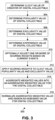
- Figure 3 is a flow diagram of NFT valuation processing according to some embodiments.
- Figure 3 illustrates actions taken by digital collectible assessor 110 to automatically, dynamically and objectively determine a value for digital collectible 108.
- clout analyzer 202 of digital collectible assessor 110 determines a clout value of the creator of digital collectible 108.
- popularity analyzer 206 of digital collectible assessor 110 determines a popularity value of digital collectible 108.
- exclusivity analyzer 210 of digital collectible assessor 110 determines an exclusivity value of digital collectible 108.
- digital collectible assessor 110 determines an experience value for digital collectible 108.
- adjuster 216 of digital collectible assessor 110 may optionally adjust one or more of the scoring weights 218 based on current events 214.
- valuator 220 of digital collectible assessor 110 applies one or more scoring weights 218 to one or more of the clout value 204, the popularity value 208, and/or the exclusivity value 212.
- valuator 220 of digital collectible assessor 110 aggregates the weighted values for clout, popularity, and exclusivity into an aggregated weighted value for digital collectible 108.
- valuator 220 of digital collectible assessor 110 normalizes the aggregated weighted value and assigns the normalized value as the digital collectible with assessed value 112. Digital collectible with assessed value 112 may then be converted into an NFT 116.
- any one or more of blocks 302, 304, 306, 308, 310, and 312 may be performed or omitted for determining a value of any digital collectible.
- descriptors such as “first,” “second,” “third,” etc. are used herein without imputing or otherwise indicating any meaning of priority, physical order, arrangement in a list, and/or ordering in any way, but are merely used as labels and/or arbitrary names to distinguish elements for ease of understanding the disclosed examples.
- the descriptor "first” may be used to refer to an element in the detailed description, while the same element may be referred to in a claim with a different descriptor such as “second” or “third.” In such instances, it should be understood that such descriptors are used merely for identifying those elements distinctly that might, for example, otherwise share a same name.
- “approximately” and “about” refer to dimensions that may not be exact due to manufacturing tolerances and/or other real-world imperfections.
- processor circuitry is defined to include (i) one or more special purpose electrical circuits structured to perform specific operation(s) and including one or more semiconductor-based logic devices (e.g., electrical hardware implemented by one or more transistors), and/or (ii) one or more general purpose semiconductor-based electrical circuits programmed with instructions to perform specific operations and including one or more semiconductor-based logic devices (e.g., electrical hardware implemented by one or more transistors).
- processor circuitry examples include programmed microprocessors, Field Programmable Gate Arrays (FPGAs) that may instantiate instructions, Central Processor Units (CPUs), Graphics Processor Units (GPUs), Digital Signal Processors (DSPs), XPUs, or microcontrollers and integrated circuits such as Application Specific Integrated Circuits (ASICs).
- FPGAs Field Programmable Gate Arrays
- CPUs Central Processor Units
- GPUs Graphics Processor Units
- DSPs Digital Signal Processors
- XPUs XPUs
- microcontrollers microcontrollers and integrated circuits such as Application Specific Integrated Circuits (ASICs).
- ASICs Application Specific Integrated Circuits
- an XPU may be implemented by a heterogeneous computing system including multiple types of processor circuitry (e.g., one or more FPGAs, one or more CPUs, one or more GPUs, one or more DSPs, etc., and/or a combination thereof) and application programming interface(s) (API(s)) that may assign computing task(s) to whichever one(s) of the multiple types of the processing circuitry is/are best suited to execute the computing task(s).
- processor circuitry e.g., one or more FPGAs, one or more CPUs, one or more GPUs, one or more DSPs, etc., and/or a combination thereof
- API(s) application programming interface
- FIG. 1 While an example manner of implementing the computing system 100 of Figure 1 is illustrated herein, one or more of the elements, processes, and/or devices illustrated in Figures 1-3 may be combined, divided, re-arranged, omitted, eliminated, and/or implemented in any other way. Further, the example computing system 100 circuitry may be implemented by hardware, software, firmware, and/or any combination of hardware, software, and/or firmware.
- any of the example computing system 100 circuitry could be implemented by processor circuitry, analog circuit(s), digital circuit(s), logic circuit(s), programmable processor(s), programmable microcontroller(s), graphics processing unit(s) (GPU(s)), digital signal processor(s) (DSP(s)), application specific integrated circuit(s) (ASIC(s)), programmable logic device(s) (PLD(s)), and/or field programmable logic device(s) (FPLD(s)) such as Field Programmable Gate Arrays (FPGAs).
- processor circuitry analog circuit(s), digital circuit(s), logic circuit(s), programmable processor(s), programmable microcontroller(s), graphics processing unit(s) (GPU(s)), digital signal processor(s) (DSP(s)), application specific integrated circuit(s) (ASIC(s)), programmable logic device(s) (PLD(s)), and/or field programmable logic device(s) (FPLD(s)) such as Field Programmable Gate Array
- At least one of the example computing system circuitry is/are hereby expressly defined to include a non-transitory computer readable storage device or storage disk such as a memory, a digital versatile disk (DVD), a compact disk (CD), a Blu-ray disk, etc., including the software and/or firmware.
- a non-transitory computer readable storage device or storage disk such as a memory, a digital versatile disk (DVD), a compact disk (CD), a Blu-ray disk, etc., including the software and/or firmware.
- the example computing system of Figure 1 may include one or more elements, processes, and/or devices in addition to, or instead of, those illustrated in Figure 1 , and/or may include more than one of any or all of the illustrated elements, processes and devices.
- FIG. 3 A flow chart representative of example hardware logic circuitry, machine readable instructions, hardware implemented state machines, and/or any combination thereof for implementing the computing system 100 of Figures 1 and 2 is shown in Figure 3 .
- the machine readable instructions may be one or more executable programs or portion(s) of an executable program for execution by processor circuitry, such as the processor circuitry 812 shown in the example processor platform 800 discussed below in connection with Figure 4 and/or the example processor circuitry discussed below in connection with Figures 5 and/or 6.
- the program may be embodied in software stored on one or more non-transitory computer readable storage media such as a CD, a floppy disk, a hard disk drive (HDD), a DVD, a Blu-ray disk, a volatile memory (e.g., Random Access Memory (RAM) of any type, etc.), or a non-volatile memory (e.g., FLASH memory, an HDD, etc.) associated with processor circuitry located in one or more hardware devices, but the entire program and/or parts thereof could alternatively be executed by one or more hardware devices other than the processor circuitry and/or embodied in firmware or dedicated hardware.
- non-transitory computer readable storage media such as a CD, a floppy disk, a hard disk drive (HDD), a DVD, a Blu-ray disk, a volatile memory (e.g., Random Access Memory (RAM) of any type, etc.), or a non-volatile memory (e.g., FLASH memory, an HDD, etc.) associated with processor
- the machine-readable instructions may be distributed across multiple hardware devices and/or executed by two or more hardware devices (e.g., a server and a client hardware device).
- the client hardware device may be implemented by an endpoint client hardware device (e.g., a hardware device associated with a user) or an intermediate client hardware device (e.g., a radio access network (RAN) gateway that may facilitate communication between a server and an endpoint client hardware device).
- the non-transitory computer readable storage media may include one or more mediums located in one or more hardware devices.
- the example program is described with reference to the flowchart illustrated in Figure 3 , many other methods of implementing the example computing system 100 may alternatively be used.
- any or all of the blocks may be implemented by one or more hardware circuits (e.g., processor circuitry, discrete and/or integrated analog and/or digital circuitry, an FPGA, an ASIC, a comparator, an operational-amplifier (op-amp), a logic circuit, etc.) structured to perform the corresponding operation without executing software or firmware.
- hardware circuits e.g., processor circuitry, discrete and/or integrated analog and/or digital circuitry, an FPGA, an ASIC, a comparator, an operational-amplifier (op-amp), a logic circuit, etc.
- the processor circuitry may be distributed in different network locations and/or local to one or more hardware devices (e.g., a single-core processor (e.g., a single core central processor unit (CPU)), a multi-core processor (e.g., a multi-core CPU), etc.) in a single machine, multiple processors distributed across multiple servers of a server rack, multiple processors distributed across one or more server racks, a CPU and/or a FPGA located in the same package (e.g., the same integrated circuit (IC) package or in two or more separate housings, etc.).
- a single-core processor e.g., a single core central processor unit (CPU)
- a multi-core processor e.g., a multi-core CPU
- the machine-readable instructions described herein may be stored in one or more of a compressed format, an encrypted format, a fragmented format, a compiled format, an executable format, a packaged format, etc.
- Machine readable instructions as described herein may be stored as data or a data structure (e.g., as portions of instructions, code, representations of code, etc.) that may be utilized to create, manufacture, and/or produce machine executable instructions.
- the machine-readable instructions may be fragmented and stored on one or more storage devices and/or computing devices (e.g., servers) located at the same or different locations of a network or collection of networks (e.g., in the cloud, in edge devices, etc.).
- the machine-readable instructions may require one or more of installation, modification, adaptation, updating, combining, supplementing, configuring, decryption, decompression, unpacking, distribution, reassignment, compilation, etc., in order to make them directly readable, interpretable, and/or executable by a computing device and/or other machine.
- the machine-readable instructions may be stored in multiple parts, which are individually compressed, encrypted, and/or stored on separate computing devices, wherein the parts when decrypted, decompressed, and/or combined form a set of machine executable instructions that implement one or more operations that may together form a program such as that described herein.
- machine-readable instructions may be stored in a state in which they may be read by processor circuitry, but require addition of a library (e.g., a dynamic link library (DLL)), a software development kit (SDK), an application programming interface (API), etc., in order to execute the machine-readable instructions on a particular computing device or other device.
- a library e.g., a dynamic link library (DLL)
- SDK software development kit
- API application programming interface
- the machine-readable instructions may need to be configured (e.g., settings stored, data input, network addresses recorded, etc.) before the machine-readable instructions and/or the corresponding program(s) can be executed in whole or in part.
- machine readable media may include machine readable instructions and/or program(s) regardless of the particular format or state of the machine-readable instructions and/or program(s) when stored or otherwise at rest or in transit.
- the machine-readable instructions described herein can be represented by any past, present, or future instruction language, scripting language, programming language, etc.
- the machine-readable instructions may be represented using any of the following languages: C, C++, Java, C#, Perl, Python, JavaScript, HyperText Markup Language (HTML), Structured Query Language (SQL), Swift, etc.
- Non-transitory computer and/or machine readable media such as optical storage devices, magnetic storage devices, an HDD, a flash memory, a read-only memory (ROM), a CD, a DVD, a cache, a RAM of any type, a register, and/or any other storage device or storage disk in which information is stored for any duration (e.g., for extended time periods, permanently, for brief instances, for temporarily buffering, and/or for caching of the information).
- the terms non-transitory computer readable medium and non-transitory computer readable storage medium is expressly defined to include any type of computer readable storage device and/or storage disk and to exclude propagating signals and to exclude transmission media.
- A, B, and/or C refers to any combination or subset of A, B, C such as (1) A alone, (2) B alone, (3) C alone, (4) A with B, (5) A with C, (6) B with C, or (7) A with B and with C.
- the phrase "at least one of A and B" is intended to refer to implementations including any of (1) at least one A, (2) at least one B, or (3) at least one A and at least one B.
- the phrase "at least one of A or B" is intended to refer to implementations including any of (1) at least one A, (2) at least one B, or (3) at least one A and at least one B.
- the phrase "at least one of A and B" is intended to refer to implementations including any of (1) at least one A, (2) at least one B, or (3) at least one A and at least one B.
- the phrase "at least one of A or B" is intended to refer to implementations including any of (1) at least one A, (2) at least one B, or (3) at least one A and at least one B.
- FIG. 4 is a block diagram of an example processor platform 1000 structured to execute and/or instantiate the machine-readable instructions and/or operations of Figure 3 to implement the apparatus of Figures 1-2 .
- the processor platform 1000 can be, for example, a SOC, a server, a personal computer, a workstation, a self-learning machine (e.g., a neural network), a mobile device (e.g., a cell phone, a smart phone, a tablet such as an iPad TM ), a personal digital assistant (PDA), an Internet appliance, a DVD player, a CD player, a digital video recorder, a Blu-ray player, a gaming console, a personal video recorder, a set top box, a headset (e.g., an augmented reality (AR) headset, a virtual reality (VR) headset, etc.) or other wearable device, or any other type of computing device.
- a headset e.g., an augmented reality (AR) headset, a virtual reality (VR) headset, etc
- the processor platform 1000 of the illustrated example includes processor circuitry 1012.
- the processor circuitry 1012 of the illustrated example is hardware.
- the processor circuitry 1012 can be implemented by one or more integrated circuits, logic circuits, FPGAs microprocessors, CPUs, GPUs, DSPs, and/or microcontrollers from any desired family or manufacturer.
- the processor circuitry 1012 may be implemented by one or more semiconductor based (e.g., silicon based) devices.
- the processor circuitry 1012 of the illustrated example includes a local memory 1013 (e.g., a cache, registers, etc.).
- the processor circuitry 1012 of the illustrated example is in communication with a main memory including a volatile memory 1014 and a non-volatile memory 1016 by a bus 1018.
- the volatile memory 1014 may be implemented by Synchronous Dynamic Random-Access Memory (SDRAM), Dynamic Random-Access Memory (DRAM), RAMBUS ® Dynamic Random-Access Memory (RDRAM ® ), and/or any other type of RAM device.
- the non-volatile memory 1016 may be implemented by flash memory and/or any other desired type of memory device. Access to the volatile memory 1014 and/or non-volatile 1016 of the illustrated example is controlled by a memory controller 1017.
- the processor platform 1000 of the illustrated example also includes interface circuitry 1020.
- the interface circuitry 1020 may be implemented by hardware in accordance with any type of interface standard, such as an Ethernet interface, a universal serial bus (USB) interface, a Bluetooth ® interface, a near field communication (NFC) interface, a PCI interface, and/or a PCIe interface.
- one or more input devices 1022 are connected to the interface circuitry 1020.
- the input device(s) 1022 permit(s) a user to enter data and/or commands into the processor circuitry 1012.
- the input device(s) 1022 can be implemented by, for example, an audio sensor, a microphone, a camera (still or video), a keyboard, a button, a mouse, a touchscreen, a trackpad, a trackball, an iso-point device, and/or a voice recognition system.
- One or more output devices 1024 are also connected to the interface circuitry 1020 of the illustrated example.
- the output devices 1024 can be implemented, for example, by display devices (e.g., a light emitting diode (LED), an organic light emitting diode (OLED), a liquid crystal display (LCD), a cathode ray tube (CRT) display, an in-place switching (IPS) display, a touchscreen, etc.), a tactile output device, a printer, and/or speaker.
- the interface circuitry 1020 of the illustrated example thus, typically includes a graphics driver card, a graphics driver chip, and/or graphics processor circuitry such as a GPU.
- the interface circuitry 1020 of the illustrated example also includes a communication device such as a transmitter, a receiver, a transceiver, a modem, a residential gateway, a wireless access point, and/or a network interface to facilitate exchange of data with external machines (e.g., computing devices of any kind) by a network 1026.
- the communication can be by, for example, an Ethernet connection, a digital subscriber line (DSL) connection, a telephone line connection, a coaxial cable system, a satellite system, a line-of-site wireless system, a cellular telephone system, an optical connection, etc.
- DSL digital subscriber line
- the processor platform 1000 of the illustrated example also includes one or more mass storage devices 1028 to store software and/or data.
- mass storage devices 10210 include magnetic storage devices, optical storage devices, floppy disk drives, HDDs, CDs, Blu-ray disk drives, redundant array of independent disks (RAID) systems, solid state storage devices such as flash memory devices, and DVD drives.
- the machine-readable instructions 1032 may be stored in the mass storage device 1028, in the volatile memory 1014, in the non-volatile memory 1016, and/or on a removable non-transitory computer readable storage medium such as a CD or DVD.
- FIG. 5 is a block diagram of an example implementation of the processor circuitry 1012 of Figure 4 .
- the processor circuitry 1012 of Figure 4 is implemented by processor circuitry 1100 (e.g., a microprocessor).
- the processor circuitry 1100 may implement multi-core hardware circuitry such as a CPU, a DSP, a GPU, an XPU, etc. Although it may include any number of example cores 1102 (e.g., 1 core), the processor circuitry 1100 of this example is a multi-core semiconductor device including N cores.
- the cores 1102 of the processor circuitry 1100 may operate independently or may cooperate to execute machine readable instructions.
- machine code corresponding to a firmware program, an embedded software program, or a software program may be executed by one of the cores 1102 or may be executed by multiple ones of the cores 1102 at the same or different times.
- the machine code corresponding to the firmware program, the embedded software program, or the software program is split into threads and executed in parallel by two or more of the cores 1102.
- the software program may correspond to a portion or all the machine-readable instructions and/or operations represented by the flowchart of Figure 3 .
- the cores 1102 may communicate by an example bus 1104.
- the bus 1104 may implement a communication bus to effectuate communication associated with one(s) of the cores 1102.
- the bus 1104 may implement at least one of an Inter-Integrated Circuit (I2C) bus, a Serial Peripheral Interface (SPI) bus, a PCI bus, or a PCIe bus. Additionally or alternatively, the bus 1104 may implement any other type of computing or electrical bus.
- the cores 1102 may obtain data, instructions, and/or signals from one or more external devices by example interface circuitry 1106.
- the cores 1102 may output data, instructions, and/or signals to the one or more external devices by the interface circuitry 1106.
- the processor circuitry 1100 also includes example shared memory 1110 that may be shared by the cores (e.g., Level 2 (L2_ cache)) for high-speed access to data and/or instructions. Data and/or instructions may be transferred (e.g., shared) by writing to and/or reading from the shared memory 1110.
- the local memory of each of the cores 1102 and the shared memory 1110 may be part of a hierarchy of storage devices including multiple levels of cache memory and the main memory (e.g., the main memory 1014, 1016 of Figure 4 ). Typically, higher levels of memory in the hierarchy exhibit lower access time and have smaller storage capacity than lower levels of memory. Changes in the various levels of the cache hierarchy are managed (e.g., coordinated) by a cache coherency policy.
- Cores 1102 may be referred to as a CPU, DSP, GPU, etc., or any other type of hardware circuitry.
- Cores 1102 include control unit circuitry 1114, arithmetic and logic (AL) circuitry (sometimes referred to as an ALU) 1116, a plurality of registers 1118, the L1 cache 1120, and an example bus 1122.
- ALU arithmetic and logic
- each core 1102 may include vector unit circuitry, single instruction multiple data (SIMD) unit circuitry, load/store unit (LSU) circuitry, branch/jump unit circuitry, floating-point unit (FPU) circuitry, etc.
- SIMD single instruction multiple data
- LSU load/store unit
- FPU floating-point unit
- the control unit circuitry 1114 includes semiconductor-based circuits structured to control (e.g., coordinate) data movement within the corresponding core 1102.
- the AL circuitry 1116 includes semiconductor-based circuits structured to perform one or more mathematic and/or logic operations on the data within the corresponding core 1102.
- the AL circuitry 1116 of some examples performs integer-based operations. In other examples, the AL circuitry 1116 also performs floating point operations. In yet other examples, the AL circuitry 1116 may include first AL circuitry that performs integer-based operations and second AL circuitry that performs floating point operations. In some examples, the AL circuitry 1116 may be referred to as an Arithmetic Logic Unit (ALU).
- ALU Arithmetic Logic Unit
- the registers 1118 are semiconductor-based structures to store data and/or instructions such as results of one or more of the operations performed by the AL circuitry 1116 of the corresponding core 1102.
- the registers 1118 may include vector register(s), SIMD register(s), general purpose register(s), flag register(s), segment register(s), machine specific register(s), instruction pointer register(s), control register(s), debug register(s), memory management register(s), machine check register(s), etc.
- the registers 1118 may be arranged in a bank as shown in Figure 6 . Alternatively, the registers 1118 may be organized in any other arrangement, format, or structure including distributed throughout the core 1102 to shorten access time.
- the bus 1122 may implement at least one of an I2C bus, a SPI bus, a PCI bus, or a PCIe bus.
- Cores 1102 and/or, more generally, the processor circuitry 1100 may include additional and/or alternate structures to those shown and described above.
- one or more clock circuits, one or more power supplies, one or more power gates, one or more cache home agents (CHAs), one or more converged/common mesh stops (CMSs), one or more shifters (e.g., barrel shifter(s)) and/or other circuitry may be present.
- the processor circuitry 1100 is a semiconductor device fabricated to include many transistors interconnected to implement the structures described above in one or more integrated circuits (ICs) contained in one or more packages.
- the processor circuitry may include and/or cooperate with one or more accelerators.
- accelerators are implemented by logic circuitry to perform certain tasks more quickly and/or efficiently than can be done by a general-purpose processor. Examples of accelerators include ASICs and FPGAs such as those discussed herein. A GPU or other programmable device can also be an accelerator. Accelerators may be on-board the processor circuitry, in the same chip package as the processor circuitry and/or in one or more separate packages from the processor circuitry.
- FIG 6 is a block diagram of another example implementation of the processor circuitry 1012 of Figure 4 .
- the processor circuitry 1012 is implemented by FPGA circuitry 1200.
- the FPGA circuitry 1200 can be used, for example, to perform operations that could otherwise be performed by the example processor circuitry 1100 of Figure 5 executing corresponding machine-readable instructions.
- the FPGA circuitry 1200 instantiates the machine-readable instructions in hardware and, thus, can often execute the operations faster than they could be performed by a general-purpose microprocessor executing the corresponding software.
- the FPGA circuitry 1200 of the example of Figure 6 includes interconnections and logic circuitry that may be configured and/or interconnected in different ways after fabrication to instantiate, for example, some or all of the machine readable instructions represented by the flowchart of Figure 3 .
- the FPGA circuitry 1200 may be thought of as an array of logic gates, interconnections, and switches.
- the switches can be programmed to change how the logic gates are interconnected by the interconnections, effectively forming one or more dedicated logic circuits (unless and until the FPGA circuitry 1200 is reprogrammed).
- the configured logic circuits enable the logic gates to cooperate in different ways to perform different operations on data received by input circuitry. Those operations may correspond to some or all of the software represented by the flowchart of Figure 3 .
- the FPGA circuitry 1200 may be structured to effectively instantiate some or all of the machine-readable instructions of the flowchart of Figure 3 as dedicated logic circuits to perform the operations corresponding to those software instructions in a dedicated manner analogous to an ASIC. Therefore, the FPGA circuitry 1200 may perform the operations corresponding to the some or all of the machine-readable instructions of Figure 3 faster than the general-purpose microprocessor can execute the same.
- the FPGA circuitry 1200 is structured to be programmed (and/or reprogrammed one or more times) by an end user by a hardware description language (HDL) such as Verilog.
- the FPGA circuitry 1200 of Figure 6 includes example input/output (I/O) circuitry 1202 to obtain and/or output data to/from example configuration circuitry 1204 and/or external hardware (e.g., external hardware circuitry) 1206.
- the configuration circuitry 1204 may implement interface circuitry that may obtain machine readable instructions to configure the FPGA circuitry 1200, or portion(s) thereof.
- the configuration circuitry 1204 may obtain the machine-readable instructions from a user, a machine (e.g., hardware circuitry (e.g., programmed or dedicated circuitry) that may implement an Artificial Intelligence/Machine Learning (AI/ML) model to generate the instructions), etc.
- the external hardware 1206 may implement the processor circuitry 1100 of Figure 5 .
- the FPGA circuitry 1200 also includes an array of example logic gate circuitry 1208, a plurality of example configurable interconnections 1210, and example storage circuitry 1212.
- the logic gate circuitry 1208 and interconnections 1210 are configurable to instantiate one or more operations that may correspond to at least some of the machine-readable instructions of Figure 3 and/or other desired operations.
- the logic gate circuitry 1208 shown in Figure 6 is fabricated in groups or blocks. Each block includes semiconductor-based electrical structures that may be configured into logic circuits.
- the electrical structures include logic gates (e.g., AND gates, OR gates, NOR gates, etc.) that provide basic building blocks for logic circuits.
- Electrically controllable switches e.g., transistors
- the logic gate circuitry 1208 may include other electrical structures such as look-up tables (LUTs), registers (e.g., flip-flops or latches), multiplexers, etc.
- the interconnections 1210 of the illustrated example are conductive pathways, traces, vias, or the like that may include electrically controllable switches (e.g., transistors) whose state can be changed by programming (e.g., using an HDL instruction language) to activate or deactivate one or more connections between one or more of the logic gate circuitry 1208 to program desired logic circuits.
- electrically controllable switches e.g., transistors
- programming e.g., using an HDL instruction language
- the storage circuitry 1212 of the illustrated example is structured to store result(s) of the one or more of the operations performed by corresponding logic gates.
- the storage circuitry 1212 may be implemented by registers or the like.
- the storage circuitry 1212 is distributed amongst the logic gate circuitry 1208 to facilitate access and increase execution speed.
- the example FPGA circuitry 1200 of Figure 6 also includes example Dedicated Operations Circuitry 1214.
- the Dedicated Operations Circuitry 1214 includes special purpose circuitry 1216 that may be invoked to implement commonly used functions to avoid the need to program those functions in the field.
- special purpose circuitry 1216 include memory (e.g., DRAM) controller circuitry, PCIe controller circuitry, clock circuitry, transceiver circuitry, memory, and multiplier-accumulator circuitry.
- Other types of special purpose circuitry may be present.
- the FPGA circuitry 1200 may also include example general purpose programmable circuitry 1218 such as an example CPU 1220 and/or an example DSP 1222.
- Other general purpose programmable circuitry 1218 may additionally or alternatively be present such as a GPU, an XPU, etc., that can be programmed to perform other operations.
- Figures 5 and 6 illustrate two example implementations of the processor circuitry 1012 of Figure 4
- modern FPGA circuitry may include an on-board CPU, such as one or more of the example CPU 1220 of Figure 6 . Therefore, the processor circuitry 1012 of Figure 4 may additionally be implemented by combining the example processor circuitry 1100 of Figure 4 and the example FPGA circuitry 1200 of Figure 6 .
- a first portion of the machine-readable instructions represented by the flowchart of Figure 3 may be executed by one or more of the cores 1102 of Figure 5 and a second portion of the machine-readable instructions represented by the flowchart of Figure 3 may be executed by the FPGA circuitry 1200 of Figure 6 .
- the processor circuitry 1012 of Figure 4 may be in one or more packages.
- the processor circuitry 1100 of Figure 5 and/or the FPGA circuitry 1200 of Figure 6 may be in one or more packages.
- an XPU may be implemented by the processor circuitry 1012 of Figure 4 , which may be in one or more packages.
- the XPU may include a CPU in one package, a DSP in another package, a GPU in yet another package, and an FPGA in still yet another package.
- FIG. 7 A block diagram illustrating an example software distribution platform 1305 to distribute software such as the example machine-readable instructions 1032 of Figure 4 to hardware devices owned and/or operated by third parties is illustrated in Figure 7 .
- the example software distribution platform 1305 may be implemented by any computer server, data facility, cloud service, etc., capable of storing and transmitting software to other computing devices.
- the third parties may be customers of the entity owning and/or operating the software distribution platform 1305.
- the entity that owns and/or operates the software distribution platform 1305 may be a developer, a seller, and/or a licensor of software such as the example machine-readable instructions 1032 of Figure 4 .
- the third parties may be consumers, users, retailers, OEMs, etc., who purchase and/or license the software for use and/or re-sale and/or sub-licensing.
- the software distribution platform 1305 includes one or more servers and one or more storage devices.
- the storage devices store the machine-readable instructions 1032, which may correspond to the example machine readable instructions of Figure 3 , as described above.
- the one or more servers of the example software distribution platform 1305 are in communication with a network 1310, which may correspond to any one or more of the Internet and/or any of the example networks, etc., described above.
- the one or more servers are responsive to requests to transmit the software to a requesting party as part of a commercial transaction.
- Payment for the delivery, sale, and/or license of the software may be handled by the one or more servers of the software distribution platform and/or by a third-party payment entity.
- the servers enable purchasers and/or licensors to download the machine-readable instructions 1032 from the software distribution platform 1305.
- the software which may correspond to the example machine readable instructions of Figure 3
- the example processor platform 1000 which is to execute the machine-readable instructions 1032 to implement the methods of Figure 3 and associated computing system 100.
- one or more servers of the software distribution platform 1305 periodically offer, transmit, and/or force updates to the software (e.g., the example machine-readable instructions 1032 of Figure 4 ) to ensure improvements, patches, updates, etc., are distributed and applied to the software at the end user devices.
- the software e.g., the example machine-readable instructions 1032 of Figure 4
- an apparatus includes means for processing an operating state of an endpoint device circuitry based on operating data of the endpoint device circuitry to evaluate suitability of the endpoint device circuitry for an update.
- the means for processing may be implemented by processor circuitry, processor circuitry, firmware circuitry, etc.
- the processor circuitry may be implemented by machine executable instructions such as that implemented by at least blocks of Figures 1-3 executed by processor circuitry, which may be implemented by the example processor circuitry 1012 of Figure 4 , the example processor circuitry 1100 of Figure 5 , and/or the example Field Programmable Gate Array (FPGA) circuitry 1200 of Figure 6 .
- FPGA Field Programmable Gate Array
- the processor circuitry is implemented by other hardware logic circuitry, hardware implemented state machines, and/or any other combination of hardware, software, and/or firmware.
- the processor circuitry may be implemented by at least one or more hardware circuits (e.g., processor circuitry, discrete and/or integrated analog and/or digital circuitry, an FPGA, an Application Specific Integrated Circuit (ASIC), a comparator, an operational-amplifier (op-amp), a logic circuit, etc.) structured to perform the corresponding operation without executing software or firmware, but other structures are likewise appropriate.
- an apparatus includes means for determining a value of an NFT.
- the means for determining may be implemented by circuitry, etc.
- the circuitry may be implemented by machine executable instructions such as that implemented by at least blocks of Figure 3 executed by processor circuitry, which may be implemented by the example processor circuitry 1012 of Figure 4 , the example processor circuitry 1100 of Figure 5 , and/or the example Field Programmable Gate Array (FPGA) circuitry 1200 of Figure 6 , executing in conjunction with memory 1014 and 1016.
- the circuitry is implemented by other hardware logic circuitry, hardware implemented state machines, and/or any other combination of hardware, software, and/or firmware.
- the circuitry may be implemented by at least one or more hardware circuits (e.g., processor circuitry, discrete and/or integrated analog and/or digital circuitry, an FPGA, an Application Specific Integrated Circuit (ASIC), a comparator, an operational-amplifier (op-amp), a logic circuit, etc.) structured to perform the corresponding operation without executing software or firmware, but other structures are likewise appropriate.
- hardware circuits e.g., processor circuitry, discrete and/or integrated analog and/or digital circuitry, an FPGA, an Application Specific Integrated Circuit (ASIC), a comparator, an operational-amplifier (op-amp), a logic circuit, etc.
- example systems, methods, apparatus, and articles of manufacture have been disclosed to improve determining a value for an NFT.
- the disclosed systems, methods, apparatus, and articles of manufacture improve the efficiency of using a computing device to assess a value of an NFT.
- the disclosed systems, methods, apparatus, and articles of manufacture are accordingly directed to one or more improvement(s) in the operation of a machine such as a computer or other electronic and/or mechanical device.
Landscapes
- Business, Economics & Management (AREA)
- Engineering & Computer Science (AREA)
- Accounting & Taxation (AREA)
- Finance (AREA)
- Strategic Management (AREA)
- Development Economics (AREA)
- Economics (AREA)
- Entrepreneurship & Innovation (AREA)
- Marketing (AREA)
- Physics & Mathematics (AREA)
- General Business, Economics & Management (AREA)
- General Physics & Mathematics (AREA)
- Theoretical Computer Science (AREA)
- Computer Security & Cryptography (AREA)
- Game Theory and Decision Science (AREA)
- Computer Networks & Wireless Communication (AREA)
- Signal Processing (AREA)
- Data Mining & Analysis (AREA)
- Management, Administration, Business Operations System, And Electronic Commerce (AREA)
Abstract
Description
- This disclosure relates generally to non-fungible tokens (NFTs) in a computing system, and more particularly, to determining a value of a NFT in a computing system.
- A non-fungible token (NFT) is a unique and non-interchangeable unit of data stored on a blockchain (a form of digital ledger), which can be sold or traded on digital markets. NFTs can be associated with reproducible digital files such as artwork, photographs, videos, audio clips, music, games, and documents, and a license to use these assets for a specified purpose. NFTs use a digital ledger to provide a public certificate of authenticity or proof of ownership, but do not restrict the sharing or copying of the underlying digital files. The lack of interchangeability (fungibility) distinguishes NFTs from blockchain cryptocurrencies, such as Bitcoin.
- Currently, the value of an NFT is determined subjectively and speculatively.
- A first aspect of this specification provides an apparatus comprising:
a clout analyzer to determine a clout value for a creator of a digital collectible; a popularity analyzer to determine a popularity value of the digital collectible; and a valuator to aggregate the clout value and the popularity value into an aggregated value for the digital collectible, to normalize the aggregated value and assign the normalized aggregated value as an assessed value for the digital collectible. - The apparatus may comprise a converter to convert the digital collectible into a non-fungible token (NFT) having the assessed value.
- The apparatus may comprise an exclusivity analyzer to determine an exclusivity value for the digital collectible, wherein the valuator is to aggregate the exclusivity value with the clout value and the popularity value.
- The exclusivity value may be a number of copies of a non-fungible token (NFT) to be generated from the digital collectible.
- The clout value may comprise an aggregate measurement of a plurality of factors contributing to influence of the creator, the plurality of factors including a number of social media followers of the creator.
- A second aspect of this specification provides a method comprising: determining a clout value for a creator of a digital collectible; determining a popularity value of the digital collectible; and aggregating the clout value and the popularity value into an aggregated value for the digital collectible, normalizing the aggregated value and assigning the normalized aggregated value as an assessed value for the digital collectible.
- The method may comprise converting the digital collectible into a non-fungible token (NFT) having the assessed value.
- The method may comprise determining an exclusivity value for the digital collectible and aggregating the exclusivity value with the clout value and the popularity value.
- The exclusivity value may be a number of copies of a non-fungible token (NFT) to be generated from the digital collectible.
- The clout value may comprise an aggregate measurement of a plurality of factors contributing to influence of the creator, the plurality of factors including a number of social media followers of the creator.
- The clout value may change over time based on at least one of social media activity of the creator and others who interact with the creator.
- The popularity value may comprise an aggregate measurement of a plurality of factors contributing to popularity of digital collectible, the plurality of factors including a number of social media likes of the digital collectible.
- The method may further comprise aggregating an experience value of the creator with the clout value and the popularity value.
- The method may further comprise applying one or more scoring weights to one or more of the clout value and the popularity value before aggregating the clout value and the popularity value.
- The method may further comprise adjusting one or more of the scoring weights based at least in part on one or more current events.
- A third aspect of this specification provides at least one non-transitory machine-readable storage medium comprising instructions that, when executed, cause at least one processing device to at least: determine a clout value for a creator of a digital collectible; determine a popularity value of the digital collectible; and aggregate the clout value and the popularity value into an aggregated value for the digital collectible, to normalize the aggregated value and assign the normalized aggregated value as an assessed value for the digital collectible.
- The instructions may further cause the at least one processing device to convert the digital collectible into a non-fungible token (NFT) having the assessed value.
- The instructions may further cause the at least one processing device to determine an exclusivity value for the digital collectible and to aggregate the exclusivity value with the clout value and the popularity value.
- The instructions may further cause the at least one processing device to aggregate an experience value of the creator with the clout value and the popularity value.
- The instructions may further cause the at least one processing device to apply one or more scoring weights to one or more of the clout value and the popularity value before aggregating the clout value and the popularity value.
-
-
Figure 1 is a diagram of computing system for determining a value of an NFT according to some embodiments. -
Figure 2 is a diagram of a digital collectible assessor according to some embodiments. -
Figure 3 is a flow diagram of NFT valuation processing according to some embodiments. -
Figure 4 is a block diagram of an example processor platform structured to execute and/or instantiate the machine-readable instructions and/or operations ofFigures 2 and3 to implement the apparatus discussed with reference toFigure 1 . -
Figure 5 is a block diagram of an example implementation of the processor circuitry ofFigure 4 . -
Figure 6 is a block diagram of another example implementation of the processor circuitry ofFigure 4 . -
Figure 7 is a block diagram illustrating an example software distribution platform to distribute software such as the machine-readable instructions and/or operations ofFigures 2 and3 to hardware devices owned and/or operated by third parties. - The figures are not to scale. In general, the same reference numbers will be used throughout the drawing(s) and accompanying written description to refer to the same or like parts.
- Implementations of the technology described herein provide a system and method for determining a value of digital content represented as an NFT based at least in part on one or more of a digital content creator clout value, a digital content popularity value, and a digital content exclusivity value. These values may be adjusted, weighted, aggregated and/or normalized to determine a dynamically and objectively assessed value of digital content represented as an NFT.
- In one example, the digital content includes business artifacts, wherein business artifacts include digital representations of any content generated as part of running a business. For example, business artifacts may include one or more of presentation materials, contact lists, sales collateral, supplier lists, speech transcripts, investor blueprints, strategic roadmaps, product roadmaps, marketing brochures or other marketing materials, sales strategies, webinar materials, investor sales pitches, product designs, technical articles, user manuals, emails, meeting minutes, call center analytics data, audio and/or video training materials, or any other business-related information.
- In other examples, the digital content includes any information capable of being represented in digital form (such as audio, video, images, etc.).
-
Figure 1 is a diagram of acomputing system 100 for determining a value of an NFT according to some embodiments.Computing system 100 includes adigital content collector 102 to accumulate digital content from any accessible source. For example,digital content collector 102 may obtaindigital content 104 from any locally or remotely accessible memory or storage devices (e.g., over a local network, over the Internet, withincomputing system 100, within a cloud computing environment, etc.). Since the volume ofdigital content 104 may be large and may include content not intended to become part of an NFT, digitalcollectible selector 106 filtersdigital content 104 to select only digital content that a supervising entity (such as a business manager, a systems administrator, etc.) desires to generate as adigital collectible 108.Digital collectible 108 is the digital object (e.g., a computer file including digital content 104) to be converted into an NFT that may be sold or licensed in a digital marketplace.Digital collectible 108 may be in any format. Digitalcollectible selector 106 may use any criteria in performing the selection. The criteria may be predefined by the supervising entity or may be dynamically adjusted bycomputing system 100 over time. The criteria may include filters for one or more of digital content creator, time span, creation date(s), content subject matter, category, type, or sub-type, size, duration, location, position, or any characteristic of the digital content. - Digital
collectible assessor 110 analyzes information relevant to digital collectible 108 (e.g., metadata) and the creator(s) of thedigital content 104 represented by the digital collectible to automatically, dynamically and objectively assess a value of the digital collectible based on a plurality of factors. The resulting digital collectible with the assessedvalue 112 is input toNFT converter 114 to produce NFT 116 (which is a representation of the digital collectible 108). NFTconverter 114 produces NFT 116 according to any existing method of NFT generation. NFT 116 may then be sold, traded or licensed to others and by others. In one example, the NFT is offered for sale in an online digital marketplace at the value determined by digitalcollectible assessor 110. -
Figure 2 is a diagram of a digitalcollectible assessor 110 according to some embodiments.Clout analyzer 202 analyzes information relating to the creator(s) ofdigital collectible 108 to determineclout value 204. The creator is the person who created thedigital content 104 represented by thedigital collectible 108. For example, a creator may be an artist, a musician, a singer, a recording artist, a videographer, a photographer, an author, a public speaker, a salesperson, a marketing executive, a business executive, a manager, a researcher, an engineer, a scientist, an actor, a celebrity, etc. In at least one embodiment,clout value 204 is an aggregate measurement of a plurality of factors contributing to the creator's influence. The information for the factors may be obtained from any source. For example, sources may include any available information about the creator from the creator's publications, public and/or private databases, social media networks and applications (e.g., Facebook, Twitter, LinkedIn, Instagram, Snapchat, TikTok, Reddit, Slack, Teams, etc.), memberships, group affiliations, business organizations (groups, divisions, departments, etc.), news articles, technical journal articles, marketing materials, sales brochures, and so on. The information may be publicly available or accessed through account-based permission-based sharing methods. For example, factors may include the number of social media followers of the creator, the number and type of reactions by the creator to the creator's social media contributions/posts (e.g., likes, dislike, hearts, comments, emojis, etc.), responses to posts by others, whether related to the creator's posts or not (e.g., frequency of engagement based on the creator's posts or posts by others), shares, forwards, "re-tweets", on-line popularity of the creator, dedicated communities and chat rooms associated with the creator, verified status as a contributor, number of accounts followed, number of comments, number of views, and so on. - In an embodiment, the
clout value 204 may be represented by a number, such as an integer. Theclout value 204 changes over time based on the social media activity of the creator and others who interact with the creator on-line and/or offline presence or persona, includingdigital collectible 108. Various specific methods of determining theclout value 204 based on the information related to the creator are contemplated and embodiments are not restricted to any one method. -
Popularity analyzer 206 analyzes information relating to digital collectible 108 to determinepopularity value 208. In at least one embodiment,popularity value 208 is an aggregate measurement of a plurality of factors contributing to the popularity ofdigital collectible 108. The information for the factors may be obtained from any source. For example, sources may include any available information about digital collectible 108 from publications (e.g., traditional and online media outlets (radio, television, newspapers, magazines, newsletters, websites, blogs, videos, podcasts, etc.), public and/or private databases, social media networks and applications (e.g., Facebook, Twitter, LinkedIn, Instagram, Snapchat, TikTok, Reddit, Slack, Teams, etc.), memberships, group affiliations, business organizations (groups, divisions, departments, etc.), and so on. The information may be publicly available or accessed through account-based permission-based sharing methods. For example, factors may include the number of news stories about the digital collectible 108, topic(s) relating to the digital collectible, number of hits from search engine queries, web page analytics, posts in online message boards, posts in social media applications, threads, content proliferation (e.g., forwards, reshares), likes, sales, views, revenue generated, leads, bookings, references, presentations, emails, dialogues, or any other metric or method of measuring popularity. - In an embodiment, the
popularity value 208 may be represented by a number, such as an integer. Thepopularity value 208 changes over time based on the factors being measured and/or analyzed, such as the social media activity of others who interact with the creator's digital collectible 108 and news about the digital collectible in the media, for example. Various specific methods of determining thepopularity value 208 based on the information related to the activity of others are contemplated and embodiments are not restricted to any one method. -
Exclusivity analyzer 210 analyzes information relating to digital collectible 108 to determineexclusivity value 212. In at least one embodiment,exclusivity value 212 is the number of copies of theNFT 116 to be made from the digital collectible. -
Valuator 220 of digitalcollectible assessor 110 determines an assessed value of digital collectible 108 based at least in part on one or more ofclout value 204,popularity value 208,exclusivity value 212, and scoringweights 218. Scoringweights 218 may attach a specific importance or lack thereof to one or more of the clout value, the popularity value, and the exclusivity value. For example, a set of weighted values using scoringweights 218 may be:
- A scoring weight is an independent variable that accounts for the fame/popularity of the creator and the content's popularity. Weighting determines the contribution of the clout value, the popularity value, and/or the exclusivity value to the total valuation of the digital collectible. Weighting may be used to change the importance of one or more of the clout value, the popularity value and the exclusivity value in relation to the other values. For example, if the content creator is a very famous celebrity (e.g., Elon Musk, Adele, Barack Obama, LeBron James, etc.), the weight of the clout value in the overall value may be adjusted even higher than was objectively determined based on metrics. In an embodiment, scoring weights may be set by a system administrator. In an embodiment, each scoring weight is a number between 0 and 1. Weighting depends on real-world knowledge over and above objective measurements. Scoring
weights 218 may be set to initial values and subsequently adjusted either manually or programmatically. -
Adjuster 216 of digitalcollectible assessor 110 may optionally dynamically adjust one ormore scoring weights 218 based oncurrent events 214.Current events 214 may include any information obtained from any source that is relevant to the content creator and/or the digital collectible 108 that may positively or negatively affect theclout value 204,popularity value 208 and/orexclusivity value 212. In an embodiment,current events 214 are obtained in real-time from any source. For example, if the content creator is a famous celebrity who was recently involved in a scandal reported in the media (e.g., a car accident involving drunk driving, an allegation of an assault, etc.), thenclout value 204 alone may have not yet changed sufficiently to reflect that incident, but the current valuation of the creator's digital collectible 108 is negatively affected. In this case, a system administrator or adjuster 215 may adjust the scoring weight downward for the clout value to reflect the current events. In another example, if the content creator just won the Nobel Prize for a scientific achievement, the valuation of the creator's digital collectible should rise, and the scoring weight for the clout value may be adjusted upward. - In an embodiment, determination of
clout value 204,popularity value 208,exclusivity value 212, and/or scoringweights 218 may be performed in parallel. - In one embodiment, an
additional experience value 222 may be applied byvaluator 220 to reflect whether the content creator has previously sold an NFT with an NFT marketplace. If yes, a positive experience value 222 (e.g., 1) may be included in the valuation determination. If not, a zero or negative experience value (e.g., 0) may be included in the valuation determination. In another embodiment, the number of previous sales may be represented as the experience value 222 (e.g., by specific number of NFT sales, or by sales plateaus or groups of sales). For example, if the creator has sold over 10 NFTs in the past, then an appropriatepositive experience value 222 may be used. This may be useful to establish the authenticity of the creator. If this is the first time the creator is generating a digital collectible, the value of the NFT will probably be less (since in the real world it has been observed that at least some first-time NFT creators are attempting fraud relating to the NFT). - In an embodiment, an aggregate weighted value (AWV) may be represented as:

- The aggregate weighted value may be normalized to allow for comparison to values determined for other digital collectibles on a common scale. In an embodiment, the aggregate weighted value is normalized to a value between 0 and 1. The normalized value may then be converted to a scale utilizing a currency value (either digital currency (e.g., Bitcoins, Ether, etc.) or regular currency (e.g., United States Dollars (USD), Euros, etc.)).
- For example, let's assume Tesla acts as the creator of a fictitious NFT. In one scenario, the creator is Elon Musk and the digital collectible is one or more of his town hall quotes. The collection of these various quotes may have been obtained from inaugural research and development (R&D) meetings and preserved internally by the corporate sales department and/or employees. If Tesla wants to monetize these quotes as NFTs, the collection of various quotes may be input as
digital content 104 intocomputing system 100. For example, if Elon Musk gave keynote talks at the opening of the first Gigafactory in Nevada, Tesla might decide to monetize these quotes at the Gigafactory opening as NFTs. This digital content 104 (or exemplary business artifact) can be converted to anNFT 116, then sold via a third-party using an NFT marketplace. - The valuation of the NFT may be determined using digital
collectible assessor 110 as described above. In this scenario, digital collectible 108 includes one or more Elon Musk keynote speech quotes, and the assessed value may be, for example, equal to ((variable 1 ∗ weight 1) + (variable 2 ∗ weight 2) + (variable 3 ∗ weight 3) + (variable 4 ∗ weight 4) + (variable 5 ∗ weight 5) + (variable 6 ∗ weight 6) + ...). - In an embodiment,
clout value 204 may be divided into many (possibly limitless) variables. For example, variable 1 factor may be as shown in Table 1.Table 1 Rules Variable 1 value 0- 10k followers 1 10k+1 - 20k followers 2 20k+1 - 30k followers 3 ··· ··· 500K+1 - 1M followers 8 1M+1 - 2M followers 9 2M+1 - 10M followers 10 >10M followers 15 - In an embodiment, digital
collectible assessor 110 may implement more advanced rules as well. For example, for digital content from Tesla let's assume variable 1 has a value of 8, butweight 1 = 0.7 (assuming the weight values are between 0 and 1). In this example, aweight 1 value of "0.7" is given based on competitive market intelligence. The community of stakeholders who are adjusting factors affecting the NFT valuation may determine that this attribute of clout value is a more important factor than other factors when evaluating the overall value of the NFT, therefore the weight may be adjusted. Thus, in this example, theclout value 204 may be (8 ∗ 0.7) = 5.6. In an embodiment, the community of stakeholders may include business decision makers (e.g., product management or executive management). - In similar fashion, additional attributes of clout value 248 may be determined by a variable 2 rule as shown in Table 2.
Table 2: Likes on creator's content Variable 2 value 0 - 1,000 likes 1 1,001 - 10,000 likes 2 10,001+ likes 3 - For Elon Musk as the creator, let's say variable 2 has a value of 2 and the
weight 2 value is 0.65 (for weight values between 0 and 1). Theweight 2 value of "0.65" may be the value given due to competitor analysis or market intelligence. NFT stakeholders may determine that this attribute of clout value is a more important factor than other factors in evaluating the overall value of the NFT. Thus, the aggregated clout value may now be (5.6 + (2 ∗ 0.65)) = 6.9. - In similar fashion,
popularity value 208,exclusivity value 212 andexperience value 222 may be determined using a plurality of variables and corresponding weights. - For a digital collectible file or transcript of an event (e.g., a keynote speech or a press event), assume variable 3 is for an attribute of
popularity value 208 and has a value of 3 and weight 3 is 0.9 (for weight values between 0 and 1), the defined rules for variable 3 (e.g., an attribute of popularity value 208) could be as shown in Table 3. Thus, popularity value for this attribute may be (3 ∗ 0.9) = 2.7.Table 3 Google search metrics Variable 3 value 0- 25K searches 1 25K+1 - 50K searches 2 50K+ searches 3 - Similarly, assume variable 4 is for another attribute of
popularity value 208 and has a value of 3 and weight 3 is 0.7 (for weight values between 0 and 1), the defined rules for variable 4 (e.g., another attribute of popularity value 208) could be as shown in Table 4. Thus, aggregated popularity value for this attribute may now be (2.7 + (3 ∗ 0.7)) = 4.8.Table 4 Responses to creator's posts on a related topic (keynote speech) Variable 4 value 0 - 1K responses 1 1K+1 - 5K responses 2 5K+ response 3 - Similarly, assume variable 5 is for yet another attribute of
popularity value 208 and has a value of 2 and weight 3 is 0.5 (for weight values between 0 and 1), the defined rules for variable 5 (e.g., yet another attribute of popularity value 208) could be as shown in Table 5. Thus, aggregated popularity value for this attribute may now be (4.8 + (2 ∗ 0.5)) = 5.8.Table 5 Average responses to creator's posts Variable 5 value 0- 1K responses 1 1K+1 - 5K responses 2 5K+ responses 3 - In an embodiment, the
exclusivity value 212 may be added to the NFT value computation. For example, if only one copy if the NFT is to be made (the exclusivity value is 1), then the exclusivity weight may be set to 1. However, if more than one copy is to be made (for example, 10 copies), the exclusivity weight may be set to a different, lower value (for example, 0.5). In another embodiment, the exclusivity value my be omitted. - In an embodiment, an
additional experience value 222 NFT denotes prior NFT-sales related experience of the content creator in an NFT marketplace. The NFT marketplace business requires specialized knowledge, therefore more experienced creators may attract more NFT seekers since they may have a significant following. The statistical likelihood that the NFT sells with an experienced NFT vendor is greater compared to new creators. Also, past activity within the NFT marketplace may be valued because this activity establishes the authenticity and the skills of the creator. This NFT experience can be represented in the valuation computation since the NFT experience affects the value of the NFT and perhaps the exclusivity (i.e., getting the NFT is harder because more people want the NFT from this vendor). - In an example,
experience value 222 may be constructed as shown in table 6.Table 6 NFT sold previously Experience value 0 NFTs sold 0 1 or more NFTs sold 1 - For this example, the aggregated value may be equal to
clout value 204 of 6.9 +popularity value 208 of 5.8 +experience value 222 of 1.0 = 13.7. Let's assume only one copy of the NFT is made. Thus, adding in the exclusivity value, the aggregated value may be 14.7. - For normalization, any known scaler may be applied to normalize the aggregate value. For example:


-
Figure 3 is a flow diagram of NFT valuation processing according to some embodiments. In an embodiment,Figure 3 illustrates actions taken by digitalcollectible assessor 110 to automatically, dynamically and objectively determine a value for digital collectible 108. - At
block 302,clout analyzer 202 of digitalcollectible assessor 110 determines a clout value of the creator ofdigital collectible 108. Atblock 304,popularity analyzer 206 of digitalcollectible assessor 110 determines a popularity value ofdigital collectible 108. Atblock 306,exclusivity analyzer 210 of digitalcollectible assessor 110 determines an exclusivity value ofdigital collectible 108. Atblock 308, digitalcollectible assessor 110 determines an experience value for digital collectible 108. Atblock 310,adjuster 216 of digitalcollectible assessor 110 may optionally adjust one or more of the scoringweights 218 based oncurrent events 214. Atblock 312,valuator 220 of digitalcollectible assessor 110 applies one ormore scoring weights 218 to one or more of theclout value 204, thepopularity value 208, and/or theexclusivity value 212. Atblock 314,valuator 220 of digitalcollectible assessor 110 aggregates the weighted values for clout, popularity, and exclusivity into an aggregated weighted value for digital collectible 108. Atblock 316,valuator 220 of digitalcollectible assessor 110 normalizes the aggregated weighted value and assigns the normalized value as the digital collectible with assessedvalue 112. Digital collectible with assessedvalue 112 may then be converted into anNFT 116. - In some embodiments, any one or more of
blocks - In the detailed description, reference is made to the accompanying drawings that form a part hereof, and in which is shown by way of illustration specific examples that may be practiced. These examples are described in sufficient detail to enable one skilled in the art to practice the subject matter, and it is to be understood that other examples may be utilized and that logical, mechanical, electrical and/or other changes may be made without departing from the scope of the subject matter of this disclosure. The detailed description is, therefore, provided to describe example implementations and not to be taken as limiting on the scope of the subject matter described in this disclosure. Certain features from different aspects of the description may be combined to form yet new aspects of the subject matter discussed below.
- Unless specifically stated otherwise, descriptors such as "first," "second," "third," etc., are used herein without imputing or otherwise indicating any meaning of priority, physical order, arrangement in a list, and/or ordering in any way, but are merely used as labels and/or arbitrary names to distinguish elements for ease of understanding the disclosed examples. In some examples, the descriptor "first" may be used to refer to an element in the detailed description, while the same element may be referred to in a claim with a different descriptor such as "second" or "third." In such instances, it should be understood that such descriptors are used merely for identifying those elements distinctly that might, for example, otherwise share a same name. As used herein, "approximately" and "about" refer to dimensions that may not be exact due to manufacturing tolerances and/or other real-world imperfections.
- As used herein, "processor circuitry" is defined to include (i) one or more special purpose electrical circuits structured to perform specific operation(s) and including one or more semiconductor-based logic devices (e.g., electrical hardware implemented by one or more transistors), and/or (ii) one or more general purpose semiconductor-based electrical circuits programmed with instructions to perform specific operations and including one or more semiconductor-based logic devices (e.g., electrical hardware implemented by one or more transistors). Examples of processor circuitry include programmed microprocessors, Field Programmable Gate Arrays (FPGAs) that may instantiate instructions, Central Processor Units (CPUs), Graphics Processor Units (GPUs), Digital Signal Processors (DSPs), XPUs, or microcontrollers and integrated circuits such as Application Specific Integrated Circuits (ASICs). For example, an XPU may be implemented by a heterogeneous computing system including multiple types of processor circuitry (e.g., one or more FPGAs, one or more CPUs, one or more GPUs, one or more DSPs, etc., and/or a combination thereof) and application programming interface(s) (API(s)) that may assign computing task(s) to whichever one(s) of the multiple types of the processing circuitry is/are best suited to execute the computing task(s).
- While an example manner of implementing the
computing system 100 ofFigure 1 is illustrated herein, one or more of the elements, processes, and/or devices illustrated inFigures 1-3 may be combined, divided, re-arranged, omitted, eliminated, and/or implemented in any other way. Further, theexample computing system 100 circuitry may be implemented by hardware, software, firmware, and/or any combination of hardware, software, and/or firmware. Thus, for example, any of theexample computing system 100 circuitry could be implemented by processor circuitry, analog circuit(s), digital circuit(s), logic circuit(s), programmable processor(s), programmable microcontroller(s), graphics processing unit(s) (GPU(s)), digital signal processor(s) (DSP(s)), application specific integrated circuit(s) (ASIC(s)), programmable logic device(s) (PLD(s)), and/or field programmable logic device(s) (FPLD(s)) such as Field Programmable Gate Arrays (FPGAs). When reading any of the apparatus or system claims of this patent to cover a purely software and/or firmware implementation, at least one of the example computing system circuitry is/are hereby expressly defined to include a non-transitory computer readable storage device or storage disk such as a memory, a digital versatile disk (DVD), a compact disk (CD), a Blu-ray disk, etc., including the software and/or firmware. Further still, the example computing system ofFigure 1 may include one or more elements, processes, and/or devices in addition to, or instead of, those illustrated inFigure 1 , and/or may include more than one of any or all of the illustrated elements, processes and devices. - A flow chart representative of example hardware logic circuitry, machine readable instructions, hardware implemented state machines, and/or any combination thereof for implementing the
computing system 100 ofFigures 1 and2 is shown inFigure 3 . The machine readable instructions may be one or more executable programs or portion(s) of an executable program for execution by processor circuitry, such as the processor circuitry 812 shown in the example processor platform 800 discussed below in connection withFigure 4 and/or the example processor circuitry discussed below in connection withFigures 5 and/or 6. The program may be embodied in software stored on one or more non-transitory computer readable storage media such as a CD, a floppy disk, a hard disk drive (HDD), a DVD, a Blu-ray disk, a volatile memory (e.g., Random Access Memory (RAM) of any type, etc.), or a non-volatile memory (e.g., FLASH memory, an HDD, etc.) associated with processor circuitry located in one or more hardware devices, but the entire program and/or parts thereof could alternatively be executed by one or more hardware devices other than the processor circuitry and/or embodied in firmware or dedicated hardware. The machine-readable instructions may be distributed across multiple hardware devices and/or executed by two or more hardware devices (e.g., a server and a client hardware device). For example, the client hardware device may be implemented by an endpoint client hardware device (e.g., a hardware device associated with a user) or an intermediate client hardware device (e.g., a radio access network (RAN) gateway that may facilitate communication between a server and an endpoint client hardware device). Similarly, the non-transitory computer readable storage media may include one or more mediums located in one or more hardware devices. Further, although the example program is described with reference to the flowchart illustrated inFigure 3 , many other methods of implementing theexample computing system 100 may alternatively be used. For example, the order of execution of the blocks may be changed, and/or some of the blocks described may be changed, eliminated, or combined. Additionally or alternatively, any or all of the blocks may be implemented by one or more hardware circuits (e.g., processor circuitry, discrete and/or integrated analog and/or digital circuitry, an FPGA, an ASIC, a comparator, an operational-amplifier (op-amp), a logic circuit, etc.) structured to perform the corresponding operation without executing software or firmware. The processor circuitry may be distributed in different network locations and/or local to one or more hardware devices (e.g., a single-core processor (e.g., a single core central processor unit (CPU)), a multi-core processor (e.g., a multi-core CPU), etc.) in a single machine, multiple processors distributed across multiple servers of a server rack, multiple processors distributed across one or more server racks, a CPU and/or a FPGA located in the same package (e.g., the same integrated circuit (IC) package or in two or more separate housings, etc.). - The machine-readable instructions described herein may be stored in one or more of a compressed format, an encrypted format, a fragmented format, a compiled format, an executable format, a packaged format, etc. Machine readable instructions as described herein may be stored as data or a data structure (e.g., as portions of instructions, code, representations of code, etc.) that may be utilized to create, manufacture, and/or produce machine executable instructions. For example, the machine-readable instructions may be fragmented and stored on one or more storage devices and/or computing devices (e.g., servers) located at the same or different locations of a network or collection of networks (e.g., in the cloud, in edge devices, etc.). The machine-readable instructions may require one or more of installation, modification, adaptation, updating, combining, supplementing, configuring, decryption, decompression, unpacking, distribution, reassignment, compilation, etc., in order to make them directly readable, interpretable, and/or executable by a computing device and/or other machine. For example, the machine-readable instructions may be stored in multiple parts, which are individually compressed, encrypted, and/or stored on separate computing devices, wherein the parts when decrypted, decompressed, and/or combined form a set of machine executable instructions that implement one or more operations that may together form a program such as that described herein.
- In another example, the machine-readable instructions may be stored in a state in which they may be read by processor circuitry, but require addition of a library (e.g., a dynamic link library (DLL)), a software development kit (SDK), an application programming interface (API), etc., in order to execute the machine-readable instructions on a particular computing device or other device. In another example, the machine-readable instructions may need to be configured (e.g., settings stored, data input, network addresses recorded, etc.) before the machine-readable instructions and/or the corresponding program(s) can be executed in whole or in part. Thus, machine readable media, as used herein, may include machine readable instructions and/or program(s) regardless of the particular format or state of the machine-readable instructions and/or program(s) when stored or otherwise at rest or in transit.
- The machine-readable instructions described herein can be represented by any past, present, or future instruction language, scripting language, programming language, etc. For example, the machine-readable instructions may be represented using any of the following languages: C, C++, Java, C#, Perl, Python, JavaScript, HyperText Markup Language (HTML), Structured Query Language (SQL), Swift, etc.
- As mentioned above, the example operations of
Figure 3 may be implemented using executable instructions (e.g., computer and/or machine readable instructions) stored on one or more non-transitory computer and/or machine readable media such as optical storage devices, magnetic storage devices, an HDD, a flash memory, a read-only memory (ROM), a CD, a DVD, a cache, a RAM of any type, a register, and/or any other storage device or storage disk in which information is stored for any duration (e.g., for extended time periods, permanently, for brief instances, for temporarily buffering, and/or for caching of the information). As used herein, the terms non-transitory computer readable medium and non-transitory computer readable storage medium is expressly defined to include any type of computer readable storage device and/or storage disk and to exclude propagating signals and to exclude transmission media. - "Including" and "comprising" (and all forms and tenses thereof) are used herein to be open ended terms. Thus, whenever a claim employs any form of "include" or "comprise" (e.g., comprises, includes, comprising, including, having, etc.) as a preamble or within a claim recitation of any kind, it is to be understood that additional elements, terms, etc., may be present without falling outside the scope of the corresponding claim or recitation. As used herein, when the phrase "at least" is used as the transition term in, for example, a preamble of a claim, it is open-ended in the same manner as the term "comprising" and "including" are open ended. The term "and/or" when used, for example, in a form such as A, B, and/or C refers to any combination or subset of A, B, C such as (1) A alone, (2) B alone, (3) C alone, (4) A with B, (5) A with C, (6) B with C, or (7) A with B and with C. As used herein in the context of describing structures, components, items, objects and/or things, the phrase "at least one of A and B" is intended to refer to implementations including any of (1) at least one A, (2) at least one B, or (3) at least one A and at least one B. Similarly, as used herein in the context of describing structures, components, items, objects and/or things, the phrase "at least one of A or B" is intended to refer to implementations including any of (1) at least one A, (2) at least one B, or (3) at least one A and at least one B. As used herein in the context of describing the performance or execution of processes, instructions, actions, activities and/or steps, the phrase "at least one of A and B" is intended to refer to implementations including any of (1) at least one A, (2) at least one B, or (3) at least one A and at least one B. Similarly, as used herein in the context of describing the performance or execution of processes, instructions, actions, activities and/or steps, the phrase "at least one of A or B" is intended to refer to implementations including any of (1) at least one A, (2) at least one B, or (3) at least one A and at least one B.
- As used herein, singular references (e.g., "a", "an", "first", "second", etc.) do not exclude a plurality. The term "a" or "an" object, as used herein, refers to one or more of that object. The terms "a" (or "an"), "one or more", and "at least one" are used interchangeably herein. Furthermore, although individually listed, a plurality of means, elements or method actions may be implemented by, e.g., the same entity or object. Additionally, although individual features may be included in different examples or claims, these may possibly be combined, and the inclusion in different examples or claims does not imply that a combination of features is not feasible and/or advantageous.
-
FIG. 4 is a block diagram of anexample processor platform 1000 structured to execute and/or instantiate the machine-readable instructions and/or operations ofFigure 3 to implement the apparatus ofFigures 1-2 . Theprocessor platform 1000 can be, for example, a SOC, a server, a personal computer, a workstation, a self-learning machine (e.g., a neural network), a mobile device (e.g., a cell phone, a smart phone, a tablet such as an iPad™), a personal digital assistant (PDA), an Internet appliance, a DVD player, a CD player, a digital video recorder, a Blu-ray player, a gaming console, a personal video recorder, a set top box, a headset (e.g., an augmented reality (AR) headset, a virtual reality (VR) headset, etc.) or other wearable device, or any other type of computing device. - The
processor platform 1000 of the illustrated example includesprocessor circuitry 1012. Theprocessor circuitry 1012 of the illustrated example is hardware. For example, theprocessor circuitry 1012 can be implemented by one or more integrated circuits, logic circuits, FPGAs microprocessors, CPUs, GPUs, DSPs, and/or microcontrollers from any desired family or manufacturer. Theprocessor circuitry 1012 may be implemented by one or more semiconductor based (e.g., silicon based) devices. - The
processor circuitry 1012 of the illustrated example includes a local memory 1013 (e.g., a cache, registers, etc.). Theprocessor circuitry 1012 of the illustrated example is in communication with a main memory including avolatile memory 1014 and anon-volatile memory 1016 by abus 1018. Thevolatile memory 1014 may be implemented by Synchronous Dynamic Random-Access Memory (SDRAM), Dynamic Random-Access Memory (DRAM), RAMBUS® Dynamic Random-Access Memory (RDRAM®), and/or any other type of RAM device. Thenon-volatile memory 1016 may be implemented by flash memory and/or any other desired type of memory device. Access to thevolatile memory 1014 and/or non-volatile 1016 of the illustrated example is controlled by amemory controller 1017. - The
processor platform 1000 of the illustrated example also includesinterface circuitry 1020. Theinterface circuitry 1020 may be implemented by hardware in accordance with any type of interface standard, such as an Ethernet interface, a universal serial bus (USB) interface, a Bluetooth® interface, a near field communication (NFC) interface, a PCI interface, and/or a PCIe interface. - In the illustrated example, one or
more input devices 1022 are connected to theinterface circuitry 1020. The input device(s) 1022 permit(s) a user to enter data and/or commands into theprocessor circuitry 1012. The input device(s) 1022 can be implemented by, for example, an audio sensor, a microphone, a camera (still or video), a keyboard, a button, a mouse, a touchscreen, a trackpad, a trackball, an iso-point device, and/or a voice recognition system. - One or
more output devices 1024 are also connected to theinterface circuitry 1020 of the illustrated example. Theoutput devices 1024 can be implemented, for example, by display devices (e.g., a light emitting diode (LED), an organic light emitting diode (OLED), a liquid crystal display (LCD), a cathode ray tube (CRT) display, an in-place switching (IPS) display, a touchscreen, etc.), a tactile output device, a printer, and/or speaker. Theinterface circuitry 1020 of the illustrated example, thus, typically includes a graphics driver card, a graphics driver chip, and/or graphics processor circuitry such as a GPU. - The
interface circuitry 1020 of the illustrated example also includes a communication device such as a transmitter, a receiver, a transceiver, a modem, a residential gateway, a wireless access point, and/or a network interface to facilitate exchange of data with external machines (e.g., computing devices of any kind) by anetwork 1026. The communication can be by, for example, an Ethernet connection, a digital subscriber line (DSL) connection, a telephone line connection, a coaxial cable system, a satellite system, a line-of-site wireless system, a cellular telephone system, an optical connection, etc. - The
processor platform 1000 of the illustrated example also includes one or moremass storage devices 1028 to store software and/or data. Examples of such mass storage devices 10210 include magnetic storage devices, optical storage devices, floppy disk drives, HDDs, CDs, Blu-ray disk drives, redundant array of independent disks (RAID) systems, solid state storage devices such as flash memory devices, and DVD drives. - The machine-
readable instructions 1032 may be stored in themass storage device 1028, in thevolatile memory 1014, in thenon-volatile memory 1016, and/or on a removable non-transitory computer readable storage medium such as a CD or DVD. -
Figure 5 is a block diagram of an example implementation of theprocessor circuitry 1012 ofFigure 4 . In this example, theprocessor circuitry 1012 ofFigure 4 is implemented by processor circuitry 1100 (e.g., a microprocessor). For example, theprocessor circuitry 1100 may implement multi-core hardware circuitry such as a CPU, a DSP, a GPU, an XPU, etc. Although it may include any number of example cores 1102 (e.g., 1 core), theprocessor circuitry 1100 of this example is a multi-core semiconductor device including N cores. Thecores 1102 of theprocessor circuitry 1100 may operate independently or may cooperate to execute machine readable instructions. For example, machine code corresponding to a firmware program, an embedded software program, or a software program may be executed by one of thecores 1102 or may be executed by multiple ones of thecores 1102 at the same or different times. In some examples, the machine code corresponding to the firmware program, the embedded software program, or the software program is split into threads and executed in parallel by two or more of thecores 1102. The software program may correspond to a portion or all the machine-readable instructions and/or operations represented by the flowchart ofFigure 3 . - The
cores 1102 may communicate by anexample bus 1104. In some examples, thebus 1104 may implement a communication bus to effectuate communication associated with one(s) of thecores 1102. For example, thebus 1104 may implement at least one of an Inter-Integrated Circuit (I2C) bus, a Serial Peripheral Interface (SPI) bus, a PCI bus, or a PCIe bus. Additionally or alternatively, thebus 1104 may implement any other type of computing or electrical bus. Thecores 1102 may obtain data, instructions, and/or signals from one or more external devices byexample interface circuitry 1106. Thecores 1102 may output data, instructions, and/or signals to the one or more external devices by theinterface circuitry 1106. Although thecores 1102 of this example include example local memory (e.g., Level 1 (L1)cache 1120 that may be split into an L1 data cache and an L1 instruction cache), theprocessor circuitry 1100 also includes example sharedmemory 1110 that may be shared by the cores (e.g., Level 2 (L2_ cache)) for high-speed access to data and/or instructions. Data and/or instructions may be transferred (e.g., shared) by writing to and/or reading from the sharedmemory 1110. The local memory of each of thecores 1102 and the sharedmemory 1110 may be part of a hierarchy of storage devices including multiple levels of cache memory and the main memory (e.g., themain memory Figure 4 ). Typically, higher levels of memory in the hierarchy exhibit lower access time and have smaller storage capacity than lower levels of memory. Changes in the various levels of the cache hierarchy are managed (e.g., coordinated) by a cache coherency policy. - One or more of the
cores 1102 may be referred to as a CPU, DSP, GPU, etc., or any other type of hardware circuitry.Cores 1102 includecontrol unit circuitry 1114, arithmetic and logic (AL) circuitry (sometimes referred to as an ALU) 1116, a plurality ofregisters 1118, theL1 cache 1120, and anexample bus 1122. Other structures may be present. For example, each core 1102 may include vector unit circuitry, single instruction multiple data (SIMD) unit circuitry, load/store unit (LSU) circuitry, branch/jump unit circuitry, floating-point unit (FPU) circuitry, etc. Thecontrol unit circuitry 1114 includes semiconductor-based circuits structured to control (e.g., coordinate) data movement within the correspondingcore 1102. TheAL circuitry 1116 includes semiconductor-based circuits structured to perform one or more mathematic and/or logic operations on the data within the correspondingcore 1102. TheAL circuitry 1116 of some examples performs integer-based operations. In other examples, theAL circuitry 1116 also performs floating point operations. In yet other examples, theAL circuitry 1116 may include first AL circuitry that performs integer-based operations and second AL circuitry that performs floating point operations. In some examples, theAL circuitry 1116 may be referred to as an Arithmetic Logic Unit (ALU). Theregisters 1118 are semiconductor-based structures to store data and/or instructions such as results of one or more of the operations performed by theAL circuitry 1116 of thecorresponding core 1102. For example, theregisters 1118 may include vector register(s), SIMD register(s), general purpose register(s), flag register(s), segment register(s), machine specific register(s), instruction pointer register(s), control register(s), debug register(s), memory management register(s), machine check register(s), etc. Theregisters 1118 may be arranged in a bank as shown inFigure 6 . Alternatively, theregisters 1118 may be organized in any other arrangement, format, or structure including distributed throughout thecore 1102 to shorten access time. Thebus 1122 may implement at least one of an I2C bus, a SPI bus, a PCI bus, or a PCIe bus. -
Cores 1102 and/or, more generally, theprocessor circuitry 1100 may include additional and/or alternate structures to those shown and described above. For example, one or more clock circuits, one or more power supplies, one or more power gates, one or more cache home agents (CHAs), one or more converged/common mesh stops (CMSs), one or more shifters (e.g., barrel shifter(s)) and/or other circuitry may be present. Theprocessor circuitry 1100 is a semiconductor device fabricated to include many transistors interconnected to implement the structures described above in one or more integrated circuits (ICs) contained in one or more packages. The processor circuitry may include and/or cooperate with one or more accelerators. In some examples, accelerators are implemented by logic circuitry to perform certain tasks more quickly and/or efficiently than can be done by a general-purpose processor. Examples of accelerators include ASICs and FPGAs such as those discussed herein. A GPU or other programmable device can also be an accelerator. Accelerators may be on-board the processor circuitry, in the same chip package as the processor circuitry and/or in one or more separate packages from the processor circuitry. -
Figure 6 is a block diagram of another example implementation of theprocessor circuitry 1012 ofFigure 4 . In this example, theprocessor circuitry 1012 is implemented byFPGA circuitry 1200. TheFPGA circuitry 1200 can be used, for example, to perform operations that could otherwise be performed by theexample processor circuitry 1100 ofFigure 5 executing corresponding machine-readable instructions. However, once configured, theFPGA circuitry 1200 instantiates the machine-readable instructions in hardware and, thus, can often execute the operations faster than they could be performed by a general-purpose microprocessor executing the corresponding software. - More specifically, in contrast to the
processor circuitry 1100 ofFigure 5 described above (which is a general purpose device that may be programmed to execute some or all of the machine readable instructions represented by the flowchart ofFigure 3 but whose interconnections and logic circuitry are fixed once fabricated), theFPGA circuitry 1200 of the example ofFigure 6 includes interconnections and logic circuitry that may be configured and/or interconnected in different ways after fabrication to instantiate, for example, some or all of the machine readable instructions represented by the flowchart ofFigure 3 . In particular, theFPGA circuitry 1200 may be thought of as an array of logic gates, interconnections, and switches. The switches can be programmed to change how the logic gates are interconnected by the interconnections, effectively forming one or more dedicated logic circuits (unless and until theFPGA circuitry 1200 is reprogrammed). The configured logic circuits enable the logic gates to cooperate in different ways to perform different operations on data received by input circuitry. Those operations may correspond to some or all of the software represented by the flowchart ofFigure 3 . As such, theFPGA circuitry 1200 may be structured to effectively instantiate some or all of the machine-readable instructions of the flowchart ofFigure 3 as dedicated logic circuits to perform the operations corresponding to those software instructions in a dedicated manner analogous to an ASIC. Therefore, theFPGA circuitry 1200 may perform the operations corresponding to the some or all of the machine-readable instructions ofFigure 3 faster than the general-purpose microprocessor can execute the same. - In the example of
Figure 6 , theFPGA circuitry 1200 is structured to be programmed (and/or reprogrammed one or more times) by an end user by a hardware description language (HDL) such as Verilog. TheFPGA circuitry 1200 ofFigure 6 , includes example input/output (I/O)circuitry 1202 to obtain and/or output data to/from example configuration circuitry 1204 and/or external hardware (e.g., external hardware circuitry) 1206. For example, the configuration circuitry 1204 may implement interface circuitry that may obtain machine readable instructions to configure theFPGA circuitry 1200, or portion(s) thereof. In some such examples, the configuration circuitry 1204 may obtain the machine-readable instructions from a user, a machine (e.g., hardware circuitry (e.g., programmed or dedicated circuitry) that may implement an Artificial Intelligence/Machine Learning (AI/ML) model to generate the instructions), etc. In some examples, the external hardware 1206 may implement theprocessor circuitry 1100 ofFigure 5 . TheFPGA circuitry 1200 also includes an array of examplelogic gate circuitry 1208, a plurality of exampleconfigurable interconnections 1210, andexample storage circuitry 1212. Thelogic gate circuitry 1208 andinterconnections 1210 are configurable to instantiate one or more operations that may correspond to at least some of the machine-readable instructions ofFigure 3 and/or other desired operations. Thelogic gate circuitry 1208 shown inFigure 6 is fabricated in groups or blocks. Each block includes semiconductor-based electrical structures that may be configured into logic circuits. In some examples, the electrical structures include logic gates (e.g., AND gates, OR gates, NOR gates, etc.) that provide basic building blocks for logic circuits. Electrically controllable switches (e.g., transistors) are present within each of thelogic gate circuitry 1208 to enable configuration of the electrical structures and/or the logic gates to form circuits to perform desired operations. Thelogic gate circuitry 1208 may include other electrical structures such as look-up tables (LUTs), registers (e.g., flip-flops or latches), multiplexers, etc. - The
interconnections 1210 of the illustrated example are conductive pathways, traces, vias, or the like that may include electrically controllable switches (e.g., transistors) whose state can be changed by programming (e.g., using an HDL instruction language) to activate or deactivate one or more connections between one or more of thelogic gate circuitry 1208 to program desired logic circuits. - The
storage circuitry 1212 of the illustrated example is structured to store result(s) of the one or more of the operations performed by corresponding logic gates. Thestorage circuitry 1212 may be implemented by registers or the like. In the illustrated example, thestorage circuitry 1212 is distributed amongst thelogic gate circuitry 1208 to facilitate access and increase execution speed. - The
example FPGA circuitry 1200 ofFigure 6 also includes example DedicatedOperations Circuitry 1214. In this example, the DedicatedOperations Circuitry 1214 includesspecial purpose circuitry 1216 that may be invoked to implement commonly used functions to avoid the need to program those functions in the field. Examples of suchspecial purpose circuitry 1216 include memory (e.g., DRAM) controller circuitry, PCIe controller circuitry, clock circuitry, transceiver circuitry, memory, and multiplier-accumulator circuitry. Other types of special purpose circuitry may be present. In some examples, theFPGA circuitry 1200 may also include example general purpose programmable circuitry 1218 such as anexample CPU 1220 and/or anexample DSP 1222. Other general purpose programmable circuitry 1218 may additionally or alternatively be present such as a GPU, an XPU, etc., that can be programmed to perform other operations. - Although
Figures 5 and6 illustrate two example implementations of theprocessor circuitry 1012 ofFigure 4 , many other approaches are contemplated. For example, as mentioned above, modern FPGA circuitry may include an on-board CPU, such as one or more of theexample CPU 1220 ofFigure 6 . Therefore, theprocessor circuitry 1012 ofFigure 4 may additionally be implemented by combining theexample processor circuitry 1100 ofFigure 4 and theexample FPGA circuitry 1200 ofFigure 6 . In some such hybrid examples, a first portion of the machine-readable instructions represented by the flowchart ofFigure 3 may be executed by one or more of thecores 1102 ofFigure 5 and a second portion of the machine-readable instructions represented by the flowchart ofFigure 3 may be executed by theFPGA circuitry 1200 ofFigure 6 . - In some examples, the
processor circuitry 1012 ofFigure 4 may be in one or more packages. For example, theprocessor circuitry 1100 ofFigure 5 and/or theFPGA circuitry 1200 ofFigure 6 may be in one or more packages. In some examples, an XPU may be implemented by theprocessor circuitry 1012 ofFigure 4 , which may be in one or more packages. For example, the XPU may include a CPU in one package, a DSP in another package, a GPU in yet another package, and an FPGA in still yet another package. - A block diagram illustrating an example
software distribution platform 1305 to distribute software such as the example machine-readable instructions 1032 ofFigure 4 to hardware devices owned and/or operated by third parties is illustrated inFigure 7 . The examplesoftware distribution platform 1305 may be implemented by any computer server, data facility, cloud service, etc., capable of storing and transmitting software to other computing devices. The third parties may be customers of the entity owning and/or operating thesoftware distribution platform 1305. For example, the entity that owns and/or operates thesoftware distribution platform 1305 may be a developer, a seller, and/or a licensor of software such as the example machine-readable instructions 1032 ofFigure 4 . The third parties may be consumers, users, retailers, OEMs, etc., who purchase and/or license the software for use and/or re-sale and/or sub-licensing. In the illustrated example, thesoftware distribution platform 1305 includes one or more servers and one or more storage devices. The storage devices store the machine-readable instructions 1032, which may correspond to the example machine readable instructions ofFigure 3 , as described above. The one or more servers of the examplesoftware distribution platform 1305 are in communication with anetwork 1310, which may correspond to any one or more of the Internet and/or any of the example networks, etc., described above. In some examples, the one or more servers are responsive to requests to transmit the software to a requesting party as part of a commercial transaction. Payment for the delivery, sale, and/or license of the software may be handled by the one or more servers of the software distribution platform and/or by a third-party payment entity. The servers enable purchasers and/or licensors to download the machine-readable instructions 1032 from thesoftware distribution platform 1305. For example, the software, which may correspond to the example machine readable instructions ofFigure 3 , may be downloaded to theexample processor platform 1000, which is to execute the machine-readable instructions 1032 to implement the methods ofFigure 3 and associatedcomputing system 100. In some examples, one or more servers of thesoftware distribution platform 1305 periodically offer, transmit, and/or force updates to the software (e.g., the example machine-readable instructions 1032 ofFigure 4 ) to ensure improvements, patches, updates, etc., are distributed and applied to the software at the end user devices. - In some examples, an apparatus includes means for processing an operating state of an endpoint device circuitry based on operating data of the endpoint device circuitry to evaluate suitability of the endpoint device circuitry for an update. For example, the means for processing may be implemented by processor circuitry, processor circuitry, firmware circuitry, etc. In some examples, the processor circuitry may be implemented by machine executable instructions such as that implemented by at least blocks of
Figures 1-3 executed by processor circuitry, which may be implemented by theexample processor circuitry 1012 ofFigure 4 , theexample processor circuitry 1100 ofFigure 5 , and/or the example Field Programmable Gate Array (FPGA)circuitry 1200 ofFigure 6 . In other examples, the processor circuitry is implemented by other hardware logic circuitry, hardware implemented state machines, and/or any other combination of hardware, software, and/or firmware. For example, the processor circuitry may be implemented by at least one or more hardware circuits (e.g., processor circuitry, discrete and/or integrated analog and/or digital circuitry, an FPGA, an Application Specific Integrated Circuit (ASIC), a comparator, an operational-amplifier (op-amp), a logic circuit, etc.) structured to perform the corresponding operation without executing software or firmware, but other structures are likewise appropriate. - In some examples, an apparatus includes means for determining a value of an NFT. For example, the means for determining may be implemented by circuitry, etc. In some examples, the circuitry may be implemented by machine executable instructions such as that implemented by at least blocks of
Figure 3 executed by processor circuitry, which may be implemented by theexample processor circuitry 1012 ofFigure 4 , theexample processor circuitry 1100 ofFigure 5 , and/or the example Field Programmable Gate Array (FPGA)circuitry 1200 ofFigure 6 , executing in conjunction withmemory - From the foregoing, it will be appreciated that example systems, methods, apparatus, and articles of manufacture have been disclosed to improve determining a value for an NFT. The disclosed systems, methods, apparatus, and articles of manufacture improve the efficiency of using a computing device to assess a value of an NFT. The disclosed systems, methods, apparatus, and articles of manufacture are accordingly directed to one or more improvement(s) in the operation of a machine such as a computer or other electronic and/or mechanical device.
- Although certain example systems, methods, apparatus, and articles of manufacture have been disclosed herein, the scope of coverage of this patent is not limited thereto. On the contrary, this patent covers all systems, methods, apparatus, and articles of manufacture fairly falling within the scope of the examples of this patent.
Claims (15)
- An apparatus comprising:a clout analyzer to determine a clout value for a creator of a digital collectible;a popularity analyzer to determine a popularity value of the digital collectible; anda valuator to aggregate the clout value and the popularity value into an aggregated value for the digital collectible, to normalize the aggregated value and assign the normalized aggregated value as an assessed value for the digital collectible.
- The apparatus of claim 1, comprising a converter to convert the digital collectible into a non-fungible token (NFT) having the assessed value.
- The apparatus of claim 1 or claim 2, comprising an exclusivity analyzer to determine an exclusivity value for the digital collectible, wherein the valuator is to aggregate the exclusivity value with the clout value and the popularity value and optionally wherein the exclusivity value is a number of copies of a non-fungible token (NFT) to be generated from the digital collectible.
- The apparatus of any preceding claim, wherein the clout value comprises an aggregate measurement of a plurality of factors contributing to influence of the creator, the plurality of factors including a number of social media followers of the creator.
- A method comprising:determining a clout value for a creator of a digital collectible;determining a popularity value of the digital collectible; andaggregating the clout value and the popularity value into an aggregated value for the digital collectible, normalizing the aggregated value and assigning the normalized aggregated value as an assessed value for the digital collectible.
- The method of claim 5, comprising converting the digital collectible into a non-fungible token (NFT) having the assessed value.
- The method of claim 5 or claim 6, comprising determining an exclusivity value for the digital collectible and aggregating the exclusivity value with the clout value and the popularity value.
- The method of claim 7, wherein the exclusivity value is a number of copies of a non-fungible token (NFT) to be generated from the digital collectible.
- The method of any of claims 5 to 8, wherein the clout value comprises an aggregate measurement of a plurality of factors contributing to influence of the creator, the plurality of factors including a number of social media followers of the creator.
- The method of any of claims 5 to 9, wherein the clout value changes over time based on at least one of social media activity of the creator and others who interact with the creator.
- The method of any of claims 5 to 10, wherein the popularity value comprises an aggregate measurement of a plurality of factors contributing to popularity of digital collectible, the plurality of factors including a number of social media likes of the digital collectible.
- The method of any of claims 5 to 11, comprising aggregating an experience value of the creator with the clout value and the popularity value.
- The method of any of claims 5 to 12, comprising applying one or more scoring weights to one or more of the clout value and the popularity value before aggregating the clout value and the popularity value.
- The method of claim 13, comprising adjusting one or more of the scoring weights based at least in part on one or more current events.
- At least one non-transitory machine-readable storage medium comprising instructions that, when executed, cause at least one processing device to at least perform the method of any of claims 5 to 14.
Applications Claiming Priority (1)
| Application Number | Priority Date | Filing Date | Title |
|---|---|---|---|
| US17/587,720 US20230245163A1 (en) | 2022-01-28 | 2022-01-28 | Method of determining a value of a non-fungible token in a computing system |
Publications (1)
| Publication Number | Publication Date |
|---|---|
| EP4220525A1 true EP4220525A1 (en) | 2023-08-02 |
Family
ID=84901583
Family Applications (1)
| Application Number | Title | Priority Date | Filing Date |
|---|---|---|---|
| EP23150777.3A Pending EP4220525A1 (en) | 2022-01-28 | 2023-01-09 | Method of determining a value of a non-fungible token in a computing system |
Country Status (3)
| Country | Link |
|---|---|
| US (1) | US20230245163A1 (en) |
| EP (1) | EP4220525A1 (en) |
| CA (1) | CA3186717A1 (en) |
Families Citing this family (5)
| Publication number | Priority date | Publication date | Assignee | Title |
|---|---|---|---|---|
| US12423969B2 (en) * | 2022-03-08 | 2025-09-23 | Snap Inc. | Image based valuation system |
| US20230342758A1 (en) * | 2022-04-21 | 2023-10-26 | Bitvore Corp. | Content distribution via usage tracking non-fungible tokens |
| US11928748B1 (en) * | 2022-09-28 | 2024-03-12 | Blockchain Life, Llc | Method and apparatus for scannable non-fungible token generation |
| EP4513412A1 (en) * | 2023-08-21 | 2025-02-26 | Tata Consultancy Services Limited | Dynamic value determination and performance based royalty calculation of non-fungible tokens created for agricultural assets |
| JP2025154555A (en) * | 2024-03-29 | 2025-10-10 | キヤノン株式会社 | Information processing device, information processing method, and program |
Citations (1)
| Publication number | Priority date | Publication date | Assignee | Title |
|---|---|---|---|---|
| US20200242105A1 (en) * | 2019-01-24 | 2020-07-30 | Peoplebrowsr, Inc. | Platform for creating and using actionable non-fungible tokens (?nft) |
Family Cites Families (12)
| Publication number | Priority date | Publication date | Assignee | Title |
|---|---|---|---|---|
| US8150842B2 (en) * | 2007-12-12 | 2012-04-03 | Google Inc. | Reputation of an author of online content |
| US20110145163A1 (en) * | 2009-12-15 | 2011-06-16 | Narendra Kumar Kurra | Provision of seller profile |
| US20140310237A1 (en) * | 2013-04-15 | 2014-10-16 | Crestron Electronics, Inc. | Building a digital media library from two or more separate digital media sources |
| US20160132904A1 (en) * | 2013-05-31 | 2016-05-12 | Hewlett-Packard Development Company, L.P. | Influence score of a brand |
| CN105469279A (en) * | 2015-11-24 | 2016-04-06 | 杭州师范大学 | Commodity quality evaluation method and apparatus thereof |
| CN108335175A (en) * | 2018-02-11 | 2018-07-27 | 吴小军 | New e-commerce platform and investment management system based on healthy economic development |
| WO2020227562A1 (en) * | 2019-05-07 | 2020-11-12 | Reveal Systems, Inc. | System and method for determining influence of channels in a social network |
| US11605062B2 (en) * | 2020-03-16 | 2023-03-14 | Field Genie, Inc. | Personal photographer service, making them available as digital collectible, curating and local restricted marketplace |
| US12026149B2 (en) * | 2020-04-02 | 2024-07-02 | ALKMY Technologies, LLC | Apparatuses, computer-implemented methods, and computer program products for facilitating computer-based transfer of transferable data objects |
| US12126896B2 (en) * | 2021-05-28 | 2024-10-22 | Jerry Nims | 2D digital image capture system and simulating 3D digital image and sequence |
| US11966779B2 (en) * | 2021-07-12 | 2024-04-23 | Bank Of America Corporation | System and method for transfer of digital resources using an integrated resource platform |
| US20230093031A1 (en) * | 2021-09-23 | 2023-03-23 | Sony Interactive Entertainment Inc. | TECHNIQUES FOR PREDICTING VALUE OF NFTs |
-
2022
- 2022-01-28 US US17/587,720 patent/US20230245163A1/en active Pending
-
2023
- 2023-01-09 EP EP23150777.3A patent/EP4220525A1/en active Pending
- 2023-01-10 CA CA3186717A patent/CA3186717A1/en active Pending
Patent Citations (1)
| Publication number | Priority date | Publication date | Assignee | Title |
|---|---|---|---|---|
| US20200242105A1 (en) * | 2019-01-24 | 2020-07-30 | Peoplebrowsr, Inc. | Platform for creating and using actionable non-fungible tokens (?nft) |
Non-Patent Citations (1)
| Title |
|---|
| TANUSREE SHARMA ET AL: ""It's A Blessing and A Curse": Unpacking Creators' Practices with Non-Fungible Tokens (NFTs) and Their Communities", ARXIV.ORG, CORNELL UNIVERSITY LIBRARY, 201 OLIN LIBRARY CORNELL UNIVERSITY ITHACA, NY 14853, 15 January 2022 (2022-01-15), XP091142500 * |
Also Published As
| Publication number | Publication date |
|---|---|
| CA3186717A1 (en) | 2023-07-28 |
| US20230245163A1 (en) | 2023-08-03 |
Similar Documents
| Publication | Publication Date | Title |
|---|---|---|
| US20230245163A1 (en) | Method of determining a value of a non-fungible token in a computing system | |
| US12032541B2 (en) | Methods and apparatus to improve data quality for artificial intelligence | |
| US12563124B2 (en) | Methods and apparatus for user identification via community detection | |
| US20240305465A1 (en) | Artificial intelligence model accuracy validation | |
| US12120004B2 (en) | Methods and apparatus to determine main pages from network traffic | |
| US20230100152A1 (en) | Federated learning accelerators and related methods | |
| US20220391668A1 (en) | Methods and apparatus to iteratively search for an artificial intelligence-based architecture | |
| US12554693B2 (en) | Methods and apparatus to virtually estimate cardinality with global registers | |
| US20240256978A1 (en) | Methods and apparatus for a statistically optimized learning framework offering bias mitigation | |
| US20230342214A1 (en) | Methods and apparatus for a remote processing acceleration engine | |
| CN118821966A (en) | Selective and flexible compression of data associated with machine learning models | |
| US20210133288A1 (en) | Triangulated natural language decoding from forecasted deep semantic representations | |
| WO2022217126A1 (en) | Methods and apparatus to determine digital audio audience reach across multiple platforms | |
| WO2024108382A1 (en) | Methods and apparatus to perform many-to-one feature distillation in neural networks | |
| WO2024065535A1 (en) | Methods, apparatus, and articles of manufacture to generate hardware-aware machine learning model architectures for multiple domains without training | |
| US20230229682A1 (en) | Reduction of latency in retriever-reader architectures | |
| US20260024130A1 (en) | Methods, systems, articles of manufacture and apparatus to facilitate participant connection | |
| US20230325853A1 (en) | Methods, systems, articles of manufacture, and apparatus to improve modeling efficiency | |
| US20260080326A1 (en) | Methods and apparatus for distributing generative artificial intelligence tasks to enterprise hardware | |
| US20240289822A1 (en) | Methods, systems, articles of manufacture, and apparatus to determine product importance | |
| US20260030629A1 (en) | Methods and apparatus for one-time password detection and alert | |
| US20230385858A1 (en) | Methods and apparatus to adjust for non-response using big data | |
| WO2026055834A1 (en) | Methods and apparatus for zero-copy tensor combination via memory management unit remapping | |
| US20240331705A1 (en) | Methods and apparatus to model speaker audio | |
| US20220253466A1 (en) | Methods and apparatus to estimate a deduplicated audience of a partitioned audience of media presentations |
Legal Events
| Date | Code | Title | Description |
|---|---|---|---|
| PUAI | Public reference made under article 153(3) epc to a published international application that has entered the european phase |
Free format text: ORIGINAL CODE: 0009012 |
|
| STAA | Information on the status of an ep patent application or granted ep patent |
Free format text: STATUS: THE APPLICATION HAS BEEN PUBLISHED |
|
| AK | Designated contracting states |
Kind code of ref document: A1 Designated state(s): AL AT BE BG CH CY CZ DE DK EE ES FI FR GB GR HR HU IE IS IT LI LT LU LV MC ME MK MT NL NO PL PT RO RS SE SI SK SM TR |
|
| STAA | Information on the status of an ep patent application or granted ep patent |
Free format text: STATUS: REQUEST FOR EXAMINATION WAS MADE |
|
| 17P | Request for examination filed |
Effective date: 20240202 |
|
| RBV | Designated contracting states (corrected) |
Designated state(s): AL AT BE BG CH CY CZ DE DK EE ES FI FR GB GR HR HU IE IS IT LI LT LU LV MC ME MK MT NL NO PL PT RO RS SE SI SK SM TR |
|
| STAA | Information on the status of an ep patent application or granted ep patent |
Free format text: STATUS: EXAMINATION IS IN PROGRESS |
|
| 17Q | First examination report despatched |
Effective date: 20260306 |