EP4220207A1 - Verfahren und einrichtung zum schätzen der kapazität eines energiespeichers - Google Patents
Verfahren und einrichtung zum schätzen der kapazität eines energiespeichers Download PDFInfo
- Publication number
- EP4220207A1 EP4220207A1 EP23150575.1A EP23150575A EP4220207A1 EP 4220207 A1 EP4220207 A1 EP 4220207A1 EP 23150575 A EP23150575 A EP 23150575A EP 4220207 A1 EP4220207 A1 EP 4220207A1
- Authority
- EP
- European Patent Office
- Prior art keywords
- value
- estimation
- estimated
- estimate
- capacity
- Prior art date
- Legal status (The legal status is an assumption and is not a legal conclusion. Google has not performed a legal analysis and makes no representation as to the accuracy of the status listed.)
- Granted
Links
Images



Classifications
-
- G—PHYSICS
- G01—MEASURING; TESTING
- G01R—MEASURING ELECTRIC VARIABLES; MEASURING MAGNETIC VARIABLES
- G01R31/00—Arrangements for testing electric properties; Arrangements for locating electric faults; Arrangements for electrical testing characterised by what is being tested not provided for elsewhere
- G01R31/36—Arrangements for testing, measuring or monitoring the electrical condition of accumulators or electric batteries, e.g. capacity or state of charge [SoC]
- G01R31/367—Software therefor, e.g. for battery testing using modelling or look-up tables
-
- G—PHYSICS
- G01—MEASURING; TESTING
- G01R—MEASURING ELECTRIC VARIABLES; MEASURING MAGNETIC VARIABLES
- G01R31/00—Arrangements for testing electric properties; Arrangements for locating electric faults; Arrangements for electrical testing characterised by what is being tested not provided for elsewhere
- G01R31/36—Arrangements for testing, measuring or monitoring the electrical condition of accumulators or electric batteries, e.g. capacity or state of charge [SoC]
- G01R31/382—Arrangements for monitoring battery or accumulator variables, e.g. SoC
- G01R31/3828—Arrangements for monitoring battery or accumulator variables, e.g. SoC using current integration
-
- G—PHYSICS
- G01—MEASURING; TESTING
- G01R—MEASURING ELECTRIC VARIABLES; MEASURING MAGNETIC VARIABLES
- G01R31/00—Arrangements for testing electric properties; Arrangements for locating electric faults; Arrangements for electrical testing characterised by what is being tested not provided for elsewhere
- G01R31/36—Arrangements for testing, measuring or monitoring the electrical condition of accumulators or electric batteries, e.g. capacity or state of charge [SoC]
- G01R31/382—Arrangements for monitoring battery or accumulator variables, e.g. SoC
- G01R31/3842—Arrangements for monitoring battery or accumulator variables, e.g. SoC combining voltage and current measurements
-
- G—PHYSICS
- G01—MEASURING; TESTING
- G01R—MEASURING ELECTRIC VARIABLES; MEASURING MAGNETIC VARIABLES
- G01R31/00—Arrangements for testing electric properties; Arrangements for locating electric faults; Arrangements for electrical testing characterised by what is being tested not provided for elsewhere
- G01R31/005—Testing of electric installations on transport means
- G01R31/008—Testing of electric installations on transport means on air- or spacecraft, railway rolling stock or sea-going vessels
Definitions
- the invention relates to a method and a device for estimating the capacity of an energy store while forming an estimated capacity value.
- the capacity of a battery is an elementary variable for estimating the state of charge. However, the capacity changes over time. Significant changes are aging, the way it is used, charging cycles, the temperature profile and much more. For this reason, it is important to be able to determine the capacity or its change over the life of the battery.
- the invention is based on the object of specifying a method for estimating the capacity of an energy store that can be carried out in a simple manner.
- the estimated capacity value and an estimated error value indicating the estimated error of the estimated capacity value are determined as part of the method, with the estimation depending on whether current measured values that enable a measured-value-based estimate are available at the respective estimation time or not, with non-existent current measured values, the estimation is carried out using the respectively previously estimated capacity estimate and the respectively previously estimated estimated error value and a variance value describing the variance of the estimated error value is updated, and if current measured values are present, the estimate using the respectively previously estimated capacity estimate value, the respectively previously estimated estimation error value, the current measured values and the variance value.
- An essential advantage of the method according to the invention can be seen in the fact that the estimation steps can be carried out independently of whether or not there are new current measured values that enable an estimation based on measured values.
- This decoupling of measurement results means that the computing effort that should or can be expended for the estimation can be freely selected within a wide range.
- the estimation processes can be carried out every hour, regardless of the operation of the energy store and regardless of whether quiescent current phases that would allow an open-circuit voltage measurement occur or not.
- the variance value By updating the variance value provided according to the invention, account can be taken of the fact that the estimated values will be less reliable in the case of longer phases without measurement-supported estimation; For example, for each estimation step without current measured values, the variance value can be increased as part of the update in order to quantify the decrease in the reliability of the estimation results.
- a check is carried out at the beginning of a de-energized phase to determine whether it lasts a predetermined minimum period of time. If this is the case, a voltage present at the energy store is preferably measured, forming an open-circuit voltage value.
- each estimation process it is preferably checked in each case whether at least one new no-load voltage value has been detected since the last estimation process. If at least one new no-load voltage value is present, an amount of charge that is in the period between the detection of the last new no-load voltage value and the detection of the penultimate no-load voltage value in the Energy storage has flowed into or out of this, determined to form a charge quantity specification.
- the two last-mentioned no-load voltage values and the charge amount information are preferably taken into account as the current measured values.
- state of charge information and an indication of a change in the state of charge can advantageously be formed, which can be taken into account in the estimation.
- the detection of the amount of charge preferably includes a metrological sampling of the current at a sampling rate that is at least a hundred times greater than the repetition rate of the estimation.
- the estimation is preferably initially carried out without taking the current measured values into account, with the formation of a model capacitance estimate and a model capacitance estimate error value.
- the estimated capacity value and the estimated error value are then calculated, preferably using the estimated model capacity value, the estimated error model capacity value, the current measured values and the variance value indicating the variance of the estimated error model capacity value or a state covariance matrix containing it.
- the calculation of the model capacity estimate and the model capacity estimate error value is preferably identical to the calculation of the capacity estimate and the estimate error value if current measured values are not present.
- model capacity estimate and the model capacity estimate error value are calculated by the each previously estimated capacity estimate is viewed as the model capacity estimate and the each previously estimated estimate error value is viewed as the model estimate error value.
- the variance value indicating the variance of the estimated error value is increased according to a predetermined increase rule and the increased variance value is stored in the state covariance matrix instead of the corresponding previous variance value before the state covariance matrix is taken into account in the calculation of the estimated capacity value and the estimated error value.
- the increase specification preferably provides for the previous variance value to be increased by a predetermined increase value, which is proportional to the time span between the current estimate and the previous estimate.
- the specified increase rule can provide for increasing the variance of the estimated error value according to a Wiener process.
- the previous capacity estimate and the estimation error value are preferably left unchanged, and the previous capacity estimate value is output as the current capacity estimate value and the previous estimation error value is output as the current estimation error value.
- the variance value indicating the variance of the estimated error value is preferably increased according to the increase rule, and the increased variance value is stored in the state covariance matrix instead of the variance value previously stored there.
- the respective current state covariance matrix is preferably taken into account if current measured values are included in subsequent estimation processes.
- the estimation is preferably repeated at regular time intervals, for example every hour, regardless of the presence or absence of current measured values.
- the estimation is preferably performed using a Kalman filter.
- the estimation error value preferably indicates the variance of the capacitance estimation value.
- the invention also relates to an estimation device for estimating the capacity of an energy store while forming an estimated capacity value.
- the estimating device is designed to carry out a method as described above.
- the estimating device comprises a computing device and a memory in which a software program is stored which, when executed by the computing device, causes the computing device to carry out a method as described above.
- the invention also relates to a rail vehicle that has an estimation device as described above.
- the estimating device is preferably designed to estimate the capacity of a traction battery of the rail vehicle.
- the figure 1 shows a schematic representation of components of an exemplary embodiment of a rail vehicle 10 according to the invention, which is equipped with an exemplary embodiment of an estimation device 20 according to the invention.
- the estimating device 20 is connected via a measuring device 30 to a traction battery 40 of the rail vehicle 10, which for reasons of clarity in FIG figure 1 Not shown drive of the rail vehicle 10 is connected and can supply it with traction power during the drive operation.
- the function of the measuring device 30 is to measure the voltage applied to the traction battery 40 with the formation of measured voltage values Um and the current flowing into or out of the traction battery 40 with the formation of measured current values Im.
- the measuring device 30 transmits its measured current values Im and its measured voltage values Um to the estimation device 20.
- the estimation device 20 serves to estimate the current capacity of the traction battery 40 while forming an estimated capacity value C and to determine an estimation error value ⁇ C indicating the estimation error when estimating the estimated capacity value C.
- the estimation device 20 includes a computing device 21 and a memory 22.
- a software program module SPM is stored in the memory 22, which, when executed by the computing device 21, enables the capacity to be estimated and the estimation error to be determined.
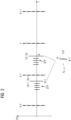
- the figure 2 shows various operating states of the traction battery 40 in the form of the current I in or out of the traction battery 40 over time t.
- Current flow phases can be identified, which are marked with the reference symbol SFP.
- the current flow phases SFP are interrupted by currentless phases.
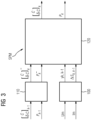
- the figure 3 shows an advantageous embodiment of the software program module SPM of the estimation device 20 according to FIG figure 1 in the form of a block diagram.
- the software program module SPM includes an evaluation module 100, a propagation module 110 and an update module 120.
- the function of the evaluation module 100 is to evaluate the measured current values Im and the measured voltage values Um of the measuring device 30 . As part of this evaluation, it checks, among other things, whether currentless phases are present and, if currentless phases are detected, whether these last for a specified minimum period of time. If this is the case, ie if a currentless phase that has reached at least the minimum period of time is detected, it records the voltage measurement value measured at the traction battery 40 at the beginning of the respective currentless phase as the no-load voltage value. In the figure 2 two such no-load voltage values are identified by the reference symbols Uk and Uk-1.
- the clock rate or the sampling rate when acquiring and evaluating the measured current values Im and the measured voltage values is preferably at least 1 Hz.
- the indication of the state of charge preferably assumes a value between zero (dead traction battery) and 1 (fully charged traction battery).
- the function of the propagation module 110 and the update module 120 is to estimate the capacity of the traction battery 40, depending on whether the evaluation module 100 has a current state of charge change indication ⁇ S k,k- 1 and a current charge quantity indication y k,k- 1 provides or not.
- the estimation is thus made dependent on whether or not k current measured values that enable a measured-value-based estimation are available at the respective estimation time: if current measured values are not available the estimation is performed solely on the basis of the respectively previously estimated capacity estimate and the respectively previously estimated estimated error value; if current measured values are available, the estimate is based on the previously estimated capacity estimate, the previously estimated estimated error value and additionally on the basis of the current measured values, preferably the current state of charge change information ⁇ S k,k- 1 and the current charge quantity information y k,k -1 , performed.
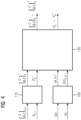
- the figure 4 shows the mode of operation of the propagation module 110 and the update module 120 at the estimation time k for the scenario shown in FIG.
- the evaluation module 100 can output neither a charge amount specification y k,k ⁇ 1 nor a matching state of charge change specification ⁇ S k,k ⁇ 1 at the estimation time k.
- the capacity of the traction battery 40 is therefore estimated at the estimation time k, in the absence of current measured values, solely on the basis of the respectively previously estimated estimated capacity value Ck-1 and the respectively previously estimated estimated error value ⁇ Ck-1.
- the estimation is carried out solely by the propagation module 110, the update module 120 remains inactive.
- the propagation module 110 preferably operates on the basis of Kalman filtering.
- the propagation module 110 calculates a model capacity estimate C k ⁇ , a model capacity estimation error value ⁇ C k ⁇ and a state covariance matrix P k ⁇ , which are transmitted to the update module 120.
- each previously estimated capacity estimate C k -1 becomes the current model capacity estimate C k ⁇ and the respectively previously estimated estimation error value ⁇ C k ⁇ 1 as the current model estimation error value ⁇ C k ⁇ issued.
- ⁇ n ⁇ CN 2 denotes the variance of the stimulation noise and is preferably calculated in such a way that there is an increase in the uncertainty or an increase in its variance by ⁇ % after one year for the capacitance error.
- the graphics in figure 7 shows the example expansion of the uncertainty of the capacity error, i.e. the variance value p22, over time t for a period of 10 years. Shown are 100 realizations of such a stochastic Wiener process. The mean deviation is shown with solid white lines LI1 and LI2 and is approx. 10% after 10 years. A value of 1% was assumed for ⁇ .
- the update module 120 Since—as already mentioned—the update module 120 is inactive when current measured values are not available, the current estimated model capacity value C k ⁇ , ie the previous estimated capacity value C k -1 , is output as the current estimated capacity value C by the estimating device 20 .
- the figure 6 shows the mode of operation of the propagation module 110 and the update module 120 at the estimation time k for the scenario shown in FIG figure 5 -
- a current flow phase SFP has ended in the period of time between the estimation time k and the temporally preceding estimation time k-1, so that the evaluation module 100 can accordingly generate a new no-load voltage value Uk and a new state of charge indication Sk.
- a new indication of the change in the state of charge .DELTA.S.sub.k ,k- 1 S.sub.k -S.sub.k - 1 is formed with the state of charge specification Sk.
- the evaluation module 100 detects the amount of charge that flowed into or out of the traction battery 40 between the formation of the no-load voltage value Uk and the formation of the previous no-load voltage value Uk-1, forming the charge quantity specification y k,k -1 .
- the update module 120 not only takes into account the charge quantity specification y k,k ⁇ 1 and the state of charge change specification ⁇ S k,k ⁇ 1 during the update, but also the error variance ⁇ y 2 the current measurement and the variance of the model estimate error value ⁇ C k ⁇ indicating variance value p22, which is contained in the state covariance matrix P and is increased by the preceding propagation module 110 in each propagation step.
- the variance of the model estimation error value is determined due to the presence of current measured values ⁇ C k ⁇ indicating variance value p22 is usually reduced again.
- the changed state covariance matrix P k + and the changed Kalman gain matrix K k are stored and used for the next estimation step k+1.
- a Kalman filter can be used to draw conclusions about the change in capacity from the deviation between a change in the state of charge calculated by integration and the state of charge actually determined from the cell voltage characteristic.
- the change in capacity over lifetime can be modeled as a Wiener process.
- This "prior knowledge" can be taken into account in the Kalman filter, which improves the estimation accuracy with regard to the change in capacitance.
- Kalman filter architecture can be used, which directly processes an integrated current measurement as an observation and is therefore much easier to implement than other methods. This results in a relatively simple Kalman filter observation equation. This in turn facilitates the calculation of the Kalman gain (Kalman gain K) due to smaller matrices, which require fewer computing steps for their inversion, especially in real-time implementations.
- the current integration in the measured value block can take place with a high frequency and thus detect the smallest current fluctuations.
- the computation-intensive update block 120 can be implemented with a low frequency. In the example above only once per hour.
- Measured values are preferably only evaluated in the Kalman filter if an exact determination of the state of charge from the cell voltage characteristic is possible. A criterion for this can be a longer currentless phase. In the meantime, preferably only the model equations of the Kalman filter are calculated (preferably in the propagation module 110), without using measurement results. This eliminates errors due to erroneous voltage measurements and increases the accuracy of the capacitance estimation.
- the Kalman filter equations are preferably computed at a very low sampling rate, e.g. B. only 1 time per hour.
- the current measurement values are preferably detected with a very high sampling rate, preferably in the sub-second range, in order to ensure high accuracy in the current integration.
Landscapes
- Physics & Mathematics (AREA)
- General Physics & Mathematics (AREA)
- Tests Of Electric Status Of Batteries (AREA)
- Measurement Of Resistance Or Impedance (AREA)
Abstract
Description
- Die Erfindung bezieht sich auf ein Verfahren und eine Einrichtung zum Schätzen der Kapazität eines Energiespeichers unter Bildung eines Kapazitätsschätzwerts.
- Die Kapazität einer Batterie ist eine elementare Größe für die Schätzung des Ladezustands. Die Kapazität ändert sich allerdings mit der Zeit. Wesentliche Änderungseinflüsse sind Alterung, die Verwendungsweise, Ladezyklen, das Temperaturprofil und vieles mehr. Aus diesem Grund ist es wichtig, über die Lebensdauer der Batterie die Kapazität bzw. deren Änderung ermitteln zu können.
- Der Erfindung liegt die Aufgabe zugrunde, ein einfach durchführbares Verfahren zum Schätzen der Kapazität eines Energiespeichers anzugeben.
- Diese Aufgabe wird erfindungsgemäß durch ein Verfahren mit den Merkmalen gemäß Patentanspruch 1 gelöst. Vorteilhafte Ausgestaltungen des erfindungsgemäßen Verfahrens sind in Unteransprüchen angegeben.
- Danach ist erfindungsgemäß vorgesehen, dass im Rahmen des Verfahrens der Kapazitätsschätzwert und ein den Schätzfehler des Kapazitätsschätzwerts angebender Schätzfehlerwert bestimmt werden, wobei das Schätzen davon abhängig ist, ob zum jeweiligen Schätzzeitpunkt aktuelle Messwerte, die eine messwertgestützte Schätzung ermöglichen, vorliegen oder nicht, wobei bei Nichtvorliegen aktueller Messwerte die Schätzung unter Heranziehung des jeweils zuvor geschätzten Kapazitätsschätzwerts und des jeweils zuvor geschätzten Schätzfehlerwerts durchgeführt wird und ein die Varianz des Schätzfehlerwerts beschreibender Varianzwert aktualisiert wird, und bei Vorliegen aktueller Messwerte die Schätzung unter Heranziehung des jeweils zuvor geschätzten Kapazitätsschätzwerts, des jeweils zuvor geschätzten Schätzfehlerwerts, der aktuellen Messwerte und des Varianzwerts durchgeführt wird.
- Ein wesentlicher Vorteil des erfindungsgemäßen Verfahrens ist darin zu sehen, dass die Schätzschritte unabhängig davon durchgeführt werden können, ob neue aktuelle Messwerte, die eine messwertgestützte Schätzung ermöglichen, vorliegen oder nicht. Durch diese Entkopplung von Messergebnissen kann der Rechenaufwand, der für die Schätzung aufgewandt werden soll bzw. kann, in einem weiten Rahmen frei gewählt werden. Beispielsweise können die Schätzvorgänge stündlich durchgeführt werden, unabhängig von dem Betrieb des Energiespeichers und unabhängig davon, ob Ruhestromphasen, die eine Leerlaufspannungsmessung ermöglichen würden, auftreten oder nicht.
- Durch die erfindungsgemäß vorgesehene Aktualisierung des Varianzwerts kann dem Umstand Rechnung getragen werden, dass bei längeren Phasen ohne messwertunterstützte Schätzung die Schätzwerte weniger verlässlich sein werden; beispielsweise kann bei jedem Schätzschritt ohne aktuelle Messwerte der Varianzwert im Rahmen der Aktualisierung erhöht werden, um das Absinken der Vertrauenswürdigkeit der Schätzergebnisse zu quantifizieren.
- Als vorteilhaft wird es angesehen, wenn jeweils bei Beginn einer stromlosen Phase geprüft wird, ob diese eine vorgegebene Mindestzeitspanne anhält. Ist dies der Fall, so wird vorzugsweise eine an dem Energiespeicher anliegende Spannung unter Bildung eines Leerlaufspannungswertes gemessen.
- Bei jedem Schätzvorgang wird vorzugsweise jeweils geprüft, ob seit dem letzten Schätzvorgang zumindest ein neuer Leerlaufspannungswert erfasst worden ist. Bei Vorliegen zumindest eines neuen Leerlaufspannungswerts wird vorzugsweise eine Ladungsmenge, die im Zeitraum zwischen der Erfassung des zeitlich letzten neuen Leerlaufspannungswerts und der Erfassung des zeitlich vorletzten Leerlaufspannungswerts in den Energiespeicher hinein- oder aus diesem herausgeflossen ist, unter Bildung einer Ladungsmengenangabe ermittelt.
- Bei der Berechnung des Kapazitätsschätzwerts und des Schätzfehlerwerts werden vorzugsweise als die genannten aktuellen Messwerte die zwei letztgenannten Leerlaufspannungswerte und die Ladungsmengenangabe berücksichtigt.
- Mit den zwei letztgenannten Leerlaufspannungswerten können in vorteilhafter Weise Ladezustandsangaben und eine Ladezustandsänderungsangabe gebildet werden, die bei der Schätzung berücksichtigt werden kann.
- Die Erfassung der Ladungsmenge umfasst vorzugsweise ein messtechnisches Abtasten des Stromes mit einer Abtastrate, die zumindest hundertmal größer als die Wiederholrate der Schätzung ist.
- Bei Vorliegen aktueller Messwerte wird die Schätzung vorzugsweise zunächst ohne Berücksichtigung der aktuellen Messwerte durchgeführt unter Bildung eines Modellkapazitätsschätzwerts und eines Modellkapazitätsschätzfehlerwerts. Anschließend werden der Kapazitätsschätzwert und der Schätzfehlerwert vorzugsweise unter Heranziehung des Modellkapazitätsschätzwerts, des Modellkapazitätsschätzfehlerwerts, der aktuellen Messwerte und des die Varianz des Modellkapazitätsschätzfehlerwerts angebenden Varianzwerts bzw. einer diesen enthaltenden Zustandskovarianzmatrix berechnet.
- Die Berechnung des Modellkapazitätsschätzwerts und des Modellkapazitätsschätzfehlerwerts ist bei Vorliegen der aktuellen Messwerte vorzugsweise identisch mit der Berechnung des Kapazitätsschätzwerts und des Schätzfehlerwerts im Falle eines Nichtvorliegens aktueller Messwerte.
- Bei einer besonders bevorzugten Ausgestaltung des Verfahrens ist vorgesehen, dass der Modellkapazitätsschätzwert und der Modellkapazitätsschätzfehlerwert berechnet werden, indem der jeweils zuvor geschätzte Kapazitätsschätzwert als Modellkapazitätsschätzwert und der jeweils zuvor geschätzte Schätzfehlerwert als Modellschätzfehlerwert angesehen wird.
- Vorteilhaft ist es, wenn bei jedem Schätzschritt der die Varianz des Schätzfehlerwerts angebende Varianzwert gemäß einer vorgegebenen Erhöhungsvorschrift erhöht wird und der erhöhte Varianzwert in der Zustandskovarianzmatrix anstelle des entsprechenden vorherigen Varianzwerts abgespeichert wird, bevor die Zustandskovarianzmatrix bei der Berechnung des Kapazitätsschätzwerts und des Schätzfehlerwerts berücksichtigt wird.
- Die Erhöhungsvorschrift sieht vorzugsweise vor, zur Bildung des erhöhten Varianzwerts den vorherigen Varianzwert um einen vorgegebenen Erhöhungswert zu erhöhen, der proportional zu der Zeitspanne zwischen der aktuellen Schätzung und der vorherigen Schätzung ist.
- Alternativ oder zusätzlich kann die vorgegebene Erhöhungsvorschrift vorsehen, die Varianz des Schätzfehlerwerts gemäß einem Wiener-Prozess zu erhöhen.
- Bei Nichtvorliegen aktueller Messwerte werden der vorherige Kapazitätsschätzwert und der Schätzfehlerwert vorzugsweise unverändert gelassen, und es werden der vorherige Kapazitätsschätzwert als der aktuelle Kapazitätsschätzwert und der vorherige Schätzfehlerwert als der aktuelle Schätzfehlerwert ausgegeben. Erhöht wird jedoch vorzugsweise der die Varianz des Schätzfehlerwerts angebende Varianzwert gemäß der Erhöhungsvorschrift, und es wird der erhöhte Varianzwert in der Zustandskovarianzmatrix anstelle des dort zuvor gespeicherten Varianzwerts abgespeichert. Die jeweils aktuelle Zustandskovarianzmatrix wird vorzugsweise berücksichtigt, wenn bei nachfolgenden Schätzvorgängen aktuelle Messwerte einbezogen werden.
- Die Schätzung wird vorzugsweise in regelmäßigen zeitlichen Abständen wiederholt, zum Beispiel stündlich, unabhängig vom Vorliegen oder Nichtvorliegen aktueller Messwerte.
- Bei Vorliegen aktueller Messwerte werden der Kapazitätsschätzwert und der Schätzfehlerwert vorzugsweise berechnet auf der Basis
- des zuvor geschätzten Kapazitätsschätzwerts,
- des zuvor geschätzten Schätzfehlerwerts,
- der aktuellen Messwerte,
- einer Messgenauigkeitsangabe, die die Messgenauigkeit der aktuellen Messwerte oder eines mit diesen berechneten Zwischenwerts angeben, und
- des aktuellen Varianzwerts, der die Varianz des Schätzfehlerwerts angibt.
- Die Schätzung wird vorzugsweise mit einem Kalmanfilter durchgeführt.
- Der Schätzfehlerwert gibt vorzugsweise die Varianz des Kapazitätsschätzwerts an.
- Die Berechnung des Modellkapazitätsschätzwerts


- Die Zustandskovarianzmatrix P wird vorzugsweise in jedem Schätzschritt verändert gemäß

- Liegen Messwerte vor, so wird in dem jeweiligen Schätzschritt eine Kalman-Gain-Matrix vorzugsweise aktualisiert gemäß


- Liegen Messwerte vor, so wird in dem jeweiligen Schätzschritt die Zustandskovarianzmatrix vorzugsweise aktualisiert gemäß

- Liegen Messwerte vor, so werden der Kapazitätsschätzwert und der Schätzfehlerwert vorzugsweise berechnet auf der Basis der aktualisierten Kalman-Gain-Matrix und der aktualisierten Zustandskovarianzmatrix gemäß

- Die Erfindung bezieht sich außerdem auf eine Schätzeinrichtung zum Schätzen der Kapazität eines Energiespeichers unter Bildung eines Kapazitätsschätzwerts. Erfindungsgemäß ist die Schätzeinrichtung dazu ausgebildet, ein Verfahren wie oben beschrieben auszuführen.
- Bezüglich der Vorteile der erfindungsgemäßen Schätzeinrichtung und deren vorteilhafter Ausgestaltungen sei auf die obigen Ausführungen im Zusammenhang mit dem erfindungsgemäßen Verfahren und dessen vorteilhafter Ausgestaltungen verwiesen.
- Vorteilhaft ist es, wenn die Schätzeinrichtung eine Recheneinrichtung und einen Speicher umfasst, in dem ein Softwareprogramm abgespeichert ist, das bei Ausführung durch die Recheneinrichtung die Recheneinrichtung zur Ausführung eines Verfahrens wie oben beschrieben veranlasst.
- Die Erfindung bezieht sich außerdem auf ein Schienenfahrzeug, das eine Schätzeinrichtung wie oben beschrieben aufweist.
- Die Schätzeinrichtung ist vorzugsweise dazu ausgestaltet, die Kapazität einer Traktionsbatterie des Schienenfahrzeugs zu schätzen.
- Die Erfindung wird nachfolgend anhand von Ausführungsbeispielen näher erläutert, dabei zeigen beispielhaft:
- Figur 1
- ein Ausführungsbeispiel für ein erfindungsgemäßes Schienenfahrzeug,
- Figur 2
- den Betrieb einer Traktionsbatterie des Schienenfahrzeugs gemäß
Figur 1 im zeitlichen Verlauf, wobei Stromflussphasen und stromlose Phasen sowie das Erzeugen von Ladungsmengenangaben und Ladezustandsangaben vereinfacht dargestellt sind, - Figur 3
- ein Ausführungsbeispiel für ein Softwareprogrammmodul einer Schätzeinrichtung des Schienenfahrzeugs gemäß
Figur 1 näher im Detail, - Fig.4-5
- die Arbeitsweise des Softwareprogrammmoduls gemäß
Figur 3 bei Nichtvorliegen aktueller Messwerte, - Figur 6
- die Arbeitsweise des Softwareprogrammmoduls gemäß
Figur 3 bei Vorliegen aktueller Messwerte, und - Figur 7
- die Aufweitung der Unsicherheit des Kapazitätsfehlers über der Zeit, modelliert als stochastischer Wiener Prozess.
- In den Figuren werden der Übersicht halber für identische oder vergleichbare Komponenten dieselben Bezugszeichen verwendet.
- Die
Figur 1 zeigt in einer schematischen Darstellung Bestandteile eines Ausführungsbeispiels für ein erfindungsgemäßes Schienenfahrzeug 10, das mit einem Ausführungsbeispiel für eine erfindungsgemäße Schätzeinrichtung 20 ausgestattet ist. - Die Schätzeinrichtung 20 ist über eine Messeinrichtung 30 mit einer Traktionsbatterie 40 des Schienenfahrzeugs 10 verbunden, die mit einem aus Gründen der Übersicht in der
Figur 1 nicht gezeigten Antrieb des Schienenfahrzeugs 10 in Verbindung steht und diesen während des Antriebsbetriebs mit Traktionsstrom versorgen kann. - Die Funktion der Messeinrichtung 30 besteht darin, die an der Traktionsbatterie 40 anliegende Spannung unter Bildung von Spannungsmesswerten Um und den in bzw. aus der Traktionsbatterie 40 fließenden Strom unter Bildung von Strommesswerten Im zu messen. Die Messeinrichtung 30 überträgt ihre Strommesswerte Im und ihre Spannungsmesswerte Um an die Schätzeinrichtung 20.
- Die Schätzeinrichtung 20 dient zum Schätzen der aktuellen Kapazität der Traktionsbatterie 40 unter Bildung eines Kapazitätsschätzwerts C und zum Bestimmen eines den Schätzfehler beim Schätzen des Kapazitätsschätzwerts C angebenden Schätzfehlerwerts δC. Zu diesem Zwecke umfasst die Schätzeinrichtung 20 eine Recheneinrichtung 21 und einen Speicher 22. In dem Speicher 22 ist ein Softwareprogrammmodul SPM abgespeichert, das bei Ausführung durch die Recheneinrichtung 21 die Schätzung der Kapazität und die Bestimmung des Schätzfehlers ermöglicht.
- Die
Figur 2 zeigt verschiedene Betriebszustände der Traktionsbatterie 40 in Form des Stromes I in bzw. aus der Traktionsbatterie 40 über der Zeit t. Es lassen sich Stromflussphasen erkennen, die mit dem Bezugszeichen SFP gekennzeichnet sind. Die Stromflussphasen SFP werden von stromlosen Phasen unterbrochen. - Die
Figur 3 zeigt eine vorteilhafte Ausgestaltung des Softwareprogrammmoduls SPM der Schätzeinrichtung 20 gemäßFigur 1 in Form eines Blockschaltbildes. Das Softwareprogrammmodul SPM umfasst ein Auswertmodul 100, ein Propagationsmodul 110 und ein Updatemodul 120. - Die Funktion des Auswertmoduls 100 besteht darin, die Strommesswerte Im und die Spannungsmesswerte Um der Messeinrichtung 30 auszuwerten. Im Rahmen dieser Auswertung prüft sie unter anderem, ob stromlose Phasen vorliegen und ob im Falle erkannter stromloser Phasen diese eine vorgegebene Mindestzeitspanne anhalten. Ist dies der Fall, wird also eine stromlose Phase, die mindestens die Mindestzeitspanne erreicht hat, erkannt, so erfasst sie den zu Beginn der jeweiligen stromlosen Phase an der Traktionsbatterie 40 gemessenen Spanungsmesswert als Leerlaufspannungswert. In der
Figur 2 sind zwei solcher Leerlaufspannungswerte mit den Bezugszeichen Uk und Uk-1 gekennzeichnet. Die Taktrate bzw. die Abtastrate beim Erfassen und Auswerten der Strommesswerte Im und der Spannungsmesswerte beträgt vorzugsweise mindestens 1 Hz. - Anhand der Leerlaufspannungswerte kann das Auswertmodul 100 den jeweiligen Ladezustand ermitteln, beispielsweise anhand einer für die Traktionsbatterie 40 typischen chemischen Spannungskennlinie bzw. Ladezustandskennlinie, unter Bildung von Ladezustandsangaben Sk:

- Durch Differenzbildung zwischen aufeinanderfolgenden Ladezustandsangaben kann eine Ladezustandsänderungsangabe ΔS k,k-1 ermittelt werden gemäß:

- Darüber hinaus ermittelt das Auswertmodul 100 bei Vorliegen eines jeden neuen Leerlaufspannungswerts eine Ladungsmenge, die im Zeitraum zwischen der Erfassung des zeitlich letzten bzw. neuen Leerlaufspannungswerts (Zeitpunkt tk) und der Erfassung des zeitlich vorletzten Leerlaufspannungswerts (Zeitpunkt tk-1) in die Traktionsbatterie 40 hinein- oder aus dieser herausgeflossen ist, unter Bildung einer Ladungsmengenangabe y k,k-1 , beispielsweise gemäß

- Die Funktion des Propagationsmoduls 110 und des Updatemoduls 120 besteht darin, die Schätzung der Kapazität der Traktionsbatterie 40 vorzunehmen, und zwar in Abhängigkeit davon, ob das Auswertmodul 100 eine aktuelle Ladezustandsänderungsangabe ΔS k,k-1 und eine aktuelle Ladungsmengenangabe y k,k-1 zur Verfügung stellt oder nicht. Das Schätzen wird also davon abhängig gemacht, ob zum jeweiligen Schätzzeitpunkt k aktuelle Messwerte, die eine messwertgestützte Schätzung ermöglichen, vorliegen oder nicht: Bei Nichtvorliegen aktueller Messwerte wird die Schätzung allein auf der Basis des jeweils zuvor geschätzten Kapazitätsschätzwerts und des jeweils zuvor geschätzten Schätzfehlerwerts durchgeführt; bei Vorliegen aktueller Messwerte wird die Schätzung auf der Basis des jeweils zuvor geschätzten Kapazitätsschätzwerts, des jeweils zuvor geschätzten Schätzfehlerwerts und zusätzlich auf der Basis der aktuellen Messwerte, vorzugsweise der jeweils aktuellen Ladezustandsänderungsangabe ΔS k,k-1 und der jeweils aktuellen Ladungsmengenangabe y k,k-1 , durchgeführt.
- Die
Figur 4 zeigt die Arbeitsweise des Propagationsmoduls 110 und des Updatemoduls 120 zum Schätzzeitpunkt k für das in Figur 5 gezeigt Szenario. Wie sich in derFigur 5 erkennen lässt, wurde in der Zeitspanne zwischen dem aktuellen Schätzzeitpunkt k und dem zeitlich davor liegenden Schätzzeitpunkt k-1 keine Stromflussphase beendet, sodass kein neuer Leerlaufspannungswert erzeugt wurde. Demgemäß kann das Auswertmodul 100 ausgangsseitig zum Schätzzeitpunkt k weder eine Ladungsmengenangabe y k,k-1 noch eine dazu passende Ladezustandsänderungsangabe ΔS k,k-1 bilden. - Die Schätzung der Kapazität der Traktionsbatterie 40 erfolgt somit zum Schätzzeitpunkt k mangels aktueller Messwerte allein auf der Basis des jeweils zuvor geschätzten Kapazitätsschätzwerts Ck-1 und des jeweils zuvor geschätzten Schätzfehlerwerts δCk-1. Die Schätzung wird allein von dem Propagationsmodul 110 durchgeführt, das Updatemodul 120 bleibt inaktiv.
- Das Propagationsmodul 110 arbeitet vorzugsweise auf der Basis einer Kalman-Filterung. In der nachfolgenden Tabelle sind in der linken Spalte die typischen Kalman-Filtergleichungen und in der rechten Spalte beispielhaft eine konkrete Ausgestaltung der Kalman-Filtergleichungen zur Bestimmung des Kapazitätsschätzwertes C und des Schätzfehlerwerts δC aufgeführt:


φ k 
- Wie sich den obigen Gleichungen entnehmen lässt, berechnet das Propagationsmodul 110 einen Modellkapazitätsschätzwert


- Gemäß den obigen Gleichungen werden der jeweils zuvor geschätzte Kapazitätsschätzwert C k-1 als aktueller Modellkapazitätsschätzwert


- Außerdem wird ein die Varianz des Schätzfehlerwerts bzw. des Modellschätzfehlerwerts


- Die Grafik in
Figur 7 zeigt die beispielhafte Aufweitung der Unsicherheit des Kapazitätsfehlers, also den Varianzwert p22, über der Zeit t für einen Zeitraum von 10 Jahren. Dargestellt sind 100 Realisierungen eines derartigen stochastischen Wiener Prozesses. Die mittlere Abweichung ist mit durchgezogenen weißen Linien LI1 und LI2 dargestellt und beträgt nach 10 Jahren ca. 10 %. Für α wurde hierbei ein Wert von 1 % angenommen. - Da - wie bereits erwähnt - bei Nichtvorliegen aktueller Messwerte das Updatemodul 120 inaktiv ist, wird der aktuelle Modellkapazitätsschätzwert


- Geändert wird in jedem Propagationsschritt lediglich die Zustandskovarianzmatrix, wobei die geänderte Zustandskovarianzmatrix

- Die
Figur 6 zeigt die Arbeitsweise des Propagationsmoduls 110 und des Updatemoduls 120 zum Schätzzeitpunkt k für das in Figur 2 gezeigt Szenario, bei dem - anders als inFigur 5 - in der Zeitspanne zwischen dem Schätzzeitpunkt k und dem zeitlich davor liegenden Schätzzeitpunkt k-1 eine Stromflussphase SFP beendet wurde, sodass das Auswertmodul 100 demgemäß einen neuen Leerlaufspannungswert Uk und eine neue Ladezustandsangabe Sk erzeugen kann. Mit der Ladezustandsangabe Sk wird eine neue Ladezustandsänderungsangabe ΔS k,k-1 = Sk - S k-1 gebildet. - Darüber hinaus erfasst das Auswertmodul 100 die Ladungsmenge, die zwischen der Bildung des Leerlaufspannungswertes Uk und der Bildung des vorherigen Leerlaufspannungswertes Uk-1 in die Traktionsbatterie 40 hinein- bzw. aus dieser herausgeflossen ist, unter Bildung der Ladungsmengenangabe y k,k-1 .
- Die Ladungsmengenangabe y k,k-1 und die Ladezustandsänderungsangabe ΔS k,k-1 = Sk - S k-1 werden zum Updatemodul 120 übertragen.
- Durch die Übermittlung der Ladungsmengenangabe y k,k-1 und der Ladezustandsänderungsangabe ΔS k,k-1 wird das Updatemodul 120 aktiviert, das nun den von dem Propagationsmodul 110 gelieferten Modellkapazitätsschätzwert und den Modellschätzfehlerwert





- Den obigen Gleichungen lässt sich entnehmen, dass das Updatemodul 120 bei der Aktualisierung nicht nur die Ladungsmengenangabe y k,k-1 und die Ladezustandsänderungsangabe ΔS k,k-1 berücksichtigt, sondern auch die Fehlervarianz


- Im Rahmen des Updateverfahrens, das das Updatemodul 120 durchführt, wird aufgrund des Vorliegens aktueller Messwerte der die Varianz des Modellschätzfehlerwerts

- Der Kapazitätsschätzwert C und der Schätzfehlerwert δC werden nachfolgend wie folgt ermittelt:

- Die geänderte Zustandskovarianzmatrix

- Die in den obigen Gleichungen verwendeten Formelzeichen bedeuten dabei Folgendes:
C [Ah] Kapazitätsschätzwert S (0,1) Ladezustand (State of Charge, SoC) K Kalman-Gain-Matrix k11, k21 Elemente der Kalman-Gain-Matrix I [A] Strom t [s] Zeit y [Ah] Integrierte Ladung (Coulomb-Count) δC [Ah] Schätzfehlerwert ΔT Abtastzeit des Kalmanfilters (z.B. ΔT = 1h) bzw. zeitlicher Abstand zwischen den Schätzschritten des Kalman-Filters hyear Stunden pro Jahr nδCN Stimulationsrauschen für Kapazitätsfehler η Anpassungsfaktor U Batterieklemmenspannung im stromlosen Zustand (Open Circuit Voltage) 
Fehlervarianz der Strommessung (Coulomb-Count) 
Varianz des Stimulationsrauschens P Zustandskovarianzmatrix p11-p22 Varianzwerte der Zustandskovarianzmatrix - Als Startwerte für den Beginn des in den Figuren gezeigten Schätzalgorithmus können beispielsweise folgende Werte gewählt werden:
- p11 = p12 = p21 = p22 = 0
- δC = 0 und
- C = CN,
- wobei CN die Nennkapazität des neuwertigen Energiespeichers bzw. des Energiespeichers im Originalzustand bezeichnet.
- Das oben im Zusammenhang mit den Figuren beispielhaft beschriebene Schätzverfahren kann in vorteilhafter Weise folgende Eigenschaften aufweisen:
Mittels eines Kalman-Filters kann aus der Abweichung zwischen einer durch Integration berechneten Ladezustandsänderung und dem aus der Zellspannungskennlinie tatsächlich ermittelten Ladezustand auf die Änderung der Kapazität geschlossen werden. - Die Änderung der Kapazität kann über die Lebensdauer als ein Wiener Prozess modelliert werden. Dieses "Vorwissen" kann im Kalman-Filter berücksichtigt werden, wodurch die Schätzgenauigkeit bezüglich der Kapazitätsänderung verbessert wird.
- Es kann eine Kalman-Filter-Architektur eingesetzt werden, welche direkt eine integrierte Strommessung als Beobachtung verarbeitet und damit wesentlich einfacher hinsichtlich der Implementierung als andere Verfahren ist. Es ergibt sich dadurch eine relativ einfache Kalman-Filter-Beobachtungsgleichung. Dies wiederum erleichtert die Berechnung des Kalman-Gains (Kalman-Gewinns K) aufgrund kleinerer Matrizen, welche gerade bei Echtzeitimplementierungen weniger Rechenschritte für deren Invertierung erfordern.
- Durch eine Trennung der Messwertbildung und Stromintegration im Block 100 gemäß
Fig. 6 und des Updatemoduls 120 gemäßFig. 6 kann eine merkliche Reduktion der notwendigen Rechenoperationen erreicht werden. Die Stromintegration im Messwertblock kann mit hoher Frequenz erfolgen und damit kleinste Stromschwankungen erfassen. Der rechenintensive Updateblock 120 kann hingegen mit niedriger Frequenz realisiert werden. Im obigen Beispiel nur einmal pro Stunde. - Es werden vorzugsweise immer nur dann Messwerte im Kalman-Filter ausgewertet, wenn eine genaue Bestimmung des Ladezustandes aus der Zellspannungskennlinie möglich ist. Ein Kriterium hierfür kann eine längere stromlose Phase sein. In der Zwischenzeit werden vorzugsweise nur die Modellgleichungen des Kalman-Filters gerechnet (vorzugsweise im Propagationsmodul 110), ohne dabei Messergebnisse zu verwenden. Dadurch können Fehler aufgrund fehlerhafter Spannungsmessungen ausgeschlossen und die Genauigkeit der Kapazitätsschätzung erhöht werden.
- Es kann eine optimierte Architektur für Echtzeitumgebungen erreicht werden. Die Kalman-Filter-Gleichungen werden vorzugsweise mit einer sehr niedrigen Abtastrate berechnet, z. B. nur 1-mal pro Stunde. Die Erfassung der Strommesswerte erfolgt vorzugsweise mit einer sehr hohen Abtastrate vorzugsweise im Sub-Sekundenbereich, um eine hohe Genauigkeit bei der Stromintegration zu gewährleisten.

Claims (15)
- Verfahren zum Schätzen der Kapazität eines Energiespeichers unter Bildung eines Kapazitätsschätzwerts (C),
dadurch gekennzeichnet, dass
im Rahmen des Verfahrens der Kapazitätsschätzwert (C) und ein den Schätzfehler des Kapazitätsschätzwerts angebender Schätzfehlerwert (δC) bestimmt werden, wobei das Schätzen davon abhängig ist, ob zum jeweiligen Schätzzeitpunkt aktuelle Messwerte (Uk, Uk-1, yk,k-1), die eine messwertgestützte Schätzung ermöglichen, vorliegen oder nicht, wobei- bei Nichtvorliegen aktueller Messwerte (Uk, Uk-1, yk,k-1) die Schätzung unter Heranziehung des jeweils zuvor geschätzten Kapazitätsschätzwerts und des jeweils zuvor geschätzten Schätzfehlerwerts durchgeführt wird und ein die Varianz des Schätzfehlerwerts (δC) beschreibender Varianzwert (p22) aktualisiert wird, und- bei Vorliegen aktueller Messwerte (Uk, Uk-1, yk,k-1) die Schätzung unter Heranziehung des jeweils zuvor geschätzten Kapazitätsschätzwerts, des jeweils zuvor geschätzten Schätzfehlerwerts, der aktuellen Messwerte und des Varianzwerts (p22) durchgeführt wird. - Verfahren nach Anspruch 1,
dadurch gekennzeichnet, dass- jeweils bei Beginn einer stromlosen Phase geprüft wird, ob diese eine vorgegebene Mindestzeitspanne anhält, und gegebenenfalls eine an dem Energiespeicher anliegende Spannung unter Bildung eines Leerlaufspannungswertes (Uk, Uk-1) gemessen wird,- bei jedem Schätzvorgang jeweils geprüft wird, ob seit dem letzten Schätzvorgang zumindest ein neuer Leerlaufspannungswert (Uk) erfasst worden ist, und- bei Vorliegen zumindest eines neuen Leerlaufspannungswerts (Uk) eine Ladungsmenge, die im Zeitraum zwischen der Erfassung des zeitlich letzten neuen Leerlaufspannungswerts (Uk) und der Erfassung des zeitlich vorletzten Leerlaufspannungswerts (Uk-1) in den Energiespeicher hinein- oder aus diesem herausgeflossen ist, unter Bildung einer Ladungsmengenangabe (yk,k-1) ermittelt wird, und bei der Berechnung des Kapazitätsschätzwerts und des Schätzfehlerwerts als die genannten aktuellen Messwerte die zwei letztgenannten Leerlaufspannungswerte (Uk, Uk-1) und die Ladungsmengenangabe (yk,k-1) herangezogen werden. - Verfahren nach Anspruch 2,
dadurch gekennzeichnet, dass
die Erfassung der Ladungsmenge ein Abtasten des Stromes (I) mit einer Abtastrate umfasst, die zumindest hundertmal größer als die Wiederholrate der Schätzung ist. - Verfahren nach einem der voranstehenden Ansprüche,
dadurch gekennzeichnet, dass
bei Vorliegen aktueller Messwerte (Uk, Uk-1, yk,k-1)- die Schätzung zunächst ohne Berücksichtigung der aktuellen Messwerte durchgeführt wird unter Bildung eines Modellkapazitätsschätzwerts (
 - anschließend der Kapazitätsschätzwert (C) und der Schätzfehlerwert (δC) unter Heranziehung des Modellkapazitätsschätzwerts, des Modellkapazitätsschätzfehlerwerts, der aktuellen Messwerte (Uk, Uk-1, yk,k-1) und des Varianzwerts (p22) berechnet werden.
 - Verfahren nach Anspruch 4,
dadurch gekennzeichnet, dass
die Berechnung des Modellkapazitätsschätzwerts (
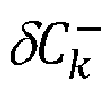
- Verfahren nach einem der voranstehenden Ansprüche 4 bis 5, dadurch gekennzeichnet, dass- der jeweils zuvor geschätzte Kapazitätsschätzwert ( C k-1 ) als Modellkapazitätsschätzwert (

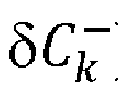 - der Varianzwert (p22) gemäß einer Erhöhungsvorschrift erhöht wird und der erhöhte Varianzwert in einer Zustandskovarianzmatrix (P) anstelle des vorherigen Varianzwerts abgespeichert wird, bevor die Zustandskovarianzmatrix (P) bei der Berechnung des Kapazitätsschätzwerts (C) und des Schätzfehlerwerts (δC) berücksichtigt wird.
 - Verfahren nach Anspruch 6,
dadurch gekennzeichnet, dass
die Erhöhungsvorschrift vorsieht, zur Bildung des erhöhten Varianzwerts (p22) den vorherigen Varianzwert um einen vorgegebenen Erhöhungswert (
- Verfahren nach einem der voranstehenden Ansprüche,
dadurch gekennzeichnet, dass
bei Nichtvorliegen aktueller Messwerte- der vorherige Kapazitätsschätzwert und der vorherige Schätzfehlerwert unverändert gelassen werden und der vorherige Kapazitätsschätzwert als der aktuelle Kapazitätsschätzwert und der vorherige Schätzfehlerwert als der aktuelle Schätzfehlerwert ausgegeben werden und- der Varianzwert im Rahmen der Aktualisierung durch Addition eines Erhöhungswerts (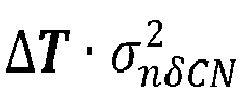
- Verfahren nach einem der voranstehenden Ansprüche,
dadurch gekennzeichnet, dass
die Schätzung in regelmäßigen zeitlichen Abständen wiederholt wird, unabhängig vom Vorliegen oder Nichtvorliegen aktueller Messwerte (Uk, Uk-1, yk,k-1). - Verfahren nach einem der voranstehenden Ansprüche,
dadurch gekennzeichnet, dass
bei Vorliegen aktueller Messwerte (Uk, Uk-1, yk,k-1) der Kapazitätsschätzwert und der Schätzfehlerwert berechnet werden unter Heranziehung- des zuvor geschätzten Kapazitätsschätzwerts,- des zuvor geschätzten Schätzfehlerwerts,- der aktuellen Messwerte (Uk, Uk-1, yk,k-1),- einer Messgenauigkeitsangabe ( - des Varianzwerts (p22).
 - Verfahren nach einem der voranstehenden Ansprüche,
dadurch gekennzeichnet, dass
die Schätzung mit einem Kalmanfilter durchgeführt wird. - Verfahren nach einem der voranstehenden Ansprüche,
dadurch gekennzeichnet, dass
der Schätzfehlerwert (δC) die Varianz des Kapazitätsschätzwerts (C) angibt. - Verfahren nach einem der voranstehenden Ansprüche 6 bis 12,
dadurch gekennzeichnet, dassdie Ermittlung des Modellkapazitätsschätzwerts

 wobei C k-1 den vorherigen Kapazitätsschätzwert, δC k-1 den vorherigen Schätzfehlerwert, k und k-1 aufeinanderfolgende Schätzzeitpunkte bezeichnen und die Zustandskovarianzmatrix (P) verändert wird gemäß
 bevor die Zustandskovarianzmatrix (P), der Modellkapazitätsschätzwert

- Schätzeinrichtung (20) zum Schätzen der Kapazität eines Energiespeichers unter Bildung eines Kapazitätsschätzwerts (C),
dadurch gekennzeichnet, dass
die Schätzeinrichtung (20) dazu ausgebildet ist, ein Verfahren nach einem der voranstehenden Ansprüche auszuführen. - Schienenfahrzeug (10),
dadurch gekennzeichnet, dass
das Schienenfahrzeug (10) eine Schätzeinrichtung (20) nach Anspruch 14 aufweist.
Applications Claiming Priority (1)
| Application Number | Priority Date | Filing Date | Title |
|---|---|---|---|
| DE102022200884.7A DE102022200884B4 (de) | 2022-01-26 | 2022-01-26 | Verfahren und Einrichtung zum Schätzen der Kapazität eines Energiespeichers |
Publications (2)
| Publication Number | Publication Date |
|---|---|
| EP4220207A1 true EP4220207A1 (de) | 2023-08-02 |
| EP4220207B1 EP4220207B1 (de) | 2024-09-18 |
Family
ID=84980960
Family Applications (1)
| Application Number | Title | Priority Date | Filing Date |
|---|---|---|---|
| EP23150575.1A Active EP4220207B1 (de) | 2022-01-26 | 2023-01-06 | Verfahren und einrichtung zum schätzen der kapazität eines energiespeichers |
Country Status (3)
| Country | Link |
|---|---|
| EP (1) | EP4220207B1 (de) |
| DE (1) | DE102022200884B4 (de) |
| ES (1) | ES3000064T3 (de) |
Citations (5)
| Publication number | Priority date | Publication date | Assignee | Title |
|---|---|---|---|---|
| US20140058595A1 (en) * | 2012-08-21 | 2014-02-27 | Ford Global Technologies, Llc | Online battery capacity estimation |
| US20170244137A1 (en) * | 2016-02-19 | 2017-08-24 | Johnson Controls Technology Company | Systems and methods for real-time parameter estimation of a rechargeable battery |
| CN110286324A (zh) * | 2019-07-18 | 2019-09-27 | 北京碧水润城水务咨询有限公司 | 一种电池荷电状态估算方法及电池健康状态估算方法 |
| US20210190876A1 (en) * | 2018-05-31 | 2021-06-24 | Sumitomo Electric Industries, Ltd. | Parameter estimation device, parameter estimation method, and computer program |
| US20210215770A1 (en) * | 2020-01-15 | 2021-07-15 | GM Global Technology Operations LLC | Method and system for battery capacity estimation |
Family Cites Families (2)
| Publication number | Priority date | Publication date | Assignee | Title |
|---|---|---|---|---|
| FR3029315B1 (fr) | 2014-11-28 | 2016-12-09 | Renault Sa | Procede automatique d'estimation de la capacite d'une cellule d'une batterie |
| US10048321B2 (en) | 2016-02-19 | 2018-08-14 | Johnson Controls Technology Company | Systems and methods for directional capacity estimation of a rechargeable battery |
-
2022
- 2022-01-26 DE DE102022200884.7A patent/DE102022200884B4/de active Active
-
2023
- 2023-01-06 ES ES23150575T patent/ES3000064T3/es active Active
- 2023-01-06 EP EP23150575.1A patent/EP4220207B1/de active Active
Patent Citations (5)
| Publication number | Priority date | Publication date | Assignee | Title |
|---|---|---|---|---|
| US20140058595A1 (en) * | 2012-08-21 | 2014-02-27 | Ford Global Technologies, Llc | Online battery capacity estimation |
| US20170244137A1 (en) * | 2016-02-19 | 2017-08-24 | Johnson Controls Technology Company | Systems and methods for real-time parameter estimation of a rechargeable battery |
| US20210190876A1 (en) * | 2018-05-31 | 2021-06-24 | Sumitomo Electric Industries, Ltd. | Parameter estimation device, parameter estimation method, and computer program |
| CN110286324A (zh) * | 2019-07-18 | 2019-09-27 | 北京碧水润城水务咨询有限公司 | 一种电池荷电状态估算方法及电池健康状态估算方法 |
| US20210215770A1 (en) * | 2020-01-15 | 2021-07-15 | GM Global Technology Operations LLC | Method and system for battery capacity estimation |
Non-Patent Citations (1)
| Title |
|---|
| XIONG RUI ET AL: "A data-driven multi-scale extended Kalman filtering based parameter and state estimation approach of lithium-ion olymer battery in electric vehicles", APPLIED ENERGY, ELSEVIER SCIENCE PUBLISHERS, GB, vol. 113, 23 August 2013 (2013-08-23), pages 463 - 476, XP028762963, ISSN: 0306-2619, DOI: 10.1016/J.APENERGY.2013.07.061 * |
Also Published As
| Publication number | Publication date |
|---|---|
| DE102022200884A1 (de) | 2023-07-27 |
| DE102022200884B4 (de) | 2024-06-27 |
| ES3000064T3 (en) | 2025-02-27 |
| EP4220207B1 (de) | 2024-09-18 |
Similar Documents
| Publication | Publication Date | Title |
|---|---|---|
| EP1394561B1 (de) | Verfahren zur Ermittlung der entnehmbaren Ladungsmenge einer Speicherbatterie und Überwachungseinrichtung für eine Speicherbatterie | |
| DE102013216200B4 (de) | Online-Batteriekapazitätsschätzung | |
| DE112016006166T5 (de) | Zustandsschätz-Vorrichtung und Zustandsschätz-Verfahren | |
| DE112013005699B4 (de) | Schätzvorrichtung für einen internen Zustand einer Batterie | |
| EP3658930B1 (de) | Verfahren und vorrichtung zur detektion von batteriezellenzuständen und batteriezellenparametern | |
| DE102019116764A1 (de) | Energieversorgungssteuerungsvorrichtung | |
| AT513189A2 (de) | Verfahren zur Ermittlung eines regelungstechnischen Beobachters für den SoC | |
| DE102020215176A1 (de) | Verfahren und system zum schätzen einer leerlaufspannung einer batteriezelle | |
| WO2020052970A1 (de) | Verfahren zur bestimmung einer kapazität einer batteriezelle, auswerteeinrichtung, überwachungsvorrichtung, hochvoltbatterie sowie kraftfahrzeug | |
| DE112016000834T5 (de) | Vorrichtung zum einschätzen eines batteriestatus | |
| DE102011017113B4 (de) | Verfahren zur Bestimmung von Zustandsgrößen eines Akkumulators | |
| DE102020132853A1 (de) | Verfahren und system zur schätzung der batteriekapazität unter verwendung von spannungsneigungskapazität und dynamischen ankern | |
| DE102009003345A1 (de) | System und Verfahren zum Abschätzen des Ladezustands eines elektrochemischen Energiespeichers | |
| WO2020225356A1 (de) | Charakterisierung von lithium-plating bei wiederaufladbaren batterien | |
| DE102021201857A1 (de) | Schätzeinrichtungen und Verfahren zum Schätzen des Betriebszustands einer Batterie | |
| DE112018001790T5 (de) | Vorrichtung zur verwaltung eines energiespeichergeräts und verfahren zur ver waltung eines energiespeichergeräts | |
| EP3435101A1 (de) | Verfahren und vorrichtung zur überwachung eines stabilen konvergenzverhaltens eines kalman-filters | |
| DE102014220913B4 (de) | Verfahren und Vorrichtung zur Bestimmung einer Widerstandsänderung einer Energiespeichereinrichtung und Fahrzeug | |
| EP4123320A1 (de) | Verfahren zum bestimmen eines kapazitätsverlusts eines batteriespeichers, vorrichtung und computerprogrammprodukt | |
| EP2318853B1 (de) | Verfahren zur berechnung des ladezustandes einer batterie | |
| DE102022212234A1 (de) | Verfahren und Vorrichtung zum Bestimmen eines Alterungszustands einer Gerätebatterie mithilfe einer vernetzten Energieversorgungsstation | |
| DE102018206353B3 (de) | Verfahren zur Ermittlung von Ladungszuständen von Zellen in einer Batterie | |
| DE102005062148B4 (de) | Verfahren zum Ermitteln des Betriebszustands eines Energiespeichers für elektrische Energie | |
| EP4220207B1 (de) | Verfahren und einrichtung zum schätzen der kapazität eines energiespeichers | |
| DE102008036159A1 (de) | Verfahren zum Bestimmen eines Ladezustands einer Batterie |
Legal Events
| Date | Code | Title | Description |
|---|---|---|---|
| PUAI | Public reference made under article 153(3) epc to a published international application that has entered the european phase |
Free format text: ORIGINAL CODE: 0009012 |
|
| STAA | Information on the status of an ep patent application or granted ep patent |
Free format text: STATUS: THE APPLICATION HAS BEEN PUBLISHED |
|
| AK | Designated contracting states |
Kind code of ref document: A1 Designated state(s): AL AT BE BG CH CY CZ DE DK EE ES FI FR GB GR HR HU IE IS IT LI LT LU LV MC ME MK MT NL NO PL PT RO RS SE SI SK SM TR |
|
| STAA | Information on the status of an ep patent application or granted ep patent |
Free format text: STATUS: REQUEST FOR EXAMINATION WAS MADE |
|
| 17P | Request for examination filed |
Effective date: 20240131 |
|
| RBV | Designated contracting states (corrected) |
Designated state(s): AL AT BE BG CH CY CZ DE DK EE ES FI FR GB GR HR HU IE IS IT LI LT LU LV MC ME MK MT NL NO PL PT RO RS SE SI SK SM TR |
|
| GRAP | Despatch of communication of intention to grant a patent |
Free format text: ORIGINAL CODE: EPIDOSNIGR1 |
|
| STAA | Information on the status of an ep patent application or granted ep patent |
Free format text: STATUS: GRANT OF PATENT IS INTENDED |
|
| RIC1 | Information provided on ipc code assigned before grant |
Ipc: G01R 31/00 20060101ALN20240402BHEP Ipc: G01R 31/3842 20190101ALI20240402BHEP Ipc: G01R 31/3828 20190101ALI20240402BHEP Ipc: G01R 31/367 20190101AFI20240402BHEP |
|
| INTG | Intention to grant announced |
Effective date: 20240417 |
|
| GRAS | Grant fee paid |
Free format text: ORIGINAL CODE: EPIDOSNIGR3 |
|
| GRAA | (expected) grant |
Free format text: ORIGINAL CODE: 0009210 |
|
| STAA | Information on the status of an ep patent application or granted ep patent |
Free format text: STATUS: THE PATENT HAS BEEN GRANTED |
|
| AK | Designated contracting states |
Kind code of ref document: B1 Designated state(s): AL AT BE BG CH CY CZ DE DK EE ES FI FR GB GR HR HU IE IS IT LI LT LU LV MC ME MK MT NL NO PL PT RO RS SE SI SK SM TR |
|
| REG | Reference to a national code |
Ref country code: GB Ref legal event code: FG4D Free format text: NOT ENGLISH |
|
| REG | Reference to a national code |
Ref country code: CH Ref legal event code: EP |
|
| REG | Reference to a national code |
Ref country code: DE Ref legal event code: R096 Ref document number: 502023000171 Country of ref document: DE |
|
| REG | Reference to a national code |
Ref country code: IE Ref legal event code: FG4D Free format text: LANGUAGE OF EP DOCUMENT: GERMAN |
|
| REG | Reference to a national code |
Ref country code: LT Ref legal event code: MG9D |
|
| PG25 | Lapsed in a contracting state [announced via postgrant information from national office to epo] |
Ref country code: NO Free format text: LAPSE BECAUSE OF FAILURE TO SUBMIT A TRANSLATION OF THE DESCRIPTION OR TO PAY THE FEE WITHIN THE PRESCRIBED TIME-LIMIT Effective date: 20241218 |
|
| PG25 | Lapsed in a contracting state [announced via postgrant information from national office to epo] |
Ref country code: GR Free format text: LAPSE BECAUSE OF FAILURE TO SUBMIT A TRANSLATION OF THE DESCRIPTION OR TO PAY THE FEE WITHIN THE PRESCRIBED TIME-LIMIT Effective date: 20241219 Ref country code: FI Free format text: LAPSE BECAUSE OF FAILURE TO SUBMIT A TRANSLATION OF THE DESCRIPTION OR TO PAY THE FEE WITHIN THE PRESCRIBED TIME-LIMIT Effective date: 20240918 |
|
| PG25 | Lapsed in a contracting state [announced via postgrant information from national office to epo] |
Ref country code: BG Free format text: LAPSE BECAUSE OF FAILURE TO SUBMIT A TRANSLATION OF THE DESCRIPTION OR TO PAY THE FEE WITHIN THE PRESCRIBED TIME-LIMIT Effective date: 20240918 |
|
| PG25 | Lapsed in a contracting state [announced via postgrant information from national office to epo] |
Ref country code: LV Free format text: LAPSE BECAUSE OF FAILURE TO SUBMIT A TRANSLATION OF THE DESCRIPTION OR TO PAY THE FEE WITHIN THE PRESCRIBED TIME-LIMIT Effective date: 20240918 |
|
| PG25 | Lapsed in a contracting state [announced via postgrant information from national office to epo] |
Ref country code: HR Free format text: LAPSE BECAUSE OF FAILURE TO SUBMIT A TRANSLATION OF THE DESCRIPTION OR TO PAY THE FEE WITHIN THE PRESCRIBED TIME-LIMIT Effective date: 20240918 |
|
| REG | Reference to a national code |
Ref country code: NL Ref legal event code: MP Effective date: 20240918 |
|
| PG25 | Lapsed in a contracting state [announced via postgrant information from national office to epo] |
Ref country code: RS Free format text: LAPSE BECAUSE OF FAILURE TO SUBMIT A TRANSLATION OF THE DESCRIPTION OR TO PAY THE FEE WITHIN THE PRESCRIBED TIME-LIMIT Effective date: 20241218 |
|
| PG25 | Lapsed in a contracting state [announced via postgrant information from national office to epo] |
Ref country code: RS Free format text: LAPSE BECAUSE OF FAILURE TO SUBMIT A TRANSLATION OF THE DESCRIPTION OR TO PAY THE FEE WITHIN THE PRESCRIBED TIME-LIMIT Effective date: 20241218 Ref country code: NO Free format text: LAPSE BECAUSE OF FAILURE TO SUBMIT A TRANSLATION OF THE DESCRIPTION OR TO PAY THE FEE WITHIN THE PRESCRIBED TIME-LIMIT Effective date: 20241218 Ref country code: LV Free format text: LAPSE BECAUSE OF FAILURE TO SUBMIT A TRANSLATION OF THE DESCRIPTION OR TO PAY THE FEE WITHIN THE PRESCRIBED TIME-LIMIT Effective date: 20240918 Ref country code: HR Free format text: LAPSE BECAUSE OF FAILURE TO SUBMIT A TRANSLATION OF THE DESCRIPTION OR TO PAY THE FEE WITHIN THE PRESCRIBED TIME-LIMIT Effective date: 20240918 Ref country code: GR Free format text: LAPSE BECAUSE OF FAILURE TO SUBMIT A TRANSLATION OF THE DESCRIPTION OR TO PAY THE FEE WITHIN THE PRESCRIBED TIME-LIMIT Effective date: 20241219 Ref country code: FI Free format text: LAPSE BECAUSE OF FAILURE TO SUBMIT A TRANSLATION OF THE DESCRIPTION OR TO PAY THE FEE WITHIN THE PRESCRIBED TIME-LIMIT Effective date: 20240918 Ref country code: BG Free format text: LAPSE BECAUSE OF FAILURE TO SUBMIT A TRANSLATION OF THE DESCRIPTION OR TO PAY THE FEE WITHIN THE PRESCRIBED TIME-LIMIT Effective date: 20240918 |
|
| PG25 | Lapsed in a contracting state [announced via postgrant information from national office to epo] |
Ref country code: NL Free format text: LAPSE BECAUSE OF FAILURE TO SUBMIT A TRANSLATION OF THE DESCRIPTION OR TO PAY THE FEE WITHIN THE PRESCRIBED TIME-LIMIT Effective date: 20240918 |
|
| REG | Reference to a national code |
Ref country code: ES Ref legal event code: FG2A Ref document number: 3000064 Country of ref document: ES Kind code of ref document: T3 Effective date: 20250227 |
|
| PG25 | Lapsed in a contracting state [announced via postgrant information from national office to epo] |
Ref country code: PT Free format text: LAPSE BECAUSE OF FAILURE TO SUBMIT A TRANSLATION OF THE DESCRIPTION OR TO PAY THE FEE WITHIN THE PRESCRIBED TIME-LIMIT Effective date: 20250120 Ref country code: IS Free format text: LAPSE BECAUSE OF FAILURE TO SUBMIT A TRANSLATION OF THE DESCRIPTION OR TO PAY THE FEE WITHIN THE PRESCRIBED TIME-LIMIT Effective date: 20250118 |
|
| PG25 | Lapsed in a contracting state [announced via postgrant information from national office to epo] |
Ref country code: RO Free format text: LAPSE BECAUSE OF FAILURE TO SUBMIT A TRANSLATION OF THE DESCRIPTION OR TO PAY THE FEE WITHIN THE PRESCRIBED TIME-LIMIT Effective date: 20240918 Ref country code: SM Free format text: LAPSE BECAUSE OF FAILURE TO SUBMIT A TRANSLATION OF THE DESCRIPTION OR TO PAY THE FEE WITHIN THE PRESCRIBED TIME-LIMIT Effective date: 20240918 |
|
| PG25 | Lapsed in a contracting state [announced via postgrant information from national office to epo] |
Ref country code: EE Free format text: LAPSE BECAUSE OF FAILURE TO SUBMIT A TRANSLATION OF THE DESCRIPTION OR TO PAY THE FEE WITHIN THE PRESCRIBED TIME-LIMIT Effective date: 20240918 |
|
| PG25 | Lapsed in a contracting state [announced via postgrant information from national office to epo] |
Ref country code: CZ Free format text: LAPSE BECAUSE OF FAILURE TO SUBMIT A TRANSLATION OF THE DESCRIPTION OR TO PAY THE FEE WITHIN THE PRESCRIBED TIME-LIMIT Effective date: 20240918 Ref country code: PL Free format text: LAPSE BECAUSE OF FAILURE TO SUBMIT A TRANSLATION OF THE DESCRIPTION OR TO PAY THE FEE WITHIN THE PRESCRIBED TIME-LIMIT Effective date: 20240918 |
|
| PG25 | Lapsed in a contracting state [announced via postgrant information from national office to epo] |
Ref country code: SK Free format text: LAPSE BECAUSE OF FAILURE TO SUBMIT A TRANSLATION OF THE DESCRIPTION OR TO PAY THE FEE WITHIN THE PRESCRIBED TIME-LIMIT Effective date: 20240918 Ref country code: IT Free format text: LAPSE BECAUSE OF FAILURE TO SUBMIT A TRANSLATION OF THE DESCRIPTION OR TO PAY THE FEE WITHIN THE PRESCRIBED TIME-LIMIT Effective date: 20240918 |
|
| REG | Reference to a national code |
Ref country code: DE Ref legal event code: R097 Ref document number: 502023000171 Country of ref document: DE |
|
| PG25 | Lapsed in a contracting state [announced via postgrant information from national office to epo] |
Ref country code: DK Free format text: LAPSE BECAUSE OF FAILURE TO SUBMIT A TRANSLATION OF THE DESCRIPTION OR TO PAY THE FEE WITHIN THE PRESCRIBED TIME-LIMIT Effective date: 20240918 |
|
| PGFP | Annual fee paid to national office [announced via postgrant information from national office to epo] |
Ref country code: ES Payment date: 20250422 Year of fee payment: 3 |
|
| PLBE | No opposition filed within time limit |
Free format text: ORIGINAL CODE: 0009261 |
|
| STAA | Information on the status of an ep patent application or granted ep patent |
Free format text: STATUS: NO OPPOSITION FILED WITHIN TIME LIMIT |
|
| REG | Reference to a national code |
Ref country code: DE Ref legal event code: R081 Ref document number: 502023000171 Country of ref document: DE Owner name: SIEMENS MOBILITY GMBH, DE Free format text: FORMER OWNER: SIEMENS MOBILITY GMBH, 81739 MUENCHEN, DE |
|
| 26N | No opposition filed |
Effective date: 20250619 |
|
| PG25 | Lapsed in a contracting state [announced via postgrant information from national office to epo] |
Ref country code: SE Free format text: LAPSE BECAUSE OF FAILURE TO SUBMIT A TRANSLATION OF THE DESCRIPTION OR TO PAY THE FEE WITHIN THE PRESCRIBED TIME-LIMIT Effective date: 20240918 |
|
| PG25 | Lapsed in a contracting state [announced via postgrant information from national office to epo] |
Ref country code: LU Free format text: LAPSE BECAUSE OF NON-PAYMENT OF DUE FEES Effective date: 20250106 Ref country code: MC Free format text: LAPSE BECAUSE OF FAILURE TO SUBMIT A TRANSLATION OF THE DESCRIPTION OR TO PAY THE FEE WITHIN THE PRESCRIBED TIME-LIMIT Effective date: 20240918 |
|
| PG25 | Lapsed in a contracting state [announced via postgrant information from national office to epo] |
Ref country code: BE Free format text: LAPSE BECAUSE OF NON-PAYMENT OF DUE FEES Effective date: 20250131 |
|
| REG | Reference to a national code |
Ref country code: BE Ref legal event code: MM Effective date: 20250131 |
|
| PG25 | Lapsed in a contracting state [announced via postgrant information from national office to epo] |
Ref country code: IE Free format text: LAPSE BECAUSE OF NON-PAYMENT OF DUE FEES Effective date: 20250106 |
|
| REG | Reference to a national code |
Ref country code: CH Ref legal event code: U11 Free format text: ST27 STATUS EVENT CODE: U-0-0-U10-U11 (AS PROVIDED BY THE NATIONAL OFFICE) Effective date: 20260402 |
|
| PGFP | Annual fee paid to national office [announced via postgrant information from national office to epo] |
Ref country code: DE Payment date: 20260320 Year of fee payment: 4 |
|
| PGFP | Annual fee paid to national office [announced via postgrant information from national office to epo] |
Ref country code: AT Payment date: 20260301 Year of fee payment: 4 |
|
| PGFP | Annual fee paid to national office [announced via postgrant information from national office to epo] |
Ref country code: FR Payment date: 20260122 Year of fee payment: 4 |