EP4216130A1 - Transaction repeat checking method and apparatus, and device and medium - Google Patents
Transaction repeat checking method and apparatus, and device and medium Download PDFInfo
- Publication number
- EP4216130A1 EP4216130A1 EP22806537.1A EP22806537A EP4216130A1 EP 4216130 A1 EP4216130 A1 EP 4216130A1 EP 22806537 A EP22806537 A EP 22806537A EP 4216130 A1 EP4216130 A1 EP 4216130A1
- Authority
- EP
- European Patent Office
- Prior art keywords
- transaction
- repeat
- verification
- processed
- node
- Prior art date
- Legal status (The legal status is an assumption and is not a legal conclusion. Google has not performed a legal analysis and makes no representation as to the accuracy of the status listed.)
- Granted
Links
Images







Classifications
-
- G—PHYSICS
- G06—COMPUTING OR CALCULATING; COUNTING
- G06Q—INFORMATION AND COMMUNICATION TECHNOLOGY [ICT] SPECIALLY ADAPTED FOR ADMINISTRATIVE, COMMERCIAL, FINANCIAL, MANAGERIAL OR SUPERVISORY PURPOSES; SYSTEMS OR METHODS SPECIALLY ADAPTED FOR ADMINISTRATIVE, COMMERCIAL, FINANCIAL, MANAGERIAL OR SUPERVISORY PURPOSES, NOT OTHERWISE PROVIDED FOR
- G06Q20/00—Payment architectures, schemes or protocols
- G06Q20/38—Payment protocols; Details thereof
- G06Q20/382—Payment protocols; Details thereof insuring higher security of transaction
- G06Q20/3827—Use of message hashing
-
- G—PHYSICS
- G06—COMPUTING OR CALCULATING; COUNTING
- G06Q—INFORMATION AND COMMUNICATION TECHNOLOGY [ICT] SPECIALLY ADAPTED FOR ADMINISTRATIVE, COMMERCIAL, FINANCIAL, MANAGERIAL OR SUPERVISORY PURPOSES; SYSTEMS OR METHODS SPECIALLY ADAPTED FOR ADMINISTRATIVE, COMMERCIAL, FINANCIAL, MANAGERIAL OR SUPERVISORY PURPOSES, NOT OTHERWISE PROVIDED FOR
- G06Q20/00—Payment architectures, schemes or protocols
- G06Q20/02—Payment architectures, schemes or protocols involving a neutral party, e.g. certification authority, notary or trusted third party [TTP]
-
- G—PHYSICS
- G06—COMPUTING OR CALCULATING; COUNTING
- G06Q—INFORMATION AND COMMUNICATION TECHNOLOGY [ICT] SPECIALLY ADAPTED FOR ADMINISTRATIVE, COMMERCIAL, FINANCIAL, MANAGERIAL OR SUPERVISORY PURPOSES; SYSTEMS OR METHODS SPECIALLY ADAPTED FOR ADMINISTRATIVE, COMMERCIAL, FINANCIAL, MANAGERIAL OR SUPERVISORY PURPOSES, NOT OTHERWISE PROVIDED FOR
- G06Q20/00—Payment architectures, schemes or protocols
- G06Q20/04—Payment circuits
- G06Q20/06—Private payment circuits, e.g. involving electronic currency used among participants of a common payment scheme
- G06Q20/065—Private payment circuits, e.g. involving electronic currency used among participants of a common payment scheme using e-cash
-
- G—PHYSICS
- G06—COMPUTING OR CALCULATING; COUNTING
- G06Q—INFORMATION AND COMMUNICATION TECHNOLOGY [ICT] SPECIALLY ADAPTED FOR ADMINISTRATIVE, COMMERCIAL, FINANCIAL, MANAGERIAL OR SUPERVISORY PURPOSES; SYSTEMS OR METHODS SPECIALLY ADAPTED FOR ADMINISTRATIVE, COMMERCIAL, FINANCIAL, MANAGERIAL OR SUPERVISORY PURPOSES, NOT OTHERWISE PROVIDED FOR
- G06Q20/00—Payment architectures, schemes or protocols
- G06Q20/22—Payment schemes or models
- G06Q20/223—Payment schemes or models based on the use of peer-to-peer networks
-
- G—PHYSICS
- G06—COMPUTING OR CALCULATING; COUNTING
- G06Q—INFORMATION AND COMMUNICATION TECHNOLOGY [ICT] SPECIALLY ADAPTED FOR ADMINISTRATIVE, COMMERCIAL, FINANCIAL, MANAGERIAL OR SUPERVISORY PURPOSES; SYSTEMS OR METHODS SPECIALLY ADAPTED FOR ADMINISTRATIVE, COMMERCIAL, FINANCIAL, MANAGERIAL OR SUPERVISORY PURPOSES, NOT OTHERWISE PROVIDED FOR
- G06Q20/00—Payment architectures, schemes or protocols
- G06Q20/30—Payment architectures, schemes or protocols characterised by the use of specific devices or networks
- G06Q20/36—Payment architectures, schemes or protocols characterised by the use of specific devices or networks using electronic wallets or electronic money safes
- G06Q20/367—Payment architectures, schemes or protocols characterised by the use of specific devices or networks using electronic wallets or electronic money safes involving electronic purses or money safes
- G06Q20/3678—Payment architectures, schemes or protocols characterised by the use of specific devices or networks using electronic wallets or electronic money safes involving electronic purses or money safes e-cash details, e.g. blinded, divisible or detecting double spending
-
- G—PHYSICS
- G06—COMPUTING OR CALCULATING; COUNTING
- G06Q—INFORMATION AND COMMUNICATION TECHNOLOGY [ICT] SPECIALLY ADAPTED FOR ADMINISTRATIVE, COMMERCIAL, FINANCIAL, MANAGERIAL OR SUPERVISORY PURPOSES; SYSTEMS OR METHODS SPECIALLY ADAPTED FOR ADMINISTRATIVE, COMMERCIAL, FINANCIAL, MANAGERIAL OR SUPERVISORY PURPOSES, NOT OTHERWISE PROVIDED FOR
- G06Q20/00—Payment architectures, schemes or protocols
- G06Q20/38—Payment protocols; Details thereof
- G06Q20/382—Payment protocols; Details thereof insuring higher security of transaction
- G06Q20/3829—Payment protocols; Details thereof insuring higher security of transaction involving key management
-
- G—PHYSICS
- G06—COMPUTING OR CALCULATING; COUNTING
- G06Q—INFORMATION AND COMMUNICATION TECHNOLOGY [ICT] SPECIALLY ADAPTED FOR ADMINISTRATIVE, COMMERCIAL, FINANCIAL, MANAGERIAL OR SUPERVISORY PURPOSES; SYSTEMS OR METHODS SPECIALLY ADAPTED FOR ADMINISTRATIVE, COMMERCIAL, FINANCIAL, MANAGERIAL OR SUPERVISORY PURPOSES, NOT OTHERWISE PROVIDED FOR
- G06Q20/00—Payment architectures, schemes or protocols
- G06Q20/38—Payment protocols; Details thereof
- G06Q20/389—Keeping log of transactions for guaranteeing non-repudiation of a transaction
-
- G—PHYSICS
- G06—COMPUTING OR CALCULATING; COUNTING
- G06Q—INFORMATION AND COMMUNICATION TECHNOLOGY [ICT] SPECIALLY ADAPTED FOR ADMINISTRATIVE, COMMERCIAL, FINANCIAL, MANAGERIAL OR SUPERVISORY PURPOSES; SYSTEMS OR METHODS SPECIALLY ADAPTED FOR ADMINISTRATIVE, COMMERCIAL, FINANCIAL, MANAGERIAL OR SUPERVISORY PURPOSES, NOT OTHERWISE PROVIDED FOR
- G06Q20/00—Payment architectures, schemes or protocols
- G06Q20/38—Payment protocols; Details thereof
- G06Q20/40—Authorisation, e.g. identification of payer or payee, verification of customer or shop credentials; Review and approval of payers, e.g. check credit lines or negative lists
- G06Q20/401—Transaction verification
-
- G—PHYSICS
- G06—COMPUTING OR CALCULATING; COUNTING
- G06Q—INFORMATION AND COMMUNICATION TECHNOLOGY [ICT] SPECIALLY ADAPTED FOR ADMINISTRATIVE, COMMERCIAL, FINANCIAL, MANAGERIAL OR SUPERVISORY PURPOSES; SYSTEMS OR METHODS SPECIALLY ADAPTED FOR ADMINISTRATIVE, COMMERCIAL, FINANCIAL, MANAGERIAL OR SUPERVISORY PURPOSES, NOT OTHERWISE PROVIDED FOR
- G06Q20/00—Payment architectures, schemes or protocols
- G06Q20/38—Payment protocols; Details thereof
- G06Q20/40—Authorisation, e.g. identification of payer or payee, verification of customer or shop credentials; Review and approval of payers, e.g. check credit lines or negative lists
- G06Q20/401—Transaction verification
- G06Q20/4016—Transaction verification involving fraud or risk level assessment in transaction processing
-
- G—PHYSICS
- G06—COMPUTING OR CALCULATING; COUNTING
- G06Q—INFORMATION AND COMMUNICATION TECHNOLOGY [ICT] SPECIALLY ADAPTED FOR ADMINISTRATIVE, COMMERCIAL, FINANCIAL, MANAGERIAL OR SUPERVISORY PURPOSES; SYSTEMS OR METHODS SPECIALLY ADAPTED FOR ADMINISTRATIVE, COMMERCIAL, FINANCIAL, MANAGERIAL OR SUPERVISORY PURPOSES, NOT OTHERWISE PROVIDED FOR
- G06Q40/00—Finance; Insurance; Tax strategies; Processing of corporate or income taxes
- G06Q40/04—Trading; Exchange, e.g. stocks, commodities, derivatives or currency exchange
-
- H—ELECTRICITY
- H04—ELECTRIC COMMUNICATION TECHNIQUE
- H04L—TRANSMISSION OF DIGITAL INFORMATION, e.g. TELEGRAPHIC COMMUNICATION
- H04L9/00—Cryptographic mechanisms or cryptographic arrangements for secret or secure communications; Network security protocols
- H04L9/32—Cryptographic mechanisms or cryptographic arrangements for secret or secure communications; Network security protocols including means for verifying the identity or authority of a user of the system or for message authentication, e.g. authorization, entity authentication, data integrity or data verification, non-repudiation, key authentication or verification of credentials
- H04L9/3236—Cryptographic mechanisms or cryptographic arrangements for secret or secure communications; Network security protocols including means for verifying the identity or authority of a user of the system or for message authentication, e.g. authorization, entity authentication, data integrity or data verification, non-repudiation, key authentication or verification of credentials using cryptographic hash functions
- H04L9/3239—Cryptographic mechanisms or cryptographic arrangements for secret or secure communications; Network security protocols including means for verifying the identity or authority of a user of the system or for message authentication, e.g. authorization, entity authentication, data integrity or data verification, non-repudiation, key authentication or verification of credentials using cryptographic hash functions involving non-keyed hash functions, e.g. modification detection codes [MDCs], MD5, SHA or RIPEMD
-
- H—ELECTRICITY
- H04—ELECTRIC COMMUNICATION TECHNIQUE
- H04L—TRANSMISSION OF DIGITAL INFORMATION, e.g. TELEGRAPHIC COMMUNICATION
- H04L9/00—Cryptographic mechanisms or cryptographic arrangements for secret or secure communications; Network security protocols
- H04L9/50—Cryptographic mechanisms or cryptographic arrangements for secret or secure communications; Network security protocols using hash chains, e.g. blockchains or hash trees
-
- G—PHYSICS
- G06—COMPUTING OR CALCULATING; COUNTING
- G06Q—INFORMATION AND COMMUNICATION TECHNOLOGY [ICT] SPECIALLY ADAPTED FOR ADMINISTRATIVE, COMMERCIAL, FINANCIAL, MANAGERIAL OR SUPERVISORY PURPOSES; SYSTEMS OR METHODS SPECIALLY ADAPTED FOR ADMINISTRATIVE, COMMERCIAL, FINANCIAL, MANAGERIAL OR SUPERVISORY PURPOSES, NOT OTHERWISE PROVIDED FOR
- G06Q2220/00—Business processing using cryptography
Definitions
- This application relates to the field of computer technologies, and in particular to a repeat transaction verification technology.
- the number of transactions that can be cached by a transaction cache located in the node internal memory is also limited.
- the blockchain node in the blockchain system after successfully writing the transactions in the transaction cache into the blockchain, the blockchain node in the blockchain system often clears transactions that have been successfully stored on the blockchain from the transaction cache of the node internal memory, thereby avoiding continually occupying the node internal memory by such transactions.
- the blockchain node for example, a node A
- the blockchain node needs to perform repeat transaction verification on this transaction T, that is, whether the transaction T has already existed in the transaction cache of the node A and a blockchain database associated with the node A is queried. It means that, in an existing repeat transaction verification solution, when the repeat transaction verification is performed on any transaction based on the transaction cache, it is necessary to further request to access the blockchain database by a blockchain network if this transaction is not found in the transaction cache, so as to query whether this transaction exists in the blockchain database. It can be seen therefrom that existing repeat transaction verification solutions involve the access of the blockchain node to the blockchain database.
- the blockchain node receives multiple transactions (for example, a same transaction frequently transmitted by a blockchain client), the blockchain database is to be accessed for multiple times. However, frequent access to the blockchain database will affect its query performance, thus reducing the speed of repeat transaction verification in the blockchain database, that is, reducing the efficiency of repeat transaction verification for the blockchain node.
- This application provides a repeat transaction verification method and apparatus, a device, and a medium, which may improve the efficiency of repeat transaction verification.
- a repeat transaction verification method is provided, the method is performed by a first node with a repeat transaction verifier in a blockchain network, and the method includes:
- a repeat transaction verification apparatus includes:
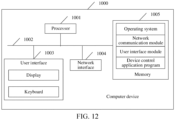
- a computer device including a processor and a memory; the processor being connected to the memory, the memory being configured to store a computer program, the computer program, when executed by the processor, causing the computer device to perform the method provided in the embodiment of this application.
- a computer-readable storage medium storing a computer program, the computer program, suitable for being loaded and executed by a processor to cause a computer device with the processor to perform the method provided in the embodiment of this application.
- a computer program product or a computer program including computer instructions, the computer instructions being stored in a computer-readable storage medium.
- a processor of a computer device reads the computer instructions from the computer-readable storage medium, and executes the computer instructions, causing the computer device to perform the method provided in the embodiment of this application.
- the computer device (for example, the first node in the blockchain network) in an embodiment of this application is equipped with a repeat transaction verifier for performing repeat transaction verification.
- the computer device may perform first repeat transaction verification on the to-be-processed transaction by the repeat transaction verifier in advance.
- the computer device may acquire a bit array and K hash functions of the repeat transaction verifier, so as to determine the acquired bit array as a to-be-queried bit array corresponding to the to-be-processed transaction.
- M array elements in the to-be-queried bit array herein include first array elements, where K is a positive integer less than M and M is the array length of the to-be-queried bit array.
- the computer device may map the to-be-processed transaction to K target identification positions of the to-be-queried bit array; and among the M array elements, determine array elements on the K target identification positions as transaction mapping values on the K target identification positions.
- one hash function may map the to-be-processed transaction to a point in the to-be-queried bit array, and the identification position of this point is a target identification position of the aforementioned to-be-queried bit array.
- the computer device may determine an association between the first array elements and the transaction mapping values on the K target identification positions; and based on the association, obtain a first repeat transaction verification result of the first repeat transaction verification performed on the to-be-processed transaction.
- FIG. 1 is a schematic diagram of a network architecture according to an embodiment of this application.
- the network architecture shown in FIG. 1 may be applied to a blockchain system, and the blockchain system may be a distributed system formed by connecting a plurality of nodes in a network communication way.
- the blockchain system may include, but is not limited to, a blockchain system corresponding to a consortium blockchain.
- a blockchain is mainly used for sorting out data in a chronological order and encrypt such data into account books, thereby preventing the data from being tampered and falsified.
- processing such as data verification, storage and update may be supported.
- the blockchain is a decentralized database, and each node in such database stores an identical blockchain.
- a blockchain network divides these nodes into core nodes and light nodes.
- the core node may be responsible for consensus of the whole blockchain network, that is, the core node may be a consensus node in the blockchain network.
- any node for example, a light node
- the transaction may be transferred among the light nodes in the blockchain network in a baton passing manner.
- the consensus node i.e. a master core node in the blockchain network
- the consensus node used for packaging in the blockchain network may further add the transaction to a transaction pool of the master core node, so that the master core node can subsequently package the transaction and other transactions in the transaction pool into a block, and furthermore, a packaged block (i.e. a target block) is broadcasted to other consensus nodes (i.e.
- the target block is written into a local account book (for example, written into a transaction cache of a node internal memory), so that the target block may be subsequently written into a blockchain database (also referred to as a database for short) corresponding to a target blockchain in the blockchain network.
- the target blockchain herein may be understood as a longest blockchain constructed by these consensus nodes according to the consensus mechanism.
- the blockchain system may include a smart contract.
- the smart contract may be understood as a code which may be understood and executed among all nodes (including the consensus node) in the blockchain, and may execute arbitrary logic and obtain results.
- a user may initiate a transaction adding request for a certain transaction to any node in the blockchain network through the blockchain client.
- the node for example, the slave core node or light node
- the master core node may transmit a transaction carried in the transaction adding request to the master core node, such that prior to calling the smart contract to execute the transaction requested by the user, the master core node determines whether the currently received transaction has already existed in the blockchain network in advance.
- the transaction in the transaction adding request may be refused to be received (that is, the transaction is a repeat transaction). Otherwise, if the transaction does not exist in the blockchain network, the transaction in the transaction adding request may be allowed to be received (that is, the transaction is a non-repeat transaction).
- the core node in the embodiment of this application needs to perform first repeat transaction verification on the transaction in the node internal memory of the core node in advance by a repeat transaction verifier after the core node acquires the transaction requested by the user, so as to determine whether to refuse to receive the transaction.
- the core node may rapidly determine whether the currently acquired transaction is a repeat transaction in the node internal memory by the repeat transaction verifier. If a repeat transaction verification result (i.e.
- a first repeat transaction verification result) determined by the repeat transaction verifier indicates that the currently acquired transaction is a repeat transaction
- the transaction in the transaction adding request may be refused to be received.
- the repeat transaction verification result determined by the repeat transaction verifier indicates that the currently acquired transaction is not a repeat transaction
- it may be further determined that second repeat transaction verification is required for the currently acquired transaction then the second repeat transaction verification may be performed successively by the transaction pool, the transaction cache and the blockchain database of the node internal memory, such that the transaction pool, the transaction cache and the blockchain database may collaboratively determine whether the currently acquired transaction has already existed in the blockchain network. If the currently acquired transaction has already existed in the blockchain network, it may be finally determined that the currently acquired transaction is a repeat transaction, and the repeat transaction is refused to be received. Otherwise, if it is finally determined that the currently acquired transaction is a non-repeat transaction after twice repeat transaction verification, the non-repeat transaction may be added to the transaction pool.
- the blockchain system may include one or more smart contracts, and these smart contracts may be distinguished by contract calling address, contract identity document (ID) or contract name.
- the transaction adding request initiated by the blockchain client may also carry the contract calling address, the contract ID or the contract name of a smart contract, so as to specify the smart contract to be run. If the smart contract specified by the blockchain client is a contract needing to read data (i.e.
- each consensus node may call the data reading contract to rapidly access the local account book while further executing a transaction (for example, each consensus node may rapidly access a multi-level block cache constructed by a block-chain structure in the node internal memory, where the multi-level block cache is obtained by arraying block caches of each block in accordance with an indexing mode of block hash values of each block cached in the node internal memory of each consensus node; one block cache may be used for storing a transaction read cache and a transaction write cache of each transaction in one block), and read corresponding data.
- all the consensus nodes may mutually verify whether all transaction execution results for the transaction are consistent (that is, consensus processing is performed). If the transaction execution results are consistent, it may be determined that the transaction is a legal one, and the transaction execution result of the legal transaction may be stored into the transaction write cache of respective local account book, and the transaction execution result of the transaction may be returned back to the blockchain client.
- the network architecture shown in FIG. 1 may include a core node (i.e. consensus node) cluster, a light node cluster and a user terminal cluster.
- the core node cluster may include one or more core nodes, and the multiple core nodes herein may specifically include a node 10a, a node 10b, a node 10c and a node 10d shown in FIG. 1 .
- the node 10a, the node 10b and the node 10d may establish a network connection with the node 10c respectively, so as to form a consensus network 100a shown in FIG. 1 .
- the node 10a, the node 10b and the node 10d may perform data interaction through the network connection with the node 10c.
- the light node cluster may include one or more light nodes. In order to facilitate the comprehension, one light node is taken as an example herein, and the light node is a node 4000a shown in FIG. 1 .
- the node 4000a may perform data interaction through the network connection with the node 10c shown in FIG. 1 .
- the user terminal 3000a, the user terminal 3000b, the user terminal 3000c, ..., and the user terminal 3000n may each establish a network connection with the node 4000a in the light node cluster respectively, so that each user terminal may perform data interaction through the network connection with the node 4000a.
- each core node for example, the node 10a, the node 10b, the node 10c and the node 10d
- each light node in the light node cluster are collectively referred to as blockchain nodes.
- All the blockchain nodes herein may receive a transaction adding request transmitted by a user terminal on which the blockchain client is run.
- each core node herein may maintain the same blockchain (for example, a blockchain 10e shown in FIG. 1 may be a target blockchain maintained by each core node in the blockchain network).
- Any two core nodes in the consensus network 100a may form a peer to peer (P2P) network which may employ a P2P protocol.
- P2P peer to peer
- the P2P protocol is an application layer protocol run on a transmission control protocol (TCP). Any device such as a server or a terminal may be added to the distributed system to become a blockchain node.
- Each blockchain node may include a hardware layer, an intermediate layer, an operating system layer, and an application layer.
- a blockchain node may be bound to any role (for example, any individual user, any enterprise, any institution and other entity objects) accessing the blockchain network, and blockchain networks composed of these blockchain nodes are collectively referred to as consortium blockchain networks.
- the node 10a, the node 10b, the node 10c and the node 10d shown in FIG. 1 and corresponding roles (i.e. entity objects under corresponding business scenarios) accessing the blockchain network may form one-to-one correspondence.
- the business scenarios herein may include an electronic bill scenario, a social scenario, a buying-on-credit scenario, a credit scenario, etc.
- target businesses under corresponding business scenarios may specifically include an electronic bill business, a social business, a buying-on-credit business, a credit business, etc.
- the specific businesses under corresponding business scenarios are not listed one by one herein.
- each entity object may correspond to one blockchain node
- an embodiment of this application may take the entity object being an enterprise user (i.e. the enterprise) as an example.
- the blockchain node associated with each enterprise user may be the same blockchain node (for example, the node 4000a shown in FIG. 1 may perform data interaction with user terminals corresponding to multiple enterprise users).
- electronic bill businesses for example, a registration business, a billing business, a bill transferring business, etc.
- a billing enterprise A may perform data interaction with the node 4000a shown in FIG. 1 through the user terminal 3000a shown in FIG. 1 to complete a corresponding transaction.
- a billing enterprise B may perform data interaction with the node 4000a shown in FIG. 1 through the user terminal 3000b shown in FIG. 1 to complete a corresponding transaction; and a billing enterprise C may perform data interaction with the node 4000a shown in FIG. 1 through the user terminal 3000c shown in FIG. 1 to complete a corresponding transaction.
- the entity objects (for example, the billing enterprise A, the billing enterprise B, ..., and the billing enterprise C) transmitting a transaction adding request in the electronic bill businesses may be collectively referred to as request users.
- a transaction adding request transmitted by the request user (for example, the billing enterprise A, the billing enterprise B, ..., and the billing enterprise C) may be received by the light node or the transaction adding request transmitted by the request user (for example, the billing enterprise A, the billing enterprise B, ..., and the billing enterprise C) may be received by the core node.
- the node types of blockchain nodes used for receiving the transaction adding request are not limited herein.
- the node 10c may synchronize data with other blockchain nodes which has a network connection (also referred to as session connection) with the node 10c, that is, the node 10c may synchronize corresponding business data information from the other blockchain nodes (for example, the business data information herein may include, but is not limited to, transactions in the transaction adding request, blocks in a block synchronization request, etc.).
- core nodes associated with each enterprise user may be different blockchain nodes.
- the billing enterprise A may perform data interaction with the node 10c shown in FIG. 1 through the user terminal 3000a shown in FIG. 1 ; the billing enterprise B may also perform data interaction with the node 10b shown in FIG.
- a network load in the blockchain network may be effectively balanced by randomly allocating transaction adding requests transmitted by different user terminals to the blockchain nodes in the blockchain system, thereby improving the efficiency of processing business data of corresponding businesses.
- the transaction adding request transmitted by the request user may be forwarded to the master core node, so as to perform repeat transaction verification on a transaction in the transaction adding request transmitted by the request user through the master core node.
- the master core node may add the transaction requested by the request user (i.e. a legal non-repeat transaction) to a transaction pool, so that transaction data associated with the transaction is subsequently packaged into a block to perform consensus with other consensus nodes (i.e. the slave core nodes).
- the block carrying the transaction data of the transaction is temporarily stored in the local account book, thereby writing the block carrying the transaction data into the blockchain database (also referred to as a database for short).
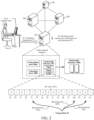
- FIG. 2 is a schematic scenario diagram of performing repeat transaction verification in a node internal memory provided by an embodiment of this application.
- a user A i.e. the request user shown in FIG. 2 may perform step S1 through a user terminal 20a shown in FIG. 2 to transmit a transaction T1 (for example, the transaction T1 may be an invoicing business that the user A issue an electronic invoice to an enterprise B) requested by the user A to a node 20c shown in FIG. 2 .
- the node 20c may perform step S2 after receiving the transaction T1 transmitted by the user terminal 20a to perform repeat transaction verification on the transaction T1.
- a blockchain node that currently receives the transaction T1 may be collectively referred to as a first node, and other nodes (for example, a node 20b, a node 20d, a node 20e and the like shown in FIG. 2 ) in the blockchain network may be collectively referred to as second nodes.
- the node 20c i.e. the first node
- the node 20c may receive the transaction T1 in the transaction adding request transmitted by the user terminal 20a on which a blockchain client is run, or may receive transactions in target blocks broadcasted by other nodes (i.e. the second nodes) in the blockchain network.
- step S2 shown in FIG. 2 may be performed, so as to perform repeat transaction verification on the currently received transaction and determine whether the currently received transaction exists in the blockchain network.
- a repeat transaction verifier shown in FIG. 2 includes an oversize bit array and K hash functions, and the array length of the oversize bit array may be M, where K may be a positive integer less than M.
- repeat transaction verification may be performed on the transaction T1 by the repeat transaction verifier to obtain a first repeat transaction verification result.
- a bit array 201a shown in FIG. 2 may include M array elements, and the M array elements can be represented by using a very long binary vector.
- the array elements with the numerical value of 0 may be collectively referred to as first array elements of the bit array
- the array elements with the numerical value of 1 may be collectively referred to as second array elements of the bit array.
- each array element corresponds to an identification position.
- the identification positions of these array elements may respectively be identification position 2a to identification position 2p shown in FIG. 2 .
- the array element corresponding to the identification position 2a is 0 and the array element corresponding to the identification position 2b is 1.
- the array element corresponding to the identification position 2o is 0 and the array element corresponding to the identification position 2p is 1.
- the value of M herein may be adjusted according to actual requirements in the blockchain system, that is, the value of M is not limited in the embodiment of this application.
- the K hash functions of the repeat transaction verifier are 3 hash functions as an example, and the 3 hash functions may specifically be a hash function 202a, a hash function 202b and a hash function 202c shown in FIG. 2 .
- the hash function 202a may be used for performing hash calculation (for example, hash location mapping) on a hash value (for example, a hash value 1) of the transaction T1 shown in FIG. 2 , so as to map the transaction T1 to a point (for example, a point 1, and the point 1 may be a bit) in the bit array 201a.
- a target identification position corresponding to the point 1 may be an identification position 2e, and the array element on the identification position 2e is the second array element.
- the hash function 202b may be used for performing hash calculation (for example, hash location mapping) on the hash value (for example, the hash value 1) of the transaction T1 shown in FIG. 2 , so as to map the transaction T1 to another point (for example, a point 2, and the point 2 may be another bit) in the bit array 201a.
- a target identification position corresponding to the point 2 may be an identification position 2m, and the array element on the identification position 2m is the second array element.
- the hash function 202c may be used for performing hash calculation (for example, hash location mapping) on the hash value (for example, the hash value 1) of the transaction T1 shown in FIG. 2 , so as to map the transaction T1 to still another point (for example, a point 3, and the point 3 may be a bit) in the bit array 201a.
- a target identification position corresponding to the point 3 may be the identification position 2o, and the array element on the identification position 2o is the first array element.
- a specific implementation for performing hash calculation (for example, hash location mapping) on the hash value of the transaction T1 through the K hash functions herein may include, but is not limited to, performing modulo operation on the hash value of the transaction T1, so as to map the transaction T1 to the target identification position in the bit array 201a according to a one-to-one mapping relationship between a calculated remainder and the identification position in the bit array 201a.
- the node 20c may perform hash calculation on transaction data (also referred to as transaction content) of the transaction T1 to obtain a transaction hash value (for example, the hash value 1) for uniquely identifying the transaction T1. Further, the node 20c may take the transaction hash value (for example, the hash value 1) of the transaction T1 as an input value of the repeat transaction verifier (the repeat transaction verifier is deployed in the node internal memory of the node 20c) as shown in FIG.
- the repeat transaction verifier may be able to perform hash calculation (for example, the hash modulo operation) on the input value again through the K hash functions (for example, the hash function 202a, the hash function 202b and the hash function 202c) respectively, so as to obtain K bits (i.e. the identification position 2e, the identification position 2m and the identification position 2o) associated with the transaction T1.
- K bits i.e. the identification position 2e, the identification position 2m and the identification position 2o
- array elements on the K bits i.e. K target identification positions
- transaction mapping values are collectively referred to as transaction mapping values.
- the repeat transaction verifier herein may be understood as a filter with a repeat transaction verification function (for example, the repeat transaction verifier may include, but is not limited to, a Bloom filter).
- the repeat transaction verifier may fundamentally avoid repeat transactions frequently transmitted by malicious nodes, thereby preventing these repeat transactions from wasting a limited resource space of the node internal memory of the node 20c.
- the repeat transaction verifier herein may be used for maintaining a repetition verification set, but may not store a repetition verification element that has been inserted in the repetition verification set (that is, when the node 20c needs to insert a certain transaction as a repetition verification element into the repetition verification set of the repeat transaction verifier, the array elements on the K identification positions corresponding to the repetition verification element will be set to 1 to obtain the bit array 201a shown in FIG. 2 ), which is more safer for transactions with certain privacy.
- the K hash functions in the repeat transaction verifier are independent of one another.
- the node 20c may directly execute the K hash functions concurrently through hardware of the node 20c.
- the transaction T1 shown in FIG. 2 is mapped to the K target identification positions of the bit array 201a through the K hash functions, and furthermore, the first repeat transaction verification result may be obtained according to an association between the first array elements in the repeat transaction verifier and the mapping values on the K target identification positions. It can be seen that currently acquired repeat transactions may be rapidly filtered in the node internal memory through the repeat transaction verifier shown in FIG. 2 .
- the query pressure of the blockchain database in the blockchain network can be reduced to a certain extent.
- FIG. 2 there are transaction mapping values identical to the first array elements in the transaction mapping values of the transaction T1 on 3 target identification positions, so that it may be directly determined that the transaction T1 does not exist in the repetition verification set, that is, it may be directly determined that the transaction T1 is a non-repeat transaction. Then, the transaction T1 may be added to a transaction pool 200a shown in FIG. 2 for storage directly in the node internal memory, without the need of accessing the blockchain database shown in FIG. 2 , which may improve the speed of repeat transaction verification.
- a first association between the first array elements and the transaction mapping values on the K target identification positions may be obtained.
- the first association is used for reflecting that the transaction T1 does not exist in the repetition verification set of the repeat transaction verifier, so as to directly consider the transaction T1 as a non-repeat transaction. Therefore, the transaction T1 transmitted by the user terminal 20a shown in FIG. 2 may be received, and then the transaction T1 is added to the transaction pool 200a. It is to be understood that after adding the transaction T1 to the transaction pool 200a by the node 20c, the node 20c may also inert the transaction T1 into the repeat transaction verifier as a repetition verification element.
- the node 20c may change array elements (i.e. an array element on the identification position 2e, an array element on the identification position 2m and an array element on the identification position 2o) on the K target identification positions corresponding to the repetition verification element in the bit array 201a (i.e. a to-be-queried bit array corresponding to the transaction T1) shown in FIG. 2 to 1 , so as to obtain a new bit array.
- the new bit array may be used as a to-be-queried bit array for a next transaction.
- repeat transaction verification may also be performed on the transaction T2 through the repeat transaction verifier shown in FIG. 2 . That is, an association between the first array elements and K transaction mapping values of the transaction T2 may be determined. Similarly, if the association is the first association, the transaction T2 may also be added to the transaction pool 200a and array elements on the K target identification positions corresponding to the transaction T2 are changed to 1. That is, the array elements on the K target identification positions corresponding to the transaction T2 are all determine to be second array elements, so as to insert the transaction T2 into the repetition verification set of the repeat transaction verifier as a repetition verification element.
- a second association between the first array elements and the transaction mapping values on the K target identification positions may be obtained.
- the second association is used for reflecting that another transaction (for example, the transaction T2) transmitted by other user terminals may exist in the repetition verification set of the repeat transaction verifier, that is, the transaction T2 may be a repeat transaction.
- the transaction T2 may be a repeat transaction.
- whether there is a first historical transaction matching with the transaction T2 may be further searched for in the transaction pool 200a shown in FIG. 2 . If the first historical transaction is not found, whether there is a second historical transaction matching with the transaction T2 may be further searched for in a transaction cache shown in FIG. 2 . If the second historical transaction is still not found, a blockchain database 200d shown in FIG. 2 may be accessed by the blockchain network to finally determine whether the transaction T2 is a non-repeat transaction.
- the node 20c may be allowed to add the transaction T2 to the transaction pool 200a shown in FIG. 2 , such that transactions in the transaction pool 200a may be subsequently packaged by a consensus layer 200b of the node 20c to form the target block. Then, block consensus is performed on the target block through other nodes (for example, a consensus node 20b, a consensus node 20d and a consensus node 20e) shown in FIG. 2 .
- the target block is temporarily stored in the transaction cache shown in FIG. 2 , such that the transactions and transaction execution results in the target block are subsequently stored in the blockchain database 200d shown in FIG. 2 after the target block in the transaction cache is stored on the target blockchain.
- the first association or the second association herein may be collectively referred to as a first repeat transaction verification result obtained by performing first repeat transaction verification on a to-be-processed transaction.
- a repeat transaction verification result finally obtained by the transaction pool 200a, a transaction cache of a local account book layer 200c or the blockchain database 200d may be collectively referred to as a second repeat transaction verification result.
- FIG. 3 is a schematic flowchart of a repeat transaction verification method provided by this application.
- the method may be performed by a first node with a repeat transaction verifier in the blockchain network.
- the repeat transaction verifier includes a bit array and K hash functions.
- the first node may be any node in the consensus network 100a shown in FIG. 1 .
- the method may specifically include the following step S101 to step S104.
- Step S101 Acquire a to-be-processed transaction to be stored on a blockchain of a blockchain network.
- the to-be-processed transaction is a to-be-verified transaction. Specifically, while a certain transaction is acquired, the first node may consider the acquired transaction as the to-be-processed transaction. The first node may further determine a transaction source attribute of the to-be-processed transaction, so as to perform repeat transaction verification on the to-be-processed transaction by using different repeat transaction verification policies according to different transaction source attributes.
- the transaction herein may be from a first source, and the first source indicates a transaction adding request transmitted by a blockchain client.
- the transaction herein may also be from a second source, and the second source indicates a block broadcasted by other nodes, or may be from a third source, and the third source indicates transactions in a transaction pool synchronized from other nodes.
- the source attributes of the first source and the third source may be collectively referred to as a first source attribute
- the source attribute of the second source may be collectively referred to as a second source attribute.
- the first source attribute may be used for characterizing that the to-be-processed transaction is a transaction (for example, a transaction Tx1) in the transaction adding request transmitted by the blockchain client.
- the first source attribute may also be used for characterizing that the to-be-processed transaction is a transaction (for example, a transaction Tx2) synchronized from a transaction pool of a second node.
- the second source attribute may be used for characterizing that the to-be-processed transaction is a transaction in a block (for example, the transaction in the block may specifically include a transaction 1, a transaction 2, ..., and a transaction N) transmitted by the second node (for example, other consensus nodes in the blockchain network).
- a first repeat transaction verification policy and/or a second repeat transaction verification policy may be adopted to perform repeat transaction verification on the to-be-processed transaction.
- the first repeat transaction verification policy may be adopted to perform the following step S 102 to step S104, so as to perform first repeat transaction verification on a transaction currently acquired by the first node.
- a third repeat transaction verification policy and/or a fourth repeat transaction verification policy may be adopted to perform repeat transaction verification on the transaction in the target block
- the first node may control the repeat transaction verifier to transverse each transaction (i.e. the transaction 1, the transaction 2, ..., and the transaction N) in the block (i.e. the target block) in advance based on the third repeat transaction verification policy to perform repeat transaction verification, thereby obtaining a block repeat transaction verification result of the target block.
- each transaction in the target block is not a repeat transaction (that is, each transaction in the target block is a non-repeat transaction) when repeat transaction verification is performed on the transactions in the target block by the repeat transaction verifier
- the target block may be received, and then array elements on corresponding target identification positions in a bit array (i.e. the to-be-queried bit array) in the repeat transaction verifier of the first node may be changed to 1 according to hash mapping values on target identification positions of all transactions in the target block.
- repeat transaction verification may be performed on the transaction again in a transaction cache and a blockchain account book based on the fourth repeat transaction verification policy, which avoids mistakenly identifying the transaction in the target block as a repeat transaction.
- the first node may perform the following step S102 based on the first source attribute by using the first repeat transaction verification policy.
- Step S 102 Performing first repeat transaction verification on the to-be-processed transaction by the repeat transaction verifier, which includes acquiring the bit array and the K hash functions of the repeat transaction verifier.
- the acquired bit array is a to-be-queried bit array of the to-be-processed transaction.
- the to-be-queried bit array includes M array elements, and the M array elements include first array elements; M is the array length of the to-be-queried bit array and is an integer greater than 1, and K is a positive integer less than M.
- the first node may acquire a bit array with an array length of M from the repeat transaction verifier, and acquire K hash functions associated with the bit array with the array length of M; in the bit array with the array length of M, all array elements on K key identification positions, which are mapped by repetition verification elements in a repetition verification set of the repeat transaction verifier, are second array elements (the second array elements herein may be the array elements with the value of 1); one key identification position is an identification position obtained by performing hash location mapping on the repetition verification elements by one hash function.
- the first node may determine array elements except the second array elements in the M array elements as the first array elements (the first array elements herein may be the array elements with the value of 0); identification positions corresponding to the first array elements are different from identification positions corresponding to the second array elements, and the sum of the quantity of elements of the first array elements and the quantity of elements of the second array elements is M. Further, the first node may determine a bit array composed of the first array elements and the second array elements as the to-be-queried bit array corresponding to the to-be-processed transaction. That is, the first array elements in the M array elements all have a same value, which may be referred to as a first value. The second array elements in the M array elements all have a same value, which may be referred to as a second value. Below the first value of the first array element and the second value of the second array element may referred to as first array element and second array element for short.
- the first array element is an array element with a position in the bit array that has never been mapped to for each transaction already stored on the blockchain of the blockchain network by using the repeat transaction verifier.
- Each of the first array elements have a same value, referred to as a first value representing that the position corresponding to the array element has never been mapped to for each transaction already stored on the blockchain of the blockchain network by using the repeat transaction verifier.
- the second array element is an array element with a position in the bit array that has been mapped to for a transaction already stored on the blockchain of the blockchain network by using the repeat transaction verifier.
- Each of the second array elements have a same value, referred to as a second value representing that the position corresponding to the array element has been mapped to for a transaction already stored on the blockchain of the blockchain network by using the repeat transaction verifier.
- the second array element includes all array elements on positions in the bit array to which repetition verification elements in a repetition verification set of the repeat transaction verifier have been mapped.
- the repeat transaction verification needs to be performed on the transaction when the transaction is to be stored on the blockchain of the blockchain network.
- values of the array elements with the positions to which the transaction is mapped is updated from a first value to a second value.
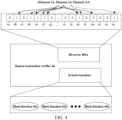
- FIG. 4 is a schematic scenario diagram of determining a to-be-queried bit array provided by an embodiment of this application.
- the first node may trigger a repeat transaction verifier 4a shown in FIG. 4 , so as to acquire a bit array 401a currently maintained by the repeat transaction verifier 4a.
- each array element in the bit array 401a may be represented by a bit with the value of 1 or a bit with the value of 0.
- the array elements with the value of 0 are the first array elements and the array elements with the value of 1 are the second array elements.
- the bit array i.e. the bit array 401a shown in FIG. 4
- the bit array 401a shown in FIG. 4 composed of the first array elements and the second array elements may be the to-be-queried bit array corresponding to the to-be-processed transaction.
- the first node may also acquire K hash functions of the repeat transaction verifier.
- the K hash functions herein may include a hash function 41a, a hash function 41b, ..., and a hash function 41k shown in FIG. 4 .
- the randomness of transaction mapping values obtained by hash mapping may be increased while hash location mapping (referred to as hash mapping for short) is performed on transaction hash values of a certain transaction, so that the transaction mapping values obtained by performing hash mapping on the transaction hash values of the transaction may be uniformly distributed in the bit array of the repeat transaction verifier as much as possible, thereby reducing the probability of hash collisions occurred between the transaction mapping values obtained by performing hash mapping on the transaction hash values of the transaction to a certain extent.
- hash mapping hash mapping for short
- these three hash functions may be the hash function 41a, the hash function 41b and the hash function 41k shown in FIG. 4 .
- the repeat transaction verifier does not directly store the 3 repetition verification elements in a repetition verification set it maintains.
- array elements on K key identification positions mapped by each repetition verification element in the repetition verification set are the second array elements, and with regard to the K key identification positions associated with one repetition verification element, one key identification position is an identification position obtained by performing hash location mapping on the repetition verification element through a hash function.
- transaction mapping values of the element A1 currently mapped to 3 target identification positions for example, an identification position 4b, an identification position 4f and an identification position 4m
- transaction mapping values of the element A2 currently mapped to 3 target identification positions for example, an identification position 4e, the identification position 4f and an identification position 4k
- transaction mapping values of the element A3 currently mapped to 3 target identification positions for example, an identification position 4d, the identification position 4k and an identification position 4p
- target identification positions for example, an identification position 4d, the identification position 4k and an identification position 4p
- the element A1 and the element A2 there may be a case of sharing the second array elements (i.e. the array elements with the value of 1) on the same identification position (for example, the identification position 4f shown in FIG. 4 ), and with regard to the element A2 and the element A3, there may also be a case of sharing the second array elements (i.e. the array elements with the value of 1) on the same identification position (for example, the identification position 4k shown in FIG. 4 ).
- the first node When the first node performs repeat transaction verification on a currently acquired transaction by the repeat transaction verifier 4a shown in FIG. 4 , whether the currently acquired transaction exists in the repetition verification set may be accurately determined. For example, in a case that the values of the array elements on K (for example, 3) target identification positions associated with the currently acquired transaction have 0, it may be accurately and rapidly determined that the current transaction does not exist in the repetition verification set, that is, it may be determined that the currently acquired transaction is a non-repeat transaction.
- K for example, 3
- the identification position 4d and the identification position 4e shown in FIG. 4 although the array elements on the 3 key identification positions are all 1, it cannot be directly considered that the currently acquired transaction exists in the repetition verification set, that is, it cannot be directly considered that the currently acquired transaction is a repeat transaction. That is because that the 3 points of the identification position 4b, the identification position 4d and the identification position 4e shown in FIG. 4 are identification positions obtained by performing hash mapping according to hash values of 3 different elements.
- second repeat transaction verification also needs to be further performed on the currently acquired transaction based on the second repeat transaction verification policy, so as to further verify whether the currently acquired transaction is a repeat transaction, thus improving the reliability of repeat transaction verification.
- Step S103 Performing hash mapping on the to-be-processed transaction based on the K hash functions to obtain K positions of the to-be-queried bit array to which the to-be-processed transaction is mapped, the K positions being K target identification positions of the to-be-queried bit array, and determining array elements on the K target identification positions among the M array elements as transaction mapping values on the K target identification positions.
- FIG. 5 is a schematic scenario diagram of mapping a to-be-processed transaction to a to-be-queried bit array by a hash function of a repeat transaction verifier provided by an embodiment of this application.
- a bit array 502a shown in FIG. 5 may be the to-be-queried bit array in the embodiment corresponding to FIG. 4 . That is, the to-be-queried bit array may be used for determining whether a transaction Tx1 shown in FIG. 5 exists in the repetition verification set of the repeat transaction verifier.
- These 3 points may be a transaction mapping value on an identification position 5b (i.e. a target identification position 1), a transaction mapping value on an identification position 5f (i.e. a target identification position 2), and a transaction mapping value on an identification position 5o (i.e. a target identification position 3), as shown in FIG. 5 .
- the first node may further determine an association between first array elements (i.e. array elements with the value of 0) in the to-be-queried bit array and the transaction mapping values on the 3 target identification positions. That is, whether transaction mapping values identical to the first array elements exist may be searched for in the transaction mapping values on the 3 target identification positions. If such transaction mapping values are found, it may be determined that the transaction Tx1 does not exist in a repetition verification set maintained by the repeat transaction verifier 5a.
- first array elements i.e. array elements with the value of 0
- the transaction Tx1 might exist in the repetition verification set maintained by the repeat transaction verifier 5a, and second repeat transaction verification needs to be performed on a transaction pool, a transaction cache and a blockchain database based on the second repeat transaction verification policy, so as to finally determine whether the transaction Tx1 exists in the blockchain network.
- Step S104 Determine an association between the first array elements and the transaction mapping values on the K target identification positions; and based on the association, obtain a first repeat transaction verification result of the first repeat transaction verification performed on the to-be-processed transaction.
- the association comprises a first association indicating that transaction mapping values on the K target identification positions include a transaction mapping value identical to the first value.
- Determining the first repeat transaction verification result includes determining the first repeat transaction verification result being that the to-be-processed transaction is not a repetition verification element in a repetition verification set of the repeat transaction verifier based on the first association, and controlling the repeat transaction verifier to output a result indicating a transaction attribute of the to-be-processed transaction being a non-repeat transaction attribute.
- the association between the first array elements and the transaction mapping values on the K target identification positions is a first association
- the determined repetition verification result that the to-be-processed transaction is the non-repeat transaction may be used as the first repeat transaction verification result of the first repeat transaction verification performed on the to-be-processed transaction.
- the transaction mapping value on the identification position 5b i.e. the target identification position 1
- the transaction mapping value on the identification position 5f i.e. the target identification position 2
- the transaction mapping value on the identification position 5o i.e. the target identification position 3
- the first node may determine that transaction mapping values identical to the first array elements exist in the K (i.e.
- K 3) transaction mapping values as the first association between the first array elements and the transaction mapping values on the K target identification positions, so that it may be determined that the transaction Tx1 does not exist in the repetition verification set maintained by the repeat transaction verifier 5a based on the first association, so as to control the repeat transaction verifier 5a to output a repeat transaction verification result that the Tx1 does not exist in the repetition verification set, and set the outputted repeat transaction verification result that the Tx1 does not exist in the repetition verification set as the first repeat transaction verification result of the first repeat transaction verification performed on the to-be-processed transaction.
- the to-be-processed transaction when the to-be-processed transaction is acquired, whether the to-be-processed transaction exists in the repetition verification set maintained by the repeat transaction verifier may be determined in the node internal memory of the first node in advance by the repeat transaction verifier and a determined repeat transaction result may be used as the first repeat transaction verification result of the first repeat transaction verification performed on the to-be-processed transaction. It is to be understood that in the embodiment of this application, a case that the current transaction is a non-repeat transaction may be rapidly determined by using the repeat transaction verifier to perform repeat transaction verification in the node internal memory.
- whether the to-be-processed transaction exists in the repetition verification set maintained by the repeat transaction verifier may be rapidly determined directly by the association between the first array elements in the repeat transaction verifier and the transaction mapping values on the K target identification positions, thereby improving the efficiency of repeat transaction verification without the need of accessing the blockchain database.
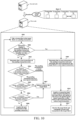
- FIG. 6 is a schematic flowchart of a repeat transaction verification method provided by an embodiment of this application.
- the method may be performed by the first node in the blockchain network, and the first node may be any blockchain node (for example, the node 10c) in the consensus network 100a shown in FIG. 1 .
- the method specifically includes the following steps S201 to S216:
- the transaction source attribute is used for indicating a repeat transaction verification policy used by the repeat transaction verifier (for example, the Bloom filter) during repeat transaction verification performed on the to-be-processed transaction.
- the repeat transaction verifier for example, the Bloom filter
- the repeat transaction verification policy includes a first repeat transaction verification policy and a second repeat transaction verification policy that are associated with a transaction pool of the first node.
- the transaction adding request may be transmitted by a blockchain client associated with the first node, and the first node may further perform the following step S203.
- Step S203 In a case that the transaction source attribute is the first source attribute, acquire a bit array with an array length of M from the repeat transaction verifier, and acquire K hash functions associated with the bit array with the array length of M during first repeat transaction verification performed on the to-be-processed transaction by the repeat transaction verifier based on the first repeat transaction verification policy.
- the bit array with the array length of M all array elements on K key identification positions, which are mapped by repetition verification elements in a repetition verification set of the repeat transaction verifier, are second array elements; and one key identification position is an identification position obtained by performing hash location mapping on the repetition verification elements by one hash function.
- Step S204 In the bit array with the array length of M, determine array elements except the second array elements in the M array elements as first array elements.
- Identification positions corresponding to the first array elements are different from identification positions corresponding to the second array elements, and the sum of the quantity of elements of the first array elements and the quantity of elements of the second array elements is M.
- Step S205 Determine a bit array composed of the first array elements and the second array elements as a to-be-queried bit array corresponding to the to-be-processed transaction.
- Step S206 Based on the K hash functions, map the to-be-processed transaction to K target identification positions of the to-be-queried bit array; among the M array elements, determine array elements on the K target identification positions as transaction mapping values on the K target identification positions.
- Step S207 Determine an association between the first array elements and the transaction mapping values on the K target identification positions; and based on the association, obtain a first repeat transaction verification result of the first repeat transaction verification performed on the to-be-processed transaction.
- the association includes a first association, and the first association herein is used for characterizing that transaction mapping values identical to the first array elements exist in the transaction mapping values on the K target identification positions.
- the first node may perform the following step S208 to step S210.
- the association may also include a second association, and the second association herein is used for characterizing that transaction mapping values identical to the first array elements do not exist in the transaction mapping values on the K target identification positions.
- the first node may further perform step S211 and step S212 after step S207 is finished.
- Step S208 In a case that the first repeat transaction verification result indicates that the association is the first association, determine that the to-be-processed transaction is not a repetition verification element in a repetition verification set of the repeat transaction verifier and control the repeat transaction verifier to output a transaction attribute of the to-be-processed transaction as a non-repeat transaction attribute.
- Step S209 Determine the to-be-processed transaction with the non-repeat transaction attribute as a first target transaction to be saved to the transaction pool of the first node.
- the first target transaction herein may be a non-repeat transaction determined by using the repeat transaction verifier to perform first repeat transaction verification on the to-be-processed transaction.
- the first node may perform the following step S210 to add the first target transaction into the transaction pool.
- Step S210 During saving the first target transaction to the transaction pool of the first node, determine the transaction mapping values identical to the first array elements on the K target identification positions as first target transaction mapping values; and update array elements on target identification positions corresponding to the first target transaction mapping values from the first array elements to second array elements in the to-be-queried bit array.
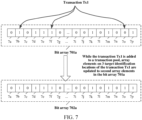
- FIG. 7 is a schematic scenario diagram of updating a to-be-queried bit array provided by an embodiment of this application.
- the transaction Tx1 shown in FIG. 7 may be the to-be-processed transaction in the embodiment corresponding to FIG. 5 .
- the first node may map the transaction Tx1 to 3 target identification positions of a bit array 701a shown in FIG. 7 by 3 hash functions of the repeat transaction verifier 5a shown in FIG. 5 .
- the 3 target identification positions may be an identification position 7b, an identification position 7f and an identification position 7o shown in FIG. 7 .
- FIG. 7 is a schematic scenario diagram of updating a to-be-queried bit array provided by an embodiment of this application.
- the transaction Tx1 shown in FIG. 7 may be the to-be-processed transaction in the embodiment corresponding to FIG. 5 .
- the first node may map the transaction Tx1 to 3 target identification positions of a bit array 701a shown in FIG. 7 by 3 hash functions of the repeat transaction verifier
- the transaction mapping values on the identification position 7o are identical to the first array elements (i.e. array elements with the values of 0 are the same).
- the first node may determine that the transaction attribute of the transaction Tx1 shown in FIG. 7 is a non-repeat transaction attribute, and the transaction Tx1 with the non-repeat transaction attribute may be added to a transaction pool (for example, the transaction pool 200a in the embodiment corresponding to FIG. 2 ) as the first target transaction.
- array elements on the three target identification positions of the transaction Tx1 are directly determine as second array elements to obtain a bit array 702a shown in FIG. 7 , and the bit array 702a may be used as a target bit array, such that the target bit array may be used as a new to-be-queried bit array to perform step S205 to step S210 again while a new transaction (for example, a transaction Tx2) is acquired subsequently.
- array elements on 3 target identification positions in the bit array 702a are all second array elements.
- the first node may insert the transaction Tx1 added to the transaction pool into the repetition verification set maintained by the repeat transaction verifier as a new repetition verification element. That is, the number of repetition verification elements in the repetition verification set may be progressively increased, for example, by adding one.
- an embodiment of this application may also directly determine the transaction mapping values (i.e. the transaction mapping values on the identification position 7o of the bit array 701a shown in FIG. 7 ) identical to first array elements in the transaction mapping values on the K target identification positions as the first target transaction mapping values, and in the to-be-queried bit array, array elements on a target identification position (i.e., the identification position 7o) corresponding to the first target transaction mapping values are updated from the first array elements (i.e. the value 0 on the identification position 7o of the bit array 701a) to the second array elements (i.e. the value 1 on the identification position 7o of the bit array 702a).
- Step S211 In a case that the first repeat transaction verification result indicates that the association is the second association, acquire a second repeat transaction verification policy associated with the transaction pool of the first node.
- Step S212 Perform second repeat transaction verification on the to-be-processed transaction based on the second repeat transaction verification policy to obtain a second repeat transaction verification result.
- the first node may search the transaction pool of the first node for a first historical transaction matching with the to-be-processed transaction based on the second repeat transaction verification policy. If the first historical transaction matching with the to-be-processed transaction is found from the transaction pool of the first node, it is determined that the transaction attribute of the to-be-processed transaction is a repeat transaction attribute; and the to-be-processed transaction with the repeat transaction attribute is a first-class repeat transaction associated with the second repeat transaction verification policy, and the first-class repeat transaction may be the second repeat transaction verification result obtained by performing the second repeat transaction verification on the to-be-processed transaction.
- a matching B means A is consistent with B.
- a first historical transaction matching with the to-be-processed transaction means the first historical transaction is consistent with the to-be-processed transaction.
- the transaction attribute of the to-be-processed transaction is a first non-repeat transaction attribute and the to-be-processed transaction with the first non-repeat transaction attribute may be a first intermediate repetition verification result associated with the second repeat transaction verification policy, and the first node may determine the to-be-processed transaction with the first non-repeat transaction attribute as a first intermediate transaction based on the first intermediate repetition verification result, and search a transaction cache of the first node for a second historical transaction matching with the first intermediate transaction.
- the first node may determine the second-class repeat transaction as the second repeat transaction verification result obtained by performing the second repeat transaction verification on the to-be-processed transaction.
- the second historical transaction matching with the first intermediate transaction is not found from the transaction cache of the first node, it is determined that the transaction attribute of the first intermediate transaction is a second non-repeat transaction attribute and the first intermediate transaction with the second non-repeat transaction attribute may be a second intermediate repetition verification result associated with the second repeat transaction verification policy, and the first node may determine the first intermediate transaction with the second non-repeat transaction attribute as a second intermediate transaction based on the second intermediate repetition verification result, and search a blockchain database associated with the first node for a third historical transaction matching with the second intermediate transaction.
- the first node may determine the third-class repeat transaction as the second repeat transaction verification result obtained by performing the second repeat transaction verification on the to-be-processed transaction.
- Step S213 In a case that the second repeat transaction verification result indicates that the transaction attribute of the to-be-processed transaction is the repeat transaction attribute, determine that the to-be-processed transaction is a repeat transaction, and refuse to add the repeat transaction to the transaction pool of the first node.
- Step S214 In a case that the second repeat transaction verification result indicates that the transaction attribute of the to-be-processed transaction is the non-repeat transaction attribute, determine a second target transaction to be added to the transaction pool of the first node based on the to-be-processed transaction with the non-repeat transaction attribute, and save the second target transaction to the transaction pool of the first node.
- Step S215 In a case that the second target transaction is inserted into a repetition verification set of the repeat transaction verifier, determine the transaction mapping values on the K target identification positions as second target transaction mapping values.
- Step S216 Control the repeat transaction verifier to update array elements on target identification positions corresponding to the second target transaction mapping values in the to-be-queried bit array to second array elements, and determine the updated to-be-queried bit array as a target bit array.
- FIG. 8 is a sequence diagram of repeat transaction verification performed on a transaction in a business request provided by an embodiment of this application.
- the first node may receive a transaction 1 transmitted by a client (the client herein is the blockchain client) while performing step S81, and determine the currently received transaction 1 as the to-be-processed transaction in step S201.
- the transaction 1 (i.e. the to-be-processed transaction) herein may be a transaction in a business request transmitted by the client (i.e. the blockchain client).
- the business request herein may include a transaction adding request for requesting to receive the transaction 1 and transmitted by a user terminal on which the blockchain client is run.
- the business request herein may also include a transaction synchronization request for requesting to synchronize the transaction 1 in its own transaction pool and transmitted by a second node in the blockchain network.
- the transaction 1 herein may be the transaction Tx1 in the embodiment corresponding to FIG. 7 .
- the transaction 1 herein may be the transaction Tx2 in the embodiment corresponding to FIG. 3 .
- the first node may further perform step S82 to perform first repeat transaction verification on the transaction 1 by a repeat transaction verifier to obtain a first repeat transaction verification result.
- step S82 For the method of acquiring the first repeat transaction verification result, reference may be made to specific description of step S203 to step S207 and details are not repeated herein.
- step S83 may be performed to set the transaction 1 as a first target transaction, and the transaction may be saved to the transaction pool.
- step S84 may be further performed to rapidly update a to-be-queried bit array in the repeat transaction verifier according to array elements on K target identification positions of the transaction 1 obtained in step S82.
- step S210 For the specific implementation of updating the to-be-queried bit array by the first node, reference may be made to step S210 in the embodiment corresponding to FIG. 6 .
- step S85 shown in FIG. 8 may be further performed by the second repeat transaction verification policy when the association is a second association, so as to determine whether the transaction 1 (i.e. the to-be-processed transaction) has already existed in the transaction pool. That is, at this time, the first node may search the transaction pool for historical transactions matching with the transaction 1 based on the second repeat transaction verification policy.
- the historical transactions in the transaction pool may be collectively referred to as first historical transactions.
- a repeat transaction verification result (i.e. a repeat transaction verification result 1) that the transaction 1 has already existed in the transaction pool may be a second repeat transaction verification result, and then step S86 may be performed, that is, directly refuse to receive the transaction 1.
- the first node may determine the to-be-processed transaction with the repeat transaction attribute as a first-class repeat transaction associated with the second repeat transaction verification policy, and may determine the first-class repeat transaction as the second repeat transaction verification result obtained by performing second repeat transaction verification on the transaction 1.
- a repeat transaction verification result (for example, a repetition verification result 1') that the transaction 1 does not exist in the transaction pool may be a first intermediate repetition verification result and step S87 may be performed to further determine whether the transaction 1 has already existed in a transaction cache.
- the first node may determine the transaction 1 with the non-repeat transaction attribute (i.e. a first non-repeat transaction attribute) as the first intermediate repetition verification result associated with the second repeat transaction verification policy, so as to further perform step S87 on this basis.
- the first node may determine the transaction 1 with the first non-repeat transaction attribute as a first intermediate transaction, and further search whether a historical transaction matching with the first intermediate transaction (i.e. the transaction 1 with the first non-repeat transaction attribute) exists in the transaction cache of step S87.
- the historical transactions stored in the transaction cache may be collectively referred to as second historical transactions. As shown in FIG. 8 , if a second historical transaction matching with the first intermediate transaction is found from the transaction cache by the first node, a repeat transaction verification result (i.e.
- a repeat transaction verification result 2) that the transaction 1 has already existed in the transaction cache may be the second repeat transaction verification result obtained by performing the second repeat transaction verification on the transaction 1, and step S86 may be performed, that is, directly refuse to receive the transaction 1.
- the first node may determine the first intermediate transaction with the repeat transaction attribute as a second-class repeat transaction associated with the second repeat transaction verification policy, and may determine the second-class repeat transaction as the second repeat transaction verification result obtained by performing the second repeat transaction verification on the transaction 1.
- a repeat transaction verification result (for example, a repetition verification result 2') that the transaction 1 does not exist in the transaction cache may be a second intermediate repetition verification result and step S88 may be performed to further determine whether the transaction 1 has already existed in a blockchain database.
- the first node may determine the transaction 1 with the non-repeat transaction attribute (i.e. with the first non-repeat transaction attribute and a second non-repeat transaction attribute) as a second intermediate repetition verification result associated with the second repeat transaction verification policy, so as to further perform step S88.
- the first node may determine the transaction 1 with the first non-repeat transaction attribute and the second non-repeat transaction attribute as a second intermediate transaction, that is, the first node determine the transaction 1 which neither exists in the transaction pool nor exists in the transaction cache as the second intermediate transaction, and the first node may further search whether a historical transaction matching with the second intermediate transaction exists in the blockchain database of step S88.
- the historical transactions stored in the blockchain database may be collectively referred to as third historical transactions. As shown in FIG. 8 , if a third historical transaction matching with the second intermediate transaction is found from the blockchain database by the first node, a repeat transaction verification result (i.e.
- a repetition verification result 3) that the transaction 1 has already existed in the blockchain database may be the second repeat transaction verification result obtained by performing the second repeat transaction verification on the transaction 1, and step S86 may be performed, that is, directly refuse to receive the transaction 1.
- the first node may determine the second intermediate transaction with the repeat transaction attribute as a third-class repeat transaction associated with the second repeat transaction verification policy, and may determine the third-class repeat transaction as the second repeat transaction verification result obtained by performing the second repeat transaction verification on the transaction 1.
- a repeat transaction verification result (for example, a repetition verification result 3') that the transaction 1 does not exist in the blockchain database may be the second repeat transaction verification result obtained by performing the second repeat transaction verification on the transaction 1, and step S83 and step S84 may be performed.
- step S214 for the specific implementations of adding the transaction 1 to the transaction pool based on the second repeat transaction verification policy and updating the to-be-queried bit array by the first node, reference may be made to step S214 to step S216 in the embodiment corresponding to FIG. 6 , and details are not repeated herein.
- repeat transaction verification is performed in the node internal memory by using the repeat transaction verifier.
- a case that the currently acquired transaction is a non-repeat transaction may be rapidly determined, that is, in the embodiment of this application, whether the to-be-processed transaction exists in the repetition verification set maintained by the repeat transaction verifier may be rapidly determined directly by the association between the first array elements in the repeat transaction verifier and the transaction mapping values on the K target identification positions, thereby improving the efficiency of repeat transaction verification.
- the currently acquired transaction i.e.
- a repeat transaction verification policy for performing repeat transaction verification on the to-be-processed transaction may be switched to the second repeat transaction verification policy associated with the blockchain network from the first repeat transaction verification policy of the repeat transaction verifier, and the second repeat transaction verification may be performed on the to-be-processed transaction that is the suspected repeat transaction based on the second repeat transaction verification policy to obtain the second repeat transaction verification result.
- the second repeat transaction verification herein indicates that whether a historical transaction matching with the suspected repeat transaction exists is further searched for in the transaction pool, the transaction cache and the blockchain database associated with the blockchain network.
- the historical transaction matching with the suspected repeat transaction exists, it is determined that the suspected repeat transaction is surely a repeat transaction. Otherwise, if the historical transaction matching with the suspected repeat transaction does not exist, it may be determined that the suspected repeat transaction is a non-repeat transaction, and the reliability of repeat transaction verification may be improved.
- FIG. 9 is a schematic flowchart of a repeat transaction verification method provided by an embodiment of this application.
- the method may be performed by the first node in the blockchain network, and the first node may be any blockchain node (for example, the node 10c) in the consensus network 100a shown in FIG. 1 .
- the method specifically includes the following step S301 to step S309:
- the transaction source attribute is used for indicating a repeat transaction verification policy used by a repeat transaction verifier during repeat transaction verification performed on the to-be-processed transaction.
- the transaction source attribute herein may include the first source attribute and the second source attribute.
- the repeat transaction verification policy may include a first repeat transaction verification policy and a second repeat transaction verification policy that are associated with a transaction pool of the first node.
- the priority of the first repeat transaction verification policy is higher than the priority of the second repeat transaction verification policy.
- the first source attribute may be used for characterizing that the to-be-processed transaction is a transaction in a transaction adding request, and the transaction adding request is transmitted by a blockchain client associated with the first node.
- the first source attribute herein may also be used for characterizing that the to-be-processed transaction is a transaction in a transaction synchronization request.
- the transaction in the transaction adding request and the transaction in the transaction synchronization request may be collectively referred to as transactions in a business request.
- the repeat transaction verification policy may include a third repeat transaction verification policy and a fourth repeat transaction verification policy that are associated with a transaction cache of the first node.
- the priority of the third repeat transaction verification policy is higher than the priority of the fourth repeat transaction verification policy.
- the first node may perform the following step S303 in advance based on the third repeat transaction verification policy.
- the second source attribute is used for characterizing the to-be-processed transaction as a transaction in a target block broadcasted by a second node in the blockchain network. Each transaction in the target block corresponds to a transaction identifier, and the transaction identifier is used for characterizing a packaging order of the transaction in the target block.
- the situation that the transaction source attribute is the second source attribute is taken as an example to elaborate the specific process of performing repeat transaction verification on received transactions in the target block by the first node, where the transactions are transmitted by the second node.
- Step S303 In a case that the transaction source attribute is the second source attribute, acquire a transaction identifier of a key transaction in the target block based on the third repeat transaction verification policy.
- the key transaction is a transaction with a maximum packaging order in N transactions included in the target block, and N is a positive integer.
- Step S304 Compare a transaction identifier of the to-be-processed transaction with the transaction identifier of the key transaction to obtain an initial comparison result.
- Step S305 In a case that the initial comparison result indicates that the transaction identifier of the to-be-processed transaction is different from the transaction identifier of the key transaction in the target block, determine that a next transaction of the to-be-processed transaction exists.
- Step S306 Perform intra-block repeat transaction verification on the to-be-processed transaction in the target block by the repeat transaction verifier to obtain a block repeat transaction verification result associated with the to-be-processed transaction.
- the first node may acquire a bit array and K hash functions of the repeat transaction verifier during first repeat transaction verification performed on the to-be-processed transaction by the repeat transaction verifier based on the third repeat transaction verification policy and determine the acquired bit array as a to-be-queried bit array corresponding to the to-be-processed transaction.
- M array elements of the to-be-queried bit array include first array elements; K is a positive integer less than M; and M is the array length of the to-be-queried bit array.
- the first node may map the to-be-processed transaction to K target identification positions of the to-be-queried bit array; among the M array elements, determine array elements on the K target identification positions as transaction mapping values on the K target identification positions. Further, the first node may determine an association between the first array elements and the transaction mapping values on the K target identification positions; and based on the association, obtain a first repeat transaction verification result of the first repeat transaction verification performed on the to-be-processed transaction, and the first repeat transaction verification result may be a block repeat transaction verification result associated with the to-be-processed transaction.
- Step S307 In a case that the block repeat transaction verification result indicates that a transaction attribute of the to-be-processed transaction in the target block is a repeat transaction attribute, search the transaction cache of the first node for a transaction matching with the to-be-processed transaction based on the fourth repeat transaction verification policy; and in a case that the transaction matching with the to-be-processed transaction is found from the transaction cache, refuse to receive the target block broadcasted by the second node.
- a next transaction of the to-be-processed transaction may be continually determined as a new to-be-processed transaction, so as to repeat step S304 to step S307 until the first node performs repeat transaction verification on a transaction (i.e. the key transaction) with the maximum packaging order in the target block and the verification passes. At this time, it may be determined that each transaction in the target block is a non-repeat transaction.
- Step S308 In a case that the initial comparison result indicates that the transaction identifier of the to-be-processed transaction is identical to the transaction identifier of the key transaction in the target block and no next transaction of the to-be-processed transaction exists in the target block, determine that each transaction in the target block is a non-repeat transaction.
- the first node may compare a transaction identifier of the newly acquired to-be-processed transaction with the transaction identifier of the key transaction in the target block to obtain the latest initial comparison result, in a case that the latest initial comparison result indicates that the transaction identifier of the newly acquired to-be-processed transaction is identical to the transaction identifier of the key transaction in the target block and no next transaction of the to-be-processed transaction exists in the target block, the first node may determine that each transaction in the target block is a non-repeat transaction, and the following step S309 may be performed.
- Step S309 Acquire a transaction hash value of each transaction in the target block by the repeat transaction verifier, and update the bit array in the repeat transaction verifier based on the transaction hash value of each transaction, the transaction hash value of each transaction being determined by the K hash functions in the repeat transaction verifier.
- FIG. 10 is a scenario embodiment of performing repeat transaction verification on a transaction in a block provided by an embodiment of this application.
- a first node shown in FIG. 10 may receive a target block broadcasted by a second node.
- the target block may be a block X shown in FIG. 10 .
- the block X may include N transactions, and the N transactions herein may specifically include a transaction 11, a transaction 12, a transaction 13, ..., and a transaction 1n shown in FIG. 10 .
- Each transaction in the target block corresponds to a transaction identifier, and the transaction identifier is used for characterizing a packaging order of the transaction in the target block.
- N herein is a positive integer.
- the first node may perform step S901 to transversely determine the transactions in the target block as a to-be-processed transaction according to the transaction packaging order of each transaction in the target block.
- the transaction 11 (with the minimum packaging order) shown in FIG. 10 is the to-be-processed transaction.
- the to-be-processed transaction is from the block X broadcasted by the second node, so that the first node may determine that the transaction source attribute of the transaction 11 is the second source attribute, and the first node may acquire a transaction identifier of a key transaction (i.e. a transaction with the maximum packaging order, for example, the transaction 1n shown in FIG.
- step S902 shown in FIG. 10 may be performed to determine whether a transaction identifier of the to-be-processed transaction (for example, the transaction 11) is identical to the transaction identifier of the key transaction (for example, the transaction 1n).
- the first node may compare the transaction identifier of the to-be-processed transaction with the transaction identifier of the key transaction to obtain an initial comparison result.
- step S904 shown in FIG. 10 may be performed to perform intra-block repeat transaction verification on the to-be-processed transaction (for example, the transaction 11) by the repeat transaction verifier (the repeat transaction verifier herein may be the Bloom filter) to obtain a block repeat transaction verification result.
- the repeat transaction verifier herein may be the Bloom filter
- the repeat transaction verifier for example, the Bloom filter
- the repeat transaction verifier for example, the Bloom filter
- the first node may perform step S907 shown in FIG. 10 to refuse to receive the target block. Otherwise, if the block repeat transaction verification result indicates that the to-be-processed transaction (for example, the transaction 11) might be a non-repeat transaction, the first node may further perform step S905 shown in FIG. 10 based on the fourth repeat transaction verification policy associated with the second source attribute, so as to determine whether the to-be-processed transaction (for example, the transaction 11) has already existed in the transaction cache.
- the first node may perform search to find whether there is a transaction hash value of a fourth historical transaction matching with a transaction hash value of the to-be-processed transaction (for example, the transaction 11) in the transaction cache.
- the fourth historical transaction herein may be a historical transaction in historical blocks to be stored on a blockchain acquired by the first node before the target block is received. These historical blocks may be temporarily stored in the transaction cache, such that these historical blocks are subsequently written into a target blockchain corresponding to a blockchain database shown in FIG. 10 after it is determined that these historical blocks belong to the longest chain.
- step S907 shown in FIG. 10 may be performed to refuse to receive the target block. Otherwise, if the transaction hash value of the fourth historical transaction matching with the transaction hash value of the to-be-processed transaction (for example, the transaction 11) is not found in the transaction cache by the first node, step S906 shown in FIG.
- the first node may perform search to obtain whether there is a transaction hash value of a fifth historical transaction matching with the transaction hash value of the to-be-processed transaction (for example, the transaction 11) in the blockchain database.
- the fifth historical transaction herein may be a historical transaction in historical blocks have been stored on a blockchain.
- step S907 shown in FIG. 10 may be performed to refuse to receive the target block.
- step S908 shown in FIG. 10 may be performed to acquire a next transaction (for example, the transaction 12 shown in FIG. 10 ) of the to-be-processed transaction from the target block (for example, the block X shown in FIG. 10 ), so as to repeat step S901 to step S908 shown in FIG. 10 until the first node acquires the transaction 1n with the maximum packaging order in the target block, and step S909 shown in FIG. 10 may be performed while repeat transaction verification is performed on the transaction 1n by step S901 to step S908 and the verification passes, so as to determine that each transaction in the target block is a non-repeat transaction.
- the first node may acquire a transaction hash value of each transaction in the target block by the repeat transaction verifier while performing step S910, and step S911 shown in FIG. 10 may be performed, that is, the first node may update a bit array in the repeat transaction verifier based on the transaction hash value of each transaction.
- the first node may determine that the target block has already existed in the transaction cache of the first node when it is determined that the to-be-processed transaction (for example, the transaction 11) has already existed in the transaction cache by the first node. For example, in a case of downtime of the first node or network delay (that is, the first node does not feed a block receiving message back to the second node within response duration), the second node will repeatedly transmit a target block.
- the first node may perform repetition verification on the target block by using the method above, and refuse to receive the target block that has already existed, thereby preventing a storage space of the node internal memory from wasting.
- repeat transaction verification is performed in the node internal memory by using the repeat transaction verifier to rapidly determine whether the transaction in the currently acquired target block is a repeat transaction, and in a case that all the transactions in the target block are non-repeat transactions, the target block may be received, so that each transaction in the target block may be subsequently performed, and then a transaction execution result of each transaction in the target block is temporarily stored in the transaction cache of the first node.
- whether the to-be-processed transaction exists in the repeat transaction verifier deployed in the node internal memory of the first node may be rapidly determined directly by the association between the first array elements in the repeat transaction verifier and the transaction mapping values on the K target identification positions, thereby improving the efficiency of repeat transaction verification.
- the currently acquired transaction i.e.
- a repeat transaction verification policy for performing repeat transaction verification on the to-be-processed transaction may be switched to the fourth repeat transaction verification policy associated with the blockchain network from the third repeat transaction verification policy of the repeat transaction verifier, and the second repeat transaction verification may be performed on the to-be-processed transaction that is the suspected repeat transaction based on the fourth repeat transaction verification policy to obtain the second repeat transaction verification result.
- the second repeat transaction verification herein indicates whether a historical transaction matching with the suspected repeat transaction exists is searched for in the transaction cache and the blockchain database associated with the blockchain network.
- the historical transaction matching with the suspected repeat transaction exists, it is determined that the suspected repeat transaction is surely a repeat transaction, and the target block may be refused to be received, thereby reducing the storage overhead of the node internal memory. Otherwise, if the historical transaction matching with the suspected repeat transaction does not exist, it may be determined that the suspected repeat transaction is a non-repeat transaction, and the reliability of repeat transaction verification may be improved.
- FIG. 11 is a schematic structural diagram of a repeat transaction verification apparatus according to this application.
- the repeat transaction verification apparatus 1 may be a computer program (including a program code) run on a computer device.
- the repeat transaction verification apparatus 1 is application software, and the repeat transaction verification apparatus 1 may be configured to perform the corresponding steps in the method provided in the embodiment of this application.
- the repeat transaction verification apparatus 1 may be applied to the first node.
- the first node may be any blockchain node in the consensus network.
- the repeat transaction verification apparatus 1 may be applied to the node 10c in the embodiment corresponding to FIG. 1 . As shown in FIG.
- the repeat transaction verification apparatus 1 may include: a transaction acquisition module 100, a first repetition verification module 200, a mapping value determination module 300 and a first result determination module 400. Further, the repeat transaction verification apparatus 1 may also include: a first relationship determination module 500, a first target determination module 600, a first target saving module 700, a second relationship determination module 800, a second repetition verification module 900, a transaction refusing module 101, a second target determination module 102, a target mapping value determination module 103, an element updating module 104, a transaction identifier acquisition module 105, a transaction identifier comparison module 106, a different identifier determination module 107, a block repetition verification result determination module 108, a transaction cache searching module 109, an identical identifier determination module 110 and a hash value acquisition module 111.
- the transaction acquisition module 100 is configured to acquire a to-be-processed transaction to be stored on a blockchain of a blockchain network.
- the transaction acquisition module 100 when acquiring the to-be-processed transaction to be stored on the blockchain of the blockchain network by the transaction acquisition module 100, the transaction acquisition module 100 is also configured to determine a transaction source attribute of the to-be-processed transaction, and the transaction source attribute is used for indicating a repeat transaction verification policy used by a repeat transaction verifier during repeat transaction verification performed on the to-be-processed transaction.
- the first repetition verification module 200 is configured to perform first repeat transaction verification on the to-be-processed transaction by the repeat transaction verifier, including acquiring a bit array and K hash functions of the repeat transaction verifier and determine the acquired bit array as a to-be-queried bit array of the to-be-processed transaction; the to-be-queried bit array includes M array elements, the M array elements includes first array elements, M is an integer greater than 1 and K is a positive integer less than the M.
- the repeat transaction verification policy includes a first repeat transaction verification policy associated with a transaction pool of the first node; the first source attribute is used for characterizing the to-be-processed transaction as a transaction in a transaction adding request; and the transaction adding request is transmitted by a blockchain client associated with the first node.
- the first repetition verification module 200 includes: a first repeat transaction verification unit 2001, a first element determination unit 2002 and a query array determination unit 2003.
- the first repeat transaction verification unit 2001 is configured to, during the first repeat transaction verification performed on the to-be-processed transaction by the repeat transaction verifier based on the first repeat transaction verification policy, acquire a bit array with an array length of M from the repeat transaction verifier, and acquire K hash functions associated with the bit array with the array length of M; determine all array elements on key identification positions in the bit array to which repetition verification elements in a repetition verification set of the repeat transaction verifier have been mapped, as second array elements, the key identification position being an identification position obtained by performing hash mapping on the repetition verification element by a hash function.
- the first element determination unit 2002 is configured to, determine array elements except the second array elements in the M array elements as the first array elements; identification positions corresponding to the first array elements being different from identification positions corresponding to the second array elements, and a sum of a quantity of the first array elements and a quantity of the second array elements being M.
- the query array determination unit 2003 is configured to determine a bit array composed of the first array elements and the second array elements as the to-be-queried bit array of the to-be-processed transaction.
- step S102 For the specific implementation of the first repeat transaction verification unit 2001, the first element determination unit 2002 and the query array determination unit 2003, reference may be made to the description about step S102 in the embodiment corresponding to FIG. 3 , and details are not described herein again.
- the mapping value determination module 300 is configured to, based on the K hash functions, map the to-be-processed transaction to K target identification positions of the to-be-queried bit array; among the M array elements, determine array elements on the K target identification positions as transaction mapping values on the K target identification positions.
- the first result determination module 400 is configured to determine an association between the first array elements and the transaction mapping values on the K target identification positions; and based on the association, obtain a first repeat transaction verification result of the first repeat transaction verification performed on the to-be-processed transaction.
- the association includes a first association, and the first association is used for characterizing that transaction mapping values identical to the first array elements exist in the transaction mapping values on the K target identification positions.
- the first relationship determination module 500 is configured to, in a case that the first repeat transaction verification result indicates that the association is the first association, determine that the to-be-processed transaction is not a repetition verification element in the repetition verification set of the repeat transaction verifier and control the repeat transaction verifier to output a transaction attribute of the to-be-processed transaction as a non-repeat transaction attribute.
- the first target determination module 600 is configured to determine the to-be-processed transaction with the non-repeat transaction attribute as a first target transaction to be saved to the transaction pool of the first node.
- the first target saving module 700 is configured to, during saving the first target transaction to the transaction pool of the first node, determine the transaction mapping values identical to the first array elements on the K target identification positions as first target transaction mapping values; and update array elements on target identification positions corresponding to the first target transaction mapping values from the first array elements to second array elements in the to-be-queried bit array.
- the association includes a second association, and the second association is used for characterizing that transaction mapping values identical to the first array elements do not exist in the transaction mapping values on the K target identification positions.
- the second relationship determination module 800 is configured to, in a case that the first repeat transaction verification result indicates that the association is the second association, acquire a second repeat transaction verification policy associated with the transaction pool of the first node.
- the second repetition verification module 900 is configured to perform second repeat transaction verification on the to-be-processed transaction based on the second repeat transaction verification policy to obtain a second repeat transaction verification result.
- the second repetition verification module 900 includes a transaction pool searching unit 901, a first repetition determination unit 902 and a second result determination unit 903.
- the second repetition verification module 900 further includes:
- a first intermediate result determination unit 904 is configured to, in a case that the first historical transaction matching with the to-be-processed transaction is not found from the transaction pool of the first node, determine that the transaction attribute of the to-be-processed transaction is a first non-repeat transaction attribute, and determine the to-be-processed transaction with the first non-repeat transaction attribute as a first intermediate repetition verification result associated with the second repeat transaction verification policy.
- a transaction cache searching unit 905 is configured to, based on the first intermediate repetition verification result, determine the to-be-processed transaction with the first non-repeat transaction attribute as a first intermediate transaction and search a transaction cache of the first node for a second historical transaction matching with the first intermediate transaction.
- a second repetition determination unit 906 is configured to, in a case that the second historical transaction matching with the first intermediate transaction is found from the transaction cache of the first node, determine that the transaction attribute of the first intermediate transaction is a repeat transaction attribute, and determine the first intermediate transaction with the repeat transaction attribute as a second-class repeat transaction associated with the second repeat transaction verification policy.
- a second result determination unit 907 is configured to determine the second-class repeat transaction as the second repeat transaction verification result obtained by performing the second repeat transaction verification on the to-be-processed transaction.
- a second intermediate result determination unit 908 is configured to, in a case that the second historical transaction matching with the first intermediate transaction is not found from the transaction cache of the first node, determine that the transaction attribute of the first intermediate transaction is a second non-repeat transaction attribute, and determine the first intermediate transaction with the second non-repeat transaction attribute as a second intermediate repetition verification result associated with the second repeat transaction verification policy.
- a database searching unit 909 is configured to, based on the second intermediate repetition verification result, determine the first intermediate transaction with the second non-repeat transaction attribute as a second intermediate transaction and search a blockchain database associated with first node for a third historical transaction matching with the second intermediate transaction.
- a third repetition determination unit 910 is configured to, in a case that the third historical transaction matching with the second intermediate transaction is found from the blockchain database, determine that a transaction attribute of the second intermediate transaction is a repeat transaction attribute, and determine the second intermediate transaction with the repeat transaction attribute as a third-class repeat transaction associated with the second repeat transaction verification policy.
- the second result determination unit 903 is also configured to determine the third-class repeat transaction as the second repeat transaction verification result obtained by performing the second repeat transaction verification on the to-be-processed transaction.
- the transaction pool searching unit 901 For the specific implementations of the transaction pool searching unit 901, the first repetition determination unit 902, the second result determination unit 903, the first intermediate result determination unit 904, the transaction cache searching unit 905, the second repetition determination unit 906, the second result determination unit 907, the second intermediate result determination unit 908, the database searching unit 909 and the third repetition determination unit 910, reference may be made to the description about the second repeat transaction verification policy in the embodiment corresponding to FIG. 6 , and details are not repeated herein.
- the transaction refusing module 101 is configured to, in a case that the second repeat transaction verification result indicates that the transaction attribute of the to-be-processed transaction is the repeat transaction attribute, determine that the to-be-processed transaction is a repeat transaction, and refuse to add the repeat transaction to the transaction pool of the first node.
- the second target determination module 102 is configured to, in a case that the second repeat transaction verification result indicates that the transaction attribute of the to-be-processed transaction is the non-repeat transaction attribute, determine a second target transaction to be added to the transaction pool of the first node based on the to-be-processed transaction with the non-repeat transaction attribute, and save the second target transaction to the transaction pool of the first node.
- the target mapping value determination module 103 is configured to, in a case that the second target transaction is inserted into the repetition verification set of the repeat transaction verifier, determine the transaction mapping values on the K target identification positions as second target transaction mapping values.
- the element updating module 104 is configured to control the repeat transaction verifier to update array elements on target identification positions corresponding to the second target transaction mapping values in the to-be-queried bit array to second array elements, and determine the updated to-be-queried bit array as a target bit array.
- the repeat transaction verification policy includes a third repeat transaction verification policy and a fourth repeat transaction verification policy that are associated with the transaction cache of the first node;
- the second source attribute is used for characterizing the to-be-processed transaction as a transaction in a target block broadcasted by a second node in the blockchain network; each transaction in the target block corresponds to a transaction identifier, and the transaction identifier is used for characterizing a packaging order of the transaction in the target block.
- the transaction identifier acquisition module 105 is configured to, based on the third repeat transaction verification policy, acquire a transaction identifier of a key transaction in the target block; the key transaction is a transaction with the maximum packaging order in N transactions included in the target block, and N is a positive integer.
- the transaction identifier comparison module 106 is configured to compare a transaction identifier of the to-be-processed transaction with the transaction identifier of the key transaction to obtain an initial comparison result.
- the different identifier determination module 107 is configured to, in a case that the initial comparison result indicates that the transaction identifier of the to-be-processed transaction is different from the transaction identifier of the key transaction in the target block, determine that a next transaction of the to-be-processed transaction exists.
- the block repetition verification result determination module 108 is configured to perform intra-block repeat transaction verification on the to-be-processed transaction in the target block by the repeat transaction verifier to obtain a block repeat transaction verification result associated with the to-be-processed transaction.
- the transaction cache searching module 109 is configured to, in a case that the block repeat transaction verification result indicates that the transaction attribute of the to-be-processed transaction in the target block is the repeat transaction attribute, search the transaction cache of the first node for a transaction matching with the to-be-processed transaction based on the fourth repeat transaction verification policy; and in a case that the transaction matching with the to-be-processed transaction is found from the transaction cache, refuse to receive the target block broadcasted by the second node.
- the identical identifier determination module 110 is configured to, in a case that the initial comparison result indicates that the transaction identifier of the to-be-processed transaction is identical to the transaction identifier of the key transaction in the target block and no next transaction of the to-be-processed transaction exists in the target block, determine that each transaction in the target block is a non-repeat transaction.
- the hash value acquisition module 111 is configured to acquire a transaction hash value of each transaction in the target block by the repeat transaction verifier, and update the bit array in the repeat transaction verifier based on the transaction hash value of each transaction; and the transaction hash value of each transaction is determined by the K hash functions in the repeat transaction verifier.
- step S101 to step S104 in the embodiment corresponding to FIG. 3
- details are not repeated herein.
- the first relationship determination module 500, the first target determination module 600, the first target saving module 700, the second relationship determination module 800, the second repetition verification module 900, the transaction refusing module 101, the second target determination module 102, the target mapping value determination module 103 and the element updating module 104 reference may be made to description for step S201 to step S216 in the embodiment corresponding to FIG. 6 , and details are not repeated herein.
- the transaction identifier acquisition module 105 the transaction identifier comparison module 106, the different identifier determination module 107, the block repetition verification result determination module 108, the transaction cache searching module 109, the identical identifier determination module 110 and the hash value acquisition module 111
- FIG. 12 is a schematic structural diagram of a computer device according to an embodiment of this application.
- the computer device 1000 may be applied to the blockchain node in the foregoing embodiment corresponding to FIG. 1 and the computer device 1000 may include a processor 1001, a network interface 1004, and a memory 1005, as well as a user interface 1003 and at least one communication bus 1002.
- the communication bus 1002 is configured to implement connection and communication between these components.
- the user interface 1003 may include a display and a keyboard.
- the user interface 1003 may further include a standard wired interface and a wireless interface.
- the network interface 1004 may include a standard wired interface and a standard wireless interface (such as a Wi-Fi interface).
- the memory 1005 may be a high-speed RAM, or may be a non-volatile memory, for example, at least one magnetic disk memory.
- the memory 1005 may be at least one storage apparatus that is located far away from the processor 1001.
- the memory 1005 used as a computer storage medium may include an operating system, a network communication module, a user interface module, and a device control application program.
- the network interface 1004 in the computer device 1000 may also provide a network communication function, and the optional user interface 1003 may further include a display and a keyboard.
- the network interface 1004 may provide the network communication function
- the user interface 1003 is mainly configured to provide an input interface for a user.
- the processor 1001 may be configured to call a device-control application stored in the memory 1005, so as to implement the descriptions of the repeat transaction verification method in the foregoing embodiment corresponding to FIG. 3 , FIG. 6 or FIG. 9 , or implement the descriptions of the repeat transaction verification apparatus 1 in the foregoing embodiment corresponding to FIG. 11 , and details are not repeated herein.
- beneficial effects achieved by using the same method are not described herein again.
- an embodiment of this application further provides a computer-readable storage medium, storing a computer program executed by the repeat transaction verification apparatus 1 mentioned above.
- the computer program includes program instructions, when executing the program instructions, the processor can perform the descriptions of the repeat transaction verification method in the foregoing embodiment corresponding to FIG. 3 , FIG. 6 or FIG. 9 . Therefore, details are not described herein again. In addition, beneficial effects achieved by using the same method are not described herein again. For technical details that are not disclosed in the embodiment of the computer storage medium of this application, reference may be made to the descriptions of the method embodiments of this application.
- the program may be stored in a computer-readable storage medium.
- the storage medium may be a magnetic disc, an optical disc, a read-only memory (ROM), a random access memory (RAM), or the like.
Landscapes
- Business, Economics & Management (AREA)
- Engineering & Computer Science (AREA)
- Accounting & Taxation (AREA)
- Finance (AREA)
- General Physics & Mathematics (AREA)
- Strategic Management (AREA)
- Physics & Mathematics (AREA)
- General Business, Economics & Management (AREA)
- Theoretical Computer Science (AREA)
- Computer Security & Cryptography (AREA)
- Computer Networks & Wireless Communication (AREA)
- Signal Processing (AREA)
- Economics (AREA)
- Marketing (AREA)
- Technology Law (AREA)
- Development Economics (AREA)
- Financial Or Insurance-Related Operations Such As Payment And Settlement (AREA)
- Information Retrieval, Db Structures And Fs Structures Therefor (AREA)
Abstract
Description
- This application claims priority of
Chinese Patent Application No. 2021105262053, filed with the National Intellectual Property Administration, PRC on May 14, 2021 - This application relates to the field of computer technologies, and in particular to a repeat transaction verification technology.
- Nowadays, due to a limited node internal memory of a blockchain node in a blockchain system, the number of transactions that can be cached by a transaction cache located in the node internal memory is also limited. On this basis, after successfully writing the transactions in the transaction cache into the blockchain, the blockchain node in the blockchain system often clears transactions that have been successfully stored on the blockchain from the transaction cache of the node internal memory, thereby avoiding continually occupying the node internal memory by such transactions.
- On this basis, after receiving a transaction (for example, a transaction T), the blockchain node (for example, a node A) in the blockchain system needs to perform repeat transaction verification on this transaction T, that is, whether the transaction T has already existed in the transaction cache of the node A and a blockchain database associated with the node A is queried. It means that, in an existing repeat transaction verification solution, when the repeat transaction verification is performed on any transaction based on the transaction cache, it is necessary to further request to access the blockchain database by a blockchain network if this transaction is not found in the transaction cache, so as to query whether this transaction exists in the blockchain database. It can be seen therefrom that existing repeat transaction verification solutions involve the access of the blockchain node to the blockchain database. If the blockchain node receives multiple transactions (for example, a same transaction frequently transmitted by a blockchain client), the blockchain database is to be accessed for multiple times. However, frequent access to the blockchain database will affect its query performance, thus reducing the speed of repeat transaction verification in the blockchain database, that is, reducing the efficiency of repeat transaction verification for the blockchain node.
- This application provides a repeat transaction verification method and apparatus, a device, and a medium, which may improve the efficiency of repeat transaction verification.
- In one aspect of this application, a repeat transaction verification method is provided, the method is performed by a first node with a repeat transaction verifier in a blockchain network, and the method includes:
- acquiring a to-be-processed transaction to be stored on a blockchain of the blockchain network; and
- performing first repeat transaction verification on the to-be-processed transaction using the repeat transaction verifier by following sub-steps:
- acquiring a bit array and K hash functions of the repeat transaction verifier, wherein the acquired bit array, as a to-be-queried bit array of the to-be-processed transaction, comprises M array elements, the M array elements comprising first array elements, M being an integer greater than 1 and K being a positive integer less than M;
- performing hash mapping on the to-be-processed transaction based on the K hash functions to obtain K positions of the to-be-queried bit array to which the to-be-processed transaction is mapped, the K positions being K target identification positions of the to-be-queried bit array; and
- determining array elements on the K target identification positions among the M array elements as transaction mapping values on the K target identification positions; and
- determining an association between the first array elements and the transaction mapping values on the K target identification positions; and based on the association, obtaining a first repeat transaction verification result of the first repeat transaction verification on the to-be-processed transaction.
- In one aspect of this application, a repeat transaction verification apparatus is provided, and the apparatus includes:
- a transaction acquisition module, configured to acquire a to-be-processed transaction to be stored on a blockchain of a blockchain network;
- a first repetition verification module, configured to perform first repeat transaction verification on the to-be-processed transaction by the repeat transaction verifier, including acquiring a bit array and K hash functions of a repeat transaction verifier, wherein the bit array, as a to-be-queried bit array of the to-be-processed transaction, comprises M array elements, the M array elements comprises first array elements, M is an integer greater than 1 and K is a positive integer less than M;
- a mapping value determination module, configured to perform hash mapping on the to-be-processed transaction based on the K hash functions to obtain K positions of the to-be-queried bit array to which the to-be-processed transaction is mapped, the K positions are K target identification positions of the to-be-queried bit array; and
- a first result determination module, configured to determine array elements on the K target identification positions among the M array elements as transaction mapping values on the K target identification positions; and determine an association between the first array elements and the transaction mapping values on the K target identification positions; and based on the association, obtaining a first repeat transaction verification result of the first repeat transaction verification on the to-be-processed transaction.
- In one aspect of the embodiment of this application, a computer device is provided, including a processor and a memory;
the processor being connected to the memory, the memory being configured to store a computer program, the computer program, when executed by the processor, causing the computer device to perform the method provided in the embodiment of this application. - In one aspect of the embodiment of this application, a computer-readable storage medium is provided, storing a computer program, the computer program, suitable for being loaded and executed by a processor to cause a computer device with the processor to perform the method provided in the embodiment of this application.
- In one aspect of the embodiment of this application, a computer program product or a computer program is provided, including computer instructions, the computer instructions being stored in a computer-readable storage medium. A processor of a computer device reads the computer instructions from the computer-readable storage medium, and executes the computer instructions, causing the computer device to perform the method provided in the embodiment of this application.
- The computer device (for example, the first node in the blockchain network) in an embodiment of this application is equipped with a repeat transaction verifier for performing repeat transaction verification. In this way, upon acquiring a to-be-processed transaction, the computer device may perform first repeat transaction verification on the to-be-processed transaction by the repeat transaction verifier in advance. At this time, the computer device may acquire a bit array and K hash functions of the repeat transaction verifier, so as to determine the acquired bit array as a to-be-queried bit array corresponding to the to-be-processed transaction. M array elements in the to-be-queried bit array herein include first array elements, where K is a positive integer less than M and M is the array length of the to-be-queried bit array. Further, based on the K hash functions, the computer device may map the to-be-processed transaction to K target identification positions of the to-be-queried bit array; and among the M array elements, determine array elements on the K target identification positions as transaction mapping values on the K target identification positions. It can be understood that one hash function may map the to-be-processed transaction to a point in the to-be-queried bit array, and the identification position of this point is a target identification position of the aforementioned to-be-queried bit array. Further, the computer device may determine an association between the first array elements and the transaction mapping values on the K target identification positions; and based on the association, obtain a first repeat transaction verification result of the first repeat transaction verification performed on the to-be-processed transaction. It can be seen from the embodiment of this application that when the to-be-processed transaction is acquired, whether the to-be-processed transaction exists in the node internal memory of the first node may be determined in advance by the repeat transaction verifier and a determined result may be used as the first repeat transaction verification result of the to-be-processed transaction. In an embodiment of this application, through performing repeat transaction verification in the node internal memory by using the repeat transaction verifier, whether the to-be-processed transaction exists may be rapidly determined directly by the association between the first array elements in the to-be-queried bit array and the transaction mapping values on the K target identification positions, thereby improving the efficiency of repeat transaction verification.
-
-
FIG. 1 is a schematic diagram of a network architecture provided by an embodiment of this application. -
FIG. 2 is a schematic scenario diagram of performing repeat transaction verification in a node internal memory provided by an embodiment of this application. -
FIG. 3 is a schematic flowchart of a repeat transaction verification method provided by this application. -
FIG. 4 is a schematic scenario diagram of determining a to-be-queried bit array provided by an embodiment of this application. -
FIG. 5 is a schematic scenario diagram of mapping a to-be-processed transaction to a to-be-queried bit array by a hash function of a repeat transaction verifier provided by an embodiment of this application. -
FIG. 6 is a schematic flowchart of a repeat transaction verification method provided by an embodiment of this application. -
FIG. 7 is a schematic scenario diagram of updating a to-be-queried bit array provided by an embodiment of this application. -
FIG. 8 is a sequence diagram of repeat transaction verification performed on a transaction in a business request provided by an embodiment of this application. -
FIG. 9 is a schematic flowchart of a repeat transaction verification method provided by an embodiment of this application. -
FIG. 10 is a scenario embodiment of performing repeat transaction verification on a transaction in a block provided by an embodiment of this application. -
FIG. 11 is a schematic structural diagram of a repeat transaction verification apparatus provided by this application. -
FIG. 12 is a schematic structural diagram of a computer device according to an embodiment of this application. - The technical solutions in this application are clearly and completely described in the following with reference to the accompanying drawings in this application. Apparently, the described embodiments are merely some rather than all of the embodiments of this application. All other embodiments obtained by a person of ordinary skill in the art based on the embodiments of this application without creative efforts shall fall within the protection scope of this application.
-
FIG. 1 is a schematic diagram of a network architecture according to an embodiment of this application. The network architecture shown inFIG. 1 may be applied to a blockchain system, and the blockchain system may be a distributed system formed by connecting a plurality of nodes in a network communication way. The blockchain system may include, but is not limited to, a blockchain system corresponding to a consortium blockchain. - As a new application mode of computer technologies, such as distributed data storage, point-to-point transmission, consensus mechanism and encryption algorithm, a blockchain is mainly used for sorting out data in a chronological order and encrypt such data into account books, thereby preventing the data from being tampered and falsified. In addition, processing such as data verification, storage and update may be supported. Essentially, the blockchain is a decentralized database, and each node in such database stores an identical blockchain. A blockchain network divides these nodes into core nodes and light nodes. The core node may be responsible for consensus of the whole blockchain network, that is, the core node may be a consensus node in the blockchain network. It is to be understood that after any node (for example, a light node) in the blockchain network receives transaction data (also referred to as transaction for short) transmitted by a client, the transaction may be transferred among the light nodes in the blockchain network in a baton passing manner. After receiving the transaction, the consensus node (i.e. a master core node in the blockchain network) used for packaging in the blockchain network may further add the transaction to a transaction pool of the master core node, so that the master core node can subsequently package the transaction and other transactions in the transaction pool into a block, and furthermore, a packaged block (i.e. a target block) is broadcasted to other consensus nodes (i.e. slave core nodes in the blockchain network) in the blockchain network, thereby implementing block consensus of the target block by using other consensus nodes. After these consensus nodes reach a consensus, the target block is written into a local account book (for example, written into a transaction cache of a node internal memory), so that the target block may be subsequently written into a blockchain database (also referred to as a database for short) corresponding to a target blockchain in the blockchain network. The target blockchain herein may be understood as a longest blockchain constructed by these consensus nodes according to the consensus mechanism.
- The blockchain system may include a smart contract. The smart contract may be understood as a code which may be understood and executed among all nodes (including the consensus node) in the blockchain, and may execute arbitrary logic and obtain results. A user may initiate a transaction adding request for a certain transaction to any node in the blockchain network through the blockchain client. After that, the node (for example, the slave core node or light node) in the blockchain network may transmit a transaction carried in the transaction adding request to the master core node, such that prior to calling the smart contract to execute the transaction requested by the user, the master core node determines whether the currently received transaction has already existed in the blockchain network in advance. If the transaction has already existed in the blockchain network, the transaction in the transaction adding request may be refused to be received (that is, the transaction is a repeat transaction). Otherwise, if the transaction does not exist in the blockchain network, the transaction in the transaction adding request may be allowed to be received (that is, the transaction is a non-repeat transaction).
- For example, to prevent a certain core node from receiving transactions frequently transmitted by malicious nodes or prevent a transaction retransmitted by a blockchain client because of not receiving a reply for the transaction by the core node due to network delay, and the core node in the embodiment of this application needs to perform first repeat transaction verification on the transaction in the node internal memory of the core node in advance by a repeat transaction verifier after the core node acquires the transaction requested by the user, so as to determine whether to refuse to receive the transaction. In other words, the core node may rapidly determine whether the currently acquired transaction is a repeat transaction in the node internal memory by the repeat transaction verifier. If a repeat transaction verification result (i.e. a first repeat transaction verification result) determined by the repeat transaction verifier indicates that the currently acquired transaction is a repeat transaction, the transaction in the transaction adding request may be refused to be received. Otherwise, if the repeat transaction verification result determined by the repeat transaction verifier indicates that the currently acquired transaction is not a repeat transaction, it may be further determined that second repeat transaction verification is required for the currently acquired transaction, then the second repeat transaction verification may be performed successively by the transaction pool, the transaction cache and the blockchain database of the node internal memory, such that the transaction pool, the transaction cache and the blockchain database may collaboratively determine whether the currently acquired transaction has already existed in the blockchain network. If the currently acquired transaction has already existed in the blockchain network, it may be finally determined that the currently acquired transaction is a repeat transaction, and the repeat transaction is refused to be received. Otherwise, if it is finally determined that the currently acquired transaction is a non-repeat transaction after twice repeat transaction verification, the non-repeat transaction may be added to the transaction pool.
- It is to be understood that the blockchain system may include one or more smart contracts, and these smart contracts may be distinguished by contract calling address, contract identity document (ID) or contract name. In addition, the transaction adding request initiated by the blockchain client may also carry the contract calling address, the contract ID or the contract name of a smart contract, so as to specify the smart contract to be run. If the smart contract specified by the blockchain client is a contract needing to read data (i.e. a data reading contract), upon the completion of the repeat transaction verification, each consensus node may call the data reading contract to rapidly access the local account book while further executing a transaction (for example, each consensus node may rapidly access a multi-level block cache constructed by a block-chain structure in the node internal memory, where the multi-level block cache is obtained by arraying block caches of each block in accordance with an indexing mode of block hash values of each block cached in the node internal memory of each consensus node; one block cache may be used for storing a transaction read cache and a transaction write cache of each transaction in one block), and read corresponding data. Finally, all the consensus nodes may mutually verify whether all transaction execution results for the transaction are consistent (that is, consensus processing is performed). If the transaction execution results are consistent, it may be determined that the transaction is a legal one, and the transaction execution result of the legal transaction may be stored into the transaction write cache of respective local account book, and the transaction execution result of the transaction may be returned back to the blockchain client.
- It is to be understood that the network architecture shown in
FIG. 1 may include a core node (i.e. consensus node) cluster, a light node cluster and a user terminal cluster. The core node cluster may include one or more core nodes, and the multiple core nodes herein may specifically include anode 10a, anode 10b, anode 10c and anode 10d shown inFIG. 1 . As shown inFIG. 1 , thenode 10a, thenode 10b and thenode 10d may establish a network connection with thenode 10c respectively, so as to form a consensus network 100a shown inFIG. 1 . In the consensus network 100a, thenode 10a, thenode 10b and thenode 10d may perform data interaction through the network connection with thenode 10c. In addition, the light node cluster may include one or more light nodes. In order to facilitate the comprehension, one light node is taken as an example herein, and the light node is anode 4000a shown inFIG. 1 . Thenode 4000a may perform data interaction through the network connection with thenode 10c shown inFIG. 1 . In addition, the user terminal cluster shown inFIG. 1 may include one or more user terminals, and the multiple user terminals herein may specifically include a user terminal 3000a, a user terminal 3000b, a user terminal 3000c, ..., and auser terminal 3000n shown inFIG. 1 . As shown inFIG. 1 , the user terminal 3000a, the user terminal 3000b, the user terminal 3000c, ..., and theuser terminal 3000n may each establish a network connection with thenode 4000a in the light node cluster respectively, so that each user terminal may perform data interaction through the network connection with thenode 4000a. - In an embodiment of this application, each core node (for example, the
node 10a, thenode 10b, thenode 10c and thenode 10d) in the consensus network 100a and each light node in the light node cluster are collectively referred to as blockchain nodes. All the blockchain nodes herein may receive a transaction adding request transmitted by a user terminal on which the blockchain client is run. It is to be understood that each core node herein may maintain the same blockchain (for example, ablockchain 10e shown inFIG. 1 may be a target blockchain maintained by each core node in the blockchain network). Any two core nodes in the consensus network 100a may form a peer to peer (P2P) network which may employ a P2P protocol. The P2P protocol is an application layer protocol run on a transmission control protocol (TCP). Any device such as a server or a terminal may be added to the distributed system to become a blockchain node. Each blockchain node may include a hardware layer, an intermediate layer, an operating system layer, and an application layer. - In an embodiment of this application, a blockchain node may be bound to any role (for example, any individual user, any enterprise, any institution and other entity objects) accessing the blockchain network, and blockchain networks composed of these blockchain nodes are collectively referred to as consortium blockchain networks. As a result, the
node 10a, thenode 10b, thenode 10c and thenode 10d shown inFIG. 1 and corresponding roles (i.e. entity objects under corresponding business scenarios) accessing the blockchain network may form one-to-one correspondence. The business scenarios herein may include an electronic bill scenario, a social scenario, a buying-on-credit scenario, a credit scenario, etc. At this time, target businesses under corresponding business scenarios may specifically include an electronic bill business, a social business, a buying-on-credit business, a credit business, etc. The specific businesses under corresponding business scenarios are not listed one by one herein. - Since each entity object may correspond to one blockchain node, an embodiment of this application may take the entity object being an enterprise user (i.e. the enterprise) as an example. At this time, the blockchain node associated with each enterprise user may be the same blockchain node (for example, the
node 4000a shown inFIG. 1 may perform data interaction with user terminals corresponding to multiple enterprise users). For example, electronic bill businesses (for example, a registration business, a billing business, a bill transferring business, etc.) corresponding to each billing enterprise may be collectively referred to as transactions in a blockchain-based electronic bill system. A billing enterprise A may perform data interaction with thenode 4000a shown inFIG. 1 through the user terminal 3000a shown inFIG. 1 to complete a corresponding transaction. By parity of reasoning, a billing enterprise B may perform data interaction with thenode 4000a shown inFIG. 1 through the user terminal 3000b shown inFIG. 1 to complete a corresponding transaction; and a billing enterprise C may perform data interaction with thenode 4000a shown inFIG. 1 through the user terminal 3000c shown inFIG. 1 to complete a corresponding transaction. - In the embodiment of this application, the entity objects (for example, the billing enterprise A, the billing enterprise B, ..., and the billing enterprise C) transmitting a transaction adding request in the electronic bill businesses may be collectively referred to as request users. It is to be understood that in an embodiment of this application, a transaction adding request transmitted by the request user (for example, the billing enterprise A, the billing enterprise B, ..., and the billing enterprise C) may be received by the light node or the transaction adding request transmitted by the request user (for example, the billing enterprise A, the billing enterprise B, ..., and the billing enterprise C) may be received by the core node. The node types of blockchain nodes used for receiving the transaction adding request are not limited herein.
- Optionally, in the consensus network 100a, the
node 10c may synchronize data with other blockchain nodes which has a network connection (also referred to as session connection) with thenode 10c, that is, thenode 10c may synchronize corresponding business data information from the other blockchain nodes (for example, the business data information herein may include, but is not limited to, transactions in the transaction adding request, blocks in a block synchronization request, etc.). At this time, core nodes associated with each enterprise user may be different blockchain nodes. For example, the billing enterprise A may perform data interaction with thenode 10c shown inFIG. 1 through the user terminal 3000a shown inFIG. 1 ; the billing enterprise B may also perform data interaction with thenode 10b shown inFIG. 1 through the user terminal 3000b shown inFIG. 1 ; and the billing enterprise C may also perform data interaction with thenode 4000a shown inFIG. 1 through the user terminal 3000c shown inFIG. 1 . It is to be understood that a network load in the blockchain network may be effectively balanced by randomly allocating transaction adding requests transmitted by different user terminals to the blockchain nodes in the blockchain system, thereby improving the efficiency of processing business data of corresponding businesses. - It can be understood that when a light node receives a transaction adding request transmitted by a request user corresponding to the blockchain client, the transaction adding request transmitted by the request user may be forwarded to the master core node, so as to perform repeat transaction verification on a transaction in the transaction adding request transmitted by the request user through the master core node. After the repeat transaction verification passes, the master core node may add the transaction requested by the request user (i.e. a legal non-repeat transaction) to a transaction pool, so that transaction data associated with the transaction is subsequently packaged into a block to perform consensus with other consensus nodes (i.e. the slave core nodes). After a consensus is reached, the block carrying the transaction data of the transaction is temporarily stored in the local account book, thereby writing the block carrying the transaction data into the blockchain database (also referred to as a database for short).
- In order to facilitate the comprehension, further, reference is made to
FIG. 2. FIG. 2 is a schematic scenario diagram of performing repeat transaction verification in a node internal memory provided by an embodiment of this application. A user A (i.e. the request user) shown inFIG. 2 may perform step S1 through a user terminal 20a shown inFIG. 2 to transmit a transaction T1 (for example, the transaction T1 may be an invoicing business that the user A issue an electronic invoice to an enterprise B) requested by the user A to anode 20c shown inFIG. 2 . Thenode 20c may perform step S2 after receiving the transaction T1 transmitted by the user terminal 20a to perform repeat transaction verification on the transaction T1. In the embodiment of this application, a blockchain node that currently receives the transaction T1 (for example, thenode 20c shown inFIG. 2 ) may be collectively referred to as a first node, and other nodes (for example, anode 20b, anode 20d, anode 20e and the like shown inFIG. 2 ) in the blockchain network may be collectively referred to as second nodes. As shown inFIG. 2 , thenode 20c (i.e. the first node) may receive the transaction T1 in the transaction adding request transmitted by the user terminal 20a on which a blockchain client is run, or may receive transactions in target blocks broadcasted by other nodes (i.e. the second nodes) in the blockchain network. No matter thenode 20c receives the transaction in the transaction adding request or receives the transactions in the target blocks broadcasted by the other nodes, step S2 shown inFIG. 2 may be performed, so as to perform repeat transaction verification on the currently received transaction and determine whether the currently received transaction exists in the blockchain network. - A repeat transaction verifier shown in
FIG. 2 includes an oversize bit array and K hash functions, and the array length of the oversize bit array may be M, where K may be a positive integer less than M. In an embodiment of this application, after thenode 20c acquires the transaction T1, repeat transaction verification may be performed on the transaction T1 by the repeat transaction verifier to obtain a first repeat transaction verification result. - A
bit array 201a shown inFIG. 2 may include M array elements, and the M array elements can be represented by using a very long binary vector. The binary vector herein may be a vector (i.e. 0101110000101001) with the array length of M (for example, M=16), as shown inFIG. 2 As shown inFIG. 2 , there may be array elements with the numerical value of 0 or array elements with the numerical value of 1 in the M array elements of thebit array 201a. In order to facilitate the comprehension, in the embodiment of this application, the array elements with the numerical value of 0 may be collectively referred to as first array elements of the bit array, and the array elements with the numerical value of 1 may be collectively referred to as second array elements of the bit array. As shown inFIG. 2 , each array element corresponds to an identification position. For example, the identification positions of these array elements may respectively beidentification position 2a toidentification position 2p shown inFIG. 2 . The array element corresponding to theidentification position 2a is 0 and the array element corresponding to theidentification position 2b is 1. By parity of reasoning, the array element corresponding to the identification position 2o is 0 and the array element corresponding to theidentification position 2p is 1. It is to be understood that the value of M herein may be adjusted according to actual requirements in the blockchain system, that is, the value of M is not limited in the embodiment of this application. - In order to facilitate the comprehension, an embodiment of this application takes the situation that the K hash functions of the repeat transaction verifier are 3 hash functions as an example, and the 3 hash functions may specifically be a
hash function 202a, ahash function 202b and ahash function 202c shown inFIG. 2 . As shown inFIG. 2 , thehash function 202a may be used for performing hash calculation (for example, hash location mapping) on a hash value (for example, a hash value 1) of the transaction T1 shown inFIG. 2 , so as to map the transaction T1 to a point (for example, apoint 1, and thepoint 1 may be a bit) in thebit array 201a. A target identification position corresponding to thepoint 1 may be anidentification position 2e, and the array element on theidentification position 2e is the second array element. Similarly, as shown inFIG. 2 , thehash function 202b may be used for performing hash calculation (for example, hash location mapping) on the hash value (for example, the hash value 1) of the transaction T1 shown inFIG. 2 , so as to map the transaction T1 to another point (for example, apoint 2, and thepoint 2 may be another bit) in thebit array 201a. A target identification position corresponding to thepoint 2 may be anidentification position 2m, and the array element on theidentification position 2m is the second array element. Similarly, as shown inFIG. 2 , thehash function 202c may be used for performing hash calculation (for example, hash location mapping) on the hash value (for example, the hash value 1) of the transaction T1 shown inFIG. 2 , so as to map the transaction T1 to still another point (for example, apoint 3, and thepoint 3 may be a bit) in thebit array 201a. A target identification position corresponding to thepoint 3 may be the identification position 2o, and the array element on the identification position 2o is the first array element. It is to be understood that a specific implementation for performing hash calculation (for example, hash location mapping) on the hash value of the transaction T1 through the K hash functions herein may include, but is not limited to, performing modulo operation on the hash value of the transaction T1, so as to map the transaction T1 to the target identification position in thebit array 201a according to a one-to-one mapping relationship between a calculated remainder and the identification position in thebit array 201a. - It can be seen from the embodiment of this application that after acquiring the transaction T1, the
node 20c may perform hash calculation on transaction data (also referred to as transaction content) of the transaction T1 to obtain a transaction hash value (for example, the hash value 1) for uniquely identifying the transaction T1. Further, thenode 20c may take the transaction hash value (for example, the hash value 1) of the transaction T1 as an input value of the repeat transaction verifier (the repeat transaction verifier is deployed in the node internal memory of thenode 20c) as shown inFIG. 2 , such that the repeat transaction verifier may be able to perform hash calculation (for example, the hash modulo operation) on the input value again through the K hash functions (for example, thehash function 202a, thehash function 202b and thehash function 202c) respectively, so as to obtain K bits (i.e. theidentification position 2e, theidentification position 2m and the identification position 2o) associated with the transaction T1. It is to be understood that in the embodiment of this application, array elements on the K bits (i.e. K target identification positions) are collectively referred to as transaction mapping values. - The repeat transaction verifier herein may be understood as a filter with a repeat transaction verification function (for example, the repeat transaction verifier may include, but is not limited to, a Bloom filter). The repeat transaction verifier may fundamentally avoid repeat transactions frequently transmitted by malicious nodes, thereby preventing these repeat transactions from wasting a limited resource space of the node internal memory of the
node 20c. The repeat transaction verifier herein may be used for maintaining a repetition verification set, but may not store a repetition verification element that has been inserted in the repetition verification set (that is, when thenode 20c needs to insert a certain transaction as a repetition verification element into the repetition verification set of the repeat transaction verifier, the array elements on the K identification positions corresponding to the repetition verification element will be set to 1 to obtain thebit array 201a shown inFIG. 2 ), which is more safer for transactions with certain privacy. - The K hash functions in the repeat transaction verifier are independent of one another. As a result, after acquiring the transaction T1, the
node 20c may directly execute the K hash functions concurrently through hardware of thenode 20c. In this way, the transaction T1 shown inFIG. 2 is mapped to the K target identification positions of thebit array 201a through the K hash functions, and furthermore, the first repeat transaction verification result may be obtained according to an association between the first array elements in the repeat transaction verifier and the mapping values on the K target identification positions. It can be seen that currently acquired repeat transactions may be rapidly filtered in the node internal memory through the repeat transaction verifier shown inFIG. 2 . In this way, not only can a limited resource space in the node internal memory be saved, but also the query pressure of the blockchain database in the blockchain network can be reduced to a certain extent. As shown inFIG. 2 , there are transaction mapping values identical to the first array elements in the transaction mapping values of the transaction T1 on 3 target identification positions, so that it may be directly determined that the transaction T1 does not exist in the repetition verification set, that is, it may be directly determined that the transaction T1 is a non-repeat transaction. Then, the transaction T1 may be added to atransaction pool 200a shown inFIG. 2 for storage directly in the node internal memory, without the need of accessing the blockchain database shown inFIG. 2 , which may improve the speed of repeat transaction verification. - If one or more transaction mapping values in the K transaction mapping values are identical to the first array elements, a first association between the first array elements and the transaction mapping values on the K target identification positions may be obtained. The first association is used for reflecting that the transaction T1 does not exist in the repetition verification set of the repeat transaction verifier, so as to directly consider the transaction T1 as a non-repeat transaction. Therefore, the transaction T1 transmitted by the user terminal 20a shown in
FIG. 2 may be received, and then the transaction T1 is added to thetransaction pool 200a. It is to be understood that after adding the transaction T1 to thetransaction pool 200a by thenode 20c, thenode 20c may also inert the transaction T1 into the repeat transaction verifier as a repetition verification element. That is to say, at this time, thenode 20c may change array elements (i.e. an array element on theidentification position 2e, an array element on theidentification position 2m and an array element on the identification position 2o) on the K target identification positions corresponding to the repetition verification element in thebit array 201a (i.e. a to-be-queried bit array corresponding to the transaction T1) shown inFIG. 2 to 1 , so as to obtain a new bit array. The new bit array may be used as a to-be-queried bit array for a next transaction. - Optionally, with regard to another transaction (for example, a transaction T2) transmitted by other user terminals, repeat transaction verification may also be performed on the transaction T2 through the repeat transaction verifier shown in
FIG. 2 . That is, an association between the first array elements and K transaction mapping values of the transaction T2 may be determined. Similarly, if the association is the first association, the transaction T2 may also be added to thetransaction pool 200a and array elements on the K target identification positions corresponding to the transaction T2 are changed to 1. That is, the array elements on the K target identification positions corresponding to the transaction T2 are all determine to be second array elements, so as to insert the transaction T2 into the repetition verification set of the repeat transaction verifier as a repetition verification element. - Otherwise, if all transaction mapping values in the K transaction mapping values are different from the first array elements, a second association between the first array elements and the transaction mapping values on the K target identification positions may be obtained. The second association is used for reflecting that another transaction (for example, the transaction T2) transmitted by other user terminals may exist in the repetition verification set of the repeat transaction verifier, that is, the transaction T2 may be a repeat transaction. In this case, whether the transaction T2 is a repeat transaction cannot be accurately determined, because the array elements in the bit array of the repeat transaction verifier are shared and there may be a condition that array elements on the same identification position are shared to different repetition verification elements in the repetition verification set. On this basis, in an embodiment of this application, in order to ensure the reliability of repeat transaction verification, whether there is a first historical transaction matching with the transaction T2 may be further searched for in the
transaction pool 200a shown inFIG. 2 . If the first historical transaction is not found, whether there is a second historical transaction matching with the transaction T2 may be further searched for in a transaction cache shown inFIG. 2 . If the second historical transaction is still not found, ablockchain database 200d shown inFIG. 2 may be accessed by the blockchain network to finally determine whether the transaction T2 is a non-repeat transaction. It is to be understood that if a third historical transaction matching with the transaction T2 is also not found in theblockchain database 200d, it may be finally determined that the transaction T2 is a non-repeat transaction, that is, the transaction T2 does not exist in the entire blockchain network. Therefore, thenode 20c may be allowed to add the transaction T2 to thetransaction pool 200a shown inFIG. 2 , such that transactions in thetransaction pool 200a may be subsequently packaged by a consensus layer 200b of thenode 20c to form the target block. Then, block consensus is performed on the target block through other nodes (for example, aconsensus node 20b, aconsensus node 20d and aconsensus node 20e) shown inFIG. 2 . After a block consensus is reached, the target block is temporarily stored in the transaction cache shown inFIG. 2 , such that the transactions and transaction execution results in the target block are subsequently stored in theblockchain database 200d shown inFIG. 2 after the target block in the transaction cache is stored on the target blockchain. - In the embodiment of this application, the first association or the second association herein may be collectively referred to as a first repeat transaction verification result obtained by performing first repeat transaction verification on a to-be-processed transaction. In addition, a repeat transaction verification result finally obtained by the
transaction pool 200a, a transaction cache of a localaccount book layer 200c or theblockchain database 200d may be collectively referred to as a second repeat transaction verification result. - For the specific process of performing repeat transaction verification on transactions in a received transaction adding request and transactions in a received block by the first node (for example, the
node 20c shown inFIG. 2 ), reference may be made to the embodiments corresponding toFIG. 3 to FIG. 10 below. - Further, reference is made to
FIG. 3. FIG. 3 is a schematic flowchart of a repeat transaction verification method provided by this application. As shown inFIG. 3 , the method may be performed by a first node with a repeat transaction verifier in the blockchain network. The repeat transaction verifier includes a bit array and K hash functions. It is to be understood that the first node may be any node in the consensus network 100a shown inFIG. 1 . The method may specifically include the following step S101 to step S104. - Step S101: Acquire a to-be-processed transaction to be stored on a blockchain of a blockchain network.
- The to-be-processed transaction is a to-be-verified transaction. Specifically, while a certain transaction is acquired, the first node may consider the acquired transaction as the to-be-processed transaction. The first node may further determine a transaction source attribute of the to-be-processed transaction, so as to perform repeat transaction verification on the to-be-processed transaction by using different repeat transaction verification policies according to different transaction source attributes.
- The transaction herein may be from a first source, and the first source indicates a transaction adding request transmitted by a blockchain client. The transaction herein may also be from a second source, and the second source indicates a block broadcasted by other nodes, or may be from a third source, and the third source indicates transactions in a transaction pool synchronized from other nodes. In order to facilitate the comprehension, in the embodiment of this application, the source attributes of the first source and the third source may be collectively referred to as a first source attribute, and the source attribute of the second source may be collectively referred to as a second source attribute. The first source attribute may be used for characterizing that the to-be-processed transaction is a transaction (for example, a transaction Tx1) in the transaction adding request transmitted by the blockchain client. Optionally, the first source attribute may also be used for characterizing that the to-be-processed transaction is a transaction (for example, a transaction Tx2) synchronized from a transaction pool of a second node. The second source attribute may be used for characterizing that the to-be-processed transaction is a transaction in a block (for example, the transaction in the block may specifically include a
transaction 1, atransaction 2, ..., and a transaction N) transmitted by the second node (for example, other consensus nodes in the blockchain network). - On this basis, if the transaction source attribute determined is the first source attribute, a first repeat transaction verification policy and/or a second repeat transaction verification policy may be adopted to perform repeat transaction verification on the to-be-processed transaction. For example, the first repeat transaction verification policy may be adopted to perform the following
step S 102 to step S104, so as to perform first repeat transaction verification on a transaction currently acquired by the first node. - Optionally, if the transaction source attribute determined is the second source attribute, a third repeat transaction verification policy and/or a fourth repeat transaction verification policy may be adopted to perform repeat transaction verification on the transaction in the target block For example, the first node may control the repeat transaction verifier to transverse each transaction (i.e. the
transaction 1, thetransaction 2, ..., and the transaction N) in the block (i.e. the target block) in advance based on the third repeat transaction verification policy to perform repeat transaction verification, thereby obtaining a block repeat transaction verification result of the target block. - If it is determined that each transaction in the target block is not a repeat transaction (that is, each transaction in the target block is a non-repeat transaction) when repeat transaction verification is performed on the transactions in the target block by the repeat transaction verifier, the target block may be received, and then array elements on corresponding target identification positions in a bit array (i.e. the to-be-queried bit array) in the repeat transaction verifier of the first node may be changed to 1 according to hash mapping values on target identification positions of all transactions in the target block. Otherwise, once it is determined that a certain transaction in the target block might be a repeat transaction when repeat transaction verification is performed on the transactions in the target block by the repeat transaction verifier, repeat transaction verification may be performed on the transaction again in a transaction cache and a blockchain account book based on the fourth repeat transaction verification policy, which avoids mistakenly identifying the transaction in the target block as a repeat transaction.
- In order to facilitate the comprehension, the situation that a transaction source attribute determined by the first node is the first source attribute is taken as an example herein, at this time, the first node may perform the following step S102 based on the first source attribute by using the first repeat transaction verification policy.
- Step S 102: Performing first repeat transaction verification on the to-be-processed transaction by the repeat transaction verifier, which includes acquiring the bit array and the K hash functions of the repeat transaction verifier. The acquired bit array is a to-be-queried bit array of the to-be-processed transaction.
- The to-be-queried bit array includes M array elements, and the M array elements include first array elements; M is the array length of the to-be-queried bit array and is an integer greater than 1, and K is a positive integer less than M.
- Specifically, during the first repeat transaction verification performed on the to-be-processed transaction by the repeat transaction verifier based on the first repeat transaction verification policy, the first node may acquire a bit array with an array length of M from the repeat transaction verifier, and acquire K hash functions associated with the bit array with the array length of M; in the bit array with the array length of M, all array elements on K key identification positions, which are mapped by repetition verification elements in a repetition verification set of the repeat transaction verifier, are second array elements (the second array elements herein may be the array elements with the value of 1); one key identification position is an identification position obtained by performing hash location mapping on the repetition verification elements by one hash function. Further, in the bit array with the array length of M, the first node may determine array elements except the second array elements in the M array elements as the first array elements (the first array elements herein may be the array elements with the value of 0); identification positions corresponding to the first array elements are different from identification positions corresponding to the second array elements, and the sum of the quantity of elements of the first array elements and the quantity of elements of the second array elements is M. Further, the first node may determine a bit array composed of the first array elements and the second array elements as the to-be-queried bit array corresponding to the to-be-processed transaction. That is, the first array elements in the M array elements all have a same value, which may be referred to as a first value. The second array elements in the M array elements all have a same value, which may be referred to as a second value. Below the first value of the first array element and the second value of the second array element may referred to as first array element and second array element for short.
- Alternatively or additionally, the first array element is an array element with a position in the bit array that has never been mapped to for each transaction already stored on the blockchain of the blockchain network by using the repeat transaction verifier. Each of the first array elements have a same value, referred to as a first value representing that the position corresponding to the array element has never been mapped to for each transaction already stored on the blockchain of the blockchain network by using the repeat transaction verifier. The second array element is an array element with a position in the bit array that has been mapped to for a transaction already stored on the blockchain of the blockchain network by using the repeat transaction verifier. Each of the second array elements have a same value, referred to as a second value representing that the position corresponding to the array element has been mapped to for a transaction already stored on the blockchain of the blockchain network by using the repeat transaction verifier. In other word, The second array element includes all array elements on positions in the bit array to which repetition verification elements in a repetition verification set of the repeat transaction verifier have been mapped.
- That is, for each of the transactions already stored on the blockchain of the blockchain network, the repeat transaction verification needs to be performed on the transaction when the transaction is to be stored on the blockchain of the blockchain network. When performing the repeat transaction verification on the transaction by using the repeat transaction verifier, values of the array elements with the positions to which the transaction is mapped is updated from a first value to a second value.
- In order to facilitate the comprehension, further, reference is made to
FIG. 4. FIG. 4 is a schematic scenario diagram of determining a to-be-queried bit array provided by an embodiment of this application. As shown inFIG. 4 , while performing transaction query on a currently acquired transaction (i.e. the to-be-processed transaction) based on the first repeat transaction verification policy, the first node may trigger arepeat transaction verifier 4a shown inFIG. 4 , so as to acquire abit array 401a currently maintained by therepeat transaction verifier 4a. Thebit array 401a shown inFIG. 4 includes M array elements, and the M array elements are composed of a very long binary vector, that is, each array element in thebit array 401a may be represented by a bit with the value of 1 or a bit with the value of 0. The array elements with the value of 0 are the first array elements and the array elements with the value of 1 are the second array elements. In the embodiment of this application, the bit array (i.e. thebit array 401a shown inFIG. 4 ) composed of the first array elements and the second array elements may be the to-be-queried bit array corresponding to the to-be-processed transaction. - While acquiring the bit array (i.e. the
bit array 401a shown inFIG. 4 ) with the array length of M, the first node may also acquire K hash functions of the repeat transaction verifier. It is to be understood that the K hash functions herein may include ahash function 41a, ahash function 41b, ..., and ahash function 41k shown inFIG. 4 . - In an embodiment of this application, through the introduction of multiple hash functions, the randomness of transaction mapping values obtained by hash mapping may be increased while hash location mapping (referred to as hash mapping for short) is performed on transaction hash values of a certain transaction, so that the transaction mapping values obtained by performing hash mapping on the transaction hash values of the transaction may be uniformly distributed in the bit array of the repeat transaction verifier as much as possible, thereby reducing the probability of hash collisions occurred between the transaction mapping values obtained by performing hash mapping on the transaction hash values of the transaction to a certain extent. In order to facilitate the comprehension, the situation that the hash functions of the
repeat transaction verifier 4a are three hash functions is taken as an example, these three hash functions may be thehash function 41a, thehash function 41b and thehash function 41k shown inFIG. 4 . - For example, with regard to an element A1, an element A2 and an element A3 shown in
FIG. 4 , the repeat transaction verifier does not directly store the 3 repetition verification elements in a repetition verification set it maintains. As shown inFIG. 4 , in thebit array 401a with the array length of M, array elements on K key identification positions mapped by each repetition verification element in the repetition verification set are the second array elements, and with regard to the K key identification positions associated with one repetition verification element, one key identification position is an identification position obtained by performing hash location mapping on the repetition verification element through a hash function. Therefore, when the first node describes that the element A1 has been inserted at present by thebit array 401a in the repeat transaction verifier, transaction mapping values of the element A1 currently mapped to 3 target identification positions (for example, anidentification position 4b, anidentification position 4f and anidentification position 4m) of thebit array 401a may be changed to 1. Similarly, when the first node describes that the element A2 has been inserted at present by thebit array 401a in the repeat transaction verifier, transaction mapping values of the element A2 currently mapped to 3 target identification positions (for example, anidentification position 4e, theidentification position 4f and anidentification position 4k) of thebit array 401a may be changed to 1. By parity of reasoning, when the first node describes that the element A3 has been inserted at present by thebit array 401a in the repeat transaction verifier, transaction mapping values of the element A3 currently mapped to 3 target identification positions (for example, anidentification position 4d, theidentification position 4k and anidentification position 4p) of thebit array 401a may be changed to 1. - As shown in
FIG. 4 , with regard to the element A1 and the element A2, there may be a case of sharing the second array elements (i.e. the array elements with the value of 1) on the same identification position (for example, theidentification position 4f shown inFIG. 4 ), and with regard to the element A2 and the element A3, there may also be a case of sharing the second array elements (i.e. the array elements with the value of 1) on the same identification position (for example, theidentification position 4k shown inFIG. 4 ). - When the first node performs repeat transaction verification on a currently acquired transaction by the
repeat transaction verifier 4a shown inFIG. 4 , whether the currently acquired transaction exists in the repetition verification set may be accurately determined. For example, in a case that the values of the array elements on K (for example, 3) target identification positions associated with the currently acquired transaction have 0, it may be accurately and rapidly determined that the current transaction does not exist in the repetition verification set, that is, it may be determined that the currently acquired transaction is a non-repeat transaction. - However, as shown in
FIG. 4 , with regard to the 3 points of theidentification position 4b, theidentification position 4d and theidentification position 4e shown inFIG. 4 , although the array elements on the 3 key identification positions are all 1, it cannot be directly considered that the currently acquired transaction exists in the repetition verification set, that is, it cannot be directly considered that the currently acquired transaction is a repeat transaction. That is because that the 3 points of theidentification position 4b, theidentification position 4d and theidentification position 4e shown inFIG. 4 are identification positions obtained by performing hash mapping according to hash values of 3 different elements. On this basis, in the embodiment of this application, second repeat transaction verification also needs to be further performed on the currently acquired transaction based on the second repeat transaction verification policy, so as to further verify whether the currently acquired transaction is a repeat transaction, thus improving the reliability of repeat transaction verification. - Step S103: Performing hash mapping on the to-be-processed transaction based on the K hash functions to obtain K positions of the to-be-queried bit array to which the to-be-processed transaction is mapped, the K positions being K target identification positions of the to-be-queried bit array, and determining array elements on the K target identification positions among the M array elements as transaction mapping values on the K target identification positions.
- In order to facilitate the comprehension, further, reference is made to
FIG. 5. FIG. 5 is a schematic scenario diagram of mapping a to-be-processed transaction to a to-be-queried bit array by a hash function of a repeat transaction verifier provided by an embodiment of this application. Abit array 502a shown inFIG. 5 may be the to-be-queried bit array in the embodiment corresponding toFIG. 4 . That is, the to-be-queried bit array may be used for determining whether a transaction Tx1 shown inFIG. 5 exists in the repetition verification set of the repeat transaction verifier. - As shown in
FIG. 5 , when the currently acquired transaction is the transaction Tx1 shown inFIG. 5 , the first node may perform hash calculation on the transaction Tx1 by a hash transformation rule followed by the first node and a user terminal (a blockchain client is run in the user terminal) transmitting the transaction adding request, so as to obtain a transaction hash value for uniquely identifying the transaction Tx1. Further, as shown inFIG. 5 , the first node may input the transaction hash value of the transaction Tx1 into arepeat transaction verifier 5a shown inFIG. 5 , that is, the transaction hash value of the transaction Tx1 is used as an input value of the repeat transaction verifier. Further, the first node may perform hash mapping on the input value again by K (i.e. K=3) hash functions shown inFIG. 5 to map the transaction Tx1 to 3 points on thebit array 502a, where one point corresponds to one bit. - These 3 points may be a transaction mapping value on an
identification position 5b (i.e. a target identification position 1), a transaction mapping value on anidentification position 5f (i.e. a target identification position 2), and a transaction mapping value on an identification position 5o (i.e. a target identification position 3), as shown inFIG. 5 . - Further, the first node may further determine an association between first array elements (i.e. array elements with the value of 0) in the to-be-queried bit array and the transaction mapping values on the 3 target identification positions. That is, whether transaction mapping values identical to the first array elements exist may be searched for in the transaction mapping values on the 3 target identification positions. If such transaction mapping values are found, it may be determined that the transaction Tx1 does not exist in a repetition verification set maintained by the
repeat transaction verifier 5a. Otherwise, it may be temporarily considered that the transaction Tx1 might exist in the repetition verification set maintained by therepeat transaction verifier 5a, and second repeat transaction verification needs to be performed on a transaction pool, a transaction cache and a blockchain database based on the second repeat transaction verification policy, so as to finally determine whether the transaction Tx1 exists in the blockchain network. - Step S104: Determine an association between the first array elements and the transaction mapping values on the K target identification positions; and based on the association, obtain a first repeat transaction verification result of the first repeat transaction verification performed on the to-be-processed transaction.
- In an embodiment, the association comprises a first association indicating that transaction mapping values on the K target identification positions include a transaction mapping value identical to the first value. Determining the first repeat transaction verification result includes determining the first repeat transaction verification result being that the to-be-processed transaction is not a repetition verification element in a repetition verification set of the repeat transaction verifier based on the first association, and controlling the repeat transaction verifier to output a result indicating a transaction attribute of the to-be-processed transaction being a non-repeat transaction attribute.
- In an embodiment of this application, if the association between the first array elements and the transaction mapping values on the K target identification positions is a first association, it may be determined that transaction mapping values identical to the first array elements exist in the transaction mapping values on the K target identification positions, so that a repetition verification result that the to-be-processed transaction is a non-repeat transaction may be obtained based on the first association, and the determined repetition verification result that the to-be-processed transaction is the non-repeat transaction may be used as the first repeat transaction verification result of the first repeat transaction verification performed on the to-be-processed transaction.
- As shown in
FIG. 5 , the transaction mapping value on theidentification position 5b (i.e. the target identification position 1) and the transaction mapping value on theidentification position 5f (i.e. the target identification position 2) are the second array elements, but the transaction mapping value on the identification position 5o (i.e. the target identification position 3) is the first array element. That is, the first node may determine that transaction mapping values identical to the first array elements exist in the K (i.e. K=3) transaction mapping values as the first association between the first array elements and the transaction mapping values on the K target identification positions, so that it may be determined that the transaction Tx1 does not exist in the repetition verification set maintained by therepeat transaction verifier 5a based on the first association, so as to control therepeat transaction verifier 5a to output a repeat transaction verification result that the Tx1 does not exist in the repetition verification set, and set the outputted repeat transaction verification result that the Tx1 does not exist in the repetition verification set as the first repeat transaction verification result of the first repeat transaction verification performed on the to-be-processed transaction. - It can be seen from the embodiment of this application that when the to-be-processed transaction is acquired, whether the to-be-processed transaction exists in the repetition verification set maintained by the repeat transaction verifier may be determined in the node internal memory of the first node in advance by the repeat transaction verifier and a determined repeat transaction result may be used as the first repeat transaction verification result of the first repeat transaction verification performed on the to-be-processed transaction. It is to be understood that in the embodiment of this application, a case that the current transaction is a non-repeat transaction may be rapidly determined by using the repeat transaction verifier to perform repeat transaction verification in the node internal memory. That is, in the embodiment of this application, whether the to-be-processed transaction exists in the repetition verification set maintained by the repeat transaction verifier may be rapidly determined directly by the association between the first array elements in the repeat transaction verifier and the transaction mapping values on the K target identification positions, thereby improving the efficiency of repeat transaction verification without the need of accessing the blockchain database.
- Further, reference is made to
FIG. 6. FIG. 6 is a schematic flowchart of a repeat transaction verification method provided by an embodiment of this application. As shown inFIG. 6 , the method may be performed by the first node in the blockchain network, and the first node may be any blockchain node (for example, thenode 10c) in the consensus network 100a shown inFIG. 1 . The method specifically includes the following steps S201 to S216: - Step S201: Acquire a to-be-processed transaction to be stored on a blockchain of a blockchain network.
- Step S202: Determine a transaction source attribute of the to-be-processed transaction.
- The transaction source attribute is used for indicating a repeat transaction verification policy used by the repeat transaction verifier (for example, the Bloom filter) during repeat transaction verification performed on the to-be-processed transaction.
- If the transaction source attribute is a first source attribute, the repeat transaction verification policy includes a first repeat transaction verification policy and a second repeat transaction verification policy that are associated with a transaction pool of the first node. In order to facilitate the comprehension, the situation that the first source attribute is used for characterizing the to-be-processed transaction as a transaction in a transaction adding request is taken as an example herein, at this time, the transaction adding request may be transmitted by a blockchain client associated with the first node, and the first node may further perform the following step S203.
- Step S203: In a case that the transaction source attribute is the first source attribute, acquire a bit array with an array length of M from the repeat transaction verifier, and acquire K hash functions associated with the bit array with the array length of M during first repeat transaction verification performed on the to-be-processed transaction by the repeat transaction verifier based on the first repeat transaction verification policy. In the bit array with the array length of M, all array elements on K key identification positions, which are mapped by repetition verification elements in a repetition verification set of the repeat transaction verifier, are second array elements; and one key identification position is an identification position obtained by performing hash location mapping on the repetition verification elements by one hash function.
- Step S204: In the bit array with the array length of M, determine array elements except the second array elements in the M array elements as first array elements.
- Identification positions corresponding to the first array elements are different from identification positions corresponding to the second array elements, and the sum of the quantity of elements of the first array elements and the quantity of elements of the second array elements is M.
- Step S205: Determine a bit array composed of the first array elements and the second array elements as a to-be-queried bit array corresponding to the to-be-processed transaction.
- Step S206: Based on the K hash functions, map the to-be-processed transaction to K target identification positions of the to-be-queried bit array; among the M array elements, determine array elements on the K target identification positions as transaction mapping values on the K target identification positions.
- Step S207: Determine an association between the first array elements and the transaction mapping values on the K target identification positions; and based on the association, obtain a first repeat transaction verification result of the first repeat transaction verification performed on the to-be-processed transaction.
- The association includes a first association, and the first association herein is used for characterizing that transaction mapping values identical to the first array elements exist in the transaction mapping values on the K target identification positions. At this time, the first node may perform the following step S208 to step S210. Optionally, the association may also include a second association, and the second association herein is used for characterizing that transaction mapping values identical to the first array elements do not exist in the transaction mapping values on the K target identification positions. At this time, the first node may further perform step S211 and step S212 after step S207 is finished.
- Step S208: In a case that the first repeat transaction verification result indicates that the association is the first association, determine that the to-be-processed transaction is not a repetition verification element in a repetition verification set of the repeat transaction verifier and control the repeat transaction verifier to output a transaction attribute of the to-be-processed transaction as a non-repeat transaction attribute.
- Step S209: Determine the to-be-processed transaction with the non-repeat transaction attribute as a first target transaction to be saved to the transaction pool of the first node.
- The first target transaction herein may be a non-repeat transaction determined by using the repeat transaction verifier to perform first repeat transaction verification on the to-be-processed transaction. At this time, the first node may perform the following step S210 to add the first target transaction into the transaction pool.
- Step S210: During saving the first target transaction to the transaction pool of the first node, determine the transaction mapping values identical to the first array elements on the K target identification positions as first target transaction mapping values; and update array elements on target identification positions corresponding to the first target transaction mapping values from the first array elements to second array elements in the to-be-queried bit array.
- In order to facilitate the comprehension, further, reference is made to
FIG. 7. FIG. 7 is a schematic scenario diagram of updating a to-be-queried bit array provided by an embodiment of this application. The transaction Tx1 shown inFIG. 7 may be the to-be-processed transaction in the embodiment corresponding toFIG. 5 . As shown inFIG. 7 , the first node may map the transaction Tx1 to 3 target identification positions of abit array 701a shown inFIG. 7 by 3 hash functions of therepeat transaction verifier 5a shown inFIG. 5 . The 3 target identification positions may be anidentification position 7b, anidentification position 7f and an identification position 7o shown inFIG. 7 . As shown inFIG. 7 , among transaction mapping values on the 3 target identification positions, the transaction mapping values on the identification position 7o are identical to the first array elements (i.e. array elements with the values of 0 are the same). As a result, the first node may determine that the transaction attribute of the transaction Tx1 shown inFIG. 7 is a non-repeat transaction attribute, and the transaction Tx1 with the non-repeat transaction attribute may be added to a transaction pool (for example, thetransaction pool 200a in the embodiment corresponding toFIG. 2 ) as the first target transaction. - While the first target transaction is added to the transaction pool, array elements on the three target identification positions of the transaction Tx1 are directly determine as second array elements to obtain a
bit array 702a shown inFIG. 7 , and thebit array 702a may be used as a target bit array, such that the target bit array may be used as a new to-be-queried bit array to perform step S205 to step S210 again while a new transaction (for example, a transaction Tx2) is acquired subsequently. As shown inFIG. 7 , array elements on 3 target identification positions in thebit array 702a are all second array elements. At this time, the first node may insert the transaction Tx1 added to the transaction pool into the repetition verification set maintained by the repeat transaction verifier as a new repetition verification element. That is, the number of repetition verification elements in the repetition verification set may be progressively increased, for example, by adding one. - Optionally, in order to improve the efficiency of updating the array elements of the repeat transaction verifier, an embodiment of this application may also directly determine the transaction mapping values (i.e. the transaction mapping values on the identification position 7o of the
bit array 701a shown inFIG. 7 ) identical to first array elements in the transaction mapping values on the K target identification positions as the first target transaction mapping values, and in the to-be-queried bit array, array elements on a target identification position (i.e., the identification position 7o) corresponding to the first target transaction mapping values are updated from the first array elements (i.e. thevalue 0 on the identification position 7o of thebit array 701a) to the second array elements (i.e. thevalue 1 on the identification position 7o of thebit array 702a). - Step S211: In a case that the first repeat transaction verification result indicates that the association is the second association, acquire a second repeat transaction verification policy associated with the transaction pool of the first node.
- Step S212: Perform second repeat transaction verification on the to-be-processed transaction based on the second repeat transaction verification policy to obtain a second repeat transaction verification result.
- Specifically, the first node may search the transaction pool of the first node for a first historical transaction matching with the to-be-processed transaction based on the second repeat transaction verification policy. If the first historical transaction matching with the to-be-processed transaction is found from the transaction pool of the first node, it is determined that the transaction attribute of the to-be-processed transaction is a repeat transaction attribute; and the to-be-processed transaction with the repeat transaction attribute is a first-class repeat transaction associated with the second repeat transaction verification policy, and the first-class repeat transaction may be the second repeat transaction verification result obtained by performing the second repeat transaction verification on the to-be-processed transaction.
- In an embodiment, A matching B means A is consistent with B. For example, a first historical transaction matching with the to-be-processed transaction means the first historical transaction is consistent with the to-be-processed transaction.
- Optionally, if the first historical transaction matching with the to-be-processed transaction is not found from the transaction pool of the first node, it is determined that the transaction attribute of the to-be-processed transaction is a first non-repeat transaction attribute and the to-be-processed transaction with the first non-repeat transaction attribute may be a first intermediate repetition verification result associated with the second repeat transaction verification policy, and the first node may determine the to-be-processed transaction with the first non-repeat transaction attribute as a first intermediate transaction based on the first intermediate repetition verification result, and search a transaction cache of the first node for a second historical transaction matching with the first intermediate transaction. If the second historical transaction matching with the first intermediate transaction is found from the transaction cache of the first node, it is determined that the transaction attribute of the first intermediate transaction is a repeat transaction attribute and the first intermediate transaction with the repeat transaction attribute is a second-class repeat transaction associated with the second repeat transaction verification policy, and the first node may determine the second-class repeat transaction as the second repeat transaction verification result obtained by performing the second repeat transaction verification on the to-be-processed transaction.
- Optionally, if the second historical transaction matching with the first intermediate transaction is not found from the transaction cache of the first node, it is determined that the transaction attribute of the first intermediate transaction is a second non-repeat transaction attribute and the first intermediate transaction with the second non-repeat transaction attribute may be a second intermediate repetition verification result associated with the second repeat transaction verification policy, and the first node may determine the first intermediate transaction with the second non-repeat transaction attribute as a second intermediate transaction based on the second intermediate repetition verification result, and search a blockchain database associated with the first node for a third historical transaction matching with the second intermediate transaction. If the third historical transaction matching with the second intermediate transaction is found from the blockchain database, it is determined that the transaction attribute of the second intermediate transaction is a repeat transaction attribute and the second intermediate transaction with the repeat transaction attribute is a third-class repeat transaction associated with the second repeat transaction verification policy, and the first node may determine the third-class repeat transaction as the second repeat transaction verification result obtained by performing the second repeat transaction verification on the to-be-processed transaction.
- Step S213: In a case that the second repeat transaction verification result indicates that the transaction attribute of the to-be-processed transaction is the repeat transaction attribute, determine that the to-be-processed transaction is a repeat transaction, and refuse to add the repeat transaction to the transaction pool of the first node.
- Step S214: In a case that the second repeat transaction verification result indicates that the transaction attribute of the to-be-processed transaction is the non-repeat transaction attribute, determine a second target transaction to be added to the transaction pool of the first node based on the to-be-processed transaction with the non-repeat transaction attribute, and save the second target transaction to the transaction pool of the first node.
- Step S215: In a case that the second target transaction is inserted into a repetition verification set of the repeat transaction verifier, determine the transaction mapping values on the K target identification positions as second target transaction mapping values.
- Step S216: Control the repeat transaction verifier to update array elements on target identification positions corresponding to the second target transaction mapping values in the to-be-queried bit array to second array elements, and determine the updated to-be-queried bit array as a target bit array.
- In order to facilitate the comprehension, further, reference is made to
FIG. 8. FIG. 8 is a sequence diagram of repeat transaction verification performed on a transaction in a business request provided by an embodiment of this application. As shown inFIG. 8 , the first node may receive atransaction 1 transmitted by a client (the client herein is the blockchain client) while performing step S81, and determine the currently receivedtransaction 1 as the to-be-processed transaction in step S201. - The transaction 1 (i.e. the to-be-processed transaction) herein may be a transaction in a business request transmitted by the client (i.e. the blockchain client). It can be understood that the business request herein may include a transaction adding request for requesting to receive the
transaction 1 and transmitted by a user terminal on which the blockchain client is run. Optionally, the business request herein may also include a transaction synchronization request for requesting to synchronize thetransaction 1 in its own transaction pool and transmitted by a second node in the blockchain network. For example, if the business request is the transaction adding request, thetransaction 1 herein may be the transaction Tx1 in the embodiment corresponding toFIG. 7 . In another example, if the business request is the transaction synchronization request, thetransaction 1 herein may be the transaction Tx2 in the embodiment corresponding toFIG. 3 . - Further, as shown in
FIG. 8 , while determining that the transaction source attribute of thetransaction 1 is a first source attribute (that is, thetransaction 1 is from the business request), the first node may further perform step S82 to perform first repeat transaction verification on thetransaction 1 by a repeat transaction verifier to obtain a first repeat transaction verification result. For the method of acquiring the first repeat transaction verification result, reference may be made to specific description of step S203 to step S207 and details are not repeated herein. - Further, as shown in
FIG. 8 , if the first repeat transaction verification result indicates that thetransaction 1 is a non-repeat transaction, step S83 may be performed to set thetransaction 1 as a first target transaction, and the transaction may be saved to the transaction pool. When the first node saves thetransaction 1 to the transaction pool, step S84 may be further performed to rapidly update a to-be-queried bit array in the repeat transaction verifier according to array elements on K target identification positions of thetransaction 1 obtained in step S82. For the specific implementation of updating the to-be-queried bit array by the first node, reference may be made to step S210 in the embodiment corresponding toFIG. 6 . - Optionally, as shown in
FIG. 8 , if the first repeat transaction verification result obtained in step S82 indicates that thetransaction 1 might be a repeat transaction, step S85 shown inFIG. 8 may be further performed by the second repeat transaction verification policy when the association is a second association, so as to determine whether the transaction 1 (i.e. the to-be-processed transaction) has already existed in the transaction pool. That is, at this time, the first node may search the transaction pool for historical transactions matching with thetransaction 1 based on the second repeat transaction verification policy. In order to facilitate the comprehension, in the embodiment of this application, the historical transactions in the transaction pool may be collectively referred to as first historical transactions. - Further, as shown in
FIG. 8 , if a first historical transaction matching with thetransaction 1 is found from the transaction pool by the first node, a repeat transaction verification result (i.e. a repeat transaction verification result 1) that thetransaction 1 has already existed in the transaction pool may be a second repeat transaction verification result, and then step S86 may be performed, that is, directly refuse to receive thetransaction 1. It is to be understood that while determining that thetransaction 1 has already existed in the transaction pool, the first node may determine the to-be-processed transaction with the repeat transaction attribute as a first-class repeat transaction associated with the second repeat transaction verification policy, and may determine the first-class repeat transaction as the second repeat transaction verification result obtained by performing second repeat transaction verification on thetransaction 1. - Optionally, as shown in
FIG. 8 , if the first historical transaction matching with thetransaction 1 is not found from the transaction pool by the first node, a repeat transaction verification result (for example, a repetition verification result 1') that thetransaction 1 does not exist in the transaction pool may be a first intermediate repetition verification result and step S87 may be performed to further determine whether thetransaction 1 has already existed in a transaction cache. It is to be understood that while determining that thetransaction 1 does not exist in the transaction pool, the first node may determine thetransaction 1 with the non-repeat transaction attribute (i.e. a first non-repeat transaction attribute) as the first intermediate repetition verification result associated with the second repeat transaction verification policy, so as to further perform step S87 on this basis. - At this time, the first node may determine the
transaction 1 with the first non-repeat transaction attribute as a first intermediate transaction, and further search whether a historical transaction matching with the first intermediate transaction (i.e. thetransaction 1 with the first non-repeat transaction attribute) exists in the transaction cache of step S87. In order to facilitate the comprehension, in the embodiment of this application, the historical transactions stored in the transaction cache may be collectively referred to as second historical transactions. As shown inFIG. 8 , if a second historical transaction matching with the first intermediate transaction is found from the transaction cache by the first node, a repeat transaction verification result (i.e. a repeat transaction verification result 2) that thetransaction 1 has already existed in the transaction cache may be the second repeat transaction verification result obtained by performing the second repeat transaction verification on thetransaction 1, and step S86 may be performed, that is, directly refuse to receive thetransaction 1. It is to be understood that while determining that thetransaction 1 has already existed in the transaction cache, the first node may determine the first intermediate transaction with the repeat transaction attribute as a second-class repeat transaction associated with the second repeat transaction verification policy, and may determine the second-class repeat transaction as the second repeat transaction verification result obtained by performing the second repeat transaction verification on thetransaction 1. - Optionally, as shown in
FIG. 8 , if the second historical transaction matching with the first intermediate transaction (i.e. thetransaction 1 with the first non-repeat transaction attribute) is not found from the transaction cache by the first node, a repeat transaction verification result (for example, a repetition verification result 2') that thetransaction 1 does not exist in the transaction cache may be a second intermediate repetition verification result and step S88 may be performed to further determine whether thetransaction 1 has already existed in a blockchain database. It is to be understood that while determining that thetransaction 1 does not exist in the transaction cache, the first node may determine thetransaction 1 with the non-repeat transaction attribute (i.e. with the first non-repeat transaction attribute and a second non-repeat transaction attribute) as a second intermediate repetition verification result associated with the second repeat transaction verification policy, so as to further perform step S88. - At this time, the first node may determine the
transaction 1 with the first non-repeat transaction attribute and the second non-repeat transaction attribute as a second intermediate transaction, that is, the first node determine thetransaction 1 which neither exists in the transaction pool nor exists in the transaction cache as the second intermediate transaction, and the first node may further search whether a historical transaction matching with the second intermediate transaction exists in the blockchain database of step S88. In order to facilitate the comprehension, in the embodiment of this application, the historical transactions stored in the blockchain database may be collectively referred to as third historical transactions. As shown inFIG. 8 , if a third historical transaction matching with the second intermediate transaction is found from the blockchain database by the first node, a repeat transaction verification result (i.e. a repetition verification result 3) that thetransaction 1 has already existed in the blockchain database may be the second repeat transaction verification result obtained by performing the second repeat transaction verification on thetransaction 1, and step S86 may be performed, that is, directly refuse to receive thetransaction 1. It is to be understood that while determining that thetransaction 1 has already existed in the blockchain database, the first node may determine the second intermediate transaction with the repeat transaction attribute as a third-class repeat transaction associated with the second repeat transaction verification policy, and may determine the third-class repeat transaction as the second repeat transaction verification result obtained by performing the second repeat transaction verification on thetransaction 1. - Optionally, as shown in
FIG. 8 , if a third historical transaction matching with the second intermediate transaction (i.e. thetransaction 1 with the first non-repeat transaction attribute and the second non-repeat transaction attribute) is not found from the blockchain database by the first node, a repeat transaction verification result (for example, a repetition verification result 3') that thetransaction 1 does not exist in the blockchain database may be the second repeat transaction verification result obtained by performing the second repeat transaction verification on thetransaction 1, and step S83 and step S84 may be performed. It is to be understood that for the specific implementations of adding thetransaction 1 to the transaction pool based on the second repeat transaction verification policy and updating the to-be-queried bit array by the first node, reference may be made to step S214 to step S216 in the embodiment corresponding toFIG. 6 , and details are not repeated herein. - It can be seen from the embodiment of this application that when the to-be-processed transaction is acquired, whether the to-be-processed transaction exists in the repetition verification set maintained by the repeat transaction verifier may be determined in the node internal memory of the first node in advance by the repeat transaction verifier and a determined repeat transaction result may be used as the first repeat transaction verification result of the first repeat transaction verification performed on the to-be-processed transaction. In the embodiment of this application, repeat transaction verification is performed in the node internal memory by using the repeat transaction verifier. In this way, a case that the currently acquired transaction is a non-repeat transaction may be rapidly determined, that is, in the embodiment of this application, whether the to-be-processed transaction exists in the repetition verification set maintained by the repeat transaction verifier may be rapidly determined directly by the association between the first array elements in the repeat transaction verifier and the transaction mapping values on the K target identification positions, thereby improving the efficiency of repeat transaction verification. Optionally, in the embodiment of this application, in a case that the currently acquired transaction (i.e. the to-be-processed transaction) is preliminarily determined by the repeat transaction verifier as a suspected repeat transaction, a repeat transaction verification policy for performing repeat transaction verification on the to-be-processed transaction may be switched to the second repeat transaction verification policy associated with the blockchain network from the first repeat transaction verification policy of the repeat transaction verifier, and the second repeat transaction verification may be performed on the to-be-processed transaction that is the suspected repeat transaction based on the second repeat transaction verification policy to obtain the second repeat transaction verification result. The second repeat transaction verification herein indicates that whether a historical transaction matching with the suspected repeat transaction exists is further searched for in the transaction pool, the transaction cache and the blockchain database associated with the blockchain network. If the historical transaction matching with the suspected repeat transaction exists, it is determined that the suspected repeat transaction is surely a repeat transaction. Otherwise, if the historical transaction matching with the suspected repeat transaction does not exist, it may be determined that the suspected repeat transaction is a non-repeat transaction, and the reliability of repeat transaction verification may be improved.
- Further, reference is made to
FIG. 9. FIG. 9 is a schematic flowchart of a repeat transaction verification method provided by an embodiment of this application. As shown inFIG. 9 , the method may be performed by the first node in the blockchain network, and the first node may be any blockchain node (for example, thenode 10c) in the consensus network 100a shown inFIG. 1 . The method specifically includes the following step S301 to step S309: - Step S301: Acquire a to-be-processed transaction to be stored on a blockchain of a blockchain network.
- Step S302: Determine a transaction source attribute of the to-be-processed transaction.
- The transaction source attribute is used for indicating a repeat transaction verification policy used by a repeat transaction verifier during repeat transaction verification performed on the to-be-processed transaction. The transaction source attribute herein may include the first source attribute and the second source attribute.
- If the transaction source attribute is the first source attribute, the repeat transaction verification policy may include a first repeat transaction verification policy and a second repeat transaction verification policy that are associated with a transaction pool of the first node. The priority of the first repeat transaction verification policy is higher than the priority of the second repeat transaction verification policy. The first source attribute may be used for characterizing that the to-be-processed transaction is a transaction in a transaction adding request, and the transaction adding request is transmitted by a blockchain client associated with the first node. Optionally, the first source attribute herein may also be used for characterizing that the to-be-processed transaction is a transaction in a transaction synchronization request. The transaction in the transaction adding request and the transaction in the transaction synchronization request may be collectively referred to as transactions in a business request. For the specific process of performing repeat transaction verification on received transactions in the business request by the first node, reference may be made to the description for the specific process of performing repeat transaction verification on the
transaction 1 in the embodiment corresponding toFIG. 8 , and details are not repeated herein. - If the transaction source attribute is the second source attribute, the repeat transaction verification policy may include a third repeat transaction verification policy and a fourth repeat transaction verification policy that are associated with a transaction cache of the first node. The priority of the third repeat transaction verification policy is higher than the priority of the fourth repeat transaction verification policy. For example, the first node may perform the following step S303 in advance based on the third repeat transaction verification policy. The second source attribute is used for characterizing the to-be-processed transaction as a transaction in a target block broadcasted by a second node in the blockchain network. Each transaction in the target block corresponds to a transaction identifier, and the transaction identifier is used for characterizing a packaging order of the transaction in the target block.
- In order to facilitate the comprehension, the situation that the transaction source attribute is the second source attribute is taken as an example to elaborate the specific process of performing repeat transaction verification on received transactions in the target block by the first node, where the transactions are transmitted by the second node.
- Step S303: In a case that the transaction source attribute is the second source attribute, acquire a transaction identifier of a key transaction in the target block based on the third repeat transaction verification policy.
- The key transaction is a transaction with a maximum packaging order in N transactions included in the target block, and N is a positive integer.
- Step S304: Compare a transaction identifier of the to-be-processed transaction with the transaction identifier of the key transaction to obtain an initial comparison result.
- Step S305: In a case that the initial comparison result indicates that the transaction identifier of the to-be-processed transaction is different from the transaction identifier of the key transaction in the target block, determine that a next transaction of the to-be-processed transaction exists.
- Step S306: Perform intra-block repeat transaction verification on the to-be-processed transaction in the target block by the repeat transaction verifier to obtain a block repeat transaction verification result associated with the to-be-processed transaction.
- Specifically, the first node may acquire a bit array and K hash functions of the repeat transaction verifier during first repeat transaction verification performed on the to-be-processed transaction by the repeat transaction verifier based on the third repeat transaction verification policy and determine the acquired bit array as a to-be-queried bit array corresponding to the to-be-processed transaction. M array elements of the to-be-queried bit array include first array elements; K is a positive integer less than M; and M is the array length of the to-be-queried bit array.
- Further, based on the K hash functions, the first node may map the to-be-processed transaction to K target identification positions of the to-be-queried bit array; among the M array elements, determine array elements on the K target identification positions as transaction mapping values on the K target identification positions. Further, the first node may determine an association between the first array elements and the transaction mapping values on the K target identification positions; and based on the association, obtain a first repeat transaction verification result of the first repeat transaction verification performed on the to-be-processed transaction, and the first repeat transaction verification result may be a block repeat transaction verification result associated with the to-be-processed transaction.
- Step S307: In a case that the block repeat transaction verification result indicates that a transaction attribute of the to-be-processed transaction in the target block is a repeat transaction attribute, search the transaction cache of the first node for a transaction matching with the to-be-processed transaction based on the fourth repeat transaction verification policy; and in a case that the transaction matching with the to-be-processed transaction is found from the transaction cache, refuse to receive the target block broadcasted by the second node.
- Optionally, if the block repeat transaction verification result indicates that the to-be-processed transaction in the target block is a non-repeat transaction, a next transaction of the to-be-processed transaction may be continually determined as a new to-be-processed transaction, so as to repeat step S304 to step S307 until the first node performs repeat transaction verification on a transaction (i.e. the key transaction) with the maximum packaging order in the target block and the verification passes. At this time, it may be determined that each transaction in the target block is a non-repeat transaction.
- Step S308: In a case that the initial comparison result indicates that the transaction identifier of the to-be-processed transaction is identical to the transaction identifier of the key transaction in the target block and no next transaction of the to-be-processed transaction exists in the target block, determine that each transaction in the target block is a non-repeat transaction.
- It can be seen that the first node may compare a transaction identifier of the newly acquired to-be-processed transaction with the transaction identifier of the key transaction in the target block to obtain the latest initial comparison result, in a case that the latest initial comparison result indicates that the transaction identifier of the newly acquired to-be-processed transaction is identical to the transaction identifier of the key transaction in the target block and no next transaction of the to-be-processed transaction exists in the target block, the first node may determine that each transaction in the target block is a non-repeat transaction, and the following step S309 may be performed.
- Step S309: Acquire a transaction hash value of each transaction in the target block by the repeat transaction verifier, and update the bit array in the repeat transaction verifier based on the transaction hash value of each transaction, the transaction hash value of each transaction being determined by the K hash functions in the repeat transaction verifier.
- In order to facilitate the comprehension, further, reference is made to
FIG. 10. FIG. 10 is a scenario embodiment of performing repeat transaction verification on a transaction in a block provided by an embodiment of this application. A first node shown inFIG. 10 may receive a target block broadcasted by a second node. The target block may be a block X shown inFIG. 10 . The block X may include N transactions, and the N transactions herein may specifically include atransaction 11, atransaction 12, atransaction 13, ..., and atransaction 1n shown inFIG. 10 . Each transaction in the target block corresponds to a transaction identifier, and the transaction identifier is used for characterizing a packaging order of the transaction in the target block. N herein is a positive integer. - As shown in
FIG. 10 , after acquiring the target block, the first node may perform step S901 to transversely determine the transactions in the target block as a to-be-processed transaction according to the transaction packaging order of each transaction in the target block. In order to facilitate the comprehension, in an embodiment of this application, the transaction 11 (with the minimum packaging order) shown inFIG. 10 is the to-be-processed transaction. The to-be-processed transaction is from the block X broadcasted by the second node, so that the first node may determine that the transaction source attribute of thetransaction 11 is the second source attribute, and the first node may acquire a transaction identifier of a key transaction (i.e. a transaction with the maximum packaging order, for example, thetransaction 1n shown inFIG. 10 ) in the target block based on the third repeat transaction verification policy (i.e. a repeat transaction verification policy used during repeat transaction verification performed on thetransaction 11 by the repeat transaction verifier), and step S902 shown inFIG. 10 may be performed to determine whether a transaction identifier of the to-be-processed transaction (for example, the transaction 11) is identical to the transaction identifier of the key transaction (for example, thetransaction 1n). In other words, at this time, the first node may compare the transaction identifier of the to-be-processed transaction with the transaction identifier of the key transaction to obtain an initial comparison result. - Further, as shown in
FIG. 10 , if the initial comparison result indicates that the transaction identifier of the to-be-processed transaction (for example, the transaction 11) is different from the transaction identifier of the key transaction (for example, thetransaction 1n) in the target block, it is determined that there is a next transaction of the to-be-processed transaction, and step S904 shown inFIG. 10 may be performed to perform intra-block repeat transaction verification on the to-be-processed transaction (for example, the transaction 11) by the repeat transaction verifier (the repeat transaction verifier herein may be the Bloom filter) to obtain a block repeat transaction verification result. For the specific implementation of performing repeat transaction verification on the to-be-processed transaction 11 by the first node through the repeat transaction verifier (for example, the Bloom filter), reference may be made to the description for the specific process of performing repeat transaction verification on the to-be-processed transaction based on the first repeat transaction verification policy in the embodiment corresponding toFIG. 3 , and details are not repeated herein. - As shown in
FIG. 10 , if the block repeat transaction verification result indicates that the to-be-processed transaction (for example, the transaction 11) is a repeat transaction, the first node may perform step S907 shown inFIG. 10 to refuse to receive the target block. Otherwise, if the block repeat transaction verification result indicates that the to-be-processed transaction (for example, the transaction 11) might be a non-repeat transaction, the first node may further perform step S905 shown inFIG. 10 based on the fourth repeat transaction verification policy associated with the second source attribute, so as to determine whether the to-be-processed transaction (for example, the transaction 11) has already existed in the transaction cache. In an embodiment of this application, the first node may perform search to find whether there is a transaction hash value of a fourth historical transaction matching with a transaction hash value of the to-be-processed transaction (for example, the transaction 11) in the transaction cache. The fourth historical transaction herein may be a historical transaction in historical blocks to be stored on a blockchain acquired by the first node before the target block is received. These historical blocks may be temporarily stored in the transaction cache, such that these historical blocks are subsequently written into a target blockchain corresponding to a blockchain database shown inFIG. 10 after it is determined that these historical blocks belong to the longest chain. - Further, as shown in
FIG. 10 , if the transaction hash value of the fourth historical transaction matching with the transaction hash value of the to-be-processed transaction (for example, the transaction 11) is found in the transaction cache by the first node, it is determined that the to-be-processed transaction (for example, the transaction 11) has already existed in the transaction cache shown inFIG. 10 , and step S907 shown inFIG. 10 may be performed to refuse to receive the target block. Otherwise, if the transaction hash value of the fourth historical transaction matching with the transaction hash value of the to-be-processed transaction (for example, the transaction 11) is not found in the transaction cache by the first node, step S906 shown inFIG. 10 is performed based on the fourth repeat transaction verification policy to determine whether the to-be-processed transaction (for example, the transaction 11) has already existed in the blockchain database. In an embodiment of this application, the first node may perform search to obtain whether there is a transaction hash value of a fifth historical transaction matching with the transaction hash value of the to-be-processed transaction (for example, the transaction 11) in the blockchain database. The fifth historical transaction herein may be a historical transaction in historical blocks have been stored on a blockchain. - Further, as shown in
FIG. 10 , if the transaction hash value of the fifth historical transaction matching with the transaction hash value of the to-be-processed transaction (for example, the transaction 11) is found in the blockchain database by the first node, it is determined that the to-be-processed transaction (for example, the transaction 11) has already existed in the blockchain database, and step S907 shown inFIG. 10 may be performed to refuse to receive the target block. Otherwise, if the transaction hash value of the fifth historical transaction matching with the transaction hash value of the to-be-processed transaction (for example, the transaction 11) is not found in the blockchain database by the first node, it is determined that the to-be-processed transaction (for example, the transaction 11) does not exist in the blockchain database, and step S908 shown inFIG. 10 may be performed to acquire a next transaction (for example, thetransaction 12 shown inFIG. 10 ) of the to-be-processed transaction from the target block (for example, the block X shown inFIG. 10 ), so as to repeat step S901 to step S908 shown inFIG. 10 until the first node acquires thetransaction 1n with the maximum packaging order in the target block, and step S909 shown inFIG. 10 may be performed while repeat transaction verification is performed on thetransaction 1n by step S901 to step S908 and the verification passes, so as to determine that each transaction in the target block is a non-repeat transaction. - Further, the first node may acquire a transaction hash value of each transaction in the target block by the repeat transaction verifier while performing step S910, and step S911 shown in
FIG. 10 may be performed, that is, the first node may update a bit array in the repeat transaction verifier based on the transaction hash value of each transaction. - At this time, the first node may determine that the target block has already existed in the transaction cache of the first node when it is determined that the to-be-processed transaction (for example, the transaction 11) has already existed in the transaction cache by the first node. For example, in a case of downtime of the first node or network delay (that is, the first node does not feed a block receiving message back to the second node within response duration), the second node will repeatedly transmit a target block. When receiving the target block (for example, the block X shown in
FIG. 10 ) repeatedly transmitted by the second node, the first node may perform repetition verification on the target block by using the method above, and refuse to receive the target block that has already existed, thereby preventing a storage space of the node internal memory from wasting. - It can be seen from the embodiment of this application that repeat transaction verification is performed in the node internal memory by using the repeat transaction verifier to rapidly determine whether the transaction in the currently acquired target block is a repeat transaction, and in a case that all the transactions in the target block are non-repeat transactions, the target block may be received, so that each transaction in the target block may be subsequently performed, and then a transaction execution result of each transaction in the target block is temporarily stored in the transaction cache of the first node. That is, in the embodiment of this application, whether the to-be-processed transaction exists in the repeat transaction verifier deployed in the node internal memory of the first node may be rapidly determined directly by the association between the first array elements in the repeat transaction verifier and the transaction mapping values on the K target identification positions, thereby improving the efficiency of repeat transaction verification. Optionally, in the embodiment of this application, in a case that the currently acquired transaction (i.e. the to-be-processed transaction) is preliminarily determined by the repeat transaction verifier as a suspected repeat transaction, a repeat transaction verification policy for performing repeat transaction verification on the to-be-processed transaction may be switched to the fourth repeat transaction verification policy associated with the blockchain network from the third repeat transaction verification policy of the repeat transaction verifier, and the second repeat transaction verification may be performed on the to-be-processed transaction that is the suspected repeat transaction based on the fourth repeat transaction verification policy to obtain the second repeat transaction verification result. It is to be understood that the second repeat transaction verification herein indicates whether a historical transaction matching with the suspected repeat transaction exists is searched for in the transaction cache and the blockchain database associated with the blockchain network. If the historical transaction matching with the suspected repeat transaction exists, it is determined that the suspected repeat transaction is surely a repeat transaction, and the target block may be refused to be received, thereby reducing the storage overhead of the node internal memory. Otherwise, if the historical transaction matching with the suspected repeat transaction does not exist, it may be determined that the suspected repeat transaction is a non-repeat transaction, and the reliability of repeat transaction verification may be improved.
- Further,
FIG. 11 is a schematic structural diagram of a repeat transaction verification apparatus according to this application. The repeattransaction verification apparatus 1 may be a computer program (including a program code) run on a computer device. For example, the repeattransaction verification apparatus 1 is application software, and the repeattransaction verification apparatus 1 may be configured to perform the corresponding steps in the method provided in the embodiment of this application. As shown inFIG. 11 , the repeattransaction verification apparatus 1 may be applied to the first node. The first node may be any blockchain node in the consensus network. For example, the repeattransaction verification apparatus 1 may be applied to thenode 10c in the embodiment corresponding toFIG. 1 . As shown inFIG. 11 , the repeattransaction verification apparatus 1 may include: atransaction acquisition module 100, a firstrepetition verification module 200, a mappingvalue determination module 300 and a firstresult determination module 400. Further, the repeattransaction verification apparatus 1 may also include: a firstrelationship determination module 500, a firsttarget determination module 600, a firsttarget saving module 700, a secondrelationship determination module 800, a secondrepetition verification module 900, atransaction refusing module 101, a secondtarget determination module 102, a target mappingvalue determination module 103, anelement updating module 104, a transactionidentifier acquisition module 105, a transactionidentifier comparison module 106, a differentidentifier determination module 107, a block repetition verificationresult determination module 108, a transactioncache searching module 109, an identicalidentifier determination module 110 and a hashvalue acquisition module 111. - The
transaction acquisition module 100 is configured to acquire a to-be-processed transaction to be stored on a blockchain of a blockchain network. - Optionally, when acquiring the to-be-processed transaction to be stored on the blockchain of the blockchain network by the
transaction acquisition module 100, thetransaction acquisition module 100 is also configured to determine a transaction source attribute of the to-be-processed transaction, and the transaction source attribute is used for indicating a repeat transaction verification policy used by a repeat transaction verifier during repeat transaction verification performed on the to-be-processed transaction. - The first
repetition verification module 200 is configured to perform first repeat transaction verification on the to-be-processed transaction by the repeat transaction verifier, including acquiring a bit array and K hash functions of the repeat transaction verifier and determine the acquired bit array as a to-be-queried bit array of the to-be-processed transaction; the to-be-queried bit array includes M array elements, the M array elements includes first array elements, M is an integer greater than 1 and K is a positive integer less than the M. - In a case that the transaction source attribute is a first source attribute, the repeat transaction verification policy includes a first repeat transaction verification policy associated with a transaction pool of the first node; the first source attribute is used for characterizing the to-be-processed transaction as a transaction in a transaction adding request; and the transaction adding request is transmitted by a blockchain client associated with the first node.
- The first
repetition verification module 200 includes: a first repeat transaction verification unit 2001, a first element determination unit 2002 and a query array determination unit 2003. - The first repeat transaction verification unit 2001 is configured to, during the first repeat transaction verification performed on the to-be-processed transaction by the repeat transaction verifier based on the first repeat transaction verification policy, acquire a bit array with an array length of M from the repeat transaction verifier, and acquire K hash functions associated with the bit array with the array length of M; determine all array elements on key identification positions in the bit array to which repetition verification elements in a repetition verification set of the repeat transaction verifier have been mapped, as second array elements, the key identification position being an identification position obtained by performing hash mapping on the repetition verification element by a hash function.
- The first element determination unit 2002 is configured to, determine array elements except the second array elements in the M array elements as the first array elements; identification positions corresponding to the first array elements being different from identification positions corresponding to the second array elements, and a sum of a quantity of the first array elements and a quantity of the second array elements being M.
- The query array determination unit 2003 is configured to determine a bit array composed of the first array elements and the second array elements as the to-be-queried bit array of the to-be-processed transaction.
- For the specific implementation of the first repeat transaction verification unit 2001, the first element determination unit 2002 and the query array determination unit 2003, reference may be made to the description about step S102 in the embodiment corresponding to
FIG. 3 , and details are not described herein again. - The mapping
value determination module 300 is configured to, based on the K hash functions, map the to-be-processed transaction to K target identification positions of the to-be-queried bit array; among the M array elements, determine array elements on the K target identification positions as transaction mapping values on the K target identification positions. - The first
result determination module 400 is configured to determine an association between the first array elements and the transaction mapping values on the K target identification positions; and based on the association, obtain a first repeat transaction verification result of the first repeat transaction verification performed on the to-be-processed transaction. - Optionally, the association includes a first association, and the first association is used for characterizing that transaction mapping values identical to the first array elements exist in the transaction mapping values on the K target identification positions.
- The first
relationship determination module 500 is configured to, in a case that the first repeat transaction verification result indicates that the association is the first association, determine that the to-be-processed transaction is not a repetition verification element in the repetition verification set of the repeat transaction verifier and control the repeat transaction verifier to output a transaction attribute of the to-be-processed transaction as a non-repeat transaction attribute. - The first
target determination module 600 is configured to determine the to-be-processed transaction with the non-repeat transaction attribute as a first target transaction to be saved to the transaction pool of the first node. - Optionally, the first
target saving module 700 is configured to, during saving the first target transaction to the transaction pool of the first node, determine the transaction mapping values identical to the first array elements on the K target identification positions as first target transaction mapping values; and update array elements on target identification positions corresponding to the first target transaction mapping values from the first array elements to second array elements in the to-be-queried bit array. - Optionally, the association includes a second association, and the second association is used for characterizing that transaction mapping values identical to the first array elements do not exist in the transaction mapping values on the K target identification positions.
- The second
relationship determination module 800 is configured to, in a case that the first repeat transaction verification result indicates that the association is the second association, acquire a second repeat transaction verification policy associated with the transaction pool of the first node. - The second
repetition verification module 900 is configured to perform second repeat transaction verification on the to-be-processed transaction based on the second repeat transaction verification policy to obtain a second repeat transaction verification result. - The second
repetition verification module 900 includes a transactionpool searching unit 901, a firstrepetition determination unit 902 and a secondresult determination unit 903. Optionally, the secondrepetition verification module 900 further includes: - the transaction
pool searching unit 901, configured to, based on the second repeat transaction verification policy, search the transaction pool of the first node for a first historical transaction matching with the to-be-processed transaction; - the first
repetition determination unit 902, configured to, in a case that the first historical transaction matching with the to-be-processed transaction is found from the transaction pool of the first node, determine that the transaction attribute of the to-be-processed transaction is a repeat transaction attribute and determine the to-be-processed transaction with the repeat transaction attribute as a first-class repeat transaction associated with the second repeat transaction verification policy; and - the second
result determination unit 903, configured to determine the first-class repeat transaction as the second repeat transaction verification result obtained by performing the second repeat transaction verification on the to-be-processed transaction. - Optionally, a first intermediate
result determination unit 904 is configured to, in a case that the first historical transaction matching with the to-be-processed transaction is not found from the transaction pool of the first node, determine that the transaction attribute of the to-be-processed transaction is a first non-repeat transaction attribute, and determine the to-be-processed transaction with the first non-repeat transaction attribute as a first intermediate repetition verification result associated with the second repeat transaction verification policy. - A transaction
cache searching unit 905 is configured to, based on the first intermediate repetition verification result, determine the to-be-processed transaction with the first non-repeat transaction attribute as a first intermediate transaction and search a transaction cache of the first node for a second historical transaction matching with the first intermediate transaction. - A second
repetition determination unit 906 is configured to, in a case that the second historical transaction matching with the first intermediate transaction is found from the transaction cache of the first node, determine that the transaction attribute of the first intermediate transaction is a repeat transaction attribute, and determine the first intermediate transaction with the repeat transaction attribute as a second-class repeat transaction associated with the second repeat transaction verification policy. - A second
result determination unit 907 is configured to determine the second-class repeat transaction as the second repeat transaction verification result obtained by performing the second repeat transaction verification on the to-be-processed transaction. - Optionally, a second intermediate
result determination unit 908 is configured to, in a case that the second historical transaction matching with the first intermediate transaction is not found from the transaction cache of the first node, determine that the transaction attribute of the first intermediate transaction is a second non-repeat transaction attribute, and determine the first intermediate transaction with the second non-repeat transaction attribute as a second intermediate repetition verification result associated with the second repeat transaction verification policy. - A
database searching unit 909 is configured to, based on the second intermediate repetition verification result, determine the first intermediate transaction with the second non-repeat transaction attribute as a second intermediate transaction and search a blockchain database associated with first node for a third historical transaction matching with the second intermediate transaction. - A third
repetition determination unit 910 is configured to, in a case that the third historical transaction matching with the second intermediate transaction is found from the blockchain database, determine that a transaction attribute of the second intermediate transaction is a repeat transaction attribute, and determine the second intermediate transaction with the repeat transaction attribute as a third-class repeat transaction associated with the second repeat transaction verification policy. - The second
result determination unit 903 is also configured to determine the third-class repeat transaction as the second repeat transaction verification result obtained by performing the second repeat transaction verification on the to-be-processed transaction. - For the specific implementations of the transaction
pool searching unit 901, the firstrepetition determination unit 902, the secondresult determination unit 903, the first intermediateresult determination unit 904, the transactioncache searching unit 905, the secondrepetition determination unit 906, the secondresult determination unit 907, the second intermediateresult determination unit 908, thedatabase searching unit 909 and the thirdrepetition determination unit 910, reference may be made to the description about the second repeat transaction verification policy in the embodiment corresponding toFIG. 6 , and details are not repeated herein. - Optionally, the
transaction refusing module 101 is configured to, in a case that the second repeat transaction verification result indicates that the transaction attribute of the to-be-processed transaction is the repeat transaction attribute, determine that the to-be-processed transaction is a repeat transaction, and refuse to add the repeat transaction to the transaction pool of the first node. - Optionally, the second
target determination module 102 is configured to, in a case that the second repeat transaction verification result indicates that the transaction attribute of the to-be-processed transaction is the non-repeat transaction attribute, determine a second target transaction to be added to the transaction pool of the first node based on the to-be-processed transaction with the non-repeat transaction attribute, and save the second target transaction to the transaction pool of the first node. - The target mapping
value determination module 103 is configured to, in a case that the second target transaction is inserted into the repetition verification set of the repeat transaction verifier, determine the transaction mapping values on the K target identification positions as second target transaction mapping values. - The
element updating module 104 is configured to control the repeat transaction verifier to update array elements on target identification positions corresponding to the second target transaction mapping values in the to-be-queried bit array to second array elements, and determine the updated to-be-queried bit array as a target bit array. - Optionally, in a case that the transaction source attribute is a second source attribute, the repeat transaction verification policy includes a third repeat transaction verification policy and a fourth repeat transaction verification policy that are associated with the transaction cache of the first node; the second source attribute is used for characterizing the to-be-processed transaction as a transaction in a target block broadcasted by a second node in the blockchain network; each transaction in the target block corresponds to a transaction identifier, and the transaction identifier is used for characterizing a packaging order of the transaction in the target block.
- The transaction
identifier acquisition module 105 is configured to, based on the third repeat transaction verification policy, acquire a transaction identifier of a key transaction in the target block; the key transaction is a transaction with the maximum packaging order in N transactions included in the target block, and N is a positive integer. - The transaction
identifier comparison module 106 is configured to compare a transaction identifier of the to-be-processed transaction with the transaction identifier of the key transaction to obtain an initial comparison result. - The different
identifier determination module 107 is configured to, in a case that the initial comparison result indicates that the transaction identifier of the to-be-processed transaction is different from the transaction identifier of the key transaction in the target block, determine that a next transaction of the to-be-processed transaction exists. - The block repetition verification
result determination module 108 is configured to perform intra-block repeat transaction verification on the to-be-processed transaction in the target block by the repeat transaction verifier to obtain a block repeat transaction verification result associated with the to-be-processed transaction. - The transaction
cache searching module 109 is configured to, in a case that the block repeat transaction verification result indicates that the transaction attribute of the to-be-processed transaction in the target block is the repeat transaction attribute, search the transaction cache of the first node for a transaction matching with the to-be-processed transaction based on the fourth repeat transaction verification policy; and in a case that the transaction matching with the to-be-processed transaction is found from the transaction cache, refuse to receive the target block broadcasted by the second node. - Optionally, the identical
identifier determination module 110 is configured to, in a case that the initial comparison result indicates that the transaction identifier of the to-be-processed transaction is identical to the transaction identifier of the key transaction in the target block and no next transaction of the to-be-processed transaction exists in the target block, determine that each transaction in the target block is a non-repeat transaction. - The hash
value acquisition module 111 is configured to acquire a transaction hash value of each transaction in the target block by the repeat transaction verifier, and update the bit array in the repeat transaction verifier based on the transaction hash value of each transaction; and the transaction hash value of each transaction is determined by the K hash functions in the repeat transaction verifier. - For the specific implementations of the
transaction acquisition module 100, the firstrepetition verification module 200, the mappingvalue determination module 300, and the firstresult determination module 400, reference may be made to description for step S101 to step S104 in the embodiment corresponding toFIG. 3 , and details are not repeated herein. Optionally, for the specific implementations of the firstrelationship determination module 500, the firsttarget determination module 600, the firsttarget saving module 700, the secondrelationship determination module 800, the secondrepetition verification module 900, thetransaction refusing module 101, the secondtarget determination module 102, the target mappingvalue determination module 103 and theelement updating module 104, reference may be made to description for step S201 to step S216 in the embodiment corresponding toFIG. 6 , and details are not repeated herein. Optionally, for the specific implementations of the transactionidentifier acquisition module 105, the transactionidentifier comparison module 106, the differentidentifier determination module 107, the block repetition verificationresult determination module 108, the transactioncache searching module 109, the identicalidentifier determination module 110 and the hashvalue acquisition module 111, reference may be made to description for the third repeat transaction verification policy and the fourth repeat transaction verification policy in the embodiment corresponding toFIG. 9 orFIG. 10 , and details are not repeated herein. In may be understood that beneficial effects achieved by using the same method are not described herein again. - Further,
FIG. 12 is a schematic structural diagram of a computer device according to an embodiment of this application. As shown inFIG. 12 , thecomputer device 1000 may be applied to the blockchain node in the foregoing embodiment corresponding toFIG. 1 and thecomputer device 1000 may include aprocessor 1001, anetwork interface 1004, and amemory 1005, as well as auser interface 1003 and at least onecommunication bus 1002. Thecommunication bus 1002 is configured to implement connection and communication between these components. Theuser interface 1003 may include a display and a keyboard. Optionally, theuser interface 1003 may further include a standard wired interface and a wireless interface. Optionally, thenetwork interface 1004 may include a standard wired interface and a standard wireless interface (such as a Wi-Fi interface). Thememory 1005 may be a high-speed RAM, or may be a non-volatile memory, for example, at least one magnetic disk memory. Optionally, thememory 1005 may be at least one storage apparatus that is located far away from theprocessor 1001. As shown inFIG. 12 , thememory 1005 used as a computer storage medium may include an operating system, a network communication module, a user interface module, and a device control application program. - The
network interface 1004 in thecomputer device 1000 may also provide a network communication function, and theoptional user interface 1003 may further include a display and a keyboard. In thecomputer device 1000 shown inFIG. 12 , thenetwork interface 1004 may provide the network communication function, and theuser interface 1003 is mainly configured to provide an input interface for a user. Theprocessor 1001 may be configured to call a device-control application stored in thememory 1005, so as to implement the descriptions of the repeat transaction verification method in the foregoing embodiment corresponding toFIG. 3 ,FIG. 6 orFIG. 9 , or implement the descriptions of the repeattransaction verification apparatus 1 in the foregoing embodiment corresponding toFIG. 11 , and details are not repeated herein. In addition, beneficial effects achieved by using the same method are not described herein again. - In addition, it should be noted that: an embodiment of this application further provides a computer-readable storage medium, storing a computer program executed by the repeat
transaction verification apparatus 1 mentioned above. The computer program includes program instructions, when executing the program instructions, the processor can perform the descriptions of the repeat transaction verification method in the foregoing embodiment corresponding toFIG. 3 ,FIG. 6 orFIG. 9 . Therefore, details are not described herein again. In addition, beneficial effects achieved by using the same method are not described herein again. For technical details that are not disclosed in the embodiment of the computer storage medium of this application, reference may be made to the descriptions of the method embodiments of this application. - A person of ordinary skill in the art may understand that all or some of the procedures of the methods in the embodiments may be implemented by using a computer program instructing relevant hardware. The program may be stored in a computer-readable storage medium. When the program is executed, the procedures of the foregoing method embodiments may be included. The storage medium may be a magnetic disc, an optical disc, a read-only memory (ROM), a random access memory (RAM), or the like.
- The foregoing disclosure is merely exemplary embodiments of this application, and certainly is not intended to limit the scope of the claims of this application. Therefore, equivalent variations made in accordance with the claims of this application shall fall within the scope of this application.
Claims (17)
- A repeat transaction verification method, performed by a first node with a repeat transaction verifier in a blockchain network, the method comprising:acquiring a to-be-processed transaction to be stored on a blockchain of the blockchain network; andperforming first repeat transaction verification on the to-be-processed transaction using the repeat transaction verifier by following sub-steps:acquiring a bit array and K hash functions of the repeat transaction verifier, wherein the acquired bit array, as a to-be-queried bit array of the to-be-processed transaction, comprises M array elements, the M array elements comprising first array elements, M being an integer greater than 1 and K being a positive integer less than M;performing hash mapping on the to-be-processed transaction based on the K hash functions to obtain K positions of the to-be-queried bit array to which the to-be-processed transaction is mapped, the K positionsbeing K target identification positions of the to-be-queried bit array; determining array elements on the K target identification positions among the M array elements as transaction mapping values on the K target identification positions; anddetermining an association between the first array elements and the transaction mapping values on the K target identification positions; and based on the association, obtaining a first repeat transaction verification result of the first repeat transaction verification on the to-be-processed transaction.
- The method according to claim 1, during the acquiring a to-be-processed transaction to be stored on a blockchain of the blockchain network, the method further comprising:
determining a transaction source attribute of the to-be-processed transaction indicating an attribute of a source where the to-be-processed transaction is from; a repeat transaction verification policy used by the repeat transaction verifier for the to-be-processed transaction is determined based on the transaction source attribute. - The method according to claim 2, wherein based on the transaction source attribute being a first source attribute indicating the to-be-processed transaction is a transaction in a transaction adding request transmitted by a blockchain client of the blockchain network, the repeat transaction verification policy comprises a first repeat transaction verification policy associated with a transaction pool of the first node;
in performing the first repeat transaction verification on the to-be-processed transaction by the repeat transaction verifier, for acquiring the bit array and the K hash functions of the repeat transaction verifier and taking the acquired bit array as a to-be-queried bit array of the to-be-processed transaction, the first repeat transaction verification policy comprises:determining all array elements on key identification positions in the bit array to which repetition verification elements in a repetition verification set of the repeat transaction verifier have been mapped, as second array elements, the key identification position being an identification position obtained by performing hash mapping on the repetition verification element by a hash function;determining array elements except the second array elements in the M array elements as the first array elements; identification positions corresponding to the first array elements being different from identification positions corresponding to the second array elements, and a sum of a quantity of the first array elements and a quantity of the second array elements being M; anddetermining a bit array composed of the first array elements and the second array elements as the to-be-queried bit array of the to-be-processed transaction. - The method according to claim 1, wherein the association comprises a first association indicating that transaction mapping values on the K target identification positions include a transaction mapping value identical to the first array element; and
the method further comprises:determining the first repeat transaction verification result indicating that the to-be-processed transaction is not a repetition verification element in a repetition verification set of the repeat transaction verifier based on the first association, and controlling the repeat transaction verifier to output a result indicating a transaction attribute of the to-be-processed transaction being a non-repeat transaction attribute; anddetermining the to-be-processed transaction with the non-repeat transaction attribute as a first target transaction to be saved to a transaction pool of the first node. - The method according to claim 4, further comprising:
determining the transaction mapping values on the K target identification positions identical to the first array element as first target transaction mapping values; and updating array elements on positions corresponding to the first target transaction mapping values from the first array element to second array element. - The method according to claim 1, wherein the association comprises a second association indicating that the transaction mapping values on the K target identification positions do not include a transaction mapping value identical to the first array element; and
the method further comprises:determining the first repeat transaction verification result indicating that the to-be-processed transaction is a repetition verification element in a repetition verification set of the repeat transaction verifier based on the second association, and acquiring and performing a second repeat transaction verification policy associated with a transaction pool of the first node; andthe second repeat transaction verification policy comprises: performing second repeat transaction verification on the to-be-processed transaction to obtain a second repeat transaction verification result. - The method according to claim 6, wherein the performing second repeat transaction verification on the to-be-processed transaction based on the second repeat transaction verification policy to obtain a second repeat transaction verification result comprises:based on the second repeat transaction verification policy, searching the transaction pool of the first node for a first historical transaction matching with the to-be-processed transaction;based on the first historical transaction matching with the to-be-processed transaction being found from the transaction pool of the first node, determining that a transaction attribute of the to-be-processed transaction is a repeat transaction attribute; and setting the to-be-processed transaction with the repeat transaction attribute as a first-class repeat transaction associated with the second repeat transaction verification policy; anddetermining the first-class repeat transaction as the second repeat transaction verification result.
- The method according to claim 7, the method further comprising:based on the first historical transaction matching with the to-be-processed transaction being not found from the transaction pool of the first node, determining that the transaction attribute of the to-be-processed transaction is a first non-repeat transaction attribute; and determining the to-be-processed transaction with the first non-repeat transaction attribute as a first intermediate repetition verification result associated with the second repeat transaction verification policy;based on the first intermediate repetition verification result, determining the to-be-processed transaction with the first non-repeat transaction attribute as a first intermediate transaction and searching a transaction cache of the first node for a second historical transaction matching with the first intermediate transaction;based on the second historical transaction matching with the first intermediate transaction being found from the transaction cache of the first node, determining that a transaction attribute of the first intermediate transaction is a repeat transaction attribute; determining the first intermediate transaction with the repeat transaction attribute as a second-class repeat transaction associated with the second repeat transaction verification policy; anddetermining the second-class repeat transaction as the second repeat transaction verification result.
- The method according to claim 8, further comprising:based on the second historical transaction matching with the first intermediate transaction is not found from the transaction cache of the first node, determining that the transaction attribute of the first intermediate transaction is a second non-repeat transaction attribute; determining the first intermediate transaction with the second non-repeat transaction attribute as a second intermediate repetition verification result associated with the second repeat transaction verification policy;based on the second intermediate repetition verification result, determining the first intermediate transaction with the second non-repeat transaction attribute as a second intermediate transaction, and searching a blockchain database associated with first node for a third historical transaction matching with the second intermediate transaction;based on the third historical transaction matching with the second intermediate transaction is found from the blockchain database, determining that a transaction attribute of the second intermediate transaction is a repeat transaction attribute; determining the second intermediate transaction with the repeat transaction attribute as a third-class repeat transaction associated with the second repeat transaction verification policy; anddetermining the third-class repeat transaction as the second repeat transaction verification result obtained by performing the second repeat transaction verification on the to-be-processed transaction.
- The method according to any one of claims 6 to 9, further comprising:
based on the second repeat transaction verification result indicating that the transaction attribute of the to-be-processed transaction is the repeat transaction attribute, determining that the to-be-processed transaction is a repeat transaction, and refusing to add the repeat transaction to the transaction pool of the first node. - The method according to any one of claims 6 to 9, further comprising:based on the second repeat transaction verification result indicating that the transaction attribute of the to-be-processed transaction is the non-repeat transaction attribute, determining a second target transaction to be added to the transaction pool of the first node based on the to-be-processed transaction with the non-repeat transaction attribute, and saving the second target transaction to the transaction pool of the first node;based on the second target transaction being inserted into a repetition verification set of the repeat transaction verifier, determining the transaction mapping values on the K target identification positions as second target transaction mapping values; andcontrolling the repeat transaction verifier to update array elements on target identification positions corresponding to the second target transaction mapping values in the to-be-queried bit array to second array element, and determining the updated to-be-queried bit array as a target bit array.
- The method according to claim 2, wherein based on the transaction source attribute being a second source attribute indicating that the to-be-processed transaction is a transaction in a target block broadcasted by a second node in the blockchain network, the repeat transaction verification policy comprises a third repeat transaction verification policy and a fourth repeat transaction verification policy that are associated with a transaction cache of the first node; each transaction in the target block corresponding to a transaction identifier, and the transaction identifier of the transaction indicating a packaging order of the transaction in the target block; and
the method further comprising performing the third repeat transaction verification policy which comprises:acquiring a transaction identifier of a key transaction in the target block, the key transaction being a transaction with a maximum packaging order among N transactions in the target block, and N being a positive integer;comparing a transaction identifier of the to-be-processed transaction with the transaction identifier of the key transaction to obtain an initial comparison result;based on the initial comparison result indicating that the transaction identifier of the to-be-processed transaction is different from the transaction identifier of the key transaction in the target block, determining that a next transaction of the to-be-processed transaction exists;performing intra-block repeat transaction verification on the to-be-processed transaction in the target block by the repeat transaction verifier to obtain a block repeat transaction verification result associated with the to-be-processed transaction; andbased on the block repeat transaction verification result indicating that the transaction attribute of the to-be-processed transaction in the target block is a repeat transaction attribute, performing the fourth repeat transaction verification policy which comprises searching the transaction cache of the first node for a transaction matching with the to-be-processed transaction; and based on the transaction matching with the to-be-processed transaction being found from the transaction cache, refusing to receive the target block broadcasted by the second node. - The method according to claim 12, further comprising:based on the initial comparison result indicating that the transaction identifier of the to-be-processed transaction is identical to the transaction identifier of the key transaction in the target block and no next transaction of the to-be-processed transaction exists in the target block, determining that each transaction in the target block is a non-repeat transaction; andacquiring a transaction hash value of each transaction in the target block by the repeat transaction verifier, and updating the bit array in the repeat transaction verifier based on the transaction hash value of each transaction, the transaction hash value of each transaction being determined by the K hash functions in the repeat transaction verifier.
- A repeat transaction verification apparatus, the apparatus comprising:a transaction acquisition module, configured to acquire a to-be-processed transaction to be stored on a blockchain of a blockchain network;a first repetition verification module, configured to perform first repeat transaction verification on the to-be-processed transaction by the repeat transaction verifier, including acquiring a bit array and K hash functions of a repeat transaction verifier, wherein the bit array, as a to-be-queried bit array of the to-be-processed transaction, comprises M array elements, the M array elements comprises first array elements, M is an integer greater than 1 and K is a positive integer less than M;a mapping value determination module, configured to perform hash mapping on the to-be-processed transaction based on the K hash functions to obtain K positions of the to-be-queried bit array to which the to-be-processed transaction is mapped, the K positions are K target identification positions of the to-be-queried bit array;a first result determination module, configured to determine array elements on the K target identification positions among the M array elements as transaction mapping values on the K target identification positions; and determine an association between the first array elements and the transaction mapping values on the K target identification positions; and based on the association, obtaining a first repeat transaction verification result of the first repeat transaction verification on the to-be-processed transaction.
- A computer device, comprising a processor and a memory;
the processor being connected to the memory, the memory being configured to store a computer program, and the processor being configured to invoke the computer program to cause the computer device to perform the method according to any one of claims 1 to 13. - A computer-readable storage medium, storing a computer program, the computer program, suitable for being loaded or executed by a processor to cause a computer device with the processor to perform the method according to any one of claims 1 to 13.
- A computer program product, comprising instructions, the instructions, when being run on a computer, causing a computer to implement the method according to any one of claims 1 to 13.
Applications Claiming Priority (2)
| Application Number | Priority Date | Filing Date | Title |
|---|---|---|---|
| CN202110526205.3A CN112950211B (en) | 2021-05-14 | 2021-05-14 | Transaction duplication checking method, device, equipment and medium |
| PCT/CN2022/090110 WO2022237569A1 (en) | 2021-05-14 | 2022-04-29 | Transaction repeat checking method and apparatus, and device and medium |
Publications (3)
| Publication Number | Publication Date |
|---|---|
| EP4216130A1 true EP4216130A1 (en) | 2023-07-26 |
| EP4216130A4 EP4216130A4 (en) | 2024-04-24 |
| EP4216130B1 EP4216130B1 (en) | 2025-07-30 |
Family
ID=76233854
Family Applications (1)
| Application Number | Title | Priority Date | Filing Date |
|---|---|---|---|
| EP22806537.1A Active EP4216130B1 (en) | 2021-05-14 | 2022-04-29 | Transaction repeat checking method and apparatus, and device and medium |
Country Status (4)
| Country | Link |
|---|---|
| US (1) | US12271897B2 (en) |
| EP (1) | EP4216130B1 (en) |
| CN (1) | CN112950211B (en) |
| WO (1) | WO2022237569A1 (en) |
Families Citing this family (9)
| Publication number | Priority date | Publication date | Assignee | Title |
|---|---|---|---|---|
| CN113010115B (en) * | 2021-03-18 | 2022-11-22 | 腾讯科技(深圳)有限公司 | Data processing method in block chain node and related equipment |
| CN112950211B (en) | 2021-05-14 | 2021-07-30 | 腾讯科技(深圳)有限公司 | Transaction duplication checking method, device, equipment and medium |
| CN117056318B (en) * | 2022-05-06 | 2025-10-17 | 腾讯科技(深圳)有限公司 | Filter management method and transaction deduplication method applied to blockchain system |
| CN117453662A (en) * | 2022-07-19 | 2024-01-26 | 腾讯科技(深圳)有限公司 | Transaction processing methods, devices, electronic devices and computer-readable storage media |
| CN115955494A (en) * | 2022-12-20 | 2023-04-11 | 炫彩互动网络科技有限公司 | An optimization method for the communication verification mechanism of metaverse long connection |
| US20240330939A1 (en) * | 2023-03-31 | 2024-10-03 | Tencent Technology (Shenzhen) Company Limited | Transaction uploading method, associated apparatus, and medium |
| CN116599973B (en) * | 2023-07-11 | 2023-09-26 | 天津卓朗昆仑云软件技术有限公司 | Data transmission method and device based on BT service acceleration component |
| US12105691B1 (en) * | 2023-09-05 | 2024-10-01 | Hewlett Packard Enterprise Development Lp | Distributable hash filter for nonprobabilistic set inclusion |
| CN120450698B (en) * | 2025-07-11 | 2026-01-06 | 支付宝(杭州)数字服务技术有限公司 | A payment processing method, apparatus, and equipment |
Family Cites Families (49)
| Publication number | Priority date | Publication date | Assignee | Title |
|---|---|---|---|---|
| DK3095044T3 (en) * | 2013-11-19 | 2020-12-21 | Top Galore Ltd | BLOCK MINING PROCEDURE AND APPLIANCE |
| KR101626276B1 (en) * | 2014-06-17 | 2016-06-01 | 어준선 | Method for creating, providing and replaying digital content by using information on digital currency and terminal and computer-readable recording medium using the same |
| US9853977B1 (en) * | 2015-01-26 | 2017-12-26 | Winklevoss Ip, Llc | System, method, and program product for processing secure transactions within a cloud computing system |
| US9875510B1 (en) * | 2015-02-03 | 2018-01-23 | Lance Kasper | Consensus system for tracking peer-to-peer digital records |
| US11704733B2 (en) * | 2015-05-01 | 2023-07-18 | Tzero Ip, Llc | Crypto multiple security asset creation and redemption platform |
| US9735958B2 (en) * | 2015-05-19 | 2017-08-15 | Coinbase, Inc. | Key ceremony of a security system forming part of a host computer for cryptographic transactions |
| US20170330250A1 (en) * | 2015-06-02 | 2017-11-16 | Elwha, Llc | Machine/Article/Composition/Process State(s) for Tracking Philanthropic And/or Other Efforts |
| US20170011460A1 (en) * | 2015-07-09 | 2017-01-12 | Ouisa, LLC | Systems and methods for trading, clearing and settling securities transactions using blockchain technology |
| US20170085545A1 (en) * | 2015-07-14 | 2017-03-23 | Fmr Llc | Smart Rules and Social Aggregating, Fractionally Efficient Transfer Guidance, Conditional Triggered Transaction, Datastructures, Apparatuses, Methods and Systems |
| US20170091756A1 (en) * | 2015-07-14 | 2017-03-30 | Fmr Llc | Point-to-Point Transaction Guidance Apparatuses, Methods and Systems |
| US10445754B2 (en) * | 2015-09-14 | 2019-10-15 | The Western Union Company | Multi-network transaction analysis |
| CA3024070A1 (en) * | 2016-05-11 | 2017-11-16 | Nasdaq, Inc. | Application framework using blockchain-based asset ownership |
| KR101799343B1 (en) * | 2016-05-16 | 2017-11-22 | 주식회사 코인플러그 | Method for using, revoking certificate information and blockchain-based server using the same |
| US20170346639A1 (en) * | 2016-05-24 | 2017-11-30 | Business Information Exchange System Corp. | Public Key Infrastructure based on the Public Certificates Ledger |
| US10198325B2 (en) * | 2016-05-24 | 2019-02-05 | Mastercard International Incorporated | Method and system for desynchronization recovery for permissioned blockchains using bloom filters |
| US10417188B2 (en) * | 2016-05-27 | 2019-09-17 | Mastercard International Incorporated | Method and system for transferring trust across block chain segments |
| US10339014B2 (en) * | 2016-09-28 | 2019-07-02 | Mcafee, Llc | Query optimized distributed ledger system |
| US10361853B2 (en) * | 2016-10-12 | 2019-07-23 | Bank Of America Corporation | Automated data authentication and service authorization via cryptographic keys in a private blockchain |
| US11182851B2 (en) * | 2016-10-20 | 2021-11-23 | International Business Machines Corporation | Inter-ledger messaging in a blockchain |
| US20180114205A1 (en) * | 2016-10-21 | 2018-04-26 | Bank Of America Corporation | Distributed ledger system for providing aggregate tracking and threshold triggering |
| US11004130B2 (en) * | 2016-10-26 | 2021-05-11 | International Business Machines Corporation | Computer implemented method, an apparatus and a non transitory computer readable storage medium for verifying reviews on a blockchain |
| EP3593305A4 (en) * | 2017-03-08 | 2020-10-21 | IP Oversight Corporation | SYSTEM AND PROCEDURE FOR GENERATING TOKENS SECURED BY THE VALUE OF GOODS FROM RESERVES |
| CN108874803B (en) * | 2017-05-09 | 2023-05-12 | 腾讯科技(深圳)有限公司 | Data storage method, device and storage medium |
| US9882918B1 (en) * | 2017-05-15 | 2018-01-30 | Forcepoint, LLC | User behavior profile in a blockchain |
| WO2018224954A1 (en) * | 2017-06-07 | 2018-12-13 | nChain Holdings Limited | Computer-Implemented System and Method for Managing Transactions Over a Blockchain Network |
| CN107247773B (en) * | 2017-06-07 | 2018-05-15 | 北京邮电大学 | A kind of method that inquiry is traded in distributed data base based on block chain |
| CN107357862B (en) * | 2017-06-30 | 2020-03-13 | 中国联合网络通信集团有限公司 | Method and device for arranging repeated voice messages |
| GB201711879D0 (en) * | 2017-07-24 | 2017-09-06 | Nchain Holdings Ltd | Computer-implemented system and method |
| US10565192B2 (en) * | 2017-08-01 | 2020-02-18 | International Business Machines Corporation | Optimizing queries and other retrieve operations in a blockchain |
| JP2019145925A (en) * | 2018-02-16 | 2019-08-29 | 株式会社bitFlyer | Method for verifying transaction in blockchain network, and node for constituting the network |
| CN108768966B (en) * | 2018-05-14 | 2019-05-03 | 北京邮电大学 | Blockchain platform and member nodes and node identity authentication method |
| US11775479B2 (en) * | 2018-05-24 | 2023-10-03 | Luther Systems Us Incorporated | System and method for efficient and secure private similarity detection for large private document repositories |
| AU2019331511A1 (en) * | 2018-08-31 | 2020-05-14 | Mx Technologies, Inc. | Automated enterprise transaction data aggregation and accounting |
| US11250507B2 (en) * | 2019-02-20 | 2022-02-15 | Apifiny Group Inc. | Trusted tokenized transactions in a blockchain system |
| CN111640012A (en) * | 2019-03-01 | 2020-09-08 | 中国银联股份有限公司 | Block chain transaction tracing method and device |
| WO2019101229A2 (en) * | 2019-03-04 | 2019-05-31 | Alibaba Group Holding Limited | Updating blockchain world state merkle patricia trie subtree |
| CA3057738A1 (en) * | 2019-03-04 | 2019-05-31 | Alibaba Group Holding Limited | Constructing blockchain world state merkle patricia trie subtree |
| JP6934679B2 (en) * | 2019-03-14 | 2021-09-15 | 公立大学法人広島市立大学 | Blockchain transaction creation protocol and blockchain address creation method |
| US20200320518A1 (en) * | 2019-04-02 | 2020-10-08 | Parachute Wallet LLC | Architecture for facilitating data transfer for blockchain-based units in packet-based systems |
| CN110503558B (en) * | 2019-08-29 | 2023-10-03 | 深圳前海微众银行股份有限公司 | Processing method and device based on block chain system |
| CN110704438B (en) * | 2019-09-26 | 2023-10-03 | 深圳前海微众银行股份有限公司 | Method and device for generating bloom filter in blockchain |
| CN110880147B (en) * | 2019-11-22 | 2022-08-26 | 腾讯科技(深圳)有限公司 | Transaction processing method, related equipment and computer storage medium |
| WO2020098819A2 (en) * | 2019-12-05 | 2020-05-22 | Alipay (Hangzhou) Information Technology Co., Ltd. | Performing map iterations in a blockchain-based system |
| AU2019378667C1 (en) * | 2019-12-05 | 2021-04-15 | Alipay (Hangzhou) Information Technology Co., Ltd. | Performing map iterations in blockchain-based system |
| CN111275404B (en) * | 2020-01-21 | 2023-09-19 | 百度在线网络技术(北京)有限公司 | Block chain-based review method, device, equipment and medium |
| CN111476571B (en) * | 2020-04-02 | 2023-09-15 | 百度国际科技(深圳)有限公司 | Asset processing method, device, equipment and storage medium based on blockchain |
| JP2021077422A (en) * | 2021-02-17 | 2021-05-20 | 忠久 中谷 | Peer-to-peer distributed ledger integration system and peer-to-peer distributed ledger recording method for digital asset token transfer transaction |
| CN113190622B (en) * | 2021-03-16 | 2022-08-09 | 腾讯科技(深圳)有限公司 | Data processing method, device, equipment and storage medium |
| CN112950211B (en) * | 2021-05-14 | 2021-07-30 | 腾讯科技(深圳)有限公司 | Transaction duplication checking method, device, equipment and medium |
-
2021
- 2021-05-14 CN CN202110526205.3A patent/CN112950211B/en active Active
-
2022
- 2022-04-29 EP EP22806537.1A patent/EP4216130B1/en active Active
- 2022-04-29 WO PCT/CN2022/090110 patent/WO2022237569A1/en not_active Ceased
- 2022-12-01 US US18/073,355 patent/US12271897B2/en active Active
Also Published As
| Publication number | Publication date |
|---|---|
| WO2022237569A1 (en) | 2022-11-17 |
| EP4216130B1 (en) | 2025-07-30 |
| US20230102617A1 (en) | 2023-03-30 |
| EP4216130A4 (en) | 2024-04-24 |
| US12271897B2 (en) | 2025-04-08 |
| CN112950211B (en) | 2021-07-30 |
| CN112950211A (en) | 2021-06-11 |
Similar Documents
| Publication | Publication Date | Title |
|---|---|---|
| EP4216130B1 (en) | Transaction repeat checking method and apparatus, and device and medium | |
| EP4202694A1 (en) | Node memory-based data processing method and apparatus, device, and medium | |
| US12506616B2 (en) | Block-chain-based data processing method, computer device, computer-readable storage medium | |
| EP4109861B1 (en) | Data processing method, apparatus, computer device, and storage medium | |
| EP4195624A1 (en) | Data synchronization method and system based on blockchain, and related device | |
| CN111460458B (en) | Data processing method, related device and computer storage medium | |
| EP3794770B1 (en) | Shared blockchain data storage based on error correction code | |
| WO2021073156A1 (en) | Short link generation method, server, storage medium and computer device | |
| US20230289782A1 (en) | Smart contract-based data processing | |
| CN111597567B (en) | Data processing method, data processing device, node equipment and storage medium | |
| CN106209948A (en) | A kind of data push method and device | |
| CA3156068A1 (en) | Method of separately storing data, device, computer equipment and storage medium | |
| EP4568174A1 (en) | Blockchain data processing method, apparatus, device, computer-readable storage medium, and computer program product | |
| WO2023142605A1 (en) | Blockchain-based data processing method and related apparatus | |
| CN108021339A (en) | A kind of method of disk read-write, equipment and computer-readable recording medium | |
| CN113760519B (en) | Distributed transaction processing method, device, system and electronic equipment | |
| US20250156584A1 (en) | Data processing method and apparatus based on hierarchical chain network | |
| CN117151712B (en) | Blockchain transaction processing method, device, computer equipment and storage medium | |
| WO2023207529A1 (en) | Data processing method and apparatus, device, medium, and product | |
| CN113342275B (en) | Method, apparatus and computer readable storage medium for accessing data at block link points | |
| HK40046834A (en) | A transaction re-checking method, device, equipment and medium | |
| HK40046834B (en) | A transaction re-checking method, device, equipment and medium | |
| CN115470302A (en) | Database bidirectional synchronization method, medium and equipment based on canal | |
| NL2032902B1 (en) | User data management method, device, terminal apparatus and medium | |
| CN121052939A (en) | A blockchain-based data processing method, device, and readable storage medium |
Legal Events
| Date | Code | Title | Description |
|---|---|---|---|
| STAA | Information on the status of an ep patent application or granted ep patent |
Free format text: STATUS: THE INTERNATIONAL PUBLICATION HAS BEEN MADE |
|
| PUAI | Public reference made under article 153(3) epc to a published international application that has entered the european phase |
Free format text: ORIGINAL CODE: 0009012 |
|
| STAA | Information on the status of an ep patent application or granted ep patent |
Free format text: STATUS: REQUEST FOR EXAMINATION WAS MADE |
|
| 17P | Request for examination filed |
Effective date: 20230420 |
|
| AK | Designated contracting states |
Kind code of ref document: A1 Designated state(s): AL AT BE BG CH CY CZ DE DK EE ES FI FR GB GR HR HU IE IS IT LI LT LU LV MC MK MT NL NO PL PT RO RS SE SI SK SM TR |
|
| REG | Reference to a national code |
Ref country code: DE Free format text: PREVIOUS MAIN CLASS: G06Q0020380000 Ref country code: DE Ref legal event code: R079 Ref document number: 602022018615 Country of ref document: DE Free format text: PREVIOUS MAIN CLASS: G06Q0020380000 Ipc: H04L0009000000 |
|
| A4 | Supplementary search report drawn up and despatched |
Effective date: 20240326 |
|
| RIC1 | Information provided on ipc code assigned before grant |
Ipc: G06Q 20/40 20120101ALI20240320BHEP Ipc: G06Q 20/38 20120101ALI20240320BHEP Ipc: G06Q 20/36 20120101ALI20240320BHEP Ipc: G06Q 20/22 20120101ALI20240320BHEP Ipc: G06Q 20/06 20120101ALI20240320BHEP Ipc: G06Q 20/02 20120101ALI20240320BHEP Ipc: H04L 9/32 20060101ALI20240320BHEP Ipc: H04L 9/00 20220101AFI20240320BHEP |
|
| DAV | Request for validation of the european patent (deleted) | ||
| DAX | Request for extension of the european patent (deleted) | ||
| GRAP | Despatch of communication of intention to grant a patent |
Free format text: ORIGINAL CODE: EPIDOSNIGR1 |
|
| STAA | Information on the status of an ep patent application or granted ep patent |
Free format text: STATUS: GRANT OF PATENT IS INTENDED |
|
| INTG | Intention to grant announced |
Effective date: 20250226 |
|
| GRAS | Grant fee paid |
Free format text: ORIGINAL CODE: EPIDOSNIGR3 |
|
| GRAA | (expected) grant |
Free format text: ORIGINAL CODE: 0009210 |
|
| STAA | Information on the status of an ep patent application or granted ep patent |
Free format text: STATUS: THE PATENT HAS BEEN GRANTED |
|
| AK | Designated contracting states |
Kind code of ref document: B1 Designated state(s): AL AT BE BG CH CY CZ DE DK EE ES FI FR GB GR HR HU IE IS IT LI LT LU LV MC MK MT NL NO PL PT RO RS SE SI SK SM TR |
|
| REG | Reference to a national code |
Ref country code: GB Ref legal event code: FG4D |
|
| REG | Reference to a national code |
Ref country code: CH Ref legal event code: EP |
|
| REG | Reference to a national code |
Ref country code: DE Ref legal event code: R096 Ref document number: 602022018615 Country of ref document: DE |
|
| REG | Reference to a national code |
Ref country code: IE Ref legal event code: FG4D |
|
| REG | Reference to a national code |
Ref country code: NL Ref legal event code: MP Effective date: 20250730 |
|
| REG | Reference to a national code |
Ref country code: AT Ref legal event code: MK05 Ref document number: 1820230 Country of ref document: AT Kind code of ref document: T Effective date: 20250730 |
|
| PG25 | Lapsed in a contracting state [announced via postgrant information from national office to epo] |
Ref country code: PT Free format text: LAPSE BECAUSE OF FAILURE TO SUBMIT A TRANSLATION OF THE DESCRIPTION OR TO PAY THE FEE WITHIN THE PRESCRIBED TIME-LIMIT Effective date: 20251202 |
|
| PG25 | Lapsed in a contracting state [announced via postgrant information from national office to epo] |
Ref country code: IS Free format text: LAPSE BECAUSE OF FAILURE TO SUBMIT A TRANSLATION OF THE DESCRIPTION OR TO PAY THE FEE WITHIN THE PRESCRIBED TIME-LIMIT Effective date: 20251130 |
|
| PG25 | Lapsed in a contracting state [announced via postgrant information from national office to epo] |
Ref country code: NO Free format text: LAPSE BECAUSE OF FAILURE TO SUBMIT A TRANSLATION OF THE DESCRIPTION OR TO PAY THE FEE WITHIN THE PRESCRIBED TIME-LIMIT Effective date: 20251030 |
|
| REG | Reference to a national code |
Ref country code: LT Ref legal event code: MG9D |
|
| PG25 | Lapsed in a contracting state [announced via postgrant information from national office to epo] |
Ref country code: AT Free format text: LAPSE BECAUSE OF FAILURE TO SUBMIT A TRANSLATION OF THE DESCRIPTION OR TO PAY THE FEE WITHIN THE PRESCRIBED TIME-LIMIT Effective date: 20250730 |
|
| PG25 | Lapsed in a contracting state [announced via postgrant information from national office to epo] |
Ref country code: FI Free format text: LAPSE BECAUSE OF FAILURE TO SUBMIT A TRANSLATION OF THE DESCRIPTION OR TO PAY THE FEE WITHIN THE PRESCRIBED TIME-LIMIT Effective date: 20250730 |
|
| PG25 | Lapsed in a contracting state [announced via postgrant information from national office to epo] |
Ref country code: HR Free format text: LAPSE BECAUSE OF FAILURE TO SUBMIT A TRANSLATION OF THE DESCRIPTION OR TO PAY THE FEE WITHIN THE PRESCRIBED TIME-LIMIT Effective date: 20250730 Ref country code: NL Free format text: LAPSE BECAUSE OF FAILURE TO SUBMIT A TRANSLATION OF THE DESCRIPTION OR TO PAY THE FEE WITHIN THE PRESCRIBED TIME-LIMIT Effective date: 20250730 |
|
| PG25 | Lapsed in a contracting state [announced via postgrant information from national office to epo] |
Ref country code: GR Free format text: LAPSE BECAUSE OF FAILURE TO SUBMIT A TRANSLATION OF THE DESCRIPTION OR TO PAY THE FEE WITHIN THE PRESCRIBED TIME-LIMIT Effective date: 20251031 |
|
| PG25 | Lapsed in a contracting state [announced via postgrant information from national office to epo] |
Ref country code: SE Free format text: LAPSE BECAUSE OF FAILURE TO SUBMIT A TRANSLATION OF THE DESCRIPTION OR TO PAY THE FEE WITHIN THE PRESCRIBED TIME-LIMIT Effective date: 20250730 |
|
| PG25 | Lapsed in a contracting state [announced via postgrant information from national office to epo] |
Ref country code: LV Free format text: LAPSE BECAUSE OF FAILURE TO SUBMIT A TRANSLATION OF THE DESCRIPTION OR TO PAY THE FEE WITHIN THE PRESCRIBED TIME-LIMIT Effective date: 20250730 |
|
| PG25 | Lapsed in a contracting state [announced via postgrant information from national office to epo] |
Ref country code: PL Free format text: LAPSE BECAUSE OF FAILURE TO SUBMIT A TRANSLATION OF THE DESCRIPTION OR TO PAY THE FEE WITHIN THE PRESCRIBED TIME-LIMIT Effective date: 20250730 Ref country code: BG Free format text: LAPSE BECAUSE OF FAILURE TO SUBMIT A TRANSLATION OF THE DESCRIPTION OR TO PAY THE FEE WITHIN THE PRESCRIBED TIME-LIMIT Effective date: 20250730 |
|
| PG25 | Lapsed in a contracting state [announced via postgrant information from national office to epo] |
Ref country code: RS Free format text: LAPSE BECAUSE OF FAILURE TO SUBMIT A TRANSLATION OF THE DESCRIPTION OR TO PAY THE FEE WITHIN THE PRESCRIBED TIME-LIMIT Effective date: 20251030 |
|
| PG25 | Lapsed in a contracting state [announced via postgrant information from national office to epo] |
Ref country code: ES Free format text: LAPSE BECAUSE OF FAILURE TO SUBMIT A TRANSLATION OF THE DESCRIPTION OR TO PAY THE FEE WITHIN THE PRESCRIBED TIME-LIMIT Effective date: 20250730 |
|
| PG25 | Lapsed in a contracting state [announced via postgrant information from national office to epo] |
Ref country code: SM Free format text: LAPSE BECAUSE OF FAILURE TO SUBMIT A TRANSLATION OF THE DESCRIPTION OR TO PAY THE FEE WITHIN THE PRESCRIBED TIME-LIMIT Effective date: 20250730 |
|
| PGFP | Annual fee paid to national office [announced via postgrant information from national office to epo] |
Ref country code: GB Payment date: 20260324 Year of fee payment: 5 |
|
| PG25 | Lapsed in a contracting state [announced via postgrant information from national office to epo] |
Ref country code: DK Free format text: LAPSE BECAUSE OF FAILURE TO SUBMIT A TRANSLATION OF THE DESCRIPTION OR TO PAY THE FEE WITHIN THE PRESCRIBED TIME-LIMIT Effective date: 20250730 |
|
| PG25 | Lapsed in a contracting state [announced via postgrant information from national office to epo] |
Ref country code: IT Free format text: LAPSE BECAUSE OF FAILURE TO SUBMIT A TRANSLATION OF THE DESCRIPTION OR TO PAY THE FEE WITHIN THE PRESCRIBED TIME-LIMIT Effective date: 20250730 |
|
| PG25 | Lapsed in a contracting state [announced via postgrant information from national office to epo] |
Ref country code: CZ Free format text: LAPSE BECAUSE OF FAILURE TO SUBMIT A TRANSLATION OF THE DESCRIPTION OR TO PAY THE FEE WITHIN THE PRESCRIBED TIME-LIMIT Effective date: 20250730 |
|
| PG25 | Lapsed in a contracting state [announced via postgrant information from national office to epo] |
Ref country code: EE Free format text: LAPSE BECAUSE OF FAILURE TO SUBMIT A TRANSLATION OF THE DESCRIPTION OR TO PAY THE FEE WITHIN THE PRESCRIBED TIME-LIMIT Effective date: 20250730 Ref country code: SK Free format text: LAPSE BECAUSE OF FAILURE TO SUBMIT A TRANSLATION OF THE DESCRIPTION OR TO PAY THE FEE WITHIN THE PRESCRIBED TIME-LIMIT Effective date: 20250730 |