EP4216035A1 - Dynamic pcie speed-adjusting method and wireless device and user equipment thereof - Google Patents
Dynamic pcie speed-adjusting method and wireless device and user equipment thereof Download PDFInfo
- Publication number
- EP4216035A1 EP4216035A1 EP23152238.4A EP23152238A EP4216035A1 EP 4216035 A1 EP4216035 A1 EP 4216035A1 EP 23152238 A EP23152238 A EP 23152238A EP 4216035 A1 EP4216035 A1 EP 4216035A1
- Authority
- EP
- European Patent Office
- Prior art keywords
- speed
- pcie
- wireless device
- pcie speed
- noise level
- Prior art date
- Legal status (The legal status is an assumption and is not a legal conclusion. Google has not performed a legal analysis and makes no representation as to the accuracy of the status listed.)
- Granted
Links
Images



Classifications
-
- G—PHYSICS
- G06—COMPUTING OR CALCULATING; COUNTING
- G06F—ELECTRIC DIGITAL DATA PROCESSING
- G06F13/00—Interconnection of, or transfer of information or other signals between, memories, input/output devices or central processing units
- G06F13/38—Information transfer, e.g. on bus
- G06F13/42—Bus transfer protocol, e.g. handshake; Synchronisation
- G06F13/4282—Bus transfer protocol, e.g. handshake; Synchronisation on a serial bus, e.g. I2C bus, SPI bus
-
- G—PHYSICS
- G06—COMPUTING OR CALCULATING; COUNTING
- G06F—ELECTRIC DIGITAL DATA PROCESSING
- G06F2213/00—Indexing scheme relating to interconnection of, or transfer of information or other signals between, memories, input/output devices or central processing units
- G06F2213/0026—PCI express
Definitions
- the invention generally relates to Peripheral Component Interconnect Express (PCIe) technology, and more particularly, to a PCIe technology in which the PCIe speed may be adjusted dynamically.
- PCIe Peripheral Component Interconnect Express
- a Peripheral Component Interconnect Express (PCIe)-based wireless device may use Wi-Fi or Bluetooth to operate in the Industrial Scientific Medical (ISM) band, along with a PCIe interface to communicate with the host platform.
- PCIe Peripheral Component Interconnect Express
- the received signal power In order to receive a wireless packet correctly, the received signal power must be greater than the noise power (i.e. the signal-to-noise ratio (SNR) should be good enough) to prevent the noise from influencing the performance of the wireless device.
- the noise power i.e. the signal-to-noise ratio (SNR) should be good enough
- the PCIe operating noise from the PCIe interface may affect the SNR. Therefore, when the SNR is degraded because of the PCIe operating noise, the performance of the wireless device will suffer.
- PCIe Peripheral Component Interconnect Express
- UE user equipment
- PCIe Peripheral Component Interconnect Express
- the present application proposes a more flexible way to dynamically adjust the PCIe speed based on the noise level threshold, the signal to noise ratio (SNR) threshold, the current data-rate requirement, or a combination thereof. Therefore, in the present application, the PCIe interference with the performance of the wireless device will be reduced.
- SNR signal to noise ratio
- a method, a wireless device, and a user equipment according to the invention are defined in the independent claims.
- the dependent claims define preferred embodiments thereof.
- An embodiment of the invention provides a dynamic Peripheral Component Interconnect Express (PCIe) speed-adjusting method.
- the dynamic PCIe speed-adjusting method is applied to a wireless device.
- the dynamic PCIe speed-adjusting method may include a step in which the wireless device determines whether to change from the current PCIe speed to a target PCIe speed based on the noise level threshold, the SNR threshold, the current data-rate requirement, or a combination thereof.
- An embodiment of the invention provides a wireless device.
- the wireless device may include a processor.
- the processor is configured to determine whether to change from the current PCIe speed to a target PCIe speed based on the noise level threshold, the SNR threshold, the current data-rate requirement, or a combination thereof.
- the wireless device preferably the processor thereof, is preferably adapted to perform the method steps of the method according to the invention.
- An embodiment of the invention provides a user equipment (UE).
- the UE may include a host device, a Peripheral Component Interconnect Express (PCIe) interface and a wireless device.
- the wireless device is coupled to the host device through the PCIe interface.
- the host device or the wireless device is configured to determine whether to change from the current PCIe speed to a target PCIe speed based on the noise level threshold, the SNR threshold, the current data-rate requirement, or a combination thereof.
- the user equipment preferably the host device or the wireless device thereof, is preferably adapted to perform the method steps of the method according to the invention.
- FIG. 1 is a block diagram of a UE 100 according to an embodiment of the invention.
- the UE 100 may comprise an antenna circuit 110, a wireless device 120, a Peripheral Component Interconnect Express (PCIe) interface 130, a host device 140, a processor 150 and a memory device 160.
- PCIe Peripheral Component Interconnect Express
- FIG. 1 presents a simplified block diagram in which only the elements relevant to the invention are shown. However, the invention should not be limited to what is shown in FIG. 1 .
- the UE 100 may comprise other elements.
- the UE 100 may be a smartphone, a Personal Data Assistant (PDA), a pager, a laptop computer, a desktop computer, a wireless handset, or any computing device that includes a wireless communications interface.
- PDA Personal Data Assistant
- the antenna circuit 110 may receive signals from the network node and transmit signals to the network node, e.g., an access point (AP), a base station, and so on.
- the antenna circuit 110 may comprise one or more antennas.
- the wireless device 120 may be a wireless network interface card, but the invention should not be limited thereto.
- the wireless device 120 may provide wireless communication functions, e.g., Wi-Fi, Bluetooth, but the invention should not be limited thereto.
- the wireless device 120 may be coupled to the antenna circuit 110 to receive or transmit the wireless signal.
- the wireless device 120 may be coupled to the host device 140 through the PCIe interface 130 to communicate with the host device 140.
- the wireless device 120 may be regarded as an end point (EP) or a PCIe device of the PCIe fabric and the host device 140 may be regarded as a root complex (RC) or a PCIe host of the PCIe fabric.
- EP end point
- RC root complex
- the wireless device 120 or the host device 140 determines whether change from the current PCIe speed to a target PCIe speed based on the noise level threshold, the signal to noise ratio (SNR) threshold, the current data-rate requirement, or a combination thereof. Details are discussed in FIGs. 2 ⁇ 4 below.
- the noise level threshold, the SNR threshold and the current data-rate requirement may be pre-set or pre-stored in the UE 100.
- the data-rate requirement may be the data throughput requirement for different frequency bands, e.g., 2.4 GHz Wi-Fi band, 5 GHz Wi-Fi band and 6 GHz Wi-Fi band, but the invention should not be limited thereto.
- the data throughput requirement may be increased, i.e., a faster PCIe speed may be required.
- the UE 100 may support different PCIe speeds, e.g., Gen1 (2.5GT/s), Gen2 (5GT/s), Gen3 (8GT/s), but the invention should not be limited thereto.
- Gen1 2.5GT/s
- Gen2 5GT/s
- Gen3 8GT/s
- the wireless device 120 or the host device 140 may dynamically adjusts the PCIe speeds based on the PCIe speeds supported by the UE 100.
- the wireless device 120 or the host device 140 may perform the operations of changing the current PCIe speed to the target PCIe speed by sending a training sequence (TS) ordered set. That is to say, the wireless device 120 or the host device 140 may send a training sequence (TS) ordered set to trigger a state transition from normal operating state (L0) to the Recovery state in Link Training and Status State Machine (LTSSM). Then, the PCIe speed change may be performed in the Recovery state.
- TS training sequence
- L0 normal operating state
- LTSSM Link Training and Status State Machine
- the processor 150 may control the operations of the wireless device 120, the host device 140 and the memory device 160.
- the processor may be a central processing unit (CPU).
- the processor 150 may also be arranged to execute the program codes of the software modules.
- the program codes accompanied by specific data in a data structure may also be referred to as a processor logic unit or a stack instance when being executed. Therefore, the processor 150 may be regarded as being comprised of a plurality of processor logic units, each for executing one or more specific functions or tasks of the corresponding software modules.
- the memory device 160 may store the software and firmware program codes, system data, user data, etc. of the UE 100.
- the memory device 160 may be a volatile memory such as a random access memory (RAM); a non-volatile memory such as a flash memory or a read-only memory (ROM); a hard disk; or any combination thereof.
- FIG. 2 is a flow chart illustrating a dynamic PCIe speed-adjusting method according to an embodiment of the invention.
- the dynamic PCIe speed-adjusting method may be applied to the wireless device 120 or the host device 140 of the UE 100.
- the wireless device 120 or the host device 140 determines whether change from the current PCIe speed to a target PCIe speed based on at least one of a noise level threshold, a signal to noise ratio (SNR) threshold and a current data rate requirement.
- SNR signal to noise ratio
- FIG. 3 is a flow chart illustrating the step S210 according to an embodiment of the invention.
- the wireless device 120 or the host device 140 may determine whether the first noise level corresponding to the current PCIe speed is higher than the noise level threshold first.
- step S320 the wireless device 120 or the host device 140 may select a target PCIe speed from at least one candidate PCIe speed. For example, when the UE 100 supports two PCIe speeds, Gen1 (2.5GT/s) and Gen2 (5GT/s) and the PCIe speed Gen1 (2.5GT/s) is the current PCIe speed, the wireless device 120 or the host device 140 may select PCIe speed Gen1 (2.5GT/s) to be the target PCIe speed.
- the wireless device 120 or the host device 140 may select the candidate PCIe speed with the lowest speed to be the target PCIe speed first to save power. For example, if the UE 100 has candidate PCIe speeds Gen2 (5GT/s) and Gen3 (8GT/s), the wireless device 120 or the host device 140 may select the PCIe speed Gen2 (5GT/s) first to save power.
- step S330 the wireless device 120 or the host device 140 may determine whether the second noise level corresponding to the target PCIe speed is higher than the noise level threshold.
- step S340 is performed.
- the wireless device 120 or the host device 140 may determine whether the SNR corresponding to the target PCIe speed is higher than the SNR threshold. In this step, it means that the noise levels of the current PCIe speed and the target PCIe speed are not good. Therefore, the wireless device 120 or the host device 140 may further determine whether the SNR corresponding to the target PCIe speed is higher than the SNR threshold. That is to say, if the SNR corresponding to the target PCIe speed is good enough, the target PCIe still may be concerned by the wireless device 120 or the host device 140, even if the second noise level of the target PCIe speed is higher than the noise level threshold.
- step S320 is performed.
- the wireless device 120 or the host device 140 may select another target PCIe speed from the candidate PCIe speeds.
- step S350 is performed.
- the wireless device 120 or the host device 140 may determine whether the target PCIe speed meets the current data-rate requirement.
- step S360 is performed.
- the wireless device 120 or the host device 140 may change the PCIe speed from the current PCIe speed to the target PCIe speed. Then, the flow of FIG. 3 will be repeated again.
- step S320 is performed.
- the wireless device 120 or the host device 140 may select another target PCIe speed from the candidate PCIe speeds. Then, the wireless device 120 or the host device 140 may perform the following steps after step S320.
- step S350 is performed.
- the wireless device 120 or the host device 140 may determine whether the target PCIe speed meets the current data-rate requirement. When the target PCIe speed meets the current data-rate requirement, the wireless device 120 or the host device 140 may perform step S360. Then, the flow of FIG. 3 will be repeated again. When the target PCIe speed does not meet the current data-rate requirement, the wireless device 120 or the host device 140 may perform step S320.
- the wireless device 120 or the host device 140 may maintain the current PCIe speed. Then, the flow of FIG. 3 will be repeated again.
- the wireless device 120 or the host device 140 may further determine whether the SNR corresponding to the current PCIe speed is higher than the SNR threshold. When the SNR corresponding to the current PCIe speed is higher than the SNR threshold, the wireless device 120 or the host device 140 may maintain the current PCIe speed. Then, the flow of FIG. 3 will be repeated again. When the SNR corresponding to the current PCIe speed is not higher than the SNR threshold, step S320 is performed.
- the wireless device 120 or the host device 140 may select the target PCIe speed from at least one candidate PCIe speed and perform above operations for target PCIe speed. Then, the wireless device 120 or the host device 140 may perform the following steps after step S320.
- the SNR corresponding to the current PCIe speed may be not higher than the SNR threshold (i.e., the SNR corresponding to the current PCIe speed is worse). For example, when the distance between the current linked access point (AP) and the UE is farther and farther, the signal strength may be decreased, and as result the SNR will be decreased. Therefore, in this example, the wireless device 120 or the host device 140 may further determine whether the SNR corresponding to the current PCIe speed is higher than the SNR threshold to avoid that the SNR of the current PCIe speed is too bad.
- FIG. 4 is a flow chart illustrating the step S210 according to another embodiment of the invention. As shown in FIG. 4 , in step S410, the wireless device 120 or the host device 140 may determine whether the current PCIe speed meets the current data-rate requirement first.
- step S420 the wireless device 120 or the host device 140 may select a target PCIe speed from at least one candidate PCIe speed. For example, when the UE 100 supports two PCIe speeds, Gen1 (2.5GT/s) and Gen2 (5GT/s) and the PCIe speed Gen1 (2.5GT/s) is the current PCIe speed, the wireless device 120 or the host device 140 may select PCIe speed Gen2 (5GT/s) to be the target PCIe speed. In an example, the wireless device 120 or the host device 140 may select the candidate PCIe speed with the lowest speed to be the target PCIe speed first to save power.
- step S430 the wireless device 120 or the host device 140 may determine whether the target PCIe speed meets the current data-rate requirement.
- step S420 is performed.
- the wireless device 120 or the host device 140 may select another target PCIe speed from the candidate PCIe speeds. Then, the wireless device 120 or the host device 140 may perform the following steps after step S420.
- step S440 is performed.
- the wireless device 120 or the host device 140 may determine whether the second noise level corresponding to the target PCIe speed is higher than the noise level threshold.
- step S450 is performed.
- the wireless device 120 or the host device 140 may determine whether the SNR corresponding to the target PCIe speed is higher than the SNR threshold.
- step S460 is performed.
- the wireless device 120 or the host device 140 may change the PCIe speed from the current PCIe speed to the target PCIe speed. Then, the flow of FIG. 4 will be repeated again.
- step S420 is performed.
- the wireless device 120 or the host device 140 may select another target PCIe speed from the candidate PCIe speeds. Then, the wireless device 120 or the host device 140 may perform the following steps after step S420.
- step S460 is performed.
- the wireless device 120 or the host device 140 may change the PCIe speed from the current PCIe speed to the target PCIe speed. Then, the flow of FIG. 4 will be repeated again.
- step S470 is performed.
- the wireless device 120 or the host device 140 may determine whether the first noise level corresponding to the current PCIe speed is higher than the noise level threshold.
- step S420 is performed.
- the wireless device 120 or the host device 140 may select a target PCIe speed from at least one candidate PCIe speed. Then, the wireless device 120 or the host device 140 may perform the following steps after step S420.
- the wireless device 120 or the host device 140 may maintain the current PCIe speed. Then, the flow of FIG. 4 will be repeated again.
- the wireless device 120 or the host device 140 may further determine whether the SNR corresponding to the current PCIe speed is higher than the SNR threshold. When the SNR corresponding to the current PCIe speed is higher than the SNR threshold, the wireless device 120 or the host device 140 may maintain the current PCIe speed. Then, the flow of FIG. 4 will be repeated again. When the SNR corresponding to the current PCIe speed is not higher than the SNR threshold, step S420 is performed.
- the wireless device 120 or the host device 140 may selects the target PCIe speed from at least one candidate PCIe speed and perform above operations for target PCIe speed. Then, the wireless device 120 or the host device 140 may perform the following steps after step S420.
- the SNR corresponding to the current PCIe speed may be not higher than the SNR threshold (i.e., the SNR corresponding to the current PCIe speed is worse). For example, when the distance between the current linked access point (AP) and the UE is farther and farther, the signal strength may be decreased, and as result the SNR will be decreased. Therefore, in this example, the wireless device 120 or the host device 140 may further determine whether the SNR corresponding to the current PCIe speed is higher than the SNR threshold.
- FIG. 3 and FIG. 4 are only used to illustrate the embodiments of the invention, but the invention should not be limited thereto. The order of the steps also can be changed or modified.
- the PCIe speed may be dynamically adjusted based on at least one of the noise level threshold, the SNR threshold and the current data-rate requirement. Therefore, in the dynamic PCIe speed-adjusting methods provided in the embodiments of the invention, the PCIe interference with the performance of the wireless device can be reduced.
- a software module e.g., including executable instructions and related data
- other data may reside in a data memory such as RAM memory, flash memory, ROM memory, EPROM memory, EEPROM memory, registers, a hard disk, a removable disk, a CD-ROM, or any other form of computer-readable storage medium known in the art.
- a sample storage medium may be coupled to a machine such as, for example, a computer/processor (which may be referred to herein, for convenience, as a "processor”) such that the processor can read information (e.g., code) from and write information to the storage medium.
- a sample storage medium may be integral to the processor.
- the processor and the storage medium may reside in an ASIC.
- the ASIC may reside in the UE.
- the processor and the storage medium may reside as discrete components in the UE.
- any suitable computer-program product may comprise a computer-readable medium comprising codes relating to one or more of the aspects of the disclosure.
- a computer software product may comprise packaging materials.
- one or more steps of the methods described herein can include a step for storing, displaying and/or outputting as required for a particular application.
- any data, records, fields, and/or intermediate results discussed in the methods can be stored, displayed, and/or output to another device as required for a particular application.
Landscapes
- Engineering & Computer Science (AREA)
- Theoretical Computer Science (AREA)
- Physics & Mathematics (AREA)
- General Engineering & Computer Science (AREA)
- General Physics & Mathematics (AREA)
- Mobile Radio Communication Systems (AREA)
- Communication Control (AREA)
- Information Transfer Systems (AREA)
Abstract
Description
- This Application claims priority of
U.S. Provisional Patent Application No. 63/301,077, filed on January 20, 2022 - The invention generally relates to Peripheral Component Interconnect Express (PCIe) technology, and more particularly, to a PCIe technology in which the PCIe speed may be adjusted dynamically.
- In conventional communication technologies, a Peripheral Component Interconnect Express (PCIe)-based wireless device may use Wi-Fi or Bluetooth to operate in the Industrial Scientific Medical (ISM) band, along with a PCIe interface to communicate with the host platform.
- In order to receive a wireless packet correctly, the received signal power must be greater than the noise power (i.e. the signal-to-noise ratio (SNR) should be good enough) to prevent the noise from influencing the performance of the wireless device. However, the PCIe operating noise from the PCIe interface may affect the SNR. Therefore, when the SNR is degraded because of the PCIe operating noise, the performance of the wireless device will suffer.
- A dynamic Peripheral Component Interconnect Express (PCIe) speed-adjusting method, wireless device and user equipment (UE) are provided to overcome the problems mentioned above. The present application proposes a more flexible way to dynamically adjust the PCIe speed based on the noise level threshold, the signal to noise ratio (SNR) threshold, the current data-rate requirement, or a combination thereof. Therefore, in the present application, the PCIe interference with the performance of the wireless device will be reduced. A method, a wireless device, and a user equipment according to the invention are defined in the independent claims. The dependent claims define preferred embodiments thereof.
- An embodiment of the invention provides a dynamic Peripheral Component Interconnect Express (PCIe) speed-adjusting method. The dynamic PCIe speed-adjusting method is applied to a wireless device. The dynamic PCIe speed-adjusting method may include a step in which the wireless device determines whether to change from the current PCIe speed to a target PCIe speed based on the noise level threshold, the SNR threshold, the current data-rate requirement, or a combination thereof.
- An embodiment of the invention provides a wireless device. The wireless device may include a processor. The processor is configured to determine whether to change from the current PCIe speed to a target PCIe speed based on the noise level threshold, the SNR threshold, the current data-rate requirement, or a combination thereof. In particular, the wireless device, preferably the processor thereof, is preferably adapted to perform the method steps of the method according to the invention.
- An embodiment of the invention provides a user equipment (UE). The UE may include a host device, a Peripheral Component Interconnect Express (PCIe) interface and a wireless device. The wireless device is coupled to the host device through the PCIe interface. The host device or the wireless device is configured to determine whether to change from the current PCIe speed to a target PCIe speed based on the noise level threshold, the SNR threshold, the current data-rate requirement, or a combination thereof. In particular, the user equipment, preferably the host device or the wireless device thereof, is preferably adapted to perform the method steps of the method according to the invention.
- Other aspects and features of the invention will become apparent to those with ordinary skill in the art upon review of the following descriptions of specific embodiments of the dynamic PCIe speed-adjusting methods, wireless device and UE.
- The invention will become more fully understood by referring to the following detailed description with reference to the accompanying drawings, wherein:
-
FIG. 1 is a block diagram of aUE 100 according to an embodiment of the invention. -
FIG. 2 is a flow chart illustrating a dynamic PCIe speed-adjusting method according to an embodiment of the invention. -
FIG. 3 is a flow chart illustrating the step S210 according to an embodiment of the invention. -
FIG. 4 is a flow chart illustrating the step S210 according to another embodiment of the invention. - The following description is of the best-contemplated mode of carrying out the invention. This description is made for the purpose of illustrating the general principles of the invention and should not be taken in a limiting sense. The scope of the invention is best determined by reference to the appended claims.
-
FIG. 1 is a block diagram of aUE 100 according to an embodiment of the invention. As shown inFIG. 1 , the UE 100 may comprise anantenna circuit 110, awireless device 120, a Peripheral Component Interconnect Express (PCIe)interface 130, ahost device 140, aprocessor 150 and amemory device 160. It should be noted that, in order to clarify the concept of the invention,FIG. 1 presents a simplified block diagram in which only the elements relevant to the invention are shown. However, the invention should not be limited to what is shown inFIG. 1 . The UE 100 may comprise other elements. - In the embodiments of the invention, the UE 100 may be a smartphone, a Personal Data Assistant (PDA), a pager, a laptop computer, a desktop computer, a wireless handset, or any computing device that includes a wireless communications interface.
- In the embodiments of the invention, the
antenna circuit 110 may receive signals from the network node and transmit signals to the network node, e.g., an access point (AP), a base station, and so on. Theantenna circuit 110 may comprise one or more antennas. - In the embodiments of the invention, the
wireless device 120 may be a wireless network interface card, but the invention should not be limited thereto. Thewireless device 120 may provide wireless communication functions, e.g., Wi-Fi, Bluetooth, but the invention should not be limited thereto. Thewireless device 120 may be coupled to theantenna circuit 110 to receive or transmit the wireless signal. In addition, thewireless device 120 may be coupled to thehost device 140 through thePCIe interface 130 to communicate with thehost device 140. - In the embodiments of the invention, the
wireless device 120 may be regarded as an end point (EP) or a PCIe device of the PCIe fabric and thehost device 140 may be regarded as a root complex (RC) or a PCIe host of the PCIe fabric. - According to the embodiments of the invention, the
wireless device 120 or thehost device 140 determines whether change from the current PCIe speed to a target PCIe speed based on the noise level threshold, the signal to noise ratio (SNR) threshold, the current data-rate requirement, or a combination thereof. Details are discussed inFIGs. 2∼4 below. The noise level threshold, the SNR threshold and the current data-rate requirement may be pre-set or pre-stored in theUE 100. The data-rate requirement may be the data throughput requirement for different frequency bands, e.g., 2.4 GHz Wi-Fi band, 5 GHz Wi-Fi band and 6 GHz Wi-Fi band, but the invention should not be limited thereto. For higher frequency band (e.g., 5 GHz Wi-Fi band or 6 GHz Wi-Fi band), the data throughput requirement may be increased, i.e., a faster PCIe speed may be required. In the embodiments of the invention, the UE 100 may support different PCIe speeds, e.g., Gen1 (2.5GT/s), Gen2 (5GT/s), Gen3 (8GT/s), but the invention should not be limited thereto. Thewireless device 120 or thehost device 140 may dynamically adjusts the PCIe speeds based on the PCIe speeds supported by the UE 100. - According to the embodiments of the invention, the
wireless device 120 or thehost device 140 may perform the operations of changing the current PCIe speed to the target PCIe speed by sending a training sequence (TS) ordered set. That is to say, thewireless device 120 or thehost device 140 may send a training sequence (TS) ordered set to trigger a state transition from normal operating state (L0) to the Recovery state in Link Training and Status State Machine (LTSSM). Then, the PCIe speed change may be performed in the Recovery state. - In the embodiments of the invention, the
processor 150 may control the operations of thewireless device 120, thehost device 140 and thememory device 160. Preferably, the processor may be a central processing unit (CPU). Preferably, theprocessor 150 may also be arranged to execute the program codes of the software modules. The program codes accompanied by specific data in a data structure may also be referred to as a processor logic unit or a stack instance when being executed. Therefore, theprocessor 150 may be regarded as being comprised of a plurality of processor logic units, each for executing one or more specific functions or tasks of the corresponding software modules. - In the embodiments of the invention, the
memory device 160 may store the software and firmware program codes, system data, user data, etc. of theUE 100. Thememory device 160 may be a volatile memory such as a random access memory (RAM); a non-volatile memory such as a flash memory or a read-only memory (ROM); a hard disk; or any combination thereof. -
FIG. 2 is a flow chart illustrating a dynamic PCIe speed-adjusting method according to an embodiment of the invention. The dynamic PCIe speed-adjusting method may be applied to thewireless device 120 or thehost device 140 of theUE 100. As shown inFIG. 2 , in step 210, thewireless device 120 or thehost device 140 determines whether change from the current PCIe speed to a target PCIe speed based on at least one of a noise level threshold, a signal to noise ratio (SNR) threshold and a current data rate requirement. -
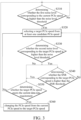
FIG. 3 is a flow chart illustrating the step S210 according to an embodiment of the invention. As shown inFIG. 3 , in step S310, thewireless device 120 or thehost device 140 may determine whether the first noise level corresponding to the current PCIe speed is higher than the noise level threshold first. - When the
wireless device 120 or thehost device 140 determines that the first noise level corresponding to the current PCIe speed is higher than the noise level threshold, step S320 is performed. In step S320, thewireless device 120 or thehost device 140 may select a target PCIe speed from at least one candidate PCIe speed. For example, when theUE 100 supports two PCIe speeds, Gen1 (2.5GT/s) and Gen2 (5GT/s) and the PCIe speed Gen1 (2.5GT/s) is the current PCIe speed, thewireless device 120 or thehost device 140 may select PCIe speed Gen1 (2.5GT/s) to be the target PCIe speed. In addition, in an embodiment of the invention, thewireless device 120 or thehost device 140 may select the candidate PCIe speed with the lowest speed to be the target PCIe speed first to save power. For example, if theUE 100 has candidate PCIe speeds Gen2 (5GT/s) and Gen3 (8GT/s), thewireless device 120 or thehost device 140 may select the PCIe speed Gen2 (5GT/s) first to save power. - In step S330, the
wireless device 120 or thehost device 140 may determine whether the second noise level corresponding to the target PCIe speed is higher than the noise level threshold. - When the second noise level is higher than the noise level threshold, step S340 is performed. In step S340, the
wireless device 120 or thehost device 140 may determine whether the SNR corresponding to the target PCIe speed is higher than the SNR threshold. In this step, it means that the noise levels of the current PCIe speed and the target PCIe speed are not good. Therefore, thewireless device 120 or thehost device 140 may further determine whether the SNR corresponding to the target PCIe speed is higher than the SNR threshold. That is to say, if the SNR corresponding to the target PCIe speed is good enough, the target PCIe still may be concerned by thewireless device 120 or thehost device 140, even if the second noise level of the target PCIe speed is higher than the noise level threshold. - When the SNR corresponding to the target PCIe speed is not higher than the SNR threshold (i.e., the SNR corresponding to the target PCIe speed is worse), step S320 is performed. The
wireless device 120 or thehost device 140 may select another target PCIe speed from the candidate PCIe speeds. - When the SNR corresponding to the target PCIe speed is higher than the SNR threshold (i.e., the SNR corresponding to the target PCIe speed is good enough), step S350 is performed. In step S350, the
wireless device 120 or thehost device 140 may determine whether the target PCIe speed meets the current data-rate requirement. - When the target PCIe speed meets the current data-rate requirement, step S360 is performed. In step S360, the
wireless device 120 or thehost device 140 may change the PCIe speed from the current PCIe speed to the target PCIe speed. Then, the flow ofFIG. 3 will be repeated again. - When the target PCIe speed does not meet the current data-rate requirement, step S320 is performed. The
wireless device 120 or thehost device 140 may select another target PCIe speed from the candidate PCIe speeds. Then, thewireless device 120 or thehost device 140 may perform the following steps after step S320. - When the second noise level is not higher than the noise level threshold in step S330, step S350 is performed. The
wireless device 120 or thehost device 140 may determine whether the target PCIe speed meets the current data-rate requirement. When the target PCIe speed meets the current data-rate requirement, thewireless device 120 or thehost device 140 may perform step S360. Then, the flow ofFIG. 3 will be repeated again. When the target PCIe speed does not meet the current data-rate requirement, thewireless device 120 or thehost device 140 may perform step S320. - In the embodiment of the invention, in an example, as shown in
FIG. 3 , when thewireless device 120 or thehost device 140 determines that the first noise level corresponding to the current PCIe speed is not higher than the noise level threshold, thewireless device 120 or thehost device 140 may maintain the current PCIe speed. Then, the flow ofFIG. 3 will be repeated again. - In the embodiment of the invention, in another example, when the
wireless device 120 or thehost device 140 determines that the first noise level corresponding to the current PCIe speed is not higher than the noise level threshold, thewireless device 120 or thehost device 140 may further determine whether the SNR corresponding to the current PCIe speed is higher than the SNR threshold. When the SNR corresponding to the current PCIe speed is higher than the SNR threshold, thewireless device 120 or thehost device 140 may maintain the current PCIe speed. Then, the flow ofFIG. 3 will be repeated again. When the SNR corresponding to the current PCIe speed is not higher than the SNR threshold, step S320 is performed. Thewireless device 120 or thehost device 140 may select the target PCIe speed from at least one candidate PCIe speed and perform above operations for target PCIe speed. Then, thewireless device 120 or thehost device 140 may perform the following steps after step S320. In this example, although the first noise level corresponding to the current PCIe speed is not higher than the noise level threshold, the SNR corresponding to the current PCIe speed may be not higher than the SNR threshold (i.e., the SNR corresponding to the current PCIe speed is worse). For example, when the distance between the current linked access point (AP) and the UE is farther and farther, the signal strength may be decreased, and as result the SNR will be decreased. Therefore, in this example, thewireless device 120 or thehost device 140 may further determine whether the SNR corresponding to the current PCIe speed is higher than the SNR threshold to avoid that the SNR of the current PCIe speed is too bad. -
FIG. 4 is a flow chart illustrating the step S210 according to another embodiment of the invention. As shown inFIG. 4 , in step S410, thewireless device 120 or thehost device 140 may determine whether the current PCIe speed meets the current data-rate requirement first. - When the current PCIe speed does not meet the current data-rate requirement, step S420 is performed. In step S420, the
wireless device 120 or thehost device 140 may select a target PCIe speed from at least one candidate PCIe speed. For example, when theUE 100 supports two PCIe speeds, Gen1 (2.5GT/s) and Gen2 (5GT/s) and the PCIe speed Gen1 (2.5GT/s) is the current PCIe speed, thewireless device 120 or thehost device 140 may select PCIe speed Gen2 (5GT/s) to be the target PCIe speed. In an example, thewireless device 120 or thehost device 140 may select the candidate PCIe speed with the lowest speed to be the target PCIe speed first to save power. - In step S430, the
wireless device 120 or thehost device 140 may determine whether the target PCIe speed meets the current data-rate requirement. - When the target PCIe speed does not meet the current data-rate requirement, step S420 is performed. The
wireless device 120 or thehost device 140 may select another target PCIe speed from the candidate PCIe speeds. Then, thewireless device 120 or thehost device 140 may perform the following steps after step S420. - When the target PCIe speed meets the current data-rate requirement, step S440 is performed. In step S440, the
wireless device 120 or thehost device 140 may determine whether the second noise level corresponding to the target PCIe speed is higher than the noise level threshold. - When the second noise level is higher than the noise level threshold, step S450 is performed. In step S450, the
wireless device 120 or thehost device 140 may determine whether the SNR corresponding to the target PCIe speed is higher than the SNR threshold. - When the SNR corresponding to the target PCIe speed is higher than the SNR threshold, step S460 is performed. In step S460, the
wireless device 120 or thehost device 140 may change the PCIe speed from the current PCIe speed to the target PCIe speed. Then, the flow ofFIG. 4 will be repeated again. - When the SNR corresponding to the target PCIe speed is not higher than the SNR threshold, step S420 is performed. The
wireless device 120 or thehost device 140 may select another target PCIe speed from the candidate PCIe speeds. Then, thewireless device 120 or thehost device 140 may perform the following steps after step S420. - When the second noise level is not higher than the noise level threshold, step S460 is performed. The
wireless device 120 or thehost device 140 may change the PCIe speed from the current PCIe speed to the target PCIe speed. Then, the flow ofFIG. 4 will be repeated again. - When the current PCIe speed meets the current data-rate requirement in step S410, step S470 is performed. In step S470, the
wireless device 120 or thehost device 140 may determine whether the first noise level corresponding to the current PCIe speed is higher than the noise level threshold. - When the
wireless device 120 or thehost device 140 determines that the first noise level corresponding to the current PCIe speed is higher than the noise level threshold, step S420 is performed. Thewireless device 120 or thehost device 140 may select a target PCIe speed from at least one candidate PCIe speed. Then, thewireless device 120 or thehost device 140 may perform the following steps after step S420. - In the embodiment of the invention, in an example, as shown in
FIG. 4 , when thewireless device 120 or thehost device 140 determines that the first noise level corresponding to the current PCIe speed is not higher than the noise level threshold, thewireless device 120 or thehost device 140 may maintain the current PCIe speed. Then, the flow ofFIG. 4 will be repeated again. - In the embodiment of the invention, in another example, when the
wireless device 120 or thehost device 140 determines that the first noise level corresponding to the current PCIe speed is not higher than the noise level threshold, thewireless device 120 or thehost device 140 may further determine whether the SNR corresponding to the current PCIe speed is higher than the SNR threshold. When the SNR corresponding to the current PCIe speed is higher than the SNR threshold, thewireless device 120 or thehost device 140 may maintain the current PCIe speed. Then, the flow ofFIG. 4 will be repeated again. When the SNR corresponding to the current PCIe speed is not higher than the SNR threshold, step S420 is performed. Thewireless device 120 or thehost device 140 may selects the target PCIe speed from at least one candidate PCIe speed and perform above operations for target PCIe speed. Then, thewireless device 120 or thehost device 140 may perform the following steps after step S420. In this example, although the first noise level corresponding to the current PCIe speed is not higher than the noise level threshold, the SNR corresponding to the current PCIe speed may be not higher than the SNR threshold (i.e., the SNR corresponding to the current PCIe speed is worse). For example, when the distance between the current linked access point (AP) and the UE is farther and farther, the signal strength may be decreased, and as result the SNR will be decreased. Therefore, in this example, thewireless device 120 or thehost device 140 may further determine whether the SNR corresponding to the current PCIe speed is higher than the SNR threshold. - It should be noted that the flows of
FIG. 3 andFIG. 4 are only used to illustrate the embodiments of the invention, but the invention should not be limited thereto. The order of the steps also can be changed or modified. - In the dynamic PCIe speed-adjusting methods provided in the embodiments of the invention, the PCIe speed may be dynamically adjusted based on at least one of the noise level threshold, the SNR threshold and the current data-rate requirement. Therefore, in the dynamic PCIe speed-adjusting methods provided in the embodiments of the invention, the PCIe interference with the performance of the wireless device can be reduced.
- Use of ordinal terms such as "first", "second", "third", etc., in the disclosure and claims is for description. It does not by itself connote any order or relationship.
- The steps of the method described in connection with the aspects disclosed herein may be embodied directly in hardware, in a software module executed by a processor, or in a combination of the two. A software module (e.g., including executable instructions and related data) and other data may reside in a data memory such as RAM memory, flash memory, ROM memory, EPROM memory, EEPROM memory, registers, a hard disk, a removable disk, a CD-ROM, or any other form of computer-readable storage medium known in the art. A sample storage medium may be coupled to a machine such as, for example, a computer/processor (which may be referred to herein, for convenience, as a "processor") such that the processor can read information (e.g., code) from and write information to the storage medium. A sample storage medium may be integral to the processor. The processor and the storage medium may reside in an ASIC. The ASIC may reside in the UE. In the alternative, the processor and the storage medium may reside as discrete components in the UE. Moreover, in some aspects, any suitable computer-program product may comprise a computer-readable medium comprising codes relating to one or more of the aspects of the disclosure. In some aspects, a computer software product may comprise packaging materials.
- It should be noted that although not explicitly specified, one or more steps of the methods described herein can include a step for storing, displaying and/or outputting as required for a particular application. In other words, any data, records, fields, and/or intermediate results discussed in the methods can be stored, displayed, and/or output to another device as required for a particular application. While the foregoing is directed to embodiments of the present invention, other and further embodiments of the invention can be devised without departing from the basic scope thereof. Various embodiments presented herein, or portions thereof, can be combined to create further embodiments. The above description is of the best-contemplated mode of carrying out the invention. This description is made for the purpose of illustrating the general principles of the invention and should not be taken in a limiting sense. The scope of the invention is best determined by reference to the appended claims.
- The above paragraphs describe many aspects. Obviously, the teaching of the invention can be accomplished by many methods, and any specific configurations or functions in the disclosed embodiments only present a representative condition. Those who are skilled in this technology will understand that all of the disclosed aspects in the invention can be applied independently or be incorporated.
- While the invention has been described by way of example and in terms of preferred embodiment, it should be understood that the invention is not limited thereto. Those who are skilled in this technology can still make various alterations and modifications without departing from the scope of this invention. Therefore, the scope of the present invention shall be defined and protected by the following claims and their equivalents.
Claims (15)
- A dynamic Peripheral Component Interconnect Express, in the following also referred to as PCIe, speed-adjusting method, applied to a wireless device, comprising:
determining, by the wireless device, whether to change from a current PCIe speed to a target PCIe speed based on at least one of a noise level threshold, a signal to noise ratio, in the following also referred to as SNR, threshold and a current data rate requirement (S210). - The dynamic PCIe speed-adjusting method of claim 1, further comprising:determining, by the wireless device, whether a first noise level corresponding to the current PCIe speed is higher than the noise level threshold (S310);selecting, by the wireless device, the target PCIe speed from at least one candidate PCIe speed (S320) in response to the first noise level being higher than the noise level threshold; andchanging from the current PCIe speed to the target PCIe speed (S360).
- The dynamic PCIe speed-adjusting method of claim 2, wherein the selecting the target PCIe speed comprises:
determining, by the wireless device, whether a second noise level corresponding to the target PCIe speed is higher than the noise level threshold (S330). - The dynamic PCIe speed-adjusting method of claim 3, further comprising:
determining, by the wireless device, whether an SNR corresponding to the target PCIe speed is higher than the SNR threshold (S340) in response to the second noise level being higher than the noise level threshold. - The dynamic PCIe speed-adjusting method of claim 4, further comprising:
selecting, by the wireless device, another target PCIe speed from the at least one candidate PCIe speed (S320) in response to the SNR corresponding to the target PCIe speed not being higher than the SNR threshold. - The dynamic PCIe speed-adjusting method of claim 4 or 5, further comprising:determining, by the wireless device, whether the target PCIe speed meets the current data-rate requirement (S350) in response to the SNR corresponding to the target PCIe speed being higher than the SNR threshold; andchanging, by the wireless device, from the current PCIe speed to the target PCIe speed (S360) in response to the target PCIe speed meeting the current data-rate requirement.
- The dynamic PCIe speed-adjusting method of any one of claims 3 to 6, further comprising:determining, by the wireless device, whether the target PCIe speed meets the current data-rate requirement (S350) in response to the second noise level not being higher than the noise level threshold;changing, by the wireless device, from the current PCIe speed to the target PCIe speed (S360) in response to the target PCIe speed meeting the current data-rate requirement; andselecting, by the wireless device, another target PCIe speed from the at least one candidate PCIe speed (S320) in response to the target PCIe speed not meeting the current data-rate requirement.
- The dynamic PCIe speed-adjusting method of any one of claims 2 to 7, further comprising:
maintaining, by the wireless device, the current PCIe speed in response to the first noise level not being higher than the noise level threshold. - The dynamic PCIe speed-adjusting method of any one of claims 2 to 8, further comprising:determining, by the wireless device, whether an SNR corresponding to the current PCIe speed is higher than the SNR threshold in response to the first noise level not being higher than the noise level threshold; andselecting, by the wireless device, the target PCIe speed from the at least one candidate PCIe speed in response to the SNR corresponding to the current PCIe speed not being higher than the SNR threshold.
- A wireless device, comprising:
a processor, which is configured to:
determine whether to change from a current PCIe speed to a target PCIe speed based on at least one of a noise level threshold, a signal to noise ratio, in the following also referred to as SNR, threshold and a current data rate requirement. - The wireless device of claim 10, wherein the processor is further configured to:determine whether a first noise level corresponding to the current PCIe speed is higher than the noise level threshold;select a target PCIe speed from at least one candidate PCIe speed in response to the first noise level being higher than the noise level threshold; andchange from the current PCIe speed to the target PCIe speed.
- The wireless device of claim 11, wherein the processor determines whether a second noise level corresponding to the target PCIe speed is higher than the noise level threshold.
- The wireless device of claim 12, wherein the processor further determines whether an SNR corresponding to the target PCIe speed is higher than the SNR threshold in response to the second noise level being higher than the noise level threshold.
- A user equipment, in the following also referred to as UE, (100), comprising:a host device (140);a Peripheral Component Interconnect Express, in the following also referred to as PCIe, interface (130);a wireless device (120), coupled to the host device (140) through the PCIe interface (130);wherein the host device (140) or the wireless device (120) is configured to:
determine whether to change from a current PCIe speed to a target PCIe speed based on at least one of a noise level threshold, a signal to noise ratio, in the following also referred to as SNR, threshold and a current data rate requirement. - The UE (100) of claim 14, wherein the host device (140) or the wireless device (120) changes the current PCIe speed to the target PCIe speed by sending a training sequence, in the following also referred to as TS, ordered set.
Applications Claiming Priority (3)
| Application Number | Priority Date | Filing Date | Title |
|---|---|---|---|
| US202263301077P | 2022-01-20 | 2022-01-20 | |
| US202263368508P | 2022-07-15 | 2022-07-15 | |
| US18/154,424 US12072831B2 (en) | 2022-01-20 | 2023-01-13 | Dynamic PCIE speed-adjusting method and wireless device and user equipment thereof |
Publications (2)
| Publication Number | Publication Date |
|---|---|
| EP4216035A1 true EP4216035A1 (en) | 2023-07-26 |
| EP4216035B1 EP4216035B1 (en) | 2024-11-20 |
Family
ID=85018577
Family Applications (1)
| Application Number | Title | Priority Date | Filing Date |
|---|---|---|---|
| EP23152238.4A Active EP4216035B1 (en) | 2022-01-20 | 2023-01-18 | Dynamic pcie speed-adjusting method and wireless device and user equipment thereof |
Country Status (3)
| Country | Link |
|---|---|
| US (1) | US12072831B2 (en) |
| EP (1) | EP4216035B1 (en) |
| TW (1) | TWI836874B (en) |
Citations (2)
| Publication number | Priority date | Publication date | Assignee | Title |
|---|---|---|---|---|
| US20060143338A1 (en) * | 2004-12-29 | 2006-06-29 | Hunsaker Mikal C | Autodetection of a PCI express device operating at a wireless RF mitigation frequency |
| US20170280385A1 (en) * | 2016-03-23 | 2017-09-28 | Qualcomm Incorporated | Link speed control systems for power optimization |
Family Cites Families (8)
| Publication number | Priority date | Publication date | Assignee | Title |
|---|---|---|---|---|
| US6959171B2 (en) * | 2002-02-28 | 2005-10-25 | Intel Corporation | Data transmission rate control |
| US8971833B2 (en) * | 2010-09-28 | 2015-03-03 | Apple Inc. | Electronic device with dynamic drive strength adjustment to mitigate impact of system noise on wireless performance |
| TWI503668B (en) * | 2013-09-14 | 2015-10-11 | Realtek Semiconductor Corp | Control circuit and control method for pci-e device |
| US9652020B2 (en) * | 2014-06-18 | 2017-05-16 | Qualcomm Incorporated | Systems and methods for providing power savings and interference mitigation on physical transmission media |
| US10812398B2 (en) * | 2016-02-16 | 2020-10-20 | Belden, Inc. | Systems and methods for retransmission rate selection to support fast moving devices |
| CN107257266B (en) | 2017-05-23 | 2020-11-27 | 台州市吉吉知识产权运营有限公司 | Method and device for adjusting transmission rate |
| CN107395512B (en) | 2017-07-21 | 2021-06-25 | 台州市吉吉知识产权运营有限公司 | Method and device for switching MU-MIMO switch of wireless router |
| US11238001B2 (en) * | 2020-05-11 | 2022-02-01 | Dell Products L.P. | System and method to selectively reduce USB-3 interference with wireless communication devices |
-
2023
- 2023-01-13 US US18/154,424 patent/US12072831B2/en active Active
- 2023-01-18 TW TW112102205A patent/TWI836874B/en active
- 2023-01-18 EP EP23152238.4A patent/EP4216035B1/en active Active
Patent Citations (2)
| Publication number | Priority date | Publication date | Assignee | Title |
|---|---|---|---|---|
| US20060143338A1 (en) * | 2004-12-29 | 2006-06-29 | Hunsaker Mikal C | Autodetection of a PCI express device operating at a wireless RF mitigation frequency |
| US20170280385A1 (en) * | 2016-03-23 | 2017-09-28 | Qualcomm Incorporated | Link speed control systems for power optimization |
Also Published As
| Publication number | Publication date |
|---|---|
| TWI836874B (en) | 2024-03-21 |
| EP4216035B1 (en) | 2024-11-20 |
| US12072831B2 (en) | 2024-08-27 |
| US20230229619A1 (en) | 2023-07-20 |
| TW202331539A (en) | 2023-08-01 |
Similar Documents
| Publication | Publication Date | Title |
|---|---|---|
| US7856000B2 (en) | Apparatus and method capable of improved coexistence of multiple wireless communication techniques | |
| US20200213019A1 (en) | Method and Apparatus for Adaptive Searching of Distributed Datasets | |
| US8509843B2 (en) | Mobile communication terminal, data transmission method, apparatus, and data reception method | |
| EP2693652B1 (en) | Bluetooth device and method for connecting bluetooth devices | |
| KR100703406B1 (en) | DMA control apparatus and method | |
| JP5394740B2 (en) | Initial setting of the transmission power of the carrier of the secondary / reverse link of the wireless communication network | |
| US7184708B1 (en) | Interference mitigation by adjustment of interconnect transmission characteristics | |
| US8767803B2 (en) | Wireless communication circuit supporting antenna diversity | |
| CN117939692A (en) | Random access method, communication node and storage medium | |
| US8190091B2 (en) | Method for setting data transmission parameters and communication device | |
| EP4216035B1 (en) | Dynamic pcie speed-adjusting method and wireless device and user equipment thereof | |
| US12389341B2 (en) | Method for reporting and controlling power, and terminal, base station and communication system | |
| JP4462910B2 (en) | Wireless LAN transceiver | |
| US12225457B2 (en) | Method of controlling plurality of cells for providing radio resources to plurality of user equipments, and electronic device for performing the method | |
| CN115934438A (en) | Universal serial bus hub test system, method and related device | |
| US20060067312A1 (en) | Apparatus and method capable of improved coexistence of multiple wireless communication techniques | |
| US7986714B2 (en) | Apparatus and method for transmitting packets in wireless network | |
| CN116471628A (en) | Dynamic PCIe speed adjustment method, wireless device and user equipment | |
| US20100015979A1 (en) | Communication Method, Mobile Terminal and Base Station | |
| US20250150935A1 (en) | Software-enabled access points identification | |
| JP4789613B2 (en) | Wireless communication terminal and communication method | |
| CN112969221A (en) | Power consumption control device and method and electronic equipment | |
| CN113078926A (en) | Data transmission method and device and electronic equipment | |
| US12389479B2 (en) | Communication device, communication method, and program | |
| CN113473607B (en) | PUCCH transmission method, device, terminal, network and storage medium |
Legal Events
| Date | Code | Title | Description |
|---|---|---|---|
| PUAI | Public reference made under article 153(3) epc to a published international application that has entered the european phase |
Free format text: ORIGINAL CODE: 0009012 |
|
| STAA | Information on the status of an ep patent application or granted ep patent |
Free format text: STATUS: THE APPLICATION HAS BEEN PUBLISHED |
|
| AK | Designated contracting states |
Kind code of ref document: A1 Designated state(s): AL AT BE BG CH CY CZ DE DK EE ES FI FR GB GR HR HU IE IS IT LI LT LU LV MC ME MK MT NL NO PL PT RO RS SE SI SK SM TR |
|
| STAA | Information on the status of an ep patent application or granted ep patent |
Free format text: STATUS: REQUEST FOR EXAMINATION WAS MADE |
|
| 17P | Request for examination filed |
Effective date: 20240123 |
|
| RBV | Designated contracting states (corrected) |
Designated state(s): AL AT BE BG CH CY CZ DE DK EE ES FI FR GB GR HR HU IE IS IT LI LT LU LV MC ME MK MT NL NO PL PT RO RS SE SI SK SM TR |
|
| GRAP | Despatch of communication of intention to grant a patent |
Free format text: ORIGINAL CODE: EPIDOSNIGR1 |
|
| STAA | Information on the status of an ep patent application or granted ep patent |
Free format text: STATUS: GRANT OF PATENT IS INTENDED |
|
| INTG | Intention to grant announced |
Effective date: 20240910 |
|
| GRAS | Grant fee paid |
Free format text: ORIGINAL CODE: EPIDOSNIGR3 |
|
| GRAA | (expected) grant |
Free format text: ORIGINAL CODE: 0009210 |
|
| STAA | Information on the status of an ep patent application or granted ep patent |
Free format text: STATUS: THE PATENT HAS BEEN GRANTED |
|
| AK | Designated contracting states |
Kind code of ref document: B1 Designated state(s): AL AT BE BG CH CY CZ DE DK EE ES FI FR GB GR HR HU IE IS IT LI LT LU LV MC ME MK MT NL NO PL PT RO RS SE SI SK SM TR |
|
| REG | Reference to a national code |
Ref country code: GB Ref legal event code: FG4D |
|
| REG | Reference to a national code |
Ref country code: CH Ref legal event code: EP |
|
| REG | Reference to a national code |
Ref country code: DE Ref legal event code: R096 Ref document number: 602023001027 Country of ref document: DE |
|
| REG | Reference to a national code |
Ref country code: IE Ref legal event code: FG4D |
|
| REG | Reference to a national code |
Ref country code: LT Ref legal event code: MG9D |
|
| REG | Reference to a national code |
Ref country code: NL Ref legal event code: MP Effective date: 20241120 |
|
| PG25 | Lapsed in a contracting state [announced via postgrant information from national office to epo] |
Ref country code: IS Free format text: LAPSE BECAUSE OF FAILURE TO SUBMIT A TRANSLATION OF THE DESCRIPTION OR TO PAY THE FEE WITHIN THE PRESCRIBED TIME-LIMIT Effective date: 20250320 Ref country code: HR Free format text: LAPSE BECAUSE OF FAILURE TO SUBMIT A TRANSLATION OF THE DESCRIPTION OR TO PAY THE FEE WITHIN THE PRESCRIBED TIME-LIMIT Effective date: 20241120 Ref country code: PT Free format text: LAPSE BECAUSE OF FAILURE TO SUBMIT A TRANSLATION OF THE DESCRIPTION OR TO PAY THE FEE WITHIN THE PRESCRIBED TIME-LIMIT Effective date: 20250320 |
|
| PG25 | Lapsed in a contracting state [announced via postgrant information from national office to epo] |
Ref country code: FI Free format text: LAPSE BECAUSE OF FAILURE TO SUBMIT A TRANSLATION OF THE DESCRIPTION OR TO PAY THE FEE WITHIN THE PRESCRIBED TIME-LIMIT Effective date: 20241120 Ref country code: NL Free format text: LAPSE BECAUSE OF FAILURE TO SUBMIT A TRANSLATION OF THE DESCRIPTION OR TO PAY THE FEE WITHIN THE PRESCRIBED TIME-LIMIT Effective date: 20241120 |
|
| REG | Reference to a national code |
Ref country code: AT Ref legal event code: MK05 Ref document number: 1744168 Country of ref document: AT Kind code of ref document: T Effective date: 20241120 |
|
| PG25 | Lapsed in a contracting state [announced via postgrant information from national office to epo] |
Ref country code: BG Free format text: LAPSE BECAUSE OF FAILURE TO SUBMIT A TRANSLATION OF THE DESCRIPTION OR TO PAY THE FEE WITHIN THE PRESCRIBED TIME-LIMIT Effective date: 20241120 |
|
| PG25 | Lapsed in a contracting state [announced via postgrant information from national office to epo] |
Ref country code: ES Free format text: LAPSE BECAUSE OF FAILURE TO SUBMIT A TRANSLATION OF THE DESCRIPTION OR TO PAY THE FEE WITHIN THE PRESCRIBED TIME-LIMIT Effective date: 20241120 |
|
| PG25 | Lapsed in a contracting state [announced via postgrant information from national office to epo] |
Ref country code: NO Free format text: LAPSE BECAUSE OF FAILURE TO SUBMIT A TRANSLATION OF THE DESCRIPTION OR TO PAY THE FEE WITHIN THE PRESCRIBED TIME-LIMIT Effective date: 20250220 |
|
| PG25 | Lapsed in a contracting state [announced via postgrant information from national office to epo] |
Ref country code: GR Free format text: LAPSE BECAUSE OF FAILURE TO SUBMIT A TRANSLATION OF THE DESCRIPTION OR TO PAY THE FEE WITHIN THE PRESCRIBED TIME-LIMIT Effective date: 20250221 Ref country code: AT Free format text: LAPSE BECAUSE OF FAILURE TO SUBMIT A TRANSLATION OF THE DESCRIPTION OR TO PAY THE FEE WITHIN THE PRESCRIBED TIME-LIMIT Effective date: 20241120 Ref country code: LV Free format text: LAPSE BECAUSE OF FAILURE TO SUBMIT A TRANSLATION OF THE DESCRIPTION OR TO PAY THE FEE WITHIN THE PRESCRIBED TIME-LIMIT Effective date: 20241120 |
|
| PG25 | Lapsed in a contracting state [announced via postgrant information from national office to epo] |
Ref country code: PL Free format text: LAPSE BECAUSE OF FAILURE TO SUBMIT A TRANSLATION OF THE DESCRIPTION OR TO PAY THE FEE WITHIN THE PRESCRIBED TIME-LIMIT Effective date: 20241120 |
|
| PG25 | Lapsed in a contracting state [announced via postgrant information from national office to epo] |
Ref country code: RS Free format text: LAPSE BECAUSE OF FAILURE TO SUBMIT A TRANSLATION OF THE DESCRIPTION OR TO PAY THE FEE WITHIN THE PRESCRIBED TIME-LIMIT Effective date: 20250220 |
|
| PG25 | Lapsed in a contracting state [announced via postgrant information from national office to epo] |
Ref country code: SM Free format text: LAPSE BECAUSE OF FAILURE TO SUBMIT A TRANSLATION OF THE DESCRIPTION OR TO PAY THE FEE WITHIN THE PRESCRIBED TIME-LIMIT Effective date: 20241120 |
|
| PG25 | Lapsed in a contracting state [announced via postgrant information from national office to epo] |
Ref country code: DK Free format text: LAPSE BECAUSE OF FAILURE TO SUBMIT A TRANSLATION OF THE DESCRIPTION OR TO PAY THE FEE WITHIN THE PRESCRIBED TIME-LIMIT Effective date: 20241120 |
|
| PG25 | Lapsed in a contracting state [announced via postgrant information from national office to epo] |
Ref country code: EE Free format text: LAPSE BECAUSE OF FAILURE TO SUBMIT A TRANSLATION OF THE DESCRIPTION OR TO PAY THE FEE WITHIN THE PRESCRIBED TIME-LIMIT Effective date: 20241120 |
|
| PG25 | Lapsed in a contracting state [announced via postgrant information from national office to epo] |
Ref country code: RO Free format text: LAPSE BECAUSE OF FAILURE TO SUBMIT A TRANSLATION OF THE DESCRIPTION OR TO PAY THE FEE WITHIN THE PRESCRIBED TIME-LIMIT Effective date: 20241120 |
|
| PG25 | Lapsed in a contracting state [announced via postgrant information from national office to epo] |
Ref country code: SK Free format text: LAPSE BECAUSE OF FAILURE TO SUBMIT A TRANSLATION OF THE DESCRIPTION OR TO PAY THE FEE WITHIN THE PRESCRIBED TIME-LIMIT Effective date: 20241120 |
|
| PG25 | Lapsed in a contracting state [announced via postgrant information from national office to epo] |
Ref country code: CZ Free format text: LAPSE BECAUSE OF FAILURE TO SUBMIT A TRANSLATION OF THE DESCRIPTION OR TO PAY THE FEE WITHIN THE PRESCRIBED TIME-LIMIT Effective date: 20241120 |
|
| PG25 | Lapsed in a contracting state [announced via postgrant information from national office to epo] |
Ref country code: IT Free format text: LAPSE BECAUSE OF FAILURE TO SUBMIT A TRANSLATION OF THE DESCRIPTION OR TO PAY THE FEE WITHIN THE PRESCRIBED TIME-LIMIT Effective date: 20241120 |
|
| REG | Reference to a national code |
Ref country code: DE Ref legal event code: R097 Ref document number: 602023001027 Country of ref document: DE |
|
| PG25 | Lapsed in a contracting state [announced via postgrant information from national office to epo] |
Ref country code: SE Free format text: LAPSE BECAUSE OF FAILURE TO SUBMIT A TRANSLATION OF THE DESCRIPTION OR TO PAY THE FEE WITHIN THE PRESCRIBED TIME-LIMIT Effective date: 20241120 |
|
| PG25 | Lapsed in a contracting state [announced via postgrant information from national office to epo] |
Ref country code: LU Free format text: LAPSE BECAUSE OF NON-PAYMENT OF DUE FEES Effective date: 20250118 Ref country code: MC Free format text: LAPSE BECAUSE OF FAILURE TO SUBMIT A TRANSLATION OF THE DESCRIPTION OR TO PAY THE FEE WITHIN THE PRESCRIBED TIME-LIMIT Effective date: 20241120 |
|
| PLBE | No opposition filed within time limit |
Free format text: ORIGINAL CODE: 0009261 |
|
| STAA | Information on the status of an ep patent application or granted ep patent |
Free format text: STATUS: NO OPPOSITION FILED WITHIN TIME LIMIT |
|
| PG25 | Lapsed in a contracting state [announced via postgrant information from national office to epo] |
Ref country code: BE Free format text: LAPSE BECAUSE OF NON-PAYMENT OF DUE FEES Effective date: 20250131 |
|
| 26N | No opposition filed |
Effective date: 20250821 |
|
| REG | Reference to a national code |
Ref country code: BE Ref legal event code: MM Effective date: 20250131 |
|
| PGFP | Annual fee paid to national office [announced via postgrant information from national office to epo] |
Ref country code: FR Payment date: 20251110 Year of fee payment: 4 |
|
| PG25 | Lapsed in a contracting state [announced via postgrant information from national office to epo] |
Ref country code: IE Free format text: LAPSE BECAUSE OF NON-PAYMENT OF DUE FEES Effective date: 20250118 |
|
| PGFP | Annual fee paid to national office [announced via postgrant information from national office to epo] |
Ref country code: DE Payment date: 20251126 Year of fee payment: 4 |