EP4215610A1 - Nucleic acid purification method, nucleic acid extraction liquid, and nucleic acid purification kit - Google Patents
Nucleic acid purification method, nucleic acid extraction liquid, and nucleic acid purification kit Download PDFInfo
- Publication number
- EP4215610A1 EP4215610A1 EP21869203.6A EP21869203A EP4215610A1 EP 4215610 A1 EP4215610 A1 EP 4215610A1 EP 21869203 A EP21869203 A EP 21869203A EP 4215610 A1 EP4215610 A1 EP 4215610A1
- Authority
- EP
- European Patent Office
- Prior art keywords
- nucleic acid
- antifoaming agent
- extraction liquid
- agent
- purification method
- Prior art date
- Legal status (The legal status is an assumption and is not a legal conclusion. Google has not performed a legal analysis and makes no representation as to the accuracy of the status listed.)
- Pending
Links
Images



Classifications
-
- C—CHEMISTRY; METALLURGY
- C12—BIOCHEMISTRY; BEER; SPIRITS; WINE; VINEGAR; MICROBIOLOGY; ENZYMOLOGY; MUTATION OR GENETIC ENGINEERING
- C12N—MICROORGANISMS OR ENZYMES; COMPOSITIONS THEREOF; PROPAGATING, PRESERVING, OR MAINTAINING MICROORGANISMS; MUTATION OR GENETIC ENGINEERING; CULTURE MEDIA
- C12N15/00—Mutation or genetic engineering; DNA or RNA concerning genetic engineering, vectors, e.g. plasmids, or their isolation, preparation or purification; Use of hosts therefor
- C12N15/09—Recombinant DNA-technology
- C12N15/10—Processes for the isolation, preparation or purification of DNA or RNA
- C12N15/1003—Extracting or separating nucleic acids from biological samples, e.g. pure separation or isolation methods; Conditions, buffers or apparatuses therefor
- C12N15/1006—Extracting or separating nucleic acids from biological samples, e.g. pure separation or isolation methods; Conditions, buffers or apparatuses therefor by means of a solid support carrier, e.g. particles, polymers
Definitions
- the present invention relates to a nucleic acid purification method, and a nucleic acid extraction liquid and a nucleic acid purification kit that are used in the nucleic acid purification method.
- RNA and DNA contained in samples such as viruses, bacteria, fungi, or cells
- a precipitation reagent such as alcohol
- the precipitated nucleic acid is adsorbed on a solid phase carrier
- impurities such as proteins derived from the sample attached to the solid phase carrier together with the nucleic acid are washed, and then the nucleic acid is recovered by an eluate.
- Patent Document 1 discloses a method for separating and purifying a nucleic acid using a microdevice.
- the method for separating and purifying a nucleic acid includes steps of: bringing a sample solution containing a nucleic acid into contact with a nucleic acid adsorptive carrier to adsorb the nucleic acid; washing the nucleic acid adsorptive carrier with a washing liquid in a state where the nucleic acid is adsorbed; and desorbing the nucleic acid from the nucleic acid adsorptive carrier with a recovery liquid to purify the nucleic acid.
- Patent Document 1 describes that a pretreatment step of mixing and homogenizing a specimen and a nucleic acid solubilizing reagent to obtain the sample solution containing a nucleic acid may be included.
- the nucleic acid solubilizing reagent may be a solution containing at least one of a chaotropic salt, a surfactant, a proteolytic enzyme, an antifoaming agent, and a nucleic acid stabilizer.
- Patent Document 1 JP 2006-087372 A
- nucleic acid purification method of Patent Document 1 Even when the nucleic acid purification method of Patent Document 1 is used, generation of bubbles may not be sufficiently suppressed. In addition, even when the generation of bubbles can be suppressed, efficiency of nucleic acid recovery may not be sufficiently improved. Therefore, the nucleic acid purification method of Patent Document 1 has a problem that it is difficult to achieve both suppression of bubble generation and improvement of efficiency of nucleic acid recovery.
- the conventional nucleic acid purification method has a problem that it is difficult to efficiently purify the nucleic acid.
- An object of the present invention is to provide a nucleic acid purification method capable of efficiently purifying a nucleic acid, and a nucleic acid extraction liquid and a nucleic acid purification kit used in the nucleic acid purification method.
- a nucleic acid purification method includes the steps of: mixing a nucleic acid with an antifoaming agent and a coprecipitation agent; and purifying the nucleic acid, in which the antifoaming agent is at least one of a nonionic surfactant and a silicone antifoaming agent.
- the nucleic acid is mixed with the antifoaming agent and the coprecipitation agent, and then the nucleic acid is adsorbed on a solid phase carrier and purified.
- nucleic acid purification method further includes a step of preparing a nucleic acid extraction liquid containing the antifoaming agent and the coprecipitation agent in advance, in which a sample containing the nucleic acid is brought into contact with the nucleic acid extraction liquid to mix the nucleic acid with the antifoaming agent and the coprecipitation agent.
- the antifoaming agent is a nonionic surfactant.
- the nucleic acid purification method further includes a step of preparing a nucleic acid extraction liquid containing the antifoaming agent and the coprecipitation agent in advance, in which a content of the nonionic surfactant in the nucleic acid extraction liquid is 0.001 vol% or more and 1 vol% or less.
- the nonionic surfactant is at least one selected from a group consisting of a polyoxyalkylene alkyl ether, a polyoxyethylene octylphenyl ether, a polyoxyethylene distyrenated phenyl ether, a polyoxyalkylene fatty acid ester, a polyoxyalkylene glyceryl ether, a sorbitan fatty acid ester, a lauryl- ⁇ -D-maltoside, a polyoxyethylene alkylamine, a palm kernel oil fatty acid diethanolamide, and a digitonin.
- the nonionic surfactant is a mixture of a polyoxyalkylene alkyl ether and a polyoxyalkylene fatty acid ester.
- the antifoaming agent is the silicone antifoaming agent.
- the nucleic acid purification method further includes a step of preparing a nucleic acid extraction liquid containing the antifoaming agent and the coprecipitation agent in advance, in which a content of the silicone antifoaming agent in the nucleic acid extraction liquid is 0.001 vol% or more and 10 vol% or less.
- the silicone antifoaming agent includes a silicone oil and an emulsifier.
- the silicone antifoaming agent is obtained by emulsifying a silicone oil with a nonionic surfactant.
- the coprecipitation agent is a polyadenine.
- the nucleic acid extraction liquid according to the present invention is a nucleic acid extraction liquid used for nucleic acid purification, and contains an antifoaming agent and a coprecipitation agent, in which the antifoaming agent is at least one of a nonionic surfactant and a silicone antifoaming agent.
- the antifoaming agent is the nonionic surfactant.
- a content of the nonionic surfactant in the nucleic acid extraction liquid is 0.001 vol% or more and 1 vol% or less.
- the nonionic surfactant is at least one selected from a group consisting of a polyoxyalkylene alkyl ether, a polyoxyethylene branched alkyl ether, a polyoxyethylene octylphenyl ether, a polyoxyethylene distyrenated phenyl ether, a polyoxyethylene phytosteryl ether, a polyoxyalkylene fatty acid ester, a polyoxyalkylene glyceryl ether, a sorbitan fatty acid ester, a lauryl- ⁇ -D-maltoside, a polyoxyethylene alkylamine, a palm kernel oil fatty acid diethanolamide, and a digitonin.
- the nonionic surfactant is a mixture of a polyoxyalkylene alkyl ether and a polyoxyalkylene fatty acid ester.
- the antifoaming agent is the silicone antifoaming agent.
- a content of the silicone antifoaming agent in the nucleic acid extraction liquid is 0.001 vol% or more and 10 vol% or less.
- the silicone antifoaming agent includes a silicone oil and an emulsifier.
- the silicone antifoaming agent is obtained by emulsifying the silicone oil with the nonionic surfactant.
- the coprecipitation agent is a polyadenine.
- the nucleic acid purification kit according to the present invention includes a nucleic acid extraction liquid configured according to the present invention.
- nucleic acid purification method capable of efficiently purifying a nucleic acid, and a nucleic acid extraction liquid and a nucleic acid purification kit used in the nucleic acid purification method.
- a nucleic acid purification method of the present invention includes a step of mixing a nucleic acid with an antifoaming agent and a coprecipitation agent, and a step of purifying the nucleic acid.
- the antifoaming agent is at least one of a nonionic surfactant and a silicone antifoaming agent.
- the nucleic acid can be efficiently purified because the nucleic acid purification method of the present invention includes the step of mixing the nucleic acid with the antifoaming agent and the coprecipitation agent, and at least one of the nonionic surfactant and the silicone antifoaming agent is used as the antifoaming agent.
- the present inventors have found that generation of bubbles can be suppressed by mixing a nucleic acid with the antifoaming agent that is at least one of the nonionic surfactant and the silicone antifoaming agent in a pre-step of purifying the nucleic acid. Furthermore, in this case, it has been found that the efficiency of nucleic acid recovery can be further enhanced by mixing the nucleic acid and the coprecipitation agent. In other words, the present inventors have found that, by mixing the nucleic acid with a specific antifoaming agent and the coprecipitation agent in the pre-step of purifying the nucleic acid, both suppression of bubble generation and improvement of efficiency of nucleic acid recovery can be achieved at a high level.
- the nucleic acid can be efficiently purified. Accordingly, a sufficient amount of nucleic acid can be obtained by one purification treatment, so that sensitivity of analysis and examination in the subsequent steps can be enhanced.
- the nucleic acid extraction liquid of the present invention contains an antifoaming agent and a coprecipitation agent.
- the antifoaming agent is at least one of a nonionic surfactant and a silicone antifoaming agent.
- the nonionic surfactant is not particularly limited, and examples thereof include a polyoxyalkylene alkyl ether, a polyoxyethylene branched alkyl ether, a polyoxyethylene octylphenyl ether, a polyoxyethylene distyrenated phenyl ether, a polyoxyethylene phytosteryl ether, a polyoxyalkylene fatty acid ester, a polyoxyalkylene glyceryl ether, a sorbitan fatty acid ester, a lauryl- ⁇ -D-maltoside, a polyoxyethylene alkylamine, a palm kernel oil fatty acid diethanolamide, a digitonin, a polyoxyethylene polyoxypropylene glycol, an alkyl polyglycoside, an alkyl alkanolamide, polyoxyethylene hydrogenated castor oil, a polyethylene glycol fatty acid ester, an alkyl glyceryl ether, a polyoxyethylene polyoxypropylene glycol, a polyoxy
- examples of the polyoxyalkylene alkyl ether include a polyoxyethylene lauryl ether, a polyoxyethylene cetyl ether, a polyoxyethylene stearyl ether, and a polyoxyethylene oleyl ether.
- examples of the polyoxyethylene branched alkyl ether include a polyoxyethylene isodecyl ether, a polyoxyethylene tridecyl ether, a polyoxyethylene octyldodecyl ether, and the like. These may be used singly or in combination of two or more kinds thereof.
- the nonionic surfactant is preferably a mixture of a polyoxyalkylene alkyl ether and a polyoxyalkylene fatty acid ester. In this case, the generation of bubbles can be more reliably suppressed.
- examples of the fatty acid constituting the fatty acid ester include a stearic acid, an oleic acid, an isostearic acid, a lauric acid, and a caprylic acid.
- the content of the nonionic surfactant in the nucleic acid extraction liquid is preferably 0.001 vol% or more, more preferably 0.01 vol% or more, and preferably 1 vol% or less, more preferably 0.1 vol% or less.
- the content of the nonionic surfactant is within the above range, the generation of bubbles can be more reliably suppressed, and the efficiency of nucleic acid recovery can be further improved.
- the silicone antifoaming agent is preferably an antifoaming agent including a silicone oil and an emulsifier.
- the silicone antifoaming agent is preferably one obtained by emulsifying the silicone oil with a nonionic surfactant.
- silicone antifoaming agent examples include Bisfoam GC-302 and Bisfoam ED-10 (manufactured by NISSIN KAGAKU KENKYUSHO CO., LTD.); and Shin-Etsu Silicones (registered trademark) KM-70, KM-71, KM-72, KM-72F, KM-72FS, KM-72S, KM-73, KM-73A, KM-73E, KM-75, KM-7750D, KM-7752, KM-85, KM-89, KM-90, and KM-98 (manufactured by Shin-Etsu Chemical Co., Ltd.).
- emulsifier examples include the nonionic surfactant described above and the like.
- the content of the silicone antifoaming agent in the nucleic acid extraction liquid is preferably 0.001 vol% or more, more preferably 0.01 vol% or more, and preferably 10 vol% or less, more preferably 0.1 vol% or less.
- the content of the silicone antifoaming agent is within the above range, the generation of bubbles can be more reliably suppressed, and the efficiency of nucleic acid recovery can be further improved.
- the coprecipitation agent is not particularly limited, and examples thereof include a tRNA, a polyadenine, an acrylamide polymer, a glycogen, a dextran, a polyethylene glycol, a sodium chloride, a lithium chloride, a sodium acetate, and an ammonium acetate.
- the coprecipitation agent is preferably a polyadenine. In this case, the efficiency of nucleic acid recovery can be further improved.
- the number of bases of polyadenine can be, for example, 300 or more and 3,500 or less.
- the content of the coprecipitation agent in the nucleic acid extraction liquid is preferably 10 ng/ ⁇ L or more, more preferably 20 ng/ ⁇ L or more, and preferably 40 ng/uL or less, more preferably 30 ng/uL or less.
- the content of the coprecipitation agent is within the above range, the generation of bubbles can be more reliably suppressed, and the efficiency of nucleic acid recovery can be further improved.
- nucleic acid extraction liquid for example, a solution containing a protein denaturant, metal cations, and a polar solvent can be used in addition to the antifoaming agent and the coprecipitation agent.
- the content of the polar solvent in the nucleic acid extraction liquid is preferably 50% or more.
- the protein denaturant has a role of breaking down a higher order structure of a protein by interacting with the protein.
- a surfactant for example, a surfactant, a reducing agent, a guanidine derivative, thiourea, urea, a salt thereof, or the like can be used.
- a surfactant for example, a sodium dodecyl sulfate (SDS), a polyoxyethylene sorbitan monolaurate (Tween20), or the like can be used.
- SDS sodium dodecyl sulfate
- Tween20 polyoxyethylene sorbitan monolaurate
- reducing agent for example, a 2-mercaptoethanol, a dithiothreitol (DTT), or the like can be used.
- a salt for example, a salt such as a guanidine hydrochloride can be used.
- the concentration of the protein denaturant in the nucleic acid extraction liquid is not particularly limited, but is preferably 2 mol/L or more, more preferably 4 mol/L or more, still more preferably 8 mol/L or more, and preferably 10 mol/L or less.
- concentration of the protein denaturant within the above range, the nucleic acid can be more reliably extracted.
- a total concentration is preferably within the above range.
- the metal cations are not particularly limited, and for example, an alkali metal ion, an alkaline earth metal ion, a transition metal ion, or a group 12 metal ion can be used.
- alkali metal ion examples include a potassium ion, a sodium ion, a lithium ion, a rubidium ion, a cesium ion, and a francium ion.
- alkaline earth metal ion examples include a calcium ion, a magnesium ion, a beryllium ion, a strontium ion, a barium ion, and a radium ion.
- transition metal ion examples include a manganese ion, an iron ion, a cobalt ion, a nickel ion, and a copper ion.
- Examples of the group 12 metal ion include a zinc ion, a cadmium ion, and a mercury ion.
- metal cations may be used singly or in combination of two or more kinds thereof.
- Valence of the metal cations is preferably divalent or more.
- Examples of the divalent or higher metal cations include the calcium ions and the magnesium ions. When the divalent or higher metal cations are used, the nucleic acid can be recovered more efficiently.
- the concentration of the metal cations in the nucleic acid extraction liquid is preferably 0.5 mol/L or more, more preferably 1 mol/L or more, and still more preferably 2 mol/L or more.
- concentration of the metal cations is a lower limit value or more, the nucleic acid can be more efficiently recovered.
- An upper limit value of the concentration of the metal cations is not particularly limited, but can be, for example, 6 mol/L.
- the polar solvent is not particularly limited, and examples thereof include water, a dimethyl sulfoxide (DMSO), an N,N-dimethylformamide (DMF), a dimethylacetamide (DMA), a methoxypropanol, a polyethylene glycol, a pentanediol, a propanediol, an aminoethanol, and a diethanolamine. These polar solvents may be used singly or in combination of two or more kinds thereof.
- the polar solvent may not be contained in the nucleic acid extraction liquid.
- the nucleic acid extraction liquid may contain a solvent other than the polar solvent. However, from a viewpoint of more reliably extracting the nucleic acid, it is preferable that a polar solvent such as water is contained in the nucleic acid extraction liquid.
- the nucleic acid may be purified using a microchip.
- An example of the microchip will be described below with reference to the drawings.
- FIG. 1 is a schematic plan view showing a microchip used in a nucleic acid purification method according to one embodiment of the present invention. Furthermore, FIG. 2 is a schematic cross-sectional view of a portion taken along the line A-A in FIG. 1 .
- a microchip 1 has a flow path 2 through which a fluid is delivered.
- a recovery unit 3 is provided in the middle of the flow path 2. Therefore, the flow path 2 includes an upstream side flow path 2a provided upstream of the recovery unit 3 and a downstream side flow path 2b provided downstream of the recovery unit 3.
- a solid phase carrier 4 for adsorbing and purifying a nucleic acid is disposed in the recovery unit 3.
- the microchip 1 is a chip used for examination and analysis.
- the microchip 1 is not particularly limited, but in the present embodiment, as illustrated in FIG. 2 , includes a plate-like substrate 5 and a cover member 6.
- the substrate 5 has a main surface 5a.
- a recess portion 5b is provided on the main surface 5a side of the substrate 5.
- the recess portion 5b is provided so as to open toward the main surface 5a side of the substrate 5.
- the material constituting the substrate 5 is not particularly limited, and for example, a synthetic resin, a rubber, a metal, or the like can be used.
- the synthetic resin is not particularly limited, but is preferably a thermoplastic resin.
- a thermoplastic resin for example, a cycloolefin polymer, a cycloolefin copolymer, a polycarbonate, a polymethyl methacrylate, a polypropylene, or the like can be used. These may be used singly or in combination of two or more kinds thereof.
- the substrate 5 is preferably formed of a molded body of the thermoplastic resin.
- a molding method is not particularly limited, and a known molding method can be used. Examples of the molding method include an injection molding, an injection compression molding, a gas assist method injection molding, an extrusion molding, a multilayer extrusion molding, a rotation molding, a hot press molding, a blow molding, and a foam molding. Among them, the injection molding is preferable.
- the substrate 5 may be formed by laminating a plurality of synthetic resin sheets.
- the substrate 5 may include a base sheet and a substrate main body having a through hole provided on the base sheet.
- the cover member 6 is provided on the main surface 5a of the substrate 5.
- the cover member 6 is provided so as to close the recess portion 5b of the substrate 5.
- the cover member 6 closes the recess portion 5b of the substrate 5 to form the recovery unit 3.
- the upstream side flow path 2a and the downstream side flow path 2b are similarly configured by the cover member 6 closing the recess portion 5b of the substrate 5.
- the cover member 6 can be made of, for example, a flexible material such as a resin film.
- a resin film for example, thermoplastic resins such as a cycloolefin polymer, a cycloolefin copolymer, a polycarbonate, a polymethyl methacrylate, or a polypropylene can be used.
- the cover member 6 may be made of an elastic member.
- the elastic member is not particularly limited, but is preferably an elastomer.
- the substrate 5 and the cover member 6 may be integrally formed.
- the flow path 2 described above through which the fluid is delivered is provided.
- the flow path 2 is a micro flow path.
- the flow path 2 does not necessarily be the micro flow path, and may have a cross-sectional area larger than that of the micro flow path.
- the flow path 2 being the micro flow path is preferable. Thereby, various analyses can be performed with a trace amount of sample.
- the micro flow path refers to a fine flow path in which a micro effect is generated when a fluid is conveyed.
- the liquid is strongly affected by a surface tension, and exhibits behavior different from that of the liquid flowing through a channel having a normal large size.
- Cross-sectional shape and size of the micro flow path are not particularly limited as long as the micro flow path is a flow path in which the micro effect described above occurs.
- a length of the short side is preferably 20 um or more, more preferably 50 um or more, still more preferably 100 um or more.
- the length of the short side is preferably 5 mm or less, more preferably 1 mm or less, and still more preferably 500 um or less.
- a diameter is preferably 20 um or more, more preferably 50 um or more, and still more preferably 100 um or more.
- the diameter (the minor axis in the case of ellipse) is preferably 5 mm or less, more preferably 1 mm or less, and still more preferably 500 um or less.
- a sample containing the nucleic acid is brought into contact with a nucleic acid extraction liquid.
- a nucleic acid extraction liquid containing the nucleic acid
- the antifoaming agent and the coprecipitation agent described above are contained in the nucleic acid extraction liquid in advance.
- the antifoaming agent and the coprecipitation agent are added to the nucleic acid extraction liquid before the nucleic acid extraction liquid is brought into contact with the sample containing the nucleic acid.
- the efficiency of nucleic acid recovery can be further improved.
- the antifoaming agent and the coprecipitation agent may be added to the nucleic acid extraction liquid after the nucleic acid extraction liquid is brought into contact with the sample containing the nucleic acid. In any case, the nucleic acid, the antifoaming agent, and the coprecipitation agent can be mixed.
- sample containing the nucleic acid examples include a biological sample containing the nucleic acid such as DNA or RNA.
- the biological sample examples include cells, blood, tissue fluid, urine, feces, and the like.
- the sample containing the nucleic acid may be, for example, a sample containing the nucleic acid in an environment such as soil, sea water, or river water, and is not particularly limited.
- the nucleic acid is adsorbed to the solid phase carrier by bringing the nucleic acid extraction liquid containing the nucleic acid into contact with the solid phase carrier.
- the nucleic acid extraction liquid after the nucleic acid extraction in the nucleic acid extraction step is injected into the upstream side flow path 2a from an injection port 7a and is delivered to the recovery unit 3. Thereby, the nucleic acid is adsorbed to the solid phase carrier 4 in the recovery unit 3.
- the solid phase carrier 4 is a carrier for carrying the nucleic acid.
- the solid phase carrier 4 is an anionic adsorbent.
- the nucleic acid extraction liquid used in the extraction step contains metal cations.
- the metal cations are ionically bound to the nucleic acid that is negatively charged.
- the metal cations are ionically bound to the anionic adsorbent as shown in FIG. 3 .
- the nucleic acid can be adsorbed to the anionic adsorbent via the metal cations.
- the nucleic acid can be easily adsorbed to the anionic adsorbent via the metal cations. Since the metal cations do not inhibit the extraction of the nucleic acid even when added to the nucleic acid extraction liquid, a step of further adding the solution after the nucleic acid extraction may not be provided as in the conventional method using an alcohol. Therefore, a complicated process is not required.
- the solid phase carrier 4 may not be an anionic adsorbent, and the nucleic acid extraction liquid used in the extraction step may not contain the metal cations.
- the nucleic acid may be adsorbed to the solid phase carrier 4 by another method.
- the form of the anionic adsorbent is not particularly limited, and for example, the anionic adsorbent can be used in a form of a film, a filter, a plate, a tube, a fibrous form, or the like.
- the shape of the anionic adsorbent is preferably a fiber, a particle, or a porous one.
- the anionic adsorbent is not particularly limited, and can be composed of, for example, silicon compounds, phosphate minerals, silicate minerals, or aluminosilicate minerals.
- silicon compounds include silica and glass.
- phosphate minerals include a hydroxyapatite.
- silicate minerals include a talc and a montmorillonite.
- aluminosilicate minerals include a zeolite. These may be used singly or in combination of two or more kinds thereof.
- the anionic adsorbent is preferably silica fibers or glass fibers, and more preferably the silica fibers.
- the silica fibers are used as the anionic adsorbent.
- the anionic adsorbent may be silica particles or a porous body of silica.
- the solid phase carrier to which the nucleic acid is adsorbed is washed by bringing the washing liquid into contact with the solid phase carrier to which the nucleic acid is adsorbed in the nucleic acid adsorption step.
- the washing liquid is delivered to the recovery unit 3. Thereby, the solid phase carrier 4 on which the nucleic acid is adsorbed is washed.
- the washing liquid is not particularly limited, and examples thereof include water, a hydrochloric acid-potassium chloride buffer, a glycine-hydrochloric acid buffer, a citric acid-sodium citrate buffer, and a citric acid-phosphate buffer. These may be used alone or in combination of two or more.
- the pH of the washing liquid is preferably 5.0 or less, and more preferably 4.0 or less.
- the pH of the washing liquid is the above upper limit value or less, unnecessary metal ions can be more reliably removed without desorbing the nucleic acid adsorbed to the anionic adsorbent, and the amplification of the nucleic acid in the subsequent step can be even less likely to be inhibited.
- an operation of removing the alcohol before the nucleic acid amplification reaction is unnecessary, and the nucleic acid can be purified more easily.
- the lower limit value of the pH of the washing liquid can be, for example, 2.0.
- the recovery liquid is brought into contact with the solid phase carrier washed in the washing step to isolate the nucleic acid from the anionic adsorbent and recover the nucleic acid.
- the recovery liquid is delivered to the recovery unit 3
- the nucleic acid is delivered to the downstream side flow path 2b side while being isolated from the solid phase carrier 4, and the nucleic acid is recovered from a recovery port 7b.
- the recovery liquid is preferably a solution that does not inhibit the nucleic acid amplification reaction. In this case, the accuracy of analysis and examination in the subsequent process can be further enhanced.
- the recovery liquid a buffer, a reagent for nucleic acid amplification, or the like can be used.
- Tris trishydroxymethylaminomethane
- TES N-tris(hydroxymethyl)methyl-2-aminoethanesulfonic acid
- tricine PIPES, ACES, MOPSO, BES, MOPS, HEPES, TAPSO, POPSO, HEPSO, EPPS, Bicine, TAPS, a phosphate buffer, or the like
- TaqPath 1-Step Multiplex Master Mix TaqMan Gene Expression Master Mix, TaqMan Fast Advanced Master Mix Mix, TaqPath qPCR Master Mix, CG, TaqMan Fast Virus 1-Step Master Mix (manufactured by Thermo Fisher), or the like can be used.
- the pH of the buffer is preferably 6.0 or more, more preferably 7.0 or more, and still more preferably 8.0 or more. In this case, the nucleic acid can be recovered more efficiently.
- the upper limit value of the pH of the buffer is not particularly limited, but can be, for example, 9.0.
- the concentration of the buffer is preferably 5 mmol/L or more, more preferably 10 mmol/L or more, and preferably 50 mmol/L or less, more preferably 30 mmol/L or less.
- concentration of the buffer is within the above range, the nucleic acid can be recovered more efficiently.
- the liquid can be delivered using, for example, a micropump.
- the micropump is not particularly limited, and examples thereof include an optical gas generation tape.
- the optical gas generation tape is a tape capable of generating gas by light irradiation.
- the nucleic acid may be purified using a spin column or magnetic beads. Also in this case, due to an effect of the antifoaming agent, wettability is improved and foaming can be suppressed, so that filter filtration time can be further shortened. In addition, by mixing the nucleic acid and the coprecipitation agent, the efficiency of nucleic acid recovery can be further enhanced. Therefore, also in this case, the nucleic acid can be efficiently purified.
- the nucleic acid purification kit of the present invention includes the nucleic acid extraction liquid of the present invention described above.
- the nucleic acid purification kit of the present invention may further include a washing liquid, a recovery liquid, an anionic adsorbent, and the like.
- a nucleic acid can be efficiently purified by using the nucleic acid purification method described above.
- the washing liquid, the recovery liquid, and the anionic adsorbent the same ones as those described above in the nucleic acid purification method can be used.
- Example 1 the microchip 1 illustrated in FIGS. 1 and 2 was produced as follows.
- the cycloolefin polymer was used as a material constituting the substrate 5, and the cycloolefin polymer was injection-molded to produce the substrate 5 having the recess portion 5b.
- a sealing tape was used for the cover member 6, and the recess portion 5b of the substrate 5 was closed with the sealing tape to produce the microchip 1.
- the silica fibers as the anionic adsorbent were disposed as the solid phase carrier 4 (2 mm ⁇ , thickness 0.8 mm).
- a width of the flow path 2 was 0.8 mm, and a depth was 0.8 mm.
- RNA nucleic acid
- the concentration of the nonionic surfactant in the nucleic acid extraction liquid was 0.1 vol%.
- the concentration of polyadenine (cRNA) in the nucleic acid extraction liquid was 20 ng/ ⁇ L.
- RNA nucleic acid
- the nucleic acid extraction liquid after the nucleic acid extraction was delivered from the upstream side flow path 2a to the recovery unit 3 to adsorb the nucleic acid to the silica fibers of the recovery unit 3.
- the washing liquid (10 mmol/L, KCl-HCl Buffer (pH 2.0)) was delivered to the recovery unit 3 to wash the silica fibers carrying the nucleic acid, and the washing liquid after delivery was recovered.
- the recovery liquid (21 ⁇ L) (10 mmol/L, Tris-HCl Buffer (pH 8.0)) was delivered to the recovery unit 3, and the nucleic acid (RNA) carried in the recovery unit 3 was isolated and recovered.
- RNA The nucleic acid (RNA) was isolated and recovered in the same manner as in Example 1 except that the silicone antifoaming agent (Bisfoam GC-302 manufactured by NISSIN KAGAKU KENKYUSHO CO., LTD.) was used as the antifoaming agent.
- silicone antifoaming agent Bisfoam GC-302 manufactured by NISSIN KAGAKU KENKYUSHO CO., LTD.
- RNA The nucleic acid (RNA) was isolated and recovered in the same manner as in Example 1 except that the concentration of the nonionic surfactant as the antifoaming agent was changed as shown in Table 2 below.
- RNA The nucleic acid (RNA) was isolated and recovered in the same manner as in Example 2 except that the concentration of the silicone antifoaming agent as the antifoaming agent was changed as shown in Table 2 below.
- RNA nucleic acid
- virus virus; 100,000 copies
- a nucleic acid extraction liquid aqueous solution containing 4 mol/L of urea, 4 mol/L of guanidine hydrochloride, 2 mol/L of calcium chloride, and Tris-HCl Buffer (pH 7.0)
- the nonionic surfactant Bisfoam ASV manufactured by NISSIN KAGAKU KENKYUSHO CO., LTD.
- the polyadenine cRNA manufactured by QIAGEN, product number "1017647
- the concentration of the nonionic surfactant in the nucleic acid extraction liquid was 0.1 vol%.
- the concentration of polyadenine (cRNA) in the nucleic acid extraction liquid was 20 ng/ ⁇ L. Except for the above, the nucleic acid (RNA) was isolated and recovered in the same manner as in Example 1.
- RNA The nucleic acid (RNA) was isolated and recovered in the same manner as in Example 10 except that the silicone antifoaming agent (Bisfoam GC-302 manufactured by NISSIN KAGAKU KENKYUSHO CO., LTD.) was used as the antifoaming agent.
- silicone antifoaming agent Bisfoam GC-302 manufactured by NISSIN KAGAKU KENKYUSHO CO., LTD.
- RNA The nucleic acid (RNA) was isolated and recovered in the same manner as in Example 1 except that the antifoaming agent and the coprecipitation agent were not used.
- RNA The nucleic acid (RNA) was isolated and recovered in the same manner as in Example 1 except that no coprecipitation agent was used.
- RNA The nucleic acid (RNA) was isolated and recovered in the same manner as in Example 2 except that no coprecipitation agent was used.
- RNA The nucleic acid (RNA) was isolated and recovered in the same manner as in Example 1 except that no antifoaming agent was used.
- RNA The nucleic acid (RNA) was isolated and recovered in the same manner as in Example 1 except that a cationic surfactant (QUARTAMIN 24P manufactured by Kao Corporation) was used instead of the antifoaming agent in Example 1.
- a cationic surfactant (QUARTAMIN 24P manufactured by Kao Corporation) was used instead of the antifoaming agent in Example 1.
- RNA The nucleic acid (RNA) was isolated and recovered in the same manner as in Example 1 except that the anionic surfactant (DEMOL NL manufactured by Kao Corporation) was used instead of the antifoaming agent in Example 1.
- anionic surfactant DEMOL NL manufactured by Kao Corporation
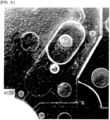
- FIGS. 4 to 5 are photographs for confirming the number of bubbles generated during the liquid delivery in Examples 1 to 2.
- FIG. 6 is a photograph for confirming the number of bubbles generated during the liquid delivery in Comparative Example 1.
- Example 3 to 9 and Comparative Examples 2 to 6 the same observation was performed, and the antifoaming effect was determined according to the following evaluation criteria based on the number of bubbles generated during the liquid delivery.
- RNA in the recovery liquid was evaluated. Specifically, an RT-PCR reaction solution was prepared using 2 ⁇ L of the recovery liquid, the primer, and TaqPath 1-Step Multiplex Master Mix (manufactured by Thermo Fisher). Furthermore, as a standard, the RT-PCR reaction solution (3 levels of nucleic acid concentration: 50,000 copies/ ⁇ L, 5,000 copies/ ⁇ L, and 500 copies/uL) containing 2 ⁇ L of a solution obtained by extracting and purifying the same virus using QIAamp Viral RNA Mini Kit manufactured by QIAGEN was also prepared.
- RNA recovery rate Amount of nucleic acid calculated by CFX 96 ⁇ Amount of recovery liquid / 2 ⁇ 100 / 3,0000
- Example 1 Example 2 Comparati ve Example 1 Comparati ve Example 2 Comparati ve Example 3 Comparati ve Example 4 Comparati ve Example 5 Comparati ve Example 6
- Antifoaming agent Nonionic surfacta nt Silicone antifoami ng agent - Nonionic surfactan t Silicone antifoami ng agent - Cationic surfactan t
- Example 3 Example 4
- Example 5 Example 6
- Example 7 Example 2
- Example 8 Example 9 Comparat ive Example 1 Antifoamin g agent Nonioni
Landscapes
- Chemical & Material Sciences (AREA)
- Engineering & Computer Science (AREA)
- Health & Medical Sciences (AREA)
- Biomedical Technology (AREA)
- Life Sciences & Earth Sciences (AREA)
- Genetics & Genomics (AREA)
- Bioinformatics & Cheminformatics (AREA)
- Organic Chemistry (AREA)
- Zoology (AREA)
- Wood Science & Technology (AREA)
- Biotechnology (AREA)
- General Engineering & Computer Science (AREA)
- Crystallography & Structural Chemistry (AREA)
- Plant Pathology (AREA)
- Molecular Biology (AREA)
- Microbiology (AREA)
- Biophysics (AREA)
- Physics & Mathematics (AREA)
- Biochemistry (AREA)
- General Health & Medical Sciences (AREA)
- Analytical Chemistry (AREA)
- Apparatus Associated With Microorganisms And Enzymes (AREA)
- Measuring Or Testing Involving Enzymes Or Micro-Organisms (AREA)
Abstract
Description
- The present invention relates to a nucleic acid purification method, and a nucleic acid extraction liquid and a nucleic acid purification kit that are used in the nucleic acid purification method.
- Conventionally, various methods for purifying nucleic acids such as RNA and DNA contained in samples such as viruses, bacteria, fungi, or cells have been studied. For example, a method is known in which a precipitation reagent such as alcohol is added to an extraction liquid containing a nucleic acid derived from a sample to precipitate the nucleic acid, the precipitated nucleic acid is adsorbed on a solid phase carrier, impurities such as proteins derived from the sample attached to the solid phase carrier together with the nucleic acid are washed, and then the nucleic acid is recovered by an eluate.
- For example,
Patent Document 1 below discloses a method for separating and purifying a nucleic acid using a microdevice. The method for separating and purifying a nucleic acid includes steps of: bringing a sample solution containing a nucleic acid into contact with a nucleic acid adsorptive carrier to adsorb the nucleic acid; washing the nucleic acid adsorptive carrier with a washing liquid in a state where the nucleic acid is adsorbed; and desorbing the nucleic acid from the nucleic acid adsorptive carrier with a recovery liquid to purify the nucleic acid. - Furthermore,
Patent Document 1 describes that a pretreatment step of mixing and homogenizing a specimen and a nucleic acid solubilizing reagent to obtain the sample solution containing a nucleic acid may be included. It is described that the nucleic acid solubilizing reagent may be a solution containing at least one of a chaotropic salt, a surfactant, a proteolytic enzyme, an antifoaming agent, and a nucleic acid stabilizer. - Patent Document 1:
JP 2006-087372 A - Meanwhile, when a solution is delivered using a microchip, there is a problem that bubbles are generated and affect purification and detection of nucleic acid.
- Even when the nucleic acid purification method of
Patent Document 1 is used, generation of bubbles may not be sufficiently suppressed. In addition, even when the generation of bubbles can be suppressed, efficiency of nucleic acid recovery may not be sufficiently improved. Therefore, the nucleic acid purification method ofPatent Document 1 has a problem that it is difficult to achieve both suppression of bubble generation and improvement of efficiency of nucleic acid recovery. - In addition, also in a nucleic acid purification method using a spin column or magnetic beads, there is a case where filter filtration of an extraction liquid is performed in order to remove impurities derived from a specimen, but there is a problem that handleability of the filter filtration is deteriorated due to an increase in filtration resistance due to viscosity derived from the specimen or foaming derived from the specimen.
- Therefore, the conventional nucleic acid purification method has a problem that it is difficult to efficiently purify the nucleic acid.
- An object of the present invention is to provide a nucleic acid purification method capable of efficiently purifying a nucleic acid, and a nucleic acid extraction liquid and a nucleic acid purification kit used in the nucleic acid purification method.
- A nucleic acid purification method according to the present invention includes the steps of: mixing a nucleic acid with an antifoaming agent and a coprecipitation agent; and purifying the nucleic acid, in which the antifoaming agent is at least one of a nonionic surfactant and a silicone antifoaming agent.
- In a specific aspect of the nucleic acid purification method according to the present invention, the nucleic acid is mixed with the antifoaming agent and the coprecipitation agent, and then the nucleic acid is adsorbed on a solid phase carrier and purified.
- Another specific aspect of the nucleic acid purification method according to the present invention further includes a step of preparing a nucleic acid extraction liquid containing the antifoaming agent and the coprecipitation agent in advance, in which a sample containing the nucleic acid is brought into contact with the nucleic acid extraction liquid to mix the nucleic acid with the antifoaming agent and the coprecipitation agent.
- In still another specific aspect of the nucleic acid purification method according to the present invention, the antifoaming agent is a nonionic surfactant.
- In still another specific aspect of the nucleic acid purification method according to the present invention, the nucleic acid purification method further includes a step of preparing a nucleic acid extraction liquid containing the antifoaming agent and the coprecipitation agent in advance, in which a content of the nonionic surfactant in the nucleic acid extraction liquid is 0.001 vol% or more and 1 vol% or less.
- In still another specific aspect of the nucleic acid purification method according to the present invention, the nonionic surfactant is at least one selected from a group consisting of a polyoxyalkylene alkyl ether, a polyoxyethylene octylphenyl ether, a polyoxyethylene distyrenated phenyl ether, a polyoxyalkylene fatty acid ester, a polyoxyalkylene glyceryl ether, a sorbitan fatty acid ester, a lauryl-β-D-maltoside, a polyoxyethylene alkylamine, a palm kernel oil fatty acid diethanolamide, and a digitonin.
- In still another specific aspect of the nucleic acid purification method according to the present invention, the nonionic surfactant is a mixture of a polyoxyalkylene alkyl ether and a polyoxyalkylene fatty acid ester.
- In still another specific aspect of the nucleic acid purification method according to the present invention, the antifoaming agent is the silicone antifoaming agent.
- In still another specific aspect of the nucleic acid purification method according to the present invention, the nucleic acid purification method further includes a step of preparing a nucleic acid extraction liquid containing the antifoaming agent and the coprecipitation agent in advance, in which a content of the silicone antifoaming agent in the nucleic acid extraction liquid is 0.001 vol% or more and 10 vol% or less.
- In still another specific aspect of the nucleic acid purification method according to the present invention, the silicone antifoaming agent includes a silicone oil and an emulsifier.
- In still another specific aspect of the nucleic acid purification method according to the present invention, the silicone antifoaming agent is obtained by emulsifying a silicone oil with a nonionic surfactant.
- In still another specific aspect of the nucleic acid purification method according to the present invention, the coprecipitation agent is a polyadenine.
- The nucleic acid extraction liquid according to the present invention is a nucleic acid extraction liquid used for nucleic acid purification, and contains an antifoaming agent and a coprecipitation agent, in which the antifoaming agent is at least one of a nonionic surfactant and a silicone antifoaming agent.
- In a specific aspect of the nucleic acid extraction liquid according to the present invention, the antifoaming agent is the nonionic surfactant.
- In another specific aspect of the nucleic acid extraction liquid according to the present invention, a content of the nonionic surfactant in the nucleic acid extraction liquid is 0.001 vol% or more and 1 vol% or less.
- In still another specific aspect of the nucleic acid extraction liquid according to the present invention, the nonionic surfactant is at least one selected from a group consisting of a polyoxyalkylene alkyl ether, a polyoxyethylene branched alkyl ether, a polyoxyethylene octylphenyl ether, a polyoxyethylene distyrenated phenyl ether, a polyoxyethylene phytosteryl ether, a polyoxyalkylene fatty acid ester, a polyoxyalkylene glyceryl ether, a sorbitan fatty acid ester, a lauryl-β-D-maltoside, a polyoxyethylene alkylamine, a palm kernel oil fatty acid diethanolamide, and a digitonin.
- In still another specific aspect of the nucleic acid extraction liquid according to the present invention, the nonionic surfactant is a mixture of a polyoxyalkylene alkyl ether and a polyoxyalkylene fatty acid ester.
- In still another specific aspect of the nucleic acid extraction liquid according to the present invention, the antifoaming agent is the silicone antifoaming agent.
- In still another specific aspect of the nucleic acid extraction liquid according to the present invention, a content of the silicone antifoaming agent in the nucleic acid extraction liquid is 0.001 vol% or more and 10 vol% or less.
- In still another specific aspect of the nucleic acid extraction liquid according to the present invention, the silicone antifoaming agent includes a silicone oil and an emulsifier.
- In still another specific aspect of the nucleic acid extraction liquid according to the present invention, the silicone antifoaming agent is obtained by emulsifying the silicone oil with the nonionic surfactant.
- In still another specific aspect of the nucleic acid extraction liquid according to the present invention, the coprecipitation agent is a polyadenine.
- The nucleic acid purification kit according to the present invention includes a nucleic acid extraction liquid configured according to the present invention.
- According to the present invention, it is possible to provide a nucleic acid purification method capable of efficiently purifying a nucleic acid, and a nucleic acid extraction liquid and a nucleic acid purification kit used in the nucleic acid purification method.
-
-
FIG. 1 is a schematic plan view showing a microchip used in a nucleic acid purification method according to one embodiment of the present invention. -
FIG. 2 is a schematic cross-sectional view of a portion taken along a line A-A inFIG. 1 . -
FIG. 3 is a schematic view for illustrating a state in which a nucleic acid is adsorbed on an anionic adsorbent in the nucleic acid purification method according to one embodiment of the present invention. -
FIG. 4 is a photograph for confirming the number of bubbles generated during liquid delivery in Example 1. -
FIG. 5 is a photograph for confirming the number of bubbles generated during the liquid delivery in Example 2. -
FIG. 6 is a photograph for confirming the number of bubbles generated during the liquid delivery in Comparative Example 1. - The following will clarify the present invention by describing specific embodiments of the present invention with reference to the drawings.
- A nucleic acid purification method of the present invention includes a step of mixing a nucleic acid with an antifoaming agent and a coprecipitation agent, and a step of purifying the nucleic acid. In the present invention, the antifoaming agent is at least one of a nonionic surfactant and a silicone antifoaming agent.
- The nucleic acid can be efficiently purified because the nucleic acid purification method of the present invention includes the step of mixing the nucleic acid with the antifoaming agent and the coprecipitation agent, and at least one of the nonionic surfactant and the silicone antifoaming agent is used as the antifoaming agent.
- Conventionally, when a solution is delivered using a microchip, there has been a problem that bubbles are generated particularly when a highly viscous solution is delivered, and affect purification and detection of nucleic acid. When the nucleic acid concentration is low, there has been also a problem that nucleic acid purification efficiency particularly decreases. In addition, even when the generation of bubbles can be suppressed, there has been a problem that the efficiency of nucleic acid recovery cannot be sufficiently enhanced. Therefore, the conventional nucleic acid purification method has a problem that it is difficult to achieve both suppression of bubble generation and improvement of efficiency of nucleic acid recovery.
- On the other hand, the present inventors have found that generation of bubbles can be suppressed by mixing a nucleic acid with the antifoaming agent that is at least one of the nonionic surfactant and the silicone antifoaming agent in a pre-step of purifying the nucleic acid. Furthermore, in this case, it has been found that the efficiency of nucleic acid recovery can be further enhanced by mixing the nucleic acid and the coprecipitation agent. In other words, the present inventors have found that, by mixing the nucleic acid with a specific antifoaming agent and the coprecipitation agent in the pre-step of purifying the nucleic acid, both suppression of bubble generation and improvement of efficiency of nucleic acid recovery can be achieved at a high level. Therefore, according to the nucleic acid purification method of the present invention, the nucleic acid can be efficiently purified. Accordingly, a sufficient amount of nucleic acid can be obtained by one purification treatment, so that sensitivity of analysis and examination in the subsequent steps can be enhanced.
- The nucleic acid extraction liquid of the present invention contains an antifoaming agent and a coprecipitation agent. The antifoaming agent is at least one of a nonionic surfactant and a silicone antifoaming agent.
- The nonionic surfactant is not particularly limited, and examples thereof include a polyoxyalkylene alkyl ether, a polyoxyethylene branched alkyl ether, a polyoxyethylene octylphenyl ether, a polyoxyethylene distyrenated phenyl ether, a polyoxyethylene phytosteryl ether, a polyoxyalkylene fatty acid ester, a polyoxyalkylene glyceryl ether, a sorbitan fatty acid ester, a lauryl-β-D-maltoside, a polyoxyethylene alkylamine, a palm kernel oil fatty acid diethanolamide, a digitonin, a polyoxyethylene polyoxypropylene glycol, an alkyl polyglycoside, an alkyl alkanolamide, polyoxyethylene hydrogenated castor oil, a polyethylene glycol fatty acid ester, an alkyl glyceryl ether, a polyoxyethylene polyoxypropylene glycol, a polyoxyethylene alkyl ether, a polyoxyethylene sorbitol tetraoleate, a polyoxyethylene sorbitan fatty acid ester, a propylene glycol fatty acid ester, a glycerin fatty acid ester, and the like. Furthermore, examples of the polyoxyalkylene alkyl ether include a polyoxyethylene lauryl ether, a polyoxyethylene cetyl ether, a polyoxyethylene stearyl ether, and a polyoxyethylene oleyl ether. Moreover, examples of the polyoxyethylene branched alkyl ether include a polyoxyethylene isodecyl ether, a polyoxyethylene tridecyl ether, a polyoxyethylene octyldodecyl ether, and the like. These may be used singly or in combination of two or more kinds thereof.
- The nonionic surfactant is preferably a mixture of a polyoxyalkylene alkyl ether and a polyoxyalkylene fatty acid ester. In this case, the generation of bubbles can be more reliably suppressed.
- Furthermore, examples of the fatty acid constituting the fatty acid ester include a stearic acid, an oleic acid, an isostearic acid, a lauric acid, and a caprylic acid.
- The content of the nonionic surfactant in the nucleic acid extraction liquid is preferably 0.001 vol% or more, more preferably 0.01 vol% or more, and preferably 1 vol% or less, more preferably 0.1 vol% or less. When the content of the nonionic surfactant is within the above range, the generation of bubbles can be more reliably suppressed, and the efficiency of nucleic acid recovery can be further improved.
- The silicone antifoaming agent is preferably an antifoaming agent including a silicone oil and an emulsifier. Alternatively, the silicone antifoaming agent is preferably one obtained by emulsifying the silicone oil with a nonionic surfactant. Examples of the silicone antifoaming agent include Bisfoam GC-302 and Bisfoam ED-10 (manufactured by NISSIN KAGAKU KENKYUSHO CO., LTD.); and Shin-Etsu Silicones (registered trademark) KM-70, KM-71, KM-72, KM-72F, KM-72FS, KM-72S, KM-73, KM-73A, KM-73E, KM-75, KM-7750D, KM-7752, KM-85, KM-89, KM-90, and KM-98 (manufactured by Shin-Etsu Chemical Co., Ltd.).
- Examples of the emulsifier include the nonionic surfactant described above and the like.
- The content of the silicone antifoaming agent in the nucleic acid extraction liquid is preferably 0.001 vol% or more, more preferably 0.01 vol% or more, and preferably 10 vol% or less, more preferably 0.1 vol% or less. When the content of the silicone antifoaming agent is within the above range, the generation of bubbles can be more reliably suppressed, and the efficiency of nucleic acid recovery can be further improved.
- The coprecipitation agent is not particularly limited, and examples thereof include a tRNA, a polyadenine, an acrylamide polymer, a glycogen, a dextran, a polyethylene glycol, a sodium chloride, a lithium chloride, a sodium acetate, and an ammonium acetate. Among them, the coprecipitation agent is preferably a polyadenine. In this case, the efficiency of nucleic acid recovery can be further improved. The number of bases of polyadenine can be, for example, 300 or more and 3,500 or less.
- The content of the coprecipitation agent in the nucleic acid extraction liquid is preferably 10 ng/µL or more, more preferably 20 ng/µL or more, and preferably 40 ng/uL or less, more preferably 30 ng/uL or less. When the content of the coprecipitation agent is within the above range, the generation of bubbles can be more reliably suppressed, and the efficiency of nucleic acid recovery can be further improved.
- As the nucleic acid extraction liquid, for example, a solution containing a protein denaturant, metal cations, and a polar solvent can be used in addition to the antifoaming agent and the coprecipitation agent. The content of the polar solvent in the nucleic acid extraction liquid is preferably 50% or more.
- The protein denaturant has a role of breaking down a higher order structure of a protein by interacting with the protein. As the protein denaturant, for example, a surfactant, a reducing agent, a guanidine derivative, thiourea, urea, a salt thereof, or the like can be used. As the surfactant, for example, a sodium dodecyl sulfate (SDS), a polyoxyethylene sorbitan monolaurate (Tween20), or the like can be used. As the reducing agent, for example, a 2-mercaptoethanol, a dithiothreitol (DTT), or the like can be used. Furthermore, as the salt, for example, a salt such as a guanidine hydrochloride can be used. These protein denaturants may be used singly or in combination of two or more kinds thereof.
- The concentration of the protein denaturant in the nucleic acid extraction liquid is not particularly limited, but is preferably 2 mol/L or more, more preferably 4 mol/L or more, still more preferably 8 mol/L or more, and preferably 10 mol/L or less. By setting the concentration of the protein denaturant within the above range, the nucleic acid can be more reliably extracted. Furthermore, when two or more protein denaturants are contained, a total concentration is preferably within the above range.
- The metal cations are not particularly limited, and for example, an alkali metal ion, an alkaline earth metal ion, a transition metal ion, or a group 12 metal ion can be used.
- Examples of the alkali metal ion include a potassium ion, a sodium ion, a lithium ion, a rubidium ion, a cesium ion, and a francium ion.
- Examples of the alkaline earth metal ion include a calcium ion, a magnesium ion, a beryllium ion, a strontium ion, a barium ion, and a radium ion.
- Examples of the transition metal ion include a manganese ion, an iron ion, a cobalt ion, a nickel ion, and a copper ion.
- Examples of the group 12 metal ion include a zinc ion, a cadmium ion, and a mercury ion.
- These metal cations may be used singly or in combination of two or more kinds thereof.
- Valence of the metal cations is preferably divalent or more. Examples of the divalent or higher metal cations include the calcium ions and the magnesium ions. When the divalent or higher metal cations are used, the nucleic acid can be recovered more efficiently.
- The concentration of the metal cations in the nucleic acid extraction liquid is preferably 0.5 mol/L or more, more preferably 1 mol/L or more, and still more preferably 2 mol/L or more. When the concentration of the metal cations is a lower limit value or more, the nucleic acid can be more efficiently recovered. An upper limit value of the concentration of the metal cations is not particularly limited, but can be, for example, 6 mol/L.
- The polar solvent is not particularly limited, and examples thereof include water, a dimethyl sulfoxide (DMSO), an N,N-dimethylformamide (DMF), a dimethylacetamide (DMA), a methoxypropanol, a polyethylene glycol, a pentanediol, a propanediol, an aminoethanol, and a diethanolamine. These polar solvents may be used singly or in combination of two or more kinds thereof. Incidentally, the polar solvent may not be contained in the nucleic acid extraction liquid. Furthermore, the nucleic acid extraction liquid may contain a solvent other than the polar solvent. However, from a viewpoint of more reliably extracting the nucleic acid, it is preferable that a polar solvent such as water is contained in the nucleic acid extraction liquid.
- In the nucleic acid purification method of the present invention, the nucleic acid may be purified using a microchip. An example of the microchip will be described below with reference to the drawings.
-
FIG. 1 is a schematic plan view showing a microchip used in a nucleic acid purification method according to one embodiment of the present invention. Furthermore,FIG. 2 is a schematic cross-sectional view of a portion taken along the line A-A inFIG. 1 . - As illustrated in
FIGS. 1 and 2 , amicrochip 1 has aflow path 2 through which a fluid is delivered. Arecovery unit 3 is provided in the middle of theflow path 2. Therefore, theflow path 2 includes an upstreamside flow path 2a provided upstream of therecovery unit 3 and a downstreamside flow path 2b provided downstream of therecovery unit 3. In addition, asolid phase carrier 4 for adsorbing and purifying a nucleic acid is disposed in therecovery unit 3. - The
microchip 1 is a chip used for examination and analysis. Themicrochip 1 is not particularly limited, but in the present embodiment, as illustrated inFIG. 2 , includes a plate-like substrate 5 and acover member 6. Thesubstrate 5 has amain surface 5a. Arecess portion 5b is provided on themain surface 5a side of thesubstrate 5. Therecess portion 5b is provided so as to open toward themain surface 5a side of thesubstrate 5. - The material constituting the
substrate 5 is not particularly limited, and for example, a synthetic resin, a rubber, a metal, or the like can be used. The synthetic resin is not particularly limited, but is preferably a thermoplastic resin. As the thermoplastic resin, for example, a cycloolefin polymer, a cycloolefin copolymer, a polycarbonate, a polymethyl methacrylate, a polypropylene, or the like can be used. These may be used singly or in combination of two or more kinds thereof. - The
substrate 5 is preferably formed of a molded body of the thermoplastic resin. A molding method is not particularly limited, and a known molding method can be used. Examples of the molding method include an injection molding, an injection compression molding, a gas assist method injection molding, an extrusion molding, a multilayer extrusion molding, a rotation molding, a hot press molding, a blow molding, and a foam molding. Among them, the injection molding is preferable. - The
substrate 5 may be formed by laminating a plurality of synthetic resin sheets. Thesubstrate 5 may include a base sheet and a substrate main body having a through hole provided on the base sheet. - The
cover member 6 is provided on themain surface 5a of thesubstrate 5. Thecover member 6 is provided so as to close therecess portion 5b of thesubstrate 5. Thecover member 6 closes therecess portion 5b of thesubstrate 5 to form therecovery unit 3. Furthermore, in the present embodiment, the upstreamside flow path 2a and the downstreamside flow path 2b are similarly configured by thecover member 6 closing therecess portion 5b of thesubstrate 5. - The
cover member 6 can be made of, for example, a flexible material such as a resin film. As the resin film, for example, thermoplastic resins such as a cycloolefin polymer, a cycloolefin copolymer, a polycarbonate, a polymethyl methacrylate, or a polypropylene can be used. - Furthermore, the
cover member 6 may be made of an elastic member. The elastic member is not particularly limited, but is preferably an elastomer. In addition, in the present invention, thesubstrate 5 and thecover member 6 may be integrally formed. - In the
substrate 5, theflow path 2 described above through which the fluid is delivered is provided. Here, theflow path 2 is a micro flow path. Theflow path 2 does not necessarily be the micro flow path, and may have a cross-sectional area larger than that of the micro flow path. However, theflow path 2 being the micro flow path is preferable. Thereby, various analyses can be performed with a trace amount of sample. - The micro flow path refers to a fine flow path in which a micro effect is generated when a fluid is conveyed. In such a micro flow path, the liquid is strongly affected by a surface tension, and exhibits behavior different from that of the liquid flowing through a channel having a normal large size.
- Cross-sectional shape and size of the micro flow path are not particularly limited as long as the micro flow path is a flow path in which the micro effect described above occurs. For example, in a case where a pump or gravity is used to cause the fluid to flow in the micro flow path, from the viewpoint of reducing flow path resistance, when the cross-sectional shape of the micro flow path is generally rectangular (including square shape), a length of the short side is preferably 20 um or more, more preferably 50 um or more, still more preferably 100 um or more. From the viewpoint of further downsizing a microfluidic device using the
microchip 1, the length of the short side is preferably 5 mm or less, more preferably 1 mm or less, and still more preferably 500 um or less. - Furthermore, when the cross-sectional shape of the micro flow path is generally circular, a diameter (a minor axis in a case of ellipse) is preferably 20 um or more, more preferably 50 um or more, and still more preferably 100 um or more. From the viewpoint of further downsizing the microfluidic device, the diameter (the minor axis in the case of ellipse) is preferably 5 mm or less, more preferably 1 mm or less, and still more preferably 500 um or less.
- Each step of the nucleic acid purification method of the present invention will be described below.
- In the extraction step, a sample containing the nucleic acid is brought into contact with a nucleic acid extraction liquid. In this way, the nucleic acid in the sample is extracted, and a nucleic acid extraction liquid containing the nucleic acid is obtained.
- It is preferable that the antifoaming agent and the coprecipitation agent described above are contained in the nucleic acid extraction liquid in advance. In other words, it is preferable that the antifoaming agent and the coprecipitation agent are added to the nucleic acid extraction liquid before the nucleic acid extraction liquid is brought into contact with the sample containing the nucleic acid. In this case, the efficiency of nucleic acid recovery can be further improved. However, the antifoaming agent and the coprecipitation agent may be added to the nucleic acid extraction liquid after the nucleic acid extraction liquid is brought into contact with the sample containing the nucleic acid. In any case, the nucleic acid, the antifoaming agent, and the coprecipitation agent can be mixed.
- Examples of the sample containing the nucleic acid include a biological sample containing the nucleic acid such as DNA or RNA. Examples of the biological sample include cells, blood, tissue fluid, urine, feces, and the like. In addition, the sample containing the nucleic acid may be, for example, a sample containing the nucleic acid in an environment such as soil, sea water, or river water, and is not particularly limited.
- In the nucleic acid adsorption step, the nucleic acid is adsorbed to the solid phase carrier by bringing the nucleic acid extraction liquid containing the nucleic acid into contact with the solid phase carrier.
- In the nucleic acid purification method using the
microchip 1 illustrated inFIGS. 1 and 2 , the nucleic acid extraction liquid after the nucleic acid extraction in the nucleic acid extraction step is injected into the upstreamside flow path 2a from aninjection port 7a and is delivered to therecovery unit 3. Thereby, the nucleic acid is adsorbed to thesolid phase carrier 4 in therecovery unit 3. - The
solid phase carrier 4 is a carrier for carrying the nucleic acid. In the present embodiment, thesolid phase carrier 4 is an anionic adsorbent. Furthermore, the nucleic acid extraction liquid used in the extraction step contains metal cations. - Therefore, when the sample containing the nucleic acid comes into contact with the nucleic acid extraction liquid, the metal cations are ionically bound to the nucleic acid that is negatively charged. When such an extraction solution after nucleic acid extraction is brought into contact with the anionic adsorbent, the metal cations are ionically bound to the anionic adsorbent as shown in
FIG. 3 . Thereby, the nucleic acid can be adsorbed to the anionic adsorbent via the metal cations. - Accordingly, in this case, the nucleic acid can be easily adsorbed to the anionic adsorbent via the metal cations. Since the metal cations do not inhibit the extraction of the nucleic acid even when added to the nucleic acid extraction liquid, a step of further adding the solution after the nucleic acid extraction may not be provided as in the conventional method using an alcohol. Therefore, a complicated process is not required.
- However, the
solid phase carrier 4 may not be an anionic adsorbent, and the nucleic acid extraction liquid used in the extraction step may not contain the metal cations. In other words, the nucleic acid may be adsorbed to thesolid phase carrier 4 by another method. - The form of the anionic adsorbent is not particularly limited, and for example, the anionic adsorbent can be used in a form of a film, a filter, a plate, a tube, a fibrous form, or the like. The shape of the anionic adsorbent is preferably a fiber, a particle, or a porous one.
- The anionic adsorbent is not particularly limited, and can be composed of, for example, silicon compounds, phosphate minerals, silicate minerals, or aluminosilicate minerals. Examples of the silicon compounds include silica and glass. Examples of the phosphate minerals include a hydroxyapatite. Examples of the silicate minerals include a talc and a montmorillonite. Examples of the aluminosilicate minerals include a zeolite. These may be used singly or in combination of two or more kinds thereof.
- The anionic adsorbent is preferably silica fibers or glass fibers, and more preferably the silica fibers. In the present embodiment, the silica fibers are used as the anionic adsorbent. However, the anionic adsorbent may be silica particles or a porous body of silica.
- In the washing step, the solid phase carrier to which the nucleic acid is adsorbed is washed by bringing the washing liquid into contact with the solid phase carrier to which the nucleic acid is adsorbed in the nucleic acid adsorption step.
- In the nucleic acid purification method using the
microchip 1, the washing liquid is delivered to therecovery unit 3. Thereby, thesolid phase carrier 4 on which the nucleic acid is adsorbed is washed. - The washing liquid is not particularly limited, and examples thereof include water, a hydrochloric acid-potassium chloride buffer, a glycine-hydrochloric acid buffer, a citric acid-sodium citrate buffer, and a citric acid-phosphate buffer. These may be used alone or in combination of two or more.
- The pH of the washing liquid is preferably 5.0 or less, and more preferably 4.0 or less. When the pH of the washing liquid is the above upper limit value or less, unnecessary metal ions can be more reliably removed without desorbing the nucleic acid adsorbed to the anionic adsorbent, and the amplification of the nucleic acid in the subsequent step can be even less likely to be inhibited. In addition, in this case, since alcohol that inhibits a nucleic acid amplification reaction is not used in the washing liquid, an operation of removing the alcohol before the nucleic acid amplification reaction is unnecessary, and the nucleic acid can be purified more easily.
- Moreover, the lower limit value of the pH of the washing liquid can be, for example, 2.0.
- Next, the recovery liquid is brought into contact with the solid phase carrier washed in the washing step to isolate the nucleic acid from the anionic adsorbent and recover the nucleic acid.
- Specifically, in the nucleic acid purification method using the
microchip 1, the recovery liquid is delivered to therecovery unit 3, the nucleic acid is delivered to the downstreamside flow path 2b side while being isolated from thesolid phase carrier 4, and the nucleic acid is recovered from arecovery port 7b. - The recovery liquid is preferably a solution that does not inhibit the nucleic acid amplification reaction. In this case, the accuracy of analysis and examination in the subsequent process can be further enhanced.
- As the recovery liquid, a buffer, a reagent for nucleic acid amplification, or the like can be used.
- As the buffer, trishydroxymethylaminomethane (Tris), N-tris(hydroxymethyl)methyl-2-aminoethanesulfonic acid (TES), tricine, PIPES, ACES, MOPSO, BES, MOPS, HEPES, TAPSO, POPSO, HEPSO, EPPS, Bicine, TAPS, a phosphate buffer, or the like can be used.
- As the reagent for nucleic acid amplification, TaqPath 1-Step Multiplex Master Mix, TaqMan Gene Expression Master Mix, TaqMan Fast Advanced Master Mix Mix, TaqPath qPCR Master Mix, CG, TaqMan Fast Virus 1-Step Master Mix (manufactured by Thermo Fisher), or the like can be used.
- These may be used singly or in combination of two or more kinds thereof.
- The pH of the buffer is preferably 6.0 or more, more preferably 7.0 or more, and still more preferably 8.0 or more. In this case, the nucleic acid can be recovered more efficiently. The upper limit value of the pH of the buffer is not particularly limited, but can be, for example, 9.0.
- The concentration of the buffer is preferably 5 mmol/L or more, more preferably 10 mmol/L or more, and preferably 50 mmol/L or less, more preferably 30 mmol/L or less. When the concentration of the buffer is within the above range, the nucleic acid can be recovered more efficiently.
- Furthermore, in the nucleic acid adsorption step, the washing step, and the nucleic acid recovery step, the liquid can be delivered using, for example, a micropump. The micropump is not particularly limited, and examples thereof include an optical gas generation tape. The optical gas generation tape is a tape capable of generating gas by light irradiation.
- Note that, in the present embodiment, the example of using the
microchip 1 illustrated inFIGS. 1 and 2 has been described, but a structure is not particularly limited as long as it is a microchip having the micro flow path described above. - Furthermore, in the nucleic acid purification method of the present invention, the nucleic acid may be purified using a spin column or magnetic beads. Also in this case, due to an effect of the antifoaming agent, wettability is improved and foaming can be suppressed, so that filter filtration time can be further shortened. In addition, by mixing the nucleic acid and the coprecipitation agent, the efficiency of nucleic acid recovery can be further enhanced. Therefore, also in this case, the nucleic acid can be efficiently purified.
- The nucleic acid purification kit of the present invention includes the nucleic acid extraction liquid of the present invention described above. The nucleic acid purification kit of the present invention may further include a washing liquid, a recovery liquid, an anionic adsorbent, and the like. According to the nucleic acid purification kit of the present invention, a nucleic acid can be efficiently purified by using the nucleic acid purification method described above. As the washing liquid, the recovery liquid, and the anionic adsorbent, the same ones as those described above in the nucleic acid purification method can be used.
- The following will clarify the present invention by giving specific examples and comparative examples of the present invention. Note that the present invention is not limited to the following examples.
- In Example 1, the
microchip 1 illustrated inFIGS. 1 and 2 was produced as follows. - The cycloolefin polymer was used as a material constituting the
substrate 5, and the cycloolefin polymer was injection-molded to produce thesubstrate 5 having therecess portion 5b. In addition, a sealing tape was used for thecover member 6, and therecess portion 5b of thesubstrate 5 was closed with the sealing tape to produce themicrochip 1. Furthermore, in therecovery unit 3, the silica fibers as the anionic adsorbent were disposed as the solid phase carrier 4 (2 mmϕ, thickness 0.8 mm). In addition, a width of theflow path 2 was 0.8 mm, and a depth was 0.8 mm. - Using
such microchip 1, a nucleic acid (RNA) was recovered as follows. Furthermore, the liquid delivery was performed using an optical gas generation tape. - First, a nucleic acid extraction liquid in which nasal mucus was suspended in an aqueous solution containing the nonionic surfactant (Bisfoam ASV manufactured by NISSIN KAGAKU KENKYUSHO CO., LTD.) as the antifoaming agent, polyadenine (Carrier RNA manufactured by QIAGEN, product number "1017647", hereinafter referred to as cRNA) as the coprecipitation agent, 4 mol/L of urea, 4 mol/L of guanidine hydrochloride, 2 mol/L of calcium chloride, and Tris-HCl Buffer (pH 7.0) was prepared. The concentration of the nonionic surfactant in the nucleic acid extraction liquid was 0.1 vol%. The concentration of polyadenine (cRNA) in the nucleic acid extraction liquid was 20 ng/µL.
- Next, a sample containing 1 µL of the nucleic acid (RNA) (virus; 60,000 copies) was added to 150 µL of the nucleic acid extraction liquid to extract the nucleic acid.
- Then, the nucleic acid extraction liquid after the nucleic acid extraction was delivered from the upstream
side flow path 2a to therecovery unit 3 to adsorb the nucleic acid to the silica fibers of therecovery unit 3. - Next, 400 µL of the washing liquid (10 mmol/L, KCl-HCl Buffer (pH 2.0)) was delivered to the
recovery unit 3 to wash the silica fibers carrying the nucleic acid, and the washing liquid after delivery was recovered. The recovery liquid (21 µL) (10 mmol/L, Tris-HCl Buffer (pH 8.0)) was delivered to therecovery unit 3, and the nucleic acid (RNA) carried in therecovery unit 3 was isolated and recovered. - The nucleic acid (RNA) was isolated and recovered in the same manner as in Example 1 except that the silicone antifoaming agent (Bisfoam GC-302 manufactured by NISSIN KAGAKU KENKYUSHO CO., LTD.) was used as the antifoaming agent.
- The nucleic acid (RNA) was isolated and recovered in the same manner as in Example 1 except that the concentration of the nonionic surfactant as the antifoaming agent was changed as shown in Table 2 below.
- The nucleic acid (RNA) was isolated and recovered in the same manner as in Example 2 except that the concentration of the silicone antifoaming agent as the antifoaming agent was changed as shown in Table 2 below.
- A sample containing 1 µL of the nucleic acid (RNA) (virus; 100,000 copies) was added to 150 µL of a nucleic acid extraction liquid (aqueous solution containing 4 mol/L of urea, 4 mol/L of guanidine hydrochloride, 2 mol/L of calcium chloride, and Tris-HCl Buffer (pH 7.0)) to extract the nucleic acid. After the nucleic acid was extracted, the nonionic surfactant (Bisfoam ASV manufactured by NISSIN KAGAKU KENKYUSHO CO., LTD.) as the antifoaming agent and the polyadenine (cRNA manufactured by QIAGEN, product number "1017647") as the coprecipitation agent were added. The concentration of the nonionic surfactant in the nucleic acid extraction liquid was 0.1 vol%. The concentration of polyadenine (cRNA) in the nucleic acid extraction liquid was 20 ng/µL. Except for the above, the nucleic acid (RNA) was isolated and recovered in the same manner as in Example 1.
- The nucleic acid (RNA) was isolated and recovered in the same manner as in Example 10 except that the silicone antifoaming agent (Bisfoam GC-302 manufactured by NISSIN KAGAKU KENKYUSHO CO., LTD.) was used as the antifoaming agent.
- The nucleic acid (RNA) was isolated and recovered in the same manner as in Example 1 except that the antifoaming agent and the coprecipitation agent were not used.
- The nucleic acid (RNA) was isolated and recovered in the same manner as in Example 1 except that no coprecipitation agent was used.
- The nucleic acid (RNA) was isolated and recovered in the same manner as in Example 2 except that no coprecipitation agent was used.
- The nucleic acid (RNA) was isolated and recovered in the same manner as in Example 1 except that no antifoaming agent was used.
- The nucleic acid (RNA) was isolated and recovered in the same manner as in Example 1 except that a cationic surfactant (QUARTAMIN 24P manufactured by Kao Corporation) was used instead of the antifoaming agent in Example 1.
- The nucleic acid (RNA) was isolated and recovered in the same manner as in Example 1 except that the anionic surfactant (DEMOL NL manufactured by Kao Corporation) was used instead of the antifoaming agent in Example 1.
-
FIGS. 4 to 5 are photographs for confirming the number of bubbles generated during the liquid delivery in Examples 1 to 2.FIG. 6 is a photograph for confirming the number of bubbles generated during the liquid delivery in Comparative Example 1. - As shown in
FIGS. 4 to 6 , it can be seen that the generation of bubbles is suppressed in Examples 1 to 2 as compared with Comparative Example 1. - Furthermore, in Example 3 to 9 and Comparative Examples 2 to 6, the same observation was performed, and the antifoaming effect was determined according to the following evaluation criteria based on the number of bubbles generated during the liquid delivery.
-
- ∘: 5 or less
- ×: 6 or more and 10 or less
- ××: 11 or more
- In Examples 1 to 11 and Comparative Examples 1 to 6, a ratio of RNA in the recovery liquid was evaluated. Specifically, an RT-PCR reaction solution was prepared using 2 µL of the recovery liquid, the primer, and TaqPath 1-Step Multiplex Master Mix (manufactured by Thermo Fisher). Furthermore, as a standard, the RT-PCR reaction solution (3 levels of nucleic acid concentration: 50,000 copies/µL, 5,000 copies/µL, and 500 copies/uL) containing 2 µL of a solution obtained by extracting and purifying the same virus using QIAamp Viral RNA Mini Kit manufactured by QIAGEN was also prepared. Next, the RT-PCR reaction solution and the standard RT-PCR reaction solution prepared from the recovery liquid were amplified using a thermal cycler "CFX96 (Bio-Rad)". For amplification, a reverse transcription reaction was performed at 50°C for 30 seconds, then an initial denaturation was performed at 95°C for 20 seconds, and a PCR cycle was performed 45 times at 95°C for 3 seconds and 60°C for 5 seconds. After amplification, an RNA recovery rate (a recovery rate) was calculated according to the following calculation formula, based on the amount of nucleic acid automatically calculated by CFX96 from a standard.

- Furthermore, in Examples 1 to 9 and Comparative Examples 1 to 6, an overall evaluation of the antifoaming effect and the recovery rate was determined according to the following evaluation criteria.
-
- o: The recovery rate was 5% or more, and the above-mentioned evaluation for the antifoaming effect was o.
- ×: The recovery rate was 1% or more and less than 5% regardless of the antifoaming effect, or the above-mentioned evaluation for the antifoaming effect was × regardless of the recovery rate.
- ××: The recovery rate was less than 1% regardless of the antifoaming effect, or the above-mentioned evaluation for the antifoaming effect was ×× regardless of the recovery rate.
- The results are shown in Tables 1 to 3 below.
[Table 1] Example 1 Example 2 Comparati ve Example 1 Comparati ve Example 2 Comparati ve Example 3 Comparati ve Example 4 Comparati ve Example 5 Comparati ve Example 6 Antifoaming agent Nonionic surfacta nt Silicone antifoami ng agent - Nonionic surfactan t Silicone antifoami ng agent - Cationic surfactan t Anionic surfactan t Coprecipitat ion agent cRNA cRNA - - - cRNA cRNA cRNA Antifoaming effect ○ ○ ×× ○ ○ ×× ×× × Recovery rate 51.5% 42.5% 0.29% 0.24% 0.57% - - - Overall evaluation ○ ○ ×× ×× ×× ×× ×× × [Table 2] Example 3 Example 4 Example 1 Example 5 Example 6 Example 7 Example 2 Example 8 Example 9 Comparat ive Example 1 Antifoamin g agent Nonioni c surfact ant Nonioni c surfact ant Nonioni c surfact ant Nonioni c surfact ant Silicone antifoam ing agent Silicone antifoam ing agent Silicone antifoam ing agent Silicone antifoam ing agent Silicone antifoam ing agent Coprecipit ation agent cRNA cRNA cRNA cRNA cRNA cRNA cRNA cRNA cRNA - Concentrat ion of antifoamin g agent 0.001 vol% 0.01 vol% 0.10 vol% 1 vol% 0.001 vol% 0.01 vol% 0.10 vol% 1 vol% 10 vol% - Antifoamin g effect ○ ○ ○ ○ ○ ○ ○ ○ ○ ×× Recovery rate 42.7% 44.9% 51.5% 69.8% 28.4% 43.4% 42.5% 32.3% 9.8% 0.29% Overall evaluation ○ ○ ○ ○ ○ ○ ○ ○ ○ ×× [Table 3] Example 1 Example 10 Example 2 Example 11 Comparati ve Example 1 Antifoaming agent Nonionic surfacta nt Nonionic surfacta nt Silicone antifoami ng agent Silicone antifoami ng agent - Coprecipitati on agent cRNA cRNA cRNA cRNA - Addition timing of coprecipitati on agent/antifoa ming agent Pre-add to nucleic acid extracti on liquid Add to nucleic acid extracti on liquid after extracti on Pre-add to nucleic acid extractio n liquid Add to nucleic acid extractio n liquid after extractio n - Recovery rate 51.5% 46.7% 42.5% 52.4% 0.29% -
- 1
- Microchip
- 2
- Flow path
- 2a
- Upstream side flow path
- 2b
- Downstream side flow path
- 3
- Recovery unit
- 4
- Solid phase carrier
- 5
- Substrate
- 5a
- Main surface
- 5b
- Recess portion
- 6
- Cover member
- 7a
- Injection port
- 7b
- Recovery port
Claims (23)
- A nucleic acid purification method, comprising:a step of mixing a nucleic acid with an antifoaming agent and a coprecipitation agent; anda step of purifying the nucleic acid,whereinthe antifoaming agent is at least one of a nonionic surfactant and a silicone antifoaming agent.
- The nucleic acid purification method according to claim 1, wherein the nucleic acid is mixed with the antifoaming agent and the coprecipitation agent, and then the nucleic acid is adsorbed on a solid phase carrier and purified.
- The nucleic acid purification method according to claim 1 or 2, further comprising:a step of preparing a nucleic acid extraction liquid containing the antifoaming agent and the coprecipitation agent in advance, whereinthe nucleic acid is mixed with the antifoaming agent and the coprecipitation agent by bringing a sample containing the nucleic acid into contact with the nucleic acid extraction liquid.
- The nucleic acid purification method according to any one of claims 1 to 3, wherein the antifoaming agent is the nonionic surfactant.
- The nucleic acid purification method according to claim 4, further comprising a step of preparing a nucleic acid extraction liquid containing the antifoaming agent and the coprecipitation agent in advance, wherein
a content of the nonionic surfactant in the nucleic acid extraction liquid is 0.001 vol% or more and 1 vol% or less. - The nucleic acid purification method according to claim 4 or 5, wherein the nonionic surfactant is at least one selected from a group consisting of a polyoxyalkylene alkyl ether, a polyoxyethylene branched alkyl ether, a polyoxyethylene octylphenyl ether, a polyoxyethylene distyrenated phenyl ether, a polyoxyethylene phytosteryl ether, a polyoxyalkylene fatty acid ester, a polyoxyalkylene glyceryl ether, a sorbitan fatty acid ester, a lauryl-β-D-maltoside, a polyoxyethylene alkylamine, a palm kernel oil fatty acid diethanolamide, and a digitonin.
- The nucleic acid purification method according to any one of claims 4 to 6, wherein the nonionic surfactant is a mixture of a polyoxyalkylene alkyl ether and a polyoxyalkylene fatty acid ester.
- The nucleic acid purification method according to any one of claims 1 to 3, wherein the antifoaming agent is the silicone antifoaming agent.
- The nucleic acid purification method according to claim 8, further comprising a step of preparing a nucleic acid extraction liquid containing the antifoaming agent and the coprecipitation agent in advance, wherein
a content of the silicone antifoaming agent in the nucleic acid extraction liquid is 0.001 vol% or more and 10 vol% or less. - The nucleic acid purification method according to claim 8 or 9, wherein the silicone antifoaming agent includes a silicone oil and an emulsifier.
- The nucleic acid purification method according to any one of claims 8 to 10, wherein the silicone antifoaming agent is obtained by emulsifying the silicone oil with the nonionic surfactant.
- The nucleic acid purification method according to any one of claims 1 to 11, wherein the coprecipitation agent is a polyadenine.
- A nucleic acid extraction liquid used for nucleic acid purification, comprising:an antifoaming agent and a coprecipitation agent, whereinthe antifoaming agent is at least one of a nonionic surfactant and a silicone antifoaming agent.
- The nucleic acid extraction liquid according to claim 13, wherein the antifoaming agent is the nonionic surfactant.
- The nucleic acid extraction liquid according to claim 14, wherein a content of the nonionic surfactant in the nucleic acid extraction liquid is 0.001 vol% or more and 1 vol% or less.
- The nucleic acid extraction liquid according to claim 14 or 15, wherein the nonionic surfactant is at least one selected from a group consisting of a polyoxyalkylene alkyl ether, a polyoxyethylene octylphenyl ether, a polyoxyethylene distyrenated phenyl ether, a polyoxyalkylene fatty acid ester, a polyoxyalkylene glyceryl ether, a sorbitan fatty acid ester, a lauryl-β-D-maltoside, a polyoxyethylene alkylamine, a palm kernel oil fatty acid diethanolamide, and a digitonin.
- The nucleic acid extraction liquid according to any one of claims 14 to 16, wherein the nonionic surfactant is a mixture of a polyoxyalkylene alkyl ether and a polyoxyalkylene fatty acid ester.
- The nucleic acid extraction liquid according to claim 13, wherein the antifoaming agent is the silicone antifoaming agent.
- The nucleic acid extraction liquid according to claim 18, wherein a content of the silicone antifoaming agent in the nucleic acid extraction liquid is 0.001 vol% or more and 10 vol% or less.
- The nucleic acid extraction liquid according to claim 18 or 19, wherein the silicone antifoaming agent includes a silicone oil and an emulsifier.
- The nucleic acid extraction liquid according to any one of claims 18 to 20, wherein the silicone antifoaming agent is obtained by emulsifying the silicone oil with the nonionic surfactant.
- The nucleic acid extraction liquid according to any one of claims 13 to 21, wherein the coprecipitation agent is a polyadenine.
- A nucleic acid purification kit comprising the nucleic acid extraction liquid according to any one of claims 13 to 22.
Applications Claiming Priority (2)
| Application Number | Priority Date | Filing Date | Title |
|---|---|---|---|
| JP2020154343 | 2020-09-15 | ||
| PCT/JP2021/032411 WO2022059516A1 (en) | 2020-09-15 | 2021-09-03 | Nucleic acid purification method, nucleic acid extraction liquid, and nucleic acid purification kit |
Publications (2)
| Publication Number | Publication Date |
|---|---|
| EP4215610A1 true EP4215610A1 (en) | 2023-07-26 |
| EP4215610A4 EP4215610A4 (en) | 2024-10-16 |
Family
ID=80776975
Family Applications (1)
| Application Number | Title | Priority Date | Filing Date |
|---|---|---|---|
| EP21869203.6A Pending EP4215610A4 (en) | 2020-09-15 | 2021-09-03 | NUCLEIC ACID PURIFICATION METHOD, NUCLEIC ACID EXTRACTION LIQUID AND NUCLEIC ACID PURIFICATION KIT |
Country Status (5)
| Country | Link |
|---|---|
| US (1) | US20240011013A1 (en) |
| EP (1) | EP4215610A4 (en) |
| JP (1) | JPWO2022059516A1 (en) |
| CN (1) | CN116113695A (en) |
| WO (1) | WO2022059516A1 (en) |
Family Cites Families (9)
| Publication number | Priority date | Publication date | Assignee | Title |
|---|---|---|---|---|
| JP4422982B2 (en) * | 2003-06-24 | 2010-03-03 | 日立マクセル株式会社 | Magnetic carrier for binding biological materials |
| ATE541037T1 (en) * | 2004-08-25 | 2012-01-15 | Fujifilm Corp | METHOD FOR SEPARATING AND PURIFYING NUCLEIC ACID |
| JP2006087372A (en) | 2004-09-24 | 2006-04-06 | Fuji Photo Film Co Ltd | Microdevice for separating and refining nucleic acid |
| JP4568614B2 (en) * | 2005-02-04 | 2010-10-27 | 富士フイルム株式会社 | Nucleic acid separation and purification method |
| JP2007068452A (en) * | 2005-09-06 | 2007-03-22 | Fujifilm Corp | Nucleic acid separation and purification method |
| JP5436766B2 (en) * | 2007-10-11 | 2014-03-05 | 東洋紡株式会社 | Nucleic acid immobilization substrate, nucleic acid immobilization substrate manufacturing method, nucleic acid testing device, nucleic acid testing device manufacturing method, and nucleic acid testing method |
| CN105008534A (en) * | 2012-09-19 | 2015-10-28 | 贝克曼考尔特公司 | Use of divalent ions, proteases, detergents, and low ph in the extraction of nucleic acids |
| CN113227795B (en) * | 2019-01-25 | 2024-09-03 | 积水化学工业株式会社 | Nucleic acid separation method, nucleic acid separation kit and detection chip |
| EP3969555A1 (en) * | 2019-06-21 | 2022-03-23 | Ecolab USA, Inc. | Solid nonionic surfactant compositions |
-
2021
- 2021-09-03 WO PCT/JP2021/032411 patent/WO2022059516A1/en not_active Ceased
- 2021-09-03 CN CN202180061536.2A patent/CN116113695A/en active Pending
- 2021-09-03 US US18/024,322 patent/US20240011013A1/en active Pending
- 2021-09-03 JP JP2022550468A patent/JPWO2022059516A1/ja active Pending
- 2021-09-03 EP EP21869203.6A patent/EP4215610A4/en active Pending
Also Published As
| Publication number | Publication date |
|---|---|
| US20240011013A1 (en) | 2024-01-11 |
| EP4215610A4 (en) | 2024-10-16 |
| WO2022059516A1 (en) | 2022-03-24 |
| JPWO2022059516A1 (en) | 2022-03-24 |
| CN116113695A (en) | 2023-05-12 |
Similar Documents
| Publication | Publication Date | Title |
|---|---|---|
| JP4810164B2 (en) | Nucleic acid separation and purification method | |
| AU1633199A (en) | Methods of nucleic acid isolation | |
| JP2011505139A (en) | Method for isolating genomic DNA, RNA and protein from a single sample | |
| JP2017518996A (en) | Stabilization of undenatured polypeptides, nucleic acids, and exosomes in blood samples at ambient temperature | |
| US9169480B2 (en) | Method for preparing protein, DNA, and RNA from cell | |
| CN108531472A (en) | A kind of lysate for nucleic acid extraction | |
| WO2014073218A1 (en) | A method of manipulating solid carriers and an apparatus of manipulating solid carriers | |
| EP4159855A1 (en) | Method for purifying nucleic acid | |
| CN103173432A (en) | Method and device for separating nucleic acid | |
| US20240011013A1 (en) | Nucleic acid purification method, nucleic acid extraction liquid, and nucleic acid purification kit | |
| US11753636B2 (en) | Method for enriching pathogen, using homobifunctional imidoester | |
| US20100063268A1 (en) | Nucleic acid extraction method | |
| JP4568614B2 (en) | Nucleic acid separation and purification method | |
| EP2060629A1 (en) | Method of separating small RNA molecules using kosmotropic salt | |
| JP4825528B2 (en) | Nucleic acid separation and purification method | |
| JP4825527B2 (en) | Nucleic acid separation and purification method | |
| CN103571824B (en) | Compositions and methods for isolating nucleic acids | |
| US20070175826A1 (en) | Method for separating and purifying nucleic acid | |
| JP2005154299A (en) | Method for separating and purifying nucleic acid | |
| ES2350291T3 (en) | METHOD FOR ISOLATING NUCLEIC ACIDS THAT INCLUDES THE USE OF ETHYLENE GLYCOL MULTIMERS. | |
| JP2005137298A (en) | Method for separating and purifying nucleic acid | |
| JP2005176716A (en) | Method for separating and purifying nucleic acid | |
| JP2006217839A (en) | Method for separating and purifying nucleic acid | |
| JP2005168450A (en) | Method for separation and purification of nucleic acid | |
| JP2005176678A (en) | Method for separating and purifying nucleic acid |
Legal Events
| Date | Code | Title | Description |
|---|---|---|---|
| STAA | Information on the status of an ep patent application or granted ep patent |
Free format text: STATUS: THE INTERNATIONAL PUBLICATION HAS BEEN MADE |
|
| PUAI | Public reference made under article 153(3) epc to a published international application that has entered the european phase |
Free format text: ORIGINAL CODE: 0009012 |
|
| STAA | Information on the status of an ep patent application or granted ep patent |
Free format text: STATUS: REQUEST FOR EXAMINATION WAS MADE |
|
| 17P | Request for examination filed |
Effective date: 20230313 |
|
| AK | Designated contracting states |
Kind code of ref document: A1 Designated state(s): AL AT BE BG CH CY CZ DE DK EE ES FI FR GB GR HR HU IE IS IT LI LT LU LV MC MK MT NL NO PL PT RO RS SE SI SK SM TR |
|
| DAV | Request for validation of the european patent (deleted) | ||
| DAX | Request for extension of the european patent (deleted) | ||
| A4 | Supplementary search report drawn up and despatched |
Effective date: 20240918 |
|
| RIC1 | Information provided on ipc code assigned before grant |
Ipc: C12N 15/10 20060101AFI20240912BHEP |