EP4213481A1 - Information output device and information output method - Google Patents
Information output device and information output method Download PDFInfo
- Publication number
- EP4213481A1 EP4213481A1 EP21866151.0A EP21866151A EP4213481A1 EP 4213481 A1 EP4213481 A1 EP 4213481A1 EP 21866151 A EP21866151 A EP 21866151A EP 4213481 A1 EP4213481 A1 EP 4213481A1
- Authority
- EP
- European Patent Office
- Prior art keywords
- event
- members
- vehicle
- data
- unit
- Prior art date
- Legal status (The legal status is an assumption and is not a legal conclusion. Google has not performed a legal analysis and makes no representation as to the accuracy of the status listed.)
- Granted
Links
Images




Classifications
-
- G—PHYSICS
- G06—COMPUTING OR CALCULATING; COUNTING
- G06F—ELECTRIC DIGITAL DATA PROCESSING
- G06F21/00—Security arrangements for protecting computers, components thereof, programs or data against unauthorised activity
- G06F21/60—Protecting data
- G06F21/62—Protecting access to data via a platform, e.g. using keys or access control rules
- G06F21/629—Protecting access to data via a platform, e.g. using keys or access control rules to features or functions of an application
-
- H—ELECTRICITY
- H04—ELECTRIC COMMUNICATION TECHNIQUE
- H04N—PICTORIAL COMMUNICATION, e.g. TELEVISION
- H04N5/00—Details of television systems
- H04N5/76—Television signal recording
- H04N5/765—Interface circuits between an apparatus for recording and another apparatus
- H04N5/77—Interface circuits between an apparatus for recording and another apparatus between a recording apparatus and a television camera
-
- G—PHYSICS
- G06—COMPUTING OR CALCULATING; COUNTING
- G06V—IMAGE OR VIDEO RECOGNITION OR UNDERSTANDING
- G06V20/00—Scenes; Scene-specific elements
- G06V20/40—Scenes; Scene-specific elements in video content
- G06V20/44—Event detection
-
- G—PHYSICS
- G06—COMPUTING OR CALCULATING; COUNTING
- G06V—IMAGE OR VIDEO RECOGNITION OR UNDERSTANDING
- G06V40/00—Recognition of biometric, human-related or animal-related patterns in image or video data
- G06V40/10—Human or animal bodies, e.g. vehicle occupants or pedestrians; Body parts, e.g. hands
- G06V40/16—Human faces, e.g. facial parts, sketches or expressions
- G06V40/172—Classification, e.g. identification
-
- H—ELECTRICITY
- H04—ELECTRIC COMMUNICATION TECHNIQUE
- H04N—PICTORIAL COMMUNICATION, e.g. TELEVISION
- H04N5/00—Details of television systems
- H04N5/76—Television signal recording
- H04N5/765—Interface circuits between an apparatus for recording and another apparatus
- H04N5/775—Interface circuits between an apparatus for recording and another apparatus between a recording apparatus and a television receiver
-
- H—ELECTRICITY
- H04—ELECTRIC COMMUNICATION TECHNIQUE
- H04N—PICTORIAL COMMUNICATION, e.g. TELEVISION
- H04N7/00—Television systems
- H04N7/18—Closed-circuit television [CCTV] systems, i.e. systems in which the video signal is not broadcast
- H04N7/188—Capturing isolated or intermittent images triggered by the occurrence of a predetermined event, e.g. an object reaching a predetermined position
-
- H—ELECTRICITY
- H04—ELECTRIC COMMUNICATION TECHNIQUE
- H04N—PICTORIAL COMMUNICATION, e.g. TELEVISION
- H04N9/00—Details of colour television systems
- H04N9/79—Processing of colour television signals in connection with recording
- H04N9/80—Transformation of the television signal for recording, e.g. modulation, frequency changing; Inverse transformation for playback
- H04N9/82—Transformation of the television signal for recording, e.g. modulation, frequency changing; Inverse transformation for playback the individual colour picture signal components being recorded simultaneously only
- H04N9/8205—Transformation of the television signal for recording, e.g. modulation, frequency changing; Inverse transformation for playback the individual colour picture signal components being recorded simultaneously only involving the multiplexing of an additional signal and the colour video signal
-
- G—PHYSICS
- G06—COMPUTING OR CALCULATING; COUNTING
- G06V—IMAGE OR VIDEO RECOGNITION OR UNDERSTANDING
- G06V20/00—Scenes; Scene-specific elements
- G06V20/50—Context or environment of the image
- G06V20/56—Context or environment of the image exterior to a vehicle by using sensors mounted on the vehicle
-
- G—PHYSICS
- G06—COMPUTING OR CALCULATING; COUNTING
- G06V—IMAGE OR VIDEO RECOGNITION OR UNDERSTANDING
- G06V20/00—Scenes; Scene-specific elements
- G06V20/50—Context or environment of the image
- G06V20/59—Context or environment of the image inside of a vehicle, e.g. relating to seat occupancy, driver state or inner lighting conditions
-
- G—PHYSICS
- G07—CHECKING-DEVICES
- G07C—TIME OR ATTENDANCE REGISTERS; REGISTERING OR INDICATING THE WORKING OF MACHINES; GENERATING RANDOM NUMBERS; VOTING OR LOTTERY APPARATUS; ARRANGEMENTS, SYSTEMS OR APPARATUS FOR CHECKING NOT PROVIDED FOR ELSEWHERE
- G07C5/00—Registering or indicating the working of vehicles
- G07C5/08—Registering or indicating performance data other than driving, working, idle, or waiting time, with or without registering driving, working, idle or waiting time
- G07C5/0841—Registering performance data
- G07C5/085—Registering performance data using electronic data carriers
- G07C5/0866—Registering performance data using electronic data carriers the electronic data carrier being a digital video recorder in combination with video camera
-
- G—PHYSICS
- G10—MUSICAL INSTRUMENTS; ACOUSTICS
- G10L—SPEECH ANALYSIS TECHNIQUES OR SPEECH SYNTHESIS; SPEECH RECOGNITION; SPEECH OR VOICE PROCESSING TECHNIQUES; SPEECH OR AUDIO CODING OR DECODING
- G10L15/00—Speech recognition
- G10L15/08—Speech classification or search
- G10L15/18—Speech classification or search using natural language modelling
- G10L15/1815—Semantic context, e.g. disambiguation of the recognition hypotheses based on word meaning
-
- G—PHYSICS
- G10—MUSICAL INSTRUMENTS; ACOUSTICS
- G10L—SPEECH ANALYSIS TECHNIQUES OR SPEECH SYNTHESIS; SPEECH RECOGNITION; SPEECH OR VOICE PROCESSING TECHNIQUES; SPEECH OR AUDIO CODING OR DECODING
- G10L15/00—Speech recognition
- G10L15/22—Procedures used during a speech recognition process, e.g. man-machine dialogue
Definitions
- the present invention relates to an information output device and an information output method.
- An image/audio recording/playback device that automatically acquires audio and video data (AV data) in a vehicle, acquires and records various types of information, such as that pertaining to the date and time, destination, travel route, and passenger information when the AV data were acquired, and plays back the recorded AV data in the vehicle is known from the prior art (see Patent Document 1).
- the acquired AV data are recorded in association with the above-mentioned various types of information, so that when conditions based on various types of information are specified by a user, AV data that correspond to these conditions can be easily extracted and played back.
- Patent Document 1 Japanese Patent No. 5478462
- Patent Document 1 does not take into consideration who will view the AV data when the recorded AV data is played back. For this reason, in the case that the recorded AV data contain a user's private information that the user does not want to be disclosed to other persons besides the passengers who were in the vehicle when the AV data were recorded, there is the possibility that the user's private information will be divulged to these other people by playing back the AV data.
- an object of the present invention is to provide an information output device and an information output method that automatically output event data while protecting user private information that is contained in the event data.
- An information output device comprises an event detection unit, a member identification unit, an event storage unit, and a data output unit, and further comprises an output control unit.
- the event detection unit detects an event occurring inside or outside a vehicle
- the member identification unit identifies a person or persons who can perceive the event as a first member
- the event storage unit stores the event data related to the detected event associated with the first members.
- the member identification unit identifies a person or persons that can view the event data as a second member.
- the output control unit determines whether the second members include persons other than the first members and prohibits the automatic output of the event data upon determining that the second members include persons other than the first members.
- the information output device automatically outputs event data while protecting user privacy by prohibiting the automatic output of event data when second members, who are persons who can view the event data that are to be output, include persons other than the persons (first members) who can perceive the event that has occurred inside or outside a vehicle when the event was detected.
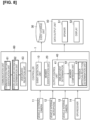
- the information output device consists primarily of a controller 1.
- the information output device also includes a camera 11 that photographs the area outside of the vehicle, a microphone 12 provided inside the vehicle, a camera 13 that photographs the interior of the vehicle, a GPS receiver 14, an event storage unit 30, and a data output unit 50.
- the controller 1 is a general-purpose microcomputer comprising a CPU (central processing device), memory, and an input/output unit.
- a computer program is installed in the microcomputer, so that the microcomputer functions as the information output device.
- the microcomputer functions as a plurality of information processing circuits included in the information output device.
- the plurality of information processing circuits included in the information output device is realized in software, but the information processing circuits can, of course, be realized in dedicated hardware for executing each of the information processes shown below. Further, the plurality of information processing circuits may be realized in discrete hardware.
- the controller 1 comprises an event detection unit 10, a member identification unit 20, and an output control unit 40 as the plurality of information processing circuits.
- the event detection unit 10 acquires data output from the camera 11, the microphone 12, the camera 13, and the GPS receiver 14 and detects an event that has occurred inside or outside the vehicle.
- the event detection unit 10 detects the occurrence of an event that becomes a memory of a person (first member) that can perceive the event.
- a first members includes an occupant of the vehicle.
- the camera 11 is located inside or outside of the vehicle cabin, and a plurality thereof are provided at the front, sides, and rear of the vehicle.
- the cameras 11 capture images of the vehicle surroundings and outputs the images as video data from the outside of the vehicle.
- the cameras 11 may utilize stereo cameras and monocular cameras used in autonomous driving systems and driving assistance systems.
- the microphone 12 is located in the vehicle cabin and collects the voices of persons in the vehicle, which are output as audio data from the inside of the vehicle.
- the camera 13 is located inside the vehicle cabin, captures images of persons in the vehicle, especially their faces, and outputs the images as video data from the inside of the vehicle.
- the GPS receiver 14 is installed inside the vehicle and outputs the vehicle's ground position information (including latitude and longitude information) by receiving radio waves from a satellite.
- the GPS receiver 14 can be one used for navigation functions.
- the GPS receiver 14 is installed inside the vehicle, but may be installed together with an antenna for communicating with other communication devices or with a radio antenna outside of the vehicle.
- the event detection unit 10 detects events that occur inside or outside the vehicle based on audio data and video data from the inside of the vehicle output from the microphone 12 and the camera 13, video data from the outside of the vehicle output from the camera 11, and location information of the vehicle detected by the GPS receiver.
- An event recorder for example, is a device that has a function similar to that of the event detection unit.
- An event recorder is installed in a vehicle and determines whether a traffic accident (event) has occurred based on operating status of devices installed in the vehicle. A method with which the event detection unit 10 detects an event that has occurred will be specifically described below.
- the event detection unit 10 analyzes audio data in the vehicle output from the microphone 12 and determines that an event has been detected when it is determined that the conversation of the members in the vehicle has become lively. Specifically, the event detection unit 10 is able to identify the conversation of the members in the vehicle by means of a voice recognition function. As a result, the event detection unit 10 is able to determine if the conversation of the members in the vehicle includes predesignated topics for evaluating whether the conversation is lively and to calculate the rate of occurrence of these topics during conversation.
- the event detection unit 10 determines that the conversation of the members in the vehicle is lively and that an event has been detected.
- predesignated topics for determining that the conversation is lively include the weather, views, and tourist attractions.
- the event detection unit 10 may determine that the conversation of the members inside the vehicle is lively and that an event has been detected when it is detected from the audio data from the inside of the vehicle that the volume of the conversation of the members in the vehicle has increased.
- the event detection unit 10 analyzes the video data from the outside of the vehicle output from the camera 11 and the video data from the inside of the vehicle output from the camera 13 and determines that an event has been detected when it is determined that members in the vehicle are responding to a view that can be seen from the vehicle. More specifically, first the event detection unit 10 determines whether a view similar to predesignated views, which include those of the ocean, mountains, rivers, sunsets, sunrises, and fireworks, has been detected from the video data from the outside of the vehicle output from the camera 11. Next, when it is detected that a view similar to a predesignated view has been detected, the event detection unit 10 analyzes the video data from the inside of the vehicle output from the camera 13 and determines whether a member in the vehicle is responding to the detected view.
- predesignated views which include those of the ocean, mountains, rivers, sunsets, sunrises, and fireworks
- a facial recognition function for identifying a person from the video data and that identifies the direction in which the identified person's head is turned can be used as the means for determining whether a member in the vehicle is responding to the detected view.
- the event detection unit 10 can thus determine whether each person in the vehicle is facing the direction of the detected view, and, if at least a certain percentage is facing the direction of the view, determine that the members in the vehicle are responding to the detected view. The event detection unit 10 can thereby determine whether members in the vehicle are responding to the detected view and to determine that an event has been detected.
- the event detection unit 10 determines that an event has been detected.
- the event detection unit 10 acquires, in addition to the vehicle's location information detected by the GPS receiver 14, date and time information received by the GPS receiver 14, and identifies the vehicle location and the date and time when it was determined that an event had been detected.
- the date and time when it was determined that an event had been detected can be accurately identified by using the date and time information received by the GPS receiver 14.
- the member identification unit 20 acquires the audio data from the inside of the vehicle output from the microphone 12 and the video data from the inside of the vehicle output from the camera 13. By analyzing the acquired audio data from the inside of the vehicle and video data from the inside of the vehicle, the member identification unit 20 identifies first members, who are persons that are in the vehicle and that can perceive the event. Specifically, the member identification unit 20 is able to identify a person in the vehicle by means of a speaker identification function that extracts, from the audio data from the inside of the vehicle output from the microphone 12, acoustic features of voices, which differ from person to person, and that identify the voices based on the extracted acoustic features.
- the member identification unit 20 also acquires the video data output from the camera 13.
- the member identification unit 20 is equipped with a facial recognition function that detects the face of each person from the video data and identifies the face of each person from the relative positions and sizes of the detected facial parts and the morphological characteristics of the eyes, nose, and chin, and in this way identifies each person in the vehicle.
- the member identification unit 20 may also estimate age from the facial features.
- the facial recognition function is able to detect the orientation of the face, and the degree of opening of the eyes and mouth of each identified person. The member identification unit 20 can thereby determine whether each of the identified persons is facing the direction of the detected event and whether they are sleeping, and in this way identify first members as those who can perceive the detected event.
- the member identification unit 20 may determine whether there is a user of the information output device among the identified first members.
- the user of the information output device is a person that is preregistered in the information output device as the main user of the information output device.
- the member identification unit 20 can determine whether there is the user of the information output device among the first members based on facial data of the user of the information output device captured by the camera 11 and on audio data of the user of the information output device collected by means of the microphone 12.
- the member identification unit 20 also identifies a second member as a person that is in the vehicle and that can view the event data to be output, in the same manner as when a first member was identified.
- Event data are data relating to a detected event, which include audio and video from the inside and outside of the vehicle acquired by the cameras 11, 13, and microphone 12, when the event detection unit 10 detects the event.
- the member identification unit 20 identifies a second member as a person who can view the event data to be output and who can understand the event data to be output.
- the member identification unit 20 is equipped with a facial recognition function for estimating the age of each person who can view the event data to be output. This allows the member identification unit 20 to determine whether the members that can view the event data to be output include children who are not old enough to understand the language and written words included in the event data. By excluding persons who cannot understand the language and written words from among the members that can view the event data to be output, the member identification unit 20 can identify persons who can understand the event data to be output as second members.
- the event storage unit 30 consists of an information storage device including a hard disk drive and online storage.
- the event storage unit 30 stores the location of the vehicle at the time when the event was detected identified by the event detection unit 10, and the time and date, as well as event data including audio and video from the inside and outside of the vehicle acquired by the cameras 11, 13, and microphone 12.
- the event storage unit 30 stores the event data to be stored in association with the first members identified by the member identification unit 20. Specifically, the event storage unit 30 stores each person of the identified first members and associates the detected event data with each of the stored persons. Alternatively, the event storage unit 30 may store each person of the identified first members in association with the event data.
- the output control unit 40 is composed of a similar event determination unit 41, a member comparison unit 42, and a playback approval/rejection determination unit 43, and determines whether the event data stored in the event storage unit 30 can or cannot be output.
- the similar event determination unit 41 determines whether the detected other event is another event that is similar to an event stored in the event storage unit 30 as event data. Specifically, it is determined whether at least one of the contents of the conversation of the members in the vehicle, the view that can be seen from the vehicle, and the vehicle location at the time when the event detection unit 10 determined that the event was detected, is similar to the contents of a conversation of members, a view that can be seen from the vehicle, and a vehicle location stored in the event data.
- the similarity is determined by whether or not the conversation of the members in the vehicle includes a topic of conversation stored in the event data, and whether or not a view that can be seen from the inside of the vehicle includes a part of the views stored in the event data (for example, those of the ocean, mountains, rivers, sunrises, sunsets, and fireworks).
- the member comparison unit 42 compares the second members with the first members. Specifically, the member comparison unit 42 extracts the first members stored in association with event data determined to be similar and stored in the event storage unit 30 and compares the extracted first members with the second members identified by the member identification unit 20. The member comparison unit 42 then determines whether the second members include persons other than the first members.
- the process of comparing the second members with the first members to determine whether the second members include persons other than the first members need not take place at the time that another event similar to an event data stored in the event storage unit 30 is detected.
- the member comparison unit 42 may compare the second members with the first members and determine whether the second members include persons other than the first members when second members are identified as persons who are in the vehicle and who can view the event data to be output. Specifically, for each piece of the event data, the member comparison unit 42 extracts first members stored in association with this piece of the event data stored in the event storage unit 30 and compares the first members associated with this piece of the event data with second members identified by the member identification unit 20. In this way, for each piece of event data, it can be determined whether the second members include persons other than the first members associated with each piece of the event data.
- the playback approval/rejection determination unit 43 prohibits automatic output of the event data.
- the playback approval/rejection determination unit 43 permits automatic output of the event data.
- the playback approval/rejection determination unit 43 queries the first member included in the second members regarding whether the event data can be output. If the member identification unit 20 determines that the user of the information output device is a first member included in the second members, the playback approval/rejection determination unit 43 may query the user of the information output device regarding whether the event data can be output.
- the playback approval/rejection determination unit 43 outputs a message as voice data to a speaker 51 inquiring whether the event data can be output.
- the playback approval/rejection determination unit 43 outputs a message as text data to a display 52 inquiring whether the event data can be output.
- the message querying the first member included in the second members regarding whether playback can be performed may be output from either the speaker 51 or the display 52, or together from both the speaker 51 and the display 52.
- the playback approval/rejection determination unit 43 acquires the playback approval/rejection response that is collected by the microphone 12. Alternatively, the playback approval/rejection determination unit 43 acquires the playback approval/rejection response input to the display 52 provided in the vehicle. If the acquired response is the response from the first member included in the second members, the playback approval/rejection determination unit 43 determines whether or not the event data can be output based on the response from the first member included in the second members. Whether the acquired response is the response of a first member included in the second members is determined by the member identification unit 20.
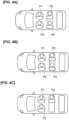
- Figure 4A shows a situation in a vehicle when an event has been detected, with person P1, person P2, person P3, and person P4 on board.
- Person P1, person P2, person P3, and person P4 are first members who were determined to be capable of perceiving the detected event.
- Person P1 is the user of the information output device.
- the event data at the time the event was detected are stored in association with person P1, person P2, person P3, and person P4.
- Figure 4B shows an example of a situation in the vehicle at a different time than that of Figure 4A , with person P1, person P2, person P3, and person P5 on board.
- Person P1, person P2, person P3, and person P5 are second members who have been determined to be able to view the event data to be output.
- the member comparison unit 42 extracts the first members stored in association with each piece of event data stored in the event storage unit 30 and, for each piece of the event data, compares the first members associated with each piece of the event data with the second members.
- the member comparison unit 42 extracts event data stored for the situation shown in Figure 4A
- the second members include the person P5 who is not a first member.
- the member comparison unit 42 determines that the second members include a person other than a first member, and the playback approval/rejection determination unit 43 prohibits the automatic output of the event data stored for the situation shown in Figure 4A .
- the playback approval/rejection determination unit 43 may determine whether the event data can be output when other similar events are detected and the detected other events are determined to be similar to the events stored as event data in the event storage unit 30.
- the second members shown in Figure 4B include person P5, who is not among the first members shown in Figure 4A , but also include person P1, person P2, and person P3, who are first members.
- the playback approval/rejection determination unit 43 queries person P1, person P2, and person P3, who are first members included in the second members, regarding whether the event data can be output.
- Person P1 is a first member and is the user of the information output device. If the first members included in the second members include the user of the information output device, the playback approval/rejection determination unit 43 may query the user of the information output device regarding whether the event data can be output. The playback approval/rejection determination unit 43 then determines whether the event data can be output based on the acquired response from the person who is a first member and who is included among the second members.
- Figure 4C shows another example of a situation in the vehicle at a different time than that of Figure 4A when the other similar event was detected, with person P1, person P2, and person P3 on board.
- Person P1, person P2, and person P3 are second members who have been determined to be able to view the event data to be output. If another event similar to the event data stored for the situation shown in Figure 4A is detected, the member comparison unit 42 compares the second members and the first members. The second members do not include persons other than the first members. Thus, the member comparison unit 42 determines that the second members do not include members other than the first members, and the playback approval/rejection determination unit 43 permits the automatic output of the event data.
- the output control unit 40 can determine whether the second members include persons other than the first members and can determine whether the event data can be output.
- the output control unit 40 may extract event data, which contains second member information, from the event data stored in the event storage unit 30 and present the data as a list to a second member.
- the member comparison unit 42 compares the second members and the first members stored in association with the event data. If the member comparison unit 42 determines that the first members and the second members are the same persons, then the event data associated with the first members are extracted. This allows a second member to be presented with a list of event data in which second member information is stored.
- the output control unit 40 may calculate the ratio of the second members to the first members stored in each piece of event data to be presented as a list, and present each piece of event data to the second member in descending order of the ratio.
- the data output unit 50 consists of the speaker 51 and the display 52 and is installed in a position in which members in the vehicle can view the data.
- the data output unit 50 outputs the audio data stored in the event data from the speaker 51 and outputs the video data stored in the event data from the display 52.
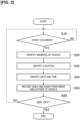
- Step S10 the event detection unit 10 determines whether an event that has occurred inside or outside the vehicle has been detected based on audio data and video data from the inside of the vehicle, video data from the outside of the vehicle, and location information of the vehicle detected by the GPS receiver. If it is not determined that an event has been detected (NO in Step S10), the process remains at Step S10 and continually executes the event detection process.
- Step S10 the member identification unit 20 analyzes the acquired audio data from the inside of the vehicle and video data from the inside of the vehicle to identify persons who are in the vehicle and who can perceive the event as first members.
- the event detection unit 10 acquires the location information detected by the GPS receiver 14 and identifies the location of the vehicle at the time that the event was detected. Proceeding to Step S40, the event detection unit 10 acquires the date and time information received by the GPS receiver 14 and identifies the date and time when the event was detected.
- the event storage unit 30 stores the location of the vehicle at the time the event was detected identified by the event detection unit 10, and the time and date, as well as event data including audio and video data from the inside and outside of the vehicle acquired by the cameras 11, 13, and microphone 12.
- the event storage unit 30 stores the event data to be stored in association with the first members identified by the member identification unit 20.
- Step S60 if a shutdown determination unit (not shown in Figure 1 ) provided in the information output device has not detected that the power of the vehicle has been turned OFF (IGN: OFF) (NO in Step S60), the process returns to Step S10 and continues.
- the shutdown determination unit determines that the power of the vehicle has been turned OFF (IGN: OFF) (YES in Step S60) (YES in Step S60) (YES in Step S60) (YES in Step S60).
- the information output device can store event data related to the event, including audio and video from the inside and outside of the vehicle when the event was detected, in association with first members.
- Step S70 when the event detection unit 10 detects another event, the similar event determination unit 41 determines whether the detected other event is another event that is similar to an event stored as event data in the event storage unit 30. If the detected event is not another event that is similar (NO in Step S70), the process remains at Step S70 and continually executes the process to determine whether the detected other event is another, similar event.
- Step S70 if it is determined that the detected other event is a similar event (YES in Step S70), the process proceeds to Step S80.
- Step S80 the member comparison unit 42 extracts first members stored in association with the event data.
- the member identification unit 20 identifies a person who can view the event data as a second member.
- the member comparison unit 42 compares the second members with the first members. Proceeding to Step S110, the member comparison unit 42 determines whether members other than first members are included in the second members. If the member comparison unit 42 determines that the second members include members other than the first members (NO in Step S110), the process proceeds to Step S150. At the time that the process proceeds to Step S150, the playback approval/rejection determination unit 43 prohibits the automatic output of the event data.
- Step S110 if the member comparison unit 42 determines that the second members do not include members other than the first members (YES in Step S110), the process proceeds to Step S120 and the playback approval/rejection determination unit 43 permits the automatic output of the event data.
- Step S150 the member comparison unit 42 determines whether or not the second members include at least one first member or the second members include a first member who is a user of the information output device. If the member comparison unit 42 determines that the second members do not include anyone who is a first member (NO in Step S150), the process proceeds to Step S180 and the playback approval/rejection determination unit 43 prohibits output of the event data.
- Step S150 if the member comparison unit 42 determines that the second members include at least one first member or determines that the second members include a first member who is the user of the information output device (YES in Step S150), the process proceeds to Step S160.
- Step S160 the playback approval/rejection determination unit 43 outputs a message to the speaker 51 or the display 52 querying a first member included in the second members or a first member included in the second members who is a user of the information output device regarding whether or not the event data can be output.
- the playback approval/rejection determination unit 43 determines whether or not the event data can be output based on the response from the first member included in the second members or the first member included in the second members who is the user of the information output device acquired from the microphone 12 or the display 52 installed in the vehicle. If the playback approval/rejection determination unit 43 determines that the response acquired from the microphone 12 or the display 52 prohibits the output of the event data (NO in Step S170), the process proceeds to Step S180, and the output of the event data is prohibited by the playback approval/rejection determination unit 43.
- Step S170 if the playback approval/rejection determination unit 43 determines that the response acquired from the microphone 12 or the display 52 permits the output of the event data (YES in Step S170), the process proceeds to Step S120, and the output of the event data is permitted by the playback approval/rejection determination unit 43.
- Step S130 the playback approval/rejection determination unit 43 determines whether the output of the event data has ended. If the playback approval/rejection determination unit 43 has not determined that the output of the event data has ended (NO in Step S130), the process remains at Step S130, and the process of determining whether the output of the event data has ended is continually executed.
- Step S130 if the playback approval/rejection determination unit 43 determines that the output of the event data has ended (YES in Step S130), the process proceeds to Step S140.
- Step S140 if a shutdown determination unit (not shown in Figure 1 ) provided in the information output device has not detected that the power of the vehicle has been turned OFF (IGN: OFF) (NO in Step S60), the process returns to Step S70 and the process continues.
- Step S60 The process is terminated when the shutdown determination unit determines that power to the vehicle has been turned OFF (IGN: OFF) (YES in Step S60).
- the information output device Upon determining that the second member who can view the event data to be output include members other than the first members at the time the event data were detected, the information output device prohibits the output of the event data. It is thus possible to prevent first members' private information from becoming known to members other than the first members at the time that the event data were detected, thereby protecting the first members' private information.
- the information output device Upon determining that the second members who can view the event data to be output do not include members other than the first members at the time the event data were detected, the information output device permits the output of the event data. It is thus possible to prevent first members' private information from becoming known to members other than the first members at the time that the event data were detected, thereby protecting the first members' private information.
- the information output device Upon determining that the second members include persons other than the first members and that the second members include at least one member other than the first members, and another, similar event is detected, the information output device queries the first members included in the second members regarding whether the event data can be output. This allows the first members included in the second members to decide whether the event data can be output, and if the first members included in the second members think that the users' private information may be disclosed to the second members other than the first members, the event data including the private information of the first members can be output.
- the information output device can identify the first members in the vehicle at the time that the event was detected and the second members that are in the vehicle in order to determine whether the event data can be output to the second members in the vehicle.
- the information output device can determine whether the event data can be output and exclude persons who cannot understand the event data to be output. This allows the output of event data to second members while protecting the first members' private information.
- the information output device extracts event data in which information related to the second member is stored from the event data stored in the event storage unit 30 and presents the data to the second member in the form of a list. This allows the second member to select from the list and output event data in which information related to the second members is stored.
- the information output device When the information output device presents the event data in which information related to the second member is stored to the second member in the form of a list, the information output device calculates the ratio of the second members to the first members stored in each piece of event data to be presented as a list. The information output device then presents to the second member each piece of the event data in descending order of the ratio of the second members to the first members. This allows the second member to select for output event data that are highly relevant to the second members.
- the information output device permits the data output unit 50 to automatically output the event data. This allows the automatic output of the event data to the second member when another event that is similar to an event stored as event data is detected.
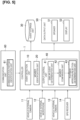
- the configuration of the information output device according to a second embodiment will be described with reference to Figure 5 .
- the only difference from the first embodiment is a communication unit 60. Therefore, only the processing executed by the communication unit 60 will be described, and descriptions of the other, common configurations will be omitted.
- the information output device further comprises the communication unit 60 and further identifies first members who were connected to the vehicle via a communication means at the time that an event was detected, and second members who are connected to the vehicle.
- the communication unit 60 includes a communication partner identification unit 61.
- the communication unit 60 transmits to persons connected to the vehicle, via a communication means, audio data and video data from the inside of the vehicle, and video data from the outside of the vehicle.
- a communication means include cell phones, smartphones, PCs and tablets that can connect to the Internet. These communication devices can play back audio data or video data.
- the communication partner identification unit 61 identifies persons connected to the vehicle via a communication means. Persons who can view the audio data and video data from the inside of the vehicle, and video data from the outside of the vehicle via communication means are persons who can perceive an event. Specifically, the communication partner identification unit 61 can identify the telephone number and communication ID of the communication device connected to the vehicle in order to identify the communication partner. The information output device can thus identify persons who were connected to the vehicle via a communication means when the event was detected as first members, and identify persons who are connected to the vehicle as second members.
- Step S21 the communication partner identification unit 61 determines whether or not anyone is connected to the vehicle via a communication means. If the communication partner identification unit 61 determines that no one is connected to the vehicle via a communication means (NO in Step S21), the process proceeds to Step S30.
- Step S21 if the communication partner identification unit 61 determines that someone is connected to the vehicle via a communication means (YES in Step S21), the process proceeds to Step S22.
- Step S22 the communication partner identification unit 61 identifies the person that is connected to the vehicle via a communication means, and the process proceeds to Step S23.
- Step S23 the communication partner identification unit 61 forwards the identified person to the member identification unit 20.
- the member identification unit 20 identifies, in addition to the first members that were in the vehicle at the time the event was detected, members who were connected to the vehicle via a communication device at the time the event was detected as first members.
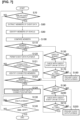
- Step S121 the communication partner identification unit 61 determines whether someone is connected to the vehicle via a communication means. If the communication partner identification unit 61 determines that no one is connected to the vehicle via a communication means (NO in Step S121), the process proceeds to Step S130.
- Step S121 if the communication partner identification unit 61 determines that someone is connected to the vehicle via a communication means (YES in Step S121), the process proceeds to Step S122.
- Step S122 the communication partner identification unit 61 identifies the person connected to the vehicle via a communication means and forwards the identification to the member identification unit 20.
- the member identification unit 20 can identify, in addition to second members that are in the vehicle, a person that is connected to the vehicle via a communication device, as a second member.
- the member comparison unit 42 compares the second members that are connected to the vehicle via a communication device with the first members and determines whether the second members that are connected to the vehicle via a communication device include members other than the first members. If the member comparison unit 42 determines that the second members that are connected to the vehicle via a communication device include members other than the first members (NO in Step S123), the process proceeds to Step S190. At the time that the process proceeds to Step S190, the playback approval/rejection determination unit 43 prohibits the automatic output of the event data to the second members that are connected to the vehicle via a communication device.
- the process from Steps S190 to S220 is the same as the process from Steps S150 to S180 of the first embodiment.
- Step S123 if the member comparison unit 42 determines that the second members that are connected to the vehicle via a communication device do not include members other than the first members (YES in Step S123), the process proceeds to Step S124.
- Step S124 the communication unit 60 transmits the event data to the second members that are connected to the vehicle via a communication device.
- the information output device identifies, in addition to the first members that were in the vehicle at the time the event was detected and the second members that are in the vehicle, first members who were connected to the vehicle via a communication device at the time the event was detected and second members that are connected to the vehicle. It is thus possible to determine whether the event data can be output with respect to the second members that are connected via a communication means.
- the configuration of the information output device according to a third embodiment will be described with reference to Figure 8 .
- the only difference from the second embodiment is the configuration of the communication unit 60. Therefore, only the processing executed by the communication unit 60 will be described, and descriptions of the other, common configurations will be omitted.
- the communication unit 60 includes the communication partner identification unit 61, an inter-vehicular distance determination unit 62, and a video/audio reception unit 63.
- the communication unit 60 transmits, to the other vehicle connected to the vehicle via a communication means, audio data and video data from the inside of the vehicle, and video data from the outside of the vehicle.
- a specific example of the communication means is Internet communication. It is thus possible for the members (persons) in the other vehicle to perceive the event and view the event data.
- the communication partner identification unit 61 determines whether another vehicle is connected to the vehicle via communication means, and identifies the connected other vehicle from the vehicle identification number (VIN), etc., of the other vehicle.
- the inter-vehicular distance determination unit 62 determines whether the distance between the vehicle and the other vehicle is within a predesignated distance range. Specifically, the inter-vehicular distance determination unit 62 acquires the distance between the vehicle and the other vehicle measured with a stereo camera or a ranging radar used in autonomous driving devices and driving assistance devices, and determines whether the distance between the vehicle and the other vehicle is within a predesignated distance range.
- the video/audio reception unit 63 receives via a communication means video and audio from the inside of the other vehicle that is connected to the vehicle.
- the video/audio reception unit 63 forwards the video and audio from the inside of the other vehicle that is connected to the vehicle to the member identification unit 20.
- the member identification unit 20 identifies the occupants in the other vehicle.
- the information output device can thus identify persons who were in the other vehicle when the event was detected as first members, and identify persons who are in the other vehicle as second members.
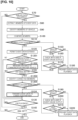
- Step S201 the communication partner identification unit 61 determines whether there is another vehicle connected to the vehicle via communication means. If the communication partner identification unit 61 determines that no other vehicle is connected to the vehicle via a communication means (NO in Step S201), the process proceeds to Step S30.
- Step S201 if the communication partner identification unit 61 determines that another vehicle is connected to the vehicle via a communication means (YES in Step S201), the process proceeds to Step S202.
- Step S202 the inter-vehicular distance determination unit 62 measures the distance between the vehicle and the other vehicle.
- the process proceeds to Step S203, and the inter-vehicular distance determination unit 62 determines whether the measured distance between the vehicle and the other vehicle is within a predesignated distance range. If the inter-vehicular distance determination unit 62 determines that the distance to the other vehicle is not within a predesignated distance range (NO in Step S203), the process proceeds to Step S30.
- Step S203 if the inter-vehicular distance determination unit 62 determines that the distance to the other vehicle is within a predesignated distance range (YES in Step S203), the process proceeds to Step S204.
- Step S204 the video/audio reception unit 63 receives, via Internet communication from the other vehicle that is connected to the vehicle, video and audio from the inside of the other vehicle. Then, the video/audio reception unit 63 forwards the received video and audio from the inside of the other vehicle to the member identification unit 20.
- the member identification unit 20 can thus identify, in addition to the first members that were in the vehicle at the time the event was detected, members who were in the other vehicle at the time the event was detected as first members.
- Step S1201 the communication partner identification unit 61 determines whether another vehicle is connected to the vehicle via communication means. If the communication partner identification unit 61 determines that another vehicle is not connected to the vehicle via a communication means (NO in Step S1201), the process proceeds to Step S130.
- Step S1201 if the communication partner identification unit 61 determines that there is another vehicle connected to the vehicle via a communication means (YES in Step S1201), the process proceeds to Step S1202.
- Step S1202 the inter-vehicular distance determination unit 62 measures the distance between the vehicle and the other vehicle.
- Step S1203 the inter-vehicular distance determination unit 62 determines whether the distance between the vehicle and the other vehicle is within a predesignated distance range. If the inter-vehicular distance determination unit 62 determines that the distance to the other vehicle is not within a predesignated distance range (NO in Step S1203), the process proceeds to Step S130.
- Step S1203 if the inter-vehicular distance determination unit 62 determines that the distance between the vehicle and the other vehicle is within a predesignated distance range (YES in Step S1203), the process proceeds to Step S1204.
- Step S1204 the video/audio reception unit 63 receives via a communication means, and forwards to the member identification unit, video and audio from the inside of the other vehicle that is connected to the vehicle.
- the member identification unit 20 can identify, in addition to the second members that are in the vehicle, second members that are in the other vehicle.
- Step S1205 the member comparison unit 42 compares the second members that are in the other vehicle connected to the vehicle via a communication device with the first members, and determines whether the second members that are in the other vehicle include members other than the first members. If the member comparison unit 42 determines that the second members in the other vehicle include members other than the first members (NO in Step S1205), the process proceeds to Step S190. At the time that the process proceeds to Step S190, the playback approval/rejection determination unit 43 prohibits the automatic output of the event data to the second members that are in the other vehicle.
- the processing from Steps S190 to S220 is the same as the processing from Steps S150 to S180 of the first embodiment.
- Step S1205 if the member comparison unit 42 determines that the second members of the other vehicle that are connected to the vehicle via a communication device do not include members other than the first members (YES in Step S123), the process proceeds to Step S124.
- the information output device identifies first members and second members that were in the vehicle when the event was detected and second members. Further, if another vehicle is connected to the vehicle via a communication means and is traveling within a predesignated distance range from the vehicle, first members and second members that were in the other vehicle when the event was detected are identified. This allows a determination to be made regarding whether or not to output the event data to the second members that are in the other vehicle. Further, by setting the condition that the other vehicle is traveling within a predesignated distance range from the vehicle, it is possible to determine whether the first members that were in the other vehicle when the event was detected were in a state in which the event could be perceived. Further, if the event data are output, the second members in the other vehicle can understand the reason the event data were output.
Landscapes
- Engineering & Computer Science (AREA)
- Multimedia (AREA)
- Theoretical Computer Science (AREA)
- Signal Processing (AREA)
- Physics & Mathematics (AREA)
- General Physics & Mathematics (AREA)
- Health & Medical Sciences (AREA)
- General Health & Medical Sciences (AREA)
- Bioethics (AREA)
- Software Systems (AREA)
- General Engineering & Computer Science (AREA)
- Computer Security & Cryptography (AREA)
- Computer Hardware Design (AREA)
- Oral & Maxillofacial Surgery (AREA)
- Human Computer Interaction (AREA)
- Traffic Control Systems (AREA)
- Time Recorders, Dirve Recorders, Access Control (AREA)
- Studio Devices (AREA)
- Closed-Circuit Television Systems (AREA)
Abstract
Description
- The present invention relates to an information output device and an information output method.
- An image/audio recording/playback device that automatically acquires audio and video data (AV data) in a vehicle, acquires and records various types of information, such as that pertaining to the date and time, destination, travel route, and passenger information when the AV data were acquired, and plays back the recorded AV data in the vehicle is known from the prior art (see Patent Document 1). In the invention disclosed in
Patent Document 1, the acquired AV data are recorded in association with the above-mentioned various types of information, so that when conditions based on various types of information are specified by a user, AV data that correspond to these conditions can be easily extracted and played back. - Patent Document 1:
Japanese Patent No. 5478462 - However, the image/audio recording/playback device disclosed in
Patent Document 1 does not take into consideration who will view the AV data when the recorded AV data is played back. For this reason, in the case that the recorded AV data contain a user's private information that the user does not want to be disclosed to other persons besides the passengers who were in the vehicle when the AV data were recorded, there is the possibility that the user's private information will be divulged to these other people by playing back the AV data. - Given the problems described above, an object of the present invention is to provide an information output device and an information output method that automatically output event data while protecting user private information that is contained in the event data.
- An information output device according to one aspect of the present invention comprises an event detection unit, a member identification unit, an event storage unit, and a data output unit, and further comprises an output control unit. When the event detection unit detects an event occurring inside or outside a vehicle, the member identification unit identifies a person or persons who can perceive the event as a first member, and the event storage unit stores the event data related to the detected event associated with the first members. The member identification unit identifies a person or persons that can view the event data as a second member. The output control unit determines whether the second members include persons other than the first members and prohibits the automatic output of the event data upon determining that the second members include persons other than the first members.
- By means of the present invention, it is possible to automatically output event data while protecting user private information that is included in the event data.
-
-
Figure 1 is a block diagram illustrating the configuration of an information output device according to a first embodiment. -
Figure 2 is a flowchart showing an operation in which the information output device according to the first embodiment stores event data. -
Figure 3 is a flowchart showing an operation in which the information output device according to the first embodiment outputs event data. -
Figure 4A is a schematized diagram showing a member composition when the information output device according to the first embodiment determines whether or not to output the event data. -
Figure 4B is a schematized diagram showing a member composition when the information output device according to the first embodiment determines whether or not to output the event data. -
Figure 4C is a schematized diagram showing a member composition when the information output device according to the first embodiment determines whether or not to output the event data. -
Figure 5 is a block diagram illustrating the configuration of an information output device according to a second embodiment. -
Figure 6 is a flowchart showing an operation in which the information output device according to the second embodiment stores event data. -
Figure 7 is a flowchart showing an operation in which the information output device according to the second embodiment outputs event data. -
Figure 8 is a block diagram illustrating the configuration of an information output device according to a third embodiment. -
Figure 9 is a flowchart showing an operation in which the information output device according to the third embodiment stores event data. -
Figure 10 is a flowchart showing an operation in which the information output device according to the third embodiment outputs event data. - Embodiments will be described with reference to the drawings. In the descriptions of the figures, identical parts have been assigned the same reference numerals, and their descriptions have been omitted.
- An overall configuration of the information output device according to the present embodiment will be described with reference to
Figure 1 . The information output device automatically outputs event data while protecting user privacy by prohibiting the automatic output of event data when second members, who are persons who can view the event data that are to be output, include persons other than the persons (first members) who can perceive the event that has occurred inside or outside a vehicle when the event was detected. - The information output device consists primarily of a
controller 1. The information output device also includes acamera 11 that photographs the area outside of the vehicle, amicrophone 12 provided inside the vehicle, acamera 13 that photographs the interior of the vehicle, aGPS receiver 14, anevent storage unit 30, and adata output unit 50. - The
controller 1 is a general-purpose microcomputer comprising a CPU (central processing device), memory, and an input/output unit. A computer program is installed in the microcomputer, so that the microcomputer functions as the information output device. By executing the computer program, the microcomputer functions as a plurality of information processing circuits included in the information output device. In the present embodiment, an example is shown in which the plurality of information processing circuits included in the information output device is realized in software, but the information processing circuits can, of course, be realized in dedicated hardware for executing each of the information processes shown below. Further, the plurality of information processing circuits may be realized in discrete hardware. - The
controller 1 comprises anevent detection unit 10, amember identification unit 20, and anoutput control unit 40 as the plurality of information processing circuits. - The
event detection unit 10 acquires data output from thecamera 11, themicrophone 12, thecamera 13, and theGPS receiver 14 and detects an event that has occurred inside or outside the vehicle. Theevent detection unit 10 detects the occurrence of an event that becomes a memory of a person (first member) that can perceive the event. A first members includes an occupant of the vehicle. - The
camera 11 is located inside or outside of the vehicle cabin, and a plurality thereof are provided at the front, sides, and rear of the vehicle. Thecameras 11 capture images of the vehicle surroundings and outputs the images as video data from the outside of the vehicle. Thecameras 11 may utilize stereo cameras and monocular cameras used in autonomous driving systems and driving assistance systems. - The
microphone 12 is located in the vehicle cabin and collects the voices of persons in the vehicle, which are output as audio data from the inside of the vehicle. - The
camera 13 is located inside the vehicle cabin, captures images of persons in the vehicle, especially their faces, and outputs the images as video data from the inside of the vehicle. - The
GPS receiver 14 is installed inside the vehicle and outputs the vehicle's ground position information (including latitude and longitude information) by receiving radio waves from a satellite. TheGPS receiver 14 can be one used for navigation functions. In the embodiment, theGPS receiver 14 is installed inside the vehicle, but may be installed together with an antenna for communicating with other communication devices or with a radio antenna outside of the vehicle. - The
event detection unit 10 detects events that occur inside or outside the vehicle based on audio data and video data from the inside of the vehicle output from themicrophone 12 and thecamera 13, video data from the outside of the vehicle output from thecamera 11, and location information of the vehicle detected by the GPS receiver. An event recorder, for example, is a device that has a function similar to that of the event detection unit. An event recorder is installed in a vehicle and determines whether a traffic accident (event) has occurred based on operating status of devices installed in the vehicle. A method with which theevent detection unit 10 detects an event that has occurred will be specifically described below. - The
event detection unit 10 analyzes audio data in the vehicle output from themicrophone 12 and determines that an event has been detected when it is determined that the conversation of the members in the vehicle has become lively. Specifically, theevent detection unit 10 is able to identify the conversation of the members in the vehicle by means of a voice recognition function. As a result, theevent detection unit 10 is able to determine if the conversation of the members in the vehicle includes predesignated topics for evaluating whether the conversation is lively and to calculate the rate of occurrence of these topics during conversation. When it is determined that the conversation of the members in the vehicle includes a predesignated topic for determining whether the conversation is lively and that the rate of occurrence of said topic during the conversation is high, theevent detection unit 10 determines that the conversation of the members in the vehicle is lively and that an event has been detected. Examples of predesignated topics for determining that the conversation is lively include the weather, views, and tourist attractions. Further, theevent detection unit 10 may determine that the conversation of the members inside the vehicle is lively and that an event has been detected when it is detected from the audio data from the inside of the vehicle that the volume of the conversation of the members in the vehicle has increased. - The
event detection unit 10 analyzes the video data from the outside of the vehicle output from thecamera 11 and the video data from the inside of the vehicle output from thecamera 13 and determines that an event has been detected when it is determined that members in the vehicle are responding to a view that can be seen from the vehicle. More specifically, first theevent detection unit 10 determines whether a view similar to predesignated views, which include those of the ocean, mountains, rivers, sunsets, sunrises, and fireworks, has been detected from the video data from the outside of the vehicle output from thecamera 11. Next, when it is detected that a view similar to a predesignated view has been detected, theevent detection unit 10 analyzes the video data from the inside of the vehicle output from thecamera 13 and determines whether a member in the vehicle is responding to the detected view. A facial recognition function for identifying a person from the video data and that identifies the direction in which the identified person's head is turned can be used as the means for determining whether a member in the vehicle is responding to the detected view. Theevent detection unit 10 can thus determine whether each person in the vehicle is facing the direction of the detected view, and, if at least a certain percentage is facing the direction of the view, determine that the members in the vehicle are responding to the detected view. Theevent detection unit 10 can thereby determine whether members in the vehicle are responding to the detected view and to determine that an event has been detected. - When the location information of the vehicle detected by the
GPS receiver 14 is acquired and it is determined that the current location of the vehicle is near a well-known tourist attraction, theevent detection unit 10 determines that an event has been detected. - Further, the
event detection unit 10 acquires, in addition to the vehicle's location information detected by theGPS receiver 14, date and time information received by theGPS receiver 14, and identifies the vehicle location and the date and time when it was determined that an event had been detected. The date and time when it was determined that an event had been detected can be accurately identified by using the date and time information received by theGPS receiver 14. - When the
event detection unit 10 detects an event, themember identification unit 20 acquires the audio data from the inside of the vehicle output from themicrophone 12 and the video data from the inside of the vehicle output from thecamera 13. By analyzing the acquired audio data from the inside of the vehicle and video data from the inside of the vehicle, themember identification unit 20 identifies first members, who are persons that are in the vehicle and that can perceive the event. Specifically, themember identification unit 20 is able to identify a person in the vehicle by means of a speaker identification function that extracts, from the audio data from the inside of the vehicle output from themicrophone 12, acoustic features of voices, which differ from person to person, and that identify the voices based on the extracted acoustic features. - The
member identification unit 20 also acquires the video data output from thecamera 13. Themember identification unit 20 is equipped with a facial recognition function that detects the face of each person from the video data and identifies the face of each person from the relative positions and sizes of the detected facial parts and the morphological characteristics of the eyes, nose, and chin, and in this way identifies each person in the vehicle. Themember identification unit 20 may also estimate age from the facial features. Further, the facial recognition function is able to detect the orientation of the face, and the degree of opening of the eyes and mouth of each identified person. Themember identification unit 20 can thereby determine whether each of the identified persons is facing the direction of the detected event and whether they are sleeping, and in this way identify first members as those who can perceive the detected event. - The
member identification unit 20 may determine whether there is a user of the information output device among the identified first members. The user of the information output device is a person that is preregistered in the information output device as the main user of the information output device. Specifically, themember identification unit 20 can determine whether there is the user of the information output device among the first members based on facial data of the user of the information output device captured by thecamera 11 and on audio data of the user of the information output device collected by means of themicrophone 12. - The
member identification unit 20 also identifies a second member as a person that is in the vehicle and that can view the event data to be output, in the same manner as when a first member was identified. Event data are data relating to a detected event, which include audio and video from the inside and outside of the vehicle acquired by thecameras microphone 12, when theevent detection unit 10 detects the event. - The
member identification unit 20 identifies a second member as a person who can view the event data to be output and who can understand the event data to be output. Specifically, themember identification unit 20 is equipped with a facial recognition function for estimating the age of each person who can view the event data to be output. This allows themember identification unit 20 to determine whether the members that can view the event data to be output include children who are not old enough to understand the language and written words included in the event data. By excluding persons who cannot understand the language and written words from among the members that can view the event data to be output, themember identification unit 20 can identify persons who can understand the event data to be output as second members. - The
event storage unit 30 consists of an information storage device including a hard disk drive and online storage. Theevent storage unit 30 stores the location of the vehicle at the time when the event was detected identified by theevent detection unit 10, and the time and date, as well as event data including audio and video from the inside and outside of the vehicle acquired by thecameras microphone 12. Theevent storage unit 30 stores the event data to be stored in association with the first members identified by themember identification unit 20. Specifically, theevent storage unit 30 stores each person of the identified first members and associates the detected event data with each of the stored persons. Alternatively, theevent storage unit 30 may store each person of the identified first members in association with the event data. - The
output control unit 40 is composed of a similarevent determination unit 41, amember comparison unit 42, and a playback approval/rejection determination unit 43, and determines whether the event data stored in theevent storage unit 30 can or cannot be output. - When the
event detection unit 10 detects another event, the similarevent determination unit 41 determines whether the detected other event is another event that is similar to an event stored in theevent storage unit 30 as event data. Specifically, it is determined whether at least one of the contents of the conversation of the members in the vehicle, the view that can be seen from the vehicle, and the vehicle location at the time when theevent detection unit 10 determined that the event was detected, is similar to the contents of a conversation of members, a view that can be seen from the vehicle, and a vehicle location stored in the event data. For example, the similarity is determined by whether or not the conversation of the members in the vehicle includes a topic of conversation stored in the event data, and whether or not a view that can be seen from the inside of the vehicle includes a part of the views stored in the event data (for example, those of the ocean, mountains, rivers, sunrises, sunsets, and fireworks). - When it is determined by the similar
event determination unit 41 that the detected other event is similar to an event stored in theevent storage unit 30 as event data, themember comparison unit 42 compares the second members with the first members. Specifically, themember comparison unit 42 extracts the first members stored in association with event data determined to be similar and stored in theevent storage unit 30 and compares the extracted first members with the second members identified by themember identification unit 20. Themember comparison unit 42 then determines whether the second members include persons other than the first members. - The process of comparing the second members with the first members to determine whether the second members include persons other than the first members need not take place at the time that another event similar to an event data stored in the
event storage unit 30 is detected. For example, themember comparison unit 42 may compare the second members with the first members and determine whether the second members include persons other than the first members when second members are identified as persons who are in the vehicle and who can view the event data to be output. Specifically, for each piece of the event data, themember comparison unit 42 extracts first members stored in association with this piece of the event data stored in theevent storage unit 30 and compares the first members associated with this piece of the event data with second members identified by themember identification unit 20. In this way, for each piece of event data, it can be determined whether the second members include persons other than the first members associated with each piece of the event data. - If the
member comparison unit 42 determines that the second members include persons other than the first members, the playback approval/rejection determination unit 43 prohibits automatic output of the event data. - If the
member comparison unit 42 determines that the second members do not include persons other than the first members, the playback approval/rejection determination unit 43 permits automatic output of the event data. - If another event that is similar is detected and the
member comparison unit 42 determines that the second members include persons other than the first members and that the second members include at least one person who is a first member, the playback approval/rejection determination unit 43 queries the first member included in the second members regarding whether the event data can be output.. If themember identification unit 20 determines that the user of the information output device is a first member included in the second members, the playback approval/rejection determination unit 43 may query the user of the information output device regarding whether the event data can be output. - Specifically, in order to query a first member included in the second members regarding whether the event data can be output, the playback approval/
rejection determination unit 43 outputs a message as voice data to aspeaker 51 inquiring whether the event data can be output. Alternatively, the playback approval/rejection determination unit 43 outputs a message as text data to adisplay 52 inquiring whether the event data can be output. The message querying the first member included in the second members regarding whether playback can be performed may be output from either thespeaker 51 or thedisplay 52, or together from both thespeaker 51 and thedisplay 52. - The playback approval/
rejection determination unit 43 acquires the playback approval/rejection response that is collected by themicrophone 12. Alternatively, the playback approval/rejection determination unit 43 acquires the playback approval/rejection response input to thedisplay 52 provided in the vehicle. If the acquired response is the response from the first member included in the second members, the playback approval/rejection determination unit 43 determines whether or not the event data can be output based on the response from the first member included in the second members. Whether the acquired response is the response of a first member included in the second members is determined by themember identification unit 20. - Here, the determination made by the
output control unit 40 regarding whether the event data can be output will be explained schematically with reference toFigures 4A, 4B, and 4C , in which are illustrated the second and first members. -
Figure 4A shows a situation in a vehicle when an event has been detected, with person P1, person P2, person P3, and person P4 on board. Person P1, person P2, person P3, and person P4 are first members who were determined to be capable of perceiving the detected event. Person P1 is the user of the information output device. The event data at the time the event was detected are stored in association with person P1, person P2, person P3, and person P4. -
Figure 4B shows an example of a situation in the vehicle at a different time than that ofFigure 4A , with person P1, person P2, person P3, and person P5 on board. Person P1, person P2, person P3, and person P5 are second members who have been determined to be able to view the event data to be output. Themember comparison unit 42 extracts the first members stored in association with each piece of event data stored in theevent storage unit 30 and, for each piece of the event data, compares the first members associated with each piece of the event data with the second members. When themember comparison unit 42 extracts event data stored for the situation shown inFigure 4A , the second members include the person P5 who is not a first member. Thus, themember comparison unit 42 determines that the second members include a person other than a first member, and the playback approval/rejection determination unit 43 prohibits the automatic output of the event data stored for the situation shown inFigure 4A . - The playback approval/
rejection determination unit 43 may determine whether the event data can be output when other similar events are detected and the detected other events are determined to be similar to the events stored as event data in theevent storage unit 30. - The second members shown in
Figure 4B include person P5, who is not among the first members shown inFigure 4A , but also include person P1, person P2, and person P3, who are first members. Thus, the playback approval/rejection determination unit 43 queries person P1, person P2, and person P3, who are first members included in the second members, regarding whether the event data can be output. Person P1 is a first member and is the user of the information output device. If the first members included in the second members include the user of the information output device, the playback approval/rejection determination unit 43 may query the user of the information output device regarding whether the event data can be output. The playback approval/rejection determination unit 43 then determines whether the event data can be output based on the acquired response from the person who is a first member and who is included among the second members. -
Figure 4C shows another example of a situation in the vehicle at a different time than that ofFigure 4A when the other similar event was detected, with person P1, person P2, and person P3 on board. Person P1, person P2, and person P3 are second members who have been determined to be able to view the event data to be output. If another event similar to the event data stored for the situation shown inFigure 4A is detected, themember comparison unit 42 compares the second members and the first members. The second members do not include persons other than the first members. Thus, themember comparison unit 42 determines that the second members do not include members other than the first members, and the playback approval/rejection determination unit 43 permits the automatic output of the event data. - As described above, the
output control unit 40 can determine whether the second members include persons other than the first members and can determine whether the event data can be output. - Further, the
output control unit 40 may extract event data, which contains second member information, from the event data stored in theevent storage unit 30 and present the data as a list to a second member. - Specifically, the
member comparison unit 42 compares the second members and the first members stored in association with the event data. If themember comparison unit 42 determines that the first members and the second members are the same persons, then the event data associated with the first members are extracted. This allows a second member to be presented with a list of event data in which second member information is stored. - Further, when the list of event data in which second member information relating is stored is presented to the second member, the
output control unit 40 may calculate the ratio of the second members to the first members stored in each piece of event data to be presented as a list, and present each piece of event data to the second member in descending order of the ratio. - The
data output unit 50 consists of thespeaker 51 and thedisplay 52 and is installed in a position in which members in the vehicle can view the data. When the playback approval/rejection determination unit 43 permits output of the event data, thedata output unit 50 outputs the audio data stored in the event data from thespeaker 51 and outputs the video data stored in the event data from thedisplay 52. - A method with which the information output device shown in
Figure 1 stores event data will now be described with reference toFigure 2 . The operation of the information output device shown in the flowchart ofFigure 2 is started when the power of the vehicle is turned ON (IGN: ON), and the process is terminated when it is detected that the power of the vehicle has been turned OFF (IGN: OFF). - In Step S10, the
event detection unit 10 determines whether an event that has occurred inside or outside the vehicle has been detected based on audio data and video data from the inside of the vehicle, video data from the outside of the vehicle, and location information of the vehicle detected by the GPS receiver. If it is not determined that an event has been detected (NO in Step S10), the process remains at Step S10 and continually executes the event detection process. - If the
event detection unit 10 has determined that an event has been detected (YES in Step S10), the process proceeds to Step S20. In Step S20, themember identification unit 20 analyzes the acquired audio data from the inside of the vehicle and video data from the inside of the vehicle to identify persons who are in the vehicle and who can perceive the event as first members. - Proceeding to Step S30, the
event detection unit 10 acquires the location information detected by theGPS receiver 14 and identifies the location of the vehicle at the time that the event was detected. Proceeding to Step S40, theevent detection unit 10 acquires the date and time information received by theGPS receiver 14 and identifies the date and time when the event was detected. - Proceeding to Step S50, the
event storage unit 30 stores the location of the vehicle at the time the event was detected identified by theevent detection unit 10, and the time and date, as well as event data including audio and video data from the inside and outside of the vehicle acquired by thecameras microphone 12. Theevent storage unit 30 stores the event data to be stored in association with the first members identified by themember identification unit 20. - Proceeding to Step S60, if a shutdown determination unit (not shown in
Figure 1 ) provided in the information output device has not detected that the power of the vehicle has been turned OFF (IGN: OFF) (NO in Step S60), the process returns to Step S10 and continues. When the shutdown determination unit determines that the power of the vehicle has been turned OFF (IGN: OFF) (YES in Step S60), the process is terminated. - By executing the process described above, the information output device can store event data related to the event, including audio and video from the inside and outside of the vehicle when the event was detected, in association with first members.
- A method with which the information output device shown in
Figure 1 outputs event data will now be described with reference toFigure 3 . The operation of the information output device shown in the flowchart ofFigure 3 is started when the power of the vehicle is turned ON (IGN: ON), and the process is terminated when it is detected that the power of the vehicle has been turned OFF (IGN: OFF). - In Step S70, when the
event detection unit 10 detects another event, the similarevent determination unit 41 determines whether the detected other event is another event that is similar to an event stored as event data in theevent storage unit 30. If the detected event is not another event that is similar (NO in Step S70), the process remains at Step S70 and continually executes the process to determine whether the detected other event is another, similar event. - In Step S70, if it is determined that the detected other event is a similar event (YES in Step S70), the process proceeds to Step S80. In Step S80, the
member comparison unit 42 extracts first members stored in association with the event data. - Proceeding to Step S90, the
member identification unit 20 identifies a person who can view the event data as a second member. - Proceeding to Step S100, the
member comparison unit 42 compares the second members with the first members. Proceeding to Step S110, themember comparison unit 42 determines whether members other than first members are included in the second members. If themember comparison unit 42 determines that the second members include members other than the first members (NO in Step S110), the process proceeds to Step S150. At the time that the process proceeds to Step S150, the playback approval/rejection determination unit 43 prohibits the automatic output of the event data. - In Step S110, if the
member comparison unit 42 determines that the second members do not include members other than the first members (YES in Step S110), the process proceeds to Step S120 and the playback approval/rejection determination unit 43 permits the automatic output of the event data. - In Step S150, the
member comparison unit 42 determines whether or not the second members include at least one first member or the second members include a first member who is a user of the information output device. If themember comparison unit 42 determines that the second members do not include anyone who is a first member (NO in Step S150), the process proceeds to Step S180 and the playback approval/rejection determination unit 43 prohibits output of the event data. - In Step S150, if the
member comparison unit 42 determines that the second members include at least one first member or determines that the second members include a first member who is the user of the information output device (YES in Step S150), the process proceeds to Step S160. - In Step S160, the playback approval/
rejection determination unit 43 outputs a message to thespeaker 51 or thedisplay 52 querying a first member included in the second members or a first member included in the second members who is a user of the information output device regarding whether or not the event data can be output. - Proceeding to Step S170, the playback approval/
rejection determination unit 43 determines whether or not the event data can be output based on the response from the first member included in the second members or the first member included in the second members who is the user of the information output device acquired from themicrophone 12 or thedisplay 52 installed in the vehicle. If the playback approval/rejection determination unit 43 determines that the response acquired from themicrophone 12 or thedisplay 52 prohibits the output of the event data (NO in Step S170), the process proceeds to Step S180, and the output of the event data is prohibited by the playback approval/rejection determination unit 43. - In Step S170, if the playback approval/
rejection determination unit 43 determines that the response acquired from themicrophone 12 or thedisplay 52 permits the output of the event data (YES in Step S170), the process proceeds to Step S120, and the output of the event data is permitted by the playback approval/rejection determination unit 43. - Proceeding to Step S130, the playback approval/
rejection determination unit 43 determines whether the output of the event data has ended. If the playback approval/rejection determination unit 43 has not determined that the output of the event data has ended (NO in Step S130), the process remains at Step S130, and the process of determining whether the output of the event data has ended is continually executed. - In Step S130, if the playback approval/
rejection determination unit 43 determines that the output of the event data has ended (YES in Step S130), the process proceeds to Step S140. In Step S140, if a shutdown determination unit (not shown inFigure 1 ) provided in the information output device has not detected that the power of the vehicle has been turned OFF (IGN: OFF) (NO in Step S60), the process returns to Step S70 and the process continues. - The process is terminated when the shutdown determination unit determines that power to the vehicle has been turned OFF (IGN: OFF) (YES in Step S60).
- As described above, the following actions and effects can be achieved by means of the first embodiment.
- Upon determining that the second member who can view the event data to be output include members other than the first members at the time the event data were detected, the information output device prohibits the output of the event data. It is thus possible to prevent first members' private information from becoming known to members other than the first members at the time that the event data were detected, thereby protecting the first members' private information.
- Upon determining that the second members who can view the event data to be output do not include members other than the first members at the time the event data were detected, the information output device permits the output of the event data. It is thus possible to prevent first members' private information from becoming known to members other than the first members at the time that the event data were detected, thereby protecting the first members' private information.
- Upon determining that the second members include persons other than the first members and that the second members include at least one member other than the first members, and another, similar event is detected, the information output device queries the first members included in the second members regarding whether the event data can be output. This allows the first members included in the second members to decide whether the event data can be output, and if the first members included in the second members think that the users' private information may be disclosed to the second members other than the first members, the event data including the private information of the first members can be output.
- The information output device can identify the first members in the vehicle at the time that the event was detected and the second members that are in the vehicle in order to determine whether the event data can be output to the second members in the vehicle.
- By identifying a person who can understand the event data to be output as a second member, the information output device can determine whether the event data can be output and exclude persons who cannot understand the event data to be output. This allows the output of event data to second members while protecting the first members' private information.
- The information output device extracts event data in which information related to the second member is stored from the event data stored in the
event storage unit 30 and presents the data to the second member in the form of a list. This allows the second member to select from the list and output event data in which information related to the second members is stored. - When the information output device presents the event data in which information related to the second member is stored to the second member in the form of a list, the information output device calculates the ratio of the second members to the first members stored in each piece of event data to be presented as a list. The information output device then presents to the second member each piece of the event data in descending order of the ratio of the second members to the first members. This allows the second member to select for output event data that are highly relevant to the second members.
- When the event detection unit detects another event similar to an event stored in the
event storage unit 30 as event data and it is determined that the second members do not include persons other than the first members, the information output device permits thedata output unit 50 to automatically output the event data. This allows the automatic output of the event data to the second member when another event that is similar to an event stored as event data is detected. - The configuration of the information output device according to a second embodiment will be described with reference to
Figure 5 . The only difference from the first embodiment is acommunication unit 60. Therefore, only the processing executed by thecommunication unit 60 will be described, and descriptions of the other, common configurations will be omitted. - In addition to the configuration shown in the first embodiment, the information output device further comprises the
communication unit 60 and further identifies first members who were connected to the vehicle via a communication means at the time that an event was detected, and second members who are connected to the vehicle. Thecommunication unit 60 includes a communicationpartner identification unit 61. - The
communication unit 60 transmits to persons connected to the vehicle, via a communication means, audio data and video data from the inside of the vehicle, and video data from the outside of the vehicle. Specific examples of the communication means include cell phones, smartphones, PCs and tablets that can connect to the Internet. These communication devices can play back audio data or video data. - The communication
partner identification unit 61 identifies persons connected to the vehicle via a communication means. Persons who can view the audio data and video data from the inside of the vehicle, and video data from the outside of the vehicle via communication means are persons who can perceive an event. Specifically, the communicationpartner identification unit 61 can identify the telephone number and communication ID of the communication device connected to the vehicle in order to identify the communication partner. The information output device can thus identify persons who were connected to the vehicle via a communication means when the event was detected as first members, and identify persons who are connected to the vehicle as second members. - A method with which the information output device shown in
Figure 5 stores event data will now be described with reference toFigure 6 . The only difference from the first embodiment is the processing of Steps S21, S22, and S23. Therefore, only the processing steps for this difference will be described, and descriptions of the other, common processes will be omitted. - In Step S21, the communication
partner identification unit 61 determines whether or not anyone is connected to the vehicle via a communication means. If the communicationpartner identification unit 61 determines that no one is connected to the vehicle via a communication means (NO in Step S21), the process proceeds to Step S30. - In Step S21, if the communication
partner identification unit 61 determines that someone is connected to the vehicle via a communication means (YES in Step S21), the process proceeds to Step S22. - In Step S22, the communication
partner identification unit 61 identifies the person that is connected to the vehicle via a communication means, and the process proceeds to Step S23. - In Step S23, the communication
partner identification unit 61 forwards the identified person to themember identification unit 20. Themember identification unit 20 identifies, in addition to the first members that were in the vehicle at the time the event was detected, members who were connected to the vehicle via a communication device at the time the event was detected as first members. - A method with which the information output device shown in
Figure 5 outputs event data will now be described with reference toFigure 7 . The only difference from the first embodiment is the processing of Steps S121 to S124. Therefore, only the processing steps for this difference will be described, and descriptions of the other, common processes will be omitted. - In Step S121, the communication
partner identification unit 61 determines whether someone is connected to the vehicle via a communication means. If the communicationpartner identification unit 61 determines that no one is connected to the vehicle via a communication means (NO in Step S121), the process proceeds to Step S130. - In Step S121, if the communication
partner identification unit 61 determines that someone is connected to the vehicle via a communication means (YES in Step S121), the process proceeds to Step S122. - In Step S122, the communication
partner identification unit 61 identifies the person connected to the vehicle via a communication means and forwards the identification to themember identification unit 20. Themember identification unit 20 can identify, in addition to second members that are in the vehicle, a person that is connected to the vehicle via a communication device, as a second member. - Proceeding to Step S123, the
member comparison unit 42 compares the second members that are connected to the vehicle via a communication device with the first members and determines whether the second members that are connected to the vehicle via a communication device include members other than the first members. If themember comparison unit 42 determines that the second members that are connected to the vehicle via a communication device include members other than the first members (NO in Step S123), the process proceeds to Step S190. At the time that the process proceeds to Step S190, the playback approval/rejection determination unit 43 prohibits the automatic output of the event data to the second members that are connected to the vehicle via a communication device. The process from Steps S190 to S220 is the same as the process from Steps S150 to S180 of the first embodiment. - In Step S123, if the
member comparison unit 42 determines that the second members that are connected to the vehicle via a communication device do not include members other than the first members (YES in Step S123), the process proceeds to Step S124. - In Step S124, the
communication unit 60 transmits the event data to the second members that are connected to the vehicle via a communication device. - As described above, the following actions and effects can be achieved by means of the second embodiment.
- The information output device identifies, in addition to the first members that were in the vehicle at the time the event was detected and the second members that are in the vehicle, first members who were connected to the vehicle via a communication device at the time the event was detected and second members that are connected to the vehicle. It is thus possible to determine whether the event data can be output with respect to the second members that are connected via a communication means.
- The configuration of the information output device according to a third embodiment will be described with reference to
Figure 8 . The only difference from the second embodiment is the configuration of thecommunication unit 60. Therefore, only the processing executed by thecommunication unit 60 will be described, and descriptions of the other, common configurations will be omitted. - When it is determined that another vehicle is connected to the vehicle via a communication means and is traveling within a predesignated distance range from the vehicle, the information output device further identifies first members that were in the other vehicle when the event was detected and second members that are in the other vehicle. The
communication unit 60 includes the communicationpartner identification unit 61, an inter-vehiculardistance determination unit 62, and a video/audio reception unit 63. - The
communication unit 60 transmits, to the other vehicle connected to the vehicle via a communication means, audio data and video data from the inside of the vehicle, and video data from the outside of the vehicle. A specific example of the communication means is Internet communication. It is thus possible for the members (persons) in the other vehicle to perceive the event and view the event data. - The communication
partner identification unit 61 determines whether another vehicle is connected to the vehicle via communication means, and identifies the connected other vehicle from the vehicle identification number (VIN), etc., of the other vehicle. - The inter-vehicular
distance determination unit 62 determines whether the distance between the vehicle and the other vehicle is within a predesignated distance range. Specifically, the inter-vehiculardistance determination unit 62 acquires the distance between the vehicle and the other vehicle measured with a stereo camera or a ranging radar used in autonomous driving devices and driving assistance devices, and determines whether the distance between the vehicle and the other vehicle is within a predesignated distance range. - The video/
audio reception unit 63 receives via a communication means video and audio from the inside of the other vehicle that is connected to the vehicle. The video/audio reception unit 63 forwards the video and audio from the inside of the other vehicle that is connected to the vehicle to themember identification unit 20. Themember identification unit 20 identifies the occupants in the other vehicle. The information output device can thus identify persons who were in the other vehicle when the event was detected as first members, and identify persons who are in the other vehicle as second members. - A method with which the information output device shown in
Figure 8 stores event data will now be described with reference toFigure 9 . The only difference from the second embodiment is the processing of Steps S201 to S204. Therefore, only the processing steps for this difference will be described, and descriptions of the other, common processes will be omitted. - In Step S201, the communication
partner identification unit 61 determines whether there is another vehicle connected to the vehicle via communication means. If the communicationpartner identification unit 61 determines that no other vehicle is connected to the vehicle via a communication means (NO in Step S201), the process proceeds to Step S30. - In Step S201, if the communication
partner identification unit 61 determines that another vehicle is connected to the vehicle via a communication means (YES in Step S201), the process proceeds to Step S202. - In Step S202, the inter-vehicular
distance determination unit 62 measures the distance between the vehicle and the other vehicle. The process proceeds to Step S203, and the inter-vehiculardistance determination unit 62 determines whether the measured distance between the vehicle and the other vehicle is within a predesignated distance range. If the inter-vehiculardistance determination unit 62 determines that the distance to the other vehicle is not within a predesignated distance range (NO in Step S203), the process proceeds to Step S30. - In Step S203, if the inter-vehicular
distance determination unit 62 determines that the distance to the other vehicle is within a predesignated distance range (YES in Step S203), the process proceeds to Step S204. - In Step S204, the video/
audio reception unit 63 receives, via Internet communication from the other vehicle that is connected to the vehicle, video and audio from the inside of the other vehicle. Then, the video/audio reception unit 63 forwards the received video and audio from the inside of the other vehicle to themember identification unit 20. Themember identification unit 20 can thus identify, in addition to the first members that were in the vehicle at the time the event was detected, members who were in the other vehicle at the time the event was detected as first members. - A method with which the information output device shown in
Figure 8 outputs event data will now be described with reference toFigure 10 . The only difference from the second embodiment is the processing of Steps S1201 to S1205. Thus, only the processing steps for this differences will be described, and descriptions of the other, common processes will be omitted. - In Step S1201, the communication
partner identification unit 61 determines whether another vehicle is connected to the vehicle via communication means. If the communicationpartner identification unit 61 determines that another vehicle is not connected to the vehicle via a communication means (NO in Step S1201), the process proceeds to Step S130. - In Step S1201, if the communication
partner identification unit 61 determines that there is another vehicle connected to the vehicle via a communication means (YES in Step S1201), the process proceeds to Step S1202. - In Step S1202, the inter-vehicular
distance determination unit 62 measures the distance between the vehicle and the other vehicle. - The process proceeds to Step S1203, and the inter-vehicular
distance determination unit 62 determines whether the distance between the vehicle and the other vehicle is within a predesignated distance range. If the inter-vehiculardistance determination unit 62 determines that the distance to the other vehicle is not within a predesignated distance range (NO in Step S1203), the process proceeds to Step S130. - In Step S1203, if the inter-vehicular
distance determination unit 62 determines that the distance between the vehicle and the other vehicle is within a predesignated distance range (YES in Step S1203), the process proceeds to Step S1204. - In Step S1204, the video/
audio reception unit 63 receives via a communication means, and forwards to the member identification unit, video and audio from the inside of the other vehicle that is connected to the vehicle. Themember identification unit 20 can identify, in addition to the second members that are in the vehicle, second members that are in the other vehicle. - The process proceeds to Step S1205, the
member comparison unit 42 compares the second members that are in the other vehicle connected to the vehicle via a communication device with the first members, and determines whether the second members that are in the other vehicle include members other than the first members. If themember comparison unit 42 determines that the second members in the other vehicle include members other than the first members (NO in Step S1205), the process proceeds to Step S190. At the time that the process proceeds to Step S190, the playback approval/rejection determination unit 43 prohibits the automatic output of the event data to the second members that are in the other vehicle. The processing from Steps S190 to S220 is the same as the processing from Steps S150 to S180 of the first embodiment. - In Step S1205, if the
member comparison unit 42 determines that the second members of the other vehicle that are connected to the vehicle via a communication device do not include members other than the first members (YES in Step S123), the process proceeds to Step S124. - As described above, the following actions and effects can be achieved by means of the third embodiment.
- The information output device identifies first members and second members that were in the vehicle when the event was detected and second members. Further, if another vehicle is connected to the vehicle via a communication means and is traveling within a predesignated distance range from the vehicle, first members and second members that were in the other vehicle when the event was detected are identified. This allows a determination to be made regarding whether or not to output the event data to the second members that are in the other vehicle. Further, by setting the condition that the other vehicle is traveling within a predesignated distance range from the vehicle, it is possible to determine whether the first members that were in the other vehicle when the event was detected were in a state in which the event could be perceived. Further, if the event data are output, the second members in the other vehicle can understand the reason the event data were output.
- Although embodiments of the present invention have been described above, the descriptions and figures that form part of this disclosure should not be understood as limiting the present invention. From this disclosure, various alternative embodiments, examples, and operating techniques should be apparent to those skilled in the art.
- The entire contents of
Japanese Patent Application No. 2020-152214 (Filing date: September 10, 2020 -
- 10
- Event detection unit
- 20
- Member identification unit
- 30
- Event storage unit
- 40
- Output control unit
- 50
- Data output unit
Claims (11)
- An information storage device comprising:an event detection unit configured to detect an event occurring inside or outside a vehicle;a member identification unit configured to identify persons that can perceive the event when the event is detected as a first member;an event storage unit configured to store event data related to the event that was detected in association with the first member; anda data output unit configured to automatically output the event data stored in the event storage unit,the member identification unit being configured to identify persons that can view the event data output from the data output unit as a second member,the information output device further comprising an output control unit configured to determine whether the second members include a person other than the first members, and to prohibit the data output unit from automatically outputting the event data upon determining that the second members include a person other than the first members.
- The information output device according to claim 1, wherein
the output control unit is configured to permit the data output unit to automatically output the event data upon determining that the second members do not include a person other than the first members. - The information output device according to claim 1 or 2, wherein
the output control unit is configured to query the first members included in the second members regarding whether the event data can be output upon determining that the second members include a person other than the first members and that the second members include at least one person who is the first members, and another event that is similar to the event stored as the event data in the event storage unit is detected by the event detection unit. - The information output device according to any one of claims 1 to 3, wherein
the member identification unit identifies the first members and the second members that were in the vehicle when the event was detected. - The information output device according to any one of claims 1 to 4, wherein
the member identification unit identifies, in addition to the first members and the second members that were in the vehicle when the event was detected, the first members and the second members that were connected to the vehicle via a communication means when the event was detected. - The information output device according to any one of claims 1 to 5, wherein
when another vehicle that is different from the vehicle is connected to the vehicle via a communication means and is traveling within a predetermined distance from the vehicle, the member identification unit is configured to identify, in addition to the first members and the second member that were in the vehicle at a time the event was detected, the first members and the second member that were in the other vehicle at the time the event was detected. - The information output device according to any one of claims 1 to 6, wherein
the member identification unit is configured to identify persons that can understand the event data output from the data output unit as the second member. - The information output device according to any one of claims 1 to 7, wherein
the output control unit is configured to extract the event data in which information related to the second members is stored from the event data stored in the event storage unit and present the data to the second members as a list. - The information output device according to claim 8, wherein
when the event data in which information related to the second members is stored is presented to the second members as a list, the output control unit is configured to calculate a ratio of the second members to the first members stored in each piece of event data to be presented as the list, and present each piece of the event data in descending order of the ratio. - The information output device according to any one of claims 1 to 7, wherein
the output control unit is configured to permit the data output unit to automatically output the event data upon the event detection unit detecting another event similar to the event stored in the event storage unit as the event data and upon determining that the second members do not include a person other than the first members. - An information output method comprising:detecting an event occurring inside or outside a vehicle;identifying persons that can perceive the event when the event is detected as a first member;storing event data related to the event that was detected in association with the first member; andautomatically outputting the event data that was stored, characterized by identifying persons that can view the event data to be output as a second member;determining whether the second members include a person other than the first members; andprohibiting automatically outputting of the event data upon determining that the second members include a person other than the first members.
Applications Claiming Priority (2)
| Application Number | Priority Date | Filing Date | Title |
|---|---|---|---|
| JP2020152214 | 2020-09-10 | ||
| PCT/IB2021/000531 WO2022053862A1 (en) | 2020-09-10 | 2021-08-11 | Information output device and information output method |
Publications (3)
| Publication Number | Publication Date |
|---|---|
| EP4213481A1 true EP4213481A1 (en) | 2023-07-19 |
| EP4213481A4 EP4213481A4 (en) | 2023-11-01 |
| EP4213481B1 EP4213481B1 (en) | 2024-10-30 |
Family
ID=80632112
Family Applications (1)
| Application Number | Title | Priority Date | Filing Date |
|---|---|---|---|
| EP21866151.0A Active EP4213481B1 (en) | 2020-09-10 | 2021-08-11 | Information output device and information output method |
Country Status (6)
| Country | Link |
|---|---|
| US (1) | US11841980B2 (en) |
| EP (1) | EP4213481B1 (en) |
| JP (1) | JP7450045B2 (en) |
| CN (1) | CN116325715B (en) |
| BR (1) | BR112023004500A2 (en) |
| WO (1) | WO2022053862A1 (en) |
Families Citing this family (3)
| Publication number | Priority date | Publication date | Assignee | Title |
|---|---|---|---|---|
| JP7468411B2 (en) * | 2021-03-05 | 2024-04-16 | トヨタ自動車株式会社 | Autonomous vehicles, vehicle dispatch management devices, and terminal equipment |
| WO2022239195A1 (en) * | 2021-05-13 | 2022-11-17 | 三菱電機株式会社 | Vehicle occupant detection system and vehicle occupant detection method |
| US12468793B2 (en) * | 2024-03-12 | 2025-11-11 | Motorola Mobility Llc | Electronic device and corresponding methods for precluding unlocking operations for users experiencing state of lagophthalmos |
Family Cites Families (14)
| Publication number | Priority date | Publication date | Assignee | Title |
|---|---|---|---|---|
| JP2004147037A (en) * | 2002-10-24 | 2004-05-20 | Auto Network Gijutsu Kenkyusho:Kk | Hands-free type mobile phone system and communication availability determination method |
| JP2005022590A (en) * | 2003-07-01 | 2005-01-27 | Nissan Motor Co Ltd | Vehicle display device |
| JP5478462B2 (en) * | 2010-11-12 | 2014-04-23 | 株式会社ソフトウェア・ファクトリー | Image / audio recording and playback device |
| US20130030645A1 (en) * | 2011-07-28 | 2013-01-31 | Panasonic Corporation | Auto-control of vehicle infotainment system based on extracted characteristics of car occupants |
| JP2013102373A (en) * | 2011-11-09 | 2013-05-23 | Denso Corp | Hands-free device |
| JP6559437B2 (en) * | 2015-02-19 | 2019-08-14 | クラリオン株式会社 | Information processing system, in-vehicle device, and terminal device |
| US9918038B2 (en) * | 2016-02-29 | 2018-03-13 | Toyota Motor Engineering & Manufacturing North America, Inc. | System and method for multimedia capture |
| EP4032728B1 (en) * | 2016-08-26 | 2025-06-18 | Netradyne, Inc. | Recording video of an operator and a surrounding visual field |
| EP3544291B1 (en) * | 2016-11-18 | 2021-09-08 | JVCKENWOOD Corporation | Recording device, recording method and program |
| JP6862629B2 (en) | 2017-03-30 | 2021-04-21 | 株式会社日本総合研究所 | Vehicle management server, in-vehicle terminal, watching method, and program in the watching transfer system |
| JP6582328B2 (en) * | 2017-06-20 | 2019-10-02 | 本田技研工業株式会社 | Information output system, information output method, and program |
| JP7091807B2 (en) | 2018-04-23 | 2022-06-28 | トヨタ自動車株式会社 | Information provision system and information provision method |
| US12247841B2 (en) * | 2018-12-19 | 2025-03-11 | Nikon Corporation | Navigation device, vehicle, navigation method, and non-transitory storage medium |
| JP7209563B2 (en) | 2019-03-19 | 2023-01-20 | 株式会社Subaru | In-vehicle device |
-
2021
- 2021-08-11 JP JP2022548255A patent/JP7450045B2/en active Active
- 2021-08-11 CN CN202180054030.9A patent/CN116325715B/en active Active
- 2021-08-11 US US18/005,366 patent/US11841980B2/en active Active
- 2021-08-11 EP EP21866151.0A patent/EP4213481B1/en active Active
- 2021-08-11 BR BR112023004500A patent/BR112023004500A2/en unknown
- 2021-08-11 WO PCT/IB2021/000531 patent/WO2022053862A1/en not_active Ceased
Also Published As
| Publication number | Publication date |
|---|---|
| US20230267233A1 (en) | 2023-08-24 |
| JPWO2022053862A1 (en) | 2022-03-17 |
| CN116325715A (en) | 2023-06-23 |
| EP4213481A4 (en) | 2023-11-01 |
| EP4213481B1 (en) | 2024-10-30 |
| BR112023004500A2 (en) | 2023-04-04 |
| WO2022053862A1 (en) | 2022-03-17 |
| US11841980B2 (en) | 2023-12-12 |
| JP7450045B2 (en) | 2024-03-14 |
| CN116325715B (en) | 2025-04-04 |
Similar Documents
| Publication | Publication Date | Title |
|---|---|---|
| EP4213481B1 (en) | Information output device and information output method | |
| US9918038B2 (en) | System and method for multimedia capture | |
| JP6669240B1 (en) | Recording control device, recording control system, recording control method, and recording control program | |
| CN113114966B (en) | Recording device, recording method, reproduction method, and storage medium | |
| JP7436061B2 (en) | Driving support devices, methods and programs | |
| US12418624B2 (en) | Recording control apparatus, recording control method, and program | |
| JP2004213175A (en) | Information communication system | |
| US11750771B2 (en) | Recording control apparatus, recording control method, and recording control program | |
| US20250157466A1 (en) | Voice command acceptance apparatus and voice command acceptance method | |
| KR100999523B1 (en) | Vehicle black box device with navigation and its operation method | |
| CN114785888A (en) | Terminal volume adjustment processing method and processing system | |
| JP4318559B2 (en) | Anti-theft system | |
| JP2024120092A (en) | In-vehicle device and recording method | |
| JP6555113B2 (en) | Dialogue device | |
| JP7386076B2 (en) | On-vehicle device and response output control method | |
| US20240339114A1 (en) | Voice command receiving device, voice command receiving method, and computer-readable storage medium | |
| JP2019109188A (en) | On-vehicle voice output apparatus, voice output apparatus, voice output method, and voice output program | |
| CN112017691B (en) | Vehicle-mounted sound message processing device and vehicle-mounted sound message processing method | |
| JP2024030926A (en) | Voice command reception device and voice command reception method | |
| JP2024030853A (en) | Voice command reception device and voice command reception method | |
| JP2024030925A (en) | Voice command reception device, voice command reception method and program | |
| JP2008024033A (en) | Vehicle running state recording system | |
| EP4415345B1 (en) | Communication apparatus, control method for communication apparatus, and storage medium | |
| JP2024065841A (en) | Recording control device and recording control method | |
| CN114390254B (en) | Rear-row cockpit monitoring method and device and vehicle |
Legal Events
| Date | Code | Title | Description |
|---|---|---|---|
| STAA | Information on the status of an ep patent application or granted ep patent |
Free format text: STATUS: THE INTERNATIONAL PUBLICATION HAS BEEN MADE |
|
| PUAI | Public reference made under article 153(3) epc to a published international application that has entered the european phase |
Free format text: ORIGINAL CODE: 0009012 |
|
| STAA | Information on the status of an ep patent application or granted ep patent |
Free format text: STATUS: REQUEST FOR EXAMINATION WAS MADE |
|
| 17P | Request for examination filed |
Effective date: 20230331 |
|
| AK | Designated contracting states |
Kind code of ref document: A1 Designated state(s): AL AT BE BG CH CY CZ DE DK EE ES FI FR GB GR HR HU IE IS IT LI LT LU LV MC MK MT NL NO PL PT RO RS SE SI SK SM TR |
|
| REG | Reference to a national code |
Ipc: H04N0005770000 Ref country code: DE Ref legal event code: R079 Ref document number: 602021021198 Country of ref document: DE Free format text: PREVIOUS MAIN CLASS: H04N0005765000 Ipc: H04N0005770000 |
|
| A4 | Supplementary search report drawn up and despatched |
Effective date: 20231005 |
|
| RIC1 | Information provided on ipc code assigned before grant |
Ipc: G07C 5/08 20060101ALN20230928BHEP Ipc: H04N 7/18 20060101ALI20230928BHEP Ipc: H04N 9/82 20060101ALI20230928BHEP Ipc: H04N 5/775 20060101ALI20230928BHEP Ipc: H04N 5/77 20060101AFI20230928BHEP |
|
| DAV | Request for validation of the european patent (deleted) | ||
| DAX | Request for extension of the european patent (deleted) | ||
| GRAP | Despatch of communication of intention to grant a patent |
Free format text: ORIGINAL CODE: EPIDOSNIGR1 |
|
| STAA | Information on the status of an ep patent application or granted ep patent |
Free format text: STATUS: GRANT OF PATENT IS INTENDED |
|
| RIC1 | Information provided on ipc code assigned before grant |
Ipc: G07C 5/08 20060101ALN20240607BHEP Ipc: H04N 7/18 20060101ALI20240607BHEP Ipc: H04N 9/82 20060101ALI20240607BHEP Ipc: H04N 5/775 20060101ALI20240607BHEP Ipc: H04N 5/77 20060101AFI20240607BHEP |
|
| INTG | Intention to grant announced |
Effective date: 20240701 |
|
| GRAS | Grant fee paid |
Free format text: ORIGINAL CODE: EPIDOSNIGR3 |
|
| GRAA | (expected) grant |
Free format text: ORIGINAL CODE: 0009210 |
|
| STAA | Information on the status of an ep patent application or granted ep patent |
Free format text: STATUS: THE PATENT HAS BEEN GRANTED |
|
| AK | Designated contracting states |
Kind code of ref document: B1 Designated state(s): AL AT BE BG CH CY CZ DE DK EE ES FI FR GB GR HR HU IE IS IT LI LT LU LV MC MK MT NL NO PL PT RO RS SE SI SK SM TR |
|
| REG | Reference to a national code |
Ref country code: GB Ref legal event code: FG4D |
|
| REG | Reference to a national code |
Ref country code: CH Ref legal event code: EP |
|
| REG | Reference to a national code |
Ref country code: IE Ref legal event code: FG4D |
|
| REG | Reference to a national code |
Ref country code: DE Ref legal event code: R096 Ref document number: 602021021198 Country of ref document: DE |
|
| REG | Reference to a national code |
Ref country code: LT Ref legal event code: MG9D |
|
| REG | Reference to a national code |
Ref country code: NL Ref legal event code: MP Effective date: 20241030 |
|
| PG25 | Lapsed in a contracting state [announced via postgrant information from national office to epo] |
Ref country code: HR Free format text: LAPSE BECAUSE OF FAILURE TO SUBMIT A TRANSLATION OF THE DESCRIPTION OR TO PAY THE FEE WITHIN THE PRESCRIBED TIME-LIMIT Effective date: 20241030 Ref country code: PT Free format text: LAPSE BECAUSE OF FAILURE TO SUBMIT A TRANSLATION OF THE DESCRIPTION OR TO PAY THE FEE WITHIN THE PRESCRIBED TIME-LIMIT Effective date: 20250228 Ref country code: IS Free format text: LAPSE BECAUSE OF FAILURE TO SUBMIT A TRANSLATION OF THE DESCRIPTION OR TO PAY THE FEE WITHIN THE PRESCRIBED TIME-LIMIT Effective date: 20250228 |
|
| PG25 | Lapsed in a contracting state [announced via postgrant information from national office to epo] |
Ref country code: NL Free format text: LAPSE BECAUSE OF FAILURE TO SUBMIT A TRANSLATION OF THE DESCRIPTION OR TO PAY THE FEE WITHIN THE PRESCRIBED TIME-LIMIT Effective date: 20241030 Ref country code: FI Free format text: LAPSE BECAUSE OF FAILURE TO SUBMIT A TRANSLATION OF THE DESCRIPTION OR TO PAY THE FEE WITHIN THE PRESCRIBED TIME-LIMIT Effective date: 20241030 |
|
| REG | Reference to a national code |
Ref country code: AT Ref legal event code: MK05 Ref document number: 1738075 Country of ref document: AT Kind code of ref document: T Effective date: 20241030 |
|
| PG25 | Lapsed in a contracting state [announced via postgrant information from national office to epo] |
Ref country code: BG Free format text: LAPSE BECAUSE OF FAILURE TO SUBMIT A TRANSLATION OF THE DESCRIPTION OR TO PAY THE FEE WITHIN THE PRESCRIBED TIME-LIMIT Effective date: 20241030 |
|
| PG25 | Lapsed in a contracting state [announced via postgrant information from national office to epo] |
Ref country code: ES Free format text: LAPSE BECAUSE OF FAILURE TO SUBMIT A TRANSLATION OF THE DESCRIPTION OR TO PAY THE FEE WITHIN THE PRESCRIBED TIME-LIMIT Effective date: 20241030 |
|
| PG25 | Lapsed in a contracting state [announced via postgrant information from national office to epo] |
Ref country code: NO Free format text: LAPSE BECAUSE OF FAILURE TO SUBMIT A TRANSLATION OF THE DESCRIPTION OR TO PAY THE FEE WITHIN THE PRESCRIBED TIME-LIMIT Effective date: 20250130 |
|
| PG25 | Lapsed in a contracting state [announced via postgrant information from national office to epo] |
Ref country code: AT Free format text: LAPSE BECAUSE OF FAILURE TO SUBMIT A TRANSLATION OF THE DESCRIPTION OR TO PAY THE FEE WITHIN THE PRESCRIBED TIME-LIMIT Effective date: 20241030 Ref country code: GR Free format text: LAPSE BECAUSE OF FAILURE TO SUBMIT A TRANSLATION OF THE DESCRIPTION OR TO PAY THE FEE WITHIN THE PRESCRIBED TIME-LIMIT Effective date: 20250131 Ref country code: LV Free format text: LAPSE BECAUSE OF FAILURE TO SUBMIT A TRANSLATION OF THE DESCRIPTION OR TO PAY THE FEE WITHIN THE PRESCRIBED TIME-LIMIT Effective date: 20241030 |
|
| PG25 | Lapsed in a contracting state [announced via postgrant information from national office to epo] |
Ref country code: PL Free format text: LAPSE BECAUSE OF FAILURE TO SUBMIT A TRANSLATION OF THE DESCRIPTION OR TO PAY THE FEE WITHIN THE PRESCRIBED TIME-LIMIT Effective date: 20241030 |
|
| PG25 | Lapsed in a contracting state [announced via postgrant information from national office to epo] |
Ref country code: RS Free format text: LAPSE BECAUSE OF FAILURE TO SUBMIT A TRANSLATION OF THE DESCRIPTION OR TO PAY THE FEE WITHIN THE PRESCRIBED TIME-LIMIT Effective date: 20250130 |
|
| PG25 | Lapsed in a contracting state [announced via postgrant information from national office to epo] |
Ref country code: SM Free format text: LAPSE BECAUSE OF FAILURE TO SUBMIT A TRANSLATION OF THE DESCRIPTION OR TO PAY THE FEE WITHIN THE PRESCRIBED TIME-LIMIT Effective date: 20241030 |
|
| PG25 | Lapsed in a contracting state [announced via postgrant information from national office to epo] |
Ref country code: DK Free format text: LAPSE BECAUSE OF FAILURE TO SUBMIT A TRANSLATION OF THE DESCRIPTION OR TO PAY THE FEE WITHIN THE PRESCRIBED TIME-LIMIT Effective date: 20241030 |
|
| PG25 | Lapsed in a contracting state [announced via postgrant information from national office to epo] |
Ref country code: EE Free format text: LAPSE BECAUSE OF FAILURE TO SUBMIT A TRANSLATION OF THE DESCRIPTION OR TO PAY THE FEE WITHIN THE PRESCRIBED TIME-LIMIT Effective date: 20241030 |
|
| PG25 | Lapsed in a contracting state [announced via postgrant information from national office to epo] |
Ref country code: RO Free format text: LAPSE BECAUSE OF FAILURE TO SUBMIT A TRANSLATION OF THE DESCRIPTION OR TO PAY THE FEE WITHIN THE PRESCRIBED TIME-LIMIT Effective date: 20241030 |
|
| PG25 | Lapsed in a contracting state [announced via postgrant information from national office to epo] |
Ref country code: SK Free format text: LAPSE BECAUSE OF FAILURE TO SUBMIT A TRANSLATION OF THE DESCRIPTION OR TO PAY THE FEE WITHIN THE PRESCRIBED TIME-LIMIT Effective date: 20241030 |
|
| PG25 | Lapsed in a contracting state [announced via postgrant information from national office to epo] |
Ref country code: CZ Free format text: LAPSE BECAUSE OF FAILURE TO SUBMIT A TRANSLATION OF THE DESCRIPTION OR TO PAY THE FEE WITHIN THE PRESCRIBED TIME-LIMIT Effective date: 20241030 |
|
| PG25 | Lapsed in a contracting state [announced via postgrant information from national office to epo] |
Ref country code: IT Free format text: LAPSE BECAUSE OF FAILURE TO SUBMIT A TRANSLATION OF THE DESCRIPTION OR TO PAY THE FEE WITHIN THE PRESCRIBED TIME-LIMIT Effective date: 20241030 |
|
| REG | Reference to a national code |
Ref country code: DE Ref legal event code: R097 Ref document number: 602021021198 Country of ref document: DE |
|
| PLBE | No opposition filed within time limit |
Free format text: ORIGINAL CODE: 0009261 |
|
| STAA | Information on the status of an ep patent application or granted ep patent |
Free format text: STATUS: NO OPPOSITION FILED WITHIN TIME LIMIT |
|
| PG25 | Lapsed in a contracting state [announced via postgrant information from national office to epo] |
Ref country code: SE Free format text: LAPSE BECAUSE OF FAILURE TO SUBMIT A TRANSLATION OF THE DESCRIPTION OR TO PAY THE FEE WITHIN THE PRESCRIBED TIME-LIMIT Effective date: 20241030 |
|
| 26N | No opposition filed |
Effective date: 20250731 |
|
| PGFP | Annual fee paid to national office [announced via postgrant information from national office to epo] |
Ref country code: DE Payment date: 20250724 Year of fee payment: 5 |
|
| PGFP | Annual fee paid to national office [announced via postgrant information from national office to epo] |
Ref country code: GB Payment date: 20250724 Year of fee payment: 5 |
|
| PGFP | Annual fee paid to national office [announced via postgrant information from national office to epo] |
Ref country code: FR Payment date: 20250723 Year of fee payment: 5 |
|
| REG | Reference to a national code |
Ref country code: CH Ref legal event code: H13 Free format text: ST27 STATUS EVENT CODE: U-0-0-H10-H13 (AS PROVIDED BY THE NATIONAL OFFICE) Effective date: 20260324 |
|
| PG25 | Lapsed in a contracting state [announced via postgrant information from national office to epo] |
Ref country code: MC Free format text: LAPSE BECAUSE OF FAILURE TO SUBMIT A TRANSLATION OF THE DESCRIPTION OR TO PAY THE FEE WITHIN THE PRESCRIBED TIME-LIMIT Effective date: 20241030 |
|
| PG25 | Lapsed in a contracting state [announced via postgrant information from national office to epo] |
Ref country code: LU Free format text: LAPSE BECAUSE OF NON-PAYMENT OF DUE FEES Effective date: 20250811 |
|
| PG25 | Lapsed in a contracting state [announced via postgrant information from national office to epo] |
Ref country code: CH Free format text: LAPSE BECAUSE OF NON-PAYMENT OF DUE FEES Effective date: 20250831 |