EP4213464A1 - Method, system, and program element for optimizing an abandoned call notification - Google Patents
Method, system, and program element for optimizing an abandoned call notification Download PDFInfo
- Publication number
- EP4213464A1 EP4213464A1 EP22151430.0A EP22151430A EP4213464A1 EP 4213464 A1 EP4213464 A1 EP 4213464A1 EP 22151430 A EP22151430 A EP 22151430A EP 4213464 A1 EP4213464 A1 EP 4213464A1
- Authority
- EP
- European Patent Office
- Prior art keywords
- esrp
- call
- abandoned
- psap
- destination
- Prior art date
- Legal status (The legal status is an assumption and is not a legal conclusion. Google has not performed a legal analysis and makes no representation as to the accuracy of the status listed.)
- Granted
Links
Images

Classifications
-
- H—ELECTRICITY
- H04—ELECTRIC COMMUNICATION TECHNIQUE
- H04M—TELEPHONIC COMMUNICATION
- H04M3/00—Automatic or semi-automatic exchanges
- H04M3/42—Systems providing special services or facilities to subscribers
- H04M3/50—Centralised arrangements for answering calls; Centralised arrangements for recording messages for absent or busy subscribers ; Centralised arrangements for recording messages
- H04M3/51—Centralised call answering arrangements requiring operator intervention, e.g. call or contact centers for telemarketing
- H04M3/5116—Centralised call answering arrangements requiring operator intervention, e.g. call or contact centers for telemarketing for emergency applications
-
- H—ELECTRICITY
- H04—ELECTRIC COMMUNICATION TECHNIQUE
- H04L—TRANSMISSION OF DIGITAL INFORMATION, e.g. TELEGRAPHIC COMMUNICATION
- H04L65/00—Network arrangements, protocols or services for supporting real-time applications in data packet communication
- H04L65/1066—Session management
- H04L65/1069—Session establishment or de-establishment
-
- H—ELECTRICITY
- H04—ELECTRIC COMMUNICATION TECHNIQUE
- H04L—TRANSMISSION OF DIGITAL INFORMATION, e.g. TELEGRAPHIC COMMUNICATION
- H04L65/00—Network arrangements, protocols or services for supporting real-time applications in data packet communication
- H04L65/10—Architectures or entities
- H04L65/1045—Proxies, e.g. for session initiation protocol [SIP]
-
- H—ELECTRICITY
- H04—ELECTRIC COMMUNICATION TECHNIQUE
- H04M—TELEPHONIC COMMUNICATION
- H04M3/00—Automatic or semi-automatic exchanges
- H04M3/42—Systems providing special services or facilities to subscribers
- H04M3/42348—Location-based services which utilize the location information of a target
- H04M3/42357—Location-based services which utilize the location information of a target where the information is provided to a monitoring entity such as a potential calling party or a call processing server
Definitions
- the present invention relates to a method, a system, and a program element for optimizing an abandoned call notification.
- the method, the system, and the program element are related to an emergency network environment or other communication network environments where abandoned calls will result in an abandoned call notification.
- the proposed method addresses the misrouting of an emergency call which eventually gets abandoned by the caller, through effortlessly managing the indication of an abandoned call between various network elements, e. g. Emergency Service Internet Protocol network (ESInet) elements.
- EAInet Emergency Service Internet Protocol network
- the method presents a way for the abandoned call notification to appear in the correct Public Safety Answering Point (PSAP), without any manual action involved.
- PSAP Public Safety Answering Point
- PSAP Public Safety Answering Point
- this method it is also able to address calls which are routed in different jurisdictions due to failures in the original intended routing targets.
- the technical problem that is addressed here is related to the misrouting of a call, especially an emergency call, that eventually gets abandoned by the caller.
- Such an abandoned call will result in an abandoned call notification in a Public Service Answering Point (PSAP) in case of an emergency call or any other central entity that would otherwise take care of the call, e. g. a call center or similar.
- PSAP Public Service Answering Point
- this PSAP or other entity mighty not be the most applicable to do the (emergency) callback.
- the PSAP agent is obliged to determine the correct PSAP and call it to inform the appropriate PSAP agent of the abandoned call's data.
- the possibility for misrouting due to wrong configuration rules increases if several route changes occur in the call. Under specific circumstances, such a delay caused by trying to locate the correct PSAP after call misrouting might be fatal.
- the problem of call misrouting is common in emergency network architectures like the Next Generation (NG) 9-1-1 or NG 1-1-2 architecture. It is often related to the fact that the calls are initiated from wireless callers which often change their geolocation during a call.
- NG Next Generation
- calls may be routed in different jurisdictions due to failures in the original intended routing targets. For example, if a PSAP element is busy (i. e. no available agents), or it is under an overload state, the call should be delivered to a different PSAP. If several such hops occur in the call, the possibility for misrouting due to wrong configuration rules increases. Even so, if such a misroute emergency call gets answered, the mistargeted PSAP will probably be able to assist while at the same time locating the correct PSAP and transferring the call accordingly. However, in case of abandoned calls the delays that occur in trying to locate the correct PSAP after call misrouting might be fatal.
- the present invention is based on the object to provide a method, a corresponding system, and a program element for optimizing an abandoned call notification.
- one object is to provide a way for the abandoned call notification to appear in the correct PSAP without any manual action involved.
- Another object is to quickly address these cases of abandoned calls and to save valuable time by locating the original routing target, evaluating if it is currently available, creating and sending an abandoned call notification to the most applicable PSAP.
- a method for optimizing an abandoned call notification comprising the steps:
- the method after the step of sending a SIP Notify message which carries the abandoned call details further comprises:
- the method after the first step further comprises:
- the call is considered abandoned if any CANCEL request is received from the caller.
- the call is not considered an abandoned call if in a time period t the processing of the corresponding signaling messages of the emergency call are all exchanged and a CANCEL request is not received. If the call is not detected as abandoned, the default handling process is followed.
- the method after the step of performing a rebid to obtain a fresh update of the caller location further comprises:
- the ESRP destination is the same element as the ESRP, there is no need for communication with a SUBSCRIBE/NOTIFY mechanism. The same applies for the next steps which include a communication path between the ESRP destination and the ESRP element.
- the method returns to the step of reading out in sequence, by the ESRP element, all History-Info headers of the call and extracting the corresponding ESRP destination.
- the method further comprising:
- the method further comprising:
- the method further comprising:
- the method returns to extracting, by the ESRP element, another ESRP destination from the History-Info header and repeating the step of finding a routing path to the target PSAP element based on the History-Information of the call
- the method ends if one of the following is present: no History-Info header exists, no History-Info exists, the call is not considered abandoned, or the method is considered complete after the storing step of the abandoned call data.
- a corresponding system for optimizing an abandoned call notification is provided, wherein the system is configured to perform the method according to any of the claims 1 to 12.
- a program element which when being executed by a processor is adapted to carry out the steps of the method for optimizing an abandoned call notification.
- a computer-readable medium comprising program code, which when being executed by a processor is adapted to carry out steps of the method for optimizing an abandoned call notification.
- a computer-readable medium may be a floppy disk, a hard disk, an USB (Universal Serial Bus) storage device, a RAM (Random Access Memory), a ROM (read only memory) or an EPROM (Erasable Programmable Read Only Memory).
- a computer readable medium may also be a data communication network, e. g. the Internet, which may allow downloading a program code.
- the invention provides a way to transfer the indication of an abandoned call between different network elements in the ESInet without engaging the agents. This means that the agents will not have to perform any transfer action in order to identify who is responsible for handling the call.
- the actual stream will be established in a later time, after the method according to this invention is executed. Moreover, the method performs the necessary actions between the network elements with the aim to find the optimal routing target.
- One key point in this invention is related to the fact that the agents of a PSAP will not need to perform any action.
- the abandoned call indication will be moved to the correct element and the corresponding agent will perform the callback directly without the need to talk to a second agent in a different PSAP.
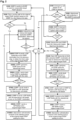
- Fig. 1 schematically shows in a block diagram an overview of the proposed method according to an embodiment of the invention.
- an emergency call arrives on a ESRP N element in the ESInet.
- the ESRP N element identifies an abandoned call indication.
- the ESRP N element performs a rebid to obtain a fresh update of the caller location.
- the ESRP i performs an ECRF query, in order to obtain the routing information of the original routing target PSAP element, in this example PSAP A.
- the ESRP i element sends back to the ESRP N a SIP Notify that carries the state of the original target PSAP.
- ESRP N needs this information in order to decide if the abandoned call should be transferred back to the original routing target PSAP element.
- ESRP N checks in step S600, if the original routing PSAP is in a functional state. If the PSAP is in a functional state, the method proceeds with step S700.
- step S800 the ESRP N element returns back a SIP Notify which carries the abandoned call details.
- Fig. 2 shows in a block diagram an overview of the proposed method according to another embodiment of the invention.
- an emergency call arrives on a ESRP N element in the ESInet.
- a check is performed whether History-Info headers exist in the message depicted as S110. If there are no History-Info headers in the SIP message, the method terminates.
- step S200 the method is continued with step S200.
- another check is performed, whether the call is abandoned or not, meaning if a CANCEL request of the callers' device or client is received prior to the call.
- This check may be performed in a configurable time period t. Wherein, the time period t is related to the processing of the corresponding signaling messages of the call. Thus, if all the messages are exchanged and a CANCEL request is not received, the call is not considered an abandoned call.
- the method ends, and the default handling process is followed.
- the ESRP N element performs a rebid to obtain a fresh update of the caller location.
- the method extracts the next History-Info header.
- the method picks the History-Info headers, starting from the bottom and extracts the corresponding node, in this example ESRP i. If there are no more History-Info headers, the method terminates.
- the next step S320 is performed, wherein the ESRP N element sends a SIP Subscribe request to the extracted ESRP i destination, extracted from step S310.
- the aim of this SIP Subscribe request is to retrieve the update state of the PSAP element which was the original routing target PSAP of the examined call.
- the ESRP i performs an ECRF query, in order to obtain the routing information of the original routing target PSAP element.
- the ESRP i element sends back to the ESRP N a SIP Notify that carries the state of the original target PSAP.
- ESRP N needs this information in order to decide if the abandoned call should be transferred back to the original routing target PSAP element.
- ESRP N checks in step S600 if the original routing PSAP is in a functional state. If it is not in a functional state, the method loops back to S310 and extracts the next ESRP destination from the next History-Info header.
- step S700 the ESRP i element sends to the ESRP N element a SIP Subscribe for abandoned call details.
- the ESRP N element returns a SIP Notify which carries the abandoned call details.
- step S900 the SIP Notify is forwarded from ESRP i to the original target PSAP element.
- step S100 the abandoned call indication along with the call details is stored on the memory-queue of the original target PSAP element and the call waits to be handled by an agent.
- the ESRP N element performs then in step S330 an ECRF query in order to track the responsible PSAP element.
- step S340 the method tries to find a routing path to the target PSAP element based on the current ESRP N element, or the ESRP i extracted from the History-Info header. From this step till the end of the method this ESRP element will be denoted as ESRP i, even if it is still the ESRP N element.
- the ESRP N element extracts the next History-Info header, as long as History-Info headers exist, or a path is not found. Otherwise, if a routing path is found in step S360X, the ESRP N sends a SIP Subscribe request to the ESRP i destination obtained from the previous step, with the aim to obtain the state of the original target PSAP element. In case the ESRP i is the same element to the ESRP N, there is no need for communication with a SUBSCRIBE/NOTIFY mechanism. The same applies for the next steps which include a communication path between the ESRP i and the ESRP N element.
- step S400X the ESRP i performs an ECRF query for the abandoned owner, i. e. the original target PSAP element.
- step S500X the ESRP i sends back to the ESRP N a SIP Notify message that contains the state of the original target PSAP element. If this is not a functional state after a check in step S600X, then the method returns to step S350X and extracts the next ESRP destination from the next History-Info header. In a different case, the method moves forward to step S700X, wherein the ESRP i element sends back to the ESRP N element a SIP Subscribe message with the abandoned call details.
- step S800X the ESRP N element sends back to the ESRP i a SIP Notify that includes the abandoned call details.
- step S900X the SIP Notify arrives on the original target PSAP element.
- step S1000X the abandoned call indication along with the call details is stored on the memory-queue of the original target PSAP element and the call waits to be handled by an agent.
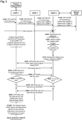
- Fig.3 shows in a block diagram the proposed method according to another embodiment of the invention for the scenario that the geolocation of a caller does not change.
- an emergency call arrives on the default PSAP element.
- the urn:service:sos indicates a uniform resource name which is conveyed over signaling messages in the context of an IP network, so as to point to the emergency service that needs to be requested by an Emergency Calling Routing Function.
- the SIP INVITE request carries several History-Info headers, which indicates that the call has not been routed on the original-initial recipient (depicted as "History-Info: ESRP 1", “History-Info: ESRP 2" and “History-Info: ESRP N” in Fig. 3 ).
- the History-Info headers declaring the hops until the SIP INVITE request reaches the PSAP regardless of an optimal route has been selected or even worse has been misrouted.
- step S200 the ESRP N element detects an abandoned call event.
- step S300 the ESRP N element performs a rebid request to retrieve a fresh update of the caller location.
- the first History-Info header (History-Info: ESRP 1) is extracted. The header extraction is initiated from the bottom because the last position in the History-Info header list, denotes the first element on the network which was unable to route the call in this example.
- step S320 the ESRP N element sends a SIP SUBSCRIBE request for a fresh state of the original target PSAP to the target ESRP 1 of the History-Info header which was extracted on the previous step. This triggers back a SIP Notify message, from the ESRP 1 to the ESRP N element.
- step S400 the target ESRP 1 element which received the SIP SUBSCRIBE performs an ECRF query for the abandoned owner PSAP.
- step S500 a SIP NOTIFY is returned to the ESRP N element also conveying the state of the abandoned owner PSAP element.
- step S700 the extracted ESRP 1 element sends a SIP SUBSCRIBE message to the ESRP N element, that targets the abandoned call details package, devoted to the piece of data related to the abandoned call event.
- step S800 the ESRP N element returns a SIP NOTIFY message to the ESRP 1, that will convey all the necessary abandoned call pieces of information.
- step S900 the ESRP 1 element forwards the SIP NOTIFY message to the abandoned owner PSAP element.
- step S1000 the original target PSAP element stores the information that waits on the queue with the abandoned indication, until an agent is available to handle the callback or to take any further action related to this call.
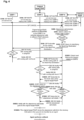
- Fig. 4 refers to another embodiment of the invention for the scenario of an updated geolocation of a caller.
- an emergency call arrives on the default PSAP element.
- the SIP INVITE request carries several History-Info headers (History-Info header 1 to N) declaring the hops until the request reaches the PSAP regardless of an optimal route has been selected or even worse has been misrouted.
- the ESRP N element detects an abandoned call event on the default PSAP meaning that either the call request is misrouted or due to the call routing conditions in the previous hops.
- step S300 the ESRP N element performs a rebid request to retrieve a fresh update of the caller location. In this case, there is a new update on the caller location. Based on the new location information, the ESRP N element makes an ECRF query for identifying the Next-Hop destination in step S330.
- step S340 the ESRP N element tries to identify the routing path for the Next-Hop destination.
- the ESRP N element has not configured a routing path for the Next-Hop destination.
- the ESRP N extracts the History-Info initiated from the bottom, because the last position in the History-Info header list denotes the first element on the network which was unable to route the call.
- the ESRP N element sends a SIP SUBSCRIBE request to the target ESRP 1 of the History-Info header which was extracted on a previous step analog to the steps S310 and S320 depicted in Fig.3 , but not shown in Fig.4 . This triggers back a SIP Notify message, from the ESRP 1 to the ESRP N element.
- the target ESRP 1 tries to identify a routing path for the Next-Hop.
- the ESRP N element extracts the next History-Info header, in this case related to ESRP 2.
- the ESRP N element sends a SIP SUBSCRIBE request to the target ESRP 2 for a routing path of the Next-Hop destination.
- the ESRP 2 is at the second position of the History-Info header list.
- this target ESRP 2 tries to find a routing path, and, in this example, a routing path is found meaning that target ESRP 2 triggers a SIP Notify message to the ESRP N element with an embedded information like "routing path found".
- step S360X the ESRP N element sends a SIP SUBSCRIBE request for the fresh, meaning updated, state of the original PSAP to the target ESRP 2 element.
- This element then performs an ECRF query for the abandoned owner PSAP depicted in step S400X.
- step S500X a SIP NOTIFY message is returned to the ESRP N element also conveying the state of the abandoned owner PSAP element.
- step S700X the extracted ESRP 2 element sends a SIP SUBSCRIBE message to the ESRP N element that will target the abandoned call details package devoted to the piece of data related to the abandoned call event. Consequently, the ESRP N element returns a SIP NOTIFY message to the ESRP 2, that will convey all the necessary abandoned call pieces of information shown in Fig. 4 as step S800X.
- step S900X the ESRP 2 element forwards the SIP NOTIFY message to the abandoned owner PSAP element.
- step S1000X the original target PSAP element stores the information that waits on the queue with the abandoned indication, until an agent is available to handle the callback or to take any further action related to this call.
Landscapes
- Engineering & Computer Science (AREA)
- Signal Processing (AREA)
- Business, Economics & Management (AREA)
- Multimedia (AREA)
- Computer Networks & Wireless Communication (AREA)
- Emergency Management (AREA)
- Marketing (AREA)
- General Business, Economics & Management (AREA)
- Telephonic Communication Services (AREA)
Abstract
Description
- The present invention relates to a method, a system, and a program element for optimizing an abandoned call notification. In particular, the method, the system, and the program element are related to an emergency network environment or other communication network environments where abandoned calls will result in an abandoned call notification. The proposed method addresses the misrouting of an emergency call which eventually gets abandoned by the caller, through effortlessly managing the indication of an abandoned call between various network elements, e. g. Emergency Service Internet Protocol network (ESInet) elements. The method presents a way for the abandoned call notification to appear in the correct Public Safety Answering Point (PSAP), without any manual action involved. In addition, with this method it is also able to address calls which are routed in different jurisdictions due to failures in the original intended routing targets.
- The technical problem that is addressed here is related to the misrouting of a call, especially an emergency call, that eventually gets abandoned by the caller. Such an abandoned call will result in an abandoned call notification in a Public Service Answering Point (PSAP) in case of an emergency call or any other central entity that would otherwise take care of the call, e. g. a call center or similar. However, this PSAP or other entity mighty not be the most applicable to do the (emergency) callback.
- Usually, for the case that an abandoned call notification arrives in a wrong / mistargeted PSAP, the PSAP agent is obliged to determine the correct PSAP and call it to inform the appropriate PSAP agent of the abandoned call's data. In some cases, the possibility for misrouting due to wrong configuration rules increases if several route changes occur in the call. Under specific circumstances, such a delay caused by trying to locate the correct PSAP after call misrouting might be fatal. In general, the problem of call misrouting is common in emergency network architectures like the Next Generation (NG) 9-1-1 or NG 1-1-2 architecture. It is often related to the fact that the calls are initiated from wireless callers which often change their geolocation during a call.
- Another problem is that calls may be routed in different jurisdictions due to failures in the original intended routing targets. For example, if a PSAP element is busy (i. e. no available agents), or it is under an overload state, the call should be delivered to a different PSAP. If several such hops occur in the call, the possibility for misrouting due to wrong configuration rules increases. Even so, if such a misroute emergency call gets answered, the mistargeted PSAP will probably be able to assist while at the same time locating the correct PSAP and transferring the call accordingly. However, in case of abandoned calls the delays that occur in trying to locate the correct PSAP after call misrouting might be fatal.
- The state-of-the-art solutions are dealing with approaches which can be used to handle an unanswered or abandoned call. However, they do not address the issue how abandoned call indications will be moved to the correct network element so that a corresponding agent can directly perform the callback without the need to take any further manual actions.
- Therefore, the present invention is based on the object to provide a method, a corresponding system, and a program element for optimizing an abandoned call notification. In particular, one object is to provide a way for the abandoned call notification to appear in the correct PSAP without any manual action involved. Another object is to quickly address these cases of abandoned calls and to save valuable time by locating the original routing target, evaluating if it is currently available, creating and sending an abandoned call notification to the most applicable PSAP.
- This object is solved by a method having the features according to
claim 1 and a corresponding system having the features according to claim 13. Preferred embodiments of the invention are defined in the respective dependent claims. - According to the invention, a method for optimizing an abandoned call notification is provided, wherein the method comprising the steps:
- arriving, by a call from a caller, on an Emergency Service Routing Proxy, ESRP, element in an Emergency Service Internet Protocol network, ESInet;
- verifying, by the ESRP element, that the call is considered abandoned;
- performing, by the ESRP element, a rebid to obtain a fresh update of the caller location;
- performing, by the ESRP element, an Emergency Call Routing Function, ECRF, query, to obtain the routing information of the original routing target Public Safety Answering Point, PSAP, element;
- sending, by an extracted ESRP destination of the original routing target PSAP, to the ESRP element a SIP Notify message that carries the state of the original routing target PSAP;
- verifying, by the ESRP element, if the state of the original routing target PSAP is functional;
- sending, by the ESRP destination, to the ESRP element a SIP Subscribe request message for abandoned call details; and
- sending, by the ESRP element, to the ESRP destination a SIP Notify message which carries the abandoned call details.
- According to a preferred embodiment, the method after the step of sending a SIP Notify message which carries the abandoned call details further comprises:
- forwarding, by the ESRP destination, to the original routing target PSAP the SIP Notify message, and
- storing, by the original routing target PSAP, on its memory-queue the abandoned call indication, along with the call details.
- According to another preferred embodiment, the method after the first step further comprises:
- verifying, by the ESRP element, if at least one History-Info header exists in a Session Initiation Protocol, SIP, message of the call.
- According to still another preferred embodiment, the call is considered abandoned if any CANCEL request is received from the caller.
- Further, according to a preferred embodiment, the call is not considered an abandoned call if in a time period t the processing of the corresponding signaling messages of the emergency call are all exchanged and a CANCEL request is not received. If the call is not detected as abandoned, the default handling process is followed.
- According to yet another preferred embodiment, the method after the step of performing a rebid to obtain a fresh update of the caller location further comprises:
- reading out in sequence, by the ESRP element, all History-Info headers of the call and extracting the corresponding ESRP destination in the case no location update is obtained in the previous step; and
- sending, by the ESRP element, a SIP Subscribe request to the extracted ESRP destination by the ESRP element to the ESRP destination obtained in the previous step to obtain the state of the original routing target PSAP element if call-History-info exists.
- In case the ESRP destination is the same element as the ESRP, there is no need for communication with a SUBSCRIBE/NOTIFY mechanism. The same applies for the next steps which include a communication path between the ESRP destination and the ESRP element.
- According to yet another preferred embodiment, wherein in case the state of the original routing target PSAP is not functional, the method returns to the step of reading out in sequence, by the ESRP element, all History-Info headers of the call and extracting the corresponding ESRP destination.
- According to yet another preferred embodiment, wherein in case the caller location is updated, the method further comprising:
- performing, by the ESRP element, an ECRF query to identify the responsible target PSAP element; and
- finding, by the ESRP element and/or the corresponding ESRP destination extracted from the History-Info header, a routing path to the target PSAP element based on the History-Information of the call.
- According to yet another preferred embodiment, wherein if a routing path is not found, the method further comprising:
- extracting, by the ESRP element, another ESRP destination from the History-Info header and repeating the step of finding a routing path to the target PSAP element based on the History-Information of the call.
- According to yet another preferred embodiment, wherein if a routing path is found, the method further comprising:
- sending, by the ESRP element, to the ESRP destination obtained a SIP Subscribe request message to obtain the state of the original routing target PSAP element;
- performing, by the ESRP destination, an ECRF query to identify the original routing target PSAP element;
- sending, by the ESRP destination, to the ESRP element a SIP Notify message that carries the state of the original routing target PSAP and
- verifying, by the ESRP element, if the state of the original routing target PSAP is functional, in case the state is not functional, then the method returns to the step of extracting another ESRP destination from the History-Info header and repeating the step of finding a routing path to the target PSAP element based on the History-Information of the call; otherwise
- sending, by the ESRP destination, to the ESRP element a SIP Subscribe request message for the abandoned call details in case the state is functional;
- sending, by the ESRP element, to the ESRP destination a SIP Notify message which carries the abandoned call details;
- forwarding, by the ESRP destination, to the original routing target PSAP the SIP Notify message;
- storing, by the original routing target PSAP, on its memory-queue the abandoned call indication, along with the call details.
- According to yet another preferred embodiment, wherein in case the state of the original routing target PSAP is not functional, the method returns to extracting, by the ESRP element, another ESRP destination from the History-Info header and repeating the step of finding a routing path to the target PSAP element based on the History-Information of the call
- According to yet another preferred embodiment, wherein the method ends if one of the following is present: no History-Info header exists, no History-Info exists, the call is not considered abandoned, or the method is considered complete after the storing step of the abandoned call data.
- According to the invention, a corresponding system for optimizing an abandoned call notification is provided, wherein the system is configured to perform the method according to any of the
claims 1 to 12. - According to yet another aspect of the present invention, a program element is provided, which when being executed by a processor is adapted to carry out the steps of the method for optimizing an abandoned call notification.
- According to another aspect of the present invention, a computer-readable medium comprising program code is provided, which when being executed by a processor is adapted to carry out steps of the method for optimizing an abandoned call notification.
- A computer-readable medium may be a floppy disk, a hard disk, an USB (Universal Serial Bus) storage device, a RAM (Random Access Memory), a ROM (read only memory) or an EPROM (Erasable Programmable Read Only Memory). A computer readable medium may also be a data communication network, e. g. the Internet, which may allow downloading a program code.
- The invention provides a way to transfer the indication of an abandoned call between different network elements in the ESInet without engaging the agents. This means that the agents will not have to perform any transfer action in order to identify who is responsible for handling the call. The actual stream will be established in a later time, after the method according to this invention is executed. Moreover, the method performs the necessary actions between the network elements with the aim to find the optimal routing target. One key point in this invention is related to the fact that the agents of a PSAP will not need to perform any action. The abandoned call indication will be moved to the correct element and the corresponding agent will perform the callback directly without the need to talk to a second agent in a different PSAP.
- It should also be noted that aspects of the invention have been described with reference to different subject-matters. In particular, some aspects or embodiments have been described with reference to apparatus type claims whereas other aspects have been described with reference to method type claims. However, a person skilled in the art will gather from the above and the following description that, unless otherwise notified, in addition to any combination between features belonging to one type of a subject-matter also any combination between features relating to different types of subject-matters is considered to be disclosed with this text. In particular, combinations between features relating to the apparatus type claims and features relating to the method type claims are considered to be disclosed. The invention and embodiments thereof will be described below in further detail in connection with the drawing(s).
- Fig. 1
- shows in a block diagram an overview of the proposed method according to an embodiment of the invention.
- Fig. 2
- shows in a block diagram an overview of the proposed method according to another embodiment of the invention.
- Fig.3
- shows in a block diagram the proposed method according to another embodiment of the invention for the scenario that the geolocation of a caller does not change.
- Fig. 4
- shows in a block diagram the proposed method according to another embodiment of the invention for the scenario of an updated geolocation of a caller.
-
Fig. 1 schematically shows in a block diagram an overview of the proposed method according to an embodiment of the invention. In the first step S100, an emergency call arrives on a ESRP N element in the ESInet. In step S200 the ESRP N element identifies an abandoned call indication. In step S300, the ESRP N element performs a rebid to obtain a fresh update of the caller location. In S400, the ESRP i performs an ECRF query, in order to obtain the routing information of the original routing target PSAP element, in this example PSAP A. In S500, the ESRP i element sends back to the ESRP N a SIP Notify that carries the state of the original target PSAP. ESRP N needs this information in order to decide if the abandoned call should be transferred back to the original routing target PSAP element. ESRP N checks in step S600, if the original routing PSAP is in a functional state. If the PSAP is in a functional state, the method proceeds with step S700. - In this step the ESRP i element sends to the ESRP N element a SIP Subscribe for abandoned call details. In step S800, the ESRP N element returns back a SIP Notify which carries the abandoned call details.
-
Fig. 2 shows in a block diagram an overview of the proposed method according to another embodiment of the invention. Again, as described inFig. 1 , in the first step S100 of this embodiment, an emergency call arrives on a ESRP N element in the ESInet. After that, a check is performed whether History-Info headers exist in the message depicted as S110. If there are no History-Info headers in the SIP message, the method terminates. - In the other case, the method is continued with step S200. Here, another check is performed, whether the call is abandoned or not, meaning if a CANCEL request of the callers' device or client is received prior to the call. This check may be performed in a configurable time period t. Wherein, the time period t is related to the processing of the corresponding signaling messages of the call. Thus, if all the messages are exchanged and a CANCEL request is not received, the call is not considered an abandoned call.
- If the call is not detected as abandoned, the method ends, and the default handling process is followed. In the latter case, in the step S300, the ESRP N element performs a rebid to obtain a fresh update of the caller location. Then in step S310, if the location is not updated the method extracts the next History-Info header. The method picks the History-Info headers, starting from the bottom and extracts the corresponding node, in this example ESRP i. If there are no more History-Info headers, the method terminates. In a different case, the next step S320 is performed, wherein the ESRP N element sends a SIP Subscribe request to the extracted ESRP i destination, extracted from step S310. The aim of this SIP Subscribe request is to retrieve the update state of the PSAP element which was the original routing target PSAP of the examined call.
- In S400, the ESRP i performs an ECRF query, in order to obtain the routing information of the original routing target PSAP element. In S500, the ESRP i element sends back to the ESRP N a SIP Notify that carries the state of the original target PSAP. ESRP N needs this information in order to decide if the abandoned call should be transferred back to the original routing target PSAP element. ESRP N checks in step S600 if the original routing PSAP is in a functional state. If it is not in a functional state, the method loops back to S310 and extracts the next ESRP destination from the next History-Info header.
- However, if the PSAP is in a functional state, the method proceeds with step S700. In this step the ESRP i element sends to the ESRP N element a SIP Subscribe for abandoned call details. In step S800, the ESRP N element returns a SIP Notify which carries the abandoned call details. In step S900 the SIP Notify is forwarded from ESRP i to the original target PSAP element. In step S100 the abandoned call indication along with the call details is stored on the memory-queue of the original target PSAP element and the call waits to be handled by an agent.
- In case the caller has moved, and his/her location has been updated, the ESRP N element performs then in step S330 an ECRF query in order to track the responsible PSAP element. In step S340, the method tries to find a routing path to the target PSAP element based on the current ESRP N element, or the ESRP i extracted from the History-Info header. From this step till the end of the method this ESRP element will be denoted as ESRP i, even if it is still the ESRP N element.
- If the routing path is not found, then in S350X the ESRP N element extracts the next History-Info header, as long as History-Info headers exist, or a path is not found. Otherwise, if a routing path is found in step S360X, the ESRP N sends a SIP Subscribe request to the ESRP i destination obtained from the previous step, with the aim to obtain the state of the original target PSAP element. In case the ESRP i is the same element to the ESRP N, there is no need for communication with a SUBSCRIBE/NOTIFY mechanism. The same applies for the next steps which include a communication path between the ESRP i and the ESRP N element. In step S400X the ESRP i performs an ECRF query for the abandoned owner, i. e. the original target PSAP element. In step S500X, the ESRP i sends back to the ESRP N a SIP Notify message that contains the state of the original target PSAP element. If this is not a functional state after a check in step S600X, then the method returns to step S350X and extracts the next ESRP destination from the next History-Info header. In a different case, the method moves forward to step S700X, wherein the ESRP i element sends back to the ESRP N element a SIP Subscribe message with the abandoned call details. In step S800X, the ESRP N element sends back to the ESRP i a SIP Notify that includes the abandoned call details. In step S900X, the SIP Notify arrives on the original target PSAP element. And finally, in step S1000X, the abandoned call indication along with the call details is stored on the memory-queue of the original target PSAP element and the call waits to be handled by an agent.
-
Fig.3 shows in a block diagram the proposed method according to another embodiment of the invention for the scenario that the geolocation of a caller does not change. Thus, for this example, it is assumed that from the initiation till the end of the call, the caller remains in the same geofence. In the first step S100, an emergency call arrives on the default PSAP element. The urn:service:sos indicates a uniform resource name which is conveyed over signaling messages in the context of an IP network, so as to point to the emergency service that needs to be requested by an Emergency Calling Routing Function. The SIP INVITE request carries several History-Info headers, which indicates that the call has not been routed on the original-initial recipient (depicted as "History-Info:ESRP 1", "History-Info:ESRP 2" and "History-Info: ESRP N" inFig. 3 ). Thereby, the History-Info headers declaring the hops until the SIP INVITE request reaches the PSAP regardless of an optimal route has been selected or even worse has been misrouted. - Then, in step S200 the ESRP N element detects an abandoned call event. In step S300 the ESRP N element performs a rebid request to retrieve a fresh update of the caller location. In this example, there is no new update on the caller location, thus in step S310 the first History-Info header (History-Info: ESRP 1) is extracted. The header extraction is initiated from the bottom because the last position in the History-Info header list, denotes the first element on the network which was unable to route the call in this example.
- Further, in step S320, the ESRP N element sends a SIP SUBSCRIBE request for a fresh state of the original target PSAP to the
target ESRP 1 of the History-Info header which was extracted on the previous step. This triggers back a SIP Notify message, from theESRP 1 to the ESRP N element. - In step S400, the
target ESRP 1 element which received the SIP SUBSCRIBE performs an ECRF query for the abandoned owner PSAP. In step S500, a SIP NOTIFY is returned to the ESRP N element also conveying the state of the abandoned owner PSAP element. - If after a check in step S600 the state is functional, then in step S700 the extracted
ESRP 1 element sends a SIP SUBSCRIBE message to the ESRP N element, that targets the abandoned call details package, devoted to the piece of data related to the abandoned call event. - In step S800, the ESRP N element returns a SIP NOTIFY message to the
ESRP 1, that will convey all the necessary abandoned call pieces of information. After that, in step S900 theESRP 1 element forwards the SIP NOTIFY message to the abandoned owner PSAP element. And finally, in step S1000 the original target PSAP element stores the information that waits on the queue with the abandoned indication, until an agent is available to handle the callback or to take any further action related to this call. -
Fig. 4 refers to another embodiment of the invention for the scenario of an updated geolocation of a caller. In the first step S100, an emergency call arrives on the default PSAP element. The SIP INVITE request carries several History-Info headers (History-Info header 1 to N) declaring the hops until the request reaches the PSAP regardless of an optimal route has been selected or even worse has been misrouted. In step S200, the ESRP N element detects an abandoned call event on the default PSAP meaning that either the call request is misrouted or due to the call routing conditions in the previous hops. - In step S300, the ESRP N element performs a rebid request to retrieve a fresh update of the caller location. In this case, there is a new update on the caller location. Based on the new location information, the ESRP N element makes an ECRF query for identifying the Next-Hop destination in step S330.
- Then, in step S340, the ESRP N element tries to identify the routing path for the Next-Hop destination. Under normal conditions, the ESRP N element has not configured a routing path for the Next-Hop destination. In this case, the ESRP N extracts the History-Info initiated from the bottom, because the last position in the History-Info header list denotes the first element on the network which was unable to route the call. The ESRP N element sends a SIP SUBSCRIBE request to the
target ESRP 1 of the History-Info header which was extracted on a previous step analog to the steps S310 and S320 depicted inFig.3 , but not shown inFig.4 . This triggers back a SIP Notify message, from theESRP 1 to the ESRP N element. In addition, thetarget ESRP 1 tries to identify a routing path for the Next-Hop. - In this case, a routing path was not found and the
target ESRP 1 triggers a SIP Notify message to the ESRP N element with an embedded information like "routing path not found". - In the next step S350X which is similar to the step S310 in
Fig. 3 , the ESRP N element extracts the next History-Info header, in this case related toESRP 2. Thus, in step S340, the ESRP N element sends a SIP SUBSCRIBE request to thetarget ESRP 2 for a routing path of the Next-Hop destination. Thereby, theESRP 2 is at the second position of the History-Info header list. Again, thistarget ESRP 2 tries to find a routing path, and, in this example, a routing path is found meaning thattarget ESRP 2 triggers a SIP Notify message to the ESRP N element with an embedded information like "routing path found". - In step S360X then, the ESRP N element sends a SIP SUBSCRIBE request for the fresh, meaning updated, state of the original PSAP to the
target ESRP 2 element. This element then performs an ECRF query for the abandoned owner PSAP depicted in step S400X. Then, in step S500X, a SIP NOTIFY message is returned to the ESRP N element also conveying the state of the abandoned owner PSAP element. - After a check in step S600X, if the state of the owner PSAP element is functional, then, in step S700X, the extracted
ESRP 2 element sends a SIP SUBSCRIBE message to the ESRP N element that will target the abandoned call details package devoted to the piece of data related to the abandoned call event. Consequently, the ESRP N element returns a SIP NOTIFY message to theESRP 2, that will convey all the necessary abandoned call pieces of information shown inFig. 4 as step S800X. In step S900X theESRP 2 element forwards the SIP NOTIFY message to the abandoned owner PSAP element. Finally, in step S1000X the original target PSAP element stores the information that waits on the queue with the abandoned indication, until an agent is available to handle the callback or to take any further action related to this call. - It should be noted that the term "comprising" does not exclude other elements or steps and the "a" or "an" does not exclude a plurality. Further, elements described in association with different embodiments may be combined.
- It should also be noted that reference signs in the claims shall not be construed as limiting the scope of the claims.
-
- ESRP N
- Emergency Service Routing Proxy N
-
ESRP 1 - Emergency
Service Routing Proxy 1 -
ESRP 2 - Emergency
Service Routing Proxy 2 - Original target PSAP
- original target Public Safety Answering Point
- Default PSAP
- default Public Safety Answering Point
Claims (14)
- A method for optimizing an abandoned call notification, wherein the method comprising the steps of:- S100 arriving, by a call from a caller, on an Emergency Service Routing Proxy, ESRP, element in an Emergency Service Internet Protocol network, ESInet;- S200 verifying, by the ESRP element, that the call is considered abandoned;- S300 performing, by the ESRP element, a rebid to obtain a fresh update of the caller location;- S400 performing, by the ESRP element, an Emergency Call Routing Function, ECRF, query, to obtain the routing information of the original routing target Public Safety Answering Point, PSAP, element;- S500 sending, by an extracted ESRP destination of the original routing target PSAP, to the ESRP element a SIP Notify message that carries the state of the original routing target PSAP;- S600 verifying, by the ESRP element, if the state of the original routing target PSAP is functional;- S700 sending, by the ESRP destination, to the ESRP element a SIP Subscribe request message for abandoned call details; and- S800 sending, by the ESRP element, to the ESRP destination a SIP Notify message which carries the abandoned call details.
- The method according to claim 1, wherein after step S800 the method further comprising:- S900 forwarding, by the ESRP destination, to the original routing target PSAP the SIP Notify message, and- S1000 storing, by the original routing target PSAP on its memory-queue the abandoned call indication, along with the call details.
- The method according to any of the preceding claims, wherein after step S100 the method further comprising:- S110 verifying, by the ESRP element, if at least one History-Info header exists in a Session Initiation Protocol, SIP, message of the call.
- The method according to any of the preceding claims, wherein the call is considered abandoned if any CANCEL request is received.
- The method according to any of the preceding claims, wherein the call is not considered an abandoned call, if in a time period t the processing of the corresponding signaling messages of the emergency call are all exchanged and a CANCEL request is not received.
- The method according to any of the preceding claims, wherein after step S300 the method further comprising:- S310 reading out in sequence, by the ESRP element, all History-Info headers of the call and extracting the corresponding ESRP destination in the case no location update is obtain in the previous step; and- S320 sending, by the ESRP element, a SIP Subscribe request to the extracted ESRP destination by the ESRP element to the ESRP destination obtained in the previous step to obtain the state of the original routing target PSAP element if call-History-info exists.
- The method according to any of the preceding claims, wherein in case the state of the original routing target PSAP is not functional, the method returns to step S310.
- The method according to any of the preceding claims, wherein in case the caller location is updated after step S300 the method further comprising:- S330 performing, by the ESRP element, an ECRF query to identify the responsible target PSAP element; and- S340 finding, by the ESRP element and/or the ESRP destination, a routing path to the target PSAP element based on the History-Information of the call.
- The method according to claim 8, wherein if a routing path is not found, the method further comprising:- S350X extracting, by the ESRP element, another ESRP destination from the History-Info header and repeating step S340.
- The method according to claim 8, wherein if a routing path is found, the method further comprising:- S360X sending, by the ESRP element, to the ESRP destination obtained in step S310 or S350X a SIP Subscribe request message to obtain the state of the original routing target PSAP element;- S400X performing, by the ESRP destination, an ECRF query to identify the original routing target PSAP element;- S500X sending, by the ESRP destination, to the ESRP element a SIP Notify message that carries the state of the original routing target PSAP, and- S600X verifying, by the ESRP element, if the state of the original routing target PSAP is functional, in case the state is not functional, then the method returns to step S350;- S700X sending, by the ESRP destination, to the ESRP element a SIP Subscribe request message for the abandoned call details in case the state is functional;- S800X sending, by the ESRP element, to the ESRP destination a SIP Notify message which carries the abandoned call details;- S900X forwarding, by the ESRP destination, to the original routing target PSAP the SIP Notify message;- S1000X storing, by the original routing target PSAP, on its memory-queue the abandoned call indication, along with the call details.
- The method according to claim 10, wherein in case the state of the original routing target PSAP is not functional, the method returns to step S350X.
- The method according to any of the preceding claims, wherein the method ends if one of the following is present: no History-Info header exists, no History-Info exists, the call is not considered abandoned, or the method is considered complete after step S1000 or S1000X.
- A system for optimizing an abandoned call notification, wherein the system is configured to perform the method according to any of the claims 1 to 12.
- A program element for optimizing an abandoned call notification, wherein the program element when being executed by a processor is adapted to carry out steps of the method according to claim 1 to 12.
Priority Applications (2)
| Application Number | Priority Date | Filing Date | Title |
|---|---|---|---|
| EP22151430.0A EP4213464B1 (en) | 2022-01-13 | 2022-01-13 | Method, system, and program element for optimizing an abandoned call notification |
| US17/970,316 US12278928B2 (en) | 2022-01-13 | 2022-10-20 | Method, system, and program element for optimizing an abandoned call notification |
Applications Claiming Priority (1)
| Application Number | Priority Date | Filing Date | Title |
|---|---|---|---|
| EP22151430.0A EP4213464B1 (en) | 2022-01-13 | 2022-01-13 | Method, system, and program element for optimizing an abandoned call notification |
Publications (2)
| Publication Number | Publication Date |
|---|---|
| EP4213464A1 true EP4213464A1 (en) | 2023-07-19 |
| EP4213464B1 EP4213464B1 (en) | 2024-06-26 |
Family
ID=79601858
Family Applications (1)
| Application Number | Title | Priority Date | Filing Date |
|---|---|---|---|
| EP22151430.0A Active EP4213464B1 (en) | 2022-01-13 | 2022-01-13 | Method, system, and program element for optimizing an abandoned call notification |
Country Status (2)
| Country | Link |
|---|---|
| US (1) | US12278928B2 (en) |
| EP (1) | EP4213464B1 (en) |
Families Citing this family (2)
| Publication number | Priority date | Publication date | Assignee | Title |
|---|---|---|---|---|
| US12376003B2 (en) * | 2022-06-02 | 2025-07-29 | At&T Intellectual Property I, L.P. | Public service answering point call routing issue detection and resolution |
| EP4576647A1 (en) * | 2023-12-21 | 2025-06-25 | Unify Beteiligungsverwaltung GmbH & Co. KG | Method and system for multidimensional blockchain mining |
Family Cites Families (13)
| Publication number | Priority date | Publication date | Assignee | Title |
|---|---|---|---|---|
| US20080090546A1 (en) * | 2006-10-17 | 2008-04-17 | Richard Dickinson | Enhanced E911 network access for a call center using session initiation protocol (SIP) messaging |
| US8873548B1 (en) * | 2005-09-22 | 2014-10-28 | Verizon Patent And Licensing Inc. | Method and system for providing call-forwarding status indications in a packet-switched network |
| US8098798B2 (en) * | 2006-10-31 | 2012-01-17 | Alcatel Lucent | Logging call data for failed emergency calls |
| US8447263B2 (en) * | 2011-01-28 | 2013-05-21 | Don Reich | Emergency call analysis system |
| US9438731B2 (en) * | 2012-09-10 | 2016-09-06 | Tools/400 Inc. | Emergency 9-1-1 portal and application |
| US9736302B2 (en) * | 2012-09-10 | 2017-08-15 | Tools/400 Inc. | Emergency 9-1-1 portal and application |
| US10516780B2 (en) * | 2012-09-10 | 2019-12-24 | Tools/400 Inc. | Emergency 9-1-1 portal and application |
| US10142469B2 (en) * | 2012-09-10 | 2018-11-27 | Tools/400 Inc. | Emergency 9-1-1 portal and application |
| US9148522B2 (en) * | 2013-09-27 | 2015-09-29 | Oracle International Corporation | Methods, systems, and computer readable media for determining policy information associated with an emergency call |
| US10367947B2 (en) * | 2017-06-06 | 2019-07-30 | Bandwith.com, Inc. | Techniques for migrating legacy 911 systems to NG-911 systems |
| WO2019027537A1 (en) * | 2017-08-01 | 2019-02-07 | Qualcomm Incorporated | User equipment enabling enhanced emergency call with sms |
| US11388625B1 (en) * | 2020-12-21 | 2022-07-12 | Motorola Solutions, Inc. | Call overload handing for a public safety answering point |
| US11159676B1 (en) * | 2021-05-25 | 2021-10-26 | Bandwidth, Inc. | Methods for emergency response location (ERL) correction in a voice over internet protocol (VoIP) 911 server and related systems and computer program products |
-
2022
- 2022-01-13 EP EP22151430.0A patent/EP4213464B1/en active Active
- 2022-10-20 US US17/970,316 patent/US12278928B2/en active Active
Non-Patent Citations (2)
| Title |
|---|
| ETSI SECRETARIAT: "Final Draft - DTS/EMTEL-00037 v0.0.14 (TS 103 479 )", vol. TC EMTEL Emergency Communications, no. .0.14, 28 November 2019 (2019-11-28), pages 1 - 62, XP014356608, Retrieved from the Internet <URL:docbox.etsi.org/EMTEL/EMTEL/05-CONTRIBUTIONS/2019/EMTEL(19)000081r1_Final_Draft_-_DTS_EMTEL-00037__v0_0_14__TS_103_479__.zip/EMTEL-00037v0014_clean.docx> [retrieved on 20191128] * |
| NENA: "NENA Detailed Functional and Interface Standards for the NENA i3 Solution NENA Detailed Functional and Interface Standards for the NENA i3 Solution", 10 September 2016 (2016-09-10), USA, pages 1 - 363, XP055649625, Retrieved from the Internet <URL:https://www.nena.org/resource/resmgr/standards/NENA-STA-010.2_i3_Architectu.pdf> [retrieved on 20191205] * |
Also Published As
| Publication number | Publication date |
|---|---|
| US12278928B2 (en) | 2025-04-15 |
| US20230224405A1 (en) | 2023-07-13 |
| EP4213464B1 (en) | 2024-06-26 |
Similar Documents
| Publication | Publication Date | Title |
|---|---|---|
| US7573984B2 (en) | Systems and methods for providing emergency contact services | |
| US8744060B2 (en) | Communicating information pertaining to cancelling of forked call requests | |
| US8027450B2 (en) | Call forwarding to voice mail systems based on redirecting number | |
| EP2014074B1 (en) | System and method for email notification of unanswered telephone calls | |
| US20160192167A1 (en) | Routing engine for emergency communications | |
| US12278928B2 (en) | Method, system, and program element for optimizing an abandoned call notification | |
| EP1757076B1 (en) | Enhanced call pickup | |
| US8971514B2 (en) | Avoiding failed routes | |
| US7975009B2 (en) | Instant message contact router | |
| US20130251116A1 (en) | Terminating A Call According To Reverse Signaling Data | |
| US9253614B2 (en) | Communication system providing integrated wireless and packet communication services | |
| US20030161451A1 (en) | Method and apparatus for negotiated message delivery | |
| US8548156B2 (en) | Method and system for blocking lower priority communications for improved automatic call distribution | |
| US11683411B1 (en) | Processing blocked session initiation protocol (SIP) calls in a contact center call handler | |
| WO1998035490A1 (en) | Method of handling telephone calls | |
| US20060115074A1 (en) | Method of storing information within an ACD | |
| US20070195752A1 (en) | System and method for handling call redirection and multi call destination failures | |
| US8498398B2 (en) | Method and system for managing a caller's telephone call to a called party | |
| US11627222B2 (en) | Computer-implemented method of processing an emergency incident and emergency communication network | |
| US20150237198A1 (en) | Methods, Devices and System for Logging Calls for Terminals | |
| JP4691181B2 (en) | Telephone switching device and incoming call transfer control method for telephone switching device | |
| JP2018182474A (en) | IP telephone network system, parent gateway, child gateway, and IP telephone system | |
| US8139750B1 (en) | Early media service control | |
| EP1517529A1 (en) | Intelligent message routing between messaging systems | |
| EP2194699A1 (en) | Telephone call processing |
Legal Events
| Date | Code | Title | Description |
|---|---|---|---|
| PUAI | Public reference made under article 153(3) epc to a published international application that has entered the european phase |
Free format text: ORIGINAL CODE: 0009012 |
|
| STAA | Information on the status of an ep patent application or granted ep patent |
Free format text: STATUS: THE APPLICATION HAS BEEN PUBLISHED |
|
| AK | Designated contracting states |
Kind code of ref document: A1 Designated state(s): AL AT BE BG CH CY CZ DE DK EE ES FI FR GB GR HR HU IE IS IT LI LT LU LV MC MK MT NL NO PL PT RO RS SE SI SK SM TR |
|
| STAA | Information on the status of an ep patent application or granted ep patent |
Free format text: STATUS: REQUEST FOR EXAMINATION WAS MADE |
|
| REG | Reference to a national code |
Ref legal event code: R079 Ipc: H04L0065106900 Ref country code: DE Ref legal event code: R079 Ref document number: 602022004066 Country of ref document: DE Free format text: PREVIOUS MAIN CLASS: H04L0065104500 Ipc: H04L0065106900 |
|
| 17P | Request for examination filed |
Effective date: 20231216 |
|
| RBV | Designated contracting states (corrected) |
Designated state(s): AL AT BE BG CH CY CZ DE DK EE ES FI FR GB GR HR HU IE IS IT LI LT LU LV MC MK MT NL NO PL PT RO RS SE SI SK SM TR |
|
| GRAP | Despatch of communication of intention to grant a patent |
Free format text: ORIGINAL CODE: EPIDOSNIGR1 |
|
| STAA | Information on the status of an ep patent application or granted ep patent |
Free format text: STATUS: GRANT OF PATENT IS INTENDED |
|
| RIC1 | Information provided on ipc code assigned before grant |
Ipc: H04L 65/1045 20220101ALI20240116BHEP Ipc: H04L 65/1069 20220101AFI20240116BHEP |
|
| INTG | Intention to grant announced |
Effective date: 20240206 |
|
| GRAS | Grant fee paid |
Free format text: ORIGINAL CODE: EPIDOSNIGR3 |
|
| GRAA | (expected) grant |
Free format text: ORIGINAL CODE: 0009210 |
|
| STAA | Information on the status of an ep patent application or granted ep patent |
Free format text: STATUS: THE PATENT HAS BEEN GRANTED |
|
| AK | Designated contracting states |
Kind code of ref document: B1 Designated state(s): AL AT BE BG CH CY CZ DE DK EE ES FI FR GB GR HR HU IE IS IT LI LT LU LV MC MK MT NL NO PL PT RO RS SE SI SK SM TR |
|
| REG | Reference to a national code |
Ref country code: GB Ref legal event code: FG4D |
|
| REG | Reference to a national code |
Ref country code: CH Ref legal event code: EP |
|
| REG | Reference to a national code |
Ref country code: DE Ref legal event code: R096 Ref document number: 602022004066 Country of ref document: DE |
|
| PG25 | Lapsed in a contracting state [announced via postgrant information from national office to epo] |
Ref country code: BG Free format text: LAPSE BECAUSE OF FAILURE TO SUBMIT A TRANSLATION OF THE DESCRIPTION OR TO PAY THE FEE WITHIN THE PRESCRIBED TIME-LIMIT Effective date: 20240626 |
|
| PG25 | Lapsed in a contracting state [announced via postgrant information from national office to epo] |
Ref country code: HR Free format text: LAPSE BECAUSE OF FAILURE TO SUBMIT A TRANSLATION OF THE DESCRIPTION OR TO PAY THE FEE WITHIN THE PRESCRIBED TIME-LIMIT Effective date: 20240626 Ref country code: FI Free format text: LAPSE BECAUSE OF FAILURE TO SUBMIT A TRANSLATION OF THE DESCRIPTION OR TO PAY THE FEE WITHIN THE PRESCRIBED TIME-LIMIT Effective date: 20240626 |
|
| REG | Reference to a national code |
Ref country code: LT Ref legal event code: MG9D |
|
| PG25 | Lapsed in a contracting state [announced via postgrant information from national office to epo] |
Ref country code: GR Free format text: LAPSE BECAUSE OF FAILURE TO SUBMIT A TRANSLATION OF THE DESCRIPTION OR TO PAY THE FEE WITHIN THE PRESCRIBED TIME-LIMIT Effective date: 20240927 |
|
| PG25 | Lapsed in a contracting state [announced via postgrant information from national office to epo] |
Ref country code: LV Free format text: LAPSE BECAUSE OF FAILURE TO SUBMIT A TRANSLATION OF THE DESCRIPTION OR TO PAY THE FEE WITHIN THE PRESCRIBED TIME-LIMIT Effective date: 20240626 |
|
| REG | Reference to a national code |
Ref country code: NL Ref legal event code: MP Effective date: 20240626 |
|
| PG25 | Lapsed in a contracting state [announced via postgrant information from national office to epo] |
Ref country code: NO Free format text: LAPSE BECAUSE OF FAILURE TO SUBMIT A TRANSLATION OF THE DESCRIPTION OR TO PAY THE FEE WITHIN THE PRESCRIBED TIME-LIMIT Effective date: 20240926 Ref country code: LV Free format text: LAPSE BECAUSE OF FAILURE TO SUBMIT A TRANSLATION OF THE DESCRIPTION OR TO PAY THE FEE WITHIN THE PRESCRIBED TIME-LIMIT Effective date: 20240626 Ref country code: HR Free format text: LAPSE BECAUSE OF FAILURE TO SUBMIT A TRANSLATION OF THE DESCRIPTION OR TO PAY THE FEE WITHIN THE PRESCRIBED TIME-LIMIT Effective date: 20240626 Ref country code: GR Free format text: LAPSE BECAUSE OF FAILURE TO SUBMIT A TRANSLATION OF THE DESCRIPTION OR TO PAY THE FEE WITHIN THE PRESCRIBED TIME-LIMIT Effective date: 20240927 Ref country code: FI Free format text: LAPSE BECAUSE OF FAILURE TO SUBMIT A TRANSLATION OF THE DESCRIPTION OR TO PAY THE FEE WITHIN THE PRESCRIBED TIME-LIMIT Effective date: 20240626 Ref country code: BG Free format text: LAPSE BECAUSE OF FAILURE TO SUBMIT A TRANSLATION OF THE DESCRIPTION OR TO PAY THE FEE WITHIN THE PRESCRIBED TIME-LIMIT Effective date: 20240626 Ref country code: RS Free format text: LAPSE BECAUSE OF FAILURE TO SUBMIT A TRANSLATION OF THE DESCRIPTION OR TO PAY THE FEE WITHIN THE PRESCRIBED TIME-LIMIT Effective date: 20240926 |
|
| REG | Reference to a national code |
Ref country code: DE Ref legal event code: R081 Ref document number: 602022004066 Country of ref document: DE Owner name: UNIFY BETEILIGUNGSVERWALTUNG GMBH & CO. KG, DE Free format text: FORMER OWNER: UNIFY PATENTE GMBH & CO. KG, 81739 MUENCHEN, DE |
|
| PG25 | Lapsed in a contracting state [announced via postgrant information from national office to epo] |
Ref country code: NL Free format text: LAPSE BECAUSE OF FAILURE TO SUBMIT A TRANSLATION OF THE DESCRIPTION OR TO PAY THE FEE WITHIN THE PRESCRIBED TIME-LIMIT Effective date: 20240626 |
|
| REG | Reference to a national code |
Ref country code: AT Ref legal event code: MK05 Ref document number: 1698613 Country of ref document: AT Kind code of ref document: T Effective date: 20240626 |
|
| PG25 | Lapsed in a contracting state [announced via postgrant information from national office to epo] |
Ref country code: NL Free format text: LAPSE BECAUSE OF FAILURE TO SUBMIT A TRANSLATION OF THE DESCRIPTION OR TO PAY THE FEE WITHIN THE PRESCRIBED TIME-LIMIT Effective date: 20240626 |
|
| RAP2 | Party data changed (patent owner data changed or rights of a patent transferred) |
Owner name: UNIFY BETEILIGUNGSVERWALTUNG GMBH & CO. KG |
|
| PG25 | Lapsed in a contracting state [announced via postgrant information from national office to epo] |
Ref country code: PT Free format text: LAPSE BECAUSE OF FAILURE TO SUBMIT A TRANSLATION OF THE DESCRIPTION OR TO PAY THE FEE WITHIN THE PRESCRIBED TIME-LIMIT Effective date: 20241028 |
|
| PG25 | Lapsed in a contracting state [announced via postgrant information from national office to epo] |
Ref country code: PT Free format text: LAPSE BECAUSE OF FAILURE TO SUBMIT A TRANSLATION OF THE DESCRIPTION OR TO PAY THE FEE WITHIN THE PRESCRIBED TIME-LIMIT Effective date: 20241028 |
|
| PG25 | Lapsed in a contracting state [announced via postgrant information from national office to epo] |
Ref country code: PL Free format text: LAPSE BECAUSE OF FAILURE TO SUBMIT A TRANSLATION OF THE DESCRIPTION OR TO PAY THE FEE WITHIN THE PRESCRIBED TIME-LIMIT Effective date: 20240626 |
|
| PG25 | Lapsed in a contracting state [announced via postgrant information from national office to epo] |
Ref country code: EE Free format text: LAPSE BECAUSE OF FAILURE TO SUBMIT A TRANSLATION OF THE DESCRIPTION OR TO PAY THE FEE WITHIN THE PRESCRIBED TIME-LIMIT Effective date: 20240626 |
|
| PG25 | Lapsed in a contracting state [announced via postgrant information from national office to epo] |
Ref country code: IS Free format text: LAPSE BECAUSE OF FAILURE TO SUBMIT A TRANSLATION OF THE DESCRIPTION OR TO PAY THE FEE WITHIN THE PRESCRIBED TIME-LIMIT Effective date: 20241026 Ref country code: AT Free format text: LAPSE BECAUSE OF FAILURE TO SUBMIT A TRANSLATION OF THE DESCRIPTION OR TO PAY THE FEE WITHIN THE PRESCRIBED TIME-LIMIT Effective date: 20240626 |
|
| PG25 | Lapsed in a contracting state [announced via postgrant information from national office to epo] |
Ref country code: CZ Free format text: LAPSE BECAUSE OF FAILURE TO SUBMIT A TRANSLATION OF THE DESCRIPTION OR TO PAY THE FEE WITHIN THE PRESCRIBED TIME-LIMIT Effective date: 20240626 |
|
| PG25 | Lapsed in a contracting state [announced via postgrant information from national office to epo] |
Ref country code: RO Free format text: LAPSE BECAUSE OF FAILURE TO SUBMIT A TRANSLATION OF THE DESCRIPTION OR TO PAY THE FEE WITHIN THE PRESCRIBED TIME-LIMIT Effective date: 20240626 Ref country code: SK Free format text: LAPSE BECAUSE OF FAILURE TO SUBMIT A TRANSLATION OF THE DESCRIPTION OR TO PAY THE FEE WITHIN THE PRESCRIBED TIME-LIMIT Effective date: 20240626 |
|
| PG25 | Lapsed in a contracting state [announced via postgrant information from national office to epo] |
Ref country code: ES Free format text: LAPSE BECAUSE OF FAILURE TO SUBMIT A TRANSLATION OF THE DESCRIPTION OR TO PAY THE FEE WITHIN THE PRESCRIBED TIME-LIMIT Effective date: 20240626 Ref country code: SM Free format text: LAPSE BECAUSE OF FAILURE TO SUBMIT A TRANSLATION OF THE DESCRIPTION OR TO PAY THE FEE WITHIN THE PRESCRIBED TIME-LIMIT Effective date: 20240626 |
|
| PG25 | Lapsed in a contracting state [announced via postgrant information from national office to epo] |
Ref country code: SM Free format text: LAPSE BECAUSE OF FAILURE TO SUBMIT A TRANSLATION OF THE DESCRIPTION OR TO PAY THE FEE WITHIN THE PRESCRIBED TIME-LIMIT Effective date: 20240626 Ref country code: SK Free format text: LAPSE BECAUSE OF FAILURE TO SUBMIT A TRANSLATION OF THE DESCRIPTION OR TO PAY THE FEE WITHIN THE PRESCRIBED TIME-LIMIT Effective date: 20240626 Ref country code: RO Free format text: LAPSE BECAUSE OF FAILURE TO SUBMIT A TRANSLATION OF THE DESCRIPTION OR TO PAY THE FEE WITHIN THE PRESCRIBED TIME-LIMIT Effective date: 20240626 Ref country code: PL Free format text: LAPSE BECAUSE OF FAILURE TO SUBMIT A TRANSLATION OF THE DESCRIPTION OR TO PAY THE FEE WITHIN THE PRESCRIBED TIME-LIMIT Effective date: 20240626 Ref country code: IS Free format text: LAPSE BECAUSE OF FAILURE TO SUBMIT A TRANSLATION OF THE DESCRIPTION OR TO PAY THE FEE WITHIN THE PRESCRIBED TIME-LIMIT Effective date: 20241026 Ref country code: ES Free format text: LAPSE BECAUSE OF FAILURE TO SUBMIT A TRANSLATION OF THE DESCRIPTION OR TO PAY THE FEE WITHIN THE PRESCRIBED TIME-LIMIT Effective date: 20240626 Ref country code: EE Free format text: LAPSE BECAUSE OF FAILURE TO SUBMIT A TRANSLATION OF THE DESCRIPTION OR TO PAY THE FEE WITHIN THE PRESCRIBED TIME-LIMIT Effective date: 20240626 Ref country code: CZ Free format text: LAPSE BECAUSE OF FAILURE TO SUBMIT A TRANSLATION OF THE DESCRIPTION OR TO PAY THE FEE WITHIN THE PRESCRIBED TIME-LIMIT Effective date: 20240626 Ref country code: AT Free format text: LAPSE BECAUSE OF FAILURE TO SUBMIT A TRANSLATION OF THE DESCRIPTION OR TO PAY THE FEE WITHIN THE PRESCRIBED TIME-LIMIT Effective date: 20240626 |
|
| PG25 | Lapsed in a contracting state [announced via postgrant information from national office to epo] |
Ref country code: IT Free format text: LAPSE BECAUSE OF FAILURE TO SUBMIT A TRANSLATION OF THE DESCRIPTION OR TO PAY THE FEE WITHIN THE PRESCRIBED TIME-LIMIT Effective date: 20240626 |
|
| REG | Reference to a national code |
Ref country code: DE Ref legal event code: R097 Ref document number: 602022004066 Country of ref document: DE |
|
| PG25 | Lapsed in a contracting state [announced via postgrant information from national office to epo] |
Ref country code: DK Free format text: LAPSE BECAUSE OF FAILURE TO SUBMIT A TRANSLATION OF THE DESCRIPTION OR TO PAY THE FEE WITHIN THE PRESCRIBED TIME-LIMIT Effective date: 20240626 |
|
| PLBE | No opposition filed within time limit |
Free format text: ORIGINAL CODE: 0009261 |
|
| STAA | Information on the status of an ep patent application or granted ep patent |
Free format text: STATUS: NO OPPOSITION FILED WITHIN TIME LIMIT |
|
| 26N | No opposition filed |
Effective date: 20250327 |
|
| REG | Reference to a national code |
Ref country code: CH Ref legal event code: PL |
|
| PG25 | Lapsed in a contracting state [announced via postgrant information from national office to epo] |
Ref country code: SE Free format text: LAPSE BECAUSE OF FAILURE TO SUBMIT A TRANSLATION OF THE DESCRIPTION OR TO PAY THE FEE WITHIN THE PRESCRIBED TIME-LIMIT Effective date: 20240626 |
|
| PG25 | Lapsed in a contracting state [announced via postgrant information from national office to epo] |
Ref country code: MC Free format text: LAPSE BECAUSE OF FAILURE TO SUBMIT A TRANSLATION OF THE DESCRIPTION OR TO PAY THE FEE WITHIN THE PRESCRIBED TIME-LIMIT Effective date: 20240626 Ref country code: LU Free format text: LAPSE BECAUSE OF NON-PAYMENT OF DUE FEES Effective date: 20250113 |
|
| PG25 | Lapsed in a contracting state [announced via postgrant information from national office to epo] |
Ref country code: BE Free format text: LAPSE BECAUSE OF NON-PAYMENT OF DUE FEES Effective date: 20250131 |
|
| PG25 | Lapsed in a contracting state [announced via postgrant information from national office to epo] |
Ref country code: CH Free format text: LAPSE BECAUSE OF NON-PAYMENT OF DUE FEES Effective date: 20250131 |
|
| REG | Reference to a national code |
Ref country code: GB Ref legal event code: 732E Free format text: REGISTERED BETWEEN 20250925 AND 20251001 |
|
| REG | Reference to a national code |
Ref country code: BE Ref legal event code: MM Effective date: 20250131 |
|
| PGFP | Annual fee paid to national office [announced via postgrant information from national office to epo] |
Ref country code: GB Payment date: 20251204 Year of fee payment: 5 |
|
| PGFP | Annual fee paid to national office [announced via postgrant information from national office to epo] |
Ref country code: FR Payment date: 20251128 Year of fee payment: 5 |
|
| PG25 | Lapsed in a contracting state [announced via postgrant information from national office to epo] |
Ref country code: IE Free format text: LAPSE BECAUSE OF NON-PAYMENT OF DUE FEES Effective date: 20250113 |
|
| PGFP | Annual fee paid to national office [announced via postgrant information from national office to epo] |
Ref country code: DE Payment date: 20251203 Year of fee payment: 5 |