EP4213134A1 - Concealed modulus conversion system, distributed processing device, concealed modulus conversion method, and program - Google Patents
Concealed modulus conversion system, distributed processing device, concealed modulus conversion method, and program Download PDFInfo
- Publication number
- EP4213134A1 EP4213134A1 EP20957721.2A EP20957721A EP4213134A1 EP 4213134 A1 EP4213134 A1 EP 4213134A1 EP 20957721 A EP20957721 A EP 20957721A EP 4213134 A1 EP4213134 A1 EP 4213134A1
- Authority
- EP
- European Patent Office
- Prior art keywords
- share
- secret
- sharing
- pieces
- distributed processing
- Prior art date
- Legal status (The legal status is an assumption and is not a legal conclusion. Google has not performed a legal analysis and makes no representation as to the accuracy of the status listed.)
- Granted
Links
Images



Classifications
-
- H—ELECTRICITY
- H04—ELECTRIC COMMUNICATION TECHNIQUE
- H04L—TRANSMISSION OF DIGITAL INFORMATION, e.g. TELEGRAPHIC COMMUNICATION
- H04L9/00—Cryptographic mechanisms or cryptographic arrangements for secret or secure communications; Network security protocols
- H04L9/08—Key distribution or management, e.g. generation, sharing or updating, of cryptographic keys or passwords
- H04L9/0816—Key establishment, i.e. cryptographic processes or cryptographic protocols whereby a shared secret becomes available to two or more parties, for subsequent use
- H04L9/085—Secret sharing or secret splitting, e.g. threshold schemes
-
- G—PHYSICS
- G06—COMPUTING OR CALCULATING; COUNTING
- G06F—ELECTRIC DIGITAL DATA PROCESSING
- G06F7/00—Methods or arrangements for processing data by operating upon the order or content of the data handled
- G06F7/60—Methods or arrangements for performing computations using a digital non-denominational number representation, i.e. number representation without radix; Computing devices using combinations of denominational and non-denominational quantity representations, e.g. using difunction pulse trains, STEELE computers, phase computers
- G06F7/72—Methods or arrangements for performing computations using a digital non-denominational number representation, i.e. number representation without radix; Computing devices using combinations of denominational and non-denominational quantity representations, e.g. using difunction pulse trains, STEELE computers, phase computers using residue arithmetic
Definitions
- the present invention relates to a technique for performing modulus transformation in secure computation.
- Modulus transformation for transforming the modulus of secret sharing value is a basic process frequently used in performing secure computation. Therefore, the efficiency of the modulus conversion greatly affects the speed up of the entire secure computation.
- NPL 1 As a prior art of an efficient modulus conversion method in the case of satisfying the condition of quotient transfer, NPL 1 is known.
- An object of the present invention is to provide a secure modulus conversion system, a distributed processing apparatus, a secure modulus conversion method, and a program that can efficiently perform modulus conversion even when a condition of quotient transfer is not satisfied.
- the secure modulus conversion system includes n distributed processing apparatuses.
- Each of the n distributed processing apparatuses includes a first secret sharing conversion unit, a bit decomposition unit, an addition unit, a first modulus conversion unit, a second modulus conversion unit, a second secret sharing conversion unit, and a sure computation unit.
- Two distributed processing apparatuses p 0 , p 1 of the n distributed processing apparatuses each include the second modulus conversion unit.
- the distributed processing apparatus is included in a secure modulus conversion system.
- the modulus conversion can be efficiently performed even when the condition of the quotient transfer is not satisfied.
- shares n pieces of fragments
- parties p 0 ,..., p n-1
- any k pieces of shares can restore the plain text, and no information about the plain text can be obtained when less than k-1 pieces of shares.
- a set obtained by collecting all shares shared by (k,n)-secret sharing under modulo y and having a certain value x in a plain text is expressed as [[x]] y .
- the share of the party p r is expressed as [[x]] y r . It
- the plain text cannot be restored unless shares of all parties are collected.
- (k,k)-secret-sharing by duplicated secret sharing is particularly called additive secret sharing, which is the simplest method for restoring a plain text only by adding k pieces of shares.
- additive secret sharing is the simplest method for restoring a plain text only by adding k pieces of shares.
- a set obtained by collecting all shares shared by (k,k)-additive-secret-sharing under modulo y and having a certain value x in a plain text is expressed as ⁇ x> r
- a share of the party p r is expressed as ⁇ x> y r .
- the non-quotient transfer modulus conversion protocol used in the present embodiment can efficiently perform modulus conversion on a prime field even when the condition of quotient transfer is not satisfied.
- the condition of the quotient transfer herein means that the number of empty bits is a predetermined number of bits.
- a ' 0 + a1 a +qp+ 2
- pl -p a + 2
- Parameter the number of bitslpl of p.
- the conversion from (k,n)-secret-sharing to (k,k)-additive-secret-sharing can be carried out by a known technique. For example, any of the methods described in NPL 1 is used.
- the bit decomposition can be performed by a known technique. For example, any of the methods described in NPL 1 is used.
- Step 3 As for the party p 1 , each bit of ⁇ a> P 1 is shared by (k,n)-secret-sharing to obtain a bit representation share [[a 1 ]] 2 ⁇
- Step 4 A bit representation share [[a' 0 +a 1 ]]2 ⁇ (
- Step 5 The most significant bit of [[a' 0 +a 1 ]] 2 ⁇ (
- Step 6 [[q]] Q is obtained from [[q]] 2 by mod 2 ⁇ mod Q conversion.
- the mod 2 ⁇ mod Q conversion can be performed by a known technique.
- any of the methods described in NPL 1 is used.
- Step 7 As for the parties p 0 , p 1 , ⁇ a> P 0 mod Q, ⁇ a> P 1 mod Q are obtained from ⁇ a> P 0 , ⁇ a> P 1 respectively, and set to ⁇ a'> Q .
- a' a+qp mod Q is established.
- Step 8 (k,k) -secret-sharing share ⁇ a'> Q is converted into (k,n)-secret-sharing share, to obtain a (k,n)-secret-sharing share [[a']] Q .
- the conversion from (k,k)-additive-secret-sharing to (k,n)-secret-sharing can be performed by a known technique. For example, any of the methods described in NPL 1 is used.
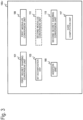
- Fig. 1 shows an example of the configuration of the secure modulus conversion system 1 according to the first embodiment
- Fig. 2 shows an example of the processing flow of the secure modulus conversion system 1.
- the secure modulus conversion system 1 includes n pieces of distributed processing apparatuses 100-r.
- the n distributed processing apparatuses 100-r can communicate with each other via the communication line 2.
- the secure modulus conversion system 1 takes as input a share [[a]] p obtained by (k,n)-secret-sharing a numerical value a by modulo p, obtains and outputs a share [[a]] Q obtained by (k,n)-secret-sharing the numerical value a by modulo Q different from the modulo p by using the number of bits
- the distributed processing apparatus is a special device that consists of a special program loaded into a known or dedicated computer with, for example, a central processing unit (CPU), main memory (RAM: Random Access Memory), etc.
- the distributed processing apparatus executes each processing under the control of a central processing unit, for example.
- the data input to the distributed processing apparatus and the data obtained by each processing are stored in a main storage device, for example, and the data stored in the main storage device is read out to the central processing unit as necessary and used for other processing.
- At least a part of each processing part of the distributed processing apparatus may be constituted of hardware such as an integrated circuit.
- Each storage unit provided in the distributed processing apparatus can be constituted by a main storage device such as a RAM (Random Access Memory), or middle-ware such as a relational database or a key value store.
- a main storage device such as a RAM (Random Access Memory), or middle-ware such as a relational database or a key value store.
- middle-ware such as a relational database or a key value store.
- each storage unit is not necessarily provided with the distributed processing apparatus inside, and may be constituted by an auxiliary storage device constituted by a hard disk, an optical disk or a semiconductor memory element such as a flash memory, or provided outside the distributed processing apparatus.
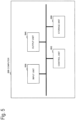
- Fig. 3 illustrates a functional block diagram of a distributed processing apparatus 100-r.
- the distributed processing apparatus 100-r includes a first secret sharing conversion unit 101, a bit decomposition unit 103, an addition unit 105, a first modulus conversion unit 109, a second modulus conversion unit 111, a second secret sharing conversion unit 115, and a sure computation unit 117.
- n in (k,n)-secret-sharing is set to any of integers of 3 or more
- N pieces of first secret sharing conversion units 101 convert (k,n)-secret-sharing shares [[a]] p into (k, k)-additive-secret-sharing shares ⁇ a> p (step S101).
- the distributed processing apparatus 100-0 corresponding to the party p 0 has share ⁇ a> p 0
- the distributed processing apparatus 100-1 corresponding to the party p 1 has share ⁇ a> p 1 .
- ⁇ a> p 0 is a scalar value
- -p) means addition of the scalar value
- ⁇ a> p 0 is a vector
- -p) means addition of (2
- N pieces of bit decomposition units 103 perform (k,n)-secret-sharing of each bit of a' 0 to obtain a bit representation share [[a' 0 ]] 2 ⁇
- n pieces of bit decomposition units 103 perform (k,n)-secret-sharing of each bit of share ⁇ a >p 1 of the distributed processing apparatus 100-1, and obtain a bit representation share [[a 1 ]] 2 ⁇
- N pieces of addition units 105 obtain a bit representation share [[a' 0 +a 1 ]] 2 ⁇ (
- N pieces of first modulus conversion units 109 obtain a share [[q]] Q from the share [[q]] 2 by mod 2 ⁇ mod Q conversion.
- the two second modulus conversion units 111 (the second modulus conversion units 111 of the distributed processing apparatus 100-0 and the distributed processing apparatus 100-1) obtain ⁇ a> p 0 mod Q, ⁇ a> p 1 mod Q from ⁇ a> p 0 , ⁇ a> p 1 respectively, and set share ⁇ a'> Q (step S111).
- a' a+qp mod Q is established.
- the distributed processing apparatus 100-0 and the distributed processing apparatus 100-1 may include the second modulus conversion units 111.
- N pieces of second secret sharing conversion units 115 convert (k,k)-secret-sharing share ⁇ a'> Q into (k,n)-secret-sharing share, to obtain (k,n)-secret-sharing share [[a']] Q (step S115) .
- the modulus conversion can be efficiently performed even when the condition of the quotient transfer is not satisfied.
- the communication amount is IQI+Iql bits, Ipl rounds.
- Fig. 4 shows the result of the actual machine experiment. The multi-party computation of the following three machines is performed.
- the present invention is not limited to the foregoing embodiments and modified examples.
- the above-described various kinds of processing may be performed chronologically, as described above, and may also be performed in parallel or individually in accordance with a processing capability of a device performing the processing or as necessary.
- changes can be made appropriately within the scope of the present invention without departing from the gist of the present invention.
- the various kinds of processing described above can be implemented by loading a program that executes each step of the above method into a storage unit 2020 of the computer shown in Fig. 5 , to enable a control unit 2010, an input unit 2030, an output unit 2040, and so on to operate.
- the program describing the processing contents can be recorded on a computer-readable recording medium.
- a computer-readable recording medium for example, any of a magnetic recording device, an optical disc, a magneto-optical recording medium, and a semiconductor memory may be used.
- this program is carried out by, for example, selling, transferring, or lending a portable recording medium such as a DVD or a CD-ROM on which the program is recorded.
- the program may be distributed by storing the program in a storage device of a server computer and transmitting the program from the server computer to other computers via a network.
- a computer executing such a program is configured to, for example, first, temporarily store a program recorded on a portable recording medium or a program transferred from a server computer, and stores the data in its own storage device. Then, at the time of executing the processing, the computer reads the program stored in its own recording medium and executes the processing according to the read program. As another execution form of the program, the computer may directly read the program from the portable recording medium and execute processing according to the program, each time a program is transferred from the server computer to the computer, processing according to the received program may be executed sequentially.
- ASP Application Service Provider
- the program in this embodiment includes data which is information to be provided for processing by the electronic computer and equivalent to program (data or the like which is not a direct command to the computer conforming to the program but has a property to specify the processing of the computer).
- the device is configured by executing a predetermined program on a computer, but at least a part of the processing content may be implemented by hardware.
Landscapes
- Engineering & Computer Science (AREA)
- Physics & Mathematics (AREA)
- General Physics & Mathematics (AREA)
- Theoretical Computer Science (AREA)
- Mathematical Optimization (AREA)
- Pure & Applied Mathematics (AREA)
- Mathematical Analysis (AREA)
- Computational Mathematics (AREA)
- Computing Systems (AREA)
- Mathematical Physics (AREA)
- General Engineering & Computer Science (AREA)
- Computer Networks & Wireless Communication (AREA)
- Computer Security & Cryptography (AREA)
- Signal Processing (AREA)
- Storage Device Security (AREA)
- Analogue/Digital Conversion (AREA)
- Preparation Of Compounds By Using Micro-Organisms (AREA)
- Computer And Data Communications (AREA)
- Multi Processors (AREA)
- Compression, Expansion, Code Conversion, And Decoders (AREA)
Abstract
Description
- The present invention relates to a technique for performing modulus transformation in secure computation.
- Modulus transformation for transforming the modulus of secret sharing value is a basic process frequently used in performing secure computation. Therefore, the efficiency of the modulus conversion greatly affects the speed up of the entire secure computation.
- As a prior art of an efficient modulus conversion method in the case of satisfying the condition of quotient transfer,
NPL 1 is known. - [NPL 1] Kikuchi, R., Ikarashi, D., Matsuda, T., Hamada, K. and Chida, K., "Efficient Bit-Decomposition and Modulus Conversion Protocols with an Honest Majority", Information Security and Privacy - 23rd Australasian Conference, ACISP 2018, Wollongong, NSW, Australia, July 11-13, 2018, Proceedings (Susilo, W. and Yang, G., eds.), Lecture Notes in Computer Science, Vol. 10946, Springer, pp. 64-82 (online).
- However, the prior art has a problem that it cannot be used when the condition of the quotient transfer is not satisfied.
- An object of the present invention is to provide a secure modulus conversion system, a distributed processing apparatus, a secure modulus conversion method, and a program that can efficiently perform modulus conversion even when a condition of quotient transfer is not satisfied.
- In order to solve the above problem, according to one embodiment of the present invention, the secure modulus conversion system includes n distributed processing apparatuses. Each of the n distributed processing apparatuses includes a first secret sharing conversion unit, a bit decomposition unit, an addition unit, a first modulus conversion unit, a second modulus conversion unit, a second secret sharing conversion unit, and a sure computation unit. Two distributed processing apparatuses p0, p1 of the n distributed processing apparatuses each include the second modulus conversion unit. Let a plain text a be a (k,n)-secret-sharing share [[a]]p by modulo p, where n in (k,n)-secret-sharing share is any one of an integer of 3 or more, k is any one of an integer of 2 or more and less than n, and let a plain text a be a (k,k)-additive secret-sharing share <a>p, the n pieces of first secret sharing conversion units converts (k,n)-secret-sharing share [[a]]p into (k,k)-additive-secret-sharing share <a>p of shares which distributed processing apparatuses p0 and p1 have; the bit decomposition unit of the distributed processing apparatus p0 calculates a'0: =<a>p0+ (2|p|-p) by using share <a>p 0; n pieces of bit decomposition units execute (k,n)-secret-sharing for each bit of a'0 to obtain a bit representation share [[a'0]]2^|p|, and execute (k,n)-secret-sharing for each bit of the share <a>P 1 to obtain a bit representation share [[a1]]2^|p|; the n pieces of addition units obtain a bit representation share [[a'0+a1]]2^(|p|+1) of a'0+a1 from the share [[a'0]]2^|p| and the share [[a1]]2^|p| by by an addition circuit, and let the most significant bit of the share [[a'0+a1]]2^(|p|+1) be the share [[q]]2; the n pieces of first modulus conversion units obtains a share [[q]]Q from the share [[q]]2 by
mod 2 → mod Q conversion; the two second modulus conversion units obtain <a>p 0 mod Q and <a>p 1 mod Q from <a>p 0 and <a>p 1, respectively, and set a share <a'>Q; the n pieces of second secret sharing conversion units convert the share <a'>Q into (k,n)-secret-sharing to obtain a (k,n)-secret-sharing share [[a']]Q; the n pieces of sure computation units calculate [[a]]Q=[[a']]Q-p[[q]]Q from the share [[a']]Q and the share [[q]]Q. - In order to solve the above problem, according to another embodiment of the present invention, the distributed processing apparatus is included in a secure modulus conversion system. The distributed processing apparatus includes: the first secret sharing conversion unit which, let a plain text a be a (k,n)-secret-sharing share [[a]]p by modulo p, where n in (k,n)-secret-sharing share is any one of an integer of 3 or more, k is any one of an integer of 2 or more and less than n, and let a plain text a be a (k,k)-additive-secret-sharing share <a>p, together with (n-1) distributed processing apparatuses, converts (k,n)-secret-sharing share [[a]]p into (k,k)-additive secret-sharing share <a>p of shares which distributed processing apparatuses p0 and p1 have; the bit decomposition unit which, a'0: =<a>p0+ (2|p|-p) and together with (n-1) pieces of distributed processing apparatuses, executes (k,n)-secret-sharing for each bit of a'0 to obtain a bit representation share [[a'0]]2^|p|, and executes (k,n)-secret-sharing for each bit of the share <a>P 1 to obtain a bit representation share [[a1]]2^lp|; the addition unit which together with (n-1) pieces of distributed processing apparatuses, obtains a bit representation share [[a'0+a1]]2^(|p|+1) of a'0+a1 from the share [[a'0]]2^lpl and the share [[a1]]2^|p| by by an addition circuit; let the most significant bit of the share [[a'0+a1]]2^(|p|+1) be the share [[q]]2, the first modulus conversion unit which together with (n-1) pieces of distributed processing apparatuses, obtains a share [[q]]Q from the share [[q]]2 by
mod 2 → mod Q conversion; the second modulus conversion unit which sets <a>p 0 mod Q and <a>p 1 mod Q to a share <a'>Q, and together with (n-1) pieces of distributed processing apparatuses, converts the share <a'>Q into (k,n)-secret-sharing to obtain a (k,n)-secret-sharing share [[a']]Q; and the sure computation unit which together with (n-1) pieces of distributed processing apparatuses, calculates [[a]]Q=[[a']]Q-p[[q]]Q from the share [[a']]Q and the share [[q]]Q. - According to the present invention, the modulus conversion can be efficiently performed even when the condition of the quotient transfer is not satisfied.
-
- [
Fig.1 ]
Fig.1 is a drawing illustrating an example of a configuration of a secure modulus conversion system according to a first embodiment. - [
Fig. 2 ]
Fig. 2 is a diagram illustrating an example of a processing flow of the secure modulus conversion system according to the first embodiment. - [
Fig. 3 ]
Fig. 3 is a functional block diagram of a distributed processing apparatus according to the first embodiment. - [
Fig. 4 ]
Fig. 4 is a drawing showing results of actual machine experiment. - [
Fig. 5 ]
Fig. 5 is a drawing illustrating an example of configuration of a computer to which the method of the present invention is applied. - Hereinafter, embodiments of the present invention will be described. In the drawings used for the following description, the same reference numerals are given to components having the same functions or steps of performing the same processing, and repeated description thereof will be omitted. In the following descriptions, symbols "→" or the like that will be used in the text should be originally placed directly above the character immediately following them, but are instead placed immediately before the character due to the limitation of the text notation. In formulas, these symbols are written at the original positions. Further, processing performed in units of respective elements such as vectors and matrices will be applied to all the elements of the vector or the matrices unless otherwise specifically noted.
- First, the notation in the present embodiment will be described.
-
- k: a threshold value of secret sharing. For example, 2 is used.
- n: a number of sharing of secret sharing, in other words, a number of parties of secure computation. For example, 3 is used.
- P: prime number. For example, a Mersenne prime number 261-1 is used.
- p: the number of bits of P. When P is the Mersenne prime number, p is also a prime number. For example, 61 is used.
- [[x]]y: a (k,n)-secret-sharing share for a mod y element x.
- <x>y: a (k,k)-additive-secret-sharing share for mod y element x.
- [[x]]2^m: a share with m units arranged shares of the form of [[x]]2. It may be regarded as a bit representation of a numerical value. Note that, in the subscript, A^B means AB, and A_B means AB.
- Next, two secret sharings, i.e., (k,n)-secret-sharing and (k,k)-additive-secret-sharing used in this embodiment, will be described.
- (k,n)-secret-sharing is a security technique in which an input plain text is divided into n pieces of fragments (called shares), and each of the fragments is shared to n different subjects (called parties) P= (p0,..., pn-1) , and any k pieces of shares can restore the plain text, and no information about the plain text can be obtained when less than k-1 pieces of shares. For example, there are the Shamir secret sharing, the duplicate secret sharing or the like. In the present embodiment, a set obtained by collecting all shares shared by (k,n)-secret sharing under modulo y and having a certain value x in a plain text is expressed as [[x]]y. For each share,the share of the party pr is expressed as [[x]]y r. It is assumed herein that r = 0, ..., n-1.
- (k,k)-secret-sharing is the case where n= k, in (k,n)-secret-sharing. The plain text cannot be restored unless shares of all parties are collected. (k,k)-secret-sharing by duplicated secret sharing is particularly called additive secret sharing, which is the simplest method for restoring a plain text only by adding k pieces of shares. In the present embodiment, a set obtained by collecting all shares shared by (k,k)-additive-secret-sharing under modulo y and having a certain value x in a plain text is expressed as <x>r, a share of the party pr is expressed as <x>y r.
- Next, the non-quotient transfer modulus conversion protocol used in this embodiment will be described.
- The non-quotient transfer modulus conversion protocol used in the present embodiment can efficiently perform modulus conversion on a prime field even when the condition of quotient transfer is not satisfied. The condition of the quotient transfer herein means that the number of empty bits is a predetermined number of bits. In the protocol, let a'0+a1=a+qp+2 |pl-p=a+2 |pl-(1-q)p be satisfied. When q=0, a'0+a1=2|p|-(p-a) is satisfied, and from a<p, a'0+a1 is smaller than 2|p|. In other words, q=0 ↔ a'0+a1<2|p|. On the other hand, when q=1, a'0+a1=2|p|+a is satisfied, and from a≥0, and a'0+a1 is 2|p| or more. In other words, q=1 ↔ a'0+a1≥2|p|. Therefore, the most significant bit of a'0+a1, the |p| th bit, is equal to q.
- In the following, A non-quotient-transfer modulus conversion protocol utilizing the above-mentioned relationship will be described.
- Input: (k,n)-secret-sharing share [[a]]p.
- Parameter: the number of bitslpl of p.
- Output: (k,n)-secret-sharing share [[a]]Q by different modulo Q.
- Step 1: The share [[a]]p is converted into (k,k)-additive-secret-sharing share <a>p. Assuming that k=2, and the parties p0, p1 have a share <a>p. The conversion from (k,n)-secret-sharing to (k,k)-additive-secret-sharing can be carried out by a known technique. For example, any of the methods described in
NPL 1 is used. - Step 2: As for the party p0, a'0: =<a>p0+ (2|p|-p) is calculated without mod p by addition on Z, and the each bit of a'0 is shared by (k,n)-secret-sharing to obtain a bit representation share [[a'0]]2^|p|. The bit decomposition can be performed by a known technique. For example, any of the methods described in
NPL 1 is used. - Step 3: As for the party p1, each bit of <a>P 1 is shared by (k,n)-secret-sharing to obtain a bit representation share [[a1]]2^|p|.
- Step 4:A bit representation share [[a'0+a1]]2^(|p|+1) of a'0+a1 is obtained by an addition circuit. After the addition circuit computation, the bit length increases by 1 from |p| to |p|+1.
- Step 5:The most significant bit of [[a'0+a1]]2^(|p|+1) is set to [[q]]2. q is the quotient of share <a>p, that is, q of the expression <a>0+<a>1=a+qp.
- Step 6: [[q]]Q is obtained from [[q]]2 by
mod 2 → mod Q conversion. For example, themod 2 → mod Q conversion can be performed by a known technique. For example, any of the methods described inNPL 1 is used. - Step 7: As for the parties p0, p1, <a>P 0 mod Q, <a>P 1 mod Q are obtained from <a>P 0, <a>P 1 respectively, and set to <a'>Q. Here, a'=a+qp mod Q is established.
- Step 8: (k,k) -secret-sharing share <a'>Q is converted into (k,n)-secret-sharing share, to obtain a (k,n)-secret-sharing share [[a']]Q. The conversion from (k,k)-additive-secret-sharing to (k,n)-secret-sharing can be performed by a known technique. For example, any of the methods described in
NPL 1 is used. - Step 9: [[a]]Q=[[a']]Q-p[[q]]Q is calculated and outputted.
- In the following, a secure modulus conversion system for realizing the above-mentioned non-quotient-transfer modulus conversion protocol will be described.
-
Fig. 1 shows an example of the configuration of the securemodulus conversion system 1 according to the first embodiment, andFig. 2 shows an example of the processing flow of the securemodulus conversion system 1. - The secure
modulus conversion system 1 includes n pieces of distributed processing apparatuses 100-r. Here, n is any integer of 3 or more, and r = 0, 1, ..., n-1. The n distributed processing apparatuses 100-r can communicate with each other via thecommunication line 2. - The secure
modulus conversion system 1 takes as input a share [[a]]p obtained by (k,n)-secret-sharing a numerical value a by modulo p, obtains and outputs a share [[a]]Q obtained by (k,n)-secret-sharing the numerical value a by modulo Q different from the modulo p by using the number of bits |p| of p. Note that, p and Q are disclosed. - The distributed processing apparatus is a special device that consists of a special program loaded into a known or dedicated computer with, for example, a central processing unit (CPU), main memory (RAM: Random Access Memory), etc. The distributed processing apparatus executes each processing under the control of a central processing unit, for example. The data input to the distributed processing apparatus and the data obtained by each processing are stored in a main storage device, for example, and the data stored in the main storage device is read out to the central processing unit as necessary and used for other processing. At least a part of each processing part of the distributed processing apparatus may be constituted of hardware such as an integrated circuit. Each storage unit provided in the distributed processing apparatus can be constituted by a main storage device such as a RAM (Random Access Memory), or middle-ware such as a relational database or a key value store. However, each storage unit is not necessarily provided with the distributed processing apparatus inside, and may be constituted by an auxiliary storage device constituted by a hard disk, an optical disk or a semiconductor memory element such as a flash memory, or provided outside the distributed processing apparatus.
-
Fig. 3 illustrates a functional block diagram of a distributed processing apparatus 100-r. - . The distributed processing apparatus 100-r includes a first secret
sharing conversion unit 101, abit decomposition unit 103, anaddition unit 105, a firstmodulus conversion unit 109, a secondmodulus conversion unit 111, a second secretsharing conversion unit 115, and asure computation unit 117. - In the present embodiment, k in (k,k)-additive-secret-sharing is set to k=2, n in (k,n)-secret-sharing is set to any of integers of 3 or more, and k is set to any of integers of 2 or more and n or less, for example, k=2 and n=3.
- In the following, processing that is performed by each unit will be described with reference to
Fig. 2 . - N pieces of first secret
sharing conversion units 101 convert (k,n)-secret-sharing shares [[a]]p into (k, k)-additive-secret-sharing shares <a>p (step S101). As described above, k in (k,k)-additive-secret-sharing is set to k= 2, the distributed processing apparatus 100-0 corresponding to the party p0 has share <a>p 0, and the distributed processing apparatus 100-1 corresponding to the party p1 has share <a>p 1. - A
bit decomposition unit 103 of the distributed processing apparatus 100-0, using share <a>p 0 and p, calculates a'0:=<a>p0+(2|p|-p) without mod p by addition on Z. Note that, when <a>p 0 is a scalar value, <a>p 0+ (2|p|-p) means addition of the scalar value, and when <a>p 0 is a vector, <a>p 0+ (2|p|-p) means addition of (2|p|-p) to each element of <a>p 0. - N pieces of
bit decomposition units 103 perform (k,n)-secret-sharing of each bit of a'0 to obtain a bit representation share [[a'0]]2^|p| (step S103-0) . - Further, n pieces of
bit decomposition units 103 perform (k,n)-secret-sharing of each bit of share <a>p1 of the distributed processing apparatus 100-1, and obtain a bit representation share [[a1]]2^|p| (step S103-1) . - N pieces of
addition units 105 obtain a bit representation share [[a'0+a1]]2^(|p+1) of a'0+a1 by an additive circuit from the share [[a'0]]2^|p| and the share [[a1]]2^|p| obtained by S103-0, 103-1 (step S105) . - The most significant bit of [[a'0+a1]]2^(|p|+1) is set to a share [[q]]2. Note that, q is the quotient of the share <a>p, that is, q of a expression <a>0+<a>1=a+qp.
- N pieces of first
modulus conversion units 109 obtain a share [[q]]Q from the share [[q]]2 bymod 2 → mod Q conversion. - The two second modulus conversion units 111 (the second
modulus conversion units 111 of the distributed processing apparatus 100-0 and the distributed processing apparatus 100-1) obtain <a>p 0 mod Q, <a>p 1 mod Q from <a>p 0, <a>p 1 respectively, and set share <a'>Q (step S111). Here, a'=a+qp mod Q is established. - For example, (i) when <a>p 0, <a>p 1 is smaller than Q, <a>p 0, <a>p 1 are obtained as it is as <a>p 0 mod Q and <a>p 1 mod Q, when <a>P 0, <a>p 1 is Q or more, <a>p 0 mod Q and <a>p 1 mod Q may be calculated and obtained, (ii) regardless of the magnitude relation between <a>p 0, <a>p 1 and Q, <a>p 0 modQ and <a>p 1 mod Q may be calculated.
- Since only the second
modulus conversion units 111 of the distributed processing apparatus 100-0 and the distributed processing apparatus 100-1 perform Sill, only the distributed processing apparatus 100-0 and the distributed processing apparatus 100-1 may include the secondmodulus conversion units 111. - N pieces of second secret
sharing conversion units 115 convert (k,k)-secret-sharing share <a'>Q into (k,n)-secret-sharing share, to obtain (k,n)-secret-sharing share [[a']]Q (step S115) . - N pieces of the
sure computation units 117 calculate [[a]]Q=[[a']]Q-p[[q]]Q from the share [[a']]Q and the share [[q]]Q (step S117), and output it as an output value of the secure modulus conversion system. - With the above-described configuration, the modulus conversion can be efficiently performed even when the condition of the quotient transfer is not satisfied.
- The processing efficiency of the algorithm is evaluated. In the secure modulus conversion system according to the present embodiment, the communication amount is IQI+Iql bits, Ipl rounds.
-
Fig. 4 shows the result of the actual machine experiment. The multi-party computation of the following three machines is performed. - CPU: Xeon Gold 6144 3.5GHz, 6cores x 2 Sockets
- Memory: 768GB
- NW: 10Gbps ring topology
- OS: CentOS 7.3
- Three scales of 1000 items, 1 million items, and 10 million items, and the actual number of rounds were measured by maximizing the delay to 100ms. The throughput was [M op/s] and the number of round was dimensionless. The performance of active models was also shown in addition to the passive model (expansion from passive version). The security parameter of the active model is 8 bits, and the attack detection rate is about 99%. This probability is sufficient to suppress the attack because the off-line attack is impossible differently from the computational safety.
- The present invention is not limited to the foregoing embodiments and modified examples. For example, the above-described various kinds of processing may be performed chronologically, as described above, and may also be performed in parallel or individually in accordance with a processing capability of a device performing the processing or as necessary. In addition, changes can be made appropriately within the scope of the present invention without departing from the gist of the present invention.
- The various kinds of processing described above can be implemented by loading a program that executes each step of the above method into a
storage unit 2020 of the computer shown inFig. 5 , to enable acontrol unit 2010, aninput unit 2030, anoutput unit 2040, and so on to operate. - The program describing the processing contents can be recorded on a computer-readable recording medium. As the computer-readable recording medium, for example, any of a magnetic recording device, an optical disc, a magneto-optical recording medium, and a semiconductor memory may be used.
- In addition, the distribution of this program is carried out by, for example, selling, transferring, or lending a portable recording medium such as a DVD or a CD-ROM on which the program is recorded. Further, the program may be distributed by storing the program in a storage device of a server computer and transmitting the program from the server computer to other computers via a network.
- A computer executing such a program is configured to, for example, first, temporarily store a program recorded on a portable recording medium or a program transferred from a server computer, and stores the data in its own storage device. Then, at the time of executing the processing, the computer reads the program stored in its own recording medium and executes the processing according to the read program. As another execution form of the program, the computer may directly read the program from the portable recording medium and execute processing according to the program, each time a program is transferred from the server computer to the computer, processing according to the received program may be executed sequentially. In addition, by a so-called ASP (Application Service Provider) type service which does not transfer a program from the server computer to the computer and realizes a processing function only by the execution instruction and the result acquisition, the above-mentioned processing may be executed. It is assumed that the program in this embodiment includes data which is information to be provided for processing by the electronic computer and equivalent to program (data or the like which is not a direct command to the computer conforming to the program but has a property to specify the processing of the computer).
- In this aspect, the device is configured by executing a predetermined program on a computer, but at least a part of the processing content may be implemented by hardware.
Claims (4)
- A secure modulus conversion system including n pieces of distributed processing apparatuses wherein:n pieces of the distributed processing apparatuses each include a first secret sharing conversion unit, a bit decomposition unit, an addition unit, a first modulus conversion unit, a second modulus conversion unit, a second secret sharing conversion unit, and a sure computation unit;two distributed processing apparatuses p0, p1 of n pieces of the distributed processing apparatuses each include a second modulus conversion unit,it is assumed that a share [[a]]p is a (k,n)-secret-sharing share of a plain text a by modulo p, where n in (k,n)-secret-sharing is any one of an integer of 3 or more, k is any one of an integer of 2 or more and less than n, and it is assumed that a share <a>p is a (k,k)-additive-secret-sharing share of a plain text a by modulo p;n pieces of the first secret sharing conversion units convert (k,n)-secret-sharing share [[a]]p into (k,k)-additive-secret-sharing share <a>p of shares which distributed processing apparatuses p0 and p1 have;the bit decomposition unit of the distributed processing apparatus p0 calculates a'0: =<a>p0+ (2|p|-p) by using a share <a>p 0;n pieces of the bit decomposition units perform (k,n)-secret-sharing of each bit of a'0 to obtain a bit representation share [[a'0]]2^|p|, perform (k,n)-secret-sharing of each bit of a share <a>p 1 to obtain a bit representation share [[a1]]2^|p|;n pieces of the addition units obtain a bit representation share [[a'0+a1]]2^(|p|+1) of a'0+a1 from the share [[a'0]]2^|p| and the share [[1]]2^|p| by an additive circuit;it is assumed that the most significant bit of the share [[a'0+a1]]2^(|p|+1) is a share [[q]]2, n pieces of the first modulus conversion units obtain a share [[q]]Q from the share [[q]]2 by mod 2 → mod Q conversion;two of the second modulus conversion units obtain <a>p 0 mod Q, <a>p 1mod Q from <a>p0, <a>p1 respectively, and set as a share < a ' >Q ;n pieces of the second secret sharing conversion units convert the share <a'>Q into (k,n)-secret-sharing to obtain (k,n)-secret-sharing share [[a']]Q; andn pieces of the sure computation units calculate [[a]]Q=[[a']]Q-p[[q]]Q from the share [[a']]Q and the share [[q]]Q.
- A distributed processing apparatus included in a secure modulus conversion system comprising:it is assumed that a share [[a]]p is a (k,n)-secret-sharing share of a plain text a by modulo p, where n in (k,n)-secret-sharing is any one of an integer of 3 or more, k is any one of an integer of 2 or more and less than n, and it is assumed that a share <a>p is a (k,k)-additive-secret-sharing share of a plain text a by modulo p;a first secret sharing conversion unit which converts (k,n)-secret-sharing share [[a]]p into (k,k)-additive-secret-sharing share <a>P of shares which distributed processing apparatuses p0 and p1 have together with (n-1) pieces of distributed processing apparatuses;a bit decomposition unit which performs (k,n)-secret-sharing of each bit of a'0 to obtain a bit representation share [[a'0]]2^|p|, and performs (k,n)-secret-sharing of each bit of a share <a>p 1 to obtain a bit representation share [[a1]]2^|p| together with (n-1) pieces of distributed processing apparatuses;an addition unit which obtains a bit representation share [[a'0+a1]]2^(|p|+1) of a'0+a1 from the share [[a'0]]2^|p| and the share [[a1]]2^|p| by an additive circuit together with (n-1) pieces of distributed processing apparatuses;it is assumed that the most significant bit of the share [[a'0+a1]]2^(|p|+1) is a share [[q]]2, a first modulus conversion unit which obtains a share [[q]]Q from the share [[q]]2 by mod 2 → mod Q conversion together with (n-1) pieces of the distributed processing apparatuses;it is assumed that <a>p 0 mod Q, <a>p 1 mod Q are set as a share <a'>Q, a second secret sharing conversion unit convert the share <a'>Q into (k,n)-secret-sharing to obtain (k,n)-secret-sharing share [[a"]]Q together with (n-1) pieces of distributed processing apparatuses; anda sure computation unit which calculates [[a]]Q=[[a']]Q-p[[q]]Q from the share [[a']]Q and the share [[q]]Q together with (n-1) pieces of distributed processing apparatuses.
- a secure modulus conversion method using a secure modulus conversion system including n pieces of distributed processing apparatuses
wherein:n pieces of the distributed processing apparatuses each include a first secret sharing conversion unit, a bit decomposition unit, an addition unit, a first modulus conversion unit, a second modulus conversion unit, a second secret sharing conversion unit, and a sure computation unit;two distributed processing apparatuses p0, p1 of n pieces of the distributed processing apparatuses each include a second modulus conversion unit; and comprising:a first modulus conversion step in which it is assumed that a share [[a]]p is a (k,n)-secret-sharing share of a plain text a by modulo p, where n in (k,n)-secret-sharing is any one of an integer of 3 or more, k is any one of an integer of 2 or more and less than n, and it is assumed that a share <a>p is a (k,k)-additive-secret-sharing share of a plain text a by modulo p,n pieces of the first secret sharing conversion units convert (k,n)-secret-sharing share [[a]]p into (k,k)-additive-secret-sharing share <a>p of shares which distributed processing apparatuses p0 and p1 have;a bit decomposition step in which it is assumed that a'0:=<a>p 0+ (2|p|-p), n pieces of the bit decomposition units perform (k,n)-secret-sharing of each bit of a'0 to obtain a bit representation share [[a'0]]2^|p|, perform (k,n) -secret-sharing of each bit of a share <a>p 1 to obtain a bit representation share [[a1]]2^|p|;an addition step in which n pieces of the addition units obtain a bit representation share [[a'0+a1]]2^(|p|+1) of a'0+a1 from the share [[a'0]]2^|p| and the share [[a1]]2^|p| by an additive circuit;a first modulus conversion step in which it is assumed that the most significant bit of the share [[a'0+a1]]2^(|p|+1) is a share [[q]]2, n pieces of the first modulus conversion units obtain a share [[q]]Q from the share [[q]]2 by mod 2 → mod Q conversion;a second modulus conversion step in which two of the second modulus conversion units obtain <a>p 0 mod Q, <a>p 1mod Q from <a>p0, <a>p1 respectively, and set as a share <a'>Q;a second secret sharing conversion step in which n pieces of the second secret sharing conversion units convert the share <a'>Q into (k,n)-secret-sharing to obtain (k,n)-secret-sharing share [[a']]Q; anda sure computation step in which n pieces of the sure computation units calculate [[a]]Q=[[a']]Q-p[[q]]Q from the share [[a']]Q and the share [[q]]Q. - A program causing a computer to function as the distributed processing apparatus according to claim 2.
Applications Claiming Priority (1)
| Application Number | Priority Date | Filing Date | Title |
|---|---|---|---|
| PCT/JP2020/039079 WO2022079892A1 (en) | 2020-10-16 | 2020-10-16 | Concealed modulus conversion system, distributed processing device, concealed modulus conversion method, and program |
Publications (3)
| Publication Number | Publication Date |
|---|---|
| EP4213134A1 true EP4213134A1 (en) | 2023-07-19 |
| EP4213134A4 EP4213134A4 (en) | 2024-05-22 |
| EP4213134B1 EP4213134B1 (en) | 2025-12-10 |
Family
ID=81208981
Family Applications (1)
| Application Number | Title | Priority Date | Filing Date |
|---|---|---|---|
| EP20957721.2A Active EP4213134B1 (en) | 2020-10-16 | 2020-10-16 | Concealed modulus conversion system, distributed processing device, concealed modulus conversion method, and program |
Country Status (6)
| Country | Link |
|---|---|
| US (1) | US20230359439A1 (en) |
| EP (1) | EP4213134B1 (en) |
| JP (1) | JP7485068B2 (en) |
| CN (1) | CN116508088B (en) |
| AU (1) | AU2020472724B2 (en) |
| WO (1) | WO2022079892A1 (en) |
Family Cites Families (10)
| Publication number | Priority date | Publication date | Assignee | Title |
|---|---|---|---|---|
| DE10111987A1 (en) * | 2001-03-13 | 2002-09-26 | Infineon Technologies Ag | Method and device for modular multiplication |
| JP3779655B2 (en) * | 2002-07-30 | 2006-05-31 | 日本電信電話株式会社 | Edge node, signal control server, processing method in edge node, processing method in signal control server, communication quality control method, and communication quality control apparatus |
| CN201909804U (en) * | 2010-11-26 | 2011-07-27 | 北京工业大学 | Network virtual digital oscilloscope |
| US20180034639A1 (en) * | 2011-10-04 | 2018-02-01 | International Business Machines Corporation | Multiple credentials for mitigating impact of data access under duress |
| CN105593919B (en) * | 2013-10-10 | 2018-01-30 | 日本电信电话株式会社 | Secret business's transfer device and method, secret bit decomposer and method, confidential moduli conversion equipment and method |
| CN103973451B (en) * | 2014-05-05 | 2017-04-12 | 西南交通大学 | Cross-trust-domain authentication method used for distributed network system |
| JP5968484B1 (en) * | 2015-03-18 | 2016-08-10 | 日本電信電話株式会社 | Share recovery system, share recovery method, and program |
| EP3566389B1 (en) * | 2017-01-06 | 2021-08-18 | Koninklijke Philips N.V. | Distributed privacy-preserving verifiable computation |
| US11381390B2 (en) | 2017-10-31 | 2022-07-05 | Nec Corporation | Secure computation apparatus, system, method and program |
| CN109587276A (en) * | 2019-01-11 | 2019-04-05 | 中钞信用卡产业发展有限公司杭州区块链技术研究院 | A kind of data back up method, system and associated component |
-
2020
- 2020-10-16 AU AU2020472724A patent/AU2020472724B2/en active Active
- 2020-10-16 US US18/029,384 patent/US20230359439A1/en active Pending
- 2020-10-16 JP JP2022556804A patent/JP7485068B2/en active Active
- 2020-10-16 WO PCT/JP2020/039079 patent/WO2022079892A1/en not_active Ceased
- 2020-10-16 EP EP20957721.2A patent/EP4213134B1/en active Active
- 2020-10-16 CN CN202080106070.9A patent/CN116508088B/en active Active
Also Published As
| Publication number | Publication date |
|---|---|
| US20230359439A1 (en) | 2023-11-09 |
| AU2020472724B2 (en) | 2024-03-28 |
| JP7485068B2 (en) | 2024-05-16 |
| WO2022079892A1 (en) | 2022-04-21 |
| JPWO2022079892A1 (en) | 2022-04-21 |
| AU2020472724A1 (en) | 2023-05-25 |
| EP4213134B1 (en) | 2025-12-10 |
| CN116508088B (en) | 2025-08-15 |
| CN116508088A (en) | 2023-07-28 |
| EP4213134A4 (en) | 2024-05-22 |
Similar Documents
| Publication | Publication Date | Title |
|---|---|---|
| EP3057078B1 (en) | Secret quotient transfer device, secret quotient transfer method, and program therefor | |
| CN107430829B (en) | Share recovery system, device, method, and storage medium | |
| EP4280574B1 (en) | Secure right shift computation system, secure division system, methods therefor, secure computation apparatus, and program | |
| CA3199161A1 (en) | More efficient post-quantum signatures | |
| EP3920464A1 (en) | Method for storing transaction that represents asset transfer to distributed network and program for the same | |
| US12333039B2 (en) | Secret hash table construction system, reference system, methods for the same | |
| JP6493697B2 (en) | Secret calculation apparatus, method, recording medium, and secret calculation system | |
| CN115168841A (en) | Threat detection method, device and system | |
| JP6834771B2 (en) | Communication device and communication method | |
| EP4080488B1 (en) | Secret random number generation system, secret calculation device, secret random number generation method, and program | |
| US20230401033A1 (en) | Secret msb normalization system, distributed processing apparatus, secret msb normalization method, program | |
| CN113992393A (en) | Method, apparatus, system, and medium for model update for longitudinal federated learning | |
| EP4213134B1 (en) | Concealed modulus conversion system, distributed processing device, concealed modulus conversion method, and program | |
| JP6607257B2 (en) | Secret calculation system, secret calculation device, and secret calculation method | |
| WO2018212015A1 (en) | Secure computation device, comparison method, comparison program recording medium, and secure computation system | |
| EP3675088B1 (en) | Share generating device, share converting device, secure computation system, share generation method, share conversion method, program, and recording medium | |
| CN111431561B (en) | Power system expected fault set generation method and device considering network attack | |
| JP6059159B2 (en) | Share conversion system, share conversion method, program | |
| CN116681138B (en) | Processing method and device for data size comparison task, storage medium and electronic device | |
| JP5388684B2 (en) | Distributed information generating apparatus, secret information restoring apparatus, shared information generating method, secret information restoring method, and program | |
| EP3767609A1 (en) | Secret table reference system, method, secret calculating device and program | |
| US20250200435A1 (en) | Secure global model calculation apparatus, local model registering method, and program | |
| Doan et al. | Convergence Rates of Distributed Two-Time-Scale Gradient Methods under Random Quantization | |
| EP4742071A1 (en) | Data relay system | |
| JP5433297B2 (en) | Distributed information generating apparatus, secret information restoring apparatus, shared information generating method, secret information restoring method, and program |
Legal Events
| Date | Code | Title | Description |
|---|---|---|---|
| STAA | Information on the status of an ep patent application or granted ep patent |
Free format text: STATUS: THE INTERNATIONAL PUBLICATION HAS BEEN MADE |
|
| PUAI | Public reference made under article 153(3) epc to a published international application that has entered the european phase |
Free format text: ORIGINAL CODE: 0009012 |
|
| STAA | Information on the status of an ep patent application or granted ep patent |
Free format text: STATUS: REQUEST FOR EXAMINATION WAS MADE |
|
| 17P | Request for examination filed |
Effective date: 20230411 |
|
| AK | Designated contracting states |
Kind code of ref document: A1 Designated state(s): AL AT BE BG CH CY CZ DE DK EE ES FI FR GB GR HR HU IE IS IT LI LT LU LV MC MK MT NL NO PL PT RO RS SE SI SK SM TR |
|
| DAV | Request for validation of the european patent (deleted) | ||
| DAX | Request for extension of the european patent (deleted) | ||
| REG | Reference to a national code |
Ref legal event code: R079 Ipc: G06F0007720000 Ref country code: DE Ref legal event code: R079 Ref document number: 602020063879 Country of ref document: DE Free format text: PREVIOUS MAIN CLASS: G09C0001000000 Ipc: G06F0007720000 |
|
| A4 | Supplementary search report drawn up and despatched |
Effective date: 20240422 |
|
| RIC1 | Information provided on ipc code assigned before grant |
Ipc: G09C 1/00 20060101ALI20240417BHEP Ipc: H04L 9/08 20060101ALI20240417BHEP Ipc: G06F 7/72 20060101AFI20240417BHEP |
|
| GRAP | Despatch of communication of intention to grant a patent |
Free format text: ORIGINAL CODE: EPIDOSNIGR1 |
|
| STAA | Information on the status of an ep patent application or granted ep patent |
Free format text: STATUS: GRANT OF PATENT IS INTENDED |
|
| RIC1 | Information provided on ipc code assigned before grant |
Ipc: G09C 1/00 20060101ALI20250210BHEP Ipc: H04L 9/08 20060101ALI20250210BHEP Ipc: G06F 7/72 20060101AFI20250210BHEP |
|
| INTG | Intention to grant announced |
Effective date: 20250220 |
|
| GRAJ | Information related to disapproval of communication of intention to grant by the applicant or resumption of examination proceedings by the epo deleted |
Free format text: ORIGINAL CODE: EPIDOSDIGR1 |
|
| STAA | Information on the status of an ep patent application or granted ep patent |
Free format text: STATUS: REQUEST FOR EXAMINATION WAS MADE |
|
| GRAP | Despatch of communication of intention to grant a patent |
Free format text: ORIGINAL CODE: EPIDOSNIGR1 |
|
| STAA | Information on the status of an ep patent application or granted ep patent |
Free format text: STATUS: GRANT OF PATENT IS INTENDED |
|
| INTC | Intention to grant announced (deleted) | ||
| INTG | Intention to grant announced |
Effective date: 20250630 |
|
| GRAS | Grant fee paid |
Free format text: ORIGINAL CODE: EPIDOSNIGR3 |
|
| RAP3 | Party data changed (applicant data changed or rights of an application transferred) |
Owner name: NTT, INC. |
|
| GRAA | (expected) grant |
Free format text: ORIGINAL CODE: 0009210 |
|
| STAA | Information on the status of an ep patent application or granted ep patent |
Free format text: STATUS: THE PATENT HAS BEEN GRANTED |
|
| AK | Designated contracting states |
Kind code of ref document: B1 Designated state(s): AL AT BE BG CH CY CZ DE DK EE ES FI FR GB GR HR HU IE IS IT LI LT LU LV MC MK MT NL NO PL PT RO RS SE SI SK SM TR |
|
| REG | Reference to a national code |
Ref country code: CH Ref legal event code: F10 Free format text: ST27 STATUS EVENT CODE: U-0-0-F10-F00 (AS PROVIDED BY THE NATIONAL OFFICE) Effective date: 20251210 Ref country code: GB Ref legal event code: FG4D |
|
| REG | Reference to a national code |
Ref country code: DE Ref legal event code: R096 Ref document number: 602020063879 Country of ref document: DE |
|
| REG | Reference to a national code |
Ref country code: IE Ref legal event code: FG4D |
|
| PG25 | Lapsed in a contracting state [announced via postgrant information from national office to epo] |
Ref country code: ES Free format text: LAPSE BECAUSE OF FAILURE TO SUBMIT A TRANSLATION OF THE DESCRIPTION OR TO PAY THE FEE WITHIN THE PRESCRIBED TIME-LIMIT Effective date: 20251210 |
|
| REG | Reference to a national code |
Ref country code: LT Ref legal event code: MG9D |
|
| PG25 | Lapsed in a contracting state [announced via postgrant information from national office to epo] |
Ref country code: NO Free format text: LAPSE BECAUSE OF FAILURE TO SUBMIT A TRANSLATION OF THE DESCRIPTION OR TO PAY THE FEE WITHIN THE PRESCRIBED TIME-LIMIT Effective date: 20260310 |
|
| PG25 | Lapsed in a contracting state [announced via postgrant information from national office to epo] |
Ref country code: FI Free format text: LAPSE BECAUSE OF FAILURE TO SUBMIT A TRANSLATION OF THE DESCRIPTION OR TO PAY THE FEE WITHIN THE PRESCRIBED TIME-LIMIT Effective date: 20251210 Ref country code: HR Free format text: LAPSE BECAUSE OF FAILURE TO SUBMIT A TRANSLATION OF THE DESCRIPTION OR TO PAY THE FEE WITHIN THE PRESCRIBED TIME-LIMIT Effective date: 20251210 |
|
| REG | Reference to a national code |
Ref country code: NL Ref legal event code: MP Effective date: 20251210 |
|
| PG25 | Lapsed in a contracting state [announced via postgrant information from national office to epo] |
Ref country code: RS Free format text: LAPSE BECAUSE OF FAILURE TO SUBMIT A TRANSLATION OF THE DESCRIPTION OR TO PAY THE FEE WITHIN THE PRESCRIBED TIME-LIMIT Effective date: 20260310 |
|
| PG25 | Lapsed in a contracting state [announced via postgrant information from national office to epo] |
Ref country code: LV Free format text: LAPSE BECAUSE OF FAILURE TO SUBMIT A TRANSLATION OF THE DESCRIPTION OR TO PAY THE FEE WITHIN THE PRESCRIBED TIME-LIMIT Effective date: 20251210 |
|
| PG25 | Lapsed in a contracting state [announced via postgrant information from national office to epo] |
Ref country code: BG Free format text: LAPSE BECAUSE OF FAILURE TO SUBMIT A TRANSLATION OF THE DESCRIPTION OR TO PAY THE FEE WITHIN THE PRESCRIBED TIME-LIMIT Effective date: 20251210 |